EP0767666B1 - Methods and compositions useful in prophylaxis and therapy of endotoxin related conditions - Google Patents
Methods and compositions useful in prophylaxis and therapy of endotoxin related conditions Download PDFInfo
- Publication number
- EP0767666B1 EP0767666B1 EP95930812A EP95930812A EP0767666B1 EP 0767666 B1 EP0767666 B1 EP 0767666B1 EP 95930812 A EP95930812 A EP 95930812A EP 95930812 A EP95930812 A EP 95930812A EP 0767666 B1 EP0767666 B1 EP 0767666B1
- Authority
- EP
- European Patent Office
- Prior art keywords
- phospholipid
- neutral lipid
- pharmaceutical composition
- bile acid
- weight
- Prior art date
- Legal status (The legal status is an assumption and is not a legal conclusion. Google has not performed a legal analysis and makes no representation as to the accuracy of the status listed.)
- Expired - Lifetime
Links
- 239000000203 mixture Substances 0.000 title claims abstract description 62
- 238000011321 prophylaxis Methods 0.000 title claims abstract description 11
- 239000002158 endotoxin Substances 0.000 title abstract description 46
- 238000000034 method Methods 0.000 title description 5
- 238000002560 therapeutic procedure Methods 0.000 title description 2
- 150000003904 phospholipids Chemical class 0.000 claims abstract description 66
- 150000002632 lipids Chemical class 0.000 claims abstract description 63
- 230000007935 neutral effect Effects 0.000 claims abstract description 48
- HSINOMROUCMIEA-FGVHQWLLSA-N (2s,4r)-4-[(3r,5s,6r,7r,8s,9s,10s,13r,14s,17r)-6-ethyl-3,7-dihydroxy-10,13-dimethyl-2,3,4,5,6,7,8,9,11,12,14,15,16,17-tetradecahydro-1h-cyclopenta[a]phenanthren-17-yl]-2-methylpentanoic acid Chemical class C([C@@]12C)C[C@@H](O)C[C@H]1[C@@H](CC)[C@@H](O)[C@@H]1[C@@H]2CC[C@]2(C)[C@@H]([C@H](C)C[C@H](C)C(O)=O)CC[C@H]21 HSINOMROUCMIEA-FGVHQWLLSA-N 0.000 claims abstract description 42
- 239000003613 bile acid Substances 0.000 claims abstract description 25
- 102000004169 proteins and genes Human genes 0.000 claims abstract description 20
- 108090000623 proteins and genes Proteins 0.000 claims abstract description 20
- 108090000765 processed proteins & peptides Proteins 0.000 claims abstract description 17
- 238000011282 treatment Methods 0.000 claims abstract description 10
- 239000000839 emulsion Substances 0.000 claims description 54
- WTJKGGKOPKCXLL-RRHRGVEJSA-N phosphatidylcholine Chemical compound CCCCCCCCCCCCCCCC(=O)OC[C@H](COP([O-])(=O)OCC[N+](C)(C)C)OC(=O)CCCCCCCC=CCCCCCCCC WTJKGGKOPKCXLL-RRHRGVEJSA-N 0.000 claims description 43
- UFTFJSFQGQCHQW-UHFFFAOYSA-N triformin Chemical compound O=COCC(OC=O)COC=O UFTFJSFQGQCHQW-UHFFFAOYSA-N 0.000 claims description 27
- 150000001840 cholesterol esters Chemical class 0.000 claims description 17
- 239000008194 pharmaceutical composition Substances 0.000 claims description 16
- 208000037487 Endotoxemia Diseases 0.000 claims description 15
- NRHMKIHPTBHXPF-TUJRSCDTSA-M sodium cholate Chemical group [Na+].C([C@H]1C[C@H]2O)[C@H](O)CC[C@]1(C)[C@@H]1[C@@H]2[C@@H]2CC[C@H]([C@@H](CCC([O-])=O)C)[C@@]2(C)[C@@H](O)C1 NRHMKIHPTBHXPF-TUJRSCDTSA-M 0.000 claims description 12
- 238000001990 intravenous administration Methods 0.000 claims description 11
- 241001465754 Metazoa Species 0.000 claims description 10
- 150000001830 cholanoic acids Chemical class 0.000 claims description 10
- 238000004519 manufacturing process Methods 0.000 claims description 7
- RPKLZQLYODPWTM-KBMWBBLPSA-N cholanoic acid Chemical compound C1CC2CCCC[C@]2(C)[C@@H]2[C@@H]1[C@@H]1CC[C@H]([C@@H](CCC(O)=O)C)[C@@]1(C)CC2 RPKLZQLYODPWTM-KBMWBBLPSA-N 0.000 claims description 5
- 229960003964 deoxycholic acid Drugs 0.000 claims description 4
- FHHPUSMSKHSNKW-SMOYURAASA-M sodium deoxycholate Chemical compound [Na+].C([C@H]1CC2)[C@H](O)CC[C@]1(C)[C@@H]1[C@@H]2[C@@H]2CC[C@H]([C@@H](CCC([O-])=O)C)[C@@]2(C)[C@@H](O)C1 FHHPUSMSKHSNKW-SMOYURAASA-M 0.000 claims description 4
- 239000003814 drug Substances 0.000 claims description 3
- 150000003408 sphingolipids Chemical class 0.000 claims description 3
- WDFRNBJHDMUMBL-OICFXQLMSA-M sodium;(4r)-4-[(3r,5s,7r,8r,9s,10s,13r,14s,17r)-3,7-dihydroxy-10,13-dimethyl-2,3,4,5,6,7,8,9,11,12,14,15,16,17-tetradecahydro-1h-cyclopenta[a]phenanthren-17-yl]pentanoate Chemical compound [Na+].C([C@H]1C[C@H]2O)[C@H](O)CC[C@]1(C)[C@@H]1[C@@H]2[C@@H]2CC[C@H]([C@@H](CCC([O-])=O)C)[C@@]2(C)CC1 WDFRNBJHDMUMBL-OICFXQLMSA-M 0.000 claims description 2
- 150000003626 triacylglycerols Chemical class 0.000 abstract description 8
- 231100000419 toxicity Toxicity 0.000 abstract description 7
- 230000001988 toxicity Effects 0.000 abstract description 7
- 229920006008 lipopolysaccharide Polymers 0.000 description 24
- HVYWMOMLDIMFJA-DPAQBDIFSA-N cholesterol Chemical compound C1C=C2C[C@@H](O)CC[C@]2(C)[C@@H]2[C@@H]1[C@@H]1CC[C@H]([C@H](C)CCCC(C)C)[C@@]1(C)CC2 HVYWMOMLDIMFJA-DPAQBDIFSA-N 0.000 description 22
- BHQCQFFYRZLCQQ-OELDTZBJSA-N cholic acid Chemical compound C([C@H]1C[C@H]2O)[C@H](O)CC[C@]1(C)[C@@H]1[C@@H]2[C@@H]2CC[C@H]([C@@H](CCC(O)=O)C)[C@@]2(C)[C@@H](O)C1 BHQCQFFYRZLCQQ-OELDTZBJSA-N 0.000 description 13
- 239000000463 material Substances 0.000 description 12
- 230000004083 survival effect Effects 0.000 description 12
- 230000037396 body weight Effects 0.000 description 11
- 235000012000 cholesterol Nutrition 0.000 description 11
- 238000002474 experimental method Methods 0.000 description 11
- 102000015779 HDL Lipoproteins Human genes 0.000 description 10
- 108010010234 HDL Lipoproteins Proteins 0.000 description 10
- 239000008280 blood Substances 0.000 description 10
- 210000004369 blood Anatomy 0.000 description 10
- 229940099352 cholate Drugs 0.000 description 9
- GVJHHUAWPYXKBD-UHFFFAOYSA-N (±)-α-Tocopherol Chemical compound OC1=C(C)C(C)=C2OC(CCCC(C)CCCC(C)CCCC(C)C)(C)CCC2=C1C GVJHHUAWPYXKBD-UHFFFAOYSA-N 0.000 description 8
- WQZGKKKJIJFFOK-GASJEMHNSA-N Glucose Natural products OC[C@H]1OC(O)[C@H](O)[C@@H](O)[C@@H]1O WQZGKKKJIJFFOK-GASJEMHNSA-N 0.000 description 8
- 102000004895 Lipoproteins Human genes 0.000 description 8
- 108090001030 Lipoproteins Proteins 0.000 description 8
- 238000009472 formulation Methods 0.000 description 8
- 239000002245 particle Substances 0.000 description 8
- 241000588724 Escherichia coli Species 0.000 description 7
- 241000699670 Mus sp. Species 0.000 description 6
- 239000008121 dextrose Substances 0.000 description 6
- 229940028435 intralipid Drugs 0.000 description 6
- 102000007592 Apolipoproteins Human genes 0.000 description 5
- 108010071619 Apolipoproteins Proteins 0.000 description 5
- 108060008682 Tumor Necrosis Factor Proteins 0.000 description 5
- KXGVEGMKQFWNSR-UHFFFAOYSA-N deoxycholic acid Natural products C1CC2CC(O)CCC2(C)C2C1C1CCC(C(CCC(O)=O)C)C1(C)C(O)C2 KXGVEGMKQFWNSR-UHFFFAOYSA-N 0.000 description 5
- -1 sphingolipids Chemical class 0.000 description 5
- BHQCQFFYRZLCQQ-UHFFFAOYSA-N (3alpha,5alpha,7alpha,12alpha)-3,7,12-trihydroxy-cholan-24-oic acid Natural products OC1CC2CC(O)CCC2(C)C2C1C1CCC(C(CCC(O)=O)C)C1(C)C(O)C2 BHQCQFFYRZLCQQ-UHFFFAOYSA-N 0.000 description 4
- 239000004380 Cholic acid Substances 0.000 description 4
- 241000283973 Oryctolagus cuniculus Species 0.000 description 4
- 208000005374 Poisoning Diseases 0.000 description 4
- BAECOWNUKCLBPZ-HIUWNOOHSA-N Triolein Natural products O([C@H](OCC(=O)CCCCCCC/C=C\CCCCCCCC)COC(=O)CCCCCCC/C=C\CCCCCCCC)C(=O)CCCCCCC/C=C\CCCCCCCC BAECOWNUKCLBPZ-HIUWNOOHSA-N 0.000 description 4
- PHYFQTYBJUILEZ-UHFFFAOYSA-N Trioleoylglycerol Natural products CCCCCCCCC=CCCCCCCCC(=O)OCC(OC(=O)CCCCCCCC=CCCCCCCCC)COC(=O)CCCCCCCC=CCCCCCCCC PHYFQTYBJUILEZ-UHFFFAOYSA-N 0.000 description 4
- 229930003427 Vitamin E Natural products 0.000 description 4
- 239000003963 antioxidant agent Substances 0.000 description 4
- 235000006708 antioxidants Nutrition 0.000 description 4
- 229960002471 cholic acid Drugs 0.000 description 4
- 235000019416 cholic acid Nutrition 0.000 description 4
- WIGCFUFOHFEKBI-UHFFFAOYSA-N gamma-tocopherol Natural products CC(C)CCCC(C)CCCC(C)CCCC1CCC2C(C)C(O)C(C)C(C)C2O1 WIGCFUFOHFEKBI-UHFFFAOYSA-N 0.000 description 4
- 238000001727 in vivo Methods 0.000 description 4
- GZQKNULLWNGMCW-PWQABINMSA-N lipid A (E. coli) Chemical compound O1[C@H](CO)[C@@H](OP(O)(O)=O)[C@H](OC(=O)C[C@@H](CCCCCCCCCCC)OC(=O)CCCCCCCCCCCCC)[C@@H](NC(=O)C[C@@H](CCCCCCCCCCC)OC(=O)CCCCCCCCCCC)[C@@H]1OC[C@@H]1[C@@H](O)[C@H](OC(=O)C[C@H](O)CCCCCCCCCCC)[C@@H](NC(=O)C[C@H](O)CCCCCCCCCCC)[C@@H](OP(O)(O)=O)O1 GZQKNULLWNGMCW-PWQABINMSA-N 0.000 description 4
- 231100000572 poisoning Toxicity 0.000 description 4
- 230000000607 poisoning effect Effects 0.000 description 4
- 230000001681 protective effect Effects 0.000 description 4
- 150000003839 salts Chemical class 0.000 description 4
- XOAAWQZATWQOTB-UHFFFAOYSA-N taurine Chemical compound NCCS(O)(=O)=O XOAAWQZATWQOTB-UHFFFAOYSA-N 0.000 description 4
- 238000012360 testing method Methods 0.000 description 4
- PHYFQTYBJUILEZ-IUPFWZBJSA-N triolein Chemical compound CCCCCCCC\C=C/CCCCCCCC(=O)OCC(OC(=O)CCCCCCC\C=C/CCCCCCCC)COC(=O)CCCCCCC\C=C/CCCCCCCC PHYFQTYBJUILEZ-IUPFWZBJSA-N 0.000 description 4
- 229940117972 triolein Drugs 0.000 description 4
- 235000019165 vitamin E Nutrition 0.000 description 4
- 229940046009 vitamin E Drugs 0.000 description 4
- 239000011709 vitamin E Substances 0.000 description 4
- 238000013389 whole blood assay Methods 0.000 description 4
- YYGNTYWPHWGJRM-UHFFFAOYSA-N (6E,10E,14E,18E)-2,6,10,15,19,23-hexamethyltetracosa-2,6,10,14,18,22-hexaene Chemical compound CC(C)=CCCC(C)=CCCC(C)=CCCC=C(C)CCC=C(C)CCC=C(C)C YYGNTYWPHWGJRM-UHFFFAOYSA-N 0.000 description 3
- 241000894006 Bacteria Species 0.000 description 3
- 239000004215 Carbon black (E152) Substances 0.000 description 3
- 239000012981 Hank's balanced salt solution Substances 0.000 description 3
- FAPWRFPIFSIZLT-UHFFFAOYSA-M Sodium chloride Chemical compound [Na+].[Cl-] FAPWRFPIFSIZLT-UHFFFAOYSA-M 0.000 description 3
- BHEOSNUKNHRBNM-UHFFFAOYSA-N Tetramethylsqualene Natural products CC(=C)C(C)CCC(=C)C(C)CCC(C)=CCCC=C(C)CCC(C)C(=C)CCC(C)C(C)=C BHEOSNUKNHRBNM-UHFFFAOYSA-N 0.000 description 3
- 230000003247 decreasing effect Effects 0.000 description 3
- PRAKJMSDJKAYCZ-UHFFFAOYSA-N dodecahydrosqualene Natural products CC(C)CCCC(C)CCCC(C)CCCCC(C)CCCC(C)CCCC(C)C PRAKJMSDJKAYCZ-UHFFFAOYSA-N 0.000 description 3
- 230000000694 effects Effects 0.000 description 3
- 229930195733 hydrocarbon Natural products 0.000 description 3
- 150000002430 hydrocarbons Chemical class 0.000 description 3
- 238000010172 mouse model Methods 0.000 description 3
- 239000011780 sodium chloride Substances 0.000 description 3
- 239000000243 solution Substances 0.000 description 3
- 229940031439 squalene Drugs 0.000 description 3
- TUHBEKDERLKLEC-UHFFFAOYSA-N squalene Natural products CC(=CCCC(=CCCC(=CCCC=C(/C)CCC=C(/C)CC=C(C)C)C)C)C TUHBEKDERLKLEC-UHFFFAOYSA-N 0.000 description 3
- 238000001356 surgical procedure Methods 0.000 description 3
- 102000003390 tumor necrosis factor Human genes 0.000 description 3
- MZOFCQQQCNRIBI-VMXHOPILSA-N (3s)-4-[[(2s)-1-[[(2s)-1-[[(1s)-1-carboxy-2-hydroxyethyl]amino]-4-methyl-1-oxopentan-2-yl]amino]-5-(diaminomethylideneamino)-1-oxopentan-2-yl]amino]-3-[[2-[[(2s)-2,6-diaminohexanoyl]amino]acetyl]amino]-4-oxobutanoic acid Chemical compound OC[C@@H](C(O)=O)NC(=O)[C@H](CC(C)C)NC(=O)[C@H](CCCN=C(N)N)NC(=O)[C@H](CC(O)=O)NC(=O)CNC(=O)[C@@H](N)CCCCN MZOFCQQQCNRIBI-VMXHOPILSA-N 0.000 description 2
- XKRFYHLGVUSROY-UHFFFAOYSA-N Argon Chemical compound [Ar] XKRFYHLGVUSROY-UHFFFAOYSA-N 0.000 description 2
- IJGRMHOSHXDMSA-UHFFFAOYSA-N Atomic nitrogen Chemical compound N#N IJGRMHOSHXDMSA-UHFFFAOYSA-N 0.000 description 2
- HEDRZPFGACZZDS-UHFFFAOYSA-N Chloroform Chemical compound ClC(Cl)Cl HEDRZPFGACZZDS-UHFFFAOYSA-N 0.000 description 2
- 206010014824 Endotoxic shock Diseases 0.000 description 2
- DHMQDGOQFOQNFH-UHFFFAOYSA-N Glycine Chemical compound NCC(O)=O DHMQDGOQFOQNFH-UHFFFAOYSA-N 0.000 description 2
- 206010040070 Septic Shock Diseases 0.000 description 2
- 102000000852 Tumor Necrosis Factor-alpha Human genes 0.000 description 2
- 239000004480 active ingredient Substances 0.000 description 2
- 230000003078 antioxidant effect Effects 0.000 description 2
- 230000001580 bacterial effect Effects 0.000 description 2
- 239000003833 bile salt Substances 0.000 description 2
- 239000003795 chemical substances by application Substances 0.000 description 2
- 239000002812 cholic acid derivative Substances 0.000 description 2
- 238000000338 in vitro Methods 0.000 description 2
- 238000011534 incubation Methods 0.000 description 2
- 238000001802 infusion Methods 0.000 description 2
- 239000004615 ingredient Substances 0.000 description 2
- 231100000636 lethal dose Toxicity 0.000 description 2
- 231100000225 lethality Toxicity 0.000 description 2
- 239000002960 lipid emulsion Substances 0.000 description 2
- 239000007788 liquid Substances 0.000 description 2
- 239000012528 membrane Substances 0.000 description 2
- 238000002156 mixing Methods 0.000 description 2
- 238000006386 neutralization reaction Methods 0.000 description 2
- 239000003921 oil Substances 0.000 description 2
- 239000002504 physiological saline solution Substances 0.000 description 2
- 230000002265 prevention Effects 0.000 description 2
- 230000037452 priming Effects 0.000 description 2
- 102000004196 processed proteins & peptides Human genes 0.000 description 2
- 230000002829 reductive effect Effects 0.000 description 2
- 239000007787 solid Substances 0.000 description 2
- 229960003080 taurine Drugs 0.000 description 2
- 235000021476 total parenteral nutrition Nutrition 0.000 description 2
- 210000003462 vein Anatomy 0.000 description 2
- XLYOFNOQVPJJNP-UHFFFAOYSA-N water Substances O XLYOFNOQVPJJNP-UHFFFAOYSA-N 0.000 description 2
- 238000005303 weighing Methods 0.000 description 2
- DKPMWHFRUGMUKF-UHFFFAOYSA-N (3alpha,5alpha,6alpha,7alpha)-3,6,7-Trihydroxycholan-24-oic acid Natural products OC1C(O)C2CC(O)CCC2(C)C2C1C1CCC(C(CCC(O)=O)C)C1(C)CC2 DKPMWHFRUGMUKF-UHFFFAOYSA-N 0.000 description 1
- RUDATBOHQWOJDD-UHFFFAOYSA-N (3beta,5beta,7alpha)-3,7-Dihydroxycholan-24-oic acid Natural products OC1CC2CC(O)CCC2(C)C2C1C1CCC(C(CCC(O)=O)C)C1(C)CC2 RUDATBOHQWOJDD-UHFFFAOYSA-N 0.000 description 1
- LDVVTQMJQSCDMK-UHFFFAOYSA-N 1,3-dihydroxypropan-2-yl formate Chemical compound OCC(CO)OC=O LDVVTQMJQSCDMK-UHFFFAOYSA-N 0.000 description 1
- JOYGXTIHTHBSOA-UHFFFAOYSA-N 1-(4-chlorophenyl)-3-thiophen-2-ylprop-2-en-1-one Chemical compound C1=CC(Cl)=CC=C1C(=O)C=CC1=CC=CS1 JOYGXTIHTHBSOA-UHFFFAOYSA-N 0.000 description 1
- JKMHFZQWWAIEOD-UHFFFAOYSA-N 2-[4-(2-hydroxyethyl)piperazin-1-yl]ethanesulfonic acid Chemical compound OCC[NH+]1CCN(CCS([O-])(=O)=O)CC1 JKMHFZQWWAIEOD-UHFFFAOYSA-N 0.000 description 1
- 102000004506 Blood Proteins Human genes 0.000 description 1
- 108010017384 Blood Proteins Proteins 0.000 description 1
- 238000002965 ELISA Methods 0.000 description 1
- 102000002322 Egg Proteins Human genes 0.000 description 1
- 108010000912 Egg Proteins Proteins 0.000 description 1
- 241001433703 Escherichia coli O111:B4 Species 0.000 description 1
- 239000004471 Glycine Substances 0.000 description 1
- 239000007995 HEPES buffer Substances 0.000 description 1
- 101001120470 Haemophilus influenzae (strain ATCC 51907 / DSM 11121 / KW20 / Rd) Peptidoglycan-associated lipoprotein Proteins 0.000 description 1
- DGABKXLVXPYZII-UHFFFAOYSA-N Hyodeoxycholic acid Natural products C1C(O)C2CC(O)CCC2(C)C2C1C1CCC(C(CCC(O)=O)C)C1(C)CC2 DGABKXLVXPYZII-UHFFFAOYSA-N 0.000 description 1
- SMEROWZSTRWXGI-UHFFFAOYSA-N Lithocholsaeure Natural products C1CC2CC(O)CCC2(C)C2C1C1CCC(C(CCC(O)=O)C)C1(C)CC2 SMEROWZSTRWXGI-UHFFFAOYSA-N 0.000 description 1
- 241000699666 Mus <mouse, genus> Species 0.000 description 1
- 206010033645 Pancreatitis Diseases 0.000 description 1
- 241000607142 Salmonella Species 0.000 description 1
- 229930182558 Sterol Natural products 0.000 description 1
- 239000002253 acid Substances 0.000 description 1
- 239000013543 active substance Substances 0.000 description 1
- 125000002252 acyl group Chemical group 0.000 description 1
- 239000002671 adjuvant Substances 0.000 description 1
- KXGVEGMKQFWNSR-WFTUMUMQSA-N allodeoxycholic acid Chemical compound C([C@@H]1CC2)[C@H](O)CC[C@]1(C)[C@@H]1[C@@H]2[C@@H]2CC[C@H]([C@@H](CCC(O)=O)C)[C@@]2(C)[C@@H](O)C1 KXGVEGMKQFWNSR-WFTUMUMQSA-N 0.000 description 1
- 229910052786 argon Inorganic materials 0.000 description 1
- OGBUMNBNEWYMNJ-UHFFFAOYSA-N batilol Chemical class CCCCCCCCCCCCCCCCCCOCC(O)CO OGBUMNBNEWYMNJ-UHFFFAOYSA-N 0.000 description 1
- 229940076810 beta sitosterol Drugs 0.000 description 1
- LGJMUZUPVCAVPU-UHFFFAOYSA-N beta-Sitostanol Natural products C1CC2CC(O)CCC2(C)C2C1C1CCC(C(C)CCC(CC)C(C)C)C1(C)CC2 LGJMUZUPVCAVPU-UHFFFAOYSA-N 0.000 description 1
- NJKOMDUNNDKEAI-UHFFFAOYSA-N beta-sitosterol Natural products CCC(CCC(C)C1CCC2(C)C3CC=C4CC(O)CCC4C3CCC12C)C(C)C NJKOMDUNNDKEAI-UHFFFAOYSA-N 0.000 description 1
- 229940093761 bile salts Drugs 0.000 description 1
- 230000031018 biological processes and functions Effects 0.000 description 1
- 238000007664 blowing Methods 0.000 description 1
- 230000001413 cellular effect Effects 0.000 description 1
- 238000005119 centrifugation Methods 0.000 description 1
- 238000004590 computer program Methods 0.000 description 1
- 230000002950 deficient Effects 0.000 description 1
- 230000001419 dependent effect Effects 0.000 description 1
- 238000011161 development Methods 0.000 description 1
- 239000006185 dispersion Substances 0.000 description 1
- 235000013345 egg yolk Nutrition 0.000 description 1
- 210000002969 egg yolk Anatomy 0.000 description 1
- 235000013601 eggs Nutrition 0.000 description 1
- 238000004945 emulsification Methods 0.000 description 1
- 150000002148 esters Chemical class 0.000 description 1
- 239000000706 filtrate Substances 0.000 description 1
- 239000007789 gas Substances 0.000 description 1
- 238000009650 gentamicin protection assay Methods 0.000 description 1
- MSWZFWKMSRAUBD-IVMDWMLBSA-N glucosamine group Chemical group OC1[C@H](N)[C@@H](O)[C@H](O)[C@H](O1)CO MSWZFWKMSRAUBD-IVMDWMLBSA-N 0.000 description 1
- 150000004676 glycans Chemical class 0.000 description 1
- DGABKXLVXPYZII-SIBKNCMHSA-N hyodeoxycholic acid Chemical compound C([C@H]1[C@@H](O)C2)[C@H](O)CC[C@]1(C)[C@@H]1[C@@H]2[C@@H]2CC[C@H]([C@@H](CCC(O)=O)C)[C@@]2(C)CC1 DGABKXLVXPYZII-SIBKNCMHSA-N 0.000 description 1
- 208000015181 infectious disease Diseases 0.000 description 1
- 230000002401 inhibitory effect Effects 0.000 description 1
- 230000005764 inhibitory process Effects 0.000 description 1
- 230000003993 interaction Effects 0.000 description 1
- 238000010253 intravenous injection Methods 0.000 description 1
- 231100000518 lethal Toxicity 0.000 description 1
- 230000001665 lethal effect Effects 0.000 description 1
- SMEROWZSTRWXGI-HVATVPOCSA-N lithocholic acid Chemical compound C([C@H]1CC2)[C@H](O)CC[C@]1(C)[C@@H]1[C@@H]2[C@@H]2CC[C@H]([C@@H](CCC(O)=O)C)[C@@]2(C)CC1 SMEROWZSTRWXGI-HVATVPOCSA-N 0.000 description 1
- 238000012423 maintenance Methods 0.000 description 1
- 235000012054 meals Nutrition 0.000 description 1
- 230000001404 mediated effect Effects 0.000 description 1
- 230000003472 neutralizing effect Effects 0.000 description 1
- 229910052757 nitrogen Inorganic materials 0.000 description 1
- 150000008105 phosphatidylcholines Chemical class 0.000 description 1
- 229920001282 polysaccharide Polymers 0.000 description 1
- 239000005017 polysaccharide Substances 0.000 description 1
- 238000002360 preparation method Methods 0.000 description 1
- 230000008569 process Effects 0.000 description 1
- 239000002510 pyrogen Substances 0.000 description 1
- 230000001698 pyrogenic effect Effects 0.000 description 1
- 238000011555 rabbit model Methods 0.000 description 1
- 239000002994 raw material Substances 0.000 description 1
- 238000013341 scale-up Methods 0.000 description 1
- 210000002966 serum Anatomy 0.000 description 1
- KZJWDPNRJALLNS-VJSFXXLFSA-N sitosterol Chemical compound C1C=C2C[C@@H](O)CC[C@]2(C)[C@@H]2[C@@H]1[C@@H]1CC[C@H]([C@H](C)CC[C@@H](CC)C(C)C)[C@@]1(C)CC2 KZJWDPNRJALLNS-VJSFXXLFSA-N 0.000 description 1
- 229950005143 sitosterol Drugs 0.000 description 1
- 159000000000 sodium salts Chemical class 0.000 description 1
- 241000894007 species Species 0.000 description 1
- 238000007619 statistical method Methods 0.000 description 1
- 150000003432 sterols Chemical class 0.000 description 1
- 235000003702 sterols Nutrition 0.000 description 1
- 230000000638 stimulation Effects 0.000 description 1
- 238000003756 stirring Methods 0.000 description 1
- 239000006228 supernatant Substances 0.000 description 1
- 230000001225 therapeutic effect Effects 0.000 description 1
- 231100000331 toxic Toxicity 0.000 description 1
- 230000002588 toxic effect Effects 0.000 description 1
- 230000006433 tumor necrosis factor production Effects 0.000 description 1
- BHQCQFFYRZLCQQ-UTLSPDKDSA-N ursocholic acid Chemical compound C([C@H]1C[C@@H]2O)[C@H](O)CC[C@]1(C)[C@@H]1[C@@H]2[C@@H]2CC[C@H]([C@@H](CCC(O)=O)C)[C@@]2(C)[C@@H](O)C1 BHQCQFFYRZLCQQ-UTLSPDKDSA-N 0.000 description 1
- RUDATBOHQWOJDD-UZVSRGJWSA-N ursodeoxycholic acid Chemical compound C([C@H]1C[C@@H]2O)[C@H](O)CC[C@]1(C)[C@@H]1[C@@H]2[C@@H]2CC[C@H]([C@@H](CCC(O)=O)C)[C@@]2(C)CC1 RUDATBOHQWOJDD-UZVSRGJWSA-N 0.000 description 1
- 229960001661 ursodiol Drugs 0.000 description 1
Images

Classifications
-
- A—HUMAN NECESSITIES
- A61—MEDICAL OR VETERINARY SCIENCE; HYGIENE
- A61K—PREPARATIONS FOR MEDICAL, DENTAL OR TOILETRY PURPOSES
- A61K31/00—Medicinal preparations containing organic active ingredients
- A61K31/66—Phosphorus compounds
- A61K31/683—Diesters of a phosphorus acid with two hydroxy compounds, e.g. phosphatidylinositols
- A61K31/685—Diesters of a phosphorus acid with two hydroxy compounds, e.g. phosphatidylinositols one of the hydroxy compounds having nitrogen atoms, e.g. phosphatidylserine, lecithin
-
- A—HUMAN NECESSITIES
- A61—MEDICAL OR VETERINARY SCIENCE; HYGIENE
- A61K—PREPARATIONS FOR MEDICAL, DENTAL OR TOILETRY PURPOSES
- A61K9/00—Medicinal preparations characterised by special physical form
- A61K9/10—Dispersions; Emulsions
- A61K9/127—Synthetic bilayered vehicles, e.g. liposomes or liposomes with cholesterol as the only non-phosphatidyl surfactant
- A61K9/1275—Lipoproteins or protein-free species thereof, e.g. chylomicrons; Artificial high-density lipoproteins [HDL], low-density lipoproteins [LDL] or very-low-density lipoproteins [VLDL]; Precursors thereof
-
- A—HUMAN NECESSITIES
- A61—MEDICAL OR VETERINARY SCIENCE; HYGIENE
- A61P—SPECIFIC THERAPEUTIC ACTIVITY OF CHEMICAL COMPOUNDS OR MEDICINAL PREPARATIONS
- A61P1/00—Drugs for disorders of the alimentary tract or the digestive system
-
- A—HUMAN NECESSITIES
- A61—MEDICAL OR VETERINARY SCIENCE; HYGIENE
- A61P—SPECIFIC THERAPEUTIC ACTIVITY OF CHEMICAL COMPOUNDS OR MEDICINAL PREPARATIONS
- A61P31/00—Antiinfectives, i.e. antibiotics, antiseptics, chemotherapeutics
-
- A—HUMAN NECESSITIES
- A61—MEDICAL OR VETERINARY SCIENCE; HYGIENE
- A61P—SPECIFIC THERAPEUTIC ACTIVITY OF CHEMICAL COMPOUNDS OR MEDICINAL PREPARATIONS
- A61P31/00—Antiinfectives, i.e. antibiotics, antiseptics, chemotherapeutics
- A61P31/04—Antibacterial agents
-
- A—HUMAN NECESSITIES
- A61—MEDICAL OR VETERINARY SCIENCE; HYGIENE
- A61P—SPECIFIC THERAPEUTIC ACTIVITY OF CHEMICAL COMPOUNDS OR MEDICINAL PREPARATIONS
- A61P39/00—General protective or antinoxious agents
-
- A—HUMAN NECESSITIES
- A61—MEDICAL OR VETERINARY SCIENCE; HYGIENE
- A61P—SPECIFIC THERAPEUTIC ACTIVITY OF CHEMICAL COMPOUNDS OR MEDICINAL PREPARATIONS
- A61P43/00—Drugs for specific purposes, not provided for in groups A61P1/00-A61P41/00
-
- A—HUMAN NECESSITIES
- A61—MEDICAL OR VETERINARY SCIENCE; HYGIENE
- A61P—SPECIFIC THERAPEUTIC ACTIVITY OF CHEMICAL COMPOUNDS OR MEDICINAL PREPARATIONS
- A61P7/00—Drugs for disorders of the blood or the extracellular fluid
-
- C—CHEMISTRY; METALLURGY
- C07—ORGANIC CHEMISTRY
- C07K—PEPTIDES
- C07K14/00—Peptides having more than 20 amino acids; Gastrins; Somatostatins; Melanotropins; Derivatives thereof
- C07K14/435—Peptides having more than 20 amino acids; Gastrins; Somatostatins; Melanotropins; Derivatives thereof from animals; from humans
- C07K14/775—Apolipopeptides
-
- A—HUMAN NECESSITIES
- A61—MEDICAL OR VETERINARY SCIENCE; HYGIENE
- A61K—PREPARATIONS FOR MEDICAL, DENTAL OR TOILETRY PURPOSES
- A61K38/00—Medicinal preparations containing peptides
Definitions
- This invention related to the treatment of endotoxin related endotoxemia. More particularly, it relates to the treatment of such poisoning via administration of various compositions which act to neutralise and/or remove endotoxins from the organism, as well as prophylaxis utilising these compositions.
- LPS lipopolysaccharide
- the lipid A molecule serves as membrane anchor of a lipopolysaccharide structure ("LPS") and it is the LPS which is implicated in the development of endotoxic shock.
- LPS molecules are characterised by a lipid A type structure and a polysaccharide portion. This latter moiety may vary in molecular details in different LPS molecules, but it will retain the general structural motifs characteristic of endotoxins. It would be incorrect to say that the LPS molecule is the same from bacteria to bacteria (see Raetz , supra ). It is common in the art to refer to the various LPS molecules as "endotoxins", and this term will be used hereafter to refer to LPS molecules collectively.
- apolipoproteins are not required in reconstituted particles, and that the reconstituted particle may contain a peptide and a lipid wherein the peptide is not an apolipoprotein.
- the invention in these applications involved the use of the reconstituted particles and the components discussed herein for prophylaxis against endotoxin caused toxicity, by administering prophylactically effective amounts to subjects in need of prophylaxis.
- Such subjects include patients suffering from infections or recovering from surgery. These patients sometimes have very low plasma HDL levels, sometimes as little as 20% of normal levels.
- the invention provides the use of a peptide free, protein free pharmaceutical composition comprising a cholanoic acid or cholanoic acid salt, a phospholipid and a neutral lipid in the manufacture of a medicament for the treatment or prophylaxis of a human or animal suffering from endotoxemia.
- the invention provides a protein free and peptide free pharmaceutical composition for intravenous administration, comprising a cholanoic acid or cholanoic acid salt, a phospholipid, and a neutral lipid, wherein the neutral lipid is present at from 3% up to 50% relative to the total amount of lipid.
- the invention provides a protein free and peptide free pharmaceutical composition
- a protein free and peptide free pharmaceutical composition comprising a bile acid or bile acid salt, a phospholipid, and a neutral lipid, wherein the composition comprises from 5% to 30% by weight bile acid or bile acid salt from 3% to 50% by weight of neutral lipid and from 10% to 95% by weight of phospholipid, and wherein the composition is an emulsion.
- PC phosphatidylcholines
- phospholipids such as sphingolipids
- Neutral lipids such as mono-, di-, and triglycerides may be combined with the phospholipids, as long as the total amount of neutral lipids is below certain weight percents when the compositions are used in the form of an intravenous bolus.
- the weight percents are not so critical, but are desirable.
- Particularly preferred embodiments of the invention include emulsions where a bile acid, or a bile salt, is used together with a phospholipid and a neutral lipid.
- bile acids and bile acid salts which are cholates, in the treatment of endotoxemia are shown herein.
- These bile acids may be used alone, or in combination with one or more phospholipids, and/or neutral lipids, such as a phosphatidylcholine, and/or a triglyceride.
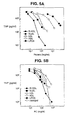
- Figures 5A and 5B show results obtained when various compositions were tested in a model which determined the neutralisation of endotoxin via determining TNF release in a human whole blood model.
- Figure 5A shows the role of protein, and 5B that of phospholipid.
- the compositions tested included natural lipoproteins (VLDL, LDL, HDL), reconstituted HDL (“R-HDL”), and INTRALIPID® compositions, as well as emulsions containing phospholipid and protein.
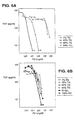
- Figures 6A and 6B compare the role of triglyceride (a neutral lipid), and phosphatidylcholine, a phospholipid, in the same model.
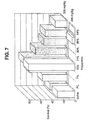
- Figure 7 presents information on toxicity associated with administration of various PC and PC/TG compositions in a mouse model, using a 55% lethality model where E . coli LPS is administered.
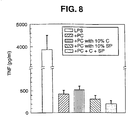
- Figure 8 shows data comparable to that secured for the human whole blood assay, supra , but using phospholipid with unesterified cholesterol, sphingomyelin, or mixtures of both, in pace of triglycerides.
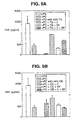
- Figures 9A and 9B show results comparable to those shown in figures 5A and 5B, except that in these new figures, phospholipid, unesterified cholesterol and/or sphingomyelin are mixed with triglycerides or esterified cholesterol as the neutral lipid.
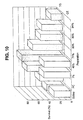
- Figure 10 compares results obtained from cholesterol ester and triglyceride containing emulsions, in the in vivo mouse model.
- FIG 11 graphs the theoretical amounts of triglycerides released into the blood following administration of various TG containing compositions, with toxicity thresholds.
- TPN stands for “total parenteral nutrition”
- RI stands for compositions in accordance with the invention.
- R-HDL high density lipoprotein
- VLDL natural plasma lipoproteins
- LDS lipoprotein deficient serum
- INTRALIPID® a mixture of triglycerides and phospholipids
- HBSS Hank's Balanced Salt Solution
- Table 1 which follows, compares the compositions of the materials tested.
- Figures 5A and 5B present the results. Data are plotted as amount of TNF- ⁇ produced, plotted against concentration of added protein (figure 5A), and phospholipid (figure 5B). Logarithmic scales were used, in order to display the wide range of concentrations used, with 10° equal to 1 mg/ml. All whole blood incubations contained 10 ng/ml of E. coli 0111:B4 LPS, supplemented with one of the compositions, as the key for figures 5A and 5B show.
- protein free lipid emulsions containing different amounts of neutral lipid, were tested in human whole blood.
- the same in vitro human whole blood assay as set forth in example 2 were used.
- All particles described herein were made via the same protocol, which involved mixing a phospholipid, sphingomyelin or phosphatidylcholine, triolein, and/or unesterified cholesterol ester, dissolved in chloroform, and weighing it into a flask. Vitamin E (0.02% w/v) was added as antioxidant. A dry lipid film was then prepared by blowing nitrogen or argon gas over the sample. A volume of non pyrogenic saline was then added to the flask, followed by mixing on a vortex mixer until all lipid was suspended. The solution was then homogenised in a high pressure homogenise.
- compositions contained (by weight) 7% triglyceride ("TG"), 45% TG, 89% TG, 94% TG, R-HDL, or phospholipid without TG, (shown in figure 6B only).
- TG 7% triglyceride
- An 89% TG composition is a 10% INTRALIPID® formulation, while 94% TG refers to 20% INTRALIPID.
- PC egg phosphatidylcholine
- triolein were used.
- mice were injected, in bolus form, with sufficient amounts of the formulations described in example 3 as well as others (pure phosphatidylcholine, 7% TG, 25% TG, 45% TG, 71% TG, 81% TG, 89% TG, 94% TG), or a saline control, to provide does of phospholipid (either 200 mg/kg or 400 mg/kg), together with 25 mg/kg of E. coli 0111:B4 LPS.
- the control group received intravenous physiological saline in a volume sufficient to match the volume of emulsion. Survival after 72 hours is presented in figure 7. Of 344 animals in control groups, 155 survived.
- phospholipids are in active agent useful in inhibiting endotoxemia.
- non-polar lipids other than triglycerides may form emulsions with phospholipids other than PC suggested that others may be tried.
- exemplary are spingomyelin (another phospholipid), and unesterified cholesterol (a polar neutral lipid), and mixtures of these. So, too, esterified cholesterol (an nonpolar ester), squalene (a hydrocarbon), and vitamin E (a nonpolar antioxidant) may be used.
- a series of experiments were designed to test these, using the human whole blood assay of example 2, supra, and the mouse survival assay of example 4.
- Emulsions were prepared, in the manner described supra , using pure phosphatidylcholine, phosphatidylcholine with 10% (wt/wt) unesterified cholesterol, 10% (wt/wt) sphingomyelin, or 10% total of a mix of both. Emulsions were added to whole blood, at a concentration of 100 mg/dl, with reference to PC, and 10 ng/ml of LPS. The mixture was incubated, and TNF- ⁇ release measured.
- TNF- ⁇ production was substantially reduced with PC alone.
- Emulsion Composition PC with 45% TG 55: 45 PC + TG + C 54.4: 45.3: 0.3 PC+TG+SP 51.6: 43.0: 5.4 PC + TG + C + SP 51.4: 42.9: 0.3: 5.4 PC + CE 54.5: 45.5 PC+CE+C 54.4: 45.3: 0.3 PC + CE + SP 51.6: 43.0: 5.4 PC + CE + C + SP 51.5: 42.9: 0.3: 5.4
- FIGS 9A and 9B display the results.
- the LPS concentration used 10 ng/ml, which is a clinically relevant concentration of endotoxin.
- the cholesterol ester containing emulsions are less effective than are TG containing emulsions, while those emulsions containing unesterified cholesterol did not suppress TNF- ⁇ production.
- Cholesterol ester containing emulsions were tested in an in vivo model (i.e., that used in example 4), with a lethal dose of endotoxin.
- Emulsions were prepared with PC and TG, or PC and cholesterol ester (CE), and were administered to provide a single bolus dose of 200 mg/kg of PC, together with 25 mg/kg of E. coli O111: B4 LPS (a lethal dose), through the tail vein.
- Control groups received intravenous physiological saline in a volume to match the volume of emulsion.
- Protein-free emulsions of phospholipid with triglyceride effectively block TNF- ⁇ production in whole blood stimulated with LPS.
- these emulsions might also be effective in vivo if they can be administered safely in doses that provide protective concentrations of phospholipid in plasma.
- Our previous experiments with R-HDL suggest that the minimum dose of phospholipid is approximately 200 mg/kg. Using this dose and a plasma volume of 4.5% of body weight, one can calculate the concentration of triglyceride expected in plasma following administration of a series of emulsions with increasing triglyceride content. The result is shown in figure 11 as a smooth line curving upward with increasing weight percent TG.
- Plasma TG concentrations rarely rise above 1000 mg/dl in healthy adults even after a fatty meal. Pancreatitis is reported in patients with plasma TG above 2000 mg/dl (Farmer, et al., Amer. J. Med. 54: 161-164 (1973); Krauss, et al., Amer. J. Med. 62: 144-149 (1977); Glueck, et al., J. Lab. Clin. Med. 123: 59-61). Plasma TG above 4000 mg/dl is extremely rare and cause for serious concern. The last two thresholds are shown by horizontal lines in the figure above.
- INTRALIPID® in a dose to provide 200 mg/kg phospholipid is expected to raise plasma TG concentrations (see the two open circles) well above the safe limits.
- administration of emulsions containing, 7%, 45%, 71% or 78% raises plasma TG to 136, 477, 1300 or 2000 mg/dl respectively.
- Emulsions with TG content up to ⁇ 50% are expected to be free of toxicity from TG.
- formulations were prepared using a Microfluidiser high pressure homogeniser. This apparatus facilitates scale up.
- Sample was recirculated through the microfluidiser, with "one pass” being defined as the amount of time it takes to pump all sample through the machine.
- the sample was circulated for 20 passes, to produce a homogenised sample.
- Dextrose was added to a final concentration of 5%.
- Endotoxin purified from E . coli 0111:B4 40 mg/kg
- emulsion as discussed infra (200 mg phosphatidylcholinelkg)
- Those mice which received cholate alone were given a volume of sodium cholate equal to the cholate/EML (emulsion) preparation, at the same cholate concentration.
- the control mice received the same volume of 5% dextrose, so as to match plasma osmolality.
- the results are set forth in the Table which follows immediately.
- the emulsion is the phosphatidylcholine/7% triglyceride emulsion described in the preceding examples.
- Sodium cholate when used, was added at the indicated concentration, to the raw materials, prior to the emulsification of the materials. Protection of Mice from Lethal Endotoxin Challenge 7% TG + CA 18mM CA Time Control 7% TG 9mM 18mM 36mM no PC or TG +PC hrs Survivors (N) 0 28 28 8 16 8 8 8 24 9 12 4 15 8 8 8 48 5 10 2 15 8 8 72 2 5 1 15 8 8 8 96 1 0 1 15 8 7 8
- weight percentage of the emulsions are as follows. When 9mM cholate was used, the percentages by weight relative to the emulsion are 7% cholate, 6.1% triglyceride, and 86.9% phosphoatidylcholine. At 18 mM cholate, the weight percentages are 13.1% cholate, 5.7% triglyceride, and 81.2% phosphatidylcholine. At 36 mM cholate, the relative values are 23.2% cholate, 5% triglyceride, and 71.8% phosphatidycholine.
- bile acids include allodeoxycholic acid, lithocholic acid, hyodeoxycholic acid, hyocholic acid, ⁇ , ⁇ , ⁇ -muricholic acids, murodeoxycholic acid, ursodeoxycholic acid, ursocholic acid, and all of the salts of these, such as their sodium salts or taurine or glycine conjugates. See Hoffman, supra .
- mice were a survival study, using mice as the subject animals.
- the subject animas were divided into four groups.
- the first group received a 5% dextrose solution, and acted as a control.
- the second group received an emulsion of 93% (by weight) phophatidylcholine and 7% (by weight) triglyceride, prepared as described, supra.
- the emulsion contained 5% dextrose, and soy phospholipids at approximately 50 mg/ml of lipid.
- the animals received an emulsion similar to that given to the second group, supplemented with either 18 mM sodium cholate, or 18 mM sodium deoxycholate.
- the protocol used was identical to that set forth in example 9.
- TNF tumor necrosis factor
- the rabbits were divided into three goups, and received 5% dextrose solution, the emulsion of phospholipid and triglyceride (93%/7%), discussed supra , or a 93%/7% emulsion which also contained 18 mM cholic acid. All emulsions were adjusted to 5% dextrose, as in example 10.
- the rabbits received a priming bolus of emulsion and, two hours later, were challenged with 100 ug of E. coli 0111:B4 LPS. Following the priming bolus, the formulations were administered to provide a continuous maintenance infusion, via intravenous administration, of 50 mg of lipid per kilogram of body weight per hour. The intravenous administration was continued for three hours following challenge.
- cholanoic acids or cholanoic acid salts can also be used to achieve the same end as the phospholipids, i.e., the alleviation or prevention of endotoxemia.
- peptide and protein free compositions containing one, or both of a bile acid/bile acid salt and a phospholipid may be used to treat endotoxemia.
- Cholanoic acids are described by, e.g., Hofmann, Hepatology 4 (5): 4S-14S (1984), incorporated by reference. Attention is drawn in particular to page 5S, figures 1 and 2, incorporated by reference, showing the structures characteristic of the cholanoic acids.
- the subject being treated is preferably a human, but the practice of the invention is equally applicable in a veterinary context as well.
- Alleviation refers to treatment to ease the burden of endotoxemia caused by any of the various endotoxins produced by, e.g., gram negative bacteria ( S . tymphimurium , E . coli , etc.).
- Prophylaxis may be accomplished by administering the agent at a point where the subject is in or about to be in, a situation where endotoxin exposure may result. Classically, this occurs during surgery. Thus, a subject who is about to experience a surgical procedure may have the active ingredient administered preparatory to the procedure.
- the effective amount of phospholipid and bile acid combination necessary for treatment of the subject can vary. In generally, a dose up to from about 200 total mg to about 800 mg of phospholipid per kilogram of body weight of the subject is preferred, although the amount may drop, or increase, depending upon the severity of the endotoxemia or the degree of risk in the context of the prophylaxis.
- a dose of from about 10 mg to about 300 mg/kg of body weight, more preferably 15 mg to about 275 mg per kg of body weight is used.
- compositions which also contain neutral lipids It is desirable to administer the bile acid/bile acid salt and phospholipids in compositions which also contain neutral lipids, but this is not necessary, as neutral lipid free emulsions of phospholipids are also envisioned.
- the desirability of combined administration of the phospholipids results from the fact that the neutral lipids and phospholipids associate into particles which resemble the lipoproteins, but differ therefrom in that they contain no protein of peptide components, which are of course, always present in the lipoproteins.
- the phospholipid is a phosphatidylcholine, such as egg yolk phosphatidylcholine, soy based phosphatidylcholine or a sphingolipid.
- a phosphatidylcholine such as egg yolk phosphatidylcholine, soy based phosphatidylcholine or a sphingolipid.
- cholic acid and/or its salts such as sodium cholate, sodium deoxycholate, and sodium chenodeoxycholate.
- the neutral lipids it is preferred to use cholesterol ester or triglyceride, but other neutral lipids, such as squalene or other hydrocarbon oils, di- and mono-glycerides and antioxidants such as vitamin E may also be used.
- compositions can vary, with a bolus or other intravenous forms being especially preferred.
- the composition contains triglyceride, e.g., some care must be given in dosing. It is fairly well known that triglycerides are toxic if administered in too large an amount. The artisan of ordinary skill, however, can easily formulate the compositions so that the risk of triglyceride poisoning is reduce, or eliminated.
- the compositions should contain no more than about 80 weight percent by weight of triglyceride or other neutral lipid, preferably no more than 70 weight percent. Most preferably, the compositions should contain no more than about 50 weight percent, of neutral lipid, when a bolus is administered.
- doses are preferably from about 25 mg/kg of body weight up to about 500 mg/kg of body weight with especially preferred doses being from about 50 mg/kg of body weight to about 100 mg/kg of body weight.
- a dose of from about 100 mg/kg of body weight up to about 1000 mg/kg of body weight are preferred. Doses are generally, however, and will vary depending on the subject and the mode of administration.
- the protein and peptide free formulations require that at least one phospholipid or bile acid/bile acid salt be present.
- phospholipids it is preferred that at leas tone neutral lipid, such as a triglyceride, diglyceride, or monoglyceride be present.
- the compositions may include additionally material such as sterols (e.g., cholesterol, ⁇ -sitosterol), esterified or unesterified lipids (e.g., cholesterol ester or unesterified cholesterol), hydrocarbon oils such as squalene, antioxidants such as vitamin E but these are not required.
- sterols e.g., cholesterol, ⁇ -sitosterol
- esterified or unesterified lipids e.g., cholesterol ester or unesterified cholesterol
- hydrocarbon oils such as squalene
- antioxidants such as vitamin E but these are not required.
- more than one phospholipid, and/or more than one neutral lipid may be used in any such formulation.
- bile acid/bile acid salts these may be used separately, or in combination a phospholipid, a neutral lipid, or both.
- additional materials e.g., phospholipids and neutral lipids
- preferred species are those discussed and mentioned supra.
- Optional additional ingredients include those listed supra .
- compositions useful in treating endotoxemia are a composition containing at least one of each of a bile acid/bile acid salt, a phospholipid, and a neutral lipid, wherein the composition as a whole contains an endotoxemia alleviating amount of active ingredient.
- This composition preferably contains, by weight percent, from about 5% to about 30% by weight bile acid/bile acid salt, from about 3% to about 50% by weight neutral lipid, and from about 10% to about 95% by weight of phospholipid.
- compositions consisting of three components.
- a carrier e.g., a carrier, adjuvant, optional ingredients such as those discussed supra.
- the percentage by weight relative to the entire composition will drop. It is to be borne in mind that such therapeutic compositions are always protein free and peptide free.
- compositions which do not contain a bile acid or a bile acid salt such protein free, peptide free compositions contain, preferably, at least about 3% by weight of a neutral lipid, up to about 50% by weight neutral lipid, the balance being at least one phospholipid.
- the neutral lipid is a triglyceride, but may be any of the additional neutral lipids discussed supra.
- the phospholipid is preferably a phosphatidylcholine.
Landscapes
- Health & Medical Sciences (AREA)
- Chemical & Material Sciences (AREA)
- Life Sciences & Earth Sciences (AREA)
- Medicinal Chemistry (AREA)
- General Health & Medical Sciences (AREA)
- Organic Chemistry (AREA)
- Pharmacology & Pharmacy (AREA)
- Animal Behavior & Ethology (AREA)
- Public Health (AREA)
- Veterinary Medicine (AREA)
- Nuclear Medicine, Radiotherapy & Molecular Imaging (AREA)
- General Chemical & Material Sciences (AREA)
- Chemical Kinetics & Catalysis (AREA)
- Epidemiology (AREA)
- Engineering & Computer Science (AREA)
- Bioinformatics & Cheminformatics (AREA)
- Toxicology (AREA)
- Genetics & Genomics (AREA)
- Zoology (AREA)
- Dispersion Chemistry (AREA)
- Molecular Biology (AREA)
- Biophysics (AREA)
- Biochemistry (AREA)
- Gastroenterology & Hepatology (AREA)
- Proteomics, Peptides & Aminoacids (AREA)
- Communicable Diseases (AREA)
- Oncology (AREA)
- Diabetes (AREA)
- Hematology (AREA)
- Medicinal Preparation (AREA)
- Pharmaceuticals Containing Other Organic And Inorganic Compounds (AREA)
- Medicines That Contain Protein Lipid Enzymes And Other Medicines (AREA)
- Medicines Containing Material From Animals Or Micro-Organisms (AREA)
Abstract
Description
- This invention related to the treatment of endotoxin related endotoxemia. More particularly, it relates to the treatment of such poisoning via administration of various compositions which act to neutralise and/or remove endotoxins from the organism, as well as prophylaxis utilising these compositions.
- Endotoxic shock is a condition, often fatal, provoked by the release of lipopolysaccharide (LPS) from the outer membrane of most gram negative bacterial (e.g., Escherichia coli; Salmonella tymphimurium). The structure of the bacterial LPS has been fairly well elucidated, and a unique molecule, referred to as lipid A, which is linked to acyl chains via lipid A molecule's glucosamine backbone. See Raetz, Ann. Rev. Biochem. 59: 129-170 (1990) in this regard.
- The lipid A molecule serves as membrane anchor of a lipopolysaccharide structure ("LPS") and it is the LPS which is implicated in the development of endotoxic shock. It should be pointed out that LPS molecules are characterised by a lipid A type structure and a polysaccharide portion. This latter moiety may vary in molecular details in different LPS molecules, but it will retain the general structural motifs characteristic of endotoxins. It would be incorrect to say that the LPS molecule is the same from bacteria to bacteria (see Raetz, supra). It is common in the art to refer to the various LPS molecules as "endotoxins", and this term will be used hereafter to refer to LPS molecules collectively.
- In U.S. Patent No. 5,128,318 the disclosure of which is incorporated by reference, it was taught that reconstituted particles containing both an HDL associated apolipoprotein and a lipid capable of binding an endotoxin to inactivate it could be used as effective materials for alleviating endotoxin caused toxicity.
- In the parent and grandparent applications cited in the Related Application section and incorporated by reference herein, it was disclosed that various other materials may be used to treat endotoxin caused toxicity. Specifically, it was found that apolipoproteins are not required in reconstituted particles, and that the reconstituted particle may contain a peptide and a lipid wherein the peptide is not an apolipoprotein.
- It was also found that at least some individuals possess native levels of apoliprotein which are higher than normal levels such that effective endotoxemia therapy may be effectuated by administering reconstituted particles containing no apolipoprotein or peptide, but containing the lipid of the disclosure.
- In addition, the invention in these applications involved the use of the reconstituted particles and the components discussed herein for prophylaxis against endotoxin caused toxicity, by administering prophylactically effective amounts to subjects in need of prophylaxis. Such subjects include patients suffering from infections or recovering from surgery. These patients sometimes have very low plasma HDL levels, sometimes as little as 20% of normal levels.
- It is highly desirable, in these cases, for early prophylaxis with HDL, so as to compensate for these drops.
- It has now been found, quite surprisingly, that phospholipids may be used alone, or in combination with additional materials, such as neutral lipids, cholates, etc., as effective agents to alleviate and/or prevent endotoxemia. Accordingly, in a first aspect, the invention provides the use of a peptide free, protein free pharmaceutical composition comprising a cholanoic acid or cholanoic acid salt, a phospholipid and a neutral lipid in the manufacture of a medicament for the treatment or prophylaxis of a human or animal suffering from endotoxemia.
- In a second aspect, the invention provides a protein free and peptide free pharmaceutical composition for intravenous administration, comprising a cholanoic acid or cholanoic acid salt, a phospholipid, and a neutral lipid, wherein the neutral lipid is present at from 3% up to 50% relative to the total amount of lipid.
- In a third aspect, the invention provides a protein free and peptide free pharmaceutical composition comprising a bile acid or bile acid salt, a phospholipid, and a neutral lipid, wherein the composition comprises from 5% to 30% by weight bile acid or bile acid salt from 3% to 50% by weight of neutral lipid and from 10% to 95% by weight of phospholipid, and wherein the composition is an emulsion.
- It is especially preferred to use phosphatidylcholines ("PC" hereafter), either alone, or in combination with other phospholipids, such as sphingolipids, in compositions which are essentially free of peptides and proteins, such as apolipoproteins or peptides derived therefrom. Neutral lipids such as mono-, di-, and triglycerides may be combined with the phospholipids, as long as the total amount of neutral lipids is below certain weight percents when the compositions are used in the form of an intravenous bolus. When used in other forms of administration, such as intravenously for example, by continuous infusion, the weight percents are not so critical, but are desirable.
- Particularly preferred embodiments of the invention include emulsions where a bile acid, or a bile salt, is used together with a phospholipid and a neutral lipid.
- Further preferred embodiments of the present invention are set out in the appended sub-claims.
- The efficacy of bile acids and bile acid salts, which are cholates, in the treatment of endotoxemia is shown herein. These bile acids may be used alone, or in combination with one or more phospholipids, and/or neutral lipids, such as a phosphatidylcholine, and/or a triglyceride.
- The invention is described in greater details in the disclosure which follows.
- Figures 5A and 5B show results obtained when various compositions were tested in a model which determined the neutralisation of endotoxin via determining TNF release in a human whole blood model. Figure 5A shows the role of protein, and 5B that of phospholipid. The compositions tested included natural lipoproteins (VLDL, LDL, HDL), reconstituted HDL ("R-HDL"), and INTRALIPID® compositions, as well as emulsions containing phospholipid and protein.
- Figures 6A and 6B compare the role of triglyceride (a neutral lipid), and phosphatidylcholine, a phospholipid, in the same model.
- Figure 7 presents information on toxicity associated with administration of various PC and PC/TG compositions in a mouse model, using a 55% lethality model where E. coli LPS is administered.
- Figure 8 shows data comparable to that secured for the human whole blood assay, supra, but using phospholipid with unesterified cholesterol, sphingomyelin, or mixtures of both, in pace of triglycerides.
- Figures 9A and 9B show results comparable to those shown in figures 5A and 5B, except that in these new figures, phospholipid, unesterified cholesterol and/or sphingomyelin are mixed with triglycerides or esterified cholesterol as the neutral lipid.
- Figure 10 compares results obtained from cholesterol ester and triglyceride containing emulsions, in the in vivo mouse model.
- Figure 11 graphs the theoretical amounts of triglycerides released into the blood following administration of various TG containing compositions, with toxicity thresholds. "TPN" stands for "total parenteral nutrition" while "RI" stands for compositions in accordance with the invention.
- Factors which affect the LPS-mediated stimulation of TNF-∝ while preserving the integrity of interaction between plasma proteins, and cellular elements of blood, can be appropriately studies in an in vitro, human whole blood system. Such a system was used to determine which of the components of lipoproteins is important in neutralising LPS.
- Materials tested were reconstituted high density lipoprotein (R-HDL), natural plasma lipoproteins (VLDL, LDS, HDL), lipoprotein deficient serum (LPDS), and the triglyceride
rich emulsion 20% INTRALIPID® (a mixture of triglycerides and phospholipids). - Blood was collected in a heparinized tube, diluted with Hank's Balanced Salt Solution ("HBSS" hereafter), or the material to be tested, dissolved in HBSS. The resulting material was transferred to Starstedt tubes (250 ul/tube). LPS was dissolved in pyrogen free saline containing 10 mM HEPES, and added (2.5 ul) to a final concentration of 10 ng/ml. After incubation for four hours at 37°C, tubes were chilled to 4°C, followed by centrifugation at 10,000xg for 5 minutes. Supernatant was collected, and assayed for determination of TNF-∝, using a commercially available ELISA.
- Table 1, which follows, compares the compositions of the materials tested. Figures 5A and 5B present the results. Data are plotted as amount of TNF-∝ produced, plotted against concentration of added protein (figure 5A), and phospholipid (figure 5B). Logarithmic scales were used, in order to display the wide range of concentrations used, with 10° equal to 1 mg/ml. All whole blood incubations contained 10 ng/ml of E. coli 0111:B4 LPS, supplemented with one of the compositions, as the key for figures 5A and 5B show.
- The fact that the materials differ in effectiveness when protein content is plotted (figure 5A), while being very similar when phospholipid content is plotted (figure 5B) suggest that the phospholipid is the important component. This is confirmed by the finding that a protein free lipid emulsion is more effective than is natural HDL, but less effective than R-HDL. Protein does not appear important to the neutralisation.
Composition of natural lipoproteins and reconstituted HDL Lipoprotein TC TG PC Protein Class Density (g//ml) Weight % VLDL <1.006 22 53 18 7 LDL 1.007-1.063 48 11 22 20.9 HDL 1.063-1.21 18 8 22 52 R-HDL 1.063-1.21 - - 79 21 LPDS >1.21 0 0 2 98 Intralipid - 1 93 6 0 - As the next step, protein free lipid emulsions, containing different amounts of neutral lipid, were tested in human whole blood. The same in vitro human whole blood assay as set forth in example 2 were used.
- All particles described herein were made via the same protocol, which involved mixing a phospholipid, sphingomyelin or phosphatidylcholine, triolein, and/or unesterified cholesterol ester, dissolved in chloroform, and weighing it into a flask. Vitamin E (0.02% w/v) was added as antioxidant. A dry lipid film was then prepared by blowing nitrogen or argon gas over the sample. A volume of non pyrogenic saline was then added to the flask, followed by mixing on a vortex mixer until all lipid was suspended. The solution was then homogenised in a high pressure homogenise. Samples containing phosphatidylcholine (PC), with or without triolein, were cycled through the homogenise 10 times at 20,000 psi. Samples containing cholesterol ester with one or more other lipids were cycled through 15-20 times at 30,000 psi. Homogenised solutions were filtered through 0.45 µm syringe filters, and the filtrate was stored at room temperature until used (within three days). Figures 6A and 6B present these results. In these studies, LPS-dependent, TNF-∝ production is plotted against concentration of added triglyceride (figure 6A), or phospholipid (figure 6B). The compositions, as indicated by the key, contained (by weight) 7% triglyceride ("TG"), 45% TG, 89% TG, 94% TG, R-HDL, or phospholipid without TG, (shown in figure 6B only). An 89% TG composition is a 10% INTRALIPID® formulation, while 94% TG refers to 20% INTRALIPID. In all other tests, egg phosphatidylcholine (PC), and triolein were used.
- These results show that the protein free compositions when compared via triglyceride content, are very different. They are very similar when tested via phospholipid (PC) content. This confirms the role of phospholipid, especially since phospholipid alone is effective, but less so than emulsions containing up to 45% TG.
- The work then proceeded to in vivo experiments in a mouse model, which is accepted as a reliable system for predicting human efficacy.
- In these experiments, mice were injected, in bolus form, with sufficient amounts of the formulations described in example 3 as well as others (pure phosphatidylcholine, 7% TG, 25% TG, 45% TG, 71% TG, 81% TG, 89% TG, 94% TG), or a saline control, to provide does of phospholipid (either 200 mg/kg or 400 mg/kg), together with 25 mg/kg of E. coli 0111:B4 LPS. The control group received intravenous physiological saline in a volume sufficient to match the volume of emulsion. Survival after 72 hours is presented in figure 7. Of 344 animals in control groups, 155 survived.
- PC alone had a modest protective effect, not statistically significant at the 95% confidence level, while 7%, 45% and 71% TG compositions significantly improved survival. The 80% and 89% TG compositions were marginally effective, while the 94% TG decreased survival.
- When the dose was increased to provide 400 mg/kg of PC both the 89% and 94% TG emulsions significantly decreased survival time, probably due to TG poisoning, as explained infra.
- The work described in examples 2-4 established that phospholipids are in active agent useful in inhibiting endotoxemia. The fact that non-polar lipids other than triglycerides may form emulsions with phospholipids other than PC suggested that others may be tried. Exemplary are spingomyelin (another phospholipid), and unesterified cholesterol (a polar neutral lipid), and mixtures of these. So, too, esterified cholesterol (an nonpolar ester), squalene (a hydrocarbon), and vitamin E (a nonpolar antioxidant) may be used. A series of experiments were designed to test these, using the human whole blood assay of example 2, supra, and the mouse survival assay of example 4.
- Emulsions were prepared, in the manner described supra, using pure phosphatidylcholine, phosphatidylcholine with 10% (wt/wt) unesterified cholesterol, 10% (wt/wt) sphingomyelin, or 10% total of a mix of both. Emulsions were added to whole blood, at a concentration of 100 mg/dl, with reference to PC, and 10 ng/ml of LPS. The mixture was incubated, and TNF-∝ release measured.
- The results are shown in Figure 8. TNF-∝ production was substantially reduced with PC alone. Emulsions containing unesterified cholesterol, sphingoyelin, or the mix of both, were also suppressive of TNF-∝ release.
- The whole blood assay was also used to determine the effect of unesterified cholesterol and/or sphingomyelin to neutral lipid containing emulsions. Again, the emulsions were added at 100 mg/dl PC. The various compositions (wt/wt) are set forth in the following table.
Emulsion Composition PC with 45% TG 55: 45 PC + TG + C 54.4: 45.3: 0.3 PC+TG+SP 51.6: 43.0: 5.4 PC + TG + C + SP 51.4: 42.9: 0.3: 5.4 PC + CE 54.5: 45.5 PC+CE+C 54.4: 45.3: 0.3 PC + CE + SP 51.6: 43.0: 5.4 PC + CE + C + SP 51.5: 42.9: 0.3: 5.4 - Figures 9A and 9B display the results. PC emulsions made with either neutral lipid, with our without additional polar lipids, demonstrated inhibition. Again, the LPS concentration used 10 ng/ml, which is a clinically relevant concentration of endotoxin. The cholesterol ester containing emulsions are less effective than are TG containing emulsions, while those emulsions containing unesterified cholesterol did not suppress TNF-∝ production.
- Cholesterol ester containing emulsions were tested in an in vivo model (i.e., that used in example 4), with a lethal dose of endotoxin. Emulsions were prepared with PC and TG, or PC and cholesterol ester (CE), and were administered to provide a single bolus dose of 200 mg/kg of PC, together with 25 mg/kg of E. coli O111: B4 LPS (a lethal dose), through the tail vein. Control groups received intravenous physiological saline in a volume to match the volume of emulsion.
- In figure 10, the data compare the results from the CE and TG containing emulsions. Each emulsion was tested in a minimum of two experiments, using a total of 16 or more animals.
- As shown, emulsions containing 7% or 45% CE (wt%) significantly improved survival. These results, taken wit those of example 6, show that CE can be substituted for TG to create emulsions that neutralise endotoxin.
- Protein-free emulsions of phospholipid with triglyceride effectively block TNF-∝ production in whole blood stimulated with LPS. In theory, these emulsions might also be effective in vivo if they can be administered safely in doses that provide protective concentrations of phospholipid in plasma. Our previous experiments with R-HDL suggest that the minimum dose of phospholipid is approximately 200 mg/kg. Using this dose and a plasma volume of 4.5% of body weight, one can calculate the concentration of triglyceride expected in plasma following administration of a series of emulsions with increasing triglyceride content. The result is shown in figure 11 as a smooth line curving upward with increasing weight percent TG. Plasma TG concentrations rarely rise above 1000 mg/dl in healthy adults even after a fatty meal. Pancreatitis is reported in patients with plasma TG above 2000 mg/dl (Farmer, et al., Amer. J. Med. 54: 161-164 (1973); Krauss, et al., Amer. J. Med. 62: 144-149 (1977); Glueck, et al., J. Lab. Clin. Med. 123: 59-61). Plasma TG above 4000 mg/dl is extremely rare and cause for serious concern. The last two thresholds are shown by horizontal lines in the figure above. Administration of either 10% or 20% INTRALIPID® in a dose to provide 200 mg/kg phospholipid is expected to raise plasma TG concentrations (see the two open circles) well above the safe limits. By contrast, administration of emulsions containing, 7%, 45%, 71% or 78% (solid squares left to right) raises plasma TG to 136, 477, 1300 or 2000 mg/dl respectively. Emulsions with TG content up to ∼50% are expected to be free of toxicity from TG.
- The efficacy of combinations of phospholipid and bile acid, i.e., sodium cholate, was tested in the same type of experiment set forth in the previous examples.
- The procedure by which the formulations administered to the test animals was prepared, however, differed.
- In this example, and in the examples which follow, formulations were prepared using a Microfluidiser high pressure homogeniser. This apparatus facilitates scale up.
- Either of liquid triolein or liquid so triglyceride was weighed into an appropriate amount of water, or water plus 9 mM, 18 mM or 36 mM sodium cholate. Solid granular phophatidylcholine was weighed onto weighing paper, and then added, slowly, t the solution, while stirring. It requires anywhere from 3-5 minutes to disperse the lipid. following dispersion, the materials were poured into the microfluidiser. The device uses hydraulic pressure to actuate a pump which, in turn, directs two opposing jets of sample at each other. The pressure can be as high as 25,000 pounds per square inch. Upon collision, the jets are forced through a plus sign shaped orifice, thereby homogenising the sample.
- Sample was recirculated through the microfluidiser, with "one pass" being defined as the amount of time it takes to pump all sample through the machine. The sample was circulated for 20 passes, to produce a homogenised sample. Dextrose was added to a final concentration of 5%.
- Endotoxin purified from E. coli 0111:B4 (40 mg/kg), and emulsion, as discussed infra (200 mg phosphatidylcholinelkg), via intravenous injection through the tail vein. Those mice which received cholate alone were given a volume of sodium cholate equal to the cholate/EML (emulsion) preparation, at the same cholate concentration. The control mice received the same volume of 5% dextrose, so as to match plasma osmolality.
- The results are set forth in the Table which follows immediately. The emulsion is the phosphatidylcholine/7% triglyceride emulsion described in the preceding examples. Sodium cholate, when used, was added at the indicated concentration, to the raw materials, prior to the emulsification of the materials.
Protection of Mice from Lethal Endotoxin Challenge 7% TG + CA 18mM CA Time Control 7% TG 9mM 18mM 36mM no PC or TG +PC hrs Survivors (N) 0 28 28 8 16 8 8 8 24 9 12 4 15 8 8 8 48 5 10 2 15 8 8 8 72 2 5 1 15 8 8 8 96 1 0 1 15 8 7 8 - For convenience, weight percentage of the emulsions are as follows. When 9mM cholate was used, the percentages by weight relative to the emulsion are 7% cholate, 6.1% triglyceride, and 86.9% phosphoatidylcholine. At 18 mM cholate, the weight percentages are 13.1% cholate, 5.7% triglyceride, and 81.2% phosphatidylcholine. At 36 mM cholate, the relative values are 23.2% cholate, 5% triglyceride, and 71.8% phosphatidycholine.
- It should be noted that the amount of LPS administered in these experiments (40 mg/kg), is much higher than the amount used for lethality studies in the prior experiments. The intent of these higher doses is to overwhelm any protective effect attributable to phosphatidylcholine and/or triglyceride. Thus, the conclusion to be reached following these experiments is that there is a protective effect attributable to the bile acid salt, sodium cholate.
- Not presented herein are studies carried out using other bile acid salts and taurine containing bile salts. Additional examples of bile acids include allodeoxycholic acid, lithocholic acid, hyodeoxycholic acid, hyocholic acid, α, β, ω-muricholic acids, murodeoxycholic acid, ursodeoxycholic acid, ursocholic acid, and all of the salts of these, such as their sodium salts or taurine or glycine conjugates. See Hoffman, supra.
- Further studies were then carried out, the first of which was a survival study, using mice as the subject animals.
- In the survival study, the subject animas were divided into four groups. The first group received a 5% dextrose solution, and acted as a control. The second group received an emulsion of 93% (by weight) phophatidylcholine and 7% (by weight) triglyceride, prepared as described, supra. The emulsion contained 5% dextrose, and soy phospholipids at approximately 50 mg/ml of lipid.
- In the third and fourth group, the animals received an emulsion similar to that given to the second group, supplemented with either 18 mM sodium cholate, or 18 mM sodium deoxycholate. In this experiment, the protocol used was identical to that set forth in example 9.
- Survival was measured 72 hours after challenge, and is summarised in the following table:
Effect of Adding Bile acid to 7% Triglyceride Emulsion on 72 hr Survival in Mice Group N Survival p value Vs group % 1 2 3 1 5% Dextrose 28 4 - - - 2 7% TG 64 8 NS - - 3 Sodium Cholate + 7%TG 16 94 0.00001 0.00001 - 4 Sodium Deoxycholate + 7% TG 8 75 0.0001 0.00001 NS Note that the statistical significance of between group survival comparisons was tested by the generalised Wilxox method, using a computer program. Comparisons against group I controls are listed under "1", comparisons against group 2 animals, treated with 7% emulsion are listed under "2", and comparison against group 3 animals, treated with emulsion plus sodium cholate, are listed under "3". - Both the percentage of survival, and the statistical analysis show that the clear, unexpected superiority of the bile acid salt containing formulations.
- A second set of experiments used a rabbit model. In this model, release of TNF (tumor necrosis factor)-α was determined.
- The rabbits were divided into three goups, and received 5% dextrose solution, the emulsion of phospholipid and triglyceride (93%/7%), discussed supra, or a 93%/7% emulsion which also contained 18 mM cholic acid. All emulsions were adjusted to 5% dextrose, as in example 10. The rabbits received a priming bolus of emulsion and, two hours later, were challenged with 100 ug of E. coli 0111:B4 LPS. Following the priming bolus, the formulations were administered to provide a continuous maintenance infusion, via intravenous administration, of 50 mg of lipid per kilogram of body weight per hour. The intravenous administration was continued for three hours following challenge.
- Blood was taken from the rabbits at base line, 30 minutes after the administration of primary bolus, and every hour over the five hours of administration.
- In the table which follows, the peak TNF-α values are presented. These occurred two hours after administration of the endotoxin.
- Statistical significance was determined, using the well know Student's test. As the table shows, the TNF-α values were significantly reduced following the administration of 18 mM cholic acid.
Effect of Emulsions on TNF-α Production in Rabbits Emulsion TNF- Significance ng/ml N P 5% Dextrose Control 134 ± 70 9 7% TG Emulsion 68 ± 5 5 <0.05 7% TG Emulsion + 18 mM Cholic acid 39 ± 20 4 <0.01 - The foregoing examples detail the invention which involves, in one aspect, the alleviation or prevention of endotoxemia in a subject via administering an effective amount of a phospholipid with which an endotoxin associates. The association of phospholipid and endotoxin is then removed from the subject via standard biological processes well known to anyone familiar with processes via which lipoprotein particles are removed. Association of the endotoxin with the phospholipid inactivates it.
- The examples also show that administration of a member of the family of cholanoic acids or cholanoic acid salts, such as a bile acid or a bile acid salt can also be used to achieve the same end as the phospholipids, i.e., the alleviation or prevention of endotoxemia. Thus, peptide and protein free compositions containing one, or both of a bile acid/bile acid salt and a phospholipid may be used to treat endotoxemia. Cholanoic acids are described by, e.g., Hofmann, Hepatology 4 (5): 4S-14S (1984), incorporated by reference. Attention is drawn in particular to page 5S, figures 1 and 2, incorporated by reference, showing the structures characteristic of the cholanoic acids.
- The subject being treated is preferably a human, but the practice of the invention is equally applicable in a veterinary context as well.
- "Alleviation" as used herein refers to treatment to ease the burden of endotoxemia caused by any of the various endotoxins produced by, e.g., gram negative bacteria (S. tymphimurium, E. coli, etc.). Prophylaxis may be accomplished by administering the agent at a point where the subject is in or about to be in, a situation where endotoxin exposure may result. Classically, this occurs during surgery. Thus, a subject who is about to experience a surgical procedure may have the active ingredient administered preparatory to the procedure.
- The effective amount of phospholipid and bile acid combination necessary for treatment of the subject can vary. In generally, a dose up to from about 200 total mg to about 800 mg of phospholipid per kilogram of body weight of the subject is preferred, although the amount may drop, or increase, depending upon the severity of the endotoxemia or the degree of risk in the context of the prophylaxis. For cholanoic acids and salts, such a s the bile acids and their salts, a dose of from about 10 mg to about 300 mg/kg of body weight, more preferably 15 mg to about 275 mg per kg of body weight is used.
- It is desirable to administer the bile acid/bile acid salt and phospholipids in compositions which also contain neutral lipids, but this is not necessary, as neutral lipid free emulsions of phospholipids are also envisioned. The desirability of combined administration of the phospholipids results from the fact that the neutral lipids and phospholipids associate into particles which resemble the lipoproteins, but differ therefrom in that they contain no protein of peptide components, which are of course, always present in the lipoproteins.
- Especially desirable forms of treatment are those where the phospholipid is a phosphatidylcholine, such as egg yolk phosphatidylcholine, soy based phosphatidylcholine or a sphingolipid. For the bile acid/bile acid salt, preferred are cholic acid and/or its salts, such as sodium cholate, sodium deoxycholate, and sodium chenodeoxycholate. With respect to the neutral lipids, it is preferred to use cholesterol ester or triglyceride, but other neutral lipids, such as squalene or other hydrocarbon oils, di- and mono-glycerides and antioxidants such as vitamin E may also be used.
- The form in which the compositions may be administered can vary, with a bolus or other intravenous forms being especially preferred. When a bolus form is used, the composition contains triglyceride, e.g., some care must be given in dosing. It is fairly well known that triglycerides are toxic if administered in too large an amount. The artisan of ordinary skill, however, can easily formulate the compositions so that the risk of triglyceride poisoning is reduce, or eliminated. In generally, when a bolus form is used, the compositions should contain no more than about 80 weight percent by weight of triglyceride or other neutral lipid, preferably no more than 70 weight percent. Most preferably, the compositions should contain no more than about 50 weight percent, of neutral lipid, when a bolus is administered.
- When non-bolus forms are employed, however, such as other intravenous forms, the risk of poisoning is decreased. Nonetheless, the ranges delineated supra are preferred for intravenous, or other forms of administration, although it must be understood that they are not required. For bile acids and bile acid salts, doses are preferably from about 25 mg/kg of body weight up to about 500 mg/kg of body weight with especially preferred doses being from about 50 mg/kg of body weight to about 100 mg/kg of body weight. for phospholipids, a dose of from about 100 mg/kg of body weight up to about 1000 mg/kg of body weight are preferred. Doses are generally, however, and will vary depending on the subject and the mode of administration.
- As indicated, supra, the protein and peptide free formulations require that at least one phospholipid or bile acid/bile acid salt be present. For phospholipids, it is preferred that at leas tone neutral lipid, such as a triglyceride, diglyceride, or monoglyceride be present. The compositions may include additionally material such as sterols (e.g., cholesterol, β-sitosterol), esterified or unesterified lipids (e.g., cholesterol ester or unesterified cholesterol), hydrocarbon oils such as squalene, antioxidants such as vitamin E but these are not required. Of course, more than one phospholipid, and/or more than one neutral lipid may be used in any such formulation. When combinations of neutral lipid and phospholipid are used, the neutral lipid should be present at from about 3% up to about 50% by weight relative to the total amount of lipid in the composition.
- In the case of the bile acid/bile acid salts, these may be used separately, or in combination a phospholipid, a neutral lipid, or both. With respect to these additional materials (e.g., phospholipids and neutral lipids), preferred species are those discussed and mentioned supra. Optional additional ingredients include those listed supra.
- Also as part of the invention are compositions useful in treating endotoxemia. One embodiment of his feature of the invention is a composition containing at least one of each of a bile acid/bile acid salt, a phospholipid, and a neutral lipid, wherein the composition as a whole contains an endotoxemia alleviating amount of active ingredient. This composition preferably contains, by weight percent, from about 5% to about 30% by weight bile acid/bile acid salt, from about 3% to about 50% by weight neutral lipid, and from about 10% to about 95% by weight of phospholipid. Especially preferred are compositions containing from about 10-15% by weight of bile acid/bile acid salt, from about 5% to about 10% by weight of neutral lipid, and the balance of the composition being phospholipid.
- It should be noted that these weight percentages are relative to compositions consisting of three components. When the three component system is combined with, e.g., a carrier, adjuvant, optional ingredients such as those discussed supra, the percentage by weight relative to the entire composition will drop. It is to be borne in mind that such therapeutic compositions are always protein free and peptide free.
- In the case of compositions which do not contain a bile acid or a bile acid salt, such protein free, peptide free compositions contain, preferably, at least about 3% by weight of a neutral lipid, up to about 50% by weight neutral lipid, the balance being at least one phospholipid. Preferably, the neutral lipid is a triglyceride, but may be any of the additional neutral lipids discussed supra. Also, the phospholipid is preferably a phosphatidylcholine.
- Other aspects of the invention will be clear to the skilled artisan and need not be reiterated here.
- It will be understood that the specification and examples are illustrative but not limitative of the present invention and that other embodiments within the spirit and scope of the invention will suggest themselves to those skilled in the art.
Claims (17)
- Use of a protein free, peptide free pharmaceutical composition comprising a cholanoic acid or cholanoic acid salt, a phospholipid and a neutral lipid in the manufacture of a medicament for the treatment or prophylaxis of a human or animal suffering from endotoxemia.
- A use according to claim 1, comprising no more than 80% by weight of a neutral lipid.
- A use according to claim 1 or 2, comprising no more than 70% by weight of a neutral lipid.
- A use according to any one of claims 1-3, comprising no more than 50% by weight of a neutral lipid.
- A use according to any one of claims 1-4, comprising from 3% up to 50% of neutral lipid relative to the total weight of the composition.
- A protein free and peptide free pharmaceutical composition for intravenous administration, comprising a cholanoic acid or cholanoic acid salt, a phospholipid, and a neutral lipid, wherein the neutral lipid is present at from 3% up to 50% relative to the total amount of lipid.
- A pharmaceutical composition according to claim 6, wherein the cholanoic acid or cholanoic acid salt is a bile acid or bile acid salt.
- A protein free and peptide free pharmaceutical composition comprising a bile acid or bile acid salt, a phospholipid, and a neutral lipid, wherein the composition comprises from 5% to 30% by weight bile acid or bile acid salt, from 3% to 50% by weight of neutral lipid and from 10% to 95% by weight of phospholipid, and wherein the composition is an emulsion.
- A pharmaceutical composition according to claim 8, which is suitable for intravenous administration.
- A pharmaceutical composition according to any one of claims 6-9, wherein the phospholipid is a phosphatidylcholine.
- A pharmaceutical composition according to any one of claims 6-9, wherein the phospholipid is a sphingolipid.
- A pharmaceutical composition according to any one of claims 6-9, wherein the neutral lipid is a triglyceride.
- A pharmaceutical composition according to any one of claims 6-9, wherein the neutral lipid is a cholesterol ester.
- A pharmaceutical composition according to any one of claims 7-13, wherein the bile acid salt is selected from sodium cholate, sodium deoxycholate, and sodium chenodeoxycholate.
- A pharmaceutical composition according to claim 14, wherein the bile acid salt is sodium cholate.
- A pharmaceutical composition according to any one of claims 6-10, 12 and 15, wherein the sodium cholate, phosphatidylcholine, and triglyceride have a total weight ratio of 13.1:81.2:5.7 respectively.
- Use of a pharmaceutical composition according to any one of claims 6-16 in the manufacture of a medicament for the treatment or prophylaxis of a human or animal suffering from endotoxemia.
Priority Applications (1)
| Application Number | Priority Date | Filing Date | Title |
|---|---|---|---|
| SI9530695T SI0767666T1 (en) | 1994-08-10 | 1995-08-10 | Methods and compositions useful in prophylaxis and therapy of endotoxin related conditions |
Applications Claiming Priority (5)
| Application Number | Priority Date | Filing Date | Title |
|---|---|---|---|
| US288568 | 1981-07-30 | ||
| US487459 | 1990-03-02 | ||
| US08/288,568 US5506218A (en) | 1992-08-12 | 1994-08-10 | Methods useful in endotoxin based therapy |
| US08/487,459 US5674855A (en) | 1992-08-12 | 1995-06-07 | Methods and compositions useful in prophylaxis and therapy of endotoxin related conditions |
| PCT/US1995/010189 WO1996004916A1 (en) | 1994-08-10 | 1995-08-10 | Methods and compositions useful in prophylaxis and therapy of endotoxin related conditions |
Publications (3)
| Publication Number | Publication Date |
|---|---|
| EP0767666A1 EP0767666A1 (en) | 1997-04-16 |
| EP0767666A4 EP0767666A4 (en) | 1998-10-07 |
| EP0767666B1 true EP0767666B1 (en) | 2003-12-03 |
Family
ID=26965092
Family Applications (1)
| Application Number | Title | Priority Date | Filing Date |
|---|---|---|---|
| EP95930812A Expired - Lifetime EP0767666B1 (en) | 1994-08-10 | 1995-08-10 | Methods and compositions useful in prophylaxis and therapy of endotoxin related conditions |
Country Status (26)
| Country | Link |
|---|---|
| US (1) | US5674855A (en) |
| EP (1) | EP0767666B1 (en) |
| JP (1) | JP3818660B2 (en) |
| CN (1) | CN1137688C (en) |
| AP (1) | AP782A (en) |
| AT (1) | ATE255415T1 (en) |
| AU (1) | AU703861C (en) |
| BG (1) | BG61967B1 (en) |
| BR (1) | BR9508584A (en) |
| CA (1) | CA2196906C (en) |
| CY (1) | CY2514B1 (en) |
| CZ (1) | CZ287614B6 (en) |
| DE (1) | DE69532239T2 (en) |
| DK (1) | DK0767666T3 (en) |
| ES (1) | ES2211915T3 (en) |
| FI (1) | FI118035B (en) |
| HU (1) | HUT77605A (en) |
| NO (1) | NO313786B1 (en) |
| NZ (1) | NZ292315A (en) |
| OA (2) | OA11737A (en) |
| PL (1) | PL182043B1 (en) |
| PT (1) | PT767666E (en) |
| RO (1) | RO115782B1 (en) |
| RU (1) | RU2174839C2 (en) |
| SK (1) | SK282493B6 (en) |
| WO (1) | WO1996004916A1 (en) |
Families Citing this family (21)
| Publication number | Priority date | Publication date | Assignee | Title |
|---|---|---|---|---|
| US6518412B1 (en) | 1997-09-29 | 2003-02-11 | Jean-Louis Dasseux | Gene therapy approaches to supply apolipoprotein A-I agonists and their use to treat dyslipidemic disorders |
| US6046166A (en) | 1997-09-29 | 2000-04-04 | Jean-Louis Dasseux | Apolipoprotein A-I agonists and their use to treat dyslipidemic disorders |
| US6004925A (en) | 1997-09-29 | 1999-12-21 | J. L. Dasseux | Apolipoprotein A-I agonists and their use to treat dyslipidemic disorders |
| US6037323A (en) * | 1997-09-29 | 2000-03-14 | Jean-Louis Dasseux | Apolipoprotein A-I agonists and their use to treat dyslipidemic disorders |
| AU3809900A (en) * | 1999-03-09 | 2000-09-28 | Max-Delbruck-Centrum Fur Molekulare Medizin | Therapy and use of compounds in therapy |
| US20030032674A1 (en) * | 2001-08-13 | 2003-02-13 | Hwang Daniel H. | Use of unsaturated fatty acids to treat severe inflammatory diseases |
| US20040067873A1 (en) | 2002-05-17 | 2004-04-08 | Dasseux Jean-Louis H. | Method of treating dyslipidemic disorders |
| EP1589834B1 (en) * | 2003-02-05 | 2007-04-11 | N.V. Nutricia | Enteral composition for the prevention and/or treatment of sepsis |
| ES2372499T3 (en) | 2004-05-19 | 2012-01-20 | Los Angeles Biomedical Research Institute At Harbor-Ucla Medical Center | USE OF A DETERGENT FOR NON-SURGICAL FAT DISPOSAL. |
| US7754230B2 (en) * | 2004-05-19 | 2010-07-13 | The Regents Of The University Of California | Methods and related compositions for reduction of fat |
| US20060127468A1 (en) | 2004-05-19 | 2006-06-15 | Kolodney Michael S | Methods and related compositions for reduction of fat and skin tightening |
| BRPI0615411A2 (en) * | 2005-08-29 | 2012-12-04 | Sepsicure L L C | use of a bile acid or bile acid salt and a phospholipid |
| GB0522942D0 (en) | 2005-11-10 | 2005-12-21 | Leigh Steven | Dissolution composition |
| US8163699B2 (en) | 2006-06-01 | 2012-04-24 | Montreal Heart Institute | Method for the treatment of valvular disease |
| KR100785656B1 (en) * | 2007-05-14 | 2007-12-17 | 재단법인서울대학교산학협력재단 | Sodium glycocholate or its derivatives used as anti-inflammatory agents |
| RU2351351C1 (en) * | 2007-08-08 | 2009-04-10 | Тихоокеанский Институт Биоорганической Химии Дальневосточного Отделения Российской Академии Наук (Тибох Дво Ран) | Medication increasing non-specific resistance of organism to bacterial endotoxins |
| AU2010213568B2 (en) | 2009-02-16 | 2014-11-20 | Cerenis Therapeutics Holding Sa | Apolipoprotein A-I Mimics |
| US8101593B2 (en) | 2009-03-03 | 2012-01-24 | Kythera Biopharmaceuticals, Inc. | Formulations of deoxycholic acid and salts thereof |
| CA2827643C (en) | 2011-02-18 | 2019-05-07 | Kythera Biopharmaceuticals, Inc. | Treatment of submental fat |
| US8653058B2 (en) | 2011-04-05 | 2014-02-18 | Kythera Biopharmaceuticals, Inc. | Compositions comprising deoxycholic acid and salts thereof suitable for use in treating fat deposits |
| US9023833B2 (en) * | 2012-12-18 | 2015-05-05 | Sepsicure, LLC | Method for treating sepsis in patients with albumin, cholesterol and HDL levels above minimum thresholds |
Family Cites Families (10)
| Publication number | Priority date | Publication date | Assignee | Title |
|---|---|---|---|---|
| US4115313A (en) * | 1974-10-08 | 1978-09-19 | Irving Lyon | Bile acid emulsions |
| DE2556592C2 (en) * | 1975-12-16 | 1986-10-09 | A. Nattermann & Cie GmbH, 5000 Köln | Medicinal preparations based on oily solutions of phospholipids |
| US4314997A (en) * | 1980-10-06 | 1982-02-09 | Edward Shanbrom | Purification of plasma protein products |
| IL63734A (en) * | 1981-09-04 | 1985-07-31 | Yeda Res & Dev | Lipid fraction,its preparation and pharmaceutical compositions containing same |
| CA1237671A (en) * | 1983-08-01 | 1988-06-07 | Michael W. Fountain | Enhancement of pharmaceutical activity |
| JPS6193111A (en) * | 1984-05-28 | 1986-05-12 | Funayama Seizo | Removal of pyrogen |
| US5032585A (en) * | 1987-02-17 | 1991-07-16 | Board Of Regents, The University Of Texas System | Methods and compositions employing unique mixtures of polar and neutral lipids for surfactant replacement therapy |
| AU614465B2 (en) * | 1989-04-05 | 1991-08-29 | Yissum Research Development Company Of The Hebrew University Of Jerusalem | Medicinal emulsions |
| DE4017979A1 (en) * | 1990-06-05 | 1991-12-12 | Meyer Lucas Gmbh & Co | Low cholesterol lipid mixt. used as medicine and for dietary nutrition - contains phosphatidyl choline, phosphatidyl ethanolamine, tri:glyceride(s), and arachidonic and docosa hexa:enoic acid |
| BR9201168A (en) * | 1992-04-02 | 1994-04-12 | Zerbini E J Fundacao | Microemulsions used as a vehicle to carry chemotherapeutic drugs to cancer cells |
-
1995
- 1995-06-07 US US08/487,459 patent/US5674855A/en not_active Expired - Lifetime
- 1995-08-10 AT AT95930812T patent/ATE255415T1/en active
- 1995-08-10 SK SK176-97A patent/SK282493B6/en not_active IP Right Cessation
- 1995-08-10 JP JP50750296A patent/JP3818660B2/en not_active Expired - Fee Related
- 1995-08-10 BR BR9508584A patent/BR9508584A/en not_active IP Right Cessation
- 1995-08-10 RO RO97-00266A patent/RO115782B1/en unknown
- 1995-08-10 EP EP95930812A patent/EP0767666B1/en not_active Expired - Lifetime
- 1995-08-10 NZ NZ292315A patent/NZ292315A/en not_active IP Right Cessation
- 1995-08-10 ES ES95930812T patent/ES2211915T3/en not_active Expired - Lifetime
- 1995-08-10 CN CNB951951734A patent/CN1137688C/en not_active Expired - Lifetime
- 1995-08-10 AU AU34052/95A patent/AU703861C/en not_active Expired
- 1995-08-10 DK DK95930812T patent/DK0767666T3/en active
- 1995-08-10 HU HU9700406A patent/HUT77605A/en unknown
- 1995-08-10 WO PCT/US1995/010189 patent/WO1996004916A1/en not_active Ceased
- 1995-08-10 RU RU97104061/14A patent/RU2174839C2/en active
- 1995-08-10 PT PT95930812T patent/PT767666E/en unknown
- 1995-08-10 CA CA002196906A patent/CA2196906C/en not_active Expired - Lifetime
- 1995-08-10 CZ CZ1997371A patent/CZ287614B6/en not_active IP Right Cessation
- 1995-08-10 DE DE69532239T patent/DE69532239T2/en not_active Expired - Lifetime
- 1995-08-10 PL PL95318593A patent/PL182043B1/en unknown
- 1995-08-10 AP APAP/P/1997/000921A patent/AP782A/en active
- 1995-08-10 OA OA00100167A patent/OA11737A/en unknown
-
1997
- 1997-02-07 OA OA60963A patent/OA10598A/en unknown
- 1997-02-07 NO NO19970582A patent/NO313786B1/en not_active IP Right Cessation
- 1997-02-07 FI FI970534A patent/FI118035B/en not_active IP Right Cessation
- 1997-03-05 BG BG101288A patent/BG61967B1/en unknown
-
2005
- 2005-06-03 CY CY0500036A patent/CY2514B1/en unknown
Also Published As
Similar Documents
| Publication | Publication Date | Title |
|---|---|---|
| US5506218A (en) | Methods useful in endotoxin based therapy | |
| AP782A (en) | Methods and compositions useful in prophylaxis and therapy of endotoxin related conditions. | |
| CA2236422C (en) | Hydrolysis-optimized lipid emulsions and use thereof | |
| US5587366A (en) | Compositions useful in prophylaxis and therapy of endotoxin related conditions | |
| AU2006284990B2 (en) | Method for treatment or prevention of conditions caused by gram-positive bacteria | |
| HK1003709B (en) | Methods and compositions useful in prophylaxis and therapy of endotoxin related conditions | |
| KR100372672B1 (en) | Compositions and methods useful for the prevention and treatment of endotoxin-related diseases | |
| MXPA97000929A (en) | Use and useful compositions in the prophylaxis and therapy of conditions related to endotox | |
| HK1115325B (en) | Method for treatment or prevention of conditions caused by gram-positive bacteria |
Legal Events
| Date | Code | Title | Description |
|---|---|---|---|
| PUAI | Public reference made under article 153(3) epc to a published international application that has entered the european phase |
Free format text: ORIGINAL CODE: 0009012 |
|
| 17P | Request for examination filed |
Effective date: 19970204 |
|
| AK | Designated contracting states |
Kind code of ref document: A1 Designated state(s): AT BE CH DE DK ES FR GB GR IE IT LI LU MC NL PT SE |
|
| AX | Request for extension of the european patent |
Free format text: LT PAYMENT 970204;LV PAYMENT 970204;SI PAYMENT 970204 |
|
| A4 | Supplementary search report drawn up and despatched |
Effective date: 19980820 |
|
| AK | Designated contracting states |
Kind code of ref document: A4 Designated state(s): AT BE CH DE DK ES FR GB GR IE IT LI LU MC NL PT SE |
|
| RAP1 | Party data changed (applicant data changed or rights of an application transferred) |
Owner name: SEPSICURE, L.L.C. |
|
| 17Q | First examination report despatched |
Effective date: 20000831 |
|
| GRAH | Despatch of communication of intention to grant a patent |
Free format text: ORIGINAL CODE: EPIDOS IGRA |
|
| RIC1 | Information provided on ipc code assigned before grant |
Ipc: 7A 61P 31/00 - Ipc: 7A 61K 31/575 - Ipc: 7A 61K 31/66 - Ipc: 7A 61K 31/685 B Ipc: 7A 61K 31/225 B Ipc: 7A 61K 31/56 A |
|
| RIC1 | Information provided on ipc code assigned before grant |
Ipc: 7A 61P 31/00 - Ipc: 7A 61K 31/575 - Ipc: 7A 61K 31/66 - Ipc: 7A 61K 31/685 B Ipc: 7A 61K 31/225 B Ipc: 7A 61K 31/56 A |
|
| GRAS | Grant fee paid |
Free format text: ORIGINAL CODE: EPIDOSNIGR3 |
|
| GRAA | (expected) grant |
Free format text: ORIGINAL CODE: 0009210 |
|
| AK | Designated contracting states |
Kind code of ref document: B1 Designated state(s): AT BE CH DE DK ES FR GB GR IE IT LI LU MC NL PT SE |
|
| AX | Request for extension of the european patent |
Extension state: LT LV SI |
|
| REG | Reference to a national code |
Ref country code: GB Ref legal event code: FG4D |
|
| REG | Reference to a national code |
Ref country code: CH Ref legal event code: EP |
|
| REG | Reference to a national code |
Ref country code: IE Ref legal event code: FG4D |
|
| REF | Corresponds to: |
Ref document number: 69532239 Country of ref document: DE Date of ref document: 20040115 Kind code of ref document: P |
|
| REG | Reference to a national code |
Ref country code: CH Ref legal event code: NV Representative=s name: MOINAS & SAVOYE SA |
|
| REG | Reference to a national code |
Ref country code: GR Ref legal event code: EP Ref document number: 20040400470 Country of ref document: GR |
|
| REG | Reference to a national code |
Ref country code: SE Ref legal event code: TRGR |
|
| REG | Reference to a national code |
Ref country code: DK Ref legal event code: T3 |
|
| REG | Reference to a national code |
Ref country code: PT Ref legal event code: SC4A Free format text: AVAILABILITY OF NATIONAL TRANSLATION Effective date: 20040227 |
|
| REG | Reference to a national code |
Ref country code: HK Ref legal event code: GR Ref document number: 1003709 Country of ref document: HK |
|
| REG | Reference to a national code |
Ref country code: ES Ref legal event code: FG2A Ref document number: 2211915 Country of ref document: ES Kind code of ref document: T3 |
|
| ET | Fr: translation filed | ||
| PLBE | No opposition filed within time limit |
Free format text: ORIGINAL CODE: 0009261 |
|
| STAA | Information on the status of an ep patent application or granted ep patent |
Free format text: STATUS: NO OPPOSITION FILED WITHIN TIME LIMIT |
|
| 26N | No opposition filed |
Effective date: 20040906 |
|
| REG | Reference to a national code |
Ref country code: SI Ref legal event code: IF |
|
| PGFP | Annual fee paid to national office [announced via postgrant information from national office to epo] |
Ref country code: DE Payment date: 20140827 Year of fee payment: 20 Ref country code: GR Payment date: 20140827 Year of fee payment: 20 Ref country code: IE Payment date: 20140827 Year of fee payment: 20 Ref country code: LU Payment date: 20140903 Year of fee payment: 20 Ref country code: MC Payment date: 20140722 Year of fee payment: 20 Ref country code: CH Payment date: 20140827 Year of fee payment: 20 Ref country code: DK Payment date: 20140825 Year of fee payment: 20 Ref country code: NL Payment date: 20140826 Year of fee payment: 20 |
|
| PGFP | Annual fee paid to national office [announced via postgrant information from national office to epo] |
Ref country code: FR Payment date: 20140818 Year of fee payment: 20 Ref country code: SE Payment date: 20140827 Year of fee payment: 20 Ref country code: AT Payment date: 20140721 Year of fee payment: 20 Ref country code: GB Payment date: 20140827 Year of fee payment: 20 Ref country code: ES Payment date: 20140826 Year of fee payment: 20 |
|
| PGFP | Annual fee paid to national office [announced via postgrant information from national office to epo] |
Ref country code: PT Payment date: 20140211 Year of fee payment: 20 Ref country code: IT Payment date: 20140825 Year of fee payment: 20 |
|
| PGFP | Annual fee paid to national office [announced via postgrant information from national office to epo] |
Ref country code: BE Payment date: 20140829 Year of fee payment: 20 |
|
| REG | Reference to a national code |
Ref country code: DE Ref legal event code: R071 Ref document number: 69532239 Country of ref document: DE |
|
| REG | Reference to a national code |
Ref country code: NL Ref legal event code: V4 Effective date: 20150810 |
|
| REG | Reference to a national code |
Ref country code: DK Ref legal event code: EUP Effective date: 20150810 |
|
| REG | Reference to a national code |
Ref country code: PT Ref legal event code: MM4A Free format text: MAXIMUM VALIDITY LIMIT REACHED Effective date: 20150810 |
|
| REG | Reference to a national code |
Ref country code: CH Ref legal event code: PL |
|
| REG | Reference to a national code |
Ref country code: GB Ref legal event code: PE20 Expiry date: 20150809 |
|
| REG | Reference to a national code |
Ref country code: AT Ref legal event code: MK07 Ref document number: 255415 Country of ref document: AT Kind code of ref document: T Effective date: 20150810 |
|
| REG | Reference to a national code |
Ref country code: IE Ref legal event code: MK9A |
|
| REG | Reference to a national code |
Ref country code: SE Ref legal event code: EUG |
|
| PG25 | Lapsed in a contracting state [announced via postgrant information from national office to epo] |
Ref country code: PT Free format text: LAPSE BECAUSE OF EXPIRATION OF PROTECTION Effective date: 20150818 Ref country code: GB Free format text: LAPSE BECAUSE OF EXPIRATION OF PROTECTION Effective date: 20150809 Ref country code: IE Free format text: LAPSE BECAUSE OF EXPIRATION OF PROTECTION Effective date: 20150810 |
|
| REG | Reference to a national code |
Ref country code: GR Ref legal event code: MA Ref document number: 20040400470 Country of ref document: GR Effective date: 20150811 |
|
| REG | Reference to a national code |
Ref country code: ES Ref legal event code: FD2A Effective date: 20151126 |
|
| PG25 | Lapsed in a contracting state [announced via postgrant information from national office to epo] |
Ref country code: ES Free format text: LAPSE BECAUSE OF EXPIRATION OF PROTECTION Effective date: 20150811 |