EP0765865B1 - 2-acylaminopropanol compound and medicinal composition - Google Patents
2-acylaminopropanol compound and medicinal composition Download PDFInfo
- Publication number
- EP0765865B1 EP0765865B1 EP95921129A EP95921129A EP0765865B1 EP 0765865 B1 EP0765865 B1 EP 0765865B1 EP 95921129 A EP95921129 A EP 95921129A EP 95921129 A EP95921129 A EP 95921129A EP 0765865 B1 EP0765865 B1 EP 0765865B1
- Authority
- EP
- European Patent Office
- Prior art keywords
- group
- pharmaceutically acceptable
- hydrogen atom
- acceptable salt
- formula
- Prior art date
- Legal status (The legal status is an assumption and is not a legal conclusion. Google has not performed a legal analysis and makes no representation as to the accuracy of the status listed.)
- Expired - Lifetime
Links
Images


Classifications
-
- C—CHEMISTRY; METALLURGY
- C07—ORGANIC CHEMISTRY
- C07D—HETEROCYCLIC COMPOUNDS
- C07D295/00—Heterocyclic compounds containing polymethylene-imine rings with at least five ring members, 3-azabicyclo [3.2.2] nonane, piperazine, morpholine or thiomorpholine rings, having only hydrogen atoms directly attached to the ring carbon atoms
- C07D295/16—Heterocyclic compounds containing polymethylene-imine rings with at least five ring members, 3-azabicyclo [3.2.2] nonane, piperazine, morpholine or thiomorpholine rings, having only hydrogen atoms directly attached to the ring carbon atoms acylated on ring nitrogen atoms
- C07D295/18—Heterocyclic compounds containing polymethylene-imine rings with at least five ring members, 3-azabicyclo [3.2.2] nonane, piperazine, morpholine or thiomorpholine rings, having only hydrogen atoms directly attached to the ring carbon atoms acylated on ring nitrogen atoms by radicals derived from carboxylic acids, or sulfur or nitrogen analogues thereof
- C07D295/182—Radicals derived from carboxylic acids
- C07D295/185—Radicals derived from carboxylic acids from aliphatic carboxylic acids
-
- A—HUMAN NECESSITIES
- A61—MEDICAL OR VETERINARY SCIENCE; HYGIENE
- A61P—SPECIFIC THERAPEUTIC ACTIVITY OF CHEMICAL COMPOUNDS OR MEDICINAL PREPARATIONS
- A61P25/00—Drugs for disorders of the nervous system
-
- A—HUMAN NECESSITIES
- A61—MEDICAL OR VETERINARY SCIENCE; HYGIENE
- A61P—SPECIFIC THERAPEUTIC ACTIVITY OF CHEMICAL COMPOUNDS OR MEDICINAL PREPARATIONS
- A61P31/00—Antiinfectives, i.e. antibiotics, antiseptics, chemotherapeutics
- A61P31/12—Antivirals
- A61P31/14—Antivirals for RNA viruses
- A61P31/16—Antivirals for RNA viruses for influenza or rhinoviruses
-
- A—HUMAN NECESSITIES
- A61—MEDICAL OR VETERINARY SCIENCE; HYGIENE
- A61P—SPECIFIC THERAPEUTIC ACTIVITY OF CHEMICAL COMPOUNDS OR MEDICINAL PREPARATIONS
- A61P35/00—Antineoplastic agents
-
- C—CHEMISTRY; METALLURGY
- C07—ORGANIC CHEMISTRY
- C07C—ACYCLIC OR CARBOCYCLIC COMPOUNDS
- C07C233/00—Carboxylic acid amides
- C07C233/01—Carboxylic acid amides having carbon atoms of carboxamide groups bound to hydrogen atoms or to acyclic carbon atoms
- C07C233/34—Carboxylic acid amides having carbon atoms of carboxamide groups bound to hydrogen atoms or to acyclic carbon atoms having the nitrogen atom of at least one of the carboxamide groups bound to a carbon atom of a hydrocarbon radical substituted by amino groups
- C07C233/35—Carboxylic acid amides having carbon atoms of carboxamide groups bound to hydrogen atoms or to acyclic carbon atoms having the nitrogen atom of at least one of the carboxamide groups bound to a carbon atom of a hydrocarbon radical substituted by amino groups with the substituted hydrocarbon radical bound to the nitrogen atom of the carboxamide group by an acyclic carbon atom
- C07C233/36—Carboxylic acid amides having carbon atoms of carboxamide groups bound to hydrogen atoms or to acyclic carbon atoms having the nitrogen atom of at least one of the carboxamide groups bound to a carbon atom of a hydrocarbon radical substituted by amino groups with the substituted hydrocarbon radical bound to the nitrogen atom of the carboxamide group by an acyclic carbon atom having the carbon atom of the carboxamide group bound to a hydrogen atom or to a carbon atom of an acyclic saturated carbon skeleton
-
- C—CHEMISTRY; METALLURGY
- C07—ORGANIC CHEMISTRY
- C07D—HETEROCYCLIC COMPOUNDS
- C07D207/00—Heterocyclic compounds containing five-membered rings not condensed with other rings, with one nitrogen atom as the only ring hetero atom
- C07D207/02—Heterocyclic compounds containing five-membered rings not condensed with other rings, with one nitrogen atom as the only ring hetero atom with only hydrogen or carbon atoms directly attached to the ring nitrogen atom
- C07D207/04—Heterocyclic compounds containing five-membered rings not condensed with other rings, with one nitrogen atom as the only ring hetero atom with only hydrogen or carbon atoms directly attached to the ring nitrogen atom having no double bonds between ring members or between ring members and non-ring members
- C07D207/10—Heterocyclic compounds containing five-membered rings not condensed with other rings, with one nitrogen atom as the only ring hetero atom with only hydrogen or carbon atoms directly attached to the ring nitrogen atom having no double bonds between ring members or between ring members and non-ring members with hetero atoms or with carbon atoms having three bonds to hetero atoms with at the most one bond to halogen, e.g. ester or nitrile radicals, directly attached to ring carbon atoms
- C07D207/12—Oxygen or sulfur atoms
-
- C—CHEMISTRY; METALLURGY
- C07—ORGANIC CHEMISTRY
- C07D—HETEROCYCLIC COMPOUNDS
- C07D211/00—Heterocyclic compounds containing hydrogenated pyridine rings, not condensed with other rings
- C07D211/04—Heterocyclic compounds containing hydrogenated pyridine rings, not condensed with other rings with only hydrogen or carbon atoms directly attached to the ring nitrogen atom
- C07D211/06—Heterocyclic compounds containing hydrogenated pyridine rings, not condensed with other rings with only hydrogen or carbon atoms directly attached to the ring nitrogen atom having no double bonds between ring members or between ring members and non-ring members
- C07D211/08—Heterocyclic compounds containing hydrogenated pyridine rings, not condensed with other rings with only hydrogen or carbon atoms directly attached to the ring nitrogen atom having no double bonds between ring members or between ring members and non-ring members with hydrocarbon or substituted hydrocarbon radicals directly attached to ring carbon atoms
- C07D211/18—Heterocyclic compounds containing hydrogenated pyridine rings, not condensed with other rings with only hydrogen or carbon atoms directly attached to the ring nitrogen atom having no double bonds between ring members or between ring members and non-ring members with hydrocarbon or substituted hydrocarbon radicals directly attached to ring carbon atoms with substituted hydrocarbon radicals attached to ring carbon atoms
- C07D211/20—Heterocyclic compounds containing hydrogenated pyridine rings, not condensed with other rings with only hydrogen or carbon atoms directly attached to the ring nitrogen atom having no double bonds between ring members or between ring members and non-ring members with hydrocarbon or substituted hydrocarbon radicals directly attached to ring carbon atoms with substituted hydrocarbon radicals attached to ring carbon atoms with hydrocarbon radicals, substituted by singly bound oxygen or sulphur atoms
- C07D211/22—Heterocyclic compounds containing hydrogenated pyridine rings, not condensed with other rings with only hydrogen or carbon atoms directly attached to the ring nitrogen atom having no double bonds between ring members or between ring members and non-ring members with hydrocarbon or substituted hydrocarbon radicals directly attached to ring carbon atoms with substituted hydrocarbon radicals attached to ring carbon atoms with hydrocarbon radicals, substituted by singly bound oxygen or sulphur atoms by oxygen atoms
-
- C—CHEMISTRY; METALLURGY
- C07—ORGANIC CHEMISTRY
- C07D—HETEROCYCLIC COMPOUNDS
- C07D211/00—Heterocyclic compounds containing hydrogenated pyridine rings, not condensed with other rings
- C07D211/04—Heterocyclic compounds containing hydrogenated pyridine rings, not condensed with other rings with only hydrogen or carbon atoms directly attached to the ring nitrogen atom
- C07D211/06—Heterocyclic compounds containing hydrogenated pyridine rings, not condensed with other rings with only hydrogen or carbon atoms directly attached to the ring nitrogen atom having no double bonds between ring members or between ring members and non-ring members
- C07D211/36—Heterocyclic compounds containing hydrogenated pyridine rings, not condensed with other rings with only hydrogen or carbon atoms directly attached to the ring nitrogen atom having no double bonds between ring members or between ring members and non-ring members with hetero atoms or with carbon atoms having three bonds to hetero atoms with at the most one bond to halogen, e.g. ester or nitrile radicals, directly attached to ring carbon atoms
- C07D211/40—Oxygen atoms
- C07D211/44—Oxygen atoms attached in position 4
- C07D211/46—Oxygen atoms attached in position 4 having a hydrogen atom as the second substituent in position 4
-
- C—CHEMISTRY; METALLURGY
- C07—ORGANIC CHEMISTRY
- C07D—HETEROCYCLIC COMPOUNDS
- C07D295/00—Heterocyclic compounds containing polymethylene-imine rings with at least five ring members, 3-azabicyclo [3.2.2] nonane, piperazine, morpholine or thiomorpholine rings, having only hydrogen atoms directly attached to the ring carbon atoms
- C07D295/04—Heterocyclic compounds containing polymethylene-imine rings with at least five ring members, 3-azabicyclo [3.2.2] nonane, piperazine, morpholine or thiomorpholine rings, having only hydrogen atoms directly attached to the ring carbon atoms with substituted hydrocarbon radicals attached to ring nitrogen atoms
- C07D295/12—Heterocyclic compounds containing polymethylene-imine rings with at least five ring members, 3-azabicyclo [3.2.2] nonane, piperazine, morpholine or thiomorpholine rings, having only hydrogen atoms directly attached to the ring carbon atoms with substituted hydrocarbon radicals attached to ring nitrogen atoms substituted by singly or doubly bound nitrogen atoms
- C07D295/125—Heterocyclic compounds containing polymethylene-imine rings with at least five ring members, 3-azabicyclo [3.2.2] nonane, piperazine, morpholine or thiomorpholine rings, having only hydrogen atoms directly attached to the ring carbon atoms with substituted hydrocarbon radicals attached to ring nitrogen atoms substituted by singly or doubly bound nitrogen atoms with the ring nitrogen atoms and the substituent nitrogen atoms attached to the same carbon chain, which is not interrupted by carbocyclic rings
-
- C—CHEMISTRY; METALLURGY
- C07—ORGANIC CHEMISTRY
- C07C—ACYCLIC OR CARBOCYCLIC COMPOUNDS
- C07C2601/00—Systems containing only non-condensed rings
- C07C2601/12—Systems containing only non-condensed rings with a six-membered ring
- C07C2601/14—The ring being saturated
-
- Y—GENERAL TAGGING OF NEW TECHNOLOGICAL DEVELOPMENTS; GENERAL TAGGING OF CROSS-SECTIONAL TECHNOLOGIES SPANNING OVER SEVERAL SECTIONS OF THE IPC; TECHNICAL SUBJECTS COVERED BY FORMER USPC CROSS-REFERENCE ART COLLECTIONS [XRACs] AND DIGESTS
- Y10—TECHNICAL SUBJECTS COVERED BY FORMER USPC
- Y10S—TECHNICAL SUBJECTS COVERED BY FORMER USPC CROSS-REFERENCE ART COLLECTIONS [XRACs] AND DIGESTS
- Y10S977/00—Nanotechnology
- Y10S977/70—Nanostructure
- Y10S977/788—Of specified organic or carbon-based composition
- Y10S977/797—Lipid particle
- Y10S977/798—Lipid particle having internalized material
-
- Y—GENERAL TAGGING OF NEW TECHNOLOGICAL DEVELOPMENTS; GENERAL TAGGING OF CROSS-SECTIONAL TECHNOLOGIES SPANNING OVER SEVERAL SECTIONS OF THE IPC; TECHNICAL SUBJECTS COVERED BY FORMER USPC CROSS-REFERENCE ART COLLECTIONS [XRACs] AND DIGESTS
- Y10—TECHNICAL SUBJECTS COVERED BY FORMER USPC
- Y10S—TECHNICAL SUBJECTS COVERED BY FORMER USPC CROSS-REFERENCE ART COLLECTIONS [XRACs] AND DIGESTS
- Y10S977/00—Nanotechnology
- Y10S977/902—Specified use of nanostructure
- Y10S977/904—Specified use of nanostructure for medical, immunological, body treatment, or diagnosis
-
- Y—GENERAL TAGGING OF NEW TECHNOLOGICAL DEVELOPMENTS; GENERAL TAGGING OF CROSS-SECTIONAL TECHNOLOGIES SPANNING OVER SEVERAL SECTIONS OF THE IPC; TECHNICAL SUBJECTS COVERED BY FORMER USPC CROSS-REFERENCE ART COLLECTIONS [XRACs] AND DIGESTS
- Y10—TECHNICAL SUBJECTS COVERED BY FORMER USPC
- Y10S—TECHNICAL SUBJECTS COVERED BY FORMER USPC CROSS-REFERENCE ART COLLECTIONS [XRACs] AND DIGESTS
- Y10S977/00—Nanotechnology
- Y10S977/902—Specified use of nanostructure
- Y10S977/904—Specified use of nanostructure for medical, immunological, body treatment, or diagnosis
- Y10S977/915—Therapeutic or pharmaceutical composition
Definitions
- This invention relates to a 2-acylaminopropanol compound which is a ceramide analogue, and a medical composition which contains the same as an active ingredient and exhibits effects as an antiviral agent or an agent for treating neuronal diseases.
- glycosphingolipids (hereinafter referred to as GSL) in which various sugars such as glucose, galactose, sialic acid, etc. are bound to a ceramide molecule exist as a constitutional component of cell surface membranes of mammal cells and they are closely related to a cellular function such as development, growth, differentiation, neoplastic transformation, immunoreaction, etc. through a receptor function of a physiologically active substance, an intercellular mutual recognition and interaction, etc.
- GSL glycosphingolipids
- GSL is concerned in binding with them as a receptor of host cells, and particularly glucosylceramide described below binds to virus such as adenovirus, herpes virus, influenza virus, mumps virus, Sendai virus, rabies virus, rotavirus, Reovirus and HTLV virus (K-A Karlson, Trends in Pharmacol. Sci., vol. 12, pp. 265-272 (1991)).
- virus such as adenovirus, herpes virus, influenza virus, mumps virus, Sendai virus, rabies virus, rotavirus, Reovirus and HTLV virus
- galactosylceramide functions as a receptor of host cells with regard to human immunodeficiency virus (HIV) (Science, vol. 253, pp. 320-323 (1991)).
- C 13 H 27 -CH CH-CH(OH)-CH(NHCOR)-CH 2 OH
- 5 series of GSL except for gala series are biosynthesized from glucosylceramide enzymatically produced by using ceramide and uridine diphosphate-glucose as a starting substance and further adding various sugars thereto.
- antagonistic inhibition of binding of a receptor of GSL such as glucosylceramide and/or galactosylceramide, etc. on the surface of a host cell membrane and virus leads to development of an antiviral agent showing a wide spectrum having an effect on viral infectious diseases.
- a 2-acylaminopropanol compound having a morpholino group such as 1-phenyl-2-decanoylamino-3-morpholino-1-propanol (hereinafter referred to as PDMP), etc. has an antiviral activity (Seikagaku vol. 65(8), p. 695 (1993)).
- gangliosides are GSL containing sialic acid, and it is said that it has an activity to recoveries from injury of peripheral nerves and a disorder of central nervous system, i.e., acceleration of regeneration of nervous system and a process of neurotransmission.
- a disorder of central nervous system i.e., acceleration of regeneration of nervous system and a process of neurotransmission.
- effectiveness of exogenous gangliosides to various neuronal disease models has been investigated.
- the present inventors have synthesized novel compounds into which other nitrogen-containing substituent is introduced in place of the above morpholino group and examined an antiviral activity thereof to find that they have a further strong antiviral activity as compared with the above PDMP, etc.
- An object of the present invention is to provide a new type of an antiviral agent using such a novel 2-acylaminopropanol compound.
- Another object of the present invention is to provide an agent for treating various diseases caused by disorders of central nervous system or peripheral nervous system, using a novel 2-acylaminopropanol compound which accelerates biosynthesis of endogenous GSL, particularly gangliosides in neurons.
- the present inventors have studied variously in order to develop an antiviral agent based on a new mechanism and consequently found that a specific 2-acylaminopropanol compound which is a ceramide analogue exhibits an antiviral activity, to accomplish the present invention.
- the present inventors have studied variously in order to develop an agent for treating neuronal diseases based on a new mechanism and consequently found that specific 2-acylaminopropanol compounds accelerate biosynthesis of GSL and significantly accelerate neurite extension and synapse formation, to accomplish the present invention.
- the present invention relates to a 2-acylaminopropanol compound represented by the formula (I) :
- R 1 represents a phenyl group which may be substituted by 1 to 3 same or different substituents selected from (C 1 -C 4 ) alkyl, (C 1 -C 4 ) alkoxy, hydroxyl, (C 1 -C 4 ) hydroxyalkyl and nitro
- R 2 represents the following formula (II), (III), (IV) or (VI),
- R 3 and R 4 are the same or different and each represent a hydrogen atom, methyl, ethyl, propyl, isopropyl, butyl, isobutyl, heptyl, hexyl, allyl, 1-propenyl, 2-butenyl, hydroxyethyl, methoxyethyl, ethoxyethyl, aminoethyl, cyclopentyl, cyclohexyl, 4-hydroxycycl
- the present invention may be used in a method for treating viral infectious diseases, which comprises administering the 2-acylaminopropanol compound represented by the above formula (I) or a pharmaceutically acceptable salt thereof in an effective amount for inhibiting growth of viruses to mammals which are infected with viruses.
- the present invention may be used in a method for treating neuronal diseases, which comprises administering the 2-acylaminopropanol compound represented by the above formula (I) or a pharmaceutically acceptable salt thereof in an effective amount for accelerating biosynthesis of glycosphingolipids, accelerating neurite extension and/or accelerating synapse formation to mammals which suffer from neuronal diseases caused by disorders of peripheral nervous system or central nervous system.
- the present invention relates to use of the 2-acylaminopropanol compound represented by the above formula (I), a pharmaceutically acceptable salt thereof or a medical composition which comprises either of them, for preparing an antiviral agent.
- the present invention relates to use of the 2-acylaminopropano1 compound represented by the above formula (I), a pharmaceutically acceptable salt thereof or a medical composition which comprises either of them, for preparing an agent for treating neuronal diseases caused by disorders of peripheral nervous system or central nervous system.
- Figs. 1 to 3 are views showing antiviral activities to influenza virus, using compounds of Examples 16, 17, 19 and 20.
- the carbon number of the alkyl, alkoxy or hydroxyalkyl group as a substituent of the phenyl group of R 1 is preferably 1 to 4. It may be specifically exemplified by methyl, ethyl, propyl, methoxy, ethoxy, hydroxymethyl.
- the alkyl group having 1 to 6 carbon atoms of R 3 and R 4 is a straight or branched alkyl group selected from the group consisting of methyl, ethyl, propyl, isopropyl, butyl, isobutyl, heptyl and hexyl;
- the alkenyl group is an alkenyl group having 3 to 4 carbon atoms selected from the group consisting of allyl, 1-propenyl and 2-butenyl;
- the hydroxyalkyl group is hydroxyethyl;
- the alkoxyalkyl group is an alkoxyalkyl group having 3 to 6 carbon atoms selected from the group consisting of methoxy ethyl and ethoxyethyl;
- the aminoalkyl group is aminoethyl;
- the cycloalkyl group is a cycloalkyl group having 5 to 8 carbon atoms selected from the group consisting of cyclopentyl and cyclo
- a preferred group of the formula (II) is amino; a mono- or di-lower alkylamino group such as methylamino, ethylamino, isopropylamino, isubutylamino, dimethylamino, diethylamino, dipropylamino and methyl(ethyl)amino; 2-hydroxyethylamino and bis(2-hydroxyethyl)amino or diethanolamino; 2-aminoethylamino; cyclohexylamino and 4-hydroxycyclohexylamino; benzylamino and ⁇ -methylbenzylamino.
- the lower alkyl group of R 5 is an alkyl group having 1 to 4 carbon atoms such as methyl and ethyl; the alkoxy group is selected from the group consisting of methoxy and ethoxy; the hydroxyalkyl group is selected from the group consisting of hydroxymethyl and 2-hydroxyethyl; the alkoxycarbonyl group is selected from the group consisting of methoxycarbonyl and ethoxycarbonyl; the aralkyl group is benzyl; and the acyloxy group is acetoxy.
- a preferred group of the formula (III) may be exemplified by ethyleneimino, azetidino, pyrrolidino, piperidino, 2- or 3-hydroxypyrrolidino, 2-hydroxymethylpyrrolidino, 2-, 3- or 4-hydroxypiperidino, 3,4-dihydroxypiperidino, 3,4,5-trihydroxypiperidino, 2-, 3- or 4-hydroxymethylpiperidino, 2-, 3- or 4-hydroxyethylpiperidino, 2-, 3- or 4-methylpiperidino, 3,5-dimethylpiperidino, 3-hydroxymethyl-4,5-dihydroxypiperidino, 2-hydroxymethyl-3,4,5-trihydroxypiperidino, 4-methoxypiperidino, 4-methoxycarbonylpiperidino, 4-ethoxycarbonylpiperidino or 4-benzylpiperidino.
- R 2 represents the formula (IV), it is N-methylpiperazino.
- a preferred group of the formula (VI) may be exemplified by 2-(dimethylamino)ethylamino, 2-(methylamino)ethylamino, 2-(diethylamino)ethylamino, 2-(ethylamino)ethylamino, 3-(dimethylamino)propylamino, 3-(diethylamino)propylamino, 3-(dibutylamino)propylamino, 3-(bis(2-hydroxyethyl)amino)propylamino, 3-(2-(dimethylamino)-ethoxy)propylamino, 2-piperidinoethylamino, 2-(4-methylpiperidino)ethylamino, 3-piperidinopropylamino, 3-(2-methylpiperidino)propylamino, 3-(4-methylpiperidino)-propylamino, 2-morpholinoethylamino, 3-morpholin
- R 1 is a phenyl group which may be substituted by 1 to 2 same or different substituents selected from a hydroxyl group and a methoxy group
- R 2 is the formula (II), (III) or (IV);
- R 1 is a phenyl group
- R 11 is a hydrogen atom
- n is 5 to 13
- R 2 is a diethylamino group, a 4-hydroxypiperidino group, a N-methylpiperazino group or a 3-hydroxypyrrolidino group.
- erythro isomers D-, DL- and L-isomers having a steric configuration similar to that of natural ceramides are preferred from the points that it is estimated that they compete specifically with a glycolipid receptor of host cell membranes having ability of binding to viruses, they show a tendency that an antiviral activity is stronger than that of threo isomers, and toxicity is low.
- R 1 is a phenyl group which may be substituted by 1 to 2 hydroxyl groups or methoxy groups
- R 2 is a dimethylamino group, a diethylamino group, a dipropylamino group, a piperidino group, a 4-hydroxypiperidino group or a 2-hydroxymethylpiperidino group
- R 11 is a hydrogen atom or a hydroxyl group
- n is an integer of 5 to 13, and it is a D-erythro isomer (1S, 2R) or a L-erythro isomer (1R, 2S), and more preferably, there may be mentioned one in which R 1 is a phenyl group; R 2 is a diethylamino group or a 4-hydroxypiperidino group; R 11 is a
- R 1 is a phenyl group which may be substituted by 1 to 2 hydroxyl groups or methoxy groups
- R 2 is a 4-hydroxycyclohexylamino group, a 3-hydroxypyrrolidino group, a 4-hydroxypiperidino group, a 3,4-dihydroxypiperidino group, a 3,4,5-trihydroxypiperidino group, a 3-hydroxymethyl-4,5-dihydroxypiperidino group or a N-methylpiperazino group
- R 11 is a hydrogen atom or a hydroxyl group
- n is an integer of 5 to 13, and it is a L-threo isomer (1S, 2S), a D-erythro isomer (1S, 2R) or a L-erythro isomer (1R, 2S), and more preferably, there may be mentioned one in which R 1 is a phenyl group;
- R 1 is a phenyl group which may be substituted by 1 to 2 hydroxyl groups or methoxy groups
- R 2 is a cyclohexylamino group, a pyrrolidino group or a piperidino group
- R 11 is a hydrogen atom or a hydroxyl group
- n is an integer of 5 to 13, and it is a D-threo isomer (1R, 2R), and more preferably, there may be mentioned one in which R 1 is a phenyl group; R 2 is a cyclohexylamino group, a pyrrolidino group or a piperidino group; R 11 is a hydrogen atom; n is an integer of 7 to 13, and it is a D-threo isomer (1R, 2R).
- the compound represented by the above formula (I) can be synthesized by, for example, the following method described in J. Lipid. Res., Vol. 28, 565-571 (1987) and J. Biochem., Vol. 111, 191-196 (1992). wherein HO(CH 2 O) n H represents paraformaldehyde.
- a mixture of the resulting 4 isomers can be separated by fractional crystallization using chloroform/ether to obtain a DL-threo isomer and a DL-erythro isomer, respectively.
- the compound represented by the above formula (I) can be synthesized as a compound having a desired steric configuration relative to the respective optically active carbon atoms to which a hydroxy group and an amino group of a 2-acylaminopropanol skeleton are bonded, by using a chiral compound as a starting material as shown below and carrying out the following reactions.
- R 12 is a protective group for an amino group, and there may be mentioned, for example, a benzyloxycarbonyl group, a t-butyloxycarbonyl group, a benzenesulfonyl group, a fluorenylmethyloxycarbonyl group, etc.; and Ms represents a methanesulfonyl group.
- a salt of an inorganic acid such as hydrochloric acid, phosphoric acid, sulfuric acid, nitric acid, formic acid, etc.
- a salt of an organic acid such as acetic acid, citric acid, lactic acid, malic acid, oxalic acid, maleic acid, fumaric acid, succinic acid, trifluoroacetic acid, methanesulfonic acid, p-toluenesulfonic acid, etc.
- the antiviral agent of the present invention containing the 2-acylaminopropanol compound represented by the formula (I) or a pharmaceutically acceptable salt thereof can be used for preventing or treating infectious diseases of mammals including human by various viruses, for example, the following viruses:
- the 2-acylaminopropanol compound represented by the formula (I) or a pharmaceutically acceptable salt thereof By administering an effective amount of the 2-acylaminopropanol compound represented by the formula (I) or a pharmaceutically acceptable salt thereof to mammals including human which suffer from neuronal diseases caused by disorders of peripheral nervous system or central nervous system, said animals can be treated.
- various central nervous system diseases which are expected to be treated by regenerating nerve fibers, for example, apoplexy, cerebral infarction, cerebral hemorrhage, cerebral injury, dysmnesia, senile dementia, Alzheimer's disease, parkinsonism, etc.
- various peripheral nervous system diseases for example, polyneuropathy caused by cacochymia, mechanical neuropathy, toxic neuropathy, etc.
- PDMP which is a 2-acylaminopropanol compound can pass a blood-brain barrier (J. Lipid Res., Vol. 32, 713-722 (1991)) so that effectiveness to cerebral neuronal diseases as an injection and an oral agent can be expected.
- a liposome preparation having a fine size such as lipid superfine particles (lipid nanosphere), etc. or a lipid emulsion preparation on which the 2-acylaminopropanol compound is carried can pass a blood-brain barrier by about 10 times as compared with physiological saline so that it is effective when the preparation containing the 2-acylaminopropanol compound of the present invention or a pharmaceutically acceptable salt thereof is used for treating cerebral neuronal diseases.
- the medical composition of the present invention can be used for preventing or treating various viral infectious diseases and as an agent for treating neuronal diseases and an antitumor agent for mammals including human.
- a pharmaceutical preparation to be administered orally or parenterally can be obtained by using the compound represented by the above formula (I) or a salt thereof with a carrier, an excipient and other additives.
- a solid preparation such as a powder, a granule, a capsule, a tablet, etc.
- a liquid preparation such as a syrup, an elixir, an emulsion, etc.
- the powder can be obtained by, for example, mixing with an excipient such as lactose, starch, crystalline cellulose, calcium lactate, calcium hydrogen phosphate, magnesium aluminometasilicate, silicic acid anhydride, etc.
- the granule can be obtained by adding the above excipient and, if necessary, for example, a binder such as saccharose, hydroxypropyl cellulose, polyvinylpyrrolidone, etc.
- the tablet can be obtained by tableting the above powder or granule as such or with a lubricant such as magnesium stearate, talc, etc. Further, the above tablet or granule can be made an enteric or prolonged action preparation by covering it with an enteric base such as hydroxypropylmethylcellulose phthalate, a methyl methacrylate copolymer, etc. or covering it with ethyl cellulose, carnauba wax, hardened oil, etc.
- a hard capsule can be obtained by filling a hard capsule with the above powder or granule.
- a soft capsule can be obtained by dissolving the compound represented by the above formula or a salt thereof in glycerin, polyethylene glycol, sesame oil, olive oil, etc. and covering the mixture with a gelatin film.
- the syrup can be obtained by dissolving a sweetener such as saccharose, sorbitol, glycerin, etc. and the compound represented by the above formula or a salt thereof in water.
- a sweetener such as saccharose, sorbitol, glycerin, etc.
- essential oil, ethanol, etc. may be added to prepare an elixir, or gum Arabic, tragacanth, polysorbate 80, sodium carboxymethyl cellulose, etc. may be added to prepare an emulsion or a suspension.
- a taste-modifying agent, a coloring agent, a preservative, etc. may be added to these liquid preparations, if necessary.
- an injection an intrarectal administration agent, a pessary, an endermic agent, an inhalant, an aerosol, an ophthalmic agent, etc.
- the injection can be obtained by adding a pH-adjusting agent such as hydrochloric acid, sodium hydroxide, lactic acid, sodium lactate, sodium monohydrogen phosphate, sodium dihydrogen phosphate, etc.; an isotonizing agent such as sodium chloride, glucose, etc.; and distilled water for injection to the compound represented by the above formula or a salt thereof, sterilizing the mixture by filtration and then filling an ampoule with the mixture.
- a pH-adjusting agent such as hydrochloric acid, sodium hydroxide, lactic acid, sodium lactate, sodium monohydrogen phosphate, sodium dihydrogen phosphate, etc.
- an isotonizing agent such as sodium chloride, glucose, etc.
- distilled water for injection to the compound represented by the above formula or a salt thereof, sterilizing the mixture by filtration and then filling an ampoule
- an injection which is dissolved when it is used can be obtained by adding mannitol, dextrin, cyclodextrin, gelatin, etc. and lyophilizing the mixture under vacuum.
- an emulsion for injection can be made by adding an emulsifier such as lecithin, polysorbate 80, polyoxyethylene hardened castor oil, etc. to the compound represented by the above formula or a salt thereof and then emulsifying the mixture in water.
- lipid superfine particles can not only heighten a concentration in blood without being taken into reticuloendothelial system and lower a minimum effective dose required for exhibiting a pharmaceutical effect, but also pass a blood-brain barrier easily so that it is suitable when it is used for treating cerebral neuronal diseases.
- the liposome preparation can be prepared according to a known liposome preparation method (C.G. Knight, Liposomes: From Physical Structure to Therapeutic Applications, pp. 51-82, Elsevier, Amsterdam (1981); Proc. Natl. Acad. Sci., U.S.A., Vol. 75, 4194 (1978)).
- a phospholipid such as a natural phospholipid (yolk lecithin, soybean lecithin, sphingomyelin, phosphatidylserine, phosphatidylglycerol, phosphatidylinositol, diphosphatidylglycerol, phosphatidylethanolamine, cardiolipin, etc.), a synthetic phospholipid (distearoyl phosphatidylcholine, dipalmitoyl phosphatidylcholine, dipalmitoyl phosphatidylethanolamine, etc.) and others.
- a natural phospholipid yolk lecithin, soybean lecithin, sphingomyelin, phosphatidylserine, phosphatidylglycerol, phosphatidylinositol, diphosphatidylglycerol, phosphatidylethanolamine, cardiolipin, etc.
- cholesterols cholesterols
- ergosterol phytosterol, sitosterol, stigmasterol, etc.
- a substance which is known to impart negative charge to liposome phosphatidic acid, dicetyl phosphate, etc.
- a substance which is known to impart positive charge stearylamine, stearylamine acetate, etc.
- an antioxidant tocopherol, etc.
- an oily substance soybean oil, cottonseed oil, sesame oil, cod-liver oil, etc.
- Preparation of liposome can be carried out by, for example, the following method.
- the above amphipathic substance and additives, and the compound of the present invention are dissolved in an organic solvent (chloroform, dichloromethane, ethanol, methanol, hexane, etc. alone or a mixed solvent thereof), respectively, both solutions are mixed, the organic solvent is removed in a vessel such as a flask, etc. in the presence of an inert gas (a nitrogen gas, an argon gas, etc.), and a thin membrane is attached to a vessel wall.
- an organic solvent chloroform, dichloromethane, ethanol, methanol, hexane, etc. alone or a mixed solvent thereof
- this thin membrane is added to a suitable aqueous medium (physiological saline, a buffer, a phosphate buffered physiological saline, etc.), and the mixture is stirred by a stirrer.
- a suitable aqueous medium physiological saline, a buffer, a phosphate buffered physiological saline, etc.
- the mixture is further dispersed by using an ultrasonic emulsifier, a pressurization type emulsifier, a French press cell pulverizer, etc.
- preparation of liposome proceeds by treating, with a membrane filter, a liquid in which the amphipathic substance, etc.
- the intrarectal administration agent can be obtained by adding a base for a suppository such as mono-, di- or triglyceride of cacao aliphatic acid, polyethylene glycol, etc. to the compound represented by the above formula (I) or a salt thereof, then melting the mixture by heating, pouring it into a mold and cooling it, or dissolving the compound represented by the above formula (I) or a salt thereof in polyethylene glycol, soybean oil, etc. and then covering the mixture with a gelatin film.
- the endermic agent can be obtained by adding white petrolatum, beeswax, liquid paraffin, polyethylene glycol, etc.
- the administration method of a medicine containing the compound represented by the above formula (I) of the present invention or a salt thereof as an effective ingredient is not particularly limited, but when it is used as an antiviral agent, injection such as intramuscular injection, intravenous injection, hypodermic injection, etc., inhalation, intranasal administration, oral administration or external use is preferred, and when it is used for treating neuronal diseases caused by disorders of central nervous system, intramuscular injection, intravenous injection, hypodermic injection or intraperitoneal injection is preferred. Particularly when it is used for treating cerebral neuronal diseases, a method of injecting the liposome preparation or the lipid emulsion preparation is preferred.
- the dose may be suitably determined depending on a target disease, age, health condition, weight, etc. of a patient, but it is generally 0.25 to 200 mg/kg, preferably 0.5 to 100 mg/kg by one dose or divided doses per day.
- a novel 2-acylaminopropanol compound having a nitrogen-containing substituent which is useful as an antiviral agent and a neuronal diseases-treating agent to various diseases caused by disorders of central nervous system or peripheral nervous system having a strong activity as compared with PDMP can be provided.
- the compound of the present invention particularly a D-threo isomer specifically inhibits biosynthesis of glycolipids so that growth of cancer cells is suppressed and use for treating cancers is expected.
- Paraformaldehyde (168.0 mg, 5.54 mmol) and 4-hydroxypiperidine (969.0 mg, 9.58 mmol) were added to a 95 % ethanol solution (10 ml) containing N-decanoyl-2-amino-acetophenone (2.0 g, 6.91 mmol), and the mixture was refluxed overnight. After the solvent was removed by evaporation, the residue was dissolved in 75 % ethanol (10 ml), and under ice cooling, a 75 % ethanol solution (10 ml) containing sodium borohydride (960 mg, 25.4 mmol) was added dropwise to the solution.
- Example 16 synthesis was carried out in the same manner by using (1S, 2R)-2-benzyloxycarbonylamino-1-phenyl-1,3-propanediol-3-methanesulfonyl ester in place of (1R, 2S)-2-benzyloxycarbonylamino-1-phenyl-1,3-propanediol-3-methanesulfonyl ester to obtain the title substance (a D-erythro isomer; 160.5 mg) as a colorless oily product.
- Example 8 According to the method of Example 8, synthesis was carried out in the same manner by using (1R, 2S)-2-benzyloxycarbonylamino-1-phenyl-1,3-propanediol-3-methanesulfonyl ester in place of (1S, 2S)-2-benzyloxycarbonylamino-1-phenyl-1,3-propanediol-3-methanesulfonyl ester and using diethylamine in place of N-methylpiperazine to obtain the title substance (an L-erythro isomer).
- Example 8 According to the method of Example 8, synthesis was carried out in the same manner by using (1S, 2R)-2-benzyloxycarbonylamino-1-phenyl-1,3-propanediol-3-methanesulfonyl ester in place of (1S, 2S)-2-benzyloxycarbonylamino-1-phenyl-1,3-propanediol-3-methanesulfonyl ester and using diethylamine in place of N-methylpiperazine to obtain the title substance (a D-erythro isomer).
- MTT method Puwels et al, J. Virol. Methods, Vol. 20, pp. 309-321, (1988
- a virus growth-inhibiting rate (%) (a reduction rate of a sialidase activity) was calculated by measuring the activities of sialidase derived from influenza virus in the supernatants of the MDCK cell culture broths treated with the compounds of the present invention at a concentration of 10 ⁇ M. These results are shown in Table 1. Further, the compounds of the present invention were used at a concentration range of 0.5 to 10 ⁇ M, and an antiviral action was measured in the same manner as described above to determine a concentration at which the cytopathic effect derived from virus was reduced by 50 % as compared with a control (to which no medicine was added), which is shown in Table 1.
- Example 27 In the same manner as in Example 27, the D-erythro isomers and the L-erythro isomers of the compounds of the present invention synthesized in Examples 16, 17, 19 and 20 were used respectively, and the virus growth rates (%) and the cell survival rates (%) were measured in the same manner by using A/PR/8/34 strain influenza virus, A/Guizhou/54/89 strain influenza virus and B/Ibaraki/2/85 strain influenza virus.
- O is a value obtained by estimating the effect of the medicine exerted on the virus-infected MDCK cells with the survival rate of the cells when no virus was added being a control (100 %)
- ⁇ is a value obtained by estimating the effect of the medicine exerted on growth of influenza virus, by measuring the activity of sialidase derived from virus.
- the compounds of the present invention inhibit growth of influenza virus and further increase the survival rate of the MDCK cells infected with virus.
- B16 melanoma cells derived from neuroectoderm were put into a culture plate with 12 wells in an amount of 2 x 10 5 cells/well and cultured for 24 hours in Dulbecco modified Eagle's media containing 10 % bovine fetal serum. Thereafter, the media were exchanged with the same culture broths containing 2-acylaminopropanol compounds shown in Table 2, and 14 C-galactose was added thereto. After 24 hours, the media were removed, the cells were washed with 1 ml of a phosphate buffer containing 0.02 % EDTA, 1 ml of 0.25 % trypsin was added, and the mixtures were left to stand at 37 °C for 5 minutes.
- the cells were recovered by using the same culture broths and washed with a phosphate buffer, and then masses of the cells were obtained. 4 ml of methanol and chloroform were added successively to the masses of the cells to extract all GSL, followed by evaporation to dryness. Next, after this all GSL was suspended in 1 ml of water, the suspensions were dialyzed to water for 2 days to completely remove low molecules such as 14 C-galactose, etc. The radioactivities of the GSL fractions thus obtained were measured by a liquid scintillation counter. The results are shown in Table 2. A control is a result of carrying out an experiment in the same manner by exchanging the medium with the same amount of a culture broth not containing the compound of the present invention.
Landscapes
- Chemical & Material Sciences (AREA)
- Organic Chemistry (AREA)
- Health & Medical Sciences (AREA)
- Life Sciences & Earth Sciences (AREA)
- Animal Behavior & Ethology (AREA)
- General Health & Medical Sciences (AREA)
- Veterinary Medicine (AREA)
- Public Health (AREA)
- Chemical Kinetics & Catalysis (AREA)
- General Chemical & Material Sciences (AREA)
- Medicinal Chemistry (AREA)
- Nuclear Medicine, Radiotherapy & Molecular Imaging (AREA)
- Virology (AREA)
- Pharmacology & Pharmacy (AREA)
- Biomedical Technology (AREA)
- Pulmonology (AREA)
- Molecular Biology (AREA)
- Oncology (AREA)
- Engineering & Computer Science (AREA)
- Bioinformatics & Cheminformatics (AREA)
- Neurosurgery (AREA)
- Neurology (AREA)
- Communicable Diseases (AREA)
- Pharmaceuticals Containing Other Organic And Inorganic Compounds (AREA)
- Acyclic And Carbocyclic Compounds In Medicinal Compositions (AREA)
- Hydrogenated Pyridines (AREA)
- Organic Low-Molecular-Weight Compounds And Preparation Thereof (AREA)
- Pyridine Compounds (AREA)
Abstract
Description
- This invention relates to a 2-acylaminopropanol compound which is a ceramide analogue, and a medical composition which contains the same as an active ingredient and exhibits effects as an antiviral agent or an agent for treating neuronal diseases.
- It has been known that glycosphingolipids (hereinafter referred to as GSL) in which various sugars such as glucose, galactose, sialic acid, etc. are bound to a ceramide molecule exist as a constitutional component of cell surface membranes of mammal cells and they are closely related to a cellular function such as development, growth, differentiation, neoplastic transformation, immunoreaction, etc. through a receptor function of a physiologically active substance, an intercellular mutual recognition and interaction, etc.
- Also, it has been known that in many infections by virus and bacteria, GSL is concerned in binding with them as a receptor of host cells, and particularly glucosylceramide described below binds to virus such as adenovirus, herpes virus, influenza virus, mumps virus, Sendai virus, rabies virus, rotavirus, Reovirus and HTLV virus (K-A Karlson, Trends in Pharmacol. Sci., vol. 12, pp. 265-272 (1991)). Further, there has been suggested possibility that galactosylceramide functions as a receptor of host cells with regard to human immunodeficiency virus (HIV) (Science, vol. 253, pp. 320-323 (1991)).
- GSL is a complex glycolipid consisting of a ceramide long-chain aliphatic acid wherein (C13H27-CH=CH-CH(OH)-CH(NHCOR)-CH2OH) links to an amino group of a sphingosine base via acid amide bonding and a hydrophilic sugar chain portion. Nearly 300 kinds of molecular species of GSL which are different in a sugar chain structure binding to a ceramide have been found and can be roughly classified into 6 basic sugar chain series (gala series, globo series, isoglobo series, lacto series, neolacto series and ganglio series). Among the above series, 5 series of GSL except for gala series are biosynthesized from glucosylceramide enzymatically produced by using ceramide and uridine diphosphate-glucose as a starting substance and further adding various sugars thereto.
- Therefore, antagonistic inhibition of binding of a receptor of GSL such as glucosylceramide and/or galactosylceramide, etc. on the surface of a host cell membrane and virus leads to development of an antiviral agent showing a wide spectrum having an effect on viral infectious diseases.
- Chemical Abstract, vol 116
No 17, 1992, 171132n (Abe, Akira et al) discloses homologs of 1-phenyl-2-decanoylamino-3-morpholino-1-propanol having different acyl chains, and their effectiveness for the inhibition of glucosylceramide synthase. - The present inventors have previously found and reported that a 2-acylaminopropanol compound having a morpholino group such as 1-phenyl-2-decanoylamino-3-morpholino-1-propanol (hereinafter referred to as PDMP), etc. has an antiviral activity (Seikagaku vol. 65(8), p. 695 (1993)).
- On the other hand, gangliosides are GSL containing sialic acid, and it is said that it has an activity to recoveries from injury of peripheral nerves and a disorder of central nervous system, i.e., acceleration of regeneration of nervous system and a process of neurotransmission. Heretofore, effectiveness of exogenous gangliosides to various neuronal disease models has been investigated.
- The present inventors have synthesized novel compounds into which other nitrogen-containing substituent is introduced in place of the above morpholino group and examined an antiviral activity thereof to find that they have a further strong antiviral activity as compared with the above PDMP, etc.
- An object of the present invention is to provide a new type of an antiviral agent using such a novel 2-acylaminopropanol compound.
- Another object of the present invention is to provide an agent for treating various diseases caused by disorders of central nervous system or peripheral nervous system, using a novel 2-acylaminopropanol compound which accelerates biosynthesis of endogenous GSL, particularly gangliosides in neurons.
- The present inventors have studied variously in order to develop an antiviral agent based on a new mechanism and consequently found that a specific 2-acylaminopropanol compound which is a ceramide analogue exhibits an antiviral activity, to accomplish the present invention.
- Also, the present inventors have studied variously in order to develop an agent for treating neuronal diseases based on a new mechanism and consequently found that specific 2-acylaminopropanol compounds accelerate biosynthesis of GSL and significantly accelerate neurite extension and synapse formation, to accomplish the present invention.
- That is, the present invention relates to a 2-acylaminopropanol compound represented by the formula (I) :(wherein R1 represents a phenyl group which may be substituted by 1 to 3 same or different substituents selected from (C1-C4) alkyl, (C1-C4) alkoxy, hydroxyl, (C1-C4) hydroxyalkyl and nitro, R2 represents the following formula (II), (III), (IV) or (VI),
 (wherein R3 and R4 are the same or different and each represent a hydrogen atom, methyl, ethyl, propyl, isopropyl, butyl, isobutyl, heptyl, hexyl, allyl, 1-propenyl, 2-butenyl, hydroxyethyl, methoxyethyl, ethoxyethyl, aminoethyl, cyclopentyl, cyclohexyl, 4-hydroxycyclohexyl, benzyl, α-methylbenzyl, piperazino or 4-methylpiperazino; R5 represents a hydrogen atom, an alkyl group having 1 to 4 carbon atoms, hydroxyl, methoxy, ethoxy, hydroxymethyl, 2-hydroxyethyl, methoxycarbonyl, ethoxycarbonyl, benzyl or acetoxy group; m represents
integer 2 to 6 ; p represents 2; X represents a methylimino group; R7 represents ethylene, propylene or ethyleneoxy-propylene group, R8 and R9 are the same or different and each represent a hydrogen atom, methyl, ethyl, butyl, 2-hydroxyethyl, or R8 and R9 represent, together with a nitrogen atom to which they are bonded, a piperidino, methylpiperidino or morpholino group, R11 represents a hydrogen atom or a hydroxyl group, and n represents an integer of 3 to 15); or a pharmaceutically acceptable salt thereof. Also, the present invention relates to a medical composition, particularly an antiviral agent or an agent for treating neuronal diseases, which comprises the 2-acylaminopropanol compound represented by the above formula (I) or a pharmaceutically acceptable salt thereof as an active ingredient. - The present invention may be used in a method for treating viral infectious diseases, which comprises administering the 2-acylaminopropanol compound represented by the above formula (I) or a pharmaceutically acceptable salt thereof in an effective amount for inhibiting growth of viruses to mammals which are infected with viruses.
- Also, the present invention may be used in a method for treating neuronal diseases, which comprises administering the 2-acylaminopropanol compound represented by the above formula (I) or a pharmaceutically acceptable salt thereof in an effective amount for accelerating biosynthesis of glycosphingolipids, accelerating neurite extension and/or accelerating synapse formation to mammals which suffer from neuronal diseases caused by disorders of peripheral nervous system or central nervous system.
- Also, the present invention relates to use of the 2-acylaminopropanol compound represented by the above formula (I), a pharmaceutically acceptable salt thereof or a medical composition which comprises either of them, for preparing an antiviral agent.
- Further, the present invention relates to use of the 2-acylaminopropano1 compound represented by the above formula (I), a pharmaceutically acceptable salt thereof or a medical composition which comprises either of them, for preparing an agent for treating neuronal diseases caused by disorders of peripheral nervous system or central nervous system.
- Figs. 1 to 3 are views showing antiviral activities to influenza virus, using compounds of Examples 16, 17, 19 and 20.
- In the following, the present invention is described particularly.
- In the above formula, the carbon number of the alkyl, alkoxy or hydroxyalkyl group as a substituent of the phenyl group of R1 is preferably 1 to 4. It may be specifically exemplified by methyl, ethyl, propyl, methoxy, ethoxy, hydroxymethyl.
- When R2 represents the formula (II), the alkyl group having 1 to 6 carbon atoms of R3 and R4 is a straight or branched alkyl group selected from the group consisting of methyl, ethyl, propyl, isopropyl, butyl, isobutyl, heptyl and hexyl; the alkenyl group is an alkenyl group having 3 to 4 carbon atoms selected from the group consisting of allyl, 1-propenyl and 2-butenyl; the hydroxyalkyl group is hydroxyethyl; the alkoxyalkyl group is an alkoxyalkyl group having 3 to 6 carbon atoms selected from the group consisting of methoxy ethyl and ethoxyethyl; the aminoalkyl group is aminoethyl; the cycloalkyl group is a cycloalkyl group having 5 to 8 carbon atoms selected from the group consisting of cyclopentyl and cyclohexyl; the hydroxycycloalkyl group is one in which the above cycloalkyl group is substituted by a hydroxyl group, such as 4-hydroxycyclohexyl; the aralkyl group is a phenylalkyl group having 7 to 9 carbon atoms selected from the group consisting of benzyl and α-methylbenzyl; and the piperazino group which may be substituted by an alkyl group is selected from the group consisting of piperazino and 4-methylpiperazino (or N-methylpiperazino). A preferred group of the formula (II) is amino; a mono- or di-lower alkylamino group such as methylamino, ethylamino, isopropylamino, isubutylamino, dimethylamino, diethylamino, dipropylamino and methyl(ethyl)amino; 2-hydroxyethylamino and bis(2-hydroxyethyl)amino or diethanolamino; 2-aminoethylamino; cyclohexylamino and 4-hydroxycyclohexylamino; benzylamino and α-methylbenzylamino.
- When R2 represents the formula (III), the lower alkyl group of R5 is an alkyl group having 1 to 4 carbon atoms such as methyl and ethyl; the alkoxy group is selected from the group consisting of methoxy and ethoxy; the hydroxyalkyl group is selected from the group consisting of hydroxymethyl and 2-hydroxyethyl; the alkoxycarbonyl group is selected from the group consisting of methoxycarbonyl and ethoxycarbonyl; the aralkyl group is benzyl; and the acyloxy group is acetoxy. A preferred group of the formula (III) may be exemplified by ethyleneimino, azetidino, pyrrolidino, piperidino, 2- or 3-hydroxypyrrolidino, 2-hydroxymethylpyrrolidino, 2-, 3- or 4-hydroxypiperidino, 3,4-dihydroxypiperidino, 3,4,5-trihydroxypiperidino, 2-, 3- or 4-hydroxymethylpiperidino, 2-, 3- or 4-hydroxyethylpiperidino, 2-, 3- or 4-methylpiperidino, 3,5-dimethylpiperidino, 3-hydroxymethyl-4,5-dihydroxypiperidino, 2-hydroxymethyl-3,4,5-trihydroxypiperidino, 4-methoxypiperidino, 4-methoxycarbonylpiperidino, 4-ethoxycarbonylpiperidino or 4-benzylpiperidino.
- When R2 represents the formula (IV), it is N-methylpiperazino.
- A preferred group of the formula (VI) may be exemplified by 2-(dimethylamino)ethylamino, 2-(methylamino)ethylamino, 2-(diethylamino)ethylamino, 2-(ethylamino)ethylamino, 3-(dimethylamino)propylamino, 3-(diethylamino)propylamino, 3-(dibutylamino)propylamino, 3-(bis(2-hydroxyethyl)amino)propylamino, 3-(2-(dimethylamino)-ethoxy)propylamino, 2-piperidinoethylamino, 2-(4-methylpiperidino)ethylamino, 3-piperidinopropylamino, 3-(2-methylpiperidino)propylamino, 3-(4-methylpiperidino)-propylamino, 2-morpholinoethylamino, 3-morpholinopropylamino.
- Among the compounds represented by the above formula (I), from the comprehensive standpoints such as availability of a starting material, economy, easiness of synthesis, etc., preferred are compounds in which R1 is a phenyl group which may be substituted by 1 to 2 same or different substituents selected from a hydroxyl group and a methoxy group, R2 is the formula (II), (III) or (IV);
- in the formula (II), R3 and R4 are the same alkyl groups having 1 to 3 carbon atoms: or R3 is a hydrogen atom; and R4 is a cycloalkyl group having 5 to 6 carbon atoms or 4-hydroxycyclohexyl; more preferably a dimethylamino group, a diethylamino group, a cyclohexylamino group or a 4-hydroxycyclohexylamino group;
- in the formula (III), R5 is a hydrogen atom, a hydroxyl group or a hydroxymethyl group; and m is 4 or 5;
- R11 is a hydrogen atom, and n is an integer of 5 to 13.
-
- Among the compounds represented by the above formula (I), most preferred are compounds in which R1 is a phenyl group, R11 is a hydrogen atom, n is 5 to 13, R2 is a diethylamino group, a 4-hydroxypiperidino group, a N-methylpiperazino group or a 3-hydroxypyrrolidino group.
- In the compound of the formula (I), 4 stereoisomers of a D-threo isomer (1R, 2R), a L-threo isomer (1S, 2S), a D-erythro isomer (1S, 2R) and a L-erythro isomer (1R, 2S) exist, and among them, erythro isomers (D-, DL- and L-isomers) having a steric configuration similar to that of natural ceramides are preferred from the points that it is estimated that they compete specifically with a glycolipid receptor of host cell membranes having ability of binding to viruses, they show a tendency that an antiviral activity is stronger than that of threo isomers, and toxicity is low.
- Among the compounds represented by the above formula (I), as a compound preferred from the standpoint of biological and pharmacological actions, there may be mentioned the following ones. That is, from the point of an antiviral action, it is preferred that R1 is a phenyl group which may be substituted by 1 to 2 hydroxyl groups or methoxy groups; R2 is a dimethylamino group, a diethylamino group, a dipropylamino group, a piperidino group, a 4-hydroxypiperidino group or a 2-hydroxymethylpiperidino group; R11 is a hydrogen atom or a hydroxyl group; and n is an integer of 5 to 13, and it is a D-erythro isomer (1S, 2R) or a L-erythro isomer (1R, 2S), and more preferably, there may be mentioned one in which R1 is a phenyl group; R2 is a diethylamino group or a 4-hydroxypiperidino group; R11 is a hydrogen atom; n is an integer of 7 to 13, and it is a D-erythro isomer (1S, 2R).
- Also, as a compound which accelerates biosynthesis of glycosphingolipids, and has possibly therapeutic use to neuronal diseases, it is preferred that R1 is a phenyl group which may be substituted by 1 to 2 hydroxyl groups or methoxy groups; R2 is a 4-hydroxycyclohexylamino group, a 3-hydroxypyrrolidino group, a 4-hydroxypiperidino group, a 3,4-dihydroxypiperidino group, a 3,4,5-trihydroxypiperidino group, a 3-hydroxymethyl-4,5-dihydroxypiperidino group or a N-methylpiperazino group; R11 is a hydrogen atom or a hydroxyl group; and n is an integer of 5 to 13, and it is a L-threo isomer (1S, 2S), a D-erythro isomer (1S, 2R) or a L-erythro isomer (1R, 2S), and more preferably, there may be mentioned one in which R1 is a phenyl group; R2 is a 4-hydroxycyclohexylamino group, a 3-hydroxypyrrolidino group, a 4-hydroxypiperidino group or a N-methylpiperazino group; R11 is a hydrogen atom; n is an integer of 5 to 13, and it is a L-threo isomer (1S, 2S).
- Further, as a compound which inhibits biosynthesis of glycosphingolipids, and has possibly therapeutic use to cancer, it is preferred that R1 is a phenyl group which may be substituted by 1 to 2 hydroxyl groups or methoxy groups; R2 is a cyclohexylamino group, a pyrrolidino group or a piperidino group; R11 is a hydrogen atom or a hydroxyl group; and n is an integer of 5 to 13, and it is a D-threo isomer (1R, 2R), and more preferably, there may be mentioned one in which R1 is a phenyl group; R2 is a cyclohexylamino group, a pyrrolidino group or a piperidino group; R11 is a hydrogen atom; n is an integer of 7 to 13, and it is a D-threo isomer (1R, 2R).
- The compound represented by the above formula (I) can be synthesized by, for example, the following method described in J. Lipid. Res., Vol. 28, 565-571 (1987) and J. Biochem., Vol. 111, 191-196 (1992).wherein HO(CH2O)nH represents paraformaldehyde.

- A mixture of the resulting 4 isomers can be separated by fractional crystallization using chloroform/ether to obtain a DL-threo isomer and a DL-erythro isomer, respectively.
- Also, the compound represented by the above formula (I) can be synthesized as a compound having a desired steric configuration relative to the respective optically active carbon atoms to which a hydroxy group and an amino group of a 2-acylaminopropanol skeleton are bonded, by using a chiral compound as a starting material as shown below and carrying out the following reactions.wherein * represents asymmetric carbon; R12 is a protective group for an amino group, and there may be mentioned, for example, a benzyloxycarbonyl group, a t-butyloxycarbonyl group, a benzenesulfonyl group, a fluorenylmethyloxycarbonyl group, etc.; and Ms represents a methanesulfonyl group.

- As a pharmaceutically acceptable salt of the compound represented by the above formula (I), there may be mentioned a salt of an inorganic acid such as hydrochloric acid, phosphoric acid, sulfuric acid, nitric acid, formic acid, etc.; and a salt of an organic acid such as acetic acid, citric acid, lactic acid, malic acid, oxalic acid, maleic acid, fumaric acid, succinic acid, trifluoroacetic acid, methanesulfonic acid, p-toluenesulfonic acid, etc.
- The antiviral agent of the present invention containing the 2-acylaminopropanol compound represented by the formula (I) or a pharmaceutically acceptable salt thereof can be used for preventing or treating infectious diseases of mammals including human by various viruses, for example, the following viruses:
- influenza virus (Influenza virus (hereinafter abbreviated to "V.")),
- RS virus (Respiratory syncytial V.),
- parainfluenza virus (Parainfluenza V.),
- Rhinovirus (Rhinovirus),
- coxsackievirus (Coxsackie V.)
- echovirus (Echo V.),
- adenovirus (Adenovirus),
- herpes simplex virus (Herpes simplex V.),
- Varicella zoster virus (Herpes zoster V.),
- cytomegalovirus (Cytomegalovirus),
- Epstein-Barr virus (Epstein-Barr V.),
- herpes virus hominis (Herpesvirus hominis),
- human immunodeficiency virus (Human immunodeficiency V.),
- hepatitis B virus (Hepatitis B V.),
- hepatitis C virus (Hepatitis C V.),
- Lassa virus (Lassa fever V.),
- Marburg fever virus (Marburg V.),
- Hanttan virus (Korean hemorrhagic fever V.),
- mumps virus (Mumps V.),
- Sendai virus (Sendai V.),
- rabies virus (Lyssavirus, rabies V.),
- rotavirus (Rotavirus),
- Reovirus (Reovirus),
- human T cell leukemia virus (Human T cell leukemia V.), etc.
-
- By administering an effective amount of the 2-acylaminopropanol compound represented by the formula (I) or a pharmaceutically acceptable salt thereof to mammals including human which suffer from neuronal diseases caused by disorders of peripheral nervous system or central nervous system, said animals can be treated. As a representative disease, there may be mentioned various central nervous system diseases which are expected to be treated by regenerating nerve fibers, for example, apoplexy, cerebral infarction, cerebral hemorrhage, cerebral injury, dysmnesia, senile dementia, Alzheimer's disease, parkinsonism, etc.; and various peripheral nervous system diseases, for example, polyneuropathy caused by cacochymia, mechanical neuropathy, toxic neuropathy, etc.
- PDMP which is a 2-acylaminopropanol compound can pass a blood-brain barrier (J. Lipid Res., Vol. 32, 713-722 (1991)) so that effectiveness to cerebral neuronal diseases as an injection and an oral agent can be expected. In particular, it is estimated that a liposome preparation having a fine size such as lipid superfine particles (lipid nanosphere), etc. or a lipid emulsion preparation on which the 2-acylaminopropanol compound is carried can pass a blood-brain barrier by about 10 times as compared with physiological saline so that it is effective when the preparation containing the 2-acylaminopropanol compound of the present invention or a pharmaceutically acceptable salt thereof is used for treating cerebral neuronal diseases.
- The medical composition of the present invention can be used for preventing or treating various viral infectious diseases and as an agent for treating neuronal diseases and an antitumor agent for mammals including human. A pharmaceutical preparation to be administered orally or parenterally can be obtained by using the compound represented by the above formula (I) or a salt thereof with a carrier, an excipient and other additives.
- As an oral preparation, there may be mentioned a solid preparation such as a powder, a granule, a capsule, a tablet, etc.; and a liquid preparation such as a syrup, an elixir, an emulsion, etc. The powder can be obtained by, for example, mixing with an excipient such as lactose, starch, crystalline cellulose, calcium lactate, calcium hydrogen phosphate, magnesium aluminometasilicate, silicic acid anhydride, etc. The granule can be obtained by adding the above excipient and, if necessary, for example, a binder such as saccharose, hydroxypropyl cellulose, polyvinylpyrrolidone, etc. or a disintegrator such as carboxymethyl cellulose, calcium carboxymethyl cellulose, etc. and granulating the mixture by a wet method or a dry method. The tablet can be obtained by tableting the above powder or granule as such or with a lubricant such as magnesium stearate, talc, etc. Further, the above tablet or granule can be made an enteric or prolonged action preparation by covering it with an enteric base such as hydroxypropylmethylcellulose phthalate, a methyl methacrylate copolymer, etc. or covering it with ethyl cellulose, carnauba wax, hardened oil, etc. A hard capsule can be obtained by filling a hard capsule with the above powder or granule. Further, a soft capsule can be obtained by dissolving the compound represented by the above formula or a salt thereof in glycerin, polyethylene glycol, sesame oil, olive oil, etc. and covering the mixture with a gelatin film. The syrup can be obtained by dissolving a sweetener such as saccharose, sorbitol, glycerin, etc. and the compound represented by the above formula or a salt thereof in water. In addition to the sweetener and water, essential oil, ethanol, etc. may be added to prepare an elixir, or gum Arabic, tragacanth,
polysorbate 80, sodium carboxymethyl cellulose, etc. may be added to prepare an emulsion or a suspension. Further, a taste-modifying agent, a coloring agent, a preservative, etc. may be added to these liquid preparations, if necessary. - As a parenteral preparation, there may be mentioned an injection, an intrarectal administration agent, a pessary, an endermic agent, an inhalant, an aerosol, an ophthalmic agent, etc. The injection can be obtained by adding a pH-adjusting agent such as hydrochloric acid, sodium hydroxide, lactic acid, sodium lactate, sodium monohydrogen phosphate, sodium dihydrogen phosphate, etc.; an isotonizing agent such as sodium chloride, glucose, etc.; and distilled water for injection to the compound represented by the above formula or a salt thereof, sterilizing the mixture by filtration and then filling an ampoule with the mixture. Further, an injection which is dissolved when it is used can be obtained by adding mannitol, dextrin, cyclodextrin, gelatin, etc. and lyophilizing the mixture under vacuum. Also, an emulsion for injection can be made by adding an emulsifier such as lecithin,
polysorbate 80, polyoxyethylene hardened castor oil, etc. to the compound represented by the above formula or a salt thereof and then emulsifying the mixture in water. - Further, as an injection, there may be mentioned a liposome preparation which enables improvements of solubility and a transition rate to a target organ. In particular, nanosphere-liposome (lipid superfine particles) can not only heighten a concentration in blood without being taken into reticuloendothelial system and lower a minimum effective dose required for exhibiting a pharmaceutical effect, but also pass a blood-brain barrier easily so that it is suitable when it is used for treating cerebral neuronal diseases. The liposome preparation can be prepared according to a known liposome preparation method (C.G. Knight, Liposomes: From Physical Structure to Therapeutic Applications, pp. 51-82, Elsevier, Amsterdam (1981); Proc. Natl. Acad. Sci., U.S.A., Vol. 75, 4194 (1978)).
- That is, as an amphipathic substance forming a liposome membrane, there may be used a phospholipid such as a natural phospholipid (yolk lecithin, soybean lecithin, sphingomyelin, phosphatidylserine, phosphatidylglycerol, phosphatidylinositol, diphosphatidylglycerol, phosphatidylethanolamine, cardiolipin, etc.), a synthetic phospholipid (distearoyl phosphatidylcholine, dipalmitoyl phosphatidylcholine, dipalmitoyl phosphatidylethanolamine, etc.) and others. Further, in order to improve membrane stability, fluidity and membrane permeability of the medicine, there may be used known various additives such as cholesterols (cholesterol, ergosterol, phytosterol, sitosterol, stigmasterol, etc.), a substance which is known to impart negative charge to liposome (phosphatidic acid, dicetyl phosphate, etc.), a substance which is known to impart positive charge (stearylamine, stearylamine acetate, etc.), an antioxidant (tocopherol, etc.), an oily substance (soybean oil, cottonseed oil, sesame oil, cod-liver oil, etc.) and others.
- Preparation of liposome can be carried out by, for example, the following method. The above amphipathic substance and additives, and the compound of the present invention are dissolved in an organic solvent (chloroform, dichloromethane, ethanol, methanol, hexane, etc. alone or a mixed solvent thereof), respectively, both solutions are mixed, the organic solvent is removed in a vessel such as a flask, etc. in the presence of an inert gas (a nitrogen gas, an argon gas, etc.), and a thin membrane is attached to a vessel wall. Then, this thin membrane is added to a suitable aqueous medium (physiological saline, a buffer, a phosphate buffered physiological saline, etc.), and the mixture is stirred by a stirrer. In order to obtain liposome having a small particle size, the mixture is further dispersed by using an ultrasonic emulsifier, a pressurization type emulsifier, a French press cell pulverizer, etc. As described above, preparation of liposome proceeds by treating, with a membrane filter, a liquid in which the amphipathic substance, etc. required for preparation of liposome and the compound of the present invention are dispersed in the aqueous medium to obtain nanosphere liposome (lipid nanosphere; a particle size of about 25 to 50 nm) in which a particle size distribution is controlled. Further, liposome may be subjected to fractionation treatment such as ultrafiltration, centrifugation, gel filtration, etc. to remove the medicine which is not carried.
- Further, by making the compound of the present invention to be carried on liposome having, on a membrane thereof, a glucose residue, a tyrosine residue, a mannose residue or sulfatide obtained by adding β-octylglucoside, L-tyrosin-7-amido-4-methylcoumarin, phenylaminomannoside or sulfatide as a membrane-forming substance in addition to the above amphipathic substance and additives, the liposome can be made to pass a blood-brain barrier easily (as to a method itself, see Japanese Provisional Patent Publication No. 69332/1992).
- The intrarectal administration agent can be obtained by adding a base for a suppository such as mono-, di- or triglyceride of cacao aliphatic acid, polyethylene glycol, etc. to the compound represented by the above formula (I) or a salt thereof, then melting the mixture by heating, pouring it into a mold and cooling it, or dissolving the compound represented by the above formula (I) or a salt thereof in polyethylene glycol, soybean oil, etc. and then covering the mixture with a gelatin film. The endermic agent can be obtained by adding white petrolatum, beeswax, liquid paraffin, polyethylene glycol, etc. to the compound represented by the above formula (I) or a salt thereof, heating the mixture, if necessary, and kneading it. A tape agent can be obtained by kneading the compound represented by the above formula (I) or a salt thereof with an adhesive such as rosin, an alkyl acrylate polymer, etc. and spreading the mixture on unwoven fabric, etc. The inhalation can be obtained by, for example, dissolving or dispersing the compound represented by the above formula (I) or a salt thereof in a propellant such a pharmaceutically acceptable inert gas, etc. and filling a pressure container with the mixture.
- The administration method of a medicine containing the compound represented by the above formula (I) of the present invention or a salt thereof as an effective ingredient is not particularly limited, but when it is used as an antiviral agent, injection such as intramuscular injection, intravenous injection, hypodermic injection, etc., inhalation, intranasal administration, oral administration or external use is preferred, and when it is used for treating neuronal diseases caused by disorders of central nervous system, intramuscular injection, intravenous injection, hypodermic injection or intraperitoneal injection is preferred. Particularly when it is used for treating cerebral neuronal diseases, a method of injecting the liposome preparation or the lipid emulsion preparation is preferred.
- The dose may be suitably determined depending on a target disease, age, health condition, weight, etc. of a patient, but it is generally 0.25 to 200 mg/kg, preferably 0.5 to 100 mg/kg by one dose or divided doses per day.
- Almost no or no cytotoxicity of the compound represented by the formula (I) of the present invention or a salt thereof was observed in a dose by which a biological activity as a medicine was exhibited.
- In particular, 10 µM of DL-erythro-2-decanoylamino-3-(4-hydroxypiperidino)-1-phenyl-1-propanol completely suppressed growth of influenza virus with which MDCK cells were infected, but cytotoxicity at this concentration was not observed at all.
- According to the present invention, a novel 2-acylaminopropanol compound having a nitrogen-containing substituent, which is useful as an antiviral agent and a neuronal diseases-treating agent to various diseases caused by disorders of central nervous system or peripheral nervous system having a strong activity as compared with PDMP can be provided. Also, the compound of the present invention, particularly a D-threo isomer specifically inhibits biosynthesis of glycolipids so that growth of cancer cells is suppressed and use for treating cancers is expected.
- In the following, Examples of the present invention are shown, but the present invention is not limited thereby.
-
- a) Paraformaldehyde (168.0 mg, 5.54 mmol) and piperidine (947.4 µl, 9.58 mmol) were added to a 95 % ethanol solution (10 ml) containing N-decanoyl-2-aminoacetophenone (2.0 g, 6.91 mmol), and the mixture was refluxed overnight. After the solvent was removed by evaporation, the residue was dissolved in 75 % ethanol (10 ml), and under ice cooling, a 75 % ethanol solution (10 ml) containing sodium borohydride (960 mg, 25.4 mmol) was added dropwise to the solution. After completion of the reaction, the pH of the reaction mixture was adjusted to 4 with 1N-hydrochloric acid, and the mixture was extracted with chloroform. The organic layer was washed with a saturated brine, dried over anhydrous sodium sulfate and then filtered, and the solvent was removed by evaporation. After chloroform was added to this residue to prepare a 25 % (w/v) solution, ether was added to the solution so that chloroform : ether became 1 : 3. After the mixture was stirred at 4 °C overnight, precipitated crystals (a DL-threo isomer, 180.5 mg) were collected by filtration. TLC Rf 0.36 (CHCl3 : MeOH : AcOH = 9 : 1 : 1) 1H-NMR (CDCl3) : 7.37-7.23 (5H, m, aromatic), 5.88 (1H, d, J=7.3Hz, NH), 4.96 (1H, d, J=3.6Hz, H-1), 4.30 (1H, m, H-2), 2.64-2.45 (6H, m, CH2N(CH2)2), 2.09 (2H, m, COCH2), 1.63 (4H, m, H-3', H-5'), 1.55-1.45 (4H, m, COCH2 CH2 , H-4'), 1.24 (12H, brs, (CH2 )6CH3), 0.88 (3H, t, CH3) MS (FAB) 389 (M+H)+
- b) Ether was further added to the filtrate of the stage a) so that chloroform : ether became 1 : 5, and the same operation was carried out to obtain second crystals (a DL-erythro isomer, 154.5 mg). TLC Rf 0.44 (CHCl3 : MeOH : AcOH = 9 : 1 : 1) 1H-NMR (CDCl3) : 7.37-7.22 (5H, m, aromatic), 5.93 (1H, d, J=6.6Hz, NH), 4.78 (1H, d, J=5.3Hz, H-1), 4.22 (1H, m, H-2), 2.62-2.45 (6H, m, CH2N(CH2)2), 2.10 (2H, m, COCH2), 1.58 (4H, m, H-3', H-5'), 1.51-1.44 (4H, m, COCH2CH2 , H-4'), 1.23 (12H, brs, (CH2 )6CH3), 0.88 (3H, t, CH3) MS (FAB) 389 (M+H)+
-
- Paraformaldehyde (168.0 mg, 5.54 mmol) and 4-hydroxypiperidine (969.0 mg, 9.58 mmol) were added to a 95 % ethanol solution (10 ml) containing N-decanoyl-2-amino-acetophenone (2.0 g, 6.91 mmol), and the mixture was refluxed overnight. After the solvent was removed by evaporation, the residue was dissolved in 75 % ethanol (10 ml), and under ice cooling, a 75 % ethanol solution (10 ml) containing sodium borohydride (960 mg, 25.4 mmol) was added dropwise to the solution. After completion of the reaction, the solvent was removed by evaporation, and the residue was neutralized with 1N-hydrochloric acid. This aqueous solution was extracted with ethyl acetate, the organic layer was washed with a saturated brine, dried over anhydrous sodium sulfate and then filtered, and the solvent was removed by evaporation. The reaction residue was purified by silica gel column chromatography (CHCl3 : MeOH : H2O = 9 : 1 : 0.1) to obtain a mixture (1.07 g) of 4 kinds of stereoisomers. 85 mg of the product purified by silica gel column chromatography was further separated by preparative thin layer chromatography (TLC) (
Merck Art 5744, 20 mm x 20 mm, 4 plates); CHCl3 : MeOH : AcOH = 9 : 1 : 1 to obtain a white solid (6.5 mg of a DL-erythro isomer and 13.9 mg of a DL-threo isomer). - [DL-erythro isomer] TLC Rf 0.24 (CHCl3 : MeOH : AcOH = 9 : 1 : 1)
1H-NMR (CDCl3) : 7.36-7.26 (5H, m, aromatic), 6.29 (1H, d, J=4.3Hz, NH), 4.83 (1H, d, J=5.0Hz, H-1), 4.25 (1H, m, H-2), 3.76 (1H, m, H-4'), 2.90-2.78 (2H, br, H-2'A), 2.70-2.56 (2H, m, H-3), 2.38-2.35 (2H, br, H-2'B), 2.01-1.91 (2H, br, H-3'A), 2.16-2.10 (2H, m, COCH2), 1.67-1.57 (4H, m, H-3'B, COCH2CH2 ), 1.24 (12H, brs, (CH2 )6CH3), 0.88 (3H, t, CH3)
MS (FAB) 405 (M+H)+ - [DL-threo isomer] TLC Rf 0.20 (CHCl3 : MeOH : AcOH = 9 : 1 : 1)
1H-NMR (CDCl3) : 7.37-7.23 (5H, m, aromatic), 6.77 (1H, d, J=7.6Hz, NH), 4.95 (1H, d, J=3.6Hz, H-1), 4.41 (1H, m, H-2), 3.78 (1H, m, H-4'), 3.06-3.03 (2H, br, H-2'A), 2.86 (2H, m, H-3), 2.80-2.70 (2H, br, H-2'B), 2.10-2.00 (4H, m, H-3'A, COCH2), 1.76 (2H, m, H-3'B), 1.45 (2H, m, COCH2CH2 ), 1.24 (12H, brs, (CH2 )6CH3), 0.88 (3H, t, CH3)
MS (FAB) 405 (M+H)+ - According to the method of Example 2, synthesis was carried out in the same manner by using diethylamine (991 µl, 9.60 mmol) in place of 4-hydroxypiperidine. The reaction residue was purified by silica gel column chromatography (CHCl3 : MeOH = 20 : 1) to obtain a mixture (280.0 mg) of 4 kinds of stereoisomers. 50 mg of the product purified by silica gel column chromatography was further separated by preparative TLC (
Merck Art 5744, 20 mm x 20 mm, 2 plates); CHCl3 : MeOH : AcOH = 95 : 5 : 10 to obtain a colorless oily product (4.6 mg of a DL-erythro isomer and 7.0 mg of a DL-threo isomer). - [DL-erythro isomer] TLC Rf 0.59 (CHCl3 : MeOH : AcOH = 9 : 1 : 1), Rf 0.32 (CHCl3 : MeOH : AcOH = 95 : 5 : 10)
1H-NMR (CDCl3) : 7.38-7.23 (5H, m, aromatic), 5.87 (1H, d, J=4.0Hz, NH), 4.75 (1H, d, J=6.3Hz, H-1), 4.17 (1H, m, H-2), 2.97-2.50 (6H, m, CH2N(CH2)2), 2.04 (2H, m, COCH2), 1.45 (2H, COCH2CH2 ), 1.24 (12H, brs, (CH2 )6CH3), 1.05 (6H, brt, N(CH2 CH3 )2), 0.88 (3H, t, (CH2)6 CH3 )
MS (FAB) 377 (M+H)+ - [DL-threo isomer] TLC Rf 0.53 (CHCl3 : MeOH : AcOH = 9 : 1 : 1), Rf 0.27 (CHCl3 : MeOH : AcOH = 95 : 5 : 10)
1H-NMR (CDCl3) : 7.35-7.22 (5H, m, aromatic), 6.15 (1H, d, J=7.3Hz, NH), 5.01 (1H, d, J=3.3Hz, H-1), 4.21 (1H, m, H-2), 2.83-2.55 (6H, m, CH2N(CH2)2), 2.07 (2H, m, COCH2), 1.47 (2H, COCH2CH2 ), 1.23 (12H, brs, (CH2 )6CH3), 1.09 (6H, brt, N(CH2CH3 )2), 0.88 (3H, t, (CH2)6CH3 )
MS (FAB) 377 (M+H)+ - According to the method of Example 2, synthesis was carried out in the same manner by using 2-(hydroxymethyl)-piperidine (1.1 g, 9.58 mmol) in place of 4-hydroxypiperidine.
- The reaction residue was purified by silica gel column chromatography (CHCl3 : MeOH : H2O = 9 : 1 : 0.05) to obtain a mixture (898.4 mg) of 8 kinds of stereoisomers. 72 mg of the product purified by silica gel column chromatography was further separated by preparative TLC (
Merck Art 5744, 20 mm x 20 mm, 4 plates); CHCl3 : MeOH : AcOH = 9 : 1 : 1 to obtain a colorless oily product (7.5 mg). - TLC Rf 0.46 (CHCl3 : MeOH : AcOH = 9 : 1 : 1) 1H-NMR (CDCl3) : 7.45-7.24 (5H, m, aromatic), 7.93 (1H, d, J=7.9Hz, NH), 5.05 (1H, d, J=4.6Hz, H-1), 4.36 (1H, m, H-2), 3.85-3.63 (2H, m, CH2 OH), 3.29-3.19 (4H, m, H-3, H-6'), 2.78 (1H, m, H-2'), 2.17 (2H, m, COCH2), 1.62-1.51 (8H, m, H-3', H-4', H-5', COCH2CH2 ), 1.23 (12H, brs, (CH2 )6CH3), 0.88 (3H, t, CH3)
MS (FAB) 419 (M+H)+ - According to the method of Example 2, synthesis was carried out in the same manner by using 3-hydroxypiperidine (969 mg, 9.58 mmol) in place of 4-hydroxypiperidine. The reaction residue was purified by silica gel column chromatography (CHCl3 : MeOH : H2O = 9 : 1 : 0.05 and then CHCl3 : MeOH : AcOH = 9 : 1 : 1) to obtain a mixture (296.4 mg) of stereoisomers.
- TLC Rf 0.27 (CHCl3 : MeOH : AcOH = 9 : 1 : 1), 0.32 (CHCl3 : MeOH : 1M-NH3 = 9 : 1 : 0.1)
1H-NMR (CDCl3) : 7.37-7.23 (5H, m, aromatic), 6.44-6.32 (1H, m, NH), 4.98-4.89 (1H, m, H-1), 4.39-4.31 (1H, m, H-2), 3.91 (1H, m, H-3'), 2.86-2.55 (6H, m, CH2N(CH2)2), 2.19-1.91 (4H, m, H-4'A, H-5'B, COCH2), 1.75-1.42 (4H, m, H-4'B, H-5'B, COCH2CH2 ), 1.25 (12H, brs, (CH2 )6CH3), 0.88 (3H, t, CH3)
MS (FAB) 405 (M+H)+ - (1S, 2S)-2-benzyloxycarbonylamino-1-phenyl-1,3-propanediol-3-methanesulfonyl ester (1.81 g, 4.78 mmol) was dissolved in ethanol, N-methylpiperazine (1.92 g, 19.2 mmol) was added thereto, and the mixture was stirred at 40 °C for 3 days. After completion of the reaction, the solvent was removed by evaporation under reduced pressure, a saturated sodium hydrogen carbonate solution was added to the residue, and the mixture was extracted with chloroform. The organic layer was dried over anhydrous sodium sulfate and then filtered, and the solvent was removed by evaporation. Next, the extract was dissolved in methanol, 10 % palladium carbon was added thereto, and while the mixture was stirred vigorously, a hydrogen gas was introduced. After completion of the reaction, palladium carbon was removed by filtration, and the solvent was removed by evaporation under reduced pressure. Then, methanol was added to the reaction residue, and over ice bath, decanoyl chloride was added thereto in the presence of triethylamine. After completion of the reaction, the solvent was removed by evaporation under reduced pressure, a saturated sodium hydrogen carbonate solution was added thereto, and the mixture was extracted with chloroform. The organic layer was dried over anhydrous sodium sulfate and then filtered, and the solvent was removed by evaporation. Next, the extract was purified by silica gel column chromatography (chloroform : methanol = 9 : 1) to obtain the title substance (10.0 mg) as a colorless oily product.
- 1H-NMR (CDCl3) : 7.37-7.25 (5H, m, aromatic), 5.91 (1H, d, J=7.3Hz, NH), 4.95 (1H, d, J=3.4Hz, H-1), 4.29 (1H, m, H-2), 2.78-2.36 (10H, m, H-3, H-2', H-3', H-4', H-5'), 2.32 (3H, t, N-CH3), 2.30-2.27 (1H, m, COCH 2(A)), 2.11-2.08 (1H, m, COCH 2(B)), 1.63-1.60 (1H, m, CO-CH2-CH 2(A)), 1.53-1.48 (1H, m, CO-CH2-CH 2(B)), 1.25 (12H, brs, (CH 2)6-CH3), 0.88 (3H, t, CH3)
- According to the method of Example 8, synthesis was carried out in the same manner by using (2S)-2-hydroxymethylpyrrolidine in place of N-methylpiperazine to obtain the title substance (89.6 mg) as a colorless oily product.
- 1H-NMR (CDCl3) : 7.35-7.23 (5H, m, aromatic), 6.13 (1H, d, J=6.3Hz, NH), 4.99 (1H, d, J=3.4Hz, H-1), 4.14 (1H, m, H-2), 3.71-3.67 (1H, m, H-6'A), 3.57-3.53 (1H, m, H-6'B), 3.29-3.24 (1H, m, H-5'A), 3.14-3.09 (1H, m, H-3A), 2.83-2.78 (1H, m, H-3B), 2.76 (1H, m, H-2'), 2.38-2.32 (1H, m, H-5'B), 2.14-2.03 (2H, m, COCH2), 1.92-1.83 (1H, m, H-3'A), 1.80-1.73 (2H, m, H-4'), 1.70-1.62 (1H, m, H-3'B), 1.50-1.43 (2H, m, COCH2CH 2), 1.22 (12H, brs, (CH 2)6CH3), 0.88 (3H, t, CH3)
- According to the method of Example 8, synthesis was carried out in the same manner by using 3-hydroxypyrrolidine in place of N-methylpiperazine to obtain the title substance (a mixture of diastereomers at a ratio of 1 : 1, 88.3 mg) as a colorless oily product.
- 1H-NMR (CDCl3) : 7.36-7.24 (5H, m, aromatic), 5.91 (0.5H, d, J=7.3Hz, NH), 5.88 (0.5H, d, J=7.3Hz, NH), 5.0 (1H, H-1), 4.40 (1H, m, H-3'), 4.23 (1H, m, H-2), 3.06-3.01 (1H, m, H-5'A), 3.00-2.70 (3H, m, H-3, H-2'A), 2.67-2.63 (1H, m, H-2'B), 2.54-2.45 (1H, m, H-5'B), 2.21-2.12 (1H, m, H-4'A), 2.11-2.00 (2H, m, COCH2), 1.79-1.74 (1H, m, H-4'B), 1.50-1.44 (2H, m, COCH2CH 2), 1.22 (12H, brs, (CH 2)6-CH3), 0.88 (3H, t, CH3)
- According to the method of Example 8, synthesis was carried out in the same manner by using pyrrolidine in place of N-methylpiperazine to obtain the title substance (92.2 mg) as a colorless oily product.
- 1H-NMR (CDCl3): 7.36-7.23 (5H, m, aromatic), 5.91 (1H, d, J=7.8Hz, NH), 5.05 (1H, d, J=3.4Hz, H-1), 4.26 (1H, m, H-2), 2.86 (2H, d, J=5.4Hz, H-3), 2.70 (4H, m, H-2', H-5'), 2.07 (2H, m, COCH2), 1.81 (4H, m, H-3', H-4'), 1.47 (2H, m, CO-CH2-CH 2), 1.3-1.1 (12H, m, (CH 2)6-CH3), 0.88 (3H, t, CH3)
- According to the method of Example 8, synthesis was carried out in the same manner by using 3-hydroxymethylpiperidine in place of N-methylpiperazine to obtain the title substance (a mixture of diastereomers at a ratio of 1 : 1, 246.5 mg) as a colorless oily product.
- 1H-NMR (CDCl3) : 7.36-7.24 (5H, m, aromatic), 5.96 (0.5H, d, J=7.8Hz, NH), 5.94 (0.5H, d, J=7.8Hz, NH), 4.96 (0.5H, d, J=3.4Hz, H-1), 4.94 (0.5H, d, J=3.4Hz, H-1), 4.33-4.26 (1H, m, H-2), 3.59-3.51 (1H, m), 3.50-3.42 (1H, m), 3.00-2.83 (2H, m), 2.59 (1H, dd, H-3A), 2.48 (1H, dd, H-3B), 2.3-2.0 (2H, m), 2.07 (2H, m, COCH2), 1.9-1.5 (4H, m), 1.48 (2H, m, COCH2-CH 2), 1.4-1.1 (12H, m, (CH 2)6-CH3), 1.10-1.00 (1H, m), 0.88 (3H, t, CH3)
- According to the method of Example 8, synthesis was carried out in the same manner by using cyclohexylamine in place of N-methylpiperazine to obtain the title substance (40.6 mg) as a colorless oily product.
- 1H-NMR (CDCl3): 7.4-7.2 (5H, m, aromatic), 6.64 (1H, d, J=7.3Hz, NH), 5.14 (1H, d, J=2.5Hz, H-1), 4.37 (1H, m, H-2), 3.34 (1H, dd, J=4.9, 12.7Hz, H-3A), 3.13 (1H, dd, J=5.4, 16.3Hz, H-3B), 2.77 (1H, m, (CH2)2CHNH), 2.2-2.0 (4H, m), 1.76 (2H, d, J=12.7Hz), 1.63 (1H, d, J=10.7Hz), 1.5-1.0 (19H, m), 0.88 (3H, t, J=6.8Hz, CH3)
- According to the method of Example 8, synthesis was carried out in the same manner by using 4-hydroxycyclohexylamine in place of N-methylpiperazine to obtain the title substance (12.0 mg) as a colorless oily product.
- 1H-NMR (CDCl3) : 7.4-7.2 (5H, m, aromatic), 6.36 (1H, d, J=6.8Hz, NH), 5.13 (1H, d, J=2.0Hz, H-1), 4.31 (1H, m, H-2), 3.61 (1H, m, CH2CHOH), 3.34 (1H, dd, J=4.4, 12.7Hz, H-3A), 3.06 (1H, dd, J=4.9, 12.7Hz, H-3B), 2.73 (1H, m, CH2CHNH), 2.2-1.9 (6H, m), 1.5-1.0 (18H, m), 0.88 (3H, t, J=6.8Hz, CH3)
- According to the method of Example 8, synthesis was carried out in the same manner by using 2-(N-morpholino)ethylamine in place of N-methylpiperazine to obtain the title substance (91.7 mg) as a colorless oily product.
- 1H-NMR (CDCl3) : 7.4-7.2 (5H, m, aromatic), 6.02 (1H, d, J=7.3Hz, NH), 4.64 (1H, d, J=2.4Hz, H-1), 4.28 (1H, m,H-2), 3.80 (1H, dd, J=9.8, 14.2Hz), 3.68 (4H, t, J=4.4Hz, CH2OCH2), 3.50 (2H, m), 3.30 (1H, dd, J=5.9, 14.2Hz), 2.7-2.5 (2H, m), 2.48 (4H, t, J=4.4Hz, CH2NCH2), 2.4-2.3 (2H, m), 2.00 (2H, m, COCH2), 1.65 (2H, m), 1.5-1.0 (14H, m, (CH 2)7CH3), 0.88 (3H, t, J=6.8Hz, CH3)
- According to the method of Example 8, synthesis was carried out in the same manner by using (1R, 2S)-2-benzyloxycarbonylamino-1-phenyl-1,3-propanediol-3-methanesulfonyl ester in place of (1S, 2S)-2-benzyloxycarbonylamino-1-phenyl-1,3-propanediol-3-methanesulfonyl ester and using 4-hydroxypiperidine in place of N-methylpiperazine to obtain the title substance (a L-erythro isomer; 204.2 mg) as a white solid.
- 1H-NMR (CDCl3) : coincident with the data of the DL-erythro isomer of Example 2.
- According to the method of Example 16, synthesis was carried out in the same manner by using (1S, 2R)-2-benzyloxycarbonylamino-1-phenyl-1,3-propanediol-3-methanesulfonyl ester in place of (1R, 2S)-2-benzyloxycarbonylamino-1-phenyl-1,3-propanediol-3-methanesulfonyl ester to obtain the title substance (a D-erythro isomer; 160.5 mg) as a colorless oily product.
- 1H-NMR (CDCl3) : coincident with the data of the DL-erythro isomer of Example 2.
- According to the method of Example 16, synthesis was carried out in the same manner by using (1R, 2R)-2-benzyloxycarbonylamino-1-phenyl-1,3-propanediol-3-methanesulfonyl ester in place of (1R, 2S)-2-benzyloxycarbonylamino-1-phenyl-1,3-propanediol-3-methanesulfonyl ester to obtain the title substance (a D-threo isomer; 184.2 mg) as a colorless oily product.
- 1H-NMR (CDCl3) : coincident with the data of the DL-threo isomer of Example 2.
- According to the method of Example 8, synthesis was carried out in the same manner by using (1R, 2S)-2-benzyloxycarbonylamino-1-phenyl-1,3-propanediol-3-methanesulfonyl ester in place of (1S, 2S)-2-benzyloxycarbonylamino-1-phenyl-1,3-propanediol-3-methanesulfonyl ester and using diethylamine in place of N-methylpiperazine to obtain the title substance (an L-erythro isomer).
- 1H-NMR (CDCl3) : coincident with the data of the DL-erythro isomer of Example 3.
- According to the method of Example 8, synthesis was carried out in the same manner by using (1S, 2R)-2-benzyloxycarbonylamino-1-phenyl-1,3-propanediol-3-methanesulfonyl ester in place of (1S, 2S)-2-benzyloxycarbonylamino-1-phenyl-1,3-propanediol-3-methanesulfonyl ester and using diethylamine in place of N-methylpiperazine to obtain the title substance (a D-erythro isomer).
- 1H-NMR (CDCl3) : coincident with the data of the DL-erythro isomer of Example 3.
- According to the method of Example 16, synthesis was carried out in the same manner by using hexanoyl chloride in place of decanoyl chloride to obtain the title substance (250.5 mg) as a white solid.
- 1H-NMR (CDCl3): 7.36-7.26 (5H, m, aromatic), 5.95 (1H, d, J=4.3Hz, NH), 4.80 (1H, d, J=5.0Hz, H-1), 4.22 (1H, m, H-2), 3.72 (1H, m, H-4'), 2.90-2.78 (2H, br, H-2'A), 2.70-2.56 (2H, m, H-3), 2.38-2.35 (2H, br, H-2'B), 2.01-1.91 (2H, br, H-3'A), 2.16-2.10 (2H, m, COCH2), 1.67-1.57 (4H, m, H-3'B, COCH2CH2 ), 1.24 (4H, brs, (CH2 )2CH3), 0.88 (3H, t, CH3)
- According to the method of Example 16, synthesis was carried out in the same manner by using octanoyl chloride in place of decanoyl chloride to obtain the title substance (230.2 mg) as a white solid.
- 1H-NMR (CDCl3) : 7.36-7.26 (5H, m, aromatic), 6.09 (1H, d, J=4.3Hz, NH), 4.80 (1H, d, J=5.0Hz, H-1), 4.21 (1H, m, H-2), 3.70 (1H, m, H-4'), 2.90-2.78 (2H, br, H-2'A), 2.70-2.56 (2H, m, H-3), 2.38-2.35 (2H, br, H-2'B), 2.01-1.91 (2H, br, H-3'A), 2.16-2.10 (2H, m, COCH2), 1.67-1.57 (4H, m, H-3'B, COCH2CH2 ), 1.24 (8H, brs, (CH2 )4CH3), 0.88 (3H, t, CH3)
- According to the method of Example 16, synthesis was carried out in the same manner by using dodecanoyl chloride in place of decanoyl chloride to obtain the title substance (265.0 mg) as a white solid.
- 1H-NMR (CDCl3) : 7.36-7.26 (5H, m, aromatic), 5.97 (1H, d, J=4.3Hz, NH), 4.80 (1H, d, J=5.0Hz, H-1), 4.22 (1H, m, H-2), 3.72 (1H, m, H-4'), 2.90-2.78 (2H, br, H-2'A), 2.70-2.56 (2H, m, H-3), 2.38-2.35 (2H, br, H-2'B), 2.01-1.91 (2H, br, H-3'A), 2.16-2.10 (2H, m, COCH2), 1.67-1.57 (4H, m, H-3'B, COCH2CH2 ), 1.24 (16H, brs, (CH2 )8CH3), 0.88 (3H, t, CH3)
- By the same method as in Examples 21 to 23, the following stereoisomers were synthesized. The yields are as shown below.
- Example 24: (1S, 2R)-2-hexanoylamino-3-(4-hydroxypiperidino)-1-phenyl-1-propanol; yield: 245.0 mg
- Example 25: (1S, 2R)-2-octanoylamino-3-(4-hydroxypiperidino)-1-phenyl-1-propanol; yield: 233.5 mg
- Example 26: (1S, 2R)-2-dodecanoylamino-3-(4-hydroxypiperidino)-1-phenyl-1-propanol; yield: 215.0 mg
-
- MDCK cells which were cells derived from canine kidney were cultured in an Eagle's medium containing 10 % bovine fetal serum for 4 days (7.5 x 10⁴ cells/0.25 ml). The cells were infected with 0.002 PFU/0.5 ml of A/PR/8/34 strain influenza virus. After 30 minutes, the compounds (in the formula (I) , R1 = phenyl, R11 = a hydrogen atom and n = 7) of the present invention shown in Table 1 were added thereto at a concentration of 10 µM, and the mixtures were further cultured at 37 °C for 3 days. Then, the survival rate (%) of the cells was measured according to the MTT method (Pauwels et al, J. Virol. Methods, Vol. 20, pp. 309-321, (1988)) and shown as a cytopathic effect (CPE).
- Further, a virus growth-inhibiting rate (%) (a reduction rate of a sialidase activity) was calculated by measuring the activities of sialidase derived from influenza virus in the supernatants of the MDCK cell culture broths treated with the compounds of the present invention at a concentration of 10 µM. These results are shown in Table 1. Further, the compounds of the present invention were used at a concentration range of 0.5 to 10 µM, and an antiviral action was measured in the same manner as described above to determine a concentration at which the cytopathic effect derived from virus was reduced by 50 % as compared with a control (to which no medicine was added), which is shown in Table 1.
- Further, in order to evaluate the cytotoxicities to the MDCK cells of the compounds of the present invention, these compounds at the same concentration were added to cells which were not infected with virus, and the survival rate after carrying out culture in the same manner was examined by the MTT method, which is also shown in Table 1.

- As can be clearly seen from Table 1, it was confirmed that the compounds of the present invention exhibit clearly stronger antiviral activities than Comparative example (PDMP), and almost no cytotoxicity is observed so that they are useful as an antiviral agent.
- In the same manner as in Example 27, the D-erythro isomers and the L-erythro isomers of the compounds of the present invention synthesized in Examples 16, 17, 19 and 20 were used respectively, and the virus growth rates (%) and the cell survival rates (%) were measured in the same manner by using A/PR/8/34 strain influenza virus, A/Guizhou/54/89 strain influenza virus and B/Ibaraki/2/85 strain influenza virus.
- The results are shown in Figs. 1 to 3.
- In the figures, O is a value obtained by estimating the effect of the medicine exerted on the virus-infected MDCK cells with the survival rate of the cells when no virus was added being a control (100 %), and is a value obtained by estimating the effect of the medicine exerted on growth of influenza virus, by measuring the activity of sialidase derived from virus.
- As can be clearly seen from Figs. 1 to 3, it was confirmed that the compounds of the present invention inhibit growth of influenza virus and further increase the survival rate of the MDCK cells infected with virus.
- B16 melanoma cells derived from neuroectoderm were put into a culture plate with 12 wells in an amount of 2 x 10⁵ cells/well and cultured for 24 hours in Dulbecco modified Eagle's media containing 10 % bovine fetal serum. Thereafter, the media were exchanged with the same culture broths containing 2-acylaminopropanol compounds shown in Table 2, and 14C-galactose was added thereto. After 24 hours, the media were removed, the cells were washed with 1 ml of a phosphate buffer containing 0.02 % EDTA, 1 ml of 0.25 % trypsin was added, and the mixtures were left to stand at 37 °C for 5 minutes. The cells were recovered by using the same culture broths and washed with a phosphate buffer, and then masses of the cells were obtained. 4 ml of methanol and chloroform were added successively to the masses of the cells to extract all GSL, followed by evaporation to dryness. Next, after this all GSL was suspended in 1 ml of water, the suspensions were dialyzed to water for 2 days to completely remove low molecules such as 14C-galactose, etc. The radioactivities of the GSL fractions thus obtained were measured by a liquid scintillation counter. The results are shown in Table 2. A control is a result of carrying out an experiment in the same manner by exchanging the medium with the same amount of a culture broth not containing the compound of the present invention.

- As can be clearly seen from Table 2, it was found that the D-erythro isomer of
Compound 1 and the L-threo isomers ofCompounds
Claims (21)
- A 2-acylaminopropanol compound represented by the formula (I):(wherein R1 represents a phenyl group which may be substituted by 1 to 3 same or different substituents selected from (C1-C4) alkyl, (C1-C4) alkoxy, hydroxyl, (C1-C4) hydroxyalkyl and nitro, R2 represents the following formula (II), (III), (IV) or (VI),
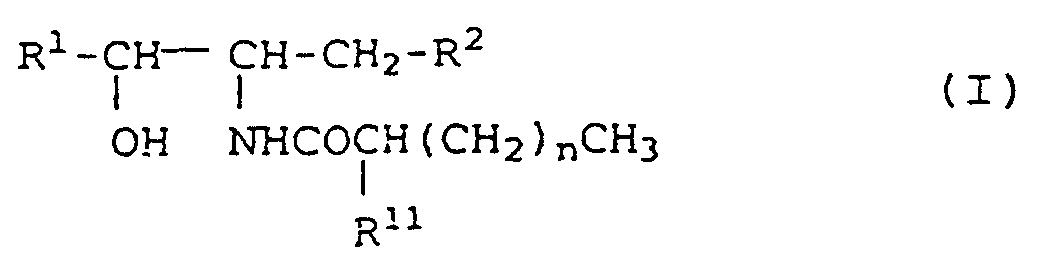 (wherein R3 and R4 are the same or different and each represent a hydrogen atom, methyl, ethyl, propyl, isopropyl, butyl, isobutyl, heptyl, hexyl, allyl, 1-propenyl, 2-butenyl, hydroxyethyl, methoxyethyl, ethoxyethyl, aminoethyl, cyclopentyl, cyclohexyl, 4-hydroxycyclohexyl, benzyl, α-methylbenzyl, piperazino or 4-methylpiperazino; R5 represents a hydrogen atom, an alkyl group having 1 to 4 carbon atoms, hydroxyl, methoxy, ethoxy, hydroxymethyl, 2-hydroxyethyl, methoxycarbonyl, ethoxycarbonyl, benzyl or acetoxy group; m represents integer of 2 to 6; p represents 2; X represents a methylimino group; R7 represents ethylene, propylene or ethyleneoxypropylene group, R8 and R9 are the same or different and each represent a hydrogen atom, methyl, ethyl, butyl, 2-hydroxyethyl, or R8 and R9 represent, together with a nitrogen atom to which they are bonded, a piperidino, methylpiperidino or morpholino group, R11 represents a hydrogen atom or a hydroxyl group, and n represents an integer of 3 to 15); or a pharmaceutically acceptable salt thereof.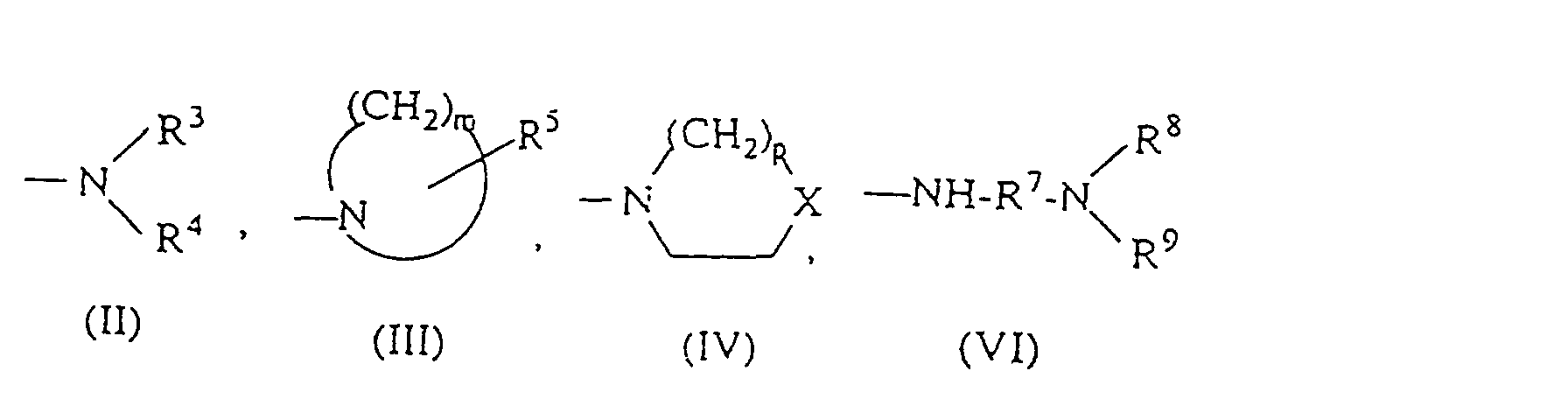
- The 2-acylaminopropanol compound according to claim 1 or a pharmaceutically acceptable salt thereof, wherein R1 is a phenyl group which may be substituted by 1 or 2 hydroxyl groups or methoxy groups.
- The 2-acylaminopropanol compound according to Claim 1 or a pharmaceutically acceptable salt thereof, wherein R2 is amino; methylamino, ethylamino, isopropylamino, isobutylamino, dimethylamino, diethylamino, dipropylamino, methyl(ethyl)amino; 2-hydroxyethylamino, bis(2-hydroxyethyl)amino; 2-aminoethylamino; cyclohexylamino; 4-hydroxycyclohexylamino; benzylamino or α-methylbenzylamino.
- The 2-acylaminopropanol compound according to Claim 1 or a pharmaceutically acceptable salt thereof, wherein R2 is an ethyleneimino, azetidino, pyrrolidino, piperidino, 2- or 3-hydroxypyrrolidino, 2-hydroxymethylpyrrolidino, 2-, 3- or 4-hydroxypiperidino, 3,4-dihydroxypiperidino, 3,4,5-trihydroxypiperidino, 2-, 3- or 4-hydroxymethylpiperidino, 2-, 3- or 4-hydroxyethylpiperidino, 2-, 3- or 4-methylpiperidino, 3,5-dimethylpiperidino, 3-hydroxy-methyl-4,5-dihydroxypiperidino, 2-hydroxymethyl-3,4,5-trihydroxypiperidino, 4-methoxypiperidino, 4-methoxycarbonylpiperidino, 4-ethoxycarbonylpiperidino or 4-benzylpiperidino group.
- The 2-acylaminopropanol compound according to Claim 1 or a pharmaceutically acceptable salt thereof, wherein R2 is a substituent represented by the formula (VI) and is a 2-(dimethylamino) ethylamino, 2-(methylamino)ethylamino, 2-(diethylamino)ethylamino, 2-(ethylamino)ethylamino, 3-(dimethylamino)propylamino, 3-(diethylamino)propylamino, 3-(dibutylamino)propylamino, 3-(bis(2-hydroxyethyl)amino)-propylamino, 3-(2-(dimethylamino)ethoxy)propylamino, 2-piperidinoethylamino, 2-(4-methylpiperidino)ethylamino, 3-piperidinopropylamino, 3-(2-methylpiperidino)propylamino, 3-(4-methylpiperidino)propylamino, 2-morpholinoethylamino or 3-morpholinopropylamino group.
- The 2-acylaminopropanol compound according to Claim 1 or a pharmaceutically acceptable salt thereof, whereinR1 is a phenyl group which may be substituted by 1 to 2 same or different substituents selected from a hydroxyl group and a methoxy group;R2 is the formula (II), (III) or (IV);in the formula (II), R3 and R4 are the same alkyl groups having 1 to 3 carbon atoms: or R3 is a hydrogen atom; and R4 is a cycloalkyl group having 5 to 6 carbon atoms or 4-hydroxycyclohexyl;in the formula (III), R5 is a hydrogen atom, a hydroxyl group or a hydroxymethyl group; and m is 4 or 5;R11 is a hydrogen atom, and n is an integer of 5 to 13.
- The 2-acylaminopropanol compound according to Claim 1 or a pharmaceutically acceptable salt thereof, wherein R1 is a phenyl group which may be substituted by 1 to 2 same or different substituents selected from a hydroxyl group and a methoxy group; R2 is a dimethylamino group, a diethylamino group, a cyclohexylamino group, a 4-hydroxycyclohexylamino group, a pyrrolidino group, a 3-hydroxypyrrolidino group, a piperidino group, a 4-hydroxypiperidino group, a 2-hydroxymethylpiperidino group or a N-methylpiperazino group; R11 is a hydrogen atom; and n is an integer of 5 to 13.
- The 2-acylaminopropanol compound according to Claim 1 or a pharmaceutically acceptable salt thereof, wherein R1 is a phenyl group; R2 is a diethylamino group, a 4-hydroxypiperidino group, a N-methylpiperazino group or a 3-hydroxypyrrolidino group; R11 is a hydrogen atom; and n is 5 to 13.
- A medical composition which comprises the 2-acylaminopropanol compound according to Claim 1 or a pharmaceutically acceptable salt thereof as an active ingredient.
- The medical composition according to Claim 9, wherein the 2-acylaminopropanol compound according to Claim 1 or a pharmaceutically acceptable salt thereof is administered in an amount of 0.25 to 200 mg/kg per day.
- The medical composition according to Claim 10, wherein the 2-acylaminopropanol compound according to Claim 1 or a pharmaceutically acceptable salt thereof is administered in an amount of 0.5 to 100 mg/kg per day.
- An antiviral agent which comprises the 2-acylaminopropanol compound according to Claim 1 or a pharmaceutically acceptable salt thereof as an active ingredient.
- The antiviral agent according to Claim 12, wherein in the formula (I), R1 is a phenyl group which may be substituted by 1 to 2 hydroxyl groups or methoxy groups; R2 is a dimethylamino group, a diethylamino group, a dipropylamino group, a piperidino group, a 4-hydroxypiperidino group or a 2-hydroxymethylpiperidino group; R11 is a hydrogen atom or a hydroxyl group; and n is an integer of 5 to 13, and the compound is a D-erythro isomer (1S, 2R) or a L-erythro isomer (1R, 2S).
- The antiviral agent according to Claim 12, wherein in the formula (I), R1 is a phenyl group; R2 is a diethylamino group or a 4-hydroxypiperidino group; R11 is a hydrogen atom; and n is an integer of 7 to 13, and the compound is a D-erythro isomer (1S, 2R).
- An agent for treating neuronal diseases, which comprises the 2-acylaminopropanol compound according to Claim 1 or a pharmaceutically acceptable salt thereof as an active ingredient.
- The agent for treating neuronal diseases according to Claim 15, wherein in the formula (I), R1 is a phenyl group which may be substituted by 1 to 2 hydroxyl groups or methoxy groups; R2 is a 4-hydroxycyclohexylamino group, a 3-hydroxypyrrolidino group, a 4-hydroxypiperidino group, a 3,4-dihydroxypiperidino group, a 3,4,5-trihydroxypiperidino group, a 3-hydroxymethyl-4,5-dihydroxypiperidino group or a N-methylpiperazino group; R11 is a hydrogen atom or a hydroxyl group; and n is an integer of 5 to 13, and the compound is a L-threo isomer (1S, 2S), a D-erythro isomer (1S, 2R) or a L-erythro isomer (1R, 2S).
- The agent for treating neuronal diseases according to Claim 15, wherein in the formula (I), R1 is a phenyl group; R2 is a 4-hydroxycyclohexylamino group, a 3-hydroxypyrrolidino group, a 4-hydroxypiperidino group or a N-methylpiperazino group; R11 is a hydrogen atom; and n is an integer of 5 to 13, and the compound is a L-threo isomer (1S, 2S).
- The agent for treating neuronal diseases according to Claim 15, wherein in the formula (I), R1 is a phenyl group which may be substituted by 1 to 2 hydroxyl groups or methoxy groups; R2 is a cyclohexylamino group, a pyrrolidino group or a piperidino group; R11 is a hydrogen atom or a hydroxyl group; and n is an integer of 5 to 13, and the compound is a D-threo isomer (1R, 2R).
- The agent for treating neuronal diseases according to Claim 15, wherein in the formula (I), R1 is a phenyl group; R2 is a cyclohexylamino group, a pyrrolidino group or a piperidino group; R11 is a hydrogen atom; and n is an integer of 7 to 13, and the compound is a D-threo isomer (1R, 2R).
- Use of the 2-acylaminopropanol compound according to Claim 1, a pharmaceutically acceptable salt thereof or a medical composition which comprises either of them, for preparing an antiviral agent.
- Use of the 2-acylaminopropanol compound represented by the formula (I) according to Claim 1, a pharmaceutically acceptable salt thereof or a medical composition which comprises either of them, for preparing an agent for treating neuronal diseases caused by disorders of peripheral nervous system or central nervous system.
Applications Claiming Priority (4)
| Application Number | Priority Date | Filing Date | Title |
|---|---|---|---|
| JP128734/94 | 1994-06-10 | ||
| JP12873494 | 1994-06-10 | ||
| JP12873494 | 1994-06-10 | ||
| PCT/JP1995/001143 WO1995034530A1 (en) | 1994-06-10 | 1995-06-07 | 2-acylaminopropanol compound and medicinal composition |
Publications (3)
| Publication Number | Publication Date |
|---|---|
| EP0765865A1 EP0765865A1 (en) | 1997-04-02 |
| EP0765865A4 EP0765865A4 (en) | 1997-08-13 |
| EP0765865B1 true EP0765865B1 (en) | 2001-12-12 |
Family
ID=14992137
Family Applications (1)
| Application Number | Title | Priority Date | Filing Date |
|---|---|---|---|
| EP95921129A Expired - Lifetime EP0765865B1 (en) | 1994-06-10 | 1995-06-07 | 2-acylaminopropanol compound and medicinal composition |
Country Status (8)
| Country | Link |
|---|---|
| US (1) | US5763438A (en) |
| EP (1) | EP0765865B1 (en) |
| JP (1) | JP3850437B2 (en) |
| CN (1) | CN1152907A (en) |
| AU (1) | AU698833B2 (en) |
| CA (1) | CA2192555C (en) |
| DE (1) | DE69524592T2 (en) |
| WO (1) | WO1995034530A1 (en) |
Families Citing this family (21)
| Publication number | Priority date | Publication date | Assignee | Title |
|---|---|---|---|---|
| NO965193L (en) * | 1995-12-08 | 1997-06-09 | Seikagaku Kogyo Kk Seikagaku C | Aminal alcohol derivative and process for its preparation |
| EP1098642B1 (en) * | 1998-07-27 | 2007-04-04 | Johns Hopkins University | Diamino-propanol-compounds for treating ischemia |
| EP1384719A1 (en) * | 1999-07-09 | 2004-01-28 | The Regents of The University of Michigan | Inhibitors of the glucosyl ceramide synthase enzyme useful for the treatment of cancers, sphingolipidosis and microbial infections |
| US6407064B2 (en) * | 1999-12-06 | 2002-06-18 | Seikagaku Corporation | Aminoalcohol derivative and medicament comprising the same |
| US6626961B1 (en) | 2000-04-27 | 2003-09-30 | Kimberly-Clark Worldwide, Inc. | Nonwovens modified with petrolatum |
| WO2002062777A2 (en) * | 2001-01-10 | 2002-08-15 | The Regents Of The University Of Michigan | Amino ceramide-like compounds and therapeutic methods of use |
| PT2266968E (en) * | 2001-07-16 | 2013-02-25 | Genzyme Corp | Synthesis of udp-glucose: n-acylsphingosine glucosyltransferase inhibitors |
| JP2005503432A (en) * | 2001-09-26 | 2005-02-03 | イッサム リサーチ ディベロップメント カンパニー オブ ザ ヘブリュー ユニバーシティ オブ エルサレム | Sphingolipid |
| US20060217560A1 (en) * | 2002-04-29 | 2006-09-28 | Shayman James A | Amino ceramide-like compounds and therapeutic methods of use |
| US6916802B2 (en) * | 2002-04-29 | 2005-07-12 | Genzyme Corporation | Amino ceramide-like compounds and therapeutic methods of use |
| WO2005123055A2 (en) * | 2004-06-14 | 2005-12-29 | Musc Foundation For Research Development | Methods for treating inflammatory disorders |
| CA2581623A1 (en) * | 2004-09-23 | 2006-03-30 | Reddy Us Therapeutics, Inc. | Novel pyridine compounds, process for their preparation and compositions containing them |
| JP2008519840A (en) | 2004-11-10 | 2008-06-12 | ジェンザイム・コーポレイション | How to treat diabetes |
| US20090088433A1 (en) | 2005-01-26 | 2009-04-02 | Bertrand Leblond | Methods of using as analgesics 1-benzyl-1-hydroxy-2,3-diamino-propyl amines, 3-benzyl-3-hydroxy-2-amino-propionic acid amides and related compounds |
| WO2007134086A2 (en) | 2006-05-09 | 2007-11-22 | Genzyme Corporation | Methods of treating fatty liver disease comprising inhibiting glucosphingolipid synthesis |
| EP2594562B1 (en) | 2007-05-31 | 2016-07-20 | Genzyme Corporation | 2-acylaminopropanol-type glucosylceramide synthase inhibitors |
| KR101640263B1 (en) | 2007-10-05 | 2016-07-15 | 젠자임 코포레이션 | Method of treating polycystic kidney diseases with ceramide derivatives |
| EP2116139A1 (en) * | 2008-05-08 | 2009-11-11 | Nestec S.A. | Sialic acid to support brain health in the elderly |
| JP2011529500A (en) | 2008-07-28 | 2011-12-08 | ジェンザイム コーポレーション | Glucosylceramide synthase inhibition for the treatment of collapsing glomerulopathy and other glomerular diseases |
| US8309593B2 (en) | 2008-10-03 | 2012-11-13 | Genzyme Corporation | 2-acylaminopropoanol-type glucosylceramide synthase inhibitors |
| SG10201407881WA (en) | 2009-11-27 | 2015-01-29 | Genzyme Corp | An amorphous and a crystalline form of genz 112638 hemitartrate as inhibitor of glucosylceramide synthase |
Family Cites Families (7)
| Publication number | Priority date | Publication date | Assignee | Title |
|---|---|---|---|---|
| US5041441A (en) * | 1988-04-04 | 1991-08-20 | The Regents Of The University Of Michigan | Method of chemotherapy using 1-phenyl-2-decanoylamino-3-morpholino-1-propanol |
| DE3941235A1 (en) * | 1989-12-14 | 1991-06-20 | Bayer Ag | NEW PEPTIDES, THEIR PREPARATION AND THEIR USE IN MEDICINAL PRODUCTS |
| EP0538383A1 (en) * | 1990-07-06 | 1993-04-28 | Smithkline Beecham Corporation | Inhibitors of aspartic proteases |
| DK0558673T3 (en) * | 1990-11-19 | 1996-07-29 | Monsanto Co | Retroviral protease inhibitors |
| US5302609A (en) * | 1992-12-16 | 1994-04-12 | The Regents Of The University Of Michigan | Treatment of diabetic nephropathy |
| WO1994027607A1 (en) * | 1993-05-28 | 1994-12-08 | Seikagaku Corporation | Antiviral agent |
| US5916911A (en) * | 1995-09-20 | 1999-06-29 | The Regents Of The University Of Michigan | Amino ceramide--like compounds and therapeutic methods of use |
-
1995
- 1995-06-07 WO PCT/JP1995/001143 patent/WO1995034530A1/en not_active Ceased
- 1995-06-07 DE DE69524592T patent/DE69524592T2/en not_active Expired - Lifetime
- 1995-06-07 AU AU26302/95A patent/AU698833B2/en not_active Expired
- 1995-06-07 US US08/750,699 patent/US5763438A/en not_active Expired - Lifetime
- 1995-06-07 CA CA002192555A patent/CA2192555C/en not_active Expired - Lifetime
- 1995-06-07 JP JP50192796A patent/JP3850437B2/en not_active Expired - Lifetime
- 1995-06-07 EP EP95921129A patent/EP0765865B1/en not_active Expired - Lifetime
- 1995-06-07 CN CN95194120A patent/CN1152907A/en active Pending
Non-Patent Citations (1)
| Title |
|---|
| TAKAYUKI NAGAI ET AL.: "Effets of glycosylation inhibitors for glycoprotein and glycolipid on the infection of influenza virus", SEIKAGAKU, vol. 65, no. 8, pages - 695 * |
Also Published As
| Publication number | Publication date |
|---|---|
| CA2192555C (en) | 2005-01-11 |
| AU698833B2 (en) | 1998-11-12 |
| US5763438A (en) | 1998-06-09 |
| WO1995034530A1 (en) | 1995-12-21 |
| CA2192555A1 (en) | 1995-12-21 |
| DE69524592T2 (en) | 2002-07-18 |
| JP3850437B2 (en) | 2006-11-29 |
| DE69524592D1 (en) | 2002-01-24 |
| EP0765865A4 (en) | 1997-08-13 |
| CN1152907A (en) | 1997-06-25 |
| EP0765865A1 (en) | 1997-04-02 |
| AU2630295A (en) | 1996-01-05 |
Similar Documents
| Publication | Publication Date | Title |
|---|---|---|
| US5763438A (en) | 2-acylaminopropanol compound and medical composition | |
| AU676361B2 (en) | Remedy for nervous diseases | |
| JPWO1995034530A1 (en) | 2-acylaminopropanol compounds and pharmaceutical compositions | |
| JPWO1995005177A1 (en) | Neurological disease treatment | |
| DE69532642T2 (en) | ANTIVIRAL PRODRUGS | |
| JP4313572B2 (en) | Pharmaceutically active piperidine derivatives | |
| JP4036500B2 (en) | Amino alcohol derivatives and pharmaceuticals containing the same | |
| US6407064B2 (en) | Aminoalcohol derivative and medicament comprising the same | |
| DE68917499T2 (en) | Catechol derivatives and pharmaceutical preparations containing them. | |
| WO1994018987A1 (en) | Drug composition containing nucleic acid copolymer | |
| JP2024535004A (en) | Ionizable lipids, their preparation and use in gene delivery. | |
| SK1997A3 (en) | Substituted benzamidines, their production and their use as medicaments | |
| DE69830045T2 (en) | Arylpiperidinopropanol and arylpiperazinopropanol derivatives and the same containing pharmaceuticals | |
| DE19643331A1 (en) | 1- (4-Piperidinyl) -piperidinylenes, medicaments containing these compounds, their use and process for their preparation | |
| JP7508620B2 (en) | Dihydrochromene Derivatives | |
| JP4176170B2 (en) | Medicine containing amino alcohol derivative and therapeutic agent for abnormal proliferative disease | |
| JP5009459B2 (en) | Amino alcohol derivatives and pharmaceuticals containing the same | |
| DE3876711T2 (en) | PIPERIDINE DERIVATIVES, THEIR PRODUCTION AND THEIR USE AS A MEDICINAL PRODUCT. | |
| JPH01261383A (en) | Alkylene diamine derivative | |
| JPS62149651A (en) | Dichloroaniline derivative | |
| CA2168877C (en) | Agent for curing neuronal diseases | |
| CN122011078A (en) | Pentacyclic triterpene derivative, preparation method and application thereof | |
| JPWO1994027607A1 (en) | antiviral agents | |
| JPH07118249A (en) | New phenoxyalkylpiperazine derivatives | |
| JPH03236366A (en) | Guanidinobenzene derivative |
Legal Events
| Date | Code | Title | Description |
|---|---|---|---|
| PUAI | Public reference made under article 153(3) epc to a published international application that has entered the european phase |
Free format text: ORIGINAL CODE: 0009012 |
|
| 17P | Request for examination filed |
Effective date: 19961217 |
|
| AK | Designated contracting states |
Kind code of ref document: A1 Designated state(s): DE FR GB |
|
| A4 | Supplementary search report drawn up and despatched |
Effective date: 19970701 |
|
| AK | Designated contracting states |
Kind code of ref document: A4 Designated state(s): CH DE DK FR GB IT LI NL SE |
|
| 17Q | First examination report despatched |
Effective date: 19971002 |
|
| GRAG | Despatch of communication of intention to grant |
Free format text: ORIGINAL CODE: EPIDOS AGRA |
|
| GRAG | Despatch of communication of intention to grant |
Free format text: ORIGINAL CODE: EPIDOS AGRA |
|
| GRAG | Despatch of communication of intention to grant |
Free format text: ORIGINAL CODE: EPIDOS AGRA |
|
| GRAH | Despatch of communication of intention to grant a patent |
Free format text: ORIGINAL CODE: EPIDOS IGRA |
|
| RBV | Designated contracting states (corrected) |
Designated state(s): DE FR GB |
|
| GRAH | Despatch of communication of intention to grant a patent |
Free format text: ORIGINAL CODE: EPIDOS IGRA |
|
| GRAA | (expected) grant |
Free format text: ORIGINAL CODE: 0009210 |
|
| AK | Designated contracting states |
Kind code of ref document: B1 Designated state(s): DE FR GB |
|
| REG | Reference to a national code |
Ref country code: GB Ref legal event code: IF02 |
|
| REF | Corresponds to: |
Ref document number: 69524592 Country of ref document: DE Date of ref document: 20020124 |
|
| ET | Fr: translation filed | ||
| PLBE | No opposition filed within time limit |
Free format text: ORIGINAL CODE: 0009261 |
|
| STAA | Information on the status of an ep patent application or granted ep patent |
Free format text: STATUS: NO OPPOSITION FILED WITHIN TIME LIMIT |
|
| 26N | No opposition filed | ||
| REG | Reference to a national code |
Ref country code: FR Ref legal event code: CA |
|
| PGFP | Annual fee paid to national office [announced via postgrant information from national office to epo] |
Ref country code: GB Payment date: 20140604 Year of fee payment: 20 |
|
| PGFP | Annual fee paid to national office [announced via postgrant information from national office to epo] |
Ref country code: DE Payment date: 20140603 Year of fee payment: 20 |
|
| PGFP | Annual fee paid to national office [announced via postgrant information from national office to epo] |
Ref country code: FR Payment date: 20140609 Year of fee payment: 20 |
|
| REG | Reference to a national code |
Ref country code: DE Ref legal event code: R071 Ref document number: 69524592 Country of ref document: DE |
|
| REG | Reference to a national code |
Ref country code: GB Ref legal event code: PE20 Expiry date: 20150606 |
|
| PG25 | Lapsed in a contracting state [announced via postgrant information from national office to epo] |
Ref country code: GB Free format text: LAPSE BECAUSE OF EXPIRATION OF PROTECTION Effective date: 20150606 |