EP0759922B1 - New antagonist compounds - Google Patents
New antagonist compounds Download PDFInfo
- Publication number
- EP0759922B1 EP0759922B1 EP95920328A EP95920328A EP0759922B1 EP 0759922 B1 EP0759922 B1 EP 0759922B1 EP 95920328 A EP95920328 A EP 95920328A EP 95920328 A EP95920328 A EP 95920328A EP 0759922 B1 EP0759922 B1 EP 0759922B1
- Authority
- EP
- European Patent Office
- Prior art keywords
- alkyl
- aryl
- alkenyl
- formula
- cyclopropylmethyl
- Prior art date
- Legal status (The legal status is an assumption and is not a legal conclusion. Google has not performed a legal analysis and makes no representation as to the accuracy of the status listed.)
- Expired - Lifetime
Links
- 150000001875 compounds Chemical class 0.000 title claims description 85
- 239000005557 antagonist Substances 0.000 title description 5
- 150000003839 salts Chemical class 0.000 claims abstract description 13
- 238000002360 preparation method Methods 0.000 claims abstract description 8
- 238000000034 method Methods 0.000 claims abstract description 7
- 238000004519 manufacturing process Methods 0.000 claims abstract description 5
- 230000008569 process Effects 0.000 claims abstract description 3
- 125000004169 (C1-C6) alkyl group Chemical group 0.000 claims description 100
- 125000003118 aryl group Chemical group 0.000 claims description 59
- VEXZGXHMUGYJMC-UHFFFAOYSA-N Hydrochloric acid Chemical compound Cl VEXZGXHMUGYJMC-UHFFFAOYSA-N 0.000 claims description 56
- YMWUJEATGCHHMB-UHFFFAOYSA-N Dichloromethane Chemical compound ClCCl YMWUJEATGCHHMB-UHFFFAOYSA-N 0.000 claims description 51
- 125000000041 C6-C10 aryl group Chemical group 0.000 claims description 47
- -1 nitro, cyano, thiocyanato Chemical group 0.000 claims description 45
- 125000000217 alkyl group Chemical group 0.000 claims description 42
- 125000006727 (C1-C6) alkenyl group Chemical group 0.000 claims description 36
- ZMXDDKWLCZADIW-UHFFFAOYSA-N N,N-Dimethylformamide Chemical compound CN(C)C=O ZMXDDKWLCZADIW-UHFFFAOYSA-N 0.000 claims description 36
- 125000003710 aryl alkyl group Chemical group 0.000 claims description 26
- 125000003545 alkoxy group Chemical group 0.000 claims description 25
- 125000003903 2-propenyl group Chemical group [H]C([*])([H])C([H])=C([H])[H] 0.000 claims description 24
- 125000004191 (C1-C6) alkoxy group Chemical group 0.000 claims description 21
- 125000003342 alkenyl group Chemical group 0.000 claims description 21
- 125000005018 aryl alkenyl group Chemical group 0.000 claims description 21
- 125000004186 cyclopropylmethyl group Chemical group [H]C([H])(*)C1([H])C([H])([H])C1([H])[H] 0.000 claims description 19
- 229910052739 hydrogen Inorganic materials 0.000 claims description 18
- 239000001257 hydrogen Substances 0.000 claims description 18
- 125000002496 methyl group Chemical group [H]C([H])([H])* 0.000 claims description 18
- 125000002924 primary amino group Chemical group [H]N([H])* 0.000 claims description 18
- 239000000460 chlorine Substances 0.000 claims description 16
- 125000003178 carboxy group Chemical group [H]OC(*)=O 0.000 claims description 15
- 125000002023 trifluoromethyl group Chemical group FC(F)(F)* 0.000 claims description 14
- AFVFQIVMOAPDHO-UHFFFAOYSA-N Methanesulfonic acid Chemical compound CS(O)(=O)=O AFVFQIVMOAPDHO-UHFFFAOYSA-N 0.000 claims description 13
- 239000002253 acid Substances 0.000 claims description 13
- 239000002904 solvent Substances 0.000 claims description 13
- 125000006273 (C1-C3) alkyl group Chemical group 0.000 claims description 12
- 125000001589 carboacyl group Chemical group 0.000 claims description 12
- UZHSEJADLWPNLE-GRGSLBFTSA-N naloxone Chemical compound O=C([C@@H]1O2)CC[C@@]3(O)[C@H]4CC5=CC=C(O)C2=C5[C@@]13CCN4CC=C UZHSEJADLWPNLE-GRGSLBFTSA-N 0.000 claims description 11
- 125000003917 carbamoyl group Chemical group [H]N([H])C(*)=O 0.000 claims description 10
- 125000004183 alkoxy alkyl group Chemical group 0.000 claims description 9
- 150000002431 hydrogen Chemical group 0.000 claims description 9
- 125000002887 hydroxy group Chemical group [H]O* 0.000 claims description 9
- 125000000956 methoxy group Chemical group [H]C([H])([H])O* 0.000 claims description 9
- 125000004178 (C1-C4) alkyl group Chemical group 0.000 claims description 8
- 229910006074 SO2NH2 Inorganic materials 0.000 claims description 8
- 229910006069 SO3H Inorganic materials 0.000 claims description 8
- 125000003302 alkenyloxy group Chemical group 0.000 claims description 8
- 150000001350 alkyl halides Chemical class 0.000 claims description 8
- 125000005843 halogen group Chemical group 0.000 claims description 8
- 229960004127 naloxone Drugs 0.000 claims description 8
- DQCKKXVULJGBQN-XFWGSAIBSA-N naltrexone Chemical compound N1([C@@H]2CC3=CC=C(C=4O[C@@H]5[C@](C3=4)([C@]2(CCC5=O)O)CC1)O)CC1CC1 DQCKKXVULJGBQN-XFWGSAIBSA-N 0.000 claims description 8
- 229960003086 naltrexone Drugs 0.000 claims description 8
- 229910052760 oxygen Inorganic materials 0.000 claims description 8
- 125000000020 sulfo group Chemical group O=S(=O)([*])O[H] 0.000 claims description 8
- KEAYESYHFKHZAL-UHFFFAOYSA-N Sodium Chemical compound [Na] KEAYESYHFKHZAL-UHFFFAOYSA-N 0.000 claims description 7
- QAOWNCQODCNURD-UHFFFAOYSA-N Sulfuric acid Chemical compound OS(O)(=O)=O QAOWNCQODCNURD-UHFFFAOYSA-N 0.000 claims description 7
- 125000006297 carbonyl amino group Chemical group [H]N([*:2])C([*:1])=O 0.000 claims description 7
- 239000012312 sodium hydride Substances 0.000 claims description 7
- 229910000104 sodium hydride Inorganic materials 0.000 claims description 7
- 125000006619 (C1-C6) dialkylamino group Chemical group 0.000 claims description 6
- 125000000392 cycloalkenyl group Chemical group 0.000 claims description 6
- 150000008050 dialkyl sulfates Chemical class 0.000 claims description 6
- JBWKIWSBJXDJDT-UHFFFAOYSA-N triphenylmethyl chloride Chemical compound C=1C=CC=CC=1C(C=1C=CC=CC=1)(Cl)C1=CC=CC=C1 JBWKIWSBJXDJDT-UHFFFAOYSA-N 0.000 claims description 6
- 208000025747 Rheumatic disease Diseases 0.000 claims description 5
- 239000004480 active ingredient Substances 0.000 claims description 5
- 230000029936 alkylation Effects 0.000 claims description 5
- 238000005804 alkylation reaction Methods 0.000 claims description 5
- 125000004093 cyano group Chemical group *C#N 0.000 claims description 5
- 125000000449 nitro group Chemical group [O-][N+](*)=O 0.000 claims description 5
- UOKZUTXLHRTLFH-UHFFFAOYSA-N o-phenylhydroxylamine Chemical compound NOC1=CC=CC=C1 UOKZUTXLHRTLFH-UHFFFAOYSA-N 0.000 claims description 5
- 229940067157 phenylhydrazine Drugs 0.000 claims description 5
- FQXXSQDCDRQNQE-VMDGZTHMSA-N thebaine Chemical compound C([C@@H](N(CC1)C)C2=CC=C3OC)C4=CC=C(OC)C5=C4[C@@]21[C@H]3O5 FQXXSQDCDRQNQE-VMDGZTHMSA-N 0.000 claims description 5
- 125000005913 (C3-C6) cycloalkyl group Chemical group 0.000 claims description 4
- UFHFLCQGNIYNRP-UHFFFAOYSA-N Hydrogen Chemical compound [H][H] UFHFLCQGNIYNRP-UHFFFAOYSA-N 0.000 claims description 4
- 125000005907 alkyl ester group Chemical group 0.000 claims description 4
- 125000002102 aryl alkyloxo group Chemical group 0.000 claims description 4
- QVGXLLKOCUKJST-UHFFFAOYSA-N atomic oxygen Chemical group [O] QVGXLLKOCUKJST-UHFFFAOYSA-N 0.000 claims description 4
- AGEZXYOZHKGVCM-UHFFFAOYSA-N benzyl bromide Chemical compound BrCC1=CC=CC=C1 AGEZXYOZHKGVCM-UHFFFAOYSA-N 0.000 claims description 4
- 125000001797 benzyl group Chemical group [H]C1=C([H])C([H])=C(C([H])=C1[H])C([H])([H])* 0.000 claims description 4
- JAMFGQBENKSWOF-UHFFFAOYSA-N bromo(methoxy)methane Chemical compound COCBr JAMFGQBENKSWOF-UHFFFAOYSA-N 0.000 claims description 4
- CYYWAXVARNZFBI-UHFFFAOYSA-N bromomethoxyethane Chemical compound CCOCBr CYYWAXVARNZFBI-UHFFFAOYSA-N 0.000 claims description 4
- AOGYCOYQMAVAFD-UHFFFAOYSA-N chlorocarbonic acid Chemical class OC(Cl)=O AOGYCOYQMAVAFD-UHFFFAOYSA-N 0.000 claims description 4
- 125000001316 cycloalkyl alkyl group Chemical group 0.000 claims description 4
- 125000000753 cycloalkyl group Chemical group 0.000 claims description 4
- 125000004435 hydrogen atom Chemical group [H]* 0.000 claims description 4
- FQXXSQDCDRQNQE-UHFFFAOYSA-N markiertes Thebain Natural products COC1=CC=C2C(N(CC3)C)CC4=CC=C(OC)C5=C4C23C1O5 FQXXSQDCDRQNQE-UHFFFAOYSA-N 0.000 claims description 4
- 239000001301 oxygen Substances 0.000 claims description 4
- 239000008194 pharmaceutical composition Substances 0.000 claims description 4
- NTTOTNSKUYCDAV-UHFFFAOYSA-N potassium hydride Chemical compound [KH] NTTOTNSKUYCDAV-UHFFFAOYSA-N 0.000 claims description 4
- 229910000105 potassium hydride Inorganic materials 0.000 claims description 4
- ODZPKZBBUMBTMG-UHFFFAOYSA-N sodium amide Chemical compound [NH2-].[Na+] ODZPKZBBUMBTMG-UHFFFAOYSA-N 0.000 claims description 4
- 229930003945 thebaine Natural products 0.000 claims description 4
- YYCRAERBSFHMPL-XFKAJCMBSA-N (4r,4as,7ar,12bs)-4a-hydroxy-9-methoxy-3-methyl-2,4,7a,13-tetrahydro-1h-4,12-methanobenzofuro[3,2-e]isoquinoline-7-one Chemical compound O=C([C@@H]1O2)C=C[C@@]3(O)[C@]4([H])N(C)CC[C@]13C1=C2C(OC)=CC=C1C4 YYCRAERBSFHMPL-XFKAJCMBSA-N 0.000 claims description 3
- LJGHYPLBDBRCRZ-UHFFFAOYSA-N 3-(3-aminophenyl)sulfonylaniline Chemical compound NC1=CC=CC(S(=O)(=O)C=2C=C(N)C=CC=2)=C1 LJGHYPLBDBRCRZ-UHFFFAOYSA-N 0.000 claims description 3
- NINIDFKCEFEMDL-UHFFFAOYSA-N Sulfur Chemical group [S] NINIDFKCEFEMDL-UHFFFAOYSA-N 0.000 claims description 3
- 150000007513 acids Chemical class 0.000 claims description 3
- 238000009903 catalytic hydrogenation reaction Methods 0.000 claims description 3
- 229910052801 chlorine Inorganic materials 0.000 claims description 3
- 125000006310 cycloalkyl amino group Chemical group 0.000 claims description 3
- 238000005661 deetherification reaction Methods 0.000 claims description 3
- 125000002768 hydroxyalkyl group Chemical group 0.000 claims description 3
- INAXVFBXDYWQFN-XHSDSOJGSA-N morphinan Chemical compound C1C2=CC=CC=C2[C@]23CCCC[C@H]3[C@@H]1NCC2 INAXVFBXDYWQFN-XHSDSOJGSA-N 0.000 claims description 3
- 210000000056 organ Anatomy 0.000 claims description 3
- 125000001997 phenyl group Chemical group [H]C1=C([H])C([H])=C(*)C([H])=C1[H] 0.000 claims description 3
- HKOOXMFOFWEVGF-UHFFFAOYSA-N phenylhydrazine Chemical compound NNC1=CC=CC=C1 HKOOXMFOFWEVGF-UHFFFAOYSA-N 0.000 claims description 3
- 206010039073 rheumatoid arthritis Diseases 0.000 claims description 3
- 229910052717 sulfur Inorganic materials 0.000 claims description 3
- 239000011593 sulfur Chemical group 0.000 claims description 3
- 125000000858 thiocyanato group Chemical group *SC#N 0.000 claims description 3
- 125000004455 (C1-C3) alkylthio group Chemical group 0.000 claims description 2
- 125000006274 (C1-C3)alkoxy group Chemical group 0.000 claims description 2
- NHQDETIJWKXCTC-UHFFFAOYSA-N 3-chloroperbenzoic acid Chemical compound OOC(=O)C1=CC=CC(Cl)=C1 NHQDETIJWKXCTC-UHFFFAOYSA-N 0.000 claims description 2
- 125000006725 C1-C10 alkenyl group Chemical group 0.000 claims description 2
- 125000000882 C2-C6 alkenyl group Chemical group 0.000 claims description 2
- 125000005336 allyloxy group Chemical group 0.000 claims description 2
- 125000001246 bromo group Chemical group Br* 0.000 claims description 2
- 125000002915 carbonyl group Chemical group [*:2]C([*:1])=O 0.000 claims description 2
- 125000001309 chloro group Chemical group Cl* 0.000 claims description 2
- 125000000490 cinnamyl group Chemical group C(C=CC1=CC=CC=C1)* 0.000 claims description 2
- 125000005356 cycloalkylalkenyl group Chemical group 0.000 claims description 2
- 125000004850 cyclobutylmethyl group Chemical group C1(CCC1)C* 0.000 claims description 2
- 125000002147 dimethylamino group Chemical group [H]C([H])([H])N(*)C([H])([H])[H] 0.000 claims description 2
- 125000001495 ethyl group Chemical group [H]C([H])([H])C([H])([H])* 0.000 claims description 2
- 125000001153 fluoro group Chemical group F* 0.000 claims description 2
- 150000004031 phenylhydrazines Chemical class 0.000 claims description 2
- YGSDEFSMJLZEOE-UHFFFAOYSA-M salicylate Chemical compound OC1=CC=CC=C1C([O-])=O YGSDEFSMJLZEOE-UHFFFAOYSA-M 0.000 claims description 2
- 229960001860 salicylate Drugs 0.000 claims description 2
- 238000002054 transplantation Methods 0.000 claims description 2
- 239000003814 drug Substances 0.000 claims 4
- 125000004397 aminosulfonyl group Chemical group NS(=O)(=O)* 0.000 claims 3
- YYCRAERBSFHMPL-UHFFFAOYSA-N 14beta-Hydroxycodeinone Natural products O1C2C(=O)C=CC3(O)C4CC5=CC=C(OC)C1=C5C23CCN4C YYCRAERBSFHMPL-UHFFFAOYSA-N 0.000 claims 1
- 239000003937 drug carrier Substances 0.000 claims 1
- 229910017053 inorganic salt Inorganic materials 0.000 claims 1
- 238000002560 therapeutic procedure Methods 0.000 claims 1
- 239000000825 pharmaceutical preparation Substances 0.000 abstract description 3
- 150000003809 morphinane derivatives Chemical class 0.000 abstract 1
- OKKJLVBELUTLKV-UHFFFAOYSA-N Methanol Chemical compound OC OKKJLVBELUTLKV-UHFFFAOYSA-N 0.000 description 97
- RTZKZFJDLAIYFH-UHFFFAOYSA-N Diethyl ether Chemical compound CCOCC RTZKZFJDLAIYFH-UHFFFAOYSA-N 0.000 description 38
- 238000005160 1H NMR spectroscopy Methods 0.000 description 34
- IAZDPXIOMUYVGZ-WFGJKAKNSA-N Dimethyl sulfoxide Chemical compound [2H]C([2H])([2H])S(=O)C([2H])([2H])[2H] IAZDPXIOMUYVGZ-WFGJKAKNSA-N 0.000 description 34
- HEDRZPFGACZZDS-MICDWDOJSA-N Trichloro(2H)methane Chemical compound [2H]C(Cl)(Cl)Cl HEDRZPFGACZZDS-MICDWDOJSA-N 0.000 description 26
- 239000000203 mixture Substances 0.000 description 23
- QTBSBXVTEAMEQO-UHFFFAOYSA-N Acetic acid Chemical compound CC(O)=O QTBSBXVTEAMEQO-UHFFFAOYSA-N 0.000 description 22
- 238000004458 analytical method Methods 0.000 description 22
- CPELXLSAUQHCOX-UHFFFAOYSA-N Hydrogen bromide Chemical class Br CPELXLSAUQHCOX-UHFFFAOYSA-N 0.000 description 14
- 239000007832 Na2SO4 Substances 0.000 description 14
- PMZURENOXWZQFD-UHFFFAOYSA-L Sodium Sulfate Chemical compound [Na+].[Na+].[O-]S([O-])(=O)=O PMZURENOXWZQFD-UHFFFAOYSA-L 0.000 description 14
- 239000012044 organic layer Substances 0.000 description 14
- 229910052938 sodium sulfate Inorganic materials 0.000 description 14
- LFQSCWFLJHTTHZ-UHFFFAOYSA-N Ethanol Chemical compound CCO LFQSCWFLJHTTHZ-UHFFFAOYSA-N 0.000 description 12
- 239000006260 foam Substances 0.000 description 12
- 229960000583 acetic acid Drugs 0.000 description 11
- 239000000556 agonist Substances 0.000 description 11
- 238000000262 chemical ionisation mass spectrometry Methods 0.000 description 11
- 238000001816 cooling Methods 0.000 description 11
- 239000012362 glacial acetic acid Substances 0.000 description 11
- 239000000243 solution Substances 0.000 description 11
- VHUUQVKOLVNVRT-UHFFFAOYSA-N Ammonium hydroxide Chemical compound [NH4+].[OH-] VHUUQVKOLVNVRT-UHFFFAOYSA-N 0.000 description 10
- BWHMMNNQKKPAPP-UHFFFAOYSA-L potassium carbonate Chemical compound [K+].[K+].[O-]C([O-])=O BWHMMNNQKKPAPP-UHFFFAOYSA-L 0.000 description 10
- 101100244562 Pseudomonas aeruginosa (strain ATCC 15692 / DSM 22644 / CIP 104116 / JCM 14847 / LMG 12228 / 1C / PRS 101 / PAO1) oprD gene Proteins 0.000 description 9
- 230000015572 biosynthetic process Effects 0.000 description 9
- 108700023159 delta Opioid Receptors Proteins 0.000 description 9
- 102000048124 delta Opioid Receptors Human genes 0.000 description 9
- GRVDJDISBSALJP-UHFFFAOYSA-N methyloxidanyl Chemical compound [O]C GRVDJDISBSALJP-UHFFFAOYSA-N 0.000 description 9
- 239000003887 narcotic antagonist Substances 0.000 description 9
- 238000003786 synthesis reaction Methods 0.000 description 9
- 0 CN(CC[C@]12c3c(C4)ccc(OC)c3O[C@]11*)C4C2=CC=C1OC Chemical compound CN(CC[C@]12c3c(C4)ccc(OC)c3O[C@]11*)C4C2=CC=C1OC 0.000 description 8
- 239000011541 reaction mixture Substances 0.000 description 8
- 239000002585 base Substances 0.000 description 7
- 238000006243 chemical reaction Methods 0.000 description 7
- 230000000694 effects Effects 0.000 description 7
- 125000006237 oxymethylenoxy group Chemical group [H]C([H])([*:1])[*:2] 0.000 description 7
- JOVOSQBPPZZESK-UHFFFAOYSA-N phenylhydrazine hydrochloride Chemical compound Cl.NNC1=CC=CC=C1 JOVOSQBPPZZESK-UHFFFAOYSA-N 0.000 description 7
- 229940038531 phenylhydrazine hydrochloride Drugs 0.000 description 7
- ILAHWRKJUDSMFH-UHFFFAOYSA-N boron tribromide Chemical compound BrB(Br)Br ILAHWRKJUDSMFH-UHFFFAOYSA-N 0.000 description 6
- 239000012267 brine Substances 0.000 description 6
- 239000013078 crystal Substances 0.000 description 6
- 239000003921 oil Substances 0.000 description 6
- 230000000144 pharmacologic effect Effects 0.000 description 6
- 102000005962 receptors Human genes 0.000 description 6
- 108020003175 receptors Proteins 0.000 description 6
- HPALAKNZSZLMCH-UHFFFAOYSA-M sodium;chloride;hydrate Chemical compound O.[Na+].[Cl-] HPALAKNZSZLMCH-UHFFFAOYSA-M 0.000 description 6
- 102000003840 Opioid Receptors Human genes 0.000 description 5
- 108090000137 Opioid Receptors Proteins 0.000 description 5
- 230000001506 immunosuppresive effect Effects 0.000 description 5
- 102000051367 mu Opioid Receptors Human genes 0.000 description 5
- 229910000027 potassium carbonate Inorganic materials 0.000 description 5
- 125000000565 sulfonamide group Chemical group 0.000 description 5
- 108020001612 μ-opioid receptors Proteins 0.000 description 5
- QCQCHGYLTSGIGX-GHXANHINSA-N 4-[[(3ar,5ar,5br,7ar,9s,11ar,11br,13as)-5a,5b,8,8,11a-pentamethyl-3a-[(5-methylpyridine-3-carbonyl)amino]-2-oxo-1-propan-2-yl-4,5,6,7,7a,9,10,11,11b,12,13,13a-dodecahydro-3h-cyclopenta[a]chrysen-9-yl]oxy]-2,2-dimethyl-4-oxobutanoic acid Chemical compound N([C@@]12CC[C@@]3(C)[C@]4(C)CC[C@H]5C(C)(C)[C@@H](OC(=O)CC(C)(C)C(O)=O)CC[C@]5(C)[C@H]4CC[C@@H]3C1=C(C(C2)=O)C(C)C)C(=O)C1=CN=CC(C)=C1 QCQCHGYLTSGIGX-GHXANHINSA-N 0.000 description 4
- HEDRZPFGACZZDS-UHFFFAOYSA-N Chloroform Chemical compound ClC(Cl)Cl HEDRZPFGACZZDS-UHFFFAOYSA-N 0.000 description 4
- WYURNTSHIVDZCO-UHFFFAOYSA-N Tetrahydrofuran Chemical compound C1CCOC1 WYURNTSHIVDZCO-UHFFFAOYSA-N 0.000 description 4
- 239000007924 injection Substances 0.000 description 4
- 238000002347 injection Methods 0.000 description 4
- 238000010992 reflux Methods 0.000 description 4
- GHYOCDFICYLMRF-UTIIJYGPSA-N (2S,3R)-N-[(2S)-3-(cyclopenten-1-yl)-1-[(2R)-2-methyloxiran-2-yl]-1-oxopropan-2-yl]-3-hydroxy-3-(4-methoxyphenyl)-2-[[(2S)-2-[(2-morpholin-4-ylacetyl)amino]propanoyl]amino]propanamide Chemical compound C1(=CCCC1)C[C@@H](C(=O)[C@@]1(OC1)C)NC([C@H]([C@@H](C1=CC=C(C=C1)OC)O)NC([C@H](C)NC(CN1CCOCC1)=O)=O)=O GHYOCDFICYLMRF-UTIIJYGPSA-N 0.000 description 3
- CSCPPACGZOOCGX-UHFFFAOYSA-N Acetone Chemical compound CC(C)=O CSCPPACGZOOCGX-UHFFFAOYSA-N 0.000 description 3
- IAZDPXIOMUYVGZ-UHFFFAOYSA-N Dimethylsulphoxide Chemical compound CS(C)=O IAZDPXIOMUYVGZ-UHFFFAOYSA-N 0.000 description 3
- XEKOWRVHYACXOJ-UHFFFAOYSA-N Ethyl acetate Chemical compound CCOC(C)=O XEKOWRVHYACXOJ-UHFFFAOYSA-N 0.000 description 3
- LYCAIKOWRPUZTN-UHFFFAOYSA-N Ethylene glycol Chemical compound OCCO LYCAIKOWRPUZTN-UHFFFAOYSA-N 0.000 description 3
- 229940127450 Opioid Agonists Drugs 0.000 description 3
- 229940123257 Opioid receptor antagonist Drugs 0.000 description 3
- 229940125904 compound 1 Drugs 0.000 description 3
- 229940125797 compound 12 Drugs 0.000 description 3
- 239000000706 filtrate Substances 0.000 description 3
- 229910052736 halogen Inorganic materials 0.000 description 3
- 150000002367 halogens Chemical class 0.000 description 3
- 230000003993 interaction Effects 0.000 description 3
- 239000000543 intermediate Substances 0.000 description 3
- 239000003446 ligand Substances 0.000 description 3
- 239000000463 material Substances 0.000 description 3
- 230000001404 mediated effect Effects 0.000 description 3
- 229940098779 methanesulfonic acid Drugs 0.000 description 3
- 108090000765 processed proteins & peptides Proteins 0.000 description 3
- 238000003756 stirring Methods 0.000 description 3
- AOSZTAHDEDLTLQ-AZKQZHLXSA-N (1S,2S,4R,8S,9S,11S,12R,13S,19S)-6-[(3-chlorophenyl)methyl]-12,19-difluoro-11-hydroxy-8-(2-hydroxyacetyl)-9,13-dimethyl-6-azapentacyclo[10.8.0.02,9.04,8.013,18]icosa-14,17-dien-16-one Chemical compound C([C@@H]1C[C@H]2[C@H]3[C@]([C@]4(C=CC(=O)C=C4[C@@H](F)C3)C)(F)[C@@H](O)C[C@@]2([C@@]1(C1)C(=O)CO)C)N1CC1=CC=CC(Cl)=C1 AOSZTAHDEDLTLQ-AZKQZHLXSA-N 0.000 description 2
- ABJSOROVZZKJGI-OCYUSGCXSA-N (1r,2r,4r)-2-(4-bromophenyl)-n-[(4-chlorophenyl)-(2-fluoropyridin-4-yl)methyl]-4-morpholin-4-ylcyclohexane-1-carboxamide Chemical compound C1=NC(F)=CC(C(NC(=O)[C@H]2[C@@H](C[C@@H](CC2)N2CCOCC2)C=2C=CC(Br)=CC=2)C=2C=CC(Cl)=CC=2)=C1 ABJSOROVZZKJGI-OCYUSGCXSA-N 0.000 description 2
- SZUVGFMDDVSKSI-WIFOCOSTSA-N (1s,2s,3s,5r)-1-(carboxymethyl)-3,5-bis[(4-phenoxyphenyl)methyl-propylcarbamoyl]cyclopentane-1,2-dicarboxylic acid Chemical compound O=C([C@@H]1[C@@H]([C@](CC(O)=O)([C@H](C(=O)N(CCC)CC=2C=CC(OC=3C=CC=CC=3)=CC=2)C1)C(O)=O)C(O)=O)N(CCC)CC(C=C1)=CC=C1OC1=CC=CC=C1 SZUVGFMDDVSKSI-WIFOCOSTSA-N 0.000 description 2
- QFLWZFQWSBQYPS-AWRAUJHKSA-N (3S)-3-[[(2S)-2-[[(2S)-2-[5-[(3aS,6aR)-2-oxo-1,3,3a,4,6,6a-hexahydrothieno[3,4-d]imidazol-4-yl]pentanoylamino]-3-methylbutanoyl]amino]-3-(4-hydroxyphenyl)propanoyl]amino]-4-[1-bis(4-chlorophenoxy)phosphorylbutylamino]-4-oxobutanoic acid Chemical compound CCCC(NC(=O)[C@H](CC(O)=O)NC(=O)[C@H](Cc1ccc(O)cc1)NC(=O)[C@@H](NC(=O)CCCCC1SC[C@@H]2NC(=O)N[C@H]12)C(C)C)P(=O)(Oc1ccc(Cl)cc1)Oc1ccc(Cl)cc1 QFLWZFQWSBQYPS-AWRAUJHKSA-N 0.000 description 2
- UDQTXCHQKHIQMH-KYGLGHNPSA-N (3ar,5s,6s,7r,7ar)-5-(difluoromethyl)-2-(ethylamino)-5,6,7,7a-tetrahydro-3ah-pyrano[3,2-d][1,3]thiazole-6,7-diol Chemical compound S1C(NCC)=N[C@H]2[C@@H]1O[C@H](C(F)F)[C@@H](O)[C@@H]2O UDQTXCHQKHIQMH-KYGLGHNPSA-N 0.000 description 2
- ONBQEOIKXPHGMB-VBSBHUPXSA-N 1-[2-[(2s,3r,4s,5r)-3,4-dihydroxy-5-(hydroxymethyl)oxolan-2-yl]oxy-4,6-dihydroxyphenyl]-3-(4-hydroxyphenyl)propan-1-one Chemical compound O[C@@H]1[C@H](O)[C@@H](CO)O[C@H]1OC1=CC(O)=CC(O)=C1C(=O)CCC1=CC=C(O)C=C1 ONBQEOIKXPHGMB-VBSBHUPXSA-N 0.000 description 2
- UNILWMWFPHPYOR-KXEYIPSPSA-M 1-[6-[2-[3-[3-[3-[2-[2-[3-[[2-[2-[[(2r)-1-[[2-[[(2r)-1-[3-[2-[2-[3-[[2-(2-amino-2-oxoethoxy)acetyl]amino]propoxy]ethoxy]ethoxy]propylamino]-3-hydroxy-1-oxopropan-2-yl]amino]-2-oxoethyl]amino]-3-[(2r)-2,3-di(hexadecanoyloxy)propyl]sulfanyl-1-oxopropan-2-yl Chemical compound O=C1C(SCCC(=O)NCCCOCCOCCOCCCNC(=O)COCC(=O)N[C@@H](CSC[C@@H](COC(=O)CCCCCCCCCCCCCCC)OC(=O)CCCCCCCCCCCCCCC)C(=O)NCC(=O)N[C@H](CO)C(=O)NCCCOCCOCCOCCCNC(=O)COCC(N)=O)CC(=O)N1CCNC(=O)CCCCCN\1C2=CC=C(S([O-])(=O)=O)C=C2CC/1=C/C=C/C=C/C1=[N+](CC)C2=CC=C(S([O-])(=O)=O)C=C2C1 UNILWMWFPHPYOR-KXEYIPSPSA-M 0.000 description 2
- WMPPDTMATNBGJN-UHFFFAOYSA-N 2-phenylethylbromide Chemical compound BrCCC1=CC=CC=C1 WMPPDTMATNBGJN-UHFFFAOYSA-N 0.000 description 2
- 125000005915 C6-C14 aryl group Chemical group 0.000 description 2
- 229940126657 Compound 17 Drugs 0.000 description 2
- 206010010774 Constipation Diseases 0.000 description 2
- OKKJLVBELUTLKV-MZCSYVLQSA-N Deuterated methanol Chemical compound [2H]OC([2H])([2H])[2H] OKKJLVBELUTLKV-MZCSYVLQSA-N 0.000 description 2
- 108010092674 Enkephalins Proteins 0.000 description 2
- OAKJQQAXSVQMHS-UHFFFAOYSA-N Hydrazine Chemical compound NN OAKJQQAXSVQMHS-UHFFFAOYSA-N 0.000 description 2
- URLZCHNOLZSCCA-VABKMULXSA-N Leu-enkephalin Chemical compound C([C@@H](C(=O)N[C@@H](CC(C)C)C(O)=O)NC(=O)CNC(=O)CNC(=O)[C@@H](N)CC=1C=CC(O)=CC=1)C1=CC=CC=C1 URLZCHNOLZSCCA-VABKMULXSA-N 0.000 description 2
- MZRVEZGGRBJDDB-UHFFFAOYSA-N N-Butyllithium Chemical compound [Li]CCCC MZRVEZGGRBJDDB-UHFFFAOYSA-N 0.000 description 2
- UIIMBOGNXHQVGW-UHFFFAOYSA-M Sodium bicarbonate Chemical compound [Na+].OC([O-])=O UIIMBOGNXHQVGW-UHFFFAOYSA-M 0.000 description 2
- 208000027418 Wounds and injury Diseases 0.000 description 2
- LNUFLCYMSVYYNW-ZPJMAFJPSA-N [(2r,3r,4s,5r,6r)-2-[(2r,3r,4s,5r,6r)-6-[(2r,3r,4s,5r,6r)-6-[(2r,3r,4s,5r,6r)-6-[[(3s,5s,8r,9s,10s,13r,14s,17r)-10,13-dimethyl-17-[(2r)-6-methylheptan-2-yl]-2,3,4,5,6,7,8,9,11,12,14,15,16,17-tetradecahydro-1h-cyclopenta[a]phenanthren-3-yl]oxy]-4,5-disulfo Chemical compound O([C@@H]1[C@@H](COS(O)(=O)=O)O[C@@H]([C@@H]([C@H]1OS(O)(=O)=O)OS(O)(=O)=O)O[C@@H]1[C@@H](COS(O)(=O)=O)O[C@@H]([C@@H]([C@H]1OS(O)(=O)=O)OS(O)(=O)=O)O[C@@H]1[C@@H](COS(O)(=O)=O)O[C@H]([C@@H]([C@H]1OS(O)(=O)=O)OS(O)(=O)=O)O[C@@H]1C[C@@H]2CC[C@H]3[C@@H]4CC[C@@H]([C@]4(CC[C@@H]3[C@@]2(C)CC1)C)[C@H](C)CCCC(C)C)[C@H]1O[C@H](COS(O)(=O)=O)[C@@H](OS(O)(=O)=O)[C@H](OS(O)(=O)=O)[C@H]1OS(O)(=O)=O LNUFLCYMSVYYNW-ZPJMAFJPSA-N 0.000 description 2
- WREOTYWODABZMH-DTZQCDIJSA-N [[(2r,3s,4r,5r)-3,4-dihydroxy-5-[2-oxo-4-(2-phenylethoxyamino)pyrimidin-1-yl]oxolan-2-yl]methoxy-hydroxyphosphoryl] phosphono hydrogen phosphate Chemical compound O[C@@H]1[C@H](O)[C@@H](COP(O)(=O)OP(O)(=O)OP(O)(O)=O)O[C@H]1N(C=C\1)C(=O)NC/1=N\OCCC1=CC=CC=C1 WREOTYWODABZMH-DTZQCDIJSA-N 0.000 description 2
- 150000001298 alcohols Chemical class 0.000 description 2
- 229940035676 analgesics Drugs 0.000 description 2
- 239000000730 antalgic agent Substances 0.000 description 2
- 210000004958 brain cell Anatomy 0.000 description 2
- 239000012230 colorless oil Substances 0.000 description 2
- 238000004440 column chromatography Methods 0.000 description 2
- 230000002860 competitive effect Effects 0.000 description 2
- 229940125773 compound 10 Drugs 0.000 description 2
- 229940126543 compound 14 Drugs 0.000 description 2
- 229940125758 compound 15 Drugs 0.000 description 2
- 229940126142 compound 16 Drugs 0.000 description 2
- 229940125782 compound 2 Drugs 0.000 description 2
- 229940126214 compound 3 Drugs 0.000 description 2
- 229940125936 compound 42 Drugs 0.000 description 2
- 229940125898 compound 5 Drugs 0.000 description 2
- INUCRGMCKDQKNA-CEMLEFRQSA-N cyprodime Chemical compound N1([C@@H]2CC=3C=CC=C(C=3[C@@]3([C@]2(CCC(=O)C3)OC)CC1)OC)CC1CC1 INUCRGMCKDQKNA-CEMLEFRQSA-N 0.000 description 2
- 208000037265 diseases, disorders, signs and symptoms Diseases 0.000 description 2
- 208000035475 disorder Diseases 0.000 description 2
- 238000002451 electron ionisation mass spectrometry Methods 0.000 description 2
- 238000004992 fast atom bombardment mass spectroscopy Methods 0.000 description 2
- 239000012458 free base Substances 0.000 description 2
- 238000001727 in vivo Methods 0.000 description 2
- 208000014674 injury Diseases 0.000 description 2
- 229910003480 inorganic solid Inorganic materials 0.000 description 2
- ZLVXBBHTMQJRSX-VMGNSXQWSA-N jdtic Chemical compound C1([C@]2(C)CCN(C[C@@H]2C)C[C@H](C(C)C)NC(=O)[C@@H]2NCC3=CC(O)=CC=C3C2)=CC=CC(O)=C1 ZLVXBBHTMQJRSX-VMGNSXQWSA-N 0.000 description 2
- 102000048260 kappa Opioid Receptors Human genes 0.000 description 2
- ZCSHNCUQKCANBX-UHFFFAOYSA-N lithium diisopropylamide Chemical compound [Li+].CC(C)[N-]C(C)C ZCSHNCUQKCANBX-UHFFFAOYSA-N 0.000 description 2
- 229960002921 methylnaltrexone Drugs 0.000 description 2
- BQJCRHHNABKAKU-KBQPJGBKSA-N morphine Chemical compound O([C@H]1[C@H](C=C[C@H]23)O)C4=C5[C@@]12CCN(C)[C@@H]3CC5=CC=C4O BQJCRHHNABKAKU-KBQPJGBKSA-N 0.000 description 2
- VLKZOEOYAKHREP-UHFFFAOYSA-N n-Hexane Chemical compound CCCCCC VLKZOEOYAKHREP-UHFFFAOYSA-N 0.000 description 2
- DKJCUVXSBOMWAV-PCWWUVHHSA-N naltrindole Chemical compound N1([C@H]2CC3=CC=C(C=4O[C@@H]5[C@](C3=4)([C@]2(CC2=C3[CH]C=CC=C3N=C25)O)CC1)O)CC1CC1 DKJCUVXSBOMWAV-PCWWUVHHSA-N 0.000 description 2
- 230000002633 protecting effect Effects 0.000 description 2
- 238000001953 recrystallisation Methods 0.000 description 2
- 230000002829 reductive effect Effects 0.000 description 2
- 239000000523 sample Substances 0.000 description 2
- 230000001629 suppression Effects 0.000 description 2
- 108020001588 κ-opioid receptors Proteins 0.000 description 2
- VOLGAXAGEUPBDM-UHFFFAOYSA-N $l^{1}-oxidanylethane Chemical compound CC[O] VOLGAXAGEUPBDM-UHFFFAOYSA-N 0.000 description 1
- ASGMFNBUXDJWJJ-JLCFBVMHSA-N (1R,3R)-3-[[3-bromo-1-[4-(5-methyl-1,3,4-thiadiazol-2-yl)phenyl]pyrazolo[3,4-d]pyrimidin-6-yl]amino]-N,1-dimethylcyclopentane-1-carboxamide Chemical compound BrC1=NN(C2=NC(=NC=C21)N[C@H]1C[C@@](CC1)(C(=O)NC)C)C1=CC=C(C=C1)C=1SC(=NN=1)C ASGMFNBUXDJWJJ-JLCFBVMHSA-N 0.000 description 1
- UAOUIVVJBYDFKD-XKCDOFEDSA-N (1R,9R,10S,11R,12R,15S,18S,21R)-10,11,21-trihydroxy-8,8-dimethyl-14-methylidene-4-(prop-2-enylamino)-20-oxa-5-thia-3-azahexacyclo[9.7.2.112,15.01,9.02,6.012,18]henicosa-2(6),3-dien-13-one Chemical compound C([C@@H]1[C@@H](O)[C@@]23C(C1=C)=O)C[C@H]2[C@]12C(N=C(NCC=C)S4)=C4CC(C)(C)[C@H]1[C@H](O)[C@]3(O)OC2 UAOUIVVJBYDFKD-XKCDOFEDSA-N 0.000 description 1
- WWTBZEKOSBFBEM-SPWPXUSOSA-N (2s)-2-[[2-benzyl-3-[hydroxy-[(1r)-2-phenyl-1-(phenylmethoxycarbonylamino)ethyl]phosphoryl]propanoyl]amino]-3-(1h-indol-3-yl)propanoic acid Chemical compound N([C@@H](CC=1C2=CC=CC=C2NC=1)C(=O)O)C(=O)C(CP(O)(=O)[C@H](CC=1C=CC=CC=1)NC(=O)OCC=1C=CC=CC=1)CC1=CC=CC=C1 WWTBZEKOSBFBEM-SPWPXUSOSA-N 0.000 description 1
- OMBVEVHRIQULKW-DNQXCXABSA-M (3r,5r)-7-[3-(4-fluorophenyl)-8-oxo-7-phenyl-1-propan-2-yl-5,6-dihydro-4h-pyrrolo[2,3-c]azepin-2-yl]-3,5-dihydroxyheptanoate Chemical compound O=C1C=2N(C(C)C)C(CC[C@@H](O)C[C@@H](O)CC([O-])=O)=C(C=3C=CC(F)=CC=3)C=2CCCN1C1=CC=CC=C1 OMBVEVHRIQULKW-DNQXCXABSA-M 0.000 description 1
- HPZJMUBDEAMBFI-WTNAPCKOSA-N (D-Ala(2)-mephe(4)-gly-ol(5))enkephalin Chemical compound C([C@H](N)C(=O)N[C@H](C)C(=O)NCC(=O)N(C)[C@@H](CC=1C=CC=CC=1)C(=O)NCCO)C1=CC=C(O)C=C1 HPZJMUBDEAMBFI-WTNAPCKOSA-N 0.000 description 1
- WSLDOOZREJYCGB-UHFFFAOYSA-N 1,2-Dichloroethane Chemical compound ClCCCl WSLDOOZREJYCGB-UHFFFAOYSA-N 0.000 description 1
- KQZLRWGGWXJPOS-NLFPWZOASA-N 1-[(1R)-1-(2,4-dichlorophenyl)ethyl]-6-[(4S,5R)-4-[(2S)-2-(hydroxymethyl)pyrrolidin-1-yl]-5-methylcyclohexen-1-yl]pyrazolo[3,4-b]pyrazine-3-carbonitrile Chemical compound ClC1=C(C=CC(=C1)Cl)[C@@H](C)N1N=C(C=2C1=NC(=CN=2)C1=CC[C@@H]([C@@H](C1)C)N1[C@@H](CCC1)CO)C#N KQZLRWGGWXJPOS-NLFPWZOASA-N 0.000 description 1
- WZZBNLYBHUDSHF-DHLKQENFSA-N 1-[(3s,4s)-4-[8-(2-chloro-4-pyrimidin-2-yloxyphenyl)-7-fluoro-2-methylimidazo[4,5-c]quinolin-1-yl]-3-fluoropiperidin-1-yl]-2-hydroxyethanone Chemical compound CC1=NC2=CN=C3C=C(F)C(C=4C(=CC(OC=5N=CC=CN=5)=CC=4)Cl)=CC3=C2N1[C@H]1CCN(C(=O)CO)C[C@@H]1F WZZBNLYBHUDSHF-DHLKQENFSA-N 0.000 description 1
- JIMZJGNNRSCEFH-UHFFFAOYSA-N 1-chloroethyl carbamate Chemical class CC(Cl)OC(N)=O JIMZJGNNRSCEFH-UHFFFAOYSA-N 0.000 description 1
- QPLJYAKLSCXZSF-UHFFFAOYSA-N 2,2,2-trichloroethyl carbamate Chemical class NC(=O)OCC(Cl)(Cl)Cl QPLJYAKLSCXZSF-UHFFFAOYSA-N 0.000 description 1
- YSUIQYOGTINQIN-UZFYAQMZSA-N 2-amino-9-[(1S,6R,8R,9S,10R,15R,17R,18R)-8-(6-aminopurin-9-yl)-9,18-difluoro-3,12-dihydroxy-3,12-bis(sulfanylidene)-2,4,7,11,13,16-hexaoxa-3lambda5,12lambda5-diphosphatricyclo[13.2.1.06,10]octadecan-17-yl]-1H-purin-6-one Chemical compound NC1=NC2=C(N=CN2[C@@H]2O[C@@H]3COP(S)(=O)O[C@@H]4[C@@H](COP(S)(=O)O[C@@H]2[C@@H]3F)O[C@H]([C@H]4F)N2C=NC3=C2N=CN=C3N)C(=O)N1 YSUIQYOGTINQIN-UZFYAQMZSA-N 0.000 description 1
- TVTJUIAKQFIXCE-HUKYDQBMSA-N 2-amino-9-[(2R,3S,4S,5R)-4-fluoro-3-hydroxy-5-(hydroxymethyl)oxolan-2-yl]-7-prop-2-ynyl-1H-purine-6,8-dione Chemical compound NC=1NC(C=2N(C(N(C=2N=1)[C@@H]1O[C@@H]([C@H]([C@H]1O)F)CO)=O)CC#C)=O TVTJUIAKQFIXCE-HUKYDQBMSA-N 0.000 description 1
- QBWKPGNFQQJGFY-QLFBSQMISA-N 3-[(1r)-1-[(2r,6s)-2,6-dimethylmorpholin-4-yl]ethyl]-n-[6-methyl-3-(1h-pyrazol-4-yl)imidazo[1,2-a]pyrazin-8-yl]-1,2-thiazol-5-amine Chemical compound N1([C@H](C)C2=NSC(NC=3C4=NC=C(N4C=C(C)N=3)C3=CNN=C3)=C2)C[C@H](C)O[C@H](C)C1 QBWKPGNFQQJGFY-QLFBSQMISA-N 0.000 description 1
- BMYNFMYTOJXKLE-UHFFFAOYSA-N 3-azaniumyl-2-hydroxypropanoate Chemical compound NCC(O)C(O)=O BMYNFMYTOJXKLE-UHFFFAOYSA-N 0.000 description 1
- 125000005977 3-phenylpropyloxy group Chemical group 0.000 description 1
- 108700022183 Ala(2)-MePhe(4)-Gly(5)- Enkephalin Proteins 0.000 description 1
- 208000007848 Alcoholism Diseases 0.000 description 1
- ISMDILRWKSYCOD-GNKBHMEESA-N C(C1=CC=CC=C1)[C@@H]1NC(OCCCCCCCCCCCNC([C@@H](NC(C[C@@H]1O)=O)C(C)C)=O)=O Chemical compound C(C1=CC=CC=C1)[C@@H]1NC(OCCCCCCCCCCCNC([C@@H](NC(C[C@@H]1O)=O)C(C)C)=O)=O ISMDILRWKSYCOD-GNKBHMEESA-N 0.000 description 1
- BQXUPNKLZNSUMC-YUQWMIPFSA-N CCN(CCCCCOCC(=O)N[C@H](C(=O)N1C[C@H](O)C[C@H]1C(=O)N[C@@H](C)c1ccc(cc1)-c1scnc1C)C(C)(C)C)CCOc1ccc(cc1)C(=O)c1c(sc2cc(O)ccc12)-c1ccc(O)cc1 Chemical compound CCN(CCCCCOCC(=O)N[C@H](C(=O)N1C[C@H](O)C[C@H]1C(=O)N[C@@H](C)c1ccc(cc1)-c1scnc1C)C(C)(C)C)CCOc1ccc(cc1)C(=O)c1c(sc2cc(O)ccc12)-c1ccc(O)cc1 BQXUPNKLZNSUMC-YUQWMIPFSA-N 0.000 description 1
- 241000700199 Cavia porcellus Species 0.000 description 1
- ZAMOUSCENKQFHK-UHFFFAOYSA-N Chlorine atom Chemical compound [Cl] ZAMOUSCENKQFHK-UHFFFAOYSA-N 0.000 description 1
- 229940126639 Compound 33 Drugs 0.000 description 1
- 229940127007 Compound 39 Drugs 0.000 description 1
- 108700022182 D-Penicillamine (2,5)- Enkephalin Proteins 0.000 description 1
- MCMMCRYPQBNCPH-WMIMKTLMSA-N DPDPE Chemical compound C([C@H](N)C(=O)N[C@@H]1C(C)(C)SSC([C@@H](NC(=O)[C@H](CC=2C=CC=CC=2)NC(=O)CNC1=O)C(O)=O)(C)C)C1=CC=C(O)C=C1 MCMMCRYPQBNCPH-WMIMKTLMSA-N 0.000 description 1
- 206010012335 Dependence Diseases 0.000 description 1
- 108010049140 Endorphins Proteins 0.000 description 1
- 102000009025 Endorphins Human genes 0.000 description 1
- WSFSSNUMVMOOMR-UHFFFAOYSA-N Formaldehyde Chemical compound O=C WSFSSNUMVMOOMR-UHFFFAOYSA-N 0.000 description 1
- VZCYOOQTPOCHFL-OWOJBTEDSA-N Fumaric acid Chemical class OC(=O)\C=C\C(O)=O VZCYOOQTPOCHFL-OWOJBTEDSA-N 0.000 description 1
- 101100108551 Mus musculus Akr1b7 gene Proteins 0.000 description 1
- OPFJDXRVMFKJJO-ZHHKINOHSA-N N-{[3-(2-benzamido-4-methyl-1,3-thiazol-5-yl)-pyrazol-5-yl]carbonyl}-G-dR-G-dD-dD-dD-NH2 Chemical compound S1C(C=2NN=C(C=2)C(=O)NCC(=O)N[C@H](CCCN=C(N)N)C(=O)NCC(=O)N[C@H](CC(O)=O)C(=O)N[C@H](CC(O)=O)C(=O)N[C@H](CC(O)=O)C(N)=O)=C(C)N=C1NC(=O)C1=CC=CC=C1 OPFJDXRVMFKJJO-ZHHKINOHSA-N 0.000 description 1
- 238000005481 NMR spectroscopy Methods 0.000 description 1
- APSUXPSYBJVPPS-YAUKWVCOSA-N Norbinaltorphimine Chemical compound N1([C@@H]2CC3=CC=C(C=4O[C@@H]5[C@](C3=4)([C@]2(CC=2C=3C[C@]4(O)[C@]67CCN(CC8CC8)[C@@H]4CC=4C7=C(C(=CC=4)O)O[C@H]6C=3NC=25)O)CC1)O)CC1CC1 APSUXPSYBJVPPS-YAUKWVCOSA-N 0.000 description 1
- 108010093625 Opioid Peptides Proteins 0.000 description 1
- 102000001490 Opioid Peptides Human genes 0.000 description 1
- MUBZPKHOEPUJKR-UHFFFAOYSA-N Oxalic acid Chemical class OC(=O)C(O)=O MUBZPKHOEPUJKR-UHFFFAOYSA-N 0.000 description 1
- KDLHZDBZIXYQEI-UHFFFAOYSA-N Palladium Chemical compound [Pd] KDLHZDBZIXYQEI-UHFFFAOYSA-N 0.000 description 1
- YGYAWVDWMABLBF-UHFFFAOYSA-N Phosgene Chemical class ClC(Cl)=O YGYAWVDWMABLBF-UHFFFAOYSA-N 0.000 description 1
- 208000004756 Respiratory Insufficiency Diseases 0.000 description 1
- 206010038678 Respiratory depression Diseases 0.000 description 1
- VYPSYNLAJGMNEJ-UHFFFAOYSA-N Silicium dioxide Chemical compound O=[Si]=O VYPSYNLAJGMNEJ-UHFFFAOYSA-N 0.000 description 1
- YZCKVEUIGOORGS-NJFSPNSNSA-N Tritium Chemical compound [3H] YZCKVEUIGOORGS-NJFSPNSNSA-N 0.000 description 1
- HCHKCACWOHOZIP-UHFFFAOYSA-N Zinc Chemical compound [Zn] HCHKCACWOHOZIP-UHFFFAOYSA-N 0.000 description 1
- LJOOWESTVASNOG-UFJKPHDISA-N [(1s,3r,4ar,7s,8s,8as)-3-hydroxy-8-[2-[(4r)-4-hydroxy-6-oxooxan-2-yl]ethyl]-7-methyl-1,2,3,4,4a,7,8,8a-octahydronaphthalen-1-yl] (2s)-2-methylbutanoate Chemical compound C([C@H]1[C@@H](C)C=C[C@H]2C[C@@H](O)C[C@@H]([C@H]12)OC(=O)[C@@H](C)CC)CC1C[C@@H](O)CC(=O)O1 LJOOWESTVASNOG-UFJKPHDISA-N 0.000 description 1
- SMNRFWMNPDABKZ-WVALLCKVSA-N [[(2R,3S,4R,5S)-5-(2,6-dioxo-3H-pyridin-3-yl)-3,4-dihydroxyoxolan-2-yl]methoxy-hydroxyphosphoryl] [[[(2R,3S,4S,5R,6R)-4-fluoro-3,5-dihydroxy-6-(hydroxymethyl)oxan-2-yl]oxy-hydroxyphosphoryl]oxy-hydroxyphosphoryl] hydrogen phosphate Chemical compound OC[C@H]1O[C@H](OP(O)(=O)OP(O)(=O)OP(O)(=O)OP(O)(=O)OC[C@H]2O[C@H]([C@H](O)[C@@H]2O)C2C=CC(=O)NC2=O)[C@H](O)[C@@H](F)[C@@H]1O SMNRFWMNPDABKZ-WVALLCKVSA-N 0.000 description 1
- 125000003668 acetyloxy group Chemical group [H]C([H])([H])C(=O)O[*] 0.000 description 1
- 238000005903 acid hydrolysis reaction Methods 0.000 description 1
- 230000002411 adverse Effects 0.000 description 1
- 201000007930 alcohol dependence Diseases 0.000 description 1
- 239000003513 alkali Substances 0.000 description 1
- 150000008051 alkyl sulfates Chemical class 0.000 description 1
- BHELZAPQIKSEDF-UHFFFAOYSA-N allyl bromide Chemical compound BrCC=C BHELZAPQIKSEDF-UHFFFAOYSA-N 0.000 description 1
- PNEYBMLMFCGWSK-UHFFFAOYSA-N aluminium oxide Inorganic materials [O-2].[O-2].[O-2].[Al+3].[Al+3] PNEYBMLMFCGWSK-UHFFFAOYSA-N 0.000 description 1
- 239000000538 analytical sample Substances 0.000 description 1
- 230000003042 antagnostic effect Effects 0.000 description 1
- 230000008485 antagonism Effects 0.000 description 1
- 230000003502 anti-nociceptive effect Effects 0.000 description 1
- 230000002421 anti-septic effect Effects 0.000 description 1
- 229940064004 antiseptic throat preparations Drugs 0.000 description 1
- 239000011260 aqueous acid Substances 0.000 description 1
- 150000001509 aspartic acid derivatives Chemical class 0.000 description 1
- XRWSZZJLZRKHHD-WVWIJVSJSA-N asunaprevir Chemical compound O=C([C@@H]1C[C@H](CN1C(=O)[C@@H](NC(=O)OC(C)(C)C)C(C)(C)C)OC1=NC=C(C2=CC=C(Cl)C=C21)OC)N[C@]1(C(=O)NS(=O)(=O)C2CC2)C[C@H]1C=C XRWSZZJLZRKHHD-WVWIJVSJSA-N 0.000 description 1
- KGNDCEVUMONOKF-UGPLYTSKSA-N benzyl n-[(2r)-1-[(2s,4r)-2-[[(2s)-6-amino-1-(1,3-benzoxazol-2-yl)-1,1-dihydroxyhexan-2-yl]carbamoyl]-4-[(4-methylphenyl)methoxy]pyrrolidin-1-yl]-1-oxo-4-phenylbutan-2-yl]carbamate Chemical compound C1=CC(C)=CC=C1CO[C@H]1CN(C(=O)[C@@H](CCC=2C=CC=CC=2)NC(=O)OCC=2C=CC=CC=2)[C@H](C(=O)N[C@@H](CCCCN)C(O)(O)C=2OC3=CC=CC=C3N=2)C1 KGNDCEVUMONOKF-UGPLYTSKSA-N 0.000 description 1
- 230000008499 blood brain barrier function Effects 0.000 description 1
- 210000001218 blood-brain barrier Anatomy 0.000 description 1
- 239000006172 buffering agent Substances 0.000 description 1
- 239000002775 capsule Substances 0.000 description 1
- 150000004657 carbamic acid derivatives Chemical class 0.000 description 1
- 150000004649 carbonic acid derivatives Chemical class 0.000 description 1
- 150000004651 carbonic acid esters Chemical class 0.000 description 1
- 210000003169 central nervous system Anatomy 0.000 description 1
- XRRFZOCDAWPIBB-IDRHMUJXSA-N chembl1257082 Chemical compound CS(O)(=O)=O.N1([C@@H]2CC3=CC=C(C=4O[C@@H]5[C@](C3=4)([C@]2(CC=2C3=CC=CC=C3OC=25)O)CC1)O)CC1CC1 XRRFZOCDAWPIBB-IDRHMUJXSA-N 0.000 description 1
- 239000003153 chemical reaction reagent Substances 0.000 description 1
- 239000003795 chemical substances by application Substances 0.000 description 1
- QOPVNWQGBQYBBP-UHFFFAOYSA-N chloroethyl chloroformate Chemical compound CC(Cl)OC(Cl)=O QOPVNWQGBQYBBP-UHFFFAOYSA-N 0.000 description 1
- ZVTQWXCKQTUVPY-UHFFFAOYSA-N chloromethylcyclopropane Chemical compound ClCC1CC1 ZVTQWXCKQTUVPY-UHFFFAOYSA-N 0.000 description 1
- KRKNYBCHXYNGOX-UHFFFAOYSA-N citric acid Chemical class OC(=O)CC(O)(C(O)=O)CC(O)=O KRKNYBCHXYNGOX-UHFFFAOYSA-N 0.000 description 1
- 229940126086 compound 21 Drugs 0.000 description 1
- 229940126208 compound 22 Drugs 0.000 description 1
- 229940125833 compound 23 Drugs 0.000 description 1
- 229940125961 compound 24 Drugs 0.000 description 1
- 229940125846 compound 25 Drugs 0.000 description 1
- 229940125851 compound 27 Drugs 0.000 description 1
- 229940127204 compound 29 Drugs 0.000 description 1
- 229940125877 compound 31 Drugs 0.000 description 1
- 229940126540 compound 41 Drugs 0.000 description 1
- 230000008602 contraction Effects 0.000 description 1
- 150000001912 cyanamides Chemical class 0.000 description 1
- ATDGTVJJHBUTRL-UHFFFAOYSA-N cyanogen bromide Chemical compound BrC#N ATDGTVJJHBUTRL-UHFFFAOYSA-N 0.000 description 1
- 230000006378 damage Effects 0.000 description 1
- 238000010520 demethylation reaction Methods 0.000 description 1
- 239000003085 diluting agent Substances 0.000 description 1
- VAYGXNSJCAHWJZ-UHFFFAOYSA-N dimethyl sulfate Chemical compound COS(=O)(=O)OC VAYGXNSJCAHWJZ-UHFFFAOYSA-N 0.000 description 1
- 239000006185 dispersion Substances 0.000 description 1
- 238000010828 elution Methods 0.000 description 1
- ZYBWTEQKHIADDQ-UHFFFAOYSA-N ethanol;methanol Chemical compound OC.CCO ZYBWTEQKHIADDQ-UHFFFAOYSA-N 0.000 description 1
- 230000037406 food intake Effects 0.000 description 1
- 235000012631 food intake Nutrition 0.000 description 1
- 125000004005 formimidoyl group Chemical group [H]\N=C(/[H])* 0.000 description 1
- 238000009472 formulation Methods 0.000 description 1
- 150000004820 halides Chemical class 0.000 description 1
- DKAGJZJALZXOOV-UHFFFAOYSA-N hydrate;hydrochloride Chemical compound O.Cl DKAGJZJALZXOOV-UHFFFAOYSA-N 0.000 description 1
- 150000003840 hydrochlorides Chemical class 0.000 description 1
- 230000007062 hydrolysis Effects 0.000 description 1
- 238000006460 hydrolysis reaction Methods 0.000 description 1
- 210000003405 ileum Anatomy 0.000 description 1
- 230000036737 immune function Effects 0.000 description 1
- 210000000987 immune system Anatomy 0.000 description 1
- 230000003308 immunostimulating effect Effects 0.000 description 1
- 229940125721 immunosuppressive agent Drugs 0.000 description 1
- 239000003018 immunosuppressive agent Substances 0.000 description 1
- 238000000338 in vitro Methods 0.000 description 1
- 230000002401 inhibitory effect Effects 0.000 description 1
- 230000005764 inhibitory process Effects 0.000 description 1
- 229910010272 inorganic material Inorganic materials 0.000 description 1
- 239000011147 inorganic material Substances 0.000 description 1
- 238000002955 isolation Methods 0.000 description 1
- 239000007951 isotonicity adjuster Substances 0.000 description 1
- 230000000670 limiting effect Effects 0.000 description 1
- AHNJTQYTRPXLLG-UHFFFAOYSA-N lithium;diethylazanide Chemical compound [Li+].CC[N-]CC AHNJTQYTRPXLLG-UHFFFAOYSA-N 0.000 description 1
- 150000002688 maleic acid derivatives Chemical class 0.000 description 1
- 230000004060 metabolic process Effects 0.000 description 1
- 229960005181 morphine Drugs 0.000 description 1
- 210000003205 muscle Anatomy 0.000 description 1
- 229910052757 nitrogen Inorganic materials 0.000 description 1
- 239000003399 opiate peptide Substances 0.000 description 1
- 229940051807 opiod analgesics morphinan derivative Drugs 0.000 description 1
- 229940005483 opioid analgesics Drugs 0.000 description 1
- PXQPEWDEAKTCGB-UHFFFAOYSA-N orotic acid Chemical class OC(=O)C1=CC(=O)NC(=O)N1 PXQPEWDEAKTCGB-UHFFFAOYSA-N 0.000 description 1
- 150000002989 phenols Chemical class 0.000 description 1
- 150000003016 phosphoric acids Chemical class 0.000 description 1
- 239000011736 potassium bicarbonate Substances 0.000 description 1
- 229910000028 potassium bicarbonate Inorganic materials 0.000 description 1
- TYJJADVDDVDEDZ-UHFFFAOYSA-M potassium hydrogencarbonate Chemical compound [K+].OC([O-])=O TYJJADVDDVDEDZ-UHFFFAOYSA-M 0.000 description 1
- 239000000843 powder Substances 0.000 description 1
- 239000002244 precipitate Substances 0.000 description 1
- 102000004196 processed proteins & peptides Human genes 0.000 description 1
- 208000020016 psychiatric disease Diseases 0.000 description 1
- 229940044551 receptor antagonist Drugs 0.000 description 1
- 239000002464 receptor antagonist Substances 0.000 description 1
- 238000006894 reductive elimination reaction Methods 0.000 description 1
- YGSDEFSMJLZEOE-UHFFFAOYSA-N salicylic acid Chemical class OC(=O)C1=CC=CC=C1O YGSDEFSMJLZEOE-UHFFFAOYSA-N 0.000 description 1
- 229920006395 saturated elastomer Polymers 0.000 description 1
- 230000035939 shock Effects 0.000 description 1
- 239000000741 silica gel Substances 0.000 description 1
- 229910002027 silica gel Inorganic materials 0.000 description 1
- 210000002460 smooth muscle Anatomy 0.000 description 1
- 229910000030 sodium bicarbonate Inorganic materials 0.000 description 1
- 235000017557 sodium bicarbonate Nutrition 0.000 description 1
- 239000007787 solid Substances 0.000 description 1
- 239000003381 stabilizer Substances 0.000 description 1
- 230000000638 stimulation Effects 0.000 description 1
- KDYFGRWQOYBRFD-UHFFFAOYSA-N succinic acid Chemical class OC(=O)CCC(O)=O KDYFGRWQOYBRFD-UHFFFAOYSA-N 0.000 description 1
- 150000003459 sulfonic acid esters Chemical class 0.000 description 1
- 239000000829 suppository Substances 0.000 description 1
- 239000003826 tablet Substances 0.000 description 1
- 229910052722 tritium Inorganic materials 0.000 description 1
- LVLANIHJQRZTPY-UHFFFAOYSA-N vinyl carbamate Chemical class NC(=O)OC=C LVLANIHJQRZTPY-UHFFFAOYSA-N 0.000 description 1
- 238000005406 washing Methods 0.000 description 1
- 239000011701 zinc Substances 0.000 description 1
- 229910052725 zinc Inorganic materials 0.000 description 1
Classifications
-
- C—CHEMISTRY; METALLURGY
- C07—ORGANIC CHEMISTRY
- C07D—HETEROCYCLIC COMPOUNDS
- C07D491/00—Heterocyclic compounds containing in the condensed ring system both one or more rings having oxygen atoms as the only ring hetero atoms and one or more rings having nitrogen atoms as the only ring hetero atoms, not provided for by groups C07D451/00 - C07D459/00, C07D463/00, C07D477/00 or C07D489/00
- C07D491/12—Heterocyclic compounds containing in the condensed ring system both one or more rings having oxygen atoms as the only ring hetero atoms and one or more rings having nitrogen atoms as the only ring hetero atoms, not provided for by groups C07D451/00 - C07D459/00, C07D463/00, C07D477/00 or C07D489/00 in which the condensed system contains three hetero rings
- C07D491/18—Bridged systems
-
- A—HUMAN NECESSITIES
- A61—MEDICAL OR VETERINARY SCIENCE; HYGIENE
- A61P—SPECIFIC THERAPEUTIC ACTIVITY OF CHEMICAL COMPOUNDS OR MEDICINAL PREPARATIONS
- A61P25/00—Drugs for disorders of the nervous system
- A61P25/02—Drugs for disorders of the nervous system for peripheral neuropathies
-
- A—HUMAN NECESSITIES
- A61—MEDICAL OR VETERINARY SCIENCE; HYGIENE
- A61P—SPECIFIC THERAPEUTIC ACTIVITY OF CHEMICAL COMPOUNDS OR MEDICINAL PREPARATIONS
- A61P25/00—Drugs for disorders of the nervous system
- A61P25/04—Centrally acting analgesics, e.g. opioids
-
- A—HUMAN NECESSITIES
- A61—MEDICAL OR VETERINARY SCIENCE; HYGIENE
- A61P—SPECIFIC THERAPEUTIC ACTIVITY OF CHEMICAL COMPOUNDS OR MEDICINAL PREPARATIONS
- A61P29/00—Non-central analgesic, antipyretic or antiinflammatory agents, e.g. antirheumatic agents; Non-steroidal antiinflammatory drugs [NSAID]
-
- A—HUMAN NECESSITIES
- A61—MEDICAL OR VETERINARY SCIENCE; HYGIENE
- A61P—SPECIFIC THERAPEUTIC ACTIVITY OF CHEMICAL COMPOUNDS OR MEDICINAL PREPARATIONS
- A61P37/00—Drugs for immunological or allergic disorders
- A61P37/02—Immunomodulators
- A61P37/06—Immunosuppressants, e.g. drugs for graft rejection
Definitions
- the present invention is related to novel ⁇ opioid receptor antagonists as well as to their pharmaceutically acceptable salts, a process for their preparation and their use in the manufacture of pharmaceutical preparations.
- Opiod antagonists have been indispensable as tools in opioid research.
- the chief criterion for the classification of an agonist effect as being opioid receptor mediated is the ability of known opioid antagonists naloxone or naltrexone to reversibly antagonize this effect in a competitive fashion.
- the usefulness of naloxone and naltrexone for this purpose stems from the fact that they are universal opioid antagonists; that is, they are capable of antagonizing the agonist effects mediated by multiple opioid receptor types.
- selective opioid antagonists are valuable pharmacological tools for identifying receptor types involved in the interaction with opioid agonists.
- One of the major advantages of selective opioid antagonists over selective agonists is their utility in probing the interaction of endogenous opioid peptides and new opioid agonists with opioid receptor types.
- selective antagonists clearly have wider utility as tools than selective agonists.
- Non-peptide, competitive, ⁇ -selective opioid antagonists have been found recently.
- the prototypes are: cyprodime for ⁇ (H. Schmidhammer et al., J. Med. Chem., Vol. 32:418-421,1989; H. Schmidhammer et al., J. Med. Chem., Vol. 33: 1200-1206, 1990), norbinaltorphimine for ⁇ (P. S. Portoghese et al., J. Med. Chem., Vol. 30:238-239, 1987), and naltrindole for ⁇ opioid receptors (P.S. Portoghese et al., J. Med. Chem., Vol. 31:281-282,1988).
- An object of the present invention was to find new, highly selective ⁇ opioid receptor antagonists with high potency. Another object was to find highly selective ⁇ opioid receptor antagonists with high immunosuppressive potency. The high selectivity for ⁇ opioid receptors would repress adverse side effects caused by the interaction with other receptors. Still another object was to find compounds which have a brain-cell protecting effect. The problem with the ⁇ opiod receptor antagonists known from the prior art is that they are not highly selective.
- opioid agonists represented by morphine which act on ⁇ receptors
- morphine which acts on ⁇ opioid receptors
- the agonist enkephalin which acts on ⁇ opioid receptors, exhibit immunostimulating effects (Plotnikbff, Enkephalins and Endorphins, Stress and Immune System, Plenum Press, 1986).
- agonists of ⁇ receptors it is difficult to develop an immunosuppressive agent by employing an agonist of ⁇ receptors, since such agonists show critical side effects such as addiction, respiratory depression, constipation etc.
- the present invention provides novel compounds of the formula (I) wherein
- Aryl may be unsubstituted or mono-, di- or trisubstituted independently with hydroxy, halo, nitro, cyano, thiocyanato, trifluoromethyl, C 1 -C 3 alkyl, C 1 -C 3 alkoxy, CO 2 H, CO 2 (C 1 -C 3 )alkyl, CONH 2 , CONH(C 1 -C 3 alkyl), CON(C 1 -C 3 alkyl) 2 , CO(C 1 -C 3 alkyl), amino, (C 1 -C 3 monoalkyl)amino, (C 1 -C 3 dialkyl)amino, C 5 -C 6 cycloalkylamino, (C 1 -C 3 alkanoyl)amino, SH, SO 3 H, SO 3 (C 1 -C 3 alkyl), SO 2 (C 1 -C 3 alkyl), SO(C 1 -C 3 alkyl), C 1 -C 3 alkyl
- R 1 is allyl or cyclopropylmethyl
- novel compounds according to the invention are useful as immunsuppressive agents and/or as analgesics, and also after CNS-injuries by exerting a brain-cell protecting effect.
- the compounds of formula (1) of the present invention may be used for suppressing the rejection of transplants after organ transplantations and may be used in the treatment of rheumatic diseases, e.g. rheumatoid arthritis and/or as analgesics.
- Suitable salts are inorganic salts such as HCl salt, HBr salt, sulfuric acid salt, phosphoric acid salt.
- Organic acid salts such as methanesulfonic acid salt, salicylic acid salt, fumaric acid salt, maleic acid salt, succinic acid salt, aspartic acid salt, citric acid salt, oxalic acid salt, orotic acid salt, although the salts are not restricted thereto, can also be used according to the invention.
- the compounds represented by formula (I) may be obtained by the following methods:
- Thebaine of the formula is being treated with dialkylsulfates, fluorosulfonic acid alkyl esters, alkylsulfonic acid alkyl esters, arylsulfonic acid alkylesters, alkyl halides, aralkyl halides, alkylsulfonic acid aralkyl esters, arylsulfonic acid aralkyl, arylalkenyl halides, chloroformates, in solvents such as tetrahydrofurane or diethyl ether using a strong base such as n-butyl lithium, lithium diethyl amide or lithium diisopropyl amide at low temperatures (-20 to -80 °C) (s.
- the intermediate carbamates of formula (VI) can be cleaved by refluxing in alcohols (in the case of 1-chloroethyl carbamates), by addition of hydrogen halides or halogen and subsequent refluxing in alcohols (in the case of vinyl carbamates), or by reductive cleavage using zinc in glacial acetic acid or methanol (in the case of 2,2,2-trichloroethyl carbamates).
- Other carbonates may be cleaved using aqueous acid, alkali or hydrazine.
- the intermediate cyanamides of formula (VI) can be cleaved by acid hydrolysis.
- Alkylation of the corresponding N-nor derivatives of formula (VII) wherein R 1 and R 2 are as defined above in formula (V), can be accomplished with alkenyl halides, cycloalkylalkyl halides, cycloalkenylalkyl halides, aralkyl halides, arylalkenyl halides, in solvents such as dichloromethane, chloroform, or N,N-dimethyl formamide in the presence of a base such as sodium hydrogen carbonate or potassium carbonate to yield derivatives of formula (VIII) wherein R 1 and R 2 are as defined above in formula (V); and R 3 represents C 1 -C 6 alkenyl; C 7 -C 16 arylalkyl wherein the aryl is C 6 -C 10 aryl and the alkyl is C 1 -C 6 alkyl; C 7 -C 16 arylalkenyl wherein the aryl is C 6 -C 10 aryl and the alken
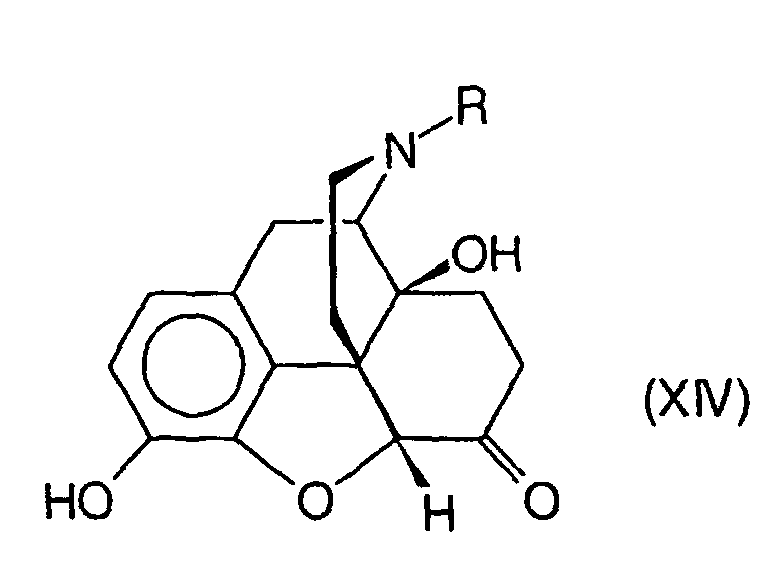
- compounds of formula (I) wherein R 1 represents allyl or cyclopropylmethyl and R 3 represents H can be obtained by a shorter route starting either from naloxone (XIVa) or naltrexone (XIVa).
- XIVa Naloxone - R is allyl
- XIVb Naltrexone - R is cyclopropylmethyl.
- These compounds are alkylated, alkenylated, cycloalkylalkylated, arylalkylated or arylalkenylated with dialkyl sulfates, alkyl halides, alkenyl halides, arylalkyl halides or arylalkenyl halides in solvents such as N,N-dimethyl formamide or tetrahydrofurane using a strong base such as sodium hydride, potassium hydride or sodium amide.
- R 2 is alkenyl or arylalkenyl the double bond may be reduced by catalytic hydrogenation to afford the corresponding saturated derivatives. Further conversion into compounds of formula (I) is described below.
- compounds of formula (I) wherein R 1 represents allyl or cyclopropylmethyl and R 3 represents H can be prepared also via the following route:
- the carbonyl group in position 6 of naloxone (XVa) and naltrexone (XVb), respectively, is being protected by reaction with ethylene glycol in the presence of an acid (e.g. methanesulfonic acid) at temperatures between 20 and 200 °C to give ketals of formula (XVIII) wherein R is allyl or cyclopropylmethyl.
- an acid e.g. methanesulfonic acid
- These compounds are alkylated, alkenylated, arylalkylated or arylalkenylated with dialkyl suflates, alkyl halides, alkenyl halides, arylalkyl halides or arylalkenyl halides in solvents such as N,N-dimethyl formamide or tetrahydrofurane using a strong base such as sodium hydride, potassium hydride or sodium amide.
- the reaction may be carried out at a temperature between 20 and 160 °C, preferably between 20 and 80 °C.
- Examples 9-26 illustrate further compounds, which can be prepared according to one of the methods described above.
- Sodium hydride (144 mg, 6 mmol; obtained from 240 mg of 60% sodium hydride dispersion in oil by washings with n-hexane) was added to a solution of naltriben methanesulfonate (P.S. Portoguese et al., J. Med. Chem., Vol. 34: 1715-1720, 1991) 500 mg, 0.97 mmol) in 10 ml of anhydrous N,N-dimethyl-formamide at 0 °C. The resulting mixture was stirred at 0 °C for 15 min and then at room temperature for another 30 min.
- the active ingredient may be formulated to an injection, capsule, tablet, suppository, solution or the like. Oral formulation and injection are preferably employed.
- the pharmaceutical formulation may comprise the 8-selective antagonist alone or may also comprise expedients such as stabilizers, buffering agents, diluents, isotonic agents, antiseptics and the like.
- the pharmaceutical formulation may contain the above described active ingredient in the amount of 1-95 % by weight, preferably 10-60 % by weight.
- the dose of the active ingredient may be appropriately selected depending on the objects of administration, administration route and conditions of the patients.
- the active ingredient may be administered in doses between 1 mg and 1 g per day in case of administration by injection and in doses between 10 mg and 5 g per day in case of oral administration.
- the preferred dose for injection is 20-500 mg per day.
- ⁇ -Antagonism was assessed using the electrical stimulated guinea-pig ileum longitudinal muscle preparation (GPI; containing ⁇ and ⁇ opioid receptors) and mouse vas deferens preparation (MVD; containing ⁇ , ⁇ and ⁇ opioid receptors) (H. Schmidhammer et al., J. Med. Chem., Vol. 32: 418-421, 1989; H Schmidhammer et al., J. Med. Chem., Vol. 33:1200-1206,1990).
- the activity of the compound 1 for inhibiting the suppression of contraction of the organs by three receptor selective agonists (DAMGO, ⁇ ; Cl 977, ⁇ ; DPDPE, ⁇ ) was measured.
- DAMGO receptor selective agonists
Landscapes
- Health & Medical Sciences (AREA)
- Chemical & Material Sciences (AREA)
- Organic Chemistry (AREA)
- Veterinary Medicine (AREA)
- Life Sciences & Earth Sciences (AREA)
- Bioinformatics & Cheminformatics (AREA)
- Public Health (AREA)
- General Health & Medical Sciences (AREA)
- Animal Behavior & Ethology (AREA)
- Chemical Kinetics & Catalysis (AREA)
- General Chemical & Material Sciences (AREA)
- Medicinal Chemistry (AREA)
- Nuclear Medicine, Radiotherapy & Molecular Imaging (AREA)
- Pharmacology & Pharmacy (AREA)
- Engineering & Computer Science (AREA)
- Immunology (AREA)
- Neurosurgery (AREA)
- Neurology (AREA)
- Biomedical Technology (AREA)
- Pain & Pain Management (AREA)
- Rheumatology (AREA)
- Transplantation (AREA)
- Pharmaceuticals Containing Other Organic And Inorganic Compounds (AREA)
- Organic Low-Molecular-Weight Compounds And Preparation Thereof (AREA)
Abstract
Description
- The present invention is related to novel δ opioid receptor antagonists as well as to their pharmaceutically acceptable salts, a process for their preparation and their use in the manufacture of pharmaceutical preparations.
- Opiod antagonists have been indispensable as tools in opioid research. For example, the chief criterion for the classification of an agonist effect as being opioid receptor mediated is the ability of known opioid antagonists naloxone or naltrexone to reversibly antagonize this effect in a competitive fashion. The usefulness of naloxone and naltrexone for this purpose stems from the fact that they are universal opioid antagonists; that is, they are capable of antagonizing the agonist effects mediated by multiple opioid receptor types.
- Since it is now firmly established that there are a minimum of three opioid receptor types (µ, κ and δ), it has become increasingly evident that selective opioid antagonists are valuable pharmacological tools for identifying receptor types involved in the interaction with opioid agonists. One of the major advantages of selective opioid antagonists over selective agonists is their utility in probing the interaction of endogenous opioid peptides and new opioid agonists with opioid receptor types. Moreover, since it is sometimes not easy to distinguish among µ, κ. and δ opioid receptor mediated agonist effects if the pharmacological endpoints are identical (e.g. antinociception or inhibition of a smooth muscle preparation by agonists), selective antagonists clearly have wider utility as tools than selective agonists.
- The general utility of selective antagonists as pharmacological tools depends upon the correlation of in vitro and in vivo acitivity. This can be accomplished more easily with non-peptide ligands because they generally can penetrate the blood-brain barrier and therefore can be administered peripherally in vivo. Also, they are less subject to metabolism than are peptides.
- In addition to their uses as pharmacological tools, selective, non-peptide opioid antagonists have been described as having potential clinical applications in the treatment of a variety of disorders where endogenous opioids play a modulatory role. These include for instance disorders of food intake, shock, constipation, mental disorders, CNS injury, alcoholism, and immune function (immune stimulation or suppression) (P.S. Portoghese et al., J. Med. Chem., Vol 34: 1757-1762,1991).
- Non-peptide, competitive, δ-selective opioid antagonists have been found recently. The prototypes are: cyprodime for µ (H. Schmidhammer et al., J. Med. Chem., Vol. 32:418-421,1989; H. Schmidhammer et al., J. Med. Chem., Vol. 33: 1200-1206, 1990), norbinaltorphimine for κ (P. S. Portoghese et al., J. Med. Chem., Vol. 30:238-239, 1987), and naltrindole for δ opioid receptors (P.S. Portoghese et al., J. Med. Chem., Vol. 31:281-282,1988).
- These compounds (cyprodime, norbinaltorphinine and naltrindole) are being used as pharmacological tools. They have been tritium labelled and can be used as receptor selective ligands in opioid receptor binding studies to sort out the affinities of new ligands to different receptors and to determine whether a compound is selective to a special receptor.
- An object of the present invention was to find new, highly selective δ opioid receptor antagonists with high potency. Another object was to find highly selective δ opioid receptor antagonists with high immunosuppressive potency. The high selectivity for δ opioid receptors would repress adverse side effects caused by the interaction with other receptors. Still another object was to find compounds which have a brain-cell protecting effect. The problem with the δ opiod receptor antagonists known from the prior art is that they are not highly selective.
- Certain opioid agonists represented by morphine, which act on µ receptors, are known to exhibit immunosuppressive effects. The agonist enkephalin, which acts on δ opioid receptors, exhibit immunostimulating effects (Plotnikbff, Enkephalins and Endorphins, Stress and Immune System, Plenum Press, 1986). Although a number of reports have been issued concerning the immunosuppressive effects of agonists of µ receptors, it is difficult to develop an immunosuppressive agent by employing an agonist of µ receptors, since such agonists show critical side effects such as addiction, respiratory depression, constipation etc.
- Recently it has been reported that δ-selective opioid antagonists have immunosuppressive effects. See EP 456 833, EP 485 636 and EP 614 898.
- The present invention provides novel compounds of the formula (I)wherein

- R1 represents C1-C10 alkenyl; C4-C10 cycloalkylalkyl wherein the cycloalkyl is C3-C6 cycloalkyl and the alkyl is C1-C4 alkyl; C4-C10 cykloalkenylalkyl wherein the cycloalkenyl is C3-C6 cykloalkenyl and the alkyl is C1-C4 alkyl; C7-C16 arylalkyl wherein the aryl is C6-C10 aryl and the alkyl is C1-C6 alkyl; C8-C16 arylalkenyl wherein the aryl is C6-C10 aryl and the alkenyl is C2-C6 alkenyl;
- R2 represents C1-C6 alkoxy; C1-C6 alkenyloxy; C7-C16 arylalkyloxy wherein the aryl is C6-C10 aryl and the alkyloxy is C1-C6 alkyloxy; C7-C16 arylalkenyloxy wherein the aryl is C6-C10 aryl and the alkenyloxy is C1-C6 alkenyloxy;
- R3 represents hydrogen, C1-C6 alkyl; C1-C6 alkenyl; C7-C16 arylalkyl wherein the aryl is C6-C10 aryl and the alkyl is C1-C6 alkyl; C7-C16 arylalkenyl wherein the aryl is C6-C10 aryl and the alkenyl is C1-C6 alkenyl; hydroxy(C1-C6 )alkyl; alkoxyalkyl wherein the alkoxy is C1-C6alkoxy and the alkyl is C1-C6 alkyl; CO2H; CO2(C1-C6 alkyl);
- R4 is hydroxy; C1-C6 alkoxy; C7-C16 arylalkyloxy wherein the aryl is C6-C10 aryl and the alkyloxy is C1-C6 alkyloxy; C1-C6 alkenyloxy; C2-C10 alkyloxyalkoxy wherein alkyloxy is C1-C4 alkyloxy and alkoxy is C1-C6 alkoxy;
- R5 and R6 each independently represent hydrogen; OH; C1-C6 alkoxy; C1-C6 alkyl; hydroxyalkyl wherein the alkyl is C1-C6 alkyl; halo; nitro; cyano; thiocyanato; trifluoromethyl; CO2H; CO2(C1-C6 alkyl); CONH2; CONH(C1-C6 alkyl); CON(C1-C6 alkyl)2; amino; C1-C6 monoalkyl amino; C1-C6 dialkyl amino, C5-C6 cycloalkylamino; SH; SO3H; SO3(C1-C6 alkyl); SO2(C1-C6 alkyl); SO2NH2; SO2NH(C1-C6 alkyl); SO2NH (C7-C16 arylalkyl); SO(C1-C6 alkyl); or R5 and R6 together form a phenyl ring which may be unsubstituted or substituted by halo, nitro, cyano, thiocyanato; C1-C6 alkyl; trifluoromethyl; C1-C6 alkoxy, CO2H, CO(C1-C6 alkyl), amino, C1-C6 monoalkylamino, C1-C6 dialkylamino, SH; SO3H; SO3(C1-C6 alkyl), SO2(C1-C6 alkyl), SO(C1-C6 alkyl), and
- X represents oxygen; sulfur; CH=CH or NR9 wherein R9 is H, C1-C6 alkyl, C1-C6 alkenyl, C7-C16 arylalkyl wherein the aryl is C6-C10 aryl and the alkyl is C1-C6 alkyl, C7-C16 arylalkenyl wherein the aryl is C6-C10 aryl and the alkenyl is C1-C6 alkenyl; C1-C6 alkanoyl, and pharmacologically acceptable salts thereof.
-
- By aryl the following definitions are intended throughout the whole patent application.
- Aryl may be unsubstituted or mono-, di- or trisubstituted independently with hydroxy, halo, nitro, cyano, thiocyanato, trifluoromethyl, C1-C3 alkyl, C1-C3 alkoxy, CO2H, CO2 (C1-C3)alkyl, CONH2, CONH(C1-C3 alkyl), CON(C1-C3 alkyl)2, CO(C1-C3 alkyl), amino, (C1-C3 monoalkyl)amino, (C1-C3 dialkyl)amino, C5-C6 cycloalkylamino, (C1-C3 alkanoyl)amino, SH, SO3H, SO3 (C1-C3 alkyl), SO2 (C1-C3 alkyl), SO(C1-C3 alkyl), C1-C3 alkylthio or C1-C3 alkanoylthio.
- In a preferred embodiment
- R1 is selected from allyl, cinnamyl, cyclopropylmethyl or cyclobutylmethyl;
- R2 is selected from methoxy, ethoxy, n-propyloxy, benzyloxy, benzyloxy substituted in the aromatic ring with F, Cl, NO2, CN, CF3, CH3 or OCH3; allyloxy, cinnamyloxy or 3-phenylpropyloxy;
- R3 is selected from hydrogen, methyl, ethyl, benzyl or allyl;
- R4 is selected from hydroxy, methoxy, methoxymethoxy or acetyloxy;
- R5 and R6 are each and independently selected from hydrogen, nitro, cyano, chloro, fluoro, bromo, trifluoromethyl; CO2H; CO2CH3, CONH2; CONH CH3, CH3, SH; SO2NH2; N(CH3)2, SO2 CH3; and
- X is selected from O, NH, N CH3, N-benzyl, N-allyl.
-
- In an especially preferred embodiment R1 is allyl or cyclopropylmethyl;
- R2 is selected from methoxy, ethoxy, n-propyloxy, benzyloxy substituted in the aromatic ring with chlorine;
- R3 is selected from hydrogen or CH3;
- R4 is hydroxy
- R5 and R6 are each independently selected from hydrogen, CO2H, CONH2, SO2NH2 or SO2CH3; and
- X is selected from O or NH.
-
- The best mode known at present is to use the compounds of Examples 1, 6, 8,18, 24, 41 and 42.
- The novel compounds according to the invention are useful as immunsuppressive agents and/or as analgesics, and also after CNS-injuries by exerting a brain-cell protecting effect.
- Earlier studies (cf. page 3) accomplished with δ-selective opioid antagonists have shown that this class of compounds exhibits immunosuppressive effects. Thus, the compounds of formula (1) of the present invention may be used for suppressing the rejection of transplants after organ transplantations and may be used in the treatment of rheumatic diseases, e.g. rheumatoid arthritis and/or as analgesics.
- Pharmaceutically and pharmacologically acceptable salts of the compounds of formula I are also comprised in the invention. Suitable salts are inorganic salts such as HCl salt, HBr salt, sulfuric acid salt, phosphoric acid salt. Organic acid salts such as methanesulfonic acid salt, salicylic acid salt, fumaric acid salt, maleic acid salt, succinic acid salt, aspartic acid salt, citric acid salt, oxalic acid salt, orotic acid salt, although the salts are not restricted thereto, can also be used according to the invention.
- The compounds represented by formula (I) may be obtained by the following methods:
- Thebaine of the formulais being treated with dialkylsulfates, fluorosulfonic acid alkyl esters, alkylsulfonic acid alkyl esters, arylsulfonic acid alkylesters, alkyl halides, aralkyl halides, alkylsulfonic acid aralkyl esters, arylsulfonic acid aralkyl, arylalkenyl halides, chloroformates, in solvents such as tetrahydrofurane or diethyl ether using a strong base such as n-butyl lithium, lithium diethyl amide or lithium diisopropyl amide at low temperatures (-20 to -80 °C) (s. Boden et al., J.org.Chem.,Vol.47: 1347-1349, 1982; Schmidhammer et al., Helv.Chim.Acta, Vol.71:642-647, 1988), giving compounds of the formula II
 wherein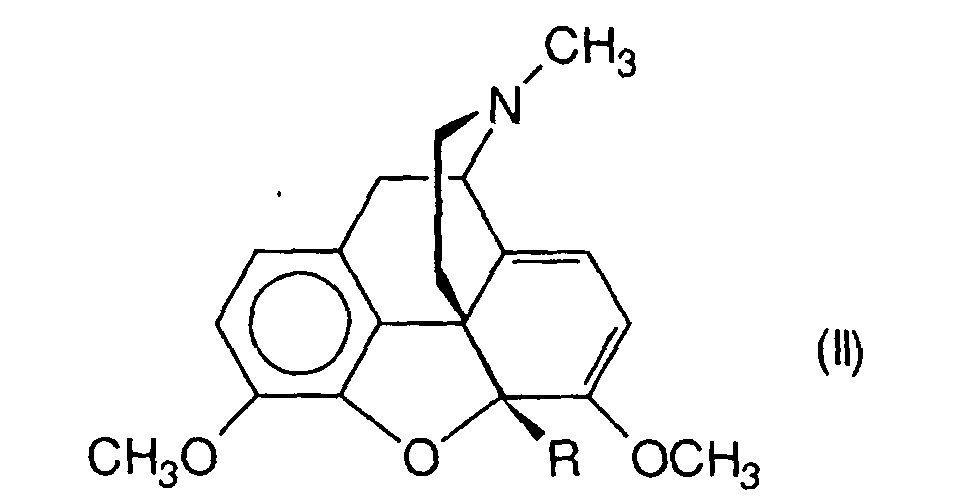
R is C1-C6 alkyl; C1-C6 alkenyl; C7-C16 aralkyl wherein the aryl is C6-C10 aryl and the alkyl is C1-C6 alkyl; C7-C16 arylalkenyl wherein the aryl is C6-C10 aryl and the alkenyl is C1-C6 alkenyl; alkoxyalkyl wherein the alkoxy is C1-C6 alkoxy and the alkyl is C1-C6 alkyl; CO2 (C1-C6 alkyl); The substituted thebaine derivatives (formula (II)) or thebaine are converted into the corresponding 14-hydroxycodeinones according to formula IIIwherein
R is as defined above or being hydrogen,
by reaction with performic acid (s. Schmidhammer et al., Helv.Chim.Acta, Vol. 71:1801-1804,1988) or m-chloroperbenzoic acid at a temperature between 0 and 60 °C. The preferred procedure is the reaction with performic acid at 0-10 °C (H. Schmidhammer et al., Helv.Chim.Acta, Vol. 71:1801-1804, 1988). These 14-hydroxycodeinones being treated with dialkyl sulfates, alkyl halides, alkenyl halides, aralkyl halides, arylalkenyl halides, chloroformates, in solvents such as N,N-dimethyl formamide or tetrahydrofurane using a strong base such as sodium hydride, potassium hydride or sodium amide giving compounds of formula (IV),wherein
R1 is C1-C6 alkyl, C1-C6 alkenyl, C7-C16 arylalkyl wherein the aryl is C6-C10 aryl and the alkyl is C1-C6 alkyl, C7-C16 arylalkenyl wherein the aryl is C6-C10 aryl and the alkenyl is C1-C6 alkenyl, C1-C6 alkanoyl, C7-C20 arylalkanoyl wherein the aryl is C6-C14 aryl and the alkyl is C1-C6 alkyl, C7-C20 arylalkenoyl wherein the aryl is C6-C14 aryl and the alkyl is C1-C6 alkenoyl;
R2 is hydrogen; C1-C6 alkyl; C1-C6 alkenyl C7-C16 arylalkyl wherein the aryl is C6-C10 aryl and the alkyl is C1-C6 alkyl; C7-C16 arylalkenyl wherein the aryl is C6-C10 aryl and the alkenyl is C1-C6 alkenyl; alkoxyalkyl wherein the alkoxy is C1-C6 alkoxy and the alkyl is C1-C6 alkyl; CO2(C1-C6 alkyl);
which in turn are reduced by catalytic hydrogenation using a catlayst such
as palladium on charcoal and solvents such as methanol, ethanol or glacial acetic acid to give compounds of formula (V)wherein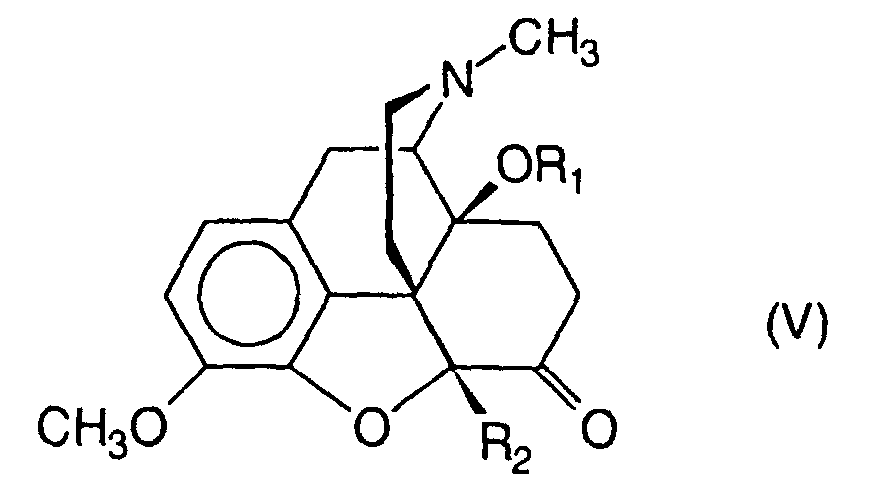
R1 is C1-C6 alkyl, C7-C16 arylalkyl wherein the aryl is C6-C10 aryl and the alkyl is C1-C6 alkyl, C1-C6 alkanoyl, C7-C16 arylalkanoyl wherein the aryl is C6-C10 aryl and the alkanoyl is C1-C6 alkanoyl; and
R2 is hydrogen; C1-C6 alkyl, C1-C6 alkenyl C7-C16 arylalkyl wherein the aryl C6-C10 aryl and the alkyl is C1-C6 alkyl; C7-C16 arylalkenyl wherein the aryl is C6-C10 aryl and alkenyl is C1-C6 alkenyl; alkoxyalkyl wherein the alkoxy is C1-C6 alkyl; CO2(C1-C6 alkyl); - Thereafter N-demethylation can be carried out using chloroformates or cyanogen bromide to give intermediates of formula (VI)wherein

R1 and R2 are as defined above in formula (IV); and
R3 is CO2CHClCH3, CO2CH=CH2, CO2CH2CCl3, CO2CH2CH3, CO2Ph, CN or the like. - The intermediate carbamates of formula (VI) can be cleaved by refluxing in alcohols (in the case of 1-chloroethyl carbamates), by addition of hydrogen halides or halogen and subsequent refluxing in alcohols (in the case of vinyl carbamates), or by reductive cleavage using zinc in glacial acetic acid or methanol (in the case of 2,2,2-trichloroethyl carbamates). Other carbonates may be cleaved using aqueous acid, alkali or hydrazine. The intermediate cyanamides of formula (VI) can be cleaved by acid hydrolysis. Alkylation of the corresponding N-nor derivatives of formula (VII)wherein

R1 and R2 are as defined above in formula (V), can be accomplished with alkenyl halides, cycloalkylalkyl halides, cycloalkenylalkyl halides, aralkyl halides, arylalkenyl halides, in solvents such as dichloromethane, chloroform, or N,N-dimethyl formamide in the presence of a base such as sodium hydrogen carbonate or potassium carbonate to yield derivatives of formula (VIII)wherein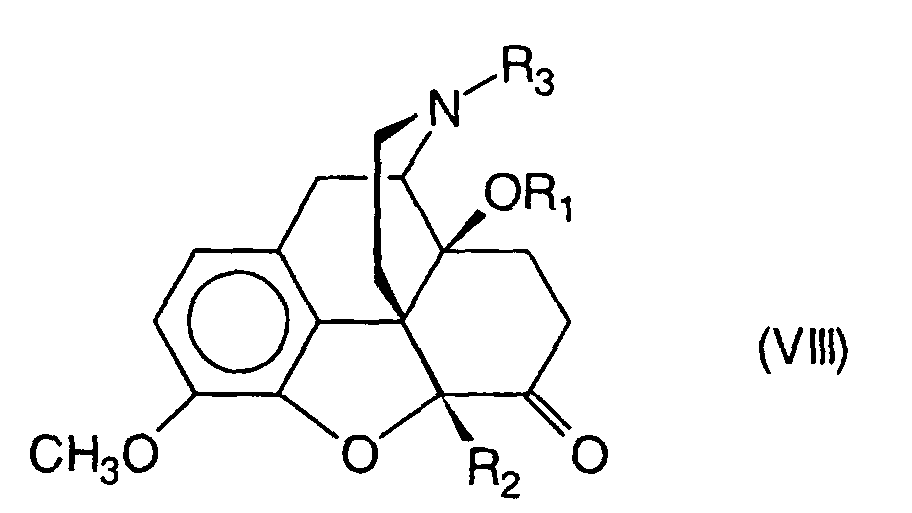
R1 and R2 are as defined above in formula (V); and
R3 represents C1-C6 alkenyl; C7-C16 arylalkyl wherein the aryl is C6-C10 aryl and the alkyl is C1-C6 alkyl; C7-C16 arylalkenyl wherein the aryl is C6-C10 aryl and the alkenyl is C1-C6 alkenyl; C4-C10 cycloalkylalkyl wherein the cycloalkyl is C3-C6 cycloalkyl and the alkyl is C1-C4 alkyl; C4-C10 cycloalkylalkenyl wherein the cycloalkenyl is C3-C6 cycloalkenyl and the alkyl is C1-C4 alkyl;
Ether cleavage can be carried out using boron tribromide (in a solvent such as dichloromethane or chloroform at about 0 °C), 48 % hydrobromic acid (reflux), or other well known reagents for ether cleavage. The resulting phenols of formula (IX)wherein
R1, R2 and R3 are as defined above,
are being alkylated using alkyl halides, alkyl sulfates, sulfonic acid esters, aralkyl halides, arylalkenyl halides or acylated using carbonic acid chlorides, or carbonic acid esters to yield compounds of formula (X)wherein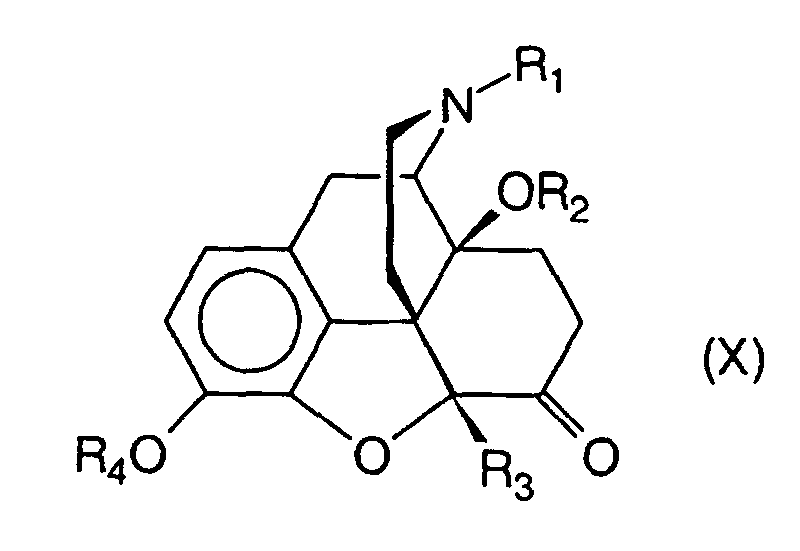
R1, R2 and R3 are as defined above; and
R4 is hydrogen, C1-C6 alkyl, C7-C16 arylalkyl wherein the aryl is C6-C10 aryl and the alkyl is C1-C6 alkyl, C1-C6 alkenyl, C7-C16 arylalkenyl wherein the aryl is C6-C10aryl and the alkenyl is C1-C6 alkenyl; C1-C6 alkanoyl, C7-C16 arylalkanoyl wherein the aryl is C6-C10 aryl and the alkanoyl is C1-C6 alkanoyl, C2-C10 alkyloxyalkyl wherein alkyloxy is C1-C4 alkyloxy and alkyl is C1-C6 alkyl, - Alternatively, compounds of formula (I) wherein R1 represents allyl or cyclopropylmethyl and R3 represents H can be obtained by a shorter route starting either from naloxone (XIVa) or naltrexone (XIVa).(XIVa): Naloxone - R is allyl
(XIVb): Naltrexone - R is cyclopropylmethyl. - The 3-hydroxy group of compounds of formula (XIV) is being protected by alkylation with benzyl bromide, methoxymethyl bromide, ethoxymethyl bromide or trityl chloride (triphenylmethyl chloride) in a solvent such as N,N-dimethyl formamide or dichloromethane in the presence of a base to yield compounds of formula (XV)wherein
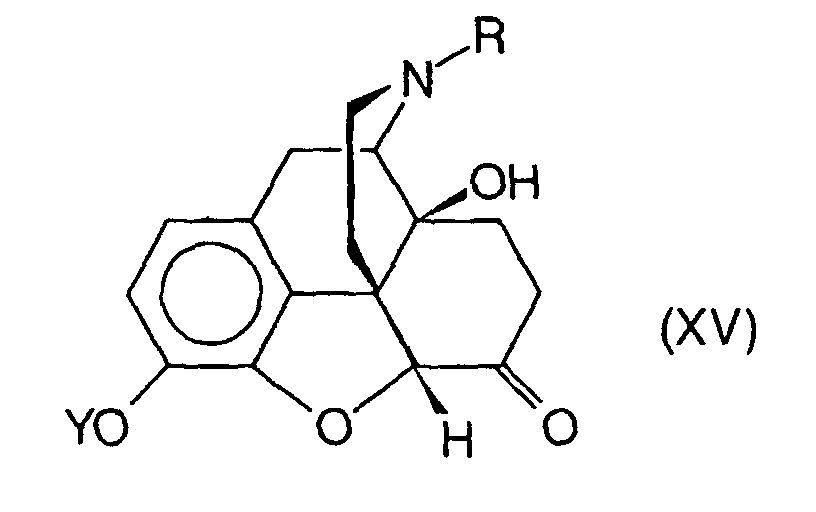
R is allyl or cyclopropylmethyl and Y = CH2Ph, CH2OCH3, CH2OC2H5 or C(Ph)3. - These compounds are alkylated, alkenylated, cycloalkylalkylated, arylalkylated or arylalkenylated with dialkyl sulfates, alkyl halides, alkenyl halides, arylalkyl halides or arylalkenyl halides in solvents such as N,N-dimethyl formamide or tetrahydrofurane using a strong base such as sodium hydride, potassium hydride or sodium amide. The resulting 6-0,14-0-dialkylated compounds of formula (XVI)wherein

R1 is allyl or cyclopropylmethyl; and
R2 is C1-C6 alkyl, C1-C6 alkenyl, C7-C16 arylalkyl wherein the aryl is C6-C10 aryl and the alkyl is C1-C6 alkoxy, C7-C16 arylalkenyl wherein the aryl is C6-C10 aryl and alkenyl is C1-C6 alkenyl; and Y as defined above;
can be hydrolized with diluted acids like hydrochloric acid or sulfuric acid to afford compounds or formula (XVII)wherein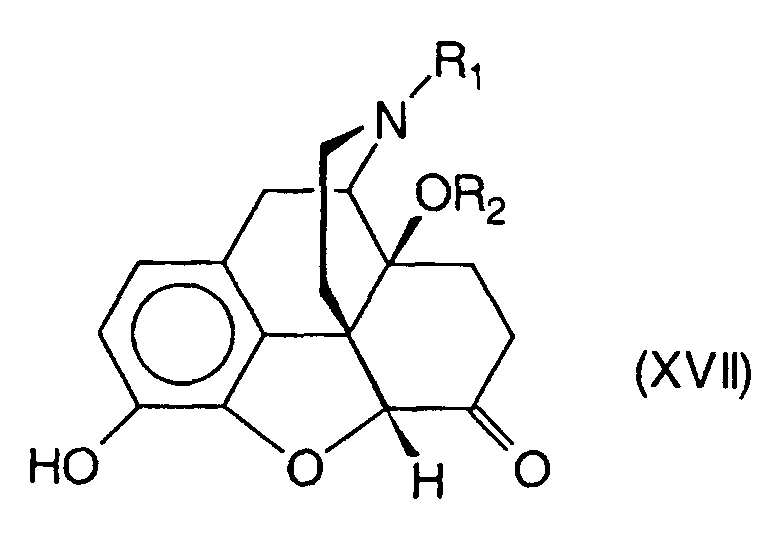
R1 is allyl or cyclopropylmehtyl; and
R2 is as defined above (formula XVI). - In the case R2 is alkenyl or arylalkenyl the double bond may be reduced by catalytic hydrogenation to afford the corresponding saturated derivatives. Further conversion into compounds of formula (I) is described below.
- Alternatively, compounds of formula (I) wherein R1 represents allyl or cyclopropylmethyl and R3 represents H can be prepared also via the following route: The carbonyl group in position 6 of naloxone (XVa) and naltrexone (XVb), respectively, is being protected by reaction with ethylene glycol in the presence of an acid (e.g. methanesulfonic acid) at temperatures between 20 and 200 °C to give ketals of formula (XVIII)wherein R is allyl or cyclopropylmethyl.

- The 3-hydroxy group of these ketals is being protected by alkylation with benzyl bromide, methoxymethyl bromide, ethoxymethyl bromide or trityl chloride in a solvent such as N,N-dimethyl formamide or dichloromethane in the presence of a base to yield compounds of formula (XIX) wherein R is allyl or cyclopropylmethyl and Y is as defined above.
- These compounds are alkylated, alkenylated, arylalkylated or arylalkenylated with dialkyl suflates, alkyl halides, alkenyl halides, arylalkyl halides or arylalkenyl halides in solvents such as N,N-dimethyl formamide or tetrahydrofurane using a strong base such as sodium hydride, potassium hydride or sodium amide. The resulting compounds of formula (XX)wherein R1 is allyl or cyclopropylmethyl, R2 is as defined above (formula (XVI)) and Y is as defined above

can be hydrolized in diluted acids like hydrochloride acid or sulfuric acid (a typical mixture for hydrolysis is: concentrated HCl: MeOH: H2O 3/6/1 v/v/v) to afford compounds of formula (XVII). Compounds of formula (I) wherein R1 represents allyl or cyclopropyl-ethyl, R3 represents H, and X represents NH or O can be prepared from compounds of formula (XVII) as described below. - Compounds of the formula (I) wherein R3 is as defined above and X represents NH are obtained by reaction of compounds of formula (VIII), (X) or (XIII) with phenylhydrazine or substituted phenylhydrazine in solvents such as methanol, ethanol or glacial acetic acid in the presence of methanesulfonic acid, HCl or HBr. Phenylhydrazine substituted at the aromatic ring with hydroxy, halogen, C1-C6 alkyl, C1-C6 alkoxy, amino, nitro, cyano, thiocyanato, trifluoromethyl, CO2H, CO2 (C1-C6) alkyl, CONH2, CONH (C1-C6 alkyl), CON (C1-C6 alkyl)2, SO2NH2, SO2 (C1-C6) alkyl or the like may be employed. The reaction may be carried out at a temperature between 20 and 160 °C, preferably between 20 and 80 °C.
- Compounds of formula (I) wherein R3 is as defined above and X represents O are obtained by reaction of compounds of formula (VIII), (IX), (X) or (XIII) with O-phenylhydroxyl amine or substituted (at the aromatic ring) O-phenylhydroxylamine in solvents such as methanol ethanol, or glacial acetic acid in the presence of methanesulfonic acid, HCl or HBr. O-phenylhydroxylamine substituted at the aromatic ring with hydroxy, halogen, C1-C6 alkyl, C1-C6 alkoxy, amino, nitro, cyano, thiocyanato, trifluoromethyl, CO2H, CO2 (C1-C6) alkyl, CONH2, CONH (C1-C6 alkyl), CON (C1-C6 alkyl)2, SO2NH2, SO2 (C1-C6) alkyl or the like may be employed.
- The invention will now be described in more detail by the following examples which are not to be construed as limiting the invention.
- Synthesis of 17-(Cyclopropylmethyl)-6,7-dehydro-4,5α-epoxy-14-ethoxy-3-hydroxy-5-methyl-6,7-2',3'-indolomorphinan hydrochloride (compound 1).
- A mixture of 14-O-ethyl-5-methylnaltrexone (H. Schmidhammer et al, Helv. Chim. Acta, Vol. 76: 476-480, 1993) (580 mg, 1.51 mmol), phenylhydrazine hydrochloride (394 mg, 2.72 mmol), and 7 ml of glacial acetic acid was refluxed for 23 h. After cooling, the reaction mixture was poured on ice, alkalized with cone. NH4OH and extracted with CH2Cl2 (3x30 ml). The combined organic layers were washed with H2O (3x80 ml), dried over Na2SO4 and evaporated. The remaining residue (615 mg brownish foam) was dissolved in little MeOH and Et2O/HCl was added. Thus, 550 mg (95%) of the compound 1 were isolated. For analysis a small amount was recrystallized from MeOH. m.p. > 260°C (dec.) IR (KBr): 3200 (+NH, NH, OH)cm-1. CI-MS:m/z 457 (M++1). 1H-NMR ((d6)DMSO): δ11.34, 9.21. and 8.55 (3 s, +NH, NH, OH), 7.32 (m, 2 arom. H), 7.08 (t, J = 8.1 Hz, 1 arom. H), 6.94 (t, J = 8.1 Hz, 1 arom. H), 6.62 (d, J = 8.1 Hz, 1 arom. H); 6.55 (d. J = 8.1 Hz, 1 arom. H), 1.86 (s, CH3-C(5)), 1.01 (t, J = 6.8 Hz, 3H, CH3CH2O). Analysis calculated for C29 H32N2O3.HCl.H2O (511.06): C 68.16, H 6.90, N 5.48, Cl 6.94; found: C 67.87, H 6.88, N 5.30, Cl 7.28.
- Synthesis of 17-Allyl-6,7-dihydro-4,5α-epoxy-14-ethoxy-3-hydroxy-5-methyl-6,7-2',3'-indolomorphinan hydrochloride (compound 2).
- A mixture of 14-O-ethyl-5-methylnaloxone (H. Schmidhammer et al., Helv. Chim. Acta Vol. 76:476-480,1993) (1.2g, 2.66 mmol), phenylhydrazine hydrochloride (577 mg, 3.99 mmol), and 15 ml of glacial acetic acid was refluxed for 24 h. After cooling, the reaction mixture was poured on ice, alkalized with cone. NH4OH and extracted with CH2Cl2 (3x80 ml), 1x30 ml). The combined organic layers were washed with H2O (3x80 ml, 1x30 ml), dried over Na2SO4 and evaporated. The residue (1.3 g yellow-brown foam) was purified with column chromatography (alumina basic grade IV, elution with CH2Cl2). The corresponding fractions were combined and evaporated to give a colorless oil which was converted into the hydrochloride salt in the usual way and crystallized from MeOH/diethyl ether to yield 200 mg (17%) of the title compound 2. M.p. 168-170°C. IR (KBr):3200(+NH,OH)cm-1. CI-MS: M/z 443 (M++1). 1H-NMR (CD3OD): δ 7.39 (dd, J=7.8, 7.8 HZ, 2 arom. H), 7.14 (t, J=7.8 hz, 1 arom.H), 7.01 (t=7.8 HZ, 1 arom. H), 6.67 (s,2 arom. H), 6.02 (m, 1 olef. H), 5.72 (m, 2 olef. H), 1.99 (s, CH3-C(5)), 1.09 (t, J=6.8 Hz, CH3). Analysis calculated for C28H30N2O3. HCl. 1.5 H2O (506.05): C 66.46, H 6.77 N 5.54, Cl 7.01; found: C 66.55, 6.68, N 5.39, Cl 6.98.
- A mixture of 4,5α-epoxy-14-ethoxy-3-methoxy-5-methylmorphinan-6-one hydrochloride (H. Schmidhammer et al., Helv. Chim. Acta Vol. 76,476-480,1993) (3.0 g, 7.88 mmol), potassium carbonate (3.9 g, 28.2 mmol), 2-phenylethyl bromide (1.41 ml, 10.4 mmol), and of 20 ml anhydrous N,N-dimethyl formamide was stirred at 80°C (bath temperature) for 2h. After cooling and addition of 130 ml of H2O, the mixture was extracted with diethyl ether (3x60 ml). The combined organic layers were washed with H2O (3x70 ml), dried over Na2SO4 and evaporated. The residue (3.6 yellow oil) was crystallized from MeOH to afford 2.1 g (70%) of 4,5α-epoxy-14-ethoxy-3-methoxy-5-methyl-17-(2-phenyl)ethylmorphinan-6-one (compound 3). M.p. 86-89°C. IR (KBr): 1725 (CO) cm-1. CI-MS: m/z 448 (M++1). 1H-NMR (CDCl3): δ 7.21 (m, 5 arom. H), 6.64 (d,J=8.2 Hz, 1 arom. H, 6.54 (d, J=8.2 Hz, 1 arom. H.), 3.85 (s, OCH3), 1.60 (s, CH3-C(5)), 1.12 (t, J=6.8 Hz, CH3). Analysis calculated for C28H33NO4 (447.55): C 75.14, H 7.43, N 3.13; found: C 75.04, H 7.69, N 3.26.
- A solution of the compound 3 (1.5 g, 3.35 mmol) in 5 ml of 48% HBr was refluxed for 30 min and then evaporated. The residue was dissolved in MeOH and again evaporated (this procedure was repeated twice) to give a grey crystalline residue (1.7 g) which was treated with hot MeOH to yield 950 mg (63%) of the compound 4. M.p.>270°C. IR (KBr): 1720 (CO) cm-1. CI-MS: m/z 434 (M++1). 1H-NMR (DMSO-d6): δ 9.38 and 8.48 (2 s, +NH, OH), 7.33 (m,5 arom. H), 6.68 (d, J=8.2 Hz, 1 arom. H), 6.64 (d, J=8.2 Hz, 1 arom. H), 1.51 (s, CH3-C(5)), 1.34 (t, J=6.8 Hz, CH3).
- Analysis calculated for C27H31NO4. HBr (514.45):C 63.04, H 6.27, N 2.72, Br 15.53; found: C 63.15, H 6.48, N 2.61, Br 15.37.
- A mixture of the compound 4 (700 mg,1.61 mmol), phenylhydrazine hydrochloride (513 mg), 3.54 mmol), and 15 ml of glacial acetic acid was refluxed for 6 h. The reaction mixture was poured on ice, alkalized with cone. NH4OH and extracted with CH2Cl2 (3x80 ml, 1x30 ml). The combined organic layers were washed with H2O (3x80 ml), dried over Na2SO4 and evaporated. The residue (600 mg slightly brown foam) was converted into the hydrochloride salt in the usual way and crystallized from MeOH/diethyl ether to yield 360 mg (51%) of the title compound 5 as slightly pink crystals. M.p.>225°C. IR (KBr):3400 and 3200 (+NH, NH,OH). CI-MS:m/z 507 (M++1). 1H-NMR (DMSO-d6): δ 11.34, 9.19 and 8.97 (+NH, NH, OH), 7.34 (m, 7 arom. H), 7.08 (t, J=7.9 Hz, 1 arom.), 6.94 (t, J=7,9 Hz, 1 arom. H), 6.62 (d, J=8.4 Hz, 1 arom. H), 6.57 (d, J=8.4 Hz, 1 arom. H), 1.87 (s, CH3-C(5)),0.96 (t, J=6.9 Hz, CH3). Analysis calculated for C33H34N2O3. HCl.2 H2O (579.14): C 68.44, H 6.79, N 4.84, Cl 6.12; found: C 68.81, H 6.55, N 4.72, Cl 6.40.
- A mixture of 14-O-methyl-5-methylnaloxone (H. Schmidhammer et al., Helv. Chim. Acta Vol. 77:1585-1589,1994) (1.0 g, 2.8 mmol), phenylhydrazine hydrochloride (728 mg, 5.04 mmol), and 15 ml of glacial acetic acid was refluxed for 24 h. After cooling, the reaction mixture was poured on ice, alkalized with conc. NH4OH and extracted with CH2Cl2 (3x80 ml, 1x30 ml). The combined organic layers were washed with H2O (3x80 ml), dried over Na2SO4 and evaporated. The residue (1.1 g brownish foam) was converted in the usual way into the hydrochloride salt and crystallized from acetone to yield 190 mg (19%) of the title compound 6 as slightly brown crystals. M.p. >280°C. IR (KBr): 3200 (+NH, NH,OH), 1H-NMR: δ 7.32 (dd, J=7.9, 7.9 Hz, 2 arom. H), 7.06 (t, J=7.9 Hz, 1 arom. H), 6.93 (t, =7.9 Hz, 1 arom. H), 6,63 (d, J=8.2 Hz, 1 arom. H), 6.55 (d, J=8.2 Hz, 1 arom. H), 6.02 (m, 1olef.H), 5.63 (m, 1 olef. H), 3.15 (s, OCH3), 2.07 (s, CH3-C(5)). Analysis calculated for C27H28N2O3. HCl. 1.7 H2O. 0.9 MeOH (524.44): C64.41, H 7.09, N 5.22; found: C 64.44, H 6.87, N 4.94.
- A mixture of 4,5α-epoxy-3,14-dimethoxy-5-methylmorphinan-6-one hydrochloride (H. Schmidhammer et al., Helv. Chim. Acta Vol. 77:1585-1589,1994) (2.24 g, 6.12 mmol), potassium carbonate (3.0 g, 21.9 mmol), 2-phenylethyl bromide (1.05 ml, 7.74 mmol), and 15 ml of anhydrous N,N-dimethyl formamide was stirred at 80°C (bath temperature) for 2 h. After cooling and addition of 110 ml of H2O, the mixture was extracted with diethyl ether (3x60 ml). The combined organic layers were washed with H2O (3x70 ml), dried over Na2SO4 and evaporated. The residue (2.9 yellow oil) was converted into the hydrobromide salt in the usual way and crystallized from MeOH to give 1.4 g (63%) of 4,5α-epoxy-3,14-dimethoxy-5-methyl-17-(2-phenyl)ethylmorphinan-6-one hydrobromide (compound 7) as colorless crystals. A small portion of this material was recrystallized from MeOH for analyses. M.p. 94-96°C. IR (KBr): 3400 (+NH), 1720 (CO) cm-1. CI-MS: m/z 434 (M++1). 1H-NMR (DMSO-d6) δ 10.15 (s, +NH), 7.30 (m, 5 arom. H), 6.74 (d, J=8.2 Hz, 1 arom. H), 6.68 (d, J=8.2 Hz, 1 arom.), 3.87 (s, OCH3-C(3)), 3.58 (s, OCH3-C(14)),1.60 (s, CH3-C(5)). Analysis calculated for C27H31NO4. HBr (514.44): C 63.04, H 6.27, N 2.72; found: C 63.18, H 6.60, N 2.39.
A solution of the compound 7 (1.4 g, 3.32 mmol) in 5 ml of 48% HBr was refluxed for 30 min and then evaporated. The residue was dissolved in MeOH and again evaporated (this operation was repeated once) to afford a brownish crystalline residue (1.8 g) which was treated with hot MeOH to yield 590 mg (42%) of the compound 8.HBr. A small portion was recrystallized for analyses. M.p.>316°C. IR (KBr):3400 (+NH, OH), 1722 (CO)cm-1 CI-MS: m/z 420 (M++1). 1H-NMR (DMSO-d6) δ 8.95 and 8.45 (2s, +NH,OH), 6.90 (m, 5 arom. H), 6.23 (dd, J=8.2, 8.2 Hz, 2 arom. H), 2.97 s, OCH3),1.08 (s, CH3-C(5)). Analysis calculated for C26H29NO4. HBr. 0.2 MeoH (506.85): C 62.09, H 6.13,N 2.76, Br 16.77; found: C 61.79, H 6.18, N 2.63, Br 16.12. - A mixture of the compound 8. HBr (468 mg, 0.93 mmol), phenylhyrazine hydrochloride (343 mg, 2.36 mmol), and 15 ml of glacial acetic was refluxed for 7 h. After cooling, the reaction mixture was poured on ice, alkalized with con. NH4OH and extracted with CH2Cl2 (3x70 ml, 1x30 ml). The combined organic layers were washed with H2O (3x80 ml), dried over Na2SO4 and evaporated. The residue (410 mg slightly brown foam) was converted into the hydrochloride salt in the usual way and crystallized from MeOH/diethyl ether to give 390 mg (83%) of the title compound 9 as slightly pink crystals. An analytic sample was obtained by recrystallization of a small portion of this material from MeOH/diethyl ether. M.p. 257-260°C (dec.). IR (KBr): 3460 (+NH, NH, OH) cm-1. CI-MS: m/z 493 (M++1). 1H-NMR (DMSO-d6) δ 11.30,9.20 and 9.05 (3 S, +NH, NH, OH), 7.25 (m, 7 arom. H), 7.10 (t, J=8.2 Hz, 1 arom. H), 6.96 (t, J=8.2 Hz, 1 arom. H), 6.59 (dd, J= 8.2, 8.2 Hz, 2 arom. H), 3.32 (s, OCH3), 1.87 (s, CH3-C(5)). Analysis calculated for C32H32N2O3. HCl. 3.7 MeOH (647.63): C 66.21, H 7.44, N 4.33; found: C 66.04, H 7.13, N 4.60.
- A mixture of 14-O-methyl-5-methylnaltrexone (H.Schmidhammer et al., Helv. Chim. Acta Vol. 77: 1585-1589, 1994) (620 mg, 1.68 mmol), phenylhydrazine hydrochloride (365 mg, 2.52 mmol), and 7 ml of glacial acetic acid was refluxed for 17.5 h. After cooling, the reaction mixture was poured on ice, alkalized with NH4OH and extracted with CH2Cl2 (3x70 ml, 1x20 ml). The combined organic layers were washed with H2O (3x80 ml), dried over Na2SO4 and evaporated. The residue (1.11 g brown foam) was purified by column chromatography (silica gel 230-400 mesh, mobile phase CH2Cl2/MeOH 90:9). The corresponding fractions were combined and evaporated to afford a slightly yellow foam which was dissolved in MeOH and treated with ethereal HCl to yield 520 mg (65%) of the compound 10 as colorless crystals. For analyses a small sample was recrystallized from MeOH. M.p. >250°C (dec.). IR (KBr):3515 and 3220 (+NH, NH, OH)cm-1. CI-MS: m/z 443 (M++1). 1H-NMR (DMSO-d6): δ 11.30, 9.12, 8.93 (3 s,+NH, NH, OH), 7.34 (m, 2 arom. H), 7.09 (t, J=8.3 Hz, arom. H), 6.95 (t, J=8.3 HZ, 1 arom. H), 6.63 (d, J=8.1 Hz, 1 arom. H), 6.56 (d, J=8.1 Hz, 1 arom. H), 3.24 (s, OCH3), 1.87 (s, CH3-C(5)). Analysis calculated for C28H30N2O3. HCl. 0.7 H2O (491.67):C 68.41, H 6.64, N 5.70, Cl 7.21; found: C 68.52, H 6.86, N 5.65, Cl 7.48.
- A mixture of 7,8-dihydro-5-methyl-14-n-propyloxycodeinone described in our copending application with priority from May 18,1994) (9; 2.67 g, 7.19 mmol), KHCO3 (3.6 g, 35.93 mmol), 1-chloroethyl chloroformate (4.73 ml, 43.12 mmol), and 35 ml of 1,2-dichloroethane was stirred under reflux for 3.5 h. After cooling, the inorganic material was filtered off and the filtrate evaporated. The residue (4.67 g of a yellowish oil of 17-(1-chloroethoxy)- carbonyl-4,5α-epoxy-3-methoxy-5-methyl-14-n-propyloxymorphinan-6-one (compound 11); pure by TLC) was not further purified and characterized. A solution of the compound 11 in MeOH was refluxed for 1 h and then evaporated. The residue (3.54 g slightly brown foam) was crystallized from 2.5 ml MeOH/2 ml diethyl ether to give 1.68 g (66%) of 4,5α-epoxy-3-methoxy-5-methyl-14-n-propyloxy-morphinan-6-one hydrochloride (compound 12). M.p. 186-188°C. IR (KBr): 3425 (+NH2), 1725 (CO)cm-1. EI-MS: m/z 357 (M+). 1H-NMR (DMSO-d6): σ 10.11 and 8.15 (2 broad s, +NH2), 6.83 (d, J=8.2 Hz, 1 arom. H), 6.74 (d, J=8.2 Hz, 1 arom. H), 3.78 (s, CH3O), 1.48 (s, CH3-C(5)), 0.95 (t, J=7.4 Hz, CH3). Analysis calculated for C21H27NO4. HCl. 0.6 MeOH (413.14): C 62.80, H 7.42, N 3.39, Cl 8.58; found: C 62.66, H 7.34, N 3.40, Cl 8.98. A mixture of the compound 12 (1.45 g, 3.68 mmol), allyl bromide (0.36 ml, 4.06 mmol), potassium carbonate (2.9 g, 20.8 mmol), and 10 ml of anhydrous N,N-dimethyl formamide was stirred at 80°C (bath temperature) for 1.5 h. The inorganic solid was filtered off and the filtrate evaporated to give 1.7 g of a yellowish oily residue. This residue was partitioned between CH2Cl2 and H2O. The organic layer was washed with H2O and brine, dried over Na2SO4 and evaporated. The residue (1.375 g of a slightly yellow oil) was crystallized from ethanol to yield 1.28 g (88%) of 17-allyl-4,5α-epoxy-3-methoxy-5-methyl-14-n-propyloxymorphinan-6-one (compound 13) as slightly yellow crystals. M.p. 122-124°C. IR(KBr): 1720 (CO)cm-1. EI-MS: m/z 397 (M+). 1H-NMR (CDCl3): δ 6.63 (d, J=8.3 Hz, 1 arom. H), 6.55 (d, J=8.3 Hz, 1 arom. H), 5.79 (m, 1 olef. H), 5.13 (m, 2 olef. H), 3.84 (s, OCH3),1.60 (s, CH3-C(5)), 1.00 (t, J=7.4 Hz, CH3). Analysis calculated for C24H31NO4 (397.51): C 72.52, H 7.86, N 3.52; found: C 72.14, H 7.76, N 3.44. A 1 M solution of boron tribromide in CH2Cl2 (10.8 ml) was added to an ice-cooled solution of the compound 13 (577 mg, 1.45 mmol) in 75 ml of CH2Cl2 at once. After stirring at 0-5°C for 2 h, a mixture of 20 g ice and 4 ml of conc. NH4OH was added. The resulting mixture was stirred at room temperature for 30 min and the extracted with CH2Cl2 (3x50 ml). The combined organic layers were washed with brine (70 ml), dried over Na2SO4 and evaporated. The residue (600 mg brownish foam) was converted into the hydrobromide salt in the usual way and crystallized from MeOH to afford 314 mg (47%) of 17-allyl-4,5α-epoxy-3-hydroxy-5-methyl-14-n-propyloxymorphinan-6-one hydrobromide (compound 14). M.p. 244-247°C (dec.). IR (KBr): 3441 and 3332 (+NH, OH), 6.68 (d, J=8.2 Hz, 1 arom. H), 6.62 (d, J=8.2.Hz, 1 arom. H), 5.92 (m, 1 olef. H), 5.67 (m,2 olef. H), 1.49 (s, CH3-C(5)), 0.96 (t, J=7.2 Hz, CH3).
- A mixture of the compound 14 (300 mg, 0.65 mmol), phenylhydrazine hydrochloride (187 mg, 1.29 mmol), and 30 ml of glacial acetic acid was refluxed for 7.5 h. After cooling, the reaction mixture was poured on ice, alkalized with cone. NH4OH and extracted with CH2Cl2 (3x60 ml). The combined organic layers were washed with H2O (3x80 ml) and brine (50 ml), dried over Na2SO4 and evaporated. The residue (325 mg brownish foam) was converted into the methane sulfonate in the usual way and recrystallized from MeOH/diethyl ether to yield 264 mg (74%) of the title compound 15. Recrystallization of a small portion of this material from ethanol afforded an analytical sample. M.p. >256°C. FAB-MS: m/z 457 (M++1), 1H-NMR (DMSO-d6): δ 11.29, 9.17 and 8.45 (3 s, +NH, NH, OH), 7.32 (d, J=8.2 Hz, 2 arom. H), 7.10 (t, J=8.2 Hz, 1 arom. H), 6.94 (t, J=8.2 Hz, 1 arom. H), 6.59 (s, 2 arom. H), 5.90 (m, 1 olef. H), 5.68 (m, 2 olef. H), 1.88 (s, CH3-C(5)), 0,55 (t, J=7.3 Hz, CH3). Analysis calculated for C29H32N2O3H. 0.5 H2O (561.70): C 64.15, H 66.4, N 4.99, S 5.72; found: C 64.08, H 6.87, N 5.09, S 5.87.
- A mixture of 4,5α-epoxy-3-methoxy-5-methyl-14-n-propyloxymorphinan-6-one hydrochloride (compound 12 of Example 7) (1.46 g, 3.71 mmol), potassium carbonate (2.24 g, 16.24 mmol), cyclopropylmethyl chloride (0.43 ml, 4.44 mmol), and 15 ml of anhydrous N,N-dimethyl formamide was stirred at 85°C (bath temperature) for 36 h. The inorganic solid was filtered off and the filtrate evaporated. A solution of the residue in 30 ml of CH2Cl2 was washed with H2O (3x30 ml), dried over Na2SO4 and evaporated. The residue (1,69 g orange-yellow oil) was dissolved in diethyl ether and treated with ethereal HCl to give 920 mg (55%) of 17-(cyclopropylmethyl)-4,5α-epoxy-3-methoxy-5-methyl-14-n-propyloxymorphinan-6-one hydrochloride (compound 16) as colorless powder. M.p. 156-158°C. IR (KBr): 3400 (+NH), 1723 (CO) cm-1. CI-MS: m/z 412 (M++1). 1H-NMR (DMSO-d6): δ 8.57 (s, +NH), 6,85 (d, J=8.2 Hz, 1 arom. H), 6.75 (d, J=8.2 Hz, 1 arom. H), 3.79 (s, OCH3), 1.51 (s, CH3-C(5)), 0.97 (t, J=7.4 Hz, CH3). Analysis calculated for C25H33NO4. HCl. 0.6 H2O (458.81): C 65.45, H 7.73, N 3.05, Cl 7.73; found: C 65.45, H 7.85, N 3.08, Cl 7.84.
- A1M solution of boron tribromide in CH2Cl2 (7.3 ml) was added at once to an ice-cooled solution of the compound 16 (480 mg, 0.97 mmol) in 50 ml of CH2Cl2. After 50 min stirring at 0-5°C, a mixture of 13 g ice and 3 ml cone. NH4OH was added. The resulting mixture was stirred at room temperature for 30 min and the extracted with CH2Cl2 (3x30 ml). The combined organic layers were washed with brine (45 ml), dried over Na2SO4 and evaporated. The residue (204 mg slightly brown foam) was treated with 0.5 ml hot MeOH to afford 302 mg (55%) of 17-(cyclopropylmethyl)-4,5α-epoxy-3-hydroxy-5-methyl-14-n-propyloxymorphinan-6-one (compound 17). M.p. 184-186°C. IR (KBr): 3390 (OH), 1720 (CO)cm-1. CI-MS: m/z 397 (M++1). 1H-NMR (CDCl3): δ10.24 (broad s, OH), 6.73 (d, J=8.2 Hz, 1 arom. H), 6.65 (d, J=8.2 Hz, 1 arom. H)1.62 (s, CH3-C(5)), 1.00 (t,J=7.3 Hz, CH3). Analysis calculated for C24H31NO4. 0.6 MeOH (416.74): C 70.90, H 8.08, N 3.36; found: C 70.76, H 7.73, N 3.52.
- A mixture of compound 17 (230 mg, 0.58 mmol), phenylhydrazine hydrochloride (142 mg, 0.98 mmol), and 23 ml of glacial acetic acid was refluxed for 3.5 h. After cooling, the reaction mixture was poured on ice, alkalized with con. NH4OH and extracted with CH2Cl2 (3x40 ml). The combined organic layers were washed with H2O 2x50 ml) and brine (50 ml), dried and evaporated. The residue (262 mg yellow-brown foam) was converted in the usual way into the methane sulfonate and crystallized from MeOH/diethyl ether to yield 204 mg (62%) of the compound 18. M.p. 295-298 (dec.) FAB-MS: m/z 471 (M++1). 1H-NMR (DMSO-d6) δ 11.27,9.12 and 8.46 (3s, +NH, NH, OH), 7.14 (m, 4 arom. H), 6.59 (s, 2 arom. H), 1.90 (s, CH3-C(5)), 0.67 (t, J=7.3 Hz, CH3) Analysis calculated for C30H34N2O3. CH3SO3H. 1.5 H2O (584.74): C 62.71, H 6.96, N 4.72, S 5.40; found: C 62.67, H 6.96, N 4.79, S 5.40.
- Examples 9-26 illustrate further compounds, which can be prepared according to one of the methods described above.
- M.p. 180-182 °C. 1H NMR (CDCl3): δ 7.41 (d, J = 8.3 Hz, 1 arom. H), 7.33 (d, J = 8.3 Hz, 1 arom. H), 7.23 (m, 1 arom. H) 7.14 (m, 2 arom. H), 7.03 and 7.01 (2 d, J = 7.3, 7.3 Hz), 6.84 (d, J, 8.3 Hz, 1 arom. H) 6.59 (d, J = 8.3 Hz, 1 arom. H), 5.56 (s, H-C(5)), 5.32 and 4.68 (2 d,J = 8.7, 8.7 Hz, OCH2Ar), 5.16 and 5.05 (2 d, J=6.6,6.6 Hz, OCH2O), 3.41 (s, CH3O).
- M.p. 193-195 °C (dec). 1H NMR (CDCl3): δ 7.42 (d, J = 8.3 Hz, 1 arom. H), 7.33 (d, J = 8 Hz, 1 arom. H), 7.24 (m, 1 arom. H) 7.14 (m, 2 arom. H), 7.03 and 7.01 (2 d, J = 7.3 Hz, 1 arom. H), 6.64 (d, J, 8.1 Hz, 1 arom. H) 6.56 (d, J = 8.1 Hz, 1 arom. H), 5.58 (s, H-C(5)), 5.32 and 4.68 (2 d, J = 8.6 Hz, OCH2 Ar).
- 1H NMR (CDCl3): δ 8.25 (s, 1 arom. H), 7.28 (m, 4 arom. H), 7.15 (m, 1 arom. H) 6.87 (d, J = 8.3 Hz, 1 arom. H), 6.62 (d, J = 8.3 Hz, 1 arom. H), 5.66 (s, H-C(5)), 5.17 and 5.07 (2 d, J =6.6 Hz, OCH2O) 4.92 and 4.44 (2 d, J = 11.5 Hz, OCH2Ar), 3.42 (s, CH3O).
- M.p. > 230 °C (dec). 1H NMR (DMCO-d6): δ 9.40 (s, OH), 9.15 (broad s, +NH), 7.84 (s,1 arom. H) 7.60 (d, J = 8.8 Hz, 1 arom. H), 7.53 (d, J = 7.6 Hz, 1 arom. H), 7.45 (d, J = 8 Hz, 1 arom. H) 7.23 (d, J = 7.6 Hz, 1 arom. H), 7.19 (d, J = 7.6 Hz, 1 arom. H), 6.98 (m, 1 arom. H) 6.88 (d, J = 7.6 Hz, 1 arom. H) 6.69 (d, J=8.3 Hz, 1 arom. H), 6.66 (d, J = 8.3 Hz, 1 arom. H), 6.03 (s, H-C(5)), 4.98 and 4.87 (2 d, J =14,14 Hz, OCH2Ph).
- M.p. 198-201 °C. 1H NMR (CDCl3): δ 7.72-7.08 (m, 11 arom. H), 6.86 (d, J = 8.3 Hz, 1 arom. H), 6.62 (d, J=8.3 Hz, 1 arom. H), 5.68 (s, H-C(5)), 5.17 and 5.07 (2 d, J = 6.6,6.6 Hz, OCH2O), 5.01 and 4.57 (2 d, J = 11.2,11.2 Hz, OCH2Ar), 3,42 (s, CH3O).
- M.p. > 215°C. 1H NMR (DMSO-d6): δ 9.42 (s, OH), 9.00 (broad s, +NH), 7.68-6.85 (m, 11 arom. H), 6.71 (d, J = 8 Hz, 1 arom. H), 6.67 (d, J = 8 Hz, 1 arom. H), 6.04 (s, H-C(5)), 4.92 (s, OCH2Ar).
- 1H NMR (DMSO-d6): δ 7.56 (d, J = 8 Hz, 1 arom. H), 7.49 (d, J = 8 Hz, 1 arom. H), 7.31 (m, 1 arom. H), 7.21 (m, 1 arom . H), 6.81 (d, J = 8.4 Hz, 1 arom. H), 6.67 (d, J = 8.4 Hz), 5.72 (s, H-C(5)), 5.06 and 5.01 (2 d, J = 6.4, 6.4 Hz, OCH2O), 4.89 and 4.57 (2 d, J = 11.6,11.6 Hz, OCH2 Ar), 3,33 (s, CH3O).
- M.p. > 215°C. 1H NMR (CDCl3): δ 9.45 (s, OH), 9.04 (broad s, +NH), 7.54 (d, J = 8.4 Hz, 1 arom. H) 7.31-6.73 (m, 7 arom. H), 6.71 (d, J = 8.2 Hz, 1 arom. H), 6.66 (d, J = 8.2 Hz, 1 arom. H), 5.98 (s, H-C(5)), 4.81 and 4.84 (2 d,J = 12 Hz, OCH2 Ar).
- M.p. 156-159°C. 1H NMR (CDCl3): δ 7.47 (d, J = 8 Hz, 1 arom. H), 7.33 (d,J = 8 Hz, 1 arom. H), 7.28-7.07 (m, 7 arom. H), 6.84 (d, J=8.4 Hz, 1 arom. H), 6.59 (d, J = 8.4 Hz, 1 arom . H), 6.38 (d, J =16 Hz, 1 olef. H), 6.13 (m, 1 olef. H), 5.68 (s, H-C(5)), 5.16 and 5.06 (2 d, J = 6.4,6.4 Hz, OCH2O), 4.46 and 4.11 (2 m,OCH2Ar), 3,42 (s, CH3O).
- 1H NMR (CDCl3): δ 7.94 (d, J = 8 Hz, 1 arom. H), 7.35 (d, J = 8 Hz, 1 arom. H), 7.30-6.73 (m, 12 arom. H), 6.56 (d, J = 8 Hz, 1 arom. H), 5.96 (s, 2 olef. H), 5.55 (s, H-C(5)), 4.33-4.02 ( m, OCH2Ar).
- 1H NMR (DMSO-d6): δ 7.7.56 (d, J = 8 Hz, 1 arom. H), 7.52 (d, J = 8 Hz, 1 arom. H), 7.32 (dd, J = 8, 8 Hz, 1 arom. H), 5.64 (s, H-C(5)), 5.05 and 5.00 (2 d, J = 6.4,6.4 Hz, OCH2O), 3.32 (CH3O).
- M.p. > 240 °C. 1H NMR (DMSO-d6): δ 9.47 (s, OH), 9.17 (broad s, +NH), 7.61 (d, J = 8 Hz, 1 arom. H), 7.53 (d, J = 8 Hz, 1 arom. H), 7.36 (dd, J = 8, 8 Hz, 1 arom. H), 7.27 (dd, J = 8, 8 Hz, 1 arom. H), 6.72 (d, J = 8.4 Hz, 1 arom. H), 6.65 (d, J = 8.4 Hz, 1 arom. H), 5.90 (s, H-C(5)), 3.35 (s, CH3O).
- 1H NMR (CDCl3): δ 7.56 (m, 1 arom. H), 7.44 (m, 1 arom. H), 7.37-7.17 (m, 3 arom. H), 7.01 (m, 1 arom. H), 6.91 (m, 1 arom. H), 6.83 (d, J = 8.2 Hz, 1 arom. H), 6.59 (dd, J = 8.2, 8.2 Hz, 1 arom. H), 5.90 (s, H-C(5)), 5.82 and 5.55 (2 d, J = 11.2,11.2 Hz, NCH2O), 5.13 and 5.03 (2 d, J = 6.4, 6.4 Hz, OCH2O), 4.98 and 4.56 (2 d, J = 13, 13 Hz, OCH2Ar), 3.40 and 3.26 (2 s, 2 CH3O).
- M.p. > 250 °C (dec). 1H NMR (DMSO-d6): δ 11.38 (s, NH), 9.38 (s, OH), 8.76 (broad s, +NH), 7.34-6.85 (m, 8 arom. H), 6.72 (d, J = 8 Hz, 1 arom. H), 6.64 (d, J = 8 Hz, 1 arom. H), 5.93 (s, H-C(5)), 4.80 and 4.67 (2 d, = 13,13 Hz, OCH2 Ar).
- Sodium hydride (144 mg, 6 mmol; obtained from 240 mg of 60% sodium hydride dispersion in oil by washings with n-hexane) was added to a solution of naltriben methanesulfonate (P.S. Portoguese et al., J. Med. Chem., Vol. 34: 1715-1720, 1991) 500 mg, 0.97 mmol) in 10 ml of anhydrous N,N-dimethyl-formamide at 0 °C. The resulting mixture was stirred at 0 °C for 15 min and then at room temperature for another 30 min. After cooling to 0 °C, dimethyl sulfate (380 µl, 4 mmol) was added and stirring was continued at first at 0 °C for 30 min and then at room temperature for 3 h. Excess sodium hydride was destroyed by addition of MeOH and H2O. The resulting mixture was extracted with ethyl acetate (3 x 40 ml), the combined organic layers were washed with H2O(2 x 30 ml) and brine (2 x 30 ml), dried over Na2SO4 and evaporated to give a crystalline residue which was recrystallized from MeOH to afford 320 mg (74 %) of compound 35. M.p. 221-224 °C (dec.). 1H NMR (CDCl3): δ 7.47-7.14 (m, 4 arom. H), 6.64 (d, J=8.4 Hz, 1 arom. H), 6.59 (d, J=8.4 Hz, 1 arom. H), 5.62 (s, H-C(5)), 3.78 (s, CH3O-C(3)), 3.31 (s, CH3O-C(14)).
- 1H NMR (DMSO-d6): δ 9.40 (s, OH), 8.59 (broad s, +NH), 7.53-6.90 (m, 8 arom. H), 6.65 (s, 2 arom. H), 6.03 (s, H-C(5)), 4.74 and 4.62 (2 d, J=13.6,13.6 Hz, OCH2(3'-ClPh)). Analysis calculated for C33H30ClNO4. HCl.1.5 H2O: C 65.67, H 5.68, N 2.32; found: C 65.31, H 5.37, N 2.33.
- M.p. > 220°C. 1H NMR (DMSO-d6): δ 9.40 (s, OH), 8.59 (broad s, +NH), 7.56-6.90 (m, 8 arom. H), 6.66 (m, 2 arom. H), 6.03 (s, H-C(5)), 4.74 (s, OCH2(2-ClPh)). Analysis calculated for C33H30ClNO4. Hcl. 1.5 H2O: C 65.67, H 5.68, N, 2.32. Found: C 65.72, H 5.48, N 2.25.
- NMR of the free base (colorless oil)
1H NMR (CDCl3): δ 7.40 (d, J = 8.4 Hz, 1 arom. H), 7.24 (m, 1 arom. H), 7.15 (m, 1 arom. H), 7.03 (m, 1 arom. H), 6.57 (d, J = 8.4 Hz, 1 arom. H), 6.50 (d, J = 8.4 Hz, 1 arom. H), 6.08 (m, 1 olef. H), 5.76 (m, 1 olef. H), 5.72 (s, H-C(5)), 5.15-4.75 (m, 6 H, CH2N,2 CH2 = C), 4.24 and 3.92 (2 dd, J = 12.4, 4.8 Hz, CH2O).
This free base was dissolved in ethyl ether and treated with HCl/ether solution HCl at 0°C. Isolation of the precipitate provided the title compound 42 as a solid. - For the preparation of a pharmaceutical formulation, the active ingredient may be formulated to an injection, capsule, tablet, suppository, solution or the like. Oral formulation and injection are preferably employed. The pharmaceutical formulation may comprise the 8-selective antagonist alone or may also comprise expedients such as stabilizers, buffering agents, diluents, isotonic agents, antiseptics and the like. The pharmaceutical formulation may contain the above described active ingredient in the amount of 1-95 % by weight, preferably 10-60 % by weight. The dose of the active ingredient may be appropriately selected depending on the objects of administration, administration route and conditions of the patients. The active ingredient may be administered in doses between 1 mg and 1 g per day in case of administration by injection and in doses between 10 mg and 5 g per day in case of oral administration. The preferred dose for injection is 20-500 mg per day.
- δ-Antagonism was assessed using the electrical stimulated guinea-pig ileum longitudinal muscle preparation (GPI; containing µ and κ opioid receptors) and mouse vas deferens preparation (MVD; containing µ, κ and δ opioid receptors) (H. Schmidhammer et al., J. Med. Chem., Vol. 32: 418-421, 1989; H Schmidhammer et al., J. Med. Chem., Vol. 33:1200-1206,1990). The activity of the compound 1 for inhibiting the suppression of contraction of the organs by three receptor selective agonists (DAMGO, µ; Cl 977, κ; DPDPE, δ) was measured. The compound exhibited δ-selective opioid antagonism with very good µ/δ and κ/δ selectivity ratios.
- The pharmacological studies of the novel morphinan derivatives of formula (I) of the present invention have shown that these compounds have selectivity for δ opioid receptors and are effective as opioid antagonists.
Claims (15)
- A compound according to the formula (I)wherein
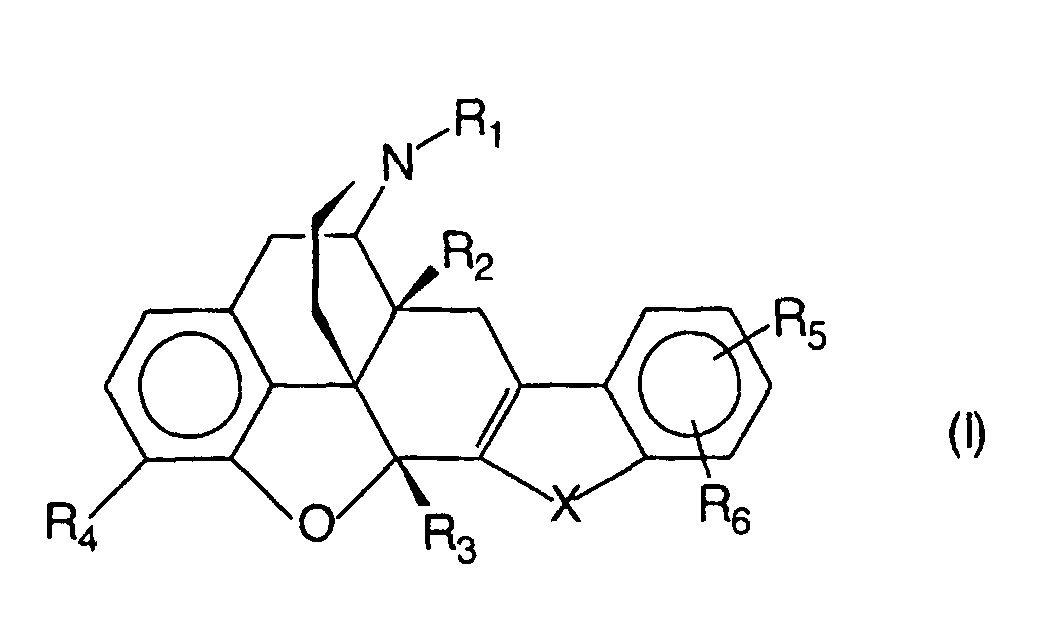 pharmacologically acceptable salts thereof.R1 represents C1-C10 alkenyl; C4-C10 cycloalkylalkyl wherein the cycloalkyl is C3-C6 cycloalkyl and the alkyl is C1-C4 alkyl; C4-C10 cykloalkenylalkyl wherein the cycloalkenyl is C3-C6 cykloalkenyl and the alkyl is C1-C4 alkyl; C7-C16 arylalkyl wherein the aryl is C6-C10 aryl and the alkyl is C1-C6 alkyl; C8-C16 arylalkenyl wherein the aryl is C6-C10 aryl and the alkenyl is C2-C6 alkenyl;R2 represents C1-C6 alkoxy; C1-C6 alkenyloxy; C7-C16 arylalkyloxy wherein the aryl is C6-C10 aryl and the alkyloxy is C1-C6 alkyloxy; C7-C16 arylalkenyloxy wherein the aryl is C6-C10 aryl and the alkenyloxy is C1-C6 alkenyloxy;R3 represents hydrogen, C1-C6 alkyl; C1-C6 alkenyl; C7-C16 arylalkyl wherein the aryl is C6-C10 aryl and the alkyl is C1-C6 alkyl; C7-C16 arylalkenyl wherein the aryl is C6-C10 aryl and the alkenyl is C1-C6 alkenyl; hydroxy(C1-C6)alkyl; alkoxyalkyl wherein the alkoxy is C1-C6 alkoxy and the alkyl is C1-C6 alkyl; CO2H; CO2(C1-C6 alkyl);R4 is hydroxy; C1-C6 alkoxy; C7 -C16 arylalkyloxy wherein the aryl is C6-C10 aryl and the alkyloxy is C1-C6 alkyloxy; C1-C6 alkenyloxy; C2-C10 alkyloxyalkoxy wherein alkyloxy is C1-C4 alkyloxy and alkoxy is C1-C6 alkoxy;R5 and R6 each independently represent hydrogen; OH; C1-C6 alkoxy; C1-C6 alkyl; hydroxyalkyl wherein the alkyl is C1-C6 alkyl; halo; nitro; cyano; thiocyanato; trifluoromethyl; CO2H; CO2(C1-C6 alkyl); CONH2; CONH(C1-C6 alkyl); CON(C1-C6 alkyl)2; amino; C1-C6 monoalkyl amino; C1-C6 dialkyl amino; C5-C6 cyhloalkyl amino; SH; SO3H; SO3(C1-C6 alkyl); SO2(C1-C6 alkyl); SO2NH2; SO2NH(C1-C6alkyl); SO2NH (C7-C20 arylalkyl); SO(C1-C6 alkyl); or R5 and R6 together form a phenyl ring which may be unsubstituted or substituted by halo, nitro, cyano, thiocyanato; C1-C6 alkyl; trifluoromethyl; C1-C6 alkoxy, CO2H, CO(C1-C6 alkyl), amino, C1-C6 monoalkylamino, C1-C6 dialkylamino, SH; SO3H; H; SO3(C1-C6 alkyl), SO2(C1-C6 alkyl), SO(C1-C6 alkyl), andX represents oxygen; sulfur; CH = CH or NR9 wherein R9 is H, C1-C6 alkyl, C1-C6 alkenyl, C7-C16 arylalkyl wherein the aryl is C6-C10 aryl and the alkyl is C1-C6 alkyl, C7-C16 arylalkenyl wherein the aryl is C6-C10 aryl and the alkenyl is C1-C6 alkenyl; C1-C6 alkanoyl, and whereinaryl is unsubstituted or mono- or di- or trisubstituted independently with hydroxy, halo, nitro, cyano, thiocyanato, trifluoromethyl, C1-C3 alkyl, C1-C3 alkoxy, CO2H, CO2 (C1-C3)alkyl, CONH2, CONH(C1-C3 alkyl), CON(C1-C3 alkyl)2, CO(C1-C3 alkyl), amino, (C1-C3 monoalkyl)amino, (C1-C3 dialkyl)amino, C5-C6 cyhloalkylamino (C1-C3 alkanoyl)amino, SH, SO3H, SO3 (C1-C3 alkyl), SO2 (C1-C3 alkyl), SO(C1-C3 alkyl), C1-C3 alkylthio or C1-C3 alkanoylthio; and
 - A compound according to claim 1, whereinR1 is selected from allyl, cinnamyl, cyclopropylmethyl or cyclobutylmethyl;R2 is selected from methoxy, ethoxy, n-propyloxy, benzyloxy, benzyloxy substituted in the aromatic ring with F, Cl, NO2, CN, CF3, CH3 or OCH3; Allyloxy, cinnamyloxy or 3-phenytpropyloxy;R3 is selected from hydrogen, methyl, ethyl, benzyl or allyl;R4 is selected from hydroxy, methoxy;R5 and R6 are each and independently selected from hydrogen; nitro; cyano; chloro, fluoro, bromo, trifluoromethyl; CO2H; CO2 CH3; CONH2; CONH CH3; SH; SO2NH2; N(CH3)2; SO2CH3;X is selected from oxygen; NH or NCH3, N-benzyl, N-allyl.
- A compound according to claim 1, in form of a pharmaceutically acceptable salt.
- A compound according to claim 1, wherein the salt is an inorganic salt.
- A compound according to claim 1, wherein the salt is an organic salt.
- A compound according to claim 1, being17-(cyclopropylmethyl)-6,7-dehydro-4,5α-epoxy-14-ethoxy-3-hydroxy-5-methyl-6,7-2',3'-indolomorphinan x HCl;17-allyl-6,7-dehydro-4,5α-epoxy-14-ethoxy-3-hydroxy-5-methyl-6,7-2',3'-indolomorphinan x HCl;6,7-dehydro-4,5α-epoxy-14-ethoxy-3-hydroxy-5-methyl-17-(2-phenyl)ethyl-6,7-2',3'-indolomorphinan x HCl;17-allyl-6,7-dehydro-4,5α-epoxy-3-hydroxy-14-methoxy-5-methyl-6,7-2',3'-indolomorphinan x HCl;6,7-dehydro-4,5α-epoxy-3-hydroxy-14-methoxy-5-methyl-17-(2-phenyl)ethyl-6,7-2',3'-indolomorphinan x HCl;17-(cyclopropylmethyl)-6,7-dehydro-4,5α-epoxy-3-hydroxy-14-methoxy-5-methyl-6,7-2',3'-indolomorphinan x HCl;17-allyl-6,7-dehydro-4,5α-epoxy-3-hydroxy-5-methyl-14-n-propyloxy-6,7-2',3'-indolomorphinan x HCl;17-(cyclopropylmethyl)-6,7-dehydro-4,5α-epoxy-3-hydroxy-5-methyl-14-n-propyloxy-6,7-2',3'indolomorphinan x CH3SO3H;17-(cyclopropylmethyl)-6,7-dehydro-14-(2',6'-dichlorobenzyloxy)-4,5α-epoxy-3-(methoxymethoxy)-6,7-2',3'-benzo[b]furanomorphinan;17-(cyclopropylmethyl)-6,7-dehydro-14-(2',6'-dichlorobenzyloxy)-4,5α-epoxy-3-hydroxy-6,7-2',3'-benzo[b]furanomorphinan;17-(cyclopropylmethyl)-6,7-dehydro-4,5α-epoxy-3-(methoxymethoxy)-14-(3'-nitrobenzyloxy)-6,7-2',3'-benzo[b]furanomorphinan x HCl;17-(cyclopropylmethyl)-6,7-dehydro-4,5α-epoxy-3-hydroxy-14-(3'-nitrobenzyloxy)-6,7-2',3'-benzo[b]furanomorphinan x HCl;17-(cyclopropylmethyl)-6,7-dehydro-4,5α-epoxy-3-(methoxymethoxy)-14-(2'-naphthylmethoxy)-6,7-2',3'-benzo[b]furanomorphinan;17-(cyclopropylmethyl)-6,7-dehydro-4,5α-epoxy-3-hydroxy-14-(2'-naphthylmethoxy)-6,7-2',3'-benzo[b]furanomorphinan x HCl;17-(cyclopropylmethyl)-6,7-dehydro-4,5α-epoxy-14-(2'-fluorobenzyloxy)-3-(methoxymethoxy)-6,7-2',3'-benzo[b]furanomorphinan;17-(cyclopropylmethyl)-6,7-dehydro-4,5α-epoxy-14-(2'-fluorobenzyloxy)-3-hydroxy-6,7-2',3'-benzo[b]furanomorphinan x HCl;14-cinnamyloxy-17-(cyclopropylmethyl)-6,7-dehydro-4,5α-epoxy-3-(methoxymethoxy)-6,7-2'-3'-benzo[b]furanomorphinan;14-cinnamyloxy-17-(cyclopropylmethyl)-6,7-dehydro-4,5α-epoxy-3-hydroxy-6,7-2'-3'-benzo[b]furanomorphinan salicylate;17-(cyclopropylmethyl)-6,7-dehydro-4,5α-epoxy-14-methoxy-3-(methoxymethoxy)-6,7-2'-3'- benzo[b]furanomorphinan;17-(cyclopropylmethyl)-14-(2'-chlorobenzyloxy)-6,7-dehydro-4,5α-epoxy-3-(methoxymethoxy)-6,7-2'-3'-(N-methoxymethylindolo)morphinan;17-(cyclopropylmethyl)-14-(2'-chlorobenzyloxy)-6,7-dehydro-4,5α-epoxy-3-hydroxy-6,7-2'-3'-indolomorphinan x HCl;17-(cyclopropylmethyl)-6,7-dehydro-4,5α-epoxy-3-hydroxy-14-(3'-chlorobenzyloxy)-6,7,2',3'-benzo[b]furanomorphinan x HCl;17-(cyclopropylmethyl)-6,7-dehydro-4,5α-epoxy-3-hydroxy-14-(2'-chlorobenzyloxy)-6,7,2',3'-benzo[b]furanomorphinan x HCl;14-allyloxy-17-(cyclopropylmethyl)-6,7-dehydro-4,5α-epoxy-3-hydroxy-1'-allyl-6,7-2',3'-indolomorphinan x HCl;
- A compound according to claim 1, for use in therapy.
- A compound according to claim 1, for use as a medicament against rheumatic diseases.
- A compound according to claim 8, wherein the rheumatic disease is rheumatoid arthritis.
- Use of a compound according to claim 1 for the manufacture of a medicament for the treatment of rheumatic diseases.
- Use of a compound according to claim 10, wherein the rheumatic disease is rheumatoid arthritis.
- Use of a compound according to claim 1, for the manufacture of a medicament for suppressing the rejection of transplants after organ transplantations.
- Use of a compound according to claim 1, for the manufacture of a medicament for the treatment of pain.
- A pharmaceutical composition comprising a compound or a pharmaceutically acceptable salt thereof according to claim 1 as an active ingredient together with a pharmaceutically acceptable carrier.
- A process for the preparation of a compound of the formula I according to claim 1, whereini) thebaine of the formulais being treated with dialkylsulfates, fluorosulfonic acid alkyl esters, alkylsulfonic acid alkyl esters, arylsulfonic acid alkylesters, alkyl halides, aralkyl halides, alkylsulfonic acid aralkyl esters, arylsulfonic acid aralkyl esters, arylalkenyl halides, or chloroformates, giving compounds according to formula (II)
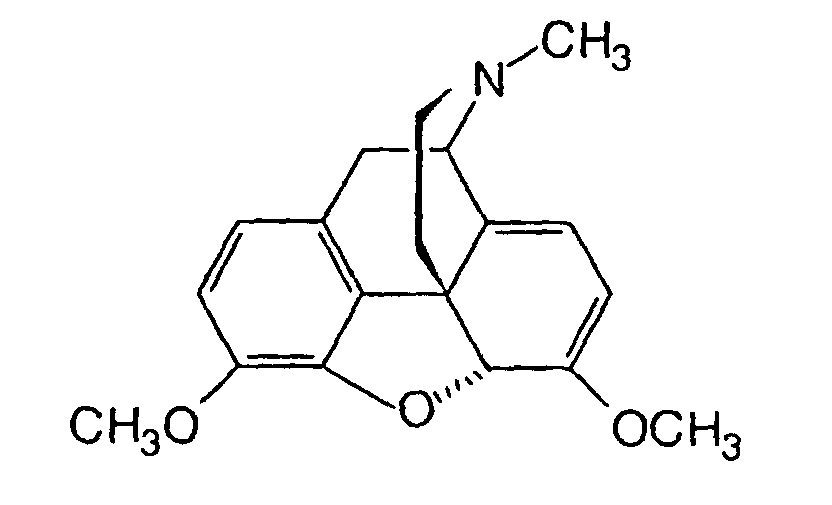 wherein R is C1-C6 alkyl; C1-C6 alkenyl; C7-C16 aralkyl wherein the aryl is C6-C10 aryl and the alkyl is C1-C6 alkyl; C7-C16 arylalkenyl wherein the aryl is C6-C10 aryl and the alkenyl is C1-C6 alkenyl; alkoxyalkyl wherein the alkoxy is C1-C6 alkoxy and the alkyl is C1-C6 alkyl; CO2(C1-C6 alkyl);
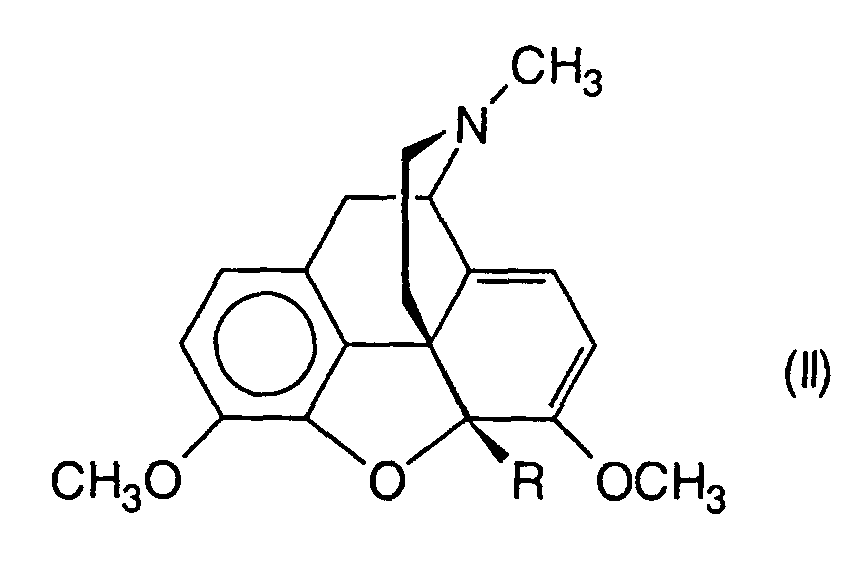 ii) (II) is reacted with performic acid or m-chloroperbenzoic acid at a temperature in the range 0-60 °C yielding
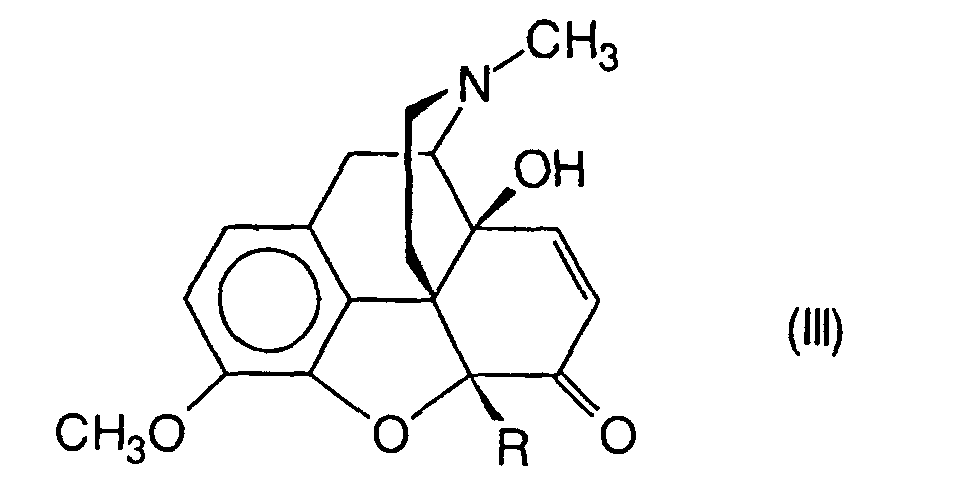 iii) (III) is being treated with dialkyl sulfates, alkyl halides, alkenyl halides, aralkyl halides, arylalkenyl halides, using a strong base giving compounds according to formula (IV)wherein
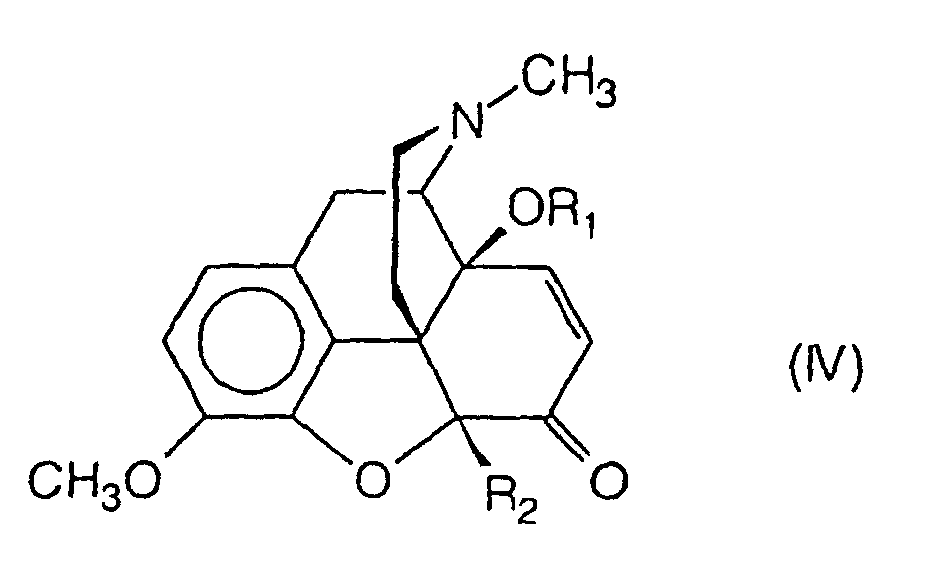 R1 is C1-C6 alkyl, C1-C6 alkenyl, C7-C16 arylalkyl wherein the aryl is C6-C10 aryl and the alkyl is C1-C6 alkyl, C7-C16 arylalkenyl wherein the aryl is C6-C10 aryl and the alkenyl is C1-C6 alkenyl;R2 is hydrogen; C1-C6 alkyl; C1-C6 alkenyl, C7-C16 arylalkyl wherein the aryl is C6-C10 aryl and the alkyl is C1-C6 alkyl; C7-C16 arylalkenyl wherein the aryl is C6-C10 aryl and the alkenyl is C1-C6 alkenyl; alkoxyalkyl wherein the alkoxy is C1-C6 alkoxy and the alkyl is C1-C6 alkyl; CO2(C1-C6 alkyl);iv) catalytic hydrogenation of (IV) yields compounds according to formula (V)wherein
R1 and R2 are as defined above in formula (IV);v) (V) is N-demethylated, giving compounds according to formula (VI)wherein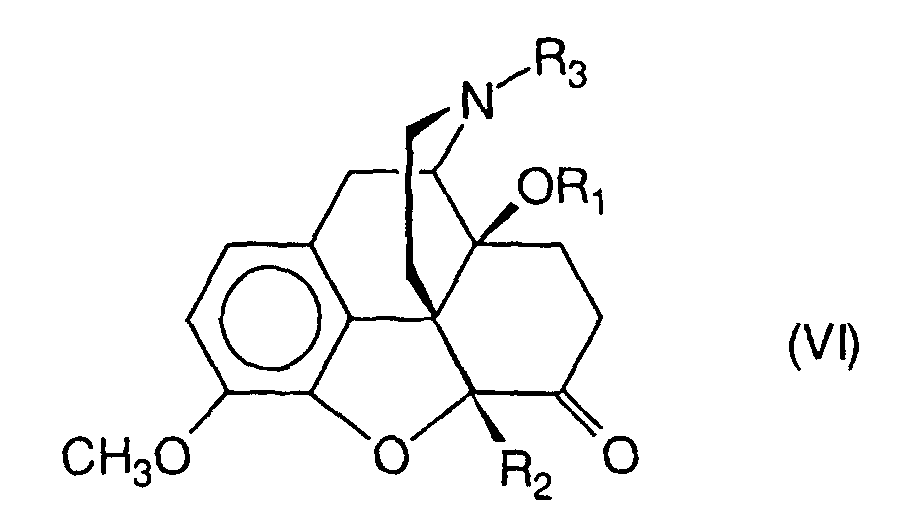 R1 and R2 are as defined above; andR3 is CO2CHClCH3, CO2CH=CH2, CO2CH2CCl3, CO2CH2CH3, CO2Ph or CN;vi) (VI) is cleaved giving compounds according to formula (VII)wherein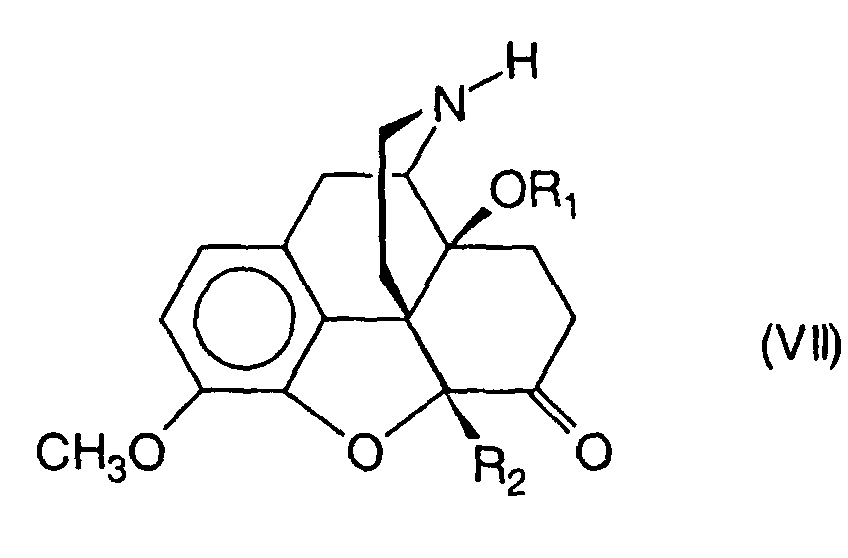
R1 and R2 are as defined above in formula (V);vii) compounds (VII) are alkylated, yielding compounds according to formula (VIII)wherein R1 and R2 are as defined above in formula (V); and
R3 represents C1-C6 alkenyl; C7-C16 arylalkyl wherein the aryl is C6-C10 aryl and the alkyl is C1-C6 alkyl; C7-C16 arylalkenyl wherein the aryl is C6-C10 aryl and the alkenyl is C1-C6 alkenyl; C4-C10 cycloalkylalkyl wherein the cycloalkyl is C3-C6 cycloalkyl and the alkyl is C1-C4 alkyl; C4-C10 cycloalkylalkenyl wherein the cycloalkenyl is C3-C6 cycloalkenyl and the alkyl is C1-C4 alkyl;viii) ether cleavage of (VIII) is performed, giving compounds according to formula (IX)wherein
R1, R2 and R3 are as defined above;ix) (IX) is alkylated or alkenylated, giving compounds according to formula (X)wherein R1, R2 and R3 are as defined in Claim 1; andR4 is hydrogen, C1-C6 alkyl, C7-C16 aralkyl wherein the aryl is C6-C10 aryl and the alkyl is C1-C6 alkyl, C1-C6 alkenyl, C7-C16 arylalkenyl wherein the aryl is C6-C10 aryl and the alkenyl is C1-C6 alkenyl; C2-C10 alkyloxyalkyl wherein alkyloxy is C1-C4 alkyloxy and alkyl is C1-C6 alkyl,x) (IX) or (X) is reacted-with phenylhydrazine or substituted phenylhydrazine giving compounds according to formula (I)wherein
 R1, R2, R3 and R4 are as defined above;R5 and R6 each independently represent hydrogen; OH; C1-C6 alkoxy; C1-C6 alkyl; hydroxyalkyl wherein the alkyl is C1-C6 alkyl; halo; nitro; cyano; thiocyanato; trifluoromethyl; CO2H; CO2(C1-C6 alkyl); CONH2; CONH(C1-C6 alkyl); CON(C1-C6 alkyl)2; amino; C1-C6 monoalkyl amino; C1-C6 dialkyl amino; C5-C6 cycloalkylamino; SH; SO3H; SO3(C1-C6 alkyl); SO2(C1-C6 alkyl); SO2NH2; SO2NH(C1-C6 alkyl); SO2NH (C7-C20 arylalkyl); SO(C1-C6 alkyl); or R5 and R6 together form a phenyl ring which may be unsubstituted or substituted by halo, nitro, cyano, thiocyanato; C1-C6 alkyl; trifluoromethyl; C1-C6 alkoxy, CO2H, CO(C1-C6 alkyl), amino, C1-C6 monoalkylamino, C1-C6 dialkylamino, SH; SO3H; SO3(C1-C6 alkyl), SO2(C1-C6 alkyl), SO(C1-C6 alkyl), andX represents oxygen; sulfur; CH = CH, or NR9 wherein R9 is H, C1-C6 alkyl, C1-C6 alkenyl, C7-C16 arylalkyl wherein the aryl is C6-C10 aryl and the alkyl is C1-C6 alkyl, C7-C16 arylalkenyl wherein the aryl is C6-C10 aryl and the alkenyl is C1-C6 alkenyl; C1-C6 alkanoyl,xi) (IX) or (X) is reacted with O-phenylhydroxylamine or substituted O-phenylhydroxylamine, giving compounds according to formula (I)wherein
R1, R2, R3, R4 and R5 are as defined above and X is O;xii) thebaine is converted to 14-hydroxy codeinone formulawhich in turn is converted to compounds according to formula (I)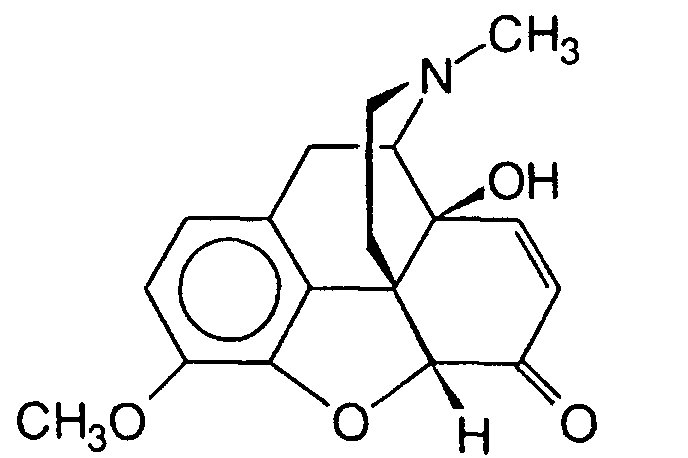 wherein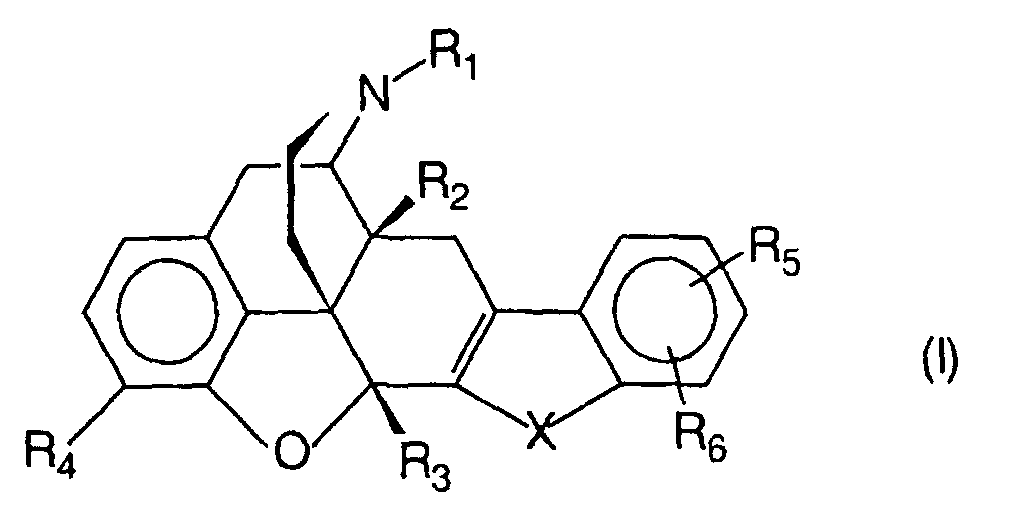
R3 is H in essentially the same way as described for the 5-substituted series of compounds;xvii) Compounds of formula (1) wherein R1 represents allyl or cyclopropylmethyl and R3 represents H are obtained starting either from naloxone (XIVa) or naltrexone (XIVb).(XIVa): Naloxone - R is allyl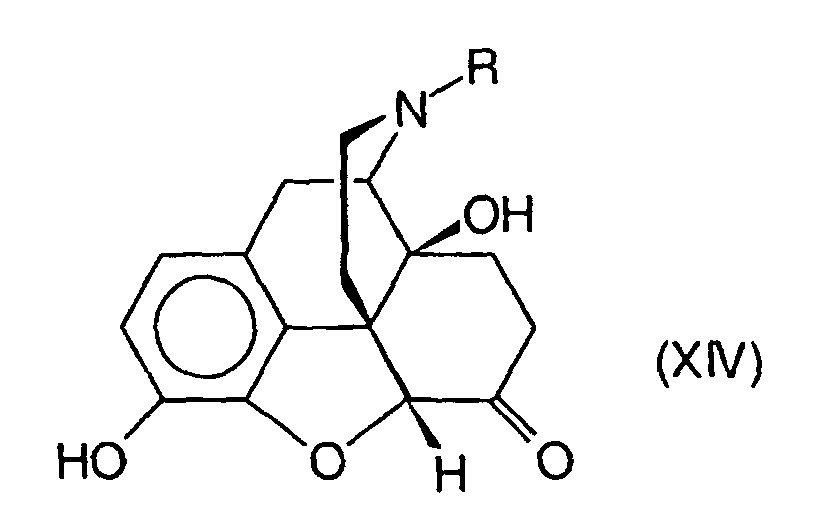
(XIVb): Naltrexone - R is cyclopropylmethyl.
Whereby the 3-hydroxy group of compounds of formula (XIV) is being protected by alkylation with benzyl bromide, methoxymethyl bromide, ethoxymethyl bromide or trityl chloride (triphenylmethyl chloride) in a solvent such as N,N-dimethyl formamide or dichloromethane in the presence of a base to yield compounds of formula (XV)wherein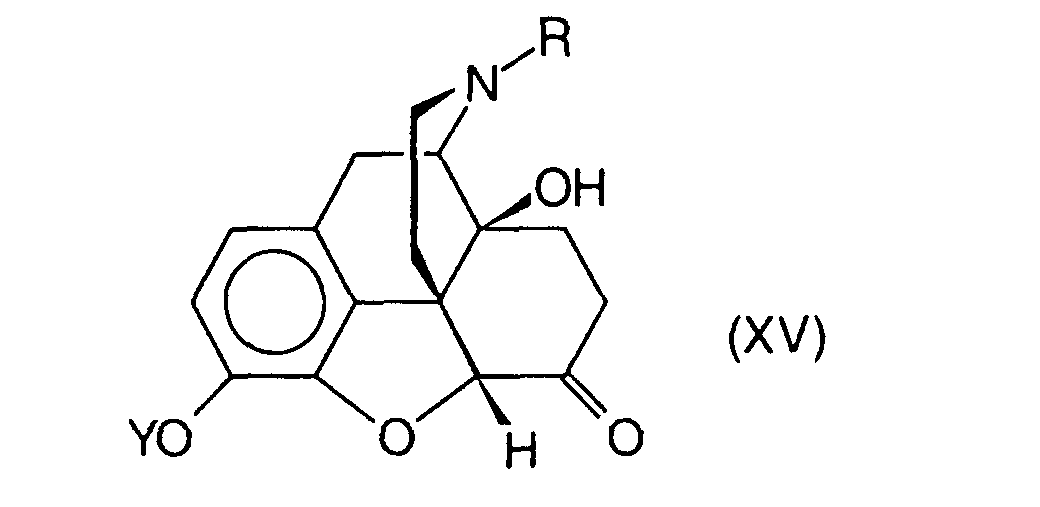
R is allyl or cyclopropylmethyl and Y = CH2Ph, CH2OCH3, CH2OC2H5 or C(Ph)3.
When said compounds are alkylated, alkenylated, cycloalkylalkylated, arylalkylated or arylalkenylated with dialkyl sulfates, alkyl halides, alkenyl halides, arylalkyl halides or arylalkenyl halides in solvents using a strong base such as sodium hydride, potassium hydride or sodium amide are formed 6-0,14-0-dialkylated compounds of formula (XVI)wherein whereinR1 is allyl or cyclopropylmethyl; andR2 is C1-C6 alkyl, C1-C6 alkenyl, C7-C16 arylalkyl wherein the aryl is C6-C10 aryl and the alkyl is C1-C6 alkoxy, C7-C16 arylalkenyl wherein the aryl is C6-C10 aryl and alkenyl is C1-C6 alkenyl; and Y as defined above; Said compounds, can be hydrolized in diluted acids like hydrochloric acid or sulfuric acid to afford compounds or formula (XVII)
 R1 is allyl or cyclopropylmehtyl; andR2 is as defined above (formula XVI).xviii) the carbonyl group in 6-position of naloxone of the formula (XIVa) and naltrexone of the formula (XIVb) respectively, is protected at a temperature between 20 and 200 °C, giving ketals of the formula (XVIII)wherein
R is allyl or cyclopropylmethyl;xix) the 3-hydroxy group in (XVIII) is protected by alkylation with benzyl bromide, methoxymethyl bromide, ethoxy methyl bromide or trityl chloride, giving compounds according to formula (XIX)wherein
R is allyl or cyclopropylmethyl, and Y is as defined above;xx) (XIX) is alkylated, alkenylated, arylalkylated or arylalkenylated, giving compounds according to formula (XX)wherein
R1 is allyl or cyclopropylmethyl, R2 is as defined above in formula (XVI) and Y is also as defined above;xxi) (XX) is hydrolized giving compounds according to formula (XVII), which in turn is converted to compounds according to formula (I) wherein R1 is allyl or cyclopropylmethyl, R3 is H and X is NH or O, exactly as described for the 5-substituted analogues.
Applications Claiming Priority (3)
| Application Number | Priority Date | Filing Date | Title |
|---|---|---|---|
| SE9401728A SE9401728D0 (en) | 1994-05-18 | 1994-05-18 | New compounds II |
| SE9401728 | 1994-05-18 | ||
| PCT/SE1995/000503 WO1995031463A1 (en) | 1994-05-18 | 1995-05-09 | New antagonist compounds |
Publications (2)
| Publication Number | Publication Date |
|---|---|
| EP0759922A1 EP0759922A1 (en) | 1997-03-05 |
| EP0759922B1 true EP0759922B1 (en) | 2004-02-18 |
Family
ID=20394059
Family Applications (1)
| Application Number | Title | Priority Date | Filing Date |
|---|---|---|---|
| EP95920328A Expired - Lifetime EP0759922B1 (en) | 1994-05-18 | 1995-05-09 | New antagonist compounds |
Country Status (11)
| Country | Link |
|---|---|
| US (1) | US6136817A (en) |
| EP (1) | EP0759922B1 (en) |
| JP (1) | JP4117801B2 (en) |
| AT (1) | ATE259815T1 (en) |
| AU (1) | AU690996B2 (en) |
| DE (1) | DE69532580T2 (en) |
| ES (1) | ES2214501T3 (en) |
| IL (1) | IL113631A0 (en) |
| SE (1) | SE9401728D0 (en) |
| WO (1) | WO1995031463A1 (en) |
| ZA (1) | ZA953701B (en) |
Families Citing this family (27)
| Publication number | Priority date | Publication date | Assignee | Title |
|---|---|---|---|---|
| AU712012B2 (en) * | 1995-09-26 | 1999-10-28 | Toray Industries, Inc. | Indole derivatives and medical application thereof |
| US5994327A (en) * | 1995-11-17 | 1999-11-30 | Astra Ab | Process for the preparation of morphinans |
| JP2001504829A (en) * | 1996-11-19 | 2001-04-10 | アストラ・アクチエボラーグ | Novel method for producing morphinans |
| ES2217533T3 (en) * | 1997-01-16 | 2004-11-01 | Toray Industries, Inc. | INDOLOMORFINAN DERIVATIVES AND PREVENTIVE MEDICINES FOR BRAIN DISORDERS. |
| DE19939044A1 (en) * | 1999-08-18 | 2001-03-15 | Gruenenthal Gmbh | Use of morphine derivatives as drugs |
| WO2003070175A2 (en) * | 2002-02-15 | 2003-08-28 | Howard Brooks-Korn | Use of opioid compound to treat a neurologic or neurogenic disorder |
| DE10229842A1 (en) * | 2002-07-03 | 2004-02-05 | Helmut Prof. Dr. Schmidhammer | Morphinane derivatives and their quaternary ammonium salts substituted in position 14, production process and use |
| US7285665B2 (en) | 2002-11-08 | 2007-10-23 | Mallinckrodt Inc. | Process for the preparation of quaternary N-alkyl morphinan alkaloid salts |
| EP1595541A1 (en) * | 2004-05-12 | 2005-11-16 | Alcasynn Pharmaceuticals Gmbh | Use of opioid receptor antagonist compounds for the prevention and/or treatment of diseases associated with the target calcineurin |
| EP1768662A2 (en) | 2004-06-24 | 2007-04-04 | Novartis Vaccines and Diagnostics, Inc. | Small molecule immunopotentiators and assays for their detection |
| CA2590182A1 (en) * | 2004-12-14 | 2006-06-22 | Shionogi & Co., Ltd. | Indolomorphinan derivatives having carboxy at the 6'-position |
| US8114133B2 (en) * | 2006-04-18 | 2012-02-14 | Joseph Nicholas Logan | Spinal rod system |
| EP2099764B1 (en) * | 2006-09-20 | 2011-07-27 | Mallinckrodt Inc. | Preparation of substituted morphinan-6-ones and salts and intermediates thereof |
| US9040726B2 (en) * | 2007-03-06 | 2015-05-26 | Mallinckrodt Llc | Process for the preparation of quaternary N-alkyl morphinan alkaloid salts |
| JP5875748B2 (en) * | 2007-03-06 | 2016-03-02 | マリンクロッド エルエルシー | Process for the preparation of quaternary N-alkyl morphinan alkaloid salts |
| CA2702680A1 (en) * | 2007-10-18 | 2009-04-23 | Aiko Biotechnology | Combination analgesic employing opioid and neutral antagonist |
| US8748448B2 (en) | 2007-10-18 | 2014-06-10 | Aiko Biotechnology | Combination analgesic employing opioid agonist and neutral antagonist |
| US8067596B2 (en) | 2007-12-17 | 2011-11-29 | Mallinckrodt Llc | Processes for the production of (+)- “Nal” morphinan compounds |
| WO2009132313A2 (en) * | 2008-04-25 | 2009-10-29 | Progenics Pharmaceuticals, Inc. | Morphinan derivatives of organic and inorganic acids |
| EP2896614B1 (en) * | 2008-05-27 | 2017-07-12 | Mallinckrodt LLC | Processes and compounds for the preparation of normorphinans |
| WO2010028004A2 (en) | 2008-09-03 | 2010-03-11 | Mallinckrodt Inc. | Substituted berbines and processes for their synthesis |
| EP2340832A1 (en) | 2009-12-23 | 2011-07-06 | Universität Innsbruck | Morphinan-6-one compounds for the treatment or prevention of neurodegenerative diseases |
| EP2966074B1 (en) * | 2013-03-08 | 2018-07-25 | The Kitasato Institute | Morphinan derivative |
| WO2015082932A1 (en) | 2013-12-05 | 2015-06-11 | The University Of Bath | Novel opioid compounds and their uses |
| US10799496B2 (en) | 2018-07-13 | 2020-10-13 | Alkermes Pharma Ireland Limited | Naphthylenyl compounds for long-acting injectable compositions and related methods |
| US10807995B2 (en) | 2018-07-13 | 2020-10-20 | Alkermes Pharma Ireland Limited | Thienothiophene compounds for long-acting injectable compositions and related methods |
| US10975099B2 (en) | 2018-11-05 | 2021-04-13 | Alkermes Pharma Ireland Limited | Thiophene compounds for long-acting injectable compositions and related methods |
Family Cites Families (6)
| Publication number | Priority date | Publication date | Assignee | Title |
|---|---|---|---|---|
| US4816586A (en) * | 1987-07-29 | 1989-03-28 | Regents Of The University Of Minnesota | Delta opioid receptor antagonists |
| JP2906654B2 (en) * | 1989-11-28 | 1999-06-21 | 東レ株式会社 | Immunosuppressant and method for producing the same |
| JPH04342529A (en) * | 1991-05-21 | 1992-11-30 | Toray Ind Inc | Anti-allergic drug |
| US5223507A (en) * | 1992-01-21 | 1993-06-29 | G. D. Searle & Co. | Method of using opioid compounds as delta opioid selective agonist analgesics |
| US5225417A (en) * | 1992-01-21 | 1993-07-06 | G. D. Searle & Co. | Opioid agonist compounds |
| FI942499A7 (en) * | 1992-09-29 | 1994-07-27 | Toray Industries | Indole derivative, method for its preparation and its medicinal use |
-
1994
- 1994-05-18 SE SE9401728A patent/SE9401728D0/en unknown
-
1995
- 1995-05-07 IL IL11363195A patent/IL113631A0/en unknown
- 1995-05-08 ZA ZA953701A patent/ZA953701B/en unknown
- 1995-05-09 AU AU25817/95A patent/AU690996B2/en not_active Ceased
- 1995-05-09 JP JP52955395A patent/JP4117801B2/en not_active Expired - Fee Related
- 1995-05-09 AT AT95920328T patent/ATE259815T1/en not_active IP Right Cessation
- 1995-05-09 DE DE69532580T patent/DE69532580T2/en not_active Expired - Lifetime
- 1995-05-09 WO PCT/SE1995/000503 patent/WO1995031463A1/en not_active Ceased
- 1995-05-09 ES ES95920328T patent/ES2214501T3/en not_active Expired - Lifetime
- 1995-05-09 EP EP95920328A patent/EP0759922B1/en not_active Expired - Lifetime
- 1995-05-09 US US08/507,369 patent/US6136817A/en not_active Expired - Fee Related
Also Published As
| Publication number | Publication date |
|---|---|
| SE9401728D0 (en) | 1994-05-18 |
| ATE259815T1 (en) | 2004-03-15 |
| ZA953701B (en) | 1995-11-20 |
| US6136817A (en) | 2000-10-24 |
| WO1995031463A1 (en) | 1995-11-23 |
| EP0759922A1 (en) | 1997-03-05 |
| DE69532580T2 (en) | 2004-07-29 |
| DE69532580D1 (en) | 2004-03-25 |
| JPH10500131A (en) | 1998-01-06 |
| ES2214501T3 (en) | 2004-09-16 |
| AU2581795A (en) | 1995-12-05 |
| JP4117801B2 (en) | 2008-07-16 |
| AU690996B2 (en) | 1998-05-07 |
| IL113631A0 (en) | 1995-08-31 |
Similar Documents
| Publication | Publication Date | Title |
|---|---|---|
| US6136817A (en) | Opioid receptor antagonist compounds | |
| US5886001A (en) | Agonist compounds | |
| US4816586A (en) | Delta opioid receptor antagonists | |
| US5578725A (en) | Delta opioid receptor antagonists | |
| RU2306314C2 (en) | 6-amino-morphinane derivatives and uses thereof | |
| EP1053238B1 (en) | Therapeutic compounds | |
| JP2012254986A (en) | Use of opioid receptor antagonist compound for prevention and/or treatment of disease associated with target calcineurin | |
| JPH0648944A (en) | Analgesic for oral administration | |
| CA2189140C (en) | New antagonist compounds | |
| Schmidhammer et al. | Synthesis and Biological Evaluation of 14‐Alkoxymorphinans. Part 9. 14‐O‐ethyl‐5‐methylnaltrexone, and opioid antagonist with unusual selectivity | |
| EP0946564A1 (en) | New process for the preparation of morphinans | |
| Schmidhammer et al. | Synthesis and biological evaluation of 14‐alkoxymorphinans. Part 7. 14, 14′‐dimethoxy analogues of norbinaltorphimine: Synthesis and determination of their χ opioid antagonist selectivity | |
| US5994327A (en) | Process for the preparation of morphinans | |
| MXPA96005604A (en) | New agonis compounds | |
| AU2011221389A1 (en) | Use of opioid receptor antagonist compounds for the prevention and/or treatment of diseases associated with the target calcineurin | |
| Schmidhammer et al. | 5‐Methylnaioxone and 5‐Methylnaltrexone: Synthesis and Pharmacological Evaluation | |
| AU757975B2 (en) | Therapeutic compounds |
Legal Events
| Date | Code | Title | Description |
|---|---|---|---|
| PUAI | Public reference made under article 153(3) epc to a published international application that has entered the european phase |
Free format text: ORIGINAL CODE: 0009012 |
|
| 17P | Request for examination filed |
Effective date: 19961218 |
|
| AK | Designated contracting states |
Kind code of ref document: A1 Designated state(s): AT BE CH DE DK ES FR GB GR IE IT LI LU MC NL PT SE |
|
| AX | Request for extension of the european patent |
Free format text: LT PAYMENT 961218;LV PAYMENT 961218 |
|
| 17Q | First examination report despatched |
Effective date: 19981124 |
|
| RAP1 | Party data changed (applicant data changed or rights of an application transferred) |
Owner name: SCHMIDHAMMER, HELMUT, PROF. DR. |
|
| GRAH | Despatch of communication of intention to grant a patent |
Free format text: ORIGINAL CODE: EPIDOS IGRA |
|
| GRAS | Grant fee paid |
Free format text: ORIGINAL CODE: EPIDOSNIGR3 |
|
| GRAA | (expected) grant |
Free format text: ORIGINAL CODE: 0009210 |
|
| AK | Designated contracting states |
Kind code of ref document: B1 Designated state(s): AT BE CH DE DK ES FR GB GR IE IT LI LU MC NL PT SE |
|
| AX | Request for extension of the european patent |
Extension state: LT LV |
|
| PG25 | Lapsed in a contracting state [announced via postgrant information from national office to epo] |
Ref country code: NL Free format text: LAPSE BECAUSE OF FAILURE TO SUBMIT A TRANSLATION OF THE DESCRIPTION OR TO PAY THE FEE WITHIN THE PRESCRIBED TIME-LIMIT Effective date: 20040218 |
|
| REG | Reference to a national code |
Ref country code: GB Ref legal event code: FG4D |
|
| REG | Reference to a national code |
Ref country code: CH Ref legal event code: NV Representative=s name: PATENTANWALTSBUERO JEAN HUNZIKER Ref country code: CH Ref legal event code: EP |
|
| REG | Reference to a national code |
Ref country code: IE Ref legal event code: FG4D |
|
| REF | Corresponds to: |
Ref document number: 69532580 Country of ref document: DE Date of ref document: 20040325 Kind code of ref document: P |
|
| PG25 | Lapsed in a contracting state [announced via postgrant information from national office to epo] |
Ref country code: LU Free format text: LAPSE BECAUSE OF NON-PAYMENT OF DUE FEES Effective date: 20040509 |
|
| PG25 | Lapsed in a contracting state [announced via postgrant information from national office to epo] |
Ref country code: SE Free format text: LAPSE BECAUSE OF FAILURE TO SUBMIT A TRANSLATION OF THE DESCRIPTION OR TO PAY THE FEE WITHIN THE PRESCRIBED TIME-LIMIT Effective date: 20040518 Ref country code: GR Free format text: LAPSE BECAUSE OF FAILURE TO SUBMIT A TRANSLATION OF THE DESCRIPTION OR TO PAY THE FEE WITHIN THE PRESCRIBED TIME-LIMIT Effective date: 20040518 Ref country code: DK Free format text: LAPSE BECAUSE OF FAILURE TO SUBMIT A TRANSLATION OF THE DESCRIPTION OR TO PAY THE FEE WITHIN THE PRESCRIBED TIME-LIMIT Effective date: 20040518 |
|
| PG25 | Lapsed in a contracting state [announced via postgrant information from national office to epo] |
Ref country code: MC Free format text: LAPSE BECAUSE OF NON-PAYMENT OF DUE FEES Effective date: 20040531 |
|
| LTIE | Lt: invalidation of european patent or patent extension |
Effective date: 20040218 |
|
| NLV1 | Nl: lapsed or annulled due to failure to fulfill the requirements of art. 29p and 29m of the patents act | ||
| REG | Reference to a national code |
Ref country code: ES Ref legal event code: FG2A Ref document number: 2214501 Country of ref document: ES Kind code of ref document: T3 |
|
| RAP2 | Party data changed (patent owner data changed or rights of a patent transferred) |
Owner name: ALCASYNN PHARMACEUTICALS GMBH |
|
| ET | Fr: translation filed | ||
| PLBE | No opposition filed within time limit |
Free format text: ORIGINAL CODE: 0009261 |
|
| STAA | Information on the status of an ep patent application or granted ep patent |
Free format text: STATUS: NO OPPOSITION FILED WITHIN TIME LIMIT |
|
| 26N | No opposition filed |
Effective date: 20041119 |
|
| REG | Reference to a national code |
Ref country code: FR Ref legal event code: TP |
|
| BECA | Be: change of holder's address |
Owner name: *ALCASYNN PHARMACEUTICALS G.M.B.H.MITTERWEG 24, A- Effective date: 20050217 |
|
| REG | Reference to a national code |
Ref country code: CH Ref legal event code: PUE Owner name: ALCASYNN PHARMACEUTICALS GMBH Free format text: SCHMIDHAMMER, HELMUT, PROF. DR.#DIVISION OF PHARMACEUTICAL CHEMISTRY, INSTITUTE OF PHARMACY UNIVERSITY OF INNSBRUCK, INNRAIN 52A#6020 INNSBRUCK (AT) -TRANSFER TO- ALCASYNN PHARMACEUTICALS GMBH#MITTERWEG 24#6020 INNSBRUCK (AT) |
|
| REG | Reference to a national code |
Ref country code: GB Ref legal event code: 732E |
|
| BECA | Be: change of holder's address |
Owner name: *ALCASYNN PHARMACEUTICALS G.M.B.H.MITTERWEG 24, A- Effective date: 20050217 |
|
| PG25 | Lapsed in a contracting state [announced via postgrant information from national office to epo] |
Ref country code: PT Free format text: LAPSE BECAUSE OF NON-PAYMENT OF DUE FEES Effective date: 20040718 |
|
| PGFP | Annual fee paid to national office [announced via postgrant information from national office to epo] |
Ref country code: IE Payment date: 20100930 Year of fee payment: 16 Ref country code: CH Payment date: 20100930 Year of fee payment: 16 |
|
| PGFP | Annual fee paid to national office [announced via postgrant information from national office to epo] |
Ref country code: GB Payment date: 20100930 Year of fee payment: 16 |
|
| PGFP | Annual fee paid to national office [announced via postgrant information from national office to epo] |
Ref country code: FR Payment date: 20101012 Year of fee payment: 16 Ref country code: AT Payment date: 20101004 Year of fee payment: 16 |
|
| PGFP | Annual fee paid to national office [announced via postgrant information from national office to epo] |
Ref country code: DE Payment date: 20100928 Year of fee payment: 16 Ref country code: BE Payment date: 20100930 Year of fee payment: 16 |
|
| PGFP | Annual fee paid to national office [announced via postgrant information from national office to epo] |
Ref country code: IT Payment date: 20100929 Year of fee payment: 16 |
|
| PGFP | Annual fee paid to national office [announced via postgrant information from national office to epo] |
Ref country code: ES Payment date: 20101006 Year of fee payment: 16 |
|
| BERE | Be: lapsed |
Owner name: *ALCASYNN PHARMACEUTICALS G.M.B.H. Effective date: 20110531 |
|
| REG | Reference to a national code |
Ref country code: DE Ref legal event code: R119 Ref document number: 69532580 Country of ref document: DE |
|
| REG | Reference to a national code |
Ref country code: DE Ref legal event code: R119 Ref document number: 69532580 Country of ref document: DE |
|
| REG | Reference to a national code |
Ref country code: CH Ref legal event code: PL |
|
| GBPC | Gb: european patent ceased through non-payment of renewal fee |
Effective date: 20110509 |
|
| PG25 | Lapsed in a contracting state [announced via postgrant information from national office to epo] |
Ref country code: LI Free format text: LAPSE BECAUSE OF NON-PAYMENT OF DUE FEES Effective date: 20110531 Ref country code: CH Free format text: LAPSE BECAUSE OF NON-PAYMENT OF DUE FEES Effective date: 20110531 |
|
| REG | Reference to a national code |
Ref country code: AT Ref legal event code: MM01 Ref document number: 259815 Country of ref document: AT Kind code of ref document: T Effective date: 20110509 |
|
| REG | Reference to a national code |
Ref country code: FR Ref legal event code: ST Effective date: 20120131 |
|
| PG25 | Lapsed in a contracting state [announced via postgrant information from national office to epo] |
Ref country code: AT Free format text: LAPSE BECAUSE OF NON-PAYMENT OF DUE FEES Effective date: 20110509 Ref country code: IT Free format text: LAPSE BECAUSE OF NON-PAYMENT OF DUE FEES Effective date: 20110509 |
|
| REG | Reference to a national code |
Ref country code: IE Ref legal event code: MM4A |
|
| PG25 | Lapsed in a contracting state [announced via postgrant information from national office to epo] |
Ref country code: BE Free format text: LAPSE BECAUSE OF NON-PAYMENT OF DUE FEES Effective date: 20110531 |
|
| PG25 | Lapsed in a contracting state [announced via postgrant information from national office to epo] |
Ref country code: IE Free format text: LAPSE BECAUSE OF NON-PAYMENT OF DUE FEES Effective date: 20110509 Ref country code: FR Free format text: LAPSE BECAUSE OF NON-PAYMENT OF DUE FEES Effective date: 20110531 |
|
| PG25 | Lapsed in a contracting state [announced via postgrant information from national office to epo] |
Ref country code: GB Free format text: LAPSE BECAUSE OF NON-PAYMENT OF DUE FEES Effective date: 20110509 |
|
| REG | Reference to a national code |
Ref country code: ES Ref legal event code: FD2A Effective date: 20130605 |
|
| PG25 | Lapsed in a contracting state [announced via postgrant information from national office to epo] |
Ref country code: DE Free format text: LAPSE BECAUSE OF NON-PAYMENT OF DUE FEES Effective date: 20111130 |
|
| PG25 | Lapsed in a contracting state [announced via postgrant information from national office to epo] |
Ref country code: ES Free format text: LAPSE BECAUSE OF NON-PAYMENT OF DUE FEES Effective date: 20110510 |