EP0759692B1 - Method monitoring viability of transplantable organs - Google Patents
Method monitoring viability of transplantable organs Download PDFInfo
- Publication number
- EP0759692B1 EP0759692B1 EP95920526A EP95920526A EP0759692B1 EP 0759692 B1 EP0759692 B1 EP 0759692B1 EP 95920526 A EP95920526 A EP 95920526A EP 95920526 A EP95920526 A EP 95920526A EP 0759692 B1 EP0759692 B1 EP 0759692B1
- Authority
- EP
- European Patent Office
- Prior art keywords
- organ
- perfusate
- parameters
- function
- vivo
- Prior art date
- Legal status (The legal status is an assumption and is not a legal conclusion. Google has not performed a legal analysis and makes no representation as to the accuracy of the status listed.)
- Revoked
Links
- 210000000056 organ Anatomy 0.000 title claims abstract description 137
- 238000000034 method Methods 0.000 title claims abstract description 90
- 238000012544 monitoring process Methods 0.000 title claims description 5
- 230000035899 viability Effects 0.000 title description 3
- 230000008569 process Effects 0.000 claims abstract description 53
- 230000004060 metabolic process Effects 0.000 claims abstract description 40
- 238000004321 preservation Methods 0.000 claims abstract description 38
- DDRJAANPRJIHGJ-UHFFFAOYSA-N creatinine Chemical compound CN1CC(=O)NC1=N DDRJAANPRJIHGJ-UHFFFAOYSA-N 0.000 claims description 44
- 210000002700 urine Anatomy 0.000 claims description 34
- 238000002054 transplantation Methods 0.000 claims description 33
- 210000003734 kidney Anatomy 0.000 claims description 31
- 230000002792 vascular Effects 0.000 claims description 28
- WQZGKKKJIJFFOK-GASJEMHNSA-N Glucose Natural products OC[C@H]1OC(O)[C@H](O)[C@@H](O)[C@@H]1O WQZGKKKJIJFFOK-GASJEMHNSA-N 0.000 claims description 26
- 239000008103 glucose Substances 0.000 claims description 26
- 229940109239 creatinine Drugs 0.000 claims description 22
- 210000002216 heart Anatomy 0.000 claims description 21
- 230000010412 perfusion Effects 0.000 claims description 20
- 210000000496 pancreas Anatomy 0.000 claims description 16
- 210000004185 liver Anatomy 0.000 claims description 15
- NOESYZHRGYRDHS-UHFFFAOYSA-N insulin Chemical compound N1C(=O)C(NC(=O)C(CCC(N)=O)NC(=O)C(CCC(O)=O)NC(=O)C(C(C)C)NC(=O)C(NC(=O)CN)C(C)CC)CSSCC(C(NC(CO)C(=O)NC(CC(C)C)C(=O)NC(CC=2C=CC(O)=CC=2)C(=O)NC(CCC(N)=O)C(=O)NC(CC(C)C)C(=O)NC(CCC(O)=O)C(=O)NC(CC(N)=O)C(=O)NC(CC=2C=CC(O)=CC=2)C(=O)NC(CSSCC(NC(=O)C(C(C)C)NC(=O)C(CC(C)C)NC(=O)C(CC=2C=CC(O)=CC=2)NC(=O)C(CC(C)C)NC(=O)C(C)NC(=O)C(CCC(O)=O)NC(=O)C(C(C)C)NC(=O)C(CC(C)C)NC(=O)C(CC=2NC=NC=2)NC(=O)C(CO)NC(=O)CNC2=O)C(=O)NCC(=O)NC(CCC(O)=O)C(=O)NC(CCCNC(N)=N)C(=O)NCC(=O)NC(CC=3C=CC=CC=3)C(=O)NC(CC=3C=CC=CC=3)C(=O)NC(CC=3C=CC(O)=CC=3)C(=O)NC(C(C)O)C(=O)N3C(CCC3)C(=O)NC(CCCCN)C(=O)NC(C)C(O)=O)C(=O)NC(CC(N)=O)C(O)=O)=O)NC(=O)C(C(C)CC)NC(=O)C(CO)NC(=O)C(C(C)O)NC(=O)C1CSSCC2NC(=O)C(CC(C)C)NC(=O)C(NC(=O)C(CCC(N)=O)NC(=O)C(CC(N)=O)NC(=O)C(NC(=O)C(N)CC=1C=CC=CC=1)C(C)C)CC1=CN=CN1 NOESYZHRGYRDHS-UHFFFAOYSA-N 0.000 claims description 14
- 230000006378 damage Effects 0.000 claims description 12
- 102000004169 proteins and genes Human genes 0.000 claims description 11
- 108090000623 proteins and genes Proteins 0.000 claims description 11
- 210000000941 bile Anatomy 0.000 claims description 10
- HVYWMOMLDIMFJA-DPAQBDIFSA-N cholesterol Chemical compound C1C=C2C[C@@H](O)CC[C@]2(C)[C@@H]2[C@@H]1[C@@H]1CC[C@H]([C@H](C)CCCC(C)C)[C@@]1(C)CC2 HVYWMOMLDIMFJA-DPAQBDIFSA-N 0.000 claims description 10
- 230000028327 secretion Effects 0.000 claims description 9
- 239000011734 sodium Substances 0.000 claims description 9
- 238000012360 testing method Methods 0.000 claims description 9
- 102000002260 Alkaline Phosphatase Human genes 0.000 claims description 8
- 108020004774 Alkaline Phosphatase Proteins 0.000 claims description 8
- 102000003855 L-lactate dehydrogenase Human genes 0.000 claims description 8
- 108700023483 L-lactate dehydrogenases Proteins 0.000 claims description 8
- 102000004420 Creatine Kinase Human genes 0.000 claims description 7
- 108010042126 Creatine kinase Proteins 0.000 claims description 7
- 102000001390 Fructose-Bisphosphate Aldolase Human genes 0.000 claims description 7
- 108010068561 Fructose-Bisphosphate Aldolase Proteins 0.000 claims description 7
- 108010063907 Glutathione Reductase Proteins 0.000 claims description 7
- 102100036442 Glutathione reductase, mitochondrial Human genes 0.000 claims description 7
- 102000004877 Insulin Human genes 0.000 claims description 7
- 108090001061 Insulin Proteins 0.000 claims description 7
- 102000013460 Malate Dehydrogenase Human genes 0.000 claims description 7
- 108010026217 Malate Dehydrogenase Proteins 0.000 claims description 7
- 229940125396 insulin Drugs 0.000 claims description 7
- 239000000700 radioactive tracer Substances 0.000 claims description 7
- 102000034279 3-hydroxybutyrate dehydrogenases Human genes 0.000 claims description 6
- 108090000124 3-hydroxybutyrate dehydrogenases Proteins 0.000 claims description 6
- 239000004382 Amylase Substances 0.000 claims description 6
- 102000013142 Amylases Human genes 0.000 claims description 6
- 108010065511 Amylases Proteins 0.000 claims description 6
- 102000004190 Enzymes Human genes 0.000 claims description 6
- 108090000790 Enzymes Proteins 0.000 claims description 6
- DGAQECJNVWCQMB-PUAWFVPOSA-M Ilexoside XXIX Chemical compound C[C@@H]1CC[C@@]2(CC[C@@]3(C(=CC[C@H]4[C@]3(CC[C@@H]5[C@@]4(CC[C@@H](C5(C)C)OS(=O)(=O)[O-])C)C)[C@@H]2[C@]1(C)O)C)C(=O)O[C@H]6[C@@H]([C@H]([C@@H]([C@H](O6)CO)O)O)O.[Na+] DGAQECJNVWCQMB-PUAWFVPOSA-M 0.000 claims description 6
- 238000010521 absorption reaction Methods 0.000 claims description 6
- 235000019418 amylase Nutrition 0.000 claims description 6
- 230000002496 gastric effect Effects 0.000 claims description 6
- 230000005484 gravity Effects 0.000 claims description 6
- 208000014674 injury Diseases 0.000 claims description 6
- 229910052708 sodium Inorganic materials 0.000 claims description 6
- 230000000638 stimulation Effects 0.000 claims description 6
- 102000004882 Lipase Human genes 0.000 claims description 5
- 108090001060 Lipase Proteins 0.000 claims description 5
- 239000004367 Lipase Substances 0.000 claims description 5
- 208000027418 Wounds and injury Diseases 0.000 claims description 5
- 235000012000 cholesterol Nutrition 0.000 claims description 5
- 235000019421 lipase Nutrition 0.000 claims description 5
- 230000008816 organ damage Effects 0.000 claims description 5
- ZLMJMSJWJFRBEC-UHFFFAOYSA-N Potassium Chemical compound [K] ZLMJMSJWJFRBEC-UHFFFAOYSA-N 0.000 claims description 4
- WQZGKKKJIJFFOK-VFUOTHLCSA-N beta-D-glucose Chemical compound OC[C@H]1O[C@@H](O)[C@H](O)[C@@H](O)[C@@H]1O WQZGKKKJIJFFOK-VFUOTHLCSA-N 0.000 claims description 4
- 239000003833 bile salt Substances 0.000 claims description 4
- 229940093761 bile salts Drugs 0.000 claims description 4
- 210000004211 gastric acid Anatomy 0.000 claims description 4
- 239000011591 potassium Substances 0.000 claims description 4
- 229910052700 potassium Inorganic materials 0.000 claims description 4
- 102000004625 Aspartate Aminotransferases Human genes 0.000 claims description 3
- 108010003415 Aspartate Aminotransferases Proteins 0.000 claims description 3
- 102000003929 Transaminases Human genes 0.000 claims description 3
- 108090000340 Transaminases Proteins 0.000 claims description 3
- RNBGYGVWRKECFJ-ZXXMMSQZSA-N alpha-D-fructofuranose 1,6-bisphosphate Chemical compound O[C@H]1[C@H](O)[C@](O)(COP(O)(O)=O)O[C@@H]1COP(O)(O)=O RNBGYGVWRKECFJ-ZXXMMSQZSA-N 0.000 claims description 3
- 229940025237 fructose 1,6-diphosphate Drugs 0.000 claims description 3
- 230000006870 function Effects 0.000 description 51
- 230000002631 hypothermal effect Effects 0.000 description 33
- 230000036284 oxygen consumption Effects 0.000 description 32
- QVGXLLKOCUKJST-UHFFFAOYSA-N atomic oxygen Chemical compound [O] QVGXLLKOCUKJST-UHFFFAOYSA-N 0.000 description 21
- 239000001301 oxygen Substances 0.000 description 21
- 229910052760 oxygen Inorganic materials 0.000 description 21
- 239000000047 product Substances 0.000 description 18
- 239000000470 constituent Substances 0.000 description 13
- 238000005259 measurement Methods 0.000 description 12
- 239000000203 mixture Substances 0.000 description 11
- 238000003860 storage Methods 0.000 description 11
- 239000000126 substance Substances 0.000 description 11
- 206010030113 Oedema Diseases 0.000 description 10
- 210000001519 tissue Anatomy 0.000 description 10
- 230000007102 metabolic function Effects 0.000 description 9
- 235000018102 proteins Nutrition 0.000 description 9
- 230000008961 swelling Effects 0.000 description 9
- 206010021143 Hypoxia Diseases 0.000 description 8
- 208000004880 Polyuria Diseases 0.000 description 7
- 230000035619 diuresis Effects 0.000 description 7
- 238000005516 engineering process Methods 0.000 description 7
- 208000028867 ischemia Diseases 0.000 description 7
- 206010047139 Vasoconstriction Diseases 0.000 description 6
- 239000000839 emulsion Substances 0.000 description 6
- 230000007954 hypoxia Effects 0.000 description 6
- 239000000082 organ preservation Substances 0.000 description 6
- 230000004783 oxidative metabolism Effects 0.000 description 6
- 210000003556 vascular endothelial cell Anatomy 0.000 description 6
- 230000025033 vasoconstriction Effects 0.000 description 6
- 230000003247 decreasing effect Effects 0.000 description 5
- 230000000694 effects Effects 0.000 description 5
- 238000001727 in vivo Methods 0.000 description 5
- 230000003907 kidney function Effects 0.000 description 5
- 230000035479 physiological effects, processes and functions Effects 0.000 description 5
- 239000003761 preservation solution Substances 0.000 description 5
- ZKHQWZAMYRWXGA-UHFFFAOYSA-N Adenosine triphosphate Natural products C1=NC=2C(N)=NC=NC=2N1C1OC(COP(O)(=O)OP(O)(=O)OP(O)(O)=O)C(O)C1O ZKHQWZAMYRWXGA-UHFFFAOYSA-N 0.000 description 4
- 101710142885 Arginine N-succinyltransferase Proteins 0.000 description 4
- 108091003079 Bovine Serum Albumin Proteins 0.000 description 4
- 102000001554 Hemoglobins Human genes 0.000 description 4
- 108010054147 Hemoglobins Proteins 0.000 description 4
- 102100023105 Sialin Human genes 0.000 description 4
- 101710105284 Sialin Proteins 0.000 description 4
- 230000009102 absorption Effects 0.000 description 4
- 229940098773 bovine serum albumin Drugs 0.000 description 4
- 210000004027 cell Anatomy 0.000 description 4
- 230000002503 metabolic effect Effects 0.000 description 4
- 235000015097 nutrients Nutrition 0.000 description 4
- 210000002966 serum Anatomy 0.000 description 4
- 229920002683 Glycosaminoglycan Polymers 0.000 description 3
- 206010038540 Renal tubular necrosis Diseases 0.000 description 3
- 206010047163 Vasospasm Diseases 0.000 description 3
- 239000000084 colloidal system Substances 0.000 description 3
- 230000007547 defect Effects 0.000 description 3
- 238000011161 development Methods 0.000 description 3
- 230000018109 developmental process Effects 0.000 description 3
- 238000009472 formulation Methods 0.000 description 3
- 230000001434 glomerular Effects 0.000 description 3
- 150000002500 ions Chemical class 0.000 description 3
- 238000005086 pumping Methods 0.000 description 3
- 239000000243 solution Substances 0.000 description 3
- 230000002485 urinary effect Effects 0.000 description 3
- YBJHBAHKTGYVGT-ZKWXMUAHSA-N (+)-Biotin Chemical compound N1C(=O)N[C@@H]2[C@H](CCCCC(=O)O)SC[C@@H]21 YBJHBAHKTGYVGT-ZKWXMUAHSA-N 0.000 description 2
- LRFVTYWOQMYALW-UHFFFAOYSA-N 9H-xanthine Chemical compound O=C1NC(=O)NC2=C1NC=N2 LRFVTYWOQMYALW-UHFFFAOYSA-N 0.000 description 2
- 208000003918 Acute Kidney Tubular Necrosis Diseases 0.000 description 2
- QNAYBMKLOCPYGJ-UHFFFAOYSA-N Alanine Chemical compound CC([NH3+])C([O-])=O QNAYBMKLOCPYGJ-UHFFFAOYSA-N 0.000 description 2
- 206010002660 Anoxia Diseases 0.000 description 2
- 241000976983 Anoxia Species 0.000 description 2
- CIWBSHSKHKDKBQ-JLAZNSOCSA-N Ascorbic acid Chemical compound OC[C@H](O)[C@H]1OC(=O)C(O)=C1O CIWBSHSKHKDKBQ-JLAZNSOCSA-N 0.000 description 2
- CKLJMWTZIZZHCS-UHFFFAOYSA-N Aspartic acid Chemical compound OC(=O)C(N)CC(O)=O CKLJMWTZIZZHCS-UHFFFAOYSA-N 0.000 description 2
- CURLTUGMZLYLDI-UHFFFAOYSA-N Carbon dioxide Chemical compound O=C=O CURLTUGMZLYLDI-UHFFFAOYSA-N 0.000 description 2
- 229920000858 Cyclodextrin Polymers 0.000 description 2
- 108020004206 Gamma-glutamyltransferase Proteins 0.000 description 2
- DHMQDGOQFOQNFH-UHFFFAOYSA-N Glycine Chemical compound NCC(O)=O DHMQDGOQFOQNFH-UHFFFAOYSA-N 0.000 description 2
- NTYJJOPFIAHURM-UHFFFAOYSA-N Histamine Chemical compound NCCC1=CN=CN1 NTYJJOPFIAHURM-UHFFFAOYSA-N 0.000 description 2
- AGPKZVBTJJNPAG-UHFFFAOYSA-N Isoleucine Chemical compound CCC(C)C(N)C(O)=O AGPKZVBTJJNPAG-UHFFFAOYSA-N 0.000 description 2
- OUYCCCASQSFEME-QMMMGPOBSA-N L-tyrosine Chemical compound OC(=O)[C@@H](N)CC1=CC=C(O)C=C1 OUYCCCASQSFEME-QMMMGPOBSA-N 0.000 description 2
- ROHFNLRQFUQHCH-UHFFFAOYSA-N Leucine Chemical compound CC(C)CC(N)C(O)=O ROHFNLRQFUQHCH-UHFFFAOYSA-N 0.000 description 2
- 102000002704 Leucyl aminopeptidase Human genes 0.000 description 2
- 108010004098 Leucyl aminopeptidase Proteins 0.000 description 2
- CSNNHWWHGAXBCP-UHFFFAOYSA-L Magnesium sulfate Chemical compound [Mg+2].[O-][S+2]([O-])([O-])[O-] CSNNHWWHGAXBCP-UHFFFAOYSA-L 0.000 description 2
- MJVAVZPDRWSRRC-UHFFFAOYSA-N Menadione Chemical compound C1=CC=C2C(=O)C(C)=CC(=O)C2=C1 MJVAVZPDRWSRRC-UHFFFAOYSA-N 0.000 description 2
- PVNIIMVLHYAWGP-UHFFFAOYSA-N Niacin Chemical compound OC(=O)C1=CC=CN=C1 PVNIIMVLHYAWGP-UHFFFAOYSA-N 0.000 description 2
- WCUXLLCKKVVCTQ-UHFFFAOYSA-M Potassium chloride Chemical compound [Cl-].[K+] WCUXLLCKKVVCTQ-UHFFFAOYSA-M 0.000 description 2
- LCTONWCANYUPML-UHFFFAOYSA-M Pyruvate Chemical compound CC(=O)C([O-])=O LCTONWCANYUPML-UHFFFAOYSA-M 0.000 description 2
- AUNGANRZJHBGPY-SCRDCRAPSA-N Riboflavin Chemical compound OC[C@@H](O)[C@@H](O)[C@@H](O)CN1C=2C=C(C)C(C)=CC=2N=C2C1=NC(=O)NC2=O AUNGANRZJHBGPY-SCRDCRAPSA-N 0.000 description 2
- UIIMBOGNXHQVGW-UHFFFAOYSA-M Sodium bicarbonate Chemical compound [Na+].OC([O-])=O UIIMBOGNXHQVGW-UHFFFAOYSA-M 0.000 description 2
- FAPWRFPIFSIZLT-UHFFFAOYSA-M Sodium chloride Chemical compound [Na+].[Cl-] FAPWRFPIFSIZLT-UHFFFAOYSA-M 0.000 description 2
- 102000004338 Transferrin Human genes 0.000 description 2
- 108090000901 Transferrin Proteins 0.000 description 2
- ISAKRJDGNUQOIC-UHFFFAOYSA-N Uracil Chemical compound O=C1C=CNC(=O)N1 ISAKRJDGNUQOIC-UHFFFAOYSA-N 0.000 description 2
- KZSNJWFQEVHDMF-UHFFFAOYSA-N Valine Chemical compound CC(C)C(N)C(O)=O KZSNJWFQEVHDMF-UHFFFAOYSA-N 0.000 description 2
- OIRDTQYFTABQOQ-KQYNXXCUSA-N adenosine Chemical compound C1=NC=2C(N)=NC=NC=2N1[C@@H]1O[C@H](CO)[C@@H](O)[C@H]1O OIRDTQYFTABQOQ-KQYNXXCUSA-N 0.000 description 2
- 230000007953 anoxia Effects 0.000 description 2
- 238000003556 assay Methods 0.000 description 2
- 230000008901 benefit Effects 0.000 description 2
- 230000033228 biological regulation Effects 0.000 description 2
- 210000000170 cell membrane Anatomy 0.000 description 2
- 230000001276 controlling effect Effects 0.000 description 2
- 230000002596 correlated effect Effects 0.000 description 2
- 238000013461 design Methods 0.000 description 2
- 208000010643 digestive system disease Diseases 0.000 description 2
- 210000002889 endothelial cell Anatomy 0.000 description 2
- 210000003989 endothelium vascular Anatomy 0.000 description 2
- 230000001747 exhibiting effect Effects 0.000 description 2
- OVBPIULPVIDEAO-LBPRGKRZSA-N folic acid Chemical compound C=1N=C2NC(N)=NC(=O)C2=NC=1CNC1=CC=C(C(=O)N[C@@H](CCC(O)=O)C(O)=O)C=C1 OVBPIULPVIDEAO-LBPRGKRZSA-N 0.000 description 2
- 238000002825 functional assay Methods 0.000 description 2
- 102000006640 gamma-Glutamyltransferase Human genes 0.000 description 2
- 230000024924 glomerular filtration Effects 0.000 description 2
- WHUUTDBJXJRKMK-UHFFFAOYSA-N glutamic acid Chemical compound OC(=O)C(N)CCC(O)=O WHUUTDBJXJRKMK-UHFFFAOYSA-N 0.000 description 2
- RWSXRVCMGQZWBV-WDSKDSINSA-N glutathione Chemical compound OC(=O)[C@@H](N)CCC(=O)N[C@@H](CS)C(=O)NCC(O)=O RWSXRVCMGQZWBV-WDSKDSINSA-N 0.000 description 2
- 230000034659 glycolysis Effects 0.000 description 2
- 239000003102 growth factor Substances 0.000 description 2
- 230000004217 heart function Effects 0.000 description 2
- 208000024557 hepatobiliary disease Diseases 0.000 description 2
- 229940088597 hormone Drugs 0.000 description 2
- 239000005556 hormone Substances 0.000 description 2
- FDGQSTZJBFJUBT-UHFFFAOYSA-N hypoxanthine Chemical compound O=C1NC=NC2=C1NC=N2 FDGQSTZJBFJUBT-UHFFFAOYSA-N 0.000 description 2
- VCJMYUPGQJHHFU-UHFFFAOYSA-N iron(3+);trinitrate Chemical compound [Fe+3].[O-][N+]([O-])=O.[O-][N+]([O-])=O.[O-][N+]([O-])=O VCJMYUPGQJHHFU-UHFFFAOYSA-N 0.000 description 2
- 150000002632 lipids Chemical class 0.000 description 2
- 238000004519 manufacturing process Methods 0.000 description 2
- 210000004088 microvessel Anatomy 0.000 description 2
- 230000001590 oxidative effect Effects 0.000 description 2
- 230000010627 oxidative phosphorylation Effects 0.000 description 2
- 238000006213 oxygenation reaction Methods 0.000 description 2
- GHOKWGTUZJEAQD-UHFFFAOYSA-N pantothenic acid Chemical compound OCC(C)(C)C(O)C(=O)NCCC(O)=O GHOKWGTUZJEAQD-UHFFFAOYSA-N 0.000 description 2
- 239000002245 particle Substances 0.000 description 2
- WTWWXOGTJWMJHI-UHFFFAOYSA-N perflubron Chemical group FC(F)(F)C(F)(F)C(F)(F)C(F)(F)C(F)(F)C(F)(F)C(F)(F)C(F)(F)Br WTWWXOGTJWMJHI-UHFFFAOYSA-N 0.000 description 2
- 229960001217 perflubron Drugs 0.000 description 2
- 230000035699 permeability Effects 0.000 description 2
- COLNVLDHVKWLRT-UHFFFAOYSA-N phenylalanine Chemical compound OC(=O)C(N)CC1=CC=CC=C1 COLNVLDHVKWLRT-UHFFFAOYSA-N 0.000 description 2
- 230000003389 potentiating effect Effects 0.000 description 2
- 230000000541 pulsatile effect Effects 0.000 description 2
- 150000003254 radicals Chemical class 0.000 description 2
- 230000009103 reabsorption Effects 0.000 description 2
- 150000003839 salts Chemical class 0.000 description 2
- HFHDHCJBZVLPGP-UHFFFAOYSA-N schardinger α-dextrin Chemical compound O1C(C(C2O)O)C(CO)OC2OC(C(C2O)O)C(CO)OC2OC(C(C2O)O)C(CO)OC2OC(C(O)C2O)C(CO)OC2OC(C(C2O)O)C(CO)OC2OC2C(O)C(O)C1OC2CO HFHDHCJBZVLPGP-UHFFFAOYSA-N 0.000 description 2
- MTCFGRXMJLQNBG-UHFFFAOYSA-N serine Chemical compound OCC(N)C(O)=O MTCFGRXMJLQNBG-UHFFFAOYSA-N 0.000 description 2
- 235000000346 sugar Nutrition 0.000 description 2
- 150000008163 sugars Chemical class 0.000 description 2
- RWQNBRDOKXIBIV-UHFFFAOYSA-N thymine Chemical compound CC1=CNC(=O)NC1=O RWQNBRDOKXIBIV-UHFFFAOYSA-N 0.000 description 2
- 231100000331 toxic Toxicity 0.000 description 2
- 230000002588 toxic effect Effects 0.000 description 2
- 239000012581 transferrin Substances 0.000 description 2
- QIVBCDIJIAJPQS-UHFFFAOYSA-N tryptophan Chemical compound C1=CC=C2C(CC(N)C(O)=O)=CNC2=C1 QIVBCDIJIAJPQS-UHFFFAOYSA-N 0.000 description 2
- 210000005239 tubule Anatomy 0.000 description 2
- HHGZUQPEIHGQST-RGVONZFCSA-N (2r)-2-amino-3-[[(2r)-2-amino-2-carboxyethyl]disulfanyl]propanoic acid;dihydrochloride Chemical compound Cl.Cl.OC(=O)[C@@H](N)CSSC[C@H](N)C(O)=O HHGZUQPEIHGQST-RGVONZFCSA-N 0.000 description 1
- QZNNVYOVQUKYSC-JEDNCBNOSA-N (2s)-2-amino-3-(1h-imidazol-5-yl)propanoic acid;hydron;chloride Chemical compound Cl.OC(=O)[C@@H](N)CC1=CN=CN1 QZNNVYOVQUKYSC-JEDNCBNOSA-N 0.000 description 1
- GVJHHUAWPYXKBD-QLVXXPONSA-N (S,R,R)-alpha-tocopherol Chemical compound [H][C@@](C)(CCCC(C)C)CCC[C@@]([H])(C)CCC[C@@]1(C)CCC2=C(O1)C(C)=C(C)C(O)=C2C GVJHHUAWPYXKBD-QLVXXPONSA-N 0.000 description 1
- IBAOFQIOOBQLHE-UHFFFAOYSA-N 2-amino-3,9-dihydropurin-9-ium-6-one;chloride Chemical compound Cl.N1C(N)=NC(=O)C2=C1N=CN2 IBAOFQIOOBQLHE-UHFFFAOYSA-N 0.000 description 1
- ASJSAQIRZKANQN-CRCLSJGQSA-N 2-deoxy-D-ribose Chemical compound OC[C@@H](O)[C@@H](O)CC=O ASJSAQIRZKANQN-CRCLSJGQSA-N 0.000 description 1
- 239000001763 2-hydroxyethyl(trimethyl)azanium Substances 0.000 description 1
- ALYNCZNDIQEVRV-UHFFFAOYSA-N 4-aminobenzoic acid Chemical compound NC1=CC=C(C(O)=O)C=C1 ALYNCZNDIQEVRV-UHFFFAOYSA-N 0.000 description 1
- LQXHSCOPYJCOMD-UHFFFAOYSA-N 7h-purin-6-ylazanium;sulfate Chemical compound OS(O)(=O)=O.NC1=NC=NC2=C1NC=N2.NC1=NC=NC2=C1NC=N2 LQXHSCOPYJCOMD-UHFFFAOYSA-N 0.000 description 1
- 108091006112 ATPases Proteins 0.000 description 1
- 102000057290 Adenosine Triphosphatases Human genes 0.000 description 1
- KWTQSFXGGICVPE-WCCKRBBISA-N Arginine hydrochloride Chemical compound Cl.OC(=O)[C@@H](N)CCCN=C(N)N KWTQSFXGGICVPE-WCCKRBBISA-N 0.000 description 1
- BVKZGUZCCUSVTD-UHFFFAOYSA-M Bicarbonate Chemical compound OC([O-])=O BVKZGUZCCUSVTD-UHFFFAOYSA-M 0.000 description 1
- LSNNMFCWUKXFEE-UHFFFAOYSA-M Bisulfite Chemical compound OS([O-])=O LSNNMFCWUKXFEE-UHFFFAOYSA-M 0.000 description 1
- 102000004506 Blood Proteins Human genes 0.000 description 1
- 108010017384 Blood Proteins Proteins 0.000 description 1
- CPELXLSAUQHCOX-UHFFFAOYSA-M Bromide Chemical compound [Br-] CPELXLSAUQHCOX-UHFFFAOYSA-M 0.000 description 1
- 239000002126 C01EB10 - Adenosine Substances 0.000 description 1
- UXVMQQNJUSDDNG-UHFFFAOYSA-L Calcium chloride Chemical compound [Cl-].[Cl-].[Ca+2] UXVMQQNJUSDDNG-UHFFFAOYSA-L 0.000 description 1
- 208000024172 Cardiovascular disease Diseases 0.000 description 1
- 235000019743 Choline chloride Nutrition 0.000 description 1
- 229920001287 Chondroitin sulfate Polymers 0.000 description 1
- UDMBCSSLTHHNCD-UHFFFAOYSA-N Coenzym Q(11) Natural products C1=NC=2C(N)=NC=NC=2N1C1OC(COP(O)(O)=O)C(O)C1O UDMBCSSLTHHNCD-UHFFFAOYSA-N 0.000 description 1
- AUNGANRZJHBGPY-UHFFFAOYSA-N D-Lyxoflavin Natural products OCC(O)C(O)C(O)CN1C=2C=C(C)C(C)=CC=2N=C2C1=NC(=O)NC2=O AUNGANRZJHBGPY-UHFFFAOYSA-N 0.000 description 1
- 239000011665 D-biotin Substances 0.000 description 1
- 235000000638 D-biotin Nutrition 0.000 description 1
- HMFHBZSHGGEWLO-SOOFDHNKSA-N D-ribofuranose Chemical compound OC[C@H]1OC(O)[C@H](O)[C@@H]1O HMFHBZSHGGEWLO-SOOFDHNKSA-N 0.000 description 1
- 239000004470 DL Methionine Substances 0.000 description 1
- MYMOFIZGZYHOMD-UHFFFAOYSA-N Dioxygen Chemical compound O=O MYMOFIZGZYHOMD-UHFFFAOYSA-N 0.000 description 1
- 108010024636 Glutathione Proteins 0.000 description 1
- 239000004471 Glycine Substances 0.000 description 1
- HTTJABKRGRZYRN-UHFFFAOYSA-N Heparin Chemical compound OC1C(NC(=O)C)C(O)OC(COS(O)(=O)=O)C1OC1C(OS(O)(=O)=O)C(O)C(OC2C(C(OS(O)(=O)=O)C(OC3C(C(O)C(O)C(O3)C(O)=O)OS(O)(=O)=O)C(CO)O2)NS(O)(=O)=O)C(C(O)=O)O1 HTTJABKRGRZYRN-UHFFFAOYSA-N 0.000 description 1
- PMMYEEVYMWASQN-DMTCNVIQSA-N Hydroxyproline Chemical compound O[C@H]1CN[C@H](C(O)=O)C1 PMMYEEVYMWASQN-DMTCNVIQSA-N 0.000 description 1
- 206010020880 Hypertrophy Diseases 0.000 description 1
- 208000013016 Hypoglycemia Diseases 0.000 description 1
- UGQMRVRMYYASKQ-UHFFFAOYSA-N Hypoxanthine nucleoside Natural products OC1C(O)C(CO)OC1N1C(NC=NC2=O)=C2N=C1 UGQMRVRMYYASKQ-UHFFFAOYSA-N 0.000 description 1
- 206010061216 Infarction Diseases 0.000 description 1
- 102000005755 Intercellular Signaling Peptides and Proteins Human genes 0.000 description 1
- 108010070716 Intercellular Signaling Peptides and Proteins Proteins 0.000 description 1
- 102000006391 Ion Pumps Human genes 0.000 description 1
- 108010083687 Ion Pumps Proteins 0.000 description 1
- RWSXRVCMGQZWBV-UHFFFAOYSA-N L-Glutathione (reduced) Chemical compound OC(=O)C(N)CCC(=O)NC(CS)C(=O)NCC(O)=O RWSXRVCMGQZWBV-UHFFFAOYSA-N 0.000 description 1
- ONIBWKKTOPOVIA-BYPYZUCNSA-N L-Proline Chemical compound OC(=O)[C@@H]1CCCN1 ONIBWKKTOPOVIA-BYPYZUCNSA-N 0.000 description 1
- 239000002211 L-ascorbic acid Substances 0.000 description 1
- 235000000069 L-ascorbic acid Nutrition 0.000 description 1
- IFQSXNOEEPCSLW-DKWTVANSSA-N L-cysteine hydrochloride Chemical compound Cl.SC[C@H](N)C(O)=O IFQSXNOEEPCSLW-DKWTVANSSA-N 0.000 description 1
- ZDXPYRJPNDTMRX-VKHMYHEASA-N L-glutamine Chemical compound OC(=O)[C@@H](N)CCC(N)=O ZDXPYRJPNDTMRX-VKHMYHEASA-N 0.000 description 1
- 229930182816 L-glutamine Natural products 0.000 description 1
- BVHLGVCQOALMSV-JEDNCBNOSA-N L-lysine hydrochloride Chemical compound Cl.NCCCC[C@H](N)C(O)=O BVHLGVCQOALMSV-JEDNCBNOSA-N 0.000 description 1
- 229930182821 L-proline Natural products 0.000 description 1
- AYFVYJQAPQTCCC-GBXIJSLDSA-N L-threonine Chemical compound C[C@@H](O)[C@H](N)C(O)=O AYFVYJQAPQTCCC-GBXIJSLDSA-N 0.000 description 1
- 239000000232 Lipid Bilayer Substances 0.000 description 1
- OVBPIULPVIDEAO-UHFFFAOYSA-N N-Pteroyl-L-glutaminsaeure Natural products C=1N=C2NC(N)=NC(=O)C2=NC=1CNC1=CC=C(C(=O)NC(CCC(O)=O)C(O)=O)C=C1 OVBPIULPVIDEAO-UHFFFAOYSA-N 0.000 description 1
- BKAYIFDRRZZKNF-VIFPVBQESA-N N-acetylcarnosine Chemical compound CC(=O)NCCC(=O)N[C@H](C(O)=O)CC1=CN=CN1 BKAYIFDRRZZKNF-VIFPVBQESA-N 0.000 description 1
- 208000013901 Nephropathies and tubular disease Diseases 0.000 description 1
- DFPAKSUCGFBDDF-UHFFFAOYSA-N Nicotinamide Chemical compound NC(=O)C1=CC=CN=C1 DFPAKSUCGFBDDF-UHFFFAOYSA-N 0.000 description 1
- 229910019142 PO4 Inorganic materials 0.000 description 1
- 206010033645 Pancreatitis Diseases 0.000 description 1
- 108010079943 Pentagastrin Proteins 0.000 description 1
- 206010062237 Renal impairment Diseases 0.000 description 1
- PYMYPHUHKUWMLA-LMVFSUKVSA-N Ribose Natural products OC[C@@H](O)[C@@H](O)[C@@H](O)C=O PYMYPHUHKUWMLA-LMVFSUKVSA-N 0.000 description 1
- 108010071390 Serum Albumin Proteins 0.000 description 1
- 102000007562 Serum Albumin Human genes 0.000 description 1
- VMHLLURERBWHNL-UHFFFAOYSA-M Sodium acetate Chemical compound [Na+].CC([O-])=O VMHLLURERBWHNL-UHFFFAOYSA-M 0.000 description 1
- AYFVYJQAPQTCCC-UHFFFAOYSA-N Threonine Natural products CC(O)C(N)C(O)=O AYFVYJQAPQTCCC-UHFFFAOYSA-N 0.000 description 1
- MECHNRXZTMCUDQ-UHFFFAOYSA-N Vitamin D2 Natural products C1CCC2(C)C(C(C)C=CC(C)C(C)C)CCC2C1=CC=C1CC(O)CCC1=C MECHNRXZTMCUDQ-UHFFFAOYSA-N 0.000 description 1
- JRIZSBGDMDSKRF-DEGSGYPDSA-N [(2s,3s,4s,5s)-5-(6-aminopurin-9-yl)-3,4-diphosphonooxyoxolan-2-yl]methyl dihydrogen phosphate Chemical compound C1=NC=2C(N)=NC=NC=2N1[C@H]1O[C@@H](COP(O)(O)=O)[C@H](OP(O)(O)=O)[C@@H]1OP(O)(O)=O JRIZSBGDMDSKRF-DEGSGYPDSA-N 0.000 description 1
- 230000002159 abnormal effect Effects 0.000 description 1
- 238000002835 absorbance Methods 0.000 description 1
- 238000009825 accumulation Methods 0.000 description 1
- 239000002253 acid Substances 0.000 description 1
- 230000002378 acidificating effect Effects 0.000 description 1
- 239000000654 additive Substances 0.000 description 1
- 229960005305 adenosine Drugs 0.000 description 1
- UDMBCSSLTHHNCD-KQYNXXCUSA-N adenosine 5'-monophosphate Chemical compound C1=NC=2C(N)=NC=NC=2N1[C@@H]1O[C@H](COP(O)(O)=O)[C@@H](O)[C@H]1O UDMBCSSLTHHNCD-KQYNXXCUSA-N 0.000 description 1
- 229950006790 adenosine phosphate Drugs 0.000 description 1
- HMFHBZSHGGEWLO-UHFFFAOYSA-N alpha-D-Furanose-Ribose Natural products OCC1OC(O)C(O)C1O HMFHBZSHGGEWLO-UHFFFAOYSA-N 0.000 description 1
- 229940024606 amino acid Drugs 0.000 description 1
- 235000001014 amino acid Nutrition 0.000 description 1
- 150000001413 amino acids Chemical class 0.000 description 1
- 230000006538 anaerobic glycolysis Effects 0.000 description 1
- 210000001557 animal structure Anatomy 0.000 description 1
- 239000003963 antioxidant agent Substances 0.000 description 1
- 235000006708 antioxidants Nutrition 0.000 description 1
- 229960005070 ascorbic acid Drugs 0.000 description 1
- 239000007640 basal medium Substances 0.000 description 1
- 229960002114 betazole Drugs 0.000 description 1
- LLUJWFHAQXWJOF-UHFFFAOYSA-N betazole Chemical compound NCCC1=CC=N[N]1 LLUJWFHAQXWJOF-UHFFFAOYSA-N 0.000 description 1
- 230000036770 blood supply Effects 0.000 description 1
- 239000000872 buffer Substances 0.000 description 1
- 239000011575 calcium Substances 0.000 description 1
- 239000001110 calcium chloride Substances 0.000 description 1
- 229910001628 calcium chloride Inorganic materials 0.000 description 1
- 239000001569 carbon dioxide Substances 0.000 description 1
- 229910002092 carbon dioxide Inorganic materials 0.000 description 1
- 239000000969 carrier Substances 0.000 description 1
- 230000003915 cell function Effects 0.000 description 1
- 230000001413 cellular effect Effects 0.000 description 1
- 229960003178 choline chloride Drugs 0.000 description 1
- SGMZJAMFUVOLNK-UHFFFAOYSA-M choline chloride Chemical compound [Cl-].C[N+](C)(C)CCO SGMZJAMFUVOLNK-UHFFFAOYSA-M 0.000 description 1
- 229940107200 chondroitin sulfates Drugs 0.000 description 1
- 230000001010 compromised effect Effects 0.000 description 1
- AVJBPWGFOQAPRH-FWMKGIEWSA-L dermatan sulfate Chemical compound CC(=O)N[C@H]1[C@H](O)O[C@H](CO)[C@H](OS([O-])(=O)=O)[C@@H]1O[C@H]1[C@H](O)[C@@H](O)[C@H](O)[C@H](C([O-])=O)O1 AVJBPWGFOQAPRH-FWMKGIEWSA-L 0.000 description 1
- 230000003292 diminished effect Effects 0.000 description 1
- 229910001882 dioxygen Inorganic materials 0.000 description 1
- 230000008034 disappearance Effects 0.000 description 1
- 229950010030 dl-alanine Drugs 0.000 description 1
- 230000004064 dysfunction Effects 0.000 description 1
- 229960002061 ergocalciferol Drugs 0.000 description 1
- 210000003743 erythrocyte Anatomy 0.000 description 1
- 238000011156 evaluation Methods 0.000 description 1
- 230000029142 excretion Effects 0.000 description 1
- 238000001914 filtration Methods 0.000 description 1
- 239000012530 fluid Substances 0.000 description 1
- 238000011010 flushing procedure Methods 0.000 description 1
- 229960000304 folic acid Drugs 0.000 description 1
- 235000019152 folic acid Nutrition 0.000 description 1
- 239000011724 folic acid Substances 0.000 description 1
- 239000007789 gas Substances 0.000 description 1
- 210000001707 glomerular endothelial cell Anatomy 0.000 description 1
- 229960003180 glutathione Drugs 0.000 description 1
- 102000035122 glycosylated proteins Human genes 0.000 description 1
- 108091005608 glycosylated proteins Proteins 0.000 description 1
- 239000007952 growth promoter Substances 0.000 description 1
- 230000010247 heart contraction Effects 0.000 description 1
- XLYOFNOQVPJJNP-ZSJDYOACSA-N heavy water Substances [2H]O[2H] XLYOFNOQVPJJNP-ZSJDYOACSA-N 0.000 description 1
- 230000023597 hemostasis Effects 0.000 description 1
- 229920000669 heparin Polymers 0.000 description 1
- 229960002897 heparin Drugs 0.000 description 1
- 230000002440 hepatic effect Effects 0.000 description 1
- 229960001340 histamine Drugs 0.000 description 1
- 230000002727 hyperosmolar Effects 0.000 description 1
- 230000002218 hypoglycaemic effect Effects 0.000 description 1
- 230000001771 impaired effect Effects 0.000 description 1
- 238000011065 in-situ storage Methods 0.000 description 1
- 230000007574 infarction Effects 0.000 description 1
- CDAISMWEOUEBRE-GPIVLXJGSA-N inositol Chemical compound O[C@H]1[C@H](O)[C@@H](O)[C@H](O)[C@H](O)[C@@H]1O CDAISMWEOUEBRE-GPIVLXJGSA-N 0.000 description 1
- 239000000543 intermediate Substances 0.000 description 1
- 230000003871 intestinal function Effects 0.000 description 1
- 230000000302 ischemic effect Effects 0.000 description 1
- 150000002605 large molecules Chemical class 0.000 description 1
- 235000019626 lipase activity Nutrition 0.000 description 1
- 208000019423 liver disease Diseases 0.000 description 1
- 230000003908 liver function Effects 0.000 description 1
- 210000004072 lung Anatomy 0.000 description 1
- 229920002521 macromolecule Polymers 0.000 description 1
- 229910052943 magnesium sulfate Inorganic materials 0.000 description 1
- 235000019341 magnesium sulphate Nutrition 0.000 description 1
- 239000003550 marker Substances 0.000 description 1
- 230000001404 mediated effect Effects 0.000 description 1
- 239000012528 membrane Substances 0.000 description 1
- 239000002207 metabolite Substances 0.000 description 1
- FFEARJCKVFRZRR-UHFFFAOYSA-N methionine Chemical compound CSCCC(N)C(O)=O FFEARJCKVFRZRR-UHFFFAOYSA-N 0.000 description 1
- 229930182817 methionine Natural products 0.000 description 1
- 235000006109 methionine Nutrition 0.000 description 1
- 210000003470 mitochondria Anatomy 0.000 description 1
- 229960003966 nicotinamide Drugs 0.000 description 1
- 235000005152 nicotinamide Nutrition 0.000 description 1
- 239000011570 nicotinamide Substances 0.000 description 1
- 229930027945 nicotinamide-adenine dinucleotide Natural products 0.000 description 1
- BOPGDPNILDQYTO-NNYOXOHSSA-N nicotinamide-adenine dinucleotide Chemical compound C1=CCC(C(=O)N)=CN1[C@H]1[C@H](O)[C@H](O)[C@@H](COP(O)(=O)OP(O)(=O)OC[C@@H]2[C@H]([C@@H](O)[C@@H](O2)N2C3=NC=NC(N)=C3N=C2)O)O1 BOPGDPNILDQYTO-NNYOXOHSSA-N 0.000 description 1
- 235000001968 nicotinic acid Nutrition 0.000 description 1
- 229960003512 nicotinic acid Drugs 0.000 description 1
- 239000011664 nicotinic acid Substances 0.000 description 1
- 230000037000 normothermia Effects 0.000 description 1
- 239000002777 nucleoside Substances 0.000 description 1
- 125000003835 nucleoside group Chemical group 0.000 description 1
- 235000016709 nutrition Nutrition 0.000 description 1
- 230000003647 oxidation Effects 0.000 description 1
- 238000007254 oxidation reaction Methods 0.000 description 1
- -1 oxygenation Substances 0.000 description 1
- 238000001139 pH measurement Methods 0.000 description 1
- 230000004203 pancreatic function Effects 0.000 description 1
- 210000001819 pancreatic juice Anatomy 0.000 description 1
- 229960000444 pentagastrin Drugs 0.000 description 1
- ANRIQLNBZQLTFV-DZUOILHNSA-N pentagastrin Chemical compound C([C@H](NC(=O)[C@H](CC(O)=O)NC(=O)[C@@H](NC(=O)[C@H](CC=1[C]2C=CC=CC2=NC=1)NC(=O)CCNC(=O)OC(C)(C)C)CCSC)C(N)=O)C1=CC=CC=C1 ANRIQLNBZQLTFV-DZUOILHNSA-N 0.000 description 1
- 239000010452 phosphate Substances 0.000 description 1
- 150000003904 phospholipids Chemical class 0.000 description 1
- 239000000244 polyoxyethylene sorbitan monooleate Substances 0.000 description 1
- 235000010482 polyoxyethylene sorbitan monooleate Nutrition 0.000 description 1
- 229920000053 polysorbate 80 Polymers 0.000 description 1
- 231100000857 poor renal function Toxicity 0.000 description 1
- 239000011148 porous material Substances 0.000 description 1
- 239000001103 potassium chloride Substances 0.000 description 1
- 235000011164 potassium chloride Nutrition 0.000 description 1
- 229960002429 proline Drugs 0.000 description 1
- 230000001737 promoting effect Effects 0.000 description 1
- FCHXJFJNDJXENQ-UHFFFAOYSA-N pyridoxal hydrochloride Chemical compound Cl.CC1=NC=C(CO)C(C=O)=C1O FCHXJFJNDJXENQ-UHFFFAOYSA-N 0.000 description 1
- LXNHXLLTXMVWPM-UHFFFAOYSA-N pyridoxine Chemical compound CC1=NC=C(CO)C(CO)=C1O LXNHXLLTXMVWPM-UHFFFAOYSA-N 0.000 description 1
- 235000019171 pyridoxine hydrochloride Nutrition 0.000 description 1
- 239000011764 pyridoxine hydrochloride Substances 0.000 description 1
- 239000002516 radical scavenger Substances 0.000 description 1
- 230000008929 regeneration Effects 0.000 description 1
- 238000011069 regeneration method Methods 0.000 description 1
- 230000001105 regulatory effect Effects 0.000 description 1
- 230000000241 respiratory effect Effects 0.000 description 1
- 229960000342 retinol acetate Drugs 0.000 description 1
- QGNJRVVDBSJHIZ-QHLGVNSISA-N retinyl acetate Chemical compound CC(=O)OC\C=C(/C)\C=C\C=C(/C)\C=C\C1=C(C)CCCC1(C)C QGNJRVVDBSJHIZ-QHLGVNSISA-N 0.000 description 1
- 235000019173 retinyl acetate Nutrition 0.000 description 1
- 239000011770 retinyl acetate Substances 0.000 description 1
- 230000002441 reversible effect Effects 0.000 description 1
- 229960002477 riboflavin Drugs 0.000 description 1
- 235000019192 riboflavin Nutrition 0.000 description 1
- 239000002151 riboflavin Substances 0.000 description 1
- 239000001632 sodium acetate Substances 0.000 description 1
- 235000017281 sodium acetate Nutrition 0.000 description 1
- 229910000030 sodium bicarbonate Inorganic materials 0.000 description 1
- 239000011780 sodium chloride Substances 0.000 description 1
- AJPJDKMHJJGVTQ-UHFFFAOYSA-M sodium dihydrogen phosphate Chemical compound [Na+].OP(O)([O-])=O AJPJDKMHJJGVTQ-UHFFFAOYSA-M 0.000 description 1
- 239000007787 solid Substances 0.000 description 1
- 238000004611 spectroscopical analysis Methods 0.000 description 1
- 239000003381 stabilizer Substances 0.000 description 1
- 238000010561 standard procedure Methods 0.000 description 1
- 239000000021 stimulant Substances 0.000 description 1
- 239000013589 supplement Substances 0.000 description 1
- 230000004083 survival effect Effects 0.000 description 1
- 229960003495 thiamine Drugs 0.000 description 1
- DPJRMOMPQZCRJU-UHFFFAOYSA-M thiamine hydrochloride Chemical compound Cl.[Cl-].CC1=C(CCO)SC=[N+]1CC1=CN=C(C)N=C1N DPJRMOMPQZCRJU-UHFFFAOYSA-M 0.000 description 1
- 229940113082 thymine Drugs 0.000 description 1
- 239000003104 tissue culture media Substances 0.000 description 1
- 235000013619 trace mineral Nutrition 0.000 description 1
- 239000011573 trace mineral Substances 0.000 description 1
- FGMPLJWBKKVCDB-UHFFFAOYSA-N trans-L-hydroxy-proline Natural products ON1CCCC1C(O)=O FGMPLJWBKKVCDB-UHFFFAOYSA-N 0.000 description 1
- 230000032258 transport Effects 0.000 description 1
- 229960004441 tyrosine Drugs 0.000 description 1
- 229940035893 uracil Drugs 0.000 description 1
- 238000002562 urinalysis Methods 0.000 description 1
- 210000005166 vasculature Anatomy 0.000 description 1
- 238000013022 venting Methods 0.000 description 1
- MECHNRXZTMCUDQ-RKHKHRCZSA-N vitamin D2 Chemical compound C1(/[C@@H]2CC[C@@H]([C@]2(CCC1)C)[C@H](C)/C=C/[C@H](C)C(C)C)=C\C=C1\C[C@@H](O)CCC1=C MECHNRXZTMCUDQ-RKHKHRCZSA-N 0.000 description 1
- 235000001892 vitamin D2 Nutrition 0.000 description 1
- 239000011653 vitamin D2 Substances 0.000 description 1
- 235000012711 vitamin K3 Nutrition 0.000 description 1
- 239000011652 vitamin K3 Substances 0.000 description 1
- 229940011671 vitamin b6 Drugs 0.000 description 1
- 229940041603 vitamin k 3 Drugs 0.000 description 1
- 229940075420 xanthine Drugs 0.000 description 1
Images


Classifications
-
- A—HUMAN NECESSITIES
- A01—AGRICULTURE; FORESTRY; ANIMAL HUSBANDRY; HUNTING; TRAPPING; FISHING
- A01N—PRESERVATION OF BODIES OF HUMANS OR ANIMALS OR PLANTS OR PARTS THEREOF; BIOCIDES, e.g. AS DISINFECTANTS, AS PESTICIDES OR AS HERBICIDES; PEST REPELLANTS OR ATTRACTANTS; PLANT GROWTH REGULATORS
- A01N1/00—Preservation of bodies of humans or animals, or parts thereof
- A01N1/10—Preservation of living parts
- A01N1/14—Mechanical aspects of preservation; Apparatus or containers therefor
- A01N1/142—Apparatus
- A01N1/143—Apparatus for organ perfusion
-
- A—HUMAN NECESSITIES
- A01—AGRICULTURE; FORESTRY; ANIMAL HUSBANDRY; HUNTING; TRAPPING; FISHING
- A01N—PRESERVATION OF BODIES OF HUMANS OR ANIMALS OR PLANTS OR PARTS THEREOF; BIOCIDES, e.g. AS DISINFECTANTS, AS PESTICIDES OR AS HERBICIDES; PEST REPELLANTS OR ATTRACTANTS; PLANT GROWTH REGULATORS
- A01N1/00—Preservation of bodies of humans or animals, or parts thereof
- A01N1/10—Preservation of living parts
- A01N1/12—Chemical aspects of preservation
- A01N1/122—Preservation or perfusion media
-
- A—HUMAN NECESSITIES
- A61—MEDICAL OR VETERINARY SCIENCE; HYGIENE
- A61L—METHODS OR APPARATUS FOR STERILISING MATERIALS OR OBJECTS IN GENERAL; DISINFECTION, STERILISATION OR DEODORISATION OF AIR; CHEMICAL ASPECTS OF BANDAGES, DRESSINGS, ABSORBENT PADS OR SURGICAL ARTICLES; MATERIALS FOR BANDAGES, DRESSINGS, ABSORBENT PADS OR SURGICAL ARTICLES
- A61L33/00—Antithrombogenic treatment of surgical articles, e.g. sutures, catheters, prostheses, or of articles for the manipulation or conditioning of blood; Materials for such treatment
- A61L33/18—Use of ingredients of undetermined constitution or reaction products thereof
-
- G—PHYSICS
- G01—MEASURING; TESTING
- G01N—INVESTIGATING OR ANALYSING MATERIALS BY DETERMINING THEIR CHEMICAL OR PHYSICAL PROPERTIES
- G01N33/00—Investigating or analysing materials by specific methods not covered by groups G01N1/00 - G01N31/00
- G01N33/48—Biological material, e.g. blood, urine; Haemocytometers
- G01N33/50—Chemical analysis of biological material, e.g. blood, urine; Testing involving biospecific ligand binding methods; Immunological testing
-
- G—PHYSICS
- G01—MEASURING; TESTING
- G01N—INVESTIGATING OR ANALYSING MATERIALS BY DETERMINING THEIR CHEMICAL OR PHYSICAL PROPERTIES
- G01N33/00—Investigating or analysing materials by specific methods not covered by groups G01N1/00 - G01N31/00
- G01N33/48—Biological material, e.g. blood, urine; Haemocytometers
- G01N33/50—Chemical analysis of biological material, e.g. blood, urine; Testing involving biospecific ligand binding methods; Immunological testing
- G01N33/5005—Chemical analysis of biological material, e.g. blood, urine; Testing involving biospecific ligand binding methods; Immunological testing involving human or animal cells
- G01N33/5091—Chemical analysis of biological material, e.g. blood, urine; Testing involving biospecific ligand binding methods; Immunological testing involving human or animal cells for testing the pathological state of an organism
Definitions
- This invention relates to a novel method for monitoring functional characteristics of an organ/tissue ("organ”), being stored in an ex vivo warm preservation process, intended for transplantation. More particularly, the method involves measuring one or more indicia of the organ function, as a means of assessing functional capabilities of the organ which can then be correlated with its posttransplantation course.
- kidney transplantation is largely dependant upon the availability of organs retrieved from heart-beating cadaver donors. While awaiting transplantation, kidneys must be stored in a fashion that will result in the restoration of normal, immediate function. Therefore, the clinical preservation of organs is much more limited than the experimental models.
- organs for transplantation are accident victims who succumb at the site of an injury and those having short post-trauma survival times. These accident victims are not used as organ donors because of the ischemic damage. Likewise, older potential donors are often considered borderline because of questions relating to organ function. Thus, the development of methods which will allow clinicians to evaluate prospectively the functional capabilities of an allograft ex vivo may allow for the expansion of the organ donor pool. Similarly, the current demand for organs cannot be met with existing technology. Unless new sources of organs can be developed, the number of transplantation procedures will remain constant.
- the donor pool cannot be substantially expanded because there is no process/ system available to evaluate if the borderline or warm chemically damaged organ will function when transplanted; i.e. until now, the only means to evaluate the functional capabilities of an organ intended for transplantation was to transplant it.
- kidneys There are two commonly used methods of storage for kidneys - both involving hypothermia: preservation by continuous hypothermic perfusion; and simple hypothermic storage (see for example Collins et al., 1969, Lancet 2:1219 ). While a variety of perfusates have been utilized clinically, these two methods of kidney storage have remained substantially unchanged for the past 20 years.
- the current perfusate solution that represents the state-of-the-art in hypothermic organ preservation, and provides for optimized organ preservation under hypothermic conditions, contains components which prevent hypothermic induced tissue edema; metabolites which facilitate organ function upon transplantation; anti-oxidants; membrane stabilizers; colloids; ions; and salts ( Southard et al.,1990, Transpl.
- this perfusate is designed to preserve the organs by hypothermic induced depression of metabolism. While it minimizes the edema and vasospasm normally encountered during hypothermic storage, it does not provide for the utilization of a substantially expanded donor pool. This is due to the fact that an allograft, marginally damaged by warm ischemia cannot tolerate further damage mediated by the hypothermia.
- preservation of organs using hypothermia reduces organ metabolism and oxidative needs, such preservation methods do not allow for measurement of functional characteristics which can be used prospectively to determine the function of the organ posttransplantation.
- the phospholipids making up the cell membranes are highly fluid
- the hypothermic conditions utilized to preserve organs intended for transplantation the lipid bilayer experiences a phase-change and becomes gel-like, with greatly reduced fluidity.
- the essentially frozen lipid in the cell membranes negates the utilization of O 2 , even in the presence of a high O 2 -tension.
- the metabolic consequence is glycolysis, which is analogous to the state of anoxia.
- the hypothermic conditions utilized in organ preservation probably represents the reason why previous studies raising the O 2 -tension did not uniformly demonstrate the benefit of increased oxygenation of tissues.
- hypothermia may exert a greater depression of oxidative metabolism in the kidney than in the body as a whole and may even help to explain the success in preserving kidney relative to other organs.
- a major potion of the oxygen consumed by the kidney is utilized for the process of active sodium reabsorption and reabsorption is by far the most important of all the tubular transport processes ( Zerahn, 1956, Phsiol. Scand. 36:300 ). It has been described that below 18°C, hypothermia inhibits the tubular activity of the kidney ( Bickford et al., 1937, J. Physiol. 89:198 ) and that at 4°C, the utilization of oxygen is approximately 5% of that at normothermia.
- Hypothermic storage can further complicate assessment of function since it is not benign; i.e., it can produce vasospasm and subsequent edema in an allograft ( Robison, 1953, Biol. Rev. 28:153 ; Rixon et al., 1954, Rev. Canc. Biol. 13:83 ).
- Hypothermically preserved organs can experience glomerular endothelial cell swelling and loss of vascular integrity along with tubular necrosis. These phenomenon can be attributed to the hypothermic conditions employed.
- Hypothermia can also inhibit the Na/K dependant ATPase and result in the loss of the cell volume regulating capacity. The loss of volume regulation is what causes the cellular swelling and damage. An ample supply of oxygen can actively diminish the amount of this swelling.
- anoxia leads to disintegration of the smaller vessels after several hours of perfusion.
- the lack of oxygen and the subsequent depletion of ATP stores mean that anaerobic glycolysis is the principal source of energy under traditional preservation conditions.
- the lack of molecular oxygen for oxidative phosphorylation which occurs in ischemia leads to the accumulation of NADH and the depletion of ATP stores within the mitochondria.
- the subsequent loss of nucleosides is probably a very important factor in the failure of tissues subjected to warm ischemia and prolonged periods of cold ischemia to regenerate ATP after restoration of the blood supply.
- the inability to supply adequate oxygen has lead to the routine reliance on hypothermia for organ preservation.
- the present inventors have developed a process/system to preserve organs ex vivo without traditional hypothermia (4°-10°C) which has been described in detail previously ( U.S. Patent Application Serial Nos. 08/029,459 and 08/033,629 ).
- the process/system provides the necessary oxygen delivery, nutrients for metabolism, oncotic pressure, pH, perfusion pressures, and flow rates to support organ metabolism ex vivo, most often within or near the respective normal range in vivo.
- a near normal rate of metabolism is defined herein as about 70%-90% of the range of normal rates of metabolism.
- the process/system supports a level of metabolism ex vivo which provides enough oxidative metabolism to result in the normal functional product of the organ. The development of this process/system which supports organs ex vivo, without traditional hypothermia, presents the opportunity to support a near normal rate of metabolism.
- the warm preservation technology developed by the present inventors supports a level of metabolism ex vivo within or near the respective normal range in vivo and which provides enough oxidative metabolism to result in the normal functional product of the organ.
- a renal allograft stored ex vivo via this process/system supports renal metabolism within a normal range and results in its normal functional product, namely urine.
- This production of urine during the process/system of warm ex vivo preservation presents the unique opportunity to prospectively determine the potential function of an allograft. Until now, the only means to evaluate the functional capabilities of an allograft was to transplant it.
- a method is disclosed to prospectively determine the potential function of an organ intended for transplantation.
- the invention provides a method to prospectively determine the potential function of an organ posttransplantation by measuring functional characteristics related to organ metabolism while the organ is being perfused in an ex vivo warm preservation process/system at near normal rate of metabolism, said method comprising measuring parameters of organ product or circulated perfusate during ex vivo warm preservation; and relating values of the measured parameters to reference interval values (an established normal range) wherein a value of one or more measured parameters outside the reference intervals may be indicia of organ damage, injury, or poor functional capabilities which may affect the function of the organ posttransplantation.
- the organ intended for transplantation is a kidney
- functional capabilities can be assessed by measuring parameters including, but not limited to, urine concentrations of protein, glucose, and creatinine; urine pH, osmolality, and specific gravity; kidney vascular flow rate, oxygen consumption, and glucose utilization (as measured from the perfusate).
- organ intended for transplantation is a liver
- functional capabilities can be assessed by measuring parameters including, but not limited to, bile concentrations of bile salts, cholesterol, alkaline phosphatase; bile pH; and liver vascular flow rate, oxygen consumption, and glucose utilization (as measured from the perfusate).
- pancreas functional capabilities can be assessed by measuring parameters including, but not limited to, pancreatic enzyme concentrations such as amylase, lipase; the hormone insulin; pancreatic secretion pH, sodium and potassium; and pancreas vascular flow rate, oxygen consumption, and glucose utilization (as measured from the perfusate).
- pancreatic enzyme concentrations such as amylase, lipase
- the hormone insulin pancreatic secretion pH, sodium and potassium
- pancreas vascular flow rate oxygen consumption, and glucose utilization (as measured from the perfusate).
- the organ intended for transplantation is a heart
- functional capabilities can be assessed by measuring parameters including, but not limited to, heart enzymes such as transaminases (aspartate aminotransferase, AST), lactate dehydrogenase (LD), fructose 1,6-diphosphate aldolase (ALS), malate dehydrogenase (MD), glutathione reductase (GR), creatine phosphokinase (CPK), hydroxybutyrate dehydrogenase (HBD); heart vascular flow rate, oxygen consumption, and glucose utilization (as measured from the perfusate).
- Other parameters include measuring the heart electric potential by electrocardiogram (ECG).
- functional capabilities can be assessed by measuring parameters including, functional assays such as gastric acid stimulation tests, and absorption assays using tracer molecules; small bowel vascular flow rate, oxygen consumption, and glucose utilization (as measured from the perfusate) .
- a transplantable organ is herein defined as an organ including, but not limited to kidney, heart, liver, lung, small bowel, pancreas, and eye.
- the present invention is related to warm preservation technology in which an organ is perfused at temperatures in the range of 18°C to 35°C with a perfusate composed of a highly enriched and modified tissue culture medium which is supplemented with an oxygen carrier such as a perfluorochemical emulsion.
- the process/system involves preserving the organ ex vivo with ongoing metabolic activity using a laminar or pulsatile pumping system.
- the process/system provides necessary oxygen delivery, nutrients for metabolism, oncotic pressure, pH, perfusion pressures, and flow rates to support organ metabolism ex vivo , most often within or near the respective normal range of metabolism in vivo .
- the metabolism of the organ is monitored ex vivo by assessing functional characteristics such as by determining perfusion pressures, flow rates, oxygen consumption, pH, osmolarity and glucose utilization.
- product(s) of the organ metabolism can be collected and analyzed, without significantly altering the perfusion process, to prospectively assess organ function before transplantation.
- the process provides the necessary oxygen delivery, nutrients for metabolism, oncotic pressure, pH, perfusion pressures, and flow rates to support organ metabolism ex vivo for at least up to 18 hours.
- the hyperosmolar solution which may be used as a preservation solution for the initial organ flushing, and/or as a perfusate for storage of organs using a warm preservation technology (18°C-35°C) without extreme hypothermia.
- the perfusate has been designed to support the nutritional and metabolic needs of the vascular endothelium within a graft, thereby maintaining the integrity of the vasculature and subsequently the normal permeability of the organ.
- the components may be amino acids, ions, physiologic salts, impermeants, serum, serum proteins, sugars, lipids, attachment factors, growth factors, mucopolysaccharides, and an oxygen carrier.
- the preservation solution employs a cell culture-like basal medium, to which is added a variety of supplements which may include serum albumin as a source of protein and colloid; trace elements to potentiate viability and cellular function; pyruvate and adenosine for oxidative phosphorylation support; transferrin as an attachment factor; insulin and sugars for metabolic support; glutathione to scavenge toxic free radicals; cyclodextrin as a source of impermeant, scavenger, and potentiator of cell attachment factors; a very high Mg ++ concentration for microvessel metabolism support; mucopolysaccharides, comprising primarily chondroitin sulfates, for growth factor potentiation and hemostasis; a factor for promoting growth of endothelial cells (ENDO GRO TM , VEC TEC Inc.) as a source of colloid, impermeant and growth promoter; and an oxygen carrier to support oxidative metabolism during metabolic function.
- the preservation solution has been found to preserve organs without extreme hypothermia, and does not present the common problems encountered with cold storage perfusates - namely edema, vasospasm, depletion of ATP stores, shutdown of ion pumps, glycolysis, and the generation of cold-induced toxic free radical intermediates.
- composition of the preservation solution for use -with a warm preservation technology, can vary by constituent and constituent ranges as previously described, a preferred formulation is set forth below in Table 1 for purposes of illustration and not limitation.
- a preferred oxygen carrier is a perflubron emulsion (perfluoroocytl bromide, PFOB).
- oxygen carriers for providing oxygen during oxidative metabolism during preservation and treatment of the graft include, hemoglobin, stabilized hemoglobin derivatives (made from hemolyzed human erythrocytes such as pyridoxylated hemoglobin), polyoxethylene conjugates (PHP) and recombinant hemoglobin products.
- the warm preservation process/system to preserve organs ex vivo without traditional hypothermia (4°-10°C) has been described in detail previously ( U.S. Patent Application Serial Nos. 08/029,459 and 08/033,629 ).
- the process/system provides the necessary oxygen delivery, nutrients for metabolism, oncotic pressure, pH, perfusion pressures, and flow rates to support organ metabolism ex vivo , most often within or near the respective normal range in vivo . Further, the process/system supports a level of metabolism ex vivo which provides enough oxidative metabolism to result in the normal functional product of the organ.
- This process/system which supports organs ex vivo without traditional hypothermia, presents the opportunity to support a near normal rate of metabolism.
- a perfusate of a known formulation can facilitate measurement of certain indicia of metabolic function, thus providing a means of assessing the function of the organ being perfused in the process/ system.
- the rate at which the glucose concentration is depleted, in relation to time, in the perfusate as it circulates through the organ is a measure of organ function.
- a glucose concentration that is below the range of a normal level of glucose utilization may be an indicator of organ damage or inhibited metabolism.
- Another example of a measure of organ function is the amount of oxygen consumption as the perfusate circulates through the organ. Inadequate oxygen consumption, i.e.
- a low oxygen consumption compared to the normal range may be indicative of tissue hypoxia.
- a measure of organ function is the vascular flow rate of perfusate circulating through the organ using a standard perfusion pressure.
- a low flow rate, compared to the normal range may be indicative of vasoconstriction, edema, vascular endothelial cell swelling and loss of vascular integrity in a damaged organ.
- the warm preservation process/system includes machinery comprising a laminar or pulsatile pumping system, including means for providing and controlling perfusion and the perfusion pressure; means for temperature control; and means for providing and controlling introduction of, and venting of, respiratory gases.
- a device means such as a shunt that maintains the overall integrity of the process/ system, which is operatively linked to the process/system to allow small test samples of perfusate to be diverted off line from the flow lines of perfusate which has already circulated through the organ and a means, such as a collection chamber, with which to collect the perfusate so diverted, so that measurements of the perfusate can be subsequently performed .
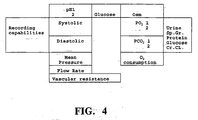
- a new pump design comprises diagnostic means providing the warm preservation process/system with the capability to automatically monitor and measure one or more functional characteristics such as pH, various pressures, flow rate, vascular resistance, various chemical constituents, oxygenation, carbon dioxide concentration, and oxygen consumption (as diagrammed in Figure 4 ), with display means to show measured values, and recording means to provide a record of such measurements.
- diagnostic means providing the warm preservation process/system with the capability to automatically monitor and measure one or more functional characteristics such as pH, various pressures, flow rate, vascular resistance, various chemical constituents, oxygenation, carbon dioxide concentration, and oxygen consumption (as diagrammed in Figure 4 ), with display means to show measured values, and recording means to provide a record of such measurements.
- Methods known to those skilled in the art can be utilized for making the in-line measurements.
- the chamber contents can be exposed to a bank of solid state micro-electrodes which generate electrical signals proportional to the chemical characteristics ( U.S. Patent No.
- the chamber contents may be exposed to a spectroscopy instrument emitting and analyzing near-infrared as may be used to measure a constituent's concentration such as glucose concentration ( U.S. Patent 5, 077, 476 ).
- a constituent's concentration such as glucose concentration
- the level of a constituent, such as glucose may be measured by wavelength absorbance when tested by a light of known intensity.
- Another method for providing in-line measurement includes pumping the collected perfusate from the chamber to a clinical chemistry analyzer system which is adapted to the machinery ( U.S. Patent No. 4,786,394 ) comprising the warm preservation process/system.
- the perfusate collected in the chamber may be removed from the chamber and measured by similar techniques in an "off-line" manner.
- the vascular flow rate of the perfusate circulating through the organ can be determined by using the means for diverting and collecting the circulated perfusate, by measuring the volume of perfusate collecting in the chamber in relation to time.
- micro-electrodes may be used as a means to facilitate such determination of vascular flow rate.
- a second device means such as a shunt or catheter operatively linked to the organ being perfused, may be used to divert organ product from the organ, such as urine from a kidney, and further comprises a means to collect the diverted organ product for subsequent measurement of parameters of the organ product which relate to organ function.
- Organ product can be measured in-line using the means and methods for measuring the chemical constituents known to those in the art; and means and methods for monitoring the flow rate and volume, as illustrated in the above methods.
- the organ product can be removed from the collection means and the product's constituents can be measured using similar techniques in an "off-line" manner.
- kidneys intended for transplantation may be prospectively assessed for metabolic function.
- kidneys intended for transplantation can be maintained at temperatures of 25°-32°C for up to 18 hours at mean pressures ranging from 40-90mmHg. This pressure range results in vascular flow rates of 80-150mm 3 /min.
- the renal perfusions are conducted at PO 2 of 170-185torr to deliver oxygen at 7.7ml/min.
- the oncotic pressure of the process/system is an important regulator of the rate of diuresis.
- Oncotic pressure in the range of 2.5-4.0g/dl provided the best quality diuresis in terms of mm 3 /min, pH, and specific gravity (illustrated in Fig. 1 , and in Table 4), whereas a higher oncotic pressure substantially diminished the diuresis.
- an oncotic pressure of approximately 8.0g/dl no urine was produced. Without any additives for oncotic pressure, an excessive diuresis occurred which resulted in a critical rise in the osmolality (Osm) of the circulating perfusate.
- Osm osmolality
- Urine osmolality has a reference range of from 300 to 900 mosmol/kgH 2 O. Because osmolality is a measure of the number of dissolved solute particles in urine, a value outside the reference range (i.e. higher) may indicate damage to, or dysfunction of, the renal tubules (higher concentrations of dissolved substances such as glucose, sodium, and protein).
- Another functional characteristic that can be measured and be indicative of renal function is creatinine clearance.
- This test involves measuring the volume of urine formed over a set time interval, and measuring the concentration of a substance (creatinine) in the urine and also measuring the concentration of that substance in the circulated perfusate. The clearance value is used to determine glomerular filtration rate and/or secretory-tubule function. If the renal function is normal, i.e. renal circulation is unimpaired, a substance like creatinine is readily cleared from the perfusate into the urine. Impaired renal function may be indicated by an increase in the level of creatinine contained in the perfusate relative to the level in urine, thereby affecting the calculated clearance value.
- the urine produced during the ex vivo preservation using the stated process/system can be analyzed for specific functional characteristics, and in the ranges, such as those listed in Table 4.
- Specific gravity relating to the number of solute particles, can be measured by an urinometer.
- the value reflects the concentrating ability of the kidney.
- a value outside (lower) than the reference interval may reflect renal tubular damage, since concentrating ability is one of the first functions to be lost as a result of renal tubular damage.
- Measurement of pH reflects-the amount of acid produced in the organ as a result of organ metabolism and oxidation.
- the regulation of the acid-base balance, together with the regeneration of free buffers, is ultimately a function of renal tubular cells.
- a urine pH which is more acidic than the reference interval may indicate in renal tubular defects (i.e., defect in which HCO 3 - is not reabsorbed from the urine).
- a urine pH which is more alkaline than the reference interval may indicate a renal tubular defect in which ions (i.e. H + or K + ) are not being reabsorbed from the urine.
- the presence of glucose or casts in the urine is an indicator of renal glomerular function.
- the function of the kidney during the ex vivo preservation using the process/system, can be assessed for glomerular function by measuring protein in the urine, or other large molecules such as the oxygen carrier in the perfusate (i.e. perfluorochemical emulsion).
- the glomerular pores are lined with glycosylated proteins with strong negative electric charges. Since proteins are also negatively charged, the result is electrostatic repulsion; i.e these molecules are not normally present in the urine. However, where the glomerular filtration process is damaged, these substances may then be found in the urine as indicators of glomerular injury.
- tubular function of the kidney may be assessed by the measurement of urinary creatinine.
- perfusate creatinine is secreted and not reabsorbed during urine production.
- creatinine is added to the perfusate as a tracer molecule to be detected by excretion in the urine.
- kidneys exhibiting good ex vivo functional characteristics with the described process/system were found to function well posttransplantation (See measured values, Table 4; & Group I, Fig. 2 ).
- the urine was always found to be negative for protein and perfluorochemical emulsion leakage.
- the urinary creatinine concentration was always greater than 40 mg/dl.
- poor functional characteristics i.e., protein or perfluorochemical leakage were associated with renal damage and poor post-transplantation course.
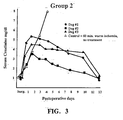
- the post- transplantation courses demonstrated an acute tubular necrosis indicative of poor graft function (Group 2, Fig. 3 ).
- Additional means of assessing the function of the kidney being perfused in the process/system is the amount of oxygen consumption as the perfusate circulates, relative to a selected time interval, through the organ. Decreased oxygen consumption, i.e. a low oxygen consumption compared to the normal range, may be indicative of tissue hypoxia.
- a measure of organ function is the vascular flow rate of perfusate circulating through the kidney using a standard perfusion pressure relative to a selected time interval. A low flow rate, compared to the normal range, may be indicative of edema, vasoconstriction, vascular endothelial cell swelling and loss of vascular integrity in a damaged kidney.
- measurement of functional characteristics in organs preserved in the warm preservation process/system i.e. evaluating functional characteristics of metabolism of an organ intended for transplantation
- organ function posttransplantation By measuring parameters of organ product or circulated perfusate during ex vivo warm preservation, and relating values of the measured parameters to reference interval values, values of one or more-measured parameters outside the reference intervals may be indicia of organ damage, injury, or poor functional capabilities which may affect the function of the organ posttransplantation.
- the prospective assessment may be useful in the evaluation of the functional status of: a graft after cold or warm ischemia; in a borderline donor (as discussed previously); or in any case where the kidney may have been compromised.
- the acceptable level of ex vivo function will be determined by the respective clinicians as the range yielding the threshold of clinical function acceptable at each transplant center.
- liver function as well as individual aspects of physiology of the liver, can be determined by measuring concentrations of constituents in both the circulated perfusate, and the liver product (bile).
- liver intended for transplantation may be prospectively assessed for metabolic function.
- liver vascular flow rate oxygen consumption, and glucose utilization (as measured from the perfusate).
- elevated levels of alkaline phosphatase may be an indicator of hepatic or hepatobiliary disease.
- ALP perfusate alkaline phosphatase
- LAP leucine aminopeptidase
- GTT gamma glutamyl transferase
- Additional means of assessing the function of a liver-being perfused in the process/ system is the amount of oxygen consumption as the perfusate circulates through the organ, relative to a selected time interval. Decreased oxygen consumption, i.e. a low oxygen consumption compared to the normal range, may be indicative of tissue hypoxia.
- a measure of organ function is the vascular flow rate of perfusate circulating through the liver using _a standard perfusion pressure.
- a low flow rate compared to the normal range determined by the respective clinician, may be indicative of vasoconstriction, edema, vascular endothelial cell swelling and loss of vascular integrity in a damaged liver.
- the acceptable level of ex vivo function will be determined by the respective clinicians as the range yielding the threshold of clinical function acceptable at each transplant center.
- pancreas function as well as individual aspects of physiology of the pancreas, can be determined by measuring concentrations of constituents in both the circulated perfusate, and the pancreas.
- pancreas intended for transplantation may be prospectively assessed for metabolic function.
- pancreas Functional characteristics of pancreas can be assessed by measuring parameters including, but not limited to, pancreatic enzyme concentrations such as amylase, lipase; the hormone insulin; pancreatic secretion pH, sodium and potassium; and pancreas vascular flow rate, oxygen consumption, and glucose utilization (as measured from the perfusate).
- pancreatic enzyme concentrations such as amylase, lipase
- the hormone insulin pancreatic secretion pH, sodium and potassium
- pancreas vascular flow rate oxygen consumption
- glucose utilization as measured from the perfusate
- altered activity of amylase and lipase as measured in the pancreatic juice or in the perfusate (i.e., above the reference interval determined by the respective clinician; for example, perfusate amylase activity reference level may be 70-300U/l and lipase activity reference level up to 10U/ml, depending on the method used to measure activity) may be an indicator of pancreatitis.
- Additional means of assessing the function of a pancreas being perfused in the process/system is the amount of oxygen consumption as the perfusate circulates through the organ, relative to a selected time interval. Decreased oxygen consumption, i.e. a low oxygen consumption compared to the normal range, may be indicative of tissue hypoxia.
- a measure of organ function is the vascular flow rate of perfusate circulating through the pancreas using a standard perfusion pressure.
- a low flow rate compared to the normal range determined by the respective clinician, may be indicative of vasoconstriction, edema, vascular endothelial cell swelling and loss of vascular integrity in a damaged pancreas.
- the acceptable level of ex vivo function will be determined by the respective clinicians as the range yielding the threshold of clinical function acceptable at each transplant center.
- Heart function as well as individual aspects of physiology of the heart, can be determined by measuring concentrations of constituents in both the circulated perfusate, and the heart.
- heart intended for transplantation may be prospectively assessed for metabolic function.
- Heart enzymes such as transaminases (aspartate aminotransferase, AST), lactate dehydrogenase (LD), fructose 1,6-diphosphate aldolase (ALS), malate dehydrogenase (MD), glutathione reductase (GR), creatine phosphokinase (CPK), hydroxybutyrate dehydrogenase (HBD); heart vascular flow rate, oxygen consumption, and glucose utilization (as measured from the perfusate).
- transaminases aspartate aminotransferase, AST
- LD lactate dehydrogenase
- ALS fructose 1,6-diphosphate aldolase
- MD malate dehydrogenase
- GR glutathione reductase
- CPK creatine phosphokinase
- HBD hydroxybutyrate dehydrogenase
- Indicators of cardiovascular disease may include increased levels of AST, LD, ALS, MD, GR, CPK and HBD in circulated perfusate relative to reference levels determined by the respective clinician (exs. of reference levels include AST: ⁇ 20 U/l; and LD: 0-300 U/L).
- Additional means of assessing the function of a heart being perfused in the process/system is the amount of oxygen consumption as the perfusate circulates through the organ, relative to a selected time interval. Decreased oxygen consumption, i.e. a low oxygen consumption compared to the normal range, may be indicative of tissue hypoxia.
- a measure of organ function is the vascular flow rate of perfusate circulating through the heart using a standard perfusion pressure.
- a low flow rate compared to the normal range determined by the respective clinician, may be indicative of vasoconstriction, edema, vascular endothelial cell swelling and loss of vascular integrity in a damaged heart.
- the acceptable level of ex vivo function will be determined by the respective clinicians as the range yielding the threshold of clinical function acceptable at each transplant center.
- heart function can be-assessed by measuring the electric potential of the heart, being perfused by the warm preservation process/system, such as by electrocardiogram using standard methods known to those skilled in the art. From an electrocardiogram can be determined abnormal patterns (determined from the wave pattern) which may be characteristic of infarction, ischemia, and hypertrophy; and which may be predictive of poor functional performance of the heart posttransplantation.
- Functional characteristics of small bowel can be assessed by measuring parameters including, functional assays such as gastric acid stimulation tests, and absorption assays using tracer molecules; small bowel vascular flow rate, oxygen consumption, and glucose utilization (as measured from the perfusate).
- a gastric stimulation test is performed by first taking a basal sample of gastric secretions, i.e. before attempting to stimulate gastric secretion by the addition of a stimulant such as to the perfusate.
- a stimulant such as to the perfusate.
- Known stimulants, and methods of use thereof, of gastric secretion include histamine, pentagastrin, histalog, and insulin (-induced hypoglycemia). Stimulation tests showing anacidity may indicate a damaged or injured small bowel.
- An absorption test involves introducing directly into the small bowel a substance that is capable of being traced because of a diagnostic marker associated with the substance. Then, either the contents of the small bowel can be systematically analyzed over time for disappearance of the tracer molecule, or the perfusate can be measured for the appearance of the tracer molecule, to measure the ability of the small bowel to absorb substances. Impaired absorption may be indicative of a damaged or injured small bowel.
- Additional means of assessing the function of small bowel being perfused in the process/system is the amount of oxygen consumption as the perfusate circulates through the organ, relative to a selected time interval. Decreased oxygen consumption, i.e. a low oxygen consumption compared to the normal range, may be indicative of tissue hypoxia.
- a measure of organ function is the vascular flow rate of perfusate circulating through the small bowel using a standard perfusion pressure.
- a low flow rate compared to the normal range determined by the respective clinician, may be indicative of vasoconstriction, edema, vascular endothelial cell swelling and loss of vascular integrity in a damaged small bowel.
- the acceptable level of ex vivo function will be determined by the respective clinicians as the range yielding the threshold of clinical function acceptable at each transplant center.
Landscapes
- Health & Medical Sciences (AREA)
- Life Sciences & Earth Sciences (AREA)
- Engineering & Computer Science (AREA)
- General Health & Medical Sciences (AREA)
- Chemical & Material Sciences (AREA)
- Hematology (AREA)
- Immunology (AREA)
- Biomedical Technology (AREA)
- Urology & Nephrology (AREA)
- Molecular Biology (AREA)
- General Physics & Mathematics (AREA)
- Physics & Mathematics (AREA)
- Biotechnology (AREA)
- Cell Biology (AREA)
- Pathology (AREA)
- Microbiology (AREA)
- Environmental Sciences (AREA)
- Zoology (AREA)
- Wood Science & Technology (AREA)
- Food Science & Technology (AREA)
- Medicinal Chemistry (AREA)
- Dentistry (AREA)
- Analytical Chemistry (AREA)
- Biochemistry (AREA)
- Tropical Medicine & Parasitology (AREA)
- Physiology (AREA)
- Chemical Kinetics & Catalysis (AREA)
- Surgery (AREA)
- Epidemiology (AREA)
- Animal Behavior & Ethology (AREA)
- Public Health (AREA)
- Veterinary Medicine (AREA)
- Agricultural Chemicals And Associated Chemicals (AREA)
- Cultivation Of Plants (AREA)
Abstract
Description
- This invention relates to a novel method for monitoring functional characteristics of an organ/tissue ("organ"), being stored in an ex vivo warm preservation process, intended for transplantation. More particularly, the method involves measuring one or more indicia of the organ function, as a means of assessing functional capabilities of the organ which can then be correlated with its posttransplantation course.
- There continues to be an extreme shortage of organs for transplantation. For example, kidney transplantation is largely dependant upon the availability of organs retrieved from heart-beating cadaver donors. While awaiting transplantation, kidneys must be stored in a fashion that will result in the restoration of normal, immediate function. Therefore, the clinical preservation of organs is much more limited than the experimental models.
- Additionally, a large and as yet untapped source of organs for transplantation are accident victims who succumb at the site of an injury and those having short post-trauma survival times. These accident victims are not used as organ donors because of the ischemic damage. Likewise, older potential donors are often considered borderline because of questions relating to organ function. Thus, the development of methods which will allow clinicians to evaluate prospectively the functional capabilities of an allograft ex vivo may allow for the expansion of the organ donor pool. Similarly, the current demand for organs cannot be met with existing technology. Unless new sources of organs can be developed, the number of transplantation procedures will remain constant. Additionally, the donor pool cannot be substantially expanded because there is no process/ system available to evaluate if the borderline or warm chemically damaged organ will function when transplanted; i.e. until now, the only means to evaluate the functional capabilities of an organ intended for transplantation was to transplant it.
- There are two commonly used methods of storage for kidneys - both involving hypothermia: preservation by continuous hypothermic perfusion; and simple hypothermic storage (see for example Collins et al., 1969, Lancet 2:1219). While a variety of perfusates have been utilized clinically, these two methods of kidney storage have remained substantially unchanged for the past 20 years. The current perfusate solution that represents the state-of-the-art in hypothermic organ preservation, and provides for optimized organ preservation under hypothermic conditions, contains components which prevent hypothermic induced tissue edema; metabolites which facilitate organ function upon transplantation; anti-oxidants; membrane stabilizers; colloids; ions; and salts (Southard et al.,1990, Transpl. 49:251; and Southard, 1989, Transpl. Proc. 21:1195). The formulation of this perfusate is designed to preserve the organs by hypothermic induced depression of metabolism. While it minimizes the edema and vasospasm normally encountered during hypothermic storage, it does not provide for the utilization of a substantially expanded donor pool. This is due to the fact that an allograft, marginally damaged by warm ischemia cannot tolerate further damage mediated by the hypothermia.
- Further, since preservation of organs using hypothermia reduces organ metabolism and oxidative needs, such preservation methods do not allow for measurement of functional characteristics which can be used prospectively to determine the function of the organ posttransplantation. For example, while at normal physiologic temperatures the phospholipids making up the cell membranes are highly fluid, under the hypothermic conditions utilized to preserve organs intended for transplantation, the lipid bilayer experiences a phase-change and becomes gel-like, with greatly reduced fluidity. The essentially frozen lipid in the cell membranes negates the utilization of O2, even in the presence of a high O2-tension. The metabolic consequence is glycolysis, which is analogous to the state of anoxia. The hypothermic conditions utilized in organ preservation probably represents the reason why previous studies raising the O2-tension did not uniformly demonstrate the benefit of increased oxygenation of tissues.
- In organ metabolism, a direct relationship between oxygen requirements and temperature exists. In fact, hypothermia may exert a greater depression of oxidative metabolism in the kidney than in the body as a whole and may even help to explain the success in preserving kidney relative to other organs. A major potion of the oxygen consumed by the kidney is utilized for the process of active sodium reabsorption and reabsorption is by far the most important of all the tubular transport processes (Zerahn, 1956, Phsiol. Scand. 36:300). It has been described that below 18°C, hypothermia inhibits the tubular activity of the kidney (Bickford et al., 1937, J. Physiol. 89:198) and that at 4°C, the utilization of oxygen is approximately 5% of that at normothermia.
- Hypothermic storage can further complicate assessment of function since it is not benign; i.e., it can produce vasospasm and subsequent edema in an allograft (Robison, 1953, Biol. Rev. 28:153; Rixon et al., 1954, Rev. Canc. Biol. 13:83). Hypothermically preserved organs can experience glomerular endothelial cell swelling and loss of vascular integrity along with tubular necrosis. These phenomenon can be attributed to the hypothermic conditions employed. Hypothermia can also inhibit the Na/K dependant ATPase and result in the loss of the cell volume regulating capacity. The loss of volume regulation is what causes the cellular swelling and damage. An ample supply of oxygen can actively diminish the amount of this swelling. Without adequate oxygen delivery, the anoxia leads to disintegration of the smaller vessels after several hours of perfusion. The lack of oxygen and the subsequent depletion of ATP stores mean that anaerobic glycolysis is the principal source of energy under traditional preservation conditions. The lack of molecular oxygen for oxidative phosphorylation which occurs in ischemia, leads to the accumulation of NADH and the depletion of ATP stores within the mitochondria. The subsequent loss of nucleosides is probably a very important factor in the failure of tissues subjected to warm ischemia and prolonged periods of cold ischemia to regenerate ATP after restoration of the blood supply. The inability to supply adequate oxygen has lead to the routine reliance on hypothermia for organ preservation.
- Recently, processes/systems have been described which utilize a temperature range of 18°C-35°C for some form of organ preservation. For example,
US 5,051,352 discloses an apparatus and method of maintaining the viability of animal organs, and in particular human organs. However, none of these have established organ metabolism or function anywhere near the normal range. Nor have any of these described using the product of the organ metabolism during storage ex vivo or in situ, to establish functional capabilities which can be correlated with posttransplantation course. - The present inventors have developed a process/system to preserve organs ex vivo without traditional hypothermia (4°-10°C) which has been described in detail previously (
U.S. Patent Application Serial Nos. 08/029,459 and08/033,629 ). - The process/system provides the necessary oxygen delivery, nutrients for metabolism, oncotic pressure, pH, perfusion pressures, and flow rates to support organ metabolism ex vivo, most often within or near the respective normal range in vivo. A near normal rate of metabolism is defined herein as about 70%-90% of the range of normal rates of metabolism. Further, the process/system supports a level of metabolism ex vivo which provides enough oxidative metabolism to result in the normal functional product of the organ. The development of this process/system which supports organs ex vivo, without traditional hypothermia, presents the opportunity to support a near normal rate of metabolism.
- All organ preservation processes/systems currently being used depend on severe hypothermia (4°C-10°C) to reduce the organ metabolism and oxidative needs. The hypothermia inhibits the organ metabolism by 95% and is the reason why organ function cannot be determined prospectively ex vivo. Therefore, such methods prevent assessing the function of an ex vivo organ relative to its course posttransplantation, because metabolic functions are mandatorily inhibited by the hypothermia employed. The few attempts at using a process/system to support organs ex vivo without severe hypothermia, have not reported that organ metabolism was achieved at a level which allowed for the functional product of the organ; i.e. approaching a near normal rate of metabolism in vivo.
- The warm preservation technology developed by the present inventors (described in detail previously in
U.S. Patent Application Serial Nos. 08/029,459 and08/033,629 ) supports a level of metabolism ex vivo within or near the respective normal range in vivo and which provides enough oxidative metabolism to result in the normal functional product of the organ. For example, a renal allograft stored ex vivo via this process/system supports renal metabolism within a normal range and results in its normal functional product, namely urine. This production of urine during the process/system of warm ex vivo preservation presents the unique opportunity to prospectively determine the potential function of an allograft. Until now, the only means to evaluate the functional capabilities of an allograft was to transplant it. - Thus, in accordance with one aspect of the present invention, a method is disclosed to prospectively determine the potential function of an organ intended for transplantation.
- More specifically, the invention provides a method to prospectively determine the potential function of an organ posttransplantation by measuring functional characteristics related to organ metabolism while the organ is being perfused in an ex vivo warm preservation process/system at near normal rate of metabolism, said method comprising measuring parameters of organ product or circulated perfusate during ex vivo warm preservation; and relating values of the measured parameters to reference interval values (an established normal range) wherein a value of one or more measured parameters outside the reference intervals may be indicia of organ damage, injury, or poor functional capabilities which may affect the function of the organ posttransplantation.
- Where the organ intended for transplantation is a kidney, functional capabilities can be assessed by measuring parameters including, but not limited to, urine concentrations of protein, glucose, and creatinine; urine pH, osmolality, and specific gravity; kidney vascular flow rate, oxygen consumption, and glucose utilization (as measured from the perfusate).
- Where the organ intended for transplantation is a liver, functional capabilities can be assessed by measuring parameters including, but not limited to, bile concentrations of bile salts, cholesterol, alkaline phosphatase; bile pH; and liver vascular flow rate, oxygen consumption, and glucose utilization (as measured from the perfusate).
- Where the organ intended for transplantation is a pancreas, functional capabilities can be assessed by measuring parameters including, but not limited to, pancreatic enzyme concentrations such as amylase, lipase; the hormone insulin; pancreatic secretion pH, sodium and potassium; and pancreas vascular flow rate, oxygen consumption, and glucose utilization (as measured from the perfusate).
- Where the organ intended for transplantation is a heart, functional capabilities can be assessed by measuring parameters including, but not limited to, heart enzymes such as transaminases (aspartate aminotransferase, AST), lactate dehydrogenase (LD),
fructose 1,6-diphosphate aldolase (ALS), malate dehydrogenase (MD), glutathione reductase (GR), creatine phosphokinase (CPK), hydroxybutyrate dehydrogenase (HBD); heart vascular flow rate, oxygen consumption, and glucose utilization (as measured from the perfusate). Other parameters include measuring the heart electric potential by electrocardiogram (ECG). - Where the organ intended for transplantation is a small bowel, functional capabilities can be assessed by measuring parameters including, functional assays such as gastric acid stimulation tests, and absorption assays using tracer molecules; small bowel vascular flow rate, oxygen consumption, and glucose utilization (as measured from the perfusate) .
- The above-discussed features, and attendant advantages of the present invention will become apparent by reference to the following detailed description when considered in conjunction with the accompanying figures.
-
-
FIG. 1 is a graph representing the effect of protein (bovine serum albumin; "BSA", ●) concentration on diuresis of kidneys using the ex vivo warm preservation process/system. -
FIG. 2 is a graph representing successful autotransplantation and recipients' serum creatinine levels following storage for 6.5 hours using the ex vivo warm preservation process/system (○●,□,■,△,▲) as compared to hypothermic storage with a perfusate solution for hypothermia (). Urine creatinine concentration measured at greater than 40.0 mg/dl, was found to correlate with, or be predictive of, successful posttransplantation renal function.
-
FIG. 3 is a graph representing autotransplantation with reversible acute tubular necrosis, and showing the recipients' serum creatinine levels following storage for 6.5 hours using the ex vivo warm preservation process/system (●,■,▲) as compared to a control (△) which was 60 minutes of warm ischemia, no treatment.
Urine creatinine concentration was measured at less than 40.0 mg/dl. -
FIG. 4 is a schematic representing a pump design having the functional capabilities to enable the warm preservation process/system to make the measurements of the present invention. - A transplantable organ is herein defined as an organ including, but not limited to kidney, heart, liver, lung, small bowel, pancreas, and eye. The present invention is related to warm preservation technology in which an organ is perfused at temperatures in the range of 18°C to 35°C with a perfusate composed of a highly enriched and modified tissue culture medium which is supplemented with an oxygen carrier such as a perfluorochemical emulsion. The process/system involves preserving the organ ex vivo with ongoing metabolic activity using a laminar or pulsatile pumping system. Thus, the process/system provides necessary oxygen delivery, nutrients for metabolism, oncotic pressure, pH, perfusion pressures, and flow rates to support organ metabolism ex vivo, most often within or near the respective normal range of metabolism in vivo. The metabolism of the organ is monitored ex vivo by assessing functional characteristics such as by determining perfusion pressures, flow rates, oxygen consumption, pH, osmolarity and glucose utilization. Additionally, product(s) of the organ metabolism can be collected and analyzed, without significantly altering the perfusion process, to prospectively assess organ function before transplantation.
- Summary of Warm Preservation Technology A process and compositions for preserving organs ex vivo without traditional hypothermia (4°C-10°C) has been described in detail previously (
U.S. Patent Application Serial Nos. 08/029,459 and08/033,629 ). - The process provides the necessary oxygen delivery, nutrients for metabolism, oncotic pressure, pH, perfusion pressures, and flow rates to support organ metabolism ex vivo for at least up to 18 hours.
- The hyperosmolar solution which may be used as a preservation solution for the initial organ flushing, and/or as a perfusate for storage of organs using a warm preservation technology (18°C-35°C) without extreme hypothermia. The perfusate has been designed to support the nutritional and metabolic needs of the vascular endothelium within a graft, thereby maintaining the integrity of the vasculature and subsequently the normal permeability of the organ. Among the components may be amino acids, ions, physiologic salts, impermeants, serum, serum proteins, sugars, lipids, attachment factors, growth factors, mucopolysaccharides, and an oxygen carrier. This is the first perfusate to be able to preserve organs without concomitant extreme hypothermia; and was specifically designed to potentiate the simultaneous growth of microvessel and large vessel endothelial cells; to support the integrity of vascular endothelium within a graft; and to support more normal permeability, and metabolism without extreme hypothermia. The preservation solution employs a cell culture-like basal medium, to which is added a variety of supplements which may include serum albumin as a source of protein and colloid; trace elements to potentiate viability and cellular function; pyruvate and adenosine for oxidative phosphorylation support; transferrin as an attachment factor; insulin and sugars for metabolic support; glutathione to scavenge toxic free radicals; cyclodextrin as a source of impermeant, scavenger, and potentiator of cell attachment factors; a very high Mg++ concentration for microvessel metabolism support; mucopolysaccharides, comprising primarily chondroitin sulfates, for growth factor potentiation and hemostasis; a factor for promoting growth of endothelial cells (ENDO GRO™, VEC TEC Inc.) as a source of colloid, impermeant and growth promoter; and an oxygen carrier to support oxidative metabolism during metabolic function. As a result, the preservation solution has been found to preserve organs without extreme hypothermia, and does not present the common problems encountered with cold storage perfusates - namely edema, vasospasm, depletion of ATP stores, shutdown of ion pumps, glycolysis, and the generation of cold-induced toxic free radical intermediates. Although the composition of the preservation solution, for use -with a warm preservation technology, can vary by constituent and constituent ranges as previously described, a preferred formulation is set forth below in Table 1 for purposes of illustration and not limitation.
TABLE 1 A PREFERRED COMPOSITION OF THE PRESERVATION SOLUTION DL-Alanine .12g/L L-Arginine HCl .14g/L DL-Aspartic Acid .12g/L L-Cysteine HCL●H2O .00022g/L L-Cystine 2HCl .052g/L DL-Glutamic Acid .2672g/L L-Glutamine .2g/L Glycine .1g/L L-Histidine HCl●H2O .04376g/L L-Hydroxyproline .02g/L DL-Isoleucine .08g/L DL-Leucine .24g/L L-Lysine HCl .14g/L DL-Methionine .06g/L DL-Phenylalanine .10g/L L-Proline .08g/L DL-Serine .10g/L DL-Threonine .12g/L DL-Tryptophan .04g/L L-Tyrosine●2Na .11532g/L DL-Valine .10g/L Adenine Hemisulfate .02g/L Adenosine Triphosphate●2Na .002g/L Adenylic Acid .0004g/L Alpha Tocopherol Phosphate●2Na .00002g/L Ascorbic Acid .0001g/L D-Biotin .00002g/L Calciferol .0002g/L Cholesterol .0024g/L Choline Chloride .001g/L Deoxyribose .001g/L Folic Acid .00002g/L Glutathione (Reduced) .0001g/L Guanine HCl -- .0006g/L Hypoxanthine .0006g/L Menadione (Na Bisulfite) .00003g/L Myo-Inositol .0001g/L Niacinamide .00005g/L Nicotinic Acid .00005g/L PABA .0001g/L D-Pantothenic Acid Ca .00002g/L Polyoxyethylenesorbitan Monooleate .04g/L Pyridoxal HCl .00005g/L Pyridoxine HCl .00005g/L Retinol Acetate .00028g/L Riboflavin .00002g/L Ribose .001g/L Thiamine HCl .00002g/L Thymine .0006g/L Uracil .0006g/L Xanthine●Na .00069g/L Calcium chloride●2H2O .265g/L Ferric Nitrate●9H2O .00144g/L Magnesium sulfate (anhydrous) 1.204g/L Potassium chloride .4g/L Sodium Acetate (anhydrous) .1g/L Sodium Chloride 6.8g/L Sodium Phosphate Monobasic (anhydrous) .244g/L Glucose 2.0g/L Insulin .01g/L Bovine serum albumin (BSA) 30.0g/L NaHCO3 4.4g/L Pyruvate .22g/L Transferrin .1g/L Serum 100ml Impermeant (Cyclodextrin) .5g/L Mucopolysaccharide (chondroitin sulfate B) .004g/L ENDO GRO™ .20g/L heparin .18g/L perfluorochemical emulsion* 20% (v/v) * - perflubron emulsion as an oxygen carrier - As indicated in Table 1, a preferred oxygen carrier is a perflubron emulsion (perfluoroocytl bromide, PFOB). However, other oxygen carriers for providing oxygen during oxidative metabolism during preservation and treatment of the graft include, hemoglobin, stabilized hemoglobin derivatives (made from hemolyzed human erythrocytes such as pyridoxylated hemoglobin), polyoxethylene conjugates (PHP) and recombinant hemoglobin products.
- The warm preservation process/system to preserve organs ex vivo without traditional hypothermia (4°-10°C) has been described in detail previously (
U.S. Patent Application Serial Nos. 08/029,459 and08/033,629 ). The process/system provides the necessary oxygen delivery, nutrients for metabolism, oncotic pressure, pH, perfusion pressures, and flow rates to support organ metabolism ex vivo, most often within or near the respective normal range in vivo. Further, the process/system supports a level of metabolism ex vivo which provides enough oxidative metabolism to result in the normal functional product of the organ. The development of this process/system which supports organs ex vivo, without traditional hypothermia, presents the opportunity to support a near normal rate of metabolism. - Using a perfusate of a known formulation, such as that illustrated in Table 1, can facilitate measurement of certain indicia of metabolic function, thus providing a means of assessing the function of the organ being perfused in the process/ system. For example, the rate at which the glucose concentration is depleted, in relation to time, in the perfusate as it circulates through the organ, is a measure of organ function. Relative to a selected time point, a glucose concentration that is below the range of a normal level of glucose utilization may be an indicator of organ damage or inhibited metabolism. Another example of a measure of organ function is the amount of oxygen consumption as the perfusate circulates through the organ. Inadequate oxygen consumption, i.e. a low oxygen consumption compared to the normal range, may be indicative of tissue hypoxia. Yet another example of a measure of organ function is the vascular flow rate of perfusate circulating through the organ using a standard perfusion pressure. A low flow rate, compared to the normal range, may be indicative of vasoconstriction, edema, vascular endothelial cell swelling and loss of vascular integrity in a damaged organ.
- The warm preservation process/system includes machinery comprising a laminar or pulsatile pumping system, including means for providing and controlling perfusion and the perfusion pressure; means for temperature control; and means for providing and controlling introduction of, and venting of, respiratory gases. Also useful in the warm technology process/system is a device means, such as a shunt that maintains the overall integrity of the process/ system, which is operatively linked to the process/system to allow small test samples of perfusate to be diverted off line from the flow lines of perfusate which has already circulated through the organ and a means, such as a collection chamber, with which to collect the perfusate so diverted, so that measurements of the perfusate can be subsequently performed .
- Accordingly, in-line measurements can be made of the constituents of the perfusate collected in the chamber. Thus, a new pump design comprises diagnostic means providing the warm preservation process/system with the capability to automatically monitor and measure one or more functional characteristics such as pH, various pressures, flow rate, vascular resistance, various chemical constituents, oxygenation, carbon dioxide concentration, and oxygen consumption (as diagrammed in
Figure 4 ), with display means to show measured values, and recording means to provide a record of such measurements. Methods known to those skilled in the art can be utilized for making the in-line measurements. For example, the chamber contents can be exposed to a bank of solid state micro-electrodes which generate electrical signals proportional to the chemical characteristics (U.S. Patent No. 4,535,786 ) of the perfusate leaving the perfused organ. Alternatively, the chamber contents may be exposed to a spectroscopy instrument emitting and analyzing near-infrared as may be used to measure a constituent's concentration such as glucose concentration (U.S. Patent 5, 077, 476U.S. Patent No. 4,786,394 ) comprising the warm preservation process/system. Alternatively, the perfusate collected in the chamber may be removed from the chamber and measured by similar techniques in an "off-line" manner. - In another method, the vascular flow rate of the perfusate circulating through the organ can be determined by using the means for diverting and collecting the circulated perfusate, by measuring the volume of perfusate collecting in the chamber in relation to time. As similar to the method above, micro-electrodes may be used as a means to facilitate such determination of vascular flow rate.
- Similarly, a second device means, such as a shunt or catheter operatively linked to the organ being perfused, may be used to divert organ product from the organ, such as urine from a kidney, and further comprises a means to collect the diverted organ product for subsequent measurement of parameters of the organ product which relate to organ function. Organ product can be measured in-line using the means and methods for measuring the chemical constituents known to those in the art; and means and methods for monitoring the flow rate and volume, as illustrated in the above methods. Alternatively, the organ product can be removed from the collection means and the product's constituents can be measured using similar techniques in an "off-line" manner.
- Overall renal function, as well as individual aspects of kidney physiology, can be determined by measuring concentrations of constituents in both the circulated perfusate, and the kidney product (urine). Thus, in accordance with the present invention, and with the methods and compositions in Examples 1 and 2, kidneys intended for transplantation may be prospectively assessed for metabolic function. Using the warm preservation process/system, kidneys intended for transplantation can be maintained at temperatures of 25°-32°C for up to 18 hours at mean pressures ranging from 40-90mmHg. This pressure range results in vascular flow rates of 80-150mm3/min. The renal perfusions are conducted at PO2 of 170-185torr to deliver oxygen at 7.7ml/min. Under these conditions, examples of functional characteristics indicative of renal metabolism occurring at a temperature of 25°C and 32°C, respectively, have been measured and are listed in Table 2 below:
TABLE 2 METABOLIC FUNCTION AFTER SIX HOURS OF EX VIVO PRESERVATION* Group 1: 25°C Group 2: 32°C O2- consumption+ 4.8ml/min 5.7ml/min diuresis 143.1cc/hr 123.3cc/hr histology normal normal perfusate glucose cone.** 72mg/dl 0 * specimens collected after 6 hours of perfusion and represents the mean from experimental data in each group
** starting glucose concentration: 165mg/dl
+ calculated using the method of Fick - In measuring one or more indicia of kidney function, there is a direct correlation between protein concentration on the rate of diuresis. The oncotic pressure of the process/system is an important regulator of the rate of diuresis. Oncotic pressure in the range of 2.5-4.0g/dl provided the best quality diuresis in terms of mm3/min, pH, and specific gravity (illustrated in
Fig. 1 , and in Table 4), whereas a higher oncotic pressure substantially diminished the diuresis. In the case of an oncotic pressure of approximately 8.0g/dl, no urine was produced. Without any additives for oncotic pressure, an excessive diuresis occurred which resulted in a critical rise in the osmolality (Osm) of the circulating perfusate. Urine osmolality has a reference range of from 300 to 900 mosmol/kgH2O. Because osmolality is a measure of the number of dissolved solute particles in urine, a value outside the reference range (i.e. higher) may indicate damage to, or dysfunction of, the renal tubules (higher concentrations of dissolved substances such as glucose, sodium, and protein). - Another functional characteristic that can be measured and be indicative of renal function is creatinine clearance. This test involves measuring the volume of urine formed over a set time interval, and measuring the concentration of a substance (creatinine) in the urine and also measuring the concentration of that substance in the circulated perfusate. The clearance value is used to determine glomerular filtration rate and/or secretory-tubule function. If the renal function is normal, i.e. renal circulation is unimpaired, a substance like creatinine is readily cleared from the perfusate into the urine. Impaired renal function may be indicated by an increase in the level of creatinine contained in the perfusate relative to the level in urine, thereby affecting the calculated clearance value. During ex vivo preservation using the described process/ system, the delivery and consumption of oxygen was a critical factor in the creatinine clearance rate. Creatinine was added to the circulating perfusate at a concentration of 10mg/dl. Suboptimal oxygen consumption resulted in a very low rate of creatinine cleared in the resulting urine. At very high levels of oxygen consumption, creatinine clearance in the urine produced, ex vivo with the described process/system, was demonstrated to be in the reference interval (normal range) of 40-100mg/dl as shown in Table 3.
TABLE 3 Oxygen consumption Urine creatinine 2.76ml/min 10mg/dl 4.71ml/min 48mg/dl 6.72ml/min 72mg/dl - The urine produced during the ex vivo preservation using the stated process/system, can be analyzed for specific functional characteristics, and in the ranges, such as those listed in Table 4. Specific gravity, relating to the number of solute particles, can be measured by an urinometer. The value reflects the concentrating ability of the kidney. Thus, a value outside (lower) than the reference interval may reflect renal tubular damage, since concentrating ability is one of the first functions to be lost as a result of renal tubular damage.
- Measurement of pH reflects-the amount of acid produced in the organ as a result of organ metabolism and oxidation. The regulation of the acid-base balance, together with the regeneration of free buffers, is ultimately a function of renal tubular cells. A urine pH which is more acidic than the reference interval, may indicate in renal tubular defects (i.e., defect in which HCO3 - is not reabsorbed from the urine). A urine pH which is more alkaline than the reference interval may indicate a renal tubular defect in which ions (i.e. H+ or K+) are not being reabsorbed from the urine. The presence of glucose or casts in the urine is an indicator of renal glomerular function.
TABLE 4 URINALYSIS Measured values Reference Interval specific gravity 1.010 - 1.013 1.010 - 1.020 pH 7.0 - 8.0 6.0 - 8.0 rate 0.5 - 8cc/min 1cc/min minimum glucose negative negative casts negative negative - Similarly, the function of the kidney, during the ex vivo preservation using the process/system, can be assessed for glomerular function by measuring protein in the urine, or other large molecules such as the oxygen carrier in the perfusate (i.e. perfluorochemical emulsion). The glomerular pores are lined with glycosylated proteins with strong negative electric charges. Since proteins are also negatively charged, the result is electrostatic repulsion; i.e these molecules are not normally present in the urine. However, where the glomerular filtration process is damaged, these substances may then be found in the urine as indicators of glomerular injury.
- As discussed somewhat with creatinine clearance values, tubular function of the kidney may be assessed by the measurement of urinary creatinine. In functioning tubules, perfusate creatinine is secreted and not reabsorbed during urine production. Thus, creatinine is added to the perfusate as a tracer molecule to be detected by excretion in the urine.
- Those kidneys exhibiting good ex vivo functional characteristics with the described process/system were found to function well posttransplantation (See measured values, Table 4; & Group I,
Fig. 2 ). For example, the urine was always found to be negative for protein and perfluorochemical emulsion leakage. The urinary creatinine concentration was always greater than 40 mg/dl. In contrast, poor functional characteristics i.e., protein or perfluorochemical leakage were associated with renal damage and poor post-transplantation course. In those kidneys exhibiting urinary creatinine concentrations of <40mg/dl during ex vivo preservation with the described process/system the post- transplantation courses demonstrated an acute tubular necrosis indicative of poor graft function (Group 2,Fig. 3 ). - Additional means of assessing the function of the kidney being perfused in the process/system is the amount of oxygen consumption as the perfusate circulates, relative to a selected time interval, through the organ. Decreased oxygen consumption, i.e. a low oxygen consumption compared to the normal range, may be indicative of tissue hypoxia. Yet another example of a measure of organ function is the vascular flow rate of perfusate circulating through the kidney using a standard perfusion pressure relative to a selected time interval. A low flow rate, compared to the normal range, may be indicative of edema, vasoconstriction, vascular endothelial cell swelling and loss of vascular integrity in a damaged kidney.
- Thus, measurement of functional characteristics in organs preserved in the warm preservation process/system, i.e. evaluating functional characteristics of metabolism of an organ intended for transplantation, can be a means to prospectively assess organ function posttransplantation. By measuring parameters of organ product or circulated perfusate during ex vivo warm preservation, and relating values of the measured parameters to reference interval values, values of one or more-measured parameters outside the reference intervals may be indicia of organ damage, injury, or poor functional capabilities which may affect the function of the organ posttransplantation.
- The prospective assessment may be useful in the evaluation of the functional status of: a graft after cold or warm ischemia; in a borderline donor (as discussed previously); or in any case where the kidney may have been compromised. The acceptable level of ex vivo function will be determined by the respective clinicians as the range yielding the threshold of clinical function acceptable at each transplant center.
- Overall liver function, as well as individual aspects of physiology of the liver, can be determined by measuring concentrations of constituents in both the circulated perfusate, and the liver product (bile). Thus, in accordance with the present invention, and with the methods and compositions as illustrated in Examples 1-3, liver intended for transplantation may be prospectively assessed for metabolic function.
- Functional characteristics of liver can be assessed by measuring parameters including, but not limited to, bile concentrations of bile salts, cholesterol, alkaline phosphatase; bile pH; and liver vascular flow rate, oxygen consumption, and glucose utilization (as measured from the perfusate).
- In particular, elevated levels of alkaline phosphatase, as measured in the bile or in the perfusate (i.e., above the reference interval determined by the respective clinician) may be an indicator of hepatic or hepatobiliary disease. Concurrent with the measurement of perfusate alkaline phosphatase (ALP) levels, it may be useful to determine perfusate levels of leucine aminopeptidase (LAP) and gamma glutamyl transferase (GGT) which appear to parallel increases of ALP in hepatobiliary disease.
- Additional means of assessing the function of a liver-being perfused in the process/ system, is the amount of oxygen consumption as the perfusate circulates through the organ, relative to a selected time interval. Decreased oxygen consumption, i.e. a low oxygen consumption compared to the normal range, may be indicative of tissue hypoxia. Yet another example of a measure of organ function is the vascular flow rate of perfusate circulating through the liver using _a standard perfusion pressure.
- A low flow rate, compared to the normal range determined by the respective clinician, may be indicative of vasoconstriction, edema, vascular endothelial cell swelling and loss of vascular integrity in a damaged liver. The acceptable level of ex vivo function will be determined by the respective clinicians as the range yielding the threshold of clinical function acceptable at each transplant center.
- Overall pancreas function, as well as individual aspects of physiology of the pancreas, can be determined by measuring concentrations of constituents in both the circulated perfusate, and the pancreas. Thus, in accordance with the present invention, and with the methods and compositions as illustrated in Examples 1-3, pancreas intended for transplantation may be prospectively assessed for metabolic function.
- Functional characteristics of pancreas can be assessed by measuring parameters including, but not limited to, pancreatic enzyme concentrations such as amylase, lipase; the hormone insulin; pancreatic secretion pH, sodium and potassium; and pancreas vascular flow rate, oxygen consumption, and glucose utilization (as measured from the perfusate).
- In particular, altered activity of amylase and lipase, as measured in the pancreatic juice or in the perfusate (i.e., above the reference interval determined by the respective clinician; for example, perfusate amylase activity reference level may be 70-300U/l and lipase activity reference level up to 10U/ml, depending on the method used to measure activity) may be an indicator of pancreatitis.
- Additional means of assessing the function of a pancreas being perfused in the process/system, is the amount of oxygen consumption as the perfusate circulates through the organ, relative to a selected time interval. Decreased oxygen consumption, i.e. a low oxygen consumption compared to the normal range, may be indicative of tissue hypoxia. Yet another example of a measure of organ function is the vascular flow rate of perfusate circulating through the pancreas using a standard perfusion pressure.
- A low flow rate, compared to the normal range determined by the respective clinician, may be indicative of vasoconstriction, edema, vascular endothelial cell swelling and loss of vascular integrity in a damaged pancreas. The acceptable level of ex vivo function will be determined by the respective clinicians as the range yielding the threshold of clinical function acceptable at each transplant center.
- Overall heart function, as well as individual aspects of physiology of the heart, can be determined by measuring concentrations of constituents in both the circulated perfusate, and the heart. Thus, in accordance with the present invention, and with the methods and compositions as illustrated in Examples 1-3, heart intended for transplantation may be prospectively assessed for metabolic function.
- Functional characteristics of heart can be assessed by measuring parameters including, but not limited to, heart enzymes such as transaminases (aspartate aminotransferase, AST), lactate dehydrogenase (LD),
fructose 1,6-diphosphate aldolase (ALS), malate dehydrogenase (MD), glutathione reductase (GR), creatine phosphokinase (CPK), hydroxybutyrate dehydrogenase (HBD); heart vascular flow rate, oxygen consumption, and glucose utilization (as measured from the perfusate). - Indicators of cardiovascular disease may include increased levels of AST, LD, ALS, MD, GR, CPK and HBD in circulated perfusate relative to reference levels determined by the respective clinician (exs. of reference levels include AST: <20 U/l; and LD: 0-300 U/L).
- Additional means of assessing the function of a heart being perfused in the process/system, is the amount of oxygen consumption as the perfusate circulates through the organ, relative to a selected time interval. Decreased oxygen consumption, i.e. a low oxygen consumption compared to the normal range, may be indicative of tissue hypoxia. Yet another example of a measure of organ function is the vascular flow rate of perfusate circulating through the heart using a standard perfusion pressure.
- A low flow rate, compared to the normal range determined by the respective clinician, may be indicative of vasoconstriction, edema, vascular endothelial cell swelling and loss of vascular integrity in a damaged heart. The acceptable level of ex vivo function will be determined by the respective clinicians as the range yielding the threshold of clinical function acceptable at each transplant center.
- Also, heart function can be-assessed by measuring the electric potential of the heart, being perfused by the warm preservation process/system, such as by electrocardiogram using standard methods known to those skilled in the art. From an electrocardiogram can be determined abnormal patterns (determined from the wave pattern) which may be characteristic of infarction, ischemia, and hypertrophy; and which may be predictive of poor functional performance of the heart posttransplantation.
- Overall bowel function, as well as individual aspects of physiology of the small bowel, can be determined by measuring concentrations of constituents in both the circulated-perfusate, and the small bowel. Thus, in accordance with the present invention, and with the methods and compositions as illustrated in Examples 1-3, small bowel intended for transplantation may be prospectively assessed for metabolic function.
- Functional characteristics of small bowel can be assessed by measuring parameters including, functional assays such as gastric acid stimulation tests, and absorption assays using tracer molecules; small bowel vascular flow rate, oxygen consumption, and glucose utilization (as measured from the perfusate).
- A gastric stimulation test is performed by first taking a basal sample of gastric secretions, i.e. before attempting to stimulate gastric secretion by the addition of a stimulant such as to the perfusate. Known stimulants, and methods of use thereof, of gastric secretion include histamine, pentagastrin, histalog, and insulin (-induced hypoglycemia). Stimulation tests showing anacidity may indicate a damaged or injured small bowel.
- An absorption test involves introducing directly into the small bowel a substance that is capable of being traced because of a diagnostic marker associated with the substance. Then, either the contents of the small bowel can be systematically analyzed over time for disappearance of the tracer molecule, or the perfusate can be measured for the appearance of the tracer molecule, to measure the ability of the small bowel to absorb substances. Impaired absorption may be indicative of a damaged or injured small bowel.
- Additional means of assessing the function of small bowel being perfused in the process/system, is the amount of oxygen consumption as the perfusate circulates through the organ, relative to a selected time interval. Decreased oxygen consumption, i.e. a low oxygen consumption compared to the normal range, may be indicative of tissue hypoxia. Yet another example of a measure of organ function is the vascular flow rate of perfusate circulating through the small bowel using a standard perfusion pressure.
- A low flow rate, compared to the normal range determined by the respective clinician, may be indicative of vasoconstriction, edema, vascular endothelial cell swelling and loss of vascular integrity in a damaged small bowel. The acceptable level of ex vivo function will be determined by the respective clinicians as the range yielding the threshold of clinical function acceptable at each transplant center.
Claims (2)
- A method for prospectively determining the potential function of an organ post-transplantation, while the organ is being perfused in an ex vivo warm preservation process/ system at a near normal rate of metabolism,
wherein the organ is selected from a kidney, liver, pancreas, small bowel or heart;
and wherein said method comprises:a) measuring parameters of organ product or parameters of the circulated perfusate during ex vivo warm preservation; andb) relating values of the measured parameters to reference interval values, wherein a value of one or more measured parameters outside the reference intervals may be indicative of organ damage or injury which may affect the function of the organ post-transplantation;
wherein the parameters of circulated perfusate are selected from the group consisting of:(i) the amount of glucose consumed, relative to a selected time interval, as the perfusate circulates through the organ; and(ii) the vascular flow rate of perfusate circulating through the organ using a standard perfusion pressure relative to a selected time interval;and wherein the parameters of organ product are selected from the group consisting of:(i) if the organ is a kidney: urine concentrations of protein, glucose, and creatinine; urine pH, osmolality and specific gravity;(ii) if the organ is a liver: bile concentrations of bile salts, cholesterol, alkaline phosphatase; and bile pH; and(iii) if the organ is a pancreas: pancreatic enzyme concentrations of amylase, lipase or insulin; and pancreatic secretion pH, sodium and potassium; and(iv) if the organ is a small bowel: acidity of gastric secretions during gastric acid stimulation tests; and tracer molecule contents in the small bowel over time during absorption studies. - A method for monitoring the function of an organ being preserved in an ex vivo warm preservation process/ system at a near normal rate of metabolism, wherein the organ is selected from a kidney, liver, pancreas, small bowel or heart; and wherein said method comprises:a) measuring parameters of organ product or parameters of the circulated perfusate during ex vivo warm preservation; andb) relating values of the measured parameters to reference interval values, wherein a value of one or more measured parameters outside the reference intervals may be indicative of organ damage or injury which may affect the function of the organ post-transplantation;
wherein the parameters of circulated perfusate are selected from the group consisting of:(i) the amount of glucose consumed, relative to a selected time interval, as the perfusate circulates through the organ; and(ii) the vascular flow rate of perfusate circulating through the organ using a standard perfusion pressure relative to a selected time interval;and wherein the parameters of organ product are selected from the group consisting of:(i) if the organ is a kidney: urine concentrations of protein, glucose, and creatinine; urine pH, osmolality and specific gravity;(ii) if the organ is a liver: bile concentrations of bile salts, cholesterol, alkaline phosphatase; and bile pH; and(iii) if the organ is a pancreas: pancreatic enzyme concentrations of amylase, lipase or insulin; and pancreatic secretion pH, sodium and potassium; and(iv) if the organ is a small bowel: acidity of gastric secretions during gastric acid stimulation tests; and tracer molecule contents in the small bowel over time during absorption studies.(v) if the organ is a heart, and wherein perfusate parameters that can be measured are selected from the group consisting of heart enzymes transaminases (aspartate aminotransferase, AST), lactate dehydrogenase (LD), fructose 1,6-diphosphate aldolase (ALS), malate dehydrogenase (MD), glutathione reductase (GR), creatine phosphokinase (CPK), and hydroxybutyrate dehydrogenase
Applications Claiming Priority (3)
| Application Number | Priority Date | Filing Date | Title |
|---|---|---|---|
| US24680194A | 1994-05-20 | 1994-05-20 | |
| US246801 | 1994-05-20 | ||
| PCT/US1995/006290 WO1995031897A1 (en) | 1994-05-20 | 1995-05-18 | Method and apparatus monitoring viability of transplantable organs |
Publications (3)
| Publication Number | Publication Date |
|---|---|
| EP0759692A1 EP0759692A1 (en) | 1997-03-05 |
| EP0759692A4 EP0759692A4 (en) | 2004-06-16 |
| EP0759692B1 true EP0759692B1 (en) | 2009-02-25 |
Family
ID=22932271
Family Applications (1)
| Application Number | Title | Priority Date | Filing Date |
|---|---|---|---|
| EP95920526A Revoked EP0759692B1 (en) | 1994-05-20 | 1995-05-18 | Method monitoring viability of transplantable organs |
Country Status (6)
| Country | Link |
|---|---|
| US (2) | US5699793A (en) |
| EP (1) | EP0759692B1 (en) |
| AT (1) | ATE423464T1 (en) |
| AU (1) | AU2595195A (en) |
| DE (1) | DE69535920D1 (en) |
| WO (1) | WO1995031897A1 (en) |
Families Citing this family (100)
| Publication number | Priority date | Publication date | Assignee | Title |
|---|---|---|---|---|
| US6375613B1 (en) * | 1994-05-20 | 2002-04-23 | Breonics, Inc. | Prognostic testing of organs intended for transplantation |
| US5843024A (en) | 1996-05-17 | 1998-12-01 | Breonics, Inc. | Solution and process for resuscitation and preparation of ischemically damaged tissue |
| US8409846B2 (en) | 1997-09-23 | 2013-04-02 | The United States Of America As Represented By The Department Of Veteran Affairs | Compositions, methods and devices for maintaining an organ |
| US6100082A (en) * | 1997-09-23 | 2000-08-08 | Hassanein; Waleed H. | Perfusion apparatus and method including chemical compositions for maintaining an organ |
| PT1017274E (en) * | 1997-09-23 | 2004-04-30 | Waleed H Hassanein | METHODS AND DEVICES FOR MAINTAINING AN ORGAO |
| US7749693B2 (en) | 1998-09-29 | 2010-07-06 | Lifeline Scientific, Inc. | Method of determining that an organ is not suitable for transplantation and using it for testing substances |
| US6673594B1 (en) * | 1998-09-29 | 2004-01-06 | Organ Recovery Systems | Apparatus and method for maintaining and/or restoring viability of organs |
| US6977140B1 (en) | 1998-09-29 | 2005-12-20 | Organ Recovery Systems, Inc. | Method for maintaining and/or restoring viability of organs |
| EP2308295A3 (en) * | 1998-09-29 | 2011-05-25 | Organ Recovery Systems, Inc. | Apparatus for transporting an organ |
| US6365385B1 (en) | 1999-03-22 | 2002-04-02 | Duke University | Methods of culturing and encapsulating pancreatic islet cells |
| US6303355B1 (en) | 1999-03-22 | 2001-10-16 | Duke University | Method of culturing, cryopreserving and encapsulating pancreatic islet cells |
| CA2376607C (en) * | 1999-04-14 | 2014-06-10 | Breonics, Inc. | System for exsanguinous metabolic support of an organ or tissue |
| US20040038192A1 (en) * | 1999-04-14 | 2004-02-26 | Breonics, Inc. | System for exsanguinous metabolic support of an organ or tissue |
| US20070166292A1 (en) * | 1999-04-14 | 2007-07-19 | Breonics, Inc. | System for exsanguinous metabolic support of an organ or tissue |
| US6492103B1 (en) * | 2000-01-31 | 2002-12-10 | Organ Recovery Systems, Inc. | System for organ and tissue preservation and hypothermic blood substitution |
| ATE330468T1 (en) | 2000-11-03 | 2006-07-15 | Vitrolife Ab | SOLUTION FOR EVALUATION AND PRESERVATION |
| EP1243927A1 (en) * | 2001-03-23 | 2002-09-25 | Future Diagnostics B.V. | Short turnaround time insulin assay |
| US6587715B2 (en) * | 2001-05-03 | 2003-07-01 | The Nutrition Solutions Corporation | Assessment of organs for transplant, xenotransplant, and predicting time of death |
| US20060161073A1 (en) * | 2001-05-03 | 2006-07-20 | Singer Michael G | In vitro and in vivo assessment of organs and tissue and use, transplant, freshness and tissue conditions |
| US20070104840A1 (en) * | 2001-05-03 | 2007-05-10 | Singer Michael G | Method and system for the determination of palatability |
| US7003346B2 (en) * | 2001-05-03 | 2006-02-21 | Singer Michaeal G | Method for illness and disease determination and management |
| US6660486B2 (en) * | 2001-05-31 | 2003-12-09 | Bio-Rad Laboratories, Inc. | FXIII detection for verifying serum sample and sample size and for detecting dilution |
| US20040193229A1 (en) * | 2002-05-17 | 2004-09-30 | Medtronic, Inc. | Gastric electrical stimulation for treatment of gastro-esophageal reflux disease |
| US7572622B2 (en) * | 2002-08-14 | 2009-08-11 | Transmedic, Inc. | Heart preservation chamber |
| US20040170950A1 (en) * | 2002-09-12 | 2004-09-02 | Prien Samuel D. | Organ preservation apparatus and methods |
| US20060140914A1 (en) * | 2002-10-31 | 2006-06-29 | The General Hospital Corporation | Repairing or replacing tissues or organs |
| WO2004089235A2 (en) | 2003-04-04 | 2004-10-21 | Organ Recovery Systems, Inc. | Methods and apparatus for perfusion, diagnosis, storage and/or transport of an organ or tissue |
| WO2004089085A2 (en) | 2003-04-04 | 2004-10-21 | Organ Recovery Systems, Inc. | Device for separating gas from a liquid path |
| US7742818B2 (en) * | 2003-05-19 | 2010-06-22 | Medtronic, Inc. | Gastro-electric stimulation for increasing the acidity of gastric secretions or increasing the amounts thereof |
| US7620454B2 (en) * | 2003-05-19 | 2009-11-17 | Medtronic, Inc. | Gastro-electric stimulation for reducing the acidity of gastric secretions or reducing the amounts thereof |
| US20050170019A1 (en) * | 2003-10-22 | 2005-08-04 | Fred Hutchinson Cancer Research Center | Methods, compositions and devices for inducing stasis in cells |
| US20050136125A1 (en) * | 2003-10-22 | 2005-06-23 | Roth Mark B. | Methods, compositions and devices for inducing stasis in cells, tissues, organs, and organisms |
| JP2007509163A (en) * | 2003-10-22 | 2007-04-12 | フレッド ハッチンソン キャンサー リサーチ センター | Methods, compositions, and devices for inducing stasis in tissues and organs |
| US20050153271A1 (en) * | 2004-01-13 | 2005-07-14 | Wenrich Marshall S. | Organ preservation apparatus and methods |
| US7504201B2 (en) * | 2004-04-05 | 2009-03-17 | Organ Recovery Systems | Method for perfusing an organ and for isolating cells from the organ |
| US8741555B2 (en) | 2004-05-14 | 2014-06-03 | Organ Recovery Systems, Inc. | Apparatus and method for perfusion and determining the viability of an organ |
| NZ591524A (en) | 2004-10-07 | 2012-09-28 | Transmedics Inc | Method for timing pulsatile flow of normothermic perfusate to the heart in ex-vivo organ care |
| US8304181B2 (en) | 2004-10-07 | 2012-11-06 | Transmedics, Inc. | Method for ex-vivo organ care and for using lactate as an indication of donor organ status |
| US9301519B2 (en) | 2004-10-07 | 2016-04-05 | Transmedics, Inc. | Systems and methods for ex-vivo organ care |
| US12010987B2 (en) | 2004-10-07 | 2024-06-18 | Transmedics, Inc. | Systems and methods for ex-vivo organ care and for using lactate as an indication of donor organ status |
| US8822535B2 (en) | 2005-04-20 | 2014-09-02 | Fred Hutchinson Cancer Research Center | Methods, compositions and articles of manufacture for enhancing survivability of cells, tissues, organs, and organisms |
| US9078428B2 (en) | 2005-06-28 | 2015-07-14 | Transmedics, Inc. | Systems, methods, compositions and solutions for perfusing an organ |
| US10176887B1 (en) | 2005-11-14 | 2019-01-08 | Organ Recovery Systems, Inc. | Ex vivo methods for drug discovery, development and testing |
| EP3677118A1 (en) | 2006-04-19 | 2020-07-08 | Transmedics, Inc. | Systems for ex vivo organ care |
| US20080306402A1 (en) * | 2006-09-25 | 2008-12-11 | Singer Michaeal G | Method and system for determining vitality, healing and condition of tissue or organ for surgery |
| US20080145919A1 (en) * | 2006-12-18 | 2008-06-19 | Franklin Thomas D | Portable organ and tissue preservation apparatus, kit and methods |
| US9457179B2 (en) | 2007-03-20 | 2016-10-04 | Transmedics, Inc. | Systems for monitoring and applying electrical currents in an organ perfusion system |
| US8765364B2 (en) | 2007-05-18 | 2014-07-01 | Lifeline Scientific, Inc. | Ex vivo methods for validating substance testing with human organs and/or tissues |
| US8771930B2 (en) | 2007-05-18 | 2014-07-08 | Lifeline Scientific, Inc. | Ex vivo methods for testing toxicity of substances using donated human organs or tissues |
| US8420380B2 (en) | 2008-01-31 | 2013-04-16 | Transmedics, Inc. | Systems and methods for ex vivo lung care |
| US20100081924A1 (en) * | 2008-09-29 | 2010-04-01 | Searete Llc, A Limited Liability Corporation Of The State Of Delaware | Histological facilitation systems and methods |
| US20100081928A1 (en) * | 2008-09-29 | 2010-04-01 | Searete Llc, A Limited Liability Corporation Of The State Of Delaware | Histological Facilitation systems and methods |
| US20100081915A1 (en) * | 2008-09-29 | 2010-04-01 | Searete Llc, Alimited Liability Corporation Of The State Of Delaware | Histological facilitation systems and methods |
| US20100081916A1 (en) * | 2008-09-29 | 2010-04-01 | Searete Llc, A Limited Liability Corporation Of The State Of Delaware. | Histological facilitation systems and methods |
| US20100081926A1 (en) * | 2008-09-29 | 2010-04-01 | Searete Llc, A Limited Liability Corporation Of The State Of Delaware | Histological facilitation systems and methods |
| US20100081927A1 (en) * | 2008-09-29 | 2010-04-01 | Searete Llc, A Limited Liability Corporation Of The State Of Delaware | Histological facilitation systems and methods |
| CA2805717C (en) | 2010-07-16 | 2019-04-16 | Michael J. Taylor | Methods for increasing isolation yields of cellular products |
| US12082575B2 (en) | 2010-09-01 | 2024-09-10 | Organ Transport Pty Ltd | Perfusion solution |
| EP2611291B1 (en) | 2010-09-01 | 2020-03-25 | Perfusion Fluid Technologies, Inc. | Perfusion composition |
| AU2011316904B2 (en) | 2010-10-22 | 2016-05-26 | Lifeline Scientific, Inc. | Cultured pancreas islets |
| US20120148542A1 (en) | 2010-12-10 | 2012-06-14 | Lifeline Scientific, Inc. | Machine perfusion with complement inhibitors |
| US9867368B2 (en) | 2011-03-15 | 2018-01-16 | Paragonix Technologies, Inc. | System for hypothermic transport of samples |
| EP2685814B1 (en) | 2011-03-15 | 2016-08-17 | Paragonix Technologies, Inc. | Apparatus for oxygenation and perfusion of tissue for organ preservation |
| US12279610B2 (en) | 2011-03-15 | 2025-04-22 | Paragonix Technonogies, Inc. | System for hypothermic transport of samples |
| US12096765B1 (en) | 2011-03-15 | 2024-09-24 | Paragonix Technologies, Inc. | System for hypothermic transport of samples |
| US9426979B2 (en) | 2011-03-15 | 2016-08-30 | Paragonix Technologies, Inc. | Apparatus for oxygenation and perfusion of tissue for organ preservation |
| US9253976B2 (en) | 2011-03-15 | 2016-02-09 | Paragonix Technologies, Inc. | Methods and devices for preserving tissues |
| US11178866B2 (en) | 2011-03-15 | 2021-11-23 | Paragonix Technologies, Inc. | System for hypothermic transport of samples |
| US8828710B2 (en) | 2011-03-15 | 2014-09-09 | Paragonix Technologies, Inc. | System for hypothermic transport of samples |
| EP2704560B1 (en) | 2011-04-14 | 2022-04-06 | Transmedics, Inc. | Organ care solution for ex-vivo machine perfusion of donor lungs |
| EP2717680A1 (en) | 2011-06-09 | 2014-04-16 | Lifeline Scientific, Inc. | Data record for organ transport and/or storage, comprising biomarker and events information |
| CA2774383A1 (en) | 2011-06-22 | 2012-12-22 | Shaf Keshavjee | Repaired organ and method for making the same |
| US8785116B2 (en) * | 2012-08-10 | 2014-07-22 | Paragonix Technologies, Inc. | Methods for evaluating the suitability of an organ for transplant |
| US9560846B2 (en) | 2012-08-10 | 2017-02-07 | Paragonix Technologies, Inc. | System for hypothermic transport of biological samples |
| US10420337B2 (en) | 2013-03-15 | 2019-09-24 | Lifeline Scientific, Inc. | Transporter with a glucose sensor for determining viability of an organ or tissue |
| US20140278468A1 (en) | 2013-03-15 | 2014-09-18 | I.D. Therapeutics Llc | Apparatus and method for optimizing treatment using medication compliance patterns and glucose sensor |
| US20160184391A1 (en) | 2013-08-16 | 2016-06-30 | Alexion Pharmaceuticals, Inc. | Treatment of graft rejection by administering a complement inhibitor to an organ prior to transplant |
| US10765111B1 (en) | 2014-03-05 | 2020-09-08 | Akron Biotechnology, Llc | Cryosolutions and uses thereof |
| US10076112B2 (en) | 2014-06-02 | 2018-09-18 | Transmedic, Inc. | Ex vivo organ care system |
| US9994811B2 (en) | 2014-10-09 | 2018-06-12 | Lauren Brasile | Reducing the immunogenicity of allografts |
| USD765874S1 (en) | 2014-10-10 | 2016-09-06 | Paragonix Technologies, Inc. | Transporter for a tissue transport system |
| WO2016090498A1 (en) | 2014-12-12 | 2016-06-16 | Freed Darren | Apparatus and method for organ perfusion |
| EP3288586A1 (en) | 2015-05-01 | 2018-03-07 | Alexion Pharmaceuticals, Inc. | Efficacy of an anti-c5 antibody in the prevention of antibody mediated rejection in sensitized recipients of kindney thansplant |
| EP3347084B1 (en) | 2015-09-09 | 2020-11-11 | Transmedics, Inc. | Aortic cannula for ex vivo organ care system |
| EP3368073B1 (en) | 2015-10-30 | 2024-05-15 | Alexion Pharmaceuticals, Inc. | A method of inhibiting exacerbations of t cell-mediated allograft vasculopathy |
| US10091986B2 (en) | 2016-05-09 | 2018-10-09 | Xor-Labs Toronto Inc. | Organ perfusion device and method |
| CA3025673A1 (en) | 2016-05-30 | 2017-12-07 | Tevosol, Inc. | Apparatus and method for ex vivo lung ventilation with a varying exterior pressure |
| US20190350192A1 (en) * | 2016-10-28 | 2019-11-21 | Vital Therapies, Inc. | Use of conditioned media from extracorporeal blood detoxifying system to supplement organ perfusion solutions |
| CN106689119A (en) * | 2017-02-17 | 2017-05-24 | 南京鼓楼医院 | Isolated organ in vitro perfusion preservation device |
| US20210400952A1 (en) | 2017-06-07 | 2021-12-30 | Paragonix Technologies, Inc. | Apparatus for tissue transport and preservation |
| CA3066625A1 (en) | 2017-06-07 | 2018-12-13 | Paragonix Technologies, Inc. | Apparatus for tissue transport and preservation |
| EP3982725A4 (en) | 2019-06-11 | 2023-07-19 | Paragonix Technologies Inc. | ORGAN TRANSPORT VESSEL WITH ANTIVIRAL THERAPY |
| CN114096838B (en) * | 2019-07-08 | 2025-07-11 | 株式会社岛津制作所 | Function evaluation method for organ for transplantation, function evaluation program for organ for transplantation, and function evaluation device for organ for transplantation |
| US11632951B2 (en) | 2020-01-31 | 2023-04-25 | Paragonix Technologies, Inc. | Apparatus for tissue transport and preservation |
| WO2023148304A1 (en) * | 2022-02-04 | 2023-08-10 | Vib Vzw | Methods and applications of analyzing the perfusate of an ex situ perfused kidney |
| USD1031028S1 (en) | 2022-09-08 | 2024-06-11 | Paragonix Technologies, Inc. | Tissue suspension adaptor |
| WO2025049335A1 (en) | 2023-08-25 | 2025-03-06 | Paragonix Technologies, Inc. | Systems and methods for maintaining organ pressure |
| US12410408B2 (en) | 2024-02-02 | 2025-09-09 | Paragonix Technologies, Inc. | Method for hypothermic transport of biological samples |
| WO2026085232A1 (en) | 2024-10-16 | 2026-04-23 | Therapeutics By Design, LLC | Growth factor mimetic peptide compositions and methods for the preservation and therapeutic enhancement of organs for transplantation |
| USD1087382S1 (en) | 2025-01-30 | 2025-08-05 | Paragonix Technologies, Inc. | Device for transporting a biological sample |
Family Cites Families (10)
| Publication number | Priority date | Publication date | Assignee | Title |
|---|---|---|---|---|
| US4109505A (en) * | 1974-07-22 | 1978-08-29 | Primary Children's Hospital | Automated blood analysis system |
| NO166836C (en) * | 1985-03-14 | 1991-09-11 | Univ California | PROCEDURE FOR TREATMENT OF AN ORGAN TRANSPLANT. |
| US4786394A (en) * | 1985-08-29 | 1988-11-22 | Diamond Sensor Systems, Inc. | Apparatus for chemical measurement of blood characteristics |
| US4798824A (en) * | 1985-10-03 | 1989-01-17 | Wisconsin Alumni Research Foundation | Perfusate for the preservation of organs |
| US4935000A (en) * | 1986-04-03 | 1990-06-19 | East Carolina University | Extracellular matrix induction method to produce pancreatic islet tissue |
| US5051352A (en) * | 1987-10-07 | 1991-09-24 | The Regents Of The University Of California | Apparatus and method of preserving the viability of animal organs |
| US4920044A (en) * | 1988-11-08 | 1990-04-24 | The Cleveland Clinic Foundation | Intracellular flush solution for preserving organs |
| US5217860A (en) * | 1991-07-08 | 1993-06-08 | The American National Red Cross | Method for preserving organs for transplantation by vitrification |
| US5385539A (en) * | 1992-06-30 | 1995-01-31 | Advanced Haemotechnologies | Apparatus for monitoring hematocrit levels of blood |
| US5685988A (en) * | 1993-09-15 | 1997-11-11 | Malchesky; Paul | Dialysis process and system |
-
1995
- 1995-05-18 EP EP95920526A patent/EP0759692B1/en not_active Revoked
- 1995-05-18 AT AT95920526T patent/ATE423464T1/en not_active IP Right Cessation
- 1995-05-18 DE DE69535920T patent/DE69535920D1/en not_active Expired - Fee Related
- 1995-05-18 WO PCT/US1995/006290 patent/WO1995031897A1/en not_active Ceased
- 1995-05-18 AU AU25951/95A patent/AU2595195A/en not_active Abandoned
-
1996
- 1996-06-26 US US08/670,569 patent/US5699793A/en not_active Expired - Lifetime
-
1997
- 1997-12-17 US US08/992,284 patent/US6024698A/en not_active Expired - Lifetime
Also Published As
| Publication number | Publication date |
|---|---|
| US6024698A (en) | 2000-02-15 |
| WO1995031897A1 (en) | 1995-11-30 |
| ATE423464T1 (en) | 2009-03-15 |
| EP0759692A4 (en) | 2004-06-16 |
| AU2595195A (en) | 1995-12-18 |
| US5699793A (en) | 1997-12-23 |
| EP0759692A1 (en) | 1997-03-05 |
| DE69535920D1 (en) | 2009-04-09 |
Similar Documents
| Publication | Publication Date | Title |
|---|---|---|
| US6024698A (en) | Apparatus for monitoring functional characteristics of an organ intended for transplantations | |
| Gores et al. | The isolated perfused rat liver: conceptual and practical considerations | |
| US6365338B1 (en) | Organ preservative solution containing trehalose, anti-oxidant, cations and an energy source | |
| EP1809101B1 (en) | Composition for cold preservation and perfusion of organs | |
| US11490615B2 (en) | Assessing, maintaining and/or restoring viability of organs/tissues | |
| EP1339279B2 (en) | Evaluation and preservation solution | |
| AU723424B2 (en) | Solution and process for resuscitation and reparation of ischemically damaged tissue | |
| RU2019965C1 (en) | Composition for preservation and storage of organ to be implanted in patient | |
| CA2112952A1 (en) | Methods, apparatus and perfusion-solutions for preservation of explanted organs | |
| Hōbe et al. | The mechanisms of acid-base and ionoregulation in the freshwater rainbow trout during environmental hyperoxia and subsequent normoxia. I. Extra-and intracellular acid-base status | |
| Anderson et al. | Disulfide stimulation of fluid transport and effect on ATP level in rabbit corneal endothelium | |
| Buhl | The Postanoxic Regeneration of 5-Adenine Nucleotides in Rabbit Kidney Tissue during in Vitro Perfusion | |
| US7014990B2 (en) | Machine perfusion solution for organ and biological tissue preservation | |
| Hamaoui et al. | An ex vivo comparison of adenosine and lidocaine solution and University of Wisconsin solution for hypothermic machine perfusion of porcine kidneys: potential for development | |
| Třeška et al. | Can ischemia-reperfusion syndrome in transplanted kidneys procured from non–heart-beating donors be influenced by adding selenium into the reperfusion solution? an experimental study | |
| Charniot et al. | Oxidative stress implication after prolonged storage donor heart with blood versus crystalloid cardioplegia and reperfusion versus static storage | |
| Arnaud et al. | Normothermic blood perfusion of isolated rabbit kidneys: III. In vitro physiology of kidneys after perfusion with Euro‐Collins solution or 7.5 M cryoprotectant (VS4) | |
| Scheule et al. | A non-heart-beating donor model to evaluate functional and morphologic outcomes in resuscitated pig hearts | |
| Rosenthal et al. | Oxidation of pyruvate and glucose in brain suspensions from animals subjected to irreversible hemorrhagic shock, carbon monoxide poisoning, or temporary arrest of the circulation—a study of the effects of anoxia | |
| Fischer et al. | Effects of differences in substrate supply on the energy metabolism of hypothermically perfused canine kidneys | |
| Takeuchi et al. | Prolonged preservation of the blood-perfused canine heart with glycolysis-promoting solution | |
| Ogura et al. | Functional assessment of extracorporeally perfused kidneys using drug loading tests | |
| Steigen et al. | Substrate preference of isolated perfused rat hearts during hypothermia and rewarming | |
| Brynger et al. | Behaviour of the duct-ligated canine pancreas during hypothermic albumin perfusion | |
| Tolboom | Normothermic machine perfusion for donor liver preservation |
Legal Events
| Date | Code | Title | Description |
|---|---|---|---|
| PUAI | Public reference made under article 153(3) epc to a published international application that has entered the european phase |
Free format text: ORIGINAL CODE: 0009012 |
|
| 17P | Request for examination filed |
Effective date: 19961219 |
|
| AK | Designated contracting states |
Kind code of ref document: A1 Designated state(s): AT BE CH DE DK ES FR GB GR IE IT LI LU MC NL PT SE |
|
| A4 | Supplementary search report drawn up and despatched |
Effective date: 20040503 |
|
| RIC1 | Information provided on ipc code assigned before grant |
Ipc: 7G 01N 33/50 B Ipc: 7A 01N 1/02 A |
|
| 17Q | First examination report despatched |
Effective date: 20041124 |
|
| RTI1 | Title (correction) |
Free format text: METHOD MONITORING VIABILITY OF TRANSPLANTABLE ORGANS |
|
| RAP1 | Party data changed (applicant data changed or rights of an application transferred) |
Owner name: BREONICS, INC. |
|
| GRAP | Despatch of communication of intention to grant a patent |
Free format text: ORIGINAL CODE: EPIDOSNIGR1 |
|
| GRAS | Grant fee paid |
Free format text: ORIGINAL CODE: EPIDOSNIGR3 |
|
| GRAA | (expected) grant |
Free format text: ORIGINAL CODE: 0009210 |
|
| AK | Designated contracting states |
Kind code of ref document: B1 Designated state(s): AT BE CH DE DK ES FR GB GR IE IT LI LU MC NL PT SE |
|
| REG | Reference to a national code |
Ref country code: GB Ref legal event code: FG4D |
|
| REG | Reference to a national code |
Ref country code: CH Ref legal event code: EP |
|
| REG | Reference to a national code |
Ref country code: IE Ref legal event code: FG4D |
|
| REF | Corresponds to: |
Ref document number: 69535920 Country of ref document: DE Date of ref document: 20090409 Kind code of ref document: P |
|
| PG25 | Lapsed in a contracting state [announced via postgrant information from national office to epo] |
Ref country code: SE Free format text: LAPSE BECAUSE OF FAILURE TO SUBMIT A TRANSLATION OF THE DESCRIPTION OR TO PAY THE FEE WITHIN THE PRESCRIBED TIME-LIMIT Effective date: 20090525 Ref country code: AT Free format text: LAPSE BECAUSE OF FAILURE TO SUBMIT A TRANSLATION OF THE DESCRIPTION OR TO PAY THE FEE WITHIN THE PRESCRIBED TIME-LIMIT Effective date: 20090225 |
|
| PG25 | Lapsed in a contracting state [announced via postgrant information from national office to epo] |
Ref country code: BE Free format text: LAPSE BECAUSE OF FAILURE TO SUBMIT A TRANSLATION OF THE DESCRIPTION OR TO PAY THE FEE WITHIN THE PRESCRIBED TIME-LIMIT Effective date: 20090225 |
|
| PG25 | Lapsed in a contracting state [announced via postgrant information from national office to epo] |
Ref country code: PT Free format text: LAPSE BECAUSE OF FAILURE TO SUBMIT A TRANSLATION OF THE DESCRIPTION OR TO PAY THE FEE WITHIN THE PRESCRIBED TIME-LIMIT Effective date: 20090812 Ref country code: ES Free format text: LAPSE BECAUSE OF FAILURE TO SUBMIT A TRANSLATION OF THE DESCRIPTION OR TO PAY THE FEE WITHIN THE PRESCRIBED TIME-LIMIT Effective date: 20090605 Ref country code: DK Free format text: LAPSE BECAUSE OF FAILURE TO SUBMIT A TRANSLATION OF THE DESCRIPTION OR TO PAY THE FEE WITHIN THE PRESCRIBED TIME-LIMIT Effective date: 20090225 |
|
| PLBI | Opposition filed |
Free format text: ORIGINAL CODE: 0009260 |
|
| 26 | Opposition filed |
Opponent name: VITROLIFE SWEDEN AB Effective date: 20091120 |
|
| PG25 | Lapsed in a contracting state [announced via postgrant information from national office to epo] |
Ref country code: MC Free format text: LAPSE BECAUSE OF NON-PAYMENT OF DUE FEES Effective date: 20090531 |
|
| REG | Reference to a national code |
Ref country code: CH Ref legal event code: PL |
|
| PLAX | Notice of opposition and request to file observation + time limit sent |
Free format text: ORIGINAL CODE: EPIDOSNOBS2 |
|
| PG25 | Lapsed in a contracting state [announced via postgrant information from national office to epo] |
Ref country code: LI Free format text: LAPSE BECAUSE OF NON-PAYMENT OF DUE FEES Effective date: 20090531 Ref country code: CH Free format text: LAPSE BECAUSE OF NON-PAYMENT OF DUE FEES Effective date: 20090531 |
|
| NLR1 | Nl: opposition has been filed with the epo |
Opponent name: VITROLIFE SWEDEN AB |
|
| PLAF | Information modified related to communication of a notice of opposition and request to file observations + time limit |
Free format text: ORIGINAL CODE: EPIDOSCOBS2 |
|
| PG25 | Lapsed in a contracting state [announced via postgrant information from national office to epo] |
Ref country code: IE Free format text: LAPSE BECAUSE OF NON-PAYMENT OF DUE FEES Effective date: 20090518 |
|
| PG25 | Lapsed in a contracting state [announced via postgrant information from national office to epo] |
Ref country code: DE Free format text: LAPSE BECAUSE OF NON-PAYMENT OF DUE FEES Effective date: 20091201 |
|
| PLBB | Reply of patent proprietor to notice(s) of opposition received |
Free format text: ORIGINAL CODE: EPIDOSNOBS3 |
|
| PG25 | Lapsed in a contracting state [announced via postgrant information from national office to epo] |
Ref country code: GR Free format text: LAPSE BECAUSE OF FAILURE TO SUBMIT A TRANSLATION OF THE DESCRIPTION OR TO PAY THE FEE WITHIN THE PRESCRIBED TIME-LIMIT Effective date: 20090526 |
|
| PG25 | Lapsed in a contracting state [announced via postgrant information from national office to epo] |
Ref country code: IT Free format text: LAPSE BECAUSE OF FAILURE TO SUBMIT A TRANSLATION OF THE DESCRIPTION OR TO PAY THE FEE WITHIN THE PRESCRIBED TIME-LIMIT Effective date: 20090225 |
|
| PG25 | Lapsed in a contracting state [announced via postgrant information from national office to epo] |
Ref country code: LU Free format text: LAPSE BECAUSE OF NON-PAYMENT OF DUE FEES Effective date: 20090518 |
|
| PGFP | Annual fee paid to national office [announced via postgrant information from national office to epo] |
Ref country code: FR Payment date: 20110511 Year of fee payment: 17 |
|
| PGFP | Annual fee paid to national office [announced via postgrant information from national office to epo] |
Ref country code: NL Payment date: 20110523 Year of fee payment: 17 Ref country code: GB Payment date: 20110428 Year of fee payment: 17 |
|
| RDAF | Communication despatched that patent is revoked |
Free format text: ORIGINAL CODE: EPIDOSNREV1 |
|
| RDAG | Patent revoked |
Free format text: ORIGINAL CODE: 0009271 |
|
| STAA | Information on the status of an ep patent application or granted ep patent |
Free format text: STATUS: PATENT REVOKED |
|
| 27W | Patent revoked |
Effective date: 20111205 |
|
| GBPR | Gb: patent revoked under art. 102 of the ep convention designating the uk as contracting state |
Effective date: 20111205 |