EP0758890B1 - Use of no scavengers, inhibitors or antagonists in the treatment of migraine - Google Patents
Use of no scavengers, inhibitors or antagonists in the treatment of migraine Download PDFInfo
- Publication number
- EP0758890B1 EP0758890B1 EP95918128A EP95918128A EP0758890B1 EP 0758890 B1 EP0758890 B1 EP 0758890B1 EP 95918128 A EP95918128 A EP 95918128A EP 95918128 A EP95918128 A EP 95918128A EP 0758890 B1 EP0758890 B1 EP 0758890B1
- Authority
- EP
- European Patent Office
- Prior art keywords
- headache
- migraine
- yes
- inhibitor
- antagonist
- Prior art date
- Legal status (The legal status is an assumption and is not a legal conclusion. Google has not performed a legal analysis and makes no representation as to the accuracy of the status listed.)
- Expired - Lifetime
Links
- 208000019695 Migraine disease Diseases 0.000 title claims abstract description 39
- 206010027599 migraine Diseases 0.000 title claims abstract description 39
- 239000003112 inhibitor Substances 0.000 title claims abstract description 28
- 239000005557 antagonist Substances 0.000 title claims abstract description 14
- 208000001407 Vascular Headaches Diseases 0.000 claims abstract description 14
- 239000002516 radical scavenger Substances 0.000 claims abstract description 10
- 241000124008 Mammalia Species 0.000 claims abstract description 7
- 230000001154 acute effect Effects 0.000 claims abstract description 6
- 230000000069 prophylactic effect Effects 0.000 claims abstract description 5
- 102000008299 Nitric Oxide Synthase Human genes 0.000 claims description 27
- 108010021487 Nitric Oxide Synthase Proteins 0.000 claims description 27
- 150000003839 salts Chemical class 0.000 claims description 16
- NTNWOCRCBQPEKQ-YFKPBYRVSA-N N(omega)-methyl-L-arginine Chemical compound CN=C(N)NCCC[C@H](N)C(O)=O NTNWOCRCBQPEKQ-YFKPBYRVSA-N 0.000 claims description 9
- NTNWOCRCBQPEKQ-UHFFFAOYSA-N NG-mono-methyl-L-arginine Natural products CN=C(N)NCCCC(N)C(O)=O NTNWOCRCBQPEKQ-UHFFFAOYSA-N 0.000 claims description 8
- 239000008194 pharmaceutical composition Substances 0.000 claims description 5
- ZOOGRGPOEVQQDX-UUOKFMHZSA-N 3',5'-cyclic GMP Chemical compound C([C@H]1O2)OP(O)(=O)O[C@H]1[C@@H](O)[C@@H]2N1C(N=C(NC2=O)N)=C2N=C1 ZOOGRGPOEVQQDX-UUOKFMHZSA-N 0.000 claims description 4
- 125000001495 ethyl group Chemical group [H]C([H])([H])C([H])([H])* 0.000 claims description 4
- 125000004435 hydrogen atom Chemical group [H]* 0.000 claims description 4
- 229940094419 Guanylate cyclase inhibitor Drugs 0.000 claims description 3
- 239000003126 guanylate cyclase inhibitor Substances 0.000 claims description 3
- 238000004519 manufacturing process Methods 0.000 claims description 3
- 102000004654 Cyclic GMP-Dependent Protein Kinases Human genes 0.000 claims description 2
- 108010003591 Cyclic GMP-Dependent Protein Kinases Proteins 0.000 claims description 2
- 229940122204 Cyclooxygenase inhibitor Drugs 0.000 claims description 2
- 150000001408 amides Chemical class 0.000 claims description 2
- -1 amino, methylamino, ethylamino, hydrazino, methyl Chemical group 0.000 claims description 2
- 125000000637 arginyl group Chemical group N[C@@H](CCCNC(N)=N)C(=O)* 0.000 claims description 2
- 125000002887 hydroxy group Chemical group [H]O* 0.000 claims description 2
- 125000002496 methyl group Chemical group [H]C([H])([H])* 0.000 claims description 2
- 125000000449 nitro group Chemical group [O-][N+](*)=O 0.000 claims description 2
- 239000002599 prostaglandin synthase inhibitor Substances 0.000 claims description 2
- MWUXSHHQAYIFBG-UHFFFAOYSA-N Nitric oxide Chemical compound O=[N] MWUXSHHQAYIFBG-UHFFFAOYSA-N 0.000 description 106
- 206010019233 Headaches Diseases 0.000 description 67
- 231100000869 headache Toxicity 0.000 description 62
- 229960003711 glyceryl trinitrate Drugs 0.000 description 39
- SNIOPGDIGTZGOP-UHFFFAOYSA-N Nitroglycerin Chemical compound [O-][N+](=O)OCC(O[N+]([O-])=O)CO[N+]([O-])=O SNIOPGDIGTZGOP-UHFFFAOYSA-N 0.000 description 38
- NTYJJOPFIAHURM-UHFFFAOYSA-N Histamine Chemical compound NCCC1=CN=CN1 NTYJJOPFIAHURM-UHFFFAOYSA-N 0.000 description 26
- 230000000694 effects Effects 0.000 description 22
- 230000015572 biosynthetic process Effects 0.000 description 19
- 238000001802 infusion Methods 0.000 description 19
- 239000000203 mixture Substances 0.000 description 17
- 238000009472 formulation Methods 0.000 description 16
- 229960001340 histamine Drugs 0.000 description 13
- 208000002193 Pain Diseases 0.000 description 10
- 230000037361 pathway Effects 0.000 description 10
- 239000004480 active ingredient Substances 0.000 description 9
- 208000006561 Cluster Headache Diseases 0.000 description 8
- 239000000006 Nitroglycerin Substances 0.000 description 8
- 230000002490 cerebral effect Effects 0.000 description 8
- 208000018912 cluster headache syndrome Diseases 0.000 description 8
- 210000005036 nerve Anatomy 0.000 description 8
- 239000000126 substance Substances 0.000 description 8
- 238000001990 intravenous administration Methods 0.000 description 7
- 239000007788 liquid Substances 0.000 description 7
- 210000003657 middle cerebral artery Anatomy 0.000 description 7
- 230000002792 vascular Effects 0.000 description 7
- 108090000932 Calcitonin Gene-Related Peptide Proteins 0.000 description 6
- 102000004414 Calcitonin Gene-Related Peptide Human genes 0.000 description 6
- 102000004190 Enzymes Human genes 0.000 description 6
- 108090000790 Enzymes Proteins 0.000 description 6
- 210000004204 blood vessel Anatomy 0.000 description 6
- 229940088598 enzyme Drugs 0.000 description 6
- 230000004044 response Effects 0.000 description 6
- 239000003826 tablet Substances 0.000 description 6
- 241000282412 Homo Species 0.000 description 5
- 239000008280 blood Substances 0.000 description 5
- 210000004369 blood Anatomy 0.000 description 5
- 150000001875 compounds Chemical class 0.000 description 5
- 239000004615 ingredient Substances 0.000 description 5
- 238000002347 injection Methods 0.000 description 5
- 239000007924 injection Substances 0.000 description 5
- 238000000034 method Methods 0.000 description 5
- 241000282414 Homo sapiens Species 0.000 description 4
- 210000001367 artery Anatomy 0.000 description 4
- 238000006243 chemical reaction Methods 0.000 description 4
- 238000011835 investigation Methods 0.000 description 4
- 230000007246 mechanism Effects 0.000 description 4
- YECBIJXISLIIDS-UHFFFAOYSA-N mepyramine Chemical compound C1=CC(OC)=CC=C1CN(CCN(C)C)C1=CC=CC=N1 YECBIJXISLIIDS-UHFFFAOYSA-N 0.000 description 4
- 229960000582 mepyramine Drugs 0.000 description 4
- 206010052787 migraine without aura Diseases 0.000 description 4
- 108010078321 Guanylate Cyclase Proteins 0.000 description 3
- 102000014469 Guanylate cyclase Human genes 0.000 description 3
- FAPWRFPIFSIZLT-UHFFFAOYSA-M Sodium chloride Chemical compound [Na+].[Cl-] FAPWRFPIFSIZLT-UHFFFAOYSA-M 0.000 description 3
- 208000008548 Tension-Type Headache Diseases 0.000 description 3
- 239000002253 acid Substances 0.000 description 3
- 239000000969 carrier Substances 0.000 description 3
- 230000003727 cerebral blood flow Effects 0.000 description 3
- 231100000673 dose–response relationship Toxicity 0.000 description 3
- KAQKFAOMNZTLHT-VVUHWYTRSA-N epoprostenol Chemical compound O1C(=CCCCC(O)=O)C[C@@H]2[C@@H](/C=C/[C@@H](O)CCCCC)[C@H](O)C[C@@H]21 KAQKFAOMNZTLHT-VVUHWYTRSA-N 0.000 description 3
- 229960001123 epoprostenol Drugs 0.000 description 3
- 239000008187 granular material Substances 0.000 description 3
- 230000007310 pathophysiology Effects 0.000 description 3
- 239000000902 placebo Substances 0.000 description 3
- 229940068196 placebo Drugs 0.000 description 3
- 239000000843 powder Substances 0.000 description 3
- 230000035945 sensitivity Effects 0.000 description 3
- 239000011780 sodium chloride Substances 0.000 description 3
- 239000000243 solution Substances 0.000 description 3
- 241000894007 species Species 0.000 description 3
- 239000000725 suspension Substances 0.000 description 3
- QDZOEBFLNHCSSF-PFFBOGFISA-N (2S)-2-[[(2R)-2-[[(2S)-1-[(2S)-6-amino-2-[[(2S)-1-[(2R)-2-amino-5-carbamimidamidopentanoyl]pyrrolidine-2-carbonyl]amino]hexanoyl]pyrrolidine-2-carbonyl]amino]-3-(1H-indol-3-yl)propanoyl]amino]-N-[(2R)-1-[[(2S)-1-[[(2R)-1-[[(2S)-1-[[(2S)-1-amino-4-methyl-1-oxopentan-2-yl]amino]-4-methyl-1-oxopentan-2-yl]amino]-3-(1H-indol-3-yl)-1-oxopropan-2-yl]amino]-1-oxo-3-phenylpropan-2-yl]amino]-3-(1H-indol-3-yl)-1-oxopropan-2-yl]pentanediamide Chemical compound C([C@@H](C(=O)N[C@H](CC=1C2=CC=CC=C2NC=1)C(=O)N[C@@H](CC(C)C)C(=O)N[C@@H](CC(C)C)C(N)=O)NC(=O)[C@@H](CC=1C2=CC=CC=C2NC=1)NC(=O)[C@H](CCC(N)=O)NC(=O)[C@@H](CC=1C2=CC=CC=C2NC=1)NC(=O)[C@H]1N(CCC1)C(=O)[C@H](CCCCN)NC(=O)[C@H]1N(CCC1)C(=O)[C@H](N)CCCNC(N)=N)C1=CC=CC=C1 QDZOEBFLNHCSSF-PFFBOGFISA-N 0.000 description 2
- 241000220479 Acacia Species 0.000 description 2
- 108090000695 Cytokines Proteins 0.000 description 2
- 102000004127 Cytokines Human genes 0.000 description 2
- PEDCQBHIVMGVHV-UHFFFAOYSA-N Glycerine Chemical compound OCC(O)CO PEDCQBHIVMGVHV-UHFFFAOYSA-N 0.000 description 2
- 102000003834 Histamine H1 Receptors Human genes 0.000 description 2
- 108090000110 Histamine H1 Receptors Proteins 0.000 description 2
- 206010021143 Hypoxia Diseases 0.000 description 2
- XEEYBQQBJWHFJM-UHFFFAOYSA-N Iron Chemical compound [Fe] XEEYBQQBJWHFJM-UHFFFAOYSA-N 0.000 description 2
- 235000010643 Leucaena leucocephala Nutrition 0.000 description 2
- 241001465754 Metazoa Species 0.000 description 2
- 208000007920 Neurogenic Inflammation Diseases 0.000 description 2
- 102400000096 Substance P Human genes 0.000 description 2
- CZMRCDWAGMRECN-UGDNZRGBSA-N Sucrose Chemical compound O[C@H]1[C@H](O)[C@@H](CO)O[C@@]1(CO)O[C@@H]1[C@H](O)[C@@H](O)[C@H](O)[C@@H](CO)O1 CZMRCDWAGMRECN-UGDNZRGBSA-N 0.000 description 2
- 229930006000 Sucrose Natural products 0.000 description 2
- 208000007536 Thrombosis Diseases 0.000 description 2
- 230000003213 activating effect Effects 0.000 description 2
- 230000001174 ascending effect Effects 0.000 description 2
- 210000001627 cerebral artery Anatomy 0.000 description 2
- 239000005515 coenzyme Substances 0.000 description 2
- 239000000839 emulsion Substances 0.000 description 2
- 210000003038 endothelium Anatomy 0.000 description 2
- 239000002158 endotoxin Substances 0.000 description 2
- 230000007954 hypoxia Effects 0.000 description 2
- 230000002779 inactivation Effects 0.000 description 2
- 230000006698 induction Effects 0.000 description 2
- 230000005764 inhibitory process Effects 0.000 description 2
- 239000000314 lubricant Substances 0.000 description 2
- 238000005259 measurement Methods 0.000 description 2
- 230000028161 membrane depolarization Effects 0.000 description 2
- 238000000465 moulding Methods 0.000 description 2
- 210000002464 muscle smooth vascular Anatomy 0.000 description 2
- 210000002569 neuron Anatomy 0.000 description 2
- 230000001473 noxious effect Effects 0.000 description 2
- 230000003389 potentiating effect Effects 0.000 description 2
- 238000003825 pressing Methods 0.000 description 2
- 239000000651 prodrug Substances 0.000 description 2
- 229940002612 prodrug Drugs 0.000 description 2
- 230000002829 reductive effect Effects 0.000 description 2
- 230000001953 sensory effect Effects 0.000 description 2
- QZAYGJVTTNCVMB-UHFFFAOYSA-N serotonin Chemical compound C1=C(O)C=C2C(CCN)=CNC2=C1 QZAYGJVTTNCVMB-UHFFFAOYSA-N 0.000 description 2
- 239000012453 solvate Substances 0.000 description 2
- 230000002269 spontaneous effect Effects 0.000 description 2
- 230000007480 spreading Effects 0.000 description 2
- 238000003892 spreading Methods 0.000 description 2
- 239000005720 sucrose Substances 0.000 description 2
- 231100000331 toxic Toxicity 0.000 description 2
- 230000002588 toxic effect Effects 0.000 description 2
- 210000000427 trigeminal ganglion Anatomy 0.000 description 2
- XLYOFNOQVPJJNP-UHFFFAOYSA-N water Substances O XLYOFNOQVPJJNP-UHFFFAOYSA-N 0.000 description 2
- HVAUUPRFYPCOCA-AREMUKBSSA-N 2-O-acetyl-1-O-hexadecyl-sn-glycero-3-phosphocholine Chemical compound CCCCCCCCCCCCCCCCOC[C@@H](OC(C)=O)COP([O-])(=O)OCC[N+](C)(C)C HVAUUPRFYPCOCA-AREMUKBSSA-N 0.000 description 1
- 241000416162 Astragalus gummifer Species 0.000 description 1
- MYMOFIZGZYHOMD-UHFFFAOYSA-N Dioxygen Chemical compound O=O MYMOFIZGZYHOMD-UHFFFAOYSA-N 0.000 description 1
- 208000003098 Ganglion Cysts Diseases 0.000 description 1
- 108010010803 Gelatin Proteins 0.000 description 1
- 229940124056 Histamine H1 receptor antagonist Drugs 0.000 description 1
- 206010058490 Hyperoxia Diseases 0.000 description 1
- 206010061218 Inflammation Diseases 0.000 description 1
- PWKSKIMOESPYIA-BYPYZUCNSA-N L-N-acetyl-Cysteine Chemical compound CC(=O)N[C@@H](CS)C(O)=O PWKSKIMOESPYIA-BYPYZUCNSA-N 0.000 description 1
- ODKSFYDXXFIFQN-BYPYZUCNSA-N L-arginine Chemical compound OC(=O)[C@@H](N)CCCN=C(N)N ODKSFYDXXFIFQN-BYPYZUCNSA-N 0.000 description 1
- 229930064664 L-arginine Natural products 0.000 description 1
- 235000014852 L-arginine Nutrition 0.000 description 1
- 201000009906 Meningitis Diseases 0.000 description 1
- 208000000060 Migraine with aura Diseases 0.000 description 1
- QPCDCPDFJACHGM-UHFFFAOYSA-N N,N-bis{2-[bis(carboxymethyl)amino]ethyl}glycine Chemical compound OC(=O)CN(CC(O)=O)CCN(CC(=O)O)CCN(CC(O)=O)CC(O)=O QPCDCPDFJACHGM-UHFFFAOYSA-N 0.000 description 1
- 229910002651 NO3 Inorganic materials 0.000 description 1
- 206010028813 Nausea Diseases 0.000 description 1
- 102000003797 Neuropeptides Human genes 0.000 description 1
- 108090000189 Neuropeptides Proteins 0.000 description 1
- NHNBFGGVMKEFGY-UHFFFAOYSA-N Nitrate Chemical compound [O-][N+]([O-])=O NHNBFGGVMKEFGY-UHFFFAOYSA-N 0.000 description 1
- 101000669494 Pelophylax ridibundus Ranakinin Proteins 0.000 description 1
- 206010054956 Phonophobia Diseases 0.000 description 1
- 206010034960 Photophobia Diseases 0.000 description 1
- 108010003541 Platelet Activating Factor Proteins 0.000 description 1
- 239000002202 Polyethylene glycol Substances 0.000 description 1
- 206010036313 Post-traumatic headache Diseases 0.000 description 1
- 241000288906 Primates Species 0.000 description 1
- 102000007637 Soluble Guanylyl Cyclase Human genes 0.000 description 1
- 108010007205 Soluble Guanylyl Cyclase Proteins 0.000 description 1
- 101800003906 Substance P Proteins 0.000 description 1
- 208000005400 Synovial Cyst Diseases 0.000 description 1
- 108090000190 Thrombin Proteins 0.000 description 1
- 229920001615 Tragacanth Polymers 0.000 description 1
- 229960004308 acetylcysteine Drugs 0.000 description 1
- 230000004913 activation Effects 0.000 description 1
- 230000002411 adverse Effects 0.000 description 1
- 230000001270 agonistic effect Effects 0.000 description 1
- 229940035676 analgesics Drugs 0.000 description 1
- 238000002399 angioplasty Methods 0.000 description 1
- 239000000730 antalgic agent Substances 0.000 description 1
- 239000003963 antioxidant agent Substances 0.000 description 1
- 235000006708 antioxidants Nutrition 0.000 description 1
- 150000001483 arginine derivatives Chemical class 0.000 description 1
- 210000002565 arteriole Anatomy 0.000 description 1
- 230000003190 augmentative effect Effects 0.000 description 1
- 230000002146 bilateral effect Effects 0.000 description 1
- 239000011230 binding agent Substances 0.000 description 1
- 230000004071 biological effect Effects 0.000 description 1
- 230000005540 biological transmission Effects 0.000 description 1
- 230000008499 blood brain barrier function Effects 0.000 description 1
- 210000001218 blood-brain barrier Anatomy 0.000 description 1
- 239000000872 buffer Substances 0.000 description 1
- 239000002775 capsule Substances 0.000 description 1
- 230000000747 cardiac effect Effects 0.000 description 1
- 210000003169 central nervous system Anatomy 0.000 description 1
- 208000026106 cerebrovascular disease Diseases 0.000 description 1
- 230000008859 change Effects 0.000 description 1
- 239000003795 chemical substances by application Substances 0.000 description 1
- CCGSUNCLSOWKJO-UHFFFAOYSA-N cimetidine Chemical compound N#CNC(=N/C)\NCCSCC1=NC=N[C]1C CCGSUNCLSOWKJO-UHFFFAOYSA-N 0.000 description 1
- 229960001380 cimetidine Drugs 0.000 description 1
- 230000004087 circulation Effects 0.000 description 1
- 229940110456 cocoa butter Drugs 0.000 description 1
- 235000019868 cocoa butter Nutrition 0.000 description 1
- 239000007891 compressed tablet Substances 0.000 description 1
- 238000007906 compression Methods 0.000 description 1
- 230000006835 compression Effects 0.000 description 1
- 238000013270 controlled release Methods 0.000 description 1
- 230000001054 cortical effect Effects 0.000 description 1
- 230000001086 cytosolic effect Effects 0.000 description 1
- 231100000135 cytotoxicity Toxicity 0.000 description 1
- 230000003013 cytotoxicity Effects 0.000 description 1
- 230000003247 decreasing effect Effects 0.000 description 1
- 230000002939 deleterious effect Effects 0.000 description 1
- 230000001419 dependent effect Effects 0.000 description 1
- 238000011161 development Methods 0.000 description 1
- 230000000916 dilatatory effect Effects 0.000 description 1
- 239000003085 diluting agent Substances 0.000 description 1
- 230000003292 diminished effect Effects 0.000 description 1
- 208000037265 diseases, disorders, signs and symptoms Diseases 0.000 description 1
- 208000035475 disorder Diseases 0.000 description 1
- 239000002270 dispersing agent Substances 0.000 description 1
- 239000002552 dosage form Substances 0.000 description 1
- 229940079593 drug Drugs 0.000 description 1
- 239000003814 drug Substances 0.000 description 1
- 239000003937 drug carrier Substances 0.000 description 1
- 230000002500 effect on skin Effects 0.000 description 1
- 239000012636 effector Substances 0.000 description 1
- 206010014599 encephalitis Diseases 0.000 description 1
- 230000003511 endothelial effect Effects 0.000 description 1
- 239000000066 endothelium dependent relaxing factor Substances 0.000 description 1
- 210000003989 endothelium vascular Anatomy 0.000 description 1
- 238000002474 experimental method Methods 0.000 description 1
- 239000000835 fiber Substances 0.000 description 1
- 239000000796 flavoring agent Substances 0.000 description 1
- 235000013355 food flavoring agent Nutrition 0.000 description 1
- 239000012458 free base Substances 0.000 description 1
- 229920000159 gelatin Polymers 0.000 description 1
- 239000008273 gelatin Substances 0.000 description 1
- 235000019322 gelatine Nutrition 0.000 description 1
- 235000011852 gelatine desserts Nutrition 0.000 description 1
- 235000011187 glycerol Nutrition 0.000 description 1
- 239000000938 histamine H1 antagonist Substances 0.000 description 1
- 239000003485 histamine H2 receptor antagonist Substances 0.000 description 1
- 230000000222 hyperoxic effect Effects 0.000 description 1
- 230000001939 inductive effect Effects 0.000 description 1
- 239000003701 inert diluent Substances 0.000 description 1
- 230000004054 inflammatory process Effects 0.000 description 1
- 230000002401 inhibitory effect Effects 0.000 description 1
- 208000014674 injury Diseases 0.000 description 1
- 230000003993 interaction Effects 0.000 description 1
- 238000007918 intramuscular administration Methods 0.000 description 1
- 229910052742 iron Inorganic materials 0.000 description 1
- 230000000302 ischemic effect Effects 0.000 description 1
- SUMDYPCJJOFFON-UHFFFAOYSA-N isethionic acid Chemical class OCCS(O)(=O)=O SUMDYPCJJOFFON-UHFFFAOYSA-N 0.000 description 1
- YWXYYJSYQOXTPL-SLPGGIOYSA-N isosorbide mononitrate Chemical compound [O-][N+](=O)O[C@@H]1CO[C@@H]2[C@@H](O)CO[C@@H]21 YWXYYJSYQOXTPL-SLPGGIOYSA-N 0.000 description 1
- 229960003827 isosorbide mononitrate Drugs 0.000 description 1
- 230000002045 lasting effect Effects 0.000 description 1
- 125000003473 lipid group Chemical group 0.000 description 1
- 150000002632 lipids Chemical class 0.000 description 1
- 239000007937 lozenge Substances 0.000 description 1
- 230000001050 lubricating effect Effects 0.000 description 1
- 210000002540 macrophage Anatomy 0.000 description 1
- 239000012528 membrane Substances 0.000 description 1
- 210000002441 meningeal artery Anatomy 0.000 description 1
- CXKWCBBOMKCUKX-UHFFFAOYSA-M methylene blue Chemical compound [Cl-].C1=CC(N(C)C)=CC2=[S+]C3=CC(N(C)C)=CC=C3N=C21 CXKWCBBOMKCUKX-UHFFFAOYSA-M 0.000 description 1
- 229960000907 methylthioninium chloride Drugs 0.000 description 1
- 150000007522 mineralic acids Chemical class 0.000 description 1
- 210000003205 muscle Anatomy 0.000 description 1
- 230000008693 nausea Effects 0.000 description 1
- 210000000478 neocortex Anatomy 0.000 description 1
- 210000004498 neuroglial cell Anatomy 0.000 description 1
- 150000002823 nitrates Chemical class 0.000 description 1
- 239000002840 nitric oxide donor Substances 0.000 description 1
- 230000003040 nociceptive effect Effects 0.000 description 1
- 150000007524 organic acids Chemical class 0.000 description 1
- 238000007911 parenteral administration Methods 0.000 description 1
- 235000010603 pastilles Nutrition 0.000 description 1
- 230000001575 pathological effect Effects 0.000 description 1
- 229960003330 pentetic acid Drugs 0.000 description 1
- 230000000144 pharmacologic effect Effects 0.000 description 1
- 230000037081 physical activity Effects 0.000 description 1
- 229920001223 polyethylene glycol Polymers 0.000 description 1
- 238000002360 preparation method Methods 0.000 description 1
- 230000008569 process Effects 0.000 description 1
- 238000012545 processing Methods 0.000 description 1
- 238000000746 purification Methods 0.000 description 1
- 210000002321 radial artery Anatomy 0.000 description 1
- 150000003254 radicals Chemical group 0.000 description 1
- 102000005962 receptors Human genes 0.000 description 1
- 108020003175 receptors Proteins 0.000 description 1
- 230000004648 relaxation of smooth muscle Effects 0.000 description 1
- 208000018316 severe headache Diseases 0.000 description 1
- 238000007493 shaping process Methods 0.000 description 1
- 210000000329 smooth muscle myocyte Anatomy 0.000 description 1
- 239000007787 solid Substances 0.000 description 1
- 208000010110 spontaneous platelet aggregation Diseases 0.000 description 1
- 230000004936 stimulating effect Effects 0.000 description 1
- 238000007920 subcutaneous administration Methods 0.000 description 1
- 239000000829 suppository Substances 0.000 description 1
- 239000004094 surface-active agent Substances 0.000 description 1
- 239000000375 suspending agent Substances 0.000 description 1
- 208000024891 symptom Diseases 0.000 description 1
- 238000003786 synthesis reaction Methods 0.000 description 1
- 210000001994 temporal artery Anatomy 0.000 description 1
- 230000002123 temporal effect Effects 0.000 description 1
- 210000000966 temporal muscle Anatomy 0.000 description 1
- 210000001103 thalamus Anatomy 0.000 description 1
- 230000001225 therapeutic effect Effects 0.000 description 1
- 239000002562 thickening agent Substances 0.000 description 1
- 125000003396 thiol group Chemical group [H]S* 0.000 description 1
- 229960004072 thrombin Drugs 0.000 description 1
- 238000011200 topical administration Methods 0.000 description 1
- 230000000699 topical effect Effects 0.000 description 1
- 235000010487 tragacanth Nutrition 0.000 description 1
- 239000000196 tragacanth Substances 0.000 description 1
- 229940116362 tragacanth Drugs 0.000 description 1
- 229910052723 transition metal Inorganic materials 0.000 description 1
- 150000003624 transition metals Chemical class 0.000 description 1
- 230000008733 trauma Effects 0.000 description 1
- 210000003901 trigeminal nerve Anatomy 0.000 description 1
- 230000001960 triggered effect Effects 0.000 description 1
- 210000001170 unmyelinated nerve fiber Anatomy 0.000 description 1
- 230000003827 upregulation Effects 0.000 description 1
- 210000004916 vomit Anatomy 0.000 description 1
- 230000008673 vomiting Effects 0.000 description 1
- 239000008215 water for injection Substances 0.000 description 1
Images


Classifications
-
- A—HUMAN NECESSITIES
- A61—MEDICAL OR VETERINARY SCIENCE; HYGIENE
- A61K—PREPARATIONS FOR MEDICAL, DENTAL OR TOILETRY PURPOSES
- A61K31/00—Medicinal preparations containing organic active ingredients
-
- A—HUMAN NECESSITIES
- A61—MEDICAL OR VETERINARY SCIENCE; HYGIENE
- A61K—PREPARATIONS FOR MEDICAL, DENTAL OR TOILETRY PURPOSES
- A61K31/00—Medicinal preparations containing organic active ingredients
- A61K31/185—Acids; Anhydrides, halides or salts thereof, e.g. sulfur acids, imidic, hydrazonic or hydroximic acids
- A61K31/19—Carboxylic acids, e.g. valproic acid
- A61K31/195—Carboxylic acids, e.g. valproic acid having an amino group
- A61K31/197—Carboxylic acids, e.g. valproic acid having an amino group the amino and the carboxyl groups being attached to the same acyclic carbon chain, e.g. gamma-aminobutyric acid [GABA], beta-alanine, epsilon-aminocaproic acid or pantothenic acid
- A61K31/198—Alpha-amino acids, e.g. alanine or edetic acid [EDTA]
-
- A—HUMAN NECESSITIES
- A61—MEDICAL OR VETERINARY SCIENCE; HYGIENE
- A61P—SPECIFIC THERAPEUTIC ACTIVITY OF CHEMICAL COMPOUNDS OR MEDICINAL PREPARATIONS
- A61P25/00—Drugs for disorders of the nervous system
- A61P25/04—Centrally acting analgesics, e.g. opioids
-
- A—HUMAN NECESSITIES
- A61—MEDICAL OR VETERINARY SCIENCE; HYGIENE
- A61P—SPECIFIC THERAPEUTIC ACTIVITY OF CHEMICAL COMPOUNDS OR MEDICINAL PREPARATIONS
- A61P25/00—Drugs for disorders of the nervous system
- A61P25/06—Antimigraine agents
-
- A—HUMAN NECESSITIES
- A61—MEDICAL OR VETERINARY SCIENCE; HYGIENE
- A61P—SPECIFIC THERAPEUTIC ACTIVITY OF CHEMICAL COMPOUNDS OR MEDICINAL PREPARATIONS
- A61P29/00—Non-central analgesic, antipyretic or antiinflammatory agents, e.g. antirheumatic agents; Non-steroidal antiinflammatory drugs [NSAID]
-
- A—HUMAN NECESSITIES
- A61—MEDICAL OR VETERINARY SCIENCE; HYGIENE
- A61P—SPECIFIC THERAPEUTIC ACTIVITY OF CHEMICAL COMPOUNDS OR MEDICINAL PREPARATIONS
- A61P39/00—General protective or antinoxious agents
- A61P39/06—Free radical scavengers or antioxidants
-
- A—HUMAN NECESSITIES
- A61—MEDICAL OR VETERINARY SCIENCE; HYGIENE
- A61P—SPECIFIC THERAPEUTIC ACTIVITY OF CHEMICAL COMPOUNDS OR MEDICINAL PREPARATIONS
- A61P43/00—Drugs for specific purposes, not provided for in groups A61P1/00-A61P41/00
Definitions
- the present invention relates to the use of a NO scavenger or an inhibitor or antagonist in the prophylactic or acute treatment of migraine or other vascular headaches in mammals including humans.
- nitroglycerin or glyceryl trinitrate may induce headache.
- Glyceryl trinitrate which may be regarded as a prodrug for nitric oxide, induces a mild to moderate headache in healthy subjects.
- the present inventor and co-workers have previously made an investigation (Olesen et al., NeuroReport 4, 1027-1030 (1993)) to study whether migraine patients are more sensitive to nitric oxide than non-migrainous subjects, and it was found that glyceryl trinitrate-induced headache was significantly more severe in migraine sufferers, lasted longer and fulfilled diagnostic criteria for migraine more often.
- migraine as distinct fom headache in general is induced by glyceryl trinitrate and histamine, nor that they do so by activating the nitric oxide-cyclic guanylate monophosphate (cGMP) pathway and that this pathway could play a central role in the pathophysiology of migraine or other vascular headaches, as explained in more detail below.
- cGMP nitric oxide-cyclic guanylate monophosphate
- migraine aura is throught to be caused by a cortical spreading depression (a slowly spreading depolarization of neurones and glial cells), and the pain is probably due to depolarization of perivascular nerve terminals cortically and/or around the large basal cerebral and extracerebral arteries.
- these findings do not explain the pain in migraine without aura.
- migraine pain is due to perivascular neurogenic inflammation around dural and meningeal arteries. This process is known to be associated with liberation of neuropeptide transmitters from perivascular trigeminal nerve endings.
- substance P the primary mediator of neurogenic inflammation
- CGRP calcitonin gene-related peptide
- Nitric oxide (NO) has a large number of effects throughout the human body. It is a free radical which is highly reactive and is a molecular effector of activated-macrophage-induced cytotoxicity. Furthermore, it is the most important of the endothelium-derived relaxing factors. After its formation, NO diffuses into vascular smooth muscle where it activates soluble guanylate cyclase. This results in the formation of cGMP which, in turn, relaxes the muscle and dilates the blood vessels.
- Nitric oxide synthase catalyses the synthesis of NO from L-arginine, and this enzyme is present in nerve fibres surrounding cerebral blood vessels in animals and humans. However, the effect of nitric oxide formed in these nerves is unknown.
- Nitric oxide is also found in the CNS and has been shown to play an important role in the central processing of painful stimuli; it facilitates the transmission of noxious impulses from the periphery to the thalamus and the neocortex and, therefore, enhances pain.
- the present inventor has now found that the nitric oxide-cyclic GMP pathway plays a central role in the pathophysiology of vascular headaches.
- the present invention can be expressed in three parts as follows:
- NO scavengers or inhibitors or antagonists can be used for the treatment of migraine or other vascular headaches.
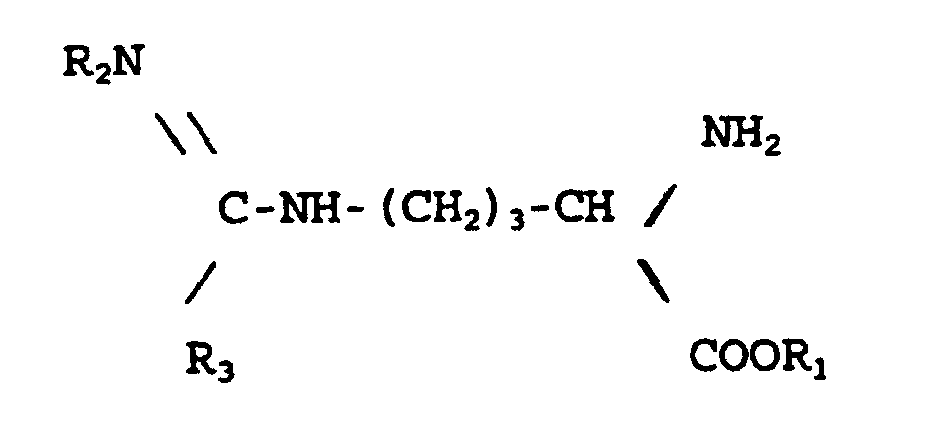
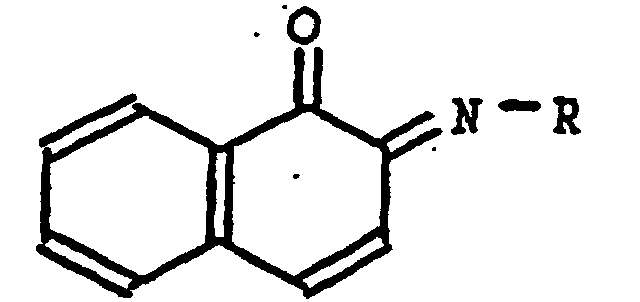
- the present invention provides the use of a NO scavenger or of an inhibitor or antagonist for an enzyme, coenzyme, cofactor or other factor in, or product of, the nitric oxide-cyclic GMP pathway, for the production of a pharmaceutical composition for the prophylactic or acute treatment of migraine or other vascular headaches in mammals; provided that when said scavenger, inhibitor, or antagonist is an arginine analogue of the formula wherein R 1 represents a hydrogen atom or a methyl or ethyl group, R 2 represents a hydrogen atom or a nitro group and R 3 represents an amino, methylamino, ethylamino, hydrazino, methyl or ethyl group then it is not in the form of a salt or amide of a cyclooxygenase inhibitor; and further provided that said scavenger, inhibitor, or antagonist is not a beta-napthoquinone derivative of the formula wherein R represents a group of formula -NH-
- the active principle used accordingly to the invention is a NO synthase inhibitor or a guanylate cyclase inhibitor.
- the active principle used according to the invention may suitably be a cGMP antagonist, an antagonist to a cGMP dependent protein kinase, or a NO scavenger.
- the present invention provides a method for the prophylactic or acute treatment of migraine or other vascular headaches in mammals, which comprises administering to said mammal an effective amount for said treatment of a NO scavenger or of an inhibitor or antagonist for an enzyme, coenzyme, cofactor or other factor in, or product of, the nitric oxide-cyclic GMP pathway.
- the NO synthase inhibitor used according to the invention is an arginine derivative such as those described in U.S. Patent 5028627 and preferably it is L-NMMA, i.e. L-NG-monomethylarginine.
- L-NMMA is available from Sigma Chemical Company Limited, Fancy Road, Poole, Dorset BH17 7NH, England.
- the NO synthase inhibitor used according to the invention is intended for inhibition of one or more of the NO synthase enzymes known.
- guanylate cyclase inhibitor used according to the invention is methylene blue.
- Suitable NO scavengers include transition metal complexes as described in International Patent Application WO94/26263, for example Perrioxamine B and Diethylenetriaminepentaacetic acid, Iron (III).
- NO synthase inhibitors for example L-NMMA, are capable of forming salts.
- the present invention includes NO synthase inhibitors in the form of salts, in particular acid addition salts.
- Suitable salts include those formed with both organic and inorganic acids. Such acid addition salts will normally be pharmaceutically acceptable although salts of non-pharmaceutically acceptable salts may be of utility in the preparation and purification of the compound in question.
- preferred salts include those formed from hydrochloric, hydrobromic, sulphuric, citric, tartaric. phosphoric, lactic, pyruvic, acetic, succinic, oxalic, fumaric, maleic, oxaloacetic, methanesulphonic, ethanesulphonic, e-toluenesulphonic, benzenesulphonic and isethionic acids. Salts of the compounds of NO synthase inhibitors can be made by reacting the appropriate compound in the form af the free base with the appropriate acid.
- the present invention provides a pharmaceutical formulation comprising the NO synthase inhibitor or a pharmaceutically acceptable salt or solvate thereof, together with one or more pharmaceutically acceptable carriers therefor and optionally one or more other therapeutic ingredients.
- the carrier(s) must be "acceptable" in the sense of being compatible with the other ingredients of the formulation and not deleterious to the recipient thereof
- the formulations include those suitable for oral, parenteral (including subcutaneous, intradermal, intra-muscular, intravenous and intraarticular), rectal and topical (including dermal, buccal, sublingual and intraocular) administration although the most suitable route may depend upon for example the condition and disorder of the recipient.
- the formulations may conveniently be presented in unit dosage form and may be prepared by any of the methods well known in the art of pharmacy. All methods include the step of bringing into association the NO-synthase inhibitor or a pharmaceutically acceptable salt or solvate thereof ("active ingredient”) with the carrier which constitutes one or more accessory ingredients. In general the formulations are prepared by uniformly and intimately bringing into association the active ingredient with liquid carriers or finely divided solid carriers or both and then, if necessary, shaping the product into the desired formulation.
- Formulations suitable for oral administration may be presented as discrete units such as capsules, cachets or tablets each containing a predetermined amount of the active ingredient; as a powder or granules; as a solution or a suspension in an aqueous liquid or a non-aqueous liquid; or as an oil-in-water liquid emulsion or a water-in-oil liquid emulsion.
- the active ingredient may also be presented as a bolus, electuary or paste.
- a tablet may be made by compression or moulding, optionally with one or more accessory ingredients.
- Compressed tablets may be prepared by compressing in a suitable machine the active ingredient in a free-flowing form such as a powder or granules, optionally mixed with a binder, lubricant, inert diluent, lubricating, surface active or dispersing agent.
- Moulded tablets may be made by moulding in a suitable machine a mixture of the powdered compound moistened with an inert liquid diluent.
- the tablets may optionally be coated or scored and may be formulated so as to provide slow or controlled release of the active ingredient therein.
- Formulations for parenteral administration include aqueous and non-aqueous sterile injection solutions which may contain anti-oxidants, buffers, bacteriostats and solutes which render the formulation isotonic with the blood of the intended recipient; and aqueous and non-aqueous sterile suspension which may include suspending agents and thickening agents.
- the formulations may be presented in unit-dose or multi-dose containers, for example sealed ampoules and vials, and may be stored in a freeze-dried (lyophilised) condition requiring only the addition of the sterile liquid carrier, for example, saline, water-for-injection, immediately prior to use.
- Extemporaneous injection solutions and suspensions may be prepared from sterile powders, granules and tablets of the kind previously described.
- Formulations for rectal administration may be presented as a suppository with the usual carriers such as cocoa butter or polyethylene glycol.
- Formulations for topical administration in the mouth include lozenges comprising the active ingredient in a flavoured basis such as sucrose and acacia or tragacanth, and pastilles comprising the active ingredient in a basis such as gelatin and glycerin or sucrose and acacia.
- Preferred unit dosage formulations are those containing an effective dose, as hereinbelow recited, or an appropriate fraction thereof, of the active ingredient.
- formulations of this invention may include other agents conventional in the art having regard to the type of formulation in question, for examples those suitable for oral administration may include flavouring agents.
- the NO synthase inhibitors may be administered orally or via injection at a dose of from 1 to 100 mg/kg per day. When the NO synthase inhibitors are given by injection, this will normally be in the form of an intravenous bolus or by infusion, preferably the latter.
- the dose range for adult humans is generally from 70 mg to 2.5 g/dag and preferably 150 mg to 2 g/day. Tablets or other forms of presentation provided in discrete units may conveniently contain an amount of compound of the invention which is effective at such dosage or as a multiple of the same, for instance, units containing 5 mg to 500 mg, usually around 10 mg to 200 mg.
- L-NMMA is preferably administered by injection, conveniently in the form of an infusion so that between 5 and 250 mg/kg of L-NMMA is administered per day.
- L-NMMA may also be administered by intravenous bolus in which case the maximum dose per bolus is 20 mg/kg and preferably 10 mg/kg, the total amount of L-NMMA administered by this method in a day will be between 5 og 250 mg/kg.
- the dose of the NO synthase inhibitor will vary according to the potency of the inhibitor, its selectivity for the inducible form of the enzyme and the dose at which adverse pharmacological effetcs become evident. The man skilled in the art will take these factors into account when determining the dose of inhibitor to be administered.
- NO synthase inhibitors formulations, doses and administration of said-inhibitors, applies also to the other active principles used as far as they are capable of forming salts, suitable for the formulations stated, effective in the doses stated, and suitable for the route of administration stated, respectively.
- the present invention is based on extensive investigations carried out by the inventor and described in detail below.
- Fig. 1 Mean headache scores (0-10 scale) during and after four doses of intravenous glyceryl trinitrate in normal headache-free subjects on day 2 of two separate study days. Glyceryl trinitrate was infused for ten minutes, and during this period a rapid increase in headache was observed. This was followed by a ten minute wash-out period, which resulted in a rapid decrease in headache. There was a relatively low day-to-day variation and a ceiling effect at approximately 0.5 ⁇ g kg-1 min-1.
- Fig. 2 Comparison of the mean headache scores (0-10 scale) in response to glyceryl trinitrate (0.5 ⁇ g kg-1min-1 for 20 min) in migraineurs (open circles) and non-migraineurs (closed circles).
- Fig. 3 Relative changes in mean blood velocity ⁇ SEM in the middle cerebral artery during four ascending doses of glyceryl trinitrate infusion in human controls (closed circles). tension-type headache sufferers (closed squares) and migraine sufferers (open circles).
- Fig. 4 Relation between headache intensity and middle cerebral artery (MCA) blood velocity response to nitroglycerin during the 3 hours where transcranial Doppler measurements were done. Headache score (median) and estimated changes in MCA vessel are shown for comparison.
- MCA middle cerebral artery
- Fig. 5 Possible mechanisms of nitric oxide (NO)-induced headaches. Glyceryl trinitrate diffuses through cerebral arterial endothelium and in smooth muscle cells it is converted to NO by mechanisms that are independent of NO synthase. Histamine, by interaction with the histamine H1 receptor, activates NO synthase, which catalyses the formation of NO in the endothelium. Nitric oxide then diffuses into vascular smooth muscle. Nitric oxide from any source binds to the haeme moiety of guanylate cyclase and starts a chain of reactions that result in smooth muscle relaxation. It is unknown whether NO also reaches the perivascular nerves where, theoretically it might excite C-fibers that project to the trigeminal ganglion. [Ca2+]I cytosolic Ca2+ concentration.
- Glyceryl trinitrate may as previously mentioned be regarded as a pro-drug for nitric oxide since its biological effects are due to the formation of NO. It is a lipid soluble molecule and hence easily crosses biological membranes, including the blood-brain barrier. Nitric oxide itself cannot be used experimentally because of its rapid inactivation. and therefore glyceryl trinitrate has been used to study experimental headache associated with NO (Fig. 1).
- migraineurs are more sensitive to glyceryl trinitrate than non-migraineurs. These studies, however, adhered only partly to present-day requirements of double-blind controlled experimental conditions. The characteristics used to define migraine headache were not prospectively scored and dose response relationships were not explored.
- Prostacyclin is another substance with a potential to cause headache. It has different effects in different vascular beds and in different species, and its effect in human cranial blood vessels have not been fully elucidated. However, in some species and in some vascular beds prostacyclin induces the formation of NO. In addition, glyceryl trinitrate applied locally to the pial surface induces release of CGRP from perivascular nerve fibres, and hence the observed increase in concentrations of CGRP during migraine attacks may be secondary to NO formation.
- Meningitis and encephalitis which cause servere headache, result in the formation of cytokines that stimulate macrophage production of NO.
- Endotoxin stimulates the formation of cytokines and it has been shown recently that migraineurs are more sensitive to endotoxin than non-migraineurs.
- Hypoxia is another known cause of vascular headache and pure oxygen has been used as an effective treatment for cluster headache. Hypoxia increases the concentration of NO in blood vessels from several species whereas hyperoxia enchances the inactivation of NO and thereby shortens and diminishes its effect.
- Ischaemic cerebrovascular disease is quite often associated with headache of a vascular type, and in approximately ten per cent of cases, headache occurs before the stroke (this is known as a sentinel headache).
- a sentinel headache a number of substances such as 5-hydroxytryptamine, platelet-activating factor, thrombin and prostacyclin are released, and several of these stimulate the formation of NO in cerebral vascular endothelium. Therefore, both sentinel headache and headache during stroke could be secondary to thrombus formation and increased vascular concentrations of NO.
- NO in a cerebral artery is shown in Fig. 5.
- a possible mechanism whereby NO could cause headache is by dilatation of cerebral and extracerebral blood vessels, and this is supported by studies in which arterial dilatation during and after infusion of glyceryl trinitrate was consistently observed. However, this may not be the only or even the most important mechanism since in healthy subjects the dilatation persists longer than the headache. Furthermore, moderate mechanical dilatation may not cause pain even though vigorous dilatation in association with balloon angioplasty does induce severe headache. Another possibility is that NO causes headache via a direct effect on perivascular sensory nerves. Nitric oxide synthase is present in cerebral periarterial nerves, and predominantly in those arising from the sphenopalatine ganglion.
- migraine patients must be downstream from NO, for example, an increase of the activity of guanylate cyclase or another enzyme and/or cofactor and/or receptor in the NO-triggered cascade of reactions.
- NO for example, an increase of the activity of guanylate cyclase or another enzyme and/or cofactor and/or receptor in the NO-triggered cascade of reactions.
- migraine patients may be more vulnerable to one of the many toxic effects of NO such as enzyme inhibition and formation of peroxynitrate with lipid peroxydation.
Landscapes
- Health & Medical Sciences (AREA)
- Chemical & Material Sciences (AREA)
- Life Sciences & Earth Sciences (AREA)
- Veterinary Medicine (AREA)
- Medicinal Chemistry (AREA)
- Pharmacology & Pharmacy (AREA)
- Animal Behavior & Ethology (AREA)
- General Health & Medical Sciences (AREA)
- Public Health (AREA)
- Chemical Kinetics & Catalysis (AREA)
- General Chemical & Material Sciences (AREA)
- Nuclear Medicine, Radiotherapy & Molecular Imaging (AREA)
- Organic Chemistry (AREA)
- Epidemiology (AREA)
- Bioinformatics & Cheminformatics (AREA)
- Pain & Pain Management (AREA)
- Engineering & Computer Science (AREA)
- Neurology (AREA)
- Biomedical Technology (AREA)
- Neurosurgery (AREA)
- Biochemistry (AREA)
- Rheumatology (AREA)
- Toxicology (AREA)
- Acyclic And Carbocyclic Compounds In Medicinal Compositions (AREA)
- Medicines That Contain Protein Lipid Enzymes And Other Medicines (AREA)
- Pharmaceuticals Containing Other Organic And Inorganic Compounds (AREA)
- Nitrogen Condensed Heterocyclic Rings (AREA)
- Orthopedics, Nursing, And Contraception (AREA)
Abstract
Description
| Subject | Time (hours) | Headache (locatisation/Intensity /quality) | Aggravated | Accompanying symptoms (vomit/nausea/photo./phono.) (% of usual attacks) | Migr. | |
| 1 | a | Right/severe/throb | yes | 50%/100%/100%/100% | yes | |
| b | Right/7/throb | No/yes/yes/no | yes | |||
| | 3 | Right/10/throb | yes | No/yes/yes/yes | yes | |
| 2 | a | Right or left/severe/throb | no | 1%/20%/100%/100% | yes | |
| b | Bilat/3/throb | No/no/no/no | no | |||
| | 3 | Left/8/throb | yes | No/yes/yes/yes | yes | |
| 3 | a | Right or left/severe/pres. | yes | 100%/100%/0%/0% | yes | |
| b | No headache | |||||
| c | 10 | Left/9/pres | yes | No/yes/yes/yes | yes | |
| 4 | a | Bilat/severe/throb | yes | 100%/100%/100%/100% | yes | |
| b | Bilat/3/pres | No/no/no/no | no | |||
| c | 3 | Bilat/1/throb | no | No/no/no/no | no | |
| 5 | a | Bilat/severe/throb | yes | 0%/100%/100%/100% | yes | |
| b | Bitat/2/throb | No/no/no/no | no | |||
| c | 8 | Bilat/8/throb | ves | No/yes/yes/yes | yes | |
| 6 | a | Left/severe/throb | yes | 100%/100%/100%/100% | yes | |
| b | Left/5/throb | No/no/yes/no | no | |||
| c | 6 | Left/3/pres | yes | No/no/yes/yes | yes | |
| 7 | a | Bilat/severe/throb | yes | 0%/100%/100%/100% | yes | |
| b | Bilat/2/pres | No/no/no/no | no | |||
| c | 8 | Bilat/5/pres | yes | No/yes/no/no | ves | |
| 8 | a | Bilat/moderate/throb | yes | 0%/100%/100%/100% | yes | |
| b | Bilat/1/throb | No/no/no/yes | no | |||
| c | No headache | |||||
| 9 | a | Left or Bilat/ moderate/throb | yes | 0%/0%/100%/100%/100% | yes | |
| b | Right/3/throb | No/no/yes/no | no | |||
| c | 5 | Right/6/throb | yes | No/yes/yes/no | yes | |
| 10 | a | Bilat/moderate/throb | yes | 50%/100/100%/100% | yes | |
| b | No headache | |||||
| c | 7 | Bilat/3/throb | yes | No/yes/yes/yes | yes |
Claims (4)
- Use of a NO synthase inhibitor, a guanylate cyclase inhibitor, a cGMP antagonist, an antagonist to a cGMP dependent protein kinase, or a NO scavenger, for the production of a pharmaceutical composition for the prophylactic or acute treatment of migraine or other vascular headaches in mammals; provided that when said scavenger, inhibitor, or antagonist is an arginine analogue of the formulawherein R1 represents a hydrogen atom or a methyl or ethyl group, R2 represents a hydrogen atom or a nitro group and R3 represents an amino, methylamino, ethylamino, hydrazino, methyl or ethyl group then it is not in the form of a salt or amide of a cyclooxygenase inhibitor; and further provided that said scavenger, inhibitor, or antagonist is not a beta-napthoquinone derivative of the formula
 wherein R represents a group of formula -NH-CO-NH2, or -NH-CO-CH3, or a hydroxyl group, or pharmaceutically acceptable organic or inorganic addition salts thereof.
- Use according to claim 1, wherein the active principle used is a NO synthase inhibitor.
- Use according to claim 1 or claim 2, wherein the active principle used is L-NMMA.
- Use according to any one of claims 1 to 3, wherein the pharmaceutical composition is for the acute treatment of migraine or other vascular headaches in mammals.
Priority Applications (3)
| Application Number | Priority Date | Filing Date | Title |
|---|---|---|---|
| DK95918128T DK0758890T3 (en) | 1994-05-11 | 1995-05-10 | Use of NO catchers, inhibitors or antagonists in the treatment of migraine |
| EP95918128A EP0758890B1 (en) | 1994-05-11 | 1995-05-10 | Use of no scavengers, inhibitors or antagonists in the treatment of migraine |
| SI9530716T SI0758890T1 (en) | 1994-05-11 | 1995-05-10 |
Applications Claiming Priority (4)
| Application Number | Priority Date | Filing Date | Title |
|---|---|---|---|
| EP94610027 | 1994-05-11 | ||
| EP94610027 | 1994-05-11 | ||
| PCT/IB1995/000415 WO1995031195A1 (en) | 1994-05-11 | 1995-05-10 | Use of no scavengers, inhibitors or antagonists in the treatment of migraine |
| EP95918128A EP0758890B1 (en) | 1994-05-11 | 1995-05-10 | Use of no scavengers, inhibitors or antagonists in the treatment of migraine |
Publications (2)
| Publication Number | Publication Date |
|---|---|
| EP0758890A1 EP0758890A1 (en) | 1997-02-26 |
| EP0758890B1 true EP0758890B1 (en) | 2005-03-30 |
Family
ID=8218183
Family Applications (1)
| Application Number | Title | Priority Date | Filing Date |
|---|---|---|---|
| EP95918128A Expired - Lifetime EP0758890B1 (en) | 1994-05-11 | 1995-05-10 | Use of no scavengers, inhibitors or antagonists in the treatment of migraine |
Country Status (12)
| Country | Link |
|---|---|
| US (1) | US6265441B1 (en) |
| EP (1) | EP0758890B1 (en) |
| JP (2) | JPH10500129A (en) |
| AT (1) | ATE291909T1 (en) |
| AU (1) | AU704059B2 (en) |
| CA (1) | CA2189762C (en) |
| DE (1) | DE69534118T2 (en) |
| DK (1) | DK0758890T3 (en) |
| ES (1) | ES2238074T3 (en) |
| PT (1) | PT758890E (en) |
| SI (1) | SI0758890T1 (en) |
| WO (1) | WO1995031195A1 (en) |
Families Citing this family (8)
| Publication number | Priority date | Publication date | Assignee | Title |
|---|---|---|---|---|
| US6284794B1 (en) | 1996-11-05 | 2001-09-04 | Head Explorer Aps | Method for treating tension-type headache with inhibitors of nitric oxide and nitric oxide synthase |
| WO1998019674A2 (en) * | 1996-11-05 | 1998-05-14 | Head Explorer Aps | A method for treating tension-type headache |
| AU1824300A (en) * | 1998-11-23 | 2000-06-13 | Linden Biotechnology, Inc. | Combination products of a guanylate cyclase inhibitor and a local anesthetic forpain relief |
| AU2003278565A1 (en) * | 2002-10-25 | 2004-05-13 | Yissum Research Development Company Of The Hebrew University Of Jerusalem | Steroid compounds comprising superoxide dismutase mimic groups and nitric oxide donor groups, and their use in the preparation of medicaments |
| US20060166894A1 (en) * | 2002-11-29 | 2006-07-27 | Yissum Research Development Company Of The Hebrew University Of Jerusalem | Ace-inhibitors having antioxidant and no-donor activity |
| US20080274206A1 (en) * | 2004-10-07 | 2008-11-06 | Ngen Pharmaceuticals N.V. | Stabilised Oxygen Releasing Composition |
| WO2007009462A2 (en) * | 2005-07-15 | 2007-01-25 | Region Hovedstaden V/Glostrup Hospital | Treatment of migraine and headaches |
| US20090191283A1 (en) * | 2008-01-24 | 2009-07-30 | Oronsky Bryan Todd | Treatment of headaches, neck pain, joint pain and inflammatory-type pain |
Family Cites Families (5)
| Publication number | Priority date | Publication date | Assignee | Title |
|---|---|---|---|---|
| GB9200114D0 (en) * | 1992-01-04 | 1992-02-26 | Scras | Dual inhibitors of no synthase and cyclooxygenase |
| FR2707494B1 (en) | 1993-07-02 | 1995-08-25 | Roussel Uclaf | New use of beta-naphthoquinone derivatives and their salts. |
| US5807885A (en) * | 1993-08-12 | 1998-09-15 | Astra Aktiebolag | Amidine derivatives with nitric oxide synthetase activities |
| GB9317686D0 (en) * | 1993-08-25 | 1993-10-13 | Johnson Matthey Plc | Pharmaceutical compositions |
| WO1996001817A1 (en) * | 1994-05-07 | 1996-01-25 | Astra Aktiebolag | Bicyclic amidine derivatives as inhibitors of nitric oxide synthetase |
-
1995
- 1995-05-10 PT PT95918128T patent/PT758890E/en unknown
- 1995-05-10 DE DE69534118T patent/DE69534118T2/en not_active Expired - Fee Related
- 1995-05-10 JP JP7529495A patent/JPH10500129A/en active Pending
- 1995-05-10 US US08/737,311 patent/US6265441B1/en not_active Expired - Fee Related
- 1995-05-10 AT AT95918128T patent/ATE291909T1/en not_active IP Right Cessation
- 1995-05-10 DK DK95918128T patent/DK0758890T3/en active
- 1995-05-10 ES ES95918128T patent/ES2238074T3/en not_active Expired - Lifetime
- 1995-05-10 AU AU24179/95A patent/AU704059B2/en not_active Ceased
- 1995-05-10 WO PCT/IB1995/000415 patent/WO1995031195A1/en not_active Ceased
- 1995-05-10 CA CA002189762A patent/CA2189762C/en not_active Expired - Fee Related
- 1995-05-10 SI SI9530716T patent/SI0758890T1/xx unknown
- 1995-05-10 EP EP95918128A patent/EP0758890B1/en not_active Expired - Lifetime
-
2007
- 2007-03-07 JP JP2007057587A patent/JP2007137906A/en not_active Withdrawn
Also Published As
| Publication number | Publication date |
|---|---|
| US6265441B1 (en) | 2001-07-24 |
| AU704059B2 (en) | 1999-04-15 |
| JPH10500129A (en) | 1998-01-06 |
| WO1995031195A1 (en) | 1995-11-23 |
| SI0758890T1 (en) | 2005-08-31 |
| ATE291909T1 (en) | 2005-04-15 |
| AU2417995A (en) | 1995-12-05 |
| CA2189762A1 (en) | 1995-11-23 |
| DE69534118T2 (en) | 2006-02-09 |
| JP2007137906A (en) | 2007-06-07 |
| DK0758890T3 (en) | 2005-04-18 |
| EP0758890A1 (en) | 1997-02-26 |
| CA2189762C (en) | 2009-01-13 |
| DE69534118D1 (en) | 2005-05-04 |
| ES2238074T3 (en) | 2005-08-16 |
| PT758890E (en) | 2005-06-30 |
Similar Documents
| Publication | Publication Date | Title |
|---|---|---|
| Olesen et al. | The nitric oxide hypothesis of migraine and other vascular headaches | |
| US4273774A (en) | Central nervous system compositions and method | |
| Boeckxstaens et al. | Release of nitric oxide upon stimulation of nonadrenergic noncholinergic nerves in the rat gastric fundus. | |
| Eberhardt et al. | Citicoline in the treatment of Parkinson’s disease | |
| EP0278821B1 (en) | Use of morphine antagonists in the preparation of medicaments with immuno-modulating and antiviral effects, especially for treating acquired immuno-deficiency syndroms | |
| JPH027572B2 (en) | ||
| JPS58154511A (en) | Weight reducing agent | |
| JP2013534517A (en) | Pharmaceutical composition for preventing or treating inflammatory diseases or immune diseases containing lamarine | |
| Rinne et al. | Plasma concentration of levodopa in patients with Parkinson’s disease: response to administration of levodopa alone or combined with a decarboxylase inhibitor and clinical correlations | |
| US20020048612A1 (en) | GABA substrate and the use thereof for treating cognitive and emotional disorders | |
| Molina‐Holgado et al. | Evidence for cyclooxygenase activation by nitric oxide in astrocytes | |
| US6265441B1 (en) | Use of no scavengers, inhibitors of antagonists in the treatment of migraine | |
| US20030104077A1 (en) | Relieving symptoms of erectile dysfunction with proanthocyanidins | |
| WO2002017898A2 (en) | Compositions and methods for inducing vasorelaxation | |
| LU83869A1 (en) | PROCESS FOR THE PREPARATION OF A PHARMACEUTICAL COMPOSITION COMPRISING GAMMA-BUTYROBETAIN FOR THE TREATMENT OF SYNDROMAS CAUSED BY L-CARMITINE DEFICIENCY | |
| US4540582A (en) | Treatment of seizure disorders and pharmaceutical compositions useful therein | |
| US5011841A (en) | Treatment of depression | |
| US5846977A (en) | Nerve growth factor production accelerators and compositions for preventing or treating neuronal degeneration | |
| CA2459719C (en) | Pharmaceutical composition comprising gamma-butyrobetaine | |
| EP0108017B1 (en) | Mixture comprising a central analgesic and vitamin b12, or one of its analogs, as active principles | |
| Burton et al. | Pharmacology of Parkinson’s disease | |
| EP0086680B1 (en) | Strong anti-asthenic compositions containing a double salt of ascorbic acid and amino-diacids | |
| MXPA02008532A (en) | Composition for the prevention and or treatment of vascular diseases, comprising propionyl l carnitine and coenzyme q10. | |
| US20050009919A1 (en) | Treating cachexia and excessive catabolism with (-)-hydroxycitric acid | |
| AU2023463679A1 (en) | New use of a pde 5 inhibitor combination in promoting neurite outgrowth |
Legal Events
| Date | Code | Title | Description |
|---|---|---|---|
| PUAI | Public reference made under article 153(3) epc to a published international application that has entered the european phase |
Free format text: ORIGINAL CODE: 0009012 |
|
| 17P | Request for examination filed |
Effective date: 19961024 |
|
| AK | Designated contracting states |
Kind code of ref document: A1 Designated state(s): AT BE CH DE DK ES FR GB GR IE IT LI LU MC NL PT SE |
|
| AX | Request for extension of the european patent |
Free format text: LT PAYMENT 961024;LV PAYMENT 961024;SI PAYMENT 961024 |
|
| 17Q | First examination report despatched |
Effective date: 19990901 |
|
| RIC1 | Information provided on ipc code assigned before grant |
Ipc: 7A 61P 25/06 B Ipc: 7A 61K 33/26 B Ipc: 7A 61K 31/195 A |
|
| GRAP | Despatch of communication of intention to grant a patent |
Free format text: ORIGINAL CODE: EPIDOSNIGR1 |
|
| GRAS | Grant fee paid |
Free format text: ORIGINAL CODE: EPIDOSNIGR3 |
|
| GRAA | (expected) grant |
Free format text: ORIGINAL CODE: 0009210 |
|
| AK | Designated contracting states |
Kind code of ref document: B1 Designated state(s): AT BE CH DE DK ES FR GB GR IE IT LI LU MC NL PT SE |
|
| AX | Request for extension of the european patent |
Extension state: LT LV SI |
|
| REG | Reference to a national code |
Ref country code: GB Ref legal event code: FG4D |
|
| REG | Reference to a national code |
Ref country code: CH Ref legal event code: EP |
|
| REG | Reference to a national code |
Ref country code: DK Ref legal event code: T3 |
|
| REF | Corresponds to: |
Ref document number: 69534118 Country of ref document: DE Date of ref document: 20050504 Kind code of ref document: P |
|
| REG | Reference to a national code |
Ref country code: IE Ref legal event code: FG4D |
|
| REG | Reference to a national code |
Ref country code: PT Ref legal event code: SC4A Free format text: AVAILABILITY OF NATIONAL TRANSLATION Effective date: 20050428 |
|
| REG | Reference to a national code |
Ref country code: GR Ref legal event code: EP Ref document number: 20050401937 Country of ref document: GR |
|
| REG | Reference to a national code |
Ref country code: CH Ref legal event code: NV Representative=s name: ISLER & PEDRAZZINI AG |
|
| REG | Reference to a national code |
Ref country code: SE Ref legal event code: TRGR |
|
| REG | Reference to a national code |
Ref country code: ES Ref legal event code: FG2A Ref document number: 2238074 Country of ref document: ES Kind code of ref document: T3 |
|
| PLBE | No opposition filed within time limit |
Free format text: ORIGINAL CODE: 0009261 |
|
| STAA | Information on the status of an ep patent application or granted ep patent |
Free format text: STATUS: NO OPPOSITION FILED WITHIN TIME LIMIT |
|
| ET | Fr: translation filed | ||
| 26N | No opposition filed |
Effective date: 20060102 |
|
| REG | Reference to a national code |
Ref country code: CH Ref legal event code: PCAR Free format text: ISLER & PEDRAZZINI AG;POSTFACH 1772;8027 ZUERICH (CH) |
|
| PGFP | Annual fee paid to national office [announced via postgrant information from national office to epo] |
Ref country code: NL Payment date: 20090527 Year of fee payment: 15 Ref country code: MC Payment date: 20090416 Year of fee payment: 15 Ref country code: IE Payment date: 20090423 Year of fee payment: 15 Ref country code: ES Payment date: 20090527 Year of fee payment: 15 Ref country code: DK Payment date: 20090408 Year of fee payment: 15 |
|
| PGFP | Annual fee paid to national office [announced via postgrant information from national office to epo] |
Ref country code: SE Payment date: 20090507 Year of fee payment: 15 Ref country code: PT Payment date: 20090402 Year of fee payment: 15 Ref country code: LU Payment date: 20090421 Year of fee payment: 15 Ref country code: IT Payment date: 20090515 Year of fee payment: 15 Ref country code: FR Payment date: 20090507 Year of fee payment: 15 Ref country code: DE Payment date: 20090529 Year of fee payment: 15 Ref country code: AT Payment date: 20090407 Year of fee payment: 15 |
|
| PGFP | Annual fee paid to national office [announced via postgrant information from national office to epo] |
Ref country code: BE Payment date: 20090619 Year of fee payment: 15 |
|
| PGFP | Annual fee paid to national office [announced via postgrant information from national office to epo] |
Ref country code: CH Payment date: 20090430 Year of fee payment: 15 |
|
| PGFP | Annual fee paid to national office [announced via postgrant information from national office to epo] |
Ref country code: GR Payment date: 20090415 Year of fee payment: 15 Ref country code: GB Payment date: 20090407 Year of fee payment: 15 |
|
| REG | Reference to a national code |
Ref country code: PT Ref legal event code: MM4A Free format text: LAPSE DUE TO NON-PAYMENT OF FEES Effective date: 20101110 |
|
| BERE | Be: lapsed |
Owner name: *OLESEN JES Effective date: 20100531 |
|
| REG | Reference to a national code |
Ref country code: NL Ref legal event code: V1 Effective date: 20101201 |
|
| PG25 | Lapsed in a contracting state [announced via postgrant information from national office to epo] |
Ref country code: MC Free format text: LAPSE BECAUSE OF NON-PAYMENT OF DUE FEES Effective date: 20100531 |
|
| REG | Reference to a national code |
Ref country code: CH Ref legal event code: PL |
|
| REG | Reference to a national code |
Ref country code: DK Ref legal event code: EBP |
|
| GBPC | Gb: european patent ceased through non-payment of renewal fee |
Effective date: 20100510 |
|
| PG25 | Lapsed in a contracting state [announced via postgrant information from national office to epo] |
Ref country code: AT Free format text: LAPSE BECAUSE OF NON-PAYMENT OF DUE FEES Effective date: 20100510 |
|
| EUG | Se: european patent has lapsed | ||
| REG | Reference to a national code |
Ref country code: FR Ref legal event code: ST Effective date: 20110131 |
|
| PG25 | Lapsed in a contracting state [announced via postgrant information from national office to epo] |
Ref country code: PT Free format text: LAPSE BECAUSE OF NON-PAYMENT OF DUE FEES Effective date: 20101110 Ref country code: LI Free format text: LAPSE BECAUSE OF NON-PAYMENT OF DUE FEES Effective date: 20100531 Ref country code: CH Free format text: LAPSE BECAUSE OF NON-PAYMENT OF DUE FEES Effective date: 20100531 |
|
| REG | Reference to a national code |
Ref country code: SI Ref legal event code: KO00 Effective date: 20110107 |
|
| REG | Reference to a national code |
Ref country code: IE Ref legal event code: MM4A |
|
| PG25 | Lapsed in a contracting state [announced via postgrant information from national office to epo] |
Ref country code: IT Free format text: LAPSE BECAUSE OF NON-PAYMENT OF DUE FEES Effective date: 20100510 Ref country code: SE Free format text: LAPSE BECAUSE OF NON-PAYMENT OF DUE FEES Effective date: 20100511 Ref country code: BE Free format text: LAPSE BECAUSE OF NON-PAYMENT OF DUE FEES Effective date: 20100531 Ref country code: NL Free format text: LAPSE BECAUSE OF NON-PAYMENT OF DUE FEES Effective date: 20101201 Ref country code: GR Free format text: LAPSE BECAUSE OF NON-PAYMENT OF DUE FEES Effective date: 20101202 |
|
| PG25 | Lapsed in a contracting state [announced via postgrant information from national office to epo] |
Ref country code: DE Free format text: LAPSE BECAUSE OF NON-PAYMENT OF DUE FEES Effective date: 20101201 Ref country code: IE Free format text: LAPSE BECAUSE OF NON-PAYMENT OF DUE FEES Effective date: 20100510 Ref country code: DK Free format text: LAPSE BECAUSE OF NON-PAYMENT OF DUE FEES Effective date: 20100531 |
|
| PG25 | Lapsed in a contracting state [announced via postgrant information from national office to epo] |
Ref country code: FR Free format text: LAPSE BECAUSE OF NON-PAYMENT OF DUE FEES Effective date: 20100531 |
|
| REG | Reference to a national code |
Ref country code: ES Ref legal event code: FD2A Effective date: 20110715 |
|
| PG25 | Lapsed in a contracting state [announced via postgrant information from national office to epo] |
Ref country code: GB Free format text: LAPSE BECAUSE OF NON-PAYMENT OF DUE FEES Effective date: 20100510 Ref country code: ES Free format text: LAPSE BECAUSE OF NON-PAYMENT OF DUE FEES Effective date: 20110705 |
|
| PG25 | Lapsed in a contracting state [announced via postgrant information from national office to epo] |
Ref country code: ES Free format text: LAPSE BECAUSE OF NON-PAYMENT OF DUE FEES Effective date: 20100511 |
|
| PG25 | Lapsed in a contracting state [announced via postgrant information from national office to epo] |
Ref country code: LU Free format text: LAPSE BECAUSE OF NON-PAYMENT OF DUE FEES Effective date: 20100510 |