EP0758252B1 - TIN-117m-CONTAINING RADIOTHERAPEUTIC AGENTS - Google Patents
TIN-117m-CONTAINING RADIOTHERAPEUTIC AGENTS Download PDFInfo
- Publication number
- EP0758252B1 EP0758252B1 EP95917088A EP95917088A EP0758252B1 EP 0758252 B1 EP0758252 B1 EP 0758252B1 EP 95917088 A EP95917088 A EP 95917088A EP 95917088 A EP95917088 A EP 95917088A EP 0758252 B1 EP0758252 B1 EP 0758252B1
- Authority
- EP
- European Patent Office
- Prior art keywords
- mci
- dtpa
- pharmaceutical composition
- human
- composition
- Prior art date
- Legal status (The legal status is an assumption and is not a legal conclusion. Google has not performed a legal analysis and makes no representation as to the accuracy of the status listed.)
- Expired - Lifetime
Links
- 230000003439 radiotherapeutic effect Effects 0.000 title description 8
- 239000000203 mixture Substances 0.000 claims abstract description 39
- 201000011510 cancer Diseases 0.000 claims abstract description 30
- 206010028980 Neoplasm Diseases 0.000 claims abstract description 26
- 238000000034 method Methods 0.000 claims abstract description 14
- 239000013522 chelant Substances 0.000 claims abstract description 13
- 150000004697 chelate complex Chemical class 0.000 claims abstract description 10
- 239000008194 pharmaceutical composition Substances 0.000 claims description 62
- QPCDCPDFJACHGM-UHFFFAOYSA-N N,N-bis{2-[bis(carboxymethyl)amino]ethyl}glycine Chemical compound OC(=O)CN(CC(O)=O)CCN(CC(=O)O)CCN(CC(O)=O)CC(O)=O QPCDCPDFJACHGM-UHFFFAOYSA-N 0.000 claims description 47
- 210000000988 bone and bone Anatomy 0.000 claims description 45
- 229960003330 pentetic acid Drugs 0.000 claims description 37
- 231100000419 toxicity Toxicity 0.000 claims description 29
- 230000001988 toxicity Effects 0.000 claims description 29
- 239000003795 chemical substances by application Substances 0.000 claims description 27
- 230000000694 effects Effects 0.000 claims description 25
- ATJFFYVFTNAWJD-UHFFFAOYSA-N Tin Chemical compound [Sn] ATJFFYVFTNAWJD-UHFFFAOYSA-N 0.000 claims description 24
- 230000037396 body weight Effects 0.000 claims description 18
- 239000002738 chelating agent Substances 0.000 claims description 10
- 239000003814 drug Substances 0.000 claims description 10
- 229940102859 methylene diphosphonate Drugs 0.000 claims description 10
- BHPQYMZQTOCNFJ-UHFFFAOYSA-N Calcium cation Chemical compound [Ca+2] BHPQYMZQTOCNFJ-UHFFFAOYSA-N 0.000 claims description 7
- 229910001424 calcium ion Inorganic materials 0.000 claims description 7
- XPPKVPWEQAFLFU-UHFFFAOYSA-J diphosphate(4-) Chemical compound [O-]P([O-])(=O)OP([O-])([O-])=O XPPKVPWEQAFLFU-UHFFFAOYSA-J 0.000 claims description 7
- 235000011180 diphosphates Nutrition 0.000 claims description 7
- 239000003937 drug carrier Substances 0.000 claims description 5
- UXVMQQNJUSDDNG-UHFFFAOYSA-L Calcium chloride Chemical compound [Cl-].[Cl-].[Ca+2] UXVMQQNJUSDDNG-UHFFFAOYSA-L 0.000 claims description 4
- 239000001110 calcium chloride Substances 0.000 claims description 4
- 229910001628 calcium chloride Inorganic materials 0.000 claims description 4
- LLSDKQJKOVVTOJ-UHFFFAOYSA-L calcium chloride dihydrate Chemical group O.O.[Cl-].[Cl-].[Ca+2] LLSDKQJKOVVTOJ-UHFFFAOYSA-L 0.000 claims description 4
- 229940052299 calcium chloride dihydrate Drugs 0.000 claims description 4
- UEZVMMHDMIWARA-UHFFFAOYSA-M phosphonate Chemical compound [O-]P(=O)=O UEZVMMHDMIWARA-UHFFFAOYSA-M 0.000 claims description 4
- XLYOFNOQVPJJNP-ZSJDYOACSA-N heavy water Substances [2H]O[2H] XLYOFNOQVPJJNP-ZSJDYOACSA-N 0.000 claims description 3
- 238000004519 manufacturing process Methods 0.000 claims description 3
- MBKDYNNUVRNNRF-UHFFFAOYSA-N medronic acid Chemical compound OP(O)(=O)CP(O)(O)=O MBKDYNNUVRNNRF-UHFFFAOYSA-N 0.000 claims description 3
- 208000037819 metastatic cancer Diseases 0.000 claims 5
- 208000011575 metastatic malignant neoplasm Diseases 0.000 claims 5
- 206010006002 Bone pain Diseases 0.000 abstract description 25
- 238000003384 imaging method Methods 0.000 abstract description 12
- 238000009826 distribution Methods 0.000 abstract description 7
- 238000001959 radiotherapy Methods 0.000 abstract description 5
- 238000012544 monitoring process Methods 0.000 abstract description 3
- 229910052718 tin Inorganic materials 0.000 description 24
- 238000011282 treatment Methods 0.000 description 23
- 210000001185 bone marrow Anatomy 0.000 description 13
- 206010027476 Metastases Diseases 0.000 description 11
- 230000001613 neoplastic effect Effects 0.000 description 11
- 238000002360 preparation method Methods 0.000 description 11
- 206010061289 metastatic neoplasm Diseases 0.000 description 10
- HEMHJVSKTPXQMS-UHFFFAOYSA-M Sodium hydroxide Chemical compound [OH-].[Na+] HEMHJVSKTPXQMS-UHFFFAOYSA-M 0.000 description 9
- 238000006243 chemical reaction Methods 0.000 description 9
- 201000010099 disease Diseases 0.000 description 9
- 208000037265 diseases, disorders, signs and symptoms Diseases 0.000 description 9
- 239000000243 solution Substances 0.000 description 8
- 230000001394 metastastic effect Effects 0.000 description 7
- 210000002307 prostate Anatomy 0.000 description 7
- 239000012217 radiopharmaceutical Substances 0.000 description 7
- 210000000481 breast Anatomy 0.000 description 6
- 210000000265 leukocyte Anatomy 0.000 description 6
- 230000005855 radiation Effects 0.000 description 6
- VEXZGXHMUGYJMC-UHFFFAOYSA-N Hydrochloric acid Chemical compound Cl VEXZGXHMUGYJMC-UHFFFAOYSA-N 0.000 description 5
- 210000004369 blood Anatomy 0.000 description 5
- 239000008280 blood Substances 0.000 description 5
- 229940121896 radiopharmaceutical Drugs 0.000 description 5
- 230000002799 radiopharmaceutical effect Effects 0.000 description 5
- XLYOFNOQVPJJNP-UHFFFAOYSA-N water Substances O XLYOFNOQVPJJNP-UHFFFAOYSA-N 0.000 description 5
- 206010051779 Bone marrow toxicity Diseases 0.000 description 4
- 208000018084 Bone neoplasm Diseases 0.000 description 4
- MHAJPDPJQMAIIY-UHFFFAOYSA-N Hydrogen peroxide Chemical compound OO MHAJPDPJQMAIIY-UHFFFAOYSA-N 0.000 description 4
- 206010027452 Metastases to bone Diseases 0.000 description 4
- 230000008901 benefit Effects 0.000 description 4
- 210000001772 blood platelet Anatomy 0.000 description 4
- 231100000366 bone marrow toxicity Toxicity 0.000 description 4
- 229940079593 drug Drugs 0.000 description 4
- 238000002347 injection Methods 0.000 description 4
- 239000007924 injection Substances 0.000 description 4
- 230000004807 localization Effects 0.000 description 4
- 210000004072 lung Anatomy 0.000 description 4
- 229910052751 metal Inorganic materials 0.000 description 4
- 239000002184 metal Substances 0.000 description 4
- 238000002560 therapeutic procedure Methods 0.000 description 4
- 210000001519 tissue Anatomy 0.000 description 4
- 206010061728 Bone lesion Diseases 0.000 description 3
- 206010006187 Breast cancer Diseases 0.000 description 3
- 208000026310 Breast neoplasm Diseases 0.000 description 3
- 206010058467 Lung neoplasm malignant Diseases 0.000 description 3
- 206010060862 Prostate cancer Diseases 0.000 description 3
- FAPWRFPIFSIZLT-UHFFFAOYSA-M Sodium chloride Chemical compound [Na+].[Cl-] FAPWRFPIFSIZLT-UHFFFAOYSA-M 0.000 description 3
- 238000003556 assay Methods 0.000 description 3
- 238000002512 chemotherapy Methods 0.000 description 3
- 230000001332 colony forming effect Effects 0.000 description 3
- 230000006378 damage Effects 0.000 description 3
- 238000001727 in vivo Methods 0.000 description 3
- 230000003902 lesion Effects 0.000 description 3
- 230000004044 response Effects 0.000 description 3
- 238000002603 single-photon emission computed tomography Methods 0.000 description 3
- 230000001225 therapeutic effect Effects 0.000 description 3
- IJGRMHOSHXDMSA-UHFFFAOYSA-N Atomic nitrogen Chemical compound N#N IJGRMHOSHXDMSA-UHFFFAOYSA-N 0.000 description 2
- 206010065553 Bone marrow failure Diseases 0.000 description 2
- 241000699670 Mus sp. Species 0.000 description 2
- 208000000236 Prostatic Neoplasms Diseases 0.000 description 2
- 239000003708 ampul Substances 0.000 description 2
- 239000000730 antalgic agent Substances 0.000 description 2
- 238000004820 blood count Methods 0.000 description 2
- 238000009835 boiling Methods 0.000 description 2
- 150000001875 compounds Chemical class 0.000 description 2
- 230000001010 compromised effect Effects 0.000 description 2
- 238000009472 formulation Methods 0.000 description 2
- 238000001794 hormone therapy Methods 0.000 description 2
- 238000001427 incoherent neutron scattering Methods 0.000 description 2
- 238000001802 infusion Methods 0.000 description 2
- 210000004185 liver Anatomy 0.000 description 2
- 201000005202 lung cancer Diseases 0.000 description 2
- 208000020816 lung neoplasm Diseases 0.000 description 2
- 231100000324 minimal toxicity Toxicity 0.000 description 2
- 230000036961 partial effect Effects 0.000 description 2
- 239000002245 particle Substances 0.000 description 2
- 239000002510 pyrogen Substances 0.000 description 2
- 230000009467 reduction Effects 0.000 description 2
- 230000002829 reductive effect Effects 0.000 description 2
- 150000003839 salts Chemical class 0.000 description 2
- 210000000952 spleen Anatomy 0.000 description 2
- 229940084642 strontium-89 chloride Drugs 0.000 description 2
- AHBGXTDRMVNFER-FCHARDOESA-L strontium-89(2+);dichloride Chemical compound [Cl-].[Cl-].[89Sr+2] AHBGXTDRMVNFER-FCHARDOESA-L 0.000 description 2
- 231100000331 toxic Toxicity 0.000 description 2
- 230000002588 toxic effect Effects 0.000 description 2
- 210000002700 urine Anatomy 0.000 description 2
- TXUICONDJPYNPY-UHFFFAOYSA-N (1,10,13-trimethyl-3-oxo-4,5,6,7,8,9,11,12,14,15,16,17-dodecahydrocyclopenta[a]phenanthren-17-yl) heptanoate Chemical compound C1CC2CC(=O)C=C(C)C2(C)C2C1C1CCC(OC(=O)CCCCCC)C1(C)CC2 TXUICONDJPYNPY-UHFFFAOYSA-N 0.000 description 1
- OTWVIYXCRFLDJW-QMVMUTFZSA-N (1-hydroxy-1-phosphonooxyethyl) dihydrogen phosphate;rhenium-186 Chemical compound [186Re].OP(=O)(O)OC(O)(C)OP(O)(O)=O OTWVIYXCRFLDJW-QMVMUTFZSA-N 0.000 description 1
- PNDPGZBMCMUPRI-HVTJNCQCSA-N 10043-66-0 Chemical compound [131I][131I] PNDPGZBMCMUPRI-HVTJNCQCSA-N 0.000 description 1
- WYMDDFRYORANCC-UHFFFAOYSA-N 2-[[3-[bis(carboxymethyl)amino]-2-hydroxypropyl]-(carboxymethyl)amino]acetic acid Chemical compound OC(=O)CN(CC(O)=O)CC(O)CN(CC(O)=O)CC(O)=O WYMDDFRYORANCC-UHFFFAOYSA-N 0.000 description 1
- QTBSBXVTEAMEQO-UHFFFAOYSA-M Acetate Chemical class CC([O-])=O QTBSBXVTEAMEQO-UHFFFAOYSA-M 0.000 description 1
- 208000008720 Bone Marrow Neoplasms Diseases 0.000 description 1
- 206010005949 Bone cancer Diseases 0.000 description 1
- BOHKDCMREORFRJ-UHFFFAOYSA-N C=1C=CC=CC=1C1(O)OP(=O)OP(=O)O1 Chemical compound C=1C=CC=CC=1C1(O)OP(=O)OP(=O)O1 BOHKDCMREORFRJ-UHFFFAOYSA-N 0.000 description 1
- OYPRJOBELJOOCE-UHFFFAOYSA-N Calcium Chemical compound [Ca] OYPRJOBELJOOCE-UHFFFAOYSA-N 0.000 description 1
- VEXZGXHMUGYJMC-UHFFFAOYSA-M Chloride anion Chemical compound [Cl-] VEXZGXHMUGYJMC-UHFFFAOYSA-M 0.000 description 1
- KRKNYBCHXYNGOX-UHFFFAOYSA-K Citrate Chemical class [O-]C(=O)CC(O)(CC([O-])=O)C([O-])=O KRKNYBCHXYNGOX-UHFFFAOYSA-K 0.000 description 1
- 229940120146 EDTMP Drugs 0.000 description 1
- VGGSQFUCUMXWEO-UHFFFAOYSA-N Ethene Chemical compound C=C VGGSQFUCUMXWEO-UHFFFAOYSA-N 0.000 description 1
- 239000005977 Ethylene Substances 0.000 description 1
- DBVJJBKOTRCVKF-UHFFFAOYSA-N Etidronic acid Chemical compound OP(=O)(O)C(O)(C)P(O)(O)=O DBVJJBKOTRCVKF-UHFFFAOYSA-N 0.000 description 1
- 102000001554 Hemoglobins Human genes 0.000 description 1
- 108010054147 Hemoglobins Proteins 0.000 description 1
- UFHFLCQGNIYNRP-UHFFFAOYSA-N Hydrogen Chemical compound [H][H] UFHFLCQGNIYNRP-UHFFFAOYSA-N 0.000 description 1
- 208000013038 Hypocalcemia Diseases 0.000 description 1
- DGAQECJNVWCQMB-PUAWFVPOSA-M Ilexoside XXIX Chemical compound C[C@@H]1CC[C@@]2(CC[C@@]3(C(=CC[C@H]4[C@]3(CC[C@@H]5[C@@]4(CC[C@@H](C5(C)C)OS(=O)(=O)[O-])C)C)[C@@H]2[C@]1(C)O)C)C(=O)O[C@H]6[C@@H]([C@H]([C@@H]([C@H](O6)CO)O)O)O.[Na+] DGAQECJNVWCQMB-PUAWFVPOSA-M 0.000 description 1
- 239000012480 LAL reagent Substances 0.000 description 1
- 241001465754 Metazoa Species 0.000 description 1
- 241000699666 Mus <mouse, genus> Species 0.000 description 1
- HWZUDASOMGNLSM-UHFFFAOYSA-N O=P1OCOP(=O)O1 Chemical compound O=P1OCOP(=O)O1 HWZUDASOMGNLSM-UHFFFAOYSA-N 0.000 description 1
- OAICVXFJPJFONN-OUBTZVSYSA-N Phosphorus-32 Chemical compound [32P] OAICVXFJPJFONN-OUBTZVSYSA-N 0.000 description 1
- 206010039897 Sedation Diseases 0.000 description 1
- 229910021626 Tin(II) chloride Inorganic materials 0.000 description 1
- 239000007983 Tris buffer Substances 0.000 description 1
- JSTADIGKFYFAIY-GJNDDOAHSA-K [2-[bis[[hydroxy(oxido)phosphoryl]methyl]amino]ethyl-(phosphonomethyl)amino]methyl-hydroxyphosphinate;samarium-153(3+) Chemical compound [H+].[H+].[H+].[H+].[H+].[153Sm+3].[O-]P([O-])(=O)CN(CP([O-])([O-])=O)CCN(CP([O-])([O-])=O)CP([O-])([O-])=O JSTADIGKFYFAIY-GJNDDOAHSA-K 0.000 description 1
- AZKACZGHQQSQGL-UHFFFAOYSA-N [amino-(4-hydroxyphenyl)-phosphonomethyl]phosphonic acid Chemical compound OP(=O)(O)C(P(O)(O)=O)(N)C1=CC=C(O)C=C1 AZKACZGHQQSQGL-UHFFFAOYSA-N 0.000 description 1
- 239000002253 acid Substances 0.000 description 1
- 229940035676 analgesics Drugs 0.000 description 1
- 238000013459 approach Methods 0.000 description 1
- 239000007864 aqueous solution Substances 0.000 description 1
- 230000009286 beneficial effect Effects 0.000 description 1
- 230000015572 biosynthetic process Effects 0.000 description 1
- 201000006491 bone marrow cancer Diseases 0.000 description 1
- 201000008275 breast carcinoma Diseases 0.000 description 1
- 239000000872 buffer Substances 0.000 description 1
- 229960005069 calcium Drugs 0.000 description 1
- 239000011575 calcium Substances 0.000 description 1
- 229910052791 calcium Inorganic materials 0.000 description 1
- 230000022534 cell killing Effects 0.000 description 1
- 230000009920 chelation Effects 0.000 description 1
- 230000001684 chronic effect Effects 0.000 description 1
- 230000009918 complex formation Effects 0.000 description 1
- 238000010668 complexation reaction Methods 0.000 description 1
- 238000007796 conventional method Methods 0.000 description 1
- 238000001816 cooling Methods 0.000 description 1
- 230000001054 cortical effect Effects 0.000 description 1
- 230000006866 deterioration Effects 0.000 description 1
- 229940127043 diagnostic radiopharmaceutical Drugs 0.000 description 1
- 239000003085 diluting agent Substances 0.000 description 1
- 231100000673 dose–response relationship Toxicity 0.000 description 1
- NFDRPXJGHKJRLJ-UHFFFAOYSA-N edtmp Chemical compound OP(O)(=O)CN(CP(O)(O)=O)CCN(CP(O)(O)=O)CP(O)(O)=O NFDRPXJGHKJRLJ-UHFFFAOYSA-N 0.000 description 1
- 239000003792 electrolyte Substances 0.000 description 1
- 210000003743 erythrocyte Anatomy 0.000 description 1
- 230000007717 exclusion Effects 0.000 description 1
- 230000002349 favourable effect Effects 0.000 description 1
- 239000012467 final product Substances 0.000 description 1
- 230000004907 flux Effects 0.000 description 1
- 238000001730 gamma-ray spectroscopy Methods 0.000 description 1
- 229910052732 germanium Inorganic materials 0.000 description 1
- GNPVGFCGXDBREM-UHFFFAOYSA-N germanium atom Chemical compound [Ge] GNPVGFCGXDBREM-UHFFFAOYSA-N 0.000 description 1
- 230000036541 health Effects 0.000 description 1
- 210000000777 hematopoietic system Anatomy 0.000 description 1
- 230000002607 hemopoietic effect Effects 0.000 description 1
- 239000001257 hydrogen Substances 0.000 description 1
- 229910052739 hydrogen Inorganic materials 0.000 description 1
- 230000000705 hypocalcaemia Effects 0.000 description 1
- 230000001184 hypocalcaemic effect Effects 0.000 description 1
- 230000006872 improvement Effects 0.000 description 1
- 239000004615 ingredient Substances 0.000 description 1
- 230000002401 inhibitory effect Effects 0.000 description 1
- 230000000977 initiatory effect Effects 0.000 description 1
- 238000010253 intravenous injection Methods 0.000 description 1
- 230000001678 irradiating effect Effects 0.000 description 1
- 210000003734 kidney Anatomy 0.000 description 1
- 238000002372 labelling Methods 0.000 description 1
- 230000000670 limiting effect Effects 0.000 description 1
- 201000005296 lung carcinoma Diseases 0.000 description 1
- 238000005259 measurement Methods 0.000 description 1
- 238000002483 medication Methods 0.000 description 1
- 230000006996 mental state Effects 0.000 description 1
- 230000002503 metabolic effect Effects 0.000 description 1
- 229910021645 metal ion Inorganic materials 0.000 description 1
- 150000001457 metallic cations Chemical class 0.000 description 1
- 208000010658 metastatic prostate carcinoma Diseases 0.000 description 1
- 210000003205 muscle Anatomy 0.000 description 1
- 230000003533 narcotic effect Effects 0.000 description 1
- 229910052757 nitrogen Inorganic materials 0.000 description 1
- 231100000252 nontoxic Toxicity 0.000 description 1
- 230000003000 nontoxic effect Effects 0.000 description 1
- 230000003647 oxidation Effects 0.000 description 1
- 238000007254 oxidation reaction Methods 0.000 description 1
- 230000007170 pathology Effects 0.000 description 1
- 239000000546 pharmaceutical excipient Chemical class 0.000 description 1
- NBIIXXVUZAFLBC-UHFFFAOYSA-K phosphate Chemical compound [O-]P([O-])([O-])=O NBIIXXVUZAFLBC-UHFFFAOYSA-K 0.000 description 1
- 229940097886 phosphorus 32 Drugs 0.000 description 1
- 230000004962 physiological condition Effects 0.000 description 1
- 239000002504 physiological saline solution Substances 0.000 description 1
- 159000000001 potassium salts Chemical class 0.000 description 1
- 239000003755 preservative agent Chemical class 0.000 description 1
- 201000001514 prostate carcinoma Diseases 0.000 description 1
- 238000003908 quality control method Methods 0.000 description 1
- 239000010453 quartz Substances 0.000 description 1
- 230000000979 retarding effect Effects 0.000 description 1
- 238000012552 review Methods 0.000 description 1
- 230000036280 sedation Effects 0.000 description 1
- VYPSYNLAJGMNEJ-UHFFFAOYSA-N silicon dioxide Inorganic materials O=[Si]=O VYPSYNLAJGMNEJ-UHFFFAOYSA-N 0.000 description 1
- 229910052708 sodium Inorganic materials 0.000 description 1
- 239000011734 sodium Substances 0.000 description 1
- 239000011780 sodium chloride Substances 0.000 description 1
- 239000002904 solvent Substances 0.000 description 1
- 239000001119 stannous chloride Substances 0.000 description 1
- 235000011150 stannous chloride Nutrition 0.000 description 1
- 210000000130 stem cell Anatomy 0.000 description 1
- 239000000126 substance Substances 0.000 description 1
- 230000000153 supplemental effect Effects 0.000 description 1
- 230000001629 suppression Effects 0.000 description 1
- 230000007704 transition Effects 0.000 description 1
- 238000011269 treatment regimen Methods 0.000 description 1
- LENZDBCJOHFCAS-UHFFFAOYSA-N tris Chemical class OCC(N)(CO)CO LENZDBCJOHFCAS-UHFFFAOYSA-N 0.000 description 1
- 230000003442 weekly effect Effects 0.000 description 1
- 230000036642 wellbeing Effects 0.000 description 1
Images


Classifications
-
- A—HUMAN NECESSITIES
- A61—MEDICAL OR VETERINARY SCIENCE; HYGIENE
- A61K—PREPARATIONS FOR MEDICAL, DENTAL OR TOILETRY PURPOSES
- A61K51/00—Preparations containing radioactive substances for use in therapy or testing in vivo
- A61K51/02—Preparations containing radioactive substances for use in therapy or testing in vivo characterised by the carrier, i.e. characterised by the agent or material covalently linked or complexing the radioactive nucleus
- A61K51/04—Organic compounds
- A61K51/0474—Organic compounds complexes or complex-forming compounds, i.e. wherein a radioactive metal (e.g. 111In3+) is complexed or chelated by, e.g. a N2S2, N3S, NS3, N4 chelating group
- A61K51/0478—Organic compounds complexes or complex-forming compounds, i.e. wherein a radioactive metal (e.g. 111In3+) is complexed or chelated by, e.g. a N2S2, N3S, NS3, N4 chelating group complexes from non-cyclic ligands, e.g. EDTA, MAG3
-
- A—HUMAN NECESSITIES
- A61—MEDICAL OR VETERINARY SCIENCE; HYGIENE
- A61K—PREPARATIONS FOR MEDICAL, DENTAL OR TOILETRY PURPOSES
- A61K51/00—Preparations containing radioactive substances for use in therapy or testing in vivo
- A61K51/02—Preparations containing radioactive substances for use in therapy or testing in vivo characterised by the carrier, i.e. characterised by the agent or material covalently linked or complexing the radioactive nucleus
- A61K51/04—Organic compounds
- A61K51/0489—Phosphates or phosphonates, e.g. bone-seeking phosphonates
-
- A—HUMAN NECESSITIES
- A61—MEDICAL OR VETERINARY SCIENCE; HYGIENE
- A61P—SPECIFIC THERAPEUTIC ACTIVITY OF CHEMICAL COMPOUNDS OR MEDICINAL PREPARATIONS
- A61P19/00—Drugs for skeletal disorders
-
- A—HUMAN NECESSITIES
- A61—MEDICAL OR VETERINARY SCIENCE; HYGIENE
- A61P—SPECIFIC THERAPEUTIC ACTIVITY OF CHEMICAL COMPOUNDS OR MEDICINAL PREPARATIONS
- A61P19/00—Drugs for skeletal disorders
- A61P19/08—Drugs for skeletal disorders for bone diseases, e.g. rachitism, Paget's disease
-
- A—HUMAN NECESSITIES
- A61—MEDICAL OR VETERINARY SCIENCE; HYGIENE
- A61P—SPECIFIC THERAPEUTIC ACTIVITY OF CHEMICAL COMPOUNDS OR MEDICINAL PREPARATIONS
- A61P25/00—Drugs for disorders of the nervous system
- A61P25/04—Centrally acting analgesics, e.g. opioids
-
- A—HUMAN NECESSITIES
- A61—MEDICAL OR VETERINARY SCIENCE; HYGIENE
- A61P—SPECIFIC THERAPEUTIC ACTIVITY OF CHEMICAL COMPOUNDS OR MEDICINAL PREPARATIONS
- A61P35/00—Antineoplastic agents
-
- A—HUMAN NECESSITIES
- A61—MEDICAL OR VETERINARY SCIENCE; HYGIENE
- A61K—PREPARATIONS FOR MEDICAL, DENTAL OR TOILETRY PURPOSES
- A61K2121/00—Preparations for use in therapy
-
- A—HUMAN NECESSITIES
- A61—MEDICAL OR VETERINARY SCIENCE; HYGIENE
- A61K—PREPARATIONS FOR MEDICAL, DENTAL OR TOILETRY PURPOSES
- A61K2123/00—Preparations for testing in vivo
Definitions
- compositions comprising tin-117m (Sn-117m) stannic complexes with certain chelators, and uses of such pharmaceutical compositions in the preparation of a pharmaceutical which is administered in a defined dose range to alleviate bone pain and to treat osseous metastatic disease.
- the compositions according to the invention comprise a dosage of from about 10 mCi to about 50 mCi Sn-117m per 70 kilograms body weight.
- radiopharmaceutical agents have been used for the palliation of bone pain from metastatic lesions.
- phosphorus-32 Joshi et. al., 1965, J. Amer. Med. Assoc. 193: 621-623
- strontium-89 chloride Robinson et al., 1987, Nucl. Med. Biol. 14: 219-222
- samarium-153 EDTMP Logan et al., 1987, J. Nucl. Med.
- radiotherapeutic compositions can result in significant toxicity due to destruction of non-cancerous tissues, particularly bone marrow.
- Treatment with known radiopharmaceutical agents has been limited because of undesirable side effects resulting from uncontrolled irradiation.
- a particular limitation has been that the amount of radiation absorbed by red marrow must be sufficiently low so as to escape myelosuppression or compromise of the stem cells of the hematopoietic system, i . e ., the red and white blood cells.
- Radiation damage to the bone marrow is typically the result of a lower-than-desired ratio of absorbed radiation in the bone tumor compared with the bone marrow ratio, resulting in bone marrow toxicity at therapeutic dosages. This is a major limitation to the use of 32 P-containing radiopharmaceuticals for treating bone metastases.
- a particularly useful radioisotope for localization in bone is tin-117m.
- This radioisotope of tin is easily and economically prepared, either in a cyclotron or in a nuclear reactor, and is readily available. It has a half-life of 14 days and emits a conversion electron having energies (and hence, bone marrow cell-killing capacity) significantly below that of other radioisotopes used in conventional bone radiotherapy.
- the average range (in water) of such conversion electron is from 2- to 10-fold less than the range of ⁇ -particle emissions of 32 P, 186 Re, 153 Sm, 131 I or 89 Sr.
- Sn-117m also emits gamma radiation that is detectable by conventional scintigraphic imaging cameras.
- Srivastava et al describe the preferential localization of Sn-117m stannic complexes in bone to the substantial exclusion of uptake by blood, muscle, kidney, or liver.
- the present invention provides pharmaceutical compositions for the effective clinical management and alleviation of bone pain associated with osseous metastases and other bone tumors.
- the invention provides stannic chelates of tin-117m useful for alleviating such severe bone pain.
- the pharmaceutical compositions of the invention are also useful and effective for radiotherapeutic treatment of osseous metastases and other bone tumors.
- the invention provides a pharmaceutical composition
- a pharmaceutical composition comprising a Sn-117m (Sn 4+ ) chelate complex and a pharmaceutically-acceptable carrier for preparing a medicament useful in palliating pain in skeletal bone associated with cancer in a human.
- Sn-117m is complexed with methylenediphosphonate (MDP), pyrophosphate (PYP), ethylidinehydroxysdisodium phosphonate (EDHP), or most preferably diethylene triaminepentaacetic acid (DTPA), or mixtures thereof.
- MDP methylenediphosphonate
- PYP pyrophosphate
- EDHP ethylidinehydroxysdisodium phosphonate
- DTPA diethylene triaminepentaacetic acid
- compositions of the invention are comprised of Sn-117m having a specific activity of Sn-117m of about 0.1 mCi/mg to about 80 Ci/mg.
- the specific activity of Sn-117m in the pharmaceutical compositions of the invention is from about 2 to about 20 mCi/mg Sn-117m, more preferably from about 2 to about 17 mCi/mg Sn-117m, and most preferably from about 2 to about 12 mCi/mg Sn-117m.
- the pharmaceutical compositions of the invention are administered at a dosage of from about 10 to about 50 mCi Sn-117m, more preferably from about 10 to about 30 mCi Sn-117m, most preferably from about 12 to about 25 mCi Sn-117m per 70 kilograms body weight. This is equivalent to a dosage range of from about 7 mCi to about 130 mCi, more preferably from about 7 mCi to about 80 mCi, and most preferably from about 9 to about 65 mCi.
- compositions of the invention comprise Sn 4+ -117m chelated with DTPA.
- the pharmaceutical composition comprises about a ten-fold to about a 45-fold molar excess of DTPA relative to total tin, about a 15-fold to about a 30-fold molar excess of DTPA relative to total tin, or most preferably about a twenty-fold molar excess of DTPA relative to total tin.
- the pharmaceutical compositions comprising Sn 4+ -117m chelates and a pharmaceutically acceptable carrier also comprise a toxicity control agent which comprises a divalent calcium ion.
- a toxicity control agent which comprises a divalent calcium ion.
- the inclusion of such toxicity control agents in the pharmaceutical compositions of the invention act to reduce in vivo toxicity associated with administration of the Sn-117m (Sn 4+ ) chelate complex.
- the most preferred toxicity control agent is calcium chloride dihydrate (CaCl 2 ⁇ 2H 2 O).
- the toxicity control agent comprises about 60% to about 90% of the molar amount of the stannic chelating group. More preferably, the toxicity control agent comprises about 70% to about 90% of the molar amount of the stannic chelating group. Most preferably, the toxicity control agent comprises about 80% of the molar amount of stannic chelating group in the composition.
- the invention provides pharmaceutical compositions for use in a method for palliating pain associated with osseous metastases and primary osseous neoplastic disease, comprising the step of administering to a human a pharmaceutical composition of the invention.
- the pharmaceutical compositions administered to the human to palliate bone pain comprise a Sn 4+ -117m DTPA chelate having a specific activity of about 2 to about 12 mCi/mg, comprised of about a twenty-fold molar excess of DTPA to total tin and further comprising a toxicity control agent that is a divalent calcium ion in an amount that is about 80% of the molar amount of DTPA in the composition, administered at a dosage of from about 12 to about 25 mCi per 70 kilograms body weight, corresponding to from about 9 to about 65 mCi administered dose.
- the invention provides a pharmaceutical composition
- a pharmaceutical composition comprising a Sn-117m (Sn 4+ ) chelate complex and a pharmaceutically-acceptable carrier for preparing a medicament useful in radiotherapeutic treatment of primary and metastatic neoplastic lesions in skeletal bone in a human.
- Sn-117m is complexed with methylenediphosphonate (MDP), pyrophosphate (PYP), ethylene dihydroxydisodium phosphonate (EDHP), or most preferably diethylene triaminepentaacetic acid (DTPA), or mixtures thereof.
- MDP methylenediphosphonate
- PYP pyrophosphate
- EDHP ethylene dihydroxydisodium phosphonate
- DTPA diethylene triaminepentaacetic acid
- compositions of the invention are comprised of Sn-117m having a specific activity of Sn-117m of about 0.1 mCi/mg to about 80 Ci/mg.
- the specific activity of Sn-117m in the pharmaceutical compositions of the invention is from about 2 to about 20 mCi/mg Sn-117m, more preferably from about 2 to about 17 mCi/mg Sn-117m, and most preferably from about 2 to about 12 mCi/mg Sn-117m.
- the pharmaceutical compositions of the invention are administered at a dosage of from about 10. to about 50 mCi Sn-117m, more preferably from about 10 to about 30 mCi Sn-117m, most preferably from about 12 to about 20 mCi Sn-117m per 70 kilograms body weight. This is equivalent to a dosage range of from about 7 mCi to about 130 mCi, more preferably from about 7 mCi to about 80 mCi, and most preferably from about 9 to about 65 mCi.
- compositions of the invention for treating primary or metastatic neoplastic disease in skeletal bone in a human comprise Sn 4+ -117m chelated with DTPA.
- the pharmaceutical composition comprises about a ten-fold to about a 45-fold molar excess of DTPA relative to total tin, about a 15-fold to about a 30-fold molar excess of DTPA relative to total tin, or most preferably about a twenty-fold molar excess of DTPA relative to total tin.
- the pharmaceutical compositions comprising Sn 4+ -117m chelates and a pharmaceutically acceptable carrier also comprise a toxicity control agent.
- the inclusion of such toxicity control agents in the pharmaceutical compositions of the invention act to reduce in vivo toxicity associated with administration of the Sn-117m (Sn 4+ ) chelate complex.
- the toxicity control agents comprise a divalent calcium ion.
- the most preferred toxicity control agent is calcium chloride dihydrate (CaCl 2 ⁇ H 2 O).
- the toxicity control agent comprises about 60% to about 90% of the molar amount of the stannic chelating group. More preferably, the toxicity control agent comprises about 70% to about 90% of the molar amount of the stannic chelating group. Most preferably, the toxicity control agent comprises about 80% of the molar amount of stannic chelating group in the composition.
- the invention provides pharmaceutical compositions for use in a method for radiotherapeutic treatment of primary or metastatic osseous neoplastic disease in a human, comprising the step of administering to a human a pharmaceutical composition of the invention.
- the pharmaceutical compositions administered to the human in radiotherapeutic treatment protocols comprise a Sn 4+ -117m DTPA chelate having a specific activity of about 2 to about 12 mCi/mg, comprised of about a twenty-fold molar excess of DTPA to total tin and further comprising a toxicity control agent that is a divalent calcium ion in an amount that is about 80 % of the molar amount of DTPA in the composition, administered at a dosage of from about 20 to about 50 mCi per 70 kilograms body weight.
- compositions for use in methods for palliating skeletal bone pain associated with primary or metastatic osseous neoplastic disease wherein the amount of the analgesic agent comprising the pharmaceutical compositions of the invention localized at neoplastic sites is monitored by gamma scintigraphy.
- kits for preparing the radiopharmaceutical compositions of the invention comprise a sealed vial containing a predetermined quantity of the tin chelator.
- compositions comprising stannic chelates of Sn-117m for providing relief, alleviation or palliation, of bone pain by administration of the pharmaceutical compositions of the invention.
- the invention also provides pharmaceutical compositions for use in methods for the treatment of bone cancer, including osseous metastases, by administration of a pharmaceutical composition of the invention, such treatment resulting in remission, regression or cure of the disease.
- the invention also provides pharmaceutical compositions for use in a method for the combined treatment of pain resulting from cancer in bone, while at the same time permitting monitoring of patients status through imaging of the distribution of the composition of the invention in bone tissue.
- the compositions according to the invention comprise a dosage of from about 10 mCi to about 50 mCi Sm-117m per 70 kilograms body weight.
- tin chelator and "tin chelating agent” is intended to encompass any one of a variety of chemical moieties, or mixtures thereof, capable of effectively chelating stannous and/or stannic tin metal ions and forming a stable chelate with tin under physiological conditions.
- toxicity control agent is a divalent calcium ion capable of inhibiting or retarding the effects, primarily the hypocalcemic effects, of administration of unchelated tin chelating agents as part of the pharmaceutical compositions of the invention. It is also capable of preventing formation of complexes between such chelating agents and any mono- or divalent metallic cation present in vivo and necessary or beneficial to the physical well-being or metabolic integrity of a human to whom the pharmaceutical compositions of the invention are administered.
- Sn-117m is not a beta ( ⁇ ) particle emitter. Instead, Sn-117m decays by isomeric transition with the emission of abundant (114%) conversion electrons of specific energy (127-129 and 152 KeV).
- the other nuclides shown in the Table have an average range which is significantly longer than the limit range of the conversion electrons of Sn-117m.
- the measurement indicated that P-32 is approximately 28 times more toxic to marrow than Sn-117m at therapy levels. ( Mausner et al., 1989, J. Nucl. Med. 30: 1754 )
- the toxicity of effective amounts of Sn-117m chelate complexes is substantially lower than that which occurs in the use of the other nuclides.
- a principal photon of 158.6 keV is also present in 86.4% of the disintegrations of Sn-117m.
- the emitted photon (gamma, ⁇ ) enables effective monitoring of the biodistribution of the Sn-117m by external gamma imaging (planar of SPECT).
- the other nuclides either lack photon emission or emit photons in abundances which are lower than desirable for conventional gamma imaging methods.
- tumors and especially metastases can advantageously be treated and monitored with certain radioisotope preparations to result in regression, remission or cure of the disease.
- Figure 1 shows Gamma camera images in a patient with prostate cancer that had spread to bone.
- the left panel shows anterior (right) and posterior (left) of an image of technetium-99m-MDP, the conventional bone scanning agent.
- the right panel shows anterior (left) and posterior (right) images in the same patient obtained 4 days following injection of 10 mCi of Sn-117m (Sn 4+ ) DTPA. Note the similarity of distribution of the two nuclides. Also note that the dose of the Sn-117m compound is within the range of dosages found to palliate pain according to the uses of the invention.
- Figure 2 shows images obtained 4 days following injection of 5 mCi of Sn-117m DTPA in a cancer patient with bone metastases.
- the left panel shows anterior (left) and posterior (right) whole body images of the Sn-117m distribution in bone.
- the right panel depicts a three-dimensional reprojection image from SPECT (Single Photon Emission Computed Tomography) of a portion of the skeleton in the same patient.
- SPECT Single Photon Emission Computed Tomography
- Sn-117m is prepared as described in Example 1 below by an inelastic neutron scattering reaction.
- Targets are irradiated with neutrons from a nuclear reactor for from about 1 to about 10 weeks, preferably from about 2 to about 5 weeks, and most preferably for about 3 weeks, yielding Sn-117m with a specific activity of 2-8 mCi/mg. With a half-life of just under two weeks (as shown in Table I above), production of sufficient amounts of Sn-117m for radiotherapeutic purposes is economically feasible.
- the Sn-117m chelates comprised in the pharmaceutical compositions of the invention are prepared from metallic Sn-117m.
- the metal is first dissolved in a minimal amount of concentrated hydrochloric acid, and then diluted with water to yield a stannous chloride solution in 1-4N HCl. Excess chelator, in 8- to 40-fold molar excess, is added and the pH adjusted to between pH 4 and pH 7 using sodium hydroxide. After complex formation is achieved, the tin metal is oxidized to the 4+ oxidation state (to the stannic form) with hydrogen peroxide.
- the Sn 4+ -117m chelate thus prepared is used to prepare the pharmaceutical compositions of the invention.
- the pharmaceutical compositions are formulated in aqueous solution optionally containing pharmaceutically acceptable salts such as sodium chloride, buffers such as sodium or potassium salts of Tris, citrate and acetate, and pharmaceutically acceptable excipients and preservatives and the like.
- compositions of the invention are administered by a route appropriate to the pathology to be treated, preferably by intravenous injection or infusion in a volume of from about 0.1 to 100 mL solution, diluted with a pharmacologically acceptable diluent such as physiological saline, if desired.
- compositions provided by this invention are comprised of stannic tin-117m having a specific activity from between about 0.1 mCi/mg to about 80 Ci/mg, administered at a dosage of about 10 mCi to about 50 mCi per 70 kilograms body weight, corresponding to a dosage of from about 7 mCi to about 130 mCi.
- the composition is comprised of about a 10- to about a 45- a molar excess of the chelating agent, for example and most preferably DTPA, to fully chelate the tin.
- a toxicity control agent most preferably CaCl 2 ⁇ 2H 2 O, comprises the pharmaceutical composition in the amount of about 80% of the molar amount of DTPA, limiting the chelation of calcium from blood upon administration to a subject, and thereby avoiding hypocalcemia.
- a preferred embodiment of the final composition of the pharmaceutical compositions of the invention (having a specific activity of Sn 4+ -117m of 2 mCi/mg) is as follows: 10-50 mCi Sn 4+ -117m; 5-25 mg Sn 4+ -117m; 335-1700 mg DTPA and 100-500 mg CaCl 2 -2H 2 0, based on a patient having a body weight of 70 kg. For higher specific activity preparation, these ingredients are adjusted in a proportionate manner.
- Sn-117m is advantageous for palliating skeletal bone pain and treating primary and metastatic osseous neoplastic disease because it has been found by the present inventors to localize specifically to skeletal bone with low bone marrow toxicity. Results of biodistribution studies are shown in Table II below.
- bone lesions comprising metastatic prostate, breast or lung cancer
- the activity ratio between bone lesion and normal bone was typically about 5:1.
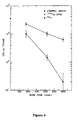
- FIG. 3 and 4 shows the effects of treatment with Sn-117m DTPA compared with conventional treatments using 32 P bone marrow as assayed with a standard colony forming unit assay.
- the bone surface dose was estimated to be 205 ⁇ 50 rad/mCi, while the marrow dose was about 11 rad/mCi.
- the excruciating pain associated with cancer in human skeletal bone has been dramatically reduced by treatment with an agent which selectively attacks the source of the pain. Consequently, the treating physician is armed with an effective pain-management tool which is substantially less debilitating Table II RADIATION DOSE AND ADMINISTERED ACTIVITY FOR RADIONUCLIDES IN THERAPY OF OSSEOUS METASTASES Nuclide Surface Bone Dose (rad/mCi) Red Marrow Dose (rad/mCi) Ratio Bone: Bone Marrow Tumor Dose (rad/mCi) Approximate Therapy Dose (mCi) Sr-89 58 70-104 0.8 422-882 2.8-4.2 Re-186 2.9 2.8 1.0 45-890 25-35 Sm-153 10.5-11.3 3.8 2.9 42.4 35 P-32 48 37 1.3 -- 15-20 I-131 9.1 2.9 3.1 33-86 10-40 Sn-117m 133-296 12-27 11 ⁇ 1000 5-10 T
- the present invention provides specific compositions using Sn-117m complexes which are highly effective in treating cancer in human skeletal bone whilst eliciting no significant or minimal toxicity.
- the localization of the administered dose can be monitored by gamma scintigraphy.
- This physical characteristic of Sn 4+ -117m allows an integrated clinical approach to pain palliation and cancer radiotherapeutics, because it enables the physician to administer a particular dose to the site of the neoplastic lesion, to monitor localization of the radiopharmaceutical, to maintain a clinically effective dose at the neoplastic site, and to avoid bone marrow and normal tissue toxicity by keeping the level of radioisotope beneath toxic levels in non-skeletal tissues.
- Example 1 describes the preparation of Sn-117m
- Example 2 describes the preparation of the Sn-117m-chelate complex
- Example 3 describes preparation of Sn-117m-containing pharmaceutical compositions
- Example 4 describes assays of radiochemical and radiopharmaceutical purity of the Sn-117m chelate
- Example 5 demonstrates palliation of skeletal bone pain in human cancer patients.
- Tin-117m was produced using the inelastic neutron scattering reaction: 117 Sn(n,n' ⁇ ) ⁇ 117m Sn.
- Enriched Sn-117m (84%) as the oxide was obtained from Oak Ridge National Laboratory, Oak Ridge, TN.
- the oxide was converted to the metal by reduction at 600°C in a hydrogen flow for 2-5 hours.
- the metal was sealed in a quartz ampule to prepare a target (4-100 mg) for irradiation. Irradiation was carried out in the High Flux Beam Reactor at Brookhaven National Laboratory or the High Flux Isotope Reactor at Oak Ridge National Laboratory for periods up to 4 weeks.
- the dissolved tin (as Sn 2+ ) was then added to a 20-fold molar excess of the acid salt of DTPA that was previously adjusted to pH 6 with 3N sodium hydroxide.
- the pH was readjusted to 6, after the addition of tin, by using 3N and 1N sodium hydroxide.
- the solution was sterile filtered into a tared, sterile multi-injection bottle, which was capped and removed from the glove box. The bottle was weighed again to obtain a volume.
- the solution was heated by immersing the bottle in a bath of boiling water to complete complexation. After cooling, a 2-fold equivalent excess of 30% hydrogen peroxide was added to oxidize Sn 2+ to Sn 4+ , and the sample again was heated for 5 minutes in a bath of boiling water and then cooled and transferred to the glove box.
- Example 2 To a sample of Sn-117m DPTA, preparesd as described in Example 2 was added 80% of an equimolar amount (relative to DTPA) of calcium chloride dihydrate. The pH of the solution dropped from pH 6 to pH 4 and was not readjusted. The solution was filtered through a sterile 0.2 ⁇ m filter into a sterile multi-injection bottle, and the volume adjusted to 10 mL with sterile isotonic saline solution.
- Example 3 The sample as prepared in Example 3 was assayed for radioactivity and radiopurity with germanium gamma spectroscopy. Pyrogenicity was checked by using a limulus amebocyte lysate pyrogen kit (Whittaker Bioproducts, Walkersville, MD). Aliquots of the final product were spotted on chromatographic paper strips and were developed with a solution of 1 mg/mL DTPA, pH 5-6. Sn-117m (Sn 4+ ) DTPA moves with the solvent front, whereas any hydrolyzed and/or uncomplexed tin remains at the origin. Tissue distribution in normal mice was determined for each run and compared with previously published data as an additional measure of quality control. Hydrolyzed tin, if present, results in a high percentage of uptake into the liver and spleen in mice.
- Tc-99m MDP bone imaging study Prior to initiation of therapy a Tc-99m MDP bone imaging study was obtained. Complete blood counts, including a differential and platelet count, electrolytes, and blood chemistries were obtained. No radiotherapy or chemotherapy had been administered to the patients in the prior month. Hormonal therapy was continued if the patient had been on hormonal therapy for more than three months without improvement in their clinical status.
- Sn-117m (Sn 4+ ) DTPA was administered through an inlying infusion line over a period of 5-10 minutes. The patient was observed for two hours at which time a urine specimen was obtained. A complete urine collection was obtained over 4 days and a blood specimen obtained on the fourth day. This enabled an estimate of bone uptake.
- Two imaging studies to monitor the Sn-117m distribution were obtained in the first week and repeat chemistries were obtained at one week. Complete blood counts were obtained weekly for at least two months and less frequently thereafter. A repeat Tc-99m MDP bone imaging study was performed at two months.
- a dosage of at least about 9 mCi to about 25 mCi per 70 kg of body weight provides not only effective, but predictable, palliation of pain in cancer patients. Accordingly, it is preferred that the treatment of bone pain using compositions containing Sn-117m chelates be performed using between about 9 mCi and about 25 mCi per 70 kg of body weight.
- An exemplary data set obtained from one patient, Patient 11 shows no decrease in white blood cell (WBC) count or platelet count over three months following the single administration of Sn-117m chelate (10.4 mCi).
- WBC white blood cell
Landscapes
- Health & Medical Sciences (AREA)
- Life Sciences & Earth Sciences (AREA)
- Chemical & Material Sciences (AREA)
- Animal Behavior & Ethology (AREA)
- Veterinary Medicine (AREA)
- Medicinal Chemistry (AREA)
- Public Health (AREA)
- General Health & Medical Sciences (AREA)
- Pharmacology & Pharmacy (AREA)
- Nuclear Medicine, Radiotherapy & Molecular Imaging (AREA)
- Organic Chemistry (AREA)
- General Chemical & Material Sciences (AREA)
- Epidemiology (AREA)
- Optics & Photonics (AREA)
- Physics & Mathematics (AREA)
- Proteomics, Peptides & Aminoacids (AREA)
- Chemical Kinetics & Catalysis (AREA)
- Physical Education & Sports Medicine (AREA)
- Engineering & Computer Science (AREA)
- Bioinformatics & Cheminformatics (AREA)
- Molecular Biology (AREA)
- Biophysics (AREA)
- Biochemistry (AREA)
- Biomedical Technology (AREA)
- Orthopedic Medicine & Surgery (AREA)
- Neurosurgery (AREA)
- Neurology (AREA)
- Rheumatology (AREA)
- Pain & Pain Management (AREA)
- Pharmaceuticals Containing Other Organic And Inorganic Compounds (AREA)
- Medicines That Contain Protein Lipid Enzymes And Other Medicines (AREA)
- Acyclic And Carbocyclic Compounds In Medicinal Compositions (AREA)
- Medicines Containing Antibodies Or Antigens For Use As Internal Diagnostic Agents (AREA)
- Medicines Containing Material From Animals Or Micro-Organisms (AREA)
Abstract
Description
- This invention relates to pharmaceutical compositions comprising tin-117m (Sn-117m) stannic complexes with certain chelators, and uses of such pharmaceutical compositions in the preparation of a pharmaceutical which is administered in a defined dose range to alleviate bone pain and to treat osseous metastatic disease. The compositions according to the invention comprise a dosage of from about 10 mCi to about 50 mCi Sn-117m per 70 kilograms body weight.
- Primary cancer of the bone and osseous metastases derived from tumors arising elsewhere (such as lung, prostate and breast carcinoma, among others) can result in substantial pain. Approximately 60-80% of patients with prostate or breast cancer, and up to about 50% of lung cancer patients, develop bone metastases during the course of their illness. These three types of cancer comprise almost 80% of the 400,000 patients who develop bone metastases each year. More than half of these patients experience severe, chronic bone pain as a result of their metastatic disease.
- The alleviation of such bone pain is highly desirable, for both human reasons and as an adjunct to proper effective clinical management of neoplastic disease. Conventional methods of alleviating such severe bone pain include treatment with narcotic analgesics and other pain-killers. Such methods are unsatisfactory because they do not clinically address the source of the pain, and because of the effects of such powerful drugs on the patient's personality, mental state and level of consciousness.
- A number of radiopharmaceutical agents have been used for the palliation of bone pain from metastatic lesions. Among these are phosphorus-32 (Joshi et. al., 1965, J. Amer. Med. Assoc. 193: 621-623), strontium-89 chloride (Robinson et al., 1987, Nucl. Med. Biol. 14: 219-222), samarium-153 EDTMP (Logan et al., 1987, J. Nucl. Med. 28: 505-509), rhenium-186 HEDP (Maxon et al., 1990, Radiology 176: 155-159), and iodine-131 hydroxybenzylidene diphosphonate (HBDP) (Eisenhut et al., 1986, J. Nucl. Med. 27: 1255-1261). One of these, strontium-89 chloride, was approved by the FDA for commercial distribution in June, 1993.
- Generally, the use of internally-administered radiotherapeutic compositions can result in significant toxicity due to destruction of non-cancerous tissues, particularly bone marrow. Treatment with known radiopharmaceutical agents has been limited because of undesirable side effects resulting from uncontrolled irradiation. In the treatment of osseous metastases, a particular limitation has been that the amount of radiation absorbed by red marrow must be sufficiently low so as to escape myelosuppression or compromise of the stem cells of the hematopoietic system, i.e., the red and white blood cells. Radiation damage to the bone marrow is typically the result of a lower-than-desired ratio of absorbed radiation in the bone tumor compared with the bone marrow ratio, resulting in bone marrow toxicity at therapeutic dosages. This is a major limitation to the use of 32P-containing radiopharmaceuticals for treating bone metastases.
- It would, therefore, be advantageous to be able to utilize a radiopharmaceutical composition and a treatment which produce minimal toxicity, but provide highly effective, reproducible results.
- A particularly useful radioisotope for localization in bone is tin-117m. This radioisotope of tin is easily and economically prepared, either in a cyclotron or in a nuclear reactor, and is readily available. It has a half-life of 14 days and emits a conversion electron having energies (and hence, bone marrow cell-killing capacity) significantly below that of other radioisotopes used in conventional bone radiotherapy. Moreover, the average range (in water) of such conversion electron is from 2- to 10-fold less than the range of β-particle emissions of 32P, 186Re, 153Sm, 131I or 89Sr. Finally, Sn-117m also emits gamma radiation that is detectable by conventional scintigraphic imaging cameras.
- The preparation of tin-117m-labeled stannic (Sn4+) chelates which localize to bone, and their use as diagnostic radiopharmaceuticals, is described in
U.S. Patent No. 4,533,541 (issued on August 6, 1985 to Srivastava et al .) This reference describes the preparation of Sn-117m stannic complexes of methylene diphosphonate (MDP), pyrophosphate (PYP), ethylidenehydroxydisodium phosphonate (EHDP), and diethylenetriaminepentaacetic acid (DTPA) and the usefulness of such compositions as radiodiagnostic agents for scintigraphic imaging of skeletal bone. - Srivastava et al. describe the preferential localization of Sn-117m stannic complexes in bone to the substantial exclusion of uptake by blood, muscle, kidney, or liver.
- Oster et al., 1985, Int. J. Nucl. Med. Biol. 12: 175-184 describe autoradiographic studies showing that the Sn-117m stannic complexes localize to cortical bone but not bone marrow.
* Atkins et al., 1993, Radiology, 186(1): 279-283 disclose the favorable biodistribution of Sn-117m DTPA complexes in patients suffering from osseous metastases. - There remains a need in the medical arts for an effective treatment for pain resulting from osseous metastases. Although its use for scintigraphic imaging was known in the prior art, there is no indication of any composition or treatment with Sn-117 stannic complexes to alleviate pain associated with cancer in human skeletal bone, or to treat cancer in human skeletal bone.
- The present invention provides pharmaceutical compositions for the effective clinical management and alleviation of bone pain associated with osseous metastases and other bone tumors. The invention provides stannic chelates of tin-117m useful for alleviating such severe bone pain. The pharmaceutical compositions of the invention are also useful and effective for radiotherapeutic treatment of osseous metastases and other bone tumors.
- In a first aspect, the invention provides a pharmaceutical composition comprising a Sn-117m (Sn4+) chelate complex and a pharmaceutically-acceptable carrier for preparing a medicament useful in palliating pain in skeletal bone associated with cancer in a human. In a preferred embodiment, Sn-117m is complexed with methylenediphosphonate (MDP), pyrophosphate (PYP), ethylidinehydroxysdisodium phosphonate (EDHP), or most preferably diethylene triaminepentaacetic acid (DTPA), or mixtures thereof. The pharmaceutical compositions of the invention are comprised of Sn-117m having a specific activity of Sn-117m of about 0.1 mCi/mg to about 80 Ci/mg. In preferred embodiments, the specific activity of Sn-117m in the pharmaceutical compositions of the invention is from about 2 to about 20 mCi/mg Sn-117m, more preferably from about 2 to about 17 mCi/mg Sn-117m, and most preferably from about 2 to about 12 mCi/mg Sn-117m.
- In the use of the pharmaceutical compositions of the invention to alleviate or palliate pain associated with osseous metastases, the pharmaceutical compositions of the invention are administered at a dosage of from about 10 to about 50 mCi Sn-117m, more preferably from about 10 to about 30 mCi Sn-117m, most preferably from about 12 to about 25 mCi Sn-117m per 70 kilograms body weight. This is equivalent to a dosage range of from about 7 mCi to about 130 mCi, more preferably from about 7 mCi to about 80 mCi, and most preferably from about 9 to about 65 mCi.
- The most preferred embodiment of the pharmaceutical compositions of the invention comprise Sn4+-117m chelated with DTPA. In particular formulations of such preferred embodiments, the pharmaceutical composition comprises about a ten-fold to about a 45-fold molar excess of DTPA relative to total tin, about a 15-fold to about a 30-fold molar excess of DTPA relative to total tin, or most preferably about a twenty-fold molar excess of DTPA relative to total tin.
- In yet other embodiments of this aspect of the invention, the pharmaceutical compositions comprising Sn4+-117m chelates and a pharmaceutically acceptable carrier also comprise a toxicity control agent which comprises a divalent calcium ion. The inclusion of such toxicity control agents in the pharmaceutical compositions of the invention act to reduce in vivo toxicity associated with administration of the Sn-117m (Sn4+) chelate complex. The most preferred toxicity control agent is calcium chloride dihydrate (CaCl2·2H2O). In further preferred embodiments, the toxicity control agent comprises about 60% to about 90% of the molar amount of the stannic chelating group. More preferably, the toxicity control agent comprises about 70% to about 90% of the molar amount of the stannic chelating group. Most preferably, the toxicity control agent comprises about 80% of the molar amount of stannic chelating group in the composition.
- In a second aspect, the invention provides pharmaceutical compositions for use in a method for palliating pain associated with osseous metastases and primary osseous neoplastic disease, comprising the step of administering to a human a pharmaceutical composition of the invention. In a preferred embodiment, the pharmaceutical compositions administered to the human to palliate bone pain comprise a Sn4+-117m DTPA chelate having a specific activity of about 2 to about 12 mCi/mg, comprised of about a twenty-fold molar excess of DTPA to total tin and further comprising a toxicity control agent that is a divalent calcium ion in an amount that is about 80% of the molar amount of DTPA in the composition, administered at a dosage of from about 12 to about 25 mCi per 70 kilograms body weight, corresponding to from about 9 to about 65 mCi administered dose.
- In a third aspect, the invention provides a pharmaceutical composition comprising a Sn-117m (Sn4+) chelate complex and a pharmaceutically-acceptable carrier for preparing a medicament useful in radiotherapeutic treatment of primary and metastatic neoplastic lesions in skeletal bone in a human. In a preferred embodiment, Sn-117m is complexed with methylenediphosphonate (MDP), pyrophosphate (PYP), ethylene dihydroxydisodium phosphonate (EDHP), or most preferably diethylene triaminepentaacetic acid (DTPA), or mixtures thereof. The pharmaceutical compositions of the invention are comprised of Sn-117m having a specific activity of Sn-117m of about 0.1 mCi/mg to about 80 Ci/mg. In preferred embodiments, the specific activity of Sn-117m in the pharmaceutical compositions of the invention is from about 2 to about 20 mCi/mg Sn-117m, more preferably from about 2 to about 17 mCi/mg Sn-117m, and most preferably from about 2 to about 12 mCi/mg Sn-117m.
- In the use of the pharmaceutical compositions of the invention to treat primary or metastatic neoplastic disease in skeletal bone in a human, the pharmaceutical compositions of the invention are administered at a dosage of from about 10. to about 50 mCi Sn-117m, more preferably from about 10 to about 30 mCi Sn-117m, most preferably from about 12 to about 20 mCi Sn-117m per 70 kilograms body weight. This is equivalent to a dosage range of from about 7 mCi to about 130 mCi, more preferably from about 7 mCi to about 80 mCi, and most preferably from about 9 to about 65 mCi.
- The most preferred embodiment of the pharmaceutical compositions of the invention for treating primary or metastatic neoplastic disease in skeletal bone in a human comprise Sn4+-117m chelated with DTPA. In particular formulations of such preferred embodiments, the pharmaceutical composition comprises about a ten-fold to about a 45-fold molar excess of DTPA relative to total tin, about a 15-fold to about a 30-fold molar excess of DTPA relative to total tin, or most preferably about a twenty-fold molar excess of DTPA relative to total tin.
- In yet other embodiments of this aspect of the invention, the pharmaceutical compositions comprising Sn4+-117m chelates and a pharmaceutically acceptable carrier also comprise a toxicity control agent. The inclusion of such toxicity control agents in the pharmaceutical compositions of the invention act to reduce in vivo toxicity associated with administration of the Sn-117m (Sn4+) chelate complex. The toxicity control agents comprise a divalent calcium ion. The most preferred toxicity control agent is calcium chloride dihydrate (CaCl2·H2O). In further preferred embodiments, the toxicity control agent comprises about 60% to about 90% of the molar amount of the stannic chelating group. More preferably, the toxicity control agent comprises about 70% to about 90% of the molar amount of the stannic chelating group. Most preferably, the toxicity control agent comprises about 80% of the molar amount of stannic chelating group in the composition.
- In a fourth aspect, the invention provides pharmaceutical compositions for use in a method for radiotherapeutic treatment of primary or metastatic osseous neoplastic disease in a human, comprising the step of administering to a human a pharmaceutical composition of the invention. In a preferred embodiment, the pharmaceutical compositions administered to the human in radiotherapeutic treatment protocols comprise a Sn4+-117m DTPA chelate having a specific activity of about 2 to about 12 mCi/mg, comprised of about a twenty-fold molar excess of DTPA to total tin and further comprising a toxicity control agent that is a divalent calcium ion in an amount that is about 80 % of the molar amount of DTPA in the composition, administered at a dosage of from about 20 to about 50 mCi per 70 kilograms body weight.
- In yet another aspect of the invention is provided pharmaceutical compositions for use in methods for palliating skeletal bone pain associated with primary or metastatic osseous neoplastic disease, wherein the amount of the analgesic agent comprising the pharmaceutical compositions of the invention localized at neoplastic sites is monitored by gamma scintigraphy.
- The invention also provides kits for preparing the radiopharmaceutical compositions of the invention. Kits for forming complexes between Sn4+-117m and tin chelators comprise a sealed vial containing a predetermined quantity of the tin chelator.
- Specific preferred embodiments of the present invention will become evident from the following more detailed description of certain preferred embodiments and the claims.
-
-
Figure 1 shows the efficacy of the radioimaging capabilities of the present invention at palliative and treatment dosage levels. -
Figure 2 also shows the imaging capability of the present invention at levels which can also be used as a palliative and as treatment. -
Figure 3 is a graph which depicts the effect of the method and composition of the present invention on white blood cells and platelets. -
Figure 4 is a graph of colony-forming unit activity versus administered dose of Sn4+-117m DTPA and 32P. - This invention provides pharmaceutical compositions comprising stannic chelates of Sn-117m for providing relief, alleviation or palliation, of bone pain by administration of the pharmaceutical compositions of the invention. The invention also provides pharmaceutical compositions for use in methods for the treatment of bone cancer, including osseous metastases, by administration of a pharmaceutical composition of the invention, such treatment resulting in remission, regression or cure of the disease. The invention also provides pharmaceutical compositions for use in a method for the combined treatment of pain resulting from cancer in bone, while at the same time permitting monitoring of patients status through imaging of the distribution of the composition of the invention in bone tissue. The compositions according to the invention comprise a dosage of from about 10 mCi to about 50 mCi Sm-117m per 70 kilograms body weight.
- As used herein, the term "tin chelator" and "tin chelating agent" is intended to encompass any one of a variety of chemical moieties, or mixtures thereof, capable of effectively chelating stannous and/or stannic tin metal ions and forming a stable chelate with tin under physiological conditions.
- As used herein, the term "toxicity control agent" is a divalent calcium ion capable of inhibiting or retarding the effects, primarily the hypocalcemic effects, of administration of unchelated tin chelating agents as part of the pharmaceutical compositions of the invention. It is also capable of preventing formation of complexes between such chelating agents and any mono- or divalent metallic cation present in vivo and necessary or beneficial to the physical well-being or metabolic integrity of a human to whom the pharmaceutical compositions of the invention are administered.
- The physical characteristics of Sn-117m and other radionuclides are shown in following Table I. In contradistinction to the other nuclides show, Sn-117m is not a beta (β) particle emitter. Instead, Sn-117m decays by isomeric transition with the emission of abundant (114%) conversion electrons of specific energy (127-129 and 152 KeV). These conversion electrons of Sn-117m have a range which is sufficient
TABLE I PHYSICAL CHARACTERISTICS OF RADIONUCLIDES Nuclide Maximum Average Average1 Half-Life Gamma Eβ Eβ Range Photons (MeV) (MeV) (mm) (days) (MeV (%)) Sr-89 1.46 0.583 2.4 50.5 None Re-186 1.08 0.349 1.05 3.71 0.137 (9.2) Sm-153 0.81 0.2342 0.55 1.93 0.103 (28) P-32 1.71 0.695 3.00 14.3 None Sn-117m 0.1273 0.214 13.6 0.159 (86) 0.1523 0.294 1 In water, Health Physics and Radiological Handbook, Nuclear Lectern Associates (1984)
2 Weighted Average of 3 β energies (EβMAX: 0.64, 0.71, 0.82 Mev)
3 Monoenergetic conversion electron
4 Discrete travel of emitted conversion electron (not an average) - It is also illustrated in the Table that a principal photon of 158.6 keV is also present in 86.4% of the disintegrations of Sn-117m. The emitted photon (gamma, γ) enables effective monitoring of the biodistribution of the Sn-117m by external gamma imaging (planar of SPECT). The other nuclides either lack photon emission or emit photons in abundances which are lower than desirable for conventional gamma imaging methods.
- Thus, it is also a feature of the invention that palliation of bone pain and concomitant body imaging can be performed. Furthermore, tumors and especially metastases can advantageously be treated and monitored with certain radioisotope preparations to result in regression, remission or cure of the disease.
- For example,
Figure 1 shows Gamma camera images in a patient with prostate cancer that had spread to bone. The left panel shows anterior (right) and posterior (left) of an image of technetium-99m-MDP, the conventional bone scanning agent. The right panel shows anterior (left) and posterior (right) images in the same patient obtained 4 days following injection of 10 mCi of Sn-117m (Sn4+) DTPA. Note the similarity of distribution of the two nuclides. Also note that the dose of the Sn-117m compound is within the range of dosages found to palliate pain according to the uses of the invention. -
Figure 2 shows images obtained 4 days following injection of 5 mCi of Sn-117m DTPA in a cancer patient with bone metastases. The left panel shows anterior (left) and posterior (right) whole body images of the Sn-117m distribution in bone. The right panel depicts a three-dimensional reprojection image from SPECT (Single Photon Emission Computed Tomography) of a portion of the skeleton in the same patient. The patchy bright spots denote spread of cancer to bone. - Sn-117m is prepared as described in Example 1 below by an inelastic neutron scattering reaction. Targets are irradiated with neutrons from a nuclear reactor for from about 1 to about 10 weeks, preferably from about 2 to about 5 weeks, and most preferably for about 3 weeks, yielding Sn-117m with a specific activity of 2-8 mCi/mg. With a half-life of just under two weeks (as shown in Table I above), production of sufficient amounts of Sn-117m for radiotherapeutic purposes is economically feasible.
- The Sn-117m chelates comprised in the pharmaceutical compositions of the invention are prepared from metallic Sn-117m. The metal is first dissolved in a minimal amount of concentrated hydrochloric acid, and then diluted with water to yield a stannous chloride solution in 1-4N HCl. Excess chelator, in 8- to 40-fold molar excess, is added and the pH adjusted to between
pH 4 andpH 7 using sodium hydroxide. After complex formation is achieved, the tin metal is oxidized to the 4+ oxidation state (to the stannic form) with hydrogen peroxide. - The Sn4+-117m chelate thus prepared is used to prepare the pharmaceutical compositions of the invention. The pharmaceutical compositions are formulated in aqueous solution optionally containing pharmaceutically acceptable salts such as sodium chloride, buffers such as sodium or potassium salts of Tris, citrate and acetate, and pharmaceutically acceptable excipients and preservatives and the like.
- The pharmaceutical compositions of the invention are administered by a route appropriate to the pathology to be treated, preferably by intravenous injection or infusion in a volume of from about 0.1 to 100 mL solution, diluted with a pharmacologically acceptable diluent such as physiological saline, if desired.
- The pharmaceutical compositions provided by this invention are comprised of stannic tin-117m having a specific activity from between about 0.1 mCi/mg to about 80 Ci/mg, administered at a dosage of about 10 mCi to about 50 mCi per 70 kilograms body weight, corresponding to a dosage of from about 7 mCi to about 130 mCi. The composition is comprised of about a 10- to about a 45- a molar excess of the chelating agent, for example and most preferably DTPA, to fully chelate the tin. Optionally and advantageously, a toxicity control agent, most preferably CaCl2·2H2O, comprises the pharmaceutical composition in the amount of about 80% of the molar amount of DTPA, limiting the chelation of calcium from blood upon administration to a subject, and thereby avoiding hypocalcemia. A preferred embodiment of the final composition of the pharmaceutical compositions of the invention (having a specific activity of Sn4+-117m of 2 mCi/mg) is as follows: 10-50 mCi Sn4+-117m; 5-25 mg Sn4+-117m; 335-1700 mg DTPA and 100-500 mg CaCl2-
2H 20, based on a patient having a body weight of 70 kg. For higher specific activity preparation, these ingredients are adjusted in a proportionate manner. - Sn-117m is advantageous for palliating skeletal bone pain and treating primary and metastatic osseous neoplastic disease because it has been found by the present inventors to localize specifically to skeletal bone with low bone marrow toxicity. Results of biodistribution studies are shown in Table II below.
- In studies on human cancer patients, Sn4+117m DTPA was found to specifically localize to skeletal bone. Skeletal uptake averaged 64 ± 13% of the administered dose, having a residence time in bone of 280 ± 65 h. In contrast, the residence time in the remainder of the body was 18 ± 10 h.
- Of even greater importance was the finding that bone lesions, comprising metastatic prostate, breast or lung cancer, preferentially accumulated the radiolabel: the activity ratio between bone lesion and normal bone was typically about 5:1.
- Particularly important is the relative lack of bone marrow toxicity found in animals treated with the pharmaceutical compositions of the invention. For example,
Figures 3 and4 shows the effects of treatment with Sn-117m DTPA compared with conventional treatments using 32P bone marrow as assayed with a standard colony forming unit assay. In quantitative studies, the bone surface dose was estimated to be 205 ± 50 rad/mCi, while the marrow dose was about 11 rad/mCi. These results demonstrate that Sn4+-117m DTPA localizes efficiently and specifically to bone, more particularly to bone lesions such as metastatic tumors and indicate the herein disclosed clinical uses of the pharmaceutical compositions of the invention. - As a result of the invention, the excruciating pain associated with cancer in human skeletal bone has been dramatically reduced by treatment with an agent which selectively attacks the source of the pain. Consequently, the treating physician is armed with an effective pain-management tool which is substantially less debilitating
Table II RADIATION DOSE AND ADMINISTERED ACTIVITY FOR RADIONUCLIDES IN THERAPY OF OSSEOUS METASTASES Nuclide Surface Bone Dose (rad/mCi) Red Marrow Dose (rad/mCi) Ratio Bone: Bone Marrow Tumor Dose (rad/mCi) Approximate Therapy Dose (mCi) Sr-89 58 70-104 0.8 422-882 2.8-4.2 Re-186 2.9 2.8 1.0 45-890 25-35 Sm-153 10.5-11.3 3.8 2.9 42.4 35 P-32 48 37 1.3 -- 15-20 I-131 9.1 2.9 3.1 33-86 10-40 Sn-117m 133-296 12-27 11 ∼ 1000 5-10 Tc-99m 0.23 0.034 6.8 -- -- Sr as the chloride; Re as HEDP, Sm as EDTMP; P as orthophosphate; I as BDP3; Sn as (4+)DTPA; Tc as MDP - It has also been found, surprisingly and unexpectedly, that the present invention provides specific compositions using Sn-117m complexes which are highly effective in treating cancer in human skeletal bone whilst eliciting no significant or minimal toxicity. These advantages have been realized by discovering a unique pharmaceutical composition of this invention, and the results found herein have not been observed with treatments and/or compositions outside the parameters of the present invention.
- It is an advantage of the present invention that the localization of the administered dose can be monitored by gamma scintigraphy. This physical characteristic of Sn4+-117m allows an integrated clinical approach to pain palliation and cancer radiotherapeutics, because it enables the physician to administer a particular dose to the site of the neoplastic lesion, to monitor localization of the radiopharmaceutical, to maintain a clinically effective dose at the neoplastic site, and to avoid bone marrow and normal tissue toxicity by keeping the level of radioisotope beneath toxic levels in non-skeletal tissues.
- The methods for making and labeling these compounds are more fully illustrated in the following Examples, wherein Example 1 describes the preparation of Sn-117m; Example 2 describes the preparation of the Sn-117m-chelate complex; Example 3 describes preparation of Sn-117m-containing pharmaceutical compositions; Example 4 describes assays of radiochemical and radiopharmaceutical purity of the Sn-117m chelate; Example 5 demonstrates palliation of skeletal bone pain in human cancer patients. These Examples illustrate certain aspects of the above-described method and advantageous results. These Examples are shown by way of illustration and not by way of limitation.
- Tin-117m was produced using the inelastic neutron scattering reaction:
117Sn(n,n'γ) → 117mSn.
- Enriched Sn-117m (84%) as the oxide was obtained from Oak Ridge National Laboratory, Oak Ridge, TN. The oxide was converted to the metal by reduction at 600°C in a hydrogen flow for 2-5 hours. The metal was sealed in a quartz ampule to prepare a target (4-100 mg) for irradiation. Irradiation was carried out in the High Flux Beam Reactor at Brookhaven National Laboratory or the High Flux Isotope Reactor at Oak Ridge National Laboratory for periods up to 4 weeks.
- An ampule containing Sn-117m, prepared as described in Example 1, was opened in a nitrogen glove box and the contents dissolved in 0.2mL of concentrated hydrochloric acid with heat. The dissolved tin (as Sn2+) was then added to a 20-fold molar excess of the acid salt of DTPA that was previously adjusted to pH 6 with 3N sodium hydroxide. The pH was readjusted to 6, after the addition of tin, by using 3N and 1N sodium hydroxide. The solution was sterile filtered into a tared, sterile multi-injection bottle, which was capped and removed from the glove box. The bottle was weighed again to obtain a volume. The solution was heated by immersing the bottle in a bath of boiling water to complete complexation. After cooling, a 2-fold equivalent excess of 30% hydrogen peroxide was added to oxidize Sn2+ to Sn4+, and the sample again was heated for 5 minutes in a bath of boiling water and then cooled and transferred to the glove box.
- To a sample of Sn-117m DPTA, preparesd as described in Example 2 was added 80% of an equimolar amount (relative to DTPA) of calcium chloride dihydrate. The pH of the solution dropped from pH 6 to
pH 4 and was not readjusted. The solution was filtered through a sterile 0.2 µm filter into a sterile multi-injection bottle, and the volume adjusted to 10 mL with sterile isotonic saline solution. - The sample as prepared in Example 3 was assayed for radioactivity and radiopurity with germanium gamma spectroscopy. Pyrogenicity was checked by using a limulus amebocyte lysate pyrogen kit (Whittaker Bioproducts, Walkersville, MD). Aliquots of the final product were spotted on chromatographic paper strips and were developed with a solution of 1 mg/mL DTPA, pH 5-6. Sn-117m (Sn4+) DTPA moves with the solvent front, whereas any hydrolyzed and/or uncomplexed tin remains at the origin. Tissue distribution in normal mice was determined for each run and compared with previously published data as an additional measure of quality control. Hydrolyzed tin, if present, results in a high percentage of uptake into the liver and spleen in mice.
- Fourteen patients were enrolled in a controlled clinical study, including 9 males and 5 females. The patients were administered an Sn-117m chelate complex-containing composition (described above in Example 3) sufficient to provide between 33 and 156 µCi/kg body weight. The protocol was approved by an institutional review board and the United States Food and Drug Administration (FDA). All subjects gave informed consent.
- Prior to initiation of therapy a Tc-99m MDP bone imaging study was obtained. Complete blood counts, including a differential and platelet count, electrolytes, and blood chemistries were obtained. No radiotherapy or chemotherapy had been administered to the patients in the prior month. Hormonal therapy was continued if the patient had been on hormonal therapy for more than three months without improvement in their clinical status.
- Sn-117m (Sn4+) DTPA was administered through an inlying infusion line over a period of 5-10 minutes. The patient was observed for two hours at which time a urine specimen was obtained. A complete urine collection was obtained over 4 days and a blood specimen obtained on the fourth day. This enabled an estimate of bone uptake. Two imaging studies to monitor the Sn-117m distribution were obtained in the first week and repeat chemistries were obtained at one week. Complete blood counts were obtained weekly for at least two months and less frequently thereafter. A repeat Tc-99m MDP bone imaging study was performed at two months.
- Patients maintained a record of pain levels and sites daily for two weeks and then twice a week for the next 6 weeks. They were provided forms to record these data as well as to maintain a record of medications.
- The results of this study are shown in the Table provided below. The data provided in the table show dose-dependent relief or palliation of pain resulting from single administrations of compositions containing Sn-117m (Sn4+) DTPA according to the invention.
- As is indicated in the Table, several patients either died or were required to leave the treatment regimen. No data on pain relief were obtained from these patients (Patients 1-3 and 5). Other patients, having been given a lower does of the Sn-117m chelate composition, showed variable response to the treatment, in one case indicating that no relief was had. In clinical terms, the responses of the patients at relatively low dosages is promising but not predictable enough to be practicable.
- The predictability of response is greatly improved, however, by using a higher dose range. For example, it is clear that of the seven patients who received more than about 9 mCi/70 kg (∼ 129 µCi/kg, or an administered dose greater than 7.4 mCi) all experienced relief of pain: five experienced excellent relief and two experienced partial relief. Thus, a dosage of at least about 9 mCi to about 25 mCi per 70 kg of body weight provides not only effective, but predictable, palliation of pain in cancer patients. Accordingly, it is preferred that the treatment of bone pain using compositions containing Sn-117m chelates be performed using between about 9 mCi and about 25 mCi per 70 kg of body weight.
- In addition, no patients in the study showed evidence of hemopoietic toxicity. An exemplary data set obtained from one patient, Patient 11, shows no decrease in white blood cell (WBC) count or platelet count over three months following the single administration of Sn-117m chelate (10.4 mCi). As a result, a dosage of the Sn-117m chelate within the range found to be effective for consistent pain reduction can also be expected to be non-toxic to the patient.
- Thus, it is another particular advantage of this invention that patients can be treated for palliation of bone pain without causing concomitant bone marrow toxicity, which toxicity can result in often life-threatening lowering of white blood cell (leukocyte), platelet, and hemoglobin levels in the blood. Other bone palliation agents, such as Sr-89, are know to cause bone marrow suppression (myelosuppression) at doses effective in palliating bone pain, thereby greatly reducing their therapeutic efficacy.
- Patients having compromised bone marrow due to previous chemotherapy or radiation therapy can be treated for palliation of bone pain with Sn-117m without the risk of further, possibly catastrophic, deterioration in bone marrow functioning. Also, patients having received Sn-117m for palliation of bone pain are competent to receive further chemotherapy or radiation therapy, as their bone marrow integrity is not compromised by Sn-117m treatment. These advantages are not shared with other known bone pain palliating agents.
TABLE III PALLIATION OF BONE PAIN IN HUMAN SUBJECTS Patient Primary Cancer Patient Weight kg Total
Administered% Total in Bone Result mCi mCi/ kg 1 breast 80 4.65 0.058 NA 2 breast 53 1.76 0.033 NA 3 lung 56 3.95 0.071 NA 4 prostate 61 4.70 0.077 - 5 lung 60 4.19 0.070 NA 6 unknown 108 8.41 0.078 + 7 prostate 59 4.95 0.084 ++ 8 lung 61 8.95 0.146 ++ 9 breast 59 8.41 0.142 72.1 ++ 10 breast 59 8.00 0.135 59.2 ++ 11 prostate 67 10.46 0.156 58.0 + 12 prostate 93 14.46 0.156 34.01 ++ 13 prostate 118 15.49 0.131 71.3 ++ 14 breast 50 7.54 0.151 69.2 + NA = Data not available due to patient death or need for supplemental therapeutic treatment Categories of Pain Relief: - = No relief; + = Partial Relief; + + = Good Relief
Claims (13)
- A pharmaceutical composition comprising a Sn-117m (Sn4+) chelate complex and a pharmaceutically-acceptable carrier for use in(a) palliating pain in skeletal bone associated with cancer in a human; or(b) treating primary or metastatic cancer in skeletal bone in a human;the composition having a specific activity of Sn-117m of about 0.1 mCi/mg to about 80 Ci/mg, the pharmaceutical composition further comprising a dosage of from about 10 mCi to about 50 mCi Sn-117m per 70 kilograms body weight.
- The pharmaceutical composition of claim 1 wherein the Sn-117m (Sn4+) chelate complex is comprised of a chelating agent selected from the group consisting of methylenediphosphonate, pyrophosphate, ethylenedihydroxydisodium phosphonate, diethylenetriaminepentaacetic acid, and mixtures thereof.
- The pharmaceutical composition of claim 2 wherein the Sn-117m complex comprises Sn-117m (Sn4+)-DTPA.
- The pharmaceutical composition of any preceding claim that is administered at a dosage of about 10 to about 30 mCi Sn-117m per 70 kilograms body weight, preferably at a dosage of about 12 to about 25 mCi Sn-117m per 70 kilograms body weight.
- The pharmaceutical composition of any preceding claim having a specific activity of from about 2 to about 20 mCi/mg Sn-117m, preferably having a specific activity of from about 2 to about 17 mCi/mg Sn-117m, more preferably having a specific activity of from about 2 to about 12 mCi/mg Sn-117m
- The pharmaceutical composition of claim 3 comprising about a ten-fold to about a 45-fold molar excess of DTPA relative to total tin, preferably comprising about a 15-fold to about a 30-fold molar excess of DTPA relative to total tin, more preferably comprising about a twenty-fold molar excess of DTPA relative to total tin.
- A pharmaceutical composition of any preceding claim further comprising a toxicity control agent, wherein said agent comprises a divalent calcium ion and reduces toxicity associated with administration of the Sn-117m (Sn4+) chelate complex and wherein if the Sn-117m complex comprises Sn-117m(4+) DTPA preferably the toxicity control agent comprises about 60% to about 90% of the molar amount of DTPA in the composition, more preferably about 70% to about 90% of the molar amount of DTPA in the composition, optionally about 80% of the molar amount of DTPA in the composition.
- The pharmaceutical composition of claim 7 wherein the toxicity control agent is calcium chloride dihydrate (CaCl2*2H2O)..
- The pharmaceutical composition of claim 7 having a specific activity of about 2 to about 20 mCi/mg in the case of (a) and of about 12 to about 20 mCi/mg in the case of (b) comprised of about a twenty-fold molar excess of DTPA to total tin and further comprising a toxicity control agent that is a divalent calcium ion in an amount that is about 80% of the molar amount of DTPA in the composition, wherein the pharmaceutical composition is administered at a dosage of from about 12 to about 25 mCi per 70 kilograms body weight in the case of (a) and at a dosage of from about 12 to about 20 mCi per 70 kilograms body weight in the case of (b).
- Use of a composition of any preceding claim for preparing a medicament for(a) palliating pain in skeletal bone associated with cancer in a human; or(b) treating primary or metastatic cancer in skeletal bone in a human.
- A method for manufacturing a medicament intended for(a) palliating pain in skeletal bone associated with cancer in a human; or(b) treating primary or metastatic cancer in skeletal bone in a human;characterized in that a composition as defined in any one of claims 1 to 9 is used.
- A pharmaceutical composition comprising a stannic chelate of tin-117m (Sn4+) for use in(a) palliating pain in skeletal bone associated with cancer in a human; or(b) treating primary or metastatic cancer in skeletal bone in a human;the composition having a specific activity of Sn-117m of about 0.1 mCi/mg to about 80 Ci/mg, the pharmaceutical composition further comprising a dosage of from about 10 mCi to about 50 mCi Sn-117m per 70 kilograms body weight.
- The use of a stannic chelate of tin-117m having a specific activity of Sn-117m of about 0.1 mCi/mg to about 80 Ci/mg for the manufacture of a medicament for(a) palliating pain in skeletal bone associated with cancer in a human; or(b) treating primary or metastatic cancer in skeletal bone in a human,wherein the medicament is administered at a dosage of about 10 mCi to about 50 mCi Sn-117m per 70 kilograms of body weight.
Applications Claiming Priority (3)
| Application Number | Priority Date | Filing Date | Title |
|---|---|---|---|
| US23700394A | 1994-05-02 | 1994-05-02 | |
| US237003 | 1994-05-02 | ||
| PCT/US1995/004875 WO1995029706A1 (en) | 1994-05-02 | 1995-04-21 | TIN-117m-CONTAINING RADIOTHERAPEUTIC AGENTS |
Publications (2)
| Publication Number | Publication Date |
|---|---|
| EP0758252A1 EP0758252A1 (en) | 1997-02-19 |
| EP0758252B1 true EP0758252B1 (en) | 2008-09-03 |
Family
ID=22891937
Family Applications (1)
| Application Number | Title | Priority Date | Filing Date |
|---|---|---|---|
| EP95917088A Expired - Lifetime EP0758252B1 (en) | 1994-05-02 | 1995-04-21 | TIN-117m-CONTAINING RADIOTHERAPEUTIC AGENTS |
Country Status (15)
| Country | Link |
|---|---|
| US (2) | US5853695A (en) |
| EP (1) | EP0758252B1 (en) |
| JP (2) | JP3122319B2 (en) |
| CN (1) | CN1216644C (en) |
| AT (1) | ATE406918T1 (en) |
| AU (1) | AU708204B2 (en) |
| CA (1) | CA2188133C (en) |
| DE (1) | DE69535828D1 (en) |
| DK (1) | DK0758252T3 (en) |
| ES (1) | ES2314977T3 (en) |
| HU (1) | HU221423B1 (en) |
| PT (1) | PT758252E (en) |
| RU (1) | RU2160121C2 (en) |
| WO (1) | WO1995029706A1 (en) |
| ZA (1) | ZA953393B (en) |
Families Citing this family (18)
| Publication number | Priority date | Publication date | Assignee | Title |
|---|---|---|---|---|
| US6022521A (en) * | 1995-05-04 | 2000-02-08 | The Regents Of The University Of Michigan | Method of establishing the optimal radiation dose for radiopharmaceutical treatment of disease |
| US6231832B1 (en) * | 1998-03-23 | 2001-05-15 | Brookhaven Science Associates | Radiopharmaceutical stannic Sn-117m chelate compositions and methods of use |
| US6004532A (en) * | 1998-06-08 | 1999-12-21 | Brookhaven Science Associates | Formulation for Tin-117m /diethylenetriaminepentaacetic acids |
| EP1245031B1 (en) | 1999-11-30 | 2009-03-04 | Scott Schenter | Method of producing actinium-225 and daughters |
| US6641820B1 (en) * | 2000-01-19 | 2003-11-04 | Allergan, Inc. | Clostridial toxin derivatives and methods to treat pain |
| US6500436B2 (en) | 2000-01-19 | 2002-12-31 | Allergan, Inc. | Clostridial toxin derivatives and methods for treating pain |
| US7138127B1 (en) | 2000-01-19 | 2006-11-21 | Allergan, Inc. | Clostridial toxin derivatives and methods for treating pain |
| US7112570B2 (en) * | 2000-08-24 | 2006-09-26 | Neuren Pharmaceuticals, Ltd. | GPE analogs |
| US6541514B2 (en) | 2001-05-02 | 2003-04-01 | Brookhaven Science Associates, Llc | Process for the manufacture of 117Sn diethylenetriaminepentaacetic acids |
| RU2270045C1 (en) * | 2004-06-24 | 2006-02-20 | Федеральное государственное унитарное предприятие Государственный научный центр - Институт биофизики Федерального медико-биологического агентства (ГНЦ-ИБФ) | Method for applying photon-capturing tumor therapy |
| US7874975B2 (en) * | 2005-07-20 | 2011-01-25 | Clear Vascular, Inc. | Methods and compositions for treating luminal inflammatory disease |
| RU2313838C1 (en) * | 2006-12-29 | 2007-12-27 | Институт ядерных исследований РАН ИЯИ РАН | Method and target for producing radio tin in carrier-free state |
| BRPI0819212A2 (en) * | 2007-10-23 | 2015-06-16 | Allergan Inc | Methods of Treatment of Chronic Neurogenic Inflammation Using Modified Clostridium Toxins |
| RU2538761C2 (en) * | 2010-03-10 | 2015-01-10 | Зэ Саус Эфрикан Ньюклиэ Энерджи Корпорэйшн Лимитид | Method of producing radionuclides |
| AU2012358364B2 (en) * | 2011-12-21 | 2017-08-10 | Igl Pharma, Inc. | Radioactive compositions and methods for their therapeutic use |
| RU2533267C1 (en) * | 2013-10-07 | 2014-11-20 | Государственное бюджетное образовательное учреждение высшего профессионального образования "Тихоокеанский государственный медицинский университет" Министерства здравоохранения Российской Федерации (ГБОУ ВПО ТГМУ Минздрава России) | Method for photon capture therapy of tumours |
| US11369700B2 (en) | 2015-05-25 | 2022-06-28 | IGL Pharma Inc. | DOTMP kit formulations for radioisotopes |
| CA2987242C (en) * | 2015-05-25 | 2023-10-10 | Isotherapeutics Group, Llc | Dotmp kit formulations for radioisotopes |
Family Cites Families (2)
| Publication number | Priority date | Publication date | Assignee | Title |
|---|---|---|---|---|
| US4533541A (en) | 1983-08-25 | 1985-08-06 | The United States Of America As Represented By The United States Department Of Energy | Tin-117m-labeled stannic (Sn4+) chelates |
| CA2232411A1 (en) * | 1995-09-18 | 1997-03-27 | Mallinckrodt Medical, Inc. | (radio) labelled biotin derivatives |
-
1994
- 1994-10-31 JP JP06288717A patent/JP3122319B2/en not_active Expired - Fee Related
-
1995
- 1995-04-21 CA CA002188133A patent/CA2188133C/en not_active Expired - Fee Related
- 1995-04-21 EP EP95917088A patent/EP0758252B1/en not_active Expired - Lifetime
- 1995-04-21 DE DE69535828T patent/DE69535828D1/en not_active Expired - Lifetime
- 1995-04-21 HU HU9603039A patent/HU221423B1/en not_active IP Right Cessation
- 1995-04-21 PT PT95917088T patent/PT758252E/en unknown
- 1995-04-21 ES ES95917088T patent/ES2314977T3/en not_active Expired - Lifetime
- 1995-04-21 RU RU96123126/14A patent/RU2160121C2/en not_active IP Right Cessation
- 1995-04-21 CN CN951934414A patent/CN1216644C/en not_active Expired - Fee Related
- 1995-04-21 AU AU23914/95A patent/AU708204B2/en not_active Ceased
- 1995-04-21 AT AT95917088T patent/ATE406918T1/en active
- 1995-04-21 DK DK95917088T patent/DK0758252T3/en active
- 1995-04-21 WO PCT/US1995/004875 patent/WO1995029706A1/en not_active Ceased
- 1995-04-26 ZA ZA953393A patent/ZA953393B/en unknown
- 1995-11-01 JP JP7306358A patent/JPH08208528A/en active Pending
-
1996
- 1996-11-04 US US08/743,287 patent/US5853695A/en not_active Expired - Lifetime
-
1998
- 1998-12-17 US US09/215,833 patent/US6517810B1/en not_active Expired - Fee Related
Also Published As
| Publication number | Publication date |
|---|---|
| CN1149836A (en) | 1997-05-14 |
| JPH07309783A (en) | 1995-11-28 |
| RU2160121C2 (en) | 2000-12-10 |
| CA2188133C (en) | 2000-08-08 |
| DE69535828D1 (en) | 2008-10-16 |
| ZA953393B (en) | 1996-02-09 |
| EP0758252A1 (en) | 1997-02-19 |
| ES2314977T3 (en) | 2009-03-16 |
| AU708204B2 (en) | 1999-07-29 |
| JP3122319B2 (en) | 2001-01-09 |
| CA2188133A1 (en) | 1995-11-09 |
| CN1216644C (en) | 2005-08-31 |
| JPH08208528A (en) | 1996-08-13 |
| HU9603039D0 (en) | 1997-01-28 |
| US6517810B1 (en) | 2003-02-11 |
| HUT75311A (en) | 1997-05-28 |
| AU2391495A (en) | 1995-11-29 |
| DK0758252T3 (en) | 2009-01-05 |
| PT758252E (en) | 2008-12-16 |
| US5853695A (en) | 1998-12-29 |
| HU221423B1 (en) | 2002-09-28 |
| ATE406918T1 (en) | 2008-09-15 |
| WO1995029706A1 (en) | 1995-11-09 |
Similar Documents
| Publication | Publication Date | Title |
|---|---|---|
| AU708204B2 (en) | Tin-117m-containing radiotherapeutic agents | |
| Singh et al. | Human pharmacokinetics of samarium-153 EDTMP in metastatic cancer | |
| Henriksen et al. | Significant antitumor effect from bone-seeking, α-particle-emitting 223Ra demonstrated in an experimental skeletal metastases model | |
| Serafini | Samarium Sm‐153 lexidronam for the palliation of bone pain associated with metastases | |
| US7335154B2 (en) | Radiotherapy | |
| US4897254A (en) | Radioactive compositions for the treatment of calcific tumors | |
| JP2002114712A (en) | Radiopharmaceutical formulations containing divalent metals | |
| Lin et al. | Effect of reaction conditions on preparations of rhenium-188 hydroxyethylidene diphosphonate complexes | |
| US6503477B1 (en) | Radiopharmaceutical compositions | |
| US4533541A (en) | Tin-117m-labeled stannic (Sn4+) chelates | |
| US4515766A (en) | Labeled phosphonic acid compositions for investigations of in vivo deposits of calcium | |
| EP0438502B1 (en) | Technetium imaging agents | |
| US6685913B1 (en) | Lipid soluble radioactive metal chelates for tumor therapy | |
| EP0176288B1 (en) | Aminocarboxylic acid complexes for the treatment of calcific tumors | |
| EP0445236B1 (en) | Tumor imaging with technetium labeled carbohydrates | |
| Chen et al. | Treatment of metastatic bone pain with rhenium-188 hydroxyethylidene diphosphonate | |
| JP2020506239A (en) | How to use therapeutic bone | |
| Rayudu | In-hospital preparation of radiotracers | |
| Rayudu | In-Hospital Preparation Of Radiotracers Garimella | |
| Srivastava et al. | Nuclear, chemical, and mechanistic considerations in the use of 117mSn (4+)-DTPA relative to 186Re-HEDP and other agents for bone pain therapy | |
| Colombetti et al. | Absorbed radiation dose from radionuclidic impurities in several 123I-labeled radiopharmaceuticals | |
| KR20240093832A (en) | Combination therapy of radionuclide complexes | |
| Giannakenas et al. | Radionuclide induced analgesia in metastatic bone lesions: a review | |
| KejingChen et al. | Treatment of Metastatic Bone Pain with Rhenium-188 Hydroxyethylidene Diphosphonate | |
| Tavares | Palliative treatment of metastatic bone pain with radiopharmaceuticals: a perspective beyond Strontium-89 and Samarium-153 |
Legal Events
| Date | Code | Title | Description |
|---|---|---|---|
| PUAI | Public reference made under article 153(3) epc to a published international application that has entered the european phase |
Free format text: ORIGINAL CODE: 0009012 |
|
| 17P | Request for examination filed |
Effective date: 19961202 |
|
| AK | Designated contracting states |
Kind code of ref document: A1 Designated state(s): AT BE CH DE DK ES FR GB GR IE IT LI LU MC NL PT SE |
|
| RAP1 | Party data changed (applicant data changed or rights of an application transferred) |
Owner name: BROOKHAVEN SCIENCE ASSOCIATES |
|
| 17Q | First examination report despatched |
Effective date: 20010905 |
|
| GRAP | Despatch of communication of intention to grant a patent |
Free format text: ORIGINAL CODE: EPIDOSNIGR1 |
|
| RIC1 | Information provided on ipc code assigned before grant |
Ipc: A61P 19/08 20060101ALI20080103BHEP Ipc: A61P 35/00 20060101ALI20080103BHEP Ipc: A61K 51/00 20060101AFI20080103BHEP |
|
| GRAS | Grant fee paid |
Free format text: ORIGINAL CODE: EPIDOSNIGR3 |
|
| GRAA | (expected) grant |
Free format text: ORIGINAL CODE: 0009210 |
|
| AK | Designated contracting states |
Kind code of ref document: B1 Designated state(s): AT BE CH DE DK ES FR GB GR IE IT LI LU MC NL PT SE |
|
| REG | Reference to a national code |
Ref country code: GB Ref legal event code: FG4D |
|
| REG | Reference to a national code |
Ref country code: CH Ref legal event code: EP |
|
| REG | Reference to a national code |
Ref country code: IE Ref legal event code: FG4D |
|
| REF | Corresponds to: |
Ref document number: 69535828 Country of ref document: DE Date of ref document: 20081016 Kind code of ref document: P |
|
| REG | Reference to a national code |
Ref country code: CH Ref legal event code: NV Representative=s name: ISLER & PEDRAZZINI AG |
|
| REG | Reference to a national code |
Ref country code: SE Ref legal event code: TRGR Ref country code: PT Ref legal event code: SC4A Free format text: AVAILABILITY OF NATIONAL TRANSLATION Effective date: 20081203 |
|
| REG | Reference to a national code |
Ref country code: GR Ref legal event code: EP Ref document number: 20080403222 Country of ref document: GR |
|
| REG | Reference to a national code |
Ref country code: DK Ref legal event code: T3 |
|
| REG | Reference to a national code |
Ref country code: ES Ref legal event code: FG2A Ref document number: 2314977 Country of ref document: ES Kind code of ref document: T3 |
|
| PLBE | No opposition filed within time limit |
Free format text: ORIGINAL CODE: 0009261 |
|
| STAA | Information on the status of an ep patent application or granted ep patent |
Free format text: STATUS: NO OPPOSITION FILED WITHIN TIME LIMIT |
|
| 26N | No opposition filed |
Effective date: 20090604 |
|
| PGFP | Annual fee paid to national office [announced via postgrant information from national office to epo] |
Ref country code: DE Payment date: 20120425 Year of fee payment: 18 Ref country code: DK Payment date: 20120426 Year of fee payment: 18 Ref country code: MC Payment date: 20120411 Year of fee payment: 18 Ref country code: CH Payment date: 20120420 Year of fee payment: 18 Ref country code: BE Payment date: 20120430 Year of fee payment: 18 Ref country code: NL Payment date: 20120501 Year of fee payment: 18 Ref country code: IE Payment date: 20120424 Year of fee payment: 18 Ref country code: LU Payment date: 20120508 Year of fee payment: 18 |
|
| PGFP | Annual fee paid to national office [announced via postgrant information from national office to epo] |
Ref country code: FR Payment date: 20120608 Year of fee payment: 18 Ref country code: GB Payment date: 20120418 Year of fee payment: 18 Ref country code: GR Payment date: 20120405 Year of fee payment: 18 Ref country code: SE Payment date: 20120425 Year of fee payment: 18 |
|
| PGFP | Annual fee paid to national office [announced via postgrant information from national office to epo] |
Ref country code: IT Payment date: 20120423 Year of fee payment: 18 |
|
| PGFP | Annual fee paid to national office [announced via postgrant information from national office to epo] |
Ref country code: ES Payment date: 20120420 Year of fee payment: 18 |
|
| PGFP | Annual fee paid to national office [announced via postgrant information from national office to epo] |
Ref country code: PT Payment date: 20120412 Year of fee payment: 18 |
|
| PGFP | Annual fee paid to national office [announced via postgrant information from national office to epo] |
Ref country code: AT Payment date: 20120425 Year of fee payment: 18 |
|
| REG | Reference to a national code |
Ref country code: PT Ref legal event code: MM4A Free format text: LAPSE DUE TO NON-PAYMENT OF FEES Effective date: 20131021 |
|
| BERE | Be: lapsed |
Owner name: BROOKHAVEN SCIENCE ASSOCIATES Effective date: 20130430 |
|
| REG | Reference to a national code |
Ref country code: NL Ref legal event code: V1 Effective date: 20131101 |
|
| PG25 | Lapsed in a contracting state [announced via postgrant information from national office to epo] |
Ref country code: MC Free format text: LAPSE BECAUSE OF NON-PAYMENT OF DUE FEES Effective date: 20130430 |
|
| REG | Reference to a national code |
Ref country code: CH Ref legal event code: PL |
|
| REG | Reference to a national code |
Ref country code: SE Ref legal event code: EUG |
|
| REG | Reference to a national code |
Ref country code: DK Ref legal event code: EBP Effective date: 20130430 |
|
| REG | Reference to a national code |
Ref country code: AT Ref legal event code: MM01 Ref document number: 406918 Country of ref document: AT Kind code of ref document: T Effective date: 20130430 |
|
| GBPC | Gb: european patent ceased through non-payment of renewal fee |
Effective date: 20130421 |
|
| REG | Reference to a national code |
Ref country code: GR Ref legal event code: ML Ref document number: 20080403222 Country of ref document: GR Effective date: 20131104 |
|
| REG | Reference to a national code |
Ref country code: IE Ref legal event code: MM4A |
|
| PG25 | Lapsed in a contracting state [announced via postgrant information from national office to epo] |
Ref country code: BE Free format text: LAPSE BECAUSE OF NON-PAYMENT OF DUE FEES Effective date: 20130430 Ref country code: DE Free format text: LAPSE BECAUSE OF NON-PAYMENT OF DUE FEES Effective date: 20131101 Ref country code: AT Free format text: LAPSE BECAUSE OF NON-PAYMENT OF DUE FEES Effective date: 20130430 Ref country code: PT Free format text: LAPSE BECAUSE OF NON-PAYMENT OF DUE FEES Effective date: 20131021 Ref country code: GB Free format text: LAPSE BECAUSE OF NON-PAYMENT OF DUE FEES Effective date: 20130421 Ref country code: LI Free format text: LAPSE BECAUSE OF NON-PAYMENT OF DUE FEES Effective date: 20130430 Ref country code: CH Free format text: LAPSE BECAUSE OF NON-PAYMENT OF DUE FEES Effective date: 20130430 Ref country code: SE Free format text: LAPSE BECAUSE OF NON-PAYMENT OF DUE FEES Effective date: 20130422 |
|
| REG | Reference to a national code |
Ref country code: FR Ref legal event code: ST Effective date: 20131231 |
|
| REG | Reference to a national code |
Ref country code: DE Ref legal event code: R119 Ref document number: 69535828 Country of ref document: DE Effective date: 20131101 |
|
| PG25 | Lapsed in a contracting state [announced via postgrant information from national office to epo] |
Ref country code: FR Free format text: LAPSE BECAUSE OF NON-PAYMENT OF DUE FEES Effective date: 20130430 Ref country code: IT Free format text: LAPSE BECAUSE OF NON-PAYMENT OF DUE FEES Effective date: 20130421 Ref country code: GR Free format text: LAPSE BECAUSE OF NON-PAYMENT OF DUE FEES Effective date: 20131104 Ref country code: NL Free format text: LAPSE BECAUSE OF NON-PAYMENT OF DUE FEES Effective date: 20131101 |
|
| PG25 | Lapsed in a contracting state [announced via postgrant information from national office to epo] |
Ref country code: IE Free format text: LAPSE BECAUSE OF NON-PAYMENT OF DUE FEES Effective date: 20130421 Ref country code: DK Free format text: LAPSE BECAUSE OF NON-PAYMENT OF DUE FEES Effective date: 20130430 |
|
| REG | Reference to a national code |
Ref country code: ES Ref legal event code: FD2A Effective date: 20140609 |
|
| PG25 | Lapsed in a contracting state [announced via postgrant information from national office to epo] |
Ref country code: ES Free format text: LAPSE BECAUSE OF NON-PAYMENT OF DUE FEES Effective date: 20130422 |
|
| PG25 | Lapsed in a contracting state [announced via postgrant information from national office to epo] |
Ref country code: LU Free format text: LAPSE BECAUSE OF NON-PAYMENT OF DUE FEES Effective date: 20130421 |