EP0755272B1 - Biocompatible coated article - Google Patents
Biocompatible coated article Download PDFInfo
- Publication number
- EP0755272B1 EP0755272B1 EP95916378A EP95916378A EP0755272B1 EP 0755272 B1 EP0755272 B1 EP 0755272B1 EP 95916378 A EP95916378 A EP 95916378A EP 95916378 A EP95916378 A EP 95916378A EP 0755272 B1 EP0755272 B1 EP 0755272B1
- Authority
- EP
- European Patent Office
- Prior art keywords
- article
- copolymer
- ray fluorescence
- membrane
- coated
- Prior art date
- Legal status (The legal status is an assumption and is not a legal conclusion. Google has not performed a legal analysis and makes no representation as to the accuracy of the status listed.)
- Expired - Lifetime
Links
- 239000012528 membrane Substances 0.000 claims abstract description 92
- 238000000576 coating method Methods 0.000 claims abstract description 74
- 210000004369 blood Anatomy 0.000 claims abstract description 67
- 239000008280 blood Substances 0.000 claims abstract description 67
- 239000011248 coating agent Substances 0.000 claims abstract description 57
- 229920000428 triblock copolymer Polymers 0.000 claims abstract description 18
- ZWEHNKRNPOVVGH-UHFFFAOYSA-N 2-Butanone Chemical group CCC(C)=O ZWEHNKRNPOVVGH-UHFFFAOYSA-N 0.000 claims description 48
- 229920001577 copolymer Polymers 0.000 claims description 37
- 238000000034 method Methods 0.000 claims description 37
- -1 polysiloxane Polymers 0.000 claims description 36
- 229910001220 stainless steel Inorganic materials 0.000 claims description 32
- 239000010935 stainless steel Substances 0.000 claims description 32
- 238000004876 x-ray fluorescence Methods 0.000 claims description 31
- 239000002904 solvent Substances 0.000 claims description 25
- 229910052751 metal Inorganic materials 0.000 claims description 18
- 239000002184 metal Substances 0.000 claims description 18
- 229920000642 polymer Polymers 0.000 claims description 15
- 229920001296 polysiloxane Polymers 0.000 claims description 15
- 239000004743 Polypropylene Substances 0.000 claims description 12
- 229920001155 polypropylene Polymers 0.000 claims description 12
- 239000004698 Polyethylene Substances 0.000 claims description 9
- 229920001610 polycaprolactone Polymers 0.000 claims description 7
- 239000004632 polycaprolactone Substances 0.000 claims description 7
- 230000005865 ionizing radiation Effects 0.000 claims description 6
- 229920000573 polyethylene Polymers 0.000 claims description 6
- 239000012982 microporous membrane Substances 0.000 claims description 5
- 230000005855 radiation Effects 0.000 claims description 5
- 238000001035 drying Methods 0.000 claims description 4
- 238000010894 electron beam technology Methods 0.000 claims description 2
- 238000009736 wetting Methods 0.000 claims 3
- 238000001704 evaporation Methods 0.000 claims 1
- 230000008020 evaporation Effects 0.000 claims 1
- 239000000463 material Substances 0.000 abstract description 34
- 238000012360 testing method Methods 0.000 description 27
- 230000004913 activation Effects 0.000 description 20
- 239000000523 sample Substances 0.000 description 17
- 229920005601 base polymer Polymers 0.000 description 14
- 229940032007 methylethyl ketone Drugs 0.000 description 14
- 230000008569 process Effects 0.000 description 13
- 108010034753 Complement Membrane Attack Complex Proteins 0.000 description 12
- 239000011859 microparticle Substances 0.000 description 12
- 239000000203 mixture Substances 0.000 description 12
- 206010053567 Coagulopathies Diseases 0.000 description 11
- 230000035602 clotting Effects 0.000 description 11
- 230000024203 complement activation Effects 0.000 description 11
- 230000001689 kallikreinlike Effects 0.000 description 11
- 210000000265 leukocyte Anatomy 0.000 description 11
- LFQSCWFLJHTTHZ-UHFFFAOYSA-N Ethanol Chemical compound CCO LFQSCWFLJHTTHZ-UHFFFAOYSA-N 0.000 description 10
- 239000004793 Polystyrene Substances 0.000 description 10
- 229920002223 polystyrene Polymers 0.000 description 10
- 239000011148 porous material Substances 0.000 description 10
- YMWUJEATGCHHMB-UHFFFAOYSA-N Dichloromethane Chemical compound ClCCl YMWUJEATGCHHMB-UHFFFAOYSA-N 0.000 description 9
- 238000004458 analytical method Methods 0.000 description 9
- XUIMIQQOPSSXEZ-UHFFFAOYSA-N Silicon Chemical compound [Si] XUIMIQQOPSSXEZ-UHFFFAOYSA-N 0.000 description 8
- 230000010118 platelet activation Effects 0.000 description 8
- CSCPPACGZOOCGX-UHFFFAOYSA-N Acetone Chemical compound CC(C)=O CSCPPACGZOOCGX-UHFFFAOYSA-N 0.000 description 7
- 238000000502 dialysis Methods 0.000 description 7
- 239000004205 dimethyl polysiloxane Substances 0.000 description 7
- 235000013870 dimethyl polysiloxane Nutrition 0.000 description 7
- 229920000435 poly(dimethylsiloxane) Polymers 0.000 description 7
- 239000004800 polyvinyl chloride Substances 0.000 description 7
- 102100025306 Integrin alpha-IIb Human genes 0.000 description 6
- 101710149643 Integrin alpha-IIb Proteins 0.000 description 6
- 230000000694 effects Effects 0.000 description 6
- 239000011159 matrix material Substances 0.000 description 6
- CXQXSVUQTKDNFP-UHFFFAOYSA-N octamethyltrisiloxane Chemical compound C[Si](C)(C)O[Si](C)(C)O[Si](C)(C)C CXQXSVUQTKDNFP-UHFFFAOYSA-N 0.000 description 6
- 238000004987 plasma desorption mass spectroscopy Methods 0.000 description 6
- 229920000915 polyvinyl chloride Polymers 0.000 description 6
- 229910052710 silicon Inorganic materials 0.000 description 6
- 239000010703 silicon Substances 0.000 description 6
- KCXVZYZYPLLWCC-UHFFFAOYSA-N EDTA Chemical compound OC(=O)CN(CC(O)=O)CCN(CC(O)=O)CC(O)=O KCXVZYZYPLLWCC-UHFFFAOYSA-N 0.000 description 5
- 108090000190 Thrombin Proteins 0.000 description 5
- 229910052782 aluminium Inorganic materials 0.000 description 5
- XAGFODPZIPBFFR-UHFFFAOYSA-N aluminium Chemical compound [Al] XAGFODPZIPBFFR-UHFFFAOYSA-N 0.000 description 5
- 238000003556 assay Methods 0.000 description 5
- 239000003593 chromogenic compound Substances 0.000 description 5
- 238000001631 haemodialysis Methods 0.000 description 5
- 230000000322 hemodialysis Effects 0.000 description 5
- 238000004519 manufacturing process Methods 0.000 description 5
- 150000002739 metals Chemical class 0.000 description 5
- 238000006213 oxygenation reaction Methods 0.000 description 5
- 229920002635 polyurethane Polymers 0.000 description 5
- 239000004814 polyurethane Substances 0.000 description 5
- 229960004072 thrombin Drugs 0.000 description 5
- 238000002965 ELISA Methods 0.000 description 4
- 238000012286 ELISA Assay Methods 0.000 description 4
- 230000015572 biosynthetic process Effects 0.000 description 4
- 230000015271 coagulation Effects 0.000 description 4
- 238000005345 coagulation Methods 0.000 description 4
- 230000000295 complement effect Effects 0.000 description 4
- 229920000359 diblock copolymer Polymers 0.000 description 4
- 238000000684 flow cytometry Methods 0.000 description 4
- MHMNJMPURVTYEJ-UHFFFAOYSA-N fluorescein-5-isothiocyanate Chemical compound O1C(=O)C2=CC(N=C=S)=CC=C2C21C1=CC=C(O)C=C1OC1=CC(O)=CC=C21 MHMNJMPURVTYEJ-UHFFFAOYSA-N 0.000 description 4
- 230000002209 hydrophobic effect Effects 0.000 description 4
- 239000007788 liquid Substances 0.000 description 4
- VYZAMTAEIAYCRO-UHFFFAOYSA-N Chromium Chemical compound [Cr] VYZAMTAEIAYCRO-UHFFFAOYSA-N 0.000 description 3
- 108010035766 P-Selectin Proteins 0.000 description 3
- 102100023472 P-selectin Human genes 0.000 description 3
- FAPWRFPIFSIZLT-UHFFFAOYSA-M Sodium chloride Chemical compound [Na+].[Cl-] FAPWRFPIFSIZLT-UHFFFAOYSA-M 0.000 description 3
- RTAQQCXQSZGOHL-UHFFFAOYSA-N Titanium Chemical compound [Ti] RTAQQCXQSZGOHL-UHFFFAOYSA-N 0.000 description 3
- YXFVVABEGXRONW-UHFFFAOYSA-N Toluene Chemical compound CC1=CC=CC=C1 YXFVVABEGXRONW-UHFFFAOYSA-N 0.000 description 3
- 230000003213 activating effect Effects 0.000 description 3
- 239000003146 anticoagulant agent Substances 0.000 description 3
- 229940127219 anticoagulant drug Drugs 0.000 description 3
- 239000004019 antithrombin Substances 0.000 description 3
- 210000004027 cell Anatomy 0.000 description 3
- 238000006243 chemical reaction Methods 0.000 description 3
- 229910052804 chromium Inorganic materials 0.000 description 3
- 239000011651 chromium Substances 0.000 description 3
- 238000007598 dipping method Methods 0.000 description 3
- 238000005516 engineering process Methods 0.000 description 3
- 238000002474 experimental method Methods 0.000 description 3
- 239000012530 fluid Substances 0.000 description 3
- 238000009472 formulation Methods 0.000 description 3
- 239000007789 gas Substances 0.000 description 3
- 238000011534 incubation Methods 0.000 description 3
- 230000000977 initiatory effect Effects 0.000 description 3
- 239000010410 layer Substances 0.000 description 3
- 230000014759 maintenance of location Effects 0.000 description 3
- 238000002156 mixing Methods 0.000 description 3
- 229920002239 polyacrylonitrile Polymers 0.000 description 3
- 230000000284 resting effect Effects 0.000 description 3
- 239000010936 titanium Substances 0.000 description 3
- YQNRVGJCPCNMKT-LFVJCYFKSA-N 2-[(e)-[[2-(4-benzylpiperazin-1-ium-1-yl)acetyl]hydrazinylidene]methyl]-6-prop-2-enylphenolate Chemical compound [O-]C1=C(CC=C)C=CC=C1\C=N\NC(=O)C[NH+]1CCN(CC=2C=CC=CC=2)CC1 YQNRVGJCPCNMKT-LFVJCYFKSA-N 0.000 description 2
- 229920013683 Celanese Polymers 0.000 description 2
- 239000004593 Epoxy Substances 0.000 description 2
- SXRSQZLOMIGNAQ-UHFFFAOYSA-N Glutaraldehyde Chemical compound O=CCCCC=O SXRSQZLOMIGNAQ-UHFFFAOYSA-N 0.000 description 2
- HTTJABKRGRZYRN-UHFFFAOYSA-N Heparin Chemical compound OC1C(NC(=O)C)C(O)OC(COS(O)(=O)=O)C1OC1C(OS(O)(=O)=O)C(O)C(OC2C(C(OS(O)(=O)=O)C(OC3C(C(O)C(O)C(O3)C(O)=O)OS(O)(=O)=O)C(CO)O2)NS(O)(=O)=O)C(C(O)=O)O1 HTTJABKRGRZYRN-UHFFFAOYSA-N 0.000 description 2
- 101000838335 Homo sapiens Dual specificity protein phosphatase 2 Proteins 0.000 description 2
- 101001080401 Homo sapiens Proteasome assembly chaperone 1 Proteins 0.000 description 2
- 102000003777 Interleukin-1 beta Human genes 0.000 description 2
- 108090000193 Interleukin-1 beta Proteins 0.000 description 2
- 108010092694 L-Selectin Proteins 0.000 description 2
- 102100033467 L-selectin Human genes 0.000 description 2
- TWRXJAOTZQYOKJ-UHFFFAOYSA-L Magnesium chloride Chemical compound [Mg+2].[Cl-].[Cl-] TWRXJAOTZQYOKJ-UHFFFAOYSA-L 0.000 description 2
- 241001465754 Metazoa Species 0.000 description 2
- 229960005552 PAC-1 Drugs 0.000 description 2
- 239000004372 Polyvinyl alcohol Substances 0.000 description 2
- 102100027583 Proteasome assembly chaperone 1 Human genes 0.000 description 2
- UIIMBOGNXHQVGW-UHFFFAOYSA-M Sodium bicarbonate Chemical compound [Na+].OC([O-])=O UIIMBOGNXHQVGW-UHFFFAOYSA-M 0.000 description 2
- 239000004809 Teflon Substances 0.000 description 2
- 229920006362 Teflon® Polymers 0.000 description 2
- WYURNTSHIVDZCO-UHFFFAOYSA-N Tetrahydrofuran Chemical compound C1CCOC1 WYURNTSHIVDZCO-UHFFFAOYSA-N 0.000 description 2
- 239000012190 activator Substances 0.000 description 2
- 239000000654 additive Substances 0.000 description 2
- 230000002411 adverse Effects 0.000 description 2
- 238000007605 air drying Methods 0.000 description 2
- 229960005348 antithrombin iii Drugs 0.000 description 2
- QVGXLLKOCUKJST-UHFFFAOYSA-N atomic oxygen Chemical compound [O] QVGXLLKOCUKJST-UHFFFAOYSA-N 0.000 description 2
- 239000000560 biocompatible material Substances 0.000 description 2
- 229920001400 block copolymer Polymers 0.000 description 2
- 230000000903 blocking effect Effects 0.000 description 2
- 230000008859 change Effects 0.000 description 2
- 239000002738 chelating agent Substances 0.000 description 2
- 229920001688 coating polymer Polymers 0.000 description 2
- 238000007334 copolymerization reaction Methods 0.000 description 2
- 238000004132 cross linking Methods 0.000 description 2
- JHIVVAPYMSGYDF-UHFFFAOYSA-N cyclohexanone Chemical compound O=C1CCCCC1 JHIVVAPYMSGYDF-UHFFFAOYSA-N 0.000 description 2
- 230000008021 deposition Effects 0.000 description 2
- 238000003618 dip coating Methods 0.000 description 2
- 231100000673 dose–response relationship Toxicity 0.000 description 2
- 239000002158 endotoxin Substances 0.000 description 2
- 150000002148 esters Chemical class 0.000 description 2
- 239000010408 film Substances 0.000 description 2
- 239000008187 granular material Substances 0.000 description 2
- 230000023597 hemostasis Effects 0.000 description 2
- 229960002897 heparin Drugs 0.000 description 2
- 229920000669 heparin Polymers 0.000 description 2
- 239000000017 hydrogel Substances 0.000 description 2
- 230000005660 hydrophilic surface Effects 0.000 description 2
- 230000005661 hydrophobic surface Effects 0.000 description 2
- 238000000338 in vitro Methods 0.000 description 2
- 230000019189 interleukin-1 beta production Effects 0.000 description 2
- 229920006008 lipopolysaccharide Polymers 0.000 description 2
- 238000002844 melting Methods 0.000 description 2
- 230000008018 melting Effects 0.000 description 2
- 210000005087 mononuclear cell Anatomy 0.000 description 2
- 239000001301 oxygen Substances 0.000 description 2
- 229910052760 oxygen Inorganic materials 0.000 description 2
- 239000004014 plasticizer Substances 0.000 description 2
- 239000004417 polycarbonate Substances 0.000 description 2
- 229920000515 polycarbonate Polymers 0.000 description 2
- 229920002451 polyvinyl alcohol Polymers 0.000 description 2
- 239000013641 positive control Substances 0.000 description 2
- 238000012545 processing Methods 0.000 description 2
- 238000005086 pumping Methods 0.000 description 2
- 102000005962 receptors Human genes 0.000 description 2
- 108020003175 receptors Proteins 0.000 description 2
- 230000001105 regulatory effect Effects 0.000 description 2
- 238000009738 saturating Methods 0.000 description 2
- 238000004626 scanning electron microscopy Methods 0.000 description 2
- 229920000260 silastic Polymers 0.000 description 2
- 239000002356 single layer Substances 0.000 description 2
- 239000011780 sodium chloride Substances 0.000 description 2
- 239000007787 solid Substances 0.000 description 2
- 239000000126 substance Substances 0.000 description 2
- 229910052719 titanium Inorganic materials 0.000 description 2
- PAPBSGBWRJIAAV-UHFFFAOYSA-N ε-Caprolactone Chemical group O=C1CCCCCO1 PAPBSGBWRJIAAV-UHFFFAOYSA-N 0.000 description 2
- KWPACVJPAFGBEQ-IKGGRYGDSA-N (2s)-1-[(2r)-2-amino-3-phenylpropanoyl]-n-[(3s)-1-chloro-6-(diaminomethylideneamino)-2-oxohexan-3-yl]pyrrolidine-2-carboxamide Chemical compound C([C@@H](N)C(=O)N1[C@@H](CCC1)C(=O)N[C@@H](CCCNC(N)=N)C(=O)CCl)C1=CC=CC=C1 KWPACVJPAFGBEQ-IKGGRYGDSA-N 0.000 description 1
- NNRFRJQMBSBXGO-CIUDSAMLSA-N (3s)-3-[[2-[[(2s)-2-amino-5-(diaminomethylideneamino)pentanoyl]amino]acetyl]amino]-4-[[(1s)-1-carboxy-2-hydroxyethyl]amino]-4-oxobutanoic acid Chemical compound NC(N)=NCCC[C@H](N)C(=O)NCC(=O)N[C@@H](CC(O)=O)C(=O)N[C@@H](CO)C(O)=O NNRFRJQMBSBXGO-CIUDSAMLSA-N 0.000 description 1
- ADNXYZUJPHVRPJ-UHFFFAOYSA-N 1-ethenylpyrrolidin-2-one;styrene Chemical compound C=CN1CCCC1=O.C=CC1=CC=CC=C1 ADNXYZUJPHVRPJ-UHFFFAOYSA-N 0.000 description 1
- UYVDGHOUPDJWAZ-UHFFFAOYSA-N 1-methoxypropan-2-ol Chemical compound COCC(C)O.COCC(C)O UYVDGHOUPDJWAZ-UHFFFAOYSA-N 0.000 description 1
- CUDYYMUUJHLCGZ-UHFFFAOYSA-N 2-(2-methoxypropoxy)propan-1-ol Chemical compound COC(C)COC(C)CO CUDYYMUUJHLCGZ-UHFFFAOYSA-N 0.000 description 1
- WAEVWDZKMBQDEJ-UHFFFAOYSA-N 2-[2-(2-methoxypropoxy)propoxy]propan-1-ol Chemical compound COC(C)COC(C)COC(C)CO WAEVWDZKMBQDEJ-UHFFFAOYSA-N 0.000 description 1
- JKMHFZQWWAIEOD-UHFFFAOYSA-N 2-[4-(2-hydroxyethyl)piperazin-1-yl]ethanesulfonic acid Chemical compound OCC[NH+]1CCN(CCS([O-])(=O)=O)CC1 JKMHFZQWWAIEOD-UHFFFAOYSA-N 0.000 description 1
- 206010067484 Adverse reaction Diseases 0.000 description 1
- 102000004411 Antithrombin III Human genes 0.000 description 1
- 108090000935 Antithrombin III Proteins 0.000 description 1
- 241000283690 Bos taurus Species 0.000 description 1
- 108091003079 Bovine Serum Albumin Proteins 0.000 description 1
- OYPRJOBELJOOCE-UHFFFAOYSA-N Calcium Chemical compound [Ca] OYPRJOBELJOOCE-UHFFFAOYSA-N 0.000 description 1
- 241000282465 Canis Species 0.000 description 1
- 102100022641 Coagulation factor IX Human genes 0.000 description 1
- RYGMFSIKBFXOCR-UHFFFAOYSA-N Copper Chemical group [Cu] RYGMFSIKBFXOCR-UHFFFAOYSA-N 0.000 description 1
- 102000004190 Enzymes Human genes 0.000 description 1
- 108090000790 Enzymes Proteins 0.000 description 1
- 108010076282 Factor IX Proteins 0.000 description 1
- 108010071241 Factor XIIa Proteins 0.000 description 1
- 229910001200 Ferrotitanium Inorganic materials 0.000 description 1
- 102000009123 Fibrin Human genes 0.000 description 1
- 108010073385 Fibrin Proteins 0.000 description 1
- BWGVNKXGVNDBDI-UHFFFAOYSA-N Fibrin monomer Chemical compound CNC(=O)CNC(=O)CN BWGVNKXGVNDBDI-UHFFFAOYSA-N 0.000 description 1
- 108010049003 Fibrinogen Proteins 0.000 description 1
- 102000008946 Fibrinogen Human genes 0.000 description 1
- WQZGKKKJIJFFOK-GASJEMHNSA-N Glucose Natural products OC[C@H]1OC(O)[C@H](O)[C@@H](O)[C@@H]1O WQZGKKKJIJFFOK-GASJEMHNSA-N 0.000 description 1
- 206010018873 Haemoconcentration Diseases 0.000 description 1
- 101001046686 Homo sapiens Integrin alpha-M Proteins 0.000 description 1
- 101001033249 Homo sapiens Interleukin-1 beta Proteins 0.000 description 1
- 101000829980 Homo sapiens Ral guanine nucleotide dissociation stimulator Proteins 0.000 description 1
- 206010061218 Inflammation Diseases 0.000 description 1
- 102100022338 Integrin alpha-M Human genes 0.000 description 1
- 102100039065 Interleukin-1 beta Human genes 0.000 description 1
- 108060005987 Kallikrein Proteins 0.000 description 1
- 102000001399 Kallikrein Human genes 0.000 description 1
- SECXISVLQFMRJM-UHFFFAOYSA-N N-Methylpyrrolidone Chemical compound CN1CCCC1=O SECXISVLQFMRJM-UHFFFAOYSA-N 0.000 description 1
- 229930040373 Paraformaldehyde Natural products 0.000 description 1
- RVGRUAULSDPKGF-UHFFFAOYSA-N Poloxamer Chemical compound C1CO1.CC1CO1 RVGRUAULSDPKGF-UHFFFAOYSA-N 0.000 description 1
- 239000005062 Polybutadiene Substances 0.000 description 1
- 229920002367 Polyisobutene Polymers 0.000 description 1
- 102100023320 Ral guanine nucleotide dissociation stimulator Human genes 0.000 description 1
- 108010022999 Serine Proteases Proteins 0.000 description 1
- 102000012479 Serine Proteases Human genes 0.000 description 1
- 229940122055 Serine protease inhibitor Drugs 0.000 description 1
- 101710102218 Serine protease inhibitor Proteins 0.000 description 1
- 101000712605 Theromyzon tessulatum Theromin Proteins 0.000 description 1
- 229940122388 Thrombin inhibitor Drugs 0.000 description 1
- 208000007536 Thrombosis Diseases 0.000 description 1
- XSTXAVWGXDQKEL-UHFFFAOYSA-N Trichloroethylene Chemical group ClC=C(Cl)Cl XSTXAVWGXDQKEL-UHFFFAOYSA-N 0.000 description 1
- 238000002835 absorbance Methods 0.000 description 1
- 239000002253 acid Substances 0.000 description 1
- 230000006838 adverse reaction Effects 0.000 description 1
- 239000000427 antigen Substances 0.000 description 1
- 102000036639 antigens Human genes 0.000 description 1
- 108091007433 antigens Proteins 0.000 description 1
- 108010072035 antithrombin III-protease complex Proteins 0.000 description 1
- 238000013459 approach Methods 0.000 description 1
- 239000010953 base metal Substances 0.000 description 1
- 239000011324 bead Substances 0.000 description 1
- 239000012620 biological material Substances 0.000 description 1
- 230000001164 bioregulatory effect Effects 0.000 description 1
- UFWRCRCDRAUAAO-UHFFFAOYSA-N bis(2-methylpropyl) pentanedioate Chemical compound CC(C)COC(=O)CCCC(=O)OCC(C)C UFWRCRCDRAUAAO-UHFFFAOYSA-N 0.000 description 1
- 210000000601 blood cell Anatomy 0.000 description 1
- 230000023555 blood coagulation Effects 0.000 description 1
- 230000013926 blood microparticle formation Effects 0.000 description 1
- 210000001124 body fluid Anatomy 0.000 description 1
- 239000010839 body fluid Substances 0.000 description 1
- 239000000872 buffer Substances 0.000 description 1
- 229910052791 calcium Inorganic materials 0.000 description 1
- 239000011575 calcium Substances 0.000 description 1
- 230000002612 cardiopulmonary effect Effects 0.000 description 1
- 230000036755 cellular response Effects 0.000 description 1
- 229920002678 cellulose Polymers 0.000 description 1
- 239000001913 cellulose Substances 0.000 description 1
- 210000000038 chest Anatomy 0.000 description 1
- 108010055222 clotting enzyme Proteins 0.000 description 1
- 230000004154 complement system Effects 0.000 description 1
- 239000012141 concentrate Substances 0.000 description 1
- 238000010276 construction Methods 0.000 description 1
- 239000007822 coupling agent Substances 0.000 description 1
- 230000007423 decrease Effects 0.000 description 1
- 230000003247 decreasing effect Effects 0.000 description 1
- 230000007812 deficiency Effects 0.000 description 1
- 230000000593 degrading effect Effects 0.000 description 1
- 230000002939 deleterious effect Effects 0.000 description 1
- 239000010432 diamond Substances 0.000 description 1
- KPUWHANPEXNPJT-UHFFFAOYSA-N disiloxane Chemical class [SiH3]O[SiH3] KPUWHANPEXNPJT-UHFFFAOYSA-N 0.000 description 1
- 229940088598 enzyme Drugs 0.000 description 1
- FYUWIEKAVLOHSE-UHFFFAOYSA-N ethenyl acetate;1-ethenylpyrrolidin-2-one Chemical compound CC(=O)OC=C.C=CN1CCCC1=O FYUWIEKAVLOHSE-UHFFFAOYSA-N 0.000 description 1
- LYCAIKOWRPUZTN-UHFFFAOYSA-N ethylene glycol Natural products OCCO LYCAIKOWRPUZTN-UHFFFAOYSA-N 0.000 description 1
- DEFVIWRASFVYLL-UHFFFAOYSA-N ethylene glycol bis(2-aminoethyl)tetraacetic acid Chemical compound OC(=O)CN(CC(O)=O)CCOCCOCCN(CC(O)=O)CC(O)=O DEFVIWRASFVYLL-UHFFFAOYSA-N 0.000 description 1
- 229960004222 factor ix Drugs 0.000 description 1
- 229950003499 fibrin Drugs 0.000 description 1
- 229940012952 fibrinogen Drugs 0.000 description 1
- 229920002313 fluoropolymer Polymers 0.000 description 1
- 238000011010 flushing procedure Methods 0.000 description 1
- 239000008103 glucose Substances 0.000 description 1
- 239000001307 helium Substances 0.000 description 1
- 229910052734 helium Inorganic materials 0.000 description 1
- SWQJXJOGLNCZEY-UHFFFAOYSA-N helium atom Chemical compound [He] SWQJXJOGLNCZEY-UHFFFAOYSA-N 0.000 description 1
- 230000007062 hydrolysis Effects 0.000 description 1
- 238000006460 hydrolysis reaction Methods 0.000 description 1
- WGCNASOHLSPBMP-UHFFFAOYSA-N hydroxyacetaldehyde Natural products OCC=O WGCNASOHLSPBMP-UHFFFAOYSA-N 0.000 description 1
- 230000006872 improvement Effects 0.000 description 1
- 238000011065 in-situ storage Methods 0.000 description 1
- 239000000411 inducer Substances 0.000 description 1
- 230000006698 induction Effects 0.000 description 1
- 230000002757 inflammatory effect Effects 0.000 description 1
- 230000004054 inflammatory process Effects 0.000 description 1
- 150000002500 ions Chemical class 0.000 description 1
- 125000001449 isopropyl group Chemical group [H]C([H])([H])C([H])(*)C([H])([H])[H] 0.000 description 1
- 210000003734 kidney Anatomy 0.000 description 1
- 150000002596 lactones Chemical class 0.000 description 1
- 239000003446 ligand Substances 0.000 description 1
- 210000004698 lymphocyte Anatomy 0.000 description 1
- 229910001629 magnesium chloride Inorganic materials 0.000 description 1
- 239000003550 marker Substances 0.000 description 1
- 238000005259 measurement Methods 0.000 description 1
- 230000007246 mechanism Effects 0.000 description 1
- 229910021645 metal ion Inorganic materials 0.000 description 1
- 239000007769 metal material Substances 0.000 description 1
- MYWUZJCMWCOHBA-VIFPVBQESA-N methamphetamine Chemical compound CN[C@@H](C)CC1=CC=CC=C1 MYWUZJCMWCOHBA-VIFPVBQESA-N 0.000 description 1
- 230000003278 mimic effect Effects 0.000 description 1
- 239000003607 modifier Substances 0.000 description 1
- 210000001616 monocyte Anatomy 0.000 description 1
- 239000013642 negative control Substances 0.000 description 1
- QYSGYZVSCZSLHT-UHFFFAOYSA-N octafluoropropane Chemical compound FC(F)(F)C(F)(F)C(F)(F)F QYSGYZVSCZSLHT-UHFFFAOYSA-N 0.000 description 1
- 230000010355 oscillation Effects 0.000 description 1
- 239000005022 packaging material Substances 0.000 description 1
- 239000003973 paint Substances 0.000 description 1
- 235000012771 pancakes Nutrition 0.000 description 1
- 229920002866 paraformaldehyde Polymers 0.000 description 1
- 230000000704 physical effect Effects 0.000 description 1
- 229920003229 poly(methyl methacrylate) Polymers 0.000 description 1
- 229920002492 poly(sulfone) Polymers 0.000 description 1
- 229920002857 polybutadiene Polymers 0.000 description 1
- 229920000728 polyester Polymers 0.000 description 1
- 239000005020 polyethylene terephthalate Substances 0.000 description 1
- 229920000139 polyethylene terephthalate Polymers 0.000 description 1
- 229920001195 polyisoprene Polymers 0.000 description 1
- 229920006254 polymer film Polymers 0.000 description 1
- 239000002861 polymer material Substances 0.000 description 1
- 239000004926 polymethyl methacrylate Substances 0.000 description 1
- 229920000098 polyolefin Polymers 0.000 description 1
- 229920000346 polystyrene-polyisoprene block-polystyrene Polymers 0.000 description 1
- 229920002689 polyvinyl acetate Polymers 0.000 description 1
- 239000011118 polyvinyl acetate Substances 0.000 description 1
- 230000003389 potentiating effect Effects 0.000 description 1
- 238000002360 preparation method Methods 0.000 description 1
- 238000001742 protein purification Methods 0.000 description 1
- 230000003134 recirculating effect Effects 0.000 description 1
- 230000011514 reflex Effects 0.000 description 1
- 238000009877 rendering Methods 0.000 description 1
- 239000013557 residual solvent Substances 0.000 description 1
- 230000004044 response Effects 0.000 description 1
- 238000000926 separation method Methods 0.000 description 1
- 239000003001 serine protease inhibitor Substances 0.000 description 1
- 150000003384 small molecules Chemical class 0.000 description 1
- 229910000030 sodium bicarbonate Inorganic materials 0.000 description 1
- 238000005507 spraying Methods 0.000 description 1
- 230000000087 stabilizing effect Effects 0.000 description 1
- 229920000468 styrene butadiene styrene block copolymer Polymers 0.000 description 1
- 229920002994 synthetic fiber Polymers 0.000 description 1
- 238000010998 test method Methods 0.000 description 1
- YLQBMQCUIZJEEH-UHFFFAOYSA-N tetrahydrofuran Natural products C=1C=COC=1 YLQBMQCUIZJEEH-UHFFFAOYSA-N 0.000 description 1
- 239000010409 thin film Substances 0.000 description 1
- 239000003868 thrombin inhibitor Substances 0.000 description 1
- UBOXGVDOUJQMTN-UHFFFAOYSA-N trichloroethylene Natural products ClCC(Cl)Cl UBOXGVDOUJQMTN-UHFFFAOYSA-N 0.000 description 1
- 238000000108 ultra-filtration Methods 0.000 description 1
- 230000003827 upregulation Effects 0.000 description 1
- 108010047303 von Willebrand Factor Proteins 0.000 description 1
- 102100036537 von Willebrand factor Human genes 0.000 description 1
- 238000005406 washing Methods 0.000 description 1
- XLYOFNOQVPJJNP-UHFFFAOYSA-N water Substances O XLYOFNOQVPJJNP-UHFFFAOYSA-N 0.000 description 1
- 229920003169 water-soluble polymer Polymers 0.000 description 1
Images





Classifications
-
- B—PERFORMING OPERATIONS; TRANSPORTING
- B01—PHYSICAL OR CHEMICAL PROCESSES OR APPARATUS IN GENERAL
- B01D—SEPARATION
- B01D67/00—Processes specially adapted for manufacturing semi-permeable membranes for separation processes or apparatus
- B01D67/0081—After-treatment of organic or inorganic membranes
- B01D67/0088—Physical treatment with compounds, e.g. swelling, coating or impregnation
-
- A—HUMAN NECESSITIES
- A61—MEDICAL OR VETERINARY SCIENCE; HYGIENE
- A61L—METHODS OR APPARATUS FOR STERILISING MATERIALS OR OBJECTS IN GENERAL; DISINFECTION, STERILISATION OR DEODORISATION OF AIR; CHEMICAL ASPECTS OF BANDAGES, DRESSINGS, ABSORBENT PADS OR SURGICAL ARTICLES; MATERIALS FOR BANDAGES, DRESSINGS, ABSORBENT PADS OR SURGICAL ARTICLES
- A61L27/00—Materials for grafts or prostheses or for coating grafts or prostheses
- A61L27/28—Materials for coating prostheses
- A61L27/34—Macromolecular materials
-
- A—HUMAN NECESSITIES
- A61—MEDICAL OR VETERINARY SCIENCE; HYGIENE
- A61L—METHODS OR APPARATUS FOR STERILISING MATERIALS OR OBJECTS IN GENERAL; DISINFECTION, STERILISATION OR DEODORISATION OF AIR; CHEMICAL ASPECTS OF BANDAGES, DRESSINGS, ABSORBENT PADS OR SURGICAL ARTICLES; MATERIALS FOR BANDAGES, DRESSINGS, ABSORBENT PADS OR SURGICAL ARTICLES
- A61L31/00—Materials for other surgical articles, e.g. stents, stent-grafts, shunts, surgical drapes, guide wires, materials for adhesion prevention, occluding devices, surgical gloves, tissue fixation devices
- A61L31/08—Materials for coatings
- A61L31/10—Macromolecular materials
-
- A—HUMAN NECESSITIES
- A61—MEDICAL OR VETERINARY SCIENCE; HYGIENE
- A61L—METHODS OR APPARATUS FOR STERILISING MATERIALS OR OBJECTS IN GENERAL; DISINFECTION, STERILISATION OR DEODORISATION OF AIR; CHEMICAL ASPECTS OF BANDAGES, DRESSINGS, ABSORBENT PADS OR SURGICAL ARTICLES; MATERIALS FOR BANDAGES, DRESSINGS, ABSORBENT PADS OR SURGICAL ARTICLES
- A61L33/00—Antithrombogenic treatment of surgical articles, e.g. sutures, catheters, prostheses, or of articles for the manipulation or conditioning of blood; Materials for such treatment
- A61L33/06—Use of macromolecular materials
- A61L33/068—Use of macromolecular materials obtained otherwise than by reactions only involving carbon-to-carbon unsaturated bonds
-
- C—CHEMISTRY; METALLURGY
- C09—DYES; PAINTS; POLISHES; NATURAL RESINS; ADHESIVES; COMPOSITIONS NOT OTHERWISE PROVIDED FOR; APPLICATIONS OF MATERIALS NOT OTHERWISE PROVIDED FOR
- C09D—COATING COMPOSITIONS, e.g. PAINTS, VARNISHES OR LACQUERS; FILLING PASTES; CHEMICAL PAINT OR INK REMOVERS; INKS; CORRECTING FLUIDS; WOODSTAINS; PASTES OR SOLIDS FOR COLOURING OR PRINTING; USE OF MATERIALS THEREFOR
- C09D183/00—Coating compositions based on macromolecular compounds obtained by reactions forming in the main chain of the macromolecule a linkage containing silicon, with or without sulfur, nitrogen, oxygen, or carbon only; Coating compositions based on derivatives of such polymers
- C09D183/10—Block or graft copolymers containing polysiloxane sequences
-
- Y—GENERAL TAGGING OF NEW TECHNOLOGICAL DEVELOPMENTS; GENERAL TAGGING OF CROSS-SECTIONAL TECHNOLOGIES SPANNING OVER SEVERAL SECTIONS OF THE IPC; TECHNICAL SUBJECTS COVERED BY FORMER USPC CROSS-REFERENCE ART COLLECTIONS [XRACs] AND DIGESTS
- Y10—TECHNICAL SUBJECTS COVERED BY FORMER USPC
- Y10T—TECHNICAL SUBJECTS COVERED BY FORMER US CLASSIFICATION
- Y10T428/00—Stock material or miscellaneous articles
- Y10T428/249921—Web or sheet containing structurally defined element or component
- Y10T428/249953—Composite having voids in a component [e.g., porous, cellular, etc.]
- Y10T428/249978—Voids specified as micro
-
- Y—GENERAL TAGGING OF NEW TECHNOLOGICAL DEVELOPMENTS; GENERAL TAGGING OF CROSS-SECTIONAL TECHNOLOGIES SPANNING OVER SEVERAL SECTIONS OF THE IPC; TECHNICAL SUBJECTS COVERED BY FORMER USPC CROSS-REFERENCE ART COLLECTIONS [XRACs] AND DIGESTS
- Y10—TECHNICAL SUBJECTS COVERED BY FORMER USPC
- Y10T—TECHNICAL SUBJECTS COVERED BY FORMER US CLASSIFICATION
- Y10T428/00—Stock material or miscellaneous articles
- Y10T428/249921—Web or sheet containing structurally defined element or component
- Y10T428/249953—Composite having voids in a component [e.g., porous, cellular, etc.]
- Y10T428/249978—Voids specified as micro
- Y10T428/24998—Composite has more than two layers
-
- Y—GENERAL TAGGING OF NEW TECHNOLOGICAL DEVELOPMENTS; GENERAL TAGGING OF CROSS-SECTIONAL TECHNOLOGIES SPANNING OVER SEVERAL SECTIONS OF THE IPC; TECHNICAL SUBJECTS COVERED BY FORMER USPC CROSS-REFERENCE ART COLLECTIONS [XRACs] AND DIGESTS
- Y10—TECHNICAL SUBJECTS COVERED BY FORMER USPC
- Y10T—TECHNICAL SUBJECTS COVERED BY FORMER US CLASSIFICATION
- Y10T428/00—Stock material or miscellaneous articles
- Y10T428/249921—Web or sheet containing structurally defined element or component
- Y10T428/249953—Composite having voids in a component [e.g., porous, cellular, etc.]
- Y10T428/249987—With nonvoid component of specified composition
- Y10T428/249991—Synthetic resin or natural rubbers
- Y10T428/249992—Linear or thermoplastic
-
- Y—GENERAL TAGGING OF NEW TECHNOLOGICAL DEVELOPMENTS; GENERAL TAGGING OF CROSS-SECTIONAL TECHNOLOGIES SPANNING OVER SEVERAL SECTIONS OF THE IPC; TECHNICAL SUBJECTS COVERED BY FORMER USPC CROSS-REFERENCE ART COLLECTIONS [XRACs] AND DIGESTS
- Y10—TECHNICAL SUBJECTS COVERED BY FORMER USPC
- Y10T—TECHNICAL SUBJECTS COVERED BY FORMER US CLASSIFICATION
- Y10T428/00—Stock material or miscellaneous articles
- Y10T428/31504—Composite [nonstructural laminate]
- Y10T428/31652—Of asbestos
- Y10T428/31663—As siloxane, silicone or silane
-
- Y—GENERAL TAGGING OF NEW TECHNOLOGICAL DEVELOPMENTS; GENERAL TAGGING OF CROSS-SECTIONAL TECHNOLOGIES SPANNING OVER SEVERAL SECTIONS OF THE IPC; TECHNICAL SUBJECTS COVERED BY FORMER USPC CROSS-REFERENCE ART COLLECTIONS [XRACs] AND DIGESTS
- Y10—TECHNICAL SUBJECTS COVERED BY FORMER USPC
- Y10T—TECHNICAL SUBJECTS COVERED BY FORMER US CLASSIFICATION
- Y10T428/00—Stock material or miscellaneous articles
- Y10T428/31504—Composite [nonstructural laminate]
- Y10T428/31652—Of asbestos
- Y10T428/31667—Next to addition polymer from unsaturated monomers, or aldehyde or ketone condensation product
-
- Y—GENERAL TAGGING OF NEW TECHNOLOGICAL DEVELOPMENTS; GENERAL TAGGING OF CROSS-SECTIONAL TECHNOLOGIES SPANNING OVER SEVERAL SECTIONS OF THE IPC; TECHNICAL SUBJECTS COVERED BY FORMER USPC CROSS-REFERENCE ART COLLECTIONS [XRACs] AND DIGESTS
- Y10—TECHNICAL SUBJECTS COVERED BY FORMER USPC
- Y10T—TECHNICAL SUBJECTS COVERED BY FORMER US CLASSIFICATION
- Y10T428/00—Stock material or miscellaneous articles
- Y10T428/31504—Composite [nonstructural laminate]
- Y10T428/31678—Of metal
- Y10T428/31681—Next to polyester, polyamide or polyimide [e.g., alkyd, glue, or nylon, etc.]
-
- Y—GENERAL TAGGING OF NEW TECHNOLOGICAL DEVELOPMENTS; GENERAL TAGGING OF CROSS-SECTIONAL TECHNOLOGIES SPANNING OVER SEVERAL SECTIONS OF THE IPC; TECHNICAL SUBJECTS COVERED BY FORMER USPC CROSS-REFERENCE ART COLLECTIONS [XRACs] AND DIGESTS
- Y10—TECHNICAL SUBJECTS COVERED BY FORMER USPC
- Y10T—TECHNICAL SUBJECTS COVERED BY FORMER US CLASSIFICATION
- Y10T428/00—Stock material or miscellaneous articles
- Y10T428/31504—Composite [nonstructural laminate]
- Y10T428/31786—Of polyester [e.g., alkyd, etc.]
-
- Y—GENERAL TAGGING OF NEW TECHNOLOGICAL DEVELOPMENTS; GENERAL TAGGING OF CROSS-SECTIONAL TECHNOLOGIES SPANNING OVER SEVERAL SECTIONS OF THE IPC; TECHNICAL SUBJECTS COVERED BY FORMER USPC CROSS-REFERENCE ART COLLECTIONS [XRACs] AND DIGESTS
- Y10—TECHNICAL SUBJECTS COVERED BY FORMER USPC
- Y10T—TECHNICAL SUBJECTS COVERED BY FORMER US CLASSIFICATION
- Y10T428/00—Stock material or miscellaneous articles
- Y10T428/31504—Composite [nonstructural laminate]
- Y10T428/31786—Of polyester [e.g., alkyd, etc.]
- Y10T428/31797—Next to addition polymer from unsaturated monomers
Definitions
- the invention is directed to improved materials for medical devices, in particular to materials intended for contacting blood and live cells, where adverse physiological reactions such as clot initiation must be minimized or eliminated.
- biocompatible materials are useful in extracorporeal blood oxygenation devices, hemodialysis devices, and the like.
- Biocompatibility is itself a multi-faceted problem which has different aspects depending on the type of device, what tissues or fluids it contacts, and the length of contact time.
- the materials are in contact with blood flowing through tubing, into containers, through heat exchangers and over membranes.
- the blood returns to the patient's body.
- the primary elements of biocompatibility are therefore to prevent initiating processes which can subsequently injure the patient, such as activation of clotting mechanisms, activation of the complement system, and initiation of inflammatory reactions. Materials must not be soluble in blood or other body fluids to avoid being carried permanently into the patient's body.
- U.S. Patent 4,872,867 discloses modifying a polyurethane with a water soluble polymer and crosslinking them in situ with a silane-type coupling agent to form a cross-linked and intertwined polysiloxane network.
- U.S. Patent 4,636,552 discloses a polydimethyl siloxane with polylactone side chains which are said to be useful for imparting biocompatibility when combined with a base polymer, or used to replace plasticizer.
- Patent 4,929,510 discloses a diblock copolymer having a more hydrophobic block and a less hydrophobic block.
- a solution of the diblock copolymer in a solvent which swells the matrix polymer is used to introduce the diblock into an article of matrix polymer. Thereafter, the article is transferred to water, to force orientation of the incorporated diblock copolymer such that the more hydrophobic block is embedded in the matrix and the less hydrophobic block is exposed on the surface of the article.
- Examples of diblock copolymers included poly (ethyleneoxide-propylene oxide), N-vinyl-pyrrolidone-vinyl acetate and N-vinyl-pyrrolidone-styrene.
- Patents 4,663,413 and 4,675,361 disclose segmented block copolymers, in particular polysiloxane-polycaprolactone linear block copolymers. The latter were incorporated into base polymer materials to modify the surface properties thereof. Although initially blended in bulk into the base polymer, the copolymer migrates to the surface to form an exceptionally thin, possibly a monolayer film which imparts the desired surface characteristic, specifically, biocompatibility.
- Providing a biocompatible surface for a microporous membrane remains a matter of critical importance, since the membrane has the largest surface area in contact with a patient's blood of any component of an oxygenator or hemodialysis unit.
- Another component with a large blood contact area is a heat exchanger, commonly fabricated of metal, used to maintain a desired extracorporeal blood temperature.
- Aluminum, titanium and stainless steel are all used for various sorts of blood-contacting devices. Aluminum is reactive with blood and is commonly coated with epoxy or polyurethane to prevent adverse reactions. Although less reactive than aluminum, both stainless steel and titanium have sub-optimal biocompatibility in contact with blood.
- the triblock copolymers would be unlikely candidates for use as coatings since the blocks that normally anchor the copolymer within the base polymer matrix would be exposed on the surface. Nevertheless, as detailed herein, it has now been found that certain triblock copolymers can be applied as coatings to impart biocompatibility to polymeric surfaces. It has also been found unexpectedly that the same copolymers can be used to coat surfaces of other polymeric and metallic articles, imparting excellent biocompatibility to them. The same copolymers also improve the biocompatibility of polymer-coated metal surfaces, for example, aluminum coated with epoxy or polyurethane.
- the invention provides porous membranes and other polymeric articles that are coated to improve the biocompatibility of the membrane or other article compared to the base polymeric composition of an uncoated membrane or article.
- the invention also provides metal flat sheets and metallic articles that are coated to improve the bicompatibility of the sheet or article compared to the uncoated metal sheet or article.
- the coating material is any of several triblock copolymers having a polysiloxane segment flanked by or end-capped with two polylactone segments. The coating thickness must be within an optimum range in order to provide optimum biocompatibility.
- the base polymeric composition or base metal can be any material from which porous membranes or other articles can be made.
- the invention is especially useful for microporous membranes used in extra-corporeal blood oxygenators where O 2 and CO 2 diffuse through the pores but H 2 O does not, and in hemodialysis membranes. In such devices blood contact with the membrane surfaces is maximized and the need for biocompatibility is at a premium.
- the invention is also useful for metallic surfaces in extracorporeal blood processing devices, for example, thermistor probes, and heat exchangers. Biocompatibility is measured herein by the reduced tendency to induce clotting enzyme activity, to induce kallikrein-like activity, to activate the complement cascade in blood and plasma exposures, induction of IL-1ß by mononucleocytes, by platelet deposition in ex-vivo shunt studies, and by in vitro platelet activation tests.
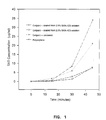
- Figure 1 is a graph of thrombin-antithrombin III (TAT) complex in human whole blood exposed to various microporous membranes for times indicated on the abscissa.
- Solid dots Celgard membrane (Trademark Hoechst Celanese, Charlotte, NC) dip-coated with a 0.5% SMA-423 solution; Squares: Celgard membrane dip-coated with a 2.5% SMA-423 solution; Triangles: uncoated Celgard membrane; Triangles (inverted): Polystyrene plaque.
- Figure 2 is a graph of TAT complex in human whole blood containing varied concentrations of heparin, after 30 minute exposure to various microporous membranes. Dots, squares, and triangles in Fig. 1. Triangles (inverted): Celgard membrane with PS-252 silicone (United Chemical Technology, Bristol, PA); Diamonds: polystyrene plaque.
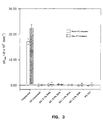
- Figure 3 is a graph of kallikrein-like activity in dilate platelet-poor plasma after 3 minute exposure at 4°C to various surfaces.
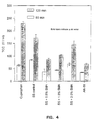
- Figure 4 is a bar graph showing the rate of the exponential increase of Terminal Complement Complex (TCC) in recalcified human whole blood after exposure to various surfaces.
- TCC Terminal Complement Complex
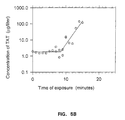
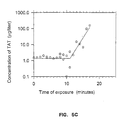
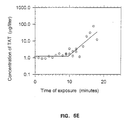
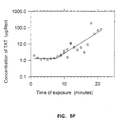
- Figures 5A-5G are graphs of TAT complex in recalcified anticoagulated human whole blood exposed to various surfaces for times indicated on the abscissas.
- Figure 5A uncoated 316L stainless steel
- Figure 5B 316L stainless steel dip-coated with a 0.1% SMA-423 solution
- Figure 5C 316L stainless dip-coated with a 0.5% SMA-423 solution
- Figure 5D 316L stainless steel dip-coated with a 1.0% SMA-423 solution
- Figure 5E 316L stainless steel dip-coated with a 2,0% SMA-423 solution
- Figure 5F PDMS (PS-252)-coated polystyrene
- Figure 5G polystyrene (uncoated).
- Figure 6 is a bar graph of the clotting time of recalcified human whole blood exposed to various surfaces.
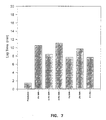
- Figure 7 is a bar graph of the TAT generation lag periods of recalcified human whole blood exposed to various surfaces.
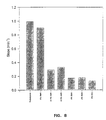
- Figure 8 is a bar graph showing the rate of the exponential increase of TAT complex in recalcified human whole blood after exposure to various surfaces.
- the coating materials of the present invention are triblock copolymers having a polysiloxane(S) block flanked by polylactone (L) blocks.
- LSL is used to designate such polylactone-polysiloxane-polylactone copolymers herein.
- Suitable triblock copolymers are commercially available, for example from Thoratec Laboratories, Berkeley, CA, which provides a series of such polymers designated "SMA" in which the siloxane is dimethyl siloxane and the lactone is caprolactone.
- the nominal molecular weights (number average) of the polysiloxane blocks suitable for use herein range from about 1000 to about 5000, while the nominal molecular weights of the caprolactone blocks range from about 1000 to about 10,000.
- An LSL triblock copolymer having polycaprolactone blocks of 1000 and polysiloxane blocks of 1000 (SMA-411) has been shown to be usable, as has a copolymer having polycaprolactone blocks of 10,000 and polysiloxane blocks of 5000 (SMA-10-5-10).
- a lower molecular weight limit is conferred by the need to have a melting temperature above room temperature, and an upper limit is affected by practical considerations such as solubility, solution viscosity and tendency to fill in the membrane pores.
- Preferred coating material is provided by SMA-422 or SMA-423, having polycaprolactone blocks of 2000 nominal molecular weight and polysiloxane blocks of 2000 or 3000 nominal molecular weight, respectively. Physical properties conferred by the respective blocks and the effect of varying the relative sizes are well understood in the art, see, e.g. Lovinger, et al. (1993) J . Polymer Sci. Part B (Polymer Physics) 31 : 115-123.
- the porous membrane can be fabricated from any base polymer composition suitable for making porous membranes.
- Porous membranes have a variety of uses in medical devices. The pore size varies with the use. Such uses include dialysis, ultrafiltration, plasma separation, protein purification, blood oxygenation, hemodialysis, hemoconcentration, blood filters, and catheter sheaths. Certain dialysis membranes have pore sizes having dimensions of Angstroms and are permeable only to atoms and molecules of less than approximately 5000 molecular weight. "Microporous" membranes generally have pores dimensioned in microns and can be used for blood oxygenation. Still larger pores of 20 ⁇ - 40 ⁇ are used in blood filter elements, designed to allow passage of blood cells but to exclude thrombi and other aggregates.
- Porous membranes are fabricated from various base polymers, by a variety of processes known in the art.
- the choice of base polymer and process of making is dictated to some extent by the size and type of pores desired.
- the biocompatibility of all such porous membranes is greatly enhanced by the coating materials and processes described herein.
- Typical base polymers which may be utilized according to the present invention include polycarbonates, fluorocarbon polymers, polyurethanes, polysulfones, polyesters, polyethylenes, polypropylenes, polystyrenes, poly(acrylonitrile-butadienestyrene), polybutadiene, polyisoprene, styrene-butadiene-styrene block copolymers, styrene-isoprene-styrene blockcopolymers, poly(4-methylpentene), polyisobutylene, polymethylmethacrylate, polyvinylacetate, polyacrylonitrile, polyvinylchloride, polyethylene terephthalate, cellulose and its esters or derivatives, copolymers of the foregoing and the like.
- Porous membranes are fabricated by a variety of well-known techniques, any of which can be applied, as appropriate to the selected base polymer composition.
- microporous membranes formed by a process of stretching polypropylene sheet stock, such as Celgard membranes (Trademark Hoechst Celanese, Charlotte, NC), are suitable for the invention.
- Such membranes have generally oblong pores having a minor diameter about .02 micron and a major diameter about 0.2 micron, and are permeable to O 2 and CO 2 , making them suitable for blood oxygenation.
- the present invention contemplates a wide variety of biocompatible metallic surfaces and articles.
- Typical metal materials which may be utilized according to the present invention include stainless steel, aluminum, titanium, polymer-coated metals and the like.
- a coating of LSL copolymer can be applied by any convenient technique for coating thin film materials, solid articles, melting and the like, including but not limited to dipping, spraying, passage through a coating bath and the like.
- the surface concentration of the LSL coating polymer can be controlled.
- surface concentration can be controlled by varying the concentration of LSL in the dip solution.
- surface concentration is regulated both by the concentration of LSL in the coating bath and by the rate of travel of the membrane stock through the bath.
- the solvent be chosen so as not to dissolve the base polymer of the membrane.
- Optimal surface concentrations of SMA-422 and SMA-423 have been obtained by dipping Celgard membrane in a 0.5% (w/v) solution of copolymer in acetone and air drying.
- optimal surface concentration was obtained by continuous passage of Celgard sheet through a bath of 2% (w/v) copolymer in acetone at a rate of 100 ft/min, followed by passage through a heated drying chamber.
- Solvents suitable for coating metal surfaces include, without limitation, methyl-ethyl-ketone (MEK), mixture of methylene chloride and alcohol (e.g., isopropyl and ethanol), toluene, acetone, trichloroethylene, cyclohexanone, and tetrahydrofuran.
- MEK methyl-ethyl-ketone
- alcohol e.g., isopropyl and ethanol
- toluene acetone
- trichloroethylene cyclohexanone
- tetrahydrofuran etrahydrofuran.
- a suitable solvent should be able to dissolve the LSL copolymer and be able to wet the metal surface.
- solvents having a solubility parameter of about 8 to 10 should dissolve the LSL copolymer. See, e.g., Hoy, K.L. (1970) J. Paint Technology 42 (541):761-818.
- a further requirement for coating polymers and polymer-coated metals is that the solvent should not etch or degrade the polymer surface being coated.
- additional suitable coating solvents include dibasic acid esters such as diisobutyl glutarate, glycol ethers, such as dipropylene glycol methyl ether, propylene glycol methyl ether (1-methoxy-2-propanol) and tripropylene glycol monomethyl ether, N-methyl pyrrolidone and the like.
- the methylene chloride concentration is preferably at least 10% (v/v).
- Optimal surface concentrations of SMA-423 have been obtained by dipping stainless steel discs (316L stainless steel) in 1.0% and 2.0% (w/w) solutions of copolymer in MEK and air drying.
- Relative surface concentration of the LSL copolymer can be quantitatively assessed by X-ray fluorescence (XRF).
- Silicon has a characteristic X-ray fluorescence band (K ⁇ ), the intensity of which is a function of the concentration of silicon atoms of the coated surface.
- K ⁇ characteristic X-ray fluorescence band
- an intensity ratio can be calculated, which is a measure of the relative silicon surface concentration and therefore of the LSL surface concentration.
- the film or membrane sample to be measured is stretched over an X-ray sample cup (Chemplex #1930 sample cup) and held in place with a snap ring.
- a coated metal disc or coated polymeric article is placed directly in the sample compartment.
- the sample compartment of a Philips AXS wave Length Dispersive Spectrometer is flushed with helium.
- the spectrometer should be fitted with a chromium X-ray tube. Other machine parameters are listed below.
- Intensity Ratio This ratio is known as the Intensity Ratio which, again, is directly proportional to the surface concentration of the silicon.
- membrane dip-coated in a 0.5% copolymer solution had optimal biocompatibility.
- the Intensity Ratios measured on samples of such membranes were as follows: Sample No. Intensity Ratio 1 0.1836 2 0.1720 3 0.1699 4 0.1760 5 0.1725 6 0.1789 7 0.1897 8 0.1855 9 0.1793 10 (mean ⁇ std. deviation) 0.1786 ⁇ 0.0067
- the coatings applied to porous membranes do not reduce or modify their porosity.
- an optimally coated Celgard membrane and an uncoated membrane were tested for resistance to air flow according to the ASTM-D-726(B) test method.
- the manufacture's specification for uncoated Celgard membranes is 50-120 Gurley sec.
- a test sample, uncoated, had an air resistance of 74 Gurley sec., while the coated material had a resistance of 67 Gurley sec.
- Stainless steel surfaces having copolymer coatings whose surface concentrations display XRF intensity ratios in the range of 0.02 to 0.35 provide operable biocompatibility.
- a preferred range of XRF intensity ratios for stainless steel coatings is from 0.05-0.25, while maximal biocompatibility with the stainless steel discs tested herein was observed with discs having XRF intensity ratios in the range of 0.09 - 0.18.
- Excellent results have been obtained using 2.5% (w/w) SMA-423 for membrane coating and 1.0% (v/w) SMA-423 for stainless steel heat exchanger coating.
- Biocompatibility involves various aspects of reactions between biological tissue and synthetic materials. The most common and dangerous for the patient are activation of the blood clotting cascade, complement activation, inflammatory cellular responses and platelet activation. Activation of the clotting reactions was measured either by a commercially-available thrombin-anti-thrombin ELISA test (Behring Diagnostica, Inc. Marburg, Germany) or by assaying kallikrein-like activity (intrinsic coagulation cascade) using a chromogenic substrate reaction available from Kabi Diagnostica, Mölndal, Sweden. Complement activation was measured by an ELISA assay for soluble terminal complement complex (TCC) [Deppisch, R. et al.
- TCC soluble terminal complement complex
- Interleukin-1ß (IL-1ß) generation by mononucleocytes exposed to flat sheets or membranes is measured by an ELISA test available from R&D Systems Minneapolis, Minnesota.
- platelet adherence and activation onto test surfaces exposed to an ex vivo shunt was examined by scanning electron microscopy. An in vitro platelet activation test was also carried out.
- LSL copolymer coating can be achieved on blood-contacting surfaces of an assembled oxygenator heat exchanger or to sub-assembled components of an oxygenator, thereby eliminating the need to use pre-coated membranes or pre-coated heat exchangers.
- the post-assembly coating process carried out by pumping a solution of LSL copolymer of specified concentration at a predetermined flow rate through the blood-contacting channels of an assembled oxygenator heat exchanger, or through sub-assembled components of an oxygenator, such as through the oxygen-exchange and heat-exchange components separately.
- Described herein are specific methods used to separately coat an oxygen-exchanger and a heat exchanger, using a recirculating system for pumping LSL copolymer solutions and for flushing out residual solvent with a flow of gas.
- an SMA solution in MEK does not pass through an oxygenator membrane, from the blood side to the gas side, especially if the gas side ports are plugged while copolymer solution is flowing through the blood-coated side of the device.
- a coating machine is used to coat the oxygen exchangers of oxygenators with LSL copolymer prior to heat exchanger attachment.
- the equipment coats the blood side of leak-tested oxygenator with SMA-423 using MEK as the solvent/carrier.
- MEK as the solvent/carrier.
- the gas-side of the oxygenator is completely plugged-off to help prevent MEK from flowing across the membrane into the gas-side of the device.
- Pneumatically actuated cylinders are used to plug-off the gas-side openings.
- the coating machine contains one oxygen exchanger coating station. After an operator places the exchanger in a locating nest, the machine pumps an SMA/MEK solution (2.5% w/w) from a tank through the blood side of the oxygenator and back to the tank for a period of time sufficient to ensure contact with all surfaces.
- a flow switch downstream of the oxygenator detects that the specified flowrate has been achieved, typically about 1 gal/min. Compressed air, which has been dried and filtered, is then forced through the coated oxygenator for a period of time to flush and dry it of the solvent, usually about 10-30 minutes depending on air temperature. Complete solvent removal can be determined by drying the device to constant weight.
- a filtered recirculation loop through the solvent tank is normally active.
- the SMA/MEK solution is diverted through a set of valves to the oxygenator. Solution then passes through a strainer and a flow switch and back to the tank.
- the coated oxygenator is then dried by routing air through a set of valves to the oxygenator and into a liquid/vapor separator. Liquid is recovered and routed back to the tank. Air and vapor are vented.
- Wetted materials will consist of stainless steel, teflon, polypropylene, ethylene-propylene, and silicone.
- a Flat Sheet Heat Exchanger Coating Machine is used to coat heat exchangers with LSL copolymer.
- the equipment coats the blood side of leak-tested flat sheet heat exchangers with SMA-423 using MEK as the solvent/carrier at 1% (w/w).
- the machine contains three heat exchanger coating stations. After an operator places a heat exchanger on the locating pins of one of the stations, the machine pumps an SMA/MEK solution from a tank through the blood side of the heat exchanger and back to the tank for a specified period of time sufficient to ensure complete surface contact, typically 15-30 seconds. A flow switch downstream of the heat exchanger detects that the constant flowrate (1 gal/min) has been achieved. Compressed air, which has been dried and filtered, is then forced through the coated heat exchanger for a period of time, typically 2-4 minutes, to flush and dry it of the solvent.
- a filtered recirculation loop through the tank is normally active.
- the SMA/MEK solution is diverted through a valve manifold to the station selected. Solution then passes through a strainer and a flow switch and back to the tank.
- the coated heat exchanger is then dried by routing air through a valve manifold to the station and into a liquid/vapor separator. Liquid is recovered and routed back to the tank. Air and vapor are vented.
- Wetted materials consist of stainless steel, teflon, polypropylene, ethylene-propylene, and silicone.
- Biocompatibility is also affected by the stability of the coating in the presence of blood.
- a biocompatible coating should not leach away or dissolve in contact with blood.
- Tests were run on samples of Celgard membrane coated with a 0.5% dip coating of SMA-423. XRF intensity ratios of individual samples and controls were measured before and after a 6.5 hour incubation at 37°C with bovine whole blood. There was no significant difference in the membrane intensity ratios before and after incubation. SMA coating on metals demonstrates similar stability.
- LSL copolymer coatings can be stabilized on the surface by exposing them to ionizing radiation .
- ionizing radiation examples of which could be x-rays, ⁇ -rays or an electron beam, and then contacted with a solvent for SMA 423, only a fraction of the SMA 423 is dissolved off the surface. The remaining SMA 423, which is not dissolved off the surface, appears to be tenaciously adhered to the surface.
- Biosafety of an LSL-coated article is therefore enhanced by exposing a coated article to ionizing radiation, since the tendency for the coating to be removed is reduced.
- X-rays in the dose range 0.25 to 13.0 Mrad will result in stabilizing the coating on blood-contacting surfaces.
- An x-ray dose of 12 Mrad results in rendering at least 50% of SMA-423 resistant to an ethanol wash (Example 7).
- Example 1 Inertness of LSL-coated microporous membrane to clotting activation as measured by thrombin-antithrombin assay.
- Thrombin a serine protease
- Thrombin is the central bioregulatory enzyme in hemostasis [Fenton, J.W. (1986) Ann. N . Y . Acad . Sci . 485 :5-15].
- Assessment of thrombin generation is essential in order to evaluate the extent of thrombosis or hemostasis.
- the thrombin activity is mainly regulated by the serine protease inhibitor antithrombin III, which forms a stable, catalytically inactive complex with thrombin.
- TAT concentration has been suggested as a sensitive parameter of coagulation activity during extracorporeal circulation [Deguchi, K. et al. (1991) Am. J. Hematology 38:86-89].
- Celgard membranes dip-coated with 0.5% SMA-423 optical surface concentration by XRF
- Example 2 Biocompatibility of LSL-coated microporous membrane as measured by kallikrein-like activity (intrinsic clotting cascade), terminal complement complex (TCC) activity (complement activation) and interleukin-1ß (IL-1ß) mononucleocyte activation).
- TCC terminal complement complex
- IL-1ß interleukin-1ß
- IL-1ß production was measured on different materials including Cuprophan and AN69 dialysis membranes (two hydrophilic surfaces), and both untreated and SMA-coated Celgard polypropylene membranes (hydrophobic surfaces).
- Lipopolysaccharide (LPS) a potent inducer of IL-1B production, was used as a positive control (data not shown).
- Plasma from three donors were used in this assay. It should be noted that mononuclear cells from different donors will react differently to different surfaces, resulting in large interdonor variation in results. Nevertheless, the coated and uncoated Celgard membrane samples show no difference in IL-1ß released (Table 1).
- Celgard and SMA-coated Celgard induce significantly less IL-1ß production than do the more hydrophilic Cuprophan and AN69 materials.
- human whole blood was exposed for varying times to the described membranes.
- Kallikrein-like activity was measured using the chromogenic substrate S-2302 (Kabi), which yields p-nitroanaline upon enzymic hydrolysis, measurable by an absorbance change at 405nm.
- Soluble TCC was measured by an ELISA assay as described by Deppisch (1990).
- IL-1ß was measured by an ELISA assay available commercially from R&D Systems. The results are given in Table 1.
- the kallikrein-like activity test revealed that optimally-coated Celgard membrane was superior to either uncoated or too-heavily coated membrane. All three were superior to polystyrene.
- Example 3 Platelet adhesion and activation. Canine ex vivo arteriovenous shunts were used to study platelet adhesion and activation. Similar studies have been reported by Lelah, M.D. et al. (1984) J. Biomed. Mater. Res. 18 :475-496, and by Zingg, W. et al. (1986) Life Support Syst. 4 :221-229. SMA-treated polypropylene tubing was compared to uncoated tubing and uncoated polyvinyl chloride tubing. Animals were systemically heparinized to mimic extracorporeal circulation conditions. Shunts were removed at 30 minute and three hour intervals.
- Example 4 Biocompatibility of LSL-coated 316L stainless steel discs as measured by kallikrein-like activity (intrinsic clotting cascade) and terminal complement complex (TCC) activity (complement activation).
- the kallikrein-like activity test (Fig. 3) shows that 316L stainless steel discs are not contact activators of the intrinsic coagulation cascade, whether coated or not.
- Example 5 Biocompatibility of LSL-coated 316L stainless steel discs as measured by thrombin-antithrombin assay (TAT). Recalcified anticoagulated human whole blood was exposed to the test surfaces for up to 20 minutes. Samples were withdrawn at intervals and assayed for TAT by a commercial ELISA test, as previously described. Results are shown in Figures 5-8 and Table 2. As shown in Figure 5, an initial lag period is typically followed by an exponential increase in the generation of TAT in recalcified human blood. The clotting time ( Figure 6), defined as the time at which the last sample is collected prior to clotting decreases with increasing surface thrombogenicity.
- TAT thrombin-antithrombin assay
- the lag periods range from approximately 1 minute (for strongly contact-activating materials) to as much as 12 minutes for non-contact-activating materials).
- the rate of the exponential increase in TAT that follows a lag period increases with increasing surface thrombogenicity (Figure 8).
- Example 6 Platelet and leukocyte compatibility studies.
- Whole blood (WB) of human volunteers was subjected to surface contact in tubing of various test materials as described in detail below. After one hour of contact, the blood was removed for analysis of platelet count as a measure of total platelet loss, and of microparticle release and percentages of platelets positive for P-selectin as measures of platelet activation.
- Platelet Preparation Whole blood from normal volunteers (4 individuals) was drawn into syringes pre-loaded with anticoagulant after discarding the first mL. For most experiments the anticoagulant, PPACK, a selective thrombin inhibitor at a final concentration of 60 ⁇ M was used. The calcium chelator, 5 mM EGTA for the metal ion chelator, 5mM EDTA were also used as anticoagulants. All syringes were pre-warmed to 37°C and the whole blood was immediately used for experimentation that was performed in a 37°C room.
- unlabelled antibody to GPIb (AP1, capable of blocking the vWF binding site) or antibody to GPIIb/IIIa (A2A9, capable of blocking fibrinogen binding) at up to 100 ⁇ g/ml were added to whole blood prior to material contact.
- the tetrapeptide, RGDS at 1 mg/ml was also sometimes added to inhibit ligand binding to GPIIb/IIIa.
- Polyvinyl alcohol hydrogel coating onto oxidized PE was prepared as previously described by glutaraldehyde cross linking (Cholakis, C.H. et al. (1989) J. Biomed . Mater . Res. 23 :417-441).
- a minimum of 5,000 platelet events were acquired by gating on flow cytometric events within a single intact platelet window defined by light scatter characteristics and positive for FITC labelled platelet specific antibodies (GPIb or GPIIb/IIIa).
- the presence of the PE labelled activation specific antibody (KC4.1, PAC-1, 9F9) was used to determine the percentage of activated platelets.
- the arbitrary fluorescent intensity of the activated platelet population as well as the total fluorescent signal were recorded.
- Platelet specific events including microparticles, were identified by gating on GPIIb/IIIa (FITC-P2) or GPIb (FITC-AP1) positive events and microparticles were distinguished by forward scatter size analysis.
- the forward scatter cut off was set to the immediate left of the single intact platelet population of a resting whole blood sample, and very minor adjustments are required from day to day due to instrument variability.
- the concentration of microparticles was estimated by multiplying the single intact platelet count (determined in a WB sample containing EDTA so that all aggregates and platelet/leukocytes could be disrupted) by the percentage of platelet events (platelets and microparticles) falling into the microparticle window as assessed by flow cytometry.
- the Coulter counter's platelet gates are between 2 and 30 fl approximately, thus indicating that platelets counted are between 1.5 and 3.8 ⁇ m, if one assumes a spherical shape. It is possible that some large microparticles could be counted as single platelets using the Coulter counter. Using fluorescent beads (3, 2, 1, 0.46, 0.23 and 0.14 ⁇ m, Polysciences Inc.) we have shown that our microparticles are a heterogeneous population ranging in size from 0.1 to 0.8 ⁇ m. 5,000 positive platelet events were analyzed and microparticles reported as a percentage of total platelet events.
- PE-anti-CD45 and FITC-P2 were added to diluted (1:10) whole blood samples (5 ⁇ L) and incubated for 20 minutes. Samples were then diluted, fixed and analyzed. Acquisition was gated to include only those events positive for PE-anti-CD45 MoAb, the pan leukocyte marker. The second color (FITC) was used to determine the linearized fluorescent intensity of the platelet (anti-GPIIb/IIIa) signal associated with leukocytes.
- the background FITC fluorescence associated with leukocytes was determined from samples containing 10 mM EDTA, so that all platelets would be dissociated from leukocytes and from a FITC labelled irrelevant monoclonal antibody (HL1212), against a factor IX epitope.
- Example 7 A polycarbonate disc was coated in a 1% solution of SMA-423 in Arcosolve PM. The disc was then irradiated in a Philips X-ray Fluorescence Spectrometer fitted with a chromium anode and operated at 60 KV and 50 MA. Part of the disc was masked by a copper ring so that it received no irradiation. The other part of the disc received a dose of 12 Mrads. The disc was then washed in ethanol at 45°C which is known to be a good solvent for SMA-423. Retention of SMA-423 was measured by before and after comparison of XRF intensity ratios. The results are shown in the following table: Sample % Retention of SMA-423 Non Irradiated Coating 0% Irradiated Coating 50%
- the teachings of the present invention provide for a new approach to fabricating biocompatible surfaces using coating materials.
- base polymers, metals and LSL coatings specifically exemplified other base polymers, metals and LSL coatings are intended as within the scope of the invention, based on the teachings herein.
- Other coating procedures as known in the art can be employed.
- Other materials may be included in addition to the LSL copolymers, to incorporate other desired properties or to further enhance biocompatibility, all as understood in the art.
Landscapes
- Health & Medical Sciences (AREA)
- Chemical & Material Sciences (AREA)
- Life Sciences & Earth Sciences (AREA)
- General Health & Medical Sciences (AREA)
- Engineering & Computer Science (AREA)
- Veterinary Medicine (AREA)
- Public Health (AREA)
- Epidemiology (AREA)
- Animal Behavior & Ethology (AREA)
- Chemical Kinetics & Catalysis (AREA)
- Materials Engineering (AREA)
- Surgery (AREA)
- Organic Chemistry (AREA)
- Dermatology (AREA)
- Inorganic Chemistry (AREA)
- Heart & Thoracic Surgery (AREA)
- Vascular Medicine (AREA)
- Wood Science & Technology (AREA)
- Hematology (AREA)
- Manufacturing & Machinery (AREA)
- Medicinal Chemistry (AREA)
- Oral & Maxillofacial Surgery (AREA)
- Transplantation (AREA)
- Materials For Medical Uses (AREA)
- External Artificial Organs (AREA)
- Treatments Of Macromolecular Shaped Articles (AREA)
- Silicon Polymers (AREA)
- Separation Using Semi-Permeable Membranes (AREA)
Abstract
Description
- The invention is directed to improved materials for medical devices, in particular to materials intended for contacting blood and live cells, where adverse physiological reactions such as clot initiation must be minimized or eliminated. Such biocompatible materials are useful in extracorporeal blood oxygenation devices, hemodialysis devices, and the like.
- A basic problem in the construction of medical devices having components that must contact blood and other physiological fluids is that materials with good mechanical and structural properties have rather poor biocompatibility, while highly biocompatible materials have poor structural properties. Biocompatibility is itself a multi-faceted problem which has different aspects depending on the type of device, what tissues or fluids it contacts, and the length of contact time. In devices designed for hemodialysis or blood oxygenation, the materials are in contact with blood flowing through tubing, into containers, through heat exchangers and over membranes. The blood returns to the patient's body. The primary elements of biocompatibility are therefore to prevent initiating processes which can subsequently injure the patient, such as activation of clotting mechanisms, activation of the complement system, and initiation of inflammatory reactions. Materials must not be soluble in blood or other body fluids to avoid being carried permanently into the patient's body.
- Although certain types of polymers, such as silicones and siloxanes, are known to possess many attributes of biocompatibility, there are no reliable physical correlates which enable one to predict biocompatibility with any degree of certainty. Generally, hydrophobic surfaces are more biocompatible than hydrophilic surfaces. Zisman's critical surface tension [Zisman, W.A. (1964) Adv. Chem. Ser. 43] has been used as a parameter to help assess potential biocompatibility. Materials with an optimum critical surface tension are frequently biocompatible, yet there are notable exceptions. For example, polyethylene and polypropylene have critical surface tensions well within the optimum range, but they are not predictably biocompatible. Other factors are also important. Without a clear understanding of the nature of these factors, biocompatibility remains unpredictable.
- Because of the attractive structural properties of polyolefins and polyurethanes, various blending and copolymerization techniques have been developed to impart greater biocompatibility. U.S. Patent 4,872,867 discloses modifying a polyurethane with a water soluble polymer and crosslinking them in situ with a silane-type coupling agent to form a cross-linked and intertwined polysiloxane network. U.S. Patent 4,636,552 discloses a polydimethyl siloxane with polylactone side chains which are said to be useful for imparting biocompatibility when combined with a base polymer, or used to replace plasticizer. U.S. Patent 4,929,510 discloses a diblock copolymer having a more hydrophobic block and a less hydrophobic block. A solution of the diblock copolymer in a solvent which swells the matrix polymer is used to introduce the diblock into an article of matrix polymer. Thereafter, the article is transferred to water, to force orientation of the incorporated diblock copolymer such that the more hydrophobic block is embedded in the matrix and the less hydrophobic block is exposed on the surface of the article. Examples of diblock copolymers included poly (ethyleneoxide-propylene oxide), N-vinyl-pyrrolidone-vinyl acetate and N-vinyl-pyrrolidone-styrene. U.S. Patents 4,663,413 and 4,675,361 disclose segmented block copolymers, in particular polysiloxane-polycaprolactone linear block copolymers. The latter were incorporated into base polymer materials to modify the surface properties thereof. Although initially blended in bulk into the base polymer, the copolymer migrates to the surface to form an exceptionally thin, possibly a monolayer film which imparts the desired surface characteristic, specifically, biocompatibility.
- Although numerous surface-modifying compositions have been disclosed in the art, their intended use has been as bulk formulation additives, as mixtures with base polymer, cross-linked within the polymer matrix, as substitutes for plasticizer or incorporated into the polymer matrix. The art has avoided coatings, in part because of increased manufacturing cost and difficulty of uniform application. For certain applications such as microporous membranes, application of a coating could adversely affect membrane properties by plugging membrane pores or otherwise degrading performance. In the case of microporous membranes made by a process of stretching polymer film stock, total surface area is expanded to the extent that the available surface concentration of surface modifiers added in conventional formulation processes is reduced to ineffectiveness. Providing a biocompatible surface for a microporous membrane remains a matter of critical importance, since the membrane has the largest surface area in contact with a patient's blood of any component of an oxygenator or hemodialysis unit. Another component with a large blood contact area is a heat exchanger, commonly fabricated of metal, used to maintain a desired extracorporeal blood temperature. Aluminum, titanium and stainless steel are all used for various sorts of blood-contacting devices. Aluminum is reactive with blood and is commonly coated with epoxy or polyurethane to prevent adverse reactions. Although less reactive than aluminum, both stainless steel and titanium have sub-optimal biocompatibility in contact with blood.
- From what is known of their properties as bulk additives, the triblock copolymers would be unlikely candidates for use as coatings since the blocks that normally anchor the copolymer within the base polymer matrix would be exposed on the surface. Nevertheless, as detailed herein, it has now been found that certain triblock copolymers can be applied as coatings to impart biocompatibility to polymeric surfaces. It has also been found unexpectedly that the same copolymers can be used to coat surfaces of other polymeric and metallic articles, imparting excellent biocompatibility to them. The same copolymers also improve the biocompatibility of polymer-coated metal surfaces, for example, aluminum coated with epoxy or polyurethane.
- The invention provides porous membranes and other polymeric articles that are coated to improve the biocompatibility of the membrane or other article compared to the base polymeric composition of an uncoated membrane or article. The invention also provides metal flat sheets and metallic articles that are coated to improve the bicompatibility of the sheet or article compared to the uncoated metal sheet or article. The coating material is any of several triblock copolymers having a polysiloxane segment flanked by or end-capped with two polylactone segments. The coating thickness must be within an optimum range in order to provide optimum biocompatibility. The base polymeric composition or base metal can be any material from which porous membranes or other articles can be made. The invention is especially useful for microporous membranes used in extra-corporeal blood oxygenators where O2 and CO2 diffuse through the pores but H2O does not, and in hemodialysis membranes. In such devices blood contact with the membrane surfaces is maximized and the need for biocompatibility is at a premium. The invention is also useful for metallic surfaces in extracorporeal blood processing devices, for example, thermistor probes, and heat exchangers. Biocompatibility is measured herein by the reduced tendency to induce clotting enzyme activity, to induce kallikrein-like activity, to activate the complement cascade in blood and plasma exposures, induction of IL-1ß by mononucleocytes, by platelet deposition in ex-vivo shunt studies, and by in vitro platelet activation tests.
- Figure 1 is a graph of thrombin-antithrombin III (TAT) complex in human whole blood exposed to various microporous membranes for times indicated on the abscissa. Solid dots: Celgard membrane (Trademark Hoechst Celanese, Charlotte, NC) dip-coated with a 0.5% SMA-423 solution; Squares: Celgard membrane dip-coated with a 2.5% SMA-423 solution; Triangles: uncoated Celgard membrane; Triangles (inverted): Polystyrene plaque.
- Figure 2 is a graph of TAT complex in human whole blood containing varied concentrations of heparin, after 30 minute exposure to various microporous membranes. Dots, squares, and triangles in Fig. 1. Triangles (inverted): Celgard membrane with PS-252 silicone (United Chemical Technology, Bristol, PA); Diamonds: polystyrene plaque.
- Figure 3 is a graph of kallikrein-like activity in dilate platelet-poor plasma after 3 minute exposure at 4°C to various surfaces.
- Figure 4 is a bar graph showing the rate of the exponential increase of Terminal Complement Complex (TCC) in recalcified human whole blood after exposure to various surfaces.
- Figures 5A-5G are graphs of TAT complex in recalcified anticoagulated human whole blood exposed to various surfaces for times indicated on the abscissas. Figure 5A: uncoated 316L stainless steel; Figure 5B: 316L stainless steel dip-coated with a 0.1% SMA-423 solution; Figure 5C: 316L stainless dip-coated with a 0.5% SMA-423 solution; Figure 5D: 316L stainless steel dip-coated with a 1.0% SMA-423 solution; Figure 5E: 316L stainless steel dip-coated with a 2,0% SMA-423 solution; Figure 5F: PDMS (PS-252)-coated polystyrene; Figure 5G: polystyrene (uncoated).
- Figure 6 is a bar graph of the clotting time of recalcified human whole blood exposed to various surfaces.
- Figure 7 is a bar graph of the TAT generation lag periods of recalcified human whole blood exposed to various surfaces.
- Figure 8 is a bar graph showing the rate of the exponential increase of TAT complex in recalcified human whole blood after exposure to various surfaces.
- The coating materials of the present invention are triblock copolymers having a polysiloxane(S) block flanked by polylactone (L) blocks. The abbreviation LSL is used to designate such polylactone-polysiloxane-polylactone copolymers herein. Suitable triblock copolymers are commercially available, for example from Thoratec Laboratories, Berkeley, CA, which provides a series of such polymers designated "SMA" in which the siloxane is dimethyl siloxane and the lactone is caprolactone. The nominal molecular weights (number average) of the polysiloxane blocks suitable for use herein range from about 1000 to about 5000, while the nominal molecular weights of the caprolactone blocks range from about 1000 to about 10,000. An LSL triblock copolymer having polycaprolactone blocks of 1000 and polysiloxane blocks of 1000 (SMA-411) has been shown to be usable, as has a copolymer having polycaprolactone blocks of 10,000 and polysiloxane blocks of 5000 (SMA-10-5-10). A lower molecular weight limit is conferred by the need to have a melting temperature above room temperature, and an upper limit is affected by practical considerations such as solubility, solution viscosity and tendency to fill in the membrane pores. Preferred coating material is provided by SMA-422 or SMA-423, having polycaprolactone blocks of 2000 nominal molecular weight and polysiloxane blocks of 2000 or 3000 nominal molecular weight, respectively. Physical properties conferred by the respective blocks and the effect of varying the relative sizes are well understood in the art, see, e.g. Lovinger, et al. (1993) J. Polymer Sci. Part B (Polymer Physics) 31: 115-123.
- The porous membrane can be fabricated from any base polymer composition suitable for making porous membranes. Porous membranes have a variety of uses in medical devices. The pore size varies with the use. Such uses include dialysis, ultrafiltration, plasma separation, protein purification, blood oxygenation, hemodialysis, hemoconcentration, blood filters, and catheter sheaths. Certain dialysis membranes have pore sizes having dimensions of Angstroms and are permeable only to atoms and molecules of less than approximately 5000 molecular weight. "Microporous" membranes generally have pores dimensioned in microns and can be used for blood oxygenation. Still larger pores of 20µ - 40µ are used in blood filter elements, designed to allow passage of blood cells but to exclude thrombi and other aggregates. Porous membranes are fabricated from various base polymers, by a variety of processes known in the art. The choice of base polymer and process of making is dictated to some extent by the size and type of pores desired. The biocompatibility of all such porous membranes is greatly enhanced by the coating materials and processes described herein.
- Typical base polymers which may be utilized according to the present invention include polycarbonates, fluorocarbon polymers, polyurethanes, polysulfones, polyesters, polyethylenes, polypropylenes, polystyrenes, poly(acrylonitrile-butadienestyrene), polybutadiene, polyisoprene, styrene-butadiene-styrene block copolymers, styrene-isoprene-styrene blockcopolymers, poly(4-methylpentene), polyisobutylene, polymethylmethacrylate, polyvinylacetate, polyacrylonitrile, polyvinylchloride, polyethylene terephthalate, cellulose and its esters or derivatives, copolymers of the foregoing and the like. Porous membranes are fabricated by a variety of well-known techniques, any of which can be applied, as appropriate to the selected base polymer composition. For example, microporous membranes formed by a process of stretching polypropylene sheet stock, such as Celgard membranes (Trademark Hoechst Celanese, Charlotte, NC), are suitable for the invention. Such membranes have generally oblong pores having a minor diameter about .02 micron and a major diameter about 0.2 micron, and are permeable to O2 and CO2, making them suitable for blood oxygenation.
- In addition to polymeric membranes and articles, the present invention contemplates a wide variety of biocompatible metallic surfaces and articles. Typical metal materials which may be utilized according to the present invention include stainless steel, aluminum, titanium, polymer-coated metals and the like.
- A major deficiency of the base polymer compositions of porous membranes and the metal surfaces of extracorporeal blood processing devices lies in the fact that, to varying degrees, the materials are not biocompatible. Surprisingly, it has been found that substantial improvement in biocompatibility is obtained, without sacrificing O2/CO2 exchange capacity or dialysis capability, by coating a porous membrane with an LSL triblock copolymer of the type herein described. Thus, several unexpected findings are herein combined: that stable coatings are formed by LSL copolymers, that the coatings can be formed so as not to block the membrane pores essential for O2/CO2 exchange or for passage of ions and small molecules, and that biocompatibility is improved by the presence of the coating. Furthermore it has been shown that optimal biocompatibility results from a coating of optimum surface concentration. It is also unexpected to find that a stable LSL coating can also be applied to a metal surface. The process of coating is to be distinguished from blending, melt mixing, codissolving, copolymerization or other base formulation processes. Therefore, a coating is that which is applied by a post-fabrication surface application process.
- A coating of LSL copolymer can be applied by any convenient technique for coating thin film materials, solid articles, melting and the like, including but not limited to dipping, spraying, passage through a coating bath and the like. By varying the process parameters, the surface concentration of the LSL coating polymer can be controlled. For example, in a dip-coating process, surface concentration can be controlled by varying the concentration of LSL in the dip solution. In a continuous passage process, which is more suitable for coating bulk quantities of membrane, surface concentration is regulated both by the concentration of LSL in the coating bath and by the rate of travel of the membrane stock through the bath. For coating membranes, it is preferred that the solvent be chosen so as not to dissolve the base polymer of the membrane. Optimal surface concentrations of SMA-422 and SMA-423 have been obtained by dipping Celgard membrane in a 0.5% (w/v) solution of copolymer in acetone and air drying. Alternatively, optimal surface concentration was obtained by continuous passage of Celgard sheet through a bath of 2% (w/v) copolymer in acetone at a rate of 100 ft/min, followed by passage through a heated drying chamber.
- Solvents suitable for coating metal surfaces include, without limitation, methyl-ethyl-ketone (MEK), mixture of methylene chloride and alcohol (e.g., isopropyl and ethanol), toluene, acetone, trichloroethylene, cyclohexanone, and tetrahydrofuran. A suitable solvent should be able to dissolve the LSL copolymer and be able to wet the metal surface. In general, solvents having a solubility parameter of about 8 to 10 should dissolve the LSL copolymer. See, e.g., Hoy, K.L. (1970) J. Paint Technology 42(541):761-818. A further requirement for coating polymers and polymer-coated metals is that the solvent should not etch or degrade the polymer surface being coated. For example, additional suitable coating solvents include dibasic acid esters such as diisobutyl glutarate, glycol ethers, such as dipropylene glycol methyl ether, propylene glycol methyl ether (1-methoxy-2-propanol) and tripropylene glycol monomethyl ether, N-methyl pyrrolidone and the like. When using mixtures of methylene chloride in alcohol, the methylene chloride concentration is preferably at least 10% (v/v). Optimal surface concentrations of SMA-423 have been obtained by dipping stainless steel discs (316L stainless steel) in 1.0% and 2.0% (w/w) solutions of copolymer in MEK and air drying.
- Relative surface concentration of the LSL copolymer can be quantitatively assessed by X-ray fluorescence (XRF). Silicon has a characteristic X-ray fluorescence band (Kα), the intensity of which is a function of the concentration of silicon atoms of the coated surface. By comparing the X-ray fluorescence intensity of the sample with an internal standard an intensity ratio can be calculated, which is a measure of the relative silicon surface concentration and therefore of the LSL surface concentration.
- To carry out XRF analysis, the film or membrane sample to be measured is stretched over an X-ray sample cup (Chemplex #1930 sample cup) and held in place with a snap ring. A coated metal disc or coated polymeric article is placed directly in the sample compartment. The sample compartment of a Philips AXS wave Length Dispersive Spectrometer is flushed with helium. The spectrometer should be fitted with a chromium X-ray tube. Other machine parameters are listed below.
XRF MACHINE PARAMETERS Beam Filter out KV Setting 60 Collimator course MA Setting 50 Scintillator Detector disable PHS Baseline 10 Flow Counter enable PHS Window 25 Crystal WC Order first Peak Time 120 sec Sample No. Intensity Ratio 1 0.1836 2 0.1720 3 0.1699 4 0.1760 5 0.1725 6 0.1789 7 0.1897 8 0.1855 9 0.1793 10 (mean ± std. deviation) 0.1786 ± 0.0067 - From these and similar studies it has been determined that polymers (including membranes) and metal surfaces having copolymer coatings whose surface concentrations display XRF intensity ratios in the range 0.02-0.35 provide operable biocompatibility. A preferred range of XRF intensity ratios is from 0.05-0.25, while maximal biocompatibility with the membranes tested herein was observed with membranes having XRF intensity ratios in the range 0.16-0.2. It will be understood that those of ordinary skill in the art can measure optimally biocompatible surface concentrations of coatings according to the invention by using the XRF technique just described.
- The coatings applied to porous membranes do not reduce or modify their porosity. For example, an optimally coated Celgard membrane and an uncoated membrane were tested for resistance to air flow according to the ASTM-D-726(B) test method. The manufacture's specification for uncoated Celgard membranes is 50-120 Gurley sec. A test sample, uncoated, had an air resistance of 74 Gurley sec., while the coated material had a resistance of 67 Gurley sec.
- As previously noted, stainless steel disc dip-coated in 1.0% and 2.0% copolymer solution had optimal biocompatibility. The Intensity Ratios measured on samples of 316L stainless steel discs were as follows:
Disc No. SMA Solution Conc. (w/w) Intensity Ratio 14 0.5 0.0785 21 1.0 0.0942 22 2.0 0.1482 23 3.0 0.1767 24 4.0 0.2106 - Stainless steel surfaces having copolymer coatings whose surface concentrations display XRF intensity ratios in the range of 0.02 to 0.35 provide operable biocompatibility. A preferred range of XRF intensity ratios for stainless steel coatings is from 0.05-0.25, while maximal biocompatibility with the stainless steel discs tested herein was observed with discs having XRF intensity ratios in the range of 0.09 - 0.18. Excellent results have been obtained using 2.5% (w/w) SMA-423 for membrane coating and 1.0% (v/w) SMA-423 for stainless steel heat exchanger coating.
- Biocompatibility involves various aspects of reactions between biological tissue and synthetic materials. The most common and dangerous for the patient are activation of the blood clotting cascade, complement activation, inflammatory cellular responses and platelet activation. Activation of the clotting reactions was measured either by a commercially-available thrombin-anti-thrombin ELISA test (Behring Diagnostica, Inc. Marburg, Germany) or by assaying kallikrein-like activity (intrinsic coagulation cascade) using a chromogenic substrate reaction available from Kabi Diagnostica, Mölndal, Sweden. Complement activation was measured by an ELISA assay for soluble terminal complement complex (TCC) [Deppisch, R. et al. (1990) Kidney International 37:696-706]. Interleukin-1ß (IL-1ß) generation by mononucleocytes exposed to flat sheets or membranes is measured by an ELISA test available from R&D Systems Minneapolis, Minnesota. In addition, platelet adherence and activation onto test surfaces exposed to an ex vivo shunt was examined by scanning electron microscopy. An in vitro platelet activation test was also carried out.
- It will be recognized that conventional polymeric stock, tubing, shaped articles and the like can also be coated by an LSL copolymer in the manner described for microporous membranes. Similarly, various metallic surfaces and articles can be coated by an LSL copolymer in the manner described for stainless steel discs. Surface concentration of LSL can be assessed by XRF in the same manner with optimal surface coating being within the same ranges of intensity ratios as for the exemplified polymeric membranes and metallic discs. Biocompatibility tests have also been carried out with sheets and tubing of polypropylene and polyvinyl chloride.
- It has been discovered that effective LSL copolymer coating can be achieved on blood-contacting surfaces of an assembled oxygenator heat exchanger or to sub-assembled components of an oxygenator, thereby eliminating the need to use pre-coated membranes or pre-coated heat exchangers. By applying the coating at a post-assembly stage, the cost of manufacture is reduced, coated material is not wasted and the risk of damage to the coated surface is minimized. The post-assembly coating process carried out by pumping a solution of LSL copolymer of specified concentration at a predetermined flow rate through the blood-contacting channels of an assembled oxygenator heat exchanger, or through sub-assembled components of an oxygenator, such as through the oxygen-exchange and heat-exchange components separately.
- Described herein are specific methods used to separately coat an oxygen-exchanger and a heat exchanger, using a recirculating system for pumping LSL copolymer solutions and for flushing out residual solvent with a flow of gas. Surprisingly, it was found that an SMA solution in MEK does not pass through an oxygenator membrane, from the blood side to the gas side, especially if the gas side ports are plugged while copolymer solution is flowing through the blood-coated side of the device.
- A coating machine is used to coat the oxygen exchangers of oxygenators with LSL copolymer prior to heat exchanger attachment. The equipment coats the blood side of leak-tested oxygenator with SMA-423 using MEK as the solvent/carrier. During the coating operation, the gas-side of the oxygenator is completely plugged-off to help prevent MEK from flowing across the membrane into the gas-side of the device. Pneumatically actuated cylinders are used to plug-off the gas-side openings.
- The coating machine contains one oxygen exchanger coating station. After an operator places the exchanger in a locating nest, the machine pumps an SMA/MEK solution (2.5% w/w) from a tank through the blood side of the oxygenator and back to the tank for a period of time sufficient to ensure contact with all surfaces. A flow switch downstream of the oxygenator detects that the specified flowrate has been achieved, typically about 1 gal/min. Compressed air, which has been dried and filtered, is then forced through the coated oxygenator for a period of time to flush and dry it of the solvent, usually about 10-30 minutes depending on air temperature. Complete solvent removal can be determined by drying the device to constant weight.
- A filtered recirculation loop through the solvent tank is normally active. To coat an oxygenator, the SMA/MEK solution is diverted through a set of valves to the oxygenator. Solution then passes through a strainer and a flow switch and back to the tank. The coated oxygenator is then dried by routing air through a set of valves to the oxygenator and into a liquid/vapor separator. Liquid is recovered and routed back to the tank. Air and vapor are vented. Wetted materials will consist of stainless steel, teflon, polypropylene, ethylene-propylene, and silicone.
- Three sample coating runs were conducted using different concentrations of SMA-423 in MEK, a flow rate of 4 l/min and contact time of one minute. The resulting surface concentrations of SMA on the membrane surface as measured by x-ray fluorescence (XRF) are shown in the following table.
Run SMA Concentration (% w/w) in MEK XRF Analysis (Si Ratio Intensity) 1 1.0 0.0625 2 2.5 0.1768 3 4.0 0.3027 - A Flat Sheet Heat Exchanger Coating Machine is used to coat heat exchangers with LSL copolymer. The equipment coats the blood side of leak-tested flat sheet heat exchangers with SMA-423 using MEK as the solvent/carrier at 1% (w/w).
- The machine contains three heat exchanger coating stations. After an operator places a heat exchanger on the locating pins of one of the stations, the machine pumps an SMA/MEK solution from a tank through the blood side of the heat exchanger and back to the tank for a specified period of time sufficient to ensure complete surface contact, typically 15-30 seconds. A flow switch downstream of the heat exchanger detects that the constant flowrate (1 gal/min) has been achieved. Compressed air, which has been dried and filtered, is then forced through the coated heat exchanger for a period of time, typically 2-4 minutes, to flush and dry it of the solvent.
- A filtered recirculation loop through the tank is normally active. When a heat exchanger station is selected for coating, the SMA/MEK solution is diverted through a valve manifold to the station selected. Solution then passes through a strainer and a flow switch and back to the tank. The coated heat exchanger is then dried by routing air through a valve manifold to the station and into a liquid/vapor separator. Liquid is recovered and routed back to the tank. Air and vapor are vented. Wetted materials consist of stainless steel, teflon, polypropylene, ethylene-propylene, and silicone.
- Biocompatibility is also affected by the stability of the coating in the presence of blood. In particular, a biocompatible coating should not leach away or dissolve in contact with blood. Tests were run on samples of Celgard membrane coated with a 0.5% dip coating of SMA-423. XRF intensity ratios of individual samples and controls were measured before and after a 6.5 hour incubation at 37°C with bovine whole blood. There was no significant difference in the membrane intensity ratios before and after incubation. SMA coating on metals demonstrates similar stability.
- It was discovered, quite unexpectedly, that LSL copolymer coatings can be stabilized on the surface by exposing them to ionizing radiation. For instance, if an article is solvent coated with
SMA 423 and then exposed to another solvent forSMA 423, theSMA 423 coating can be completely dissolved off the surface. If, however, the coated article is exposed to ionizing radiation, examples of which could be x-rays, γ-rays or an electron beam, and then contacted with a solvent forSMA 423, only a fraction of theSMA 423 is dissolved off the surface. The remainingSMA 423, which is not dissolved off the surface, appears to be tenaciously adhered to the surface. Biosafety of an LSL-coated article is therefore enhanced by exposing a coated article to ionizing radiation, since the tendency for the coating to be removed is reduced. X-rays in the dose range 0.25 to 13.0 Mrad will result in stabilizing the coating on blood-contacting surfaces. An x-ray dose of 12 Mrad results in rendering at least 50% of SMA-423 resistant to an ethanol wash (Example 7). - Example 1. Inertness of LSL-coated microporous membrane to clotting activation as measured by thrombin-antithrombin assay. Thrombin, a serine protease, is the central bioregulatory enzyme in hemostasis [Fenton, J.W. (1986) Ann. N.Y. Acad. Sci. 485:5-15]. Assessment of thrombin generation is essential in order to evaluate the extent of thrombosis or hemostasis. In blood, the thrombin activity is mainly regulated by the serine protease inhibitor antithrombin III, which forms a stable, catalytically inactive complex with thrombin. Since the level of thrombin-antithrombin III complex (TAT) in blood reflects the formation of thrombin, TAT concentration has been suggested as a sensitive parameter of coagulation activity during extracorporeal circulation [Deguchi, K. et al. (1991) Am. J. Hematology 38:86-89]. Celgard membranes dip-coated with 0.5% SMA-423 (optimal surface concentration by XRF) were compared with uncoated Celgard membrane, 2.5% SMA-423-coated Celgard membrane (surface concentration too high by XRF) and polystyrene membranes. Heparinized human whole blood was exposed to the test membranes for up to 45 minutes. Samples were withdrawn at intervals and assayed for TAT by a commercial ELISA test (Behring) according the instructions of the manufacturer. Results are shown in Figure 1. The coated membranes showed significantly lower TAT than either the polystyrene positive control or uncoated Celgard membrane. In a separate experiment, blood samples containing varied heparin levels (3.0, 1.0 or 0.3 U/ml) were tested for TAT activation after 30 minute exposure to various test membranes, as above, in addition to Celgard membrane coated with an unfilled silicone (PS-252). The results are shown in Figure 2. The 0.5% SMA-423-dipcoated membrane was markedly superior to other test membranes including the 2.5% SMA-423-coated membrane.
- Example 2. Biocompatibility of LSL-coated microporous membrane as measured by kallikrein-like activity (intrinsic clotting cascade), terminal complement complex (TCC) activity (complement activation) and interleukin-1ß (IL-1ß) mononucleocyte activation). To measure contact phase activation, we used a chromogenic substrate assay to monitor the generation of kallikrein-like activity in plasma was used. Unlike factor XIIa, almost all kallikrein is released from the surface into the fluid phase upon activation. The chromogenic substrate is commercially available, and testing protocols are well established [Lottenberg, R. et al. (1981) Meth. Enzymol. 80:341-361; Gallimore, M.J. et al. (1982) Thromb. Res. 25:293-298]. To measure complement activation, TCC was assayed, which was considered to be the best index of C5-C9 activation during cardiopulmonary bypass [Videm, V. et al. (1992) Ann., Thorac. Surg. 54:725-731]. In order to validate the results, other biomaterials with known strong or weak complement activating potential were included in the tests. It has been shown that the mononuclear cells (monocytes, lymphocytes) secrete IL-1ß when exposed to bioincompatible materials. Therefore, IL-1ß is another good index for biocompatibility [Cardona, M.A. et al. (1992) J. Biomed. Mater. Res. 26:851-859]. In this study, IL-1ß production was measured on different materials including Cuprophan and AN69 dialysis membranes (two hydrophilic surfaces), and both untreated and SMA-coated Celgard polypropylene membranes (hydrophobic surfaces). Lipopolysaccharide (LPS), a potent inducer of IL-1B production, was used as a positive control (data not shown). Blood from three donors were used in this assay. It should be noted that mononuclear cells from different donors will react differently to different surfaces, resulting in large interdonor variation in results. Nevertheless, the coated and uncoated Celgard membrane samples show no difference in IL-1ß released (Table 1). In comparison, both Celgard and SMA-coated Celgard induce significantly less IL-1ß production than do the more hydrophilic Cuprophan and AN69 materials. As in Example 1, human whole blood was exposed for varying times to the described membranes. Kallikrein-like activity was measured using the chromogenic substrate S-2302 (Kabi), which yields p-nitroanaline upon enzymic hydrolysis, measurable by an absorbance change at 405nm. Soluble TCC was measured by an ELISA assay as described by Deppisch (1990). IL-1ß was measured by an ELISA assay available commercially from R&D Systems. The results are given in Table 1.
- The kallikrein-like activity test revealed that optimally-coated Celgard membrane was superior to either uncoated or too-heavily coated membrane. All three were superior to polystyrene.
- The results of complement activation show that Celgard membranes are weak complement activators, whether coated or not. The extent of complement activation was comparable to a commercial polyacrylonitrile dialysis membrane, AN69, known to be a weak complement activating material. Cuprophane, another commercial dialysis membrane, showed the highest complement activation, consistent with the reports of others.
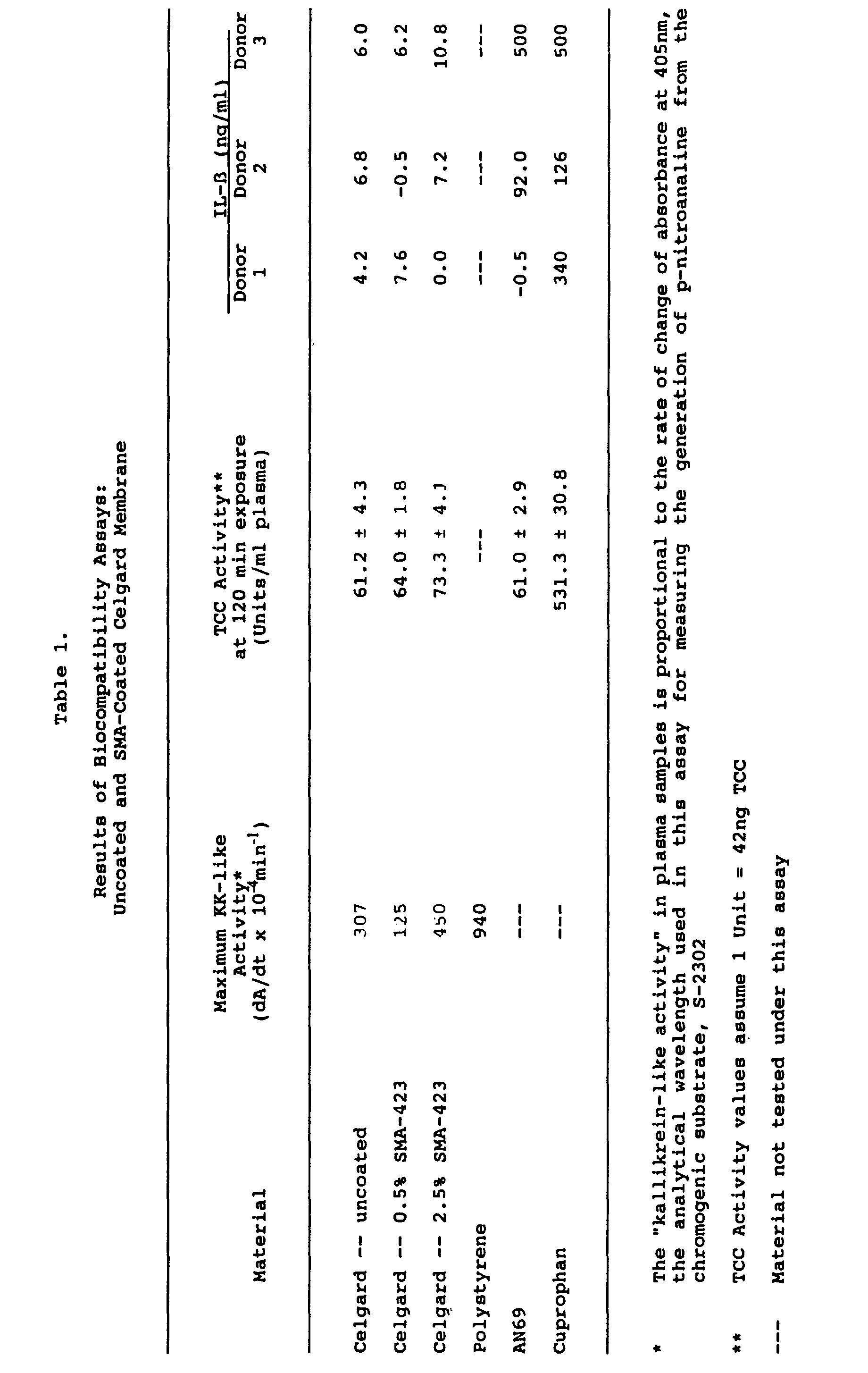
- Example 3. Platelet adhesion and activation. Canine ex vivo arteriovenous shunts were used to study platelet adhesion and activation. Similar studies have been reported by Lelah, M.D. et al. (1984) J. Biomed. Mater. Res. 18:475-496, and by Zingg, W. et al. (1986) Life Support Syst. 4:221-229. SMA-treated polypropylene tubing was compared to uncoated tubing and uncoated polyvinyl chloride tubing. Animals were systemically heparinized to mimic extracorporeal circulation conditions. Shunts were removed at 30 minute and three hour intervals. Samples of control and coated tubing were fixed with 2% glutaraldehyde in saline and examined by scanning electron microscopy using a JEOL JSM-6400 instrument. Platelet deposition displayed two different patterns. On control surfaces, after 30 minutes exposure, platelets were uniformly distributed, of spherical or dendritic shape, attached to the surface in a single layer. At 3 hours, two layers were seen on control tubing. The initially deposited platelets progressed to the most activated pancake form and were covered by the second layer of fresh platelets with mostly dendritic form. In contrast, on the SMA-coated surfaces, only one platelet layer was seen and activation was less advanced, showing only dendritic forms. Platelet density was always lower on the SMA-coated surfaces than the control surfaces. Results were even more dramatic in tests with non-heparinized animals, where control non-coated tubes became occluded with fibrin clots and trapped red cells.
- Example 4. Biocompatibility of LSL-coated 316L stainless steel discs as measured by kallikrein-like activity (intrinsic clotting cascade) and terminal complement complex (TCC) activity (complement activation). 316L stainless steel discs dip-coated with varying concentrates of SMA-423 (0.1%, 0.5%, 1.0% and 2.0% solutions (w/w) in MEK were compared with uncoated 316L stainless steel disc, "wettable" polystyrene and PDMS (PS-252)-coated polystyrene (United Chemical Technology, Inc., Bristol, PA). Diluted platelet-poor plasma was exposed to the test surfaces for up to 10 minutes. Samples were withdrawn and assayed for kallikrein-like activity using the chromogenic substrate and testing protocol described in Example 2. Soluble TCC was measured by an ELISA assay as described by Deppisch (1990). The results are given in Figures 3 and 4.
- The kallikrein-like activity test (Fig. 3) shows that 316L stainless steel discs are not contact activators of the intrinsic coagulation cascade, whether coated or not.
- The results of complement activation (Fig. 4) show that SMA coating reduces TCC levels over a wide range of coating solution concentration. Complement activation by 316L stainless steel coated with 0.5% SMA-423 approached that of a commercial polyacrylonitrile dialysis membrane, AN69, known to be a weak complement activating material.
- Example 5. Biocompatibility of LSL-coated 316L stainless steel discs as measured by thrombin-antithrombin assay (TAT). Recalcified anticoagulated human whole blood was exposed to the test surfaces for up to 20 minutes. Samples were withdrawn at intervals and assayed for TAT by a commercial ELISA test, as previously described. Results are shown in Figures 5-8 and Table 2. As shown in Figure 5, an initial lag period is typically followed by an exponential increase in the generation of TAT in recalcified human blood. The clotting time (Figure 6), defined as the time at which the last sample is collected prior to clotting decreases with increasing surface thrombogenicity. The lag periods (Figure 7) range from approximately 1 minute (for strongly contact-activating materials) to as much as 12 minutes for non-contact-activating materials). The rate of the exponential increase in TAT that follows a lag period increases with increasing surface thrombogenicity (Figure 8).
- As shown in Figure 6, the addition of SMA-423 coatings to the surface of 316L stainless steel produces a significant increase in the clotting time of recalcified human blood exposed to these surfaces. The clotting time increases with increasing concentration of SMA in the clotting solution. As shown in Figure 7, the coated and uncoated stainless steel surfaces do not promote contact-phase activation of the intrinsic coagulation cascade, consistent with the results of the kallikrein-like activity assay (Example 4). By coating 316L stainless steel with SMA-423, the rate of the exponential increase of TAT in recalcified human blood is reduced in a dose dependent manner. SMA coatings improve the thromboresistance of the stainless steel surface in a dose dependent manner, with 1% and 2% SMA-423 coatings providing the highest thromboresistance.
- Example 6. Platelet and leukocyte compatibility studies. Whole blood (WB) of human volunteers was subjected to surface contact in tubing of various test materials as described in detail below. After one hour of contact, the blood was removed for analysis of platelet count as a measure of total platelet loss, and of microparticle release and percentages of platelets positive for P-selectin as measures of platelet activation. Analysis of platelet-leukocyte association, as an indicator of platelet activation induced by contact with test material, was carried out by measuring the platelet GPIIb antigen associated with leukocytes in a fluorescence-activated cell sorter. Leukocyte activation was assessed by measuring any loss of L-selectin and CDllb expression. The data are shown in Table 2. See Gemmell, C.H. et al. (1995) J. Lab. Clin. Med. 125(2):276-287, incorporated herein by reference.
- Platelet Preparation: Whole blood from normal volunteers (4 individuals) was drawn into syringes pre-loaded with anticoagulant after discarding the first mL. For most experiments the anticoagulant, PPACK, a selective thrombin inhibitor at a final concentration of 60 µM was used. The calcium chelator, 5 mM EGTA for the metal ion chelator, 5mM EDTA were also used as anticoagulants. All syringes were pre-warmed to 37°C and the whole blood was immediately used for experimentation that was performed in a 37°C room.

- Blood Material Contact: As shown in Figure 9, fresh whole blood was added to tubes (25 cm L, 1.57 mm ID) whose ends were connected to two arms extending from the sides of a rocking platform (13 oscillations per minute). Ignoring the abrupt change in flow direction the maximum wall shear rate was less than 25 sec-1. Both ends of the test segment terminated in Silastic segments (1.57 mm ID, 5 cm L) and at any given time 92% of the blood was within the test segment. For each experiment, a resting whole blood sample (0.5 ml) was set aside in a sealed microcentrifuge tube for one hour at 37°C. At the conclusion of the test, the 525 µl of whole blood within the tube was displaced, avoiding an air interface, with 150 µl of Hepes-Tyrodes buffer (HTB:137 mM NaCl, 2.7 mM KCl, 16 mM NaHCO3, 5 mM MgCl2, 3.5 mM Hepes, 1 g/L glucose, 2 g/L bovine albumin, pH 7.4). At this time EDTA (5mM final concentration) was added to samples (including resting blood sample) for determination of platelet count as well as flow cytometric analysis of platelet activation and microparticle formation. For flow cytometric analysis of platelet association with leukocytes the blood samples were analyzed without EDTA added.
- In certain cases, to identify the potential putative platelet receptors involved in material induced platelet activation, unlabelled antibody to GPIb (AP1, capable of blocking the vWF binding site) or antibody to GPIIb/IIIa (A2A9, capable of blocking fibrinogen binding) at up to 100 µg/ml were added to whole blood prior to material contact. The tetrapeptide, RGDS at 1 mg/ml was also sometimes added to inhibit ligand binding to GPIIb/IIIa. Three materials: polyvinyl alcohol hydrogel, polyethylene (Intramedic PE), Silastic™ (Dow Corning) were tested for times up to one hour at 37°C and up to 9 tubes were tested simultaneously. Polyvinyl alcohol hydrogel coating onto oxidized PE was prepared as previously described by glutaraldehyde cross linking (Cholakis, C.H. et al. (1989) J. Biomed. Mater. Res. 23:417-441).
- Flow Cytometry: Samples were analyzed on a Becton Dickinson FACScan flow cytometer (Mountain View, CA). For platelet analysis the light scatter and fluorescence channels were set at logarithmic gain. Two color analysis was used to determine the degree of α-granule release (P-selectin; KC4.1) and GPIIb/IIIa receptor activation (PAC-1, 9F9). Five µl samples of whole blood were diluted 10 fold with HTB and saturating concentrations of antibodies were added. After a 20 minute incubation samples were fixed with 1% paraformaldehyde. A minimum of 5,000 platelet events were acquired by gating on flow cytometric events within a single intact platelet window defined by light scatter characteristics and positive for FITC labelled platelet specific antibodies (GPIb or GPIIb/IIIa). The presence of the PE labelled activation specific antibody (KC4.1, PAC-1, 9F9) was used to determine the percentage of activated platelets. In addition, the arbitrary fluorescent intensity of the activated platelet population as well as the total fluorescent signal were recorded.
- Platelet specific events, including microparticles, were identified by gating on GPIIb/IIIa (FITC-P2) or GPIb (FITC-AP1) positive events and microparticles were distinguished by forward scatter size analysis. The forward scatter cut off was set to the immediate left of the single intact platelet population of a resting whole blood sample, and very minor adjustments are required from day to day due to instrument variability. The concentration of microparticles was estimated by multiplying the single intact platelet count (determined in a WB sample containing EDTA so that all aggregates and platelet/leukocytes could be disrupted) by the percentage of platelet events (platelets and microparticles) falling into the microparticle window as assessed by flow cytometry. The Coulter counter's platelet gates are between 2 and 30 fl approximately, thus indicating that platelets counted are between 1.5 and 3.8 µm, if one assumes a spherical shape. It is possible that some large microparticles could be counted as single platelets using the Coulter counter. Using fluorescent beads (3, 2, 1, 0.46, 0.23 and 0.14 µm, Polysciences Inc.) we have shown that our microparticles are a heterogeneous population ranging in size from 0.1 to 0.8 µm. 5,000 positive platelet events were analyzed and microparticles reported as a percentage of total platelet events.
- To determine the percentage of leukocytes with bound platelet(s) saturating concentrations of PE-anti-CD45 and FITC-P2 (anti-GPIIb/IIIa) were added to diluted (1:10) whole blood samples (5 µL) and incubated for 20 minutes. Samples were then diluted, fixed and analyzed. Acquisition was gated to include only those events positive for PE-anti-CD45 MoAb, the pan leukocyte marker. The second color (FITC) was used to determine the linearized fluorescent intensity of the platelet (anti-GPIIb/IIIa) signal associated with leukocytes. The background FITC fluorescence associated with leukocytes was determined from samples containing 10 mM EDTA, so that all platelets would be dissociated from leukocytes and from a FITC labelled irrelevant monoclonal antibody (HL1212), against a factor IX epitope.
- Significant differences in response to the test materials were noted in the measurement of platelet loss (Table 2, column labeled "Platelet Count.") The presence of SMA either as coating or incorporated into the polymer dramatically reduced platelet loss after contact with polyvinylchloride (PVC) or polypropylene surfaces. The loss of platelets from PVC surfaces compounded with SMA was similar to that observed for Silastic (Trademark, Dow Chemical Co., Midland, MI), the negative control. Polypropylene surfaces caused a dramatic (69%) loss of platelets and the presence of SMA, either compounded or coated, substantially improved (decreased) platelet loss, to the extent that performance was better than untreated polyethylene.
- For all surfaces, there was minimal evidence of bulk platelet release, as assessed by the low percentage of platelets positive for P-selectin (α-granule release). The percentage of microparticles after surface contact was only marginally above background for PVC compounded with SMA and for Silastic™, suggesting a very low degree of platelet activation. PVC, polyethylene and polypropylene caused elevated microparticle formation, with polypropylene causing the greatest activation. The presence of SMA reduced the extent of microparticle formation.
- Analysis of leukocyte activation revealed minimal upregulation of CD11b or L-selectin with any of the tested surfaces. The presence of SMA had no deleterious effect, however.
- Example 7. A polycarbonate disc was coated in a 1% solution of SMA-423 in Arcosolve PM. The disc was then irradiated in a Philips X-ray Fluorescence Spectrometer fitted with a chromium anode and operated at 60 KV and 50 MA. Part of the disc was masked by a copper ring so that it received no irradiation. The other part of the disc received a dose of 12 Mrads. The disc was then washed in ethanol at 45°C which is known to be a good solvent for SMA-423. Retention of SMA-423 was measured by before and after comparison of XRF intensity ratios. The results are shown in the following table:
Sample % Retention of SMA-423 Non Irradiated Coating 0 % Irradiated Coating 50% - In a procedure identical to that just described, a stainless steel disc was coated with SMA-423. The results of washing in 45°C ethanol are shown in the following table:
Sample % Retention of SMA-423 Non Irradiated Coating 0% Irradiated Coating 56% - The teachings of the present invention provide for a new approach to fabricating biocompatible surfaces using coating materials. Besides the base polymers, metals and LSL coatings specifically exemplified, other base polymers, metals and LSL coatings are intended as within the scope of the invention, based on the teachings herein. Other coating procedures as known in the art can be employed. Other materials may be included in addition to the LSL copolymers, to incorporate other desired properties or to further enhance biocompatibility, all as understood in the art.
Claims (35)
- A metallic or polymeric article coated with a biocompatible coating comprising a polylactone-polysiloxane-polylactone triblock copolymer, the coating having a relative surface concentration sufficient to provide an X-ray fluorescence intensity ratio of from 0.02 to 0.35.
- An article according to claim 1 wherein the X-ray fluorescence intensity ratio is from 0.05 to 0.25.
- A polymeric article according to claim 2 wherein the X-ray fluorescence intensity ratio is from 0.16 to 0.20.
- An article according to any one of claims 1 to 3 wherein the triblock copolymer is a polycaprolactone-polysiloxane-polycaprolactone copolymer.
- An article according to claim 4 wherein the triblock copolymer comprises polycaprolactone blocks each having a nominal molecular weight of from 1000 to 10,000 and a polysiloxane block having a nominal molecular weight of from 1000 to 5000.
- An article according to claim 5 wherein the triblock copolymer comprises polycaprolactone blocks each having a nominal molecular weight of 2000 and a polysiloxane block having a nominal molecular weight of from 2000 to 3000.
- An article according to claim 6 wherein the polysiloxane block has a nominal molecular weight of 3000.
- An article according to any one of claims 1 to 7 wherein the biocompatible coating has been subjected to ionizing radiation.
- A metallic article according to any one of claims 1 to 8 wherein the X-ray fluorescence intensity ratio is in the range 0.09 to 0.18.
- A metallic article according to any one of claims 1 to 9 which is a flat-sheet heat exchanger or a membrane compartment.
- A metallic article according to any one of claims 1 to 10 wherein the metal is stainless steel.
- A metallic article according to claim 11 wherein the stainless steel is 316L.
- A polymeric article according to any one of claims 1 to 8 wherein the X-ray fluorescence intensity ratio is in the range 0.1690 to 0.19.
- A polymeric article according to any one of claims 1 to 8 and 13 which is a porous membrane.
- As polymeric article according to claim 14 wherein the porous membrane is a microporous membrane.
- A polymeric article according to claim 14 wherein the porous membrane is a polypropylene membrane.
- A polymeric article according to claim 14 wherein the porous membrane is a polyethylene membrane.
- A polymeric article according to any one of claims 1 to 8 and 13 to 17 comprising a polymer coated metal surface.
- A method of applying a biocompatible coating to a metallic or polymeric article which comprises:(a) contacting the article with a solution of a polylactone-polysiloxane-polylactone triblock copolymer in a solvent capable of wetting the surface of the article, the concentration of copolymer in the solution being such that, after drying, the article has a surface concentration of copolymer sufficient to provide an X-ray fluorescence relative ratio intensity of from 0.02 to 0.35;(b) contacting the article with a solution of a polylactone-polysiloxane-polylactone triblock copolymer in a solvent capable of wetting the surface of the article, the concentration of copolymer in the solution being such that, after solvent removal, the article has a surface concentration of copolymer sufficient to provide an X-ray fluorescence relative ratio intensity of from 0.02 to 0.35; or(c) passing the article at a constant rate through a solution of a polylactone-polysiloxane-polylactone triblock copolymer in a solvent capable of wetting the surface of the article, the concentration of the copolymer in the solution and the rate at which the article is passed through the solution being such that, after drying or solvent removal, the article has a surface concentration of copolymer sufficient to provide an X-ray fluorescence relative intensity ratio of from 0.02 to 0.35.
- A method according to claim 19 wherein the X-ray fluorescence relative intensity ratio is as defined in claim 2 or 3.
- A method according to claim 19 or 20 wherein the triblock copolymer is as defined in claim 4, 5, 6 or 7.
- A method according to any one of claims 19 to 21 further comprising subjecting the coated article to ionizing radiation.
- A method according to claim 22 wherein the ionizing radiation is in the form of X-rays, γ-rays or an electron beam.
- A method according to claim 23 wherein the radiation is X-rays in the dose range of 0.25 to 13.0 Mrad.
- A method according to any one of claims 19 to 24 wherein the metal is stainless steel.
- A method according to any one of claims 19 to 24 wherein the article is metallic and wherein the X-ray fluorescence relative intensity is from 0.09 to 0.18.
- A method according to any one of claims 19 to 24 wherein the article is metallic, the copolymer is as defined in claim 7 and the solvent is methyl ethyl ketone.
- A method according to any one of claims 19 to 24 wherein the article is a polymeric article and wherein the X-ray fluorescence relative intensity ratio is from 0.1690 to 0.19.
- A method according to any one of claims 19 to 24 and 28 wherein the polymeric article is a porous membrane.
- A method according to claim 29 wherein the porous membrane is a polypropylene microporous membrane.
- A method according to any one of claims 19 to 30 wherein in (b) the concentration of triblock copolymer in the solution is from 1.0% - 2.5% (w/w).
- A method according to any one of claims 19 to 31 wherein in (b) the solvent is methyl ethyl ketone and the solvent is removed by evaporation.
- A method according to any one of claims 19 to 24 wherein the article is a polymeric article and wherein in (c) the rate is 5.08 m/s (100 ft/min) and the copolymer concentration is 2% (w/w).
- A method according to any one of claims 19 to 33 wherein the article is a blood oxygenator.
- A method according to any one of claims 19 to 33 wherein the article is a blood heat exchanger.
Applications Claiming Priority (3)
| Application Number | Priority Date | Filing Date | Title |
|---|---|---|---|
| US22795594A | 1994-04-15 | 1994-04-15 | |
| US227955 | 1994-04-15 | ||
| PCT/US1995/004584 WO1995028184A1 (en) | 1994-04-15 | 1995-04-14 | Biocompatible coated article |
Publications (2)
| Publication Number | Publication Date |
|---|---|
| EP0755272A1 EP0755272A1 (en) | 1997-01-29 |
| EP0755272B1 true EP0755272B1 (en) | 2001-07-11 |
Family
ID=22855140
Family Applications (1)
| Application Number | Title | Priority Date | Filing Date |
|---|---|---|---|
| EP95916378A Expired - Lifetime EP0755272B1 (en) | 1994-04-15 | 1995-04-14 | Biocompatible coated article |
Country Status (8)
| Country | Link |
|---|---|
| US (3) | US5643681A (en) |
| EP (1) | EP0755272B1 (en) |
| JP (1) | JP3228752B2 (en) |
| AT (1) | ATE202942T1 (en) |
| AU (1) | AU692252B2 (en) |
| CA (1) | CA2187616A1 (en) |
| DE (1) | DE69521690T2 (en) |
| WO (1) | WO1995028184A1 (en) |
Families Citing this family (61)
| Publication number | Priority date | Publication date | Assignee | Title |
|---|---|---|---|---|
| CN1052915C (en) * | 1995-11-27 | 2000-05-31 | 中国医学科学院生物医学工程研究所 | Medical carrier of protein coat for carrying gene and its prodn. method |
| US6020047A (en) * | 1996-09-04 | 2000-02-01 | Kimberly-Clark Worldwide, Inc. | Polymer films having a printed self-assembling monolayer |
| FR2758990B1 (en) * | 1996-09-19 | 1999-05-28 | Hospal Ind | APPARATUS FOR THE TREATMENT OF BLOOD BY EXTRACORPOREAL CIRCULATION AND MANUFACTURING METHOD |
| US6443942B2 (en) | 1996-11-01 | 2002-09-03 | Minimed, Inc. | Medication device with protein stabilizing surface coating |
| US5922550A (en) * | 1996-12-18 | 1999-07-13 | Kimberly-Clark Worldwide, Inc. | Biosensing devices which produce diffraction images |
| US6180288B1 (en) | 1997-03-21 | 2001-01-30 | Kimberly-Clark Worldwide, Inc. | Gel sensors and method of use thereof |
| US20040219682A1 (en) * | 1997-09-18 | 2004-11-04 | Ridgway Helen Jane | Single-tube method and system for platelet function analysis |
| US20040219681A1 (en) * | 1997-09-18 | 2004-11-04 | Ridgway Helen Jane | Two-tube method and system for platelet function analysis using platelet count |
| US5900270A (en) * | 1997-09-22 | 1999-05-04 | Cobe Laboratories, Inc. | Technique for testing and coating a microporous membrane |
| US6060256A (en) * | 1997-12-16 | 2000-05-09 | Kimberly-Clark Worldwide, Inc. | Optical diffraction biosensor |
| US6024918A (en) * | 1998-03-13 | 2000-02-15 | Medtronic, Inc. | Method for attachment of biomolecules to surfaces of medical devices |
| US6391568B1 (en) * | 1998-07-15 | 2002-05-21 | Lionheart Technologies, Inc. | Method for determining platelet reactivity in a whole blood sample |
| US6248127B1 (en) | 1998-08-21 | 2001-06-19 | Medtronic Ave, Inc. | Thromboresistant coated medical device |
| ES2308853T3 (en) * | 1998-10-13 | 2008-12-01 | Gambro Lundia Ab | BIOCOMPATIBLE POLYMER FILM. |
| US6221579B1 (en) | 1998-12-11 | 2001-04-24 | Kimberly-Clark Worldwide, Inc. | Patterned binding of functionalized microspheres for optical diffraction-based biosensors |
| US6579673B2 (en) | 1998-12-17 | 2003-06-17 | Kimberly-Clark Worldwide, Inc. | Patterned deposition of antibody binding protein for optical diffraction-based biosensors |
| US6153113A (en) * | 1999-02-22 | 2000-11-28 | Cobe Laboratories, Inc. | Method for using ligands in particle separation |
| EP1040788B1 (en) * | 1999-03-29 | 2001-12-19 | F.Hoffmann-La Roche Ag | Apparatus for quantitative determination of the local distribution of a measurement value |
| US6395226B1 (en) | 1999-04-06 | 2002-05-28 | Medtronic, Inc. | Alkoxysilane/alkysilane copolymer coating of medical devices |
| US7167615B1 (en) | 1999-11-05 | 2007-01-23 | Board Of Regents, The University Of Texas System | Resonant waveguide-grating filters and sensors and methods for making and using same |
| US6254921B1 (en) | 1999-12-08 | 2001-07-03 | Surmodics, Inc. | Coating process and apparatus |
| US6399295B1 (en) | 1999-12-17 | 2002-06-04 | Kimberly-Clark Worldwide, Inc. | Use of wicking agent to eliminate wash steps for optical diffraction-based biosensors |
| US7604663B1 (en) | 1999-12-30 | 2009-10-20 | St. Jude Medical, Inc. | Medical devices with polymer/inorganic substrate composites |
| US20020120333A1 (en) * | 2001-01-31 | 2002-08-29 | Keogh James R. | Method for coating medical device surfaces |
| US6824680B2 (en) * | 2001-05-07 | 2004-11-30 | New Jersey Institute Of Technology | Preparation of microporous films from immiscible blends via melt processing and stretching |
| DE10135277C2 (en) | 2001-07-13 | 2003-06-05 | Jostra Ag | Defoaming agent, device with a surface coated with the defoaming agent and use of such a device |
| US20030032874A1 (en) | 2001-07-27 | 2003-02-13 | Dexcom, Inc. | Sensor head for use with implantable devices |
| US7102752B2 (en) | 2001-12-11 | 2006-09-05 | Kimberly-Clark Worldwide, Inc. | Systems to view and analyze the results from diffraction-based diagnostics |
| US7098041B2 (en) | 2001-12-11 | 2006-08-29 | Kimberly-Clark Worldwide, Inc. | Methods to view and analyze the results from diffraction-based diagnostics |
| CN1911460A (en) * | 2002-02-15 | 2007-02-14 | Cv医药有限公司 | Polymer coating for medical devices |
| US9492111B2 (en) * | 2002-04-22 | 2016-11-15 | Medtronic Minimed, Inc. | Methods and materials for stabilizing analyte sensors |
| US7813780B2 (en) * | 2005-12-13 | 2010-10-12 | Medtronic Minimed, Inc. | Biosensors and methods for making and using them |
| US20070227907A1 (en) * | 2006-04-04 | 2007-10-04 | Rajiv Shah | Methods and materials for controlling the electrochemistry of analyte sensors |
| US7214530B2 (en) * | 2002-05-03 | 2007-05-08 | Kimberly-Clark Worldwide, Inc. | Biomolecule diagnostic devices and method for producing biomolecule diagnostic devices |
| US7771922B2 (en) * | 2002-05-03 | 2010-08-10 | Kimberly-Clark Worldwide, Inc. | Biomolecule diagnostic device |
| US7118855B2 (en) * | 2002-05-03 | 2006-10-10 | Kimberly-Clark Worldwide, Inc. | Diffraction-based diagnostic devices |
| US7223534B2 (en) * | 2002-05-03 | 2007-05-29 | Kimberly-Clark Worldwide, Inc. | Diffraction-based diagnostic devices |
| US7223368B2 (en) * | 2002-05-03 | 2007-05-29 | Kimberly-Clark Worldwide, Inc. | Diffraction-based diagnostic devices |
| US7485453B2 (en) * | 2002-05-03 | 2009-02-03 | Kimberly-Clark Worldwide, Inc. | Diffraction-based diagnostic devices |
| US7091049B2 (en) * | 2002-06-26 | 2006-08-15 | Kimberly-Clark Worldwide, Inc. | Enhanced diffraction-based biosensor devices |
| US6766259B2 (en) | 2002-07-29 | 2004-07-20 | Baxter International Inc. | System and a method for detecting fiber damage in a dialyzer |
| US7169550B2 (en) * | 2002-09-26 | 2007-01-30 | Kimberly-Clark Worldwide, Inc. | Diffraction-based diagnostic devices |
| US20040074785A1 (en) * | 2002-10-18 | 2004-04-22 | Holker James D. | Analyte sensors and methods for making them |
| US9237865B2 (en) * | 2002-10-18 | 2016-01-19 | Medtronic Minimed, Inc. | Analyte sensors and methods for making and using them |
| US20050272989A1 (en) * | 2004-06-04 | 2005-12-08 | Medtronic Minimed, Inc. | Analyte sensors and methods for making and using them |
| US7264858B2 (en) * | 2002-10-29 | 2007-09-04 | Lubrizol Advanced Materials, Inc. | Multilayered articles having biocompatibility and biostability characteristics |
| SE526027C2 (en) * | 2003-05-23 | 2005-06-14 | Gambro Lundia Ab | Biocompatible polymer composition with antibacterial properties, useful e.g., in medical devices, wound dressings, and food and medicine storage containers, comprises a bismuth complex such as triphenylbismuth dichloride |
| EP1648298A4 (en) | 2003-07-25 | 2010-01-13 | Dexcom Inc | Oxygen enhancing membrane systems for implantable devices |
| US7135538B2 (en) | 2003-11-12 | 2006-11-14 | General Electric Company | Transparent polycarbonate-polysiloxane copolymer blend, method for the preparation thereof, and article derived therefrom |
| US8277713B2 (en) | 2004-05-03 | 2012-10-02 | Dexcom, Inc. | Implantable analyte sensor |
| US7771740B2 (en) * | 2004-07-19 | 2010-08-10 | Boston Scientific Scimed, Inc. | Medical devices containing copolymers with graft copolymer endblocks for drug delivery |
| DE102004035835A1 (en) * | 2004-07-23 | 2006-03-16 | Degussa Ag | Direct metallizable polyester molding compound |
| JP4029298B2 (en) * | 2004-07-26 | 2008-01-09 | 大塚製薬株式会社 | Method for removing sticky microvesicles |
| US20060153892A1 (en) * | 2005-01-10 | 2006-07-13 | Porter David S | Protein-resistant articles |
| US8535702B2 (en) * | 2005-02-01 | 2013-09-17 | Boston Scientific Scimed, Inc. | Medical devices having porous polymeric regions for controlled drug delivery and regulated biocompatibility |
| US8245660B2 (en) * | 2007-09-13 | 2012-08-21 | Oakriver Technology, Inc. | Dip coating apparatus with height adjustable coating tubes and method of coating |
| US8660628B2 (en) * | 2009-12-21 | 2014-02-25 | Medtronic Minimed, Inc. | Analyte sensors comprising blended membrane compositions and methods for making and using them |
| WO2011112549A2 (en) * | 2010-03-10 | 2011-09-15 | Emory University | Temperature sensitive conjugate compositions, and uses related thereto |
| EP3589704B1 (en) | 2017-03-03 | 2025-05-14 | Harland Medical Systems, Inc. | Coating composition comprised of a hydrophilic crosslinker, a hydrophobic crosslinker and optionally a hydrogel and methods of making and using the same |
| US10875048B2 (en) | 2017-09-05 | 2020-12-29 | Harland Medical Systems, Inc | Coating apparatus with an automatic fluid level system, and methods of using the same |
| US11485852B2 (en) * | 2020-02-18 | 2022-11-01 | Northern Technologies International Corporation | High impact resistant poly(lactic acid) blends |
Family Cites Families (15)
| Publication number | Priority date | Publication date | Assignee | Title |
|---|---|---|---|---|
| FR1568130A (en) * | 1968-02-14 | 1969-05-23 | ||
| US3562352A (en) * | 1968-09-06 | 1971-02-09 | Avco Corp | Polysiloxane-polyurethane block copolymers |
| US4675361A (en) * | 1980-02-29 | 1987-06-23 | Thoratec Laboratories Corp. | Polymer systems suitable for blood-contacting surfaces of a biomedical device, and methods for forming |
| FR2565233B1 (en) * | 1984-05-30 | 1986-09-12 | Rhone Poulenc Rech | URETHANE LINKED SILICONE AND POLYLACTONE GRAFT COPOLYMER |
| US4594262A (en) * | 1984-07-05 | 1986-06-10 | Minnesota Mining And Manufacturing Company | Electron beam adhesion-promoting treatment of polyester film base |
| US4533566A (en) * | 1984-07-05 | 1985-08-06 | Minnesota Mining And Manufacturing Company | Electron-beam adhesion-promoting treatment of polyester film base for silicone release liners |
| US4663413A (en) * | 1985-01-04 | 1987-05-05 | Thoratec Laboratories Corp. | Polysiloxane-polylactone block copolymers |
| WO1986007541A1 (en) * | 1985-06-19 | 1986-12-31 | Yasushi Zyo | Composition which can impart antithrombotic ability and medical apparatus to be in contact with blood |
| JPH0726198B2 (en) * | 1986-01-29 | 1995-03-22 | 株式会社日立製作所 | Thin film forming method and apparatus |
| SE455441B (en) * | 1986-11-24 | 1988-07-11 | Refina Instr Ab | SET TO CONTROL AND / OR METE THE THICKNESS OF LAYERS SUCH AS SURFACE LAYER |
| JPH0197541A (en) * | 1987-10-07 | 1989-04-17 | Brother Ind Ltd | Machine Tools |
| US4929510A (en) * | 1988-04-29 | 1990-05-29 | State University Of New York | Biocompatible polymer articles |
| JPH0692481B2 (en) * | 1989-06-02 | 1994-11-16 | 信越化学工業株式会社 | Polylactone-modified organopolysiloxane compound |
| FI87492C (en) * | 1990-06-12 | 1993-01-11 | Valmet Paper Machinery Inc | Method and apparatus for measuring and controlling the amount of coating it |
| DE4217165C1 (en) * | 1992-05-23 | 1993-08-19 | Rehau Ag + Co, 8673 Rehau, De |
-
1995
- 1995-04-14 CA CA002187616A patent/CA2187616A1/en not_active Abandoned
- 1995-04-14 JP JP52709195A patent/JP3228752B2/en not_active Expired - Fee Related
- 1995-04-14 DE DE69521690T patent/DE69521690T2/en not_active Expired - Lifetime
- 1995-04-14 AU AU22898/95A patent/AU692252B2/en not_active Ceased
- 1995-04-14 EP EP95916378A patent/EP0755272B1/en not_active Expired - Lifetime
- 1995-04-14 WO PCT/US1995/004584 patent/WO1995028184A1/en not_active Ceased
- 1995-04-14 AT AT95916378T patent/ATE202942T1/en not_active IP Right Cessation
- 1995-06-07 US US08/473,723 patent/US5643681A/en not_active Expired - Lifetime
-
1996
- 1996-10-10 US US08/728,824 patent/US5738902A/en not_active Expired - Lifetime
- 1996-10-10 US US08/728,823 patent/US5702823A/en not_active Expired - Lifetime
Also Published As
| Publication number | Publication date |
|---|---|
| MX9604801A (en) | 1998-10-31 |
| JPH09510903A (en) | 1997-11-04 |
| CA2187616A1 (en) | 1995-10-26 |
| AU692252B2 (en) | 1998-06-04 |
| WO1995028184A1 (en) | 1995-10-26 |
| DE69521690D1 (en) | 2001-08-16 |
| US5738902A (en) | 1998-04-14 |
| ATE202942T1 (en) | 2001-07-15 |
| EP0755272A1 (en) | 1997-01-29 |
| JP3228752B2 (en) | 2001-11-12 |
| AU2289895A (en) | 1995-11-10 |
| US5643681A (en) | 1997-07-01 |
| DE69521690T2 (en) | 2001-10-25 |
| US5702823A (en) | 1997-12-30 |
Similar Documents
| Publication | Publication Date | Title |
|---|---|---|
| US5643681A (en) | Biocompatible coated article | |
| US5463010A (en) | Hydrocyclosiloxane membrane prepared by plasma polymerization process | |
| Okano et al. | Effect of hydrophilic and hydrophobic microdomains on mode of interaction between block polymer and blood platelets | |
| EP1945380B1 (en) | Ultra-thin photo-polymeric coatings and uses thereof | |
| Nojiri et al. | Blood compatibility of PEO grafted polyurethane and HEMA/styrene block copolymer surfaces | |
| Yue et al. | Grafting of zwitterion from polysulfone membrane via surface-initiated ATRP with enhanced antifouling property and biocompatibility | |
| Jui-Che et al. | Surface characterization and ex vivo blood compatibility study of plasmamodified small diameter tubing: effect of sulphur dioxide and hexamethyl-disiloxane plasmas | |
| JPH03293023A (en) | Unsymmetrical semi-permeable membrane, and making thereof | |
| EP1037679A1 (en) | Biocompatible polymer film | |
| Zhang et al. | Polybetaine modification of PDMS microfluidic devices to resist thrombus formation in whole blood | |
| Cao et al. | Glow discharge plasma treatment of polyethylene tubing with tetraglyme results in ultralow fibrinogen adsorption and greatly reduced platelet adhesion | |
| KR20130139376A (en) | Medical supply | |
| WO1998057679A1 (en) | Antithrombotic medical material | |
| Inoue et al. | Ex vivo and in vivo evaluation of the blood compatibility of surface‐modified polyurethane catheters | |
| Braune et al. | Interaction of thrombocytes with poly (ether imide): The influence of processing | |
| Banerjee et al. | Hematological aspects of biocompatibility-review article | |
| US5236592A (en) | Haemocompatible composite material and method of using thereof | |
| MXPA96004801A (en) | Article coated biocompati | |
| Sagnella et al. | Shear‐induced platelet activation and adhesion on human pulmonary artery endothelial cells seeded onto hydrophilic polymers | |
| Takei et al. | Postadsorptive behavior of plasma proteins on poly (propylene oxide)-segmented nylon-610 surfaces and its implication in preventing contact-induced activation of platelets on these surfaces | |
| JPH0523391A (en) | Antithrombogen surface, its manufacturing process and its material | |
| Major et al. | In vitro hemocompatibility on thin ceramic and hydrogel films deposited on polymer substrate performed in arterial flow conditions | |
| Khang et al. | Prevention of platelet adhesion on the polysulfone porous catheter by saline solution perfusion, I. In vitro investigation | |
| Moreira et al. | Analysis of cellular morphology, adhesion, and proliferation on uncoated and differently coated PVC tubes used in extracorporeal circulation (ECC) | |
| Lin et al. | Ex-vivo blood compatibility of silicone-containing biomaterials |
Legal Events
| Date | Code | Title | Description |
|---|---|---|---|
| PUAI | Public reference made under article 153(3) epc to a published international application that has entered the european phase |
Free format text: ORIGINAL CODE: 0009012 |
|
| 17P | Request for examination filed |
Effective date: 19961115 |
|
| AK | Designated contracting states |
Kind code of ref document: A1 Designated state(s): AT BE CH DE DK ES FR GB GR IE IT LI LU MC NL PT SE |
|
| 17Q | First examination report despatched |
Effective date: 19990928 |
|
| RAP1 | Party data changed (applicant data changed or rights of an application transferred) |
Owner name: COBE CARDIOVASCULAR, INC. |
|
| GRAG | Despatch of communication of intention to grant |
Free format text: ORIGINAL CODE: EPIDOS AGRA |
|
| GRAG | Despatch of communication of intention to grant |
Free format text: ORIGINAL CODE: EPIDOS AGRA |
|
| GRAH | Despatch of communication of intention to grant a patent |
Free format text: ORIGINAL CODE: EPIDOS IGRA |
|
| GRAH | Despatch of communication of intention to grant a patent |
Free format text: ORIGINAL CODE: EPIDOS IGRA |
|
| GRAA | (expected) grant |
Free format text: ORIGINAL CODE: 0009210 |
|
| AK | Designated contracting states |
Kind code of ref document: B1 Designated state(s): AT BE CH DE DK ES FR GB GR IE IT LI LU MC NL PT SE |
|
| PG25 | Lapsed in a contracting state [announced via postgrant information from national office to epo] |
Ref country code: NL Free format text: LAPSE BECAUSE OF FAILURE TO SUBMIT A TRANSLATION OF THE DESCRIPTION OR TO PAY THE FEE WITHIN THE PRESCRIBED TIME-LIMIT Effective date: 20010711 Ref country code: LI Free format text: LAPSE BECAUSE OF FAILURE TO SUBMIT A TRANSLATION OF THE DESCRIPTION OR TO PAY THE FEE WITHIN THE PRESCRIBED TIME-LIMIT Effective date: 20010711 Ref country code: FR Free format text: LAPSE BECAUSE OF FAILURE TO SUBMIT A TRANSLATION OF THE DESCRIPTION OR TO PAY THE FEE WITHIN THE PRESCRIBED TIME-LIMIT Effective date: 20010711 Ref country code: CH Free format text: LAPSE BECAUSE OF FAILURE TO SUBMIT A TRANSLATION OF THE DESCRIPTION OR TO PAY THE FEE WITHIN THE PRESCRIBED TIME-LIMIT Effective date: 20010711 Ref country code: BE Free format text: LAPSE BECAUSE OF FAILURE TO SUBMIT A TRANSLATION OF THE DESCRIPTION OR TO PAY THE FEE WITHIN THE PRESCRIBED TIME-LIMIT Effective date: 20010711 Ref country code: AT Free format text: LAPSE BECAUSE OF FAILURE TO SUBMIT A TRANSLATION OF THE DESCRIPTION OR TO PAY THE FEE WITHIN THE PRESCRIBED TIME-LIMIT Effective date: 20010711 |
|
| REF | Corresponds to: |
Ref document number: 202942 Country of ref document: AT Date of ref document: 20010715 Kind code of ref document: T |
|
| REG | Reference to a national code |
Ref country code: CH Ref legal event code: EP |
|
| REF | Corresponds to: |
Ref document number: 69521690 Country of ref document: DE Date of ref document: 20010816 |
|
| REG | Reference to a national code |
Ref country code: IE Ref legal event code: FG4D |
|
| ITF | It: translation for a ep patent filed | ||
| PG25 | Lapsed in a contracting state [announced via postgrant information from national office to epo] |
Ref country code: SE Free format text: LAPSE BECAUSE OF FAILURE TO SUBMIT A TRANSLATION OF THE DESCRIPTION OR TO PAY THE FEE WITHIN THE PRESCRIBED TIME-LIMIT Effective date: 20011011 Ref country code: PT Free format text: LAPSE BECAUSE OF FAILURE TO SUBMIT A TRANSLATION OF THE DESCRIPTION OR TO PAY THE FEE WITHIN THE PRESCRIBED TIME-LIMIT Effective date: 20011011 Ref country code: DK Free format text: LAPSE BECAUSE OF FAILURE TO SUBMIT A TRANSLATION OF THE DESCRIPTION OR TO PAY THE FEE WITHIN THE PRESCRIBED TIME-LIMIT Effective date: 20011011 |
|
| PG25 | Lapsed in a contracting state [announced via postgrant information from national office to epo] |
Ref country code: GR Free format text: LAPSE BECAUSE OF FAILURE TO SUBMIT A TRANSLATION OF THE DESCRIPTION OR TO PAY THE FEE WITHIN THE PRESCRIBED TIME-LIMIT Effective date: 20011012 |
|
| NLV1 | Nl: lapsed or annulled due to failure to fulfill the requirements of art. 29p and 29m of the patents act | ||
| EN | Fr: translation not filed | ||
| REG | Reference to a national code |
Ref country code: GB Ref legal event code: IF02 |
|
| PG25 | Lapsed in a contracting state [announced via postgrant information from national office to epo] |
Ref country code: ES Free format text: LAPSE BECAUSE OF FAILURE TO SUBMIT A TRANSLATION OF THE DESCRIPTION OR TO PAY THE FEE WITHIN THE PRESCRIBED TIME-LIMIT Effective date: 20020131 |
|
| REG | Reference to a national code |
Ref country code: CH Ref legal event code: PL |
|
| PG25 | Lapsed in a contracting state [announced via postgrant information from national office to epo] |
Ref country code: MC Free format text: LAPSE BECAUSE OF NON-PAYMENT OF DUE FEES Effective date: 20020414 Ref country code: LU Free format text: LAPSE BECAUSE OF NON-PAYMENT OF DUE FEES Effective date: 20020414 Ref country code: GB Free format text: LAPSE BECAUSE OF NON-PAYMENT OF DUE FEES Effective date: 20020414 |
|
| PG25 | Lapsed in a contracting state [announced via postgrant information from national office to epo] |
Ref country code: IE Free format text: LAPSE BECAUSE OF NON-PAYMENT OF DUE FEES Effective date: 20020415 |
|
| PLBE | No opposition filed within time limit |
Free format text: ORIGINAL CODE: 0009261 |
|
| STAA | Information on the status of an ep patent application or granted ep patent |
Free format text: STATUS: NO OPPOSITION FILED WITHIN TIME LIMIT |
|
| 26N | No opposition filed | ||
| GBPC | Gb: european patent ceased through non-payment of renewal fee |
Effective date: 20020414 |
|
| REG | Reference to a national code |
Ref country code: IE Ref legal event code: MM4A |
|
| PGFP | Annual fee paid to national office [announced via postgrant information from national office to epo] |
Ref country code: DE Payment date: 20110406 Year of fee payment: 17 |
|
| PGFP | Annual fee paid to national office [announced via postgrant information from national office to epo] |
Ref country code: IT Payment date: 20110419 Year of fee payment: 17 |
|
| PG25 | Lapsed in a contracting state [announced via postgrant information from national office to epo] |
Ref country code: IT Free format text: LAPSE BECAUSE OF NON-PAYMENT OF DUE FEES Effective date: 20120414 |
|
| REG | Reference to a national code |
Ref country code: DE Ref legal event code: R119 Ref document number: 69521690 Country of ref document: DE Effective date: 20121101 |
|
| PG25 | Lapsed in a contracting state [announced via postgrant information from national office to epo] |
Ref country code: DE Free format text: LAPSE BECAUSE OF NON-PAYMENT OF DUE FEES Effective date: 20121101 |