EP0753063B1 - Use of dna oligomers for inhibition of hiv by decreasing ribosomal frameshifting - Google Patents
Use of dna oligomers for inhibition of hiv by decreasing ribosomal frameshifting Download PDFInfo
- Publication number
- EP0753063B1 EP0753063B1 EP95912987A EP95912987A EP0753063B1 EP 0753063 B1 EP0753063 B1 EP 0753063B1 EP 95912987 A EP95912987 A EP 95912987A EP 95912987 A EP95912987 A EP 95912987A EP 0753063 B1 EP0753063 B1 EP 0753063B1
- Authority
- EP
- European Patent Office
- Prior art keywords
- hiv
- oligomers
- antisense dna
- human
- dna oligomers
- Prior art date
- Legal status (The legal status is an assumption and is not a legal conclusion. Google has not performed a legal analysis and makes no representation as to the accuracy of the status listed.)
- Expired - Lifetime
Links
- 210000003705 ribosome Anatomy 0.000 title claims abstract description 47
- 230000003247 decreasing effect Effects 0.000 title description 3
- 230000005764 inhibitory process Effects 0.000 title description 2
- 108020004491 Antisense DNA Proteins 0.000 claims abstract description 33
- 239000003816 antisense DNA Substances 0.000 claims abstract description 33
- 108090000623 proteins and genes Proteins 0.000 claims abstract description 19
- 102000004169 proteins and genes Human genes 0.000 claims abstract description 16
- 230000000295 complement effect Effects 0.000 claims abstract description 11
- 108091032973 (ribonucleotides)n+m Proteins 0.000 claims abstract description 9
- 230000002255 enzymatic effect Effects 0.000 claims abstract description 9
- 238000004519 manufacturing process Methods 0.000 claims abstract description 9
- 210000001812 small ribosome subunit Anatomy 0.000 claims abstract description 6
- 210000004962 mammalian cell Anatomy 0.000 claims abstract description 4
- 241000588724 Escherichia coli Species 0.000 claims description 18
- 241001430294 unidentified retrovirus Species 0.000 claims description 18
- 108020004465 16S ribosomal RNA Proteins 0.000 claims description 16
- 230000014509 gene expression Effects 0.000 claims description 16
- 241000282414 Homo sapiens Species 0.000 claims description 14
- 108020004463 18S ribosomal RNA Proteins 0.000 claims description 10
- 230000003612 virological effect Effects 0.000 claims description 10
- 239000002773 nucleotide Substances 0.000 claims description 9
- 125000003729 nucleotide group Chemical group 0.000 claims description 9
- 241000714260 Human T-lymphotropic virus 1 Species 0.000 claims description 8
- YACKEPLHDIMKIO-UHFFFAOYSA-N methylphosphonic acid Chemical class CP(O)(O)=O YACKEPLHDIMKIO-UHFFFAOYSA-N 0.000 claims description 6
- 108700004029 pol Genes Proteins 0.000 claims description 6
- 101150088264 pol gene Proteins 0.000 claims description 6
- 239000003814 drug Substances 0.000 claims description 5
- 208000005074 Retroviridae Infections Diseases 0.000 claims description 3
- 239000008194 pharmaceutical composition Substances 0.000 claims description 3
- 239000003937 drug carrier Substances 0.000 claims description 2
- 208000015181 infectious disease Diseases 0.000 claims description 2
- 230000001177 retroviral effect Effects 0.000 claims description 2
- 238000013519 translation Methods 0.000 abstract description 22
- 108020004999 messenger RNA Proteins 0.000 abstract description 15
- 210000002845 virion Anatomy 0.000 abstract description 5
- 230000000694 effects Effects 0.000 description 42
- 108010035563 Chloramphenicol O-acetyltransferase Proteins 0.000 description 38
- 241000725303 Human immunodeficiency virus Species 0.000 description 37
- 230000014616 translation Effects 0.000 description 22
- 210000004027 cell Anatomy 0.000 description 20
- 108020004707 nucleic acids Proteins 0.000 description 18
- 102000039446 nucleic acids Human genes 0.000 description 18
- 150000007523 nucleic acids Chemical class 0.000 description 18
- 108020004414 DNA Proteins 0.000 description 14
- 101150055766 cat gene Proteins 0.000 description 11
- 239000013604 expression vector Substances 0.000 description 11
- 238000011160 research Methods 0.000 description 11
- 230000000692 anti-sense effect Effects 0.000 description 10
- 238000003556 assay Methods 0.000 description 9
- 238000012986 modification Methods 0.000 description 9
- 230000004048 modification Effects 0.000 description 9
- 239000002299 complementary DNA Substances 0.000 description 8
- 238000001890 transfection Methods 0.000 description 8
- 108091026890 Coding region Proteins 0.000 description 7
- ROHFNLRQFUQHCH-YFKPBYRVSA-N L-leucine Chemical compound CC(C)C[C@H](N)C(O)=O ROHFNLRQFUQHCH-YFKPBYRVSA-N 0.000 description 7
- ROHFNLRQFUQHCH-UHFFFAOYSA-N Leucine Natural products CC(C)CC(N)C(O)=O ROHFNLRQFUQHCH-UHFFFAOYSA-N 0.000 description 7
- 238000000034 method Methods 0.000 description 7
- 239000003795 chemical substances by application Substances 0.000 description 6
- 230000037433 frameshift Effects 0.000 description 6
- 238000000338 in vitro Methods 0.000 description 6
- 239000006228 supernatant Substances 0.000 description 6
- 241000283973 Oryctolagus cuniculus Species 0.000 description 5
- 150000001413 amino acids Chemical group 0.000 description 5
- 238000010348 incorporation Methods 0.000 description 5
- 239000000203 mixture Substances 0.000 description 5
- 230000010076 replication Effects 0.000 description 5
- 108010078851 HIV Reverse Transcriptase Proteins 0.000 description 4
- 108091034117 Oligonucleotide Proteins 0.000 description 4
- 241000700605 Viruses Species 0.000 description 4
- JLCPHMBAVCMARE-UHFFFAOYSA-N [3-[[3-[[3-[[3-[[3-[[3-[[3-[[3-[[3-[[3-[[3-[[5-(2-amino-6-oxo-1H-purin-9-yl)-3-[[3-[[3-[[3-[[3-[[3-[[5-(2-amino-6-oxo-1H-purin-9-yl)-3-[[5-(2-amino-6-oxo-1H-purin-9-yl)-3-hydroxyoxolan-2-yl]methoxy-hydroxyphosphoryl]oxyoxolan-2-yl]methoxy-hydroxyphosphoryl]oxy-5-(5-methyl-2,4-dioxopyrimidin-1-yl)oxolan-2-yl]methoxy-hydroxyphosphoryl]oxy-5-(6-aminopurin-9-yl)oxolan-2-yl]methoxy-hydroxyphosphoryl]oxy-5-(6-aminopurin-9-yl)oxolan-2-yl]methoxy-hydroxyphosphoryl]oxy-5-(6-aminopurin-9-yl)oxolan-2-yl]methoxy-hydroxyphosphoryl]oxy-5-(6-aminopurin-9-yl)oxolan-2-yl]methoxy-hydroxyphosphoryl]oxyoxolan-2-yl]methoxy-hydroxyphosphoryl]oxy-5-(5-methyl-2,4-dioxopyrimidin-1-yl)oxolan-2-yl]methoxy-hydroxyphosphoryl]oxy-5-(4-amino-2-oxopyrimidin-1-yl)oxolan-2-yl]methoxy-hydroxyphosphoryl]oxy-5-(5-methyl-2,4-dioxopyrimidin-1-yl)oxolan-2-yl]methoxy-hydroxyphosphoryl]oxy-5-(5-methyl-2,4-dioxopyrimidin-1-yl)oxolan-2-yl]methoxy-hydroxyphosphoryl]oxy-5-(6-aminopurin-9-yl)oxolan-2-yl]methoxy-hydroxyphosphoryl]oxy-5-(6-aminopurin-9-yl)oxolan-2-yl]methoxy-hydroxyphosphoryl]oxy-5-(4-amino-2-oxopyrimidin-1-yl)oxolan-2-yl]methoxy-hydroxyphosphoryl]oxy-5-(4-amino-2-oxopyrimidin-1-yl)oxolan-2-yl]methoxy-hydroxyphosphoryl]oxy-5-(4-amino-2-oxopyrimidin-1-yl)oxolan-2-yl]methoxy-hydroxyphosphoryl]oxy-5-(6-aminopurin-9-yl)oxolan-2-yl]methoxy-hydroxyphosphoryl]oxy-5-(4-amino-2-oxopyrimidin-1-yl)oxolan-2-yl]methyl [5-(6-aminopurin-9-yl)-2-(hydroxymethyl)oxolan-3-yl] hydrogen phosphate Polymers Cc1cn(C2CC(OP(O)(=O)OCC3OC(CC3OP(O)(=O)OCC3OC(CC3O)n3cnc4c3nc(N)[nH]c4=O)n3cnc4c3nc(N)[nH]c4=O)C(COP(O)(=O)OC3CC(OC3COP(O)(=O)OC3CC(OC3COP(O)(=O)OC3CC(OC3COP(O)(=O)OC3CC(OC3COP(O)(=O)OC3CC(OC3COP(O)(=O)OC3CC(OC3COP(O)(=O)OC3CC(OC3COP(O)(=O)OC3CC(OC3COP(O)(=O)OC3CC(OC3COP(O)(=O)OC3CC(OC3COP(O)(=O)OC3CC(OC3COP(O)(=O)OC3CC(OC3COP(O)(=O)OC3CC(OC3COP(O)(=O)OC3CC(OC3COP(O)(=O)OC3CC(OC3COP(O)(=O)OC3CC(OC3COP(O)(=O)OC3CC(OC3CO)n3cnc4c(N)ncnc34)n3ccc(N)nc3=O)n3cnc4c(N)ncnc34)n3ccc(N)nc3=O)n3ccc(N)nc3=O)n3ccc(N)nc3=O)n3cnc4c(N)ncnc34)n3cnc4c(N)ncnc34)n3cc(C)c(=O)[nH]c3=O)n3cc(C)c(=O)[nH]c3=O)n3ccc(N)nc3=O)n3cc(C)c(=O)[nH]c3=O)n3cnc4c3nc(N)[nH]c4=O)n3cnc4c(N)ncnc34)n3cnc4c(N)ncnc34)n3cnc4c(N)ncnc34)n3cnc4c(N)ncnc34)O2)c(=O)[nH]c1=O JLCPHMBAVCMARE-UHFFFAOYSA-N 0.000 description 4
- 210000004748 cultured cell Anatomy 0.000 description 4
- 239000013612 plasmid Substances 0.000 description 4
- 239000000523 sample Substances 0.000 description 4
- 108091003079 Bovine Serum Albumin Proteins 0.000 description 3
- 239000006144 Dulbecco’s modified Eagle's medium Substances 0.000 description 3
- PEDCQBHIVMGVHV-UHFFFAOYSA-N Glycerine Chemical compound OCC(O)CO PEDCQBHIVMGVHV-UHFFFAOYSA-N 0.000 description 3
- 241000282412 Homo Species 0.000 description 3
- 101000617808 Homo sapiens Synphilin-1 Proteins 0.000 description 3
- COLNVLDHVKWLRT-QMMMGPOBSA-N L-phenylalanine Chemical compound OC(=O)[C@@H](N)CC1=CC=CC=C1 COLNVLDHVKWLRT-QMMMGPOBSA-N 0.000 description 3
- 102100021997 Synphilin-1 Human genes 0.000 description 3
- 101710137500 T7 RNA polymerase Proteins 0.000 description 3
- 102000005936 beta-Galactosidase Human genes 0.000 description 3
- 108010005774 beta-Galactosidase Proteins 0.000 description 3
- WIIZWVCIJKGZOK-RKDXNWHRSA-N chloramphenicol Chemical compound ClC(Cl)C(=O)N[C@H](CO)[C@H](O)C1=CC=C([N+]([O-])=O)C=C1 WIIZWVCIJKGZOK-RKDXNWHRSA-N 0.000 description 3
- 238000002474 experimental method Methods 0.000 description 3
- 239000012091 fetal bovine serum Substances 0.000 description 3
- 239000012634 fragment Substances 0.000 description 3
- 108010027225 gag-pol Fusion Proteins Proteins 0.000 description 3
- 230000002068 genetic effect Effects 0.000 description 3
- 210000005260 human cell Anatomy 0.000 description 3
- 230000035772 mutation Effects 0.000 description 3
- COLNVLDHVKWLRT-UHFFFAOYSA-N phenylalanine Natural products OC(=O)C(N)CC1=CC=CC=C1 COLNVLDHVKWLRT-UHFFFAOYSA-N 0.000 description 3
- 108020004418 ribosomal RNA Proteins 0.000 description 3
- 238000003786 synthesis reaction Methods 0.000 description 3
- 238000013518 transcription Methods 0.000 description 3
- 230000035897 transcription Effects 0.000 description 3
- QKNYBSVHEMOAJP-UHFFFAOYSA-N 2-amino-2-(hydroxymethyl)propane-1,3-diol;hydron;chloride Chemical compound Cl.OCC(N)(CO)CO QKNYBSVHEMOAJP-UHFFFAOYSA-N 0.000 description 2
- KUWPCJHYPSUOFW-YBXAARCKSA-N 2-nitrophenyl beta-D-galactoside Chemical compound O[C@@H]1[C@@H](O)[C@@H](O)[C@@H](CO)O[C@H]1OC1=CC=CC=C1[N+]([O-])=O KUWPCJHYPSUOFW-YBXAARCKSA-N 0.000 description 2
- FWMNVWWHGCHHJJ-SKKKGAJSSA-N 4-amino-1-[(2r)-6-amino-2-[[(2r)-2-[[(2r)-2-[[(2r)-2-amino-3-phenylpropanoyl]amino]-3-phenylpropanoyl]amino]-4-methylpentanoyl]amino]hexanoyl]piperidine-4-carboxylic acid Chemical compound C([C@H](C(=O)N[C@H](CC(C)C)C(=O)N[C@H](CCCCN)C(=O)N1CCC(N)(CC1)C(O)=O)NC(=O)[C@H](N)CC=1C=CC=CC=1)C1=CC=CC=C1 FWMNVWWHGCHHJJ-SKKKGAJSSA-N 0.000 description 2
- 208000030507 AIDS Diseases 0.000 description 2
- 102000004190 Enzymes Human genes 0.000 description 2
- 108090000790 Enzymes Proteins 0.000 description 2
- 206010062016 Immunosuppression Diseases 0.000 description 2
- FFEARJCKVFRZRR-BYPYZUCNSA-N L-methionine Chemical compound CSCC[C@H](N)C(O)=O FFEARJCKVFRZRR-BYPYZUCNSA-N 0.000 description 2
- TWRXJAOTZQYOKJ-UHFFFAOYSA-L Magnesium chloride Chemical compound [Mg+2].[Cl-].[Cl-] TWRXJAOTZQYOKJ-UHFFFAOYSA-L 0.000 description 2
- 206010028980 Neoplasm Diseases 0.000 description 2
- 101710163270 Nuclease Proteins 0.000 description 2
- JGSARLDLIJGVTE-MBNYWOFBSA-N Penicillin G Chemical compound N([C@H]1[C@H]2SC([C@@H](N2C1=O)C(O)=O)(C)C)C(=O)CC1=CC=CC=C1 JGSARLDLIJGVTE-MBNYWOFBSA-N 0.000 description 2
- 230000015572 biosynthetic process Effects 0.000 description 2
- 239000001506 calcium phosphate Substances 0.000 description 2
- 229910000389 calcium phosphate Inorganic materials 0.000 description 2
- 235000011010 calcium phosphates Nutrition 0.000 description 2
- 229960005091 chloramphenicol Drugs 0.000 description 2
- 238000010276 construction Methods 0.000 description 2
- UREBDLICKHMUKA-CXSFZGCWSA-N dexamethasone Chemical compound C1CC2=CC(=O)C=C[C@]2(C)[C@]2(F)[C@@H]1[C@@H]1C[C@@H](C)[C@@](C(=O)CO)(O)[C@@]1(C)C[C@@H]2O UREBDLICKHMUKA-CXSFZGCWSA-N 0.000 description 2
- 229960003957 dexamethasone Drugs 0.000 description 2
- 201000010099 disease Diseases 0.000 description 2
- 208000037265 diseases, disorders, signs and symptoms Diseases 0.000 description 2
- 230000001506 immunosuppresive effect Effects 0.000 description 2
- 238000011534 incubation Methods 0.000 description 2
- 230000001939 inductive effect Effects 0.000 description 2
- 230000000977 initiatory effect Effects 0.000 description 2
- 230000003834 intracellular effect Effects 0.000 description 2
- 238000005567 liquid scintillation counting Methods 0.000 description 2
- 239000006166 lysate Substances 0.000 description 2
- 238000002264 polyacrylamide gel electrophoresis Methods 0.000 description 2
- 238000003752 polymerase chain reaction Methods 0.000 description 2
- 230000001566 pro-viral effect Effects 0.000 description 2
- 239000000047 product Substances 0.000 description 2
- ATHGHQPFGPMSJY-UHFFFAOYSA-N spermidine Chemical compound NCCCCNCCCN ATHGHQPFGPMSJY-UHFFFAOYSA-N 0.000 description 2
- 238000010561 standard procedure Methods 0.000 description 2
- UCSJYZPVAKXKNQ-HZYVHMACSA-N streptomycin Chemical compound CN[C@H]1[C@H](O)[C@@H](O)[C@H](CO)O[C@H]1O[C@@H]1[C@](C=O)(O)[C@H](C)O[C@H]1O[C@@H]1[C@@H](NC(N)=N)[C@H](O)[C@@H](NC(N)=N)[C@H](O)[C@H]1O UCSJYZPVAKXKNQ-HZYVHMACSA-N 0.000 description 2
- QORWJWZARLRLPR-UHFFFAOYSA-H tricalcium bis(phosphate) Chemical compound [Ca+2].[Ca+2].[Ca+2].[O-]P([O-])([O-])=O.[O-]P([O-])([O-])=O QORWJWZARLRLPR-UHFFFAOYSA-H 0.000 description 2
- DGVVWUTYPXICAM-UHFFFAOYSA-N β‐Mercaptoethanol Chemical compound OCCS DGVVWUTYPXICAM-UHFFFAOYSA-N 0.000 description 2
- COLNVLDHVKWLRT-MBGUPBFYSA-N (2S)-2-amino-3-phenyl(212C)propanoic acid Chemical compound N[12C@@H](CC1=CC=CC=C1)C(=O)O COLNVLDHVKWLRT-MBGUPBFYSA-N 0.000 description 1
- WXSTZZVBULFWJM-ZETCQYMHSA-N (2s)-2-(cyclohexa-1,3-dien-1-ylamino)propanoic acid Chemical compound OC(=O)[C@H](C)NC1=CC=CCC1 WXSTZZVBULFWJM-ZETCQYMHSA-N 0.000 description 1
- LDGWQMRUWMSZIU-LQDDAWAPSA-M 2,3-bis[(z)-octadec-9-enoxy]propyl-trimethylazanium;chloride Chemical compound [Cl-].CCCCCCCC\C=C/CCCCCCCCOCC(C[N+](C)(C)C)OCCCCCCCC\C=C/CCCCCCCC LDGWQMRUWMSZIU-LQDDAWAPSA-M 0.000 description 1
- KSXTUUUQYQYKCR-LQDDAWAPSA-M 2,3-bis[[(z)-octadec-9-enoyl]oxy]propyl-trimethylazanium;chloride Chemical compound [Cl-].CCCCCCCC\C=C/CCCCCCCC(=O)OCC(C[N+](C)(C)C)OC(=O)CCCCCCC\C=C/CCCCCCCC KSXTUUUQYQYKCR-LQDDAWAPSA-M 0.000 description 1
- KZDCMKVLEYCGQX-UDPGNSCCSA-N 2-(diethylamino)ethyl 4-aminobenzoate;(2s,5r,6r)-3,3-dimethyl-7-oxo-6-[(2-phenylacetyl)amino]-4-thia-1-azabicyclo[3.2.0]heptane-2-carboxylic acid;hydrate Chemical compound O.CCN(CC)CCOC(=O)C1=CC=C(N)C=C1.N([C@H]1[C@H]2SC([C@@H](N2C1=O)C(O)=O)(C)C)C(=O)CC1=CC=CC=C1 KZDCMKVLEYCGQX-UDPGNSCCSA-N 0.000 description 1
- IQUPABOKLQSFBK-UHFFFAOYSA-N 2-nitrophenol Chemical compound OC1=CC=CC=C1[N+]([O-])=O IQUPABOKLQSFBK-UHFFFAOYSA-N 0.000 description 1
- NLXLAEXVIDQMFP-UHFFFAOYSA-N Ammonia chloride Chemical compound [NH4+].[Cl-] NLXLAEXVIDQMFP-UHFFFAOYSA-N 0.000 description 1
- 241000894006 Bacteria Species 0.000 description 1
- 201000009030 Carcinoma Diseases 0.000 description 1
- 102000053602 DNA Human genes 0.000 description 1
- 239000003298 DNA probe Substances 0.000 description 1
- 101710177291 Gag polyprotein Proteins 0.000 description 1
- 241000598436 Human T-cell lymphotropic virus Species 0.000 description 1
- 241000713772 Human immunodeficiency virus 1 Species 0.000 description 1
- 101900297506 Human immunodeficiency virus type 1 group M subtype B Reverse transcriptase/ribonuclease H Proteins 0.000 description 1
- 102100034343 Integrase Human genes 0.000 description 1
- 241000186781 Listeria Species 0.000 description 1
- 241001465754 Metazoa Species 0.000 description 1
- 208000012902 Nervous system disease Diseases 0.000 description 1
- CTQNGGLPUBDAKN-UHFFFAOYSA-N O-Xylene Chemical compound CC1=CC=CC=C1C CTQNGGLPUBDAKN-UHFFFAOYSA-N 0.000 description 1
- 108091005804 Peptidases Proteins 0.000 description 1
- 239000004365 Protease Substances 0.000 description 1
- 102000009609 Pyrophosphatases Human genes 0.000 description 1
- 108010009413 Pyrophosphatases Proteins 0.000 description 1
- 102000013009 Pyruvate Kinase Human genes 0.000 description 1
- 108020005115 Pyruvate Kinase Proteins 0.000 description 1
- 108010092799 RNA-directed DNA polymerase Proteins 0.000 description 1
- 102100037486 Reverse transcriptase/ribonuclease H Human genes 0.000 description 1
- 108010015780 Viral Core Proteins Proteins 0.000 description 1
- 108700005077 Viral Genes Proteins 0.000 description 1
- 108020000999 Viral RNA Proteins 0.000 description 1
- 230000009471 action Effects 0.000 description 1
- 230000006978 adaptation Effects 0.000 description 1
- CRFNGMNYKDXRTN-CITAKDKDSA-N butyryl-CoA Chemical compound O[C@@H]1[C@H](OP(O)(O)=O)[C@@H](COP(O)(=O)OP(O)(=O)OCC(C)(C)[C@@H](O)C(=O)NCCC(=O)NCCSC(=O)CCC)O[C@H]1N1C2=NC=NC(N)=C2N=C1 CRFNGMNYKDXRTN-CITAKDKDSA-N 0.000 description 1
- 201000011510 cancer Diseases 0.000 description 1
- 230000015556 catabolic process Effects 0.000 description 1
- 238000004113 cell culture Methods 0.000 description 1
- 230000030833 cell death Effects 0.000 description 1
- 230000032823 cell division Effects 0.000 description 1
- 230000003915 cell function Effects 0.000 description 1
- 230000001413 cellular effect Effects 0.000 description 1
- 230000004700 cellular uptake Effects 0.000 description 1
- 230000008859 change Effects 0.000 description 1
- YTRQFSDWAXHJCC-UHFFFAOYSA-N chloroform;phenol Chemical compound ClC(Cl)Cl.OC1=CC=CC=C1 YTRQFSDWAXHJCC-UHFFFAOYSA-N 0.000 description 1
- 238000003776 cleavage reaction Methods 0.000 description 1
- 238000000975 co-precipitation Methods 0.000 description 1
- 238000007398 colorimetric assay Methods 0.000 description 1
- 238000006731 degradation reaction Methods 0.000 description 1
- 238000011161 development Methods 0.000 description 1
- VHJLVAABSRFDPM-QWWZWVQMSA-N dithiothreitol Chemical compound SC[C@@H](O)[C@H](O)CS VHJLVAABSRFDPM-QWWZWVQMSA-N 0.000 description 1
- 238000000605 extraction Methods 0.000 description 1
- GNBHRKFJIUUOQI-UHFFFAOYSA-N fluorescein Chemical compound O1C(=O)C2=CC=CC=C2C21C1=CC=C(O)C=C1OC1=CC(O)=CC=C21 GNBHRKFJIUUOQI-UHFFFAOYSA-N 0.000 description 1
- 235000013305 food Nutrition 0.000 description 1
- 230000006870 function Effects 0.000 description 1
- 230000002458 infectious effect Effects 0.000 description 1
- 230000002401 inhibitory effect Effects 0.000 description 1
- 238000003780 insertion Methods 0.000 description 1
- 230000037431 insertion Effects 0.000 description 1
- 230000010354 integration Effects 0.000 description 1
- 239000002502 liposome Substances 0.000 description 1
- 238000000464 low-speed centrifugation Methods 0.000 description 1
- 208000019420 lymphoid neoplasm Diseases 0.000 description 1
- UEGPKNKPLBYCNK-UHFFFAOYSA-L magnesium acetate Chemical compound [Mg+2].CC([O-])=O.CC([O-])=O UEGPKNKPLBYCNK-UHFFFAOYSA-L 0.000 description 1
- 239000011654 magnesium acetate Substances 0.000 description 1
- 229940069446 magnesium acetate Drugs 0.000 description 1
- 235000011285 magnesium acetate Nutrition 0.000 description 1
- 229910001629 magnesium chloride Inorganic materials 0.000 description 1
- 230000003211 malignant effect Effects 0.000 description 1
- 239000002609 medium Substances 0.000 description 1
- 229930182817 methionine Natural products 0.000 description 1
- 238000010369 molecular cloning Methods 0.000 description 1
- 238000001668 nucleic acid synthesis Methods 0.000 description 1
- 229940046166 oligodeoxynucleotide Drugs 0.000 description 1
- 229940124276 oligodeoxyribonucleotide Drugs 0.000 description 1
- 231100000590 oncogenic Toxicity 0.000 description 1
- 230000002246 oncogenic effect Effects 0.000 description 1
- 230000001575 pathological effect Effects 0.000 description 1
- 229940056360 penicillin g Drugs 0.000 description 1
- 229930029653 phosphoenolpyruvate Natural products 0.000 description 1
- DTBNBXWJWCWCIK-UHFFFAOYSA-N phosphoenolpyruvic acid Chemical compound OC(=O)C(=C)OP(O)(O)=O DTBNBXWJWCWCIK-UHFFFAOYSA-N 0.000 description 1
- 108010089520 pol Gene Products Proteins 0.000 description 1
- 108010039177 polyphenylalanine Proteins 0.000 description 1
- 229940124606 potential therapeutic agent Drugs 0.000 description 1
- 239000002243 precursor Substances 0.000 description 1
- 238000001243 protein synthesis Methods 0.000 description 1
- 239000011541 reaction mixture Substances 0.000 description 1
- 210000001995 reticulocyte Anatomy 0.000 description 1
- 238000010839 reverse transcription Methods 0.000 description 1
- 230000007017 scission Effects 0.000 description 1
- 230000035939 shock Effects 0.000 description 1
- 238000002741 site-directed mutagenesis Methods 0.000 description 1
- 241000894007 species Species 0.000 description 1
- 238000001228 spectrum Methods 0.000 description 1
- 229940063673 spermidine Drugs 0.000 description 1
- 229960005322 streptomycin Drugs 0.000 description 1
- 230000001225 therapeutic effect Effects 0.000 description 1
- 230000010474 transient expression Effects 0.000 description 1
- 239000013598 vector Substances 0.000 description 1
- 230000029812 viral genome replication Effects 0.000 description 1
- 239000003643 water by type Substances 0.000 description 1
- 239000008096 xylene Substances 0.000 description 1
Images

Classifications
-
- C—CHEMISTRY; METALLURGY
- C12—BIOCHEMISTRY; BEER; SPIRITS; WINE; VINEGAR; MICROBIOLOGY; ENZYMOLOGY; MUTATION OR GENETIC ENGINEERING
- C12N—MICROORGANISMS OR ENZYMES; COMPOSITIONS THEREOF; PROPAGATING, PRESERVING, OR MAINTAINING MICROORGANISMS; MUTATION OR GENETIC ENGINEERING; CULTURE MEDIA
- C12N15/00—Mutation or genetic engineering; DNA or RNA concerning genetic engineering, vectors, e.g. plasmids, or their isolation, preparation or purification; Use of hosts therefor
- C12N15/09—Recombinant DNA-technology
- C12N15/11—DNA or RNA fragments; Modified forms thereof; Non-coding nucleic acids having a biological activity
- C12N15/113—Non-coding nucleic acids modulating the expression of genes, e.g. antisense oligonucleotides; Antisense DNA or RNA; Triplex- forming oligonucleotides; Catalytic nucleic acids, e.g. ribozymes; Nucleic acids used in co-suppression or gene silencing
-
- A—HUMAN NECESSITIES
- A61—MEDICAL OR VETERINARY SCIENCE; HYGIENE
- A61K—PREPARATIONS FOR MEDICAL, DENTAL OR TOILETRY PURPOSES
- A61K38/00—Medicinal preparations containing peptides
-
- C—CHEMISTRY; METALLURGY
- C12—BIOCHEMISTRY; BEER; SPIRITS; WINE; VINEGAR; MICROBIOLOGY; ENZYMOLOGY; MUTATION OR GENETIC ENGINEERING
- C12N—MICROORGANISMS OR ENZYMES; COMPOSITIONS THEREOF; PROPAGATING, PRESERVING, OR MAINTAINING MICROORGANISMS; MUTATION OR GENETIC ENGINEERING; CULTURE MEDIA
- C12N2310/00—Structure or type of the nucleic acid
- C12N2310/30—Chemical structure
- C12N2310/31—Chemical structure of the backbone
- C12N2310/312—Phosphonates
- C12N2310/3125—Methylphosphonates
-
- C—CHEMISTRY; METALLURGY
- C12—BIOCHEMISTRY; BEER; SPIRITS; WINE; VINEGAR; MICROBIOLOGY; ENZYMOLOGY; MUTATION OR GENETIC ENGINEERING
- C12N—MICROORGANISMS OR ENZYMES; COMPOSITIONS THEREOF; PROPAGATING, PRESERVING, OR MAINTAINING MICROORGANISMS; MUTATION OR GENETIC ENGINEERING; CULTURE MEDIA
- C12N2310/00—Structure or type of the nucleic acid
- C12N2310/30—Chemical structure
- C12N2310/32—Chemical structure of the sugar
- C12N2310/321—2'-O-R Modification
-
- C—CHEMISTRY; METALLURGY
- C12—BIOCHEMISTRY; BEER; SPIRITS; WINE; VINEGAR; MICROBIOLOGY; ENZYMOLOGY; MUTATION OR GENETIC ENGINEERING
- C12N—MICROORGANISMS OR ENZYMES; COMPOSITIONS THEREOF; PROPAGATING, PRESERVING, OR MAINTAINING MICROORGANISMS; MUTATION OR GENETIC ENGINEERING; CULTURE MEDIA
- C12N2310/00—Structure or type of the nucleic acid
- C12N2310/30—Chemical structure
- C12N2310/32—Chemical structure of the sugar
- C12N2310/322—2'-R Modification
Definitions
- the invention relates to the use of antisense DNA oligomers to decrease the occurrence of ribosomal frameshifting required for the production of HIV enzymatic proteins when translating HIV messenger RNA, which should interfere with the production of virions and disrupt HIV life cycle.
- RNA Information contained in a messenger RNA is translated into proteins by ribosomes in sequential non-overlapping triplets, from a starting point referred to as the initiation site. Errors in translation of a messenger RNA may occur through misreading of the triplets or shift of the reading frame, generating faulty proteins.
- Retroviruses carry their genetic code in the form of RNA and utilizes an enzyme called reverse transcriptase to convert their genetic code or viral RNA into a proviral DNA that becomes integrated into the host cell DNA. These integrated proviruses are duplicated with normal cellular genes during each cell division. Thus, all the progeny of the originally infected cell will contain the retroviral DNA. In addition, multiple copies of the infectious virus may be produced. The production of these virions cause other cells to become infected.
- Retroviruses cause both malignant and nonmalignant diseases. Expression of the viral genes of some retroviruses may be oncogenic, converting the cell into a cancer, or may have other pathologic effects that may alter normal cell function or produce cell death. The same virus may cause different diseases in different animals. Of the retroviruses known to infect humans, HTLV types I and II are associated with lymphoid neoplasms and neurologic diseases but not with severe immunosuppression, while human immunodeficiency virus (HIV) causes immunosuppression but does not appear to cause neoplasms directly. HIV is one of the retroviruses of interest in accordance with the present invention.
- the pol gene of all retroviruses codes for enzymatic activities essential for reverse transcription, proviral integration and protease activity that mediates cleavage of viral precursor proteins.
- the viral pol gene is expressed via a ribosomal frameshift when ribosomes translate the unspliced HIV mRNA species (reviewed in Jacks, T. (1990) Curr. Top. Microbiol. Immunol. , 157 , 93-124; Hatfield et al. (1992) Adv. Virus Res., 41 , 193-239).
- the efficiency of this frameshift determines the ratio of the gag gene product, a viral core protein, and the pol gene products. Changes in that ratio may affect dramatically virus assembly (Park, J. and Morrow, C.D. (1991) J. Virology, 65 , 5111-5117).
- oligonucleotides targeted to the gag-pol frameshifting region in HIV messenger RNA causes an increase in the occurrence of ribosomal frameshifting.
- These oligonucleotides are specific to the HIV gag-pol region, and hence, are affected by mutations which might alter the viral messenger RNA sequence.
- Amann et al. ((1992) Appl. Env. Microbiol., 58 (2):614-623) teach the use of 16S rRNA as a template and oligomers as probes complementary to specific portions of this rRNA. This enables one to specifically amplify by polymerase chain reaction (PCR) a given portion of this rRNA, so as to detect the presence of sulfate-reducing bacteria in biofilm populations.
- PCR polymerase chain reaction
- One aim of the present invention is to provide antisense DNA oligomers to decrease the occurrence of ribosomal frameshifting in human cells which affects viral expression of retroviruses without causing side effects to the cells.
- Another aim of the present invention is to provide such antisense DNA oligomers which are not affected by mutations in the viral messenger sequences.
- the antisense DNA oligomers of the present invention offer the following advantages compared to those of Vickers and Ecker ((1992) Nucleic Acids Research, 20 , 3945-3953).
- antisense DNA oligomers which are complementary to regions of the RNA of the small ribosomal subunit of mammalian cells for use as a medicament to inhibit the expression of viral enzymatic proteins, characterised in that said oligomers are complementary to,
- the antisense DNA oligomers which have been used to define the four above-noted regions a), b), c) and d) are selected from the group consisting of:
- a pharmaceutical composition for the treatment of retrovirus infection in a host which comprises antisense DNA oligomers of the present invention in an amount sufficient to substantially inhibit the expression of viral enzymatic proteins, and a pharmaceutically acceptable carrier.
- Retrovirus refers to HIV, human T-cell leukemia virus type 1 (HTLV-1), and any human retroviruses requiring ribosomal frameshifting for expressing pol gene.
- sufficient amount refers to the amount of antisense DNA oligomers of the present invention required to substantially inhibit enzymatic protein expression of the retrovirus.
- the precise effective amount will vary with the nature of antisense DNA oligomers used and may be determined by one of ordinary skill in the art with only routine experimentation.
- ribosomes In accordance with the present invention, firstly, it is demonstrated that it is possible to influence the translational accuracy of ribosomes, using a simple assay: misreading of an artificial messenger poly(U), which codes for phenylalanine. Misreading is assessed by measuring the incorporation into the protein chain of leucine, a non-cognate amino acid.
- the agents used to modulate translational accuracy are oligodeoxyribonucleotides referred to as "antisense DNA oligomers", complementary to specific regions in the RNA of the small ribosomal subunit, which are involved in the control of translation fidelity.
- antisense DNA oligomers complementary to specific regions of the RNA of the small ribosomal subunit can decrease ribosomal frameshifting.
- a natural mRNA coding for a reporter protein is used, the chloramphenicol acetyltransferase (CAT).
- CAT chloramphenicol acetyltransferase
- the gene corresponding to this messenger has been modified, so that the beginning of the coding region contains the region where frameshift occurs in HIV mRNA, that is a shifty heptanucleotide followed by a stem/loop structure.
- Expression of CAT requires ribosomal frameshifting in that system.
- Poly(U) codes for the synthesis of polyphenylalanine. Misincorporation of leucine by ribosomes in a poly(U)-directed system indicates errors in translation. Among agents which influence leucine incorporation, potential candidates are found which might interfere with frameshifting when ribosomes translate HIV mRNA. Whether these agents decrease or increase misreading of poly(U) was not important per se at this stage of the work. What was important was to demonstrate that antisense oligomers can influence the control of translation accuracy.
- Ribosomes and enzymes required for translation were isolated by standard procedures (Melançon, P. et al. (1984) Biochemistry, 23 , 6697-6703) from E. coli strain K12A19 (obtained from E. coli Genetic Stock Center, Yale University, under accession number CGSC No. 5997). Desoxyribonucleotides complementary to specific regions of 16S rRNA were synthesized on a Pharmacia Automatic SynthesizerTM and purified by polyacrylamide gel electrophoresis. Poly(U)-directed misincorporation of leucine and incorporation of phenylalanine was adapted from standard procedures (Gravel, M. et al. (1989) Nucleic Acids Research, 17 , 2723-2732).
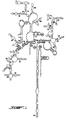
- Fig. 1 illustrates the structure of E. coli 16S ribosomal RNA (Gutell, R.R.
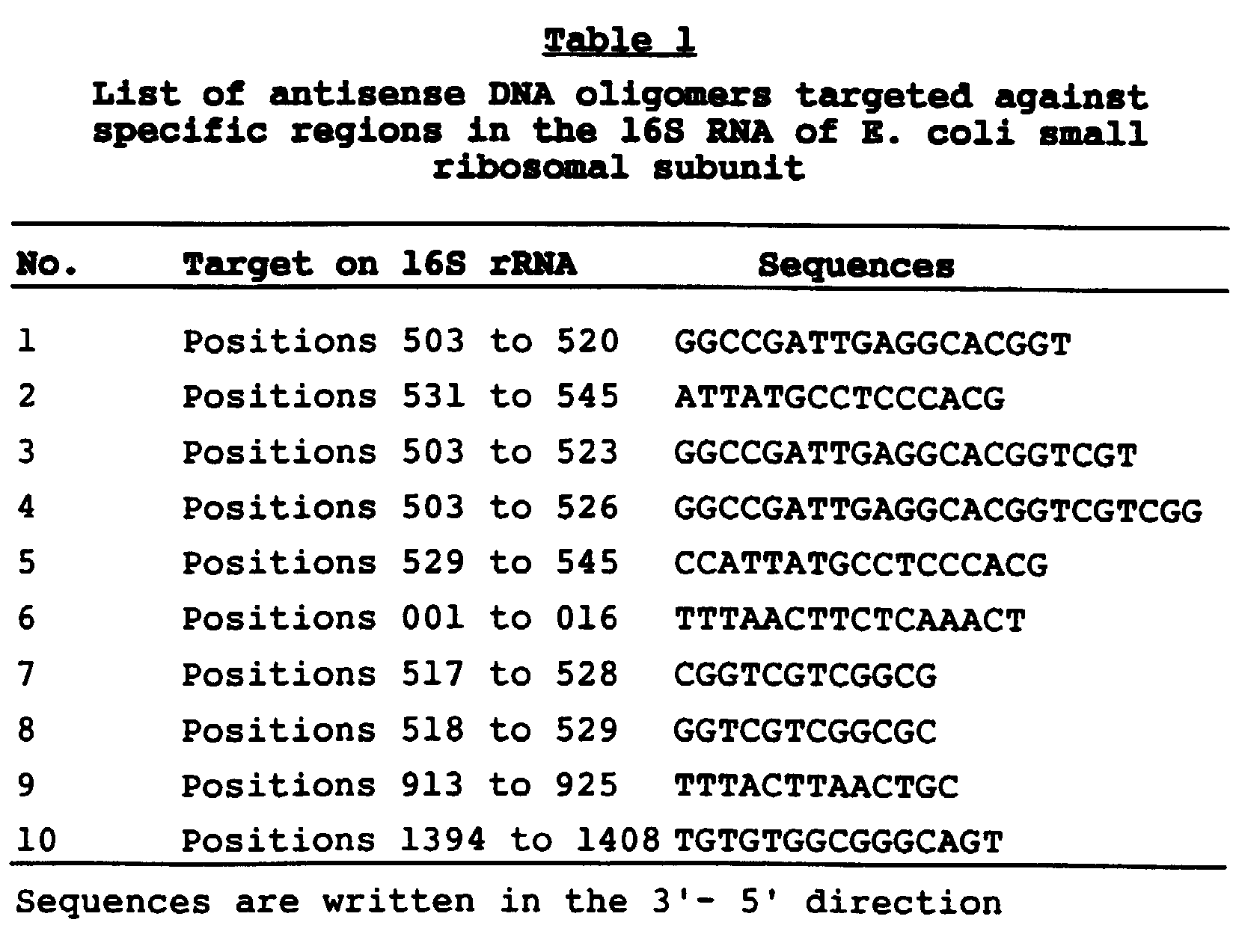
- Circles indicate regions which are involved in the control of translational accuracy. Therefore, whether desoxyribonucleotides complementary to these regions could affect (whether decrease or increase) translational accuracy was investigated. Examples of antisense DNA oligomers which have been assayed are listed in Table 1 below.
- Table 2 summarizes the results obtained with these agents, which demonstrate that some of these agents can modulate translational accuracy. Effect of antisense DNA oligomers on misreading in a poly(U)-directed translation system Conditions of translation Misincorporation of leucine (in cpm) Without oligomer 47 112 With oligomer N° 1 46 138 With oligomer N° 2 46 508 With oligomer N° 3 31 163 With oligomer N° 4 30 349 With oligomer N° 5 34 256 With oligomer N° 6 29 111 With oligomer N° 7 65 316 With oligomer N° 8 64 802 With oligomer N° 9 45 012 With oligomer N° 10 63 569
- the second part of the present invention investigates specifically which agents decrease ribosomal frameshifting when ribosomes have to translate a shifty region corresponding to that present in HIV mRNA.
- An expression vector, pCAT-HIV(-1), encoding the chloramphenicol acetyltransferase (CAT) gene under control of a T7 promoter was derived from pLRC-CAT, an expression vector containing the CAT gene (see below).
- the CAT gene was modified by an extension encompassing the HIV frameshifting region, in the beginning of the coding region. Expression from pCAT-HIV(-1) leads to an active CAT protein, only when ribosomes change the translational reading frame, shifting by to the left, in the HIV shifting region.
- CAT gene was first transcribed in vitro with T7 RNA polymerase and subsequently, the CAT messenger was translated with or without the DNA oligomers and the CAT activity was measured.
- DNA oligomers which decrease CAT activity when using pCAT-HIV(-1), but do not affect CAT activity with control pLRC-CAT are potential therapeutic agents against HIV.
- an expression vector, pCAT-HIV(0) was also constructed, which contains the HIV frameshifting region in the beginning of the CAT gene, except that in this case, no frameshift was required to yield CAT enzyme.
- the CAT expression vector, pLR-CAT was constructed by excising from pACYC184 (New England Biolabs), the Tag 1- Tag 1 fragment, which encodes the CAT coding sequence plus flanking regions, and ligating this fragment into the polylinker site of plasmid pBluescript SK - (Stratagene), linearized with Cla l.
- a Sph 1 site was created by site-directed mutagenesis around the initiation AUG triplet (AA ATGG was substituted with GC ATG C), resulting in pLRC-CAT. All manipulations were performed using protocols basically described by Sambrook et al. (Sambrook, J., Fritsch, E.F. and Maniatis, T. (1989) In Molecular Cloning. A Laboratory Manual, 2 d Ed., Cold Spring Harbor Laboratory, Cold Spring Harbor, N.Y.).
- pCAT-HIV(-1) and pCAT-HIV(0) synthetic double-stranded DNA containing the frameshifting region of HIV and sticky overhanging Sph 1 ends was prepared and inserted into pLRC-CAT restricted with Sph 1.
- Fig. 2 gives the sequences of these fragments. The procedure was inspired from Vickers and Ecker (Vickers, T.A. and Ecker, D.J. (1992) Nucleic Acids Research, 20 , 3945-3953).
- RNA transcripts were translated for 1 h at 30°C in a nuclease treated-reticulocyte lysate (Promega), following the instructions of the manufacturer. To analyze the size of the translation products, translation was performed in the presence of [ 35 S] methionine and the translation products analyzed by a 15% SDS/polyacrylamide gel electrophoresis. Unlabeled methionine was present when assessing the CAT activity.
- Antisense DNA oligomers when present were added to the translation mixture (25 ⁇ l), prior to the addition of about 0.25 ⁇ g of RNA transcripts.
- Sequences are written in the 3'- 5' direction.
- the ' indicates that the probe slightly differs from the corresponding probe used with E. coli ribosomes, to take into account sequence variations between rabbits ( Oryctolagus cuniculus ), and humans (Homo sapiens) on one hand, and E. coli on the other hand. Numbers in brackets indicate the corresponding positions in E. coli 16S rRNA.
- CAT activity when translating with messengers transcribed from pCAT-HIV(-1) requires a ribosomal frameshifting. Translation was performed in a rabbit reticulocyte lysate as described in the text. The amount of oligomers added was 1.5 ⁇ g. Experiments are the means of six independent assays. In these assays, CAT activity was assessed, as described in the text, after a 3 hour incubation of the translation mixture with chloramphenicol. CAT activity is expressed in cpm. The numbers between brackets indicate the percent of CAT activity ⁇ the standard deviation when translation was performed in the presence of oligomers, a value of 100% being ascribed to the CAT activity in the absence of oligomers.
- oligomers did not affect CAT activity measured with mRNA transcribed either from the control pLRC-CAT (67318 ⁇ 7000 cpm).
- CAT activity was measured with mRNA transcribed from pCAT-HIV(0) (which contains an extension at the end of the coding region but does not require ribosomal frameshifting for CAT expression)
- pCAT-HIV(0) which contains an extension at the end of the coding region but does not require ribosomal frameshifting for CAT expression
- oligonucleotides have been recently reviewed by Crooke et al. (Crooke, S.T. et al. (1992) Annu. Rev. Toxicol., 32 , 329-376).
- Cellular uptake of the oligomers will be enhanced by using liposomes (DOTMA, Gibco BRL or DOTAP, Boehringer Mannheim).
- DOTMA liposomes
- Boehringer Mannheim Boehringer Mannheim
- An expression vector containing the CAT gene under control of an inducible promoter (pGRE5-CAT-HIV(-1)) was used in cultured human cells in order to assess the effects of antisense DNA oligomers on the frameshifting of the ribosomes.
- the CAT gene was modified, exactly as in the in vitro translation assays, by an extension encompassing the HIV frameshifting region in the beginning of the coding region.
- a control expression vector, pGRE5-CAT-HIV(0) was also constructed, which contains the HIV frameshifting region in the beginning of the CAT gene, except that no frameshift is required with this construction to produce CAT enzyme.
- the inhibitory effect of the DNA oligomers on the replication of HIV-1 was assessed by measuring HIV reverse transcriptase activity in the cell-free supernatant of cultured cells infected with HIV.
- the DNA oligomers used in the assays with the cultured cells were modified so as to avoid degradation by intracellular nucleases and also to avoid that they trigger a RNAse H activity, which would attack their target RNA molecules. Modifications involved either the phosphodiester bond (methylphosphonates) or the 2' position of the sugar of the oligomers (2'-0-methyl phosphodiesters) (Crooke, S.T. et al. (1992) Annu. Rev. Toxicol., 32 , 329-376).
- oligodeoxynucleotide syntheses were performed with an automated DNA synthesizer (Millipore Expedite Nucleic Acid Synthesis System Model 8909TM).
- the methylphosphonates were synthesized and deprotected following the procedure outlined by Hogrefe R.I. et al. ((1993) Nucleic Acids Research, 21 , 2031-2038) and the 2'-O-methyl phosphodiesters were synthesized and deprotected following the standard protocol supplied by the manufacturer for oligoribonucleotides.
- the DNA oligomers were purified on C18 SepPakTM cartridges (Waters).
- the expression vectors were derivatives of the EBV episomal vector p220.2-pGRE 5/CAT plasmid constructed by Mader, S. and White, J.H. ((1993) Proc. Natl. Acad. Sci. USA, 90 , 5603-5607), which contains the CAT gene under control of a synthetic promoter GRE5, which is inducible with dexamethasone.
- the derivatives which we constructed are pGRE5-CAT-HIV(-1) and pGRE5-CAT-HIV(0) which contain a N-terminally modified CAT gene by insertion of the frameshifting region of HIV genome, exactly as described in Figs. 3A and 3B, respectively.
- CAT expression requires a ribosome frameshifting with pGRE5-CAT-HIV(-1), but not with pGRE5-CAT-HIV(0).
- Plasmid pSV- ⁇ Ga1 (Promega), an expression vector which codes for ⁇ -galactosidase activity, was used to normalize transfection efficiencies.
- the cell line used for measuring the frameshift of ribosomes is a HeLa cell line, a human epitheloid carcinoma cell line deposited at the American Type Culture Collection (12301 Parklawn Drive, Rockville, MD 20852 USA) under deposit number ATCC CCL2.
- the cells were cultivated in Dulbecco's modified Eagle's medium supplemented with 10% fetal bovine serum, 100 U/ml penicillin G and 100 ⁇ g/ml streptomycin.
- Transfection with the eukaryotic expression vector was carried out by the standard calcium phosphate coprecipitation technique for 4 h followed by a glycerol shock.
- Cells at 50% confluency in 10-cm plates were transfected with 20 ⁇ g of pGRE5-CAT-HIV(-1) or pGRE5-CAT-HIV(0), 10 ⁇ g of pSV- ⁇ gal and with or without DNA oligomers (about 40 ⁇ g).
- Dexamethasone Sigma was added at 25 nM immediately after transfection and 24 h after transfection. Cells were harvested about 48 h after transfection.
- the cell line used for measuring the replication of HIV was the HeLa-T4 (HT-6C) cell line, which was obtained through the AIDS Research Reference Reagent Program, Division of AIDS, NIAID, NIH (Chesebro, B. and Wehrly, K. (1988) J. Virol. 62 , 3779-3788).
- HeLa-T4 cells (1 x 10 6 ) were seeded into 10 cm plates in 8 ml of Dulbecco's modified Eagle's medium supplemented with 10% fetal bovine serum 24 h before transfection. HeLa-T4 cells were transfected with 15 ⁇ g of HIV-1 provirus (HXBH10) DNA (Terwilliger, E.F. et al. (1989) Proc. Natl. Acad. Sci.
- HXBH10 HIV-1 provirus
- Oligomer 7-8 om* and 8-8 om* are 2'-0-methyl derivatives of oligomer 7 and 8 (Table 3) with 8 modifications: 3' C GG T CG T CGGC G 5' and 3' G G T CG T CGGCG C 5' (the underlined bases contain the modifications whereas the other bases correspond to standard deoxy residues).
- the CAT activity is expressed as the mean ⁇ the standard deviation of three independent transient expression experiments with pGRE5-CAT-HIV(-1) where CAT expression requires ribosome frameshifting.
- the values for CAT activity (about 6000 cpm) have been normalized relative to ⁇ -galactosidase expression.
- the oligomers did not affect CAT activity with pGRE5-CAT-HIV(0), indicating that they do not affect the normal function of the ribosomes.
- Fig. 4 illustrates an example of the effect of the oligomers on HIV-1 replication, as assessed by measuring HIV reverse transcriptase activity in supernatants of cultured cells infected with HIV.
- the severe decrease in HIV reverse transcriptase activity demonstrates that the oligomers efficiently interfere with viral replication.
Landscapes
- Genetics & Genomics (AREA)
- Life Sciences & Earth Sciences (AREA)
- Engineering & Computer Science (AREA)
- Health & Medical Sciences (AREA)
- Biomedical Technology (AREA)
- Molecular Biology (AREA)
- Wood Science & Technology (AREA)
- Organic Chemistry (AREA)
- Biotechnology (AREA)
- General Engineering & Computer Science (AREA)
- Chemical & Material Sciences (AREA)
- Bioinformatics & Cheminformatics (AREA)
- Zoology (AREA)
- Physics & Mathematics (AREA)
- Microbiology (AREA)
- Plant Pathology (AREA)
- Biochemistry (AREA)
- General Health & Medical Sciences (AREA)
- Biophysics (AREA)
- Measuring Or Testing Involving Enzymes Or Micro-Organisms (AREA)
- Saccharide Compounds (AREA)
- Pharmaceuticals Containing Other Organic And Inorganic Compounds (AREA)
- Organic Low-Molecular-Weight Compounds And Preparation Thereof (AREA)
- Medicinal Preparation (AREA)
- Detergent Compositions (AREA)
- Enzymes And Modification Thereof (AREA)
- Medicines That Contain Protein Lipid Enzymes And Other Medicines (AREA)
Abstract
Description
- The invention relates to the use of antisense DNA oligomers to decrease the occurrence of ribosomal frameshifting required for the production of HIV enzymatic proteins when translating HIV messenger RNA, which should interfere with the production of virions and disrupt HIV life cycle.
- Information contained in a messenger RNA is translated into proteins by ribosomes in sequential non-overlapping triplets, from a starting point referred to as the initiation site. Errors in translation of a messenger RNA may occur through misreading of the triplets or shift of the reading frame, generating faulty proteins.
- Retroviruses carry their genetic code in the form of RNA and utilizes an enzyme called reverse transcriptase to convert their genetic code or viral RNA into a proviral DNA that becomes integrated into the host cell DNA. These integrated proviruses are duplicated with normal cellular genes during each cell division. Thus, all the progeny of the originally infected cell will contain the retroviral DNA. In addition, multiple copies of the infectious virus may be produced. The production of these virions cause other cells to become infected.
- Retroviruses cause both malignant and nonmalignant diseases. Expression of the viral genes of some retroviruses may be oncogenic, converting the cell into a cancer, or may have other pathologic effects that may alter normal cell function or produce cell death. The same virus may cause different diseases in different animals. Of the retroviruses known to infect humans, HTLV types I and II are associated with lymphoid neoplasms and neurologic diseases but not with severe immunosuppression, while human immunodeficiency virus (HIV) causes immunosuppression but does not appear to cause neoplasms directly. HIV is one of the retroviruses of interest in accordance with the present invention.
- The pol gene of all retroviruses codes for enzymatic activities essential for reverse transcription, proviral integration and protease activity that mediates cleavage of viral precursor proteins. Interestingly, in human immunodeficiency virus (HIV-1), the viral pol gene is expressed via a ribosomal frameshift when ribosomes translate the unspliced HIV mRNA species (reviewed in Jacks, T. (1990) Curr. Top. Microbiol. Immunol., 157, 93-124; Hatfield et al. (1992) Adv. Virus Res., 41, 193-239). The efficiency of this frameshift determines the ratio of the gag gene product, a viral core protein, and the pol gene products. Changes in that ratio may affect dramatically virus assembly (Park, J. and Morrow, C.D. (1991) J. Virology, 65, 5111-5117).
- Vickers and Ecker ((1992) Nucleic Acids Research, 20, 3945-3953) showed that the use of oligonucleotides targeted to the gag-pol frameshifting region in HIV messenger RNA causes an increase in the occurrence of ribosomal frameshifting. These oligonucleotides are specific to the HIV gag-pol region, and hence, are affected by mutations which might alter the viral messenger RNA sequence.
- Amann et al. ((1992) Appl. Env. Microbiol., 58(2):614-623) teach the use of 16S rRNA as a template and oligomers as probes complementary to specific portions of this rRNA. This enables one to specifically amplify by polymerase chain reaction (PCR) a given portion of this rRNA, so as to detect the presence of sulfate-reducing bacteria in biofilm populations.
- In International Patent Application published under No. WO 90/08841 on August 9, 1990, there is taught the use of DNA probes that are complementary to specific portions of 16S rRNA in the ribosomes of the bacteria Listeria. The probes are labeled (P32 and fluorescein among others), so as to detect the target in various media, including food samples.
- It would be highly desirable to be provided with means to decrease ribosomal frameshifting occurring in mammalian cells which would affect viral expression of retrovirus without causing side effects to the cells.
- One aim of the present invention is to provide antisense DNA oligomers to decrease the occurrence of ribosomal frameshifting in human cells which affects viral expression of retroviruses without causing side effects to the cells.
- Another aim of the present invention is to provide such antisense DNA oligomers which are not affected by mutations in the viral messenger sequences.
- The antisense DNA oligomers of the present invention offer the following advantages compared to those of Vickers and Ecker ((1992) Nucleic Acids Research, 20, 3945-3953).
- a) They decrease the ribosomal frameshifting, which is more likely to affect dramatically the production of virions, by comparison with oligonucleotides that increase ribosomal frameshifting.
- b) They are targeted to the ribosomes and not to HIV gag-pol region. Therefore, their efficiency is not affected by mutations which might alter the viral messenger RNA sequence. Furthermore, they have a larger spectrum of action, since they can be used against any type of retroviruses, which requires a ribosomal frameshifting for the production of virions.
-
- In accordance with the present invention there is provided antisense DNA oligomers which are complementary to regions of the RNA of the small ribosomal subunit of mammalian cells for use as a medicament to inhibit the expression of viral enzymatic proteins, characterised in that said oligomers are complementary to,
- a)
nucleotides 1 to 20 in human 18S rRNA corresponding toregion 10 in E. coli 16S rRNA; - b) nucleotides 595 to 641 in human 18S rRNA corresponding to region 530 in E. coli 16S rRNA;
- c) nucleotides 1182 to 1220 in human 18S rRNA
corresponding to
region 900 in E. coli 16S rRNA; and - d) nucleotides 1695 to 1715 in human 18S rRNA
corresponding to
region 1400 in E. coli 16S rRNA. -
- In accordance with the present invention the antisense DNA oligomers which have been used to define the four above-noted regions a), b), c) and d) are selected from the group consisting of:

- In accordance with the present invention there is provided a pharmaceutical composition for the treatment of retrovirus infection in a host, which comprises antisense DNA oligomers of the present invention in an amount sufficient to substantially inhibit the expression of viral enzymatic proteins, and a pharmaceutically acceptable carrier.
- For the purpose of the present invention the following terms are defined below.
- "Retrovirus" refers to HIV, human T-cell leukemia virus type 1 (HTLV-1), and any human retroviruses requiring ribosomal frameshifting for expressing pol gene.
- The term "sufficient amount" refers to the amount of antisense DNA oligomers of the present invention required to substantially inhibit enzymatic protein expression of the retrovirus. The precise effective amount will vary with the nature of antisense DNA oligomers used and may be determined by one of ordinary skill in the art with only routine experimentation.
-
- Fig. 1 illustrates the structure of E. coli 16S ribosomal RNA;
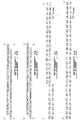
- Fig. 2A illustrates the region encompassing the HIV-1 frameshifting element inserted in pCAT-HIV(-1);
- Fig. 2B illustrates the region encompassing the HIV-1 frameshifting element inserted in pCAT-HIV(0);
- Fig. 3A illustrates the beginning of the CAT coding region in pCAT-HIV(-1) and the corresponding amino acid sequence of the reporter protein;
- Fig. 3B illustrates the beginning of the CAT coding region in pCAT-HIV(0) and the corresponding amino acid sequence of the reporter protein; and
- Fig. 4 is a graph of the effect of the oligomers on HIV reverse transcriptase activity in supernatants of cultured cells infected with HIV.
-
- In accordance with the present invention, firstly, it is demonstrated that it is possible to influence the translational accuracy of ribosomes, using a simple assay: misreading of an artificial messenger poly(U), which codes for phenylalanine. Misreading is assessed by measuring the incorporation into the protein chain of leucine, a non-cognate amino acid. The agents used to modulate translational accuracy are oligodeoxyribonucleotides referred to as "antisense DNA oligomers", complementary to specific regions in the RNA of the small ribosomal subunit, which are involved in the control of translation fidelity.
- In accordance with the present invention, secondly, it is demonstrated that antisense DNA oligomers complementary to specific regions of the RNA of the small ribosomal subunit can decrease ribosomal frameshifting. In this study, a natural mRNA coding for a reporter protein is used, the chloramphenicol acetyltransferase (CAT). The gene corresponding to this messenger has been modified, so that the beginning of the coding region contains the region where frameshift occurs in HIV mRNA, that is a shifty heptanucleotide followed by a stem/loop structure. Expression of CAT requires ribosomal frameshifting in that system.
- Poly(U) codes for the synthesis of polyphenylalanine. Misincorporation of leucine by ribosomes in a poly(U)-directed system indicates errors in translation. Among agents which influence leucine incorporation, potential candidates are found which might interfere with frameshifting when ribosomes translate HIV mRNA. Whether these agents decrease or increase misreading of poly(U) was not important per se at this stage of the work. What was important was to demonstrate that antisense oligomers can influence the control of translation accuracy.
- Ribosomes and enzymes required for translation were isolated by standard procedures (Melançon, P. et al. (1984) Biochemistry, 23, 6697-6703) from E. coli strain K12A19 (obtained from E. coli Genetic Stock Center, Yale University, under accession number CGSC No. 5997). Desoxyribonucleotides complementary to specific regions of 16S rRNA were synthesized on a Pharmacia Automatic Synthesizer™ and purified by polyacrylamide gel electrophoresis. Poly(U)-directed misincorporation of leucine and incorporation of phenylalanine was adapted from standard procedures (Gravel, M. et al. (1989) Nucleic Acids Research, 17, 2723-2732). When measuring phenylalanine incorporation, the reaction mixture (100 µl) contained: 1 A260 unit of 70S ribosomes (1 A260 unit = 24 pmol), 4 µg poly(U), 50 mM Hepes-KOH, pH 7.9, 60 mM NH4Cl, 10 mM magnesium acetate, 16 mM 2-mercaptoethanol, 0.25 mM ATP, 0.25 mM GTP, 8 mM phosphoenolpyruvate, 0.3 µg pyruvate kinase, 75 µg E. coli stripped tRNA, an optimal amount (about 300 µg protein) of high-speed postribosomal supernatant (S150) and 10 µM [3H]phenylalanine (5 Ci/mmol; 5 µCi). When measuring leucine misincorporation, the non-cognate amino acid, [3H]leucine (5 Ci/mmol; 5 µCi), and the cognate amino acid, [12C]phenylalanine, were added simultaneously at a concentration of 1 µM and 10 µM respectively.
- When poly(U)-directed incorporation was performed in the presence of antisense DNA oligomers, these oligomers were added at a molar ratio of 30 per ribosome, before starting protein synthesis by addition of poly(U).
- A survey of the literature (Noller, H.F. (1991) Annu. Rev. Biochem., 60, 191-227), plus recent studies in our laboratory (Pinard, R. et al. (1993) FASEB J., 7, 173-175; Pinard, R. et al. (1994) Nucleic Acids Research, 22:619) have suggested that four regions of the 16S ribosomal RNA in the small ribosomal subunit are important for the control of translational accuracy (Fig. 1): the so-called 10, 530, 900 and 1400/1500 regions. Fig. 1 illustrates the structure of E. coli 16S ribosomal RNA (Gutell, R.R. (1993) Nucleic Acids Research, 21, 3051-3057). Circles indicate regions which are involved in the control of translational accuracy. Therefore, whether desoxyribonucleotides complementary to these regions could affect (whether decrease or increase) translational accuracy was investigated. Examples of antisense DNA oligomers which have been assayed are listed in Table 1 below.
- Table 2 summarizes the results obtained with these agents, which demonstrate that some of these agents can modulate translational accuracy.
Effect of antisense DNA oligomers on misreading in a poly(U)-directed translation system Conditions of translation Misincorporation of leucine (in cpm) Without oligomer 47 112 With oligomer N° 1 46 138 With oligomer N° 2 46 508 With oligomer N° 3 31 163 With oligomer N° 4 30 349 With oligomer N° 5 34 256 With oligomer N° 6 29 111 With oligomer N° 7 65 316 With oligomer N° 8 64 802 With oligomer N° 9 45 012 With oligomer N° 10 63 569 - The second part of the present invention investigates specifically which agents decrease ribosomal frameshifting when ribosomes have to translate a shifty region corresponding to that present in HIV mRNA.
- An expression vector, pCAT-HIV(-1), encoding the chloramphenicol acetyltransferase (CAT) gene under control of a T7 promoter was derived from pLRC-CAT, an expression vector containing the CAT gene (see below). The CAT gene was modified by an extension encompassing the HIV frameshifting region, in the beginning of the coding region. Expression from pCAT-HIV(-1) leads to an active CAT protein, only when ribosomes change the translational reading frame, shifting by to the left, in the HIV shifting region. We have assessed the expression of the CAT gene from pCAT-HIV(-1) in vitro, in the presence or absence of antisense DNA oligomers, as follows: the CAT gene was first transcribed in vitro with T7 RNA polymerase and subsequently, the CAT messenger was translated with or without the DNA oligomers and the CAT activity was measured.
- DNA oligomers which decrease CAT activity when using pCAT-HIV(-1), but do not affect CAT activity with control pLRC-CAT, are potential therapeutic agents against HIV. For comparison, an expression vector, pCAT-HIV(0) was also constructed, which contains the HIV frameshifting region in the beginning of the CAT gene, except that in this case, no frameshift was required to yield CAT enzyme.
- The CAT expression vector, pLR-CAT was constructed by excising from pACYC184 (New England Biolabs), the Tag1-Tag1 fragment, which encodes the CAT coding sequence plus flanking regions, and ligating this fragment into the polylinker site of plasmid pBluescript SK- (Stratagene), linearized with Clal. A Sph1 site was created by site-directed mutagenesis around the initiation AUG triplet (AAATGG was substituted with GCATGC), resulting in pLRC-CAT. All manipulations were performed using protocols basically described by Sambrook et al. (Sambrook, J., Fritsch, E.F. and Maniatis, T. (1989) In Molecular Cloning. A Laboratory Manual, 2d Ed., Cold Spring Harbor Laboratory, Cold Spring Harbor, N.Y.).
- To construct pCAT-HIV(-1) and pCAT-HIV(0), synthetic double-stranded DNA containing the frameshifting region of HIV and sticky overhanging Sph1 ends was prepared and inserted into pLRC-CAT restricted with Sph1. Fig. 2 gives the sequences of these fragments. The procedure was inspired from Vickers and Ecker (Vickers, T.A. and Ecker, D.J. (1992) Nucleic Acids Research, 20, 3945-3953).
- In vitro transcription of pCAT-HIV(-1), pCAT-HIV(0) and pLRC-CAT linearized with Hind III was performed with T7 RNA polymerase, in a transcription mixture (100 µl) containing : 10 µg of linearized plasmid, 80 mM Hepes-KOH, pH 7.5, 12 mM MgCl2, 2 mM spermidine, 5 mM dithiothreitol, 1000 units/ml of RNasin, 5 units/ml of pyrophosphatase, an optimal amount of T7 RNA polymerase, 500 µM ATP, CTP, UTP, 50 µM GTP and 500 µM of the cap analog Me7GpppG (Pharmacia). After incubation for 120 min. at 37°C, the transcripts were extracted with phenol-chloroform and ethanol-precipitated.
- The RNA transcripts were translated for 1 h at 30°C in a nuclease treated-reticulocyte lysate (Promega), following the instructions of the manufacturer. To analyze the size of the translation products, translation was performed in the presence of [35S] methionine and the translation products analyzed by a 15% SDS/polyacrylamide gel electrophoresis. Unlabeled methionine was present when assessing the CAT activity.
- Antisense DNA oligomers (1.5 µg), when present were added to the translation mixture (25µl), prior to the addition of about 0.25 µg of RNA transcripts.
- For CAT assays, following the Technical Bulletin TB084 of Promega, 25 µl of the translation mixture was mixed with 5 µl of butyryl CoA (at 5 mg/ml), 10 µl of [3H]chloramphenicol (at 0.5 mM), 0.25 µCi, and 85 µl of a Tris-HCl buffer 0.25M (at pH 8). The mixture was incubated about 3 hours and CAT activity was quantitated by liquid scintillation counting of modified chloramphenicol, after xylene extraction.
- There is a very high degree of conservation in the ribosomal RNA from all living organisms (Raue, H.A. et al. (1988) Prog. Biophys. Molec. Biol., 51, 77-129; Gutell, R.R. (1993) Nucleic Acids Research, 21, 3051-3057; Neefs, J.M. et al. (1993) Nucleic Acids Research, 21, 3025-3049). In accordance with the first part of the present invention, the regions of E. coli 16S ribosomal RNA which are potential targets for oligomers which could affect translational accuracy, were identified. Because of the high conservation of ribosomal RNA, the corresponding regions in the 16S-like mammalian ribosomal RNA (18S rRNA), were immediately identified. Antisense oligomers were directed against these regions in order to affect ribosomal frameshifting. Table 3 presents some antisense DNA oligomers that have been used in accordance with the present invention.
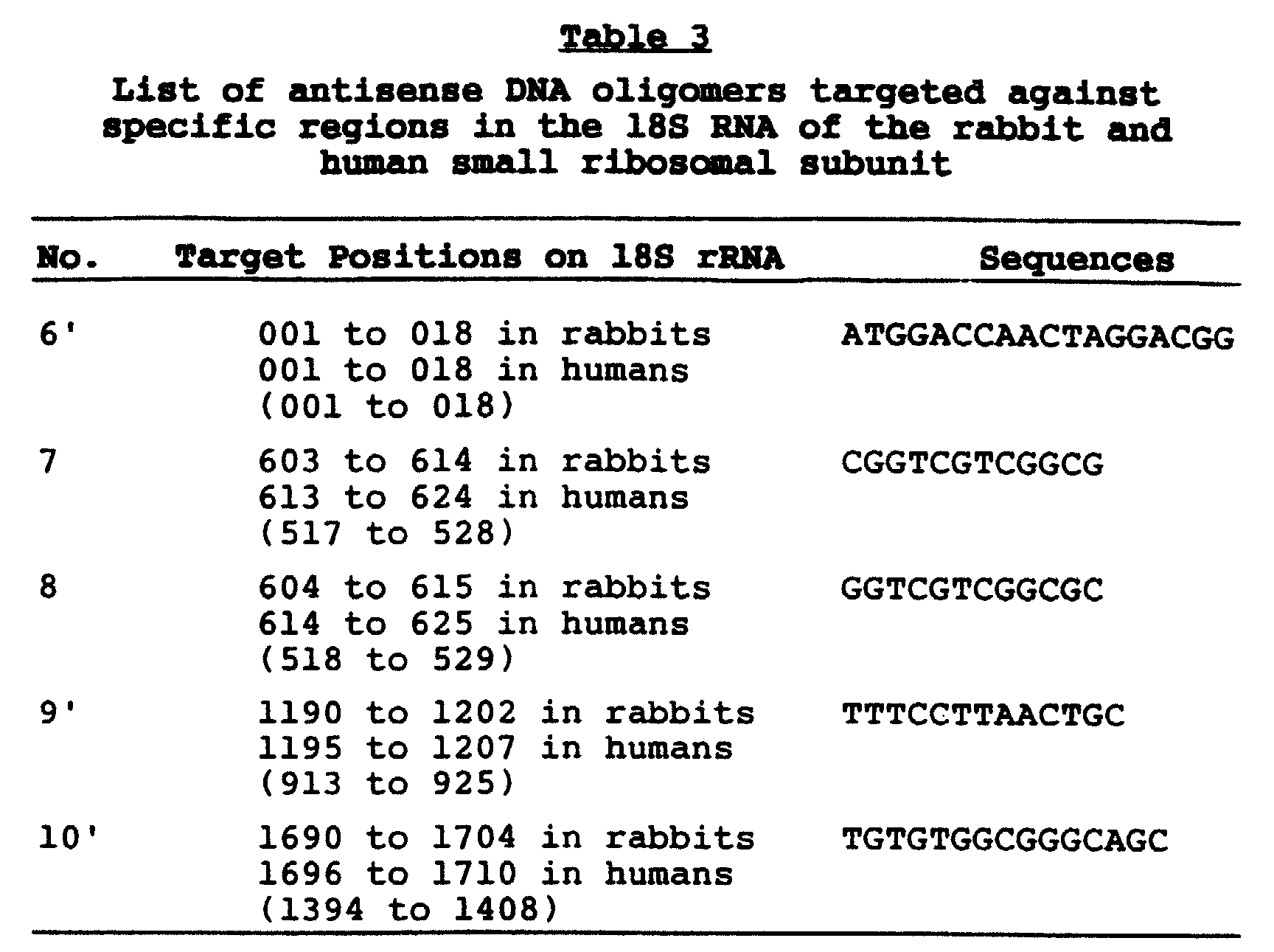
- Sequences are written in the 3'- 5' direction. The ' indicates that the probe slightly differs from the corresponding probe used with E. coli ribosomes, to take into account sequence variations between rabbits (Oryctolagus cuniculus), and humans (Homo sapiens) on one hand, and E. coli on the other hand. Numbers in brackets indicate the corresponding positions in E. coli 16S rRNA.
- The complete sequence of 18S rRNA from rabbits and humans was obtained from EMBL nucleotide sequence library (Rairkar, A. et al. (1988) Nucleic Acids Research, 16, 3113; and Gonzalez, I.L. and Schmickel R.D. (1986) Am. J. Hum. Genet., 38, 419-427, respectively). Table 4 presents the results obtained when translating the messengers corresponding to pCAT-HIV(-1), pCAT-HIV(0) and pLRC-CAT with rabbit ribosomes in the presence of a series of antisense DNA oligomers.
Effect of antisense DNA oligomers on frameshifting with transcripts from pCAT-HIV(-1) Conditions of translation CAT activity (in cpm) Without oligomer 2011 (100%) With oligomer N° 6' 2112 (105 ± 5%) With oligomer N° 7 430 (21 ± 5%) With oligomer N° 8 769 (38 ± 10%) With oligomer N° 9' 706 (35 ± 10%) With oligomer N° 10' 1915 (95 ± 5%) - CAT activity when translating with messengers transcribed from pCAT-HIV(-1) requires a ribosomal frameshifting. Translation was performed in a rabbit reticulocyte lysate as described in the text. The amount of oligomers added was 1.5 µg. Experiments are the means of six independent assays. In these assays, CAT activity was assessed, as described in the text, after a 3 hour incubation of the translation mixture with chloramphenicol. CAT activity is expressed in cpm. The numbers between brackets indicate the percent of CAT activity ± the standard deviation when translation was performed in the presence of oligomers, a value of 100% being ascribed to the CAT activity in the absence of oligomers. The oligomers did not affect CAT activity measured with mRNA transcribed either from the control pLRC-CAT (67318 ± 7000 cpm). When CAT activity was measured with mRNA transcribed from pCAT-HIV(0) (which contains an extension at the end of the coding region but does not require ribosomal frameshifting for CAT expression), its value was 59482 ± 6000 cpm. It was not affected by oligomer 6' or 10', but was decreased to about 85% of its initial value with oligomers 8 and 9', and to about 60% with oligomer 7.
- Results in Table 4 clearly show that oligomers 7, 8 and 9' significantly decrease the frameshifting of ribosomes moving along the shifty region of HIV mRNA. Oligomers targeted against so-called regions 10 (oligomer 6') and 1400 (oligomer 10') did not affect ribosomal frameshifting. However, since it has been observed that oligomers targeted against these regions with E. coli ribosomes could modulate the accuracy of translation of ribosomes, it is considered that other oligomers interacting within
regions - The therapeutic applications of oligonucleotides have been recently reviewed by Crooke et al. (Crooke, S.T. et al. (1992) Annu. Rev. Toxicol., 32, 329-376). Cellular uptake of the oligomers will be enhanced by using liposomes (DOTMA, Gibco BRL or DOTAP, Boehringer Mannheim). A wide range of modifications has been described to enhance the intracellular stability of the oligomers. Among the various analogs which have been described, preferred modifications of the phosphodiester bonds generating methylphosphonates or modifications of the 2' position of the sugar (2'-O-methyl oligomers) because they do not elicit a RNAse H activity and therefore will not damage the ribosomes.
- The present invention will be more readily understood by referring to the following example which is given to illustrate the invention rather than to limit its scope.
- An expression vector containing the CAT gene under control of an inducible promoter (pGRE5-CAT-HIV(-1)) was used in cultured human cells in order to assess the effects of antisense DNA oligomers on the frameshifting of the ribosomes. The CAT gene was modified, exactly as in the in vitro translation assays, by an extension encompassing the HIV frameshifting region in the beginning of the coding region. For comparison, a control expression vector, pGRE5-CAT-HIV(0), was also constructed, which contains the HIV frameshifting region in the beginning of the CAT gene, except that no frameshift is required with this construction to produce CAT enzyme.
- The inhibitory effect of the DNA oligomers on the replication of HIV-1 was assessed by measuring HIV reverse transcriptase activity in the cell-free supernatant of cultured cells infected with HIV.
- The DNA oligomers used in the assays with the cultured cells were modified so as to avoid degradation by intracellular nucleases and also to avoid that they trigger a RNAse H activity, which would attack their target RNA molecules. Modifications involved either the phosphodiester bond (methylphosphonates) or the 2' position of the sugar of the oligomers (2'-0-methyl phosphodiesters) (Crooke, S.T. et al. (1992) Annu. Rev. Toxicol., 32, 329-376).
- All oligodeoxynucleotide syntheses were performed with an automated DNA synthesizer (Millipore Expedite Nucleic Acid Synthesis System Model 8909™). The methylphosphonates were synthesized and deprotected following the procedure outlined by Hogrefe R.I. et al. ((1993) Nucleic Acids Research, 21, 2031-2038) and the 2'-O-methyl phosphodiesters were synthesized and deprotected following the standard protocol supplied by the manufacturer for oligoribonucleotides. The DNA oligomers were purified on C18 SepPak™ cartridges (Waters).
- The expression vectors were derivatives of the EBV episomal vector p220.2-
pGRE 5/CAT plasmid constructed by Mader, S. and White, J.H. ((1993) Proc. Natl. Acad. Sci. USA, 90, 5603-5607), which contains the CAT gene under control of a synthetic promoter GRE5, which is inducible with dexamethasone. The derivatives which we constructed are pGRE5-CAT-HIV(-1) and pGRE5-CAT-HIV(0) which contain a N-terminally modified CAT gene by insertion of the frameshifting region of HIV genome, exactly as described in Figs. 3A and 3B, respectively. CAT expression requires a ribosome frameshifting with pGRE5-CAT-HIV(-1), but not with pGRE5-CAT-HIV(0). - Plasmid pSV-βGa1 (Promega), an expression vector which codes for β-galactosidase activity, was used to normalize transfection efficiencies.
- The cell line used for measuring the frameshift of ribosomes is a HeLa cell line, a human epitheloid carcinoma cell line deposited at the American Type Culture Collection (12301 Parklawn Drive, Rockville, MD 20852 USA) under deposit number ATCC CCL2. The cells were cultivated in Dulbecco's modified Eagle's medium supplemented with 10% fetal bovine serum, 100 U/ml penicillin G and 100 µg/ml streptomycin. Transfection with the eukaryotic expression vector was carried out by the standard calcium phosphate coprecipitation technique for 4 h followed by a glycerol shock. Cells at 50% confluency in 10-cm plates were transfected with 20 µg of pGRE5-CAT-HIV(-1) or pGRE5-CAT-HIV(0), 10 µg of pSV-βgal and with or without DNA oligomers (about 40 µg). Dexamethasone (Sigma) was added at 25 nM immediately after transfection and 24 h after transfection. Cells were harvested about 48 h after transfection.
- The cell line used for measuring the replication of HIV was the HeLa-T4 (HT-6C) cell line, which was obtained through the AIDS Research Reference Reagent Program, Division of AIDS, NIAID, NIH (Chesebro, B. and Wehrly, K. (1988) J. Virol. 62, 3779-3788).
- Cells were harvested in 100 µl of 0,25 M Tris-HCl (pH 8); 80 µl were assayed for CAT activity by liquid scintillation counting using the same procedure as in in vitro translation assays, as described in the Technical Bulletin #084 from Promega, whereas 20 µl was used for assaying the β-galactosidase activity, with a colorimetric assay in which o-nitrophenyl β-D-galactoside (ONPG) is cleaved to produce o-nitrophenol, as described in a standard protocol (Miller J.H. (1972) Experiments in Molecular Genetics, Cold Spring Harbor Laboratory Press, New-York, pp 352-355).
- HeLa-T4 cells (1 x 10⁶) were seeded into 10 cm plates in 8 ml of Dulbecco's modified Eagle's medium supplemented with 10% fetal bovine serum 24 h before transfection. HeLa-T4 cells were transfected with 15 µg of HIV-1 provirus (HXBH10) DNA (Terwilliger, E.F. et al. (1989) Proc. Natl. Acad. Sci. USA, 86, 5163-5167) and 20 µg of oligomers by the standard calcium phosphate method; 12 h after the transfection, the cells were washed and cultured in 8 ml of Dulbecco's modified Eagle's medium supplemented with 10% fetal bovine serum; 48 h after the transfection, the supernatants were collected for HIV-1 reverse transcriptase activity assay: 50 µl of cell-free supernatants were clarified by low-speed centrifugation (3000 rpm for 20 min) and assayed as described (Lee, M.H. et al. (1987) J. Clin. Microbiol., 25, 1717-1721).
- The results on the effect of the oligomers on the frameshifting of ribosomes are presented in Table 5. These results clearly indicate that the modified oligomers decrease the ribosomal frameshifting and therefore have the capacity to interfere with HIV development.
Effect of modified DNA oligomers on the frameshifting of ribosomes in cultured HeLa cells Conditions of translation CAT activity (in cpm) Without oligomer 100% With oligomer 7-3 mp* 49 ± 5% With oligomer 7-8 om* 35 ± 5% With oligomer 8-8 om* 40 ± 5% Oligomer 7-3 mp* is a chimeric methylphosphonate derivative of oligomer 7 (see Table 3) with 3 modifications: 3' CGGTCGTCGGCG 5' (the underlined bases contain the modifications whereas the other bases correspond to standard deoxy residues). Oligomer 7-8 om* and 8-8 om* are 2'-0-methyl derivatives of oligomer 7 and 8 (Table 3) with 8 modifications: 3' CGGTCGTCGGCG 5' and 3' GGTCGTCGGCGC 5' (the underlined bases contain the modifications whereas the other bases correspond to standard deoxy residues). - The CAT activity is expressed as the mean ± the standard deviation of three independent transient expression experiments with pGRE5-CAT-HIV(-1) where CAT expression requires ribosome frameshifting. The values for CAT activity (about 6000 cpm) have been normalized relative to β-galactosidase expression.
- The oligomers did not affect CAT activity with pGRE5-CAT-HIV(0), indicating that they do not affect the normal function of the ribosomes.
- Fig. 4 illustrates an example of the effect of the oligomers on HIV-1 replication, as assessed by measuring HIV reverse transcriptase activity in supernatants of cultured cells infected with HIV. The severe decrease in HIV reverse transcriptase activity demonstrates that the oligomers efficiently interfere with viral replication.
- While the invention has been described in connection with specific embodiments thereof, it will be understood that it is capable of further modifications and this application is intended to cover any variations, uses, or adaptations of the invention following, in general, the principles of the invention and including such departures from the present disclosure as come within known or customary practice within the art to which the invention pertains and as may be applied to the essential features hereinbefore set forth, and as follows in the scope of the appended claims.
-
- (1) GENERAL INFORMATION:
- (i) APPLICANT:
- (A) NAME: UNIVERSITE DE MONTREAL
- (B) STREET: 2900 Edouard-Montpetit
- (C) CITY: Montreal
- (D) STATE: Quebec
- (E) COUNTRY: Canada
- (F) POSTAL CODE (ZIP): H3T 1J4
- (G) TELEPHONE: (514) 343-2307
- (H) TELEFAX: (514) 343-2326
- (A) NAME: BRAKIER-GINGRAS, Lea
- (B) STREET: 721, ave. Antonine-Maillet
- (C) CITY: Outremont
- (D) STATE: Quebec
- (E) COUNTRY: Canada
- (F) POSTAL CODE (ZIP): H2V 2Y4
- (A) NAME: MELANCON, Pierre
- (B) STREET: 9000 rue d'Anjou
- (C) CITY: Montreal
- (D) STATE: Quebec
- (E) COUNTRY: Canada
- (F) POSTAL CODE (ZIP): H1K 4V6
- (A) NAME: COTE, Marc
- (B) STREET: 5170 Jeanne-Mance, apt. 3
- (C) CITY: Montreal
- (D) STATE: Quebec
- (E) COUNTRY: Canada
- (F) POSTAL CODE (ZIP): H2V 4K1
- (A) NAME: PAYANT, Catherine
- (B) STREET: 3920 St-Kevin, apt. 8
- (C) CITY: Montreal
- (D) STATE: Quebec
- (E) COUNTRY: Canada
- (F) POSTAL CODE (ZIP): H3T 1H7
- (ii) TITLE OF INVENTION: USE OF DNA OLIGOMERS FOR INHIBITION OF HIV BY DECREASING RIBOSOMAL FRAMESHIFTING
- (iii) NUMBER OF SEQUENCES: 8
- (iv) COMPUTER READABLE FORM:
- (A) MEDIUM TYPE: Floppy disk
- (B) COMPUTER: IBM PC compatible
- (C) OPERATING SYSTEM: PC-DOS/MS-DOS
- (D) SOFTWARE: PatentIn Release #1.0, Version #1.30 (EPO)
- (vi) PRIOR APPLICATION DATA:
- (A) APPLICATION NUMBER: US 08/220,604
- (B) FILING DATE: 30-MAR-1994
- (vi) PRIOR APPLICATION DATA:
- (A) APPLICATION NUMBER: US N/A
- (B) FILING DATE: 23-MAR-1995
- (2) INFORMATION FOR SEQ ID NO: 1:
- (i) SEQUENCE CHARACTERISTICS:
- (A) LENGTH: 21 base pairs
- (B) TYPE: nucleic acid
- (C) STRANDEDNESS: single
- (D) TOPOLOGY: linear
- (ii) MOLECULE TYPE: cDNA
- (iii) HYPOTHETICAL: NO
- (iv) ANTI-SENSE: YES
- (xi) SEQUENCE DESCRIPTION: SEQ ID NO: 1:

- (2) INFORMATION FOR SEQ ID NO: 2:
- (i) SEQUENCE CHARACTERISTICS:
- (A) LENGTH: 24 base pairs
- (B) TYPE: nucleic acid
- (C) STRANDEDNESS: single
- (D) TOPOLOGY: linear
- (ii) MOLECULE TYPE: cDNA
- (iii) HYPOTHETICAL: NO
- (iv) ANTI-SENSE: YES
- (xi) SEQUENCE DESCRIPTION: SEQ ID NO: 2:

- (2) INFORMATION FOR SEQ ID NO: 3:
- (i) SEQUENCE CHARACTERISTICS:
- (A) LENGTH: 17 base pairs
- (B) TYPE: nucleic acid
- (C) STRANDEDNESS: single
- (D) TOPOLOGY: linear
- (ii) MOLECULE TYPE: cDNA
- (iii) HYPOTHETICAL: NO
- (iv) ANTI-SENSE: YES
- (xi) SEQUENCE DESCRIPTION: SEQ ID NO: 3:

- (2) INFORMATION FOR SEQ ID NO: 4:
- (i) SEQUENCE CHARACTERISTICS:
- (A) LENGTH: 16 base pairs
- (B) TYPE: nucleic acid
- (C) STRANDEDNESS: single
- (D) TOPOLOGY: linear
- (ii) MOLECULE TYPE: cDNA
- (iii) HYPOTHETICAL: NO
- (iv) ANTI-SENSE: YES
- (xi) SEQUENCE DESCRIPTION: SEQ ID NO: 4:

- (2) INFORMATION FOR SEQ ID NO: 5:
- (i) SEQUENCE CHARACTERISTICS:
- (A) LENGTH: 12 base pairs
- (B) TYPE: nucleic acid
- (C) STRANDEDNESS: single
- (D) TOPOLOGY: linear
- (ii) MOLECULE TYPE: cDNA
- (iii) HYPOTHETICAL: NO
- (iv) ANTI-SENSE: YES
- (xi) SEQUENCE DESCRIPTION: SEQ ID NO: 5:

- (2) INFORMATION FOR SEQ ID NO: 6:
- (i) SEQUENCE CHARACTERISTICS:
- (A) LENGTH: 12 base pairs
- (B) TYPE: nucleic acid
- (C) STRANDEDNESS: single
- (D) TOPOLOGY: linear
- (ii) MOLECULE TYPE: cDNA
- (iii) HYPOTHETICAL: NO
- (iv) ANTI-SENSE: YES
- (xi) SEQUENCE DESCRIPTION: SEQ ID NO: 6:

- (2) INFORMATION FOR SEQ ID NO: 7:
- (i) SEQUENCE CHARACTERISTICS:
- (A) LENGTH: 13 base pairs
- (B) TYPE: nucleic acid
- (C) STRANDEDNESS: single
- (D) TOPOLOGY: linear
- (ii) MOLECULE TYPE: cDNA
- (iii) HYPOTHETICAL: NO
- (iv) ANTI-SENSE: YES
- (xi) SEQUENCE DESCRIPTION: SEQ ID NO: 7:

- (2) INFORMATION FOR SEQ ID NO: 8:
- (i) SEQUENCE CHARACTERISTICS:
- (A) LENGTH: 15 base pairs
- (B) TYPE: nucleic acid
- (C) STRANDEDNESS: single
- (D) TOPOLOGY: linear
- (ii) MOLECULE TYPE: cDNA
- (iii) HYPOTHETICAL: NO
- (iv) ANTI-SENSE: YES
- (xi) SEQUENCE DESCRIPTION: SEQ ID NO: 8:

-
Claims (9)
- Antisense DNA oligomers which are complementary to regions of the RNA of the small ribosomal subunit of mammalian cells for use as a medicament to inhibit the expression of viral enzymatic proteins, characterised in that said oligomers are complementary to,a) nucleotides 1 to 20 in human 18S rRNA corresponding to region 10 in E. coli 16S rRNA;b) nucleotides 595 to 641 in human 18S rRNA corresponding to region 530 in E. coli 16S rRNA;c) nucleotides 1182 to 1220 in human 18S rRNA corresponding to region 900 in E. coli 16S rRNA; andd) nucleotides 1695 to 1715 in human 18S rRNA corresponding to region 1400 in E. coli 16S rRNA.
- Antisense DNA oligomers for use according to Claim 1, wherein said oligomers are written in the 3'-5' direction, said oligomers defining said regions a), b), c) and d) of claim 1 are selected from the group consisting of:


- Antisense DNA oligomers for use according to claim 1 or claim 2, modified to form methylphosphonates or 2'-0-methyl phosphodiesters.
- Antisense DNA oligomers according to claim 1 or claim 2 for use as a medicament to inhibit the expression of retroviral enzymatic proteins.
- Antisense DNA oligomers according to claim 1 or claim 2, for use wherein said retrovirus is selected from the group consisting of HIV, human T-cell leukemia virus type 1 (HTLV-1), and human retroviruses requiring ribosomal frameshifting for expressing pol gene.
- A pharmaceutical composition for the treatment of retrovirus infection in a host, which comprises antisense DNA oligomers according to claim 1 or claim 2 in an amount sufficient to substantially inhibit enzymatic protein expression of said retrovirus, and a pharmaceutically acceptable carrier.
- The pharmaceutical composition according to claim 5, wherein said retrovirus is selected from the group consisting of HIV, human T-cell leukemia virus type 1 (HTLV-1), and human retroviruses requiring ribosomal frameshifting for expressing pol gene.
- The use of antisense DNA oligomers according to claim 1 or claim 2 for the manufacture of a medicament for treatment of retrovirus infection is a host.
- The use of antisense DNA oligomers according to claim 1 or claim 2 for the manufacture of a medicament for treatment of infection with HIV, human T-cell leukemia virus type 1 (HTLV-1), and human retroviruses requiring frameshifting for expressing pol gene.
Applications Claiming Priority (5)
| Application Number | Priority Date | Filing Date | Title |
|---|---|---|---|
| US22060494A | 1994-03-30 | 1994-03-30 | |
| US220604 | 1994-03-30 | ||
| US40985295A | 1995-03-23 | 1995-03-23 | |
| US409852 | 1995-03-23 | ||
| PCT/CA1995/000169 WO1995027054A1 (en) | 1994-03-30 | 1995-03-28 | Use of dna oligomers for inhibition of hiv by decreasing ribosomal frameshifting |
Publications (2)
| Publication Number | Publication Date |
|---|---|
| EP0753063A1 EP0753063A1 (en) | 1997-01-15 |
| EP0753063B1 true EP0753063B1 (en) | 2000-03-15 |
Family
ID=26915017
Family Applications (1)
| Application Number | Title | Priority Date | Filing Date |
|---|---|---|---|
| EP95912987A Expired - Lifetime EP0753063B1 (en) | 1994-03-30 | 1995-03-28 | Use of dna oligomers for inhibition of hiv by decreasing ribosomal frameshifting |
Country Status (8)
| Country | Link |
|---|---|
| US (1) | US5707866A (en) |
| EP (1) | EP0753063B1 (en) |
| JP (1) | JPH09511142A (en) |
| AT (1) | ATE190654T1 (en) |
| AU (1) | AU694494B2 (en) |
| CA (1) | CA2186107A1 (en) |
| DE (1) | DE69515652D1 (en) |
| WO (1) | WO1995027054A1 (en) |
Families Citing this family (10)
| Publication number | Priority date | Publication date | Assignee | Title |
|---|---|---|---|---|
| US6291438B1 (en) | 1993-02-24 | 2001-09-18 | Jui H. Wang | Antiviral anticancer poly-substituted phenyl derivatized oligoribonucleotides and methods for their use |
| US5872210A (en) * | 1995-10-05 | 1999-02-16 | The United States Of America As Represented By The Department Of Health And Human Services | Transframe peptide inhibitor of viral protease |
| JP2002515855A (en) * | 1995-10-06 | 2002-05-28 | ユニヴァーシティー オブ メディシン アンド デンティストリー オブ ニュージャージー | Proteins involved in targeting the peptidyl transfer reaction center, and corresponding therapeutic agents and methods |
| US6776986B1 (en) | 1996-06-06 | 2004-08-17 | Novartis Ag | Inhibition of HIV-1 replication by antisense RNA expression |
| WO1998014567A2 (en) * | 1996-10-01 | 1998-04-09 | Advanced Research & Technology Institute | Methods and compositions for inhibiting bacterial growth |
| WO2001046892A1 (en) * | 1999-12-23 | 2001-06-28 | Concept Shopping, Inc. | Techniques for optimizing promotion delivery |
| RU2206326C2 (en) * | 2001-04-10 | 2003-06-20 | Асафов Александр Виленович | Application of sodium nucleospermate for treatment of hiv-infection and method of treatment |
| AU2002303881B2 (en) * | 2001-05-30 | 2008-01-10 | Synthon Biopharmaceuticals B.V. | Plate and method for high throughput screening |
| US7339051B2 (en) | 2003-04-28 | 2008-03-04 | Isis Pharmaceuticals, Inc. | Compositions and methods for the treatment of severe acute respiratory syndrome (SARS) |
| WO2006017522A2 (en) * | 2004-08-03 | 2006-02-16 | University Of Utah Research Foundation | Use of antisense oligonucleotides to effect translation modulation |
Family Cites Families (2)
| Publication number | Priority date | Publication date | Assignee | Title |
|---|---|---|---|---|
| EP0395731A4 (en) * | 1988-01-11 | 1993-12-01 | Microprobe Corporation | Oligonucleotide probes for detection of periodontal pathogens |
| JP3015462B2 (en) * | 1989-02-06 | 2000-03-06 | ジーン‐トラック・システムス | Probes and methods for detecting Listeria |
-
1995
- 1995-03-28 DE DE69515652T patent/DE69515652D1/en not_active Expired - Lifetime
- 1995-03-28 AU AU20644/95A patent/AU694494B2/en not_active Ceased
- 1995-03-28 JP JP7525315A patent/JPH09511142A/en active Pending
- 1995-03-28 WO PCT/CA1995/000169 patent/WO1995027054A1/en not_active Ceased
- 1995-03-28 EP EP95912987A patent/EP0753063B1/en not_active Expired - Lifetime
- 1995-03-28 CA CA002186107A patent/CA2186107A1/en not_active Abandoned
- 1995-03-28 AT AT95912987T patent/ATE190654T1/en not_active IP Right Cessation
-
1996
- 1996-05-21 US US08/651,835 patent/US5707866A/en not_active Expired - Fee Related
Also Published As
| Publication number | Publication date |
|---|---|
| AU2064495A (en) | 1995-10-23 |
| CA2186107A1 (en) | 1995-10-12 |
| WO1995027054A1 (en) | 1995-10-12 |
| EP0753063A1 (en) | 1997-01-15 |
| DE69515652D1 (en) | 2000-04-20 |
| AU694494B2 (en) | 1998-07-23 |
| JPH09511142A (en) | 1997-11-11 |
| ATE190654T1 (en) | 2000-04-15 |
| US5707866A (en) | 1998-01-13 |
Similar Documents
| Publication | Publication Date | Title |
|---|---|---|
| Stein et al. | Oligodeoxynucleotides as inhibitors of gene expression: a review | |
| Chen et al. | Structural and functional studies of retroviral RNA pseudoknots involved in ribosomal frameshifting: nucleotides at the junction of the two stems are important for efficient ribosomal frameshifting. | |
| US6034233A (en) | 2'-O-alkylated oligoribonucleotides and phosphorothioate analogs complementary to portions of the HIV genome | |
| JP4118348B2 (en) | G-cap stabilized oligonucleotide | |
| JP4643906B2 (en) | Synthetic double-stranded oligonucleotides for targeted inhibition of gene expression | |
| US5684147A (en) | Therapeutic anti-HIV anti-viral oligonucleotides and pharmaceutical formulations thereof | |
| AU697234B2 (en) | Antisense oligonucleotides and therapeutic use thereof in human immunodeficiency virus infection | |
| US7919472B2 (en) | Enhanced antisense oligonucleotides | |
| CN1780922A (en) | Compositions and methods for the treatment of severe acute respiratory syndrome (SARS) | |
| US5736294A (en) | Reagents and methods for modulating gene expression through RNA mimicry | |
| Thompson et al. | Improved accumulation and activity of ribozymes expressed from a tRNA-based RNA polymerase III promoter | |
| EP0763050B1 (en) | Branched oligonucleotide as pathogen-inhibitory agents | |
| US5989912A (en) | Three component chimeric antisense oligonucleotides | |
| WO1994008004A9 (en) | Therapeutic anti-hiv oligonucleotide and pharmaceutical | |
| ten Dam et al. | Analysis of the role of the pseudoknot component in the SRV-1 gag-pro ribosomal frameshift signal: loop lengths and stability of the stem regions. | |
| AU694494B2 (en) | Use of DNA oligomers for inhibition of HIV by decreasing ribosomal frameshifting | |
| Vickers et al. | Enhancement of ribosomal frameshifting by oligonucleotides targeted to the HIV gag-pol region | |
| Boiziau et al. | A phosphorothioate oligonucleotide blocks reverse transcription via an antisense mechanism | |
| Chrisey | An indexed bibliography of antisense literature, 1978–1990 | |
| WO2005049817A2 (en) | Self-cleaving ribozymes and uses thereof | |
| JP4690649B2 (en) | Novel oligoribonucleotide derivatives for targeted gene expression inhibition | |
| Ivanova et al. | Tricyclo-DNA containing oligonucleotides as steric block inhibitors of human immunodeficiency virus type 1 tat-dependent trans-activation and HIV-1 infectivity | |
| US5866698A (en) | Modulation of gene expression through interference with RNA secondary structure | |
| Kusunoki et al. | Antisense oligodeoxynucleotide complementary to CXCR4 mRNA block replication of HIV-1 in COS cells | |
| Brown et al. | Inhibition of HIV-1 replication by oligonucleotide analogues directed to the packaging signal and trans-activating response region |
Legal Events
| Date | Code | Title | Description |
|---|---|---|---|
| PUAI | Public reference made under article 153(3) epc to a published international application that has entered the european phase |
Free format text: ORIGINAL CODE: 0009012 |
|
| 17P | Request for examination filed |
Effective date: 19961008 |
|
| AK | Designated contracting states |
Kind code of ref document: A1 Designated state(s): AT BE CH DE DK ES FR GB GR IE IT LI LU MC NL PT SE |
|
| 17Q | First examination report despatched |
Effective date: 19970805 |
|
| GRAG | Despatch of communication of intention to grant |
Free format text: ORIGINAL CODE: EPIDOS AGRA |
|
| GRAG | Despatch of communication of intention to grant |
Free format text: ORIGINAL CODE: EPIDOS AGRA |
|
| GRAH | Despatch of communication of intention to grant a patent |
Free format text: ORIGINAL CODE: EPIDOS IGRA |
|
| GRAH | Despatch of communication of intention to grant a patent |
Free format text: ORIGINAL CODE: EPIDOS IGRA |
|
| GRAA | (expected) grant |
Free format text: ORIGINAL CODE: 0009210 |
|
| AK | Designated contracting states |
Kind code of ref document: B1 Designated state(s): AT BE CH DE DK ES FR GB GR IE IT LI LU MC NL PT SE |
|
| PG25 | Lapsed in a contracting state [announced via postgrant information from national office to epo] |
Ref country code: SE Free format text: THE PATENT HAS BEEN ANNULLED BY A DECISION OF A NATIONAL AUTHORITY Effective date: 20000315 Ref country code: NL Free format text: LAPSE BECAUSE OF FAILURE TO SUBMIT A TRANSLATION OF THE DESCRIPTION OR TO PAY THE FEE WITHIN THE PRESCRIBED TIME-LIMIT Effective date: 20000315 Ref country code: LI Free format text: LAPSE BECAUSE OF NON-PAYMENT OF DUE FEES Effective date: 20000315 Ref country code: IT Free format text: LAPSE BECAUSE OF FAILURE TO SUBMIT A TRANSLATION OF THE DESCRIPTION OR TO PAY THE FEE WITHIN THE PRESCRIBED TIME-LIMIT;WARNING: LAPSES OF ITALIAN PATENTS WITH EFFECTIVE DATE BEFORE 2007 MAY HAVE OCCURRED AT ANY TIME BEFORE 2007. THE CORRECT EFFECTIVE DATE MAY BE DIFFERENT FROM THE ONE RECORDED. Effective date: 20000315 Ref country code: GR Free format text: LAPSE BECAUSE OF NON-PAYMENT OF DUE FEES Effective date: 20000315 Ref country code: FR Free format text: LAPSE BECAUSE OF FAILURE TO SUBMIT A TRANSLATION OF THE DESCRIPTION OR TO PAY THE FEE WITHIN THE PRESCRIBED TIME-LIMIT Effective date: 20000315 Ref country code: ES Free format text: THE PATENT HAS BEEN ANNULLED BY A DECISION OF A NATIONAL AUTHORITY Effective date: 20000315 Ref country code: CH Free format text: LAPSE BECAUSE OF NON-PAYMENT OF DUE FEES Effective date: 20000315 Ref country code: BE Free format text: LAPSE BECAUSE OF FAILURE TO SUBMIT A TRANSLATION OF THE DESCRIPTION OR TO PAY THE FEE WITHIN THE PRESCRIBED TIME-LIMIT Effective date: 20000315 Ref country code: AT Free format text: LAPSE BECAUSE OF FAILURE TO SUBMIT A TRANSLATION OF THE DESCRIPTION OR TO PAY THE FEE WITHIN THE PRESCRIBED TIME-LIMIT Effective date: 20000315 |
|
| REF | Corresponds to: |
Ref document number: 190654 Country of ref document: AT Date of ref document: 20000415 Kind code of ref document: T |
|
| REG | Reference to a national code |
Ref country code: CH Ref legal event code: EP |
|
| PG25 | Lapsed in a contracting state [announced via postgrant information from national office to epo] |
Ref country code: LU Free format text: LAPSE BECAUSE OF NON-PAYMENT OF DUE FEES Effective date: 20000328 Ref country code: IE Free format text: LAPSE BECAUSE OF NON-PAYMENT OF DUE FEES Effective date: 20000328 |
|
| REF | Corresponds to: |
Ref document number: 69515652 Country of ref document: DE Date of ref document: 20000420 |
|
| REG | Reference to a national code |
Ref country code: IE Ref legal event code: FG4D |
|
| PG25 | Lapsed in a contracting state [announced via postgrant information from national office to epo] |
Ref country code: PT Free format text: LAPSE BECAUSE OF FAILURE TO SUBMIT A TRANSLATION OF THE DESCRIPTION OR TO PAY THE FEE WITHIN THE PRESCRIBED TIME-LIMIT Effective date: 20000615 Ref country code: GB Free format text: LAPSE BECAUSE OF NON-PAYMENT OF DUE FEES Effective date: 20000615 Ref country code: DK Free format text: LAPSE BECAUSE OF FAILURE TO SUBMIT A TRANSLATION OF THE DESCRIPTION OR TO PAY THE FEE WITHIN THE PRESCRIBED TIME-LIMIT Effective date: 20000615 |
|
| PG25 | Lapsed in a contracting state [announced via postgrant information from national office to epo] |
Ref country code: DE Free format text: LAPSE BECAUSE OF FAILURE TO SUBMIT A TRANSLATION OF THE DESCRIPTION OR TO PAY THE FEE WITHIN THE PRESCRIBED TIME-LIMIT Effective date: 20000616 |
|
| NLV1 | Nl: lapsed or annulled due to failure to fulfill the requirements of art. 29p and 29m of the patents act | ||
| EN | Fr: translation not filed | ||
| REG | Reference to a national code |
Ref country code: CH Ref legal event code: PL |
|
| PG25 | Lapsed in a contracting state [announced via postgrant information from national office to epo] |
Ref country code: MC Free format text: LAPSE BECAUSE OF NON-PAYMENT OF DUE FEES Effective date: 20000930 |
|
| PLBE | No opposition filed within time limit |
Free format text: ORIGINAL CODE: 0009261 |
|
| STAA | Information on the status of an ep patent application or granted ep patent |
Free format text: STATUS: NO OPPOSITION FILED WITHIN TIME LIMIT |
|
| GBPC | Gb: european patent ceased through non-payment of renewal fee |
Effective date: 20000615 |
|
| REG | Reference to a national code |
Ref country code: IE Ref legal event code: MM4A |
|
| 26N | No opposition filed |