EP0750046B1 - Ammonia elimination reagent which is stable at alcaline pH - Google Patents
Ammonia elimination reagent which is stable at alcaline pH Download PDFInfo
- Publication number
- EP0750046B1 EP0750046B1 EP96401373A EP96401373A EP0750046B1 EP 0750046 B1 EP0750046 B1 EP 0750046B1 EP 96401373 A EP96401373 A EP 96401373A EP 96401373 A EP96401373 A EP 96401373A EP 0750046 B1 EP0750046 B1 EP 0750046B1
- Authority
- EP
- European Patent Office
- Prior art keywords
- reagent
- isocitrate
- ammonia
- icdh
- acid
- Prior art date
- Legal status (The legal status is an assumption and is not a legal conclusion. Google has not performed a legal analysis and makes no representation as to the accuracy of the status listed.)
- Expired - Lifetime
Links
Images
Classifications
-
- C—CHEMISTRY; METALLURGY
- C12—BIOCHEMISTRY; BEER; SPIRITS; WINE; VINEGAR; MICROBIOLOGY; ENZYMOLOGY; MUTATION OR GENETIC ENGINEERING
- C12Q—MEASURING OR TESTING PROCESSES INVOLVING ENZYMES, NUCLEIC ACIDS OR MICROORGANISMS; COMPOSITIONS OR TEST PAPERS THEREFOR; PROCESSES OF PREPARING SUCH COMPOSITIONS; CONDITION-RESPONSIVE CONTROL IN MICROBIOLOGICAL OR ENZYMOLOGICAL PROCESSES
- C12Q1/00—Measuring or testing processes involving enzymes, nucleic acids or microorganisms; Compositions therefor; Processes of preparing such compositions
- C12Q1/26—Measuring or testing processes involving enzymes, nucleic acids or microorganisms; Compositions therefor; Processes of preparing such compositions involving oxidoreductase
- C12Q1/32—Measuring or testing processes involving enzymes, nucleic acids or microorganisms; Compositions therefor; Processes of preparing such compositions involving oxidoreductase involving dehydrogenase
-
- Y—GENERAL TAGGING OF NEW TECHNOLOGICAL DEVELOPMENTS; GENERAL TAGGING OF CROSS-SECTIONAL TECHNOLOGIES SPANNING OVER SEVERAL SECTIONS OF THE IPC; TECHNICAL SUBJECTS COVERED BY FORMER USPC CROSS-REFERENCE ART COLLECTIONS [XRACs] AND DIGESTS
- Y10—TECHNICAL SUBJECTS COVERED BY FORMER USPC
- Y10S—TECHNICAL SUBJECTS COVERED BY FORMER USPC CROSS-REFERENCE ART COLLECTIONS [XRACs] AND DIGESTS
- Y10S435/00—Chemistry: molecular biology and microbiology
- Y10S435/8215—Microorganisms
- Y10S435/822—Microorganisms using bacteria or actinomycetales
-
- Y—GENERAL TAGGING OF NEW TECHNOLOGICAL DEVELOPMENTS; GENERAL TAGGING OF CROSS-SECTIONAL TECHNOLOGIES SPANNING OVER SEVERAL SECTIONS OF THE IPC; TECHNICAL SUBJECTS COVERED BY FORMER USPC CROSS-REFERENCE ART COLLECTIONS [XRACs] AND DIGESTS
- Y10—TECHNICAL SUBJECTS COVERED BY FORMER USPC
- Y10S—TECHNICAL SUBJECTS COVERED BY FORMER USPC CROSS-REFERENCE ART COLLECTIONS [XRACs] AND DIGESTS
- Y10S435/00—Chemistry: molecular biology and microbiology
- Y10S435/966—Chemistry: molecular biology and microbiology involving an enzyme system with high turnover rate or complement magnified assay, e.g. multi-enzyme systems
Definitions
- the present invention relates to an enzymatic assay method of a biological substance producing ammonia as the reaction product, wherein ammonia present in a sample of the biological substance is preliminarily consumed up so as to accurately assay such substance, and also relates to an ammonia elimination reagent for the enzymatic assay method using a thermo stable isocitrate dehydrogenase as a coupling enzyme, the dehydrogenase being preferable for a reagent in solution and having excellent stability at alkaline pHs.
- ammonia is firstly generated, and the resulting ammonia is then converted into glutamic acid via glutamate dehydrogenase (abbreviated as "GLD” hereinafter) to determine at 340 nm the reduction of NAD(P)H via the coupled reaction: the reduction-type nicotine amide adenine dinucleotide (phosphate) [NAD(P)H] ⁇ nicotine amide adenine dinucleotide (phosphate) [NAD(P) + ].
- GLD glutamate dehydrogenase
- ammonia present in a sample should be pretreated with 2-oxoglutaric acid via GLD to be modified into glutamic acid.
- the reaction system ie. ammonia ⁇ glutamic acid involves the change of NAD(P)H ⁇ NAD(P) +
- the generated NAD(P) + should be again converted into NAD(P)H through the reverse reaction NAD(P) + ⁇ NAD(P)H.
- a coupled reaction can be induced by isocitrate dehydrogenase using as the substrate isocitric acid, together with metal ions such as magnesium ion or manganese ion.
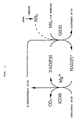
- the reaction scheme is shown in Fig.1.
- JP-A-63/214182 as published in Derwent DATABASE WPI, Week 8841, AN 88-290572 is concemed with an isolation process of thermo-resistant isocitric acid dehydrogenase. It does neither disclose nor suggest an isocitrate dehydrogenase enzyme, as used in this invention, which is stable at alkaline pH.
- the present inventors have made investigations about isocitrate dehydrogenase in view of such conventional problems. Consequently, the inventors have found that the isocitrate dehydrogenase (referred to as "iCDH" hereinbelow) from acidophilic, thermo stable bacteria of genus Sulfolobus is thermally resistant and highly stable under alkaline conditions.
- iCDH isocitrate dehydrogenase
- the present inventors have furthermore found that reagents containing NAD(P)H in solution can be stored for a long period of time, by using the iCDH described above in an assay system of a biological substance producing ammonia as the reaction product.
- the present invention has been achieved.
- the present invention relates to an ammonia elimination reagent in solution, containing 2-oxoglutaric acid, a reduction-type coenzyme (preferably, NADPH), isocitric acid, glutamate dehydrogenase, and isocitrate dehydrogenase as the reagent components, and being stable under alkaline pH conditions for a long period of time. Additionally, the present invention relates to an assay method of a biological substance producing ammonia as the reaction product, comprising consuming up the ammonia present in a sample of the biological substance, subsequently adding a chelating agent to the sample to terminate the iCDH reaction, and adding simultaneously or thereafter an enzyme producing ammonia as the reaction product to assay the generated ammonia.
- this invention provides a reagent in the form of an alkaline solution for eliminating ammonia comprising 2-oxoglutaric acid, a reducing coenzyme, isocitric acid, glutamate dehydrogenase, magnesium or manganese ions, and isocitrate dehydrogenase produced by a microorganism belonging to the genus Sulfolobus , said isocitrate dehydrogenase showing a residual activity higher than 80 % when stored at 37°C for 11 days in a pH 9.0-10.0 buffer solution containing 2-oxoglutaric acid 6.4 mM NADPH 0.3 mM potassium isocitrate 10 mM MgCl 2 0.2 mM Polyoxyethylene (23) lauryl ether (Brij-35® ) 0.1 %;
- this invention provides an assay system for eliminating ammonia comprising
- the bacteria of genus Sulfolobus are acidophilic, thermo stable bacteria; as such bacteria, use may be made of acidocaldarius, brierleyi , solfataricus and other bacterial strains of genus Sulfolobus.
- the standard bacterial strains include a bacterial strain of Sulfolobus acidocaldarius, listed in catalog under DSM 639 (IFO 15157) and a bacterial strain of Sulfolobus solfataricus, listed in catalog under DSM 1616 (IFO 15331 (the old No. IFO 15158)).
- the extraction and purification of iCDH relating to the present invention are conducted on the basis of known findings.
- the procedure was carried out according to the method described in Japanese Patent Laid-open No. Sho 63-214182 (i.e., JP-A 63-214182 (1988)).
- the iCDH of the present invention may be recovered by extracting the enzyme from the cultured bacteria of genus Sulfolobus and purifying the enzyme.
- the iCDH may be a recombinant type, which is generated by inserting a DNA vector having genetic information of the iCDH from genus Sulfolobus into a bacterial strain and recovering the iCDH generated from the transformed bacterial strain.
- the host bacteria then, use may be made of for example, Escherichia coli, yeast, Actinomyces , Bacillus subtilis, and the like.
- the reduction-type coenzyme comprises NADH, NADPH and ATP and the derivatives of these reduction-type coenzymes including thio-MADH (thionicotine amide adenine dinucleotide), thio-NADPH (thionicotine amide adenine dinucleotide phosphate)and APADPH (acetylpyridine adenine dinucleotide phosphate).
- thio-MADH thionicotine amide adenine dinucleotide
- thio-NADPH thionicotine amide adenine dinucleotide phosphate
- APADPH acetylpyridine adenine dinucleotide phosphate
- buffers of various types are listed in the Catalog of Dojin Chemical Research Institute, 19-th edition, 1994; preferable buffers are triethanolamine, TAPS [N-tris(hydroxymethyl)methyl-3-aminopropane sulfonic acid], CHES (N-cyclohexyl-2-aminoethane sulfonic acid), CAPSO (N-cyclohexyl-2-hydroxy-3-aminopropane sulfonic acid) and CAPS (N-cyclohexyl-3-aminopropane sulfonic acid).
- TAPS N-tris(hydroxymethyl)methyl-3-aminopropane sulfonic acid
- CHES N-cyclohexyl-2-aminoethane sulfonic acid
- CAPSO N-cyclohexyl-2-hydroxy-3-aminopropane sulfonic acid
- CAPS N-cyclohexyl-3-aminopropane sulfonic
- ammonia elimination reagent using the iCDH from genus Sulfolobus examples are listed in the table below to show the reagent components.
- any buffer having an buffering action at alkaline pHs may satisfactorily be used.
- the activity of GLD is expressed as follows; an enzyme activity generating 1 ⁇ mol of NADP + per minute is defined as one unit. If necessary, furthermore, a surfactant such as Brij -35 may be added satisfactorily.
- Ammonia elimination reagent composition (composition example) 2-Oxoglutaric acid 6.4 mM NADPH 0.3 mM Potassium isocitrate 10 mM GLD 20 to 100 U/ml iCDH 1 to 10 U/ml MgCl 2 0.2 mM pH 9 to 10 (preferably, 9.5)
- the other principal component GLD may be derived from yeast, genus Proteus and genus Bacillus.
- any GLD may be satisfactory, but preference is given particularly to GLD with good stability and higher activity of producing glutamic acid in an alkaline pH.
- the method for assaying the enzyme activity of iCDH should be conducted as follows, unless otherwise stated.
- the bacteria of Sulfolobus acidocaldarius DSM 639, FERM BBP-5567 were cultured under aeration in the culture medium of the components shown below in Tables 2 and 3, under the temperature conditions of 80°C for 5 days.
- Culture medium composition Glucose 1.00 g / 1 liter Yeast extract 1.00 g Casamino acid (manufactured by Difco. Co.
- the bacteria were then disrupted by ultrasonication to recover a bacterial extract solution to prepare iCDH.
- the enzyme activity of the prepared iCDH was assayed by the spectrophotometric method described above.
- the bacteria of a wet weight of 1 g corresponded to 1 U enzyme activity at 37°C.
- iCDH was recovered by the following procedures.
- the suspension was stirred at ambient temperature for 30 minutes while adjusting the suspension to pH 7.5 using 5N NaOH.
- the resulting solution of the disrupted bacteria was centrifuged at 8,000 rpm for 20 minutes (using a rotor of Type Therval GS3, manufactured by Dupont Co. Ltd.), and after discarding the precipitate, the supernatant was prepared as a bacterial extract solution.
- the bacterial extract solution was diluted 3 fold with pure water, and was then charged into a 5-liter column (DI, 25 cm ⁇ 11 cmH) packed with DEAE-Sepharose CL6B to recover the fraction passing through the ion exchange column as an iCDH-containing fraction.
- the iCDH bound into the dye affinity column was eluted on 0-0.3 M KCl gradient.
- thermo stable iCDH purified from Sulfolobus acidocaldarius DSM 639, FERM BP-5567 by the procedures described above is shown below.
- Molecular weight 82 kDa (by gel filtration), dimer.
- iCDHs Using two types of iCDHs, namely commercially. available iCDH from yeast (manufactured by Oriental Yeast Industry Co. Ltd.) and the iCDH from genus Sulfolobus (recovered by the purification method described above), comparative tests of the ammonia elimination activities of reagents containing either one of the two types were done at a 10:300 volume ratio of a sample, 100 mM NH 4 Cl to each of the reagents.
- the absorbance change was analyzed over time at 340 nm by an automatic analyzer (Cobas Fara). The compositions of the ammonia elimination reagents and the conditions are shown below.
- ammonia elimination reagent of the following composition was subjected to storage and stability tests in alkaline pHs adjusted by a variety of buffers.
- iCDH commercially available iCDH from yeast (manufactured by Oriental Yeast Industry Co. Ltd.) and iCDH from genus Sulfolobus (recovered by the purification method described above) were independently added to the reagent composition.
- the prepared reagents were stored at 4°C and 37°C for 11 days for testing the stability. The results are shown in Table 4.
- composition of ammonia elimination reagent 2-oxoglutaric acid 6.4 mM NADPH 0.3 mM potassium isocitrate 10 mM MgCl 2 0.2 mM Brij -35® 0.1 %.
- the activity immediately after the dissolution of the enzyme iCDH was defined 100 %.
- the residual activity ratio of the iCDH from yeast was 77 % on day 11 when stored at a higher pH, ie. pH 9.0 and 4°C. No significant decrease of the activity of the iCDH from genus Sulfolobus was observed, which indicates that the enzyme can be stored stably under conditions of alkaline pHs for a long period of time.
- an ammonia elimination reagent which can be readily prepared into a reagent in solution and can be stored in a stable manner for a long period of time, using the iCDH from genus Sulfolobus, the iCDH having greater stability under conditions of alkaline pHs for the ammonia elimination reagent.
Landscapes
- Chemical & Material Sciences (AREA)
- Organic Chemistry (AREA)
- Life Sciences & Earth Sciences (AREA)
- Zoology (AREA)
- Wood Science & Technology (AREA)
- Proteomics, Peptides & Aminoacids (AREA)
- Health & Medical Sciences (AREA)
- Engineering & Computer Science (AREA)
- Microbiology (AREA)
- Biochemistry (AREA)
- Physics & Mathematics (AREA)
- Molecular Biology (AREA)
- Biotechnology (AREA)
- Biophysics (AREA)
- Analytical Chemistry (AREA)
- Immunology (AREA)
- Bioinformatics & Cheminformatics (AREA)
- General Engineering & Computer Science (AREA)
- General Health & Medical Sciences (AREA)
- Genetics & Genomics (AREA)
- Measuring Or Testing Involving Enzymes Or Micro-Organisms (AREA)
- Enzymes And Modification Thereof (AREA)
Description
- The present invention relates to an enzymatic assay method of a biological substance producing ammonia as the reaction product, wherein ammonia present in a sample of the biological substance is preliminarily consumed up so as to accurately assay such substance, and also relates to an ammonia elimination reagent for the enzymatic assay method using a thermo stable isocitrate dehydrogenase as a coupling enzyme, the dehydrogenase being preferable for a reagent in solution and having excellent stability at alkaline pHs.
- Generally, it is routinely conducted the detection of substances in urine, blood serum and the like, including urea, creatinine, creatine, guanine and adenosine as well as the assaying of the activities of various enzymes in relation with these substances. For the detection of such substances and the enzymatic reactions thereof, ammonia is firstly generated, and the resulting ammonia is then converted into glutamic acid via glutamate dehydrogenase (abbreviated as "GLD" hereinafter) to determine at 340 nm the reduction of NAD(P)H via the coupled reaction: the reduction-type nicotine amide adenine dinucleotide (phosphate) [NAD(P)H] → nicotine amide adenine dinucleotide (phosphate) [NAD(P)+].
- Because ammonia is measured as the reaction product in the reaction system, however, ammonia originally present in a sample is also measured and included in the measured value. Therefore, it has been difficult to accurately assay such substances. Thus, ammonia present in a sample should be pretreated with 2-oxoglutaric acid via GLD to be modified into glutamic acid. Because the reaction system ie. ammonia → glutamic acid involves the change of NAD(P)H → NAD(P)+, the generated NAD(P)+ should be again converted into NAD(P)H through the reverse reaction NAD(P)+ → NAD(P)H. Then, a coupled reaction can be induced by isocitrate dehydrogenase using as the substrate isocitric acid, together with metal ions such as magnesium ion or manganese ion. The reaction scheme is shown in Fig.1.
- A great number of diagnostic reagents are likely to be prepared in solution in place of freeze-dry powder in recent years, from the needs of reducing laborious works at a vast number of diagnostic laboratory tests by eliminating the process of dissolving a powdery reagent in a solution each time when the reagent is to be used. However, such reagent in solution has a problem such that assay reagents containing NAD(P)H stable under alkaline conditions are so readily inactivated because of the presence of conventional isocitrate dehydrogenase from yeast that it is very difficult to ensure the long storage life of such reagents. Hence, no satisfactory reagents in solution have been produced yet.
- The article by P. FOSSATI et al.. Clin. Chem., 1994: 40 (No 1), 130-137, discloses (in a test technique for assaying creatinine) a buffered solution of an ammonia elimination reagent comprising (see "
solution 1" on page 131) glutamate dehydrogenase, isocitrate dehydrogenase, NADPH, 2-oxoglutarate, isocitrate, magnesium ions and a surfactant (a non ionic ethoxylated linear secundary alcohol), wherein the isocitrate dehydrogenase enzyme is obtained from yeast. That article does neither disclose nor suggest the ammonia elimination reagent of this invention which contains an isocitrate dehydrogenase obtained from bacteria (of the genus Sulfolobus). - The abstract of JP-A-63/214182 as published in Derwent DATABASE WPI, Week 8841, AN 88-290572 is concemed with an isolation process of thermo-resistant isocitric acid dehydrogenase. It does neither disclose nor suggest an isocitrate dehydrogenase enzyme, as used in this invention, which is stable at alkaline pH.
-
- Fig.1 depicts the scheme of the reaction pathway of ammonia elimination;
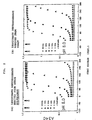
- Fig.2 are graphs depicting the ammonia elimination activities of the iCDH from genus Sulfolobus (A) and of the iCDH from yeast (B), in alkaline pH (pH 8.0); and
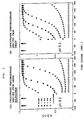
- Fig.3 are graphs depicting the ammonia elimination activities of the iCDH from genus Sulfolobus (A) and of the iCDH from yeast (B), in alkaline pH (pH 9.5).
-
- The present inventors have made investigations about isocitrate dehydrogenase in view of such conventional problems. Consequently, the inventors have found that the isocitrate dehydrogenase (referred to as "iCDH" hereinbelow) from acidophilic, thermo stable bacteria of genus Sulfolobus is thermally resistant and highly stable under alkaline conditions. The present inventors have furthermore found that reagents containing NAD(P)H in solution can be stored for a long period of time, by using the iCDH described above in an assay system of a biological substance producing ammonia as the reaction product. Thus, the present invention has been achieved.
- The present invention relates to an ammonia elimination reagent in solution, containing 2-oxoglutaric acid, a reduction-type coenzyme (preferably, NADPH), isocitric acid, glutamate dehydrogenase, and isocitrate dehydrogenase as the reagent components, and being stable under alkaline pH conditions for a long period of time. Additionally, the present invention relates to an assay method of a biological substance producing ammonia as the reaction product, comprising consuming up the ammonia present in a sample of the biological substance, subsequently adding a chelating agent to the sample to terminate the iCDH reaction, and adding simultaneously or thereafter an enzyme producing ammonia as the reaction product to assay the generated ammonia.
- According to a first aspect, this invention provides a reagent in the form of an alkaline solution for eliminating ammonia comprising 2-oxoglutaric acid, a reducing coenzyme, isocitric acid, glutamate dehydrogenase, magnesium or manganese ions, and isocitrate dehydrogenase produced by a microorganism belonging to the genus Sulfolobus, said isocitrate dehydrogenase showing a residual activity higher than 80 % when stored at 37°C for 11 days in a pH 9.0-10.0 buffer solution containing
2-oxoglutaric acid 6.4 mM NADPH 0.3 mM potassium isocitrate 10 mM MgCl2 0.2 mM Polyoxyethylene (23) lauryl ether (Brij-35® ) 0.1 %; - According to a second aspect, this invention provides an assay system for eliminating ammonia comprising
- (I) a first reagent in the form of an alkaline solution for
eliminating ammonia comprising 2-oxoglutaric acid, a reducing coenzyme,
isocitric acid, magnesium or manganese ions, and isocitrate dehydrogenase
produced by a microorganism belonging to the genus Sulfolobus said
isocitrate dehydrogenase showing a residual activity higher than 80 % when
stored at 37°C for 11 days in a pH 9.0-10.0 buffer solution containing
2-oxoglutaric acid 6.4 mM NADPH 0.3 mM potassium isocitrate 10 mM MgCl2 0.2 mM Brij-35® 0.1 %; - (2) a second reagent in the form of an alkaline solution containing 2-oxoglutaric acid, a reducing coenzyme, isocitric acid, magnesium or manganese ions, and glutamate dehydrogenase.
-
- In accordance with the present invention, the bacteria of genus Sulfolobus are acidophilic, thermo stable bacteria; as such bacteria, use may be made of acidocaldarius, brierleyi, solfataricus and other bacterial strains of genus Sulfolobus. The standard bacterial strains include a bacterial strain of Sulfolobus acidocaldarius, listed in catalog under DSM 639 (IFO 15157) and a bacterial strain of Sulfolobus solfataricus, listed in catalog under DSM 1616 (IFO 15331 (the old No. IFO 15158)). Strains DSM 639 and DSM 1616 were deposited under the Budapest Treaty in National Institute of Bioscience and Human-Technology, Agency of Industrial Science and Technology, Ministry of International Trade and Industry in Japan under Nos. FERM BP-5567 and FERM BP-5566 respectively, on June 14, 1996.
- The extraction and purification of iCDH relating to the present invention are conducted on the basis of known findings. In accordance with the present invention, the procedure was carried out according to the method described in Japanese Patent Laid-open No. Sho 63-214182 (i.e., JP-A 63-214182 (1988)). Furthermore, the iCDH of the present invention may be recovered by extracting the enzyme from the cultured bacteria of genus Sulfolobus and purifying the enzyme. Otherwise, the iCDH may be a recombinant type, which is generated by inserting a DNA vector having genetic information of the iCDH from genus Sulfolobus into a bacterial strain and recovering the iCDH generated from the transformed bacterial strain. As the host bacteria, then, use may be made of for example, Escherichia coli, yeast, Actinomyces, Bacillus subtilis, and the like.
- In accordance with the present invention, the reduction-type coenzyme comprises NADH, NADPH and ATP
and the derivatives of these reduction-type coenzymes including thio-MADH (thionicotine amide adenine dinucleotide), thio-NADPH (thionicotine amide adenine dinucleotide phosphate)and APADPH (acetylpyridine adenine dinucleotide phosphate). - For preparing an ammonia elimination reagent stable in solution, preference is given to a buffer solution having a buffering action around pH 9 to 11 because of the selection of alkaline pHs from the respect of the stability of reduction-type coenzymes in solution, in particular. For example, the most appropriate buffers of various types are listed in the Catalog of Dojin Chemical Research Institute, 19-th edition, 1994; preferable buffers are triethanolamine, TAPS [N-tris(hydroxymethyl)methyl-3-aminopropane sulfonic acid], CHES (N-cyclohexyl-2-aminoethane sulfonic acid), CAPSO (N-cyclohexyl-2-hydroxy-3-aminopropane sulfonic acid) and CAPS (N-cyclohexyl-3-aminopropane sulfonic acid).
- Examples of the ammonia elimination reagent using the iCDH from genus Sulfolobus are listed in the table below to show the reagent components. For the preparation of the ammonia elimination reagent, any buffer having an buffering action at alkaline pHs may satisfactorily be used. In the table, the activity of GLD is expressed as follows; an enzyme activity generating 1 µmol of NADP+ per minute is defined as one unit. If necessary, furthermore, a surfactant such as Brij -35 may be added satisfactorily.
Ammonia elimination reagent composition (composition example) 2-Oxoglutaric acid 6.4 mM NADPH 0.3 mM Potassium isocitrate 10 mM GLD 20 to 100 U/ ml iCDH 1 to 10 U/ml MgCl2 0.2 mM pH 9 to 10 (preferably, 9.5) - For preparation of the ammonia elimination reagent, the other principal component GLD may be derived from yeast, genus Proteus and genus Bacillus. For preparation of the ammonia elimination reagent, any GLD may be satisfactory, but preference is given particularly to GLD with good stability and higher activity of producing glutamic acid in an alkaline pH.
- In accordance with the present invention, the method for assaying the enzyme activity of iCDH should be conducted as follows, unless otherwise stated.
- Assaying temperature:
- 37°C
- Composition of reaction solution :
-
- 0.1 M Tris-HCl buffer, pH 8.5
- 5.0 mM potassium isocitrate
- 1.0 mM NADP+
- 5.0 mM MgCl2
- Detector :
- spectrophotometer of Type U-2000,
manufactured by Hitachi, Co. - For the subsequent culturing and extraction of iCDH, the bacteria of Sulfolobus acidocaldarius DSM 639, FERM BBP-5567 were cultured under aeration in the culture medium of the components shown below in Tables 2 and 3, under the temperature conditions of 80°C for 5 days.
Culture medium composition Glucose 1.00 g / 1 liter Yeast extract 1.00 g Casamino acid (manufactured by Difco. Co. ) 1.00 g Ammonium sulfate 1.30 g KH2SO4 0.28 g MgSO4 ·7H2O 0.25 g CaCl2 ·2H2O 0.07 g FeCl3 ·6H2O 0.02 g Trace element (× 1000 conc.) 1.0 ml Preparation of trace element (× 1000 conc.) MnCl2 ·6H2O 1,800 mg per 1 liter Na2B4O7 ·7H2O 4,500 mg ZnSO4 ·2H2O 220 mg CuCl2 ·2H2O 50 mg NaMoO4 ·2H2O 30 mg VoSO4 ·XH2O 30 mg CoSO 4 10 mg - Collecting the bacteria by centrifuge prior to washing, the bacteria were then disrupted by ultrasonication to recover a bacterial extract solution to prepare iCDH. The enzyme activity of the prepared iCDH was assayed by the spectrophotometric method described above. As a result, the bacteria of a wet weight of 1 g corresponded to 1 U enzyme activity at 37°C.
- From the bacteria cultured under the culture conditions described above, iCDH was recovered by the following procedures.
- Adding an extracting buffer of a 10-fold weight that of the bacteria to prepare a bacterial suspension, the suspension was stirred at ambient temperature for 30 minutes while adjusting the suspension to pH 7.5 using 5N NaOH. The resulting solution of the disrupted bacteria was centrifuged at 8,000 rpm for 20 minutes (using a rotor of Type Therval GS3, manufactured by Dupont Co. Ltd.), and after discarding the precipitate, the supernatant was prepared as a bacterial extract solution.
- Extracting buffer :
-
- 10 mM Tris-HCl buffer, pH 7.5
- 1.0 mM EDTA
- 0.2 mM PMSF
- 0.02 % sodium azide.
- The bacterial extract solution was diluted 3 fold with pure water, and was then charged into a 5-liter column (DI, 25 cm × 11 cmH) packed with DEAE-Sepharose CL6B to recover the fraction passing through the ion exchange column as an iCDH-containing fraction.
- Column equilibrating solution and washing solution :
-
- 10 mM Tris-HCl buffer, pH 7.5
- 1.0 mM EDTA
- 0.02 % sodium azide.
- Flow :
- 5 liters/hr
- Fractionation :
- 1 hr/Frac.
- The fraction passing through the DEAE-ion exchange column, as the starting material for iCDH purification, was fractionated by affinity chromatography using Blue-Sepharose CL6B. The iCDH bound into the dye affinity column was eluted on 0-0.3 M KCl gradient.
- Column equilibrating solution and washing solution :
-
- 10 mM Tris-HCl buffer, pH 7.5
- 1.0 mM EDTA
- 0.02 % sodium azide.
- Column size :
-
DI 10 cm × 6 cm H - Gel volume :
- 500 ml
- Flow :
- 1 liter/hr
- Elution :
- 0 - 0.3 M KCl gradient elution in 10-fold-volume column
- Fractionation :
- 200 ml / Frac.
- Adding ammonium sulfate to the iCDH solution recovered as the eluted fraction to a final concentration of 1.5 M ammonium sulfate, the resulting mixture was then charged into a 100 ml-column packed with a resin Phenyl-Toyopearl 650 C. Washing the column with an excess amount of 1.5 M ammonium sulfate, pH 7.5 to remove unabsorbed substances, the iCDH fraction was collected on 1.5 - 0.5 M ammonium sulfate gradient.
- Column equilibrating solution and washing solution :
- 10 mM Tris-HCl buffer, pH 7.5
- 1.5 M ammonium sulfate
- 1.0 mM EDTA
- 0.02 % sodium azide. Conditions for hydrophobic chromatography
- Column size :
DI 5 cm × 6 cm H - Flow : 200 ml/hr
- Elution : 1.5 - 0.5 M ammonium sulfate gradient elution in 10-fold-volume column
- Fractionation : 20 ml / Frac.
-
- Concentrating the purified iCDH fraction recovered in the above procedure 4 by using an Amicon ultrafiltration membrane, the concentrated fraction was then purified by EPLC on a column packed with TSK gel 3,000 SW to recover a stock solution of the purified enzyme.
- Eluate :
-
- 0.5 M NaCl
- 10 mM potassium phosphate buffer, pH 7.0
- 0.02 % sodium azide
- HPLC system :
- CCPM, manufactured by TOSOH, Co. Ltd.
- Column size :
- TSK gel G3,000 SW column (1 inch)
- Flow :
- 3 ml/minute.
- The general enzymatic performance of the thermo stable iCDH purified from Sulfolobus acidocaldarius DSM 639, FERM BP-5567 by the procedures described above is shown below. Molecular weight : 82 kDa (by gel filtration), dimer.
- Optimum pH :
- 8.0 (when the activity was assayed at 37°C).
- Km for NADP+ :
-
- 66 µM (pH 8.6, 37°C)
- 42 µM (pH 9.5, 37°C)
- 48µM (pH 10.0, 37°C)
- Using two types of iCDHs, namely commercially. available iCDH from yeast (manufactured by Oriental Yeast Industry Co. Ltd.) and the iCDH from genus Sulfolobus (recovered by the purification method described above), comparative tests of the ammonia elimination activities of reagents containing either one of the two types were done at a 10:300 volume ratio of a sample, 100 mM NH4Cl to each of the reagents. The ammonia elimination reagents with various iCDH levels of 0.6, 1, 2 and 6U/ml and with 6U/ml iCDH + 10 mM CyDTA, were prepared. The absorbance change was analyzed over time at 340 nm by an automatic analyzer (Cobas Fara). The compositions of the ammonia elimination reagents and the conditions are shown below.
- Conditions of ammonia elimination reagents Reagent mixing ratio:
- S:DW:R1:R2=10:5:240:60 (in µl).
- Sample :
- 100 mM NH4Cl.
- First reagent (R1) :
- 0 - 6.25 U/ml iCDH added (measured at 37°C)
- Second reagent (R2):
- GLD (150 U/ml measured at 37°C; manufactured by Toyobo, Co. Ltd.)
- Composition of reagent dissolving solution (for the first and second reagents) :
-
- 6.4 mM 2-oxoglutaric acid
- 0.3 mM NADPH
- 10 mM potassium isocitrate
- 0.2 mM MgCl2
- 0.1 % Brij -35®
- 0.1 M Tris-ethanolamine-HCl buffer, pH 8.0 or 9.0.
- For CyDTA addition :
- 12.5 mM CyDTA added to the first reagent to a final 10 mM concentration.
- Temperature for analysis :
- 37°C.
- Detector :
- Cobas Fara (manufactured by Baxter, Co. Ltd.)
- The ammonia elimination performance of the iCDHs from various origins was analyzed at pH 8.0 and 9.5. The results indicate that the difference in performance is small at alkaline pHs.
- An ammonia elimination reagent of the following composition, based on the ammonia elimination reagent composition in Example 1, was subjected to storage and stability tests in alkaline pHs adjusted by a variety of buffers. To a final concentration of 0.2 U/ml, commercially available iCDH from yeast (manufactured by Oriental Yeast Industry Co. Ltd.) and iCDH from genus Sulfolobus (recovered by the purification method described above) were independently added to the reagent composition. The prepared reagents were stored at 4°C and 37°C for 11 days for testing the stability. The results are shown in Table 4.
Composition of ammonia elimination reagent : 2-oxoglutaric acid 6.4 mM NADPH 0.3 mM potassium isocitrate 10 mM MgCl2 0.2 mM Brij -35® 0.1 %. - So as to calculate the residual activity ratio of iCDH under conditions of various pHs and temperatures, the activity immediately after the dissolution of the enzyme iCDH was defined 100 %. The residual activity ratio of the iCDH from yeast was 77 % on day 11 when stored at a higher pH, ie. pH 9.0 and 4°C. No significant decrease of the activity of the iCDH from genus Sulfolobus was observed, which indicates that the enzyme can be stored stably under conditions of alkaline pHs for a long period of time.
Storage stability of a variety of ammonia elimination reagent solution samples from yeast from Sulfolobus Sample No. Buffer type (pH) 4°C 37°C 4°C 37° C 1 CHES (pH9.0) 44.4% 14.8% 100.0% 100.0% 2 Bicine(pH9.0) 59.2 3.7 93.4 96.8 3 TAPS (pH9.0) 77.8 37.0 96.8 100.0 4 CHES (pH9.5) 25.9 0.0 87.5 87.5 5 CAPSO (pH9.5) 44.4 3.7 93.4 93.4 6 triethanolamine (pH9.5) 55.6 7.4 100.0 93.4 7 CAPS (pH10.0) 11.1 0.0 96.8 84.3 8 CHES (pH10.0) 11.1 0.0 93.4 81.3 9 CAPSO (pH10.0) 13.0 0.0 90.6 84.4 10 triethanolamine (pH10.0) 40.7 1.9 93.4 84.3
Table shows the ratio of the residual iCDH activity to the initial activity of iCDH added, under various storage conditions. - In accordance with the present invention, it is provided an ammonia elimination reagent which can be readily prepared into a reagent in solution and can be stored in a stable manner for a long period of time, using the iCDH from genus Sulfolobus, the iCDH having greater stability under conditions of alkaline pHs for the ammonia elimination reagent.
Claims (8)
- A reagent in the form of an alkaline solution for eliminating ammonia comprising 2-oxoglutaric acid, a reducing coenzyme, isocitric acid, glutamate dehydrogenase, magnesium or manganese ions, and isocitrate dehydrogenase produced by a microorganism belonging to the genus Sulfolobus, said isocitrate dehydrogenase showing a residual activity higher than 80 % when stored at 37°C for 11 days in a pH 9.0-10.0 buffer solution containing
2-oxoglutaric acid 6.4 mM NADPH 0.3 mM potassium isocitrate 10 mM MgCl2 0.2 mM Polyoxyethylene (23) lauryl ether 0.1 %. - The reagent according to claim 1, wherein the reducing coenzyme is NADPH.
- The reagent according to claim 1, wherein the microorganism producing isocitrate dehydrogenase is Sulfolobus solfataricus FERM BP-5566 or Sulfolobus acidocaldarius FERM BP-5567.
- A set of reagents for eliminating ammonia comprising(1) a first reagent in the form of an alkaline solution for eliminating ammonia comprising 2-oxoglutaric acid, a reducing coenzyme, isocitric acid, magnesium or manganese ions, and isocitrate dehydrogenase produced by a microorganism belonging to the genus Sulfolobus, said isocitrate dehydrogenase showing a residual activity higher than 80 % when stored at 37°C for 11 days in a pH 9.0-10.0 buffer solution containing
2-oxoglutaric acid 6.4 mM NADPH 0.3 mM potassium isocitrate 10 mM MgCl2 0.2 mM Polyoxyethylene (23) lauryl ether 0.1 %; (2) a second reagent in the form of an alkaline solution containing 2-oxoglutaric acid, a reducing coenzyme, isocitric acid, magnesium or manganese ions, and glutamate dehydrogenase. - A set of reagents according to claim 4, wherein the reducing coenzyme in (1) and (2) is NADPH.
- The reagent according to claim 4, wherein the microorganism producing isocitrate dehydrogenase in (1) is Sulfolobus solfataricus FERM BP-5566 or Sulfolobus acidocaldarius FERM BP-5567.
- The use of a first reagent for constituting set of reagents for eliminating ammonia, said first reagent comprising, in the form of an alkaline solution for eliminating ammonia, 2-oxoglutaric acid, a reducing coenzyme, isocitric acid, magnesium or manganese ions, and isocitrate dehydrogenase produced by a microorganism belonging to the genus Sulfolobus, said isocitrate dehydrogenase showing a residual activity higher than 80 % when stored at 37°C for 11 days in a pH 9.0-10.0 buffer solution containing
2-oxoglutaric acid 6.4 mM NADPH 0.3 mM potassium isocitrate 10 mM MgCl2 0.2 mM Polyoxyethylene (23) lauryl ether 0.1 %. - The first reagent as set forth in claim 4.
Applications Claiming Priority (3)
| Application Number | Priority Date | Filing Date | Title |
|---|---|---|---|
| JP17795595A JP3211138B2 (en) | 1995-06-22 | 1995-06-22 | Ammonia scavenging reagent |
| JP17795595 | 1995-06-22 | ||
| JP177955/95 | 1995-06-22 |
Publications (2)
| Publication Number | Publication Date |
|---|---|
| EP0750046A1 EP0750046A1 (en) | 1996-12-27 |
| EP0750046B1 true EP0750046B1 (en) | 2002-02-20 |
Family
ID=16040011
Family Applications (1)
| Application Number | Title | Priority Date | Filing Date |
|---|---|---|---|
| EP96401373A Expired - Lifetime EP0750046B1 (en) | 1995-06-22 | 1996-06-21 | Ammonia elimination reagent which is stable at alcaline pH |
Country Status (4)
| Country | Link |
|---|---|
| US (1) | US5871948A (en) |
| EP (1) | EP0750046B1 (en) |
| JP (1) | JP3211138B2 (en) |
| DE (1) | DE69619303T2 (en) |
Cited By (1)
| Publication number | Priority date | Publication date | Assignee | Title |
|---|---|---|---|---|
| CN103543117A (en) * | 2013-10-21 | 2014-01-29 | 大连市沙河口区中小微企业服务中心 | Measurement method of ammonia content in serum |
Families Citing this family (1)
| Publication number | Priority date | Publication date | Assignee | Title |
|---|---|---|---|---|
| JPH11346781A (en) | 1998-06-09 | 1999-12-21 | Agency Of Ind Science & Technol | Ammonia-eliminated liquid reagent |
Family Cites Families (6)
| Publication number | Priority date | Publication date | Assignee | Title |
|---|---|---|---|---|
| JPH0673475B2 (en) * | 1985-04-26 | 1994-09-21 | オリエンタル酵母工業株式会社 | Method for stopping the reaction of isocitrate dehydrogenase |
| EP0207493B1 (en) * | 1985-07-02 | 1990-08-16 | Oriental Yeast Co., Ltd. | Method of terminating isocitrate dehydrogenase reaction |
| US5258286A (en) * | 1985-07-02 | 1993-11-02 | Oriental Yeast Co., Ltd. | Method of terminating isocitrate dehydrogenase reaction |
| JP2639803B2 (en) * | 1987-03-02 | 1997-08-13 | オリエンタル酵母工業株式会社 | Production of thermostable isocitrate dehydrogenase |
| DE69019843T2 (en) * | 1989-02-28 | 1995-10-19 | Mitsubishi Petrochemical Co | Process for the preparation of NADH oxidase. |
| JPH02255098A (en) * | 1989-03-30 | 1990-10-15 | Kikkoman Corp | Method for determining guanidinoacetic acid |
-
1995
- 1995-06-22 JP JP17795595A patent/JP3211138B2/en not_active Expired - Fee Related
-
1996
- 1996-06-20 US US08/667,144 patent/US5871948A/en not_active Expired - Lifetime
- 1996-06-21 DE DE69619303T patent/DE69619303T2/en not_active Expired - Lifetime
- 1996-06-21 EP EP96401373A patent/EP0750046B1/en not_active Expired - Lifetime
Cited By (1)
| Publication number | Priority date | Publication date | Assignee | Title |
|---|---|---|---|---|
| CN103543117A (en) * | 2013-10-21 | 2014-01-29 | 大连市沙河口区中小微企业服务中心 | Measurement method of ammonia content in serum |
Also Published As
| Publication number | Publication date |
|---|---|
| US5871948A (en) | 1999-02-16 |
| DE69619303T2 (en) | 2002-10-02 |
| DE69619303D1 (en) | 2002-03-28 |
| JP3211138B2 (en) | 2001-09-25 |
| JPH09295A (en) | 1997-01-07 |
| EP0750046A1 (en) | 1996-12-27 |
Similar Documents
| Publication | Publication Date | Title |
|---|---|---|
| Roon et al. | Glutamate synthase: properties of the reduced nicotinamide adenine dinucleotide-dependent enzyme from Saccharomyces cerevisiae | |
| US4882280A (en) | Uricase and a method for the preparation thereof | |
| EP0164943B1 (en) | Process for production of pyrrolo-quinoline quinone | |
| US6867012B2 (en) | Determination method of biological component and reagent kit used therefor | |
| US5871949A (en) | Method of quantitative assay for 1,5-anhydroglucitol and reagent for quantitative assay | |
| JPWO2000050579A1 (en) | New enzymes | |
| EP0682119B1 (en) | Myo-inositol dehydrogenase | |
| US5871948A (en) | Alkaline reagent solution for eliminating ammonia in an assay | |
| Feldberg et al. | Threonine deaminase: a novel activity stain on polyacrylamide gels | |
| EP0229219B1 (en) | Urease and process for preparation thereof | |
| EP0806482A2 (en) | A method for enzymatic analysis and reagent therefor | |
| HU224469B1 (en) | Biodegradation of explosives | |
| EP0365158B1 (en) | Process for production of l-alanine dehydrogenase and a microorganism strain of the genus sporolactobacillus | |
| JP2003169696A (en) | Method for measuring biological component and reagent composition used therefor | |
| US6541215B1 (en) | Quantitative determination method of mannose and reagent therefor | |
| US6046018A (en) | Highly sensitive method for assaying chiro-inositol and compositions for the assay | |
| JPS5915625B2 (en) | Novel acyl coenzyme A oxidase and its production method | |
| US5082770A (en) | Method for quantitative determination of polyamines | |
| EP0079792B1 (en) | Process for production of urease | |
| JP2818695B2 (en) | NADH kinase and method for producing the same | |
| US5426034A (en) | Process for the production and use of a stable 6-phosphogluconolactonase | |
| JP3532937B2 (en) | Novel NADPH-dependent diaphorase having high heat resistance and method for producing the same | |
| US6352847B1 (en) | Ammonia elimination liquid reagent | |
| JPH04126099A (en) | Highly sensitive determination method of myoinositol and composition for determination | |
| JPWO1997031103A1 (en) | Quantitative determination of 1,5-anhydroglucitol |
Legal Events
| Date | Code | Title | Description |
|---|---|---|---|
| PUAI | Public reference made under article 153(3) epc to a published international application that has entered the european phase |
Free format text: ORIGINAL CODE: 0009012 |
|
| AK | Designated contracting states |
Kind code of ref document: A1 Designated state(s): DE FR GB |
|
| 17P | Request for examination filed |
Effective date: 19970411 |
|
| 17Q | First examination report despatched |
Effective date: 19991206 |
|
| GRAG | Despatch of communication of intention to grant |
Free format text: ORIGINAL CODE: EPIDOS AGRA |
|
| RTI1 | Title (correction) |
Free format text: AMMONIA ELIMINATION REAGENT WHICH IS STABLE AT ALCALINE PH |
|
| 17Q | First examination report despatched |
Effective date: 20010615 |
|
| GRAG | Despatch of communication of intention to grant |
Free format text: ORIGINAL CODE: EPIDOS AGRA |
|
| GRAH | Despatch of communication of intention to grant a patent |
Free format text: ORIGINAL CODE: EPIDOS IGRA |
|
| GRAH | Despatch of communication of intention to grant a patent |
Free format text: ORIGINAL CODE: EPIDOS IGRA |
|
| REG | Reference to a national code |
Ref country code: GB Ref legal event code: IF02 |
|
| GRAA | (expected) grant |
Free format text: ORIGINAL CODE: 0009210 |
|
| AK | Designated contracting states |
Kind code of ref document: B1 Designated state(s): DE FR GB |
|
| REF | Corresponds to: |
Ref document number: 69619303 Country of ref document: DE Date of ref document: 20020328 |
|
| ET | Fr: translation filed | ||
| PLBE | No opposition filed within time limit |
Free format text: ORIGINAL CODE: 0009261 |
|
| STAA | Information on the status of an ep patent application or granted ep patent |
Free format text: STATUS: NO OPPOSITION FILED WITHIN TIME LIMIT |
|
| 26N | No opposition filed |
Effective date: 20021121 |
|
| PGFP | Annual fee paid to national office [announced via postgrant information from national office to epo] |
Ref country code: FR Payment date: 20100709 Year of fee payment: 15 |
|
| PGFP | Annual fee paid to national office [announced via postgrant information from national office to epo] |
Ref country code: GB Payment date: 20100616 Year of fee payment: 15 Ref country code: DE Payment date: 20100616 Year of fee payment: 15 |
|
| GBPC | Gb: european patent ceased through non-payment of renewal fee |
Effective date: 20110621 |
|
| REG | Reference to a national code |
Ref country code: FR Ref legal event code: ST Effective date: 20120229 |
|
| REG | Reference to a national code |
Ref country code: DE Ref legal event code: R119 Ref document number: 69619303 Country of ref document: DE Effective date: 20120103 |
|
| PG25 | Lapsed in a contracting state [announced via postgrant information from national office to epo] |
Ref country code: FR Free format text: LAPSE BECAUSE OF NON-PAYMENT OF DUE FEES Effective date: 20110630 Ref country code: DE Free format text: LAPSE BECAUSE OF NON-PAYMENT OF DUE FEES Effective date: 20120103 |
|
| PG25 | Lapsed in a contracting state [announced via postgrant information from national office to epo] |
Ref country code: GB Free format text: LAPSE BECAUSE OF NON-PAYMENT OF DUE FEES Effective date: 20110621 |