EP0745221B1 - Pyridinoline crosslinks as markers of periodontal and peri-implant disease activity - Google Patents
Pyridinoline crosslinks as markers of periodontal and peri-implant disease activity Download PDFInfo
- Publication number
- EP0745221B1 EP0745221B1 EP95909234A EP95909234A EP0745221B1 EP 0745221 B1 EP0745221 B1 EP 0745221B1 EP 95909234 A EP95909234 A EP 95909234A EP 95909234 A EP95909234 A EP 95909234A EP 0745221 B1 EP0745221 B1 EP 0745221B1
- Authority
- EP
- European Patent Office
- Prior art keywords
- crosslink
- ictp
- periodontal
- peri
- disease
- Prior art date
- Legal status (The legal status is an assumption and is not a legal conclusion. Google has not performed a legal analysis and makes no representation as to the accuracy of the status listed.)
- Expired - Lifetime
Links
- LCYXYLLJXMAEMT-SAXRGWBVSA-N Pyridinoline Chemical compound OC(=O)[C@@H](N)CCC1=C[N+](C[C@H](O)CC[C@H](N)C([O-])=O)=CC(O)=C1C[C@H](N)C(O)=O LCYXYLLJXMAEMT-SAXRGWBVSA-N 0.000 title claims abstract description 24
- 239000007943 implant Substances 0.000 title claims abstract description 15
- 230000003239 periodontal effect Effects 0.000 title claims description 15
- 230000009266 disease activity Effects 0.000 title claims description 6
- 238000000034 method Methods 0.000 claims abstract description 30
- 201000010099 disease Diseases 0.000 claims abstract description 27
- 208000037265 diseases, disorders, signs and symptoms Diseases 0.000 claims abstract description 27
- 208000028169 periodontal disease Diseases 0.000 claims abstract description 14
- 210000002700 urine Anatomy 0.000 claims abstract description 10
- 210000004369 blood Anatomy 0.000 claims abstract description 9
- 239000008280 blood Substances 0.000 claims abstract description 9
- 210000003731 gingival crevicular fluid Anatomy 0.000 claims description 35
- DDRJAANPRJIHGJ-UHFFFAOYSA-N creatinine Chemical compound CN1CC(=O)NC1=N DDRJAANPRJIHGJ-UHFFFAOYSA-N 0.000 claims description 8
- 229940109239 creatinine Drugs 0.000 claims description 4
- 206010061818 Disease progression Diseases 0.000 claims description 2
- 230000005750 disease progression Effects 0.000 claims description 2
- 210000001124 body fluid Anatomy 0.000 claims 9
- 239000010839 body fluid Substances 0.000 claims 9
- 241000124008 Mammalia Species 0.000 claims 2
- 239000012530 fluid Substances 0.000 abstract description 5
- 150000001875 compounds Chemical class 0.000 abstract 1
- 210000000988 bone and bone Anatomy 0.000 description 19
- 201000001245 periodontitis Diseases 0.000 description 18
- 241000282472 Canis lupus familiaris Species 0.000 description 14
- 238000004458 analytical method Methods 0.000 description 11
- 108010022452 Collagen Type I Proteins 0.000 description 8
- 102000012422 Collagen Type I Human genes 0.000 description 8
- 238000005259 measurement Methods 0.000 description 8
- 239000000523 sample Substances 0.000 description 8
- 208000006386 Bone Resorption Diseases 0.000 description 7
- 230000024279 bone resorption Effects 0.000 description 7
- 238000009206 nuclear medicine Methods 0.000 description 7
- 108010035532 Collagen Proteins 0.000 description 6
- 102000008186 Collagen Human genes 0.000 description 6
- 229920001436 collagen Polymers 0.000 description 6
- 210000000214 mouth Anatomy 0.000 description 5
- 210000005259 peripheral blood Anatomy 0.000 description 5
- 239000011886 peripheral blood Substances 0.000 description 5
- 239000012217 radiopharmaceutical Substances 0.000 description 5
- 229940121896 radiopharmaceutical Drugs 0.000 description 5
- 230000002799 radiopharmaceutical effect Effects 0.000 description 5
- 210000002966 serum Anatomy 0.000 description 5
- 206010065687 Bone loss Diseases 0.000 description 4
- YBYRMVIVWMBXKQ-UHFFFAOYSA-N phenylmethanesulfonyl fluoride Chemical compound FS(=O)(=O)CC1=CC=CC=C1 YBYRMVIVWMBXKQ-UHFFFAOYSA-N 0.000 description 4
- 210000003296 saliva Anatomy 0.000 description 4
- 230000015556 catabolic process Effects 0.000 description 3
- LOKCTEFSRHRXRJ-UHFFFAOYSA-I dipotassium trisodium dihydrogen phosphate hydrogen phosphate dichloride Chemical compound P(=O)(O)(O)[O-].[K+].P(=O)(O)([O-])[O-].[Na+].[Na+].[Cl-].[K+].[Cl-].[Na+] LOKCTEFSRHRXRJ-UHFFFAOYSA-I 0.000 description 3
- 230000006698 induction Effects 0.000 description 3
- 239000011159 matrix material Substances 0.000 description 3
- 239000002953 phosphate buffered saline Substances 0.000 description 3
- 238000012545 processing Methods 0.000 description 3
- 238000003127 radioimmunoassay Methods 0.000 description 3
- 230000002485 urinary effect Effects 0.000 description 3
- ZAHDXEIQWWLQQL-IHRRRGAJSA-N Deoxypyridinoline Chemical compound OC(=O)[C@@H](N)CCCC[N+]1=CC(O)=C(C[C@H](N)C([O-])=O)C(CC[C@H](N)C(O)=O)=C1 ZAHDXEIQWWLQQL-IHRRRGAJSA-N 0.000 description 2
- 241001465754 Metazoa Species 0.000 description 2
- 229940019748 antifibrinolytic proteinase inhibitors Drugs 0.000 description 2
- 210000004763 bicuspid Anatomy 0.000 description 2
- 230000015572 biosynthetic process Effects 0.000 description 2
- 108010049937 collagen type I trimeric cross-linked peptide Proteins 0.000 description 2
- 229940096422 collagen type i Drugs 0.000 description 2
- 210000002808 connective tissue Anatomy 0.000 description 2
- 230000002596 correlated effect Effects 0.000 description 2
- 230000006378 damage Effects 0.000 description 2
- 230000007423 decrease Effects 0.000 description 2
- 238000006731 degradation reaction Methods 0.000 description 2
- 208000002925 dental caries Diseases 0.000 description 2
- 238000001514 detection method Methods 0.000 description 2
- 238000003745 diagnosis Methods 0.000 description 2
- 238000002405 diagnostic procedure Methods 0.000 description 2
- IUPNVOAUFBLQME-SGNQUONSSA-L dioxidanium;dioxido-oxo-(phosphonatomethyl)-$l^{5}-phosphane;technetium-99(4+) Chemical compound [OH3+].[OH3+].[99Tc+4].[O-]P([O-])(=O)CP([O-])([O-])=O IUPNVOAUFBLQME-SGNQUONSSA-L 0.000 description 2
- 230000000694 effects Effects 0.000 description 2
- YSMODUONRAFBET-UHNVWZDZSA-N erythro-5-hydroxy-L-lysine Chemical group NC[C@H](O)CC[C@H](N)C(O)=O YSMODUONRAFBET-UHNVWZDZSA-N 0.000 description 2
- 238000002474 experimental method Methods 0.000 description 2
- 210000004195 gingiva Anatomy 0.000 description 2
- 230000000977 initiatory effect Effects 0.000 description 2
- 230000002503 metabolic effect Effects 0.000 description 2
- 230000004060 metabolic process Effects 0.000 description 2
- 229920000609 methyl cellulose Polymers 0.000 description 2
- 239000001923 methylcellulose Substances 0.000 description 2
- 239000000137 peptide hydrolase inhibitor Substances 0.000 description 2
- 238000011160 research Methods 0.000 description 2
- 238000012360 testing method Methods 0.000 description 2
- 238000011282 treatment Methods 0.000 description 2
- MARUHZGHZWCEQU-UHFFFAOYSA-N 5-phenyl-2h-tetrazole Chemical compound C1=CC=CC=C1C1=NNN=N1 MARUHZGHZWCEQU-UHFFFAOYSA-N 0.000 description 1
- 102000002260 Alkaline Phosphatase Human genes 0.000 description 1
- 108020004774 Alkaline Phosphatase Proteins 0.000 description 1
- OYPRJOBELJOOCE-UHFFFAOYSA-N Calcium Chemical compound [Ca] OYPRJOBELJOOCE-UHFFFAOYSA-N 0.000 description 1
- 241000282465 Canis Species 0.000 description 1
- 241000283707 Capra Species 0.000 description 1
- 102000029816 Collagenase Human genes 0.000 description 1
- 108060005980 Collagenase Proteins 0.000 description 1
- 208000035473 Communicable disease Diseases 0.000 description 1
- 229920000742 Cotton Polymers 0.000 description 1
- 238000002965 ELISA Methods 0.000 description 1
- 102000010834 Extracellular Matrix Proteins Human genes 0.000 description 1
- 108010037362 Extracellular Matrix Proteins Proteins 0.000 description 1
- 102000053187 Glucuronidase Human genes 0.000 description 1
- 108010060309 Glucuronidase Proteins 0.000 description 1
- 229920002683 Glycosaminoglycan Polymers 0.000 description 1
- 208000032843 Hemorrhage Diseases 0.000 description 1
- KDXKERNSBIXSRK-YFKPBYRVSA-N L-lysine Chemical class NCCCC[C@H](N)C(O)=O KDXKERNSBIXSRK-YFKPBYRVSA-N 0.000 description 1
- KDXKERNSBIXSRK-UHFFFAOYSA-N Lysine Natural products NCCCCC(N)C(O)=O KDXKERNSBIXSRK-UHFFFAOYSA-N 0.000 description 1
- 239000004472 Lysine Substances 0.000 description 1
- 208000029725 Metabolic bone disease Diseases 0.000 description 1
- 206010027476 Metastases Diseases 0.000 description 1
- 208000034578 Multiple myelomas Diseases 0.000 description 1
- 206010028980 Neoplasm Diseases 0.000 description 1
- 241000283973 Oryctolagus cuniculus Species 0.000 description 1
- 108010077077 Osteonectin Proteins 0.000 description 1
- 206010035226 Plasma cell myeloma Diseases 0.000 description 1
- 108010050808 Procollagen Proteins 0.000 description 1
- 108010003894 Protein-Lysine 6-Oxidase Proteins 0.000 description 1
- 102100037599 SPARC Human genes 0.000 description 1
- 208000008312 Tooth Loss Diseases 0.000 description 1
- 230000005856 abnormality Effects 0.000 description 1
- 238000009825 accumulation Methods 0.000 description 1
- 238000007605 air drying Methods 0.000 description 1
- 210000003484 anatomy Anatomy 0.000 description 1
- 238000010171 animal model Methods 0.000 description 1
- 238000003556 assay Methods 0.000 description 1
- 230000001580 bacterial effect Effects 0.000 description 1
- 230000000740 bleeding effect Effects 0.000 description 1
- 230000036765 blood level Effects 0.000 description 1
- 230000004097 bone metabolism Effects 0.000 description 1
- 229910052791 calcium Inorganic materials 0.000 description 1
- 239000011575 calcium Substances 0.000 description 1
- 201000011510 cancer Diseases 0.000 description 1
- 125000003178 carboxy group Chemical group [H]OC(*)=O 0.000 description 1
- 238000005119 centrifugation Methods 0.000 description 1
- 239000003153 chemical reaction reagent Substances 0.000 description 1
- 229960002424 collagenase Drugs 0.000 description 1
- 238000007796 conventional method Methods 0.000 description 1
- 238000012937 correction Methods 0.000 description 1
- 230000000875 corresponding effect Effects 0.000 description 1
- 230000009089 cytolysis Effects 0.000 description 1
- 230000007547 defect Effects 0.000 description 1
- ZKKLPDLKUGTPME-UHFFFAOYSA-N diazanium;bis(sulfanylidene)molybdenum;sulfanide Chemical compound [NH4+].[NH4+].[SH-].[SH-].S=[Mo]=S ZKKLPDLKUGTPME-UHFFFAOYSA-N 0.000 description 1
- 230000037213 diet Effects 0.000 description 1
- 235000005911 diet Nutrition 0.000 description 1
- 238000010790 dilution Methods 0.000 description 1
- 239000012895 dilution Substances 0.000 description 1
- 238000010828 elution Methods 0.000 description 1
- 238000005516 engineering process Methods 0.000 description 1
- 229940011871 estrogen Drugs 0.000 description 1
- 239000000262 estrogen Substances 0.000 description 1
- 238000011156 evaluation Methods 0.000 description 1
- 230000001747 exhibiting effect Effects 0.000 description 1
- 210000002744 extracellular matrix Anatomy 0.000 description 1
- 239000012520 frozen sample Substances 0.000 description 1
- 238000004128 high performance liquid chromatography Methods 0.000 description 1
- 238000003384 imaging method Methods 0.000 description 1
- 238000011534 incubation Methods 0.000 description 1
- 230000028709 inflammatory response Effects 0.000 description 1
- 230000005764 inhibitory process Effects 0.000 description 1
- 230000004807 localization Effects 0.000 description 1
- 239000003550 marker Substances 0.000 description 1
- 239000000463 material Substances 0.000 description 1
- 230000035800 maturation Effects 0.000 description 1
- 238000002156 mixing Methods 0.000 description 1
- 239000000203 mixture Substances 0.000 description 1
- 230000000010 osteolytic effect Effects 0.000 description 1
- 239000011148 porous material Substances 0.000 description 1
- 239000002243 precursor Substances 0.000 description 1
- 230000002265 prevention Effects 0.000 description 1
- 108090000765 processed proteins & peptides Proteins 0.000 description 1
- 102000004196 processed proteins & peptides Human genes 0.000 description 1
- 238000011321 prophylaxis Methods 0.000 description 1
- 102000004169 proteins and genes Human genes 0.000 description 1
- 108090000623 proteins and genes Proteins 0.000 description 1
- 238000011002 quantification Methods 0.000 description 1
- 238000002601 radiography Methods 0.000 description 1
- 230000000717 retained effect Effects 0.000 description 1
- 206010039073 rheumatoid arthritis Diseases 0.000 description 1
- 230000028327 secretion Effects 0.000 description 1
- 239000004065 semiconductor Substances 0.000 description 1
- 210000003625 skull Anatomy 0.000 description 1
- 238000002415 sodium dodecyl sulfate polyacrylamide gel electrophoresis Methods 0.000 description 1
- 210000004872 soft tissue Anatomy 0.000 description 1
- 239000000243 solution Substances 0.000 description 1
- 239000006228 supernatant Substances 0.000 description 1
- 239000000725 suspension Substances 0.000 description 1
- 230000009885 systemic effect Effects 0.000 description 1
- 210000001519 tissue Anatomy 0.000 description 1
- 230000036325 urinary excretion Effects 0.000 description 1
Images


Classifications
-
- G—PHYSICS
- G01—MEASURING; TESTING
- G01N—INVESTIGATING OR ANALYSING MATERIALS BY DETERMINING THEIR CHEMICAL OR PHYSICAL PROPERTIES
- G01N33/00—Investigating or analysing materials by specific methods not covered by groups G01N1/00 - G01N31/00
- G01N33/48—Biological material, e.g. blood, urine; Haemocytometers
-
- G—PHYSICS
- G01—MEASURING; TESTING
- G01N—INVESTIGATING OR ANALYSING MATERIALS BY DETERMINING THEIR CHEMICAL OR PHYSICAL PROPERTIES
- G01N33/00—Investigating or analysing materials by specific methods not covered by groups G01N1/00 - G01N31/00
- G01N33/48—Biological material, e.g. blood, urine; Haemocytometers
- G01N33/50—Chemical analysis of biological material, e.g. blood, urine; Testing involving biospecific ligand binding methods; Immunological testing
- G01N33/68—Chemical analysis of biological material, e.g. blood, urine; Testing involving biospecific ligand binding methods; Immunological testing involving proteins, peptides or amino acids
- G01N33/6887—Chemical analysis of biological material, e.g. blood, urine; Testing involving biospecific ligand binding methods; Immunological testing involving proteins, peptides or amino acids from muscle, cartilage or connective tissue
-
- G—PHYSICS
- G01—MEASURING; TESTING
- G01N—INVESTIGATING OR ANALYSING MATERIALS BY DETERMINING THEIR CHEMICAL OR PHYSICAL PROPERTIES
- G01N33/00—Investigating or analysing materials by specific methods not covered by groups G01N1/00 - G01N31/00
-
- G—PHYSICS
- G01—MEASURING; TESTING
- G01N—INVESTIGATING OR ANALYSING MATERIALS BY DETERMINING THEIR CHEMICAL OR PHYSICAL PROPERTIES
- G01N33/00—Investigating or analysing materials by specific methods not covered by groups G01N1/00 - G01N31/00
- G01N33/48—Biological material, e.g. blood, urine; Haemocytometers
- G01N33/50—Chemical analysis of biological material, e.g. blood, urine; Testing involving biospecific ligand binding methods; Immunological testing
- G01N33/68—Chemical analysis of biological material, e.g. blood, urine; Testing involving biospecific ligand binding methods; Immunological testing involving proteins, peptides or amino acids
-
- Y—GENERAL TAGGING OF NEW TECHNOLOGICAL DEVELOPMENTS; GENERAL TAGGING OF CROSS-SECTIONAL TECHNOLOGIES SPANNING OVER SEVERAL SECTIONS OF THE IPC; TECHNICAL SUBJECTS COVERED BY FORMER USPC CROSS-REFERENCE ART COLLECTIONS [XRACs] AND DIGESTS
- Y10—TECHNICAL SUBJECTS COVERED BY FORMER USPC
- Y10S—TECHNICAL SUBJECTS COVERED BY FORMER USPC CROSS-REFERENCE ART COLLECTIONS [XRACs] AND DIGESTS
- Y10S436/00—Chemistry: analytical and immunological testing
- Y10S436/811—Test for named disease, body condition or organ function
-
- Y—GENERAL TAGGING OF NEW TECHNOLOGICAL DEVELOPMENTS; GENERAL TAGGING OF CROSS-SECTIONAL TECHNOLOGIES SPANNING OVER SEVERAL SECTIONS OF THE IPC; TECHNICAL SUBJECTS COVERED BY FORMER USPC CROSS-REFERENCE ART COLLECTIONS [XRACs] AND DIGESTS
- Y10—TECHNICAL SUBJECTS COVERED BY FORMER USPC
- Y10T—TECHNICAL SUBJECTS COVERED BY FORMER US CLASSIFICATION
- Y10T436/00—Chemistry: analytical and immunological testing
- Y10T436/14—Heterocyclic carbon compound [i.e., O, S, N, Se, Te, as only ring hetero atom]
- Y10T436/145555—Hetero-N
-
- Y—GENERAL TAGGING OF NEW TECHNOLOGICAL DEVELOPMENTS; GENERAL TAGGING OF CROSS-SECTIONAL TECHNOLOGIES SPANNING OVER SEVERAL SECTIONS OF THE IPC; TECHNICAL SUBJECTS COVERED BY FORMER USPC CROSS-REFERENCE ART COLLECTIONS [XRACs] AND DIGESTS
- Y10—TECHNICAL SUBJECTS COVERED BY FORMER USPC
- Y10T—TECHNICAL SUBJECTS COVERED BY FORMER US CLASSIFICATION
- Y10T436/00—Chemistry: analytical and immunological testing
- Y10T436/14—Heterocyclic carbon compound [i.e., O, S, N, Se, Te, as only ring hetero atom]
- Y10T436/145555—Hetero-N
- Y10T436/146666—Bile pigment
-
- Y—GENERAL TAGGING OF NEW TECHNOLOGICAL DEVELOPMENTS; GENERAL TAGGING OF CROSS-SECTIONAL TECHNOLOGIES SPANNING OVER SEVERAL SECTIONS OF THE IPC; TECHNICAL SUBJECTS COVERED BY FORMER USPC CROSS-REFERENCE ART COLLECTIONS [XRACs] AND DIGESTS
- Y10—TECHNICAL SUBJECTS COVERED BY FORMER USPC
- Y10T—TECHNICAL SUBJECTS COVERED BY FORMER US CLASSIFICATION
- Y10T436/00—Chemistry: analytical and immunological testing
- Y10T436/14—Heterocyclic carbon compound [i.e., O, S, N, Se, Te, as only ring hetero atom]
- Y10T436/145555—Hetero-N
- Y10T436/147777—Plural nitrogen in the same ring [e.g., barbituates, creatinine, etc.]
Definitions
- This invention relates to measuring severity of periodontal and peri-implant disease.
- Periodontal and peri-implant disease activity presently are diagnosed by clinical parameters such as pocket depth, bleeding on probing, and radiographs. These parameters have limitations in that they lack ability to predict future attachment loss, and provide information only on the existence of past disease activity. The need for diagnostics in periodontology which are predictive markers of active periodontitis is a focus of present research.
- Periodontal disease is a general term used to describe specific diseases that affect the gingiva, as well as the supporting connective tissues and alveolar bone which anchor the teeth in the jaws.
- the periodontal diseases are among the most common infectious diseases in humans.
- periodontal disease leading to tooth loss has assumed even greater importance.
- As more teeth are retained due to reduced caries, more teeth are at risk to be affected by periodontal disease Shaw, J.H., N.Eng.J.Med. (1987) 317 :996; Williams, R.C., N.Eng.J.Med. (1990) 332 :373).
- the recognition and diagnosis of periodontal disease has become even more important.
- Collagen makes up approximately 90% of the organic matrix of bone.
- Collagen type I is the most abundant collagen of osseous tissues (Deftos, L.J., Clin. Chem. (1991) 37 :1143).
- collagen molecules form crosslinks which provide additional mechanical stability to the matrix (Miyahara, M. et al., J.Biol.Chem. (1982) 257 :8442).
- These intermolecular crosslinks are formed between the terminal, nonhelical telopeptide regions on one collagen molecule and the helical parts or another chain.
- the resultant crosslinks are initially bivalent, which in turn become multivalent complexes with collagen matrix maturation (Last, J.A.
- Crosslink biosynthesis is initiated by lysine and hydroxylysine residues.
- Pyridinoline crosslinked carboxy terminal telopeptide of type I collagen ICTP are derived from the carboxyterminal telopeptide regions of type I collagen which has been cross-linked via pyridinoline. ICTP is liberated during the degradation of type I collagen.
- ICTP is found in an immunochemically intact form in blood, where it appears to be derived from bone resorption.
- ICTP crosslink contains three peptides, the principal one of which is the carboxy-terminal telopeptide of the ⁇ 1(I) chain, which is considerably smaller than the ICTP peptide determined from SDS-PAGE (Risteli, J. et al., Clin.Chem. (1993), 39 :635).
- Collagen also serves as precursor for another class of pyridinoline crosslinks: cross-linked N-telopeptides of type I collagen (NTP) (found on the N-terminal end of the original collagen type I molecule), hydroxylysylpyridinoline, (pyridinoline or HP) and lysylpyridinoline (deoxypyridinoline or LP) which are measurable in urine (Seyedin S.M. et al., J.Bone Miner.Res. (1993), 8 :635; Gertz, B.J. et al., J.Bone Miner.Res. (1994), 9 :135; Eriksen, E.F. et al. (1993), J.Bone Miner.Res., 8 :127).
- NTP type I collagen
- HP hydroxylysylpyridinoline
- lysylpyridinoline deoxypyridinoline or LP
- ICTP crosslink Changes in serum concentrations of ICTP crosslink have been observed in some metabolic bone diseases where it correlates with the bone resorption rate measured either histomorphometrically or by calcium kinetic studies (Eriksen, E.F. et al., J.Bone Miner.Res. (1993), 8 :127; Hassager, C. et al., Bone Miner.Res., (1992), 7 :1307). Serum ICTP crosslink also correlates with the urinary excretion of ICTP crosslink, as measured by HPLC (Robins, S.P., Biochem.J. (1982), 207 :617).
- Increased serum concentrations of ICTP crosslink are seen in conditions associated with increased lysis of bone, such as multiple myeloma, osteolytic metastases, rheumatoid arthritis, and immobilization (Elomaa, I. et al., Br.J.Cancer, (1992), 66 :337).
- estrogen treatment decreases serum ICTP crosslink concentrations.
- the invention features a method of determining the progression of periodontal disease or peri-implant disease in a human patient, involving obtaining a sample of gingival crevicular fluid from the mouth or a sample of blood or urine of the patient, and measuring pyridinoline crosslinks as a measure of disease progression.
- a level of greater than 50 ng/ml of ICTP in gingival crevicular fluid ("GCF") or more preferably 100 ng/ml or 50 pg/sample site is indicative of disease.
- a level of 6 ng/ml or greater in the peripheral blood or more preferably 10 ng/ml of ICTP is indicative of disease.
- a level of 100 pmol/ ⁇ mol creatinine of NTP in urine is indicative of disease; and a level of 150 nmol/ ⁇ mol creatinine of HP or LP is indicative of disease.
- a level of 100 pmol of NTP in GCF or blood is indicative of disease; and a level of 150 ⁇ mol of HP or LP is indicative of disease.
- the invention provides a quantitative measure of periodontal disease, and in addition can detect incipient and early stage disease, and not just advanced disease as current clinical techniques do.
- the method of the invention allows not just the detection and quantification of disease, but also permits precise localization of disease, so that treatment can be targeted to the tissues most severely affected.
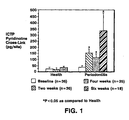
- Fig. 1 is a graph demonstrating the correlation between periodontitis and ICTP crosslink in crevicular fluid.
- Fig. 2 is a graph showing the difference in bone metabolic activity by 99mTc-MDP uptake in healthy vs. periodontitis sites in dogs.
- Fig. 3 is a graph demonstrating the correlation between periodontitis and circulating ICTP crosslink.
- Fig. 4 is a graph demonstrating the correlation between circulating ICTP crosslink and periodontitis.
- GCF is a secretion which is exuded from the sulcus between gum and tooth. When first formed, GCF does not mix with the saliva in the mouth, but only does so after it leaves the sulcus and enters the oral cavity. In collecting GCF for analysis according to the invention, it is desirable to minimize dilution of GCF with saliva. Thus the saliva in the vicinity of the sulcus from which GCF is to be collected is removed, preferably using cotton rolls in combination with compressed air, which is blown over the region.
- GCF is collected by placement of a strip of porous material such as methylcellulose filter paper into the sulcus and maintaining that material in the sulcus for about 30 seconds.
- the strip is inserted into the sulcus until slight resistance is detected.
- fluid volume is measured using a Peritron 6000 TM measuring instrument or other similar device.
- the collected fluid is eluted from the filter strip using phosphate buffered saline containing proteinase inhibitors. Samples are stored frozen until needed for analysis.
- samples Prior to analysis, samples are allowed to thaw at room temperature and they are then assayed for ICTP crosslink by any conventional technique, such as radioimmunoassay (RIA) or some other standard detection method, e.g., ELISA.
- RIA radioimmunoassay
- ELISA ELISA
- Dogs (two one-year old male beagles) are used to assess the measurement of ICTP crosslink as a marker of periodontal disease activity.
- the left quadrants randomly serve as the experimental sites, while the right quadrants serve as control sites. Both animals receive an oral prophylaxis 14 days prior to initiation of the studies.
- the dogs are exposed to the following procedures.
- Subtraction radiographic measurements are taken at the beginning of the ligature induced periodontitis period, denoted as baseline, and again at 2 weeks, 4 weeks, 6 weeks, 8 weeks, 10 weeks, 12 weeks, 16 weeks, and 6-months after onset of periodontitis, in both the experimental and control sites.
- both the experimental and control sites also have ICTP crosslink sample measurements taken.
- There are 6 teeth/half-mouth x 2 sides/dog 3 sample sites/tooth a total of 18 control sites and 18 experimental sites.
- the totals for sample analysis are as follows: Time point Control Quadrants Experimental Quadrants Number of ICTP Crosslink Samples Number of Radiographic Sites Number of ICTP Crosslink Samples Number of Radiographic Sites BASELINE 18 12 18 12 2 Weeks 18 12 18 12 4 Weeks 18 12 18 12 6 Weeks 18 12 18 12 8 Weeks 18 12 18 12 10 Weeks 18 12 18 12 12 12 Weeks 18 12 18 12 16 Weeks 18 12 18 12 24 Weeks 18 12 18 12 18 12 TOTALS 162 108 162 108 162 108
- GCF Gingival Crevicular Fluid
- GCF is collected from the mesial, buccal and distal locations of the first premolar through fourth premolar in each quadrant from both dogs.
- the GCF is collected as described above with methylcellulose strips, and the volume determined with a Periotron 6000TM.
- Samples are placed in 1 mL Eppendorf vials in a solution containing 55 ⁇ l of proteinase inhibitors (15 nM aprotenin and 1 mM phenylmethylsulfonylfluoride (PMSF)) in phosphate buffered saline (PBS), pH 7.4.
- the fluid is subsequently stored on ice, followed by elution from the collection device for a period of 60 minutes at 25°C.
- the samples are then stored at -20 to -80°C until needed for ICTP crosslink analysis.
- Frozen samples are allowed to thaw at room temperature for subsequent analysis of ICTP crosslink by RIA (Risteli, J. et al., Clin.Chem. (1993), 39 :635-640). All samples and reagents are allowed to come to room temperature. The samples and standards are set up in duplicate in 12 x 75 mm test tubes. Samples are aliquoted into tubes and 200 ⁇ L of rabbit anti-ICTP is added to each sample. 200 ⁇ L of [ 125 I]ICTP is added to all samples followed by mixing and incubation for 2 hours at 37°C. 500 ⁇ L of goat anti-rabbit IgG in a suspension with PEG is added to all tubes.
- the samples are vortexed and incubated for 30 minutes at 20-25°C.
- the samples are followed by centrifugation for 30 minutes at 2,000 x g at 4°C.
- the supernatant is immediately decanted from all samples.
- standards of ICTP (1-50 ng/mL) are assessed along with GCF samples (ng/mL) will be plotted comparing B/Bo (%) versus ICTP concentration.
- the assay can detect as little as 0.34 ng/mL of ICTP.
- Serum and saliva samples from both dogs are evaluated for ICTP crosslink carboxy-terminal telopeptide of type I collagen content for comparison purposes.
- urinary pyridinoline cross-links i.e., NTP, HP and LP
- 24 hour urine samples are assayed as described previously (Seyedin, S.M. et al., (1993), J.Bone Miner.Res., 8 :635; Hanson, D.A. (1992), J.Bone Miner. Res., 7 :1251).
- Samples are collected during estimated time points of active periodontal bony destruction in the dogs (at 3 months post-ligature induction) and following the initiation of oral hygiene procedures and return to health.
- Comparisons are made to illustrate differences in urinary pyridinoline cross-link levels between health and active disease. Significant differences are correlated with both nuclear medicine and subtraction radiographic indices of bone resorption.
- Radiographs taken at Baseline and 2, 4, 6, 8, 10, 12, 16, and 24 weeks are used to measure the loss of alveolar bone over time. Radiographs are exposed at 90 KVP, 15 Ma and 0.5 s and developed in an automatic film processor. The radiographs are then analyzed with a computer assisted method as follows: The radiographs were converted into subtraction images using a closed-circuit video system (GE model 4TE5) camera coupled to an analog digital converter capable of storing an entire video frame in solid-state memory in one time frame (1/30 s).
- GE model 4TE5 closed-circuit video system
- a digital frame grabber (Imaging Technologies, PC Vision Frame Grabber) is capable of digitizing and storing image frames and has an information capacity of more than two million bits (512 x 512 pixels by 8 bits deep) utilizing an IBM PC ATTM as the central processing unit.
- the images are placed in spatial register with the aid of a micromanipulator capable of orthogonal movement in two dimensions plus rotation in the same plane (Klinger).
- the first radiograph is stored in the computer's fixed disk drive using the full 256 (8 bits) gray levels of resolution. Registration of the second film to be compared is facilitated by continuously "grabbing" the image of the second radiograph while simultaneously displaying the subtraction between the first and second radiograph on the same video screen. Since slight variations in film processing or voltage to the X-ray tube may result in differences in contrast in the resultant films, the non-parametric gamma correction algorithm of Ruttiman (Ruttiman, U.E. et al., J.Periodont.Res. (1986) 21 :486) is used to correct differences in contrast between the two films. Registration is achieved when the video screen is a uniform gray and the anatomical structures such as teeth are not clearly discernible.
- the distance between the CEJ and the height of the alveolar crest is determined for the mesial and distal root surfaces.
- the alveolar bone height is taken either at the alveolar crest (for longitudinal bone loss) or at the point where the PDL space becomes indistinct (at the base of the apparent infrabony defects).
- Millimeters of bone loss at each site are determined from each radiograph.
- the radiographic images at 2 weeks are subtracted from the radiographs taken at baseline.
- Radiographs at 4 weeks are subtracted from the radiographs taken at baseline and so forth through 6 months. This provides multiple separate rates between each radiographic time interval (0, 0.5, 1, 1.5, 2, 2.5, 3, 4, and 6 months). Previous studies have shown that the error of this method in estimating bone loss is less than 0.08 mm on the original radiograph.
- Nuclear medicine techniques have been used to detect changes in bony metabolism (Jeffcoat, M.K. et al., Adv.Dent.Res. (1987), 1 :80). Since changes in metabolism precede changes in architecture, nuclear medicine techniques can be used to detect osseous abnormalities before the changes can be seen on radiographs, and to predict bone loss or its inhibition which will subsequently be seen radiographically. In an animal model, nuclear medicine techniques are used to extend and amplify the radiographic measurements of the ligature induced periodontitis on bone resorption by measuring bone metabolism. The technique used is as follows: At the beginning of the study (Baseline), both dogs are injected with 1.5 mCi/kg of 99 Tc-MDP intravenously. Following a 60 minute period to allow for blood and soft tissue clearance of radiopharmaceutical, the alveolar bone uptake is measured.
- a cadmium telluride semi-conductor probe detector is used to obtain measurement of uptake about the first through fourth premolars of each quadrant in both dogs.
- the uptake measurement for each site is divided by the uptake measured at the bony prominence dividing the dorsal and posterior skull surfaces.
- the use of ratios corrects the data for differences in injected dose and biological and physical decay of radiopharmaceutical, thereby facilitating comparison of uptake data between animals.
- the uptake of the radiopharmaceutical at each study site is repeated.
- Figs. 1-4 which display data generated from gingival crevicular fluid (GCF) and peripheral blood samples collected from dogs following induction of periodontitis from baseline through 6 weeks and corresponding radiopharmaceutical uptake (Figure 3).
- GCF gingival crevicular fluid
- Figure 3 Statistically significant increases (P ⁇ 0.05) in GCF ICTP crosslink levels/site (Fig. 1) and ng/ml (Fig. 2) were found in periodontitis sites from 2 through 6 weeks.
- GCF samples collected from healthy sites demonstrated only low levels of ICTP crosslink at all time points.
- Figure 4 demonstrates the effects of inductuion of periodontitis on circulating peripheral blood levels of ICTP Pyridinoline Cross-link.
- Periodontitis was induced around the teeth on one side of the mouth while the contralateral sides were maintained in periodontal health. Note significant increases at 6 weeks as compared to baseline (p ⁇ 0.05). This illustrates that periodontitis elevates systemic ICTP pyridinoline cross-link levels as well as locally in the GCF (See Figure 1).
Landscapes
- Life Sciences & Earth Sciences (AREA)
- Health & Medical Sciences (AREA)
- Engineering & Computer Science (AREA)
- Chemical & Material Sciences (AREA)
- Biomedical Technology (AREA)
- Immunology (AREA)
- Molecular Biology (AREA)
- Urology & Nephrology (AREA)
- Hematology (AREA)
- Medicinal Chemistry (AREA)
- Biochemistry (AREA)
- Pathology (AREA)
- General Physics & Mathematics (AREA)
- Food Science & Technology (AREA)
- General Health & Medical Sciences (AREA)
- Physics & Mathematics (AREA)
- Analytical Chemistry (AREA)
- Proteomics, Peptides & Aminoacids (AREA)
- Microbiology (AREA)
- Biotechnology (AREA)
- Cell Biology (AREA)
- Investigating Or Analysing Biological Materials (AREA)
- Pharmaceuticals Containing Other Organic And Inorganic Compounds (AREA)
- Measuring Or Testing Involving Enzymes Or Micro-Organisms (AREA)
- Dental Preparations (AREA)
- Materials For Medical Uses (AREA)
- Cosmetics (AREA)
- Dental Tools And Instruments Or Auxiliary Dental Instruments (AREA)
Abstract
Description
J.Biol.Chem. (1982) 257:8442). These intermolecular crosslinks are formed between the terminal, nonhelical telopeptide regions on one collagen molecule and the helical parts or another chain. The resultant crosslinks are initially bivalent, which in turn become multivalent complexes with collagen matrix maturation (Last, J.A. et al., Int.J.Biochem. (1990) 22:559). Crosslink biosynthesis is initiated by lysine and hydroxylysine residues. There are two major types of crosslinks: (1) Enzyme lysyl oxidase initiated crosslinks, and (2) derivatives from nonenzymatically glycosylated lysine and hydroxylysine residues. Pyridinoline crosslinked carboxy terminal telopeptide of type I collagen (ICTP) are derived from the carboxyterminal telopeptide regions of type I collagen which has been cross-linked via pyridinoline. ICTP is liberated during the degradation of type I collagen. ICTP is found in an immunochemically intact form in blood, where it appears to be derived from bone resorption. ICTP crosslink contains three peptides, the principal one of which is the carboxy-terminal telopeptide of the α1(I) chain, which is considerably smaller than the ICTP peptide determined from SDS-PAGE (Risteli, J. et al., Clin.Chem. (1993), 39:635).
| Time point | Control Quadrants | Experimental Quadrants | ||
| Number of ICTP Crosslink Samples | Number of Radiographic Sites | Number of ICTP Crosslink Samples | Number of Radiographic Sites | |
| BASELINE | 18 | 12 | 18 | 12 |
| 2 Weeks | 18 | 12 | 18 | 12 |
| 4 Weeks | 18 | 12 | 18 | 12 |
| 6 Weeks | 18 | 12 | 18 | 12 |
| 8 Weeks | 18 | 12 | 18 | 12 |
| 10 Weeks | 18 | 12 | 18 | 12 |
| 12 Weeks | 18 | 12 | 18 | 12 |
| 16 Weeks | 18 | 12 | 18 | 12 |
| 24 Weeks | 18 | 12 | 18 | 12 |
| TOTALS | 162 | 108 | 162 | 108 |
500 µL of goat anti-rabbit IgG in a suspension with PEG is added to all tubes. The samples are vortexed and incubated for 30 minutes at 20-25°C. The samples are followed by centrifugation for 30 minutes at 2,000 x g at 4°C. The supernatant is immediately decanted from all samples. Using a gamma scintillation counter, standards of ICTP (1-50 ng/mL) are assessed along with GCF samples (ng/mL) will be plotted comparing B/Bo (%) versus ICTP concentration. The assay can detect as little as 0.34 ng/mL of ICTP. Serum and saliva samples from both dogs are evaluated for ICTP crosslink carboxy-terminal telopeptide of type I collagen content for comparison purposes.
1-month, 2-months, 4-months and again at 6-months, the uptake of the radiopharmaceutical at each study site is repeated.
Claims (11)
- A method of determining the risk or progression of periodontal disease or peri-implant disease in a mammal, said method comprising measuring in a sample of body fluid from said mammal a pyridinoline crosslink as a measure of disease progression or risk, said body fluid being selected from gingival crevicular fluid, blood and urine.
- A method as claimed in claim 1, wherein said pyridinoline crosslink is selected from an ICTP crosslink; an NTP crosslink; an HP crosslink; and an LP crosslink.
- A method as claimed in claim 1 or claim 2, wherein said pyridinoline crosslink is an ICTP crosslink, said body fluid is gingival crevicular fluid and an ICTP crosslink level in the gingival crevicular fluid sample above 50 pg/sample is indicative of risk of periodontal or peri-implant disease.
- A method as claimed in claim 1 or claim 2, wherein said pyridinoline crosslink is an ICTP crosslink, said body fluid is gingival crevicular and an ICTP crosslink level above 50 ng/ml in the gingival crevicular fluid sample is indicative of risk of periodontal or peri-implant disease.
- A method as claimed in claim 4, wherein an ICTP crosslink level above 200 ng/ml in the gingival crevicular fluid sample is indicative of risk of periodontal or peri-implant disease.
- A method as claimed in claim 1 or claim 2, wherein said pyridinoline crosslink is an ICTP crosslink, said body fluid is blood and an ICTP crosslink level in the blood sample of 6 ng/ml or greater is indicative of risk of periodontal or peri-implant disease.
- A method as claimed in claim 6, wherein an ICTP crosslink level of 10 ng/ml or above in the blood sample is indicative of risk of periodontal or peri-implant disease activity.
- A method as claimed in claim 1 or claim 2, wherein said pyridinoline crosslink is an NTP crosslink, said body fluid is gingival crevicular fluid, and an NTP crosslink level above 75 pmol/sample of gingival crevicular fluid is indicative of risk of periodontal or peri-implant disease.
- A method as claimed in claim 1 or claim 2, wherein said pyridinoline crosslink is an NTP crosslink said body fluid is urine, and an NTP crosslink level above 75 pmol/µmol of creatinine in the urine sample is indicative of risk of periodontal or peri-implant disease.
- A method as claimed in claim 1 or claim 2, wherein said pyridinoline crosslink is an HP crosslink or an LP crosslink, said body fluid is gingival crevicular fluid, and an HP crosslink or an LP crosslink level above 60 nmol in the gingival crevicular fluid sample is indicative of risk of periodontal or peri-implant disease.
- A method as claimed in claim 1 or claim 2, wherein said pyridinoline crosslink is an HP crosslink or an LP crosslink, said body fluid is urine, and an HP crosslink or an LP crosslink level above 60 nmol/mmol of creatinine in the urine sample is indicative of risk of periodontal or peri-implant disease.
Applications Claiming Priority (3)
| Application Number | Priority Date | Filing Date | Title |
|---|---|---|---|
| US197131 | 1988-05-23 | ||
| US08/197,131 US5516699A (en) | 1994-02-16 | 1994-02-16 | Pyridinoline crosslinks as markers of periodontal and peri-implant disease activity |
| PCT/US1995/000509 WO1995022763A1 (en) | 1994-02-16 | 1995-01-13 | Pyridinoline crosslinks as markers of periodontal and peri-implant disease activity |
Publications (3)
| Publication Number | Publication Date |
|---|---|
| EP0745221A1 EP0745221A1 (en) | 1996-12-04 |
| EP0745221A4 EP0745221A4 (en) | 1998-06-10 |
| EP0745221B1 true EP0745221B1 (en) | 2002-07-10 |
Family
ID=22728172
Family Applications (1)
| Application Number | Title | Priority Date | Filing Date |
|---|---|---|---|
| EP95909234A Expired - Lifetime EP0745221B1 (en) | 1994-02-16 | 1995-01-13 | Pyridinoline crosslinks as markers of periodontal and peri-implant disease activity |
Country Status (13)
| Country | Link |
|---|---|
| US (1) | US5516699A (en) |
| EP (1) | EP0745221B1 (en) |
| JP (1) | JP3521913B2 (en) |
| KR (1) | KR970701349A (en) |
| CN (1) | CN1145116A (en) |
| AT (1) | ATE220458T1 (en) |
| AU (1) | AU1726495A (en) |
| CA (1) | CA2183452C (en) |
| DE (1) | DE69527350T2 (en) |
| DK (1) | DK0745221T3 (en) |
| ES (1) | ES2179867T3 (en) |
| PT (1) | PT745221E (en) |
| WO (1) | WO1995022763A1 (en) |
Families Citing this family (4)
| Publication number | Priority date | Publication date | Assignee | Title |
|---|---|---|---|---|
| US5756361A (en) * | 1992-12-17 | 1998-05-26 | Metra Biosystems, Inc. | Screening method for periodontal disease |
| MX2017004520A (en) | 2014-10-14 | 2018-03-15 | Lynch Samuel | Compositions for treating wounds. |
| EP3477306A1 (en) * | 2017-10-30 | 2019-05-01 | Koninklijke Philips N.V. | Classification of periodontitis patients |
| JP7575824B1 (en) * | 2023-12-19 | 2024-10-30 | 株式会社DeVine | Method using a predetermined quantitative value of collagen contained in mammalian teeth |
Citations (2)
| Publication number | Priority date | Publication date | Assignee | Title |
|---|---|---|---|---|
| US4735945A (en) * | 1986-03-13 | 1988-04-05 | Vipont Laboratories, Inc. | Method for inhibiting bone resorption and collagenase release |
| EP0448253A2 (en) * | 1990-03-19 | 1991-09-25 | Pfizer Inc. | Use of tenidap to inhibit activation of collagenase and to inhibit the activity of myeloperoxidase |
Family Cites Families (2)
| Publication number | Priority date | Publication date | Assignee | Title |
|---|---|---|---|---|
| US4973666A (en) * | 1987-11-06 | 1990-11-27 | Washington Research Foundation | Peptide fragments containing HP and LP cross-links |
| US5300434A (en) * | 1987-11-06 | 1994-04-05 | Washington Research Foundation | Hybridoma cell line producing an antibody to type-I collagen amino-terminal telopeptide |
-
1994
- 1994-02-16 US US08/197,131 patent/US5516699A/en not_active Expired - Lifetime
-
1995
- 1995-01-13 DE DE69527350T patent/DE69527350T2/en not_active Expired - Lifetime
- 1995-01-13 CN CN95192443A patent/CN1145116A/en active Pending
- 1995-01-13 WO PCT/US1995/000509 patent/WO1995022763A1/en not_active Ceased
- 1995-01-13 ES ES95909234T patent/ES2179867T3/en not_active Expired - Lifetime
- 1995-01-13 CA CA002183452A patent/CA2183452C/en not_active Expired - Lifetime
- 1995-01-13 AU AU17264/95A patent/AU1726495A/en not_active Abandoned
- 1995-01-13 DK DK95909234T patent/DK0745221T3/en active
- 1995-01-13 AT AT95909234T patent/ATE220458T1/en active
- 1995-01-13 JP JP52179595A patent/JP3521913B2/en not_active Expired - Fee Related
- 1995-01-13 KR KR1019960704491A patent/KR970701349A/en not_active Ceased
- 1995-01-13 EP EP95909234A patent/EP0745221B1/en not_active Expired - Lifetime
- 1995-01-13 PT PT95909234T patent/PT745221E/en unknown
Patent Citations (2)
| Publication number | Priority date | Publication date | Assignee | Title |
|---|---|---|---|---|
| US4735945A (en) * | 1986-03-13 | 1988-04-05 | Vipont Laboratories, Inc. | Method for inhibiting bone resorption and collagenase release |
| EP0448253A2 (en) * | 1990-03-19 | 1991-09-25 | Pfizer Inc. | Use of tenidap to inhibit activation of collagenase and to inhibit the activity of myeloperoxidase |
Also Published As
| Publication number | Publication date |
|---|---|
| PT745221E (en) | 2002-11-29 |
| DE69527350D1 (en) | 2002-08-14 |
| WO1995022763A1 (en) | 1995-08-24 |
| DK0745221T3 (en) | 2002-11-04 |
| CN1145116A (en) | 1997-03-12 |
| EP0745221A1 (en) | 1996-12-04 |
| CA2183452C (en) | 2007-03-27 |
| JPH09509486A (en) | 1997-09-22 |
| KR970701349A (en) | 1997-03-17 |
| AU1726495A (en) | 1995-09-04 |
| ATE220458T1 (en) | 2002-07-15 |
| CA2183452A1 (en) | 1995-08-24 |
| DE69527350T2 (en) | 2003-03-13 |
| EP0745221A4 (en) | 1998-06-10 |
| JP3521913B2 (en) | 2004-04-26 |
| US5516699A (en) | 1996-05-14 |
| ES2179867T3 (en) | 2003-02-01 |
Similar Documents
| Publication | Publication Date | Title |
|---|---|---|
| Chaves et al. | Persistent bacterial colonization of Porphyromonas gingivalis, Prevotella intermedia, and Actinobacillus actinomycetemcomitans in periodontitis and its association with alveolar bone loss after 6 months of therapy | |
| Oringer et al. | C‐Telopeptide pyridinoline cross‐links (ICTP (and periodontal pathogens associated with endosseous oral implants | |
| Nowak et al. | The correlation between serum and salivary melatonin concentrations and urinary 6‐hydroxymelatonin sulphate excretion rates: two non‐invasive techniques for monitoring human circadian rhythmicity | |
| Norderyd et al. | Periodontal status of women taking postmenopausal estrogen supplementation | |
| Giannobile et al. | Crevicular fluid osteocalcin and pyridinoline cross‐linked carboxyterminal telopeptide of type I collagen (ICTP) as markers of rapid bone turnover in periodontitis: A pilot study in beagle dogs | |
| Balducci et al. | Biological markers for evaluation of root resorption | |
| Murata et al. | Osteocalcin, deoxypyridinoline and interleukin‐1β in peri‐implant crevicular fluid of patients with peri‐implantitis | |
| Research, Science and Therapy Committee | Position paper: diagnosis of periodontal diseases | |
| Kido et al. | Calprotectin in gingival crevicular fluid correlates with clinical and biochemical markers of periodontal disease | |
| Manz | Radiographic assessment of peri-implant vertical bone loss: DICRG Interim Report No. 9 | |
| Giannopoulou et al. | Effect of intracrevicular restoration margins on peri-implant health: clinical, biochemical, and microbiologic findings around esthetic implants up to 9 years. | |
| Pellegrini et al. | Salivary bone turnover markers in healthy pre-and postmenopausal women: daily and seasonal rhythm | |
| Huang et al. | Tissue-specific biomarkers in gingival crevicular fluid are correlated with external root resorption caused by constant mechanical load: an in vivo study | |
| Heaven et al. | The use of a computer-based image analysis program for the diagnosis of approximal caries from bitewing radiographs | |
| US5516699A (en) | Pyridinoline crosslinks as markers of periodontal and peri-implant disease activity | |
| JP5869323B2 (en) | Periodontal disease marker | |
| Isik et al. | Bone marker levels in gingival crevicular fluid during orthodontic intrusive tooth movement: A preliminary study | |
| AU696552B2 (en) | Screening method for periodontal disease | |
| Southard et al. | Detection of simulated osteoporosis in human anterior maxillary alveolar bone with digital subtraction | |
| EP0412148B1 (en) | Method for diagnosis of periodontal disease by detection of alanine aminotransferase | |
| Christgau et al. | Quantitative digital subtraction radiography for assessment of bone density changes following periodontal guided tissue regeneration | |
| WO1995012124A1 (en) | Osteocalcin as a marker of periodontal and peri-implant disease activity | |
| Tümer et al. | Possible impact of inflammatory status on C‐telopeptide pyridinoline cross‐links of type I collagen and osteocalcin levels around oral implants with peri‐implantitis: A controlled clinical trial | |
| LeMar et al. | Thyroid adaptation to chronic tetraglycine hydroperiodide water purification tablet use | |
| Schubert et al. | CrossLaps and β-glucuronidase in Peri-implant and Gingival Crevicular Fluid. |
Legal Events
| Date | Code | Title | Description |
|---|---|---|---|
| PUAI | Public reference made under article 153(3) epc to a published international application that has entered the european phase |
Free format text: ORIGINAL CODE: 0009012 |
|
| 17P | Request for examination filed |
Effective date: 19960913 |
|
| AK | Designated contracting states |
Kind code of ref document: A1 Designated state(s): AT BE CH DE DK ES FR GB GR IE IT LI NL PT SE |
|
| RIN1 | Information on inventor provided before grant (corrected) |
Inventor name: WILLIAMS, RAY, C. Inventor name: LYNCH, SAMUEL, E. Inventor name: GIANNOBILE, WILLIAM, V. |
|
| RIN1 | Information on inventor provided before grant (corrected) |
Inventor name: WILLIAMS, RAY C., Inventor name: LYNCH, SAMUEL, E. Inventor name: GIANNOBILE, WILLIAM, V. |
|
| RHK1 | Main classification (correction) |
Ipc: G01N 33/53 |
|
| A4 | Supplementary search report drawn up and despatched |
Effective date: 19980424 |
|
| AK | Designated contracting states |
Kind code of ref document: A4 Designated state(s): AT BE CH DE DK ES FR GB GR IE IT LI NL PT SE |
|
| 17Q | First examination report despatched |
Effective date: 20000704 |
|
| GRAG | Despatch of communication of intention to grant |
Free format text: ORIGINAL CODE: EPIDOS AGRA |
|
| GRAG | Despatch of communication of intention to grant |
Free format text: ORIGINAL CODE: EPIDOS AGRA |
|
| GRAH | Despatch of communication of intention to grant a patent |
Free format text: ORIGINAL CODE: EPIDOS IGRA |
|
| GRAH | Despatch of communication of intention to grant a patent |
Free format text: ORIGINAL CODE: EPIDOS IGRA |
|
| GRAA | (expected) grant |
Free format text: ORIGINAL CODE: 0009210 |
|
| AK | Designated contracting states |
Kind code of ref document: B1 Designated state(s): AT BE CH DE DK ES FR GB GR IE IT LI NL PT SE |
|
| REF | Corresponds to: |
Ref document number: 220458 Country of ref document: AT Date of ref document: 20020715 Kind code of ref document: T |
|
| REG | Reference to a national code |
Ref country code: GB Ref legal event code: FG4D |
|
| REG | Reference to a national code |
Ref country code: CH Ref legal event code: EP |
|
| REG | Reference to a national code |
Ref country code: IE Ref legal event code: FG4D |
|
| REF | Corresponds to: |
Ref document number: 69527350 Country of ref document: DE Date of ref document: 20020814 |
|
| REG | Reference to a national code |
Ref country code: PT Ref legal event code: SC4A Free format text: AVAILABILITY OF NATIONAL TRANSLATION Effective date: 20021009 Ref country code: CH Ref legal event code: NV Representative=s name: A. BRAUN, BRAUN, HERITIER, ESCHMANN AG PATENTANWAE |
|
| REG | Reference to a national code |
Ref country code: GR Ref legal event code: EP Ref document number: 20020403363 Country of ref document: GR |
|
| ET | Fr: translation filed | ||
| REG | Reference to a national code |
Ref country code: ES Ref legal event code: FG2A Ref document number: 2179867 Country of ref document: ES Kind code of ref document: T3 |
|
| PLBE | No opposition filed within time limit |
Free format text: ORIGINAL CODE: 0009261 |
|
| STAA | Information on the status of an ep patent application or granted ep patent |
Free format text: STATUS: NO OPPOSITION FILED WITHIN TIME LIMIT |
|
| 26N | No opposition filed |
Effective date: 20030411 |
|
| REG | Reference to a national code |
Ref country code: CH Ref legal event code: PFA Owner name: INSTITUTE OF MOLECULAR BIOLOGY, INC. Free format text: INSTITUTE OF MOLECULAR BIOLOGY, INC.#ONE INNOVATION DRIVE#WORCESTER, MA 01605-4308 (US) $ PRESIDENT AND FELLOWS OF HARVARD COLLEGE#17 QUINCY STREET#CAMBRIDGE, MA 02138 (US) -TRANSFER TO- INSTITUTE OF MOLECULAR BIOLOGY, INC.#ONE INNOVATION DRIVE#WORCESTER, MA 01605-4308 (US) $ PRESIDENT AND FELLOWS OF HARVARD COLLEGE#17 QUINCY STREET#CAMBRIDGE, MA 02138 (US) |
|
| PGFP | Annual fee paid to national office [announced via postgrant information from national office to epo] |
Ref country code: PT Payment date: 20131223 Year of fee payment: 20 |
|
| PGFP | Annual fee paid to national office [announced via postgrant information from national office to epo] |
Ref country code: IE Payment date: 20140127 Year of fee payment: 20 Ref country code: NL Payment date: 20140126 Year of fee payment: 20 Ref country code: BE Payment date: 20140127 Year of fee payment: 20 Ref country code: CH Payment date: 20140129 Year of fee payment: 20 Ref country code: DK Payment date: 20140127 Year of fee payment: 20 Ref country code: DE Payment date: 20140129 Year of fee payment: 20 Ref country code: SE Payment date: 20140129 Year of fee payment: 20 |
|
| PGFP | Annual fee paid to national office [announced via postgrant information from national office to epo] |
Ref country code: FR Payment date: 20140117 Year of fee payment: 20 Ref country code: AT Payment date: 20131219 Year of fee payment: 20 Ref country code: ES Payment date: 20140127 Year of fee payment: 20 Ref country code: GR Payment date: 20140128 Year of fee payment: 20 Ref country code: IT Payment date: 20140124 Year of fee payment: 20 |
|
| PGFP | Annual fee paid to national office [announced via postgrant information from national office to epo] |
Ref country code: GB Payment date: 20140127 Year of fee payment: 20 |
|
| REG | Reference to a national code |
Ref country code: CH Ref legal event code: PCAR Free format text: NEW ADDRESS: HOLBEINSTRASSE 36-38, 4051 BASEL (CH) |
|
| REG | Reference to a national code |
Ref country code: DE Ref legal event code: R071 Ref document number: 69527350 Country of ref document: DE |
|
| REG | Reference to a national code |
Ref country code: DE Ref legal event code: R071 Ref document number: 69527350 Country of ref document: DE |
|
| REG | Reference to a national code |
Ref country code: DK Ref legal event code: EUP Effective date: 20150113 |
|
| REG | Reference to a national code |
Ref country code: NL Ref legal event code: V4 Effective date: 20150113 Ref country code: PT Ref legal event code: MM4A Free format text: MAXIMUM VALIDITY LIMIT REACHED Effective date: 20150113 |
|
| REG | Reference to a national code |
Ref country code: CH Ref legal event code: PL |
|
| REG | Reference to a national code |
Ref country code: GB Ref legal event code: PE20 Expiry date: 20150112 |
|
| REG | Reference to a national code |
Ref country code: AT Ref legal event code: MK07 Ref document number: 220458 Country of ref document: AT Kind code of ref document: T Effective date: 20150113 |
|
| REG | Reference to a national code |
Ref country code: IE Ref legal event code: MK9A |
|
| REG | Reference to a national code |
Ref country code: SE Ref legal event code: EUG |
|
| REG | Reference to a national code |
Ref country code: ES Ref legal event code: FD2A Effective date: 20150330 |
|
| REG | Reference to a national code |
Ref country code: GR Ref legal event code: MA Ref document number: 20020403363 Country of ref document: GR Effective date: 20150114 |
|
| PG25 | Lapsed in a contracting state [announced via postgrant information from national office to epo] |
Ref country code: IE Free format text: LAPSE BECAUSE OF EXPIRATION OF PROTECTION Effective date: 20150113 Ref country code: ES Free format text: LAPSE BECAUSE OF EXPIRATION OF PROTECTION Effective date: 20150114 Ref country code: PT Free format text: LAPSE BECAUSE OF EXPIRATION OF PROTECTION Effective date: 20150121 |
|
| PG25 | Lapsed in a contracting state [announced via postgrant information from national office to epo] |
Ref country code: GB Free format text: LAPSE BECAUSE OF EXPIRATION OF PROTECTION Effective date: 20150112 |