EP0741745B1 - Hepatitis b vaccine - Google Patents
Hepatitis b vaccine Download PDFInfo
- Publication number
- EP0741745B1 EP0741745B1 EP95907092A EP95907092A EP0741745B1 EP 0741745 B1 EP0741745 B1 EP 0741745B1 EP 95907092 A EP95907092 A EP 95907092A EP 95907092 A EP95907092 A EP 95907092A EP 0741745 B1 EP0741745 B1 EP 0741745B1
- Authority
- EP
- European Patent Office
- Prior art keywords
- mhbsag
- hbsag
- hbv
- codon position
- protein
- Prior art date
- Legal status (The legal status is an assumption and is not a legal conclusion. Google has not performed a legal analysis and makes no representation as to the accuracy of the status listed.)
- Expired - Lifetime
Links
- SPSXSWRZQFPVTJ-ZQQKUFEYSA-N hepatitis b vaccine Chemical compound C([C@H](NC(=O)[C@H]([C@@H](C)O)NC(=O)[C@H]([C@@H](C)O)NC(=O)[C@H](CO)NC(=O)[C@H](CC(N)=O)NC(=O)[C@H](CC=1C2=CC=CC=C2NC=1)NC(=O)[C@H](CCC(N)=O)NC(=O)[C@@H](N)CCSC)C(=O)N[C@@H](CC1N=CN=C1)C(=O)N[C@@H](CCC(N)=O)C(=O)N[C@@H]([C@@H](C)O)C(=O)N[C@@H](CC(C)C)C(=O)N[C@@H](CCC(N)=O)C(=O)N[C@@H](CC(O)=O)C(=O)N1[C@@H](CCC1)C(=O)N[C@@H](CCCNC(N)=N)C(=O)N[C@@H](C(C)C)C(=O)OC(=O)CNC(=O)CNC(=O)[C@H](C)NC(=O)[C@H]1N(CCC1)C(=O)[C@H](CC=1C=CC=CC=1)NC(=O)[C@H](CC=1C=CC(O)=CC=1)NC(=O)[C@H](CC(C)C)NC(=O)CNC(=O)[C@@H](N)CCCNC(N)=N)C1=CC=CC=C1 SPSXSWRZQFPVTJ-ZQQKUFEYSA-N 0.000 title 1
- 229940124736 hepatitis-B vaccine Drugs 0.000 title 1
- 150000001413 amino acids Chemical class 0.000 claims abstract description 34
- 108090000623 proteins and genes Proteins 0.000 claims abstract description 31
- 229960005486 vaccine Drugs 0.000 claims abstract description 28
- 102000036639 antigens Human genes 0.000 claims abstract description 20
- 108091007433 antigens Proteins 0.000 claims abstract description 20
- 102000004169 proteins and genes Human genes 0.000 claims abstract description 19
- 239000000427 antigen Substances 0.000 claims abstract description 18
- 238000001514 detection method Methods 0.000 claims abstract description 6
- 238000000338 in vitro Methods 0.000 claims abstract description 6
- 238000002360 preparation method Methods 0.000 claims abstract description 5
- 235000001014 amino acid Nutrition 0.000 claims description 34
- 108020004705 Codon Proteins 0.000 claims description 26
- 238000003780 insertion Methods 0.000 claims description 25
- 230000037431 insertion Effects 0.000 claims description 25
- 235000018102 proteins Nutrition 0.000 claims description 18
- 238000000034 method Methods 0.000 claims description 17
- DHMQDGOQFOQNFH-UHFFFAOYSA-N Glycine Chemical compound NCC(O)=O DHMQDGOQFOQNFH-UHFFFAOYSA-N 0.000 claims description 13
- 208000002672 hepatitis B Diseases 0.000 claims description 12
- 239000004475 Arginine Substances 0.000 claims description 11
- ODKSFYDXXFIFQN-UHFFFAOYSA-N arginine Natural products OC(=O)C(N)CCCNC(N)=N ODKSFYDXXFIFQN-UHFFFAOYSA-N 0.000 claims description 11
- 108091028043 Nucleic acid sequence Proteins 0.000 claims description 9
- QNAYBMKLOCPYGJ-REOHCLBHSA-N L-alanine Chemical compound C[C@H](N)C(O)=O QNAYBMKLOCPYGJ-REOHCLBHSA-N 0.000 claims description 8
- 235000004279 alanine Nutrition 0.000 claims description 8
- 238000004519 manufacturing process Methods 0.000 claims description 8
- 239000000203 mixture Substances 0.000 claims description 8
- 239000004471 Glycine Substances 0.000 claims description 7
- ODKSFYDXXFIFQN-BYPYZUCNSA-P L-argininium(2+) Chemical compound NC(=[NH2+])NCCC[C@H]([NH3+])C(O)=O ODKSFYDXXFIFQN-BYPYZUCNSA-P 0.000 claims description 7
- 102100031673 Corneodesmosin Human genes 0.000 claims description 5
- 125000000539 amino acid group Chemical group 0.000 claims description 5
- 238000006243 chemical reaction Methods 0.000 claims description 5
- 239000013604 expression vector Substances 0.000 claims description 5
- 239000013598 vector Substances 0.000 claims description 5
- 201000010099 disease Diseases 0.000 claims description 4
- 208000037265 diseases, disorders, signs and symptoms Diseases 0.000 claims description 4
- 239000002671 adjuvant Substances 0.000 claims description 3
- 229940096437 Protein S Drugs 0.000 claims description 2
- 108010031318 Vitronectin Proteins 0.000 claims description 2
- 210000005253 yeast cell Anatomy 0.000 claims description 2
- 210000004027 cell Anatomy 0.000 claims 4
- 238000012258 culturing Methods 0.000 claims 1
- 239000001963 growth medium Substances 0.000 claims 1
- 239000002609 medium Substances 0.000 claims 1
- 241000700721 Hepatitis B virus Species 0.000 abstract description 74
- 239000012634 fragment Substances 0.000 abstract description 9
- 102000008300 Mutant Proteins Human genes 0.000 abstract 1
- 108010021466 Mutant Proteins Proteins 0.000 abstract 1
- 229940024606 amino acid Drugs 0.000 description 31
- 210000002966 serum Anatomy 0.000 description 28
- 238000012163 sequencing technique Methods 0.000 description 20
- 239000002773 nucleotide Substances 0.000 description 17
- 125000003729 nucleotide group Chemical group 0.000 description 17
- 238000003752 polymerase chain reaction Methods 0.000 description 17
- 108090000765 processed proteins & peptides Proteins 0.000 description 14
- 229920001184 polypeptide Polymers 0.000 description 12
- 102000004196 processed proteins & peptides Human genes 0.000 description 12
- 108091026890 Coding region Proteins 0.000 description 11
- 230000003612 virological effect Effects 0.000 description 11
- 238000003018 immunoassay Methods 0.000 description 10
- LFQSCWFLJHTTHZ-UHFFFAOYSA-N Ethanol Chemical compound CCO LFQSCWFLJHTTHZ-UHFFFAOYSA-N 0.000 description 9
- 241000700605 Viruses Species 0.000 description 9
- 125000003275 alpha amino acid group Chemical group 0.000 description 9
- 101150010882 S gene Proteins 0.000 description 8
- 101710142246 External core antigen Proteins 0.000 description 7
- 238000009396 hybridization Methods 0.000 description 7
- 208000015181 infectious disease Diseases 0.000 description 7
- 230000035772 mutation Effects 0.000 description 7
- 239000002245 particle Substances 0.000 description 7
- 108020004414 DNA Proteins 0.000 description 6
- 238000003556 assay Methods 0.000 description 6
- 150000007523 nucleic acids Chemical group 0.000 description 6
- 239000013615 primer Substances 0.000 description 6
- 239000000523 sample Substances 0.000 description 6
- 206010008909 Chronic Hepatitis Diseases 0.000 description 5
- 239000003153 chemical reaction reagent Substances 0.000 description 5
- 230000000694 effects Effects 0.000 description 5
- 238000012360 testing method Methods 0.000 description 5
- YBJHBAHKTGYVGT-ZKWXMUAHSA-N (+)-Biotin Chemical compound N1C(=O)N[C@@H]2[C@H](CCCCC(=O)O)SC[C@@H]21 YBJHBAHKTGYVGT-ZKWXMUAHSA-N 0.000 description 4
- 102000004190 Enzymes Human genes 0.000 description 4
- 108090000790 Enzymes Proteins 0.000 description 4
- 108020004511 Recombinant DNA Proteins 0.000 description 4
- 240000004808 Saccharomyces cerevisiae Species 0.000 description 4
- 210000004369 blood Anatomy 0.000 description 4
- 239000008280 blood Substances 0.000 description 4
- 230000008859 change Effects 0.000 description 4
- 208000006454 hepatitis Diseases 0.000 description 4
- 238000002649 immunization Methods 0.000 description 4
- 238000012986 modification Methods 0.000 description 4
- 230000004048 modification Effects 0.000 description 4
- 239000000047 product Substances 0.000 description 4
- 238000011144 upstream manufacturing Methods 0.000 description 4
- 101710139375 Corneodesmosin Proteins 0.000 description 3
- 101710091045 Envelope protein Proteins 0.000 description 3
- 241000282412 Homo Species 0.000 description 3
- 108700026244 Open Reading Frames Proteins 0.000 description 3
- 101710188315 Protein X Proteins 0.000 description 3
- 102100021696 Syncytin-1 Human genes 0.000 description 3
- 230000000890 antigenic effect Effects 0.000 description 3
- 230000015572 biosynthetic process Effects 0.000 description 3
- 238000010367 cloning Methods 0.000 description 3
- 239000002131 composite material Substances 0.000 description 3
- 238000002703 mutagenesis Methods 0.000 description 3
- 231100000350 mutagenesis Toxicity 0.000 description 3
- 230000003472 neutralizing effect Effects 0.000 description 3
- 230000004224 protection Effects 0.000 description 3
- 238000006467 substitution reaction Methods 0.000 description 3
- 239000013589 supplement Substances 0.000 description 3
- 238000003786 synthesis reaction Methods 0.000 description 3
- 239000002126 C01EB10 - Adenosine Substances 0.000 description 2
- HEDRZPFGACZZDS-UHFFFAOYSA-N Chloroform Chemical compound ClC(Cl)Cl HEDRZPFGACZZDS-UHFFFAOYSA-N 0.000 description 2
- NYHBQMYGNKIUIF-UUOKFMHZSA-N Guanosine Chemical compound C1=NC=2C(=O)NC(N)=NC=2N1[C@@H]1O[C@H](CO)[C@@H](O)[C@H]1O NYHBQMYGNKIUIF-UUOKFMHZSA-N 0.000 description 2
- 241000711549 Hepacivirus C Species 0.000 description 2
- 206010019755 Hepatitis chronic active Diseases 0.000 description 2
- 206010019759 Hepatitis chronic persistent Diseases 0.000 description 2
- KFZMGEQAYNKOFK-UHFFFAOYSA-N Isopropanol Chemical compound CC(C)O KFZMGEQAYNKOFK-UHFFFAOYSA-N 0.000 description 2
- 241000235058 Komagataella pastoris Species 0.000 description 2
- 241000320412 Ogataea angusta Species 0.000 description 2
- VMHLLURERBWHNL-UHFFFAOYSA-M Sodium acetate Chemical compound [Na+].CC([O-])=O VMHLLURERBWHNL-UHFFFAOYSA-M 0.000 description 2
- 102000003929 Transaminases Human genes 0.000 description 2
- 108090000340 Transaminases Proteins 0.000 description 2
- 239000002253 acid Substances 0.000 description 2
- 230000001154 acute effect Effects 0.000 description 2
- OIRDTQYFTABQOQ-KQYNXXCUSA-N adenosine Chemical compound C1=NC=2C(N)=NC=NC=2N1[C@@H]1O[C@H](CO)[C@@H](O)[C@H]1O OIRDTQYFTABQOQ-KQYNXXCUSA-N 0.000 description 2
- 229960005305 adenosine Drugs 0.000 description 2
- 238000004458 analytical method Methods 0.000 description 2
- 229960002685 biotin Drugs 0.000 description 2
- 235000020958 biotin Nutrition 0.000 description 2
- 239000011616 biotin Substances 0.000 description 2
- 238000002405 diagnostic procedure Methods 0.000 description 2
- 239000003814 drug Substances 0.000 description 2
- 238000000605 extraction Methods 0.000 description 2
- 230000002209 hydrophobic effect Effects 0.000 description 2
- 230000002163 immunogen Effects 0.000 description 2
- 230000002480 immunoprotective effect Effects 0.000 description 2
- 238000011835 investigation Methods 0.000 description 2
- 210000004185 liver Anatomy 0.000 description 2
- 239000000463 material Substances 0.000 description 2
- 238000000746 purification Methods 0.000 description 2
- 230000003362 replicative effect Effects 0.000 description 2
- 238000011160 research Methods 0.000 description 2
- 238000012216 screening Methods 0.000 description 2
- 235000017281 sodium acetate Nutrition 0.000 description 2
- 239000001632 sodium acetate Substances 0.000 description 2
- 239000007790 solid phase Substances 0.000 description 2
- 210000002845 virion Anatomy 0.000 description 2
- XLYOFNOQVPJJNP-UHFFFAOYSA-N water Substances O XLYOFNOQVPJJNP-UHFFFAOYSA-N 0.000 description 2
- WVRUNFYJIHNFKD-WDSKDSINSA-N Arg-Ala Chemical compound OC(=O)[C@H](C)NC(=O)[C@@H](N)CCCN=C(N)N WVRUNFYJIHNFKD-WDSKDSINSA-N 0.000 description 1
- AQPVUEJJARLJHB-BQBZGAKWSA-N Arg-Gly-Ala Chemical compound OC(=O)[C@H](C)NC(=O)CNC(=O)[C@@H](N)CCCN=C(N)N AQPVUEJJARLJHB-BQBZGAKWSA-N 0.000 description 1
- DCXYFEDJOCDNAF-UHFFFAOYSA-N Asparagine Natural products OC(=O)C(N)CC(N)=O DCXYFEDJOCDNAF-UHFFFAOYSA-N 0.000 description 1
- 108090001008 Avidin Proteins 0.000 description 1
- 101100462138 Brassica napus OlnB1 gene Proteins 0.000 description 1
- 108091035707 Consensus sequence Proteins 0.000 description 1
- MIKUYHXYGGJMLM-GIMIYPNGSA-N Crotonoside Natural products C1=NC2=C(N)NC(=O)N=C2N1[C@H]1O[C@@H](CO)[C@H](O)[C@@H]1O MIKUYHXYGGJMLM-GIMIYPNGSA-N 0.000 description 1
- 206010063075 Cryptogenic cirrhosis Diseases 0.000 description 1
- NYHBQMYGNKIUIF-UHFFFAOYSA-N D-guanosine Natural products C1=2NC(N)=NC(=O)C=2N=CN1C1OC(CO)C(O)C1O NYHBQMYGNKIUIF-UHFFFAOYSA-N 0.000 description 1
- 239000003155 DNA primer Substances 0.000 description 1
- 238000001712 DNA sequencing Methods 0.000 description 1
- KCXVZYZYPLLWCC-UHFFFAOYSA-N EDTA Chemical compound OC(=O)CN(CC(O)=O)CCN(CC(O)=O)CC(O)=O KCXVZYZYPLLWCC-UHFFFAOYSA-N 0.000 description 1
- 241001646716 Escherichia coli K-12 Species 0.000 description 1
- 206010016654 Fibrosis Diseases 0.000 description 1
- 102000006395 Globulins Human genes 0.000 description 1
- 108010044091 Globulins Proteins 0.000 description 1
- 108060003951 Immunoglobulin Proteins 0.000 description 1
- DCXYFEDJOCDNAF-REOHCLBHSA-N L-asparagine Chemical compound OC(=O)[C@@H](N)CC(N)=O DCXYFEDJOCDNAF-REOHCLBHSA-N 0.000 description 1
- AYFVYJQAPQTCCC-GBXIJSLDSA-N L-threonine Chemical compound C[C@@H](O)[C@H](N)C(O)=O AYFVYJQAPQTCCC-GBXIJSLDSA-N 0.000 description 1
- 238000012408 PCR amplification Methods 0.000 description 1
- 101150048735 POL3 gene Proteins 0.000 description 1
- 102000035195 Peptidases Human genes 0.000 description 1
- 108091005804 Peptidases Proteins 0.000 description 1
- 101100226950 Pichia angusta FMDH gene Proteins 0.000 description 1
- 108010021757 Polynucleotide 5'-Hydroxyl-Kinase Proteins 0.000 description 1
- 102000008422 Polynucleotide 5'-hydroxyl-kinase Human genes 0.000 description 1
- 239000004793 Polystyrene Substances 0.000 description 1
- ONIBWKKTOPOVIA-UHFFFAOYSA-N Proline Natural products OC(=O)C1CCCN1 ONIBWKKTOPOVIA-UHFFFAOYSA-N 0.000 description 1
- 208000035415 Reinfection Diseases 0.000 description 1
- 238000012300 Sequence Analysis Methods 0.000 description 1
- DBMJMQXJHONAFJ-UHFFFAOYSA-M Sodium laurylsulphate Chemical compound [Na+].CCCCCCCCCCCCOS([O-])(=O)=O DBMJMQXJHONAFJ-UHFFFAOYSA-M 0.000 description 1
- 101710137302 Surface antigen S Proteins 0.000 description 1
- AYFVYJQAPQTCCC-UHFFFAOYSA-N Threonine Natural products CC(O)C(N)C(O)=O AYFVYJQAPQTCCC-UHFFFAOYSA-N 0.000 description 1
- 239000004473 Threonine Substances 0.000 description 1
- GFFGJBXGBJISGV-UHFFFAOYSA-N adenyl group Chemical group N1=CN=C2N=CNC2=C1N GFFGJBXGBJISGV-UHFFFAOYSA-N 0.000 description 1
- WNROFYMDJYEPJX-UHFFFAOYSA-K aluminium hydroxide Chemical compound [OH-].[OH-].[OH-].[Al+3] WNROFYMDJYEPJX-UHFFFAOYSA-K 0.000 description 1
- 229910021502 aluminium hydroxide Inorganic materials 0.000 description 1
- ILRRQNADMUWWFW-UHFFFAOYSA-K aluminium phosphate Chemical compound O1[Al]2OP1(=O)O2 ILRRQNADMUWWFW-UHFFFAOYSA-K 0.000 description 1
- 229940001007 aluminium phosphate Drugs 0.000 description 1
- 229910000147 aluminium phosphate Inorganic materials 0.000 description 1
- -1 amine acids Chemical class 0.000 description 1
- 150000001412 amines Chemical class 0.000 description 1
- 230000003321 amplification Effects 0.000 description 1
- 238000000137 annealing Methods 0.000 description 1
- 230000001745 anti-biotin effect Effects 0.000 description 1
- 239000003443 antiviral agent Substances 0.000 description 1
- 150000001483 arginine derivatives Chemical class 0.000 description 1
- 125000000637 arginyl group Chemical group N[C@@H](CCCNC(N)=N)C(=O)* 0.000 description 1
- 235000009582 asparagine Nutrition 0.000 description 1
- 229960001230 asparagine Drugs 0.000 description 1
- 108010058966 bacteriophage T7 induced DNA polymerase Proteins 0.000 description 1
- 239000011324 bead Substances 0.000 description 1
- 230000008901 benefit Effects 0.000 description 1
- 230000005540 biological transmission Effects 0.000 description 1
- 229960000074 biopharmaceutical Drugs 0.000 description 1
- 229940031416 bivalent vaccine Drugs 0.000 description 1
- 239000010836 blood and blood product Substances 0.000 description 1
- 229940125691 blood product Drugs 0.000 description 1
- 210000000234 capsid Anatomy 0.000 description 1
- 239000000969 carrier Substances 0.000 description 1
- 238000005119 centrifugation Methods 0.000 description 1
- 238000012512 characterization method Methods 0.000 description 1
- 230000007882 cirrhosis Effects 0.000 description 1
- 208000019425 cirrhosis of liver Diseases 0.000 description 1
- 150000001875 compounds Chemical class 0.000 description 1
- 238000010276 construction Methods 0.000 description 1
- 238000007796 conventional method Methods 0.000 description 1
- 230000002596 correlated effect Effects 0.000 description 1
- 235000018417 cysteine Nutrition 0.000 description 1
- XUJNEKJLAYXESH-UHFFFAOYSA-N cysteine Natural products SCC(N)C(O)=O XUJNEKJLAYXESH-UHFFFAOYSA-N 0.000 description 1
- 125000000151 cysteine group Chemical group N[C@@H](CS)C(=O)* 0.000 description 1
- 238000012217 deletion Methods 0.000 description 1
- 230000037430 deletion Effects 0.000 description 1
- 238000004925 denaturation Methods 0.000 description 1
- 230000036425 denaturation Effects 0.000 description 1
- 230000001419 dependent effect Effects 0.000 description 1
- 238000013461 design Methods 0.000 description 1
- 238000011161 development Methods 0.000 description 1
- 238000003745 diagnosis Methods 0.000 description 1
- 239000005546 dideoxynucleotide Substances 0.000 description 1
- LOKCTEFSRHRXRJ-UHFFFAOYSA-I dipotassium trisodium dihydrogen phosphate hydrogen phosphate dichloride Chemical compound P(=O)(O)(O)[O-].[K+].P(=O)(O)([O-])[O-].[Na+].[Na+].[Cl-].[K+].[Cl-].[Na+] LOKCTEFSRHRXRJ-UHFFFAOYSA-I 0.000 description 1
- 238000005516 engineering process Methods 0.000 description 1
- 238000011841 epidemiological investigation Methods 0.000 description 1
- 208000003816 familial cirrhosis Diseases 0.000 description 1
- 238000009472 formulation Methods 0.000 description 1
- 230000007614 genetic variation Effects 0.000 description 1
- 108020004445 glyceraldehyde-3-phosphate dehydrogenase Proteins 0.000 description 1
- 125000003630 glycyl group Chemical group [H]N([H])C([H])([H])C(*)=O 0.000 description 1
- 229940029575 guanosine Drugs 0.000 description 1
- 231100000283 hepatitis Toxicity 0.000 description 1
- 206010073071 hepatocellular carcinoma Diseases 0.000 description 1
- 231100000844 hepatocellular carcinoma Toxicity 0.000 description 1
- 230000000521 hyperimmunizing effect Effects 0.000 description 1
- 230000001900 immune effect Effects 0.000 description 1
- 230000036039 immunity Effects 0.000 description 1
- 230000002998 immunogenetic effect Effects 0.000 description 1
- 102000018358 immunoglobulin Human genes 0.000 description 1
- 230000017555 immunoglobulin mediated immune response Effects 0.000 description 1
- 238000001114 immunoprecipitation Methods 0.000 description 1
- 239000012678 infectious agent Substances 0.000 description 1
- 230000002458 infectious effect Effects 0.000 description 1
- 230000000977 initiatory effect Effects 0.000 description 1
- 238000002955 isolation Methods 0.000 description 1
- 230000021633 leukocyte mediated immunity Effects 0.000 description 1
- 150000002632 lipids Chemical class 0.000 description 1
- 208000019423 liver disease Diseases 0.000 description 1
- 210000005228 liver tissue Anatomy 0.000 description 1
- 210000005087 mononuclear cell Anatomy 0.000 description 1
- 229940031348 multivalent vaccine Drugs 0.000 description 1
- 230000000869 mutational effect Effects 0.000 description 1
- 238000003199 nucleic acid amplification method Methods 0.000 description 1
- 238000004806 packaging method and process Methods 0.000 description 1
- 239000008188 pellet Substances 0.000 description 1
- 238000010647 peptide synthesis reaction Methods 0.000 description 1
- 230000002085 persistent effect Effects 0.000 description 1
- 239000012071 phase Substances 0.000 description 1
- 238000002205 phenol-chloroform extraction Methods 0.000 description 1
- 239000002953 phosphate buffered saline Substances 0.000 description 1
- OJMIONKXNSYLSR-UHFFFAOYSA-N phosphorous acid Chemical compound OP(O)O OJMIONKXNSYLSR-UHFFFAOYSA-N 0.000 description 1
- 239000002504 physiological saline solution Substances 0.000 description 1
- 239000013612 plasmid Substances 0.000 description 1
- 229920002223 polystyrene Polymers 0.000 description 1
- 239000002243 precursor Substances 0.000 description 1
- 230000002265 prevention Effects 0.000 description 1
- 125000001500 prolyl group Chemical group [H]N1C([H])(C(=O)[*])C([H])([H])C([H])([H])C1([H])[H] 0.000 description 1
- 238000011321 prophylaxis Methods 0.000 description 1
- 235000019833 protease Nutrition 0.000 description 1
- 230000001681 protective effect Effects 0.000 description 1
- 239000013014 purified material Substances 0.000 description 1
- 239000011535 reaction buffer Substances 0.000 description 1
- 239000011541 reaction mixture Substances 0.000 description 1
- 230000009257 reactivity Effects 0.000 description 1
- 230000009467 reduction Effects 0.000 description 1
- 230000010076 replication Effects 0.000 description 1
- 230000004044 response Effects 0.000 description 1
- 230000000405 serological effect Effects 0.000 description 1
- 235000019333 sodium laurylsulphate Nutrition 0.000 description 1
- 241000894007 species Species 0.000 description 1
- 238000012289 standard assay Methods 0.000 description 1
- 230000004936 stimulating effect Effects 0.000 description 1
- 208000024891 symptom Diseases 0.000 description 1
- 229940124597 therapeutic agent Drugs 0.000 description 1
- 238000002560 therapeutic procedure Methods 0.000 description 1
- 229960002898 threonine Drugs 0.000 description 1
- 235000008521 threonine Nutrition 0.000 description 1
- 238000011282 treatment Methods 0.000 description 1
- 238000002255 vaccination Methods 0.000 description 1
- 238000012795 verification Methods 0.000 description 1
- 230000029812 viral genome replication Effects 0.000 description 1
- 230000009385 viral infection Effects 0.000 description 1
- 238000005406 washing Methods 0.000 description 1
Images


Classifications
-
- C—CHEMISTRY; METALLURGY
- C07—ORGANIC CHEMISTRY
- C07K—PEPTIDES
- C07K14/00—Peptides having more than 20 amino acids; Gastrins; Somatostatins; Melanotropins; Derivatives thereof
- C07K14/005—Peptides having more than 20 amino acids; Gastrins; Somatostatins; Melanotropins; Derivatives thereof from viruses
-
- A—HUMAN NECESSITIES
- A61—MEDICAL OR VETERINARY SCIENCE; HYGIENE
- A61P—SPECIFIC THERAPEUTIC ACTIVITY OF CHEMICAL COMPOUNDS OR MEDICINAL PREPARATIONS
- A61P31/00—Antiinfectives, i.e. antibiotics, antiseptics, chemotherapeutics
- A61P31/12—Antivirals
-
- A—HUMAN NECESSITIES
- A61—MEDICAL OR VETERINARY SCIENCE; HYGIENE
- A61P—SPECIFIC THERAPEUTIC ACTIVITY OF CHEMICAL COMPOUNDS OR MEDICINAL PREPARATIONS
- A61P31/00—Antiinfectives, i.e. antibiotics, antiseptics, chemotherapeutics
- A61P31/12—Antivirals
- A61P31/20—Antivirals for DNA viruses
-
- A—HUMAN NECESSITIES
- A61—MEDICAL OR VETERINARY SCIENCE; HYGIENE
- A61K—PREPARATIONS FOR MEDICAL, DENTAL OR TOILETRY PURPOSES
- A61K39/00—Medicinal preparations containing antigens or antibodies
-
- C—CHEMISTRY; METALLURGY
- C12—BIOCHEMISTRY; BEER; SPIRITS; WINE; VINEGAR; MICROBIOLOGY; ENZYMOLOGY; MUTATION OR GENETIC ENGINEERING
- C12N—MICROORGANISMS OR ENZYMES; COMPOSITIONS THEREOF; PROPAGATING, PRESERVING, OR MAINTAINING MICROORGANISMS; MUTATION OR GENETIC ENGINEERING; CULTURE MEDIA
- C12N2730/00—Reverse transcribing DNA viruses
- C12N2730/00011—Details
- C12N2730/10011—Hepadnaviridae
- C12N2730/10111—Orthohepadnavirus, e.g. hepatitis B virus
- C12N2730/10122—New viral proteins or individual genes, new structural or functional aspects of known viral proteins or genes
-
- Y—GENERAL TAGGING OF NEW TECHNOLOGICAL DEVELOPMENTS; GENERAL TAGGING OF CROSS-SECTIONAL TECHNOLOGIES SPANNING OVER SEVERAL SECTIONS OF THE IPC; TECHNICAL SUBJECTS COVERED BY FORMER USPC CROSS-REFERENCE ART COLLECTIONS [XRACs] AND DIGESTS
- Y10—TECHNICAL SUBJECTS COVERED BY FORMER USPC
- Y10S—TECHNICAL SUBJECTS COVERED BY FORMER USPC CROSS-REFERENCE ART COLLECTIONS [XRACs] AND DIGESTS
- Y10S435/00—Chemistry: molecular biology and microbiology
- Y10S435/975—Kit
-
- Y—GENERAL TAGGING OF NEW TECHNOLOGICAL DEVELOPMENTS; GENERAL TAGGING OF CROSS-SECTIONAL TECHNOLOGIES SPANNING OVER SEVERAL SECTIONS OF THE IPC; TECHNICAL SUBJECTS COVERED BY FORMER USPC CROSS-REFERENCE ART COLLECTIONS [XRACs] AND DIGESTS
- Y10—TECHNICAL SUBJECTS COVERED BY FORMER USPC
- Y10S—TECHNICAL SUBJECTS COVERED BY FORMER USPC CROSS-REFERENCE ART COLLECTIONS [XRACs] AND DIGESTS
- Y10S530/00—Chemistry: natural resins or derivatives; peptides or proteins; lignins or reaction products thereof
- Y10S530/806—Antigenic peptides or proteins
-
- Y—GENERAL TAGGING OF NEW TECHNOLOGICAL DEVELOPMENTS; GENERAL TAGGING OF CROSS-SECTIONAL TECHNOLOGIES SPANNING OVER SEVERAL SECTIONS OF THE IPC; TECHNICAL SUBJECTS COVERED BY FORMER USPC CROSS-REFERENCE ART COLLECTIONS [XRACs] AND DIGESTS
- Y10—TECHNICAL SUBJECTS COVERED BY FORMER USPC
- Y10S—TECHNICAL SUBJECTS COVERED BY FORMER USPC CROSS-REFERENCE ART COLLECTIONS [XRACs] AND DIGESTS
- Y10S530/00—Chemistry: natural resins or derivatives; peptides or proteins; lignins or reaction products thereof
- Y10S530/81—Carrier - bound or immobilized peptides or proteins and the preparation thereof, e.g. biological cell or cell fragment as carrier
-
- Y—GENERAL TAGGING OF NEW TECHNOLOGICAL DEVELOPMENTS; GENERAL TAGGING OF CROSS-SECTIONAL TECHNOLOGIES SPANNING OVER SEVERAL SECTIONS OF THE IPC; TECHNICAL SUBJECTS COVERED BY FORMER USPC CROSS-REFERENCE ART COLLECTIONS [XRACs] AND DIGESTS
- Y10—TECHNICAL SUBJECTS COVERED BY FORMER USPC
- Y10S—TECHNICAL SUBJECTS COVERED BY FORMER USPC CROSS-REFERENCE ART COLLECTIONS [XRACs] AND DIGESTS
- Y10S530/00—Chemistry: natural resins or derivatives; peptides or proteins; lignins or reaction products thereof
- Y10S530/82—Proteins from microorganisms
- Y10S530/826—Viruses
Definitions
- This invention relates to recombinant DNA molecules which code for polypeptides having specificity towards a hepatitis B viral antigen.
- this invention relates to a vaccine composition for stimulating the production of antibodies in humans to a variant hepatitis B virus.
- hepatitis B virions of different serotypes
- Dane particles which are hepatitis B virions and are isolatable from infected patients have a diameter of approximately 42nm.
- Each consists of an envelope comprising the hepatitis B surface antigen (HBsAg), a capsid (HBcAg), an endogenous polymerase and a DNA genome.
- HBsAg hepatitis B surface antigen
- HBcAg capsid
- a third polypeptide, 'e' antigen (HBeAg) is made by the hepatitis B virus and found in solubilized form in serum.
- hepatitis B virus Infection with hepatitis B virus (HBV) is a serious, widespread problem but vaccines for use in mass immunisation are now widely available.
- Vaccines commercially available against HBV comprise hepatitis B virus surface antigen (HBsAg) either in native or recombinant form.
- the authentic (or wild type) hepatitis B virus surface antigen can be recovered from plasma of infected individuals as a particle of about 22nm comprising of two proteins known as P24 and its glycosylated derivative GP28, both of which are encoded by a 226 amino acid coding sequence on the HBV genome known as the S protein coding sequence or HBV S-gene (Tiollais et al., (1985)).
- HBV S-gene coding sequences under the control of yeast promoters on expression vectors to enable expression of HBsAg in S. cerevisiae for vaccine production has been described by Harford et al. in Develop. Biol. Standard 54 125 (1983), Valenzuela et al. , Nature 298 347 (1982) and Bitter et al., J. Med. Virol. 25 123 (1988).
- Expression in Pichia pastoris has been described by Gregg et al. , Biotechnology 5 479 (1987), (see also European Patent Publication No. 0226846) as has expression in Hansenula polymorpha (European Publication No. 0299108).
- Vaccines have also been prepared from hybrid immunogenic particles comprising HBsAg protein as described in European Patent Publication No. 0278940.
- Such immunogenic particles can contain, for example, all or parts of the HBsAg precursor protein encoded by the coding sequence which immediately precedes the HBV-S gene on the HBV genome, referred to herein as the Pre-S coding sequence.
- the Pre-S coding sequence normally codes for 163 amino acids (in the case of the ay HBV sub type) and comprises a Pre-S1 coding sequence and a Pre-S2 coding sequence. The latter codes for 55 amino acids and immediately precedes the S protein coding sequence (European Publication No. EP-A-0278940).
- the surface antigen (the S antigen) open reading frame of HBV-DNA is divided into three regions, pre-S1, pre S-2 and S. It encodes three envelope proteins of HBV termed: large, middle and major proteins.
- the major protein, HBsAg consists of 226 amino acids and is encoded by the S gene (Tiollais et al. , (1981); Tiollais et al. , (1987) and Lau et al. ). All three envelope proteins contain HBsAg antigenic sites and are easily detected by conventional immunoassays for HBsAg. These immunoassays are extensively used for diagnosing HBV infection and screening blood donors world-wide.
- the HBsAg reactivity is dependent on the structural conformation of the hydrophilic region from amino acids 124-147 which is defined as the 'a' determinant (Ashton-Rickardt et al. and Brown et al. ). This is common to all HBV subtypes and antibody to it confers protection against reinfection with any of the subtypes.
- HBV-DNA sequences hybridising under highly stringent conditions with an HBV probe have been shown in the liver, serum and blood mononuclear cells of subjects negative for serum HBsAg (Brechot et al. (1985) and Thier et al ).
- Recent results from different laboratories using dot blot hybridisation or Polymerase Chain Reaction (PCR) confirm the presence of HBV DNA sequences in serum from HBsAg negative subjects.
- PCR techniques has permitted the detection of very low levels of HBV replication in many patients and has allowed sequencing of many isolates which have identified genetic variation in some isolates of the virus (Carman et al. , (1990); Brechot et al., (1991); Blum et al. ).
- Antigenic subtypes of HBV are defined serologically and have been shown to be caused by a single base changes in the region of the genome encoding HBsAg (Okamoto et al. ). However, all presently known antigenic subtypes contain the 'a' determinant consisting of amino acids 124 to 147 of HBsAg. Antibodies to the 'a' determinant confers protection against all subtypes. It has been shown by in vitro mutagenesis that the cysteine at position 147 and the proline at position 142 are important for the exhibition of full antigenicity of the 'a' determinant (Ashton-Rickardt et al. ).
- a modified hepatitis B surface antigen protein wherein said protein displays a different antigenicity to the antigenicity of wild-type HBV surface antigen (HBsAg), characterised in that said protein comprises an antigenically modified envelope region in which either arginine and alanine, in that order, or arginine, glycine and alanine, in that order, are inserted between codon position 122 and codon position 124 of the HBsAg sequence.
- HBV infection In China, a highly endemic area for HBV infection, recent studies, utiiising PCR, suggest that 30-40 % of HbsAg negative patients with either cryptogenic cirrhosis, chronic active hepatitis (CAH) or chronic persistent hepatitis (CPH), have replicating HBV-DNA in serum or liver tissue (Zhang et al. ). These studies show, that a variant of HBV exists in the Chinese population, characterised by undetectable HBsAg in serum. Surprisingly, such a putative mutant has never been characterised at the molecular level.
- CAH chronic active hepatitis
- CPH chronic persistent hepatitis
- the isolates from our Chinese patients are insertion mutants where additional amino acids are inserted between codons 122 and 124, immediately before the 'a' determinant.
- This sequence variation has not previously been described in any known HBV subtype and was not seen in 30 HBsAg positive Chinese patients from the same region. It is interesting to note that the region in which the insertion occurred is an important epitope area of HBsAg.
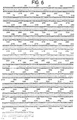
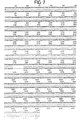
- the inserted sequence is found immediately downstream of codon 122 which determines the subtype determinant (d) and immediately upstream of the 'a' determinant. All nucleotide and amino acid sequences before and after codon position 122 are as detailed in wild type HBV ( Figures 6 and 7).
- the present invention provides characterisation of newly ascertained mutants of HBV that have at least two amino acid insertions immediately downstream of position 122 at the HBV envelope region.
- the present invention provides methods for determining the presence of the mutant HBV in a test sample, and reagents useful in these methods. All aspects of this invention provide a modification of the 'a' determinant in which there is an insertion of at least two amino acids downstream of position 122 of the HBsAg sequence, which corresponds to at least a six nucleotide insertion downstream of nucleotide 519 of the HBsAg genome.
- the nucleic acid sequence derived from mutant HBV, or a portion thereof are useful as probes to determine the presence of mutant HBV in test samples.
- the sequence also makes available polypeptide sequences of mutant HBV antigen(s) encoded within the genome(s) of such mutant HBV and permits the production of polypeptides which are useful as standards or reagent sin diagnostic tests and/or as components of vaccines.
- Monoclonal and polyclonal antibodies directed against an epitope contained within these polypeptide sequences also are useful for diagnostic tests as well as therapeutic agents, for screening of antiviral agents, and for the isolation of the mutant HBV from which these nucleic acid sequences are derived.
- this mutant HBsAg may also include Pre-S sequences if so desired.
- mHBsAg The variant HBsAg protein or fragment thereof according to the invention is hereinafter abbreviated "mHBsAg”.
- these mHBsAg mutants are not in a 'naturally occurring' form but are synthetic or a highly purified material, free of blood products.
- mutants as described in the invention correspond to full length HBsAg and are identical to wild type HBsAg except for the insertion of at least two amino acid residues downstream of position 122.
- the HBsAg mutants are in a highly purified form, for example in a state of purity greater than 75%, more preferably greater than 90%, and most preferably 95-100% pure.
- a vaccine composition comprising an effective amount of these HbsAg "escape mutants" admixed with a suitable carrier or adjuvant.
- the mHBsAg and vaccine of the invention may be used to overcome the problems perceived by the emergence of an escape mutant' as defined hereinabove in which the area immediately upstream of 'a' determinant (the envelope region) of the viral HBsAg has undergone modification.
- the vaccine of the invention has the advantage in that it may be useful in protecting against, and preventing the emergence or transmission of, a variant HBV which is defined herein as having a modified HBV envelope region in the HBsAg amino acid sequence wherein there are at least two amino acids inserted downstream of position 122.
- mHBsAg for use in therapy, especially prophylaxis.
- the invention also provides the use of mHBsAg in the manufacture of a vaccine composition for protecting a human against disease associated with HBV.
- the mHBsAg sequence in the vaccine will normally match, or be antigenically, equivalent to, the mHBsAg sequence in the variant HBV virus.
- amino acid residues inserted after position 122 in the mHBsAg of the invention is such that it may be derived by an insertion of six or more nucleotides.
- the inserted nucleotides encoding the extra amino acids may affect any of the 3 nucleotides of codon 123 in normal HBsAg.
- any mutation which changes the hydrophilicity of the envelope proteins can result in altering antigenicity and the appearance of variant HBV.
- the hydrophilicity of the wild type and that of the mutant in this region are quite different.
- a reduction in hydrophilicity described here is often correlated with a loss of antigenicity.
- the increased hydrophobicity of the mutant in the first loop may also result in an altered protein of the major protein in the lipid of the envelope thereby having a profound effect on the conformation.
- the residues after position 122 of normale HBsAg may reduce the hydrophilicity of the 'a' determinant.
- the mHBsAg is identical to normal (wild type) HBsAg S-protein except for the insertion of at least two amino acid residues downstream of position 122.
- the modification downstream of position 122 is an insertion of arginine and then alanine, respectively. Also preferably, an insertion downstream of position 122 of arginine, glycine and alanine in that order may be inserted.
- Table 1 depicts the synthetic oligonucleotide primers used for the Polymerase Chain and sequencing reactions.
- Table 2 illustrates positive/negative binding ratios of serum HBsAg from Patient Nos. 1 and 2 to monoclonal antibodies with adw wild type used as a control.
- Table 3 sets out the nucleotide and amino acid sequence homologies of mutant S genes compared with previous published wild type sequence ( adw ) and a Chinese isolate from the same region as the wild type.
- HBV mutations are more commonly found in particular areas of the sequence characterised by runs of bases. In the case under study the insertion is associated with a run of four adenines. This area is seemingly a "hot spot" for insertion in some isolates from Chinese HBsAG negative HBV carriers.
- the mHBsAg is obtained synthetically, either by peptide synthesis or more preferably by recombinant DNA techniques.
- One suitable method is complete de novo synthesis, by phosphite or phorphoramidite chemistry, of the desired coding sequence using viral or yeast codon frequencies.
- a second method is to clone on a single strand vector an appropriate restriction fragment from a vector which already comprises the HBV genome and thereafter effect site specific in vitro mutagenesis as described by Botstein and Shortle, Science 229 1193 (1982).
- a culture of E. coli K12 strain C600 containing the recombinant plasmid pRIT10601 comprising an HBV genome of ay subtype cloned on pBR322 was deposited in accordance with the Budapest Treaty in the American Type Culture Collection on 2 June 1982 under Accession Number ATCC 39132.
- the sequence coding for the S-gene specifying the 226 amine acid HBsAc protein or longer sequences coding for Pre S polypeptides can be excised from such clones by standard recombinant DNA techniques.
- One appropriate restriction fragment is the 575 bp XbaI-AccI fragment from within the S-gene coding region of pRIT10601.
- Vector systems useful for in vitro mutagenesis are commercially available.
- the mutated gene fragment so obtained is reinserted into the S-gene.
- a third method is to effect the desired mutational change using polymerase chain reaction (PCR) technology as described by Ho et al., Gene 77 51 (1989).
- PCR polymerase chain reaction
- the mHBsAg coding sequence may be expressed under the control of a suitable promoter in any suitable host.
- Expression vectors comprising the DNA sequence encoding mHBsAg are novel and form a further aspect of the present invention. Hosts transformed with the said expression vectors form yet another aspect of the invention.
- Pichia pastoris or Hansenula polymorpha may be used as the host and expression is under the control of a yeast promoter, such as the yeast TDH3 promoter (glyceraldehyde- 3-phosphate dehydrogenase gene, see Valenzuela et al. , 1982; Bitter et al., 1988) or PH05 (Miyanohara et al. , 1983), MOX, FMDH (see EP-A-0299108) and AOX (see EP-A-0226846).
- the transformed host can be cultured or fermented by conventional means and the mHBsAg extracted and purified.
- Purification of HBsAg from yeast cells is well known in the art and can be done according to any of U.S. Patent Nos. 4,649,192; 4,683,294; 4,694,074 or 4,738,926. Purification of the mHBsAc of the invention is carried out in an analogous manner.
- Vaccines containing the mHBsAg are prepared by conventional techniques and will contain an immunoprotective amount of the mHBsAg preferably in buffered physiological saline and admixed or adsorbed with any of the various known adjuvants including aluminium hydroxide and aluminium phosphate.
- immunoprotective is meant that enough of the mHBsAg is administered to elicit a sufficient protective antibody or cell mediated immune response to confer protection against the infectious agent without serious side effects.
- the amount of mHBsAg to be administered will depend on whether the vaccine is adjuvanted and will generally comprise between 1 to 1000 mcg of protein.
- the amount and number of doses to be administered can be determined in standard dose range studies involving observation of antibody titres and other responses in subjects.
- the mHBsAg may also be mixed with other HBsAg such as normal HBsAg or homogenous or composite HBsAg particles containing all or part or parts of the PreS1 or PreS2 polypeptides for vaccine formulation. It may also be mixed with hybrid HBsAg particles carrying epitopes from proteins from other organisms and with other immunogens to form bivalent or multivalent vaccines.
- Vaccine preparation is generally described in "Vaccines", edited by Voller et al. , University Park Press, Baltimore, MD, U.S.A., 1978.
- the mHBsAg is useful for inclusion as an immunological reagent in detection kits for variant HEV virus infection and the like. It can also be used to raise polyclonal and monoclonal antibodies by known methods, some of which monoclonal antibodies may be specific for the variant antigen and not recognise normal HBsAg.
- polypeptides which react immunologically with serum containing mutant HBV antibodies and composites thereof, and the antibodies raised against the mutant HBV specific epitopes in these polypeptides are useful in immunoassays to detect the presence of mutant HBV antibodies, or the presence of the virus and/or viral antigens in biological test samples.
- the design of these immunoassays is subject to variation, and a variety of these are known in the art; a variety of these have been described herein.
- the immunoassay may utilise one viral antigen, such as a polypeptide derived from any clone-containing mutant HBV nucleic acid sequence, or from the composite nucleic acid sequences derived from the mutant HBV nucleic acid sequences in these clones, or from the mutant HBV genome from which the nucleic acid sequences in these clones is derived.
- the immunoassay may use a combination of viral antigens derived from these sources. It may use, for example, a monoclonal antibody directed against the same viral antigen, or polyclonal antibodies directed against different viral antigens.
- Assays can include but are not limited to those based on competition, direct reaction or sandwich-type assays.
- Assays may use solid phases or may be performed by immunoprecipitation or any other methods which do not utilise solid phases. Examples of assays which utilise labels as the signal generating compound and those labels are described herein. Signals also may be amplified by using biotin and avidin, enzyme labels or biotin anti-biotin systems, such as that described in pending U.S. patent application Serial Nos. 608, 849; 070,647; 418,981; and 687,785. Recombinant polypeptides which include epitopes from immunodominant regions of mutant HBV may be useful for the detection of viral antibodies in biological test samples of infected individuals. It also is contemplated that antibodies may be useful in discriminating acute from non-acute infections.
- Kits suitable for immunodiagnosis and containing the appropriate reagents are constructed by packaging the appropriate materials, including the polypeptides of the invention containing mutant HBV epitopes or antibodies directed against mutant HBV epitopes in suitable containers, along with the remaining reagents and materials required for the conduct of the assay, as well as suitable assay instructions.
- kits for the diagnostic in vitro detection of anti-mHBsAg antibodies in a biological medium, and in particular neutralising antibodies following vaccination characterised in that it comprises:
- the invention provides an antibody preparation comprising anti-mHBsAg antibodies for use in the diagnosis, prevention or treatment of hepatitis B infection in humans.
- an antibody preparation comprising anti-mHBsAg antibodies for use in the diagnosis, prevention or treatment of hepatitis B infection in humans.
- a method of treating humane with an effective amount of such anti-mHBsAc antibody tc prevent cr treat hepatitis B infection.
- Patient No. 1 was a 58 year old male, with a 6 year history of non-A, non-B chronic hepatitis.
- HBV-DNA was found by PCR in the absence of HBsAg and other HBV markers (Fig. 1). At this stage, the patient had cirrhosis.
- Patient No. 2 was a 23 year old woman from the south of China, who on routine testing in March 1993 had a slightly elevated serum aminotransferase (ALT) level and was positive for HBsAg and HBeAg, but negative for both immunoglobulin (Ig)M and IgG anti-HBs.
- ALT serum aminotransferase
- Ig immunoglobulin
- Fig. 2 she continued to be HBV-DNA positive and was now also anti-HB positive but negative for HBsAg, HBeAg and anti-HBs (Fig. 2)
- HCV hepatitis C virus
- HCV-RNA hepatitis C virus
- HBsAg, HBeAg, total anti-HBc, IgM anti-HBs and anti-HBs were tested by commercially available enzyme immunoassays (Abbott Laboratories, North Chicago, Illinois, U.S.A.). HBsAg and anti-HBs results were confirmed in the United Kingdom.
- Polystyrene beads (Northumbria Biologicals, Northumberland, UK) were coated with antibodies RFHBs-1, RFHBs-2 and RFHBs-7, and then incubated with the serum samples diluted 1:2 in 50% newborn-calf serum in phosphate-buffered saline, pH 7.2.
- Bound HBsAg was detected with 125 I-anti-HBs from an 'AusRIA II' kit (Abbott Diagnostics), RFHBs-1 and RFHBs-2 bind to a cyclical peptide containing the sequence amino acids 124-137 and RFHBs-7 to a cyclical peptide from amino-acids 139-147 of HBsAg.
- HBsAg, HBeAg, total anti-HBC, IgM anti-HBc, and anti-HBs were tested by enzyme immunoassay (Abbott Laboratories, North Chicago, IL).
- HBV-DNA was detected by dot blot hybridisation using a modification of a method detailed in Weller et al J. Med. Virol 9 273-280 (1982).
- 50ul of serum were digested in the presence of 0.5% sodium dodecyl sulphate, 25mM sodium acetate, 2.5mM EDTA, 1mg/ml proteinase k (Boehringer Mannheim, Lewes, UK) in a volume of 200 ⁇ l for 2 hours at 68°C, two phenolchloroform extractions were followed by two chloroform extractions and HBV-DNA was precipitated with ethanol. After washing twice with 70% ethanol, the DNA pellets were resuspended in 10ul of water.
- Amino acids 122 to 137 and 122 to 139 or 140 (including inserted amino acids) of the 'a' determinant of HBsAg from the wild type and variant viral isolates, respectively, were analysed with the Prosis software (Pharmacia, St. Albans, England).
- HBV-DNA was detectable in serum from Patient No. 1 following amplification by PCR on two separate occasions.
- the S genes consist of 687 bp in isolate 1, 690 in Isolate 2, respectively, and 681 bp in the wild types.
- the S nucleotide and amino acid sequences of the mutants were compared with a published sequence of the same subtype (adw), and also with a wild type strain from an HBeAg-positive carrier from the same region (as shown in Table 3).
- Inserted sequences encode two additional amino acids (Arg-Ala) between codons 122 and 123 in Isolate 1, and three additional amino acids (Arg-Gly-Ala) between codons 123 and 124 in Isolate 2 (Fig. 5). These insertions occur immediately before the 'a' determinant of HBsAg. Such insertions have not been described in published sequences of known HBV subtypes and were absent from consensus sequences obtained from 30 Chinese HBsAg positive patients from the same region of China.
Landscapes
- Health & Medical Sciences (AREA)
- Life Sciences & Earth Sciences (AREA)
- Chemical & Material Sciences (AREA)
- Organic Chemistry (AREA)
- Virology (AREA)
- Medicinal Chemistry (AREA)
- General Health & Medical Sciences (AREA)
- Molecular Biology (AREA)
- Animal Behavior & Ethology (AREA)
- Communicable Diseases (AREA)
- Biophysics (AREA)
- Proteomics, Peptides & Aminoacids (AREA)
- Biochemistry (AREA)
- Veterinary Medicine (AREA)
- Genetics & Genomics (AREA)
- Public Health (AREA)
- Oncology (AREA)
- Chemical Kinetics & Catalysis (AREA)
- General Chemical & Material Sciences (AREA)
- Nuclear Medicine, Radiotherapy & Molecular Imaging (AREA)
- Pharmacology & Pharmacy (AREA)
- Gastroenterology & Hepatology (AREA)
- Biotechnology (AREA)
- Engineering & Computer Science (AREA)
- Medicines Containing Antibodies Or Antigens For Use As Internal Diagnostic Agents (AREA)
- Peptides Or Proteins (AREA)
- Preparation Of Compounds By Using Micro-Organisms (AREA)
- Saccharide Compounds (AREA)
- Immobilizing And Processing Of Enzymes And Microorganisms (AREA)
- Pharmaceuticals Containing Other Organic And Inorganic Compounds (AREA)
- Solid-Sorbent Or Filter-Aiding Compositions (AREA)
Abstract
Description
- This invention relates to recombinant DNA molecules which code for polypeptides having specificity towards a hepatitis B viral antigen.
- More particularly this invention relates to a vaccine composition for stimulating the production of antibodies in humans to a variant hepatitis B virus.
- The cloning of the genomes of hepatitis B virions of different serotypes is well known in the art (Miller et al). Dane particles which are hepatitis B virions and are isolatable from infected patients have a diameter of approximately 42nm. Each consists of an envelope comprising the hepatitis B surface antigen (HBsAg), a capsid (HBcAg), an endogenous polymerase and a DNA genome. A third polypeptide, 'e' antigen (HBeAg) is made by the hepatitis B virus and found in solubilized form in serum.
- Infection with hepatitis B virus (HBV) is a serious, widespread problem but vaccines for use in mass immunisation are now widely available. Vaccines commercially available against HBV comprise hepatitis B virus surface antigen (HBsAg) either in native or recombinant form. The authentic (or wild type) hepatitis B virus surface antigen can be recovered from plasma of infected individuals as a particle of about 22nm comprising of two proteins known as P24 and its glycosylated derivative GP28, both of which are encoded by a 226 amino acid coding sequence on the HBV genome known as the S protein coding sequence or HBV S-gene (Tiollais et al., (1985)). The complete amino acid sequence as well as the nucleotide sequence encoding, HBsAg is given in Valenzuela et al., Nature 280 815 (1979). The numbering system used by Tiollais et al. to define nucleotide and amino acid positions is used herein.
- Insertion of HBV S-gene coding sequences under the control of yeast promoters on expression vectors to enable expression of HBsAg in S. cerevisiae for vaccine production has been described by Harford et al. in Develop. Biol. Standard 54 125 (1983), Valenzuela et al., Nature 298 347 (1982) and Bitter et al., J. Med. Virol. 25 123 (1988). Expression in Pichia pastoris has been described by Gregg et al., Biotechnology 5 479 (1987), (see also European Patent Publication No. 0226846) as has expression in Hansenula polymorpha (European Publication No. 0299108).
- Vaccines have also been prepared from hybrid immunogenic particles comprising HBsAg protein as described in European Patent Publication No. 0278940. Such immunogenic particles can contain, for example, all or parts of the HBsAg precursor protein encoded by the coding sequence which immediately precedes the HBV-S gene on the HBV genome, referred to herein as the Pre-S coding sequence. The Pre-S coding sequence normally codes for 163 amino acids (in the case of the ay HBV sub type) and comprises a Pre-S1 coding sequence and a Pre-S2 coding sequence. The latter codes for 55 amino acids and immediately precedes the S protein coding sequence (European Publication No. EP-A-0278940).
- The surface antigen (the S antigen) open reading frame of HBV-DNA is divided into three regions, pre-S1, pre S-2 and S. It encodes three envelope proteins of HBV termed: large, middle and major proteins. The major protein, HBsAg, consists of 226 amino acids and is encoded by the S gene (Tiollais et al., (1981); Tiollais et al., (1987) and Lau et al.). All three envelope proteins contain HBsAg antigenic sites and are easily detected by conventional immunoassays for HBsAg. These immunoassays are extensively used for diagnosing HBV infection and screening blood donors world-wide. The HBsAg reactivity is dependent on the structural conformation of the hydrophilic region from amino acids 124-147 which is defined as the 'a' determinant (Ashton-Rickardt et al. and Brown et al.). This is common to all HBV subtypes and antibody to it confers protection against reinfection with any of the subtypes.
- HBV-DNA sequences hybridising under highly stringent conditions with an HBV probe have been shown in the liver, serum and blood mononuclear cells of subjects negative for serum HBsAg (Brechot et al. (1985) and Thier et al). Recent results from different laboratories using dot blot hybridisation or Polymerase Chain Reaction (PCR) confirm the presence of HBV DNA sequences in serum from HBsAg negative subjects. The development of PCR techniques has permitted the detection of very low levels of HBV replication in many patients and has allowed sequencing of many isolates which have identified genetic variation in some isolates of the virus (Carman et al., (1990); Brechot et al., (1991); Blum et al.). In Taiwan and Sardinia, where HBV is highly endemic, 1.7% and 0.3% of HBsAg negative healthy blood donors had HBV DNA in their sera detectable by dot blot hybridisation (Lai et al., (1989) and Sun et al.) In mainland China, a molecular epidemiological investigation using PCR in anti-HB-positive individuals indicated the existence of HBV carriers-with undetectable HBsAg, which accounts for 3% of the Chinese general population (Luo et al.)
- Antigenic subtypes of HBV are defined serologically and have been shown to be caused by a single base changes in the region of the genome encoding HBsAg (Okamoto et al.). However, all presently known antigenic subtypes contain the 'a' determinant consisting of
amino acids 124 to 147 of HBsAg. Antibodies to the 'a' determinant confers protection against all subtypes. It has been shown by in vitro mutagenesis that the cysteine at position 147 and the proline at position 142 are important for the exhibition of full antigenicity of the 'a' determinant (Ashton-Rickardt et al.). - Additionally, Howard Thomas and William Carman, detailed in WO 91/14703 a variant of an HBsAc fragment in a vaccinated child born to an HBV infected mother. Sequencing revealed a point mutation from guanosine to adenosine at nucleotide position 587 resulting in an amino acid change from glycine to arginine at position 145 in the 'a' determinant of HBsAg (see also Carman et al., (1990)). Similar HBV mutants have been reported to replicate in the host under humoral immune pressure, either actively (vaccine) or passively (hyperimmune globulin) induced (Okamoto et al., (1992) and McMahon et al.) However, the persistent presence of both HBsAg and anti-HBs (vaccine induced) detected by conventional immunoassays, in the serum of some of these patients, suggests that the mutation does not result in complete loss of antigenicity (Carman et al., (1990), Okamoto et al., (1992) and McMahon et al.).
- From the clinical and epidemiological view, it is more important to investigate the molecular features of HBV from subjects without any HBsAg reacting in standard assays. Sequencing results from a Japanese patient who was HBeAg and HBV-DNA, as well as anti-HBs positive showed that amino acids 9 to 22 of the pre-S2 region were deleted whereas amino acids at
position 3 and 8 of the pre-S2, and 126, 131 and 133 of the first loop of the 'a' determinant of HBs were substituted (Moriyama et al.). Analysis of the deduced amino acid sequence from another isolate revealed substitutions atpositions - During the last decade, several putative variants or mutants of hepatitis B virus have been described. For instance, McMahon et al. have described a substitution of arginine for glycine in a putative monoclonal antibody binding domain of HBsAg (as deduced by DNA sequence analysis) in a liver transplant patient treated with anti-HBsAg monoclonal antibody (Cold Spring Harbor Symposium on the Molecular Biology of Hepatitis B Viruses, September, 1989).
- In an investigation by Carman et al. and the subject of patent application WO 94/26904, a mutant hepatitis B virus having a modified 'a' determinant wherein two specific amino acids, asparagine and threonine, were inserted at
position 122 of the HBsAg sequence. Further, a mutation at position 145, substituting glycine for the wild type arginine was also detailed in the amino acid sequence listing. - In another report, children and adults were found with circulating hepatitis B surface antigen, indicating viral replication, despite the presence of specific antibody (anti-HBs) after immunisation with one of two licensed hepatitis B vaccines (Zanetti et al.). Analysis of the HBsAg with monoclonal antibodies revealed that the circulating antigen did not carry the 'a' determinant or that this determinant was masked. It was concluded that emergence of a variant of hepatitis B virus had been detected, possibly due to epidemiological pressure associated with immunisation in an endemic area of infection. The variant was, however, not characterised further.
- From the work of Zanetti et al. it is clear that a great disadvantage with presently available hepatitis B vaccines is that they may, at least in a host with a predisposing immunogenetic make-up, cause the appearance of an 'escape mutant', i.e. a replicating infectious virus that has mutated away from neutralising immunity. such a variant virus obviously has the capacity to cause disease and may be assumed to be transmissible. The variant virus may therefore give rise to a serious immunisation problem since it is not effectively neutralised by antibodies produced by vaccines based on normal HBsAg. Other mutations have been described in HBV, but their significance in terms of altered antigenicity is unclear (Moriyama et al. and Lai et al., (1990)).
- According to a first aspect of the present invention, there is provided a modified hepatitis B surface antigen protein (mHBsAg) wherein said protein displays a different antigenicity to the antigenicity of wild-type HBV surface antigen (HBsAg), characterised in that said protein comprises an antigenically modified envelope region in which either arginine and alanine, in that order, or arginine, glycine and alanine, in that order, are inserted between
codon position 122 andcodon position 124 of the HBsAg sequence. In China, a highly endemic area for HBV infection, recent studies, utiiising PCR, suggest that 30-40 % of HbsAg negative patients with either cryptogenic cirrhosis, chronic active hepatitis (CAH) or chronic persistent hepatitis (CPH), have replicating HBV-DNA in serum or liver tissue (Zhang et al.). These studies show, that a variant of HBV exists in the Chinese population, characterised by undetectable HBsAg in serum. Surprisingly, such a putative mutant has never been characterised at the molecular level. - The isolates from our Chinese patients (i.e. patients without any detectable HBsAg) are insertion mutants where additional amino acids are inserted between
codons codon 122 which determines the subtype determinant (d) and immediately upstream of the 'a' determinant. All nucleotide and amino acid sequences before and aftercodon position 122 are as detailed in wild type HBV (Figures 6 and 7). Without wishing to be bound by theory, we believe this mutation results in a conformational change affecting epitopes of the 'a' determinant and of the 'd' subtype. One likely possibility is that the insertion of the amino acids changes the epitopes by affecting the spatial organisation of the two loops of the 'a' determinant. Another possibility is that the first loop of the 'a' determinant, defined by monoclonal antibodies (Waters et al.), may include more upstream amino acids (than previously thought). We propose that these amino acids are being formed by a disulphide bridge upstream of 122 rather than 124 as previously suggested (Waters et al. and Ashton-Rickardt et al.). The inserted amino acids would increase the span of the loop from 14 to 16 or 17 amino acids therefore altering the conformation of this loop, preventing binding of neutralising antibody. - In this invention, we describe a new variant or 'escape mutant' of HBV isolated from Chinese patients whose serum was positive for HBV-DNA by dot blot hybridisation but HBsAg negative by commercial polyclonal antibody based immunoassays. Additionally, the present invention overcomes, or at least mitigates, the disadvantages associated with known HBV vaccines as these vaccines are ineffective for these newly discovered mutants.
- The present invention provides characterisation of newly ascertained mutants of HBV that have at least two amino acid insertions immediately downstream of
position 122 at the HBV envelope region. The present invention provides methods for determining the presence of the mutant HBV in a test sample, and reagents useful in these methods. All aspects of this invention provide a modification of the 'a' determinant in which there is an insertion of at least two amino acids downstream ofposition 122 of the HBsAg sequence, which corresponds to at least a six nucleotide insertion downstream of nucleotide 519 of the HBsAg genome. - The nucleic acid sequence derived from mutant HBV, or a portion thereof are useful as probes to determine the presence of mutant HBV in test samples. The sequence also makes available polypeptide sequences of mutant HBV antigen(s) encoded within the genome(s) of such mutant HBV and permits the production of polypeptides which are useful as standards or reagent sin diagnostic tests and/or as components of vaccines. Monoclonal and polyclonal antibodies directed against an epitope contained within these polypeptide sequences, also are useful for diagnostic tests as well as therapeutic agents, for screening of antiviral agents, and for the isolation of the mutant HBV from which these nucleic acid sequences are derived.
- It is to be understood that this mutant HBsAg may also include Pre-S sequences if so desired.
- The variant HBsAg protein or fragment thereof according to the invention is hereinafter abbreviated "mHBsAg".
- It will be appreciated that these mHBsAg mutants are not in a 'naturally occurring' form but are synthetic or a highly purified material, free of blood products.
- Preferably these mutants as described in the invention correspond to full length HBsAg and are identical to wild type HBsAg except for the insertion of at least two amino acid residues downstream of
position 122. - Preferably the HBsAg mutants are in a highly purified form, for example in a state of purity greater than 75%, more preferably greater than 90%, and most preferably 95-100% pure.
- In a further aspect of the present invention there is provided a vaccine composition comprising an effective amount of these HbsAg "escape mutants" admixed with a suitable carrier or adjuvant.
- Other aspects of the invention are described hereinbelow.
- The mHBsAg and vaccine of the invention may be used to overcome the problems perceived by the emergence of an escape mutant' as defined hereinabove in which the area immediately upstream of 'a' determinant (the envelope region) of the viral HBsAg has undergone modification. In particular, the vaccine of the invention has the advantage in that it may be useful in protecting against, and preventing the emergence or transmission of, a variant HBV which is defined herein as having a modified HBV envelope region in the HBsAg amino acid sequence wherein there are at least two amino acids inserted downstream of
position 122. - Accordingly there is also provided the use of a safe and effective amount of the vaccine according to the invention for protecting a human against disease symptoms associated with infection with said variant HBV, in the manufacture of a medicament.
- In another aspect we provide mHBsAg for use in therapy, especially prophylaxis.
- The invention also provides the use of mHBsAg in the manufacture of a vaccine composition for protecting a human against disease associated with HBV.
- When used to immunise humans against an existing variant HBV virus it will be appreciated that the mHBsAg sequence in the vaccine will normally match, or be antigenically, equivalent to, the mHBsAg sequence in the variant HBV virus.
- The amino acid residues inserted after
position 122 in the mHBsAg of the invention is such that it may be derived by an insertion of six or more nucleotides. The inserted nucleotides encoding the extra amino acids may affect any of the 3 nucleotides ofcodon 123 in normal HBsAg. - Theoretically, any mutation which changes the hydrophilicity of the envelope proteins can result in altering antigenicity and the appearance of variant HBV. The hydrophilicity of the wild type and that of the mutant in this region are quite different. A reduction in hydrophilicity described here is often correlated with a loss of antigenicity. The increased hydrophobicity of the mutant in the first loop may also result in an altered protein of the major protein in the lipid of the envelope thereby having a profound effect on the conformation.
- In the present invention, the residues after
position 122 of normale HBsAg may reduce the hydrophilicity of the 'a' determinant. - In another preferred embodiment of the invention the mHBsAg is identical to normal (wild type) HBsAg S-protein except for the insertion of at least two amino acid residues downstream of
position 122. - In a particularly preferred embodiment of the invention the modification downstream of
position 122, is an insertion of arginine and then alanine, respectively. Also preferably, an insertion downstream ofposition 122 of arginine, glycine and alanine in that order may be inserted. - Preferred features of each aspect of the invention are as for each other aspect, mutatis mutandis.
- The invention will now be illustrated by the following examples. The examples refer to the accompanying drawings, in which:
- FIGURE 1 illustrates serial serum aminotransferase (ALT) levels from Patient No. 1. Normal levels are below 40 iµ/L. Serum HBV markers were measured at various prints in time. In August 1992 HBV DNA was found by PCR yet HBsAg and the other HBV markers were undetected.
- FIGURE 2 illustrates serial serum ALT levels from Patient No. 2 as well as serum hepatitis B virus markers. Abbreviations indicate: w, wild type; m, mutant.
- FIGURE 3 is a diagrammatic representation of the surface gene open reading frame, position of the PCR and sequencing primers, and the overlapping polymerase open reading frame (P ORF). Shaded circles represent initiation and stop codons, whereas the shaded box indicates the insertion hot spot in relation to the 'a' determinant (positions 522-593). The nucleotide numbering is from a hypothetical EcoRI site as in published HBV DNA sequences, because the present isolates did not possess an EcoRI site.
- FIGURE 4 is an autoradiograph showing the nucleotide
insertion in
Isolates 1 and 2 (left and right) compared with the wild type (centre) following direct sequencing of PCR products. The arrows indicate the point of insertion. - FIGURE 5 illustrates the nucleotide and amino acid
sequences of
Isolates - FIGURE 6 illustrates the complete nucleotide sequence of mHBsAg Isolate 1. The top sequence represents that of the surface gene and 'a' determinant the mutant HBsAg isolate whereas the bottom sequence represents the wild type sequence. (---) represent points of amino acid insertion.
- FIGURE 7 illustrates the complete nucleotide sequence of mHEsAg Isolate 2. The top sequence represents that of the surface gene and 'a' determinant the mutant HBsAg isolate whereas the bottom sequence represents the wild type sequence. (---) represent points of amino acid insertion.
-
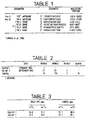
- Table 1 depicts the synthetic oligonucleotide primers used for the Polymerase Chain and sequencing reactions.
- Table 2 illustrates positive/negative binding ratios of serum HBsAg from Patient Nos. 1 and 2 to monoclonal antibodies with adw wild type used as a control.
- Table 3 sets out the nucleotide and amino acid sequence homologies of mutant S genes compared with previous published wild type sequence (adw) and a Chinese isolate from the same region as the wild type.
- HBV mutations are more commonly found in particular areas of the sequence characterised by runs of bases. In the case under study the insertion is associated with a run of four adenines. This area is seemingly a "hot spot" for insertion in some isolates from Chinese HBsAG negative HBV carriers.
- In a further aspect of the invention there is provided a process for preparing the mHBsAg and the vaccine composition obtained therefrom.
- Preferably the mHBsAg is obtained synthetically, either by peptide synthesis or more preferably by recombinant DNA techniques.
- Methods for the construction, manipulation and verification cf recombinant DNA molecules and sequences are well known in the art. To modify the HEV S protein of HBsAg and obtain the mHBsAgs of the invention it is desirable to insert the codons CGG and GCA, or any other triplet codon combination which encodes arginine and alanine, respectively, downstream of
position 122. Alternatively, codons CAC, GGG or GCG, or any other triplet codon combination encoding arginine, glycine and alanine, respectively, may be inserted betweennucleotide positions - Several methods are available to effect the appropriate change of sequence. One suitable method is complete de novo synthesis, by phosphite or phorphoramidite chemistry, of the desired coding sequence using viral or yeast codon frequencies.
- Synthesis of DNA is available from several companies on a commercial basis. An example of such gene synthesis is described by Hayden and Mandecki, DNA 7: 571 (1988) and references therein.
- A second method is to clone on a single strand vector an appropriate restriction fragment from a vector which already comprises the HBV genome and thereafter effect site specific in vitro mutagenesis as described by Botstein and Shortle, Science 229 1193 (1982). A culture of E. coli K12 strain C600 containing the recombinant plasmid pRIT10601 comprising an HBV genome of ay subtype cloned on pBR322 was deposited in accordance with the Budapest Treaty in the American Type Culture Collection on 2 June 1982 under Accession Number ATCC 39132. The sequence coding for the S-gene specifying the 226 amine acid HBsAc protein or longer sequences coding for Pre S polypeptides can be excised from such clones by standard recombinant DNA techniques.
- One appropriate restriction fragment is the 575 bp XbaI-AccI fragment from within the S-gene coding region of pRIT10601. Vector systems useful for in vitro mutagenesis are commercially available. The mutated gene fragment so obtained is reinserted into the S-gene.
- A third method is to effect the desired mutational change using polymerase chain reaction (PCR) technology as described by Ho et al., Gene 77 51 (1989).
- In each case the mHBsAg coding sequence may be expressed under the control of a suitable promoter in any suitable host.
- Expression vectors comprising the DNA sequence encoding mHBsAg are novel and form a further aspect of the present invention. Hosts transformed with the said expression vectors form yet another aspect of the invention.
- In a preferred aspect S. cerevisiae, Pichia pastoris or Hansenula polymorpha may be used as the host and expression is under the control of a yeast promoter, such as the yeast TDH3 promoter (glyceraldehyde- 3-phosphate dehydrogenase gene, see Valenzuela et al., 1982; Bitter et al., 1988) or PH05 (Miyanohara et al., 1983), MOX, FMDH (see EP-A-0299108) and AOX (see EP-A-0226846).
- The transformed host can be cultured or fermented by conventional means and the mHBsAg extracted and purified. Purification of HBsAg from yeast cells is well known in the art and can be done according to any of U.S. Patent Nos. 4,649,192; 4,683,294; 4,694,074 or 4,738,926. Purification of the mHBsAc of the invention is carried out in an analogous manner.
- Vaccines containing the mHBsAg are prepared by conventional techniques and will contain an immunoprotective amount of the mHBsAg preferably in buffered physiological saline and admixed or adsorbed with any of the various known adjuvants including aluminium hydroxide and aluminium phosphate. By "immunoprotective" is meant that enough of the mHBsAg is administered to elicit a sufficient protective antibody or cell mediated immune response to confer protection against the infectious agent without serious side effects. The amount of mHBsAg to be administered will depend on whether the vaccine is adjuvanted and will generally comprise between 1 to 1000 mcg of protein.
- Preferably 1 to 200 mcg protein is used or, more preferably 5 to 40 mcg protein. The amount and number of doses to be administered can be determined in standard dose range studies involving observation of antibody titres and other responses in subjects.
- The mHBsAg may also be mixed with other HBsAg such as normal HBsAg or homogenous or composite HBsAg particles containing all or part or parts of the PreS1 or PreS2 polypeptides for vaccine formulation. It may also be mixed with hybrid HBsAg particles carrying epitopes from proteins from other organisms and with other immunogens to form bivalent or multivalent vaccines. Vaccine preparation is generally described in "Vaccines", edited by Voller et al., University Park Press, Baltimore, MD, U.S.A., 1978.
- The mHBsAg is useful for inclusion as an immunological reagent in detection kits for variant HEV virus infection and the like. It can also be used to raise polyclonal and monoclonal antibodies by known methods, some of which monoclonal antibodies may be specific for the variant antigen and not recognise normal HBsAg.
- In another embodiment of the invention polypeptides which react immunologically with serum containing mutant HBV antibodies and composites thereof, and the antibodies raised against the mutant HBV specific epitopes in these polypeptides are useful in immunoassays to detect the presence of mutant HBV antibodies, or the presence of the virus and/or viral antigens in biological test samples. The design of these immunoassays is subject to variation, and a variety of these are known in the art; a variety of these have been described herein. The immunoassay may utilise one viral antigen, such as a polypeptide derived from any clone-containing mutant HBV nucleic acid sequence, or from the composite nucleic acid sequences derived from the mutant HBV nucleic acid sequences in these clones, or from the mutant HBV genome from which the nucleic acid sequences in these clones is derived. Or, the immunoassay may use a combination of viral antigens derived from these sources. It may use, for example, a monoclonal antibody directed against the same viral antigen, or polyclonal antibodies directed against different viral antigens. Assays can include but are not limited to those based on competition, direct reaction or sandwich-type assays. Assays may use solid phases or may be performed by immunoprecipitation or any other methods which do not utilise solid phases. Examples of assays which utilise labels as the signal generating compound and those labels are described herein. Signals also may be amplified by using biotin and avidin, enzyme labels or biotin anti-biotin systems, such as that described in pending U.S. patent application Serial Nos. 608, 849; 070,647; 418,981; and 687,785. Recombinant polypeptides which include epitopes from immunodominant regions of mutant HBV may be useful for the detection of viral antibodies in biological test samples of infected individuals. It also is contemplated that antibodies may be useful in discriminating acute from non-acute infections. Kits suitable for immunodiagnosis and containing the appropriate reagents are constructed by packaging the appropriate materials, including the polypeptides of the invention containing mutant HBV epitopes or antibodies directed against mutant HBV epitopes in suitable containers, along with the remaining reagents and materials required for the conduct of the assay, as well as suitable assay instructions.
- Accordingly in a preferred aspect of the invention there is provided a kit for the diagnostic in vitro detection of anti-mHBsAg antibodies in a biological medium, and in particular neutralising antibodies following vaccination, characterised in that it comprises:
- a) mHBsAg as herein defined; and
- b) means adapted to detect the antigen-antibody reaction.
-
- In a further aspect the invention provides an antibody preparation comprising anti-mHBsAg antibodies for use in the diagnosis, prevention or treatment of hepatitis B infection in humans. There is also provided a method of treating humane with an effective amount of such anti-mHBsAc antibody tc prevent cr treat hepatitis B infection.
- The invention will now be illustrated by the following example.
- Patient No. 1 was a 58 year old male, with a 6 year history of non-A, non-B chronic hepatitis. In August 1992, HBV-DNA was found by PCR in the absence of HBsAg and other HBV markers (Fig. 1). At this stage, the patient had cirrhosis.
- Patient No. 2 was a 23 year old woman from the south of China, who on routine testing in March 1993 had a slightly elevated serum aminotransferase (ALT) level and was positive for HBsAg and HBeAg, but negative for both immunoglobulin (Ig)M and IgG anti-HBs. On follow-up in January 1994, she continued to be HBV-DNA positive and was now also anti-HB positive but negative for HBsAg, HBeAg and anti-HBs (Fig. 2)
- Both patients were negative for hepatitis C virus (HCV) and HCV-RNA. Thirty HBsAg positive Chinese patients with chronic liver disease or hepatocellular carcinoma were studied from the same region.
- HBsAg, HBeAg, total anti-HBc, IgM anti-HBs and anti-HBs were tested by commercially available enzyme immunoassays (Abbott Laboratories, North Chicago, Illinois, U.S.A.). HBsAg and anti-HBs results were confirmed in the United Kingdom.
- A panel of anti-HBs monoclonal antibodies known to bind to the 'a' determinant, were used to define more specifically changes in the 'a' determinant epitopes. Polystyrene beads (Northumbria Biologicals, Northumberland, UK) were coated with antibodies RFHBs-1, RFHBs-2 and RFHBs-7, and then incubated with the serum samples diluted 1:2 in 50% newborn-calf serum in phosphate-buffered saline, pH 7.2. Bound HBsAg was detected with 125I-anti-HBs from an 'AusRIA II' kit (Abbott Diagnostics), RFHBs-1 and RFHBs-2 bind to a cyclical peptide containing the sequence amino acids 124-137 and RFHBs-7 to a cyclical peptide from amino-acids 139-147 of HBsAg.
- HBsAg, HBeAg, total anti-HBC, IgM anti-HBc, and anti-HBs were tested by enzyme immunoassay (Abbott Laboratories, North Chicago, IL).
- HBV-DNA was detected by dot blot hybridisation using a modification of a method detailed in Weller et al J. Med. Virol 9 273-280 (1982).
- 50ul of serum were digested in the presence of 0.5% sodium dodecyl sulphate, 25mM sodium acetate, 2.5mM EDTA, 1mg/ml proteinase k (Boehringer Mannheim, Lewes, UK) in a volume of 200µl for 2 hours at 68°C, two phenolchloroform extractions were followed by two chloroform extractions and HBV-DNA was precipitated with ethanol. After washing twice with 70% ethanol, the DNA pellets were resuspended in 10ul of water.
- Five µL of the extracted HEV-DNA was used as template for PCR amplification. One set cf primers (adw subtype), PO'5 (5'-TGCGGGTCACCATAT, position 2818-2833), and POL3 (5'-AAGGATCCAGTTGGC, position 1409-1395) (Table 2) were used to get a 1800bp fragment which included the pre-S1, pre-S2 and S genes (Figure 3). Another set of primers, M3 (5'-CTGGGAGGAGTTGGGGGAGGAGATT, position 1781-1755) and 3C (5'-CTAACATTGAGATTCCCGAGA, position 2460-2439) were used to amplify the Pre-C and C regions. The same serum sample was analysed independently in China and Britain using different sets of primers.
- Direct sequencing of the PCR products was carried out with the 'fmol' Sequencing Kit (Promega Co, Southampton, England). Sequencing primers (Table 1) were end-labelled with 25µCi of 32P-adenosine triphosphase (Amersham International, Amersham, UK) in a volume of 10µL using 10 units of polynucleotide kinase (Boehringer Mannheim) for 10 minutes at 37°C. 1.5µL of the reaction mix was directly used in sequencing reactions. 90µL of PCR product were precipitated with an equal volume of 4 mol/L sodium acetate and 2 volumes of isopropanol for 10 minutes at room temperature, pelleted by centrifugation for 10 minutes, and then washed two times with 70% ethanol. After resuspension in 20µL of water, 9.5ul of DNA was added to the reaction buffer with the end-labelled primer, and 5 units of Taq enzyme (Promega Co). Dideoxynucleotide termination sequencing was performed according to the manufacturer's instructions. Cycle sequencing was performed for 30 rounds. Denaturation, annealing and extension steps were for 30 seconds, 30 seconds and 1 minute, respectively.
- Direct sequencing results showed that the first serum from patient two (February 1993) had evidence cf a mixture of wild-type and mutant viruses. PCR products from this serum sample and subsequent ones from patient No. 2 were cloned into the pUC19 vector to confirm direct sequencing results. Nucleotide sequences of amplified HBV-DNA were determined with the sequenase DNA sequencing kit (Version 2.0, USB, Cambridge, England).
-
Amino acids 122 to 137 and 122 to 139 or 140 (including inserted amino acids) of the 'a' determinant of HBsAg from the wild type and variant viral isolates, respectively, were analysed with the Prosis software (Pharmacia, St. Albans, England). - HBV-DNA was detectable in serum from Patient No. 1 following amplification by PCR on two separate occasions.
- In Patient No. 2, this was detectable by dot blot hybridisation in March 1993 and September 1993, at 10 µg/50 µL of serum. Given that 1.0 µg of HBV-DNA is equivalent to 2.3 x 10⁶ HBV genomes, it was estimated that this patient's serum contained about 4.6 x 10⁷ viral particles per mL. HBsAg was detectable in the first but not the second sample. In January 1994, HBV-DNA was detectable only by PCR, and HBsAg was still undetectable.
- Binding studies in Patient No. 1 and No. 2 and an HBsAg positive patient used as a control (adw), showed that the HBsAg in the serum bound to all three monoclonal antibodies in
Patient 2 and could be detected by the polyclonal anti-HBs from the AusRIA II kit (Table 2). - The S genes consist of 687 bp in isolate 1, 690 in Isolate 2, respectively, and 681 bp in the wild types. The S nucleotide and amino acid sequences of the mutants were compared with a published sequence of the same subtype (adw), and also with a wild type strain from an HBeAg-positive carrier from the same region (as shown in Table 3).
- Sequencing results revealed an insertion in the S gene (Figure 4). Inserted sequences encode two additional amino acids (Arg-Ala) between
codons codons - Direct sequencing results were verified by cloning sequencing. Of 10 clones from the first serum taken from Patient No. 2, 8 had an in-phase insertion as described above, 2 of them were wild type, whereas all 15 clones from the second and third serum samples were of the variant. Thus, the first serum from Patient No. 2 had evidence of a mixture of wild-type and mutant viruses, indicating gradual emergence of the mutant, which in subsequent sera became the predominant species.
There were no previously described amino acid deletions or substitutions in the pre-S1, pre-S2 genes. - This was done according to the method of Kyte and Doolittle, giving a mean hydrophobicity index of -0.48 for amino acids 122-137 of the wild type 'a' determinant -0 for amino acids 122-139 in isolate 1 and -0.89 for amine acids 122-140 in isolate 2. Thus, the mutant 'a' determinants were more hydrophobic than the same region from the wild-type virus.
-
- Ashton-Rickardt et al., J. Med. Virol. 29 196 (1989)
- Blum et al., J. Virol 65 1836-42 (1991)
- Botstein and Shortle, Science 229 1133 (1982)
- Brechot et al., N. Engl. J. Med. 312 270-276 (1985)
- Brechot et al., J. Hepatol. 13 (supplement) S49-55 (1991)
- Brown et al.,
Lancet 2 184-187 (1984) - Carman et al., Lancet i 325-329 (1990)
- Carman et al., Lancet 341 349-353 (1993)
- Gregg et al.,
Biotechnology 5 479 (1987) - Harford et al., Develop. Biol. Standard 54 125 (1983)
- Hayden and Mandecki,
DNA 7 571 (1988) - Ho et al., Gene 77 51 (1989)
- Lai et al., Blood 73 17-19 (1989)
- Lai et al., Hepatology 12 1335-1340 (1990)
- Lau et al., Lancet 342 1335-1340 (1993)
- Liang et al., Hepatology 12 204-222 (1990)
- Luo et al., J. Med. Virol 35 55-59 (1991)
- McMahon et al., Cold Spring Harbor Symposium on Molecular Biology of Hepatitis B Viruses, September 1989
- McMahon et al., Hepatology 15 757-766 (1992)
- Michel et al., Hepatology 7 (Supplement) 61 63 (1987)
- Miller et al., Hepatology 9 322 (1989)
- Miyanohara et al., Proc. Natl.
Acad. Sci. USA 80 1 (1983) - Moriyama et al., Lancet 337 125 (1991)
- Okamoto et al., J. Virol. 74 5463-67 (1987)
- Okamoto et al., Pediatric Research 32 264-268 (1992)
- Sun et al., J. Clin. Microbiol 26 1848-52 (1988)
- Thier et al., Lancet ii 1273-76 (1987)
- Tiollais et al., Science 213 406-411 (1981)
- Tiollais et al., Nature 317 489 (1985)
- Tiollais et al., Hepatology 7 (Supplement) 361-363 (1987)
- Valenzuela et al.,
Nature 280 815 (1979) - Valenzuela et al., Nature 298 347 (1982)
- waters et al. Virus Research 22 1-12 (1991)
- Waters et al., J. Clin. Invest. 90 2543-2547 (1992)
- Weller et al., J. Med. Virol 9 273-280 (1982)
- Zanetti et al., Lancet, page 1132 November 1988
- Zhang et al., Hepatology 17 538-544 (1993)
-
-
- European Patent No. 0226846
- European Patent No. 0278940
- European Patent No. 0299108
- PCT Application No. 91/14703
- PCT Application No. 94/26904
- U.S. Patent 4,649,192
- U.S. Patent 4,683,294
- U.S. Patent 4,694,074
- U.S. Patent 4,738,926
-
Claims (19)
- A modified hepatitis B surface antigen protein (mHBsAg) wherein said protein displays a different antigenicity to the antigenicity of wild-type HBV surface antigen (HBsAg), characterised in that said protein comprises an antigenically modified envelope region in which there are at least two amino acids inserted between codon position 122 and codon position 124 of the HBsAg sequence.
- A mHBsAg as claimed in claim 1 in which the amino acid residues inserted between codon position 122 and codon position 124 are such as to reduce the hydrophilicity of the envelope region of HBV.
- A mHBsAg as claimed in claim 1 or claim 2 in which the codons inserted between codon position 122 and codon position 124 of wild-type HBsAg encode arginine and alanine, in that order.
- A mHBsAg as claimed in claim 1 or claim 2 in which the codons inserted between codon position 122 and codon position 124 of wild-type HBsAg encode arginine, glycine and alanine, in that order.
- A mHBsAg as claimed in any one of claims 1 to 4 which is identical to wild-type HBsAg S-protein except for the insertion of at least two amino acid residues between codon position 122 and codon position 124.
- A mHBsAg as claimed in any one of claims 1 to 5 in which the mHBsAg includes Pre-S sequences.
- A mHBsAg as claimed in any one of claims 1 to 6 which is greater than 75 % pure.
- An expression vector comprising a DNA sequence encoding a mHBsAg according to any one of claims 1 to 6.
- An expression vector as claimed in claim 8, wherein the DNA sequence is as set out in Figure 1 or Figure 2 of the accompanying drawings.
- A host cell transformed with the vector of claim 8 or claim 9.
- A host cell as claimed in claim 10, characterised in that said host cell is a yeast cell.
- A vaccine composition comprising an effective amount of a mHBsAg as claimed in any one of claims 1 to 7, admixed with a suitable carrier or adjuvant.
- A process for preparing a mHBsAg as claimed in any one of claims 1 to 7, which process comprises the steps of culturing a host cell according to claim 10 or claim 11 in an appropriate culture medium, and purifying the mHBsAg produced to the required degree of purity.
- The use of a mHBsAg according to any one of claims 1 to 7, in the manufacture of a vaccine for protecting a human against disease associated with HBV.
- A kit for diagnostic in vitro detection of anti-mHBsAg antibodies in a biological medium, characterised in that the kit comprises:(a) mHBsAg according to any one of the claims 1 to 7; and(b) means adapted to detect the antigen-antibody reaction.
- An antibody directed against a mutant HBV specific epitope of mHBsAg as defined in any one of claims 1 to 7 changed by the insertion of the said amino acids.
- A monoclonal antibody specific for mHBsAg, as defined in any one of claims 1 to 7, which does not recognise normal HBsAg.
- A method for determining the presence of mHBsAg, as defined in any one of claims 1 to 7, in a host sample, wherein the mHBsAg is detected using an antibody preparation comprising antibodies against mHBsAg as defined in any one of claims 1 to 7.
- A kit of parts comprising mHBsAg, as defined in any one of claims 1 to 7, and an antibody preparation comprising antibodies against mHBsAg as defined in any one of claims 1 to 7.
Applications Claiming Priority (3)
| Application Number | Priority Date | Filing Date | Title |
|---|---|---|---|
| GB9401987 | 1994-02-02 | ||
| GB9401987A GB9401987D0 (en) | 1994-02-02 | 1994-02-02 | Modified nucleic acid |
| PCT/GB1995/000208 WO1995021189A1 (en) | 1994-02-02 | 1995-02-02 | Hepatitis b vaccine |
Publications (2)
| Publication Number | Publication Date |
|---|---|
| EP0741745A1 EP0741745A1 (en) | 1996-11-13 |
| EP0741745B1 true EP0741745B1 (en) | 2005-11-16 |
Family
ID=10749735
Family Applications (1)
| Application Number | Title | Priority Date | Filing Date |
|---|---|---|---|
| EP95907092A Expired - Lifetime EP0741745B1 (en) | 1994-02-02 | 1995-02-02 | Hepatitis b vaccine |
Country Status (16)
| Country | Link |
|---|---|
| US (1) | US5856084A (en) |
| EP (1) | EP0741745B1 (en) |
| JP (1) | JP3812949B2 (en) |
| KR (1) | KR100370341B1 (en) |
| CN (1) | CN1057774C (en) |
| AT (1) | ATE310014T1 (en) |
| AU (1) | AU693154B2 (en) |
| CA (1) | CA2182375A1 (en) |
| DE (1) | DE69534617T2 (en) |
| ES (1) | ES2258767T3 (en) |
| GB (1) | GB9401987D0 (en) |
| MX (1) | MX9603182A (en) |
| NZ (1) | NZ278937A (en) |
| PL (1) | PL315784A1 (en) |
| SG (1) | SG49631A1 (en) |
| WO (1) | WO1995021189A1 (en) |
Families Citing this family (18)
| Publication number | Priority date | Publication date | Assignee | Title |
|---|---|---|---|---|
| US5595739A (en) * | 1993-05-07 | 1997-01-21 | Abbott Laboratories | Hepatitis B virus mutants, reagents and methods for detection |
| GB9608626D0 (en) * | 1996-04-25 | 1996-07-03 | Univ College Of London | Hepatitis b monoclonal antibodies |
| EP0919568A1 (en) | 1997-12-01 | 1999-06-02 | Sorin Diagnostics S.r.l. | Escape mutant of the surface antigen of hepatitis B virus |
| HUP0103258A3 (en) | 1998-06-19 | 2003-10-28 | Government Of The Republic Of | A vaccine-induced hepatitis b viral strain and uses thereof |
| US6558675B1 (en) | 1998-06-19 | 2003-05-06 | Government Of Republic Of Singapore | Mutant human hepatitis B viral strain and uses thereof |
| US6787142B2 (en) | 2001-04-30 | 2004-09-07 | Government Of Republic Of Singapore | Mutant human hepatitis B viral strain and uses thereof |
| FR2803599B1 (en) * | 2000-01-06 | 2004-11-19 | Inst Nat Sante Rech Med | NEW MUTATED HEPATITIS B VIRUS, ITS NUCLEIC AND PROTEIN CONSTITUENTS AND THEIR APPLICATIONS |
| KR100368756B1 (en) * | 2000-02-01 | 2003-01-24 | 주식회사 엘지생명과학 | Manufacturing method of hepatitis B surface antibody diagnotic reagent, hepatitis B surface antibody diagnotic reagent using the method and hepatitis B virus diagnotic reagent |
| AU2003253651C1 (en) | 2002-06-14 | 2010-06-03 | Gen-Probe Incorporated | Compositions and methods for detecting hepatitis B virus |
| CN100355777C (en) * | 2003-02-10 | 2007-12-19 | 文洪模 | Hepatitis B virus pre-S mutain, and its preparing process and application |
| WO2004113369A1 (en) * | 2003-06-20 | 2004-12-29 | Dade Behring Marburg Gmbh | Novel surface protein (hbsag) variant of hepatitis b virus |
| CA2580620C (en) | 2004-09-22 | 2014-04-22 | Advanced Life Science Institute, Inc. | Method of detecting hepatitis b virus s antigen |
| JP4948783B2 (en) * | 2005-05-18 | 2012-06-06 | シスメックス株式会社 | Anti-HBs monoclonal antibody |
| CN100520409C (en) * | 2005-09-06 | 2009-07-29 | 珠海丽珠试剂有限公司 | New kit for validating surface antigen of hepatitis b virus |
| US8642752B2 (en) | 2011-04-21 | 2014-02-04 | Isis Pharmaceuticals, Inc. | Modulation of Hepatitis B virus (HBV) expression |
| CN102292870B (en) * | 2011-06-16 | 2013-09-11 | 华为技术有限公司 | Phased-array antenna aligning method and device and phased-array antenna |
| AU2016238246B2 (en) * | 2015-03-25 | 2021-05-13 | Igm Biosciences, Inc. | Multi-valent hepatitis B virus antigen binding molecules and uses thereof |
| EP4458975A3 (en) | 2019-09-30 | 2025-02-12 | Gilead Sciences, Inc. | Hbv vaccines and methods treating hbv |
Family Cites Families (3)
| Publication number | Priority date | Publication date | Assignee | Title |
|---|---|---|---|---|
| GB9007024D0 (en) * | 1990-03-29 | 1990-05-30 | Imperial College | Novel vaccine |
| CA2067003A1 (en) * | 1991-04-29 | 1992-10-30 | Peter J. Kniskern | Hbsag escape mutant vaccine |
| US5595739A (en) * | 1993-05-07 | 1997-01-21 | Abbott Laboratories | Hepatitis B virus mutants, reagents and methods for detection |
-
1994
- 1994-02-02 GB GB9401987A patent/GB9401987D0/en active Pending
-
1995
- 1995-02-02 EP EP95907092A patent/EP0741745B1/en not_active Expired - Lifetime
- 1995-02-02 AT AT95907092T patent/ATE310014T1/en not_active IP Right Cessation
- 1995-02-02 DE DE69534617T patent/DE69534617T2/en not_active Expired - Fee Related
- 1995-02-02 ES ES95907092T patent/ES2258767T3/en not_active Expired - Lifetime
- 1995-02-02 MX MX9603182A patent/MX9603182A/en not_active IP Right Cessation
- 1995-02-02 CA CA002182375A patent/CA2182375A1/en not_active Abandoned
- 1995-02-02 NZ NZ278937A patent/NZ278937A/en unknown
- 1995-02-02 WO PCT/GB1995/000208 patent/WO1995021189A1/en not_active Ceased
- 1995-02-02 JP JP52045495A patent/JP3812949B2/en not_active Expired - Fee Related
- 1995-02-02 US US08/500,914 patent/US5856084A/en not_active Expired - Fee Related
- 1995-02-02 KR KR1019960704148A patent/KR100370341B1/en not_active Expired - Fee Related
- 1995-02-02 SG SG1996001902A patent/SG49631A1/en unknown
- 1995-02-02 AU AU15426/95A patent/AU693154B2/en not_active Ceased
- 1995-02-02 CN CN95191963A patent/CN1057774C/en not_active Expired - Fee Related
- 1995-02-02 PL PL95315784A patent/PL315784A1/en unknown
Also Published As
| Publication number | Publication date |
|---|---|
| AU693154B2 (en) | 1998-06-25 |
| EP0741745A1 (en) | 1996-11-13 |
| MX9603182A (en) | 1997-05-31 |
| CN1057774C (en) | 2000-10-25 |
| SG49631A1 (en) | 1998-06-15 |
| ES2258767T3 (en) | 2006-09-01 |
| US5856084A (en) | 1999-01-05 |
| ATE310014T1 (en) | 2005-12-15 |
| CN1143373A (en) | 1997-02-19 |
| CA2182375A1 (en) | 1995-08-10 |
| DE69534617D1 (en) | 2005-12-22 |
| GB9401987D0 (en) | 1994-03-30 |
| KR100370341B1 (en) | 2003-04-11 |
| AU1542695A (en) | 1995-08-21 |
| DE69534617T2 (en) | 2006-07-20 |
| PL315784A1 (en) | 1996-12-09 |
| NZ278937A (en) | 1998-06-26 |
| JP3812949B2 (en) | 2006-08-23 |
| WO1995021189A1 (en) | 1995-08-10 |
| JPH09508284A (en) | 1997-08-26 |
Similar Documents
| Publication | Publication Date | Title |
|---|---|---|
| Hou et al. | A unique insertion in the S gene of surface antigen—negative hepatitis B virus Chinese carriers | |
| US6099840A (en) | Hepatitis B vaccine | |
| AU693154B2 (en) | Hepatitis B vaccine | |
| Carman et al. | Vaccine-induced escape mutant of hepatitis B virus | |
| Waters et al. | Loss of the common | |
| CA2162132C (en) | Hepatitis b virus mutants, reagents and methods for detection | |
| Howard | The structure of hepatitis B envelope and molecular variants of hepatitis B virus | |
| Mimms et al. | Discrimination of hepatitis B virus (HBV) subtypes using monoclonal antibodies to the PreS1 and PreS2 domains of the viral envelope | |
| AU628156B2 (en) | Monoclonal antibodies to pres2 and pres1 polypeptides of the hepatitis b viral envelope | |
| AU756858B2 (en) | A vaccine-induced hepatitis B viral strain and uses thereof | |
| US5639637A (en) | Hepatitis B vaccine | |
| Carman | Vaccine-associated mutants of hepatitis B virus | |
| US5989865A (en) | Hepatitis B vaccine | |
| AU642729C (en) | Hepatitis B vaccine | |
| THOMAS | tion zyxwvutsrqponmlkj | |
| Tron | Hepatitis B virus recombinant vaccines: achievement and progress | |
| Md | Natural emergence of an anti-hepatitis B s escape mutant in a young female hepatitis B virus carrier. |
Legal Events
| Date | Code | Title | Description |
|---|---|---|---|
| PUAI | Public reference made under article 153(3) epc to a published international application that has entered the european phase |
Free format text: ORIGINAL CODE: 0009012 |
|
| 17P | Request for examination filed |
Effective date: 19960830 |
|
| AK | Designated contracting states |
Kind code of ref document: A1 Designated state(s): AT BE CH DE DK ES FR GB GR IE IT LI LU MC NL PT SE |
|
| 17Q | First examination report despatched |
Effective date: 20000720 |
|
| GRAP | Despatch of communication of intention to grant a patent |
Free format text: ORIGINAL CODE: EPIDOSNIGR1 |
|
| GRAS | Grant fee paid |
Free format text: ORIGINAL CODE: EPIDOSNIGR3 |
|
| GRAA | (expected) grant |
Free format text: ORIGINAL CODE: 0009210 |
|
| AK | Designated contracting states |
Kind code of ref document: B1 Designated state(s): AT BE CH DE DK ES FR GB GR IE IT LI LU MC NL PT SE |
|
| PG25 | Lapsed in a contracting state [announced via postgrant information from national office to epo] |
Ref country code: NL Free format text: LAPSE BECAUSE OF FAILURE TO SUBMIT A TRANSLATION OF THE DESCRIPTION OR TO PAY THE FEE WITHIN THE PRESCRIBED TIME-LIMIT Effective date: 20051116 Ref country code: AT Free format text: LAPSE BECAUSE OF FAILURE TO SUBMIT A TRANSLATION OF THE DESCRIPTION OR TO PAY THE FEE WITHIN THE PRESCRIBED TIME-LIMIT Effective date: 20051116 |
|
| REG | Reference to a national code |
Ref country code: GB Ref legal event code: FG4D |
|
| REG | Reference to a national code |
Ref country code: CH Ref legal event code: EP |
|
| REG | Reference to a national code |
Ref country code: IE Ref legal event code: FG4D |
|
| REF | Corresponds to: |
Ref document number: 69534617 Country of ref document: DE Date of ref document: 20051222 Kind code of ref document: P |
|
| REG | Reference to a national code |
Ref country code: CH Ref legal event code: NV Representative=s name: R. A. EGLI & CO. PATENTANWAELTE |
|
| PG25 | Lapsed in a contracting state [announced via postgrant information from national office to epo] |
Ref country code: SE Free format text: LAPSE BECAUSE OF FAILURE TO SUBMIT A TRANSLATION OF THE DESCRIPTION OR TO PAY THE FEE WITHIN THE PRESCRIBED TIME-LIMIT Effective date: 20060216 Ref country code: GR Free format text: LAPSE BECAUSE OF FAILURE TO SUBMIT A TRANSLATION OF THE DESCRIPTION OR TO PAY THE FEE WITHIN THE PRESCRIBED TIME-LIMIT Effective date: 20060216 Ref country code: DK Free format text: LAPSE BECAUSE OF FAILURE TO SUBMIT A TRANSLATION OF THE DESCRIPTION OR TO PAY THE FEE WITHIN THE PRESCRIBED TIME-LIMIT Effective date: 20060216 |
|
| PGFP | Annual fee paid to national office [announced via postgrant information from national office to epo] |
Ref country code: GB Payment date: 20060222 Year of fee payment: 12 |
|
| PGFP | Annual fee paid to national office [announced via postgrant information from national office to epo] |
Ref country code: DE Payment date: 20060223 Year of fee payment: 12 |
|
| PGFP | Annual fee paid to national office [announced via postgrant information from national office to epo] |
Ref country code: FR Payment date: 20060227 Year of fee payment: 12 |
|
| PG25 | Lapsed in a contracting state [announced via postgrant information from national office to epo] |
Ref country code: MC Free format text: LAPSE BECAUSE OF NON-PAYMENT OF DUE FEES Effective date: 20060228 Ref country code: LU Free format text: LAPSE BECAUSE OF NON-PAYMENT OF DUE FEES Effective date: 20060228 |
|
| PGFP | Annual fee paid to national office [announced via postgrant information from national office to epo] |
Ref country code: IT Payment date: 20060228 Year of fee payment: 12 Ref country code: IE Payment date: 20060228 Year of fee payment: 12 |
|
| PGFP | Annual fee paid to national office [announced via postgrant information from national office to epo] |
Ref country code: CH Payment date: 20060301 Year of fee payment: 12 |
|
| PGFP | Annual fee paid to national office [announced via postgrant information from national office to epo] |
Ref country code: ES Payment date: 20060306 Year of fee payment: 12 |
|
| PGFP | Annual fee paid to national office [announced via postgrant information from national office to epo] |
Ref country code: BE Payment date: 20060410 Year of fee payment: 12 |
|
| PG25 | Lapsed in a contracting state [announced via postgrant information from national office to epo] |
Ref country code: PT Free format text: LAPSE BECAUSE OF FAILURE TO SUBMIT A TRANSLATION OF THE DESCRIPTION OR TO PAY THE FEE WITHIN THE PRESCRIBED TIME-LIMIT Effective date: 20060417 |
|
| NLV1 | Nl: lapsed or annulled due to failure to fulfill the requirements of art. 29p and 29m of the patents act | ||
| ET | Fr: translation filed | ||
| REG | Reference to a national code |
Ref country code: ES Ref legal event code: FG2A Ref document number: 2258767 Country of ref document: ES Kind code of ref document: T3 |
|
| PLBE | No opposition filed within time limit |
Free format text: ORIGINAL CODE: 0009261 |
|
| STAA | Information on the status of an ep patent application or granted ep patent |
Free format text: STATUS: NO OPPOSITION FILED WITHIN TIME LIMIT |
|
| 26N | No opposition filed |
Effective date: 20060817 |
|
| PG25 | Lapsed in a contracting state [announced via postgrant information from national office to epo] |
Ref country code: LI Free format text: LAPSE BECAUSE OF NON-PAYMENT OF DUE FEES Effective date: 20070228 Ref country code: CH Free format text: LAPSE BECAUSE OF NON-PAYMENT OF DUE FEES Effective date: 20070228 |
|
| REG | Reference to a national code |
Ref country code: CH Ref legal event code: PL |
|
| GBPC | Gb: european patent ceased through non-payment of renewal fee |
Effective date: 20070202 |
|
| REG | Reference to a national code |
Ref country code: IE Ref legal event code: MM4A |
|
| REG | Reference to a national code |
Ref country code: FR Ref legal event code: ST Effective date: 20071030 |
|
| BERE | Be: lapsed |
Owner name: *IMPERIAL COLLEGE OF SCIENCE TECHNOLOGY & MEDICINE Effective date: 20070228 |
|
| PG25 | Lapsed in a contracting state [announced via postgrant information from national office to epo] |
Ref country code: BE Free format text: LAPSE BECAUSE OF NON-PAYMENT OF DUE FEES Effective date: 20070228 |
|
| PG25 | Lapsed in a contracting state [announced via postgrant information from national office to epo] |
Ref country code: IE Free format text: LAPSE BECAUSE OF NON-PAYMENT OF DUE FEES Effective date: 20070202 Ref country code: DE Free format text: LAPSE BECAUSE OF NON-PAYMENT OF DUE FEES Effective date: 20070901 |
|
| PG25 | Lapsed in a contracting state [announced via postgrant information from national office to epo] |
Ref country code: GB Free format text: LAPSE BECAUSE OF NON-PAYMENT OF DUE FEES Effective date: 20070202 Ref country code: FR Free format text: LAPSE BECAUSE OF NON-PAYMENT OF DUE FEES Effective date: 20070228 |
|
| REG | Reference to a national code |
Ref country code: ES Ref legal event code: FD2A Effective date: 20070203 |
|
| PG25 | Lapsed in a contracting state [announced via postgrant information from national office to epo] |
Ref country code: ES Free format text: LAPSE BECAUSE OF NON-PAYMENT OF DUE FEES Effective date: 20070203 |
|
| PG25 | Lapsed in a contracting state [announced via postgrant information from national office to epo] |
Ref country code: IT Free format text: LAPSE BECAUSE OF NON-PAYMENT OF DUE FEES Effective date: 20070202 |