EP0735896B1 - Parathyroid hormone formulation - Google Patents
Parathyroid hormone formulation Download PDFInfo
- Publication number
- EP0735896B1 EP0735896B1 EP95903732A EP95903732A EP0735896B1 EP 0735896 B1 EP0735896 B1 EP 0735896B1 EP 95903732 A EP95903732 A EP 95903732A EP 95903732 A EP95903732 A EP 95903732A EP 0735896 B1 EP0735896 B1 EP 0735896B1
- Authority
- EP
- European Patent Office
- Prior art keywords
- parathyroid hormone
- preparation
- pth
- water
- preparation according
- Prior art date
- Legal status (The legal status is an assumption and is not a legal conclusion. Google has not performed a legal analysis and makes no representation as to the accuracy of the status listed.)
- Expired - Lifetime
Links
- 239000000199 parathyroid hormone Substances 0.000 title claims abstract description 126
- 108090000445 Parathyroid hormone Proteins 0.000 title claims abstract description 118
- 102000003982 Parathyroid hormone Human genes 0.000 title claims abstract description 117
- 229960001319 parathyroid hormone Drugs 0.000 title claims abstract description 114
- 239000000203 mixture Substances 0.000 title claims description 33
- 238000009472 formulation Methods 0.000 title claims description 19
- 238000002360 preparation method Methods 0.000 claims abstract description 96
- 239000000546 pharmaceutical excipient Substances 0.000 claims abstract description 26
- 239000006172 buffering agent Substances 0.000 claims abstract description 25
- FBPFZTCFMRRESA-KVTDHHQDSA-N D-Mannitol Chemical compound OC[C@@H](O)[C@@H](O)[C@H](O)[C@H](O)CO FBPFZTCFMRRESA-KVTDHHQDSA-N 0.000 claims abstract description 23
- 229930195725 Mannitol Natural products 0.000 claims abstract description 23
- 239000000594 mannitol Substances 0.000 claims abstract description 23
- 235000010355 mannitol Nutrition 0.000 claims abstract description 23
- KRKNYBCHXYNGOX-UHFFFAOYSA-K Citrate Chemical compound [O-]C(=O)CC(O)(CC([O-])=O)C([O-])=O KRKNYBCHXYNGOX-UHFFFAOYSA-K 0.000 claims abstract description 10
- 208000001132 Osteoporosis Diseases 0.000 claims abstract description 6
- XLYOFNOQVPJJNP-UHFFFAOYSA-N water Substances O XLYOFNOQVPJJNP-UHFFFAOYSA-N 0.000 claims description 30
- 239000000243 solution Substances 0.000 claims description 21
- 238000004108 freeze drying Methods 0.000 claims description 17
- 229940088597 hormone Drugs 0.000 claims description 17
- 239000005556 hormone Substances 0.000 claims description 17
- 238000000034 method Methods 0.000 claims description 17
- 239000008223 sterile water Substances 0.000 claims description 8
- 239000007924 injection Substances 0.000 claims description 7
- 238000002347 injection Methods 0.000 claims description 7
- 238000007911 parenteral administration Methods 0.000 claims description 3
- 239000008194 pharmaceutical composition Substances 0.000 claims description 3
- 238000011282 treatment Methods 0.000 claims description 3
- 229940102223 injectable solution Drugs 0.000 claims description 2
- 102100036893 Parathyroid hormone Human genes 0.000 claims 2
- 239000007979 citrate buffer Substances 0.000 claims 2
- 101001135995 Homo sapiens Probable peptidyl-tRNA hydrolase Proteins 0.000 abstract description 17
- 102000058004 human PTH Human genes 0.000 abstract description 17
- 101001135770 Homo sapiens Parathyroid hormone Proteins 0.000 abstract description 16
- 239000000843 powder Substances 0.000 abstract description 6
- 238000003860 storage Methods 0.000 description 15
- QTBSBXVTEAMEQO-UHFFFAOYSA-N Acetic acid Chemical compound CC(O)=O QTBSBXVTEAMEQO-UHFFFAOYSA-N 0.000 description 12
- KRKNYBCHXYNGOX-UHFFFAOYSA-N citric acid Chemical compound OC(=O)CC(O)(C(O)=O)CC(O)=O KRKNYBCHXYNGOX-UHFFFAOYSA-N 0.000 description 12
- 238000001035 drying Methods 0.000 description 9
- 238000004458 analytical method Methods 0.000 description 7
- 238000002156 mixing Methods 0.000 description 7
- 150000001413 amino acids Chemical class 0.000 description 6
- 239000003981 vehicle Substances 0.000 description 6
- 239000000872 buffer Substances 0.000 description 5
- 230000000694 effects Effects 0.000 description 5
- 239000012634 fragment Substances 0.000 description 5
- 238000003745 diagnosis Methods 0.000 description 4
- 241000282412 Homo Species 0.000 description 3
- 125000003275 alpha amino acid group Chemical group 0.000 description 3
- 238000003556 assay Methods 0.000 description 3
- 210000000988 bone and bone Anatomy 0.000 description 3
- 230000003139 buffering effect Effects 0.000 description 3
- 238000004090 dissolution Methods 0.000 description 3
- OGBMKVWORPGQRR-UMXFMPSGSA-N teriparatide Chemical compound C([C@H](NC(=O)[C@H](CCSC)NC(=O)[C@H](CC(C)C)NC(=O)[C@H](CCC(N)=O)NC(=O)[C@@H](NC(=O)[C@H](CCC(O)=O)NC(=O)[C@H](CO)NC(=O)[C@@H](NC(=O)[C@@H](N)CO)C(C)C)[C@@H](C)CC)C(=O)N[C@@H](CC(N)=O)C(=O)N[C@@H](CC(C)C)C(=O)NCC(=O)N[C@@H](CCCCN)C(=O)N[C@@H](CC=1N=CNC=1)C(=O)N[C@@H](CC(C)C)C(=O)N[C@@H](CC(N)=O)C(=O)N[C@@H](CO)C(=O)N[C@@H](CCSC)C(=O)N[C@@H](CCC(O)=O)C(=O)N[C@@H](CCCNC(N)=N)C(=O)N[C@@H](C(C)C)C(=O)N[C@@H](CCC(O)=O)C(=O)N[C@@H](CC=1C2=CC=CC=C2NC=1)C(=O)N[C@@H](CC(C)C)C(=O)N[C@@H](CCCNC(N)=N)C(=O)N[C@@H](CCCCN)C(=O)N[C@@H](CCCCN)C(=O)N[C@@H](CC(C)C)C(=O)N[C@@H](CCC(N)=O)C(=O)N[C@@H](CC(O)=O)C(=O)N[C@@H](C(C)C)C(=O)N[C@@H](CC=1N=CNC=1)C(=O)N[C@@H](CC(N)=O)C(=O)N[C@@H](CC=1C=CC=CC=1)C(O)=O)C1=CNC=N1 OGBMKVWORPGQRR-UMXFMPSGSA-N 0.000 description 3
- 230000001225 therapeutic effect Effects 0.000 description 3
- 210000001519 tissue Anatomy 0.000 description 3
- 238000010792 warming Methods 0.000 description 3
- 102000009027 Albumins Human genes 0.000 description 2
- 108010088751 Albumins Proteins 0.000 description 2
- IJGRMHOSHXDMSA-UHFFFAOYSA-N Atomic nitrogen Chemical compound N#N IJGRMHOSHXDMSA-UHFFFAOYSA-N 0.000 description 2
- 241000283690 Bos taurus Species 0.000 description 2
- 101001135732 Bos taurus Parathyroid hormone Proteins 0.000 description 2
- OYPRJOBELJOOCE-UHFFFAOYSA-N Calcium Chemical compound [Ca] OYPRJOBELJOOCE-UHFFFAOYSA-N 0.000 description 2
- 102000008100 Human Serum Albumin Human genes 0.000 description 2
- 108091006905 Human Serum Albumin Proteins 0.000 description 2
- 208000000038 Hypoparathyroidism Diseases 0.000 description 2
- GUBGYTABKSRVRQ-QKKXKWKRSA-N Lactose Natural products OC[C@H]1O[C@@H](O[C@H]2[C@H](O)[C@@H](O)C(O)O[C@@H]2CO)[C@H](O)[C@@H](O)[C@H]1O GUBGYTABKSRVRQ-QKKXKWKRSA-N 0.000 description 2
- 125000000729 N-terminal amino-acid group Chemical group 0.000 description 2
- 241000700159 Rattus Species 0.000 description 2
- FAPWRFPIFSIZLT-UHFFFAOYSA-M Sodium chloride Chemical compound [Na+].[Cl-] FAPWRFPIFSIZLT-UHFFFAOYSA-M 0.000 description 2
- 239000004480 active ingredient Substances 0.000 description 2
- 239000007864 aqueous solution Substances 0.000 description 2
- 230000008468 bone growth Effects 0.000 description 2
- 239000011575 calcium Substances 0.000 description 2
- 229910052791 calcium Inorganic materials 0.000 description 2
- FUZZWVXGSFPDMH-UHFFFAOYSA-N hexanoic acid Chemical compound CCCCCC(O)=O FUZZWVXGSFPDMH-UHFFFAOYSA-N 0.000 description 2
- 239000008101 lactose Substances 0.000 description 2
- 230000003647 oxidation Effects 0.000 description 2
- 238000007254 oxidation reaction Methods 0.000 description 2
- 102000004169 proteins and genes Human genes 0.000 description 2
- 108090000623 proteins and genes Proteins 0.000 description 2
- 238000004007 reversed phase HPLC Methods 0.000 description 2
- 239000011780 sodium chloride Substances 0.000 description 2
- 238000002415 sodium dodecyl sulfate polyacrylamide gel electrophoresis Methods 0.000 description 2
- NJYFRQQXXXRJHK-UHFFFAOYSA-N (4-aminophenyl) thiocyanate Chemical compound NC1=CC=C(SC#N)C=C1 NJYFRQQXXXRJHK-UHFFFAOYSA-N 0.000 description 1
- OWEGMIWEEQEYGQ-UHFFFAOYSA-N 100676-05-9 Natural products OC1C(O)C(O)C(CO)OC1OCC1C(O)C(O)C(O)C(OC2C(OC(O)C(O)C2O)CO)O1 OWEGMIWEEQEYGQ-UHFFFAOYSA-N 0.000 description 1
- GUBGYTABKSRVRQ-XLOQQCSPSA-N Alpha-Lactose Chemical compound O[C@@H]1[C@@H](O)[C@@H](O)[C@@H](CO)O[C@H]1O[C@@H]1[C@@H](CO)O[C@H](O)[C@H](O)[C@H]1O GUBGYTABKSRVRQ-XLOQQCSPSA-N 0.000 description 1
- 208000020084 Bone disease Diseases 0.000 description 1
- ROHFNLRQFUQHCH-YFKPBYRVSA-N L-leucine Chemical compound CC(C)C[C@H](N)C(O)=O ROHFNLRQFUQHCH-YFKPBYRVSA-N 0.000 description 1
- ROHFNLRQFUQHCH-UHFFFAOYSA-N Leucine Natural products CC(C)CC(N)C(O)=O ROHFNLRQFUQHCH-UHFFFAOYSA-N 0.000 description 1
- GUBGYTABKSRVRQ-PICCSMPSSA-N Maltose Natural products O[C@@H]1[C@@H](O)[C@H](O)[C@@H](CO)O[C@@H]1O[C@@H]1[C@@H](CO)OC(O)[C@H](O)[C@H]1O GUBGYTABKSRVRQ-PICCSMPSSA-N 0.000 description 1
- 229910019142 PO4 Inorganic materials 0.000 description 1
- 108091005804 Peptidases Proteins 0.000 description 1
- 239000004365 Protease Substances 0.000 description 1
- 229940124158 Protease/peptidase inhibitor Drugs 0.000 description 1
- 102100037486 Reverse transcriptase/ribonuclease H Human genes 0.000 description 1
- 238000010521 absorption reaction Methods 0.000 description 1
- 108060000200 adenylate cyclase Proteins 0.000 description 1
- 102000030621 adenylate cyclase Human genes 0.000 description 1
- 230000004075 alteration Effects 0.000 description 1
- XAGFODPZIPBFFR-UHFFFAOYSA-N aluminium Chemical compound [Al] XAGFODPZIPBFFR-UHFFFAOYSA-N 0.000 description 1
- 229910052782 aluminium Inorganic materials 0.000 description 1
- 230000001195 anabolic effect Effects 0.000 description 1
- 239000008135 aqueous vehicle Substances 0.000 description 1
- 239000000022 bacteriostatic agent Substances 0.000 description 1
- GUBGYTABKSRVRQ-QUYVBRFLSA-N beta-maltose Chemical compound OC[C@H]1O[C@H](O[C@H]2[C@H](O)[C@@H](O)[C@H](O)O[C@@H]2CO)[C@H](O)[C@@H](O)[C@@H]1O GUBGYTABKSRVRQ-QUYVBRFLSA-N 0.000 description 1
- 239000004067 bulking agent Substances 0.000 description 1
- 239000003795 chemical substances by application Substances 0.000 description 1
- 238000001816 cooling Methods 0.000 description 1
- 239000002577 cryoprotective agent Substances 0.000 description 1
- 230000001351 cycling effect Effects 0.000 description 1
- 230000002939 deleterious effect Effects 0.000 description 1
- 238000011161 development Methods 0.000 description 1
- 229940079593 drug Drugs 0.000 description 1
- 239000003814 drug Substances 0.000 description 1
- 239000003623 enhancer Substances 0.000 description 1
- 238000011067 equilibration Methods 0.000 description 1
- 238000011156 evaluation Methods 0.000 description 1
- 238000000605 extraction Methods 0.000 description 1
- 239000012530 fluid Substances 0.000 description 1
- 238000007710 freezing Methods 0.000 description 1
- 230000008014 freezing Effects 0.000 description 1
- 239000011521 glass Substances 0.000 description 1
- HNDVDQJCIGZPNO-UHFFFAOYSA-N histidine Natural products OC(=O)C(N)CC1=CN=CN1 HNDVDQJCIGZPNO-UHFFFAOYSA-N 0.000 description 1
- 230000002209 hydrophobic effect Effects 0.000 description 1
- 230000001184 hypocalcaemic effect Effects 0.000 description 1
- 238000003018 immunoassay Methods 0.000 description 1
- 239000003978 infusion fluid Substances 0.000 description 1
- 238000001990 intravenous administration Methods 0.000 description 1
- -1 lactose and maltose Chemical class 0.000 description 1
- 238000011068 loading method Methods 0.000 description 1
- 238000004519 manufacturing process Methods 0.000 description 1
- FJQXCDYVZAHXNS-UHFFFAOYSA-N methadone hydrochloride Chemical compound Cl.C=1C=CC=CC=1C(CC(C)N(C)C)(C(=O)CC)C1=CC=CC=C1 FJQXCDYVZAHXNS-UHFFFAOYSA-N 0.000 description 1
- 125000001360 methionine group Chemical group N[C@@H](CCSC)C(=O)* 0.000 description 1
- HWPKGOGLCKPRLZ-UHFFFAOYSA-M monosodium citrate Chemical compound [Na+].OC(=O)CC(O)(C([O-])=O)CC(O)=O HWPKGOGLCKPRLZ-UHFFFAOYSA-M 0.000 description 1
- 235000018342 monosodium citrate Nutrition 0.000 description 1
- 239000002524 monosodium citrate Substances 0.000 description 1
- 229910052757 nitrogen Inorganic materials 0.000 description 1
- 201000008968 osteosarcoma Diseases 0.000 description 1
- 230000000849 parathyroid Effects 0.000 description 1
- 210000002990 parathyroid gland Anatomy 0.000 description 1
- 108010073230 parathyroid hormone (1-38) Proteins 0.000 description 1
- 239000002245 particle Substances 0.000 description 1
- 239000000137 peptide hydrolase inhibitor Substances 0.000 description 1
- 238000010647 peptide synthesis reaction Methods 0.000 description 1
- NBIIXXVUZAFLBC-UHFFFAOYSA-K phosphate Chemical compound [O-]P([O-])([O-])=O NBIIXXVUZAFLBC-UHFFFAOYSA-K 0.000 description 1
- 239000010452 phosphate Substances 0.000 description 1
- 230000000541 pulsatile effect Effects 0.000 description 1
- 238000011552 rat model Methods 0.000 description 1
- 230000001105 regulatory effect Effects 0.000 description 1
- 238000011160 research Methods 0.000 description 1
- 210000002966 serum Anatomy 0.000 description 1
- 239000001509 sodium citrate Substances 0.000 description 1
- NLJMYIDDQXHKNR-UHFFFAOYSA-K sodium citrate Chemical compound O.O.[Na+].[Na+].[Na+].[O-]C(=O)CC(O)(CC([O-])=O)C([O-])=O NLJMYIDDQXHKNR-UHFFFAOYSA-K 0.000 description 1
- 235000011083 sodium citrates Nutrition 0.000 description 1
- 239000003381 stabilizer Substances 0.000 description 1
- 239000011550 stock solution Substances 0.000 description 1
- 238000007920 subcutaneous administration Methods 0.000 description 1
- 238000010254 subcutaneous injection Methods 0.000 description 1
- 239000007929 subcutaneous injection Substances 0.000 description 1
- 238000006467 substitution reaction Methods 0.000 description 1
- 235000000346 sugar Nutrition 0.000 description 1
- 150000008163 sugars Chemical class 0.000 description 1
- 238000012360 testing method Methods 0.000 description 1
- 238000002560 therapeutic procedure Methods 0.000 description 1
- 238000011269 treatment regimen Methods 0.000 description 1
- PKIDNTKRVKSLDB-UHFFFAOYSA-K trisodium;2-hydroxypropane-1,2,3-tricarboxylate;hydrate Chemical compound O.[Na+].[Na+].[Na+].[O-]C(=O)CC(O)(CC([O-])=O)C([O-])=O PKIDNTKRVKSLDB-UHFFFAOYSA-K 0.000 description 1
- 230000002485 urinary effect Effects 0.000 description 1
Images

Classifications
-
- A—HUMAN NECESSITIES
- A61—MEDICAL OR VETERINARY SCIENCE; HYGIENE
- A61K—PREPARATIONS FOR MEDICAL, DENTAL OR TOILETRY PURPOSES
- A61K38/00—Medicinal preparations containing peptides
- A61K38/16—Peptides having more than 20 amino acids; Gastrins; Somatostatins; Melanotropins; Derivatives thereof
- A61K38/17—Peptides having more than 20 amino acids; Gastrins; Somatostatins; Melanotropins; Derivatives thereof from animals; from humans
- A61K38/22—Hormones
- A61K38/29—Parathyroid hormone, i.e. parathormone; Parathyroid hormone-related peptides
-
- A—HUMAN NECESSITIES
- A61—MEDICAL OR VETERINARY SCIENCE; HYGIENE
- A61K—PREPARATIONS FOR MEDICAL, DENTAL OR TOILETRY PURPOSES
- A61K47/00—Medicinal preparations characterised by the non-active ingredients used, e.g. carriers or inert additives; Targeting or modifying agents chemically bound to the active ingredient
- A61K47/06—Organic compounds, e.g. natural or synthetic hydrocarbons, polyolefins, mineral oil, petrolatum or ozokerite
- A61K47/08—Organic compounds, e.g. natural or synthetic hydrocarbons, polyolefins, mineral oil, petrolatum or ozokerite containing oxygen, e.g. ethers, acetals, ketones, quinones, aldehydes, peroxides
- A61K47/12—Carboxylic acids; Salts or anhydrides thereof
-
- A—HUMAN NECESSITIES
- A61—MEDICAL OR VETERINARY SCIENCE; HYGIENE
- A61K—PREPARATIONS FOR MEDICAL, DENTAL OR TOILETRY PURPOSES
- A61K47/00—Medicinal preparations characterised by the non-active ingredients used, e.g. carriers or inert additives; Targeting or modifying agents chemically bound to the active ingredient
- A61K47/06—Organic compounds, e.g. natural or synthetic hydrocarbons, polyolefins, mineral oil, petrolatum or ozokerite
- A61K47/26—Carbohydrates, e.g. sugar alcohols, amino sugars, nucleic acids, mono-, di- or oligo-saccharides; Derivatives thereof, e.g. polysorbates, sorbitan fatty acid esters or glycyrrhizin
-
- A—HUMAN NECESSITIES
- A61—MEDICAL OR VETERINARY SCIENCE; HYGIENE
- A61K—PREPARATIONS FOR MEDICAL, DENTAL OR TOILETRY PURPOSES
- A61K9/00—Medicinal preparations characterised by special physical form
- A61K9/0012—Galenical forms characterised by the site of application
- A61K9/0019—Injectable compositions; Intramuscular, intravenous, arterial, subcutaneous administration; Compositions to be administered through the skin in an invasive manner
-
- A—HUMAN NECESSITIES
- A61—MEDICAL OR VETERINARY SCIENCE; HYGIENE
- A61K—PREPARATIONS FOR MEDICAL, DENTAL OR TOILETRY PURPOSES
- A61K9/00—Medicinal preparations characterised by special physical form
- A61K9/14—Particulate form, e.g. powders, Processes for size reducing of pure drugs or the resulting products, Pure drug nanoparticles
- A61K9/19—Particulate form, e.g. powders, Processes for size reducing of pure drugs or the resulting products, Pure drug nanoparticles lyophilised, i.e. freeze-dried, solutions or dispersions
-
- A—HUMAN NECESSITIES
- A61—MEDICAL OR VETERINARY SCIENCE; HYGIENE
- A61P—SPECIFIC THERAPEUTIC ACTIVITY OF CHEMICAL COMPOUNDS OR MEDICINAL PREPARATIONS
- A61P19/00—Drugs for skeletal disorders
- A61P19/08—Drugs for skeletal disorders for bone diseases, e.g. rachitism, Paget's disease
- A61P19/10—Drugs for skeletal disorders for bone diseases, e.g. rachitism, Paget's disease for osteoporosis
-
- A—HUMAN NECESSITIES
- A61—MEDICAL OR VETERINARY SCIENCE; HYGIENE
- A61P—SPECIFIC THERAPEUTIC ACTIVITY OF CHEMICAL COMPOUNDS OR MEDICINAL PREPARATIONS
- A61P3/00—Drugs for disorders of the metabolism
- A61P3/02—Nutrients, e.g. vitamins, minerals
-
- A—HUMAN NECESSITIES
- A61—MEDICAL OR VETERINARY SCIENCE; HYGIENE
- A61P—SPECIFIC THERAPEUTIC ACTIVITY OF CHEMICAL COMPOUNDS OR MEDICINAL PREPARATIONS
- A61P3/00—Drugs for disorders of the metabolism
- A61P3/12—Drugs for disorders of the metabolism for electrolyte homeostasis
- A61P3/14—Drugs for disorders of the metabolism for electrolyte homeostasis for calcium homeostasis
-
- A—HUMAN NECESSITIES
- A61—MEDICAL OR VETERINARY SCIENCE; HYGIENE
- A61P—SPECIFIC THERAPEUTIC ACTIVITY OF CHEMICAL COMPOUNDS OR MEDICINAL PREPARATIONS
- A61P43/00—Drugs for specific purposes, not provided for in groups A61P1/00-A61P41/00
Definitions
- This invention relates to pharmaceutical compositions containing parathyroid hormone. More particularly, the invention relates to parathyroid hormone formulations with improved storage stability.
- Parathyroid hormone is a secreted, 84 amino acid product of the mammalian parathyroid gland that controls serum calcium levels through its action on various tissues, including bone. Studies in humans with certain forms of PTH have demonstrated an anabolic effect on bone, and have prompted significant interest in its use for the treatment of osteoporosis and related bone disorders.
- PTH preparations used in these studies have been reconstituted from fresh or lyophilized hormone, and incorporate various forms of carrier, excipient and vehicle. Most are prepared in water-based vehicles such as saline, or water acidified typically with acetic acid to solubilize the hormone. The majority of reported formulations also incorporate albumin as a carrier (see for example Reeve et al, Br. Med. J., 1980, 280:6228 ; Reeve et al, Lancet, 1976, 1:1035 ; Reeve et al, Calcif Tissue Res, 1976, 21:469 ; Hodsman et al, Bone Miner; 1990, 9(2):137 ; Tsai et al, J. Clin.
- Formulations representative of those employed for human studies include a human PTH(1-34) preparation consisting, upon reconstitution, of mannitol, heat inactivated human serum albumin, and caproic acid (a protease inhibitor) as absorption enhancer (see Reeve et al, 1976, Calcif. Tissue Res., 21, Suppl., 469-477 ); a human PTH(1-38) preparation reconstituted into a saline vehicle (see Hodsman et al, 1991, 14(1), 67-83 ); and a bovine PTH(1-34) preparation in aqueous vehicle pH adjusted with acetic acid and containing albumin.
- WO-A-94/08613 discloses compositions comprising parathyroid hormone or its biologically active fragments.
- a form of the composition is described in which a stabilizing agent, a support and a buffering mixture are present.
- parathyroid hormone requires the development of a formulation that is acceptable in terms of storage stability and ease of preparation and reconstitution. Because it is a protein and thus far more labile than traditionally small molecular weight drugs, however, the formulating of parathyroid hormone Presents not commonly encountered by the pharmaceutical industry. Furthermore, and unlike other proteins that have been formulated successfully, PTH is particularly sensitive to oxidation, and further requires that its N-terminal sequence remain intact in order to preserve bioactivity.
- the invention provides a parathyroid hormone preparation as defined in the claims.
- the hormone preparation is in the form of a freeze dried composition, comprising a medically useful amount of parathyroid hormone, an excipient that will colyophilize with parathyroid hormone to form an amorphous cake, and a non-volatile buffering agent in an amount sufficient to adjust the pH of the preparation to a physiologically acceptable pH as further defined in the claims.
- the hormone in the preparation is human 1-84 parathyroid hormone
- the excipient is mannitol
- the buffering agent is a citrate source.
- a process for obtaining a PTH preparation which comprises the steps of combining in water the PTH, the buffering agent and the excipient, and then subjecting the resulting solution to a freeze-drying process that yields a product incorporating less than 2% water by weight as further defined in the claims.
- a method for obtaining a parathyroid hormone formulation for parenteral administration which comprises the step of reconstituting a freeze-dried preparation of the present invention in sterile water.
- kits comprising a sterile vial containing a freeze-dried preparation of the invention, a vehicle suitable for reconstitution thereof, and instructions for reconstitution, and optionally for adminstration, as further defined in the claims.
- the kit may further comprise a device suitable for injection of the reconstituted preparation by the end user.
- the invention also provides a vial containing a parathyroid preparation as defined in the claims.
- the invention provides the use of a PTH preparation for the preparation of phamaceutical compositions as defined in the claims.
- the invention relates to parathyroid hormone preparations that exhibit storage stability in terms of hormone composition and activity.
- the preparation desirably incorporates the full length, 84 amino acid form of human parathyroid hormone, obtained either recombinantly, by peptide synthesis or by extraction from human fluid.
- the human form of PTH is abbreviated hPTH(1-84), which has the amino acid sequence reported by Kimura et al, Biochem Biophys Res Comm, 114(2):493 .
- the preparation may incorporate those homologues, fragments, or variants of human PTH hat have human PTH activity as determined in the overectomized rat model of osteoporosis reported by Kimmel et al., Endocrinology, 1993, 32(4):1577
- the parathyroid hormone may for example be the bovine or porcine forms of PTH (see Keutmann et al, Current Research on Calcium Regulating Hormones, Cooper, C.W. (Ed.), 1987, University of Texas Press, Austin, pp57-63 ) or fragments or variants of the mature PTH homologues.
- Alternatives in the form of PTH fragments incorporate at least the first 27 N-terminal residues of PTH, and desirably incorporate at least the first 34 N-terminal residues, such as PTH(1-34), PTH(1-37), PTH(1-38) and PTH(1-41).
- PTH variants incorporate from 1 to 5 amino acid substitutions, that improve PTH stability and half-life, such as the replacement of methionine residues at positions 8 and/or 18 with leucine or other hydrophobic amino acid that improves PTH stability against oxidation and the replacement of amino acids in the 25-27 region with trypsin-insensitive amino acids such as histidine or other amino acid that improves PTH stability against protease.
- amino acid substitutions such as the replacement of methionine residues at positions 8 and/or 18 with leucine or other hydrophobic amino acid that improves PTH stability against oxidation
- trypsin-insensitive amino acids such as histidine or other amino acid that improves PTH stability against protease.
- the parathyroid hormone preparations of the present invention are provided in a powder form containing not more than 2% water by weight, that results from the freeze-drying of a sterile, aqueous hormone solution prepared by mixing the selected parathyroid hormone, a non-volatile buffering agent and an excipient.
- the excipient incorporated in the preparation serves as a cryoprotectant during the freeze-drying process and also as a bulking agent to facilitate dosage formulation.
- the present invention avoids sugars such as lactose and maltose, and exploits only those excipients capable, when combined with the selected buffering agent, of forming a non-crystalline, amorphous cake when freeze-dried.
- the cake resulting from the freeze-drying process is of the homogeneous quality desired for rapid reconstitution.
- Polyol-type excipients are preferred herein.
- mannitol is a particularly preferred excipient, not only for its ability to yield a quality cake, but also because mannitol itself confers some stability to the PTH in solution.
- the buffering agent incorporated in the preparation of the present invention in addition to being acceptable pharmaceutically, is necessarily a non-volatile buffering agent, i.e. one that is not volatilized during the freeze-drying process to the extent that pH is reduced by more than 0.4 pH units.
- Buffering agents used previously in PTH preparations such as acetic acid, were found to volatilize at differential rates during the freeze-drying process, leading not only to an inconsistent product but also to the loss of buffering agent, and hence inconsistent pH levels in the reconstituted product.
- the non-volatile buffering agents incorporated in the present preparations are selected from those capable of buffering the preparation to a pH within a physiologically acceptable range.
- a pH that is physiologically acceptable is that which causes either no, or minimal, patient discomfort when the formulation is administered, and can thus vary depending on the mode of administration.
- the pH of the preparation per se can vary widely, e.g., from about pH 3 to about pH 9.
- the PTH preparation is buffered desirably to within the pH range from 3.5 to 7.5.
- Suitable non-volatile buffers are accordingly those pharmaceutically acceptable agents that can buffer the pH of the preparation to within the target pH range, and include phosphate-based buffers and, preferably, citrate-based buffers such as sodium citrate/citric acid.
- the selected non-volatile buffering agent is incorporated to yield a final pH within the range from 3.5 to 6.5, and the excipient is incorporated to yield a final concentration in the range from 2% to 10% (w/v).
- the pH rendered by the buffering agent is in the range from 3.8 to 6.2, and the final concentration of the excipient is from 3 to 7%, e.g. 4 to 6% (w/v).
- the buffering agent is a citrate source such as monosodium citrate/citric acid and the excipient is 5% mannitol (w/v).
- the PTH preparations of the present invention incorporate PTH in a medically effective amount, a term used with reference to amounts useful either therapeutically or in medical diagnosis.
- the particular amount of parathyroid hormone incorporated in the preparation can be pre-determined based on the type of PTH selected and on the intended end-use of the preparation. In one application, the preparations are exploited for therapeutic purposes, and particularly for the treatment of osteoporosis.
- Osteoporosis therapy entails administration of the reconstituted preparation by injection, desirably sub-cutaneous injection, in unit doses that reflect the prescribed treatment regimen but are, for human PTH(1-84), within the range from 25 ⁇ g PTH/mL of injected solution to 500 ⁇ g/mL of injected solution per patient, with injection volumes being desirably from 0.3 to 1.3mL.
- the purified and sterile-filtered PTH is desirably incorporated with the buffering agent and excipient to form an aqueous solution containing PTH in a concentration range from 25 ⁇ g/mL to 250 ⁇ g/mL, preferably 50 ⁇ g/mL to 150 ⁇ g/mL.
- Molar equivalents of the substantially equipotent forms of PTH such as the PTH(1-84) variants and fragments, can be similarly incorporated in place of the human PTH(1-84), if desired.
- the preparations are provided in a form that yields a unit dose of 50-150 ⁇ g human PTH(1-84) upon reconstitution into about 1mL (0.8-1.2mL) of the reconstitution vehicle, and the vials are accordingly loaded with about 1mL of the aqueous PTH preparation, for subsequent freeze-drying.
- the PTH preparation subjected to freeze-drying comprises from 25 to 250 ⁇ g/mL of human PTH(1-84), from 2 to 8% by weight of mannitol, and a citrate source in an amount capable of buffering the preparation to within the range from 3.5 to 6.5 upon reconstitution in sterile water.
- the citrate buffering agent is incorporated in an amount sufficient to buffer the pH to 6.0 ⁇ 0.4.
- the preparation is obtained as an aqueous solution containing desired amounts and concentrations of the buffering agent, excipient and PTH, individual vials are filled with the solution to the desired volume, and the vials are then subjected collectively to the freeze-drying process.
- the freeze-drying, or lyophilization, process entails a temperature cycling process that is controlled carefully to ensure that drying proceeds uniformly and to substantial completion, i.e. to yield a powder containing not more that 2%, water by weight, and preferably not more than 1.5% water by weight.
- a protocol suitable for obtaining the present freeze-dried PTH preparations entails subjecting vials filled with the aqueous PTH preparation to a drying process having at least two different drying stages, the first being performed to drive unbound water from the aqueous preparation without causing collapse of the cake.
- This second drying step can be achieved under further reduced pressure ( ⁇ 50 ⁇ bar) at -10°C for 3 hours, then warming to and holding at 25°C until substantially all ( ⁇ 2%) of the bound water is driven off, e.g., for at least 12 hours but preferably for 16 hours or more.
- the vials can be sealed, for example by automated stoppering, and then removed from the freeze-drier and capped.
- kits comprising at least one vial containing a freeze-dried PTH preparation of the invention, at least one vial containing sterile water for reconstitution of the preparation, and a sheet of instructions directing reconstitution of the freeze-dried PTH.
- the kit may further comprise an injection device for administration of the reconsituted formulation by the end-user.
- the injection device is a hypodermic needle, for example a 25 gauge needle and a syringe capable of receiving a solution volume of about 0.5-5 mL, e.g. 1 or 2mL.
- the kit may comprise a vial containing multiple doses of PTH, and a companion vial containing enough sterile water to reconstitute that multiple dose formulation.
- the end-user draws from the water-filled vial into the injection device, and transfers that water to the PTH-filled vial to cause mixing and reconstitution of the freeze-dried PTH powder, if necessary using the needle to draw and eject the mixture until the powder is visibly dissolved.
- the present PTH preparation has the advantage, however, that mixing is rapid, being complete without mixing within one minute and more usually within 30 seconds.
- the end-user injects the PTH formulation in the manner and amount prescribed by the physician.
- a bacteriostatic agent should be incorporated, and the formulation remaining after administration of each dose can be refrigerated for subsequent use within a time frame of several days.
- the present PTH preparations can be formulated and administered to aid in medical diagnosis, and particularly to assist in establishing the diagnosis of hypoparathyroidism and pseudohypoparathyoidism in hypocalcemic patients. Except for the dose of PTH, the composition of the PTH preparation will remain as described herein for therapeutic use. An intravenously infused, single dose of human PTH(1-84) or PTH bioequivalent that is equal to 200 International Units of PTH activity is appropriate for this diagnostic purpose. Diagnosis is then made by determining the effect of administered PTH on urinary cAMP levels, with cAMP elevation being indicative of the hypoparathyroidism condition, rather than its pseudoform.
- Aqueous PTH preparations were first prepared for subsequent freeze-drying by mixing human PTH(1-84), as hormone; mannitol, as excipient; and a citrate source, as buffering agent.
- two aqueous admixtures were prepared from a sterile 20% (w/v) mannitol injectable solution (British Pharmacopeia).
- the 20% mannitol solution was blended (1) with an aqueous citric acid solution to yield a first aqueous admixture of 10mM citric acid and 5% mannitol, and (2) with an aqueous sodium citrate monohydrate solution to yield a second aqueous admixture of 10mM citrate and 5% mannitol.
- pH adjusted solutions of 5% mannitol were then obtained by blending the admixtures, in volumes appropriate to yield a 5% mannitol solution at about pH 4 ( ⁇ 0.2) solution and a 5% mannitol solution at about pH 6 ( ⁇ 0.2).
- the 5% mannitol solutions (pH 4 and pH 6) then received measured amounts of freeze-dried human PTH(1-84), which was microbially produced, purified and then sterile-filtered before being freeze-dried. Measured amounts of the PTH were then added to the pH 4 and pH 6 solutions of 5% mannitol, to generate stock solutions that, when vialled at a volume of 1.1 mL, gave vials containing PTH in the following ⁇ g amounts: 100, 250, 500, 1,000 and 2,500.
- solutions containing PTH at each of the prepared concentrations were aseptically filled either by hand or by an automated dispenser in 1.1 mL volumes into 5mL glass vials (USP Type I) and then loaded in trays into a sterilized, nitrogen-purged freeze-dryer pre-cooled to - 50°C. After loading, and a pre-freezing period of 4 hours, the freeze-drying chamber was evacuated by reducing pressure to 0.26 mbar for one hour. The primary drying cycle was then implemented, consisting of gradual warming over thirty minutes from -50°C to -10°C at which the vials were held for 16 hours.
- the second drying cycle was then implemented, consisting of further warming from -10°C to 25°C at further reduced pressure of 0.05 mbar over three hours and then holding at this temperature and pressure for 16 hours.
- the chamber was purged with nitrogen and brought to 0.85 - 0.95 bar.
- the tray was then raised to engage rubber stoppers in the mouths of the vials and the vial trays removed and over-capped with an aluminum seal following pressure equilibration..
- Analysis of stability was performed by reconstituting the vialed preparation into 1.1mL of sterile water. This was achieved by injecting the water through the rubber stopper, then, after allowing up to one minute for reconstitution, removing the solution for analysis.
Landscapes
- Health & Medical Sciences (AREA)
- Chemical & Material Sciences (AREA)
- Life Sciences & Earth Sciences (AREA)
- Animal Behavior & Ethology (AREA)
- Veterinary Medicine (AREA)
- Medicinal Chemistry (AREA)
- Public Health (AREA)
- General Health & Medical Sciences (AREA)
- Pharmacology & Pharmacy (AREA)
- Engineering & Computer Science (AREA)
- Epidemiology (AREA)
- General Chemical & Material Sciences (AREA)
- Chemical Kinetics & Catalysis (AREA)
- Bioinformatics & Cheminformatics (AREA)
- Endocrinology (AREA)
- Organic Chemistry (AREA)
- Nuclear Medicine, Radiotherapy & Molecular Imaging (AREA)
- Oil, Petroleum & Natural Gas (AREA)
- Rheumatology (AREA)
- Physical Education & Sports Medicine (AREA)
- Diabetes (AREA)
- Immunology (AREA)
- Dermatology (AREA)
- Biochemistry (AREA)
- Molecular Biology (AREA)
- Hematology (AREA)
- Orthopedic Medicine & Surgery (AREA)
- Proteomics, Peptides & Aminoacids (AREA)
- Zoology (AREA)
- Gastroenterology & Hepatology (AREA)
- Obesity (AREA)
- Nutrition Science (AREA)
- Medicines That Contain Protein Lipid Enzymes And Other Medicines (AREA)
- Medicinal Preparation (AREA)
Abstract
Description
- This invention relates to pharmaceutical compositions containing parathyroid hormone. More particularly, the invention relates to parathyroid hormone formulations with improved storage stability.
- Parathyroid hormone (PTH) is a secreted, 84 amino acid product of the mammalian parathyroid gland that controls serum calcium levels through its action on various tissues, including bone. Studies in humans with certain forms of PTH have demonstrated an anabolic effect on bone, and have prompted significant interest in its use for the treatment of osteoporosis and related bone disorders.
- Using the N-terminal 34 amino acids of the bovine and human hormone for example, which by all published accounts are deemed biologically equivalent to the full length hormone, it has been demonstrated in humans that parathyroid hormone enhances bone growth particularly when administered in pulsatile fashion by the sub-cutaneous and intravenous routes. A slightly different form of PTH, human PTH(1-38) has shown similar results. Because of its only recent availability, the recombinant form of the full length, human hormone, i.e., human PTH(1-84) has not yet been studied in humans although studies in rats indicate an equipotent and in some respects somewhat improved efficacy in bone growth.
- PTH preparations used in these studies have been reconstituted from fresh or lyophilized hormone, and incorporate various forms of carrier, excipient and vehicle. Most are prepared in water-based vehicles such as saline, or water acidified typically with acetic acid to solubilize the hormone. The majority of reported formulations also incorporate albumin as a carrier (see for example Reeve et al, Br. Med. J., 1980, 280:6228; Reeve et al, Lancet, 1976, 1:1035; Reeve et al, Calcif Tissue Res, 1976, 21:469; Hodsman et al, Bone Miner; 1990, 9(2):137; Tsai et al, J. Clin. Endocrinol Metab, 1989, 69(5):1024; Isaac et al, Horm Metab Res, 1980, 12(9) :487; Law et al, J Clin Invest, 1983, 72(3) : 1106 ; and Hulter, J. Clin Hypertens, 1986, 2(4) : 360). Other reported formulations have incorporated an excipient such as mannitol, which is present either with the lyophilized hormone or in the reconstitution vehicle. Formulations representative of those employed for human studies include a human PTH(1-34) preparation consisting, upon reconstitution, of mannitol, heat inactivated human serum albumin, and caproic acid (a protease inhibitor) as absorption enhancer (see Reeve et al, 1976, Calcif. Tissue Res., 21, Suppl., 469-477); a human PTH(1-38) preparation reconstituted into a saline vehicle (see Hodsman et al, 1991, 14(1), 67-83); and a bovine PTH(1-34) preparation in aqueous vehicle pH adjusted with acetic acid and containing albumin. There is also an International Reference preparation which for human PTH consists of 100ng of hormone ampouled with 250 µg human serum albumin and 1.25 mg lactose (1981), and for bovine PTH consists of 10µg lyophilized hormone in 0.01M acetic acid and 0.1% w/v mannitol (see Martindale, The Extra Pharmacoepia, The Pharmaceutical Press, London, 29th Edition, 1989 at p.1338).
-
WO-A-94/08613 (published on April 28, 2004 - Commercial exploitation of parathyroid hormone requires the development of a formulation that is acceptable in terms of storage stability and ease of preparation and reconstitution. Because it is a protein and thus far more labile than traditionally small molecular weight drugs, however, the formulating of parathyroid hormone Presents not commonly encountered by the pharmaceutical industry. Furthermore, and unlike other proteins that have been formulated successfully, PTH is particularly sensitive to oxidation, and further requires that its N-terminal sequence remain intact in order to preserve bioactivity.
- It is an object of the present invention to provide a pharmaceutically useful PTH preparation, particularly one comprising, as active ingredient, the full length form of human PTH.
- A pharmaceutically acceptable PTH preparation is now provided. In one aspect, the invention provides a parathyroid hormone preparation as defined in the claims. According to another aspect of the present invention, the hormone preparation is in the form of a freeze dried composition, comprising a medically useful amount of parathyroid hormone, an excipient that will colyophilize with parathyroid hormone to form an amorphous cake, and a non-volatile buffering agent in an amount sufficient to adjust the pH of the preparation to a physiologically acceptable pH as further defined in the claims. In a preferred embodiment of the invention; the hormone in the preparation is human 1-84 parathyroid hormone, the excipient is mannitol and the buffering agent is a citrate source.
- According to another aspect of the present invention, there is provided a process for obtaining a PTH preparation, which comprises the steps of combining in water the PTH, the buffering agent and the excipient, and then subjecting the resulting solution to a freeze-drying process that yields a product incorporating less than 2% water by weight as further defined in the claims.
- According to another aspect of the present invention, there is provided a method for obtaining a parathyroid hormone formulation for parenteral administration, which comprises the step of reconstituting a freeze-dried preparation of the present invention in sterile water.
- There is further provided in accordance with the invention a therapeutically useful kit, comprising a sterile vial containing a freeze-dried preparation of the invention, a vehicle suitable for reconstitution thereof, and instructions for reconstitution, and optionally for adminstration, as further defined in the claims. The kit may further comprise a device suitable for injection of the reconstituted preparation by the end user.
- The invention also provides a vial containing a parathyroid preparation as defined in the claims.
- Futher, the invention provides the use of a PTH preparation for the preparation of phamaceutical compositions as defined in the claims.
- The invention is now described in greater detail and with reference to the accompanying drawings in which:
-
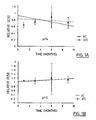
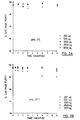
- Figures 1 and 2 show the effect of storage at 4°C and 37°C on the stability of PTH preparations buffered at
pH 4 and pH6, where the stability is revealed by bioactivity assay (Fig. 1) and by SDS-PAGE analysis (Fig. 2). - The invention relates to parathyroid hormone preparations that exhibit storage stability in terms of hormone composition and activity.
- As active ingredient, the preparation desirably incorporates the full length, 84 amino acid form of human parathyroid hormone, obtained either recombinantly, by peptide synthesis or by extraction from human fluid. In this specification, the human form of PTH is abbreviated hPTH(1-84), which has the amino acid sequence reported by Kimura et al, Biochem Biophys Res Comm, 114(2):493. As an alternative to the full length human form of PTH, the preparation may incorporate those homologues, fragments, or variants of human PTH hat have human PTH activity as determined in the overectomized rat model of osteoporosis reported by Kimmel et al., Endocrinology, 1993, 32(4):1577
- The parathyroid hormone may for example be the bovine or porcine forms of PTH (see Keutmann et al, Current Research on Calcium Regulating Hormones, Cooper, C.W. (Ed.), 1987, University of Texas Press, Austin, pp57-63) or fragments or variants of the mature PTH homologues. Alternatives in the form of PTH fragments incorporate at least the first 27 N-terminal residues of PTH, and desirably incorporate at least the first 34 N-terminal residues, such as PTH(1-34), PTH(1-37), PTH(1-38) and PTH(1-41). Alternatives in the form of PTH variants incorporate from 1 to 5 amino acid substitutions, that improve PTH stability and half-life, such as the replacement of methionine residues at
positions 8 and/or 18 with leucine or other hydrophobic amino acid that improves PTH stability against oxidation and the replacement of amino acids in the 25-27 region with trypsin-insensitive amino acids such as histidine or other amino acid that improves PTH stability against protease. These forms of PTH are embraced by the term "parathyroid hormone" as used generically herein. - The parathyroid hormone preparations of the present invention are provided in a powder form containing not more than 2% water by weight, that results from the freeze-drying of a sterile, aqueous hormone solution prepared by mixing the selected parathyroid hormone, a non-volatile buffering agent and an excipient.
- The excipient incorporated in the preparation serves as a cryoprotectant during the freeze-drying process and also as a bulking agent to facilitate dosage formulation. Of the pharmaceutically acceptable excipients, the present invention avoids sugars such as lactose and maltose, and exploits only those excipients capable, when combined with the selected buffering agent, of forming a non-crystalline, amorphous cake when freeze-dried. In having selected the excipient on this basis, the cake resulting from the freeze-drying process is of the homogeneous quality desired for rapid reconstitution. Polyol-type excipients are preferred herein. An evaluation of caking properties of polyol-type excipients has revealed that mannitol is a particularly preferred excipient, not only for its ability to yield a quality cake, but also because mannitol itself confers some stability to the PTH in solution.
- The buffering agent incorporated in the preparation of the present invention, in addition to being acceptable pharmaceutically, is necessarily a non-volatile buffering agent, i.e. one that is not volatilized during the freeze-drying process to the extent that pH is reduced by more than 0.4 pH units. Buffering agents used previously in PTH preparations, such as acetic acid, were found to volatilize at differential rates during the freeze-drying process, leading not only to an inconsistent product but also to the loss of buffering agent, and hence inconsistent pH levels in the reconstituted product. The non-volatile buffering agents incorporated in the present preparations are selected from those capable of buffering the preparation to a pH within a physiologically acceptable range. A pH that is physiologically acceptable is that which causes either no, or minimal, patient discomfort when the formulation is administered, and can thus vary depending on the mode of administration. For preparations that will be diluted prior to administration, such as by dissolution in a stock infusion solution, the pH of the preparation per se can vary widely, e.g., from about
pH 3 to aboutpH 9. Where the preparation is to be administered directly after reconstitution, the PTH preparation is buffered desirably to within the pH range from 3.5 to 7.5. Suitable non-volatile buffers are accordingly those pharmaceutically acceptable agents that can buffer the pH of the preparation to within the target pH range, and include phosphate-based buffers and, preferably, citrate-based buffers such as sodium citrate/citric acid. - To provide storage stable preparations of parathyroid hormone in accordance with the invention, the selected non-volatile buffering agent is incorporated to yield a final pH within the range from 3.5 to 6.5, and the excipient is incorporated to yield a final concentration in the range from 2% to 10% (w/v). In embodiments of the invention, the pH rendered by the buffering agent is in the range from 3.8 to 6.2, and the final concentration of the excipient is from 3 to 7%, e.g. 4 to 6% (w/v). Most preferably, the buffering agent is a citrate source such as monosodium citrate/citric acid and the excipient is 5% mannitol (w/v).
- The PTH preparations of the present invention incorporate PTH in a medically effective amount, a term used with reference to amounts useful either therapeutically or in medical diagnosis. The particular amount of parathyroid hormone incorporated in the preparation can be pre-determined based on the type of PTH selected and on the intended end-use of the preparation. In one application, the preparations are exploited for therapeutic purposes, and particularly for the treatment of osteoporosis. Osteoporosis therapy entails administration of the reconstituted preparation by injection, desirably sub-cutaneous injection, in unit doses that reflect the prescribed treatment regimen but are, for human PTH(1-84), within the range from 25µg PTH/mL of injected solution to 500µg/mL of injected solution per patient, with injection volumes being desirably from 0.3 to 1.3mL. Accordingly, the purified and sterile-filtered PTH is desirably incorporated with the buffering agent and excipient to form an aqueous solution containing PTH in a concentration range from 25µg/mL to 250µg/mL, preferably 50µg/mL to 150µg/mL. Molar equivalents of the substantially equipotent forms of PTH, such as the PTH(1-84) variants and fragments, can be similarly incorporated in place of the human PTH(1-84), if desired.
- In one embodiment of the invention, the preparations are provided in a form that yields a unit dose of 50-150µg human PTH(1-84) upon reconstitution into about 1mL (0.8-1.2mL) of the reconstitution vehicle, and the vials are accordingly loaded with about 1mL of the aqueous PTH preparation, for subsequent freeze-drying.
- In a preferred embodiment of the invention, the PTH preparation subjected to freeze-drying comprises from 25 to 250µg/mL of human PTH(1-84), from 2 to 8% by weight of mannitol, and a citrate source in an amount capable of buffering the preparation to within the range from 3.5 to 6.5 upon reconstitution in sterile water. In specific embodiments of the invention, the citrate buffering agent is incorporated in an amount sufficient to buffer the pH to 6.0 ± 0.4.
- Once the preparation is obtained as an aqueous solution containing desired amounts and concentrations of the buffering agent, excipient and PTH, individual vials are filled with the solution to the desired volume, and the vials are then subjected collectively to the freeze-drying process.
- As is conventional in the art of formulation, the freeze-drying, or lyophilization, process entails a temperature cycling process that is controlled carefully to ensure that drying proceeds uniformly and to substantial completion, i.e. to yield a powder containing not more that 2%, water by weight, and preferably not more than 1.5% water by weight. A protocol suitable for obtaining the present freeze-dried PTH preparations entails subjecting vials filled with the aqueous PTH preparation to a drying process having at least two different drying stages, the first being performed to drive unbound water from the aqueous preparation without causing collapse of the cake. This is achieved by first cooling the vialled aqueous PTH preparation to a product-ice temperature of lower than - 30°C, preferably about -50°C, and then increasing shelf temperature to, and holding at, about -10°C under reduced pressure of not more than 350 µbar., e.g. 260 µbar, until substantially all unbound water is driven off. Under the conditions specified in the examples herein, a drying time of 16 hours is appropriate. The second drying cycle is designed to liberate bound water from the cake, while again avoiding collapse of the cake and using a temperature below that deleterious to PTH bioactivity. This second drying step can be achieved under further reduced pressure (<50 µbar) at -10°C for 3 hours, then warming to and holding at 25°C until substantially all (<2%) of the bound water is driven off, e.g., for at least 12 hours but preferably for 16 hours or more. On completion, the vials can be sealed, for example by automated stoppering, and then removed from the freeze-drier and capped.
- The PTH preparations of the present invention are complete in the sense that the end-user need reconstitute the preparation solely in sterile water to generate an administrable formulation. For this purpose, and in accordance with another aspect of the present invention, there is provided a medically useful kit, comprising at least one vial containing a freeze-dried PTH preparation of the invention, at least one vial containing sterile water for reconstitution of the preparation, and a sheet of instructions directing reconstitution of the freeze-dried PTH. The kit may further comprise an injection device for administration of the reconsituted formulation by the end-user. In one embodiment of the invention, the injection device is a hypodermic needle, for example a 25 gauge needle and a syringe capable of receiving a solution volume of about 0.5-5 mL, e.g. 1 or 2mL. Alternatively, the kit may comprise a vial containing multiple doses of PTH, and a companion vial containing enough sterile water to reconstitute that multiple dose formulation.
- In use, the end-user draws from the water-filled vial into the injection device, and transfers that water to the PTH-filled vial to cause mixing and reconstitution of the freeze-dried PTH powder, if necessary using the needle to draw and eject the mixture until the powder is visibly dissolved. The present PTH preparation has the advantage, however, that mixing is rapid, being complete without mixing within one minute and more usually within 30 seconds. After mixing, the end-user injects the PTH formulation in the manner and amount prescribed by the physician. In the case where a multi-dose vial is provided, a bacteriostatic agent should be incorporated, and the formulation remaining after administration of each dose can be refrigerated for subsequent use within a time frame of several days.
- In addition to their therapeutic use, the present PTH preparations can be formulated and administered to aid in medical diagnosis, and particularly to assist in establishing the diagnosis of hypoparathyroidism and pseudohypoparathyoidism in hypocalcemic patients. Except for the dose of PTH, the composition of the PTH preparation will remain as described herein for therapeutic use. An intravenously infused, single dose of human PTH(1-84) or PTH bioequivalent that is equal to 200 International Units of PTH activity is appropriate for this diagnostic purpose. Diagnosis is then made by determining the effect of administered PTH on urinary cAMP levels, with cAMP elevation being indicative of the hypoparathyroidism condition, rather than its pseudoform.
- Aqueous PTH preparations were first prepared for subsequent freeze-drying by mixing human PTH(1-84), as hormone; mannitol, as excipient; and a citrate source, as buffering agent.
- As a first step in generating the preparations, two aqueous admixtures were prepared from a sterile 20% (w/v) mannitol injectable solution (British Pharmacopeia). The 20% mannitol solution was blended (1) with an aqueous citric acid solution to yield a first aqueous admixture of 10mM citric acid and 5% mannitol, and (2) with an aqueous sodium citrate monohydrate solution to yield a second aqueous admixture of 10mM citrate and 5% mannitol. pH adjusted solutions of 5% mannitol were then obtained by blending the admixtures, in volumes appropriate to yield a 5% mannitol solution at about pH 4 (± 0.2) solution and a 5% mannitol solution at about pH 6 (± 0.2).
- The 5% mannitol solutions (
pH 4 and pH 6) then received measured amounts of freeze-dried human PTH(1-84), which was microbially produced, purified and then sterile-filtered before being freeze-dried. Measured amounts of the PTH were then added to thepH 4 andpH 6 solutions of 5% mannitol, to generate stock solutions that, when vialled at a volume of 1.1 mL, gave vials containing PTH in the following µg amounts: 100, 250, 500, 1,000 and 2,500. - For freeze-drying, solutions containing PTH at each of the prepared concentrations were aseptically filled either by hand or by an automated dispenser in 1.1 mL volumes into 5mL glass vials (USP Type I) and then loaded in trays into a sterilized, nitrogen-purged freeze-dryer pre-cooled to - 50°C. After loading, and a pre-freezing period of 4 hours, the freeze-drying chamber was evacuated by reducing pressure to 0.26 mbar for one hour. The primary drying cycle was then implemented, consisting of gradual warming over thirty minutes from -50°C to -10°C at which the vials were held for 16 hours. The second drying cycle was then implemented, consisting of further warming from -10°C to 25°C at further reduced pressure of 0.05 mbar over three hours and then holding at this temperature and pressure for 16 hours. At the end of the second drying cycle, the chamber was purged with nitrogen and brought to 0.85 - 0.95 bar. The tray was then raised to engage rubber stoppers in the mouths of the vials and the vial trays removed and over-capped with an aluminum seal following pressure equilibration..
- vials containing the freezed-dried PTH preparations, at various concentrations and at
pH 4 orpH 6, were then stored at 4°C and 37°C for subsequent analysis at various time points of, 1, 2, 3, 6 and 9 months. Analysis of stability was performed by reconstituting the vialed preparation into 1.1mL of sterile water. This was achieved by injecting the water through the rubber stopper, then, after allowing up to one minute for reconstitution, removing the solution for analysis. - Results of the stability trials are reported below in the context of the various tests employed to evaluate the preparation:
- Bioactivity of the PTH was measured using the established rat osteosarcoma cell (UMR 106)-based assay of PTH-stimulated adenylate cyclase production. Protocols for this PTH assay are reported by Rodan et al in J. Clin. Invest., 1983, 72:1511 and by Rabbani et al in Endocrinol. 1988, 123:2709. After up to nine months in storage, no significant decrease in PTH bioactivity was observed at either 4°C or 37°C, at any PTH concentration, or at either
pH 4 orpH 6. Figure 1 illustrates, with a line of best fit between averaged results, the analytical results for a PTH preparation containing a PTH dose of 1,000µg. - SDS-PAGE analysis of the reconstituted PTH preparations, performed in the conventional manner, similarly revealed no significant decrease of purity during storage at either pH, temperature and storage temperatures examined, as shown in Figure 2. Some decrease in purity was revealed by RP-HPLC analysis of the reconstituted formulation, but only at the higher 37°C storage temperature (0.7% decrease in purity per month of storage), with 4°C storage showing no significant purity decrease by reversed phase-HPLC analysis. The stability of the intact PTH was also revealed by immunoassay (Allegro) to be constant throughout the storage period at all concentrations, pHs and temperatures evaluated.
- Residual moisture in the PTH preparation was determined by the standard Karl-Fischer technique and indicated that the water content of all freeze-dried preparations remained below 2% by weight, and typically at about 1% by weight, throughout the storage period.
- pH upon reconstitution revealed no significant pH alteration throughout the freeze-drying and storage process, confirming that the buffering agent had not volatilized during lyophilization. Preparations buffered to
pH 4 remained atpH 4 ± 0.2, and those buffered topH 6 remained atpH 6 ± 0.4. - The rate and extent of dissolution of the freeze-dried preparations were examined. All batches dissolved in 1.1 mL sterile water within one minute at room temperature. The maximum dissolution time observed was 0.5 minutes for the
pH 4 preparations, and 0.4 minutes for thepH 6 preparations. Furthermore, no particles were observed upon reconstitution of the freeze-dried powder at either pH and at either storage temperature.
Claims (19)
- A parathyroid hormone preparation comprising:(a) a medically useful amount of human 1-84 parathyroid hormone;(b) an excipient that co-lyophilizes with said hormone to yield an amorphous cake;(c) a non-volatile buffering agent in an amount sufficient to adjust the pH of the preparation to within a physiologically acceptable pH range, wherein said pH range is from 3.5 to 6.5; and(d) water.
- A parathyroid hormone preparation according to claim 1, wherein said excipient is mannitol.
- A parathyroid hormone preparation according to claim 1 or claim 2, wherein the buffering agent is a citrate source.
- A parathyroid hormone preparation according to claim 1, comprising:(a) human 1-84 parathyroid hormone in a concentration within the range from 25 to 250 µg/mL;(b) mannitol in a concentration in the range from 3 to 7% (w/v);(c) citrate buffer in an amount sufficient to adjust the pH of the preparation to within the range from pH 3.5 to pH 6.5; and(d) water.
- A parathyroid hormone preparation according to claim 4, wherein mannitol is present in a concentration within the range of from 4 to 6% (w/v).
- A parathyroid hormone preparation according to claim 4 or claim 5, wherein the citrate buffer is present in an amount sufficient to adjust the pH of the preparation to pH 6 ± 0.4.
- A parathyroid hormone preparation according to claim 4 in the form of a freeze-dried composition containing not more than 2% water by weight.
- A parathyroid hormone preparation in the form of a freeze dried composition comprising:(a) a medically useful amount of human 1-84 parathyroid hormone;(b) an excipient that co-lyophilizes with said hormone to yield an amorphous cake;(c) a non-volatile buffering agent in an amount sufficient to adjust the pH of the preparation to within a physiologically acceptable pH range from 3.5 to 6.5; and(d) water.
- A parathyroid hormone preparation according to claim 8, wherein said excipient is mannitol.
- A parathyroid hormone preparation according to claim 8, wherein the buffering agent is a citrate source.
- A parathyroid hormone preparation according to claim 8, wherein the freeze dried composition contains not more than 2% water by weight.
- A vial containing a parathyroid hormone preparation according to any one of claims. 1 to 11.
- A kit useful to formulate an injectable PTH solution comprising:(a) at least one first vial containing a parathyroid hormone preparation as defined in any one of claims 8 to 11,(b) at least one second vial containing sterile water for reconstituting said preparation into an injectable solution, and(c) a sheet instructing preparation of a formulation therefrom.
- A kit according to claim 13, further comprising a device for injection of the reconstituted PTH solution.
- A process for obtaining a parathyroid hormone preparation in form of a freeze dried composition comprising:(a) combining in water a parathyroid hormone, a non-volatile buffering agent and an excipient that co-lyophilizes with the hormone to yield an amorphous cake, and(b) subjecting the resulting solution to a freeze-drying process that yields a product incorporating less than 2 % water by weight.
- The process of claim 15, wherein the parathyroid hormone preparation in a freeze dried composition is as defined in at least one of the claims 8 to 11.
- A method for obtaining a parathyroid hormone formulation for parenteral administration comprising:(a) reconstituting a freeze dried preparation according to one of the claims 8 to 11 or a composition obtained in the process of claims 15 to 16.
- Use of the parathyroid hormone preparation according to at least one of the claims 1 to 11 for the preparation of a pharmaceutical composition for the treatment of osteoporosis.
- A parathyroid hormone formulation for parenteral administration, obtainable by reconstituting the parathyroid hormone preparation of any of claims 8-11.
Priority Applications (1)
| Application Number | Priority Date | Filing Date | Title |
|---|---|---|---|
| EP07019169A EP1880732A1 (en) | 1993-12-23 | 1994-12-16 | Parathyroid hormone formulation |
Applications Claiming Priority (3)
| Application Number | Priority Date | Filing Date | Title |
|---|---|---|---|
| US172206 | 1993-12-23 | ||
| US08/172,206 US5496801A (en) | 1993-12-23 | 1993-12-23 | Parathyroid hormone formulation |
| PCT/CA1994/000693 WO1995017207A1 (en) | 1993-12-23 | 1994-12-16 | Parathyroid hormone formulation |
Related Child Applications (1)
| Application Number | Title | Priority Date | Filing Date |
|---|---|---|---|
| EP07019169A Division EP1880732A1 (en) | 1993-12-23 | 1994-12-16 | Parathyroid hormone formulation |
Publications (2)
| Publication Number | Publication Date |
|---|---|
| EP0735896A1 EP0735896A1 (en) | 1996-10-09 |
| EP0735896B1 true EP0735896B1 (en) | 2007-10-03 |
Family
ID=22626763
Family Applications (2)
| Application Number | Title | Priority Date | Filing Date |
|---|---|---|---|
| EP07019169A Withdrawn EP1880732A1 (en) | 1993-12-23 | 1994-12-16 | Parathyroid hormone formulation |
| EP95903732A Expired - Lifetime EP0735896B1 (en) | 1993-12-23 | 1994-12-16 | Parathyroid hormone formulation |
Family Applications Before (1)
| Application Number | Title | Priority Date | Filing Date |
|---|---|---|---|
| EP07019169A Withdrawn EP1880732A1 (en) | 1993-12-23 | 1994-12-16 | Parathyroid hormone formulation |
Country Status (22)
| Country | Link |
|---|---|
| US (1) | US5496801A (en) |
| EP (2) | EP1880732A1 (en) |
| JP (1) | JP3065662B2 (en) |
| KR (1) | KR100398461B1 (en) |
| CN (1) | CN1116897C (en) |
| AT (1) | ATE374621T1 (en) |
| AU (1) | AU681737B2 (en) |
| BR (1) | BR9408398A (en) |
| CA (1) | CA2179207C (en) |
| CZ (1) | CZ184296A3 (en) |
| DE (1) | DE69435033T2 (en) |
| DK (1) | DK0735896T3 (en) |
| ES (1) | ES2293637T3 (en) |
| FI (1) | FI120291B (en) |
| HU (1) | HUT74381A (en) |
| LV (1) | LV11731B (en) |
| NO (1) | NO324905B1 (en) |
| NZ (1) | NZ277463A (en) |
| PL (1) | PL315158A1 (en) |
| PT (1) | PT735896E (en) |
| SK (1) | SK82896A3 (en) |
| WO (1) | WO1995017207A1 (en) |
Families Citing this family (56)
| Publication number | Priority date | Publication date | Assignee | Title |
|---|---|---|---|---|
| US5563122A (en) * | 1991-12-09 | 1996-10-08 | Asahi Kasei Kogyo Kabushiki Kaisha | Stabilized parathyroid hormone composition |
| US6509316B2 (en) * | 1995-03-07 | 2003-01-21 | George Washington University | Pharmaceutical compositions, methods, and kits for treatment and diagnosis of lung cancer |
| SE9702401D0 (en) * | 1997-06-19 | 1997-06-19 | Astra Ab | Pharmaceutical use |
| WO1999004808A1 (en) * | 1997-07-22 | 1999-02-04 | Chugai Seiyaku Kabushiki Kaisha | Dental remedies containing pth |
| ZA9811127B (en) * | 1997-12-09 | 2000-07-11 | Lilly Co Eli | Stabilized teriparatide solutions. |
| US6770623B1 (en) * | 1997-12-09 | 2004-08-03 | Eli Lilly And Company | Stabilized teriparatide solutions |
| WO1999031137A1 (en) * | 1997-12-18 | 1999-06-24 | Eli Lilly And Company | Crystalline teriparatide |
| SE9801495D0 (en) * | 1998-04-28 | 1998-04-28 | Astra Ab | Protein formulation |
| WO2000023594A1 (en) * | 1998-10-22 | 2000-04-27 | The General Hospital Corporation | BIOACTIVE PEPTIDES AND PEPTIDE DERIVATIVES OF PARATHYROID HORMONE (PTH) AND PARATHYROID HORMONE-RELATED PEPTIDE (PTHrP) |
| WO2000032771A1 (en) | 1998-11-30 | 2000-06-08 | The General Hospital Corporation | Pth1r and pth3r receptors, methods and uses thereof |
| US6689566B1 (en) * | 1999-01-14 | 2004-02-10 | Scantibodies Laboratory, Inc. | Methods, kits, and antibodies for detecting parathyroid hormone |
| US7820393B2 (en) * | 1999-01-14 | 2010-10-26 | Scantibodies Laboratory, Inc. | Methods, kits and antibodies for detecting parathyroid hormone |
| WO2004028444A2 (en) * | 1999-06-02 | 2004-04-08 | Scantibodies Laboratory, Inc. | Parathyroid hormone antagonists and uses thereof |
| US20080108086A1 (en) * | 1999-06-02 | 2008-05-08 | Cantor Thomas L | Parathyroid hormone antagonists and uses thereof |
| CA2378949C (en) * | 1999-07-12 | 2015-03-31 | Grandis Biotech Gmbh | Growth hormone formulations |
| WO2001023521A2 (en) * | 1999-09-29 | 2001-04-05 | The General Hospital Corporation | Polypeptide derivatives of parathyroid hormone (pth) |
| WO2001056594A1 (en) | 2000-02-04 | 2001-08-09 | Unigene Laboratories, Inc. | Nasal calcitonin formulations |
| US20020061838A1 (en) * | 2000-05-17 | 2002-05-23 | Barton Holmquist | Peptide pharmaceutical formulations |
| US6905886B2 (en) * | 2000-08-11 | 2005-06-14 | Quest Diagnostics Investments Incorporated | Preservative solutions |
| US6387711B1 (en) * | 2000-08-11 | 2002-05-14 | Quest Diagnostics Investments Incorporated | Liquid intact parathyroid hormone (PTH) standards |
| AU2002211629A1 (en) * | 2000-10-10 | 2002-04-22 | Microchips, Inc. | Microchip reservoir devices using wireless transmission of power and data |
| AR038658A1 (en) * | 2001-06-15 | 2005-01-26 | Novartis Ag | DERIVATIVES OF 4-ARIL-2 (1H) QUINAZOLINONA AND 4-ARIL-QUINAZOLINA 2-SUBSTITUTES, A PROCESS FOR THEIR PREPARATION, PHARMACEUTICAL COMPOSITIONS AND THE USE OF SUCH DERIVATIVES FOR THE PREPARATION OF A MEDICINAL PRODUCT |
| KR100491737B1 (en) * | 2001-07-20 | 2005-05-27 | 주식회사 한국아이템개발 | Mosquito control apparatus with the effect of air cleaning |
| WO2003009804A2 (en) | 2001-07-23 | 2003-02-06 | The General Hospital Corporation | Conformationally constrained parathyroid hormone (pth) analogs |
| AU2003278766A1 (en) * | 2002-09-04 | 2004-03-29 | Microchips, Inc. | Method and device for the controlled delivery of parathyroid hormone |
| US20040067526A1 (en) * | 2002-10-03 | 2004-04-08 | Cantor Thomas L. | Methods for diagnosing and guiding treatment of bone turnover disease |
| WO2004093902A1 (en) * | 2003-03-19 | 2004-11-04 | The General Hospital Corporation | CONFORMATIONALLY CONSTRAINED PARATHYROID HORMONES WITH α-HELIX STABILIZERS |
| BRPI0412029A (en) | 2003-06-30 | 2006-09-05 | Alza Corp | formulations for coated microprojections containing nonvolatile counterions |
| KR100540659B1 (en) * | 2003-07-02 | 2006-01-10 | 삼성전자주식회사 | Image-readable printing methods and computer-readable recording media storing devices and computer programs |
| WO2005014034A1 (en) * | 2003-07-14 | 2005-02-17 | Nps Allelix Corp. | Stabilized formulation of parathyroid hormone |
| US7910544B2 (en) | 2003-07-17 | 2011-03-22 | The General Hospital Corporation | Conformationally constrained parthyroid hormone (PTH) analogs |
| US7459276B2 (en) * | 2003-09-29 | 2008-12-02 | Scantibodies Laboratory, Inc. | Methods and controls for monitoring assay quality and accuracy in parathyroid hormone measurement |
| WO2005046798A1 (en) * | 2003-11-12 | 2005-05-26 | Nps Allelix Corp. | Treatment of bone loss utilizing full length parathyroid hormone |
| BRPI0416042A (en) * | 2003-11-13 | 2007-01-02 | Alza Corp | composition and apparatus for transdermal delivery |
| CN100406059C (en) * | 2004-04-30 | 2008-07-30 | 陈新梅 | New uses of parathyroid hormone |
| JP5007427B2 (en) * | 2004-05-13 | 2012-08-22 | アルザ コーポレイション | Apparatus and method for transdermal delivery of parathyroid hormone agents |
| US7541140B2 (en) * | 2004-06-03 | 2009-06-02 | Scantibodies Laboratory, Inc. | Assessing risk for kidney stones using parathyroid hormone agonist and antagonist |
| US20080076975A1 (en) * | 2005-01-25 | 2008-03-27 | Microchips, Inc. | Method and implantable device with reservoir array for pre-clinical in vivo testing |
| CA2595457A1 (en) * | 2005-01-25 | 2006-08-03 | Microchips, Inc. | Control of drug release by transient modification of local microenvironments |
| KR100700869B1 (en) | 2005-06-03 | 2007-03-29 | 재단법인 목암생명공학연구소 | Stable PTH Compositions Including PTH, Buffers, and Stabilizers |
| BRPI0618469A2 (en) * | 2005-11-10 | 2011-08-30 | Univ Michigan Tech | black bear parathyroid hormone and methods of using black bear parathyroid hormone |
| JP2009545320A (en) * | 2006-08-04 | 2009-12-24 | ザ ジェネラル ホスピタル コーポレイション | Polypeptide derivative of parathyroid hormone (PTH) |
| EP1961765A1 (en) * | 2006-12-08 | 2008-08-27 | Zealand Pharma A/S | Truncated PTH peptides with a cyclic conformation |
| CN101784281B (en) | 2007-08-01 | 2014-07-02 | 总医院有限公司 | Methods of Determining G Protein-Coupled Receptor Agonists |
| CA2694562A1 (en) * | 2007-08-09 | 2009-02-12 | Usv Limited | Novel orthogonal process for purification of recombinant human parathyroid hormone (rhpth) (1-34) |
| JP2009091363A (en) * | 2008-11-21 | 2009-04-30 | Asahi Kasei Pharma Kk | Stabilized aqueous injectable solution of pth |
| CA2782640A1 (en) | 2009-12-07 | 2011-06-16 | Michigan Technological University | Black bear parathyroid hormone and methods of using black bear parathyroid hormone |
| US9492508B2 (en) | 2010-05-13 | 2016-11-15 | The General Hospital Corporation | Parathyroid hormone analogs and uses thereof |
| CN105853348B (en) * | 2011-03-10 | 2019-08-30 | Xeris药物公司 | Parenteral injection stablizing solution |
| KR101787956B1 (en) * | 2011-06-07 | 2017-10-18 | 아사히 가세이 파마 가부시키가이샤 | Freeze-dried preparation containing high-purity pth and method for producing same |
| EP2968571A4 (en) | 2013-03-15 | 2016-09-07 | Psivida Inc | Bioerodible silicon-based compositions for delivery of therapeutic agents |
| CN103301058A (en) * | 2013-06-17 | 2013-09-18 | 深圳翰宇药业股份有限公司 | Composition for teriparatide injection, and preparation method and preparation thereof |
| CA3107105A1 (en) * | 2018-07-30 | 2020-02-06 | Shire-Nps Pharmaceuticals, Inc. | Formulations for improved stability of recombinant human parathyroid hormone |
| JP2023500472A (en) * | 2019-10-28 | 2023-01-06 | ブリリアン・ファーマ・インコーポレイテッド | Pharmaceutical unit dose system for oral dry solutions and suspensions |
| CN110917150A (en) * | 2019-12-31 | 2020-03-27 | 北京博康健基因科技有限公司 | PTH freeze-dried preparation and preparation method thereof |
| JP7557544B2 (en) * | 2020-03-30 | 2024-09-27 | スーチュワン ルーチョウ ブーチャン バイオ-ファーマシューティカル カンパニー リミテッド | Formulations of human parathyroid hormone (PTH) and methods for producing same - Patents.com |
Family Cites Families (18)
| Publication number | Priority date | Publication date | Assignee | Title |
|---|---|---|---|---|
| US3768177A (en) * | 1972-08-02 | 1973-10-30 | R Thomas | Educational device |
| US4105602A (en) * | 1975-02-10 | 1978-08-08 | Armour Pharmaceutical Company | Synthesis of peptides with parathyroid hormone activity |
| US4016314A (en) * | 1975-06-26 | 1977-04-05 | Hallco Inc. | Embroidered fruit bowl wall hanging and kit for making same |
| US4199060A (en) * | 1978-07-20 | 1980-04-22 | Howard Hardware Products, Inc. | Lock installation kit |
| US4424278A (en) * | 1981-11-16 | 1984-01-03 | Research Corporation | Cancer detection procedure using an acyl carrier protein |
| JPS61267528A (en) * | 1984-11-26 | 1986-11-27 | Yamanouchi Pharmaceut Co Ltd | Transnasal calcitonin agent containing absorbefacient |
| US4812311A (en) * | 1984-12-21 | 1989-03-14 | The Procter & Gamble Company | Kit for use in the treatment of osteoporosis |
| IL78342A (en) * | 1985-04-04 | 1991-06-10 | Gen Hospital Corp | Pharmaceutical composition for treatment of osteoporosis in humans comprising a parathyroid hormone or a fragment thereof |
| JPS6360940A (en) * | 1986-09-01 | 1988-03-17 | Toyo Jozo Co Ltd | Preventive or remedy for cataract |
| US4833125A (en) * | 1986-12-05 | 1989-05-23 | The General Hospital Corporation | Method of increasing bone mass |
| US5059587A (en) * | 1987-08-03 | 1991-10-22 | Toyo Jozo Company, Ltd. | Physiologically active peptide composition for nasal administration |
| US5011678A (en) * | 1989-02-01 | 1991-04-30 | California Biotechnology Inc. | Composition and method for administration of pharmaceutically active substances |
| DE3935738A1 (en) * | 1989-10-27 | 1991-05-08 | Forssmann Wolf Georg | DRUGS CONTAINING THE HUMAN PARATHORMONE FRAGMENT (1-37) AS AN ACTIVE AGENT |
| GB9020544D0 (en) * | 1990-09-20 | 1990-10-31 | Sandoz Ltd | Improvements in or relating to organic compounds |
| JP3090353B2 (en) * | 1991-09-17 | 2000-09-18 | 旭化成工業株式会社 | Emulsion for nasal administration containing parathyroid hormones |
| US5563122A (en) * | 1991-12-09 | 1996-10-08 | Asahi Kasei Kogyo Kabushiki Kaisha | Stabilized parathyroid hormone composition |
| CZ282889B6 (en) * | 1991-12-17 | 1997-11-12 | Procter And Gamble Pharmaceuticals, Inc. | THE USE OF PHOSPHO-Ci(1-4)ALKYLPHOSPHINATES OR THEIR PHARMACEUTICALLY ACCEPTABLE SALTS OR ESTERS AND PARATHORMONE |
| IT1255723B (en) * | 1992-10-09 | 1995-11-13 | USE OF PARATORMONE, ITS BIOLOGICALLY ACTIVE FRAGMENTS AND RELATED PEPTIDES, FOR THE PREPARATION OF PHARMACEUTICAL COMPOSITIONS USEFUL IN THE PREVENTION AND THERAPY OF ABORTION AND PRETERMONE BIRTH AND IN GENERAL FOR THE TREATMENT OF GESTATION |
-
1993
- 1993-12-23 US US08/172,206 patent/US5496801A/en not_active Expired - Lifetime
-
1994
- 1994-12-16 CA CA002179207A patent/CA2179207C/en not_active Expired - Lifetime
- 1994-12-16 HU HU9601721A patent/HUT74381A/en unknown
- 1994-12-16 PT PT95903732T patent/PT735896E/en unknown
- 1994-12-16 CN CN94194608A patent/CN1116897C/en not_active Expired - Lifetime
- 1994-12-16 WO PCT/CA1994/000693 patent/WO1995017207A1/en not_active Ceased
- 1994-12-16 PL PL94315158A patent/PL315158A1/en unknown
- 1994-12-16 NZ NZ277463A patent/NZ277463A/en not_active IP Right Cessation
- 1994-12-16 AT AT95903732T patent/ATE374621T1/en active
- 1994-12-16 ES ES95903732T patent/ES2293637T3/en not_active Expired - Lifetime
- 1994-12-16 CZ CZ961842A patent/CZ184296A3/en unknown
- 1994-12-16 AU AU12698/95A patent/AU681737B2/en not_active Expired
- 1994-12-16 DK DK95903732T patent/DK0735896T3/en active
- 1994-12-16 EP EP07019169A patent/EP1880732A1/en not_active Withdrawn
- 1994-12-16 EP EP95903732A patent/EP0735896B1/en not_active Expired - Lifetime
- 1994-12-16 KR KR1019960703288A patent/KR100398461B1/en not_active Expired - Lifetime
- 1994-12-16 DE DE69435033T patent/DE69435033T2/en not_active Expired - Lifetime
- 1994-12-16 SK SK828-96A patent/SK82896A3/en unknown
- 1994-12-16 JP JP7517064A patent/JP3065662B2/en not_active Expired - Lifetime
- 1994-12-16 BR BR9408398A patent/BR9408398A/en not_active Application Discontinuation
-
1996
- 1996-06-20 NO NO19962634A patent/NO324905B1/en not_active IP Right Cessation
- 1996-06-20 FI FI962593A patent/FI120291B/en not_active IP Right Cessation
- 1996-07-19 LV LVP-96-283A patent/LV11731B/en unknown
Also Published As
| Publication number | Publication date |
|---|---|
| AU1269895A (en) | 1995-07-10 |
| FI962593L (en) | 1996-08-19 |
| WO1995017207A1 (en) | 1995-06-29 |
| FI120291B (en) | 2009-09-15 |
| NZ277463A (en) | 1997-03-24 |
| CN1116897C (en) | 2003-08-06 |
| CA2179207C (en) | 2000-11-14 |
| CA2179207A1 (en) | 1995-06-29 |
| US5496801A (en) | 1996-03-05 |
| DE69435033T2 (en) | 2008-05-29 |
| NO324905B1 (en) | 2007-12-27 |
| PT735896E (en) | 2007-12-07 |
| SK82896A3 (en) | 1997-01-08 |
| KR100398461B1 (en) | 2004-03-20 |
| NO962634D0 (en) | 1996-06-20 |
| FI962593A0 (en) | 1996-06-20 |
| JP3065662B2 (en) | 2000-07-17 |
| LV11731A (en) | 1997-04-20 |
| CZ184296A3 (en) | 1997-01-15 |
| BR9408398A (en) | 1997-08-12 |
| PL315158A1 (en) | 1996-10-14 |
| HU9601721D0 (en) | 1996-08-28 |
| ES2293637T3 (en) | 2008-03-16 |
| EP1880732A1 (en) | 2008-01-23 |
| DK0735896T3 (en) | 2008-02-04 |
| CN1142772A (en) | 1997-02-12 |
| LV11731B (en) | 1997-08-20 |
| AU681737B2 (en) | 1997-09-04 |
| JPH09506869A (en) | 1997-07-08 |
| EP0735896A1 (en) | 1996-10-09 |
| HK1010336A1 (en) | 1999-06-17 |
| NO962634L (en) | 1996-06-20 |
| DE69435033D1 (en) | 2007-11-15 |
| HUT74381A (en) | 1996-12-30 |
| ATE374621T1 (en) | 2007-10-15 |
Similar Documents
| Publication | Publication Date | Title |
|---|---|---|
| AU681737B2 (en) | Parathyroid hormone formulation | |
| US7144861B2 (en) | Stabilized teriparatide solutions | |
| JP4405666B2 (en) | Stabilized teriparatide solution | |
| CA2252535C (en) | A pharmaceutical formulation containing growth hormone, an amino acid and a non-ionic detergent | |
| EP1044015B1 (en) | Formulations for amylin agonist peptides with insulin | |
| EP0804223B1 (en) | Hgh containing pharmaceutical compositions | |
| HK1010336B (en) | Parathyroid hormone formulation | |
| HK1112849A (en) | Parathyroid hormone formulation | |
| US20030162711A1 (en) | Pharmaceutical formulation | |
| MXPA00005655A (en) | Stabilized teriparatide solutions |
Legal Events
| Date | Code | Title | Description |
|---|---|---|---|
| PUAI | Public reference made under article 153(3) epc to a published international application that has entered the european phase |
Free format text: ORIGINAL CODE: 0009012 |
|
| 17P | Request for examination filed |
Effective date: 19960624 |
|
| AK | Designated contracting states |
Kind code of ref document: A1 Designated state(s): AT BE CH DE DK ES FR GB GR IE IT LI LU MC NL PT SE |
|
| AX | Request for extension of the european patent |
Free format text: LT PAYMENT 960624 |
|
| RAX | Requested extension states of the european patent have changed |
Free format text: LT PAYMENT 960624 |
|
| RAP1 | Party data changed (applicant data changed or rights of an application transferred) |
Owner name: ASTRA AKTIEBOLAG |
|
| RAP1 | Party data changed (applicant data changed or rights of an application transferred) |
Owner name: ALLELIX BIOPHARMACEUTICALS INC. |
|
| 17Q | First examination report despatched |
Effective date: 20001206 |
|
| GRAP | Despatch of communication of intention to grant a patent |
Free format text: ORIGINAL CODE: EPIDOSNIGR1 |
|
| GRAS | Grant fee paid |
Free format text: ORIGINAL CODE: EPIDOSNIGR3 |
|
| GRAA | (expected) grant |
Free format text: ORIGINAL CODE: 0009210 |
|
| RAP1 | Party data changed (applicant data changed or rights of an application transferred) |
Owner name: NPS ALLELIX CORP. |
|
| AK | Designated contracting states |
Kind code of ref document: B1 Designated state(s): AT BE CH DE DK ES FR GB GR IE IT LI LU MC NL PT SE |
|
| AX | Request for extension of the european patent |
Extension state: LT |
|
| REG | Reference to a national code |
Ref country code: GB Ref legal event code: FG4D |
|
| REG | Reference to a national code |
Ref country code: CH Ref legal event code: EP |
|
| REG | Reference to a national code |
Ref country code: IE Ref legal event code: FG4D |
|
| REF | Corresponds to: |
Ref document number: 69435033 Country of ref document: DE Date of ref document: 20071115 Kind code of ref document: P |
|
| REG | Reference to a national code |
Ref country code: HK Ref legal event code: GR Ref document number: 1010336 Country of ref document: HK |
|
| REG | Reference to a national code |
Ref country code: CH Ref legal event code: NV Representative=s name: SCHNEIDER FELDMANN AG PATENT- UND MARKENANWAELTE |
|
| REG | Reference to a national code |
Ref country code: PT Ref legal event code: SC4A Free format text: AVAILABILITY OF NATIONAL TRANSLATION Effective date: 20071123 |
|
| REG | Reference to a national code |
Ref country code: GR Ref legal event code: EP Ref document number: 20070403534 Country of ref document: GR |
|
| REG | Reference to a national code |
Ref country code: SE Ref legal event code: TRGR |
|
| REG | Reference to a national code |
Ref country code: DK Ref legal event code: T3 |
|
| REG | Reference to a national code |
Ref country code: FR Ref legal event code: GC Ref country code: FR Ref legal event code: AU |
|
| REG | Reference to a national code |
Ref country code: ES Ref legal event code: FG2A Ref document number: 2293637 Country of ref document: ES Kind code of ref document: T3 |
|
| ET | Fr: translation filed | ||
| PLBE | No opposition filed within time limit |
Free format text: ORIGINAL CODE: 0009261 |
|
| STAA | Information on the status of an ep patent application or granted ep patent |
Free format text: STATUS: NO OPPOSITION FILED WITHIN TIME LIMIT |
|
| 26N | No opposition filed |
Effective date: 20080704 |
|
| REG | Reference to a national code |
Ref country code: CH Ref legal event code: PUE Owner name: NPS PHARMACEUTICALS, INC. Free format text: NPS ALLELIX CORP.#C/O BLAKE, CASSELS & GRAYDON LLP 199 BAY STREET SUITE 2800, COMMERCE COURT WEST#TORONTO, ON M5L 1A9 (CA) -TRANSFER TO- NPS PHARMACEUTICALS, INC.#550 HILLS DRIVE 3RD FLOOR#BEDMINSTER, NJ 07921 (US) |
|
| NLS | Nl: assignments of ep-patents |
Owner name: NPS PHARMACEUTICALS, INC. Effective date: 20080818 |
|
| REG | Reference to a national code |
Ref country code: PT Ref legal event code: PC4A Owner name: NPS PHARMACEUTICALS, INC., US Effective date: 20081024 |
|
| REG | Reference to a national code |
Ref country code: GB Ref legal event code: 732E Free format text: REGISTERED BETWEEN 20100304 AND 20100310 |
|
| REG | Reference to a national code |
Ref country code: FR Ref legal event code: ER Ref country code: FR Ref legal event code: AU |
|
| REG | Reference to a national code |
Ref country code: FR Ref legal event code: TP Ref country code: FR Ref legal event code: AU |
|
| REG | Reference to a national code |
Ref country code: GB Ref legal event code: 732E Free format text: REGISTERED BETWEEN 20100923 AND 20100929 |
|
| PGFP | Annual fee paid to national office [announced via postgrant information from national office to epo] |
Ref country code: IT Payment date: 20111223 Year of fee payment: 19 |
|
| PGFP | Annual fee paid to national office [announced via postgrant information from national office to epo] |
Ref country code: LU Payment date: 20140204 Year of fee payment: 20 |
|
| PGFP | Annual fee paid to national office [announced via postgrant information from national office to epo] |
Ref country code: IE Payment date: 20140129 Year of fee payment: 20 Ref country code: DE Payment date: 20140131 Year of fee payment: 20 Ref country code: NL Payment date: 20140128 Year of fee payment: 20 Ref country code: SE Payment date: 20140128 Year of fee payment: 20 Ref country code: CH Payment date: 20140128 Year of fee payment: 20 Ref country code: MC Payment date: 20140130 Year of fee payment: 20 Ref country code: DK Payment date: 20140128 Year of fee payment: 20 |
|
| PGFP | Annual fee paid to national office [announced via postgrant information from national office to epo] |
Ref country code: BE Payment date: 20140211 Year of fee payment: 20 Ref country code: AT Payment date: 20140226 Year of fee payment: 20 Ref country code: GR Payment date: 20140129 Year of fee payment: 20 Ref country code: ES Payment date: 20140124 Year of fee payment: 20 |
|
| PGFP | Annual fee paid to national office [announced via postgrant information from national office to epo] |
Ref country code: PT Payment date: 20140129 Year of fee payment: 20 Ref country code: GB Payment date: 20140225 Year of fee payment: 20 |
|
| PGFP | Annual fee paid to national office [announced via postgrant information from national office to epo] |
Ref country code: FR Payment date: 20140227 Year of fee payment: 20 |
|
| REG | Reference to a national code |
Ref country code: DE Ref legal event code: R071 Ref document number: 69435033 Country of ref document: DE |
|
| REG | Reference to a national code |
Ref country code: DE Ref legal event code: R071 Ref document number: 69435033 Country of ref document: DE |
|
| REG | Reference to a national code |
Ref country code: PT Ref legal event code: MM4A Free format text: MAXIMUM VALIDITY LIMIT REACHED Effective date: 20141216 |
|
| REG | Reference to a national code |
Ref country code: NL Ref legal event code: V4 Effective date: 20141216 |
|
| REG | Reference to a national code |
Ref country code: CH Ref legal event code: PL |
|
| REG | Reference to a national code |
Ref country code: DK Ref legal event code: EUP Effective date: 20141216 |
|
| REG | Reference to a national code |
Ref country code: GB Ref legal event code: PE20 Expiry date: 20141215 |
|
| REG | Reference to a national code |
Ref country code: IE Ref legal event code: MK9A |
|
| PG25 | Lapsed in a contracting state [announced via postgrant information from national office to epo] |
Ref country code: PT Free format text: LAPSE BECAUSE OF EXPIRATION OF PROTECTION Effective date: 20141223 Ref country code: GB Free format text: LAPSE BECAUSE OF EXPIRATION OF PROTECTION Effective date: 20141215 |
|
| REG | Reference to a national code |
Ref country code: SE Ref legal event code: EUG |
|
| REG | Reference to a national code |
Ref country code: AT Ref legal event code: MK07 Ref document number: 374621 Country of ref document: AT Kind code of ref document: T Effective date: 20141216 |
|
| REG | Reference to a national code |
Ref country code: ES Ref legal event code: FD2A Effective date: 20150226 |
|
| REG | Reference to a national code |
Ref country code: GR Ref legal event code: MA Ref document number: 20070403534 Country of ref document: GR Effective date: 20141217 |
|
| PG25 | Lapsed in a contracting state [announced via postgrant information from national office to epo] |
Ref country code: IE Free format text: LAPSE BECAUSE OF EXPIRATION OF PROTECTION Effective date: 20141216 Ref country code: ES Free format text: LAPSE BECAUSE OF EXPIRATION OF PROTECTION Effective date: 20141217 |