EP0735083B1 - Enamines as vulcanization accelerators for natural or synthetic rubbers - Google Patents
Enamines as vulcanization accelerators for natural or synthetic rubbers Download PDFInfo
- Publication number
- EP0735083B1 EP0735083B1 EP96104852A EP96104852A EP0735083B1 EP 0735083 B1 EP0735083 B1 EP 0735083B1 EP 96104852 A EP96104852 A EP 96104852A EP 96104852 A EP96104852 A EP 96104852A EP 0735083 B1 EP0735083 B1 EP 0735083B1
- Authority
- EP
- European Patent Office
- Prior art keywords
- group
- linear
- compound
- use according
- nitrogen
- Prior art date
- Legal status (The legal status is an assumption and is not a legal conclusion. Google has not performed a legal analysis and makes no representation as to the accuracy of the status listed.)
- Expired - Lifetime
Links
- 238000004073 vulcanization Methods 0.000 title claims abstract description 23
- 150000002081 enamines Chemical class 0.000 title claims abstract description 16
- 229920003052 natural elastomer Polymers 0.000 title claims description 8
- 229920001194 natural rubber Polymers 0.000 title claims description 8
- 229920003051 synthetic elastomer Polymers 0.000 title claims description 7
- 239000005061 synthetic rubber Substances 0.000 title claims description 7
- RWRDLPDLKQPQOW-UHFFFAOYSA-N Pyrrolidine Chemical compound C1CCNC1 RWRDLPDLKQPQOW-UHFFFAOYSA-N 0.000 claims description 15
- 229910052757 nitrogen Inorganic materials 0.000 claims description 13
- IJGRMHOSHXDMSA-UHFFFAOYSA-N Atomic nitrogen Chemical group N#N IJGRMHOSHXDMSA-UHFFFAOYSA-N 0.000 claims description 12
- 125000001495 ethyl group Chemical group [H]C([H])([H])C([H])([H])* 0.000 claims description 11
- NQRYJNQNLNOLGT-UHFFFAOYSA-N Piperidine Chemical compound C1CCNCC1 NQRYJNQNLNOLGT-UHFFFAOYSA-N 0.000 claims description 10
- 229910052717 sulfur Chemical group 0.000 claims description 10
- NINIDFKCEFEMDL-UHFFFAOYSA-N Sulfur Chemical group [S] NINIDFKCEFEMDL-UHFFFAOYSA-N 0.000 claims description 9
- 125000004435 hydrogen atom Chemical group [H]* 0.000 claims description 9
- 239000011593 sulfur Chemical group 0.000 claims description 9
- YNAVUWVOSKDBBP-UHFFFAOYSA-N Morpholine Chemical compound C1COCCN1 YNAVUWVOSKDBBP-UHFFFAOYSA-N 0.000 claims description 8
- -1 methoxyethyl Chemical group 0.000 claims description 8
- 125000005842 heteroatom Chemical group 0.000 claims description 7
- 229910052760 oxygen Inorganic materials 0.000 claims description 7
- 125000003710 aryl alkyl group Chemical group 0.000 claims description 6
- 125000003118 aryl group Chemical group 0.000 claims description 6
- QVGXLLKOCUKJST-UHFFFAOYSA-N atomic oxygen Chemical group [O] QVGXLLKOCUKJST-UHFFFAOYSA-N 0.000 claims description 6
- 125000000623 heterocyclic group Chemical group 0.000 claims description 6
- 125000004433 nitrogen atom Chemical group N* 0.000 claims description 6
- 239000001301 oxygen Substances 0.000 claims description 6
- 238000000034 method Methods 0.000 claims description 5
- 125000006552 (C3-C8) cycloalkyl group Chemical group 0.000 claims description 4
- GLUUGHFHXGJENI-UHFFFAOYSA-N Piperazine Chemical compound C1CNCCN1 GLUUGHFHXGJENI-UHFFFAOYSA-N 0.000 claims description 4
- 125000002496 methyl group Chemical group [H]C([H])([H])* 0.000 claims description 4
- 239000000203 mixture Substances 0.000 claims description 4
- 125000001436 propyl group Chemical group [H]C([*])([H])C([H])([H])C([H])([H])[H] 0.000 claims description 4
- 125000004183 alkoxy alkyl group Chemical group 0.000 claims description 3
- 125000003545 alkoxy group Chemical group 0.000 claims description 3
- 229920001971 elastomer Polymers 0.000 claims description 3
- 239000005060 rubber Substances 0.000 claims description 3
- OGYGFUAIIOPWQD-UHFFFAOYSA-N 1,3-thiazolidine Chemical compound C1CSCN1 OGYGFUAIIOPWQD-UHFFFAOYSA-N 0.000 claims description 2
- WOHLSTOWRAOMSG-UHFFFAOYSA-N 2,3-dihydro-1,3-benzothiazole Chemical compound C1=CC=C2SCNC2=C1 WOHLSTOWRAOMSG-UHFFFAOYSA-N 0.000 claims description 2
- INDDROVCGSVTKW-UHFFFAOYSA-N 2-aminosulfanyl-1,3-benzothiazole-4-thiol Chemical compound C1=CC=C2SC(SN)=NC2=C1S INDDROVCGSVTKW-UHFFFAOYSA-N 0.000 claims description 2
- 229920002943 EPDM rubber Polymers 0.000 claims description 2
- 125000001797 benzyl group Chemical group [H]C1=C([H])C([H])=C(C([H])=C1[H])C([H])([H])* 0.000 claims description 2
- 125000000484 butyl group Chemical group [H]C([*])([H])C([H])([H])C([H])([H])C([H])([H])[H] 0.000 claims description 2
- 125000000113 cyclohexyl group Chemical group [H]C1([H])C([H])([H])C([H])([H])C([H])(*)C([H])([H])C1([H])[H] 0.000 claims description 2
- 239000001257 hydrogen Substances 0.000 claims description 2
- 229910052739 hydrogen Inorganic materials 0.000 claims description 2
- 125000002347 octyl group Chemical group [H]C([*])([H])C([H])([H])C([H])([H])C([H])([H])C([H])([H])C([H])([H])C([H])([H])C([H])([H])[H] 0.000 claims description 2
- 125000001997 phenyl group Chemical group [H]C1=C([H])C([H])=C(*)C([H])=C1[H] 0.000 claims description 2
- BRNULMACUQOKMR-UHFFFAOYSA-N thiomorpholine Chemical compound C1CSCCN1 BRNULMACUQOKMR-UHFFFAOYSA-N 0.000 claims description 2
- 125000000217 alkyl group Chemical group 0.000 claims 4
- 150000001875 compounds Chemical class 0.000 abstract description 67
- YXFVVABEGXRONW-UHFFFAOYSA-N Toluene Chemical compound CC1=CC=CC=C1 YXFVVABEGXRONW-UHFFFAOYSA-N 0.000 description 33
- QTBSBXVTEAMEQO-UHFFFAOYSA-N Acetic acid Chemical compound CC(O)=O QTBSBXVTEAMEQO-UHFFFAOYSA-N 0.000 description 32
- 238000006243 chemical reaction Methods 0.000 description 22
- 239000000047 product Substances 0.000 description 16
- 238000004821 distillation Methods 0.000 description 13
- 238000004817 gas chromatography Methods 0.000 description 13
- XLYOFNOQVPJJNP-UHFFFAOYSA-N water Substances O XLYOFNOQVPJJNP-UHFFFAOYSA-N 0.000 description 13
- 229960000583 acetic acid Drugs 0.000 description 11
- 238000002360 preparation method Methods 0.000 description 11
- 239000002904 solvent Substances 0.000 description 11
- YRKCREAYFQTBPV-UHFFFAOYSA-N acetylacetone Chemical compound CC(=O)CC(C)=O YRKCREAYFQTBPV-UHFFFAOYSA-N 0.000 description 10
- 239000003054 catalyst Substances 0.000 description 10
- 150000001412 amines Chemical class 0.000 description 9
- 230000035484 reaction time Effects 0.000 description 9
- XYIBRDXRRQCHLP-UHFFFAOYSA-N ethyl acetoacetate Chemical compound CCOC(=O)CC(C)=O XYIBRDXRRQCHLP-UHFFFAOYSA-N 0.000 description 7
- 125000006702 (C1-C18) alkyl group Chemical group 0.000 description 6
- PAFZNILMFXTMIY-UHFFFAOYSA-N cyclohexylamine Chemical compound NC1CCCCC1 PAFZNILMFXTMIY-UHFFFAOYSA-N 0.000 description 6
- 238000001644 13C nuclear magnetic resonance spectroscopy Methods 0.000 description 5
- 238000005160 1H NMR spectroscopy Methods 0.000 description 5
- LDHQCZJRKDOVOX-NSCUHMNNSA-M crotonate Chemical compound C\C=C\C([O-])=O LDHQCZJRKDOVOX-NSCUHMNNSA-M 0.000 description 5
- 125000003342 alkenyl group Chemical group 0.000 description 4
- WGQKYBSKWIADBV-UHFFFAOYSA-N benzylamine Chemical compound NCC1=CC=CC=C1 WGQKYBSKWIADBV-UHFFFAOYSA-N 0.000 description 4
- 238000005481 NMR spectroscopy Methods 0.000 description 3
- 238000010533 azeotropic distillation Methods 0.000 description 3
- OPNUROKCUBTKLF-UHFFFAOYSA-N 1,2-bis(2-methylphenyl)guanidine Chemical compound CC1=CC=CC=C1N\C(N)=N\C1=CC=CC=C1C OPNUROKCUBTKLF-UHFFFAOYSA-N 0.000 description 2
- QIJIUJYANDSEKG-UHFFFAOYSA-N 2,4,4-trimethylpentan-2-amine Chemical compound CC(C)(C)CC(C)(C)N QIJIUJYANDSEKG-UHFFFAOYSA-N 0.000 description 2
- MUHTYAFYLYVWRX-UHFFFAOYSA-N 2-(cyclohexylamino)sulfanyl-3h-1,3-benzothiazole-2-thiol Chemical compound N1C2=CC=CC=C2SC1(S)SNC1CCCCC1 MUHTYAFYLYVWRX-UHFFFAOYSA-N 0.000 description 2
- ASUDFOJKTJLAIK-UHFFFAOYSA-N 2-methoxyethanamine Chemical compound COCCN ASUDFOJKTJLAIK-UHFFFAOYSA-N 0.000 description 2
- 244000043261 Hevea brasiliensis Species 0.000 description 2
- 239000002262 Schiff base Substances 0.000 description 2
- 150000004753 Schiff bases Chemical class 0.000 description 2
- XLOMVQKBTHCTTD-UHFFFAOYSA-N Zinc monoxide Chemical compound [Zn]=O XLOMVQKBTHCTTD-UHFFFAOYSA-N 0.000 description 2
- 230000015572 biosynthetic process Effects 0.000 description 2
- 229910052799 carbon Inorganic materials 0.000 description 2
- MSOQKPXSIHLODG-HJWRWDBZSA-N ethyl (z)-3-pyrrolidin-1-ylbut-2-enoate Chemical compound CCOC(=O)\C=C(\C)N1CCCC1 MSOQKPXSIHLODG-HJWRWDBZSA-N 0.000 description 2
- 238000004508 fractional distillation Methods 0.000 description 2
- 238000000655 nuclear magnetic resonance spectrum Methods 0.000 description 2
- 239000003960 organic solvent Substances 0.000 description 2
- 150000003139 primary aliphatic amines Chemical class 0.000 description 2
- 238000010992 reflux Methods 0.000 description 2
- 150000005619 secondary aliphatic amines Chemical class 0.000 description 2
- 239000000126 substance Substances 0.000 description 2
- 238000003786 synthesis reaction Methods 0.000 description 2
- OWRCNXZUPFZXOS-UHFFFAOYSA-N 1,3-diphenylguanidine Chemical compound C=1C=CC=CC=1NC(=N)NC1=CC=CC=C1 OWRCNXZUPFZXOS-UHFFFAOYSA-N 0.000 description 1
- NOXKUHSBIXPZBJ-UHFFFAOYSA-N 1-(4-methylphenyl)propan-2-one Chemical compound CC(=O)CC1=CC=C(C)C=C1 NOXKUHSBIXPZBJ-UHFFFAOYSA-N 0.000 description 1
- CVBUKMMMRLOKQR-UHFFFAOYSA-N 1-phenylbutane-1,3-dione Chemical compound CC(=O)CC(=O)C1=CC=CC=C1 CVBUKMMMRLOKQR-UHFFFAOYSA-N 0.000 description 1
- AHDSRXYHVZECER-UHFFFAOYSA-N 2,4,6-tris[(dimethylamino)methyl]phenol Chemical compound CN(C)CC1=CC(CN(C)C)=C(O)C(CN(C)C)=C1 AHDSRXYHVZECER-UHFFFAOYSA-N 0.000 description 1
- 0 CN(C)CC(*)=C(*)* Chemical compound CN(C)CC(*)=C(*)* 0.000 description 1
- 239000004215 Carbon black (E152) Substances 0.000 description 1
- BWLUMTFWVZZZND-UHFFFAOYSA-N Dibenzylamine Chemical compound C=1C=CC=CC=1CNCC1=CC=CC=C1 BWLUMTFWVZZZND-UHFFFAOYSA-N 0.000 description 1
- FZWLAAWBMGSTSO-UHFFFAOYSA-N Thiazole Chemical compound C1=CSC=N1 FZWLAAWBMGSTSO-UHFFFAOYSA-N 0.000 description 1
- 239000012190 activator Substances 0.000 description 1
- 238000004458 analytical method Methods 0.000 description 1
- 150000004982 aromatic amines Chemical class 0.000 description 1
- 239000010692 aromatic oil Substances 0.000 description 1
- 239000002585 base Substances 0.000 description 1
- 150000001721 carbon Chemical group 0.000 description 1
- 125000004432 carbon atom Chemical group C* 0.000 description 1
- 239000006229 carbon black Substances 0.000 description 1
- 239000007795 chemical reaction product Substances 0.000 description 1
- 239000007859 condensation product Substances 0.000 description 1
- 238000004132 cross linking Methods 0.000 description 1
- ZBCBWPMODOFKDW-UHFFFAOYSA-N diethanolamine Chemical compound OCCNCCO ZBCBWPMODOFKDW-UHFFFAOYSA-N 0.000 description 1
- 239000012990 dithiocarbamate Substances 0.000 description 1
- 150000004659 dithiocarbamates Chemical class 0.000 description 1
- DDRPCXLAQZKBJP-UHFFFAOYSA-N furfurylamine Chemical compound NCC1=CC=CO1 DDRPCXLAQZKBJP-UHFFFAOYSA-N 0.000 description 1
- 239000012362 glacial acetic acid Substances 0.000 description 1
- 229930195733 hydrocarbon Natural products 0.000 description 1
- 150000002430 hydrocarbons Chemical class 0.000 description 1
- CKQVRZJOMJRTOY-UHFFFAOYSA-N octadecanoic acid;propane-1,2,3-triol Chemical compound OCC(O)CO.CCCCCCCCCCCCCCCCCC(O)=O CKQVRZJOMJRTOY-UHFFFAOYSA-N 0.000 description 1
- 230000010355 oscillation Effects 0.000 description 1
- 150000002978 peroxides Chemical class 0.000 description 1
- 229920000642 polymer Polymers 0.000 description 1
- 150000003141 primary amines Chemical class 0.000 description 1
- 150000003335 secondary amines Chemical class 0.000 description 1
- 238000003756 stirring Methods 0.000 description 1
- YBRBMKDOPFTVDT-UHFFFAOYSA-N tert-butylamine Chemical compound CC(C)(C)N YBRBMKDOPFTVDT-UHFFFAOYSA-N 0.000 description 1
- 229960002447 thiram Drugs 0.000 description 1
- 239000011787 zinc oxide Substances 0.000 description 1
Images



Classifications
-
- C—CHEMISTRY; METALLURGY
- C07—ORGANIC CHEMISTRY
- C07D—HETEROCYCLIC COMPOUNDS
- C07D295/00—Heterocyclic compounds containing polymethylene-imine rings with at least five ring members, 3-azabicyclo [3.2.2] nonane, piperazine, morpholine or thiomorpholine rings, having only hydrogen atoms directly attached to the ring carbon atoms
- C07D295/04—Heterocyclic compounds containing polymethylene-imine rings with at least five ring members, 3-azabicyclo [3.2.2] nonane, piperazine, morpholine or thiomorpholine rings, having only hydrogen atoms directly attached to the ring carbon atoms with substituted hydrocarbon radicals attached to ring nitrogen atoms
- C07D295/10—Heterocyclic compounds containing polymethylene-imine rings with at least five ring members, 3-azabicyclo [3.2.2] nonane, piperazine, morpholine or thiomorpholine rings, having only hydrogen atoms directly attached to the ring carbon atoms with substituted hydrocarbon radicals attached to ring nitrogen atoms substituted by doubly bound oxygen or sulphur atoms
- C07D295/104—Heterocyclic compounds containing polymethylene-imine rings with at least five ring members, 3-azabicyclo [3.2.2] nonane, piperazine, morpholine or thiomorpholine rings, having only hydrogen atoms directly attached to the ring carbon atoms with substituted hydrocarbon radicals attached to ring nitrogen atoms substituted by doubly bound oxygen or sulphur atoms with the ring nitrogen atoms and the doubly bound oxygen or sulfur atoms attached to the same carbon chain, which is not interrupted by carbocyclic rings
-
- C—CHEMISTRY; METALLURGY
- C07—ORGANIC CHEMISTRY
- C07C—ACYCLIC OR CARBOCYCLIC COMPOUNDS
- C07C225/00—Compounds containing amino groups and doubly—bound oxygen atoms bound to the same carbon skeleton, at least one of the doubly—bound oxygen atoms not being part of a —CHO group, e.g. amino ketones
- C07C225/02—Compounds containing amino groups and doubly—bound oxygen atoms bound to the same carbon skeleton, at least one of the doubly—bound oxygen atoms not being part of a —CHO group, e.g. amino ketones having amino groups bound to acyclic carbon atoms of the carbon skeleton
- C07C225/14—Compounds containing amino groups and doubly—bound oxygen atoms bound to the same carbon skeleton, at least one of the doubly—bound oxygen atoms not being part of a —CHO group, e.g. amino ketones having amino groups bound to acyclic carbon atoms of the carbon skeleton the carbon skeleton being unsaturated
-
- C—CHEMISTRY; METALLURGY
- C07—ORGANIC CHEMISTRY
- C07C—ACYCLIC OR CARBOCYCLIC COMPOUNDS
- C07C229/00—Compounds containing amino and carboxyl groups bound to the same carbon skeleton
- C07C229/02—Compounds containing amino and carboxyl groups bound to the same carbon skeleton having amino and carboxyl groups bound to acyclic carbon atoms of the same carbon skeleton
- C07C229/30—Compounds containing amino and carboxyl groups bound to the same carbon skeleton having amino and carboxyl groups bound to acyclic carbon atoms of the same carbon skeleton the carbon skeleton being acyclic and unsaturated
-
- C—CHEMISTRY; METALLURGY
- C07—ORGANIC CHEMISTRY
- C07D—HETEROCYCLIC COMPOUNDS
- C07D295/00—Heterocyclic compounds containing polymethylene-imine rings with at least five ring members, 3-azabicyclo [3.2.2] nonane, piperazine, morpholine or thiomorpholine rings, having only hydrogen atoms directly attached to the ring carbon atoms
- C07D295/04—Heterocyclic compounds containing polymethylene-imine rings with at least five ring members, 3-azabicyclo [3.2.2] nonane, piperazine, morpholine or thiomorpholine rings, having only hydrogen atoms directly attached to the ring carbon atoms with substituted hydrocarbon radicals attached to ring nitrogen atoms
- C07D295/14—Heterocyclic compounds containing polymethylene-imine rings with at least five ring members, 3-azabicyclo [3.2.2] nonane, piperazine, morpholine or thiomorpholine rings, having only hydrogen atoms directly attached to the ring carbon atoms with substituted hydrocarbon radicals attached to ring nitrogen atoms substituted by carbon atoms having three bonds to hetero atoms with at the most one bond to halogen, e.g. ester or nitrile radicals
- C07D295/145—Heterocyclic compounds containing polymethylene-imine rings with at least five ring members, 3-azabicyclo [3.2.2] nonane, piperazine, morpholine or thiomorpholine rings, having only hydrogen atoms directly attached to the ring carbon atoms with substituted hydrocarbon radicals attached to ring nitrogen atoms substituted by carbon atoms having three bonds to hetero atoms with at the most one bond to halogen, e.g. ester or nitrile radicals with the ring nitrogen atoms and the carbon atoms with three bonds to hetero atoms attached to the same carbon chain, which is not interrupted by carbocyclic rings
-
- C—CHEMISTRY; METALLURGY
- C08—ORGANIC MACROMOLECULAR COMPOUNDS; THEIR PREPARATION OR CHEMICAL WORKING-UP; COMPOSITIONS BASED THEREON
- C08K—Use of inorganic or non-macromolecular organic substances as compounding ingredients
- C08K5/00—Use of organic ingredients
- C08K5/16—Nitrogen-containing compounds
- C08K5/17—Amines; Quaternary ammonium compounds
-
- C—CHEMISTRY; METALLURGY
- C08—ORGANIC MACROMOLECULAR COMPOUNDS; THEIR PREPARATION OR CHEMICAL WORKING-UP; COMPOSITIONS BASED THEREON
- C08K—Use of inorganic or non-macromolecular organic substances as compounding ingredients
- C08K5/00—Use of organic ingredients
- C08K5/16—Nitrogen-containing compounds
- C08K5/34—Heterocyclic compounds having nitrogen in the ring
- C08K5/3412—Heterocyclic compounds having nitrogen in the ring having one nitrogen atom in the ring
- C08K5/3415—Five-membered rings
-
- C—CHEMISTRY; METALLURGY
- C08—ORGANIC MACROMOLECULAR COMPOUNDS; THEIR PREPARATION OR CHEMICAL WORKING-UP; COMPOSITIONS BASED THEREON
- C08K—Use of inorganic or non-macromolecular organic substances as compounding ingredients
- C08K5/00—Use of organic ingredients
- C08K5/16—Nitrogen-containing compounds
- C08K5/34—Heterocyclic compounds having nitrogen in the ring
- C08K5/3412—Heterocyclic compounds having nitrogen in the ring having one nitrogen atom in the ring
- C08K5/3432—Six-membered rings
- C08K5/3435—Piperidines
-
- C—CHEMISTRY; METALLURGY
- C08—ORGANIC MACROMOLECULAR COMPOUNDS; THEIR PREPARATION OR CHEMICAL WORKING-UP; COMPOSITIONS BASED THEREON
- C08K—Use of inorganic or non-macromolecular organic substances as compounding ingredients
- C08K5/00—Use of organic ingredients
- C08K5/16—Nitrogen-containing compounds
- C08K5/34—Heterocyclic compounds having nitrogen in the ring
- C08K5/35—Heterocyclic compounds having nitrogen in the ring having also oxygen in the ring
Definitions
- the Applicant has now found compounds, deriving from primary or secondary aliphatic amines, belonging to the group of enamines, which can be used as vulcanization accelerators and have improved properties with respect to those known in the art.
- the above enamines are less volatile, are not irritating and generally have no odour.
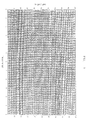
- Fig. 1-4 show the rheometrical curves obtained using N-cyclohexyl-2-mercapto-benzothiazole sulfenamide (CBS) alone or combined with a compound having general formula (I). These curves indicate that, when CBS is used in combination with a compound having general formula (I), the time for reaching 90% of the maximum vulcanization curve t c (90), is considerably shortened thus allowing a more rapid vulcanization kinetics compared to CBS alone.
- CBS N-cyclohexyl-2-mercapto-benzothiazole sulfenamide
- Primary or secondary, aliphatic amines having general formula (II) which can be used for the purposes of the present invention are cyclohexylamine, tert-butylamine, tert-octylamine, benzylamine, 2-methoxyethylamine, 2-furfurylamine, pyrrolidine, piperidine, morpholine, dibenzylamine, etc.
Landscapes
- Chemical & Material Sciences (AREA)
- Organic Chemistry (AREA)
- Health & Medical Sciences (AREA)
- Chemical Kinetics & Catalysis (AREA)
- Medicinal Chemistry (AREA)
- Polymers & Plastics (AREA)
- Compositions Of Macromolecular Compounds (AREA)
- Organic Low-Molecular-Weight Compounds And Preparation Thereof (AREA)
- Processes Of Treating Macromolecular Substances (AREA)
Abstract
Description
- The present invention relates to vulcanization accelerators consisting of compounds belonging to the group of enamines.
- More specifically, the present invention relates to vulcanization accelerators consisting of compounds, deriving from primary or secondary aliphatic amines, belonging to the group of enamines and a process for their preparation.
- It is known that the vulcanization of natural or synthetic rubbers takes place by the cross-linking between polymeric chains owing to the use of sulfur or peroxides.
- The vulcanization process in the presence of sulfur has been optimized by the use of accelerators capable of limiting the vulcanization times and guaranteeing repeated results with respect to the properties of the end-products.
- There are many known products which are used as vulcanization accelerators as described, for example, by Kirk-Othmer: "Encyclopedia of Chemical Technology", Vol. 20, pages 337-364. Among these mercaptobenzothioazol and its sulfenamides, dithiocarbamates and thiuram disulfides, can be mentioned.
- Frequently, in order to obtain good results, these products are not used alone but are combined with each other.
- Among vulcanization accelerators there is a group of products defined as secondary accelerators, used as activators of primary accelerators with a thiazole base. Examples of these products are: N,N'-diphenylguanidine (DPG), N,N'-diortho-toluylguanidine (DOTG), 2,4,6-tris-dimethylaminomethylphenol and the condensation products of aromatic amines with aliphatic aldehydes.
- European patent application EP-A-634.448, filed by the Applicant, describes vulcanization accelerators consisting of compounds belonging to the group of enamines having the following general formula:wherein:

- R'1 and R'2, the same or different, represent a C1-C18 alkyl group, linear or branched; a C2-C18 alkenyl group; a C3-C8 cycloalkyl group; a C6-C18 aryl group; a C7-C20 alkylaryl or arylalkyl group; or R'1 and R'2, considered jointly with the nitrogen atom, represent a C3-C8 heterocyclic group possibly containing a second heteroatom selected from O, S and N;
- R'3 and R'4, the same or different, represent a hydrogen atom; a C1-C18 alkyl group, linear or branched; a C2-C18 alkenyl group; a C6-C18 aryl group; a C7-C20 alkylaryl or arylalkyl group; or R'3 and R'4, considered jointly with the double bond C=C to which they are linked, represent a C3-C12 cycloalkenyl group;
- R'5 represents a hydrogen atom; a C1-C18 alkyl group, linear or branched; a C2-C18 alkenyl group; or, when R'3 represents a hydrogen atom, a linear or branched C1-C18 alkyl group, a C2-C18 alkenyl group, a C6-C18 aryl group or a C7-C20 alkylaryl or arylalkyl group, R'4 and R'5, considered jointly with the carbon atom which has the double bond C=C, represent a C3-C12 cycloalkylene group.
- The Applicant has now found compounds, deriving from primary or secondary aliphatic amines, belonging to the group of enamines, which can be used as vulcanization accelerators and have improved properties with respect to those known in the art. In fact, the above enamines are less volatile, are not irritating and generally have no odour.
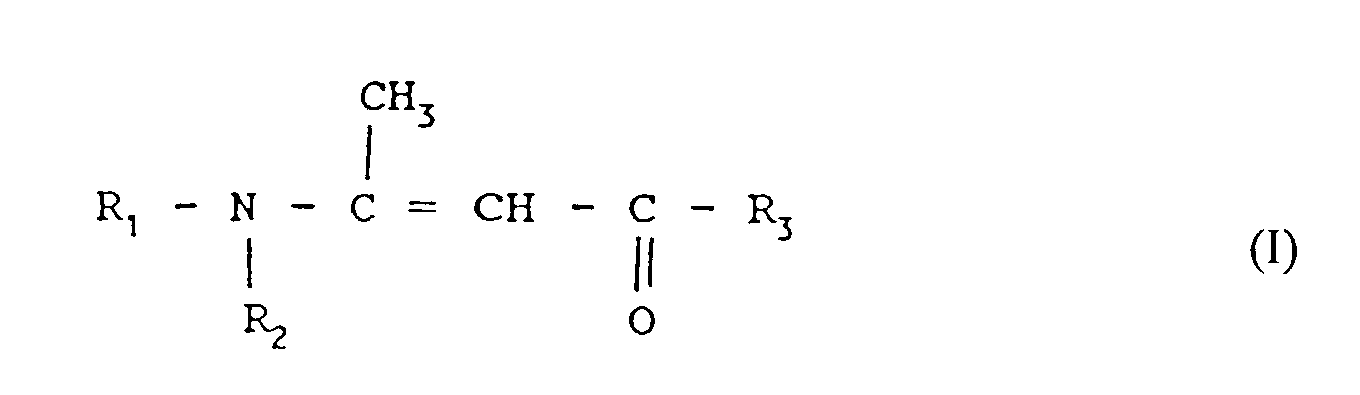
- The present invention therefore relates to the use as vulcanization accelerators in natural or synthetic rubbers of compounds belonging to the group of enamines having general formula (I):wherein:

- R1 and R2, the same or different, represent a hydrogen atom; a C1-C18 alkyl group, linear or branched; a C2-C8 alkoxyalkyl group, linear or branched; a C3-C8 cycloalkyl group possibly containing a heteroatom selected from oxygen, nitrogen and sulfur; a C7-C20 arylalkyl group; or R1 and R2, considered jointly with the nitrogen atom, represent a C3-C8 heterocyclic group possibly containing a second heteroatom selected from oxygen, nitrogen and sulfur;
- R3 represents a C1-C18 alkyl group, linear or branched; a C6-C18 aryl group; a C7-C20 alkylaryl or arylalkyl group; a C1-C8 alkoxyl group linear or branched.
- Examples of R1 and R2 radicals, apart from the hydrogen atom, are methyl, ethyl, propyl, butyl, octyl, cyclohexyl, benzyl, methoxyethyl, etc.
- Examples of C3-C8 heterocyclic groups, when R1 and R2 are considered jointly with the nitrogen atom, are morpholine, pyrrolidine, piperidine, piperazine, thiomorpholine, thiazolidine, benzothiazolidine, etc.
- Examples of R3 radicals are methyl, ethyl, propyl, phenyl, oxymethyl, oxyethyl, etc.
- The capacity of the compounds having general formula (I) to act as vulcanization accelerators was shown by rheometric curves which are indicated in Fig. 2-4 (the time is indicated in abscissa; the torque in ordinate; the meanings of the letters appearing on the rheometrical curves will be provided later) obtained by measuring the stress of an oscillating disk englobed in a rubber sample during vulcanization. The rheometrical curves were determined using a
Rheometer 100 of Monsanto. - The compounds having general formula (I) can be used alone or combined with other vulcanization accelerators such as, for example, mercapto-benzothiazole sulfenamides.
- Fig. 1-4 show the rheometrical curves obtained using N-cyclohexyl-2-mercapto-benzothiazole sulfenamide (CBS) alone or combined with a compound having general formula (I). These curves indicate that, when CBS is used in combination with a compound having general formula (I), the time for reaching 90% of the maximum vulcanization curve tc(90), is considerably shortened thus allowing a more rapid vulcanization kinetics compared to CBS alone.
- A process for the synthesis of the compounds having general formula (I) described above comprises the reaction of 1 mole of a primary or secondary, aliphatic amine, having general formula (II):wherein R3 has the same meaning described above.

- The above reaction takes place in the presence of an organic solvent, preferably a hydrocarbon, in particular toluene, at a temperature of between 60°C and 160°C, preferably between 115°C and 150°C, at atmospheric pressure and for a time of between 0.5 and 24 hours, preferably between 3 and 10 hours. Acetic acid can be added to this reaction as catalyst.
- During the above reaction, reaction water is released which is separated by azeotropic distillation using an apparatus for azeotropic distillation, whereas the organic solvent is recycled.
- At the end of the reaction, the solvent and possible acetic acid present, are removed by distillation, thus obtaining a raw product. The enamine having general formula (I) is purified from the raw product thus obtained by fractional distillation, operating under vacuum, at a pressure of between 13 Pa (0.1 mm/Hg) and 6670 Pa (50 mm/Hg) and at a temperature of between 40°C and 200°C.
- Further processes for the synthesis of compounds having general formula (I) are described however in literature, for example in Houben-Weil (1957), Vol. 11/1, pages 172-178.
- Primary or secondary, aliphatic amines having general formula (II) which can be used for the purposes of the present invention are cyclohexylamine, tert-butylamine, tert-octylamine, benzylamine, 2-methoxyethylamine, 2-furfurylamine, pyrrolidine, piperidine, morpholine, dibenzylamine, etc.
- β-ketoesters or 1,3-diketones having general formula (III) which can be used for the purposes of the present invention are ethyl acetoacetate, acetylacetone, benzoylacetone, p-toluylacetone, etc.
- The enaminic function of the compounds having general formula (I) synthesized by the above process, is confirmed by analysis via NMR spectrometry (obtained using a BRUKER AC 200 spectrometer) carried out on samples with a high purity (GC > 95% confirmed by gas chromatography), in which there is inequivocably the presence of the N-H group and double bond C=C and the absence of the double bond N=C typical of Schiff bases. In the following examples the NMR spectra are indicated only of the compounds having general formula (I) wherein R1 or R2 represent hydrogen, as these compounds, because they derive from the reaction of primary amines with β-ketoesters or 1,3-diketones, could be Schiff bases.
On the contrary, in the case of compounds having general formula (I) which derive from the reaction of secondary amines with β-ketoesters or 1,3-diketones, it is not necessary to indicate the NMR spectrum as only enamines can be obtained from this reaction. - The vulcanization accelerators having general formula (I) can be used in both natural and synthetic rubbers such as, for example, SBR, NBR, BR, EPDM, etc.
- Some illustrative examples are given below to provide a better understanding of the present invention and for its embodiment but these should in no way be considered as limiting the scope of the invention itself.
- 99.18 g (1 mole) of cyclohexylamine, 200 g of toluene, 130.14 g of ethyl acetoacetate (1 mole) and 2.08 g of glacial acetic acid are charged into a 1 litre, 4-necked reactor, equipped with a mechanical stirrer, thermometer and reflux condenser with a water separator.
- The reaction mass is maintained under stirring and reflux heated for 4 hours at 115°C-118°C. During this period reaction water is formed which is separated by azeotropic distillation: 19.2 g of reaction water are separated.
- The solvent and acetic acid are removed by distillation and the raw residue thus obtained is subjected to fractional distillation.
- This distillation is carried out in a still consisting of a 500 ml boiler equipped with a thermometer, stirrer, column, condenser and device for collecting the fractions.
- A central fraction containing 205.8 g of distilled product, corresponding to Compound Nr. 1 is collected from the above distillation, operating under the following conditions:
- temperature at the top: 145°C-153°C;
- temperature of the boiler: 170°C-180°C;
- vacuum: 4000-4260 Pa (30-32 mm/Hg).
- Compound Nr. 1 thus obtained is analyzed by gas-chromatography (GC) and is found to have a purity of 98.3% with a yield of about 97.8%.
- Compound Nr. 1 is characterized by NMR analysis. The enamine structure of Compound Nr. 1 is proved by NMR analysis in which the presence of the N-H group and double bond C=C is shown by the chemical shift.
- 1H-NMR (200 MHz, CDCl3-TMS) δ (ppm): 8.57-8.54 (N-H); 4.30 (H-C).
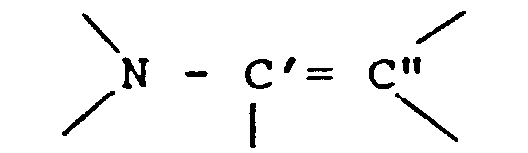
- 13C-NMR (50 MHz, CDCl3-TMS) δ (ppm): 160.58 (C'); 81.58 (C").
- The carbon atoms indicated by (C') and (C"), in this example and in the following examples, indicate the presence of the double bond C=C:
- The other compounds (Compounds 2-10) are prepared similarly to example 1, of which only the reaction conditions and characteristics are provided.
-
- Amine: benzylamine; 107.16 g (1 mole).
- Carbonylic compound: ethyl acetoacetate; 130.14 g (1 mole)
- Solvent: toluene; 200 g.
- Catalyst: acetic acid; 2.08 g.
- Reaction water separated: 19.8 g.
- Reaction time and temperature: 5 hours at 120°-124°C.
- Distillation range: 148°C-156°C (top); 170°C-185°C (boiler); 2670 Pa (20 mm/Hg) (vacuum).
- Product obtained: 206.4 g.
- Purity GC: 98.0%.
- Yield: 94.1%.
- 1H-NMR (200 MHz, CDCl3-TMS) δ (ppm): 8.95 (N-H); 4.52 (H-C).
- 13C-NMR (50 MHz, CDCl3-TMS) δ (ppm): 161.54 (C'); 83.05 (C").
-
- Amine: tert-octylamine; 129.25 g (1 mole).
- Carbonylic compound: acetylacetone; 100.12 g (1 mole)
- Solvent: toluene; 100 g.
- Catalyst: acetic acid; 2.33 g.
- Reaction water separated: 19.7 g.
- Reaction time and temperature: 10 hours at 123°-134°C.
- Distillation range: 113°C-117°C (top); 125°C-135°C (boiler) ; 40-133 Pa (0.3-1.0 mm/Hg) (vacuum).
- Product obtained: 156.1 g.
- Purity GC: > 99.0%.
- Yield: 73.8%.
- 1H-NMR (200 MHz, CDCl3-TMS) δ (ppm): 11.33 (N-H); 4.79 (H-C).
- 13C-NMR (50 MHz, CDCl3-TMS) δ (ppm): 162.90 (C'); 96.06 (C").
-
- Amine: cyclohexylamine; 99.18 g (1 mole).
- Carbonylic compound: acetylacetone; 100.12 g (1 mole)
- Solvent: toluene; 100 g.
- Catalyst: acetic acid; 2.33 g.
- Reaction water separated: 18.0 g.
- Reaction time and temperature: 3 hours at 120°-138°C.
- Distillation range: 105°C-125°C (top); 114°C-126°C (boiler); 27-93 Pa (0.2-0.7 mm/Hg) (vacuum).
- Product obtained: 175.3 g.
- Purity GC: > 99.0%.
- Yield: 96.7%.
- 1H-NMR (200 MHz, CDCl3-TMS) δ (ppm): 10.83-10.85 (N-H); 4.75 (H-C).
- 13C-NMR (50 MHz, CDCl3-TMS) δ (ppm): 161.43 (C'); 94.57 (C").
-
- Amine: morpholine; 87.12 g (1 mole).
- Carbonylic compound: ethyl acetoacetate; 130.14 g (1 mole)
- Solvent: toluene; 200 g.
- Catalyst: acetic acid; 2.08 g.
- Reaction water separated: 23.1 g.
- Reaction time and temperature: 7 hours at 119°-120°C.
- Distillation range: 130°C-138°C (top); 145°C-160°C (boiler); 67-133 Pa (0.5-1.0 mm/Hg) (vacuum).
- Product obtained: 148.1 g.
- Purity GC: 86.5%.
- Yield: 64.3%.
-
- Amine: piperidine; 85.15 g (1 mole).
- Carbonylic compound: ethyl acetoacetate; 130.14 g (1 mole)
- Solvent: toluene; 200 g.
- Catalyst: acetic acid; 2.08 g.
- Reaction water separated: 17.9 g.
- Reaction time and temperature: 6 hours at 121°-122°C.
- Distillation range: 124°C-133°C (top); 155°C-180°C (boiler); 67-133 Pa (0.5-1.0 mm/Hg) (vacuum).
- Product obtained: 168.0 g.
- Purity GC: 88.0%.
- Yield: 74.9%.
-
- Amine: piperidine; 85.15 g (1 mole).
- Carbonylic compound: acetylacetone; 100.12 g (1 mole)
- Solvent: toluene; 100 g.
- Catalyst: acetic acid; 2.33 g.
- Reaction water separated: 24.4 g.
- Reaction time and temperature: 10 hours at 128°-134°C.
- Distillation range: 140°C-190°C (top); 170°C-196°C (boiler) ; 4000 Pa (30 mm/Hg) (vacuum).
- Product obtained: 151.7 g.
- Purity GC: > 94.9%.
- Yield: 90.7%
-
- Amine: pyrrolidine; 71.12 g (1 mole).
- Carbonylic compound: ethyl acetoacetate; 130.14 g (1 mole)
- Solvent: toluene; 100 g.
- Catalyst: absent.
- Reaction water separated: 18.8 g.
- Reaction time and temperature: 3 hours at 136°-140°C.
- Distillation range: 120°C-138°C (top); 124°C-142°C (boiler); 27-67 Pa (0.2-0. 5 mm/Hg (vacuum).
- Product obtained: 172.1 g.
- Purity GC: 99.1%.
- Yield: 93.9%.
-
- Amine: pyrrolidine; 71.12 g (1 mole).
- Carbonylic compound: acetylacetone; 100.12 g (1 mole)
- Solvent: toluene; 100 g.
- Catalyst: absent.
- Reaction water separated: 19.1 g.
- Reaction time and temperature: 5 hours at 122°-133°C.
- Distillation range: 124°C-140°C (top); 140°C-145°C (boiler); 27-67 Pa (0.2-0.5 mm/Hg) (vacuum).
- Product obtained: 129.8 g.
- Purity GC: > 99.0%.
- Yield: 84.7%.
-
- Amine: 2-methoxyethylamine; 75.11 g (1 mole).
- Carbonylic compound: ethyl acetoacetate; 130.14 g (1 mole)
- Solvent: toluene; 100 g.
- Catalyst: acetic acid; 2.33 g.
- Reaction water separated: 20.2 g.
- Reaction time and temperature: 4 hours at 130°-150°C.
- Distillation range: 89°C-92°C (top); 110°C-130°C (boiler); 13-27 Pa (0.1-0.2 mm/Hg) (vacuum).
- Product obtained: 153 g.
- Purity GC: > 99.%.
- Yield: 81.7%.
- 1H-NMR (200 MHz, CDCl3-TMS) δ (ppm): 8.58 (N-H); 4.36 (H-C).
- 13C-NMR (50 MHz, CDCl3-TMS) δ (ppm): 161.36 (C'); 82.50 (C") .
- Examples 11-21 illustrate the behaviour of the compounds having general formula (I) in combination with N-cyclohexyl-2-mercapto-benzothiazole sulfenamide (CBS).
- Mixtures based on natural rubber were prepared, of which the components are shown in Table 1.
COMPONENTS WEIGHT % Natural rubber SMR 10100.00 Zinc Oxide 5.00 Stearine 1.00 Highly aromatic oil 5.00 Carbon black N 375 45.00 Sulfur 2.00 CBS 1.00 Compounds with formula (I) 0.50 - The Monsanto Rheometer is used under the following operating conditions:
- oscillation arc: ± 1.;
- temperature: 150°C.
- The tc (90) were calculated on the resulting rheometric curves, shown in Fig. 1-4, and the values are given in Table 2. The rheometric curves indicated in Fig. 2-4, clearly show the efficiency of the compounds having general formula (I) as vulcanization accelerators. This efficiency is also evident from the tc (90) values shown in Table 2 in which it can be seen that the Tc(90) values of the mixtures containing CBS and the compounds having general formula (I) are always lower than the tc(90) of the mixture containing CBS alone.
- Fig. 1 shows the rheometrical curve of CBS alone corresponding to: EX.11: (A).
- In Fig. 2 the letters appearing on the rheometrical curves indicate the following compounds with formula (I):
- EX. 17: (B) ethyl β-piperidino crotonate (Compound Nr. 6);
- EX. 12: (C) ethyl β-cyclohexylamino crotonate (Compound Nr. 1);
- EX. 18: (D) 2-piperidino-penten-(2)-one-(4) (Compound Nr. 7).
- In Fig. 3 the letters appearing on the rheometical curves indicate the following compounds with formula (I):
- EX. 13: (E) ethyl β-benzylamino crotonate (Compound Nr. 2);
- EX. 14: (F) 2-tert-octylamino-penten-(2)-one-(4) (Compound Nr. 3);
- EX. 15: (G) 2-cyclohexylamino-penten-(2)-one-(4) (Compound Nr. 4).
- In Fig. 4 the letters appearing on the rheometrical curves indicate the following compounds with formula (I):
- EX. 21: (H) ethyl β-(2-methoxyethylamino)-crotonate (Compound Nr. 10);
- EX. 19: (I) ethyl β-pyrrolidino crotonate (Compound Nr. 8);
- EX. 20: (L) 2-pyrrolidino-penten-(2)-one-(4) (Compound Nr. 9).
| Example Nr | Enamine | tc (90) |
| 11 | Absent | 9'24" |
| 12 | | 8'12" |
| 13 | | 8'12" |
| 14 | | 8'54" |
| 15 | | 8'36" |
| 16 | | 8'18" |
| 17 | | 6'12" |
| 18 | | 5'48" |
| 19 | | 5'56" |
| 20 | | 5'10" |
| 21 | | 7'18" |
Claims (8)
- The use as vulcanisation accelerators in natural or synthetic rubbers of enamines having the general formula (I):wherein:
 R1 and R2 are the same or different and represent a hydrogen atom; a C1-C18 linear or branched alkyl group; a C2-C8 linear or branched alkoxyalkyl group; a C3-C8 cycloalkyl group possibly containing a heteroatom selected from oxygen, nitrogen and sulfur; a C7-C20 arylakyl group; or R1 and R2, considered jointly with the nitrogen atom, represent a C3-C8 heterocyclic group possibly containing a second heteroatom selected from oxygen, nitrogen and sulfur; andR3 represents a C1-C18 linear or branched alkyl group; a C6-C18 aryl group; a C7-C20 alkylaryl or arylalkyl group; or a C1-C8 linear or branched alkoxyl group.
 - The use according to claim 1, wherein R1 and R2 are selected from hydrogen, methyl, ethyl, propyl, butyl, octyl, cyclohexyl, benzyl, and methoxyethyl.
- The use according to claim 1 or 2 wherein the C3-C8 heterocyclic groups, when R1 and R2 are considered jointly with the nitrogen atom, are selected from morpholine, pyrrolidine, piperidine, piperazine, thiomorpholine, thiazolidine, and benzothiazolidine.
- The use according to any one of claims 1 to 3 wherein the R3 is selected from methyl, ethyl, propyl, phenyl, oxymethyl, and oxyethyl.
- The use according to any one of claims 1 to 4 wherein the rubber is a synthetic rubber and is selected from SBR, NBR, BR, and EPDM.
- The use according to any one of claims 1 to 5 wherein the enamine of formula (I) is used either alone or combined with other vulcanization accelerators.
- The use according to claim 6 wherein the enamine of formula (I) is used in combination with a mercapto-benzothia-zole sulfenamide.
- A method of obtaining a vulcanized natural or synthetic rubber comprising effecting vulcanisation of a composition comprising the rubber and a vulcanization accelerator which is an enamine having the general formula (I):wherein:
 R1 and R2 are the same or different and represent a hydrogen atom; a C1-C18 linear or branched alkyl group; a C2-C8 linear or branched alkoxyalkyl group; a C3-C8 cycloalkyl group possibly containing a heteroatom selected from oxygen, nitrogen and sulfur; a C7-C20 arylaklyl group; or R1 and R2, considered jointly with the nitrogen atom, represent a C3-C8 heterocyclic group possibly containing a second heteroatom selected from oxygen, nitrogen and sulfur; andR3 represents a C1-C18 linear or branched alkyl group; a C6-C18 aryl group; a C7-C20 alkylaryl or arylalkyl group; or a C1-C8 linear or branched alkoxyl group.
Applications Claiming Priority (2)
| Application Number | Priority Date | Filing Date | Title |
|---|---|---|---|
| IT95MI000649A IT1275997B1 (en) | 1995-03-31 | 1995-03-31 | ENAMINES AS VULCANIZATION ACCELERANTS FOR NATURAL OR SYNTHETIC RUBBERS |
| ITMI950649 | 1995-03-31 |
Publications (2)
| Publication Number | Publication Date |
|---|---|
| EP0735083A1 EP0735083A1 (en) | 1996-10-02 |
| EP0735083B1 true EP0735083B1 (en) | 2000-02-09 |
Family
ID=11371145
Family Applications (1)
| Application Number | Title | Priority Date | Filing Date |
|---|---|---|---|
| EP96104852A Expired - Lifetime EP0735083B1 (en) | 1995-03-31 | 1996-03-27 | Enamines as vulcanization accelerators for natural or synthetic rubbers |
Country Status (7)
| Country | Link |
|---|---|
| US (1) | US6281295B1 (en) |
| EP (1) | EP0735083B1 (en) |
| JP (1) | JP3710546B2 (en) |
| AT (1) | ATE189690T1 (en) |
| DE (1) | DE69606570T2 (en) |
| DK (1) | DK0735083T3 (en) |
| IT (1) | IT1275997B1 (en) |
Families Citing this family (12)
| Publication number | Priority date | Publication date | Assignee | Title |
|---|---|---|---|---|
| FR2958290B1 (en) | 2010-03-30 | 2012-10-19 | Sanofi Aventis | PROCESS FOR THE PREPARATION OF SULFONAMIDO-BENZOFURAN DERIVATIVES |
| HUP1000330A2 (en) | 2010-06-18 | 2011-12-28 | Sanofi Sa | Process for the preparation of dronedarone and the novel intermediates |
| FR2963006B1 (en) * | 2010-07-21 | 2013-03-15 | Sanofi Aventis | PROCESS FOR THE PREPARATION OF NITRO-BENZOFURAN DERIVATIVES |
| HUP1100165A2 (en) | 2011-03-29 | 2012-12-28 | Sanofi Sa | Process for preparation of dronedarone by n-butylation |
| HUP1100167A2 (en) | 2011-03-29 | 2012-11-28 | Sanofi Sa | Process for preparation of dronedarone by mesylation |
| FR2983198B1 (en) | 2011-11-29 | 2013-11-15 | Sanofi Sa | PROCESS FOR THE PREPARATION OF 5-AMINO-BENZOYL-BENZOFURAN DERIVATIVES |
| EP2617718A1 (en) | 2012-01-20 | 2013-07-24 | Sanofi | Process for preparation of dronedarone by the use of dibutylaminopropanol reagent |
| US9221778B2 (en) | 2012-02-13 | 2015-12-29 | Sanofi | Process for preparation of dronedarone by removal of hydroxyl group |
| WO2013121234A1 (en) | 2012-02-14 | 2013-08-22 | Sanofi | Process for the preparation of dronedarone by oxidation of a sulphenyl group |
| WO2013124745A1 (en) | 2012-02-22 | 2013-08-29 | Sanofi | Process for preparation of dronedarone by oxidation of a hydroxyl group |
| WO2013178337A1 (en) | 2012-05-31 | 2013-12-05 | Sanofi | Process for preparation of dronedarone by grignard reaction |
| SI2920235T1 (en) * | 2012-11-14 | 2017-04-26 | Dsm Ip Assets B.V. | Thermosetting resin composition |
Family Cites Families (4)
| Publication number | Priority date | Publication date | Assignee | Title |
|---|---|---|---|---|
| US1780334A (en) * | 1926-02-12 | 1930-11-04 | Du Pont | Aldehyde amine condensation products |
| US4082706A (en) * | 1975-06-13 | 1978-04-04 | Uniroyal, Inc. | Non-staining antiozonant enamines |
| JPH01172437A (en) * | 1987-12-28 | 1989-07-07 | Oouchi Shinko Kagaku Kogyo Kk | Rubber composition |
| US5486613A (en) * | 1993-07-15 | 1996-01-23 | Great Lakes Chemical Italia S.R.L. | Vulcanization accelerators |
-
1995
- 1995-03-31 IT IT95MI000649A patent/IT1275997B1/en active IP Right Grant
-
1996
- 1996-03-27 DK DK96104852T patent/DK0735083T3/en active
- 1996-03-27 AT AT96104852T patent/ATE189690T1/en active
- 1996-03-27 EP EP96104852A patent/EP0735083B1/en not_active Expired - Lifetime
- 1996-03-27 DE DE69606570T patent/DE69606570T2/en not_active Expired - Lifetime
- 1996-04-01 JP JP07913996A patent/JP3710546B2/en not_active Expired - Fee Related
-
1997
- 1997-10-30 US US08/961,497 patent/US6281295B1/en not_active Expired - Lifetime
Non-Patent Citations (1)
| Title |
|---|
| "Kirk-Othmer Encyclopedia, 4th Edition, vol. 21, p 460-464 and p 468", 1993, JOHN WILEY & SONS * |
Also Published As
| Publication number | Publication date |
|---|---|
| JP3710546B2 (en) | 2005-10-26 |
| ITMI950649A1 (en) | 1996-10-01 |
| ITMI950649A0 (en) | 1995-03-31 |
| EP0735083A1 (en) | 1996-10-02 |
| DE69606570D1 (en) | 2000-03-16 |
| ATE189690T1 (en) | 2000-02-15 |
| IT1275997B1 (en) | 1997-10-24 |
| JPH09104761A (en) | 1997-04-22 |
| DE69606570T2 (en) | 2000-09-07 |
| DK0735083T3 (en) | 2000-05-15 |
| US6281295B1 (en) | 2001-08-28 |
Similar Documents
| Publication | Publication Date | Title |
|---|---|---|
| EP0735083A1 (en) | Enamines as vulcanization accelerators for natural or synthetic rubbers | |
| EP0007182A1 (en) | Stabilized polymers, novel stabilizers and synthesis thereof | |
| EP0634448B1 (en) | Use of enamines as vulcanization accelerators | |
| IE45945B1 (en) | Process for the preparation of imides | |
| EP0141419B1 (en) | 3,5-dialkyl-4-hydroxyphenyl-substituted derivatives | |
| US4082706A (en) | Non-staining antiozonant enamines | |
| EP0020138B1 (en) | N-(2-amino-3-ethyl-alpha-methylbenzylidene)-2,6-diethylaniline and its preparation; antioxidant additive mixtures including said compound; the use of said compound, said additive mixtures and certain alkylated anilines as antioxidants for organic materials; and organic materials afforded antioxidant protection as aforesaid | |
| EP0211572B1 (en) | Piperidine derivatives, production process therefor, and stabilizers for organic substances containing said derivatives as an active component | |
| EP0794219A1 (en) | Dihydropyridines as vulcanization accelerators for natural or synthetic rubbers | |
| US6011157A (en) | Process for purifying sterically hindered 4-amino piperidines | |
| US4912249A (en) | Esters of 3-tert-butyl or 3-tert-butyl-5-alkyl-4-hydroxylphenyl(alkane) carboxylic acids | |
| US4006140A (en) | Morpholinothio oxamides | |
| EP0420790A1 (en) | Ester derivatives from p-hydroxydiphenylamine | |
| US6013803A (en) | Sterically hindered 4-amino-piperidine with a low dimer content, its production and use | |
| US5155148A (en) | Ester derivatives from p-hydroxydiphenylamine | |
| EP0061082A1 (en) | Process for the preparation of 2,3-dihydro-4H-1,4-benzothiazines | |
| US3686214A (en) | Thiocarbamoyl pyrrolidinyl sulfides | |
| US6635696B1 (en) | Curing compound and method of curing halogenated polymers | |
| US4185005A (en) | Polymer compositions containing as antioxidants substituted hexahydropyrimidines | |
| KR100458246B1 (en) | Three-dimensionally shielded 4-amino-piperidine with a low dimer content, preparation method and use thereof | |
| KR100458245B1 (en) | Method for Purifying Stereo-Shielded 4-Aminopiperidine | |
| US4350818A (en) | Preparation of 2-(isopropylsulfinyl)benzothiazole | |
| US3836562A (en) | N-(2-formylpropylthio-(2))-sulfonamides | |
| RU2039738C1 (en) | Mono-3- (3,5-di-tert-butylphenyl) -thiopropionate -2,2-methylene- -bis- (6-tert-butyl-4-methylphenol) as stabilizing agent for rubber ски-3 | |
| SU789518A1 (en) | Morpholine or piperidine n-methylxanthogenates as accelerators of cable resin vulcanization |
Legal Events
| Date | Code | Title | Description |
|---|---|---|---|
| PUAI | Public reference made under article 153(3) epc to a published international application that has entered the european phase |
Free format text: ORIGINAL CODE: 0009012 |
|
| AK | Designated contracting states |
Kind code of ref document: A1 Designated state(s): AT BE CH DE DK ES FI FR GB GR IE IT LI LU MC NL PT SE |
|
| AX | Request for extension of the european patent |
Free format text: LT PAYMENT 960327;LV PAYMENT 960327;SI PAYMENT 960327 |
|
| RAX | Requested extension states of the european patent have changed |
Free format text: LT PAYMENT 960327;LV PAYMENT 960327;SI PAYMENT 960327 |
|
| 17P | Request for examination filed |
Effective date: 19970206 |
|
| 17Q | First examination report despatched |
Effective date: 19971212 |
|
| GRAG | Despatch of communication of intention to grant |
Free format text: ORIGINAL CODE: EPIDOS AGRA |
|
| GRAG | Despatch of communication of intention to grant |
Free format text: ORIGINAL CODE: EPIDOS AGRA |
|
| GRAH | Despatch of communication of intention to grant a patent |
Free format text: ORIGINAL CODE: EPIDOS IGRA |
|
| GRAH | Despatch of communication of intention to grant a patent |
Free format text: ORIGINAL CODE: EPIDOS IGRA |
|
| RAP1 | Party data changed (applicant data changed or rights of an application transferred) |
Owner name: GREAT LAKES CHEMICAL (EUROPE) GMBH |
|
| GRAA | (expected) grant |
Free format text: ORIGINAL CODE: 0009210 |
|
| AK | Designated contracting states |
Kind code of ref document: B1 Designated state(s): AT BE CH DE DK ES FI FR GB GR IE IT LI LU MC NL PT SE |
|
| AX | Request for extension of the european patent |
Free format text: LT PAYMENT 19960327;LV PAYMENT 19960327;SI PAYMENT 19960327 |
|
| LTIE | Lt: invalidation of european patent or patent extension | ||
| PG25 | Lapsed in a contracting state [announced via postgrant information from national office to epo] |
Ref country code: NL Free format text: LAPSE BECAUSE OF FAILURE TO SUBMIT A TRANSLATION OF THE DESCRIPTION OR TO PAY THE FEE WITHIN THE PRESCRIBED TIME-LIMIT Effective date: 20000209 Ref country code: LI Free format text: LAPSE BECAUSE OF FAILURE TO SUBMIT A TRANSLATION OF THE DESCRIPTION OR TO PAY THE FEE WITHIN THE PRESCRIBED TIME-LIMIT Effective date: 20000209 Ref country code: IT Free format text: LAPSE BECAUSE OF FAILURE TO SUBMIT A TRANSLATION OF THE DESCRIPTION OR TO PAY THE FEE WITHIN THE PRE;WARNING: LAPSES OF ITALIAN PATENTS WITH EFFECTIVE DATE BEFORE 2007 MAY HAVE OCCURRED AT ANY TIME BEFORE 2007. THE CORRECT EFFECTIVE DATE MAY BE DIFFERENT FROM THE ONE RECORDED.SCRIBED TIME-LIMIT Effective date: 20000209 Ref country code: GR Free format text: LAPSE BECAUSE OF NON-PAYMENT OF DUE FEES Effective date: 20000209 Ref country code: FI Free format text: LAPSE BECAUSE OF FAILURE TO SUBMIT A TRANSLATION OF THE DESCRIPTION OR TO PAY THE FEE WITHIN THE PRESCRIBED TIME-LIMIT Effective date: 20000209 Ref country code: ES Free format text: THE PATENT HAS BEEN ANNULLED BY A DECISION OF A NATIONAL AUTHORITY Effective date: 20000209 Ref country code: CH Free format text: LAPSE BECAUSE OF FAILURE TO SUBMIT A TRANSLATION OF THE DESCRIPTION OR TO PAY THE FEE WITHIN THE PRESCRIBED TIME-LIMIT Effective date: 20000209 Ref country code: BE Free format text: LAPSE BECAUSE OF FAILURE TO SUBMIT A TRANSLATION OF THE DESCRIPTION OR TO PAY THE FEE WITHIN THE PRESCRIBED TIME-LIMIT Effective date: 20000209 Ref country code: AT Free format text: LAPSE BECAUSE OF FAILURE TO SUBMIT A TRANSLATION OF THE DESCRIPTION OR TO PAY THE FEE WITHIN THE PRESCRIBED TIME-LIMIT Effective date: 20000209 |
|
| REF | Corresponds to: |
Ref document number: 189690 Country of ref document: AT Date of ref document: 20000215 Kind code of ref document: T |
|
| REG | Reference to a national code |
Ref country code: CH Ref legal event code: EP |
|
| REF | Corresponds to: |
Ref document number: 69606570 Country of ref document: DE Date of ref document: 20000316 |
|
| PG25 | Lapsed in a contracting state [announced via postgrant information from national office to epo] |
Ref country code: LU Free format text: LAPSE BECAUSE OF NON-PAYMENT OF DUE FEES Effective date: 20000327 Ref country code: IE Free format text: LAPSE BECAUSE OF NON-PAYMENT OF DUE FEES Effective date: 20000327 |
|
| REG | Reference to a national code |
Ref country code: IE Ref legal event code: FG4D |
|
| PG25 | Lapsed in a contracting state [announced via postgrant information from national office to epo] |
Ref country code: SE Free format text: LAPSE BECAUSE OF FAILURE TO SUBMIT A TRANSLATION OF THE DESCRIPTION OR TO PAY THE FEE WITHIN THE PRESCRIBED TIME-LIMIT Effective date: 20000509 Ref country code: PT Free format text: LAPSE BECAUSE OF FAILURE TO SUBMIT A TRANSLATION OF THE DESCRIPTION OR TO PAY THE FEE WITHIN THE PRESCRIBED TIME-LIMIT Effective date: 20000509 |
|
| REG | Reference to a national code |
Ref country code: DK Ref legal event code: T3 |
|
| PG25 | Lapsed in a contracting state [announced via postgrant information from national office to epo] |
Ref country code: DK Free format text: LAPSE BECAUSE OF NON-PAYMENT OF DUE FEES Effective date: 20000531 |
|
| ET | Fr: translation filed | ||
| NLV1 | Nl: lapsed or annulled due to failure to fulfill the requirements of art. 29p and 29m of the patents act | ||
| REG | Reference to a national code |
Ref country code: CH Ref legal event code: PL |
|
| PG25 | Lapsed in a contracting state [announced via postgrant information from national office to epo] |
Ref country code: MC Free format text: LAPSE BECAUSE OF NON-PAYMENT OF DUE FEES Effective date: 20000930 |
|
| PLBE | No opposition filed within time limit |
Free format text: ORIGINAL CODE: 0009261 |
|
| STAA | Information on the status of an ep patent application or granted ep patent |
Free format text: STATUS: NO OPPOSITION FILED WITHIN TIME LIMIT |
|
| 26N | No opposition filed | ||
| REG | Reference to a national code |
Ref country code: IE Ref legal event code: MM4A |
|
| REG | Reference to a national code |
Ref country code: DK Ref legal event code: EBP |
|
| REG | Reference to a national code |
Ref country code: GB Ref legal event code: IF02 |
|
| PGFP | Annual fee paid to national office [announced via postgrant information from national office to epo] |
Ref country code: GB Payment date: 20130225 Year of fee payment: 18 Ref country code: FR Payment date: 20130315 Year of fee payment: 18 |
|
| PGFP | Annual fee paid to national office [announced via postgrant information from national office to epo] |
Ref country code: DE Payment date: 20130328 Year of fee payment: 18 |
|
| REG | Reference to a national code |
Ref country code: DE Ref legal event code: R081 Ref document number: 69606570 Country of ref document: DE Owner name: ADDIVANT SWITZERLAND GMBH, CH Free format text: FORMER OWNER: GREAT LAKES CHEMICAL (EUROPE) GMBH, FRAUENFELD, CH Effective date: 20130704 Ref country code: DE Ref legal event code: R081 Ref document number: 69606570 Country of ref document: DE Owner name: CHEMTURA CORPORATION (N.D.GES.D. STAATES DELAW, US Free format text: FORMER OWNER: GREAT LAKES CHEMICAL (EUROPE) GMBH, FRAUENFELD, CH Effective date: 20130704 |
|
| REG | Reference to a national code |
Ref country code: DE Ref legal event code: R081 Ref document number: 69606570 Country of ref document: DE Owner name: ADDIVANT SWITZERLAND GMBH, CH Free format text: FORMER OWNER: CHEMTURA CORPORATION (N.D.GES.D. STAATES DELAWARE), MIDDLEBURY, CONN., US Effective date: 20131030 Ref country code: DE Ref legal event code: R081 Ref document number: 69606570 Country of ref document: DE Owner name: ADDIVANT SWITZERLAND GMBH, CH Free format text: FORMER OWNER: CHEMTURA CORPORATION (N.D.GES.D. STAATES DELAWARE), MIDDLEBURY, US Effective date: 20131030 |
|
| REG | Reference to a national code |
Ref country code: DE Ref legal event code: R119 Ref document number: 69606570 Country of ref document: DE |
|
| GBPC | Gb: european patent ceased through non-payment of renewal fee |
Effective date: 20140327 |
|
| REG | Reference to a national code |
Ref country code: FR Ref legal event code: ST Effective date: 20141128 |
|
| REG | Reference to a national code |
Ref country code: DE Ref legal event code: R119 Ref document number: 69606570 Country of ref document: DE Effective date: 20141001 |
|
| PG25 | Lapsed in a contracting state [announced via postgrant information from national office to epo] |
Ref country code: GB Free format text: LAPSE BECAUSE OF NON-PAYMENT OF DUE FEES Effective date: 20140327 Ref country code: DE Free format text: LAPSE BECAUSE OF NON-PAYMENT OF DUE FEES Effective date: 20141001 Ref country code: FR Free format text: LAPSE BECAUSE OF NON-PAYMENT OF DUE FEES Effective date: 20140331 |