EP0730602B1 - Nucleic acid analogs with a chelating functionality - Google Patents
Nucleic acid analogs with a chelating functionality Download PDFInfo
- Publication number
- EP0730602B1 EP0730602B1 EP95902082A EP95902082A EP0730602B1 EP 0730602 B1 EP0730602 B1 EP 0730602B1 EP 95902082 A EP95902082 A EP 95902082A EP 95902082 A EP95902082 A EP 95902082A EP 0730602 B1 EP0730602 B1 EP 0730602B1
- Authority
- EP
- European Patent Office
- Prior art keywords
- nucleic acid
- acid analog
- analog
- chelating
- backbone
- Prior art date
- Legal status (The legal status is an assumption and is not a legal conclusion. Google has not performed a legal analysis and makes no representation as to the accuracy of the status listed.)
- Expired - Lifetime
Links
- 150000007523 nucleic acids Chemical class 0.000 title claims abstract description 109
- 102000039446 nucleic acids Human genes 0.000 title claims abstract description 106
- 108020004707 nucleic acids Proteins 0.000 title claims abstract description 106
- 230000000295 complement effect Effects 0.000 claims abstract description 35
- 229910021645 metal ion Inorganic materials 0.000 claims abstract description 24
- 238000009396 hybridization Methods 0.000 claims abstract description 14
- 239000003446 ligand Substances 0.000 claims abstract description 12
- 230000027455 binding Effects 0.000 claims abstract description 11
- 230000009920 chelation Effects 0.000 claims abstract description 5
- 108091034117 Oligonucleotide Proteins 0.000 claims description 35
- 238000000034 method Methods 0.000 claims description 33
- 239000007787 solid Substances 0.000 claims description 22
- JLCPHMBAVCMARE-UHFFFAOYSA-N [3-[[3-[[3-[[3-[[3-[[3-[[3-[[3-[[3-[[3-[[3-[[5-(2-amino-6-oxo-1H-purin-9-yl)-3-[[3-[[3-[[3-[[3-[[3-[[5-(2-amino-6-oxo-1H-purin-9-yl)-3-[[5-(2-amino-6-oxo-1H-purin-9-yl)-3-hydroxyoxolan-2-yl]methoxy-hydroxyphosphoryl]oxyoxolan-2-yl]methoxy-hydroxyphosphoryl]oxy-5-(5-methyl-2,4-dioxopyrimidin-1-yl)oxolan-2-yl]methoxy-hydroxyphosphoryl]oxy-5-(6-aminopurin-9-yl)oxolan-2-yl]methoxy-hydroxyphosphoryl]oxy-5-(6-aminopurin-9-yl)oxolan-2-yl]methoxy-hydroxyphosphoryl]oxy-5-(6-aminopurin-9-yl)oxolan-2-yl]methoxy-hydroxyphosphoryl]oxy-5-(6-aminopurin-9-yl)oxolan-2-yl]methoxy-hydroxyphosphoryl]oxyoxolan-2-yl]methoxy-hydroxyphosphoryl]oxy-5-(5-methyl-2,4-dioxopyrimidin-1-yl)oxolan-2-yl]methoxy-hydroxyphosphoryl]oxy-5-(4-amino-2-oxopyrimidin-1-yl)oxolan-2-yl]methoxy-hydroxyphosphoryl]oxy-5-(5-methyl-2,4-dioxopyrimidin-1-yl)oxolan-2-yl]methoxy-hydroxyphosphoryl]oxy-5-(5-methyl-2,4-dioxopyrimidin-1-yl)oxolan-2-yl]methoxy-hydroxyphosphoryl]oxy-5-(6-aminopurin-9-yl)oxolan-2-yl]methoxy-hydroxyphosphoryl]oxy-5-(6-aminopurin-9-yl)oxolan-2-yl]methoxy-hydroxyphosphoryl]oxy-5-(4-amino-2-oxopyrimidin-1-yl)oxolan-2-yl]methoxy-hydroxyphosphoryl]oxy-5-(4-amino-2-oxopyrimidin-1-yl)oxolan-2-yl]methoxy-hydroxyphosphoryl]oxy-5-(4-amino-2-oxopyrimidin-1-yl)oxolan-2-yl]methoxy-hydroxyphosphoryl]oxy-5-(6-aminopurin-9-yl)oxolan-2-yl]methoxy-hydroxyphosphoryl]oxy-5-(4-amino-2-oxopyrimidin-1-yl)oxolan-2-yl]methyl [5-(6-aminopurin-9-yl)-2-(hydroxymethyl)oxolan-3-yl] hydrogen phosphate Polymers Cc1cn(C2CC(OP(O)(=O)OCC3OC(CC3OP(O)(=O)OCC3OC(CC3O)n3cnc4c3nc(N)[nH]c4=O)n3cnc4c3nc(N)[nH]c4=O)C(COP(O)(=O)OC3CC(OC3COP(O)(=O)OC3CC(OC3COP(O)(=O)OC3CC(OC3COP(O)(=O)OC3CC(OC3COP(O)(=O)OC3CC(OC3COP(O)(=O)OC3CC(OC3COP(O)(=O)OC3CC(OC3COP(O)(=O)OC3CC(OC3COP(O)(=O)OC3CC(OC3COP(O)(=O)OC3CC(OC3COP(O)(=O)OC3CC(OC3COP(O)(=O)OC3CC(OC3COP(O)(=O)OC3CC(OC3COP(O)(=O)OC3CC(OC3COP(O)(=O)OC3CC(OC3COP(O)(=O)OC3CC(OC3COP(O)(=O)OC3CC(OC3CO)n3cnc4c(N)ncnc34)n3ccc(N)nc3=O)n3cnc4c(N)ncnc34)n3ccc(N)nc3=O)n3ccc(N)nc3=O)n3ccc(N)nc3=O)n3cnc4c(N)ncnc34)n3cnc4c(N)ncnc34)n3cc(C)c(=O)[nH]c3=O)n3cc(C)c(=O)[nH]c3=O)n3ccc(N)nc3=O)n3cc(C)c(=O)[nH]c3=O)n3cnc4c3nc(N)[nH]c4=O)n3cnc4c(N)ncnc34)n3cnc4c(N)ncnc34)n3cnc4c(N)ncnc34)n3cnc4c(N)ncnc34)O2)c(=O)[nH]c1=O JLCPHMBAVCMARE-UHFFFAOYSA-N 0.000 claims description 21
- 229910052739 hydrogen Inorganic materials 0.000 claims description 18
- 239000001257 hydrogen Substances 0.000 claims description 18
- 150000001875 compounds Chemical class 0.000 claims description 11
- -1 intercalators Substances 0.000 claims description 11
- 125000004435 hydrogen atom Chemical group [H]* 0.000 claims description 10
- 125000002887 hydroxy group Chemical group [H]O* 0.000 claims description 10
- 239000002773 nucleotide Substances 0.000 claims description 8
- 125000002924 primary amino group Chemical group [H]N([H])* 0.000 claims description 8
- 239000007790 solid phase Substances 0.000 claims description 8
- 125000004178 (C1-C4) alkyl group Chemical group 0.000 claims description 6
- 125000003545 alkoxy group Chemical group 0.000 claims description 6
- 150000001413 amino acids Chemical group 0.000 claims description 6
- 239000002738 chelating agent Substances 0.000 claims description 6
- 150000002431 hydrogen Chemical class 0.000 claims description 6
- 238000002372 labelling Methods 0.000 claims description 6
- 108090000765 processed proteins & peptides Proteins 0.000 claims description 6
- 239000004952 Polyamide Substances 0.000 claims description 5
- 235000001014 amino acid Nutrition 0.000 claims description 5
- 125000003178 carboxy group Chemical group [H]OC(*)=O 0.000 claims description 5
- 125000000623 heterocyclic group Chemical group 0.000 claims description 5
- 229920002647 polyamide Polymers 0.000 claims description 5
- 229910006069 SO3H Inorganic materials 0.000 claims description 4
- 125000000217 alkyl group Chemical group 0.000 claims description 4
- 125000004414 alkyl thio group Chemical group 0.000 claims description 4
- 235000008206 alpha-amino acids Nutrition 0.000 claims description 4
- 150000001371 alpha-amino acids Chemical class 0.000 claims description 4
- 125000003118 aryl group Chemical group 0.000 claims description 4
- 125000003729 nucleotide group Chemical group 0.000 claims description 4
- 229910052760 oxygen Inorganic materials 0.000 claims description 4
- 229910052717 sulfur Inorganic materials 0.000 claims description 4
- 239000012625 DNA intercalator Substances 0.000 claims description 3
- 150000002500 ions Chemical class 0.000 claims description 3
- 229910052757 nitrogen Inorganic materials 0.000 claims description 3
- 125000004433 nitrogen atom Chemical group N* 0.000 claims description 3
- 125000006239 protecting group Chemical group 0.000 claims description 3
- 125000002861 (C1-C4) alkanoyl group Chemical group 0.000 claims description 2
- 125000004191 (C1-C6) alkoxy group Chemical group 0.000 claims description 2
- 125000004169 (C1-C6) alkyl group Chemical group 0.000 claims description 2
- 125000006700 (C1-C6) alkylthio group Chemical group 0.000 claims description 2
- 125000006528 (C2-C6) alkyl group Chemical group 0.000 claims description 2
- 229910000897 Babbitt (metal) Inorganic materials 0.000 claims description 2
- UFHFLCQGNIYNRP-UHFFFAOYSA-N Hydrogen Chemical compound [H][H] UFHFLCQGNIYNRP-UHFFFAOYSA-N 0.000 claims description 2
- 108091093037 Peptide nucleic acid Proteins 0.000 claims description 2
- 125000002723 alicyclic group Chemical group 0.000 claims description 2
- 150000001412 amines Chemical class 0.000 claims description 2
- 125000003710 aryl alkyl group Chemical group 0.000 claims description 2
- 125000004429 atom Chemical group 0.000 claims description 2
- 235000014633 carbohydrates Nutrition 0.000 claims description 2
- 150000001720 carbohydrates Chemical class 0.000 claims description 2
- IPZJQDSFZGZEOY-UHFFFAOYSA-N dimethylmethylene Chemical compound C[C]C IPZJQDSFZGZEOY-UHFFFAOYSA-N 0.000 claims description 2
- 239000001177 diphosphate Substances 0.000 claims description 2
- 235000011180 diphosphates Nutrition 0.000 claims description 2
- 239000007850 fluorescent dye Substances 0.000 claims description 2
- 229910052736 halogen Inorganic materials 0.000 claims description 2
- 150000002367 halogens Chemical class 0.000 claims description 2
- 125000001072 heteroaryl group Chemical group 0.000 claims description 2
- 150000002632 lipids Chemical class 0.000 claims description 2
- 239000007788 liquid Substances 0.000 claims description 2
- 239000002777 nucleoside Substances 0.000 claims description 2
- 125000003835 nucleoside group Chemical group 0.000 claims description 2
- 125000001997 phenyl group Chemical group [H]C1=C([H])C([H])=C(*)C([H])=C1[H] 0.000 claims description 2
- 229920000642 polymer Polymers 0.000 claims description 2
- 102000004196 processed proteins & peptides Human genes 0.000 claims description 2
- 235000018102 proteins Nutrition 0.000 claims description 2
- 102000004169 proteins and genes Human genes 0.000 claims description 2
- 108090000623 proteins and genes Proteins 0.000 claims description 2
- 150000003431 steroids Chemical class 0.000 claims description 2
- 239000001226 triphosphate Substances 0.000 claims description 2
- 235000011178 triphosphate Nutrition 0.000 claims description 2
- 150000001735 carboxylic acids Chemical class 0.000 claims 1
- 108091032973 (ribonucleotides)n+m Proteins 0.000 description 31
- 108020004414 DNA Proteins 0.000 description 16
- LFQSCWFLJHTTHZ-UHFFFAOYSA-N Ethanol Chemical compound CCO LFQSCWFLJHTTHZ-UHFFFAOYSA-N 0.000 description 15
- 239000000872 buffer Substances 0.000 description 13
- 239000011347 resin Substances 0.000 description 12
- 229920005989 resin Polymers 0.000 description 12
- 150000003839 salts Chemical class 0.000 description 12
- 239000013612 plasmid Substances 0.000 description 10
- 239000000523 sample Substances 0.000 description 10
- 101710097214 Protein N-terminal asparagine amidohydrolase Proteins 0.000 description 9
- 102100034233 Protein N-terminal asparagine amidohydrolase Human genes 0.000 description 9
- FAPWRFPIFSIZLT-UHFFFAOYSA-M Sodium chloride Chemical compound [Na+].[Cl-] FAPWRFPIFSIZLT-UHFFFAOYSA-M 0.000 description 9
- 125000000487 histidyl group Chemical group [H]N([H])C(C(=O)O*)C([H])([H])C1=C([H])N([H])C([H])=N1 0.000 description 8
- 238000000746 purification Methods 0.000 description 8
- 102000040650 (ribonucleotides)n+m Human genes 0.000 description 7
- XLYOFNOQVPJJNP-UHFFFAOYSA-N water Substances O XLYOFNOQVPJJNP-UHFFFAOYSA-N 0.000 description 7
- 125000003088 (fluoren-9-ylmethoxy)carbonyl group Chemical group 0.000 description 6
- KCXVZYZYPLLWCC-UHFFFAOYSA-N EDTA Chemical compound OC(=O)CN(CC(O)=O)CCN(CC(O)=O)CC(O)=O KCXVZYZYPLLWCC-UHFFFAOYSA-N 0.000 description 5
- 230000015572 biosynthetic process Effects 0.000 description 5
- 229960001484 edetic acid Drugs 0.000 description 5
- 238000010187 selection method Methods 0.000 description 5
- 238000003786 synthesis reaction Methods 0.000 description 5
- 0 CCC(*)(*C)C(N*)=O Chemical compound CCC(*)(*C)C(N*)=O 0.000 description 4
- 229910052693 Europium Inorganic materials 0.000 description 4
- NQRYJNQNLNOLGT-UHFFFAOYSA-N Piperidine Chemical compound C1CCNCC1 NQRYJNQNLNOLGT-UHFFFAOYSA-N 0.000 description 4
- XSQUKJJJFZCRTK-UHFFFAOYSA-N Urea Chemical compound NC(N)=O XSQUKJJJFZCRTK-UHFFFAOYSA-N 0.000 description 4
- 238000003556 assay Methods 0.000 description 4
- 238000005119 centrifugation Methods 0.000 description 4
- 230000008878 coupling Effects 0.000 description 4
- 238000010168 coupling process Methods 0.000 description 4
- 238000005859 coupling reaction Methods 0.000 description 4
- 239000003480 eluent Substances 0.000 description 4
- OGPBJKLSAFTDLK-UHFFFAOYSA-N europium atom Chemical compound [Eu] OGPBJKLSAFTDLK-UHFFFAOYSA-N 0.000 description 4
- 238000002474 experimental method Methods 0.000 description 4
- 239000000499 gel Substances 0.000 description 4
- 238000000338 in vitro Methods 0.000 description 4
- 238000002844 melting Methods 0.000 description 4
- 230000008018 melting Effects 0.000 description 4
- 239000011780 sodium chloride Substances 0.000 description 4
- 229910001415 sodium ion Inorganic materials 0.000 description 4
- WFDIJRYMOXRFFG-UHFFFAOYSA-N Acetic anhydride Chemical compound CC(=O)OC(C)=O WFDIJRYMOXRFFG-UHFFFAOYSA-N 0.000 description 3
- WEVYAHXRMPXWCK-UHFFFAOYSA-N Acetonitrile Chemical compound CC#N WEVYAHXRMPXWCK-UHFFFAOYSA-N 0.000 description 3
- USFZMSVCRYTOJT-UHFFFAOYSA-N Ammonium acetate Chemical compound N.CC(O)=O USFZMSVCRYTOJT-UHFFFAOYSA-N 0.000 description 3
- 239000005695 Ammonium acetate Substances 0.000 description 3
- WSFSSNUMVMOOMR-UHFFFAOYSA-N Formaldehyde Chemical compound O=C WSFSSNUMVMOOMR-UHFFFAOYSA-N 0.000 description 3
- 125000003277 amino group Chemical group 0.000 description 3
- 229940043376 ammonium acetate Drugs 0.000 description 3
- 235000019257 ammonium acetate Nutrition 0.000 description 3
- 238000004458 analytical method Methods 0.000 description 3
- 238000000376 autoradiography Methods 0.000 description 3
- 238000006243 chemical reaction Methods 0.000 description 3
- 238000010511 deprotection reaction Methods 0.000 description 3
- 235000014304 histidine Nutrition 0.000 description 3
- 239000000203 mixture Substances 0.000 description 3
- 239000000178 monomer Substances 0.000 description 3
- 238000001556 precipitation Methods 0.000 description 3
- ITMCEJHCFYSIIV-UHFFFAOYSA-N triflic acid Chemical compound OS(=O)(=O)C(F)(F)F ITMCEJHCFYSIIV-UHFFFAOYSA-N 0.000 description 3
- XXMYDXUIZKNHDT-QNGWXLTQSA-N (2s)-2-(9h-fluoren-9-ylmethoxycarbonylamino)-3-(1-tritylimidazol-4-yl)propanoic acid Chemical compound C([C@@H](C(=O)O)NC(=O)OCC1C2=CC=CC=C2C2=CC=CC=C21)C(N=C1)=CN1C(C=1C=CC=CC=1)(C=1C=CC=CC=1)C1=CC=CC=C1 XXMYDXUIZKNHDT-QNGWXLTQSA-N 0.000 description 2
- BDNKZNFMNDZQMI-UHFFFAOYSA-N 1,3-diisopropylcarbodiimide Chemical compound CC(C)N=C=NC(C)C BDNKZNFMNDZQMI-UHFFFAOYSA-N 0.000 description 2
- RUVRGYVESPRHSZ-UHFFFAOYSA-N 2-[2-(2-azaniumylethoxy)ethoxy]acetate Chemical compound NCCOCCOCC(O)=O RUVRGYVESPRHSZ-UHFFFAOYSA-N 0.000 description 2
- 229920000936 Agarose Polymers 0.000 description 2
- 102000053602 DNA Human genes 0.000 description 2
- 239000003298 DNA probe Substances 0.000 description 2
- ZHNUHDYFZUAESO-UHFFFAOYSA-N Formamide Chemical compound NC=O ZHNUHDYFZUAESO-UHFFFAOYSA-N 0.000 description 2
- PXHVJJICTQNCMI-UHFFFAOYSA-N Nickel Chemical compound [Ni] PXHVJJICTQNCMI-UHFFFAOYSA-N 0.000 description 2
- UIIMBOGNXHQVGW-UHFFFAOYSA-M Sodium bicarbonate Chemical compound [Na+].OC([O-])=O UIIMBOGNXHQVGW-UHFFFAOYSA-M 0.000 description 2
- 101710137500 T7 RNA polymerase Proteins 0.000 description 2
- DTQVDTLACAAQTR-UHFFFAOYSA-N Trifluoroacetic acid Chemical compound OC(=O)C(F)(F)F DTQVDTLACAAQTR-UHFFFAOYSA-N 0.000 description 2
- 229920004890 Triton X-100 Polymers 0.000 description 2
- 239000013504 Triton X-100 Substances 0.000 description 2
- 239000011543 agarose gel Substances 0.000 description 2
- 229960002684 aminocaproic acid Drugs 0.000 description 2
- 238000000211 autoradiogram Methods 0.000 description 2
- 239000004202 carbamide Substances 0.000 description 2
- 239000008139 complexing agent Substances 0.000 description 2
- 230000007423 decrease Effects 0.000 description 2
- 230000003297 denaturating effect Effects 0.000 description 2
- 238000001514 detection method Methods 0.000 description 2
- BGRWYRAHAFMIBJ-UHFFFAOYSA-N diisopropylcarbodiimide Natural products CC(C)NC(=O)NC(C)C BGRWYRAHAFMIBJ-UHFFFAOYSA-N 0.000 description 2
- BNIILDVGGAEEIG-UHFFFAOYSA-L disodium hydrogen phosphate Chemical compound [Na+].[Na+].OP([O-])([O-])=O BNIILDVGGAEEIG-UHFFFAOYSA-L 0.000 description 2
- 229910000397 disodium phosphate Inorganic materials 0.000 description 2
- 230000000694 effects Effects 0.000 description 2
- 238000001962 electrophoresis Methods 0.000 description 2
- NNMXSTWQJRPBJZ-UHFFFAOYSA-K europium(iii) chloride Chemical compound Cl[Eu](Cl)Cl NNMXSTWQJRPBJZ-UHFFFAOYSA-K 0.000 description 2
- 238000001502 gel electrophoresis Methods 0.000 description 2
- 238000010438 heat treatment Methods 0.000 description 2
- HNDVDQJCIGZPNO-UHFFFAOYSA-N histidine Natural products OC(=O)C(N)CC1=CN=CN1 HNDVDQJCIGZPNO-UHFFFAOYSA-N 0.000 description 2
- 238000011534 incubation Methods 0.000 description 2
- RLSSMJSEOOYNOY-UHFFFAOYSA-N m-cresol Chemical compound CC1=CC=CC(O)=C1 RLSSMJSEOOYNOY-UHFFFAOYSA-N 0.000 description 2
- 238000002953 preparative HPLC Methods 0.000 description 2
- 238000004007 reversed phase HPLC Methods 0.000 description 2
- AJPJDKMHJJGVTQ-UHFFFAOYSA-M sodium dihydrogen phosphate Chemical compound [Na+].OP(O)([O-])=O AJPJDKMHJJGVTQ-UHFFFAOYSA-M 0.000 description 2
- 229910000162 sodium phosphate Inorganic materials 0.000 description 2
- 238000010532 solid phase synthesis reaction Methods 0.000 description 2
- 125000002221 trityl group Chemical group [H]C1=C([H])C([H])=C([H])C([H])=C1C([*])(C1=C(C(=C(C(=C1[H])[H])[H])[H])[H])C1=C([H])C([H])=C([H])C([H])=C1[H] 0.000 description 2
- NVXHQDAAYHITJK-UHFFFAOYSA-N 2-[amino(ethyl)amino]acetic acid Chemical group CCN(N)CC(O)=O NVXHQDAAYHITJK-UHFFFAOYSA-N 0.000 description 1
- RAZLJUXJEOEYAM-UHFFFAOYSA-N 2-[bis[2-(2,6-dioxomorpholin-4-yl)ethyl]azaniumyl]acetate Chemical compound C1C(=O)OC(=O)CN1CCN(CC(=O)O)CCN1CC(=O)OC(=O)C1 RAZLJUXJEOEYAM-UHFFFAOYSA-N 0.000 description 1
- SLXKOJJOQWFEFD-UHFFFAOYSA-N 6-aminohexanoic acid Chemical compound NCCCCCC(O)=O SLXKOJJOQWFEFD-UHFFFAOYSA-N 0.000 description 1
- BDDLHHRCDSJVKV-UHFFFAOYSA-N 7028-40-2 Chemical compound CC(O)=O.CC(O)=O.CC(O)=O.CC(O)=O BDDLHHRCDSJVKV-UHFFFAOYSA-N 0.000 description 1
- 108020004635 Complementary DNA Proteins 0.000 description 1
- JPVYNHNXODAKFH-UHFFFAOYSA-N Cu2+ Chemical compound [Cu+2] JPVYNHNXODAKFH-UHFFFAOYSA-N 0.000 description 1
- 108020003215 DNA Probes Proteins 0.000 description 1
- 150000000918 Europium Chemical class 0.000 description 1
- 102000015636 Oligopeptides Human genes 0.000 description 1
- 108010038807 Oligopeptides Proteins 0.000 description 1
- 108010021757 Polynucleotide 5'-Hydroxyl-Kinase Proteins 0.000 description 1
- 102000008422 Polynucleotide 5'-hydroxyl-kinase Human genes 0.000 description 1
- PYMYPHUHKUWMLA-LMVFSUKVSA-N Ribose Natural products OC[C@@H](O)[C@@H](O)[C@@H](O)C=O PYMYPHUHKUWMLA-LMVFSUKVSA-N 0.000 description 1
- 229920005654 Sephadex Polymers 0.000 description 1
- 239000012507 Sephadex™ Substances 0.000 description 1
- 102000039471 Small Nuclear RNA Human genes 0.000 description 1
- 108020004688 Small Nuclear RNA Proteins 0.000 description 1
- 229910052771 Terbium Inorganic materials 0.000 description 1
- 108020004566 Transfer RNA Proteins 0.000 description 1
- 239000002253 acid Substances 0.000 description 1
- HMFHBZSHGGEWLO-UHFFFAOYSA-N alpha-D-Furanose-Ribose Natural products OCC1OC(O)C(O)C1O HMFHBZSHGGEWLO-UHFFFAOYSA-N 0.000 description 1
- 230000000692 anti-sense effect Effects 0.000 description 1
- 108010028263 bacteriophage T3 RNA polymerase Proteins 0.000 description 1
- 239000012472 biological sample Substances 0.000 description 1
- 210000000988 bone and bone Anatomy 0.000 description 1
- 210000004899 c-terminal region Anatomy 0.000 description 1
- 150000001732 carboxylic acid derivatives Chemical class 0.000 description 1
- 230000001413 cellular effect Effects 0.000 description 1
- 239000003795 chemical substances by application Substances 0.000 description 1
- 238000003776 cleavage reaction Methods 0.000 description 1
- 238000010367 cloning Methods 0.000 description 1
- 238000010276 construction Methods 0.000 description 1
- 229910001431 copper ion Inorganic materials 0.000 description 1
- 230000003247 decreasing effect Effects 0.000 description 1
- 238000004925 denaturation Methods 0.000 description 1
- 230000036425 denaturation Effects 0.000 description 1
- 239000005547 deoxyribonucleotide Substances 0.000 description 1
- 125000002637 deoxyribonucleotide group Chemical group 0.000 description 1
- 230000001687 destabilization Effects 0.000 description 1
- 239000003814 drug Substances 0.000 description 1
- 238000010828 elution Methods 0.000 description 1
- 238000001914 filtration Methods 0.000 description 1
- 238000005227 gel permeation chromatography Methods 0.000 description 1
- 238000007429 general method Methods 0.000 description 1
- 125000003630 glycyl group Chemical group [H]N([H])C([H])([H])C(*)=O 0.000 description 1
- 238000003505 heat denaturation Methods 0.000 description 1
- 239000012145 high-salt buffer Substances 0.000 description 1
- 150000002411 histidines Chemical class 0.000 description 1
- 229910052738 indium Inorganic materials 0.000 description 1
- APFVFJFRJDLVQX-UHFFFAOYSA-N indium atom Chemical compound [In] APFVFJFRJDLVQX-UHFFFAOYSA-N 0.000 description 1
- 230000002401 inhibitory effect Effects 0.000 description 1
- 239000012160 loading buffer Substances 0.000 description 1
- 238000011068 loading method Methods 0.000 description 1
- 239000006249 magnetic particle Substances 0.000 description 1
- 230000014759 maintenance of location Effects 0.000 description 1
- 238000005259 measurement Methods 0.000 description 1
- 229910052751 metal Inorganic materials 0.000 description 1
- 239000002184 metal Substances 0.000 description 1
- 230000003278 mimic effect Effects 0.000 description 1
- UPKVNYSOEWZBCU-UHFFFAOYSA-N mismatched oligo Chemical compound O=C1NC(=O)C(C)=CN1C1OC(COP(O)(=S)OC2C(OC(C2)N2C3=C(C(NC(N)=N3)=O)N=C2)COP(O)(=S)OC2C(OC(C2)N2C(N=C(N)C=C2)=O)COP(O)(=S)OC2C(OC(C2)N2C3=NC=NC(N)=C3N=C2)COP(O)(=S)OC2C(OC(C2)N2C(NC(=O)C(C)=C2)=O)COP(O)(=S)OC2C(OC(C2)N2C3=C(C(NC(N)=N3)=O)N=C2)COP(O)(=S)OC2C(OC(C2)N2C(N=C(N)C=C2)=O)COP(O)(=S)OC2C(OC(C2)N2C3=NC=NC(N)=C3N=C2)COP(O)(=S)OC2C(OC(C2)N2C(NC(=O)C(C)=C2)=O)COP(O)(=S)OC2C(OC(C2)N2C3=C(C(NC(N)=N3)=O)N=C2)COP(O)(=S)OC2C(OC(C2)N2C(N=C(N)C=C2)=O)COP(O)(=S)OC2C(OC(C2)N2C3=NC=NC(N)=C3N=C2)COP(O)(=S)OC2C(OC(C2)N2C(NC(=O)C(C)=C2)=O)COP(O)(=S)OC2C(OC(C2)N2C3=C(C(NC(N)=N3)=O)N=C2)COP(O)(=S)OC2C(OC(C2)N2C(N=C(N)C=C2)=O)COP(O)(=S)OC2C(OC(C2)N2C3=NC=NC(N)=C3N=C2)COP(O)(=S)OC2C(OC(C2)N2C(NC(=O)C(C)=C2)=O)COP(O)(=S)OC2C(OC(C2)N2C3=C(C(NC(N)=N3)=O)N=C2)COP(O)(=S)OC2C(OC(C2)N2C(N=C(N)C=C2)=O)COP(O)(=S)OC2C(OC(C2)N2C3=NC=NC(N)=C3N=C2)COP(O)(=S)OC2C(OC(C2)N2C(NC(=O)C(C)=C2)=O)COP(O)(=S)OC2C(OC(C2)N2C3=C(C(NC(N)=N3)=O)N=C2)COP(O)(=S)OC2C(OC(C2)N2C(N=C(N)C=C2)=O)COP(O)(=S)OC2C(OC(C2)N2C3=NC=NC(N)=C3N=C2)CO)C(OP(O)(=S)OCC2C(CC(O2)N2C3=NC=NC(N)=C3N=C2)O)C1 UPKVNYSOEWZBCU-UHFFFAOYSA-N 0.000 description 1
- WAERZCCNJRHZFS-QXUBKYEPSA-N mismatched pna Chemical compound CC(C)[C@@H](C(O)=O)NC(=O)[C@H](CCCCN)NC(=O)[C@H](CCCNC(N)=N)NC(=O)[C@H](CCCCN)NC(=O)[C@H](CCCCN)NC(=O)[C@H](CCCCN)NC(=O)[C@@H]1CCCN1C(=O)CN(C(=O)CN1C2=C(C(NC(N)=N2)=O)N=C1)CCNC(=O)CN(C(=O)CN1C2=C(C(NC(N)=N2)=O)N=C1)CCNC(=O)CN(C(=O)CN1C2=NC=NC(N)=C2N=C1)CCNC(=O)CN(C(=O)CN1C2=NC=NC(N)=C2N=C1)CCNC(=O)CN(C(=O)CN1C(NC(=O)C(C)=C1)=O)CCNC(=O)CN(C(=O)CN1C2=NC=NC(N)=C2N=C1)CCNC(=O)CN(C(=O)CN1C2=C(C(NC(N)=N2)=O)N=C1)CCNC(=O)CN(C(=O)CN1C(N=C(N)C=C1)=O)CCNC(=O)CN(C(=O)CN1C2=NC=NC(N)=C2N=C1)CCNC(=O)CN(C(=O)CN1C2=NC=NC(N)=C2N=C1)CCNC(=O)CN(C(=O)CN1C2=C(C(NC(N)=N2)=O)N=C1)CCNC(=O)CN(C(=O)CN1C(NC(=O)C(C)=C1)=O)CCNC(=O)CN(C(=O)CN1C(NC(=O)C(C)=C1)=O)CCNC(=O)CN(C(=O)CN1C(NC(=O)C(C)=C1)=O)CCNC(=O)CN(CCN)C(=O)CN1C(=O)NC(=O)C(C)=C1 WAERZCCNJRHZFS-QXUBKYEPSA-N 0.000 description 1
- 238000010369 molecular cloning Methods 0.000 description 1
- 229910001453 nickel ion Inorganic materials 0.000 description 1
- MGFYIUFZLHCRTH-UHFFFAOYSA-N nitrilotriacetic acid Chemical compound OC(=O)CN(CC(O)=O)CC(O)=O MGFYIUFZLHCRTH-UHFFFAOYSA-N 0.000 description 1
- 230000009871 nonspecific binding Effects 0.000 description 1
- 229940124276 oligodeoxyribonucleotide Drugs 0.000 description 1
- 238000010647 peptide synthesis reaction Methods 0.000 description 1
- 239000012071 phase Substances 0.000 description 1
- 125000002467 phosphate group Chemical group [H]OP(=O)(O[H])O[*] 0.000 description 1
- 230000000704 physical effect Effects 0.000 description 1
- 229920002401 polyacrylamide Polymers 0.000 description 1
- 229920002704 polyhistidine Polymers 0.000 description 1
- 239000011541 reaction mixture Substances 0.000 description 1
- 238000011160 research Methods 0.000 description 1
- 230000000717 retained effect Effects 0.000 description 1
- 125000000548 ribosyl group Chemical group C1([C@H](O)[C@H](O)[C@H](O1)CO)* 0.000 description 1
- 230000007017 scission Effects 0.000 description 1
- 238000000926 separation method Methods 0.000 description 1
- 229910000030 sodium bicarbonate Inorganic materials 0.000 description 1
- 239000012536 storage buffer Substances 0.000 description 1
- 238000001308 synthesis method Methods 0.000 description 1
- 230000002194 synthesizing effect Effects 0.000 description 1
- 125000006253 t-butylcarbonyl group Chemical group [H]C([H])([H])C(C(*)=O)(C([H])([H])[H])C([H])([H])[H] 0.000 description 1
- 230000008685 targeting Effects 0.000 description 1
- 229910052713 technetium Inorganic materials 0.000 description 1
- GKLVYJBZJHMRIY-UHFFFAOYSA-N technetium atom Chemical compound [Tc] GKLVYJBZJHMRIY-UHFFFAOYSA-N 0.000 description 1
- GZCRRIHWUXGPOV-UHFFFAOYSA-N terbium atom Chemical compound [Tb] GZCRRIHWUXGPOV-UHFFFAOYSA-N 0.000 description 1
- 230000036964 tight binding Effects 0.000 description 1
- 238000013518 transcription Methods 0.000 description 1
- 230000035897 transcription Effects 0.000 description 1
- 238000005406 washing Methods 0.000 description 1
Images


Classifications
-
- C—CHEMISTRY; METALLURGY
- C07—ORGANIC CHEMISTRY
- C07K—PEPTIDES
- C07K14/00—Peptides having more than 20 amino acids; Gastrins; Somatostatins; Melanotropins; Derivatives thereof
- C07K14/001—Peptides having more than 20 amino acids; Gastrins; Somatostatins; Melanotropins; Derivatives thereof by chemical synthesis
- C07K14/003—Peptide-nucleic acids (PNAs)
-
- C—CHEMISTRY; METALLURGY
- C07—ORGANIC CHEMISTRY
- C07H—SUGARS; DERIVATIVES THEREOF; NUCLEOSIDES; NUCLEOTIDES; NUCLEIC ACIDS
- C07H21/00—Compounds containing two or more mononucleotide units having separate phosphate or polyphosphate groups linked by saccharide radicals of nucleoside groups, e.g. nucleic acids
-
- C—CHEMISTRY; METALLURGY
- C12—BIOCHEMISTRY; BEER; SPIRITS; WINE; VINEGAR; MICROBIOLOGY; ENZYMOLOGY; MUTATION OR GENETIC ENGINEERING
- C12Q—MEASURING OR TESTING PROCESSES INVOLVING ENZYMES, NUCLEIC ACIDS OR MICROORGANISMS; COMPOSITIONS OR TEST PAPERS THEREFOR; PROCESSES OF PREPARING SUCH COMPOSITIONS; CONDITION-RESPONSIVE CONTROL IN MICROBIOLOGICAL OR ENZYMOLOGICAL PROCESSES
- C12Q1/00—Measuring or testing processes involving enzymes, nucleic acids or microorganisms; Compositions therefor; Processes of preparing such compositions
- C12Q1/68—Measuring or testing processes involving enzymes, nucleic acids or microorganisms; Compositions therefor; Processes of preparing such compositions involving nucleic acids
- C12Q1/6813—Hybridisation assays
Definitions
- the present invention relates to nucleic acid analogs having a chelation functionality, to their uses in assay procedures, to methods of capturing them to solid supports and to methods of concentrating solutions of them.
- nucleic acid analogs having important new utilities in assay procedures and in the field of diagnostics have been described in WO 92/20703. These nucleic acid analogs had a number of new properties making them of special importance in the field of diagnostics as well as in the field of antisense therapeutics.
- nucleic acid analogs In order to aid the detection and the manipulation of such nucleic acid analogs in diagnostics or other assay procedures and the like operations, it is desirable to provide the nucleic acid analogs with detectable labels. It is also desirable to find ways of capturing said nucleic acid analogs to solid supports. Various labels are described in WO 92/20703. Also, the capture of the nucleic acid analogs to solid supports via bound nucleic acid or nucleic acid analog sequences acting as capture probes is described.
- nucleic acid analogs are readily and routinely concentrated by precipitation from solution by ethanol, centrifugation and resuspension, no such convenient method presently exists to aid those working with these nucleic acid analogs.
- the present invention now provides according to a first aspect thereof a nucleic acid analog comprising a polymeric strand which includes a sequence of ligands bound to a backbone made up of linked backbone moieties, which analog is capable of hybridization to a nucleic acid of complementary sequence, further comprising, preferably at one terminus of said backbone a chelating moiety capable of binding at least one metal ion by chelation.
- the backbone is a polyamide, polythioamide, polysulphinamide or polysulphonamide backbone and preferably said chelating moiety is present at the N-terminus.
- the chelating moiety preferably comprises a sequence of peptide bonded amino acids.
- the longer sequences may bind more than one metal ion per molecule of nucleic acid analog.
- said chelating moiety may be a polycarboxylic acid substituted amine such as ethylenediamine-tetraacetic acid (EDTA) or aminotriacetic acid (NTA) and the like.
- EDTA ethylenediamine-tetraacetic acid
- NTA aminotriacetic acid
- the nucleic acid analog is preferably capable of hybridizing to a nucleic acid of complementary sequence to form a hybrid which is more stable against denaturation by heat than a hybrid between the conventional deoxyribonucleotide corresponding in sequence to said analog and said nucleic acid.
- Said nucleic acid analog is preferably a peptide nucleic acid in which said backbone is a polyamide backbone, each said ligand being bonded directly or indirectly to a nitrogen atom in said backbone, and said ligand bearing nitrogen atoms mainly being separated from one another in said backbone by from 4 to 8 intervening atoms.
- the analog is preferably capable of hybridizing to a double stranded nucleic acid in which one strand has a sequence complementary to said analog, in such a way as to displace the other strand from said one strand.
- PNA compounds for use in the invention have the formula:
- R' or R" is an oligonucleotides or oligonucleosides
- such structures can be considered chimeric structures between PNA compounds and the oligonucleotide or oligonucleoside.
- L 1 -L n will be a naturally occurring nucleobase, a non-naturally occurring nucleobase, a DNA intercalator, or a nucleobase binding group.
- Preferred PNA-containing compounds useful to effect binding to RNA, ssDNA and dsDNA and to form triplexing structures are compounds of the formula III, IV or V: wherein:
- the invention includes according to a second aspect thereof a method of capturing a nucleic acid analog of the kind described above, which method comprises exposing the nucleic acid analog to a solid support bearing chelatable metal ions bonded thereto under conditions such that the chelating moiety of the nucleic acid analog chelates the said bound metal ions, so capturing the nucleic acid analog to the solid support.
- the capture process may comprise exposing the nucleic acid analog and chelatable metal ions to a solid support capable of binding the metal ions under conditions such that the metal ions become bound to the solid support and chelated by the chelating moiety of the nucleic acid analog.
- the metal ions can if preferred be chelated by the nucleic acid analog or to the solid support prior to the nucleic acid analog and the solid support being exposed to one another.
- the solid support may comprise a chelating agent such as NTA or EDTA bound thereto chelating ions such as nickel or copper ions which are further chelatable by said nucleic acid analog.
- a chelating agent such as NTA or EDTA bound thereto chelating ions such as nickel or copper ions which are further chelatable by said nucleic acid analog.
- a particularly preferred solid support is agarose gel and the solid support bearing chelatable metal ions may preferably be Ni-NTA-agarose.
- the gel may be in a column through which a solution containing the nucleic acid analog to be captured may be passed, e.g. a spin column through which said solution is centrifuged.
- Another preferred form of solid support is magnetic particles with a surface bearing chelatable metal ions, which may be held thereon by chelating agents as described above.
- Such a method preferably comprises capturing said nucleic acid analog from a first volume of solution by a method as described, removing the solid support and captured nucleic acid analog from said solution and eluting the nucleic acid analog from the solid support in a quantity of liquid such as to produce a second volume of a solution of said nucleic acid analog which is less than said first volume of solution.
- the nucleic acid analog is thereby concentrated with respect to its starting solution concentration.
- the elution may be carried out with an excess of chelating agent such as EDTA.
- a solid support having a nucleic acid analog bound thereto or capable of capturing such a nucleic acid analog by the techniques described above maybe used to capture from solution a nucleic acid of complementary sequence.
- a particular virtue of this technique is that one then has the option of removing the captured nucleic acid from the solid support either with or without the nucleic acid analog.
- the chelated metal can be removed, so freeing the nucleic acid analog, and any hybridized nucleic acid.
- a chelating agent such as EDTA
- the chelated metal can be removed, so freeing the nucleic acid analog, and any hybridized nucleic acid.
- nucleic acid analog capture probe bearing a chelating moiety
- Target sequence inaccessibility due to competing hybridization events. For instance, when targeting double-stranded PCR products the DNA probe competes with the complementary non-target PCR strand.
- Target sequence inaccessibility can also be caused by secondary and higher order structures in the target nucleic acid. Such structures are well characterized in the case of many metabolically stable RNAs (RNA, tRNA and snRNAs).
- RNA, tRNA and snRNAs metabolically stable RNAs
- PNA can hybridize to its complementary nucleic acid over a broad range of salt concentrations without loss of affinity and specificity. In fact the affinity of the PNA increases as the salt concentration in the buffer decreases.
- this property of PNA can be used to capture a "difficult" oligonucleotide in which the PNA target sequence is designed to form one side of an intra-molecular, perfectly matched 15 bp stem structure.
- the hybrid selection method described here offers two main advantages. Firstly, it utilizes a property that is unique to nucleic acids - namely the ability to hybridize to a probe of complementary sequence. Hence, the chance of copurification of other cellular components that may prove inhibitory to downstream applications are likely to be minimal. Secondly, the method allows specific nucleic acids to be targeted thereby removing bulk DNA and RNA that may add to the generation of non-specific background in subsequent target detection procedures.
- the invention includes in a third aspect thereof a labeled nucleic acid analog comprising a nucleic acid analog according to the first aspect of the invention, having chelated thereto via said chelating moiety a metal ion as label or having a labeling moiety linked thereto via a metal ion chelated by said chelating moiety.
- Said metal ion is preferably a radio label such as 111 indium or 99 technetium or a fluorescent label such as europium or terbium.
- the compounds and methods of a present invention provide a very rapid method for analyzing nucleic acids.
- the hybridization with the compounds of the invention can be used to define very efficient assays with a great specificity.
- the use of low salt conditions provides a method for analyzing even nucleic acids containing stem loop structures. It further allows the separation of nucleic acids differing by only one nucleotide.
- the compounds are very easy to prepare because peptide chemistry can be used to couple the complexing agent to the back bone.
- the present compounds can be used efficiently as labeled probes in the analysis of PCR products, because they compete very efficiently with the counter strands. Further the compounds of the present invention show the superior property that also large RNAs can be captured and/or determined.
- Nucleic acid analogs according to the first aspect of the invention may be prepared by first synthesizing a PNA by the solid phase techniques described in WO 92/20703 to produce a Boc-terminated PNA bound to a solid support at its carboxy end.
- the PNA may then be extended by removal of the Boc group to yield a starting point for a standard boc type or Fmoc type solid phase peptide synthesis adding for instance the required chelating amino acids via the linker 6-aminohexanoic acid.
- the protection groups may then be removed and the product may be cleaved from the resin by the Low-High TFMSA procedure.
- the raw product may be purified by preparative HPLC (suitable conditions being: reversed phase C 18 eluting with a gradient of A: 0.1 % TFA in water and B: 0.1 %, 10 % water, 89 % acetonitrile).
- Figure 1 is a bar graph showing the radioactivity counts obtained in the measurements described in Example 1.
- Figure 3 shows the dependence of the melting curves from the concentration of sodium ions.
- Figure 4A shows the sequence of an intramolecular stem structure of an oligonucleotide.
- the PNA target site is marked.
- Figure 4B the results of retention experiments under different salt conditions is shown.
- the PNA used has an amino-ethylglycine backbone and is prepared by the methods specifically described in WO 92/20703.
- the nomenclature used there in respect of PNAs is used here also.
- the PNA was constructed. This was extended to the tagged PNA: as follows:
- the protected PNA on MBHA resin was coupled with the 6-amino-hexanoic acid linker by boc type solid phase synthesis.
- the Hiss motif was built up using an Fmoc strategy.
- Fmoc-His(Trt)-OH was coupled 2 x 1 h with diisopropylcarbodiimide in DCM/DMF.
- the Fmoc group was cleaved by treatment with 20 % piperidine in DMF (1 x 5 min and 1 x 10 min). Coupling and Fmoc deprotection were repeated another four times.
- the trityl protection groups were removed by 50 % TFA in DCM (2 x 30 min). Finally the Z groups were removed and the product cleaved from resin by standard HP procedure.
- the raw product was purified by preparative HPLC.
- the tagged PNA was incubated with either complementary or non-complementary, 32 P labeled oligonucleotides in a 20 ⁇ l reaction volume containing 20 mM NaH 2 PO 4 (pH 8.0) 0.5M NaCl. Incubation was carried out at room temperature for 15 min.
- the column was washed three times with 200 ⁇ l of buffer 1, and the radioactivity in the flow through (named: Wash I-IV) was counted.
- the column was loaded with 200 ⁇ l of buffer 1, incubated at 95°C for 5 min, and centrifuged for 30 seconds at 1000 rpm. The radioactivity in the flow through (named Elu I-II) was counted.
- a PNA oligomer (“oligomer 1”) was constructed having the sequence:- where "Ado” is the linker 8-amino-3,6-dioxa-octanoic acid linked via its carboxylic acid terminus to the amino terminus of the PNA sequence.
- the PNA oligomer 1 was built-up on MBHA resin (150 mg, loading: 0.1 mmol/g) using the solid phase synthesis methods described in WO 92/20703. The product cleaved from the resin.
- the PNA oligomer 1 (0.1 mg) was dissolved in 1 ml 50 mM NaHCO 3 buffer of pH 8.3 containing 0.9 % NaCl and mixed with 0.2 mg of the europium salt of N-(4-isothiocyanate phenyl)-methyl-diethylene-triamine-N,N',N", N", tetra acetic acid.
- the labeling reaction was allowed to proceed for 16 hours at ambient temperatures and the product was purified by gel chromatography (G-25).
- PNA-oligomer 1 was made as described in Example 2 but prior to cleavage from the resin the terminal amino group of the ado-linker was Boc deprotected with trifluoracetic acid and then coupled with diethylene triamine pentaacetic acid dianhydride (200 mg in 25 ml DMF). The product was cleaved from the resin by the standard TFMSA procedure and purified by reversed phase HPLC. The product was dissolved in water (1 mg/ml) and added to a 10 mM solution of europium chloride in water to form its europium complex. Excess europium chloride was removed by filtration through a Sephadex G-25 column.
- T m melting temperatures
- T m value of PNA/DNA duplexes were determined spectrophotometrically at 260 nm in the indicated buffers containing 1.5 ⁇ M of PNA and 1.5 ⁇ M of DNA.
- PNAD 153 (His) 6 -(ado) 3 -TCTCAACAGCGGTAA-NH 2 ) and PNAD 154 ((His) 6 -(ado) 3 -GAAGGTAACTGGCTT-NH 2 ) were purchased from Biosearch (MA).
- PNAD103 H-TGTACGTCACAACTA-NH 2
- PNAD106 H-(ado) 3 -TGTACGTCACAACTA-NH 2
- PNAD 111A ((His) 6 -(ado) 3 -TGTACGTCACAACTA-Gly-NH 2
- PNAD113 ((His) 6 -(ado) 3 -GATCCTGTACGTCACAACTA-Gly-NH 2 )
- PNAD133 (His) 6 -(ado) 3 -GGCTGCAGGAATTCGA-Gly-NH 2 )
- the PNA segments including the ado linkers were synthesized manually by the improved solid phase PNA synthesis method which follows the Boc-strategy. Couplings were performed by adding HBTU to the PNA monomers, and acetic anhydride was used as the capping agent. The Boc protecting groups were removed by adding TFA/m-Cresol (95/5). The histidine segments were synthesized using the Fmoc strategy and the molar ratio of Fmoc-His(Trt)-OH/diisopropylcarbodiimide was the same as the ratio of PNA monomers/HBTU during the PNA segment syntheses.
- DMF/DCM was used during couplings and deprotection was performed by adding 20 % piperidine in DMF (2 x 10 min). During the polyhistidine synthesis couplings were not followed by capping. Finally, the trityl protection groups were removed by TFA treatment (3 x 30 min) and the PNAs were deprotected and cleaved from the resin by the standard low-high TFMSA procedure. The crude PNAs were purified by reversed phase HPLC.
- 5 ⁇ l of the His-PNA probes (5 OD 260 /ml) were mixed with 10 ⁇ l of 32 P labeled DNA oligonucleotide (0.2 ⁇ M) or 10 ⁇ l of 32 P labeled, in vitro transcribed RNA, 50 ⁇ l of 8M urea, 100 ⁇ l of selection buffer (20 mM, Na 2 HPO 4 ) (pH 8.0), 500 mM NaCl and 0.1 % Triton X-100) and 35 ⁇ l of water in an Eppendorf tube. The solution was heated to 95°C for 5 min and incubated for 10 min in a heating block at the indicated temperature.
- Ni-NTA resin Quality of Service (Qiagen) was loaded onto an Eppendorf spin column (Durapore 0.45 ⁇ m; Millipore) and centrifuged at 200 rpm for 30 sec to remove the Ni-NTA storage buffer.
- the column was washed three times in 200 ⁇ l water and equilibrated in 200 ⁇ l selection buffer. At the end of the hybridization period the mixture was loaded onto the column and centrifuged at 200 rpm for 30 sec. The column was washed several times in 200 ⁇ l of selection buffer to remove non-specifically bound nucleic acids.
- the purified target nucleic acids were eluted from the column by 1) adding 200 ⁇ l of selection buffer to the column, 2) incubating the column in a heating block at 95°C for 5 min and 3) centrifugation at 200 rpm for 30 sec.
- Radioactivity in the column fractions was counted using either a Geiger-Muller counter or a scintillation counter.
- the nucleic acid in the column fractions was precipitated by adding 5 ⁇ g of carrier tRNA, 1 volume of 4M ammonium acetate and 2 volumes of 96 % ethanol.
- the precipitated nucleic acid was recovered by centrifugation at 20000 rpm for 30 min, dried under vacuum, redissolved in formamide loading buffer and loaded onto a 16 % denaturating polyarcylamide gels. After electrophoresis the gels were exposed to autoradiography.
- oligonucleotides 20 pmol were radioactively labeled using ⁇ - 32 P ATP and T4 polynucleotide kinase as described.
- the labeled oligonucleotides were precipitated by added 5 ⁇ g of carrier tRNA, 1 volume of 4M ammonium acetate and 2 volumes of 96 % ethanol.
- the precipitated oligonucleotides were recovered by centrifugation, dried under vacuum and dissolved in 100 ⁇ l of water. Two precipitations were performed and the labeled oligonucleotides were dissolved in water.
- the plasmid (pd62KS-4) was constructed by cloning the complementary oligonucleotides (5'-TCGAGGCAACCGAATAGTTGTGACGTACATTTTTTA-3' and 5'-AGCTTAAAAAATGTACGTCACAACTATTCGGTTGCC-3') into the Bluescript KS+ plasmid (Stratagene) digested with XhoI and HindIII.
- the plasmid was linearized with PvuII and used to prepare labelled, run-off RNA transcripts of 257 nt. and 290 nt. (control) using either T3 or T7 RNA polymerase and ⁇ - 32 P CTP as described in Sambrook et al. (1989). Molecular cloning, A Laboratory manual (2nd. Ed). Cold Spring Harbor Laboratory, Cold Spring Harbor, N.Y.
- the plasmid (pd62KS-2) was constructed in two rounds of cloing. First, the complementary oligonucleotides (5'-GATCCTGTACGTCACAACTA-3' and 5'-GATCTAGTTGTGACGTACAG-') were cloned into the Bluescript KS+ plasmid (Stratagene) digested with BamHI to produce the plasmid pd62KS. Second, the complementary oligonucleotides (5'-GATCCGGCAACCGG-3' and 5'-AATTCCGGTTGCGG-3') were cloned into pd62KS digested with BamHI and EcoRI to produce the plasmid pd62KS-2.
- RNA transcripts 2224nt.
- T7 RNA polymerase T7 RNA polymerase
- ⁇ - 32 P CTP Unincorporated ⁇ - 32 P CTP were removed by two consecutive precipitations with ammonium acetate/ethanol as described above.
- the quality of the RNA transcript was analysed by electrophoresis through a formaldehyde agarose gels as described in Sambrook et al., see above followed by autoradiography. The predominant transcripts from both plasmid templates were found to be full length.
- PNAD111 His 6 -PNA
- PNAD106 non-His PNA
- PNAD103 native PNA
- T m melting temperature
- the oligonucleotides were synthesized as 40mers comprising the 15nt PNA target site in the middle.
- the ado linkers nor the His 6 tag have any significant effect on the affinity or the specificity of the PNA.
- the duplexes formed between the fully complementary oligonucleotide and either of the three PNAs have essentially similar T m values.
- the T m values for the various single se mismatched complexes are quite similar.
- Capture efficiency is affected by the number of histidine residues carried out by the PNA
- the PNA must carry sufficient histidine residues to provide tight binding to the Ni-NTA resin.
- derivatives of PNAD 111 carrying from 3 to 8 histidines were synthesized and analyzed as above using the complementary, labeled 40mer oligonucleotide. As shown in Figure 2, capture efficiencies improve up to 5 to 6 histidine residues. Increasing the number of histidine residues further to 7 or 8 does not increase the capture efficiency. Thus, the His 6 tag chosen originally was used in all further experiments.
- His 6 PNA allows the selection of oligonucleotides in which the target sequence is part of an intra-molecular stem structure
- thermostability of a PNA/DNA duplex increases slightly as the ionic strength of the buffer was decreased from 100 mM to 10 mM Na + .
- this property of PNA is most useful as it allows hybridization under conditions of very low salt that selectively destabilize nucleic acid structures that could interfere with probe binding.
- the published analysis was limited to a fully complementary PA/DNA duplex and therefore did not address the question of whether the specificity of PNA/DNA duplex formation was maintained under low salt conditions. To assess this, we measure the T m values of fully matched and single base mismatched His 6 -PNA/DNA duplexes at various salt concentrations.
- Figure 3 we confirmed the previously reported increase in affinity of the fully complementary PNA/DNA duplex as the salt concentration was lowered.
- the Na + concentration range employed (1 to 540 mM) we observed an increase in affinity of approx. 12°C.
- Similar behavior was observed with the duplexes containing single base mismatches showing that the specificity of the PNAs was retained over the entire range of ionic strength tested.
- Figure 3 includes the T m values for the corresponding PNA/DNA duplexes. A a concentration of 2 mM Na + the complementary DNAs did not produce melting curves within a 10 - 90°C temperature range, indicating that no hybridization takes place.
- RNAs can be selected using the His 6 -PNA system
- control RNA is used in combination with non-complementary (His) 6 -PNAs (row 1 and 2) or where the (His) 6 -PNAs are excluded (row 3 and 7). in contrast, specific capture is observed when the 257nt. and 2224nt. RNAs are incubated with the complementary (His) 6 -PNAs. In the case of the 257nt. RNA the observed capture efficiency is approx. 45 % when using single (His) 6 -PNAs (row 4 and 5).
- PNAD 111 which is complementary to both RNAs is about twice as effective in selecting the 257nt RNA (44.0 %, row 4) as the 2224nt RNA (25 %, row 8). Similar differences in capture efficiences of the 257 and 2224nt RNA transcripts is obtained with the majority of other PNAs tested (PNAD133: row 5; PNAD113, row 9; and PNAD154, row 11).
- the PNAD 153 (row 10) is about 50 % more effective in capturing the 2224 RNA transcript as compared to the other PNAs. The reason for this increased capture efficiency is unclear.
- PNAD111 row 8
- PNAD154 row 11
- PNAD 111 row 4
- PNAD 133 row 5
- PNAD111 (a 15mer PNA) is as good in selecting the 2224nt RNA as its 5 base extended 20mer derivative, PNAD113 (compare row 8 and 9).
- the weak link in the selection procedure is either the link between the (His) 6 segment and the chelated Ni 2+ ion or the link between the Ni 2+ ion and the NTA molecule on the resin.
- This contention is supported by the finding that capture efficiencies improve when two or three (His) 6 -PNAs are used in conjunction, thereby providing more attachment points for the PNA/RNA complex to the Ni-NTA resin.
- the capture efficiency of the 2224nt RNA increases to 64.9 % (row 15) as compared to approx. 25 % when using each (His) 6 -PNA separately.
Landscapes
- Chemical & Material Sciences (AREA)
- Life Sciences & Earth Sciences (AREA)
- Organic Chemistry (AREA)
- Health & Medical Sciences (AREA)
- Biochemistry (AREA)
- Molecular Biology (AREA)
- Engineering & Computer Science (AREA)
- General Health & Medical Sciences (AREA)
- Genetics & Genomics (AREA)
- Proteomics, Peptides & Aminoacids (AREA)
- Biotechnology (AREA)
- Zoology (AREA)
- Wood Science & Technology (AREA)
- Biophysics (AREA)
- Microbiology (AREA)
- General Engineering & Computer Science (AREA)
- Chemical Kinetics & Catalysis (AREA)
- Physics & Mathematics (AREA)
- Immunology (AREA)
- General Chemical & Material Sciences (AREA)
- Gastroenterology & Hepatology (AREA)
- Medicinal Chemistry (AREA)
- Bioinformatics & Cheminformatics (AREA)
- Analytical Chemistry (AREA)
- Measuring Or Testing Involving Enzymes Or Micro-Organisms (AREA)
- Saccharide Compounds (AREA)
- Peptides Or Proteins (AREA)
- Medicines Containing Antibodies Or Antigens For Use As Internal Diagnostic Agents (AREA)
- Organic Low-Molecular-Weight Compounds And Preparation Thereof (AREA)
- Medicines That Contain Protein Lipid Enzymes And Other Medicines (AREA)
- Pharmaceuticals Containing Other Organic And Inorganic Compounds (AREA)
- Polyamides (AREA)
- Polymers With Sulfur, Phosphorus Or Metals In The Main Chain (AREA)
Abstract
Description






Claims (15)
- A nucleic acid analog comprising a polymeric strand which includes a sequence of ligands bound to a backbone made up of linked backbone moieties, which analog is capable of hybridization to a nucleic acid of complementary sequence, further comprising a chelating moiety capable of binding at least one metal ion by chelation.
- A nucleic acid analog as claimed in claim 1, wherein the backbone is a polyamide, polythioamide, polysulphinamide or polysulphonamide backbone.
- A nucleic acid analog as claimed in claim 2, wherein said linked backbone moieties are peptide bonded amino acid moieties.
- A nucleic acid analog as claimed in claim 2 or claim 3, wherein said chelating moiety is present at the N-terminus.
- A nucleic acid analog as claimed in any preceding claim, wherein the chelating moiety comprises a sequence of peptide bonded amino acids.
- A nucleic acid analog as claimed in claim 5, wherein said sequence of amino acids is -His, Gly,Asp or -(His)6.
- A nucleic acid analog as claimed in claim 1, wherein said chelating moiety is a carboxylic acid poly substituted amine.
- A nucleic acid analog as claimed in any preceding claim, wherein said nucleic acid analog is a peptide nucleic acid in which said backbone is a polyamide backbone, each said ligand being bonded directly or indirectly to an aza nitrogen atom in said backbone, and said ligand bearing nitrogen atoms mainly being separated from one another in said backbone by from 4 to 8 intervening atoms.
- A nucleic acid analog as claimed in any preceding claim, wherein the analog is capable of hybridizing to a double stranded nucleic acid in which one strand has a sequence complementary to said analog, in such a way as to displace the other strand from said one strand.
- A nucleic acid analog as claimed in any preceding claim, wherein the nucleic acid analog has the general formula 1:wherein:
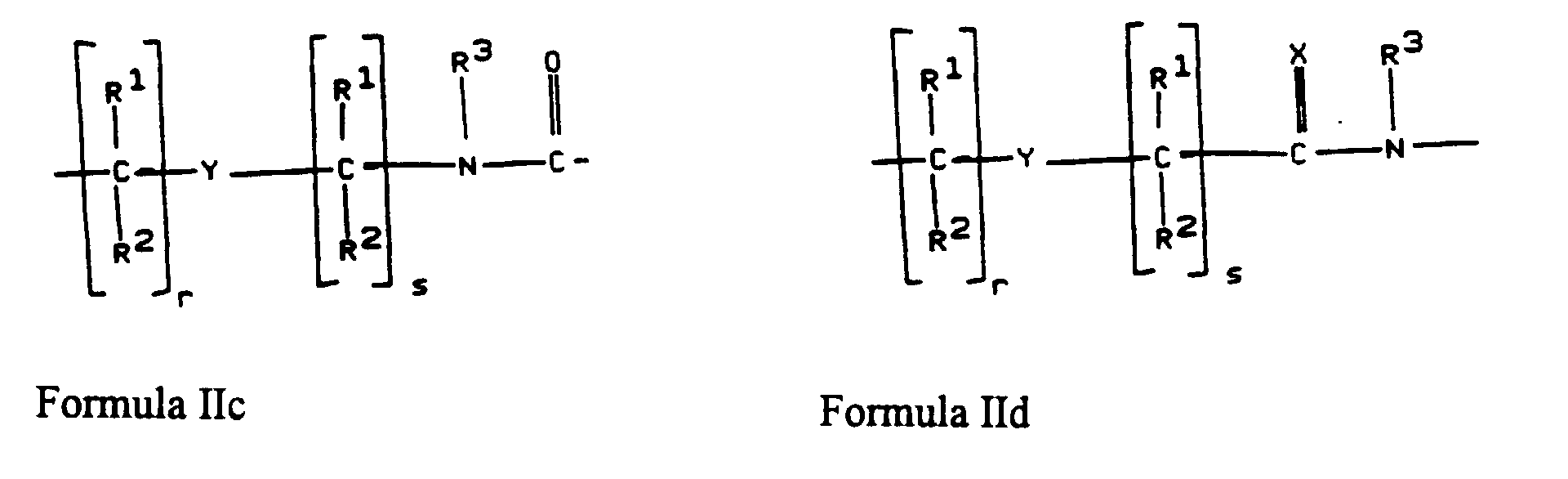
 wherein:n is at least 2,each of L1-Ln is independently selected front the group consisting of hydrogen, hydroxy, (C1-C4)alkanoyl, naturally occurring nucleobases, non-naturally occurring nucleobases, aromatic moieties, DNA intercalators, nucleobase-binding groups, heterocyclic moieties, reporter ligands and chelating moieties;each of C1-Cn is (CR6R7)y where R6 is hydrogen and R7 is selected from the group consisting of the side chains of naturally occurring alpha amino acids, or R6 and R7 are independently selected from the group consisting of hydrogen, (C2-C6)alkyl, aryl, aralkyl, heteroaryl, hydroxy, (C1-C6)alkoxy, (C1-C6)alkylthio, NR3R4 and SR5, where R3 and R4 are as defined below, and R5 is hydrogen, (C1-C6)alkyl, hydroxy, alkoxy, or alkylthio-substituted (C1 to C6)alkyl or R6 and R7 taken together complete an alicyclic or heterocyclic system;each of D1-Dn is (CR6R7)z where R6 and R7 are as defined above;each of y and z is zero or an integer from 1 to 10, the sum y + z being from 2 to 10;each of G1-Gn-1 is -NR3CO-, -NR3C5-, -NR3SO- or -NR3SO2-, in either orientation, where R3 is a defined below;each of A1-An and B1-Bn are selected such that:(a) A is a group of formula (IIa), (IIb), (IIc) or (IId), and B is N or R3N+; or(b) A is a group of formula (IId) and B is CH;
 X is O, S, Se, NR3, CH2 or C(CH3)2);Y is a single bond, O, S or NR4;each of p and q is zero or an integer from 1 to 5, the sum p+q being not more than 10;each of r and s is zero or an integer from 1 to 5, the sum r+s being not more than 10;each R1 and R2 is independently selected from the group consisting of hydrogen, (C1-C4)alkyl which may be hydroxy- or alkoxy- or alkylthio-substituted, hydroxy, alkoxy, alkylthio, amino and halogen; andeach R3 and R4 is independently selected from the group consisting of hydrogen, (C1-C4)alkyl, hydroxy- or alkoxy- or alkylthio-substituted (C1-C4)alkyl, hydroxy, alkoxy, alkylthio and amino;Q is -CO2H, -CONR'R", -SO3H or -SO2NR'R" or an activated derivative of-CO2H or -SO3H; andI is -NR'R"', where R' and R" are independently selected from the group consisting of hydrogen, alkyl, amino protecting groups, reporter ligands, intercalators, chelators, peptides, proteins, carbohydrates, lipids, steroids, nucleosides, nucleotides, nucleotide diphosphates, nucleotide triphosphates , oligonucleotides , including both oligoribonucleotides and
oligodeoxynbonucleotides, oligonucleosides and soiuble and non-soluble polymers, and -R"' is a chelating moiety. - A nucleic acid analog as claimed in Claim 10, wherein said nucleic acid analog comprises a compound of the general formula III, IV or V:
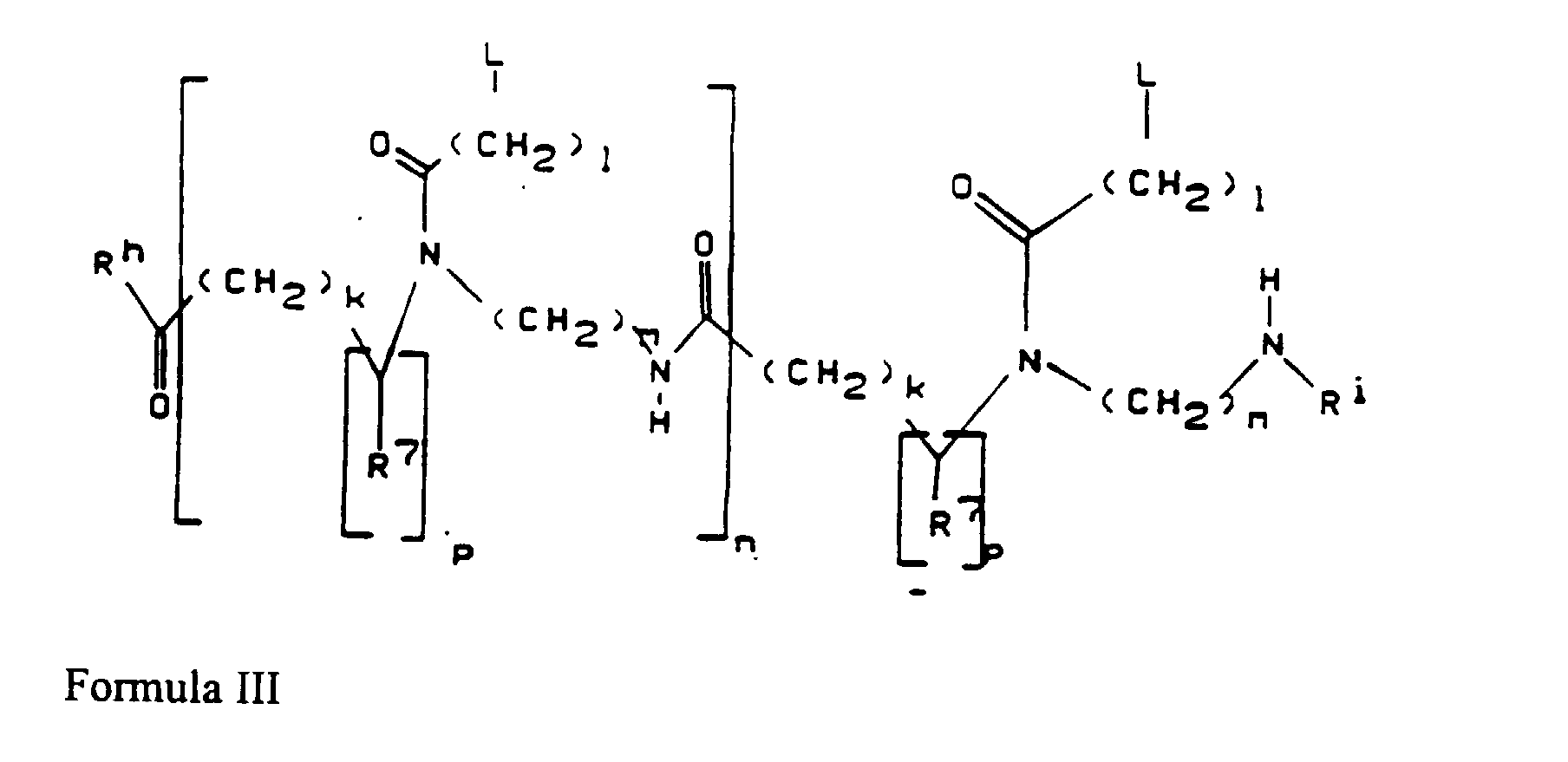
 wherein:
 each L is independently selected from the group consisting of hydrogen, phenyl, -heterocyclic moieties, naturally occurring nucleobases, and non-naturally occurring nucleobases;each R7 is independently selected from the group consisting of hydrogen and the side chains of naturally occurring alpha amino acids;n is an integer greater than 1,each k, l, and m is, independently, zero or an integer from to 5;each p is zero or l;Rh is OH, NH2 or -NHLysNH2; andRi is a chelating moiety.
 - A method of concentrating a solution of a nucleic acid analog according to any one of claims 1 to 11, comprising capturing said nucleic acid analog from a first volume of solution to a solid support bearing chelatable metal ions bound thereto, removing the solid support and captured nucleic acid from said solution and eluting the nucleic acid analog from the solid support in a quantity of liquid such as to produce a second volume of a solution of said nucleic-acid analog which is less than said first volume of solution.
- A labeled nucleic acid analog comprising a nucleic acid analog as claimed in any one of claims 1 to 11, having chelated thereto via said chelating moiety a metal ion as label or having a labeling moiety linked thereto via a metal ion chelated by said chelating moiety.
- A labeled nucleic acid analog as claimed in claim 13, wherein said metal ion is a radio label or a fluorescent label.
- A method of capturing a nucleic acid on a solid phase comprising the steps:1.hybridizing said nucleic acid to a nucleic acid analogue of claim 1 bearing a chelating moiety,chelating a metal ion to the chelating moiety andcapturing the resulting complex to said solid phase bearing groups capable of chelating said metal ion or2.hybridizing said nucleic acid to a nucleic acid analogue bearing a moiety chelating a metal ion andcapturing said complex to said solid phase bearing groups capable of chelating said metal ion or3.hybridizing said nucleic acid to a nucleic acid analogue bearing a chelating moiety andcapturing the hybrid on said solid phase bearing metal ions chelatable by said chelating moiety or4.hybridizing said nucleic acid to a nucleic acid analogue bearing a chelating moiety chelating a metal ion bound to said solid phase.
Applications Claiming Priority (3)
| Application Number | Priority Date | Filing Date | Title |
|---|---|---|---|
| GB9324243 | 1993-11-25 | ||
| GB9324243A GB2284208A (en) | 1993-11-25 | 1993-11-25 | Nucleic acid analogues with a chelating functionality for metal ions |
| PCT/EP1994/003859 WO1995014708A1 (en) | 1993-11-25 | 1994-11-22 | Nucleic acid analogs with a chelating functionality |
Publications (2)
| Publication Number | Publication Date |
|---|---|
| EP0730602A1 EP0730602A1 (en) | 1996-09-11 |
| EP0730602B1 true EP0730602B1 (en) | 1998-08-12 |
Family
ID=10745682
Family Applications (1)
| Application Number | Title | Priority Date | Filing Date |
|---|---|---|---|
| EP95902082A Expired - Lifetime EP0730602B1 (en) | 1993-11-25 | 1994-11-22 | Nucleic acid analogs with a chelating functionality |
Country Status (14)
| Country | Link |
|---|---|
| US (2) | US5843663A (en) |
| EP (1) | EP0730602B1 (en) |
| JP (1) | JPH09504050A (en) |
| KR (1) | KR0169873B1 (en) |
| AT (1) | ATE169632T1 (en) |
| AU (1) | AU684118B2 (en) |
| CA (1) | CA2176745C (en) |
| DE (1) | DE69412509T2 (en) |
| DK (1) | DK0730602T3 (en) |
| ES (1) | ES2122516T3 (en) |
| GB (1) | GB2284208A (en) |
| IL (1) | IL111733A (en) |
| WO (1) | WO1995014708A1 (en) |
| ZA (1) | ZA949317B (en) |
Families Citing this family (57)
| Publication number | Priority date | Publication date | Assignee | Title |
|---|---|---|---|---|
| US6133444A (en) * | 1993-12-22 | 2000-10-17 | Perseptive Biosystems, Inc. | Synthons for the synthesis and deprotection of peptide nucleic acids under mild conditions |
| US6919441B2 (en) | 1994-03-14 | 2005-07-19 | Aventis Pharma Deutschland Gmbh | Polyamide-oligonucleotide derivatives, their preparation and use |
| WO1996040709A1 (en) * | 1995-06-07 | 1996-12-19 | Perseptive Biosystems, Inc. | Pna-dna chimeras and pna synthons for their preparation |
| CA2190430A1 (en) * | 1995-12-12 | 1997-06-13 | Margret Barbara Basinski | Method for measuring genetic messages |
| US5763424A (en) * | 1996-03-26 | 1998-06-09 | Gilead Sciences, Inc. | Composition and method for storing nucleotide analogs |
| AU739391B2 (en) * | 1996-07-03 | 2001-10-11 | President And Fellows Of Harvard College | Oligonucleotide linker and techniques involving immobilized and linked oligonucleotides |
| DE19712530A1 (en) | 1997-03-25 | 1998-10-01 | Boehringer Mannheim Gmbh | New monomer building blocks for labeling peptidic nucleic acids |
| US6617422B1 (en) | 1997-05-23 | 2003-09-09 | Peter Nielsen | Peptide nucleic acid monomers and oligomers |
| US6914137B2 (en) * | 1997-12-06 | 2005-07-05 | Dna Research Innovations Limited | Isolation of nucleic acids |
| DE19757516A1 (en) * | 1997-12-23 | 1999-06-24 | Roche Diagnostics Gmbh | New oligo-nucleotide analogs with negatively charged non-nucleoside units |
| AU2862100A (en) * | 1999-01-27 | 2000-08-18 | Folim G. Halaka | Materials and methods for the purification of polyelectrolytes |
| DK1471926T3 (en) | 1999-06-01 | 2011-02-28 | Baylor College Medicine | Compositions and Methods for Therapeutic Use of an Atonal-Associated Sequence |
| JP4803933B2 (en) * | 1999-08-27 | 2011-10-26 | ブリストル−マイヤーズ スクウィブ カンパニー | Encoding method and selection method of in vitro translated protein |
| US6348583B1 (en) * | 1999-08-30 | 2002-02-19 | Bio-Rad Laboratories, Inc. | Poly(ether-thioether), poly(ether-sulfoxide) and poly(ether-sulfone) nucleic acids |
| AU2001273337B2 (en) | 2000-07-10 | 2006-06-29 | Board Of Regents, The University Of Texas System | Chromosome 3p21.3 genes are tumor suppressors |
| US20060073530A1 (en) * | 2001-08-15 | 2006-04-06 | Olaf Schneewind | Methods and compositions involving sortase B |
| EP1427821B1 (en) * | 2001-08-20 | 2007-06-20 | Regenesis Bioremediation Products | Biosensor for small molecule analytes |
| US20050053939A1 (en) * | 2001-11-09 | 2005-03-10 | Ahmed Chenna | Methods and compositions for enhancing detection in determinations employing cleavable electrophoretic tag reagents |
| CA2473376A1 (en) | 2002-01-16 | 2003-07-31 | Invitrogen Dynal As | Method for isolating nucleic acids and protein from a single sample |
| EP2269619A1 (en) | 2002-08-12 | 2011-01-05 | Jennerex Biotherapeutics ULC | Methods and compositions concerning poxviruses and cancer |
| US20050009051A1 (en) * | 2002-09-27 | 2005-01-13 | Board Of Regents, The University Of Texas | Diagnosis of mould infection |
| CN100542605C (en) * | 2002-09-27 | 2009-09-23 | 磨粉机械研究有限公司 | nucleic acid coated particles |
| US20050123932A1 (en) * | 2003-12-09 | 2005-06-09 | Mekbib Astatke | Nucleic acid-chelating agent conjugates |
| US7897378B2 (en) | 2004-03-18 | 2011-03-01 | Roche Molecular Systems, Inc. | Method and device for purifying nucleic acids |
| US20050241959A1 (en) * | 2004-04-30 | 2005-11-03 | Kenneth Ward | Chemical-sensing devices |
| CA2569202A1 (en) * | 2004-05-28 | 2005-12-15 | Board Of Regents, The University Of Texas System | Multigene predictors of response to chemotherapy |
| ES2345993T3 (en) | 2004-09-14 | 2010-10-07 | The Regents Of The University Of Colorado, A Body Corporate | METHOD FOR TREATMENT WITH BUCINDOLOL BASED ON GENETIC ADDRESSING. |
| CN101351213B (en) | 2005-09-07 | 2013-10-02 | 詹纳里克斯公司 | Systemic treatment of metastatic and/or systemically-disseminated cancers using GM-CSF-expressing poxviruses |
| US8980246B2 (en) | 2005-09-07 | 2015-03-17 | Sillajen Biotherapeutics, Inc. | Oncolytic vaccinia virus cancer therapy |
| CN102026645B (en) | 2006-09-15 | 2016-01-27 | 渥太华医院研究机构 | Oncolytic rhabdovirus |
| US20080269065A1 (en) * | 2007-04-30 | 2008-10-30 | Syntrix Biosystems, Inc. | Conformationally Constrained Analytical Probes |
| EP2055385B1 (en) | 2007-10-31 | 2010-05-26 | Roche Diagnostics GmbH | Method and device for purifying nucleic acids |
| US20090162845A1 (en) * | 2007-12-20 | 2009-06-25 | Elazar Rabbani | Affinity tag nucleic acid and protein compositions, and processes for using same |
| WO2009106838A1 (en) * | 2008-02-29 | 2009-09-03 | Isis Innovation Limited | Diagnostic methods |
| GB0804495D0 (en) * | 2008-03-11 | 2008-04-16 | Iti Scotland Ltd | Surface attachment |
| US9817001B2 (en) | 2008-05-27 | 2017-11-14 | Boston Heart Diagnostics Corporation | Methods for determining LDL cholesterol treatment |
| US8470541B1 (en) | 2008-09-27 | 2013-06-25 | Boston Heart Diagnostics Corporation | Methods for separation and immuno-detection of biomolecules, and apparatus related thereto |
| US9409983B2 (en) | 2009-07-23 | 2016-08-09 | The Board Of Trustess Of The University Of Illinois | Methods and compositions involving PBEF inhibitors for lung inflammation conditions and diseases |
| WO2011032088A1 (en) | 2009-09-11 | 2011-03-17 | Arca Biopharma, Inc. | Polymorphisms in the pde3a gene |
| ES2671570T3 (en) | 2009-09-14 | 2018-06-07 | Sillajen Biotherapeutics, Inc. | Combined cancer therapy with oncolytic vaccinia virus |
| WO2011070440A2 (en) | 2009-12-10 | 2011-06-16 | Ottawa Hospital Research Institute | Oncolytic rhabdovirus |
| WO2011079273A2 (en) | 2009-12-23 | 2011-06-30 | Arca Biopharma, Inc. | Methods and compositions for cardiovascular diseases and conditions |
| CN103429258B (en) | 2011-01-04 | 2016-03-09 | 新罗杰公司 | By use oncolytic vaccinia virus generate for tumor antigen antibody and generate tumour-specific CDC |
| MX2013009863A (en) | 2011-02-28 | 2013-12-06 | Univ Iowa Res Found | ANTI-MÃœLLERIAN HORMONE CHANGES IN PREGNANCY AND PREDICTION OFADVERSE PREGNANCY OUTCOMES AND GENDER. |
| AU2012226530B2 (en) | 2011-03-08 | 2016-12-01 | King Abdullah University Of Science And Technology | Molecular biomarker set for early detection of ovarian cancer |
| US9364532B2 (en) | 2011-06-08 | 2016-06-14 | Children's Hospital Of Eastern Ontario Research Institute Inc. | Compositions and methods for glioblastoma treatment |
| US10040853B2 (en) | 2011-09-09 | 2018-08-07 | Fred Hutchinson Cancer Research Center | Methods and compositions involving NKG2D inhibitors and cancer |
| AU2012322018B2 (en) | 2011-10-13 | 2017-09-21 | Boston Heart Diagnostics | Compositions and methods for treating and preventing coronary heart disease |
| US10125373B2 (en) | 2013-01-22 | 2018-11-13 | Arizona Board Of Regents On Behalf Of Arizona State University | Geminiviral vector for expression of rituximab |
| JP2016513115A (en) | 2013-02-21 | 2016-05-12 | チルドレンズ ホスピタル オブ イースタン オンタリオ リサーチ インスティチュート インコーポレイテッド | Vaccine composition |
| US9828624B2 (en) | 2013-07-24 | 2017-11-28 | Boston Heart Diagnostics Corporation | Driving patient compliance with therapy |
| EP3220810A4 (en) | 2014-11-17 | 2018-05-16 | Boston Heart Diagnostic Corporation | Cardiovascular disease risk assessment |
| EP3224362B1 (en) | 2014-11-26 | 2024-09-25 | The Regents of The University of California | Therapeutic compositions comprising transcription factors and methods of making and using the same |
| WO2019075577A1 (en) | 2017-10-20 | 2019-04-25 | The Governors Of The University Of Alberta | Single nucleotide polymorphisms and feeding efficiency in cattle |
| ES2975662T3 (en) | 2018-10-31 | 2024-07-11 | Univ Arizona | Biomarkers and methods of use for radiation-induced lung injury |
| WO2021055489A1 (en) | 2019-09-16 | 2021-03-25 | Grohar Patrick J | Compositions and methods for the treatment of swi-snf mutant tumors |
| CN112876580B (en) * | 2021-03-11 | 2022-12-27 | 山西奥睿基赛生物科技有限公司 | Humic acid remover, and preparation method and application thereof |
Family Cites Families (10)
| Publication number | Priority date | Publication date | Assignee | Title |
|---|---|---|---|---|
| US4707440A (en) * | 1984-01-30 | 1987-11-17 | Enzo Biochem, Inc. | Nucleic acid hybridization assay and detectable molecules useful in such assay |
| US5166315A (en) * | 1989-12-20 | 1992-11-24 | Anti-Gene Development Group | Sequence-specific binding polymers for duplex nucleic acids |
| CA1340522C (en) * | 1987-03-10 | 1999-05-04 | Heinz Dobeli | Fusion proteins containing neighbouring histidines for improved purification |
| WO1993024511A1 (en) * | 1992-05-29 | 1993-12-09 | Howard Florey Institute Of Experimental Physiology And Medicine | Oligonucleotide-polyamide conjugates |
| AU653012B2 (en) * | 1991-02-14 | 1994-09-15 | Microscan, Inc. | Novel lanthanide chelate-conjugated oligonucleotides |
| AU1995092A (en) * | 1991-05-10 | 1992-12-30 | Q-Dot. Inc. | High-speed peristaltic ccd imager with gaas fet output |
| DK51092D0 (en) * | 1991-05-24 | 1992-04-15 | Ole Buchardt | OLIGONUCLEOTIDE ANALOGUE DESCRIBED BY PEN, MONOMERIC SYNTHONES AND PROCEDURES FOR PREPARING THEREOF, AND APPLICATIONS THEREOF |
| US5539082A (en) * | 1993-04-26 | 1996-07-23 | Nielsen; Peter E. | Peptide nucleic acids |
| ATE126066T1 (en) * | 1991-07-22 | 1995-08-15 | Bracco Int Bv | APPLICATION OF CHELATES OF CONJUGATES WITH PARAMAGNETIC METALS FOR TARGETTING. |
| US5326856A (en) * | 1992-04-09 | 1994-07-05 | Cytogen Corporation | Bifunctional isothiocyanate derived thiocarbonyls as ligands for metal binding |
-
1993
- 1993-11-25 GB GB9324243A patent/GB2284208A/en not_active Withdrawn
-
1994
- 1994-11-22 DE DE69412509T patent/DE69412509T2/en not_active Expired - Lifetime
- 1994-11-22 AT AT95902082T patent/ATE169632T1/en not_active IP Right Cessation
- 1994-11-22 ES ES95902082T patent/ES2122516T3/en not_active Expired - Lifetime
- 1994-11-22 IL IL11173394A patent/IL111733A/en not_active IP Right Cessation
- 1994-11-22 WO PCT/EP1994/003859 patent/WO1995014708A1/en not_active Ceased
- 1994-11-22 CA CA002176745A patent/CA2176745C/en not_active Expired - Fee Related
- 1994-11-22 AU AU11075/95A patent/AU684118B2/en not_active Ceased
- 1994-11-22 JP JP7514829A patent/JPH09504050A/en active Pending
- 1994-11-22 DK DK95902082T patent/DK0730602T3/en active
- 1994-11-22 KR KR1019960702729A patent/KR0169873B1/en not_active Expired - Fee Related
- 1994-11-22 EP EP95902082A patent/EP0730602B1/en not_active Expired - Lifetime
- 1994-11-24 ZA ZA949317A patent/ZA949317B/en unknown
-
1996
- 1996-05-24 US US08/653,607 patent/US5843663A/en not_active Expired - Lifetime
-
1998
- 1998-05-29 US US09/086,726 patent/US6346378B2/en not_active Expired - Lifetime
Also Published As
| Publication number | Publication date |
|---|---|
| ES2122516T3 (en) | 1998-12-16 |
| GB9324243D0 (en) | 1994-01-12 |
| GB2284208A (en) | 1995-05-31 |
| AU1107595A (en) | 1995-06-13 |
| US20010047077A1 (en) | 2001-11-29 |
| IL111733A (en) | 2001-07-24 |
| DE69412509D1 (en) | 1998-09-17 |
| US5843663A (en) | 1998-12-01 |
| US6346378B2 (en) | 2002-02-12 |
| EP0730602A1 (en) | 1996-09-11 |
| KR960705836A (en) | 1996-11-08 |
| IL111733A0 (en) | 1995-01-24 |
| WO1995014708A1 (en) | 1995-06-01 |
| ZA949317B (en) | 1996-05-24 |
| KR0169873B1 (en) | 1999-01-15 |
| DK0730602T3 (en) | 1999-05-10 |
| CA2176745A1 (en) | 1995-06-01 |
| ATE169632T1 (en) | 1998-08-15 |
| CA2176745C (en) | 2004-05-25 |
| JPH09504050A (en) | 1997-04-22 |
| DE69412509T2 (en) | 1999-01-28 |
| AU684118B2 (en) | 1997-12-04 |
Similar Documents
| Publication | Publication Date | Title |
|---|---|---|
| US6346378B2 (en) | Nucleic acid analogs with a chelating functionality | |
| EP0586618B1 (en) | The use of nucleic acid analogues in diagnostics and analytical procedures | |
| CA2177603C (en) | Protecting nucleic acids and methods of analysis | |
| EP0720615B1 (en) | Elongation, amplification and sequence determination using a chimeric oligonucleotide | |
| CA2177604C (en) | Labelling of nucleic acid analogue-peptide chimerae | |
| EP0815259B1 (en) | Modulation of the binding properties of nucleic acid binding partners | |
| EP1595891B1 (en) | Preparing albumin protein conjugated oligonucleotide probes |
Legal Events
| Date | Code | Title | Description |
|---|---|---|---|
| PUAI | Public reference made under article 153(3) epc to a published international application that has entered the european phase |
Free format text: ORIGINAL CODE: 0009012 |
|
| 17P | Request for examination filed |
Effective date: 19960425 |
|
| AK | Designated contracting states |
Kind code of ref document: A1 Designated state(s): AT BE CH DE DK ES FR GB IE IT LI LU NL SE |
|
| 17Q | First examination report despatched |
Effective date: 19960816 |
|
| GRAG | Despatch of communication of intention to grant |
Free format text: ORIGINAL CODE: EPIDOS AGRA |
|
| GRAG | Despatch of communication of intention to grant |
Free format text: ORIGINAL CODE: EPIDOS AGRA |
|
| GRAH | Despatch of communication of intention to grant a patent |
Free format text: ORIGINAL CODE: EPIDOS IGRA |
|
| GRAH | Despatch of communication of intention to grant a patent |
Free format text: ORIGINAL CODE: EPIDOS IGRA |
|
| GRAA | (expected) grant |
Free format text: ORIGINAL CODE: 0009210 |
|
| AK | Designated contracting states |
Kind code of ref document: B1 Designated state(s): AT BE CH DE DK ES FR GB IE IT LI LU NL SE |
|
| REF | Corresponds to: |
Ref document number: 169632 Country of ref document: AT Date of ref document: 19980815 Kind code of ref document: T |
|
| REG | Reference to a national code |
Ref country code: CH Ref legal event code: EP |
|
| REF | Corresponds to: |
Ref document number: 69412509 Country of ref document: DE Date of ref document: 19980917 |
|
| REG | Reference to a national code |
Ref country code: CH Ref legal event code: NV Representative=s name: A. BRAUN, BRAUN, HERITIER, ESCHMANN AG PATENTANWAE |
|
| REG | Reference to a national code |
Ref country code: IE Ref legal event code: FG4D |
|
| PG25 | Lapsed in a contracting state [announced via postgrant information from national office to epo] |
Ref country code: LU Free format text: LAPSE BECAUSE OF NON-PAYMENT OF DUE FEES Effective date: 19981130 |
|
| ET | Fr: translation filed | ||
| REG | Reference to a national code |
Ref country code: ES Ref legal event code: FG2A Ref document number: 2122516 Country of ref document: ES Kind code of ref document: T3 |
|
| REG | Reference to a national code |
Ref country code: DK Ref legal event code: T3 |
|
| PLBE | No opposition filed within time limit |
Free format text: ORIGINAL CODE: 0009261 |
|
| STAA | Information on the status of an ep patent application or granted ep patent |
Free format text: STATUS: NO OPPOSITION FILED WITHIN TIME LIMIT |
|
| 26N | No opposition filed | ||
| REG | Reference to a national code |
Ref country code: GB Ref legal event code: IF02 |
|
| PGFP | Annual fee paid to national office [announced via postgrant information from national office to epo] |
Ref country code: NL Payment date: 20041029 Year of fee payment: 11 |
|
| PGFP | Annual fee paid to national office [announced via postgrant information from national office to epo] |
Ref country code: AT Payment date: 20041103 Year of fee payment: 11 |
|
| PGFP | Annual fee paid to national office [announced via postgrant information from national office to epo] |
Ref country code: SE Payment date: 20041122 Year of fee payment: 11 |
|
| PGFP | Annual fee paid to national office [announced via postgrant information from national office to epo] |
Ref country code: LU Payment date: 20041129 Year of fee payment: 11 |
|
| PGFP | Annual fee paid to national office [announced via postgrant information from national office to epo] |
Ref country code: IE Payment date: 20041130 Year of fee payment: 11 |
|
| PGFP | Annual fee paid to national office [announced via postgrant information from national office to epo] |
Ref country code: ES Payment date: 20041209 Year of fee payment: 11 |
|
| PGFP | Annual fee paid to national office [announced via postgrant information from national office to epo] |
Ref country code: BE Payment date: 20041216 Year of fee payment: 11 |
|
| PG25 | Lapsed in a contracting state [announced via postgrant information from national office to epo] |
Ref country code: IT Free format text: LAPSE BECAUSE OF NON-PAYMENT OF DUE FEES;WARNING: LAPSES OF ITALIAN PATENTS WITH EFFECTIVE DATE BEFORE 2007 MAY HAVE OCCURRED AT ANY TIME BEFORE 2007. THE CORRECT EFFECTIVE DATE MAY BE DIFFERENT FROM THE ONE RECORDED. Effective date: 20051122 Ref country code: IE Free format text: LAPSE BECAUSE OF NON-PAYMENT OF DUE FEES Effective date: 20051122 Ref country code: AT Free format text: LAPSE BECAUSE OF NON-PAYMENT OF DUE FEES Effective date: 20051122 |
|
| PG25 | Lapsed in a contracting state [announced via postgrant information from national office to epo] |
Ref country code: SE Free format text: LAPSE BECAUSE OF NON-PAYMENT OF DUE FEES Effective date: 20051123 Ref country code: ES Free format text: LAPSE BECAUSE OF NON-PAYMENT OF DUE FEES Effective date: 20051123 |
|
| PGFP | Annual fee paid to national office [announced via postgrant information from national office to epo] |
Ref country code: CH Payment date: 20051125 Year of fee payment: 12 |
|
| PG25 | Lapsed in a contracting state [announced via postgrant information from national office to epo] |
Ref country code: BE Free format text: LAPSE BECAUSE OF NON-PAYMENT OF DUE FEES Effective date: 20051130 |
|
| PG25 | Lapsed in a contracting state [announced via postgrant information from national office to epo] |
Ref country code: NL Free format text: LAPSE BECAUSE OF NON-PAYMENT OF DUE FEES Effective date: 20060601 |
|
| EUG | Se: european patent has lapsed | ||
| NLV4 | Nl: lapsed or anulled due to non-payment of the annual fee |
Effective date: 20060601 |
|
| REG | Reference to a national code |
Ref country code: IE Ref legal event code: MM4A |
|
| PG25 | Lapsed in a contracting state [announced via postgrant information from national office to epo] |
Ref country code: LI Free format text: LAPSE BECAUSE OF NON-PAYMENT OF DUE FEES Effective date: 20061130 Ref country code: CH Free format text: LAPSE BECAUSE OF NON-PAYMENT OF DUE FEES Effective date: 20061130 |
|
| REG | Reference to a national code |
Ref country code: ES Ref legal event code: FD2A Effective date: 20051123 |
|
| REG | Reference to a national code |
Ref country code: CH Ref legal event code: PL |
|
| BERE | Be: lapsed |
Owner name: *PNA DIAGNOSTICS A/S Effective date: 20051130 |
|
| PGFP | Annual fee paid to national office [announced via postgrant information from national office to epo] |
Ref country code: DK Payment date: 20131125 Year of fee payment: 20 |
|
| PGFP | Annual fee paid to national office [announced via postgrant information from national office to epo] |
Ref country code: FR Payment date: 20131118 Year of fee payment: 20 Ref country code: GB Payment date: 20131127 Year of fee payment: 20 Ref country code: DE Payment date: 20131127 Year of fee payment: 20 |
|
| REG | Reference to a national code |
Ref country code: DK Ref legal event code: EUP Effective date: 20141122 |
|
| REG | Reference to a national code |
Ref country code: DE Ref legal event code: R071 Ref document number: 69412509 Country of ref document: DE |
|
| REG | Reference to a national code |
Ref country code: GB Ref legal event code: PE20 Expiry date: 20141121 |
|
| PG25 | Lapsed in a contracting state [announced via postgrant information from national office to epo] |
Ref country code: GB Free format text: LAPSE BECAUSE OF EXPIRATION OF PROTECTION Effective date: 20141121 |