EP0722503B1 - Lactic acid bacterial suppressor mutants and their use as selective markers and as means of containment in lactic acid bacteria - Google Patents
Lactic acid bacterial suppressor mutants and their use as selective markers and as means of containment in lactic acid bacteria Download PDFInfo
- Publication number
- EP0722503B1 EP0722503B1 EP94929490A EP94929490A EP0722503B1 EP 0722503 B1 EP0722503 B1 EP 0722503B1 EP 94929490 A EP94929490 A EP 94929490A EP 94929490 A EP94929490 A EP 94929490A EP 0722503 B1 EP0722503 B1 EP 0722503B1
- Authority
- EP
- European Patent Office
- Prior art keywords
- lactic acid
- gene
- nonsense
- suppressor
- replicon
- Prior art date
- Legal status (The legal status is an assumption and is not a legal conclusion. Google has not performed a legal analysis and makes no representation as to the accuracy of the status listed.)
- Expired - Lifetime
Links
- JVTAAEKCZFNVCJ-UHFFFAOYSA-N lactic acid Chemical compound CC(O)C(O)=O JVTAAEKCZFNVCJ-UHFFFAOYSA-N 0.000 title claims abstract description 395
- 239000004310 lactic acid Substances 0.000 title claims abstract description 198
- 235000014655 lactic acid Nutrition 0.000 title claims abstract description 198
- 241000894006 Bacteria Species 0.000 title claims abstract description 156
- 230000001580 bacterial effect Effects 0.000 title claims abstract description 75
- 108090000623 proteins and genes Proteins 0.000 claims abstract description 277
- 239000013612 plasmid Substances 0.000 claims abstract description 210
- 108700025695 Suppressor Genes Proteins 0.000 claims abstract description 83
- 108020004485 Nonsense Codon Proteins 0.000 claims abstract description 81
- 230000037434 nonsense mutation Effects 0.000 claims abstract description 70
- 230000003362 replicative effect Effects 0.000 claims abstract description 30
- 210000004027 cell Anatomy 0.000 claims description 129
- 238000000034 method Methods 0.000 claims description 68
- 241000194035 Lactococcus lactis Species 0.000 claims description 56
- 108091060545 Nonsense suppressor Proteins 0.000 claims description 54
- 230000035772 mutation Effects 0.000 claims description 50
- 230000014509 gene expression Effects 0.000 claims description 47
- 235000014897 Streptococcus lactis Nutrition 0.000 claims description 46
- 230000012010 growth Effects 0.000 claims description 42
- 230000010076 replication Effects 0.000 claims description 27
- 239000000203 mixture Substances 0.000 claims description 25
- 230000000694 effects Effects 0.000 claims description 24
- 239000013598 vector Substances 0.000 claims description 24
- 239000003550 marker Substances 0.000 claims description 23
- 241000192132 Leuconostoc Species 0.000 claims description 22
- 235000013305 food Nutrition 0.000 claims description 22
- 241000194036 Lactococcus Species 0.000 claims description 17
- JEIPFZHSYJVQDO-UHFFFAOYSA-N iron(III) oxide Inorganic materials O=[Fe]O[Fe]=O JEIPFZHSYJVQDO-UHFFFAOYSA-N 0.000 claims description 17
- YOBAEOGBNPPUQV-UHFFFAOYSA-N iron;trihydrate Chemical compound O.O.O.[Fe].[Fe] YOBAEOGBNPPUQV-UHFFFAOYSA-N 0.000 claims description 17
- 230000001105 regulatory effect Effects 0.000 claims description 17
- KRKNYBCHXYNGOX-UHFFFAOYSA-K Citrate Chemical compound [O-]C(=O)CC(O)(CC([O-])=O)C([O-])=O KRKNYBCHXYNGOX-UHFFFAOYSA-K 0.000 claims description 16
- 210000000349 chromosome Anatomy 0.000 claims description 15
- 239000007858 starting material Substances 0.000 claims description 15
- 230000003115 biocidal effect Effects 0.000 claims description 14
- 230000015572 biosynthetic process Effects 0.000 claims description 12
- 230000003247 decreasing effect Effects 0.000 claims description 11
- 238000003786 synthesis reaction Methods 0.000 claims description 10
- 241001515965 unidentified phage Species 0.000 claims description 10
- 235000013365 dairy product Nutrition 0.000 claims description 8
- 239000002243 precursor Substances 0.000 claims description 7
- 241000194017 Streptococcus Species 0.000 claims description 6
- 235000015173 baked goods and baking mixes Nutrition 0.000 claims description 6
- 230000001276 controlling effect Effects 0.000 claims description 6
- 235000013622 meat product Nutrition 0.000 claims description 6
- 235000013311 vegetables Nutrition 0.000 claims description 6
- 241000186000 Bifidobacterium Species 0.000 claims description 5
- 230000002759 chromosomal effect Effects 0.000 claims description 5
- 230000002401 inhibitory effect Effects 0.000 claims description 5
- 230000002101 lytic effect Effects 0.000 claims description 5
- 238000002360 preparation method Methods 0.000 claims description 5
- 239000002213 purine nucleotide Substances 0.000 claims description 5
- 241000186660 Lactobacillus Species 0.000 claims description 4
- 241000192001 Pediococcus Species 0.000 claims description 4
- 230000001332 colony forming effect Effects 0.000 claims description 4
- 229940039696 lactobacillus Drugs 0.000 claims description 4
- 230000035899 viability Effects 0.000 claims description 4
- 230000010261 cell growth Effects 0.000 claims description 3
- 238000009877 rendering Methods 0.000 claims description 2
- 125000000561 purinyl group Chemical class N1=C(N=C2N=CNC2=C1)* 0.000 claims 2
- 102100031007 Cytosolic non-specific dipeptidase Human genes 0.000 claims 1
- 101000919690 Homo sapiens Cytosolic non-specific dipeptidase Proteins 0.000 claims 1
- 101000606724 Penicillium janthinellum Penicillopepsin-1 Proteins 0.000 claims 1
- ULGZDMOVFRHVEP-RWJQBGPGSA-N Erythromycin Chemical compound O([C@@H]1[C@@H](C)C(=O)O[C@@H]([C@@]([C@H](O)[C@@H](C)C(=O)[C@H](C)C[C@@](C)(O)[C@H](O[C@H]2[C@@H]([C@H](C[C@@H](C)O2)N(C)C)O)[C@H]1C)(C)O)CC)[C@H]1C[C@@](C)(OC)[C@@H](O)[C@H](C)O1 ULGZDMOVFRHVEP-RWJQBGPGSA-N 0.000 description 88
- 108020004414 DNA Proteins 0.000 description 79
- 239000012634 fragment Substances 0.000 description 51
- 108020004566 Transfer RNA Proteins 0.000 description 50
- 229960005091 chloramphenicol Drugs 0.000 description 45
- WIIZWVCIJKGZOK-RKDXNWHRSA-N chloramphenicol Chemical compound ClC(Cl)C(=O)N[C@H](CO)[C@H](O)C1=CC=C([N+]([O-])=O)C=C1 WIIZWVCIJKGZOK-RKDXNWHRSA-N 0.000 description 45
- 229960003276 erythromycin Drugs 0.000 description 44
- 239000002609 medium Substances 0.000 description 44
- 108020004707 nucleic acids Proteins 0.000 description 44
- 102000039446 nucleic acids Human genes 0.000 description 44
- 150000007523 nucleic acids Chemical class 0.000 description 44
- 239000000047 product Substances 0.000 description 40
- 241000588724 Escherichia coli Species 0.000 description 37
- 238000010367 cloning Methods 0.000 description 32
- KDCGOANMDULRCW-UHFFFAOYSA-N 7H-purine Chemical compound N1=CNC2=NC=NC2=C1 KDCGOANMDULRCW-UHFFFAOYSA-N 0.000 description 30
- 238000010276 construction Methods 0.000 description 30
- 239000008267 milk Substances 0.000 description 27
- 235000013336 milk Nutrition 0.000 description 26
- 210000004080 milk Anatomy 0.000 description 26
- FDGQSTZJBFJUBT-UHFFFAOYSA-N hypoxanthine Chemical compound O=C1NC=NC2=C1NC=N2 FDGQSTZJBFJUBT-UHFFFAOYSA-N 0.000 description 25
- 239000004098 Tetracycline Substances 0.000 description 24
- 229960002180 tetracycline Drugs 0.000 description 24
- 229930101283 tetracycline Natural products 0.000 description 24
- 235000019364 tetracycline Nutrition 0.000 description 24
- 150000003522 tetracyclines Chemical class 0.000 description 24
- 108091028043 Nucleic acid sequence Proteins 0.000 description 20
- 229920001817 Agar Polymers 0.000 description 18
- 239000008272 agar Substances 0.000 description 18
- 125000003729 nucleotide group Chemical group 0.000 description 18
- 238000004520 electroporation Methods 0.000 description 17
- 239000002773 nucleotide Substances 0.000 description 17
- 102000004169 proteins and genes Human genes 0.000 description 17
- 230000001629 suppression Effects 0.000 description 16
- 150000003212 purines Chemical class 0.000 description 15
- 241000894007 species Species 0.000 description 15
- 150000001413 amino acids Chemical class 0.000 description 14
- 239000013599 cloning vector Substances 0.000 description 14
- 235000018102 proteins Nutrition 0.000 description 14
- LFQSCWFLJHTTHZ-UHFFFAOYSA-N Ethanol Chemical compound CCO LFQSCWFLJHTTHZ-UHFFFAOYSA-N 0.000 description 12
- UGQMRVRMYYASKQ-UHFFFAOYSA-N Hypoxanthine nucleoside Natural products OC1C(O)C(CO)OC1N1C(NC=NC2=O)=C2N=C1 UGQMRVRMYYASKQ-UHFFFAOYSA-N 0.000 description 12
- 235000001014 amino acid Nutrition 0.000 description 12
- 238000004519 manufacturing process Methods 0.000 description 12
- 102000004190 Enzymes Human genes 0.000 description 11
- 108090000790 Enzymes Proteins 0.000 description 11
- 241000282326 Felis catus Species 0.000 description 11
- 108020005038 Terminator Codon Proteins 0.000 description 11
- 238000004458 analytical method Methods 0.000 description 11
- 229940088598 enzyme Drugs 0.000 description 11
- 101150094986 pepC gene Proteins 0.000 description 11
- 238000003752 polymerase chain reaction Methods 0.000 description 11
- 230000009466 transformation Effects 0.000 description 11
- 108020004705 Codon Proteins 0.000 description 10
- WQZGKKKJIJFFOK-GASJEMHNSA-N Glucose Natural products OC[C@H]1OC(O)[C@H](O)[C@@H](O)[C@@H]1O WQZGKKKJIJFFOK-GASJEMHNSA-N 0.000 description 10
- 102000035195 Peptidases Human genes 0.000 description 10
- 108091005804 Peptidases Proteins 0.000 description 10
- 239000008103 glucose Substances 0.000 description 10
- 238000002955 isolation Methods 0.000 description 10
- 101150107738 repB gene Proteins 0.000 description 10
- 108020005098 Anticodon Proteins 0.000 description 9
- 239000012895 dilution Substances 0.000 description 9
- 238000010790 dilution Methods 0.000 description 9
- 238000002474 experimental method Methods 0.000 description 9
- 238000011534 incubation Methods 0.000 description 9
- 238000003780 insertion Methods 0.000 description 9
- 230000037431 insertion Effects 0.000 description 9
- 238000012163 sequencing technique Methods 0.000 description 9
- PLUBXMRUUVWRLT-UHFFFAOYSA-N Ethyl methanesulfonate Chemical compound CCOS(C)(=O)=O PLUBXMRUUVWRLT-UHFFFAOYSA-N 0.000 description 8
- NYHBQMYGNKIUIF-UUOKFMHZSA-N Guanosine Chemical compound C1=NC=2C(=O)NC(N)=NC=2N1[C@@H]1O[C@H](CO)[C@@H](O)[C@H]1O NYHBQMYGNKIUIF-UUOKFMHZSA-N 0.000 description 8
- 241000168725 Lactococcus lactis subsp. lactis bv. diacetylactis Species 0.000 description 8
- FAPWRFPIFSIZLT-UHFFFAOYSA-M Sodium chloride Chemical compound [Na+].[Cl-] FAPWRFPIFSIZLT-UHFFFAOYSA-M 0.000 description 8
- 239000003242 anti bacterial agent Substances 0.000 description 8
- 238000012512 characterization method Methods 0.000 description 8
- 239000003471 mutagenic agent Substances 0.000 description 8
- 235000001252 Lactococcus lactis subsp lactis bv diacetylactis Nutrition 0.000 description 7
- 244000172809 Leuconostoc cremoris Species 0.000 description 7
- 235000017632 Leuconostoc cremoris Nutrition 0.000 description 7
- 229940088710 antibiotic agent Drugs 0.000 description 7
- 238000005119 centrifugation Methods 0.000 description 7
- 238000012217 deletion Methods 0.000 description 7
- 230000037430 deletion Effects 0.000 description 7
- 241001646716 Escherichia coli K-12 Species 0.000 description 6
- 101100184605 Escherichia coli mobA gene Proteins 0.000 description 6
- CSNNHWWHGAXBCP-UHFFFAOYSA-L Magnesium sulfate Chemical compound [Mg+2].[O-][S+2]([O-])([O-])[O-] CSNNHWWHGAXBCP-UHFFFAOYSA-L 0.000 description 6
- ISWSIDIOOBJBQZ-UHFFFAOYSA-N Phenol Chemical compound OC1=CC=CC=C1 ISWSIDIOOBJBQZ-UHFFFAOYSA-N 0.000 description 6
- 101100391699 Pseudomonas viridiflava gacA gene Proteins 0.000 description 6
- 229960000723 ampicillin Drugs 0.000 description 6
- AVKUERGKIZMTKX-NJBDSQKTSA-N ampicillin Chemical compound C1([C@@H](N)C(=O)N[C@H]2[C@H]3SC([C@@H](N3C2=O)C(O)=O)(C)C)=CC=CC=C1 AVKUERGKIZMTKX-NJBDSQKTSA-N 0.000 description 6
- 101150055766 cat gene Proteins 0.000 description 6
- 108010052305 exodeoxyribonuclease III Proteins 0.000 description 6
- 238000002703 mutagenesis Methods 0.000 description 6
- 231100000350 mutagenesis Toxicity 0.000 description 6
- 101150064613 pepN gene Proteins 0.000 description 6
- 229920001184 polypeptide Polymers 0.000 description 6
- 108090000765 processed proteins & peptides Proteins 0.000 description 6
- 102000004196 processed proteins & peptides Human genes 0.000 description 6
- 235000019833 protease Nutrition 0.000 description 6
- 101150055347 repA2 gene Proteins 0.000 description 6
- AVXURJPOCDRRFD-UHFFFAOYSA-N Hydroxylamine Chemical compound ON AVXURJPOCDRRFD-UHFFFAOYSA-N 0.000 description 5
- 241000192129 Leuconostoc lactis Species 0.000 description 5
- 239000006142 Luria-Bertani Agar Substances 0.000 description 5
- 239000007640 basal medium Substances 0.000 description 5
- 230000033228 biological regulation Effects 0.000 description 5
- 210000003763 chloroplast Anatomy 0.000 description 5
- 238000007747 plating Methods 0.000 description 5
- 238000012360 testing method Methods 0.000 description 5
- 238000013518 transcription Methods 0.000 description 5
- 230000035897 transcription Effects 0.000 description 5
- LRFVTYWOQMYALW-UHFFFAOYSA-N 9H-xanthine Chemical compound O=C1NC(=O)NC2=C1NC=N2 LRFVTYWOQMYALW-UHFFFAOYSA-N 0.000 description 4
- GFFGJBXGBJISGV-UHFFFAOYSA-N Adenine Chemical compound NC1=NC=NC2=C1N=CN2 GFFGJBXGBJISGV-UHFFFAOYSA-N 0.000 description 4
- 229930024421 Adenine Natural products 0.000 description 4
- 244000063299 Bacillus subtilis Species 0.000 description 4
- 235000014469 Bacillus subtilis Nutrition 0.000 description 4
- MIKUYHXYGGJMLM-GIMIYPNGSA-N Crotonoside Natural products C1=NC2=C(N)NC(=O)N=C2N1[C@H]1O[C@@H](CO)[C@H](O)[C@@H]1O MIKUYHXYGGJMLM-GIMIYPNGSA-N 0.000 description 4
- NYHBQMYGNKIUIF-UHFFFAOYSA-N D-guanosine Natural products C1=2NC(N)=NC(=O)C=2N=CN1C1OC(CO)C(O)C1O NYHBQMYGNKIUIF-UHFFFAOYSA-N 0.000 description 4
- 108700039887 Essential Genes Proteins 0.000 description 4
- 108091000041 Phosphoenolpyruvate Carboxylase Proteins 0.000 description 4
- 239000004365 Protease Substances 0.000 description 4
- 239000002253 acid Substances 0.000 description 4
- 229960000643 adenine Drugs 0.000 description 4
- OIRDTQYFTABQOQ-KQYNXXCUSA-N adenosine Chemical compound C1=NC=2C(N)=NC=NC=2N1[C@@H]1O[C@H](CO)[C@@H](O)[C@H]1O OIRDTQYFTABQOQ-KQYNXXCUSA-N 0.000 description 4
- 230000004075 alteration Effects 0.000 description 4
- 101150075954 apeB gene Proteins 0.000 description 4
- 101150076810 erm gene Proteins 0.000 description 4
- 230000006870 function Effects 0.000 description 4
- UYTPUPDQBNUYGX-UHFFFAOYSA-N guanine Chemical compound O=C1NC(N)=NC2=C1N=CN2 UYTPUPDQBNUYGX-UHFFFAOYSA-N 0.000 description 4
- 229940029575 guanosine Drugs 0.000 description 4
- 238000012423 maintenance Methods 0.000 description 4
- 231100000707 mutagenic chemical Toxicity 0.000 description 4
- NONJJLVGHLVQQM-JHXYUMNGSA-N phenethicillin Chemical compound N([C@@H]1C(N2[C@H](C(C)(C)S[C@@H]21)C(O)=O)=O)C(=O)C(C)OC1=CC=CC=C1 NONJJLVGHLVQQM-JHXYUMNGSA-N 0.000 description 4
- 101150023641 ppc gene Proteins 0.000 description 4
- 230000000717 retained effect Effects 0.000 description 4
- 239000006152 selective media Substances 0.000 description 4
- 239000011780 sodium chloride Substances 0.000 description 4
- 238000013519 translation Methods 0.000 description 4
- XLYOFNOQVPJJNP-UHFFFAOYSA-N water Chemical compound O XLYOFNOQVPJJNP-UHFFFAOYSA-N 0.000 description 4
- 108700028369 Alleles Proteins 0.000 description 3
- 108030000961 Aminopeptidase Y Proteins 0.000 description 3
- UXVMQQNJUSDDNG-UHFFFAOYSA-L Calcium chloride Chemical compound [Cl-].[Cl-].[Ca+2] UXVMQQNJUSDDNG-UHFFFAOYSA-L 0.000 description 3
- 108090001081 Dipeptidases Proteins 0.000 description 3
- GRSZFWQUAKGDAV-KQYNXXCUSA-N IMP Chemical compound O[C@@H]1[C@H](O)[C@@H](COP(O)(O)=O)O[C@H]1N1C(NC=NC2=O)=C2N=C1 GRSZFWQUAKGDAV-KQYNXXCUSA-N 0.000 description 3
- 241001465754 Metazoa Species 0.000 description 3
- 108010014251 Muramidase Proteins 0.000 description 3
- 102000016943 Muramidase Human genes 0.000 description 3
- 108010062010 N-Acetylmuramoyl-L-alanine Amidase Proteins 0.000 description 3
- 101710163270 Nuclease Proteins 0.000 description 3
- 238000012300 Sequence Analysis Methods 0.000 description 3
- 150000007513 acids Chemical class 0.000 description 3
- 239000001110 calcium chloride Substances 0.000 description 3
- 229910001628 calcium chloride Inorganic materials 0.000 description 3
- 230000001419 dependent effect Effects 0.000 description 3
- 238000011161 development Methods 0.000 description 3
- 230000018109 developmental process Effects 0.000 description 3
- 239000000796 flavoring agent Substances 0.000 description 3
- 235000019634 flavors Nutrition 0.000 description 3
- 230000009036 growth inhibition Effects 0.000 description 3
- 239000001963 growth medium Substances 0.000 description 3
- 235000013902 inosinic acid Nutrition 0.000 description 3
- 229960000274 lysozyme Drugs 0.000 description 3
- 239000004325 lysozyme Substances 0.000 description 3
- 235000010335 lysozyme Nutrition 0.000 description 3
- 229910052943 magnesium sulfate Inorganic materials 0.000 description 3
- 244000005700 microbiome Species 0.000 description 3
- 239000008188 pellet Substances 0.000 description 3
- 238000013492 plasmid preparation Methods 0.000 description 3
- 210000002706 plastid Anatomy 0.000 description 3
- 101150084005 purD gene Proteins 0.000 description 3
- 108700022487 rRNA Genes Proteins 0.000 description 3
- 230000002829 reductive effect Effects 0.000 description 3
- 108091008146 restriction endonucleases Proteins 0.000 description 3
- 238000012216 screening Methods 0.000 description 3
- 238000010561 standard procedure Methods 0.000 description 3
- 239000000126 substance Substances 0.000 description 3
- 238000012546 transfer Methods 0.000 description 3
- 230000001131 transforming effect Effects 0.000 description 3
- OPIFSICVWOWJMJ-AEOCFKNESA-N 5-bromo-4-chloro-3-indolyl beta-D-galactoside Chemical compound O[C@@H]1[C@@H](O)[C@@H](O)[C@@H](CO)O[C@H]1OC1=CNC2=CC=C(Br)C(Cl)=C12 OPIFSICVWOWJMJ-AEOCFKNESA-N 0.000 description 2
- IJGRMHOSHXDMSA-UHFFFAOYSA-N Atomic nitrogen Chemical compound N#N IJGRMHOSHXDMSA-UHFFFAOYSA-N 0.000 description 2
- 108010062877 Bacteriocins Proteins 0.000 description 2
- 239000002126 C01EB10 - Adenosine Substances 0.000 description 2
- HEDRZPFGACZZDS-UHFFFAOYSA-N Chloroform Chemical compound ClC(Cl)Cl HEDRZPFGACZZDS-UHFFFAOYSA-N 0.000 description 2
- 206010061765 Chromosomal mutation Diseases 0.000 description 2
- 108010014303 DNA-directed DNA polymerase Proteins 0.000 description 2
- 102000016928 DNA-directed DNA polymerase Human genes 0.000 description 2
- 102000004860 Dipeptidases Human genes 0.000 description 2
- 241000588722 Escherichia Species 0.000 description 2
- 108700039691 Genetic Promoter Regions Proteins 0.000 description 2
- DHMQDGOQFOQNFH-UHFFFAOYSA-N Glycine Chemical compound NCC(O)=O DHMQDGOQFOQNFH-UHFFFAOYSA-N 0.000 description 2
- UGQMRVRMYYASKQ-KQYNXXCUSA-N Inosine Chemical compound O[C@@H]1[C@H](O)[C@@H](CO)O[C@H]1N1C2=NC=NC(O)=C2N=C1 UGQMRVRMYYASKQ-KQYNXXCUSA-N 0.000 description 2
- 229930010555 Inosine Natural products 0.000 description 2
- KFZMGEQAYNKOFK-UHFFFAOYSA-N Isopropanol Chemical compound CC(C)O KFZMGEQAYNKOFK-UHFFFAOYSA-N 0.000 description 2
- 244000199885 Lactobacillus bulgaricus Species 0.000 description 2
- 235000013960 Lactobacillus bulgaricus Nutrition 0.000 description 2
- 241000724188 Lactococcus phage Species 0.000 description 2
- 102000004882 Lipase Human genes 0.000 description 2
- 108090001060 Lipase Proteins 0.000 description 2
- 239000004367 Lipase Substances 0.000 description 2
- 239000001968 M17 agar Substances 0.000 description 2
- 241000196329 Marchantia polymorpha Species 0.000 description 2
- 108020005196 Mitochondrial DNA Proteins 0.000 description 2
- 229910017912 NH2OH Inorganic materials 0.000 description 2
- 108700026244 Open Reading Frames Proteins 0.000 description 2
- 240000007594 Oryza sativa Species 0.000 description 2
- 235000007164 Oryza sativa Nutrition 0.000 description 2
- 229910019142 PO4 Inorganic materials 0.000 description 2
- 108090000526 Papain Proteins 0.000 description 2
- 241000293869 Salmonella enterica subsp. enterica serovar Typhimurium Species 0.000 description 2
- MTCFGRXMJLQNBG-UHFFFAOYSA-N Serine Natural products OCC(N)C(O)=O MTCFGRXMJLQNBG-UHFFFAOYSA-N 0.000 description 2
- 239000007984 Tris EDTA buffer Substances 0.000 description 2
- 108010059993 Vancomycin Proteins 0.000 description 2
- 238000009825 accumulation Methods 0.000 description 2
- 229960005305 adenosine Drugs 0.000 description 2
- -1 alanyl- Chemical group 0.000 description 2
- 229940080701 chymosin Drugs 0.000 description 2
- 230000000295 complement effect Effects 0.000 description 2
- 230000007423 decrease Effects 0.000 description 2
- 230000002708 enhancing effect Effects 0.000 description 2
- 239000000284 extract Substances 0.000 description 2
- 230000037433 frameshift Effects 0.000 description 2
- 101150054895 ftsH gene Proteins 0.000 description 2
- 210000001035 gastrointestinal tract Anatomy 0.000 description 2
- 108091008053 gene clusters Proteins 0.000 description 2
- 239000011521 glass Substances 0.000 description 2
- 238000000338 in vitro Methods 0.000 description 2
- 229960003786 inosine Drugs 0.000 description 2
- 229940004208 lactobacillus bulgaricus Drugs 0.000 description 2
- 235000019421 lipase Nutrition 0.000 description 2
- 125000003588 lysine group Chemical group [H]N([H])C([H])([H])C([H])([H])C([H])([H])C([H])([H])C([H])(N([H])[H])C(*)=O 0.000 description 2
- 239000000463 material Substances 0.000 description 2
- 108020004999 messenger RNA Proteins 0.000 description 2
- 230000002438 mitochondrial effect Effects 0.000 description 2
- 238000010369 molecular cloning Methods 0.000 description 2
- 230000003505 mutagenic effect Effects 0.000 description 2
- GNOLWGAJQVLBSM-UHFFFAOYSA-N n,n,5,7-tetramethyl-1,2,3,4-tetrahydronaphthalen-1-amine Chemical compound C1=C(C)C=C2C(N(C)C)CCCC2=C1C GNOLWGAJQVLBSM-UHFFFAOYSA-N 0.000 description 2
- 235000015097 nutrients Nutrition 0.000 description 2
- 239000011022 opal Substances 0.000 description 2
- 150000007524 organic acids Chemical class 0.000 description 2
- 235000005985 organic acids Nutrition 0.000 description 2
- 230000008520 organization Effects 0.000 description 2
- 229940055729 papain Drugs 0.000 description 2
- 235000019834 papain Nutrition 0.000 description 2
- NBIIXXVUZAFLBC-UHFFFAOYSA-K phosphate Chemical compound [O-]P([O-])([O-])=O NBIIXXVUZAFLBC-UHFFFAOYSA-K 0.000 description 2
- 239000010452 phosphate Substances 0.000 description 2
- 238000004321 preservation Methods 0.000 description 2
- 239000006041 probiotic Substances 0.000 description 2
- 235000018291 probiotics Nutrition 0.000 description 2
- 229940024999 proteolytic enzymes for treatment of wounds and ulcers Drugs 0.000 description 2
- 238000012552 review Methods 0.000 description 2
- 229920002477 rna polymer Polymers 0.000 description 2
- 230000035945 sensitivity Effects 0.000 description 2
- 239000000243 solution Substances 0.000 description 2
- 230000000087 stabilizing effect Effects 0.000 description 2
- 238000000844 transformation Methods 0.000 description 2
- 230000009261 transgenic effect Effects 0.000 description 2
- 229960003165 vancomycin Drugs 0.000 description 2
- MYPYJXKWCTUITO-LYRMYLQWSA-N vancomycin Chemical compound O([C@@H]1[C@@H](O)[C@H](O)[C@@H](CO)O[C@H]1OC1=C2C=C3C=C1OC1=CC=C(C=C1Cl)[C@@H](O)[C@H](C(N[C@@H](CC(N)=O)C(=O)N[C@H]3C(=O)N[C@H]1C(=O)N[C@H](C(N[C@@H](C3=CC(O)=CC(O)=C3C=3C(O)=CC=C1C=3)C(O)=O)=O)[C@H](O)C1=CC=C(C(=C1)Cl)O2)=O)NC(=O)[C@@H](CC(C)C)NC)[C@H]1C[C@](C)(N)[C@H](O)[C@H](C)O1 MYPYJXKWCTUITO-LYRMYLQWSA-N 0.000 description 2
- MYPYJXKWCTUITO-UHFFFAOYSA-N vancomycin Natural products O1C(C(=C2)Cl)=CC=C2C(O)C(C(NC(C2=CC(O)=CC(O)=C2C=2C(O)=CC=C3C=2)C(O)=O)=O)NC(=O)C3NC(=O)C2NC(=O)C(CC(N)=O)NC(=O)C(NC(=O)C(CC(C)C)NC)C(O)C(C=C3Cl)=CC=C3OC3=CC2=CC1=C3OC1OC(CO)C(O)C(O)C1OC1CC(C)(N)C(O)C(C)O1 MYPYJXKWCTUITO-UHFFFAOYSA-N 0.000 description 2
- 235000014101 wine Nutrition 0.000 description 2
- 229940075420 xanthine Drugs 0.000 description 2
- 102100024088 40S ribosomal protein S7 Human genes 0.000 description 1
- 108020005029 5' Flanking Region Proteins 0.000 description 1
- 108091006112 ATPases Proteins 0.000 description 1
- HRPVXLWXLXDGHG-UHFFFAOYSA-N Acrylamide Chemical compound NC(=O)C=C HRPVXLWXLXDGHG-UHFFFAOYSA-N 0.000 description 1
- 241000251468 Actinopterygii Species 0.000 description 1
- 102000057290 Adenosine Triphosphatases Human genes 0.000 description 1
- 235000016626 Agrimonia eupatoria Nutrition 0.000 description 1
- 102000002260 Alkaline Phosphatase Human genes 0.000 description 1
- 108020004774 Alkaline Phosphatase Proteins 0.000 description 1
- 108090000915 Aminopeptidases Proteins 0.000 description 1
- 102000004400 Aminopeptidases Human genes 0.000 description 1
- 239000004475 Arginine Substances 0.000 description 1
- 235000005638 Austrian pine Nutrition 0.000 description 1
- 108091032955 Bacterial small RNA Proteins 0.000 description 1
- 241000186016 Bifidobacterium bifidum Species 0.000 description 1
- OKTJSMMVPCPJKN-UHFFFAOYSA-N Carbon Chemical compound [C] OKTJSMMVPCPJKN-UHFFFAOYSA-N 0.000 description 1
- 102100035882 Catalase Human genes 0.000 description 1
- 108010053835 Catalase Proteins 0.000 description 1
- 102000005600 Cathepsins Human genes 0.000 description 1
- 108010084457 Cathepsins Proteins 0.000 description 1
- 241000195597 Chlamydomonas reinhardtii Species 0.000 description 1
- 108020004998 Chloroplast DNA Proteins 0.000 description 1
- 108090000746 Chymosin Proteins 0.000 description 1
- 108091026890 Coding region Proteins 0.000 description 1
- 108010005843 Cysteine Proteases Proteins 0.000 description 1
- 102000005927 Cysteine Proteases Human genes 0.000 description 1
- 108010017826 DNA Polymerase I Proteins 0.000 description 1
- 102000004594 DNA Polymerase I Human genes 0.000 description 1
- 230000004543 DNA replication Effects 0.000 description 1
- 206010059866 Drug resistance Diseases 0.000 description 1
- KCXVZYZYPLLWCC-UHFFFAOYSA-N EDTA Chemical compound OC(=O)CN(CC(O)=O)CCN(CC(O)=O)CC(O)=O KCXVZYZYPLLWCC-UHFFFAOYSA-N 0.000 description 1
- 241000196324 Embryophyta Species 0.000 description 1
- 101100200593 Emericella nidulans (strain FGSC A4 / ATCC 38163 / CBS 112.46 / NRRL 194 / M139) rps19 gene Proteins 0.000 description 1
- 108010059378 Endopeptidases Proteins 0.000 description 1
- 102000005593 Endopeptidases Human genes 0.000 description 1
- 101000925662 Enterobacteria phage PRD1 Endolysin Proteins 0.000 description 1
- 241000620209 Escherichia coli DH5[alpha] Species 0.000 description 1
- 108010074124 Escherichia coli Proteins Proteins 0.000 description 1
- 241000701533 Escherichia virus T4 Species 0.000 description 1
- 241000195620 Euglena Species 0.000 description 1
- 241000195619 Euglena gracilis Species 0.000 description 1
- 241000195621 Euglena longa Species 0.000 description 1
- 241000233866 Fungi Species 0.000 description 1
- 239000004471 Glycine Substances 0.000 description 1
- 101150038414 LAP gene Proteins 0.000 description 1
- 240000001046 Lactobacillus acidophilus Species 0.000 description 1
- 235000013956 Lactobacillus acidophilus Nutrition 0.000 description 1
- 241000194041 Lactococcus lactis subsp. lactis Species 0.000 description 1
- 241000178948 Lactococcus sp. Species 0.000 description 1
- 241000192130 Leuconostoc mesenteroides Species 0.000 description 1
- 239000006137 Luria-Bertani broth Substances 0.000 description 1
- 241000196323 Marchantiophyta Species 0.000 description 1
- 108010052285 Membrane Proteins Proteins 0.000 description 1
- 102000018697 Membrane Proteins Human genes 0.000 description 1
- 241000204025 Mycoplasma capricolum Species 0.000 description 1
- 241000202934 Mycoplasma pneumoniae Species 0.000 description 1
- VZUNGTLZRAYYDE-UHFFFAOYSA-N N-methyl-N'-nitro-N-nitrosoguanidine Chemical compound O=NN(C)C(=N)N[N+]([O-])=O VZUNGTLZRAYYDE-UHFFFAOYSA-N 0.000 description 1
- 241000221960 Neurospora Species 0.000 description 1
- 244000061176 Nicotiana tabacum Species 0.000 description 1
- 235000002637 Nicotiana tabacum Nutrition 0.000 description 1
- 108010053775 Nisin Proteins 0.000 description 1
- NVNLLIYOARQCIX-MSHCCFNRSA-N Nisin Chemical compound N1C(=O)[C@@H](CC(C)C)NC(=O)C(=C)NC(=O)[C@@H]([C@H](C)CC)NC(=O)[C@@H](NC(=O)C(=C/C)/NC(=O)[C@H](N)[C@H](C)CC)CSC[C@@H]1C(=O)N[C@@H]1C(=O)N2CCC[C@@H]2C(=O)NCC(=O)N[C@@H](C(=O)N[C@H](CCCCN)C(=O)N[C@@H]2C(NCC(=O)N[C@H](C)C(=O)N[C@H](CC(C)C)C(=O)N[C@H](CCSC)C(=O)NCC(=O)N[C@H](CS[C@@H]2C)C(=O)N[C@H](CC(N)=O)C(=O)N[C@H](CCSC)C(=O)N[C@H](CCCCN)C(=O)N[C@@H]2C(N[C@H](C)C(=O)N[C@@H]3C(=O)N[C@@H](C(N[C@H](CC=4NC=NC=4)C(=O)N[C@H](CS[C@@H]3C)C(=O)N[C@H](CO)C(=O)N[C@H]([C@H](C)CC)C(=O)N[C@H](CC=3NC=NC=3)C(=O)N[C@H](C(C)C)C(=O)NC(=C)C(=O)N[C@H](CCCCN)C(O)=O)=O)CS[C@@H]2C)=O)=O)CS[C@@H]1C NVNLLIYOARQCIX-MSHCCFNRSA-N 0.000 description 1
- IOVCWXUNBOPUCH-UHFFFAOYSA-N Nitrous acid Chemical compound ON=O IOVCWXUNBOPUCH-UHFFFAOYSA-N 0.000 description 1
- 108010080032 Pediocins Proteins 0.000 description 1
- 108010087702 Penicillinase Proteins 0.000 description 1
- 102000008153 Peptide Elongation Factor Tu Human genes 0.000 description 1
- 108010049977 Peptide Elongation Factor Tu Proteins 0.000 description 1
- 235000008565 Pinus banksiana Nutrition 0.000 description 1
- 244000019397 Pinus jeffreyi Species 0.000 description 1
- 235000013264 Pinus jeffreyi Nutrition 0.000 description 1
- 235000008578 Pinus strobus Nutrition 0.000 description 1
- 235000008585 Pinus thunbergii Nutrition 0.000 description 1
- 102000013566 Plasminogen Human genes 0.000 description 1
- 108010051456 Plasminogen Proteins 0.000 description 1
- 235000014030 Podocarpus spicatus Nutrition 0.000 description 1
- CZPWVGJYEJSRLH-UHFFFAOYSA-N Pyrimidine Chemical compound C1=CN=CN=C1 CZPWVGJYEJSRLH-UHFFFAOYSA-N 0.000 description 1
- 101150027061 RPS16 gene Proteins 0.000 description 1
- 108020004511 Recombinant DNA Proteins 0.000 description 1
- 108020005091 Replication Origin Proteins 0.000 description 1
- 108020000772 Ribose-Phosphate Pyrophosphokinase Proteins 0.000 description 1
- 102000000439 Ribose-phosphate pyrophosphokinase Human genes 0.000 description 1
- 108010000605 Ribosomal Proteins Proteins 0.000 description 1
- 240000004808 Saccharomyces cerevisiae Species 0.000 description 1
- 235000014680 Saccharomyces cerevisiae Nutrition 0.000 description 1
- 241000235347 Schizosaccharomyces pombe Species 0.000 description 1
- 101100418504 Schizosaccharomyces pombe (strain 972 / ATCC 24843) rps1601 gene Proteins 0.000 description 1
- VMHLLURERBWHNL-UHFFFAOYSA-M Sodium acetate Chemical compound [Na+].CC([O-])=O VMHLLURERBWHNL-UHFFFAOYSA-M 0.000 description 1
- 235000014969 Streptococcus diacetilactis Nutrition 0.000 description 1
- 241000194020 Streptococcus thermophilus Species 0.000 description 1
- 229930006000 Sucrose Natural products 0.000 description 1
- CZMRCDWAGMRECN-UGDNZRGBSA-N Sucrose Chemical compound O[C@H]1[C@H](O)[C@@H](CO)O[C@@]1(CO)O[C@@H]1[C@H](O)[C@@H](O)[C@H](O)[C@@H](CO)O1 CZMRCDWAGMRECN-UGDNZRGBSA-N 0.000 description 1
- 101710120203 Tetracycline resistance determinant Proteins 0.000 description 1
- 241000209140 Triticum Species 0.000 description 1
- 235000021307 Triticum Nutrition 0.000 description 1
- 241000192133 Weissella paramesenteroides Species 0.000 description 1
- 241000588902 Zymomonas mobilis Species 0.000 description 1
- 238000002835 absorbance Methods 0.000 description 1
- 239000013543 active substance Substances 0.000 description 1
- 239000011543 agarose gel Substances 0.000 description 1
- 108010027591 aleurain Proteins 0.000 description 1
- 229940100198 alkylating agent Drugs 0.000 description 1
- 239000002168 alkylating agent Substances 0.000 description 1
- 230000003698 anagen phase Effects 0.000 description 1
- 239000010828 animal waste Substances 0.000 description 1
- 238000013459 approach Methods 0.000 description 1
- ODKSFYDXXFIFQN-UHFFFAOYSA-N arginine Natural products OC(=O)C(N)CCCNC(N)=N ODKSFYDXXFIFQN-UHFFFAOYSA-N 0.000 description 1
- 238000003556 assay Methods 0.000 description 1
- 108010058966 bacteriophage T7 induced DNA polymerase Proteins 0.000 description 1
- 230000003385 bacteriostatic effect Effects 0.000 description 1
- 230000037429 base substitution Effects 0.000 description 1
- 230000008901 benefit Effects 0.000 description 1
- 108010005774 beta-Galactosidase Proteins 0.000 description 1
- 229940002008 bifidobacterium bifidum Drugs 0.000 description 1
- 238000009835 boiling Methods 0.000 description 1
- 239000000872 buffer Substances 0.000 description 1
- 244000309466 calf Species 0.000 description 1
- 108010089934 carbohydrase Proteins 0.000 description 1
- 230000023852 carbohydrate metabolic process Effects 0.000 description 1
- 235000021256 carbohydrate metabolism Nutrition 0.000 description 1
- 150000001720 carbohydrates Chemical class 0.000 description 1
- 235000014633 carbohydrates Nutrition 0.000 description 1
- 229910052799 carbon Inorganic materials 0.000 description 1
- 230000030570 cellular localization Effects 0.000 description 1
- 235000013339 cereals Nutrition 0.000 description 1
- 239000002962 chemical mutagen Substances 0.000 description 1
- 239000003795 chemical substances by application Substances 0.000 description 1
- 239000013611 chromosomal DNA Substances 0.000 description 1
- 150000001875 compounds Chemical class 0.000 description 1
- 239000012141 concentrate Substances 0.000 description 1
- 108091036078 conserved sequence Proteins 0.000 description 1
- 230000029087 digestion Effects 0.000 description 1
- 239000012153 distilled water Substances 0.000 description 1
- 101150036185 dnaQ gene Proteins 0.000 description 1
- 238000001962 electrophoresis Methods 0.000 description 1
- 230000008030 elimination Effects 0.000 description 1
- 238000003379 elimination reaction Methods 0.000 description 1
- 229940066758 endopeptidases Drugs 0.000 description 1
- 230000002255 enzymatic effect Effects 0.000 description 1
- 238000006911 enzymatic reaction Methods 0.000 description 1
- 238000000855 fermentation Methods 0.000 description 1
- 230000004151 fermentation Effects 0.000 description 1
- 238000001914 filtration Methods 0.000 description 1
- 238000011010 flushing procedure Methods 0.000 description 1
- 235000015203 fruit juice Nutrition 0.000 description 1
- 238000001502 gel electrophoresis Methods 0.000 description 1
- 238000012252 genetic analysis Methods 0.000 description 1
- ZDXPYRJPNDTMRX-UHFFFAOYSA-N glutamine Natural products OC(=O)C(N)CCC(N)=O ZDXPYRJPNDTMRX-UHFFFAOYSA-N 0.000 description 1
- 230000036541 health Effects 0.000 description 1
- 101150047832 hpt gene Proteins 0.000 description 1
- 230000003301 hydrolyzing effect Effects 0.000 description 1
- 230000002209 hydrophobic effect Effects 0.000 description 1
- 210000000987 immune system Anatomy 0.000 description 1
- 230000001771 impaired effect Effects 0.000 description 1
- 238000001727 in vivo Methods 0.000 description 1
- 230000000977 initiatory effect Effects 0.000 description 1
- 238000011081 inoculation Methods 0.000 description 1
- 230000010354 integration Effects 0.000 description 1
- 210000000936 intestine Anatomy 0.000 description 1
- 230000003834 intracellular effect Effects 0.000 description 1
- 230000005865 ionizing radiation Effects 0.000 description 1
- 101150056134 lacL gene Proteins 0.000 description 1
- 101150090507 lacM gene Proteins 0.000 description 1
- 229940039695 lactobacillus acidophilus Drugs 0.000 description 1
- 230000004807 localization Effects 0.000 description 1
- 230000001320 lysogenic effect Effects 0.000 description 1
- 238000013507 mapping Methods 0.000 description 1
- 230000013011 mating Effects 0.000 description 1
- 230000007246 mechanism Effects 0.000 description 1
- 230000001404 mediated effect Effects 0.000 description 1
- 230000002503 metabolic effect Effects 0.000 description 1
- 239000002207 metabolite Substances 0.000 description 1
- 230000007483 microbial process Effects 0.000 description 1
- 230000002906 microbiologic effect Effects 0.000 description 1
- 238000009629 microbiological culture Methods 0.000 description 1
- 238000013048 microbiological method Methods 0.000 description 1
- 210000003470 mitochondria Anatomy 0.000 description 1
- 238000002156 mixing Methods 0.000 description 1
- 230000000869 mutational effect Effects 0.000 description 1
- 239000004309 nisin Substances 0.000 description 1
- 235000010297 nisin Nutrition 0.000 description 1
- 229910052757 nitrogen Inorganic materials 0.000 description 1
- 239000002777 nucleoside Substances 0.000 description 1
- 125000003835 nucleoside group Chemical group 0.000 description 1
- 230000000050 nutritive effect Effects 0.000 description 1
- 235000016046 other dairy product Nutrition 0.000 description 1
- 238000012261 overproduction Methods 0.000 description 1
- 230000037361 pathway Effects 0.000 description 1
- 229950009506 penicillinase Drugs 0.000 description 1
- 239000000843 powder Substances 0.000 description 1
- 230000002028 premature Effects 0.000 description 1
- 230000000529 probiotic effect Effects 0.000 description 1
- 238000012545 processing Methods 0.000 description 1
- 108010064037 prorennin Proteins 0.000 description 1
- 101150108007 prs gene Proteins 0.000 description 1
- 101150075980 psbA gene Proteins 0.000 description 1
- 230000004144 purine metabolism Effects 0.000 description 1
- 150000003230 pyrimidines Chemical class 0.000 description 1
- 230000006798 recombination Effects 0.000 description 1
- 238000005215 recombination Methods 0.000 description 1
- 230000008844 regulatory mechanism Effects 0.000 description 1
- 238000011160 research Methods 0.000 description 1
- 230000002441 reversible effect Effects 0.000 description 1
- 239000002342 ribonucleoside Substances 0.000 description 1
- 108010033405 ribosomal protein S7 Proteins 0.000 description 1
- 210000003705 ribosome Anatomy 0.000 description 1
- 235000009566 rice Nutrition 0.000 description 1
- 235000017985 rocky mountain lodgepole pine Nutrition 0.000 description 1
- 101150116648 rpsP gene Proteins 0.000 description 1
- 238000005070 sampling Methods 0.000 description 1
- 238000010187 selection method Methods 0.000 description 1
- 230000035939 shock Effects 0.000 description 1
- 239000013605 shuttle vector Substances 0.000 description 1
- 239000004460 silage Substances 0.000 description 1
- 238000002741 site-directed mutagenesis Methods 0.000 description 1
- 235000020183 skimmed milk Nutrition 0.000 description 1
- 238000003307 slaughter Methods 0.000 description 1
- 239000002002 slurry Substances 0.000 description 1
- 239000001632 sodium acetate Substances 0.000 description 1
- 235000017281 sodium acetate Nutrition 0.000 description 1
- 238000000638 solvent extraction Methods 0.000 description 1
- 238000001228 spectrum Methods 0.000 description 1
- 230000002269 spontaneous effect Effects 0.000 description 1
- 230000006641 stabilisation Effects 0.000 description 1
- 238000011105 stabilization Methods 0.000 description 1
- 239000008223 sterile water Substances 0.000 description 1
- 230000006585 stringent response Effects 0.000 description 1
- 239000000758 substrate Substances 0.000 description 1
- 239000005720 sucrose Substances 0.000 description 1
- 235000000346 sugar Nutrition 0.000 description 1
- 150000008163 sugars Chemical class 0.000 description 1
- 239000013589 supplement Substances 0.000 description 1
- 230000009469 supplementation Effects 0.000 description 1
- 230000004083 survival effect Effects 0.000 description 1
- 239000000725 suspension Substances 0.000 description 1
- 125000003396 thiol group Chemical group [H]S* 0.000 description 1
- 238000004448 titration Methods 0.000 description 1
- 230000002103 transcriptional effect Effects 0.000 description 1
- 230000007704 transition Effects 0.000 description 1
- 241001148471 unidentified anaerobic bacterium Species 0.000 description 1
- 235000013618 yogurt Nutrition 0.000 description 1
Images




Classifications
-
- C—CHEMISTRY; METALLURGY
- C12—BIOCHEMISTRY; BEER; SPIRITS; WINE; VINEGAR; MICROBIOLOGY; ENZYMOLOGY; MUTATION OR GENETIC ENGINEERING
- C12N—MICROORGANISMS OR ENZYMES; COMPOSITIONS THEREOF; PROPAGATING, PRESERVING, OR MAINTAINING MICROORGANISMS; MUTATION OR GENETIC ENGINEERING; CULTURE MEDIA
- C12N15/00—Mutation or genetic engineering; DNA or RNA concerning genetic engineering, vectors, e.g. plasmids, or their isolation, preparation or purification; Use of hosts therefor
- C12N15/09—Recombinant DNA-technology
- C12N15/63—Introduction of foreign genetic material using vectors; Vectors; Use of hosts therefor; Regulation of expression
- C12N15/67—General methods for enhancing the expression
- C12N15/68—Stabilisation of the vector
-
- C—CHEMISTRY; METALLURGY
- C12—BIOCHEMISTRY; BEER; SPIRITS; WINE; VINEGAR; MICROBIOLOGY; ENZYMOLOGY; MUTATION OR GENETIC ENGINEERING
- C12N—MICROORGANISMS OR ENZYMES; COMPOSITIONS THEREOF; PROPAGATING, PRESERVING, OR MAINTAINING MICROORGANISMS; MUTATION OR GENETIC ENGINEERING; CULTURE MEDIA
- C12N15/00—Mutation or genetic engineering; DNA or RNA concerning genetic engineering, vectors, e.g. plasmids, or their isolation, preparation or purification; Use of hosts therefor
- C12N15/09—Recombinant DNA-technology
- C12N15/63—Introduction of foreign genetic material using vectors; Vectors; Use of hosts therefor; Regulation of expression
- C12N15/74—Vectors or expression systems specially adapted for prokaryotic hosts other than E. coli, e.g. Lactobacillus, Micromonospora
- C12N15/746—Vectors or expression systems specially adapted for prokaryotic hosts other than E. coli, e.g. Lactobacillus, Micromonospora for lactic acid bacteria (Streptococcus; Lactococcus; Lactobacillus; Pediococcus; Enterococcus; Leuconostoc; Propionibacterium; Bifidobacterium; Sporolactobacillus)
Definitions
- the present invention provides useful mutants of lactic acid bacteria or plasmids capable of replicating in lactic acid bacteria, comprising nonsense mutation suppressor-encoding genes, the use of such suppressor genes for confining a replicon to a specific lactic acid bacterium or to a lactic acid bacterium growing in a particular environment and for controlling the number of lactic acid bacterial cells in a particular environment.
- mRNA is translated into polypeptide chains.
- the mRNA codons do not directly recognize the amino acids that they specify in the way that an enzyme recognizes a substrate.
- Translation uses "adaptor" molecules that recognize both an amino acid and a triplet group of nucleotide bases (a codon). These adaptors consist of a set of small RNA molecules known as transfer RNAs (or tRNAs), each of which is only 70 to 90 nucleotides in length.
- transfer RNAs or tRNAs
- Such tRNA molecules contain unpaired nucleotide residues comprising a CCA triplet at one end of the molecule and, in a central loop, a triplet of varying sequence forming the so-called anticodon that can base-pair to a complementary triplet in the mRNA molecule, while the CCA triplet at the free 3' end of the molecule is attached covalently to a specific amino acid.
- UAG amber codon
- UGA opal codon
- UAA ochre codon
- a nonsense mutation can be reversed or suppressed by a second mutation in a gene coding for a tRNA which results in the synthesis of an altered tRNA molecule.
- Such an altered tRNA recognizes a nonsense codon and inserts an amino acid at that point in the polypeptide chain.
- the mutated tRNA-encoding gene is termed a suppressor gene and the altered nonsense mutation-suppressing tRNA which it encodes is generally referred to as a nonsense or termination suppressor.
- termination suppressors may be derived by single, double or triple base substitutions in the anticodon region of the tRNA.
- Termination suppressors were first detected in E. coli about 25 years ago and have since been extensively studied in this species. It is considered that all termination suppressors in E. coli have been identified. Recently, new suppressor tRNA genes have been synthesized in vitro and subsequently introduced into E. coli . Termination suppressors have also been identified in the E. coli bacteriophage T4 and in Salmonella typhimurium (Eggertson et al., 1988, Microbiological Reviews, 52 , 354-374). Furthermore, termination suppressors have been identified in eucaryotic fungi including Neurospora spp., Saccharomyces cerevisiae and Schizosaccharomyces pombe .
- nonsense or termination suppressors have not been identified in bacterial species belonging to the industrially important group of lactic acid bacteria which i.a. are commonly utilized as starter cultures in the production of a variety of food products including dairy products, meat products, vegetable products, bakery products and wine, during which production these starter cultures produce lactic acid and other organic acids and in many instances also desirable flavour-enhancing metabolites.
- lactic acid bacterial starter cultures which are composed of two or more different species, since the metabolic activity of one species may enhance the growth of an other species or because different lactic acid bacterial species may have particularly advantageous effects on flavour development of the food product at specific stages of the food production.
- lactic acid bacterial starter cultures in which a particular characteristic is confined (or contained) to a particular strain.
- genes coding for desired characteristics of a lactic acid bacterium are located on extrachromosomal replicons such as plasmids. It may therefore be advantageous to have such replicons contained in their original host species.
- the term "contained” indicates confinement of a replicon to a specific host cell or to the stable maintenance of a replicon in a lactic acid bacterial host cell when this host cell is present in a specific environment. This stable maintenance in a particular host cell of a replicon may also be referred to as stabilization of that replicon.
- treatment may also be used herein as encompassing the phenomenon that the growth and/or viability of a specific lactic acid bacterial strain in a particular environment is controlled.
- the known methods of stably maintaining (stabilizing) replicons to a host cell involve the insertion of relatively large DNA sequences such as a partitioning function.
- the insertion of large DNA sequences involves the risk of deletion of other sequences from the replicon.
- nonsense suppressor-encoding lactic acid bacterial strains may be developed which provide the means of a novel and advantageous method of confining replicons to lactic acid bacterial strains.
- the method as defined herein makes use of genes coding for suppressor tRNA which are small and may be inserted without causing deletions of desired genes.
- the present invention has made it possible that the same suppressor gene under the control of the same regulatory mechanism may be inserted in all of the strains of the mixed starter culture whereby the activity of the species of such a culture may be regulated concomitantly or, if different regulatory sequences are inserted in individual species members of the starter culture, the activity of the individual members may be regulated independently.
- the present invention relates in a first aspect to a method of isolating a nonsense suppressor-encoding lactic acid bacterium, comprising the steps of (i) mutagenizing a replicon capable of replicating in a lactic acid bacterium, said replicon comprising a gene encoding a selectable marker which is expressible in the lactic acid bacterium, (ii) selecting from the mutagenized replicon of (i) a replicon containing a nonsense mutation in the gene encoding the selectable marker, (iii) mutagenizing a lactic acid bacterium which does not encode a nonsense suppressor, (iv) introducing the replicon of step (ii) into said mutagenized lactic acid bacterium, and (v) selecting from the mutagenized lactic acid bacterium of (iv) a nonsense suppressor-encoding transformed lactic acid bacterium in which the selectable marker is expressed.
- a method of isolating a nonsense suppressor-encoding lactic acid bacterium comprising the steps of (i) mutagenizing a replicon without nonsense mutations but containing a selectable marker, which plasmid is inherently capable of replicating in a lactic acid bacterium, (ii) selecting from step (i) a replicon containing a nonsense mutation rendering the replicon incapable of replicating, (iii) mutagenizing a lactic acid bacterium which does not encode a nonsense suppressor, (iv) introducing into said mutagenized lactic acid bacterium the replicon of step (ii), and (v) selecting a transformed lactic acid bacterium in which the introduced replicon is capable of replicating.
- the present invention also relates to an isolated pure culture of a lactic acid bacterium comprising a gene coding for a nonsense suppressor, to a composition comprising such an isolated pure culture of a lactic acid bacterium as defined herein, and a carrier, and to the use of the composition as a starter culture in the preparation of a food product selected from a dairy product, a vegetable product, a meat product and a bakery product.
- the invention also pertains to a plasmid comprising lactobacterial DNA and capable of replicating in a lactic acid bacterium, the plasmid comprising a gene coding for a nonsense suppressor.
- the invention relates to a method of confining an extrachromosomal replicon capable of replicating in lactic acid bacteria to a first kind of lactic acid bacterial cells, where said replicon could be naturally transferred to a second kind of lactic acid bacterial cells, which method comprises providing the first kind of lactic acid bacterial cells as cells containing a nonsense suppressor-encoding gene, the cells being transformed with the replicon in the form of a nonsense mutant hereof having lost its capability of replicating in lactic acid bacterial cells, the gene product of the nonsense suppressor-encoding gene being capable of restoring the capability of the replicon to replicate in lactic acid bacterial cells whereby, if a cell of the second kind which does not contain a nonsense suppressor gene encoding a gene product capable of restoring the capability of the nonsense mutant of the replicon to replicate in lactic acid bacteria, receives said extrachromosomal replicon, the replicon will not replicate in the second kind of lactic acid bacteria, the
- the present invention relates to a method of stably maintaining an extrachromosomal replicon in lactic acid bacterial host cells growing in a particular environment, comprising providing said host cells as nonsense mutant cells having lost the capability of growing in said environment, and transformed with an extrachromosomal replicon containing a nonsense suppressor gene encoding a gene product restoring the capability of the nonsense mutant cells to grow in said environment whereby, if the replicon is lost from the lactic acid bacterial cells, the cells will not grow.
- the present invention provides a method of controlling the number of lactic acid bacterial cells in a particular environment allowing growth of lactic acid bacteria, comprising providing the bacteria with a nonsense mutation in a gene the expression of which has an effect on the viability or the growth of the bacteria, and inserting in the bacteria a nonsense suppressor-encoding gene under the control of a regulatable promoter, the gene product of which, when expressed at one level, prevents the expression of the nonsense mutation and which, when not expressed, or expressed at a different level causes the cells to cease growth or to die.
- the method of isolating a nonsense suppressor-encoding lactic acid bacterium comprises as an initial step the provision of a replicon capable of replicating in the lactic acid bacterium, which replicon contains a nonsense mutation in a gene coding for a selectable marker (a marker gene) and preferably also a non-mutated gene coding for a further selectable gene product.
- the selectable marker gene may be selected from any gene coding for a readily detectable phenotype such as a gene the expression of which confers resistance to an antibiotic to which the lactic acid bacterium is sensitive, including as examples resistance to erythromycin, chloramphenicol or tetracycline.
- Other useful mutant markers include auxothrophic phenotypes such as Pur - chromosomal mutants or replicons such as plasmid or bacteriophage mutants having lost their inherent capability of replicating in the lactic acid bacterium.
- any suitable conventional mutagen including ultraviolet and ionizing radiation and chemical mutagens including mutagens which affect non-replicating DNA such as HNO 2, NH 2 OH; alkylating agents including as examples ethyl methane sulphonate (EMS) and N-methyl-N'-nitro-N-nitrosoguanidine (NTG); and base analogs or frameshift mutagens, may be used for mutating the marker gene.
- mutagenesis may be site-directed mutagenesis, using recombinant DNA techniques including the use of primers in the polymerase chain reaction, of transposable elements or bacterial mutator strains, e.g. the mutator strain LE30.
- a replicon containing a nonsense mutation in the gene coding for a selectable marker may be an isolated spontaneous mutant.
- a nonsense mutation is designated by the conventional designation of the gene in which the mutation has occurred, followed by an indication of the type of nonsense mutation.
- a nonsense mutation recognizable by either an amber or ochre suppressor, in genes coding for erythromycin and chloramphenicol resistance, respectively is designated erm -am and cat -am, respectively.
- the mutated replicon may contain two or more nonsense mutations, e.g. in genes coding for antibiotic resistance such as erm -am and cat -am.
- Such replicons containing multiple nonsense mutations may conveniently be constructed by recombining in one replicon DNA sequences containing the mutations.
- a starting plasmid may be isolated which contains a nonsense mutation in the erm gene.
- a DNA sequence comprising this gene may be inserted in an other plasmid carrying a nonsense mutation in the cat gene.
- a typical example of such a replicon containing two nonsense mutations is the plasmid pFDi10 as described below.
- an isolated nonsense replicon mutant When an isolated nonsense replicon mutant is obtained, it is used as a means of isolating a lactic acid bacterium in which a nonsense suppressor mutation has been generated by subjecting a population of a parent lactic acid bacterium which does not encode a suppressor mutant, to a treatment with a mutagen as defined above.
- the mutant replicon is introduced by means of conventional transformation techniques into a population of the thus mutagenized lactic acid bacterial cells and a nonsense suppressor mutant cell is selected from these transformed cells by growing the cells under conditions allowing the replicon marker gene to be expressed and isolating host cells in which the nonsense mutation in the replicon is expressed.
- a nonsense suppressor-encoding mutant of the transformed lactic acid bacterial cells may conveniently be selected from a medium containing this/these antibiotic(s).
- That a transformed cell capable of growing in such a selective medium is a true suppressor-encoding cell may subsequently be verified by (i) transforming the same non sense mutation-containing replicon to known suppressor host cells in which the replicon can replicate and to corresponding host cells without the suppressor gene and (ii) reintroducing the replicon into the assumed suppressor-encoding cell to confirm the suppressor phenotype.
- the thus obtained nonsense-suppressing transformants may subsequently be cured of the replicon e.g. by growing the transformants in a non-selective medium or by treating them with a conventional plasmid curing agent.
- the suppressor gene may be located on the chromosome or on an extrachromosomal replicon.
- sup + e.g. supB +
- sup - e.g. supB -
- Amber suppressors generally recognize only amber codons whereas all ochre suppressors will recognize amber as well as ochre nonsense codons.
- the spectrum of suppression of a nonsense mutation depends not only on the anticodon (amber or ochre), but also on the amino acid inserted at the nonsense codon.
- the suppressor tRNA is causing the insertion of an amino acid which is different from the wildtype protein, the resulting protein may be non-functional.
- Some nonsense mutations may therefore only be suppressed by one type of suppressors whereas others may be suppressed by several or all suppressors.
- Suppressors may show a poor efficiency of suppression which means that the termination of translation at the nonsense codon is not completely suppressed.
- a suppressor with an efficiency of 10% will allow only 10% of the protein encoded by a gene with a nonsense mutation to be synthesized in full length whereas 90% of the protein molecules will terminate at the nonsense codon.
- Most ochre suppressors are only 5% to 10% efficient whilst amber suppressors typically have efficiencies in the range of 25% to 65%.
- the present invention relates in one aspect to a method of isolating a nonsense-suppressor-encoding lactic acid bacterium in which the replicon being mutagenized to obtain the nonsense mutation is one, which prior to the mutagenesis is capable of replicating in the lactic acid bacterium and which has acquired a nonsense mutation in one or more genes, whereby the isolated mutated replicon is no longer capable of replication in the lactic acid bacterium not containing a suppressor gene, the product of which may suppress the replication nonsense mutation.
- Such nonsense mutated replicons having lost their capability of replication may be derived from plasmids or bacteriophages normally replicating in lactic acid bacteria.
- the citrate plasmid of Lactococcus lactis subsp. lactis biovar diacetylactis strain DB1138 may be mutagenized e.g. by means of the polymerase chain reaction to obtain an amber nonsense mutation in the repB gene.
- the replicon from which a non-replicating nonsense mutant may be derived may also be a bacteriophage including as an example the prolate Lactococcus phage ⁇ MPC100 from which mutants with nonsense mutations in genes essential for phage development may be derived. Such mutants have lost the capability of the parent phage to form plaques on sensitive lactic acid bacteria.
- Nonsense mutants of bacteriophages may e.g. suitably be generated by mutagenization with hydroxylamine (NH 2 OH).
- an isolated pure culture of a lactic acid bacterium comprising a gene coding for a nonsense suppressor such as a gene coding for amber, ochre or opal suppressor tRNA.
- a gene coding for a termination (nonsense) suppressor may be located on the chromosome of the bacterium or it may in other embodiments be located extrachromosomally e.g. on a plasmid or it may be incorporated in the cell as a prophage.
- the lactic acid bacterium of the above culture is one used as a starter culture in food production, it may be preferred that the bacterium only contains DNA of lactic acid bacterial origin including DNA isolated from plasmids or other replicons having the lactic acid bacterium as their natural host organism. Accordingly, the nonsense suppressor-containing lactic acid bacterium may in preferred embodiments contain a suppressor gene which is a native gene or which is derived from a heterologous lactic acid bacterium.
- recombinant lactic acid bacteria which only contain DNA of lactic acid bacterial origin are also referred to as "food grade" organisms since it is generally considered that the use of such organisms may be allowable by relevant governmental authorities for use in food manufacturing.
- the suppressor gene carried by the pure culture may be an inserted gene either derived from a heterologous lactic acid bacterial strain or from a heterologous lactic acid bacterial plasmid or it may be a suppressor gene derived from the mutagenization of a native, homologous gene which may either be chromosomally or extrachromosomally located.
- the gene When the gene is an inserted gene, it may be inserted in the chromosome or it may be introduced on a plasmid or a bacteriophage.
- the lactic acid bacterial cells of the pure culture may, in addition to the suppressor gene, further comprise a nonsense mutation which is suppressible by the nonsense suppressor.
- the suppressor gene and the gene with the nonsense mutation may preferably be located on different replicons, e.g. so that the suppressor gene is located on the chromosome whereas the nonsense mutation occurs in a gene carried by an extrachromosomal replicon. In other useful embodiments, the location of the two genes is the reverse.
- the suppressor encoded by the lactic acid bacterium constituting the isolated pure culture is an amber suppressor.
- the suppressor may e.g. be one suppressing a nonsense mutation which, in the absence of a nonsense suppressor capable of suppressing the mutation, confers auxotrophy such as a nonsense mutation in a gene involved in the synthesis of purine nucleotides from their precursors.
- the culture may comprise a lactic acid bacterium which is a nonsense pur mutant.
- the lactic acid bacterium in a culture is a strain which contains a nonsense mutation which is suppressed by a suppressor gene located on a food grade plasmid as described above.
- a plasmid may be constructed so as to contain a replication region of a lactic acid bacterium or a plasmid naturally occurring in such a bacterium, e.g. the replication region of a plasmid naturally harboured by a Lactococcus sp. including the replication region of the citrate plasmid in Lactococcus lactis subsp.
- lactis biovar diacetylactis and a suppressor gene from a lactic acid bacterium as defined herein such as e.g. a suppressor tRNA gene of Lactococcus lactis strain FD100 as described hereinbelow.
- the suppressor gene will function as a selectable marker if the nonsense mutation is one which in the absence of a corresponding suppressor gene will render the bacterium incapable of growing in a particular environment, such as milk or any other food product or agricultural product where lactic acid bacteria are used.
- a plasmid construct as described above will be useful as a cloning vector if further provided with one or more suitable unique restriction sites comprising DNA isolated from a lactic bacterium or in a non-coding synthetic linker/polylinker sequence.
- Such a cloning vector is encompassed by the present invention.
- cloning vectors have a size allowing for the insertion of desirable genes.
- a suitably sized cloning vector as defined herein has a size which is in the range of 0.5 to 20 kb, although larger vectors may also be used.
- the cloning vector has a size in the range of 1 to 10 kb, such as in the range of 2 to 5 kb. Examples of such cloning vectors are the pFG plasmids as described below.
- such cloning vectors may be used for insertion of genes coding for desirable gene products, in particular genes isolated from lactic acid bacteria.
- useful genes include genes coding for enzymes which has an advantageous effect on the quality of a food product the manufacturing or preservation of which includes the addition of viable lactic acid bacterial cultures as it has been described above.
- genes inserted into the above cloning vector may code for peptidases, including a dipeptidase, examples of such peptidases being the gene products of the genes pepN, pepC and pepR as exemplified below.
- Other interesting gene products include lipases, proteases, nucleases and enzymes which are involved in the carbohydrate metabolism of the host bacterium. Inserted genes may also be prokaryotic genes isolated from non-lactic acid bacterial species.
- the useful genes in the present context are eucaryotic genes e.g. mammalian genes coding for immunologically, enzymatically or pharmacologically active gene products, including as an example proteolytic enzymes such as chymosin or plasminogen. It has been found that a lactic acid bacterium normally coding for a particular enzyme may have the expression of this enzyme increased by a factor of at least 2 such as at least 5 or even by a factor of at least 10 by being transformed with a cloning vector as defined above, in which a gene coding for an enzyme having similar activity, is inserted. Examples of such vectors are the plasmid pFG1 derivatives pFG2, pFG3, pFG4, pFG5 and pFG6 as described in the below examples.
- the gene product of the suppressor gene of the above food grade vector may in some instances be "overexpressed" to an extent where the normal growth of the host cell may be impaired.
- mutants may occur in which the natural promoter for the suppressor gene of the vector is mutated, resulting in a decreased suppressor gene expression allowing the host cell to grow normally.
- the invention provides in one embodiment a cloning vector comprising a suppressor gene with a promoter functionally linked thereto in which a mutation occur.
- mutations may occur in a nonsense mutation-containing lactic acid bacterial host cell chromosome which enables the cell when hosting a vector plasmid from which a suppressor gene is overexpressed, to grow normally.
- host cells which apparently are refractory to the effect of the suppressor gene "overproduction" may be very useful hosts for cloning vectors such as e.g. the above pFG1 plasmids and its derivatives.
- the lactic acid bacterial culture may comprise any lactic acid bacterium.
- lactic acid bacterium designates a group of bacteria having as a common characteristic the capability to produce lactic acid from sugars. The majority of the species belonging to this group can be characterized as gram-positive, catalase negative, microaerophilic or anaerobic bacteria which may be cocci or rods. The anaerobic genus Bifidobacterium is also generally included in the group of lactic acid bacteria.
- the pure culture of a lactic acid bacterium preferably comprises bacteria selected from Lactococcus spp., Streptococcus spp., Lactobacillus spp., Leuconostoc spp., Pediococcus spp. and Bifidobacterium spp.
- the lactic acid bacterium in the isolated culture is Lactococcus lactis.
- the culture may, in accordance with the invention, comprise two or more different species of lactic acid bacteria or two or more strains of the same species.
- lactic acid bacterial starter cultures are used, to apply mixed cultures, i.e. cultures comprising a multiplicity of strains.
- a mixed culture of Lactobacillus bulgaricus and Streptococcus thermophilus is typically used in the production of yoghurt.
- a mixed culture of Bifidobacterium bifidum and Lactobacillus acidophilus may be used.
- lactic acid bacteria according to the present invention may also be applied in the production of animal feed such as silage where starter cultures are inoculated in the feed crop to be ensiled in order to obtain a preservation hereof, or in protein rich animal waste products such as slaughtering offal and fish offal, also with the aims of preserving this offal for animal feeding purposes.
- animal feed such as silage
- starter cultures are inoculated in the feed crop to be ensiled in order to obtain a preservation hereof, or in protein rich animal waste products such as slaughtering offal and fish offal, also with the aims of preserving this offal for animal feeding purposes.
- probiotics is in the present context understood a microbial culture which, when ingested in the form of viable cells by humans or animals, confers an improved health condition, e.g. by suppressing harmful microorganisms in the gastrointestinal tract, by enhancing the immune system or by contributing to the digestion of nutrients.
- the culture as defined above may advantageously be in a concentrated form containing e.g. at least 10 9 colony forming units per g of the culture.
- Such concentrates may be provided as a cell slurry e.g. separated from a fermenter or as a frozen or freeze-dried culture.
- the culture according to the invention comprises a lactic acid bacterium wherein the gene coding for a nonsense suppressor is under the control of a regulatable promoter.
- a regulatable promoter is used to describe a promoter sequence possibly including regulatory sequences for the promoter which promoter is regulatable by one or more factors selected from the pH and/or the arginine content of the medium, the growth temperature, a temperature shift eliciting the expression of heat shock genes, the composition of the growth medium including the ionic strength/NaCl content and the growth phase/growth rate of the lactic acid bacterium.
- a regulatable promoter may be the native promoter or it may be an inserted promoter not naturally related to the suppressor gene either isolated from the lactic acid bacterium itself or it may be a heterologous promoter sequence.
- a promoter sequence as defined above may comprise further sequences whereby the promoter becomes regulated by a stochastic event.
- a regulation may e.g. be useful in lactic acid bacterial cultures for which it may be advantageous to have a gradually decreasing activity of the suppressor gene under control of the promoter sequence.
- Such further sequences may e.g. be sequences, the presence of which results in a recombinational excision of the promoter or of genes coding for substances which are positively needed for the promoter function.
- the invention relates in further aspects to a composition
- a composition comprising an isolated pure culture of a lactic acid bacterium as defined above, and a microbiologically acceptable carrier and to the use of such a composition as a starter culture in the preparation of a food product.
- a composition contains at least 10 9 colony forming units of the bacterium.
- the carrier may comprise nutrients such as an assimilable carbohydrate or a nitrogen source, which can be utilized readily by the lactic acid bacterium.
- such a composition is provided in the form of a frozen or freeze-dried composition.
- the invention pertains in a further aspect to a plasmid comprising a gene coding for a nonsense suppressor.
- the gene may in certain preferred embodiments be derived from the chromosome of a lactic acid bacterium.
- the plasmid is constructed by inserting an isolated DNA sequence comprising a suppressor gene which is functional in a lactic acid bacterium, into a starting plasmid capable of replicating in a lactic acid bacterium.
- the starting plasmid may be one which contains a nonsense mutation, e.g. in a gene the native gene product of which is required for replication of the plasmid or in a gene conferring antibiotic resistance.
- the above DNA sequence comprising a suppressor gene is preferably a small sequence such as a sequence in the range of 0.05 to 10 kb, more preferably in the range of 0.1 to 5.1 kb, such as e.g. 3.2, 1.1 or 0.25 kb.
- the suppressor gene may preferably encode a tRNA with an anticodon recognizing only amber codons, i.e. an amber suppressor.
- the DNA sequence coding for such a tRNA may be the following (SEQ ID NO:1):
- the plasmid according to the invention may further comprise an inserted gene coding for a desired gene product.
- desired gene products include hydrolytic enzymes selected from proteases such as chymosin, peptidases including endopeptidases, lipases, nucleases and carbohydrases; lytic enzymes such as lysozyme or phage lysins; flavour enhancing substances; bacteriocins including nisin, pediocin, and bavaracin; amino acids; organic acids and pharmacologically active substances.
- the gene coding for the suppressor which is carried by the plasmid may be under the control of a regulatable promoter as defined above.
- the invention provides in one aspect a method as defined above of confining an extrachromosomal replicon to a first kind of lactic acid bacterial cells, where the replicon could be naturally transferred to a second kind of lactic acid bacterial cells.
- the first kind of lactic acid bacteria is preferably selected from Lactococcus spp. including Lactococcus lactis , Streptococcus spp., Lactobacillus spp., Leuconostoc spp., Pediococcus spp. and Bifidobacterium spp.
- the term "confine" indicates that the replicon is stabilized or contained in the first kind of cells.
- Nonsense mutated replicons having lost their capability of replication may be derived from plasmids or bacteriophages naturally replicating in lactic acid bacteria.
- One example of such a non-replicating replicon is a nonsense mutant of the citrate plasmid of Lactococcus lactis subsp. lactis biovar diacetylactis strain DB1138 as described above.
- the suppressor-encoding gene may be located on the chromosome or it may be a gene on a replicon such as a plasmid or a bacteriophage which is different from the one to be confined to the first kind of cells.
- the replicon to be confined may in preferred embodiments be a recombinant replicon comprising a gene coding for a desired gene product as defined above.
- a replicon in addition to confining a replicon as it is defined above, it may also be interesting to confine the expression of a desired gene product to a particular kind of lactic acid bacteria by a method where the gene coding for the desired gene product has a nonsense mutation causing the gene product not to be expressed.
- a replicon is present in a lactic acid bacterial host cell comprising a suppressor gene coding for a product capable of restoring the capability of the nonsense mutated gene to be expressed normally, the gene is expressed.
- the replicon comprising the gene coding for the desired gene product escapes from the primary host cell to a second kind of lactic acid bacteria not having a suppressor gene as defined above, then the gene product will not be expressed in that second kind of cells.
- the method of confining a replicon as defined herein is particularly interesting where a mixed culture composition of two or more strains of lactic acid bacteria between which a replicon coding for a desired gene product may be freely transferable, is used e.g. in the production of a food product as defined above.
- a mixed culture composition of two or more strains of lactic acid bacteria between which a replicon coding for a desired gene product may be freely transferable is used e.g. in the production of a food product as defined above.
- the expression of a certain gene product can be confined to one lactic acid bacterial strain in the mixed culture comprising a multiplicity of strains.
- a method as defined above of stably maintaining an extrachromosomal replicon, including a plasmid and a bacteriophage, in lactic acid bacterial host cells in a particular environment in suitable embodiments of the invention, the lactic acid bacterial host cells harbouring the replicon to be stably maintained have a nonsense mutation in one or more genes conferring auxotrophy to the cells whereby the cells have lost their capability to grow in the particular environment due to a lack herein of an essential nutritive substance which cannot be synthesized by the nonsense mutant cells.
- the nonsense mutation may be one which causes the host cells to lose the capability to grow in a medium which does not contain the precursors for the synthesis in the cells of purine nucleotides.
- auxotrophic mutants are also referred to as Pur - mutants.
- Milk is such a medium not containing nucleotide precursors in amounts sufficient for growth of such Pur - mutants.
- the nonsense mutant Pur - lactic acid bacterial host cells will not be able to grow in milk if the replicon to be maintained is lost from the cells.
- the suppressor gene of the extrachromosomal replicon functions as a selective marker for the lactic acid bacterial host cells.
- the term "a selective marker" is used to designate a genotype which renders lactic acid bacterial cells unable to grow if the replicon to be maintained is lost from the cells.
- auxotrophic nonsense mutants may, in accordance with the present invention be isolated, which allow an extrachromosomal replicon to be stably maintained in a lactic acid bacterium growing in other specific environments including vegetable products, meat products, bakery products, wines, fruit juices, the gastrointestinal tract, feed crops or offal to be ensiled by a lactic acid bacterium.
- the regulation of the regulatable promoter can be provided as already defined herein.
- the suppressor-encoding gene is regulated so that the expression of the gene is increased causing the lactic acid bacterial cells to grow more slowly or to cease growth, or to die.
- Such an effect may e.g. be observed where the nonsense mutation is located in a gene coding for a gene product inhibiting the cell growth.
- a gene product having an inhibitory effect on growth of lactic acid bacteria may be mentioned a bacteriostatic antibiotic or bacteriocin.
- the gene product may also be a product such as a lytic enzyme including lysozyme and phage lysins, which is expressible in the bacterium to be controlled, in amounts which inhibits cell growth or causes the cells to die.
- the nonsense suppressor-encoding gene is regulated so that the expression of the gene is decreased or stopped.
- the lactic acid bacteria to be controlled are bacteria containing a lysogenic phage and having the nonsense mutation located in a gene selected from a gene coding for a gene product inhibiting the entering of the phage into its lytic cycle whereby, when the expression of the gene coding for the nonsense suppressor is decreased or stopped, the phage enters the lytic cycle, causing the lactic acid bacteria to die.
- the bacteria contain a nonsense mutation which is located in a gene coding for a gene product such as a gene involved in the nucleotide synthesis, the expression of which is required for growth of the bacteria, whereby, when the expression of the gene coding for the nonsense suppressor, is decreased or stopped, the gene product which is required for growth of the bacteria is no longer expressed, causing growth of the lactic acid bacterial cells to cease.
- Figure 1 illustrates the construction of plasmid pFDi10.
- Filled-in segments indicate DNA from pCI372 or pCI3340, open segments DNA from pVA891 and hatched segments DNA isolated from pCI160; Hi: Hin dIII, E: Eco RI, N: Nco I, C: Cla I, X: Xba I, B: Bam HIII, P: Pvu II, S: Stu I.
- Figure 2 illustrates the construction of plasmid pAK58
- Figure 3 shows a 300 bp DNA sequence (SEQ ID NO:10) comprising an ochre suppressor gene isolated from the suppressor mutant strain FD100.
- the potential promoters are indicated with *, marking possible -35 regions and #, marking possible -10 regions.
- the arrows indicate an inverted repeat forming part of a potential transcription terminator.
- the underlined bases are expected to be transcribed and modified post-transcriptionally, e.g. by addition of CCA to the 3' end, to form an active tRNA.
- the start of Lactococcus DNA in the plasmids pFDi17 (nucleotide 121), pFDi18 (nucleotide 121) and pFDi19 (nucleotide 132) is indicated,
- Figure 4 shows a 300 bp DNA sequence (SEQ ID NO:11) comprising an amber suppressor gene isolated from the suppressor mutant strain NJ1.
- the potential promoters are indicated with *, marking possible -35 regions and #, marking possible -10 regions.
- the arrows indicate an inverted repeat forming part of a potential transcription terminator.
- the underlined bases are expected to be transcribed and modified post-transcriptionally, e.g. by the addition of CCA to the 3' end, to form an active tRNA,
- Figure 5 shows the alignment of the FD100 suppressor gene (SEQ ID NO:32) (bottom line) with 20 tRNA-gln genes (SEQ ID NO:12 to SEQ ID NO:31), and
- Figure 6 illustrates the construction of pFG1.
- Figure 7 illustrates the construction of pAK117.
- the plasmid pFDi10 was constructed through several steps of selections and clonings. The plasmids involved in these steps are listed in Table 1 and the strains used are listed in Table 2. The individual steps are illustrated in Figure 1 and described in detail below.
- Plasmids uses for the construction of pFDi10 Plasmid Host Antibiotic resistance genes Reference pVA891 E. coli cat, erm Macrina et al. 1983 pCI160 E. coli tet, bla Hill et al. 1988 pCI372 E. coli / L. lactis cat Hayes et al. 1990 pCI3340 E. coli / L. lactis cat Hayes et al.
- the mutator strain LE30 was used to mutagenize pVA891. Competent cells of LE30 were prepared by inoculating LE30 into AB minimal medium (Clark & Maal ⁇ e 1967) and allowing growth at 37°C to continue until the OD 600 was 0.4. The cells were harvested by centrifugation and made competent and subsequently transformed with pVA891 as described by Sambrook et al., 1989. Transformants were selected by plating on LB agar plates supplemented with 10 ⁇ g/ml chloramphenicol. Cells from plates containing a total of more than 1000 colonies were pooled by adding 2 ml of LB-broth per plate and resuspending the cells using a bent glass rod. The cells from the suspension were harvested by centrifugation and the plasmids extracted as described in Sambrook et al., 1989. This plasmid preparation was the mutagenized plasmid stock of pVA891.
- Strain R594 was transformed with the mutagenized stock of pVA891 and Cm R transformants selected on LB supplemented with 10 ⁇ g/ml chloramphenicol. More than 5x10 3 colonies were pooled as described above, and this mixed culture was enriched for erythromycin sensitive mutants by a procedure similar to the enrichment for auxothrophic mutants described by Miller 1972. The enrichment was done by inoculating the mixed culture into 250 ml LB supplemented with 250 ⁇ g/ml erythromycin to an OD 600 of 0.02. After 2 hours incubation at 37°C the OD had increased to 0.1. At this point of time ampicillin was added to a concentration of 50 ⁇ g/ml.
- the culture was incubated further at 37°C for 2 hours. At this time the OD 600 had decreased to 0.04.
- the cells were harvested by centrifugation and washed in AB minimal medium and finally resuspended in AB minimal medium. Dilutions of the resuspended cells were plated on LB + 10 ⁇ g/ml chloramphenicol. 300 chloramphenicol resistant colonies were screened for erythromycin sensitivity by streaking on LB + 250 ⁇ g/ml erythromycin. Out of the 300 colonies tested, 113 were found to be erythromycin sensitive. From these 113 mutants individual overnight cultures were prepared in LB + 10 ⁇ g/ml chloramphenicol. A pool containing 50 ⁇ l of each culture was used for the preparation of plasmids.
- This plasmid pool was transformed into BR2024, BR2025 and BR2026, respectively.
- the transformed cells were plated on LB + 10 ⁇ g/ml chloramphenicol and on LB + 250 ⁇ g/ml erythromycin. Chloramphenicol resistant transformants were obtained with all three strains whereas erythromycin resistant transformants were only obtained with strain BR2026. An erythromycin resistant transformant of BR2026 was purified by streaking to single colonies twice. From this transformant the plasmid pVA891 erm -am was isolated.
- the purified pVA891 erm -am plasmid was transformed into BR2024, BR2025 and BR2026, respectively and transformants were selected on LB + 250 ⁇ g/ml erythromycin and on LB + 10 ⁇ g/ml chloramphenicol.
- the numbers of transformants obtained are listed in table 3. The result shows that pVA891 erm- am indeed carries a mutation in the erm gene which can be suppressed efficiently by the supE amber suppressor and with lesser efficiency by the supD amber suppressor.
- pFDi6 is a plasmid capable of replicating in E. coli as well as in Lactococcus lactis .
- pFDi6 carries two antibiotic resistance markers ( cat and erm ). These two markers are expressed well in both hosts.
- pFDi6 was constructed by inserting the erm gene of pVA891 into the shuttle plasmid pCI3340. This was done by digesting 1 ⁇ g of pVA891 DNA simultaneously with the restriction enzymes Hin dIII, Cla l and Pvu II ( Pvu II was included to increase the frequency of the desired event, as Pvu II does not cleave the fragment carrying the erm gene). 1 ⁇ g of pCI3340 was digested with the restriction enzymes Hin dIII and Cla I. The digested plasmids were mixed, ligated and transformed into R594 as described in Sambrook et al., 1989. Transformants were selected on LB + 10 ⁇ g/ml chloramphenicol.
- chloramphenicol resistant colonies were screened for erythromycin resistance and 24 were found to be resistant to both antibiotics. Plasmid DNA was extracted from 10 of these and all 10 were found to have identical size and structure. One of these was kept as pFDi6.
- a derivative of pFDi6 carrying a nonsense mutation in the cat gene was constructed by a method analogous to that used in the construction of pVA891 erm -am.
- pFDi6 was transformed into the mutator strain LE30 and transformants selected on LB + 250 ⁇ g/ml erythromycin. More than 10 3 colonies were pooled and plasmid DNA extracted. This stock of mutated pFDi6 DNA was transformed into R594 and transformants selected on LB + 250 ⁇ g/ml erythromycin. More than 10 3 transformants were pooled and used to inoculate 250 ml LB + 10 ⁇ g/ml chloramphenicol to an OD 600 of 0.03. After growth at 37°C for 21 ⁇ 2 hours the OD 600 had increased to 0.360. At this time ampicillin was added to a final concentration of 50 ⁇ g/ml and incubation continued for an additional 2 hours.
- OD 600 had decreased to 0.09, and the cells were harvested by centrifugation, washed in AB minimal medium, resuspended in AB minimal medium and dilutions were plated on LB + 250 ⁇ g/ml erythromycin. 500 erythromycin resistant colonies were screened for chloramphenicol sensitivity and 44 were found to be chloramphenicol sensitive. An overnight culture of each of these 44 mutants was prepared in LB + 250 ⁇ g/ml erythromycin. Plasmid DNA was extracted from a mixture of all 44 cultures. This mixture of mutated plasmids was transformed into BR2024, BR2025, BR2026 and BR2027, respectively.
- Erythromycin resistant transformants were obtained with all four strains whereas chloramphenicol resistant transformants could only be obtained in BR2025, BR2026 and BR2027.
- One of the chloramphenicol resistant transformants of BR2025 was purified and the plasmid extracted from this transformant was shown to carry pFDi6 cat -am by repeating the transformation into BR2024, BR2025, BR2026 and BR2027, respectively.
- the amber mutation in pFDi6 cat -am is suppressed by supD, supE and supF .
- the tetracycline resistance gene of pCI160 was chosen for the construction of pFDi81 and subsequently of pFDi9 and pFDi10, as this tetracycline resistance gene is well expressed in Lactococcus spp (Hill et al. 1988).
- pFDi9 is a plasmid of the same structure as pFDi81, but carrying the cat -am gene instead of the wildtype cat gene.
- the Eco RI- Stu I fragment of pFDi81 carrying the cat gene was substituted with the Eco RI- Stu I fragment of pFDi6 cat -am to construct pFDi9.
- 1 ⁇ g of pFDi81 DNA was digested with Eco RI, Stu I and Nco I ( Nco I was included to reduce the frequency of clones carrying the wildtype cat gene).
- 1 ⁇ g of pFDi6 cat -am was cleaved with Stu I + Eco RI.
- the two digests were ligated and transformed into BR2026 (supE). Transformants were selected on LB agar supplemented with 10 ⁇ g/ml chloramphenicol and 10 ⁇ g/ml tetracycline.
- the erm -am gene of pVA891 erm -am was inserted into pFDi9 to give pFDi10.
- Plasmid DNA was extracted from four of these triple-resistant transformants, and transformed into R594 and BR2026, respectively. The transformed cells were plated on LB-ery, LB-tet and LB-cam, respectively. All of these four plasmids gave tet R transformants of both strains. Chloramphenicol resistant transformants were for all four plasmids only obtained in strain BR2026 which showed that all four plasmids carried a cat -am gene unable to give chloramphenicol resistance in the non-suppressing strain R594.
- Competent cells of MG1363 were prepared and transformed by electroporation as described by Holo and Nes 1989. 10 ⁇ g of pFDi10 was precipitated by ethanol and the dried pellet resuspended in 10 ⁇ l of glass distilled sterile water. 40 ⁇ l competent cells of MG1363 was added and the mixture electroporated using a BioRad gene pulser using the settings of 25 ⁇ F, 2kv, 200 ⁇ . The time constant obtained was 4.8. 960 ⁇ l ice-cold SGM17 broth was added and the mixture kept on ice for 5 minutes.
- the mixture was transferred to a tube containing 2 ml SGM17 broth and incubated at 30°C for 2 hours before dilutions made in SGM17 broth were plated on SGM17 agar plates supplemented with 10 ⁇ g/ml tetracycline. A transformation efficiency of 2x10 5 transformants/ ⁇ g was obtained.
- One colony was purified by restreaking twice on GM17 agar plates supplemented with 10 ⁇ g/ml tetracycline.
- the resulting strain FD73 was verified to contain pFDi10 by extracting plasmid DNA as described by Israelsen and Hansen 1993.
- the plasmid extracted from FD73 had a size identical to pFDi10 and identical restriction pattern when digested with Xba I + Bam HI.
- a sample of FD73 was deposited on 20 September 1993 with DSM-Deutsche Sammlung von Mikroorganismen und Zellkulturen GmbH, Mascheroder Weg 1b, D-38124 Braunschweig Germany, under the accession number DSM 8557.
- a culture of FD73 (MG1363/pFDi10) was prepared by inoculating a single colony of FD73 into 10 ml of GM17 supplemented with 10 ⁇ g/ml tetracycline followed by incubation at 30°C for 18 hours. From this overnight culture 0.2 ml was plated on each of the following media: GM17 + 10 ⁇ g/ml tetracycline + 5 ⁇ g/ml chloramphenicol + 1 ⁇ g/ml erythromycin; GM17 + 5 ⁇ g/ml chloramphenicol; GM17 + 1 ⁇ g/ml erythromycin.
- Lactococcus lactis FD73 was mutagenized with EMS by the following procedure:
- Plasmid DNA was extracted from an overnight culture of FD87 in GM17 supplemented with 10 ⁇ g/ml tetracycline.
- the plasmid extracted had, as expected, the same size as pFDi10.
- the restriction patterns obtained with Bam HI and Hin dIII were also identical to the ones obtained with pFDi10.
- the plasmid extracted from FD87 was transformed into E . coli R594 (non suppressing) and tetracycline resistant transformants selected. The transformants were subsequently screened for resistance to erythromycin and chloramphenicol. All transformants screened were found to be sensitive to erythromycin and chloramphenicol. This result shows that the cat and erm genes of the plasmid still carry the amber mutation and thereby that the mutational event in FD87 was not a simultaneous reversion of both amber mutations on pFDi10.
- FD87 was cured for the pFDi10 plasmid by inoculating 9 ml GM17 with 0.1 ml of a 10 -6 dilution of a fresh overnight culture of FD87. This culture was incubated for 24 hours at 30°C before plating 0.1 ml of a 10 -6 dilution of this second culture on a GM17 plate. The plate was incubated at 30°C for 18 hours. 169 colonies appeared on the plate and of these, 100 colonies were screened for resistance to tet, cam and ery by streaking onto GM17, GM17 + tet, GM17 + cam and GM17 + ery, respectively. 97 colonies had retained resistance to all three antibiotics and three colonies were sensitive to all three antibiotics.
- pFDi3 is an E.coli-Lactococcus lactis shuttle vector carrying a cat gene and an erm -am gene.
- pFDi3 was constructed by cloning the erm -am gene of pVA891 erm -am into pCI372. This cloning was done by digesting pVA891 erm -am DNA with Xba I + Bam HI + Pvu II and digesting pCI372 with Xba I + Bam HI as described in Example 1 for the construction of pFDi10.
- Chromosomal DNA of FD100 was prepared from a fresh 100 ml overnight culture of the strain grown in GM17. The cells were harvested by centrifugation at 7000 x g for 10 minutes. The cells were resuspended in TE buffer and harvested by centrifugation. The cell pellet was frozen and kept at -20°C for 18 hours.
- the pellet was thawed and resuspended in 3 ml STET buffer [8% w/v Sucrose, 5% v/v TritonX100, 50 mM EDTA (pH 8.0), 50 mM TrisCl (pH 8.0)].
- 750 ⁇ l 10 mg/ml of lysozyme was added, and the mixture was incubated at 37°C for 60 minutes.
- 750 ⁇ l 10% w/v SDS was added and incubation continued at 37°C for 30 minutes followed by incubation at 65°C for 30 minutes.
- DNA was precipitated by adding NaCl to a final concentration of 0.5M and adding an equal volume of isopropanol.
- the precipitated DNA was wound around an inoculation loop, washed three times in 70% ethanol and resuspended in 500 ⁇ l TE-buffer.
- the DNA concentration was determined to be 1.8 ⁇ g/ ⁇ l by measuring the absorbance at 260 nm.
- chromosomal FD100 DNA was digested with Hin dIII.
- 12 ⁇ g pFDi3 DNA was digested with Hin dIII and treated with Calf Intestine Alkaline Phosphatase (Boehringer Mannheim) as described in Sambrook et al. 1989.
- the two mixtures were extracted with phenol and precipitated with ethanol and ligated as described in Sambrook et al. 1989.
- the ligated DNA was precipitated with ethanol and dissolved in 20 ⁇ l sterile distilled water and electroporated into Lactococcus lactis MG1363 as described by Holo and Nes 1989.
- Transformants were selected on SGM17 supplemented with 1 ⁇ g/ml erythromycin and on SGM17 supplemented with 5 ⁇ g/ml chloramphenicol. The transformation efficiencies obtained were 20 erythromycin resistant transformants per ⁇ g DNA and more that 10 5 chloramphenicol resistant transformants per ⁇ g DNA. A total of 241 erythromycin resistant transformants were obtained.
- Plasmid DNA was prepared from 11 erythromycin resistant transformants. The plasmids were digested with HindIII and analyzed by electrophoresis on an 0.8% agarose gel. All of these 11 plasmids had acquired a 3.2 kb fragment. Two of the plasmids had also acquired other fragments.
- HindII Restriction analysis using HindII revealed the presence of a Hin dII site in the 3.2 kb Hin dIII fragment.
- the Hin dII digests also revealed that the nine clones carrying only a single new fragment all had the fragment in the same orientation relative to the vector.
- pFDi11 is one of the plasmids with only a single new Hin dIII fragment of 3.2 kb
- pFDi12 is a plasmid with the same 3.2 kb fragment inserted in the opposite orientation.
- Primer 1 corresponds to nucleotides 610-621 and Primer 4 is complementary to nucleotides 2340-2361 of the citrate plasmid replication region (Jahns et al, 1991). Both primers contain Eco RI sites at their 5' end. Amber 1 and Amber 2 each contains two mismatches that introduce an amber codon in the coding sequence (SEQ ID NO:7) and create an Xba I site as shown in Table 5 below:
- amber 1 SEQ ID NO:4
- amber 2 SEQ ID NO:5
- the mismatched base pairs are indicated by *.
- the Xba I site introduced is underlined and the amber codon (TAG) introduced at codon 159 of repB indicated.
- Electroporation of FD100 and MG1363 with pAK58 produced erythromycin resistant transformants with FD100 but not with MG1363 (however, see Example 4B). Accordingly, pAK58 only replicates in a nonsense suppressing strain confirming the presence of an amber mutation in repB .
- Electroporation of pAK58 into MG1363 was done following standard procedures (Holo & Nes, 1989). As expected, pAK58 was unable to replicate in MG1363. Under conditions where a replicating citrate plasmid produced about 200,000 transformants, pAK58 yielded two. These two colonies were further analyzed and one was found to contain an intact pAK58 while the other contained no plasmid. The strain containing pAK58 was named NJ1/PAK58 and saved for further analysis.
- Plasmid pAK58 was cured from NJ1/pAK58 by growing 30 generations without antibiotics. After plating and testing, 16% of the colonies tested were found to be free of pAK58. One of these was named NJ1 and further characterized. Electroporation of NJ1 with pAK58 yielded a high frequency of transformants, indicating that NJ1 contains a suppressor mutation allowing replication of pAK58 in spite of the amber mutation. This suppressor suppressed neither the nonsense mutations in pFDi10 nor the nonsense mutations in the phage ⁇ MPC100 derivatives (see Example 5). Thus this suppressor is different from the FD100 suppressor described hereinbefore.
- Total genomic DNA was isolated from NJ1 following standard procedures (Johansen & Kibenich, 1992) and partially digested with Sau 3A I. These fragments were ligated with Bgl II digested pAK58 and transformations of MG1363 were done. A DNA fragment of NJ1 containing the suppressor gene will allow replication of pAK58 in MG1363. One such clone was obtained and designated pAK85.
- pAK89.1 contains a 1.1 kb Eco RI- Xba I fragment and has suppressor activity. Sequencing of pAK89.1 has been done and revealed the suppressor gene to be a tRNA with an anticodon recognizing only amber codons. Thus, the suppressor is an amber suppressor.
- the DNA sequence coding for this tRNA is the following (SEQ ID NO:1):
- the final three base pairs are expected to be replaced with CCA posttranscriptionally.
- ⁇ MPC100 is a prolate Lactococcus phage from the phage collection of Chr. Hansen's Laboratorium A/S. This phage gives large plaques (diameter 2-4 mm) when plated on MG1363. This phage was used for the isolation of mutants with nonsense mutations in genes essential for phage development. Such mutants will be unable to form plaques on MG1363, but capable of growing on FD100.
- a phage stock of ⁇ MPC100 with a titre of 1.8x10 10 plaque forming units (PFU)/ml was used for the preparation of a mutagenized phage stock.
- the mutagenesis was done using hydroxylamine treatment of the phage stock as described in Silhavy et al. 1984.
- the hydroxylamine treatment of ⁇ MPC100 for 22 hours reduced the titre with the same order of magnitude as described for E . coli phages.
- the survival rate for ⁇ MPC100 was 3x10 -3 .
- Dilutions of the mutated phage stock was plated for plaques on strain FD100 by mixing 10 ⁇ l of phage dilution, 200 ⁇ l of a fresh overnight culture of FD100 in GM17 supplemented with 10mM CaCl 2 and 10 mM MgSO 4 and 3 mlM17 of soft agar supplemented with 10 mM CaCl 2 and 10 mM MgSO 4 . (The soft agar had been melted by boiling and cooled to 42°C.)
- the mixture was poured onto a GM17 agar plate and incubated at 30°C for 18 hours.
- plaques of normal size as well as small plaques were observed.
- 81 plaques were isolated by removing agar plugs containing a plaque with a sterile Pasteur pipette.
- the agar plugs were transferred to 200 ⁇ l M17 + 10 mM CaCl 2 + 10 mM MgSO 4 and phages allowed to diffuse out of the agar for 2 hours at 8°C.
- the three mutant phages which were designated ⁇ MPC100a12, ⁇ MPC100a16 and ⁇ MPC199a77 were purified by plating to single plaques twice on strain FD100. On FD100 the mutant ⁇ MPC100a77 gives small plaques and the two others give plaques of normal size.
- a sample of ⁇ MPC100a77 was deposited on 20 September 1993 with DSM-Deutsche Sammlung von Mikroorganismen und Zellkulturen GmbH, Mascheroder Weg 1b, D-38124 Braunschweig Germany under the accession number DSM 8562.
- the reversion frequencies of the three phage mutants were determined by titration of phage stocks on the permissive host FD100 and on the nonpermissive host MG1363.
- a suppressor tRNA gene is smaller than 100 bp it was aimed at determining the location of the suppressor gene on the 3.2 kb fragment inserted in pFDi11 and pFDi12.
- pFDi13 and pFDi14 were constructed by digesting pFDi11 and pFDi12 respectively with Hin dII. The digested DNAs were extracted with phenol, precipitated and ligated (separately). The ligation mixtures were transformed into R594 as described in Sambrook et al. 1989. Selection of transformants were made on LB supplemented with 10 ⁇ g/ml chloramphenicol.
- deletions were made in the plasmid pFDi14 using the Erase-a-Base system from Promega.
- the Erase-a-Base system generates unidirectional deletions in a plasmid by using ExonucleaseIII.
- the deletions are forced to be unidirectional by linearizing the plasmid with two restriction enzymes of which one is generating 3' overhangs (ExonucleaseIII resistant).
- 5 ⁇ g pFDi14 DNA was digested with Sac I (ExonucleaseIII resistant 3' overhangs) and Bam HI (ExonucleaseIII sensitive 5' overhangs).
- Each of the ligated samples were transformed into Lactococcus lactis MG1363 by electroporation. Transformants were selected on SGM17 agar supplemented with 10 ⁇ g/ml of chloramphenicol. Transformants were obtained from every sample. 20 colonies from each of the five last samples (expected to carry the largest deletions) were tested for suppression of ⁇ MPC100a12.
- Plasmid DNA was extracted from several suppressing and non-suppressing transformants.
- the two smallest plasmids still having the suppressor were named pFDi17 and pFDi18.
- the largest plasmid (although smaller than pFDi17 and pFDi18) not carrying a suppressor was pFDi19.
- the length of the chromosomal insert was found to be 266 bp for pFDi17 and pFDi18.
- the fragment retained in pFDi19 was 11 bp shorter (see Example 7).
- the DNA sequence of the insert derived from FD100 in each of the three plasmids pFDi17, pFDi18 and pFDi19 was determined using the sequenase kit from USB, Cleveland, Ohio, USA. The protocol supplied with the kit for sequencing double stranded plasmids was followed. For each plasmid the sequence of both strands was determined. The sequence of one strand was determined using the primer 5' GCTAGAGTAAGTAGTT 3' (primer # 1206 from New England Biolabs, Beverly, Massachusetts, USA) (SEQ ID NO:8), the sequence of the other strand was determined using the primer 5' CCTTTACCTTGTCTACAAACC 3' (SEQ ID NO:9).
- pFDi17 and pFDi18 contained fragments with the same length and sequence.
- pFDi19, which did not express suppressor activity contained a fragment which was found to be 11 bp shorter than the fragment in pFDi17 and pFDi18 (cf. Figure 3).
- the sequence of the fragment carrying the suppressor gene was compared to all nucleotide sequences present in the EMBL-database release 34 using the Fasta program of the GCG program package (Devereux et al. 1984, Nucleic Acids Research, 12 , 387-395).
- the sequence showing the highest homology to the sequence of Figure 3 was the sequence of tRNA-gln of Bacillus subtilis . 19 other tRNA-gln genes from bacteria, chloroplasts and mitochondria also showed extremely high homologies.
- the alignment of the FD100 suppressor gene with 20 tRNA-gln genes is presented in Figure 5. This shows that the suppressor gene is a tRNA-gln gene. At the position of the anticodon the FDi100 suppressor tRNA-gln has the triplet 3' ATT 5' instead of the usual gln anticodons 3' GTT 5' or 3' GTC 5'. This shows that the suppressor tRNA-gln is an ochre suppressor recognizing the stop codon 5' UAA 3' as a gln codon. However, this ochre suppressor does also recognize the amber stop codon 5' UAG 3' (cf. Example 5) probably due to wobble basepairing at the third position of the codon.
- the 11 extra basepairs in pFDi17 and pFDi18 compared to pFDi19 contain a sequence resembling the -35 part of a consensus promoter.
- the suppressor gene of pFDi19 is not expressed, probably due to the lack of a promoter.
- the plasmid pFDi19 may assumingly be used to construct suppressor genes with regulated or altered expression.
- Lactococcus lactis purine auxotrophic mutants were isolated. Introduction of a nonsense suppressor gene into Lactococcus lactis pur mutants resulted in prototrophy.
- IMP inosine monophosphate
- IMP inosine monophosphate
- Purine bases originating intracellularly or from exogenous sources, and nucleosides are converted to nucleotides via salvage pathways which have been shown to be distinct among different organisms (for reviews see: Nygaard 1983; Neuhard and Nygaard 1987). Virtually nothing is known about the purine metabolism in the anaerobic gram-positive bacterium Lactococcus lactis (Nilsson and Lauridsen, 1992). In the following is described the isolation of purine auxotrophic mutants and how they can be used in combination with suppressor genes.
- the plasmid-free Lactococcus lactis strain MG1363 (Gasson, 1983) was grown in M17 medium (Oxoid) or in a defined medium having the same composition as the phosphate-buffered minimal medium of Clark and Maal ⁇ e (1967) except that the NaCl of this medium was replaced by the same weight of sodium acetate (DN-medium).
- M17 medium Oxoid
- DN-medium sodium acetate
- carbon source in M17 medium or DN medium 0.5% glucose was used.
- chloramphenicol 5 mg/L of medium was used.
- Purine compounds as supplements were added, when appropriate in the following concentrations: adenine, hypoxanthine, guanine and xanthine, 15 mg/mL; adenosine, inosine and guanosine 30 mg/L.
- MG1363 was grown overnight in M17 medium. 1/33 vol ethyl methane sulphonate (EMS, Merck) was added and the culture incubated further 2 1/2 hours at 30°C. The culture was divided and diluted 50 fold in fresh DN-medium containing hypoxanthine to give five cultures which were subsequently grown overnight.
- DN-medium containing hypoxanthine was inoculated with mutagenized culture to 2x10 7 bacteria/ml and grown to 8x10 7 bacteria/ml. The cells were harvested, washed twice in DN medium without hypoxanthine and resuspended to 4x10 6 bacteria/ml in DN medium and incubated for 2 hours at 30°C.
- Ampicillin was added to a final concentration of 100 ⁇ g/ml and the culture was further incubated for 5 hours.
- the cells were harvested by filtration (Millipore, size 0.2 ⁇ m), washed 3 times with DN medium, and suspended in 1/10 vol DN medium containing hypoxanthine.
- 50 ⁇ l culture (2x10 4 viable bacteria/ml) was spread onto DN hypoxanthine-containing agar plates and incubated overnight. 582 colonies from each culture were screened for growth with and without hypoxanthine on DN-medium agar plates.
- Lactococcus lactis plasmid DNA was isolated according to the method of Johansen and Kibenich (1992). Lactococcus lactis was transformed by electroporation as recommended by Holo and Nes (1989). The Lactococcus lactis plasmids pFDi17 and pFDi19 as described above were used.
- DN207-211 Five mutants (DN207-211) of strain MG1363 with a purine auxotrophic phenotype was isolated as described above in materials and methods. Exogenously supplied adenine, hypoxanthine, xanthine, guanine or the ribonucleosides adenosine, inosine and guanosine, restored growth of DN207-211.
- the plasmid pFDi17 ( sup+ ) could transform DN209 and DN210 to Pur +
- pFDi19 ( sup -) could not.
- none of the plasmids could transform the cells to Pur + . This shows that the mutations causing the purine auxotrophic phenotypes in DN209 and DN210 were nonsense mutations.
- the one and same suppressor gene may also be used to control expression of various gene products, as in the example with the pur gene products in the strains DN209 and DN210. In these strains, the pur gene products are only expressed if the suppressor gene is introduced into the cells.
- Lactococcus lactis strain DN209 containing pFDi17 ( sup+ ) or pFDi19 ( sup- ) were grown for about 100 generations in 9.5% LAB-milk (9.5% skim milk powder in water) containing 0.5% purine-free casamino acids as the basal medium.
- a culture of DN209/pFDi19 and one culture of DN209/pFDi17 was grown in the basal medium supplemented with 15 mg/l of hypoxanthine as a purine source, and one culture of DN209/pFDi17 was grown in the basal medium only.
- DN209/pFDi19 cannot grow in milk not containing a purine source, but by adding a purine source it may be possible to observe losses of the plasmid during growth.
- DN209/pFDi17 was capable of growing in the basal medium supplemented with the purine source as well as in the basal medium without such supplementation. Under these experimental conditions, no losses of plasmids were observed in any of the DN209/pFDi17 cultures or in the DN209/pFDi19 culture.
- Leuconostoc spp comprising a nonsense suppressor-encoding gene may be provided by carrying out the following experiments:
- a first step it is determined which of commonly used replicons can be used to transform Leuconostoc spp. including Leuconostoc lactis and Leuconostoc cremoris e.g. by electroporation of competent cells.
- Replicons to be tested include the citrate plasmid replicon (pKR46), the pCI305 replicon (pCI3340) and the pSH71 replicon (pNZ18). If the citrate plasmid replicon works, pAK58 may be used to isolate suppressors; if the pCI305 replicon works, pFDi10 can be used to select suppressors. If none of the suggested replicons work, a new selection plasmid must be constructed e.g. as outlined in the following.
- the chloramphenicol resistance gene from pNZ18 is eliminated and replaced with the tetracycline resistance gene and the ery -am and cam -am markers from pFDi10. It is contemplated that the easiest way to achieve this would be to clone the 3.2 kb Bgl II fragment from pNZ18, containing the replication origin, into the Bgl II or Bam HI site of pFDi10. This requires that the pCI305 and pSH71 origins can coexist on the same plasmid. If this is not the case, the pCI305 replicon may be inactivated by digesting with Pac I, flushing the ends with DNA polymerase and ligating. This will introduce a -2 frameshift into the repB gene.
- an amber suppressor Leuconostoc spp may be selected by introducing the new plasmid into e.g. Leuconostoc lactis DB1164 or Leuconostoc cremoris DB1165 and selecting for tetracycline resistance followed by selecting mutants which are simultaneously resistant to erythromycin and chloramphenicol (following mutagenesis, if necessary), curing any interesting strain of its plasmid and confirming the antibiotic resistance is lost and reintroducing the selection plasmid and confirming that antibiotic resistance is regained. This will only occur if suppression is occurring.
- Leuconostoc lactis DB1164 or Leuconostoc cremoris DB1165 may be selected by introducing the new plasmid into e.g. Leuconostoc lactis DB1164 or Leuconostoc cremoris DB1165 and selecting for tetracycline resistance followed by selecting mutants which are simultaneously resistant to erythromycin and chloramphen
- vectors that are derived totally from the organism to be manipulated are desirable.
- a useful vector contains a replication region, a selectable marker and a multiple cloning site allowing insertion of desirable genes.
- it should be small enough to allow insertion of desired DNA without difficulty.
- pFG1 replicating in lactic acid bacteria was constructed which is based totally on DNA sequences from Lactococcus , and synthetic sequences.
- pFG1 contains the replication region of the Lactococcus lactis subsp. lactis biovar diacetylactis citrate plasmid, the ochre suppressor tRNA gene from L. lactis strain FD100 allowing selection of transformants of Lactococcus lactis DN209 (Example 8), and a synthetic polylinker with 11 unique restriction sites, identical to that found in vector pIC19R (Marsh et al ., 1984).
- pFG1 The usefulness of pFG1 was demonstrated by cloning the pepN gene from Lactococcus lactis ssp. cremoris Wg2 (Str ⁇ mann, 1992) to obtain the plasmid pFG2.
- a strain containing pFG2 contains 4-5-fold as much lysine aminopeptidase activity as the same strain containing only pFG1, and a strain bearing pFG2 is the first member in a new line of genetically manipulated lactic acid bacterial flavor control cultures.
- MS1363 is a plasmid-free derivative of Lactococcus lactis strain NCDO 712 (Gasson, 1983).
- FD100 is a mutant of MS1363 containing an ochre suppressor.
- DN209 is a purine auxotroph of MG1363, suppressible by the ochre suppressor.
- Wg2 is a wild-type strain of Lactococcus lactis ssp. cremoris. Escherichia coli DH5 ⁇ was used for some cloning steps.
- the cloning vector pICl9H [ampicillin resistance; Amp R ] (Marsh et al ., 1984) was used throughout. The construction of the food-grade vector and cloning of the pepN gene are described below.
- Lactococcus strains were grown at 30°C in minimal medium (Recipe 053 of Genetics Department, Chr. Hansen's Laboratorium) containing 1% M17. E. coli strains were grown in LB medium at 37°C. Ampicillin was used at 50 ⁇ g/ml. Lysine-aminopeptidase activity was assayed using the standard procedure of Chr. Hansen's Laboratory (Analytical Procedure P-019).
- Plasmid DNA for sequencing and electroporations was prepared with the Qiagen plasmid kit (Diagen, Dusseldorf, Germany). Small scale plasmid preparations from Lactococcus were done according to Recipe 039 of Genetics Department, Chr. Hansen's Laboratorium. Plasmids were introduced into Lactococcus by electroporation of glycine-grown competent cells (Holo and Nes, 1989, Recipe 018 of Genetics Department, Chr. Hansen's Laboratorium).
- PCR Polymerase chain reaction
- the replicon comprises the origin of replication and the repB gene of the citrate plasmid of L. lactis subsp. lactis biovar diacetylactis. Flanking sequences totalling 300 bp from the same plasmid are also included as are two synthetic linkers which contribute a total of 6 bp to this fragment.
- the selectable marker is the supB gene of L. lactis strain FD100. This DNA fragment is 208 bp and has a sequence identical to that found in FD100 except for the presence of two linkers contributing a total of 6 bp.
- the ochre suppressor gene of strain FD100 has been cloned and is contained on a plasmid called pFDi18 (Example 6).
- PCR using two primers (Ochre-1, CGAATTCATAAATGCTTTCCCCTATTC (SEQ ID NO:33); and Ochre-2, CGAATTCTTGAAATTTATGAGGGTTTTTGG (SEQ ID NO:34)) on pFDi18 resulted in a 208 bp Eco RI fragment containing the ochre suppressor gene. This fragment was cloned into pIC19H to give pAK95 (Fig. 6).
- Plasmids pKR41 and pAK95 were digested with Eco RI, mixed, ligated and used to electroporate DN209, selecting on minimal medium. Transformants with plasmids containing at least the citrate plasmid replication region and the suppressor gene will form colonies. Some recombinant plasmids will also contain pIC19H. Colonies were scraped off the selection plates and plasmids extracted. Plasmids in this pool containing pIC19H were obtained by transforming DH5 ⁇ , selecting amp R colonies.
- the final step in the construction of the food-grade cloning vector was the elimination from pAK102, of all of pIC19H except for the multiple cloning site. This was done by digesting with Hind III, self ligating and electroporating DN209 on minimal medium. All 20 colonies analyzed had the desired plamsid.
- One strain was saved and deposited in the culture collection as CHCC3061. The plasmid contained in this strain was named pFG1 and is the food-grade vector.
- pFG1 has a total size of 2003 bp
- the multiple cloning site (polylinker) is identical to that in a vector called pIC19R (Marsh et al. , 1984) and is shown below (SEQ ID NO:35).
- the polylinker is 69 bp and was synthesized totally in vitro by Marsh et al. (1984). All sites are unique except for Eco RI and Cla I.
- the selectable marker can, so far, only be used in DN209 which is a derivative of MG1363.
- MG1363 is a plasmid-free derivative of NCDO 712 and is therefor Lac - and Prt - .
- mutations suppressible by the ochre suppressor will be needed.
- Preferred mutations will be in genes in purine or pyrimidine biosynthesis because milk does not contain sufficient amounts of these compounds to support the growth of such mutants, thus making milk a selective medium for the mutants.
- Such mutants can be isolated by mutagenesis and enrichment techniques currently in use in the Department of Genetics of Chr. Hansens' Laboratorium. Plasmids constructed using DN209 can then be easily transferred into these mutants, resulting in new genetically manipulated lactic aci bacterial strains, including Lactococcus strains useful for variety of cultures.
- a strain of DN209/pFG1 was deposited on 6 May 1994 under accession No. DSM 9190 with DSM-Deutsche Sammlung von Mikroorganismen und Zellkulturen GmbH, Mascheroder Weg 1b, D-38124 Braunschweig Germany.
- a 3.5 kb Bam HI/ Sac I fragment containing the entire pepN gene (also referred to as lap gene), coding for a lysine-aminopeptidas was moved from plasmid pSTO3 (Str ⁇ man, 1992) into the multiple cloning site of pFG1 to produce a plasmid named pFG2.
- the transformed strain DN209/pFG2 was added to the culture collection of Chr. Hansen's Laboratorium under the name CHCC3062 and deposited on 6 May 1994 under accession No. DSM 9191 with DSM-Deutsche Sammlung von Mikroorganismen und Zellkulturen GmbH, Mascheroder Weg 1b, D-38124 Braunschweig Germany.
- DN209/pFG1 and DN209/pFG2 were prepared from DN209/pFG1 and DN209/pFG2 and assayed for lysine-aminopeptidase.
- Enzyme activity in DN209/pFG2 was 228.3 nmoles/min/mg protein which was 4-5 fold higher than for DN209/pFG1 (48.7 nmoles/min/mg protein).
- the ⁇ -galactosidase gene from Leuconostoc mesenteroides subsp. cremoris was inserted into pFG1 to produce pFG3.
- This gene was obtained from a clone named pSB1 (Johansen and Kibenich, 1992a) which has been shown by DNA sequence analysis to contain the lacL and lacM genes (unpublished data). Cells containing this plasmid give blue colonies on plates containing X-gal while plasmid-free cells give white colonies. This gives a simple method for detecting plasmid loss and allows screening of many colonies for determining the stability of this plasmid.
- DN209/pFG3 was grown in GM17 or in milk and plated at various times on X-gal-containing plates. Milk was supplemented with glucose and casamino acids because DN209 is plasmid free and therefor Lac - and Prt - . The percent white colonies at various times was determined and is presented below: White colonies Milk + glucose + casamino acids GM17 0 Generations 0.1% 0.1% 10 Generations 0.4% 0.5% 20 Generations 0.1% 13.1% 30 Generations 0.1% 8.8% 40 Generations 0.2% 3.4%
- DN209/pFG1 was grown 45 generations in GM17, then plated on GM17 plates. Large colonies were patched to Minimal medium to identify those which had retained pFG1. Twelve mutants were isolated from a single culture. Plasmid analysis revealed that all had pFG1 and that one mutant (#12) had a reduced plasmid copy number. DNA sequence analysis of the suppressor tRNA gene revealed three classes of mutants. One class had no apparent alterations. One class had a GC to CG transversion in the promoter region while the other had a TA to CG transition (SEQ ID NO:37). Both of these are in or near the region postulated to be involved in the stringent response (Ogasawara et al., 1983, Nilsson and Johansen, 1994) and would be expected to decrease suppressor gene expression. These are illustrated below:
- mutant plasmids described here could be used as the second generation food-grade vector as they have overcome a potential problem with pFG1 (i.e. a slight growth inhibition).
- mutants with no apparent alterations in plasmid copy number or in the suppressor gene are particularly interesting because they might contain chromosomal mutations overcoming the growth inhibition caused by pFG1.
- a 2.3 kb gene coding for lysyl-, alanyl-, histidyl-amino peptidase ( pepC ) was isolated from Lactococcus lactis strain CHCC377 (Chr. Hansen's Laboratorium's culture collection).
- the pepC gene was cloned by PCR technique.
- the complete nucleotide (nt) sequence of the pepC gene has been determined (see below) and an open reading frame (ORF) of 1308 nt is predicted to encode a polypeptide of 436 amino acids (aa) (approx. 52 kDa; pI 5.92).
- the 5'-flanking region contains no hydrophobic sequence encoding a potential leader sequence suggesting an intracellular localization of PEPC like all aminopeptidases so far known in Lactococcus.
- a consensus promoter and elements (-35, -10, and SD) that are involved in transcription and in the initiation of translation in Lactococcus are present.
- the gene also contains an inverted repeat downstream from the TAA stop-codon, which might be involved in termination of transcription.
- Sequence homology was found with the proteolytic enzymes of the cysteine proteinase family (enzymes with an active thiol group), which includes papain, aleurain and cathepsins B and H. No (significant) homology was found between PEPC and papain outside the regions encoding the active site.
- the pepC gene is not (over-)expressed in E. coli as e.g. pepN , when a plasmid (pUC18) harbouring the pepC gene is transformed into E. coli strain DH5 ⁇ . No enzyme activity could be measured and no extra or "heavier" band in the 50 kDa region could be detected after acrylamide gel-electrophoresis, when compared to a control strain without the gene fragment. Whether this is due to the assay procedure employed or is caused by a non-functional pepC promoter in E. coil , is not known at present.
- sequence comprising pepC is shown below (SEQ ID NO:38:
- the CHCC377 pepC gene was inserted into the polylinker of pFG1 to obtain pFG4.
- DN209 was transformed with this plasmid and the peptidase activity of DN209/pFG4 was compared with that of DN209/pFG1 (control).
- the PEPC activity of the control was 3.1 nmoles/min/mg protein but that of DN209/pFG4 was 12.5 nmoles/min/mg protein, i.e. about a 4-fold increase of activity.
- a strain of DN209/pFG4 was deposited on 6 May 1994 under accession No. DSM 9192 with DSM-Deutsche Sammlung von Mikroorganismen und Zellkulturen GmbH, Mascheroder Weg 1b, D-38124 Braunschweig Germany.
- a Hin dIII fragment of 2.3 kb which overlaps the 5' end of the pepR gene was cloned and characterized by sequencing.
- the fragment codes for a polypeptide (PEPR) of 471 amino acids of about 52 kDa.
- the gene was cloned in plasmid pUC18 and it was found that the gene product was not overproduced in E. coli and it was confirmed that the gene product is a dipeptidase.
- the gene is referred to as pepR and the gene product as PEPR.
- a 1419 bp sequence comprising the pepR sequence (SEQ ID NO:39):
- New plasmids pFG5 and pFG6 were constructed by inserting the above 2.3 kb fragment into pFG1, in either orientation.
- Strains DN209/pFG5 and DN209/pFG6 were deposited on 6 May 1994 under accession Nos. DSM 9193 and DSM 9194, respectively, with DSM-Deutsche Sammlung von Mikroorganismen und Zellkulturen GmbH, Mascheroder Weg 1b, D-38124 Braunschweig Germany.
- the Pur - mutant strain Lactococcus lactis DN209 pur -am as described in the above Example 8 was used as host for various plasmids.
- the media used were M17 medium supplemented with 0.5% glucose (GM17) or the purine-free DN-medium based on the phosphate-buffered medium of Clark and Maal ⁇ e (1967).
- antibiotics were added to the following final concentrations: chloramphenicol, 10 mg/l and erythromycin 2 mg/l.
- the purine compounds adenine, hypoxanthine and guanosine were added to a final concentration of 15 mg/l as described in the results.
- the plasmids pFDi17 ( sup +) (Example 6) expressing an ochre suppressor, pFDi19 (sup-) (Example 6) not expressing a suppressor and pAK58 rep -am) (Example 4) containing an amber mutation in the replication essential gene repB are described above.
- the plasmid, pIAM4 was constructed in the following manner: pFDi19 contains a nonsense suppressor gene that is silent (no expression), because the sup gene lacks a promoter to direct expression. Inserting a promoter in front of the sup gene restores expression. However, the expression from the promoter located in front of the purD gene of Lactococcus lactis is regulated. Expression from this promoter is dependent on the accessibility of purines. If purines are available in the growth medium, expression from this promoter is repressed. However, if purines are not present in the medium the expression is derepressed.
- this purD promoter was selected to direct the expression of the sup gene of pFDi19.
- a 850 bp Eco RI fragment that contains the Lactococcus lactis purD promoter was cloned into a unique Eco RI site of pFDi19 which is located just in front of the sup gene of pFDi19.
- the DN209 strain was transformed with the plasmids pFDi17 ( sup +), pFDi19 ( sup -) and pIAM4 ( P pur sup ) and transformants were selected for chloramphenicol resistance.
- the strains DN209/pFDi17 and DN209/pFDi19 were constructed and used as experimental control strains.
- the three strains DN209/pFDi17, DN209/pFDi19 and DN209/pIAM4 represent strains with differently expressed suppressor genes.
- DN209/pFDi17 contains the wildtype sup gene that is expressed more or less constitutively when grown in DN-medium with and without purines.
- DN209/pFDi19 contains a suppressor gene that is not expressed because the gene lacks a promoter.
- DN209/pIAM4 contains a suppressor gene that is only expressed in media without purine compounds whereas no or only minor expression of the suppressor gene is observed in media containing purines.
- This can be used to control the replication of the plasmid pAK58 that contains an amber mutation in the replication essential gene repB. The replication of pAK58 is therefore dependent on suppression of the amber mutation in the repB gene. If pAK58 is capable of replicating in a host strain, this strain becomes erythromycin resistant.
- the ftsH gene of Escherichia coli is essential for growth.
- a gene encoding a membrane protein with putative ATPase activity which is homologous to this essential Escherichia coli protein, FtsH was identified adjacent to the hpt gene and the trnA operon in Lactococcus lactis (Nilsson et al. , 1994).
- the deduced amino acid sequence of this gene product showed full-length similarity to FtsH protein of Escherichia coli .
- Lactococcus lactis strain CHCC2281 was performed by treating a 10 ml outgrown culture in M17 medium with 300 ⁇ l EMS (Sigma #M0880) for 2.5h at 30°C.
- the mutagenized culture was distributed into ten test tubes and 10 ml M17 medium was added to each tube and growth allowed to continue at 30°C for 18h.
- the ten cultures in milk were incubated at 30°C for 2h. Ampicillin was then added at a concentration of 100 ⁇ g/ml to each and incubation continued for 5h at 30°C. 2 units of penicillinase (Sigma #P0389) was added to each culture and incubation continued for 30 minutes. Dilutions were plated on M17 agar plates to obtain single colonies, and the plates were incubated at 30°C.
- Colonies were screened for the ability to grow on milk agar plates. 200 colonies from each of the enriched cultures were screened and the number of mutants unable to grow on milk agar was between 10 and 40. All enrichments produced mutants with the desired phenotype.
- lac - mutants All mutants except one was subsequently found to be lac - mutants as they were able to grow on milk agar plates supplemented with glucose. Presumably, the lac - mutants result from the loss of the plasmid carrying the lac genes.
- the one mutant strain which was unable to grow on milk + glucose agar plates was not suppressed to the wildtype by introduction of the plasmid pFDi18 and accordingly the mutation was not a nonsense mutation.
- desired nonsense mutants can be isolated if the enrichment for lac - strains is avoided. This can easily be achieved by the addition of glucose to the milk used in the enrichment cultures and on the milk agar plates. If milk is substituted by milk + glucose in the enrichment medium, the above procedure will exclusively yield mutants of the same class as the one unable to grow on milk + glucose. Screening of a collection of this type of mutants will (as screening of pur - mutants) yield some mutants which can be suppressed by the cloned suppressor gene.
- the above selection procedure when modified as indicated by enriching the mutated culture in a medium containing milk and glucose, will provide the appropriate means for effectively selecting lactic acid bacterial mutant strains which as a result of nonsense mutation has lost the capability of growing in milk.
- Such strains will be useful as the basis for constructing, in accordance with the present invention, lactic acid bacterial strains which can be contained to milk.
- a derivative of pFDi10 (Example 1) was constructed which can be used in members of the Leuconostoc genus, a lactic acid bacterial genus which is fairly distantly related to Lactococcus .
- This construction procedure includes identification of a Leuconos toc plasmid replicon, addition of that replicon to pFDi10 and introducing this derivative into Leuconostoc . It is contemplated that such an approach is suitable for any plasmid-containing lactic acid bacterium.
- cremoris DB1165 contains 4 plasmids (Johansen and Kibenich, 1992). Two of these plasmids contain a single Bgl II site allowing the cloning of the entire plasmid as a Bgl II fragment. Cloning was into the Bgl II site in the polylinker of pIC19H (Marsh et al. , 1984).
- pBL1 contains the 8.3 kb plasmid from DB1165 and pBL2 contains the 3.6 kb plasmid cloned in pIC19H.
- Lactococcus lactis strain MG1363, Leuconostoc lactis strain DB1164, Leuconostoc cremoris strain DB 1165 were electroporated with pAK109 and pAK110. Colonies were obtained in two electroporations and MG1363/pAK109 and DB1164/pAK109 were purified and the presence of pAK109 was confirmed by plasmid analysis. Thus, pAK109 replicates in E. coli, Lactococcus lactis and Leuconostoc lactis , and the Bgl II site of the 8.3 kb plasmid can be used for cloning without interference with replication.
- the polylinker of pFDi10 contains a unique Bam HI site.
- the above 8.3 kb plasmid was inserted into that site as a Bam HI fragment producing two clones, pAK116 and pAK117, differing only with regard to the orientation of the inserted DNA fragment.
- these plasmids contain all of the pFDi10 (i.e. including replicons for E. coli and Lactococcus , a gene for tetracycline resistance and nonsense mutations in genes for resistance to chloramphenicol and erythromycin) and a replicon which is functional in Leuconostoc spp.
- These plasmids have a size of about 20.5 kb (Fig. 7).
- cremoris DB1165 by electroporation were unsuccessful, presumably due to the size of this plasmid and the low efficiency of electroporation of Leuconostoc .
- Leuconostoc spp. can be successfully transformed and accordingly, it is contemplated that transformants of Leuconostoc spp. such as those mentioned above, containing pAK116 or pAK117 can be obtained by mating MG1363/pAK116 or MG1363/pAK117 (which can be constructed by electroporation) with DB1164 or DB 1165 and selecting for resistance to vancomycin (200 ⁇ g/ml) and tetracycline (10 ⁇ g/ml).
- DB1164 and DB 1165 like other dairy Leuconostoc strains are inherently resistant to vancomycin, whilst MG1363/pAK116 and MG1363/pAK117 are sensitive to that antibiotic. Resistance to tetracycline is conferred by pAK116 or pAK117.
Landscapes
- Genetics & Genomics (AREA)
- Health & Medical Sciences (AREA)
- Engineering & Computer Science (AREA)
- Life Sciences & Earth Sciences (AREA)
- Chemical & Material Sciences (AREA)
- Wood Science & Technology (AREA)
- Organic Chemistry (AREA)
- Biotechnology (AREA)
- General Engineering & Computer Science (AREA)
- Biomedical Technology (AREA)
- Zoology (AREA)
- Bioinformatics & Cheminformatics (AREA)
- Molecular Biology (AREA)
- Microbiology (AREA)
- Plant Pathology (AREA)
- Physics & Mathematics (AREA)
- Biochemistry (AREA)
- General Health & Medical Sciences (AREA)
- Biophysics (AREA)
- Micro-Organisms Or Cultivation Processes Thereof (AREA)
- Preparation Of Compounds By Using Micro-Organisms (AREA)
Abstract
Description
It has been found that a lactic acid bacterium normally coding for a particular enzyme may have the expression of this enzyme increased by a factor of at least 2 such as at least 5 or even by a factor of at least 10 by being transformed with a cloning vector as defined above, in which a gene coding for an enzyme having similar activity, is inserted. Examples of such vectors are the plasmid pFG1 derivatives pFG2, pFG3, pFG4, pFG5 and pFG6 as described in the below examples.

| Plasmids uses for the construction of pFDi10 | |||
| Plasmid | Host | Antibiotic resistance genes | Reference |
| pVA891 | E. coli | cat, erm | Macrina et al. 1983 |
| pCI160 | E. coli | tet, bla | Hill et al. 1988 |
| pCI372 | E. coli/L. lactis | cat | Hayes et al. 1990 |
| pCI3340 | E. coli/L. lactis | cat | Hayes et al. 1990 |
| pVA89erm-am | E. coli | cat, erm-am | This work |
| pFDi6 | E. coli/L. lactis | cat, erm | This work |
| pFDi6cat-am | E. coli/L. lactis | cat-am, erm | This work |
| pFDi81 | E. coli/L. lactis | cat, tet | This work |
| pFDi9 | E. coli/L. lactis | cat-am, tet | This work |
| pFDi10 | E. coli/L. lactis | cat-am, erm-am, tet | This work |
| Strains used in the construction of pFDi10 | |||
| Strain | Species | Relevant genotype | Reference |
| MG1363 | Lactococcus lactis | Gasson 1983 | |
| LE30 | E. coli K12 | mutD | Silhavy et al 1984 |
| R594 | E. coli K12 | sup° | Campbell 1965 |
| BR2024 | E. coli K12 | sup° | Austin et al. 1983 |
| BR2025 | E. coli K12 | supD | Austin et al. 1983 |
| BR2026 | E. coli K12 | supE | Austin et al. 1983 |
| BR2027 | E. coli K12 | supF | Austin et al. 1983 |
This plasmid preparation was the mutagenized plasmid stock of pVA891.
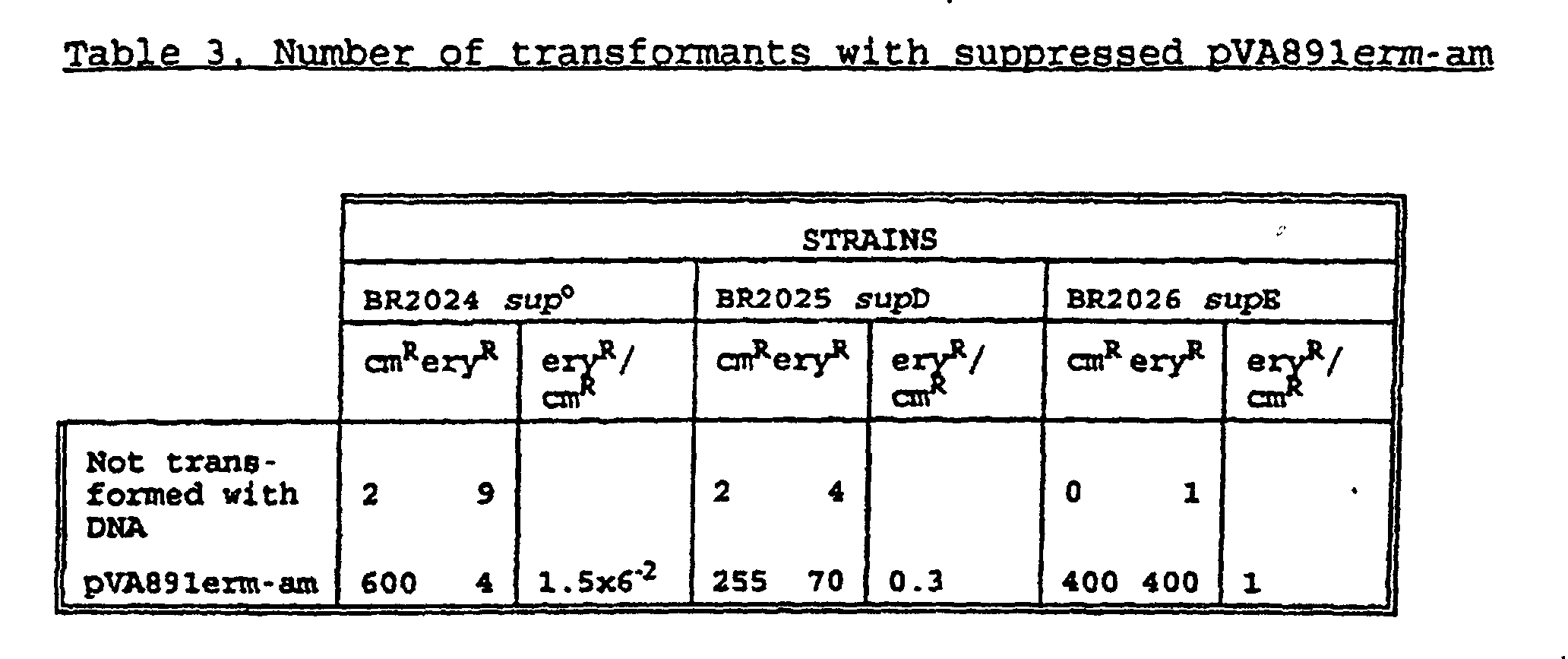
One of these was kept as pFDi6.
| Cell counts in an overnight culture of FD73 | |
| Medium | CFU/ml |
| tet | 1 x 10⁹ |
| cam | 7 x 101 |
| ery | 7 x 100 |
| tet + cam + ery | 0 |
The plasmid extracted from FD87 was transformed into E. coli R594 (non suppressing) and tetracycline resistant transformants selected. The transformants were subsequently screened for resistance to erythromycin and chloramphenicol. All transformants screened were found to be sensitive to erythromycin and chloramphenicol. This result shows that the cat and erm genes of the plasmid still carry the amber mutation and thereby that the mutational event in FD87 was not a simultaneous reversion of both amber mutations on pFDi10.
This vector was used for the cloning of the nonsense suppressor gene of FD100 in MG1363 as it was expected that the cloning of the suppressor gene into pFDi3 would give a plasmid expressing erythromycin resistance in MG1363.
The ligated DNA was precipitated with ethanol and dissolved in 20 µl sterile distilled water and electroporated into Lactococcus lactis MG1363 as described by Holo and Nes 1989.


Fifteen out of 18 clones analyzed had both fragments, joined at the XbaI site to give a 1.7 kb EcoRI fragment. The insert from one such clone was moved to pVA891 (Macrina et al, 1983) as a HindIII fragment producing pAK58 which contains an amber mutation in repB. This construction is illustrated in Fig. 2.


pFDi13 and pFDi14 were transformed into MG1363 by electroporation selecting for chloramphenicol resistant transformants.
| Suppression of nonsense mutations of øMPC100a12 | |
| Strain | Growth of øMPC100a12 |
| MG1363 | - |
| FD100 | + |
| MG1363 pFDi11 | + |
| MG1363 pFDi12 | + |
| MG1363 pFDi13 | - |
| MG1363 pFDi14 | + |


| White colonies | Milk + glucose + casamino acids | GM17 |
| 0 Generations | 0.1% | 0.1% |
| 10 Generations | 0.4% | 0.5% |
| 20 Generations | 0.1% | 13.1% |
| 30 Generations | 0.1% | 8.8% |
| 40 Generations | 0.2% | 3.4% |

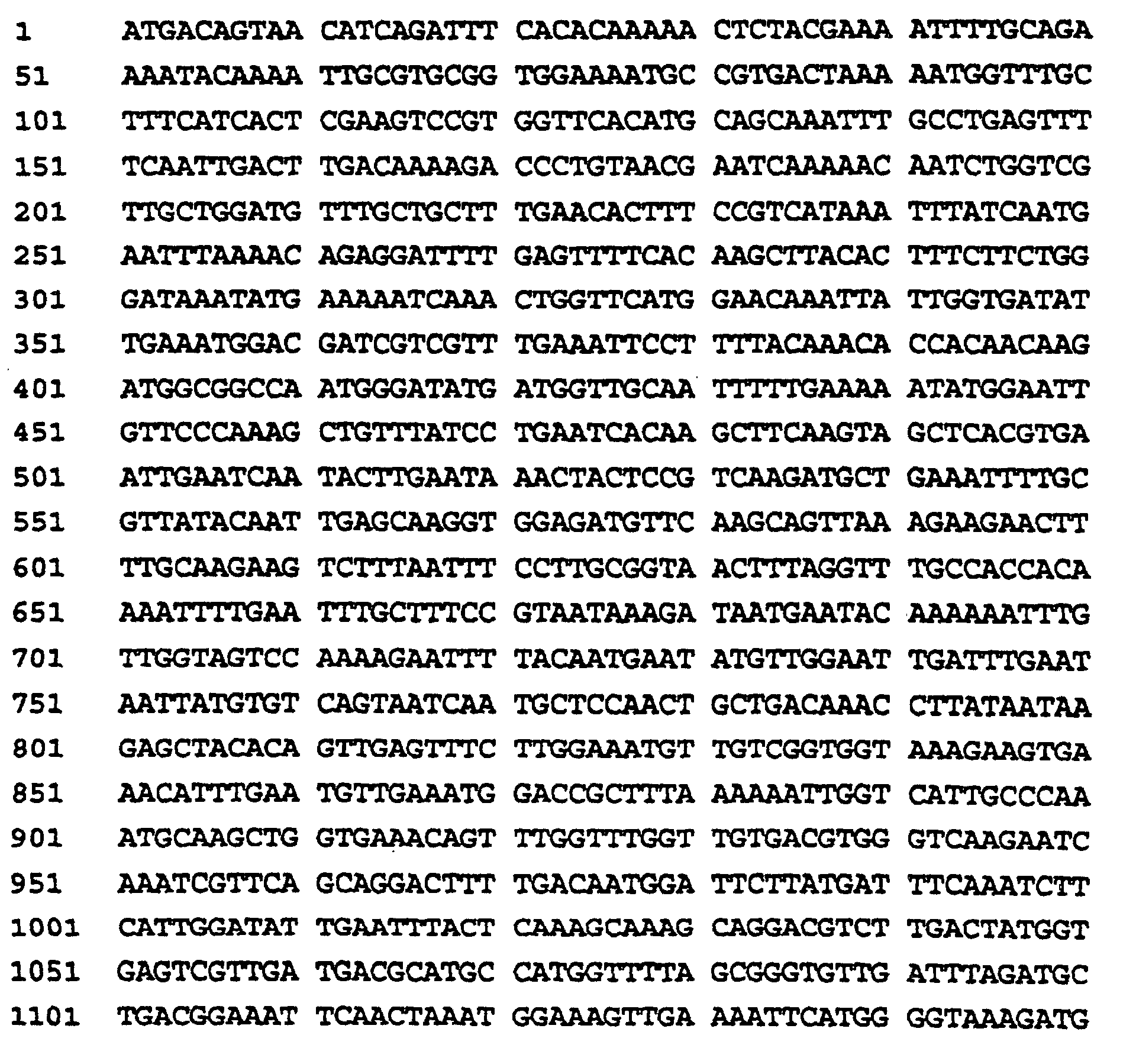

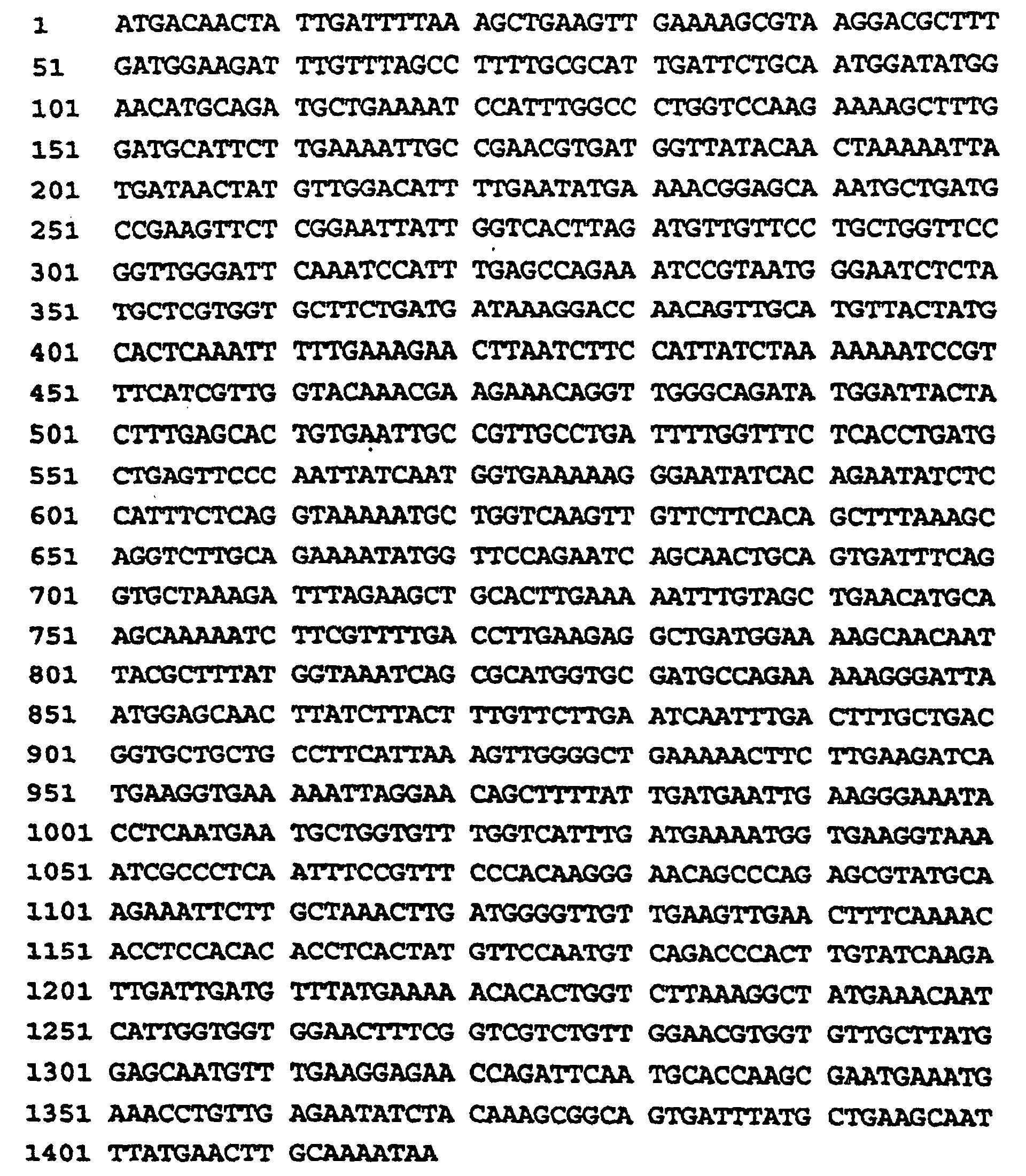
| Selection of DN209 strains in which transformation with pAK58 is attempted | |||
| Strain | Number of transformants with 50 ng pAK58 selecting EryR and CamR on different media | ||
| DN | DN+ ad, hx, gu | GM17 | |
| DN209/pFDi17 | > 103 | > 103 | 500 |
| DN209/pFDi19 | 0 | 0 | 0 |
| DN209/pIAM4 | > 103 | 0 | 0 |





Evans, R.P.
Tobian, J.A.
Hartley, D.L.



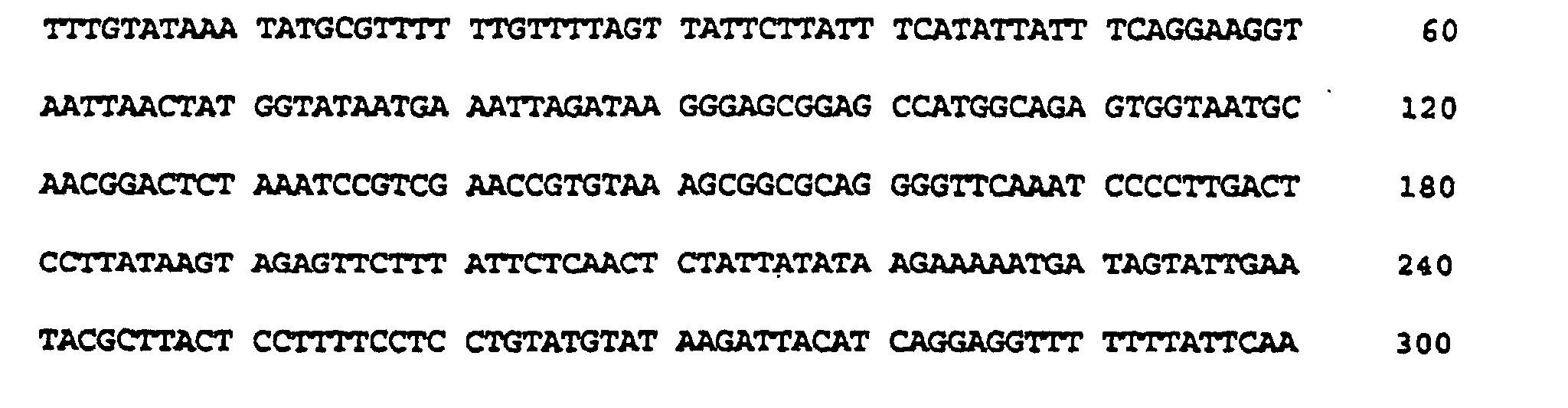




















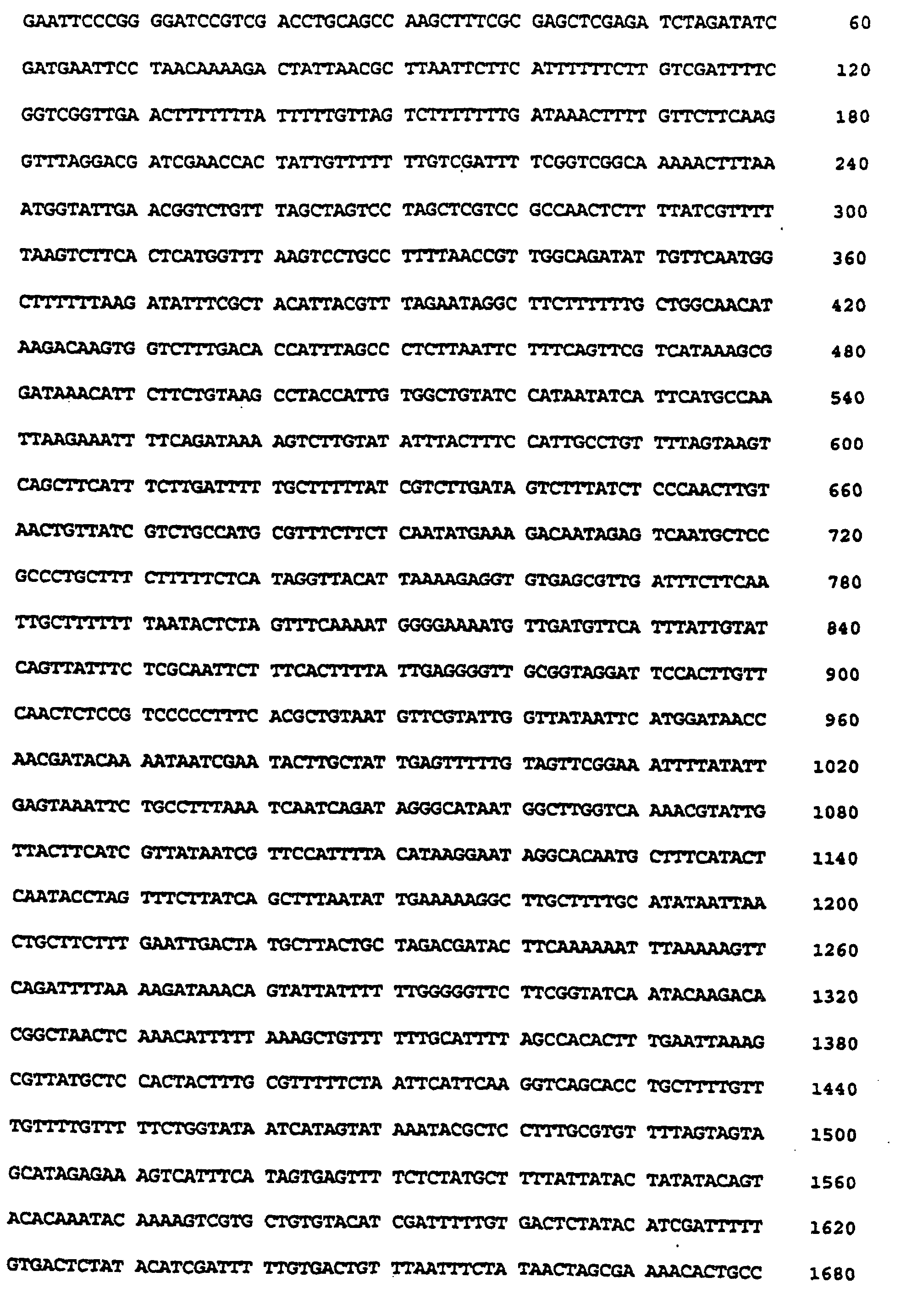
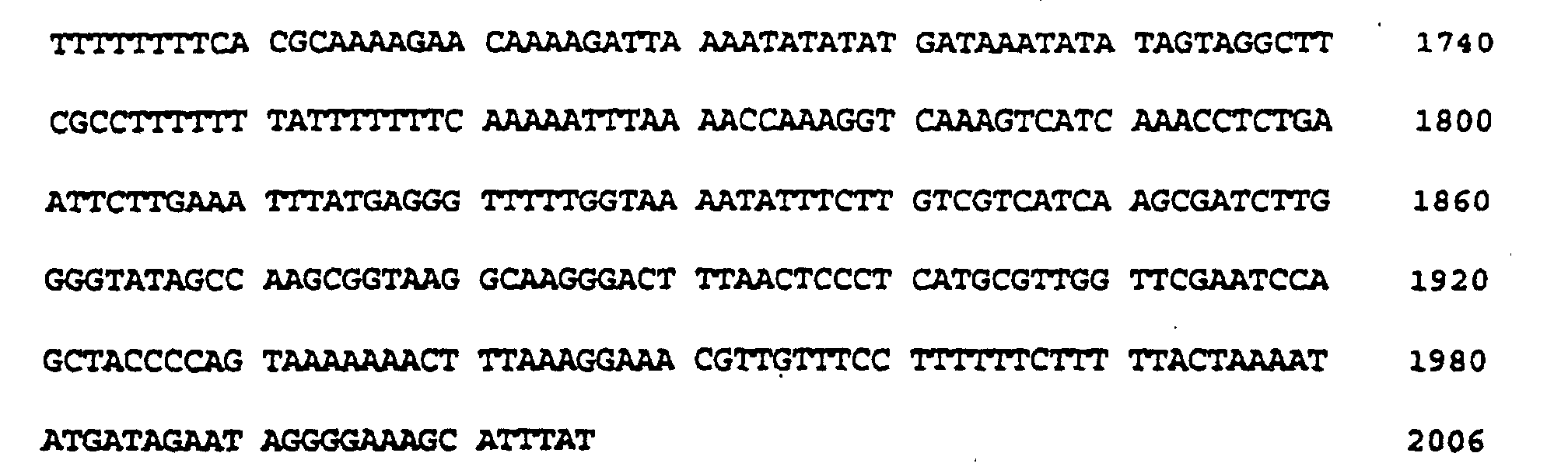


Claims (61)
- A method of isolating a nonsense suppressor-encoding lactic acid bacterium, comprising the steps of(i) mutagenizing a replicon capable of replicating in a lactic acid bacterium, said replicon comprising a gene encoding a selectable marker which is expressible in the lactic acid bacterium,(ii) selecting from the mutagenized replicon of (i) a replicon containing a nonsense mutation in the gene encoding the selectable marker,(iii) mutagenizing a lactic acid bacterium which does not encode a nonsense suppressor,(iv) introducing the replicon of step (ii) into said mutagenized lactic acid bacterium, and(v) selecting from the mutagenized lactic acid bacteri-um of (iv) a nonsense suppressor-encoding transformed lactic acid bacterium in which the selectable marker is expressed.
- A method according to claim 1 wherein the transformed lactic acid bacterium in a further step is cured of the replicon introduced in step (iv).
- A method according to claim 1 wherein the nonsense suppressor is selected from a group consisting of an amber suppressor and an ochre suppressor.
- A method according to claim 1 wherein the nonsense suppressor-encoding gene is a tRNA-encoding gene.
- A method according to claim 1 wherein the nonsense-suppressor gene is located on the chromosome.
- A method according to claim 1 wherein the replicon being mutagenized in step (i) is selected from a plasmid and a bacteriophage.
- A method according to claim 1 wherein the selectable marker of the replicon being mutagenized in step (i) is selected from antibiotic resistance and auxotrophy.
- A method of isolating a nonsense suppressor-encoding lactic acid bacterium, comprising the steps of(i) mutagenizing a replicon without nonsense mutations but containing a selectable marker, which plasmid is inherently capable of replicating in a lactic acid bacterium,(ii) selecting from step (i) a replicon containing a nonsense mutation rendering the replicon incapable of replicating,(iii) mutagenizing a lactic acid bacterium which does not encode a nonsense suppressor,(iv) introducing into said mutagenized lactic acid bacterium the replicon of step (ii), and(v) selecting a transformed lactic acid bacterium in which the introduced replicon is capable of replicating.
- A method according to claim 8 wherein the transformed lactic acid bacterium in a further step is cured of the replicon introduced in step (iv).
- A method according to claim 8 wherein the replicon is selected from a plasmid and a bacteriophage.
- A method according to claim 10 wherein the replicon being mutagenized in step (i) is a wildtype plasmid isolated from a lactic acid bacterium.
- A method according to claim 10 wherein the replicon is a citrate plasmid.
- An isolated pure culture of a lactic acid bacterium comprising a gene coding for a nonsense suppressor.
- A culture according to claim 13 wherein the gene coding for a nonsense suppressor is a gene coding for tRNA.
- A culture according to claim 13 wherein the gene coding for the nonsense suppressor is located on the chromosome.
- A culture according to claim 13 wherein the gene coding for a nonsense suppressor is located on a non-chromosomal replicon.
- A culture according to claim 16 wherein the gene is isolated from a lactic acid bacterium.
- A culture according to claim 13 wherein the nonsense suppressor is selected from the group consisting of an amber suppressor and an ochre suppressor.
- A culture according to claim 13 which further comprises a nonsense mutation being suppressible by the nonsense suppressor.
- A culture according to claim 19 wherein the nonsense mutation is located on a replicon different from the one containing the gene coding for a nonsense suppressor.
- A culture according to claim 13 wherein the lactic acid bacterium is selected from Lactococcus spp., Streptococcus spp., Lactobacillus spp., Leuconostoc spp., Pediococcus spp. and Bifidobacterium spp.
- A culture according to claim 21 wherein the lactic acid bacterium is Lactococcus lactis.
- A culture according to claim 13 wherein the suppressor is one suppressing a nonsense mutation which in the absence of a nonsense suppressor capable of suppressing the mutation, confers auxotrophy.
- A culture according to claim 23 wherein the nonsense mutation is in a gene involved in the synthesis of purine nucleotides from their precursors.
- A culture according to claim 24 wherein the lactic acid bacterium is a pur mutant.
- A culture according to claim 13 containing at least 109 colony forming units of the lactic acid bacterium per g.
- A culture according to claim 26 which is selected from a frozen culture and a freeze-dried culture.
- A culture according to claim 13 wherein the gene coding for a nonsense suppressor is under the control of a regulatable promoter.
- A culture according to claim 28 wherein the regulatable promoter is a promoter not naturally related to the gene.
- A culture according to claim 20 wherein the lactic acid bacterium comprises a vector consisting of DNA from a lactic acid bacterium or a plasmid naturally occurring in a lactic acid bacterium, comprising a selectable marker, a replication region and at least one restriction site.
- A culture according to claim 30 wherein the selectable marker is the suppressor gene.
- A culture according to claim 31 wherein the vector is pFG1 (DSM 9190).
- A culture according to claim 31 wherein the promoter for the suppressor gene is mutated whereby the expression of the gene is altered to an extent where the growth of the lactic acid bacterium is not decreased relative to that of a bacterium hosting a vector in which the promoter for the suppressor gene is not mutated.
- A culture according to claim 30 wherein the vector further comprises an inserted gene coding for a desired gene product.
- A culture according to claim 34 wherein the gene product is a peptidase
- A culture according to claim 30 wherein the vector is selected from pFG2 (DSM 9191), pFG4 (DSM 9192), pFG5 (DSM 9193) and pFG6 (DSM 9194).
- A composition comprising an isolated pure culture of a lactic acid bacterium as defined in claim 20, and a carrier.
- A composition according to claim 37 containing at least 109 colony forming units of the lactic acid bacterium per g.
- Use of a composition as defined in claim 37 as a starter culture in the preparation of a food product selected from a dairy product, a vegetable product, a meat product and a bakery product.
- A plasmid comprising lactobacterial DNA and capable of replicating in a lactic acid bacterium, the plasmid comprising a gene coding for a nonsense suppressor.
- A plasmid according to claim 40 wherein the gene coding for a nonsense suppressor is derived from the chromosome of a lactic acid bacterium.
- A plasmid according to claim 40 wherein the gene coding for a nonsense suppressor is a gene coding for tRNA.
- A plasmid according to claim 42 wherein the nonsense mutation suppressor is selected from the group consisting of an amber suppressor and an ochre suppressor.
- A method of confining an extrachromosomal replicon capable of replicating in lactic acid bacteria to a first kind of lactic acid bacterial cells, where said replicon could be naturally transferred to a second kind of lactic acid bacterial cells, which method comprises providing the first kind of lactic acid bacterial cells as cells containing a nonsense suppressor-encoding gene, the cells being transformed with the replicon in the form of a nonsense mutant having lost its capability of replicating in lactic acid bacterial cells, the gene product of the nonsense suppressor-encoding gene being capable of restoring the capability of the replicon to replicate in lactic acid bacterial cells whereby, if a cell of the second kind which does not contain a nonsense suppressor gene encoding a gene product capable of restoring the capability of the nonsense mutant of the replicon to replicate in lactic acid bacteria, receives said extrachromosomal replicon, the replicon will not replicate in the second kind of lactic acid bacterial cell.
- A method according to claim 44 wherein the first kind of lactic acid bacterial cells contains the nonsense suppressor-encoding gene in the chromosome.
- A method according to claim 44 wherein the first kind of lactic acid bacteria is selected from Lactococcus spp., Streptococcus spp., Lactobacillus spp., Leuconostoc spp., Pediococcus spp. and Bifidobacterium spp.
- A method according to claim 46 wherein the first kind of lactic acid bacteria is Lactococcus lactis.
- A method according to claim 44 wherein the first kind of lactic acid bacterial cells is present in a composition comprising a mixture of the first kind of cells and at least one second kind of lactic acid bacterial cells not containing a nonsense suppressor gene encoding a gene product capable of restoring the capability of the nonsense mutant of the replicon to replicate in lactic acid bacteria.
- A method according to claim 48 wherein the first and second kind of lactic acid bacterial cells are cultivated in a food product selected from a dairy product, a vegetable product, a meat product and a bakery product.
- A method of stably maintaining an extrachromosomal replicon in lactic acid bacterial host cells growing in a particular environment, comprising providing said host cells as nonsense mutant cells having lost the capability of growing in said environment, and transformed with an extrachromosomal replicon containing a nonsense suppressor gene encoding a gene product restoring the capability of the nonsense mutant cells to grow in said environment whereby, if the replicon is lost from the lactic acid bacterial cells, the cells will not grow.
- A method according to claim 50 wherein the nonsense mutant cells having lost the capability to grow are auxotrophic cells.
- A method according to claim 51 wherein the nonsense mutant cells have a mutation in a gene involved in the synthesis of purine nucleotides from their precursors.
- A method according to claim 52 wherein the lactic acid bacterial host cells are pur mutants.
- A method according to claim 50 wherein the environment is a food product selected from a dairy product, a vegetable product, a meat product and a bakery product.
- A method of controlling the number of lactic acid bacterial cells in a particular environment allowing growth of lactic acid bacteria, comprising providing the bacteria with a nonsense mutation in a gene the expression of which has an effect on the viability or the growth of the bacteria, and inserting in the bacteria a nonsense suppressor-encoding gene under the control of a regulatable promoter, the gene product of which, when expressed at one level, prevents the expression of the nonsense mutation and which, when not expressed or expressed at a different level causes the cells to cease growth or to die.
- A method according to claim 55 wherein the nonsense suppressor-encoding gene is regulated so that the expression of the gene is increased.
- A method according to claim 56 wherein the lactic acid bacterial cells are caused to cease growth or to die.
- A method according to claim 57 wherein the nonsense mutation is located in a gene selected from a gene coding for a gene product inhibiting the cell growth and a gene coding for a gene product, the expression of which causes the cells to die.
- A method according to claim 55 wherein the nonsense suppressor-encoding gene is regulated so that the expression of the gene is decreased or stopped.
- A method according to claim 59 wherein the lactic acid bacteria contain a prophage and the nonsense mutation is located in a gene coding for a gene product inhibiting the entering of the prophage into its lytic cycle whereby, when the expression of the gene coding for the nonsense suppressor is decreased or stopped, the phage enters the lytic cycle, causing the lactic acid bacteria to die.
- A method according to claim 59 wherein the nonsense mutation is located in a gene coding for a gene product, the expression of which is required for growth of the bacteria, whereby, when the expression of the gene coding for the nonsense suppressor, is decreased or stopped, the gene product which is required for growth of the bacteria is no longer expressed, causing growth of the lactic acid bacterial cells to cease.
Applications Claiming Priority (5)
| Application Number | Priority Date | Filing Date | Title |
|---|---|---|---|
| US13339093A | 1993-10-08 | 1993-10-08 | |
| US133390 | 1993-10-08 | ||
| US08/242,098 US5691185A (en) | 1993-10-08 | 1994-05-13 | Lactic acid bacterial suppressor mutants and their use as selective markers and as means of containment in lactic acid bacteria |
| PCT/DK1994/000376 WO1995010621A1 (en) | 1993-10-08 | 1994-10-07 | Lactic acid bacterial suppressor mutants and their use as selective markers and as means of containment in lactic acid bacteria |
| US242098 | 2002-09-12 |
Publications (2)
| Publication Number | Publication Date |
|---|---|
| EP0722503A1 EP0722503A1 (en) | 1996-07-24 |
| EP0722503B1 true EP0722503B1 (en) | 2002-11-13 |
Family
ID=26831333
Family Applications (1)
| Application Number | Title | Priority Date | Filing Date |
|---|---|---|---|
| EP94929490A Expired - Lifetime EP0722503B1 (en) | 1993-10-08 | 1994-10-07 | Lactic acid bacterial suppressor mutants and their use as selective markers and as means of containment in lactic acid bacteria |
Country Status (10)
| Country | Link |
|---|---|
| US (2) | US5691185A (en) |
| EP (1) | EP0722503B1 (en) |
| AT (1) | ATE227774T1 (en) |
| AU (1) | AU684556B2 (en) |
| CA (1) | CA2160166C (en) |
| DE (1) | DE69431727T2 (en) |
| DK (1) | DK0722503T3 (en) |
| ES (1) | ES2185669T3 (en) |
| NZ (1) | NZ274481A (en) |
| WO (1) | WO1995010621A1 (en) |
Families Citing this family (22)
| Publication number | Priority date | Publication date | Assignee | Title |
|---|---|---|---|---|
| CA2325664C (en) * | 1998-04-21 | 2010-01-05 | Chr. Hansen A/S | Food-grade cloning vector and their use in lactic acid bacteria |
| US7358083B1 (en) | 1998-04-21 | 2008-04-15 | Chr. Hansen A/S | Food-grade cloning vector and their use in lactic acid bacteria |
| FR2778921B1 (en) * | 1998-05-22 | 2001-05-11 | Gervais Danone Sa | MUTANT STRAINS OF LACTOBACILLUS BULGARICUS WITHOUT BETA-GALACTOSIDASE ACTIVITY |
| AU740562B2 (en) | 1998-07-03 | 2001-11-08 | Chr. Hansen A/S | Method of preventing bacteriophage infection of bacterial cultures |
| EA200001232A1 (en) * | 1998-07-03 | 2003-08-28 | Кр.Хансен А/С | METHOD OF PREVENTION OF INFECTION OF BACTERIAL CULTURES BY BACTERIOPHAG |
| US6787348B1 (en) * | 1998-08-26 | 2004-09-07 | Chr. Hansen | Liquid starter cultures having improved storage stability and use thereof |
| IL130303A0 (en) | 1999-06-03 | 2000-06-01 | M G Novobiotech Ltd | A bacterial strain processed plant extracts and probiotic compositions for human and veterinary use |
| US7780961B2 (en) | 2001-05-03 | 2010-08-24 | Actogenix N.V. | Self-containing Lactococcus strain |
| US7101565B2 (en) | 2002-02-05 | 2006-09-05 | Corpak Medsystems, Inc. | Probiotic/prebiotic composition and delivery method |
| WO2004001020A2 (en) | 2002-06-19 | 2003-12-31 | Vlaams Interuniversitair Instituut Voor Biotechnologie Vzw | Methods and means to promote gut absorption |
| JP5087741B2 (en) * | 2003-11-19 | 2012-12-05 | フェネックス インコーポレイテッド | Improved protein expression system |
| AU2006319216B2 (en) | 2005-11-29 | 2012-09-13 | Intrexon Actobiotics Nv | Induction of mucosal tolerance to antigens |
| EP1869983A1 (en) * | 2006-06-23 | 2007-12-26 | Chr. Hansen A/S | Low post-acidifying lactic acid bacteria |
| EP3351268B1 (en) | 2007-01-25 | 2020-08-05 | Intrexon Actobiotics NV | Treatment of immune disease by mucosal delivery of antigens |
| NZ596283A (en) | 2009-05-11 | 2013-08-30 | Pfenex Inc | Production of recombinant proteins utilizing non-antibiotic selection methods and the incorporation of non-natural amino acids therein |
| SG11201701273PA (en) * | 2014-08-25 | 2017-03-30 | Geneweave Biosciences Inc | Non-replicative transduction particles and transduction particle-based reporter systems |
| US11008602B2 (en) | 2017-12-20 | 2021-05-18 | Roche Molecular Systems, Inc. | Non-replicative transduction particles and transduction particle-based reporter systems |
| DK3584316T1 (en) | 2018-06-20 | 2020-08-03 | Eligo Bioscience | BACTERIAL DELIVERY VEHICLE, MANUFACTURING METHOD AND USES |
| US12098372B2 (en) | 2019-12-30 | 2024-09-24 | Eligo Bioscience | Microbiome modulation of a host by delivery of DNA payloads with minimized spread |
| US11746352B2 (en) | 2019-12-30 | 2023-09-05 | Eligo Bioscience | Microbiome modulation of a host by delivery of DNA payloads with minimized spread |
| WO2022144382A1 (en) | 2020-12-30 | 2022-07-07 | Eligo Bioscience | Chimeric receptor binding proteins resistant to proteolytic degradation |
| CA3219077A1 (en) | 2021-05-12 | 2022-11-17 | Eligo Bioscience | Production of lytic phages |
Family Cites Families (3)
| Publication number | Priority date | Publication date | Assignee | Title |
|---|---|---|---|---|
| US4687737A (en) * | 1982-11-12 | 1987-08-18 | Massachusetts Institute Of Technology | Mammalian suppressor genes |
| JPS6486875A (en) * | 1987-09-29 | 1989-03-31 | Hoechst Japan | Plasmid vector containing streptomycin-sensitive gene |
| NL8801529A (en) * | 1988-06-15 | 1990-01-02 | Nl Zuivelonderzoek Inst | METHOD FOR SELECTING AND STABLE MAINTAINING RECOMBINANT DNA IN LACTIC ACID BACTERIA. |
-
1994
- 1994-05-13 US US08/242,098 patent/US5691185A/en not_active Expired - Lifetime
- 1994-10-07 NZ NZ274481A patent/NZ274481A/en not_active IP Right Cessation
- 1994-10-07 DK DK94929490T patent/DK0722503T3/en active
- 1994-10-07 US US08/535,092 patent/US5866385A/en not_active Expired - Lifetime
- 1994-10-07 CA CA002160166A patent/CA2160166C/en not_active Expired - Fee Related
- 1994-10-07 EP EP94929490A patent/EP0722503B1/en not_active Expired - Lifetime
- 1994-10-07 AT AT94929490T patent/ATE227774T1/en active
- 1994-10-07 ES ES94929490T patent/ES2185669T3/en not_active Expired - Lifetime
- 1994-10-07 WO PCT/DK1994/000376 patent/WO1995010621A1/en not_active Ceased
- 1994-10-07 DE DE69431727T patent/DE69431727T2/en not_active Expired - Lifetime
- 1994-10-07 AU AU78529/94A patent/AU684556B2/en not_active Ceased
Also Published As
| Publication number | Publication date |
|---|---|
| DK0722503T3 (en) | 2003-02-24 |
| WO1995010621A1 (en) | 1995-04-20 |
| DE69431727T2 (en) | 2003-08-14 |
| ES2185669T3 (en) | 2003-05-01 |
| ATE227774T1 (en) | 2002-11-15 |
| US5691185A (en) | 1997-11-25 |
| US5866385A (en) | 1999-02-02 |
| AU684556B2 (en) | 1997-12-18 |
| CA2160166A1 (en) | 1995-04-20 |
| EP0722503A1 (en) | 1996-07-24 |
| DE69431727D1 (en) | 2002-12-19 |
| CA2160166C (en) | 2003-05-20 |
| NZ274481A (en) | 1996-12-20 |
| AU7852994A (en) | 1995-05-04 |
Similar Documents
| Publication | Publication Date | Title |
|---|---|---|
| US5866385A (en) | Lactic acid bacterial suppressor mutants and their use as selective markers and as means of containment in lactic acid bacteria | |
| Dickely et al. | Isolation of Lactococcus lactis nonsense suppressors and construction of a food‐grade cloning vector | |
| Bron et al. | Use of the alr gene as a food-grade selection marker in lactic acid bacteria | |
| EP0405370B2 (en) | Riboflavinoverproducing strains of bacteria | |
| Elsen et al. | The hupTUV operon is involved in negative control of hydrogenase synthesis in Rhodobacter capsulatus | |
| US20030232406A1 (en) | Bacterial strains which overproduce riboflavin | |
| US20040005695A1 (en) | Method for producing recombinant proteins by gram-negative bacteria | |
| JP3553065B2 (en) | Recombinant lactic acid bacterium containing inserted promoter and method for constructing the same | |
| EP0925364B1 (en) | A lactic acid bacterial regulatable expression system | |
| KR20230041694A (en) | Alanine racemase double deletion and trans complementation | |
| EP0506789A1 (en) | Cloning vector for use in lactic acid bacteria and a method for constructing the same. | |
| Vogel et al. | Plasmid transfer and segregation in Lactobacillus curvatus LTH1432 in vitro and during sausage fermentations | |
| CA2050535C (en) | Bacteriophage resistant recombinant bacteria | |
| US6830901B1 (en) | Propionibacteruim vector | |
| CZ100596A3 (en) | Dna fragment, vector and micro-organism containing genes for metabolic transformation of butyrobetaine/crotonobetaine-l-carnitine and process for preparing l-carnitine | |
| SK62297A3 (en) | Production of variant nisin | |
| EP1493808A1 (en) | Vectors based on novel plasmids derived from Lactobacillus plantarum | |
| US7358083B1 (en) | Food-grade cloning vector and their use in lactic acid bacteria | |
| EP1073757B1 (en) | Food-grade cloning vector and their use in lactic acid bacteria | |
| AU783660B2 (en) | Lactic acid bacteria transformed to be provided with respiratory metabolism, and ferments comprising said lactic acid bacteria | |
| CN116745422A (en) | Alanine racemase double deletion and trans complementation | |
| Hartzell | Genetic tools for dissecting motility and development of Myxococcus xanthus | |
| Kabisch | Optimization of Bacillus subtilis as an expression system | |
| EP1678309A1 (en) | A thermophilic host-vector system |
Legal Events
| Date | Code | Title | Description |
|---|---|---|---|
| PUAI | Public reference made under article 153(3) epc to a published international application that has entered the european phase |
Free format text: ORIGINAL CODE: 0009012 |
|
| 17P | Request for examination filed |
Effective date: 19960508 |
|
| AK | Designated contracting states |
Kind code of ref document: A1 Designated state(s): AT BE CH DE DK ES FR GB GR IE IT LI LU MC NL PT SE |
|
| RIN1 | Information on inventor provided before grant (corrected) |
Inventor name: HANSEN, EGON, BECH Inventor name: NILSSON, DAN Inventor name: JOHANSEN, ERIC Inventor name: DICKELY, FRANCOISE |
|
| RIN1 | Information on inventor provided before grant (corrected) |
Inventor name: STROEMAN, PER Inventor name: HANSEN, EGON, BECH Inventor name: NILSSON, DAN Inventor name: JOHANSEN, ERIC Inventor name: DICKELY, FRANCOISE |
|
| 17Q | First examination report despatched |
Effective date: 20010306 |
|
| GRAG | Despatch of communication of intention to grant |
Free format text: ORIGINAL CODE: EPIDOS AGRA |
|
| GRAG | Despatch of communication of intention to grant |
Free format text: ORIGINAL CODE: EPIDOS AGRA |
|
| GRAG | Despatch of communication of intention to grant |
Free format text: ORIGINAL CODE: EPIDOS AGRA |
|
| GRAH | Despatch of communication of intention to grant a patent |
Free format text: ORIGINAL CODE: EPIDOS IGRA |
|
| GRAH | Despatch of communication of intention to grant a patent |
Free format text: ORIGINAL CODE: EPIDOS IGRA |
|
| GRAA | (expected) grant |
Free format text: ORIGINAL CODE: 0009210 |
|
| AK | Designated contracting states |
Kind code of ref document: B1 Designated state(s): AT BE CH DE DK ES FR GB GR IE IT LI LU MC NL PT SE |
|
| PG25 | Lapsed in a contracting state [announced via postgrant information from national office to epo] |
Ref country code: LI Free format text: LAPSE BECAUSE OF FAILURE TO SUBMIT A TRANSLATION OF THE DESCRIPTION OR TO PAY THE FEE WITHIN THE PRESCRIBED TIME-LIMIT Effective date: 20021113 Ref country code: GR Free format text: LAPSE BECAUSE OF FAILURE TO SUBMIT A TRANSLATION OF THE DESCRIPTION OR TO PAY THE FEE WITHIN THE PRESCRIBED TIME-LIMIT Effective date: 20021113 Ref country code: CH Free format text: LAPSE BECAUSE OF FAILURE TO SUBMIT A TRANSLATION OF THE DESCRIPTION OR TO PAY THE FEE WITHIN THE PRESCRIBED TIME-LIMIT Effective date: 20021113 |
|
| REF | Corresponds to: |
Ref document number: 227774 Country of ref document: AT Date of ref document: 20021115 Kind code of ref document: T |
|
| REG | Reference to a national code |
Ref country code: GB Ref legal event code: FG4D |
|
| REG | Reference to a national code |
Ref country code: CH Ref legal event code: EP |
|
| REG | Reference to a national code |
Ref country code: IE Ref legal event code: FG4D |
|
| REF | Corresponds to: |
Ref document number: 69431727 Country of ref document: DE Date of ref document: 20021219 |
|
| PG25 | Lapsed in a contracting state [announced via postgrant information from national office to epo] |
Ref country code: PT Free format text: LAPSE BECAUSE OF FAILURE TO SUBMIT A TRANSLATION OF THE DESCRIPTION OR TO PAY THE FEE WITHIN THE PRESCRIBED TIME-LIMIT Effective date: 20030213 |
|
| REG | Reference to a national code |
Ref country code: DK Ref legal event code: T3 |
|
| REG | Reference to a national code |
Ref country code: ES Ref legal event code: FG2A Ref document number: 2185669 Country of ref document: ES Kind code of ref document: T3 |
|
| REG | Reference to a national code |
Ref country code: CH Ref legal event code: PL |
|
| ET | Fr: translation filed | ||
| PLBE | No opposition filed within time limit |
Free format text: ORIGINAL CODE: 0009261 |
|
| STAA | Information on the status of an ep patent application or granted ep patent |
Free format text: STATUS: NO OPPOSITION FILED WITHIN TIME LIMIT |
|
| PG25 | Lapsed in a contracting state [announced via postgrant information from national office to epo] |
Ref country code: MC Free format text: LAPSE BECAUSE OF NON-PAYMENT OF DUE FEES Effective date: 20031031 |
|
| 26N | No opposition filed |
Effective date: 20030814 |
|
| PGFP | Annual fee paid to national office [announced via postgrant information from national office to epo] |
Ref country code: NL Payment date: 20101009 Year of fee payment: 17 Ref country code: IE Payment date: 20101015 Year of fee payment: 17 Ref country code: FR Payment date: 20101020 Year of fee payment: 17 Ref country code: DK Payment date: 20101014 Year of fee payment: 17 Ref country code: AT Payment date: 20101014 Year of fee payment: 17 |
|
| PGFP | Annual fee paid to national office [announced via postgrant information from national office to epo] |
Ref country code: LU Payment date: 20101111 Year of fee payment: 17 Ref country code: DE Payment date: 20100929 Year of fee payment: 17 |
|
| PGFP | Annual fee paid to national office [announced via postgrant information from national office to epo] |
Ref country code: IT Payment date: 20101018 Year of fee payment: 17 Ref country code: SE Payment date: 20101012 Year of fee payment: 17 Ref country code: GB Payment date: 20101006 Year of fee payment: 17 Ref country code: BE Payment date: 20101020 Year of fee payment: 17 |
|
| PGFP | Annual fee paid to national office [announced via postgrant information from national office to epo] |
Ref country code: ES Payment date: 20101122 Year of fee payment: 17 |
|
| REG | Reference to a national code |
Ref country code: DK Ref legal event code: EAP |
|
| BERE | Be: lapsed |
Owner name: CHR. *HANSEN A/S Effective date: 20111031 |
|
| REG | Reference to a national code |
Ref country code: NL Ref legal event code: V1 Effective date: 20120501 |
|
| GBPC | Gb: european patent ceased through non-payment of renewal fee |
Effective date: 20111007 |
|
| REG | Reference to a national code |
Ref country code: SE Ref legal event code: EUG |
|
| REG | Reference to a national code |
Ref country code: FR Ref legal event code: ST Effective date: 20120629 |
|
| PG25 | Lapsed in a contracting state [announced via postgrant information from national office to epo] |
Ref country code: NL Free format text: LAPSE BECAUSE OF NON-PAYMENT OF DUE FEES Effective date: 20120501 Ref country code: BE Free format text: LAPSE BECAUSE OF NON-PAYMENT OF DUE FEES Effective date: 20111031 Ref country code: DE Free format text: LAPSE BECAUSE OF NON-PAYMENT OF DUE FEES Effective date: 20120501 |
|
| REG | Reference to a national code |
Ref country code: IE Ref legal event code: MM4A |
|
| REG | Reference to a national code |
Ref country code: DE Ref legal event code: R119 Ref document number: 69431727 Country of ref document: DE Effective date: 20120501 |
|
| PG25 | Lapsed in a contracting state [announced via postgrant information from national office to epo] |
Ref country code: IT Free format text: LAPSE BECAUSE OF NON-PAYMENT OF DUE FEES Effective date: 20111007 Ref country code: FR Free format text: LAPSE BECAUSE OF NON-PAYMENT OF DUE FEES Effective date: 20111102 Ref country code: GB Free format text: LAPSE BECAUSE OF NON-PAYMENT OF DUE FEES Effective date: 20111007 |
|
| PG25 | Lapsed in a contracting state [announced via postgrant information from national office to epo] |
Ref country code: SE Free format text: LAPSE BECAUSE OF NON-PAYMENT OF DUE FEES Effective date: 20111008 Ref country code: IE Free format text: LAPSE BECAUSE OF NON-PAYMENT OF DUE FEES Effective date: 20111007 |
|
| REG | Reference to a national code |
Ref country code: AT Ref legal event code: MM01 Ref document number: 227774 Country of ref document: AT Kind code of ref document: T Effective date: 20111007 |
|
| PG25 | Lapsed in a contracting state [announced via postgrant information from national office to epo] |
Ref country code: AT Free format text: LAPSE BECAUSE OF NON-PAYMENT OF DUE FEES Effective date: 20111007 |
|
| REG | Reference to a national code |
Ref country code: ES Ref legal event code: FD2A Effective date: 20130418 |
|
| PG25 | Lapsed in a contracting state [announced via postgrant information from national office to epo] |
Ref country code: ES Free format text: LAPSE BECAUSE OF NON-PAYMENT OF DUE FEES Effective date: 20111008 |
|
| PG25 | Lapsed in a contracting state [announced via postgrant information from national office to epo] |
Ref country code: LU Free format text: LAPSE BECAUSE OF NON-PAYMENT OF DUE FEES Effective date: 20111007 |