EP0722257B1 - Intelligent network service provision by multiple servers - Google Patents
Intelligent network service provision by multiple servers Download PDFInfo
- Publication number
- EP0722257B1 EP0722257B1 EP96300135A EP96300135A EP0722257B1 EP 0722257 B1 EP0722257 B1 EP 0722257B1 EP 96300135 A EP96300135 A EP 96300135A EP 96300135 A EP96300135 A EP 96300135A EP 0722257 B1 EP0722257 B1 EP 0722257B1
- Authority
- EP
- European Patent Office
- Prior art keywords
- intelligent network
- service
- sorter
- server
- network
- Prior art date
- Legal status (The legal status is an assumption and is not a legal conclusion. Google has not performed a legal analysis and makes no representation as to the accuracy of the status listed.)
- Expired - Lifetime
Links
Images

Classifications
-
- H—ELECTRICITY
- H04—ELECTRIC COMMUNICATION TECHNIQUE
- H04Q—SELECTING
- H04Q3/00—Selecting arrangements
- H04Q3/0016—Arrangements providing connection between exchanges
- H04Q3/0029—Provisions for intelligent networking
-
- H—ELECTRICITY
- H04—ELECTRIC COMMUNICATION TECHNIQUE
- H04Q—SELECTING
- H04Q2213/00—Indexing scheme relating to selecting arrangements in general and for multiplex systems
- H04Q2213/13533—Indexing scheme relating to selecting arrangements in general and for multiplex systems multivendor and hybrid, e.g. public/private, networks, inc. international
-
- H—ELECTRICITY
- H04—ELECTRIC COMMUNICATION TECHNIQUE
- H04Q—SELECTING
- H04Q2213/00—Indexing scheme relating to selecting arrangements in general and for multiplex systems
- H04Q2213/13566—Indexing scheme relating to selecting arrangements in general and for multiplex systems mediation
Definitions
- the Enhanced Intelligent Network (I.N.) architecture is illustrated in Figure 1, and outlined below.
- a local exchange To invoke an Enhanced I.N. service, a local exchange extends a standard invocation message via an I.N. message network addressed to the nearest Sorter.
- the message contains the caller's identity (CLI) and classification, the digits dialled by the caller to request an I.N. service and a call-reference identifying the call within the local exchange.
- the Sorter opens the message to identify the service required and uses a look-up table to re-address the message to the appropriate Server.
- Routers are the nodes of the message network; they forward messages to the addressed destination.
- the Server Upon receiving the message, the Server delivers the service by picking-up the caller via the public network using the CLI, call-reference and the IN-override facility which enables connection to the off-hook subscriber.
- the Server may transfer the call to another Server by amending the original invocation message and returning it to the message network addressed directly to the new Server or via the nearest Sorter as before.
- Such invocation messages will often include an appendage.
- Servers thus provide all of the intelligence and complexity required to deliver the services.
- the only other intelligence employed is that which enables the Sorter to identify the address of the Server.
- Sorters were able to identify the location of Servers in other networks or other countries, which would in turn require inter-network and international management of Sorters, see e.g; KETTLER H.W. : 'AT&T Global Intelligent Network Architecture, AT&T Technical Jounal Sept/Oct. 1992, N°5, p.30-35, Short Hills, NJ, US.
- Sorter When a Sorter is required to re-address an invocation message to a service provided in another network, it simply re-addresses the message to a Sorter in that network. Similarly when a service is provided in another country, the Sorter re-addresses the message to a Sorter in that country, it does not matter that the country may include many networks.
- the code dialled to gain access to a service provided in another country will be prefixed to identify the country.
- the network in which a service is provided will probably be identified by the allocation of blocks within a common numbering scheme rather than by the use of prefix digits
- EP 0581526 (AT & T) there is described an intelligent network system in which a local exchange transmits a service invocation message to a first intelligent network having a first sorter for identifying an intelligent network service requested by the message, and a first server addressable by the first sorter for delivering the intelligent network service to the local exchange.
- an intelligent network system comprising an arrangement for delivering the intelligent network service from a second intelligent network connected to the first network, the arrangement comprising: (a) a second sorter located in the second network and connectable to the first sorter, (b) a second server in the second network connectable to the second sorter; (c) means associated with the first sorter arranged to determine when a service invocation message does not relate to an intelligent network service provided by the first server and to re-address such a service invocation message to the second sorter associated with the second intelligent network; and (d) means associated with the second sorter arranged to determine whether or not such a service message relates to an intelligent network service provided by a second server associated with the second sorter and, if so, to re-address the service invocation message to the second server so that the second server can deliver the intelligent network service from the second intelligent network to the local exchange
- a large business organisation or consortium may require a single directory number or service code to provide access to any Server within the organisation thereby enabling access to the complete range of services. Some services will be available to the general public while other services or sources of information will be restricted to agents or employees. The fact that the Server delivers the service to the caller's directory number guarantees the security of proprietary information.
- Each service or source of information will be delivered from the site at which the business is handled or the information resides.
- the source of different services and information may thus be spread around many sites and many countries.
- Sorters will address all service invocation messages to the Server at the Service Provider's head office or regional depot.
- This Server may deliver some services but will re-address most of the messages to Servers at the relevant businesses, which may in turn re-address some of the messages to another site.
- any or all of these re-addressing actions may cross national or network boundaries and may include picking-up and interrogating the caller. Having interrogated the caller, the invocation message will usually include an appendage. (A call established to interrogate a caller will be released when the caller is picked-up by another Server for interrogation or to deliver the service.)
- Service Providers may thus extend their range of services at will, with no effect whatever upon public network or message network equipment.
- Service Provider needs only to notify his existing Servers of the new Server's message network address and the new services available.
- Public networks are as a result not required to allocate directory numbers to every facet of obscure services and fleeting sources of information, as would be required if connections to services were to be established in the conventional forward manner.
Landscapes
- Engineering & Computer Science (AREA)
- Computer Networks & Wireless Communication (AREA)
- Data Exchanges In Wide-Area Networks (AREA)
- Computer And Data Communications (AREA)
Description
- An Alternative Intelligent Network Architecture, also referred to as an Enhanced Intelligent Network was described in patent application number GB2272603A
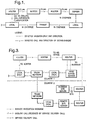
- The Enhanced Intelligent Network (I.N.) architecture is illustrated in Figure 1, and outlined below.
- To invoke an Enhanced I.N. service, a local exchange extends a standard invocation message via an I.N. message network addressed to the nearest Sorter. The message contains the caller's identity (CLI) and classification, the digits dialled by the caller to request an I.N. service and a call-reference identifying the call within the local exchange.
- The Sorter opens the message to identify the service required and uses a look-up table to re-address the message to the appropriate Server. Routers are the nodes of the message network; they forward messages to the addressed destination.
- Upon receiving the message, the Server delivers the service by picking-up the caller via the public network using the CLI, call-reference and the IN-override facility which enables connection to the off-hook subscriber.
- Later, the Server may transfer the call to another Server by amending the original invocation message and returning it to the message network addressed directly to the new Server or via the nearest Sorter as before. Such invocation messages will often include an appendage.
- Servers thus provide all of the intelligence and complexity required to deliver the services. The only other intelligence employed is that which enables the Sorter to identify the address of the Server.
- Forwarding invocation messages to services provided in other networks or other countries, using the method of Figure 1, would require that Sorters were able to identify the location of Servers in other networks or other countries, which would in turn require inter-network and international management of Sorters, see e.g; KETTLER H.W. : 'AT&T Global Intelligent Network Architecture, AT&T Technical Jounal Sept/Oct. 1992, N°5, p.30-35, Short Hills, NJ, US.
- The means of avoiding the need for inter-network and international Sorter management is illustrated in Figure 2 and outlined below.
- When a Sorter is required to re-address an invocation message to a service provided in another network, it simply re-addresses the message to a Sorter in that network. Similarly when a service is provided in another country, the Sorter re-addresses the message to a Sorter in that country, it does not matter that the country may include many networks.
- Thus, the code dialled to gain access to a service provided in another country, will be prefixed to identify the country. Within a country, the network in which a service is provided will probably be identified by the allocation of blocks within a common numbering scheme rather than by the use of prefix digits
- In EP 0581526 (AT & T) there is described an intelligent network system in which a local exchange transmits a service invocation message to a first intelligent network having a first sorter for identifying an intelligent network service requested by the message, and a first server addressable by the first sorter for delivering the intelligent network service to the local exchange.
- According to the present invention there is provided an intelligent network system comprising an arrangement for delivering the intelligent network service from a second intelligent network connected to the first network, the arrangement comprising: (a) a second sorter located in the second network and connectable to the first sorter, (b) a second server in the second network connectable to the second sorter; (c) means associated with the first sorter arranged to determine when a service invocation message does not relate to an intelligent network service provided by the first server and to re-address such a service invocation message to the second sorter associated with the second intelligent network; and (d) means associated with the second sorter arranged to determine whether or not such a service message relates to an intelligent network service provided by a second server associated with the second sorter and, if so, to re-address the service invocation message to the second server so that the second server can deliver the intelligent network service from the second intelligent network to the local exchange
- The present invention will now be described by way of example, with reference to the accompanying drawings, in which:-
- Figure 1 shows a schematic representation of a prior art Intelligent Network.
- Figure 2 shows a schematic representation of the means by which an Intelligent Network enables internetwork and international service delivery; and
- Figure 3 shows a schematic representation of a system such as is shown in Figures 1 and 2 which enables access to a variety of services and information provided as a single service by a large business organisation or consortium.
-
- A large business organisation or consortium may require a single directory number or service code to provide access to any Server within the organisation thereby enabling access to the complete range of services. Some services will be available to the general public while other services or sources of information will be restricted to agents or employees. The fact that the Server delivers the service to the caller's directory number guarantees the security of proprietary information.
- Each service or source of information will be delivered from the site at which the business is handled or the information resides. The source of different services and information may thus be spread around many sites and many countries.
- To gain access to such services and information, Sorters will address all service invocation messages to the Server at the Service Provider's head office or regional depot. This Server may deliver some services but will re-address most of the messages to Servers at the relevant businesses, which may in turn re-address some of the messages to another site.
- Any or all of these re-addressing actions may cross national or network boundaries and may include picking-up and interrogating the caller. Having interrogated the caller, the invocation message will usually include an appendage. (A call established to interrogate a caller will be released when the caller is picked-up by another Server for interrogation or to deliver the service.)
- Service Providers may thus extend their range of services at will, with no effect whatever upon public network or message network equipment. When Servers are provided at a new location the Service Provider needs only to notify his existing Servers of the new Server's message network address and the new services available.
- The advantage of this simple re-addressing process is that even the most obscure and fluid information is easily accessible. When the Service Provider or one of his subordinates has located the required service or information, it will appear at a public network terminal somewhere in the world and establish a connection to the caller.
- Public networks are as a result not required to allocate directory numbers to every facet of obscure services and fleeting sources of information, as would be required if connections to services were to be established in the conventional forward manner.
Claims (5)
- An intelligent network system in which a local exchange transmits a service invocation message to a first intelligent network having a first sorter for identifying an intelligent network service requested by the service invocation message, and a first server addressable by the first sorter for delivering the intelligent network service to the local exchange, characterized in that the intelligent network system comprises an arrangement for delivering the intelligent network service from a second intelligent network connected to the first network, the arrangement comprising:(a) a second sorter located in the second network and connectable to the first sorter;(b) a second server in the second network connectable to the second sorter;(c) means associated with the first sorter arranged to detenmine when a service invocation message does not relate to an intelligent network service provided by the first server and to re-address such a service invocation message to the second sorter associated with the second intelligent network; and(d) means associated with the second sorter arranged to determine whether or not such a service invocation message relates to an intelligent network service provided by a second server associated with the second sorter and, if so, to re-address. the service invocation message to the second server so that the second server can deliver the intelligent network service from the second intelligent network to the local exchange.
- The system as claimed in Claim 1, wherein the first and second networks are located in a single country.
- The system as claimed in Claim 1, wherein the first and second networks are located in different countries.
- The system as claimed in Claims 1, 2 or 3, wherein the first and second networks are operated by a single user.
- The system as claimed in any preceding claim, wherein the second server is connected to a public network which is connected to the local exchange.
Applications Claiming Priority (3)
| Application Number | Priority Date | Filing Date | Title |
|---|---|---|---|
| GBGB9500696.1A GB9500696D0 (en) | 1995-01-13 | 1995-01-13 | In access to obscure and remote services |
| GB9500696 | 1995-01-13 | ||
| US08/584,734 US5909442A (en) | 1995-01-13 | 1996-01-11 | Intelligent network access to obscure and remote services |
Publications (3)
| Publication Number | Publication Date |
|---|---|
| EP0722257A2 EP0722257A2 (en) | 1996-07-17 |
| EP0722257A3 EP0722257A3 (en) | 1998-02-11 |
| EP0722257B1 true EP0722257B1 (en) | 2005-04-27 |
Family
ID=26306326
Family Applications (1)
| Application Number | Title | Priority Date | Filing Date |
|---|---|---|---|
| EP96300135A Expired - Lifetime EP0722257B1 (en) | 1995-01-13 | 1996-01-08 | Intelligent network service provision by multiple servers |
Country Status (3)
| Country | Link |
|---|---|
| US (1) | US5909442A (en) |
| EP (1) | EP0722257B1 (en) |
| GB (2) | GB9500696D0 (en) |
Families Citing this family (5)
| Publication number | Priority date | Publication date | Assignee | Title |
|---|---|---|---|---|
| GB9610319D0 (en) * | 1996-05-17 | 1996-07-24 | Plessey Telecomm | A communications network |
| EP0866625A1 (en) | 1997-03-19 | 1998-09-23 | Siemens Aktiengesellschaft | Networked SCP in an intelligent network |
| AU4675500A (en) * | 1999-05-20 | 2000-12-12 | Motorola, Inc. | Method and system for processing intelligent network commands in a communications network |
| US20020069279A1 (en) * | 2000-12-29 | 2002-06-06 | Romero Francisco J. | Apparatus and method for routing a transaction based on a requested level of service |
| US7860080B2 (en) | 2002-03-06 | 2010-12-28 | Telefonaktiebolaget Lm Ericsson (Publ) | Service provisioning in telecommunications system comprising call control service capability servers |
Family Cites Families (6)
| Publication number | Priority date | Publication date | Assignee | Title |
|---|---|---|---|---|
| US4797880A (en) * | 1987-10-07 | 1989-01-10 | Bell Communications Research, Inc. | Non-blocking, self-routing packet switch |
| US4891803A (en) * | 1988-11-07 | 1990-01-02 | American Telephone And Telegraph Company | Packet switching network |
| SE500822C2 (en) * | 1992-02-17 | 1994-09-12 | Ericsson Telefon Ab L M | Procedure for providing an intelligent network service |
| US5386467A (en) * | 1992-07-31 | 1995-01-31 | At&T Corp. | Intelligent network communication system |
| US5371852A (en) * | 1992-10-14 | 1994-12-06 | International Business Machines Corporation | Method and apparatus for making a cluster of computers appear as a single host on a network |
| US5412654A (en) * | 1994-01-10 | 1995-05-02 | International Business Machines Corporation | Highly dynamic destination-sequenced destination vector routing for mobile computers |
-
1995
- 1995-01-13 GB GBGB9500696.1A patent/GB9500696D0/en active Pending
-
1996
- 1996-01-08 GB GB9600331A patent/GB2298991B/en not_active Expired - Lifetime
- 1996-01-08 EP EP96300135A patent/EP0722257B1/en not_active Expired - Lifetime
- 1996-01-11 US US08/584,734 patent/US5909442A/en not_active Expired - Lifetime
Also Published As
| Publication number | Publication date |
|---|---|
| GB2298991B (en) | 1999-06-23 |
| GB9600331D0 (en) | 1996-03-13 |
| EP0722257A2 (en) | 1996-07-17 |
| EP0722257A3 (en) | 1998-02-11 |
| GB2298991A (en) | 1996-09-18 |
| GB9500696D0 (en) | 1995-03-08 |
| US5909442A (en) | 1999-06-01 |
Similar Documents
| Publication | Publication Date | Title |
|---|---|---|
| US6662006B2 (en) | Method and apparatus for providing calling number identification alias in communications system | |
| US4924500A (en) | Carrier independent network services | |
| US5499290A (en) | AIN non-call associated signalling for service nodes and service control points in a telephone system | |
| US6374302B1 (en) | Method and system to provide an action control point master gatekeeper | |
| US7773736B2 (en) | VPN PRI OSN independent authorization levels | |
| US7292682B2 (en) | Method and telecommunication system for transmitting a facsimile message | |
| CA2316855C (en) | System and method for identifying a data record associated with a transferred telephone call | |
| US20100271982A1 (en) | Methods and apparatus for providing emergency telephone service to ip-based telephone users | |
| CA2357741C (en) | Communication network | |
| TW387185B (en) | Telecommunications network architecture deploying intelligent network services in a legacy network | |
| US5909442A (en) | Intelligent network access to obscure and remote services | |
| US7221683B2 (en) | Telecommunications system having a packet-switching communications network and method for operating such a telecommunications system | |
| US6880001B1 (en) | System for managing and exchanging telecommunication system subscriber data stored in a single logical subscriber database | |
| CN1329797B (en) | Method for handling IN call when IN business call number is transplanted | |
| KR100526684B1 (en) | Method for providing service provider information in number portability service | |
| CA2473091C (en) | Network maintenance | |
| RU2295201C1 (en) | Method and system for routing calls in inter-network interface for transferring speech via internet protocol (voip) | |
| CN100431328C (en) | Method and device for forming a group by users in a communication network | |
| US7010618B1 (en) | Network architecture for communication networks or data networks | |
| AU2002222008A1 (en) | Data exchange system between a subscriber and a service unit | |
| JPH04281653A (en) | Service offer method in personal communication | |
| JPS62248340A (en) | Packet switching service system | |
| MXPA98010631A (en) | Method and apparatus for providing the identification number of the calling number in a communication system |
Legal Events
| Date | Code | Title | Description |
|---|---|---|---|
| PUAI | Public reference made under article 153(3) epc to a published international application that has entered the european phase |
Free format text: ORIGINAL CODE: 0009012 |
|
| AK | Designated contracting states |
Kind code of ref document: A2 Designated state(s): DE ES FR IT |
|
| PUAL | Search report despatched |
Free format text: ORIGINAL CODE: 0009013 |
|
| AK | Designated contracting states |
Kind code of ref document: A3 Designated state(s): DE ES FR IT |
|
| 17P | Request for examination filed |
Effective date: 19980807 |
|
| RAP1 | Party data changed (applicant data changed or rights of an application transferred) |
Owner name: MARCONI COMMUNICATIONS LIMITED |
|
| 17Q | First examination report despatched |
Effective date: 20030707 |
|
| RAP1 | Party data changed (applicant data changed or rights of an application transferred) |
Owner name: MARCONI UK INTELLECTUAL PROPERTY LTD |
|
| GRAP | Despatch of communication of intention to grant a patent |
Free format text: ORIGINAL CODE: EPIDOSNIGR1 |
|
| GRAS | Grant fee paid |
Free format text: ORIGINAL CODE: EPIDOSNIGR3 |
|
| GRAA | (expected) grant |
Free format text: ORIGINAL CODE: 0009210 |
|
| AK | Designated contracting states |
Kind code of ref document: B1 Designated state(s): DE ES FR IT |
|
| REF | Corresponds to: |
Ref document number: 69634649 Country of ref document: DE Date of ref document: 20050602 Kind code of ref document: P |
|
| PG25 | Lapsed in a contracting state [announced via postgrant information from national office to epo] |
Ref country code: ES Free format text: LAPSE BECAUSE OF FAILURE TO SUBMIT A TRANSLATION OF THE DESCRIPTION OR TO PAY THE FEE WITHIN THE PRESCRIBED TIME-LIMIT Effective date: 20050807 |
|
| ET | Fr: translation filed | ||
| PLBE | No opposition filed within time limit |
Free format text: ORIGINAL CODE: 0009261 |
|
| STAA | Information on the status of an ep patent application or granted ep patent |
Free format text: STATUS: NO OPPOSITION FILED WITHIN TIME LIMIT |
|
| 26N | No opposition filed |
Effective date: 20060130 |
|
| REG | Reference to a national code |
Ref country code: FR Ref legal event code: TP |
|
| PGFP | Annual fee paid to national office [announced via postgrant information from national office to epo] |
Ref country code: IT Payment date: 20080129 Year of fee payment: 13 |
|
| PG25 | Lapsed in a contracting state [announced via postgrant information from national office to epo] |
Ref country code: IT Free format text: LAPSE BECAUSE OF NON-PAYMENT OF DUE FEES Effective date: 20090108 |
|
| REG | Reference to a national code |
Ref country code: FR Ref legal event code: PLFP Year of fee payment: 20 |
|
| PGFP | Annual fee paid to national office [announced via postgrant information from national office to epo] |
Ref country code: DE Payment date: 20150128 Year of fee payment: 20 |
|
| PGFP | Annual fee paid to national office [announced via postgrant information from national office to epo] |
Ref country code: FR Payment date: 20150119 Year of fee payment: 20 |
|
| REG | Reference to a national code |
Ref country code: DE Ref legal event code: R071 Ref document number: 69634649 Country of ref document: DE |