EP0718403B1 - Process for producing human matrilysin by means of recombinant DNA - Google Patents
Process for producing human matrilysin by means of recombinant DNA Download PDFInfo
- Publication number
- EP0718403B1 EP0718403B1 EP95402145A EP95402145A EP0718403B1 EP 0718403 B1 EP0718403 B1 EP 0718403B1 EP 95402145 A EP95402145 A EP 95402145A EP 95402145 A EP95402145 A EP 95402145A EP 0718403 B1 EP0718403 B1 EP 0718403B1
- Authority
- EP
- European Patent Office
- Prior art keywords
- promatrilysin
- human
- escherichia coli
- soluble
- expression
- Prior art date
- Legal status (The legal status is an assumption and is not a legal conclusion. Google has not performed a legal analysis and makes no representation as to the accuracy of the status listed.)
- Expired - Lifetime
Links
Images


Classifications
-
- C—CHEMISTRY; METALLURGY
- C12—BIOCHEMISTRY; BEER; SPIRITS; WINE; VINEGAR; MICROBIOLOGY; ENZYMOLOGY; MUTATION OR GENETIC ENGINEERING
- C12N—MICROORGANISMS OR ENZYMES; COMPOSITIONS THEREOF; PROPAGATING, PRESERVING, OR MAINTAINING MICROORGANISMS; MUTATION OR GENETIC ENGINEERING; CULTURE MEDIA
- C12N9/00—Enzymes; Proenzymes; Compositions thereof; Processes for preparing, activating, inhibiting, separating or purifying enzymes
- C12N9/14—Hydrolases (3)
- C12N9/48—Hydrolases (3) acting on peptide bonds (3.4)
- C12N9/50—Proteinases, e.g. Endopeptidases (3.4.21-3.4.25)
- C12N9/64—Proteinases, e.g. Endopeptidases (3.4.21-3.4.25) derived from animal tissue
- C12N9/6421—Proteinases, e.g. Endopeptidases (3.4.21-3.4.25) derived from animal tissue from mammals
- C12N9/6489—Metalloendopeptidases (3.4.24)
- C12N9/6491—Matrix metalloproteases [MMP's], e.g. interstitial collagenase (3.4.24.7); Stromelysins (3.4.24.17; 3.2.1.22); Matrilysin (3.4.24.23)
-
- C—CHEMISTRY; METALLURGY
- C07—ORGANIC CHEMISTRY
- C07K—PEPTIDES
- C07K2319/00—Fusion polypeptide
- C07K2319/01—Fusion polypeptide containing a localisation/targetting motif
- C07K2319/02—Fusion polypeptide containing a localisation/targetting motif containing a signal sequence
Definitions
- the thus-obtained plasmid of the transformant strain was separated by an alkali-SDS method, and the insertion of the intended gene was confirmed by analysis with the restriction enzymes. Subsequently, the transformation of E . coli N4830-1 [F-suohis-, ilv-, galK-, (chlD-pgl), ( ⁇ , Bam, N+, c1857, H1)] was conducted again.
- the fraction containing the 31k-prepromatrilysin obtained by the molecular sieve chromatography was collected, and dialyzed against 50 mM Tris-HCl buffer (pH 7.5) containing 0.5 M NaCl, 0.01% Brij 35 and 1 mM EDTA at 4°C for 17 hours. Then, the 31k-prepromatrilysin was renatured in the soluble state.
- a high-purity human matrilysin can be easily produced on an industrial scale without the need for culturing animal cells which incurs high cost.
Landscapes
- Health & Medical Sciences (AREA)
- Engineering & Computer Science (AREA)
- Life Sciences & Earth Sciences (AREA)
- Chemical & Material Sciences (AREA)
- Biomedical Technology (AREA)
- Organic Chemistry (AREA)
- Zoology (AREA)
- Bioinformatics & Cheminformatics (AREA)
- Wood Science & Technology (AREA)
- Genetics & Genomics (AREA)
- Microbiology (AREA)
- Biotechnology (AREA)
- Molecular Biology (AREA)
- Biochemistry (AREA)
- General Engineering & Computer Science (AREA)
- General Health & Medical Sciences (AREA)
- Medicinal Chemistry (AREA)
- Preparation Of Compounds By Using Micro-Organisms (AREA)
- Micro-Organisms Or Cultivation Processes Thereof (AREA)
- Enzymes And Modification Thereof (AREA)
Description
- The present invention relates to a process for producing a human promatrilysin (29k) having a molecular weight of 29,000 and a human mature (activated) matrilysin (19k) having a molecular weight of 19,000. More specifically, the present invention relates to a process for producing matrilysin, which comprises designing a nucleotide sequence of a gene such that the enzyme (matrilysin) is efficiently expressed in a microorganism such as E. coli and secreted, artificially synthesizing such a gene, introducing the gene into the microorganism, separating the matrilysin from the cells, and purifying the resulting matrilysin.
- The matrilysin which is obtained in the present invention is useful as a reagent for iatrochemical, biochemical and pharmaceutical investigations, and also useful as a reagent for dispersion of cells to peel off cultured cells of animals from a wall of an instrument or to separate specific cells from tissues of animals. It is particularly useful for dispersing human tissues or cells while maintaining a differentiation activity.
- An extracellular matrix (ECM) is made of a fibrous structural protein, proteoglycan and the like, and it is indispensable for maintaining and forming tissue. As the main structural protein of ECM, collagen, fibronectin and laminin are known. Cancer cells secrete various proteases such as metalloprotease, serine protease, thiol protease and aspartic protease. Of these, metalloprotease is deemed to participate in hydrolysis of the ECM protein and to be associated with metastasis of cancer cells.
- The gene of matrilysin has been also called "pump-1", this name being derived from a putative metalloprotease. This enzyme was firstly purified from postpartum rat uterus [Woessner J. F., Jr., and Taplin, C. J. (1988), J. Biol. Chem., 263, 16918-16925] and a human rectal carcinoma cell [Miyazaki, K., Hattori, Y., Umenishi, F., Yasumitsu, H., Umeda, M. (1990), Cancer Res. 50, 7758-7764]. Quantin et al. expressed pump-1 cDNA in COS cells [Quantin, B., Murphy, G., and Breathnach, R. (1989), Biochemistry 28, 5327-5334]. Ye, Q., -Z. et al. highly expressed pump-1 in E. coli [Ye, Q, -Z., Johnson, L. L. and Baragi, V (1992) Biochem. Biophys. Res. Commun. 186, 143-149]. However, in this method, an inclusion body was formed and the active enzyme could not be obtained.
- To be precise, Ye et al. tried to express human matrilysin in E. coli but obtained its inclusion body (i. e. a non-soluble form ; see page 147 last paragraph), even though designing and using a nucleotide sequence utilizing codons suitable for E. coli.
- On the other hand, the article by Karim, A. et al. (1993), Bio/Technology, 11, 612-618, discloses the use of a signal peptide (namely the signal sequence of E. coli alkaline phosphatase) for expressing an intended protein (namely the soluble core domain of mammalian cytochrom b5) in the periplasm (in lieu of the cytoplasm) of a bacteria.
- However Ye et al. and Karim et al. do not teach nor suggest the obtention of a soluble 29k promatrilysin.
- The abovementioned known methods can be hardly said to be industrially satisfactory in the following points. That is, when animal cells are used as a material in producing both the natural and recombinant-type enzymes (The wording "recombinant-type" means hereinafter "produced by means of recombinant DNA".), a costly culture medium is required for culturing the cells, incurring a high production cost. When the recombinant-type enzyme is highly expressed using E. coli, the insoluble inclusion body is formed, and the active enzyme cannot be obtained.
- For producing human matrilysin a novel technique is provided which comprises the production of a soluble 29k human promatrilysin, from which said human matrilysin is obtained.
- According to a first aspect of this invention. a process is provided for producing a soluble human promatrilysin, said process comprising :
- (a) preparing a synthetic gene sequence for expressing human promatrilysin of 29k by using in the nucleotide sequence of human promatrilysin optimum codons for Escherichia coli without causing a change in the encoded amino acids, adding the nucleotide sequence of the signal peptide of Escherichia coli alkaline phosphatase for encoding said signal peptide at the N-terminal side of human promatrilysin, introducing recognition sequences of EcoRI and respectively BamHI at the N- and respectively C-terminal sides of human promatrilysin;
- (b) inserting the resulting gene sequence obtained in step (a) into an expression vector in order to obtain a recombinant vector :
- (c) transforming Escherichia coli with the recombinant vector obtained in step (b) in order to obtain a transformant; and.
- (d) culturing at a temperature Tc = 30°C the transformant obtained in step (c), inducing the expression of promatrilysin at a temperature Te = 34°C, and recovering a soluble promatrilysin of 29k produced by said expression.
-
- According to a second aspect of this invention, a process is provided which comprises the above steps (a)-(c) then:
- (d) culturing at a temperature Tc = 30°C the transformam obtained in step (c), inducing the expression of promatrilysin at a temperature Te = 42°C, then recovering an inclusion body of promatrilysin of 31k produced by said expression;
- (e) obtaining promatrilysin of 31k having the Escherichia coli alkaline phosphatase signal peptide of step (a) by denaturing and purifying the inclusion body obtained in step (d);
- (f) subjecting the promatrilysin of 31k thus obtained to a dissolving treatment to obtain a soluble promatrilysin of 31k; and
- (g) incubating the resulting soluble promatrilysin of 31k in the presence of ZnCl2 and CaCl2 to obtain a soluble human promatrilysin of 29k.
-
- Fig. 1 is a view showing the nucleotide sequence and the amino acid sequence of a recombinant-type human matrilysin.
- Fig. 2 is a view showing the continuation of Fig. 1.
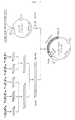
- Fig. 3 is a view showing the constructing of the expression plasmid in the present invention.
- In order to solve the abovementioned problems, the present inventors have conducted investigations, and have consequently found a process in which an active human matrilysin is efficiently expressed in E. coli.
This finding has led to the completion of the present invention. - The process for producing the human matrilysin in the present invention will be described below. The sequence of the human matrilysin gene is already known [Müller, D., Quantin, B., Gesnel, M.C., Millon-Collard, R., Abecassis, J. and Breathnach, R. (1988) Biochem. J. 253, 187-192].
- However, even if the human gene is expressed in Escherichia coli (E. coli), the expression efficiency is generally low, and it is quite difficult to produce the gene product at an industrial level.
- Therefore, in order to efficiently express the human matrilysin gene in E. coli, the nucleotide sequence of the human matrilysin gene has been designed using optimum codons of E. coli. At that time, it has been presumed that when the mature enzyme is directly expressed, the inclusion body is formed without taking the correct stereostructure. Accordingly, the sequence to express promatrilysin has been employed. Further, to express and secrete matrilysin in E. coli efficiently, a signal peptide of E. coli alkaline phosphatase has been added to the N-terminal side. It has been designed that the proenzyme formed in the cells is accumulated in the periplasmic region by cleaving the signal peptide with a signal peptidase.
- The present inventors have succeeded in actually producing the synthetic gene having the sequence of the human matrilysin gene according to such a design. Further, they have confirmed the selection of the expression vector, the production of a recombinant plasmid in which the synthetic gene is inserted into the expression vector, the formation of a transformant by introducing the recombinant plasmid into a host, the cultivation of the transformant, and the expression of the gene. Still further, they have conducted investigations with respect to the procurement of the active enzyme by solubilization and renaturation of the human matrilysin inclusion body, and have succeeded in it.
- The present invention has actually succeeded in expressing the synthetic gene which was so far difficult to be expressed by the gene recombination technique, and has further succeeded for the first time in the production of the active (mature) human matrilysin which could not be obtained so far, by a biochemical method.
- The present invention will be illustrated more specifically by referring to the following Example.
- In order to efficiently express a human matrilysin gene in E. coli, the sequence of the human matrilysin gene was designed using optimum codons of E. coli. That is, it was not intended to directly express 19k-matrilysin (active type), but a signal peptide of E. coli alkaline phosphatase was added to the N-terminal side in order to efficiently express and secrete 29k-promatrilysin (inactive type). For inserting the gene into an expression vector, a recognition sequence of EcoRI was introduced at the N-terminal side and a recognition sequence of BamHI at the C-terminal side, respectively. Recognition sequences of PstI, HindIII, KpnI, SmaI and SphI were introduced into the coding region as restriction enzyme cleavage sites for subcloning which were required to analyze the nucleotide sequence of the synthetic gene.
- The nucleotide sequence of the human matrilysin gene is, along with the amino acid sequence thereof, represented in Tables 1 (information) and 2 (formula). In the Sequence listing given hereinafter SEQ. ID. No. 1 is concerned with the DNA fragment encoding the protein and SEQ. ID. No. 2 is specifically concerned with said protein.
-Information- Length of sequence: 825 Type of sequence: nucleic acid Type of strand: double strand Topology: linear Type of sequence: synthetic DNA Origin: Name of organism: human being Characteristics of sequence: Symbol indicating characteristics: CDS Location: 6 .. 818 Method of determining characteristics: S Symbol indicating characteristics: sig peptide Location: 6 .. 68 Method of determining characteristics: S 
- The whole DNA of the human matrilysin gene containing the gene of the signal peptide of E. coli alkaline phosphatase was separated into 28 fragments each having a length of approximately 50 bases as shown in Figs. 1 and 2. Each of these was synthesized by a DNA automatic synthesizer. The DNA fragments were ligated with a T4DNA ligase according to the order shown in Fig. 3 to prepare an artificially synthetic gene.
- pλPR having λPR promotor and EcoRI, NcoI, BamHI, HindIII and PstI sites as cloning sites was used as an expression vector. This expression vector was cleaved with EcoRI and BamHI, and the synthetic gene of the human matrilysin was inserted thereinto to prepare pλPR-MAT. The ligation reaction was conducted at 14°C for 16 hours using T4DNA ligase. E. coli N99cI+ (F-, strA, galK2λ-, IN (rrnD-rrnE)1) was transformed by using the reaction product. The thus-obtained plasmid of the transformant strain was separated by an alkali-SDS method, and the insertion of the intended gene was confirmed by analysis with the restriction enzymes. Subsequently, the transformation of E. coli N4830-1 [F-suohis-, ilv-, galK-, (chlD-pgl), (λ, Bam, N+, c1857, H1)] was conducted again.
- E. coli N4830-1 transformed by using plasmid pλPR-MAT was named Escherichia coli N4830-1/pλPR-MAT, and it has been deposited at the National Institute of Bioscience and Human Technology of the Agency of Industrial Science and Technology under FERM BP-4794. This transformant strain was cultured in LB medium containing 50 µg/ml of ampicillin at 30°C for 16 hours. The thus-obtained strain solution was inoculated in an amount of 3% into LB medium containing 50 µg/ml of ampicillin, and cultured at 30°C for 6 hours, and then at 34°C or 42°C for from 1 to 4 hours-.
- When the expression of matrilysin was induced at 34°C, a relatively small amount of 29k-promatrilysin was expressed in the soluble state. When the expression was induced at 42°C, a large amount of 31k-prepromatrilysin containing the signal peptide was expressed in the insoluble state. With respect to 31k-prepromatrilysin, the purification and renaturation were conducted by the following method to obtain the active enzyme.
- The cells (cell pellet) were suspended in 50 mM Tris-HCl buffer (pH 7.5) containing 150 mM NaCl and 0.5 mM EDTA in a volume which was three times that of the cell pellet, and disrupted by a Dyno-Mill. The thus-disrupted cells were centrifuged at 4°C for 20 minutes at 15,000 rpm, and separated into supernatant and precipitate (when the soluble 29k-promatrilysin was expressed, it was purified from this supernatant). The inclusion body was prepared from the obtained precipitate by the following treatment. First, the precipitate was suspended in a 1 M sucrose solution, and the suspension was centrifuged at 10,000 rpm for 15 minutes to obtain the precipitate. The precipitate was suspended in a solution containing 2% Triton X-100 and 10 mM EDTA, and the suspension was stirred at 4°C for 18 hours. This suspension was centrifuged at 10,000 rpm for 15 hours to obtain precipitate. The thus-obtained precipitate was washed with a 10 mM EDTA solution three times to obtain the inclusion body. The thus-obtained inclusion body was dissolved in 10 mM Tris-HCl buffer (pH 7.5) containing 8 M urea and 0.01% Brij35 (buffer A), and applied to an SP-Sepharose column equilibrated with buffer A. The intended protein was adsorbed on the SP-Sepharose column under such conditions. After the column was fully washed with buffer A, the protein was eluted with a linear concentration gradient of NaCl from 0 M to 0.5 M. The intended protein fraction was concentrated with a Diaflow-YM-10 membrane. The concentrated sample was subjected to molecular sieve chromatography using a Superdex 200 column equilibrated with buffer A. By this procedure, 31k-prepromatrilysin containing the signal peptide was purified.
- The fraction containing the 31k-prepromatrilysin obtained by the molecular sieve chromatography was collected, and dialyzed against 50 mM Tris-HCl buffer (pH 7.5) containing 0.5 M NaCl, 0.01
% Brij 35 and 1 mM EDTA at 4°C for 17 hours. Then, the 31k-prepromatrilysin was renatured in the soluble state. - When the thus-obtained 31k-prepromatrilysin was incubated in the presence of 0.1 mM ZnCl2 and 10 mM CaCl2 at 37°C, this 31k-prepromatrilysin was converted into 29k-promatrilysin in an approximate 1 hour, and into 19k-matrilysin in approximate 17 hours.
- In accordance with the process of the present invention, a high-purity human matrilysin can be easily produced on an industrial scale without the need for culturing animal cells which incurs high cost.
-
- (1) GENERAL INFORMATION:
- (i) APPLICANT:
- (A) NAME: ORIENTAL YEAST Co., Ltd
- (B) STREET: 6-10, Azusawa 3-chome, Itabashi-ku,
- (C) CITY: Tokyo
- (E) COUNTRY: Japan
- (F) POSTAL CODE (ZIP): 174
- (ii) TITLE OF INVENTION: PROCESS FOR PRODUCING HUMAN MATRILYSIN BY MEANS OF RECOMBINANT DNA
- (iii) NUMBER OF SEQUENCES: 2
- (iv) COMPUTER READABLE FORM:
- (A) MEDIUM TYPE: Floppy disk
- (B) COMPUTER: IBM PC compatible
- (C) OPERATING SYSTEM: PC-DOS/MS-DOS
- (D) SOFTWARE: PatentIn Release #1.0, Version #1.25 (EPO)
- (vi) PRIOR APPLICATION DATA:
- (A) APPLICATION NUMBER: JP 6-259576
- (B) FILING DATE: 18-SEP-1994
- (2) INFORMATION FOR SEQ ID NO: 1:
- (i) SEQUENCE CHARACTERISTICS:
- (A) LENGTH: 825 base pairs
- (B) TYPE: nucleic acid
- (C) STRANDEDNESS: double
- (D) TOPOLOGY: linear
- (ii) MOLECULE TYPE: synthetic DNA
- (ix) FEATURE:
- (A) NAME/KEY: CDS
- (B) LOCATION: 6..818
- (ix) FEATURE:
- (A) NAME/KEY: sig_peptide
- (B) LOCATION: 6..68
- (ix) FEATURE:
- (A) NAME/KEY: mat_peptide
- (B) LOCATION: 69..818
- (xi) SEQUENCE DESCRIPTION: SEQ ID NO: 1:

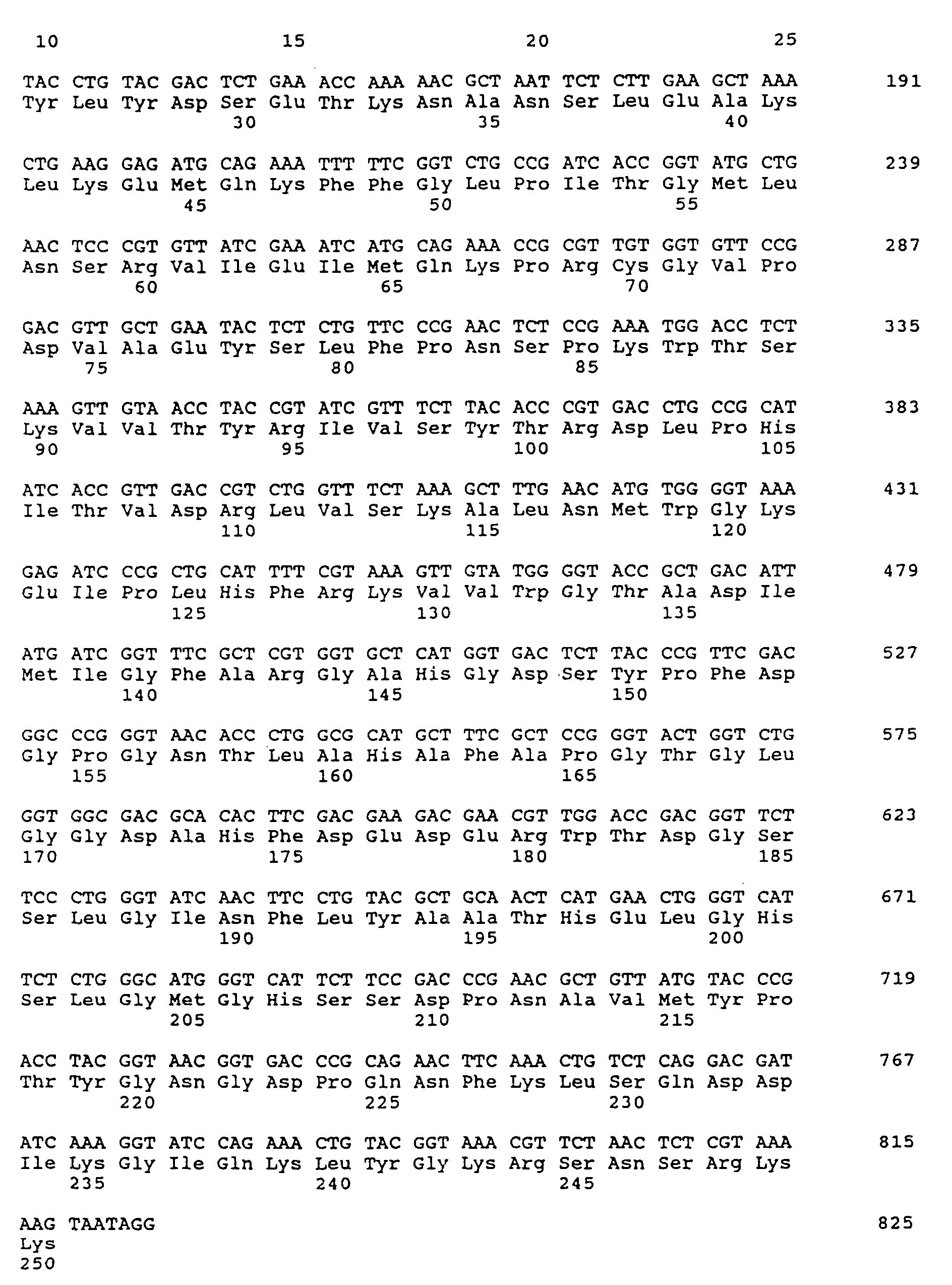
- (2) INFORMATION FOR SEQ ID NO: 2:
- (i) SEQUENCE CHARACTERISTICS:
- (A) LENGTH: 271 amino acids
- (B) TYPE: amino acid
- (D) TOPOLOGY: linear
- (ii) MOLECULE TYPE: protein
- (xi) SEQUENCE DESCRIPTION: SEQ ID NO: 2:

-
Claims (10)
- A process for producing a soluble human promatrilysin comprising :(a) preparing a synthetic gene sequence for expressing human promatrilysin of 29k by using in the nucleotide sequence of human promatrilysin optimum codons for Escherichia coli without causing a change in the encoded amino acids, adding the nucleotide sequence of the signal peptide of Escherichia coli alkaline phosphatase for encoding said signal peptide at the N-terminal side of human promatrilysin, introducing recognition sequences of EcoRI and respectively BamHI at the N- and respectively C-terminal sides of human promatrilysin;(b) inserting the resulting gene sequence obtained in step (a) into an expression vector in order to obtain a recombinant vector;(c) transforming Escherichia coli with the recombinant vector obtained in step (b) in order to obtain a transformant; and,(d) culturing at a temperature Tc = 30°C the transformant obtained in step (c), inducing the expression of promatrilysin at a temperature Te = 34°C, and recovering a soluble promatrilysin of 29k produced by said expression.
- The process according to claim 1, wherein the gene sequence obtained in step (a) is the nucleotide sequence represented by SEQ ID No : 1.
- The process according to claim 1, wherein the gene sequence obtained in step (a) is the nucleotide sequence represented by SEQ ID No : 1 and the transformed Escherichia coli strain in step (c) is Escherichia coli FERM BP-4794.
- A process for producing a soluble human promatrilysin comprising :(a) preparing a synthetic gene sequence for expressing human promatrilysin of 29k by using in the nucleotide sequence of human promatrilysin optimum codons for Escherichia coli without causing a change in the encoded amino acids, adding the nucleotide sequence of the signal peptide of Escherichia coli alkaline phosphatase for encoding said signal peptide at the N-terminal side of human promatrilysin, introducing recognition sequences of EcoRI and respectively BamHI at the N- and respectively C-terminal sides of human promatrilysin ;(b) inserting the resulting gene sequence obtained in step (a) into an expression vector in order to obtain a recombinant vector ;(c) transforming Escherichia coli with the recombinant vector obtained in step (b) in order to obtain a transformant;(d) culturing at a temperature Tc = 30°C the transformant obtained in step (c), inducing the expression of promatrilysin at a temperature Te = 42°C, then recovering an inclusion body of promatrilysin of 31k produced by said expression ;(e) obtaining promatrilysin of 31k having the Escherichia coli alkaline phosphatase signal peptide of step (a) by denaturing and purifying the inclusion body obtained in step (d);(f) subjecting the promatrilysin of 31k thus obtained to a dissolving treatment to obtain a soluble promatrilysin of 31k ; and(g) incubating the resulting soluble promatrilysin of 31k in the presence of ZnCl2 and CaCl2 to obtain a soluble human promatrilysin of 29k.
- The process according to claim 4, wherein the gene sequence obtained in step (a) is the nucleotide sequence represented by SEQ ID No: 1.
- The process according to claim 4, wherein the gene sequence obtained in step (a) is the nucleotide sequence represented by SEQ ID No : 1, and the transformed Escherichia coli strain in step (c) is Escherichia coli FERM BP-4794.
- The recombinant vector which is a plasmid which contains the synthetic gene sequence of SEQ ID No : 1 and is present in Escherichia coli N4830-1/pλPR-MAT, FERM BP-4794.
- Escherichia coli N4830-1/pλPR-MAT, FERM BP-4794.
- A process according to claim 1 for producing human 19k-matrilysin, said process comprising :(a) preparing a synthetic gene sequence for expressing human promatrilysin of 29k by using in the nucleotide sequence of human promatrilysin optimum codons for Escherichia coli without causing a change in the encoded amino acids, adding the nucleotide sequence of the signal peptide of Escherichia coli alkaline phosphatase for encoding said signal peptide at the N-terminal side of human promatrilysin, introducing recognition sequences of EcoRI and respectively BamHI at the N- and respectively C-terminal sides of human promatrilysin ;(b) inserting the resulting gene sequence obtained in step (a) into an expression vector in order to obtain a recombinant vector ;(c) transforming Escherichia coli with the recombinant vector obtained in step (b) in order to obtain a transformant;(d) culturing at a temperature Tc = 30°C the transformant obtained in step (c), inducing the expression of promatrilysin at a temperature Te = 34°C, and recovering a soluble promatrilysin of 29k produced by said expression ; and,(e) incubating the resulting soluble promatrilysin of 29k in the presence of ZnCl2 and CaCl2 for 17h at 37°C to obtain human matrilysin of 19k.
- A process according to claim 4 for producing human 19k-matrilysin, said process comprising :(a) preparing a synthetic gene sequence for expressing human promatrilysin of 29k by using in the nucleotide sequence of human promatrilysin optimum codons for Escherichia coli without causing a change in the encoded amino acids, adding the nucleotide sequence of the signal peptide of Escherichia coli alkaline phosphatase for encoding said signal peptide at the N-terminal side of human promatrilysin, introducing recognition sequences of EcoRI and respectively BamHI at the N- and respectively C-terminal sides of human promatrilysin ;(b) inserting the resulting gene sequence obtained in step (a) into an expression vector in order to obtain a recombinant vector;(c) transforming Escherichia coli with the recombinant vector obtained in step (b) in order to obtain a transformant;(d) culturing at a temperature Tc = 30°C the transformant obtained in step (c), inducing the expression of promatrilysin at a temperature Te = 42°C, then recovering an inclusion body of promatrilysin of 31k produced by said expression ;(e) obtaining promatrilysin of 31k having the Escherichia coli alkaline phosphatase signal peptide of step (a) by denaturing and purifying the inclusion body obtained in step (d);(f) subjecting the promatrilysin of 31k thus obtained to a dissolving treatment to obtain a soluble promatrilysin of 31k ;(g) incubating the resulting soluble promatrilysin of 31k in the presence of ZnCl2 and CaCl2 to obtain a soluble human promatrilysin of 29k ; and,(h) incubating the resulting soluble promatrilysin of 29k in the presence of ZnCl2 and CaCl2 for 17h at 37°C to obtain human matrilysin of 19k.
Applications Claiming Priority (3)
| Application Number | Priority Date | Filing Date | Title |
|---|---|---|---|
| JP25957694 | 1994-09-30 | ||
| JP259576/94 | 1994-09-30 | ||
| JP6259576A JP2938352B2 (en) | 1994-09-30 | 1994-09-30 | Method for producing recombinant human matrilysin |
Publications (2)
| Publication Number | Publication Date |
|---|---|
| EP0718403A1 EP0718403A1 (en) | 1996-06-26 |
| EP0718403B1 true EP0718403B1 (en) | 2001-06-13 |
Family
ID=17336046
Family Applications (1)
| Application Number | Title | Priority Date | Filing Date |
|---|---|---|---|
| EP95402145A Expired - Lifetime EP0718403B1 (en) | 1994-09-30 | 1995-09-25 | Process for producing human matrilysin by means of recombinant DNA |
Country Status (4)
| Country | Link |
|---|---|
| US (1) | US6010893A (en) |
| EP (1) | EP0718403B1 (en) |
| JP (1) | JP2938352B2 (en) |
| DE (1) | DE69521281T2 (en) |
Families Citing this family (4)
| Publication number | Priority date | Publication date | Assignee | Title |
|---|---|---|---|---|
| WO2010047347A1 (en) * | 2008-10-21 | 2010-04-29 | 財団法人化学及血清療法研究所 | Process for producing protein capable of forming inclusion body |
| TWI743023B (en) | 2014-05-21 | 2021-10-21 | 日商Km生物醫藥股份有限公司 | Monomerizing method for matrix metalloproteinases 7 (mmp-7) associate |
| CN112694527B (en) * | 2020-12-25 | 2022-09-09 | 山东睿鹰制药集团有限公司 | Purification and renaturation method of recombinant human interferon-kappa inclusion body |
| CN114032252B (en) * | 2021-11-01 | 2022-04-22 | 武汉爱博泰克生物科技有限公司 | Expression method and application of recombinant human MMP-7 protein |
Family Cites Families (2)
| Publication number | Priority date | Publication date | Assignee | Title |
|---|---|---|---|---|
| US4652639A (en) * | 1982-05-06 | 1987-03-24 | Amgen | Manufacture and expression of structural genes |
| US5240831A (en) * | 1991-01-10 | 1993-08-31 | Board Of Regents, The University Of Texas | Methods and compositions for the expression of biologically active eukaryotic cytochrome p45os in bacteria |
-
1994
- 1994-09-30 JP JP6259576A patent/JP2938352B2/en not_active Expired - Fee Related
-
1995
- 1995-09-25 EP EP95402145A patent/EP0718403B1/en not_active Expired - Lifetime
- 1995-09-25 DE DE69521281T patent/DE69521281T2/en not_active Expired - Lifetime
-
1997
- 1997-07-17 US US08/896,062 patent/US6010893A/en not_active Expired - Lifetime
Also Published As
| Publication number | Publication date |
|---|---|
| DE69521281D1 (en) | 2001-07-19 |
| DE69521281T2 (en) | 2002-03-07 |
| JP2938352B2 (en) | 1999-08-23 |
| EP0718403A1 (en) | 1996-06-26 |
| JPH0898693A (en) | 1996-04-16 |
| US6010893A (en) | 2000-01-04 |
Similar Documents
| Publication | Publication Date | Title |
|---|---|---|
| US5506120A (en) | Method of producing peptides or proteins as fusion proteins | |
| CA1200773A (en) | Expression linkers | |
| EP1364029B1 (en) | FUSION PROTEIN comprising hirudin and proinsulin or insulin | |
| IL155245A (en) | Serine protease genes related to dppiv | |
| US5459064A (en) | Protease | |
| CN115717137B (en) | Lysyl specific endonuclease mutant and preparation method and application thereof | |
| CA2237041A1 (en) | Process for producing microbial transglutaminase | |
| RU2010127232A (en) | RECOMBINANT ELASTASE PROTEINS AND METHODS FOR PRODUCING AND USING THEM | |
| JP3550409B2 (en) | Dipeptidyl aminopeptidase of dictyosterium | |
| JPS60500043A (en) | Method for producing mature proteins from fusion proteins synthesized in prokaryotic or eukaryotic cells | |
| EP0718403A1 (en) | Process for producing human matrilysin by means of recombinant DNA | |
| EP0170266B1 (en) | Process for producing protein, and vector, recombinant dna and transformant used therefor | |
| Honjo et al. | Secretion of human growth hormone in Bacillus subtilis using prepropeptide coding region of Bacillus amyloliquefaciens neutral protease gene | |
| WO1997033984A1 (en) | Novel achromobacter lyticus protease variants | |
| Gwynne et al. | Development of an expression system in Aspergillus nidulans | |
| KR100714116B1 (en) | Preparation of Insulin Using Procarboxypeptidase VII of the Pancreas | |
| Fahnoe et al. | Disulfide bonds in big ET-1 are essential for the specific cleavage at the Trp21–Val22 bond by soluble endothelin converting enzyme-1 from baculovirus/insect cells | |
| Witte et al. | Heterologous expression of the clostripain gene from Clostridium histolyticum in Escherichia coli and Bacillus subtilis: maturation of the clostripain precursor is coupled with self-activation | |
| JP3060019B2 (en) | Plasmid containing maltotetraose synthase gene, microorganism having the plasmid, and method for producing maltotetraose synthase using the microorganism | |
| JP4191479B2 (en) | Shrimp Alkaline Phosphatase | |
| Gaur et al. | Role of aspartic acid 121 in human pancreatic ribonuclease catalysis | |
| Gul'nik et al. | Proteinases of Legionella: phenylalanineaminopeptidase of L. pneumophila | |
| WO2006054595A1 (en) | Novel high alkaline protease and use thereof | |
| CA1200774A (en) | Expression linkers | |
| CN118302531A (en) | Candida albicans proteinase K mutant and its zymogen, expression plasmid, recombinant Pichia pastoris strain and method for producing mature form of proteinase K mutant |
Legal Events
| Date | Code | Title | Description |
|---|---|---|---|
| PUAI | Public reference made under article 153(3) epc to a published international application that has entered the european phase |
Free format text: ORIGINAL CODE: 0009012 |
|
| AK | Designated contracting states |
Kind code of ref document: A1 Designated state(s): DE FR GB |
|
| 17P | Request for examination filed |
Effective date: 19961119 |
|
| 17Q | First examination report despatched |
Effective date: 19970821 |
|
| GRAG | Despatch of communication of intention to grant |
Free format text: ORIGINAL CODE: EPIDOS AGRA |
|
| GRAG | Despatch of communication of intention to grant |
Free format text: ORIGINAL CODE: EPIDOS AGRA |
|
| GRAG | Despatch of communication of intention to grant |
Free format text: ORIGINAL CODE: EPIDOS AGRA |
|
| GRAH | Despatch of communication of intention to grant a patent |
Free format text: ORIGINAL CODE: EPIDOS IGRA |
|
| GRAH | Despatch of communication of intention to grant a patent |
Free format text: ORIGINAL CODE: EPIDOS IGRA |
|
| GRAA | (expected) grant |
Free format text: ORIGINAL CODE: 0009210 |
|
| AK | Designated contracting states |
Kind code of ref document: B1 Designated state(s): DE FR GB |
|
| REF | Corresponds to: |
Ref document number: 69521281 Country of ref document: DE Date of ref document: 20010719 |
|
| ET | Fr: translation filed | ||
| REG | Reference to a national code |
Ref country code: GB Ref legal event code: IF02 |
|
| PLBE | No opposition filed within time limit |
Free format text: ORIGINAL CODE: 0009261 |
|
| STAA | Information on the status of an ep patent application or granted ep patent |
Free format text: STATUS: NO OPPOSITION FILED WITHIN TIME LIMIT |
|
| 26N | No opposition filed | ||
| PGFP | Annual fee paid to national office [announced via postgrant information from national office to epo] |
Ref country code: DE Payment date: 20130918 Year of fee payment: 19 |
|
| PGFP | Annual fee paid to national office [announced via postgrant information from national office to epo] |
Ref country code: GB Payment date: 20130925 Year of fee payment: 19 Ref country code: FR Payment date: 20130910 Year of fee payment: 19 |
|
| REG | Reference to a national code |
Ref country code: DE Ref legal event code: R119 Ref document number: 69521281 Country of ref document: DE |
|
| GBPC | Gb: european patent ceased through non-payment of renewal fee |
Effective date: 20140925 |
|
| REG | Reference to a national code |
Ref country code: FR Ref legal event code: ST Effective date: 20150529 |
|
| PG25 | Lapsed in a contracting state [announced via postgrant information from national office to epo] |
Ref country code: GB Free format text: LAPSE BECAUSE OF NON-PAYMENT OF DUE FEES Effective date: 20140925 Ref country code: DE Free format text: LAPSE BECAUSE OF NON-PAYMENT OF DUE FEES Effective date: 20150401 |
|
| PG25 | Lapsed in a contracting state [announced via postgrant information from national office to epo] |
Ref country code: FR Free format text: LAPSE BECAUSE OF NON-PAYMENT OF DUE FEES Effective date: 20140930 |