EP0711836A1 - Method of producing optically active alpha-hydroxy acid or alpha-hydroxyamide - Google Patents
Method of producing optically active alpha-hydroxy acid or alpha-hydroxyamide Download PDFInfo
- Publication number
- EP0711836A1 EP0711836A1 EP95307976A EP95307976A EP0711836A1 EP 0711836 A1 EP0711836 A1 EP 0711836A1 EP 95307976 A EP95307976 A EP 95307976A EP 95307976 A EP95307976 A EP 95307976A EP 0711836 A1 EP0711836 A1 EP 0711836A1
- Authority
- EP
- European Patent Office
- Prior art keywords
- cyanohydrin
- group
- substituted
- unsubstituted
- concentration
- Prior art date
- Legal status (The legal status is an assumption and is not a legal conclusion. Google has not performed a legal analysis and makes no representation as to the accuracy of the status listed.)
- Granted
Links
Images

Classifications
-
- C—CHEMISTRY; METALLURGY
- C12—BIOCHEMISTRY; BEER; SPIRITS; WINE; VINEGAR; MICROBIOLOGY; ENZYMOLOGY; MUTATION OR GENETIC ENGINEERING
- C12P—FERMENTATION OR ENZYME-USING PROCESSES TO SYNTHESISE A DESIRED CHEMICAL COMPOUND OR COMPOSITION OR TO SEPARATE OPTICAL ISOMERS FROM A RACEMIC MIXTURE
- C12P7/00—Preparation of oxygen-containing organic compounds
- C12P7/40—Preparation of oxygen-containing organic compounds containing a carboxyl group including Peroxycarboxylic acids
- C12P7/42—Hydroxy-carboxylic acids
-
- C—CHEMISTRY; METALLURGY
- C12—BIOCHEMISTRY; BEER; SPIRITS; WINE; VINEGAR; MICROBIOLOGY; ENZYMOLOGY; MUTATION OR GENETIC ENGINEERING
- C12P—FERMENTATION OR ENZYME-USING PROCESSES TO SYNTHESISE A DESIRED CHEMICAL COMPOUND OR COMPOSITION OR TO SEPARATE OPTICAL ISOMERS FROM A RACEMIC MIXTURE
- C12P13/00—Preparation of nitrogen-containing organic compounds
- C12P13/02—Amides, e.g. chloramphenicol or polyamides; Imides or polyimides; Urethanes, i.e. compounds comprising N-C=O structural element or polyurethanes
-
- C—CHEMISTRY; METALLURGY
- C12—BIOCHEMISTRY; BEER; SPIRITS; WINE; VINEGAR; MICROBIOLOGY; ENZYMOLOGY; MUTATION OR GENETIC ENGINEERING
- C12P—FERMENTATION OR ENZYME-USING PROCESSES TO SYNTHESISE A DESIRED CHEMICAL COMPOUND OR COMPOSITION OR TO SEPARATE OPTICAL ISOMERS FROM A RACEMIC MIXTURE
- C12P41/00—Processes using enzymes or microorganisms to separate optical isomers from a racemic mixture
- C12P41/006—Processes using enzymes or microorganisms to separate optical isomers from a racemic mixture by reactions involving C-N bonds, e.g. nitriles, amides, hydantoins, carbamates, lactames, transamination reactions, or keto group formation from racemic mixtures
Definitions
- This invention relates to a method for producing an optically active ⁇ -hydroxy acid or ⁇ -hydroxyamide from a cyanohydrin via treatment with a microorganism. More particularly, it relates to a method for producing an optically active ⁇ -hydroxy acid or ⁇ -hydroxyamide by maintaining the cyanohydrin concentration at a definite level with the use of an automatic cyanohydrin controller.
- Optically active ⁇ -hydroxy acids or ⁇ -hydroxyamides are highly important compounds used for synthesizing drugs and agricultural chemicals.
- Nitrilase is an enzyme capable of hydrolyzing a nitrile into the corresponding acid
- nitrile hydratase is an enzyme capable of hydrating a nitrile into the corresponding amide.
- JP-A-3-277292 JP-A-3-277292, EP-A-0 449 648 (corresponding to JP-A-4-99495, JP-A-4-99496 and JP-A-4-218385, respectively), JP-A-4-222591, JP-A-5-95795 (corresponding to U.S. Patent 5,296,373), JP-A-5-192189 (corresponding to U.S. Patent 5,326,702), JP-A-5-244968 and JP-A-6-237789 (corresponding to EP-A-0 610 048); the term "JP-A” as used herein means an "unexamined published Japanese patent application"; and Appl. Env. Microbiol., 57 3028 (1991)].
- reaction catalysts such as microbial cells or enzymes such as nitrilase and nitrile hydratase are highly sensitive to cyanohydrins, and aldehydes and prussic acid constituting the same.
- a conversion reaction is carried out by treating a relatively low concentration cyanohydrin solution with microbial cells or an enzyme. Thus, it is difficult to obtain the product at a high concentration by these methods.
- a cyanohydrin may attain dissociation equilibrium into an aldehyde and prussic acid in an aqueous medium at a definite equilibrium constant depending upon the pH. This dissociation equilibrium may also be established under optimum reaction conditions (e.g., pH, temperature, ionic strength) of microbial cells or an enzyme. That is, the prussic acid concentration is always directly proportional to the cyanohydrin concentration.
- the present inventors have further discovered that the ion selective electrode methods (JIS K 0109-1974 and JIS K 0102-1985) with a cyano ion electrode may be used as a means for determining the presence and amount of cyano ion originating in prussic acid.
- the present inventors have also discovered that the cyanohydrin concentration in a reaction system can be automatically controlled at an arbitrary level by continuously monitoring the cyano ion concentration in the reaction system with a cyano ion detector and linking a cyanohydrin supplier with this cyano ion detector and a regulator.
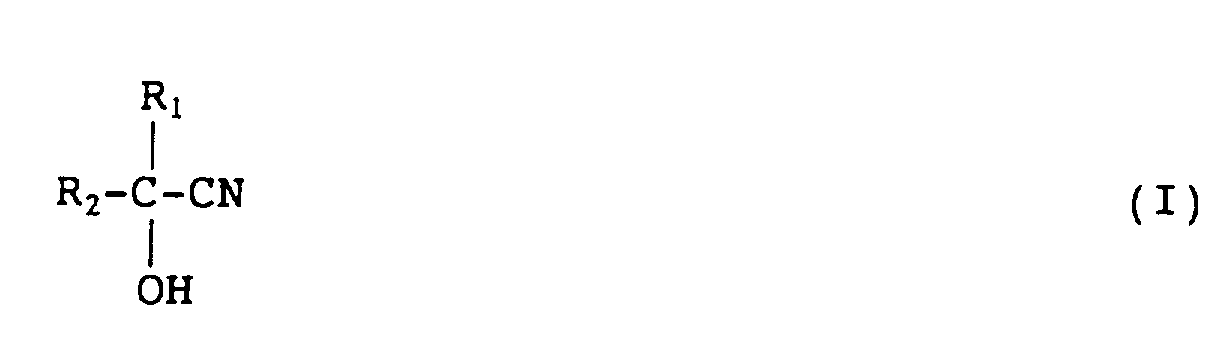
- the present invention provides a method for producing an optically active ⁇ -hydroxy acid or ⁇ -hydroxyamide comprising treating a cyanohydrin represented by formula (I) with a microorganism, which may have been treated, having a nitrilase or nitrile hydratase activity to convert said cyanohydrin into an optically active ⁇ -hydroxy acid or ⁇ -hydroxyamide represented by formula (II), wherein an automatic cyanohydrin controller comprising a cyano ion detector, a regulator and a cyanohydrin supplier linked thereto is furnished to perform the reaction while automatically controlling the cyanohydrin concentration.
- an automatic cyanohydrin controller comprising a cyano ion detector, a regulator and a cyanohydrin supplier linked thereto is furnished to perform the reaction while automatically controlling the cyanohydrin concentration.
- R1 represents a hydrogen atom or a methyl group
- R2 represents a substituted or unsubstituted alkyl group (provided that R2 is not a methyl group when R1 is a methyl group), a substituted or unsubstituted alkenyl group, a substituted or unsubstituted aryl group, a substituted or unsubstituted aralkyl group, a substituted or unsubstituted cycloalkyl group, a substituted or unsubstituted alkoxy group, a substituted or unsubstituted aryloxy group, or a substituted or unsubstituted, saturated or unsaturated heterocyclic group
- X represents a carboxyl group or an amide group.
- the present inventors have discovered a method for relieving the toxicity of an aldehyde on microbial cells or enzymes by adding sulfite ion in the presence of a cyanohydrin or an aldehyde and prussic acid to thereby form an aldehyde-sulfurous acid complex (see, JP-A-5-192189 cited above).
- a cyanohydrin or an aldehyde and prussic acid to thereby form an aldehyde-sulfurous acid complex.
- Figure 1 is a diagram which shows the constitution of an automatic cyanohydrin controller.
- the automatic cyanohydrin controller of the present invention comprises a cyano ion detector (a) having a cyano ion electrode (e) and a reference electrode (d) as a detection unit, and a regulator (b) and a cyanohydrin supplier (h) (consisting of cyanohydrin-supplying pump/valve (i) and cyanohydrin pool tank (j)) linked thereto.
- the cyanohydrin concentration in the reaction system is continuously monitored with the cyano ion detector (a).
- the data thus obtained are sent as voltage signals to regulator (b) having a built-in amplifier, ON/OFF relay, etc, and the cyanohydrin supplier (h) linked thereto.
- the cyanohydrin concentration can be controlled at an arbitrary level.
- a cyano ion electrode (e) and a reference electrode (d) as described in JIS K 0109-1974 and JIS K 0102-1985 may be used as the cyano ion detecting unit.
- the cyano ion concentration in the reaction system is set within the detectable range of the cyano ion detector (a), i.e., 0.01 to 10 mM, and preferably 0.1 to 5 mM.
- the cyanohydrin concentration in such a manner as to regulate the cyano ion concentration within this range, the enzymatic inhibition by the microbial cells, etc. can be suppressed and the desired product can be accumulated at a high concentration.
- microorganisms to be used in the present invention are not particularly restricted, so long as they have a nitrilase or nitrile hydratase activity.
- microorganisms having a nitrilase activity include those belonging to the genera Pseudomonas, Alcaligenes, Acinetobacter, Caseobacter, Corynebacterium, Brevibacterium, Nocardia, Rhodococcus, Gordona, Arthrobacter, Bacillus, Aureobacterium, Enterobacter, Escherichia, Micrococcus, Streptomyces, Flavobacterium, Aeromonas, Mycoplana, Cellulomonas, Erwinia, Candida, Bacteridium, Aspergillus, Penicillium, Cochliobolus, Fusarium and Rhodopseudomonas.
- microorganisms can be cited; Pseudomonas sp. BC13-2 (FERM BP-3319), do. BC15-2 (FERM BP-3320), do. SK13 (FERM BP-3325), do. SK31 (FERM P-11310), do. SK87 (FERM P-11311), do. BC-18 (FERM BP-4536), Pseudomonas synxanta IAM 12356, Alcaligenes sp. BC12-2 (FERM P-11263), do. BC20 (FERM P-11264), do. BC35-2 (FERM BP-3318), do. BC24 (FERM P-12063), Acinetobacter sp.
- BC9-2 (FERM BP-3317), Caseobacter sp. BC4 (FERM BP-3316), do.
- BC23 (FERM P-11261), Corynebacterium nitrilophilus ATCC 21419, Brevibacterium acetylicum IAM 1790, Brevibacterium helvolum ATCC 11822, Nocardia sp. N-775 (FERM P-4447), Nocardia asteroides IFO 3384, Nocardia calcarea KCCA0191, Nocardia polychromogenes IFM 19, Rhodococcus sp. SK70 (FERM P-11304), do. SK92 (FERM BP-3324), do. HR11 (FERM P-11306), do.
- HT29-7 (FERM BP-3857), Rhodococcus rhodochrous ATCC 12674, do. ATCC 19140, do. ATCC 33258, Rhodococcus erythropolis IFM 155, do. IFO 12320, do. IFO 12538, do. IFO 12540, Gordona terrae MA-1 (FERM BP-4535), Arthrobacter sp. SK103 (FERM P-11300), do. HR1 (FERM BP-3323), do.
- SK150 (FERM P-11645), Flavobacterium flavescens ATCC 8315, Aeromonas punctata IFO 13288, Mycoplana dimorpha ATCC 4297, Cellulomonas fimi IAM 12107, Erwinia herbicola IFO 12686 and Candida guilliermondii IFO 0566.
- microorganisms having a nitrile hydratase activity include those belonging to the genera Rhodococcus, Corynebacterium, Pseudomonas, Arthrobacter, Alcaligenes, Bacillus, Bacteridium, Micrococcus, Brevibacterium and Nocardia.
- the following microorganisms can be cited; Rhodococcus sp. HT40-6 (FERM P-11774), Rhodococcus rhodochrous ATCC 33278, Rhodococcus erythropolis IFO 12320, Corynebacterium nitrilophilus ATCC 21419, Pseudomonas sp.
- SK87 (FERM P-11311), Arthrobacter sp. HR1 (FERM BP-3323), Alkaligenes sp. BC16-2 (FERM BP-3321), Brevibacterium acetylicum IAM 1790, Nocardia erythropolis IFO 12539 and do. IFO 12540.
- ATCC American Type Culture Collection, USA
- IAM Institute of Applied Microbiology
- KCC Kaken Pharmaceutical Co., Ltd.
- IFO Institute for Fermentation
- IFM Institute for Chemobiodynamics, the Chiba University, Chiba, Japan
- R1 is a hydrogen atom or a methyl group
- R2 is a substituted or unsubstituted alkyl group (provided that R2 is not a methyl group when R1 is a methyl group), a substituted or unsubstituted alkenyl group, a substituted or unsubstituted aryl group, a substituted or unsubstituted aralkyl group, a substituted or unsubstituted cycloalkyl group, a substituted or unsubstituted alkoxy group, a substituted or unsubstituted aryloxy group, or a substituted or unsubstituted, saturated or unsaturated heterocyclic group.
- Typical examples thereof are compounds wherein the alkyl, alkenyl, aralkyl, cycloalkyl and alkoxy groups have respectively 1 to 6, 2 to 5, 7 to 9, 3 to 6 and 1 to 5 carbon atoms.
- substituents include alkyl, alkoxy, aryl, aryloxy and acyl groups, halogen atoms such as chlorine or bromine, and hydroxyl, amino, nitro and thiol groups.
- the heterocyclic group may be exemplified by those having at least one heteroatom selected from among nitrogen, oxygen and sulfur.
- lactonitrile 3-chlorolactonitrile, 2-hydroxy-n-propionitrile, 2-hydroxy-n-butyronitrile, 2-hydroxy-isobutyronitrile, 4-methylthio-2-hydroxybutyronitrile, isobutylaldehyde cyanohydrin, 2-hydroxy-n-hexylonitrile, 2,4-dihydroxy-3,3-dimethylbutyronitrile, 2-hydroxy-n-heptylonitrile, 2-hydroxy-n-octylonitrile, acrolein cyanohydrin, methacrylaldehyde cyanohydrin, 1-butene-4-carboxyaldehyde cyanohydrin, 1-pentene-5-carboxyaldehyde cyanohydrin, mandelonitrile, 2-chloromandelonitrile, 3-chloromandelonitrile, 4-chloromandelonitrile, 4-bromomandelonitrile, 4-methylmandelon
- a cyanohydrin is hydrated or hydrolyzed by contacting the cyanohydrin or the aldehyde and prussic acid constituting the same with a microorganism, which has been optionally treated (disrupted cells, crude or purified enzyme, immobilized cells or enzyme, etc.), in an aqueous medium.
- Desalted water, aqueous solutions of salts such as sodium sulfate, sodium acetate, sodium chloride, potassium chloride, sodium phosphate or ammonium chloride, neutral or alkaline phosphate buffer solutions and borate buffer solutions may be used as the aqueous medium.
- the concentration thereof ranges from 1 mM to the saturation concentration, preferably from 10 to 100 mM.
- the concentration of the cells, which may have been treated, is from 0.01 to 5.0 % by weight in terms of dry matter.
- the reaction temperature may be adjusted to a level giving a high productivity within a range of from 0 to 50 °C, preferably from 10 to 35 °C.
- the cyanohydrin concentration is set to such a level as to provide a cyano ion concentration within the detectable range of the cyano ion detector (i.e., from 0.01 to 10 mM, preferably from 0.1 to 5 mM).
- the appropriate concentration may be attained by preliminarily forming a calibration curve, showing a correlation between the cyano ion concentration (mV) indicated by the cyan ion detector and the mandelonitrile concentration (mM), and then regulating the cyano ion concentration indicated by the cyan ion detector within a definite range.
- an organic solvent or a surfactant may be added at such a level as not to effect the reaction to thereby elevate the solubilities.
- the concentration of sulfite ion, if added, is not particularly limited but can be determined depending on the kinds and concentrations of cyanohydrin and aldehyde. Usually, it ranges from 1 to 300 mM.
- optically active ⁇ -hydroxy acid or ⁇ -hydroxyamide formed in the reaction mixture can be isolated by removing the cells by, for example, centrifugation followed by treatments known to those of skill in the art such as concentration, electrodialysis, ion exchange, extraction, crystallization, etc.
- FIG. 1 shows, a reaction system was provided with an automatic cyanohydrin controller (h), and R-mandelic acid was produced by hydrolyzing mandelonitrile using Gordona terrae MA-1.
- h automatic cyanohydrin controller
- the power supply of the feedstock cyanohydrin supplier (h) was switched using a regulator (b) which consisted of an amplifier, an ON/OFF relay, etc.
- the regulator (b) was used to regulate the output voltage from the cyano ion detector (a) within a definite range depending upon the cyano ion concentration in the reaction mixture (g).
- a reaction tank (f) equipped with a stirrer (c) the concentration of the feedstock cyanohydrin in the reaction mixture was controlled within a definite range.
- the hydrolysis was performed in a 50 mM phosphate buffer solution in the presence of 100 mM of sodium sulfite with a cell concentration (OD630) of 4.2, at a pH of 8.2 to 8.4, at 30 °C for 22 hours.
- the concentration of the feedstock cyanohydrin was automatically controlled by preliminarily forming a calibration curve and then regulating the cyano ion concentration indicated by the detector within a definite range.
- the calibration curve showed a correlation between the cyano ion concentration (mV) indicated by the cyan ion detector and the mandelonitrile concentration (mM).
- Table 1 shows the results. Table 1 Regulation range of mandelonitrile 17.3 - 19.5 mM Conc. of R-mandelic acid formed 1315 mM Optical purity of R-mandelic acid 98.9 % ee Conc. of unreacted mandelonitrile 18.0 mM Conversion ratio 98.6 %
- mandelonitrile was hydrated using Rhodococcus sp. HT40-6 instead of Gordona terrae MA-1 to thereby produce S-mandelamide.
- the hydration was performed in a 50 mM phosphate buffer solution in the presence of 100 mM of sodium sulfite with a cell concentration (OD630) of 10.0, at a pH of 8.2 to 8.4, at 30 °C for 22 hours.
- Table 2 shows the results. Table 2 Regulation range of mandelonitrile 17.0 - 20.0 mM Conc. of S-mandelamide formed 1522 mM Optical purity of S-mandelamide 95.0 % ee Conc. of unreacted mandelonitrile 19.5 mM Conversion ratio 98.7 %
- the hydrolysis was performed in a 50 mM phosphate buffer solution in the presence of 100 mM of sodium sulfite with a cell concentration (OD630) of 4.2, at a pH of 8.6 to 8.8, at 15 °C for 22 hours.
- Table 3 shows the results. Table 3 Regulation range of 3-chloromandelonitrile 8.4 - 9.5 mM Conc. of R-3-chloromandelic acid formed 804 mM Optical purity of R-3-chloromandelic acid 99.0 % ee Conc. of unreacted 3-chlroromandelonitrile 8.4 mM Conversion ratio 99.0 %
- the hydrolysis was performed in a 50 mM phosphate buffer solution in the presence of 100 mM of sodium sulfite with a cell concentration (OD630) of 18.5, at a pH of 8.4 to 8.6, at 30 °C for 168 hours.
- Table 4 shows the results. Table 4 Regulation range of phenyllactonitrile 8.0 - 10.0 mM Conc. of S-phenyllactic acid formed 140 mM Optical purity of S-phenyllactic acid 77.1 % ee Conc. of unreacted phenyllactonitrile 8.5 mM Conversion ratio 94.3 %
- Example 1 2-hydroxy-4-phenylbutyronitrile (hereinafter referred to as HPBN) was hydrolyzed to thereby produce S-2-hydroxy-4-phenylbutyric acid (hereinafter referred to as S-HPBA).
- HPBN 2-hydroxy-4-phenylbutyronitrile
- S-HPBA S-2-hydroxy-4-phenylbutyric acid
- the hydrolysis was performed in a 50 mM phosphate buffer solution in the presence of 100 mM of sodium sulfite with a cell concentration (OD630) of 53.7, at a pH of 8.5 to 8.6, at 20 °C for 48 hours.
- Table 5 shows the results. Table 5 Regulation range of HPBN 5.0 - 15.0 mM Conc. of S-HPBA formed 399 mM Optical purity of HPBA 99.0 % ee Conc. of unreacted HPBN 5.2 mM Conversion ratio 98.7 %
- Example 1 The procedure of Example 1 was repeated but the mandelonitrile was substituted with sodium cyanide and benzaldehyde to thereby produce R-mandelic acid.
- the reaction was performed in a 50 mM phosphate buffer solution in the presence of 100 mM of sodium sulfite with a cell concentration (OD630) of 8.8, at a pH of 8.2 to 8.4, at 30 °C for 23 hours.
- Example 1 As the sodium cyanide and benzaldehyde, 47 % aqueous solution of sodium cyanide (9.6 mmol/ml) and 97 % benzaldehyde (9.6 mmol/ml) were used respectively. In this case, the calibration curve formed in Example 1 was used. It showed a correlation between the cyano ion concentration (mV) indicated by the cyan ion detector and the feedstock concentration (mM).
- Table 6 shows the results. Table 6 Regulation range of mandelonitrile 18.0 - 20.0 mM Conc. of R-mandelic acid formed 986 mM Optical purity of R-mandelic acid 98.6 % ee Conc. of unreacted mandelonitrile 18.4 mM Conversion ratio 98.2 %
- R-Mandelic acid was produced by hydrolyzing mandelonitrile using Gordona terrae MA-1 while not using a cyano ion detector (a) but while regulating the flow rate of a pump for supplying the feedstock at a constant level.
- the hydrolysis was performed in a 50 mM phosphate buffer solution in the presence of 100 mM of sodium sulfite with a cell concentration (OD630) of 4.2, at a pH of 8.2 to 8.4, at 30 °C for 22 hours.
- Table 7 shows the results. Table 7 Supply rate of mandelonitrile 60.6 mmol/hr Amount of reacted mixture 1,000 ml Conc. of R-mandellic acid formed 250 mM Optical purity of R-mandelic acid 98.5 % ee Conc. of unreacted mandelonitrile 1082 mM Conversion ratio 18.8 %
- R-Mandelic acid was produced by hydrolyzing mandelonitrile while not using a cyano ion detector (a) but while regulating the flow rate of a pump for supplying the feedstock to 1/4 (constant) of that of Comparative Example 1.
- the hydrolysis was performed in a 50 mM phosphate buffer solution in the presence of 100 mM of sodium sulfite with a cell concentration (OD630) of 4.2, at a pH of 8.2 to 8.4, at 30 °C for 88 hours.
- Table 8 shows the results. Table 8 Supply rate of mandelonitrile 15.2 mmol/hr Amount of reacted mixture 1,000 ml Conc. of R-mandelic acid formed 1210 mM Optical purity of R-mandelic acid 97.0 % ee Conc. of unreacted mandelonitrile 128 mM Conversion ratio 90.4 %
- the feedstock cyanohydrin can be supplied at a relatively low and constant concentration on the basis of the consumption ratio of the same.
- the reaction rate of the catalyst can be continuously regarded as the rate-limiting factor.
- a decrease in the enzymatic activity during the reaction can be suppressed and an optically active ⁇ -hydroxy acid or ⁇ -hydroxyamide can be efficiently obtained at a high yield.
Landscapes
- Chemical & Material Sciences (AREA)
- Organic Chemistry (AREA)
- Engineering & Computer Science (AREA)
- Zoology (AREA)
- Life Sciences & Earth Sciences (AREA)
- Wood Science & Technology (AREA)
- Chemical Kinetics & Catalysis (AREA)
- Microbiology (AREA)
- General Chemical & Material Sciences (AREA)
- Biotechnology (AREA)
- Health & Medical Sciences (AREA)
- Biochemistry (AREA)
- Bioinformatics & Cheminformatics (AREA)
- General Engineering & Computer Science (AREA)
- General Health & Medical Sciences (AREA)
- Genetics & Genomics (AREA)
- Analytical Chemistry (AREA)
- Preparation Of Compounds By Using Micro-Organisms (AREA)
Abstract
Description
- This invention relates to a method for producing an optically active α-hydroxy acid or α-hydroxyamide from a cyanohydrin via treatment with a microorganism. More particularly, it relates to a method for producing an optically active α-hydroxy acid or α-hydroxyamide by maintaining the cyanohydrin concentration at a definite level with the use of an automatic cyanohydrin controller.
- Optically active α-hydroxy acids or α-hydroxyamides are highly important compounds used for synthesizing drugs and agricultural chemicals.
- Nitrilase is an enzyme capable of hydrolyzing a nitrile into the corresponding acid, and nitrile hydratase is an enzyme capable of hydrating a nitrile into the corresponding amide. Some methods have been reported for producing optically active α-hydroxy acids or α-hydroxyamides from cyanohydrins with the use of microorganisms expressing these enzyme activities [see, for example, JP-A-2-84198 (corresponding to U.S. Patent 5,283,193), JP-A-3-277292, EP-A-0 449 648 (corresponding to JP-A-4-99495, JP-A-4-99496 and JP-A-4-218385, respectively), JP-A-4-222591, JP-A-5-95795 (corresponding to U.S. Patent 5,296,373), JP-A-5-192189 (corresponding to U.S. Patent 5,326,702), JP-A-5-244968 and JP-A-6-237789 (corresponding to EP-A-0 610 048); the term "JP-A" as used herein means an "unexamined published Japanese patent application"; and Appl. Env. Microbiol., 57 3028 (1991)].
- In general, reaction catalysts such as microbial cells or enzymes such as nitrilase and nitrile hydratase are highly sensitive to cyanohydrins, and aldehydes and prussic acid constituting the same. In the methods cited above, a conversion reaction is carried out by treating a relatively low concentration cyanohydrin solution with microbial cells or an enzyme. Thus, it is difficult to obtain the product at a high concentration by these methods.
- In order to obtain a high concentration product, it is necessary to repeatedly add cyanohydrin to the reaction system. Thus, it is necessary to perform the complicated operation of supplying the cyanohydrin while also measuring the cyanohydrin concentration to make up for the loss thereof. This causes problems in industrial application.
- The present inventors have discovered that a cyanohydrin may attain dissociation equilibrium into an aldehyde and prussic acid in an aqueous medium at a definite equilibrium constant depending upon the pH. This dissociation equilibrium may also be established under optimum reaction conditions (e.g., pH, temperature, ionic strength) of microbial cells or an enzyme. That is, the prussic acid concentration is always directly proportional to the cyanohydrin concentration. The present inventors have further discovered that the ion selective electrode methods (JIS K 0109-1974 and JIS K 0102-1985) with a cyano ion electrode may be used as a means for determining the presence and amount of cyano ion originating in prussic acid. Based on these findings, the present inventors have also discovered that the cyanohydrin concentration in a reaction system can be automatically controlled at an arbitrary level by continuously monitoring the cyano ion concentration in the reaction system with a cyano ion detector and linking a cyanohydrin supplier with this cyano ion detector and a regulator.
- Accordingly, the present invention provides a method for producing an optically active α-hydroxy acid or α-hydroxyamide comprising treating a cyanohydrin represented by formula (I) with a microorganism, which may have been treated, having a nitrilase or nitrile hydratase activity to convert said cyanohydrin into an optically active α-hydroxy acid or α-hydroxyamide represented by formula (II), wherein an automatic cyanohydrin controller comprising a cyano ion detector, a regulator and a cyanohydrin supplier linked thereto is furnished to perform the reaction while automatically controlling the cyanohydrin concentration.
- The above-noted formula (I) and formula (II) are indicated as follows:

- When the cyanohydrin in the reaction system is replaced by an aldehyde and prussic acid, these substances quickly come to equilibrium with the cyanohydrin. Thus, the object of the present invention is achieved.
- Moreover, the present inventors have discovered a method for relieving the toxicity of an aldehyde on microbial cells or enzymes by adding sulfite ion in the presence of a cyanohydrin or an aldehyde and prussic acid to thereby form an aldehyde-sulfurous acid complex (see, JP-A-5-192189 cited above). In this case, an equilibrium is quickly reached among and between cyanohydrin/aldehyde/prussic acid/aldehyde-sulfurous acid complex/sulfite ion, and thus the object of the present invention is attained.
- Figure 1 is a diagram which shows the constitution of an automatic cyanohydrin controller.
- As Figure 1 shows, the automatic cyanohydrin controller of the present invention comprises a cyano ion detector (a) having a cyano ion electrode (e) and a reference electrode (d) as a detection unit, and a regulator (b) and a cyanohydrin supplier (h) (consisting of cyanohydrin-supplying pump/valve (i) and cyanohydrin pool tank (j)) linked thereto. The cyanohydrin concentration in the reaction system is continuously monitored with the cyano ion detector (a). The data thus obtained are sent as voltage signals to regulator (b) having a built-in amplifier, ON/OFF relay, etc, and the cyanohydrin supplier (h) linked thereto. Thus, the cyanohydrin concentration can be controlled at an arbitrary level. For example, a cyano ion electrode (e) and a reference electrode (d) as described in JIS K 0109-1974 and JIS K 0102-1985 may be used as the cyano ion detecting unit.
- The cyano ion concentration in the reaction system is set within the detectable range of the cyano ion detector (a), i.e., 0.01 to 10 mM, and preferably 0.1 to 5 mM. By controlling the cyanohydrin concentration in such a manner as to regulate the cyano ion concentration within this range, the enzymatic inhibition by the microbial cells, etc. can be suppressed and the desired product can be accumulated at a high concentration.
- The microorganisms to be used in the present invention are not particularly restricted, so long as they have a nitrilase or nitrile hydratase activity.
- Examples of microorganisms having a nitrilase activity include those belonging to the genera Pseudomonas, Alcaligenes, Acinetobacter, Caseobacter, Corynebacterium, Brevibacterium, Nocardia, Rhodococcus, Gordona, Arthrobacter, Bacillus, Aureobacterium, Enterobacter, Escherichia, Micrococcus, Streptomyces, Flavobacterium, Aeromonas, Mycoplana, Cellulomonas, Erwinia, Candida, Bacteridium, Aspergillus, Penicillium, Cochliobolus, Fusarium and Rhodopseudomonas. As particular examples thereof, the following microorganisms can be cited; Pseudomonas sp. BC13-2 (FERM BP-3319), do. BC15-2 (FERM BP-3320), do. SK13 (FERM BP-3325), do. SK31 (FERM P-11310), do. SK87 (FERM P-11311), do. BC-18 (FERM BP-4536), Pseudomonas synxanta IAM 12356, Alcaligenes sp. BC12-2 (FERM P-11263), do. BC20 (FERM P-11264), do. BC35-2 (FERM BP-3318), do. BC24 (FERM P-12063), Acinetobacter sp. BC9-2 (FERM BP-3317), Caseobacter sp. BC4 (FERM BP-3316), do. BC23 (FERM P-11261), Corynebacterium nitrilophilus ATCC 21419, Brevibacterium acetylicum IAM 1790, Brevibacterium helvolum ATCC 11822, Nocardia sp. N-775 (FERM P-4447), Nocardia asteroides IFO 3384, Nocardia calcarea KCCA0191, Nocardia polychromogenes IFM 19, Rhodococcus sp. SK70 (FERM P-11304), do. SK92 (FERM BP-3324), do. HR11 (FERM P-11306), do. HT29-7 (FERM BP-3857), Rhodococcus rhodochrous ATCC 12674, do. ATCC 19140, do. ATCC 33258, Rhodococcus erythropolis IFM 155, do. IFO 12320, do. IFO 12538, do. IFO 12540, Gordona terrae MA-1 (FERM BP-4535), Arthrobacter sp. SK103 (FERM P-11300), do. HR1 (FERM BP-3323), do. HR4 (FERM P-11302), Arthrobacter oxydans IFO 12138, Bacillus subtilis ATCC 21697, Bacillus licheniformis IFO 12197, Bacillus megaterium ATCC 25833, Aureobacterium testaceum IAM 1561, Enterobacter sp. SK12 (FERM BP-3322), Escherichia coli IFO 3301, Micrococcus luteus ATCC 383, Micrococcus varians IAM 1099, Micrococcus roseus IFO 3768, Streptomyces griseus IFO 3355, Flavobacterium sp. SK150 (FERM P-11645), Flavobacterium flavescens ATCC 8315, Aeromonas punctata IFO 13288, Mycoplana dimorpha ATCC 4297, Cellulomonas fimi IAM 12107, Erwinia herbicola IFO 12686 and Candida guilliermondii IFO 0566.
- Other microorganisms capable of producing α-hydroxy acids are described in the patents cited above and are hereby incorporated by references.
- On the other hand, examples of microorganisms having a nitrile hydratase activity include those belonging to the genera Rhodococcus, Corynebacterium, Pseudomonas, Arthrobacter, Alcaligenes, Bacillus, Bacteridium, Micrococcus, Brevibacterium and Nocardia. As particular examples thereof, the following microorganisms can be cited; Rhodococcus sp. HT40-6 (FERM P-11774), Rhodococcus rhodochrous ATCC 33278, Rhodococcus erythropolis IFO 12320, Corynebacterium nitrilophilus ATCC 21419, Pseudomonas sp. SK87 (FERM P-11311), Arthrobacter sp. HR1 (FERM BP-3323), Alkaligenes sp. BC16-2 (FERM BP-3321), Brevibacterium acetylicum IAM 1790, Nocardia erythropolis IFO 12539 and do. IFO 12540.
- Other microorganisms capable of producing α-hydroxyamides are described in the patents cited above and are hereby incorporated by reference.
- Among these microorganisms, Pseudomonas sp. BC13-2, do. BC15-2, do. SK13, do. SK31, do. SK87 and do. BC-18, Alcaligenes sp. BC12-2, do. BC20, do. BC35-2, do. BC16-2 and do. BC24, Acinetobacter sp. BC9-2, Caseobacter sp. BC4 and do. BC23, Nocardia sp. N-775, Rhodococcus sp SK70, do. SK92, do. HR11, do. HT40-6 and do. HT29-7, Gordona terrae MA-1, Arthrobacter sp. SK103, do. HR1 and do. HR4, Enterobacter sp. SK12 and Flavobacterium sp. SK150 were isolated from nature by the present applicant and described respectively in JP-A-5-192189 (corresponding to U.S. Patent 5,326,702), JP-A-4-218385 (corresponding to EP-A-0 449 648), JP-A-6-237789 (corresponding to EP-A-0 610 048), each cited above, and JP-A-6-284899 (corresponding to EP-A-0 610 049). Each of these strains has been deposited at the National Institute of Bioscience and Human-Technology, Agency of Industrial Science and Technology, Tsukuba, Japan under the accession number provided above.
- Other microorganisms can be easily obtained from the American Type Culture Collection, USA (ATCC), Institute of Applied Microbiology, the University of Tokyo, Tokyo, Japan (IAM), Kaken Pharmaceutical Co., Ltd., Japan (KCC), Institute for Fermentation, Osaka, Japan (IFO) and the Institute for Chemobiodynamics, the Chiba University, Chiba, Japan (IFM).
- In the cyanohydrins of formula (I), R₁ is a hydrogen atom or a methyl group; R₂ is a substituted or unsubstituted alkyl group (provided that R₂ is not a methyl group when R₁ is a methyl group), a substituted or unsubstituted alkenyl group, a substituted or unsubstituted aryl group, a substituted or unsubstituted aralkyl group, a substituted or unsubstituted cycloalkyl group, a substituted or unsubstituted alkoxy group, a substituted or unsubstituted aryloxy group, or a substituted or unsubstituted, saturated or unsaturated heterocyclic group. Typical examples thereof are compounds wherein the alkyl, alkenyl, aralkyl, cycloalkyl and alkoxy groups have respectively 1 to 6, 2 to 5, 7 to 9, 3 to 6 and 1 to 5 carbon atoms.
- Examples of the substituents include alkyl, alkoxy, aryl, aryloxy and acyl groups, halogen atoms such as chlorine or bromine, and hydroxyl, amino, nitro and thiol groups. The heterocyclic group may be exemplified by those having at least one heteroatom selected from among nitrogen, oxygen and sulfur.
- Particular examples thereof include lactonitrile, 3-chlorolactonitrile, 2-hydroxy-n-propionitrile, 2-hydroxy-n-butyronitrile, 2-hydroxy-isobutyronitrile, 4-methylthio-2-hydroxybutyronitrile, isobutylaldehyde cyanohydrin, 2-hydroxy-n-hexylonitrile, 2,4-dihydroxy-3,3-dimethylbutyronitrile, 2-hydroxy-n-heptylonitrile, 2-hydroxy-n-octylonitrile, acrolein cyanohydrin, methacrylaldehyde cyanohydrin, 1-butene-4-carboxyaldehyde cyanohydrin, 1-pentene-5-carboxyaldehyde cyanohydrin, mandelonitrile, 2-chloromandelonitrile, 3-chloromandelonitrile, 4-chloromandelonitrile, 4-bromomandelonitrile, 4-methylmandelonitrile, 4-isopropylmandelonitrile, 4-methoxymandelonitrile, 4-phenylmandelonitrile, 4-phenoxymandelonitrile, 3-phenoxymandelonitrile, 4-hydroxymandelonitrile, 4-nitromandelonitrile, 4-aminomandelonitrile, 4-methylthiomandelonitrile, 2-naphthylaldehyde cyanohydrin, 3-phenyllactonitrile, 3-phenylpropionealdehyde cyanohydrin, 4-phenylbutylaldehyde cyanohydrin, cyclopropylaldehyde cyanohydrin, cyclobutylaldehyde cyanohydrin, cyclopentylaldehyde cyanohydrin, cyclohexylaldehyde cyanohydrin, methoxyaldehyde cyanohydrin, n-pentoxyaldehyde cyanohydrin, phenoxyaldehyde cyanohydrin, 2-thiophenecarboxyaldehyde cyanohydrin, 2-pyrrolecarboxyaldehyde cyanohydrin, 2-furaldehyde cyanohydrin, 2-pyridinecarboxyaldehyde cyanohydrin and 2-hydroxy-2-phenylpropionitrile.
- The invention may be practiced according to the following description. However, many variations are possible within the scope of the described embodiments.
- A cyanohydrin is hydrated or hydrolyzed by contacting the cyanohydrin or the aldehyde and prussic acid constituting the same with a microorganism, which has been optionally treated (disrupted cells, crude or purified enzyme, immobilized cells or enzyme, etc.), in an aqueous medium.
- Desalted water, aqueous solutions of salts such as sodium sulfate, sodium acetate, sodium chloride, potassium chloride, sodium phosphate or ammonium chloride, neutral or alkaline phosphate buffer solutions and borate buffer solutions may be used as the aqueous medium. The concentration thereof ranges from 1 mM to the saturation concentration, preferably from 10 to 100 mM. The concentration of the cells, which may have been treated, is from 0.01 to 5.0 % by weight in terms of dry matter. The reaction temperature may be adjusted to a level giving a high productivity within a range of from 0 to 50 °C, preferably from 10 to 35 °C.
- In the present invention, the cyanohydrin concentration is set to such a level as to provide a cyano ion concentration within the detectable range of the cyano ion detector (i.e., from 0.01 to 10 mM, preferably from 0.1 to 5 mM).
- The appropriate concentration may be attained by preliminarily forming a calibration curve, showing a correlation between the cyano ion concentration (mV) indicated by the cyan ion detector and the mandelonitrile concentration (mM), and then regulating the cyano ion concentration indicated by the cyan ion detector within a definite range.
- When the cyanohydrin or the aldehyde and prussic acid show low solubilities, an organic solvent or a surfactant may be added at such a level as not to effect the reaction to thereby elevate the solubilities.
- The concentration of sulfite ion, if added, is not particularly limited but can be determined depending on the kinds and concentrations of cyanohydrin and aldehyde. Usually, it ranges from 1 to 300 mM.
- The optically active α-hydroxy acid or α-hydroxyamide formed in the reaction mixture can be isolated by removing the cells by, for example, centrifugation followed by treatments known to those of skill in the art such as concentration, electrodialysis, ion exchange, extraction, crystallization, etc.
- To further illustrate the present invention in greater detail, and not by way of limitation, the following Examples will be given.
- As Figure 1 shows, a reaction system was provided with an automatic cyanohydrin controller (h), and R-mandelic acid was produced by hydrolyzing mandelonitrile using Gordona terrae MA-1.
- In this apparatus, the power supply of the feedstock cyanohydrin supplier (h) was switched using a regulator (b) which consisted of an amplifier, an ON/OFF relay, etc. The regulator (b) was used to regulate the output voltage from the cyano ion detector (a) within a definite range depending upon the cyano ion concentration in the reaction mixture (g). Thus, in a reaction tank (f) equipped with a stirrer (c), the concentration of the feedstock cyanohydrin in the reaction mixture was controlled within a definite range.
- The hydrolysis was performed in a 50 mM phosphate buffer solution in the presence of 100 mM of sodium sulfite with a cell concentration (OD₆₃₀) of 4.2, at a pH of 8.2 to 8.4, at 30 °C for 22 hours.
- The concentration of the feedstock cyanohydrin was automatically controlled by preliminarily forming a calibration curve and then regulating the cyano ion concentration indicated by the detector within a definite range. The calibration curve showed a correlation between the cyano ion concentration (mV) indicated by the cyan ion detector and the mandelonitrile concentration (mM).
- Table 1 shows the results.
Table 1 Regulation range of mandelonitrile 17.3 - 19.5 mM Conc. of R-mandelic acid formed 1315 mM Optical purity of R-mandelic acid 98.9 % ee Conc. of unreacted mandelonitrile 18.0 mM Conversion ratio 98.6 % - In accordance with the method of Example 1, mandelonitrile was hydrated using Rhodococcus sp. HT40-6 instead of Gordona terrae MA-1 to thereby produce S-mandelamide.
- The hydration was performed in a 50 mM phosphate buffer solution in the presence of 100 mM of sodium sulfite with a cell concentration (OD₆₃₀) of 10.0, at a pH of 8.2 to 8.4, at 30 °C for 22 hours.
- Table 2 shows the results.
Table 2 Regulation range of mandelonitrile 17.0 - 20.0 mM Conc. of S-mandelamide formed 1522 mM Optical purity of S-mandelamide 95.0 % ee Conc. of unreacted mandelonitrile 19.5 mM Conversion ratio 98.7 % - In accordance with the method of Example 1, 3-chloromandelonitrile was hydrolyzed to thereby produce R-3-chloromandelic acid.
- The hydrolysis was performed in a 50 mM phosphate buffer solution in the presence of 100 mM of sodium sulfite with a cell concentration (OD₆₃₀) of 4.2, at a pH of 8.6 to 8.8, at 15 °C for 22 hours.
- Table 3 shows the results.
Table 3 Regulation range of 3-chloromandelonitrile 8.4 - 9.5 mM Conc. of R-3-chloromandelic acid formed 804 mM Optical purity of R-3-chloromandelic acid 99.0 % ee Conc. of unreacted 3-chlroromandelonitrile 8.4 mM Conversion ratio 99.0 % - In accordance with the method of Example 1, 3-phenyllactonitrile was hydrolyzed to thereby produce S-3-phenyllactic acid.
- The hydrolysis was performed in a 50 mM phosphate buffer solution in the presence of 100 mM of sodium sulfite with a cell concentration (OD₆₃₀) of 18.5, at a pH of 8.4 to 8.6, at 30 °C for 168 hours.
- Table 4 shows the results.
Table 4 Regulation range of phenyllactonitrile 8.0 - 10.0 mM Conc. of S-phenyllactic acid formed 140 mM Optical purity of S-phenyllactic acid 77.1 % ee Conc. of unreacted phenyllactonitrile 8.5 mM Conversion ratio 94.3 % - In accordance with the method of Example 1, 2-hydroxy-4-phenylbutyronitrile (hereinafter referred to as HPBN) was hydrolyzed to thereby produce S-2-hydroxy-4-phenylbutyric acid (hereinafter referred to as S-HPBA).
- The hydrolysis was performed in a 50 mM phosphate buffer solution in the presence of 100 mM of sodium sulfite with a cell concentration (OD₆₃₀) of 53.7, at a pH of 8.5 to 8.6, at 20 °C for 48 hours.
- Table 5 shows the results.
Table 5 Regulation range of HPBN 5.0 - 15.0 mM Conc. of S-HPBA formed 399 mM Optical purity of HPBA 99.0 % ee Conc. of unreacted HPBN 5.2 mM Conversion ratio 98.7 % - The procedure of Example 1 was repeated but the mandelonitrile was substituted with sodium cyanide and benzaldehyde to thereby produce R-mandelic acid.
- The reaction was performed in a 50 mM phosphate buffer solution in the presence of 100 mM of sodium sulfite with a cell concentration (OD₆₃₀) of 8.8, at a pH of 8.2 to 8.4, at 30 °C for 23 hours.
- As the sodium cyanide and benzaldehyde, 47 % aqueous solution of sodium cyanide (9.6 mmol/ml) and 97 % benzaldehyde (9.6 mmol/ml) were used respectively. In this case, the calibration curve formed in Example 1 was used. It showed a correlation between the cyano ion concentration (mV) indicated by the cyan ion detector and the feedstock concentration (mM).
- Table 6 shows the results.
Table 6 Regulation range of mandelonitrile 18.0 - 20.0 mM Conc. of R-mandelic acid formed 986 mM Optical purity of R-mandelic acid 98.6 % ee Conc. of unreacted mandelonitrile 18.4 mM Conversion ratio 98.2 % - R-Mandelic acid was produced by hydrolyzing mandelonitrile using Gordona terrae MA-1 while not using a cyano ion detector (a) but while regulating the flow rate of a pump for supplying the feedstock at a constant level.
- The hydrolysis was performed in a 50 mM phosphate buffer solution in the presence of 100 mM of sodium sulfite with a cell concentration (OD₆₃₀) of 4.2, at a pH of 8.2 to 8.4, at 30 °C for 22 hours.
- Table 7 shows the results.
Table 7 Supply rate of mandelonitrile 60.6 mmol/hr Amount of reacted mixture 1,000 ml Conc. of R-mandellic acid formed 250 mM Optical purity of R-mandelic acid 98.5 % ee Conc. of unreacted mandelonitrile 1082 mM Conversion ratio 18.8 % - R-Mandelic acid was produced by hydrolyzing mandelonitrile while not using a cyano ion detector (a) but while regulating the flow rate of a pump for supplying the feedstock to 1/4 (constant) of that of Comparative Example 1.
- The hydrolysis was performed in a 50 mM phosphate buffer solution in the presence of 100 mM of sodium sulfite with a cell concentration (OD₆₃₀) of 4.2, at a pH of 8.2 to 8.4, at 30 °C for 88 hours.
- Table 8 shows the results.
Table 8 Supply rate of mandelonitrile 15.2 mmol/hr Amount of reacted mixture 1,000 ml Conc. of R-mandelic acid formed 1210 mM Optical purity of R-mandelic acid 97.0 % ee Conc. of unreacted mandelonitrile 128 mM Conversion ratio 90.4 % - According to the present invention, the feedstock cyanohydrin can be supplied at a relatively low and constant concentration on the basis of the consumption ratio of the same. Thus, the reaction rate of the catalyst can be continuously regarded as the rate-limiting factor. As a result, a decrease in the enzymatic activity during the reaction can be suppressed and an optically active α-hydroxy acid or α-hydroxyamide can be efficiently obtained at a high yield.
- While the invention has been described in detail and with reference to specific embodiments thereof, it will be apparent to one skilled in the art that various changes and modifications can be made therein without departing from the spirit and scope thereof.
Claims (3)
- A method for producing an optically active α-hydroxy acid or α-hydroxyamide comprising treating a cyanohydrin represented by formula (I) with a microorganism, which may have been treated, having a nitrilase or nitrile hydratase activity to convert said cyanohydrin into an optically active α-hydroxy acid or α-hydroxyamide represented by formula (II),


wherein an automatic cyanohydrin controller comprising a cyano ion detector, a regulator and a cyanohydrin supplier linked thereto is furnished for performing the reaction while automatically controlling the cyanohydrin concentration. - A method as claimed in claim 1, modified by replacement of the cyanohydrin represented by formula (I) by an aldehyde and prussic acid constituting said cyanohydrin.
- A method as claimed in claim 1 or 2, wherein the reaction is performed at a cyano ion concentration of 0.01 to 10 mM.
Applications Claiming Priority (3)
| Application Number | Priority Date | Filing Date | Title |
|---|---|---|---|
| JP29910994 | 1994-11-09 | ||
| JP299109/94 | 1994-11-09 | ||
| JP06299109A JP3119468B2 (en) | 1994-11-09 | 1994-11-09 | Method for producing optically active α-hydroxy acid or α-hydroxyamide |
Publications (2)
| Publication Number | Publication Date |
|---|---|
| EP0711836A1 true EP0711836A1 (en) | 1996-05-15 |
| EP0711836B1 EP0711836B1 (en) | 2000-02-02 |
Family
ID=17868251
Family Applications (1)
| Application Number | Title | Priority Date | Filing Date |
|---|---|---|---|
| EP95307976A Expired - Lifetime EP0711836B1 (en) | 1994-11-09 | 1995-11-08 | Method of producing optically active alpha-hydroxy acid or alpha-hydroxyamide |
Country Status (4)
| Country | Link |
|---|---|
| US (1) | US5736385A (en) |
| EP (1) | EP0711836B1 (en) |
| JP (1) | JP3119468B2 (en) |
| DE (1) | DE69514889T2 (en) |
Cited By (14)
| Publication number | Priority date | Publication date | Assignee | Title |
|---|---|---|---|---|
| US5756306A (en) * | 1995-11-10 | 1998-05-26 | Nitto Chemical Industry Co., Ltd. | Process for producing a-hydroxy acid or a-hydroxyamide by microorganism |
| FR2770840A1 (en) * | 1997-10-23 | 1999-05-14 | Mitsubishi Rayon Co | PROCESS FOR THE PRODUCTION OF AN AMIDE FROM A NITRILE USING NITRILE HYDRATASE |
| WO2001048175A3 (en) * | 1999-12-29 | 2002-02-14 | Diversa Corp | METHODS FOR PRODUCING ENANTIOMERICALLY PURE α-SUBSTITUTED CARBOXYLIC ACIDS |
| FR2822460A1 (en) * | 2001-03-26 | 2002-09-27 | Rhodia Chimie Sa | Preparation of optically-active alpha-substituted carboxylic acids by enzymatic hydrolysis of racemic alpha-substituted nitriles |
| EP1308518A3 (en) * | 1996-12-20 | 2003-07-09 | Daicel Chemical Industries, Ltd. | Method of producing carboxylic acids |
| AT412092B (en) * | 2003-02-27 | 2004-09-27 | Dsm Fine Chem Austria Gmbh | METHOD FOR PRODUCING CHIRAL ALPHA HYDROXYCARBOXYLIC ACIDS BY ENZYMATIC HYDROLYSIS OF CHIRAL CYANHYDRINES |
| EP1352964A4 (en) * | 2000-12-22 | 2005-02-16 | Nippon Soda Co | Process for producing substance by using microbial catalyst |
| WO2005040393A1 (en) * | 2003-10-10 | 2005-05-06 | Degussa Ag | Process for preparing enantiomer-enriched alpha-hydroxycarboxylic acids and amides |
| EP1842907A1 (en) | 2006-04-07 | 2007-10-10 | B.R.A.I.N. Ag | A group of novel enantioselective microbial nitrile hydratases with broad substrate specificity |
| US7521216B2 (en) | 1999-12-29 | 2009-04-21 | Verenium Corporation | Nitrilases and methods for making and using them |
| US7608445B1 (en) | 1999-12-29 | 2009-10-27 | Verenium Corporation | Nitrilases, nucleic acids encoding them and methods for making and using them |
| CN104498466A (en) * | 2014-12-11 | 2015-04-08 | 浙江大学 | Nitrile hydratase and application thereof |
| US9217164B2 (en) | 2007-03-01 | 2015-12-22 | Basf Enzymes Llc | Nitrilases, nucleic acids encoding them and methods for making and using them |
| CN120365477A (en) * | 2025-06-24 | 2025-07-25 | 杭州亿昇达新能源科技有限公司 | Fluorinated block comb-shaped polymer electrolyte applied to low-temperature lithium metal battery |
Families Citing this family (5)
| Publication number | Priority date | Publication date | Assignee | Title |
|---|---|---|---|---|
| US6140293A (en) * | 1996-06-19 | 2000-10-31 | The Procter & Gamble Company | Detergent compositions comprising a specific amylase and a protease |
| US5863750A (en) * | 1996-12-18 | 1999-01-26 | Cytec Tech Corp | Methods for the detoxification of nitrile and/or amide compounds |
| US6037155A (en) * | 1997-02-27 | 2000-03-14 | Nippon Soda Co., Ltd. | Process for preparing α-hydroxy acids using microorganism and novel microorganism |
| US7932064B2 (en) | 2002-06-13 | 2011-04-26 | Verenium Corporation | Processes for making (R)-ethyl 4-cyano-3-hydroxybutyric acid |
| WO2006009418A1 (en) * | 2004-07-21 | 2006-01-26 | Luis De La Llata Romero | Method of obtaining cyanogenic glycosides and related glycosides, as well as genin and sapogenin derivatives of plants of the sapodilla family, for the preparation of cosmetics and dermatological compositions |
Citations (2)
| Publication number | Priority date | Publication date | Assignee | Title |
|---|---|---|---|---|
| EP0486289A2 (en) * | 1990-11-14 | 1992-05-20 | Nitto Chemical Industry Co., Ltd. | Biological process for producing alpha-hydroxyamide or alpha-hydroxy acid |
| EP0527553A1 (en) * | 1991-06-26 | 1993-02-17 | Nitto Chemical Industry Co., Ltd. | Process for producing r(-)-mandelic acid and derivative thereof |
Family Cites Families (2)
| Publication number | Priority date | Publication date | Assignee | Title |
|---|---|---|---|---|
| JPS52122184A (en) * | 1976-04-07 | 1977-10-14 | Yoshiichi Hashimoto | Standard dilution gas by using ph buffer solution* method and apparatus for preparation the same |
| US5283193A (en) * | 1988-06-27 | 1994-02-01 | Asahi Kasei Kogyo K.K. | Process for producing optically active α-substituted organic acid and microorganism and enzyme used therefor |
-
1994
- 1994-11-09 JP JP06299109A patent/JP3119468B2/en not_active Expired - Lifetime
-
1995
- 1995-11-08 EP EP95307976A patent/EP0711836B1/en not_active Expired - Lifetime
- 1995-11-08 DE DE69514889T patent/DE69514889T2/en not_active Expired - Lifetime
- 1995-11-09 US US08/556,085 patent/US5736385A/en not_active Expired - Lifetime
Patent Citations (2)
| Publication number | Priority date | Publication date | Assignee | Title |
|---|---|---|---|---|
| EP0486289A2 (en) * | 1990-11-14 | 1992-05-20 | Nitto Chemical Industry Co., Ltd. | Biological process for producing alpha-hydroxyamide or alpha-hydroxy acid |
| EP0527553A1 (en) * | 1991-06-26 | 1993-02-17 | Nitto Chemical Industry Co., Ltd. | Process for producing r(-)-mandelic acid and derivative thereof |
Non-Patent Citations (1)
| Title |
|---|
| D.B.KELL E.A.: "The role of ion-selective electrodes in improving fermetation yields", PROCESS BIOCHEMISTRY, pages 18 - 23 * |
Cited By (28)
| Publication number | Priority date | Publication date | Assignee | Title |
|---|---|---|---|---|
| US5756306A (en) * | 1995-11-10 | 1998-05-26 | Nitto Chemical Industry Co., Ltd. | Process for producing a-hydroxy acid or a-hydroxyamide by microorganism |
| EP1308518A3 (en) * | 1996-12-20 | 2003-07-09 | Daicel Chemical Industries, Ltd. | Method of producing carboxylic acids |
| FR2770840A1 (en) * | 1997-10-23 | 1999-05-14 | Mitsubishi Rayon Co | PROCESS FOR THE PRODUCTION OF AN AMIDE FROM A NITRILE USING NITRILE HYDRATASE |
| US8318471B2 (en) | 1999-12-29 | 2012-11-27 | Verenium Corporation | Nitrilases, nucleic acids encoding them and methods for making and using them |
| US7811804B2 (en) | 1999-12-29 | 2010-10-12 | Verenium Corporation | Nitrilases, nucleic acids encoding them and methods for making and using them |
| US8906663B2 (en) | 1999-12-29 | 2014-12-09 | Verenium Corporation | Nitrilases |
| US8334125B2 (en) | 1999-12-29 | 2012-12-18 | Verenium Corporation | Nucleic acids encoding nitrilases |
| WO2001048175A3 (en) * | 1999-12-29 | 2002-02-14 | Diversa Corp | METHODS FOR PRODUCING ENANTIOMERICALLY PURE α-SUBSTITUTED CARBOXYLIC ACIDS |
| US8088613B2 (en) | 1999-12-29 | 2012-01-03 | Verenium Corporation | Nitrilases, nucleic acids encoding them and methods for making and using them |
| US8034595B2 (en) | 1999-12-29 | 2011-10-11 | Verenium Corporation | Nitrilases and methods for making and using them |
| US7300775B2 (en) | 1999-12-29 | 2007-11-27 | Verenium Corporation | Methods for producing α-substituted carboxylic acids using nitrilases and strecker reagents |
| US7993901B2 (en) | 1999-12-29 | 2011-08-09 | Verenium Corporation | Nitrilases and methods for making and using them |
| US7651849B2 (en) | 1999-12-29 | 2010-01-26 | Darcy Madden, legal representative | Nitrilases |
| US7521216B2 (en) | 1999-12-29 | 2009-04-21 | Verenium Corporation | Nitrilases and methods for making and using them |
| US7608445B1 (en) | 1999-12-29 | 2009-10-27 | Verenium Corporation | Nitrilases, nucleic acids encoding them and methods for making and using them |
| EP1352964A4 (en) * | 2000-12-22 | 2005-02-16 | Nippon Soda Co | Process for producing substance by using microbial catalyst |
| FR2822460A1 (en) * | 2001-03-26 | 2002-09-27 | Rhodia Chimie Sa | Preparation of optically-active alpha-substituted carboxylic acids by enzymatic hydrolysis of racemic alpha-substituted nitriles |
| US7514245B2 (en) | 2003-02-27 | 2009-04-07 | Dsm Fine Chemicals Austria Nfg Gmbh & Co. Kg | Method for producing chiral α-hydroxycarboxylic acids by enzymatic hydrolysis of chiral cyanohydrins |
| AT412092B (en) * | 2003-02-27 | 2004-09-27 | Dsm Fine Chem Austria Gmbh | METHOD FOR PRODUCING CHIRAL ALPHA HYDROXYCARBOXYLIC ACIDS BY ENZYMATIC HYDROLYSIS OF CHIRAL CYANHYDRINES |
| US7390647B2 (en) | 2003-02-27 | 2008-06-24 | Dsm Fine Chemicals Austria Nfg Gmbh & Co Kg | Method for producing chiral α-hydroxycarboxylic crystalline acids |
| WO2004076385A3 (en) * | 2003-02-27 | 2006-04-06 | Dsm Fine Chem Austria Gmbh | METHOD FOR PRODUCING CHIRAL α HYDROXYCARBOXYLIC CRYSTALLINE ACIDS |
| WO2005040393A1 (en) * | 2003-10-10 | 2005-05-06 | Degussa Ag | Process for preparing enantiomer-enriched alpha-hydroxycarboxylic acids and amides |
| EP1842907A1 (en) | 2006-04-07 | 2007-10-10 | B.R.A.I.N. Ag | A group of novel enantioselective microbial nitrile hydratases with broad substrate specificity |
| EP2261327A2 (en) | 2006-04-07 | 2010-12-15 | B.R.A.I.N. Ag | A group of novel enantioselective microbial nitrile hydratases with broad substrate specificity |
| US9217164B2 (en) | 2007-03-01 | 2015-12-22 | Basf Enzymes Llc | Nitrilases, nucleic acids encoding them and methods for making and using them |
| CN104498466A (en) * | 2014-12-11 | 2015-04-08 | 浙江大学 | Nitrile hydratase and application thereof |
| CN104498466B (en) * | 2014-12-11 | 2017-07-07 | 浙江大学 | nitrile hydratase and its application |
| CN120365477A (en) * | 2025-06-24 | 2025-07-25 | 杭州亿昇达新能源科技有限公司 | Fluorinated block comb-shaped polymer electrolyte applied to low-temperature lithium metal battery |
Also Published As
| Publication number | Publication date |
|---|---|
| JPH08131188A (en) | 1996-05-28 |
| EP0711836B1 (en) | 2000-02-02 |
| DE69514889T2 (en) | 2000-07-06 |
| DE69514889D1 (en) | 2000-03-09 |
| JP3119468B2 (en) | 2000-12-18 |
| US5736385A (en) | 1998-04-07 |
Similar Documents
| Publication | Publication Date | Title |
|---|---|---|
| EP0711836B1 (en) | Method of producing optically active alpha-hydroxy acid or alpha-hydroxyamide | |
| US5756306A (en) | Process for producing a-hydroxy acid or a-hydroxyamide by microorganism | |
| CN100402652C (en) | Method for producing alpha-hydroxy acid, glycolic acid 2-hydroxyisobutyric acid from a corresponding alpha-hydroxy nitrile using nitrilase | |
| SU1512488A3 (en) | Method of producing amide | |
| US5508181A (en) | Process for producing alpha-hydroxy acid or alpha-hydroxyamide by microorganisms | |
| EP0486289A2 (en) | Biological process for producing alpha-hydroxyamide or alpha-hydroxy acid | |
| US5714357A (en) | Process for producing optically active α-hydroxycarboxylic acid having phenyl group | |
| EP0859848A1 (en) | Process for producing d-pantoic acid and d-pantothenic acid or salts thereof | |
| EP0527553B1 (en) | Process for producing r(-)-mandelic acid and derivative thereof | |
| EP0473328A2 (en) | Biological process for preparing optically active lactic acid | |
| KR20030066720A (en) | Process for Producing Amide Compound by Using Microbial Catalyst | |
| US5866379A (en) | Enzymatic conversion of α-hydroxynitriles to the corresponding .alpha. | |
| EP0204555B1 (en) | Method of producing an amide utilizing a microorganism | |
| US5814497A (en) | Enzymatic hydrolysis of racemic a-substituted 4-methylthiobutyronitriles using a nitrilase from alcaligenes faecalis, gordona terrae or rhodococcus sp | |
| US6582943B1 (en) | Method for producing 2-hydroxyisobutyric acid and methacrylic acid from acetone cyanohydrin | |
| Lee et al. | Bench-scale production of acrylamide using the resting cells of Brevibacterium sp. CH2 in a fed-batch reactor | |
| JPH09131194A (en) | Method for producing α-hydroxy acid or α-hydroxyamide by microorganism | |
| US5597716A (en) | Process for producing D-lactic acid and L-lactamide | |
| JPH09131195A (en) | Method for producing α-hydroxy acid or α-hydroxyamide by microorganism | |
| JP2007295821A (en) | Method for producing α-hydroxy acid or α-hydroxy acid ammonium using biocatalyst | |
| JP2007289062A (en) | Method for producing α-hydroxy acid or α-hydroxy acid ammonium using biocatalyst | |
| KR19980034601A (en) | Continuous production method of cis, cis-muconic acid |
Legal Events
| Date | Code | Title | Description |
|---|---|---|---|
| PUAI | Public reference made under article 153(3) epc to a published international application that has entered the european phase |
Free format text: ORIGINAL CODE: 0009012 |
|
| AK | Designated contracting states |
Kind code of ref document: A1 Designated state(s): DE FR GB |
|
| 17P | Request for examination filed |
Effective date: 19960717 |
|
| 17Q | First examination report despatched |
Effective date: 19980508 |
|
| GRAG | Despatch of communication of intention to grant |
Free format text: ORIGINAL CODE: EPIDOS AGRA |
|
| RAP1 | Party data changed (applicant data changed or rights of an application transferred) |
Owner name: MITSUBISHI RAYON CO., LTD. |
|
| GRAG | Despatch of communication of intention to grant |
Free format text: ORIGINAL CODE: EPIDOS AGRA |
|
| GRAH | Despatch of communication of intention to grant a patent |
Free format text: ORIGINAL CODE: EPIDOS IGRA |
|
| GRAH | Despatch of communication of intention to grant a patent |
Free format text: ORIGINAL CODE: EPIDOS IGRA |
|
| GRAA | (expected) grant |
Free format text: ORIGINAL CODE: 0009210 |
|
| AK | Designated contracting states |
Kind code of ref document: B1 Designated state(s): DE FR GB |
|
| REF | Corresponds to: |
Ref document number: 69514889 Country of ref document: DE Date of ref document: 20000309 |
|
| ET | Fr: translation filed | ||
| PLBE | No opposition filed within time limit |
Free format text: ORIGINAL CODE: 0009261 |
|
| STAA | Information on the status of an ep patent application or granted ep patent |
Free format text: STATUS: NO OPPOSITION FILED WITHIN TIME LIMIT |
|
| 26N | No opposition filed | ||
| REG | Reference to a national code |
Ref country code: GB Ref legal event code: IF02 |
|
| PGFP | Annual fee paid to national office [announced via postgrant information from national office to epo] |
Ref country code: FR Payment date: 20121130 Year of fee payment: 18 Ref country code: DE Payment date: 20121031 Year of fee payment: 18 |
|
| PGFP | Annual fee paid to national office [announced via postgrant information from national office to epo] |
Ref country code: GB Payment date: 20121107 Year of fee payment: 18 |
|
| GBPC | Gb: european patent ceased through non-payment of renewal fee |
Effective date: 20131108 |
|
| REG | Reference to a national code |
Ref country code: FR Ref legal event code: ST Effective date: 20140731 |
|
| REG | Reference to a national code |
Ref country code: DE Ref legal event code: R119 Ref document number: 69514889 Country of ref document: DE Effective date: 20140603 |
|
| PG25 | Lapsed in a contracting state [announced via postgrant information from national office to epo] |
Ref country code: DE Free format text: LAPSE BECAUSE OF NON-PAYMENT OF DUE FEES Effective date: 20140603 |
|
| PG25 | Lapsed in a contracting state [announced via postgrant information from national office to epo] |
Ref country code: FR Free format text: LAPSE BECAUSE OF NON-PAYMENT OF DUE FEES Effective date: 20131202 Ref country code: GB Free format text: LAPSE BECAUSE OF NON-PAYMENT OF DUE FEES Effective date: 20131108 |