EP0711733A1 - Polyether polyamino methylene phosphonates for high pH scale control - Google Patents
Polyether polyamino methylene phosphonates for high pH scale control Download PDFInfo
- Publication number
- EP0711733A1 EP0711733A1 EP95308007A EP95308007A EP0711733A1 EP 0711733 A1 EP0711733 A1 EP 0711733A1 EP 95308007 A EP95308007 A EP 95308007A EP 95308007 A EP95308007 A EP 95308007A EP 0711733 A1 EP0711733 A1 EP 0711733A1
- Authority
- EP
- European Patent Office
- Prior art keywords
- scale
- flue gas
- scrubber
- calcium
- acid
- Prior art date
- Legal status (The legal status is an assumption and is not a legal conclusion. Google has not performed a legal analysis and makes no representation as to the accuracy of the status listed.)
- Granted
Links
Images


Classifications
-
- D—TEXTILES; PAPER
- D21—PAPER-MAKING; PRODUCTION OF CELLULOSE
- D21H—PULP COMPOSITIONS; PREPARATION THEREOF NOT COVERED BY SUBCLASSES D21C OR D21D; IMPREGNATING OR COATING OF PAPER; TREATMENT OF FINISHED PAPER NOT COVERED BY CLASS B31 OR SUBCLASS D21G; PAPER NOT OTHERWISE PROVIDED FOR
- D21H21/00—Non-fibrous material added to the pulp, characterised by its function, form or properties; Paper-impregnating or coating material, characterised by its function, form or properties
- D21H21/02—Agents for preventing deposition on the paper mill equipment, e.g. pitch or slime control
-
- C—CHEMISTRY; METALLURGY
- C02—TREATMENT OF WATER, WASTE WATER, SEWAGE, OR SLUDGE
- C02F—TREATMENT OF WATER, WASTE WATER, SEWAGE, OR SLUDGE
- C02F5/00—Softening water; Preventing scale; Adding scale preventatives or scale removers to water, e.g. adding sequestering agents
- C02F5/08—Treatment of water with complexing chemicals or other solubilising agents for softening, scale prevention or scale removal, e.g. adding sequestering agents
- C02F5/10—Treatment of water with complexing chemicals or other solubilising agents for softening, scale prevention or scale removal, e.g. adding sequestering agents using organic substances
- C02F5/14—Treatment of water with complexing chemicals or other solubilising agents for softening, scale prevention or scale removal, e.g. adding sequestering agents using organic substances containing phosphorus
-
- C—CHEMISTRY; METALLURGY
- C23—COATING METALLIC MATERIAL; COATING MATERIAL WITH METALLIC MATERIAL; CHEMICAL SURFACE TREATMENT; DIFFUSION TREATMENT OF METALLIC MATERIAL; COATING BY VACUUM EVAPORATION, BY SPUTTERING, BY ION IMPLANTATION OR BY CHEMICAL VAPOUR DEPOSITION, IN GENERAL; INHIBITING CORROSION OF METALLIC MATERIAL OR INCRUSTATION IN GENERAL
- C23F—NON-MECHANICAL REMOVAL OF METALLIC MATERIAL FROM SURFACE; INHIBITING CORROSION OF METALLIC MATERIAL OR INCRUSTATION IN GENERAL; MULTI-STEP PROCESSES FOR SURFACE TREATMENT OF METALLIC MATERIAL INVOLVING AT LEAST ONE PROCESS PROVIDED FOR IN CLASS C23 AND AT LEAST ONE PROCESS COVERED BY SUBCLASS C21D OR C22F OR CLASS C25
- C23F14/00—Inhibiting incrustation in apparatus for heating liquids for physical or chemical purposes
- C23F14/02—Inhibiting incrustation in apparatus for heating liquids for physical or chemical purposes by chemical means
-
- D—TEXTILES; PAPER
- D21—PAPER-MAKING; PRODUCTION OF CELLULOSE
- D21C—PRODUCTION OF CELLULOSE BY REMOVING NON-CELLULOSE SUBSTANCES FROM CELLULOSE-CONTAINING MATERIALS; REGENERATION OF PULPING LIQUORS; APPARATUS THEREFOR
- D21C9/00—After-treatment of cellulose pulp, e.g. of wood pulp, or cotton linters ; Treatment of dilute or dewatered pulp or process improvement taking place after obtaining the raw cellulosic material and not provided for elsewhere
- D21C9/008—Prevention of corrosion or formation of deposits on pulp-treating equipment
Definitions
- the present invention relates to compositions and methods for inhibiting the formation, deposition and adherence of alkaline earth metal scale deposits, especially calcium sulfite (CaS03) scale deposits, on metallic surfaces of aqueous systems, especially under conditions of high pH and high calcite concentrations, e.g., those found in lime kiln flue gas scrubber systems, where those compositions comprise polyether polyamino methylene phosphonates.
- alkaline earth metal scale deposits especially calcium sulfite (CaS03) scale deposits
- CaS03 calcium sulfite
- calcium sulfite scale deposits are incrustation coatings which accumulate on the metallic surfaces of a water-carrying system through a number of different causes.
- Calcium sulfite scale is of particular concern in paper mill process waters, particularly in lime kiln flue gas scrubber systems, such as those found in sulfate pulp mills, particularly where severe conditions including high pH and high calcium sulfite concentrations are encountered.
- Lime kiln flue gas scrubbers serve two purposes; the removal of pollutants, such as SO2, from the flue gas, and the reclamation of process chemicals for recycling to the pulping process.
- the scrubber removes both particulates and gases from the lime kiln exhausts.
- the particulates or dust comprise, for example, calcium oxide and calcium carbonate, while the gases being scrubbed comprise, for example, carbon dioxide and the oxidized TRS gases such as SO2.
- the scrubber receives a spray of high pressure filtered water, which water removes the particulates, gases, and heat from the flue gas.
- the following chemical reactions are typical in the lime kiln flue gas scrubber water system: CaO+SO2 ⁇ CaSO3 CaO+CO2 ⁇ CaCO3 CaO+H2O ⁇ Ca(OH)2 + heat
- the water employed in these systems ordinarily will contain a number of dissolved salts, and the alkaline earth metal cation calcium is usually prevalent, as is the anion carbonate.
- the combination product of calcium cation and sulfite, sulfate, and/or carbonate anion will precipitate from the water in which they are carried to form scale deposits when the concentration of the anion and cation comprising the reaction product, i.e., calcium sulfite, exceeds the solubility of the reaction product itself.
- concentrations of calcium ion and sulfite ion exceed the solubility of the calcium sulfite reaction product, a solid phase of calcium sulfite will form as a precipitate. Precipitation of the reaction product will continue until the solubility product concentrations of the constituent ions are no longer exceeded.
- the present invention is directed primarily to preventing or inhibiting the deposition of calcium sulfite scale on lime kiln flue gas scrubber surfaces, the most prevalent type of scale deposit experienced on these surfaces, it is also applicable to inhibiting the deposition of other types of alkaline earth metal scales, on other surfaces exposed to aqueous systems, especially where those are associated with calcium sulfite scale under the severe conditions described herein.
- alkaline earth metal cations such as calcium and magnesium, etc., anc several anions such a bicarbonate, carbonate, anc phosphate.
- alkaline earth metal scales and “scale forming-salts” is meant scales formed by true alkaline earth metals such as calcium and barium, but also salts of other metals such as magnesium and sodium, including, but not limited to, calcium sulfite, calcium sulfate, calcium carbonate, magnesium carbonate, burkeite (Na2CO3 ⁇ 2Na2SO4) and calcium phosphate.
- polyether polyamino methylene phosphonates of the present invention are used in the same range of amounts as threshold inhibitors in the scale inhibition method of the present invention, rather than as sequestering or chelating agents, although the compositions of the present invention have dispersant and crystal modification properties as well and significantly reduce the adherency of any scale deposit which is formed, facilitating its easy removal.
- Scale-forming compounds can be prevented from precipitating by inactivating their cations with chelating or sequestering agents, so that the solubility of their reaction products is not exceeded. Generally, this requires many times as much chelating or sequestering agent as cation, since chelation is a stoichiometric reaction, and these amounts are not always desirable or economical. However, several decades ago, it was discovered that certain inorganic polyphosphates would prevent such precipitation when added in amounts far less than the concentrations needed for sequestering or chelating.
- anionic and cationic polymers can be used as dispersant in accordance with methods known in the art, but the dosage levels necessary to achieve dispersion are in the range of 0.5 - 1.% by weight of the system being treated, which is many orders of magnitude higher that the dosage levels used for the compositions of the present invention.
- the conventional 1 treatments such as use of polyacrylates or HEDP provide good calcium sulfate scale inhibition in the pH range of 3.0-7.0, but at higher pH ranges, such as pH 10 and higher, ranges typical for lime kiln scrubber water, these treatments form calcium salts and become ineffective.
- compositions of the present invention are especially useful under severe conditions characterized by a calcite saturation level of 150 X and above, especially 250X and above, and more especially 300X and above, as defined in the paragraph immediately below.
- SI the saturation index for calcium carbonate
- [Ca+] is the concentration of free calcium ions
- [CO3 ⁇ ] is the concentration of free carbonate ions
- K sp CaCO3 is the conditional solubility product constant for CaCO3. All of the quantities on the right side of the above equation are adjusted for pH, temperature and ionic strength.
- concentration of the scaling salt in the aqueous system dictates the degree to which scaling may occur.
- a driving force of greater than 1 favors precipitation and scaling.
- Another characteristic feature of the severe conditions under which the present invention is especially useful is high pH, i.e., a pH of 8.5 and higher, particularly a pH of 9 or 10 or even higher.
- a related feature of such severe conditions is high alkalinity.
- Calcium tolerance is a measure of a chemical compound's ability to remain soluble in the presence of calcium ions (Ca+).
- CaCo3 threshold inhibitors e.g., 1-hydroxy ethylidene 1,1-diphosphonic acid (HEDP) and amino tri (methylene phosponic acid) (AMP). These inhibitors precipitate with calcium at alkaline pH's, rendering them useless as threshold scale inhibitors.
- threshold active inhibitor Another type of agent which has been actively explored heretofore as a calcium carbonate scale inhibiting material is the threshold active inhibitor.
- Such materials are effective as scale inhibitors in amounts considerably less than that stoichiometrically required, and this amount, as already mentioned, is termed the threshold amount.
- Inorganic polyphosphates have long been used as such threshold active inhibitors. For examples of such materials, see Fink, U.S. Patent No. 2,358,222; Hatch, U.S. Patent No. 2,359,305; and Ralston, U.S. Patent No. 3,434,969.
- Certain water soluble polymers including groups derived from acrylamide and acrylic acid have been used to condition water containing scale-forming calcium carbonate.
- anionic polyeletrolytes such as polyacrylates, polymaleic anhydrides, copolymers of acrylates and sulfonates, and polymers of sulfonated styrenes. See, for example U.S. Patent Nos. 4,640,793; 4,650,591; 4,457,847; and 4,671,888.
- threshold alkaline earth metal scale inhibitors When used as threshold alkaline earth metal scale inhibitors, however, large dosages of these polymers are required, which in turn increases operating costs.
- polyether polyamino methylene phosphonates of the type which comprise an active ingredient of the compositions of the present invention are known, their use for the control of alkaline earth metal scale, particularly calcium sulfite scale, under severe conditions which include elevated pH and high calcium saturation levels, has not heretofore been suggested.
- U.S. Patent No. 4,080,375 discloses methylene phosphonates of amino-terminated oxyalkylates for use as scale inhibitors, but these compositions are not the same as those of the present invention, nor is there any suggestion that such compositions would be useful under severe conditions as defined herein, where phosphonates such as HEDP and AMP give poor results.
- U.S. Patent No. 4,931,189 discloses aminomethylene phosphonates of the type used in the method of the present invention, but for inhibiting oil filed scale formation involving a high brine environment susceptible to gypsum or barite scale formation. Such use in no way suggests the control of scale under the severe conditions described herein under which the compositions and methods of the present invention operate with surprising success.
- a particular phosphonate which has been marketed for scale control, but apparently not suggested for use under the severe conditions defined herein, is ethanolamine, N,N-dimethylene phosphonic acid, sold under such trademarks as WAYPLEX 61-A and BRIQUEST 221-50A, and described in EP-A-0 384 779; U.S. Patent No. 2,917,528; and U.S. Patent No. 2,964,549.
- U.S. Patent No. 5,338,477 discloses the use of a polyether polyamino methylene phosphonate of the type which comprises an active ingredient of the present invention, but fails to disclose the effectiveness of this inhibitor for treating calcium sulfite.
- the present invention relates to a method of use of a composition as a deposit control agent to control the formation, deposition and adherency of scale imparting compounds including calcium sulfite in an aqueous system of a pulp and/or paper mill, the composition comprising a polyether polyamino phosphonate of the following formula: where n is an integer or fractional integer which is, or on average is, from about 2 to about 12, inclusive; M is hydrogen or a suitable cation; and R may be the same or different and is independently selected from hydrogen and methyl.
- a preferred subclass of compositions of the above formula is that wherein M is hydrogen, R is methyl, and n is from about 2 to about 3, most preferably an average of about 2.6.
- a polyether polyamino methylene phosphonate of the formula above may be added to the said aqueous system, in combination, a polyether polyamino methylene phosphonate of the formula above, together with one or more members selected from the group consisting of homo- and co-polymers including terpolymers comprising one or more of acrylamide, acrylic acid, 2-acrylamide-methyl propane sulfonic acid, methacrylic acid (MAA), itaconic acid, polyethylene glycol monomethacrylate, maleic anhydride (MAH), maleic acid (MA), t-butyl acrylamide, sodium styrene sulfonate, sodium vinyl sulfonate, hydroxy propyl acrylate, hydroxy propyl methacrylate, 3-allyloxy-2-hydroxy propane sulfonic acid, sodium salt, and vinyl phosponic acid, wherein the weight average molecular weight for such polymer additives is in the range of from about 500 to 250,000.
- the present invention relates to such compositions wherein said polymer additive is a member selected from the group consisting essentially of, by weight, 90/10 to 10/90 AA/AMPSA, preferably 75/25 and 60/40 AA/AMPSA, 100 AA, 75/25 SSS/MA, 33/33/34 AA/MAA/IA, 50/50 AA/AM, 70/20/10 AA/AMPSA/PGM-5 (having 5 repeating oxyethylene units), and AA/AMPSA/TBAM. Unless otherwise specifically set forth herein to the contrary, all ratios and percentages are expressed on a weight basis.
- the present invention further relates to a method of inhibiting the formation, deposition and adherence of scale-forming salts in an aqueous system, comprising the step of adding to said system an amount sufficient to establish a concentration of from 5 to 30 ppm active of a polyether polyamino methylenephosphonate of the formula above.
- the present invention relates to such a method in which calcium sulfite is the scale-forming salt.
- the present invention further relates to a method of inhibiting the formation, deposition and adherence of scale-forming salts in an aqueous system, comprising the step of adding to said system an amount sufficient to establish a concentration of from 5 to 30 ppm active of a composition comprising a polyether polyamino methylene phosphonate of the formula above, together with one or more members selected from the group consisting of: homo- and copolymers including terpolymers comprising one or more of acrylamide (AM), acrylic acid (AA), 2-acrylamide--methyl propane sulfonic acid (AMPSA), methacrylic acid (MAA), itaconic acid (IA), polyethylene glycol monomethacrylate (PGM), maleic anhydride (MAH), maleic acid (MA), t-butyl acrylamide (TBAM), sodium styrene sulfonate (SSS), sodium vinyl sulfonate, hydroxy propyl acrylate, hydroxy propyl methacrylate, 3-ally
- the present invention relates to such a method in which calcium sulfite is the scale-forming salt, the aqueous system comprises a lime kiln flue gas scrubber system, said composition is added to the aqueous system being treated in an amount sufficient to establish a concentration of from 5 to 30 ppm active scale inhibitor, and said polymer additive is a member selected from the group consisting essentially of, on a weight percent basis, 90/10 to 10/90 AA/AMPSA, preferably 75/25 and 60/40 AA/AMPSA, 100 AA, 75/25 SSS/MA, 33/33/34 AA/MAA/IA, 50/50 AA/AM, 70/20/10 Aa/AMPSA/PGM-5 (having 5 repeating oxyethylene units), and AA/AMPSA/TBAM.
- the aqueous system comprises a lime kiln flue gas scrubber system
- said composition is added to the aqueous system being treated in an amount sufficient to establish a concentration of from 5 to 30 ppm active
- Figure 1 illustrates schematically a typical single diameter rotary kiln, such as may be employed as a lime kiln used in pulp mill process chemical production and reclamation.
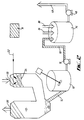
- Figure 2 is a schematic illustration of a typical lime kiln scrubber system, depicting shaded areas representing scale deposits observed in a sulfite pulp mill lime kiln flue gas scrubber system.
- Figure 3 illustrates a schematic representation of a preferred method of practicing the present invention.
- composition of the present invention useful as a deposit control agent to control the formation, deposition and adherency of scale imparting compounds, including calcium sulfite, in an aqueous system comprises a polyether polyamino methylene phosphonate of the formula: where n is an integer or fractional integer which is, or on average is, from about 2 to about 12, inclusive; M is hydrogen or a suitable cation such as alkali metal, ammonium, and suitable cations such as those occuring in alkali metal salts, ammonium salts, or ammonium derrivative salts, for example; and each R may be the same or different and is independently selected from hydrogen and methyl.
- compositions of the above formula is that wherein M is hydrogen, R is methyl, and n is from about 2 to 3, most preferably on average of about 2.6.
- the tetra(aminophosphonate) portion of the structure is essential. Whether these groups are present initially in the phosphonic acid form or as a alkali metal or other salt of the acid, has no real bearing on the performance of the overall molecule. At the pH's under which the compositions of the present invention function, they are, and must be, in their ionized form.
- M is hydrogen or a suitable cation
- ammonium salts NH + 4
- ammonium derivative salts NR + 4 (R - alkyl, etc.), or mixtures thereof, may be used.
- Alkali metal salts are the most simple, and are preferred for that reason.
- a desirable, although not essential structural feature of the polyether polyamino methylene phosphonates useful in the composition and methods of the present invention is the isopropyl group which bridges the diphosphonomethylamino group and the polyether group:
- the isopropyl group has been found to provide enhanced scale inhibition activity under the severe conditions defined herein.
- the next structural element of the polyether polyamino phosphonates to be considered is the polyether moiety: R may be hydrogen or methyl, and thus the polyether moiety is either polyoxyethylene or polyoxpropylene, with the polyoxypropylene being preferred. Since the polyether polyamino methylene phosphonates are prepared by phosphonomethylation of the appropriate diamine, the character of the polyether moiety will depend upon the way in which the amine starting material is made. Processes for making such polyether diamines are known in the art; and attention is directed particularly to U.S. Patent No. 3,236,895, which describes preparation of a variety of polyether diamines especially useful in preparing the phosphonate final products are used as deposit control agents in the present invention.
- n has an average value, i.e., the number of repeating ethyleneoxy or propyleneoxy units may vary. Thus, it is possible to have a mixture of varying chain lengths of polyoxyethylene or polyoxypropylene in the final product. This is also contemplated to be within the scope of the present invention, so long as the requirements with respect to the limit of "n” are observed. Consequently, while “n” is merely defined as an integer or fractional integer which is, or on average is, from about 2 to 12, it has two aspects.
- n is, e.g., 4, it includes 4 propyleneoxy units, 3 propyleneoxy units and 1 ethyleneoxy unit, 2 propyleneoxy units and 2 ethyleneoxy units, and so forth.
- the value of "n” may also represent an average number, and this is always the case, of course, when it is a fractional integer. In this case, for each of the ethyleneoxy and/or propyleneoxy units considered separately, mixtures of these units may be present so as to give an average value for "n". For example, in the table above, for Id. No. D, the total of "a” and "b” is 9.5, which is the value of "n". What is described is a mixture of polyether phosphonates in which all of them have isopropyl bridging group and an ethyleneoxy moiety, but the repeating propyleneoxy units are such that on average their value is about 8.5.
- n The number of repeating ethyleneoxy or oxypropylene units, designated by the subscript "n", determines the total molecular weight of the overall polyether polyamino methylene phosphonate, and thus plays a critical role in determining the scale inhibiting performance of that phosphonate. It has been found that in order to provide adequate scale control under the severe conditions of use defined herein, it is necessary that "n" be an integer or fractional integer which is, or on average is, from about 2 to 12, inclusive.
- the reason for "n" being potentially a fractional integer arises from the fact that the primary diamine from which the polyether polyamino methylene phosphonates are prepared by phosphonomethylation may be a mixture of polyethers in which "n" is two or more of 2, 3,4, 5 and so forth, in varying proportions.
- a preferred polyether polyamino methylene phosphonate for use in the compositions and methods of the present invention has a molecular weight of approximately 632 and the value of "n" on average is about 2.6.
- this type of polyether phosphonate has a molecular weight distribution, i.e., of the various polyoxypropylenes which make it up, and this distribution is represented by a fractional integer average value for "n".
- "n" it is also within the scope of the present invention for "n” to be a whole integer, e.g., "3", which usually designates a single molecular weight and not a molecular weight distribution.
- polyether polyamino methylene phosphonates of the compositions and methods of the present invention are prepared first by phosphonomethylation of the appropriate primary diamine which already contains the polyoxyethylene and polyoxypropylene moieties.
- Such primary amine starting materials and their method of preparation are well known.
- the phosphonomethylation of the primary diamine is then carried out by a Mannich reaction such as that described in K. Moedritzer and R. Irani, J. Organic Chem. 31(5) 1603-7, "The Direct Synthesis of alpha-Aminomethyl Phosphonic Acids; Mannich-Type Reactions with Orthophosphorous Acid", May 1966.
- the primary diamine is added to a mixture of phosphorous acid and water, and concentrated hydrochloric acid is then added slowly, after which the reaction mixture is heated to reflux with addition of aqueous formaldehyde.
- any of the polyether polyamino methylene phosphonate compositions of the present invention are used to inhibit the precipitation, deposition, and adherence of scale-forming salts in an aqueous system, they can be effectively employed for that purpose when added in amounts sufficient to establish a concentration in said aqueous system of from 5 to 30 ppm active scale inhibitor.
- the amounts of that combination which must be added in order to inhibit the formation, deposition and adherence of scale-forming salts in an aqueous system will, as a general matter, be within the ranges of amounts sufficient to establish the ranges of concentrations of the polyether polyamino methylene phosphonates used alone, as recited in detail above. Again, however, calculation of the actual amount is well within the ordinary skill of the art without undue experimentation.
- the phrases “inhibiting the precipitation” and “inhibiting the formation and depositions” are meant to include threshold inhibition, dispersion, solubilization, crystal modification, or particle size reduction.
- the phrases “inhibiting the adherence” and “increasing the non-adherence”, are meant to define the formation of a scale deposit which is easily removed, e.g., by simple rinsing, i.e., a scale deposit which is not so firmly bonded to the surface to which it is attached that it cannot be removed by simple physical means, such as rinsing, as opposed to harsh mechanical (i.e., hydroblasting) or chemical (i.e., acid cleaning) treatment.
- the phrase “100% scale inhibition” refers to the prevention and/or absence of scale deposit formation on surfaces prone to scale formation, regardless of the mechanisms (i.e., inhibition, dispersion, crystal modification, and combinations thereof) whereby such deposit formation is prevented.
- scale-forming salts is meant to include any of the scale-forming salts, including, but not limited to, calcium sulfite, calcium carbonate, calcium sulfate, calcium phosphate, calcium phosphonate (including calcium hydroxyethylidene diphosphonic acid), calcium oxalate, calcium fluoride, barium sulfate, burkeite, and magnesium salts.
- aqueous system means commercial or industrial systems utilizing water, such as gas scrubbers, such as for example lime kiln flue gas scrubbers, evaporators, thermal conditioning equipment, and kraft pulpihg liquor processing systems (green liquor lines, storage tanks, black liquor systems, etc.). Of particular importance are those systems which operate under severe conditions as detailed herein, including high pH and high calcite concentrations. Typical of such systems are cycled up cooling towers, reverse osmosis systems, sugar refining evaporators, pulp mill multiple effect evaporators, pulp mill process water recycle systems, and certain types of gas scrubbers.
- gas scrubbers such as for example lime kiln flue gas scrubbers, evaporators, thermal conditioning equipment, and kraft pulpihg liquor processing systems (green liquor lines, storage tanks, black liquor systems, etc.).
- gas scrubbers such as for example lime kiln flue gas scrubbers, evaporators, thermal conditioning equipment, and kraft pulpihg liquor processing systems (green liquor lines
- any particular polyether polyamino methylene phosphonate composition of the present invention to an aqueous system will also be straightforward to a person of ordinary skill in this art. It may be added in liquid form by mechanical dispensers of known design. It may also be added in diluted liquid form. The polyether polyamino methylene phosphonate composition may also be combined with other chemical treatment agents for dispersing to the aqueous system; and these in combination may be dispensed in liquid form.
- acrylamide acrylamide
- AA acrylic acid
- AMPSA 2 ⁇ acrylamide-methyl propane sulfonic acid
- MAA methacrylic acid
- IA itaconic acid
- PGM polyethylene glycol monomethacrylate
- MAH maleic anhydride
- MA maleic acid
- TBAM t-butyl acrylamide
- SSS sodium styrene sulfonate
- AHPS 3-allyloxy-2-hydroxy propane sulfonic acid
- AHPS vinyl phosponic acid.
- Weight average molecular weights for such polymer additives should range from about 500 to 250,000.
- compositions include copolymers of, on a weight percent basis, 90/10 to 10/90 AA/AMPSA, preferably 75/25 and 60/40 AA/AMPSA.
- Other preferred polymer additives for use with the polyether polyamino methylenephosphonates of the present invention include 100 AA, 75/25 SSS/MA, 33/33/34 AA/MAA/IA, 50/50 AA/AM, 70/20/10 AA/AMPSA/PGM-5 (having 5 repeating oxyethylene units), and AA/AMPSA/TBAM.
- Combinations using these polymers together with the polyether polyamino methylene phosphonate compositions of the present invention can increase the amount of scale control and deposit control which is achieved under the severe conditions described herein.
- the polyether polyamino methylene phosphonate compositions of the present invention can be used in further combination with yet other additives which increase their effectiveness.
- Acceptable corrosion rates depend on the circumstances surrounding each particular use environment, but will usually depend to a large degree on expectations with regard to the life expectancy of the equipment present in said environment. Also, acceptable corrosion almost always implies an absence of pitting attack type corrosion.
- the metals from which such equipment is constructed and which are subject to corrosive attack are primarily steel in its various common forms, including stainless steel, and copper itself or various alloys thereof, particularly brass. All of these metals are subject to corrosive attack, which, under the severe conditions of use of the compositions and methods of the present invention, may be even greater than the extent c corrosive attack which is experienced under more norma conditions; and, therefore, all of these metals will benefi from the use of one or more corrosion inhibitors i conjunction with the polyether polyamino methylene phosphonat scale inhibitors of the present invention.
- concentration of the steel corrosion inhibitor(s) which is required to provide adequate protection against corrosion will depend upon the makeup of the water in the aqueous system being treated, the pH, and the temperature. Generally, however, the desired concentration of the preferred inhibitors recited above will be in the range of from about 0.1 mg/L to about 100 mg/L, preferably from about 1 mg/L to about 25mg/L, and most preferably from about 1 mg/L to about 10 mg/L.
- the concentration of the desired copper corrosion inhibitor which should be used will depend not only on the inhibitor itself, but on such other factors as the yellow metal surface area and total aqueous system volume, the concentration of dissolved and suspended copper, the pH, dissolved solids, and temperature as well. Generally, however, suitable copper corrosion inhibitors will be added in a range of concentrations from about 0.1 to about 100 mg/L, preferably from about 0.5 to about 20 mg/L, and most preferably from about 1 to about 5 mg/L.
- PROCEDURE Scaling water containing 250 mg/L of Ca+ and 600 mg/L of alkalinity at a pH of 9.0 and 55°C was used to evaluate scale inhibition performance of test solutions over a 24 hour period. Test solutions were analyzed by withdrawing 10 g of test solution and adding it to the appropriate container through a 0.2 ⁇ m filter and titrating for calcium and calculating % inhibition by the Schwarzenbach method.
- the polyether plyamino methylene phosphonates used as the test sample were the compositions of the secondary formula set out further above, identified as Id. No. "A” through “J”, including particularly Id. No. "B”, which is the phosphonate of the main formula wherein both R's are methyl, M is hydrogen, n is 2.6 on average, and the resultant molecular weight is, on average, about 600.
- the results obtained are shown in the table of value below. TABLE 1 % CaCO3 SCALE INHIBITION SAMPLE NO.
- the % inhibition was calculated at 4 days, as well as at 24 hours. The results of those evaluations are set out in the table of values below, Table 2.
- TABLE 2 % CaCO3 Scale Inhibition with Polyether Polyamino Phosphonate of molecular Weight about 600 (n 2.6) in Combination with Various Polyelectrolytes Dosage Ratios of Polyelectrolyte: Phosphonate SAMPLE No.
- Apparatus loop includes a hot bath, a cold bath and 3 cells.
- Each cell consists of a jacketed beaker equipped with heat transfer "U" tube (Admiralty Brass), pH controller, level controller, thermometer, air vents and make-up tank. The total volume was 950 ml.
- This pilot cooling system contains two separate test systems: identified as Side A and Side B.
- Each side consists of a recirculating cooling tower with four single tube heat exchangers connected in series.
- the heat exchangers comprise 3/4" (1.875cm) stainless steel and 1/2" (1.27cm) admiralty brass tubes.
- the flow rate through the system was 3.0 gpm producing linear velocities of 2.9 and 7.5 ft/sec (0.88 and 2.286 metres per sec) through the tube heat exchangers.
- the inlet temperature to the first tube heat exchanger was 100°F (37.8°C) and the outlet temperature at the fourth tube heat exchanger was 133°F (56.1°C), for a WT of 23°F (12.8°C) at 10,000 BTU/hr-ft (978,604 joules per hr-m).
- Treatments used were 25 mg/L active: polyether polyamino methylene phosphonate of molecular weight about 600 (Example 1) in Side A; 25 mg/L active: a commercial product consisting of 1:2 of HEDP/AMP combined at 1.5:1 with 60/40 AA/AMPSA in Side B.
- the same makeup water as used in Example 3 was used in the test.
- the scale inhibitor of the present invention reduced the deposit compared to conventional treatment by a factor of 570.
- a diamine having an average molecular weight of about 230 and having the structural formula: H2NCH(CH3)-CH2-[-OCH2CH(CH3)-] 2.6 -NH2 was added to a mixture of phosphorous acid (82 g) and deionized water (65 g) in a one liter resin flask fitted with a condenser, a Teflon stirrer, a thermometer and an additional funnel. It is important to maintain as low a level of iron (Fe) in the reaction as possible, and the most likely source of Fe is the phosphorous acid. The Fe interferes somewhat with the reaction, and consequently a low Fe content phosphorous acid is employed.
- Fe iron
- reaction mixture was then refluxed for an additional period of 3 hrs. While the reaction time depends upon temperature, best results are obtained by refluxing for at least 1/2 hr, preferably 2 to 3 hrs.
- Corrosion test procedures were carried out in an 8L vessel fitted with a heater having a temperature controller, a pump to circulate the water in the test apparatus, a pH monitor and controller to maintain the desired pH, and an aerator to both ensure air saturation, and to introduce carbon dioxide gas as required for pH control.
- the steel coupon specimens for the test were composed of 1010 carbon steel (UNS designation G10100), and these were immersed in the water of the test apparatus. Corrosion penetration rates in mils per year (mpy) were determined gravimetrically after 7 days by the standard ASTM-G1-88 method.
- the composition of the water used in the test apparatus was as follows: Ion Conc.
- polymeric dispersant 5 (mg/L) Ca 208 Mg 128 Cl 416 SO4 1025 SiO2 14 Alkalinity as CaCO3 498 Polymer dispersant 5
- the polymeric dispersant is a random copolymer of approximately (by weight) 70% acrylic acid, 30% acrylamido-(2-methylpropane-1-sulonic acid), and 10% acrylic acid ester of l-hydroxy-penta-ethyleneoxide.]
- the water described above was maintained at a pH of 8.5 and the polyether phosphonate scale inhibitor was the composition used in Example 1 above, which was tested alone, as well as in combination with various steel corrosion inhibitors. The results obtained are shown in the following table of values.
- a northeast kraft pulp mill was experiencing deposition of scale in certain areas of its lime kiln flue gas scrubber system.
- the areas on which deposits were found are illustrated in the shaded areas of Figure 2, and include the inlet and outlet regions of the flue gas scrubber, the scrubber sump tank inlet line, and the scrubber sump tank pump outlet line. Scrubber water from the sump tank 10 of Figure 2 was collected for analysis, which analysis revealed the characteristics set forth in Table 7.
- the lime kiln generally indicated by reference numeral 1 in Figure 1 is fed downwardly with lime mud, via a feeder 3 filled via a line 5.
- Fuel, gas F is admitted via an inlet pipe 7 including a burner, to a to a manifold at the exit (lower) end of the kiln 1.
- Solid product from the kiln is collected via a shoot 17 in a cooling pipe 9 which delivers the product to a container 11.
- Air indicated by "O2" also is allowed to pass from the outside atmosphere up through the cooling pipe into the manifold 7
- Waste gases from the kiln 1 are passed at the upper end of the kiln 1 to a waste heat boiler 13 from which they exit via an outlet 15 as dirty flue gases. These gases are passed to a scrubber as illustrated in Figure 2.In Figure 2 the shaded areas in which deposits were found are indicated by A.
- reference 34 indicates a sump tank into which scrubber water flows via the fire hose 18. Centrifuge filtrate via an inlet 36 and clarifier underflow via an inlet 38 also can be admitted to the sump tank 34. Water from the sump tank 34 can be pumped via a pump 46 and a line 48 to a clarifier (not shown).
- the aqueous solution spray 24 is preferably at a temperature which encourages the contaminants being removed from the dirty flue gas to be dissolved in the aqueous spray 24.
- a temperature which encourages the contaminants being removed from the dirty flue gas to be dissolved in the aqueous spray 24.
- many contaminants will not be dissolved, rather, will be entrained within the aqueous solution 24 along with dissolved contaminants, and will collect at the base 26 of the scrubber 12 and be carried by gravity through a drop leg 14 into the scrubber sump tank 10. Meanwhile, clean flue gasses exit the outlet 28 of the scrubber as illustrated, and are vented using stacks, as is well known to those of ordinary skill in the art.
- the sump tank scrubber water illustrated in Table 7 had a pH of 10.1, the present invention is useful within a variety of pH ranges, including pH of 8.5-12.0.
- the aqueous systems of the present invention being treated will have a pH of 9.0 and higher, and, in the case of black liquor aqueous systems, generally pH 10 and higher and mainly 10.5 and higher.
- the scrubber sump tank 10 collects the dirty aqueous solution containing the contaminants removed from the dirty flue gas by the scrubber 12.
- scale deposits were prominent in the lime kiln scrubber system, and were required to be removed with severe cleaning steps, such as hydroblasting and/or acid cleaning.
- a number of approaches could be used to remove the calcium sulfite scale deposits from the scrubber system of Figure 2, including reducing the calcium concentrations, reducing the sulfite concentrations, changing the calcium sulfite to calcium sulfate (which is 100 times more water soluble than calcium sulfite), increasing the dilution of the scrubber water, and changing the water conditions in the scrubber sump 10.
- One way to reduce the calcium input to the system is to reduce the kiln dust generation.
- One way of accomplishing this is by increasing the sodium content of the lime mud fed to the kiln illustrated in Figure 1. This will cause the lime to form small nodules rather than dust, but creates a risk of ring formation in the kiln.
- One method of adding sodium to the lime mud (which already includes some sodium) is by adding Na2SO4; NaOH; or Na2CO3 to the feeder of the kiln illustrated in Figure 1. Caution should be used, however, in adding sodium to the lime kiln, as too much sodium can create severe problems in kiln operation.
- Sulfite reduction may be achieved by reducing the TRS gas generation or burning the TRS in a recovery boiler. Although both methods would reduce the scaling potential of the scrubber system, each is quite capital intensive.
- FIG. 3 illustrates a treatment method of the present invention which has eliminated the formation, deposition and adherency of scale-forming salts, including calcium sulfite, from the lime kiln flue gas scrubber system illustrated in Figure 2.
- the scale inhibitors of the present invention set forth herein are fed to the aqueous solution 22 through a feed line 30.
- the scale inhibitors of the present invention are split fed, with another feed stream 32 being fed to the scrubber sump tank 10 as illustrated.
- the precise ratio of split feed is not critical, and optimization of split feeding is well within the level of ordinary skill in the art. Split feeding is done to control scale formation in several locations and the ratio of split is determined by the relative scale forming tendencies experienced in those locations.
- the scale inhibitor comprises a blend of 5% by weight TRC-289 and 15% by weight TRC-271, available from Calgon Corporation, Pittsburgh, Pennsylvania.
- the scale inhibitor comprise a polyether polyamino methylene phosphonate and polyme mixture, such as previously described, available as 34 % active TRC-289 solution, available from Calgon Corporation.
- the term "parts per million” or “ppm” refers to parts on a weight basis of scale inhibitor pe million parts on a weight basis of the aqueous system bein treated, unless otherwise specified.
- the precise an optimal treatment feed rates of scale inhibitors of the present invention will vary from one process water to the next, and may vary over time with the same process water depending on variable aqueous systems conditions, such as pH, calcium sulfite saturation level, temperature, presence of multiple scaling salts, etc.
- the optimal scale inhibitor feed rates of any particular aqueous system will therefore be variable, anc will be well within the ability of those ordinarily skilled in the art to determine without undue experimentation.
- a northeast pulp and paper mill was experiencing calcium sulfite deposition in its aqueous systems, including its lime kiln flue gas scrubber system.
- the aqueous system from the sump tank i.e., dirty water collected from the scrubber shower water, had a pH of 11.5-12.0.
- the calcium sulfite saturation ran as high as 400 times saturation level, although could reasonably be expected to vary down to 100 times saturation level.
- Treatment of the aqueous system with a split feed of 5-30 ppm active TRC-289 and preferably 15 ppm active TRC-289 at the shower water and preferably 33 ppm active TRC-289 at the scrubber sump tank resulted in 100% scale inhibition for more than ten weeks of operation.
- Threshold inhibition involves the substoichiometric inhibition of formation of the calcium sulfite molecule which forms according to the equilibrium reaction Ca++ + SO 3 -- CaSO3
- the scale inhibitors of the present invention be fed to the aqueous system being treated before that aqueous system reaches the thermodynamic equilibrium concentration. For this reason, feeding scale inhibitor to the aqueous system prior to the shower spray of the lime kiln flue gas scrubber, as illustrated in Figure 3, is most preferred.
- the scale inhibitor is ideally fed prior to the first effect, when the liquor being concentrated is most dilute with scale forming salts.
- Crystal modification disrupts the crystalline structure of the scale, preventing scale formation. If deposits do form, the crystal molecules are more weakly bonded together, the modified structure of the crystals therefore being "softer" and more easily removed. For this reason, feeding the scale inhibitors of the present invention directly to areas in which large volumes of scale forming salts might collect, such as sump tanks, is beneficial.
- Dispersion prevents agglomeration and deposition of individual calcium sulfite molecules and small calcium sulfite crystals. Dispersion effects are improved if the scale inhibitor is fed to the aqueous system being treated prior to the aqueous system experiencing an increase in sulfite ions, and close to areas of scale deposition before high shear areas, such as nozzles or pumps. For this reason, in the case of lime kiln flue gas scrubber systems, feeding scale inhibitors prior to spray nozzles and pumps as illustrated in Figure 3 is beneficial.
Landscapes
- Chemical & Material Sciences (AREA)
- Engineering & Computer Science (AREA)
- Life Sciences & Earth Sciences (AREA)
- Organic Chemistry (AREA)
- Chemical Kinetics & Catalysis (AREA)
- General Chemical & Material Sciences (AREA)
- Water Supply & Treatment (AREA)
- Environmental & Geological Engineering (AREA)
- Hydrology & Water Resources (AREA)
- Wood Science & Technology (AREA)
- Materials Engineering (AREA)
- Mechanical Engineering (AREA)
- Metallurgy (AREA)
- Preventing Corrosion Or Incrustation Of Metals (AREA)
- Paper (AREA)
- Compositions Of Macromolecular Compounds (AREA)
Abstract

where a in an integer or fractional integer which is, or on average is, from about 2 to about 12, especially from 2 to 3, most preferably about 2.6; M is hydrogen or a suitable cation, each R is independently hydrogen or methyl. Optional additives may be included in the composition.
Description
- The present invention relates to compositions and methods for inhibiting the formation, deposition and adherence of alkaline earth metal scale deposits, especially calcium sulfite (CaS0₃) scale deposits, on metallic surfaces of aqueous systems, especially under conditions of high pH and high calcite concentrations, e.g., those found in lime kiln flue gas scrubber systems, where those compositions comprise polyether polyamino methylene phosphonates.
- Generally, calcium sulfite scale deposits are incrustation coatings which accumulate on the metallic surfaces of a water-carrying system through a number of different causes.
- Various industrial and commercial water-carrying systems are subject to calcium sulfite scale formation problems. Calcium sulfite scale is of particular concern in paper mill process waters, particularly in lime kiln flue gas scrubber systems, such as those found in sulfate pulp mills, particularly where severe conditions including high pH and high calcium sulfite concentrations are encountered.
- Lime kiln flue gas scrubbers serve two purposes; the removal of pollutants, such as SO₂, from the flue gas, and the reclamation of process chemicals for recycling to the pulping process. The scrubber removes both particulates and gases from the lime kiln exhausts. The particulates or dust comprise, for example, calcium oxide and calcium carbonate, while the gases being scrubbed comprise, for example, carbon dioxide and the oxidized TRS gases such as SO₂. The scrubber receives a spray of high pressure filtered water, which water removes the particulates, gases, and heat from the flue gas. The following chemical reactions are typical in the lime kiln flue gas scrubber water system:
CaO+SO₂ → CaSO₃
CaO+CO₂ → CaCO₃
CaO+H₂O → Ca(OH)₂ + heat
- The salts produced in the above reactions, calcium sulfite and calcium carbonate, as well as calcium sulfate when excess oxygen is present, tend to precipitate on the surfaces of the flue gas scrubber system equipment.
- The water employed in these systems ordinarily will contain a number of dissolved salts, and the alkaline earth metal cation calcium is usually prevalent, as is the anion carbonate. The combination product of calcium cation and sulfite, sulfate, and/or carbonate anion will precipitate from the water in which they are carried to form scale deposits when the concentration of the anion and cation comprising the reaction product, i.e., calcium sulfite, exceeds the solubility of the reaction product itself. Thus, when the concentrations of calcium ion and sulfite ion exceed the solubility of the calcium sulfite reaction product, a solid phase of calcium sulfite will form as a precipitate. Precipitation of the reaction product will continue until the solubility product concentrations of the constituent ions are no longer exceeded.
- Numerous factors may be responsible for producing a condition of supersaturation for the reaction product calcium sulfite. Among such factors are changes in the pH of the water system, evaporation of the water phase, rate of heat transfer, amount of dissolved solids, and changes in the temperature or pressure of the system. For example, an increase in temperature of the aqueous system decreases the solubility of calcium sulfite and increases the evaporation rate of the water phase, increasing the concentration of undissolved calcium sulfite available for scale formation.
- For lime kiln flue gas scrubber systems, deposition occurs on the inside walls of the scrubber itself, scrubber water sump tank, agitators, pumps, and related piping. The mechanism of scale formation is apparently one of crystallization of scale-forming salts from solution, primarily from evaporation of the scrubber water upon contact with hot flue gas, increasing the concentration of scale forming salts in the remaining scrubber water collected in the sump tank. Precipitation is also favored due to the heat transfer from the hot flue gases to the scrubber water, because of the inverse solubility relationship of calcium sulfite. As a result, the solubility of the scale-forming calcium sulfite salt reaction product is exceeded and crystallization of calcium sulfite scale results directly on the hot scrubber surface, particularly at the inlet and outlet of the scrubber.
- The formation of calcium salt scale deposits poses a serious problem in a number of regards. Calcium salt scale formation facilitates corrosive processes, and a substantial calcium salt scale deposit will interfere materially with fluid flow. Consequently, calcium salt scale is an expensive problem in many industrial water systems, causing delays and shutdowns for cleaning and removal.
- Although the present invention is directed primarily to preventing or inhibiting the deposition of calcium sulfite scale on lime kiln flue gas scrubber surfaces, the most prevalent type of scale deposit experienced on these surfaces, it is also applicable to inhibiting the deposition of other types of alkaline earth metal scales, on other surfaces exposed to aqueous systems, especially where those are associated with calcium sulfite scale under the severe conditions described herein. For example, most industrial and commercial water contains alkaline earth metal cations, such as calcium and magnesium, etc., anc several anions such a bicarbonate, carbonate, anc phosphate. When combinations of these anions and cations are present in concentrations which exceed the solubility of their reaction products, precipitates form until their product solubility concentrations are no longer exceeded. These precipitates are alkaline earth metal scales. Thus, as used herein, by "alkaline earth metal scales" and "scale forming-salts" is meant scales formed by true alkaline earth metals such as calcium and barium, but also salts of other metals such as magnesium and sodium, including, but not limited to, calcium sulfite, calcium sulfate, calcium carbonate, magnesium carbonate, burkeite (Na₂CO₃·2Na₂SO₄) and calcium phosphate. These scales form frequently in the tubes of heat exchangers and on other heat exchange surfaces, such as those in cooling towers. Particular systems or applications areas where severe conditions lead to exceptional buildup of calcium carbonate and related scales in addition to cycled up cooling towers, include reverse osmosis systems, sugar refining evaporators, and certain types of gas scrubbers.
- The polyether polyamino methylene phosphonates of the present invention are used in the same range of amounts as threshold inhibitors in the scale inhibition method of the present invention, rather than as sequestering or chelating agents, although the compositions of the present invention have dispersant and crystal modification properties as well and significantly reduce the adherency of any scale deposit which is formed, facilitating its easy removal.
- Scale-forming compounds can be prevented from precipitating by inactivating their cations with chelating or sequestering agents, so that the solubility of their reaction products is not exceeded. Generally, this requires many times as much chelating or sequestering agent as cation, since chelation is a stoichiometric reaction, and these amounts are not always desirable or economical. However, several decades ago, it was discovered that certain inorganic polyphosphates would prevent such precipitation when added in amounts far less than the concentrations needed for sequestering or chelating.
- When a precipitation inhibitor is present in a potentially scale-forming system at a markedly lower concentration than that required for sequestering the scale-forming cation (stoichiometric), it is said to be present in "threshold" amounts. See, for example, Hatch and Rice, Indust. Eng. Chem., 31, 51-53 (1939); Reitemeier and Buehrer, J. Phys. Chem., 44 (5), 535-536 (1940); Fink and Richardson U.S. Pat. No. 2,358,222; and Hatch, U.S. Pat. No. 2,539,305.
- Similarly, anionic and cationic polymers can be used as dispersant in accordance with methods known in the art, but the dosage levels necessary to achieve dispersion are in the range of 0.5 - 1.% by weight of the system being treated, which is many orders of magnitude higher that the dosage levels used for the compositions of the present invention. Thus, it is a unique aspect of the present invention that it is possible to achieve essentially non-adherent scale using only threshold inhibitor dosage levels of the composition of the present invention.
- Recently, attention has been focused on controlling scaling under severe conditions, where conventional treatments such as those described above do not provide complete scale control. For example, the conventional 1 treatments, such as use of polyacrylates or HEDP provide good calcium sulfate scale inhibition in the pH range of 3.0-7.0, but at higher pH ranges, such as
pH 10 and higher, ranges typical for lime kiln scrubber water, these treatments form calcium salts and become ineffective. - Current technology in scale control can be used to inhibit CaCO₃ scale up to 100 to 120 times calcite saturation, i.e., a water containing Ca⁺ and CO

- Severity of the scaling tendency of a water sample is measured using the saturation index, which may be derived in accordance with the following equation:

- Calculation and use of the saturation index, and generation of the data from which it is derived, are matter within the skill of the art. See, for example, Critical Stability Constants, Vol. 4: "Inorganic Complexes", Smith & Mantell (1976), Plenum Press; and Aquatic Chemistry, Chap. 5, 2nd ed., Stumm & Morgan (1981), Wiley & Sons.
- In the case of calcium sulfite, as most other scaling salts, concentration of the scaling salt in the aqueous system dictates the degree to which scaling may occur. The effect of concentration is defined by:
Ksp = [Ca][SO₃]
where - Ksp = solubility constant
- [Ca] = concentration of Ca
- [SO₃] = concentration of SO₃
- If the product of the two concentrations exceeds the solubility constant, Ksp, then a driving force for the precipitation of calcium sulfite and scaling is present. This driving force can be expressed by the product of the concentrations divided by Ksp:

- Thus, a driving force of greater than 1 favors precipitation and scaling.
- Another characteristic feature of the severe conditions under which the present invention is especially useful is high pH, i.e., a pH of 8.5 and higher, particularly a pH of 9 or 10 or even higher. A related feature of such severe conditions is high alkalinity.
- One of the particular advantages of the scale inhibiting compositions of the present invention is the exceptional calcium tolerances which they exhibit. Calcium tolerance is a measure of a chemical compound's ability to remain soluble in the presence of calcium ions (Ca⁺). One of the parameters of scale control under severe conditions is pH. As pH increases, calcium tolerance decreases rapidly for traditional CaCo₃ threshold inhibitors, e.g., 1-
hydroxy ethylidene 1,1-diphosphonic acid (HEDP) and amino tri (methylene phosponic acid) (AMP). These inhibitors precipitate with calcium at alkaline pH's, rendering them useless as threshold scale inhibitors. While it is common practice to use an acid feed to the water of, e.g., a cooling tower system in order to lower pH and thus avoid the calcium tolerance problem for conventional inhibits, the danger to handlers which such acid feeding poses makes it all the more important to find scale inhibitors which operate at high pH's. - Early efforts to reduce scale formation in water-carrying systems employed compounds such as tannins, modified lignins, algins, and other similar materials. Chelating or sequestering agents have also been employed to prevent precipitation or crystallization of scale-forming calcium carbonate. Another type of agent which has been actively explored heretofore as a calcium carbonate scale inhibiting material is the threshold active inhibitor. Such materials are effective as scale inhibitors in amounts considerably less than that stoichiometrically required, and this amount, as already mentioned, is termed the threshold amount. Inorganic polyphosphates have long been used as such threshold active inhibitors. For examples of such materials, see Fink, U.S. Patent No. 2,358,222; Hatch, U.S. Patent No. 2,359,305; and Ralston, U.S. Patent No. 3,434,969.
- Certain water soluble polymers, including groups derived from acrylamide and acrylic acid have been used to condition water containing scale-forming calcium carbonate. For example, see U.S. Patent Nos. 2,783,200; 3,514,476; 2,980,610; 3,285,886; 3,463,730; 3,518,204; 3,928,196; 3,965,027; and 4,936,987. In particular, there has been employed anionic polyeletrolytes such as polyacrylates, polymaleic anhydrides, copolymers of acrylates and sulfonates, and polymers of sulfonated styrenes. See, for example U.S. Patent Nos. 4,640,793; 4,650,591; 4,457,847; and 4,671,888. When used as threshold alkaline earth metal scale inhibitors, however, large dosages of these polymers are required, which in turn increases operating costs.
- While various polycarboxylates, including polyacrylic acid, have been used as scale inhibiting agents, as described above, no similar use has been made of polycationic agents, apparently because of the difference in electronic charge and the conventional theories of the mechanisms of action for polymeric threshold inhibitors and dispersant.
- While polyether polyamino methylene phosphonates of the type which comprise an active ingredient of the compositions of the present invention are known, their use for the control of alkaline earth metal scale, particularly calcium sulfite scale, under severe conditions which include elevated pH and high calcium saturation levels, has not heretofore been suggested.
- For example, U.S. Patent No. 4,080,375 discloses methylene phosphonates of amino-terminated oxyalkylates for use as scale inhibitors, but these compositions are not the same as those of the present invention, nor is there any suggestion that such compositions would be useful under severe conditions as defined herein, where phosphonates such as HEDP and AMP give poor results. U.S. Patent No. 4,931,189 discloses aminomethylene phosphonates of the type used in the method of the present invention, but for inhibiting oil filed scale formation involving a high brine environment susceptible to gypsum or barite scale formation. Such use in no way suggests the control of scale under the severe conditions described herein under which the compositions and methods of the present invention operate with surprising success.
- A particular phosphonate which has been marketed for scale control, but apparently not suggested for use under the severe conditions defined herein, is ethanolamine, N,N-dimethylene phosphonic acid, sold under such trademarks as WAYPLEX 61-A and BRIQUEST 221-50A, and described in EP-A-0 384 779; U.S. Patent No. 2,917,528; and U.S. Patent No. 2,964,549.
- U.S. Patent No. 5,338,477 discloses the use of a polyether polyamino methylene phosphonate of the type which comprises an active ingredient of the present invention, but fails to disclose the effectiveness of this inhibitor for treating calcium sulfite.
- The present invention relates to a method of use of a composition as a deposit control agent to control the formation, deposition and adherency of scale imparting compounds including calcium sulfite in an aqueous system of a pulp and/or paper mill, the composition comprising a polyether polyamino phosphonate of the following formula:

- In the method of the present invention there may be added to the said aqueous system, in combination, a polyether polyamino methylene phosphonate of the formula above, together with one or more members selected from the group consisting of homo- and co-polymers including terpolymers comprising one or more of acrylamide, acrylic acid, 2-acrylamide-methyl propane sulfonic acid, methacrylic acid (MAA), itaconic acid, polyethylene glycol monomethacrylate, maleic anhydride (MAH), maleic acid (MA), t-butyl acrylamide, sodium styrene sulfonate, sodium vinyl sulfonate, hydroxy propyl acrylate, hydroxy propyl methacrylate, 3-allyloxy-2-hydroxy propane sulfonic acid, sodium salt, and vinyl phosponic acid, wherein the weight average molecular weight for such polymer additives is in the range of from about 500 to 250,000. In particular, the present invention relates to such compositions wherein said polymer additive is a member selected from the group consisting essentially of, by weight, 90/10 to 10/90 AA/AMPSA, preferably 75/25 and 60/40 AA/AMPSA, 100 AA, 75/25 SSS/MA, 33/33/34 AA/MAA/IA, 50/50 AA/AM, 70/20/10 AA/AMPSA/PGM-5 (having 5 repeating oxyethylene units), and AA/AMPSA/TBAM. Unless otherwise specifically set forth herein to the contrary, all ratios and percentages are expressed on a weight basis.
- The present invention further relates to a method of inhibiting the formation, deposition and adherence of scale-forming salts in an aqueous system, comprising the step of adding to said system an amount sufficient to establish a concentration of from 5 to 30 ppm active of a polyether polyamino methylenephosphonate of the formula above. In particular, the present invention relates to such a method in which calcium sulfite is the scale-forming salt.
- The present invention further relates to a method of inhibiting the formation, deposition and adherence of scale-forming salts in an aqueous system, comprising the step of adding to said system an amount sufficient to establish a concentration of from 5 to 30 ppm active of a composition comprising a polyether polyamino methylene phosphonate of the formula above, together with one or more members selected from the group consisting of: homo- and copolymers including terpolymers comprising one or more of acrylamide (AM), acrylic acid (AA), 2-acrylamide--methyl propane sulfonic acid (AMPSA), methacrylic acid (MAA), itaconic acid (IA), polyethylene glycol monomethacrylate (PGM), maleic anhydride (MAH), maleic acid (MA), t-butyl acrylamide (TBAM), sodium styrene sulfonate (SSS), sodium vinyl sulfonate, hydroxy propyl acrylate, hydroxy propyl methacrylate, 3-allyloxy-2-hydroxy propane sulfonic acid, sodium salt (AHPS), and vinyl phosphonic acid, wherein the weight average molecular weight for such polymer additives is in the range of from about 500 to 250,000. In particular, the present invention relates to such a method in which calcium sulfite is the scale-forming salt, the aqueous system comprises a lime kiln flue gas scrubber system, said composition is added to the aqueous system being treated in an amount sufficient to establish a concentration of from 5 to 30 ppm active scale inhibitor, and said polymer additive is a member selected from the group consisting essentially of, on a weight percent basis, 90/10 to 10/90 AA/AMPSA, preferably 75/25 and 60/40 AA/AMPSA, 100 AA, 75/25 SSS/MA, 33/33/34 AA/MAA/IA, 50/50 AA/AM, 70/20/10 Aa/AMPSA/PGM-5 (having 5 repeating oxyethylene units), and AA/AMPSA/TBAM.
- These and other objects and advantages of the invention will become more readily apparent to those of ordinary skill in the art from the following Brief Description of the Drawings and the Drawings themselves, when taken in conjunction with the Detailed Description of the Invention.
- In the accompanying drawings, the presently preferred embodiments of the invention and preferred methods of practicing the invention are illustrated, by way of example but not limitation, in which:
- Figure 1 illustrates schematically a typical single diameter rotary kiln, such as may be employed as a lime kiln used in pulp mill process chemical production and reclamation.
- Figure 2 is a schematic illustration of a typical lime kiln scrubber system, depicting shaded areas representing scale deposits observed in a sulfite pulp mill lime kiln flue gas scrubber system.
- Figure 3 illustrates a schematic representation of a preferred method of practicing the present invention.
- The composition of the present invention useful as a deposit control agent to control the formation, deposition and adherency of scale imparting compounds, including calcium sulfite, in an aqueous system comprises a polyether polyamino methylene phosphonate of the formula:

- A preferred subclass of compositions of the above formula is that wherein M is hydrogen, R is methyl, and n is from about 2 to 3, most preferably on average of about 2.6.
- In order to obtain high levels of control of scale deposits, especially under the severe conditions defined herein, it has been found that there are certain essential components of the structure of the polyether polyamino methylene phosphonates of the present invention which are necessary to provide that performance. Thus, e.g., the tetra(aminophosphonate) portion of the structure is essential. Whether these groups are present initially in the phosphonic acid form or as a alkali metal or other salt of the acid, has no real bearing on the performance of the overall molecule. At the pH's under which the compositions of the present invention function, they are, and must be, in their ionized form. Thus, it is not critical whether "M" is hydrogen or a suitable cation, and the selection of an appropriate salt form is well within the skill of the art. In addition to alkali metal salts, ammonium salts: NH


- A desirable, although not essential structural feature of the polyether polyamino methylene phosphonates useful in the composition and methods of the present invention is the isopropyl group which bridges the diphosphonomethylamino group and the polyether group:

- The next structural element of the polyether polyamino phosphonates to be considered is the polyether moiety:

- In accordance with the processes set out in U.S. Patent No. 3,236,895 and related processes described in the prior art, it is possible to prepare any one of a number of desired polyether diamines within the scope of the present invention. In the general formula for the polyether polyamino methylene phosphonates used herein, the polyether moiety is simply represented by the formula above. Since R may be hydrogen or methyl, both ethyleneoxy and propyleneoxy units are possible, as already mentioned. Moreover, R is to be independently chosen, i.e., ethyleneoxy and propyleneoxy units may alternate in various patterns, including blocks of each, or they may be all one or the other. For example, the following are just some of the polyether segments which might be prepared to form the basis for the corresponding diamines, which would then be used to make phosphonates within the scope of the present invention (where EO = ethyleneoxy, and PO = propyleneoxy) :
- EO; PO; EO-EO; PO-PO; EO-EO-EO;
- PO-PO-PO; EO-EO-PO; EO-PO-PO; EO-PO-EO;
- PO-EO-PO; EO-EO-EO-EO; PO-PO-PO-PO; EO-PO-PO-PO;
- EO-EO-PO-PO; EO-EO-EO-PO; EO-PO-EO-PO;
- EO-PO-PO-EO; PO-EO-EO-PO
- It will be noted from the table above that in several cases, "n" has an average value, i.e., the number of repeating ethyleneoxy or propyleneoxy units may vary. Thus, it is possible to have a mixture of varying chain lengths of polyoxyethylene or polyoxypropylene in the final product. This is also contemplated to be within the scope of the present invention, so long as the requirements with respect to the limit of "n" are observed. Consequently, while "n" is merely defined as an integer or fractional integer which is, or on average is, from about 2 to 12, it has two aspects. It defines the total of the number of repeating ethyleneoxy and/or propyleneoxy units considered separately, and thus if "n" is, e.g., 4, it includes 4 propyleneoxy units, 3 propyleneoxy units and 1 ethyleneoxy unit, 2 propyleneoxy units and 2 ethyleneoxy units, and so forth. The value of "n" may also represent an average number, and this is always the case, of course, when it is a fractional integer. In this case, for each of the ethyleneoxy and/or propyleneoxy units considered separately, mixtures of these units may be present so as to give an average value for "n". For example, in the table above, for Id. No. D, the total of "a" and "b" is 9.5, which is the value of "n". What is described is a mixture of polyether phosphonates in which all of them have isopropyl bridging group and an ethyleneoxy moiety, but the repeating propyleneoxy units are such that on average their value is about 8.5.
- The number of repeating ethyleneoxy or oxypropylene units, designated by the subscript "n", determines the total molecular weight of the overall polyether polyamino methylene phosphonate, and thus plays a critical role in determining the scale inhibiting performance of that phosphonate. It has been found that in order to provide adequate scale control under the severe conditions of use defined herein, it is necessary that "n" be an integer or fractional integer which is, or on average is, from about 2 to 12, inclusive.
- As discussed above, the reason for "n" being potentially a fractional integer arises from the fact that the primary diamine from which the polyether polyamino methylene phosphonates are prepared by phosphonomethylation may be a mixture of polyethers in which "n" is two or more of 2, 3,4, 5 and so forth, in varying proportions. For example, a preferred polyether polyamino methylene phosphonate for use in the compositions and methods of the present invention has a molecular weight of approximately 632 and the value of "n" on average is about 2.6. Thus, this type of polyether phosphonate has a molecular weight distribution, i.e., of the various polyoxypropylenes which make it up, and this distribution is represented by a fractional integer average value for "n". But, it is also within the scope of the present invention for "n" to be a whole integer, e.g., "3", which usually designates a single molecular weight and not a molecular weight distribution.
- The polyether polyamino methylene phosphonates of the compositions and methods of the present invention are prepared first by phosphonomethylation of the appropriate primary diamine which already contains the polyoxyethylene and polyoxypropylene moieties.
- Such primary amine starting materials and their method of preparation are well known. The phosphonomethylation of the primary diamine is then carried out by a Mannich reaction such as that described in K. Moedritzer and R. Irani, J. Organic Chem. 31(5) 1603-7, "The Direct Synthesis of alpha-Aminomethyl Phosphonic Acids; Mannich-Type Reactions with Orthophosphorous Acid", May 1966. In a typical reaction, the primary diamine is added to a mixture of phosphorous acid and water, and concentrated hydrochloric acid is then added slowly, after which the reaction mixture is heated to reflux with addition of aqueous formaldehyde.
- Although the general structural formula employed herein indicates that the nitrogen atom is completely phosphonomethylated, as a practical matter, preparation of the polyether polyamino methylene phosphonates of the present invention, as described in detail further below, usually results in only about 80 to 90% phosphonomethylation. Other side products give N-substitution with H, CH₃, CH₂OH, etc. It is not practical, as a matter of simple production economics, however, to isolate and purify the completely phosphonomethylated compounds, since the side products just described do not interfere with scale deposit inhibition. Such side products, are consequently, usually allowed to remain, and the test data set out further below is based on test samples containing such side products. Consequently, the activity levels obtained would be even higher were 10% active compound being tested.
- When any of the polyether polyamino methylene phosphonate compositions of the present invention are used to inhibit the precipitation, deposition, and adherence of scale-forming salts in an aqueous system, they can be effectively employed for that purpose when added in amounts sufficient to establish a concentration in said aqueous system of from 5 to 30 ppm active scale inhibitor. It is understood, however, that many factors, of the type which have been explained in detail with regard to the background to the present invention, will determine the actual amount of the polyether polyamino methylene phosphonate compositions of the present invention which will be added to any particular aqueous system in order to achieve the maximum amount of inhibition of alkaline earth metal, especially calcium sulfite scale formation, deposition and adherence in that aqueous system. The calculation and/or on-site determination of those amounts is well within the ordinary skill of the artisan in this field without undue experimentation
- When the polyether polyamino methylene phosphonate compositions of the present invention are used in combination with one or more of the polymers recited further above, the amounts of that combination which must be added in order to inhibit the formation, deposition and adherence of scale-forming salts in an aqueous system, will, as a general matter, be within the ranges of amounts sufficient to establish the ranges of concentrations of the polyether polyamino methylene phosphonates used alone, as recited in detail above. Again, however, calculation of the actual amount is well within the ordinary skill of the art without undue experimentation.
- The phrases "inhibiting the precipitation" and "inhibiting the formation and depositions" are meant to include threshold inhibition, dispersion, solubilization, crystal modification, or particle size reduction. The phrases "inhibiting the adherence" and "increasing the non-adherence", are meant to define the formation of a scale deposit which is easily removed, e.g., by simple rinsing, i.e., a scale deposit which is not so firmly bonded to the surface to which it is attached that it cannot be removed by simple physical means, such as rinsing, as opposed to harsh mechanical (i.e., hydroblasting) or chemical (i.e., acid cleaning) treatment. The phrase "100% scale inhibition" refers to the prevention and/or absence of scale deposit formation on surfaces prone to scale formation, regardless of the mechanisms (i.e., inhibition, dispersion, crystal modification, and combinations thereof) whereby such deposit formation is prevented.
- The phrase "scale-forming salts" is meant to include any of the scale-forming salts, including, but not limited to, calcium sulfite, calcium carbonate, calcium sulfate, calcium phosphate, calcium phosphonate (including calcium hydroxyethylidene diphosphonic acid), calcium oxalate, calcium fluoride, barium sulfate, burkeite, and magnesium salts.
- The phrase "aqueous system" means commercial or industrial systems utilizing water, such as gas scrubbers, such as for example lime kiln flue gas scrubbers, evaporators, thermal conditioning equipment, and kraft pulpihg liquor processing systems (green liquor lines, storage tanks, black liquor systems, etc.). Of particular importance are those systems which operate under severe conditions as detailed herein, including high pH and high calcite concentrations. Typical of such systems are cycled up cooling towers, reverse osmosis systems, sugar refining evaporators, pulp mill multiple effect evaporators, pulp mill process water recycle systems, and certain types of gas scrubbers.
- The manner of addition of any particular polyether polyamino methylene phosphonate composition of the present invention to an aqueous system will also be straightforward to a person of ordinary skill in this art. It may be added in liquid form by mechanical dispensers of known design. It may also be added in diluted liquid form. The polyether polyamino methylene phosphonate composition may also be combined with other chemical treatment agents for dispersing to the aqueous system; and these in combination may be dispensed in liquid form.
- In the embodiments of the present invention described above, it has been contemplated that only a single polyether polyamino methylene phosphonate composition of those described above would be used for the purpose of inhibiting scale. However, it is also contemplated that one of these compositions could be combined with one or more polyelectrolytes so as to provide an even more effective product for the inhibition of scale under the severe conditions described herein.
- For example, there could be used in such a combination one or more members selected from the group consisting of homopolymers, copolymers and terpolymers comprising one or more monomers of acrylamide (AM), acrylic acid (AA), 2· acrylamide-methyl propane sulfonic acid (AMPSA), methacrylic acid (MAA), ethoxylated methacrylate, itaconic acid (IA), polyethylene glycol monomethacrylate (PGM), maleic anhydride (MAH), maleic acid (MA), t-butyl acrylamide (TBAM), sodium styrene sulfonate (SSS), sodium vinyl sulfonate, hydroxy propyl acrylate, hydroxy propyl methacrylate, 3-allyloxy-2-hydroxy propane sulfonic acid (AHPS), and vinyl phosponic acid. Weight average molecular weights for such polymer additives should range from about 500 to 250,000.
- For example, such compositions include copolymers of, on a weight percent basis, 90/10 to 10/90 AA/AMPSA, preferably 75/25 and 60/40 AA/AMPSA. Other preferred polymer additives for use with the polyether polyamino methylenephosphonates of the present invention include 100 AA, 75/25 SSS/MA, 33/33/34 AA/MAA/IA, 50/50 AA/AM, 70/20/10 AA/AMPSA/PGM-5 (having 5 repeating oxyethylene units), and AA/AMPSA/TBAM.
- Combinations using these polymers together with the polyether polyamino methylene phosphonate compositions of the present invention can increase the amount of scale control and deposit control which is achieved under the severe conditions described herein.
- In addition to the polymer additives described above, the polyether polyamino methylene phosphonate compositions of the present invention can be used in further combination with yet other additives which increase their effectiveness. Thus, it is possible, and often desirable, to use one or more steel and/or copper corrosion inhibitors along with the polyether polyamino methylene phosphonate scale inhibitor in order to obtain corrosion rates which are acceptable. Acceptable corrosion rates depend on the circumstances surrounding each particular use environment, but will usually depend to a large degree on expectations with regard to the life expectancy of the equipment present in said environment. Also, acceptable corrosion almost always implies an absence of pitting attack type corrosion. The nature of the equipment involved will depend on the application area, but usually the metals from which such equipment is constructed and which are subject to corrosive attack, are primarily steel in its various common forms, including stainless steel, and copper itself or various alloys thereof, particularly brass. All of these metals are subject to corrosive attack, which, under the severe conditions of use of the compositions and methods of the present invention, may be even greater than the extent c corrosive attack which is experienced under more norma conditions; and, therefore, all of these metals will benefi from the use of one or more corrosion inhibitors i conjunction with the polyether polyamino methylene phosphonat scale inhibitors of the present invention.
- With regard to corrosion inhibitors for steel and it alloys, it has been found that, surprisingly, not al corrosion inhibitors, including those which perform well wit known phosphonate scale inhibitors used in the prior art, an might, therefore, be expected to provide adequate protection are suitable for use with the polyether palomino methylen phosphonate scale inhibitors of the present invention. Thi is yet another instance in which the polyether phosphonate of the present invention are characteristically unique. Fo example, it has been found that the molybdate and nitrit classes of corrosion protection, especially against pitting attack type corrosion, are not suitable for use with the polyether phosphonate scale inhibitors of the present invention.
- On the other hand, there are numerous steel corrosion inhibitors which are suitable, and such suitability can be readily determined in accordance with the simple tes procedures detailed in the description of preferred embodiments which follows. Thus, it is within the ordinary skill of the artisan to determine which steel corrosion inhibitors would be suitable, and all such inhibitors art contemplated to be a part of the present invention. Having carried out the test procedures referred to above, it has been determined that the following steel corrosion inhibitor provide adequate levels of corrosion protection, including protection against pitting attack type corrosion, when use in combination with the polyether phosphonate scale inhibitor of the present invention:
- hexametaphosphate,
- orthophosphate,
- pyrophosphate,
- hydroxyphosphonoacetic acid (HPA),
- 2-phosphonobutane-1,2,4-tricarboxylic acid (PBTC),
- manganese [Mn(II)+], and
- zinc [Zn(II)⁺].
- The concentration of the steel corrosion inhibitor(s) which is required to provide adequate protection against corrosion will depend upon the makeup of the water in the aqueous system being treated, the pH, and the temperature. Generally, however, the desired concentration of the preferred inhibitors recited above will be in the range of from about 0.1 mg/L to about 100 mg/L, preferably from about 1 mg/L to about 25mg/L, and most preferably from about 1 mg/L to about 10 mg/L.
- With regard to corrosion inhibitors for copper and its alloys, again it is possible to determine which copper corrosion inhibitors are suitable by utilizing the simple test procedures described in detail in the preferred embodiments further below. Using such procedures, it has been determined that the following are suitable copper corrosion inhibitors for use with the polyether polyamino methylene phosphonate scale inhibitors of the present invention:
- benzotriazole,
- tolyltriazole,
- 2-mercaptobenzothiazole,
- combinations of tolyltriazole and mercaptobenzothizole as described in U.S. Patent No. 4,675,158
- higher alkylbenzotriazoles of the type described in EP-A-0 397 454, and combinations thereof as described in EP-A-0 462, 809,
- alkoxybenzotriazoles and combinations thereof as described in EP-A-0 478, 247, and
- phenyl mercaptotetrazole and combinations thereof as described in EP-A-O 462 666.
- The concentration of the desired copper corrosion inhibitor which should be used will depend not only on the inhibitor itself, but on such other factors as the yellow metal surface area and total aqueous system volume, the concentration of dissolved and suspended copper, the pH, dissolved solids, and temperature as well. Generally, however, suitable copper corrosion inhibitors will be added in a range of concentrations from about 0.1 to about 100 mg/L, preferably from about 0.5 to about 20 mg/L, and most preferably from about 1 to about 5 mg/L.
- The following examples are presented for the purpose of illustrating the present invention, but are not intended to be in any way a limitation thereof.
- In order to demonstrate the improved scale inhibition performance of the polyether polyamino methylene phosphonates used in the method of the present invention, the following procedure was used:
- PROCEDURE: Scaling water containing 250 mg/L of Ca⁺ and 600 mg/L of alkalinity at a pH of 9.0 and 55°C was used to evaluate scale inhibition performance of test solutions over a 24 hour period. Test solutions were analyzed by withdrawing 10 g of test solution and adding it to the appropriate container through a 0.2µm filter and titrating for calcium and calculating % inhibition by the Schwarzenbach method.
- The polyether plyamino methylene phosphonates used as the test sample were the compositions of the secondary formula set out further above, identified as Id. No. "A" through "J", including particularly Id. No. "B", which is the phosphonate of the main formula wherein both R's are methyl, M is hydrogen, n is 2.6 on average, and the resultant molecular weight is, on average, about 600. The results obtained are shown in the table of value below.
TABLE 1 % CaCO₃ SCALE INHIBITION SAMPLE NO. 20 ppm 25 ppm 30 ppm 40 ppm 50 ppm A 94 ― 100 ― 99 B 97 92 95 96 94 C 73 ― 97 ― 99 D ― 85 ― ― 84 E ― 89 ― ― 91 F ― 85 ― ― 84 G 79 ― 83 ― 83 AMP ― ― ― ― 52 - Following the test procedures described in Example 1 above, the polyether polyamino methylene phosphonate of the present invention having a molecular weight of about 600 (n = 2.6) was evaluated in combination with several polyelectrolytes. In addition, in order to evaluate the scale inhibiting activity of the combinations over a period of time, the % inhibition was calculated at 4 days, as well as at 24 hours. The results of those evaluations are set out in the table of values below, Table 2.
TABLE 2 % CaCO₃ Scale Inhibition with Polyether Polyamino Phosphonate of molecular Weight about 600 (n = 2.6) in Combination with Various Polyelectrolytes Dosage Ratios of Polyelectrolyte: Phosphonate SAMPLE No. POLYELECTROLYTE (ppm) 1:5:1 1:1 1:1.5 1:2 1:3 1:4 3 60/40 AA/AMPSA 20 44.0 - 60.0 - 73.0 84.5 24 Hour 30 47.0 - 77.0 84.5 88.0 - 40 49.0 83.1 95.0 97.2 93.2 - 50 53.0 94.4 96.8 - 98.0 - 4 75/25 AA/AMPSA 50 24 Hour - - 95.7 - - 97.1 4 Day - - 78.3 - - 91.3 5 50/50 SSS/MA (Versa TL-7) 50 24 Hour - 94.1 95.6 - - 92.6 4 Day - 70.6 94.1 - - 88.2 6 75/25 AA/AHPS (Aquatreat CPA-III) 50 24 Hour - 82.3 82.3 - - 89.7 4 Day - 55.9 82.3 - - 91.1 7 75/25 SSS/MA (Versa TL-4) 50 24 Hour - 88.4 88.4 - - 92.8 4 Day - - - - - 86.9 8 100 AA 50 24 Hour - - - - - 92.8 4 Day - - - - - 79.7 9 33/33/34/AA/MAA/IA 50 24 Hour - - - - - 88.4 4 Day - - - - - 59.4 10 AA/AM (C-20) 50 24 Hour - - - 85.5 91.3 - 4 Day - - - 78.3 72.5 - 11 70/20/10 AA/AMPSA/PGM-5 20 - - 77.0 - 72.0 - 24 Hour 30 - - 88.0 - 85.0 - 40 - - 88.0 - 96.0 - 50 - - 91.0 - 96.0 - - The polyether polyamino methylene phosphonate of the present invention having a molecular weight of about 600 (n = 2.6), as well as combinations with various polyelectrolytes, were tested for their ability to control scale adherence on heat transfer surfaces.
- Apparatus loop includes a hot bath, a cold bath and 3 cells. Each cell consists of a jacketed beaker equipped with heat transfer "U" tube (Admiralty Brass), pH controller, level controller, thermometer, air vents and make-up tank. The total volume was 950 ml.
-
- 1. Tubes precleaned with 50:50 HC1:H₂O, rinsed with deionized H₂0, and scoured with a nylon pad.
- 2. Water baths for the jacketed beaker and U tube are set to maintain temperature of bulk water at 50-55°C.
- 3. Position "U" tubes in lids so that the same amount of tubing is exposed in each cell.
- 4. Add enough preheated H₂0 to cover pH electrode bulb; add desired amount of inhibitor solution; add 120 mg/L of Ca⁺⁺. Adjust pH to 7.5 ± 0.1 using 1.0 N NaOH.
- 5. Mix volume alkalinity solution to give 180 mg/L HCO₃ with the remaining preheated H₂0 and immediately add to the cell. pH should rise to 9.0 ± 0.1.
- 6. Air flow is adjusted to give an evaporation rate of 2/3 L/day.
- 7. Makeup tank contains stable solution of 60 mg/L Ca⁺⁺ and 90 mg/L HCO3 - which is added on demand as the water in the jacketed beaker evaporates. This concentrates and supersaturates the Ca⁺⁺:CO3 --. The test is run for five to six days to concentrate the solution until 325 mg/L Ca⁺⁺ and 486 mg/l HCO3 - are present,
pH 9, 55°C to give approximately 300 times CaCO₃ saturation. - 8. Once the appropriate supersaturation is attained, the makeup tank is switched to deionized water and the tests are contained for 24 hours. Total test time is 6 days.
- Rinse any deposit or coating from tube with 1:3 HC1:H₂0 into beaker, and wash tube well with distilled H₂0 into same beaker. Neutralize washing to pH 4-7 with conc. NaOH solution. Transfer to 250 ml volumetric; dilute to mark. Analyze 25 ml aliquots for Ca by titrating with 0.01M EDTA solution. Reporting as mg Ca tube deposit.
- Using the procedure described above, the deposit weights obtained were illustrated in Table 3 below.
TABLE 3 CaCO₃ Scale Adherence with Polyether Polyamino Phosphonate of Molecular Weight about 600 (n = 2.6) in Combination with Various Polyelectrolytes at a Dose of 25 mg/L Active TREATMENT (mg) RATIO Ca (mg) TUBE DEPOSIT Phosphonate Control 65.0 Exp. 1 alone 3.89 Exp. 1 + 60/40 AA/AMPSA 3:1 0.64 0.39 4:1 0.56 0.35 Exp. 1 + 50/50 SSS/MA (Versa TL-7) 1.5:1 0.70 0.40 4:1 1.3 0.68 Exp. 1 + 70/20/10 AA/AMPSA/PGM-5 4:1 0.96 0.50 - The above test results indicate great improvement over the blank and substantial improvement in activity compared to the polyether polyamino methylene phosphonate used alone.
- Further testing of the ability of the polyether polyamino methylene phosphonate compositions of the present invention to prevent deposits was performed in a pilot cooling tower. This pilot cooling system contains two separate test systems: identified as Side A and Side B. Each side consists of a recirculating cooling tower with four single tube heat exchangers connected in series. The heat exchangers comprise 3/4" (1.875cm) stainless steel and 1/2" (1.27cm) admiralty brass tubes. The flow rate through the system was 3.0 gpm producing linear velocities of 2.9 and 7.5 ft/sec (0.88 and 2.286 metres per sec) through the tube heat exchangers. The inlet temperature to the first tube heat exchanger was 100°F (37.8°C) and the outlet temperature at the fourth tube heat exchanger was 133°F (56.1°C), for a WT of 23°F (12.8°C) at 10,000 BTU/hr-ft (978,604 joules per hr-m).
Treatments used were 25 mg/L active: polyether polyamino methylene phosphonate of molecular weight about 600 (Example 1) in Side A; 25 mg/L active: a commercial product consisting of 1:2 of HEDP/AMP combined at 1.5:1 with 60/40 AA/AMPSA in Side B. The same makeup water as used in Example 3 was used in the test. The systems were cycled up to 5.4 cycles of concentration giving a target of 300X (times) calcite saturation. The systems were held at the target cycles by controlling the conductivity of the water for 24 days. The pH was not controlled by acid, but allowed to establish its own equilibrium. After 24 days the heat transfer tubes were pulled and deposit weights for the two treatments determined. Results were as follows:TABLE 4 Total Deposit Weights from 12" Cross-Sections Treatment A Exp. 1 0.0973 g Treatment B HEDP/AMP/AA/AMPSA 5.55 g - The scale inhibitor of the present invention reduced the deposit compared to conventional treatment by a factor of 570.
- A diamine having an average molecular weight of about 230 and having the structural formula: H₂NCH(CH₃)-CH₂-[-OCH₂CH(CH₃)-]2.6-NH₂ (56.2 g) was added to a mixture of phosphorous acid (82 g) and deionized water (65 g) in a one liter resin flask fitted with a condenser, a Teflon stirrer, a thermometer and an additional funnel. It is important to maintain as low a level of iron (Fe) in the reaction as possible, and the most likely source of Fe is the phosphorous acid. The Fe interferes somewhat with the reaction, and consequently a low Fe content phosphorous acid is employed.
- There was then added slowly to the reaction mixture 50 mL of concentrated HC1. The reaction mixture was subsequently heated to reflux (107°C). The temperature should be at least 95°C, but the best results are obtained when the reaction mixture is heated to reflux. After the reaction mixture reached reflux, there was added 150 g of 37% aqueous HCHO, which was added dropwise over a period of about 45 min. In order to obtain the best results, the ratio of HCHO to diamine starting material should be at least 4:1 on a molar basis, and preferably somewhat higher, as was the case in this synthesis.
- The reaction mixture was then refluxed for an additional period of 3 hrs. While the reaction time depends upon temperature, best results are obtained by refluxing for at least 1/2 hr, preferably 2 to 3 hrs.
- The reaction mixture was then cooled, at 97.2 g of volatiles were stripped off at 50°C using a rotary evaporator. A total of 303.4 g of product was obtained, with a theoretical activity of 48%. P₃₁ NMR indicated that at least about 85% of the -NH groups has been phosphonomethylated. Impurities included unreacted phosphorous acid, formaldehyde, phosphoric acid, methanolphosphonic acid, and other unidentified phosphorous compounds.
- It has been found that the scale control performance of the polyether polyamino methylene phosphonates of the present invention depends to some extent, although not a very significant extent, on the variations in the process parameters described above. Best results are obtained, consequently, by employing the optimum conditions as outlined above.
- Corrosion test procedures were carried out in an 8L vessel fitted with a heater having a temperature controller, a pump to circulate the water in the test apparatus, a pH monitor and controller to maintain the desired pH, and an aerator to both ensure air saturation, and to introduce carbon dioxide gas as required for pH control. The steel coupon specimens for the test were composed of 1010 carbon steel (UNS designation G10100), and these were immersed in the water of the test apparatus. Corrosion penetration rates in mils per year (mpy) were determined gravimetrically after 7 days by the standard ASTM-G1-88 method. The composition of the water used in the test apparatus was as follows:
Ion Conc. (mg/L) Ca 208 Mg 128 Cl 416 SO₄ 1025 SiO₂ 14 Alkalinity as CaCO₃ 498 Polymer dispersant 5 TABLE 5 Steel Corrosion Rates at pH 8.5 SPECIMEN APPEARANCE TREATMENT CONC. (mg/1) CORROSION RATE (mpy) Before Removing Corr. Products After Removing Corr. Products Exp.1 20.4 4.0 Dense black spots pitting Exp.1 + 20.4 3.0 Dense black spots pitting Zn 3 Exp.1 + 20.4 6.4 Dense black pitting molybdate nodules Exp.1 + 20.4 3.7 Dense black pitting nitrite + 100 nodules PBTC 10 Exp.1 + 20.4 0.9 only slight fine No pitting HPA 10 brown spots - A northeast kraft pulp mill was experiencing deposition of scale in certain areas of its lime kiln flue gas scrubber system. The mill's previous treatment, using a scale inhibitor known as CUSTOMSPERSE and sold by Betz, resulted in scale formation after two weeks of operation, requiring shutdown and cleaning. The areas on which deposits were found are illustrated in the shaded areas of Figure 2, and include the inlet and outlet regions of the flue gas scrubber, the scrubber sump tank inlet line, and the scrubber sump tank pump outlet line. Scrubber water from the
sump tank 10 of Figure 2 was collected for analysis, which analysis revealed the characteristics set forth in Table 7.TABLE 7 Parameter Lime Kiln Scrubber Sump Tank pH @ 22°C 10.1 P Alkalinity as CaCo₃, ppm 100 M Alkalinity as CaCo₃, ppm 7200 Total Solids @ 105°C, % 0.91 Dissolved, Cl, ppm 13 Dissolved Ortho PO₄, ppm <8 Dissolved SO₄, ppm 378 Dissolved Oxalate, C₂0₄ <8 Dissolved Ca, ppm 3200 Total Ca, ppm 3200 Dissolved Mg, ppm 14 Total Mg, ppm 80 Dissolved Fe, ppm <0.4 Total Fe, ppm 11 Dissolved Cu, ppm <0.2 Total Cu, ppm <0.2 Dissolved Al, ppm <0.4 Total Al, ppm 10 Dissolved Ba, ppm <0.1 Total Ba, ppm 1.6 Dissolved Zn, ppm <0.2 Total Zn, ppm 3.2 - The lime kiln generally indicated by
reference numeral 1 in Figure 1 is fed downwardly with lime mud, via afeeder 3 filled via a line 5. Fuel, gas F is admitted via an inlet pipe 7 including a burner, to a to a manifold at the exit (lower) end of thekiln 1. Solid product from the kiln is collected via ashoot 17 in acooling pipe 9 which delivers the product to acontainer 11. Air indicated by "O₂" also is allowed to pass from the outside atmosphere up through the cooling pipe into the manifold 7 - Waste gases from the
kiln 1 are passed at the upper end of thekiln 1 to awaste heat boiler 13 from which they exit via anoutlet 15 as dirty flue gases. These gases are passed to a scrubber as illustrated in Figure 2.In Figure 2 the shaded areas in which deposits were found are indicated by A. - In Figure 2,
reference 34 indicates a sump tank into which scrubber water flows via thefire hose 18. Centrifuge filtrate via aninlet 36 and clarifier underflow via aninlet 38 also can be admitted to thesump tank 34. Water from thesump tank 34 can be pumped via apump 46 and aline 48 to a clarifier (not shown). - Analysis over a period of months of the
scrubber 12,scrubber drop leg 14,scrubber sump tank 10,sump tank pump 16, andfirehose 18 revealed that the deposits collecting in the shaded areas of Figure 2 comprised approximately 65-90% CaSO₃ and approximately 1-20% CaCO₃. In the flue gas scrubber system in Figure 2, dirty flue gasses, for example, from a lime kiln, Figure 1, are directed into theinlet 20 of thescrubber 12. An aqueous solution, which may be high pressure filteredwater 22, is sprayed into thescrubber 12 in the path of the dirty flue gas entering thescrubber inlet 20. Spray nozzles well known to those of ordinary skill in the art may be used for this purpose, producing ashower spray 24. Theaqueous solution spray 24 is preferably at a temperature which encourages the contaminants being removed from the dirty flue gas to be dissolved in theaqueous spray 24. Of course, many contaminants will not be dissolved, rather, will be entrained within theaqueous solution 24 along with dissolved contaminants, and will collect at thebase 26 of thescrubber 12 and be carried by gravity through adrop leg 14 into thescrubber sump tank 10. Meanwhile, clean flue gasses exit theoutlet 28 of the scrubber as illustrated, and are vented using stacks, as is well known to those of ordinary skill in the art. - Although the sump tank scrubber water illustrated in Table 7 had a pH of 10.1, the present invention is useful within a variety of pH ranges, including pH of 8.5-12.0. In general, the aqueous systems of the present invention being treated will have a pH of 9.0 and higher, and, in the case of black liquor aqueous systems, generally
pH 10 and higher and mainly 10.5 and higher. - The
scrubber sump tank 10 collects the dirty aqueous solution containing the contaminants removed from the dirty flue gas by thescrubber 12. - As is apparent from the shaded regions of Figure 2, scale deposits were prominent in the lime kiln scrubber system, and were required to be removed with severe cleaning steps, such as hydroblasting and/or acid cleaning.
- A number of approaches could be used to remove the calcium sulfite scale deposits from the scrubber system of Figure 2, including reducing the calcium concentrations, reducing the sulfite concentrations, changing the calcium sulfite to calcium sulfate (which is 100 times more water soluble than calcium sulfite), increasing the dilution of the scrubber water, and changing the water conditions in the
scrubber sump 10. - Calcium enters the system illustrated in Figure 2 via kiln dust carried into the scrubber with the dirty flue gas. One way to reduce the calcium input to the system is to reduce the kiln dust generation. One way of accomplishing this is by increasing the sodium content of the lime mud fed to the kiln illustrated in Figure 1. This will cause the lime to form small nodules rather than dust, but creates a risk of ring formation in the kiln. One method of adding sodium to the lime mud (which already includes some sodium) is by adding Na₂SO₄; NaOH; or Na₂CO₃ to the feeder of the kiln illustrated in Figure 1. Caution should be used, however, in adding sodium to the lime kiln, as too much sodium can create severe problems in kiln operation.
- Sulfite reduction may be achieved by reducing the TRS gas generation or burning the TRS in a recovery boiler. Although both methods would reduce the scaling potential of the scrubber system, each is quite capital intensive.
- Yet another way to reduce the deposition of calcium sulfite is to alter the chemistry of the system so as to favor the formation of calcium sulfate, which is 100 times more soluble than calcium sulfite. In order to do this, it is necessary to increase the oxygen, and hence the airflow, in the kiln illustrated in Figure 1. This, however, increases the thermal requirements of the kiln, resulting in increased energy consumption and operating cost. Accordingly, most lime kilns prefer to operate as oxygen-lean as possible, making conversion of CaSO₃ to CaSO₄ an economically unattractive option.
- Because scale deposition is a function of concentration of the scaling salt in the solution of interest, another way to reduce scaling is to increase the dilution of that scaling salt. One way to do this is to decrease the amount of material dissolved; another is to increase the volume of solution. This, however, results in a requirement for increased water volume usage and treatment, potentially resulting in more or larger holding tanks, clarifiers, etc. Figure 3 illustrates a treatment method of the present invention which has eliminated the formation, deposition and adherency of scale-forming salts, including calcium sulfite, from the lime kiln flue gas scrubber system illustrated in Figure 2.
- The reference numerals in Figure 3 which also appear in Figure 2 indicate the same items. In the embodiment of Figure 3, the scale inhibitors of the present invention set forth herein are fed to the
aqueous solution 22 through a feed line 30. Preferably, the scale inhibitors of the present invention are split fed, with anotherfeed stream 32 being fed to thescrubber sump tank 10 as illustrated. The precise ratio of split feed is not critical, and optimization of split feeding is well within the level of ordinary skill in the art. Split feeding is done to control scale formation in several locations and the ratio of split is determined by the relative scale forming tendencies experienced in those locations. - In a preferred embodiment of the invention, the scale inhibitor comprises a blend of 5% by weight TRC-289 and 15% by weight TRC-271, available from Calgon Corporation, Pittsburgh, Pennsylvania. In a most highly preferred embodiment of the invention, the scale inhibitor comprise a polyether polyamino methylene phosphonate and polyme mixture, such as previously described, available as 34 % active TRC-289 solution, available from Calgon Corporation.
- As used herein, the term "parts per million" or "ppm" refers to parts on a weight basis of scale inhibitor pe million parts on a weight basis of the aqueous system bein treated, unless otherwise specified. The precise an optimal treatment feed rates of scale inhibitors of the present invention will vary from one process water to the next, and may vary over time with the same process water depending on variable aqueous systems conditions, such as pH, calcium sulfite saturation level, temperature, presence of multiple scaling salts, etc. As will now be readily appreciated, the optimal scale inhibitor feed rates of any particular aqueous system will therefore be variable, anc will be well within the ability of those ordinarily skilled in the art to determine without undue experimentation. In general, in the case of treating calcium sulfite-containing aqueous systems, as the CaSO₃ saturation level and/or temperature and/or pH of the aqueous system increases, the feed rate requirements of scale inhibitor needed to provide 100% scale inhibition also increases, as will now be readily apparent to those of ordinary skill in the art. In general, for most aqueous systems of the type described herein, a feed rate of 5-30 ppm active TRC-289 will be beneficial, particularly when fed to shower water for a lime kiln flue gas scrubber, to control calcium sulfite. Other applications may, of course, require different feed rates.
- In the case of the use of the blend of 5% TRC-289 and 15% TRC-271 (by weight), a split feed rate of 29 parts per million to the
shower water 22, and 59 parts per million to thesump tank 10 has proven beneficial. In the case of the use of 34% TRC-289 solution, a feed rate of 16ppm, active TRC-289, based on a spray shower flow of 125 gpm, has proven to be highly preferable. - A northeast pulp and paper mill was experiencing calcium sulfite deposition in its aqueous systems, including its lime kiln flue gas scrubber system. The aqueous system from the sump tank, i.e., dirty water collected from the scrubber shower water, had a pH of 11.5-12.0. The calcium sulfite saturation ran as high as 400 times saturation level, although could reasonably be expected to vary down to 100 times saturation level. Treatment of the aqueous system with a split feed of 5-30 ppm active TRC-289 and preferably 15 ppm active TRC-289 at the shower water and preferably 33 ppm active TRC-289 at the scrubber sump tank, resulted in 100% scale inhibition for more than ten weeks of operation.
- While the mechanisms by which the formation, deposition, and adherency of scale-forming salts by the scale inhibitors of the present invention are not completely understood, it is believed that threshold inhibition, crystal modification, and dispersion play significant roles in the marked scale reduction achieved.
- Threshold inhibition involves the substoichiometric inhibition of formation of the calcium sulfite molecule which forms according to the equilibrium reaction
Ca⁺⁺ + SO3 -- CaSO₃
- Thus, it is preferred that the scale inhibitors of the present invention be fed to the aqueous system being treated before that aqueous system reaches the thermodynamic equilibrium concentration. For this reason, feeding scale inhibitor to the aqueous system prior to the shower spray of the lime kiln flue gas scrubber, as illustrated in Figure 3, is most preferred. In the case of multiple effect evaporation, for example, in the case of black/green liquors, the scale inhibitor is ideally fed prior to the first effect, when the liquor being concentrated is most dilute with scale forming salts.
- Crystal modification disrupts the crystalline structure of the scale, preventing scale formation. If deposits do form, the crystal molecules are more weakly bonded together, the modified structure of the crystals therefore being "softer" and more easily removed. For this reason, feeding the scale inhibitors of the present invention directly to areas in which large volumes of scale forming salts might collect, such as sump tanks, is beneficial.
- Dispersion prevents agglomeration and deposition of individual calcium sulfite molecules and small calcium sulfite crystals. Dispersion effects are improved if the scale inhibitor is fed to the aqueous system being treated prior to the aqueous system experiencing an increase in sulfite ions, and close to areas of scale deposition before high shear areas, such as nozzles or pumps. For this reason, in the case of lime kiln flue gas scrubber systems, feeding scale inhibitors prior to spray nozzles and pumps as illustrated in Figure 3 is beneficial.
- This invention and many of its attendant advantages will be understood from the foregoing description, and it will now be apparent to those of ordinary skill in the art that various modifications and changes can be made to the method for inhibiting formation, deposition and adherency of scale without departing from the spirit and scope of the invention or sacrificing all of its material advantages, the methods hereinbefore described being merely presently preferred embodiments. Accordingly, it is to be understood that the invention is to be better realized from the attached claims and the full scope of equivalents to which each is entitled. Additionally, the present invention has been described above in terms cf representative figures and embodiments, intended to be illustrative and enabling to those of ordinary skill in the art, but not self-limiting. Furthermore, while many objects and advantages of the invention have been set forth, it is understood and intended that the invention, and all exclusive rights thereto, is defined by the full scope of the following claims, and not by the objects and advantages.


Claims (14)
- A method of inhibiting the formation, deposition and adherence of scale-forming salts in an aqueous system of a pulp and/or a paper mill comprising the step of adding to the aqueous system a deposit control agent to control the formation, deposition and adherence of the scale forming salts in the system, wherein the deposit control agent comprises a polyether polyamino methylene phosphonate of the following formula:

- A method according to Claim 1 and wherein M is hydrogen, both R's are methyl, and n is on average about 2.6, with a resultant molecular weight of about 600.
- A method according to Claim 1 and wherein the said composition has the following structure, where "Z" is methylenephosphonate:

a b Rz Ra Rb 2 1 CH₃ H CH₃ 2 0 CH₃ CH₃ --- 8.5* 1 CH₃ H CH₃ 5.6* 0 CH₃ CH₃ --- 2 0 H H --- 3 0 H H --- 3 0 CH₃ CH₃ --- 3 1 H CH₃ H 4 0 H CH₃ --- and wherein * = the value of "n" on average. - A method according to Claim 1, 2 or 3 and which additionally includes adding to said aqueous system a steel corrosion inhibitor and a copper corrosion inhibitor.
- A method according to Claim 4 wherein the steel corrosion inhibitor comprises hydroxyphosphonoacetic acid (HPA), and the copper corrosion inhibitor comprises tolyltriazole.
- A method according to any one of the preceding Claims and wherein the said deposit control agent additionally includes a polymer additive comprising one or more homopolymers or copolymers including terpolymers comprising one or more monomers of acrylamide (AM), acrylic acid (AA), 2-acrylamide-methyl propane sulfonic acid (AMPSA), methacrylic acid (MAA), ethoxylated methacrylate, itaconic acid (IA), polyethylene glycol monomethacrylate (PGM), maleic anhydride (MAH), maleic acid (MA), t-butyl acrylamide, sodium styrene sulfonate (SSS), sodium vinyl sulfonate, hydroxy propyl acrylate, hydroxy propyl methacrylate, 3-allyloxy-2-hydroxy propane sulfonic acid (AHPS), and vinyl phosphonic acid, wherein the weight average molecular weight for such polymer additives is in the range of from about 500 to 250,000.
- A method according to Claim 6 and wherein the polymer additive is selected from the group consisting of polyacrylic acid and copolymers of, on a weight percent basis, 75/25 and 60/40 AA/AMPSA, 75/25 SSA/MA, 33/33/34 AA/MAA/IA, 50/50 AA/AM, and 70/20/10 AA/AMPSA/PGM-5 (having 5 repeating oxyethylene units).
- A method according to any one of the preceding claims and wherein the scale-forming salts comprise calcium sulfite and calcium carbonate and said phosphonate is added to the aqueous system being treated in an amount sufficient to establish a concentration of from about 5 to 30 ppm of said phosphonate on an active basis.
- A method according to any one of claims 1 to 8 and and which is a method of inhibiting the formation, deposition, and adherency of scale-forming salts, including calcium sulfite, in a lime kiln flue gas scrubber system comprising flue gas scrubber means, aqueous solution spray means and scrubber collection means the method comprising the steps of:a) passing dirty lime kiln flue gas into an inlet of said flue gas scrubber means;b) spraying an aqueous solution using said aqueous solution spray means into the path of said dirty flue gas gas entering said flue gas scrubber means, thereby removing gas and particulate contaminates from said dirty flue gas and entraining contaminates from said dirty flue gas in said aqueous solution to yield a clean flue gas and a dirty aqueous solution;c) venting said clean flue gas from said flue gas scrubber means; andd) collecting said dirty aqueous solution in said scrubber collection means;
said aqueous solution including said phosphonate composition. - A method according to Claim 9 and wherein said polyether polyamino methylene phosphonate is split-fed, a portion thereof being fed to said aqueous solution prior to said aqueous solution spray means, and a portion thereof being fed directly to said scrubber collection means.
- A method according to Claim 9 or 10 and comprising the additional step of adding sodium in the form of a compound selected from the group consisting of Na₂SO₄; NaOH; and Na₂CO₃ to lime mud being fed to a lime kiln generating said dirty flue gases, thereby reducing dust generation in said kiln.
- An aqueous system of a pulp and/or a paper mill and which system is treated by the method according to any one of Claims 1 to 11.
- An aqueous system according to Claim 12 and wherein the aqueous system contains scale-forming calcium salts including calcium sulfite and is characterised by high pH and high calcium salt saturation level, wherein the pH is at least 8.5 and the calcium salt saturation level is at least 150X.
- An aqueous system according to claim 12 or claim 13 and wherein the aqueous system comprises a lime kiln flue gas scrubber system or a multiple effect pulp mill evaporator.
Applications Claiming Priority (2)
| Application Number | Priority Date | Filing Date | Title |
|---|---|---|---|
| US08/338,016 US5534157A (en) | 1994-11-10 | 1994-11-10 | Polyether polyamino methylene phosphonates for high pH scale control |
| US338016 | 1994-11-10 |
Publications (2)
| Publication Number | Publication Date |
|---|---|
| EP0711733A1 true EP0711733A1 (en) | 1996-05-15 |
| EP0711733B1 EP0711733B1 (en) | 1999-08-25 |
Family
ID=23323044
Family Applications (1)
| Application Number | Title | Priority Date | Filing Date |
|---|---|---|---|
| EP95308007A Expired - Lifetime EP0711733B1 (en) | 1994-11-10 | 1995-11-09 | Polyether polyamino methylene phosphonates for high pH scale control |
Country Status (7)
| Country | Link |
|---|---|
| US (1) | US5534157A (en) |
| EP (1) | EP0711733B1 (en) |
| JP (1) | JPH08224595A (en) |
| CA (1) | CA2162518C (en) |
| DE (1) | DE69511659T2 (en) |
| ES (1) | ES2138153T3 (en) |
| FI (1) | FI119930B (en) |
Cited By (4)
| Publication number | Priority date | Publication date | Assignee | Title |
|---|---|---|---|---|
| WO2001085616A3 (en) * | 2000-05-05 | 2002-05-16 | Rhodia Cons Spec Ltd | Scale and corrosion inhibitors |
| WO2008071691A2 (en) | 2006-12-11 | 2008-06-19 | Thermphos Trading Gmbh | Reactive phosphonates |
| WO2018195288A1 (en) * | 2017-04-20 | 2018-10-25 | Ecolab Usa Inc. | Scale control in phosphoric acid production and handling plants |
| WO2021209795A1 (en) * | 2020-04-17 | 2021-10-21 | Italmatch Chemicals S.P.A. | New synergic composition for scale inhibition |
Families Citing this family (17)
| Publication number | Priority date | Publication date | Assignee | Title |
|---|---|---|---|---|
| US5593595A (en) * | 1995-10-06 | 1997-01-14 | Calgon Corporation | Method for controlling scale using a synergistic phosphonate combination |
| US5707529A (en) * | 1996-09-24 | 1998-01-13 | Calgon Corporation | Method for controlling scale in an aqueous system using a synergistic combination |
| PT1392914E (en) * | 2001-06-06 | 2011-02-03 | Dequest Ag | Method and aqueous composition for the production of improved pulp |
| MY138251A (en) * | 2001-06-06 | 2009-05-29 | Thermphos Trading Gmbh | Method for inhibiting calcium salt scale |
| MY129053A (en) * | 2001-06-06 | 2007-03-30 | Thermphos Trading Gmbh | Composition for inhibiting calcium salt scale |
| JP2007022956A (en) * | 2005-07-15 | 2007-02-01 | Mitsubishi Gas Chem Co Inc | Method for producing high purity aminomethylene phosphonic acid |
| US7807021B2 (en) * | 2006-06-21 | 2010-10-05 | Blackstone Michael M | Compositions and processes to increase pulp yield, reduce extractives, and reduce scaling in a chemical pulping process |
| CN101652326B (en) * | 2007-01-24 | 2012-07-04 | 栗田工业株式会社 | Method for the treatment with reverse osmosis membrane |
| US8834675B2 (en) * | 2009-08-21 | 2014-09-16 | Honeywell Asca Inc. | Liquid composition sensor in scaling environment |
| JP6029744B2 (en) * | 2013-03-29 | 2016-11-24 | 三菱電機株式会社 | Water quality diagnostic method, water quality diagnostic device and water heater system |
| EP3060568B1 (en) * | 2013-10-25 | 2019-04-03 | Monsanto Technology LLC | Method for the synthesis of ethane-1-hydroxy-1,1-diphosphonic acid |
| US10307706B2 (en) | 2014-04-25 | 2019-06-04 | Ada Carbon Solutions, Llc | Sorbent compositions for use in a wet scrubber unit |
| US9765286B2 (en) * | 2014-12-22 | 2017-09-19 | Ecolab Usa Inc. | Warewashing composition containing alkanol amine phosphonate and methods of use |
| EP3056476B1 (en) * | 2015-02-16 | 2017-05-10 | Sabanci Üniversitesi | An additive for suspensions |
| DE102017200430A1 (en) * | 2017-01-12 | 2018-07-12 | CHT Germany GmbH | Deposition prevention in pulp production after the sulphate process (power digestion) |
| WO2020251772A1 (en) * | 2019-06-11 | 2020-12-17 | Ecolab Usa Inc. | Corrosion inhibitor formulation for geothermal reinjection well |
| AU2022473729A1 (en) * | 2022-08-11 | 2025-01-23 | Ecolab Usa Inc. | Detergent compositions with enhanced anti-scaling efficacy |
Citations (3)
| Publication number | Priority date | Publication date | Assignee | Title |
|---|---|---|---|---|
| EP0516382A1 (en) * | 1991-05-31 | 1992-12-02 | Calgon Corporation | Polyether polyamino methylene phosphonates for high pH scale control |
| EP0569220A2 (en) * | 1992-05-07 | 1993-11-10 | Calgon Corporation | Stabilization of polyether polyamino methylene phosphonate scale inhibitors |
| EP0593250A1 (en) * | 1992-10-15 | 1994-04-20 | Calgon Corporation | Synergistic antimicrobial combination of polyether phosphonates and non-oxidizing biocides |
Family Cites Families (48)
| Publication number | Priority date | Publication date | Assignee | Title |
|---|---|---|---|---|
| US2358222A (en) * | 1940-05-11 | 1944-09-12 | Nat Aluminate Corp | Art of treating water for industrial consumption |
| US2539305A (en) * | 1943-10-09 | 1951-01-23 | Hall Lab Inc | Threshold treatment of water |
| US2783200A (en) * | 1951-11-03 | 1957-02-26 | Dearborn Chemicals Co | Sludge conditioning and dispersing agents for boiler water treatment |
| US2980610A (en) * | 1956-07-13 | 1961-04-18 | Monsanto Chemicals | Process for treating water |
| US2917528A (en) * | 1956-08-24 | 1959-12-15 | Victor Chemical Works | Alkanolaminealkanephosphonic acids and salts thereof |
| US2964549A (en) * | 1958-06-16 | 1960-12-13 | Victor Chemical Works | Alkanolaminealkanephosphonic acids and derivatives thereof |
| US3285886A (en) * | 1961-07-17 | 1966-11-15 | Grace W R & Co | Threshold treatment of water with water dispersible complexing polymers |
| US3463730A (en) * | 1965-08-05 | 1969-08-26 | American Cyanamid Co | Prevention of and removal of scale formation in water systems |
| US3514476A (en) * | 1966-09-28 | 1970-05-26 | Monsanto Co | Making basic zinc double salts of o,o-dialkyl phosphorodithioic acids |
| US3434969A (en) * | 1967-08-11 | 1969-03-25 | Calgon Corp | Scale inhibiting |
| US3518204A (en) * | 1967-11-01 | 1970-06-30 | Betz Laboratories | Control of the rate of precipitate growth and of precipitation in aqueous systems |
| US4080375A (en) * | 1971-02-05 | 1978-03-21 | Petrolite Corporation | Methylene phosphonates of amino-terminated oxyalkylates and uses therefor |
| US3976589A (en) * | 1971-08-04 | 1976-08-24 | Monsanto Company | Methods of scale inhibition |
| AU473185B2 (en) * | 1973-07-25 | 1976-06-17 | Mooch Domsjo Aktiebolag | A method for producing oxidized white liquor |
| US3928196A (en) * | 1973-12-05 | 1975-12-23 | Calgon Corp | Inhibition of scale deposition |
| US3965027A (en) * | 1974-03-11 | 1976-06-22 | Calgon Corporation | Scale inhibition and corrosion inhibition |
| US4299652A (en) * | 1978-07-31 | 1981-11-10 | Ebara Corporation | Process for recovery of pulp mill chemicals |
| US4330487A (en) * | 1980-10-29 | 1982-05-18 | Petrolite Corporation | N,N-Dimethylene phosponic acids of alkylene diamines |
| GB2112370B (en) * | 1981-09-04 | 1984-09-26 | Ciba Geigy Ag | Inhibition of scale formation and corrosion in aqueous systems |
| US4457847B2 (en) * | 1981-11-05 | 1996-12-31 | Nalco Chemical Co | Carboxylate polymers for internal scale control agents in boiler systems |
| US4936987A (en) * | 1983-03-07 | 1990-06-26 | Calgon Corporation | Synergistic scale and corrosion inhibiting admixtures containing carboxylic acid/sulfonic acid polymers |
| US4640793A (en) * | 1984-02-14 | 1987-02-03 | Calgon Corporation | Synergistic scale and corrosion inhibiting admixtures containing carboxylic acid/sulfonic acid polymers |
| GB2161468B (en) * | 1984-07-11 | 1988-05-25 | Ciba Geigy Ag | Scale inhibition |
| US4618448A (en) * | 1984-11-09 | 1986-10-21 | Calgon Corporation | Carboxylic/sulfonic/polyalkylene oxide polymer for use as scale, corrosion, and iron oxide deposit control |
| US4671888A (en) * | 1984-12-03 | 1987-06-09 | Calgon Corporation | Polyelectrolyte and surfactant compositions for controlling alkaline earth metal scales |
| US4650591A (en) * | 1985-08-29 | 1987-03-17 | Calgon Corporation | Acrylic acid/2-acrylamido-2-methylpropylsulfonic acid/2-acrylamido-2-methylpropyl phosphonic acid polymers as scale and corrosion inhibitors |
| US4649025A (en) * | 1985-09-16 | 1987-03-10 | W. R. Grace & Co. | Anti-corrosion composition |
| US4872996A (en) * | 1987-03-13 | 1989-10-10 | The Dow Chemical Company | Use of aminophosphonic acids to inhibit scale formation and corrosion caused by manganese in water systems |
| US5124046A (en) * | 1987-08-03 | 1992-06-23 | Calgon Corporation | Method for controlling calcium carbonate scaling in high pH aqueous systems |
| US4818506A (en) * | 1988-01-15 | 1989-04-04 | Nalco Chemical Company | Gypsum scale inhibitors for flue gas desulfurization systems |
| US4834955A (en) * | 1988-04-26 | 1989-05-30 | Nalco Chemical Company | Chemical formulation and combined process for inhibiting deposition and corrosion in cooling water and gypsum scaling in flue gas desulfurization scrubber systems |
| US4931189A (en) * | 1988-11-02 | 1990-06-05 | Petrolite Corporation | Methods for inhibition of scale in high brine environments |
| GB8904256D0 (en) * | 1989-02-24 | 1989-04-12 | Warwick Int Ltd | Scale inhibition |
| US5051532A (en) * | 1989-12-15 | 1991-09-24 | W. R. Grace & Co.-Conn. | N,N-bis-phosphonomethyl taurine N-oxide and water-soluble salts thereof |
| US5019343A (en) * | 1989-12-15 | 1991-05-28 | W. R. Grace & Co.-Conn. | Control of corrosion in aqueous systems using certain phosphonomethyl amines |
| US4973744A (en) * | 1989-12-15 | 1990-11-27 | W. R. Grace & Co.-Conn. | Ethoxylated N,N-bis-phosphonomethyl 2-(hydroxy)ethylamine N-oxides and water-soluble salts thereof |
| US5167866A (en) * | 1989-12-15 | 1992-12-01 | W. R. Grace & Co. Conn. | Control of corrosion in aqueous systems using certain phosphonomethyl amine oxides |
| US5069798A (en) * | 1989-12-15 | 1991-12-03 | W. R. Grace & Co.-Conn. | Control of scale in aqueous systems using certain phosphonomethyl amines |
| US4977292A (en) * | 1989-12-15 | 1990-12-11 | W. R. Grace & Co.-Conn. | 4-phosphonomethyl-2-hydroxy-2-oxo-1,4,2-oxazaphosphorinane N-oxide and water-soluble salts thereof |
| ZA905799B (en) * | 1989-12-15 | 1991-05-29 | Grace W R & Co | Control of scale in aqueous systems using certain phosphonomethyl amine oxides |
| US5087376A (en) * | 1990-10-15 | 1992-02-11 | Calgon Corporation | Multifunctional scale inhibitors |
| US5338477A (en) * | 1991-05-31 | 1994-08-16 | Calgon Corporation | Polyether polyamino methylene phosphonates for high pH scale control |
| US5158685A (en) * | 1991-07-12 | 1992-10-27 | Betz Laboratories, Inc. | Inhibition of silica and silicate deposition in cooling water systems |
| US5322636A (en) * | 1992-03-30 | 1994-06-21 | Calgon Corporation | Polyether polyamino methylene phosphonate n-oxides for high pH scale control |
| US5262061A (en) * | 1992-07-01 | 1993-11-16 | Calgon Corporation | Zinc, iron and manganese stabilization using polyether polyamino methylene phosphonates |
| US5300231A (en) * | 1992-08-05 | 1994-04-05 | Calgon Corporation | Controlling silica/silicate deposition using phosphonate combinations |
| US5378368A (en) * | 1992-08-05 | 1995-01-03 | Calgon Corporation | Controlling silica/silicate deposition using polyether polyamino methylene phosphonates |
| US5368830A (en) * | 1992-10-15 | 1994-11-29 | Calgon Corporation | Scale control in gold and silver mining heap leach and mill water circuits using polyether polyamino methylene phosphonates |
-
1994
- 1994-11-10 US US08/338,016 patent/US5534157A/en not_active Expired - Lifetime
-
1995
- 1995-11-09 CA CA002162518A patent/CA2162518C/en not_active Expired - Fee Related
- 1995-11-09 EP EP95308007A patent/EP0711733B1/en not_active Expired - Lifetime
- 1995-11-09 DE DE69511659T patent/DE69511659T2/en not_active Expired - Fee Related
- 1995-11-09 ES ES95308007T patent/ES2138153T3/en not_active Expired - Lifetime
- 1995-11-10 FI FI955431A patent/FI119930B/en not_active IP Right Cessation
- 1995-11-10 JP JP7292516A patent/JPH08224595A/en not_active Withdrawn
Patent Citations (3)
| Publication number | Priority date | Publication date | Assignee | Title |
|---|---|---|---|---|
| EP0516382A1 (en) * | 1991-05-31 | 1992-12-02 | Calgon Corporation | Polyether polyamino methylene phosphonates for high pH scale control |
| EP0569220A2 (en) * | 1992-05-07 | 1993-11-10 | Calgon Corporation | Stabilization of polyether polyamino methylene phosphonate scale inhibitors |
| EP0593250A1 (en) * | 1992-10-15 | 1994-04-20 | Calgon Corporation | Synergistic antimicrobial combination of polyether phosphonates and non-oxidizing biocides |
Cited By (12)
| Publication number | Priority date | Publication date | Assignee | Title |
|---|---|---|---|---|
| WO2001085616A3 (en) * | 2000-05-05 | 2002-05-16 | Rhodia Cons Spec Ltd | Scale and corrosion inhibitors |
| US6814885B2 (en) | 2000-05-05 | 2004-11-09 | Rhodia Consumer Specialties Limited | Scale and corrosion inhibitors |
| WO2008071691A2 (en) | 2006-12-11 | 2008-06-19 | Thermphos Trading Gmbh | Reactive phosphonates |
| WO2008071691A3 (en) * | 2006-12-11 | 2008-10-02 | Thermphos Trading Gmbh | Reactive phosphonates |
| RU2487879C2 (en) * | 2006-12-11 | 2013-07-20 | Деквест Аг | Reactive phosphonates |
| WO2018195288A1 (en) * | 2017-04-20 | 2018-10-25 | Ecolab Usa Inc. | Scale control in phosphoric acid production and handling plants |
| CN108726494A (en) * | 2017-04-20 | 2018-11-02 | 艺康美国股份有限公司 | Dirt control in phosphoric acid production and processing equipment |
| US10584049B2 (en) | 2017-04-20 | 2020-03-10 | Ecolab Usa Inc. | Scale control in phosphoric acid production and handling plants |
| US11027998B2 (en) | 2017-04-20 | 2021-06-08 | Ecolab Usa Inc. | Scale control in phosphoric acid production and handling plants |
| RU2765778C2 (en) * | 2017-04-20 | 2022-02-02 | ЭКОЛАБ ЮЭсЭй ИНК. | Control of scale formation in phosphoric acid production and processing plants |
| CN108726494B (en) * | 2017-04-20 | 2023-05-02 | 艺康美国股份有限公司 | Scale control in phosphoric acid production and treatment plants |
| WO2021209795A1 (en) * | 2020-04-17 | 2021-10-21 | Italmatch Chemicals S.P.A. | New synergic composition for scale inhibition |
Also Published As
| Publication number | Publication date |
|---|---|
| CA2162518A1 (en) | 1996-05-11 |
| FI955431L (en) | 1996-05-11 |
| FI119930B (en) | 2009-05-15 |
| CA2162518C (en) | 2008-04-22 |
| FI955431A0 (en) | 1995-11-10 |
| JPH08224595A (en) | 1996-09-03 |
| DE69511659T2 (en) | 1999-12-16 |
| ES2138153T3 (en) | 2000-01-01 |
| US5534157A (en) | 1996-07-09 |
| DE69511659D1 (en) | 1999-09-30 |
| EP0711733B1 (en) | 1999-08-25 |
Similar Documents
| Publication | Publication Date | Title |
|---|---|---|
| EP0516382B1 (en) | Polyether polyamino methylene phosphonates for high pH scale control | |
| US5338477A (en) | Polyether polyamino methylene phosphonates for high pH scale control | |
| US5534157A (en) | Polyether polyamino methylene phosphonates for high pH scale control | |
| CA2035207C (en) | Methods of controlling scale formation in aqueous systems | |
| US4913823A (en) | Process for dissolving and removing scale from aqueous systems | |
| US5087376A (en) | Multifunctional scale inhibitors | |
| JPS60143899A (en) | Scale inhibiting composition and method | |
| AU662398B2 (en) | Polyether polyamino methylene phosphonate N-oxides for high pH scale control | |
| EP0564248A1 (en) | N-(2-hydroxyethyl)-N-bis(methylenephosphonic acid) and corresponding N-oxide thereof for high pH scale control | |
| US4581145A (en) | Composition and method for inhibiting scale | |
| EP0564232B1 (en) | N,N-bis(phosphonomethyl)-2-amino-1-propanol derivatives for high pH scale control | |
| US4556493A (en) | Composition and method for inhibiting scale | |
| US4978456A (en) | Method for inhibiting scale and corrosion in water systems | |
| US5707529A (en) | Method for controlling scale in an aqueous system using a synergistic combination | |
| CA1207211A (en) | Composition and method for inhibiting scale | |
| AU719896B2 (en) | A method for controlling scale in an aqueous system using a synergistic combination | |
| US5772913A (en) | Aqueous system containing a synergistic combination for scale control | |
| US5580462A (en) | Controlling calcium carbonate and calcium phosphate scale in an aqueous system using a synergistic combination | |
| CA1224999A (en) | Composition and method for inhibiting scale | |
| US5593595A (en) | Method for controlling scale using a synergistic phosphonate combination | |
| US5709814A (en) | Aqueous system containing a synergistic phosphonate scale control combination | |
| EP0309049A1 (en) | Method for controlling calcium carbonate scaling in high PH aqueous systems using carboxylic/sulfonic polymers | |
| EP0767145B1 (en) | Use of a synergistic composition for scale control | |
| CA2187121A1 (en) | Aqueous system containing a synergistic phosphonate scale control combination | |
| MXNL01000038A (en) | Integral chemical treatment for internal water of steam. |
Legal Events
| Date | Code | Title | Description |
|---|---|---|---|
| PUAI | Public reference made under article 153(3) epc to a published international application that has entered the european phase |
Free format text: ORIGINAL CODE: 0009012 |
|
| 17P | Request for examination filed |
Effective date: 19951116 |
|
| AK | Designated contracting states |
Kind code of ref document: A1 Designated state(s): BE DE ES FR GB IT NL SE |
|
| 17Q | First examination report despatched |
Effective date: 19961213 |
|
| GRAG | Despatch of communication of intention to grant |
Free format text: ORIGINAL CODE: EPIDOS AGRA |
|
| GRAG | Despatch of communication of intention to grant |
Free format text: ORIGINAL CODE: EPIDOS AGRA |
|
| GRAH | Despatch of communication of intention to grant a patent |
Free format text: ORIGINAL CODE: EPIDOS IGRA |
|
| GRAH | Despatch of communication of intention to grant a patent |
Free format text: ORIGINAL CODE: EPIDOS IGRA |
|
| GRAA | (expected) grant |
Free format text: ORIGINAL CODE: 0009210 |
|
| AK | Designated contracting states |
Kind code of ref document: B1 Designated state(s): BE DE ES FR GB IT NL SE |
|
| ITF | It: translation for a ep patent filed | ||
| REF | Corresponds to: |
Ref document number: 69511659 Country of ref document: DE Date of ref document: 19990930 |
|
| ET | Fr: translation filed | ||
| REG | Reference to a national code |
Ref country code: ES Ref legal event code: FG2A Ref document number: 2138153 Country of ref document: ES Kind code of ref document: T3 |
|
| PLBE | No opposition filed within time limit |
Free format text: ORIGINAL CODE: 0009261 |
|
| STAA | Information on the status of an ep patent application or granted ep patent |
Free format text: STATUS: NO OPPOSITION FILED WITHIN TIME LIMIT |
|
| 26N | No opposition filed | ||
| REG | Reference to a national code |
Ref country code: GB Ref legal event code: IF02 |
|
| PGFP | Annual fee paid to national office [announced via postgrant information from national office to epo] |
Ref country code: NL Payment date: 20041018 Year of fee payment: 10 |
|
| PGFP | Annual fee paid to national office [announced via postgrant information from national office to epo] |
Ref country code: GB Payment date: 20041103 Year of fee payment: 10 |
|
| PGFP | Annual fee paid to national office [announced via postgrant information from national office to epo] |
Ref country code: SE Payment date: 20041122 Year of fee payment: 10 |
|
| PGFP | Annual fee paid to national office [announced via postgrant information from national office to epo] |
Ref country code: ES Payment date: 20041209 Year of fee payment: 10 |
|
| PGFP | Annual fee paid to national office [announced via postgrant information from national office to epo] |
Ref country code: BE Payment date: 20041216 Year of fee payment: 10 |
|
| PG25 | Lapsed in a contracting state [announced via postgrant information from national office to epo] |
Ref country code: IT Free format text: LAPSE BECAUSE OF NON-PAYMENT OF DUE FEES;WARNING: LAPSES OF ITALIAN PATENTS WITH EFFECTIVE DATE BEFORE 2007 MAY HAVE OCCURRED AT ANY TIME BEFORE 2007. THE CORRECT EFFECTIVE DATE MAY BE DIFFERENT FROM THE ONE RECORDED. Effective date: 20051109 Ref country code: GB Free format text: LAPSE BECAUSE OF NON-PAYMENT OF DUE FEES Effective date: 20051109 |
|
| PG25 | Lapsed in a contracting state [announced via postgrant information from national office to epo] |
Ref country code: SE Free format text: LAPSE BECAUSE OF NON-PAYMENT OF DUE FEES Effective date: 20051110 Ref country code: ES Free format text: LAPSE BECAUSE OF NON-PAYMENT OF DUE FEES Effective date: 20051110 |
|
| PG25 | Lapsed in a contracting state [announced via postgrant information from national office to epo] |
Ref country code: BE Free format text: LAPSE BECAUSE OF NON-PAYMENT OF DUE FEES Effective date: 20051130 |
|
| PG25 | Lapsed in a contracting state [announced via postgrant information from national office to epo] |
Ref country code: NL Free format text: LAPSE BECAUSE OF NON-PAYMENT OF DUE FEES Effective date: 20060601 |
|
| EUG | Se: european patent has lapsed | ||
| GBPC | Gb: european patent ceased through non-payment of renewal fee |
Effective date: 20051109 |
|
| NLV4 | Nl: lapsed or anulled due to non-payment of the annual fee |
Effective date: 20060601 |
|
| REG | Reference to a national code |
Ref country code: ES Ref legal event code: FD2A Effective date: 20051110 |
|
| BERE | Be: lapsed |
Owner name: *CALGON CORP. Effective date: 20051130 |
|
| PGFP | Annual fee paid to national office [announced via postgrant information from national office to epo] |
Ref country code: FR Payment date: 20081117 Year of fee payment: 14 |
|
| PGFP | Annual fee paid to national office [announced via postgrant information from national office to epo] |
Ref country code: DE Payment date: 20081223 Year of fee payment: 14 |
|
| PGFP | Annual fee paid to national office [announced via postgrant information from national office to epo] |
Ref country code: IT Payment date: 20091128 Year of fee payment: 15 |
|
| PGRI | Patent reinstated in contracting state [announced from national office to epo] |
Ref country code: IT Effective date: 20091201 |
|
| REG | Reference to a national code |
Ref country code: FR Ref legal event code: ST Effective date: 20100730 |
|
| PG25 | Lapsed in a contracting state [announced via postgrant information from national office to epo] |
Ref country code: FR Free format text: LAPSE BECAUSE OF NON-PAYMENT OF DUE FEES Effective date: 20091130 |
|
| PG25 | Lapsed in a contracting state [announced via postgrant information from national office to epo] |
Ref country code: DE Free format text: LAPSE BECAUSE OF NON-PAYMENT OF DUE FEES Effective date: 20100601 |
|
| PG25 | Lapsed in a contracting state [announced via postgrant information from national office to epo] |
Ref country code: IT Free format text: LAPSE BECAUSE OF NON-PAYMENT OF DUE FEES Effective date: 20101109 |