EP0705249B1 - Palladium catalyzed vinylic substitution reactions with 2-substituted-pyridines - Google Patents
Palladium catalyzed vinylic substitution reactions with 2-substituted-pyridines Download PDFInfo
- Publication number
- EP0705249B1 EP0705249B1 EP94920966A EP94920966A EP0705249B1 EP 0705249 B1 EP0705249 B1 EP 0705249B1 EP 94920966 A EP94920966 A EP 94920966A EP 94920966 A EP94920966 A EP 94920966A EP 0705249 B1 EP0705249 B1 EP 0705249B1
- Authority
- EP
- European Patent Office
- Prior art keywords
- formula
- compound
- propenoate
- hydrogen
- hydroxymethyl
- Prior art date
- Legal status (The legal status is an assumption and is not a legal conclusion. Google has not performed a legal analysis and makes no representation as to the accuracy of the status listed.)
- Expired - Lifetime
Links
- 0 CC(*)C(*)C(*)c1nc(CO)ccc1O* Chemical compound CC(*)C(*)C(*)c1nc(CO)ccc1O* 0.000 description 1
Classifications
-
- C—CHEMISTRY; METALLURGY
- C07—ORGANIC CHEMISTRY
- C07D—HETEROCYCLIC COMPOUNDS
- C07D213/00—Heterocyclic compounds containing six-membered rings, not condensed with other rings, with one nitrogen atom as the only ring hetero atom and three or more double bonds between ring members or between ring members and non-ring members
- C07D213/02—Heterocyclic compounds containing six-membered rings, not condensed with other rings, with one nitrogen atom as the only ring hetero atom and three or more double bonds between ring members or between ring members and non-ring members having three double bonds between ring members or between ring members and non-ring members
- C07D213/04—Heterocyclic compounds containing six-membered rings, not condensed with other rings, with one nitrogen atom as the only ring hetero atom and three or more double bonds between ring members or between ring members and non-ring members having three double bonds between ring members or between ring members and non-ring members having no bond between the ring nitrogen atom and a non-ring member or having only hydrogen or carbon atoms directly attached to the ring nitrogen atom
- C07D213/60—Heterocyclic compounds containing six-membered rings, not condensed with other rings, with one nitrogen atom as the only ring hetero atom and three or more double bonds between ring members or between ring members and non-ring members having three double bonds between ring members or between ring members and non-ring members having no bond between the ring nitrogen atom and a non-ring member or having only hydrogen or carbon atoms directly attached to the ring nitrogen atom with hetero atoms or with carbon atoms having three bonds to hetero atoms with at the most one bond to halogen, e.g. ester or nitrile radicals, directly attached to ring carbon atoms
- C07D213/62—Oxygen or sulfur atoms
- C07D213/63—One oxygen atom
- C07D213/65—One oxygen atom attached in position 3 or 5
Definitions
- the present invention relates to an improved process for the preparation of substituted pyridine derivatives.
- Substituted pyridine derivatives are disclosed in WO93/06085 as medicaments being useful for the treatment of various diseases such as psoriasis.
- the present invention therefore provides, in a first aspect, a process for the preparation of a compound of formula (I) or a salt or N-oxide thereof: in which
- R 1 is a group of formula (A) where R 5 is C 1-6 alkoxy, for example methoxy.
- R 1 is a group of formula (A)
- n is suitably 1 to 20, preferably n is 2 to 8.
- R 2 and R 3 are hydrogen or C 1-6 alkyl, preferably R 2 and R 3 are both hydrogen.
- R 4 is cyano or CO 2 R 6 where R 6 is hydrogen or C 1-6 alkyl, preferably R 4 is CO 2 R 6 where R 6 is C 1-6 alkyl such as methyl or butyl.
- R 7 is a leaving group such as halogen, OTf or OSO 2 Ar where Ar is an optionally substituted aryl group. Suitable substituents include C 1-6 alkyl, for example methyl. Preferably R 7 is halogen, in particular bromo or iodo.
- Preferred compounds of formula (I) which can be prepared using the above process include: n-butyl 3- ⁇ 6-hydroxymethyl-3-[8(4-methoxyphenyl)octyloxy]pyridin-2-yl ⁇ propenoate, methyl 3- ⁇ 6-hydroxymethyl-3-[8(4-methoxyphenyl)octyloxy]pyridin-2-yl ⁇ propenoate, methyl 3- ⁇ 6-hydroxymethyl-3-(phenylethyloxy)pyridin-2-yl ⁇ propenoate, t-butyl 3- ⁇ 6-hydroxymethyl-3-[8(4-methoxyphenyl)octyloxy]pyridin-2-yl ⁇ propenoate, 3- ⁇ 6-hydroxymethyl-3-[8(4-methoxyphenyl)octyloxy]pyridin-2-yl ⁇ propenoic acid, n-butyl 3- ⁇ 6-hydroxymethyl-3-(phenylethyloxy)pyridin-2-y
- the coupling reaction is carried out in a suitable solvent, preferably at elevated temperature.
- the coupling reaction is carried out in DMF, in particular aqueous DMF, at a temperature of about 80 to about 160°C, preferably at about 120°C.
- salts' in relation to compounds of formula (III) refers to carboxylate salts of compounds of formula (III), in which R 4 is CO 2 ⁇ M ⁇ where M is a metal ion such as sodium or potassium. Examples of such compounds include potassium acrylate.
- Salts of compounds of formula (I) can be prepared by treatment with an inorganic or organic acid, or when R 4 is CO 2 H, by treatment with an inorganic or organic base.
- N-oxides of the pyridyl nitrogen can be prepared using standard techniques.
- compounds of formula (II) in which R 1 is a group of formula (A) can be prepared by reaction of a compound of formula (II) in which R 1 is hydrogen with a compound of formula (IV): in which n and R 5 are as defined in formula (II) and X is a leaving group.
- Suitably leaving groups X include, for example, halo, C 1-6 alkylSO 2 such as methanesulphonyl or ArSO 2 where Ar is optionally substituted phenyl, for example p-toluenesulphonyl.
- X is halo or p-toluenesulphonyl.
- Compounds of formula (II) in which R 1 is hydrogen can be reacted with compounds of formula (IV) in the presence of a suitable base in an inert solvent, preferably at elevated temperature.
- the reaction can be carried out using potassium or sodium carbonate in DMF at elevated temperatures
- Compounds of formula (I) can be converted into further compounds of formula (I) using standard procedures.
- a compound of formula (I) in which R 1 is benzyl may be converted into a compound of formula (I) in which R 1 is hydrogen by hydrogenation.
- a compound of formula (I) in which R 1 is hydrogen can be reacted with a compound of formula (IV) under conditions described above to give a compound of formula (I) in which R 1 is a group of formula (A).
- Compounds of formula (I) in which R 4 is CO 2 R 6 where R 6 is C 1-6 alkyl can be converted into compounds of formula (I) in which R 4 is CO 2 H using standard ester hydrolysis procedures.
- compounds of formula (I) are intermediates for the preparation of medicaments.
- the present invention therefore provides a process for the preparation of a compound of formula (IA) or a salt or N-oxide thereof: in which:
- a compound compound of formula (I) can be converted into a compound of formula (IA) by initially converting the compound of formula (I) into a compound of formula (V): in which R 1 and R 10 are as defined in formula (IA) and Z is a leaving group, and thereafter reacting the compound of formula (V) with a compound of formula (VI) in which R 4 , R 5 and m are as defined in formula (IA).
- Z is a suitable leaving group, for example those leaving groups defined above for X
- Z is halo, in particular chloro.
- Compounds of formula (V) can be coupled with compounds of formula (VI) under standard conditions, for example in the presence of a base such as potassium carbonate in an inert solvent or aqueous sodium hydroxide in an inert solvent such as THF/methanol.
- a base such as potassium carbonate in an inert solvent or aqueous sodium hydroxide in an inert solvent such as THF/methanol.
- a halogenating agent such as thionyl chloride.
- Compounds of formula (IA) can be converted into other compounds of formula (IA) using standard chemistry.
- Compounds of formula (IA) in which R 1 is hydrogen or benzyl can be converted to compounds of formula (IA) in which R 1 is a group of formula (A) by reaction with a compound of formula (IV) under conditions described above.
- a salt of a compound (IA) should be pharmaceutically acceptable.
- pharmaceutically acceptable salts include inorganic and organic acid addition salts such as hydrochloride, hydrobromide, sulphate, phosphate, acetate, fumarate, maleate, citrate, lactate, tartrate, oxalate, methanesulphonate or similar pharmaceutically acceptable inorganic or organic acid addition salts.
- salts can be prepared by treatment with an inorganic or organic base.
- N-oxides of the pyridyl nitrogen can be prepared using standard techniques.
- Particularly preferred compounds of formula (IA) which can be prepared using the above process include 3[2-thia-3-[2-(E-2-carboxyethenyl-3-[8-(4-methoxyphenyl)octyloxy]-6-pyridyl]propyl]benzoic acid, [[1-thia-2-[6-(2-carboxyethyl)-5-phenylethyloxy-2-pyridyl]]ethyl]-2,6-dichlorobenzene and [[1-thia-2-[6-(E-2-carboxyethenyl)-5-phenylethyloxy-2-pyridyl]]ethyl]-2,6-dichlorobenzene or pharmaceutically acceptable salts or N-oxides thereof.
- 1,8-Octanediol 72 g, 0.5 mmol
- toluene 1 L
- 48% hydrobromic acid 110 g, 0.65 mol
- the solution was cooled to 60°C, extracted with 10% hydrochloric acid (3 x 300 ml) and redried by azeotropic distillation.
- DMF 2.5 ml
- thionyl chloride 55.6 g, 0.47 mol
- the temperature was raised to 85-90°C for 1 h and the reaction checked by GC for unreacted 1-bromooctan-8-ol (in this case found to be 1.9% by PAR).
- the mixture was cooled to 80°C and washed successively with 10% sodium hydroxide solution (2 x 200 ml) and water (2 x 300 ml, 1 x 400 ml).
- Toluene (550 ml) was removed by distillation to leave 259.2 g of solution containing 1-bromo-chlorooctane. This was used directly in the reaction with anisylmagnesium bromide.
- the yield can be calculated by GC assay against an internal standard or by chlorine analysis. Typically it is in the range 80-85%.
- the solution was assayed (HPLC) after an aqueous quench which gave a molarity of 0.88.
- HPLC HPLC
- it can be titrated against sec-butanol in xylene using 1,10-phenanthroline as indicator.
- the precipitated solid was filtered from the mixture and the filtrate saturated with sodium chloride (310 g).
- the resulting solution was extracted with ethyl acetate (4 x 280ml).
- the combined organic extracts were dried and evaporated to dryness keeping the temperature below 85°C.
- the residue was assayed by HPLC to determine the quantity of contained 2-bromo-3-hydroxy-6-hydroxymethylpyridine. The yield was typically 65%.
- the quantities of materials used in the alkylation reaction are based on the assay.
- the product was extracted into ethyl acetate (3 x 20 ml) and the combined extracts washed with water (10 ml) and 5% sodium chloride solution (2x10 ml). The extracts were dried and evaporated. The residue was taken up in n-butanol (20ml) and warmed to 50°C. Hydrogen chloride was passed into the solution, which was then cooled to 5°C. The product (as hydrochloride) was filtered, washed with n-butanol and ethyl acetate and dried (1.45 g, 57%).
- the product was extracted into ethyl acetate (2 x 200 ml). The combined extracts were washed with water (2 x 200 ml), dried and evaporated to leave an oil (28.7 g). This residue was taken up in 2-propanol (230 ml) and filtered from insoluble material. The filtrate was treated with a solution of hydrogen chloride in methanol (9% w/w; about 19 ml) to precipitate the product as its hydrochloride (16.88 g, 67%).
- the product was extracted into ethyl acetate (3 x 50 ml). The combined extracts were washed with water (3 x 40 ml) and with brine. Anhydrous sodium sulphate and charcoal (0.5 g) were added to the organic solution and stirred for 15min. The solution was filtered and the filtrate evaporated. The residue was dissolved in toluene (12 ml) at 80°C and hexane (6 ml) added at the same temperature. The solution was cooled to 0°C. The crystalline product was filtered off, washed with 1:1 toluene : hexane (10 ml) and dried. The yield was 4.20 g, 79%. mp 106-108°C.
- Dimethyl formamide (50.0 kg) was added and distillation continued under low vacuum to remove a further 37.0 L of solvent. The mixture was cooled to 20°C. Potassium acetate (4.50 kg, 45.85 mol) was added, followed by tetra-n-butylammonium iodide (6.75 kg, 18.27 mol).
- Triphenylphosphine (0.4177 kg, 1.59 mol) and palladium dichloride (0.1412 kg, 0.89 mol) were stirred in dimethylformamide (4.0 kg) to form bis(triphenyl phosphine)palladium dichloride. This mixture was added to the reaction solution followed by n-butyl acrylate (7.02 kg, 54.77 mol) and demineralised water (2.0 L).
- the mixture was heated to 120-125°C and stirred at this temperature for 3.75 h under a slight nitrogen pressure (100 mb).
- the mixture was cooled to 20°C and filtered.
- the filtrate was added to a mixture of demineralised water (386.0 L) and ethyl acetate (41.0 kg).
- the filter was washed with ethyl acetate (30.5 kg) and the wash added to the solution.
- the mixture was stirred for 15 min and the phases separated.
- the aqueous phase was washed with ethyl acetate (28.7 kg).
- the organic phases were combined and washed with demineralised water (3 x 22.7 L).
- Tetrahydrofuran (7.4 kg) was added to the 'concentrate'.
- the 'sodium salt' solution was added over 1.25 h, maintaining the temperature at 25-30°C.
- the mixture was stirred for 2 h and 35 min, then cooled to 15-20°C.
- Hydrochloric acid (1 M, 32.0 L) was added to the mixture over 1 hr and 5 min, maintaining the temperature at 15-20°C, to give a pH of 4.5.
- the product precipitated as an oily solid.
- the mixture was stirred for 17 h.
- Demineralised water (30.0 L) was added to the mixture to convert the oily product to a Crystalline material. The solid was isolated by filtration and washed with demineralised water (5.0 L).
- the wet crude product was added to ethyl acetate (36.0 kg) and water was removed by distillation under 'Dean and Stark' conditions. Solvent was removed by distillation at atmospheric pressure, the volume being maintained by the addition of ethyl acetate in 4.0 L portions until 25.2 kg had been added. The mixture was stirred at reflux for 10 min to ensure complete solution.
- the hot solution was filtered through a 1 micron filter, cooled to 20-25°C over 40min, then stirred at this temperature for 1 hr and 5 min.
- the product was isolated by filtration and washed with ethyl acetate (4.5 kg) to give a wet weight of 5.5 kg.
- the product was dried in the vacuum tray drier at 50-55°C for 26 h to give a yield of 3.5 kg at 100% (78.5%).
Landscapes
- Chemical & Material Sciences (AREA)
- Organic Chemistry (AREA)
- Pyridine Compounds (AREA)
- Pharmaceuticals Containing Other Organic And Inorganic Compounds (AREA)
- Plural Heterocyclic Compounds (AREA)
- Low-Molecular Organic Synthesis Reactions Using Catalysts (AREA)
- Glass Compositions (AREA)
- Iron Core Of Rotating Electric Machines (AREA)
Abstract
Description
- The present invention relates to an improved process for the preparation of substituted pyridine derivatives. Substituted pyridine derivatives are disclosed in WO93/06085 as medicaments being useful for the treatment of various diseases such as psoriasis.
- Various processes for the preparation of these medicaments are also disclosed in WO93/06085. In particular, 2-(trans-2-carboxymethylethenyl)-3-[8-(4-methoxyphenyl)octyloxy]-6-hydroxymethyl pyridine, that is to say, the compound of the following structure:

- The present invention therefore provides, in a first aspect, a process for the preparation of a compound of formula (I) or a salt or N-oxide thereof:

- R1 is hydrogen, benzyl or a group of formula (A):

- R5 is hydrogen, C1-6alkyl, C1-6alkoxy or trifluoromethyl;
- R2 and R3 are independently hydrogen or C1-6alkyl;
- R4 is cyano or CO2R6 where R6 is hydrogen or C1-6alkyl; and the dotted line represents an optional double bond;
- converting the resulting compound of formula (I) into a further compound of formula (I)
- forming a salt or N-oxide.
- Preferably R1 is a group of formula (A) where R5 is C1-6alkoxy, for example methoxy. When R1 is a group of formula (A), n is suitably 1 to 20, preferably n is 2 to 8.
- Suitably R2 and R3 are hydrogen or C1-6alkyl, preferably R2 and R3 are both hydrogen.
- Suitably R4 is cyano or CO2R6 where R6 is hydrogen or C1-6alkyl, preferably R4 is CO2R6 where R6 is C1-6alkyl such as methyl or butyl.
- Suitably R7 is a leaving group such as halogen, OTf or OSO2Ar where Ar is an optionally substituted aryl group. Suitable substituents include C1-6alkyl, for example methyl. Preferably R7 is halogen, in particular bromo or iodo.
- Preferred compounds of formula (I) which can be prepared using the above process include:
n-butyl 3-{6-hydroxymethyl-3-[8(4-methoxyphenyl)octyloxy]pyridin-2-yl} propenoate, methyl 3-{6-hydroxymethyl-3-[8(4-methoxyphenyl)octyloxy]pyridin-2-yl} propenoate, methyl 3-{6-hydroxymethyl-3-(phenylethyloxy)pyridin-2-yl} propenoate, t-butyl 3-{6-hydroxymethyl-3-[8(4-methoxyphenyl)octyloxy]pyridin-2-yl}propenoate, 3-{6-hydroxymethyl-3-[8(4-methoxyphenyl)octyloxy]pyridin-2-yl}propenoic acid, n-butyl 3-{6-hydroxymethyl-3-(phenylethyloxy)pyridin-2-yl} propenoate, ethyl (3-hydroxy-6-methylpyridin-2-yl)propenoate, ethyl 3-{3-hydroxy-6-hydroxymethylpyridin2-yl}propenoate, ethyl (3-benzyloxy-6-hydroxymethylpyridin-2-yl)propenoate, n-butyl (3-benzyloxy-6-hydroxymethylpyridin-2-yl)propenoate, and methyl (3-benzyloxy-6-hydroxymethylpyridin-2-yl)propenoate, and salts and N-oxides thereof. - The coupling reaction is carried out in a suitable solvent, preferably at elevated temperature. Preferably the coupling reaction is carried out in DMF, in particular aqueous DMF, at a temperature of about 80 to about 160°C, preferably at about 120°C.
- The term 'salts' in relation to compounds of formula (III) refers to carboxylate salts of compounds of formula (III), in which R4 is CO2⊖ M⊕ where M is a metal ion such as sodium or potassium. Examples of such compounds include potassium acrylate.
- Salts of compounds of formula (I) can be prepared by treatment with an inorganic or organic acid, or when R4 is CO2H, by treatment with an inorganic or organic base. N-oxides of the pyridyl nitrogen can be prepared using standard techniques.
- Compounds of formula (II) can be prepared using standard procedures well known to those skilled in the art. Compounds of formula (III) are commercially available.
- For example, compounds of formula (II) in which R1 is a group of formula (A) can be prepared by reaction of a compound of formula (II) in which R1 is hydrogen with a compound of formula (IV):

- Suitably leaving groups X include, for example, halo, C1-6alkylSO2 such as methanesulphonyl or ArSO2 where Ar is optionally substituted phenyl, for example p-toluenesulphonyl. Preferably X is halo or p-toluenesulphonyl. Compounds of formula (II) in which R1 is hydrogen can be reacted with compounds of formula (IV) in the presence of a suitable base in an inert solvent, preferably at elevated temperature. For example, the reaction can be carried out using potassium or sodium carbonate in DMF at elevated temperatures
- Compounds of formula (I) can be converted into further compounds of formula (I) using standard procedures. For example a compound of formula (I) in which R1 is benzyl may be converted into a compound of formula (I) in which R1 is hydrogen by hydrogenation. A compound of formula (I) in which R1 is hydrogen can be reacted with a compound of formula (IV) under conditions described above to give a compound of formula (I) in which R1 is a group of formula (A). Compounds of formula (I) in which R4 is CO2R6 where R6 is C1-6alkyl can be converted into compounds of formula (I) in which R4 is CO2H using standard ester hydrolysis procedures. Compounds of formula (I) in which the dotted line represents a double bond, that is to say forming a group CR2=CR3-R4, can be converted to the corresponding saturated compounds having the group CHR2-CHR3-R4 by hydrogenation.
- As mentioned above, compounds of formula (I) are intermediates for the preparation of medicaments. In a further aspect, the present invention therefore provides a process for the preparation of a compound of formula (IA) or a salt or N-oxide thereof:

- R1 is hydrogen, benzyl or a group of formula (A):

- R8 and R9 are independently hydrogen, halogen, CO2H, C1-6alkyl or C1-6alkoxy; and
- R10 is a group CR2=CR3-R4 or CHR2-CHR3-R4 where R2 and R3 are independently hydrogen or C1-6alkyl and R4 is cyano or CO2R6 where R6 is hydrogen or C1-6alkyl,
- converting the compound of formula (I) into a compound of formula (IA)
- optionally converting a compound of formula (IA) into another compound of formula (IA)
- optionally forming a pharmaceutically acceptable salt or N-oxide.
- Preferred substituents and conditions for the preparation of compounds of formula (I) are the same as those indicated above.
- A compound compound of formula (I) can be converted into a compound of formula (IA) by initially converting the compound of formula (I) into a compound of formula (V):


- In compounds of formula (V) Z is a suitable leaving group, for example those leaving groups defined above for X Preferably Z is halo, in particular chloro.
- Compounds of formula (V) can be coupled with compounds of formula (VI) under standard conditions, for example in the presence of a base such as potassium carbonate in an inert solvent or aqueous sodium hydroxide in an inert solvent such as THF/methanol.
- Compounds of formula (V) and (VI) can be prepared using standard procedures. For example a compound of formula (V) in which Z is halo and R10 is CR2=CR3-R4 can be prepared by treating a compound of formula (I) with a halogenating agent such as thionyl chloride. When R10 is a group CR2=CR3-R4 this may first be reduced to a group CHR2-R3-R4 by hydrogenation in the presence of a suitable catalyst, or by treating with with magnesium in methanol, preferably before introduction of the leaving group Z and subsequent coupling
- Compounds of formula (IA) can be converted into other compounds of formula (IA) using standard chemistry. For example a compound of formula (IA) in which R10 is CR2=CR3-R4 can be converted into a compound of formula (IA) in which R10 is CHR2-CHR3-R4 by hydrogenation. Compounds of formula (IA) in which R1 is hydrogen or benzyl can be converted to compounds of formula (IA) in which R1 is a group of formula (A) by reaction with a compound of formula (IV) under conditions described above.
- It will be appreciated that for use in medicine a salt of a compound (IA) should be pharmaceutically acceptable. Examples of pharmaceutically acceptable salts include inorganic and organic acid addition salts such as hydrochloride, hydrobromide, sulphate, phosphate, acetate, fumarate, maleate, citrate, lactate, tartrate, oxalate, methanesulphonate or similar pharmaceutically acceptable inorganic or organic acid addition salts.
- Other non-pharmaceutically acceptable salts may be used for example in the isolation of intermediate or final products and are included within the scope of this invention. When R4 is CO2H, salts can be prepared by treatment with an inorganic or organic base. For compounds which do not possess a sulphur group, N-oxides of the pyridyl nitrogen can be prepared using standard techniques.
- Particularly preferred compounds of formula (IA) which can be prepared using the above process include 3[2-thia-3-[2-(E-2-carboxyethenyl-3-[8-(4-methoxyphenyl)octyloxy]-6-pyridyl]propyl]benzoic acid, [[1-thia-2-[6-(2-carboxyethyl)-5-phenylethyloxy-2-pyridyl]]ethyl]-2,6-dichlorobenzene and [[1-thia-2-[6-(E-2-carboxyethenyl)-5-phenylethyloxy-2-pyridyl]]ethyl]-2,6-dichlorobenzene or pharmaceutically acceptable salts or N-oxides thereof.
- Compounds of formulae (II) and (V) are themselves believed to be novel and form a further aspect of the invention.
- The following examples serve to illustrate the invention.
- Bromine (2.74 ml, 8.49 g, 5.31 mmol) was added to 10% sodium hydroxide solution (50 ml) at 5-10°C. This hypobromite solution was added over 20 min to a solution of 3-hydroxypyridine (5.0 g, 52.6 mmol) in 10% sodium hydroxide (50 ml). The mixture was stirred an additional 30 min. Acetic acid was added to bring the pH of the solution to between pH 6 and pH 7. The mixture was cooled to 5°C for 1 h and the product filtered off. It was washed with water and dried in vacuum at 85°C to give the product (6.22 g, 67%).
Reference:
1) GJ Clark & L W Deedy, Australian J Chem, (1981), 34, 927 - 1,8-Octanediol (72 g, 0.5 mmol), toluene (1 L) and 48% hydrobromic acid (110 g, 0.65 mol) were heated to reflux and water azeotropically removed. The solution was cooled to 60°C, extracted with 10% hydrochloric acid (3 x 300 ml) and redried by azeotropic distillation. DMF (2.5 ml) was added, the mixture heated to 75°C and thionyl chloride (55.6 g, 0.47 mol) added over 10 min such that this temperature was maintained. The temperature was raised to 85-90°C for 1 h and the reaction checked by GC for unreacted 1-bromooctan-8-ol (in this case found to be 1.9% by PAR). The mixture was cooled to 80°C and washed successively with 10% sodium hydroxide solution (2 x 200 ml) and water (2 x 300 ml, 1 x 400 ml). Toluene (550 ml) was removed by distillation to leave 259.2 g of solution containing 1-bromo-chlorooctane. This was used directly in the reaction with anisylmagnesium bromide. The yield can be calculated by GC assay against an internal standard or by chlorine analysis. Typically it is in the range 80-85%.
- Magnesium (36 g, 1.5 mol), iodine (a few crystals) and THF (1 L) were heated under nitrogen, with stirring, at reflux for 15 min. The mixture was cooled to 20°C, stirring stopped, and 1,2-dibromoethane (2.5 ml) added. After an exothermic reaction was observed (a few min) stirring was restarted which was accompanied by a rise in temperature to 35°C. The mixture was cooled to 20°C and 4-bromoanisole slowly added over 1 h at 14-18°C with cooling. Stirring was continued for 10 min after the addition was complete.
- The solution was assayed (HPLC) after an aqueous quench which gave a molarity of 0.88. Alternatively it can be titrated against sec-butanol in xylene using 1,10-phenanthroline as indicator.
- Bromochlorooctane in toluene (256 g containing approx 95.3 g, 0.42 mol), lithium tetrachlorocuprate in THF (33 ml of 1 mol solution) and THF (46 ml) were heated to reflux (98°C) under nitrogen. Anisylmagnesium bromide solution (0.75 L) was added over 10 min such that a vigorous reflux was maintained. Reflux was continued (78°C, 1 h) until no bromochlorooctane remained by GC analysis. The mixture was cooled to 20°C and 10% ammonium chloride solution (0.5 L) added (cooling required). After phase separation the organic phase was further washed with ammonium chloride solution (0.5L) and saturated sodium chloride solution (3 x 0.5 L). The organic solution was dried over magnesium sulphate, filtered, and the solvent removed under reduced pressure to leave 124.9 g of crude product. This was distilled (178-205°C, 3 mb) to give 72.1 g containing 59.7 g on assay. This represents a yield of 46.4% from octanediol.
- Potassium hydroxide (85% assay, 113.8 g, 1.73 mol) was dissolved in distilled water (750 ml) and to the solution was added 2-bromo-3-hydroxypyridine (300 g, 1.72 mol), ethylenediaminetetraacetic acid sodium salt (2 mol%, 13.1 g, 0.034 mol) and formalin (37-41% w/v 470 ml, 5.95 mol). The stirred mixture was heated at 90-95°C until the assay (HPLC) of remaining starting material fell below 3% (approx 5 h). The reaction mixture was then cooled to room temperature and glacial acetic acid (103 ml) added and stirred for a further 2h. The precipitated solid was filtered from the mixture and the filtrate saturated with sodium chloride (310 g). The resulting solution was extracted with ethyl acetate (4 x 280ml). The combined organic extracts were dried and evaporated to dryness keeping the temperature below 85°C. The residue was assayed by HPLC to determine the quantity of contained 2-bromo-3-hydroxy-6-hydroxymethylpyridine. The yield was typically 65%.
- The quantities of materials used in the alkylation reaction are based on the assay.
- The crude 2-bromo-3-hydroxy-6-hydroxymethylpyridine (vide supra, 1.12 mol) was dissolved in dimethyl formamide (1150 ml) at 60°C. 1-Chloro-8-(4-anisyl)-octane (342 g, 1.34 mol) and potassium carbonate (388 g, 2.81 mol) were added. It was found to be important that the potassium carbonate was ground to as fine a powder as possible.
The mixture was stirred vigorously and heated to 90-95°C until the assay of 2-bromo-3-hydroxy-6-hydroxymethylpyridine (by HPLC) fell below 3% (approx 5h). The mixture was then cooled to room temperature, poured into water (10 L) and extracted with ethyl acetate (3 x 670 ml). The combined ethyl acetate extracts were washed with water (2 x 500 ml) and dried before being evaporated to dryness.
The crude reaction product was dissolved in butan-1-ol (2700 ml) and hydrogen bromide gas (120 g) passed through the solution keeping the temperature below 70°C. After allowing the mixture to cool to 10°C with vigorous stirring the solid product was filtered and washed with ethyl acetate (2 x 500 ml). The solid product was dried under vacuum at 60°C for 4 days. Yield 421 g, 75%. - 2-Bromo-6-hydroxymethyl-3[8(4-methoxyphenyl)octyloxy]pyridine (5.01 g, 11.9mmol), tetra-n-butylammonium iodide (4.38 g, 11.9 mmol), potassium acetate (3.01 g, 30.7mmol), bis(triphenylphosphine)palladium dichloride (0.33 g, 0.5 mmol) DMF (23ml), water (1.2ml) and n-butyl acrylate (3.4 ml, 3.05 g, 23.8 mmol) were placed under nitrogen by repeated evacuation and filling of the flask. The mixture was stirred and heated at 120°C until starting material was consumed (HPLC), typically 2-8h. The reaction mix was cooled and poured into water (250 ml). The product was extracted into ethyl acetate (3 x 80 ml) and the combined extracts were washed with water (3 x 60 ml). The organic layer was dried over sodium sulphate and evaporated. The residue was purified by flash column chromatography to give the product as an oil, 4.17g, 75%.
- To a solution of 6-hydroxymethyl-2-iodo-3-[8(4-methoxyphenyl)octyloxy]pyridine (2.34 g, 5.0 mmol) in DMF (9.5 ml) and water (0.5 ml) were added potassium acetate (1.23 g, 12.5 mmol), palladium acetate (45 mg, 0.2 mmol) and n-butyl acrylate (2.16 ml, 192 g, 15 mmol). The mixture was placed under nitrogen and stirred and heated at 120°C for 50 min. The mixture was cooled and added to water (60 ml). The product was extracted into ethyl acetate (3 x 20 ml) and the combined extracts washed with water (10 ml) and 5% sodium chloride solution (2x10 ml). The extracts were dried and evaporated. The residue was taken up in n-butanol (20ml) and warmed to 50°C. Hydrogen chloride was passed into the solution, which was then cooled to 5°C. The product (as hydrochloride) was filtered, washed with n-butanol and ethyl acetate and dried (1.45 g, 57%).
mp 152-154°C
NMR δ (CDCl3):
0.97 (2H,t, J = 7 Hz); 1.1-1.95 (16 H, m); 2.55 (2H, t, J = 7 Hz); 3.77 (3H, s);3.91 (1H,t,J=5Hz, OH);4.00(2H,t,J=7Hz);4.21 (2H,t,J=7 Hz); 4.69(2H, d, J = 5Hz);6.83 (2H, d, J = 7 Hz); 6.95-7.4 (5H, m); 8.08 (1H, d, J= 15Hz). - Following the procedure outlined in Example 1(g), 2-Bromo-6-hydroxymethyl-3-[8(4-methoxyphenyl)octyloxy]pyridine was treated with an equivalent amount of methyl acrylate to give methyl 3-{6-hydroxymethyl-3-[8(4-methoxyphenyl) octyloxy]pyridin-2-yl} propenoate in similar yield. The methyl ester solidifies on standing.
- 2-Bromo-6-hydroxymethyl-3-[8(4-methoxyphenyl)octyloxy]pyridine (19.8 g, 46.9mmol) was dissolved in DMF (90.3 g) and to the solution were added potassium acetate (11.55 g, 118.0 mmol), tetra-n-butylammonium iodide (17.38 g, 47.0 mmol), bis(triphenylphosphine)palladium dichloride (1.32 g, 1.88 mmol) and methyl acrylate (12.20 g, 142.0 mmol). The mixture was placed under nitrogen and stirred and heated at 120°C for 24 h. The mix was added to water (500 ml). The product was extracted into ethyl acetate (2 x 200 ml). The combined extracts were washed with water (2 x 200 ml), dried and evaporated to leave an oil (28.7 g). This residue was taken up in 2-propanol (230 ml) and filtered from insoluble material. The filtrate was treated with a solution of hydrogen chloride in methanol (9% w/w; about 19 ml) to precipitate the product as its hydrochloride (16.88 g, 67%).
mp 136-140°C
NMR δ (CDCl3):
1.1-1.7 (10H, m); 1.91 (2H, quin, J = 7 Hz); 2.54 (2H, t, J = 7 Hz); 3.79 (3H, s); 3.84 (3H, s); 5.03 (2H, s); 6.82 (2H, d, J = 7 Hz);7.11 (2H, d, J = 7 Hz); 7.67(1H, d, J = 15 Hz); 7.84 (2H, m); 8.11 (1H, d, J = 15 Hz). - To a solution of 2-bromo-6-hydroxymethyl-[8(4-methoxyphenyl)octyloxy]pyridine (5.00 g, 11.8 mmol) in DMF (22.8 ml) and water (1.2 ml) were added potassium acetate (3.00 g, 30.6 mmol), tetra-n-butylammonium iodide (4.36 g, 11.8 mmol), bis(triphenylphosphine)palladium dichloride (0.33 g, 0.47 mmol) and t-butyl acrylate (6.16 g, 48 mmol). The mixture was placed under nitrogen and stirred and heated at 120°C for 45 min. The mixture was cooled and added to water (250 ml). The product was extracted into ethyl acetate (2 x 60 ml). The combined extracts were washed with water (100 ml), 5% sodium chloride solution (2 x 100 ml), then dried and evaporated. The product was obtained by flash column chromatography using silica and 10% ether in dichlommethane. Yield 4.29 g, 77%.
- To a solution of 2-bromo-6-hydroxymethyl-[8(4-methoxyphenyl)octyloxy]pyridine (5.00 g, 11.8 mmol) in DMF (22.8 ml) and water (1.2 ml) were added potassium acetate (2.91 g, 29.7 mmol), tetra-n-butyl ammonium iodide (4.37 g, 11.8 mmol), bis(triphenylphosphine)palladium dichloride (0.33 g, 0.47 mmol) and acrylic acid (2.55 g, 35.4 mmol). The mixture was placed under nitrogen and stirred and heated at 120°C for 5.5 h. The mix was cooled, solids filtered and washed with ethyl acetate (100 ml). The filtrate was washed with water (250 ml, 2 x 125 ml), dried and evaporated to leave a solid. Pure product was obtained by flash column chromatography (silica, 20% ether in dichloromethane) (3.28 g, 67%).
- To a solution of 2-bromo-6-hydroxymethyl-[8(4-methoxyphenyl)octyloxy]pyridine (5.00 g, 11.8 mmol) in DMF (22.8 ml) and water (1.2 ml) were added potassium acetate (2.91 g, 29.7 mmol), tetra-n-butylammonium iodide (4.37 g, 11.8 mmol), triphenylphosphine (0.245 g, 0.94 mmol), palladium chloride (83 mg, 0.47 mmol) and potassium acrylate (3.91 g, 35.4 mmol). The mixture was placed under nitrogen and stirred and heated at 120°C for 3.3 h. Some potassium acrylate remained undissolved. The mixture was cooled, solids filtered and washed with ethyl acetate (2 x 60 ml). The filtrate was washed with water (250 ml) and with 5% sodium chloride solution (2 x 125 ml). The organic layer was dried and evaporated. The pure product was obtained by flash column chromatography (silica, 20% ether in dichloromethane) (3.52 g, 72%). mp 112-114°C.
NMR δ (CDCl3):
1.1-1.7 (10H, m); 1.83 (2H, quin, J = 7 Hz); 2.62 (2H, t,J = 7 Hz); 3.77 (3H, s); 4.00 (2H,t, J = 7 Hz); 4.70 (2H, s); 6.80 (2H, d, J = 7 Hz); 7.0-7.3 (5H, m); 8.17 (1H, d, J = 14 Hz). - To a solution of 2-bromo-6-hydroxymethyl-3-phenethyloxypyridine (1.33 g, 4.32mmol) in DMF (4.75 ml) and water (025 ml) were added potassium acetate (1.23 g, 5.13 mmol), tetra-n-butyl ammonium iodide (1.89 g, 5.13 mmol), bis(triphenylphosphine)palladium dichloride (0.144 g, 0.205 mmol) and n-butyl acrylate (1.48 ml, 1.31 g, 10.3 mmol)). The mixture was placed under nitrogen and stirred and heated at 120°C for 21 h. The mixture was cooled and poured into water (60ml). The product was extracted into ethyl acetate (3 x 20 ml). The combined extracts were washed with water, dried and evaporated. The residue was purified by flash column chromatography eluting with ether to give the product (1.24 g, 81%). mp(B.HCl) 180-185°C.
NMR δ (CDCl3):
0.98 (3H, t, J = 7 Hz); 1.46 (2H, sx, J = 7 Hz); 1.72 (2H, quin, J = 7 Hz); 3.18(2H, t, J = 7 Hz); 3.6 (1H, broad t); 4.25 (4H, overlapping t's); 4.70 (2H, broad d); 7.04 (1H, d, J = 15 Hz); 7.1-7.4 (7H, m); 8.10 (1H, d, J = 15 Hz). - To a solution of 3-hydroxy-2-iodo-6-methylpyridine (1.175 g, 5.0 mmol) in DMF (9.5 ml) and water (0.5 ml) were added potassium acetate (1.23 g, 12.5 mmol), triphenylphosphine (105 mg, 0.40 mmol), palladium chloride (36 mg, 0.20 mmol) and ethyl acrylate (1.63 ml, 1.50 g, 15.0 mmol). The mixture was placed under nitrogen and heated at 120°C for 1.5 h. The mixture was cooled, filtered from deposited palladium black, and added to water (100 ml). The product was extracted into ethyl acetate (3 x 30 ml). The combined extracts were washed with water (2x25 ml) and with brine (25 ml), then dried over sodium sulphate and evaporated. This left a tan solid, the product (951 mg, 91%). mp 192-195°C (dec)
NMR δ (d6-DMSO, 40°):
1.15 (3H, t J = 7 Hz); 2.38 (3H, s); 3.25 (1H, s, OH); 4.20 (2H, q, J = 7 Hz); 6.80(1H, d, J = 16 Hz); 7.1-7.2 (2H, m); 7.90 (1H, d, J = 16 Hz). - To a solution of 3-hydroxy-6-hydroxymethyl-2-iodopyridine (708 mg, 2.82 mmol) in DMF (5.7 ml) and water (0.3 ml) were added potassium acetate (0.74 g, 7.5mmol), triphenylphosphine (63 mg, 0.24 mmol), ethyl acrylate (0.98 ml, 0.90g, 9.0 mmol) and palladium acetate (27 mg, 0.12 mmol). The mixture was placed under nitrogen and stirred and heated at 120°C for 5 h. The mix was cooled and poured into water (50 ml). The product was extracted into ethyl acetate (3x20ml) and the combined extracts were washed with water (2 x 15 ml) with brine (15 ml), dried and evaporated, The crude product was purified by passage in ethyl acetate through a pad of silica, yielding after evaporation a yellow solid (295g, 47%). mp (B.HCl) 199-203°C.
NMR δ (B.HCl) (d6-DMSO, 40°):
1.26 (3H, t, J = 7 Hz); 4.23 (2H, q, J = 7 Hz); 4.63 (2H, s); 7.10 (1H, d, J=16Hz); 7.61 (1H, d, J = 8 Hz); 7.81 (1H, d, J = 8 Hz); 7.94 (1H, d, J=16Hz). - To a solution of 3-benzyloxy-2-bromo-6-hydroxymethylpyridine (5.00 g, 17.0mmol) in DMF (32.3 ml) and water (1.7 ml) were added potassium acetate (4.17 g, 42.5 mmol), tetra-n-butylammonium iodide (6.27 g, 17.0 mmol),
bis-(triphenylphosphine)palladium dichloride (0.48 g, 0.68 mmol) and ethyl acrylate (5.53 ml, 5.1 g, 51.0 mmol). The mixture was placed under nitrogen and stirred and heated at 120°C for 5 h. The reaction mix was cooled and poured into water (300 ml). The product was extracted into ethyl acetate (3 x 50 ml). The combined extracts were washed with water (3 x 40 ml) and with brine. Anhydrous sodium sulphate and charcoal (0.5 g) were added to the organic solution and stirred for 15min. The solution was filtered and the filtrate evaporated. The residue was dissolved in toluene (12 ml) at 80°C and hexane (6 ml) added at the same temperature. The solution was cooled to 0°C. The crystalline product was filtered off, washed with 1:1 toluene : hexane (10 ml) and dried. The yield was 4.20 g, 79%. mp 106-108°C.
NMR δ (CDCl3):
1.35 (3H,t, J = 7 Hz); 3.60 (1H, broad s); 4.26 (2H, q, J = 7 Hz); 4.70 (2H, broad s); 5.18 (2N, s); 7.05 (1H, d, J = 16 Hz); 7.1-7.45 (7H, m); 8.16 (1H, s, J= 16 Hz). - To a solution of 3-benzyloxy-6-hydroxymethyl-2-iodopyridine (1.20 g, 3.50mmol) in DMF (6.4 ml) and water (0.32 ml) were added potassium acetate (0.83 g, 8.5 mmol) palladium acetate (32 mg, 0.14 mmol) and ethyl acrylate (1.1ml, 1.01 g, 10 mmol). The mixture was placed under nitrogen and stirred and heated at 120°C for 1.25 h. By hplc the solution yield was 62%.
NMR δ (CDCl3):
0.97 (3H, t, J J = 7 Hz); 1.44 (2H, sx, J = 7 Hz); 1.68 (2H, m, J = 7 Hz);
3.60(1H, broad t), 4.20 (2H, t,J = 7 Hz); 4.67 (2H, broad d); 5.16 (2H, s); 7.04(1H, d, J = 16 Hz); 7.1-7.45 (m, 7H); 8.16 (1H, d, J = 16 Hz). - To a solution of 2-bromo-3-benzyloxy-6-hydroxymethylpyridine (2.94 g, 10.0mmol) in DMF (19 ml) and water (1 ml) were added potassium acetate (2.45g, 25.0 mmol), tetra-n-butylammonium iodide (3.69 g, 10.0 mmol), bis(triphenylphosphine)palladium dichloride (281 mg, 0.4 mmol) and n-butyl acrylate (4.31 ml, 3.84 g, 30 mmol). The mixture was placed under nitrogen and stirred and heated at 120°C for 3 h. The mixture was cooled and poured into water (180 ml). The product was extracted into ethyl acetate (3 x 30 ml). The combined extracts were washed with water (3 x 25 ml), dried and evaporated. This residue was purified by flash column chromatography, eluting with a gradient of ethyl acetate in dichloromethane to isolate the product, an oil (2.72 g, 80%).
NMR δ (CDCl3):
0.97 (3H, t, J = 7 Hz); 1.44 (2H, sx, J = 7 Hz); 1.68 (2H, m, J = 7 Hz);
3.60(1H, broad t), 4.20 (2H, t,J = 7 Hz); 4.67 (2H, broad d); 5.16 (2H, s); 7.04(1H, d, J = 16 Hz); 7.1-7.45 (m, 7H); 8.16 (1H, d, J = 16 Hz). - To a solution of 2-bromo-3-benzyloxy-6-hydroxymethylpyridine (2.94 g, 10mmol) in DMF (19 ml) and water (1 ml) were added potassium acetate (2.45 g, 10.0 mmol), tetra-n-butylammonium iodide (3.69 g. 10.0 mmol), bis(triphenyl-phosphine)palladium dichloride (281 mg, 0.4 mmol) and methyl acrylate (2.70 ml. 2.58 g, 30 mmol). The mixture was placed under nitrogen and stirred and heated at 120°C for 5 h. The mixture was cooled and added to water (180 ml). The product was extracted into ethyl acetate (3 x 30 ml). The combined extracts were washed with water (3 x 25 ml), dried and evaporated. The residue was purified by flash column chromatography eluting with dichloromethane, then 4:1 dichloromethane :ethyl acetate to give the product (2.516 g, 84%).
NMR δ (CDCl3):
3.80 (3H, s); 4.70 (2H, s); 5.16 (2H, s); 7.05 (1H, d, J = 16 Hz); 7.1-7.45 (7H, m); 8.16 (1H, d, J = 16 Hz). - 2-Bromo-6-hydroxymethyl-3-[8(4-methoxyphenyl)octyloxy]pyridine hydro-bromide (10.0 kg, 19.87 mol) was added to a solution of sodium hydroxide (0.82kg, 20.5 mol) in demineralised water (16.4 L), mixed with ethyl acetate (54.7 kg). The mixture was stirred for 15 min and the phases separated. The aqueous phase was washed with ethyl acetate (6.1 kg). The bulked organic solutions were washed with demineralised water (11.4 L). The mixture was heated to reflux under Dean and Stark'conditions until 0.3 L of water had been collected. Solvent (45.0 L) was removed by distillation at atmospheric pressure. Dimethyl formamide (50.0 kg) was added and distillation continued under low vacuum to remove a further 37.0 L of solvent. The mixture was cooled to 20°C. Potassium acetate (4.50 kg, 45.85 mol) was added, followed by tetra-n-butylammonium iodide (6.75 kg, 18.27 mol).
- Triphenylphosphine (0.4177 kg, 1.59 mol) and palladium dichloride (0.1412 kg, 0.89 mol) were stirred in dimethylformamide (4.0 kg) to form bis(triphenyl phosphine)palladium dichloride. This mixture was added to the reaction solution followed by n-butyl acrylate (7.02 kg, 54.77 mol) and demineralised water (2.0 L).
- The mixture was heated to 120-125°C and stirred at this temperature for 3.75 h under a slight nitrogen pressure (100 mb).
- The mixture was cooled to 20°C and filtered. The filtrate was added to a mixture of demineralised water (386.0 L) and ethyl acetate (41.0 kg). The filter was washed with ethyl acetate (30.5 kg) and the wash added to the solution. The mixture was stirred for 15 min and the phases separated. The aqueous phase was washed with ethyl acetate (28.7 kg). The organic phases were combined and washed with demineralised water (3 x 22.7 L).
- The organic solution was heated to reflux under 'Dean and Stark' conditions to remove residual water. Solvent (20.0 L) was removed by distillation at atmospheric pressure. n-Butanol (16.2 kg) was added Solvent was removed in 10.0 L portions by distillation at atmospheric pressure, the volume being maintained by the addition of n-butanol in 10.0 L portions until 50.0 L of solvent had been removed and a solution temperature of 117°C was attained. The solution was cooled to 10°C and stirred at this temperature for 9 h and 55 min. The solution was filtered through a 1 micron filter. The filter and transfer lines were washed with n-butanol (3.7 kg) and the wash added to the bulk.
- The solution was heated to 65°C and gaseous hydrogen chloride (1.5 kg, 41.14mol) was added over 5 min allowing the temperature to rise to 80°C. The mixture was heated to 90°C to complete solution. the mixture was cooled to 20°C over 3 h and 10 min, then to 5°C, and stirred at 5°C for 1 h. The product was isolated by centrifugation, washed twice with ethyl acetate (1 x 17.8 kg, 1x13.4kg), then dried in an atmospheric tray drier for 18 h at 50°C to give a yield of 7.5 kg at 97.12% purity (7.28 kg at 100%).
- n-Butyl-3-{6-hydroxymethyl-3-[8-(4-methoxyphenyl)octyloxy]pyridin-2-yl}-propenoate hydrochloride (4.0 kg, assumed to be 100%, 7.9 mol) was mixed with dichloromethane (24.6 kg). Thionyl chloride (2.66 kg, 22.4 mol) was added over 15 min maintaining the temperature at 20-25°C. The mixture was stirred at 20-25°C for 3 h. The organic solution was added over 15 min to a solution of sodium carbonate (4.0 kg at 99.28%, 3.97 kg at 100%, 37.46 mol) in demineralised water (40.0 L). Dichloromethane (2.0 kg) was added and the mixture stirred for a further 10 min to give a pH of 7. The phases were allowed to separate for 14.5 h, and the organic phase removed. The aqueous phase was extracted with dichloromethane (10.6 kg) and discarded. The organic phase was washed with demineralised water (8.0 L), then with a solution of sodium chloride (2.5 kg) in demineralised water (8.0 L). Solvent (25.0 L) was removed by distillation at atmospheric pressure maintaining the temperature below 48°C ('concentrate').
- A solution of sodium hydroxide (1.98 kg, 49.5 mol) in demineralised water (4.6 L) was added to methanol (2.64 kg) maintaining the temperature at 20-25°C. The mixture was stirred for 10 min, and methyl m-bromomethylbenzoate (1.54 kg, 8.5mol) was added over 10 min. The mixture was stirred for 40 min to give complete solution ('sodium salt').
- Tetrahydrofuran (7.4 kg) was added to the 'concentrate'. The 'sodium salt' solution was added over 1.25 h, maintaining the temperature at 25-30°C. The mixture was stirred for 2 h and 35 min, then cooled to 15-20°C. Hydrochloric acid (1 M, 32.0 L) was added to the mixture over 1 hr and 5 min, maintaining the temperature at 15-20°C, to give a pH of 4.5. The product precipitated as an oily solid. The mixture was stirred for 17 h. Demineralised water (30.0 L) was added to the mixture to convert the oily product to a Crystalline material. The solid was isolated by filtration and washed with demineralised water (5.0 L).
- The wet crude product was added to ethyl acetate (36.0 kg) and water was removed by distillation under 'Dean and Stark' conditions. Solvent was removed by distillation at atmospheric pressure, the volume being maintained by the addition of ethyl acetate in 4.0 L portions until 25.2 kg had been added. The mixture was stirred at reflux for 10 min to ensure complete solution.
- The hot solution was filtered through a 1 micron filter, cooled to 20-25°C over 40min, then stirred at this temperature for 1 hr and 5 min. The product was isolated by filtration and washed with ethyl acetate (4.5 kg) to give a wet weight of 5.5 kg. The product was dried in the vacuum tray drier at 50-55°C for 26 h to give a yield of 3.5 kg at 100% (78.5%).


coupling a compound of formula (II):


Claims (10)
- A process for the preparation of a compound of formula (I) or a salt or N-oxide thereof:
 R1 is hydrogen, benzyl or a group of formula (A):
 R5 is hydrogen, C1-6alkyl, C1-6alkoxy or trifluoromethyl;R2 and R3 are independently hydrogen or C1-6alkyl;R4 is cyano or CO2R6 where R6 is hydrogen or C1-6alkyl; and the dotted line represents an optional double bond;which process comprises coupling a compound of formula (II):
 • converting the resulting compound of formula (I) into a further compound of formula (I)• forming a salt or N-oxide.
 - A process for the preparation of a compound of formula (IA) or a salt or N-oxide thereof:
 R1 is hydrogen, benzyl or a group of formula (A):
 R8 and R9 are independently hydrogen, halogen, CO2H, C1-6alkyl or C1-6alkoxy; andR10 is a group CR2=CR3-R4 or CHR2-CHR3-R4 where R2 and R3 are independently hydrogen or C1-6alkyl and R4 is cyano or CO2R6 where R6 is hydrogen or C1-6alkyl, which process comprises:coupling a compound of formula (II):
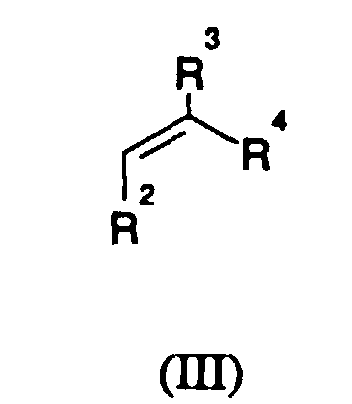
in the presence of a palladium catalyst, to give a compound of formula (I): • converting the compound of formula (I) into a compound of formula (IA)• optionally converting a compound of formula (IA) into another compound of formula (IA)• optionally forming a pharmaceutically acceptable salt or N-oxide.
 - A process according to claim 1 or 2 in which the catalyst is a palladium derivative.
- A process according to any one of claims 1 to 3 in which the palladium coupling is carried out in aqueous DMF.
- A process according to any one of claims 1 to 4 in which R1 is a group of formula (A) where n is 2 to 8.
- A process according to any one of claims 1 to 5 in which R4 is CO2R6 where R6 is hydrogen or C1-6alkyl.
- A process according to any one of claims 1 to 6 in which R5 is methoxy.
- A process according to claim 1 in which the compound prepared is:
n-butyl 3-{6-hydroxymethyl-3-[8(4-methoxyphenyl)octyloxy]pyridin-2-yl}propenoate, methyl 3-{6-hydroxymethyl-3-[8(4-methoxyphenyl)octyloxy]pyridin-2-yl}propenoate, methyl 3-{6-hydroxymethyl-3-(phenylethyloxy)pyridin-2-yl}propenoate, t-butyl 3-{6-hydroxymethyl-3-[8(4-methoxyphenyl)octyloxy]pyridin-2-yl}propenoate, 3-{6-hydroxymethyl-3-[8(4-methoxyphenyl)octyloxy]pyfidin-2-yl}propenoic acid, n-butyl 3-{6-hydroxymethyl-3-(phenylethyloxy)pyridin-2-yl}propenoate, ethyl(3-hydroxy-6-methylpyridin-2-yl)propenoate, ethyl 3-{3-hydroxy-6-hydroxymethylpyridin2-yl}propenoate, ethyl (3-benzyloxy-6-hydroxymethylpyridin-2-yl)propenoate, n-butyl (3-benzyloxy-6-hydroxymethylpyridin-2-yl)propenoate, methyl (3-benzyloxy-6-hydroxymethylpyridin-2-yl)propenoate, and and salts and N-oxides thereof. - A process according to claim 2 in which the compound of formula (IA) is
3[2-thia-3-[2-(E-2-carboxyethenyl-3-[8-(4-methoxyphenyl)octyloxy]-6-pyridyl]propyl]benzoic acid, [[1-thia-2-[6-(2-carboxyethyl)-5-phenylethyloxy-2-pyridyl]]ethyl]-2,6-dichlorobenzene, or [[1-thia-2-[6(E-2-carboxyethenyl)-5-phenylethyloxy-2-pyridyl]]ethy]-2,6-dichlorobenzene,
or pharmaceutically acceptable salts or N-oxides thereof. - A compound of formula (II):

Applications Claiming Priority (3)
| Application Number | Priority Date | Filing Date | Title |
|---|---|---|---|
| GB939313145A GB9313145D0 (en) | 1993-06-25 | 1993-06-25 | Process |
| GB9313145 | 1993-06-25 | ||
| PCT/EP1994/002028 WO1995000487A1 (en) | 1993-06-25 | 1994-06-20 | Palladium catalyzed vinylic substitution reactions with 2-substituted-pyridines |
Publications (2)
| Publication Number | Publication Date |
|---|---|
| EP0705249A1 EP0705249A1 (en) | 1996-04-10 |
| EP0705249B1 true EP0705249B1 (en) | 1997-05-14 |
Family
ID=10737796
Family Applications (1)
| Application Number | Title | Priority Date | Filing Date |
|---|---|---|---|
| EP94920966A Expired - Lifetime EP0705249B1 (en) | 1993-06-25 | 1994-06-20 | Palladium catalyzed vinylic substitution reactions with 2-substituted-pyridines |
Country Status (16)
| Country | Link |
|---|---|
| US (1) | US5726315A (en) |
| EP (1) | EP0705249B1 (en) |
| JP (1) | JPH08511790A (en) |
| CN (1) | CN1046709C (en) |
| AT (1) | ATE153020T1 (en) |
| AU (1) | AU670708B2 (en) |
| CA (1) | CA2165480A1 (en) |
| DE (1) | DE69403213T2 (en) |
| DK (1) | DK0705249T3 (en) |
| ES (1) | ES2102238T3 (en) |
| GB (1) | GB9313145D0 (en) |
| GR (1) | GR3023683T3 (en) |
| HK (1) | HK1003225A1 (en) |
| NZ (1) | NZ268600A (en) |
| WO (1) | WO1995000487A1 (en) |
| ZA (1) | ZA944499B (en) |
Families Citing this family (6)
| Publication number | Priority date | Publication date | Assignee | Title |
|---|---|---|---|---|
| AU1335795A (en) * | 1993-12-08 | 1995-06-27 | Smithkline Beecham Corporation | Compounds |
| GB9508137D0 (en) * | 1995-04-21 | 1995-06-07 | Smithkline Beecham Plc | Formulation |
| GB9602675D0 (en) * | 1996-02-09 | 1996-04-10 | Smithkline Beecham Plc | Process |
| US6093826A (en) | 1998-06-08 | 2000-07-25 | Ligand Pharmaceuticals Incorporated | Process for the preparation of C(5)-substituted 1,2-dihydro-5H-chromeno[3,4-f] quinolines |
| RU2242381C1 (en) * | 2003-04-11 | 2004-12-20 | Клеба Юрий Михайлович | Vehicle (versions) and its protective means |
| CN115626893B (en) * | 2022-10-10 | 2024-04-02 | 山西永津集团有限公司 | Synthesis method of 2-hydroxy-5-hydroxymethylpyridine |
Family Cites Families (3)
| Publication number | Priority date | Publication date | Assignee | Title |
|---|---|---|---|---|
| US3952101A (en) * | 1975-04-14 | 1976-04-20 | Smithkline Corporation | α-Amino methyl-5-hydroxy-2-pyridinemethanols |
| WO1993006085A1 (en) * | 1991-09-19 | 1993-04-01 | Smithkline Beecham Corporation | Pyridine compounds for treating leukotriene-related diseases |
| DE4224402A1 (en) * | 1992-07-21 | 1994-01-27 | Schering Ag | New pyridine derivatives with leukotriene-B¶4¶ antagonistic effects |
-
1993
- 1993-06-25 GB GB939313145A patent/GB9313145D0/en active Pending
-
1994
- 1994-06-20 DE DE69403213T patent/DE69403213T2/en not_active Expired - Fee Related
- 1994-06-20 AT AT94920966T patent/ATE153020T1/en not_active IP Right Cessation
- 1994-06-20 CN CN94192599A patent/CN1046709C/en not_active Expired - Fee Related
- 1994-06-20 ES ES94920966T patent/ES2102238T3/en not_active Expired - Lifetime
- 1994-06-20 HK HK98102342A patent/HK1003225A1/en not_active IP Right Cessation
- 1994-06-20 EP EP94920966A patent/EP0705249B1/en not_active Expired - Lifetime
- 1994-06-20 US US08/569,249 patent/US5726315A/en not_active Expired - Fee Related
- 1994-06-20 CA CA002165480A patent/CA2165480A1/en not_active Abandoned
- 1994-06-20 NZ NZ268600A patent/NZ268600A/en unknown
- 1994-06-20 JP JP7502441A patent/JPH08511790A/en active Pending
- 1994-06-20 WO PCT/EP1994/002028 patent/WO1995000487A1/en not_active Ceased
- 1994-06-20 AU AU71870/94A patent/AU670708B2/en not_active Ceased
- 1994-06-20 DK DK94920966.2T patent/DK0705249T3/en active
- 1994-06-23 ZA ZA944499A patent/ZA944499B/en unknown
-
1997
- 1997-06-04 GR GR970401327T patent/GR3023683T3/en unknown
Also Published As
| Publication number | Publication date |
|---|---|
| DK0705249T3 (en) | 1997-10-13 |
| DE69403213T2 (en) | 1997-12-04 |
| CA2165480A1 (en) | 1995-01-05 |
| JPH08511790A (en) | 1996-12-10 |
| CN1046709C (en) | 1999-11-24 |
| GR3023683T3 (en) | 1997-09-30 |
| GB9313145D0 (en) | 1993-08-11 |
| US5726315A (en) | 1998-03-10 |
| AU670708B2 (en) | 1996-07-25 |
| WO1995000487A1 (en) | 1995-01-05 |
| ATE153020T1 (en) | 1997-05-15 |
| ZA944499B (en) | 1995-12-27 |
| HK1003225A1 (en) | 1998-10-16 |
| DE69403213D1 (en) | 1997-06-19 |
| EP0705249A1 (en) | 1996-04-10 |
| CN1126467A (en) | 1996-07-10 |
| ES2102238T3 (en) | 1997-07-16 |
| AU7187094A (en) | 1995-01-17 |
| NZ268600A (en) | 1997-12-19 |
Similar Documents
| Publication | Publication Date | Title |
|---|---|---|
| TWI529163B (en) | Process for the preparation of 4-amino-5-fluoro-3-halo-6-(substituted)picolinates | |
| KR101440257B1 (en) | Process for the manufacture of intermediates for preparing pharmaceutically active compounds | |
| CN103153956B (en) | Preparation of propane-1-sulfonic acid {3-[5-(4-chloro-phenyl)-1H-pyrrolo[2,3-b]pyridine-3-carbonyl]-2,4-difluoro-phenyl} - A new approach to amides | |
| JP2004524358A (en) | Method for producing phenylacetic acid derivative | |
| JPH01104045A (en) | Manufacture of 2,5-bis(2,2,2-trifluoroethoxy)- n-(2-piperidylmethyl)benzamide | |
| AU670708B2 (en) | Palladium catalyzed vinylic substitution reactions with 2-substituted-pyridines | |
| WO2010015656A2 (en) | New alkoxypyrazoles | |
| HK1003225B (en) | Palladium catalyzed vinylic substitution reactions with 2-substituted-pyridines | |
| US6340772B2 (en) | Process for preparing (hetero) aromatic substituted benzene derivatives | |
| US5646286A (en) | Palladium catalyzed vinylic substitution reactions with 2-substituted-pyridines | |
| JP2771994B2 (en) | Method for producing propenoic acid derivative | |
| JP2527319B2 (en) | Method for producing 7-bromo-β-carboline derivative | |
| JP4173599B2 (en) | Process for producing 6-hydroxy-2-oxo-1,2,3,4-tetrahydroquinoline | |
| JP2804559B2 (en) | Method for producing 2-chloro-5-chloromethylpyridine | |
| US6147218A (en) | 2-phenylpyridine derivative and production method thereof | |
| TWI920788B (en) | Processes for the preparation of substituted phenylacetonitriles and substituted phenylacetic acids | |
| JPH06192170A (en) | Production of 4-bromomethylbiphenyl compound | |
| JPH06340658A (en) | Benzimidazole derivative | |
| US5043467A (en) | Chemical process | |
| JP4374088B2 (en) | Novel 4,4-difluorobenzazepine ketal derivative and method for producing 4,4-difluorobenzazepin-5-one derivative via the same | |
| JP2608761B2 (en) | Method for producing 7-bromo-β-carboline derivative and intermediate thereof | |
| KR100843125B1 (en) | Method for preparing beta-ketoester compound | |
| JPH07215968A (en) | Method for producing azelastine | |
| JPH0710864B2 (en) | Tetrahydro-7-oxo-8-indolizinecarboxylic acid derivative and process for producing the same | |
| JP2002326991A (en) | Intermediate for producing halopyridyl- azabicycloheptane derivative |
Legal Events
| Date | Code | Title | Description |
|---|---|---|---|
| PUAI | Public reference made under article 153(3) epc to a published international application that has entered the european phase |
Free format text: ORIGINAL CODE: 0009012 |
|
| 17P | Request for examination filed |
Effective date: 19951201 |
|
| AK | Designated contracting states |
Kind code of ref document: A1 Designated state(s): AT BE CH DE DK ES FR GB GR IE IT LI LU MC NL PT SE |
|
| AX | Request for extension of the european patent |
Free format text: SI PAYMENT 951201 |
|
| RAX | Requested extension states of the european patent have changed |
Free format text: SI PAYMENT 951201 |
|
| 17Q | First examination report despatched |
Effective date: 19960321 |
|
| GRAG | Despatch of communication of intention to grant |
Free format text: ORIGINAL CODE: EPIDOS AGRA |
|
| GRAH | Despatch of communication of intention to grant a patent |
Free format text: ORIGINAL CODE: EPIDOS IGRA |
|
| GRAH | Despatch of communication of intention to grant a patent |
Free format text: ORIGINAL CODE: EPIDOS IGRA |
|
| GRAA | (expected) grant |
Free format text: ORIGINAL CODE: 0009210 |
|
| AK | Designated contracting states |
Kind code of ref document: B1 Designated state(s): AT BE CH DE DK ES FR GB GR IE IT LI LU MC NL PT SE |
|
| AX | Request for extension of the european patent |
Free format text: SI PAYMENT 951201 |
|
| REF | Corresponds to: |
Ref document number: 153020 Country of ref document: AT Date of ref document: 19970515 Kind code of ref document: T |
|
| REG | Reference to a national code |
Ref country code: CH Ref legal event code: EP |
|
| REF | Corresponds to: |
Ref document number: 69403213 Country of ref document: DE Date of ref document: 19970619 |
|
| ET | Fr: translation filed | ||
| REG | Reference to a national code |
Ref country code: ES Ref legal event code: FG2A Ref document number: 2102238 Country of ref document: ES Kind code of ref document: T3 |
|
| REG | Reference to a national code |
Ref country code: GR Ref legal event code: FG4A Free format text: 3023683 |
|
| REG | Reference to a national code |
Ref country code: CH Ref legal event code: NV Representative=s name: E. BLUM & CO. PATENTANWAELTE |
|
| REG | Reference to a national code |
Ref country code: DK Ref legal event code: T3 |
|
| PLBE | No opposition filed within time limit |
Free format text: ORIGINAL CODE: 0009261 |
|
| STAA | Information on the status of an ep patent application or granted ep patent |
Free format text: STATUS: NO OPPOSITION FILED WITHIN TIME LIMIT |
|
| 26N | No opposition filed | ||
| PGFP | Annual fee paid to national office [announced via postgrant information from national office to epo] |
Ref country code: DK Payment date: 20010314 Year of fee payment: 8 |
|
| PGFP | Annual fee paid to national office [announced via postgrant information from national office to epo] |
Ref country code: NL Payment date: 20010319 Year of fee payment: 8 |
|
| PGFP | Annual fee paid to national office [announced via postgrant information from national office to epo] |
Ref country code: LU Payment date: 20010327 Year of fee payment: 8 |
|
| PGFP | Annual fee paid to national office [announced via postgrant information from national office to epo] |
Ref country code: PT Payment date: 20010328 Year of fee payment: 8 |
|
| PGFP | Annual fee paid to national office [announced via postgrant information from national office to epo] |
Ref country code: SE Payment date: 20010405 Year of fee payment: 8 |
|
| PGFP | Annual fee paid to national office [announced via postgrant information from national office to epo] |
Ref country code: IE Payment date: 20010420 Year of fee payment: 8 Ref country code: GR Payment date: 20010420 Year of fee payment: 8 |
|
| PGFP | Annual fee paid to national office [announced via postgrant information from national office to epo] |
Ref country code: GB Payment date: 20010502 Year of fee payment: 8 |
|
| PGFP | Annual fee paid to national office [announced via postgrant information from national office to epo] |
Ref country code: AT Payment date: 20010503 Year of fee payment: 8 |
|
| PGFP | Annual fee paid to national office [announced via postgrant information from national office to epo] |
Ref country code: FR Payment date: 20010531 Year of fee payment: 8 |
|
| PGFP | Annual fee paid to national office [announced via postgrant information from national office to epo] |
Ref country code: ES Payment date: 20010614 Year of fee payment: 8 |
|
| PGFP | Annual fee paid to national office [announced via postgrant information from national office to epo] |
Ref country code: DE Payment date: 20010627 Year of fee payment: 8 Ref country code: CH Payment date: 20010627 Year of fee payment: 8 |
|
| PGFP | Annual fee paid to national office [announced via postgrant information from national office to epo] |
Ref country code: MC Payment date: 20010702 Year of fee payment: 8 |
|
| PGFP | Annual fee paid to national office [announced via postgrant information from national office to epo] |
Ref country code: BE Payment date: 20010713 Year of fee payment: 8 |
|
| REG | Reference to a national code |
Ref country code: GB Ref legal event code: IF02 |
|
| PG25 | Lapsed in a contracting state [announced via postgrant information from national office to epo] |
Ref country code: MC Free format text: LAPSE BECAUSE OF NON-PAYMENT OF DUE FEES Effective date: 20020620 Ref country code: LU Free format text: LAPSE BECAUSE OF NON-PAYMENT OF DUE FEES Effective date: 20020620 Ref country code: IE Free format text: LAPSE BECAUSE OF NON-PAYMENT OF DUE FEES Effective date: 20020620 Ref country code: GB Free format text: LAPSE BECAUSE OF NON-PAYMENT OF DUE FEES Effective date: 20020620 Ref country code: AT Free format text: LAPSE BECAUSE OF NON-PAYMENT OF DUE FEES Effective date: 20020620 |
|
| PG25 | Lapsed in a contracting state [announced via postgrant information from national office to epo] |
Ref country code: SE Free format text: LAPSE BECAUSE OF NON-PAYMENT OF DUE FEES Effective date: 20020621 Ref country code: ES Free format text: LAPSE BECAUSE OF NON-PAYMENT OF DUE FEES Effective date: 20020621 |
|
| PG25 | Lapsed in a contracting state [announced via postgrant information from national office to epo] |
Ref country code: LI Free format text: LAPSE BECAUSE OF NON-PAYMENT OF DUE FEES Effective date: 20020630 Ref country code: CH Free format text: LAPSE BECAUSE OF NON-PAYMENT OF DUE FEES Effective date: 20020630 Ref country code: BE Free format text: LAPSE BECAUSE OF NON-PAYMENT OF DUE FEES Effective date: 20020630 |
|
| PG25 | Lapsed in a contracting state [announced via postgrant information from national office to epo] |
Ref country code: DK Free format text: LAPSE BECAUSE OF NON-PAYMENT OF DUE FEES Effective date: 20020731 |
|
| BERE | Be: lapsed |
Owner name: *SMITHKLINE BEECHAM P.L.C. Effective date: 20020630 |
|
| PG25 | Lapsed in a contracting state [announced via postgrant information from national office to epo] |
Ref country code: PT Free format text: LAPSE BECAUSE OF NON-PAYMENT OF DUE FEES Effective date: 20021231 Ref country code: GR Free format text: LAPSE BECAUSE OF NON-PAYMENT OF DUE FEES Effective date: 20021231 |
|
| PG25 | Lapsed in a contracting state [announced via postgrant information from national office to epo] |
Ref country code: NL Free format text: LAPSE BECAUSE OF NON-PAYMENT OF DUE FEES Effective date: 20030101 Ref country code: DE Free format text: LAPSE BECAUSE OF NON-PAYMENT OF DUE FEES Effective date: 20030101 |
|
| EUG | Se: european patent has lapsed | ||
| REG | Reference to a national code |
Ref country code: DK Ref legal event code: EBP |
|
| GBPC | Gb: european patent ceased through non-payment of renewal fee |
Effective date: 20020620 |
|
| REG | Reference to a national code |
Ref country code: CH Ref legal event code: PL |
|
| PG25 | Lapsed in a contracting state [announced via postgrant information from national office to epo] |
Ref country code: FR Free format text: LAPSE BECAUSE OF NON-PAYMENT OF DUE FEES Effective date: 20030228 |
|
| NLV4 | Nl: lapsed or anulled due to non-payment of the annual fee |
Effective date: 20030101 |
|
| REG | Reference to a national code |
Ref country code: PT Ref legal event code: MM4A Free format text: LAPSE DUE TO NON-PAYMENT OF FEES Effective date: 20021231 |
|
| REG | Reference to a national code |
Ref country code: IE Ref legal event code: MM4A |
|
| REG | Reference to a national code |
Ref country code: FR Ref legal event code: ST |
|
| REG | Reference to a national code |
Ref country code: ES Ref legal event code: FD2A Effective date: 20030711 |
|
| PG25 | Lapsed in a contracting state [announced via postgrant information from national office to epo] |
Ref country code: IT Free format text: LAPSE BECAUSE OF NON-PAYMENT OF DUE FEES Effective date: 20050620 |