EP0701627B1 - Nucleic acid analogue assay procedures - Google Patents
Nucleic acid analogue assay procedures Download PDFInfo
- Publication number
- EP0701627B1 EP0701627B1 EP94916331A EP94916331A EP0701627B1 EP 0701627 B1 EP0701627 B1 EP 0701627B1 EP 94916331 A EP94916331 A EP 94916331A EP 94916331 A EP94916331 A EP 94916331A EP 0701627 B1 EP0701627 B1 EP 0701627B1
- Authority
- EP
- European Patent Office
- Prior art keywords
- nucleic acid
- analogue
- amplification
- acid analogue
- group
- Prior art date
- Legal status (The legal status is an assumption and is not a legal conclusion. Google has not performed a legal analysis and makes no representation as to the accuracy of the status listed.)
- Expired - Lifetime
Links
- 0 C[C@](C*)*N* Chemical compound C[C@](C*)*N* 0.000 description 1
Classifications
-
- C—CHEMISTRY; METALLURGY
- C12—BIOCHEMISTRY; BEER; SPIRITS; WINE; VINEGAR; MICROBIOLOGY; ENZYMOLOGY; MUTATION OR GENETIC ENGINEERING
- C12Q—MEASURING OR TESTING PROCESSES INVOLVING ENZYMES, NUCLEIC ACIDS OR MICROORGANISMS; COMPOSITIONS OR TEST PAPERS THEREFOR; PROCESSES OF PREPARING SUCH COMPOSITIONS; CONDITION-RESPONSIVE CONTROL IN MICROBIOLOGICAL OR ENZYMOLOGICAL PROCESSES
- C12Q1/00—Measuring or testing processes involving enzymes, nucleic acids or microorganisms; Compositions therefor; Processes of preparing such compositions
- C12Q1/68—Measuring or testing processes involving enzymes, nucleic acids or microorganisms; Compositions therefor; Processes of preparing such compositions involving nucleic acids
- C12Q1/6844—Nucleic acid amplification reactions
- C12Q1/6851—Quantitative amplification
Definitions
- the present invention relates to assay procedures involving nucleic acid analogues by which quantitative or semi-quantitative determinations of such analogues or nucleic acid sequences to which they hybridise can be made.
- Nucleic acid amplification techniques are now in widespread use. These include the "PCR” (polymerase chain reaction) procedure described in EP-A-0200362 and EP-A-0201184, which is the technique in most widespread use, but also the "LCR” (ligase chain reaction) described in EP-A-0320308, the so-called “NASBA” or “3SR” technique which is described in "Proc. Natl. Acad. Sci. USA” Vol. 87 pp 1874-1878 March 1990 and “Nature” Vol. 350, No. 6313. pp 91-92 7th March 1991 and the “SDA” method described in "Nucleic Acid Research", Vol. 20 pp 1691-1696.
- PCR polymerase chain reaction
- LCR ligase chain reaction
- the limiting dilution method has a fundamental limitation because the linear relationship that exists between the initial amount of template DNA in the sample and the amount of amplification product obtained is only maintained for amounts of starting DNA within a limited range. Hence the method is very imprecise when samples containing highly variable amounts of target DNA are examined.
- the alternative methods of co-amplification can provide a more reliable approach, in that they rely on the measurement of the ratio of target DNA and a co-amplified standard within the same tube. However, they still suffer from a number of difficulties.
- the co-amplification of internal standards, such as ubiquitously expressed genes that are also present in the sample DNA is limited in its usefulness by the difference in amplification efficiency that exists between target and reference sequences.
- the alternative method of co-amplification of an external template possessing a similar length and the same primer recognition sequences as the target DNA is the most successful strategy so far for a quantitative PCR assay (Gilliland et al "Proc. Natl. Acad. Sci. USA” 87, 2725-2729) but it still has three major disadvantages.
- the first problem is that the product from the target DNA and the co-amplified reference standard must be separated, usually by gel electrophoresis, and the separated products must be quantified to determine the ratio of the products.
- WO-A-93/25706 discloses that certain nucleic acid analogues capable of hybridising with high affinity to nucleic acids can be used to inhibit nucleic acid amplification procedures such as PCR.
- the preferred nucleic acid analogues are described in WO-A-92/20703.
- the present invention provides an assay procedure comprising attempting to perform a nucleic acid amplification procedure in the presence of a nucleic acid analogue which in sufficient quantity will inhibit said amplification procedure by selective interaction with a nucleic acid species present, wherein the amount of said nucleic acid or the amount of said nucleic acid analogue but not both is known or later otherwise determined, determining the success, failure, or degree of success of said amplification procedure and thereby deriving information regarding the amount of said nucleic acid species or nucleic acid analogue present.
- nucleic acid species which is present in unknown quantity and this is preferably a template for said amplification.
- the procedure preferably further comprises repeating said attempted assay procedure one or more times using one or more different amounts of said nucleic acid analogue or one or more dilutions of the sample so as to derive information regarding the relative amounts thereof needed to be present to inhibit said amplification procedure.
- a calibration curve is established by carrying out the same amplification procedure using a series of known relative amounts of the nucleic acid species and the nucleic acid analogue.
- nucleic acid analogue concentration a concentration of nucleic acid in a sample containing an unknown amount of the nucleic acid.
- One may then carry out the assay procedure on a sample containing an unknown amount of the nucleic acid, preferably simultaneously conducting a number of assay runs at different dilutions of the nucleic acid analogue to identify the dilution between which the amplification procedure moves from success to failure. This will produce a semi-quantitative estimate of the amount of nucleic acid initially present, as the quantity of nucleic acid analogue required for inhibition of the amplification will be proportional to the quantity of nucleic acid template present.
- a sample requiring a 2y ⁇ M concentration of nucleic acid analogue for inhibition will contain approximately 2x ng of template.
- QI quantitation by inhibition
- the QI process does not require any dilution of the sample and no complex mathematical treatment of the results is required.
- the QI process is therefore far superior to the limiting dilution method.
- the QI process is largely unaffected by variations in amplification efficiencies in individual tubes since the results are scored by comparison to a threshold level alone.
- the QI process is well suited to a semi-quantitative measurement.
- the dynamic range can be very large, or very small depending on the concentration range of nucleic acid analogue chosen.
- the QI process can employ a single concentration of inhibitor to give a simple YES/NO answer, or many concentrations in multiple wells to provide a near quantitative result.
- the imprecision of the QI process, in terms of misclassification of sample DNA concentration, is a function of the variation in the product amplification process at the threshold point only.
- the nucleic acid analogue is preferably capable of hybridising to a nucleic acid of complementary sequence to form a hybrid which is more stable against denaturation by heat than a hybrid between the conventional deoxyribo-nucleotide corresponding in sequence to said analogue and said nucleic acid.
- nucleic acid analogue is a peptide nucleic acid in which said backbone is a polyamide backbone, each said ligand being bonded directly or indirectly to an aza nitrogen atom in said backbone, and said ligand bearing nitrogen atoms mainly being separated from one another in said backbone by from 4 to 8 intervening atoms.
- the nucleic acid analogue is capable of hybridising to a double stranded nucleic acid in which one strand has a sequence complementary to said analogue, in such a way as to displace the other strand from said one strand.
- the nucleic acid analogue has the general formula 1: wherein:
- said nucleic acid analogue comprises a compound of the general formula III, IV or V: wherein:
- the PNA T 10 -LysNH 2 was synthesised as in Egholm, M., Buchardt, O., Nielsen, P.E. and Berg, R.H. (1992) "J. Amer. Chem. Soc.” 114, 1895-1897 and Egholm, M., Buchardt O., Nielsen, P.E. and Berg, R.H. (1992) "J. Amer. Chem. Soc.” 114, 9677-9678.
- the plasmid pT10KS was constructed by cloning the complementary oligonucleotides 5'-GATCCT 10 G and 5'-GATCCA 10 G into respective strands at the BamHI site of the Bluescript KS+plasmid (Stratagene).
- the control plasmid pCKS was constructed by cloning a 99bp PCR fragment (with no target sites for the PNA used in this example) into the SmaI site of the bluescript KS+plasmid.
- plasmids were isolated from selected clones of recombinant E. Coli JM103, purified by buoyant density centrifugation in CsCl gradients and sequenced by the dideoxy method.
- oligonucleotide primers were used in the PCR reactions: reverse primer (5'-CACACAGGAAACAGCTATGAC-SEQ1) and forward primer (5'-GTAAAACGACGGCCAGT-SEQ2).
- PCR amplifications were carried out in a 50 ⁇ l volume containing 1 ng of each plasmid, 0.2 ⁇ M of each primer, 200 ⁇ M dNTP, 10 mM Tris-HCl, pH 8,3 (at 25°C), 10 mM KCl, and 3 mM MgCl 2 .
- concentrations of the PNA employed were 0 ⁇ M, 13.2 ⁇ M, 6.6 ⁇ M, 3.2 ⁇ M, 1.6 ⁇ M, 0.8 ⁇ M, 0.4 ⁇ M and 0.2 ⁇ M.
- PCR reactions were overlain with 2 drops of paraffin oil and incubated at 90°C for 2 minutes before the amplification process was initiated by the addition of 3U of Stoffel polymerase (Perkin Elmer Cetus).
- a LEP amplifier machine (IgG Biotech) was used in all experiments and standard PCR cycle profiles were 96°C, 2 min - 55°C, 3 min - 35°C, 1 min - 65°C, 2 min - 35 cycles.
- Products resulting from the PCR process were separated by gel electrophoresis and stained using ethidium bromide using standard techniques. A Polaroid TM photograph was taken of the stained gel and the intensity of the bands was assessed by visual inspection.
- Table 1 shows the result of PCR inhibition in the presence of increasing amounts of PNA T 10 -LysNH 2 .
- the two plasmid templates described above were used; namely the pT10KS plasmid which directs the amplification of a 246bp fragment containing an A 10 target site and the control plasmid, pCKS, which directs the amplification of a 329bp non-target fragment.
- the pT10KS plasmid directs the synthesis of the expected 246bp PCR fragment.
- concentration at or about 3.2 ⁇ M PNA T 10 -LysNH 2 no product is produced.
- the absence of product is not due to a non-specific inhibitory effect of PNA T 10 -LysNH 2 on the PCR reaction, since even at the highest concentration used (13.2 ⁇ M), PNA T 10 -LysNH 2 will not inhibit the amplification of the expected 329bp fragment from the pCKS control plasmid. This, it is seen that the PNA T 10 -LysNH 2 can prevent the amplification of its cognate target DNA in a sequence specific manner. The concentration dependence of inhibition is quite steep.
- Plasmid and primers used in this example are as follows:
- the plasmid was constructed in two steps. First the complementary oligonucleotides (5'-GATCCTGTACGTCACAACTA-3'-SEQ3 and 5'-GATCTAGTTGTGACGTACAG-3'-SEQ4) comprising the recognition sequence for PNA62 (H-TGTACGTCACAACTA-Gly-NH2) were cloned into the BamHI site of the plasmid pUC19 to yield p62. Second, a 556bp PstI/HindIII fragment of E.coli phase ⁇ genome was cloned into the PstI/HindIII site of p62 to yield p62-1.
- Two primers were synthesised with the following sequence: reverse primer 5'-GAAACAGCTATGAC-3'-SEQS and forward primer 5'-TGTACGTCACAACTA-3'-SEQ6 (the sequence of the forward primer is identical to the sequence of the PNA62).
- reverse primer 5'-GAAACAGCTATGAC-3'-SEQS and forward primer 5'-TGTACGTCACAACTA-3'-SEQ6 (the sequence of the forward primer is identical to the sequence of the PNA62).
- the forward and reverse primer together with the p62-1 plasmid direct the amplification of a 659bp fragment.
- PCR reactions were set-up containing either 1ng, 5ng or 25ng cf plasmid p62-1, reverse and forward PCR primers and various concentrations of PNA 62.
- Each PCR reaction (50 ⁇ l) contained 200 ⁇ M dNTP, 10mM Tris-HCl pH 9.9 (20°C), 50 mM KCl, 1.5 mM MgCl 2 , 0.01% gelatine, 0.1% Triton X-100, 1U supertaq enzyme (Stratagene), 10 pmol of each of the two PCR primers and PNAs and p 62-1 plasmid as indicated below in Table 2.
- the concentration of PNA that effectively clamped the PCR reaction was found to be 65nM.
- the amount of plasmid target was increased five fold (from 1 to 5 ng) the PNA concentration that was required for efficient clamping was proportionally increased to 325 nM.
- increasing the initial plasmid target 25 fold required a 25 fold increase in PNA (1.63 ⁇ M) for efficient clamping to take place.
- the QI or PCR clamp method can be used to quantitate the initial amount of target in the reaction.
- Example 1 and Example 2 only one nucleic acid analogue is employed and this is directed against one PCR primer site only. Hence a linear amplification process driven by the non-inhibited primer will take place in these experiments. Such linearly amplified material will not be detected by the gel electrophoetic method described here because of sensitivity limitations. To achieve total inhibition of a PCR process it is necessary to employ two nucleic acid molecules directed at either both primers or at both strands of the double stranded nucleic acid target. This will be important if more senistive methods of detection than gel electrophoresis/staining by ethidium bromide are to be employed.
- the invention includes a kit for use in quantifying an amount of target nucleic acid in a sample, comprising reagents for use in an amplification procedure to amplify a sequence in said nucleic acid, and at least two non-complementary nucleic acid analogue sequences each for hybridising to a sequence to be amplified respectively in a strand of said target nucleic acid and a nucleic acid strand complementary thereto to prevent amplification thereof.
Landscapes
- Chemical & Material Sciences (AREA)
- Life Sciences & Earth Sciences (AREA)
- Organic Chemistry (AREA)
- Engineering & Computer Science (AREA)
- Zoology (AREA)
- Wood Science & Technology (AREA)
- Proteomics, Peptides & Aminoacids (AREA)
- Health & Medical Sciences (AREA)
- Biophysics (AREA)
- Chemical Kinetics & Catalysis (AREA)
- Immunology (AREA)
- Microbiology (AREA)
- Molecular Biology (AREA)
- Analytical Chemistry (AREA)
- Physics & Mathematics (AREA)
- Biotechnology (AREA)
- Biochemistry (AREA)
- Bioinformatics & Cheminformatics (AREA)
- General Engineering & Computer Science (AREA)
- General Health & Medical Sciences (AREA)
- Genetics & Genomics (AREA)
- Measuring Or Testing Involving Enzymes Or Micro-Organisms (AREA)
Abstract
Description
- The present invention relates to assay procedures involving nucleic acid analogues by which quantitative or semi-quantitative determinations of such analogues or nucleic acid sequences to which they hybridise can be made.
- Nucleic acid amplification techniques are now in widespread use. These include the "PCR" (polymerase chain reaction) procedure described in EP-A-0200362 and EP-A-0201184, which is the technique in most widespread use, but also the "LCR" (ligase chain reaction) described in EP-A-0320308, the so-called "NASBA" or "3SR" technique which is described in "Proc. Natl. Acad. Sci. USA" Vol. 87 pp 1874-1878 March 1990 and "Nature" Vol. 350, No. 6313. pp 91-92 7th March 1991 and the "SDA" method described in "Nucleic Acid Research", Vol. 20 pp 1691-1696.
- A number of strategies now exist to obtain quantitative information from amplification systems such as the polymerase chain reaction. In the simplest procedure the amount of amplified DNA produced by the test sample is compared directly with a set of standard reactions prepared with known amounts of the same DNA. A linear relationship has been shown to exist between the amount of DNA present in the sample and the amount of amplification product eventually formed in the PCR assay. However, the exponential nature of the PCR process means that minor differences in amplification efficiency between the sample tube and the separate tubes containing the known amounts of DNA will lead to large and unpredictable differences in the final product yield (Gilliland et al (1990) "Proc. Natl Acad Sci. USA" 87, 2725-2729). Such direct comparisons between the amount of PCR product from the sample and standards tubes are therefore fundamentally flawed. A number of alternative procedures have been proposed to overcome this problem. These include the use of limiting dilution of the sample (Thang et al (1991) "AIDS", 5,678-681) or the co-amplification of internal or external standards (Kellog et al (1990) "Anal. Biochem," 189, 202-208). The limiting dilution method is a very simple strategy that employs a Poisson distribution analysis of positive reactions to calculate the amount of the target sequence in the sample. The limiting dilution method has a fundamental limitation because the linear relationship that exists between the initial amount of template DNA in the sample and the amount of amplification product obtained is only maintained for amounts of starting DNA within a limited range. Hence the method is very imprecise when samples containing highly variable amounts of target DNA are examined. The alternative methods of co-amplification can provide a more reliable approach, in that they rely on the measurement of the ratio of target DNA and a co-amplified standard within the same tube. However, they still suffer from a number of difficulties. The co-amplification of internal standards, such as ubiquitously expressed genes that are also present in the sample DNA is limited in its usefulness by the difference in amplification efficiency that exists between target and reference sequences. This will affect the relative amounts of the products obtained in an uncontrollable manner. The alternative method of co-amplification of an external template possessing a similar length and the same primer recognition sequences as the target DNA is the most successful strategy so far for a quantitative PCR assay (Gilliland et al "Proc. Natl. Acad. Sci. USA" 87, 2725-2729) but it still has three major disadvantages. The first problem is that the product from the target DNA and the co-amplified reference standard must be separated, usually by gel electrophoresis, and the separated products must be quantified to determine the ratio of the products. Usually, 4 reactions or more are carried out at different dilutions of the external competitor template and the products from all these reactions must be scanned to provide a standard curve. The external competitive PCR approach is therefore restricted to measurement methods that are capable of separating different PCR fragments and this introduces further complexity and cost to the procedure. The second factor that restricts the usefulness of the external competitive PCR approach is that it cannot be used if the PCR products are to be detected directly without a prior separation e.g. in a commonly used procedure biotin labelled PCR products are captured by hybridising to a capture probe immobilised to a microwell surface and subsequently detected by an avidin enzyme conjugate probe, leading to colour generation in the well. Distinguishing between control and test samples in this type of assay requires the use of additional wells and different capture probes. The third disadvantage of the external competitive PCR approach is that the external standard must be designed carefully to have exactly the same amplification characteristics as the target DNA from the sample. This is not easy to achieve and it requires considerable skill and expense to construct such an external standard and each assay must have a new external standard which greatly increases the cost of assay development.
- WO-A-93/25706 (published after the priority date of the present application) discloses that certain nucleic acid analogues capable of hybridising with high affinity to nucleic acids can be used to inhibit nucleic acid amplification procedures such as PCR. The preferred nucleic acid analogues are described in WO-A-92/20703.
- It has now been appreciated that the dependence of the successful inhibition of such nucleic acid amplification procedures on the amount of nucleic acid analogue present provides a means for deriving information regarding the amount of a nucleic acid which is present in a sample or about the amount of a nucleic acid analogue which is present.
- Accordingly, the present invention provides an assay procedure comprising attempting to perform a nucleic acid amplification procedure in the presence of a nucleic acid analogue which in sufficient quantity will inhibit said amplification procedure by selective interaction with a nucleic acid species present, wherein the amount of said nucleic acid or the amount of said nucleic acid analogue but not both is known or later otherwise determined, determining the success, failure, or degree of success of said amplification procedure and thereby deriving information regarding the amount of said nucleic acid species or nucleic acid analogue present.
- In most cases it is envisaged that it will be said nucleic acid species which is present in unknown quantity and this is preferably a template for said amplification.
- The procedure preferably further comprises repeating said attempted assay procedure one or more times using one or more different amounts of said nucleic acid analogue or one or more dilutions of the sample so as to derive information regarding the relative amounts thereof needed to be present to inhibit said amplification procedure.
- Preferably, a calibration curve is established by carrying out the same amplification procedure using a series of known relative amounts of the nucleic acid species and the nucleic acid analogue.
- Thus using known amounts of said nucleic acid one may establish a calibration curve of amplification product quantity at a particular nucleic acid template concentration against nucleic acid analogue concentration. One may then carry out the assay procedure on a sample containing an unknown amount of the nucleic acid, preferably simultaneously conducting a number of assay runs at different dilutions of the nucleic acid analogue to identify the dilution between which the amplification procedure moves from success to failure. This will produce a semi-quantitative estimate of the amount of nucleic acid initially present, as the quantity of nucleic acid analogue required for inhibition of the amplification will be proportional to the quantity of nucleic acid template present. Thus if one finds that a calibration curve based on x ng of plasmid moves from successful amplification to failure at a y µM concentration of nucleic acid analogue, a sample requiring a 2y µM concentration of nucleic acid analogue for inhibition will contain approximately 2x ng of template.
- There are a number of important advantages provided by this new procedure which we refer to as quantitation by inhibition (QI). Firstly, the QI process is not a ratio approach and so it is not necessary to seek an internal standard for amplification, or to laboriously construct an external standard. In a QI PCR process, for example, the nucleic acid analogue can be directed against the primers and this is very simple to achieve since the sequences are already known. The QI process does not produce two products which must be separated and quantitated as must be done in the external standard approach. Hence, the QI process is well suited to the move favoured methods of product detection such as hybridisation in a microplate well. The QI process does not require any dilution of the sample and no complex mathematical treatment of the results is required. The QI process is therefore far superior to the limiting dilution method. The QI process is largely unaffected by variations in amplification efficiencies in individual tubes since the results are scored by comparison to a threshold level alone.
- The QI process is well suited to a semi-quantitative measurement. The dynamic range can be very large, or very small depending on the concentration range of nucleic acid analogue chosen. The QI process can employ a single concentration of inhibitor to give a simple YES/NO answer, or many concentrations in multiple wells to provide a near quantitative result. The imprecision of the QI process, in terms of misclassification of sample DNA concentration, is a function of the variation in the product amplification process at the threshold point only.
- The nucleic acid analogue is preferably capable of hybridising to a nucleic acid of complementary sequence to form a hybrid which is more stable against denaturation by heat than a hybrid between the conventional deoxyribo-nucleotide corresponding in sequence to said analogue and said nucleic acid.
- Preferably,said nucleic acid analogue is a peptide nucleic acid in which said backbone is a polyamide backbone, each said ligand being bonded directly or indirectly to an aza nitrogen atom in said backbone, and said ligand bearing nitrogen atoms mainly being separated from one another in said backbone by from 4 to 8 intervening atoms.
- Preferably also, the nucleic acid analogue is capable of hybridising to a double stranded nucleic acid in which one strand has a sequence complementary to said analogue, in such a way as to displace the other strand from said one strand.
- Preferably, the nucleic acid analogue has the general formula 1:

- n is at least 2,
- each of L1-Ln is independently selected from the group consisting of hydrogen, hydroxy, (C1-C4)alkanoyl, naturally occurring nucleobases, non-naturally occurring nucleobases, aromatic moieties, DNA intercalators, nucleobase-binding groups, heterocyclic moieties, and reporter ligands, but normally at least one L will be a nucleobase binding group such as a naturally occurring nucleobase and preferably at least 90% of the groups L will be such nucleobase binding groups;
- each of C1-Cn is (CR6R7)y where R6 is hydrogen and R7 is selected from the group consisting of the side chains of naturally occurring alpha amino acids, or R6 and R7 are independently selected from the group consisting of hydrogen, (C2-C6) alkyl, aryl, aralkyl, heteroaryl, hydroxy, (C1-C6) alkoxy, (C1-C6) alkylthio, NR3R4 and SR5, where R3 and R4 are as defined below, and R5 is hydrogen, (C1-C6) alkyl, hydroxy, alkoxy, or alkylthio-substituted (C1 to C6) alkyl or R6 and R7 taken together complete an alicyclic or heterocyclic system;
- each of D1-Dn is (CR6R7)z where R6 and R7 are as defined above;
- each of y and z is zero or an integer from 1 to 10, the sum y + z being from 2 to 10 (preferably being more than 2, and most preferably each of y and z being 1 or 2;
- each of G1-Gn-1 is -NR3CO-, -NR3CS-, -NR3SO- or -NR3SO2-, in either orientation, where R3 is as defined below;
- each of A1-An and B1-Bn are selected such that:
- (a) A is a group of formula (IIa), (IIb), (IIc) or (IId), and B is N or R3N+; or
- (b) A is a group of formula (IId) and B is CH;


- X is O, S, Se, NR3, CH2 or C(CH3)2;
- Y is a single bond, O, S or NR4;
- each of p and q is zero or an integer from 1 to 5, the sum p+q being not more than 10;
- each of r and s is zero or an integer from 1 to 5, the sum r+s being not more than 10;
- each R1 and R2 is independently selected from the group consisting of hydrogen, (C1-C4)alkyl which may be hydroxy- or alkoxy- or alkylthio-substituted, hydroxy, alkoxy, alkylthio, amino and halogen; and
- each R3 and R4 is independently selected from the group consisting of hydrogen, (C1-C4)alkyl, hydroxy- or alkoxy- or alkylthio-substituted (C1-C4)alkyl, hydroxy, alkoxy, alkylthio and amino;
- Q is -CO2H, -CONR'R'', -SO3H or -SO2NR'R" or an activated derivative of -CO2H or -SO3H; and
- I is -NR'R", where R' and R" are independently selected from the group consisting of hydrogen, alkyl, amino protecting groups, reporter ligands, intercalators, chelators, peptides, proteins, carbohydrates, lipids, steroids, nucleosides, nucleotides, nucleotide diphosphates, nucleotide triphosphates, oligonucleotides, including both oligoribonucleotides and oligodeoxyribonucleotides, oligonucleosides and soluble and non-soluble polymers.
- More preferably, said nucleic acid analogue comprises a compound of the general formula III, IV or V:


- each L is independently selected from the group consisting of hydrogen, phenyl, heterocyclic moieties, naturally occurring nucleobases, and non-naturally occurring nucleobases;
- each R7 is independently selected from the group consisting of hydrogen and the side chains of naturally occurring alpha amino acids;
- n is an integer greater than 1,
- each k, 1, and m is, independently, zero or an integer from 1 to 5;
- each p is zero or 1;
- Rh is OH, NH2 or -NHLysNH2; and
- Ri is H or -COCH3.
- Techniques for the synthesis of preferred nucleic acid analogues are to be found in WO-A-92/20703.
- The PNA T10-LysNH2 was synthesised as in Egholm, M., Buchardt, O., Nielsen, P.E. and Berg, R.H. (1992) "J. Amer. Chem. Soc." 114, 1895-1897 and Egholm, M., Buchardt O., Nielsen, P.E. and Berg, R.H. (1992) "J. Amer. Chem. Soc." 114, 9677-9678. The plasmid pT10KS was constructed by cloning the complementary oligonucleotides 5'-GATCCT10G and 5'-GATCCA10G into respective strands at the BamHI site of the Bluescript KS+plasmid (Stratagene). The control plasmid pCKS was constructed by cloning a 99bp PCR fragment (with no target sites for the PNA used in this example) into the SmaI site of the bluescript KS+plasmid. Using standard techniques plasmids were isolated from selected clones of recombinant E. Coli JM103, purified by buoyant density centrifugation in CsCl gradients and sequenced by the dideoxy method.
- The following oligonucleotide primers were used in the PCR reactions: reverse primer (5'-CACACAGGAAACAGCTATGAC-SEQ1) and forward primer (5'-GTAAAACGACGGCCAGT-SEQ2). PCR amplifications were carried out in a 50 µl volume containing 1 ng of each plasmid, 0.2 µM of each primer, 200 µM dNTP, 10 mM Tris-HCl, pH 8,3 (at 25°C), 10 mM KCl, and 3 mM MgCl2.
- The concentrations of the PNA employed were 0 µM, 13.2 µM, 6.6 µM, 3.2 µM, 1.6 µM, 0.8 µM, 0.4 µM and 0.2 µM.
- The PCR reactions were overlain with 2 drops of paraffin oil and incubated at 90°C for 2 minutes before the amplification process was initiated by the addition of 3U of Stoffel polymerase (Perkin Elmer Cetus). A LEP amplifier machine (IgG Biotech) was used in all experiments and standard PCR cycle profiles were 96°C, 2 min - 55°C, 3 min - 35°C, 1 min - 65°C, 2 min - 35 cycles.
- To ensure that the formation of the PNA/DNA complexes preceded PCR primer binding and extension the normal 3 step PCR cycle was expanded with a distinct PNA annealing step at 55°C a temperature well above the Tm of the PCR primers.
- Products resulting from the PCR process were separated by gel electrophoresis and stained using ethidium bromide using standard techniques. A Polaroid ™ photograph was taken of the stained gel and the intensity of the bands was assessed by visual inspection.
- Table 1 shows the result of PCR inhibition in the presence of increasing amounts of PNA T10-LysNH2. The two plasmid templates described above were used; namely the pT10KS plasmid which directs the amplification of a 246bp fragment containing an A10 target site and the control plasmid, pCKS, which directs the amplification of a 329bp non-target fragment.
- The ability to clamp the PCR reaction is indicated using the following nomenclature: ++= PCR product; += some PCR product and - = no PCR product; NT = not tested.
TABLE 1 Concentrations of PNA (µm) Plasmid 0 0.2 0.4 0.8 1.6 3.2 6.6 13.2 p T10KS ++ ++ ++ ++ + - - - pCKS NT NT NT NT NT NT NT ++ - When the PNA T10-LysNH2 is either absent or present in a concentration equal to or below 1.6 µM the pT10KS plasmid directs the synthesis of the expected 246bp PCR fragment. At concentration at or about 3.2 µM PNA T10-LysNH2, however, no product is produced. The absence of product is not due to a non-specific inhibitory effect of PNA T10-LysNH2 on the PCR reaction, since even at the highest concentration used (13.2 µM), PNA T10-LysNH2 will not inhibit the amplification of the expected 329bp fragment from the pCKS control plasmid. This, it is seen that the PNA T10-LysNH2 can prevent the amplification of its cognate target DNA in a sequence specific manner. The concentration dependence of inhibition is quite steep.
- Virtually no inhibition is observed at 0.8 µM PNA while more than 75% inhibition takes place at 1.6 µM and total inhibition is seen at 3.2 µM PNA.
- Taking a sample containing an unknown quantity of the pT10KS plasmid, one may repeat the above procedure seeking to find a dilution of the sample plasmid at which the profile of inhibition using the concentrations of PNA used above matches the results shown in Figure 1, so establishing the concentration of plasmid.
- More preferably however, one may simply calculate the quantity of template by finding the critical quantity of PNA in µM required to inhibit amplification and relying on proportionality between this and the amount of template DNA in ng by a factor of 1 ng/3.2 µM derived from the results above.
- Plasmid and primers used in this example are as follows:
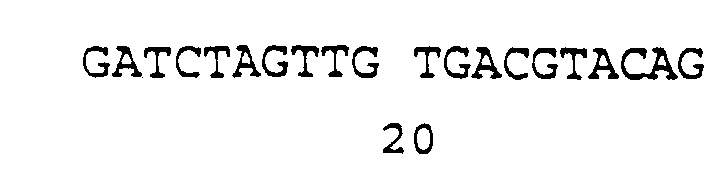
- The plasmid was constructed in two steps. First the complementary oligonucleotides (5'-GATCCTGTACGTCACAACTA-3'-SEQ3 and 5'-GATCTAGTTGTGACGTACAG-3'-SEQ4) comprising the recognition sequence for PNA62 (H-TGTACGTCACAACTA-Gly-NH2) were cloned into the BamHI site of the plasmid pUC19 to yield p62. Second, a 556bp PstI/HindIII fragment of E.coli phase λ genome was cloned into the PstI/HindIII site of p62 to yield p62-1.
- Two primers were synthesised with the following sequence: reverse primer 5'-GAAACAGCTATGAC-3'-SEQS and forward primer 5'-TGTACGTCACAACTA-3'-SEQ6 (the sequence of the forward primer is identical to the sequence of the PNA62). In a PCR reaction the forward and reverse primer together with the p62-1 plasmid direct the amplification of a 659bp fragment.
- PCR reactions were set-up containing either 1ng, 5ng or 25ng cf plasmid p62-1, reverse and forward PCR primers and various concentrations of PNA 62. Each PCR reaction (50 µl) contained 200 µM dNTP, 10mM Tris-HCl pH 9.9 (20°C), 50 mM KCl, 1.5 mM MgCl2, 0.01% gelatine, 0.1% Triton X-100, 1U supertaq enzyme (Stratagene), 10 pmol of each of the two PCR primers and PNAs and p 62-1 plasmid as indicated below in Table 2. PCR conditions were 96°C 2 min, 65°C 2 min, 35°C 30 sec, 70°C 2 min - 30 cycles. The ability to clamp the PCR reaction is indicated using the following nomenclature: ++= PCR product; += some PCR product and - = no PCR product.
TABLE 2 PNA Concentration None 1.63µM 325nM 65nM 13nM 2.6nM 1ng plasmid ++ - - - ++ ++ 5ng plasmid ++ - - + ++ ++ 25ng plasmid ++ - + ++ ++ ++ - When 1ng of plasmid was used the concentration of PNA that effectively clamped the PCR reaction was found to be 65nM. When the amount of plasmid target was increased five fold (from 1 to 5 ng) the PNA concentration that was required for efficient clamping was proportionally increased to 325 nM. Similarly, increasing the initial plasmid target 25 fold required a 25 fold increase in PNA (1.63 µM) for efficient clamping to take place. Thus, the QI or PCR clamp method can be used to quantitate the initial amount of target in the reaction.
- Had the quantitative plasmid content of the sample containing 5 ng been unknown, it could readily have been deduced from the results obtained at 1 ng of plasmid, used as a calibration curve, and the cut-off figure of 65 nM found for effective clamping of the amplification of the unknown (5 ng plasmid) sample.
- It should be noted that, in Example 1 and Example 2, only one nucleic acid analogue is employed and this is directed against one PCR primer site only. Hence a linear amplification process driven by the non-inhibited primer will take place in these experiments. Such linearly amplified material will not be detected by the gel electrophoetic method described here because of sensitivity limitations. To achieve total inhibition of a PCR process it is necessary to employ two nucleic acid molecules directed at either both primers or at both strands of the double stranded nucleic acid target. This will be important if more senistive methods of detection than gel electrophoresis/staining by ethidium bromide are to be employed.
- Whilst the invention has been described with reference to the preferred embodiments illustrated by the Examples above, many variations and modifications are possible within the scope of the invention.
- Also, the invention includes a kit for use in quantifying an amount of target nucleic acid in a sample, comprising reagents for use in an amplification procedure to amplify a sequence in said nucleic acid, and at least two non-complementary nucleic acid analogue sequences each for hybridising to a sequence to be amplified respectively in a strand of said target nucleic acid and a nucleic acid strand complementary thereto to prevent amplification thereof.
- The nucleic acid sequences referred to above are detailed in the following listing.
-
- (i) APPLICANT:
- (A) NAME: PNA Diagnostics A/S
- (B) STREET: Lerso Park Alle 42
- (C) CITY: Copenhagen
- (E) COUNTRY: Denmark
- (F) POSTAL CODE (ZIP): DK-2100
- (ii) TITLE OF INVENTION: Nucleic Acid Analogue Assay Procedures
- (iii) NUMBER OF SEQUENCES: 6
- (iv) COMPUTER READABLE FORM:
- (A) MEDIUM TYPE: Floppy disk
- (B) COMPUTER: IBM PC compatible
- (C) OPERATING SYSTEM: PC-DOS/MS-DOS
- (D) SOFTWARE: PatentIn Release #1.0, Version #1.25 (EPO)
- (vi) PRIOR APPLICATION DATA:
- (A) APPLICATION NUMBER: GB 9311386.8
- (B) FILING DATE: 02-JUN-1993
-
- (i) SEQUENCE CHARACTERISTICS:
- (A) LENGTH: 21 base pairs
- (B) TYPE: nucleic acid
- (C) STRANDEDNESS: single
- (D) TOPOLOGY: linear
- (ii) MOLECULE TYPE: DNA (genomic)
- (iii) HYPOTHETICAL: NO
- (iii) ANTI-SENSE: NO
- (xi) SEQUENCE DESCRIPTION: SEQ ID NO: 1:

-
- (i) SEQUENCE CHARACTERISTICS:
- (A) LENGTH: 17 base pairs
- (B) TYPE: nucleic acid
- (C) STRANDEDNESS: single
- (D) TOPOLOGY: linear
- (ii) MOLECULE TYPE: DNA (genomic)
- (iii) HYPOTHETICAL: NO
- (iii) ANTI-SENSE: NO
- (xi) SEQUENCE DESCRIPTION: SEQ ID NO: 2:

-
- (i) SEQUENCE CHARACTERISTICS:
- (A) LENGTH: 20 base pairs
- (B) TYPE: nucleic acid
- (C) STRANDEDNESS: single
- (D) TOPOLOGY: linear
- (ii) MOLECULE TYPE: DNA (genomic)
- (iii) HYPOTHETICAL: NO
- (iii) ANTI-SENSE: NO
- (xi) SEQUENCE DESCRIPTION: SEQ ID NO: 3:

-
- (i) SEQUENCE CHARACTERISTICS:
- (A) LENGTH: 20 base pairs
- (B) TYPE: nucleic acid
- (C) STRANDEDNESS: single
- (D) TOPOLOGY: linear
- (ii) MOLECULE TYPE: DNA (genomic)
- (iii) HYPOTHETICAL: NO
- (iii) ANTI-SENSE: NO
- (xi) SEQUENCE DESCRIPTION: SEQ ID NO: 4:
-
- (i) SEQUENCE CHARACTERISTICS:
- (A) LENGTH: 14 base pairs
- (B) TYPE: nucleic acid
- (C) STRANDEDNESS: single
- (D) TOPOLOGY: linear
- (ii) MOLECULE TYPE: DNA (genomic)
- (iii) HYPOTHETICAL: NO
- (iii) ANTI-SENSE: NO
- (xi) SEQUENCE DESCRIPTION: SEQ ID NO: 5:

-
- (i) SEQUENCE CHARACTERISTICS:
- (A) LENGTH: 15 base pairs
- (B) TYPE: nucleic acid
- (C) STRANDEDNESS: single
- (D) TOPOLOGY: linear
- (ii) MOLECULE TYPE: DNA (genomic)
- (iii) HYPOTHETICAL: NO
- (iii) ANTI-SENSE: NO
- (xi) SEQUENCE DESCRIPTION: SEQ ID NO: 6:

Claims (13)
- An assay procedure comprising attempting to perform a nucleic acid amplification procedure in the presence of a nucleic acid analogue which in sufficient quantity will inhibit said amplification procedure by selective interaction with a nucleic acid species present, wherein the amount of said nucleic acid or the amount of said nucleic acid analogue but not both is known or later otherwise determined, determining the success, failure, or degree of success of said amplification procedure and thereby deriving information regarding the amount of said nucleic acid species or nucleic acid analogue present and wherein said nucleic acid species is a template for said amplification.
- An assay procedure as claimed in Claim 1, wherein said nucleic acid species is present in unknown quantity.
- An assay procedure as claimed in Claim 2, further comprising repeating said attempted assay procedure one or more times using one or more different amounts of said nucleic acid analogue so as to derive information regarding the amount thereof needed to be present to inhibit said amplification procedure.
- An assay procedure as claimed in any preceding claim, wherein said nucleic acid analogue hybridises to the same site on the nucleic acid species to which a primer can hybridise.
- An assay procedure claimed in any preceding claim, wherein the nucleic acid analogue comprises a polymeric strand which includes a sequence of ligands bound to a polyamide, polythioamide, polysulphinamide or polysulphonamide backbone made up of linked backbone moieties, which analogue is capable of hybridisation to a nucleic acid of complementary sequence.
- An assay procedure as claimed in any preceding claim, wherein the nucleic acid analogue is capable of hybridising to a nucleic acid of complementary sequence to form a hybrid which is more stable against denaturation by heat than a hybrid between the conventional deoxyribo-nucleotide corresponding in sequence to said analogue and said nucleic acid.
- An assay procedure as claimed in any preceding claim, wherein said nucleic acid analogue is a peptide nucleic acid in which said backbone is a polyamide backbone, each said ligand being bonded directly or indirectly to an aza nitrogen atom in said backbone, and said ligand bearing nitrogen atoms mainly being separated from one another in said backbone by from 4 to 8 intervening atoms.
- An assay procedure as claimed in any preceding claim, wherein the nucleic acid analogue is capable of hybridising to a double-stranded nucleic acid in which one strand has a sequence complementary to said analogue, in such a way as to displace the other strand from said one strand.
- An assay procedure as claimed in any preceding claim, wherein the nucleic acid analogue has the general formula 1:
 n is at least 2,each of L1-Ln is independently selected from the group consisting of hydrogen, hydroxy, (C1-C4)alkanoyl, naturally occurring nucleobases, non-naturally occurring nucleobases, aromatic moieties, DNA intercalators, nucleobase-binding groups, heterocyclic moieties, and reporter ligands, L1-Ln being selected such that the nucleic acid analogue can hybridise to the nucleic acid species;each of C1-Cn is (CR6R7)y where R6 is hydrogen and R7 is selected from the group consisting of the side chains of naturally occurring alpha amino acids, or R6 and R7 are independently selected from the group consisting of hydrogen, (C2-C6)alkyl, aryl, aralkyl, heteroaryl, hydroxy, (C1-C6)alkoxy, (C1-C6)alkylthio, NR3R4 and SR5, where R3 and R4 are as defined below, and R5 is hydrogen, (C1-C6)alkyl, hydroxy, alkoxy, or alkylthio-substituted (C1 to C6)alkyl or R6 and R7 taken together complete an alicyclic or heterocyclic system;each of D1-Dn is (CR6R7)z where R6 and R7 are as defined above;each of y and z is zero or an integer from 1 to 10, the sum y + z being from 2 to 10;each of G1-Gn-1 is -NR3CO-, -NR3CS-, NR3SO- or-NR3SO2-, in either orientation, where R3 is as defined below;each of A1-An and B1-Bn are selected such that:wherein:(a) A is a group of formula (IIa), (IIb), (IIc) or (IId), and B is N or R3N+; or(b) A is a group of formula (IId) and B is CH;
 X is O, S, Se, NR3, CH2 or C(CH3)2;Y is a single bond, O, S or NR4;each of p and q is zero or an integer from 1 to 5, the sum p+q being not more than 10;each of r and s is zero or an integer from 1 to 5, the sum r+s being not more than 10;each R1 and R2 is independently selected from the group consisting of hydrogen, (C1-C4)alkyl which may be hydroxy- or alkoxy- or alkylthio-substituted, hydroxy, alkoxy, alkylthio, amino and halogen; andeach R3 and R4 is independently selected from the group consisting of hydrogen, (C1-C4)alkyl, hydroxy- or alkoxy- or alkylthio-substituted (C1-C4)alkyl, hydroxy, alkoxy, alkylthio and amino;Q is -CO2H, -CONR'R", -SO3H or -SO2NR'R'' or an activated derivative of -CO2H or -SO3H; andI is -NR'R", where R' and R" are independently selected from the group consisting of hydrogen, alkyl, amino protecting groups, reporter ligands, intercalators, chelators, peptides, proteins, carbohydrates, lipids, steroids, nucleosides, nucleotides, nucleotide diphosphates, nucleotide triphosphates, oligonucleotides, including both oligoribonucleotides and oligodeoxyribonucleotides, oligonucleosides and soluble and non-soluble polymers.
 - An assay procedure as claimed in Claim 9, wherein said nucleic acid analogue comprises a compound of the general formula III, IV or V:


 each L is independently selected from the group consisting of hydrogen, phenyl, heterocyclic moieties, naturally occurring nucleobases, and non-naturally occurring nucleobases such that nucleic acid analogue can hybridise to the nucleic acid species;each R7 is indenpendently selected from the group consisting of hydrogen and the side chains of naturally occurring alpha amino acids;n is an integer greater than 1,each k, 1, and m is, independently, zero or an integer from 1 to 5;each p is zero or 1;Rh is OH, NH2 or -NHLysNH2; andRiH or COCH3.
 - A kit for use in quantifying an amount of target nucleic acid in a sample, comprising reagents for use in an amplification procedure to amplify a sequence in said nucleic acid, and at least two nucleic acid analogue sequences non-complementary to each other the first analogue hybridising to a sequence to be amplified in a strand of said target nucleic acid and the second analogue hybridizing to the nucleic acid strand complementary thereto to prevent amplification thereof.
- A kit as claimed in Claim 11, wherein said kit further comprises at least two amplification primers and said nucleic acid analogue sequences are such as to compete with said primers to hybridise to said target nucleic acid.
- A kit as claimed in Claim 11, wherein said kit further comprises at least two amplification primers and said nucleic acid analogue sequences are such as to hybridise to said target nucleic acid between primer binding sites therein.
Applications Claiming Priority (3)
| Application Number | Priority Date | Filing Date | Title |
|---|---|---|---|
| GB939311386A GB9311386D0 (en) | 1993-06-02 | 1993-06-02 | Nucleic acid analogue assay procedures |
| GB9311386 | 1993-06-02 | ||
| PCT/GB1994/001174 WO1994028171A1 (en) | 1993-06-02 | 1994-05-31 | Nucleic acid analogue assay procedures |
Publications (2)
| Publication Number | Publication Date |
|---|---|
| EP0701627A1 EP0701627A1 (en) | 1996-03-20 |
| EP0701627B1 true EP0701627B1 (en) | 1997-01-29 |
Family
ID=10736511
Family Applications (1)
| Application Number | Title | Priority Date | Filing Date |
|---|---|---|---|
| EP94916331A Expired - Lifetime EP0701627B1 (en) | 1993-06-02 | 1994-05-31 | Nucleic acid analogue assay procedures |
Country Status (9)
| Country | Link |
|---|---|
| US (1) | US5912145A (en) |
| EP (1) | EP0701627B1 (en) |
| JP (1) | JP2842694B2 (en) |
| AU (1) | AU6802994A (en) |
| DE (1) | DE69401661T2 (en) |
| DK (1) | DK0701627T3 (en) |
| ES (1) | ES2098948T3 (en) |
| GB (1) | GB9311386D0 (en) |
| WO (1) | WO1994028171A1 (en) |
Families Citing this family (43)
| Publication number | Priority date | Publication date | Assignee | Title |
|---|---|---|---|---|
| US5629178A (en) * | 1994-10-28 | 1997-05-13 | Genetics & Ivf Institute | Method for enhancing amplification in the polymerase chain reaction employing peptide nucleic acid (PNA) |
| EP0826066B1 (en) | 1995-05-05 | 2000-09-13 | The Perkin-Elmer Corporation | Methods and reagents for combined pcr amplification and hybridization probing assay |
| US5939262A (en) | 1996-07-03 | 1999-08-17 | Ambion, Inc. | Ribonuclease resistant RNA preparation and utilization |
| US5677124A (en) * | 1996-07-03 | 1997-10-14 | Ambion, Inc. | Ribonuclease resistant viral RNA standards |
| US6617422B1 (en) | 1997-05-23 | 2003-09-09 | Peter Nielsen | Peptide nucleic acid monomers and oligomers |
| US6485901B1 (en) | 1997-10-27 | 2002-11-26 | Boston Probes, Inc. | Methods, kits and compositions pertaining to linear beacons |
| DK1471926T3 (en) | 1999-06-01 | 2011-02-28 | Baylor College Medicine | Compositions and Methods for Therapeutic Use of an Atonal-Associated Sequence |
| WO2001051669A2 (en) * | 2000-01-15 | 2001-07-19 | Genelabs Technologies, Inc. | Nucleic acid binding assay and selection method |
| EP3415625A1 (en) | 2002-02-01 | 2018-12-19 | Life Technologies Corporation | Double-stranded oligonucleotides |
| WO2003064621A2 (en) | 2002-02-01 | 2003-08-07 | Ambion, Inc. | HIGH POTENCY siRNAS FOR REDUCING THE EXPRESSION OF TARGET GENES |
| US20060009409A1 (en) | 2002-02-01 | 2006-01-12 | Woolf Tod M | Double-stranded oligonucleotides |
| US20030211483A1 (en) * | 2002-05-09 | 2003-11-13 | Schroeder Benjamin G. | Methods for the enrichment of low-abundance polynucleotides |
| EP2269619A1 (en) | 2002-08-12 | 2011-01-05 | Jennerex Biotherapeutics ULC | Methods and compositions concerning poxviruses and cancer |
| ES2345993T3 (en) | 2004-09-14 | 2010-10-07 | The Regents Of The University Of Colorado, A Body Corporate | METHOD FOR TREATMENT WITH BUCINDOLOL BASED ON GENETIC ADDRESSING. |
| CA2842402C (en) | 2005-03-10 | 2016-02-23 | Gen-Probe Incorporated | Systems and methods to perform assays for detecting or quantifying analytes within samples |
| CN101351213B (en) * | 2005-09-07 | 2013-10-02 | 詹纳里克斯公司 | Systemic treatment of metastatic and/or systemically-disseminated cancers using GM-CSF-expressing poxviruses |
| US8980246B2 (en) | 2005-09-07 | 2015-03-17 | Sillajen Biotherapeutics, Inc. | Oncolytic vaccinia virus cancer therapy |
| DE602007006478D1 (en) | 2006-05-12 | 2010-06-24 | Cepheid Sunnyvale | DETECTION OF THE CONNECTION OF A DNA RECOMBINATION |
| CN102026645B (en) | 2006-09-15 | 2016-01-27 | 渥太华医院研究机构 | Oncolytic rhabdovirus |
| US20100129902A1 (en) * | 2008-11-24 | 2010-05-27 | Erhard Ralf Schoenbrunner | Replication Stable and RNase Resistant Chimeras of Pestivirus with Insertion in 3' Nontranslated Region (3'NTR) |
| JP5785942B2 (en) | 2009-06-29 | 2015-09-30 | ルミネックス コーポレーション | Chimeric primer with hairpin conformation and use thereof |
| US9409983B2 (en) | 2009-07-23 | 2016-08-09 | The Board Of Trustess Of The University Of Illinois | Methods and compositions involving PBEF inhibitors for lung inflammation conditions and diseases |
| WO2011032088A1 (en) | 2009-09-11 | 2011-03-17 | Arca Biopharma, Inc. | Polymorphisms in the pde3a gene |
| ES2671570T3 (en) | 2009-09-14 | 2018-06-07 | Sillajen Biotherapeutics, Inc. | Combined cancer therapy with oncolytic vaccinia virus |
| WO2011070440A2 (en) | 2009-12-10 | 2011-06-16 | Ottawa Hospital Research Institute | Oncolytic rhabdovirus |
| WO2011079273A2 (en) | 2009-12-23 | 2011-06-30 | Arca Biopharma, Inc. | Methods and compositions for cardiovascular diseases and conditions |
| CN103429258B (en) | 2011-01-04 | 2016-03-09 | 新罗杰公司 | By use oncolytic vaccinia virus generate for tumor antigen antibody and generate tumour-specific CDC |
| MX2013009863A (en) | 2011-02-28 | 2013-12-06 | Univ Iowa Res Found | ANTI-MÃœLLERIAN HORMONE CHANGES IN PREGNANCY AND PREDICTION OFADVERSE PREGNANCY OUTCOMES AND GENDER. |
| AU2012226530B2 (en) | 2011-03-08 | 2016-12-01 | King Abdullah University Of Science And Technology | Molecular biomarker set for early detection of ovarian cancer |
| US9364532B2 (en) | 2011-06-08 | 2016-06-14 | Children's Hospital Of Eastern Ontario Research Institute Inc. | Compositions and methods for glioblastoma treatment |
| US10040853B2 (en) | 2011-09-09 | 2018-08-07 | Fred Hutchinson Cancer Research Center | Methods and compositions involving NKG2D inhibitors and cancer |
| US10125373B2 (en) | 2013-01-22 | 2018-11-13 | Arizona Board Of Regents On Behalf Of Arizona State University | Geminiviral vector for expression of rituximab |
| JP2016513115A (en) | 2013-02-21 | 2016-05-12 | チルドレンズ ホスピタル オブ イースタン オンタリオ リサーチ インスティチュート インコーポレイテッド | Vaccine composition |
| AU2014329535B2 (en) | 2013-10-03 | 2017-09-07 | Oklahoma Medical Research Foundation | Biomarkers for systemic lupus erythematosus disease activity, and intensity and flare |
| CN106103431B (en) | 2014-01-10 | 2019-03-15 | 葛兰素史密斯克莱知识产权(第2 号)有限公司 | Hydroxycarboxamide derivatives and their uses |
| GB201411567D0 (en) * | 2014-06-30 | 2014-08-13 | Epistem Ltd | Quantification methods |
| EP3224362B1 (en) | 2014-11-26 | 2024-09-25 | The Regents of The University of California | Therapeutic compositions comprising transcription factors and methods of making and using the same |
| WO2018140606A1 (en) | 2017-01-26 | 2018-08-02 | Oklahoma Medical Research Foundation | Biomarkers for systemic lupus erythematosus disease activity, and intensity and flare |
| US12140592B2 (en) | 2017-06-16 | 2024-11-12 | Oklahoma Medical Research Foundation | Biomarkers for assessing risk of transitioning to systemic lupus erythematosus classification and disease pathogenesis |
| US20210349088A1 (en) | 2018-10-18 | 2021-11-11 | Oklahoma Medical Research Foundation | Biomarkers For A Systemic Lupus Erythematosus (SLE) Disease Activity Immune Index That Characterizes Disease Activity |
| US12510539B2 (en) | 2018-10-18 | 2025-12-30 | Progentec Diagnostics, Inc. | Biomarkers for a systemic lupus erythematosus (SLE) disease activity immune index that characterizes disease activity |
| ES2975662T3 (en) | 2018-10-31 | 2024-07-11 | Univ Arizona | Biomarkers and methods of use for radiation-induced lung injury |
| WO2021055489A1 (en) | 2019-09-16 | 2021-03-25 | Grohar Patrick J | Compositions and methods for the treatment of swi-snf mutant tumors |
Family Cites Families (4)
| Publication number | Priority date | Publication date | Assignee | Title |
|---|---|---|---|---|
| US5219727A (en) * | 1989-08-21 | 1993-06-15 | Hoffmann-Laroche Inc. | Quantitation of nucleic acids using the polymerase chain reaction |
| GB9016163D0 (en) * | 1990-07-24 | 1990-09-05 | Cemu Bioteknik | Chemical method |
| DK51092D0 (en) * | 1991-05-24 | 1992-04-15 | Ole Buchardt | OLIGONUCLEOTIDE ANALOGUE DESCRIBED BY PEN, MONOMERIC SYNTHONES AND PROCEDURES FOR PREPARING THEREOF, AND APPLICATIONS THEREOF |
| GB9211979D0 (en) * | 1992-06-05 | 1992-07-15 | Buchard Ole | Uses of nucleic acid analogues |
-
1993
- 1993-06-02 GB GB939311386A patent/GB9311386D0/en active Pending
-
1994
- 1994-05-31 US US08/549,786 patent/US5912145A/en not_active Expired - Lifetime
- 1994-05-31 DK DK94916331.5T patent/DK0701627T3/en active
- 1994-05-31 EP EP94916331A patent/EP0701627B1/en not_active Expired - Lifetime
- 1994-05-31 AU AU68029/94A patent/AU6802994A/en not_active Abandoned
- 1994-05-31 ES ES94916331T patent/ES2098948T3/en not_active Expired - Lifetime
- 1994-05-31 DE DE69401661T patent/DE69401661T2/en not_active Expired - Lifetime
- 1994-05-31 WO PCT/GB1994/001174 patent/WO1994028171A1/en not_active Ceased
- 1994-05-31 JP JP7500415A patent/JP2842694B2/en not_active Expired - Lifetime
Also Published As
| Publication number | Publication date |
|---|---|
| ES2098948T3 (en) | 1997-05-01 |
| DE69401661D1 (en) | 1997-03-13 |
| US5912145A (en) | 1999-06-15 |
| DE69401661T2 (en) | 1997-06-12 |
| EP0701627A1 (en) | 1996-03-20 |
| DK0701627T3 (en) | 1997-07-21 |
| AU6802994A (en) | 1994-12-20 |
| JPH08510384A (en) | 1996-11-05 |
| GB9311386D0 (en) | 1993-07-21 |
| WO1994028171A1 (en) | 1994-12-08 |
| JP2842694B2 (en) | 1999-01-06 |
Similar Documents
| Publication | Publication Date | Title |
|---|---|---|
| US5912145A (en) | Nucleic acid analogue assay procedures and kits | |
| US5925520A (en) | Multiplex sequencing method using primers of different lengths to detect polymorphisms | |
| US5972610A (en) | Use of nucleic acid analogues in the inhibition of nucleic acid amplification | |
| Bej et al. | Amplification of nucleic acids by polymerase chain reaction (PCR) and other methods and their applications | |
| US4879214A (en) | Differentiation of nucleic acid segments on the basis of nucleotide differences | |
| EP1368489B1 (en) | Asynchronous primed pcr | |
| EP0931166B1 (en) | Methods for determining sequence information in polynucleotides using mass spectrometry | |
| US6214587B1 (en) | Isothermal strand displacement nucleic acid amplification | |
| EP2365078B1 (en) | Processes using dual specificity oligonucleotide and dual specificity oligonucleotide | |
| US8518671B2 (en) | Solid support assay systems and methods utilizing non-standard bases | |
| US5912118A (en) | Method for sequencing nucleic acids | |
| US20060263794A1 (en) | Methods for detecting target nucleic acids using coupled ligation and amplification | |
| JP2003507024A (en) | Polymerase extension at the 3 'end of the PNA-DNA chimera | |
| WO1996039525A1 (en) | Cloning and expression of thermostable muts genes and proteins and uses therefor | |
| WO1996013611A1 (en) | A method for enhancing amplification in the polymerase chain reaction employing peptide nucleic acid (pna) | |
| WO2020092134A1 (en) | Exponential base-3 nucleic acid amplification with reduced amplification time using nested overlapping primers | |
| WO1998001562A1 (en) | Thermostable mutl genes and proteins and uses therefor | |
| WO1991006679A1 (en) | An improved method for hybridizing nucleic acids using single-stranded nucleic acid binding protein | |
| AU2011384896B2 (en) | Method and primer set for detecting mutation | |
| US5869236A (en) | Mutation detecting method using photobridging-stabilized double-stranded DNA denaturing gradient electrophoresis | |
| US5968739A (en) | Nucleic acid primers and probes for detecting Legionella pneumophila | |
| EP1117826A1 (en) | Oligonucleotide primers that destabilize non-specific duplex formation and uses thereof | |
| US9382582B1 (en) | Methods, compositions and kits for enriching for a minor template amplification product in a mixed template amplification reaction | |
| WO2001094628A1 (en) | Sequencing method with three primers |
Legal Events
| Date | Code | Title | Description |
|---|---|---|---|
| PUAI | Public reference made under article 153(3) epc to a published international application that has entered the european phase |
Free format text: ORIGINAL CODE: 0009012 |
|
| 17P | Request for examination filed |
Effective date: 19960102 |
|
| AK | Designated contracting states |
Kind code of ref document: A1 Designated state(s): DE DK ES FR GB IT |
|
| GRAG | Despatch of communication of intention to grant |
Free format text: ORIGINAL CODE: EPIDOS AGRA |
|
| 17Q | First examination report despatched |
Effective date: 19960418 |
|
| GRAH | Despatch of communication of intention to grant a patent |
Free format text: ORIGINAL CODE: EPIDOS IGRA |
|
| GRAH | Despatch of communication of intention to grant a patent |
Free format text: ORIGINAL CODE: EPIDOS IGRA |
|
| GRAA | (expected) grant |
Free format text: ORIGINAL CODE: 0009210 |
|
| AK | Designated contracting states |
Kind code of ref document: B1 Designated state(s): DE DK ES FR GB IT |
|
| REF | Corresponds to: |
Ref document number: 69401661 Country of ref document: DE Date of ref document: 19970313 |
|
| ET | Fr: translation filed | ||
| ITF | It: translation for a ep patent filed | ||
| REG | Reference to a national code |
Ref country code: ES Ref legal event code: FG2A Ref document number: 2098948 Country of ref document: ES Kind code of ref document: T3 |
|
| REG | Reference to a national code |
Ref country code: DK Ref legal event code: T3 |
|
| PLBE | No opposition filed within time limit |
Free format text: ORIGINAL CODE: 0009261 |
|
| STAA | Information on the status of an ep patent application or granted ep patent |
Free format text: STATUS: NO OPPOSITION FILED WITHIN TIME LIMIT |
|
| 26N | No opposition filed | ||
| REG | Reference to a national code |
Ref country code: GB Ref legal event code: IF02 |
|
| PGFP | Annual fee paid to national office [announced via postgrant information from national office to epo] |
Ref country code: ES Payment date: 20050609 Year of fee payment: 12 |
|
| PGFP | Annual fee paid to national office [announced via postgrant information from national office to epo] |
Ref country code: IT Payment date: 20060531 Year of fee payment: 13 |
|
| PG25 | Lapsed in a contracting state [announced via postgrant information from national office to epo] |
Ref country code: ES Free format text: LAPSE BECAUSE OF NON-PAYMENT OF DUE FEES Effective date: 20060601 |
|
| REG | Reference to a national code |
Ref country code: ES Ref legal event code: FD2A Effective date: 20060601 |
|
| PG25 | Lapsed in a contracting state [announced via postgrant information from national office to epo] |
Ref country code: IT Free format text: LAPSE BECAUSE OF NON-PAYMENT OF DUE FEES Effective date: 20070531 |
|
| PGFP | Annual fee paid to national office [announced via postgrant information from national office to epo] |
Ref country code: DE Payment date: 20130530 Year of fee payment: 20 Ref country code: GB Payment date: 20130528 Year of fee payment: 20 Ref country code: DK Payment date: 20130528 Year of fee payment: 20 |
|
| PGFP | Annual fee paid to national office [announced via postgrant information from national office to epo] |
Ref country code: FR Payment date: 20130606 Year of fee payment: 20 |
|
| REG | Reference to a national code |
Ref country code: DK Ref legal event code: EUP Effective date: 20140531 |
|
| REG | Reference to a national code |
Ref country code: DE Ref legal event code: R071 Ref document number: 69401661 Country of ref document: DE |
|
| REG | Reference to a national code |
Ref country code: GB Ref legal event code: PE20 Expiry date: 20140530 |
|
| PG25 | Lapsed in a contracting state [announced via postgrant information from national office to epo] |
Ref country code: GB Free format text: LAPSE BECAUSE OF EXPIRATION OF PROTECTION Effective date: 20140530 |
|
| PG25 | Lapsed in a contracting state [announced via postgrant information from national office to epo] |
Ref country code: DE Free format text: LAPSE BECAUSE OF EXPIRATION OF PROTECTION Effective date: 20140603 |