EP0697410B1 - 5-substituted alkylidene 2-(N-cyanoimino)-thiazolidin-4-one derivatives, their preparation and their use as aldose reductase inhibitors - Google Patents
5-substituted alkylidene 2-(N-cyanoimino)-thiazolidin-4-one derivatives, their preparation and their use as aldose reductase inhibitors Download PDFInfo
- Publication number
- EP0697410B1 EP0697410B1 EP95304416A EP95304416A EP0697410B1 EP 0697410 B1 EP0697410 B1 EP 0697410B1 EP 95304416 A EP95304416 A EP 95304416A EP 95304416 A EP95304416 A EP 95304416A EP 0697410 B1 EP0697410 B1 EP 0697410B1
- Authority
- EP
- European Patent Office
- Prior art keywords
- cyanoimino
- thiazolidin
- group
- carbon atoms
- hydrogen atom
- Prior art date
- Legal status (The legal status is an assumption and is not a legal conclusion. Google has not performed a legal analysis and makes no representation as to the accuracy of the status listed.)
- Expired - Lifetime
Links
Classifications
-
- C—CHEMISTRY; METALLURGY
- C07—ORGANIC CHEMISTRY
- C07D—HETEROCYCLIC COMPOUNDS
- C07D277/00—Heterocyclic compounds containing 1,3-thiazole or hydrogenated 1,3-thiazole rings
- C07D277/02—Heterocyclic compounds containing 1,3-thiazole or hydrogenated 1,3-thiazole rings not condensed with other rings
- C07D277/20—Heterocyclic compounds containing 1,3-thiazole or hydrogenated 1,3-thiazole rings not condensed with other rings having two or three double bonds between ring members or between ring members and non-ring members
-
- A—HUMAN NECESSITIES
- A61—MEDICAL OR VETERINARY SCIENCE; HYGIENE
- A61P—SPECIFIC THERAPEUTIC ACTIVITY OF CHEMICAL COMPOUNDS OR MEDICINAL PREPARATIONS
- A61P13/00—Drugs for disorders of the urinary system
- A61P13/02—Drugs for disorders of the urinary system of urine or of the urinary tract, e.g. urine acidifiers
-
- A—HUMAN NECESSITIES
- A61—MEDICAL OR VETERINARY SCIENCE; HYGIENE
- A61P—SPECIFIC THERAPEUTIC ACTIVITY OF CHEMICAL COMPOUNDS OR MEDICINAL PREPARATIONS
- A61P15/00—Drugs for genital or sexual disorders; Contraceptives
-
- A—HUMAN NECESSITIES
- A61—MEDICAL OR VETERINARY SCIENCE; HYGIENE
- A61P—SPECIFIC THERAPEUTIC ACTIVITY OF CHEMICAL COMPOUNDS OR MEDICINAL PREPARATIONS
- A61P25/00—Drugs for disorders of the nervous system
- A61P25/02—Drugs for disorders of the nervous system for peripheral neuropathies
-
- A—HUMAN NECESSITIES
- A61—MEDICAL OR VETERINARY SCIENCE; HYGIENE
- A61P—SPECIFIC THERAPEUTIC ACTIVITY OF CHEMICAL COMPOUNDS OR MEDICINAL PREPARATIONS
- A61P27/00—Drugs for disorders of the senses
- A61P27/02—Ophthalmic agents
-
- A—HUMAN NECESSITIES
- A61—MEDICAL OR VETERINARY SCIENCE; HYGIENE
- A61P—SPECIFIC THERAPEUTIC ACTIVITY OF CHEMICAL COMPOUNDS OR MEDICINAL PREPARATIONS
- A61P43/00—Drugs for specific purposes, not provided for in groups A61P1/00-A61P41/00
-
- A—HUMAN NECESSITIES
- A61—MEDICAL OR VETERINARY SCIENCE; HYGIENE
- A61P—SPECIFIC THERAPEUTIC ACTIVITY OF CHEMICAL COMPOUNDS OR MEDICINAL PREPARATIONS
- A61P9/00—Drugs for disorders of the cardiovascular system
- A61P9/04—Inotropic agents, i.e. stimulants of cardiac contraction; Drugs for heart failure
Definitions
- This invention relates to a class of novel compounds, 2-(N-cyanoimino)thiazolidin-4-one derivatives, represented by the formula (I) (wherein R 1 s are the same or different groups and each represents hydrogen atom or C 1 -C 4 alkyl group; R 2 is phenyl group, naphthyl group or either phenyl or naphthyl group substituted with at least one hydroxyl, alkyl having 1 to 4 carbon atoms or alkoxy having 1 to 4 carbon atoms; R 3 is hydrogen atom or CH 2 COOH; n is 0 or 1; and the configuration of 5-methylene group includes both E-isomer and Z-isomer; providing excepting the case wherein R 1 is hydrogen atom or a methyl group, R 2 is 3,5-di-t-butyl-4-hydroxyphenyl, R 3 is hydrogen atoms and n is 0; or pharmaceutically acceptable salts of the acidic form of said derivatives when R 3 or R 3 is CH 2 COOH
- alkyl group having 1 to 4 carbon atoms examples are methyl, ethyl, n-propyl, isopropyl, n-butyl and t-butyl and examples of said salts are sodium, potassium and ammonium salt.
- aldose reducing enzyme induced complications as, for example, retinopathy, diabetic cataract, neuropathy, atheromic arteriosclerosis and impediment in the kidney or the like, have not been found yet.
- Aldose reducing enzyme is an enzyme being capable of reducing an aldose of human or other animal organs, as, for example, glucose or galactose, to the corresponding polyol as, for example sorbitol or galactitol.
- sorbitol or galactitol thus produced by the action of this enzyme is accumulated into the lenticular, peripheral nerve, kidney or the like of the diabetes or galactosemia patients, there of ten causes the above mentioned complications (Biochem. Biophys. Act 15 , 8472 (1968); Jap. J. Ophthalmol. 20 , 399 (1976); Int. Congr. Ser. Excerpta. Mep. 403, 594 (1944) and Metabolism 28 , 456 (1979)).
- EP-A. 047,109 describes rhodanine derivatives which inhibit aldose reductase.
- the present inventors had been working for years on the subject of finding out an effective prophylactic or therapeutic agent for the above mentioned complications of the chronic diabetes, through the impediment of aldose reducing enzyme action.
- the inventors have found a novel class of compounds represented by the formula (I), i.e. 2-(Ncyanoimino)thiazolidin-4-one derivatives, having an excellent aldose reducing enzyme inhibiting action and succeeded in coming to the invention.
- These compounds may be prepared by the reaction of an aldehyde or ketone compound represented by the formula (III) (wherein R 1 , R 2 and n are as defined hereinbefore) with a 2-(N-cyanoimino)thiazolidin-4-one of the formula (II) (in which R 3 is as defined hereinbefore) in an appropriate solvent as ethanol, acetonitrile, dioxane, dimethyl formamide, dimethyl sufoxide, pyridine, toluene, xylene and the like, or without using a solvent, and in the presence ammonium acetate, at a temperature from room temperature to 200°C, preferably 70-150°C, for 10 minutes to 10 hours, usually 20 minutes to 5 hours, under stirring.
- an aldehyde or ketone compound represented by the formula (III) wherein R 1 , R 2 and n are as defined hereinbefore
- an excess amount (1.1 to 5 equivalents) of aldehyde or ketone (III) is used as compared with the compound (II).
- alkali examples include metal alkali as sodium, potassium or lithium alkali and examples of said slats are sodium, potassium and ammonium salts.
- geometric isomers for the present compounds and however, they are mutually transformable each other in solution by the action of light or heat.
- the present compounds have an activity for inhibiting the action of aldose reducing enzyme which reduce aldose to the corresponding polyol.
- the present compounds are useful as prophylactic or therapeutic agents for the patients suffering from neuropathy as neuralgia, retinopathy, diabetic cataract, impediment in kidney as tubulonephrosis, which are all known as complications specifically connected with the aldose reducing enzyme, circulatory disease, impediment in kidney, retinopathy, diabetic cataract, neuropathy and infectious disease.
- 2-(N-cyanoimino)-5-(2-naphthylmethylene)thiazolidin-4-one was prepared from 2-(N-cyanoimino)thiazolidin-4-one and 2-naphthaldehyde.
- 2-(N-cyanoimino)-5-(3-phenylpropenylidene)thiazolidin-4-one was prepared from 2-(N-cyanoimino) thiazolidin-4-one and trans-cinnamaldehyde.
- 2-(N-cyanoimino)-5-(3-methylbenzylidene)thiazolidin-4-one was prepared from potassium salt of 2-(N-cyanoimino)thiazolidin-4-one and m-tolualdehyde.
- Aldose reducing enzyme inhibiting activity of the respective 2-(N-cyanoimino)thiazolidin-4-one derivatives was measured according to the method by Hayman et al (J. Biol. Chem., 240 877 (1965))
- the employed aldose reducing enzyme was Human, Recombinant.
- Inhibition rate (%) which means the inhibiting activity at the 1.0 X 10 -7 mol cencentration level of the tested compound.
- Example No. Inhibition rate (%) 1 72 2 100 3 44 4 32 5 44 6 68 7 20 8 100 9 52 10 84 11 60 12 12 13 64
Landscapes
- Health & Medical Sciences (AREA)
- Organic Chemistry (AREA)
- Chemical & Material Sciences (AREA)
- Bioinformatics & Cheminformatics (AREA)
- Engineering & Computer Science (AREA)
- General Health & Medical Sciences (AREA)
- Medicinal Chemistry (AREA)
- Nuclear Medicine, Radiotherapy & Molecular Imaging (AREA)
- General Chemical & Material Sciences (AREA)
- Pharmacology & Pharmacy (AREA)
- Life Sciences & Earth Sciences (AREA)
- Animal Behavior & Ethology (AREA)
- Chemical Kinetics & Catalysis (AREA)
- Public Health (AREA)
- Veterinary Medicine (AREA)
- Cardiology (AREA)
- Hospice & Palliative Care (AREA)
- Heart & Thoracic Surgery (AREA)
- Biomedical Technology (AREA)
- Neurology (AREA)
- Neurosurgery (AREA)
- Ophthalmology & Optometry (AREA)
- Urology & Nephrology (AREA)
- Endocrinology (AREA)
- Reproductive Health (AREA)
- Pharmaceuticals Containing Other Organic And Inorganic Compounds (AREA)
- Plural Heterocyclic Compounds (AREA)
Description
- This invention relates to a class of novel compounds, 2-(N-cyanoimino)thiazolidin-4-one derivatives, represented by the formula (I)(wherein R1s are the same or different groups and each represents hydrogen atom or C1-C4 alkyl group; R2 is phenyl group, naphthyl group or either phenyl or naphthyl group substituted with at least one hydroxyl, alkyl having 1 to 4 carbon atoms or alkoxy having 1 to 4 carbon atoms; R3 is hydrogen atom or CH2COOH; n is 0 or 1; and the configuration of 5-methylene group includes both E-isomer and Z-isomer; providing excepting the case wherein R1 is hydrogen atom or a methyl group, R2 is 3,5-di-t-butyl-4-hydroxyphenyl, R3 is hydrogen atoms and n is 0;
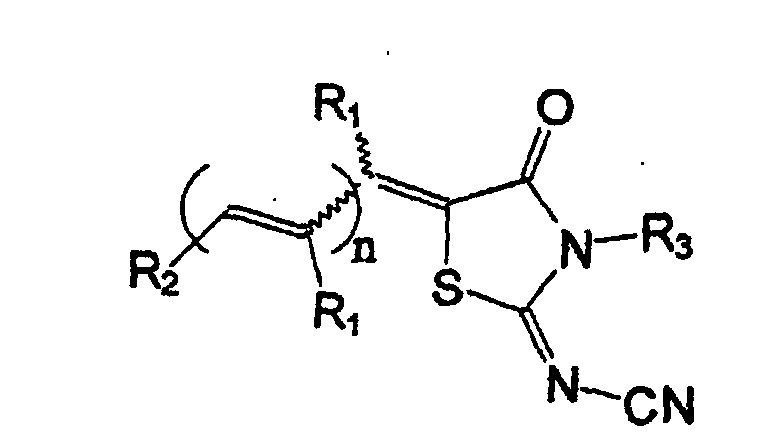
or pharmaceutically acceptable salts of the acidic form of said derivatives when R3 or R3 is CH2COOH. - Examples of alkyl group having 1 to 4 carbon atoms are methyl, ethyl, n-propyl, isopropyl, n-butyl and t-butyl and examples of said salts are sodium, potassium and ammonium salt.
- Various compounds have been proposed for the treatment of diabetes caused by the increase in blood sugar levels which is directly connected with the poor secretion of insulin from the pancreas (hypoglycemic drug).
- However, fully satisfiable compounds as medicine for the prophylaxis or treatment of complications of chronic diabetes and inter alia, aldose reducing enzyme induced complications, as, for example, retinopathy, diabetic cataract, neuropathy, atheromic arteriosclerosis and impediment in the kidney or the like, have not been found yet.
- Aldose reducing enzyme is an enzyme being capable of reducing an aldose of human or other animal organs, as, for example, glucose or galactose, to the corresponding polyol as, for example sorbitol or galactitol. When the sorbitol or galactitol thus produced by the action of this enzyme is accumulated into the lenticular, peripheral nerve, kidney or the like of the diabetes or galactosemia patients, there of ten causes the above mentioned complications (Biochem. Biophys. Act 15, 8472 (1968); Jap. J. Ophthalmol. 20, 399 (1976); Int. Congr. Ser. Excerpta. Mep. 403, 594 (1944) and Metabolism 28, 456 (1979)).
- EP-A. 047,109 describes rhodanine derivatives which inhibit aldose reductase.
- The present inventors had been working for years on the subject of finding out an effective prophylactic or therapeutic agent for the above mentioned complications of the chronic diabetes, through the impediment of aldose reducing enzyme action. As the result of such studies, the inventors have found a novel class of compounds represented by the formula (I), i.e. 2-(Ncyanoimino)thiazolidin-4-one derivatives, having an excellent aldose reducing enzyme inhibiting action and succeeded in coming to the invention.
- Incidentally, in J. Med. Chem. 37, 322 (1994) and EP-A- 449,216, there describes 3,5-di-t-butyl-4-hydroxybenzylidene derivatives having a similar construction with compounds of the present invention. However, the known compounds have 5-lipoxygenase and cycloxygenase inhibiting actions, but no aldose reducing enzyme inhibiting action. The present compounds of the formula (I) are novel compounds and they have first been prepared and examined by the inventors. These compounds may be prepared by the reaction of an aldehyde or ketone compound represented by the formula (III)(wherein R1, R2 and n are as defined hereinbefore)

with a 2-(N-cyanoimino)thiazolidin-4-one of the formula (II)(in which R3 is as defined hereinbefore)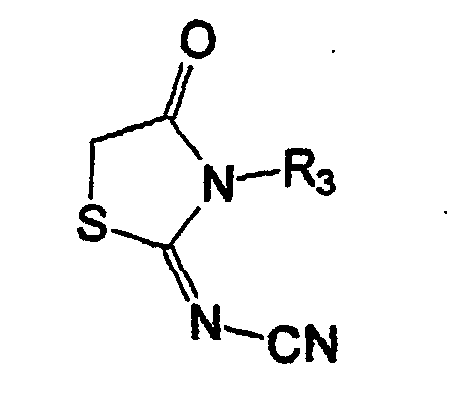
in an appropriate solvent as ethanol, acetonitrile, dioxane, dimethyl formamide, dimethyl sufoxide, pyridine, toluene, xylene and the like, or without using a solvent, and in the presence ammonium acetate, at a temperature from room temperature to 200°C, preferably 70-150°C, for 10 minutes to 10 hours, usually 20 minutes to 5 hours, under stirring. - Preferably, an excess amount (1.1 to 5 equivalents) of aldehyde or ketone (III) is used as compared with the compound (II). The compounds (I) wherein R3 is CH2COOH may also be prepared by reacting the corresponding R3=H compound in the presence of an alkali or its salt with a halogenized acetic acid or its ester.
- Examples of said alkali are metal alkali as sodium, potassium or lithium alkali and examples of said slats are sodium, potassium and ammonium salts. There are geometric isomers for the present compounds and however, they are mutually transformable each other in solution by the action of light or heat.
- Thus obtained compounds and their salts have an activity for inhibiting the action of aldose reducing enzyme which reduce aldose to the corresponding polyol. This means that the present compounds are useful as prophylactic or therapeutic agents for the patients suffering from neuropathy as neuralgia, retinopathy, diabetic cataract, impediment in kidney as tubulonephrosis, which are all known as complications specifically connected with the aldose reducing enzyme, circulatory disease, impediment in kidney, retinopathy, diabetic cataract, neuropathy and infectious disease.
- The inventions shall be now more fully explained in the following examples.
- A mixture of 1.41 g (0.010 mol) of 2-(N-cyanoimino)thiazolidin-4-one, 1.61 g (0.011 mol, 1.1 equivalent) of alpha-methyl cinnamaldehyde, 0.,85 g (0.011 mol, 1.1 equivalent) of ammonium acetate and 30 ml of ethanol was refluxed for 3 hours. After cooling, the mixture was added with ether and the precipitated ammonium salt was suspended in 15 ml of acetone and the suspension was added with 2 ml of conc. hydrogene chloride and 50 ml of water. The precipitated product was filtered. 2.03 g (0.0075 mol) of the objective compound were obtained as yellow needle crystals (yield 75%).
melting point: 202-203.5°C (decomp.) (ethanol-DMF) Mass spectrography 269 (M+) , 254, 201, 174, 169, 141, 115
IR; 3050, 2920, 2760, 2190, 1725, 1590, 1350, 1335, 1310, 1240, 1180 (KBr cm-1)
NMR δ = 2.21 (3H, s, CH 3) 7.34 (1H, S, Ph-CH=C) 7.47 (5H, s, aromatic-H) 7.63 (1H, s, CH=C-C=O) (DMSO-d6: ppm)Elementary analysis: as C14H11N3OS = 269.322 Calc. H 4.12%, C 62.44%, N 15.60% Found H 4.26%, C 62.57%, N 15.82% - A mixture of 1.50 g (0.0049 mol) of potassium salt of 2-(N-cyancimino)-5-(2-methyl-3-phenylpropenylidene)thiazolidin-4-one, 0.46 g (0.0049 mol) of monochloro acetic acid, 0.81 g (0.049 mol) of potassium iodide and 10 ml of DMF was heated in an oil bath maintained at 60-70°C for 1.5 hours. After adding with water, the oily precipitate was separated and purified by means of silica gel chromatography (eluting solvent: hexane: chloroform 3:1) to obtain 0.94 g (0.0029 mol) of the objective compound. Yield 59%, as pale yellow crystals
melting point: 174-175.5°C (decomp.) (ethyl acetate-ethanol)
Mass spectrography 327(M+), 284, 201, 198, 173, 169, 141, 129, 115
IR; 3300-2250, 2180, 1725, 1570, 1400, 1380, 1325, 1250, 1180, 1100, 740, 695 (KBr cm-1)
MMR δ = 2.27 (3H, s, CH 3) 4.54 (2H, s, N-CH 2) 7.36 (1H, s, Ph-CH=C), 7.49 (5H, s aromatic-H) 7.85 (1H, s, CH=C-C=O) (DMSO-d6: ppm)Elementary analysis: as C16H13N3O3S = 327.358 Calc. H 4.00%, C 58.71%, N 12.84% Found H 4.31%, C 58.53%, N 12.73% - Using the same method as stated in Example 1, 2-(N-cyanoimino)-5-(2-naphthylmethylene)thiazolidin-4-one was prepared from 2-(N-cyanoimino)thiazolidin-4-one and 2-naphthaldehyde.
Yield 66%; pale yellow crystals
melting point: 243°C (decomp.) (ethanol- DMF)
Mass spectrography 279(M+), 184, 152, 139
IR; 3070, 2930, 2760, 2190, 1720, 1600, 1580, 1480, 1360, 1340, 1330, 1300, 1270, 1230, 1210, 1175, 805, 740, 730, 470 (KBr cm-1)
NMR δ = 7.45- 7.87 (3H, m, 3'-, 6'-, 7'-H) 7.87-8.35 (5H,m, 1'-,4'-, 5'-, 8'-H, CH=C-C=O) (DMSO-d6: ppm)Elementary analysis: as C15H9N3OS = 279.317 Calc. H 3.25%, C 64.50%, N 15.04% Found H 3.11%, C 64.47%, N 14.91% - Using the same method as stated in Example 1, 5-benzylidene-2-(N-cyanoimino)thiazolidin-4-one was prepared from 2-(N-cyanoimino)thiazolidin-4-one and benzaldehyde.
Yield 85%; pale yellow crystals
melting point: 226°C (decomp.) (ethanol- DMF)
Mass spectrography 229(M+), 134, 90
IR; 3030, 2920, 2760, 2220, 1725, 1605, 1490, 1445, 1350, 1290, 1240, 1190, 1180, 525 (KBr cm-1)
NMR δ = 7.45- 7.80 (5H, m, aromatic-H), 7.88(1H,s,CH=C-C=O) (DMSO-d6: ppm)Elementary analysis: as C11H7N3OS = 229.257 Calc. H 3.32%, C 57.72%, N 18.19% Found H 3.08%, C 57.63%, N 18.33% - Using the same method as stated in Example 1, 2-(N-cyanoimino)-5-(3-phenylpropenylidene)thiazolidin-4-one was prepared from 2-(N-cyanoimino) thiazolidin-4-one and trans-cinnamaldehyde.
Yield 69%; pale yellow crystals
melting point: 250°C (decomp.) (ethanol- DMF)
Mass spectrography 255(M+), 160, 155, 135, 128, 115
IR; 3025, 2940, 2750, 2190, 1720, 1595, 1480, 1445, 1400, 1350, 1330, 1320, 1260, 1185, 1150, 980, 960, 815, 755, 715 (KBr cm-1)
NMR δ = 6.89- 7.97 (8H, m, CH=CH-CH=C-C=O aromatic-H), (DMSO-d6: ppm)Elementary analysis: as C13H9N3OS = 255.295 Calc. H 3.55%, C 61.06%, N 16.46% Found H 3.40%, C 61.22%, N 16.34% - Using the same method as stated in Example 1,2-(N-cyanoimino)-5-[2-(6-methoxynaphthyl)methylene]thiazolidin-4-one was prepared from 2-(N-cyanoimino)thiazolidin-4-one and 6-methoxynaphtho aldehyde.
Yield 91%; yellow crystals
melting point: 256°C (decomp.) (ethanol- DMF)
Mass spectrography 309 (M+), 214, 199, 171, 141
IR; 3050, 2920, 2750, 2190, 1720, 1585, 1490, 1480, 1390, 1350, 1330, 1300, 1270, 1195, 1170, 1035, 860, 840, 800, 710 (KBr cm-1)
NMR δ = 3.94 (3H, S, O-CH 3) 7.25-8.33 (6H, m, aromatic-H), 7.98 (1H, s, CH=C-C=O)(DMSO-d6: ppm)Elementary analysis: as C16H11N3O2S = 309.343 Calc. H 3.58%, C 62.12%, N 13.58% Found H 3.53%, C 61.89%, N 13.69% - A mixture of 1.79 g (0.010 mol) of potassium salt of 2-(N-cyanoimino)thiazolidin-4-one, 1.72 g (0.011 mol, 1.1 equivalent) of alpha-naphthoaldehyde, 0.85 g (0.011 mol, 1.1 equivalent) of ammonium acetate and 30 ml of ethanol was refluxed for 2 hours. After cooling, the mixture was added with ether to precipitate the potassium salt, which was separated and again suspended in 15 ml of acetone. 2 ml of conc. HCl and 50 ml of water were added to the suspension, and the precipitated crystals were filtered to obtain 2.32 g (0.0083 mol) of the objective compound as yellow crystals. Yield 83%.
Melting point: 230°C (decomp.) (ethanol- DMF)
Mass spectrography 279(M+), 184, 179, 152, 139
IR; 3120, 3030, 2940, 2770, 2190, 1705, 1600, 1585, 1350, 1215, 795, 770, 720, 550 (KBr cm-1)
NMR δ = 7.50-7.90 (4H, m, 2'-, 3'-, 6'-, 7'-H) 7.90-8.35 (3H, m, 4'-, 5'-, 8'-H) 8.54 (1H, s, CH=C-C=O) (DMSO-d6:ppm)Elementary analysis: as C15H9N3OS = 279.317 Calc. H 3.25%, C 64.50%, N 15.04% Found H 3.64%, C 64.73%, N 15.16% - Using the same method as stated in Example 7, 2-(N-cyanoimino)-5-(4-hydroxy-3-methoxybenzylidene)thiazolidin-4-one was prepared from potassium salt of 2-(N-cyanoimino)thiazolidin-4-one and vaniline.
Yield 91%: yellow orange crystal
Melting point: 238°C (decomp.) (ethanol- DMF)
Mass spectrography 275(M+), 180, 165, 137, 109
IR; 3330, 3030, 2920, 2760, 2190, 1720(sh), 1695, 1575, 1505, 1370, 1350, 1295, 1220, 1180, 1125, 1020, 810, 720, 620, 530, 480 (KBr cm-1)
NMR δ = 3.87 (3H, s, O-CH 3) 6.80-7.35 (3H, m, aromatic-H), 7.82 (1H, s, CH=C-C=O) (DMSO-d6:ppm)Elementary analysis: as C12H9N3O3S = 275.282 Calc. H 3.30%, C 52.36%, N 15.26% Found H 3.52%, C 52.41%, N 15.19% - Using the same method as stated in Example 7, 2-(N-cyanoimino)-5-(3-methylbenzylidene)thiazolidin-4-one was prepared from potassium salt of 2-(N-cyanoimino)thiazolidin-4-one and m-tolualdehyde.
Yield 90%: pale yellow crystal
Melting point: 214-214.5°C (decomp.) (ethanol- DMF)
Mass spectrography 243(M+), 148, 115
IR; 3040, 2940, 2760, 2190, 1730, 1610, 1580, 1350, 1295, 1255, 1215, 1160, 780, 720, 540, 520, (KBr cm-1)
NMR δ = 2.40 (3H, s, CH 3) 7.45 (4H, s, aromatic-H), 7.84 (1H. s, CH=C-C=O (DMSO-d6:ppm)Elementary analysis: as C12H9B3OS = 243.284 Calc. H 3.73%, C 59.24%, N 17.27% Found H 4.07%, C 59.73%, N 17.49% - Using the same method as stated in Example 7, 2-(N-cyanoimino)-5- [3-(2-methoxyphenyl)propenylidene]thiazolidin-4-one was prepared from potassium salt of 2-(N-cyanoimino)thiazolidin-4-one and 2-methoxy cinnamaldehyde.
Yield 80%: yellow orange needle crystal
Melting point: 220°C (decomp.) (ethanol- DMF)
Mass spectrography 285(M+), 201, 190, 185, 175, 147, 131, 115IR; 3160, 3070, 2930, 2750, 2180, 1720, 1580, 1480, 1320, 1240, 1150, 1010, 980, 750, 720 (KBr cm-1)
NMR δ = 3.90 (3H, s, O-CH 3) 6.80-8.00 (7H, m, CH=CH-CH=C-C=O, aromatic-H) (DMSO-d6:ppm)Elementary analysis: as C14H11N3O2S = 285.321 Calc. H3.89%, C 58.94%, N 14.73% Found H 4.14%, C 59.09%, N 14.64% - A mixture of 1.41 g (0.010 mol) of 2-(N-cyanoimino)thiazolidin-4-one, 1.80 g (0.015 mol, 1.5 equivalent) of acetophenone, and 0.15 g (0.0020 mol) of ammonium acetate was heated in an oil bath maintained at 110-120°C for 20 minutes. After cooling, the mixture was added with 2N HCl and chloroform and an organic layer was separated. Thus obtained organic phase was washed with water, dried and solvent was removed off to obtain the crude product, which was then purified by means of silica gel column chromatography (eluting solvent: hexane-chloroform 3:2). The purified product was dissolved in ethanol and added with an equivalent amount of potassium hydroxide and stirred well. Thereafter, ethanol solvent was removed off to obtain the objective potassium salt, which was then recrystallized from isopropanol to obtain the purified product as pale orange crystals.
Melting point: 273-274°C (decomp.) (isopropanol)
IR; 2170, 1650, 1580, 1480, 1320, 1290, 1250, 770, 755, 690, 560 (KBr cm-1)
NMR δ = 2.64 (3H, s, CH 3) 7.45 (5H, s, aromatic-H) (DMSO-d6:ppm) - A mixture of 2.82 g (0.020 mol) of 2-(N-cyanoimino)thiazolidin-4-one, 5.36 g (0.040 mol, 2 equivalent) of propiophenone and 1.70 g (0.022 mol) of ammonium acetate was heated in a bath maintained at 130-140°C for 25 minutes. After cooling, the mixture was added with 2N NaOH and ether and mixed well. The aqueous phase was separated, acidified with conc. HCl and extracted with chloroform. The chloroform extract was then washed with water, dried and the solvent was removed off to obtain the crude product. The crude product was thereafter subjected to silica gel column chromatography (eluting solvent: hexane-chloroform 3:2) to obtain 1.52 g (0.0059 mole) of the objective compound.
Yield: 30% as pale yellow crystals
Melting point: 191-192°C (decomp.) (ethyl acetate-hexane)
Mass spectrography 257 (M+), 190, 162, 157, 147, 129, 103
IR; 3030, 2920, 2760, 2180, 1710, 1590, 1480, 1330, 1210, 1035, 770, 695, 550 (KBr cm-1)
NMR δ = 0.98 (3H, t, J=7.5Hz CH 3) 3.25 (2H, q, J=7.5Hz, CH 2) 7.45 (5H, s, aromatic-H) (DMSO-d6:ppm)Elementary analysis: as C13H11N3OS = 257.311 Calc. H 4.31%, C 60.68%, N 16.33% Found H 4.49%, C 60.44%, N 16.10% - A mixture of 1.41 g (0.01 mol) of 2-(N-cyanoimino)thiazolidin-4-one, 2.55 g (0.015 mol, 1.5 equivalent) of acetonaphthone and 0.15 g (0.0020 mol) of ammonium acetate was heated in an oil bath maintained at 120-125°C for 20 minutes. After cooling, the mixture as added with 2N HCl and chloroform and an organic phase was separated, washed with water, dried and distilled the solvent off. Thus obtained crude product was purified by means of silica gel column chromatography (eluting solvent: hexane-chloroform 3:2) to obtain 1.76 g (0.0060 mol) of the purified objective compound.
Yield: 60% as pale yellow crystals
Melting point: 191-191.5°C (decomp.) (ethyl acetate-hexane)
Mass spectrography 293(M+), 198, 165, 128
IR; 3120, 3050, 2940, 2770, 2180, 1720 (sh), 1700, 1580, 1330, 1230, 1025, 825, 750, 720, 635, 540, 480 (KBr cm-1)
NMR δ = 2.81 (3H, B, CH 3) 7.50-7.85 (3H, m, 3'-, 6'-, 7'-H) 7.85-8.25 (4H, m, 1'-, 4'-, 5'-, 8'-H) (DMSO-d6:ppm)Elementary analysis: as C16H11N3OS = 293.344 Calc. H 3.78%, C65.51%, N 14.33% Found H 4.02%, C 65.39%, N 13.89% - Aldose reducing enzyme inhibiting activity of the respective 2-(N-cyanoimino)thiazolidin-4-one derivatives was measured according to the method by Hayman et al (J. Biol. Chem., 240 877 (1965)) The employed aldose reducing enzyme was Human, Recombinant.
- The following table shows "inhibition rate (%)" which means the inhibiting activity at the 1.0 X 10⁻⁷ mol cencentration level of the tested compound.
Example No. Inhibition rate (%) 1 72 2 100 3 44 4 32 5 44 6 68 7 20 8 100 9 52 10 84 11 60 12 12 13 64
Claims (10)
- 2-(N-cyanoimino)thiazolidin-4-one derivatives of the formula (I):(wherein R1s are the same or different groups and each represents hydrogen atom or alkyl group having 1 to 4 carbon atoms; R2 is phenyl group, naphthyl group or either phenyl or naphthyl substituted with at least one hydroxyl, alkyl having 1 to 4 carbon atoms or alkoxy having 1 to 4 carbon atoms; R3 is hydrogen atom, or CH2COOH; n is 0 or 1 and the configuration of 5-methylene group includes both E-isomer and Z-isomer, providing excepting the case wherein R1 is hydrogen atom or a methyl group, R2 is 3,4-di-t-butyl-4-hydroxyphenyl, R3 is hydrogen atom and n is 0; or pharmacologically acceptable salts of the acidic form of said derivatives when R3 or R3 is CH2COOH.

- A process for preparing a 2-(N-cyanoimino)thiazolidin-4-one derivative represented by the formula (I):(wherein R1, R2, n and R3 are as defined hereinunder) or salts thereof, which is characterized by that a 2-(N-cyanoimino)thiazolidin-4-one derivative of the formula (II):
 (in which R3 is hydrogen atom or CH2COOH group or its salt is reacted with an aldehyde or ketone compound of the formula (III)
 (in which R1s are the same or different groups and each represents hydrogen atom or alkyl group having 1 to 4 carbon atoms; R2 is phenyl group, naphthyl group, or either phenyl or naphthyl substituted with at least one hydroxyl, alkyl having 1 to 4 carbon atoms or alkoxy having 1 to 4 carbon atoms; n is 0 or 1; providing excepting the case wherein R1 is hydrogen atom or a methyl group, R2 is 3,5-di-t-butyl-4-hydroxyphenyl and n is 0).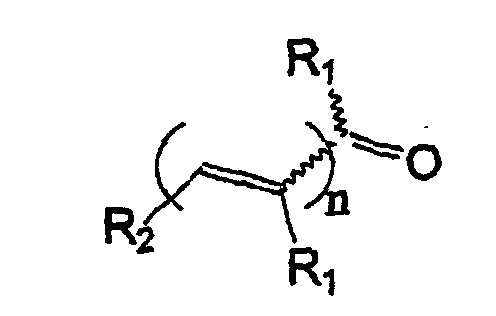
- A process for preparing a 2-(N-cyanoimino)thiazolidin-4-one derivative of the formula (I):(wherein R1, R2, n and R3 are as defined hereinunder) which is characterized by that a 2-(N-cyanoimino)thiazolidin-4-one derivative of the formula (IV):
 (in which R1 s are the same or different groups and each represents hydrogen atom or alkyl group having 1 to 4 carbon atoms; R2 is phenyl group, naphthyl group, or either phenyl or naphthyl substituted with at least one hydroxyl, alkyl having 1 to 4 carbon atoms or alkoxy having 1 to 4 carbon atoms; n is 0 or 1; and the configuration of 5-methylene group includes both E-isomer and Z-isomer; providing excepting the case wherein R1 is hydrogen atom or a methyl group, R2 is 3,5-di-t-butyl-4-hydroxyphenyl and n is 0).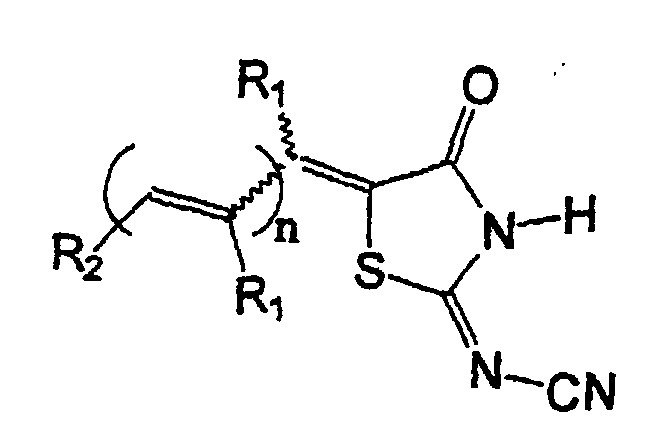
or its salt is reacted, in the former case in the presence of an alkali, with a halide compound of the formula: - A compound according to claim 1, which is 2-(N-cyanoimino)-5-(2-methyl-3-phenylpropenylidene)thiazolidin-4-one.
- A compound according to claim 1, which is 2-(N-cyanoimino)-5- (2-methyl-3-phenylpropenylidene)-4-oxo-3-thiazolidine acetic acid.
- A compound according to claim 1, which is 2-(N-cyanoimino)-5-[2-(6-methoxynaphthyl)methylene]thiazolidin-4-one.
- A compound according to claim 1, which is 2-(N-cyanoimino)-5-(4-hydroxy-3-methoxybenzylidene)thiazolidin-4-one.
- A compound according to claim 1, which is 2-(N-cyanoimino)-5-[3-(2-methoxyphenyl)propenylidene]thiazolidin-4-one.
- A compound according to claim 1, which is 2-(N-cyanoimino)-5-(1-phenylethylidene)thiazolidin-4-one potassium salt.
- A compound according to claim 1, which is 2-(N-cyanoimino)-5-[1-(2-naphthyl)ethylidene]thiazolidin-4-one.
Applications Claiming Priority (3)
| Application Number | Priority Date | Filing Date | Title |
|---|---|---|---|
| JP20906794 | 1994-07-29 | ||
| JP20906794A JP3871354B2 (en) | 1994-07-29 | 1994-07-29 | Novel 2- (N-cyanoimino) thiazolidin-4-one derivatives |
| JP209067/94 | 1994-07-29 |
Publications (2)
| Publication Number | Publication Date |
|---|---|
| EP0697410A1 EP0697410A1 (en) | 1996-02-21 |
| EP0697410B1 true EP0697410B1 (en) | 2002-11-06 |
Family
ID=16566708
Family Applications (1)
| Application Number | Title | Priority Date | Filing Date |
|---|---|---|---|
| EP95304416A Expired - Lifetime EP0697410B1 (en) | 1994-07-29 | 1995-06-23 | 5-substituted alkylidene 2-(N-cyanoimino)-thiazolidin-4-one derivatives, their preparation and their use as aldose reductase inhibitors |
Country Status (4)
| Country | Link |
|---|---|
| US (1) | US5750712A (en) |
| EP (1) | EP0697410B1 (en) |
| JP (1) | JP3871354B2 (en) |
| DE (1) | DE69528733T2 (en) |
Families Citing this family (9)
| Publication number | Priority date | Publication date | Assignee | Title |
|---|---|---|---|---|
| KR100608416B1 (en) | 1999-11-12 | 2006-08-02 | 후지모토 쿄다이 가부시키가이샤 | 2- (N-cyanoimino) thiazolidin-4-one derivative |
| JP2001199888A (en) * | 2000-01-24 | 2001-07-24 | Fujimoto Brothers:Kk | Diabetes treatment |
| DE10119423A1 (en) * | 2001-04-20 | 2002-10-24 | Bayer Ag | New cyanoimino- or nitroimino-substituted azole derivatives or analogs, useful as pesticides, e.g. insecticides, acaricides, nematocides, ectoparasiticides or antifouling agents |
| JP2006509765A (en) | 2002-11-22 | 2006-03-23 | スミスクライン・ビーチャム・コーポレイション | New compounds |
| JP4908210B2 (en) * | 2003-07-28 | 2012-04-04 | メルク セローノ ソシエテ アノニム | 2-Imino-4- (thio) oxo-5-polycyclovinylazolines for use as PI3 kinase inhibitors |
| BRPI0514269A (en) * | 2004-08-10 | 2008-06-10 | Exelixis Inc | heterocyclic compounds as pharmaceutical agents |
| DE102005024012A1 (en) * | 2005-05-20 | 2006-11-23 | Grünenthal GmbH | Use of 2,5-disubstituted thiazole-4-one derivatives in pharmaceuticals |
| PE20070083A1 (en) * | 2005-06-08 | 2007-01-27 | Smithkline Beecham Corp | (5Z) -5- (6-QUINOXALINYL METHYLIDENE) -2 - [(2,6-DICHLOROPHENYL) AMINO] -1,3-THIAZOL-4 (5H) -ONE |
| US20100286041A1 (en) * | 2007-03-22 | 2010-11-11 | Smithkline Beecham Corporation | (5z)-5-(6-quinoxalinylmethylidene)-2-[(2,6-dichlorophenyl)amino]-1,3-thiazol-4(5h)-one |
Family Cites Families (3)
| Publication number | Priority date | Publication date | Assignee | Title |
|---|---|---|---|---|
| JPS5740478A (en) * | 1980-08-22 | 1982-03-06 | Ono Pharmaceut Co Ltd | Rhodanine derivative, its preparation and aldose reductase inhibitor containing rhodanine derivative |
| DK173350B1 (en) * | 1985-02-26 | 2000-08-07 | Sankyo Co | Thiazolidine derivatives, their preparation and pharmaceutical composition containing them |
| US5143928A (en) * | 1990-03-27 | 1992-09-01 | Warner-Lambert Company | 3,5-di-tertiarybutyl-4-hydroxyphenylmethylene derivatives of 2-substituted thiazolidinones, oxazolidinones, and imidazolidinones as antiinflammatory agents |
-
1994
- 1994-07-29 JP JP20906794A patent/JP3871354B2/en not_active Expired - Fee Related
-
1995
- 1995-06-21 US US08/493,152 patent/US5750712A/en not_active Expired - Fee Related
- 1995-06-23 EP EP95304416A patent/EP0697410B1/en not_active Expired - Lifetime
- 1995-06-23 DE DE69528733T patent/DE69528733T2/en not_active Expired - Fee Related
Non-Patent Citations (1)
| Title |
|---|
| KATO K. ET AL.: "Properties of novel aldose reductase inhibitors, M16209 and M16287, in comparison with known inhibitors, ONO-2235 and sorbinil", CHEMICAL & PHARMACEUTICAL BULLETIN, vol. 39, no. 6, June 1991 (1991-06-01), JAPAN, pages 1540 - 1545 * |
Also Published As
| Publication number | Publication date |
|---|---|
| JPH0841040A (en) | 1996-02-13 |
| EP0697410A1 (en) | 1996-02-21 |
| DE69528733T2 (en) | 2003-09-18 |
| US5750712A (en) | 1998-05-12 |
| JP3871354B2 (en) | 2007-01-24 |
| DE69528733D1 (en) | 2002-12-12 |
Similar Documents
| Publication | Publication Date | Title |
|---|---|---|
| JP3906935B2 (en) | N-substituted dioxothiazolidylbenzamide derivative and process for producing the same | |
| US4963576A (en) | Dithioacetal compounds, processes for preparation thereof and pharmaceutical composition comprising the same | |
| US4528291A (en) | 2-(4'-Pyridinyl)-thiazole compounds and their use in increasing cardiac contractility | |
| US4387103A (en) | Method for treatment or prophylaxis of cardiac disorders | |
| FI93013C (en) | A process for the preparation of therapeutically useful pyridopyridazinone derivatives | |
| JPH0215556B2 (en) | ||
| EP0420762A2 (en) | Heterocyclic compounds having lipoxygenase inhibiting activity | |
| US5750712A (en) | 2-(n-cyanoimino)-thiazolidin-4-one derivatives | |
| JP4285723B2 (en) | Novel 2- (N-cyanoimino) thiazolidin-4-one derivative | |
| US5116855A (en) | Rhodanine derivatives and pharmaceutical compositions | |
| JPWO2001036402A1 (en) | Novel 2-(N-cyanoimino)thiazolidin-4-one derivatives | |
| JPS6140674B2 (en) | ||
| JPS63295566A (en) | Quinoxaline derivative | |
| US4675334A (en) | Tetrazolyl compounds and their use as anti allergic agents | |
| NZ226621A (en) | Di-tert butyl phenols substituted by alkoxy, benzyloxy, or benzylthio groups; pharmaceutical compositions containing them | |
| JP4010377B2 (en) | N-benzyldioxothiazolidylbenzamide derivative and process for producing the same | |
| US4738960A (en) | 1,3,4-Thiadiazole derivatives and pharmaceutical preparations useful as inhibitors for histamine-H2 receptors | |
| JPS582955B2 (en) | Spiro-quinolone hydantoins | |
| JP3982645B2 (en) | Intermediate for the production of N-substituted dioxothiazolidylbenzamide derivatives | |
| US5252592A (en) | Tetrazoleacetic acid derivatives having aldose reductase inhibitory activity | |
| US4533677A (en) | Hypoglycemic N-(2-substituted-3-Dialkylamino-2-propenylidene)-N-alkylalkanaminium salts | |
| JPH05271204A (en) | New triazine derivative | |
| KR850001352B1 (en) | Method for preparing benzoxazole | |
| JPH07100696B2 (en) | Carbostyril derivative | |
| JPH09110845A (en) | New 2-(n-cyanoimino)thiazolidin-4-one derivative |
Legal Events
| Date | Code | Title | Description |
|---|---|---|---|
| PUAI | Public reference made under article 153(3) epc to a published international application that has entered the european phase |
Free format text: ORIGINAL CODE: 0009012 |
|
| AK | Designated contracting states |
Kind code of ref document: A1 Designated state(s): BE DE FR GB IT SE |
|
| 17P | Request for examination filed |
Effective date: 19960702 |
|
| RAP1 | Party data changed (applicant data changed or rights of an application transferred) |
Owner name: FUJIMOTO BROTHERS CO., LTD. |
|
| 17Q | First examination report despatched |
Effective date: 19980924 |
|
| GRAG | Despatch of communication of intention to grant |
Free format text: ORIGINAL CODE: EPIDOS AGRA |
|
| GRAG | Despatch of communication of intention to grant |
Free format text: ORIGINAL CODE: EPIDOS AGRA |
|
| GRAH | Despatch of communication of intention to grant a patent |
Free format text: ORIGINAL CODE: EPIDOS IGRA |
|
| GRAH | Despatch of communication of intention to grant a patent |
Free format text: ORIGINAL CODE: EPIDOS IGRA |
|
| GRAA | (expected) grant |
Free format text: ORIGINAL CODE: 0009210 |
|
| AK | Designated contracting states |
Kind code of ref document: B1 Designated state(s): BE DE FR GB IT SE |
|
| REG | Reference to a national code |
Ref country code: GB Ref legal event code: FG4D |
|
| REF | Corresponds to: |
Ref document number: 69528733 Country of ref document: DE Date of ref document: 20021212 |
|
| ET | Fr: translation filed | ||
| PLBE | No opposition filed within time limit |
Free format text: ORIGINAL CODE: 0009261 |
|
| STAA | Information on the status of an ep patent application or granted ep patent |
Free format text: STATUS: NO OPPOSITION FILED WITHIN TIME LIMIT |
|
| 26N | No opposition filed |
Effective date: 20030807 |
|
| PGFP | Annual fee paid to national office [announced via postgrant information from national office to epo] |
Ref country code: SE Payment date: 20070607 Year of fee payment: 13 |
|
| PGFP | Annual fee paid to national office [announced via postgrant information from national office to epo] |
Ref country code: DE Payment date: 20070621 Year of fee payment: 13 |
|
| PGFP | Annual fee paid to national office [announced via postgrant information from national office to epo] |
Ref country code: GB Payment date: 20070620 Year of fee payment: 13 |
|
| PGFP | Annual fee paid to national office [announced via postgrant information from national office to epo] |
Ref country code: IT Payment date: 20070616 Year of fee payment: 13 |
|
| PGFP | Annual fee paid to national office [announced via postgrant information from national office to epo] |
Ref country code: BE Payment date: 20070822 Year of fee payment: 13 |
|
| PGFP | Annual fee paid to national office [announced via postgrant information from national office to epo] |
Ref country code: FR Payment date: 20070608 Year of fee payment: 13 |
|
| BERE | Be: lapsed |
Owner name: *FUJIMOTO BROTHERS CO. LTD Effective date: 20080630 |
|
| EUG | Se: european patent has lapsed | ||
| GBPC | Gb: european patent ceased through non-payment of renewal fee |
Effective date: 20080623 |
|
| PG25 | Lapsed in a contracting state [announced via postgrant information from national office to epo] |
Ref country code: BE Free format text: LAPSE BECAUSE OF NON-PAYMENT OF DUE FEES Effective date: 20080630 |
|
| REG | Reference to a national code |
Ref country code: FR Ref legal event code: ST Effective date: 20090228 |
|
| PG25 | Lapsed in a contracting state [announced via postgrant information from national office to epo] |
Ref country code: DE Free format text: LAPSE BECAUSE OF NON-PAYMENT OF DUE FEES Effective date: 20090101 |
|
| PG25 | Lapsed in a contracting state [announced via postgrant information from national office to epo] |
Ref country code: GB Free format text: LAPSE BECAUSE OF NON-PAYMENT OF DUE FEES Effective date: 20080623 |
|
| PG25 | Lapsed in a contracting state [announced via postgrant information from national office to epo] |
Ref country code: IT Free format text: LAPSE BECAUSE OF NON-PAYMENT OF DUE FEES Effective date: 20080623 Ref country code: FR Free format text: LAPSE BECAUSE OF NON-PAYMENT OF DUE FEES Effective date: 20080630 |
|
| PG25 | Lapsed in a contracting state [announced via postgrant information from national office to epo] |
Ref country code: SE Free format text: LAPSE BECAUSE OF NON-PAYMENT OF DUE FEES Effective date: 20080624 |