EP0692474B1 - 2- (unsubstituted or substituted) (benzyloxy or phenoxy)-4-substituted-6-(meta-substituted phenoxy) pyridine, process for producing the same, and herbicidal composition - Google Patents
2- (unsubstituted or substituted) (benzyloxy or phenoxy)-4-substituted-6-(meta-substituted phenoxy) pyridine, process for producing the same, and herbicidal composition Download PDFInfo
- Publication number
- EP0692474B1 EP0692474B1 EP95304893A EP95304893A EP0692474B1 EP 0692474 B1 EP0692474 B1 EP 0692474B1 EP 95304893 A EP95304893 A EP 95304893A EP 95304893 A EP95304893 A EP 95304893A EP 0692474 B1 EP0692474 B1 EP 0692474B1
- Authority
- EP
- European Patent Office
- Prior art keywords
- substituted
- meta
- mol
- pyridine
- compound
- Prior art date
- Legal status (The legal status is an assumption and is not a legal conclusion. Google has not performed a legal analysis and makes no representation as to the accuracy of the status listed.)
- Expired - Lifetime
Links
- 0 *c1cc(O)ccc1 Chemical compound *c1cc(O)ccc1 0.000 description 6
Classifications
-
- C—CHEMISTRY; METALLURGY
- C07—ORGANIC CHEMISTRY
- C07D—HETEROCYCLIC COMPOUNDS
- C07D213/00—Heterocyclic compounds containing six-membered rings, not condensed with other rings, with one nitrogen atom as the only ring hetero atom and three or more double bonds between ring members or between ring members and non-ring members
- C07D213/02—Heterocyclic compounds containing six-membered rings, not condensed with other rings, with one nitrogen atom as the only ring hetero atom and three or more double bonds between ring members or between ring members and non-ring members having three double bonds between ring members or between ring members and non-ring members
- C07D213/04—Heterocyclic compounds containing six-membered rings, not condensed with other rings, with one nitrogen atom as the only ring hetero atom and three or more double bonds between ring members or between ring members and non-ring members having three double bonds between ring members or between ring members and non-ring members having no bond between the ring nitrogen atom and a non-ring member or having only hydrogen or carbon atoms directly attached to the ring nitrogen atom
- C07D213/60—Heterocyclic compounds containing six-membered rings, not condensed with other rings, with one nitrogen atom as the only ring hetero atom and three or more double bonds between ring members or between ring members and non-ring members having three double bonds between ring members or between ring members and non-ring members having no bond between the ring nitrogen atom and a non-ring member or having only hydrogen or carbon atoms directly attached to the ring nitrogen atom with hetero atoms or with carbon atoms having three bonds to hetero atoms with at the most one bond to halogen, e.g. ester or nitrile radicals, directly attached to ring carbon atoms
- C07D213/62—Oxygen or sulfur atoms
- C07D213/69—Two or more oxygen atoms
-
- A—HUMAN NECESSITIES
- A01—AGRICULTURE; FORESTRY; ANIMAL HUSBANDRY; HUNTING; TRAPPING; FISHING
- A01N—PRESERVATION OF BODIES OF HUMANS OR ANIMALS OR PLANTS OR PARTS THEREOF; BIOCIDES, e.g. AS DISINFECTANTS, AS PESTICIDES OR AS HERBICIDES; PEST REPELLANTS OR ATTRACTANTS; PLANT GROWTH REGULATORS
- A01N43/00—Biocides, pest repellants or attractants, or plant growth regulators containing heterocyclic compounds
- A01N43/34—Biocides, pest repellants or attractants, or plant growth regulators containing heterocyclic compounds having rings with one nitrogen atom as the only ring hetero atom
- A01N43/40—Biocides, pest repellants or attractants, or plant growth regulators containing heterocyclic compounds having rings with one nitrogen atom as the only ring hetero atom six-membered rings
-
- C—CHEMISTRY; METALLURGY
- C07—ORGANIC CHEMISTRY
- C07D—HETEROCYCLIC COMPOUNDS
- C07D213/00—Heterocyclic compounds containing six-membered rings, not condensed with other rings, with one nitrogen atom as the only ring hetero atom and three or more double bonds between ring members or between ring members and non-ring members
- C07D213/02—Heterocyclic compounds containing six-membered rings, not condensed with other rings, with one nitrogen atom as the only ring hetero atom and three or more double bonds between ring members or between ring members and non-ring members having three double bonds between ring members or between ring members and non-ring members
- C07D213/04—Heterocyclic compounds containing six-membered rings, not condensed with other rings, with one nitrogen atom as the only ring hetero atom and three or more double bonds between ring members or between ring members and non-ring members having three double bonds between ring members or between ring members and non-ring members having no bond between the ring nitrogen atom and a non-ring member or having only hydrogen or carbon atoms directly attached to the ring nitrogen atom
- C07D213/60—Heterocyclic compounds containing six-membered rings, not condensed with other rings, with one nitrogen atom as the only ring hetero atom and three or more double bonds between ring members or between ring members and non-ring members having three double bonds between ring members or between ring members and non-ring members having no bond between the ring nitrogen atom and a non-ring member or having only hydrogen or carbon atoms directly attached to the ring nitrogen atom with hetero atoms or with carbon atoms having three bonds to hetero atoms with at the most one bond to halogen, e.g. ester or nitrile radicals, directly attached to ring carbon atoms
- C07D213/78—Carbon atoms having three bonds to hetero atoms, with at the most one bond to halogen, e.g. ester or nitrile radicals
- C07D213/84—Nitriles
Definitions
- the present invention relates to a novel 2-(unsubstituted or substituted)(benzyloxy or phenoxy)-4-substituted-6-(meta-substituted phenoxy)pyridine, to a process for producing the compound, to a herbicidal composition comprising the compound as an active ingredient, and to a method of controlling the growth of weeds using the compound.
- pyridine derivatives which have alkoxy or cyano group at the position 4 on the pyridine ring exhibit superior herbicidal activity when compared with the compounds (A) to (D) disclosed as preferred compounds in EP-A-572,093 or the compound (E) (Registry Number 153564-12-6 in Chem. Abstr.) which is not described in the publication but abstracted in Chemical Abstracts 120: 191543h(1994) as a compound disclosed in the publication:
- novel 2-(unsubstituted or substituted)(benzyloxy or phenoxy)-4-substituted-6-(meta-substituted phenoxy)pyridine which is characterized by the particular combination of the substituents at the position 4 on the pyridine ring and the position 3 on the phenoxy ring has unexpectedly high herbicidal activity.
- the present invention provides a 2-(unsubstituted or substituted)(benzyloxy or phenoxy)-4-substituted-6-(meta-substituted phenoxy)pyridine compound of formula (I): wherein: R represents C 1 -C 4 alkoxy or cyano;
- the present invention also provides a process for producing a compound of formula (I) which comprises reacting a 2-(unsubstituted or substituted)(benzyloxy or phenoxy)-4-substituted-6-halogenopyridine compound of formula (II): wherein R, X, m, and n are as defined above and
- the present invention further provides a herbicidal composition comprising a compound of formula (I) and an adjuvant.
- the present invention also provides a method of controlling the growth of weeds at a locus which comprises applying thereto a compound of formula (I).
- C 1 -C 4 alkyloxy includes methoxy, ethoxy, and (1-methylethyl)oxy.
- a halogen includes fluorine, chlorine, and bromine;
- C l -C 4 alkyl includes methyl, ethyl, and 1-methylethyl;
- C 1 -C 4 alkoxy includes methoxy, ethoxy and (1-methylethyl)oxy;
- C 1 -C 4 haloalkoxy includes trifluoromethoxy and difluoromethoxy;
- C 1 -C 4 haloalkyl includes trifluoromethyl;
- C 1 -C 4 haloalkylthio includes trifluoromethythio;
- R preferably represents methoxy or cyano.
- X preferably represents fluorine, chlorine, methyl, methoxy, or trifluoromethyl.
- Y preferably represents trifluoromethyl or trifluoromethoxy.
- n is 0 to 3.
- the compound of formula (I) (Compound (I)) can be synthesized in accordance with the following Reaction scheme I: wherein R, X, Y, Z, m, and n are as defined above.
- the 2-(unsubstituted or substituted)(benzyloxy or phenoxy)-4-substituted-6-halogenopyridine of formula (II) may be synthesized in accordance with the following Reaction scheme II: wherein R, X, Y, Z, m, and n are as defined above, and each Z in formula (IV) may be identical or different.
- Examples of the unsubstituted or substituted benzyl alcohol are: benzyl alcohol, 2-chlorobenzyl alcohol, 3-chlorobenzyl alcohol, 4-chlorobenzyl alcohol, 2-fluorobenzyl alcohol, 3-fluorobenzyl alcohol, 4-fluorobenzyl alcohol, 4-methylbenzyl alcohol, 4-methoxybenzyl alcohol, 2,4-dfiluorobenzyl alcohol, 2,6-difluorobenzyl alcohol, 3,5-difluorobenzyl alcohol, 3-allyloxybenzyl alcohol, and 3-(2-propynyl)oxybenzyl alcohol.
- unsubstituted or substituted phenol examples include: phenol, 4-fluorophenol, 3-methylphenol, 4-methoxyphenol, 3-trifluoromethylphenol, 3-difluoromethoxyphenol, 3-trifluoromethoxyphenol, and 3-(trifluoromethylthio)phenol.
- the meta-substituted phenol of formula (III) includes meta-trifluoromethylphenol, meta-difluoromethoxyphenol, meta-trifluoromethoxyphenol, and meta-trifluoromethylthiophenol.
- the unsubstituted or substituted benzyl alcohol of formula (V) and the meta-substituted phenol of formula (III) may be commercially available or may be easily obtained in accordance with existing techniques.
- the 2,6-dihalogeno-4-substituted-pyridine of formula (IV) may also be commercially available or may be easily obtained in accordance with existing techniques.
- 2,6-dichloro-4-cyanopyridine is the compound described in publications such as Roczniki Chem. 1959, 33, 387.
- 2,6-Dichloro-4-methoxypyridine and 2,6-dibromo-4-methoxypyridine are described in the J. Chem. Soc. B 1967, (8), 758 and Chem. Ber. 1989, 122(3),589 respectively.
- the Compound (IV) wherein the halogen represented by Z is chlorine, bromine, or iodine is preferably used.
- every reaction is advantageously conducted in a solvent or a mixture of solvents.
- solvents which may be used are:
- these solvents may be used alone or in combination of two or more.
- a mixture of the solvents incapable of forming a homogeneous phase may also be used.
- the reaction may suitably be conducted in the presence of a phase transfer catalyst such as a conventional quaternary ammonium salt or a crown ether.
- the reaction may preferably be conducted in the presence of a base.
- Copper(l) chloride, copper(l) bromide, and copper(l) iodide are preferably used with the base. Examples of the base are:
- reaction conditions for each of the Reaction schemes I, II and III may be suitably selected. These reactions are usually conducted at a temperature of 1 to 200°C for 0.5 to 30 hours, at a temperature of 1 to 180°C for 0.5 to 10 hours and at a temperature of 1 to 200°C for 0.5 to 30 hours respectively, if necessary under pressurization.
- the Compound (I) of the present invention may be applied as it is, it is generally applied after being formulated with an adjuvant into various composition forms such as powders, wettable powders, granules or emulsifiable concentrates.
- the composition When formulated, the composition usually contains one or more of Compounds (I) at an amount of 0.1 to 95 % by weight, preferably 0.5 to 90 % by weight, more preferably 2 to 70 % by weight.
- adjuvants including carriers(diluents) and surface active agents
- examples of solid carriers are talc, kaolin, bentonite, diatomaceous earth, white carbon and clay
- liquid diluents are water, xylene, toluene, chlorobenzene, cyclohexane, cyclohexanone, dimethylsulfoxide, dimethylformamide and alcohol.
- Surface active agents may be properly selected depending upon their effects, and suitable emulsifying agents include polyoxyethylene alkylaryl ether and polyoxyethylene sorbitan monolaurate.
- suitable dispersing agents include lignin sulfonate and dibutyl- naphthalene sulfonate.
- Suitable wetting agents include alkyl sulfonates and alkylphenyl sulfonates.
- compositions include those which are to be applied as such, and those which are to be applied after being diluted to a proper concentration using diluents such as water.
- the Compound (I) is preferably contained at a concentration of 0.001 to 1.0% by weight.
- the application dose of the Compound (I) is usually 0.01 to 10 kg/ha, preferably 0.05 to 5 kg/ha.
- compositions and the application doses described above vary depending on, for example, dosage forms, time of application, way of application, application sites and crops to be treated. Thus, modifications thereof are possible without being limited to the above ranges.
- the Compound (I) of the present invention may be used in combination with other active ingredients such as fungicides, insecticides, acaricides and herbicides.
- reaction solution was partitioned between ethyl acetate and water.
- the obtained organic layer was washed with aqueous saturated sodium chloride, dried over anhydrous sodium sulfate and thereafter concentrated.
- the concentrate was purified on a silica gel column to obtain the end product.
- reaction solution was partitioned between ethyl acetate and water.
- the obtained organic layer was washed with aqueous saturated sodium chloride, dried over anhydrous sodium sulfate and thereafter concentrated.
- the concentrate was purified on a silica gel column, then recrystallized from a small amount of n-hexane to obtain the end product.
- reaction solution was partitioned between ethyl acetate and aqueous saturated sodium hydrogen carbonate.
- the obtained organic layer was washed with aqueous saturated sodium chloride, dried over anhydrous sodium sulfate and thereafter concentrated.
- the concentrate was purified on a silica gel column and a low-boiling material which was difficult to separate was distilled off by using a tubular oven, whereby the end product was obtained.
- reaction solution was partitioned between hexane and aqueous saturated sodium hydrogen carbonate.
- the obtained organic layer was washed with aqueous saturated sodium chloride, dried over anhydrous sodium sulfate and thereafter concentrated.
- the concentrate was purified on a silica gel column, then crystallized from hexane to obtain the end product.
- the obtained organic layer was washed with aqueous saturated sodium chloride, dried over anhydrous sodium sulfate and thereafter concentrated.
- the concentrate was purified on a silica gel column and the starting material which was difficult to separate was distilled off by using a tubular oven, whereby the end product was obtained.
- reaction solution was partitioned between ethyl acetate and water.
- organic layer was washed with aqueous saturated sodium chloride, dried over anhydrous sodium sulfate and thereafter concentrated.
- the concentrate was purified on a silica gel column, then recrystallized from a small amount of n-hexane to obtain the end product.
- the reaction solution was partitioned between hexane and aqueous saturated sodium hydrogen carbonate.
- the obtained organic layer was washed with aqueous saturated sodium chloride, dried over anhydrous sodium sulfate and thereafter concentrated.
- the concentrate was purified on a silica gel column and the starting material which was difficult to separate was distilled off by using a tubular oven, whereby the end product was obtained.
- reaction solution was partitioned between ethyl acetate and aqueous saturated sodium hydrogen carbonate.
- the obtained organic layer was washed with aqueous saturated sodium chloride, dried over anhydrous sodium sulfate and thereafter concentrated.
- the concentrate was purified on a silica gel column and a low-boiling material was distilled off by using a tubular oven, whereby the end product was obtained.
- Formulation examples and test examples are hereinafter described.
- Kinds of carriers (diluents) and additives to be used, as well as mixing ratios thereof and active ingredient contents therein may be modified in a broad range.
- the above materials were mixed together and ground finely to form a wettable powder. It may be applied after diluted with water.
- the above materials were homogeneously mixed to form an emulsifiable concentrate. It may be applied after diluted with water.
- Test Example 1 Weed control test by foliage and soil treatments
- a wettable powder of each test compound was prepared as described in the Formulation Example 1 and suspended in water to a predetermined concentration.
- prepared herbicidal solution was applied at an active ingredient rate of 5 g/10 a onto the soil and the foliage of each plant grown to the 1 to 2 leaf stage.
- the tested plants were pot- cultivated redroot pigweed (Amaranthus retroflexus), wild mustard (Sinapis arvensis), common chickweed (Stellaria media), sicklepod (Cassia obtusifolia), black nightshade (Solanum nigrum), velvetleaf (Abutilon theophrasti), field bindweed (Convolvulus arvensis), wild chamomile (Matricaria chamomilla), green foxtail (Setaria viridis), barnyard grass (Echinochloa frumentaceum), and henry crabgrass (Digitaria adscendens).
Landscapes
- Chemical & Material Sciences (AREA)
- Organic Chemistry (AREA)
- Life Sciences & Earth Sciences (AREA)
- Health & Medical Sciences (AREA)
- Pest Control & Pesticides (AREA)
- Plant Pathology (AREA)
- Agronomy & Crop Science (AREA)
- Engineering & Computer Science (AREA)
- Dentistry (AREA)
- General Health & Medical Sciences (AREA)
- Wood Science & Technology (AREA)
- Zoology (AREA)
- Environmental Sciences (AREA)
- Pyridine Compounds (AREA)
- Agricultural Chemicals And Associated Chemicals (AREA)
Description
- The present invention relates to a novel 2-(unsubstituted or substituted)(benzyloxy or phenoxy)-4-substituted-6-(meta-substituted phenoxy)pyridine, to a process for producing the compound, to a herbicidal composition comprising the compound as an active ingredient, and to a method of controlling the growth of weeds using the compound.
- Some 2-(unsubstituted or substituted)(benzyloxy or phenoxy)-4-substituted-6-(meta-substituted phenoxy)pyridines which exhibit herbicidal activity have been disclosed in EP-A-572,093. Among the 2-benzyloxypyridine derivatives represented by the general formula disclosed in US-A-3,535,328, some have been found to have herbicidal activity.
- Although various herbicides including the above have been proposed, a herbicide having superior herbicidal activity, such as a reliable herbicidal effect at such a low application dose that the residual amount in the environment advantageously decreases, good selectivity between crops and weeds regardless of environmental condition changes, and low phytotoxicity to the succeeding crop cultivated in a double cropping system, is still required.
- The present inventors have surprisingly found that pyridine derivatives which have alkoxy or cyano group at the position 4 on the pyridine ring exhibit superior herbicidal activity when compared with the compounds (A) to (D) disclosed as preferred compounds in EP-A-572,093 or the compound (E) (Registry Number 153564-12-6 in Chem. Abstr.) which is not described in the publication but abstracted in Chemical Abstracts 120: 191543h(1994) as a compound disclosed in the publication:
- (A) 2,6-di(meta-trifluoromethylphenoxy)pyridine;
- (B) 2,6-di(meta-trifluoromethylphenoxy)-4-methylmercaptopyridine;
- (C) 2,6-di(meta-trifluoromethylphenoxy)-4-methylpyridine;
- (D) 2-benzyloxy-6-(meta-trifluoromethylphenoxy)pyridine;
- (E) 4-chloro-2,6-di(meta-trifluoromethylphenoxy)pyridine.
- The novel 2-(unsubstituted or substituted)(benzyloxy or phenoxy)-4-substituted-6-(meta-substituted phenoxy)pyridine which is characterized by the particular combination of the substituents at the position 4 on the pyridine ring and the position 3 on the phenoxy ring has unexpectedly high herbicidal activity.
- The present invention provides a 2-(unsubstituted or substituted)(benzyloxy or phenoxy)-4-substituted-6-(meta-substituted phenoxy)pyridine compound of formula (I):

- each X, which may be identical or different if n is greater than 1, represents a halogen, Ci-C4 alkoxy, Ci-C4 alkyl, C1-C4 haloalkoxy, C1-C4 haloalkyl, C1-C4 haloalkylthio, C3-CS alkenyloxy, or C3-CS alkynyloxy;
- Y represents trifluoromethyl, difluoromethoxy, trifluoromethoxy, or trifluoromethylthio;
- m represents an integer of 0 or 1; and
- n represents an integer of 0 to 5.
- The present invention also provides a process for producing a compound of formula (I) which comprises reacting a 2-(unsubstituted or substituted)(benzyloxy or phenoxy)-4-substituted-6-halogenopyridine compound of formula (II):

- Z represents a halogen, with a meta-substituted phenol of formula (III):

- The present invention additionally provides a process for producing a 2,6-di(meta-substituted phenoxy)-4-substituted-pyridine of the formula [(I'), corresponding to the compound (I) wherein X = Y (including the bonding position), n = 1 and m = 0]:

- Y represents trifluoromethyl, difluoromethoxy, trifluoromethoxy, or trifluoromethylthio, which comprises reacting a 2,6-dihalogeno-4-substituted-pyridine of formula (IV):


- The present invention further provides a herbicidal composition comprising a compound of formula (I) and an adjuvant.
- The present invention also provides a method of controlling the growth of weeds at a locus which comprises applying thereto a compound of formula (I).
- In the definition of each substituent in the compound of formula (I), the substituents defined by the generic terms include the preferred substituents as set forth below.
- With respect to R, C1-C4 alkyloxy includes methoxy, ethoxy, and (1-methylethyl)oxy.
- With respect to X, a halogen includes fluorine, chlorine, and bromine; Cl-C4 alkyl includes methyl, ethyl, and 1-methylethyl; C1-C4 alkoxy includes methoxy, ethoxy and (1-methylethyl)oxy; C1-C4 haloalkoxy includes trifluoromethoxy and difluoromethoxy; C1-C4 haloalkyl includes trifluoromethyl; C1-C4 haloalkylthio includes trifluoromethythio; C3-CS alkenyloxy includes allyloxy (OCH2CH=CH2), (2-methyl-2-propenyl)oxy (OCH2C(Me)=CH2), crotyloxy (OCH2CH=CHMe), (3-methyl-2-butenyl)oxy (OCH2CH=C(Me)2), and (3-methyl-3-butenyl)oxy (OCH2CH2C(Me)=CH2); and C3-CS alkynyloxy includes (2-propynyl)oxy (OCH2CCH).
- R preferably represents methoxy or cyano. X preferably represents fluorine, chlorine, methyl, methoxy, or trifluoromethyl. Y preferably represents trifluoromethyl or trifluoromethoxy.
- Preferably, n is 0 to 3.
- Examples of the compound of formula (I) which has the combination of the preferred substituents and integers as described above are shown in Table 1:

- The compound of formula (I) (Compound (I)) can be synthesized in accordance with the following Reaction scheme I:

- The 2-(unsubstituted or substituted)(benzyloxy or phenoxy)-4-substituted-6-halogenopyridine of formula (II) may be synthesized in accordance with the following Reaction scheme II:

- Among the Compounds (I), those compounds wherein the substituent bonded to position 2 is identical with the substituent bonded to position 6 may be also synthesized in accordance with the following reaction scheme III:

- Examples of the unsubstituted or substituted benzyl alcohol or phenol of formula (V) include the following:
- Examples of the unsubstituted or substituted benzyl alcohol are: benzyl alcohol, 2-chlorobenzyl alcohol, 3-chlorobenzyl alcohol, 4-chlorobenzyl alcohol, 2-fluorobenzyl alcohol, 3-fluorobenzyl alcohol, 4-fluorobenzyl alcohol, 4-methylbenzyl alcohol, 4-methoxybenzyl alcohol, 2,4-dfiluorobenzyl alcohol, 2,6-difluorobenzyl alcohol, 3,5-difluorobenzyl alcohol, 3-allyloxybenzyl alcohol, and 3-(2-propynyl)oxybenzyl alcohol.
- Examples of the unsubstituted or substituted phenol are: phenol, 4-fluorophenol, 3-methylphenol, 4-methoxyphenol, 3-trifluoromethylphenol, 3-difluoromethoxyphenol, 3-trifluoromethoxyphenol, and 3-(trifluoromethylthio)phenol.
- The meta-substituted phenol of formula (III) includes meta-trifluoromethylphenol, meta-difluoromethoxyphenol, meta-trifluoromethoxyphenol, and meta-trifluoromethylthiophenol.
- The unsubstituted or substituted benzyl alcohol of formula (V) and the meta-substituted phenol of formula (III) may be commercially available or may be easily obtained in accordance with existing techniques.
- The 2,6-dihalogeno-4-substituted-pyridine of formula (IV) (Compound (IV)) may also be commercially available or may be easily obtained in accordance with existing techniques.
- For instance, 2,6-dichloro-4-cyanopyridine is the compound described in publications such as Roczniki Chem. 1959, 33, 387. 2,6-Dichloro-4-methoxypyridine and 2,6-dibromo-4-methoxypyridine are described in the J. Chem. Soc. B 1967, (8), 758 and Chem. Ber. 1989, 122(3),589 respectively.
- Further, it can be prepared by substituting a suitable group for the nitro of 2,6-dichloro-4-nitropyridine described in EP-A-53,306 by nucleophilic displacement using a Cl-C4 alkanol such as methyl alcohol, ethyl alcohol, or 1-methylethyl alcohol.
- For both of Reaction schemes I and III, the Compound (IV) wherein the halogen represented by Z is chlorine, bromine, or iodine is preferably used.
- According to the production process of the present invention, every reaction is advantageously conducted in a solvent or a mixture of solvents. Examples of the solvents which may be used are:
- aromatic hydrocarbons such as benzene, toluene, xylene, and methylnaphthalene;
- aliphatic hydrocarbons such as petroleum ether, pentane, hexane, heptane, and methylcyclohexane;
- halogenated hydrocarbons such as methylene chloride, chloroform, carbon tetrachloride, and chlorobenzene;
- amides such as dimethylformamide, dimethylacetamide, and N-methyl-2-pyrrolidinone;
- ethers such as diethyl ether, dimethoxyethane, diisopropyl ether, tetrahydrofuran, diglyme, and dioxane; and carbon disulfide, acetonitrile, ethyl acetate, pyridine, dimethyl sulfoxide, and hexamethylphosphoric amide.
- When the production process of the present invention is carried out in the solvent, these solvents may be used alone or in combination of two or more. A mixture of the solvents incapable of forming a homogeneous phase may also be used. In this case, the reaction may suitably be conducted in the presence of a phase transfer catalyst such as a conventional quaternary ammonium salt or a crown ether.
- Since the production process of the present invention is based on nucleophilic displacement at the carbon atom on the pyridine ring, the reaction may preferably be conducted in the presence of a base. Copper(l) chloride, copper(l) bromide, and copper(l) iodide are preferably used with the base. Examples of the base are:
- alkaline metals such as lithium, sodium, and potassium, and alkaline earth metals such as magnesium;
- alkaline metal alkoxides such as sodium methoxide, sodium ethoxide, and potassium t-butoxide;
- alkaline metal hydrides such as sodium hydride and potassium hydride;
- alkaline metal carbonates such as potassium carbonate, and sodium carbonate;
- alkaline metal hydrogen carbonates such as sodium hydrogen carbonate and potassium hydrogen carbonate;
- alkaline metal hydroxides such as sodium hydroxide and potassium hydroxide;
- alkaline earth metal hydrides such as calcium hydride;
- organic alkaline metal compounds such as methyl lithium, ethyl lithium, n-butyl lithium, and phenyl lithium;
- Grignard reagents such as methylmagnesium iodide, ethylmagnesium bromide, and n-butylmagnesium bromide;
- organic copper compounds prepared from organic alkaline metal compounds or Grignard reagents and copper(l) salts; and
- alkaline metal amides such as lithium diisopropylamide.
- The reaction conditions for each of the Reaction schemes I, II and III may be suitably selected. These reactions are usually conducted at a temperature of 1 to 200°C for 0.5 to 30 hours, at a temperature of 1 to 180°C for 0.5 to 10 hours and at a temperature of 1 to 200°C for 0.5 to 30 hours respectively, if necessary under pressurization.
- Although the Compound (I) of the present invention may be applied as it is, it is generally applied after being formulated with an adjuvant into various composition forms such as powders, wettable powders, granules or emulsifiable concentrates.
- When formulated, the composition usually contains one or more of Compounds (I) at an amount of 0.1 to 95 % by weight, preferably 0.5 to 90 % by weight, more preferably 2 to 70 % by weight.
- Among adjuvants including carriers(diluents) and surface active agents, examples of solid carriers are talc, kaolin, bentonite, diatomaceous earth, white carbon and clay Examples of liquid diluents are water, xylene, toluene, chlorobenzene, cyclohexane, cyclohexanone, dimethylsulfoxide, dimethylformamide and alcohol. Surface active agents may be properly selected depending upon their effects, and suitable emulsifying agents include polyoxyethylene alkylaryl ether and polyoxyethylene sorbitan monolaurate. Suitable dispersing agents include lignin sulfonate and dibutyl- naphthalene sulfonate. Suitable wetting agents include alkyl sulfonates and alkylphenyl sulfonates.
- The above mentioned compositions include those which are to be applied as such, and those which are to be applied after being diluted to a proper concentration using diluents such as water. In diluted form, the Compound (I) is preferably contained at a concentration of 0.001 to 1.0% by weight. The application dose of the Compound (I) is usually 0.01 to 10 kg/ha, preferably 0.05 to 5 kg/ha.
- The concentrations and the application doses described above vary depending on, for example, dosage forms, time of application, way of application, application sites and crops to be treated. Thus, modifications thereof are possible without being limited to the above ranges. Further, the Compound (I) of the present invention may be used in combination with other active ingredients such as fungicides, insecticides, acaricides and herbicides.
- The 2-(unsubstituted or substituted benzyloxy or phenoxy)-4-substituted-6-(meta-substituted phenoxy)pyridine of the present invention, production processes and use thereof will be more specifically described in the following Synthesis Examples, Formulation Examples and Test Examples.
- To a tetrahydrofuran solution containing methanol (0.37 g, 0.0104 x 1.1 mol), sodium hydride (0.44 g (ca. 60% in mineral oil), 0.0104 x 1.05 mol) was added, then 2,6-dichloro-4-nitropyridine (2.00 g, 0.0104 mol) was added thereto and the resultant solution was stirred for about 2 hours at room temperature. After it was confirmed that there was no bubbling with the addition of methanol (1.0 g, 0.0355 x 0.9 mol), the resultant solution was stirred for about another 1 hour. After the reaction solution was partitioned between ethyl acetate and water, the obtained organic layer was washed successively with aqueous saturated sodium hydrogen carbonate and aqueous saturated sodium chloride, dried over anhydrous sodium sulfate and thereafter concentrated to obtain the substantially pure end product.
- Yield: 1.63 g (88%). Solid.
- Melting point: 94 to 96°C.
- 1 H-NMR (60 MHz, CDCI3, 8) : 3.79(3H,s), 6.70(2H,s).
- To a tetrahydrofuran solution containing benzyl alcohol (0.58 g, 0.0045 x 1.2 mol), sodium hydride (0.19 g (ca. 60% in mineral oil), 0.0045 x 1.05 mol) was added.
- Then, 2,6-dichloro-4-methoxypyridine (0.8 g, 0.0045 mol) was added thereto and the resultant solution was refluxed for about 1 hour. The reaction solution was partitioned between ethyl acetate and aqueous saturated sodium hydrogen carbonate. The obtained organic layer was washed with aqueous saturated sodium chloride, dried over anhydrous sodium sulfate and thereafter concentrated. The residue was purified on a silica gel column to obtain the end product.
- Yield: 1.23 g (86%). Oily product.
- 1H-NMR (60 MHz, CDCI3, δ) : 3.68(3H,s), 5.25(2H,s), 6.07(1 H,d, J=2.0 Hz), 6.44(1 H,d, J=2.0 Hz), 7.0-7.6(5H, complex).
- To a dimethylformamide solution containing metatrifluoromethyl phenol (1.29 g, 0.0020 x 4.0 mol), sodium hydride (0.32 g (ca. 60% in mineral oil), 0.0020 x 4.0 mol) was added.
- Then, 2-benzyloxy-6-chloro-4-methoxypyridine (0.5 g, 0.0020 mol) and Cul (0.19 g, 0.0020 x 0.5 mol) were successively added thereto and the resultant solution was refluxed for about 4 hours. The reaction solution was partitioned between ethyl acetate and aqueous saturated sodium hydrogen carbonate. The obtained organic layer was washed with aqueous saturated sodium chloride, dried over anhydrous sodium sulfate and thereafter concentrated. The residue was purified on a silica gel column to obtain the end product.
- Yield: 0.29 g (39%). Solid.
- Melting point: 46 to 48°C.
- 1 H-NMR (60 MHz, CDCI3, 8) : 3.69(3H,s), 5.04(2H,s), 5.96(2H,s), 7.0-7.6(9H, complex).
- Sodium hydride (1.49 g (ca.60% in mineral oil), 0.0355 x 1.05 mol) was washed with hexane and suspended in tetrahydrofuran, and methanol (1.70 g, 0.0355 x 1.5 mol) was added thereto. Then, 2,6-dibromo-4-nitropyridine (10.00 g, 0.0355 mol) was added thereto and the resultant solution was stirred for about 1 hour at room temperature.
- Additional sodium hydride (0.2 g (Ca.60% in mineral oil), 0.0355 x 0.14 mol) was added, then the resultant solution was stirred for about 1 hour. After confirmed that there was no bubbling with the addition of methanol (1.0 g, 0.0355 x 0.9 mol), the reaction solution was partitioned between ethyl acetate and aqueous saturated sodium hydrogen carbonate. The obtained organic layer was washed with aqueous saturated sodium chloride, dried over anhydrous sodium sulfate and thereafter concentrated to obtain the end product.
- Yield: 9.27 g (98%). Solid.
- Melting point: 131 to 133°C.
- 1 H-NMR (60 MHz, CDCI3, δ) : 3.79(3H,s), 6.89(2H,s).
- To a tetrahydrofuran solution containing benzyl alcohol (1.7 g, 0.0131 x 1.2 mol), sodium hydride (0.55 g (ca.60% in mineral oil), 0.0131 x 1.05 mol) was added.
- Then, 2,6-dibromo-4-methoxypyridine (3.5 g, 0.0131 mol) was added thereto and the resultant solution was refluxed for about 2 hours. The reaction solution was partitioned between ethyl acetate and aqueous saturated sodium hydrogen carbonate. The obtained organic layer was washed with aqueous saturated sodium chloride, dried over anhydrous sodium sulfate and thereafter concentrated. The concentrate was purified on a silica gel column and the starting material which was difficult to separate was distilled off by using a tubular oven, whereby the end product was obtained.
- Yield: 3.35 g (87%). Oily product.
- 1H-NMR (60 MHz, CDCI3, 8) : 3.63(3H,s), 5.25(2H,s), 6.04(1H,d, J=2.0 Hz), 6.53(1H,d, J=2.0 Hz), 7.0-7.5(5H, complex).
- To a dimethylformamide solution containing meta-trifluoromethoxy phenol (0.52 g, 0.0013 x 2.2 mol), sodium hydride (0.11 g (ca.60% in mineral oil), 0.0013 x 2.1 mol) was added.
- Then, 2-benzyloxy-6-bromo-4-methoxypyridine (0.39 g, 0.0013 mol) and Cul (0.06 g, 0.0013 x 0.5 mol) were successively added thereto and the resultant solution was stirred for about 21 hours at the temperature of about 110 to 120°C. The reaction solution was partitioned between ethyl acetate and aqueous saturated sodium hydrogen carbonate. The obtained organic layer was washed with aqueous saturated sodium chloride, dried over anhydrous sodium sulfate and thereafter concentrated. The concentrate was purified on a silica gel column and the starting material which was difficult to separate was distilled off by using a tubular oven, whereby the end product was obtained.
- Yield: 0.24 g (46%). Oily product.
- 1H-NMR (60 MHz, CDCI3, 8) : 3.67(3H,s), 5.04(2H,s), 5.93(2H,s), 6.7-7.4(9H, complex).
- Sodium hydride (0.24 g (ca.60% in mineral oil), 0.006 x 1.0 mol) was suspended in 20 ml of N-methyl-2-pyrrolidinone, and benzyl alcohol (0.65 g, 0.006 x 1.0 mol) was added thereto and the resultant solution was stirred for about 30 minutes at room temperature.
- The obtained mixture was cooled with iced water to about 4°C, then 4-cyano-2,6-dichloropyridine (1.04 g, 0.006 mol) was added thereto, and the resultant solution was stirred for about 1.5 hour while cooling with iced water.
- After the stirring was continued for about another 1.5 hour at room temperature, the reaction solution was partitioned between ethyl acetate and water. The obtained organic layer was washed with aqueous saturated sodium chloride, dried over anhydrous sodium sulfate and thereafter concentrated. The concentrate was purified on a silica gel column to obtain the end product.
- Yield: 0.94 g (64%). Oily product.
- 1H-NMR (60 MHz, CDCI3, 8) : 5.33(2H,s), 6.88(1H,s), 7.05(1H,s), 7.35(5H,s).
- 2-Benzyloxy-6-chloro-4-cyanopyridine (0.8 g, 0.0033 mol) and meta-trifluoromethyl phenol (0.58 g, 0.0033 x 1.1 mol) were dissolved in 20 ml of N-methyl-pyrrolidinone, and anhydrous potassium carbonate (0.5 g, 0.0033 x 1.1 mol) was added thereto and the resultant solution was stirred for about 2.5 hours at about 100°C.
- The reaction solution was partitioned between ethyl acetate and water. The obtained organic layer was washed with aqueous saturated sodium chloride, dried over anhydrous sodium sulfate and thereafter concentrated.
- The concentrate was purified on a silica gel column, then recrystallized from a small amount of n-hexane to obtain the end product.
- Yield: 0.89 g (74%). Solid.
- Melting point 75 to 76°C.
- 1H-NMR (60 MHz, CDCI3, 8) : 5.03(2H,s), 6.6-6.7(2H,bs), 6.8-7.6(9H, complex)
- To meta-trifluoromethyl phenol (2.5 g, 0.0028 x 5.5 mol), 15 ml of dimethylformamide was added, followed by the addition of sodium hydride (0.45 g (ca.60% in mineral oil), 0.0028 x 4.0 mol) and Cul (0.25 g, 0.0028 x 0.47 mol). To thus formed mixture was added 2,6-dichloro-4-methoxypyridine (0.5 g, 0.0028 mol), and the resultant solution was refluxed for about 8 hours.
- Then the reaction solution was partitioned between ethyl acetate and aqueous saturated sodium hydrogen carbonate. The obtained organic layer was washed with aqueous saturated sodium chloride, dried over anhydrous sodium sulfate and thereafter concentrated. The concentrate was purified on a silica gel column and a low-boiling material which was difficult to separate was distilled off by using a tubular oven, whereby the end product was obtained.
- Yield: 0.13 g (11%). Oily product.
- 1 H-NMR (60 MHz, CDCI3, δ) : 3.76(3H,s), 6.07(2H,s), 6.7-7.4(8H, complex).
- To a dimethylformamide solution containing phenol (0.58 g, 0.0056 x 1.1 mol), sodium hydride (0.24 g (ca.60% in mineral oil), 0.0056 x 1.07 mol) was added.
- Then, 2,6-dibromo-4-methoxypyridine (1.5 g, 0.0056 mol) was added thereto and the resultant solution was stirred for about 2 hours at about 110°C.
- Thereafter, the reaction solution was partitioned between hexane and aqueous saturated sodium hydrogen carbonate. The obtained organic layer was washed with aqueous saturated sodium chloride, dried over anhydrous sodium sulfate and thereafter concentrated. The concentrate was purified on a silica gel column, then crystallized from hexane to obtain the end product.
- Yield: 0.83 g (53%). Oily product.
- 1 H-NMR (60 MHz, CDCI3, 8) : 3.67(3H,s), 6.12(1 H,d, J=2.0 Hz), 6.66(1 H,d, J=2.0 Hz), 6.8-7.5(5H, complex).
- To a dimethylformamide solution containing meta-trifluoromethoxy phenol (0.47 g, 0.0026 x 1.1 mol), sodium hydride (0.11 g, (ca.60% in mineral oil), 0.0026 x 1.06 mol) was added.
- Then, 2-bromo-4-methoxy-6-phenoxypyridine (0.73 g, 0.0026 mol) and CuCI (0.13 g, 0.0026 x 0.5 mol) were successively added thereto and the resultant solution was stirred for about 8 hours at about 120°C. Additional amounts of meta-trifluoromethoxy phenol (0.47 g, 0.0026 x 1.1 mol) and sodium hydride (0.11 g, (ca.60% in mineral oil), 0.0026 x 1.06 mol) were added thereto. After the resultant solution was stirred for about another 8 hours at about 120°C, the reaction solution was partitioned between hexane and aqueous saturated sodium hydrogen carbonate. The obtained organic layer was washed with aqueous saturated sodium chloride, dried over anhydrous sodium sulfate and thereafter concentrated. The concentrate was purified on a silica gel column and the starting material which was difficult to separate was distilled off by using a tubular oven, whereby the end product was obtained.
- Yield: 0.66 g (70%). Oily product.
- 1 H-NMR (60 MHz, CDCI3, δ) : 3.68(3H,s), 5.8-6.2(2H, complex), 6.7-7.5(9H, complex)
- Sodium hydride (0.31 g (ca. 60% in mineral oil), 0.0035 x 2.2 mol) was suspended in 20 ml of N-methyl-2-pyrrolidinone, then meta-trifluoromethyl phenol (1.24 g, 0.0035 x 2.2 mol) was added thereto, and the resultant solution was heated to about 60°C and stirred for several minutes. After allowed to cool to room temperature, to the reaction solution was added 4-cyano-2,6-dichloropyridine (0.60 g, 0.0035 mol), and then the mixture was allowed to react for 1 hour at about 90°C.
- Then, the reaction solution was partitioned between ethyl acetate and water. The obtained organic layer was washed with aqueous saturated sodium chloride, dried over anhydrous sodium sulfate and thereafter concentrated. The concentrate was purified on a silica gel column, then recrystallized from a small amount of n-hexane to obtain the end product.
- Yield: 0.91 g (62%). Solid.
- Melting point: 51 to 52°C.
- 1H-NMR (60 MHz, CDCl3, δ) : 6.80 (2H,s), 6.8-7.5(8H, complex).
- To a tetrahydrofuran solution containing para-methoxy phenol (1.18 g, 0.00867 x 1.1 mol), sodium hydride (0.36 g (ca.60% in mineral oil), 0.00867 x 1.04 mol) was added.
- Then, 4-cyano-2,6-dichloropyridine (1.5 g, 0.00867 mol) was added thereto and the resultant solution was refiuxed for about 2 hours. The reaction solution was partitioned between ethyl acetate and aqueous saturated sodium hydrogen carbonate. The obtained organic layer was washed with aqueous saturated sodium chloride, dried over anhydrous sodium sulfate and thereafter concentrated. The concentrate was purified on a silica gel column to obtain the end product.
- Yield: 1.73 g (77%). Solid.
- Melting point: 99 to 101 °C.
- 1H-NMR (60 MHz, CDCI3, 8) : 3.71(3H,s), 6.5-7.3(6H, complex).
- To a dimethylformamide solution containing metatrifluoromethoxyphenol (0.52 g, 0.0027 x 1.2 mol), sodium hydride (0.12 g, (ca.60% in mineral oil), 0.0027 x 1.1 mol) was added.
- Then, 2-chloro-4-cyano-6-(para-methoxyphenoxy)pyridine (0.70 g, 0.0027 mol) and CuCI (0.13 g, 0.0027 x 0.5 mol) were successively added thereto and the resultant solution was stirred for about 2 hours at about 120°C.
- The reaction solution was partitioned between hexane and aqueous saturated sodium hydrogen carbonate. The obtained organic layer was washed with aqueous saturated sodium chloride, dried over anhydrous sodium sulfate and thereafter concentrated. The concentrate was purified on a silica gel column and the starting material which was difficult to separate was distilled off by using a tubular oven, whereby the end product was obtained.
- Yield: 0.78 g (75%). Oily product.
- 1H-NMR (60 MHz, CDCI3, 8) : 3.66(3H,s), 6.4-7.5(10H, complex).
- To meta-trifluoromethyl phenol (1.94 g, 0.00285 x 4.2 mol), dimethylformamide was added. Then, sodium hydride (0.46 g (ca.60% in mineral oil), 0.00285 x 4.0 mol) and CuCI (0.28 g, 0.00285 x 1.00 mol) were successively added thereto. To the mixture thus formed, 4-ethoxy-2,6-dibromopyridine (0.8 g, 0.00285 mol) was added and the resultant solution was allowed to react for about 6 hours at the temperature of about 110 to 120°C.
- Then, the reaction solution was partitioned between ethyl acetate and aqueous saturated sodium hydrogen carbonate. The obtained organic layer was washed with aqueous saturated sodium chloride, dried over anhydrous sodium sulfate and thereafter concentrated. The concentrate was purified on a silica gel column and a low-boiling material was distilled off by using a tubular oven, whereby the end product was obtained.
- Yield: 1.05 g (83%). Oily product.
- 1H-NMR (60 MHz, CDCl3' 8) : 1.38(3H,t, J=6.9 Hz), 4.00(2H,q, J=6.9 Hz), 6.61(2H,s), 6.9-7.5(8H, complex).
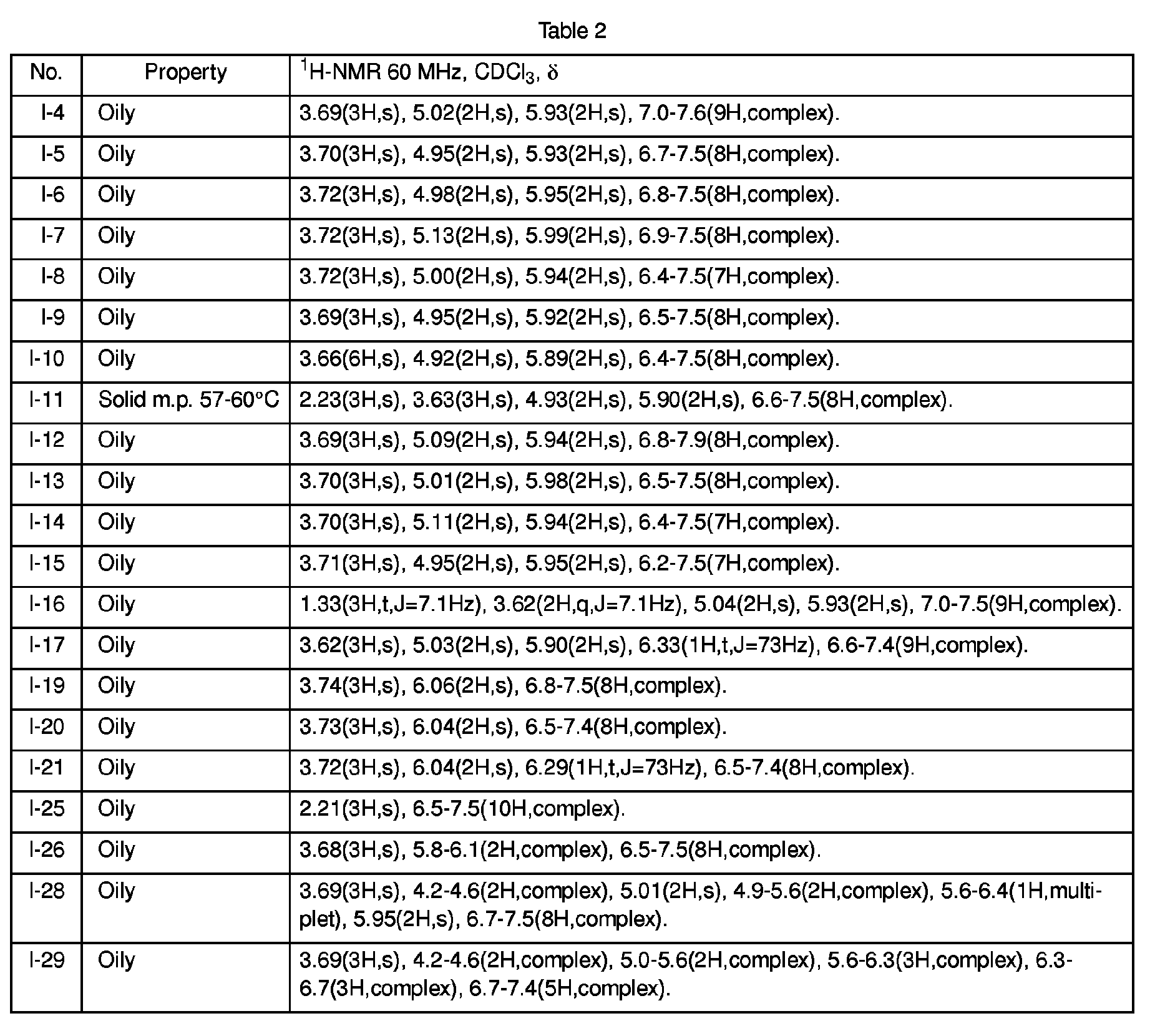
- The other compounds shown in the Table 1 were also synthesized in a similar manner to that described in any of the above Synthesis examples 1 to 8. Properties and NMR data of the obtained compounds are shown in the Table 2.
- Formulation examples and test examples are hereinafter described. Kinds of carriers (diluents) and additives to be used, as well as mixing ratios thereof and active ingredient contents therein may be modified in a broad range.
- In each of the formulation examples, the term "parts" is "parts by weight" if otherwise noticed.
-

- The above materials were mixed together and ground finely to form a wettable powder. It may be applied after diluted with water.
-

- The above materials were homogeneously mixed to form an emulsifiable concentrate. It may be applied after diluted with water.
-
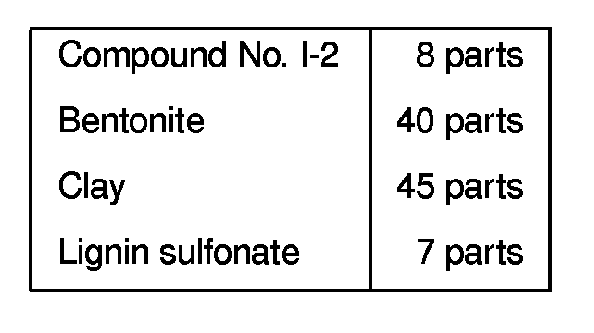
- The above materials were homogeneously mixed, blended with water and processed into a granular form with an extrusion granulator to give granules.
- A wettable powder of each test compound was prepared as described in the Formulation Example 1 and suspended in water to a predetermined concentration. Thus prepared herbicidal solution was applied at an active ingredient rate of 5 g/10 a onto the soil and the foliage of each plant grown to the 1 to 2 leaf stage. The tested plants were pot- cultivated redroot pigweed (Amaranthus retroflexus), wild mustard (Sinapis arvensis), common chickweed (Stellaria media), sicklepod (Cassia obtusifolia), black nightshade (Solanum nigrum), velvetleaf (Abutilon theophrasti), field bindweed (Convolvulus arvensis), wild chamomile (Matricaria chamomilla), green foxtail (Setaria viridis), barnyard grass (Echinochloa frumentaceum), and henry crabgrass (Digitaria adscendens).
- On the 14th day after the application, weed control effects were evaluated by the following criterion. Evaluation rating:
- 1: less than 20% of weedkilling;
- 2: 20% to less than 40% of weedkilling;
- 3: 40% to less than 60% of weedkilling;
- 4: 60% to less than 80% of weedkilling;
- 5: more than 80% of weedkilling.
- The results are shown in the Table 3. In the test example, the compounds (A) to (D) which were disclosed in EP 572093 A and the compound (E) (Registry Number 153564-12-6 in Chem. Abstr.) which was not described in the publication but abstracted in the Chemical Abstracts [120, P 191543h(1994)] as a compound disclosed in the publication were also tested as comparative compounds:
- (A) 2,6-di(meta-trifluromethylphenoxy)pyridine;
- (B) 2.6-di(meta-trifluromethylphenoxy)-4-methylmercaptopyridine;
- (C) 2,6-di(meta-trifluromethylphenoxy)-4-methylpyridine;
- (D) 2-benzyloxy-6-(meta-trifluromethylphenoxy)pyridine; and
- (E) 4-chloro-2,6-di(meta-trifluromethylphenoxy)pyridine.
- (This compound is thought a position isomer of the compound of Ex. No. 14 in EP 572093 A, but more closely related to the present invention concerning the binding position of pyridine.)

Claims (8)


Applications Claiming Priority (8)
| Application Number | Priority Date | Filing Date | Title |
|---|---|---|---|
| JP185367/94 | 1994-07-14 | ||
| JP18536794 | 1994-07-14 | ||
| JP190085/94 | 1994-07-20 | ||
| JP19008594 | 1994-07-20 | ||
| JP3908195 | 1995-02-04 | ||
| JP39080/95 | 1995-02-04 | ||
| JP39081/95 | 1995-02-04 | ||
| JP3908095 | 1995-02-04 |
Publications (2)
| Publication Number | Publication Date |
|---|---|
| EP0692474A1 EP0692474A1 (en) | 1996-01-17 |
| EP0692474B1 true EP0692474B1 (en) | 1997-10-29 |
Family
ID=27460702
Family Applications (1)
| Application Number | Title | Priority Date | Filing Date |
|---|---|---|---|
| EP95304893A Expired - Lifetime EP0692474B1 (en) | 1994-07-14 | 1995-07-13 | 2- (unsubstituted or substituted) (benzyloxy or phenoxy)-4-substituted-6-(meta-substituted phenoxy) pyridine, process for producing the same, and herbicidal composition |
Country Status (4)
| Country | Link |
|---|---|
| US (1) | US5691277A (en) |
| EP (1) | EP0692474B1 (en) |
| CA (1) | CA2153839C (en) |
| DE (1) | DE69500950T2 (en) |
Families Citing this family (9)
| Publication number | Priority date | Publication date | Assignee | Title |
|---|---|---|---|---|
| US5807804A (en) * | 1996-02-22 | 1998-09-15 | American Cyanamid Company | Substituted pyridine herbicidal agents |
| EP0820996A1 (en) * | 1996-07-24 | 1998-01-28 | American Cyanamid Company | Herbicidal cyanopyridines |
| US5981437A (en) * | 1996-07-30 | 1999-11-09 | American Cyanamid Company | Herbicidal substituted pyridine compounds |
| EP0859772B1 (en) * | 1996-07-30 | 2006-04-19 | Basf Aktiengesellschaft | Herbicidal substituted pyridine compounds |
| US5922738A (en) * | 1996-07-30 | 1999-07-13 | American Cyanamid Company | Heteroarylpyridine herbicides |
| GB2317384B (en) * | 1996-09-19 | 2000-05-17 | American Cyanamid Co | Heteroarylpyridine herbicides |
| US5851952A (en) * | 1997-11-07 | 1998-12-22 | American Cyanamid Company | Herbicidal thienyloxyazines |
| US6238706B1 (en) | 1999-05-06 | 2001-05-29 | Grofish L.L.C. | Method of stimulating growth in aquatic animals using growth hormones |
| DE10130397A1 (en) * | 2001-06-23 | 2003-01-09 | Bayer Cropscience Gmbh | Herbicidally substituted pyridines, processes for their preparation and their use as herbicides and plant growth regulators |
Family Cites Families (7)
| Publication number | Priority date | Publication date | Assignee | Title |
|---|---|---|---|---|
| US3535328A (en) * | 1967-09-01 | 1970-10-20 | Exxon Research Engineering Co | Certain substituted aminothioethoxy pyridines |
| US3687959A (en) * | 1970-05-28 | 1972-08-29 | Exxon Research Engineering Co | Alkaryl-alkoxy, aryl-amido derivatives of pyridine |
| DE3044856A1 (en) | 1980-11-28 | 1982-07-01 | Celamerck Gmbh & Co Kg, 6507 Ingelheim | PYRIDE DERIVATIVES |
| DE3614846A1 (en) * | 1986-05-02 | 1987-11-05 | Bayer Ag | PYRIDYLTHIO ACYLANILIDE |
| GB8814881D0 (en) * | 1988-06-22 | 1988-07-27 | Shell Int Research | Herbicidal acrylonitrile derivatives |
| US5318946A (en) * | 1991-11-27 | 1994-06-07 | American Cyanamid Company | 2-(heteroaryloxyphenoxy)alkylsulfonates useful as herbicidal agents |
| TW231258B (en) | 1992-05-27 | 1994-10-01 | Shell Internat Res Schappej B V |
-
1995
- 1995-07-13 CA CA002153839A patent/CA2153839C/en not_active Expired - Fee Related
- 1995-07-13 EP EP95304893A patent/EP0692474B1/en not_active Expired - Lifetime
- 1995-07-13 DE DE69500950T patent/DE69500950T2/en not_active Expired - Fee Related
- 1995-07-13 US US08/501,842 patent/US5691277A/en not_active Expired - Lifetime
Also Published As
| Publication number | Publication date |
|---|---|
| CA2153839A1 (en) | 1996-01-15 |
| CA2153839C (en) | 2005-09-20 |
| US5691277A (en) | 1997-11-25 |
| EP0692474A1 (en) | 1996-01-17 |
| DE69500950T2 (en) | 1998-03-05 |
| DE69500950D1 (en) | 1997-12-04 |
Similar Documents
| Publication | Publication Date | Title |
|---|---|---|
| JP3044402B2 (en) | Herbicidal carboxamide derivatives | |
| EP1140845B1 (en) | Susbstituted pyridine herbicides | |
| US4713109A (en) | 2-(4-(5-chloro-3-fluoropyridin-2-yloxy)phenoxy)-propionic acid-propynyl ester with herbicidal activity | |
| EP1031573B1 (en) | Novel benzoylpyrazole compounds, intermediates, and herbicides | |
| EP0572093B1 (en) | Herbicidal 2,6-substituted pyridines | |
| JPH057385B2 (en) | ||
| AU592804B2 (en) | (r)-2-{4-(5-chloro-3-fluoropyridin-2-yloxy)-phenoxyl}- propionic acid propynyl ester with herbicidal activity | |
| CA2153839C (en) | 2-(unsubstituted or substituted) (benzyloxy or phenoxy)-4-substituted-6-(meta-substituted phenoxy)pyridine, process for producing the same, and herbicidal composition | |
| EP0693490B1 (en) | 2-Phenoxy-6-thienylmethyloxypyridine derivative, process for producing the same, and herbicidal composition | |
| US6251829B1 (en) | Herbicidal benzoyloxy carboxylates and carboxamides | |
| US5424280A (en) | Aryloxybenzene herbicidal agents | |
| HU189596B (en) | Herbicide compositions containing new substituted phenoxy-propionates as active agents and process for producing the active agents | |
| JPH0827122A (en) | 2-(benzyloxy)(phenoxy)pyrimidine derivative, its production and herbicide | |
| US4786317A (en) | 4-phenoxy-pyridines having herbicidal activity | |
| JPH0245459A (en) | Acrylonitrile derivatives with herbicidal activity | |
| WO1997000246A1 (en) | Novel herbicides | |
| US5726128A (en) | Benzyloxypyrimidine derivative, processes for producing the same and herbicidal composition | |
| EP0648746B1 (en) | Cyanoketone derivative and herbicide containing it as an active component | |
| JPH0673022A (en) | Pyrimidine or triazine derivative and herbicide | |
| HU196885B (en) | Herbicides containing as active substance aryloxiphenoxi-acyl-malonic acid esthers and process for production of the active substances | |
| JP3886173B2 (en) | Novel 2- (unsubstituted or substituted) (benzyloxy or phenoxy) -4-substituted-6-meta substituted phenoxypyridine, process for producing the same and herbicide | |
| CN1201032A (en) | Herbicidal 3,5-difluoropyridine | |
| KR880002413B1 (en) | Method for producing phenoxypropionate | |
| JPH1059942A (en) | N-(phenylsufonyl)pycolinic acid amide derivative, production thereof and herbicide | |
| JPH08269055A (en) | 2-phenoxy-5-thienylmethyloxypyridine derivative, its production and herbicide |
Legal Events
| Date | Code | Title | Description |
|---|---|---|---|
| PUAI | Public reference made under article 153(3) epc to a published international application that has entered the european phase |
Free format text: ORIGINAL CODE: 0009012 |
|
| AK | Designated contracting states |
Kind code of ref document: A1 Designated state(s): DE FR GB |
|
| GRAG | Despatch of communication of intention to grant |
Free format text: ORIGINAL CODE: EPIDOS AGRA |
|
| 17P | Request for examination filed |
Effective date: 19960704 |
|
| 17Q | First examination report despatched |
Effective date: 19960808 |
|
| GRAH | Despatch of communication of intention to grant a patent |
Free format text: ORIGINAL CODE: EPIDOS IGRA |
|
| GRAH | Despatch of communication of intention to grant a patent |
Free format text: ORIGINAL CODE: EPIDOS IGRA |
|
| GRAA | (expected) grant |
Free format text: ORIGINAL CODE: 0009210 |
|
| AK | Designated contracting states |
Kind code of ref document: B1 Designated state(s): DE FR GB |
|
| REF | Corresponds to: |
Ref document number: 69500950 Country of ref document: DE Date of ref document: 19971204 |
|
| ET | Fr: translation filed | ||
| PLBE | No opposition filed within time limit |
Free format text: ORIGINAL CODE: 0009261 |
|
| STAA | Information on the status of an ep patent application or granted ep patent |
Free format text: STATUS: NO OPPOSITION FILED WITHIN TIME LIMIT |
|
| 26N | No opposition filed | ||
| REG | Reference to a national code |
Ref country code: FR Ref legal event code: TP |
|
| REG | Reference to a national code |
Ref country code: GB Ref legal event code: IF02 |
|
| REG | Reference to a national code |
Ref country code: FR Ref legal event code: CD Ref country code: FR Ref legal event code: CA |
|
| PGFP | Annual fee paid to national office [announced via postgrant information from national office to epo] |
Ref country code: FR Payment date: 20090710 Year of fee payment: 15 |
|
| PGFP | Annual fee paid to national office [announced via postgrant information from national office to epo] |
Ref country code: GB Payment date: 20090708 Year of fee payment: 15 Ref country code: DE Payment date: 20090709 Year of fee payment: 15 |
|
| GBPC | Gb: european patent ceased through non-payment of renewal fee |
Effective date: 20100713 |
|
| REG | Reference to a national code |
Ref country code: FR Ref legal event code: ST Effective date: 20110331 |
|
| PG25 | Lapsed in a contracting state [announced via postgrant information from national office to epo] |
Ref country code: DE Free format text: LAPSE BECAUSE OF NON-PAYMENT OF DUE FEES Effective date: 20110201 |
|
| REG | Reference to a national code |
Ref country code: DE Ref legal event code: R119 Ref document number: 69500950 Country of ref document: DE Effective date: 20110201 |
|
| PG25 | Lapsed in a contracting state [announced via postgrant information from national office to epo] |
Ref country code: FR Free format text: LAPSE BECAUSE OF NON-PAYMENT OF DUE FEES Effective date: 20100802 |
|
| PG25 | Lapsed in a contracting state [announced via postgrant information from national office to epo] |
Ref country code: GB Free format text: LAPSE BECAUSE OF NON-PAYMENT OF DUE FEES Effective date: 20100713 |