EP0689674B1 - Serum antioxidants as predictors of adult respiratory distress syndrome - Google Patents
Serum antioxidants as predictors of adult respiratory distress syndrome Download PDFInfo
- Publication number
- EP0689674B1 EP0689674B1 EP94912252A EP94912252A EP0689674B1 EP 0689674 B1 EP0689674 B1 EP 0689674B1 EP 94912252 A EP94912252 A EP 94912252A EP 94912252 A EP94912252 A EP 94912252A EP 0689674 B1 EP0689674 B1 EP 0689674B1
- Authority
- EP
- European Patent Office
- Prior art keywords
- patient
- ards
- serum level
- mnsod
- development
- Prior art date
- Legal status (The legal status is an assumption and is not a legal conclusion. Google has not performed a legal analysis and makes no representation as to the accuracy of the status listed.)
- Expired - Lifetime
Links
Images
Classifications
-
- C—CHEMISTRY; METALLURGY
- C12—BIOCHEMISTRY; BEER; SPIRITS; WINE; VINEGAR; MICROBIOLOGY; ENZYMOLOGY; MUTATION OR GENETIC ENGINEERING
- C12Q—MEASURING OR TESTING PROCESSES INVOLVING ENZYMES, NUCLEIC ACIDS OR MICROORGANISMS; COMPOSITIONS OR TEST PAPERS THEREFOR; PROCESSES OF PREPARING SUCH COMPOSITIONS; CONDITION-RESPONSIVE CONTROL IN MICROBIOLOGICAL OR ENZYMOLOGICAL PROCESSES
- C12Q1/00—Measuring or testing processes involving enzymes, nucleic acids or microorganisms; Compositions therefor; Processes of preparing such compositions
- C12Q1/56—Measuring or testing processes involving enzymes, nucleic acids or microorganisms; Compositions therefor; Processes of preparing such compositions involving blood clotting factors, e.g. involving thrombin, thromboplastin, fibrinogen
-
- C—CHEMISTRY; METALLURGY
- C12—BIOCHEMISTRY; BEER; SPIRITS; WINE; VINEGAR; MICROBIOLOGY; ENZYMOLOGY; MUTATION OR GENETIC ENGINEERING
- C12Q—MEASURING OR TESTING PROCESSES INVOLVING ENZYMES, NUCLEIC ACIDS OR MICROORGANISMS; COMPOSITIONS OR TEST PAPERS THEREFOR; PROCESSES OF PREPARING SUCH COMPOSITIONS; CONDITION-RESPONSIVE CONTROL IN MICROBIOLOGICAL OR ENZYMOLOGICAL PROCESSES
- C12Q1/00—Measuring or testing processes involving enzymes, nucleic acids or microorganisms; Compositions therefor; Processes of preparing such compositions
- C12Q1/26—Measuring or testing processes involving enzymes, nucleic acids or microorganisms; Compositions therefor; Processes of preparing such compositions involving oxidoreductase
- C12Q1/30—Measuring or testing processes involving enzymes, nucleic acids or microorganisms; Compositions therefor; Processes of preparing such compositions involving oxidoreductase involving catalase
-
- C—CHEMISTRY; METALLURGY
- C12—BIOCHEMISTRY; BEER; SPIRITS; WINE; VINEGAR; MICROBIOLOGY; ENZYMOLOGY; MUTATION OR GENETIC ENGINEERING
- C12Q—MEASURING OR TESTING PROCESSES INVOLVING ENZYMES, NUCLEIC ACIDS OR MICROORGANISMS; COMPOSITIONS OR TEST PAPERS THEREFOR; PROCESSES OF PREPARING SUCH COMPOSITIONS; CONDITION-RESPONSIVE CONTROL IN MICROBIOLOGICAL OR ENZYMOLOGICAL PROCESSES
- C12Q1/00—Measuring or testing processes involving enzymes, nucleic acids or microorganisms; Compositions therefor; Processes of preparing such compositions
- C12Q1/26—Measuring or testing processes involving enzymes, nucleic acids or microorganisms; Compositions therefor; Processes of preparing such compositions involving oxidoreductase
- C12Q1/32—Measuring or testing processes involving enzymes, nucleic acids or microorganisms; Compositions therefor; Processes of preparing such compositions involving oxidoreductase involving dehydrogenase
-
- G—PHYSICS
- G01—MEASURING; TESTING
- G01N—INVESTIGATING OR ANALYSING MATERIALS BY DETERMINING THEIR CHEMICAL OR PHYSICAL PROPERTIES
- G01N33/00—Investigating or analysing materials by specific methods not covered by groups G01N1/00 - G01N31/00
- G01N33/48—Biological material, e.g. blood, urine; Haemocytometers
- G01N33/50—Chemical analysis of biological material, e.g. blood, urine; Testing involving biospecific ligand binding methods; Immunological testing
- G01N33/53—Immunoassay; Biospecific binding assay; Materials therefor
- G01N33/573—Immunoassay; Biospecific binding assay; Materials therefor for enzymes or isoenzymes
-
- G—PHYSICS
- G01—MEASURING; TESTING
- G01N—INVESTIGATING OR ANALYSING MATERIALS BY DETERMINING THEIR CHEMICAL OR PHYSICAL PROPERTIES
- G01N2333/00—Assays involving biological materials from specific organisms or of a specific nature
- G01N2333/90—Enzymes; Proenzymes
- G01N2333/914—Hydrolases (3)
- G01N2333/948—Hydrolases (3) acting on peptide bonds (3.4)
- G01N2333/95—Proteinases, i.e. endopeptidases (3.4.21-3.4.99)
- G01N2333/964—Proteinases, i.e. endopeptidases (3.4.21-3.4.99) derived from animal tissue
- G01N2333/96425—Proteinases, i.e. endopeptidases (3.4.21-3.4.99) derived from animal tissue from mammals
- G01N2333/96427—Proteinases, i.e. endopeptidases (3.4.21-3.4.99) derived from animal tissue from mammals in general
- G01N2333/9643—Proteinases, i.e. endopeptidases (3.4.21-3.4.99) derived from animal tissue from mammals in general with EC number
- G01N2333/96433—Serine endopeptidases (3.4.21)
- G01N2333/96441—Serine endopeptidases (3.4.21) with definite EC number
- G01N2333/96447—Factor VII (3.4.21.21)
Definitions
- the present application relates in general to methods and apparatus for performing assays for disease states, and in particular to methods and apparatus for performing assays for adult respiratory distress syndrome (ARDS).
- ARDS adult respiratory distress syndrome
- ARDS is an acute inflammatory process characterized by lung neutrophil accumulation, lung edema and progressive hypoxemia [Repine, Lancet, 339, 466-469 (1992)]. ARDS occurs as a complicating factor in patients with sepsis as well as numerous other predisposing conditions. Since many common and diverse risk factors lead to the development of ARDS, but ARDS develops only relatively rarely, pretreating everyone at risk for ARDS is not practical [Fowler et al., Ann. Intern. Med., 98, 593-597 (1983)]. Because a better understanding of ARDS is emerging and various interventions which can limit inflammation are forthcoming, it has become a major goal to identify accessible and repeatable markers in at risk patients which predict the development of ARDS. This will enable experimental therapies to be prospectively and effectively evaluated in smaller, better-defined groups of patients.
- the present invention provides a method for identifying septic patients for prospective treatment of adult respiratory distress syndrome including the step of determining a high (greater than an established baseline) serum level of manganese superoxide dismutase.
- the present invention also provides a method for identifying septic patients for prospective treatment of adult respiratory distress syndrome including the step of determining a high (greater than an established baseline) serum level of catalase.
- apparatus for identifying septic patients for prospective treatment of adult respiratory distress syndrome includes means for determining a high (greater than an established baseline) serum level of manganese superoxide dismutase.
- the present invention also provides apparatus for identifying septic patients for prospective treatment of adult respiratory distress syndrome including means for determining a high (greater than an established baseline) serum level of catalase. Further embodiments provided by the present invention are to be found in the appending claims.
- Septic patients also had at least one of the following: a positive blood culture involving a commonly accepted pathogen, a strongly suspected or proven source of systemic infection, gross pus in a closed space, unexplained systemic arterial hypotension (systolic blood pressure less than 80 mm Hg), systemic vascular resistance less than 800 dyn x s x cm 2 and/or unexplained metabolic acidosis [Parsons et al., Am . Rev. Resp. Dis., 140, 294-301 (1989)].
- Patients with ARDS met the following criteria: (1) acute respiratory failure requiring mechanical ventilation, (2) bilateral pulmonary infiltrates, (3) pulmonary capillary wedge pressure ⁇ 18 mm Hg, (4) static pulmonary compliance ⁇ 50 ml/cm H 2 O, and (5) arterial to alveolar partial pressure of oxygen ratio of ⁇ 0.25 [Parsons et al., Am . Rev. Resp. Dis., 140, 294-301 (1989)].
- Serum and plasma samples were obtained at the diagnosis of sepsis (0 h) and at the diagnosis of ARDS (6-24 h after the diagnosis of sepsis) and after the diagnosis of ARDS (6-24 h after the diagnosis of ARDS) either through an indwelling arterial or venous catheter or by direct venipuncture.
- HBSS Hanks' balanced salt solution
- GPX was measured as the oxidation of NADPH at 340 nm in glutathione reductase, glutathione and t-butyl hydroperoxide [Beutler, A Manual of Biochemical Methods, Orlando, Grune & Stratton, Inc., 1-172 (1984)], LDH [Beutler, A Manual of Biochemical Methods, Orlando, Grune & Stratton, Inc., 1-172 (1984)] and albumin [Corcoran et al., Clin. Chem., 23, 765-766 (1977)] were assayed spectrophotometrically.
- Uric acid was measured by HPLC [Terada et al., J. Appl. Physiol., 65, 2349-2353 (1988)].
- Serum from septic patients who subsequently developed ARDS also had increased (p ⁇ 0.05) LDH activity compared to serum from septic patients who did not develop ARDS. Serum from septic patients who did not develop ARDS had the same (p>0.05) LDH activity as serum from control subjects (FIG. 4). Serum LDH measurements increased during the 48 h study period in septic patients who developed ARDS but not in septic patients who did not develop ARDS.
- results are shown for six sequentially measured factors in the blood of septic patients who were predisposed to develop ARDS.
- two serum antioxidant enzymes MnSOD and catalase, were increased in septic patients who later developed ARDS compared to septic patients who did not develop ARDS and that both of these factors predicted the development of ARDS in septic patients with as good a sensitivity, specificity and efficiency as measurements of LDH and Factor VIII.
- measurements of GPX and ⁇ 1 Pi-elastase complexes were neither different in septic patients who did or did not subsequently develop ARDS nor effective in predicting the development of ARDS in septic patients.
- MnSOD and catalase are useful for defining the pathogenesis of ARDS or identifying patients with similar pathophysiologies. Each measurement is accessible, repeatable and relatively easy to perform. Based on assessment of these markers, study of prophylactic treatment is facilitated by reducing the number of at risk individuals who need to be studied to obtain patients with ARDS.
- MnSOD and catalase may diminish oxidant insults mediated by superoxide anion(O 2 - ⁇ ) or hydrogen peroxide (H 2 O 2 ) or their products such as hydroxyl radical ( ⁇ OH).
- This possibility may be especially relevant because accelerated intravascular generation of oxygen radicals from stimulated neutrophils, circulating xanthine oxidase or other sources are implicated in the pathogenesis of sepsis and ARDS [McGuire et al., J. Clin. Invest., 69 , 543-553 (1982); Cochrane et al., J. Clin. Invest. 71, 754-758; (1983); Baldwin et al., Lancet, 1, 11-14 (1986) and Grum et al., J. Crit. Care, 2, 22-26 (1987)].
- each factor may represent a distinct process and these factors may more correctly reflect various processes occurring in septic patients with ARDS rather than ARDS per se.
- the present work has focused on sepsis-induced ARDS, so different mechanisms may be present in patients who develop ARDS following trauma and other predispositions.
- Lung tissue injury is a possible source for increases in LDH, MnSOD, catalase and Factor VIII levels. Endothelial cells are rich in these factors and, if perturbed, may readily increase the levels of these factors in the blood.
- intravascular neutrophil activation may be responsible for increases in ⁇ 1 Pi-elastase complexes because elastase may be present only in neutrophils.
- increases in ⁇ 1 Pi-elastase complexes occurred relatively later, at the diagnosis of ARDS, and then decreased by 48 h after the diagnosis of sepsis, which may indicate a decline in neutrophil activity.
- Red blood cell (RBC) hemolysis may be a source for increases in serum catalase and LDH activity, but not MnSOD or Factor VIII levels may not, because RBCs do not contain the latter.
- Serum catalase activity is also increased in the serum of rats subjected to skin burn [Leff et al., Inflammation (In Press) (1992)], and patients with the acquired immunodeficiency syndrome [Leff et al., Am. Rev. Respir. Dis, 146, 985-989 (1992)], but again, in these situations, the source is unclear. Elevations of IL-1, tumor necrosis factor (TNF) and endotoxin have been found in ARDS patients [Parsons et al., Am. Rev. Resp.
Landscapes
- Chemical & Material Sciences (AREA)
- Life Sciences & Earth Sciences (AREA)
- Health & Medical Sciences (AREA)
- Organic Chemistry (AREA)
- Engineering & Computer Science (AREA)
- Zoology (AREA)
- Proteomics, Peptides & Aminoacids (AREA)
- Wood Science & Technology (AREA)
- Immunology (AREA)
- Molecular Biology (AREA)
- General Health & Medical Sciences (AREA)
- Analytical Chemistry (AREA)
- Biotechnology (AREA)
- Physics & Mathematics (AREA)
- Biochemistry (AREA)
- Microbiology (AREA)
- Bioinformatics & Cheminformatics (AREA)
- General Engineering & Computer Science (AREA)
- Biophysics (AREA)
- Genetics & Genomics (AREA)
- Hematology (AREA)
- Urology & Nephrology (AREA)
- Biomedical Technology (AREA)
- Cell Biology (AREA)
- Food Science & Technology (AREA)
- Medicinal Chemistry (AREA)
- General Physics & Mathematics (AREA)
- Pathology (AREA)
- Neurosurgery (AREA)
- Investigating Or Analysing Biological Materials (AREA)
- Measuring Or Testing Involving Enzymes Or Micro-Organisms (AREA)
Abstract
Description
- The present application relates in general to methods and apparatus for performing assays for disease states, and in particular to methods and apparatus for performing assays for adult respiratory distress syndrome (ARDS).
- ARDS is an acute inflammatory process characterized by lung neutrophil accumulation, lung edema and progressive hypoxemia [Repine, Lancet, 339, 466-469 (1992)]. ARDS occurs as a complicating factor in patients with sepsis as well as numerous other predisposing conditions. Since many common and diverse risk factors lead to the development of ARDS, but ARDS develops only relatively rarely, pretreating everyone at risk for ARDS is not practical [Fowler et al., Ann. Intern. Med., 98, 593-597 (1983)]. Because a better understanding of ARDS is emerging and various interventions which can limit inflammation are forthcoming, it has become a major goal to identify accessible and repeatable markers in at risk patients which predict the development of ARDS. This will enable experimental therapies to be prospectively and effectively evaluated in smaller, better-defined groups of patients.
- The present invention provides a method for identifying septic patients for prospective treatment of adult respiratory distress syndrome including the step of determining a high (greater than an established baseline) serum level of manganese superoxide dismutase.
- The present invention also provides a method for identifying septic patients for prospective treatment of adult respiratory distress syndrome including the step of determining a high (greater than an established baseline) serum level of catalase.
- According to the present invention, apparatus for identifying septic patients for prospective treatment of adult respiratory distress syndrome includes means for determining a high (greater than an established baseline) serum level of manganese superoxide dismutase.
- The present invention also provides apparatus for identifying septic patients for prospective treatment of adult respiratory distress syndrome including means for determining a high (greater than an established baseline) serum level of catalase. Further embodiments provided by the present invention are to be found in the appending claims.
-
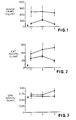
- FIG. 1 is a graph of MnSOD levels for healthy control subjects (squares); and of septic patients who did not develop ARDS (triangles) and septic patients who developed ARDS (circles) at three times: at diagnosis of sepsis (1), at diagnosis of ARDS (2) and after diagnosis of ARDS (3);
- FIG. 2 is a graph of CAT activity for healthy control subjects (squares); and of septic patients who did not develop ARDS (triangles) and septic patients who developed ARDS (circles) at three times: at diagnosis of sepsis (1), at diagnosis of ARDS (2) and after diagnosis of ARDS (3);
- FIG. 3 is a graph of GPX activity for healthy control subjects (squares); and of septic patients who did not develop ARDS (triangles) and septic patients who developed ARDS (circles) at three times: at diagnosis of sepsis (1), at diagnosis of ARDS (2) and after diagnosis of ARDS (3);
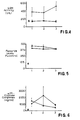
- FIG. 4 is a graph of LDH activity for healthy control subjects (squares); and of septic patients who did not develop ARDS (triangles) and septic patients who developed ARDS (circles) at three times: at diagnosis of sepsis (1), at diagnosis of ARDS (2) and after diagnosis of ARDS (3);
- FIG. 5 is a graph of Factor VIII levels for healthy control subjects (squares); and of septic patients who did not develop ARDS (triangles) and septic patients who developed ARDS (circles) at three times: at diagnosis of sepsis (1), at diagnosis of ARDS (2) and after diagnosis of ARDS (3); and
- FIG. 6 is a graph of levels of αiPi-elastase complexes for healthy control subjects (squares); and of septic patients who did not develop ARDS (triangles) and septic patients who developed ARDS (circles) at three times: at diagnosis of sepsis (1), at diagnosis of ARDS (2) and after diagnosis of ARDS (3).
- In the experiments illustrated in FIGs. 1-6, septic patients were enrolled (0 h) and studied sequentially for the next 48 h. Points were plotted at the diagnosis of sepsis (0 h at 1), at the diagnosis of ARDS (6-24 h after the diagnosis of sepsis at 2) and after the diagnosis of sepsis (6-24 h after the diagnosis of ARDS at 3). Each value is the mean ± SE of 3-20 determinations.
- In the present investigation, three antioxidant enzymes [manganese superoxide dismutase (MnSOD), catalase and glutathione peroxidase (GPX)] were compared with three other potential markers [Factor VIII [Carvalho et al., N. Engl. J. Med., 307, 1113-1119 (1982) and Rubin et al., J. Clin. Invest., 86, 474-480 (1990)] LDH [Ward et al., J. Clin. Invest. 76, 517-527 (1985) and Dwenger et al., In: Sturm, ed. Adult Respiratory Distress Syndrome, Berlin Heidelberg: Springer-Verlag, 91-127 (1991)]] and α1Pi-elastase complexes [Rocker et al., Lancet, 1, 120-123 (1989) and Hilgenfeldt et al., Eur. J. Clin. Pharmacol, 38, 125-131 (1990)] for their ability to predict the development of ARDS in patients with sepsis.
- Alterations occur in the oxidant-antioxidant balance in ARDS and in other disease states that appear to involve oxygen radicals in their pathogenesis [Leff et al., Free Radical Biol. Med., 13, 143-149 (1992); Leff et al., Am. Rev. Respir. Dis, 146, 985-989 (1992); Buhl et al., Lancet, 2, 1294-1298 (1989); Bernard et al., Am. Rev. Resp. Dis., 139, A221 (Abstract) (1989); and Pacht et al., Chest, 100, 1397-1403 (1991)]. In addition, patients with established ARDS have elevated serum catalase activity [Leff et al., Am. Rev. Respir. Dis, 146, 985-989 (1992)]. Serum catalase activity increased in a rat model of burn-induced acute lung injury [Leff et al., Inflammation (In Press) (1992)].
- Patient Consent and Selection. After written consent was obtained from the patient or a family member, each subject was studied using a protocol which was approved by an institutional human subjects review committee. All patients (n=26) who were identified within 8 h of the diagnosis of sepsis were eligible for enrollment. Patients with sepsis had a serious bacterial infection and either (a) a rectal or core temperature exceeding 39°C or (b) a peripheral leukocyte count of >12,000 cells/mm3 or >20% immature neutrophils. Septic patients also had at least one of the following: a positive blood culture involving a commonly accepted pathogen, a strongly suspected or proven source of systemic infection, gross pus in a closed space, unexplained systemic arterial hypotension (systolic blood pressure less than 80 mm Hg), systemic vascular resistance less than 800 dyn x s x cm2 and/or unexplained metabolic acidosis [Parsons et al., Am. Rev. Resp. Dis., 140, 294-301 (1989)].
- Patients with ARDS (n=6) met the following criteria: (1) acute respiratory failure requiring mechanical ventilation, (2) bilateral pulmonary infiltrates, (3) pulmonary capillary wedge pressure <18 mm Hg, (4) static pulmonary compliance <50 ml/cm H2O, and (5) arterial to alveolar partial pressure of oxygen ratio of <0.25 [Parsons et al., Am. Rev. Resp. Dis., 140, 294-301 (1989)]. Serum and plasma samples were obtained at the diagnosis of sepsis (0 h) and at the diagnosis of ARDS (6-24 h after the diagnosis of sepsis) and after the diagnosis of ARDS (6-24 h after the diagnosis of ARDS) either through an indwelling arterial or venous catheter or by direct venipuncture. Patients were divided into two groups: septic patients who did not develop ARDS and septic patients who later developed ARDS.
Patients were prospectively and sequentially studied until death or discharge. All assays were performed by personnel who were unaware of the diagnoses.
Control subjects (n=15) were healthy individuals. - Source of reagents. Hanks' balanced salt solution (HBSS) was purchased from Gibco Laboratories (Grand Island, New York). All other reagents were obtained from Sigma Chemical Company (St. Louis, Missouri).
- Measurement of serum markers. MnSOD [Kawaguchi et al., Biochem. Biophys. Res. Commun. 171, 1378-1386 (1990)], Factor VIII antigen [Cejka, Clin. Chem., 28(6), 1356-1358 (1982)] and α1Pi-elastase complexes [Duswald et al., Surgery, 98, 892-899 (1985)] were measured by ELISA. Catalase was assessed by polarographic assessment of O2 evolution [Leff et al., J. Appl. Physiol., 71(5), 1903-1906 (1991)]. GPX was measured as the oxidation of NADPH at 340 nm in glutathione reductase, glutathione and t-butyl hydroperoxide [Beutler, A Manual of Biochemical Methods, Orlando, Grune & Stratton, Inc., 1-172 (1984)], LDH [Beutler, A Manual of Biochemical Methods, Orlando, Grune & Stratton, Inc., 1-172 (1984)] and albumin [Corcoran et al., Clin. Chem., 23, 765-766 (1977)] were assayed spectrophotometrically. Uric acid was measured by HPLC [Terada et al., J. Appl. Physiol., 65, 2349-2353 (1988)].
- Statistical analyses. Patient groups were compared using an analysis of variance with a Student-Newman-Keuls test of multiple comparisons. An unpaired t test was used to compare the clinical characteristics of septic patients with or without ARDS. For calculations of sensitivity, specificity, positive or negative predictive values and efficiency, 95% confidence intervals were determined based on the binomial distribution [Cochran, In: Sampling Techniques, 2nd ed., New York, John Wiley & Sons, Inc., 54-59 (1963)]. Significance was accepted at a p value of <0.05.
- Clinical Parameters. Septic patients who subsequently developed ARDS and septic patients who did not develop ARDS were the same (p>0.05) with respect to age, gender, hematocrit, hemoglobin, blood leukocyte count, blood neutrophil count, serum SGOT, bilirubin, albumin, uric acid levels and APACHE II score [Leff et al., Ann. Rev. Respir. Dis., 146, 985-989 (1992); Knaus et al., Crit. Care Med., 13, 818-289 (1985)]. The mortality of septic patients who developed ARDS was 50% (3 of 6) compared to a mortality of 30% (6 of 20) in septic patients who did not develop ARDS.
- Blood markers patterns. Septic patients had increased (p<0.O5) serum MnSOD levels compared to control subjects (FIG. 1). However, at the initial diagnosis of sepsis (approximately 6-24 h before diagnosis of ARDS), septic patients who eventually developed ARDS had increased (p<0.05) serum MnSOD levels compared to septic patients who did not develop ARDS. Serum MnSOD levels remained elevated for the next 48 h in patients who developed ARDS while MnSOD levels returned to control levels during the next 48 h in septic patients who did not develop ARDS.
- Similarly, at the diagnosis of sepsis, serum from septic patients had more (p<0.05) catalase activity than serum from control subjects. Again, at the initial diagnosis of sepsis, patients who later developed ARDS had more (p<0.05) serum catalase activity than septic patients who did not develop ARDS (FIG. 2). During the next 48 h, serum catalase activity increased progressively in septic patients who developed ARDS but did not change in septic patients who did not develop ARDS.
- In contrast to MnSOD levels and catalase activities, serum GPX activity was essentially the same (p>0.05) in control subjects and septic patients regardless of whether ARDS ensued (FIG. 3).
- Serum from septic patients who subsequently developed ARDS also had increased (p<0.05) LDH activity compared to serum from septic patients who did not develop ARDS. Serum from septic patients who did not develop ARDS had the same (p>0.05) LDH activity as serum from control subjects (FIG. 4). Serum LDH measurements increased during the 48 h study period in septic patients who developed ARDS but not in septic patients who did not develop ARDS.
- Septic patients who did or did not develop ARDS (FIG. 5) had similarly increased (p<0.05) serum Factor VIII levels compared to control subjects. Septic patients who did and did not develop ARDS had similar (p>0.05) Factor VIII levels.
- Finally, plasma α1Pi-elastase complexes were increased in all septic patients at the initial diagnosis of sepsis but differences between septic patients who did or did not develop ARDS were manifest only at the time of diagnosis of ARDS (6-24h after the diagnosis of sepsis) (FIG 6). By 48 h after the initial diagnosis of sepsis, α1Pi-elastase complexes had similarly decreased in septic patients independent of the development of ARDS.
- Analyses of serum markers. First, no correlations were found at any time between any of the six markers; Second, the positive and negative predictive values and the sensitivity and specificity of Serum MnSOD levels (≥ 450 ng/ml), catalase activity (≥ 30 U/ml), LDH activity ≥ 250 U/L and Factor VIII levels ≥ 445% control were comparable in predicting the development of ARDS in septic patients (Table 1). Third, serum MnSOD levels, catalase and LDH activity exceeded 450 ng/ml, 30 U/ml and 250 U/L, respectively, approximately 9 h, 12 h and 12 h, on average, respectively, before the diagnosis of ARDS. Further results appear in Table 1.
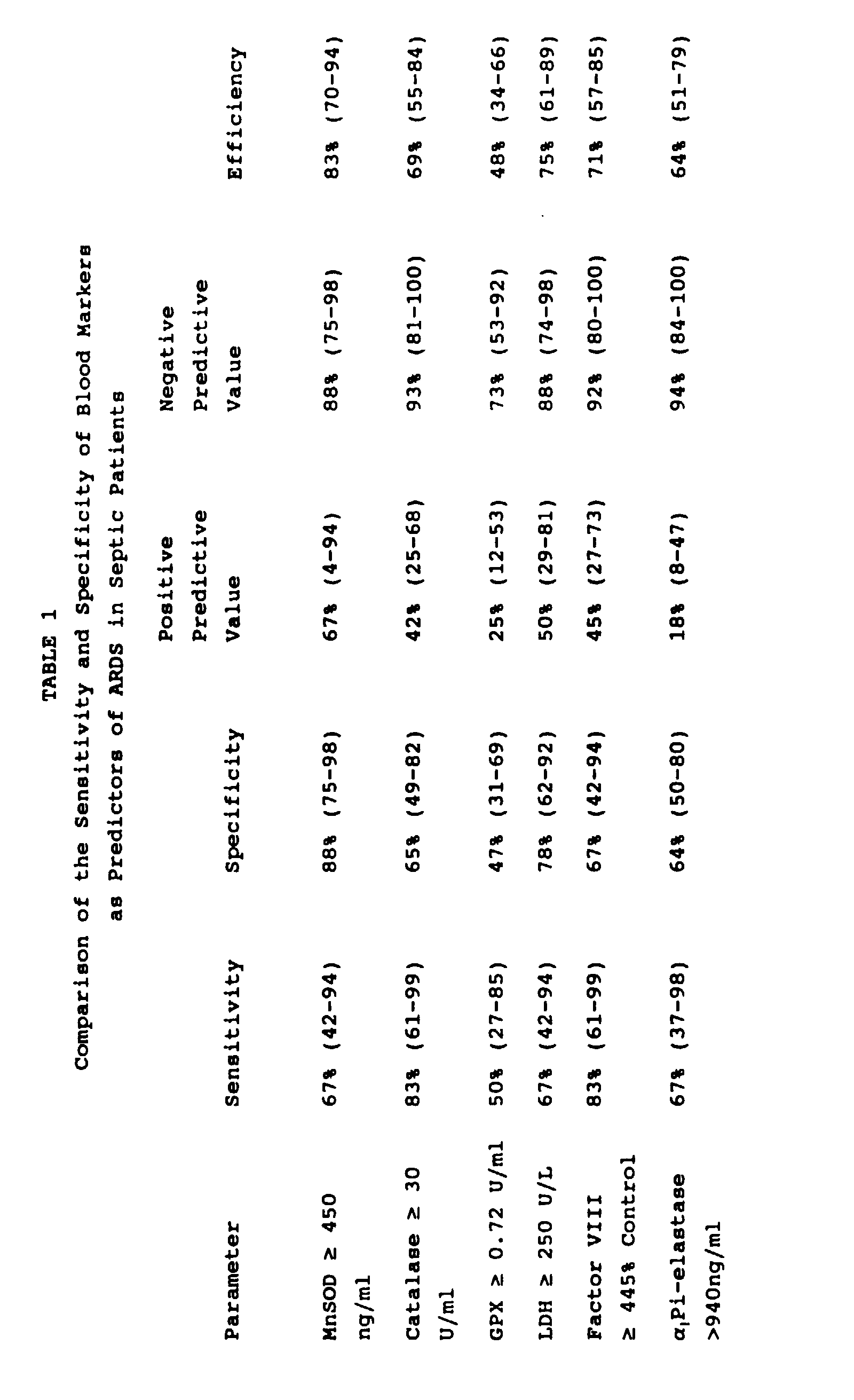
- In Table 1 each value represents 3-20 determinations at study entry (t=0 h). Values in parentheses represent 95% confidence intervals. Also in Table 1; Sensitivity = TP/TP + FN; Specificity = TN/TN + FP; Positive Predictive Value = TP/TP + FP; Negative Predictive Value = TN/TN + FN; and Efficiency = TP + TN/TP + FP + TN + FN.
- In Table 1, results are shown for six sequentially measured factors in the blood of septic patients who were predisposed to develop ARDS. Nine to twelve hours before the development of ARDS, two serum antioxidant enzymes, MnSOD and catalase, were increased in septic patients who later developed ARDS compared to septic patients who did not develop ARDS and that both of these factors predicted the development of ARDS in septic patients with as good a sensitivity, specificity and efficiency as measurements of LDH and Factor VIII. By comparison, measurements of GPX and α1Pi-elastase complexes were neither different in septic patients who did or did not subsequently develop ARDS nor effective in predicting the development of ARDS in septic patients.
- Assessment of MnSOD and catalase are useful for defining the pathogenesis of ARDS or identifying patients with similar pathophysiologies. Each measurement is accessible, repeatable and relatively easy to perform. Based on assessment of these markers, study of prophylactic treatment is facilitated by reducing the number of at risk individuals who need to be studied to obtain patients with ARDS.
- Increases in serum MnSOD levels and serum catalase activity may also have functional importance. MnSOD and catalase may diminish oxidant insults mediated by superoxide anion(O2 -·) or hydrogen peroxide (H2O2) or their products such as hydroxyl radical (·OH). This possibility may be especially relevant because accelerated intravascular generation of oxygen radicals from stimulated neutrophils, circulating xanthine oxidase or other sources are implicated in the pathogenesis of sepsis and ARDS [McGuire et al., J. Clin. Invest., 69, 543-553 (1982); Cochrane et al., J. Clin. Invest. 71, 754-758; (1983); Baldwin et al., Lancet, 1, 11-14 (1986) and Grum et al., J. Crit. Care, 2, 22-26 (1987)].
- Because the patterns were different for various markers and no two markers correlated with each other, each factor may represent a distinct process and these factors may more correctly reflect various processes occurring in septic patients with ARDS rather than ARDS per se. The present work has focused on sepsis-induced ARDS, so different mechanisms may be present in patients who develop ARDS following trauma and other predispositions.
- The origins of the factors, although unclear, most likely are multiple. Lung tissue injury is a possible source for increases in LDH, MnSOD, catalase and Factor VIII levels. Endothelial cells are rich in these factors and, if perturbed, may readily increase the levels of these factors in the blood. However, intravascular neutrophil activation may be responsible for increases in α1Pi-elastase complexes because elastase may be present only in neutrophils. Notably, increases in α1Pi-elastase complexes occurred relatively later, at the diagnosis of ARDS, and then decreased by 48 h after the diagnosis of sepsis, which may indicate a decline in neutrophil activity. Red blood cell (RBC) hemolysis may be a source for increases in serum catalase and LDH activity, but not MnSOD or Factor VIII levels may not, because RBCs do not contain the latter. Serum catalase activity is also increased in the serum of rats subjected to skin burn [Leff et al., Inflammation (In Press) (1992)], and patients with the acquired immunodeficiency syndrome [Leff et al., Am. Rev. Respir. Dis, 146, 985-989 (1992)], but again, in these situations, the source is unclear. Elevations of IL-1, tumor necrosis factor (TNF) and endotoxin have been found in ARDS patients [Parsons et al., Am. Rev. Resp. Dis., 140, 294-301 (1989); Suter et al., Am. Rev. Resp. Dis., 145, 1016-1022 (1992); Siler et al., Exp. Lung Res., 15(6), 881-894 (1989); Hyers et al., Am. Rev. Respir. Dis., 144, 268-271 (1991) and Marks et al., Am. Rev. Resp. Dis., 141, 94-97 (1990)] and may cause increases in antioxidants such as MnSOD and catalase [White et al., J. Appl. Physiol., 66, 1003-1007 (1989); Wong et al., Science, 242, 941-944 (1988); Brown et al., Proc. Natl. Acad. Sci. (USA), 86, 2516-2520 (1989) and Taniguchi, Adv. Clin. Chem., 29, 1-59 (1992)].
Claims (23)
- A method for predicting the development of adult respiratory distress syndrome (ARDS) in a septic patient comprising the steps of: determining a septic patient's serum level of manganese superoxide dismutase (MnSOD); and predicting the development of ARDS in said patient from said patient's serum level of MnSOD.
- A method according to claim 1 for predicting the development of ARDS in a septic patient comprising the steps of: determining a septic patient's serum level of MnSOD; determining said patient's serum level of catalase; and predicting the development of ARDS in said patient from said patient's serum levels of MnSOD and catalase.
- A method according to claim 1 for predicting the development of ARDS in a septic patient comprising the steps of: determining a septic patient's serum level of MnSOD; determining said patient's serum level of catalase activity; and predicting the development of ARDS in said patient from said patient's serum levels of MnSOD and catalase activity.
- A method according to claim 1 for predicting the development of ARDS in a septic patient comprising the steps of: determining a septic patient's serum level of MnSOD; determining said patient's serum level of factor VIII; and predicting the development of ARDS in said patient from said patient's serum levels of MnSOD and factor VIII.
- A method according to claim 1 for predicting the development of ARDS in a septic patient comprising the steps of: determining a septic patient's serum level of MnSOD; determining said patient's serum level of catalase activity; determining said patient's serum level of Factor VIII; and predicting the development of ARDS in said patient from said patient's serum levels of MnSOD, catalase activity, and Factor VIII.
- A method according to claim 1 for predicting the development of ARDS in a septic patient, comprising the steps of:(a) providing serum of a septic patient;(b) determining said patient's serum level of MnSOD;(c) comparing said patient's serum level of MnSOD to an established baseline serum level of MnSOD; wherein a serum level of MnSOD greater than said established baseline serum level of MnSOD is predictive of the development of ARDS in septic patients; and(d) predicting the development of ARDS in said patient if said patient's serum level of MnSOD is greater than said established baseline serum level of MnSOD.
- A method according to claim 6 further comprising the steps of determining said patient's serum level of catalase, comparing said patient's serum level of catalase to an established baseline serum level of catalase, wherein a serum level of catalase greater than said established baseline serum level of catalase is predictive of the development of ARDS in septic patients, and predicting the development of ARDS in said patient if said patient's serum level of catalase is greater than said established baseline serum level of catalase.
- A method according to claim 6 further comprising the steps of determining said patient's serum level of catalase activity, comparing said patient's serum level of catalase activity to an established baseline serum level of catalase activity, wherein a serum level of catalase activity greater than said established baseline serum level of catalase activity is predictive of the development of ARDS in septic patients, and predicting the development of ARDS in said patient if said patient's serum level of catalase activity is greater than said established baseline serum level of catalase activity.
- The method of claim 8 wherein the established baseline serum level of catalase activity is 30 U/ml.
- A method according to any one of claims 6 to 9 further comprising the steps of determining said patient's serum level of factor VIII, comparing said patient's serum level of factor VIII to an established baseline serum level of factor VIII, wherein a serum level of factor VIII greater than said established baseline serum level of factor VIII is predictive of the development of ARDS in septic patients, and predicting the development of ARDS in said patient if said patient's serum level of factor VIII is greater than said established baseline serum level of factor VIII.
- A method according to any one of claims 6 to 10 wherein the established baseline serum level of MnSOD is 450 ng/ml.
- A method according to claim 1 for predicting the development of ARDS in a septic patient, comprising the steps of:(a) providing serum of a septic patient,(b) determining said patient's serum level of MnSOD, and(c) predicting the development of ARDS in said patient if said patient's serum level of MnSOD is greater than 450 ng/ml.
- A method according to claim 1 for predicting the development of ARDS in a septic patient, comprising the steps of:(a) providing serum from a septic patient,(b) determining said patient's serum level of MnSOD;(c) determining said patient's serum level of at least one additional ARDS marker selected from the group consisting of catalase, catalase activity, and factor VIII;(d) performing a comparison of said septic patient's serum level of MnSOD to a baseline serum level of MnSOD, wherein a serum level of MnSOD greater than said baseline serum level of MnSOD is predictive of the development of ARDS in septic patients;(e) performing a comparison of said septic patient's serum level of said at least one additional ARDS marker to a baseline serum level of said at least one additional ARDS marker, wherein a serum level of said at least one additional ARDS marker greater than said baseline serum level of said at least one additional ARDS marker is predictive of the development of ARDS in septic patients; and(f) predicting the development of ARDS in said patient from said comparisons.
- The method of claim 13 wherein said at least one additional ARDS marker is factor VIII.
- The method of claim 13 wherein said at least one additional ARDS marker is catalase activity.
- The method of claim 13 wherein said at least one additional ARDS marker is catalase activity and factor VIII.
- A method for assessing a septic patient's risk for developing adult respiratory distress syndrome (ARDS) comprising the steps of determining a septic patient's serum level of manganese superoxide dismutase (MnSOD), determining a difference between said septic patient's serum level of MnSOD and a serum level of MnSOD of healthy human subjects, and assessing said septic patient's risk for developing ARDS from said difference.
- A method according to any one of claims 1 to 17 wherein the patient's serum level of MnSOD is determined by ELISA.
- A device for predicting the development of adult respiratory distress syndrome (ARDS) comprising:(a) means for immunologically determining a level of manganese superoxide dismutase in a serum sample; and(b) means for determining a level of catalase activity in a serum sample.
- A device according to claim 19 further comprising means for determining a level of factor VIII in a serum sample.
- A device according to claim 19 or 20 wherein the means for determining a level of manganese superoxide dismutase in a serum sample comprises an ELISA assay.
- A device according to any one of claims 19 to 21 that is a kit for predicting the development of adult respiratory distress syndrome in a septic patient using a sample of the patient's serum, wherein the means for determining a septic patient's serum level of manganese superoxide dismutase comprises:(a) a first monoclonal antibody having a high specific immuno-reactivity against human manganese superoxide dismutase, said first monoclonal antibody capable of forming a first immuno-reactive complex with manganese superoxide dismutase in the serum of a septic patient;(b) a second monoclonal antibody having a high specific immuno-reactivity against at least one of said first monoclonal antibody, said first immuno-reactive complex, and human manganese superoxide dismutase, said second monoclonal antibody being labelled with an enzyme and being capable of forming a second immuno-reactive complex; and(c) a substrate for the enzyme that is capable of producing a detectable signal in proportion to the amount of manganese superoxide dismutase in the second immuno-reactive complex.
- The use of an ELISA to determine the level of manganese superoxide dismutase in a sample for predicting the development of adult respiratory distress syndrome in septic patients.
Priority Applications (1)
| Application Number | Priority Date | Filing Date | Title |
|---|---|---|---|
| EP96115203A EP0757105A3 (en) | 1993-03-19 | 1994-03-18 | Serum markers as predictors of adult respiratory distress syndrome |
Applications Claiming Priority (3)
| Application Number | Priority Date | Filing Date | Title |
|---|---|---|---|
| US08/034,935 US5389522A (en) | 1993-03-19 | 1993-03-19 | Serum antioxidants as predictors of the adult respiratory distress syndrome in septic patients |
| PCT/US1994/002925 WO1994022016A1 (en) | 1993-03-19 | 1994-03-18 | Serum antioxidants as predictors of adult respiratory distress syndrome |
| US34935 | 1998-03-04 |
Related Child Applications (2)
| Application Number | Title | Priority Date | Filing Date |
|---|---|---|---|
| EP96115203A Division EP0757105A3 (en) | 1993-03-19 | 1994-03-18 | Serum markers as predictors of adult respiratory distress syndrome |
| EP96115203.0 Division-Into | 1996-09-23 |
Publications (2)
| Publication Number | Publication Date |
|---|---|
| EP0689674A1 EP0689674A1 (en) | 1996-01-03 |
| EP0689674B1 true EP0689674B1 (en) | 1997-10-08 |
Family
ID=21879562
Family Applications (2)
| Application Number | Title | Priority Date | Filing Date |
|---|---|---|---|
| EP94912252A Expired - Lifetime EP0689674B1 (en) | 1993-03-19 | 1994-03-18 | Serum antioxidants as predictors of adult respiratory distress syndrome |
| EP96115203A Withdrawn EP0757105A3 (en) | 1993-03-19 | 1994-03-18 | Serum markers as predictors of adult respiratory distress syndrome |
Family Applications After (1)
| Application Number | Title | Priority Date | Filing Date |
|---|---|---|---|
| EP96115203A Withdrawn EP0757105A3 (en) | 1993-03-19 | 1994-03-18 | Serum markers as predictors of adult respiratory distress syndrome |
Country Status (9)
| Country | Link |
|---|---|
| US (2) | US5389522A (en) |
| EP (2) | EP0689674B1 (en) |
| JP (1) | JPH08511864A (en) |
| AT (1) | ATE159102T1 (en) |
| AU (1) | AU690106B2 (en) |
| CA (1) | CA2158579C (en) |
| DE (1) | DE69406115T2 (en) |
| NO (1) | NO953689D0 (en) |
| WO (1) | WO1994022016A1 (en) |
Families Citing this family (9)
| Publication number | Priority date | Publication date | Assignee | Title |
|---|---|---|---|---|
| US5389522A (en) * | 1993-03-19 | 1995-02-14 | Repine; John E. | Serum antioxidants as predictors of the adult respiratory distress syndrome in septic patients |
| US5504111A (en) * | 1994-12-30 | 1996-04-02 | Medichem Research, Inc. | Use of 2,3 alkylcarbonyloxybenzoic acid in treating adult respiratory distress syndrome |
| US5679532A (en) * | 1995-12-13 | 1997-10-21 | University Technology Corporation | Serum ferritin as a predictor of the acute respiratory distress syndrome |
| US20040096917A1 (en) * | 2002-11-12 | 2004-05-20 | Becton, Dickinson And Company | Diagnosis of sepsis or SIRS using biomarker profiles |
| EP1562046A1 (en) * | 2004-02-03 | 2005-08-10 | B.R.A.H.M.S Aktiengesellschaft | Method of diagnosing sepsis by detecting selectively the concentration of superoxide dismutase 1 (SOD-1) in samples |
| WO2007143066A2 (en) * | 2006-05-31 | 2007-12-13 | Health Research Inc. | Method for predicting susceptibility to radiation pneumonitis |
| EP2496946B1 (en) * | 2009-11-03 | 2015-07-15 | Roche Diagniostics GmbH | NT-pro ANP AND sFlt-1 FOR THE DIFFERENTIATION BETWEEN CIRCULATORY AND ISCHEMIC EVENTS |
| SE535502C2 (en) * | 2010-09-14 | 2012-08-28 | Calmark Sweden Ab | System and method for analyzing risk or occurrence of organ failure |
| TW202308659A (en) * | 2021-05-06 | 2023-03-01 | 愛爾蘭商爵士製藥愛爾蘭有限責任公司 | Defibrotide for the treatment and prevention of acute respiratory distress syndrome |
Family Cites Families (3)
| Publication number | Priority date | Publication date | Assignee | Title |
|---|---|---|---|---|
| US3926732A (en) * | 1973-02-16 | 1975-12-16 | Alfa Laval Ab | Method for assaying catalase in milk and other liquids |
| US5147783A (en) * | 1988-05-27 | 1992-09-15 | Ube Industries, Ltd. | Methods to screen for ovarian cancer and myocardial infarction |
| US5389522A (en) * | 1993-03-19 | 1995-02-14 | Repine; John E. | Serum antioxidants as predictors of the adult respiratory distress syndrome in septic patients |
-
1993
- 1993-03-19 US US08/034,935 patent/US5389522A/en not_active Expired - Fee Related
-
1994
- 1994-03-18 AU AU64481/94A patent/AU690106B2/en not_active Ceased
- 1994-03-18 CA CA002158579A patent/CA2158579C/en not_active Expired - Fee Related
- 1994-03-18 EP EP94912252A patent/EP0689674B1/en not_active Expired - Lifetime
- 1994-03-18 DE DE69406115T patent/DE69406115T2/en not_active Expired - Fee Related
- 1994-03-18 WO PCT/US1994/002925 patent/WO1994022016A1/en not_active Ceased
- 1994-03-18 AT AT94912252T patent/ATE159102T1/en not_active IP Right Cessation
- 1994-03-18 EP EP96115203A patent/EP0757105A3/en not_active Withdrawn
- 1994-03-18 JP JP6521247A patent/JPH08511864A/en active Pending
- 1994-11-30 US US08/347,290 patent/US5639629A/en not_active Expired - Fee Related
-
1995
- 1995-09-19 NO NO953689A patent/NO953689D0/en unknown
Also Published As
| Publication number | Publication date |
|---|---|
| US5389522A (en) | 1995-02-14 |
| EP0689674A1 (en) | 1996-01-03 |
| CA2158579A1 (en) | 1994-09-29 |
| DE69406115D1 (en) | 1997-11-13 |
| JPH08511864A (en) | 1996-12-10 |
| DE69406115T2 (en) | 1998-04-30 |
| ATE159102T1 (en) | 1997-10-15 |
| AU6448194A (en) | 1994-10-11 |
| CA2158579C (en) | 1999-01-26 |
| EP0757105A3 (en) | 1998-01-28 |
| AU690106B2 (en) | 1998-04-23 |
| NO953689D0 (en) | 1995-09-19 |
| WO1994022016A1 (en) | 1994-09-29 |
| EP0757105A2 (en) | 1997-02-05 |
| US5639629A (en) | 1997-06-17 |
Similar Documents
| Publication | Publication Date | Title |
|---|---|---|
| Sundell et al. | Fibrinolytic variables are related to age, sex, blood pressure, and body build measurements: a cross-sectional study in Norsjö, Sweden | |
| Atiomo et al. | The plasminogen activator system in women with polycystic ovary syndrome | |
| Gumaste et al. | Lipase/amylase ratio: a new index that distinguishes acute episodes of alcoholic from nonalcoholic acute pancreatitis | |
| Miller et al. | Increased activation of the haemostatic system in men at high risk of fatal coronary heart disease | |
| Gray et al. | Plasminogen activator inhibitor activity in diabetic and nondiabetic survivors of myocardial infarction. | |
| Riese et al. | Job strain and risk indicators for cardiovascular disease in young female nurses. | |
| Yoneyama et al. | Relationship between plasma malondialdehyde levels and adenosine deaminase activities in preeclampsia | |
| Krishnamurti et al. | Plasminogen activator and plasminogen activator inhibitor activities in a reference population | |
| US5389522A (en) | Serum antioxidants as predictors of the adult respiratory distress syndrome in septic patients | |
| US5679532A (en) | Serum ferritin as a predictor of the acute respiratory distress syndrome | |
| Östlund et al. | Fibronectin is a marker for organ involvement and may reflect the severity of preeclampsia | |
| Fareed et al. | Diagnostic efficacy of newer synthetic-substrates methods for assessing coagulation variables: a critical overview. | |
| Tu et al. | Characteristics of a new urine, serum, and saliva alcohol reagent strip | |
| Lindberg et al. | Serum sialic acid and its correlates in community samples from Akita, Japan and Minneapolis, USA. | |
| Neri et al. | Alteration of oxide reductive and haemostatic factors in type 2 diabetics | |
| EP0576038B1 (en) | Method for measuring tissue plasminogen activator, antithrombin III and soluble fibrin | |
| Hellsten et al. | Increased plasminogen activator inhibitor and tissue plasminogen activator levels in subjects with electrocardiographic abnormality indicative of ischaemic heart disease: a cross-sectional study in Norsjö, Sweden. | |
| Whitfield et al. | Relationship between concentration and anticoagulant effect of heparin in plasma of hospitalized patients: magnitude and predictability of interindividual differences | |
| Stegnar et al. | Poor fibrinolytic response to venous occlusion by different criteria in patients with deep vein thrombosis | |
| Lee et al. | Relationship between alcohol intake and tissue plasminogen activator antigen and other haemostatic factors in the general population | |
| Škrha et al. | Early changes of serum N-acetyl-β-glucosaminidase, tissue plasminogen activator and erythrocyte superoxide dismutase in relation to retinopathy in type 1 diabetes mellitus | |
| Yamada et al. | Association between tissue plasminogen activator and serum lipids in healthy volunteers | |
| CA1116501A (en) | Cystic fibrosis detection method | |
| Seljeflot et al. | Global fibrinolytic capacity assessed by the serum D-dimer test. Correlation between basal and stimulated values | |
| Diaz et al. | The value of polymorphonuclear elastase in adult respiratory distress syndrome |
Legal Events
| Date | Code | Title | Description |
|---|---|---|---|
| PUAI | Public reference made under article 153(3) epc to a published international application that has entered the european phase |
Free format text: ORIGINAL CODE: 0009012 |
|
| 17P | Request for examination filed |
Effective date: 19950920 |
|
| AK | Designated contracting states |
Kind code of ref document: A1 Designated state(s): AT BE CH DE DK ES FR GB GR IE IT LI LU MC NL PT SE |
|
| GRAG | Despatch of communication of intention to grant |
Free format text: ORIGINAL CODE: EPIDOS AGRA |
|
| 17Q | First examination report despatched |
Effective date: 19960315 |
|
| GRAH | Despatch of communication of intention to grant a patent |
Free format text: ORIGINAL CODE: EPIDOS IGRA |
|
| GRAH | Despatch of communication of intention to grant a patent |
Free format text: ORIGINAL CODE: EPIDOS IGRA |
|
| GRAA | (expected) grant |
Free format text: ORIGINAL CODE: 0009210 |
|
| AK | Designated contracting states |
Kind code of ref document: B1 Designated state(s): AT BE CH DE DK ES FR GB GR IE IT LI LU MC NL PT SE |
|
| PG25 | Lapsed in a contracting state [announced via postgrant information from national office to epo] |
Ref country code: NL Free format text: LAPSE BECAUSE OF FAILURE TO SUBMIT A TRANSLATION OF THE DESCRIPTION OR TO PAY THE FEE WITHIN THE PRESCRIBED TIME-LIMIT Effective date: 19971008 Ref country code: LI Effective date: 19971008 Ref country code: IT Free format text: LAPSE BECAUSE OF FAILURE TO SUBMIT A TRANSLATION OF THE DESCRIPTION OR TO PAY THE FEE WITHIN THE PRE;WARNING: LAPSES OF ITALIAN PATENTS WITH EFFECTIVE DATE BEFORE 2007 MAY HAVE OCCURRED AT ANY TIME BEFORE 2007. THE CORRECT EFFECTIVE DATE MAY BE DIFFERENT FROM THE ONE RECORDED.SCRIBED TIME-LIMIT Effective date: 19971008 Ref country code: GR Free format text: LAPSE BECAUSE OF FAILURE TO SUBMIT A TRANSLATION OF THE DESCRIPTION OR TO PAY THE FEE WITHIN THE PRESCRIBED TIME-LIMIT Effective date: 19971008 Ref country code: ES Free format text: THE PATENT HAS BEEN ANNULLED BY A DECISION OF A NATIONAL AUTHORITY Effective date: 19971008 Ref country code: DK Free format text: LAPSE BECAUSE OF NON-PAYMENT OF DUE FEES Effective date: 19971008 Ref country code: CH Effective date: 19971008 Ref country code: BE Free format text: LAPSE BECAUSE OF FAILURE TO SUBMIT A TRANSLATION OF THE DESCRIPTION OR TO PAY THE FEE WITHIN THE PRESCRIBED TIME-LIMIT Effective date: 19971008 Ref country code: AT Free format text: LAPSE BECAUSE OF FAILURE TO SUBMIT A TRANSLATION OF THE DESCRIPTION OR TO PAY THE FEE WITHIN THE PRESCRIBED TIME-LIMIT Effective date: 19971008 |
|
| REF | Corresponds to: |
Ref document number: 159102 Country of ref document: AT Date of ref document: 19971015 Kind code of ref document: T |
|
| XX | Miscellaneous (additional remarks) |
Free format text: TEILANMELDUNG 96115203.0 EINGEREICHT AM 23/09/96. |
|
| REG | Reference to a national code |
Ref country code: CH Ref legal event code: EP |
|
| REF | Corresponds to: |
Ref document number: 69406115 Country of ref document: DE Date of ref document: 19971113 |
|
| PG25 | Lapsed in a contracting state [announced via postgrant information from national office to epo] |
Ref country code: SE Effective date: 19980108 Ref country code: PT Free format text: LAPSE BECAUSE OF FAILURE TO SUBMIT A TRANSLATION OF THE DESCRIPTION OR TO PAY THE FEE WITHIN THE PRESCRIBED TIME-LIMIT Effective date: 19980108 |
|
| ET | Fr: translation filed | ||
| NLV1 | Nl: lapsed or annulled due to failure to fulfill the requirements of art. 29p and 29m of the patents act | ||
| PG25 | Lapsed in a contracting state [announced via postgrant information from national office to epo] |
Ref country code: LU Free format text: LAPSE BECAUSE OF NON-PAYMENT OF DUE FEES Effective date: 19980318 Ref country code: IE Free format text: LAPSE BECAUSE OF NON-PAYMENT OF DUE FEES Effective date: 19980318 |
|
| REG | Reference to a national code |
Ref country code: CH Ref legal event code: PL |
|
| PLBE | No opposition filed within time limit |
Free format text: ORIGINAL CODE: 0009261 |
|
| STAA | Information on the status of an ep patent application or granted ep patent |
Free format text: STATUS: NO OPPOSITION FILED WITHIN TIME LIMIT |
|
| 26N | No opposition filed | ||
| PG25 | Lapsed in a contracting state [announced via postgrant information from national office to epo] |
Ref country code: MC Free format text: LAPSE BECAUSE OF NON-PAYMENT OF DUE FEES Effective date: 19980930 |
|
| PGFP | Annual fee paid to national office [announced via postgrant information from national office to epo] |
Ref country code: FR Payment date: 20000310 Year of fee payment: 7 |
|
| PGFP | Annual fee paid to national office [announced via postgrant information from national office to epo] |
Ref country code: DE Payment date: 20000313 Year of fee payment: 7 |
|
| PGFP | Annual fee paid to national office [announced via postgrant information from national office to epo] |
Ref country code: GB Payment date: 20000315 Year of fee payment: 7 |
|
| PG25 | Lapsed in a contracting state [announced via postgrant information from national office to epo] |
Ref country code: GB Free format text: LAPSE BECAUSE OF NON-PAYMENT OF DUE FEES Effective date: 20010318 |
|
| REG | Reference to a national code |
Ref country code: IE Ref legal event code: MM4A |
|
| GBPC | Gb: european patent ceased through non-payment of renewal fee |
Effective date: 20010318 |
|
| PG25 | Lapsed in a contracting state [announced via postgrant information from national office to epo] |
Ref country code: FR Free format text: LAPSE BECAUSE OF NON-PAYMENT OF DUE FEES Effective date: 20011130 |
|
| REG | Reference to a national code |
Ref country code: FR Ref legal event code: ST |
|
| PG25 | Lapsed in a contracting state [announced via postgrant information from national office to epo] |
Ref country code: DE Free format text: LAPSE BECAUSE OF NON-PAYMENT OF DUE FEES Effective date: 20020101 |