EP0684969B1 - Unsaturated polyester resin compositions - Google Patents
Unsaturated polyester resin compositions Download PDFInfo
- Publication number
- EP0684969B1 EP0684969B1 EP94908695A EP94908695A EP0684969B1 EP 0684969 B1 EP0684969 B1 EP 0684969B1 EP 94908695 A EP94908695 A EP 94908695A EP 94908695 A EP94908695 A EP 94908695A EP 0684969 B1 EP0684969 B1 EP 0684969B1
- Authority
- EP
- European Patent Office
- Prior art keywords
- composition according
- methyl
- glycidyl
- unsaturated polyester
- styrene
- Prior art date
- Legal status (The legal status is an assumption and is not a legal conclusion. Google has not performed a legal analysis and makes no representation as to the accuracy of the status listed.)
- Expired - Lifetime
Links
- 239000000203 mixture Substances 0.000 title claims abstract description 36
- 229920006337 unsaturated polyester resin Polymers 0.000 title description 3
- 239000002253 acid Substances 0.000 claims abstract description 24
- 229920006305 unsaturated polyester Polymers 0.000 claims abstract description 18
- 229920000728 polyester Polymers 0.000 claims abstract description 16
- 150000005846 sugar alcohols Polymers 0.000 claims abstract description 9
- 125000003055 glycidyl group Chemical group C(C1CO1)* 0.000 claims abstract description 3
- LYCAIKOWRPUZTN-UHFFFAOYSA-N Ethylene glycol Chemical compound OCCO LYCAIKOWRPUZTN-UHFFFAOYSA-N 0.000 claims description 20
- PPBRXRYQALVLMV-UHFFFAOYSA-N Styrene Chemical compound C=CC1=CC=CC=C1 PPBRXRYQALVLMV-UHFFFAOYSA-N 0.000 claims description 18
- RPQRDASANLAFCM-UHFFFAOYSA-N oxiran-2-ylmethyl prop-2-enoate Chemical class C=CC(=O)OCC1CO1 RPQRDASANLAFCM-UHFFFAOYSA-N 0.000 claims description 12
- VOZRXNHHFUQHIL-UHFFFAOYSA-N glycidyl methacrylate Chemical compound CC(=C)C(=O)OCC1CO1 VOZRXNHHFUQHIL-UHFFFAOYSA-N 0.000 claims description 11
- 239000000178 monomer Substances 0.000 claims description 11
- 239000003677 Sheet moulding compound Substances 0.000 claims description 9
- 125000004432 carbon atom Chemical group C* 0.000 claims description 9
- 229920000642 polymer Polymers 0.000 claims description 8
- 229920001169 thermoplastic Polymers 0.000 claims description 8
- 229910052739 hydrogen Inorganic materials 0.000 claims description 7
- 239000001257 hydrogen Substances 0.000 claims description 7
- FPYJFEHAWHCUMM-UHFFFAOYSA-N maleic anhydride Chemical compound O=C1OC(=O)C=C1 FPYJFEHAWHCUMM-UHFFFAOYSA-N 0.000 claims description 7
- QWGRWMMWNDWRQN-UHFFFAOYSA-N 2-methylpropane-1,3-diol Chemical compound OCC(C)CO QWGRWMMWNDWRQN-UHFFFAOYSA-N 0.000 claims description 6
- 125000000217 alkyl group Chemical group 0.000 claims description 6
- 229920001577 copolymer Polymers 0.000 claims description 6
- 229920001519 homopolymer Polymers 0.000 claims description 6
- 125000004435 hydrogen atom Chemical group [H]* 0.000 claims description 6
- XLYOFNOQVPJJNP-ZSJDYOACSA-N heavy water Substances [2H]O[2H] XLYOFNOQVPJJNP-ZSJDYOACSA-N 0.000 claims description 5
- JCTXKRPTIMZBJT-UHFFFAOYSA-N 2,2,4-trimethylpentane-1,3-diol Chemical compound CC(C)C(O)C(C)(C)CO JCTXKRPTIMZBJT-UHFFFAOYSA-N 0.000 claims description 4
- LGRFSURHDFAFJT-UHFFFAOYSA-N Phthalic anhydride Natural products C1=CC=C2C(=O)OC(=O)C2=C1 LGRFSURHDFAFJT-UHFFFAOYSA-N 0.000 claims description 4
- YIMQCDZDWXUDCA-UHFFFAOYSA-N [4-(hydroxymethyl)cyclohexyl]methanol Chemical compound OCC1CCC(CO)CC1 YIMQCDZDWXUDCA-UHFFFAOYSA-N 0.000 claims description 4
- 150000007513 acids Chemical class 0.000 claims description 4
- 150000001252 acrylic acid derivatives Chemical class 0.000 claims description 4
- JHIWVOJDXOSYLW-UHFFFAOYSA-N butyl 2,2-difluorocyclopropane-1-carboxylate Chemical compound CCCCOC(=O)C1CC1(F)F JHIWVOJDXOSYLW-UHFFFAOYSA-N 0.000 claims description 4
- 238000006068 polycondensation reaction Methods 0.000 claims description 4
- 239000000047 product Substances 0.000 claims description 4
- 239000004721 Polyphenylene oxide Substances 0.000 claims description 3
- XTXRWKRVRITETP-UHFFFAOYSA-N Vinyl acetate Chemical compound CC(=O)OC=C XTXRWKRVRITETP-UHFFFAOYSA-N 0.000 claims description 3
- 229920002678 cellulose Polymers 0.000 claims description 3
- 235000010980 cellulose Nutrition 0.000 claims description 3
- 239000007795 chemical reaction product Substances 0.000 claims description 3
- SLCVBVWXLSEKPL-UHFFFAOYSA-N neopentyl glycol Chemical compound OCC(C)(C)CO SLCVBVWXLSEKPL-UHFFFAOYSA-N 0.000 claims description 3
- 229920001610 polycaprolactone Polymers 0.000 claims description 3
- 239000004632 polycaprolactone Substances 0.000 claims description 3
- 229920000570 polyether Polymers 0.000 claims description 3
- 229920001228 polyisocyanate Polymers 0.000 claims description 3
- 239000005056 polyisocyanate Substances 0.000 claims description 3
- 229920005862 polyol Polymers 0.000 claims description 3
- 150000003077 polyols Chemical class 0.000 claims description 3
- 229920002635 polyurethane Polymers 0.000 claims description 3
- 239000004814 polyurethane Substances 0.000 claims description 3
- 229920006395 saturated elastomer Polymers 0.000 claims description 3
- 229920003048 styrene butadiene rubber Polymers 0.000 claims description 3
- JLBJTVDPSNHSKJ-UHFFFAOYSA-N 4-Methylstyrene Chemical compound CC1=CC=C(C=C)C=C1 JLBJTVDPSNHSKJ-UHFFFAOYSA-N 0.000 claims description 2
- JIGUQPWFLRLWPJ-UHFFFAOYSA-N Ethyl acrylate Chemical class CCOC(=O)C=C JIGUQPWFLRLWPJ-UHFFFAOYSA-N 0.000 claims description 2
- BAPJBEWLBFYGME-UHFFFAOYSA-N Methyl acrylate Chemical class COC(=O)C=C BAPJBEWLBFYGME-UHFFFAOYSA-N 0.000 claims description 2
- VVQNEPGJFQJSBK-UHFFFAOYSA-N Methyl methacrylate Chemical compound COC(=O)C(C)=C VVQNEPGJFQJSBK-UHFFFAOYSA-N 0.000 claims description 2
- NIXOWILDQLNWCW-UHFFFAOYSA-N acrylic acid group Chemical group C(C=C)(=O)O NIXOWILDQLNWCW-UHFFFAOYSA-N 0.000 claims description 2
- 125000004185 ester group Chemical group 0.000 claims description 2
- 150000002148 esters Chemical class 0.000 claims description 2
- SUPCQIBBMFXVTL-UHFFFAOYSA-N ethyl 2-methylprop-2-enoate Chemical class CCOC(=O)C(C)=C SUPCQIBBMFXVTL-UHFFFAOYSA-N 0.000 claims description 2
- 125000005397 methacrylic acid ester group Chemical group 0.000 claims description 2
- BTVWZWFKMIUSGS-UHFFFAOYSA-N 2-methylpropane-1,2-diol Chemical compound CC(C)(O)CO BTVWZWFKMIUSGS-UHFFFAOYSA-N 0.000 claims 2
- 229920002301 cellulose acetate Polymers 0.000 claims 2
- SMZOUWXMTYCWNB-UHFFFAOYSA-N 2-(2-methoxy-5-methylphenyl)ethanamine Chemical compound COC1=CC=C(C)C=C1CCN SMZOUWXMTYCWNB-UHFFFAOYSA-N 0.000 claims 1
- QOFLTGDAZLWRMJ-UHFFFAOYSA-N 2-methylpropane-1,1-diol Chemical compound CC(C)C(O)O QOFLTGDAZLWRMJ-UHFFFAOYSA-N 0.000 claims 1
- CERQOIWHTDAKMF-UHFFFAOYSA-N Methacrylic acid Chemical compound CC(=C)C(O)=O CERQOIWHTDAKMF-UHFFFAOYSA-N 0.000 claims 1
- WGCNASOHLSPBMP-UHFFFAOYSA-N hydroxyacetaldehyde Natural products OCC=O WGCNASOHLSPBMP-UHFFFAOYSA-N 0.000 claims 1
- 125000002496 methyl group Chemical group [H]C([H])([H])* 0.000 claims 1
- -1 acrylic compound Chemical class 0.000 abstract description 7
- NIXOWILDQLNWCW-UHFFFAOYSA-M Acrylate Chemical compound [O-]C(=O)C=C NIXOWILDQLNWCW-UHFFFAOYSA-M 0.000 abstract description 5
- 230000009257 reactivity Effects 0.000 abstract description 4
- 238000000465 moulding Methods 0.000 abstract 1
- 229920005989 resin Polymers 0.000 description 28
- 239000011347 resin Substances 0.000 description 28
- KWYUFKZDYYNOTN-UHFFFAOYSA-M Potassium hydroxide Chemical compound [OH-].[K+] KWYUFKZDYYNOTN-UHFFFAOYSA-M 0.000 description 26
- 239000004615 ingredient Substances 0.000 description 11
- 239000000654 additive Substances 0.000 description 8
- 238000009472 formulation Methods 0.000 description 7
- DNIAPMSPPWPWGF-UHFFFAOYSA-N monopropylene glycol Natural products CC(O)CO DNIAPMSPPWPWGF-UHFFFAOYSA-N 0.000 description 7
- CNHDIAIOKMXOLK-UHFFFAOYSA-N toluquinol Chemical compound CC1=CC(O)=CC=C1O CNHDIAIOKMXOLK-UHFFFAOYSA-N 0.000 description 7
- AZQWKYJCGOJGHM-UHFFFAOYSA-N 1,4-benzoquinone Chemical compound O=C1C=CC(=O)C=C1 AZQWKYJCGOJGHM-UHFFFAOYSA-N 0.000 description 6
- NQRYJNQNLNOLGT-UHFFFAOYSA-N Piperidine Chemical compound C1CCNCC1 NQRYJNQNLNOLGT-UHFFFAOYSA-N 0.000 description 6
- YXFVVABEGXRONW-UHFFFAOYSA-N Toluene Chemical compound CC1=CC=CC=C1 YXFVVABEGXRONW-UHFFFAOYSA-N 0.000 description 6
- NLZUEZXRPGMBCV-UHFFFAOYSA-N Butylhydroxytoluene Chemical compound CC1=CC(C(C)(C)C)=C(O)C(C(C)(C)C)=C1 NLZUEZXRPGMBCV-UHFFFAOYSA-N 0.000 description 5
- 235000010354 butylated hydroxytoluene Nutrition 0.000 description 5
- ARSRBNBHOADGJU-UHFFFAOYSA-N 7,12-dimethyltetraphene Chemical compound C1=CC2=CC=CC=C2C2=C1C(C)=C(C=CC=C1)C1=C2C ARSRBNBHOADGJU-UHFFFAOYSA-N 0.000 description 4
- VFZRZRDOXPRTSC-UHFFFAOYSA-N DMBA Natural products COC1=CC(OC)=CC(C=O)=C1 VFZRZRDOXPRTSC-UHFFFAOYSA-N 0.000 description 4
- 150000001298 alcohols Chemical class 0.000 description 4
- 238000006243 chemical reaction Methods 0.000 description 4
- QQVIHTHCMHWDBS-UHFFFAOYSA-N isophthalic acid Chemical compound OC(=O)C1=CC=CC(C(O)=O)=C1 QQVIHTHCMHWDBS-UHFFFAOYSA-N 0.000 description 4
- 239000000463 material Substances 0.000 description 4
- 230000019612 pigmentation Effects 0.000 description 4
- 229940005561 1,4-benzoquinone Drugs 0.000 description 3
- VTYYLEPIZMXCLO-UHFFFAOYSA-L Calcium carbonate Chemical compound [Ca+2].[O-]C([O-])=O VTYYLEPIZMXCLO-UHFFFAOYSA-L 0.000 description 3
- PEDCQBHIVMGVHV-UHFFFAOYSA-N Glycerine Chemical compound OCC(O)CO PEDCQBHIVMGVHV-UHFFFAOYSA-N 0.000 description 3
- MTHSVFCYNBDYFN-UHFFFAOYSA-N diethylene glycol Chemical compound OCCOCCO MTHSVFCYNBDYFN-UHFFFAOYSA-N 0.000 description 3
- XXBDWLFCJWSEKW-UHFFFAOYSA-N dimethylbenzylamine Chemical compound CN(C)CC1=CC=CC=C1 XXBDWLFCJWSEKW-UHFFFAOYSA-N 0.000 description 3
- 229960004063 propylene glycol Drugs 0.000 description 3
- 235000013772 propylene glycol Nutrition 0.000 description 3
- 239000004416 thermosoftening plastic Substances 0.000 description 3
- VZCYOOQTPOCHFL-UHFFFAOYSA-N trans-butenedioic acid Chemical group OC(=O)C=CC(O)=O VZCYOOQTPOCHFL-UHFFFAOYSA-N 0.000 description 3
- PUPZLCDOIYMWBV-UHFFFAOYSA-N (+/-)-1,3-Butanediol Chemical compound CC(O)CCO PUPZLCDOIYMWBV-UHFFFAOYSA-N 0.000 description 2
- VZCYOOQTPOCHFL-OWOJBTEDSA-N Fumaric acid Chemical compound OC(=O)\C=C\C(O)=O VZCYOOQTPOCHFL-OWOJBTEDSA-N 0.000 description 2
- 239000004793 Polystyrene Substances 0.000 description 2
- 230000000996 additive effect Effects 0.000 description 2
- 229920000180 alkyd Polymers 0.000 description 2
- 150000008064 anhydrides Chemical class 0.000 description 2
- 229920001400 block copolymer Polymers 0.000 description 2
- 229910052799 carbon Inorganic materials 0.000 description 2
- 150000002334 glycols Chemical class 0.000 description 2
- VZCYOOQTPOCHFL-UPHRSURJSA-N maleic acid Chemical group OC(=O)\C=C/C(O)=O VZCYOOQTPOCHFL-UPHRSURJSA-N 0.000 description 2
- 238000005191 phase separation Methods 0.000 description 2
- 239000000049 pigment Substances 0.000 description 2
- 150000007519 polyprotic acids Polymers 0.000 description 2
- 229920002223 polystyrene Polymers 0.000 description 2
- 239000000376 reactant Substances 0.000 description 2
- GJBRNHKUVLOCEB-UHFFFAOYSA-N tert-butyl benzenecarboperoxoate Chemical compound CC(C)(C)OOC(=O)C1=CC=CC=C1 GJBRNHKUVLOCEB-UHFFFAOYSA-N 0.000 description 2
- DNIAPMSPPWPWGF-GSVOUGTGSA-N (R)-(-)-Propylene glycol Chemical compound C[C@@H](O)CO DNIAPMSPPWPWGF-GSVOUGTGSA-N 0.000 description 1
- SLUKQUGVTITNSY-UHFFFAOYSA-N 2,6-di-tert-butyl-4-methoxyphenol Chemical compound COC1=CC(C(C)(C)C)=C(O)C(C(C)(C)C)=C1 SLUKQUGVTITNSY-UHFFFAOYSA-N 0.000 description 1
- UFHFLCQGNIYNRP-UHFFFAOYSA-N Hydrogen Chemical compound [H][H] UFHFLCQGNIYNRP-UHFFFAOYSA-N 0.000 description 1
- 229920002633 Kraton (polymer) Polymers 0.000 description 1
- WHUUTDBJXJRKMK-VKHMYHEASA-N L-glutamic acid Chemical group OC(=O)[C@@H](N)CCC(O)=O WHUUTDBJXJRKMK-VKHMYHEASA-N 0.000 description 1
- OFOBLEOULBTSOW-UHFFFAOYSA-L Malonate Chemical group [O-]C(=O)CC([O-])=O OFOBLEOULBTSOW-UHFFFAOYSA-L 0.000 description 1
- MUBZPKHOEPUJKR-UHFFFAOYSA-N Oxalic acid Chemical group OC(=O)C(O)=O MUBZPKHOEPUJKR-UHFFFAOYSA-N 0.000 description 1
- 239000005062 Polybutadiene Substances 0.000 description 1
- OFOBLEOULBTSOW-UHFFFAOYSA-N Propanedioic acid Natural products OC(=O)CC(O)=O OFOBLEOULBTSOW-UHFFFAOYSA-N 0.000 description 1
- 241000665112 Zonitoides nitidus Species 0.000 description 1
- WNLRTRBMVRJNCN-UHFFFAOYSA-L adipate(2-) Chemical group [O-]C(=O)CCCCC([O-])=O WNLRTRBMVRJNCN-UHFFFAOYSA-L 0.000 description 1
- 230000015572 biosynthetic process Effects 0.000 description 1
- 229910000019 calcium carbonate Inorganic materials 0.000 description 1
- CJZGTCYPCWQAJB-UHFFFAOYSA-L calcium stearate Chemical compound [Ca+2].CCCCCCCCCCCCCCCCCC([O-])=O.CCCCCCCCCCCCCCCCCC([O-])=O CJZGTCYPCWQAJB-UHFFFAOYSA-L 0.000 description 1
- 235000013539 calcium stearate Nutrition 0.000 description 1
- 239000008116 calcium stearate Substances 0.000 description 1
- 239000003054 catalyst Substances 0.000 description 1
- 229920006217 cellulose acetate butyrate Polymers 0.000 description 1
- 239000003795 chemical substances by application Substances 0.000 description 1
- 238000007906 compression Methods 0.000 description 1
- 230000006835 compression Effects 0.000 description 1
- 238000009833 condensation Methods 0.000 description 1
- 230000005494 condensation Effects 0.000 description 1
- 230000007797 corrosion Effects 0.000 description 1
- 238000005260 corrosion Methods 0.000 description 1
- 150000001991 dicarboxylic acids Chemical class 0.000 description 1
- 125000005442 diisocyanate group Chemical group 0.000 description 1
- 150000002009 diols Chemical class 0.000 description 1
- SZXQTJUDPRGNJN-UHFFFAOYSA-N dipropylene glycol Chemical compound OCCCOCCCO SZXQTJUDPRGNJN-UHFFFAOYSA-N 0.000 description 1
- 125000003700 epoxy group Chemical group 0.000 description 1
- 239000000945 filler Substances 0.000 description 1
- 239000012530 fluid Substances 0.000 description 1
- 239000001530 fumaric acid Substances 0.000 description 1
- 238000007306 functionalization reaction Methods 0.000 description 1
- 239000011521 glass Substances 0.000 description 1
- 239000003365 glass fiber Substances 0.000 description 1
- 229930195712 glutamate Chemical group 0.000 description 1
- 150000004820 halides Chemical class 0.000 description 1
- 239000000395 magnesium oxide Substances 0.000 description 1
- CPLXHLVBOLITMK-UHFFFAOYSA-N magnesium oxide Inorganic materials [Mg]=O CPLXHLVBOLITMK-UHFFFAOYSA-N 0.000 description 1
- AXZKOIWUVFPNLO-UHFFFAOYSA-N magnesium;oxygen(2-) Chemical compound [O-2].[Mg+2] AXZKOIWUVFPNLO-UHFFFAOYSA-N 0.000 description 1
- 239000011976 maleic acid Substances 0.000 description 1
- 150000002734 metacrylic acid derivatives Chemical class 0.000 description 1
- WCYWZMWISLQXQU-UHFFFAOYSA-N methyl Chemical group [CH3] WCYWZMWISLQXQU-UHFFFAOYSA-N 0.000 description 1
- 229940102838 methylmethacrylate Drugs 0.000 description 1
- 230000004048 modification Effects 0.000 description 1
- 238000012986 modification Methods 0.000 description 1
- 150000002924 oxiranes Chemical class 0.000 description 1
- PNJWIWWMYCMZRO-UHFFFAOYSA-N pent‐4‐en‐2‐one Natural products CC(=O)CC=C PNJWIWWMYCMZRO-UHFFFAOYSA-N 0.000 description 1
- XNGIFLGASWRNHJ-UHFFFAOYSA-L phthalate(2-) Chemical group [O-]C(=O)C1=CC=CC=C1C([O-])=O XNGIFLGASWRNHJ-UHFFFAOYSA-L 0.000 description 1
- 230000000704 physical effect Effects 0.000 description 1
- 229920002857 polybutadiene Polymers 0.000 description 1
- 229920001225 polyester resin Polymers 0.000 description 1
- 239000004645 polyester resin Substances 0.000 description 1
- 238000006116 polymerization reaction Methods 0.000 description 1
- 229920002689 polyvinyl acetate Polymers 0.000 description 1
- 239000011118 polyvinyl acetate Substances 0.000 description 1
- 230000002787 reinforcement Effects 0.000 description 1
- 239000011342 resin composition Substances 0.000 description 1
- 238000000926 separation method Methods 0.000 description 1
- 125000001424 substituent group Chemical group 0.000 description 1
- KDYFGRWQOYBRFD-UHFFFAOYSA-L succinate(2-) Chemical group [O-]C(=O)CCC([O-])=O KDYFGRWQOYBRFD-UHFFFAOYSA-L 0.000 description 1
- 238000003786 synthesis reaction Methods 0.000 description 1
- 229920001187 thermosetting polymer Polymers 0.000 description 1
- 239000002562 thickening agent Substances 0.000 description 1
- SRPWOOOHEPICQU-UHFFFAOYSA-N trimellitic anhydride Chemical compound OC(=O)C1=CC=C2C(=O)OC(=O)C2=C1 SRPWOOOHEPICQU-UHFFFAOYSA-N 0.000 description 1
- 150000004072 triols Chemical class 0.000 description 1
- 229920001567 vinyl ester resin Polymers 0.000 description 1
Classifications
-
- C—CHEMISTRY; METALLURGY
- C08—ORGANIC MACROMOLECULAR COMPOUNDS; THEIR PREPARATION OR CHEMICAL WORKING-UP; COMPOSITIONS BASED THEREON
- C08F—MACROMOLECULAR COMPOUNDS OBTAINED BY REACTIONS ONLY INVOLVING CARBON-TO-CARBON UNSATURATED BONDS
- C08F283/00—Macromolecular compounds obtained by polymerising monomers on to polymers provided for in subclass C08G
- C08F283/01—Macromolecular compounds obtained by polymerising monomers on to polymers provided for in subclass C08G on to unsaturated polyesters
-
- C—CHEMISTRY; METALLURGY
- C08—ORGANIC MACROMOLECULAR COMPOUNDS; THEIR PREPARATION OR CHEMICAL WORKING-UP; COMPOSITIONS BASED THEREON
- C08K—Use of inorganic or non-macromolecular organic substances as compounding ingredients
- C08K5/00—Use of organic ingredients
- C08K5/04—Oxygen-containing compounds
- C08K5/15—Heterocyclic compounds having oxygen in the ring
- C08K5/151—Heterocyclic compounds having oxygen in the ring having one oxygen atom in the ring
- C08K5/1515—Three-membered rings
Definitions
- This development relates to unsaturated polyester resin compositions. This development also relates to using these compositions for structured applications in the automotive industry.
- Unsaturated polyester resins compositions are well known in the industry.
- the compositions often include ethylenically unsaturated monomers such as styrene.
- the monomers copolymerize with the unsaturated polyester to cross-link the composition.
- the compositions also contain "low profile additives"(LPA's).
- LPA's are thermoplastic polymers that act to prevent undesirable shrinkage as the composition is being molded into a thermoset article.
- the composition also may contain a fourth component known as a compatible component.
- a compatible component does not react with the unsaturated polyester, and improves surface quality and mold flowability.
- the four component resinous system imparts improved surface smoothness when used with other known, conventional ingredients for low-profile resin systems used in making sheet molding compounds (SMC).
- polyester resins used in structural applications A common problem with polyester resins used in structural applications is that significant shrinkage occurs during cure. This causes serious problems since even small amounts of shrinkage cause bolt holes to miss-align, cross-members to warp, etc. Consequently, a so-called "zero-shrink" requirement for structural resins has become necessary to ensure dimensional stability. Including the appropriate amount of thermoplastic in an SMC formulation prevents excessive shrinkage and has been used for many years in the industry. Unfortunately, to reach the so-called "zero shrink” requirement, so much thermoplastic must be employed that unacceptably low HDT results. This fact sharply limits the use of polyester and vinyl ester-based resins in under-the-hood applications.
- the glycidyl-acrylate allows for the use of more thermoplastic (LPA's) in an SMC formulation.
- LPA's thermoplastic
- the resin composition we developed comprises:
- the glycidyl acrylates are represented by the formula wherein R 1 , is hydrogen or an alkyl radical having 1 to 5 carbon atoms, and R 2 is a glycidyl ester group having the formula wherein R 3 ranges from C 2 H 2 O 4 - to C 10 H 8 O 4 -.
- R 3 is oxalate, malonate, succinate, glutamate, adipate, maleate, phthalate, and the like.
- the glycidyl acrylates have the composition wherein:
- Preferred glycidyl acrylates have the composition wherein:
- glycidyl acrylates have the composition wherein:
- a preferred epoxide-acrylate is glycidyl methacrylate (GMA).
- the unsaturated polyester component comprises the polycondensation reaction product of one or more polyhydric alcohols and one or more ethylenically unsaturated polycarboxylic acids.
- polycarboxylic acid is generally meant the polycarboxylic or dicarboxylic acids or anhydrides, polycarboxylic or dicarboxylic acid halides, and polycarboxylic or dicarboxylic esters.
- Suitable unsaturated polycarboxylic acids, and the corresponding anhydrides and acid halides that contain polymerizable carbon-to-carbon double bonds may include maleic anhydride, maleic acid, and fumaric acid.
- a minor proportion of the unsaturated acid may be replaced by dicarboxylic or polycarboxylic acid that does not contain a polymerizable carbon-to-carbon bond.
- dicarboxylic or polycarboxylic acid that does not contain a polymerizable carbon-to-carbon bond. Examples of which include O-phthalic, isophthalic, terephthalic, succinic, adipic, sebacic, methyl-succinic, trimellitic anhydride and the like.
- Polyhydric alcohols that are useful in preparing the polyesters include 1,2-propane diol (hereinafter referred to as propylene glycol), dipropylene glycol, diethylene glycol, 1,3-butanediol, ethylene glycol, glycerol, and the like.
- the polyhydric alcohols include diols, triols, tetrols and higher functionality alcohols.
- The may be represented by the formula R(OH) x wherein R is an alkyl radical having 2 to 10 carbon atoms and X is an integer from 2 to 4.
- R is an alkyl radical having 2 to 10 carbon atoms
- X is an integer from 2 to 4.
- dihydric alcohols with alkyl groups having 2 to 5 carbon atoms.
- glycols chosen from a group of high performance glycols including neopentyl glycol (NPG), 1,4-cyclohexanedimethanol (CHDM), 2,2,4- trimethyl-1,3 pentanediol (TMPD), and 2-methyl-1,3-propanediol (MPD).
- NPG neopentyl glycol
- CHDM 1,4-cyclohexanedimethanol
- TMPD 2,2,4- trimethyl-1,3 pentanediol
- MPD 2-methyl-1,3-propanediol
- the monomer component of the resinous system comprises materials that copolymerize with the unsaturated polyester.
- the ethylenically unsaturated monomer that is copolymerizible with the unsaturated polyester is most generally styrene, however, methyl-styrene is also useful, as are acrylates and methacrylates such as methyl-acrylates, ethyl-acrylate, methyl-methacrylate, ethyl methacrylate, etc.
- the low-profile additive component of resinous system comprises the thermoplastic polymers which cause phase separation and porosity during the curing reaction.
- Low-profile additives are materials that when mixed in an unsaturated polyester and cured, result in a multiphase system.
- Some polymers that are useful as low-profile additives include homopolymers and copolymers of acrylic and methacrylic acid esters, cellulose acetate butyrate, vinyl acetate homopolymers and copolymers, polyurethanes prepared from polyisocyanates, preferably diisocyanates, and polyether polyols, numerous saturated polyesters, polycaprolactone, styrene-butadiene copolymers, some modified celluloses, and certain alkyl oxide polymers.
- the above list of low-profile additives is not intended to list all low-profile additives but rather to show examples of materials which have been used to cause the multiphase morphology present in low profile resins.
- the compatible component of resinous system comprises one or more materials which are compatible with the reacted unsaturated polyester and monomer during cure.
- the compatible component when added to the unsaturated polyester/monomer combination does not cause the necessary microphase separation that occurs with low profile systems; that is, the compatible component does not act like a low-profile additive.
- Examples of other useful compatible components are those compatible components containing one or more polyoxyethane substituents, as disclosed in U.S. Patent No. 5,089,544. These examples are intended to be illustrative of suitable compatible components and are not intended to be all inclusive.
- Example I We loaded a four liter reactor as in Example I with 1015g 2-methyl-1,3-propanediol, 5.05g piperidine, 4319 ethylene glycol, 616g phthalic anhydride, 1210g maleic anhydride and 124g of 10% solution of toluhydroquinone. We heated to 200°C or until the acid value had an end point of 52 mg KOH/g resin. We cooled the reactor to 150°C, added 0.9g BHT, 0.05g PBQ, 3.20g DMBA and 196g GMA to an end point acid value of 31 mg KOH/g resin. We then thinned the resin in styrene, as in Example I.
- Compression molded parts were made with each formulation with 27 percent, by weight, of 2.54 cm chopped glass fibers.
- Typical parts include valve covers, cowl vents, radiator supports and the like. Tests found these pans to have high heat distortion temperatures, zero shrinkage and have the ability to withstand repeated exposure to alkaline media.
- a further advantage of using these new resins is that dark black pigmentation of zero-shrink systems is now possible. Formerly, zero-shrink systems gave only light pastel pigmentation at best. Now, because of higher reactivity, special additives which normally reduce HDT to unacceptable levels can be used that will allow very good pigmentation.
- the first stage is carried out at 202°C until an acid value of 55 milligrams 0.1 N potassium hydroxide (KOH) solution per gram of resin and a viscosity (Gardner-Holt 2/1 resin/toluene) of 35 1/100 minutes is reached.
- KOH potassium hydroxide
- the resin is then cooled to 120°C and the second stage ingredients are loaded:
- glycidyl methacrylate While holding the temperature at 120°C, glycidyl methacrylate (GMA) is pumped into the reactor at a rate of about 30 g/min.: Ingredients Amount Glycidyl Methacrylate 2,450 g
- the first stage is carried out at 202°C until an acid value of 55 milligrams 0.1 N potassium hydroxide (KOH) solution per gram of resin and a viscosity (Gardner-Holt 2/1 resin/toluene) of 35 1/100 minutes is reached.
- KOH potassium hydroxide
- the resin is then cooled to 120°C and the second stage ingredients are loaded:
- BHT 2,6-Di- tert -butyl-4-methylphenol
- PBQ 1,4-benzoquinone
- DMBA N,N-Dimethylbenzylamine
- GMA is pumped into the reactor at about 125 g/min.: Ingredients Amount Glycidyl Methacrylate 9.93 kg
Landscapes
- Chemical & Material Sciences (AREA)
- Health & Medical Sciences (AREA)
- Chemical Kinetics & Catalysis (AREA)
- Medicinal Chemistry (AREA)
- Polymers & Plastics (AREA)
- Organic Chemistry (AREA)
- Macromonomer-Based Addition Polymer (AREA)
Abstract
Description
- This development relates to unsaturated polyester resin compositions. This development also relates to using these compositions for structured applications in the automotive industry.
- Unsaturated polyester resins compositions are well known in the industry. The compositions often include ethylenically unsaturated monomers such as styrene. The monomers copolymerize with the unsaturated polyester to cross-link the composition. The compositions also contain "low profile additives"(LPA's). The LPA's are thermoplastic polymers that act to prevent undesirable shrinkage as the composition is being molded into a thermoset article.
- The composition also may contain a fourth component known as a compatible component. The compatible component does not react with the unsaturated polyester, and improves surface quality and mold flowability. The four component resinous system imparts improved surface smoothness when used with other known, conventional ingredients for low-profile resin systems used in making sheet molding compounds (SMC).
- New applications for polyesters have arisen in which the resins would be required to function in high temperature/corrosive environments. These encompass automotive structural resins (under-the-hood with exposure to hot oil, radiator fluid, etc. at high temperature). They also include resins for FDA approval able to withstand high temperature and repeated exposure to alkaline media. Heat distortion temperature (HDT) determines the upper service temperature of a part. Because high temperatures are commonly encountered under-the-hood, high HDT is a prerequisite for these new applications.
- A common problem with polyester resins used in structural applications is that significant shrinkage occurs during cure. This causes serious problems since even small amounts of shrinkage cause bolt holes to miss-align, cross-members to warp, etc. Consequently, a so-called "zero-shrink" requirement for structural resins has become necessary to ensure dimensional stability. Including the appropriate amount of thermoplastic in an SMC formulation prevents excessive shrinkage and has been used for many years in the industry. Unfortunately, to reach the so-called "zero shrink" requirement, so much thermoplastic must be employed that unacceptably low HDT results. This fact sharply limits the use of polyester and vinyl ester-based resins in under-the-hood applications.
- We have discovered that certain glycidyl acrylates, when copolymerized with certain unsaturated polyesters, provide high performance, structural SMC products. The acrylates increase the reactivity of the polyesters. One result has been "zero shrinkage" parts with good heat distortion, pigmentability and excellent mechanical and physical properties.
- We have solved this dilemma by modifying the polyesters with glycidyl-acrylates which increases the unsaturation of the polyesters. The glycidyl-acrylates react with residual acid on the polyester molecule. The increased unsaturation gives higher reactivity, which in turn leads to higher HDT and better corrosion resistance.
- The glycidyl-acrylate allows for the use of more thermoplastic (LPA's) in an SMC formulation. We have developed a polyester that reaches the "zero-shrink" requirement yet retains good high temperature performance.
- The resin composition we developed comprises:
- (a) an unsaturated polyester comprising a polycondensation of dihydric alcohols and ethylenically unsaturated polycarboxylic acids; and
- (b) glycidyl-acrylates which react with residual acid in the unsaturated polyester.
-
- The glycidyl acrylates are represented by the formulawherein R1, is hydrogen or an alkyl radical having 1 to 5 carbon atoms, and R2 is a glycidyl ester group having the formula
 wherein R3 ranges from C2H2O4- to C10H8O4-. Generally R3 is oxalate, malonate, succinate, glutamate, adipate, maleate, phthalate, and the like.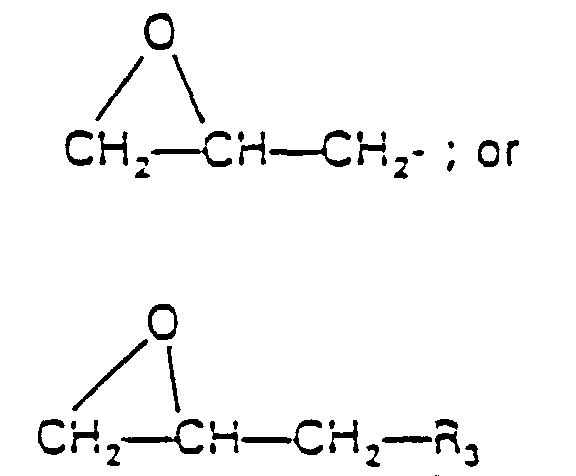
- Generally, the glycidyl acrylates have the composition wherein:
- R1 is hydrogen or an alkyl radical having 1 to 5 carbon atoms;
- R2 is C3H5O- to C13H13O5-
- R3 is C2H2O4- to C10H3O4-
-
- Preferred glycidyl acrylates have the composition wherein:
- R1 is hydrogen or an alkyl radical having 1 to 3 carbon atoms;
- R2 is C3H5O- to C9H11O5
- R3 is C2H2O4- to C6H6O4-
-
- Most preferred by the glycidyl acrylates have the composition wherein:
- R1 is hydrogen or a methyl radical; and
- R2 is C3H5O-
-
- A preferred epoxide-acrylate is glycidyl methacrylate (GMA).
- In addition, the composition may include:
- (c) one or more ethylenically unsaturated monomers which copolymerize with the unsaturated polyester;
- (d) one or more low-profile thermoplastic polymers which cause phase separation and porosity during a curing reaction, or
- (e) one or more compatible components which are compatible with the reacted unsaturated polyester and monomer during cure.
-
- The unsaturated polyester component comprises the polycondensation reaction product of one or more polyhydric alcohols and one or more ethylenically unsaturated polycarboxylic acids. By polycarboxylic acid is generally meant the polycarboxylic or dicarboxylic acids or anhydrides, polycarboxylic or dicarboxylic acid halides, and polycarboxylic or dicarboxylic esters. Suitable unsaturated polycarboxylic acids, and the corresponding anhydrides and acid halides that contain polymerizable carbon-to-carbon double bonds may include maleic anhydride, maleic acid, and fumaric acid. A minor proportion of the unsaturated acid, up to about forty mole percent, may be replaced by dicarboxylic or polycarboxylic acid that does not contain a polymerizable carbon-to-carbon bond. Examples of which include O-phthalic, isophthalic, terephthalic, succinic, adipic, sebacic, methyl-succinic, trimellitic anhydride and the like.
- Polyhydric alcohols that are useful in preparing the polyesters include 1,2-propane diol (hereinafter referred to as propylene glycol), dipropylene glycol, diethylene glycol, 1,3-butanediol, ethylene glycol, glycerol, and the like.
- The polyhydric alcohols include diols, triols, tetrols and higher functionality alcohols. The may be represented by the formula R(OH)x wherein R is an alkyl radical having 2 to 10 carbon atoms and X is an integer from 2 to 4. Preferably, we employ dihydric alcohols with alkyl groups having 2 to 5 carbon atoms.
- We also prefer glycols chosen from a group of high performance glycols including neopentyl glycol (NPG), 1,4-cyclohexanedimethanol (CHDM), 2,2,4- trimethyl-1,3 pentanediol (TMPD), and 2-methyl-1,3-propanediol (MPD). We prepared the polyesters with maleic anhydride and occasionally isophthalic acid. We also stop the condensation at an unusually high acid value (50-70mg KOH/g resin rather than the conventional 10-30 mg KOH/g resin). Acrylate modification then was carried out.
- Our reaction requires two steps and forms true polymer. We react one or more polybasic acids and one or more polyhydridic alcohols first to form a polyester polymer in a molar ratio of about 1:1. In the second step (post polymerization functionalization), the residual acid groups of the polymer are reacted with the epoxy group of the acrylate with a ratio of polybasic acid to acrylates of about 2-10:1. In this way, acrylate is incorporated into our product. In summary, we use the epoxide/acid reaction to attach acrylate to a polymer.
- The monomer component of the resinous system comprises materials that copolymerize with the unsaturated polyester. The ethylenically unsaturated monomer that is copolymerizible with the unsaturated polyester is most generally styrene, however, methyl-styrene is also useful, as are acrylates and methacrylates such as methyl-acrylates, ethyl-acrylate, methyl-methacrylate, ethyl methacrylate, etc.
- The low-profile additive component of resinous system comprises the thermoplastic polymers which cause phase separation and porosity during the curing reaction. Low-profile additives are materials that when mixed in an unsaturated polyester and cured, result in a multiphase system. Some polymers that are useful as low-profile additives include homopolymers and copolymers of acrylic and methacrylic acid esters, cellulose acetate butyrate, vinyl acetate homopolymers and copolymers, polyurethanes prepared from polyisocyanates, preferably diisocyanates, and polyether polyols, numerous saturated polyesters, polycaprolactone, styrene-butadiene copolymers, some modified celluloses, and certain alkyl oxide polymers. The above list of low-profile additives is not intended to list all low-profile additives but rather to show examples of materials which have been used to cause the multiphase morphology present in low profile resins.
- The compatible component of resinous system comprises one or more materials which are compatible with the reacted unsaturated polyester and monomer during cure. The compatible component, when added to the unsaturated polyester/monomer combination does not cause the necessary microphase separation that occurs with low profile systems; that is, the compatible component does not act like a low-profile additive. Examples of other useful compatible components are those compatible components containing one or more polyoxyethane substituents, as disclosed in U.S. Patent No. 5,089,544. These examples are intended to be illustrative of suitable compatible components and are not intended to be all inclusive.
- To a four liter reactor fined for polyester synthesis, we loaded 1164g propylene glycol, 350g isophthalic acid, 1168g maleic anhydride and 0.95g of 10% solution of toluhydroquinone THQ. We heated the reactor to 200°C or until the acid value reaches 30-35mg KOH/g resin. We then cool reactor to 150°C.
- To the molten polyester at 150°C we added 1g 2,6-di-tert-4-methylphenol (BMT), 0.005g 1,4-benzoquinone (PBQ), 2.57g N,N-dimethylbenzylamine (DMBA). We then dropwise added 176g glycidyl methacrylate to an end point acid value of 11 mg KOH/g resin. We then dissolve resin in about 1700g styrene inhibited with BHA PBQ and THQ. BHA is 3,5-Di-tert-Butyl-4-Hydroxyanisole.
- We loaded a four liter reactor as in Example I with 1015g 2-methyl-1,3-propanediol, 5.05g piperidine, 4319 ethylene glycol, 616g phthalic anhydride, 1210g maleic anhydride and 124g of 10% solution of toluhydroquinone. We heated to 200°C or until the acid value had an end point of 52 mg KOH/g resin. We cooled the reactor to 150°C, added 0.9g BHT, 0.05g PBQ, 3.20g DMBA and 196g GMA to an end point acid value of 31 mg KOH/g resin. We then thinned the resin in styrene, as in Example I.
- The following table shows a typical SMC formulation.
-
Ingredients Amount Resin of Ex I or II 100 Catalyst 1.4 Release agent 4.2 Filler 215 Thickener 3.7 Pigment 0.2 Carrier 1.9 Secondary monomer 3.7 - Compression molded parts were made with each formulation with 27 percent, by weight, of 2.54 cm chopped glass fibers. Typical parts include valve covers, cowl vents, radiator supports and the like. Tests found these pans to have high heat distortion temperatures, zero shrinkage and have the ability to withstand repeated exposure to alkaline media.
- A further advantage of using these new resins is that dark black pigmentation of zero-shrink systems is now possible. Formerly, zero-shrink systems gave only light pastel pigmentation at best. Now, because of higher reactivity, special additives which normally reduce HDT to unacceptable levels can be used that will allow very good pigmentation.
-
Ingredients Amount 2-methyl-1,3-propanediol 9.83 kg Ethylene glycol 4.47 kg Phthalic anhydride 6.40 kg Maleic anhydride 15.55 kg Piperidine 52.47 g Toluhydroquinone (THQ) 3.30 g - The first stage is carried out at 202°C until an acid value of 55 milligrams 0.1 N potassium hydroxide (KOH) solution per gram of resin and a viscosity (Gardner-Holt 2/1 resin/toluene) of 35 1/100 minutes is reached. The resin is then cooled to 120°C and the second stage ingredients are loaded:
-
Ingredients Amount 2,6-Di-tert-butyl-4-methylphenol (BHT) 8.67 g 1,4-benzoquinone (PBQ) 0.52 g N,N-Dimethylbenzylamine (DMBA) 34.7 g - While holding the temperature at 120°C, glycidyl methacrylate (GMA) is pumped into the reactor at a rate of about 30 g/min.:
Ingredients Amount Glycidyl Methacrylate 2,450 g - After the addition of GMA is complete, the reactants are held at 120°C for 30 minutes. The alkyd is thinned to 37% by weight of styrene.
Finished resin properties: Value Brookfield Viscosity (LVT/3/30) 2,216 cps Acid value (mg KOH/g resin) 17.4 -
Ingredients Amount 2-methyl-1,3-propanediol 49.15 kg Ethylene glycol 22.35 kg Phthalic anhydride 32.00 kg Maleic anhydride 77.75 kg Piperidine 262.3 g Toluhydroquinone 16.4 g - The first stage is carried out at 202°C until an acid value of 55 milligrams 0.1 N potassium hydroxide (KOH) solution per gram of resin and a viscosity (Gardner-Holt 2/1 resin/toluene) of 35 1/100 minutes is reached. The resin is then cooled to 120°C and the second stage ingredients are loaded:
-
Ingredients Amount 2,6-Di-tert-butyl-4-methylphenol (BHT) 43.3 g 1,4-benzoquinone (PBQ) 2.60 g N,N-Dimethylbenzylamine (DMBA) 173.3 g - While holding the temperature at 120°C, GMA is pumped into the reactor at about 125 g/min.:
Ingredients Amount Glycidyl Methacrylate 9.93 kg - After the addition of GMA is complete, the reactants are held at 120°C for 30 minutes. The alkyd is thinned to 36.4% by weight of styrene.
Finished resin properties Value Brookfield Viscosity (LVT/3/30) 2,338 cps Acid value (mg KOH/g resin) 17.6 - The following formulation was found to be useful for generating very black, glossy parts:
Ingredients Amount (phr) Resin of Example IV or V 64.0 Kraton D1118x (35 % in styrene) 20.3 (polybutadiene/polystyrene block copolymer) 7.8 Plasticolors VS-22399 (pigment) Modiper SV10B (polystyrene/polyvinyl acetate block copolymer) 7.8 tert-Butyl-perbenzoate (tBPB) 1.2 Calcium stearate 5.0 Calwhite II (calcium carbonate) 108.0 Mag D (magnesium oxide) 3.0 - Combining the above gave the following results in molded paste panels (no glass reinforcement):
Feature Result Shrinkage (mils/cm.) 0.5 mils/cm. expansion Heat distortion temperature (ASTM D 648) 145°C Aesthetics: Pigmentation Black Gloss Good
Claims (15)
- A resinous composition for a sheet molding compound comprising the reaction product of:(a) an unsaturated polyester having residual acid groups comprising a polycondensation product of one or more polyhydric alcohols and one or more ethylenically unsaturated polycarboxylic acids; and(b) one or more glycidyl-acrylates which condense with the residual acid groups of the unsaturated polyester wherein the glycidyl-acrylates are represented by the formulawhere R1 is hydrogen or an alkyl radical having 1 to 5 carbon atoms, and R2 is a glycidyl ester group having the formula
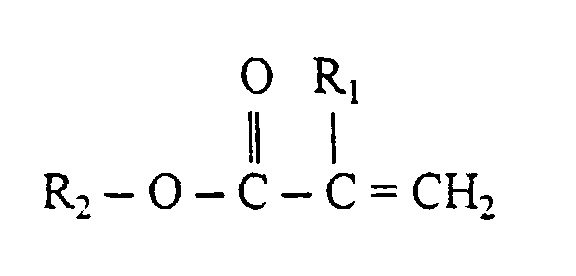 wherein R3 ranges from C2H2O4- to C10H8O4-.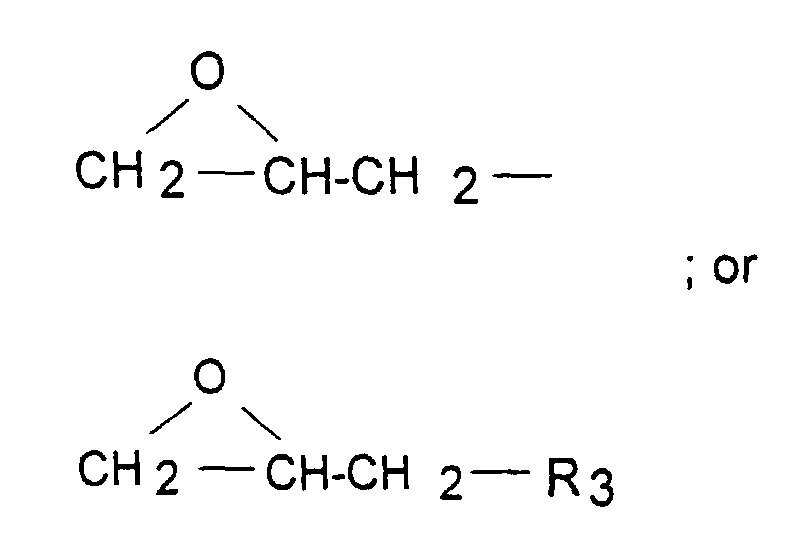
- A composition according to claim 1 wherein R1 is hydrogen or an alkyl radical having 1 to 3 carbon atoms, R2 is C3H5O- and R3 ranges from C2H2O4- to C6H6O4-.
- A composition according to claim 2 wherein R1 is hydrogen or a methyl groups and R2 is C3H5O-.
- A composition according to claim 1 wherein the glycidyl-acrylate is glycidyl methacrylate.
- A composition according to any one of claims 1 to 4, wherein the one or more polyhydric alcohols are represented by the formula R(OH)x wherein R is an alkyl group having 2 to 10 carbon atoms and x is an integer from 2 to 4.
- A composition according to claim 5 wherein R is an alkyl group having 2 to 5 carbon atoms.
- A composition according to claim 5, wherein the one or more polyhydric alcohols are selected from neopentyl glycol, 1,4-cyclohexanedimethanol, 2,2,4-trimethyl-1,3-pentanediol and 2-methyl-3,3-propanediol.
- A composition according to claims 5 or 6, wherein the polyhydric alcohols are a combination that includes at least one of neopenyl glycol, 1,4-cyclohexanedimethanol, 2,2,4-trimethyl-1,3-pentanediol, or 2-methyl-1,3-propanediol.
- A composition according to claim 8, wherein the polyhydric alcohol is the combination of ethylene glycol and 2-methyl-1-3-propanediol.
- A composition according to any one of claims 1 to 9, further including:(c) one or more olefinically unsaturated monomers selected from the group consisting of styrene, methyl styrene, acrylates, methylacrylates, ethylacrylates, methylmethacrylate, and ethylmethacrylates.
- A composition according to claim 10, including:(d) one or more low profile thermoplastic polymers selected from homopolymers and copolymers of acrylic and methacrylic acid esters, cellulose acetate buterate, vinyl acetate homopolymers and copolymers, polyurethanes prepared from polyisocyanates, and polyether polyols, saturated polyesters, polycaprolactone, styrene-butadiene copolymers, modified celluloses and alkyl oxide polymers.
- A composition according to claim 11, including:(e) one or more compatible components which are compatible with the reacted unsaturated polyester and monomer during cure.
- A resinous composition for a sheet molding compound comprising the reaction product of:(a) an unsaturated polyester comprising a polycondensation product of 2-methyl-1,2-propanediol, ethylene glycol, phthalic anhydride and maleic anhydride; and(b) glycidyl methacrylate.
- A composition according to claim 13, including styrene.
- A composition according to claims 13 or 14, including one or more low profile thermoplastic polymers selected from homopolymers and copolymers of acrylic and methacrylic acid, esters, cellulose acetate buterate, vinyl acetate homopolymers and copolymers, polyurethanes prepared from polyisocyanates, and polyether polyols, saturated polyesters, polycaprolactone, styrene-butadiene copolymers, modified celluloses, and alkyl oxide polymers.
Applications Claiming Priority (3)
| Application Number | Priority Date | Filing Date | Title |
|---|---|---|---|
| US08/019,007 US5373058A (en) | 1993-02-18 | 1993-02-18 | Unsaturated polyester resin compositions |
| US19007 | 1993-02-18 | ||
| PCT/US1994/001209 WO1994019403A1 (en) | 1993-02-18 | 1994-02-15 | Unsaturated polyester resin compositions |
Publications (2)
| Publication Number | Publication Date |
|---|---|
| EP0684969A1 EP0684969A1 (en) | 1995-12-06 |
| EP0684969B1 true EP0684969B1 (en) | 2000-08-30 |
Family
ID=21790921
Family Applications (1)
| Application Number | Title | Priority Date | Filing Date |
|---|---|---|---|
| EP94908695A Expired - Lifetime EP0684969B1 (en) | 1993-02-18 | 1994-02-15 | Unsaturated polyester resin compositions |
Country Status (6)
| Country | Link |
|---|---|
| US (1) | US5373058A (en) |
| EP (1) | EP0684969B1 (en) |
| DE (1) | DE69425731T2 (en) |
| ES (1) | ES2149260T3 (en) |
| TW (1) | TW305862B (en) |
| WO (1) | WO1994019403A1 (en) |
Families Citing this family (13)
| Publication number | Priority date | Publication date | Assignee | Title |
|---|---|---|---|---|
| EP0719810A3 (en) * | 1994-12-27 | 1996-10-16 | Owens Corning Fiberglass Corp | Unsaturated polyester resins |
| US5688867A (en) * | 1995-05-01 | 1997-11-18 | Ferro Corporation | Low VOC unsaturated polyester systems and uses thereof |
| US5614299A (en) * | 1996-02-26 | 1997-03-25 | Kabushiki Kaisha Kobe Seiko Sho | Heat-resistant unsaturated polyester resin composition and heat-resistant fiber-reinforced composite material |
| US6358620B1 (en) * | 2000-03-02 | 2002-03-19 | Bp Corporation North America Inc. | Unsaturated polyester resin compositions |
| US6414085B1 (en) | 2000-11-22 | 2002-07-02 | Arco Chemical Technology, L.P. | Polyester resins based on terephthalic acid and 2-methyl-1,3-propanediol and processes for the preparation thereof |
| US6696521B2 (en) * | 2002-07-29 | 2004-02-24 | Arco Chemical Technology, Lp | High performance ortho UPR |
| US6986948B2 (en) * | 2002-10-21 | 2006-01-17 | Ashland, Inc. | Polyester-based dimethacrylates designed for laminating applications |
| DE10336387A1 (en) | 2003-08-06 | 2005-03-03 | Basf Ag | Biodegradable polyester blend |
| US20050065633A1 (en) * | 2003-11-14 | 2005-03-24 | Michael Wynblatt | Systems and methods for relative control of load motion actuators |
| US20080142568A1 (en) * | 2005-04-11 | 2008-06-19 | Electrolock, Inc. | Circuit carrier board/solder pallett |
| US20070179250A1 (en) * | 2006-01-30 | 2007-08-02 | Reichhold, Inc. | Laminating resin with reduced styrene monomer |
| US20110207950A1 (en) | 2010-02-24 | 2011-08-25 | Hildeberto Nava | Vinyl-containing compounds and processes for making the same |
| DE102015100563B4 (en) * | 2015-01-15 | 2019-07-25 | Schill + Seilacher "Struktol" Gmbh | Polyester for flexibilized epoxy resins and their use |
Family Cites Families (3)
| Publication number | Priority date | Publication date | Assignee | Title |
|---|---|---|---|---|
| JPS5048033A (en) * | 1973-08-31 | 1975-04-28 | ||
| NL8701932A (en) * | 1987-08-18 | 1989-03-16 | Dsm Resins Bv | THERMO-HARDBAR COMPOSITION. |
| JPH0532803A (en) * | 1991-07-26 | 1993-02-09 | Sekisui Chem Co Ltd | Thermosetting resin composition for in-mold coating molding and coated molding |
-
1993
- 1993-02-18 US US08/019,007 patent/US5373058A/en not_active Expired - Lifetime
-
1994
- 1994-02-08 TW TW083101101A patent/TW305862B/zh active
- 1994-02-15 ES ES94908695T patent/ES2149260T3/en not_active Expired - Lifetime
- 1994-02-15 EP EP94908695A patent/EP0684969B1/en not_active Expired - Lifetime
- 1994-02-15 WO PCT/US1994/001209 patent/WO1994019403A1/en not_active Ceased
- 1994-02-15 DE DE69425731T patent/DE69425731T2/en not_active Expired - Fee Related
Also Published As
| Publication number | Publication date |
|---|---|
| WO1994019403A1 (en) | 1994-09-01 |
| DE69425731T2 (en) | 2001-05-31 |
| TW305862B (en) | 1997-05-21 |
| ES2149260T3 (en) | 2000-11-01 |
| US5373058A (en) | 1994-12-13 |
| DE69425731D1 (en) | 2000-10-05 |
| EP0684969A1 (en) | 1995-12-06 |
Similar Documents
| Publication | Publication Date | Title |
|---|---|---|
| US4038257A (en) | Urethane modified acrylate resin and process for the production thereof | |
| US4822849A (en) | Low shrink hybrid resins | |
| US5373058A (en) | Unsaturated polyester resin compositions | |
| US5932666A (en) | Low profile additives for polyester resin systems based on asymmetric glycols and aromatic diacids | |
| US4035439A (en) | Low-shrink thermosetting polyesters | |
| US5552478A (en) | Low profile additives for polyester resin systems based on asymmetric glycols and aromatic diacids | |
| US4835213A (en) | Process for producing lactone polymer and an anti-shrinking thermosetting resin composition having formulated therein said lactone polymer as an anti-shrinking agent | |
| WO1997028204A9 (en) | Low profile additives for polyester resin systems based on asymmetric glycols and aromatic diacids | |
| EP0719810A2 (en) | Unsaturated polyester resins | |
| WO1992001727A1 (en) | Thermoplastic low-profile additives and use thereof in unsaturated polyester resin compositions | |
| JP2637179B2 (en) | Thermosetting composition and shrinkage preventing additive | |
| CA1241141A (en) | Storable, low shrinkage, curable unsaturated polyester resins | |
| US3940350A (en) | Moulding compositions based on unsaturated polyesters, copolymerisable vinyl monomers and cellulose esters | |
| US4320045A (en) | Polyester-based molding compositions | |
| US3814724A (en) | Polymerizable liquid compositions for unsaturated polyester resins | |
| KR100201802B1 (en) | Low profile additive based on asymmetric glycols and aromatic diacids for polyester resin systems | |
| US5929142A (en) | Unsaturated polyester resin compositions containing compatible polysiloxane compounds | |
| US4454302A (en) | Polyester resin composition | |
| JP3944762B2 (en) | Method for producing unsaturated polyester, unsaturated polyester resin composition and molding material thereof | |
| US3859266A (en) | Alcoholysis products | |
| US5102926A (en) | Citrate ester compounds and processes for their preparation | |
| EP0719819B1 (en) | Elastomer-modified polyester SMC | |
| CA2017069A1 (en) | High reactivity thermosettable molding compositions containing 2-methyl-1,3-propanediol | |
| NL1002080C2 (en) | Low mol.wt. unsatd. polyester resin compsn. for a sheet moulding cpd. | |
| USH1276H (en) | Curable, styrene-containing resin compositions having reduced styrene emissions |
Legal Events
| Date | Code | Title | Description |
|---|---|---|---|
| PUAI | Public reference made under article 153(3) epc to a published international application that has entered the european phase |
Free format text: ORIGINAL CODE: 0009012 |
|
| 17P | Request for examination filed |
Effective date: 19950915 |
|
| AK | Designated contracting states |
Kind code of ref document: A1 Designated state(s): DE ES FR GB IT |
|
| 17Q | First examination report despatched |
Effective date: 19970127 |
|
| RAP1 | Party data changed (applicant data changed or rights of an application transferred) |
Owner name: OWENS-CORNING FIBERGLAS CORPORATION |
|
| GRAG | Despatch of communication of intention to grant |
Free format text: ORIGINAL CODE: EPIDOS AGRA |
|
| GRAG | Despatch of communication of intention to grant |
Free format text: ORIGINAL CODE: EPIDOS AGRA |
|
| GRAG | Despatch of communication of intention to grant |
Free format text: ORIGINAL CODE: EPIDOS AGRA |
|
| RAP1 | Party data changed (applicant data changed or rights of an application transferred) |
Owner name: OWENS CORNING |
|
| GRAG | Despatch of communication of intention to grant |
Free format text: ORIGINAL CODE: EPIDOS AGRA |
|
| GRAH | Despatch of communication of intention to grant a patent |
Free format text: ORIGINAL CODE: EPIDOS IGRA |
|
| GRAH | Despatch of communication of intention to grant a patent |
Free format text: ORIGINAL CODE: EPIDOS IGRA |
|
| GRAA | (expected) grant |
Free format text: ORIGINAL CODE: 0009210 |
|
| AK | Designated contracting states |
Kind code of ref document: B1 Designated state(s): DE ES FR GB IT |
|
| REF | Corresponds to: |
Ref document number: 69425731 Country of ref document: DE Date of ref document: 20001005 |
|
| ET | Fr: translation filed | ||
| ITF | It: translation for a ep patent filed | ||
| REG | Reference to a national code |
Ref country code: ES Ref legal event code: FG2A Ref document number: 2149260 Country of ref document: ES Kind code of ref document: T3 |
|
| PLBE | No opposition filed within time limit |
Free format text: ORIGINAL CODE: 0009261 |
|
| STAA | Information on the status of an ep patent application or granted ep patent |
Free format text: STATUS: NO OPPOSITION FILED WITHIN TIME LIMIT |
|
| 26N | No opposition filed | ||
| REG | Reference to a national code |
Ref country code: GB Ref legal event code: IF02 |
|
| PGFP | Annual fee paid to national office [announced via postgrant information from national office to epo] |
Ref country code: FR Payment date: 20020117 Year of fee payment: 9 |
|
| PGFP | Annual fee paid to national office [announced via postgrant information from national office to epo] |
Ref country code: DE Payment date: 20020118 Year of fee payment: 9 |
|
| PGFP | Annual fee paid to national office [announced via postgrant information from national office to epo] |
Ref country code: GB Payment date: 20020121 Year of fee payment: 9 |
|
| PGFP | Annual fee paid to national office [announced via postgrant information from national office to epo] |
Ref country code: ES Payment date: 20020311 Year of fee payment: 9 |
|
| PG25 | Lapsed in a contracting state [announced via postgrant information from national office to epo] |
Ref country code: GB Free format text: LAPSE BECAUSE OF NON-PAYMENT OF DUE FEES Effective date: 20030215 |
|
| PG25 | Lapsed in a contracting state [announced via postgrant information from national office to epo] |
Ref country code: ES Free format text: LAPSE BECAUSE OF NON-PAYMENT OF DUE FEES Effective date: 20030217 |
|
| PG25 | Lapsed in a contracting state [announced via postgrant information from national office to epo] |
Ref country code: DE Free format text: LAPSE BECAUSE OF NON-PAYMENT OF DUE FEES Effective date: 20030902 |
|
| GBPC | Gb: european patent ceased through non-payment of renewal fee | ||
| PG25 | Lapsed in a contracting state [announced via postgrant information from national office to epo] |
Ref country code: FR Free format text: LAPSE BECAUSE OF NON-PAYMENT OF DUE FEES Effective date: 20031031 |
|
| REG | Reference to a national code |
Ref country code: FR Ref legal event code: ST |
|
| REG | Reference to a national code |
Ref country code: ES Ref legal event code: FD2A Effective date: 20030217 |
|
| PG25 | Lapsed in a contracting state [announced via postgrant information from national office to epo] |
Ref country code: IT Free format text: LAPSE BECAUSE OF NON-PAYMENT OF DUE FEES Effective date: 20050215 |