EP0682706B1 - Novel compounds - Google Patents
Novel compounds Download PDFInfo
- Publication number
- EP0682706B1 EP0682706B1 EP94904734A EP94904734A EP0682706B1 EP 0682706 B1 EP0682706 B1 EP 0682706B1 EP 94904734 A EP94904734 A EP 94904734A EP 94904734 A EP94904734 A EP 94904734A EP 0682706 B1 EP0682706 B1 EP 0682706B1
- Authority
- EP
- European Patent Office
- Prior art keywords
- dna
- host
- clavulanic acid
- producing
- restriction sites
- Prior art date
- Legal status (The legal status is an assumption and is not a legal conclusion. Google has not performed a legal analysis and makes no representation as to the accuracy of the status listed.)
- Expired - Lifetime
Links
- 150000001875 compounds Chemical class 0.000 title description 2
- HZZVJAQRINQKSD-UHFFFAOYSA-N Clavulanic acid Natural products OC(=O)C1C(=CCO)OC2CC(=O)N21 HZZVJAQRINQKSD-UHFFFAOYSA-N 0.000 claims abstract description 44
- HZZVJAQRINQKSD-PBFISZAISA-N clavulanic acid Chemical compound OC(=O)[C@H]1C(=C/CO)/O[C@@H]2CC(=O)N21 HZZVJAQRINQKSD-PBFISZAISA-N 0.000 claims abstract description 44
- 229960003324 clavulanic acid Drugs 0.000 claims abstract description 44
- 239000012634 fragment Substances 0.000 claims abstract description 28
- 230000015572 biosynthetic process Effects 0.000 claims abstract description 13
- 238000004519 manufacturing process Methods 0.000 claims abstract description 9
- 108700005075 Regulator Genes Proteins 0.000 claims abstract description 6
- 108020004414 DNA Proteins 0.000 claims description 98
- 239000013612 plasmid Substances 0.000 claims description 37
- 239000013598 vector Substances 0.000 claims description 24
- 108090000623 proteins and genes Proteins 0.000 claims description 19
- 241000187433 Streptomyces clavuligerus Species 0.000 claims description 17
- 238000000034 method Methods 0.000 claims description 16
- 108700026244 Open Reading Frames Proteins 0.000 claims description 12
- 229930186147 Cephalosporin Natural products 0.000 claims description 10
- 229940124587 cephalosporin Drugs 0.000 claims description 10
- 150000001780 cephalosporins Chemical class 0.000 claims description 10
- 239000013611 chromosomal DNA Substances 0.000 claims description 9
- 102000004169 proteins and genes Human genes 0.000 claims description 7
- 230000001105 regulatory effect Effects 0.000 claims description 7
- 108020004511 Recombinant DNA Proteins 0.000 claims description 6
- 239000002773 nucleotide Substances 0.000 claims description 5
- 125000003729 nucleotide group Chemical group 0.000 claims description 5
- 230000001131 transforming effect Effects 0.000 claims description 5
- 238000012258 culturing Methods 0.000 claims description 4
- 238000002156 mixing Methods 0.000 claims description 2
- 230000008569 process Effects 0.000 claims description 2
- 125000003275 alpha amino acid group Chemical group 0.000 claims 2
- NSFFHOGKXHRQEW-UHFFFAOYSA-N Thiostrepton B Natural products N1C(=O)C(C)NC(=O)C(=C)NC(=O)C(C)NC(=O)C(C(C)CC)NC(C(C2=N3)O)C=CC2=C(C(C)O)C=C3C(=O)OC(C)C(C=2SC=C(N=2)C2N=3)NC(=O)C(N=4)=CSC=4C(C(C)(O)C(C)O)NC(=O)C(N=4)CSC=4C(=CC)NC(=O)C(C(C)O)NC(=O)C(N=4)=CSC=4C21CCC=3C1=NC(C(=O)NC(=C)C(=O)NC(=C)C(N)=O)=CS1 NSFFHOGKXHRQEW-UHFFFAOYSA-N 0.000 description 15
- 229930188070 thiostrepton Natural products 0.000 description 15
- 229940063214 thiostrepton Drugs 0.000 description 15
- NSFFHOGKXHRQEW-AIHSUZKVSA-N thiostrepton Chemical compound C([C@]12C=3SC=C(N=3)C(=O)N[C@H](C(=O)NC(/C=3SC[C@@H](N=3)C(=O)N[C@H](C=3SC=C(N=3)C(=O)N[C@H](C=3SC=C(N=3)[C@H]1N=1)[C@@H](C)OC(=O)C3=CC(=C4C=C[C@H]([C@@H](C4=N3)O)N[C@H](C(N[C@@H](C)C(=O)NC(=C)C(=O)N[C@@H](C)C(=O)N2)=O)[C@@H](C)CC)[C@H](C)O)[C@](C)(O)[C@@H](C)O)=C\C)[C@@H](C)O)CC=1C1=NC(C(=O)NC(=C)C(=O)NC(=C)C(N)=O)=CS1 NSFFHOGKXHRQEW-AIHSUZKVSA-N 0.000 description 15
- NSFFHOGKXHRQEW-OFMUQYBVSA-N thiostrepton A Natural products CC[C@H](C)[C@@H]1N[C@@H]2C=Cc3c(cc(nc3[C@H]2O)C(=O)O[C@H](C)[C@@H]4NC(=O)c5csc(n5)[C@@H](NC(=O)[C@H]6CSC(=N6)C(=CC)NC(=O)[C@@H](NC(=O)c7csc(n7)[C@]8(CCC(=N[C@@H]8c9csc4n9)c%10nc(cs%10)C(=O)NC(=C)C(=O)NC(=C)C(=O)N)NC(=O)[C@H](C)NC(=O)C(=C)NC(=O)[C@H](C)NC1=O)[C@@H](C)O)[C@](C)(O)[C@@H](C)O)[C@H](C)O NSFFHOGKXHRQEW-OFMUQYBVSA-N 0.000 description 15
- 239000000523 sample Substances 0.000 description 11
- 239000000243 solution Substances 0.000 description 11
- AIYUHDOJVYHVIT-UHFFFAOYSA-M caesium chloride Chemical compound [Cl-].[Cs+] AIYUHDOJVYHVIT-UHFFFAOYSA-M 0.000 description 8
- 239000002609 medium Substances 0.000 description 8
- HEDRZPFGACZZDS-UHFFFAOYSA-N Chloroform Chemical compound ClC(Cl)Cl HEDRZPFGACZZDS-UHFFFAOYSA-N 0.000 description 7
- 241000588724 Escherichia coli Species 0.000 description 7
- 230000008439 repair process Effects 0.000 description 7
- 238000010561 standard procedure Methods 0.000 description 7
- LFQSCWFLJHTTHZ-UHFFFAOYSA-N Ethanol Chemical compound CCO LFQSCWFLJHTTHZ-UHFFFAOYSA-N 0.000 description 6
- 241000187747 Streptomyces Species 0.000 description 6
- 239000011543 agarose gel Substances 0.000 description 6
- 150000001413 amino acids Chemical group 0.000 description 6
- 230000033228 biological regulation Effects 0.000 description 6
- 210000004027 cell Anatomy 0.000 description 6
- 230000029087 digestion Effects 0.000 description 6
- 238000003786 synthesis reaction Methods 0.000 description 6
- 229920001817 Agar Polymers 0.000 description 5
- 102000016943 Muramidase Human genes 0.000 description 5
- 108010014251 Muramidase Proteins 0.000 description 5
- 108010062010 N-Acetylmuramoyl-L-alanine Amidase Proteins 0.000 description 5
- 239000008272 agar Substances 0.000 description 5
- 229960000723 ampicillin Drugs 0.000 description 5
- AVKUERGKIZMTKX-NJBDSQKTSA-N ampicillin Chemical compound C1([C@@H](N)C(=O)N[C@H]2[C@H]3SC([C@@H](N3C2=O)C(O)=O)(C)C)=CC=CC=C1 AVKUERGKIZMTKX-NJBDSQKTSA-N 0.000 description 5
- 238000004458 analytical method Methods 0.000 description 5
- 229960000274 lysozyme Drugs 0.000 description 5
- 239000004325 lysozyme Substances 0.000 description 5
- 235000010335 lysozyme Nutrition 0.000 description 5
- 238000002360 preparation method Methods 0.000 description 5
- 210000001938 protoplast Anatomy 0.000 description 5
- 108091008146 restriction endonucleases Proteins 0.000 description 5
- ZGTMUACCHSMWAC-UHFFFAOYSA-L EDTA disodium salt (anhydrous) Chemical compound [Na+].[Na+].OC(=O)CN(CC([O-])=O)CCN(CC(O)=O)CC([O-])=O ZGTMUACCHSMWAC-UHFFFAOYSA-L 0.000 description 4
- 229930193140 Neomycin Natural products 0.000 description 4
- 241000424942 Streptomyces clavuligerus ATCC 27064 Species 0.000 description 4
- 238000004166 bioassay Methods 0.000 description 4
- 230000006696 biosynthetic metabolic pathway Effects 0.000 description 4
- 238000005119 centrifugation Methods 0.000 description 4
- 238000010353 genetic engineering Methods 0.000 description 4
- 238000010369 molecular cloning Methods 0.000 description 4
- 229960004927 neomycin Drugs 0.000 description 4
- 230000037361 pathway Effects 0.000 description 4
- 229930000044 secondary metabolite Natural products 0.000 description 4
- 238000012163 sequencing technique Methods 0.000 description 4
- OWEGMIWEEQEYGQ-UHFFFAOYSA-N 100676-05-9 Natural products OC1C(O)C(O)C(CO)OC1OCC1C(O)C(O)C(O)C(OC2C(OC(O)C(O)C2O)CO)O1 OWEGMIWEEQEYGQ-UHFFFAOYSA-N 0.000 description 3
- GUBGYTABKSRVRQ-PICCSMPSSA-N Maltose Natural products O[C@@H]1[C@@H](O)[C@H](O)[C@@H](CO)O[C@@H]1O[C@@H]1[C@@H](CO)OC(O)[C@H](O)[C@H]1O GUBGYTABKSRVRQ-PICCSMPSSA-N 0.000 description 3
- OKKJLVBELUTLKV-UHFFFAOYSA-N Methanol Chemical compound OC OKKJLVBELUTLKV-UHFFFAOYSA-N 0.000 description 3
- ISWSIDIOOBJBQZ-UHFFFAOYSA-N Phenol Chemical compound OC1=CC=CC=C1 ISWSIDIOOBJBQZ-UHFFFAOYSA-N 0.000 description 3
- HEMHJVSKTPXQMS-UHFFFAOYSA-M Sodium hydroxide Chemical compound [OH-].[Na+] HEMHJVSKTPXQMS-UHFFFAOYSA-M 0.000 description 3
- 241000892502 Streptomyces lividans 1326 Species 0.000 description 3
- 241001655322 Streptomycetales Species 0.000 description 3
- 229930006000 Sucrose Natural products 0.000 description 3
- CZMRCDWAGMRECN-UGDNZRGBSA-N Sucrose Chemical compound O[C@H]1[C@H](O)[C@@H](CO)O[C@@]1(CO)O[C@@H]1[C@H](O)[C@@H](O)[C@H](O)[C@@H](CO)O1 CZMRCDWAGMRECN-UGDNZRGBSA-N 0.000 description 3
- 239000007983 Tris buffer Substances 0.000 description 3
- 238000000246 agarose gel electrophoresis Methods 0.000 description 3
- 239000000872 buffer Substances 0.000 description 3
- 230000009089 cytolysis Effects 0.000 description 3
- 238000000855 fermentation Methods 0.000 description 3
- 230000004151 fermentation Effects 0.000 description 3
- 239000000499 gel Substances 0.000 description 3
- 238000004128 high performance liquid chromatography Methods 0.000 description 3
- 238000011534 incubation Methods 0.000 description 3
- 230000005764 inhibitory process Effects 0.000 description 3
- 239000012528 membrane Substances 0.000 description 3
- 244000005700 microbiome Species 0.000 description 3
- 239000000203 mixture Substances 0.000 description 3
- 239000008188 pellet Substances 0.000 description 3
- 239000000047 product Substances 0.000 description 3
- 239000005720 sucrose Substances 0.000 description 3
- 238000012360 testing method Methods 0.000 description 3
- 230000009466 transformation Effects 0.000 description 3
- LENZDBCJOHFCAS-UHFFFAOYSA-N tris Chemical compound OCC(N)(CO)CO LENZDBCJOHFCAS-UHFFFAOYSA-N 0.000 description 3
- 239000003643 water by type Substances 0.000 description 3
- FWMNVWWHGCHHJJ-SKKKGAJSSA-N 4-amino-1-[(2r)-6-amino-2-[[(2r)-2-[[(2r)-2-[[(2r)-2-amino-3-phenylpropanoyl]amino]-3-phenylpropanoyl]amino]-4-methylpentanoyl]amino]hexanoyl]piperidine-4-carboxylic acid Chemical compound C([C@H](C(=O)N[C@H](CC(C)C)C(=O)N[C@H](CCCCN)C(=O)N1CCC(N)(CC1)C(O)=O)NC(=O)[C@H](N)CC=1C=CC=CC=1)C1=CC=CC=C1 FWMNVWWHGCHHJJ-SKKKGAJSSA-N 0.000 description 2
- OPIFSICVWOWJMJ-AEOCFKNESA-N 5-bromo-4-chloro-3-indolyl beta-D-galactoside Chemical compound O[C@@H]1[C@@H](O)[C@@H](O)[C@@H](CO)O[C@H]1OC1=CNC2=CC=C(Br)C(Cl)=C12 OPIFSICVWOWJMJ-AEOCFKNESA-N 0.000 description 2
- 102000004190 Enzymes Human genes 0.000 description 2
- 108090000790 Enzymes Proteins 0.000 description 2
- KFZMGEQAYNKOFK-UHFFFAOYSA-N Isopropanol Chemical compound CC(C)O KFZMGEQAYNKOFK-UHFFFAOYSA-N 0.000 description 2
- LRHPLDYGYMQRHN-UHFFFAOYSA-N N-Butanol Chemical compound CCCCO LRHPLDYGYMQRHN-UHFFFAOYSA-N 0.000 description 2
- JGSARLDLIJGVTE-MBNYWOFBSA-N Penicillin G Chemical compound N([C@H]1[C@H]2SC([C@@H](N2C1=O)C(O)=O)(C)C)C(=O)CC1=CC=CC=C1 JGSARLDLIJGVTE-MBNYWOFBSA-N 0.000 description 2
- 241000187432 Streptomyces coelicolor Species 0.000 description 2
- 238000006243 chemical reaction Methods 0.000 description 2
- 239000003795 chemical substances by application Substances 0.000 description 2
- 210000000349 chromosome Anatomy 0.000 description 2
- 238000010276 construction Methods 0.000 description 2
- 230000002950 deficient Effects 0.000 description 2
- 229940088598 enzyme Drugs 0.000 description 2
- ZMMJGEGLRURXTF-UHFFFAOYSA-N ethidium bromide Chemical compound [Br-].C12=CC(N)=CC=C2C2=CC=C(N)C=C2[N+](CC)=C1C1=CC=CC=C1 ZMMJGEGLRURXTF-UHFFFAOYSA-N 0.000 description 2
- 229960005542 ethidium bromide Drugs 0.000 description 2
- 238000000605 extraction Methods 0.000 description 2
- WSHJJCPTKWSMRR-RXMQYKEDSA-N penam Chemical compound S1CCN2C(=O)C[C@H]21 WSHJJCPTKWSMRR-RXMQYKEDSA-N 0.000 description 2
- 239000011541 reaction mixture Substances 0.000 description 2
- 238000012216 screening Methods 0.000 description 2
- 239000007195 tryptone soya broth Substances 0.000 description 2
- GQHALSXZONOXGJ-UHFFFAOYSA-N (2R,3Z,5R)-Clavaminic acid Natural products OC(=O)C1C(=CCN)OC2CC(=O)N21 GQHALSXZONOXGJ-UHFFFAOYSA-N 0.000 description 1
- QTBSBXVTEAMEQO-UHFFFAOYSA-M Acetate Chemical compound CC([O-])=O QTBSBXVTEAMEQO-UHFFFAOYSA-M 0.000 description 1
- 229920000936 Agarose Polymers 0.000 description 1
- 241000972773 Aulopiformes Species 0.000 description 1
- CPELXLSAUQHCOX-UHFFFAOYSA-M Bromide Chemical compound [Br-] CPELXLSAUQHCOX-UHFFFAOYSA-M 0.000 description 1
- LXWBXEWUSAABOA-UHFFFAOYSA-N Cephamycin-C Natural products S1CC(COC(N)=O)=C(C(O)=O)N2C(=O)C(OC)(NC(=O)CCCC(N)C(O)=O)C21 LXWBXEWUSAABOA-UHFFFAOYSA-N 0.000 description 1
- 108020003054 Clavaminate synthase Proteins 0.000 description 1
- 108020004705 Codon Proteins 0.000 description 1
- 102000053602 DNA Human genes 0.000 description 1
- 108090000204 Dipeptidase 1 Proteins 0.000 description 1
- 102100024319 Intestinal-type alkaline phosphatase Human genes 0.000 description 1
- 101710184243 Intestinal-type alkaline phosphatase Proteins 0.000 description 1
- 241000588915 Klebsiella aerogenes Species 0.000 description 1
- ROHFNLRQFUQHCH-YFKPBYRVSA-N L-leucine Chemical compound CC(C)C[C@H](N)C(O)=O ROHFNLRQFUQHCH-YFKPBYRVSA-N 0.000 description 1
- ROHFNLRQFUQHCH-UHFFFAOYSA-N Leucine Natural products CC(C)CC(N)C(O)=O ROHFNLRQFUQHCH-UHFFFAOYSA-N 0.000 description 1
- 108091028043 Nucleic acid sequence Proteins 0.000 description 1
- 239000004677 Nylon Substances 0.000 description 1
- 108091034117 Oligonucleotide Proteins 0.000 description 1
- 241001482237 Pica Species 0.000 description 1
- NMCINKPVAOXDJH-UHFFFAOYSA-N Proclavaminic acid Natural products NCCC(O)C(C(O)=O)N1CCC1=O NMCINKPVAOXDJH-UHFFFAOYSA-N 0.000 description 1
- 108020004682 Single-Stranded DNA Proteins 0.000 description 1
- VMHLLURERBWHNL-UHFFFAOYSA-M Sodium acetate Chemical compound [Na+].CC([O-])=O VMHLLURERBWHNL-UHFFFAOYSA-M 0.000 description 1
- 238000002105 Southern blotting Methods 0.000 description 1
- 229910000831 Steel Inorganic materials 0.000 description 1
- 241000187215 Streptomyces jumonjinensis Species 0.000 description 1
- 241000187395 Streptomyces microflavus Species 0.000 description 1
- 101100224332 Streptomyces peucetius dnrI gene Proteins 0.000 description 1
- 239000002253 acid Substances 0.000 description 1
- 101150045195 afsR gene Proteins 0.000 description 1
- 239000003242 anti bacterial agent Substances 0.000 description 1
- 230000000845 anti-microbial effect Effects 0.000 description 1
- 229940088710 antibiotic agent Drugs 0.000 description 1
- 238000013459 approach Methods 0.000 description 1
- 239000003782 beta lactam antibiotic agent Substances 0.000 description 1
- 239000003781 beta lactamase inhibitor Substances 0.000 description 1
- 102000006635 beta-lactamase Human genes 0.000 description 1
- 229940126813 beta-lactamase inhibitor Drugs 0.000 description 1
- 230000003115 biocidal effect Effects 0.000 description 1
- 239000006161 blood agar Substances 0.000 description 1
- 244000309466 calf Species 0.000 description 1
- 230000015556 catabolic process Effects 0.000 description 1
- 230000001413 cellular effect Effects 0.000 description 1
- LXWBXEWUSAABOA-VXSYNFHWSA-N cephamycin C Chemical compound S1CC(COC(N)=O)=C(C(O)=O)N2C(=O)[C@@](OC)(NC(=O)CCC[C@@H](N)C(O)=O)[C@H]21 LXWBXEWUSAABOA-VXSYNFHWSA-N 0.000 description 1
- 238000002512 chemotherapy Methods 0.000 description 1
- GQHALSXZONOXGJ-WHJCQOFKSA-N clavaminic acid Chemical compound [O-]C(=O)[C@@H]1C(=C/C[NH3+])/O[C@H]2CC(=O)N21 GQHALSXZONOXGJ-WHJCQOFKSA-N 0.000 description 1
- 238000006731 degradation reaction Methods 0.000 description 1
- 238000012217 deletion Methods 0.000 description 1
- 230000037430 deletion Effects 0.000 description 1
- 239000012895 dilution Substances 0.000 description 1
- 238000010790 dilution Methods 0.000 description 1
- 238000005516 engineering process Methods 0.000 description 1
- 238000002474 experimental method Methods 0.000 description 1
- 239000013604 expression vector Substances 0.000 description 1
- 238000001502 gel electrophoresis Methods 0.000 description 1
- 238000007429 general method Methods 0.000 description 1
- 230000002068 genetic effect Effects 0.000 description 1
- 239000011521 glass Substances 0.000 description 1
- 230000012010 growth Effects 0.000 description 1
- 239000001963 growth medium Substances 0.000 description 1
- 230000006801 homologous recombination Effects 0.000 description 1
- 238000002744 homologous recombination Methods 0.000 description 1
- 229920001519 homopolymer Polymers 0.000 description 1
- 238000009396 hybridization Methods 0.000 description 1
- SHFJWMWCIHQNCP-UHFFFAOYSA-M hydron;tetrabutylazanium;sulfate Chemical compound OS([O-])(=O)=O.CCCC[N+](CCCC)(CCCC)CCCC SHFJWMWCIHQNCP-UHFFFAOYSA-M 0.000 description 1
- 230000006872 improvement Effects 0.000 description 1
- 238000002955 isolation Methods 0.000 description 1
- UOEFDXYUEPHESS-QMGXLNLGSA-N isopropyl beta-D-galactopyranoside Chemical compound CC(C)O[C@@H]1O[C@H](CO)[C@H](O)[C@H](O)[C@H]1O UOEFDXYUEPHESS-QMGXLNLGSA-N 0.000 description 1
- BPHPUYQFMNQIOC-NXRLNHOXSA-N isopropyl beta-D-thiogalactopyranoside Chemical compound CC(C)S[C@@H]1O[C@H](CO)[C@H](O)[C@H](O)[C@H]1O BPHPUYQFMNQIOC-NXRLNHOXSA-N 0.000 description 1
- 239000006166 lysate Substances 0.000 description 1
- 230000007246 mechanism Effects 0.000 description 1
- 230000000813 microbial effect Effects 0.000 description 1
- 239000013642 negative control Substances 0.000 description 1
- 230000007935 neutral effect Effects 0.000 description 1
- 108020004707 nucleic acids Proteins 0.000 description 1
- 102000039446 nucleic acids Human genes 0.000 description 1
- 150000007523 nucleic acids Chemical class 0.000 description 1
- 235000015097 nutrients Nutrition 0.000 description 1
- 229920001778 nylon Polymers 0.000 description 1
- 239000006833 oxoid nutrient broth Substances 0.000 description 1
- 229940056360 penicillin g Drugs 0.000 description 1
- 238000013492 plasmid preparation Methods 0.000 description 1
- 229920002401 polyacrylamide Polymers 0.000 description 1
- 108091033319 polynucleotide Proteins 0.000 description 1
- 102000040430 polynucleotide Human genes 0.000 description 1
- 239000002157 polynucleotide Substances 0.000 description 1
- 229920001184 polypeptide Polymers 0.000 description 1
- 102000004196 processed proteins & peptides Human genes 0.000 description 1
- 108090000765 processed proteins & peptides Proteins 0.000 description 1
- NMCINKPVAOXDJH-VDTYLAMSSA-N proclavaminic acid Chemical compound [NH3+]CC[C@@H](O)[C@@H](C([O-])=O)N1CCC1=O NMCINKPVAOXDJH-VDTYLAMSSA-N 0.000 description 1
- 230000010076 replication Effects 0.000 description 1
- 235000019515 salmon Nutrition 0.000 description 1
- 230000024053 secondary metabolic process Effects 0.000 description 1
- 238000011218 seed culture Methods 0.000 description 1
- 238000012807 shake-flask culturing Methods 0.000 description 1
- 238000004513 sizing Methods 0.000 description 1
- 239000011734 sodium Substances 0.000 description 1
- 239000001632 sodium acetate Substances 0.000 description 1
- 235000017281 sodium acetate Nutrition 0.000 description 1
- 239000010959 steel Substances 0.000 description 1
- 239000006228 supernatant Substances 0.000 description 1
- 239000012134 supernatant fraction Substances 0.000 description 1
- 238000010189 synthetic method Methods 0.000 description 1
- 150000003536 tetrazoles Chemical class 0.000 description 1
- 125000003831 tetrazolyl group Chemical group 0.000 description 1
- 230000000007 visual effect Effects 0.000 description 1
- XLYOFNOQVPJJNP-UHFFFAOYSA-N water Substances O XLYOFNOQVPJJNP-UHFFFAOYSA-N 0.000 description 1
- 239000002132 β-lactam antibiotic Substances 0.000 description 1
- 229940124586 β-lactam antibiotics Drugs 0.000 description 1
- 229940126085 β‑Lactamase Inhibitor Drugs 0.000 description 1
Images



Classifications
-
- C—CHEMISTRY; METALLURGY
- C12—BIOCHEMISTRY; BEER; SPIRITS; WINE; VINEGAR; MICROBIOLOGY; ENZYMOLOGY; MUTATION OR GENETIC ENGINEERING
- C12P—FERMENTATION OR ENZYME-USING PROCESSES TO SYNTHESISE A DESIRED CHEMICAL COMPOUND OR COMPOSITION OR TO SEPARATE OPTICAL ISOMERS FROM A RACEMIC MIXTURE
- C12P17/00—Preparation of heterocyclic carbon compounds with only O, N, S, Se or Te as ring hetero atoms
- C12P17/18—Preparation of heterocyclic carbon compounds with only O, N, S, Se or Te as ring hetero atoms containing at least two hetero rings condensed among themselves or condensed with a common carbocyclic ring system, e.g. rifamycin
- C12P17/188—Heterocyclic compound containing in the condensed system at least one hetero ring having nitrogen atoms and oxygen atoms as the only ring heteroatoms
-
- C—CHEMISTRY; METALLURGY
- C07—ORGANIC CHEMISTRY
- C07K—PEPTIDES
- C07K14/00—Peptides having more than 20 amino acids; Gastrins; Somatostatins; Melanotropins; Derivatives thereof
- C07K14/195—Peptides having more than 20 amino acids; Gastrins; Somatostatins; Melanotropins; Derivatives thereof from bacteria
- C07K14/36—Peptides having more than 20 amino acids; Gastrins; Somatostatins; Melanotropins; Derivatives thereof from bacteria from Actinomyces; from Streptomyces (G)
-
- A—HUMAN NECESSITIES
- A61—MEDICAL OR VETERINARY SCIENCE; HYGIENE
- A61K—PREPARATIONS FOR MEDICAL, DENTAL OR TOILETRY PURPOSES
- A61K38/00—Medicinal preparations containing peptides
Definitions
- This invention relates to recombinant DNA molecules and in particular to recombinant vectors for use in the transformation of a microbial host which contain inserted fragments carrying one or more genes involved in the regulation of clavulanic acid biosynthesis and cephalosporin biosynthesis.
- clavulanic acid yield improvement involves the use of recombinant DNA technology using S. clavuligerus as the host cell.
- S. clavuligerus Several enzymes are believed to be involved in clavulanic acid biosynthesis and the gene or genes encoding a clavaminic acid synthase, which converts one clavulanic acid intermediate, proclavaminic acid, into another one, clavaminic acid, have been cloned (European Patent Application, Publication Number 0 349 121). However, no genes concerned with the regulation of enzymes have so far been identified.
- DNA comprising a regulatory gene for clavulanic acid biosynthesis, wherein said DNA is no greater than about 7kb in length and comprises DNA (I) having the configuration of restriction sites shown in Figure 1 or a fragment thereof comprising said regulatory gene.
- the DNA of the invention is not in its 'natural' state (i.e. as found in the chromosomal DNA of S. clavuligerus ) but has been purified and isolated to separate it from flanking DNA.
- DNA of the invention is DNA (I), having a length of approximately 7kb and substantially the configuration of restriction sites shown in Figure 1.
- DNA of the invention is a fragment of (I), especially DNA(II) having a length of approximately 1.7kb and substantially the configuration of restriction sites shown in Figure 2.
- the DNA of the invention has the nucleotide sequence of the open reading frame (ORF) shown in Figure 6 (SEQ ID NO: 1 )or comprises any nucleotide sequence encoding a protein having substantially the amino acid sequence shown in Figure 7 (SEQ ID NO:2).
- the DNA of the invention is recombinant DNA.
- the recombinant DNA of the invention comprises a recombinant vector, more preferably a vector capable of transforming and undergoing autonomous replication in a clavulanic acid-producing micro-organism or a vector from which insert DNA can be integrated into the chromosome of the clavulanic acid-producing micro-organism via homologous recombination.
- the recombinant DNA of the invention is a high expression vector.
- DNA according to any aspect of this invention may be introduced into any suitable vector by methods well known in the art, for example by direct combination of cohesive ends, homopolymer tailing, or by means of a linker or adapter molecule.
- the recombinant vectors prepared according to the above methods may contain the insert DNA in one of two possible orientations. Recombinant vectors containing both orientations are included within the scope of the invention.
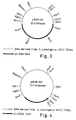
- Particular recombinant vectors within the scope of the invention include those designated pWOR30, created by subcloning the DNA fragment of Figure 1 into a plasmid pIJ680 ( Figure 3); pWOR305, created by subcloning the DNA fragment of Figure 1 into a plasmid pIJ2925 ( Figure 4) and pWOR322, created by subcloning the DNA fragment of Figure 2 into a plasmid pIJ699 ( Figure 5).
- One way to prepare the DNA and recombinant vectors of the invention is to prepare a plasmid comprising the 60 kb segment of S. clavuligerus chromosomal DNA described in Figure 1 of European Patent Application Publication Number 0 349 121.
- the DNA of the invention may then be obtained by digesting the said plasmid DNA with one or more suitable restriction enzymes.
- the DNA (I) is obtained by preparing a cosmid designated hereinbelow as pBROC371, followed by digestion with Bcl I as hereinbelow described.
- Fragments of the DNA (I), for example the DNA (II) or the sequence having the ORF shown in Figure 6, may be obtained from DNA (I) according to methods well known in the art, for example, the DNA(I) may be subcloned into a suitable vector and digested with one or more appropriate restriction enzymes.
- a further way to prepare DNA encoding the protein having the amino acid sequence shown in Figure 7, for example the DNA having the ORF shown in Figure 6 or a sequence which is degenerate as a result of the genetic code thereto, is to prepare the desired DNA by synthetic methods using well established methods of oligo and polynucleotide synthesis, preferably by using an automated DNA synthesiser.
- the DNA thus prepared or a fragment thereof may, if desired, be used as a probe for probing S. clavuligerus chromosomal DNA (prepared as described in EP 0 349 121) in order to obtain a longer piece of DNA according to the invention comprising the DNA(II), i.e. the DNA fragment (I) or a fragment thereof.
- Suitable probing techniques are well known in the art.
- One utility of the DNA according to the invention is to repair clavulanic acid synthesis in certain empirically derived non-producing mutants of S. clavuligerus , in particular those designated below as dcl X and dcl Z mutants (specifically dcl X68, dcl Z124 and dcl Z139) which are believed to be 'regulatory mutants', i.e. blocked in one or more genes involved in regulation of clavulanic acid biosynthesis.
- a further utility of the regulatory DNA of the present invention is to increase titre when introduced into organisms which already produce clavulanic acid.
- Clavulanic acid producing organisms include S. clavuligerus ATCC 27064 and derivatives thereof, S. jumonjinensis ATCC 29864 and S. katrurahamanus T-272.
- the DNA according to the invention may also be used to stimulate the synthesis of clavams in clavam-producing organisms e.g. S. lipmanii .
- the invention provides a host transformed by a recombinant vector according to the invention.
- the host may be transformed by standard techniques such as those described in Hopwood, D.A. et al (1985) Genetic Manipulation of Streptomyces. A Laboratory Manual. The John Innes Foundation or Bailey, C.R. et al. (1984) Biotechnology 2 ; 808-811.
- Preferred hosts are those which are natural producers of clavulanic acid when cultured in an appropriate medium, or regulatory mutants as hereinabove defined, which the DNA according to the invention can repair so that clavulanic acid synthesis is restored and preferably enhanced.
- the present invention further provides a method for producing clavulanic acid in a host which is naturally a producer of clavulanic acid or from a suitable non-producing regulatory mutant of a said host, which method comprises the steps of:
- the host is preferably S. clavuligerus ATCC 27064 or is derived therefrom.
- dcl Z124 and dcl Z139 are both non-producers of products of the clavulanic acid and cephalosporin biosynthetic pathways. These mutants were isolated during random screening procedure for high-titre clavulanic acid producers of S.clavuligerus. They fail to produce clavulanic acid when grown together intimately in co-synthesis tests and have therefore been deemed to be defective in the same gene involved in clavulanic acid biosynthesis. Chromosomal DNA was prepared from both these strains and the wild-type S.clavuligerus 27064 in the following manner.
- the mycelium was harvested by centrifugation at 1,500g and washed in 10% sucrose.
- the supernatant fraction was poured off and the pellets resuspended in 5ml lysozyme solution (25mM Tris pH7.5, 25mM Na 2 EDTA pH8.0, 10% sucrose, lysozyme 10 mg/ml) and incubated at room temperature for 30 minutes.
- lysozyme solution 25mM Tris pH7.5, 25mM Na 2 EDTA pH8.0, 10% sucrose, lysozyme 10 mg/ml
- lysis solution 1% SDS, 20mM Na 2 EDTA
- Caesium chloride (1.05g x weight of solution) was dissolved in the solution and a clearing spin (1,500g) was carried out to remove any precipitated proteins.
- Ethidium bromide was added to the supernatant to a final concentration of 250 ug/ml and the solution was dispensed into high speed centrifuge tubes.
- the tubes were centrifuged in a high speed centrifuge for 20 hours at 55K rpm to create a density gradient and the fraction containing the chromosomal DNA was removed by piercing the tube with a needle and withdrawing the bands containing the highest ethidiun bromide densities.
- the sample was extracted with butanol to remove the ethidium bromide and dialysed in an excess volume of TE (10mM Tris pH8.0, lmM Na 2 EDTA) to remove the caesium chloride.
- TE 10mM Tris pH8.0, lmM Na 2 EDTA
- the DNA was precipitated with 0.1 volume of 3M Na acetate pH5.0, 2 volumes of ethanol and redissolved in 2ml TE after centrifugation.
- chromosomal DNA of 27064, dcl Z139 and dcl Z-124 were digested with restriction enzymes Bam HI, Bcl I, Eco RI and Bgl II in a total volume of 30 or 50ul using standard conditions.
- the reactions were incubated until examination of a sample of the reaction mix on agarose gel electrophoresis (0.8% gel) showed that the digestions had gone to completion.
- DNA was isolated by standard alkaline lysis preparative methods from an E.coli host transformed with this plasmid and purified by caesium chloride gradient [ Sambrook, J., Fritsch, E.F., and Maniatis, T., Molecular Cloning. A Laboratory Manual. Second Edition (1989)]. 100ng of plasmid was radioactively labelled with 32 P (Amersham Multiprime Kit protocol) and used to probe the membrane carrying the separated DNA. Hybridisation was performed at 70°C for 20 hours in a solution of 6% PEG, 1% SDS, 3 x SSC and 100ug/ml denatured salmon sperm DNA after an overnight prehybridisation in the same buffer (minus the probe). The filter was successively washed in 2 x SSC (10' room temperature), 2 x SSC (15', 70 °C) twice, 2 x SSC, 0.1% SDS (30', 70 °C) and exposed to X-ray film.
- pBROC371 plasmid DNA was digested with Bcl I under standard conditions until a sample electrophoresed on an agarose gel showed that the digestion had gone to completion. The remainder of the sample was then electrophoresed on a 0.8% agarose gel and the slice of agarose containing the 7kb fragment was removed with a razor blade. The DNA was eluted from the gel slice by means of an IBI electroeluter (manufacturers protocol), ethanol-precipitated and redissolved in 20ul TE. Agarose gel electrophoresis confirmed that the correct fragment had been obtained.
- the mycelium was resuspended in 5ml of lysozyme solution (0.3M sucrose, 25mM Tris (pH 8), 25mM Na 2 EDTA (pH 8), 2mg/ml lysozyme) and incubated at 37 °C for 30 minutes. 2.5ml of 0.3M NaOH, 2% SDS was added with vigorous mixing and the solution was incubated at 70 °C, 20 minutes until lysed. The lysate was extracted twice with 800ul acid phenol/chloroform and the DNA precipitated with unbuffered sodium acetate (3M) and isopropanol. The pellet obtained after centrifugation at 1,500g was resuspended in 500ul TE, reprecipitated overnight and finally dissolved in 50ul TE.
- lysozyme solution 0.3M sucrose, 25mM Tris (pH 8), 25mM Na 2 EDTA (pH 8), 2mg/ml lysozyme
- pIJ680 plasmid DNA 1ug of pIJ680 plasmid DNA was digested with BamH I and treated with calf intestinal alkaline phosphatase [ Sambrook, J., Fritsch, E.F., and Maniatis, T., Molecular Cloning. A Laboratory Manual. Second Edition (1989)]. 250ng of this DNA and 200ng of DNA (I) were mixed in a total volume of 10ul and ligated using standard techniques. 5ul of the ligation mix was transformed into S.lividans 1326 protoplasts (4 x 10 9 /ml) prepared according to standard procedures [Hopwood, D.A. et al (1985) Genetic Manipulation of Streptomyces. A Laboratory Manual.The John Innes Foundation].
- Plasmid DNA was prepared from 500ul of mycelium from 5 of the thiostrepton-resistant, neomycin-sensitive S.lividans 1326 colonies grown as previously described. The mycelium from each colony was incubated in 500ul lysozyme solution and lysed with 2% SDS. The solution was cleaned by extraction with neutral phenol/cloroform and chloroform and the DNA was then precipitated with ethanol. The chromosomal DNA was removed by spooling on a glass rod and the plasmid DNA was pelleted by centrifugation; the latter was redissolved in 50ul TE.
- pWOR30 plasmid DNA was used to transform S.clavuligerus dcl Z124 and dcl Z139 as described in Bailey, C.R. et al (1984) Biotechnology 2:p808-811 except that the protoplasts were incubated at 45°C for 10 minutes immediately prior to the addition of the DNA. Thiostrepton-resistant transformants were obtained and streaked onto M5D (European Patent Application, Publication Number 0 349 121) medium plus thiostrepton (5 ⁇ g/ml).
- Transformants of dcl Z124 and dcl Z139 with pWOR30 were tested for the repair of clavulanic acid by means of a plate bioassay.
- Cells of each transformant were stabbed onto M5D and incubated at 26°C for 6 days.
- the bioassay plates were then overpoured with soft blood agar (Oxoid) containing a strain of Klebsiella aerogenes described in Reading, C. and Cole, M. (1977) Antimicrob. Agents Chemother. 11:852-7, 0.02% tetrazolium salts and 5 ⁇ g/ml penicillin G. After overnight incubation at 26°C zones of inhibition had formed around the transformed colonies which were greater than those around the untransformed control (essentially zero).
- dcl X68 is representative of a number of non-producers of clavulanic acid isolated during random screening for high-titre clavulanic acid producers of S.clavuligerus which fail to produce clavulanic acid when grown together intimately in co-synthesis tests. These mutants differ from dcl Z124 and dcl Z139 in that they are not deleted for the 5.5kb region of DNA described in example 1. pWOR30 plasmid DNA was used to transform S.clavuligerus dcl X68 as described in example 4.
- Thiostrepton-resistant transformants were obtained and streaked onto M5D medium plus thiostrepton (5 ⁇ g/ml)
- Transformants of dcl X68 with pWOR30 were tested for the repair of clavulanic acid by means of the plate bioassay described in example 4 and showed enhanced zones of inhibition compared to the untransformed control, dcl X68.
- 11 of the isolates tested showed repair of titre in both the presence and absence of thiostrepton, the maximum increase being to 290% of the parent of the clavulanic acid non-producer.
- the 7kb Bcl I fragment described as DNA (I) was ligated into a high copy-number E.coli vector, pIJ2925 for further subcloning. 2 ⁇ g of pIJ2925 DNA were digested with Bam HI under standard conditions until a sample electrophoresed on an agarose gel indicated that the digestion had gone to completion. The DNA was cleaned up by phenol /chloroform extraction and precipitated with ethanol. The final pellet was dissolved in 30 ⁇ l of TE.
- IPTG isopropyl- ⁇ -D-galactopyranoside
- X-gal 5-bromo-4-chloro-3-indolyl- ⁇ -D galactopyranoside
- pWOR305 plasmid DNA was isolated by standard techniques from a 1 litre E.coli DH5 ⁇ F' culture and purified by caesium chloride gradient. 5 ⁇ g was digested with Bam HI and Bgl II in the same buffer until a sample electrophoresed on an agarose gel showed that the digest had gone to completion. The remainder of the reaction mixture was run on an agarose gel and DNA representing the 1.7kb Bam HI/ Bgl II fragment (DNA (II)), was isolated as described in example 2.
- the plasmid pWOR322 was constructed by ligation of 200ng of the Bgl II fragment from pIJ699 with 200ng of the 1.7kb Bam HI. Bgl II fragment from pWOR305. 5 ⁇ l of the ligation mix was transformed into protoplasts of S.lividans 1326 as described in example 3 and transformants were selected by overpouring with SNA containing thiostrepton to a final concentration of 50 ⁇ g/ml. Thiostrepton-resistant transformants were obtained and plasmid DNA isolated from this transformant was shown to have the plasmid construct shown in Figure 5.
- pWOR322 DNA was used to transform protoplasts of dcl X68 as described in example 4. Transformants were selected after overpouring with SNA containing 50 ⁇ g/ml thiostrepton and analysed on bioassay for repair of clavulanic acid production as described in example 4, except that the overlay contained 0.003% ampicillin, 0.02% tetrazole and the indicator organism was E.coli JT39 R TEM (Hunter P., et al (1980) J. Antimicrobial Chemotherapy 6:p455-470.).
- Single-stranded DNA was prepared by standard techniques from all these plasmids and sequenced with the T7 polymerase sequencing kit obtained from Pharmacia. (manufacturer's protocols). Sequencing reactions were separated on 0.8% urea-polyacrylamide sequencing gels and the sequence obtained analysed with the DNASTAR sequencing package.
Landscapes
- Chemical & Material Sciences (AREA)
- Organic Chemistry (AREA)
- Health & Medical Sciences (AREA)
- Life Sciences & Earth Sciences (AREA)
- Engineering & Computer Science (AREA)
- Biochemistry (AREA)
- General Health & Medical Sciences (AREA)
- Genetics & Genomics (AREA)
- Zoology (AREA)
- Wood Science & Technology (AREA)
- General Chemical & Material Sciences (AREA)
- Bioinformatics & Cheminformatics (AREA)
- Gastroenterology & Hepatology (AREA)
- Biotechnology (AREA)
- Chemical Kinetics & Catalysis (AREA)
- Biophysics (AREA)
- Microbiology (AREA)
- Molecular Biology (AREA)
- Medicinal Chemistry (AREA)
- Proteomics, Peptides & Aminoacids (AREA)
- General Engineering & Computer Science (AREA)
- Preparation Of Compounds By Using Micro-Organisms (AREA)
- Micro-Organisms Or Cultivation Processes Thereof (AREA)
- Saccharide Compounds (AREA)
- Medicines Containing Plant Substances (AREA)
- Organic Low-Molecular-Weight Compounds And Preparation Thereof (AREA)
- Peptides Or Proteins (AREA)
Abstract
Description
- This invention relates to recombinant DNA molecules and in particular to recombinant vectors for use in the transformation of a microbial host which contain inserted fragments carrying one or more genes involved in the regulation of clavulanic acid biosynthesis and cephalosporin biosynthesis.
- Progress in understanding the process of regulation of secondary metabolites produced by micro-organisms such as Streptomyces clavuligerus has been slow although it has been established that common control mechanisms may be responsible for the switching on of secondary metabolism in S. coelicolor. Two of the secondary metabolites produced in S. clavuligerus, clavulanic acid and cephamycin C, are important as antibiotics but appear to have totally unrelated pathways and nothing is currently known of how these pathways are regulated. In particular clavulanic acid is of great clinical value since it is a beta-lactamase inhibitor and protects beta-lactamase - labile beta-lactam antibiotics from degradation. Methods for increasing the yield (titre) of clavulanic acid in fermentation processes are therefore of considerable commercial importance.
- One approach to the problem of clavulanic acid yield improvement involves the use of recombinant DNA technology using S. clavuligerus as the host cell. Several enzymes are believed to be involved in clavulanic acid biosynthesis and the gene or genes encoding a clavaminic acid synthase, which converts one clavulanic acid intermediate, proclavaminic acid, into another one, clavaminic acid, have been cloned (European Patent Application, Publication Number 0 349 121). However, no genes concerned with the regulation of enzymes have so far been identified.
- In order to clearly define the invention reference is made to the accompanying drawings in which:
- Figure 1 is a restriction map of a BclI DNA fragment (I) of approximately 7kb;
- Figure 2 is a restriction map of a BamHI - BglII DNA fragment (II) of approximately 1.7kb;
- Figure 3 is a restriction map of a recombinant plasmid designated pWOR30 created by subcloning the DNA fragment of Figure 1 into a plasmid pIJ680;
- Figure 4 is a restriction map of a recombinant plasmid designated pWOR305. created by subcloning the DNA fragment of Figure 1 into a plasmid pIJ2925;
- Figure 5 is a restriction map of a recombinant plasmid designated pWOR322. created by subcloning the DNA fragment of Figure 2 into a plasmid pIJ699;
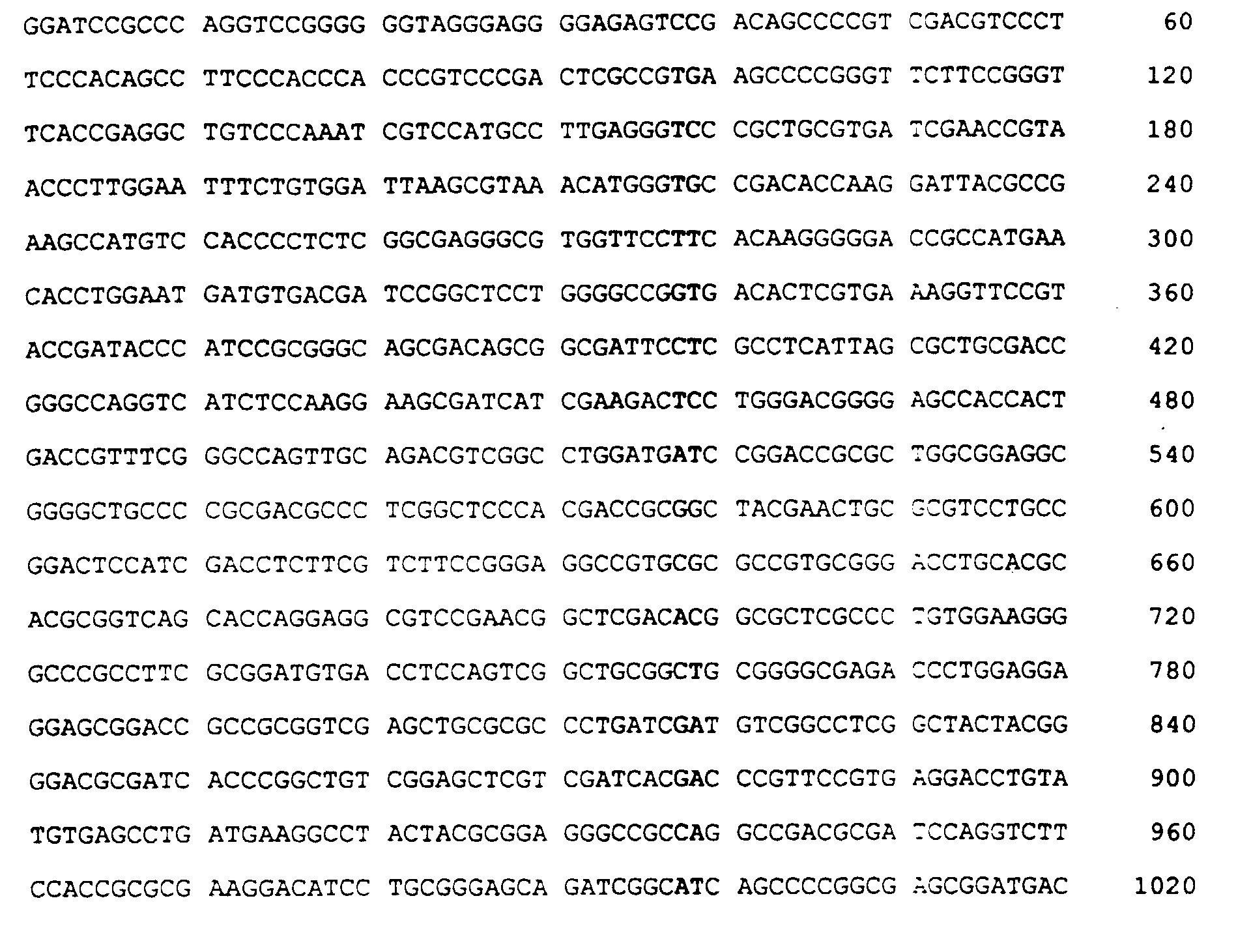
- Figure 6 is the DNA sequence of the open reading frame (ORF) contained
within recombinant plasmid pBROC 322 (ORF spans positions 296 to 1082 and is
shown in upper case) together with flanking DNA. The insert within pBROC 322
begins at
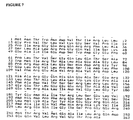
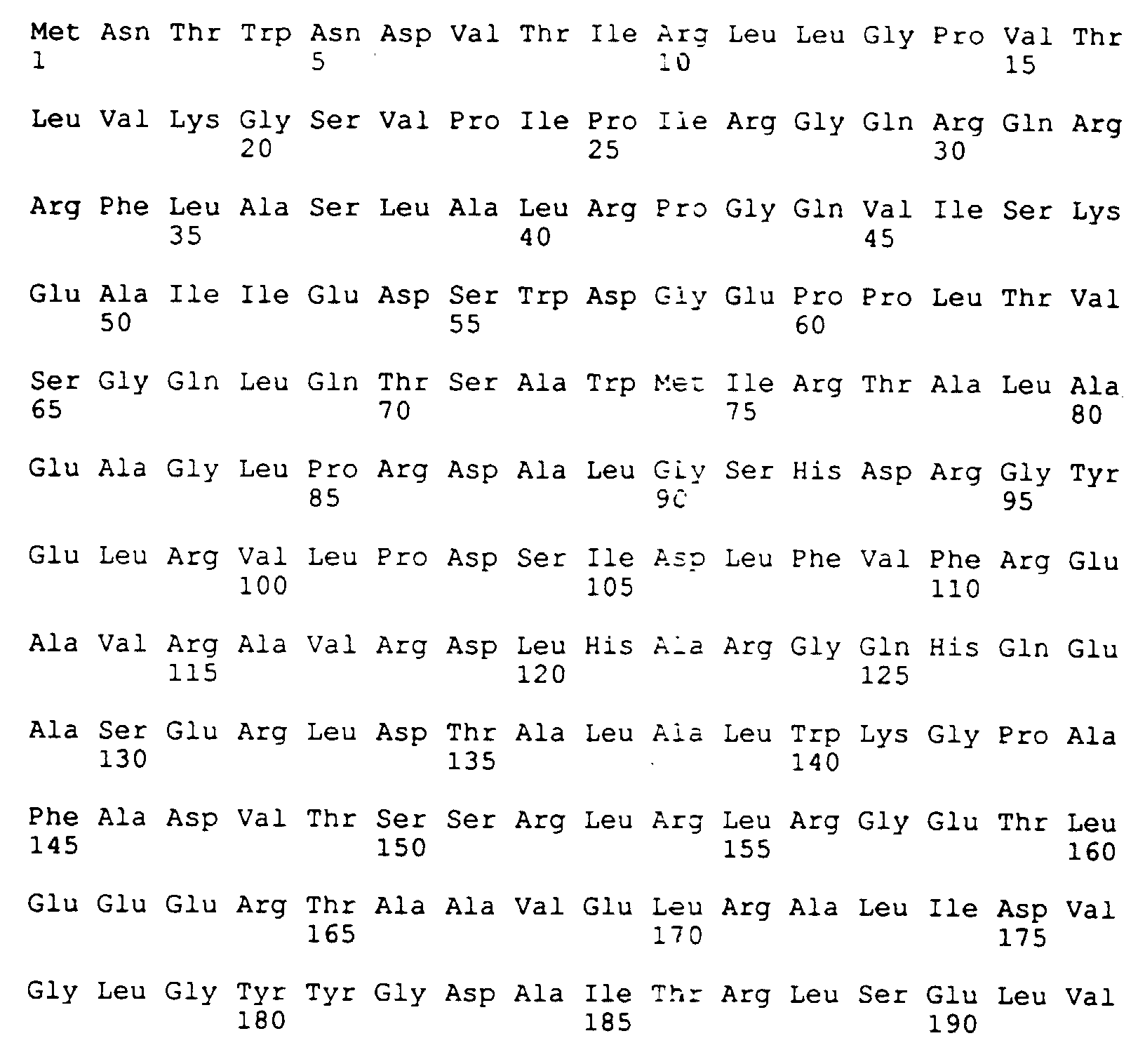
position 1 and ends at position 1751; and - Figure 7 is the deduced amino acid sequence encoded by the ORF of Figure 6.
-
- In the Figures the abbreviations Bcl I, Bgl II etc are conventional abbreviations for restriction endonucleases and the approximate length in kilobases (kb) of the DNA , as determined by sizing experiments carried out by agarose gel electrophoresis, is indicated. It should be understood that the Figures are not intended to show all the restriction sites present on the DNA fragments illustrated.
- According to the present invention there is provided DNA comprising a regulatory gene for clavulanic acid biosynthesis, wherein said DNA is no greater than about 7kb in length and comprises DNA (I) having the configuration of restriction sites shown in Figure 1 or a fragment thereof comprising said regulatory gene.
- It will be appreciated that the DNA of the invention is not in its 'natural' state (i.e. as found in the chromosomal DNA of S. clavuligerus) but has been purified and isolated to separate it from flanking DNA.
- In one preferred aspect the DNA of the invention is DNA (I), having a length of approximately 7kb and substantially the configuration of restriction sites shown in Figure 1.
- In a further aspect the DNA of the invention is a fragment of (I), especially DNA(II) having a length of approximately 1.7kb and substantially the configuration of restriction sites shown in Figure 2.
- In yet a further preferred aspect the DNA of the invention has the nucleotide sequence of the open reading frame (ORF) shown in Figure 6 (SEQ ID NO: 1 )or comprises any nucleotide sequence encoding a protein having substantially the amino acid sequence shown in Figure 7 (SEQ ID NO:2).
- In another aspect the DNA of the invention is recombinant DNA.
- Preferably the recombinant DNA of the invention comprises a recombinant vector, more preferably a vector capable of transforming and undergoing autonomous replication in a clavulanic acid-producing micro-organism or a vector from which insert DNA can be integrated into the chromosome of the clavulanic acid-producing micro-organism via homologous recombination.
- In one aspect the recombinant DNA of the invention is a high expression vector.
- The DNA according to any aspect of this invention may be introduced into any suitable vector by methods well known in the art, for example by direct combination of cohesive ends, homopolymer tailing, or by means of a linker or adapter molecule.
- Specific examples of such suitable vectors include the following:
- (1) pIJ2925, a high copy number E.coli vector described by Janssen. G.R. and Bibb, M.J. (1993) Gene, 124, 133-4)
- (2) pIJ699, a positive vector for the direct selection of inserts in Streptomyces, as described by Kieser, T. and Melton, R.E. (1988) Gene 65: 83-91.
- (3) pIJ680 described by Hopwood et al (1985) Genetic Manipulation of Streptomyces. A Laboratory Manual. The John Innes Foundation.
-
- It will be appreciated that the recombinant vectors prepared according to the above methods may contain the insert DNA in one of two possible orientations. Recombinant vectors containing both orientations are included within the scope of the invention.
- Particular recombinant vectors within the scope of the invention include those designated pWOR30, created by subcloning the DNA fragment of Figure 1 into a plasmid pIJ680 (Figure 3); pWOR305, created by subcloning the DNA fragment of Figure 1 into a plasmid pIJ2925 (Figure 4) and pWOR322, created by subcloning the DNA fragment of Figure 2 into a plasmid pIJ699 (Figure 5).
- One way to prepare the DNA and recombinant vectors of the invention is to prepare a plasmid comprising the 60 kb segment of S. clavuligerus chromosomal DNA described in Figure 1 of European Patent Application Publication Number 0 349 121. The DNA of the invention may then be obtained by digesting the said plasmid DNA with one or more suitable restriction enzymes. Conveniently the DNA (I) is obtained by preparing a cosmid designated hereinbelow as pBROC371, followed by digestion with BclI as hereinbelow described. Fragments of the DNA (I), for example the DNA (II) or the sequence having the ORF shown in Figure 6, may be obtained from DNA (I) according to methods well known in the art, for example, the DNA(I) may be subcloned into a suitable vector and digested with one or more appropriate restriction enzymes.
- A further way to prepare DNA encoding the protein having the amino acid sequence shown in Figure 7, for example the DNA having the ORF shown in Figure 6 or a sequence which is degenerate as a result of the genetic code thereto, is to prepare the desired DNA by synthetic methods using well established methods of oligo and polynucleotide synthesis, preferably by using an automated DNA synthesiser.
- The DNA thus prepared or a fragment thereof may, if desired, be used as a probe for probing S. clavuligerus chromosomal DNA (prepared as described in EP 0 349 121) in order to obtain a longer piece of DNA according to the invention comprising the DNA(II), i.e. the DNA fragment (I) or a fragment thereof. Suitable probing techniques are well known in the art.
- One utility of the DNA according to the invention is to repair clavulanic acid synthesis in certain empirically derived non-producing mutants of S. clavuligerus, in particular those designated below as dclX and dclZ mutants (specifically dclX68, dclZ124 and dclZ139) which are believed to be 'regulatory mutants', i.e. blocked in one or more genes involved in regulation of clavulanic acid biosynthesis. A further utility of the regulatory DNA of the present invention is to increase titre when introduced into organisms which already produce clavulanic acid.
- Clavulanic acid producing organisms include S. clavuligerus ATCC 27064 and derivatives thereof, S. jumonjinensis ATCC 29864 and S. katrurahamanus T-272.
- The DNA according to the invention may also be used to stimulate the synthesis of clavams in clavam-producing organisms e.g. S. lipmanii.
- Accordingly in a further aspect the invention provides a host transformed by a recombinant vector according to the invention.
- The host may be transformed by standard techniques such as those described in Hopwood, D.A. et al (1985) Genetic Manipulation of Streptomyces. A Laboratory Manual. The John Innes Foundation or Bailey, C.R. et al. (1984) Biotechnology 2; 808-811.
- Preferred hosts are those which are natural producers of clavulanic acid when cultured in an appropriate medium, or regulatory mutants as hereinabove defined, which the DNA according to the invention can repair so that clavulanic acid synthesis is restored and preferably enhanced.
- The present invention further provides a method for producing clavulanic acid in a host which is naturally a producer of clavulanic acid or from a suitable non-producing regulatory mutant of a said host, which method comprises the steps of:
- (a) transforming the said host or said non-producing mutant thereof with a recombinant vector according to the invention; and
- (b) culturing the transformants so formed under appropriate conditions so that production of clavulanic acid takes place.
-
- General methods for culturing a clavulanic acid -producing organism so as to obtain clavulanic acid, and methods for purifying the clavulanic acid thus obtained, are set out in UK
Patent Specification Number 1, 508, 977. - In the above method the host is preferably S. clavuligerus ATCC 27064 or is derived therefrom.
- The following examples illustrate the invention.
- dclZ124 and dclZ139 are both non-producers of products of the clavulanic acid and cephalosporin biosynthetic pathways. These mutants were isolated during random screening procedure for high-titre clavulanic acid producers of S.clavuligerus. They fail to produce clavulanic acid when grown together intimately in co-synthesis tests and have therefore been deemed to be defective in the same gene involved in clavulanic acid biosynthesis. Chromosomal DNA was prepared from both these strains and the wild-type S.clavuligerus 27064 in the following manner.
- Spores of both strains were inoculated into 2 shake flasks of Tryptone Soya Broth + maltose growth medium (30ml /250 ml spring shake flask - Tryptone Soya Broth 30g/l, maltose 10g/l) and incubated for 48 hours at 26°C (with shaking at 240 rpm).
- The mycelium was harvested by centrifugation at 1,500g and washed in 10% sucrose.
- The supernatant fraction was poured off and the pellets resuspended in 5ml lysozyme solution (25mM Tris pH7.5, 25mM Na2EDTA pH8.0, 10% sucrose, lysozyme 10 mg/ml) and incubated at room temperature for 30 minutes.
- One-tenth volume of lysis solution (1% SDS, 20mM Na2EDTA) was added and the solution was thoroughly mixed with a wide-bore pipette.
Caesium chloride (1.05g x weight of solution) was dissolved in the solution and a clearing spin (1,500g) was carried out to remove any precipitated proteins. Ethidium bromide was added to the supernatant to a final concentration of 250 ug/ml and the solution was dispensed into high speed centrifuge tubes. - The tubes were centrifuged in a high speed centrifuge for 20 hours at 55K rpm to create a density gradient and the fraction containing the chromosomal DNA was removed by piercing the tube with a needle and withdrawing the bands containing the highest ethidiun bromide densities.
- The sample was extracted with butanol to remove the ethidium bromide and dialysed in an excess volume of TE (10mM Tris pH8.0, lmM Na2EDTA) to remove the caesium chloride. The DNA was precipitated with 0.1 volume of 3M Na acetate pH5.0, 2 volumes of ethanol and redissolved in 2ml TE after centrifugation.
- 5-10ug of chromosomal DNA of 27064, dclZ139 and dclZ-124 were digested with restriction enzymes BamHI, BclI, EcoRI and BglII in a total volume of 30 or 50ul using standard conditions. The reactions were incubated until examination of a sample of the reaction mix on agarose gel electrophoresis (0.8% gel) showed that the digestions had gone to completion.
- The remainder of each sample was then electrophoresed on a 0.8% agarose gel and the DNA was transferred onto a nylon membrane using the standard southern blotting technique [ Sambrook, J., Fritsch, E.F., and Maniatis, T., Molecular Cloning. A Laboratory Manual. Second Edition (1989)]. This membrane was probed with the cosmid pBROC371 which contains the 40kb DNA fragment shown in Figure 1 of European Patent Application Publication Number 0 233 715 having been inserted into the E.coli vector pHC79. DNA was isolated by standard alkaline lysis preparative methods from an E.coli host transformed with this plasmid and purified by caesium chloride gradient [ Sambrook, J., Fritsch, E.F., and Maniatis, T., Molecular Cloning. A Laboratory Manual. Second Edition (1989)]. 100ng of plasmid was radioactively labelled with 32P (Amersham Multiprime Kit protocol) and used to probe the membrane carrying the separated DNA. Hybridisation was performed at 70°C for 20 hours in a solution of 6% PEG, 1% SDS, 3 x SSC and 100ug/ml denatured salmon sperm DNA after an overnight prehybridisation in the same buffer (minus the probe). The filter was successively washed in 2 x SSC (10' room temperature), 2 x SSC (15', 70 °C) twice, 2 x SSC, 0.1% SDS (30', 70 °C) and exposed to X-ray film.
- Analysis of the autoradiograph showed that the two mutants, dclZ124 and dclZ139, had a deletion of approximately 5.5kb compared to the wild-type, 27064, in the region of the chromosome from which pBROC371 was derived.
- About 10µg of pBROC371 plasmid DNA was digested with BclI under standard conditions until a sample electrophoresed on an agarose gel showed that the digestion had gone to completion. The remainder of the sample was then electrophoresed on a 0.8% agarose gel and the slice of agarose containing the 7kb fragment was removed with a razor blade. The DNA was eluted from the gel slice by means of an IBI electroeluter (manufacturers protocol), ethanol-precipitated and redissolved in 20ul TE. Agarose gel electrophoresis confirmed that the correct fragment had been obtained.
- Spores of an S.clavuligerus strain containing pIJ680 were inoculated into TSB/Maltose medium in a shake-flask and grown up to provide mycelium for a plasmid prep as in
Preparation 1. Thiostrepton was added to a concentration of 5ug/ml to maintain plasmid stability. Plasmid was isolated from the mycelium in a modified version of the Kieser method (T.Kieser. 1984, Plasmid 12:19-36). The mycelium was resuspended in 5ml of lysozyme solution (0.3M sucrose, 25mM Tris (pH 8), 25mM Na2EDTA (pH 8), 2mg/ml lysozyme) and incubated at 37 °C for 30 minutes. 2.5ml of 0.3M NaOH, 2% SDS was added with vigorous mixing and the solution was incubated at 70 °C, 20 minutes until lysed. The lysate was extracted twice with 800ul acid phenol/chloroform and the DNA precipitated with unbuffered sodium acetate (3M) and isopropanol. The pellet obtained after centrifugation at 1,500g was resuspended in 500ul TE, reprecipitated overnight and finally dissolved in 50ul TE. - 1ug of pIJ680 plasmid DNA was digested with BamHI and treated with calf intestinal alkaline phosphatase [ Sambrook, J., Fritsch, E.F., and Maniatis, T., Molecular Cloning. A Laboratory Manual. Second Edition (1989)]. 250ng of this DNA and 200ng of DNA (I) were mixed in a total volume of 10ul and ligated using standard techniques. 5ul of the ligation mix was transformed into S.lividans 1326 protoplasts (4 x 10⁹/ml) prepared according to standard procedures [Hopwood, D.A. et al (1985) Genetic Manipulation of Streptomyces. A Laboratory Manual.The John Innes Foundation]. After transformation the protoplasts were plated out at dilutions of up to 10-2 on to R2YE agar. [Hopwood, D.A. et al (1985) Genetic Manipulation of Streptomyces. A Laboratory Manual.The John Innes Foundation].
- After incubation at 30°C for 24 hours the plates were overpoured with 2ml soft nutrient broth agar (SNA; 8g Oxoid Nutrient Broth/l, 3g agar/l) containing thiostrepton antibiotic at a final concentration of 500ug/ml to select for plasmid-bearing colonies.
- After incubation at 30°C for three days 19 colonies had appeared on the transformation plates and were transferred onto R2YE medium containing thiostrepton at 50ug/ml and R2YE containing thiostrepton (50ug/ml) and neomycin (10ug/ml) in order to detect those colonies bearing plasmids with inserts in the neomycin gene. 9 colonies failed to grow on the latter plates indicating that the neomycin gene had been disrupted.
- Plasmid DNA was prepared from 500ul of mycelium from 5 of the thiostrepton-resistant, neomycin-sensitive S.lividans 1326 colonies grown as previously described. The mycelium from each colony was incubated in 500ul lysozyme solution and lysed with 2% SDS. The solution was cleaned by extraction with neutral phenol/cloroform and chloroform and the DNA was then precipitated with ethanol. The chromosomal DNA was removed by spooling on a glass rod and the plasmid DNA was pelleted by centrifugation; the latter was redissolved in 50ul TE. 20ul of each plasmid preparation was digested with XhoI restriction enzyme and gel electrophoresis of the samples showed that four of the isolates contained a linear fragment of approximately the expected size, representing pIJ680 (5.3kb) plus a 7kb insert.
- Further analysis of plasmid DNA by restriction digestion with BclI and double digestion with BamHI/XhoI confirmed that DNA (I) from pBROC371 had been cloned into pIJ680; this construct was called pWOR30 (Figure 3).
- pWOR30 plasmid DNA was used to transform S.clavuligerus dclZ124 and dclZ139 as described in Bailey, C.R. et al (1984) Biotechnology 2:p808-811 except that the protoplasts were incubated at 45°C for 10 minutes immediately prior to the addition of the DNA. Thiostrepton-resistant transformants were obtained and streaked onto M5D (European Patent Application, Publication Number 0 349 121) medium plus thiostrepton (5µg/ml).
- Transformants of dclZ124 and dclZ139 with pWOR30 were tested for the repair of clavulanic acid by means of a plate bioassay. Cells of each transformant were stabbed onto M5D and incubated at 26°C for 6 days. The bioassay plates were then overpoured with soft blood agar (Oxoid) containing a strain of Klebsiella aerogenes described in Reading, C. and Cole, M. (1977) Antimicrob. Agents Chemother. 11:852-7, 0.02% tetrazolium salts and 5µg/ml penicillin G. After overnight incubation at 26°C zones of inhibition had formed around the transformed colonies which were greater than those around the untransformed control (essentially zero).
- Those transformants showing zones greater than the control culture were transferred to shake flask culture for accurate titre assessment. Cells from each colony were inoculated into 20ml of seed medium (European Patent Application, Publication Number 0 349 121)with the addition of thiostrepton (5µg/ml final concentration) and grown for 3 days at 26°C with shaking. 1 ml of the seed culture was then inoculated into a final stage medium (European Patent Application, Publication Number 0 349 121) containing 5µg/ml thiostrepton and grown at 26°C for up to four days. Samples of final stage broth were withdrawn after three or four days growth and assayed for clavulanic acid productivity as described in Bird, A.E. et al (1982) Analyst, 107:1241-1245 and Foulstone, M. and Reading, C. (1982) Antimicrob. Agents Chemother., 22:753-762.
- Of the isolates tested, all showed repair of titre, the maximum increase being to 80% of the parent of the clavulanic acid non-producer.
- dclX68 is representative of a number of non-producers of clavulanic acid isolated during random screening for high-titre clavulanic acid producers of S.clavuligerus which fail to produce clavulanic acid when grown together intimately in co-synthesis tests. These mutants differ from dclZ124 and dclZ139 in that they are not deleted for the 5.5kb region of DNA described in example 1. pWOR30 plasmid DNA was used to transform S.clavuligerus dclX68 as described in example 4.
- Transformants of dclX68 with pWOR30 were tested for the repair of clavulanic acid by means of the plate bioassay described in example 4 and showed enhanced zones of inhibition compared to the untransformed control, dclX68. In shake flask fermentations (described in example 4) 11 of the isolates tested showed repair of titre in both the presence and absence of thiostrepton, the maximum increase being to 290% of the parent of the clavulanic acid non-producer.
- The 7kb BclI fragment described as DNA (I) was ligated into a high copy-number E.coli vector, pIJ2925 for further subcloning. 2µg of pIJ2925 DNA were digested with BamHI under standard conditions until a sample electrophoresed on an agarose gel indicated that the digestion had gone to completion. The DNA was cleaned up by phenol /chloroform extraction and precipitated with ethanol. The final pellet was dissolved in 30µl of TE.
- Approximately 50ng of BamHI-digested pIJ2925 DNA was mixed with 200ng of DNA (I) in a total volume of 10µl and ligated using standard protocols. The resultant ligation mix was used to transform E.coli DH5αF' by standard methods. The transformed cells were plated onto L-agar plates supplemented with 50µg/ml ampicillin, 12.5µg/ml isopropyl-β-D-galactopyranoside (IPTG) and 40µg/ml 5-bromo-4-chloro-3-indolyl-β-D galactopyranoside (X-gal) to enable visual selection of those colonies containing the pIJ2925 plasmid with an insert.
- 20 white ampicillin-resistant colonies were obtained and patched onto L-agar plates containing ampicillin (50µg/ml). Cells from all of these colonies were inoculated into L-broth containing ampicillin (50µg/ml) and grown overnight at 37°C; plasmid DNA was prepared from 1.5ml aliquots of the ovemight cultures by the standard alkaline lysis method [Sambrook, J., Fritsch, E.F., and Maniatis, T., Molecular Cloning. A Laboratory Manual. Second Edition (1989)]. Restriction digest analysis with KpnI and BamHI confirmed that one isolate contained the 7kb BclI fragment from pBROC371 in pIJ2925; this construct is called pWOR305 (Figure 4).
- pWOR305 plasmid DNA was isolated by standard techniques from a 1 litre E.coli DH5αF' culture and purified by caesium chloride gradient. 5 µg was digested with BamHI and BglII in the same buffer until a sample electrophoresed on an agarose gel showed that the digest had gone to completion. The remainder of the reaction mixture was run on an agarose gel and DNA representing the 1.7kb BamHI/BglII fragment (DNA (II)), was isolated as described in example 2.
- 20µg of pIJ699, a positive vector for the direct selection of inserts in Streptomyces, was digested with BglII and EcoRI in the same buffer. The 5kb BglII fragment carrying the Streptomycete functions was isolated as detailed in example 2 for DNA (I) and dissolved in 20 µl TE.
- The plasmid pWOR322 was constructed by ligation of 200ng of the BglII fragment from pIJ699 with 200ng of the 1.7kb BamHI.BglII fragment from pWOR305. 5µl of the ligation mix was transformed into protoplasts of S.lividans 1326 as described in example 3 and transformants were selected by overpouring with SNA containing thiostrepton to a final concentration of 50 µg/ml. Thiostrepton-resistant transformants were obtained and plasmid DNA isolated from this transformant was shown to have the plasmid construct shown in Figure 5.
- pWOR322 DNA was used to transform protoplasts of dclX68 as described in example 4. Transformants were selected after overpouring with SNA containing 50µg/ml thiostrepton and analysed on bioassay for repair of clavulanic acid production as described in example 4, except that the overlay contained 0.003% ampicillin, 0.02% tetrazole and the indicator organism was E.coli JT39 RTEM (Hunter P., et al (1980) J. Antimicrobial Chemotherapy 6:p455-470.). The transformants showed larger zones of inhibition than the negative control and on analysis by shake flask testing (as described in example 4) were found to produce titres greater than the clavulanic acid-producing parent of dclX68.
Using HPLC analysis it had been demonstrated that dclX68 was defective in production of products from the cephalosporin biosynthetic pathway. This analysis was performed using a Waters HPLC/Diode Array Detector system with a C18 steel cartridge (Waters 3.9 x 150mm) column at room temperature with a flow rate of 1ml/minute [mobile phase 15% methanol, 85% water, 0.005M tetrabutylammonium hydrogen sulphate (PicA, Waters Registered)]. To detect restoration of the cephalosporin biosynthetic pathway in dclX68/pWOR322 transformants a sample of shake flask fermentation broth from day 4 was centrifuged to remove cellular debris and the supernatents were analysed by HPLC. Restoration of the cephalosporin pathway in the dclX68/pWOR322 transformants was demonstrated by the re-appearance of a known product of the cephalosporin pathway present in the parent of dclX68 but absent in dclX68 itself. - Using standard techniques several M13mp18 and /or M13p19 vectors constructs were made which contained different subfragments of DNA(II) isolated from pWOR305.
- Single-stranded DNA was prepared by standard techniques from all these plasmids and sequenced with the T7 polymerase sequencing kit obtained from Pharmacia. (manufacturer's protocols). Sequencing reactions were separated on 0.8% urea-polyacrylamide sequencing gels and the sequence obtained analysed with the DNASTAR sequencing package.
- 1751 base pairs of sequence was obtained on both strands covering the entire sequence of DNA (II). One entire open reading frame, which would encode a polypeptide of 262 amino acids, was identified within this sequence (Figure 6); the protein (Figure 7) shows homology with other Streptomycete genes implicated in the regulation of secondary metabolites [e.g. actIIorf4, Fernandez-Moreno, M.A., et al. (1991), Cell 66: p769-780 dnrI, Stutzman-Engwall, K.J., et al. (1992)
J. Bacteriology 174, 1, p144-154 afsR Horinouchi, S., et al. (1990) Gene 95: p49-56 redD-orfI, Narva, K.E., and J.S. Feitelson (1990), J. Bacteriology 164: p85-94 ]. Another feature of this open reading frame is the presence of a rare (in Streptomycete genomes) TTA codon encoding leucine, which has also been implicated in secondary metabolite regulation in S.coelicolor. (Leskiw, B.K., Bibb, M.J. and Chater, K.F., (1991) Mol. Microbiol. 5:(12), p2861-2867. -
- (1) GENERAL INFORMATION:
- (i) APPLICANT:
- (A) NAME: SmithKline Beecham p.l.c.
- (B) STREET: New Horizons Court
- (C) CITY: Brentford
- (D) STATE: Middlesex
- (E) COUNTRY: England
- (F) POSTAL CODE (ZIP): TW8 9EP
- (G) TELEPHONE: 0737 364147
- (H) TELEFAX: 0737 364006
- (I) TELEX: 911415
- (ii) TITLE OF INVENTION: Novel Compounds
- (iii) NUMBER OF SEQUENCES: 2
- (iv) COMPUTER READABLE FORM:
- (A) MEDIUM TYPE: Floppy disk
- (B) COMPUTER: IBM PC compatible
- (C) OPERATING SYSTEM: PC-DOS/MS-DOS
- (D) SOFTWARE: PatentIn Release #1.0, Version #1.25 (EPO)
- (2) INFORMATION FOR SEQ ID NO: 1:
- (i) SEQUENCE CHARACTERISTICS:
- (A) LENGTH: 1751 base pairs
- (B) TYPE: nucleic acid
- (C) STRANDEDNESS: double
- (D) TOPOLOGY: unknown
- (ii) MOLECULE TYPE: DNA (genomic)
- (iii) HYPOTHETICAL: NO
- (vi) ORIGINAL SOURCE:
- (A) ORGANISM: Streptomyces clavuligerus
- (B) STRAIN: S. clavuligerus ATCC 27064
- (xi) SEQUENCE DESCRIPTION: SEQ ID NO: 1:

- (2) INFORMATION FOR SEQ ID NO: 2:
- (i) SEQUENCE CHARACTERISTICS:
- (A) LENGTH: 262 amino acids
- (B) TYPE: amino acid
- (D) TOPOLOGY: unknown
- (ii) MOLECULE TYPE: protein
- (iii) HYPOTHETICAL: YES
- (vi) ORIGINAL SOURCE:
- (A) ORGANISM: Streptomyces clavuligerus
- (B) STRAIN: S. clavuligerus 27064
- (xi) SEQUENCE DESCRIPTION: SEQ ID NO: 2:

-
Claims (13)
- DNA comprising a regulatory gene for clavulanic acid biosynthesis, wherein said DNA is no greater than about 7kb in length and comprises DNA (I) having the configuration of restriction sites shown in Figure 1 or a fragment thereof comprising said regulatory gene.
- DNA according to claim 1, having a length of approximately 7kb and substantially the configuration of restriction sites shown in Figure 1.
- DNA according to claim 1, having a length of approximately 1.7kb and substantially the configuration of restriction sites shown in Figure 2.
- DNA according to any preceding claim obtainable from chromosomal DNA of Streptomyces clavuligerus.
- DNA according to any preceding claim which has the nucleotide sequence of the open reading frame (ORF) shown in Figure 6 (SEQ ID NO:1) or comprises any nucleotide sequence encoding a protein having substantially the amino acid sequence shown in Figure 7 (SEQ ID NO:2).
- DNA which hybridises under conditions of high stringency with the DNA according to any one of the preceding claims, and which codes for a regulatory gene in clavulanic acid biosynthesis, excluding DNA with a length of about 40kb or 60kb.
- Recombinant DNA vector comprising the DNA according to any one of the preceding claims.
- A vector according to claim 7 which is selected from the recombinant plasmid designated pWOR30 having the configuration of restriction sites shown in Figure 3, the recombinant plasmid designated pWOR305 having the configuration of restriction sites shown in Figure 4, and the recombinant plasmid designated pWOR322 having the configuration of restriction sites shown in Figure 5.
- A protein having substantially the amino acid sequence shown in Figure 7 (SEQ ID NO:2).
- A process for transforming a host cell with DNA according to any one of claims 1-7 which comprises mixing together the host and the DNA under suitable conditions.
- A host cell transformed with a recombinant vector according to claim 7 or 8.
- A method for producing clavulanic acid in a host which is naturally a producer of clavulanic acid or from a suitable non-producing regulatory mutant of a said host, which method comprises the steps of:(a) transforming the said host or said non-producing mutant thereof with a recombinant vector according to claim 7 or 8; and(b) culturing the transformants so formed under appropriate conditions so that production of clavulanic acid takes place.
- A method for producing cephalosporin in a host which is naturally a producer of cephalosporin or from a suitable non-producing regulatory mutant of a said host, which method comprises the steps of:(a) transforming the said host or said non-producing mutant thereof with a recombinant vector according to claim 7 or 8; and(b) culturing the transformants so formed under appropriate conditions so that production of cephalosporin takes place.
Applications Claiming Priority (3)
| Application Number | Priority Date | Filing Date | Title |
|---|---|---|---|
| GB9302041 | 1993-02-02 | ||
| GB939302041A GB9302041D0 (en) | 1993-02-02 | 1993-02-02 | Novel compounds |
| PCT/GB1994/000173 WO1994018326A2 (en) | 1993-02-02 | 1994-01-28 | Regulatory gene for clavulanic acid biosynthesis |
Publications (2)
| Publication Number | Publication Date |
|---|---|
| EP0682706A1 EP0682706A1 (en) | 1995-11-22 |
| EP0682706B1 true EP0682706B1 (en) | 1999-08-25 |
Family
ID=10729724
Family Applications (1)
| Application Number | Title | Priority Date | Filing Date |
|---|---|---|---|
| EP94904734A Expired - Lifetime EP0682706B1 (en) | 1993-02-02 | 1994-01-28 | Novel compounds |
Country Status (8)
| Country | Link |
|---|---|
| US (1) | US6361982B1 (en) |
| EP (1) | EP0682706B1 (en) |
| JP (1) | JPH08506021A (en) |
| AT (1) | ATE183776T1 (en) |
| DE (1) | DE69420253T2 (en) |
| ES (1) | ES2134927T3 (en) |
| GB (1) | GB9302041D0 (en) |
| WO (1) | WO1994018326A2 (en) |
Families Citing this family (3)
| Publication number | Priority date | Publication date | Assignee | Title |
|---|---|---|---|---|
| GB9511679D0 (en) | 1995-06-09 | 1995-08-02 | Smithkline Beecham Plc | Novel process |
| ES2131001B1 (en) * | 1997-06-16 | 2000-04-01 | Antibioticos Sau | PROCEDURE TO INCREASE THE PRODUCTION OF CLAVULANIC ACID THROUGH THE EXPRESSION OF REGULATORY AND BIOSYNTHETIC GENES OF STREPTOMYCES CLAVULIGERUS. |
| CN100355895C (en) * | 2004-12-17 | 2007-12-19 | 天津科技大学 | Plasmid with bar streptomycete Lat gene loss, derivative and constructing method thereof |
Family Cites Families (2)
| Publication number | Priority date | Publication date | Assignee | Title |
|---|---|---|---|---|
| GB8813055D0 (en) * | 1988-06-02 | 1988-07-06 | Beecham Group Plc | Novel substance |
| FI104984B (en) | 1988-08-11 | 2000-05-15 | Dsm Nv | Process for the identification of biosynthetic or regulatory genes and their use to improve the production of secondary metabolites |
-
1993
- 1993-02-02 GB GB939302041A patent/GB9302041D0/en active Pending
-
1994
- 1994-01-28 WO PCT/GB1994/000173 patent/WO1994018326A2/en not_active Ceased
- 1994-01-28 DE DE69420253T patent/DE69420253T2/en not_active Expired - Lifetime
- 1994-01-28 AT AT94904734T patent/ATE183776T1/en active
- 1994-01-28 EP EP94904734A patent/EP0682706B1/en not_active Expired - Lifetime
- 1994-01-28 ES ES94904734T patent/ES2134927T3/en not_active Expired - Lifetime
- 1994-01-28 US US08/491,944 patent/US6361982B1/en not_active Expired - Fee Related
- 1994-01-28 JP JP6517764A patent/JPH08506021A/en active Pending
Also Published As
| Publication number | Publication date |
|---|---|
| DE69420253D1 (en) | 1999-09-30 |
| DE69420253T2 (en) | 2000-05-11 |
| JPH08506021A (en) | 1996-07-02 |
| GB9302041D0 (en) | 1993-03-17 |
| US6361982B1 (en) | 2002-03-26 |
| WO1994018326A3 (en) | 1995-01-12 |
| ATE183776T1 (en) | 1999-09-15 |
| ES2134927T3 (en) | 1999-10-16 |
| WO1994018326A2 (en) | 1994-08-18 |
| EP0682706A1 (en) | 1995-11-22 |
Similar Documents
| Publication | Publication Date | Title |
|---|---|---|
| EP0524832A2 (en) | Activator gene for macrolide biosynthesis | |
| JP2001511349A (en) | Genes for 6-deoxyhexose biosynthesis and transfer in Saccharopolysporaerythraea and Streptomycesantibioticus | |
| US6825013B2 (en) | Isolation of biosynthesis genes for pseudo-oligosaccharides from Streptomyces glaucescens GLA.O, and their use | |
| US5759831A (en) | DNA molecules and vectors regarding clavulanic acid biosynthesis enzymes | |
| EP0929681B1 (en) | Rifamycin biosynthesis gene cluster | |
| US6361982B1 (en) | Regulatory gene for clavulanic acid biosynthesis | |
| CA2108113C (en) | Dna sequence encoding enzymes of clavulanic acid biosynthesis | |
| KR20050050146A (en) | Genes and proteins for the biosynthesis of the glycopeptide antibiotic a40926 | |
| AU638022B2 (en) | Saf polypeptide, gene, promoter and use for expression in streptomyces | |
| EP0970198B1 (en) | Micro-organisms with increased production of clavulanic acid | |
| US20080268501A1 (en) | Methods and materials relating to gene expression | |
| US6232106B1 (en) | DNA sequence encoding enzymes of clavulanic acid biosynthesis | |
| EP0364130A2 (en) | Novel tylosin biosynthetic genes | |
| US6589775B1 (en) | DNA sequence encoding enzymes of clavulanic acid biosynthesis | |
| WO1996002637A1 (en) | Method for extra-cellular expression of protein | |
| EP0974657A1 (en) | Reducing branching and enhancing fragmentation in culturing filamentous microorganisms | |
| JPH06105682A (en) | Method for promoting β-lactam antibiotic production and method for isolating large amount of ACV synthetase | |
| US20050079498A1 (en) | Novel Molecules | |
| EP0303364A1 (en) | Cloning and nucleotide sequence determination of the isopenicillin N synthetase gene from streptomyces clavuligerus | |
| US6037156A (en) | DNA molecules and vectors encoding clavulanic acid biosynthesis enzymes | |
| KR19990074514A (en) | Genes that specify multidrug resistance against aminoglycoside antibiotics | |
| Fawaz | Characterization and role of a Streptomyces antibioticus DNA sequence in the activation of a silent gene for phenoxazinone synthase in Streptomyces lividans | |
| JPH0724585B2 (en) | Actinomycetes promoter DNA sequence | |
| WO1992008797A1 (en) | Heterologous gene expression system |
Legal Events
| Date | Code | Title | Description |
|---|---|---|---|
| PUAI | Public reference made under article 153(3) epc to a published international application that has entered the european phase |
Free format text: ORIGINAL CODE: 0009012 |
|
| 17P | Request for examination filed |
Effective date: 19950804 |
|
| AK | Designated contracting states |
Kind code of ref document: A1 Designated state(s): AT BE CH DE DK ES FR GB GR IE IT LI LU MC NL PT SE |
|
| 17Q | First examination report despatched |
Effective date: 19960604 |
|
| GRAG | Despatch of communication of intention to grant |
Free format text: ORIGINAL CODE: EPIDOS AGRA |
|
| GRAG | Despatch of communication of intention to grant |
Free format text: ORIGINAL CODE: EPIDOS AGRA |
|
| GRAG | Despatch of communication of intention to grant |
Free format text: ORIGINAL CODE: EPIDOS AGRA |
|
| GRAH | Despatch of communication of intention to grant a patent |
Free format text: ORIGINAL CODE: EPIDOS IGRA |
|
| GRAH | Despatch of communication of intention to grant a patent |
Free format text: ORIGINAL CODE: EPIDOS IGRA |
|
| GRAA | (expected) grant |
Free format text: ORIGINAL CODE: 0009210 |
|
| AK | Designated contracting states |
Kind code of ref document: B1 Designated state(s): AT BE CH DE DK ES FR GB GR IE IT LI LU MC NL PT SE |
|
| PG25 | Lapsed in a contracting state [announced via postgrant information from national office to epo] |
Ref country code: SE Free format text: THE PATENT HAS BEEN ANNULLED BY A DECISION OF A NATIONAL AUTHORITY Effective date: 19990825 Ref country code: GR Free format text: LAPSE BECAUSE OF NON-PAYMENT OF DUE FEES Effective date: 19990825 Ref country code: AT Free format text: LAPSE BECAUSE OF FAILURE TO SUBMIT A TRANSLATION OF THE DESCRIPTION OR TO PAY THE FEE WITHIN THE PRESCRIBED TIME-LIMIT Effective date: 19990825 |
|
| REF | Corresponds to: |
Ref document number: 183776 Country of ref document: AT Date of ref document: 19990915 Kind code of ref document: T |
|
| REG | Reference to a national code |
Ref country code: CH Ref legal event code: EP |
|
| ITF | It: translation for a ep patent filed | ||
| REF | Corresponds to: |
Ref document number: 69420253 Country of ref document: DE Date of ref document: 19990930 |
|
| ET | Fr: translation filed | ||
| REG | Reference to a national code |
Ref country code: ES Ref legal event code: FG2A Ref document number: 2134927 Country of ref document: ES Kind code of ref document: T3 |
|
| REG | Reference to a national code |
Ref country code: IE Ref legal event code: FG4D |
|
| PG25 | Lapsed in a contracting state [announced via postgrant information from national office to epo] |
Ref country code: PT Free format text: LAPSE BECAUSE OF FAILURE TO SUBMIT A TRANSLATION OF THE DESCRIPTION OR TO PAY THE FEE WITHIN THE PRESCRIBED TIME-LIMIT Effective date: 19991125 Ref country code: DK Free format text: LAPSE BECAUSE OF FAILURE TO SUBMIT A TRANSLATION OF THE DESCRIPTION OR TO PAY THE FEE WITHIN THE PRESCRIBED TIME-LIMIT Effective date: 19991125 |
|
| REG | Reference to a national code |
Ref country code: CH Ref legal event code: NV Representative=s name: E. BLUM & CO. PATENTANWAELTE |
|
| PG25 | Lapsed in a contracting state [announced via postgrant information from national office to epo] |
Ref country code: LU Free format text: LAPSE BECAUSE OF NON-PAYMENT OF DUE FEES Effective date: 20000128 Ref country code: IE Free format text: LAPSE BECAUSE OF NON-PAYMENT OF DUE FEES Effective date: 20000128 |
|
| PG25 | Lapsed in a contracting state [announced via postgrant information from national office to epo] |
Ref country code: MC Free format text: THE PATENT HAS BEEN ANNULLED BY A DECISION OF A NATIONAL AUTHORITY Effective date: 20000131 |
|
| PLBE | No opposition filed within time limit |
Free format text: ORIGINAL CODE: 0009261 |
|
| STAA | Information on the status of an ep patent application or granted ep patent |
Free format text: STATUS: NO OPPOSITION FILED WITHIN TIME LIMIT |
|
| 26N | No opposition filed | ||
| REG | Reference to a national code |
Ref country code: IE Ref legal event code: MM4A |
|
| REG | Reference to a national code |
Ref country code: GB Ref legal event code: IF02 |
|
| REG | Reference to a national code |
Ref country code: CH Ref legal event code: PFA Owner name: SMITHKLINE BEECHAM PLC Free format text: SMITHKLINE BEECHAM PLC#NEW HORIZONS COURT#BRENTFORD, MIDDLESEX TW8 9EP (GB) -TRANSFER TO- SMITHKLINE BEECHAM PLC#NEW HORIZONS COURT#BRENTFORD, MIDDLESEX TW8 9EP (GB) |
|
| PGFP | Annual fee paid to national office [announced via postgrant information from national office to epo] |
Ref country code: GB Payment date: 20091211 Year of fee payment: 17 Ref country code: ES Payment date: 20100120 Year of fee payment: 17 Ref country code: CH Payment date: 20100218 Year of fee payment: 17 |
|
| PGFP | Annual fee paid to national office [announced via postgrant information from national office to epo] |
Ref country code: IT Payment date: 20100123 Year of fee payment: 17 Ref country code: FR Payment date: 20100125 Year of fee payment: 17 |
|
| PGFP | Annual fee paid to national office [announced via postgrant information from national office to epo] |
Ref country code: DE Payment date: 20100129 Year of fee payment: 17 Ref country code: BE Payment date: 20100201 Year of fee payment: 17 |
|
| PGFP | Annual fee paid to national office [announced via postgrant information from national office to epo] |
Ref country code: NL Payment date: 20100118 Year of fee payment: 17 |
|
| BERE | Be: lapsed |
Owner name: *SMITHKLINE BEECHAM P.L.C. Effective date: 20110131 |
|
| REG | Reference to a national code |
Ref country code: NL Ref legal event code: V1 Effective date: 20110801 |
|
| REG | Reference to a national code |
Ref country code: CH Ref legal event code: PL |
|
| GBPC | Gb: european patent ceased through non-payment of renewal fee |
Effective date: 20110128 |
|
| REG | Reference to a national code |
Ref country code: FR Ref legal event code: ST Effective date: 20110930 |
|
| PG25 | Lapsed in a contracting state [announced via postgrant information from national office to epo] |
Ref country code: CH Free format text: LAPSE BECAUSE OF NON-PAYMENT OF DUE FEES Effective date: 20110131 Ref country code: LI Free format text: LAPSE BECAUSE OF NON-PAYMENT OF DUE FEES Effective date: 20110131 Ref country code: FR Free format text: LAPSE BECAUSE OF NON-PAYMENT OF DUE FEES Effective date: 20110131 |
|
| PG25 | Lapsed in a contracting state [announced via postgrant information from national office to epo] |
Ref country code: BE Free format text: LAPSE BECAUSE OF NON-PAYMENT OF DUE FEES Effective date: 20110131 Ref country code: GB Free format text: LAPSE BECAUSE OF NON-PAYMENT OF DUE FEES Effective date: 20110128 |
|
| REG | Reference to a national code |
Ref country code: DE Ref legal event code: R119 Ref document number: 69420253 Country of ref document: DE Effective date: 20110802 |
|
| PG25 | Lapsed in a contracting state [announced via postgrant information from national office to epo] |
Ref country code: NL Free format text: LAPSE BECAUSE OF NON-PAYMENT OF DUE FEES Effective date: 20110801 Ref country code: IT Free format text: LAPSE BECAUSE OF NON-PAYMENT OF DUE FEES Effective date: 20110128 |
|
| REG | Reference to a national code |
Ref country code: ES Ref legal event code: FD2A Effective date: 20120220 |
|
| PG25 | Lapsed in a contracting state [announced via postgrant information from national office to epo] |
Ref country code: ES Free format text: LAPSE BECAUSE OF NON-PAYMENT OF DUE FEES Effective date: 20110129 |
|
| PG25 | Lapsed in a contracting state [announced via postgrant information from national office to epo] |
Ref country code: DE Free format text: LAPSE BECAUSE OF NON-PAYMENT OF DUE FEES Effective date: 20110802 |