EP0681569B1 - Spirocycloalkyl-substituted azetidinones useful as hypocholesterolemic agents - Google Patents
Spirocycloalkyl-substituted azetidinones useful as hypocholesterolemic agents Download PDFInfo
- Publication number
- EP0681569B1 EP0681569B1 EP94907200A EP94907200A EP0681569B1 EP 0681569 B1 EP0681569 B1 EP 0681569B1 EP 94907200 A EP94907200 A EP 94907200A EP 94907200 A EP94907200 A EP 94907200A EP 0681569 B1 EP0681569 B1 EP 0681569B1
- Authority
- EP
- European Patent Office
- Prior art keywords
- compound
- alkyl
- phenyl
- formula
- group
- Prior art date
- Legal status (The legal status is an assumption and is not a legal conclusion. Google has not performed a legal analysis and makes no representation as to the accuracy of the status listed.)
- Expired - Lifetime
Links
- XWVDVVWDRZSKPE-HSZRJFAPSA-N CC(C)(C)[Si](C)(C)c1ccc([C@H](C(CC2)(CCC2=O)C2=O)N2c2ccccc2)cc1 Chemical compound CC(C)(C)[Si](C)(C)c1ccc([C@H](C(CC2)(CCC2=O)C2=O)N2c2ccccc2)cc1 XWVDVVWDRZSKPE-HSZRJFAPSA-N 0.000 description 1
Classifications
-
- C—CHEMISTRY; METALLURGY
- C07—ORGANIC CHEMISTRY
- C07D—HETEROCYCLIC COMPOUNDS
- C07D471/00—Heterocyclic compounds containing nitrogen atoms as the only ring hetero atoms in the condensed system, at least one ring being a six-membered ring with one nitrogen atom, not provided for by groups C07D451/00 - C07D463/00
- C07D471/02—Heterocyclic compounds containing nitrogen atoms as the only ring hetero atoms in the condensed system, at least one ring being a six-membered ring with one nitrogen atom, not provided for by groups C07D451/00 - C07D463/00 in which the condensed system contains two hetero rings
- C07D471/10—Spiro-condensed systems
-
- A—HUMAN NECESSITIES
- A61—MEDICAL OR VETERINARY SCIENCE; HYGIENE
- A61P—SPECIFIC THERAPEUTIC ACTIVITY OF CHEMICAL COMPOUNDS OR MEDICINAL PREPARATIONS
- A61P3/00—Drugs for disorders of the metabolism
- A61P3/06—Antihyperlipidemics
-
- A—HUMAN NECESSITIES
- A61—MEDICAL OR VETERINARY SCIENCE; HYGIENE
- A61P—SPECIFIC THERAPEUTIC ACTIVITY OF CHEMICAL COMPOUNDS OR MEDICINAL PREPARATIONS
- A61P9/00—Drugs for disorders of the cardiovascular system
- A61P9/10—Drugs for disorders of the cardiovascular system for treating ischaemic or atherosclerotic diseases, e.g. antianginal drugs, coronary vasodilators, drugs for myocardial infarction, retinopathy, cerebrovascula insufficiency, renal arteriosclerosis
-
- C—CHEMISTRY; METALLURGY
- C07—ORGANIC CHEMISTRY
- C07D—HETEROCYCLIC COMPOUNDS
- C07D205/00—Heterocyclic compounds containing four-membered rings with one nitrogen atom as the only ring hetero atom
- C07D205/12—Heterocyclic compounds containing four-membered rings with one nitrogen atom as the only ring hetero atom condensed with carbocyclic rings or ring systems
Definitions
- the present invention relates to spirocycloalkyl-substituted azetidinones useful as hypocholesterolemic agents in the treatment and prevention of atherosclerosis, and to the combination of a spirocycloalkyl-substituted azetidinone of this invention and a cholesterol biosynthesis inhibitor for the treatment and prevention of atherosclerosis.
- Atherosclerotic coronary heart disease represents the major cause for death and cardiovascular morbidity in the western world. Risk factors for atherosclerotic coronary heart disease include hypertension, diabetes mellitus, family history, male sex, cigarette smoke and serum cholesterol. A total cholesterol level in excess of 225-250 mg/dl is associated with significant elevation of risk.
- Cholesteryl esters are a major component of atherosclerotic lesions and the major storage form of cholesterol in arterial wall cells. Formation of cholesteryl esters is also a key step in the intestinal absorption of dietary cholesterol. Thus, inhibition of cholesteryl ester formation and reduction of serum cholesterol is likely to inhibit the progression of atherosclerotic lesion formation, decrease the accumulation of cholesteryl esters in the arterial wall, and block the intestinal absorption of dietary cholesterol.
- U.S. 4,983,597 discloses N-sulfonyl-2-azetidinones as anticholesterolemic agents and Ram, et al., in Indian J Chem., Sect. B. 29B, 12 (1990), p. 1134-7, disclose ethyl 4-(2-oxoazetidin-4-yl)phenoxy-alkanoates as hypolipidemic agents.
- European Patent Application 337,549 discloses elastase inhibitory substituted azetidinones comprising a spirocyclo substituent at the 3-position; elastase inhibitors are said to be useful in treating inflammatory conditions resulting in tissue destruction which are associated with various disease states, e.g. atherosclerosis.
- the regulation of whole-body cholesterol homeostasis in humans and animals involves modulation of cholesterol biosynthesis, bile acid biosynthesis, and the catabolism of the cholesterol-containing plasma lipoproteins.
- the liver is the major organ responsible for cholesterol biosynthesis and catabolism and, for this reason, it is a prime determinant of plasma cholesterol levels.
- the liver is the site of synthesis and secretion of very low density lipoproteins (VLDL) which are subsequently metabolized to low density lipoproteins (LDL) in the circulation.
- VLDL very low density lipoproteins
- LDL low density lipoproteins
- LDL are the predominant cholesterol-carrying lipoproteins in the plasma and an increase in their concentration is correlated with increased atherosclerosis.
- VLDL hepatic lipoprotein
- Novel hypocholesterolemic compounds of the present invention are represented by the formula I or a pharmaceutically acceptable salt thereof, wherein: R 1 is
- R 20 is phenyl or W-substituted phenyl, wherein preferred meanings of W are as defined above for preferred definitions of R 21 .
- R 20 is phenyl or W-substituted phenyl and R 21 is phenyl, W-substituted phenyl, indanyl, benzofuranyl, benzodioxolyl, tetrahydronaphthyl, pyridyl, pyrazinyl, pyrimidinyl, quinolyl or cyclopropyl;
- W is lower alkyl, lower alkoxy, OH, halogeno, -N(R 8 )(R 9 ), -NHC(O)OR 10 , -NHC(O)R 10 , NO 2 , -CN, -N 3, -SH, -S(O) 0-2 -(lower alkyl), -COOR 19 , -CON(R 8 )(R 9 ), -COR 12 .
- R 4 is preferably B-(CH 2 ) q - or B-(CH 2 ) e -Z-(CH 2 ) r -, wherein B, Z, q, e and r are as defined above.
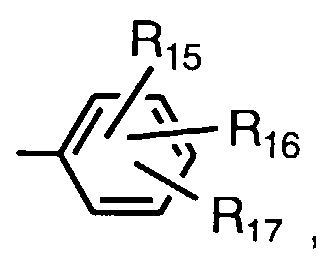
- B is preferably wherein R 16 and R 17 are each hydrogen and wherein R 15 is preferably H, OH, lower alkoxy, especially methoxy, or halogeno, especially chloro.
- a preferred definition of Z is -O-, e is preferably 0, and r is preferably 0.
- R 20 is preferably phenyl or W-substituted phenyl.
- Preferred W substituents for R 20 are lower alkoxy, especially methoxy and ethoxy, OH, and -C(O)R 12 , wherein R 12 is preferably lower alkoxy.
- Preferred definitions for R 21 are phenyl, lower alkoxy-substituted phenyl and F-phenyl.
- This invention also relates to a method of lowering the serum cholesterol level in a mammal in need of such treatment comprising administering an effective amount of a compound of formula I. That is, the use of a compound of the present invention as an hypocholesterolemic agent is also claimed.
- the present invention relates to a pharmaceutical composition
- a pharmaceutical composition comprising a serum cholesterol-lowering effective amount of a compound of formula I in a pharmaceutically acceptable carrier.
- the present invention also relates to a method of reducing plasma cholesterol levels, and to a method of treating or preventing atherosclerosis, comprising administering to a mammal in need of such treatment an effective amount of a combination of a spirocycloalkyl-substituted azetidinone cholesterol absorption inhibitor of this invention and a cholesterol biosynthesis inhibitor.
- the present invention relates to the use of a spirocycloalkyl-substituted azetidinone cholesterol absorption inhibitor for combined use with a cholesterol biosynthesis inhibitor (and, similarly, use of a cholesterol biosynthesis inhibitor for combined use with a spirocycloalkyl-substituted azetidinone cholesterol absorption inhibitor) to treat or prevent athersclerosis or to reduce plasma cholesterol levels
- the invention relates to a pharmaceutical composition
- a pharmaceutical composition comprising an effective amount of a spirocycloalkyl-substituted azetidinone cholesterol absorption inhibitor, a cholesterol biosynthesis inhibitor, and a pharmaceutically acceptable carrier.
- the invention relates to a kit comprising in one container an effective amount of a spirocycloalkyl-substituted azetidinone cholesterol absorption inhibitor in a pharmaceutically acceptable carrier, and in a separate container, an effective amount of a cholesterol biosynthesis inhibitor in a pharmaceutically acceptable carrier.
- lower alkyl means straight or branched alkyl chains of 1 to 6 carbon atoms and “lower alkyoxy” similarly refers to alkoxy groups having 1 to 6 carbon atoms.
- alkenyl means straight or branched carbon chains having one or more double bonds in the chain, conjugated or unconjugated, and alkadienyl refers to chains having two double bonds in the chain.
- alkylene and alkenylene are used.
- Cycloalkyl means a saturated carbon ring of 3 to 6 carbon atoms, while “cycloalkylene” refers to a corresponding bivalent ring, wherein the points of attachment to other groups include all positional isomers.
- Halogeno refers to fluorine, chlorine, bromine or iodine radicals.
- Heteroaryl includes all positional isomers for a given heteroaryl group as defined above, for example 2-pyridyl, 3-pyridyl and 4-pyridyl.
- Benzofused heteroaryl refers to radicals formed by the bonding of a benzene radical to adjacent carbon atoms on a heteroaryl ring; examples are indolyl, quinolyl, quinazolinyl, quinoxalinyl, benzotriazolyl, indazolyl, benzoxazolyl, benzothienyl and benzofuranyl.
- Phenylene means a bivalent phenyl group, including ortho, meta and para-substitution.
- “Lower alkanedioyl” means radicals of the formula -OC(O)(CH 2 ) 1-4 C(O)OH, while “lower alkyl lower alkanedioyl” means radicals of the formula -OC(O)(CH 2 ) 1-4 C(O)O-(lower alkyl).
- R 7 -benzyl and R 7 -benzyloxy refer to benzyl and benzyloxy radicals which are substituted on the phenyl ring.
- Compounds of the invention have at least one asymmetrical carbon atom and therefore all isomers, including diastereomers and rotational isomers are contemplated as being part of this invention.
- the invention includes d and I isomers in both pure form and in admixture, including racemic mixtures.
- Isomers can be prepared using conventional techniques, either by reacting enantiomeric starting materials or by separating isomers of a compound of formula I. Isomers may also include geometric isomers, e.g. when a double bond is present. All such geometric isomers are contemplated for this invention.
- Compounds of the invention with an amino group can form pharmaceutically acceptable salts with organic and inorganic acids.
- suitable acids for salt formation are hydrochloric, sulfuric, phosphoric, acetic, citric, oxalic, malonic, salicylic, malic, fumaric, succinic, ascorbic, maleic, methanesulfonic and other mineral and carboxylic acids well known to those in the art.
- the salt is prepared by contacting the free base form with a sufficient amount of the desired acid to produce a salt.
- the free base form may be regenerated by treating the salt with a suitable dilute aqueous base solution such as dilute aqueous sodium bicarbonate.
- the free base form differs from its respective salt form somewhat in certain physical properties, such as solubility in polar solvents, but the salt is otherwise equivalent to its respective free base forms for purposes of the invention.
- Certain compounds of the invention are acidic (e.g., those compounds which possess a carboxyl group). These compounds form pharmaceutically acceptable salts with inorganic and organic bases. Examples of such salts are the sodium, potassium, calcium, aluminum, gold and silver salts. Also included are salts formed with pharmaceutically acceptable amines such as ammonia, alkyl amines, hydroxyalkylamines, N-methylglucamine and the like.
- Cholesterol biosynthesis inhibitors for use in the combination of the present invention include HMG CoA reductase inhibitors such as lovastatin, pravastatin, fluvastatin, simvastatin and Cl-981; HMG CoA synthetase inhibitors, for example L-659,699 ((E,E-11-[3'R-(hydroxy-methyl)-4'-oxo-2'R-oxetanyl]-3,5,7R-trimethyl-2,4-undecadienoic acid); squalene synthesis inhibitors, for example squalestatin 1; and squalene epoxidase inhibitors, for example, NB-598 ((E)-N-ethyl-N-(6,6-dimethyl-2-hepten-4-ynyl)-3-[(3,3'-bithiophen-5-yl)methoxy]benzene-methanamine hydrochloride).
- a carboxylic acid of formula II can be converted to the corresponding acid chloride by refluxing with a reagent such as oxalyl chloride in an inert solvent such as CH 2 Cl 2 .
- the acid chloride is then refluxed with an imine of formula III in an inert solvent such as CH 2 Cl 2 , heptane or toluene, in the presence of a trialkylamine (i.e., (alkyl) 3 N) such as triethylamine, tributylamine or diisopropylethylamine.
- a trialkylamine i.e., (alkyl) 3 N
- triethylamine tributylamine or diisopropylethylamine.
- a keto-azetidinone of formula IV can be converted to a carbinol of formula Ia, i.e., a compound of formula I wherein R 1 is by treatment with a Grignard reagent of formula R 4 MgX, wherein R 4 is as defined above and X is a halogen such as bromine, chlorine or iodine.
- a carbinol of formula Ia is converted to an olefin of formula Ib, wherein R 1 and an adjacent R 2 form a double bond (other R 2 groups can also be present) by dehydration with a mild acid such as p-toluenesulfonic acid (p-TsOH) under anhydrous conditions, e.g., using toluene as a solvent, or by treatment with a dehydrating agent such as (methoxycarbonylsulfamoyl)-triethylammonium hydroxide inner salt.
- a mild acid such as p-toluenesulfonic acid (p-TsOH)
- p-TsOH p-toluenesulfonic acid
- a dehydrating agent such as (methoxycarbonylsulfamoyl)-triethylammonium hydroxide inner salt.
- An olefin of formula Ib is reduced with hydrogen in the presence of a suitable catalyst such as palladium or an iridinium salt to obtain the desired azetidinone of formula I.
- a suitable catalyst such as palladium or an iridinium salt
- the resulting products have primarily the ANTI stereochemistry, IB.
- Keto-azetidinone starting materials of formula IV can be prepared, for example, by the following processes:
- a carboxylic acid ester of formula V wherein R 22 is lower alkyl, such as ethyl, or a chiral moiety such as menthyl or 10-(diisopropyl-sulfonamido)-isobomyl, is treated with a strong base such as lithium diisopropylamide (LDA) in a suitable solvent such as tetrahydrofuran (THF) at -78°C.
- LDA lithium diisopropylamide
- THF tetrahydrofuran
- An imine of formula III is added and the reaction mixture is stirred at -78°C for a suitable period, e.g., one hour, then allowed to warm to room temperature.
- the product of formula VI is isolated using conventional purification techniques.
- the ester group R 22 is chiral, the product is non-racemic.
- the ketal protecting group is removed by treatment with a mild acid such as p-TsOH to obtain the keto-aze
- a ketoacid of formula VII can be treated with CICOCOCI and reacted with an imine of formula III as described in Process A to obtain a keto-azetidinone of formula IV.
- carboxylic acids and imines of formulas II, III, V and VII used as starting materials in the above process are known in the art or can be prepared by one skilled in the art using well known procedures. Typical procedures for preparing a variety of carboxylic acids are described below in Preparations 1 to 6.
- Reactive groups not involved in the above processes can be protected during the reactions with conventional protecting groups which can be removed by standard procedures after the reaction.
- Table 3 shows some typical protecting groups:
- compounds of this invention lower serum lipid levels, in particular serum cholesterol levels.
- Compounds of this invention have been found to inhibit the intestinal absorption of cholesterol and to significantly reduce the formation of liver cholesteryl esters in animal models.
- compounds of this invention are hypocholesterolemic agents by virtue of their ability to inhibit the esterification and/or intestinal absorption of cholesterol; they are, therefore, useful in the treatment and prevention of atherosclerosis in mammals, in particular in humans.
- Hamsters are separated into groups of six and given a controlled cholesterol diet (Purina Chow #5001 containing 0.5% cholesterol) for seven days. Diet consumption is monitored to determine dietary cholesterol exposure in the face of test compounds. The animals are dosed with the test compound once daily beginning with the initiation of diet. Dosing is by oral gavage of 0.2mL of com oil alone (control group) or solution (or suspension) of test compound in com oil. All animals moribund or in poor physical condition are euthanized. After seven days, the animals are anesthetized by IM injection of ketamine and sacrificed by decapitation. Blood is collected into vacutainer tubes containing EDTA for plasma lipid analysis and the liver excised for tissue lipid analysis. Data is reported as percent reduction of lipid versus control.
- the present invention also relates to a pharmaceutical composition
- a pharmaceutical composition comprising a compound of formula I and a pharmaceutically acceptable carrier.
- the compounds of formula I can be administered in any conventional dosage form, preferably an oral dosage form such as a capsule, tablet, powder, cachet, suspension or solution.
- the formulations and pharmaceutical compositions can be prepared using conventional pharmaceutically acceptable excipients and additives and conventional techniques.
- Such pharmaceutically acceptable excipients and additives include non-toxic compatible fillers, binders, disintegrants, buffers, preservatives, anti-oxidants, lubricants, flavorings, thickeners, coloring agents, emulsifiers and the like.
- the daily hypocholesteremic dose of a compound of formula I is about 7 to about 30 mg/kg of body weight per day.
- the dosage level is therefore from about 500 to about 2000 mg of drug per day, given in a single dose or 2-4 divided doses .
- the exact dose is determined by the attending clinician and is dependent on the potency of the compound administered, the age, weight, condition and response of the patient.
- STEP 1 Cool a mixture of 4-phenyl-cyclohexanone (30 g) and tosylmethyl isocyanide (36.9 g) in dimethoxyethane (800 mL) in an ice/acetone bath. Add a solution of potassium t-butoxide (38.7 g) in dimethoxyethane (300 mL) and t-butanol (300 mL). Stir the reaction mixture for 4h, pour into water and extract the product with ethyl acetate (EtOAc). Separate the organic layer, concentrate and use in STEP 2 without purification.
- EtOAc ethyl acetate
- STEP 2 Dissolve the product from STEP 1 (32.8 g) in CH 3 OH (240 mL) and add water (800 mL), Ba(OH) 2 (95 g) and NaOH (7.8 g). Heat the reaction mixture at reflux for 24h. Remove most of the CH 3 OH under vacuum and extract the aqueous solution with ether (Et 2 O). Separate the aqueous layer, acidify with conc. HCI and extract the product with Et 2 O. Concentrate the ether solution to obtain the title compound (17.6 g).
- 4-Phenyl-4-methyl-cyclohexanecarboxylic acid is similarly prepared from 4-phenyl-4-methyl-cyclohexanone.
- STEP 1 Slowly add 4-chlorophenylmagnesium chloride (5.9 mL of 1M solution) to a solution of ethyl 4-oxo-cyclohexanecarboxylate (1.0 g) in Et 2 O at 0°C. After 1h, pour the reaction mixture into 1N HCI and extract with Et 2 O. Separate the organic layer, wash with water, brine and concentrate to give ethyl 4-(4-chlorophenyl)-4-hydroxy-cyclohexanecarboxylate (1.75 g) which is used without purification in the next step.
- STEP 2 Dissolve the product (1.75 g) from STEP 1 in THF (100 mL), treat with 40% H 2 SO 4 (25 mL) and heat the reaction mixture at reflux for 5.5h. Remove most of the solvent in vacuo, dilute the reaction mixture with water and extract with Et 2 O. Separate the organic layer and concentrate to give 4-(4-chlorophenyl)-cyclohex-3-enecarboxylic acid (1.36 g).
- STEP 3 Reduce a solution of the product of STEP 2 (1.36 g) in EtOAc (50 mL) over 10% Pd/C under H 2 (50 psi) for 14 h. Filter the catalyst and concentrate the solution to give the title compound (1.36 g).
- STEP 1 Reduce a solution of terphthalic acid mono-methyl ester (12.6 g) using a procedure similar to that of Preparation 3 to obtain 1,4-cyclohexanedicarboxylic acid mono-methy ester (12.64 g). The crude product is used without purification in the next step.
- STEP 2 Add CICOCOCI (4.1 g) to a solution of the product of STEP 1 (3.0 g) in CH 2 Cl 2 (15 mL) and heat the mixture at reflux for 1.5h. Remove excess CICOCOCI in vacuo and dissolve the product in benzene. Cool the reaction mixture in an ice/water bath and slowly add AlCl 3 (4.74 g). Stir the reaction mixture overnight as it warms to ambient temperature and pour into a conc. HCl/ice mixture. Extract the product with Et 2 O, separate the organic layer, wash with water and brine, then concentrate to obtain methyl 4-(4-benzoyl)-cyclohexane-carboxylate (3.9 g).
- STEP 3 Reduce a solution of the product of STEP 2 (2.5 g) in EtOAc (15 mL) and acetic acid (HOAc) (50 mL) over 10%Pd/C (0.3 g) under H 2 (60 psi) for 22h. Filter the catalyst, dilute the reaction mixture with water and extract the product with Et 2 O. Separate the organic layer and concentrate to obtain a mixture of methyl 4-( ⁇ -hydroxybenzyl)-cyclohexanecarboxylate and methyl (4-benzylcyclohexane-carboxylate (2.46 g).
- STEP 4 Dissolve the product from STEP 3 (2.46 g) in THF (100 mL), treat with 40% H 2 SO 4 (25 mL) and heat the reaction mixture at reflux for 5 h. Pour the reaction mixture into excess water and extract with EtOAc. Separate the organic layer, concentrate, and reduce the crude mixture over 10%Pd/C (0.25 g) under H 2 (60 psi) overnight. Filter the catalyst and concentrate the solution to obtain the title compound (2.42 g).
- STEP 1 Slowly add 2-phenylethyl bromide (2.6 g) to a slurry of Mg (0.37 g) in THF (50 mL) and heat at reflux for 4h. Cool the solution to ambient temperature and add to a solution of ethyl 4-oxo-cyclo-hexane-carboxylate (2.4 g) in THF (50 mL). After 2h, pour the reaction mixture into a half-saturated solution of NH 4 Cl and extract with EtOAc. Partially purify the product on a silica gel column, eluting with EtOAc.
- STEP 2 To a solution of the product of STEP 1 (1.33 g) in EtOAc (40 mL), add 10% Pd/C (0.2 g) and hydrogenate overnight at 58 psi. Filter the catalyst and concentrate the reaction mixture to give ethyl 4-(2-phenylethyl)-cyclohexanecarboxylate (1.26 g).
- STEP 3 To a solution of the product of STEP 2 (1.26 g) in MeOH (20 mL), add water (5 mL) and LiOH (0.61 g) and stir overnight at ambient temperature. Dilute the reaction mixture with water and extract with Et 2 O. Acidify the aqueous layer with conc.HCI and extract with EtOAc. Separate the organic layer, wash with water and brine, and concentrate to obtain the title compound (1.06 g).
- STEP 1 Slowly add a solution of diethyl 2-benzylmalonate (20 g) in Et 2 O (300 mL) to a slurry of LiAIH 4 (6 g) in Et 2 O (300 mL), then heat the reaction mixture at reflux for 14h. Carefully add 4N NaOH to the reaction mixture until there is no precipitate, then extract with EtOAc. Concentrate the organic layer and purify the crude product on a silica gel column, eluting with EtOAc to obtain 2-benzyl-1,3-propanediol (8.45 g).
- STEP 2 Slowly add (C 6 H 5 ) 3 P (17.4 g) to a solution of the product of STEP 1 (5 g) in CH 2 Cl 2 (200 mL) containing CBr 4 (21 g) at 0°C. Stir the reaction mixture overnight and allow to warm to ambient temperature. Evaporate the solvent in vacuo, triturate the crude product with pentane, filter, concentrate the filtrate and purify the residue on a silica gel column, eluting with hexane to give 2-benzyl-1,3-propanedibromide (5.47 g).
- STEP 3 Add diethyl malonate (3 g) to a slurry of NaH (0.514 g) in dimethylformamide (DMF) (75 mL) at ambient temperature. After 1 h, heat the reaction mixture to 100°C for 1h, cool to ambient temperature, add a solution of the product of STEP 2 (5 g) in DMF (25 mL) and stir at ambient temperature for 2.5h, followed by 2h at 150°C. Cool the mixture to ambient temperature, add NaH (0.514 g) and after 30 min., heat at 150°C overnight. Cool the reaction mixture, pour into excess water and extract - with EtOAc. Separate the organic layer, wash with water and concentrate. Purify the crude product on a silica gel column, eluting with EtOAc:hexane (1:9) to obtain diethyl (3-benzyl)-cyclobutyl-1,1-dicarboxylate (3 g).
- DMF dimethylformamide
- STEP 4 To a solution of the product of STEP 3 (3 g) in EtOH (20 mL), add water (5 mL) and KOH (2.9 g) and heat at reflux overnight. Dilute the reaction mixture with water and extract with Et 2 O. Acidify the aqueous layer with conc.HCI and extract with CH 2 Cl 2 . Separate the organic layer and concentrat to give 3-benzyl-cyclobutyl-1,1-dicarboxylic acid (2.31 g).
- STEP 5 Heat the product of STEP 4 (2.31 g) at 170-180°C under vacuum (60-70 mm) for 1.5h to obtain the title compound (1.85 g).
- STEP 1 Heat a mixture of 4-carbomethoxycyclohexanone (4.4 g, 0.028 moles), HOCH 2 CH 2 OH (3.2 mL, 0.056 moles), and a catalytic amount of p-TsOH in toluene at reflux for 4 hr with continuous removal of water. Cool to room temperature, wash the organic layer with water, dry over MgSO 4 , and evaporate to give the crude ketal. Dissolve ketal in MeOH (80 mL) containing KOH (5.6 g) and stir at room temperature overnight. Concentrate to dryness and dissolve in Et 2 O (100 mL). Adjust to pH 2 with 1 N HCI. Extract with Et 2 O (3 x 100 mL), dry over MgSO 4 and evaporate to obtain 4.0 grams of the ethylene ketal of 4-cyclohexanonecarboxylic acid.
- STEP 2 Add the product from Step 1 (0.344 g, 1.8 mmol) and 10- diisopropylsulfonamido)-isobomeol (0.570 g, 1.8 mmol) to a mixture of DCC (0.556 g, 2.7 mmol), dimethylaminopyridine (DMAP) (0.330 g, 2.7 mmol), and DMAP HCI (0.003 g) in CH 2 Cl 2 (5 mL). Stir at room temp. overnight, dilute with Et 2 O (150 mL) and filter. Concentrate the filtrate under vacuum and purify the crude ester by chromatography on silica gel, eluting with 30% EtOAc/hexane to obtain 0.508 grams of the ester.
- DCC 0.556 g, 2.7 mmol
- DMAP dimethylaminopyridine
- HCI 0.003 g
- STEP 3 Prepare a solution of LDA (from [(CH 3 ) 2 CH] 2 NH (0.23 mL) and 1.6M CH 3 (CH 2 ) 3 Li (1.03 mL) in hexane) in THF (5 mL), cool to -78° C and add a solution of the product of Step 2 in THF (5 mL). Stir at -78° C for 1.5 hr, then add a solution of (N-(4-methoxy-benzylidine)aniline (0.278 g, 1.32 mmol) in THF (5 mL). Stir this mixture at -78° C for 1 hr and at room temperature for 1 hr.
- Step 4 Stir the product of Step 3 overnight in 5:1 acetone: 3N HCI to obtain 0.21 grams of the title compound. If 10-diisolpropylsulfonamido)-isobomeol derived from (+)-10-camphorsulfonyl chloride is used in Step 1, the product has the (S)-configuration.
- Step 2 React the product of Step 1 (0.30 g, 0.0015 moles) with LDA (1.2 equivalents) in THF followed by N-(4-methoxybenzylidine)aniline as described for Preparation 7, Step 3, to obtain 0.52 grams of the resulting azetidinone as a mixture of diastereomers. Separate these diastereomers by chromatography on silica gel, eluting with 20% EtOAc/hexane to obtain 0.16 grams of component A and 0.22 grams of component B.
- STEP 3 Treat component A of Step 2 (1.38 g) with aqueous HCI as described for Preparation 7, Step 4, to obtain 1.15 grams of rel (3R,4R)-3-(4-methoxyphenyl)-2-phenyl-2-azaspiro[3.4]octane-1,6-dione. Similar treatment of component B yields rel (3R,4S)-3-(4-methoxyphenyl)-2-phenyl-2-azaspiro[3.4]octane-1,6-dione.
- Enantiomeric compounds of Examples 22 and 23 were prepared by chromatographic resolution of the racemate in a CHIRACEL OD HPLC column eluting with 93:7 hexane:isopropanol at a flow rate of mL/min.
- Enantiomeric compounds of Examples 26 and 27 were prepared by chromatographic resolution of the racemate in a CHIRACEL OD HPLC column eluting with 95:5 hexane:isopropanol at a flow rate of 5 mL/min.
- STEP 1 Add p-TsOH (0.08 g) to a solution of the product of Example 35 (0.5 g) and stir at 60° C over 4A sieves for 3.5 hr. Filter the mixture through celite, wash with sat'd NaHCO 3 , dry over Na 2 SO 4 , and evaporate to obtain 7-(4-fluorophenyl)-7-hydroxy-3-(4-methoxyphenyl)-2-phenyl-2-azaspiro[3.5]non-6-en-1-one, which can be used in STEP 2 with or without purification by chromatography over silica gel.
- Example 36 Dissolve the compound of Example 36 (0.31 g, 0.693 moles) in CH 2 Cl 2 (7 mL) at -78°C and add dropwise, over 2-3 min., diethylamino-sulfur trifluoride (0.145 mL, 1.09 mmoles). Stir the mixture for 2 hr. at -78°C. Quench the mixture with ice-cold saturated NaHCO 3 and extract with CH 2 Cl 2 (2x10 mL). Dry the combined organic layers over Na 2 SO 4 and concentrate to an oil. Purify by flash chromatography on silica gel to obtain pure SYN diastereomer (0.146 mg) and impure ANTI diastereomer (0.72 mg). Purify the ANTI diastereomer by preparative TLC on a 20x20 cm silica gel plate, eluting with CH 2 Cl 2 to obtain 0.026 g.
Landscapes
- Chemical & Material Sciences (AREA)
- Organic Chemistry (AREA)
- Health & Medical Sciences (AREA)
- Engineering & Computer Science (AREA)
- Bioinformatics & Cheminformatics (AREA)
- Public Health (AREA)
- Animal Behavior & Ethology (AREA)
- Veterinary Medicine (AREA)
- General Health & Medical Sciences (AREA)
- Chemical Kinetics & Catalysis (AREA)
- General Chemical & Material Sciences (AREA)
- Medicinal Chemistry (AREA)
- Nuclear Medicine, Radiotherapy & Molecular Imaging (AREA)
- Pharmacology & Pharmacy (AREA)
- Life Sciences & Earth Sciences (AREA)
- Cardiology (AREA)
- Heart & Thoracic Surgery (AREA)
- Vascular Medicine (AREA)
- Urology & Nephrology (AREA)
- Diabetes (AREA)
- Hematology (AREA)
- Obesity (AREA)
- Pharmaceuticals Containing Other Organic And Inorganic Compounds (AREA)
- Steroid Compounds (AREA)
- Nitrogen Condensed Heterocyclic Rings (AREA)
- Acyclic And Carbocyclic Compounds In Medicinal Compositions (AREA)
- Plural Heterocyclic Compounds (AREA)
- Nitrogen And Oxygen Or Sulfur-Condensed Heterocyclic Ring Systems (AREA)
Abstract
Description
- The present invention relates to spirocycloalkyl-substituted azetidinones useful as hypocholesterolemic agents in the treatment and prevention of atherosclerosis, and to the combination of a spirocycloalkyl-substituted azetidinone of this invention and a cholesterol biosynthesis inhibitor for the treatment and prevention of atherosclerosis.
- Atherosclerotic coronary heart disease represents the major cause for death and cardiovascular morbidity in the western world. Risk factors for atherosclerotic coronary heart disease include hypertension, diabetes mellitus, family history, male sex, cigarette smoke and serum cholesterol. A total cholesterol level in excess of 225-250 mg/dl is associated with significant elevation of risk.
- Cholesteryl esters are a major component of atherosclerotic lesions and the major storage form of cholesterol in arterial wall cells. Formation of cholesteryl esters is also a key step in the intestinal absorption of dietary cholesterol. Thus, inhibition of cholesteryl ester formation and reduction of serum cholesterol is likely to inhibit the progression of atherosclerotic lesion formation, decrease the accumulation of cholesteryl esters in the arterial wall, and block the intestinal absorption of dietary cholesterol.
- A few azetidinones have been reported as being useful in lowering cholesterol and/or in inhibiting the formation of cholesterol-containing lesions in mammalian arterial walls. U.S. 4,983,597 discloses N-sulfonyl-2-azetidinones as anticholesterolemic agents and Ram, et al., in Indian J Chem., Sect. B. 29B, 12 (1990), p. 1134-7, disclose ethyl 4-(2-oxoazetidin-4-yl)phenoxy-alkanoates as hypolipidemic agents.
- European Patent Application 337,549 discloses elastase inhibitory substituted azetidinones comprising a spirocyclo substituent at the 3-position; elastase inhibitors are said to be useful in treating inflammatory conditions resulting in tissue destruction which are associated with various disease states, e.g. atherosclerosis.
- PCT/US92/05972, filed July 21, 1992, and published as WO93/02048 on February 4, 1993 discloses β-lactam (i.e., azetidinone) cholesterol absorption inhibitors which lack a spirocycloalkyl group at the 3-position.
- In addition to regulation of dietary cholesterol, the regulation of whole-body cholesterol homeostasis in humans and animals involves modulation of cholesterol biosynthesis, bile acid biosynthesis, and the catabolism of the cholesterol-containing plasma lipoproteins. The liver is the major organ responsible for cholesterol biosynthesis and catabolism and, for this reason, it is a prime determinant of plasma cholesterol levels. The liver is the site of synthesis and secretion of very low density lipoproteins (VLDL) which are subsequently metabolized to low density lipoproteins (LDL) in the circulation. LDL are the predominant cholesterol-carrying lipoproteins in the plasma and an increase in their concentration is correlated with increased atherosclerosis.
- When cholesterol absorption in the intestines is reduced, by whatever means, less cholesterol is delivered to the liver. The consequence of this action is a decreased hepatic lipoprotein (VLDL) production and an increase in the hepatic clearance of plasma cholesterol, mostly as LDL Thus, the net effect of an inhibition of intestinal cholesterol absorption is a decrease in plasma cholesterol levels.
- The inhibition of cholesterol biosynthesis by 3-hydroxy-3-methylglutaryl coenzyme A reductase (EC1.1.1.34) inhibitors has been shown to be an effective way to reduce plasma cholesterol (Witzum, Circulation, 80, 5 (1989), p. 1101-1114) and reduce atherosclerosis. Combination therapy of an HMG CoA reductase inhibitor and a bile acid sequestrant has been demonstrated to be more effective in human hyperlipidemic patients than either agent in monotherapy (Illingworth, Drugs, 36 (Suppl. 3) (1988), p. 63-71).
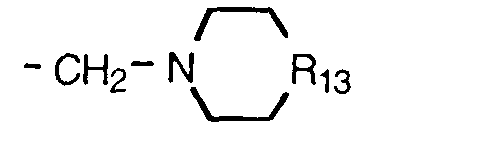
- Novel hypocholesterolemic compounds of the present invention are represented by the formula Ior a pharmaceutically acceptable salt thereof, wherein:

R1 is
- R2 and R3 are independently selected from the group consisting
of -CH2-, -CH(C1-C6 alkyl)-, -C(di-C1-C6 alkyl)-, -CH=CH- and
-C(C1-C6 alkyl)=CH-; or R1 together with an adjacent R2, or R1 together
with an adjacent R3, form a
group;

- u and v are independently 0, 1, 2 or 3, provided both are not zero; provided that when R2 is -CH=CH- or -C(C1-C6 alkyl)=CH-, v is 1; provided that when R3 is -CH=CH- or-C(C1-C6 alkyl)=CH-, u is 1; provided that when v is 2 or 3, the R2's can be the same or different; and provided that when u is 2 or 3, the R3's can be the same or different;
- R4 is
- B-(CH2)mC(O)-, wherein m is 0, 1, 2, 3, 4 or 5;
- B-(CH2)q-, wherein q is 0, 1, 2, 3, 4, 5 or 6;
- B-(CH2)e-Z-(CH2)r-, wherein Z is -O-, -C(O)-, phenylene, -N(R8)- or -S(O)0-2-, e is 0, 1, 2, 3, 4 or 5 and r is 0, 1, 2, 3, 4 or 5, provided that the sum of e and r is 0, 1, 2, 3, 4, 5 or 6;
- B-(C2-C6 alkenylene)-; B'-(C4-C6 alkadienylene)-;
- B-(CH2)t-Z-(C2-C6 alkenylene)-, wherein Z is as defined above, and wherein t is 0, 1, 2 or 3, provided that the sum of t and the number of carbon atoms in the alkenylene chain is 2, 3, 4, 5 or 6;
- B-(CH2)f-V-(CH2)g-, wherein V is C3-C6 cycloalkylene, f is 1, 2, 3, 4 or 5 and g is 0, 1, 2, 3, 4 or 5, provided that the sum of f and g is 1, 2, 3, 4, 5 or 6;
- B-(CH2)t-V-(C2-C6 alkenylene)- or B'-(C2-C6 alkenylene)-V-(CH2)t-, wherein V and t are as defined above, provided that the sum of t and the number of carbon atoms in the alkenylene chain is 2, 3, 4, 5 or 6;
- B-(CH2)a-Z-(CH2)b-V-(CH2)d-, wherein Z and V are as defined above and a, b and d are independently 0, 1, 2, 3, 4, 5 or 6, provided that the sum of a, b and d is 0, 1, 2, 3, 4, 5 or 6;
- T-(CH2)s-, wherein T is cycloalkyl of 3-6 carbon atoms and s is 0, 1, 2, 3, 4, 5 or 6; or
- R1 and R4 together form the group

- B is indanyl, indenyl, naphthyl, tetrahydronaphthyl, heteroaryl or
W-substituted heteroaryl, wherein heteroaryl is selected from the group
consisting of pyrrolyl, pyridinyl, pyrimidinyl, pyrazinyl, triazinyl, imidazolyl,
thiazolyl, pyrazolyl, thienyl, oxazolyl and furanyl, and for nitrogen-containina
heteroarvls, the N-oxides thereof, or

- W is 1 to 3 substituents independently selected from the group consisting of C1-C6 alkyl, hydroxy C1-C6 alkyl, C1-C6 alkoxy,
- (C1-C6)alkoxyimino-(C1-C6)alkyl, C1-C6
alkanedioyl, (C1-C6)alkyl-(C1-C6)alkanedioyl, allyloxy, -CF3, -OCF3,
benzyl, R7-benzyl, benzyloxy, R7-benzyloxy, phenoxy, R7-phenoxy,
dioxolanyl, NO2, -N(R8)(R9), N(R8)(R9)-(C1-C6)alkylene-, N(R8)(R9)-(C1-C6)alkylenyloxy-,
OH, halogeno, -CN, -N3, -NHC(O)OR10,
-NHC(O)R10, R11O2SNH-, (R11O2S)2N-, -S(O)2NH2, -S(O)0-2R8, tert-butyldimethyl-silyloxymethyl,
-C(O)R12, -COOR19, -CON(R8)(R9),
-CH=CHC(O)R12, -(C1-C6)alkylene-C(O)R12, R10C(O)(C1-C6
alkylenyloxy)-, N(R8)(R9)C(O)(C1C6 alkylenyloxy)- and
for substitution on ring carbon atoms, and the substituents on the substituted heteroaryl ring nitrogen atoms, when present, are selected from the group consisting of C1-C6 alkyl, C1-C6 alkoxy, -C(O)OR10, -C(O)R10, OH, N(R8)(R9)-(C1-C6)alkylene-, N(R8)(R9)-(C1-C6)alkylenyloxy-, -S(O)2NH2 and 2-(trimethylsilyl)-ethoxymethyl;
- R7 is 1-3 groups independently selected from the group consisting of C1-C6 alkyl, C1-C6 alkoxy, -COOH, NO2, -N(R8)(R9), OH or halogeno;
- R8 and R9 are independently H or C1-C6 alkyl;
- R10 is C1-C6 alkyl, phenyl, R7-phenyl, benzyl or R7-benzyl;
- R11 is OH, C1-C6 alkyl, phenyl, benzyl, R7-phenyl or R7-benzyl;
- R12 is H, OH, C1-C6 alkoxy, phenoxy, benzyloxy,
-N(R8)(R9), C1-C6 alkyl, phenyl or R7-phenyl;

- R13 is -O-, -CH2-, -NH-, -N(C1-C6 alkyl)- or -NC(O)R19;
- R15, R16 and R17 are independently selected from the group consisting of H and the groups defined for W; or R15 is hydrogen and R16 and R17, together with adjacent carbon atoms to which they are attached, form a dioxolanyl ring;
- R19 is H, C1-C6 alkyl, phenyl or phenyl C1-C6 alkyl; and
- R20 and R21 are independently selected from the group consisting of phenyl, W-substituted phenyl, naphthyl, W-substituted naphthyl, indanyl, indenyl, tetrahydronaphthyl, benzodioxolyl, heteroaryl, W-substituted heteroaryl, benzofused heteroaryl, W-substituted benzofused heteroaryl and cyclopropyl, wherein heteroaryl is as defined above.
-
- One group of preferred compounds of formula I is that wherein R21 is phenyl, W-substituted phenyl, indanyl, benzofuranyl, benzodioxolyl, tetrahydronaphthyl, pyridyl, pyrazinyl, pyrimidinyl, quinolyl or cyclopropyl, wherein W is lower alkyl, lower alkoxy, OH, halogeno, -N(R8)(R9), -NHC(O)OR10, -NHC(O)R10, NO2, -CN, -N3, -SH, -S(O)0-2-(lower alkyl), -COOR19, -CON(R8)(R9), -COR12, phenoxy, benzyloxy, -OCF3, -CH=C(O)R12 or tert-butyldimethylsilyloxy, wherein R8, R9, R10, R12 and R19 are as defined for formula I. When W is 2 or 3 substituents, the substituents can be the same or different.
- Another group of preferred compounds of formula I is that wherein R20 is phenyl or W-substituted phenyl, wherein preferred meanings of W are as defined above for preferred definitions of R21.
- More preferred are compounds of formula I wherein R20 is phenyl or W-substituted phenyl and R21 is phenyl, W-substituted phenyl, indanyl, benzofuranyl, benzodioxolyl, tetrahydronaphthyl, pyridyl, pyrazinyl, pyrimidinyl, quinolyl or cyclopropyl; W is lower alkyl, lower alkoxy, OH, halogeno, -N(R8)(R9), -NHC(O)OR10, -NHC(O)R10, NO2, -CN, -N3, -SH, -S(O)0-2-(lower alkyl), -COOR19, -CON(R8)(R9), -COR12. phenoxy, benzyloxy, -CH=CHC(O)R12, -OCF3 or tert-butyl-dimethylsilyloxy, wherein when W is 2 or 3 substituents, the substituents can be the same or different, and wherein R8, R9, R10, R12 and R19 are as defined in formula I.
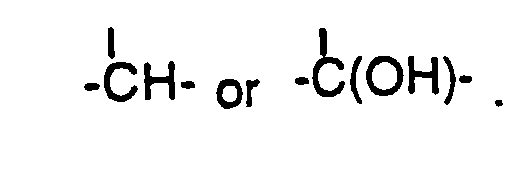
- Also preferred are compounds of formula I wherein R1 isAnother group of preferred compounds of formula I is that wherein R2 and R3 are each -CH2- and the sum of u and v is 2, 3 or 4, with u=v=2 being more preferred. R4 is preferably B-(CH2)q- or B-(CH2)e-Z-(CH2)r-, wherein B, Z, q, e and r are as defined above. B is preferably
 wherein R16 and R17 are each hydrogen and wherein R15 is preferably H, OH, lower alkoxy, especially methoxy, or halogeno, especially chloro. A preferred definition of Z is -O-, e is preferably 0, and r is preferably 0. A preferred definition of q is 0-2. R20 is preferably phenyl or W-substituted phenyl. Preferred W substituents for R20 are lower alkoxy, especially methoxy and ethoxy, OH, and -C(O)R12, wherein R12 is preferably lower alkoxy. Preferred definitions for R21 are phenyl, lower alkoxy-substituted phenyl and F-phenyl.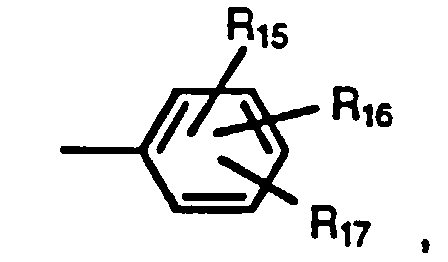
- Especially preferred are compounds of formula I wherein R1 isor
 R2 and R3 are each -CH2-, u=v=2, R4 is B-(CH2)q-, wherein B is phenyl or phenyl substituted by lower alkoxy or chloro, q is 0-2, R20 is phenyl, OH-phenyl, lower alkoxy-substituted phenyl or lower alkoxycarbonyl-substituted phenyl, and R21 is phenyl, lower alkoxy-substituted phenyl or F-phenyl.
- This invention also relates to a method of lowering the serum cholesterol level in a mammal in need of such treatment comprising administering an effective amount of a compound of formula I. That is, the use of a compound of the present invention as an hypocholesterolemic agent is also claimed.
- In still another aspect, the present invention relates to a pharmaceutical composition comprising a serum cholesterol-lowering effective amount of a compound of formula I in a pharmaceutically acceptable carrier.
- The present invention also relates to a method of reducing plasma cholesterol levels, and to a method of treating or preventing atherosclerosis, comprising administering to a mammal in need of such treatment an effective amount of a combination of a spirocycloalkyl-substituted azetidinone cholesterol absorption inhibitor of this invention and a cholesterol biosynthesis inhibitor. That is, the present invention relates to the use of a spirocycloalkyl-substituted azetidinone cholesterol absorption inhibitor for combined use with a cholesterol biosynthesis inhibitor (and, similarly, use of a cholesterol biosynthesis inhibitor for combined use with a spirocycloalkyl-substituted azetidinone cholesterol absorption inhibitor) to treat or prevent athersclerosis or to reduce plasma cholesterol levels
- In yet another aspect, the invention relates to a pharmaceutical composition comprising an effective amount of a spirocycloalkyl-substituted azetidinone cholesterol absorption inhibitor, a cholesterol biosynthesis inhibitor, and a pharmaceutically acceptable carrier. In a final aspect, the invention relates to a kit comprising in one container an effective amount of a spirocycloalkyl-substituted azetidinone cholesterol absorption inhibitor in a pharmaceutically acceptable carrier, and in a separate container, an effective amount of a cholesterol biosynthesis inhibitor in a pharmaceutically acceptable carrier.
- As used herein, the term "lower alkyl" means straight or branched alkyl chains of 1 to 6 carbon atoms and "lower alkyoxy" similarly refers to alkoxy groups having 1 to 6 carbon atoms.
- "Alkenyl" means straight or branched carbon chains having one or more double bonds in the chain, conjugated or unconjugated, and alkadienyl refers to chains having two double bonds in the chain.
- Where an alkyl or alkenyl chain joins two other variables and is therefore bivalent, the terms alkylene and alkenylene are used.
- "Cycloalkyl" means a saturated carbon ring of 3 to 6 carbon atoms, while "cycloalkylene" refers to a corresponding bivalent ring, wherein the points of attachment to other groups include all positional isomers.
- "Halogeno" refers to fluorine, chlorine, bromine or iodine radicals.
- "Heteroaryl" includes all positional isomers for a given heteroaryl group as defined above, for example 2-pyridyl, 3-pyridyl and 4-pyridyl. Benzofused heteroaryl refers to radicals formed by the bonding of a benzene radical to adjacent carbon atoms on a heteroaryl ring; examples are indolyl, quinolyl, quinazolinyl, quinoxalinyl, benzotriazolyl, indazolyl, benzoxazolyl, benzothienyl and benzofuranyl.
- "Phenylene" means a bivalent phenyl group, including ortho, meta and para-substitution.
- "(Lower alkoxyimino)lower alkyl" refers to the group (C1-C6 lower alkoxy)-N=CH-(C1-C5 lower alkyl). "Lower alkanedioyl" means radicals of the formula -OC(O)(CH2)1-4C(O)OH, while "lower alkyl lower alkanedioyl" means radicals of the formula -OC(O)(CH2)1-4C(O)O-(lower alkyl).
- R7-benzyl and R7-benzyloxy refer to benzyl and benzyloxy radicals which are substituted on the phenyl ring.
- Compounds of the invention have at least one asymmetrical carbon atom and therefore all isomers, including diastereomers and rotational isomers are contemplated as being part of this invention. The invention includes d and I isomers in both pure form and in admixture, including racemic mixtures. Isomers can be prepared using conventional techniques, either by reacting enantiomeric starting materials or by separating isomers of a compound of formula I. Isomers may also include geometric isomers, e.g. when a double bond is present. All such geometric isomers are contemplated for this invention.
- For compounds of the invention wherein R1 is not N, at least two diastereomeric forms are possible. The following formulae IA and IB represent structures designated herein as "diastereomer A", wherein the lactam carbonyl group and the R4 group are SYN, and "diastereomer B", wherein the lactam carbonyl group and the R4 group are ANTI, respectively:wherein R5 is hydrogen, lower alkyl, fluoro, hydroxy, phenyl, or R15-substituted phenyl, and R2, R3, R4, R15, R20, R21, u and v are as defined above.

- Those skilled in the art will appreciate that for some compounds of formula I, one isomer will show greater pharmacological activity than another isomer.
- Compounds of the invention with an amino group can form pharmaceutically acceptable salts with organic and inorganic acids. Examples of suitable acids for salt formation are hydrochloric, sulfuric, phosphoric, acetic, citric, oxalic, malonic, salicylic, malic, fumaric, succinic, ascorbic, maleic, methanesulfonic and other mineral and carboxylic acids well known to those in the art. The salt is prepared by contacting the free base form with a sufficient amount of the desired acid to produce a salt. The free base form may be regenerated by treating the salt with a suitable dilute aqueous base solution such as dilute aqueous sodium bicarbonate. The free base form differs from its respective salt form somewhat in certain physical properties, such as solubility in polar solvents, but the salt is otherwise equivalent to its respective free base forms for purposes of the invention.
- Certain compounds of the invention are acidic (e.g., those compounds which possess a carboxyl group). These compounds form pharmaceutically acceptable salts with inorganic and organic bases. Examples of such salts are the sodium, potassium, calcium, aluminum, gold and silver salts. Also included are salts formed with pharmaceutically acceptable amines such as ammonia, alkyl amines, hydroxyalkylamines, N-methylglucamine and the like.
- Cholesterol biosynthesis inhibitors for use in the combination of the present invention include HMG CoA reductase inhibitors such as lovastatin, pravastatin, fluvastatin, simvastatin and Cl-981; HMG CoA synthetase inhibitors, for example L-659,699 ((E,E-11-[3'R-(hydroxy-methyl)-4'-oxo-2'R-oxetanyl]-3,5,7R-trimethyl-2,4-undecadienoic acid); squalene synthesis inhibitors, for example squalestatin 1; and squalene epoxidase inhibitors, for example, NB-598 ((E)-N-ethyl-N-(6,6-dimethyl-2-hepten-4-ynyl)-3-[(3,3'-bithiophen-5-yl)methoxy]benzene-methanamine hydrochloride). Preferred HMG CoA reductase inhibitors are lovastatin, pravastatin and simvastatin.
- Compounds of formula I, wherein R1, R2, R3, R4, R20, R21, u and v are as defined above, can be prepared by known methods as shown in the following processes A to F.

- A carboxylic acid of formula II can be converted to the corresponding acid chloride by refluxing with a reagent such as oxalyl chloride in an inert solvent such as CH2Cl2. The acid chloride is then refluxed with an imine of formula III in an inert solvent such as CH2Cl2, heptane or toluene, in the presence of a trialkylamine (i.e., (alkyl)3N) such as triethylamine, tributylamine or diisopropylethylamine. Generally, all possible diastereomers of formula I are produced by this process.
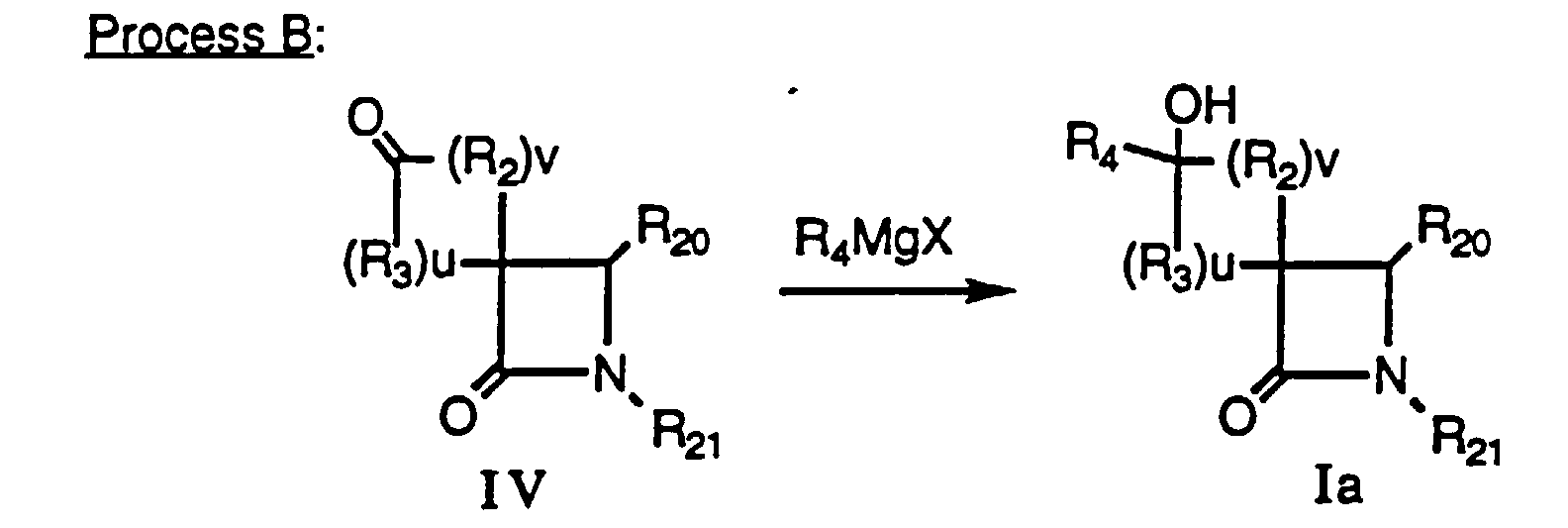
- A keto-azetidinone of formula IV can be converted to a carbinol of formula Ia, i.e., a compound of formula I wherein R1 isby treatment with a Grignard reagent of formula R4MgX, wherein R4 is as defined above and X is a halogen such as bromine, chlorine or iodine.


- A carbinol of formula Ia is converted to an olefin of formula Ib, wherein R1 and an adjacent R2 form a double bond (other R2 groups can also be present) by dehydration with a mild acid such as p-toluenesulfonic acid (p-TsOH) under anhydrous conditions, e.g., using toluene as a solvent, or by treatment with a dehydrating agent such as (methoxycarbonylsulfamoyl)-triethylammonium hydroxide inner salt.

- An olefin of formula Ib is reduced with hydrogen in the presence of a suitable catalyst such as palladium or an iridinium salt to obtain the desired azetidinone of formula I. When the iridinium salt is used, the resulting products have primarily the ANTI stereochemistry, IB.
- Keto-azetidinone starting materials of formula IV can be prepared, for example, by the following processes:

- A carboxylic acid ester of formula V, wherein R22 is lower alkyl, such as ethyl, or a chiral moiety such as menthyl or 10-(diisopropyl-sulfonamido)-isobomyl, is treated with a strong base such as lithium diisopropylamide (LDA) in a suitable solvent such as tetrahydrofuran (THF) at -78°C. An imine of formula III is added and the reaction mixture is stirred at -78°C for a suitable period, e.g., one hour, then allowed to warm to room temperature. The product of formula VI is isolated using conventional purification techniques. When the ester group R22 is chiral, the product is non-racemic. The ketal protecting group is removed by treatment with a mild acid such as p-TsOH to obtain the keto-azetidinone of formula IV.

- A ketoacid of formula VII can be treated with CICOCOCI and reacted with an imine of formula III as described in Process A to obtain a keto-azetidinone of formula IV.
- The carboxylic acids and imines of formulas II, III, V and VII used as starting materials in the above process are known in the art or can be prepared by one skilled in the art using well known procedures. Typical procedures for preparing a variety of carboxylic acids are described below in Preparations 1 to 6.
- Reactive groups not involved in the above processes can be protected during the reactions with conventional protecting groups which can be removed by standard procedures after the reaction. The following Table 3 shows some typical protecting groups:

- We have found that the compounds of this invention lower serum lipid levels, in particular serum cholesterol levels. Compounds of this invention have been found to inhibit the intestinal absorption of cholesterol and to significantly reduce the formation of liver cholesteryl esters in animal models. Thus, compounds of this invention are hypocholesterolemic agents by virtue of their ability to inhibit the esterification and/or intestinal absorption of cholesterol; they are, therefore, useful in the treatment and prevention of atherosclerosis in mammals, in particular in humans.
- The in vivo activity of the compounds of formula I can be determined by the following procedure:
- Hamsters are separated into groups of six and given a controlled cholesterol diet (Purina Chow #5001 containing 0.5% cholesterol) for seven days. Diet consumption is monitored to determine dietary cholesterol exposure in the face of test compounds. The animals are dosed with the test compound once daily beginning with the initiation of diet. Dosing is by oral gavage of 0.2mL of com oil alone (control group) or solution (or suspension) of test compound in com oil. All animals moribund or in poor physical condition are euthanized. After seven days, the animals are anesthetized by IM injection of ketamine and sacrificed by decapitation. Blood is collected into vacutainer tubes containing EDTA for plasma lipid analysis and the liver excised for tissue lipid analysis. Data is reported as percent reduction of lipid versus control.
- The present invention also relates to a pharmaceutical composition comprising a compound of formula I and a pharmaceutically acceptable carrier. The compounds of formula I can be administered in any conventional dosage form, preferably an oral dosage form such as a capsule, tablet, powder, cachet, suspension or solution. The formulations and pharmaceutical compositions can be prepared using conventional pharmaceutically acceptable excipients and additives and conventional techniques. Such pharmaceutically acceptable excipients and additives include non-toxic compatible fillers, binders, disintegrants, buffers, preservatives, anti-oxidants, lubricants, flavorings, thickeners, coloring agents, emulsifiers and the like.
- The daily hypocholesteremic dose of a compound of formula I is about 7 to about 30 mg/kg of body weight per day. For an average body weight of 70kg, the dosage level is therefore from about 500 to about 2000 mg of drug per day, given in a single dose or 2-4 divided doses . The exact dose, however, is determined by the attending clinician and is dependent on the potency of the compound administered, the age, weight, condition and response of the patient.
- Following are examples of preparing carboxylic acid starting materials and novel compounds of formula I. The stereochemistry listed is relative stereochemistry unless otherwise noted.
- STEP 1: Cool a mixture of 4-phenyl-cyclohexanone (30 g) and tosylmethyl isocyanide (36.9 g) in dimethoxyethane (800 mL) in an ice/acetone bath. Add a solution of potassium t-butoxide (38.7 g) in dimethoxyethane (300 mL) and t-butanol (300 mL). Stir the reaction mixture for 4h, pour into water and extract the product with ethyl acetate (EtOAc). Separate the organic layer, concentrate and use in STEP 2 without purification.
- STEP 2: Dissolve the product from STEP 1 (32.8 g) in CH3OH (240 mL) and add water (800 mL), Ba(OH)2 (95 g) and NaOH (7.8 g). Heat the reaction mixture at reflux for 24h. Remove most of the CH3OH under vacuum and extract the aqueous solution with ether (Et2O). Separate the aqueous layer, acidify with conc. HCI and extract the product with Et2O. Concentrate the ether solution to obtain the title compound (17.6 g).
- 4-Phenyl-4-methyl-cyclohexanecarboxylic acid is similarly prepared from 4-phenyl-4-methyl-cyclohexanone.
- STEP 1: Slowly add 4-chlorophenylmagnesium chloride (5.9 mL of 1M solution) to a solution of ethyl 4-oxo-cyclohexanecarboxylate (1.0 g) in Et2O at 0°C. After 1h, pour the reaction mixture into 1N HCI and extract with Et2O. Separate the organic layer, wash with water, brine and concentrate to give ethyl 4-(4-chlorophenyl)-4-hydroxy-cyclohexanecarboxylate (1.75 g) which is used without purification in the next step.
- STEP 2: Dissolve the product (1.75 g) from STEP 1 in THF (100 mL), treat with 40% H2SO4 (25 mL) and heat the reaction mixture at reflux for 5.5h. Remove most of the solvent in vacuo, dilute the reaction mixture with water and extract with Et2O. Separate the organic layer and concentrate to give 4-(4-chlorophenyl)-cyclohex-3-enecarboxylic acid (1.36 g).
- STEP 3: Reduce a solution of the product of STEP 2 (1.36 g) in EtOAc (50 mL) over 10% Pd/C under H2 (50 psi) for 14 h. Filter the catalyst and concentrate the solution to give the title compound (1.36 g).
- 4-(4-Methoxyphenyl)-cyclohexanecarboxylic acid is similarly prepared.
- Reduce a solution of 4-biphenylcarboxylic acid (10 g) in ethanol (EtOH) (175 mL) and EtOAc (30 mL) over 5% rhodium/alumina (7 g) under H2 (60 psi) for 8 days. Filter the catalyst and concentrate the solution to obtain the title compound (9.92 g).
- STEP 1: Reduce a solution of terphthalic acid mono-methyl ester (12.6 g) using a procedure similar to that of Preparation 3 to obtain 1,4-cyclohexanedicarboxylic acid mono-methy ester (12.64 g). The crude product is used without purification in the next step.
- STEP 2: Add CICOCOCI (4.1 g) to a solution of the product of STEP 1 (3.0 g) in CH2Cl2 (15 mL) and heat the mixture at reflux for 1.5h. Remove excess CICOCOCI in vacuo and dissolve the product in benzene. Cool the reaction mixture in an ice/water bath and slowly add AlCl3 (4.74 g). Stir the reaction mixture overnight as it warms to ambient temperature and pour into a conc. HCl/ice mixture. Extract the product with Et2O, separate the organic layer, wash with water and brine, then concentrate to obtain methyl 4-(4-benzoyl)-cyclohexane-carboxylate (3.9 g).
- STEP 3: Reduce a solution of the product of STEP 2 (2.5 g) in EtOAc (15 mL) and acetic acid (HOAc) (50 mL) over 10%Pd/C (0.3 g) under H2 (60 psi) for 22h. Filter the catalyst, dilute the reaction mixture with water and extract the product with Et2O. Separate the organic layer and concentrate to obtain a mixture of methyl 4-(α-hydroxybenzyl)-cyclohexanecarboxylate and methyl (4-benzylcyclohexane-carboxylate (2.46 g).
- STEP 4: Dissolve the product from STEP 3 (2.46 g) in THF (100 mL), treat with 40% H2SO4 (25 mL) and heat the reaction mixture at reflux for 5 h. Pour the reaction mixture into excess water and extract with EtOAc. Separate the organic layer, concentrate, and reduce the crude mixture over 10%Pd/C (0.25 g) under H2 (60 psi) overnight. Filter the catalyst and concentrate the solution to obtain the title compound (2.42 g).
- STEP 1: Slowly add 2-phenylethyl bromide (2.6 g) to a slurry of Mg (0.37 g) in THF (50 mL) and heat at reflux for 4h. Cool the solution to ambient temperature and add to a solution of ethyl 4-oxo-cyclo-hexane-carboxylate (2.4 g) in THF (50 mL). After 2h, pour the reaction mixture into a half-saturated solution of NH4Cl and extract with EtOAc. Partially purify the product on a silica gel column, eluting with EtOAc. Dissolve the product in toluene (100 mL), treat with p-TsOH and heat at reflux overnight with azeotropic removal of water. Cool the reaction mixture, wash with saturated NaHCO3 solution and concentrate. Purify the crude product on a silica gel column, eluting with CH2Cl2 to obtain ethyl 4-(2-phenylethyl)-cyclohex-3-enecarboxylate (0.45 g) and 1-(2-phenyl-ethyl)-2-oxabicyclo[2.2.2]octan-3-one (0.71 g). Dissolve 1-(2-phenyl-ethyl)-2-oxabicyclo[2.2.2]octan-3-one in EtOH, treat with conc.HCI (catalytic) and heat at reflux overnight. Dilute the reaction mixture with water and extract with EtOAc. Concentrate the organic layer to obtain additional ethyl 4-(2-phenylethyl)-cyclohex-3-enecarboxylate (0.88 g).
- STEP 2: To a solution of the product of STEP 1 (1.33 g) in EtOAc (40 mL), add 10% Pd/C (0.2 g) and hydrogenate overnight at 58 psi. Filter the catalyst and concentrate the reaction mixture to give ethyl 4-(2-phenylethyl)-cyclohexanecarboxylate (1.26 g).
- STEP 3: To a solution of the product of STEP 2 (1.26 g) in MeOH (20 mL), add water (5 mL) and LiOH (0.61 g) and stir overnight at ambient temperature. Dilute the reaction mixture with water and extract with Et2O. Acidify the aqueous layer with conc.HCI and extract with EtOAc. Separate the organic layer, wash with water and brine, and concentrate to obtain the title compound (1.06 g).
- STEP 1: Slowly add a solution of diethyl 2-benzylmalonate (20 g) in Et2O (300 mL) to a slurry of LiAIH4 (6 g) in Et2O (300 mL), then heat the reaction mixture at reflux for 14h. Carefully add 4N NaOH to the reaction mixture until there is no precipitate, then extract with EtOAc. Concentrate the organic layer and purify the crude product on a silica gel column, eluting with EtOAc to obtain 2-benzyl-1,3-propanediol (8.45 g).
- STEP 2: Slowly add (C6H5)3P (17.4 g) to a solution of the product of STEP 1 (5 g) in CH2Cl2 (200 mL) containing CBr4 (21 g) at 0°C. Stir the reaction mixture overnight and allow to warm to ambient temperature. Evaporate the solvent in vacuo, triturate the crude product with pentane, filter, concentrate the filtrate and purify the residue on a silica gel column, eluting with hexane to give 2-benzyl-1,3-propanedibromide (5.47 g).
- STEP 3: Add diethyl malonate (3 g) to a slurry of NaH (0.514 g) in dimethylformamide (DMF) (75 mL) at ambient temperature. After 1 h, heat the reaction mixture to 100°C for 1h, cool to ambient temperature, add a solution of the product of STEP 2 (5 g) in DMF (25 mL) and stir at ambient temperature for 2.5h, followed by 2h at 150°C. Cool the mixture to ambient temperature, add NaH (0.514 g) and after 30 min., heat at 150°C overnight. Cool the reaction mixture, pour into excess water and extract - with EtOAc. Separate the organic layer, wash with water and concentrate. Purify the crude product on a silica gel column, eluting with EtOAc:hexane (1:9) to obtain diethyl (3-benzyl)-cyclobutyl-1,1-dicarboxylate (3 g).
- STEP 4: To a solution of the product of STEP 3 (3 g) in EtOH (20 mL), add water (5 mL) and KOH (2.9 g) and heat at reflux overnight. Dilute the reaction mixture with water and extract with Et2O. Acidify the aqueous layer with conc.HCI and extract with CH2Cl2. Separate the organic layer and concentrat to give 3-benzyl-cyclobutyl-1,1-dicarboxylic acid (2.31 g).
- STEP 5: Heat the product of STEP 4 (2.31 g) at 170-180°C under vacuum (60-70 mm) for 1.5h to obtain the title compound (1.85 g).
- In a similar manner, 2-(2-phenylethyl)malonate is converted to 2-(2-phenylethyl)cyclobutanecarboxylic acid.
- STEP 1: Heat a mixture of 4-carbomethoxycyclohexanone (4.4 g, 0.028 moles), HOCH2CH2OH (3.2 mL, 0.056 moles), and a catalytic amount of p-TsOH in toluene at reflux for 4 hr with continuous removal of water. Cool to room temperature, wash the organic layer with water, dry over MgSO4, and evaporate to give the crude ketal. Dissolve ketal in MeOH (80 mL) containing KOH (5.6 g) and stir at room temperature overnight. Concentrate to dryness and dissolve in Et2O (100 mL). Adjust to pH 2 with 1 N HCI. Extract with Et2O (3 x 100 mL), dry over MgSO4 and evaporate to obtain 4.0 grams of the ethylene ketal of 4-cyclohexanonecarboxylic acid.
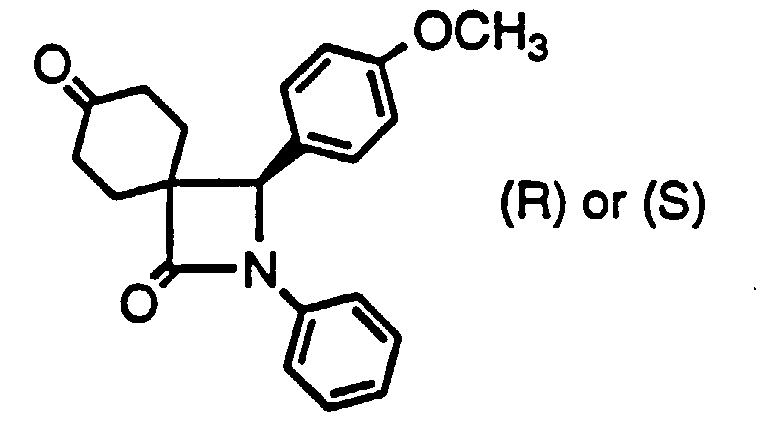
- STEP 2: Add the product from Step 1 (0.344 g, 1.8 mmol) and 10- diisopropylsulfonamido)-isobomeol (0.570 g, 1.8 mmol) to a mixture of DCC (0.556 g, 2.7 mmol), dimethylaminopyridine (DMAP) (0.330 g, 2.7 mmol), and DMAP HCI (0.003 g) in CH2Cl2 (5 mL). Stir at room temp. overnight, dilute with Et2O (150 mL) and filter. Concentrate the filtrate under vacuum and purify the crude ester by chromatography on silica gel, eluting with 30% EtOAc/hexane to obtain 0.508 grams of the ester.
- STEP 3: Prepare a solution of LDA (from [(CH3)2CH]2NH (0.23 mL) and 1.6M CH3(CH2)3Li (1.03 mL) in hexane) in THF (5 mL), cool to -78° C and add a solution of the product of Step 2 in THF (5 mL). Stir at -78° C for 1.5 hr, then add a solution of (N-(4-methoxy-benzylidine)aniline (0.278 g, 1.32 mmol) in THF (5 mL). Stir this mixture at -78° C for 1 hr and at room temperature for 1 hr. Quench the reaction with a solution of 10 % aqueous KHSO4 (20 mL), extract with EtOAc (3x20 mL), dry the organic layers over MgSO4 and evaporate. Purify the crude product by chromatography over silica gel, eluting with 40% EtOAc/hexane to obtain 0.266 g of product.
- STEP 4: Stir the product of Step 3 overnight in 5:1 acetone: 3N HCI to obtain 0.21 grams of the title compound. If 10-diisolpropylsulfonamido)-isobomeol derived from (+)-10-camphorsulfonyl chloride is used in Step 1, the product has the (S)-configuration.
- STEP 1: To a solution of ethyl 3-oxocyclopentanecarboxylate (2.63 g, 0.0169 moles) in benzene (50 mL), add HOCH2CH2OH (2.10 g, 0.0338 moles) and pyridinium tosylate (0.85 g, 0.0034 moles). Heat at reflux with removal of water for 2.5 hr. Remove the solvent under vacuum and take up the residue in Et2O (100 mL). Wash with saturated Na2CO3 and concentrate to a yellow oil. Purify by chromatography on silica gel, eluting with 10 % EtOAc/hexane to obtain 2.92 grams of the ketal ester.

- STEP 2: React the product of Step 1 (0.30 g, 0.0015 moles) with LDA (1.2 equivalents) in THF followed by N-(4-methoxybenzylidine)aniline as described for Preparation 7, Step 3, to obtain 0.52 grams of the resulting azetidinone as a mixture of diastereomers. Separate these diastereomers by chromatography on silica gel, eluting with 20% EtOAc/hexane to obtain 0.16 grams of component A and 0.22 grams of component B.
- STEP 3: Treat component A of Step 2 (1.38 g) with aqueous HCI as described for Preparation 7, Step 4, to obtain 1.15 grams of rel (3R,4R)-3-(4-methoxyphenyl)-2-phenyl-2-azaspiro[3.4]octane-1,6-dione. Similar treatment of component B yields rel (3R,4S)-3-(4-methoxyphenyl)-2-phenyl-2-azaspiro[3.4]octane-1,6-dione.
- Treat a solution of 4-cyclohexanonecarboxylic acid (4.6 g, 0.0323 moles)in CH2Cl2 (50 mL) with CICOCOCI (5.7 mL, 0.0648 moles) as described in Example 1, below. React the resulting acid chloride with N-(4-methoxybenzylidene)aniline using the procedure described in Example 1 to obtain the title compound (10.03 g).
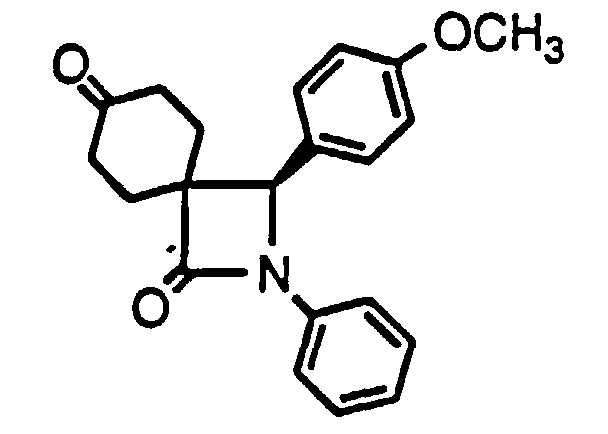
- In a similar manner, using N-(4-methoxybenzylidine)-4(t-butyl-dimethylsilyloxy)aniline, prepare:

- Add CICOCOCI (1.43 g) to a solution of the product of Preparation 2 (1.34 g) in CH2Cl2 (15 mL) and heat at reflux for 2h. Remove the solvent and excess CICOCOCI under vacuum. Dissolve the resultant acid chloride in CH2CI2 (5 mL), add this solution to N-(4-methoxybenzylidene)anisidine (1.35 g) and triethylamine (Et3N) (1.25 g) in CH2Cl2 (25 mL) and heat at reflux overnight. Pour the reaction mixture into 1 N HCI and extract the product with CH2Cl2. Separate the organic layer, wash with saturated NaHCO3 and concentrate. Purify the crude material on a silica gel column, eluting with CH2Cl2:hexane (95:5) to give:
- (1) Diastereomer A of the title compound: 0.52 g; m.p. 166-167;
Mass spectrum: Calculated 461 and observed 462;
Elemental analysis: Calculated: C=72.8, H=6.11, N=3.03
Found: C=72.72, H=6.11, N=3.15 - (1A) Diastereomer B of the title compound: 0.475 g; m.p. 87-89
Mass spectrum: Calculated 461 and observed 462;
Elemental analysis: Calculated: C=72.8, H=6.11, N=3.03
Found: C=72.79, H=6.17, N=3.12. -
- Other 2-azaspiro[3.5]nonan-1-ones and 2-azaspiro[3.3]-heptan-1-ones similarly prepared are shown in the following table:

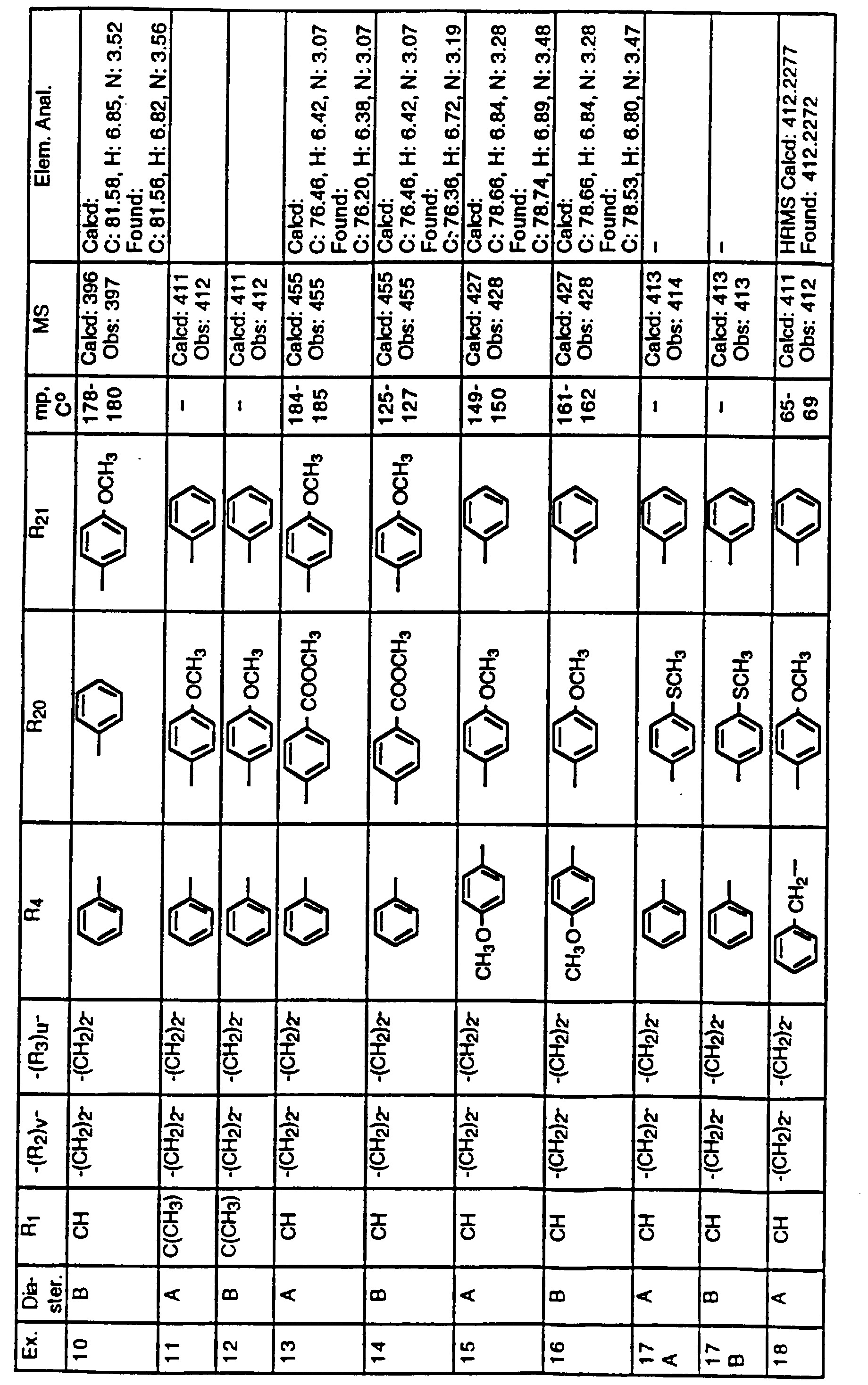
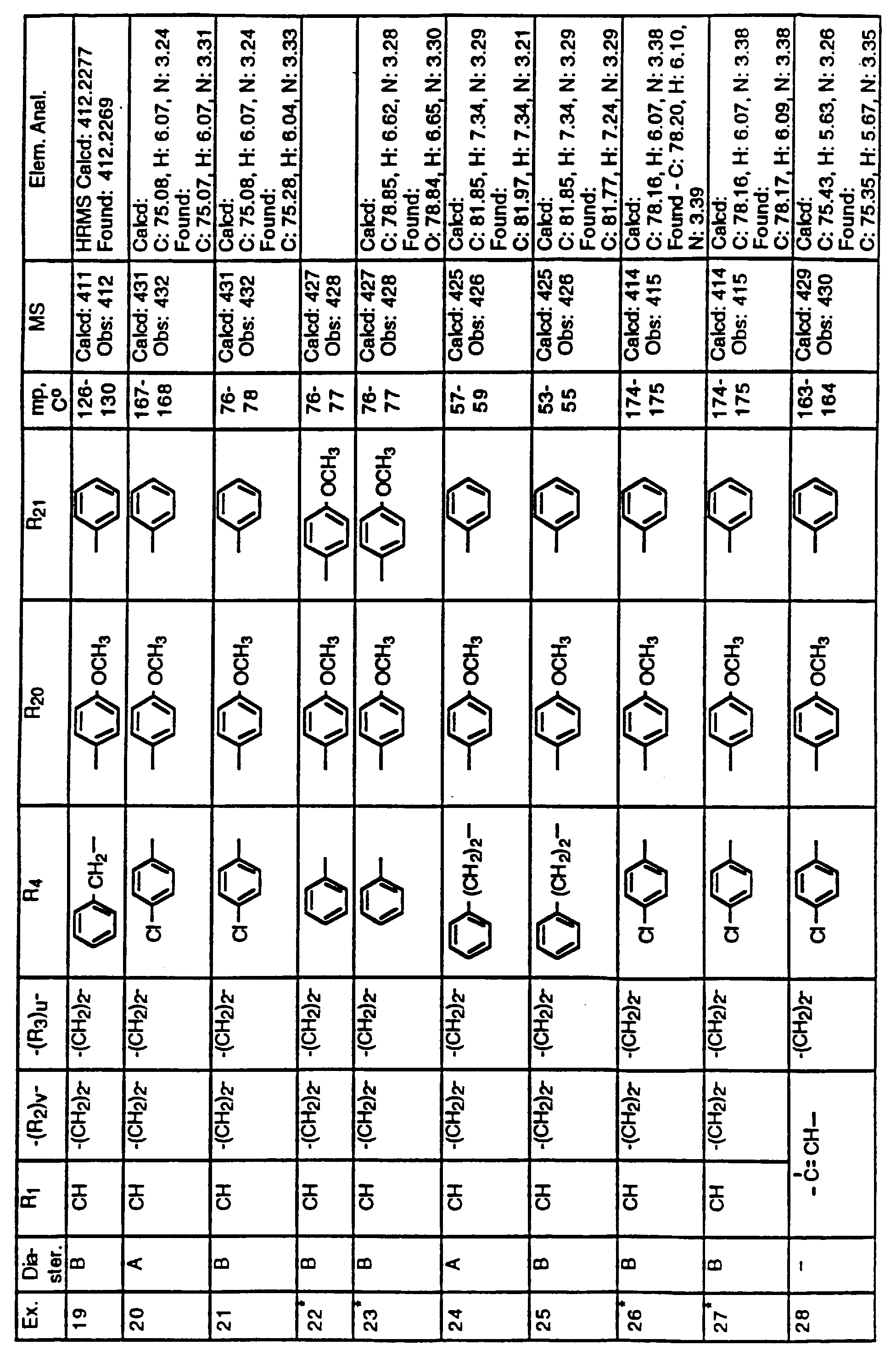

- Enantiomeric compounds of Examples 22 and 23 were prepared by chromatographic resolution of the racemate in a CHIRACEL OD HPLC column eluting with 93:7 hexane:isopropanol at a flow rate of mL/min.
- Enantiomeric compounds of Examples 26 and 27 were prepared by chromatographic resolution of the racemate in a CHIRACEL OD HPLC column eluting with 95:5 hexane:isopropanol at a flow rate of 5 mL/min.
- Example 26:
- [α] 25 / D = +60.7° (CH3OH)
- Example 27:
- [α] 25 / D= -58.1° (CH3OH)
- To a solution of the product of Preparation 7 (1.1 g, 3.28 mmol) in Et2O (20 mL) at 0°C, add a solution of 4-fluorophenylmagnesiui bromide (4.9 mL, 4.92 mmol) in THF over 5 min. Stir at 0°C for 1.5 hr, the stir at room temperature for 3 hr. Quench the reaction with sat'd NaHSO4 and extract with EtOAc (3 x 30 mL). Dry the organic layers over Na2SO4 and evaporate the solvent to obtain 1.57 grams of crude product. Purify by chromatography over silica gel, eluting with 95:5 Ch2Cl2:EtOAc to obtain 0.9 g of the ANTI isomer, mp=168-169° C, and 0.27 g of the SYN isomer.

- In a similar manner, the following compounds are prepared
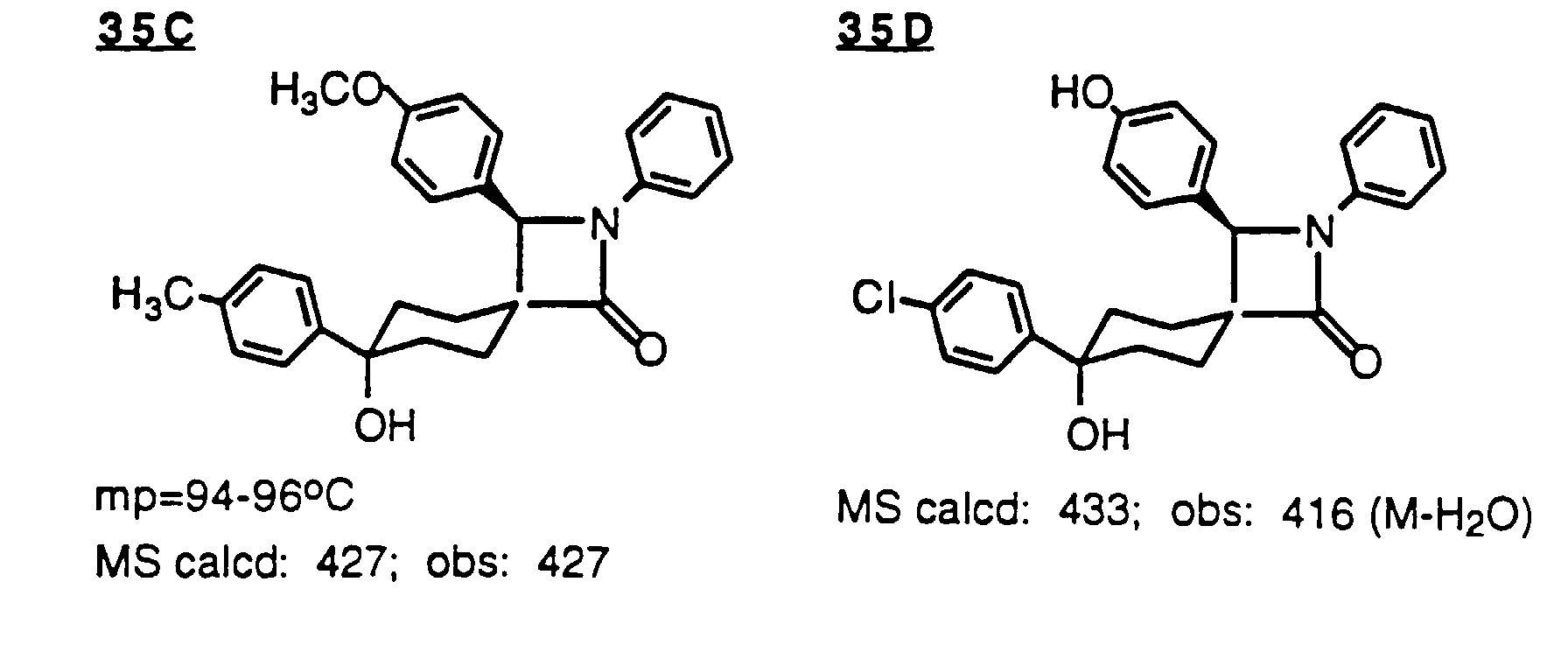

- Using appropriate starting materials in a procedure similar to that described in Example 35, the following compounds are prepared:
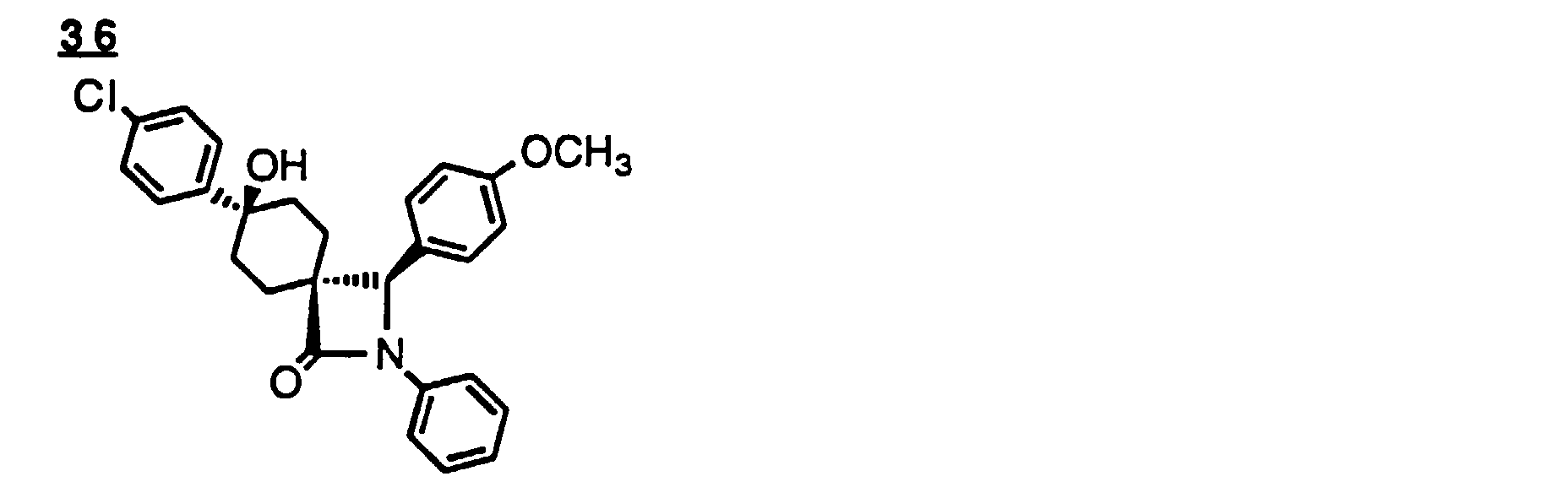
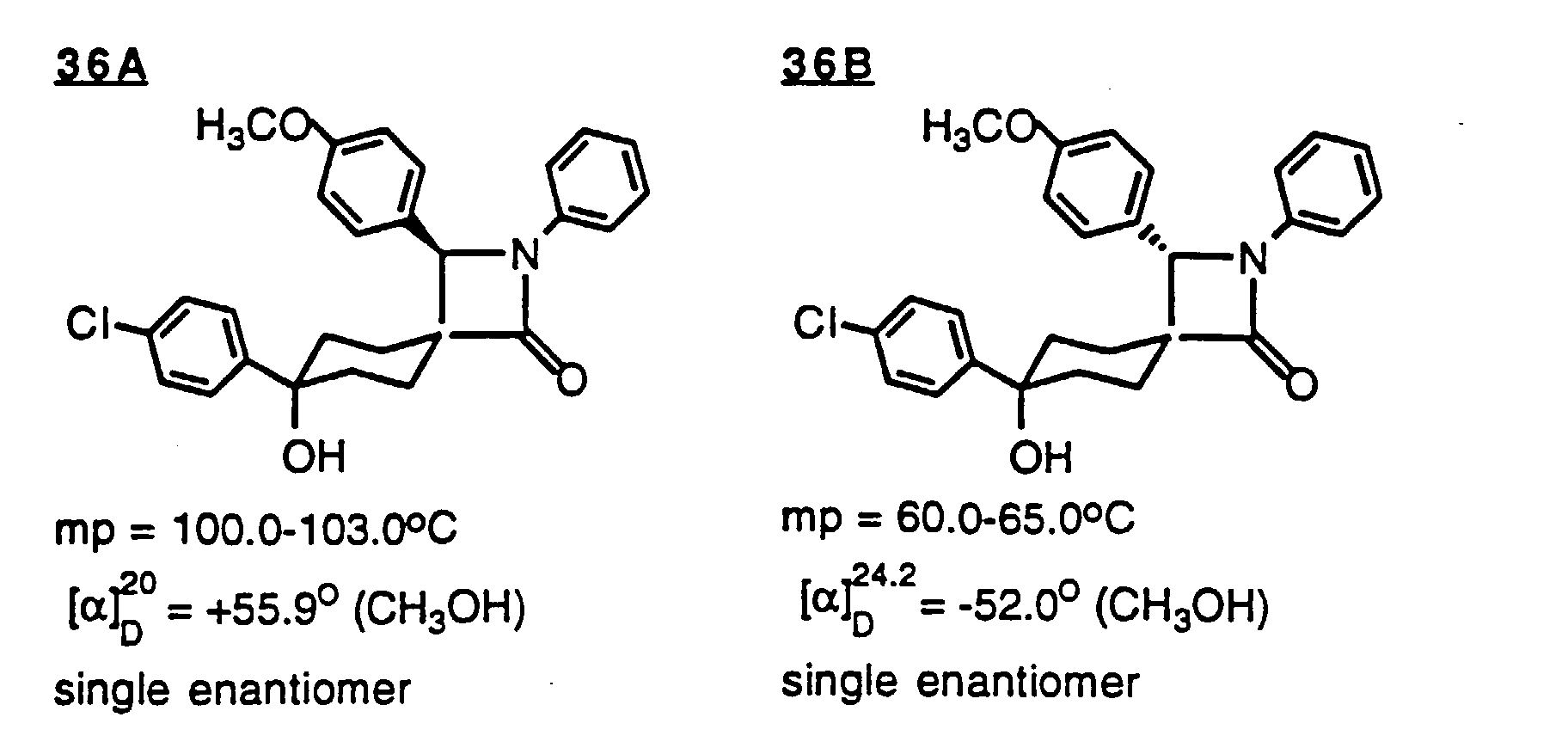

- STEP 1: Add p-TsOH (0.08 g) to a solution of the product of Example 35 (0.5 g) and stir at 60° C over 4A sieves for 3.5 hr. Filter the mixture through celite, wash with sat'd NaHCO3, dry over Na2SO4, and evaporate to obtain 7-(4-fluorophenyl)-7-hydroxy-3-(4-methoxyphenyl)-2-phenyl-2-azaspiro[3.5]non-6-en-1-one, which can be used in STEP 2 with or without purification by chromatography over silica gel.
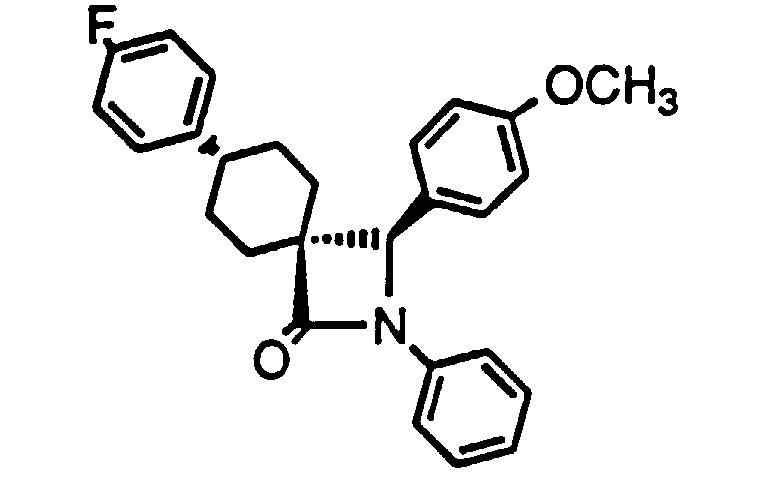
- STEP 2: To a solution of the product of STEP 1, (0.415 g,1 mmol) in CH2Cl2 (15 mL), add (tricyclohexylphosphine)-(1,5-cyclooactadiene)-(pyridine) Iridium(I) hexafluorophosphate (0.010 g, 0.05 mmol). Stir under one atm H2 at room temperature for 52 hr. Filter the mixture through a bed of silica gel, eluting with CH2Cl2 to give 0.161 g of the title compound, mp=146-147°C. MS calcd: 415; obs: 415.
- In a similar manner, except using 10% Pd/C as the hydrogenation catalyst, use the compound of Example 38 as the starting material to prepare the following compounds:

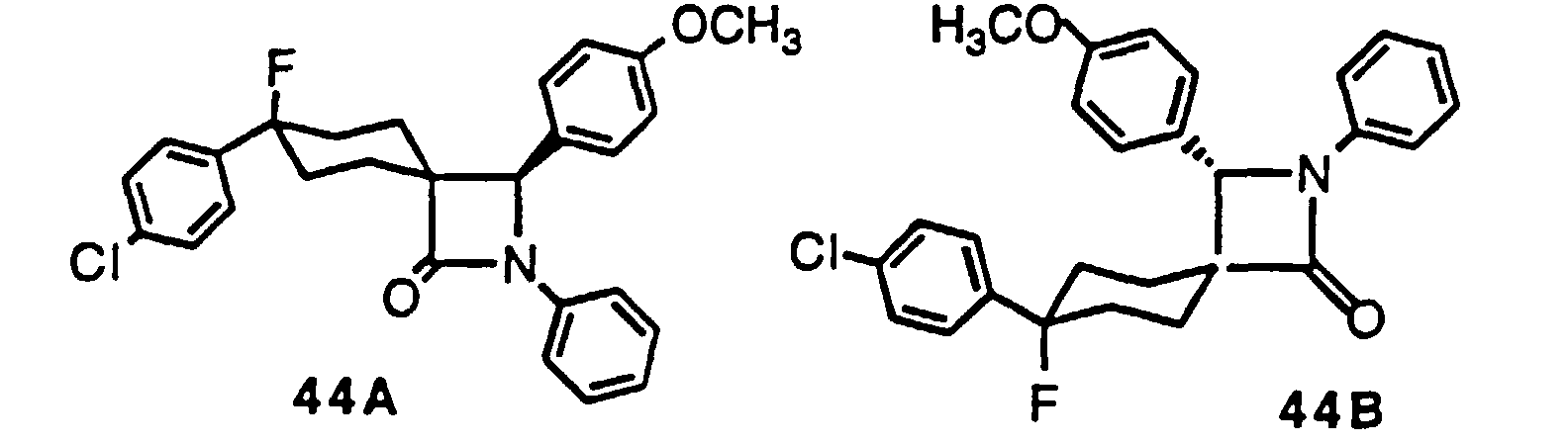
- Use the product of Preparation 8 in the procedure of Example 35, followed by the procedure of Example 39, STEP 1, to obtain 5 the compound of Example 41. Treat the compound of Example 41 using the procedure of Example 39, STEP 2, to obtain compounds of Examples 42 and 42A:
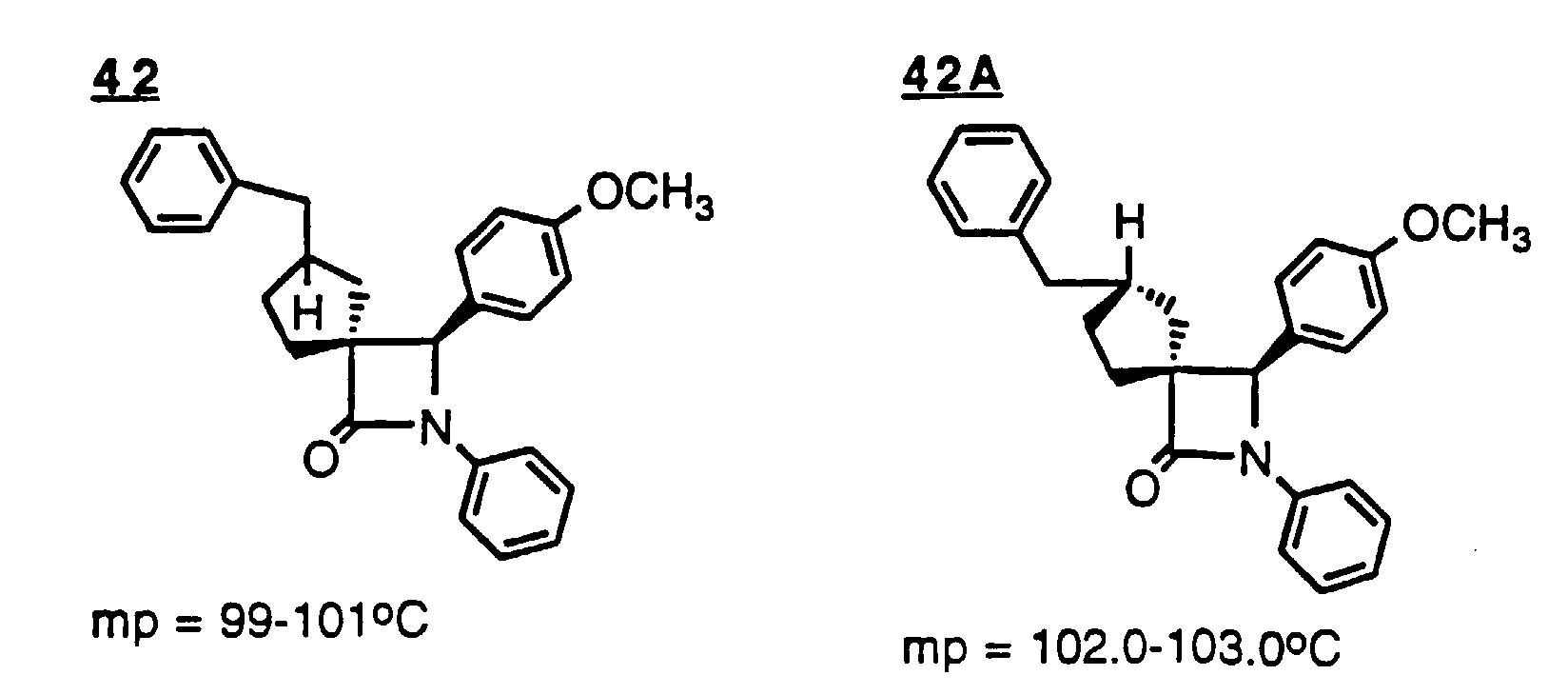
- Use the product of Preparation 7 in the procedure of Example 35, followed by the procedures of Example 39, STEP 1 and STEP 2, to obtain compounds of Examples 43A and 43B:

- Dissolve the compound of Example 36 (0.31 g, 0.693 moles) in CH2Cl2 (7 mL) at -78°C and add dropwise, over 2-3 min., diethylamino-sulfur trifluoride (0.145 mL, 1.09 mmoles). Stir the mixture for 2 hr. at -78°C. Quench the mixture with ice-cold saturated NaHCO3 and extract with CH2Cl2 (2x10 mL). Dry the combined organic layers over Na2SO4 and concentrate to an oil. Purify by flash chromatography on silica gel to obtain pure SYN diastereomer (0.146 mg) and impure ANTI diastereomer (0.72 mg). Purify the ANTI diastereomer by preparative TLC on a 20x20 cm silica gel plate, eluting with CH2Cl2 to obtain 0.026 g.
- The following formulations exemplify some of the dosage forms of this invention. In each the term "active compound" designates a compound of formula I.
-
Tablets No Ingredient mg/tablet mg/tablet 1 Active Compound 100 500 2 Lactose USP 122 113 3 Com Starch, Food Grade, as a 10% 30 40 paste in Purified Water 4 Com Starch, Food Grade 45 40 5 Magnesium Stearate 3 7 Total 300 700 - Mix Item Nos. 1 and 2 in suitable mixer for 10-15 minutes. Granulate the mixture with Item No. 3. Mill the damp granules through a coarse screen (e.g., 1/4", 0.63 cm) if necessary. Dry the damp granules. Screen the dried granules if necessary and mix with Item No. 4 and mix for 10-15 minutes. Add Item No. 5 and mix for 1-3 minutes. Compress the mixture to appropriate size and weight on a suitable tablet machine.
-
Capsules No Ingredient mg/tablet mg/tablet 1 Active Compound 100 500 2 Lactose USP 106 123 3 Corn Starch, Food Grade 40 70 4 Magnesium Stearate NF 4 7 Total 250 700 - Mix Item Nos. 1, 2 and 3 in a suitable blender for 10-15 minutes. Add Item No. 4 and mix for 1-3 minutes. Fill the mixture into suitable two-piece hard gelatin capsules on a suitable encapsulating machine.
- Using the test procedures described above, the following in vivo data were obtained for the exemplified compounds. Data is reported as percent change (i.e., percent reduction in cholesterol esters) versus control, therefore, negative numbers indicate a positive lipid-lowering effect.
Ex. No. % Change Dose mpk Ex. No % Change Dose mpk Ex. No. % Change Dose mpk 1 -25 50 18 0 50 35A 0 10 1A -89 50 19 -43 50 35B -93 10 2 -17 50 20 0 50 35C -31 10 3 -87 50 21 -92 50 36 -92 10 4 0 50 22 -- 36A -85 3 5 -95 50 23 -- -62 1 6 -26 50 24 0 50 36B -18 3 7 -64 50 25 -43 50 37 -91 10 8 -17 50 26 -97 25 38 -21 10 9 -46 50 27 -32 25 39 -- 10 0 50 28 -65 50 40 -90 50 11 -25 50 29A -9 50 -89 10 12 -36 50 29B 0 50 40A -65 10 13 -21 50 30A -65 10 41 -35 10 14 -30 50 30B -42 10 42 -84 50 15 31 50 31 -15 50 42A 0 10 16 0 50 32 -30 50 43A -75 10 17A -- -- 33 0 50 -55.5 3 17B -- -- 34 0 50 43B --
Claims (25)
- A compound represented by the formulaor a pharmaceutically acceptable salt thereof, wherein:
 R1 is
R1 is R2 and R3 are independently selected from the group consisting of -CH2-, -CH(C1-C6 alkyl)-, -C(di-C1-C6 alkyl)-, -CH=CH- and -C(C1-C6 alkyl)=CH-; or R1 together with an adjacent R2, or R1 together with an adjacent R3, form agroup;
 u and v are independently 0, 1, 2 or 3, provided both are not zero; provided that when R2 is -CH=CH- or-C(C1-C6 alkyl)=CH-, v is 1; provided that when R3 is -CH=CH- or -C(C1-C6 alkyl)=CH-, u is 1; provided that when v is 2 or 3, the R2's can be the same or different; and provided that when u is 2 or 3, the R3's can be the same or different;R4 is B-(CH2)mC(O)-, wherein m is 0, 1, 2, 3, 4 or 5;B-(CH2)q-, wherein q is 0, 1, 2, 3, 4, 5 or 6;B-(CH2)e-Z-(CH2)r-, wherein Z is -O-, -C(O)-, phenylene, -N(R8)- or -S(O)0-2-, e is 0, 1, 2, 3, 4 or 5 and r is 0, 1, 2, 3, 4 or 5, provided that the sum of e and r is 0, 1, 2, 3, 4, 5 or 6;B-(C2-C6 alkenylene)-; B'-(C4-C6 alkadienylene)-;B-(CH2)t-Z-(C2-C6 alkenylene)-, wherein Z is as defined above, and wherein t is 0, 1, 2 or 3, provided that the sum of t and the number of carbon atoms in the alkenylene chain is 2, 3, 4, 5 or 6;B-(CH2)f-V-(CH2)g-, wherein V is C3-C6 cycloalkylene, f is 1, 2, 3, 4 or 5 and g is 0, 1, 2, 3, 4 or 5, provided that the sum of f and g is 1, 2, 3, 4, 5 or 6;B-(CH2)t-V-(C2-C6 alkenylene)- or B'-(C2-C6 alkenylene)-V-(CH2)t-, wherein V and t are as defined above, provided that the sum of t and the number of carbon atoms in the alkenylene chain is 2, 3, 4, 5 or 6;B-(CH2)a-Z-(CH2)b-V-(CH2)d-, wherein Z and V are as defined above and a, b and d are independently 0, 1, 2, 3, 4, 5 or 6, provided that the sum of a, b and d is 0, 1, 2, 3, 4, 5 or 6;T-(CH2)s-, wherein T is cycloalkyl of 3-6 carbon atoms and s is 0, 1, 2, 3, 4, 5 or 6; orR1 and R4 together form the group
 B is indanyl, indenyl, naphthyl, tetrahydronaphthyl, heteroaryl or W-substituted heteroaryl, wherein heteroaryl is selected from the group consisting of pyrrolyl, pyridinyl, pyrimidinyl, pyrazinyl, triazinyl, imidazolyl, thiazolyl, pyrazolyl, thienyl, oxazolyl and furanyl, and for nitrogen-containina heteroaryls, the N-oxides thereof, or
 W is 1 to 3 substituents independently selected from the group consisting of C1-C6 alkyl, hydroxy C1-C6 alkyl, C1-C6 alkoxy,(C1-C6)alkoxyimino-(C1-C6)alkyl, C1-C6 alkanedioyl, (C1-C6)alkyl-(C1-C6)alkanedioyl, allyloxy, -CF3, -OCF3, benzyl, R7-benzyl, benzyloxy, R7-benzyloxy, phenoxy, R7-phenoxy, dioxolanyl, NO2, -N(R8)(R9), N(R8)(R9)-(C1-C6)alkylene-, N(R8)(R9)-(C1-C6)alkylenyloxy-, OH, halogeno, -CN, -N3, -NHC(O)OR10, -NHC(O)R10, R11O2SNH-, (R11O2S)2N-, -S(O)2NH2, -S(O)0-2R8, tert-butyldimethyl-silyloxymethyl, -C(O)R12, -COOR19, -CON(R8)(R9), -CH=CHC(O)R12, -(C1-C6)alkylene-C(O)R12, R10C(O)(C1-C6 alkylenyloxy)-, N(R8)(R9)C(O)(C1-C6 alkylenyloxy)- andfor substitution on ring carbon atoms, and the substituents on the substituted heteroaryl ring nitrogen atoms, when present, are selected from the group consisting of C1-C6 alkyl, C1-C6 alkoxy, -C(O)OR10, -C(O)R10, OH, N(R8)(R9)-(C1-C6)alkylene-, N(R8)(R9)-(C1-C6)alkylenyloxy-, -S(O)2NH2 and 2-(trimethylsilyl)-ethoxymethyl;
 R7 is 1-3 groups independently selected from the group consisting of C1-C6 alkyl, C1-C6 alkoxy, -COOH, NO2, -N(R8)(R9), OH or halogeno;R8 and R9 are independently H or C1-C6 alkyl;R10 is C1-C6 alkyl, phenyl, R7-phenyl, benzyl or R7-benzyl;R11 is OH, C1-C6 alkyl, phenyl, benzyl, R7-phenyl or R7-benzyl;R12 is H, OH, C1-C6 alkoxy, phenoxy, benzyloxy,-N(R8)(R9), C1-C6 alkyl, phenyl or R7-phenyl;
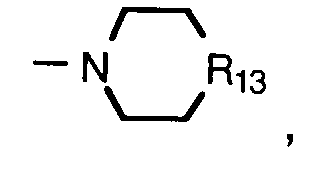 R13 is -O-, -CH2-, -NH-, -N(C1-C6 alkyl)- or -NC(O)R19;R15, R16 and R17 are independently selected from the group consisting of H and the groups defined for W; or R15 is hydrogen and R16 and R17, together with adjacent carbon atoms to which they are attached, form a dioxolanyl ring;R19 is H, C1-C6 alkyl, phenyl or phenyl C1-C6 alkyl; andR20 and R21 are independently selected from the group consisting of phenyl, W-substituted phenyl, naphthyl, W-substituted naphthyl, indanyl, indenyl, tetrahydronaphthyl, benzodioxolyl, heteroaryl, W-substituted heteroaryl, benzofused heteroaryl, W-substituted benzofused heteroaryl and cyclopropyl, wherein heteroaryl is as defined above.
 - A compound of claim 1 wherein R1 is
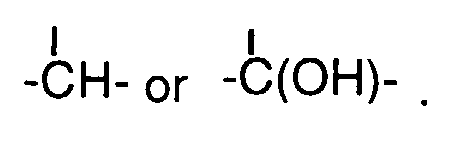
- A compound as claimed in claim 1 or claim 2 wherein R2 and R3 are each -CH2- and the sum of u and v is 2, 3 or 4.
- A compound as claimed in any one of claims 1 to 3 wherein R4 is B-(CH2)q or B-(CH2)e-Z-(CH2)r-, wherein B isq is 0-2, Z is -O-, e is 0, r is 0, R16 is H, R17 is H and R15 is as defined in claim 1.
- A compound as claimed in claim 4 wherein R15 is H, OH, C1-C6 alkoxy or chloro.
- A compound as claimed in any one of claims 1 to 5 wherein R20 is phenyl or W-substituted phenyl, wherein W is as defined in claim 1.
- A compound of claim 6 wherein R20 is W-substituted phenyl and W is C1-C6 alkoxy, OH or -C(O)R12, wherein R12 is C1-C6 alkoxy.
- A compound as claimed in any one of claims 1 to 7 wherein R21 is phenyl, W-substituted phenyl, indanyl, benzofuranyl, benzodioxolyl, tetrahydronaphthyl, pyridyl, pyrazinyl, pyrimidinyl, quinolyl or cyclopropyl, wherein W is C1-C6 alkyl, C1-C6 alkoxy, OH, halogeno, -N(R8)(R9), -NHC(O)OR10, -NHC(O)R10, NO2, -CN, -N3, -SH, -S(O)0-2-(C1-C6 alkyl), -COOR19, -CON(R8)(R9), -COR12, phenoxy, benzyloxy, -OCF3, -CH=CHC(O)R12 or tert-butyldimethylsilyloxy, and when W is 2 or 3, the groups can be the same or different.
- A compound of claim 1 represented by the formulawherein R1,R2, R3, R4, R20, R21, u and v are as follows:
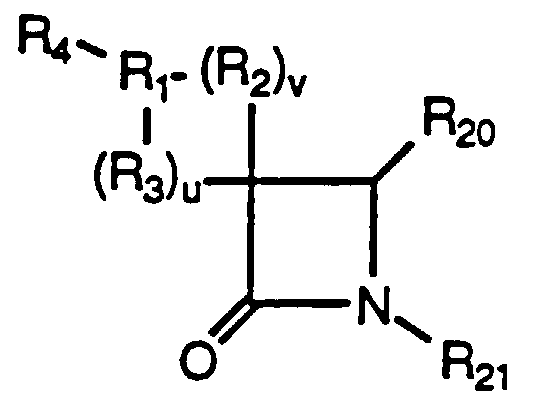


- A compound of claim 1 selected from the group consisting of: 7-(4-chlorophenyl)-3-(4-methoxyphenyl)-2-phenyl-2-azaspiro[3.5]nonan-1-one; 7-(4-chlorophenyl)-7-hydroxy-3-(4-methoxyphenyl)-2-phenyl-2-azaspiro[3.5]nonan-1-one; 7-(4-chlorophenyl)-2-(4-fluorophenyl)-7-hydroxy-3-(4-methoxyphenyl)-2-azaspiro[3.5]nonan-1-one; and 7-(4-chlorophenyl)-7-hydroxy-3-(4-hydroxyphenyl)-2-phenyl-2-azaspiro[3.5]nonan-1-one.
- A pharmaceutical composition comprising an effective amount of a compound as claimed in any one of claimsl to 10 in a pharmaceutically acceptable carrier.
- The use of a compound as claimed in any one of claims 1 to 10 for the manufacture of a medicament for the treatment or prevention of athersclerosis, or for the reduction of plasma cholesterol levels.
- A process for the preparation of a pharmaceutical composition as claimed in claim 12 which comprises admixing a compound as defined in claim 12 with a pharmaceutically acceptable carrier.
- The use of a compound as claimed in any one of claims 1 to 10 for the manufacture of a medicament for the combined use with a cholesterol biosynthesis inhibitor in the treatment or prevention of athersclerosis, or for the reduction of plasma cholesterol levels.
- The use of a cholesterol biosynthesis inhibitor for the manufacture of a medicament for the combined use with a compound as claimed in any one of claims 1 to 10 in the treatment or prevention of athersclerosis, or for the reduction of plasma cholesterol levels.
- The use as claimed in claim 15 wherein the cholesterol biosynthesis inhibitor is selected from the group consisting of HMG CoA reductase inhibitors, squalene synthesis inhibitors and squalene epoxidase inhibitors.
- The use as claimed in claim 16, wherein the cholesterol biosynthesis inhibitor is selected from the group consisting of lovastatin, pravastatin, fluvastatin, simvastatin, Cl-981, L-659,699, squalestatin 1 and NB-598.
- The use as claimed in claim 14, wherein the cholesterol biosynthesis inhibitor is as specified in claim 16 or claim 17.
- A pharmaceutical composition for the treatment or prevention of athersclerosis, or for the reduction of plasma cholesterol levels, comprising a compound as defined in any one of claims 1 to 10, a cholesterol biosynthesis inhibitor and a pharmaceutically acceptable carrier.
- A pharmaceutical composition as claimed in claim 19, wherein the cholesterol biosynthesis inhibitor is as defined in claim 16 or claim 17.
- A method for preparing a pharmaceutical composition as claimed in claim 19 or claim 20 comprising admixing a cholesterol biosynthesis inhibitor and a compound as defined in any one of claims 1 to 10 with a pharmaceutically acceptable carrier.
- A method as claimed in claim 21 comprising admixing a cholesterol biosynthesis inhibitor as defined in claim 16 or claim 17, and a compound as defined in any one of claims 1 to 10 with a pharmaceutically acceptable carrier.
- A kit comprising in separate containers in a single package pharmaceutical compositions for use in combination to treat or prevent athersclerosis or to reduce plasma cholesterol levels which comprises in one container an effective amount of a cholesterol biosynthesis inhibitor in a pharmaceutically acceptable carrier, and in a second container, an effective amount of a compound as defined in any one of claims 1 to 10 in a pharmaceutically acceptable carrier.
- A kit as claimed in claim 23 which comprises in one container an effective amount of a cholesterol biosynthesis inhibitor as defined in claim 16 or claim 17 in a pharmaceutically acceptable carrier, and in a second container, an effective amount of a compound as defined in any one of claims 1 to 10 in a pharmaceutically acceptable carrier.
- A process for preparing a compound of claim 1 comprisingProcess A: Converting a carboxylic acid of formula II to the corresponding acid chloride, followed by reacting with an imine of formula III to obtain a compound of formula Iwherein R1, R2, R3, R4, R20, R21, u and v are as defined in claim 1;
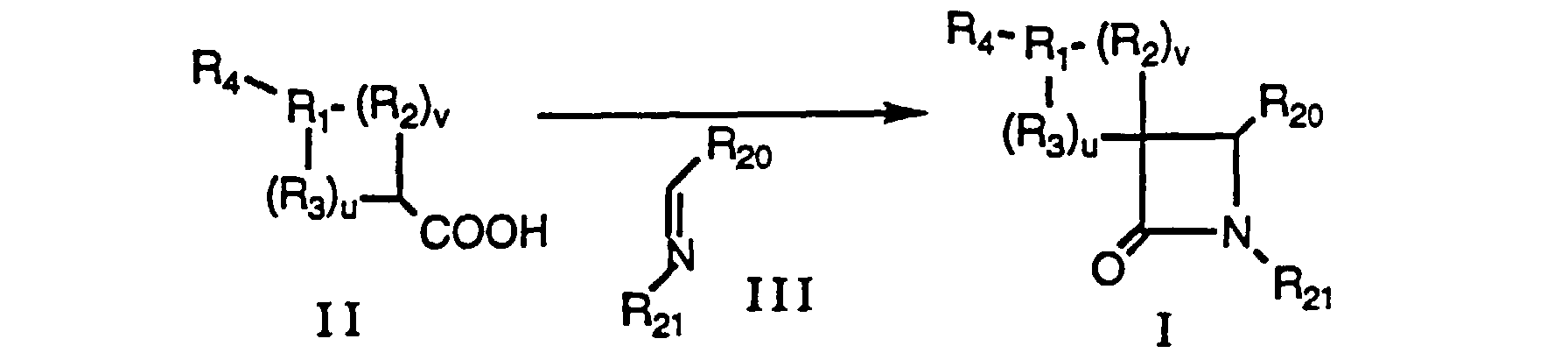 Process B: Reacting a keto-azetidinone of formula IV with a Gringard reagent of the formula R4MgX, wherein R4 is as defined in claim 1 and X is halogen, to obtain a carbinol of formula Iawherein R2, R3, R4, R20, R21, u and v are as defined in claim 1 and R1 is
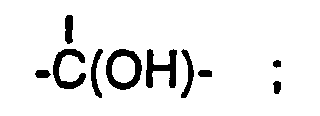 Process C: Dehydrating a carbinol of formula Ia as defined in Process B to obtain an olefin of formula Ibwherein R1 + R2 = -CH=CH- and R2, R3, R4, R20, R21, u and v are as defined in claim 1; or
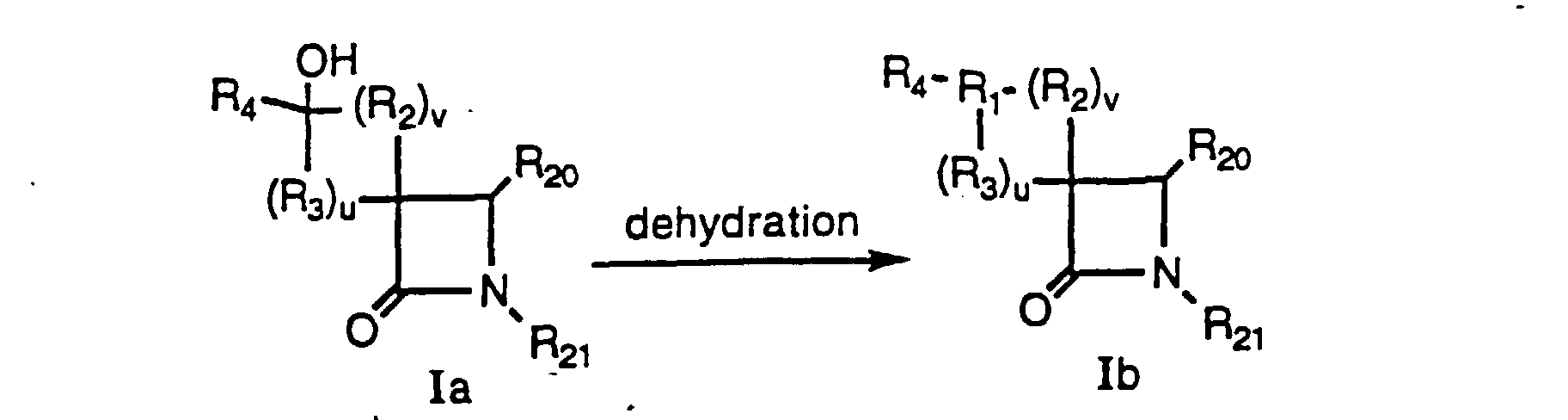 Process D: Reducing an olefin of formula Ib as defined in Process C to obtain a compound of formula Iwherein R1, R2, R3, R4, R20, R21, u and v are as defined in claim 1.
Applications Claiming Priority (3)
| Application Number | Priority Date | Filing Date | Title |
|---|---|---|---|
| US643993A | 1993-01-21 | 1993-01-21 | |
| US6439 | 1993-01-21 | ||
| PCT/US1994/000421 WO1994017038A1 (en) | 1993-01-21 | 1994-01-19 | Spirocycloalkyl-substituted azetidinones useful as hypocholesterolemic agents |
Publications (2)
| Publication Number | Publication Date |
|---|---|
| EP0681569A1 EP0681569A1 (en) | 1995-11-15 |
| EP0681569B1 true EP0681569B1 (en) | 2001-03-21 |
Family
ID=21720894
Family Applications (1)
| Application Number | Title | Priority Date | Filing Date |
|---|---|---|---|
| EP94907200A Expired - Lifetime EP0681569B1 (en) | 1993-01-21 | 1994-01-19 | Spirocycloalkyl-substituted azetidinones useful as hypocholesterolemic agents |
Country Status (26)
| Country | Link |
|---|---|
| US (1) | US5698548A (en) |
| EP (1) | EP0681569B1 (en) |
| JP (1) | JP2719445B2 (en) |
| KR (1) | KR960700227A (en) |
| CN (1) | CN1118163A (en) |
| AT (1) | ATE199899T1 (en) |
| AU (1) | AU683048B2 (en) |
| CA (1) | CA2154257C (en) |
| CZ (1) | CZ180195A3 (en) |
| DE (1) | DE69426924T2 (en) |
| DK (1) | DK0681569T3 (en) |
| EE (1) | EE9400394A (en) |
| ES (1) | ES2155849T3 (en) |
| FI (1) | FI953497A0 (en) |
| GR (1) | GR3035963T3 (en) |
| HU (1) | HUT72592A (en) |
| IL (1) | IL108368A0 (en) |
| LT (1) | LT3595B (en) |
| NO (1) | NO952884L (en) |
| NZ (1) | NZ261714A (en) |
| PL (1) | PL309978A1 (en) |
| PT (1) | PT681569E (en) |
| SI (1) | SI9400022A (en) |
| SK (1) | SK91195A3 (en) |
| WO (1) | WO1994017038A1 (en) |
| ZA (1) | ZA94386B (en) |
Families Citing this family (75)
| Publication number | Priority date | Publication date | Assignee | Title |
|---|---|---|---|---|
| CZ331094A3 (en) * | 1992-06-26 | 1995-09-13 | Pfizer | Steroidal glycosides and their use for treating hypercholesterolemia and atherosclerosis |
| US5631365A (en) * | 1993-09-21 | 1997-05-20 | Schering Corporation | Hydroxy-substituted azetidinone compounds useful as hypocholesterolemic agents |
| US5656624A (en) * | 1994-12-21 | 1997-08-12 | Schering Corporation | 4-[(heterocycloalkyl or heteroaromatic)-substituted phenyl]-2-azetidinones useful as hypolipidemic agents |
| US5648484A (en) * | 1995-03-07 | 1997-07-15 | Schering Corporation | Catalytic enantioselective synthesis of a spriofused azetidinone |
| DE69621952T2 (en) | 1995-10-31 | 2003-01-16 | Schering Corp., Kenilworth | SUGAR-SUBSTITUTED 2-AZETIDINONE, USED AS HYPOCHOLESTERDENIC MEDICINAL PRODUCTS |
| US5756470A (en) * | 1996-10-29 | 1998-05-26 | Schering Corporation | Sugar-substituted 2-azetidinones useful as hypocholesterolemic agents |
| AR023463A1 (en) | 1999-04-16 | 2002-09-04 | Schering Corp | USE OF AZETIDINONE COMPOUNDS |
| US6297268B1 (en) | 1999-11-30 | 2001-10-02 | Schering Corporation | Imidazoles as cholesterol lowering agents |
| US6982251B2 (en) | 2000-12-20 | 2006-01-03 | Schering Corporation | Substituted 2-azetidinones useful as hypocholesterolemic agents |
| DE60106489T2 (en) * | 2000-12-20 | 2005-10-13 | Schering Corp. | SUGAR SUBSTITUTED 2-AZETIDINONE USE AS HYPOCHOLESTERDENIC DRUGS |
| IL156488A0 (en) * | 2001-01-26 | 2004-01-04 | Schering Corp | Combinations of sterol absorption inhibitor(s) with blood modifier(s) for treating vascular conditions |
| EP1911462A3 (en) | 2001-01-26 | 2011-11-30 | Schering Corporation | Compositions comprising a sterol absorption inhibitor |
| US7071181B2 (en) | 2001-01-26 | 2006-07-04 | Schering Corporation | Methods and therapeutic combinations for the treatment of diabetes using sterol absorption inhibitors |
| PT1355644E (en) * | 2001-01-26 | 2006-11-30 | Schering Corp | The use of substituted azetidinone compounds for the treatment of sitosterolemia |
| AU2005246926B2 (en) * | 2001-01-26 | 2008-02-28 | Merck Sharp & Dohme Corp. | The use of substituted azetidinone compounds for the treatment of sitosterolemia |
| RS20100015A (en) | 2001-01-26 | 2010-12-31 | Schering Corporation | Combination of receptor activator activated by fenofibrate peroxisome-proliferator (ppar) with sterol absorption inhibitor ezetimibe for vascular indications |
| IL157552A0 (en) | 2001-03-28 | 2004-03-28 | Schering Corp | Enantioselective synthesis of azetidinone intermediate compounds |
| SI1429756T1 (en) * | 2001-09-21 | 2007-02-28 | Schering Corp | Treatment of xanthoma with azetidinone derivatives as sterol absorption inhibitors |
| EP1429756B1 (en) | 2001-09-21 | 2006-11-22 | Schering Corporation | Treatment of xanthoma with azetidinone derivatives as sterol absorption inhibitors |
| US7056906B2 (en) | 2001-09-21 | 2006-06-06 | Schering Corporation | Combinations of hormone replacement therapy composition(s) and sterol absorption inhibitor(s) and treatments for vascular conditions in post-menopausal women |
| US7053080B2 (en) | 2001-09-21 | 2006-05-30 | Schering Corporation | Methods and therapeutic combinations for the treatment of obesity using sterol absorption inhibitors |
| US20030204096A1 (en) * | 2002-03-25 | 2003-10-30 | Schering Corporation | Enantioselective synthesis of azetidinone intermediate compounds |
| GB0215579D0 (en) | 2002-07-05 | 2002-08-14 | Astrazeneca Ab | Chemical compounds |
| US20040132058A1 (en) | 2002-07-19 | 2004-07-08 | Schering Corporation | NPC1L1 (NPC3) and methods of use thereof |
| US7135556B2 (en) * | 2002-07-19 | 2006-11-14 | Schering Corporation | NPC1L1 (NPC3) and methods of use thereof |
| AR040588A1 (en) | 2002-07-26 | 2005-04-13 | Schering Corp | PHARMACEUTICAL FORMULATION INCLUDING AN INHIBITOR OF CHOLESTEROL ABSORPTION AND AN INHIBITOR OF A HMGCO TO REDUCTASE |
| ATE485818T1 (en) * | 2002-07-30 | 2010-11-15 | Karykion Inc | EZETIMIBE COMPOSITIONS AND METHODS FOR TREATING CHOLESTEROL-RELATED BENEFITS AND MALIGNANT TUMORS |
| JP2006508188A (en) | 2002-11-06 | 2006-03-09 | シェーリング コーポレイション | Cholesterol absorption inhibitors for the treatment of demyelination |
| DE602004016123D1 (en) | 2003-03-07 | 2008-10-09 | Schering Corp | SUBSTITUTED AZETIDINONE DERIVATIVES, THEIR PHARMACEUTICAL FORMULATIONS AND THEIR USE FOR THE TREATMENT OF HYPERCHOLESTEROLMIA |
| CN1756756A (en) | 2003-03-07 | 2006-04-05 | 先灵公司 | Substituted azetidinone compounds, formulations and uses thereof for the treatment of hypercholesterolemia |
| CN1756755A (en) | 2003-03-07 | 2006-04-05 | 先灵公司 | Substituted azetidinone compounds, formulations and uses thereof for the treatment of hypercholesterolemia |
| US7459442B2 (en) | 2003-03-07 | 2008-12-02 | Schering Corporation | Substituted azetidinone compounds, processes for preparing the same, formulations and uses thereof |
| AU2004233863B2 (en) | 2003-04-24 | 2010-06-17 | Incyte Holdings Corporation | Aza spiro alkane derivatives as inhibitors of metalloproteases |
| JP2005015434A (en) * | 2003-06-27 | 2005-01-20 | Kotobuki Seiyaku Kk | Serum cholesterol lowering agent or preventive or therapeutic agent for atherosclerosis |
| EP1918000A2 (en) | 2003-11-05 | 2008-05-07 | Schering Corporation | Combinations of lipid modulating agents and substituted azetidinones and treatments for vascular conditions |
| JP2007510659A (en) * | 2003-11-05 | 2007-04-26 | シェーリング コーポレイション | Combinations of lipid modulators and substituted azetidinones and treatment of vascular conditions |
| CA2550215A1 (en) | 2003-12-23 | 2005-07-07 | Astrazeneca Ab | Diphenylazetidinone derivates possessing cholesterol absorption inhibitory activity |
| WO2005062824A2 (en) * | 2003-12-23 | 2005-07-14 | Merck & Co., Inc. | Anti-hypercholesterolemic compounds |
| WO2005069900A2 (en) * | 2004-01-16 | 2005-08-04 | Merck & Co., Inc. | Npc1l1 (npc3) and methods of identifying ligands thereof |
| US20080045726A1 (en) * | 2004-05-10 | 2008-02-21 | Laboratorios Del Dr. Esteve, S.A. | Spirolactams and Their Synthesis |
| EP1747197A1 (en) * | 2004-05-10 | 2007-01-31 | Laboratorios Del Dr. Esteve, S.A. | Regioselective functionalisation and protection of spirolactams |
| EP1598336A1 (en) * | 2004-05-20 | 2005-11-23 | Laboratorios Del Dr. Esteve, S.A. | Regioselective hydroxylation, functionalisation and protection of spirolactams |
| US7291728B2 (en) | 2004-05-10 | 2007-11-06 | Laboratories Del Dr. Esteve, S.A. | Spirolactams and their synthesis |
| EP1676836A1 (en) * | 2004-12-30 | 2006-07-05 | Laboratorios Del Dr. Esteve, S.A. | Regioselective hydroxylation, functionalisation and protection of spirolactams II |
| JP2008514718A (en) * | 2004-09-29 | 2008-05-08 | シェーリング コーポレイション | Combinations of substituted azetidonones and CB1 antagonists |
| WO2006060461A1 (en) | 2004-12-03 | 2006-06-08 | Schering Corporation | Substituted piperazines as cb1 antagonists |
| US8361999B2 (en) | 2005-04-04 | 2013-01-29 | Pontificia Universidad Catolica De Chile | Methods of treating cholesterol gallstone disease with ezetimibe |
| JP2008546784A (en) * | 2005-06-20 | 2008-12-25 | シェーリング コーポレイション | Piperidine derivatives useful as histamine H3 antagonists |
| SA06270191B1 (en) | 2005-06-22 | 2010-03-29 | استرازينيكا ايه بي | Novel 2-Azetidinone Derivatives as Cholesterol Absorption Inhibitors for the Treatment of Hyperlipidaemic Conditions |
| CA2634940A1 (en) * | 2005-12-21 | 2007-07-05 | Schering Corporation | Treatment of nonalcoholic fatty liver disease using cholesterol lowering agents and h3 receptor antagonist/inverse agonist |
| BRPI0706623A2 (en) | 2006-01-18 | 2011-04-12 | Schering Corp | cannabinoid receptor modulators |
| EP1986489A2 (en) * | 2006-02-24 | 2008-11-05 | Schering Corporation | Npc1l1 orthologues |
| AR060623A1 (en) | 2006-04-27 | 2008-07-02 | Astrazeneca Ab | COMPOUNDS DERIVED FROM 2-AZETIDINONE AND A PREPARATION METHOD |
| US20080103122A1 (en) * | 2006-09-05 | 2008-05-01 | Schering Corporation | Pharmaceutical combinations for lipid management and in the treatment of atherosclerosis and hepatic steatosis |
| JP2010503676A (en) * | 2006-09-15 | 2010-02-04 | シェーリング コーポレイション | Treatment of pain, diabetes and disorders of lipid metabolism |
| CA2663500A1 (en) | 2006-09-15 | 2008-03-20 | Schering Corporation | Spiro-condensed azetidine derivatives useful in treating pain, diabetes and disorders of lipid metabolism |
| CA2663503A1 (en) * | 2006-09-15 | 2008-03-20 | Schering Corporation | Azetidinone derivatives and methods of use thereof |
| CN101541805A (en) * | 2006-09-15 | 2009-09-23 | 先灵公司 | Azetidine and azetidinone derivatives for the treatment of pain and disorders of lipid metabolism |
| JP2010503673A (en) * | 2006-09-15 | 2010-02-04 | シェーリング コーポレイション | Azetidine derivatives and azetidon derivatives useful in treating pain and lipid metabolism disorders |
| US20080070890A1 (en) * | 2006-09-15 | 2008-03-20 | Burnett Duane A | Spirocyclic Azetidinone Compounds and Methods of Use Thereof |
| MX2009002921A (en) | 2006-09-15 | 2009-04-01 | Schering Corp | Azetidinone derivatives for the treatment of disorders of the lipid metabolism. |
| US20100197564A1 (en) * | 2007-04-19 | 2010-08-05 | Schering Corporation | Diaryl morpholines as cb1 modulators |
| EP2548874A3 (en) | 2007-06-28 | 2013-05-15 | Intervet International B.V. | Substituted piperazines as CB1 antagonists |
| US20100286160A1 (en) * | 2007-06-28 | 2010-11-11 | Intervet Inc. | Substituted piperazines as cb1 antagonists |
| WO2010100255A1 (en) | 2009-03-06 | 2010-09-10 | Lipideon Biotechnology Ag | Pharmaceutical hypocholesterolemic compositions |
| CN101993403B (en) * | 2009-08-11 | 2012-07-11 | 浙江海正药业股份有限公司 | Azetidinone compound and medical applications thereof |
| PL2547679T3 (en) | 2010-03-19 | 2016-02-29 | Pfizer | 2,3-dihydro-1H-inden-1-yl-2,7-diazaspiro [3.5] nonane derivatives and their use as ghrelin receptor antagonists or inverse agonists |
| EP2844233B1 (en) | 2012-05-01 | 2020-05-06 | Althera Life Sciences, LLC | Oral tablet formulation consisting of fixed combination of rosuvastatin and ezetimibe for treatment of hyperlipidemia and cardiovascular diseases |
| CN104496839B (en) * | 2014-12-03 | 2016-04-20 | 广东东阳光药业有限公司 | Substituted cyclobutane neuraminidase inhibitors and methods and uses thereof |
| CN104496838B (en) * | 2014-12-03 | 2016-04-20 | 广东东阳光药业有限公司 | Substituted ring butanes neuraminidase inhibitor and using method thereof and purposes |
| WO2020104930A1 (en) | 2018-11-20 | 2020-05-28 | Piramal Enterprises Limited | An improved asymmetric synthesis of azaspiro compounds |
| JP7574206B2 (en) | 2019-03-20 | 2024-10-28 | リジェネロン・ファーマシューティカルズ・インコーポレイテッド | Treatment of elevated lipid levels with sterol regulatory element-binding transcription factor 1 (SREBF1) inhibitors |
| WO2020191163A1 (en) | 2019-03-20 | 2020-09-24 | Regeneron Pharmaceuticals, Inc. | Treatment of increased lipid levels with sterol regulatory element binding protein cleavage-activating protein (scap) inhibitors |
| AU2022421224A1 (en) * | 2021-12-22 | 2024-06-20 | The Regents Of The University Of California | Covalently binding inhibitors of g12s, g12d and/or g12e mutants of k-ras gtpase |
| WO2025049558A1 (en) | 2023-08-29 | 2025-03-06 | Regeneron Pharmaceuticals, Inc. | Treatment of liver disease or metabolic disorder with folliculin interacting protein 1 (fnip1) inhibitors and/or folliculin (flcn) inhibitors |
Family Cites Families (6)
| Publication number | Priority date | Publication date | Assignee | Title |
|---|---|---|---|---|
| DE2048080C3 (en) * | 1970-09-30 | 1979-11-29 | Basf Ag, 6700 Ludwigshafen | Process for the preparation of N-substituted 33-disubstituted β-lactams |
| US4692515A (en) * | 1984-09-24 | 1987-09-08 | Pennwalt Corporation | Adamantane-spirolactams |
| IL89835A0 (en) | 1988-04-11 | 1989-12-15 | Merck & Co Inc | Substituted azetidinones,their preparation and pharmaceutical compositions containing them |
| US4983597A (en) | 1989-08-31 | 1991-01-08 | Merck & Co., Inc. | Beta-lactams as anticholesterolemic agents |
| US5130425A (en) * | 1990-10-12 | 1992-07-14 | American Home Products Corporation | Spiro-lactams and analogs thereof useful as aldose reductase inhibitors |
| TW223059B (en) * | 1991-07-23 | 1994-05-01 | Schering Corp |
-
1994
- 1994-01-13 LT LTIP1764A patent/LT3595B/en not_active IP Right Cessation
- 1994-01-19 PT PT94907200T patent/PT681569E/en unknown
- 1994-01-19 DK DK94907200T patent/DK0681569T3/en active
- 1994-01-19 FI FI953497A patent/FI953497A0/en not_active Application Discontinuation
- 1994-01-19 JP JP6517083A patent/JP2719445B2/en not_active Expired - Fee Related
- 1994-01-19 CN CN94191245A patent/CN1118163A/en active Pending
- 1994-01-19 CZ CZ951801A patent/CZ180195A3/en unknown
- 1994-01-19 ES ES94907200T patent/ES2155849T3/en not_active Expired - Lifetime
- 1994-01-19 EP EP94907200A patent/EP0681569B1/en not_active Expired - Lifetime
- 1994-01-19 PL PL94309978A patent/PL309978A1/en unknown
- 1994-01-19 SK SK911-95A patent/SK91195A3/en unknown
- 1994-01-19 AU AU60872/94A patent/AU683048B2/en not_active Expired - Fee Related
- 1994-01-19 DE DE69426924T patent/DE69426924T2/en not_active Expired - Lifetime
- 1994-01-19 NZ NZ261714A patent/NZ261714A/en unknown
- 1994-01-19 CA CA002154257A patent/CA2154257C/en not_active Expired - Fee Related
- 1994-01-19 SI SI9400022A patent/SI9400022A/en unknown
- 1994-01-19 IL IL10836894A patent/IL108368A0/en unknown
- 1994-01-19 AT AT94907200T patent/ATE199899T1/en not_active IP Right Cessation
- 1994-01-19 HU HU9502194A patent/HUT72592A/en unknown
- 1994-01-19 ZA ZA94386A patent/ZA94386B/en unknown
- 1994-01-19 WO PCT/US1994/000421 patent/WO1994017038A1/en not_active Ceased
- 1994-11-23 EE EE9400394A patent/EE9400394A/en unknown
-
1995
- 1995-05-25 US US08/449,980 patent/US5698548A/en not_active Expired - Lifetime
- 1995-07-20 NO NO952884A patent/NO952884L/en unknown
- 1995-07-21 KR KR1019950702988A patent/KR960700227A/en not_active Abandoned
-
2001
- 2001-05-31 GR GR20010400814T patent/GR3035963T3/en not_active IP Right Cessation
Also Published As
| Publication number | Publication date |
|---|---|
| DE69426924T2 (en) | 2001-08-16 |
| DK0681569T3 (en) | 2001-04-23 |
| HU9502194D0 (en) | 1995-09-28 |
| ZA94386B (en) | 1994-07-19 |
| IL108368A0 (en) | 1994-04-12 |
| LT3595B (en) | 1995-12-27 |
| AU683048B2 (en) | 1997-10-30 |
| EE9400394A (en) | 1996-06-17 |
| PT681569E (en) | 2001-06-29 |
| US5698548A (en) | 1997-12-16 |
| CZ180195A3 (en) | 1996-01-17 |
| ES2155849T3 (en) | 2001-06-01 |
| PL309978A1 (en) | 1995-11-13 |
| GR3035963T3 (en) | 2001-08-31 |
| SK91195A3 (en) | 1995-12-06 |
| NZ261714A (en) | 1997-02-24 |
| KR960700227A (en) | 1996-01-19 |
| DE69426924D1 (en) | 2001-04-26 |
| SI9400022A (en) | 1995-02-28 |
| CA2154257A1 (en) | 1994-08-04 |
| ATE199899T1 (en) | 2001-04-15 |
| NO952884L (en) | 1995-09-20 |
| HUT72592A (en) | 1996-05-28 |
| CA2154257C (en) | 1999-05-25 |
| FI953497A7 (en) | 1995-07-20 |
| CN1118163A (en) | 1996-03-06 |
| JP2719445B2 (en) | 1998-02-25 |
| JPH08501110A (en) | 1996-02-06 |
| NO952884D0 (en) | 1995-07-20 |
| LTIP1764A (en) | 1995-02-27 |
| WO1994017038A1 (en) | 1994-08-04 |
| AU6087294A (en) | 1994-08-15 |
| EP0681569A1 (en) | 1995-11-15 |
| FI953497A0 (en) | 1995-07-20 |
Similar Documents
| Publication | Publication Date | Title |
|---|---|---|
| CA2154257C (en) | Spirocycloalkyl-substituted azetidinones useful as hypocholesterolemic agents | |
| EP0869942B1 (en) | 4-((heterocycloalkyl or heteroaromatic)-substituted phenyl]-2-azetidinones useful as hypolipidemic agents | |
| US5688785A (en) | Substituted azetidinone compounds useful as hypocholesterolemic agents | |
| US5624920A (en) | Sulfur-substituted azetidinone compounds useful as hypocholesterolemic agents | |
| US5633246A (en) | Sulfur-substituted azetidinone compounds useful as hypocholesterolemic agents | |
| US5627176A (en) | Substituted azetidinone compounds useful as hypocholesterolemic agents | |
| EP0720599B1 (en) | Hydroxy-substituted azetidinone compounds useful as hypocholesterolemic agents | |
| WO1995035277A1 (en) | Substituted azetidinone compounds useful as hypocholesterolemic agents | |
| EP0524595A1 (en) | Substituted beta-lactam compounds useful as hypocholesterolemic agents and processes for the preparation thereof | |
| CA2207627C (en) | 4-[(heterocycloalkyl or heteroaromatic)-substituted phenyl]-2-azetidinones useful as hypolipidemic agents | |
| HK1002558B (en) | Sulfur-substituted azetidinone compounds useful as hypocholesterolemic agents | |
| MXPA96004030A (en) | Azetidinone compounds substituted useful as agents hipocolesterolemi |
Legal Events
| Date | Code | Title | Description |
|---|---|---|---|
| PUAI | Public reference made under article 153(3) epc to a published international application that has entered the european phase |
Free format text: ORIGINAL CODE: 0009012 |
|
| 17P | Request for examination filed |
Effective date: 19950718 |
|
| AK | Designated contracting states |
Kind code of ref document: A1 Designated state(s): AT BE CH DE DK ES FR GB GR IE IT LI LU NL PT SE |
|
| 17Q | First examination report despatched |
Effective date: 19970418 |
|
| GRAG | Despatch of communication of intention to grant |
Free format text: ORIGINAL CODE: EPIDOS AGRA |
|
| GRAG | Despatch of communication of intention to grant |
Free format text: ORIGINAL CODE: EPIDOS AGRA |
|
| GRAH | Despatch of communication of intention to grant a patent |
Free format text: ORIGINAL CODE: EPIDOS IGRA |
|
| GRAH | Despatch of communication of intention to grant a patent |
Free format text: ORIGINAL CODE: EPIDOS IGRA |
|
| GRAA | (expected) grant |
Free format text: ORIGINAL CODE: 0009210 |
|
| ITF | It: translation for a ep patent filed | ||
| AK | Designated contracting states |
Kind code of ref document: B1 Designated state(s): AT BE CH DE DK ES FR GB GR IE IT LI LU NL PT SE |
|
| REF | Corresponds to: |
Ref document number: 199899 Country of ref document: AT Date of ref document: 20010415 Kind code of ref document: T |
|
| REG | Reference to a national code |
Ref country code: CH Ref legal event code: EP |
|
| REG | Reference to a national code |
Ref country code: IE Ref legal event code: FG4D |
|
| REG | Reference to a national code |
Ref country code: DK Ref legal event code: T3 |
|
| REF | Corresponds to: |
Ref document number: 69426924 Country of ref document: DE Date of ref document: 20010426 |
|
| REG | Reference to a national code |
Ref country code: CH Ref legal event code: NV Representative=s name: HUG INTERLIZENZ AG |
|
| REG | Reference to a national code |
Ref country code: ES Ref legal event code: FG2A Ref document number: 2155849 Country of ref document: ES Kind code of ref document: T3 |
|
| REG | Reference to a national code |
Ref country code: PT Ref legal event code: SC4A Free format text: AVAILABILITY OF NATIONAL TRANSLATION Effective date: 20010406 |
|
| ET | Fr: translation filed | ||
| REG | Reference to a national code |
Ref country code: GB Ref legal event code: IF02 |
|
| PLBE | No opposition filed within time limit |
Free format text: ORIGINAL CODE: 0009261 |
|
| STAA | Information on the status of an ep patent application or granted ep patent |
Free format text: STATUS: NO OPPOSITION FILED WITHIN TIME LIMIT |
|
| 26N | No opposition filed | ||
| REG | Reference to a national code |
Ref country code: CH Ref legal event code: NV Representative=s name: E. BLUM & CO. PATENTANWAELTE |
|
| REG | Reference to a national code |
Ref country code: CH Ref legal event code: PFA Owner name: SCHERING CORPORATION Free format text: SCHERING CORPORATION#2000 GALLOPING HILL ROAD#KENILWORTH NEW JERSEY 07033-0530 (US) -TRANSFER TO- SCHERING CORPORATION#2000 GALLOPING HILL ROAD#KENILWORTH NEW JERSEY 07033-0530 (US) |
|
| PGFP | Annual fee paid to national office [announced via postgrant information from national office to epo] |
Ref country code: SE Payment date: 20091223 Year of fee payment: 17 Ref country code: DK Payment date: 20091211 Year of fee payment: 17 |
|
| PGFP | Annual fee paid to national office [announced via postgrant information from national office to epo] |
Ref country code: PT Payment date: 20100104 Year of fee payment: 17 Ref country code: LU Payment date: 20100119 Year of fee payment: 17 Ref country code: IE Payment date: 20100114 Year of fee payment: 17 Ref country code: GB Payment date: 20091211 Year of fee payment: 17 Ref country code: ES Payment date: 20100120 Year of fee payment: 17 Ref country code: CH Payment date: 20100218 Year of fee payment: 17 |
|
| PGFP | Annual fee paid to national office [announced via postgrant information from national office to epo] |
Ref country code: IT Payment date: 20100123 Year of fee payment: 17 Ref country code: FR Payment date: 20100125 Year of fee payment: 17 |
|
| PGFP | Annual fee paid to national office [announced via postgrant information from national office to epo] |
Ref country code: GR Payment date: 20091230 Year of fee payment: 17 Ref country code: DE Payment date: 20100129 Year of fee payment: 17 Ref country code: BE Payment date: 20100201 Year of fee payment: 17 Ref country code: AT Payment date: 20091211 Year of fee payment: 17 |
|
| PGFP | Annual fee paid to national office [announced via postgrant information from national office to epo] |
Ref country code: NL Payment date: 20100118 Year of fee payment: 17 |
|
| REG | Reference to a national code |
Ref country code: PT Ref legal event code: MM4A Free format text: LAPSE DUE TO NON-PAYMENT OF FEES Effective date: 20110719 |
|
| BERE | Be: lapsed |
Owner name: *SCHERING CORP. Effective date: 20110131 |
|
| REG | Reference to a national code |
Ref country code: NL Ref legal event code: V1 Effective date: 20110801 |
|
| REG | Reference to a national code |
Ref country code: DK Ref legal event code: EBP |
|
| REG | Reference to a national code |
Ref country code: CH Ref legal event code: PL |
|
| REG | Reference to a national code |
Ref country code: SE Ref legal event code: EUG |
|
| GBPC | Gb: european patent ceased through non-payment of renewal fee |
Effective date: 20110119 |
|
| REG | Reference to a national code |
Ref country code: FR Ref legal event code: ST Effective date: 20110930 |
|
| REG | Reference to a national code |
Ref country code: IE Ref legal event code: MM4A |
|
| PG25 | Lapsed in a contracting state [announced via postgrant information from national office to epo] |
Ref country code: CH Free format text: LAPSE BECAUSE OF NON-PAYMENT OF DUE FEES Effective date: 20110131 Ref country code: PT Free format text: LAPSE BECAUSE OF NON-PAYMENT OF DUE FEES Effective date: 20110719 Ref country code: LI Free format text: LAPSE BECAUSE OF NON-PAYMENT OF DUE FEES Effective date: 20110131 Ref country code: FR Free format text: LAPSE BECAUSE OF NON-PAYMENT OF DUE FEES Effective date: 20110131 |
|
| PG25 | Lapsed in a contracting state [announced via postgrant information from national office to epo] |
Ref country code: BE Free format text: LAPSE BECAUSE OF NON-PAYMENT OF DUE FEES Effective date: 20110131 Ref country code: GB Free format text: LAPSE BECAUSE OF NON-PAYMENT OF DUE FEES Effective date: 20110119 Ref country code: GR Free format text: LAPSE BECAUSE OF NON-PAYMENT OF DUE FEES Effective date: 20110802 Ref country code: AT Free format text: LAPSE BECAUSE OF NON-PAYMENT OF DUE FEES Effective date: 20110119 |
|
| REG | Reference to a national code |
Ref country code: DE Ref legal event code: R119 Ref document number: 69426924 Country of ref document: DE Effective date: 20110802 |
|
| PG25 | Lapsed in a contracting state [announced via postgrant information from national office to epo] |
Ref country code: NL Free format text: LAPSE BECAUSE OF NON-PAYMENT OF DUE FEES Effective date: 20110801 Ref country code: IT Free format text: LAPSE BECAUSE OF NON-PAYMENT OF DUE FEES Effective date: 20110119 |
|
| PG25 | Lapsed in a contracting state [announced via postgrant information from national office to epo] |
Ref country code: IE Free format text: LAPSE BECAUSE OF NON-PAYMENT OF DUE FEES Effective date: 20110119 |
|
| REG | Reference to a national code |
Ref country code: ES Ref legal event code: FD2A Effective date: 20120220 |
|
| PG25 | Lapsed in a contracting state [announced via postgrant information from national office to epo] |
Ref country code: ES Free format text: LAPSE BECAUSE OF NON-PAYMENT OF DUE FEES Effective date: 20110120 |
|
| PG25 | Lapsed in a contracting state [announced via postgrant information from national office to epo] |
Ref country code: SE Free format text: LAPSE BECAUSE OF NON-PAYMENT OF DUE FEES Effective date: 20110120 |
|
| PG25 | Lapsed in a contracting state [announced via postgrant information from national office to epo] |
Ref country code: LU Free format text: LAPSE BECAUSE OF NON-PAYMENT OF DUE FEES Effective date: 20110119 |
|
| PG25 | Lapsed in a contracting state [announced via postgrant information from national office to epo] |
Ref country code: DE Free format text: LAPSE BECAUSE OF NON-PAYMENT OF DUE FEES Effective date: 20110802 |