EP0679993B1 - A computer apparatus having special instructions to force ordered load and store operations - Google Patents
A computer apparatus having special instructions to force ordered load and store operations Download PDFInfo
- Publication number
- EP0679993B1 EP0679993B1 EP95302901A EP95302901A EP0679993B1 EP 0679993 B1 EP0679993 B1 EP 0679993B1 EP 95302901 A EP95302901 A EP 95302901A EP 95302901 A EP95302901 A EP 95302901A EP 0679993 B1 EP0679993 B1 EP 0679993B1
- Authority
- EP
- European Patent Office
- Prior art keywords
- instruction
- load
- store
- ordered
- instructions
- Prior art date
- Legal status (The legal status is an assumption and is not a legal conclusion. Google has not performed a legal analysis and makes no representation as to the accuracy of the status listed.)
- Expired - Lifetime
Links
Images







Classifications
-
- G—PHYSICS
- G06—COMPUTING OR CALCULATING; COUNTING
- G06F—ELECTRIC DIGITAL DATA PROCESSING
- G06F9/00—Arrangements for program control, e.g. control units
- G06F9/06—Arrangements for program control, e.g. control units using stored programs, i.e. using an internal store of processing equipment to receive or retain programs
- G06F9/30—Arrangements for executing machine instructions, e.g. instruction decode
- G06F9/38—Concurrent instruction execution, e.g. pipeline or look ahead
- G06F9/3824—Operand accessing
- G06F9/3834—Maintaining memory consistency
-
- G—PHYSICS
- G06—COMPUTING OR CALCULATING; COUNTING
- G06F—ELECTRIC DIGITAL DATA PROCESSING
- G06F9/00—Arrangements for program control, e.g. control units
- G06F9/06—Arrangements for program control, e.g. control units using stored programs, i.e. using an internal store of processing equipment to receive or retain programs
- G06F9/30—Arrangements for executing machine instructions, e.g. instruction decode
- G06F9/30003—Arrangements for executing specific machine instructions
- G06F9/3004—Arrangements for executing specific machine instructions to perform operations on memory
- G06F9/30043—LOAD or STORE instructions; Clear instruction
-
- G—PHYSICS
- G06—COMPUTING OR CALCULATING; COUNTING
- G06F—ELECTRIC DIGITAL DATA PROCESSING
- G06F9/00—Arrangements for program control, e.g. control units
- G06F9/06—Arrangements for program control, e.g. control units using stored programs, i.e. using an internal store of processing equipment to receive or retain programs
- G06F9/30—Arrangements for executing machine instructions, e.g. instruction decode
- G06F9/30003—Arrangements for executing specific machine instructions
- G06F9/30076—Arrangements for executing specific machine instructions to perform miscellaneous control operations, e.g. NOP
- G06F9/30087—Synchronisation or serialisation instructions
Definitions
- CPUs In order for the multiple CPU systems to work effectively, the CPUs must be able to communicate back and forth. Commonly, CPUs communicate through the use of shared memory that is accessible to each.
- shared memory One example of how shared memory can be used for communications is a "mailbox" scheme, which will be used here to illustrate the present invention.
- a "mailbox" scheme In multiple CPU computers, often one CPU is performing an operation where the result of the operation will be used by another CPU.
- One way the CPUs can communicate is by using a "mailbox" with a "flag". That is, a location in memory is designated as the mailbox where a first CPU puts data for a second CPU to use. The second CPU reads a specified memory location to look for a particular bit pattern (the flag) which tells the second CPU that valid data is available in the mailbox for it to use.
- the flag bit pattern
- Figures 1 and 2 illustrate a mailbox communication technique between two CPUs.
- Figure 1 illustrates a section of program code processor 1 will execute 101 with two instructions detailed.
- the first instruction 103 causes processor 1 to store data in the mailbox location. While the second instruction 105 causes processor 1 to set the mailbox flag.
- a section of program code processor 2 will execute is shown 107 with four instructions detailed.
- the first instruction 109 causes processor 2 to load the mail flag and the second instruction 111 causes processor 2 to test the flag to see if it is set (indicating there is valid data in the mailbox).
- Branch instruction 113 causes processor 2 to loop back and reload the mail flag (instruction 109) if the flag was not set (as determined by instruction 111). If the flag was set, then processor 2 will continue past the branch instruction 113 and execute the next instruction 115 which causes processor 2 to load the data in the mailbox.
- processors 1 and 2 An example of the execution of the instructions shown in Figure 1 by processors 1 and 2 is illustrated in Figure 2. These are "sequentially-consistent" CPUs which means they execute all instructions in program order and no later operation is performed until all prior operations are complete.
- Processor 1 stores data in the mailbox (instruction 103) at time T 4 and then stores the mail flag (instruction 105) at time T 5 .
- processor 1 would be executing other instructions not illustrated.
- processor 2 loads the mail flag (instruction 109) at time T 0 and checks to see if the flag is set (instruction 111) at time T 1 .
- the branch instruction (113) is executed at time T 2 and since the flag has not yet been set by processor 1, the branch instruction causes processor 2 to branch to the load mail flag instruction 109 and reload the mail flag at time T 3 .
- the flag is checked again at time T 4 and since the flag is still not set yet the branch instruction causes processor 2 to branch back again to the load mail flag instruction which is executed at time T 6 .
- the flag is rechecked at time T 7 and since the flag was set by processor 1, the branch instruction executed at time T 8 does not cause processor 2 to branch so processor 2 now loads the data in the mailbox (instruction 115) at time T 9 .
- processor 2 is assured of loading the proper mailbox data as processor 2 does not load from the mailbox until processor 1 has stored the mailbox data and set the flag.
- program order execution is still a useful execution method, it has limitations.
- Program order execution requires all instructions to be completed in order. Therefore if a preceding instruction cannot be completed, no later instruction can be performed.
- a particular instruction cannot be performed immediately.
- an input/output (I/O) instruction may not be immediately executable because the I/O device is not ready with the required data. So while the CPU is waiting for the I/O device, a later instruction that could be executed must wait. In high performance computer systems such inefficiency is intolerable.
- Processor 1 performs two operations.
- the first operation 103 is to store data in the mailbox during time T 4 and the second operation is to store the mail flag 105 during time T 5 .
- Processor 2 loads the mail flag at time T 0 (109) and then checks to see if the mail flag is set 111 during time T 1 . However the mail flag will not be stored by processor 1 until T 5 and so the flag test performed by processor 2 will fail and the branch instruction 113 executed at time T 2 will cause processor 2 to loop back to the mail flag load.
- processor 2 If the processor cannot immediately load the mail flag, for example it is not in cache but in main memory, the processor suspends execution of the mail flag load. However since processor 2 can perform the subsequent load of the mailbox data 115 it does so (the CPU "speculates" that this instruction will need to be performed later and therefore performs the load to save time). The CPU completes the reload of the mail flag at time T 4 and retests the flag at time T 5 . On this second try, processor 2 will find the flag set and therefore the branch instruction executed at time T 6 will not cause processor 2 to branch. Since processor 2 already completed the load of data from the mailbox during T 3 , the processor will not redo the load (it assumes its speculation was correct) but will continue on and execute the subsequent instruction 117 in the program. However, processor 2 will have read invalid data in the mailbox. This is an unacceptable result.
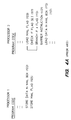
- Figures 4A and 4B illustrate the use of a barrier instruction to prevent the problem illustrated in Figure 3 from occurring.
- Figure 4A lists the portions of a program each CPU will execute and is the same as discussed before with the addition of a barrier instruction 401 placed before the "load data in the mailbox instruction" 115.
- Processor 1 performs operations 103 and 105 during times T 4 and T 5 respectively.
- Processor 2 performs the same operations in T 0 - T 2 as discussed in association with Figure 3.
- a barrier instruction 401 has been added after the branch instruction 113 and before the load data in the mailbox instruction 115. Therefore after processor 2 tests the flag and finds the flag is not set, the barrier instruction prevents processor 2 from "speculating" and loading the data in the mailbox forcing the processor to complete the flag load and test operation before continuing.
- the barrier instruction forces the processor to complete all pending instructions before continuing.
- the loading of data from the mailbox is finally accomplished at time T 12 at which time the mailbox data is valid.
- Using the barrier instruction has prevented processor 2 from loading invalid data from the mailbox.
- This example shows thirteen time units being used and one instruction per CPU per time unit being executed. However, different CPU hardware designs may take more or less relative time to execute the same instructions.
- FIG. 5 An example of the store problem is illustrated in Figure 5.
- processor 1 would not be able to store data into the mailbox (501) at time T 0 but would be able to store the flag (503) at time T 1 . This might occur if the mailbox memory was unavailable to processor 1 for some reason. If processor 1 stores the flag at time T 1 , processor 2 will read the flag and then load invalid data from the mailbox. The mailbox data is invalid as processor 1 did not store the mailbox data until time T 4 .
- barrier instruction before the flag store (601) and before any loads from a mailbox (603) as illustrated in Figure 4.
- a barrier instruction forces the CPU to wait until all prior instructions are completed before continuing past the barrier. This may be inefficient in many cases. For example, if a barrier is used to insure a load is performed properly, the barrier will also prevent a subsequent store unrelated to the protected load from occurring. The reverse can also be true when a store operation is protected by a barrier instruction. Additional inefficiency is introduced by the use of barrier instructions because it takes some time for the CPU to execute a barrier instruction.
- the present invention as set out in claims 1,3 and 6 overcomes the aforementioned problems by providing new and novel computer instructions.
- a new store instruction is provided that prevents the CPU from performing its store operation until all preceding store operations are completed.
- a new load instruction is provided that prevents the CPU from performing subsequent load operations until its load operation is completed.
- a CPU store instruction is encoded such that a store command is combined with a store barrier command. The result is a single instruction that can be executed by a CPU in the same amount of time that a store instruction without a barrier is executed.
- a CPU load instruction is also encoded such that a load instruction is combined with a load barrier instruction and is executed in the same number of CPU cycles as a load instruction without a barrier instruction.
- a programmer can force the computer system to execute instructions in a way that insures the correct data is used by the CPUs when mailbox and like transactions are performed.
- the new instructions provide the needed synchronization while, at the same time, allowing the CPU to execute subsequent unrelated operations, and postpone earlier unrelated operations, thereby improving the overall efficiency of the associated computer system. Further, the prior time penalties associated with barrier instructions is overcome.
- Figure 1 illustrates a partial instruction flow for two independent CPUs using mailbox communications.
- Figure 2 illustrates the execution of the commands shown in Figure 1.
- FIG 3 illustrates the execution of the commands shown in Figure 1 by non-sequentially consistent CPUs.
- Figure 4A illustrates a partial instruction flow for two CPUs using mailbox communications and incorporating a barrier instruction.
- Figure 4B illustrates a prior art use of a barrier instruction before a mailbox load operation.
- Figure 5 illustrates a partial instruction flow for two independent CPUs with the first CPU having a mailbox store operation delayed.
- Figure 6 illustrates a prior art use of barrier instructions before a flag store operation and a load mailbox operation.
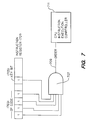
- Figure 7 illustrates a simplified ordered store instruction detection apparatus.
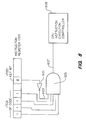
- Figure 8 illustrates a simplified ordered load instruction detection apparatus.
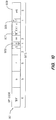
- Figure 9 illustrates a preferred encoding of an ordered store instruction.
- Figure 10 illustrates a preferred encoding of an ordered load instruction.
- Figure 11 illustrates an exemplary use of an ordered store instruction.
- Figure 12 illustrates an exemplary use of an ordered load instruction.
- PA-RISC Hewlett-Packard Precision Architecture Reduced Instruction Set Computer
- the present invention provides two new computer instructions: an "ordered load” and an “ordered store”. While these instructions are useful in many computer systems, they are particularly useful in computers employing the PA-RISC architecture. These instructions are encoded as is normal for a PA-RISC 1.1 instruction and a special instruction detector detects when those instructions are utilized. When one of these new instructions is detected, the detector forces the CPU to perform an ordered load or store operation.
- Figure 7 illustrates a simplified view of the detection process.
- An instruction register 701 holds an instruction having an op-code 703 and a key bit 705.
- an instruction having an op-code of "1111” and a key bit of "1” is an ordered store operation.
- An "and” gate 707 detects when all of the op-code bits and the key bit are “1s”. When this condition is detected, the "and” gate outputs a "1" on "order” line 709.
- a CPU instruction execution controller 711 monitors the order line 709 and suspends the current store operation until all prior store operations are completed.
- Figure 8 illustrates a simplified view of the detection process for detecting an ordered load operation.
- the instruction register 701 holds an instruction with and op-code 703 and a key bit 705.
- an instruction having an op-code of "1111” and a key bit of "0" is an ordered load instruction.
- An inverter gate 801 inverts the contents in the key bit location 705 and provides an input 803 to an "and” gate 805.
- the bits in op-code 703 are also fed into the "and” gate 805.
- the "and” gate detects that all op-code bits are "1s” and the key bit is a "0”
- the "and” gate outputs a "1” on the "order” line 807.
- a CPU instruction execution controller monitors the order line 807 and suspends all subsequent load operations until the prior load operation is completed.
- the new instructions can advantageously be encoded in any fashion optimal for a particular computer architecture as is well known by those skilled in the art. Also, the instruction detection means will necessarily take many forms depending on the particular architecture without departing from the advantages herein described.
- the "ordered store” instruction is encoded as illustrated in Figure 9. While many fields are shown, the fields pertinent to this discussion are the "op-code” field 901, the "a” field 903, the “m” field 905 and the first bit 907 of field "ext4" and the displacement field 909 "im5".
- the op-code is "03"
- the "a” field is “0”
- the "m” field is “1”
- the first bit of the "ext4" field is “1”
- the "im5" field is “0”.
- the other fields have the same meaning and purpose as described in chapter 5 of the PA-RISC 1.1 architecture Reference Manual.
- Figure 10 illustrates the encoding for the "ordered load” instruction.
- the op-code 901 is “03”
- the "a” field 903 is “0”
- the "m” field 905 is “1”
- the "im5" field is 0.
- This instruction is differentiated from the ordered store by the first bit of the "ext4" field 907 being "0".
- FIG 11 illustrates the use of an ordered store instruction as applied to storing data in a mailbox and setting a flag.
- Processor 1 is programmed to execute three instructions, a mailbox store 1101, a flag store 1103 and a data load 1105 where the data load 105 is unrelated to the flag store 1103.
- the data store to the mailbox is delayed and cannot be completed at time T 0 and does not complete until time T 3 .
- the processor moves to the next instruction which is an ordered store 1103 used to store the mailbox flag.
- the ordered store is suspended until after the pending mailbox store is completed. Therefore the mail flag ordered store is completed at time T 4 .
- the third instruction 1105 is a load instruction
- the processor executes the instruction at time T 2 as load instructions are unaffected by the ordered store command 1103.
- Figure 12 illustrates the use of an "ordered load” instruction where an "ordered load” prevents the CPU from executing a subsequent load until the CPU completes the "ordered load”.
- Processor 2 is programmed to execute five instructions, an "ordered load” mail flag 1201, check flag instruction 1203, a branch (on not flag) instruction 1205, a load from a mailbox 1207 and a data store 1209 where the data store 1209 is unrelated to the load 1207.
- processor 2 loads the mail flag 1201.
- the processor tests the flag to see if it is set indicating there is valid data in the mailbox. Assuming for this example the flag is not set, the branch instruction 1205 causes the CPU to branch back to reload the mail flag.
- the CPU If the CPU cannot do the reload immediately, then the CPU tries to perform the next instruction while waiting for the mail flag load to complete. Since the next instruction 1207 is a load command and the mail flag load was an "ordered load", the CPU will not execute the mailbox load and will instead perform the store command 1209 at time T 3 . At time T 4 the ordered load of the mail flag completes and the flag is rechecked at time T 5 . Assuming the flag is now valid, a branch does not occur and the data in the mailbox is loaded at time T 7 .
- the novel ordered load and store instructions and usage now allows a programmer to insure particular instructions are executed in a specific order while still allowing the computer to continue executing different types of instructions. This flexibility is achieved without requiring additional CPU time to execute multiple instructions and therefore represents a major efficiency improvement over prior art designs. While the new instructions have been illustrated in one limited use, mailbox communications, they enable computer hardware design approaches not practical before. For example, a computer can now be designed that starts instructions out of order without having to throwaway work when there is a risk of mis-synchronization between two CPUs. It is common for a CPU to start instructions out of order.
Landscapes
- Engineering & Computer Science (AREA)
- Software Systems (AREA)
- Theoretical Computer Science (AREA)
- Physics & Mathematics (AREA)
- General Engineering & Computer Science (AREA)
- General Physics & Mathematics (AREA)
- Advance Control (AREA)
- Executing Machine-Instructions (AREA)
- Multi Processors (AREA)
Description
Claims (8)
- A digital computer having an instruction execution means for executing instructions in a stream of instructions, including load and store instructions, characterized by:a detection means for detecting an ordered store or an ordered load instruction in the stream of instructions; anda control means, cooperative with the detection means, operative to control the instruction execution means as follows:if an ordered load instruction is detected, the control means controls the instruction execution means such that a load instruction subsequent to the ordered load instruction is not executed prior to the ordered load instruction load being completed by the instruction execution means; orif an ordered store instruction is detected, the control means controls the instruction execution means such that the ordered store instruction is not executed prior to all store operations started by the instruction execution means being completed.
- A digital computer as in claim 1 wherein the detection means detects an ordered store or an ordered load instruction by reading an instruction in an instruction register and determining that the instruction is a load or store instruction and then comparing at least one field of the instruction to a predetermined code to detect that the instruction is an ordered load or store instruction.
- A method of ordering load operations, performed by a CPU executing a stream of instructions including a series of load instructions, the method being characterized by the steps of:detecting an ordered load instruction in the stream of instructions, andpreventing the CPU from executing a load instruction subsequent to the ordered load instruction, in the stream of instructions, prior to the ordered load instruction load being completed by the CPU.
- A method as in claim 3 further comprising the steps of detecting an ordered load instruction by:reading an instruction in an instruction register;comparing an operations code "op-code" field in the instruction to a predetermined load code to detect that the instruction is a load instruction; andcomparing at least one additional field in the instruction to a predetermined code to detect that the instruction is an ordered load instruction.
- A method as in claim 3 further comprising the step of detecting an ordered load instruction by reading an instruction in an instruction register and detecting that the instruction specifies that:a load operation is to be performed the CPU;a register is to be modified;the modification of the register is to occur after the load operation is complete; andthe register is be modified by adding "0" to the register (Reg=Reg + 0).
- A method of ordering store operations, performed by a CPU executing a stream of instructions including a series of store instructions, the method being characterized by the steps of:detecting an ordered store instruction in the stream of instructions; andpreventing the CPU from executing the ordered store instruction store operation before all store operations started by the CPU prior to the ordered store instruction are completed by the CPU.
- A method as in claim 6 further comprising the steps of detecting an ordered store instruction by:reading an instruction in an instruction register;comparing an operations code "op-code" field in the instruction to a predetermined store code to detect that the instruction is a store instruction; andcomparing at least one additional field in the instruction to a predetermined code to detect that the instruction is an ordered store instruction.
- A method as in claim 6 further comprising the step of detecting an ordered store instruction by reading an instruction in an instruction register and detecting that the instruction specifies that:a store operation is to be performed the CPU;a register is to be modified;the modification of the register is to occur after the store operation is complete; andthe register is be modified by adding "0" to the register (Reg=Reg + 0).
Applications Claiming Priority (2)
| Application Number | Priority Date | Filing Date | Title |
|---|---|---|---|
| US23490394A | 1994-04-28 | 1994-04-28 | |
| US234903 | 1994-04-28 |
Publications (3)
| Publication Number | Publication Date |
|---|---|
| EP0679993A2 EP0679993A2 (en) | 1995-11-02 |
| EP0679993A3 EP0679993A3 (en) | 1996-09-11 |
| EP0679993B1 true EP0679993B1 (en) | 1998-11-04 |
Family
ID=22883283
Family Applications (1)
| Application Number | Title | Priority Date | Filing Date |
|---|---|---|---|
| EP95302901A Expired - Lifetime EP0679993B1 (en) | 1994-04-28 | 1995-04-28 | A computer apparatus having special instructions to force ordered load and store operations |
Country Status (3)
| Country | Link |
|---|---|
| US (1) | US6286095B1 (en) |
| EP (1) | EP0679993B1 (en) |
| JP (1) | JPH07302200A (en) |
Families Citing this family (34)
| Publication number | Priority date | Publication date | Assignee | Title |
|---|---|---|---|---|
| US6038646A (en) * | 1998-01-23 | 2000-03-14 | Sun Microsystems, Inc. | Method and apparatus for enforcing ordered execution of reads and writes across a memory interface |
| US6442677B1 (en) * | 1999-06-10 | 2002-08-27 | Advanced Micro Devices, Inc. | Apparatus and method for superforwarding load operands in a microprocessor |
| US6678810B1 (en) | 1999-12-30 | 2004-01-13 | Intel Corporation | MFENCE and LFENCE micro-architectural implementation method and system |
| US7085914B1 (en) * | 2000-01-27 | 2006-08-01 | International Business Machines Corporation | Methods for renaming stack references to processor registers |
| US6625660B1 (en) * | 2000-06-06 | 2003-09-23 | International Business Machines Corporation | Multiprocessor speculation mechanism for efficiently managing multiple barrier operations |
| US6609192B1 (en) * | 2000-06-06 | 2003-08-19 | International Business Machines Corporation | System and method for asynchronously overlapping storage barrier operations with old and new storage operations |
| US6606702B1 (en) * | 2000-06-06 | 2003-08-12 | International Business Machines Corporation | Multiprocessor speculation mechanism with imprecise recycling of storage operations |
| US6725340B1 (en) * | 2000-06-06 | 2004-04-20 | International Business Machines Corporation | Mechanism for folding storage barrier operations in a multiprocessor system |
| US6963967B1 (en) * | 2000-06-06 | 2005-11-08 | International Business Machines Corporation | System and method for enabling weak consistent storage advantage to a firmly consistent storage architecture |
| US6691220B1 (en) * | 2000-06-06 | 2004-02-10 | International Business Machines Corporation | Multiprocessor speculation mechanism via a barrier speculation flag |
| US6728873B1 (en) | 2000-06-06 | 2004-04-27 | International Business Machines Corporation | System and method for providing multiprocessor speculation within a speculative branch path |
| US6748518B1 (en) | 2000-06-06 | 2004-06-08 | International Business Machines Corporation | Multi-level multiprocessor speculation mechanism |
| US6880073B2 (en) * | 2000-12-28 | 2005-04-12 | International Business Machines Corporation | Speculative execution of instructions and processes before completion of preceding barrier operations |
| WO2005072307A2 (en) * | 2004-01-22 | 2005-08-11 | University Of Washington | Wavescalar architecture having a wave order memory |
| US7490218B2 (en) * | 2004-01-22 | 2009-02-10 | University Of Washington | Building a wavecache |
| WO2005121948A1 (en) * | 2004-06-02 | 2005-12-22 | Sun Microsystems, Inc. | Method and apparatus for enforcing membar instruction semantics in an execute-ahead processor |
| US7606998B2 (en) * | 2004-09-10 | 2009-10-20 | Cavium Networks, Inc. | Store instruction ordering for multi-core processor |
| EP1995682A1 (en) * | 2007-05-21 | 2008-11-26 | Stmicroelectronics Sa | Personalisation of a microprocessor and data protection method |
| US9280343B2 (en) * | 2009-08-10 | 2016-03-08 | Oracle America, Inc. | Store queue with token to facilitate efficient thread synchronization |
| US9052890B2 (en) | 2010-09-25 | 2015-06-09 | Intel Corporation | Execute at commit state update instructions, apparatus, methods, and systems |
| US9904616B2 (en) * | 2011-12-14 | 2018-02-27 | International Business Machines Corporation | Instruction output dependent on a random number-based selection or non-selection of a special command from a group of commands |
| US8935513B2 (en) | 2012-02-08 | 2015-01-13 | International Business Machines Corporation | Processor performance improvement for instruction sequences that include barrier instructions |
| JP6105307B2 (en) * | 2013-02-07 | 2017-03-29 | Necプラットフォームズ株式会社 | Instruction execution control device, instruction execution control system, instruction execution control method, and instruction execution control program |
| US20150317158A1 (en) | 2014-04-03 | 2015-11-05 | Applied Micro Circuits Corporation | Implementation of load acquire/store release instructions using load/store operation with dmb operation |
| CN110795150A (en) * | 2015-07-21 | 2020-02-14 | 安培计算有限责任公司 | Implementation of load fetch/store release instruction by load/store operation according to DMB operation |
| US10191748B2 (en) * | 2015-11-30 | 2019-01-29 | Intel IP Corporation | Instruction and logic for in-order handling in an out-of-order processor |
| JP7064135B2 (en) * | 2018-05-15 | 2022-05-10 | 富士通株式会社 | Arithmetic processing device and control method of arithmetic processing device |
| CN113366438B (en) | 2019-01-31 | 2025-08-12 | 国际商业机器公司 | Processing I/O store instructions |
| JP7324282B2 (en) | 2019-01-31 | 2023-08-09 | インターナショナル・ビジネス・マシーンズ・コーポレーション | Methods, systems, and programs for handling input/output store instructions |
| TWI773959B (en) | 2019-01-31 | 2022-08-11 | 美商萬國商業機器公司 | Data processing system, method and computer program product for handling an input/output store instruction |
| TWI767175B (en) | 2019-01-31 | 2022-06-11 | 美商萬國商業機器公司 | Data processing system, method and computer program product for handling an input/output store instruction |
| JP2021043737A (en) * | 2019-09-11 | 2021-03-18 | 富士通株式会社 | Barrier synchronization system, barrier synchronization method and parallel information processing device |
| CN111857825B (en) | 2020-07-20 | 2024-10-29 | 昆仑芯(北京)科技有限公司 | Instruction execution method, device, electronic device, storage medium and program product |
| US12572358B2 (en) * | 2021-06-25 | 2026-03-10 | Intel Corporation | System, apparatus and methods for minimum serialization in response to non-serializing register write instruction |
Family Cites Families (10)
| Publication number | Priority date | Publication date | Assignee | Title |
|---|---|---|---|---|
| US4439828A (en) * | 1981-07-27 | 1984-03-27 | International Business Machines Corp. | Instruction substitution mechanism in an instruction handling unit of a data processing system |
| JPS6432379A (en) * | 1987-07-29 | 1989-02-02 | Hitachi Ltd | Computer |
| US5175829A (en) * | 1988-10-25 | 1992-12-29 | Hewlett-Packard Company | Method and apparatus for bus lock during atomic computer operations |
| US5185871A (en) * | 1989-12-26 | 1993-02-09 | International Business Machines Corporation | Coordination of out-of-sequence fetching between multiple processors using re-execution of instructions |
| US5261067A (en) * | 1990-04-17 | 1993-11-09 | North American Philips Corp. | Method and apparatus for providing synchronized data cache operation for processors in a parallel processing system |
| US5193167A (en) * | 1990-06-29 | 1993-03-09 | Digital Equipment Corporation | Ensuring data integrity by locked-load and conditional-store operations in a multiprocessor system |
| US5230051A (en) * | 1990-09-04 | 1993-07-20 | Hewlett-Packard Company | Distributed messaging system and method |
| US5408658A (en) * | 1991-07-15 | 1995-04-18 | International Business Machines Corporation | Self-scheduling parallel computer system and method |
| US5363495A (en) * | 1991-08-26 | 1994-11-08 | International Business Machines Corporation | Data processing system with multiple execution units capable of executing instructions out of sequence |
| IE80854B1 (en) * | 1993-08-26 | 1999-04-07 | Intel Corp | Processor ordering consistency for a processor performing out-of-order instruction execution |
-
1995
- 1995-04-27 JP JP7104356A patent/JPH07302200A/en active Pending
- 1995-04-28 EP EP95302901A patent/EP0679993B1/en not_active Expired - Lifetime
- 1995-09-26 US US08/533,878 patent/US6286095B1/en not_active Expired - Fee Related
Also Published As
| Publication number | Publication date |
|---|---|
| EP0679993A3 (en) | 1996-09-11 |
| EP0679993A2 (en) | 1995-11-02 |
| US6286095B1 (en) | 2001-09-04 |
| JPH07302200A (en) | 1995-11-14 |
Similar Documents
| Publication | Publication Date | Title |
|---|---|---|
| US6286095B1 (en) | Computer apparatus having special instructions to force ordered load and store operations | |
| JP2597811B2 (en) | Data processing system | |
| US5293500A (en) | Parallel processing method and apparatus | |
| EP0407911B1 (en) | Parallel processing apparatus and parallel processing method | |
| US6266765B1 (en) | Computer architecture capable of execution of general purpose multiple instructions | |
| US6289445B2 (en) | Circuit and method for initiating exception routines using implicit exception checking | |
| EP0380858A2 (en) | Method and apparatus for detecting and correcting errors in a pipelined computer system | |
| EP0399757A2 (en) | Paired instruction processor precise exception handling mechanism | |
| EP0394624B1 (en) | Multiple sequence processor system | |
| RU2137182C1 (en) | Execution of data processing instruction | |
| US5452469A (en) | Command performing order change over system based on information contained in executed command in a data processor | |
| US5555384A (en) | Rescheduling conflicting issued instructions by delaying one conflicting instruction into the same pipeline stage as a third non-conflicting instruction | |
| US5193159A (en) | Microprocessor system | |
| US6101596A (en) | Information processor for performing processing without register conflicts | |
| EP0679990B1 (en) | A computer apparatus having a means to force sequential instruction execution | |
| JP3336987B2 (en) | Pipelined floating point store | |
| US5226166A (en) | Parallel operation processor with second command unit | |
| US5031096A (en) | Method and apparatus for compressing the execution time of an instruction stream executing in a pipelined processor | |
| US6189093B1 (en) | System for initiating exception routine in response to memory access exception by storing exception information and exception bit within architectured register | |
| KR100864890B1 (en) | Source Register Locking in Data Processing Unit | |
| US5634136A (en) | Data processor and method of controlling the same | |
| US20020147902A1 (en) | Method for encoding an instruction set with a load with conditional fault instruction | |
| US5781433A (en) | System for detecting failure in information processing device | |
| EP0306891A2 (en) | Pipelined slave protocol for high performance CPU-FPU cluster | |
| JPH1049373A (en) | Method and device for operating multiplex and highly accurate event for pipeline digital processor |
Legal Events
| Date | Code | Title | Description |
|---|---|---|---|
| PUAI | Public reference made under article 153(3) epc to a published international application that has entered the european phase |
Free format text: ORIGINAL CODE: 0009012 |
|
| AK | Designated contracting states |
Kind code of ref document: A2 Designated state(s): FR GB IT |
|
| PUAL | Search report despatched |
Free format text: ORIGINAL CODE: 0009013 |
|
| AK | Designated contracting states |
Kind code of ref document: A3 Designated state(s): FR GB IT |
|
| 17P | Request for examination filed |
Effective date: 19961223 |
|
| GRAG | Despatch of communication of intention to grant |
Free format text: ORIGINAL CODE: EPIDOS AGRA |
|
| 17Q | First examination report despatched |
Effective date: 19980115 |
|
| GRAG | Despatch of communication of intention to grant |
Free format text: ORIGINAL CODE: EPIDOS AGRA |
|
| GRAH | Despatch of communication of intention to grant a patent |
Free format text: ORIGINAL CODE: EPIDOS IGRA |
|
| GRAH | Despatch of communication of intention to grant a patent |
Free format text: ORIGINAL CODE: EPIDOS IGRA |
|
| GRAA | (expected) grant |
Free format text: ORIGINAL CODE: 0009210 |
|
| AK | Designated contracting states |
Kind code of ref document: B1 Designated state(s): FR GB IT |
|
| ITF | It: translation for a ep patent filed | ||
| ET | Fr: translation filed | ||
| PLBE | No opposition filed within time limit |
Free format text: ORIGINAL CODE: 0009261 |
|
| STAA | Information on the status of an ep patent application or granted ep patent |
Free format text: STATUS: NO OPPOSITION FILED WITHIN TIME LIMIT |
|
| 26N | No opposition filed | ||
| REG | Reference to a national code |
Ref country code: GB Ref legal event code: 732E |
|
| REG | Reference to a national code |
Ref country code: FR Ref legal event code: TP |
|
| REG | Reference to a national code |
Ref country code: GB Ref legal event code: IF02 |
|
| PGFP | Annual fee paid to national office [announced via postgrant information from national office to epo] |
Ref country code: GB Payment date: 20070425 Year of fee payment: 13 |
|
| PGFP | Annual fee paid to national office [announced via postgrant information from national office to epo] |
Ref country code: IT Payment date: 20070522 Year of fee payment: 13 |
|
| PGFP | Annual fee paid to national office [announced via postgrant information from national office to epo] |
Ref country code: FR Payment date: 20070417 Year of fee payment: 13 |
|
| GBPC | Gb: european patent ceased through non-payment of renewal fee |
Effective date: 20080428 |
|
| REG | Reference to a national code |
Ref country code: FR Ref legal event code: ST Effective date: 20081231 |
|
| PG25 | Lapsed in a contracting state [announced via postgrant information from national office to epo] |
Ref country code: FR Free format text: LAPSE BECAUSE OF NON-PAYMENT OF DUE FEES Effective date: 20080430 |
|
| PG25 | Lapsed in a contracting state [announced via postgrant information from national office to epo] |
Ref country code: GB Free format text: LAPSE BECAUSE OF NON-PAYMENT OF DUE FEES Effective date: 20080428 |
|
| PG25 | Lapsed in a contracting state [announced via postgrant information from national office to epo] |
Ref country code: IT Free format text: LAPSE BECAUSE OF NON-PAYMENT OF DUE FEES Effective date: 20080428 |