EP0679259B1 - Diagnosis of leishmaniasis - Google Patents
Diagnosis of leishmaniasis Download PDFInfo
- Publication number
- EP0679259B1 EP0679259B1 EP94907184A EP94907184A EP0679259B1 EP 0679259 B1 EP0679259 B1 EP 0679259B1 EP 94907184 A EP94907184 A EP 94907184A EP 94907184 A EP94907184 A EP 94907184A EP 0679259 B1 EP0679259 B1 EP 0679259B1
- Authority
- EP
- European Patent Office
- Prior art keywords
- ala
- xaa
- glu
- ser
- leishmania
- Prior art date
- Legal status (The legal status is an assumption and is not a legal conclusion. Google has not performed a legal analysis and makes no representation as to the accuracy of the status listed.)
- Expired - Lifetime
Links
- 208000004554 Leishmaniasis Diseases 0.000 title description 15
- 238000003745 diagnosis Methods 0.000 title description 5
- 239000000427 antigen Substances 0.000 claims abstract description 48
- 102000036639 antigens Human genes 0.000 claims abstract description 48
- 108091007433 antigens Proteins 0.000 claims abstract description 48
- 241000178949 Leishmania chagasi Species 0.000 claims abstract description 45
- 241000222727 Leishmania donovani Species 0.000 claims abstract description 22
- 238000000034 method Methods 0.000 claims abstract description 17
- 244000045947 parasite Species 0.000 claims abstract description 16
- 150000001413 amino acids Chemical group 0.000 claims description 28
- 108020004414 DNA Proteins 0.000 claims description 15
- YLTKNGYYPIWKHZ-ACZMJKKPSA-N Ala-Ala-Glu Chemical compound C[C@H](N)C(=O)N[C@@H](C)C(=O)N[C@H](C(O)=O)CCC(O)=O YLTKNGYYPIWKHZ-ACZMJKKPSA-N 0.000 claims description 7
- FJVAQLJNTSUQPY-CIUDSAMLSA-N Ala-Ala-Lys Chemical compound C[C@H](N)C(=O)N[C@@H](C)C(=O)N[C@H](C(O)=O)CCCCN FJVAQLJNTSUQPY-CIUDSAMLSA-N 0.000 claims description 7
- BTSPOOHJBYJRKO-CIUDSAMLSA-N Gln-Asp-Arg Chemical compound [H]N[C@@H](CCC(N)=O)C(=O)N[C@@H](CC(O)=O)C(=O)N[C@@H](CCCNC(N)=N)C(O)=O BTSPOOHJBYJRKO-CIUDSAMLSA-N 0.000 claims description 7
- HWEINOMSWQSJDC-SRVKXCTJSA-N Gln-Leu-Arg Chemical compound [H]N[C@@H](CCC(N)=O)C(=O)N[C@@H](CC(C)C)C(=O)N[C@@H](CCCNC(N)=N)C(O)=O HWEINOMSWQSJDC-SRVKXCTJSA-N 0.000 claims description 7
- QKCZZAZNMMVICF-DCAQKATOSA-N Gln-Leu-Glu Chemical compound NC(=O)CC[C@H](N)C(=O)N[C@@H](CC(C)C)C(=O)N[C@@H](CCC(O)=O)C(O)=O QKCZZAZNMMVICF-DCAQKATOSA-N 0.000 claims description 7
- BQSLGJHIAGOZCD-CIUDSAMLSA-N Leu-Ala-Ser Chemical compound CC(C)C[C@H](N)C(=O)N[C@@H](C)C(=O)N[C@@H](CO)C(O)=O BQSLGJHIAGOZCD-CIUDSAMLSA-N 0.000 claims description 7
- KVMULWOHPPMHHE-DCAQKATOSA-N Leu-Glu-Gln Chemical compound [H]N[C@@H](CC(C)C)C(=O)N[C@@H](CCC(O)=O)C(=O)N[C@@H](CCC(N)=O)C(O)=O KVMULWOHPPMHHE-DCAQKATOSA-N 0.000 claims description 7
- YBAFDPFAUTYYRW-UHFFFAOYSA-N N-L-alpha-glutamyl-L-leucine Natural products CC(C)CC(C(O)=O)NC(=O)C(N)CCC(O)=O YBAFDPFAUTYYRW-UHFFFAOYSA-N 0.000 claims description 7
- LAFKUZYWNCHOHT-WHFBIAKZSA-N Ser-Glu Chemical compound OC[C@H](N)C(=O)N[C@H](C(O)=O)CCC(O)=O LAFKUZYWNCHOHT-WHFBIAKZSA-N 0.000 claims description 7
- CAGTXGDOIFXLPC-KZVJFYERSA-N Thr-Arg-Ala Chemical compound C[C@@H](O)[C@H](N)C(=O)N[C@H](C(=O)N[C@@H](C)C(O)=O)CCCN=C(N)N CAGTXGDOIFXLPC-KZVJFYERSA-N 0.000 claims description 7
- 108010013835 arginine glutamate Proteins 0.000 claims description 7
- 108091028043 Nucleic acid sequence Proteins 0.000 claims description 6
- SRTCFKGBYBZRHA-ACZMJKKPSA-N Ser-Ala-Glu Chemical compound [H]N[C@@H](CO)C(=O)N[C@@H](C)C(=O)N[C@@H](CCC(O)=O)C(O)=O SRTCFKGBYBZRHA-ACZMJKKPSA-N 0.000 claims description 6
- 238000001514 detection method Methods 0.000 claims description 6
- 108091081062 Repeated sequence (DNA) Proteins 0.000 claims description 4
- 229960005486 vaccine Drugs 0.000 claims description 4
- 238000004519 manufacturing process Methods 0.000 claims description 3
- 239000007790 solid phase Substances 0.000 claims description 2
- 239000003153 chemical reaction reagent Substances 0.000 claims 2
- 239000000203 mixture Substances 0.000 claims 2
- 239000012646 vaccine adjuvant Substances 0.000 claims 2
- 229940124931 vaccine adjuvant Drugs 0.000 claims 2
- SSJMZMUVNKEENT-IMJSIDKUSA-N Ser-Ala Chemical compound OC(=O)[C@H](C)NC(=O)[C@@H](N)CO SSJMZMUVNKEENT-IMJSIDKUSA-N 0.000 claims 1
- 239000008280 blood Substances 0.000 claims 1
- 210000004369 blood Anatomy 0.000 claims 1
- 125000003275 alpha amino acid group Chemical group 0.000 abstract 1
- 108090000623 proteins and genes Proteins 0.000 description 24
- 206010047505 Visceral leishmaniasis Diseases 0.000 description 22
- 241000222722 Leishmania <genus> Species 0.000 description 18
- 239000006166 lysate Substances 0.000 description 17
- 125000003412 L-alanyl group Chemical group [H]N([H])[C@@](C([H])([H])[H])(C(=O)[*])[H] 0.000 description 16
- 101001095863 Enterobacteria phage T4 RNA ligase 1 Proteins 0.000 description 15
- 230000009257 reactivity Effects 0.000 description 14
- 239000000523 sample Substances 0.000 description 14
- 241000283973 Oryctolagus cuniculus Species 0.000 description 13
- 102000004169 proteins and genes Human genes 0.000 description 13
- 206010001935 American trypanosomiasis Diseases 0.000 description 10
- 208000015181 infectious disease Diseases 0.000 description 10
- 238000002835 absorbance Methods 0.000 description 9
- 210000002966 serum Anatomy 0.000 description 9
- 206010011668 Cutaneous leishmaniasis Diseases 0.000 description 8
- 238000009007 Diagnostic Kit Methods 0.000 description 8
- 241000223109 Trypanosoma cruzi Species 0.000 description 8
- 239000012634 fragment Substances 0.000 description 8
- 201000000626 mucocutaneous leishmaniasis Diseases 0.000 description 8
- 201000010099 disease Diseases 0.000 description 6
- 208000037265 diseases, disorders, signs and symptoms Diseases 0.000 description 6
- 241000894007 species Species 0.000 description 6
- 238000002965 ELISA Methods 0.000 description 5
- 241000222732 Leishmania major Species 0.000 description 5
- 210000004027 cell Anatomy 0.000 description 5
- 238000003119 immunoblot Methods 0.000 description 5
- 230000003252 repetitive effect Effects 0.000 description 5
- 101710173545 Gene 63 protein Proteins 0.000 description 4
- 108010074328 Interferon-gamma Proteins 0.000 description 4
- 102100026040 Leishmanolysin-like peptidase Human genes 0.000 description 4
- 238000002105 Southern blotting Methods 0.000 description 4
- 238000004458 analytical method Methods 0.000 description 4
- 230000005875 antibody response Effects 0.000 description 4
- 239000000499 gel Substances 0.000 description 4
- 229920001184 polypeptide Polymers 0.000 description 4
- 108090000765 processed proteins & peptides Proteins 0.000 description 4
- 102000004196 processed proteins & peptides Human genes 0.000 description 4
- 230000004044 response Effects 0.000 description 4
- 230000009278 visceral effect Effects 0.000 description 4
- FWMNVWWHGCHHJJ-SKKKGAJSSA-N 4-amino-1-[(2r)-6-amino-2-[[(2r)-2-[[(2r)-2-[[(2r)-2-amino-3-phenylpropanoyl]amino]-3-phenylpropanoyl]amino]-4-methylpentanoyl]amino]hexanoyl]piperidine-4-carboxylic acid Chemical compound C([C@H](C(=O)N[C@H](CC(C)C)C(=O)N[C@H](CCCCN)C(=O)N1CCC(N)(CC1)C(O)=O)NC(=O)[C@H](N)CC=1C=CC=CC=1)C1=CC=CC=C1 FWMNVWWHGCHHJJ-SKKKGAJSSA-N 0.000 description 3
- 102100037850 Interferon gamma Human genes 0.000 description 3
- 102000010638 Kinesin Human genes 0.000 description 3
- 108010063296 Kinesin Proteins 0.000 description 3
- 125000000570 L-alpha-aspartyl group Chemical group [H]OC(=O)C([H])([H])[C@]([H])(N([H])[H])C(*)=O 0.000 description 3
- 125000000899 L-alpha-glutamyl group Chemical group [H]N([H])[C@]([H])(C(=O)[*])C([H])([H])C([H])([H])C(O[H])=O 0.000 description 3
- 125000000010 L-asparaginyl group Chemical group O=C([*])[C@](N([H])[H])([H])C([H])([H])C(=O)N([H])[H] 0.000 description 3
- 125000000769 L-threonyl group Chemical group [H]N([H])[C@]([H])(C(=O)[*])[C@](O[H])(C([H])([H])[H])[H] 0.000 description 3
- 241000222724 Leishmania amazonensis Species 0.000 description 3
- 241000222697 Leishmania infantum Species 0.000 description 3
- 241000699670 Mus sp. Species 0.000 description 3
- 229920001213 Polysorbate 20 Polymers 0.000 description 3
- 210000001744 T-lymphocyte Anatomy 0.000 description 3
- 230000003053 immunization Effects 0.000 description 3
- 238000002649 immunization Methods 0.000 description 3
- 230000003834 intracellular effect Effects 0.000 description 3
- 210000000680 phagosome Anatomy 0.000 description 3
- 229920002401 polyacrylamide Polymers 0.000 description 3
- 235000010486 polyoxyethylene sorbitan monolaurate Nutrition 0.000 description 3
- 239000000256 polyoxyethylene sorbitan monolaurate Substances 0.000 description 3
- 238000002415 sodium dodecyl sulfate polyacrylamide gel electrophoresis Methods 0.000 description 3
- 238000001228 spectrum Methods 0.000 description 3
- 210000001519 tissue Anatomy 0.000 description 3
- 108010042708 Acetylmuramyl-Alanyl-Isoglutamine Proteins 0.000 description 2
- 241000132007 Bahia Species 0.000 description 2
- 229930194845 Bahia Natural products 0.000 description 2
- 208000024699 Chagas disease Diseases 0.000 description 2
- 235000017858 Laurus nobilis Nutrition 0.000 description 2
- 241000222740 Leishmania braziliensis Species 0.000 description 2
- 206010024229 Leprosy Diseases 0.000 description 2
- 102000005741 Metalloproteases Human genes 0.000 description 2
- 108010006035 Metalloproteases Proteins 0.000 description 2
- 102000029749 Microtubule Human genes 0.000 description 2
- 108091022875 Microtubule Proteins 0.000 description 2
- 108700026244 Open Reading Frames Proteins 0.000 description 2
- 208000035415 Reinfection Diseases 0.000 description 2
- 108091013841 Spermatogenesis-associated protein 6 Proteins 0.000 description 2
- 230000001154 acute effect Effects 0.000 description 2
- BFNBIHQBYMNNAN-UHFFFAOYSA-N ammonium sulfate Chemical compound N.N.OS(O)(=O)=O BFNBIHQBYMNNAN-UHFFFAOYSA-N 0.000 description 2
- 229910052921 ammonium sulfate Inorganic materials 0.000 description 2
- 235000011130 ammonium sulphate Nutrition 0.000 description 2
- 238000003556 assay Methods 0.000 description 2
- 210000003719 b-lymphocyte Anatomy 0.000 description 2
- 230000001580 bacterial effect Effects 0.000 description 2
- 238000001574 biopsy Methods 0.000 description 2
- 239000000872 buffer Substances 0.000 description 2
- 238000012512 characterization method Methods 0.000 description 2
- 238000010367 cloning Methods 0.000 description 2
- 238000011161 development Methods 0.000 description 2
- 230000000694 effects Effects 0.000 description 2
- 230000004927 fusion Effects 0.000 description 2
- 238000009396 hybridization Methods 0.000 description 2
- 238000001727 in vivo Methods 0.000 description 2
- 230000001524 infective effect Effects 0.000 description 2
- 238000001155 isoelectric focusing Methods 0.000 description 2
- 210000002540 macrophage Anatomy 0.000 description 2
- 210000004688 microtubule Anatomy 0.000 description 2
- BSOQXXWZTUDTEL-ZUYCGGNHSA-N muramyl dipeptide Chemical compound OC(=O)CC[C@H](C(N)=O)NC(=O)[C@H](C)NC(=O)[C@@H](C)O[C@H]1[C@H](O)[C@@H](CO)O[C@@H](O)[C@@H]1NC(C)=O BSOQXXWZTUDTEL-ZUYCGGNHSA-N 0.000 description 2
- 230000009696 proliferative response Effects 0.000 description 2
- 238000011084 recovery Methods 0.000 description 2
- 210000000952 spleen Anatomy 0.000 description 2
- 230000004083 survival effect Effects 0.000 description 2
- QKNYBSVHEMOAJP-UHFFFAOYSA-N 2-amino-2-(hydroxymethyl)propane-1,3-diol;hydron;chloride Chemical compound Cl.OCC(N)(CO)CO QKNYBSVHEMOAJP-UHFFFAOYSA-N 0.000 description 1
- 108020005065 3' Flanking Region Proteins 0.000 description 1
- QFVHZQCOUORWEI-UHFFFAOYSA-N 4-[(4-anilino-5-sulfonaphthalen-1-yl)diazenyl]-5-hydroxynaphthalene-2,7-disulfonic acid Chemical compound C=12C(O)=CC(S(O)(=O)=O)=CC2=CC(S(O)(=O)=O)=CC=1N=NC(C1=CC=CC(=C11)S(O)(=O)=O)=CC=C1NC1=CC=CC=C1 QFVHZQCOUORWEI-UHFFFAOYSA-N 0.000 description 1
- 238000000035 BCA protein assay Methods 0.000 description 1
- 108091003079 Bovine Serum Albumin Proteins 0.000 description 1
- 208000035473 Communicable disease Diseases 0.000 description 1
- 108091035707 Consensus sequence Proteins 0.000 description 1
- 238000011537 Coomassie blue staining Methods 0.000 description 1
- 241000588724 Escherichia coli Species 0.000 description 1
- 102000008070 Interferon-gamma Human genes 0.000 description 1
- 101710180643 Leishmanolysin Proteins 0.000 description 1
- 241000699673 Mesocricetus auratus Species 0.000 description 1
- 102000003505 Myosin Human genes 0.000 description 1
- 108060008487 Myosin Proteins 0.000 description 1
- 108091034117 Oligonucleotide Proteins 0.000 description 1
- 241000255129 Phlebotominae Species 0.000 description 1
- 102000007982 Phosphoproteins Human genes 0.000 description 1
- 108010089430 Phosphoproteins Proteins 0.000 description 1
- 102000007056 Recombinant Fusion Proteins Human genes 0.000 description 1
- 108010008281 Recombinant Fusion Proteins Proteins 0.000 description 1
- 102000002278 Ribosomal Proteins Human genes 0.000 description 1
- 108010000605 Ribosomal Proteins Proteins 0.000 description 1
- 241000607142 Salmonella Species 0.000 description 1
- 238000012300 Sequence Analysis Methods 0.000 description 1
- 108091081024 Start codon Proteins 0.000 description 1
- 230000005867 T cell response Effects 0.000 description 1
- 108020005038 Terminator Codon Proteins 0.000 description 1
- 241001655264 Trypanosoma cruzi cruzi Species 0.000 description 1
- XSQUKJJJFZCRTK-UHFFFAOYSA-N Urea Chemical compound NC(N)=O XSQUKJJJFZCRTK-UHFFFAOYSA-N 0.000 description 1
- JLCPHMBAVCMARE-UHFFFAOYSA-N [3-[[3-[[3-[[3-[[3-[[3-[[3-[[3-[[3-[[3-[[3-[[5-(2-amino-6-oxo-1H-purin-9-yl)-3-[[3-[[3-[[3-[[3-[[3-[[5-(2-amino-6-oxo-1H-purin-9-yl)-3-[[5-(2-amino-6-oxo-1H-purin-9-yl)-3-hydroxyoxolan-2-yl]methoxy-hydroxyphosphoryl]oxyoxolan-2-yl]methoxy-hydroxyphosphoryl]oxy-5-(5-methyl-2,4-dioxopyrimidin-1-yl)oxolan-2-yl]methoxy-hydroxyphosphoryl]oxy-5-(6-aminopurin-9-yl)oxolan-2-yl]methoxy-hydroxyphosphoryl]oxy-5-(6-aminopurin-9-yl)oxolan-2-yl]methoxy-hydroxyphosphoryl]oxy-5-(6-aminopurin-9-yl)oxolan-2-yl]methoxy-hydroxyphosphoryl]oxy-5-(6-aminopurin-9-yl)oxolan-2-yl]methoxy-hydroxyphosphoryl]oxyoxolan-2-yl]methoxy-hydroxyphosphoryl]oxy-5-(5-methyl-2,4-dioxopyrimidin-1-yl)oxolan-2-yl]methoxy-hydroxyphosphoryl]oxy-5-(4-amino-2-oxopyrimidin-1-yl)oxolan-2-yl]methoxy-hydroxyphosphoryl]oxy-5-(5-methyl-2,4-dioxopyrimidin-1-yl)oxolan-2-yl]methoxy-hydroxyphosphoryl]oxy-5-(5-methyl-2,4-dioxopyrimidin-1-yl)oxolan-2-yl]methoxy-hydroxyphosphoryl]oxy-5-(6-aminopurin-9-yl)oxolan-2-yl]methoxy-hydroxyphosphoryl]oxy-5-(6-aminopurin-9-yl)oxolan-2-yl]methoxy-hydroxyphosphoryl]oxy-5-(4-amino-2-oxopyrimidin-1-yl)oxolan-2-yl]methoxy-hydroxyphosphoryl]oxy-5-(4-amino-2-oxopyrimidin-1-yl)oxolan-2-yl]methoxy-hydroxyphosphoryl]oxy-5-(4-amino-2-oxopyrimidin-1-yl)oxolan-2-yl]methoxy-hydroxyphosphoryl]oxy-5-(6-aminopurin-9-yl)oxolan-2-yl]methoxy-hydroxyphosphoryl]oxy-5-(4-amino-2-oxopyrimidin-1-yl)oxolan-2-yl]methyl [5-(6-aminopurin-9-yl)-2-(hydroxymethyl)oxolan-3-yl] hydrogen phosphate Polymers Cc1cn(C2CC(OP(O)(=O)OCC3OC(CC3OP(O)(=O)OCC3OC(CC3O)n3cnc4c3nc(N)[nH]c4=O)n3cnc4c3nc(N)[nH]c4=O)C(COP(O)(=O)OC3CC(OC3COP(O)(=O)OC3CC(OC3COP(O)(=O)OC3CC(OC3COP(O)(=O)OC3CC(OC3COP(O)(=O)OC3CC(OC3COP(O)(=O)OC3CC(OC3COP(O)(=O)OC3CC(OC3COP(O)(=O)OC3CC(OC3COP(O)(=O)OC3CC(OC3COP(O)(=O)OC3CC(OC3COP(O)(=O)OC3CC(OC3COP(O)(=O)OC3CC(OC3COP(O)(=O)OC3CC(OC3COP(O)(=O)OC3CC(OC3COP(O)(=O)OC3CC(OC3COP(O)(=O)OC3CC(OC3COP(O)(=O)OC3CC(OC3CO)n3cnc4c(N)ncnc34)n3ccc(N)nc3=O)n3cnc4c(N)ncnc34)n3ccc(N)nc3=O)n3ccc(N)nc3=O)n3ccc(N)nc3=O)n3cnc4c(N)ncnc34)n3cnc4c(N)ncnc34)n3cc(C)c(=O)[nH]c3=O)n3cc(C)c(=O)[nH]c3=O)n3ccc(N)nc3=O)n3cc(C)c(=O)[nH]c3=O)n3cnc4c3nc(N)[nH]c4=O)n3cnc4c(N)ncnc34)n3cnc4c(N)ncnc34)n3cnc4c(N)ncnc34)n3cnc4c(N)ncnc34)O2)c(=O)[nH]c1=O JLCPHMBAVCMARE-UHFFFAOYSA-N 0.000 description 1
- 239000002671 adjuvant Substances 0.000 description 1
- 238000000246 agarose gel electrophoresis Methods 0.000 description 1
- 238000012870 ammonium sulfate precipitation Methods 0.000 description 1
- 230000000890 antigenic effect Effects 0.000 description 1
- 238000000376 autoradiography Methods 0.000 description 1
- 230000003816 axenic effect Effects 0.000 description 1
- 238000010009 beating Methods 0.000 description 1
- 230000005540 biological transmission Effects 0.000 description 1
- 229940098773 bovine serum albumin Drugs 0.000 description 1
- 239000004202 carbamide Substances 0.000 description 1
- 230000021164 cell adhesion Effects 0.000 description 1
- 230000024321 chromosome segregation Effects 0.000 description 1
- 239000011248 coating agent Substances 0.000 description 1
- 238000000576 coating method Methods 0.000 description 1
- 239000002299 complementary DNA Substances 0.000 description 1
- SUYVUBYJARFZHO-RRKCRQDMSA-N dATP Chemical compound C1=NC=2C(N)=NC=NC=2N1[C@H]1C[C@H](O)[C@@H](COP(O)(=O)OP(O)(=O)OP(O)(O)=O)O1 SUYVUBYJARFZHO-RRKCRQDMSA-N 0.000 description 1
- SUYVUBYJARFZHO-UHFFFAOYSA-N dATP Natural products C1=NC=2C(N)=NC=NC=2N1C1CC(O)C(COP(O)(=O)OP(O)(=O)OP(O)(O)=O)O1 SUYVUBYJARFZHO-UHFFFAOYSA-N 0.000 description 1
- RGWHQCVHVJXOKC-SHYZEUOFSA-J dCTP(4-) Chemical compound O=C1N=C(N)C=CN1[C@@H]1O[C@H](COP([O-])(=O)OP([O-])(=O)OP([O-])([O-])=O)[C@@H](O)C1 RGWHQCVHVJXOKC-SHYZEUOFSA-J 0.000 description 1
- 238000012217 deletion Methods 0.000 description 1
- 230000037430 deletion Effects 0.000 description 1
- 230000001419 dependent effect Effects 0.000 description 1
- 238000002405 diagnostic procedure Methods 0.000 description 1
- 239000005546 dideoxynucleotide Substances 0.000 description 1
- 230000029087 digestion Effects 0.000 description 1
- 238000007865 diluting Methods 0.000 description 1
- VHJLVAABSRFDPM-QWWZWVQMSA-N dithiothreitol Chemical compound SC[C@@H](O)[C@H](O)CS VHJLVAABSRFDPM-QWWZWVQMSA-N 0.000 description 1
- 239000003814 drug Substances 0.000 description 1
- 238000013399 early diagnosis Methods 0.000 description 1
- 238000011156 evaluation Methods 0.000 description 1
- 230000001747 exhibiting effect Effects 0.000 description 1
- 108010052305 exodeoxyribonuclease III Proteins 0.000 description 1
- 239000013604 expression vector Substances 0.000 description 1
- 239000000284 extract Substances 0.000 description 1
- 235000013861 fat-free Nutrition 0.000 description 1
- 238000005194 fractionation Methods 0.000 description 1
- 101150118312 gp63 gene Proteins 0.000 description 1
- 230000036541 health Effects 0.000 description 1
- 230000036039 immunity Effects 0.000 description 1
- 230000002163 immunogen Effects 0.000 description 1
- 238000000338 in vitro Methods 0.000 description 1
- 238000011534 incubation Methods 0.000 description 1
- 238000002347 injection Methods 0.000 description 1
- 239000007924 injection Substances 0.000 description 1
- 230000003993 interaction Effects 0.000 description 1
- 229960003130 interferon gamma Drugs 0.000 description 1
- 230000006525 intracellular process Effects 0.000 description 1
- 239000003446 ligand Substances 0.000 description 1
- 210000004185 liver Anatomy 0.000 description 1
- 230000005923 long-lasting effect Effects 0.000 description 1
- 210000001165 lymph node Anatomy 0.000 description 1
- 108020004999 messenger RNA Proteins 0.000 description 1
- ZAHQPTJLOCWVPG-UHFFFAOYSA-N mitoxantrone dihydrochloride Chemical compound Cl.Cl.O=C1C2=C(O)C=CC(O)=C2C(=O)C2=C1C(NCCNCCO)=CC=C2NCCNCCO ZAHQPTJLOCWVPG-UHFFFAOYSA-N 0.000 description 1
- 238000010369 molecular cloning Methods 0.000 description 1
- 210000001616 monocyte Anatomy 0.000 description 1
- 210000000865 mononuclear phagocyte system Anatomy 0.000 description 1
- 238000011587 new zealand white rabbit Methods 0.000 description 1
- 108020004707 nucleic acids Proteins 0.000 description 1
- 102000039446 nucleic acids Human genes 0.000 description 1
- 150000007523 nucleic acids Chemical class 0.000 description 1
- 239000002773 nucleotide Substances 0.000 description 1
- 125000003729 nucleotide group Chemical group 0.000 description 1
- 210000003463 organelle Anatomy 0.000 description 1
- 230000008520 organization Effects 0.000 description 1
- 230000003071 parasitic effect Effects 0.000 description 1
- 230000001717 pathogenic effect Effects 0.000 description 1
- 239000013612 plasmid Substances 0.000 description 1
- 230000003389 potentiating effect Effects 0.000 description 1
- 235000008476 powdered milk Nutrition 0.000 description 1
- 238000000746 purification Methods 0.000 description 1
- 108091008146 restriction endonucleases Proteins 0.000 description 1
- 210000003705 ribosome Anatomy 0.000 description 1
- 238000000926 separation method Methods 0.000 description 1
- 238000012163 sequencing technique Methods 0.000 description 1
- 238000009589 serological test Methods 0.000 description 1
- 208000017520 skin disease Diseases 0.000 description 1
- 206010040882 skin lesion Diseases 0.000 description 1
- 231100000444 skin lesion Toxicity 0.000 description 1
- 238000007920 subcutaneous administration Methods 0.000 description 1
- 208000024891 symptom Diseases 0.000 description 1
- 230000000946 synaptic effect Effects 0.000 description 1
- 238000012360 testing method Methods 0.000 description 1
- 229940124597 therapeutic agent Drugs 0.000 description 1
Images


Classifications
-
- C—CHEMISTRY; METALLURGY
- C07—ORGANIC CHEMISTRY
- C07K—PEPTIDES
- C07K14/00—Peptides having more than 20 amino acids; Gastrins; Somatostatins; Melanotropins; Derivatives thereof
- C07K14/435—Peptides having more than 20 amino acids; Gastrins; Somatostatins; Melanotropins; Derivatives thereof from animals; from humans
- C07K14/44—Peptides having more than 20 amino acids; Gastrins; Somatostatins; Melanotropins; Derivatives thereof from animals; from humans from protozoa
-
- G—PHYSICS
- G01—MEASURING; TESTING
- G01N—INVESTIGATING OR ANALYSING MATERIALS BY DETERMINING THEIR CHEMICAL OR PHYSICAL PROPERTIES
- G01N33/00—Investigating or analysing materials by specific methods not covered by groups G01N1/00 - G01N31/00
- G01N33/48—Biological material, e.g. blood, urine; Haemocytometers
- G01N33/50—Chemical analysis of biological material, e.g. blood, urine; Testing involving biospecific ligand binding methods; Immunological testing
- G01N33/53—Immunoassay; Biospecific binding assay; Materials therefor
- G01N33/569—Immunoassay; Biospecific binding assay; Materials therefor for microorganisms, e.g. protozoa, bacteria, viruses
- G01N33/56905—Protozoa
-
- Y—GENERAL TAGGING OF NEW TECHNOLOGICAL DEVELOPMENTS; GENERAL TAGGING OF CROSS-SECTIONAL TECHNOLOGIES SPANNING OVER SEVERAL SECTIONS OF THE IPC; TECHNICAL SUBJECTS COVERED BY FORMER USPC CROSS-REFERENCE ART COLLECTIONS [XRACs] AND DIGESTS
- Y02—TECHNOLOGIES OR APPLICATIONS FOR MITIGATION OR ADAPTATION AGAINST CLIMATE CHANGE
- Y02A—TECHNOLOGIES FOR ADAPTATION TO CLIMATE CHANGE
- Y02A50/00—TECHNOLOGIES FOR ADAPTATION TO CLIMATE CHANGE in human health protection, e.g. against extreme weather
- Y02A50/30—Against vector-borne diseases, e.g. mosquito-borne, fly-borne, tick-borne or waterborne diseases whose impact is exacerbated by climate change
-
- Y—GENERAL TAGGING OF NEW TECHNOLOGICAL DEVELOPMENTS; GENERAL TAGGING OF CROSS-SECTIONAL TECHNOLOGIES SPANNING OVER SEVERAL SECTIONS OF THE IPC; TECHNICAL SUBJECTS COVERED BY FORMER USPC CROSS-REFERENCE ART COLLECTIONS [XRACs] AND DIGESTS
- Y10—TECHNICAL SUBJECTS COVERED BY FORMER USPC
- Y10S—TECHNICAL SUBJECTS COVERED BY FORMER USPC CROSS-REFERENCE ART COLLECTIONS [XRACs] AND DIGESTS
- Y10S435/00—Chemistry: molecular biology and microbiology
- Y10S435/975—Kit
-
- Y—GENERAL TAGGING OF NEW TECHNOLOGICAL DEVELOPMENTS; GENERAL TAGGING OF CROSS-SECTIONAL TECHNOLOGIES SPANNING OVER SEVERAL SECTIONS OF THE IPC; TECHNICAL SUBJECTS COVERED BY FORMER USPC CROSS-REFERENCE ART COLLECTIONS [XRACs] AND DIGESTS
- Y10—TECHNICAL SUBJECTS COVERED BY FORMER USPC
- Y10S—TECHNICAL SUBJECTS COVERED BY FORMER USPC CROSS-REFERENCE ART COLLECTIONS [XRACs] AND DIGESTS
- Y10S530/00—Chemistry: natural resins or derivatives; peptides or proteins; lignins or reaction products thereof
- Y10S530/81—Carrier - bound or immobilized peptides or proteins and the preparation thereof, e.g. biological cell or cell fragment as carrier
-
- Y—GENERAL TAGGING OF NEW TECHNOLOGICAL DEVELOPMENTS; GENERAL TAGGING OF CROSS-SECTIONAL TECHNOLOGIES SPANNING OVER SEVERAL SECTIONS OF THE IPC; TECHNICAL SUBJECTS COVERED BY FORMER USPC CROSS-REFERENCE ART COLLECTIONS [XRACs] AND DIGESTS
- Y10—TECHNICAL SUBJECTS COVERED BY FORMER USPC
- Y10S—TECHNICAL SUBJECTS COVERED BY FORMER USPC CROSS-REFERENCE ART COLLECTIONS [XRACs] AND DIGESTS
- Y10S530/00—Chemistry: natural resins or derivatives; peptides or proteins; lignins or reaction products thereof
- Y10S530/82—Proteins from microorganisms
- Y10S530/822—Protozoa
Definitions
- the present invention provides a method for diagnosing leishmaniasis in a patient suspected of being infected with the parasitic protozoa Leishmania.
- the present invention further provides a diagnostic kit for use in diagnosing Leishmania, and an antigen useful for diagnosing the presence of Leishmania and as a vaccine to prevent infection with Leishmania.
- Leishmaniasis The transmission of pathogenic Leishmania involves an injection of extracellular promastigotes into a mammalian host by an infected sandfly.
- the promastigotes rapidly attach and enter monocytes and cells of the reticuloendothelial system, where they transform into amastigotes and multiply within phagolysosomes.
- Analysis of the interaction of Leishmania promastigotes with the target host cell suggests that both parasite and host molecules are involved in cell adhesion.
- Clinical symptoms of leishmaniasis range from self-healing skin lesions to diffuse cutaneous and mucosal manifestations, or severe visceral involvement of the spleen, liver and lymph nodes (visceral leishmaniasis or VL).
- Visceral leishmaniasis is generally caused by Leishmania donovani in Africa and India, L. infantum in Southern Europe or L. chagasi in Latin America.
- VL high levels of parasite specific antibodies are observed prior to detection of antigen specific T cell responses (Ghose et al., Clin. Exp. Immunol. 40:318-326, 1980).
- This antibody response has been exploited for serodiagnosis of infection with L. chagasi and L. donovani.
- the current diagnostic tests to measure an antibody response use whole or lysed parasites. Therefore, there is a need in the art to improve the diagnostic accuracy for diagnosing VL early while the potentially fatal disease is more treatable.
- IFN- ⁇ Interferon gamma
- gp63 One antigen, called gp63, has been cloned (Miller et al., Mol. Biochem. Parasitol. 38, 267-274, 1990) and was found to be a metalloprotease and is highly conserved among different species of Leishmania (Etges et al., J. Biol. Chem. 261:9098, 1986; Chaudhuri et al., Mol. Biochem. Parasitol. 27:43, 1988: Chaudhuri et al., J. Biol. Chem. 264:7483, 1989; Colmer-Gould et al., J. Exp. Med. 162:902, 1985; and Button et al., J. Exp. Med.
- Gp63 is relatively abundant on both the infective promastigote stage and the intracellular amastigote stage (Frommel et al., Mol. Biochem. Parasitol. 38:25-32, 1990 and Medina-Acosta et al., Mol. Biochem. Parasitol. 37:263, 1989). Gp63 is important for both parasite entry into macrophages (Russel and Wilheim, J. Immunol. 136:2613, 1986; Chang et al., Proc. Natl. Acad. Sci. USA 83:100, 1986; Wilson and Hardin, J. Immunol. 141:265, 1988; and Mosser and Edelson J. Immunol.
- the present invention provides a method for diagnosing leishmaniasis comprising: (a) obtaining a sample from a patient suspected of being infected with a Leishmania parasite, wherein the sample contains antibodies from the patient; and (b) determining the presence of antibodies that bind to a K39 repeat unit antigen from the sample.
- the inventive method is a serodiagnostic method utilizing sera from the individual suspected of harboring a Leishmania parasite.
- the antigen used is one or a plurality of K39 repeat sequences, wherein the K39 repeat sequence comprises the amino acid sequence (in single letter designation) L E Q Q L R (D/E) S E (E/A)RAAELASQLE(A/S)T(A/T)AAK(M/S)SAEQDRE(N/S)TRA (T/A) or (in three letter designation) Leu Glu Gln Gln Leu Arg (Asp/Glu) Ser Glu (Glu/Ala) Arg Ala Ala Glu Leu Ala Ser Gln Leu Glu (Ala/Ser) Thr (Ala/Thr) Ala Ala Lys (Met/Ser) Ser Ala Glu Gln Asp Arg Glu (Asn/Ser) Thr Arg Ala (Thr/Ala) (SEQ ID NO:3).
- the inventive method further comprises the step of determining the presence of antibodies that bind to a native or recombinant gp
- the present invention further provides a diagnostic kit for evaluating a patient antibody-containing sample for the presence of anti -Leishmania parasite antibodies, comprising a K39 repeat unit antigen.
- a K39 repeat unit antigen is bound to a solid phase.
- the diagnostic kit further comprises an anti-human antibody conjugated to a detection moiety.
- the antigen used is one or a plurality of K39 repeat sequences, wherein the K39 repeat sequence comprises the amino acid sequence Leu Glu Gln Gln Leu Arg (Asp/Glu) Ser Glu (Glu/Ala) Arg Ala Ala Glu Leu Ala Ser Gln Leu Glu (Ala/Ser) Thr (Ala/Thr) Ala Ala Lys (Met/Ser) Ser Ala Glu Gln Asp Arg Glu (Asn/Ser) Thr Arg Ala (Thr/Ala) (SEQ ID NO:3).
- the diagnostic kit further comprises a gp63 polypeptide, in combination with a K39 repeat unit antigen.
- Figure 1 shows the expression and purification of recombinant K39 (rK39) antigen.
- the gels shows Coomassie blue-stained 12% SDS-polyacrylamide gel of molecular weight markers (lane 1), E. coli lysates from uninduced cells (lane 2), and induced cultures (lane 3) of clone K39, and purified rK39 (lane 4, 2 ⁇ g).
- Figure 2 shows reactivity of patient sera with rK39.
- Figure 3 shows a Southern blot analysis of the LcKin gene sequences.
- Genomic DNA 2.5 ⁇ g/lane) from L. chagasi digested with Bam HI (lane 1), Hind III (lane 2) and Pst I (lane 3) or Pst I digested DNA from L. amazonesis (lane 4), L. braziliensis (lane 5), L. guyanesis (lane 6), L. donovani (lane 7), L. infantum (lane 8), L. major (lane 9), or T. cruzi (lane 10) were analyzed by Southern blotting.
- the blots were probed (A) with a 2.4 kb Hind III fragment from the LcKin homology domain or (B) with the 915 bp repetitive insert of K39.
- Figure 4 shows reactivity of rabbit anti-rK39 antiserum on recombinant and native leishmania lysates.
- A is an immunoblot of purified rK39 (50 ng per lane) transferred from 12% SDS-polyacrylamide gels and probed with preimmune rabbit serum (lane 1) or rabbit anti-rK39 (lane 2).
- B is an immunoblot of L. chagasi promastigote (lanes 1 and 5, 10 ⁇ g) and amastigote (lanes 2 and 6 10 ⁇ g) lysates or L.
- Figure 5 shows an ELISA evaluation of patient seroreactivity on L. chagasi promastigote lysate (panel A) or purified rK39 (panel B).
- SEQ ID NO: 1 is the amino acid sequence for K39.
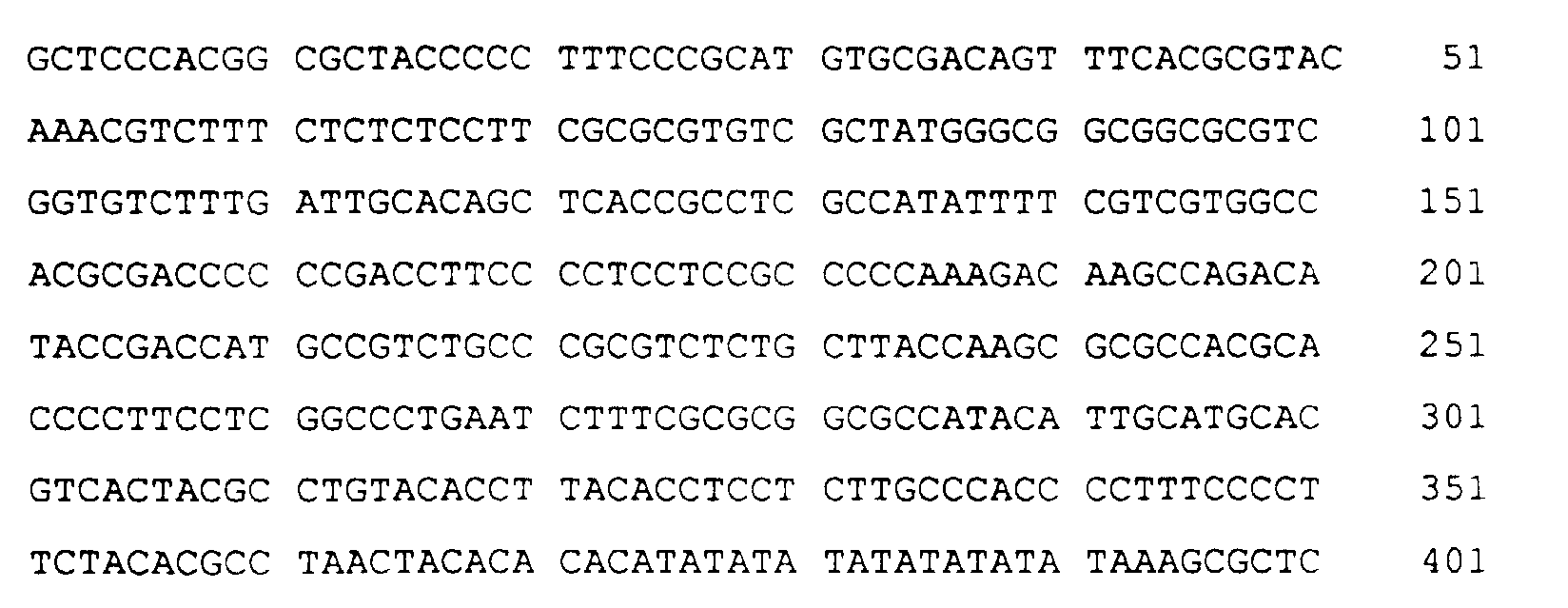
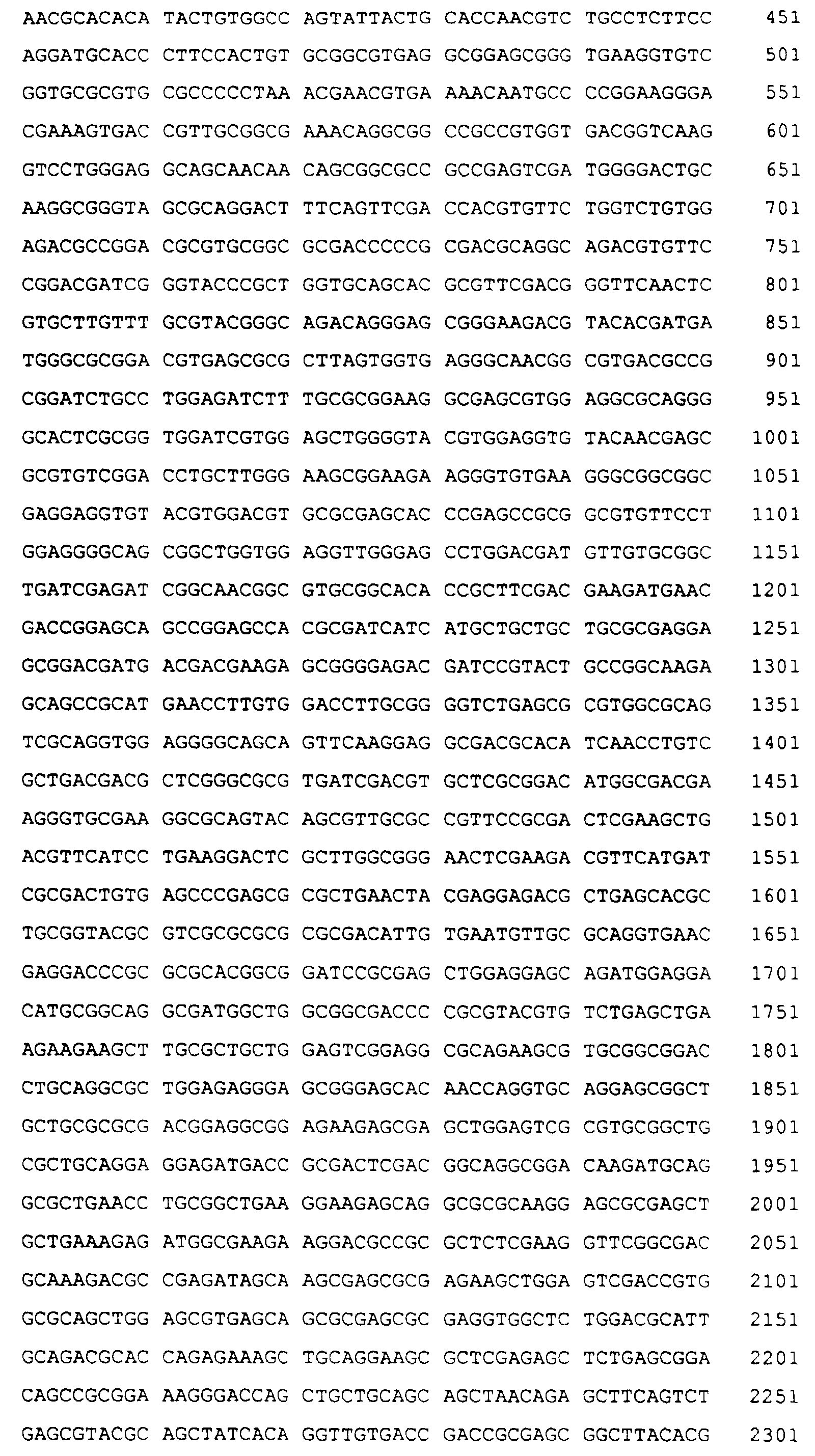
- SEQ ID NO: 2 is the DNA sequence encoding a K39 polypeptide.
- SEQ ID NO:3 is the amino acid sequence of a 39 amino acid repeat unit antigen.
- the present invention provides a method for diagnosing VL and a diagnostic kit for VL.
- the present invention was made possible by the discovery of a K39 gene and its DNA sequence and deduced amino acid sequence having a plurality of antigenic 39 amino acid repeat units.
- the K39 gene was found in an attempt to characterize leishmania antigens recognized by a spectrum of VL patients, including VL patients infected with either L. donovani or L. chagasi.
- a L. chagasi genomic DNA expression library was screened with sera obtained from a patient having VL caused by L. donovani. From approximately 32,000 recombinants screened, seven clones were selected based upon reactivity with this patient's sera. The seven clones contained inserts ranging from 0.9 kb to 2.6 kb and expressed immunoreactive recombinant proteins of 35 kDa to 100 kDa. Clone K39 was exceptionally reactive with the test serum. Recombinant K39 antigen (rK39) migrated on Coomassie-stained SDS-PAGE as a 39 kDa protein in induced bacterial extracts ( Figure 1, lane 3). The protein was purified by ammonium sulfate fractionation and preparative isoelectric focusing (Figure 1, lane 4) with a yield of 25-30 mg per liter.
- the DNA and deduced amino acid sequences of the insert of clone K39 were determined and are provided in SEQ ID NOs: 1 and 2 herein.
- the DNA sequence contained a single open reading frame encoding 298 amino acids with a predicted molecular weight of 32.7 kDa and a pI of 4.4.
- Clone K39 contains an additional 6.2 kDa of plasmid fusion sequences. In this sequence was noted 6.5 copies of a randomly arrayed 39 amino acid repeat sequence.
- SEQ ID NO: 3 shows the consensus sequence of the repeat unit.
- GenPept and Swiss-Protein data bank searches revealed similarity between LcKin and several members of the superfamily of kinesin-related proteins, particularly in the N-terminal motor domain.
- a relatively high level of sequence conservation was observed in the putative ATP and microtubule binding domains (Yang et al., Cell 56:879, 1989).
- the remaining 500 residues showed little similarity to sequence of the tail regions of kinesin and myosin of a number of species.
- Secondary structure analysis predicted that this portion of LcKin (amino acids 426-955) contain greater than 90% helical structure, a feature characteristic of a coil-coiled tail regions of several motor proteins. Therefore, the repetitive epitope of the rK39 antigen appears to be present in L. chagasi as part of the tail region of a leishmania kinesin-related protein.
- the present invention provides an identification of a 230 kDa antigen of L. chagasi, LcKin, with sequence homology to the kinesin superfamily of motor proteins.
- the gene is predominantly expressed by tissue amastigotes.
- the DNA sequence is present in at least seven diverse species of Leishmania.
- the DNA sequence further comprises an extensive repetitive domain containing a 39 amino acid repeat unit.
- Southern analysis showed the repeat unit of LcKin to be variable among species, but was closely related in L. chagasi and L. donovani. Most significantly, there are high antibody titers in 98% of Brazilian VL patients to rK39, a recombinant antigen containing 6.46 copies of the 39 amino acid repeat sequence. Similar antibody levels were detected in 100% of tested Sudanese VL patients. These data indicate conservation of the repeat sequence between L. chagasi and L. donovani.
- LcKin represents the first characterization of a gene encoding a protozoan motor protein.
- These microtuble based motors are involved in such varied intracellular processes as organelle and synaptic vescicle transport, chromosome segregation and spindle pole separation, nuclear fusion, protein sorting a flagellar beating.
- This tail domain is usually characterized by a predominantly alpha-helical structure which likely forms a coil interacting with different intracellular ligands which determine its function.
- the LcKin gene product is similar to members of this family in primary sequence, particularly in the putative ATP and microtubule binding domains, as well as in predicted secondary structure.
- the inventive feature of LcKin was the high prevalence of antibody specific to the rK39 repeat sequence in VL patients from geographically distinct endemic regions of Brazil and the Sudan. Therefore, the rK39 repeat antigen is useful as a vaccine and as an antibody-binding antigen for a diagnostic kit for the detection and diagnosis of VL. Moreover, the inventive method for diagnosing VL using rK39 was specific for VL patients. False positives were not seen in normal patients, even normal patients from the endemic areas of Brazil and the Sudan. These data also reflect relatedness among members of the L. donovani complex. The data described herein provide a thorough analysis of patient antibody responses to a purified recombinant antigen (rK39) of L.
- the inventive diagnostic kit and the inventive method for diagnosing VL and distinguishing VL from other infectious diseases with similar clinical presentations provides a needed tool in a clinicians hands in endemic areas of the world. Therefore, antibody reactivity to rK39 is an improved replacement for promastigote-based serological tests for the diagnosis of acute VL.
- the rK39 antigen is an immunodominant B cell epitope comprising one or more copies of the Leu Glu Gln Gln Leu Arg (Asp/Glu) Ser Glu (Glu/Ala) Arg Ala Ala Glu Leu Ala Ser Gln Leu Glu (Ala/Ser) Thr (Ala/Thr) Ala Ala Lys (Met/Ser) Ser Ala Glu Gln Asp Arg Glu (Asn/Ser) Thr Arg Ala (Thr/Ala) (SEQ ID NO:3) 39 amino acid repeat sequence.
- the K39 antigen comprises from 1 to about 7 copies of the 39 amino acid sequence. Most preferably, the K39 antigen comprises about 6 copies of this sequence.
- Gp63 is a major surface glycoprotein of Leishmania parasites, is highly conserved among species and is expressed in both infective and intracellular stages.
- the gp63 gene of L. chagasi has been cloned, analyzed and described in Miller et al. (Mol. Biochem. Parasitol. 39:276, 1990). It is significant to note that the sequence of L. chagasi was found to differ significantly from that published for L. major (Button et al. J. Exp. Med. 167:724, 1988). The predicted protein sequences of gp63 from L. major and L. chagasi are closely related. Gp63 is a surface metalloprotease (Bouvier et al., Mol Biochem.
- gp63 is a potent B cell immunogen among VL patients although alone is not as good of an antigen in a diagnostic assay as is K39.
- the combination antigens of K39 and gp63 can provide a superior diagnostic kit with a reduced number of false positive results.
- This example illustrates the cloning of the K39 antigen.
- a genomic library was constructed with mechanically sheared DNA of L. chagasi (MHOM/BR/82/BA-2,Cl) in the expression vector lambda ZAPII according to the manufacturer's protocols (Stratagene, La Jolla, CA). Recombinants were screened with serum (obtained from a patient recently treated for acute L. donovani infection) preadsorbed to remove anti- E. coli reactivity according to the procedure described in Sambrook et al. Molecular Cloning, A Laboratory Manual, 2nd Ed. (Cold Spring Harbor, NY, 1989).
- the K39 clone was expressed to produce rK39 polypeptide and this was purified from a 25% to 40% ammonium sulfate fraction of a soluble bacterial lysate by preparative isoelectric focusing with a Bio-Rad Rotofor IEF cell and 1% 3/10 ampholytes (Bio-Rad, Richmond, CA) in the presence of 8 M urea and 10 mM dithiothreitol. Peak fractions were concentrated by a second ammonium sulfate precipitation, and dialyzed against 25 mM Tris-HCl (pH 8), 150 mM NaCI (TBS). Protein concentrations were determined using a Pierce BCA protein assay (Pierce, Rockford, IL) and purity assessed by Coomassie-blue staining following SDS-PAGE.
- a radiolabeled insert of K39 was used to screen the L. chagasi genomic library to obtain clones containing sequences flanking the K39 gene fragment.
- a set of overlapping deletions of clones K39 and LcKin were generated by controlled Exonuclease III digestion (according to the procedure described in Henikoff, Gene 28:351, 1984) to obtain a complete sequence of both the coding and noncoding strands.
- Single stranded template was prepared as described in Burns et al. (Proc. Natl. Acad. Sci.
- nucleotide sequence was obtained by the Sanger dideoxynucleotide chain termination method using 35 S-labeled dATP (Sanger et al., Proc. Natl. Acad. Sci. USA 74:5463, 1977) or by fluorescence-based sequencing on an Applied Biosystems Sequencer Model 373A, according to the manufacturer's protocols. Sequence comparisons were made with GenPept (72.0) and Swiss-Prot (22.0) with the Lipman/Pearson method (Pearson and Lipman, Proc, Natl. Acad. Sci. USA 85:2444, 1988). Secondary structural predictions were made according to Garner et al. ( J. Mol. Biol. 120:97, 1978) and Chou et al. (Advances in Enzymology 47:45, 1978).
- DNA from Leishmania spp. and T. cruzi were isolated, digested with Pst I, separated by agarose gel electrophoresis, and analyzed by Southern blotting.
- the blots were probed with a 2.4 kb Hind III fragment of LcKin derived from the 5' end of the gene (probe A) or a 915 bp insert of clone K39 (probe B).
- Each probe was radiolabeled with ⁇ - 32 P (dCTP) to a specific activity of 9 x 10 8 cpm/ ⁇ g using random oligonucleotides as primers (Boehinger Manheim, Indianapolis).
- Figure 3A shows the blot of probe A and Figure 3B shows the blot of probe B.
- Probe A hybridized strongly to multiple Pst I restriction fragments of all Leishmania spp. tested ( Figure 3A, lanes 3-9), indicating conservation in the kinesin homology domain. Polymorphism in size and number of hybridizing restriction sites were noted. Less conservation in the repetitive domain of the LcKin gene was observed as probe B hybridized with varying intensity to Psi 1 restriction fragments of L. chagasi (MHOM/BR/82/BA-2,C1), L. amazonensis (IFLA/BR/67/PH8), L. braziliensis (MHOM/BR/75/M2903, obtained from Dr.
- This example illustrates the identification of native LcKin antigen.
- Rabbit anti-rK39 serum was used to probe SDS-PAGE blots of L. chagasi promastigote and tissue amastigote lysates to partially characterize native LcKin protein.
- Promastigotes were cultured in axenic media. Tissue amastigotes were obtained from spleens of Syrian hamsters or footpads of Balb/c ByJ mice and purified as described in Burns et al. ( J. Immunol. 146:742, 1991).
- Rabbit anti-rK39 serum was obtained by subcutaneous immunization of an adult New Zealand white rabbit (R & R Rabbitry, Stanwood, WA) with 200 ⁇ g of purified rK39 administered in Freund's incomplete adjuvant (IFA Gibco, Grand Island, NY) together with 100 mg of N-acetylmuramyl-L-alanyl-D-isoglutamine (muramyl dipeptide, Calbiochem, San Diego, CA). Five weeks later, the rabbit was boosted with 200 ⁇ g rK39 in IFA alone. Four weeks later, the rabbit was boosted intravenously with 25 ⁇ g of purified rK39. The rabbit serum was collected 6 days later.
- This example illustrates the reactivity of patient sera to recognize the rK39 antigen.
- Patient sera were obtained from well characterized Brazilian visceral, cutaneous and mucosal patients as well as T. cruzi infection sera from a study area in Bahia, Brazil.
- African visceral and cutaneous leishmaniasis sera were from biopsy-positive patients in the Sudan.
- Normal sera were from clinically healthy individuals living in endemic areas of the Sudan or from the U.S.
- the sera were analyzed by an immunoblot assay. Immunoblots of parasite lysates or purified rK39 were prepared as described in Burns et al. ( J. Immunol. 146:742, 1991).
- This example illustrates reactivity of patient sera with rK39 as determined by an ELISA.
- the patient sera were obtained as described in Example 3.
- the ELISA was conducted by diluting rK39 or L. chagasi promastigote lysate in coating buffer (15 mM Na 2 HCO 3 , 28 mM NaH 2 CO 3 . pH 9.6) to 1 ⁇ g/ml or 20 ⁇ g/ml, respectively.
- Microassay plates Probind, Falcon, Lincoln Park, NJ
- rK39 50 ng
- promastigote lysate (1 ⁇ g/ml) by overnight incubation at 4 °C. Plates were blocked with PBS plus 1% Tween-20 for 1 hr at room temperature.
Landscapes
- Health & Medical Sciences (AREA)
- Life Sciences & Earth Sciences (AREA)
- Chemical & Material Sciences (AREA)
- Engineering & Computer Science (AREA)
- Immunology (AREA)
- Molecular Biology (AREA)
- General Health & Medical Sciences (AREA)
- Organic Chemistry (AREA)
- Biochemistry (AREA)
- Urology & Nephrology (AREA)
- Medicinal Chemistry (AREA)
- Hematology (AREA)
- Biomedical Technology (AREA)
- Tropical Medicine & Parasitology (AREA)
- Food Science & Technology (AREA)
- Virology (AREA)
- Zoology (AREA)
- Toxicology (AREA)
- Proteomics, Peptides & Aminoacids (AREA)
- Biotechnology (AREA)
- Cell Biology (AREA)
- Gastroenterology & Hepatology (AREA)
- Microbiology (AREA)
- Genetics & Genomics (AREA)
- Biophysics (AREA)
- Physics & Mathematics (AREA)
- Analytical Chemistry (AREA)
- General Physics & Mathematics (AREA)
- Pathology (AREA)
- Peptides Or Proteins (AREA)
- Measuring Or Testing Involving Enzymes Or Micro-Organisms (AREA)
- Saccharide Compounds (AREA)
- Medicines Containing Antibodies Or Antigens For Use As Internal Diagnostic Agents (AREA)
- Soft Magnetic Materials (AREA)
- Power Conversion In General (AREA)
Abstract
Description
- The present invention provides a method for diagnosing leishmaniasis in a patient suspected of being infected with the parasitic protozoa Leishmania. The present invention further provides a diagnostic kit for use in diagnosing Leishmania, and an antigen useful for diagnosing the presence of Leishmania and as a vaccine to prevent infection with Leishmania.
- The transmission of pathogenic Leishmania involves an injection of extracellular promastigotes into a mammalian host by an infected sandfly. The promastigotes rapidly attach and enter monocytes and cells of the reticuloendothelial system, where they transform into amastigotes and multiply within phagolysosomes. Analysis of the interaction of Leishmania promastigotes with the target host cell suggests that both parasite and host molecules are involved in cell adhesion. Clinical symptoms of leishmaniasis range from self-healing skin lesions to diffuse cutaneous and mucosal manifestations, or severe visceral involvement of the spleen, liver and lymph nodes (visceral leishmaniasis or VL).
- Visceral leishmaniasis is generally caused by Leishmania donovani in Africa and India, L. infantum in Southern Europe or L. chagasi in Latin America. In VL, high levels of parasite specific antibodies are observed prior to detection of antigen specific T cell responses (Ghose et al., Clin. Exp. Immunol. 40:318-326, 1980). This antibody response has been exploited for serodiagnosis of infection with L. chagasi and L. donovani. The current World Health Organization's estimate of 12 million cases of leishmaniasis and recent epidemics of visceral leishmaniasis in Sudan and India highlight the need for more effective early diagnosis and therapeutic agents. Also at least 400,000 new cases of VL are diagnosed annually. The current diagnostic tests to measure an antibody response use whole or lysed parasites. Therefore, there is a need in the art to improve the diagnostic accuracy for diagnosing VL early while the potentially fatal disease is more treatable.
- Recovery from leishmaniasis correlates with the development of specific T lymphocyte responses and usually confers long-lasting immunity against reinfection (Carvalho et al., J. Clin. Invest. 76:2066-6, 1985 and Carvalho et al., J. Immunol. 135:4144-8, 1985). Both recovery from disease and resistance to reinfection are dependent on the development of specific T lymphocyte responses. Interferon gamma (IFN-γ) is a product of activated T cells, has demonstrated anti-leishmania activity in vitro (Murray et al., J. Clin. Invest. 72:1506, 1983 and Nacy et al., J. Immunol. 135:1305, 1985), and in vivo (Reed et al., J. Immunol. 132:3116, 1984 and Murray et al., J. Immunol. 1348:2290, 1987) and has been used effectively in the clinical treatment of leishmaniasis (Harms et al., Lancet 10:1287, 1989 and Badaro et al., N. Engl. J. Med. 322:16, 1990).
- One antigen, called gp63, has been cloned (Miller et al., Mol. Biochem. Parasitol. 38, 267-274, 1990) and was found to be a metalloprotease and is highly conserved among different species of Leishmania (Etges et al., J. Biol. Chem. 261:9098, 1986; Chaudhuri et al., Mol. Biochem. Parasitol. 27:43, 1988: Chaudhuri et al., J. Biol. Chem. 264:7483, 1989; Colmer-Gould et al., J. Exp. Med. 162:902, 1985; and Button et al., J. Exp. Med. 167:724, 1988). Gp63 is relatively abundant on both the infective promastigote stage and the intracellular amastigote stage (Frommel et al., Mol. Biochem. Parasitol. 38:25-32, 1990 and Medina-Acosta et al., Mol. Biochem. Parasitol. 37:263, 1989). Gp63 is important for both parasite entry into macrophages (Russel and Wilheim, J. Immunol. 136:2613, 1986; Chang et al., Proc. Natl. Acad. Sci. USA 83:100, 1986; Wilson and Hardin, J. Immunol. 141:265, 1988; and Mosser and Edelson J. Immunol. 135:2785, 1985) and subsequent survival within the phagosome (Chaudhuri et al., J. Biol. Chem. 264:7483, 1989). Immunization with native gp63 in vivo partially protected susceptible mice against cutaneous disease (Handman and Mitchell Proc. Natl. Acad. Sci. USA 82:5910, 1985 and Russel and Alexander J. Immunol. 140:1274, 1988). Moreover, recombinant gp63 expressed in Salmonella conferred partial protection by oral immunization against Leishmania major infection in resistant mice (Yang et al., J. Immunol. 145:2281, 1990). Both native gp63 and recombinant gp63 elicited strong proliferative responses, as well as IFN-γ production, from leishmaniasis patients with a spectrum of clinical disease (Russo et al., J. Immunol. 147:3575, 1991).
- The present invention provides a method for diagnosing leishmaniasis comprising: (a) obtaining a sample from a patient suspected of being infected with a Leishmania parasite, wherein the sample contains antibodies from the patient; and (b) determining the presence of antibodies that bind to a K39 repeat unit antigen from the sample. Preferably the inventive method is a serodiagnostic method utilizing sera from the individual suspected of harboring a Leishmania parasite. Preferably the antigen used is one or a plurality of K39 repeat sequences, wherein the K39 repeat sequence comprises the amino acid sequence (in single letter designation) L E Q Q L R (D/E) S E (E/A)RAAELASQLE(A/S)T(A/T)AAK(M/S)SAEQDRE(N/S)TRA (T/A) or (in three letter designation) Leu Glu Gln Gln Leu Arg (Asp/Glu) Ser Glu (Glu/Ala) Arg Ala Ala Glu Leu Ala Ser Gln Leu Glu (Ala/Ser) Thr (Ala/Thr) Ala Ala Lys (Met/Ser) Ser Ala Glu Gln Asp Arg Glu (Asn/Ser) Thr Arg Ala (Thr/Ala) (SEQ ID NO:3). Preferably, the inventive method further comprises the step of determining the presence of antibodies that bind to a native or recombinant gp63 polypeptide.
- The present invention further provides a diagnostic kit for evaluating a patient antibody-containing sample for the presence of anti-Leishmania parasite antibodies, comprising a K39 repeat unit antigen. Preferably, the K39 repeat unit antigen is bound to a solid phase. Preferably, the diagnostic kit further comprises an anti-human antibody conjugated to a detection moiety. Preferably the antigen used is one or a plurality of K39 repeat sequences, wherein the K39 repeat sequence comprises the amino acid sequence Leu Glu Gln Gln Leu Arg (Asp/Glu) Ser Glu (Glu/Ala) Arg Ala Ala Glu Leu Ala Ser Gln Leu Glu (Ala/Ser) Thr (Ala/Thr) Ala Ala Lys (Met/Ser) Ser Ala Glu Gln Asp Arg Glu (Asn/Ser) Thr Arg Ala (Thr/Ala) (SEQ ID NO:3). Most preferably, the diagnostic kit further comprises a gp63 polypeptide, in combination with a K39 repeat unit antigen.
- Figure 1 shows the expression and purification of recombinant K39 (rK39) antigen. The gels shows Coomassie blue-stained 12% SDS-polyacrylamide gel of molecular weight markers (lane 1), E. coli lysates from uninduced cells (lane 2), and induced cultures (lane 3) of clone K39, and purified rK39 (
lane - Figure 2 shows reactivity of patient sera with rK39. Blots containing L. chagasi promastigote lysate (
lane 1, 10µg), purified rK39 (lane 2, 50 ng) and T. cruzi epimastigote lysate (lane - Figure 3 shows a Southern blot analysis of the LcKin gene sequences. Genomic DNA (2.5 µg/lane) from L. chagasi digested with Bam HI (lane 1), Hind III (lane 2) and Pst I (lane 3) or Pst I digested DNA from L. amazonesis (lane 4), L. braziliensis (lane 5), L. guyanesis (lane 6), L. donovani (lane 7), L. infantum (lane 8), L. major (lane 9), or T. cruzi (lane 10) were analyzed by Southern blotting. The blots were probed (A) with a 2.4 kb Hind III fragment from the LcKin homology domain or (B) with the 915 bp repetitive insert of K39.
- Figure 4 shows reactivity of rabbit anti-rK39 antiserum on recombinant and native leishmania lysates. A is an immunoblot of purified rK39 (50 ng per lane) transferred from 12% SDS-polyacrylamide gels and probed with preimmune rabbit serum (lane 1) or rabbit anti-rK39 (lane 2). B is an immunoblot of L. chagasi promastigote (
lanes lanes lanes lanes - Figure 5 shows an ELISA evaluation of patient seroreactivity on L. chagasi promastigote lysate (panel A) or purified rK39 (panel B). Absorbance values (mean + SEM) of Brazilian VL (VL-B, n=57), Sudanese VL (VL-S, n=52), T. cruzi infection (Tc, n=35), Brazilian cutaneous leishmaniasis (CL-B, n=13), Sudanese cutaneous leishmaniasis (CL-S, n=13) mucosal leishmaniasis (ML, n=15) and normal (n=15) sera.
SEQ ID NO: 1 is the amino acid sequence for K39.
SEQ ID NO: 2 is the DNA sequence encoding a K39 polypeptide.
SEQ ID NO:3 is the amino acid sequence of a 39 amino acid repeat unit antigen. - The present invention provides a method for diagnosing VL and a diagnostic kit for VL. The present invention was made possible by the discovery of a K39 gene and its DNA sequence and deduced amino acid sequence having a plurality of antigenic 39 amino acid repeat units. The K39 gene was found in an attempt to characterize leishmania antigens recognized by a spectrum of VL patients, including VL patients infected with either L. donovani or L. chagasi.
- A L. chagasi genomic DNA expression library was screened with sera obtained from a patient having VL caused by L. donovani. From approximately 32,000 recombinants screened, seven clones were selected based upon reactivity with this patient's sera. The seven clones contained inserts ranging from 0.9 kb to 2.6 kb and expressed immunoreactive recombinant proteins of 35 kDa to 100 kDa. Clone K39 was exceptionally reactive with the test serum. Recombinant K39 antigen (rK39) migrated on Coomassie-stained SDS-PAGE as a 39 kDa protein in induced bacterial extracts (Figure 1, lane 3). The protein was purified by ammonium sulfate fractionation and preparative isoelectric focusing (Figure 1, lane 4) with a yield of 25-30 mg per liter.
- The DNA and deduced amino acid sequences of the insert of clone K39 were determined and are provided in SEQ ID NOs: 1 and 2 herein. The DNA sequence contained a single open reading frame encoding 298 amino acids with a predicted molecular weight of 32.7 kDa and a pI of 4.4. Clone K39 contains an additional 6.2 kDa of plasmid fusion sequences. In this sequence was noted 6.5 copies of a randomly arrayed 39 amino acid repeat sequence. SEQ ID NO: 3 shows the consensus sequence of the repeat unit.
- To further characterize this gene, clones containing sequences flanking the K39 gene fragment were isolated from the L. chagasi library using a K39 insert probe. Sequence analysis of one overlapping clone, LcKin, showed that the open reading frame extended for 1971 base pairs in the 5' direction, encoding 657 nonrepeditive amino acids. 5' to the putative ATG initiation codon, 454 base pairs of sequence were obtained with multiple termination codons in each reading frame. Partial characterization of clones containing 3' flanking sequences indicated that the repeat domain extended for approximately 3 to 4 kb.
- GenPept and Swiss-Protein data bank searches revealed similarity between LcKin and several members of the superfamily of kinesin-related proteins, particularly in the N-terminal motor domain. A relatively high level of sequence conservation was observed in the putative ATP and microtubule binding domains (Yang et al., Cell 56:879, 1989). The remaining 500 residues showed little similarity to sequence of the tail regions of kinesin and myosin of a number of species. Secondary structure analysis predicted that this portion of LcKin (amino acids 426-955) contain greater than 90% helical structure, a feature characteristic of a coil-coiled tail regions of several motor proteins. Therefore, the repetitive epitope of the rK39 antigen appears to be present in L. chagasi as part of the tail region of a leishmania kinesin-related protein.
- The present invention provides an identification of a 230 kDa antigen of L. chagasi, LcKin, with sequence homology to the kinesin superfamily of motor proteins. The gene is predominantly expressed by tissue amastigotes. The DNA sequence is present in at least seven diverse species of Leishmania. The DNA sequence further comprises an extensive repetitive domain containing a 39 amino acid repeat unit. Southern analysis showed the repeat unit of LcKin to be variable among species, but was closely related in L. chagasi and L. donovani. Most significantly, there are high antibody titers in 98% of Brazilian VL patients to rK39, a recombinant antigen containing 6.46 copies of the 39 amino acid repeat sequence. Similar antibody levels were detected in 100% of tested Sudanese VL patients. These data indicate conservation of the repeat sequence between L. chagasi and L. donovani.
- The present cloning of LcKin represents the first characterization of a gene encoding a protozoan motor protein. These microtuble based motors are involved in such varied intracellular processes as organelle and synaptic vescicle transport, chromosome segregation and spindle pole separation, nuclear fusion, protein sorting a flagellar beating. This tail domain is usually characterized by a predominantly alpha-helical structure which likely forms a coil interacting with different intracellular ligands which determine its function. The LcKin gene product is similar to members of this family in primary sequence, particularly in the putative ATP and microtubule binding domains, as well as in predicted secondary structure.
- The inventive feature of LcKin was the high prevalence of antibody specific to the rK39 repeat sequence in VL patients from geographically distinct endemic regions of Brazil and the Sudan. Therefore, the rK39 repeat antigen is useful as a vaccine and as an antibody-binding antigen for a diagnostic kit for the detection and diagnosis of VL. Moreover, the inventive method for diagnosing VL using rK39 was specific for VL patients. False positives were not seen in normal patients, even normal patients from the endemic areas of Brazil and the Sudan. These data also reflect relatedness among members of the L. donovani complex. The data described herein provide a thorough analysis of patient antibody responses to a purified recombinant antigen (rK39) of L. chagasi and show a marked restriction of this response to L. chagasi and L. donovani infected patients with VL with 98% and 100% positivity in this group.. The inventive diagnostic kit and the inventive method for diagnosing VL and distinguishing VL from other infectious diseases with similar clinical presentations provides a needed tool in a clinicians hands in endemic areas of the world. Therefore, antibody reactivity to rK39 is an improved replacement for promastigote-based serological tests for the diagnosis of acute VL.
- The rK39 antigen is an immunodominant B cell epitope comprising one or more copies of the Leu Glu Gln Gln Leu Arg (Asp/Glu) Ser Glu (Glu/Ala) Arg Ala Ala Glu Leu Ala Ser Gln Leu Glu (Ala/Ser) Thr (Ala/Thr) Ala Ala Lys (Met/Ser) Ser Ala Glu Gln Asp Arg Glu (Asn/Ser) Thr Arg Ala (Thr/Ala) (SEQ ID NO:3) 39 amino acid repeat sequence. Preferably the K39 antigen comprises from 1 to about 7 copies of the 39 amino acid sequence. Most preferably, the K39 antigen comprises about 6 copies of this sequence.
- Gp63 is a major surface glycoprotein of Leishmania parasites, is highly conserved among species and is expressed in both infective and intracellular stages. The gp63 gene of L. chagasi has been cloned, analyzed and described in Miller et al. (Mol. Biochem. Parasitol. 39:276, 1990). It is significant to note that the sequence of L. chagasi was found to differ significantly from that published for L. major (Button et al. J. Exp. Med. 167:724, 1988). The predicted protein sequences of gp63 from L. major and L. chagasi are closely related. Gp63 is a surface metalloprotease (Bouvier et al., Mol Biochem. Parasitol. 37:235, 1989 and Medina-Acosta et al., Mol Biochem. Parasitol. 37:263, 1989) that is also important for parasite entry into macrophages and survival within the phagosome. Native gp63 (ngp63) and recombinant gp63 (rgp63) elicited strong proliferative responses and IFN-γ production from leishmaniasis patients with a spectrum of clinical disease. The present invention further found the prevalence of gp63-specific antibodies among patients with clinically and geographically diverse leishmaniasis to provide a further useful diagnostic tool alone or in combination with the use of the K39 antigen for diagnosis of VL.
- The prevalence of gp63-specific antibody among leishmaniasis and other disease groups was examined by an ELISA technique (described in Example 4 herein). All leishmaniasis sera were obtained from patients with active disease, and included Brazilian visceral, cutaneous or mucosal leishmaniasis from a study area in Bahia, Brazil or from biopsy-positive patients in the Sudan. Leprosy sera were from patients in Haiti where leishmaniasis has not been reported. Normal control sera were from normal volunteers in the US. Figure 6 shows that there were elevated anti-gp63 antibody levels among VL patients (mean absorbance = 0.89). In fact, 84% (42/50) of the VL patient sera tested have absorbance values greater than 3 standard deviations above the mean of normal control sera. The remaining 16% had relatively low levels of gp63-specific antibody, despite generally high titers of leishmania-specific antibody (mean absorbance value of 1.54). In contrast, cutaneous and mucosal leishmaniasis patients showed very little sero-reactivity with only two mucosal patients having absorbance values significantly above control normals. No sera samples from patients with a T cruzi infection or leprosy showed significantly elevated antibody levels to rgp63. These results indicate that gp63 is a potent B cell immunogen among VL patients although alone is not as good of an antigen in a diagnostic assay as is K39. However, the combination antigens of K39 and gp63 can provide a superior diagnostic kit with a reduced number of false positive results.
- This example illustrates the cloning of the K39 antigen. A genomic library was constructed with mechanically sheared DNA of L. chagasi (MHOM/BR/82/BA-2,Cl) in the expression vector lambda ZAPII according to the manufacturer's protocols (Stratagene, La Jolla, CA). Recombinants were screened with serum (obtained from a patient recently treated for acute L. donovani infection) preadsorbed to remove anti-E. coli reactivity according to the procedure described in Sambrook et al. Molecular Cloning, A Laboratory Manual, 2nd Ed. (Cold Spring Harbor, NY, 1989).
- The K39 clone was expressed to produce rK39 polypeptide and this was purified from a 25% to 40% ammonium sulfate fraction of a soluble bacterial lysate by preparative isoelectric focusing with a Bio-Rad Rotofor IEF cell and 1% 3/10 ampholytes (Bio-Rad, Richmond, CA) in the presence of 8 M urea and 10 mM dithiothreitol. Peak fractions were concentrated by a second ammonium sulfate precipitation, and dialyzed against 25 mM Tris-HCl (pH 8), 150 mM NaCI (TBS). Protein concentrations were determined using a Pierce BCA protein assay (Pierce, Rockford, IL) and purity assessed by Coomassie-blue staining following SDS-PAGE.
- A radiolabeled insert of K39 was used to screen the L. chagasi genomic library to obtain clones containing sequences flanking the K39 gene fragment. A set of overlapping deletions of clones K39 and LcKin were generated by controlled Exonuclease III digestion (according to the procedure described in Henikoff, Gene 28:351, 1984) to obtain a complete sequence of both the coding and noncoding strands. Single stranded template was prepared as described in Burns et al. (Proc. Natl. Acad. Sci. USA 89:1239, 1992) and nucleotide sequence was obtained by the Sanger dideoxynucleotide chain termination method using 35S-labeled dATP (Sanger et al., Proc. Natl. Acad. Sci. USA 74:5463, 1977) or by fluorescence-based sequencing on an Applied Biosystems Sequencer Model 373A, according to the manufacturer's protocols. Sequence comparisons were made with GenPept (72.0) and Swiss-Prot (22.0) with the Lipman/Pearson method (Pearson and Lipman, Proc, Natl. Acad. Sci. USA 85:2444, 1988). Secondary structural predictions were made according to Garner et al. (J. Mol. Biol. 120:97, 1978) and Chou et al. (Advances in Enzymology 47:45, 1978).
- DNA from Leishmania spp. and T. cruzi (MHOM/CH/00/Tulahuen C2) were isolated, digested with Pst I, separated by agarose gel electrophoresis, and analyzed by Southern blotting. The blots were probed with a 2.4 kb Hind III fragment of LcKin derived from the 5' end of the gene (probe A) or a 915 bp insert of clone K39 (probe B). Each probe was radiolabeled with α-32P (dCTP) to a specific activity of 9 x 10⁸ cpm/µg using random oligonucleotides as primers (Boehinger Manheim, Indianapolis). The final washes were for 1 hr in 0.1X SSC/0.5% SDS at 68 °C. Blots of L. chagasi DNA digested with Bam HI, Hind III and Pst I and no Hind III restriction sites were used and probed as above to assess gene copy. Probe A contained one Bam HI, one Pst I, and no Hind III restriction sites. Probe B did not contain sites for these restriction enzymes.
- Figure 3A shows the blot of probe A and Figure 3B shows the blot of probe B. Probe A hybridized strongly to multiple Pst I restriction fragments of all Leishmania spp. tested (Figure 3A, lanes 3-9), indicating conservation in the kinesin homology domain. Polymorphism in size and number of hybridizing restriction sites were noted. Less conservation in the repetitive domain of the LcKin gene was observed as probe B hybridized with varying intensity to
Psi 1 restriction fragments of L. chagasi (MHOM/BR/82/BA-2,C1), L. amazonensis (IFLA/BR/67/PH8), L. braziliensis (MHOM/BR/75/M2903, obtained from Dr. Diane McMahon-Pratt, Yale University, New Haven, CT), L. donovani (MHOM/Et/67/HU3), L. infantum (IPT-1, obtained from Dr. Lee Schnur, Hebrew University-Hadassah Medical School, Jerusalem, Israel), and L. major (LTM p-2, obtained from Dr. David Moser, Temple Univ. Phila, PA), but not L. guyanesis (MHOM/BR/75/M4147) (Figure 3B, lanes 3-9). Given the intensity of the hybridization signals, the K39 repeat sequence appeared to be most closely related between L. chagasi and L. donovani (Figure 3B,lanes 3 and 7). No hybridization with either probe was observed with T. cruzi DNA (Figure 3, lane 10). - Using L. chagasi digested DNA, two Pst I fragments were detected with probe B, indicating the presence of a second copy of the LcKin gene or polymorphism in restriction sites present in the 3' repetitive sequences (Figure 3B, lane 3). Probe A hybridized to three fragments in each of the Bam HI, Hind III, and Pst I digests of L. chagasi DNA (Figure 3A, lanes 1-3). Taken together, the Southern blot data show that the LcKin gene is present in a minimum of 2-3 copies in the L. chagasi genome, and that related sequences are present in the seven species of Leishmania examined.
- This example illustrates the identification of native LcKin antigen. Rabbit anti-rK39 serum was used to probe SDS-PAGE blots of L. chagasi promastigote and tissue amastigote lysates to partially characterize native LcKin protein. Promastigotes were cultured in axenic media. Tissue amastigotes were obtained from spleens of Syrian hamsters or footpads of Balb/c ByJ mice and purified as described in Burns et al. (J. Immunol. 146:742, 1991). Rabbit anti-rK39 serum was obtained by subcutaneous immunization of an adult New Zealand white rabbit (R & R Rabbitry, Stanwood, WA) with 200 µg of purified rK39 administered in Freund's incomplete adjuvant (IFA Gibco, Grand Island, NY) together with 100 mg of N-acetylmuramyl-L-alanyl-D-isoglutamine (muramyl dipeptide, Calbiochem, San Diego, CA). Five weeks later, the rabbit was boosted with 200 µg rK39 in IFA alone. Four weeks later, the rabbit was boosted intravenously with 25 µg of purified rK39. The rabbit serum was collected 6 days later.
- The antiserum bound specifically to purified rK39 (Figure 4A, lane 2) and to an approximately 230 kDa antigen present in amastigotes (Figure 4B, lane 6) and to a lesser degree in promastigotes (Figure 4B, lane 5). No reactivity with this serum was detected in promastigote and amastigote lysates of L. amazonensis (Figure 4B, lanes 7-8) indicative of the variability within this repeat. Comparable amounts of lysate were loaded in all lanes as shown by reactivity of a rabbit anitserum raised against a constitutively expressed L. chagasi ribosomal phosphoprotein, Lc P0 (Skeiky et al., J. Exp. Med. 176:201, 1992) (Figure 4C, inset). No reactivity was apparent in preimmune serum (Figure 4A,
lane 1, Figure 4B lanes 1-4). - This example illustrates the reactivity of patient sera to recognize the rK39 antigen. Patient sera were obtained from well characterized Brazilian visceral, cutaneous and mucosal patients as well as T. cruzi infection sera from a study area in Bahia, Brazil. African visceral and cutaneous leishmaniasis sera were from biopsy-positive patients in the Sudan. Normal sera were from clinically healthy individuals living in endemic areas of the Sudan or from the U.S. The sera were analyzed by an immunoblot assay. Immunoblots of parasite lysates or purified rK39 were prepared as described in Burns et al. (J. Immunol. 146:742, 1991). Filters were blocked with TBS containing 5% non-fat dried milk and probed with patient sera (1:250) or rabbit sera (1:400) diluted with TBS with 0.1% Tween-20 and 1% bovine serum albumin. Bound antibody was detected with 125I-labeled Protein A (1 x 10⁶ cpm/blot) followed by autoradiography. Both rK39 and L. chagasi promastigote lysates were strongly recognized by L. chagasi (Figure 2 A-C) and L. donovani (Figure 2 D-F) infection sera. Reactivity with rK39 was not observed with pools of sera obtained from mucosal (Figure 2G) or cutaneous (Figure 2H) leishmaniasis patient sera or with a pool of Chagas' disease (e.g., T. cruzi) patient sera (Figure 21). The pools of sera obtained from mucosal or cutaneous leishmaniasis Chagas' disease patient sera reacted strongly with promastigote lysates. These data indicate that the K39 antigen is specific to L. chagasi and L. donovani and/or K39 induces a strong antibody response only in VL patients.
- This example illustrates reactivity of patient sera with rK39 as determined by an ELISA. The patient sera were obtained as described in Example 3. The ELISA was conducted by diluting rK39 or L. chagasi promastigote lysate in coating buffer (15 mM Na2HCO3, 28 mM NaH2CO3. pH 9.6) to 1 µg/ml or 20 µg/ml, respectively. Microassay plates (Probind, Falcon, Lincoln Park, NJ) were sensitized with rK39 (50 ng) or promastigote lysate (1µg/ml) by overnight incubation at 4 °C. Plates were blocked with PBS plus 1% Tween-20 for 1 hr at room temperature. After five washes with PBS containing 0.1% Tween-20 (PBS-T), 50 µl per well of sera diluted 1:100 with PBS-T were incubated for 30 min at room temperature. The wells were again washed five times with PBS-T and bound antibody was detected by Protein A-HRP (Zymed. So San Francisco, CA) as described in Reed et al. (Am. J. Trop. Med. Hyg. 43:632, 199()). Absorbance values are relative to the mean of five control sera assayed on each plate. ELISA values of at least three standard deviations greater than the mean absorbance of the normal control sera were considered positive.
- I observed a high level of reactivity among VL patients with 98.2% (56 of 57) of Brazilian VL sera and 100% (52 of 52) of Sudanese VL sera exhibiting positive absorbance values. The positive absorbance values ranged from 0.05 to >2.0 (mean = 1.38) among Brazilian VL sera (Figure 5A) and from 0.094 to >2.0 (mean = 1.60) among Sudanese sera (Figure 5B). Detectable antibody to rK39 was restricted to VL patients, as little or no anti-rK39 response was observed in sera from mucosal or cutaneous leishmaniasis patients or T. cruzi infection sera, despite some reactivity in these latter samples with crude L. chagasi lysate (Figure 5).
-
- (1) GENERAL INFORMATION
- (i) APPLICANT: Reed, Steven
- (ii) TITLE OF INVENTION: Diagnosis of Leishmaniasis
- (iii) NUMBER OF SEQUENCES: 3
- (iv) CORRESPONDENCE ADDRESS:
- (A) ADDRESSEE: Immunex Corporation
- (B) STREET: 51 University Street
- (C) CITY: Seattle
- (D) STATE: Washington
- (E) COUNTRY: USA
- (F) ZIP: 98101
- (v) COMPUTER READABLE FORM:
- (A) MEDIUM TYPE: Floppy disk
- (B) COMPUTER: Apple Macintosh
- (C) OPERATING SYSTEM: Apple System 7.1
- (D) SOFTWARE: Microsoft Word, version 5.1a
- (vi) CURRENT APPLICATION DATA:
- (A) APPLICATION NUMBER:
- (B) FILING DATE:
- (C) CLASSIFICATION:
- (vii) PRIOR APPLICATION DATA:
- (A) APPLICATION NUMBER: US/08/006,676
- (B) FILING DATE: 15-JAN-1993
- (viii) ATTORNEY INFORMATION:
- (A) NAME: Perkins, Patricia Anne
- (B) REGISTRATION NUMBER: 34,693
- (C) REFERENCE/DOCKET NUMBER: 5004-WO
- (ix) TELECOMMUNICATION INFORMATION:
- (A) TELEPHONE: (206) 587-0430
- (B) TELEFAX: (206) 233-0644
- (2) INFORMATION FOR SEQ ID NO.: 1:
- (i) SEQUENCE CHARACTERISTICS:
- (A) LENGTH: 955 amino acids
- (B) TYPE: amino acid
- (D) TOPOLOGY: linear
- (ii) MOLECULE TYPE: protein
- (ix) SEQUENCE DESCRIPTION: SEQ ID NO: 1:





- (3) INFORMATION FOR SEQ ID NO: 2:
- (i) SEQUENCE CHARACTERISTICS:
- (A) LENGTH: 3319 base pairs
- (B) TYPE: nucleic acid
- (C) STRANDEDNESS: single
- (D) TOPOLOGY: linear
- (ii) MOLECULE TYPE: cDNA to mRNA
- (iii) ORIGINAL SOURCE:
- (A) ORGANISM: Leishmania chagasi
- (ix) SEQUENCE DESCRIPTION: SEQ ID NO: 2:

- (4) INFORMATION FOR SEQ ID NO. 3
- (i) SEQUENCE CHARACTERISTICS:
- (A) LENGTH: 39 amino acids
- (B) TYPE: amino acid
- (D) TOPOLOGY: linear
- (ii) MOLECULE TYPE: protein
- (ix) FEATURE:
- (A) NAME/KEY: Xaa at
position 7 is Asp or Glu, atposition 10 is Glu or Ala, at position 21 is Ala or Ser, at position 23 is Ala or Thr, at position 27 is Met or Ser, at position 35 is Asn or Ser, and at position 39 is Thr or Ala - (xi) SEQUENCE DESCRIPTION: SEQ ID NO: 3:

-
Claims (14)
- A method for detecting anti-Leishmania parasite antibodies to a 230 kDa antigen present in Leishmania chagasi and Leishmania donovani, comprising:(a) obtaining a sample from an individual;(b) contacting the sample from the individual with a recombinant K39 repeat unit antigen comprising the amino acid sequence Leu Glu Gln Gln Leu Arg Xaa Ser Glu Xaa Arg Ala Ala Glu Leu Ala Ser Gln Leu Glu Xaa Thr Xaa Ala Ala Lys Xaa Ser Ala Gu Gln Asp Arg Glu Xaa Thr Arg Ala Xaa (SEQ ID NO:3), wherein Xaa at position 7 is Asp or Glu, at position 10 is Glu or Ala, at position 21 is Ala or Ser, at position 23 is Ala or Thr, at position 27 is Met or Ser, at position 35 is Asn or Ser, and at position 39 is Thr or Ala; and(c) detecting the presence of anti-Leishmania parasite antibodies in the sample which bind to the recombinant K39 repeat unit antigen.
- The method of Claim 1 wherein the sample is a blood sample.
- The method of Claim 1 wherein the recombinant K39 repeat unit antigen is a plurality of K39 repeat sequences, wherein the K39 repeat sequence comprises the amino acid sequence Leu Glu Gln Gln Leu Arg Xaa Ser Glu Xaa Arg Ala Ala Glu Leu Ala Ser Gln Leu Glu Xaa Thr Xaa Ala Ala Lys Xaa Ser Ala Glu Gln Asp Arg Glu Xaa Thr Arg Ala Xaa (SEQ ID NO:3), wherein Xaa at position 7 is Asp or Glu, at position 10 is Glu or Ala, at position 21 is Ala or Ser, at position 23 is Ala or Thr, at position 27 is Met or Ser, at position 35 is Asn or Ser, and at position 39 is Thr or Ala.
- A kit for evaluating an antibody-containing sample for the presence of anti-Leishmania parasite antibodies to a 230 kDa antigen present in Leishmania chagasi and Leishmania donovani, comprising:a recombinant K39 repeat unit antigen-comprising the amino acid sequence Leu Glu Gln Gln Leu Arg Xaa Ser Glu Xaa Arg Ala Ala Glu Leu Ala Ser Gln Leu Glu Xaa Thr Xaa Ala Ala Lys Xaa Ser Ala Glu Gln Asp Arg Glu Xaa Thr Arg Ala Xaa (SEQ ID NO:3), wherein Xaa at position 7 is Asp or Glu, at position 10 is Glu or Ala, at position 21 is Ala or Ser, at position 23 is Ala or Thr, at position 27 is Met or Ser, at position 35 is Asn or Ser, and at position 39 is Thr or Ala; anda detection reagent for detecting the anti-Leishmania parasite antibodies.
- The kit of Claim 4, wherein the K39 repeat unit antigen is bound to a solid phase.
- The kit of Claim 4 wherein the detection reagent is an anti-human antibody conjugated to a detection moiety.
- The kit of Claim 4, wherein the recombinant K39 repeat unit antigen is a plurality of K39 repeat sequences, wherein the K39 repeat sequence comprises the amino acid sequence Leu Glu Gln Gln Leu Arg Xaa Ser Glu Xaa Arg Ala Ala Glu Leu Ala Ser Gln Leu Glu Xaa Thr Xaa Ala Ala Lys Xaa Ser Ala Glu Gln Asp Arg Glu Xaa Thr Arg Ala Xaa (SEQ ID NO:3), wherein Xaa at position 7 is Asp or Glu, at position 10 is Glu or Ala, at position 21 is Ala or Ser, at position 23 is Ala or Thr, at position 27 is Met or Ser, at position 35 is Asn or Ser, and at position 39 is Thr or Ala.
- An isolated DNA encoding a K39 antigen which is present in Leishmania chagasi and Leishmania donovani, and which has an amino acid sequence as set forth in SEQ ID NO:1.
- The DNA of Claim 8, wherein the DNA has a nucleotide sequences as set forth in SEQ ID NO:2.
- The DNA of Claim 8, wherein the DNA encodes a K39 antigen comprising one or a plurality of K39 repeat antigens having an amino acid sequence set forth in SEQ ID NO:3.
- An isolated 230Kd antigen which is present in Leishmania chagasi and Leishmania donovani, which comprises an amino acid sequence as set forth in SEQ ID NO:1.
- An isolated 230Kd antigen which is present in Leishmania chagasi and Leishmania donovani, comprising one or a plurality of K39 repeat antigens having an amino acid sequence set forth in SEQ ID NO:3.
- A vaccine composition for administering to an individual to stimulate production of antibodies that bind Leishmania chagasi and Leishmania donovani, comprising an immunologically effective amount of the 230Kd antigen of Claim 11 and a vaccine adjuvant.
- A vaccine composition for administering to an individual to stimulate antibodies that bind to Leishmania chagasi and Leishmania donovani, comprising an immunologically effective amount of the isolated antigen of Claim 11, or 12 and a vaccine adjuvant.
Applications Claiming Priority (3)
| Application Number | Priority Date | Filing Date | Title |
|---|---|---|---|
| US6676 | 1993-01-15 | ||
| US08/006,676 US5411865A (en) | 1993-01-15 | 1993-01-15 | Method of detecting anti-leishmania parasite antibodies |
| PCT/US1994/000324 WO1994016331A1 (en) | 1993-01-15 | 1994-01-10 | Diagnosis of leishmaniasis |
Publications (3)
| Publication Number | Publication Date |
|---|---|
| EP0679259A1 EP0679259A1 (en) | 1995-11-02 |
| EP0679259A4 EP0679259A4 (en) | 1997-06-18 |
| EP0679259B1 true EP0679259B1 (en) | 1999-03-31 |
Family
ID=21722052
Family Applications (1)
| Application Number | Title | Priority Date | Filing Date |
|---|---|---|---|
| EP94907184A Expired - Lifetime EP0679259B1 (en) | 1993-01-15 | 1994-01-10 | Diagnosis of leishmaniasis |
Country Status (8)
| Country | Link |
|---|---|
| US (2) | US5411865A (en) |
| EP (1) | EP0679259B1 (en) |
| AT (1) | ATE178355T1 (en) |
| BR (1) | BR9405713A (en) |
| DE (1) | DE69417541T2 (en) |
| ES (1) | ES2129630T3 (en) |
| GR (1) | GR3029983T3 (en) |
| WO (1) | WO1994016331A1 (en) |
Cited By (1)
| Publication number | Priority date | Publication date | Assignee | Title |
|---|---|---|---|---|
| CN102083853A (en) * | 2008-07-03 | 2011-06-01 | 传染性疾病研究院 | Fusion proteins and their use in the diagnosis and treatment of leishmaniasis |
Families Citing this family (34)
| Publication number | Priority date | Publication date | Assignee | Title |
|---|---|---|---|---|
| FR2705358B1 (en) * | 1993-05-13 | 1995-08-04 | Orstom | Method of in vitro culture of different stages of tissue parasites, parasitic stages obtained and biological applications. |
| US5912166A (en) * | 1995-04-21 | 1999-06-15 | Corixa Corporation | Compounds and methods for diagnosis of leishmaniasis |
| US6375955B1 (en) * | 1995-09-22 | 2002-04-23 | Corixa Corporation | Leishmania antigens for use in the therapy and diagnosis of leishmaniasis |
| US6607731B1 (en) | 1995-09-22 | 2003-08-19 | Corixa Corporation | Leishmania antigens for use in the therapy and diagnosis of leishmaniasis |
| US5834592A (en) * | 1995-09-22 | 1998-11-10 | Corixa Corporation | Leishmania antigens for use in the therapy and diagnosis of Leishmaniasis |
| US6613337B1 (en) | 1997-02-12 | 2003-09-02 | Corixa Corporation | Leishmania antigens for use in the therapy and diagnosis of leishmaniasis |
| US6500437B1 (en) | 1995-09-22 | 2002-12-31 | Corixa Corporation | Leishmania antigens for use in the therapy and diagnosis of leishmaniasis |
| US6638517B2 (en) | 1995-09-22 | 2003-10-28 | Corixa Corporation | Leishmania antigens for use in the therapy and diagnosis of leishmaniasis |
| US6365165B1 (en) | 1995-09-22 | 2002-04-02 | Corixa Corporation | Leishmania antigens for use in the therapy and diagnosis of Leishmaniasis |
| US5846748A (en) * | 1996-11-15 | 1998-12-08 | The Council Of Scientific & Industrial Research | Method for diagnosing visceral leishmaniasis in a patient by identification of a new key marker namely 9-O-acetylated sialoglycoconjugate |
| US6458359B1 (en) * | 1998-12-23 | 2002-10-01 | C.B.F. Leti S.A. | Chimeric gene formed by the dna sequences that encode the antigenic determinants of four proteins of l. infantum and protein encoded by said gene, and pharmacuetical composition useful for preventing and/or treating leishmaniosis in animals or humans |
| US20040241168A1 (en) * | 2001-03-16 | 2004-12-02 | O'daly Jose A. | Compositions and methods for the treatment and clinical remission of psoriasis |
| US6673351B1 (en) | 2001-03-16 | 2004-01-06 | Astralis, Llc | Compositions and methods for the treatment and clinical remission of psoriasis |
| ATE457316T1 (en) | 2003-12-26 | 2010-02-15 | All India Inst Med | POLYPEPTIDES FOR THE DIAGNOSIS AND THERAPY OF LEISHMANIASIS |
| US20090028932A1 (en) * | 2005-04-15 | 2009-01-29 | Wilson Mary E | Vaccine formulations for leishmania |
| BRPI0710155A2 (en) * | 2006-04-10 | 2011-08-23 | Infectious Disease Res Inst Inc | compounds and methods for diagnosis and treatment of leishmaniasis |
| US20090181078A1 (en) | 2006-09-26 | 2009-07-16 | Infectious Disease Research Institute | Vaccine composition containing synthetic adjuvant |
| KR101378872B1 (en) | 2006-09-26 | 2014-04-11 | 인펙셔스 디지즈 리서치 인스티튜트 (아이디알아이) | Vaccine composition containing synthetic adjuvant |
| US20100304461A1 (en) * | 2007-06-12 | 2010-12-02 | Brandis John W | Portable, Temperature and Chemically Inducible Expression Vector for High Cell Density Expression of Heterologous Genes in Escherichia Coli |
| WO2009158729A2 (en) * | 2008-06-27 | 2009-12-30 | The Infectious Disease Research Institute Inc. | Compounds and methods for diagnosis and treatment of chagas disease |
| SI2437753T1 (en) | 2009-06-05 | 2016-12-30 | Infectious Disease Research Institute | Synthetic glucopyranosyl lipid adjuvants and vaccine compositions containing them |
| BRPI1003744B1 (en) * | 2010-06-08 | 2021-10-26 | Universidade Federal De Ouro Preto | RECOMBINANT E-NTPDASES, USE IN THE PRODUCTION OF DIAGNOSTIC KIT FOR ANTIBODY DETECTION IN LEISHMANIASIS CAUSED BY SPECIES OF THE GENUS LEISHMANIA |
| AU2012243039B2 (en) | 2011-04-08 | 2017-07-13 | Immune Design Corp. | Immunogenic compositions and methods of using the compositions for inducing humoral and cellular immune responses |
| CN110339160A (en) | 2012-02-07 | 2019-10-18 | 传染性疾病研究院 | Improvement adjuvant formulation and its application method comprising TLR4 agonist |
| PT2850431T (en) | 2012-05-16 | 2018-07-23 | Immune Design Corp | HSV-2 VACCINES |
| EP2756850A1 (en) * | 2013-01-18 | 2014-07-23 | Philipps-Universität Marburg | Diagnosis of Leishmania infection |
| WO2014160987A2 (en) | 2013-03-28 | 2014-10-02 | Infectious Disease Research Institute | Vaccines comprising leishmania polypeptides for the treatment and diagnosis of leishmaniasis |
| EP3711768A1 (en) | 2013-04-18 | 2020-09-23 | Immune Design Corp. | Gla monotherapy for use in cancer treatment |
| US9463198B2 (en) | 2013-06-04 | 2016-10-11 | Infectious Disease Research Institute | Compositions and methods for reducing or preventing metastasis |
| IL310015B2 (en) | 2013-12-31 | 2026-02-01 | Access To Advanced Health Inst | Single vial vaccine formulations |
| WO2016055836A1 (en) * | 2014-10-09 | 2016-04-14 | Universidade Federal De Minas Gerais - Ufmg | Method for producing and using the rk39-kddr protein and leishmaniasis diagnostic kit |
| KR102748354B1 (en) | 2016-06-01 | 2024-12-31 | 액세스 투 어드밴스드 헬스 인스티튜트 | Nanoalum particles containing sizing agent |
| BR112021023726A2 (en) | 2019-05-25 | 2022-02-15 | Infectious Disease Res Inst | Composition and method for spray drying an adjuvant vaccine emulsion |
| EP4215916A1 (en) * | 2022-01-20 | 2023-07-26 | Philipps-Universität Marburg | Test for detecting antibodies to leishmaniasis |
Family Cites Families (4)
| Publication number | Priority date | Publication date | Assignee | Title |
|---|---|---|---|---|
| EP0197062B1 (en) * | 1984-10-01 | 1991-01-09 | Institut Pasteur | Anti-leishmania monoclonal antibodies, hybridomas secreting said antibodies, antigens of leishmania recognized by said antibodies, method for obtaining them and applications of said monoclonal antibodies and said antigens |
| IL82740A0 (en) * | 1987-06-01 | 1987-12-20 | Yeda Res & Dev | Assay for leishmaniasis |
| FR2619220B1 (en) * | 1987-08-03 | 1993-03-26 | Pasteur Institut | SPECIFIC ANTIGENS OF LEISHMANIA AND THEIR PREPARATION METHOD, ANTIGENIC PROFILES CONTAINING THESE ANTIGENS AND THEIR APPLICATION TO THE DIAGNOSIS OF VISCERAL LEISHMANIOSES. |
| GB8921937D0 (en) * | 1989-09-28 | 1989-11-15 | Howard Michael K | Diagnostic reagents for leishmaniasis |
-
1993
- 1993-01-15 US US08/006,676 patent/US5411865A/en not_active Expired - Lifetime
-
1994
- 1994-01-10 AT AT94907184T patent/ATE178355T1/en not_active IP Right Cessation
- 1994-01-10 EP EP94907184A patent/EP0679259B1/en not_active Expired - Lifetime
- 1994-01-10 WO PCT/US1994/000324 patent/WO1994016331A1/en not_active Ceased
- 1994-01-10 BR BR9405713A patent/BR9405713A/en not_active Application Discontinuation
- 1994-01-10 ES ES94907184T patent/ES2129630T3/en not_active Expired - Lifetime
- 1994-01-10 DE DE69417541T patent/DE69417541T2/en not_active Expired - Lifetime
- 1994-07-28 US US08/282,845 patent/US5719263A/en not_active Expired - Lifetime
-
1999
- 1999-04-16 GR GR990401062T patent/GR3029983T3/en unknown
Cited By (4)
| Publication number | Priority date | Publication date | Assignee | Title |
|---|---|---|---|---|
| CN102083853A (en) * | 2008-07-03 | 2011-06-01 | 传染性疾病研究院 | Fusion proteins and their use in the diagnosis and treatment of leishmaniasis |
| US8771710B2 (en) | 2008-07-03 | 2014-07-08 | Infectious Disease Research Institute | Fusion proteins and their use in the diagnosis and treatment of leishmaniasis |
| CN102083853B (en) * | 2008-07-03 | 2014-09-17 | 传染性疾病研究院 | Fusion proteins and their use in the diagnosis and treatment of leishmaniasis |
| US9279005B2 (en) | 2008-07-03 | 2016-03-08 | Infectious Disease Research Institute | Fusion proteins and their use in the diagnosis and treatment of leishmaniasis |
Also Published As
| Publication number | Publication date |
|---|---|
| US5411865A (en) | 1995-05-02 |
| DE69417541D1 (en) | 1999-05-06 |
| EP0679259A1 (en) | 1995-11-02 |
| WO1994016331A1 (en) | 1994-07-21 |
| US5719263A (en) | 1998-02-17 |
| ES2129630T3 (en) | 1999-06-16 |
| EP0679259A4 (en) | 1997-06-18 |
| ATE178355T1 (en) | 1999-04-15 |
| DE69417541T2 (en) | 1999-07-15 |
| GR3029983T3 (en) | 1999-07-30 |
| BR9405713A (en) | 1995-11-28 |
Similar Documents
| Publication | Publication Date | Title |
|---|---|---|
| US5411865A (en) | Method of detecting anti-leishmania parasite antibodies | |
| Burns Jr et al. | Identification and synthesis of a major conserved antigenic epitope of Trypanosoma cruzi. | |
| Sim et al. | Primary structure of the 175K Plasmodium falciparum erythrocyte binding antigen and identification of a peptide which elicits antibodies that inhibit malaria merozoite invasion. | |
| Howe et al. | Acute virulence in mice is associated with markers on chromosome VIII in Toxoplasma gondii | |
| Stanley Jr et al. | Cloning and expression of a membrane antigen of Entamoeba histolytica possessing multiple tandem repeats. | |
| Fraser et al. | Expression and serologic activity of a soluble recombinant Plasmodium vivax Duffy binding protein | |
| US5304371A (en) | Peptide for diagnosing and immunizing against T. cruzi infection | |
| Riva et al. | Isolation of structural genes for yeast RNA polymerases by immunological screening. | |
| Skeiky et al. | Antigens shared by Leishmania species and Trypanosoma cruzi: immunological comparison of the acidic ribosomal P0 proteins | |
| US6962987B2 (en) | Binding domains from Plasmodium vivax and Plasmodium falciparum erythrocyte binding proteins | |
| EP0455620B1 (en) | Immunogenic protein and cDNA clone | |
| Soto et al. | During active viscerocutaneous leishmaniasis the anti-P2 humoral response is specifically triggered by the parasite P proteins | |
| Symons et al. | Characterization of a polymorphic family of integral membrane proteins in promastigotes of different Leishmania species | |
| US5633139A (en) | Toxoplasma gondii P28 gene and methods for its use | |
| El-Ashram et al. | Immunoproteomic technology offers an extraordinary diagnostic approach for Toxoplasma gondii infection | |
| US20030138451A1 (en) | Chimeric gene formed of the DNA sequences that encode the antigenic determinants of four proteins of L. infantum, useful for serologic diagnosis of canine Leishmaniosis and protein obtained | |
| US5215917A (en) | Nucleotide sequence encoding the Toxoplasma gondii P22 gene | |
| CA2313609C (en) | Trypanosoma cruzi antigen, gene encoding therefor, and methods of detecting and treating chagas disease | |
| Zemzoumi et al. | Cloning of a Leishmania major gene encoding for an antigen with extensive homology to ribosomal protein S3a | |
| US20060211056A1 (en) | Leishmania antigens suitable for a diagnostic kit of Leishmania | |
| WO2004050852A2 (en) | Recombinant polypeptides for diagnosing infection with trypanosoma cruzi | |
| AU693440B2 (en) | Antigenic polypeptides of (T. ovis) and vaccines containing such polypeptides | |
| Perler et al. | Cloning and characterization of an abundant Plasmodium knowlesi antigen which cross reacts with Gambian sera | |
| SCHWEITZER | Alternative patterns of MHC‐restricted antibody responsiveness following intraperitoneal immunization of inbred mice with different preparations of an 86 kilodalton antigen of Schistosoma mansoni | |
| EP0694043A1 (en) | ANTIGENIC POLYPEPTIDES OF $i(T. OVIS) AND VACCINES CONTAINING SUCH POLYPEPTIDES |
Legal Events
| Date | Code | Title | Description |
|---|---|---|---|
| PUAI | Public reference made under article 153(3) epc to a published international application that has entered the european phase |
Free format text: ORIGINAL CODE: 0009012 |
|
| 17P | Request for examination filed |
Effective date: 19950712 |
|
| AK | Designated contracting states |
Kind code of ref document: A1 Designated state(s): AT BE CH DE DK ES FR GB GR IE IT LI LU MC NL PT SE |
|
| RHK1 | Main classification (correction) |
Ipc: C12N 15/30 |
|
| A4 | Supplementary search report drawn up and despatched | ||
| AK | Designated contracting states |
Kind code of ref document: A4 Designated state(s): AT BE CH DE DK ES FR GB GR IE IT LI LU MC NL PT SE |
|
| 17Q | First examination report despatched |
Effective date: 19971203 |
|
| GRAG | Despatch of communication of intention to grant |
Free format text: ORIGINAL CODE: EPIDOS AGRA |
|
| GRAG | Despatch of communication of intention to grant |
Free format text: ORIGINAL CODE: EPIDOS AGRA |
|
| GRAH | Despatch of communication of intention to grant a patent |
Free format text: ORIGINAL CODE: EPIDOS IGRA |
|
| GRAH | Despatch of communication of intention to grant a patent |
Free format text: ORIGINAL CODE: EPIDOS IGRA |
|
| GRAA | (expected) grant |
Free format text: ORIGINAL CODE: 0009210 |
|
| AK | Designated contracting states |
Kind code of ref document: B1 Designated state(s): AT BE CH DE DK ES FR GB GR IE IT LI LU MC NL PT SE |
|
| PG25 | Lapsed in a contracting state [announced via postgrant information from national office to epo] |
Ref country code: SE Free format text: THE PATENT HAS BEEN ANNULLED BY A DECISION OF A NATIONAL AUTHORITY Effective date: 19990331 Ref country code: AT Free format text: LAPSE BECAUSE OF FAILURE TO SUBMIT A TRANSLATION OF THE DESCRIPTION OR TO PAY THE FEE WITHIN THE PRESCRIBED TIME-LIMIT Effective date: 19990331 |
|
| REF | Corresponds to: |
Ref document number: 178355 Country of ref document: AT Date of ref document: 19990415 Kind code of ref document: T |
|
| REG | Reference to a national code |
Ref country code: CH Ref legal event code: EP |
|
| REG | Reference to a national code |
Ref country code: IE Ref legal event code: FG4D |
|
| REF | Corresponds to: |
Ref document number: 69417541 Country of ref document: DE Date of ref document: 19990506 |
|
| ET | Fr: translation filed | ||
| REG | Reference to a national code |
Ref country code: CH Ref legal event code: NV Representative=s name: BOVARD AG PATENTANWAELTE |
|
| REG | Reference to a national code |
Ref country code: ES Ref legal event code: FG2A Ref document number: 2129630 Country of ref document: ES Kind code of ref document: T3 |
|
| PG25 | Lapsed in a contracting state [announced via postgrant information from national office to epo] |
Ref country code: DK Free format text: LAPSE BECAUSE OF FAILURE TO SUBMIT A TRANSLATION OF THE DESCRIPTION OR TO PAY THE FEE WITHIN THE PRESCRIBED TIME-LIMIT Effective date: 19990630 |
|
| REG | Reference to a national code |
Ref country code: PT Ref legal event code: SC4A Free format text: AVAILABILITY OF NATIONAL TRANSLATION Effective date: 19990609 |
|
| PG25 | Lapsed in a contracting state [announced via postgrant information from national office to epo] |
Ref country code: LU Free format text: LAPSE BECAUSE OF NON-PAYMENT OF DUE FEES Effective date: 20000110 Ref country code: IE Free format text: LAPSE BECAUSE OF NON-PAYMENT OF DUE FEES Effective date: 20000110 |
|
| PG25 | Lapsed in a contracting state [announced via postgrant information from national office to epo] |
Ref country code: MC Free format text: THE PATENT HAS BEEN ANNULLED BY A DECISION OF A NATIONAL AUTHORITY Effective date: 20000131 Ref country code: LI Free format text: LAPSE BECAUSE OF NON-PAYMENT OF DUE FEES Effective date: 20000131 Ref country code: CH Free format text: LAPSE BECAUSE OF NON-PAYMENT OF DUE FEES Effective date: 20000131 |
|
| PLBE | No opposition filed within time limit |
Free format text: ORIGINAL CODE: 0009261 |
|
| STAA | Information on the status of an ep patent application or granted ep patent |
Free format text: STATUS: NO OPPOSITION FILED WITHIN TIME LIMIT |
|
| 26N | No opposition filed | ||
| REG | Reference to a national code |
Ref country code: CH Ref legal event code: PL |
|
| REG | Reference to a national code |
Ref country code: IE Ref legal event code: MM4A |
|
| REG | Reference to a national code |
Ref country code: GB Ref legal event code: IF02 |
|
| PGFP | Annual fee paid to national office [announced via postgrant information from national office to epo] |
Ref country code: IT Payment date: 20120124 Year of fee payment: 19 |
|
| PGFP | Annual fee paid to national office [announced via postgrant information from national office to epo] |
Ref country code: DE Payment date: 20130103 Year of fee payment: 20 Ref country code: GB Payment date: 20130109 Year of fee payment: 20 Ref country code: FR Payment date: 20130204 Year of fee payment: 20 Ref country code: ES Payment date: 20130207 Year of fee payment: 20 |
|
| PGFP | Annual fee paid to national office [announced via postgrant information from national office to epo] |
Ref country code: GR Payment date: 20130124 Year of fee payment: 20 Ref country code: NL Payment date: 20130110 Year of fee payment: 20 Ref country code: BE Payment date: 20130114 Year of fee payment: 20 |
|
| PGFP | Annual fee paid to national office [announced via postgrant information from national office to epo] |
Ref country code: PT Payment date: 20130110 Year of fee payment: 20 |
|
| REG | Reference to a national code |
Ref country code: DE Ref legal event code: R071 Ref document number: 69417541 Country of ref document: DE |
|
| REG | Reference to a national code |
Ref country code: DE Ref legal event code: R071 Ref document number: 69417541 Country of ref document: DE |
|
| REG | Reference to a national code |
Ref country code: PT Ref legal event code: MM4A Free format text: MAXIMUM VALIDITY LIMIT REACHED Effective date: 20140110 |
|
| REG | Reference to a national code |
Ref country code: NL Ref legal event code: V4 Effective date: 20140110 |
|
| REG | Reference to a national code |
Ref country code: GB Ref legal event code: PE20 Expiry date: 20140109 |
|
| BE20 | Be: patent expired |
Owner name: *CORIXA CORP. Effective date: 20140110 |
|
| REG | Reference to a national code |
Ref country code: GR Ref legal event code: MA Ref document number: 990401062 Country of ref document: GR Effective date: 20140111 |
|
| PG25 | Lapsed in a contracting state [announced via postgrant information from national office to epo] |
Ref country code: GB Free format text: LAPSE BECAUSE OF EXPIRATION OF PROTECTION Effective date: 20140109 Ref country code: DE Free format text: LAPSE BECAUSE OF EXPIRATION OF PROTECTION Effective date: 20140111 |
|
| PG25 | Lapsed in a contracting state [announced via postgrant information from national office to epo] |
Ref country code: PT Free format text: LAPSE BECAUSE OF EXPIRATION OF PROTECTION Effective date: 20140117 |
|
| REG | Reference to a national code |
Ref country code: ES Ref legal event code: FD2A Effective date: 20140925 |
|
| PG25 | Lapsed in a contracting state [announced via postgrant information from national office to epo] |
Ref country code: ES Free format text: LAPSE BECAUSE OF EXPIRATION OF PROTECTION Effective date: 20140111 |