EP0677099B1 - Enhancer sequence for modulating expression in epithelial cells - Google Patents
Enhancer sequence for modulating expression in epithelial cells Download PDFInfo
- Publication number
- EP0677099B1 EP0677099B1 EP94905343A EP94905343A EP0677099B1 EP 0677099 B1 EP0677099 B1 EP 0677099B1 EP 94905343 A EP94905343 A EP 94905343A EP 94905343 A EP94905343 A EP 94905343A EP 0677099 B1 EP0677099 B1 EP 0677099B1
- Authority
- EP
- European Patent Office
- Prior art keywords
- carcinoma
- dna
- polynucleotide
- cell
- sequence
- Prior art date
- Legal status (The legal status is an assumption and is not a legal conclusion. Google has not performed a legal analysis and makes no representation as to the accuracy of the status listed.)
- Expired - Lifetime
Links
Images


Classifications
-
- A—HUMAN NECESSITIES
- A61—MEDICAL OR VETERINARY SCIENCE; HYGIENE
- A61K—PREPARATIONS FOR MEDICAL, DENTAL OR TOILETRY PURPOSES
- A61K48/00—Medicinal preparations containing genetic material which is inserted into cells of the living body to treat genetic diseases; Gene therapy
-
- C—CHEMISTRY; METALLURGY
- C12—BIOCHEMISTRY; BEER; SPIRITS; WINE; VINEGAR; MICROBIOLOGY; ENZYMOLOGY; MUTATION OR GENETIC ENGINEERING
- C12N—MICROORGANISMS OR ENZYMES; COMPOSITIONS THEREOF; PROPAGATING, PRESERVING, OR MAINTAINING MICROORGANISMS; MUTATION OR GENETIC ENGINEERING; CULTURE MEDIA
- C12N15/00—Mutation or genetic engineering; DNA or RNA concerning genetic engineering, vectors, e.g. plasmids, or their isolation, preparation or purification; Use of hosts therefor
- C12N15/09—Recombinant DNA-technology
- C12N15/63—Introduction of foreign genetic material using vectors; Vectors; Use of hosts therefor; Regulation of expression
- C12N15/79—Vectors or expression systems specially adapted for eukaryotic hosts
- C12N15/85—Vectors or expression systems specially adapted for eukaryotic hosts for animal cells
-
- A—HUMAN NECESSITIES
- A01—AGRICULTURE; FORESTRY; ANIMAL HUSBANDRY; HUNTING; TRAPPING; FISHING
- A01K—ANIMAL HUSBANDRY; AVICULTURE; APICULTURE; PISCICULTURE; FISHING; REARING OR BREEDING ANIMALS, NOT OTHERWISE PROVIDED FOR; NEW BREEDS OF ANIMALS
- A01K2217/00—Genetically modified animals
- A01K2217/05—Animals comprising random inserted nucleic acids (transgenic)
-
- C—CHEMISTRY; METALLURGY
- C12—BIOCHEMISTRY; BEER; SPIRITS; WINE; VINEGAR; MICROBIOLOGY; ENZYMOLOGY; MUTATION OR GENETIC ENGINEERING
- C12N—MICROORGANISMS OR ENZYMES; COMPOSITIONS THEREOF; PROPAGATING, PRESERVING, OR MAINTAINING MICROORGANISMS; MUTATION OR GENETIC ENGINEERING; CULTURE MEDIA
- C12N2830/00—Vector systems having a special element relevant for transcription
- C12N2830/30—Vector systems having a special element relevant for transcription being an enhancer not forming part of the promoter region
Definitions
- the invention relates to tissue-specific enhancer DNA sequences, which modulate the expression of downstream sequences in eukaryotic cells.
- Epithelium is the tissue that covers and lines the free surfaces of the body, and includes cells of the skin and sensory organs, as well as the specialized cells lining the blood vessels, gastrointestinal tract, air passages, ducts of the kidneys and endocrine organs.
- Epithelial cells maintain many diverse and essential cellular functions, including synthesizing and secreting proteins and other products, providing barriers, and proliferating to replace constantly eroded surface epithelia.
- Carcinomas which are cancers derived from epithelial cells, account for the majority of malignant neoplasias, including most cancers of the breast, lung, colon, prostate, ovary, and pancreas.
- the so-called DF3 gene encodes a high molecular weight glycoprotein which is aberrantly expressed by malignant human epithelia of various types.
- the DF3 glycoprotein is a member of a family of related carcinoma-associated antigens with core proteins ranging from 160 to 230 kD (Abe et al., J. Immunol. 139:257-261, 1987; Abe et al., Cancer Res. 49:2834-2839, 1989).
- This antigen is expressed on the apical borders of secretory mammary epithelium and at high levels in the cytosol of less differentiated malignant cells (Kufe et al., Hybridoma 3:223-232, 1984).
- DF3 antigen expression correlates with the degree of breast tumor differentiation (Lundy et al., Breast Cancer Res. Treat. 5:269-276, 1985). Moreover, the detection of this antigen in human milk (Abe et al., Cancer Res. 44:4574-4577, 1984) has suggested that its expression represents a differentiated function of normal mammary cells.
- Applicants have determined that the regulatory sequences for the DF3 gene, which is selectively expressed only in epithelial cells, are located in the 5'-flanking region of this gene; that a novel cis-acting enhancer sequence functions to control transcription in cells expressing this gene; and that this enhancer can be linked to a heterologous coding sequence to increase tissue-specific expression of that coding sequence in epithelium, and particularly in carcinoma cells.
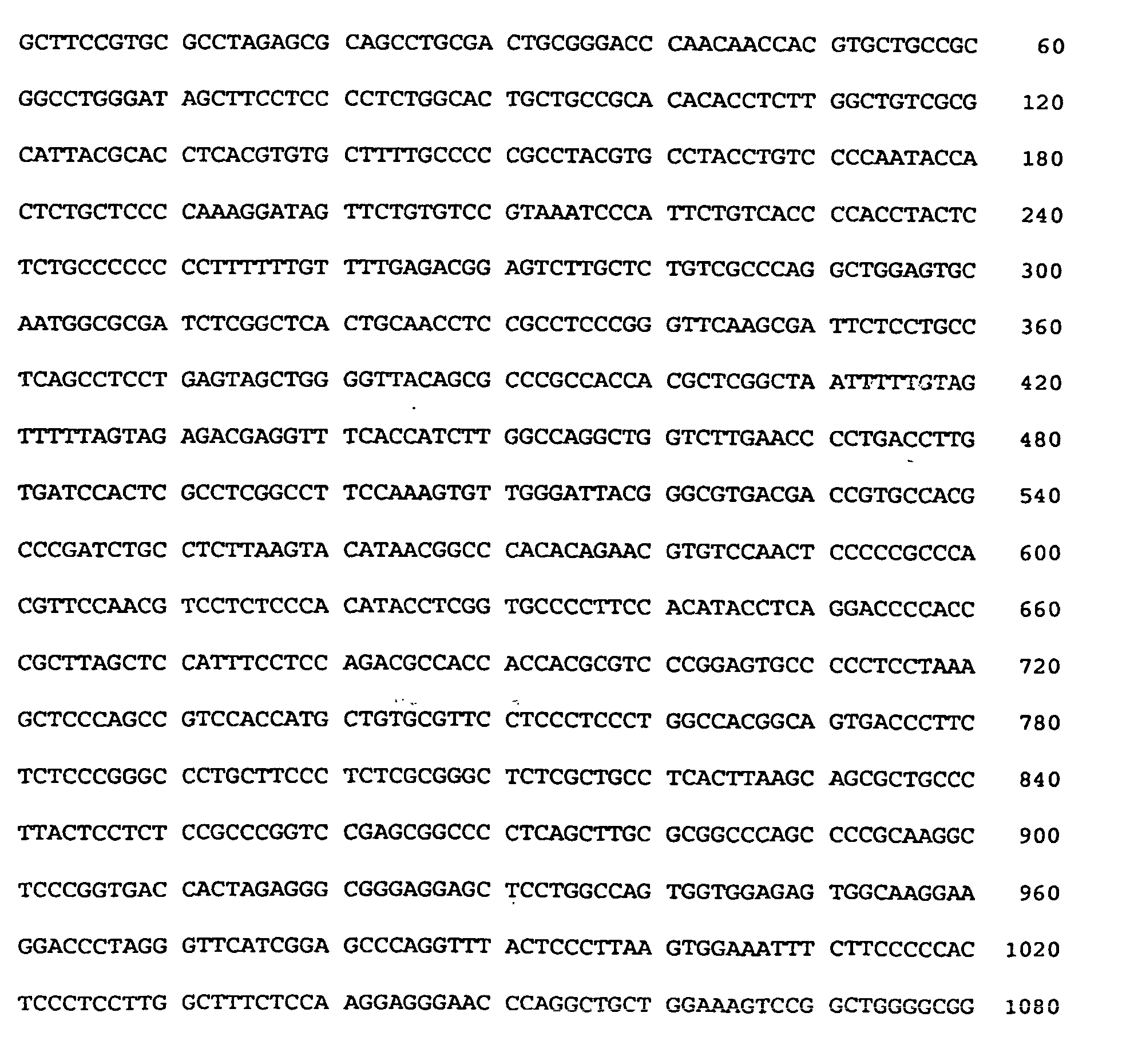
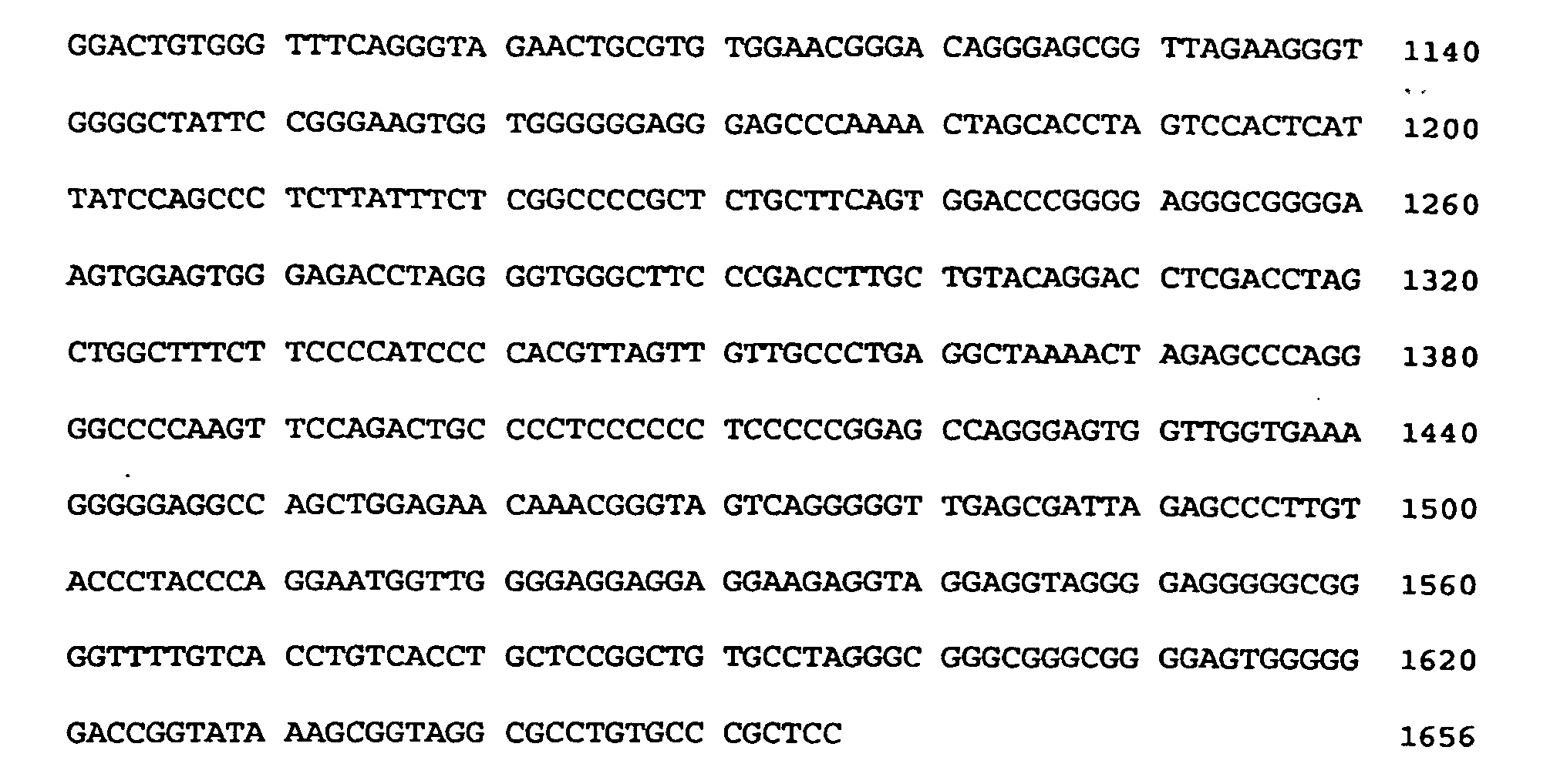
- the DF3 enhancer has been cloned and sequenced.
- DF3 enhancer is meant either the sequence of SEQ ID NO:2, or a fragment thereof with enhancer activity.
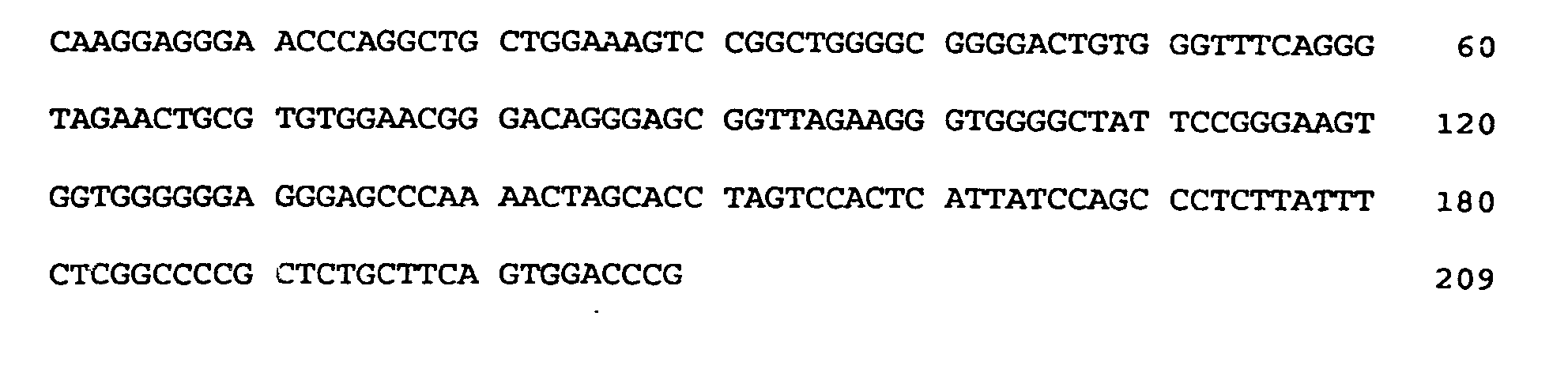
- the enhancer of the invention includes a sequence substantially identical to SEQ ID NO:1.
- the sequence is substantially identical to either the first 11 base pairs (SEQ ID NO:3) or the last 21 base pairs (SEQ ID NO:4) of SEQ ID NO:1.
- Enhancer activity can be determined by inserting the sequence to be evaluated into a chloramphenicol acetyltransferase (CAT) expression vector, transiently transfecting appropriate cells with the vector, and measuring CAT activity in the cells. Fragments which have enhancer activity cause transfected cells to express at least 25% of the CAT activity expressed by cells transfected with the CAT expression vector containing SEQ ID NO:2 This procedure is described in detail below.
- CAT chloramphenicol acetyltransferase
- One embodiment of the invention provides DNA, for example isolated DNA consisting of(i) the nucleotide sequence of SEQ ID NO:8, or a fragment thereof or (ii) a sequence which is at least 80% identical to SEQ ID NO: 8, said polynucleotide being a DF3 enhancer sequence which functions as an epithelium specific enhancer.
- isolated DNA containing the DF3 enhancer refers to a segment of DNA that includes the DF3 enhancer, but which is free of the genes that, in the naturally-occurring genome of the organism from which the segment is derived, flank the DF3 gene.
- the isolated DNA therefore, is not immediately contiguous with both of the coding sequences with which it is immediately contiguous (i.e., one at the 5' end and one at the 3' end) in the naturally-occurring genome of the organism from which the DNA of the invention is derived.
- the term includes, for example, a recombinant DNA which is incorporated into a vector; into an autonomously replicating plasmid or virus; or into the genomic DNA of a prokaryote or eukaryote, or which exists as a separate molecule (e.g., a cDMA or a genomic DNA fragment produced by PCR or restriction endonuclease treatment) independent of other DNA sequences.
- Another aspect of the invention involves isolated DNA comprising the polynucleotide of the invention and further comprising a DNA sequence (e.g., an antisense oligomer) which is antisense to a given naturally occurring mRNA encoding a naturally occurring polypeptide, which polypeptide is not DF3.
- a DNA sequence e.g., an antisense oligomer
- An antisense oligomer is a short (generally at least 14 bp, and up to 100 or more bp) nucleotide sequence formulated to be complementary to a portion of a specific mRNA sequence.
- RNA binds to its target mRNA molecules within a cell, thereby inhibiting translation of the mRNA and down-regulating expression of the protein encoded by the mRNA.
- Intended antisense oligodeoxynucleotides with antiproliferative activity include sequences antisense to N-myc in neuroectodermal cells (Whitesell et al., Mol. Cell. Biol. 11:1360-1370, 1991), c-myb for treatment of colon adenocarcinoma (Melani et al., Cancer Res.
- isolated DNA comprising the polynucleotide of the invention and a sequence encoding a heterologous polypeptide.
- a heterologous polypeptide is herein defined as any polypeptide other than DF3.
- the isolated DNA may include a nucleotide sequence substantially identical to that of SEQ ID NO:1, as shown in Figure 6. In other embodiments, the isolated DNA contains either the first 11 base pairs or the last 21 base pairs of SEQ ID NO:1, or both.
- the invention includes variations on the enhancer sequences shown which are at least 80% identical, and preferably at least 90% identical, to the naturally-occurring sequences given in the figures, and which function as enhancers of expression in carcinoma cells.
- the isolated DNA of the invention may also include a radiation-inducible element.
- the radiation-inducible element comprises a radiation-responsive enhancer-promoter, such as a CArG domain of an Egr-1 promoter, a TNF- ⁇ promoter, or a c-Jun promoter.
- a radiation-responsive enhancer-promoter such as a CArG domain of an Egr-1 promoter, a TNF- ⁇ promoter, or a c-Jun promoter.
- the heterologous polypeptide encoded by the DNA of the invention may be a cytotoxic polypeptide.
- Intended polypeptides include, but are not limited to, an enzymatically active subunit of a toxin such as Pseudomonas exotoxin A, diphtheria toxin, Shiga toxin, Shiga-like toxin, E. coli LT, C3 toxin, pertussis toxin, tetanus toxin, cholera toxin, or botulism toxin, or another cytotoxic polypeptide such as gelonin, ricin, or tumor necrosis factor.
- a toxin such as Pseudomonas exotoxin A, diphtheria toxin, Shiga toxin, Shiga-like toxin, E. coli LT, C3 toxin, pertussis toxin, tetanus toxin, cholera toxin
- heterologous polypeptides include but are not limited to CAMP receptor polypeptide kinase, platelet factor 4, monocyte chemoattractants, herpes virus thymidine kinase, cytidine deaminase, WTp53, retinoblastoma protein, E-cadherin, fibronectin receptor, monocyte chemoattractant protein-I, interleukin-2, and interleukin-4.
- the DNA or isolated DNA of the invention may be introduced into target cells by standard vectors and/or gene delivery systems.
- Suitable gene delivery systems may include liposomes, receptor-mediated delivery systems, naked DNA, and viral vectors such as herpes viruses, retroviruses, and adenoviruses, among others.
- Standard methods for transfecting cells with isolated DNA are well known to those skilled in the art of molecular biology.
- the invention also includes cells transfected with the DNA of the invention.
- the cells are epithelial cells (e.g., carcinoma cells), and they express a heterologous polypeptide encoded by the DNA of the invention.
- a therapeutic composition which includes a pharmaceutically acceptable carrier and a therapeutically effective amount of a nucleic acid, wherein the nucleic acid comprises the polynucleotide of the invention operatively linked to a sequence encoding a heterologous polypeptide, to generate high-level expression of the polypeptide in epithelial cells transfected with the nucleic acid.
- operatively linked it is meant that the enhancer is located sufficiently close to the coding sequence that it functions to enhance expression in an epithelial cell.
- the enhancer may be located immediately upstream of the coding sequence start site, or up to approximately 500 bp upstream of the start. site.
- the enhancer sequence may be inverse to the orientation observed in the naturally-occurring DF3 gene. Two or more copies of the DF3 enhancer may be arranged in tandem to increase expression of the heterologous protein to even higher levels. When the DF3 enhancer is arranged in tandem with a different tissue-specific enhancer, expression in multiple tissue types can be simultaneously enhanced. Likewise, two or more antisense or coding sequences can be arranged in tandem in the DF3-enhancer-containing DNA of the invention; expression of both of these sequences would be increased in epithelial cells, and especially in carcinoma cells.
- the therapeutic composition may also include a gene delivery system as described above.
- Pharmaceutically acceptable carriers are biologically compatible vehicles which are suitable for administration to an animal: e.g., physiological saline.
- a therapeutically effective amount is an amount of the DNA of the invention which is capable of producing a medically desirable result in a treated animal.
- the DNA and polynucleotides of the invention are useful in treating an animal with a carcinoma, by identifying the carcinoma-bearing animal and treating the animal with the therapeutic composition of the invention.
- Any type of carcinoma may be treated, including but not limited to adenocarcinoma, adrenal carcinoma, basal cell carcinoma, brain carcinoma, ovarian carcinoma, breast carcinoma, colon carcinoma, pancreatic carcinoma, gastric carcinoma, hepatic carcinoma, biliary system carcinoma, skin cell carcinoma, reproductive tract carcinoma, urinary organ carcinoma, small cell carcinoma, squamous-cell carcinoma, undifferentiated carcinoma, and pulmonary carcinoma.
- a neoplasm is designated by organ association, as in "ovarian carcinoma” or "pulmonary carcinoma"
- any carcinoma located in or immediately adjacent to the organ is included, without regard to whether the carcinoma is primary or is a metastasis from another location.
- the DNA or polynucleotide of the invention is useful in treating an animal with a metabolic disorder, by administering the therapeutic composition of the invention, where the heterologous polypeptide encoded by the DNA alleviates the symptoms of the metabolic disorder.
- treatment includes treatment of various metabolic diseases characterized by the absence or reduced amount of a gene product (such as phenylalanine hydroxylase resulting in classic phenylketonuria, cystic fibrosis transmembrane regulator in cystic fibrosis, or Factor VIII or IX in hemophilia), or by structurally altered genes which are functionally inactive, as with alpha 1 antitrypsin in emphysema.
- the heterologous polypeptide encoded by the DNA in the therapeutic composition would correspond to the missing or malfunctioning gene product, e.g. phenylalanine hydroxylase, the CF gene product, Factor VIII, or alpha 1 antitrypsin.
- Animals intended to be treated with the DNA or polynucleotide of the invention include any mammals to which the compounds of the invention may be administered, and in which the enhancer of the invention is functional.
- Animals specifically intended for treatment with the compounds and methods of the invention include humans, nonhuman primates, sheep, horses, cattle, pigs, goats, dogs, cats, rabbits, guinea pigs, hamsters, gerbils, rats and mice, as well as organs, tumors and cells derived or originating from these hosts.
- the invention also includes a method of producing a polypeptide in vitro by culturing a cell of epithelial origin which has been transfected with the DNA of the invention, under conditions which facilitate the expression of the heterologous polypeptides encoded by the transgene.
- the polypeptides can then be isolated and purified by standard means.
- cytotoxic polypeptides expressed by the transfected cells act to kill the cells, or cells in the immediate vicinity of the transfected cells.
- the transgene also encompasses, besides the polynucleotide or DNA of the invention and a sequence encoding the cytotoxic polypeptide, a radiation-inducible element.
- targeted radiation directed at a tumor either in vitro or in situ in an animal, induces expression of a cytotoxic polypeptide only in those transfected cells which are of epithelial origin and which are irradiated.
- the heterologous polypeptide may also be one that, when secreted by the transfected cells, is capable of recruiting the organism's natural immunological defenses to attack cells in the vicinity of the transfected cells.
- the invention further provides a vaccine, which is useful in vaccinating an animal, wherein the heterologous polypeptide associated with the DNA or polynucleotide of the invention includes an antigenic determinant of an infectious organism.
- Appropriate organisms might include bacteria, viruses, protozoa, or helminths.
- antigenic determinants of those pathogens which cause acquired immune deficiency syndrome (AIDS), polio, typhoid, cholera, and various enteric diarrheal diseases could be expressed and secreted by transfected epithelial cells lining the gastrointestinal tract, and thereby confer immunity to infection by both local and systemic immunological mechanisms.
- AIDS acquired immune deficiency syndrome
- polio polio
- typhoid cholera
- various enteric diarrheal diseases could be expressed and secreted by transfected epithelial cells lining the gastrointestinal tract, and thereby confer immunity to infection by both local and systemic immunological mechanisms.
- Useful antigens include the B subunit of cholera toxin (Mekalanos et al., Nature 306:551-557, 1983); the B subunit of Shiga toxin/Shiga-like toxin I (Calderwood et al., Proc. Natl. Acad. Sci. USA 84:4364-4368, 1987) or an antigenic peptide thereof (Harari et al., Infect. Immun. 56:1618-1624, 1988; Harari et al., Mol. Immunol.
- an antigenic, enzymatically inactive mutant of diphtheria toxin e.g., a deletion mutant lacking the A subunit portion of the toxin, or having an inactivating mutation in the A subunit
- an antigenic, enzymatically inactive mutant of pertussis toxin, tetanus toxin, or E. coli LT e.g., a viral capsid polypeptide.
- Immunity to respiratory infections would result from transfection of lung epithelial cells with the appropriate DNA of the invention.
- Epithelial cells within an animal may be transfected with DNA which includes the polynucleotide or DNA of the invention and a sequence encoding a polypeptide which confers resistance to the effects of a chemotherapeutic drug.
- the polypeptide encodes P-glycoprotein, the product of the multidrug resistance (MDR-1) gene.
- MDR-1 multidrug resistance
- Cells which express this glycoprotein have a highly enhanced membrane transport pump, which quickly clears the cells of many common chemotherapeutic drugs, including vinca alkaloids, anthracyclines, epipodophyllotoxins, L-asparaginase, colchicine, and other antineoplastic antibiotics.
- Another polypeptide which might be beneficially expressed by transfected epithelial cells is dihydrofolate reductase, the expression of which would protect transfected cells from the toxic effects of methotrexate.
- dihydrofolate reductase the expression of which would protect transfected cells from the toxic effects of methotrexate.
- Such expression in epithelial cells of a cancer patient would protect the transgenic cells from the effects of chemotherapeutics administered to treat non-carcinomatous neoplasms in the patient, without affecting the efficacy of the chemotherapeutics against the non-carcinomatous neoplasm itself.
- the patient would then be spared the often life-threatening side effects of chemotherapy, such as gastrointestinal injury, which result from epithelial cell damage.
- protection of the epithelial cells would allow higher doses of chemotherapeutic drugs to be administered, with potentially better clinical outcomes.
- cells of the gastrointestinal tract could be protected by transfecting these cells with an orally-administered vector; nongastrointestinal malignancies, including carcinomatous and noncarcinomatous neoplasms, could then be treated with systemic chemotherapeutics with minimal effect on the gastrointestinal epithelial cells.
- Transgenic animals the genome of which contains a transgene including the polynucleotide or DNA of the invention operatively linked to a sequence encoding a heterologous polypeptide may be generated.
- the intended transgenic animals may be of any nonhuman mammalian or avian species, but preferably include nonhuman primates, sheep, horses, cattle, pigs, goats, dogs, cats, rabbits, chickens, and rodents such as guinea pigs, hamsters, gerbils, rats, and mice.
- the compounds and compositions of the invention may be administered by any medically acceptable method. Suitable methods include injections, by parenteral routes such as intravenous, subcutaneous, intramuscular, intratumor, intraperitoneal, intraventricular, intraepidural, or others, as well as oral, nasal, transdermal, transmucosal, ophthalmic, rectal, or topical routes.
- parenteral routes such as intravenous, subcutaneous, intramuscular, intratumor, intraperitoneal, intraventricular, intraepidural, or others, as well as oral, nasal, transdermal, transmucosal, ophthalmic, rectal, or topical routes.
- the compounds may also be applied directly to exposed tissue surfaces, such as during a surgical procedure.
- the compounds of the invention are suitable for inhalant administration, for example as a nebulized or aerosolized preparation.
- dosages for any one patient depends upon many factors, including the patient's size, body surface area, age, the particular compound to be administered, sex, time and route of administration, general health, and other drugs being administered concurrently. Dosages for the compounds of the invention will vary, but a preferred dosage for oral or inhaled administration to a patient is from 10 5 to 10 20 copies of a DNA molecule of the invention, as specified above.
- a patient receiving intravenous vector preparations may be infused with from approximately 10 6 to 10 22 copies of the vector.
- Human MCF-7 breast carcinoma cells (Michigan Cancer Foundation, Detroit, MI; American Type Culture Collection) were grown as a monolayer in Dulbecco's modified Eagle's medium (DMEM) with 10% heat-inactivated fetal bovine serum, 100 units/ml penicillin, 100 ⁇ g/ml streptomycin, 2 mM L-glutamine and 0.25 IU/ml insulin.
- DMEM Dulbecco's modified Eagle's medium
- Plasmid construction A p ⁇ vector was generated by excising the SV40 promoter and enhancer regions from pSVT7 (Bird et al., J. Cell. Biol. 105:2905-2914, 1987). Chloramphenicol acetyltransferase (CAT) expression vectors, pSVT7CAT and p ⁇ CAT, were produced by inserting the CAT gene in the multicloning HindIII site of pSVT7 and p ⁇ , respectively. A p-1656CAT vector was constructed by inserting the XmnI fragment (positions -1656 to +31) of the DF3 gene into p ⁇ CAT at the PstI site by blunt-ended DNA ligation.
- CAT Chloramphenicol acetyltransferase
- the p-725CAT vector was prepared by inserting the blunt-ended SstI/XmnI fragment (positions - 725 to +31) into p ⁇ CAT.
- a series of deletion vectors was generated from p-725CAT after treatment with SstI or XbaI and subsequent digestion with exonuclease III and S1 nuclease. Sequencing of the constructs was performed by dideoxy termination (Sanger et al., Proc. Natl. Acad. Sci. USA 74:5463-5467, 1977).
- Reporter assays All vectors used in the reporter assays were purified twice by cesium chloride gradient centrifugation and phenol-chloroform extraction. Twenty ⁇ g of each plasmid were transfected into 3x10 5 MCF-7 cells by the Ca 2 PO 4 procedure (Davis et al., Basic Methods in Molecular Biology (Elsevier, NY) pp. 285-289, 1986). The cells were incubated in complete medium for 48 hours after transfection, harvested and lysed in 0.25 M Tris-HCl (pH 8.0) by three cycles of freeze-thawing.
- CAT activity was assayed in 125 ⁇ l reactions containing 10 to 50 ⁇ l of cell extract, 125 nCi [ 14 C]chloramphenicol (DuPont Co., Boston, MA; 57 mCi/mmol), 250 mM Tris-HCl, pH 8.0, and 25 ⁇ g n-butyryl coenzyme A (Sigma) for 1 hour at 37°C.
- the reaction was terminated by adding 300 ⁇ l xylene.
- the non-butyrated chloramphenicol was removed by washing twice with 100 ⁇ l of 0.25 M Tris-HCl (pH 8.0).
- the xylene layer containing the butyrated chloramphenicol was assayed by scintillation counting (Seed et al., Gene 67:271-277, 1988).
- Electrophoretic mobility shift assays were prepared according to previously described methods (Dignam et al., Nucl. Acids. Res. 11:1475-1489, 1983). Synthetic oligonucleotides were end-labeled with the appropriate [ ⁇ - 32 P]dNTPs using DNA polymerase I (Klenow fragment) and purified by Nuc Trap columns (Stratagene, LaJolla, CA). Binding assays were performed as described (Henninghausen et al., Guide to Molecular Cloning Techniques, (Academic Press, NY) pp. 721-735, 1987).
- Fragment f(-618/-410) (SEQ ID NO:8) was ligated into pGEM3 at the SmaI site.
- the vector was digested with EcoRI and AccI, end-labeled with 32 P-dATP and dTTP at the EcoRI site and purified in a 5% native polyacrylamide gel.
- the specific activity of the labeled fragment was approximately 3x10 5 CPM/ng.
- the assay was performed as described (Jones et al., Cell 42:559-572, 1985).
- the reaction products were analyzed by 12% polyacrylamide/urea gel electrophoresis and subjected to autoradiography. Sequences were monitored by the Maxam-Gilbert procedure (Maxam et al., Methods in Enzymol. (Academic Press, NY) 65:499-560, 1980).
- Nuclear proteins 200 ⁇ g were prepared as described (Dignam et al., Nucl. Acids. Res. 11:1475-1489, 1983), separated by 3-15% SDS-polyacrylamide gel electrophoresis and transferred to a nitrocellulose sheet (Lammnli, Nature 227:680-695, 1970; Towbin et al., Proc. Natl. Acad. Sci. USA 76:4350-4355, 1979).
- the sheet was incubated in 10 mM Tris-HCl (pH 7.5) containing 5% skimmed milk and then in 10 mM Tris-HCl (pH 7.9) containing 32 P-labeled oligonucleotide probe (10 6 CPM/ml), 50 mM NaCl, 10 mM MgCl 2 , 0.1 mM EDTA, 1 mM DTT and 10 ⁇ g/ml poly(dI-dC) for 60 min at room temperature.
- the sheet was washed with the same buffer containing 200 mM NaCl and exposed to x-ray film (Patel et al., EMBO J. 2:137-142, 1983; Miskimins et al., Proc. Natl. Acad. Sci. USA 82:6741-6744, 1985).
- a heterologous promoter was used to determine the enhancing activities of sequences upstream to position - 485.
- Single copies of fragments f(-753/-505), f(-485/-598), f(-505/-588) and f(-505/-614) were inserted upstream to the herpes simplex virus minimal thymidine kinase (TK) promoter in pBLCAT2 ( Figure 2B).
- TK minimal thymidine kinase
- a patient is diagnosed with a malignant inoperable pulmonary carcinoma.
- a genetic construct is prepared bearing the DF3 enhancer operably linked to the gene for herpes simplex-thymidine kinase (HS-tk).
- the HS-tk gene when introduced into tumor cells, confers sensitivity to the anti-herpes drug gancyclovir.
- the construct is inserted into a retroviral vector, and 10 8 copies of the vector are injected into the tumor. Of all of the cells which may take up the vector, only the transfected carcinoma cells which naturally overexpress DF3 will highly overexpress the HS-tk transgene.
- the patient is then treated with gancyclovir, which acts primarily on those cells which overexpress HS-tk, causing the tumor to regress.
- the invention includes the use of the polynucleotide of the invention to modulate expression of any protein which is either partially or wholly encoded in a location downstream to said polynucleotide.
- Allelic variants, natural mutants, and induced mutants of the DF3 enhancer, which variants and mutants which retain the ability to enhance expression in epithelial cells comparable to the level of enhancement produced by the sequence shown in SEQ ID NO:1 also exist.
- Such enhancers may be identified by, for example, identifying the enhancer associated with a coding sequence from a particular mammalian species, which coding sequence hybridizes under stringent conditions with a probe consisting of a 20-nucleotide segment of the human DF3 coding sequence, and which encodes a polypeptide that is expressed predominantly in epithelial cells of that species.
- a probe consisting of a segment of the human DF3 enhancer can be used as a probe for a similar sequence in the genome or cDNA of another species.
- a sequence which functions as an epithelium-specific enhancer and hybridizes with a probe containing the sequence of SEQ ID NO:1 or the sequence of SEQ ID NO:4, under the following hybridization conditions may be identified prehybridization in 50% formamide, 5X SSC, 25 mM potassium phosphate buffer (pH 7.4), 5X Denhardt's, and 50 ⁇ g/ml denatured salmon sperm DNA for 4-12 hours at 20°C; hybridization for 12-24 hours at 20°C; washing in 5X SSC containing 0.1% SDS, at 20°C.
Landscapes
- Health & Medical Sciences (AREA)
- Genetics & Genomics (AREA)
- Life Sciences & Earth Sciences (AREA)
- Engineering & Computer Science (AREA)
- Biotechnology (AREA)
- Chemical & Material Sciences (AREA)
- Zoology (AREA)
- Biomedical Technology (AREA)
- General Engineering & Computer Science (AREA)
- Molecular Biology (AREA)
- Organic Chemistry (AREA)
- Bioinformatics & Cheminformatics (AREA)
- General Health & Medical Sciences (AREA)
- Wood Science & Technology (AREA)
- Microbiology (AREA)
- Epidemiology (AREA)
- Biochemistry (AREA)
- Biophysics (AREA)
- Plant Pathology (AREA)
- Medicinal Chemistry (AREA)
- Pharmacology & Pharmacy (AREA)
- Physics & Mathematics (AREA)
- Animal Behavior & Ethology (AREA)
- Public Health (AREA)
- Veterinary Medicine (AREA)
- Micro-Organisms Or Cultivation Processes Thereof (AREA)
- Medicines That Contain Protein Lipid Enzymes And Other Medicines (AREA)
- Medicines Containing Material From Animals Or Micro-Organisms (AREA)
Abstract
Description



Claims (26)
- A polynucleotide consisting of (i) the nucleotide sequence of SEQ ID No. 8, or a fragment thereof or (ii) a sequence which is at least 80% identical to SEQ ID NO: 8, said polynucleotide being a DF3 enhancer sequence which functions as an epithelium specific enhancer.
- The polynucleotide of claim 1 wherein the fragment comprises SEQ ID NO: 1 or a polynucleotide being at least 80% identical to SEQ ID NO: 1.
- The polynucleotide of claim 1 wherein the fragment comprises the fragment f(600/-505), f(600/-505) being nucleotides -600 to -505 as shown in Fig. 1A.
- The polynucleotide of claim 1 wherein the fragment comprises the nucleotide sequence of SEQ ID No. 3.
- The polynucleotide of any one of claims 1 to 4 wherein the fragment comprises the nucleotide sequence of SEQ ID No. 3 and the nucleotide sequence of SEQ ID No. 4.
- Isolated DNA comprising a polynucleotide as defined in any one of claims 1 to 5, further comprising a nucleotide sequence selected from (a) a sequence encoding a heterologous polypeptide; and (b) a sequence which is capable of being transcribed into an RNA antisense to a naturally occurring mRNA, which mRNA is not DF3 mRNA.
- The DNA of claim 6 wherein said RNA antisense to a naturally occurring mRNA down-regulates expression of a target protein encoded by the mRNA molecules within a cell.
- The DNA of claim 6 wherein said heterologous polypeptide is selected from: an enzymatically active subunit of Pseudomonas exotoxin A, diphtheria toxin, Shiga toxin, Shiga-like toxin, E. coli LT, C3 toxin, pertussis toxin, tetanus toxin, cholera toxin, or botulism toxin; gelonin; ricin; tumor necrosis factor; polypeptide kinase; platelet factor 4; monocyte chemoattractants; herpes virus thymidine kinase; cytidine deaminase; WTp53; retinoblastoma protein; E-cadherin; fibronectin receptor; monocyte chemoattractant protein-I; interleukin-2; and interleukin-4.
- The DNA of claim 7 wherein said RNA antisense to a naturally occurring mRNA is a sequence selected from a sequence antisense to N-myc in neuroectodermal cells, c-myb in colon adenocarcinoma cells, type 1 regulatory subunit of the cAMP receptor protein kinase in breast, colon, and gastric carcinoma cells and K-ras proto-oncogene in small cell lung cancer cells.
- The DNA of any one of claims 1 to 9, wherein the DNA further comprises a radiation-inducible element.
- The DNA of claim 6, wherein the heterologous polypeptide is selected from: a cytotoxic polypeptide; a gene product, the absence or inadequate level of which is responsible for a metabolic disorder; a polypeptide containing an antigenic determinant of an infectious organism; and a polypeptide which confers resistance to the effects of a chemotherapeutic drug.
- The DNA of claim 11, wherein the heterologous polypeptide is a cytotoxic polypeptide.
- A vector comprising the polynucleotide or DNA of any one of claims 1 to 12.
- A cell containing the polynucleotide or DNA of any one of claims 6 to 12.
- The cell of claim 14 being an epithelial cell.
- The cell of claim 14 or 15, being a carcinoma cell.
- A transgenic, non-human animal bearing a transgene comprising a DNA or polynucleotide as claimed in any one of claims 1 to 12.
- A therapeutic composition comprising a pharmaceutically acceptable carrier and a therapeutically-effective amount of a nucleic acid, wherein the nucleic acid comprises a DNA or polynucleotide as claimed in any one of claims 6 to 12.
- A therapeutic composition as claimed in claim 18 wherein said nucleic acid comprises or is operably linked to DNA encoding a heterologous polypeptide wherein said polypeptide is selected from the group consisting of phenylalanine hydroxylase, alpha1 antitrypsin, cystic fibrosis transmembrane regulator, Factor VIII and Factor IX.
- Use of a DNA or polynucleotide as claimed in any one of claims 1 to 12 in the preparation of a therapeutic composition for use in the treatment of carcinoma or metabolic disorders, for conferring resistance to the effects of a chemotherapeutic drug or for use as a vaccine against an infectious organism.
- Use as claimed in claim 20 wherein said composition is for use in the treatment of a carcinoma selected from the group consisting of adenocarcinoma, adrenal carcinoma, basal cell carcinoma, brain carcinoma, ovarian carcinoma, breast carcinoma, colon carcinoma, pancreatic carcinoma, gastric carcinoma, hepatic carcinoma, biliary system carcinoma, skin cell carcinoma, reproductive tract carcinoma, urinary organ carcinoma, small cell carcinoma, squamous-cell carcinoma, undifferentiated carcinoma, and pulmonary carcinoma.
- Use as claimed in claim 20 or 21 wherein said DNA or polynucleotide is capable of being transcribed into a transcript antisense to a naturally occurring mRNA, wherein said transcript has anti-proliferative activity against carcinoma cells.
- Use as claimed in any one of claims 20 to 22 wherein said therapeutic composition further comprises a gene delivery system for introducing said DNA or polynucleotide into a target cell.
- A method of preparing a polypeptide in vitro comprising culturing a cell of epithelial origin which has been transfected with a DNA as claimed in any one of claims 6, 8 or 10 to 12, under conditions which facilitate the expression of the heterologous polypeptide, and recovering the polypeptide thus produced.
- The DNA or polynucleotide of any one of claims 6 to 12 for use in the treatment of carcinoma or metabolic disorders, for conferring resistance to the effects of a chemotherapeutic drug or for use as a vaccine against an infectious organism.
- The DNA or polynucleotide of claim 25 wherein said carcinoma is selected from the group consisting of adenocarcinoma, adrenal carcinoma, basal cell carcinoma, brain carcinoma, ovarian carcinoma, breast carcinoma, colon carcinoma, pancreatic carcinoma, gastric carcinoma, hepatic carcinoma, biliary system carcinoma, skin cell carcinoma, reproductive tract carcinoma, urinary organ carcinoma, small cell carcinoma, squamous-cell carcinoma, undifferentiated carcinoma, and pulmonary carcinoma.
Applications Claiming Priority (3)
| Application Number | Priority Date | Filing Date | Title |
|---|---|---|---|
| US99974292A | 1992-12-31 | 1992-12-31 | |
| US999742 | 1992-12-31 | ||
| PCT/US1993/011915 WO1994016057A1 (en) | 1992-12-31 | 1993-12-08 | Enhancer sequence for modulating expression in epithelial cells |
Publications (3)
| Publication Number | Publication Date |
|---|---|
| EP0677099A1 EP0677099A1 (en) | 1995-10-18 |
| EP0677099A4 EP0677099A4 (en) | 1997-05-07 |
| EP0677099B1 true EP0677099B1 (en) | 2005-11-30 |
Family
ID=25546638
Family Applications (1)
| Application Number | Title | Priority Date | Filing Date |
|---|---|---|---|
| EP94905343A Expired - Lifetime EP0677099B1 (en) | 1992-12-31 | 1993-12-08 | Enhancer sequence for modulating expression in epithelial cells |
Country Status (5)
| Country | Link |
|---|---|
| US (2) | US5565334A (en) |
| EP (1) | EP0677099B1 (en) |
| CA (1) | CA2153068C (en) |
| DE (1) | DE69333921T2 (en) |
| WO (1) | WO1994016057A1 (en) |
Families Citing this family (28)
| Publication number | Priority date | Publication date | Assignee | Title |
|---|---|---|---|---|
| EP0677099B1 (en) * | 1992-12-31 | 2005-11-30 | Dana-Farber Cancer Institute, Inc. | Enhancer sequence for modulating expression in epithelial cells |
| FR2710846B1 (en) * | 1993-10-04 | 1995-12-22 | Rhone Poulenc Rorer Sa | Pharmaceutical compositions and their use, in particular in the treatment of neurogenerative diseases. |
| US8431119B2 (en) * | 1993-10-04 | 2013-04-30 | Aventis Pharma S.A. | Pharmaceutical compositions and utilization thereof particularly for the treatment of neurodegenerative diseases |
| US6551618B2 (en) | 1994-03-15 | 2003-04-22 | University Of Birmingham | Compositions and methods for delivery of agents for neuronal regeneration and survival |
| JP3844501B2 (en) * | 1995-02-08 | 2006-11-15 | タカラバイオ株式会社 | Cancer control |
| US6509316B2 (en) * | 1995-03-07 | 2003-01-21 | George Washington University | Pharmaceutical compositions, methods, and kits for treatment and diagnosis of lung cancer |
| US6967088B1 (en) * | 1995-03-16 | 2005-11-22 | Allergan, Inc. | Soluble recombinant botulinum toxin proteins |
| US6225290B1 (en) * | 1996-09-19 | 2001-05-01 | The Regents Of The University Of California | Systemic gene therapy by intestinal cell transformation |
| US5965790A (en) * | 1997-03-06 | 1999-10-12 | Millennium Pharmaceuticals, Inc. | SR-BI regulatory sequences and therapeutic methods of use |
| JPH11335269A (en) * | 1998-05-19 | 1999-12-07 | Hisamitsu Pharmaceut Co Inc | Solid pharmaceutical preparation for oral administration of gene-related medicine |
| US6858425B1 (en) * | 1998-12-04 | 2005-02-22 | Genzyme Corporation | Human acid alpha glucosidase gene and bovine alpha-S1 casein gene sequences |
| AU3864000A (en) * | 1999-03-05 | 2000-09-21 | Trustees Of University Technology Corporation, The | Inhibitors of serine protease activity, methods and compositions for treatment of herpes viruses |
| US6849605B1 (en) * | 1999-03-05 | 2005-02-01 | The Trustees Of University Technology Corporation | Inhibitors of serine protease activity, methods and compositions for treatment of viral infections |
| AU3731400A (en) | 1999-03-05 | 2000-09-21 | Trustees Of University Technology Corporation, The | Methods and compositions useful in inhibiting apoptosis |
| US6489308B1 (en) | 1999-03-05 | 2002-12-03 | Trustees Of University Of Technology Corporation | Inhibitors of serine protease activity, methods and compositions for treatment of nitric-oxide-induced clinical conditions |
| AU9263101A (en) * | 2000-09-11 | 2002-03-26 | Donald W Kufe | Muc1 extracellular domain and cancer treatment compositions and methods derived therefrom |
| US20030162733A1 (en) * | 2000-11-27 | 2003-08-28 | Haynes Joel R. | Nucleic acid adjuvants |
| EP1958642A1 (en) * | 2000-12-22 | 2008-08-20 | Dana-Farber Cancer Institute | Regulation of cell growth by MUC1 |
| US20080090770A1 (en) * | 2003-04-11 | 2008-04-17 | Belmares Michael P | Modulation of Muc1 Mediated Signal Transduction |
| US20040220242A1 (en) * | 2003-05-02 | 2004-11-04 | Leland Shapiro | Inhibitors of serine protease activity, methods and compositions for treatment of nitric oxide induced clinical conditions |
| WO2005042573A1 (en) | 2003-10-24 | 2005-05-12 | Dana-Farber Cancer Institute, Inc. | Modulation of the interaction of muc1 with muc1 ligands |
| US7670624B2 (en) * | 2004-01-29 | 2010-03-02 | Astella Pharma Inc. | Gastrointestinal-specific multiple drug release system |
| US20070202134A1 (en) * | 2004-02-23 | 2007-08-30 | Kufe Donald W | Muc1 Antagonist Enhancement of Death Receptor Ligand-Induced Apoptosis |
| JP2008537095A (en) * | 2005-02-15 | 2008-09-11 | ダナ−ファーバー キャンサー インスティテュート インク. | Regulation of MUC1 activity |
| WO2008111996A2 (en) * | 2006-07-20 | 2008-09-18 | Dana-Farber Cancer Institute, Inc. | Muc1-ikb kinase complexes and their activities |
| WO2008097840A2 (en) | 2007-02-02 | 2008-08-14 | Dana-Farber Cancer Institute, Inc. | Methods and compositions relating to the regulation of muc1 by hsf1 and stat3 |
| US7871784B2 (en) * | 2007-02-02 | 2011-01-18 | Dana-Farber Cancer Institute, Inc. | Methods and compositions relating to the regulation of apoptosis by MUC1 and BH3-containing proapoptotic proteins |
| US8012695B2 (en) | 2007-02-14 | 2011-09-06 | Dana-Farber Cancer Institute, Inc. | Methods and compositions relating to promoter regulation by MUC1 and KLF proteins |
Family Cites Families (5)
| Publication number | Priority date | Publication date | Assignee | Title |
|---|---|---|---|---|
| US4497796A (en) * | 1980-03-26 | 1985-02-05 | The Regents Of The University Of California | Gene transfer in intact mammals |
| US5080898A (en) * | 1982-05-12 | 1992-01-14 | The University Hospital | Enzymatically active toxin coupled to a cell-specific ligand |
| US4740461A (en) * | 1983-12-27 | 1988-04-26 | Genetics Institute, Inc. | Vectors and methods for transformation of eucaryotic cells |
| GB8929097D0 (en) * | 1989-12-22 | 1990-02-28 | Imp Cancer Res Tech | Mucin nucleotides |
| EP0677099B1 (en) * | 1992-12-31 | 2005-11-30 | Dana-Farber Cancer Institute, Inc. | Enhancer sequence for modulating expression in epithelial cells |
-
1993
- 1993-12-08 EP EP94905343A patent/EP0677099B1/en not_active Expired - Lifetime
- 1993-12-08 DE DE69333921T patent/DE69333921T2/en not_active Expired - Lifetime
- 1993-12-08 CA CA002153068A patent/CA2153068C/en not_active Expired - Fee Related
- 1993-12-08 WO PCT/US1993/011915 patent/WO1994016057A1/en not_active Ceased
-
1994
- 1994-10-17 US US08/324,465 patent/US5565334A/en not_active Expired - Lifetime
-
1995
- 1995-06-06 US US08/465,981 patent/US5874415A/en not_active Expired - Lifetime
Also Published As
| Publication number | Publication date |
|---|---|
| CA2153068A1 (en) | 1994-07-21 |
| WO1994016057A1 (en) | 1994-07-21 |
| CA2153068C (en) | 2007-05-01 |
| US5565334A (en) | 1996-10-15 |
| DE69333921D1 (en) | 2006-01-05 |
| US5874415A (en) | 1999-02-23 |
| EP0677099A1 (en) | 1995-10-18 |
| DE69333921T2 (en) | 2006-08-10 |
| EP0677099A4 (en) | 1997-05-07 |
Similar Documents
| Publication | Publication Date | Title |
|---|---|---|
| US5874415A (en) | Enhancer sequence for modulating expression in epithelial cells | |
| Shirakata et al. | The× gene of hepatitis B virus induced growth stimulation and tumorigenic transformation of mouse NIH3T3 cells | |
| Groden et al. | Response of colon cancer cell lines to the introduction of APC, a colon-specific tumor suppressor gene | |
| US5648478A (en) | Tissue-specific enhancer active in prostate | |
| US5972605A (en) | Assays for regulators of mammalian telomerase expression | |
| US6635623B1 (en) | Lipoproteins as nucleic acid vectors | |
| US6214614B1 (en) | Cell cycle regulated repressor and DNA element | |
| Drabek et al. | The expression of bacterial nitroreductase in transgenic mice results in specific cell killing by the prodrug CB1954 | |
| Sergeant et al. | A transcription enhancer acts in vitro over distances of hundreds of base-pairs on both circular and linear templates but not on chromatin-reconstituted DNA | |
| PT93440B (en) | PROCESS FOR THE PREPARATION OF GENETIC UNITS THAT INHIBIT THE FUNCTION OF RNA AND PHARMACEUTICAL COMPOSITIONS CONTAINING THEM | |
| US6057299A (en) | Tissue-specific enhancer active in prostate | |
| CA1341119C (en) | Human erythroid-specific transcriptional enhancer | |
| JP2000507815A (en) | CFTR gene regulator | |
| JP4386971B2 (en) | Recombinant adenoviral vector comprising a splicing sequence | |
| US6524851B1 (en) | Hybrid nucleic acid molecules and vectors including β-globin regulatory elements | |
| May et al. | Targeting gene expression to haemopoietic stem cells: a chromatin‐dependent upstream element mediates cell type‐specific expression of the stem cell antigen CD34. | |
| US5914395A (en) | Desmin enhancer sequences, vectors comprising these sequences and their uses in compositions for the expression of nucleotide sequences in transfected cells | |
| JP4528446B2 (en) | Regulatory construct containing intron 3 of prostate specific membrane antigen gene | |
| Qin et al. | Mammary gland expression of mouse mammary tumor virus is regulated by a novel element in the long terminal repeat | |
| Goldberg et al. | Regulation of the invitro synthesis of E. coli ribosomal protein L12 | |
| Mitsialis et al. | An upstream regulatory domain of avian tumor virus long terminal repeat is required for the expression of a procaryotic neomycin gene in eucaryotic cells | |
| EP0451157A1 (en) | Transgenic animals for testing multidrug resistance | |
| Smith et al. | Characterization of a solitary long terminal repeat of avian endogenous virus origin | |
| Delaporte et al. | Influence of myc overexpression on the phenotypic properties of Chinese hamster lung cells resistant to antitumor agents | |
| US20020106355A1 (en) | Novel regulatory sequences of the MCP-1 gene |
Legal Events
| Date | Code | Title | Description |
|---|---|---|---|
| PUAI | Public reference made under article 153(3) epc to a published international application that has entered the european phase |
Free format text: ORIGINAL CODE: 0009012 |
|
| 17P | Request for examination filed |
Effective date: 19950726 |
|
| AK | Designated contracting states |
Kind code of ref document: A1 Designated state(s): DE FR GB NL SE |
|
| RHK1 | Main classification (correction) |
Ipc: C12N 15/00 |
|
| A4 | Supplementary search report drawn up and despatched |
Effective date: 19970317 |
|
| AK | Designated contracting states |
Kind code of ref document: A4 Designated state(s): DE FR GB NL SE |
|
| 17Q | First examination report despatched |
Effective date: 19990624 |
|
| GRAP | Despatch of communication of intention to grant a patent |
Free format text: ORIGINAL CODE: EPIDOSNIGR1 |
|
| GRAS | Grant fee paid |
Free format text: ORIGINAL CODE: EPIDOSNIGR3 |
|
| GRAA | (expected) grant |
Free format text: ORIGINAL CODE: 0009210 |
|
| AK | Designated contracting states |
Kind code of ref document: B1 Designated state(s): DE FR GB NL SE |
|
| REG | Reference to a national code |
Ref country code: GB Ref legal event code: FG4D |
|
| REF | Corresponds to: |
Ref document number: 69333921 Country of ref document: DE Date of ref document: 20060105 Kind code of ref document: P |
|
| REG | Reference to a national code |
Ref country code: SE Ref legal event code: TRGR |
|
| ET | Fr: translation filed | ||
| PLBE | No opposition filed within time limit |
Free format text: ORIGINAL CODE: 0009261 |
|
| STAA | Information on the status of an ep patent application or granted ep patent |
Free format text: STATUS: NO OPPOSITION FILED WITHIN TIME LIMIT |
|
| 26N | No opposition filed |
Effective date: 20060831 |
|
| PGFP | Annual fee paid to national office [announced via postgrant information from national office to epo] |
Ref country code: SE Payment date: 20091218 Year of fee payment: 17 |
|
| PGFP | Annual fee paid to national office [announced via postgrant information from national office to epo] |
Ref country code: NL Payment date: 20091223 Year of fee payment: 17 |
|
| PGFP | Annual fee paid to national office [announced via postgrant information from national office to epo] |
Ref country code: GB Payment date: 20091223 Year of fee payment: 17 Ref country code: FR Payment date: 20100107 Year of fee payment: 17 |
|
| PGFP | Annual fee paid to national office [announced via postgrant information from national office to epo] |
Ref country code: DE Payment date: 20091224 Year of fee payment: 17 |
|
| REG | Reference to a national code |
Ref country code: NL Ref legal event code: V1 Effective date: 20110701 |
|
| GBPC | Gb: european patent ceased through non-payment of renewal fee |
Effective date: 20101208 |
|
| REG | Reference to a national code |
Ref country code: FR Ref legal event code: ST Effective date: 20110831 |
|
| REG | Reference to a national code |
Ref country code: SE Ref legal event code: EUG |
|
| PG25 | Lapsed in a contracting state [announced via postgrant information from national office to epo] |
Ref country code: SE Free format text: LAPSE BECAUSE OF NON-PAYMENT OF DUE FEES Effective date: 20101209 |
|
| PG25 | Lapsed in a contracting state [announced via postgrant information from national office to epo] |
Ref country code: FR Free format text: LAPSE BECAUSE OF NON-PAYMENT OF DUE FEES Effective date: 20110103 |
|
| PG25 | Lapsed in a contracting state [announced via postgrant information from national office to epo] |
Ref country code: DE Free format text: LAPSE BECAUSE OF NON-PAYMENT OF DUE FEES Effective date: 20110701 Ref country code: GB Free format text: LAPSE BECAUSE OF NON-PAYMENT OF DUE FEES Effective date: 20101208 |
|
| REG | Reference to a national code |
Ref country code: DE Ref legal event code: R119 Ref document number: 69333921 Country of ref document: DE Effective date: 20110701 |
|
| PG25 | Lapsed in a contracting state [announced via postgrant information from national office to epo] |
Ref country code: NL Free format text: LAPSE BECAUSE OF NON-PAYMENT OF DUE FEES Effective date: 20110701 |