EP0676467A2 - European vaccine strains of the porcine reproductive respiratory syndrome virus (PRRSV) - Google Patents
European vaccine strains of the porcine reproductive respiratory syndrome virus (PRRSV) Download PDFInfo
- Publication number
- EP0676467A2 EP0676467A2 EP95200877A EP95200877A EP0676467A2 EP 0676467 A2 EP0676467 A2 EP 0676467A2 EP 95200877 A EP95200877 A EP 95200877A EP 95200877 A EP95200877 A EP 95200877A EP 0676467 A2 EP0676467 A2 EP 0676467A2
- Authority
- EP
- European Patent Office
- Prior art keywords
- virus
- prrs
- european
- strains
- deposited
- Prior art date
- Legal status (The legal status is an assumption and is not a legal conclusion. Google has not performed a legal analysis and makes no representation as to the accuracy of the status listed.)
- Granted
Links
Images

Classifications
-
- C—CHEMISTRY; METALLURGY
- C07—ORGANIC CHEMISTRY
- C07K—PEPTIDES
- C07K16/00—Immunoglobulins [IG], e.g. monoclonal or polyclonal antibodies
- C07K16/08—Immunoglobulins [IG], e.g. monoclonal or polyclonal antibodies against material from viruses
- C07K16/10—RNA viruses
-
- A—HUMAN NECESSITIES
- A61—MEDICAL OR VETERINARY SCIENCE; HYGIENE
- A61K—PREPARATIONS FOR MEDICAL, DENTAL OR TOILETRY PURPOSES
- A61K39/00—Medicinal preparations containing antigens or antibodies
- A61K39/12—Viral antigens
-
- A—HUMAN NECESSITIES
- A61—MEDICAL OR VETERINARY SCIENCE; HYGIENE
- A61P—SPECIFIC THERAPEUTIC ACTIVITY OF CHEMICAL COMPOUNDS OR MEDICINAL PREPARATIONS
- A61P31/00—Antiinfectives, i.e. antibiotics, antiseptics, chemotherapeutics
- A61P31/12—Antivirals
-
- A—HUMAN NECESSITIES
- A61—MEDICAL OR VETERINARY SCIENCE; HYGIENE
- A61P—SPECIFIC THERAPEUTIC ACTIVITY OF CHEMICAL COMPOUNDS OR MEDICINAL PREPARATIONS
- A61P31/00—Antiinfectives, i.e. antibiotics, antiseptics, chemotherapeutics
- A61P31/12—Antivirals
- A61P31/14—Antivirals for RNA viruses
-
- A—HUMAN NECESSITIES
- A61—MEDICAL OR VETERINARY SCIENCE; HYGIENE
- A61P—SPECIFIC THERAPEUTIC ACTIVITY OF CHEMICAL COMPOUNDS OR MEDICINAL PREPARATIONS
- A61P37/00—Drugs for immunological or allergic disorders
- A61P37/02—Immunomodulators
- A61P37/04—Immunostimulants
-
- C—CHEMISTRY; METALLURGY
- C12—BIOCHEMISTRY; BEER; SPIRITS; WINE; VINEGAR; MICROBIOLOGY; ENZYMOLOGY; MUTATION OR GENETIC ENGINEERING
- C12N—MICROORGANISMS OR ENZYMES; COMPOSITIONS THEREOF; PROPAGATING, PRESERVING, OR MAINTAINING MICROORGANISMS; MUTATION OR GENETIC ENGINEERING; CULTURE MEDIA
- C12N7/00—Viruses; Bacteriophages; Compositions thereof; Preparation or purification thereof
-
- A—HUMAN NECESSITIES
- A61—MEDICAL OR VETERINARY SCIENCE; HYGIENE
- A61K—PREPARATIONS FOR MEDICAL, DENTAL OR TOILETRY PURPOSES
- A61K39/00—Medicinal preparations containing antigens or antibodies
- A61K2039/51—Medicinal preparations containing antigens or antibodies comprising whole cells, viruses or DNA/RNA
- A61K2039/525—Virus
- A61K2039/5254—Virus avirulent or attenuated
-
- A—HUMAN NECESSITIES
- A61—MEDICAL OR VETERINARY SCIENCE; HYGIENE
- A61K—PREPARATIONS FOR MEDICAL, DENTAL OR TOILETRY PURPOSES
- A61K39/00—Medicinal preparations containing antigens or antibodies
- A61K2039/55—Medicinal preparations containing antigens or antibodies characterised by the host/recipient, e.g. newborn with maternal antibodies
- A61K2039/552—Veterinary vaccine
-
- C—CHEMISTRY; METALLURGY
- C12—BIOCHEMISTRY; BEER; SPIRITS; WINE; VINEGAR; MICROBIOLOGY; ENZYMOLOGY; MUTATION OR GENETIC ENGINEERING
- C12N—MICROORGANISMS OR ENZYMES; COMPOSITIONS THEREOF; PROPAGATING, PRESERVING, OR MAINTAINING MICROORGANISMS; MUTATION OR GENETIC ENGINEERING; CULTURE MEDIA
- C12N2770/00—MICROORGANISMS OR ENZYMES; COMPOSITIONS THEREOF; PROPAGATING, PRESERVING, OR MAINTAINING MICROORGANISMS; MUTATION OR GENETIC ENGINEERING; CULTURE MEDIA ssRNA viruses positive-sense
- C12N2770/00011—Details
- C12N2770/10011—Arteriviridae
- C12N2770/10021—Viruses as such, e.g. new isolates, mutants or their genomic sequences
-
- C—CHEMISTRY; METALLURGY
- C12—BIOCHEMISTRY; BEER; SPIRITS; WINE; VINEGAR; MICROBIOLOGY; ENZYMOLOGY; MUTATION OR GENETIC ENGINEERING
- C12N—MICROORGANISMS OR ENZYMES; COMPOSITIONS THEREOF; PROPAGATING, PRESERVING, OR MAINTAINING MICROORGANISMS; MUTATION OR GENETIC ENGINEERING; CULTURE MEDIA
- C12N2770/00—MICROORGANISMS OR ENZYMES; COMPOSITIONS THEREOF; PROPAGATING, PRESERVING, OR MAINTAINING MICROORGANISMS; MUTATION OR GENETIC ENGINEERING; CULTURE MEDIA ssRNA viruses positive-sense
- C12N2770/00011—Details
- C12N2770/10011—Arteriviridae
- C12N2770/10034—Use of virus or viral component as vaccine, e.g. live-attenuated or inactivated virus, VLP, viral protein
Definitions
- the present invention is concerned with European strains of the Porcine Reproductive Respiratory Syndrome (PRRS) virus, vaccines for the protection of pigs against PRRS, monoclonal antibodies reactive with PRRS virus and monoclonal antibodies specifically non-reactive with the attenuated strains.
- PRRS Porcine Reproductive Respiratory Syndrome
- PRRS Porcine Reproductive Respiratory Syndrome
- PEARS porcine Epidemic Abortion and Respiratory Syndrome
- PRRS PRRS
- the pathology is not restricted to abortion and respiratory disease. Other symptoms, usually or occasionally seen with the disease are: off feed, anorexia, bluish discolorations of the extremities, especially the ears.
- the causative agent of the disease is now known to be a small enveloped RNA virus, and the European type of this virus has been described by Wensvoort et al. (The Vet. Quarterly; 13:121-130 (1991)). Its relatedness to Lactate Dehydrogenase-elevating virus (LDV) and Equine Arteritis virus has been described by Conzelmann et al. (Virology 193: 329-339 (1993)) and by Meulenberg et al. (Virology 192: 62-72 (1993), thus placing the virus in the group of Arteriviridae.
- LDV Lactate Dehydrogenase-elevating virus
- Equine Arteritis virus has been described by Conzelmann et al. (Virology 193: 329-339 (1993)) and by Meulenberg et al. (Virology 192: 62-72 (1993), thus placing the virus in the group of Arteriviridae.
- LV Lelystad Virus
- the present invention for the first time provides attenuated strains of the European serotype.
- Viruses of the European serotype are characterised in that they react to a higher titer in an Immunoperoxidase Monolayer Assay with a panel of antisera against the European PRRS virus LV (CDI-NL-2.91; as deposited with the Institut Pasteur under I-1102) compared with a reaction with a panel of antisera against the American PRRS virus SIRSV (ATCC VR-2332).
- any virus can easily be classified as belonging either to the American or European serotype.
- the reactivity of a European strain with a panel of antisera against other European strains is about 400 times higher than with a panel of antisera against American strains.
- a typical difference in reactivity of about 55 times is found (Wensvoort et al. (J. Vet. Diagn. Invest 4: 134-138 (1992).
- the attenuated strains according to the present invention are reactive with monoclonal antibodies produced by hybridoma A27 (deposited with Institut Pasteur at Paris France under nr. I-1401). These antibodies recognise the Nucleoprotein of European serotype strains.
- viruses of the present invention are not virulent anymore, yet are able to induce a protective immune response. These viruses are characterised in that they are not recognised by monoclonal antibodies produced by hybridoma A35 (deposited with the Institut Pasteur at Paris France under nr. I-1402), that are reactive with ORF-4 of virulent PRRS viruses.
- hybridoma A35 deposited with the Institut Pasteur at Paris France under nr. I-1402
- ORF-4 of virulent PRRS viruses.
- Attenuated strains of the European serotype with a A35 ⁇ serotype are the virus strains PRRS C and PRRS D, as deposited with the Collection Nationale de Cultures de Micro-organismes (CNCM) of the Institut Pasteur at Paris, France, under the Accession number I-1387 (Strain D) and number I-1388 (Strain C).
- CNCM Collection Nationale de Cultures de Micro-organismes
- strains can e.g. be found by screening in the field for animals infected by PRRSV, isolation of the PRRS virus strain and subsequently testing for reactivity with both A35 and A 27.
- virus strains derived from one of the deposited strains.
- strains can be derived from one of the deposited strains by further passing of one of the deposited strains on cells in a suitable culture medium. Further passages can also be obtained by passing one of the deposited strains over an animal.
- vaccines comprising a PRRS virus strain of the present invention.
- the virus according to the invention can be present as a live attenuated virus.
- live virus vaccines are self-replicative; typically, 10-107 particles per dose can be used.
- Another advantage of a live virus vaccine is that it mimics the natural infection and therefore triggers the immune system in the natural way.
- Vaccines can also be made by using the viruses of the present invention in an inactivated form.
- a vaccine based on inactivated viruses typically may contain the equivalent of 103-1010 live virus particles measured before inactivation.
- inactivation can be achieved by chemical or physical means.
- Chemical inactivation can be effected by treating the virus with, for example, formaldehyde, ⁇ -propiolactone, ethylene-imine or a derivative thereof, an organic solvent (such as Tween (R) , Triton X (R) , sodium deoxycholaat, sulphobetain or octyl trimethylammonium salts.
- an organic solvent such as Tween (R) , Triton X (R) , sodium deoxycholaat, sulphobetain or octyl trimethylammonium salts.
- virus inactivation are e.g. heat and energy-rich radiation, e.g. UV light, X-radiation or gamma-radiation.
- energy-rich radiation e.g. UV light, X-radiation or gamma-radiation.
- the vaccine according to the present invention may comprise a pharmaceutically acceptable carrier.
- a pharmaceutically acceptable carrier is a physiological salt-solution.
- Another pharmaceutically acceptable carrier is for instance the solution in which an adjuvant is provided.
- an adjuvant and if desired one or more emulsifiers such as Tween (R) and Span (R) are also incorporated in the live or inactivated vaccine according to the invention.
- Suitable adjuvants are for example vitamin-E acetate solubilisate, aluminium hydroxide, - phosphate or -oxide, (mineral) oil emulsions such as Bayol (R) and Marcol52 (R) , and saponins. Incorporation of the antigens in Iscoms is also a possible way of adjuvation.
- a stabilizer to live or inactivated viruses, particularly if a dry composition of live viruses is prepared by lyophilization.
- Suitable stabilizers are, for example, SPGA (Bovarnik et al., J. Bacteriology 59 , 509, 1950), carbohydrates (such as sorbitol, mannitol, trehalose, starch, sucrose, dextran or glucose), proteins (such as albumin or casein), or degradation products thereof, and buffers (such as alkali metal phosphates). If desired, one or more compounds with adjuvant activity as described above can also be added.
- a vaccine according to the invention may be administered by intramuscular or subcutaneous injection or via intranasal, intratracheal, oral, cutane, percutane or intracutane administration.
- the vaccine according to the invention can be administered to pigs depending on the vaccination history of the sows at 1, 5 or 10 weeks of age, to sows before mating and/or 4-6 weeks before farrowing (booster vaccination), or to boars each half a year (boosters).
- Vaccines according to the present invention may contain combinations of the PRRS component and one or more unrelated porcine pathogens, such as Actinobacillus pleuropneumonia, Pseudorabies virus, Porcine influenza virus, Porcine parvo virus, Transmissible gastro-enteritis virus, rotavirus, E. coli, Erysipelo rhusiopathiae, Pasteurella multocida, Bordetella bronchiseptica.
- unrelated porcine pathogens such as Actinobacillus pleuropneumonia, Pseudorabies virus, Porcine influenza virus, Porcine parvo virus, Transmissible gastro-enteritis virus, rotavirus, E. coli, Erysipelo rhusiopathiae, Pasteurella multocida, Bordetella bronchiseptica.
- a vaccine according to the invention may be derived from any PRRS virus isolate of a European serotype, preferrably, the vaccine is derived from PRRS strains C or D, deposited at the Institut Pasteur at Paris France under nr. I-1388 or nr. I-1387.
- viral antigens for the preparation of vaccines.
- the use of viral antigens either as a crude preparation or in a more purified form has the advantage that unwanted or unnecessary compounds from viral or cellular origin can be eliminated. This approach leads to vaccines with a low non-specific antigenic load, and thus to vaccination without undesired side-effects.
- Crude virus preparations can be purified to select for one or more viral antigens in a number of different ways, known in the art. Purification can be done by centrifugation, molecular sieve chromatography, ion-exchange chromatography, chromatography over a column coated with specific antibodies, gel-electrophoresis, etcetera.
- a method for the preparation of PRRS viral antigen useful to be incorporated into a vaccine according to the invention includes the following steps:
- the PRRS virus is cultured to high titres, i.e. at least 10 6.0 TCID50/ml.
- the live attenuated viruses For the production of the live attenuated viruses according to the invention, a number of methods known in the art for this purpose are available, e.g. adaptation of a specific PRRS virus isolate to grow in embryonated eggs or to a culture containing porcine tissue cells or other susceptible tissue cells or eggs, after which the virus is multiplied and harvested by collecting egg material or the tissue cell culture fluids and/or cells. Adaptation to growth at different temperatures may also be part of the attenuation process.
- the yield of the viruses can be promoted by techniques which improve the liberation of the infective particles from the growth substrate, e.g. sonication.
- Viral antigen to be incorporated into a vaccine according to the invention can be prepared by the growth of the PRRS virus isolates on macrophages (alveolar, peritoneal, peripheral, bone marrow or from any other site). Also other cells with macrophage-like properties are useful, like promonocytes, monocytes, brain vascular endothelial cells and microglial cells.
- the macrophage or macrophage-like cells may be of spf or non-spf origin (e.g. from regular commercial pigs). In the latter cases precautions are taken for undesired contamination, e.g. by the use of proper antibiotics in the culture.
- Another set of routes which can lead to a very useful procedure of virus growth is the establishment of a macrophage cell line.
- a number of possibilities which can lead to such desirable macrophage cell lines are outlined below.
- Immortalisation of macrophages can be done using conditioned medium of L(929) cells, SK6, ST, Vero or BHK cells. In these conditioned media at least the presence of lymphokines like the macrophage Colony Stimulating Factor (CSF) is of importance (Stanley, E.R., Methods Enzymology 116 , 564-587, 1985).
- CSF Colony Stimulating Factor
- Antibodies reactive with the PRRSV antigenic determinant which is recognized by the monoclonal antibodies of the deposited hybridomas, are also part of the invention.
- Pigs in several countries in Europe were on a regular basis followed and screened for seroconversion due to PRRS virus infection.
- Viruses of the deposited strains I-1387 and I-1388 were isolated from sera of non-clinical cases of PRRS as follows: for growth of the viruses, a 24-hour monolayer of alveolar macrophages was incubated with these sera.
- the macrophage cell culture was established from lung lavages of SPF piglets with PBS.
- the macrophages were washed and incubated with RPM 1640 medium supplemented with 10% fetal calf serum and antibiotics for 24 hours in 5% CO2 incubator. A small volume of the sera was added to the macrophages. After incubation for 1 h. at 37 °C new medium was added and the infected macrophages were further incubated at 37 °C in CO2 atmosphere. Total cytopathic effect (CPE), was apparent after 2-3 days of incubation.
- CPE Total cytopathic effect
- the virus can also be isolated from other sources than the serum, e.g. from heart, tonsils, brain and liver of infected pigs.
- Viruses, isolated as described in Example 1 were inoculated onto a 24-hour monolayer of Mamalian cells. After incubation for 1 h at 37 °C the medium was added again and the infected cells were further incubated at 37 °C in CO2 atmosphere. After 2 days first signs of CPE became apparent. At day 3 the cells showed complete lysis, which was confirmed by the uptake of trypan blue.
- Viable cells do exclude trypan blue dye, as did the non-infected control macrophages.
- the harvest of this first passage was stored at -70 °C. Further passages of this isolate were made by incubation of 1 ml prediluted 1:10 - 1:100 virus on further macrophages cultures. Total CPE was apparent after 2-3 days of incubation.
- the method for the preparation of PRRS viral antigen as described above results in the ability to grow the virus to high titres in vitro .
- This method was used to check for the reactivity of monoclonal antibodies A27 and A35 against the deposited PRRS viruses.
- the monoclonal antibodies were diluted 2-fold in microtitration plates containing PRRS virus-infected macrophages. After incubation with FITC-conjugated antibodies, wells were examined for fluorescence.
- the IFT test has a deviation of 2 (one dilution step).
- Plates were seeded with 100 ⁇ l/well swine alveolar macrophages in complete MEM. Plates were incubated in the CO2 incubator.
- the titre is given as the value of the highest dilution at which virus specific fluorescence is observed. The test is valid if the negative control has no specific fluorescence and the positive control shows specific fluorescence.
- the sows were inoculated with the live PRRS strains at day 90 of pregnancy.
- Pregnant sows were used, that were negative in immuno-fluorescence test (IFT) for PRRS and had farrowed at least once before were used.
- IFT immuno-fluorescence test
- the infectivity titres of the test strains A, C and D and wild-type virus 110 were determined on macrophages in microtiterplates as described by Wensvoort et al., 1991 and found to be about 6 10log TCID50 per animal.
- Sera were diluted (starting dilution 1/10, dilution factor 2) in microtiterplate with (ethanol/fixed) infected macrophages. After incubation with anti-pig IgG-FITC wells are observed for specific fluorescence.
- Pregnant sows were inoculated with test strains or placebo diluent at day 90 of pregnancy. At day of farrowing blood and colostrum were taken and 8 days after farrowing blood was collected. At day of farrowing the number of mummies, stillbirths, weak piglets that died within a week, and healthy piglets were recorded.
- PRRSV strain D For the intramuscular (IM) application one volume of PRRSV strain D was mixed with one volume of Diluvac Forte R adjuvant. Each animal was vaccinated with 2 ml.
- PRRSV strain D For the intradermal (ID) application one volume of PRRSV strain D was mixed with one volume of Diluvac Forte R adjuvant. Each animal was vaccinated with 0.2 ml.
- Rectal temperatures were measured daily from 1 day before challenge until 7 days after challenge.
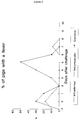
- Figure 1 shows the percentage of animals with a temperature above 40.5 o C. Only a few vaccinates (ID and IM) became feverish whereas a large number of animals from the non-vaccinated group developed high temperatures.
- Micro-organisms I-1387, I-1388, I-1389 and I-1401, I-1402 were deposited with the CNCM of the Institut Pasteur, 25 Rue du Do Budapest Roux, Paris, France on 23.12.93 and 09.02.94, respectively.
Landscapes
- Health & Medical Sciences (AREA)
- Life Sciences & Earth Sciences (AREA)
- Chemical & Material Sciences (AREA)
- Virology (AREA)
- Organic Chemistry (AREA)
- Immunology (AREA)
- General Health & Medical Sciences (AREA)
- Medicinal Chemistry (AREA)
- Genetics & Genomics (AREA)
- Veterinary Medicine (AREA)
- Pharmacology & Pharmacy (AREA)
- Bioinformatics & Cheminformatics (AREA)
- Animal Behavior & Ethology (AREA)
- Engineering & Computer Science (AREA)
- Public Health (AREA)
- Biochemistry (AREA)
- Microbiology (AREA)
- Zoology (AREA)
- Wood Science & Technology (AREA)
- General Chemical & Material Sciences (AREA)
- Molecular Biology (AREA)
- Chemical Kinetics & Catalysis (AREA)
- Nuclear Medicine, Radiotherapy & Molecular Imaging (AREA)
- Epidemiology (AREA)
- Biotechnology (AREA)
- Biomedical Technology (AREA)
- Mycology (AREA)
- Oncology (AREA)
- General Engineering & Computer Science (AREA)
- Communicable Diseases (AREA)
- Biophysics (AREA)
- Proteomics, Peptides & Aminoacids (AREA)
- Medicines Containing Antibodies Or Antigens For Use As Internal Diagnostic Agents (AREA)
- Micro-Organisms Or Cultivation Processes Thereof (AREA)
- Peptides Or Proteins (AREA)
- Preparation Of Compounds By Using Micro-Organisms (AREA)
Abstract
Description
- The present invention is concerned with European strains of the Porcine Reproductive Respiratory Syndrome (PRRS) virus, vaccines for the protection of pigs against PRRS, monoclonal antibodies reactive with PRRS virus and monoclonal antibodies specifically non-reactive with the attenuated strains.
- In 1987, an until then unknown disease in pigs was detected in North America, from where it later spread to Canada (Hill, H.; In: Proceedings of the Mystery Swine Disease Committee meeting, Oct. 6, 1990, Denver, Colorado, Livestock Conservation Institute, Madison Wi, USA., Keffaber et al; Am. Assoc. Swine Pract. Newsletter 1: 1-9 (1989)). The disease, which was characterised by the fact that it induced both abortion and respiratory disease, was first called Mystery Swine Disease (MSD). Nowadays, in America and Canada, the disease is also known as Swine Infertility and Respiratory Syndrome (SIRS).
- Since 1990, the disease has been found in Europe, where it first caused outbreaks in Germany, followed by outbreaks in the Netherlands and Belgium, and the disease is now spreading through Europe. In Europe, the disease is commonly known as Porcine Reproductive Respiratory Syndrome (PRRS), and as porcine Epidemic Abortion and Respiratory Syndrome (PEARS).
- Currently the disease is worldwide referred to as PRRS.
- The pathology is not restricted to abortion and respiratory disease. Other symptoms, usually or occasionally seen with the disease are: off feed, anorexia, bluish discolorations of the extremities, especially the ears.
- The causative agent of the disease is now known to be a small enveloped RNA virus, and the European type of this virus has been described by Wensvoort et al. (The Vet. Quarterly; 13:121-130 (1991)). Its relatedness to Lactate Dehydrogenase-elevating virus (LDV) and Equine Arteritis virus has been described by Conzelmann et al. (Virology 193: 329-339 (1993)) and by Meulenberg et al. (Virology 192: 62-72 (1993), thus placing the virus in the group of Arteriviridae.
- A strain of this European type, called the "Lelystad Virus" (LV) has been deposited with the Institut Pasteur, Paris, France under nr. I-1102, in connection with PCT WO 92/21375 by the Central Veterinary Institute, Lelystad, The Netherlands.
- Another European strain has been described in EPA no. 91.202.646.5, and was deposited with the Collection Nationale de Cultures de Micro-organismes (CNCM) of the Institut Pasteur at Paris France under nr. I-1140.
- This European strain has recently been described by Conzelmann et al. (Virology 193: 329-339 (1993)).
- The American type of the virus has been described by Benfield et al. (J. Vet. Diagn. Invest. 4: 127-133 (1992)). A strain of the American type has been deposited with the ATCC under nr VR-2332, and is mentioned in PCT WO 93/03760 and European Patent Application 0.529.584
- An important observation was made by Wensvoort et al. (J. Vet. Diagn. Invest 4: 134-138 (1992), early after the virus was found, when he compared American and European strains on the basis of their antigenic characteristics.
- He raised sera against both the American type (as e.g. the strain deposited with the American ATCC VR-2332 as mentioned above) and the European type (as e.g. the strain deposited with the Institut Pasteur, Paris, France under nr. I-1102) in several pigs, and compared the cross-reactivity of the anti-European (LV) and anti-American (VR-2332) sera with three American virus isolates and 4 European isolates.
- As disclosed by Wensvoort et al. (J. Vet. Diagn. Invest 4: 134-138 (1992), sera against PRRS viruses of the European serotype are significantly less reactive with American isolates than with European isolates.
- Even more surprising, sera raised against viruses of the American serotype are less or even not reactive at all with European virus isolates.
- Wensvoort et al. (J. Vet. Diagn. Invest 4: 134-138 (1992) also shows the reactivity of sera raised against European and American isolates against the two reference viruses IP I-1102 (European) and ATTC VR-2332 (American). These results are even more striking: sera raised against European strains are not reactive at all with the American strain.
- Thus, at that moment in time, for the first time it became unequivocally clear that two fully different serotypes of the virus exist: the American and the European serotype.
- Recently, Nelson et al. (74th Annual Meeting of the Conference of Research Workers in Animal Diseases, November 8-9, 1993) and Mardassi et al. (74th Annual Meeting of the Conference of Research Workers in Animal Diseases, November 8-9, 1993) showed it to be very easy to discriminate between European and American strains on the basis of these serological differences, by using monoclonal antibodies selectively reactive with one of the two serotypes.
- The conclusion is, that there is a outspoken difference between American and European isolates, on the basis of their serotype. It also shows, that it is possible to easily discriminate between American and European serotypes.
- In addition to serological differences, there is a growing amount of evidence for large differences in nucleic acid sequences, when comparing the genomes of the American and the European serotype.
- Recently, more nucleic acid sequence data have become available, amongst which are sequences of various genes of various isolates.
- Nelson et al. (74th Annual Meeting of the Conference of Research Workers in Animal Diseases, November 8-9, 1993) demonstrated large differences between the nucleotide sequences of the genes coding for the nucleoprotein of respectively the American and European serotypes. Since the nucleoprotein is an internal viral protein, it will not be prone to selective presure. Thus it is surprising to find these differences. Nelson et al. used these nucleotide sequence differences for a PCR-based test for the discrimination between American and European strains.
- In another recent paper, Katz et al. (74th Annual Meeting of the Conference of Research Workers in Animal Diseases, November 8-9, 1993) compared sequences of polymerase-encoding genes of various isolates. There is hardly or no evolutionary pressure on polymerase-genes in general. This also holds true for the polymerase genes of e.g. strains of the American serotype, as can be seen from the fact that there is a 87-95% homology within the American group. Therefore it is surprising, that a homology as low as 64-67% based on nucleic acids was found between European serotypes and American serotypes.
- Mardassi published comparable results at the Conference mentioned above, showing that the 3'-terminal 530 nucleic acids of the Quebec PRRS Reference strain and European isolates only show a homology as low as 59%.
- The results from the papers mentioned above make it most likely, that the American and European serotypes have diverged a long time ago, which would then easily explain their genetic differences and their serological unrelatedness.
- In conclusion; there is a clear difference between American and European isolates, both on the basis of their overall nucleic acid sequence and their serotype. It also shows, that it is possible to easily discriminate between American and European serotypes.
- One other conclusion however is, that on the basis of these findings it may well be impossible to find a universally appliccable attenuated strain providing protection against infection with both American serotype strains and European serotype strains.
- An attenuated strain of the American serotype has been described in European Patent Application 0.529.584. This strain is directly derived from the deposited American VR-2332 strain.
- Therefore, animals vaccinated with this strain will not develop antibodies reactive with European strains.
- This clearly means, that in order to make a vaccine against European serotypes, an attenuated strain of the European serotype is desired.
- The present invention for the first time provides attenuated strains of the European serotype.
- Viruses of the European serotype are characterised in that they react to a higher titer in an Immunoperoxidase Monolayer Assay with a panel of antisera against the European PRRS virus LV (CDI-NL-2.91; as deposited with the Institut Pasteur under I-1102) compared with a reaction with a panel of antisera against the American PRRS virus SIRSV (ATCC VR-2332).
- If a panel of sera is used, obtained about 40 days post infection, and from different animals, any virus can easily be classified as belonging either to the American or European serotype. Typically, the reactivity of a European strain with a panel of antisera against other European strains is about 400 times higher than with a panel of antisera against American strains. When a European strain is reacted with antisera against the deposited European strain I-1102 and the deposited American strain VR-2332, a typical difference in reactivity of about 55 times is found (Wensvoort et al. (J. Vet. Diagn. Invest 4: 134-138 (1992).
- The attenuated strains according to the present invention are reactive with monoclonal antibodies produced by hybridoma A27 (deposited with Institut Pasteur at Paris France under nr. I-1401). These antibodies recognise the Nucleoprotein of European serotype strains.
- Attenuated strains of the European serotype have been found, but these still have an unacceptable level of virulence, e.g. I-1389 as mentioned in the present invention.
- The surprising characteristic of the viruses of the present invention is, that they are not virulent anymore, yet are able to induce a protective immune response. These viruses are characterised in that they are not recognised by monoclonal antibodies produced by hybridoma A35 (deposited with the Institut Pasteur at Paris France under nr. I-1402), that are reactive with ORF-4 of virulent PRRS viruses. (The open reading frames are described a.o. by Conzelmann et al. (Virology 193: 329-339 (1993)) and Meulenberg et al. (Virology 192: 62-72 (1993).
- Examples of attenuated strains of the European serotype with a A35⁻ serotype according to the present invention are the virus strains PRRS C and PRRS D, as deposited with the Collection Nationale de Cultures de Micro-organismes (CNCM) of the Institut Pasteur at Paris, France, under the Accession number I-1387 (Strain D) and number I-1388 (Strain C).
- These two deposited strains are merely examples of the strains that are embodied in the present invention.
- Other European PRRS virus strains, also rective with monoclonal antibody A27 and not reactive with A35 are also part of the invention.
- These strains can e.g. be found by screening in the field for animals infected by PRRSV, isolation of the PRRS virus strain and subsequently testing for reactivity with both A35 and A 27.
- Also part of the invention are virus strains, derived from one of the deposited strains. For example, strains can be derived from one of the deposited strains by further passing of one of the deposited strains on cells in a suitable culture medium. Further passages can also be obtained by passing one of the deposited strains over an animal.
- Also embodied in the present invention are vaccines, comprising a PRRS virus strain of the present invention.
- In these vaccines the virus according to the invention can be present as a live attenuated virus.
- One advantage of the use of live virus vaccines is that only a limited number of viruses has to be administered since live viruses are self-replicative; typically, 10-10⁷ particles per dose can be used.
- Another advantage of a live virus vaccine is that it mimics the natural infection and therefore triggers the immune system in the natural way.
- Vaccines can also be made by using the viruses of the present invention in an inactivated form.
- The advantage of this aproach is, that an inactivated virus is allways fully safe, since it can never return to a virulent form.
- A vaccine based on inactivated viruses typically may contain the equivalent of 10³-10¹⁰ live virus particles measured before inactivation.
- In general, inactivation can be achieved by chemical or physical means. Chemical inactivation can be effected by treating the virus with, for example, formaldehyde, β-propiolactone, ethylene-imine or a derivative thereof, an organic solvent (such as Tween(R), Triton X(R), sodium deoxycholaat, sulphobetain or octyl trimethylammonium salts.
- Physical means of virus inactivation are e.g. heat and energy-rich radiation, e.g. UV light, X-radiation or gamma-radiation.
- The vaccine according to the present invention may comprise a pharmaceutically acceptable carrier. One possible carrier is a physiological salt-solution. Another pharmaceutically acceptable carrier is for instance the solution in which an adjuvant is provided.
- Usually, an adjuvant and if desired one or more emulsifiers such as Tween(R) and Span(R) are also incorporated in the live or inactivated vaccine according to the invention. Suitable adjuvants are for example vitamin-E acetate solubilisate, aluminium hydroxide, - phosphate or -oxide, (mineral) oil emulsions such as Bayol(R) and Marcol52(R), and saponins. Incorporation of the antigens in Iscoms is also a possible way of adjuvation.
- It is advantageous to add a stabilizer to live or inactivated viruses, particularly if a dry composition of live viruses is prepared by lyophilization. Suitable stabilizers are, for example, SPGA (Bovarnik et al., J. Bacteriology 59, 509, 1950), carbohydrates (such as sorbitol, mannitol, trehalose, starch, sucrose, dextran or glucose), proteins (such as albumin or casein), or degradation products thereof, and buffers (such as alkali metal phosphates). If desired, one or more compounds with adjuvant activity as described above can also be added.
- A vaccine according to the invention may be administered by intramuscular or subcutaneous injection or via intranasal, intratracheal, oral, cutane, percutane or intracutane administration.
- The vaccine according to the invention can be administered to pigs depending on the vaccination history of the sows at 1, 5 or 10 weeks of age, to sows before mating and/or 4-6 weeks before farrowing (booster vaccination), or to boars each half a year (boosters).
- Vaccines according to the present invention may contain combinations of the PRRS component and one or more unrelated porcine pathogens, such as Actinobacillus pleuropneumonia, Pseudorabies virus, Porcine influenza virus, Porcine parvo virus, Transmissible gastro-enteritis virus, rotavirus, E. coli, Erysipelo rhusiopathiae, Pasteurella multocida, Bordetella bronchiseptica.
- Although a vaccine according to the invention may be derived from any PRRS virus isolate of a European serotype, preferrably, the vaccine is derived from PRRS strains C or D, deposited at the Institut Pasteur at Paris France under nr. I-1388 or nr. I-1387.
- Next to the use of whole live or inactivated virus preparations for vaccine purposes, the use of viral antigens for the preparation of vaccines is possible. The use of viral antigens, either as a crude preparation or in a more purified form has the advantage that unwanted or unnecessary compounds from viral or cellular origin can be eliminated. This approach leads to vaccines with a low non-specific antigenic load, and thus to vaccination without undesired side-effects.
- Crude virus preparations can be purified to select for one or more viral antigens in a number of different ways, known in the art. Purification can be done by centrifugation, molecular sieve chromatography, ion-exchange chromatography, chromatography over a column coated with specific antibodies, gel-electrophoresis, etcetera.
- A method for the preparation of PRRS viral antigen useful to be incorporated into a vaccine according to the invention includes the following steps:
- a) inoculating susceptible tissue culture cells with the PRRS virus,
- b) cultivating the cells, and
- c) harvesting the viral antigen from the culture.
- Preferably, the PRRS virus is cultured to high titres, i.e. at least 106.0 TCID₅₀/ml.
- For the production of the live attenuated viruses according to the invention, a number of methods known in the art for this purpose are available, e.g. adaptation of a specific PRRS virus isolate to grow in embryonated eggs or to a culture containing porcine tissue cells or other susceptible tissue cells or eggs, after which the virus is multiplied and harvested by collecting egg material or the tissue cell culture fluids and/or cells. Adaptation to growth at different temperatures may also be part of the attenuation process.
- Optionally, during harvesting the yield of the viruses can be promoted by techniques which improve the liberation of the infective particles from the growth substrate, e.g. sonication.
- Viral antigen to be incorporated into a vaccine according to the invention can be prepared by the growth of the PRRS virus isolates on macrophages (alveolar, peritoneal, peripheral, bone marrow or from any other site). Also other cells with macrophage-like properties are useful, like promonocytes, monocytes, brain vascular endothelial cells and microglial cells. The macrophage or macrophage-like cells may be of spf or non-spf origin (e.g. from regular commercial pigs). In the latter cases precautions are taken for undesired contamination, e.g. by the use of proper antibiotics in the culture.
- In addition other known susceptible host cells can be used for this purpose.
- Another set of routes which can lead to a very useful procedure of virus growth is the establishment of a macrophage cell line. A number of possibilities which can lead to such desirable macrophage cell lines are outlined below.
- Immortalisation of macrophages can be done using conditioned medium of L(929) cells, SK6, ST, Vero or BHK cells. In these conditioned media at least the presence of lymphokines like the macrophage Colony Stimulating Factor (CSF) is of importance (Stanley, E.R., Methods Enzymology 116, 564-587, 1985).
- Treatment of macrophages of any source with chemicals to invoke immortalization, e.g. β-propio-lactone as an example of an alkylating agent that effects DNA metabolism can be used (Logrippo, G.A. and Harman, F.W., J. Immunol. 75, 123-128, 1955).
- Also incorporated in the present invention are monoclonal antibodies produced by the hybridomas A27 and A35, as deposited with the Collection Nationale de Cultures de Micro-organismes (CNCM) of the Institut Pasteur at Paris France respectively under nr. I 1401 and nr. I 1402.
- Antibodies reactive with the PRRSV antigenic determinant which is recognized by the monoclonal antibodies of the deposited hybridomas, are also part of the invention.
- Pigs in several countries in Europe were on a regular basis followed and screened for seroconversion due to PRRS virus infection.
- Sera of animals that were in the process of seroconverting, were during or after seroconversion used as a source for PRRS virus.
- Viruses of the deposited strains I-1387 and I-1388 were isolated from sera of non-clinical cases of PRRS as follows: for growth of the viruses, a 24-hour monolayer of alveolar macrophages was incubated with these sera.
- The macrophage cell culture was established from lung lavages of SPF piglets with PBS.
- The macrophages were washed and incubated with RPM 1640 medium supplemented with 10% fetal calf serum and antibiotics for 24 hours in 5% CO₂ incubator. A small volume of the sera was added to the macrophages. After incubation for 1 h. at 37 °C new medium was added and the infected macrophages were further incubated at 37 °C in CO₂ atmosphere. Total cytopathic effect (CPE), was apparent after 2-3 days of incubation.
- The virus can also be isolated from other sources than the serum, e.g. from heart, tonsils, brain and liver of infected pigs.
- Viruses, isolated as described in Example 1 were inoculated onto a 24-hour monolayer of Mamalian cells. After incubation for 1 h at 37 °C the medium was added again and the infected cells were further incubated at 37 °C in CO₂ atmosphere. After 2 days first signs of CPE became apparent. At
day 3 the cells showed complete lysis, which was confirmed by the uptake of trypan blue. - Viable cells do exclude trypan blue dye, as did the non-infected control macrophages. The harvest of this first passage was stored at -70 °C. Further passages of this isolate were made by incubation of 1 ml prediluted 1:10 - 1:100 virus on further macrophages cultures. Total CPE was apparent after 2-3 days of incubation.
- Samples of these isolates have been deposited with the CNCM under accession No. I-1387 (strain D) and No. I-1388 (strain C).
- The method for the preparation of PRRS viral antigen as described above results in the ability to grow the virus to high titres in vitro.
- This method was used to check for the reactivity of monoclonal antibodies A27 and A35 against the deposited PRRS viruses. The monoclonal antibodies were diluted 2-fold in microtitration plates containing PRRS virus-infected macrophages. After incubation with FITC-conjugated antibodies, wells were examined for fluorescence.
- The IFT test has a deviation of 2 (one dilution step).
- Plates were seeded with 100 µl/well swine alveolar macrophages in complete MEM. Plates were incubated in the CO₂ incubator.
- After at least one night with a maximum of 14 days wells were emptied. Wells were filled with 100 µl virus suspension (10⁵ TCID₅₀/ml, MOI 1:5). Plates were incubated at 37 °C in the CO₂-incubator for 24 (± 4) hours, emptied and washed once with washbuffer (PBS). Wells were filled with 100 µl cold (-70 °C) 96% ethanol and stored at -70 °C.
- Just before use the microtiter plates were emptied and washed twice with washbuffer. Monoclonal antibodies were added in duplo (column with infected macrophages and column with negative macrophages) with the desired dilution in PBS buffer. Six serial dilutions were made in PBS buffer with a 2-fold dilution factor (100 µl sample + 100 µl PBS buffer). After dilutions were made the volume in the wells is 100 µl. After 60 minutes at 37 °C the plates were washed two times with washbuffer. To all
wells 50 µl Rabbit anti-Mouse-FITC (1:40) was added. After 60 minutes at 37 °C the plates were washed two times with washbuffer and 50 µl of a 50 % glycerol in PBS solution withpH 9 was added. Wells were examined for specific fluorescence. Plates were stored at 4 °C. - The titre is given as the value of the highest dilution at which virus specific fluorescence is observed. The test is valid if the negative control has no specific fluorescence and the positive control shows specific fluorescence.
- All test samples that give specific fluorescence are regarded to be positive.
Table 1 I-1140 I-1387 I-1388 I-1389 A35 + - - + A27 + + + + - As can be seen from table 1, the deposited strains C (I-1388) and D (I-1387) react only with the monoclonal antibody A27.
- Contrary to this, the European strain A (deposited with the Collection Nationale de Cultures de Micro-organismes (CNCM) of the Institut Pasteur at Paris France under nr. I-1389), which is an attenuated strain, derived from virulent strain I-1140 by serial passaging, still reacts with monoclonal antibodies against both A27 and A35.
- The highly virulent wild-type strain, deposited with the Collection Nationale de Cultures de Micro-organismes (CNCM) of the Institut Pasteur at Paris France under nr. I-1140 at Sept. 6, 1991, reacts with both monoclonal antibodies.
- An experiment was performed to show that the A35⁻-PRRS virus strains C and D were not pathogenic to pregnant sows and their litters, contrary to the attenuated or wild-type A35⁺-serotypes.
- The sows were inoculated with the live PRRS strains at day 90 of pregnancy.
- No difference was found between the number of dead piglets inoculated with strains C or D, and non-infected control sows.
- However, the number of death piglets was significantly different from that of sows inoculated with virus strain A (I-1389) or wild-type PRRS virus strain I-1140.
- Pregnant sows were used, that were negative in immuno-fluorescence test (IFT) for PRRS and had farrowed at least once before were used.
-
-
Group 1 PRRS virus strain D -
Group 2 PRRS virus strain C -
Group 3 PRRS virus strain A -
Group 4 PRRS wild-type virus I-1140 -
Group 5 Controls, placebo diluent. - The infectivity titres of the test strains A, C and D and wild-type virus 110 were determined on macrophages in microtiterplates as described by Wensvoort et al., 1991 and found to be about 6 ¹⁰log TCID₅₀ per animal.
- Sera were diluted (starting
dilution 1/10, dilution factor 2) in microtiterplate with (ethanol/fixed) infected macrophages. After incubation with anti-pig IgG-FITC wells are observed for specific fluorescence. - Pregnant sows were inoculated with test strains or placebo diluent at day 90 of pregnancy. At day of farrowing blood and colostrum were taken and 8 days after farrowing blood was collected. At day of farrowing the number of mummies, stillbirths, weak piglets that died within a week, and healthy piglets were recorded.
- As can been seen in table 2, the number of dead piglets from the sows inoculated with strain C and D, 0% and 19% respectively, was less than or roughly comparable to the normal reproduction results as found in the placebo controls of Group 4 (14%).
- In contrast 33% dead animals were observed in the group inoculated with the less attenuated A35⁺ virus strain A.
- About 75% dead animals were observed in the group inoculated with the A35⁺ wild-type virus strain I-1140.
- These results prove that the attenuated European vaccine strains of the A35⁻ serotype are safe vaccine strains which are preferred over attenuated A35⁺ serotype strains .
Table 2 Results of PRRS virus on the litters of inoculated sows Sow Strain Pigs delivered Dead* Alive Total 148 D 0 9 9 196 D 0 9 9 230 D 0 7 7 Total (%) 0 (0) 25 (100) 25 8 C 2 7 9 180 C 0 6 6 192 C 3 8 11 Total (%) 5 (19) 21 (81) 26 Strain A-inoculated (3 sows) Total (%) 15 (33) 30 (67) 45 Strain I-1140-inoculated (3 sows) Total (%) 20 (75) 15 (25) 35 Non-oculated controls Total (%) 4 (14) 25 (86) 29 * Deads include mummies, stillbirths and piglets that died within 7 days after birth. - In this experiment the efficacy of a PRRSV vaccine against a PRRSV challenge in fattening pigs is demonstrated.
- Three groups of animals were used:
Group No. animals Route Vaccin dose TCID₅₀ Challenge dose TCID₅₀ Group 1 11 ID 105.6 104.9 Group 211 IM 106.7 104.9 Group 310 control -- 104.9 - Animals were vaccinated at 4-5 weeks of age.
- For the intramuscular (IM) application one volume of PRRSV strain D was mixed with one volume of Diluvac ForteR adjuvant. Each animal was vaccinated with 2 ml.
- For the intradermal (ID) application one volume of PRRSV strain D was mixed with one volume of Diluvac ForteR adjuvant. Each animal was vaccinated with 0.2 ml.
- Animals were challenged at 4 weeks after vaccination with PRRSV isolate no. 2. Each animal was challenged intranasally with one ml per nostril. The protection was measured by monitoring body temperatures and challenge virus re-isolation.
- Rectal temperatures were measured daily from 1 day before challenge until 7 days after challenge.
- Figure 1 shows the percentage of animals with a temperature above 40.5 oC. Only a few vaccinates (ID and IM) became feverish whereas a large number of animals from the non-vaccinated group developed high temperatures.
- Blood samples were taken at arrival and weekly until challenge. After challenge blood samples were taken at 2, 4, 6, 10, 13 and 15 days after challenge. Virus titres were determined of the samples. Virus could be re-isolated from most of the controls at several time points. There was a marked difference between the vaccinated pigs and the controls in the presence of PRRSV found in blood (Figure 2).
- Micro-organisms I-1387, I-1388, I-1389 and I-1401, I-1402 were deposited with the CNCM of the Institut Pasteur, 25 Rue du Docteur Roux, Paris, France on 23.12.93 and 09.02.94, respectively.
-
- Figure 1
- The percentage of piglets per group with a fever (temperature above 40.5 oC) scored from one day before to eight days after challenge.
- Figure 2
- The percentage of piglets positive for virus-isolation from the blood at 4, 6 and 10 days after challenge.
Claims (10)
- A Porcine Reproductive and Respiratory Syndrome (PRRS) virus, of a European serotype, characterised in that it is an attenuated virus, reactive with monoclonal antibody A27 as produced by hybridoma A27 deposited with the Collection Nationale de Cultures de Micro-organismes (CNCM) of the Institut Pasteur at Paris France under nr. I 1401, but not with monoclonal antibody A35 as produced by hybridoma A35 deposited with the Institut Pasteur at Paris France under nr.under nr. I 1402.
- Attenuated PRRS virus according to claim 1, characterised in that the virus is derived from one of the strains, deposited with the Institut Pasteur at Paris France under nr. I-1388 or nr. I-1387.
- Attenuated PRRS virus according to claim 1, characterised in that it is of one of the strains, deposited with the Institut Pasteur at Paris France under nr. under nr. I-1388 or nr. I-1387.
- Vaccine for the prevention of pigs against Porcine Reproductive and Respiratory Syndrome (PRRS), comprising a live virus according to claims 1-3 and a pharmaceutically acceptable carrier.
- Vaccine according to claim 4, characterised in that it comprises 10 - 10⁷ virus particles.
- Vaccine for the prevention of pigs against Porcine Reproductive and Respiratory Syndrome (PRRS), comprising virus according to claims 1-3 in an inactivated form and a pharmaceutically acceptable carrier.
- Vaccine according to claim 6, characterised in that the virus has a pre-inactivation titre of 10³ - 10¹⁰ virus particles.
- Vaccine according to claims 4-7, characterised in that it comprises an adjuvant.
- Antibody against a PRRS antigenic determinant, said antigenic determinant being recognised by monoclonals produced by hybridoma A35, as deposited with the Institut Pasteur at Paris France under nr. I-1402.
- Antibody against a PRRS antigenic determinant, said antigenic determinant being recognised by monoclonals produced by hybridoma A27, deposited with the Institut Pasteur at Paris France under nr. I 1401.
Priority Applications (1)
| Application Number | Priority Date | Filing Date | Title |
|---|---|---|---|
| EP19950200877 EP0676467B1 (en) | 1994-04-11 | 1995-04-07 | European vaccine strains of the porcine reproductive respiratory syndrome virus (PRRSV) |
Applications Claiming Priority (3)
| Application Number | Priority Date | Filing Date | Title |
|---|---|---|---|
| EP94200964 | 1994-04-11 | ||
| EP94200964 | 1994-04-11 | ||
| EP19950200877 EP0676467B1 (en) | 1994-04-11 | 1995-04-07 | European vaccine strains of the porcine reproductive respiratory syndrome virus (PRRSV) |
Publications (3)
| Publication Number | Publication Date |
|---|---|
| EP0676467A2 true EP0676467A2 (en) | 1995-10-11 |
| EP0676467A3 EP0676467A3 (en) | 1999-09-29 |
| EP0676467B1 EP0676467B1 (en) | 2001-10-04 |
Family
ID=8216784
Family Applications (1)
| Application Number | Title | Priority Date | Filing Date |
|---|---|---|---|
| EP19950200877 Expired - Lifetime EP0676467B1 (en) | 1994-04-11 | 1995-04-07 | European vaccine strains of the porcine reproductive respiratory syndrome virus (PRRSV) |
Country Status (8)
| Country | Link |
|---|---|
| US (1) | US5698203A (en) |
| EP (1) | EP0676467B1 (en) |
| JP (1) | JP3715675B2 (en) |
| AT (1) | ATE206455T1 (en) |
| DE (1) | DE69522984T2 (en) |
| DK (1) | DK0676467T3 (en) |
| ES (1) | ES2165405T3 (en) |
| PT (1) | PT676467E (en) |
Cited By (26)
| Publication number | Priority date | Publication date | Assignee | Title |
|---|---|---|---|---|
| WO1997027288A1 (en) * | 1996-01-25 | 1997-07-31 | Laboratorios Hipra, S.A. | New attenuated strain of the virus causing the porcine reproductive respiratory syndrome (prrs), vaccines and diagnostic means obtainable with said strain, and production process |
| WO1997031651A1 (en) * | 1996-03-01 | 1997-09-04 | Schering Corporation | Porcine reproductive and respiratory syndrome vaccine |
| EP0783321A4 (en) * | 1994-08-05 | 1998-01-14 | Univ Minnesota | VIRAL NUCLEOTIDE SEQUENCE VR-2332 AND METHOD OF USE |
| EP0835930A1 (en) * | 1996-10-09 | 1998-04-15 | Akzo Nobel N.V. | European vaccine strains of the porcine reproductive and respiratory syndrome virus (PRRSV) |
| US5866401A (en) * | 1996-03-01 | 1999-02-02 | Schering Corporation | Porcine reproductive and respiratory syndrome vaccine |
| WO2002067985A1 (en) * | 2001-02-23 | 2002-09-06 | The Board Of Regents Of The University Of Nebraska | Method for prophylaxis and treatment of porcine reproductive and respiratory syndrome |
| US6641819B2 (en) * | 1999-04-22 | 2003-11-04 | Usda | Porcine reproductive and respiratory syndrome vaccine, based on isolate JA-142 |
| WO2006074986A2 (en) | 2005-01-13 | 2006-07-20 | Boehringer Ingelheim Vetmedica Gmbh | Prrs vaccines |
| WO2006055331A3 (en) * | 2004-11-19 | 2006-08-10 | Intervet Int Bv | Porcine reproductive and respiratory syndrome virus strains and compositions |
| EP1517987A4 (en) * | 2002-03-20 | 2006-12-20 | Merial Ltd | LUNG CELLS OF COTTON RATES TO VIRUS CULTURE |
| EP1794329A4 (en) * | 2004-09-21 | 2008-07-23 | Boehringer Ingelheim Vetmed | ISOLATES OF PORCINE RESPIRATORY DYSGENESIS SYNDROME (SDRP), AND METHODS OF USE |
| WO2011128415A1 (en) * | 2010-04-16 | 2011-10-20 | Universiteit Gent | Cross-protecting vaccine for porcine reproductive and respiratory syndrome virus |
| WO2012110490A1 (en) | 2011-02-17 | 2012-08-23 | Boehringer Ingelheim Vetmedica Gmbh | Commercial scale process for production of prrsv |
| WO2012110489A2 (en) | 2011-02-17 | 2012-08-23 | Boehringer Ingelheim Vetmedica Gmbh | Novel european prrsv strain |
| CN104388399A (en) * | 2014-08-18 | 2015-03-04 | 张澍 | PRRSV attenuated strain which is capable of inducing pig body to relatively early generate interferon and neutralizing antibody and possesses wide-spectrum immunogenicity |
| US9187731B2 (en) | 2011-07-29 | 2015-11-17 | Boehringer Ingelheim Vetmedica Gmbh | PRRS virus inducing type I interferon in susceptible cells |
| US9315781B2 (en) | 2011-07-29 | 2016-04-19 | Boehringer Ingelheim Vetmedica Gmbh | Infectious CDNA clone of european PRRS virus and uses thereof |
| US9561270B2 (en) | 2009-09-02 | 2017-02-07 | Boehringer Ingelheim Vetmedica, Inc. | Methods of reducing virucidal activity in PCV-2 compositions and PCV-2 compositions with an improved immunogenicity |
| US9579373B2 (en) | 2013-03-15 | 2017-02-28 | Boehringer Ingelheim Vetmedica, Inc. | Porcine reproductive and respiratory syndrome virus, compositions, vaccine and methods of use |
| WO2017040672A1 (en) | 2015-08-31 | 2017-03-09 | Boehringer Ingelheim Vetmedica Gmbh | Pestivirus vaccines for congenital tremors |
| WO2017106079A1 (en) | 2015-12-14 | 2017-06-22 | Boehringer Ingelheim Vetmedica, Inc. | Hybrid core feline vaccines |
| US10010601B2 (en) | 2013-12-20 | 2018-07-03 | Boehringer Ingelheim Vetmedica Gmbh | PRRS virus variant, European PRRS virus cDNA clone, and uses thereof |
| CN109055385A (en) * | 2018-08-21 | 2018-12-21 | 吉林大学 | A kind of effective gene order and its application for inhibiting II type PRRSV infection |
| WO2020206452A1 (en) | 2019-04-04 | 2020-10-08 | Boehringer Ingelheim Animal Health USA Inc. | Porcine circovirus type 3 (pcv3) vaccines, and production and uses thereof |
| CN113801854A (en) * | 2021-08-27 | 2021-12-17 | 中国农业科学院哈尔滨兽医研究所(中国动物卫生与流行病学中心哈尔滨分中心) | Hybridoma cell line secreting European porcine reproductive and respiratory syndrome virus specific monoclonal antibody and application thereof |
| WO2022020593A2 (en) | 2020-07-24 | 2022-01-27 | Boehringer Ingelheim Animal Health USA Inc. | Combination porcine vaccine |
Families Citing this family (19)
| Publication number | Priority date | Publication date | Assignee | Title |
|---|---|---|---|---|
| CA2290906C (en) * | 1991-06-06 | 2003-04-01 | Stichting Centraal Diergeneeskundig Instituut | Causative agent of the mystery swine disease, vaccine compositions and diagnostic kits |
| CA2121241C (en) * | 1991-10-14 | 2007-12-04 | Nicolaas Visser | Porcine reproductive respiratory syndrome vaccine and diagnostic |
| US6773908B1 (en) * | 1992-10-30 | 2004-08-10 | Iowa State University Research Foundation, Inc. | Proteins encoded by polynucleic acids of porcine reproductive and respiratory syndrome virus (PRRSV) |
| US6380376B1 (en) * | 1992-10-30 | 2002-04-30 | Iowa State University Research Foundation | Proteins encoded by polynucleic acids of porcine reproductive and respiratory syndrome virus (PRRSV) |
| US6592873B1 (en) | 1992-10-30 | 2003-07-15 | Iowa State University Research Foundation, Inc. | Polynucleic acids isolated from a porcine reproductive and respiratory syndrome virus (PRRSV) and proteins encoded by the polynucleic acids |
| US5695766A (en) * | 1992-10-30 | 1997-12-09 | Iowa State University Research Foundation | Highly virulent porcine reproductive and respiratory syndrome viruses which produce lesions in pigs and vaccines that protect pigs against said syndrome |
| EP0839912A1 (en) * | 1996-10-30 | 1998-05-06 | Instituut Voor Dierhouderij En Diergezondheid (Id-Dlo) | Infectious clones of RNA viruses and vaccines and diagnostic assays derived thereof |
| US20040224327A1 (en) * | 1996-10-30 | 2004-11-11 | Meulenberg Johanna Jacoba Maria | Infectious clones of RNA viruses and vaccines and diagnostic assays derived thereof |
| UA78180C2 (en) * | 1997-10-03 | 2007-03-15 | Меріаль | Porcine circovirus, vaccines and diagnostic reagents |
| CA2366072C (en) * | 1999-03-08 | 2007-07-10 | Id-Lelystad, Instituut Voor Dierhouderij En Diergezondheid B.V. | Prrsv vaccines |
| KR100372278B1 (en) * | 2000-03-03 | 2003-02-17 | 주식회사 한국미생물연구소 | Mixture vaccine for pig respiratory organ |
| US6740490B2 (en) * | 2001-01-29 | 2004-05-25 | Kansas State University Research Foundation | Identification and applications of porcine reproductive and respiratory syndrome virus host susceptibility factor(s) for improved swine breeding |
| EA013071B1 (en) | 2004-04-23 | 2010-02-26 | ФАРМАЦИЯ ЭНД АПДЖОН КОМПАНИ ЭлЭлСи | Cellular permissivity factor for viruses and use thereof |
| TW200604526A (en) | 2004-06-18 | 2006-02-01 | Unviersity Of Minnesota | Identifying virally infected and vaccinated organisms |
| PT2369001T (en) | 2005-06-24 | 2016-10-25 | Univ Minnesota | Prrs viruses, infectious clones, mutants thereof, and methods of use |
| MX2009007457A (en) | 2007-01-12 | 2009-08-12 | Univ Illinois | Non-simian cells for growth of porcine reproductive and respiratory syndrome (prrs) virus. |
| KR101653177B1 (en) * | 2008-08-25 | 2016-09-01 | 베링거잉겔하임베트메디카인코퍼레이티드 | Vaccine against Highly Pathogenic Porcine Reproductive and Respiratory Syndrome (HP PRRS) |
| JP7340290B2 (en) * | 2021-05-21 | 2023-09-07 | 大輔 島岡 | Anti-enveloped virus neutral detergent, disinfectant composition, and method for inactivating enveloped viruses |
| CN117025545B (en) * | 2023-08-10 | 2024-04-09 | 中国农业科学院哈尔滨兽医研究所(中国动物卫生与流行病学中心哈尔滨分中心) | Hybridoma cell strain secreting highly pathogenic porcine reproductive and respiratory syndrome virus specific monoclonal antibody and application thereof |
Family Cites Families (5)
| Publication number | Priority date | Publication date | Assignee | Title |
|---|---|---|---|---|
| CA2290906C (en) * | 1991-06-06 | 2003-04-01 | Stichting Centraal Diergeneeskundig Instituut | Causative agent of the mystery swine disease, vaccine compositions and diagnostic kits |
| KR100241221B1 (en) * | 1991-08-26 | 2000-03-02 | 에드워드 콜린스 제임스 | Swine infertility and respiratory system heavy vaccine and diagnosis |
| KR0138092B1 (en) * | 1991-08-26 | 1998-04-30 | 제임스 씨. 데세사레 | Attenuation method of mystery swine disease virus |
| AU2696792A (en) * | 1991-09-16 | 1993-04-27 | David A Benfield | Vaccine for mystery swine disease and method for diagnosis thereof |
| CA2121241C (en) * | 1991-10-14 | 2007-12-04 | Nicolaas Visser | Porcine reproductive respiratory syndrome vaccine and diagnostic |
-
1995
- 1995-04-07 ES ES95200877T patent/ES2165405T3/en not_active Expired - Lifetime
- 1995-04-07 EP EP19950200877 patent/EP0676467B1/en not_active Expired - Lifetime
- 1995-04-07 DE DE69522984T patent/DE69522984T2/en not_active Expired - Lifetime
- 1995-04-07 DK DK95200877T patent/DK0676467T3/en active
- 1995-04-07 PT PT95200877T patent/PT676467E/en unknown
- 1995-04-07 AT AT95200877T patent/ATE206455T1/en not_active IP Right Cessation
- 1995-04-11 US US08/419,781 patent/US5698203A/en not_active Expired - Lifetime
- 1995-04-11 JP JP8562495A patent/JP3715675B2/en not_active Expired - Lifetime
Cited By (47)
| Publication number | Priority date | Publication date | Assignee | Title |
|---|---|---|---|---|
| EP0783321A4 (en) * | 1994-08-05 | 1998-01-14 | Univ Minnesota | VIRAL NUCLEOTIDE SEQUENCE VR-2332 AND METHOD OF USE |
| WO1997027288A1 (en) * | 1996-01-25 | 1997-07-31 | Laboratorios Hipra, S.A. | New attenuated strain of the virus causing the porcine reproductive respiratory syndrome (prrs), vaccines and diagnostic means obtainable with said strain, and production process |
| ES2102971A1 (en) * | 1996-01-25 | 1997-08-01 | Hipra Lab Sa | New attenuated strain of the virus causing the porcine reproductive respiratory syndrome (prrs), vaccines and diagnostic means obtainable with said strain, and production process |
| US6001370A (en) * | 1996-01-25 | 1999-12-14 | Laboratorios Hippra, S.A. | Attenuated strain of the virus causing the porcine reproductive respiratory syndrome (PRRS), and vaccines |
| WO1997031651A1 (en) * | 1996-03-01 | 1997-09-04 | Schering Corporation | Porcine reproductive and respiratory syndrome vaccine |
| US5866401A (en) * | 1996-03-01 | 1999-02-02 | Schering Corporation | Porcine reproductive and respiratory syndrome vaccine |
| EP0835930A1 (en) * | 1996-10-09 | 1998-04-15 | Akzo Nobel N.V. | European vaccine strains of the porcine reproductive and respiratory syndrome virus (PRRSV) |
| US5925359A (en) * | 1996-10-09 | 1999-07-20 | Akzo Nobel, N.V. | European vaccine strains of the porcine reproductive and respiratory syndrome virus |
| US6660513B2 (en) | 1999-04-22 | 2003-12-09 | Usda | Porcine reproductive and respiratory syndrome vaccine, based on isolate JA-142 |
| US6641819B2 (en) * | 1999-04-22 | 2003-11-04 | Usda | Porcine reproductive and respiratory syndrome vaccine, based on isolate JA-142 |
| US7081342B2 (en) | 1999-04-22 | 2006-07-25 | Boehringer Ingelheim Vetmedica, Inc. | Porcine reproductive and respiratory syndrome vaccine, based on isolate JA-142 |
| WO2002067985A1 (en) * | 2001-02-23 | 2002-09-06 | The Board Of Regents Of The University Of Nebraska | Method for prophylaxis and treatment of porcine reproductive and respiratory syndrome |
| EP1517987A4 (en) * | 2002-03-20 | 2006-12-20 | Merial Ltd | LUNG CELLS OF COTTON RATES TO VIRUS CULTURE |
| US7906311B2 (en) | 2002-03-20 | 2011-03-15 | Merial Limited | Cotton rat lung cells for virus culture |
| EP1794329A4 (en) * | 2004-09-21 | 2008-07-23 | Boehringer Ingelheim Vetmed | ISOLATES OF PORCINE RESPIRATORY DYSGENESIS SYNDROME (SDRP), AND METHODS OF USE |
| EP2298938A1 (en) * | 2004-09-21 | 2011-03-23 | Boehringer Ingelheim Vetmedica, Inc. | Porcine reproductive and respiratory syndrome isolates and methods of use |
| EP2314721A1 (en) * | 2004-09-21 | 2011-04-27 | Boehringer Ingelheim Vetmedica, Inc. | Porcine reproductive and respiratory syndrome isolates and methods of use |
| AU2005306781B2 (en) * | 2004-11-19 | 2011-12-22 | Intervet International B.V. | Porcine reproductive and respiratory syndrome virus strains and compositions |
| WO2006055331A3 (en) * | 2004-11-19 | 2006-08-10 | Intervet Int Bv | Porcine reproductive and respiratory syndrome virus strains and compositions |
| US8178103B2 (en) | 2004-11-19 | 2012-05-15 | Intervet International B.V. | Porcine reproductive and respiratory syndrome virus strains and compositions |
| WO2006074986A2 (en) | 2005-01-13 | 2006-07-20 | Boehringer Ingelheim Vetmedica Gmbh | Prrs vaccines |
| US7368117B2 (en) | 2005-01-13 | 2008-05-06 | Boehringer Ingelheim Vetmedica Gmbh | PRRS vaccines |
| US9561270B2 (en) | 2009-09-02 | 2017-02-07 | Boehringer Ingelheim Vetmedica, Inc. | Methods of reducing virucidal activity in PCV-2 compositions and PCV-2 compositions with an improved immunogenicity |
| WO2011128415A1 (en) * | 2010-04-16 | 2011-10-20 | Universiteit Gent | Cross-protecting vaccine for porcine reproductive and respiratory syndrome virus |
| US9534207B2 (en) | 2011-02-17 | 2017-01-03 | Boehringer Ingelheim Vetmedica Gmbh | European PRRSV strain |
| WO2012110490A1 (en) | 2011-02-17 | 2012-08-23 | Boehringer Ingelheim Vetmedica Gmbh | Commercial scale process for production of prrsv |
| US10039821B2 (en) | 2011-02-17 | 2018-08-07 | Boehringer Ingelheim Vetmedica Gmbh | European PRRSV strain |
| EP2959916A1 (en) | 2011-02-17 | 2015-12-30 | Boehringer Ingelheim Vetmedica GmbH | Novel european prrsv strain |
| US9944902B2 (en) | 2011-02-17 | 2018-04-17 | Boehringer Ingelheim Vetmedica Gmbh | Commercial scale process for production of PRRSV |
| US10668144B2 (en) | 2011-02-17 | 2020-06-02 | Boehringer Ingelheim Vetmedica Gmbh | European PRRSV strain |
| WO2012110489A2 (en) | 2011-02-17 | 2012-08-23 | Boehringer Ingelheim Vetmedica Gmbh | Novel european prrsv strain |
| US9315781B2 (en) | 2011-07-29 | 2016-04-19 | Boehringer Ingelheim Vetmedica Gmbh | Infectious CDNA clone of european PRRS virus and uses thereof |
| US9187731B2 (en) | 2011-07-29 | 2015-11-17 | Boehringer Ingelheim Vetmedica Gmbh | PRRS virus inducing type I interferon in susceptible cells |
| US9579373B2 (en) | 2013-03-15 | 2017-02-28 | Boehringer Ingelheim Vetmedica, Inc. | Porcine reproductive and respiratory syndrome virus, compositions, vaccine and methods of use |
| US10639364B2 (en) | 2013-12-20 | 2020-05-05 | Boehringer Ingelheim Vetmedica Gmbh | PRRS virus variant, european PRRS virus cDNA clone, and uses thereof |
| US10010601B2 (en) | 2013-12-20 | 2018-07-03 | Boehringer Ingelheim Vetmedica Gmbh | PRRS virus variant, European PRRS virus cDNA clone, and uses thereof |
| CN104388399B (en) * | 2014-08-18 | 2017-02-15 | 张澍 | PRRSV attenuated strain which is capable of inducing pig body to relatively early generate interferon and neutralizing antibody and possesses wide-spectrum immunogenicity |
| CN104388399A (en) * | 2014-08-18 | 2015-03-04 | 张澍 | PRRSV attenuated strain which is capable of inducing pig body to relatively early generate interferon and neutralizing antibody and possesses wide-spectrum immunogenicity |
| WO2017040672A1 (en) | 2015-08-31 | 2017-03-09 | Boehringer Ingelheim Vetmedica Gmbh | Pestivirus vaccines for congenital tremors |
| US10188725B2 (en) | 2015-12-14 | 2019-01-29 | Elanco Us Inc. | Hybrid core feline vaccines |
| WO2017106079A1 (en) | 2015-12-14 | 2017-06-22 | Boehringer Ingelheim Vetmedica, Inc. | Hybrid core feline vaccines |
| CN109055385A (en) * | 2018-08-21 | 2018-12-21 | 吉林大学 | A kind of effective gene order and its application for inhibiting II type PRRSV infection |
| CN109055385B (en) * | 2018-08-21 | 2021-08-27 | 吉林大学 | Gene sequence for effectively inhibiting II type PRRSV infection and application thereof |
| WO2020206452A1 (en) | 2019-04-04 | 2020-10-08 | Boehringer Ingelheim Animal Health USA Inc. | Porcine circovirus type 3 (pcv3) vaccines, and production and uses thereof |
| WO2022020593A2 (en) | 2020-07-24 | 2022-01-27 | Boehringer Ingelheim Animal Health USA Inc. | Combination porcine vaccine |
| CN113801854A (en) * | 2021-08-27 | 2021-12-17 | 中国农业科学院哈尔滨兽医研究所(中国动物卫生与流行病学中心哈尔滨分中心) | Hybridoma cell line secreting European porcine reproductive and respiratory syndrome virus specific monoclonal antibody and application thereof |
| CN113801854B (en) * | 2021-08-27 | 2023-02-28 | 中国农业科学院哈尔滨兽医研究所(中国动物卫生与流行病学中心哈尔滨分中心) | Hybridoma cell line secreting European porcine reproductive and respiratory syndrome virus specific monoclonal antibody and application thereof |
Also Published As
| Publication number | Publication date |
|---|---|
| US5698203A (en) | 1997-12-16 |
| PT676467E (en) | 2002-02-28 |
| EP0676467B1 (en) | 2001-10-04 |
| ES2165405T3 (en) | 2002-03-16 |
| DK0676467T3 (en) | 2002-01-21 |
| EP0676467A3 (en) | 1999-09-29 |
| ATE206455T1 (en) | 2001-10-15 |
| JP3715675B2 (en) | 2005-11-09 |
| DE69522984D1 (en) | 2001-11-08 |
| DE69522984T2 (en) | 2002-04-25 |
| JPH07289250A (en) | 1995-11-07 |
Similar Documents
| Publication | Publication Date | Title |
|---|---|---|
| EP0676467B1 (en) | European vaccine strains of the porcine reproductive respiratory syndrome virus (PRRSV) | |
| KR100484041B1 (en) | European Vaccine Strains of Pig Reproductive and Respiratory Syndrome Virus | |
| EP0610250B1 (en) | Porcine reproductive respiratory syndrome (prrs) vaccine and diagnostic | |
| US5510258A (en) | Porcine reproductive and respiratory syndrome virus antigen and processes for the preparation and use of said antigen in vaccines and diagnostics | |
| EP0830142B1 (en) | Prrs (porcine reproductive and respiratory syndrome) virus vaccine | |
| US5695766A (en) | Highly virulent porcine reproductive and respiratory syndrome viruses which produce lesions in pigs and vaccines that protect pigs against said syndrome | |
| US5866401A (en) | Porcine reproductive and respiratory syndrome vaccine | |
| US6001370A (en) | Attenuated strain of the virus causing the porcine reproductive respiratory syndrome (PRRS), and vaccines | |
| JPH09500544A (en) | Recombinant PRRSV protein, diagnostic kit and vaccine containing the recombinant PRRSV protein | |
| US5419907A (en) | Pathogenic porcine respiratory coronavirus | |
| KR100297537B1 (en) | Pig reproductive and respiratory syndrome vaccine | |
| US6410031B1 (en) | Attentuated porcine reproductive and respiratory syndrome virus strain and method of use | |
| RU2806601C1 (en) | Borz strain of porcine reproductive and respiratory syndrome virus betaarterivirus suid 1 genus arterivirus for production of biological products for specific prevention of porcine reproductive and respiratory syndrome | |
| MXPA97007780A (en) | European strains of vaccines of the porcine reproductive and respiratory syndrome virus (prrsv) | |
| HK1005014A1 (en) | Sirs vaccine and diagnosis method |
Legal Events
| Date | Code | Title | Description |
|---|---|---|---|
| PUAI | Public reference made under article 153(3) epc to a published international application that has entered the european phase |
Free format text: ORIGINAL CODE: 0009012 |
|
| 17P | Request for examination filed |
Effective date: 19950407 |
|
| AK | Designated contracting states |
Kind code of ref document: A2 Designated state(s): AT BE CH DE DK ES FR GB GR IE IT LI LU MC NL PT SE |
|
| PUAL | Search report despatched |
Free format text: ORIGINAL CODE: 0009013 |
|
| RIC1 | Information provided on ipc code assigned before grant |
Free format text: 6C 12N 7/00 A, 6A 61K 39/12 B, 6C 07K 16/10 B |
|
| AK | Designated contracting states |
Kind code of ref document: A3 Designated state(s): AT BE CH DE DK ES FR GB GR IE IT LI LU MC NL PT SE |
|
| 17Q | First examination report despatched |
Effective date: 20000829 |
|
| GRAG | Despatch of communication of intention to grant |
Free format text: ORIGINAL CODE: EPIDOS AGRA |
|
| GRAG | Despatch of communication of intention to grant |
Free format text: ORIGINAL CODE: EPIDOS AGRA |
|
| GRAH | Despatch of communication of intention to grant a patent |
Free format text: ORIGINAL CODE: EPIDOS IGRA |
|
| GRAH | Despatch of communication of intention to grant a patent |
Free format text: ORIGINAL CODE: EPIDOS IGRA |
|
| GRAA | (expected) grant |
Free format text: ORIGINAL CODE: 0009210 |
|
| AK | Designated contracting states |
Kind code of ref document: B1 Designated state(s): AT BE CH DE DK ES FR GB GR IE IT LI LU MC NL PT SE |
|
| REF | Corresponds to: |
Ref document number: 206455 Country of ref document: AT Date of ref document: 20011015 Kind code of ref document: T |
|
| REG | Reference to a national code |
Ref country code: CH Ref legal event code: NV Representative=s name: ISLER & PEDRAZZINI AG Ref country code: CH Ref legal event code: EP |
|
| REF | Corresponds to: |
Ref document number: 69522984 Country of ref document: DE Date of ref document: 20011108 |
|
| REG | Reference to a national code |
Ref country code: IE Ref legal event code: FG4D |
|
| ET | Fr: translation filed | ||
| REG | Reference to a national code |
Ref country code: GB Ref legal event code: IF02 |
|
| REG | Reference to a national code |
Ref country code: DK Ref legal event code: T3 |
|
| REG | Reference to a national code |
Ref country code: PT Ref legal event code: SC4A Free format text: AVAILABILITY OF NATIONAL TRANSLATION Effective date: 20011204 |
|
| REG | Reference to a national code |
Ref country code: ES Ref legal event code: FG2A Ref document number: 2165405 Country of ref document: ES Kind code of ref document: T3 |
|
| REG | Reference to a national code |
Ref country code: GR Ref legal event code: EP Ref document number: 20010402503 Country of ref document: GR |
|
| PLBQ | Unpublished change to opponent data |
Free format text: ORIGINAL CODE: EPIDOS OPPO |
|
| PLBI | Opposition filed |
Free format text: ORIGINAL CODE: 0009260 |
|
| PLBF | Reply of patent proprietor to notice(s) of opposition |
Free format text: ORIGINAL CODE: EPIDOS OBSO |
|
| 26 | Opposition filed |
Opponent name: ID-LELYSTAD, INSTITUUT VOOR DIERHOUDERIJ EN DIERGE Effective date: 20020704 |
|
| NLR1 | Nl: opposition has been filed with the epo |
Opponent name: ID-LELYSTAD, INSTITUUT VOOR DIERHOUDERIJ EN DIERGE |
|
| PLBF | Reply of patent proprietor to notice(s) of opposition |
Free format text: ORIGINAL CODE: EPIDOS OBSO |
|
| PLCK | Communication despatched that opposition was rejected |
Free format text: ORIGINAL CODE: EPIDOSNREJ1 |
|
| PLBN | Opposition rejected |
Free format text: ORIGINAL CODE: 0009273 |
|
| STAA | Information on the status of an ep patent application or granted ep patent |
Free format text: STATUS: OPPOSITION REJECTED |
|
| 27O | Opposition rejected |
Effective date: 20051221 |
|
| NLR2 | Nl: decision of opposition |
Effective date: 20051221 |
|
| REG | Reference to a national code |
Ref country code: CH Ref legal event code: PUE Owner name: INTERVET INTERNATIONAL B. V. Free format text: AKZO NOBEL N.V.#VELPERWEG 76#6824 BM ARNHEM (NL) -TRANSFER TO- INTERVET INTERNATIONAL B. V.#WIM DE KOERVERSTRAAT 35#5831 AN BOXMEER (NL) |
|
| REG | Reference to a national code |
Ref country code: PT Ref legal event code: PC4A Owner name: INTERVET INTERNATIONAL B.V., NL Effective date: 20061114 |
|
| REG | Reference to a national code |
Ref country code: FR Ref legal event code: TP |
|
| NLS | Nl: assignments of ep-patents |
Owner name: INTERVET INTERNATIONAL B.V. Effective date: 20070208 |
|
| REG | Reference to a national code |
Ref country code: CH Ref legal event code: PCAR Free format text: ISLER & PEDRAZZINI AG;POSTFACH 1772;8027 ZUERICH (CH) |
|
| PGFP | Annual fee paid to national office [announced via postgrant information from national office to epo] |
Ref country code: PT Payment date: 20100322 Year of fee payment: 16 Ref country code: MC Payment date: 20100319 Year of fee payment: 16 |
|
| PGFP | Annual fee paid to national office [announced via postgrant information from national office to epo] |
Ref country code: LU Payment date: 20100505 Year of fee payment: 16 Ref country code: IE Payment date: 20100426 Year of fee payment: 16 |
|
| PGFP | Annual fee paid to national office [announced via postgrant information from national office to epo] |
Ref country code: AT Payment date: 20100319 Year of fee payment: 16 |
|
| PGFP | Annual fee paid to national office [announced via postgrant information from national office to epo] |
Ref country code: CH Payment date: 20100426 Year of fee payment: 16 |
|
| PGFP | Annual fee paid to national office [announced via postgrant information from national office to epo] |
Ref country code: SE Payment date: 20100428 Year of fee payment: 16 |
|
| PGFP | Annual fee paid to national office [announced via postgrant information from national office to epo] |
Ref country code: GR Payment date: 20100429 Year of fee payment: 16 |
|
| REG | Reference to a national code |
Ref country code: PT Ref legal event code: MM4A Free format text: LAPSE DUE TO NON-PAYMENT OF FEES Effective date: 20111007 |
|
| REG | Reference to a national code |
Ref country code: SE Ref legal event code: EUG |
|
| PG25 | Lapsed in a contracting state [announced via postgrant information from national office to epo] |
Ref country code: MC Free format text: LAPSE BECAUSE OF NON-PAYMENT OF DUE FEES Effective date: 20110430 |
|
| REG | Reference to a national code |
Ref country code: CH Ref legal event code: PL |
|
| REG | Reference to a national code |
Ref country code: AT Ref legal event code: MM01 Ref document number: 206455 Country of ref document: AT Kind code of ref document: T Effective date: 20110407 |
|
| REG | Reference to a national code |
Ref country code: GR Ref legal event code: ML Ref document number: 20010402503 Country of ref document: GR Effective date: 20111102 |
|
| PG25 | Lapsed in a contracting state [announced via postgrant information from national office to epo] |
Ref country code: CH Free format text: LAPSE BECAUSE OF NON-PAYMENT OF DUE FEES Effective date: 20110430 Ref country code: PT Free format text: LAPSE BECAUSE OF NON-PAYMENT OF DUE FEES Effective date: 20111007 Ref country code: LI Free format text: LAPSE BECAUSE OF NON-PAYMENT OF DUE FEES Effective date: 20110430 |
|
| REG | Reference to a national code |
Ref country code: IE Ref legal event code: MM4A |
|
| PG25 | Lapsed in a contracting state [announced via postgrant information from national office to epo] |
Ref country code: GR Free format text: LAPSE BECAUSE OF NON-PAYMENT OF DUE FEES Effective date: 20111102 Ref country code: AT Free format text: LAPSE BECAUSE OF NON-PAYMENT OF DUE FEES Effective date: 20110407 |
|
| PG25 | Lapsed in a contracting state [announced via postgrant information from national office to epo] |
Ref country code: IE Free format text: LAPSE BECAUSE OF NON-PAYMENT OF DUE FEES Effective date: 20110407 |
|
| PG25 | Lapsed in a contracting state [announced via postgrant information from national office to epo] |
Ref country code: SE Free format text: LAPSE BECAUSE OF NON-PAYMENT OF DUE FEES Effective date: 20110408 |
|
| PG25 | Lapsed in a contracting state [announced via postgrant information from national office to epo] |
Ref country code: LU Free format text: LAPSE BECAUSE OF NON-PAYMENT OF DUE FEES Effective date: 20110407 |
|
| PGFP | Annual fee paid to national office [announced via postgrant information from national office to epo] |
Ref country code: DK Payment date: 20140325 Year of fee payment: 20 |
|
| PGFP | Annual fee paid to national office [announced via postgrant information from national office to epo] |
Ref country code: GB Payment date: 20140325 Year of fee payment: 20 |
|
| PGFP | Annual fee paid to national office [announced via postgrant information from national office to epo] |
Ref country code: IT Payment date: 20140414 Year of fee payment: 20 Ref country code: FR Payment date: 20140328 Year of fee payment: 20 Ref country code: NL Payment date: 20140410 Year of fee payment: 20 Ref country code: DE Payment date: 20140430 Year of fee payment: 20 Ref country code: ES Payment date: 20140410 Year of fee payment: 20 |
|
| PGFP | Annual fee paid to national office [announced via postgrant information from national office to epo] |
Ref country code: BE Payment date: 20140509 Year of fee payment: 20 |
|
| REG | Reference to a national code |
Ref country code: DE Ref legal event code: R071 Ref document number: 69522984 Country of ref document: DE |
|
| REG | Reference to a national code |
Ref country code: DE Ref legal event code: R071 Ref document number: 69522984 Country of ref document: DE |
|
| REG | Reference to a national code |
Ref country code: DK Ref legal event code: EUP Effective date: 20150407 |
|
| REG | Reference to a national code |
Ref country code: NL Ref legal event code: V4 Effective date: 20150407 |
|
| REG | Reference to a national code |
Ref country code: NL Ref legal event code: V4 Effective date: 20150407 |
|
| REG | Reference to a national code |
Ref country code: GB Ref legal event code: PE20 Expiry date: 20150406 |
|
| PG25 | Lapsed in a contracting state [announced via postgrant information from national office to epo] |
Ref country code: GB Free format text: LAPSE BECAUSE OF EXPIRATION OF PROTECTION Effective date: 20150406 |
|
| REG | Reference to a national code |
Ref country code: ES Ref legal event code: FD2A Effective date: 20150826 |
|
| PG25 | Lapsed in a contracting state [announced via postgrant information from national office to epo] |
Ref country code: ES Free format text: LAPSE BECAUSE OF EXPIRATION OF PROTECTION Effective date: 20150408 |