EP0675715B1 - Cell differentiation induction with mevalonate and mevalonolactone derivatives - Google Patents
Cell differentiation induction with mevalonate and mevalonolactone derivatives Download PDFInfo
- Publication number
- EP0675715B1 EP0675715B1 EP92912191A EP92912191A EP0675715B1 EP 0675715 B1 EP0675715 B1 EP 0675715B1 EP 92912191 A EP92912191 A EP 92912191A EP 92912191 A EP92912191 A EP 92912191A EP 0675715 B1 EP0675715 B1 EP 0675715B1
- Authority
- EP
- European Patent Office
- Prior art keywords
- cell
- compounds
- cells
- tumor
- activity
- Prior art date
- Legal status (The legal status is an assumption and is not a legal conclusion. Google has not performed a legal analysis and makes no representation as to the accuracy of the status listed.)
- Expired - Lifetime
Links
- KJTLQQUUPVSXIM-UHFFFAOYSA-N DL-mevalonic acid Natural products OCCC(O)(C)CC(O)=O KJTLQQUUPVSXIM-UHFFFAOYSA-N 0.000 title abstract description 4
- KJTLQQUUPVSXIM-ZCFIWIBFSA-M (R)-mevalonate Chemical compound OCC[C@](O)(C)CC([O-])=O KJTLQQUUPVSXIM-ZCFIWIBFSA-M 0.000 title abstract 2
- JYVXNLLUYHCIIH-ZCFIWIBFSA-N R-mevalonolactone, (-)- Chemical class C[C@@]1(O)CCOC(=O)C1 JYVXNLLUYHCIIH-ZCFIWIBFSA-N 0.000 title abstract 2
- 230000024245 cell differentiation Effects 0.000 title description 15
- 230000006698 induction Effects 0.000 title description 4
- 150000001875 compounds Chemical class 0.000 claims abstract description 116
- 150000001768 cations Chemical class 0.000 claims description 8
- 230000004936 stimulating effect Effects 0.000 claims description 5
- 125000004169 (C1-C6) alkyl group Chemical group 0.000 claims description 4
- 125000004429 atom Chemical group 0.000 claims description 4
- 125000004185 ester group Chemical group 0.000 claims description 4
- 230000016784 immunoglobulin production Effects 0.000 claims description 4
- 229910052739 hydrogen Inorganic materials 0.000 claims description 3
- 239000001257 hydrogen Substances 0.000 claims description 3
- 125000004435 hydrogen atom Chemical group [H]* 0.000 claims description 3
- QGZKDVFQNNGYKY-UHFFFAOYSA-O Ammonium Chemical group [NH4+] QGZKDVFQNNGYKY-UHFFFAOYSA-O 0.000 claims description 2
- DGAQECJNVWCQMB-PUAWFVPOSA-M Ilexoside XXIX Chemical group C[C@@H]1CC[C@@]2(CC[C@@]3(C(=CC[C@H]4[C@]3(CC[C@@H]5[C@@]4(CC[C@@H](C5(C)C)OS(=O)(=O)[O-])C)C)[C@@H]2[C@]1(C)O)C)C(=O)O[C@H]6[C@@H]([C@H]([C@@H]([C@H](O6)CO)O)O)O.[Na+] DGAQECJNVWCQMB-PUAWFVPOSA-M 0.000 claims description 2
- ZLMJMSJWJFRBEC-UHFFFAOYSA-N Potassium Chemical group [K] ZLMJMSJWJFRBEC-UHFFFAOYSA-N 0.000 claims description 2
- 239000011591 potassium Chemical group 0.000 claims description 2
- 229910052700 potassium Inorganic materials 0.000 claims description 2
- 239000011734 sodium Substances 0.000 claims description 2
- 229910052708 sodium Inorganic materials 0.000 claims description 2
- 230000034570 natural killer cell mediated immunity Effects 0.000 claims 1
- 206010028980 Neoplasm Diseases 0.000 abstract description 61
- 230000003915 cell function Effects 0.000 abstract description 21
- HBAQYPYDRFILMT-UHFFFAOYSA-N 8-[3-(1-cyclopropylpyrazol-4-yl)-1H-pyrazolo[4,3-d]pyrimidin-5-yl]-3-methyl-3,8-diazabicyclo[3.2.1]octan-2-one Chemical class C1(CC1)N1N=CC(=C1)C1=NNC2=C1N=C(N=C2)N1C2C(N(CC1CC2)C)=O HBAQYPYDRFILMT-UHFFFAOYSA-N 0.000 abstract description 20
- 208000026278 immune system disease Diseases 0.000 abstract description 8
- 230000001594 aberrant effect Effects 0.000 abstract description 6
- 208000037265 diseases, disorders, signs and symptoms Diseases 0.000 abstract description 6
- 208000030507 AIDS Diseases 0.000 abstract description 5
- 201000011510 cancer Diseases 0.000 abstract description 3
- 206010025135 lupus erythematosus Diseases 0.000 abstract description 3
- 206010012601 diabetes mellitus Diseases 0.000 abstract description 2
- 230000003292 diminished effect Effects 0.000 abstract description 2
- 208000035475 disorder Diseases 0.000 abstract description 2
- 201000006417 multiple sclerosis Diseases 0.000 abstract description 2
- 206010003246 arthritis Diseases 0.000 abstract 1
- 208000015181 infectious disease Diseases 0.000 abstract 1
- 210000004027 cell Anatomy 0.000 description 148
- 230000000694 effects Effects 0.000 description 54
- 230000006870 function Effects 0.000 description 29
- 241000282465 Canis Species 0.000 description 23
- 208000032612 Glial tumor Diseases 0.000 description 23
- 206010018338 Glioma Diseases 0.000 description 23
- 238000000034 method Methods 0.000 description 20
- IAZDPXIOMUYVGZ-UHFFFAOYSA-N Dimethylsulphoxide Chemical compound CS(C)=O IAZDPXIOMUYVGZ-UHFFFAOYSA-N 0.000 description 19
- 238000001727 in vivo Methods 0.000 description 19
- 238000000338 in vitro Methods 0.000 description 17
- 238000004519 manufacturing process Methods 0.000 description 15
- 230000002159 abnormal effect Effects 0.000 description 14
- 241000282472 Canis lupus familiaris Species 0.000 description 13
- 230000001413 cellular effect Effects 0.000 description 13
- 230000004069 differentiation Effects 0.000 description 13
- 230000001900 immune effect Effects 0.000 description 13
- 230000001085 cytostatic effect Effects 0.000 description 12
- 239000003814 drug Substances 0.000 description 12
- 241001465754 Metazoa Species 0.000 description 11
- 229940079593 drug Drugs 0.000 description 11
- 230000012010 growth Effects 0.000 description 11
- 239000000203 mixture Substances 0.000 description 11
- 210000004881 tumor cell Anatomy 0.000 description 11
- 230000014509 gene expression Effects 0.000 description 10
- 238000002513 implantation Methods 0.000 description 10
- 230000008569 process Effects 0.000 description 10
- 230000001225 therapeutic effect Effects 0.000 description 10
- 230000002401 inhibitory effect Effects 0.000 description 9
- 230000004044 response Effects 0.000 description 9
- IQFYYKKMVGJFEH-XLPZGREQSA-N Thymidine Chemical compound O=C1NC(=O)C(C)=CN1[C@@H]1O[C@H](CO)[C@@H](O)C1 IQFYYKKMVGJFEH-XLPZGREQSA-N 0.000 description 8
- 239000000824 cytostatic agent Substances 0.000 description 8
- 230000002062 proliferating effect Effects 0.000 description 8
- KJTLQQUUPVSXIM-ZCFIWIBFSA-N (R)-mevalonic acid Chemical class OCC[C@](O)(C)CC(O)=O KJTLQQUUPVSXIM-ZCFIWIBFSA-N 0.000 description 7
- 239000000427 antigen Substances 0.000 description 7
- 102000036639 antigens Human genes 0.000 description 7
- 108091007433 antigens Proteins 0.000 description 7
- 230000010261 cell growth Effects 0.000 description 7
- 230000008859 change Effects 0.000 description 7
- 230000001747 exhibiting effect Effects 0.000 description 7
- 230000005764 inhibitory process Effects 0.000 description 7
- 239000007924 injection Substances 0.000 description 7
- 238000002347 injection Methods 0.000 description 7
- 230000007246 mechanism Effects 0.000 description 7
- 241000700159 Rattus Species 0.000 description 6
- HVYWMOMLDIMFJA-DPAQBDIFSA-N cholesterol Chemical compound C1C=C2C[C@@H](O)CC[C@]2(C)[C@@H]2[C@@H]1[C@@H]1CC[C@H]([C@H](C)CCCC(C)C)[C@@]1(C)CC2 HVYWMOMLDIMFJA-DPAQBDIFSA-N 0.000 description 6
- 230000001965 increasing effect Effects 0.000 description 6
- 210000000265 leukocyte Anatomy 0.000 description 6
- 229920001542 oligosaccharide Polymers 0.000 description 6
- 108090000623 proteins and genes Proteins 0.000 description 6
- 102000004286 Hydroxymethylglutaryl CoA Reductases Human genes 0.000 description 5
- 108090000895 Hydroxymethylglutaryl CoA Reductases Proteins 0.000 description 5
- 238000005481 NMR spectroscopy Methods 0.000 description 5
- 230000010455 autoregulation Effects 0.000 description 5
- 125000004432 carbon atom Chemical group C* 0.000 description 5
- 210000000987 immune system Anatomy 0.000 description 5
- 239000000411 inducer Substances 0.000 description 5
- 238000005259 measurement Methods 0.000 description 5
- 239000012528 membrane Substances 0.000 description 5
- 230000001575 pathological effect Effects 0.000 description 5
- 102000004169 proteins and genes Human genes 0.000 description 5
- DWRXFEITVBNRMK-UHFFFAOYSA-N Beta-D-1-Arabinofuranosylthymine Natural products O=C1NC(=O)C(C)=CN1C1C(O)C(O)C(CO)O1 DWRXFEITVBNRMK-UHFFFAOYSA-N 0.000 description 4
- 206010009944 Colon cancer Diseases 0.000 description 4
- VGMFHMLQOYWYHN-UHFFFAOYSA-N Compactin Natural products OCC1OC(OC2C(O)C(O)C(CO)OC2Oc3cc(O)c4C(=O)C(=COc4c3)c5ccc(O)c(O)c5)C(O)C(O)C1O VGMFHMLQOYWYHN-UHFFFAOYSA-N 0.000 description 4
- 108090001090 Lectins Proteins 0.000 description 4
- 102000004856 Lectins Human genes 0.000 description 4
- AJLFOPYRIVGYMJ-UHFFFAOYSA-N SJ000287055 Natural products C12C(OC(=O)C(C)CC)CCC=C2C=CC(C)C1CCC1CC(O)CC(=O)O1 AJLFOPYRIVGYMJ-UHFFFAOYSA-N 0.000 description 4
- IQFYYKKMVGJFEH-UHFFFAOYSA-N beta-L-thymidine Natural products O=C1NC(=O)C(C)=CN1C1OC(CO)C(O)C1 IQFYYKKMVGJFEH-UHFFFAOYSA-N 0.000 description 4
- 230000030944 contact inhibition Effects 0.000 description 4
- 230000002068 genetic effect Effects 0.000 description 4
- 238000000099 in vitro assay Methods 0.000 description 4
- 238000010348 incorporation Methods 0.000 description 4
- 230000001939 inductive effect Effects 0.000 description 4
- 239000002523 lectin Substances 0.000 description 4
- AJLFOPYRIVGYMJ-INTXDZFKSA-N mevastatin Chemical compound C([C@H]1[C@@H](C)C=CC2=CCC[C@@H]([C@H]12)OC(=O)[C@@H](C)CC)C[C@@H]1C[C@@H](O)CC(=O)O1 AJLFOPYRIVGYMJ-INTXDZFKSA-N 0.000 description 4
- BOZILQFLQYBIIY-UHFFFAOYSA-N mevastatin hydroxy acid Natural products C1=CC(C)C(CCC(O)CC(O)CC(O)=O)C2C(OC(=O)C(C)CC)CCC=C21 BOZILQFLQYBIIY-UHFFFAOYSA-N 0.000 description 4
- 150000002482 oligosaccharides Chemical class 0.000 description 4
- 239000000047 product Substances 0.000 description 4
- 230000035755 proliferation Effects 0.000 description 4
- 230000001105 regulatory effect Effects 0.000 description 4
- 230000000638 stimulation Effects 0.000 description 4
- 229940104230 thymidine Drugs 0.000 description 4
- 230000004614 tumor growth Effects 0.000 description 4
- 239000002028 Biomass Substances 0.000 description 3
- 241000124008 Mammalia Species 0.000 description 3
- -1 X-rays Substances 0.000 description 3
- 210000004556 brain Anatomy 0.000 description 3
- 230000007969 cellular immunity Effects 0.000 description 3
- 235000012000 cholesterol Nutrition 0.000 description 3
- 230000001276 controlling effect Effects 0.000 description 3
- 230000000875 corresponding effect Effects 0.000 description 3
- 230000007812 deficiency Effects 0.000 description 3
- LOKCTEFSRHRXRJ-UHFFFAOYSA-I dipotassium trisodium dihydrogen phosphate hydrogen phosphate dichloride Chemical compound P(=O)(O)(O)[O-].[K+].P(=O)(O)([O-])[O-].[Na+].[Na+].[Cl-].[K+].[Cl-].[Na+] LOKCTEFSRHRXRJ-UHFFFAOYSA-I 0.000 description 3
- 201000010099 disease Diseases 0.000 description 3
- 210000001652 frontal lobe Anatomy 0.000 description 3
- 230000007773 growth pattern Effects 0.000 description 3
- 230000004727 humoral immunity Effects 0.000 description 3
- 125000002883 imidazolyl group Chemical group 0.000 description 3
- 230000028993 immune response Effects 0.000 description 3
- 230000006872 improvement Effects 0.000 description 3
- 125000001041 indolyl group Chemical group 0.000 description 3
- 231100000252 nontoxic Toxicity 0.000 description 3
- 230000003000 nontoxic effect Effects 0.000 description 3
- 230000037361 pathway Effects 0.000 description 3
- 210000005259 peripheral blood Anatomy 0.000 description 3
- 239000011886 peripheral blood Substances 0.000 description 3
- 239000002953 phosphate buffered saline Substances 0.000 description 3
- 239000002504 physiological saline solution Substances 0.000 description 3
- 230000003442 weekly effect Effects 0.000 description 3
- 208000008190 Agammaglobulinemia Diseases 0.000 description 2
- 208000023275 Autoimmune disease Diseases 0.000 description 2
- 208000003174 Brain Neoplasms Diseases 0.000 description 2
- AOJJSUZBOXZQNB-TZSSRYMLSA-N Doxorubicin Chemical compound O([C@H]1C[C@@](O)(CC=2C(O)=C3C(=O)C=4C=CC=C(C=4C(=O)C3=C(O)C=21)OC)C(=O)CO)[C@H]1C[C@H](N)[C@H](O)[C@H](C)O1 AOJJSUZBOXZQNB-TZSSRYMLSA-N 0.000 description 2
- 102000004190 Enzymes Human genes 0.000 description 2
- 108090000790 Enzymes Proteins 0.000 description 2
- 102000006395 Globulins Human genes 0.000 description 2
- 108010044091 Globulins Proteins 0.000 description 2
- 229940121710 HMGCoA reductase inhibitor Drugs 0.000 description 2
- 241000282412 Homo Species 0.000 description 2
- 206010020983 Hypogammaglobulinaemia Diseases 0.000 description 2
- 108060003951 Immunoglobulin Proteins 0.000 description 2
- 239000000637 Melanocyte-Stimulating Hormone Substances 0.000 description 2
- 108010007013 Melanocyte-Stimulating Hormones Proteins 0.000 description 2
- 206010027476 Metastases Diseases 0.000 description 2
- 206010030113 Oedema Diseases 0.000 description 2
- 108010033737 Pokeweed Mitogens Proteins 0.000 description 2
- 230000024932 T cell mediated immunity Effects 0.000 description 2
- 241000700605 Viruses Species 0.000 description 2
- 230000000259 anti-tumor effect Effects 0.000 description 2
- 230000000890 antigenic effect Effects 0.000 description 2
- 238000003556 assay Methods 0.000 description 2
- 230000001580 bacterial effect Effects 0.000 description 2
- 230000008901 benefit Effects 0.000 description 2
- 210000004369 blood Anatomy 0.000 description 2
- 239000008280 blood Substances 0.000 description 2
- 150000001720 carbohydrates Chemical class 0.000 description 2
- 235000014633 carbohydrates Nutrition 0.000 description 2
- 125000002091 cationic group Chemical group 0.000 description 2
- 230000004663 cell proliferation Effects 0.000 description 2
- 230000007248 cellular mechanism Effects 0.000 description 2
- 210000003850 cellular structure Anatomy 0.000 description 2
- 230000007423 decrease Effects 0.000 description 2
- 230000003247 decreasing effect Effects 0.000 description 2
- 230000002950 deficient Effects 0.000 description 2
- 230000001419 dependent effect Effects 0.000 description 2
- 239000002158 endotoxin Substances 0.000 description 2
- 238000011156 evaluation Methods 0.000 description 2
- 239000003102 growth factor Substances 0.000 description 2
- 210000003494 hepatocyte Anatomy 0.000 description 2
- 229940088597 hormone Drugs 0.000 description 2
- 239000005556 hormone Substances 0.000 description 2
- 239000002471 hydroxymethylglutaryl coenzyme A reductase inhibitor Substances 0.000 description 2
- 230000036039 immunity Effects 0.000 description 2
- 102000018358 immunoglobulin Human genes 0.000 description 2
- 239000002955 immunomodulating agent Substances 0.000 description 2
- 229940121354 immunomodulator Drugs 0.000 description 2
- 230000001506 immunosuppresive effect Effects 0.000 description 2
- 239000003112 inhibitor Substances 0.000 description 2
- 230000000977 initiatory effect Effects 0.000 description 2
- 229920006008 lipopolysaccharide Polymers 0.000 description 2
- 210000005229 liver cell Anatomy 0.000 description 2
- 230000003211 malignant effect Effects 0.000 description 2
- 230000001404 mediated effect Effects 0.000 description 2
- 230000002503 metabolic effect Effects 0.000 description 2
- 230000009401 metastasis Effects 0.000 description 2
- 239000003226 mitogen Substances 0.000 description 2
- 238000013421 nuclear magnetic resonance imaging Methods 0.000 description 2
- 210000000056 organ Anatomy 0.000 description 2
- 244000052769 pathogen Species 0.000 description 2
- 229940096701 plain lipid modifying drug hmg coa reductase inhibitors Drugs 0.000 description 2
- 230000003389 potentiating effect Effects 0.000 description 2
- 238000011552 rat model Methods 0.000 description 2
- 230000009257 reactivity Effects 0.000 description 2
- 230000009467 reduction Effects 0.000 description 2
- 238000011160 research Methods 0.000 description 2
- 206010039073 rheumatoid arthritis Diseases 0.000 description 2
- 150000003839 salts Chemical group 0.000 description 2
- 241000894007 species Species 0.000 description 2
- 210000004988 splenocyte Anatomy 0.000 description 2
- 125000001424 substituent group Chemical group 0.000 description 2
- 230000004083 survival effect Effects 0.000 description 2
- 208000011580 syndromic disease Diseases 0.000 description 2
- 238000012360 testing method Methods 0.000 description 2
- 231100000419 toxicity Toxicity 0.000 description 2
- 230000001988 toxicity Effects 0.000 description 2
- 125000006273 (C1-C3) alkyl group Chemical group 0.000 description 1
- 125000004178 (C1-C4) alkyl group Chemical group 0.000 description 1
- 201000001320 Atherosclerosis Diseases 0.000 description 1
- 208000026310 Breast neoplasm Diseases 0.000 description 1
- OYPRJOBELJOOCE-UHFFFAOYSA-N Calcium Chemical compound [Ca] OYPRJOBELJOOCE-UHFFFAOYSA-N 0.000 description 1
- 241000283707 Capra Species 0.000 description 1
- 241000700199 Cavia porcellus Species 0.000 description 1
- VYZAMTAEIAYCRO-UHFFFAOYSA-N Chromium Chemical compound [Cr] VYZAMTAEIAYCRO-UHFFFAOYSA-N 0.000 description 1
- 208000035473 Communicable disease Diseases 0.000 description 1
- UHDGCWIWMRVCDJ-CCXZUQQUSA-N Cytarabine Chemical compound O=C1N=C(N)C=CN1[C@H]1[C@@H](O)[C@H](O)[C@@H](CO)O1 UHDGCWIWMRVCDJ-CCXZUQQUSA-N 0.000 description 1
- 241000196324 Embryophyta Species 0.000 description 1
- ULGZDMOVFRHVEP-RWJQBGPGSA-N Erythromycin Chemical compound O([C@@H]1[C@@H](C)C(=O)O[C@@H]([C@@]([C@H](O)[C@@H](C)C(=O)[C@H](C)C[C@@](C)(O)[C@H](O[C@H]2[C@@H]([C@H](C[C@@H](C)O2)N(C)C)O)[C@H]1C)(C)O)CC)[C@H]1C[C@@](C)(OC)[C@@H](O)[C@H](C)O1 ULGZDMOVFRHVEP-RWJQBGPGSA-N 0.000 description 1
- 206010061968 Gastric neoplasm Diseases 0.000 description 1
- 102000003886 Glycoproteins Human genes 0.000 description 1
- 108090000288 Glycoproteins Proteins 0.000 description 1
- 241000238631 Hexapoda Species 0.000 description 1
- 206010061598 Immunodeficiency Diseases 0.000 description 1
- 208000029462 Immunodeficiency disease Diseases 0.000 description 1
- FBOZXECLQNJBKD-ZDUSSCGKSA-N L-methotrexate Chemical compound C=1N=C2N=C(N)N=C(N)C2=NC=1CN(C)C1=CC=C(C(=O)N[C@@H](CCC(O)=O)C(O)=O)C=C1 FBOZXECLQNJBKD-ZDUSSCGKSA-N 0.000 description 1
- 102000000853 LDL receptors Human genes 0.000 description 1
- 108010001831 LDL receptors Proteins 0.000 description 1
- 102000008072 Lymphokines Human genes 0.000 description 1
- 108010074338 Lymphokines Proteins 0.000 description 1
- 206010025323 Lymphomas Diseases 0.000 description 1
- FYYHWMGAXLPEAU-UHFFFAOYSA-N Magnesium Chemical compound [Mg] FYYHWMGAXLPEAU-UHFFFAOYSA-N 0.000 description 1
- 241001529936 Murinae Species 0.000 description 1
- 206010061535 Ovarian neoplasm Diseases 0.000 description 1
- 241001494479 Pecora Species 0.000 description 1
- 108010047386 Pituitary Hormones Proteins 0.000 description 1
- 102000006877 Pituitary Hormones Human genes 0.000 description 1
- 206010035226 Plasma cell myeloma Diseases 0.000 description 1
- 241000220010 Rhode Species 0.000 description 1
- 241000606651 Rickettsiales Species 0.000 description 1
- FAPWRFPIFSIZLT-UHFFFAOYSA-M Sodium chloride Chemical compound [Na+].[Cl-] FAPWRFPIFSIZLT-UHFFFAOYSA-M 0.000 description 1
- 102000005157 Somatostatin Human genes 0.000 description 1
- 108010056088 Somatostatin Proteins 0.000 description 1
- 206010067584 Type 1 diabetes mellitus Diseases 0.000 description 1
- 208000007097 Urinary Bladder Neoplasms Diseases 0.000 description 1
- 208000027418 Wounds and injury Diseases 0.000 description 1
- 210000001789 adipocyte Anatomy 0.000 description 1
- 239000002671 adjuvant Substances 0.000 description 1
- 229940009456 adriamycin Drugs 0.000 description 1
- 230000004075 alteration Effects 0.000 description 1
- 238000010171 animal model Methods 0.000 description 1
- 230000005875 antibody response Effects 0.000 description 1
- 239000002246 antineoplastic agent Substances 0.000 description 1
- 238000013459 approach Methods 0.000 description 1
- 230000004888 barrier function Effects 0.000 description 1
- 125000001797 benzyl group Chemical group [H]C1=C([H])C([H])=C(C([H])=C1[H])C([H])([H])* 0.000 description 1
- 230000033228 biological regulation Effects 0.000 description 1
- 201000007983 brain glioma Diseases 0.000 description 1
- 239000006227 byproduct Substances 0.000 description 1
- 239000011575 calcium Substances 0.000 description 1
- 229910052791 calcium Inorganic materials 0.000 description 1
- 210000000170 cell membrane Anatomy 0.000 description 1
- 230000009134 cell regulation Effects 0.000 description 1
- 230000005889 cellular cytotoxicity Effects 0.000 description 1
- 239000003795 chemical substances by application Substances 0.000 description 1
- 229910052804 chromium Inorganic materials 0.000 description 1
- 239000011651 chromium Substances 0.000 description 1
- 210000001072 colon Anatomy 0.000 description 1
- 208000029742 colonic neoplasm Diseases 0.000 description 1
- 230000000295 complement effect Effects 0.000 description 1
- 230000001010 compromised effect Effects 0.000 description 1
- 238000002591 computed tomography Methods 0.000 description 1
- 230000001143 conditioned effect Effects 0.000 description 1
- 238000012937 correction Methods 0.000 description 1
- 230000002596 correlated effect Effects 0.000 description 1
- 210000004748 cultured cell Anatomy 0.000 description 1
- 230000001086 cytosolic effect Effects 0.000 description 1
- 231100000433 cytotoxic Toxicity 0.000 description 1
- 230000001472 cytotoxic effect Effects 0.000 description 1
- 230000003013 cytotoxicity Effects 0.000 description 1
- 231100000135 cytotoxicity Toxicity 0.000 description 1
- 230000006378 damage Effects 0.000 description 1
- 230000007123 defense Effects 0.000 description 1
- 230000001627 detrimental effect Effects 0.000 description 1
- 238000002405 diagnostic procedure Methods 0.000 description 1
- 238000012631 diagnostic technique Methods 0.000 description 1
- 230000009429 distress Effects 0.000 description 1
- 238000011833 dog model Methods 0.000 description 1
- 239000003937 drug carrier Substances 0.000 description 1
- 230000009977 dual effect Effects 0.000 description 1
- 230000003503 early effect Effects 0.000 description 1
- 230000008030 elimination Effects 0.000 description 1
- 238000003379 elimination reaction Methods 0.000 description 1
- 210000003743 erythrocyte Anatomy 0.000 description 1
- 150000002148 esters Chemical class 0.000 description 1
- 125000001495 ethyl group Chemical group [H]C([H])([H])C([H])([H])* 0.000 description 1
- 238000002474 experimental method Methods 0.000 description 1
- 239000003925 fat Substances 0.000 description 1
- 125000000524 functional group Chemical group 0.000 description 1
- 230000002538 fungal effect Effects 0.000 description 1
- 230000000762 glandular Effects 0.000 description 1
- 150000004676 glycans Polymers 0.000 description 1
- 230000028996 humoral immune response Effects 0.000 description 1
- 230000002209 hydrophobic effect Effects 0.000 description 1
- 239000000960 hypophysis hormone Substances 0.000 description 1
- 239000012216 imaging agent Substances 0.000 description 1
- 238000003384 imaging method Methods 0.000 description 1
- 230000036737 immune function Effects 0.000 description 1
- 230000000899 immune system response Effects 0.000 description 1
- 230000007813 immunodeficiency Effects 0.000 description 1
- 229960001438 immunostimulant agent Drugs 0.000 description 1
- 239000007943 implant Substances 0.000 description 1
- 238000005462 in vivo assay Methods 0.000 description 1
- 208000014674 injury Diseases 0.000 description 1
- 230000010354 integration Effects 0.000 description 1
- 230000003834 intracellular effect Effects 0.000 description 1
- 206010023841 laryngeal neoplasm Diseases 0.000 description 1
- 208000032839 leukemia Diseases 0.000 description 1
- 238000012417 linear regression Methods 0.000 description 1
- 230000007774 longterm Effects 0.000 description 1
- PCZOHLXUXFIOCF-BXMDZJJMSA-N lovastatin Chemical compound C([C@H]1[C@@H](C)C=CC2=C[C@H](C)C[C@@H]([C@H]12)OC(=O)[C@@H](C)CC)C[C@@H]1C[C@@H](O)CC(=O)O1 PCZOHLXUXFIOCF-BXMDZJJMSA-N 0.000 description 1
- 208000037841 lung tumor Diseases 0.000 description 1
- 239000011777 magnesium Substances 0.000 description 1
- 229910052749 magnesium Inorganic materials 0.000 description 1
- 230000007257 malfunction Effects 0.000 description 1
- 239000003550 marker Substances 0.000 description 1
- 230000035800 maturation Effects 0.000 description 1
- 239000002609 medium Substances 0.000 description 1
- 201000001441 melanoma Diseases 0.000 description 1
- 229960000485 methotrexate Drugs 0.000 description 1
- 125000002496 methyl group Chemical group [H]C([H])([H])* 0.000 description 1
- 244000005700 microbiome Species 0.000 description 1
- 230000004048 modification Effects 0.000 description 1
- 238000012986 modification Methods 0.000 description 1
- 238000012544 monitoring process Methods 0.000 description 1
- 201000000050 myeloid neoplasm Diseases 0.000 description 1
- 230000007971 neurological deficit Effects 0.000 description 1
- 230000002981 neuropathic effect Effects 0.000 description 1
- 210000000496 pancreas Anatomy 0.000 description 1
- 230000003071 parasitic effect Effects 0.000 description 1
- 150000004633 phorbol derivatives Chemical class 0.000 description 1
- 239000002644 phorbol ester Substances 0.000 description 1
- 239000008363 phosphate buffer Substances 0.000 description 1
- 230000004962 physiological condition Effects 0.000 description 1
- 231100000614 poison Toxicity 0.000 description 1
- 150000004804 polysaccharides Polymers 0.000 description 1
- 239000002243 precursor Substances 0.000 description 1
- 230000000750 progressive effect Effects 0.000 description 1
- 230000002035 prolonged effect Effects 0.000 description 1
- 208000023958 prostate neoplasm Diseases 0.000 description 1
- 238000011363 radioimmunotherapy Methods 0.000 description 1
- 238000001959 radiotherapy Methods 0.000 description 1
- 230000009703 regulation of cell differentiation Effects 0.000 description 1
- 230000026267 regulation of growth Effects 0.000 description 1
- 230000001850 reproductive effect Effects 0.000 description 1
- 208000011581 secondary neoplasm Diseases 0.000 description 1
- 230000009758 senescence Effects 0.000 description 1
- 238000000926 separation method Methods 0.000 description 1
- 239000011780 sodium chloride Substances 0.000 description 1
- NHXLMOGPVYXJNR-ATOGVRKGSA-N somatostatin Chemical compound C([C@H]1C(=O)N[C@H](C(N[C@@H](CO)C(=O)N[C@@H](CSSC[C@@H](C(=O)N[C@@H](CCCCN)C(=O)N[C@@H](CC(N)=O)C(=O)N[C@@H](CC=2C=CC=CC=2)C(=O)N[C@@H](CC=2C=CC=CC=2)C(=O)N[C@@H](CC=2C3=CC=CC=C3NC=2)C(=O)N[C@@H](CCCCN)C(=O)N[C@H](C(=O)N1)[C@@H](C)O)NC(=O)CNC(=O)[C@H](C)N)C(O)=O)=O)[C@H](O)C)C1=CC=CC=C1 NHXLMOGPVYXJNR-ATOGVRKGSA-N 0.000 description 1
- 229960000553 somatostatin Drugs 0.000 description 1
- 229940043517 specific immunoglobulins Drugs 0.000 description 1
- 210000000130 stem cell Anatomy 0.000 description 1
- 239000003270 steroid hormone Substances 0.000 description 1
- 238000010254 subcutaneous injection Methods 0.000 description 1
- 239000007929 subcutaneous injection Substances 0.000 description 1
- 239000000126 substance Substances 0.000 description 1
- 235000000346 sugar Nutrition 0.000 description 1
- 150000008163 sugars Chemical class 0.000 description 1
- 230000002123 temporal effect Effects 0.000 description 1
- 238000002560 therapeutic procedure Methods 0.000 description 1
- 238000011285 therapeutic regimen Methods 0.000 description 1
- 239000003104 tissue culture media Substances 0.000 description 1
- 231100000331 toxic Toxicity 0.000 description 1
- 230000002588 toxic effect Effects 0.000 description 1
- 239000003440 toxic substance Substances 0.000 description 1
- 230000004565 tumor cell growth Effects 0.000 description 1
- 238000009827 uniform distribution Methods 0.000 description 1
- 208000024719 uterine cervix neoplasm Diseases 0.000 description 1
- 230000003612 virological effect Effects 0.000 description 1
- 239000011782 vitamin Substances 0.000 description 1
- 229940088594 vitamin Drugs 0.000 description 1
- 229930003231 vitamin Natural products 0.000 description 1
- 235000013343 vitamin Nutrition 0.000 description 1
Images


Classifications
-
- A—HUMAN NECESSITIES
- A61—MEDICAL OR VETERINARY SCIENCE; HYGIENE
- A61K—PREPARATIONS FOR MEDICAL, DENTAL OR TOILETRY PURPOSES
- A61K31/00—Medicinal preparations containing organic active ingredients
- A61K31/33—Heterocyclic compounds
- A61K31/395—Heterocyclic compounds having nitrogen as a ring hetero atom, e.g. guanethidine or rifamycins
- A61K31/40—Heterocyclic compounds having nitrogen as a ring hetero atom, e.g. guanethidine or rifamycins having five-membered rings with one nitrogen as the only ring hetero atom, e.g. sulpiride, succinimide, tolmetin, buflomedil
- A61K31/403—Heterocyclic compounds having nitrogen as a ring hetero atom, e.g. guanethidine or rifamycins having five-membered rings with one nitrogen as the only ring hetero atom, e.g. sulpiride, succinimide, tolmetin, buflomedil condensed with carbocyclic rings, e.g. carbazole
- A61K31/404—Indoles, e.g. pindolol
- A61K31/4045—Indole-alkylamines; Amides thereof, e.g. serotonin, melatonin
-
- A—HUMAN NECESSITIES
- A61—MEDICAL OR VETERINARY SCIENCE; HYGIENE
- A61K—PREPARATIONS FOR MEDICAL, DENTAL OR TOILETRY PURPOSES
- A61K31/00—Medicinal preparations containing organic active ingredients
- A61K31/33—Heterocyclic compounds
- A61K31/395—Heterocyclic compounds having nitrogen as a ring hetero atom, e.g. guanethidine or rifamycins
- A61K31/40—Heterocyclic compounds having nitrogen as a ring hetero atom, e.g. guanethidine or rifamycins having five-membered rings with one nitrogen as the only ring hetero atom, e.g. sulpiride, succinimide, tolmetin, buflomedil
- A61K31/403—Heterocyclic compounds having nitrogen as a ring hetero atom, e.g. guanethidine or rifamycins having five-membered rings with one nitrogen as the only ring hetero atom, e.g. sulpiride, succinimide, tolmetin, buflomedil condensed with carbocyclic rings, e.g. carbazole
- A61K31/404—Indoles, e.g. pindolol
- A61K31/405—Indole-alkanecarboxylic acids; Derivatives thereof, e.g. tryptophan, indomethacin
-
- A—HUMAN NECESSITIES
- A61—MEDICAL OR VETERINARY SCIENCE; HYGIENE
- A61K—PREPARATIONS FOR MEDICAL, DENTAL OR TOILETRY PURPOSES
- A61K31/00—Medicinal preparations containing organic active ingredients
- A61K31/33—Heterocyclic compounds
- A61K31/395—Heterocyclic compounds having nitrogen as a ring hetero atom, e.g. guanethidine or rifamycins
- A61K31/41—Heterocyclic compounds having nitrogen as a ring hetero atom, e.g. guanethidine or rifamycins having five-membered rings with two or more ring hetero atoms, at least one of which being nitrogen, e.g. tetrazole
-
- A—HUMAN NECESSITIES
- A61—MEDICAL OR VETERINARY SCIENCE; HYGIENE
- A61K—PREPARATIONS FOR MEDICAL, DENTAL OR TOILETRY PURPOSES
- A61K31/00—Medicinal preparations containing organic active ingredients
- A61K31/33—Heterocyclic compounds
- A61K31/395—Heterocyclic compounds having nitrogen as a ring hetero atom, e.g. guanethidine or rifamycins
- A61K31/41—Heterocyclic compounds having nitrogen as a ring hetero atom, e.g. guanethidine or rifamycins having five-membered rings with two or more ring hetero atoms, at least one of which being nitrogen, e.g. tetrazole
- A61K31/415—1,2-Diazoles
-
- A—HUMAN NECESSITIES
- A61—MEDICAL OR VETERINARY SCIENCE; HYGIENE
- A61K—PREPARATIONS FOR MEDICAL, DENTAL OR TOILETRY PURPOSES
- A61K31/00—Medicinal preparations containing organic active ingredients
- A61K31/33—Heterocyclic compounds
- A61K31/395—Heterocyclic compounds having nitrogen as a ring hetero atom, e.g. guanethidine or rifamycins
- A61K31/41—Heterocyclic compounds having nitrogen as a ring hetero atom, e.g. guanethidine or rifamycins having five-membered rings with two or more ring hetero atoms, at least one of which being nitrogen, e.g. tetrazole
- A61K31/4164—1,3-Diazoles
-
- A—HUMAN NECESSITIES
- A61—MEDICAL OR VETERINARY SCIENCE; HYGIENE
- A61K—PREPARATIONS FOR MEDICAL, DENTAL OR TOILETRY PURPOSES
- A61K31/00—Medicinal preparations containing organic active ingredients
- A61K31/33—Heterocyclic compounds
- A61K31/395—Heterocyclic compounds having nitrogen as a ring hetero atom, e.g. guanethidine or rifamycins
- A61K31/41—Heterocyclic compounds having nitrogen as a ring hetero atom, e.g. guanethidine or rifamycins having five-membered rings with two or more ring hetero atoms, at least one of which being nitrogen, e.g. tetrazole
- A61K31/4164—1,3-Diazoles
- A61K31/4172—Imidazole-alkanecarboxylic acids, e.g. histidine
-
- A—HUMAN NECESSITIES
- A61—MEDICAL OR VETERINARY SCIENCE; HYGIENE
- A61K—PREPARATIONS FOR MEDICAL, DENTAL OR TOILETRY PURPOSES
- A61K31/00—Medicinal preparations containing organic active ingredients
- A61K31/33—Heterocyclic compounds
- A61K31/395—Heterocyclic compounds having nitrogen as a ring hetero atom, e.g. guanethidine or rifamycins
- A61K31/41—Heterocyclic compounds having nitrogen as a ring hetero atom, e.g. guanethidine or rifamycins having five-membered rings with two or more ring hetero atoms, at least one of which being nitrogen, e.g. tetrazole
- A61K31/4164—1,3-Diazoles
- A61K31/4174—Arylalkylimidazoles, e.g. oxymetazolin, naphazoline, miconazole
-
- A—HUMAN NECESSITIES
- A61—MEDICAL OR VETERINARY SCIENCE; HYGIENE
- A61P—SPECIFIC THERAPEUTIC ACTIVITY OF CHEMICAL COMPOUNDS OR MEDICINAL PREPARATIONS
- A61P35/00—Antineoplastic agents
-
- A—HUMAN NECESSITIES
- A61—MEDICAL OR VETERINARY SCIENCE; HYGIENE
- A61P—SPECIFIC THERAPEUTIC ACTIVITY OF CHEMICAL COMPOUNDS OR MEDICINAL PREPARATIONS
- A61P37/00—Drugs for immunological or allergic disorders
- A61P37/02—Immunomodulators
- A61P37/06—Immunosuppressants, e.g. drugs for graft rejection
-
- A—HUMAN NECESSITIES
- A61—MEDICAL OR VETERINARY SCIENCE; HYGIENE
- A61P—SPECIFIC THERAPEUTIC ACTIVITY OF CHEMICAL COMPOUNDS OR MEDICINAL PREPARATIONS
- A61P43/00—Drugs for specific purposes, not provided for in groups A61P1/00-A61P41/00
-
- Y—GENERAL TAGGING OF NEW TECHNOLOGICAL DEVELOPMENTS; GENERAL TAGGING OF CROSS-SECTIONAL TECHNOLOGIES SPANNING OVER SEVERAL SECTIONS OF THE IPC; TECHNICAL SUBJECTS COVERED BY FORMER USPC CROSS-REFERENCE ART COLLECTIONS [XRACs] AND DIGESTS
- Y02—TECHNOLOGIES OR APPLICATIONS FOR MITIGATION OR ADAPTATION AGAINST CLIMATE CHANGE
- Y02A—TECHNOLOGIES FOR ADAPTATION TO CLIMATE CHANGE
- Y02A50/00—TECHNOLOGIES FOR ADAPTATION TO CLIMATE CHANGE in human health protection, e.g. against extreme weather
- Y02A50/30—Against vector-borne diseases, e.g. mosquito-borne, fly-borne, tick-borne or waterborne diseases whose impact is exacerbated by climate change
Definitions
- the invention relates to cell function modulators particularly useful as immunomodulators for treatment of immune disorders or diseases or as cytostatic agents for cancer management.
- Cell activity is broadly divisible into two general categories: proliferation (reproduction) and differentiation (individualized function).
- proliferative function is continuously present in the normal cell, and is dominated in the mature cell by the differentiative function, which thus acts as an integrative force to regulate both differentiative and proliferative activity in the individuated mature cell.
- a failure in the biochemical mechanisms upon which the mature cell is dependent for control of cell differentiative activity thus has important implications, as disruption of normal differentiative controls may accordingly result in both abnormal cell function and abnormal cell growth patterns.
- the publication also reports that compounds other than cell-produced differentiation factors may directly or indirectly induce differentiation in normal and genetically defective cells in vivo, such as steroid hormones, X-rays, vitamins, bacterial lipopolysaccharide, cytosine arabinoside, adriamycin, methotrexate, lectins, and some phorbol esters. No one compound appeared to effectively induce all differentiation over the broad range of cells tested.
- the publication emphasizes the dual role of pokeweed mitogen as inducer: at proliferative concentrations of the mitogen, leukocyte antibody production is stimulated in vitro by inducing proliferation of the cells; under this stimulation, however, the cells rapidly age and prematurely die. In contrast, at differentiative concentrations of the same mitogen, long-term cultures of differentiated cells producing antigen-specific immunoglobulins at stabilized levels are obtained.
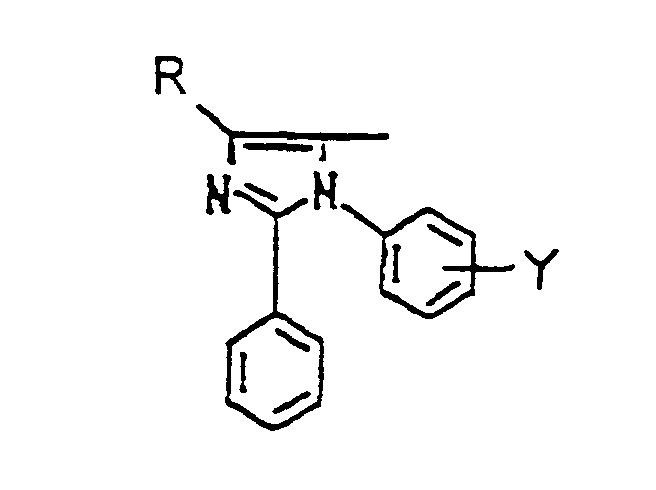
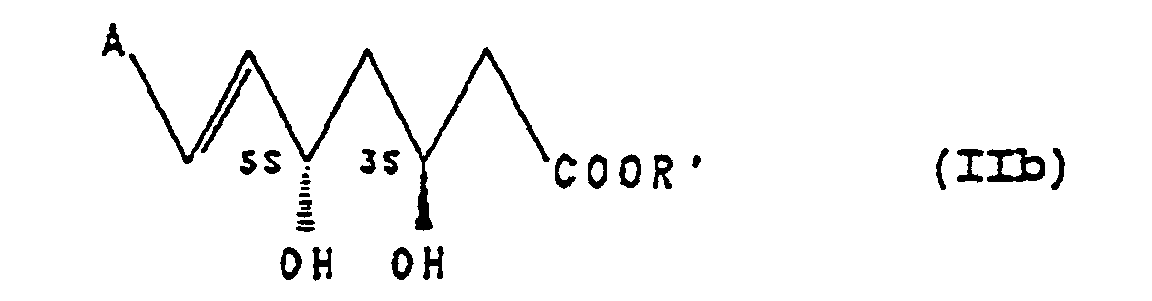
- the present invention provides the use of a compound of formula I in which R' is hydrogen, a physiologically acceptable cation or cation complex or the residue of a physiologically acceptable ester group and A is either
- the present invention makes use of modulators comprising biologically-active mevalonic acid derivatives defined by a specified steric configuration which promote autoregulation of abnormal cell differentiative function to restore the genetically sufficient (genetically non-defective) cell to normal differentiative and proliferative behavior, and which include diversification of cell differentiative function within the genetic potential of the cell.
- the modulator compounds are useful for normalizing pathological cell function of genetically-sufficient cells to restore the cell to normal behavior, particularly normal proliferative and immunological function.
- the modulators appear to obtain their effect of differentiation by modulating expression of the cell differentiative phenotype; inter alia, the modulators appear to induce expression of unexpressed genes to significantly diversify cell function, or to induce significant increase in an existing cell function.
- the modulators further counteract abnormal proliferative or differentiative cell function in genetically-sufficient cells by stimulating intracellular biochemical controls to normalize cell behavior.
- the modulators used in the invention produce their results in very low concentrations and are characterized by a low molecular weight, generic intervention properties, high specificity, and controllable end-point response.
- the compounds are non-toxic in the amounts employed in the process of the invention. It is theorized that the modulators simulate or comprise mechanisms controlling cell differentiative behavior and/or integration of cell proliferation and differentiation activity on a primitive level, thus accounting for the applicability to a broad range of processes.
- the compounds are clinically useful, for example, in the treatment of pathological cell function, particularly in therapeutically effective amounts as cytostatic agents for inhibiting growth of tumor cells and/or inhibiting tumor metastasis.
- the compounds are broadly capable of inhibiting increases in tumor burden in a host, and/or are also capable of reducing pre-existing tumor burden.
- Therapeutically effective amounts of the compounds are further particularly clinically immunologically useful in treatment of immune diseases or disorders, such as acquired immune deficiency syndrome (AIDS) and autoimmune disorders such as rheumatoid arthritis, lupus erythematosus, hypogammaglobulinemia, and juvenile diabetes.
- AIDS acquired immune deficiency syndrome
- autoimmune disorders such as rheumatoid arthritis, lupus erythematosus, hypogammaglobulinemia, and juvenile diabetes.
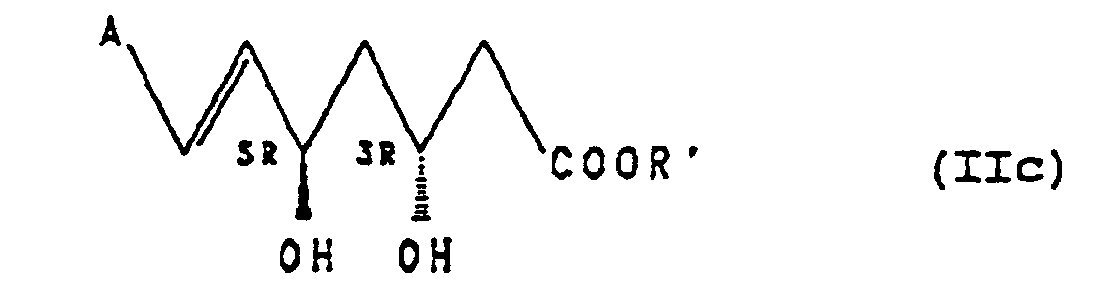
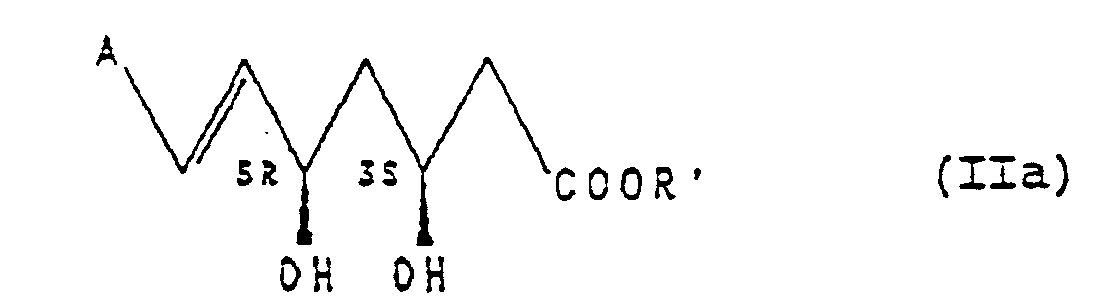
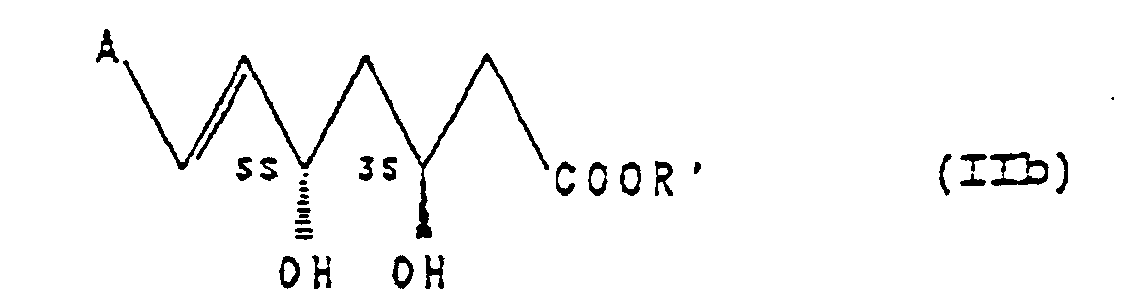
- Compounds used in this invention are compounds of formula I in which R' is hydrogen, a physiologically acceptable cation or cation complex or the residue of a physiologically acceptable ester group and A is an imidazolyl or indolyl group as defined above, as an enantiomer of formula IIa, IIb or IIc or a racemic mixture containing at least one of said enantiomers.
- physiologically-acceptable modifying the definitions of the group R' refers to groups which are nontoxic at the accepted dosage levels and which do not substantially decrease the cytostatic activity of the compounds.
- physiologically-acceptable further refers to groups which are hydrolyzable under physiological conditions to yield the corresponding biologically-active carboxyl anion and a substantially nontoxic by-product.
- the substituent R' is free from centers of asymmetry. It is believed the substituent A functions to bind the compounds to specific hydrophobic sites in proteins essential for cell differentiation or regulation and does not per se contribute to the active properties of the compounds.
- Suitable radicals R' in the Formula I include the following: a monovalent cation or cationic complex such as sodium, potassium or ammonium; or a di- or trivalent cation or cationic complex such as magnesium or calcium. or an esterifying group such as benzyl; or branched or unbranched C 1-4 -alkyl such as C 1-3 -alkyl, especially methyl or ethyl.
- A is a substituted imidazolyl or indolyl group.
- Compounds of the Formula I are capable of modulating cell differentiation activity as described above.
- Particular compounds having modulating activity include compounds having cytostatic activity against tumor-transformed cells which are effective in therapeutic dosages according to the invention to reduce tumor burden in vivo by inhibiting primary or secondary tumor cell growth, or tumor metastasis, or both.
- a broad spectrum of tumors are contemplated as susceptible to treatment according to the invention including both soft tumors such as leukemias and lymphomas; and solid tumors such as melanomas; ovarian tumors; cervical tumors; breast tumors; lung tumors (small cell and non-small cell); colon and stomach tumors; hepatocellular tumors; pancreas, midgut bladder, and prostate tumors; brain tumors; myelomas, and larynx tumors.
- immunologically-active compounds within the scope of Formula I comprise those compounds which enhance host immune system function by inducing either humoral or cellular based immunity.
- compounds which enhance the cellular immune system in particular the immune response of natural killer (NK) cells, which are generally currently recognized as a primary line of defense against endogenous tumor-transformed cells, particularly solid tumor cells.
- NK natural killer
- Example III2 A convenient in vivo test for establishing positive cellular immunological activity is set forth in Example III2, wherein it is demonstrated that compounds within the scope of Formula I which have a stimulatory effect on the cellular immune system also have a particularly effective cytostatic effect according to the invention against tumor-transformed cells.
- Immunologically-active compounds within the scope of the invention also include compounds exhibiting immunological enhancement of the humoral immune system.
- Preferred compounds of the Formula I for anti-tumor applications comprise immunologically-active compounds capable of increasing in vivo production of immunoglobulin fractions, especially IgG, containing antibodies specific to antigenic determinants borne by host tumor cells. Convenient in vitro and in vivo assays for establishing humoral immunoactivity are described in the Examples.
- Preferred compounds according to the invention as cytostatic agents are those exhibiting capacity for boosting either cellular or humoral immune response to established tumors, or both.
- HMG-CoA reductase inhibitors While a number of the compounds of the Formula I are known HMG-CoA reductase inhibitors, there is no apparent correlation between HMG-CoA reductase inhibitory activity and promotion of differentiation activity according to the invention.
- compounds within the scope of Formula I having high activity as HMG-CoA reductase inhibitors are not necessarily effective inducers of differentiation according to the invention; conversely, compounds exhibiting little or no HMG-CoA reductase inhibitory activity may be excellent inducers of cellular differentiation.
- the invention is predicated in part on the discovery that compounds exhibiting even little or no significant HMG-CoA reductase inhibitory activity, as evaluated, for example, by the in vitro test described in J. Biol. Chem.
- useful differentiating compounds particularly cytostatic agents and immunomodulators according to the invention if, in addition, these compounds further enhance immune system response, for example, to tumor-specific antigens, or to viruses or virus-transformed cells.
- useful guidelines for selecting compounds having optimal differentiation-promoting activity according to the invention broadly comprise selecting compounds of the Formula I having the specified stereochemical configuration and an in vitro immunological activity as set forth in the in vitro assay of Example II, of at least about 3-fold.
- the cytostatic modulators of the invention function at least in part to normalize cell-surface membrane characteristics and restore normal cellular mechanisms controlling cell growth.
- the modulators of the invention employed as cytostatic agents tend to reestablish normal cell-surface oligosaccharide display associated with contact inhibition mechanisms which restrain growth of normal (non-transformed) cells.
- An elaboration of the correlation of high-affinity lectin binding sites with normal cell growth is provided in Int. Rev. Cytol 112 :67-96 (1985), incorporated herein by reference; the compounds of the present invention may modify tumor cell-surface oligosaccharides to restore high-affinity sites and normal growth control mechanisms in tumor-transformed cells. This concept is in part based on the observation (see e.g., Example V) that cells of tumors treated according to the invention evidence an increase of the generation time and signs of normalized contact inhibition.
- each compound of the Formula I each contain two asymmetric carbon atoms, comprising the 3 and 5 carbon atoms of the mevalonate derivatives; when no additional asymmetric carbons are present in the molecule, each compound of the Formula I thus encompasses four stereoisomers (enantiomers) generally designated as R,R; R,S; S,R; and S,S enantiomers.
- R,R; R,S; S,R; and S,S enantiomers Two of the four mevalonate derivative enantiomers have the erythro (syn) configuration and the other two have the threo (anti) configuration.
- the conventions employed to characterize the enantiomers useful in the present invention and their racemic mixtures are those commonly used in the art.
- certain of the enantiomers within the scope of Formula I which do not have the specified steric configuration are substantially inactive in the process of the present invention, and the invention is directed to the use of differentiatively-active enantiomers. Separation of mixtures of the enantiomers to remove inactive species is accordingly recommended; this is readily accomplished by conventional procedures, as described, for example, in United States Patent 4,613,610.
- the desired differentiatively-active enantiomers are synthesized by processes that yield only or substantially only the desired enantiomers. Such processes are well known in the art.
- the presence of contaminating inactive species in therapeutic compositions for use according to the invention is not generally detrimental, with the caveat that the presence of any inactive compounds must be considered in calculating therapeutic dosages, and the use of immunosuppressive enantiomers is not recommended. Accordingly, the invention also includes racemic mixtures of each of the active enantiomers of the invention.
- Biologically-active enantiomers of compounds of the Formula I useful in the present invention comprise the 3R,5R; 3S,5S; and 3S,5R enantiomers and the corresponding 3R,5R-3S,5S and 3R,5S-3S,5R racemates of the mevalonic acid, ester, or salt moiety.
- compounds useful in the process of the present invention broadly comprise biologically-active enantiomers of compounds according to the Formula I, including mixtures thereof.
- the differentiators of the invention more particularly comprise compounds of the Formula I, including enantiomers thereof and their corresponding racemates, with the proviso that the 3R, 5S (mevalonate) enantiomer is not included.
- the 3R,5S enantiomer excluded by this proviso is substantially inactive in the therapeutic uses of the invention; moreover, it appears that these compounds may be characterized by undesirable immunosuppressive activity.
- Enantiomers of particular note in this latter category include compactin and lovastatin (mevinolin), as set forth in Example II and Table I (no immune enhancement).
- Optimal differentiator activity of compounds of the Formula I, according to the invention thus appears to be dependent upon the precise stereochemistry of the 3,5 carbon atoms of the mevalonate moiety and appears to be evidenced by immunological activity, as defined supra . It is thus contemplated that immunological activity, particularly stimulation of IgG antibody production, is predictive of differentiator activity, and particularly, cytostatic activity, of compounds of the Formula I having the specified stereochemistry at the 3,5 carbon atoms.
- Useful compounds according to the Formula I are the differentiatively-active enantiomers following:
- A is, for example:
- Biologically-active compounds used in the invention particularly comprise enantiomers of the Formulas IIa-IIc wherein A is and racemic mixtures thereof.
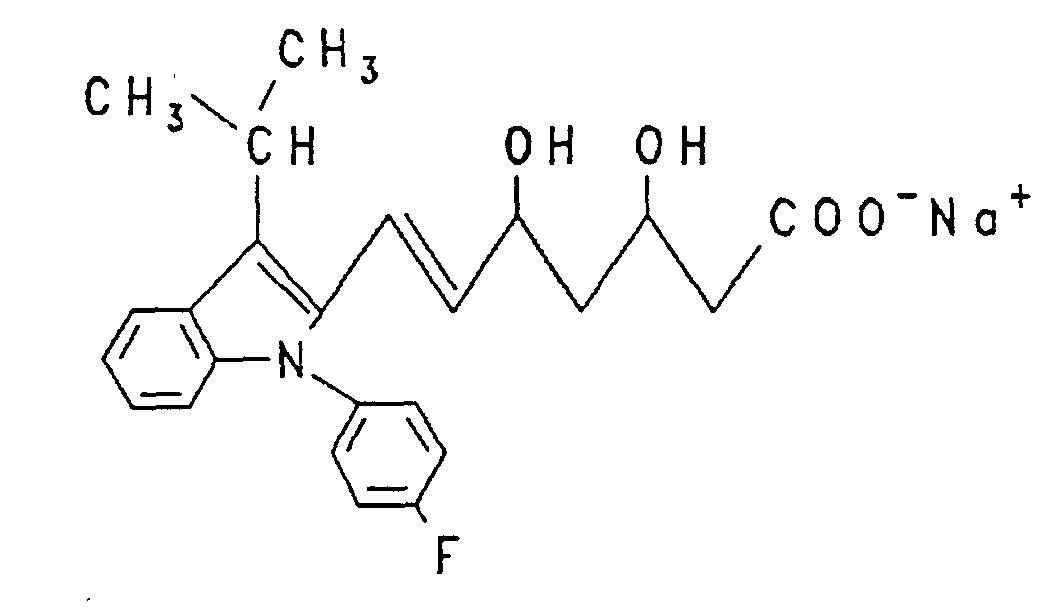
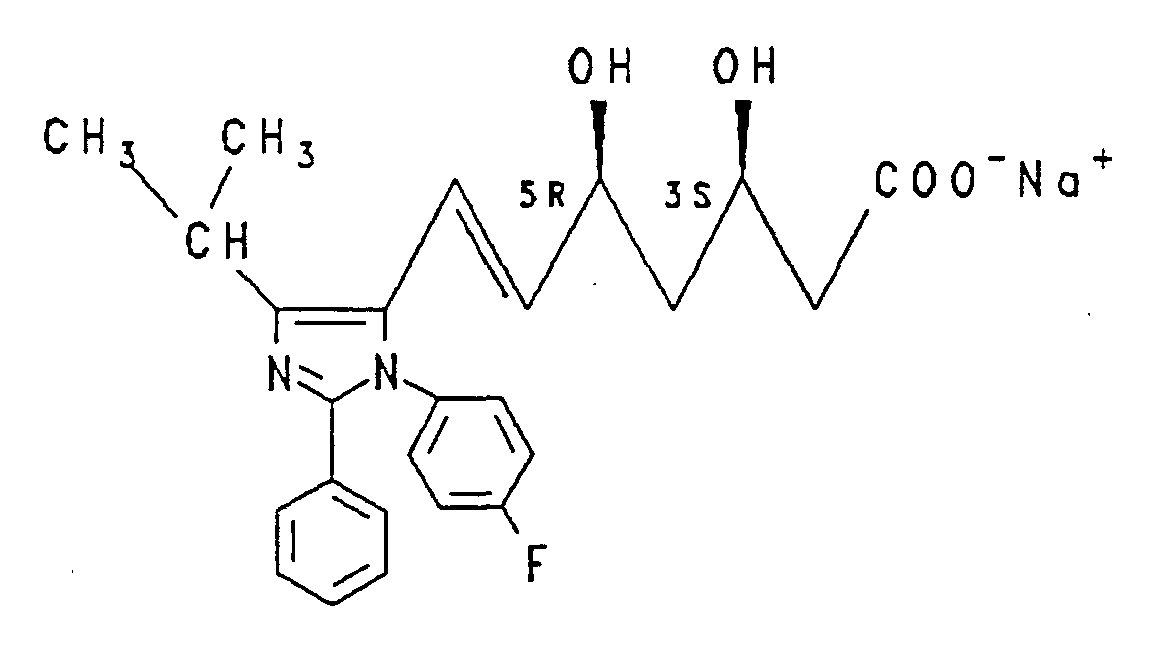
- Preferred compounds include compounds IIa', IIc' and TF004.
- cells which exhibit incompetent differentiative activity are exposed either in vivo or in vitro to a mevalonate modulator as described herein to improve cell differentiative activity, especially to rectify abnormal differentiative activity or to diversify cell differentiative activity.
- differentiated activity refers to substantially all differentiative activities of the normal mature cell including bioproduction of cell proteins, carbohydrate and fats such as cholesterol and hormones, enzymes, sugars; immunoproducts such as globulins and antibodies; growth regulation functions which maintain or impose normal growth patterns; and cell structure regulation functions which provide cell structures characteristic of normal cell differentiative function, such as cell membrane composition, e.g., oligo-polysaccharide structure, or cytoplasmic composition.
- the process of the invention provides a method for the autoregulation of cellular functions comprising virtually all functions characteristic of the mature individuated cell; i.e., those functions not peculiar to early progenitor cells having a purely proliferative capability, and further provides a method for increasing biologically adequate cell differentiative activity by inducing expression of unexpressed cell differentiative capacity, for example, to diversify expression of differentiative activity, or to induce differentiative activity in immature, substantially non-individuated cells, or in abnormally differentiated cells, e.g., transformed or aberrant cells.
- autoregulation refers to the utility of the modulators in restoring cellular biochemical balance to cells exhibiting abnormal differentiative activity owing to known or unknown factors; such as toxic substances introduced into the organism from the environment; biochemical imbalance of the organism caused by metabolic disturbances, diseases, or disorders; or injury to the cell, organ, or organism.
- autoregulation further includes the utility of the modulators in the rectification of cell activity heretofore regarded as "normal”, such as arresting senescence of cells both in vivo and in vitro, and diversification of cell function with respect to existing cell function within accepted ranges of normal cell function.
- the differentiators of the invention accordingly function to stimulate phenotypic cell expression, including rectification of abnormal cell production, reassertion of normal cell function, correction of cellular incompetence, restoration of normal growth patterns, modulation of aberrant cell structures, reestablishment of normal cell growth patterns, and, further, diversification and/or expansion of existing cell function within the genetic capabilities of the cell.
- abnormal refers to cell differentiative activity as described above which is outside of accepted ranges; thus, “abnormal differentiative activity” refers to pathological cell differentiative activity manifested in cell morphology and/or activity above or below accepted standards, and which in vivo tends to result in malfunction of the organism resulting in distress, debilitation, and/or death of the organism.
- Exposure of cells to the differentiators according to the invention invokes cell mechanisms which promote normal differentiative activity or which expand or diversify cell differentiative activity.
- the differentiators are employed to improve abnormal differentiative activity, at least a 10% improvement in such function is contemplated; i.e., at least a 10%, preferably 20%, improvement in the parameter of interest with reference to the conventional measurement of such parameter, is contemplated.
- bioproduction of a cell is abnormally low or high, at least a 10% increase or decrease by mass, respectively, of the product of interest over a comparable time period is contemplated.
- the same biomass will produce at least 11 ng IgG over the same time period under the same culture conditions on exposure to the modulators of the invention.
- the growth rate of a biomass of malignant cells exhibiting an abnormally high growth rate is decreased by at least about 10% on exposure to the modulators of the invention.
- rectification of abnormal cell differentiative activity of at least about 10% is established by comparing cell or organ activity before and after exposure to the modulators of the invention according to standard measuring techniques, such as blood determinations for the product of interest, NMR or CAT scans for evaluation of cellular activity, weight assessments for determination of cell growth, and a variety of other biotechnical diagnostic procedures well-known in the art.
- a similar, about 10%, preferably about 20% increase, in cell differentiative activity, based on conventional measurements of the parameter of interest is contemplated.
- exposure of stimulated murine splenocytes to the differentiators promotes the production of antibody, with at least a 10% increase in antibody diversity with respect to affinity, avidity, and/or specificity of the antibody pool produced.
- modification of cell structure at least about a 10% change in cell structure, particularly cell component biochemical characteristics, chemical characteristics, or stereochemical arrangement of cell components is contemplated.
- a change in the oligosaccharide content of cell-surface membranes is contemplated.
- oligosaccharide cell-surface membrane characteristics have been correlated with cell growth patterns, and a modulation of abnormal cell-surface membrane oligosaccharide content with the differentiators of the invention to provide at least about 10% reduction in abnormally high cell reproduction rates, or at least about a 10% increase in abnormally low cell reproduction rates, as observed in senescent cells, for example, is within the scope of the invention.
- improvements in cell differentiative activity are measurable in vitro by either a change in the rate of lectin binding, reflecting a change in oligosaccharide cell-surface membrane characteristics, or by a direct measurement of cell reproduction activity, typically determined by change in generation time (Tg) as described, e.g., in the Examples.
- Tg change in generation time
- Dosage of compounds of the Formula I according to the invention appear to be critical, i.e., dosages in excess of the therapeutic dosage range are typically ineffective to increase response and may actually, for example, stimulate tumor growth, while dosages below the range are substantially ineffective, for example, in inhibiting tumor burden.
- the differentiators of the invention are generally effective in dosage units in mammals of from about 100 ng/kg to about 100 ⁇ g/kg, administered, for example, from about once a day to once a week. The differentiators have no observed toxic side effects at therapeutic dosage levels. Any conventional route of administration is employed, such as i.v., i.p., or oral administration, employing conventional pharmaceutically-acceptable carriers such as physiological saline, and optional adjuvants.
- NMRI nuclear magnetic resonance imaging
- Initial positive tumor response (such as tumor deformity or presence of tumor-associated edema) is contemplated as observable as early as about two weeks from the start of the therapeutic regimen. After substantial tumor response has been achieved, dosage frequency may be decreased to, for example, a weekly basis, until the tumor has been conquered.
- a therapeutic dosage of cytostatic compound is begun on a human tumor host on Monday of week 1.
- 100 ng/kg in physiological saline is administered i.v., or i.p. Monday, Wednesday, and Friday of week 1; this procedure is repeated on continuous weeks 2, 3, 4, and following weeks with NMR monitoring on a weekly basis until the desired reduction in tumor burden is achieved. While the regimen may be continued thereafter, experimental evidence indicates that tumor rebound after treatment is not significantly incident to the therapeutic process of the invention.
- the compounds employed are compounds of the formulas IIa-IIc, wherein A is herein designated as IIa', IIb', and IIc'.
- Comparison compound IId' is wherein A and R' are the same as in compounds IIa'-IIc'.
- Compound IIe' is a racemic mixture of compounds IIb' and IIc'.
- Compound TF-004 is:
- Compound TF-002 is:
- HPBL Human Peripheral Blood Leukocytes
- Human peripheral blood leukocytes were cultured in a standard tissue culture medium. Aliquots of these cultured cells (1,000,000 cells/ml medium) were cultured for 6 hours, and the specified amount of Formula II compound was added; the cells were then cultured for an additional 90 hours. Sheep red blood cells (SRBC) conditioned with class-specific (IgG) goat anti-human antiserum (1:400) for 2 hours; then guinea pig complement (2%) for 2 hours were conjugated to Protein A as described in detail in Radio-imaging and Radioimmunotherapy , Eds. S.W. Burchiel and B.A. Rhodes, Elsevier Science Publishing, New York, 1983, pp. 125-127, incorporated herein by reference.
- SRBC Sheep red blood cells
- IgG class-specific goat anti-human antiserum
- each of the cytostatic compounds of the invention stimulated IgG production.
- Compound IIe' suppressed IgG production at a concentration of 1.2 ⁇ M, and exhibited substantially no significant enhancement (less than 350%) at lower concentrations (100 pM).
- compounds IIa' and IIb' each stimulated IgG production 1700% at 200 pM concentration, and compound IIc' stimulated IgG production 6200% at 100 pM.
- IC 50 HMG-CoA reductase activity
- the results demonstrate an in vivo temporal and quantitative correlation between enunciation and degree of tumor-specific immunoglobulin response and the progression and ultimate regression of the tumor.
- the results are particularly striking as the experimental tumor (brain glioma) is generally considered to enjoy a privileged position beyond the blood/brain barrier, substantially beyond the reach of the humoral immune system.
- Experimental protocols are described in detail below (FIGS. 7-9, Example VII).
- CML chromium-release cell-mediated lympholysis
- Canine glioma cells were cultured as below with varying concentrations of compound lie' and compactin (United States Patent 3,983,140) for different times of exposure. Cytotoxicity was determined as a function of simple survival (T 50% ), adherence (ADH 50% ) and thymidine incorporation (I 50% ) of the cells. Results are summarized in Tables IV and V, below: CANINE GLIOMA CELLS: THE 50% TOXICITY AND INHIBITION OF ADHERENCE LEVELS Drug Time of Exposure (h) T 50% (nM) ADH 50% (nM) IIe' 24 750 75 72 800 70 96 900 75 Compactin 24 500 50 72 200 75 96 350 75
- compound IIe' was cytotoxic to tumor cells in the range of 700 to 900 nM.
- Compound lie' is a potent inhibitor of HMG-CoA reductase, having an IC 50 of 3 nM and ED 50 of 25 ⁇ g/kg (Example I).
- Canine glioma cells were cultured as described in Example IV and exposed to either a 10 nM concentration of compound IIe' and DMSO (dimethylsulfoxide), or DMSO alone as control. The cells were harvested every 72 hours after the controls had reached 85% confluency. Generation time (Tg) was determined as the number of hours required for the cell population to double. Results are summarized in Table VI.
- Canine glioma cells were grown under conditions to promote exponential growth characteristics; 2x10 5 cells in a T-25 flask. The cells were harvested every 72 hours after the controls had reached approximately 85% confluency. The drug was added at the initiation of culture in DMSO, the control cultures had just DMSO. The drug concentration was adjusted with DMSO so that the final concentration of DMSO was always 0.5%.
- Example VA The procedure of Example VA, above, was repeated except a human colon carcinoma cell line (LS-174) was used instead of the canine glioma cell line. Results are summarized in Table VII below.
- LS-174 human colon carcinoma cell line
- Results are summarized in Table VII below.
- EFFECT OF COMPOUND IIe' ON LS-174 GENERATION TIMES Conditions Exposure Time (h) Tg (h) % Change 10 Nm (Experimental) 72 84.9 320 0 (Control) 72 26.5 10 nM 72x2 106.2 400 10 nM 72x3 110.3 416 10 nM 72x4 109.6 414
- LS-174 cells human colon carcinoma
- the cells were harvested every 72 hours after the controls had reached approximately 85% confluency.
- the drug was added at the initiation of culture in DMSO, the control cultures had just DMSO.
- the drug concentration was adjusted with DMSO so that the final concentration of DMSO was always 0.5%.
- Rats Fifty four Nude Rats (Harlan) were injected in the right flank with 5 x 10 6 canine glioma cells. Animals at the time of injection were between 52 and 63 days old and weighed approximately 200 g. The rats were divided into 7 groups, each group having a total number of 7 rats except for the control group, which totalled 12 animals. Compound IIc' was administered to the experimental animals at one of the following dose for each experimental group: 100 ⁇ g/kg, 10 ⁇ g/kg, 1 ⁇ g/kg, 0.1 ⁇ /kg, 0.01 ⁇ g/kg and 0.001 ⁇ g/kg (phosphate buffer saline, M, W, F, I.P.).
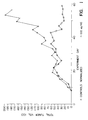
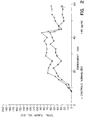
- the control animals were injected with PBS (phosphate buffered saline) only. The volume of each injection was 100 ⁇ l. The injections of drug were simultaneously begun with injection of tumor cells. The animals were injected with the appropriate dosage of drug (1 ng/kg to 100 ng/kg) by I.P. injection and tumor length, width and depth were measured using caliphers each Monday, Wednesday and Friday (M, W, F) morning for approximately 9 weeks. Each point on the graphs represents the total of all rats for each group. Where the points show a break (''), regression did not occur and the rats were sacrificed. The data were normalized for the greater number of control animals by multiplying the total tumor volume for the control animals by 7/12.
- PBS phosphate buffered saline
- Results are summarized in FIGS. 1-6.
- the Harlan nude rat model employed has partially compromised immunological competency.
- the experimental compound IIc' is a potent immune stimulant (see Examples, above).
- the most effective dosage for inhibition of canine glioma cells in this model was 100 ng/kg ( Figure 3). Little or no cytostatic activity was exhibited at the higher doses employed (10 and 100 ⁇ g/kg) or at the lowest dose of 1 ng/kg.
- the optimal dosage for cytostatic activity in vivo closely correlates with the optimal dosage for immune stimulation in vitro (example IIA, HPBL assay).
- the optimal dose in vivo 100 ng/kg, equivalent to 250 pM with uniform distribution compares to the optimal dose in vitro, 100 pM.
- Canine glioma was implanted surgically into the brains of four outbred dogs (2X10 6 cells). This procedure normally causes death by tumor growth in 14-28 days.
- Tumor progress was assessed at weekly intervals by NMR, employing GdDPTA as imaging agent. This method illuminates vascularization at the surface of the tumor, and provides images which correlate well with neuropathological observations. The compounds were found to have a direct, early effect on the tumor, evidenced in this NMR procedure as a substantial edema in the vicinity of the tumor.
- the modulators described herein influence a sufficiently primitive biochemical control process which affects the regulation of cell differentiation at a sufficiently basic level, to have a substantially universal function as a modulator of cell activity to promote normal cell differentiative function over a broad spectrum of cells.
- the modulators of the invention function to rectify abnormal production of a variety of protein, glycoprotein, carbohydrate and fat cell products, as well as enzymes; hormones, such as somatostatin, MSH (melanocyte-stimulating hormone), and pituitary hormones; immunoproducts such as lymphokines, globulins and antigens; cholesterol; to reassert normal cell function, such as the normal function of liver cells; to correct cell deficiencies such as immunodeficiencies, glandular deficiencies such as hypothalmia, and metabolic deficiencies; to restore normal growth patterns to cells exhibiting decelerated growth rates such as senescent cells or accelerated growth rates such as malignant cells; to modulate aberrant cell structures to approach those of normal cells; to stimulate progenitor and/or precursor cells into full production of mature cells; and, further, to diversify and/or expand existing cell function within the genetic capabilities of the cell, such as to increase the immunoresponse of splenocytes to antigenic stimulus with respect to both
- hormones such as
- the differentiators exert biochemical control over cell differentiation processes, intervening at a very early point in cellular differentiative pathways to promote cell autoregulation of differentiative function. It is accordingly believed that the modulators described herein comprise molecules which, with respect to both biologically-active functional moieties and with respect to the presentation of the biologically-active functional groups to the cell (i.e., the stereochemistry of the molecule), function to counteract cellular imbalances resulting in abnormal differentiative function over a broad spectrum of cells and differentiative activity.
- the modulators of the present invention are effective in restoring normal differentiative function to chemically imbalanced cells of plants, animals (especially mammals including humans), microorganisms, viruses, and insects. Further, the modulators of the invention function to increase diversity of differentiative function within the genetic potential of the cell.
- the compounds described in the present invention induce or enhance cellular differentiation, i.e., they maximize and/or normalize cellular phenotypic expression. Therefore, they will be of therapeutic benefit in diseases characterized by either (1) diminished cellular function or (2) aberrant cellular function.
- the first category include acquired immune deficiency syndrome (AIDS) and hypogammaglobulinemia.
- AIDS acquired immune deficiency syndrome
- hypogammaglobulinemia Another example of the first category is the treatment of infectious diseases caused by pathogens of bacterial, fungal, rickettsial, viral or parasitic origin.
- the compounds of the invention maximize the function of immunocytes by maximizing the phenotypic expression of these cells. Therefore, immunological recognition and elimination of these pathogens from the body are facilitated by treatment using the compounds described in the invention.
- hepatocytes liver cells
- Diseases of the second category include cancer, as well as autoimmune diseases, such as diabetes, multiple sclerosis, lupus erythematosus and rheumatoid arthritis.
Landscapes
- Health & Medical Sciences (AREA)
- Pharmacology & Pharmacy (AREA)
- Veterinary Medicine (AREA)
- Public Health (AREA)
- General Health & Medical Sciences (AREA)
- Chemical & Material Sciences (AREA)
- Animal Behavior & Ethology (AREA)
- Medicinal Chemistry (AREA)
- Life Sciences & Earth Sciences (AREA)
- Epidemiology (AREA)
- General Chemical & Material Sciences (AREA)
- Nuclear Medicine, Radiotherapy & Molecular Imaging (AREA)
- Chemical Kinetics & Catalysis (AREA)
- Immunology (AREA)
- Bioinformatics & Cheminformatics (AREA)
- Engineering & Computer Science (AREA)
- Organic Chemistry (AREA)
- Transplantation (AREA)
- Pharmaceuticals Containing Other Organic And Inorganic Compounds (AREA)
- Preparation Of Compounds By Using Micro-Organisms (AREA)
- Plural Heterocyclic Compounds (AREA)
- Nitrogen Condensed Heterocyclic Rings (AREA)
- Pyrrole Compounds (AREA)
- Indole Compounds (AREA)
- Acyclic And Carbocyclic Compounds In Medicinal Compositions (AREA)
- Organic Low-Molecular-Weight Compounds And Preparation Thereof (AREA)
- Quinoline Compounds (AREA)
- Pyrane Compounds (AREA)
Abstract
Description

and Y is F, Cl or Br; or

as an enantiomer of formula IIa, IIb or IIc


as an enantiomer of formula IIa, IIb or IIc

a monovalent cation or cationic complex such as sodium, potassium or ammonium; or a di- or trivalent cation or cationic complex such as magnesium or calcium.
or an esterifying group such as benzyl; or branched or unbranched C1-4-alkyl such as C1-3-alkyl, especially methyl or ethyl.


| Compound | Inhibitory Concentration | Stimulation of IgG Production Concentration/Percent | IC250 | Proliferation |
| IIa' | none found | 200 pM/1700 | 3.150 | 0.98 |
| IIb' | none found | 200 pM/1700 | 1.350 | 1.0 |
| IIc' | none found | 100 pM/6200 | 0.022 | 1.2 |
| IId' (comparison) | 1.2 µM | 100 nM/ 320 | 0.002 | 0.66 |
| IIe' | 1.2 µM | 1&100 nM/1990 | 0.003 | 0.85 |
| PRODUCTION OF SPECIFIC ANTI-CG IgG ANTIBODIES IN A DOG TREATED WITH COMPOUND IIC' | ||
| Treatment | CG Implantation | IC-50% Titer (Anti-CG) |
| No | No | Baseline Values |
| Yes (2 months) | No | 0.0156 |
| Yes (2 months) | Yes (10-15 days) | 0.001 |
| Yes (2+ months) | Tumor Regressed | Baseline Values |
| CELLULAR CYTOTOXICITY VS. CG TUMOR IN A DOG TREATED WITH COMPOUND IIc' | |
| Date of Assay | Y="M"X + B (Linear Regression of Toxicity) |
| December 14, 1987 | Y = 0.05 X + B |
| February 9, 1988 | Y = 0.35 X + B |
| February 17, 1988 | Y = 0.75 X + B |
| March 31, 1988 | Y = 0.05 X + B |
| CANINE GLIOMA CELLS: THE 50% TOXICITY AND INHIBITION OF ADHERENCE LEVELS | |||
| Drug | Time of Exposure (h) | | ADH50% (nM) |
| IIe' | 24 | 750 | 75 |
| 72 | 800 | 70 | |
| 96 | 900 | 75 | |
| | 24 | 500 | 50 |
| 72 | 200 | 75 | |
| 96 | 350 | 75 |
| CANINE GLIOMA CELLS: THE 50% INHIBITION OF THYMIDINE INCORPORATION | ||
| Drug | Time of Exposure (h) | I50% (nM) |
| IIe' | 24 | 50 |
| 48 | 75 | |
| 72 | 80 | |
| 96 | 50 | |
| | 24 | 100 |
| 48 | 75 | |
| 72 | 30 | |
| 96 | 50 |
| THE EFFECT OF COMPOUND IIe' ON CANINE GLIOMA GENERATION TIMES | |||
| Conditions | Exposure Time (h) | Tg (h) | |
| 10 Nm (Experimental) | 72 | 25.3 | 136 |
| 0 (Control) | 72 | 18.6 + 4.2 | |
| 10 nM | 72x2 | 24.0 | 129 |
| 10 nM | 72x3 | 33.4 | 180 |
| 10 nM | 72x4 | 28.9 | 155 |
| THE EFFECT OF COMPOUND IIe' ON LS-174 GENERATION TIMES | |||
| Conditions | Exposure Time (h) | Tg (h) | |
| 10 Nm (Experimental) | 72 | 84.9 | 320 |
| 0 (Control) | 72 | 26.5 | |
| 10 nM | 72x2 | 106.2 | 400 |
| 10 nM | 72x3 | 110.3 | 416 |
| 10 nM | 72x4 | 109.6 | 414 |
Claims (10)
- Use of a compound of formula Iin which R' is hydrogen, a physiologically acceptable cation or cation complex or the residue of a physiologically acceptable ester group

and A is either(a)in which R is a C1-6 alkyl group not containing an asymmetric atom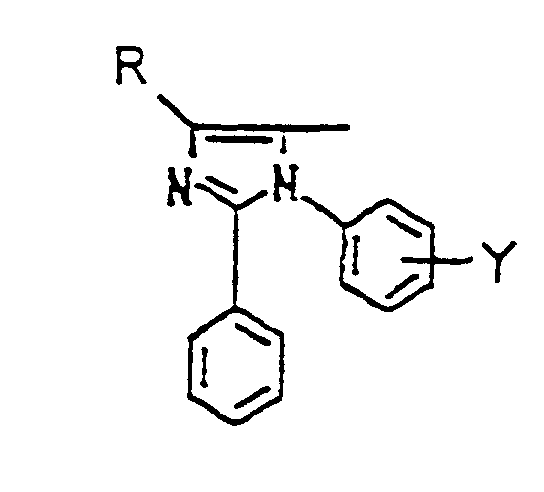
and Y is F, Cl or Br; or(b)in which R is a primary or secondary C1-6 alkyl group not containing an asymmetric atom and Y is F or Cl;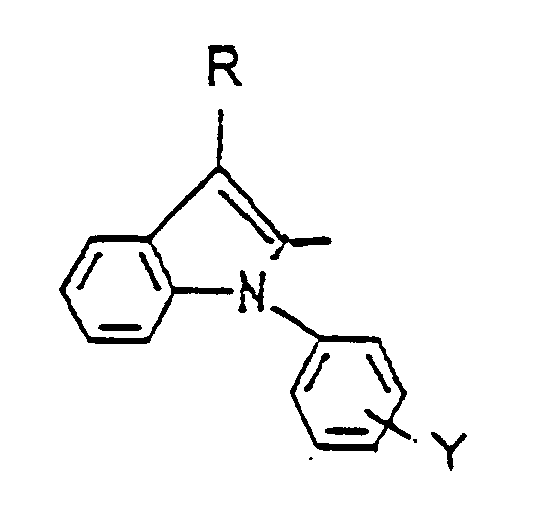
- Use according to claim 1 in which R' is sodium, potassium or ammonium.
- Use according to claim 1 in which Y is F.
- Use according to claim 1 in which R is (CH3)2CH-.
- Use according to claim 1 in which A is

- Use according to claim 1 in which A is

- Use according to claim 1 in which the compound of formula I is

- Use according to claim 1 in which the compound of formula I is

- Use according to any one of claims 1 to 8 for stimulating IgG antibody production.
- Use according to any one of claims 1 to 8 for stimulating natural killer cell mediated immunity.
Priority Applications (1)
| Application Number | Priority Date | Filing Date | Title |
|---|---|---|---|
| EP01204175A EP1188439A3 (en) | 1991-05-01 | 1992-05-01 | Cell differentiation induction with mevalonate and mevalonolactone derivatives |
Applications Claiming Priority (5)
| Application Number | Priority Date | Filing Date | Title |
|---|---|---|---|
| US69428491A | 1991-05-01 | 1991-05-01 | |
| US78621591A | 1991-10-31 | 1991-10-31 | |
| PCT/US1992/003678 WO1992019105A1 (en) | 1991-05-01 | 1992-05-01 | Cell differentiation induction with mevalonate and mevalonolactone derivatives |
| US694284 | 1996-08-08 | ||
| US786215 | 2007-04-11 |
Related Child Applications (2)
| Application Number | Title | Priority Date | Filing Date |
|---|---|---|---|
| EP01204175A Division EP1188439A3 (en) | 1991-05-01 | 1992-05-01 | Cell differentiation induction with mevalonate and mevalonolactone derivatives |
| EP01204175.2 Division-Into | 2001-10-31 |
Publications (3)
| Publication Number | Publication Date |
|---|---|
| EP0675715A4 EP0675715A4 (en) | 1995-06-12 |
| EP0675715A1 EP0675715A1 (en) | 1995-10-11 |
| EP0675715B1 true EP0675715B1 (en) | 2002-08-21 |
Family
ID=27105343
Family Applications (2)
| Application Number | Title | Priority Date | Filing Date |
|---|---|---|---|
| EP92912191A Expired - Lifetime EP0675715B1 (en) | 1991-05-01 | 1992-05-01 | Cell differentiation induction with mevalonate and mevalonolactone derivatives |
| EP01204175A Withdrawn EP1188439A3 (en) | 1991-05-01 | 1992-05-01 | Cell differentiation induction with mevalonate and mevalonolactone derivatives |
Family Applications After (1)
| Application Number | Title | Priority Date | Filing Date |
|---|---|---|---|
| EP01204175A Withdrawn EP1188439A3 (en) | 1991-05-01 | 1992-05-01 | Cell differentiation induction with mevalonate and mevalonolactone derivatives |
Country Status (7)
| Country | Link |
|---|---|
| US (2) | US5783594A (en) |
| EP (2) | EP0675715B1 (en) |
| JP (1) | JPH07500313A (en) |
| AT (1) | ATE222493T1 (en) |
| CA (1) | CA2109120A1 (en) |
| DE (1) | DE69232743T2 (en) |
| WO (1) | WO1992019105A1 (en) |
Families Citing this family (5)
| Publication number | Priority date | Publication date | Assignee | Title |
|---|---|---|---|---|
| EP0675715B1 (en) * | 1991-05-01 | 2002-08-21 | University Of New Mexico | Cell differentiation induction with mevalonate and mevalonolactone derivatives |
| WO2002024194A2 (en) * | 2000-09-19 | 2002-03-28 | Novimmune S.A. | Use of statins (hmg-coa reductase inhibitors) for the preparation of medicament as a novel type of immunomodulator, immunosuppressor and anti-inflammatory agent |
| US6902881B2 (en) * | 2000-10-13 | 2005-06-07 | President And Fellows Of Harvard College | Compounds and methods for regulating cell differentiation |
| US8729092B2 (en) | 2012-09-24 | 2014-05-20 | Terence J. Scallen | Rosuvastatin enantiomer compounds |
| WO2021218988A1 (en) * | 2020-04-30 | 2021-11-04 | 中国科学院上海药物研究所 | Prdx1 agonist and use thereof |
Citations (2)
| Publication number | Priority date | Publication date | Assignee | Title |
|---|---|---|---|---|
| US4739073A (en) * | 1983-11-04 | 1988-04-19 | Sandoz Pharmaceuticals Corp. | Intermediates in the synthesis of indole analogs of mevalonolactone and derivatives thereof |
| US4755606A (en) * | 1985-05-22 | 1988-07-05 | Sandoz Pharm. Corp. | Imidazolyl-3,5-di-(diphenyl-butylsilyloxy) carboxylic acid ester intermediates |
Family Cites Families (9)
| Publication number | Priority date | Publication date | Assignee | Title |
|---|---|---|---|---|
| US4613610A (en) * | 1984-06-22 | 1986-09-23 | Sandoz Pharmaceuticals Corp. | Cholesterol biosynthesis inhibiting pyrazole analogs of mevalonolactone and its derivatives |
| US4808607A (en) * | 1985-05-22 | 1989-02-28 | Sandoz Pharm. Corp. | Imidazole analogs of mevalonolactone and derivatives thereof for use in inhibiting cholesterol biosynthesis and lowering blood cholesterol level |
| US4933185A (en) * | 1986-09-24 | 1990-06-12 | Massachusetts Institute Of Technology | System for controlled release of biologically active compounds |
| US4933165A (en) * | 1989-01-18 | 1990-06-12 | Merck & Co., Inc. | Coenzyme Q10 with HMG-CoA reductase inhibitors |
| US5001148A (en) * | 1989-06-07 | 1991-03-19 | E. R. Squibb & Sons, Inc. | Mevinic acid derivatives |
| US4970221A (en) * | 1989-07-28 | 1990-11-13 | E. R. Squibb & Sons, Inc. | 3,5-dihydroxypentanoic acid derivatives useful as antihypercholesterolemic agents and method for preparing same |
| US5173487A (en) * | 1989-11-13 | 1992-12-22 | E. R. Squibb & Sons, Inc. | Mevinic acid derivatives |
| CA2052014A1 (en) * | 1990-10-19 | 1992-04-20 | Henry Y. Pan | Method for preventing diabetic complications employing a cholesterol lowering drug alone or in combination with an ace inhibitor |
| EP0675715B1 (en) * | 1991-05-01 | 2002-08-21 | University Of New Mexico | Cell differentiation induction with mevalonate and mevalonolactone derivatives |
-
1992
- 1992-05-01 EP EP92912191A patent/EP0675715B1/en not_active Expired - Lifetime
- 1992-05-01 DE DE69232743T patent/DE69232743T2/en not_active Expired - Fee Related
- 1992-05-01 JP JP4511984A patent/JPH07500313A/en active Pending
- 1992-05-01 EP EP01204175A patent/EP1188439A3/en not_active Withdrawn
- 1992-05-01 AT AT92912191T patent/ATE222493T1/en not_active IP Right Cessation
- 1992-05-01 CA CA2109120A patent/CA2109120A1/en not_active Abandoned
- 1992-05-01 WO PCT/US1992/003678 patent/WO1992019105A1/en not_active Ceased
-
1995
- 1995-05-31 US US08/456,116 patent/US5783594A/en not_active Expired - Lifetime
- 1995-06-01 US US08/456,829 patent/US5849777A/en not_active Expired - Fee Related
Patent Citations (2)
| Publication number | Priority date | Publication date | Assignee | Title |
|---|---|---|---|---|
| US4739073A (en) * | 1983-11-04 | 1988-04-19 | Sandoz Pharmaceuticals Corp. | Intermediates in the synthesis of indole analogs of mevalonolactone and derivatives thereof |
| US4755606A (en) * | 1985-05-22 | 1988-07-05 | Sandoz Pharm. Corp. | Imidazolyl-3,5-di-(diphenyl-butylsilyloxy) carboxylic acid ester intermediates |
Also Published As
| Publication number | Publication date |
|---|---|
| EP0675715A1 (en) | 1995-10-11 |
| JPH07500313A (en) | 1995-01-12 |
| DE69232743D1 (en) | 2002-09-26 |
| US5783594A (en) | 1998-07-21 |
| EP1188439A3 (en) | 2003-10-22 |
| US5849777A (en) | 1998-12-15 |
| CA2109120A1 (en) | 1992-11-12 |
| EP0675715A4 (en) | 1995-06-12 |
| DE69232743T2 (en) | 2003-05-28 |
| EP1188439A2 (en) | 2002-03-20 |
| ATE222493T1 (en) | 2002-09-15 |
| WO1992019105A1 (en) | 1992-11-12 |
Similar Documents
| Publication | Publication Date | Title |
|---|---|---|
| Seligman et al. | Lymphocyte proliferation is controlled by both iron availability and regulation of iron uptake pathways | |
| US5919464A (en) | Treatment of aberrant cellular states with biomodulators | |
| JP2009520697A (en) | Compounds having cytokine regulatory properties | |
| EP1188439A2 (en) | Cell differentiation induction with mevalonate and mevalonolactone derivatives | |
| JP3319597B2 (en) | Β-aretin useful for cell culture and therapy | |
| US6008242A (en) | Use of 1-centchroman for the manufacture of a pharmaceutical composition for the treatment of obesity | |
| US5958966A (en) | Treatment of aberrant cellular states with biomodulators | |
| US5616576A (en) | Controlling bone resorption with pyrroloquinoline quinone (PQQ) and related compounds | |
| US9296702B2 (en) | Rosuvastatin enantiomer compounds | |
| US6046241A (en) | β-alethine as anti-tumor agent | |
| US5064816A (en) | Heterocyclic phospholipids useful in treating multiple sclerosis | |
| KR101385488B1 (en) | Inhibition of osteolytic lesions by SRC kinase inhibitors | |
| US5182271A (en) | Thioether, keto-ester and alkyl phospholipids useful in treating multiple sclerosis | |
| CA2261162A1 (en) | Method for treating tumors having high ldl requirements employing mtp inhibitors | |
| CA2427301C (en) | Method for the preparation of a pharmaceutical composition, and its use | |
| EP4501331A1 (en) | Agent for inducing proliferation or differentiation of chondrocyte | |
| US6245561B1 (en) | β-alethine use in cell culture and therapy | |
| WO2025187594A1 (en) | Schwann cell differentiation promoter and/or dedifferentiation inhibitor | |
| CA2087883C (en) | Beta-alethine use in cell culture and therapy | |
| Elliott et al. | Practolol inhibits human skin fibroblast cell mat hydroxyproline accumulation | |
| JPH08217679A (en) | Cholesterol reducing agent | |
| Gessner et al. | Immunomodulatory effects of diethyldithiocarbamate | |
| MXPA97007811A (en) | A pharmaceutical composition containing n-chlorophenyl carbamates, n-chlorophenylocycbamates and derivatives of n-phosphonoglycin to inhibit the growth of cancer and viruses in mamife |
Legal Events
| Date | Code | Title | Description |
|---|---|---|---|
| A4 | Supplementary search report drawn up and despatched | ||
| AK | Designated contracting states |
Kind code of ref document: A4 Designated state(s): AT BE CH DE DK ES FR GB GR IT LI LU MC NL SE |
|
| PUAI | Public reference made under article 153(3) epc to a published international application that has entered the european phase |
Free format text: ORIGINAL CODE: 0009012 |
|
| 17P | Request for examination filed |
Effective date: 19931129 |
|
| AK | Designated contracting states |
Kind code of ref document: A1 Designated state(s): AT BE CH DE DK ES FR GB GR IT LI LU MC NL SE |
|
| 17Q | First examination report despatched |
Effective date: 19980319 |
|
| GRAG | Despatch of communication of intention to grant |
Free format text: ORIGINAL CODE: EPIDOS AGRA |
|
| GRAG | Despatch of communication of intention to grant |
Free format text: ORIGINAL CODE: EPIDOS AGRA |
|
| GRAG | Despatch of communication of intention to grant |
Free format text: ORIGINAL CODE: EPIDOS AGRA |
|
| GRAH | Despatch of communication of intention to grant a patent |
Free format text: ORIGINAL CODE: EPIDOS IGRA |
|
| GRAH | Despatch of communication of intention to grant a patent |
Free format text: ORIGINAL CODE: EPIDOS IGRA |
|
| GRAA | (expected) grant |
Free format text: ORIGINAL CODE: 0009210 |
|
| AK | Designated contracting states |
Kind code of ref document: B1 Designated state(s): AT BE CH DE DK ES FR GB GR IT LI LU MC NL SE |
|
| PG25 | Lapsed in a contracting state [announced via postgrant information from national office to epo] |
Ref country code: NL Free format text: LAPSE BECAUSE OF FAILURE TO SUBMIT A TRANSLATION OF THE DESCRIPTION OR TO PAY THE FEE WITHIN THE PRESCRIBED TIME-LIMIT Effective date: 20020821 Ref country code: LI Free format text: LAPSE BECAUSE OF FAILURE TO SUBMIT A TRANSLATION OF THE DESCRIPTION OR TO PAY THE FEE WITHIN THE PRESCRIBED TIME-LIMIT Effective date: 20020821 Ref country code: IT Free format text: LAPSE BECAUSE OF FAILURE TO SUBMIT A TRANSLATION OF THE DESCRIPTION OR TO PAY THE FEE WITHIN THE PRE;WARNING: LAPSES OF ITALIAN PATENTS WITH EFFECTIVE DATE BEFORE 2007 MAY HAVE OCCURRED AT ANY TIME BEFORE 2007. THE CORRECT EFFECTIVE DATE MAY BE DIFFERENT FROM THE ONE RECORDED.SCRIBED TIME-LIMIT Effective date: 20020821 Ref country code: GR Free format text: LAPSE BECAUSE OF FAILURE TO SUBMIT A TRANSLATION OF THE DESCRIPTION OR TO PAY THE FEE WITHIN THE PRESCRIBED TIME-LIMIT Effective date: 20020821 Ref country code: CH Free format text: LAPSE BECAUSE OF FAILURE TO SUBMIT A TRANSLATION OF THE DESCRIPTION OR TO PAY THE FEE WITHIN THE PRESCRIBED TIME-LIMIT Effective date: 20020821 Ref country code: BE Free format text: LAPSE BECAUSE OF FAILURE TO SUBMIT A TRANSLATION OF THE DESCRIPTION OR TO PAY THE FEE WITHIN THE PRESCRIBED TIME-LIMIT Effective date: 20020821 Ref country code: AT Free format text: LAPSE BECAUSE OF FAILURE TO SUBMIT A TRANSLATION OF THE DESCRIPTION OR TO PAY THE FEE WITHIN THE PRESCRIBED TIME-LIMIT Effective date: 20020821 |
|
| REF | Corresponds to: |
Ref document number: 222493 Country of ref document: AT Date of ref document: 20020915 Kind code of ref document: T |
|
| REG | Reference to a national code |
Ref country code: GB Ref legal event code: FG4D |
|
| REG | Reference to a national code |
Ref country code: CH Ref legal event code: EP |
|
| REF | Corresponds to: |
Ref document number: 69232743 Country of ref document: DE Date of ref document: 20020926 |
|
| PG25 | Lapsed in a contracting state [announced via postgrant information from national office to epo] |
Ref country code: SE Free format text: LAPSE BECAUSE OF FAILURE TO SUBMIT A TRANSLATION OF THE DESCRIPTION OR TO PAY THE FEE WITHIN THE PRESCRIBED TIME-LIMIT Effective date: 20021121 Ref country code: DK Free format text: LAPSE BECAUSE OF FAILURE TO SUBMIT A TRANSLATION OF THE DESCRIPTION OR TO PAY THE FEE WITHIN THE PRESCRIBED TIME-LIMIT Effective date: 20021121 |
|
| NLV1 | Nl: lapsed or annulled due to failure to fulfill the requirements of art. 29p and 29m of the patents act | ||
| ET | Fr: translation filed | ||
| PG25 | Lapsed in a contracting state [announced via postgrant information from national office to epo] |
Ref country code: ES Free format text: LAPSE BECAUSE OF FAILURE TO SUBMIT A TRANSLATION OF THE DESCRIPTION OR TO PAY THE FEE WITHIN THE PRESCRIBED TIME-LIMIT Effective date: 20030228 |
|
| REG | Reference to a national code |
Ref country code: CH Ref legal event code: PL |
|
| PGFP | Annual fee paid to national office [announced via postgrant information from national office to epo] |
Ref country code: LU Payment date: 20030429 Year of fee payment: 12 |
|
| PGFP | Annual fee paid to national office [announced via postgrant information from national office to epo] |
Ref country code: MC Payment date: 20030602 Year of fee payment: 12 |
|
| PLBE | No opposition filed within time limit |
Free format text: ORIGINAL CODE: 0009261 |
|
| STAA | Information on the status of an ep patent application or granted ep patent |
Free format text: STATUS: NO OPPOSITION FILED WITHIN TIME LIMIT |
|
| 26N | No opposition filed |
Effective date: 20030522 |
|
| PG25 | Lapsed in a contracting state [announced via postgrant information from national office to epo] |
Ref country code: LU Free format text: LAPSE BECAUSE OF NON-PAYMENT OF DUE FEES Effective date: 20040501 |
|
| PGFP | Annual fee paid to national office [announced via postgrant information from national office to epo] |
Ref country code: FR Payment date: 20040506 Year of fee payment: 13 |
|
| PG25 | Lapsed in a contracting state [announced via postgrant information from national office to epo] |
Ref country code: MC Free format text: LAPSE BECAUSE OF NON-PAYMENT OF DUE FEES Effective date: 20040531 |
|
| PGFP | Annual fee paid to national office [announced via postgrant information from national office to epo] |
Ref country code: GB Payment date: 20040630 Year of fee payment: 13 |
|
| PGFP | Annual fee paid to national office [announced via postgrant information from national office to epo] |
Ref country code: DE Payment date: 20040708 Year of fee payment: 13 |
|
| PG25 | Lapsed in a contracting state [announced via postgrant information from national office to epo] |
Ref country code: GB Free format text: LAPSE BECAUSE OF NON-PAYMENT OF DUE FEES Effective date: 20050501 |
|
| PG25 | Lapsed in a contracting state [announced via postgrant information from national office to epo] |
Ref country code: DE Free format text: LAPSE BECAUSE OF NON-PAYMENT OF DUE FEES Effective date: 20051201 |
|
| REG | Reference to a national code |
Ref country code: HK Ref legal event code: WD Ref document number: 1014347 Country of ref document: HK |
|
| GBPC | Gb: european patent ceased through non-payment of renewal fee |
Effective date: 20050501 |
|
| PG25 | Lapsed in a contracting state [announced via postgrant information from national office to epo] |
Ref country code: FR Free format text: LAPSE BECAUSE OF NON-PAYMENT OF DUE FEES Effective date: 20060131 |
|
| REG | Reference to a national code |
Ref country code: FR Ref legal event code: ST Effective date: 20060131 |