EP0670826B1 - Fatty acid derivatives and pharmaceutical compositions containing them - Google Patents
Fatty acid derivatives and pharmaceutical compositions containing them Download PDFInfo
- Publication number
- EP0670826B1 EP0670826B1 EP94903364A EP94903364A EP0670826B1 EP 0670826 B1 EP0670826 B1 EP 0670826B1 EP 94903364 A EP94903364 A EP 94903364A EP 94903364 A EP94903364 A EP 94903364A EP 0670826 B1 EP0670826 B1 EP 0670826B1
- Authority
- EP
- European Patent Office
- Prior art keywords
- compounds
- compound
- fatty acid
- polyunsaturated fatty
- use according
- Prior art date
- Legal status (The legal status is an assumption and is not a legal conclusion. Google has not performed a legal analysis and makes no representation as to the accuracy of the status listed.)
- Expired - Lifetime
Links
- 239000008194 pharmaceutical composition Substances 0.000 title claims description 3
- 229940053200 antiepileptics fatty acid derivative Drugs 0.000 title 1
- 150000001875 compounds Chemical class 0.000 claims description 56
- LGEQQWMQCRIYKG-UHFFFAOYSA-N arachidonic acid ethanolamide Natural products CCCCCC=CCC=CCC=CCC=CCCCC(=O)NCCO LGEQQWMQCRIYKG-UHFFFAOYSA-N 0.000 claims description 37
- LGEQQWMQCRIYKG-DOFZRALJSA-N anandamide Chemical compound CCCCC\C=C/C\C=C/C\C=C/C\C=C/CCCC(=O)NCCO LGEQQWMQCRIYKG-DOFZRALJSA-N 0.000 claims description 36
- 210000004556 brain Anatomy 0.000 claims description 15
- 230000027455 binding Effects 0.000 claims description 11
- 102000018208 Cannabinoid Receptor Human genes 0.000 claims description 9
- 108050007331 Cannabinoid receptor Proteins 0.000 claims description 9
- 235000020777 polyunsaturated fatty acids Nutrition 0.000 claims description 9
- 230000000694 effects Effects 0.000 claims description 8
- -1 analgetic Substances 0.000 claims description 6
- 230000001384 anti-glaucoma Effects 0.000 claims description 6
- 239000003814 drug Substances 0.000 claims description 5
- 239000000203 mixture Substances 0.000 claims description 5
- 239000002253 acid Substances 0.000 claims description 4
- 230000003474 anti-emetic effect Effects 0.000 claims description 4
- 230000003110 anti-inflammatory effect Effects 0.000 claims description 4
- 235000014113 dietary fatty acids Nutrition 0.000 claims description 4
- 239000000194 fatty acid Substances 0.000 claims description 4
- 229930195729 fatty acid Natural products 0.000 claims description 4
- 239000004480 active ingredient Substances 0.000 claims description 3
- 230000000202 analgesic effect Effects 0.000 claims description 3
- 238000002360 preparation method Methods 0.000 claims description 3
- 150000004665 fatty acids Chemical class 0.000 claims description 2
- 125000003342 alkenyl group Chemical group 0.000 claims 6
- UFHFLCQGNIYNRP-UHFFFAOYSA-N Hydrogen Chemical compound [H][H] UFHFLCQGNIYNRP-UHFFFAOYSA-N 0.000 claims 3
- 125000004432 carbon atom Chemical group C* 0.000 claims 3
- 125000003178 carboxy group Chemical group [H]OC(*)=O 0.000 claims 3
- 229910052739 hydrogen Inorganic materials 0.000 claims 3
- 239000001257 hydrogen Substances 0.000 claims 3
- 150000003839 salts Chemical class 0.000 claims 3
- 208000008238 Muscle Spasticity Diseases 0.000 claims 2
- 230000001088 anti-asthma Effects 0.000 claims 2
- 230000002460 anti-migrenic effect Effects 0.000 claims 2
- 239000000924 antiasthmatic agent Substances 0.000 claims 2
- 239000002111 antiemetic agent Substances 0.000 claims 2
- 230000036651 mood Effects 0.000 claims 2
- 201000006417 multiple sclerosis Diseases 0.000 claims 2
- 208000018198 spasticity Diseases 0.000 claims 2
- 230000004936 stimulating effect Effects 0.000 claims 2
- 208000024891 symptom Diseases 0.000 claims 2
- 230000002285 radioactive effect Effects 0.000 claims 1
- OKKJLVBELUTLKV-UHFFFAOYSA-N Methanol Chemical compound OC OKKJLVBELUTLKV-UHFFFAOYSA-N 0.000 description 12
- 229930003827 cannabinoid Natural products 0.000 description 11
- 239000003557 cannabinoid Substances 0.000 description 11
- 238000002290 gas chromatography-mass spectrometry Methods 0.000 description 11
- VYPSYNLAJGMNEJ-UHFFFAOYSA-N Silicium dioxide Chemical compound O=[Si]=O VYPSYNLAJGMNEJ-UHFFFAOYSA-N 0.000 description 8
- YZXBAPSDXZZRGB-DOFZRALJSA-N arachidonic acid Chemical class CCCCC\C=C/C\C=C/C\C=C/C\C=C/CCCC(O)=O YZXBAPSDXZZRGB-DOFZRALJSA-N 0.000 description 8
- 102000005962 receptors Human genes 0.000 description 8
- 108020003175 receptors Proteins 0.000 description 8
- MVEVPDCVOXJVBD-AENGYHINSA-N (6ar,9s,10ar)-9-(hydroxymethyl)-6,6-dimethyl-3-(2-methyloctan-2-yl)-8,9-ditritio-7,8,10,10a-tetrahydro-6ah-benzo[c]chromen-1-ol Chemical compound C1=C(C(C)(C)CCCCCC)C=C2OC(C)(C)[C@@H]3CC([3H])[C@](CO)([3H])C[C@H]3C2=C1O MVEVPDCVOXJVBD-AENGYHINSA-N 0.000 description 7
- 239000012528 membrane Substances 0.000 description 7
- HEDRZPFGACZZDS-UHFFFAOYSA-N Chloroform Chemical compound ClC(Cl)Cl HEDRZPFGACZZDS-UHFFFAOYSA-N 0.000 description 6
- YMWUJEATGCHHMB-UHFFFAOYSA-N Dichloromethane Chemical compound ClCCl YMWUJEATGCHHMB-UHFFFAOYSA-N 0.000 description 6
- 230000036461 convulsion Effects 0.000 description 6
- 230000005764 inhibitory process Effects 0.000 description 6
- 238000002347 injection Methods 0.000 description 6
- 239000007924 injection Substances 0.000 description 6
- 150000002500 ions Chemical class 0.000 description 6
- 230000004044 response Effects 0.000 description 6
- 238000001228 spectrum Methods 0.000 description 6
- LFQSCWFLJHTTHZ-UHFFFAOYSA-N Ethanol Chemical compound CCO LFQSCWFLJHTTHZ-UHFFFAOYSA-N 0.000 description 5
- 230000036592 analgesia Effects 0.000 description 5
- CYQFCXCEBYINGO-IAGOWNOFSA-N delta1-THC Chemical compound C1=C(C)CC[C@H]2C(C)(C)OC3=CC(CCCCC)=CC(O)=C3[C@@H]21 CYQFCXCEBYINGO-IAGOWNOFSA-N 0.000 description 5
- 238000000034 method Methods 0.000 description 5
- HXYVTAGFYLMHSO-UHFFFAOYSA-N palmitoyl ethanolamide Chemical compound CCCCCCCCCCCCCCCC(=O)NCCO HXYVTAGFYLMHSO-UHFFFAOYSA-N 0.000 description 5
- 230000009870 specific binding Effects 0.000 description 5
- FAPWRFPIFSIZLT-UHFFFAOYSA-M Sodium chloride Chemical compound [Na+].[Cl-] FAPWRFPIFSIZLT-UHFFFAOYSA-M 0.000 description 4
- 229940114079 arachidonic acid Drugs 0.000 description 4
- 235000021342 arachidonic acid Nutrition 0.000 description 4
- 230000018044 dehydration Effects 0.000 description 4
- 238000006297 dehydration reaction Methods 0.000 description 4
- 239000003446 ligand Substances 0.000 description 4
- 239000011780 sodium chloride Substances 0.000 description 4
- 239000000243 solution Substances 0.000 description 4
- XLYOFNOQVPJJNP-UHFFFAOYSA-N water Substances O XLYOFNOQVPJJNP-UHFFFAOYSA-N 0.000 description 4
- 241000699670 Mus sp. Species 0.000 description 3
- 238000005481 NMR spectroscopy Methods 0.000 description 3
- 125000000746 allylic group Chemical group 0.000 description 3
- 238000003556 assay Methods 0.000 description 3
- 230000015572 biosynthetic process Effects 0.000 description 3
- 229940065144 cannabinoids Drugs 0.000 description 3
- 238000003776 cleavage reaction Methods 0.000 description 3
- 239000000470 constituent Substances 0.000 description 3
- 229940079593 drug Drugs 0.000 description 3
- 238000001819 mass spectrum Methods 0.000 description 3
- 230000000144 pharmacologic effect Effects 0.000 description 3
- 239000002287 radioligand Substances 0.000 description 3
- 239000000523 sample Substances 0.000 description 3
- 239000000377 silicon dioxide Substances 0.000 description 3
- 238000003786 synthesis reaction Methods 0.000 description 3
- 238000011282 treatment Methods 0.000 description 3
- QCHFTSOMWOSFHM-WPRPVWTQSA-N (+)-Pilocarpine Chemical compound C1OC(=O)[C@@H](CC)[C@H]1CC1=CN=CN1C QCHFTSOMWOSFHM-WPRPVWTQSA-N 0.000 description 2
- LREIAZDNTACNEK-UHFFFAOYSA-N 1-aminotetracosa-3,5,7,9-tetraen-2-ol Chemical class CCCCCCCCCCCCCCC=CC=CC=CC=CC(O)CN LREIAZDNTACNEK-UHFFFAOYSA-N 0.000 description 2
- MEKOFIRRDATTAG-UHFFFAOYSA-N 2,2,5,8-tetramethyl-3,4-dihydrochromen-6-ol Chemical compound C1CC(C)(C)OC2=C1C(C)=C(O)C=C2C MEKOFIRRDATTAG-UHFFFAOYSA-N 0.000 description 2
- HZAXFHJVJLSVMW-UHFFFAOYSA-N 2-Aminoethan-1-ol Chemical compound NCCO HZAXFHJVJLSVMW-UHFFFAOYSA-N 0.000 description 2
- IJGRMHOSHXDMSA-UHFFFAOYSA-N Atomic nitrogen Chemical compound N#N IJGRMHOSHXDMSA-UHFFFAOYSA-N 0.000 description 2
- RTZKZFJDLAIYFH-UHFFFAOYSA-N Diethyl ether Chemical compound CCOCC RTZKZFJDLAIYFH-UHFFFAOYSA-N 0.000 description 2
- 101100108551 Mus musculus Akr1b7 gene Proteins 0.000 description 2
- 208000002193 Pain Diseases 0.000 description 2
- QCHFTSOMWOSFHM-UHFFFAOYSA-N SJ000285536 Natural products C1OC(=O)C(CC)C1CC1=CN=CN1C QCHFTSOMWOSFHM-UHFFFAOYSA-N 0.000 description 2
- 206010047700 Vomiting Diseases 0.000 description 2
- 230000009471 action Effects 0.000 description 2
- 230000037396 body weight Effects 0.000 description 2
- 238000005119 centrifugation Methods 0.000 description 2
- 238000004440 column chromatography Methods 0.000 description 2
- 230000002860 competitive effect Effects 0.000 description 2
- 230000006957 competitive inhibition Effects 0.000 description 2
- 230000001419 dependent effect Effects 0.000 description 2
- 238000006073 displacement reaction Methods 0.000 description 2
- 230000000763 evoking effect Effects 0.000 description 2
- 238000002474 experimental method Methods 0.000 description 2
- 239000000284 extract Substances 0.000 description 2
- 210000002683 foot Anatomy 0.000 description 2
- 238000013467 fragmentation Methods 0.000 description 2
- 238000006062 fragmentation reaction Methods 0.000 description 2
- 238000004817 gas chromatography Methods 0.000 description 2
- 230000002401 inhibitory effect Effects 0.000 description 2
- 238000005040 ion trap Methods 0.000 description 2
- 150000002632 lipids Chemical class 0.000 description 2
- 238000004949 mass spectrometry Methods 0.000 description 2
- 125000001570 methylene group Chemical group [H]C([H])([*:1])[*:2] 0.000 description 2
- CTSLXHKWHWQRSH-UHFFFAOYSA-N oxalyl chloride Chemical compound ClC(=O)C(Cl)=O CTSLXHKWHWQRSH-UHFFFAOYSA-N 0.000 description 2
- 230000036407 pain Effects 0.000 description 2
- 229960001416 pilocarpine Drugs 0.000 description 2
- 235000010482 polyoxyethylene sorbitan monooleate Nutrition 0.000 description 2
- 229920000053 polysorbate 80 Polymers 0.000 description 2
- 230000000506 psychotropic effect Effects 0.000 description 2
- 238000011084 recovery Methods 0.000 description 2
- 230000009467 reduction Effects 0.000 description 2
- 239000002904 solvent Substances 0.000 description 2
- 239000000126 substance Substances 0.000 description 2
- 238000012360 testing method Methods 0.000 description 2
- 230000001225 therapeutic effect Effects 0.000 description 2
- 235000021122 unsaturated fatty acids Nutrition 0.000 description 2
- 150000004670 unsaturated fatty acids Chemical class 0.000 description 2
- 210000001177 vas deferen Anatomy 0.000 description 2
- 230000008673 vomiting Effects 0.000 description 2
- LUNBHIQZEFMVER-DOFZRALJSA-N (5z,8z,11z,14z)-1-chloroicosa-5,8,11,14-tetraene Chemical compound CCCCC\C=C/C\C=C/C\C=C/C\C=C/CCCCCl LUNBHIQZEFMVER-DOFZRALJSA-N 0.000 description 1
- LOUSQMWLMDHRIK-IAGOWNOFSA-N (6ar,10ar)-9-(hydroxymethyl)-6,6-dimethyl-3-pentyl-6a,7,10,10a-tetrahydrobenzo[c]chromen-1-ol Chemical compound C1C(CO)=CC[C@H]2C(C)(C)OC3=CC(CCCCC)=CC(O)=C3[C@@H]21 LOUSQMWLMDHRIK-IAGOWNOFSA-N 0.000 description 1
- IMSODMZESSGVBE-UHFFFAOYSA-N 2-Oxazoline Chemical compound C1CN=CO1 IMSODMZESSGVBE-UHFFFAOYSA-N 0.000 description 1
- KWVPFECTOKLOBL-KTKRTIGZSA-N 2-[(z)-octadec-9-enoxy]ethanol Chemical compound CCCCCCCC\C=C/CCCCCCCCOCCO KWVPFECTOKLOBL-KTKRTIGZSA-N 0.000 description 1
- KRVOFRIPBJVEHF-UHFFFAOYSA-N 2-[2-(pyridine-3-carbonylamino)ethyl]icosa-5,8,11,14,17-pentaenoic acid Chemical compound CCC=CCC=CCC=CCC=CCC=CCCC(C(O)=O)CCNC(=O)C1=CC=CN=C1 KRVOFRIPBJVEHF-UHFFFAOYSA-N 0.000 description 1
- 206010002091 Anaesthesia Diseases 0.000 description 1
- 108091003079 Bovine Serum Albumin Proteins 0.000 description 1
- 206010006482 Bronchospasm Diseases 0.000 description 1
- 241000218236 Cannabis Species 0.000 description 1
- 241000272201 Columbiformes Species 0.000 description 1
- 102000003688 G-Protein-Coupled Receptors Human genes 0.000 description 1
- 108090000045 G-Protein-Coupled Receptors Proteins 0.000 description 1
- 208000010412 Glaucoma Diseases 0.000 description 1
- 206010020751 Hypersensitivity Diseases 0.000 description 1
- 206010061218 Inflammation Diseases 0.000 description 1
- 102000003820 Lipoxygenases Human genes 0.000 description 1
- 108090000128 Lipoxygenases Proteins 0.000 description 1
- KWKZCGMJGHHOKJ-ZKWNWVNESA-N Methyl Arachidonyl Fluorophosphonate Chemical compound CCCCC\C=C/C\C=C/C\C=C/C\C=C/CCCCP(F)(=O)OC KWKZCGMJGHHOKJ-ZKWNWVNESA-N 0.000 description 1
- 241000699666 Mus <mouse, genus> Species 0.000 description 1
- 241000283973 Oryctolagus cuniculus Species 0.000 description 1
- 239000004743 Polypropylene Substances 0.000 description 1
- 102000004005 Prostaglandin-endoperoxide synthases Human genes 0.000 description 1
- 108090000459 Prostaglandin-endoperoxide synthases Proteins 0.000 description 1
- 229940124639 Selective inhibitor Drugs 0.000 description 1
- 208000007536 Thrombosis Diseases 0.000 description 1
- 208000026935 allergic disease Diseases 0.000 description 1
- 150000001408 amides Chemical class 0.000 description 1
- 125000003277 amino group Chemical group 0.000 description 1
- 230000037005 anaesthesia Effects 0.000 description 1
- 230000000118 anti-neoplastic effect Effects 0.000 description 1
- 229940127218 antiplatelet drug Drugs 0.000 description 1
- 230000003542 behavioural effect Effects 0.000 description 1
- 229940098773 bovine serum albumin Drugs 0.000 description 1
- 210000000133 brain stem Anatomy 0.000 description 1
- 230000007885 bronchoconstriction Effects 0.000 description 1
- 125000002915 carbonyl group Chemical group [*:2]C([*:1])=O 0.000 description 1
- 125000006355 carbonyl methylene group Chemical group [H]C([H])([*:2])C([*:1])=O 0.000 description 1
- 230000008859 change Effects 0.000 description 1
- 244000261228 chanvre indien Species 0.000 description 1
- 235000005607 chanvre indien Nutrition 0.000 description 1
- 150000005829 chemical entities Chemical class 0.000 description 1
- 238000006243 chemical reaction Methods 0.000 description 1
- 239000003795 chemical substances by application Substances 0.000 description 1
- 229960002376 chymotrypsin Drugs 0.000 description 1
- DQLATGHUWYMOKM-UHFFFAOYSA-L cisplatin Chemical compound N[Pt](N)(Cl)Cl DQLATGHUWYMOKM-UHFFFAOYSA-L 0.000 description 1
- 229960004316 cisplatin Drugs 0.000 description 1
- 230000009137 competitive binding Effects 0.000 description 1
- 230000008602 contraction Effects 0.000 description 1
- 239000002537 cosmetic Substances 0.000 description 1
- 230000008878 coupling Effects 0.000 description 1
- 238000010168 coupling process Methods 0.000 description 1
- 238000005859 coupling reaction Methods 0.000 description 1
- 230000001934 delay Effects 0.000 description 1
- 230000003111 delayed effect Effects 0.000 description 1
- 239000003599 detergent Substances 0.000 description 1
- WGLUMOCWFMKWIL-UHFFFAOYSA-N dichloromethane;methanol Chemical compound OC.ClCCl WGLUMOCWFMKWIL-UHFFFAOYSA-N 0.000 description 1
- RXKJFZQQPQGTFL-UHFFFAOYSA-N dihydroxyacetone Chemical class OCC(=O)CO RXKJFZQQPQGTFL-UHFFFAOYSA-N 0.000 description 1
- 201000010099 disease Diseases 0.000 description 1
- 208000037265 diseases, disorders, signs and symptoms Diseases 0.000 description 1
- 229960004242 dronabinol Drugs 0.000 description 1
- 238000010828 elution Methods 0.000 description 1
- 230000008451 emotion Effects 0.000 description 1
- 239000006274 endogenous ligand Substances 0.000 description 1
- 239000012634 fragment Substances 0.000 description 1
- 210000000548 hind-foot Anatomy 0.000 description 1
- 208000027866 inflammatory disease Diseases 0.000 description 1
- 230000004054 inflammatory process Effects 0.000 description 1
- 230000004410 intraocular pressure Effects 0.000 description 1
- 238000010253 intravenous injection Methods 0.000 description 1
- 150000002617 leukotrienes Chemical class 0.000 description 1
- 235000020778 linoleic acid Nutrition 0.000 description 1
- 230000004807 localization Effects 0.000 description 1
- 230000033001 locomotion Effects 0.000 description 1
- 238000004519 manufacturing process Methods 0.000 description 1
- 239000000463 material Substances 0.000 description 1
- 238000005259 measurement Methods 0.000 description 1
- 230000015654 memory Effects 0.000 description 1
- QSHDDOUJBYECFT-UHFFFAOYSA-N mercury Chemical compound [Hg] QSHDDOUJBYECFT-UHFFFAOYSA-N 0.000 description 1
- 229910052753 mercury Inorganic materials 0.000 description 1
- 125000002496 methyl group Chemical group [H]C([H])([H])* 0.000 description 1
- 238000012544 monitoring process Methods 0.000 description 1
- OVKKNJPJQKTXIT-UHFFFAOYSA-N n-(2-hydroxyethyl)icosa-5,8,11,14,17-pentaenamide Chemical compound CCC=CCC=CCC=CCC=CCC=CCCCC(=O)NCCO OVKKNJPJQKTXIT-UHFFFAOYSA-N 0.000 description 1
- JOGLKZHUTRBWBO-UHFFFAOYSA-N n-ethyl-n-(2-hydroxyethyl)icosa-5,8,11,14,17-pentaenamide Chemical compound CCC=CCC=CCC=CCC=CCC=CCCCC(=O)N(CC)CCO JOGLKZHUTRBWBO-UHFFFAOYSA-N 0.000 description 1
- UZHSEJADLWPNLE-GRGSLBFTSA-N naloxone Chemical compound O=C([C@@H]1O2)CC[C@@]3(O)[C@H]4CC5=CC=C(O)C2=C5[C@@]13CCN4CC=C UZHSEJADLWPNLE-GRGSLBFTSA-N 0.000 description 1
- 229960004127 naloxone Drugs 0.000 description 1
- 229910052757 nitrogen Inorganic materials 0.000 description 1
- 238000000655 nuclear magnetic resonance spectrum Methods 0.000 description 1
- 210000000056 organ Anatomy 0.000 description 1
- 229940094443 oxytocics prostaglandins Drugs 0.000 description 1
- 230000035790 physiological processes and functions Effects 0.000 description 1
- 239000000106 platelet aggregation inhibitor Substances 0.000 description 1
- 229920001155 polypropylene Polymers 0.000 description 1
- 238000011321 prophylaxis Methods 0.000 description 1
- 150000003180 prostaglandins Chemical class 0.000 description 1
- 238000000425 proton nuclear magnetic resonance spectrum Methods 0.000 description 1
- 238000003653 radioligand binding assay Methods 0.000 description 1
- 230000008707 rearrangement Effects 0.000 description 1
- 238000011160 research Methods 0.000 description 1
- 230000002441 reversible effect Effects 0.000 description 1
- 230000007017 scission Effects 0.000 description 1
- 238000000926 separation method Methods 0.000 description 1
- 208000017520 skin disease Diseases 0.000 description 1
- 208000010110 spontaneous platelet aggregation Diseases 0.000 description 1
- 238000012453 sprague-dawley rat model Methods 0.000 description 1
- 238000010189 synthetic method Methods 0.000 description 1
- 230000009897 systematic effect Effects 0.000 description 1
- 150000003536 tetrazoles Chemical class 0.000 description 1
- 229940124597 therapeutic agent Drugs 0.000 description 1
- 238000004809 thin layer chromatography Methods 0.000 description 1
- 210000003462 vein Anatomy 0.000 description 1
Images


Classifications
-
- C—CHEMISTRY; METALLURGY
- C07—ORGANIC CHEMISTRY
- C07C—ACYCLIC OR CARBOCYCLIC COMPOUNDS
- C07C233/00—Carboxylic acid amides
- C07C233/01—Carboxylic acid amides having carbon atoms of carboxamide groups bound to hydrogen atoms or to acyclic carbon atoms
- C07C233/16—Carboxylic acid amides having carbon atoms of carboxamide groups bound to hydrogen atoms or to acyclic carbon atoms having the nitrogen atom of at least one of the carboxamide groups bound to a carbon atom of a hydrocarbon radical substituted by singly-bound oxygen atoms
- C07C233/17—Carboxylic acid amides having carbon atoms of carboxamide groups bound to hydrogen atoms or to acyclic carbon atoms having the nitrogen atom of at least one of the carboxamide groups bound to a carbon atom of a hydrocarbon radical substituted by singly-bound oxygen atoms with the substituted hydrocarbon radical bound to the nitrogen atom of the carboxamide group by an acyclic carbon atom
- C07C233/20—Carboxylic acid amides having carbon atoms of carboxamide groups bound to hydrogen atoms or to acyclic carbon atoms having the nitrogen atom of at least one of the carboxamide groups bound to a carbon atom of a hydrocarbon radical substituted by singly-bound oxygen atoms with the substituted hydrocarbon radical bound to the nitrogen atom of the carboxamide group by an acyclic carbon atom having the carbon atom of the carboxamide group bound to a carbon atom of an acyclic unsaturated carbon skeleton
-
- A—HUMAN NECESSITIES
- A61—MEDICAL OR VETERINARY SCIENCE; HYGIENE
- A61P—SPECIFIC THERAPEUTIC ACTIVITY OF CHEMICAL COMPOUNDS OR MEDICINAL PREPARATIONS
- A61P11/00—Drugs for disorders of the respiratory system
-
- A—HUMAN NECESSITIES
- A61—MEDICAL OR VETERINARY SCIENCE; HYGIENE
- A61P—SPECIFIC THERAPEUTIC ACTIVITY OF CHEMICAL COMPOUNDS OR MEDICINAL PREPARATIONS
- A61P25/00—Drugs for disorders of the nervous system
- A61P25/04—Centrally acting analgesics, e.g. opioids
-
- A—HUMAN NECESSITIES
- A61—MEDICAL OR VETERINARY SCIENCE; HYGIENE
- A61P—SPECIFIC THERAPEUTIC ACTIVITY OF CHEMICAL COMPOUNDS OR MEDICINAL PREPARATIONS
- A61P27/00—Drugs for disorders of the senses
- A61P27/02—Ophthalmic agents
-
- A—HUMAN NECESSITIES
- A61—MEDICAL OR VETERINARY SCIENCE; HYGIENE
- A61P—SPECIFIC THERAPEUTIC ACTIVITY OF CHEMICAL COMPOUNDS OR MEDICINAL PREPARATIONS
- A61P27/00—Drugs for disorders of the senses
- A61P27/02—Ophthalmic agents
- A61P27/06—Antiglaucoma agents or miotics
-
- A—HUMAN NECESSITIES
- A61—MEDICAL OR VETERINARY SCIENCE; HYGIENE
- A61P—SPECIFIC THERAPEUTIC ACTIVITY OF CHEMICAL COMPOUNDS OR MEDICINAL PREPARATIONS
- A61P29/00—Non-central analgesic, antipyretic or antiinflammatory agents, e.g. antirheumatic agents; Non-steroidal antiinflammatory drugs [NSAID]
-
- A—HUMAN NECESSITIES
- A61—MEDICAL OR VETERINARY SCIENCE; HYGIENE
- A61P—SPECIFIC THERAPEUTIC ACTIVITY OF CHEMICAL COMPOUNDS OR MEDICINAL PREPARATIONS
- A61P43/00—Drugs for specific purposes, not provided for in groups A61P1/00-A61P41/00
-
- C—CHEMISTRY; METALLURGY
- C07—ORGANIC CHEMISTRY
- C07C—ACYCLIC OR CARBOCYCLIC COMPOUNDS
- C07C233/00—Carboxylic acid amides
- C07C233/01—Carboxylic acid amides having carbon atoms of carboxamide groups bound to hydrogen atoms or to acyclic carbon atoms
- C07C233/02—Carboxylic acid amides having carbon atoms of carboxamide groups bound to hydrogen atoms or to acyclic carbon atoms having nitrogen atoms of carboxamide groups bound to hydrogen atoms or to carbon atoms of unsubstituted hydrocarbon radicals
- C07C233/09—Carboxylic acid amides having carbon atoms of carboxamide groups bound to hydrogen atoms or to acyclic carbon atoms having nitrogen atoms of carboxamide groups bound to hydrogen atoms or to carbon atoms of unsubstituted hydrocarbon radicals with carbon atoms of carboxamide groups bound to carbon atoms of an acyclic unsaturated carbon skeleton
Definitions
- the invention relates to certain polyunsaturated fatty acid amides, and derivatives of these. Part of these are present in the brain, and part are products of synthesis.
- the novel pure compounds have a variety of pharmacological properties. They inhibit the specific binding of a cannabinoid probe to synaptosomal membranes.
- the compounds of the invention can be provided in radioactivity tagged form.
- Arachidonic acid ethanolamide and similar compounds are constituents of the brain.
- the binding of the ananamide to the cannabinoid receptor is similar to the binding of ⁇ 9 -tetrahydrocannabinol.
- mediators which are derivatives of arachidonic acid, such as prostaglandins and leukotrienes, which are present as large families of related compounds. Certain of these do not bind to the cannabinoid receptor, and it was one of the aims of the present invention to provide and identify compounds which have pharmacological properties similar to the properties of anandamide.
- the existence of a receptor and the high structural requirements for cannabinoid activity indicate the possible presence of a specific endogenous cannabinoid ligand.
- U.S. patent 4,619,938 discloses alkanolamine derivatives and platelet aggregation inhibitors containing the same as an active ingredient. These derivatives possess platelet aggregation inhibitory activities and are effective in preventing diseases such as thrombosis.
- U.S. patent 4,619,938 mentions N-5,8,11,14,17-eicosapentaenoyl-2-aminoethanol, N-nicotinoyl-2-aminoethyl-5,8,11,14,17-eicosapentaenoate or N-ethyl-N-5,8,11,14,17-eicosapentaenoyl-2-aminoethanol.
- U.S. patent 4,877,789 further discloses the application of these compounds, on the one hand as a therapeutic agent in the treatment or prophylaxis of allergic diseases and in the treatment of dermatoses and inflammatory diseases, and on the other hand in cosmetic compositions.
- U.S. patent 4,497,827 discloses tetrazole, acylhydroxylamine, hydroxymethylketone and amide derivatives of unsaturated fatty acids which are selective inhibitors of the enzymes lipoxygenase and cyclooxygenase involved in the production of pain, inflammation, bronchoconstriction and allergic reactions.
- Arachidonylethanolamide a new arachidonic acid derivative - named anandamide
- ⁇ 9 -Tetrahydrocannabinol ⁇ 9 -THC
- the psychoactive constituent of Cannabis binds to a specific G-protein coupled receptor in the brain.
- the cannabinoid receptor in the rat and in the human has been cloned, its physiological function is unknown.
- the well established behavioral effects of THC and the abundance and anatomical localization of the receptor in the brain suggest a role for the receptor in the control of movement, memory, emotions and pain modulation, amongst other activities.
- the organic soluble extract was fractionated over silica (Kieselgel 60, 70-230 mesh), following elution schemes used to separate the major classes of lipids [C.C.Sweeley, Methods Enzymol. 14, 254 (1969); J.C. Dittmer and M.A. Wells, ibid . p. 482]. Many of the initial fractions isolated from brain inhibited the binding of [ 3 H]HU-243 to the cannabinoid receptor. Particular attention was paid to the binding of [ 3 H]HU-243 to the siliconized polypropylene microfuge tubes in which the assay was conducted.
- Tlc Rf 0.65 on an analyticial RP-18 plate (Merck), eluted with methanol-dichloromethane, 4:1: developed twice-first solvent front: 3.1 cm, second solvent front: 7.4 cm.
- Anandamide elutes from a silica column (Kieselgel 60, 40-63 um, Merck) with methanol: chloroform (2:98). It elutes from a reverse-phase column (RP-C , 40-63 ⁇ m, Sigma) with methanol: water (88:12).
- anandamide A compound was recovered (0.6 mg from 4.5 kg of brain), named anandamide, which shows one spot on tlc and elutes mainly as one peak on gas chromatography (GC) using a mass spectrometer as a detector.
- the K D of ⁇ 9 -THC was 46 + 3 nM.
- anandamide is an ethanolamide of a tetraenic C 20 fatty acid.
- the EI mass spectrum of dehydrated palmitylethanolamide exhibits an m/z 112 ion corresponding to a ⁇ -cleavage fragment.
- the absence of this ion in the EI mass spectrum obtained in the GC-MS analysis of anandamide suggests the presence of the first double bond in the tetraenic acid at position 5 (as in arachidonylethanolamide which would not be expected to yield a - cleavage product) (Fig. 4).
- anandamide seems to be present as brain constituent. It is possible that this compound is present as a complex with another compound or in any other form, but according to the present invention it has been established that the compound defined herein as ananamide is characterized by the properties set out herein. Similar compounds, defined herein, are characterized by essentially equivalent properties and are part of the present invention.
- This invention also relates to tagged form of such compounds, which can be used in a variety of research projects and in assays.
- the invention further relates to pharmaceutical compositions containing an effective quantity of one of the compounds defined herein.
- Systematic Name Shorthand designation 9,12-octadecadienoic linoleic 18:2 (n-6) 4,7,10,13,16,19-docosahexaenoic - 22:6 (n-3)
- the compounds also tested in pigeons against emesia caused by an antieoplastic drug (cisplatin) according to the method described in Feigenbaum et al., Eur. J. Pharmacol. 169, 159-165 (1989). Representative results are presented in Table I.
- the compounds were dissolved as described above for the tests on analgesia, and administered subcutaneously. The injection volume was 1.0 ml/kg body weight.
- the compounds were also tested for antiglaucoma activity in rabbits with stable glaucoma induced by ⁇ -chymotrypsin injection into the eye as described in detail in R. Mechoulam et al., On the therapeutic possiblities of some cannabinoids in "The Therapeutic Potential of Marihuana” (eds S. Cohen. R.C. Stillman) Plenum Press, New York, 1975. pp. 35-48).
- the compounds were compared in activity to that of pilocarpine (a standard antiglaucoma drug) which at 0.01% aq. solution reduces the intraocular pressure (I.O.P.) and delays recovery to half time of the original I.O.P. about 30 hours.
- the fatty acid ethanol amides administered to the eye in 0.1% solution were less active than pilocarpine and delayed recovery to half time of the original I.O.P between 2 and 10 hours.
- the compounds were dissolved as described for analgesia and further diluted with saline to obtain the required concentration.
- the effective doses for humans are between 1-100 mg total daily dose, by injection or by oral administration.
- Analgesia and Vomiting Reduction Compound Analgesia ED 50 (mg/kg) Reduction of vomiting(50%) (mg/kg)
- Fig. 1 Competitive inhibition of [ H]HU-243 binding by natural anandamide.
- Synaptosomal membranes were prepared from rat whole brain-minus brainstem (Sprague-Dawley males, 430-470g).
- [ 3 H]HU-243 (45-55 pM) was incubated with synaptosomal membranes (protein content 3-4 ⁇ g) for 90 min at 30°C with either the indicated concentrations of anandamide or the vehicle alone (fatty acid-free bovine serum albumin, final concentration-0.5 mg/ml).
- Bound and free radioligand were separated by centrifugation (see ref. 8 for full details of the assay). The data were normalized to 100% of specific binding, which was determined with 50 nM unlabeled HU-243.
- Fig. 2 Inhibition of vas deferens twitch response by natural anandamide.
- Vasa deferentia obtained from MFI mice were mounted in 4 ml siliconized organ baths under an initial tension of 0.5 g. The baths contained Mg++ -Free Krebs solution which was kept at 37 C and bubbled with 95% 0 2 and 5% CO 2 .
- Tissues were stimulated supramaximally with 0.5 s trains of 3 pulses (train frequency 0.1 Hz: pulse duration 0.5 ms). Isometric contractions were recorded.
- Fig. 4 Structures of anandamide and of palmitylethanolamide and of the dihydro- and tetrahydrooxazole ion fragments formed from these fatty acid ethanolamides on thermal dehydration under GC-MS conditions (see text). The m/z 112 ion is formed only from palmitylethanolamide.
- COMPOUNDS ISOLATED FROM THE BRAIN AND SYNTHESIZED NAME OF COMPOUND Ki cis-7,10,13,16-docosatetraenoylethanolamide 34.4 ⁇ 3.2 nM anandamide 39.0 ⁇ 5.0 nM SYNTHETIC COMPOUNDS, PREPARED AND TESTED.
Landscapes
- Health & Medical Sciences (AREA)
- Chemical & Material Sciences (AREA)
- Organic Chemistry (AREA)
- General Health & Medical Sciences (AREA)
- Veterinary Medicine (AREA)
- General Chemical & Material Sciences (AREA)
- Medicinal Chemistry (AREA)
- Nuclear Medicine, Radiotherapy & Molecular Imaging (AREA)
- Chemical Kinetics & Catalysis (AREA)
- Pharmacology & Pharmacy (AREA)
- Life Sciences & Earth Sciences (AREA)
- Animal Behavior & Ethology (AREA)
- Public Health (AREA)
- Engineering & Computer Science (AREA)
- Bioinformatics & Cheminformatics (AREA)
- Ophthalmology & Optometry (AREA)
- Pain & Pain Management (AREA)
- Neurology (AREA)
- Biomedical Technology (AREA)
- Rheumatology (AREA)
- Neurosurgery (AREA)
- Pulmonology (AREA)
- Acyclic And Carbocyclic Compounds In Medicinal Compositions (AREA)
- Pharmaceuticals Containing Other Organic And Inorganic Compounds (AREA)
- Medicines Containing Antibodies Or Antigens For Use As Internal Diagnostic Agents (AREA)
- Organic Low-Molecular-Weight Compounds And Preparation Thereof (AREA)
Description
- The invention relates to certain polyunsaturated fatty acid amides, and derivatives of these. Part of these are present in the brain, and part are products of synthesis. The novel pure compounds have a variety of pharmacological properties. They inhibit the specific binding of a cannabinoid probe to synaptosomal membranes. The compounds of the invention can be provided in radioactivity tagged form.
- Arachidonic acid ethanolamide (anandamide) and similar compounds are constituents of the brain. Anandamide and certain of the compounds similar with same, bind to the cannabinoid receptor. The binding of the ananamide to the cannabinoid receptor is similar to the binding of Δ9-tetrahydrocannabinol. There exist in the body many mediators, which are derivatives of arachidonic acid, such as prostaglandins and leukotrienes, which are present as large families of related compounds. Certain of these do not bind to the cannabinoid receptor, and it was one of the aims of the present invention to provide and identify compounds which have pharmacological properties similar to the properties of anandamide.
The existence of a receptor and the high structural requirements for cannabinoid activity indicate the possible presence of a specific endogenous cannabinoid ligand. - U.S. patent 4,619,938 discloses alkanolamine derivatives and platelet aggregation inhibitors containing the same as an active ingredient. These derivatives possess platelet aggregation inhibitory activities and are effective in preventing diseases such as thrombosis. As typical compounds, U.S. patent 4,619,938 mentions N-5,8,11,14,17-eicosapentaenoyl-2-aminoethanol, N-nicotinoyl-2-aminoethyl-5,8,11,14,17-eicosapentaenoate or N-ethyl-N-5,8,11,14,17-eicosapentaenoyl-2-aminoethanol.
- U.S. patent 4,877,789 discloses compounds of the formula

- U.S. patent 4,877,789 further discloses the application of these compounds, on the one hand as a therapeutic agent in the treatment or prophylaxis of allergic diseases and in the treatment of dermatoses and inflammatory diseases, and on the other hand in cosmetic compositions.
- U.S. patent 4,497,827 discloses tetrazole, acylhydroxylamine, hydroxymethylketone and amide derivatives of unsaturated fatty acids which are selective inhibitors of the enzymes lipoxygenase and cyclooxygenase involved in the production of pain, inflammation, bronchoconstriction and allergic reactions.
- Endogenous ligands for the cannabinoid receptor have not yet been identified. Arachidonylethanolamide, a new arachidonic acid derivative - named anandamide, was isolated from porcine brain. Its structure was determined by mass spectrometry and nuclear magnetic resonance spectroscopy and was confirmed by synthesis. It inhibits the specific binding of a labelled cannabinoid probe to synaptosomal membranes in a manner typical of competitive ligands, and produces a concentration-dependent inhibition of the electrically-evoked twitch response of the mouse vas deferens, a characteristic effect of psychotropic cannabinoids. Similar compounds were synthesized and their pharmacological properties were investigated.
- Δ9-Tetrahydrocannabinol (Δ9-THC), the psychoactive constituent of Cannabis binds to a specific G-protein coupled receptor in the brain. Although the cannabinoid receptor in the rat and in the human has been cloned, its physiological function is unknown. The well established behavioral effects of THC and the abundance and anatomical localization of the receptor in the brain suggest a role for the receptor in the control of movement, memory, emotions and pain modulation, amongst other activities.
- The existence of a receptor and the high structural requirements for cannabinoid activity indicate the possible presence of a specific endogenous cannabinoid ligand.
To screen for endogenous cannabinoid compounds there were tested brain-derived fractions using a centrifugation radioligand binding assay. Tritiated HU-243 (11-hydroxyhexahydrocannabinol-3-dimethylheptyl homolog) with a KD of 45 pM in rat synaptosomal membranes, was used as the probe. Organic soluble extracts of porcin brain were first chromatographed according to standard protocols for the separation of lipids. Pig brains were homogenized in chloroform and/or methanol and centrifuged at 13,000 x g. The organic soluble extract was fractionated over silica (Kieselgel 60, 70-230 mesh), following elution schemes used to separate the major classes of lipids [C.C.Sweeley, Methods Enzymol. 14, 254 (1969); J.C. Dittmer and M.A. Wells, ibid. p. 482]. Many of the initial fractions isolated from brain inhibited the binding of [3H]HU-243 to the cannabinoid receptor. Particular attention was paid to the binding of [3H]HU-243 to the siliconized polypropylene microfuge tubes in which the assay was conducted. Normally, about 15-20% of the added [3H]HU-243 adheres to the microfuge tube, with the amount increasing slightly when unlabelled cannabinoid drugs displace the radioligand from the receptor. When monitoring the three-way equilibrium of [3H]HU-243 among the synaptosomal receptors, the solution and the microfuge tube, we observed that all the crude brain fractions which inhibited the binding of [3H]HU-243 to the receptors also inhibited the binding of the radioligand to the microfuge tube. Several promising fractions were purified using both low and medium pressure column chromatography as well as thin layer chromatography (tlc). A combination of normal phase and reverse phase systems was employed. Tlc: Rf 0.65 on an analyticial RP-18 plate (Merck), eluted with methanol-dichloromethane, 4:1: developed twice-first solvent front: 3.1 cm, second solvent front: 7.4 cm. [W.A. Devane, L. Hanus, Mechoulam, Proceed. 5th Nordic Neuroscience Meet., Publ. Univ. Kuopio Med. p. 198 (1991)]. Anandamide elutes from a silica column (Kieselgel 60, 40-63 um, Merck) with methanol: chloroform (2:98). It elutes from a reverse-phase column (RP-C , 40-63 µm, Sigma) with methanol:
water (88:12). - A compound was recovered (0.6 mg from 4.5 kg of brain), named anandamide, which shows one spot on tlc and elutes mainly as one peak on gas chromatography (GC) using a mass spectrometer as a detector. Anandamide inhibits the specific binding of [3H]HU-243 to synaptosomal membranes in a manner typical of competitive ligands with a KD of 52 + 1.8 nM (n=3) (Fig. 1). In this system the KD of Δ9-THC was 46 + 3 nM.
Results from previous experiments, in which we compared the inhibitory effects of the 1,1-dimethyiheptyl homologs of (+)- and (-)-11-hydroxy-delta-8-tetrahydrocannabinol on the electrically-evoked twitch response of the mouse vas deferens, indicate that this preparation is suitable as a model for investigating the mode(s) of action of psychotropic cannabinoids. R.G. Pertwee, L.A. Stevenson, D.B. Elrick, R. Mechoulam, A.D. Corbett, Brit. J. Pharmacol. 105, 980 (1992). Anandamide produced a concentration-dependent inhibition of the twitch response (Fig. 2). The inhibition was not reversed by naloxone (300 nM). The levels of inhibition are comparable to those of binding to the receptor.
The structure of anandamide was established by mass spectrometry (MS) and nuclear magnetic resonance (NMR) spectroscopy. Additional data were obtained from the GC-MS and CID measurements of the trimethylsilyl (TMS) derivative of the material. The results suggest that anandamide is an ethanolamide of a tetraenic C20 fatty acid. - Support for the above structure was found in the behavior of anandamide under GC-MS conditions.
- Thermal dehydration gives rise to m/z 329 M+ ion upon electron ionization (EI) and to m/
z 330 MH+ under C1.
Both self-C1 m/z 330 MH+ and m/z 329 M+ are formed under EI conditions in an ion trap instrument (Fig. 3). The fragmentation pattern of the dehydration products was similar in the low mass range of the EI mass spectra of both anandamide and palmitylethanolamide: m/z 85 (McLafferty rearrangement ion) and m/z 98 (product of a γ-cleavage) (Fig. 4). The EI mass spectrum of dehydrated palmitylethanolamide exhibits an m/z 112 ion corresponding to a δ-cleavage fragment. The absence of this ion in the EI mass spectrum obtained in the GC-MS analysis of anandamide suggests the presence of the first double bond in the tetraenic acid at position 5 (as in arachidonylethanolamide which would not be expected to yield a - cleavage product) (Fig. 4). - 1H NMR spectra were recorded. The peaks attributed to double bond protons (δ, 5.30-5.45, mult) were coupled with those of protons which have the chemical shifts of doubly allylic ones (δ, 2.75-2.90, mult). Such doubly allylic protons are typical for numerous naturally occuring all-cis, nonconjugated, polyunsaturated fatty acids such as linoleic and arachidonic acids. Three pairs of protons were observed between δ2.01-2.27, which we attributed to 2 allylic methylene groups and 1 methylene group α to a carbonyl moiety. Only one methyl group was observed (0.88,t). The peaks observed for 2 protons at 3.42 (N-CH t), 2 protons at 3.72 (0-CH2,t) and 2 protons at 2.20 (COCH2, t) are similar in chemical shifts and spin coupling patterns to peaks observed in the NMR spectrum of synthetic palmitylethanolamide. The peaks for N-CH2 and O-CH2 were coupled.
- A juxtaposition of the above analytical data led us to conclude that the structure of anandamide is that of arachidonyl ethanolamide [5,8,11,14-icosatetraenamide, (N,-2-hydroxyethyl)-(all-Z)] a novel chemical entity.
This conclusion was confirmed by synthesis. Arachidonyl chloride, prepared from arachidonic acid and oxalyl chloride (21), in methylene chloride, was added at 0 degrees C, under a nitrogen athmosphere to ethanolamine (in a ten fold molar excess) in methylene chloride. After 15 min the reaction was washed with water, dried, and the product (ca 90% yield) was purified by silica column chromatography (eluted with 2% methanol in chloroform) to give rachidony- lethanolamide, an oil, in 97% purity (by GC-MS). Synthetic arachidonylethanolamide was identical with the product obtained on tlc (10), NMR (300 MHz) and GC-MS (retension time and fragmentation pattern) (Fig. 3). Synthetic anandamide binds to the cannabinoid receptor KI = 39 ± 5.0 nM (n=3). - The novel purified compound anandamide seems to be present as brain constituent. It is possible that this compound is present as a complex with another compound or in any other form, but according to the present invention it has been established that the compound defined herein as ananamide is characterized by the properties set out herein. Similar compounds, defined herein, are characterized by essentially equivalent properties and are part of the present invention.
- This invention also relates to tagged form of such compounds, which can be used in a variety of research projects and in assays.
- The invention further relates to pharmaceutical compositions containing an effective quantity of one of the compounds defined herein.
- Following the synthetic method described for arachidonylethanolamide, the ethanolamides of the following unsaturated fatty acids were prepared.
Systematic Name Trivial Name Shorthand designation 9,12-octadecadienoic linoleic 18:2 (n-6) 4,7,10,13,16,19-docosahexaenoic - 22:6 (n-3) - These ethanolamide derivatives have antiinflammatory analgetic, antiglaucoma and antiemetic activity (see Biological Results). In order to obtain 14C labeled compounds of importance in biological studies the above described synthetic procedure was repeated with 14C-labeled arachidonic acid to give 14C-arachidonyl ethanolamide, 50 mC1/mmol. With 3 H-arachidonic acid we obtained 3H-arachidonylethanol amide, 150 Ci/mmol. When we used 14C-labeled ethanolamide we obtained 14C-arachidonylethanolamide, 50 mCi/mmol.
- Analgesia. The novel compounds were tested in the standard hot plate test.
- Represenatative results are presented in Table I. The compounds were dissolved in a detergent (Emulphor): ethanol: saline (5:5:90) and administered by intravenous injection in the tail vein with an injection volume of 0.1 ml/10g of body weight.
- The compounds also tested in pigeons against emesia caused by an antieoplastic drug (cisplatin) according to the method described in Feigenbaum et al., Eur. J. Pharmacol. 169, 159-165 (1989). Representative results are presented in Table I.
The compounds were dissolved as described above for the tests on analgesia, and administered subcutaneously. The injection volume was 1.0 ml/kg body weight. - The compounds were also tested for antiglaucoma activity in rabbits with stable glaucoma induced by δ-chymotrypsin injection into the eye as described in detail in R. Mechoulam et al., On the therapeutic possiblities of some cannabinoids in "The Therapeutic Potential of Marihuana" (eds S. Cohen. R.C. Stillman) Plenum Press, New York, 1975. pp. 35-48). The compounds were compared in activity to that of pilocarpine (a standard antiglaucoma drug) which at 0.01% aq. solution reduces the intraocular pressure (I.O.P.) and delays recovery to half time of the original I.O.P. about 30 hours.
The fatty acid ethanol amides administered to the eye in 0.1% solution were less active than pilocarpine and delayed recovery to half time of the original I.O.P between 2 and 10 hours.
The compounds were dissolved as described for analgesia and further diluted with saline to obtain the required concentration. - The compounds were tested by a method reported by W. Calhoun et al., Agents and Actions, 21, 306-a309 (1987).
Water was substituted for mercury as the displacement medium. PAF (1.0 µg) or arachidonic acid (1.0mg) dissolved in 50 µl of 5% ethanol in saline was injected s.c. into the plantar surface of the right hind paw of female mice (20-25g). The mice were under ether anesthesia during this procedure. The volume of the right foot was measured to the level of the lateral malleous by water displacement before treatment and 15 min after PAF injection or 30 min after arachidonic injection.
The change in paw volume was calculated for each mouse.
The results for two of the tested ethanolamides are presented in Table II. - The effective doses for humans are between 1-100 mg total daily dose, by injection or by oral administration.
Analgesia and Vomiting Reduction Compound Analgesia ED=50 (mg/kg) Reduction of vomiting(50%) (mg/kg) Arachidonylethanolamide 4.2 2.5 4,7,10,13,16,19-docosahexaenylethanolamide 6.1 4.8 
- The invention is illustrated with reference to the enclosed Figures, wherein:
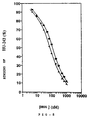
- Fig. 1 illustrates the competitive inhibition of [3H] HU-243 binding by natural anandamide;
- Fig. 2 illustrates inhibition of vas deferens twitch response by natural anandamide;
- Fig. 3 is a GC-MS spectrum of anandamide;
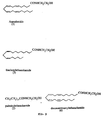
- Fig. 4 illustrates the structure of some compounds described;
- Fig. 5 EI GC-MS spectra of dehydrated homo-γ-linolenylethanolamine (5);
- Fig. 6 EI GC-MS spectra of dehydrated docosatetraenylethanolamine, Compound (6);
- Fig. 7 EI GC-MS spectra of homo-δ-linolenylethanolamine (5) and of docosatetraenylethanolamine, (top and bottom);
- Fig. 8 illustrates competitive binding of [3H]HY-243 by compound (5), squares, and by compound (6), triangles;
- Fig. 9 is a Formula sheet of some compounds of the invention.
-
- Fig. 1. Competitive inhibition of [ H]HU-243 binding by natural anandamide. Synaptosomal membranes were prepared from rat whole brain-minus brainstem (Sprague-Dawley males, 430-470g). [3H]HU-243 (45-55 pM) was incubated with synaptosomal membranes (protein content 3-4 µg) for 90 min at 30°C with either the indicated concentrations of anandamide or the vehicle alone (fatty acid-free bovine serum albumin, final concentration-0.5 mg/ml). Bound and free radioligand were separated by centrifugation (see ref. 8 for full details of the assay). The data were normalized to 100% of specific binding, which was determined with 50 nM unlabeled HU-243. The amount of specific binding was 77-82% of the total radioactivity bound to the membranes. Data points (□, ▴) represent the average of triplicate determinations from two independent experiments. KI value (mean ± SE, n=3) was determined using the Ligand program; KI = 52 ± 1.8 nM.
- Fig. 2. Inhibition of vas deferens twitch response by natural anandamide. Vasa deferentia obtained from MFI mice were mounted in 4 ml siliconized organ baths under an initial tension of 0.5 g. The baths contained Mg++ -Free Krebs solution which was kept at 37 C and bubbled with 95% 02 and 5% CO2 . Tissues were stimulated supramaximally with 0.5 s trains of 3 pulses (train frequency 0.1 Hz: pulse duration 0.5 ms). Isometric contractions were recorded. Natural anandamide was dispersed in
Tween 80 and saline (see ref. 12) and added in volumes of 40 µl.Tween 80 did not inhibit the twitch response at the maximum bath concentration used (0.63 µg/ml; n=6). - Fig. 3. GC-MS spectrum of anandamide on an ion trap instrument. Anandamide undergoes thermal dehydration under these conditions (see text) hence the above spectrum in actuality is that of the M+ ion of the corresponding 2-oxazoline.
- Fig. 4. Structures of anandamide and of palmitylethanolamide and of the dihydro- and tetrahydrooxazole ion fragments formed from these fatty acid ethanolamides on thermal dehydration under GC-MS conditions (see text). The m/
z 112 ion is formed only from palmitylethanolamide.COMPOUNDS ISOLATED FROM THE BRAIN AND SYNTHESIZED. NAME OF COMPOUND Ki cis-7,10,13,16-docosatetraenoylethanolamide 34.4 ± 3.2 nM anandamide 39.0 ± 5.0 nM SYNTHETIC COMPOUNDS, PREPARED AND TESTED. NAME OF COMPOUND Ki arachidonoyl-β-dimethylethanolamide 161.8 ± 34.1 nM Compound 6: Calcd for C24H41NO2 (m.w. 375): C,76.75 H,11.00 N, 3.73 Found C,76.92 H,11.34 N, 3.60 
-
- 1. Devane, W.A. et al., Hanus, L.; Breuer, A.; Pertwee, R.G.; Stevenson, L.A.; Griffin, G.; Gibson, D.; Mandelbaum, A.; Etinger, A.; Mechoulam, R. Isolation and Structure of a Brain Constituent that Binds to the Cannabinoid Receptor. Science, 1992, 258, 1946-1949;
- 2. Fride, E.; Mechoulam, R. Pharmacological Activity of the Cannabinoid Agonist Anandamide, a Brain Constituent. Eur. J. Pharmacol. 1993, 231, 313-314;
- 3. Vogel, Z.; Barg, J.; Levy, R.; Saya, D.; Heldman, E.; Mechoulam, R. Anandamide, a Brain Endogenous Compound, Interacts Specifically with Cannabinoid Receptors and Inhibits Adenylate Cyclase. J. Neurochem. (in press);
- 4. Bachur, N.R.; Masek, K.; Melmon, K.L.; Udenfriend, S. Fatty Acid Amides of Ethanolamine in Mammalian Tissues. J. Biol. Chem. 1965, 240, 1019-1024;
- 5. Agranoff, B.W. In Basic Neurochemistry; Seigel, G., Agranoff, B., Albers, R.W., Molinoff, P., Eds; Raven Press: New York, 1989;
- 6. Devane, W.A. et al., Breuer, A.; Jarbe, T.U.C.; Eisen, M.; Mechoulam, R. A Novel Probe for the Cannabinoid Receptor. J. Med. Chem. 1992, 35, 2065-2069.
-
Claims (19)
- Compounds of the general formulawherein R is the alkenyl moiety of a polyunsaturated fatty acid of 16 to 28 carbon atoms, with 2 to 6 double bonds, with the first double bond at the C-3, C-6 or C-9 position, counting from the non-carboxyl part of the molecule, where R'' is hydrogen and R' is -(CH2)mOH, where m is 2 and acid addition salts and complexes of these with the proviso that the polyunsaturated fatty acid is not a trienic or pentaenic higher fatty acid.

- A compound according to claim 1 wherein all double bonds of the polyunsaturated fatty acid are in the cis-configuration.
- A compound according to claim 1 or 2, where the alkenyl moiety is an octadecadienoic, docosahexaenoic or eicosatetraenoic moiety.
- A compound according to claim 1 or 2, selected from arachidonylethanolamide, cis-7,10,13,16-docosatetraenoylethanolamide.
- An antiinflammatory, anti-asthmatic, analgetic, anti-emetic, antiglaucoma, anti-migraine, anti-spasticity, mood stimulating and symptoms of multiple sclerosis ameliorating pharmaceutical composition, which contains as active ingredient an effective quantity of a compound defined in any of claims 1 to 4.
- A composition according to claim 5, where the active ingredient is a compound defined in claim 4.
- A composition according to claim 5 or 6, where the unit dosage for human administration is from about 1 mg to about 100 mg of the active compound.
- A compound defined in any of claims 1 to 4, in radioactive tagged form.
- A compound according to claim 8, where the tag is 3H or 14C.
- A composition for binding to the cannabinoid receptor in the brain, comprising an effective quantity of a compound defined in any of claims 1 to 4.
- Use of compounds of the general formulawherein R is the alkenyl moiety of a polyunsaturated fatty acid of 16 to 28 carbon atoms, with 2 to 6 double bonds, with the first double bond at the C-3, C-6 or C-9 position, counting from the non-carboxyl part of the molecule, where R'' is hydrogen and R' is -(CH2)mOH, where m is 2 and acid addition salts and complexes of these for the preparation of a medicament having antiinflammatory, anti-asthmatic, analgetic, anti-emetic, antiglaucoma, anti-migraine, anti-spasticity, mood stimulating and symptoms of multiple sclerosis ameliorating activity.

- Use according to claim 11, wherein all the double bonds of the polyunsaturated fatty acids of the compounds as defined in claim 11 are in the cis configuration.
- Use according to any of claims 11 to 12 wherein the alkenyl moiety of the compounds defined in these claims is an octadecadienoic, actadecatrienoic, eicosapentaenoic, docosahexaenoic, eicosatrienoic or eicosatetraenoic moiety.
- Use according to any of claims 11 to 13 wherein the compounds as defined in these claims are selected from arachidonylethanolamide, cis-7,10,13,16-docosatetraenoylethanolamide, homo-δ-linolenoylethanolamide.
- Use according to any of claims 11 to 14, wherein the unit dosage for human administration is from about 1 mg to about 100 mg of the compound.
- Use of compounds of the general formulawherein R is the alkenyl moiety of a polyunsaturated fatty acid of 16 to 28 carbon atoms, with 2 to 6 double bonds, with the first double bond at the C-3, C-6 or C-9 position, counting from the non-carboxyl part of the molecule, where R'' is hydrogen and R' is -(CH2)mOH, where m is 2 and acid addition salts and complexes of these for the preparation of a composition for binding to the cannabinoid receptor in the brain.

- Use according to claim 16, wherein all the double bonds of the polyunsaturated fatty acids of the compounds as defined in claim 11 are in the cis configuration.
- Use according to any of claims 16 to 17 wherein the alkenyl moiety of the compounds defined in these claims is an octadecadienoic, actadecatrienoic, eicosapentaenoic, docosahexaenoic, eicosatrienoic or eicosatetraenoic moiety.
- Use according to any of claims 16 to 18 wherein the compounds as defined in these claims are selected from arachidonylethanolamide, cis-7,10,13,16-docosatetraenoylethanolamide, homo-δ-linolenoylethanolamide.
Applications Claiming Priority (3)
| Application Number | Priority Date | Filing Date | Title |
|---|---|---|---|
| IL10393292 | 1992-11-30 | ||
| IL10393292A IL103932A (en) | 1992-11-30 | 1992-11-30 | Fatty acid and pharmaceutical compositions containing them |
| PCT/US1993/011625 WO1994012466A1 (en) | 1992-11-30 | 1993-11-30 | Fatty acid derivatives and pharmaceutical compositions containing them |
Publications (3)
| Publication Number | Publication Date |
|---|---|
| EP0670826A1 EP0670826A1 (en) | 1995-09-13 |
| EP0670826A4 EP0670826A4 (en) | 1996-08-14 |
| EP0670826B1 true EP0670826B1 (en) | 2000-04-26 |
Family
ID=11064282
Family Applications (1)
| Application Number | Title | Priority Date | Filing Date |
|---|---|---|---|
| EP94903364A Expired - Lifetime EP0670826B1 (en) | 1992-11-30 | 1993-11-30 | Fatty acid derivatives and pharmaceutical compositions containing them |
Country Status (13)
| Country | Link |
|---|---|
| EP (1) | EP0670826B1 (en) |
| JP (1) | JPH08504195A (en) |
| CN (1) | CN1097735A (en) |
| AU (1) | AU5733494A (en) |
| CZ (1) | CZ136195A3 (en) |
| DE (1) | DE69328492T2 (en) |
| ES (1) | ES2145118T3 (en) |
| HU (1) | HUT73177A (en) |
| IL (1) | IL103932A (en) |
| PL (1) | PL309051A1 (en) |
| SK (1) | SK70895A3 (en) |
| WO (1) | WO1994012466A1 (en) |
| ZA (1) | ZA938947B (en) |
Cited By (2)
| Publication number | Priority date | Publication date | Assignee | Title |
|---|---|---|---|---|
| US8293786B2 (en) | 2007-07-30 | 2012-10-23 | Alltranz Inc. | Prodrugs of cannabidiol, compositions comprising prodrugs of cannabidiol and methods of using the same |
| US8449908B2 (en) | 2000-12-22 | 2013-05-28 | Alltranz, Llc | Transdermal delivery of cannabidiol |
Families Citing this family (37)
| Publication number | Priority date | Publication date | Assignee | Title |
|---|---|---|---|---|
| US5631297A (en) * | 1994-07-11 | 1997-05-20 | Pate; David W. | Anandamides useful for the treatment of intraocular hypertension, ophthalmic compositions containing the same and methods of use of the same |
| WO1996001558A1 (en) * | 1994-07-11 | 1996-01-25 | Pate David W | Anandamide analogue compositions and method of treating intraocular hypertention using same |
| IT1271267B (en) * | 1994-12-14 | 1997-05-27 | Valle Francesco Della | MONO AND BICARBOXYLIC ACID AMIDES WITH AMINO ALCOHOLS, SELECTIVELY ACTIVE ON THE PERIPHERAL RECEPTOR OF CANNABINOIDS |
| DE19544635A1 (en) * | 1995-11-30 | 1997-06-05 | Boehringer Mannheim Gmbh | Novel amino alcohol derivatives, processes for their preparation and medicaments containing these compounds |
| DE19706903A1 (en) * | 1997-02-21 | 1998-08-27 | Bayer Ag | Use of known agonists of the central cannabinoid receptor CB 1 |
| WO1999051560A1 (en) * | 1998-04-03 | 1999-10-14 | Yissum Research Development Company Of The Hebrew University Of Jerusalem | Synthetic endogenous cannabinoids analogues and uses thereof |
| EP1645270B1 (en) * | 1998-05-29 | 2010-04-28 | Neurosciences Research Foundation Inc. | Control of pain with ANANDAMIDE |
| US7897598B2 (en) | 1998-06-09 | 2011-03-01 | Alexandros Makriyannis | Inhibitors of the anandamide transporter |
| US7589220B2 (en) | 1998-06-09 | 2009-09-15 | University Of Connecticut | Inhibitors of the anandamide transporter |
| CA2635412C (en) | 1998-08-17 | 2011-06-21 | Senju Pharmaceutical Co., Ltd. | Agent for prophylaxis and treatment of asthenopia or pseudomyopia |
| US7161016B1 (en) | 1998-11-24 | 2007-01-09 | University Of Connecticut | Cannabimimetic lipid amides as useful medications |
| US7276613B1 (en) | 1998-11-24 | 2007-10-02 | University Of Connecticut | Retro-anandamides, high affinity and stability cannabinoid receptor ligands |
| AU1833600A (en) * | 1998-11-24 | 2000-06-19 | Andreas Goutopoulos | Cannabimimetic lipid amides as useful medications |
| GB9923738D0 (en) | 1999-10-07 | 1999-12-08 | Nestle Sa | Nutritional composition |
| US7119108B1 (en) | 1999-10-18 | 2006-10-10 | University Of Connecticut | Pyrazole derivatives as cannabinoid receptor antagonists |
| US7393842B2 (en) | 2001-08-31 | 2008-07-01 | University Of Connecticut | Pyrazole analogs acting on cannabinoid receptors |
| US6943266B1 (en) | 1999-10-18 | 2005-09-13 | University Of Connecticut | Bicyclic cannabinoid agonists for the cannabinoid receptor |
| US6900236B1 (en) | 1999-10-18 | 2005-05-31 | University Of Connecticut | Cannabimimetic indole derivatives |
| US6974568B2 (en) | 2000-05-23 | 2005-12-13 | The Regents Of The University Of California | Treatment for cough |
| NO20006008L (en) * | 2000-11-28 | 2002-05-29 | Thia Medica As | Fatty acid analogues for the treatment of inflammatory and autoimmune diseases |
| CA2435409A1 (en) | 2001-01-26 | 2002-08-01 | University Of Connecticut | Novel cannabimimetic ligands |
| KR20030087657A (en) | 2001-03-27 | 2003-11-14 | 더 리전츠 오브 더 유니버시티 오브 캘리포니아 | Methods, compounds, and compositions for reducing body fat and modulating fatty acid metabolism |
| EP1414775B1 (en) | 2001-07-13 | 2012-12-19 | The University of Connecticut | Bicyclic cannabinoid |
| WO2003008632A1 (en) * | 2001-07-16 | 2003-01-30 | Hoegestaett Edward | Fatty acid conjugation as a method for screening of potentially bioactive substances |
| CA2478338A1 (en) | 2002-03-08 | 2003-09-18 | Signal Pharmaceuticals, Inc. | Combination therapy for treating, preventing or managing proliferative disorders and cancers |
| WO2004103410A1 (en) | 2002-06-06 | 2004-12-02 | Yissum Research Development Company Of The Hebrew University Of Jerusalem | Methods compositions and articles of manufacture for modulating bone growth |
| ITMI20030210A1 (en) * | 2003-02-07 | 2004-08-08 | Res & Innovation Soc Coop A R L | ENDOCANNABINOID-SIMILAR COMPOUNDS AND THEIR USE |
| US7276608B2 (en) | 2003-07-11 | 2007-10-02 | Bristol-Myers Squibb Company | Tetrahydroquinoline derivatives as cannabinoid receptor modulators |
| US7326706B2 (en) | 2003-08-15 | 2008-02-05 | Bristol-Myers Squibb Company | Pyrazine modulators of cannabinoid receptors |
| IL160420A0 (en) | 2004-02-16 | 2004-07-25 | Yissum Res Dev Co | Treating or preventing diabetes with cannabidiol |
| CA2650900A1 (en) * | 2006-05-01 | 2007-11-15 | Eastern Virginia Medical School | Novel cannabinoids and methods of use |
| WO2008139263A2 (en) * | 2006-11-30 | 2008-11-20 | University Of Plymouth | Methods for slowing the progression of multiple sclerosis |
| EP2262763A2 (en) | 2008-03-04 | 2010-12-22 | Yissum Research Development Company of the Hebrew University of Jerusalem Ltd. | Compounds and methods of treating obesity |
| WO2010013240A1 (en) * | 2008-07-31 | 2010-02-04 | Dekel Pharmaceuticals Ltd. | Compositions and methods for treating inflammatory disorders |
| ES2549924T3 (en) * | 2009-11-25 | 2015-11-03 | Cytometix, Inc. | Arachidonic acid analogs and methods for analgesic treatment using the same |
| CN103877100B (en) * | 2013-05-21 | 2016-08-10 | 成都旗美健康食品有限公司 | Medical and for health care medicine of the associating of linolenic acid acyl ethanol amine |
| AU2020260090C9 (en) | 2019-04-15 | 2023-08-31 | Metagenics LLC | Novel hemp and PEA formulation and its use |
Family Cites Families (4)
| Publication number | Priority date | Publication date | Assignee | Title |
|---|---|---|---|---|
| SE306730B (en) * | 1963-02-06 | 1968-12-09 | Sumitomo Chemical Co | |
| SE353319B (en) * | 1964-08-15 | 1973-01-29 | Sumitomo Chemical Co | |
| US4619938A (en) * | 1984-03-21 | 1986-10-28 | Terumo Kabushiki Kaisha | Fatty acid derivatives of aminoalkyl nicotinic acid esters and platelet aggregation inhibitors |
| NZ216751A (en) * | 1985-07-05 | 1990-01-29 | Cird | Eicosatriynoic acid esters and amides,pharmaceutical compositions and process for preparing eicosatriynoic acid |
-
1992
- 1992-11-30 IL IL10393292A patent/IL103932A/en not_active IP Right Cessation
-
1993
- 1993-11-30 PL PL93309051A patent/PL309051A1/en unknown
- 1993-11-30 EP EP94903364A patent/EP0670826B1/en not_active Expired - Lifetime
- 1993-11-30 HU HU9501561A patent/HUT73177A/en unknown
- 1993-11-30 SK SK708-95A patent/SK70895A3/en unknown
- 1993-11-30 DE DE69328492T patent/DE69328492T2/en not_active Expired - Fee Related
- 1993-11-30 CZ CZ951361A patent/CZ136195A3/en unknown
- 1993-11-30 JP JP6513466A patent/JPH08504195A/en active Pending
- 1993-11-30 ZA ZA938947A patent/ZA938947B/en unknown
- 1993-11-30 AU AU57334/94A patent/AU5733494A/en not_active Abandoned
- 1993-11-30 WO PCT/US1993/011625 patent/WO1994012466A1/en not_active Ceased
- 1993-11-30 CN CN93121715A patent/CN1097735A/en active Pending
- 1993-11-30 ES ES94903364T patent/ES2145118T3/en not_active Expired - Lifetime
Cited By (2)
| Publication number | Priority date | Publication date | Assignee | Title |
|---|---|---|---|---|
| US8449908B2 (en) | 2000-12-22 | 2013-05-28 | Alltranz, Llc | Transdermal delivery of cannabidiol |
| US8293786B2 (en) | 2007-07-30 | 2012-10-23 | Alltranz Inc. | Prodrugs of cannabidiol, compositions comprising prodrugs of cannabidiol and methods of using the same |
Also Published As
| Publication number | Publication date |
|---|---|
| CZ136195A3 (en) | 1995-11-15 |
| EP0670826A4 (en) | 1996-08-14 |
| CN1097735A (en) | 1995-01-25 |
| WO1994012466A1 (en) | 1994-06-09 |
| HU9501561D0 (en) | 1995-07-28 |
| SK70895A3 (en) | 1995-09-13 |
| IL103932A (en) | 1997-02-18 |
| JPH08504195A (en) | 1996-05-07 |
| HUT73177A (en) | 1996-06-28 |
| ZA938947B (en) | 1994-08-02 |
| DE69328492T2 (en) | 2000-09-07 |
| IL103932A0 (en) | 1993-04-04 |
| AU5733494A (en) | 1994-06-22 |
| DE69328492D1 (en) | 2000-05-31 |
| PL309051A1 (en) | 1995-09-18 |
| EP0670826A1 (en) | 1995-09-13 |
| ES2145118T3 (en) | 2000-07-01 |
Similar Documents
| Publication | Publication Date | Title |
|---|---|---|
| US5618955A (en) | Fatty acid derivatives and pharmaceutical compositions containing same | |
| WO1994012466A1 (en) | Fatty acid derivatives and pharmaceutical compositions containing them | |
| CA2265708C (en) | Lipoxin compounds and their use in treating cell proliferative disorders | |
| US5021450A (en) | New class of compounds having a variable spectrum of activities for capsaicin-like responses, compositions and uses thereof | |
| US5648512A (en) | Lipoxin compounds | |
| Turpeinen | Further Studies on the Unsaturated Fatty Acids Essential in Nutrition: Six Figures | |
| JP3887020B2 (en) | Azulenyl nitrone spin trapping agent and method for producing and using the same | |
| US5874468A (en) | Brain targeted low molecular weight hydrophobic antioxidant compounds | |
| CA2164951C (en) | Lipoxin compounds | |
| Jacob et al. | Synthesis, brain uptake, and pharmacological properties of a glyceryl lipid containing GABA and the GABA-T inhibitor. gamma.-vinyl-GABA | |
| Suzuki et al. | Identification of 5‐hydroxy eicosatetraenoic acid in cerebrospinal fluid after subarachnoid hemorrhage | |
| Bodor et al. | Soft drugs. 7. Soft. beta.-blockers for systemic and ophthalmic use | |
| US4310546A (en) | Novel retinoids and their use in preventing carcinogenesis | |
| Schröder et al. | Mulitfunctional Inhibition by Anthralin in Nonstimulated and Chemotactic Factor Stimulated Human Neutrophils | |
| Jiang et al. | Inhibition of two-stage skin carcinogenesis as well as complete skin carcinogenesis by oral administration of TMK688, a potent lipoxygenase inhibitor | |
| Sims | Metabolism of polycyclic compounds. 14. The conversion of naphthalene into compounds related to trans-1: 2-dihydro-1: 2-dihydroxynaphthalene by rabbits | |
| Le Bon et al. | Disposition and metabolism of pristane in rat | |
| Lewin et al. | Evaluation of retinoids as therapeutic agents in dermatology | |
| Sani | Cellular retinoic acid-binding protein and the action of retinoic acid | |
| Haggerty et al. | The pharmacological activity of the fatty acid conjugate 11-palmitoyloxy-Δ9-tetrahydrocannabinol | |
| Shealy et al. | Terminal bifunctional retinoids. Synthesis and evaluations related to cancer chemopreventive activity | |
| EP0215319A2 (en) | Gem-dihalo-1,8-diamino-4-aza-octanes | |
| NAMBU et al. | Inhibitory effects of OKY-046 on spasmogen-induced bronchoconstrictions in sensitized and non-sensitized guinea pigs | |
| Dulaney et al. | Occurrence of novel branched-chain fatty acids in Refsum's disease | |
| JPS60502056A (en) | GABA esters and GABA analogue esters |
Legal Events
| Date | Code | Title | Description |
|---|---|---|---|
| PUAI | Public reference made under article 153(3) epc to a published international application that has entered the european phase |
Free format text: ORIGINAL CODE: 0009012 |
|
| 17P | Request for examination filed |
Effective date: 19950626 |
|
| AK | Designated contracting states |
Kind code of ref document: A1 Designated state(s): BE CH DE ES FR GB IT LI NL SE |
|
| A4 | Supplementary search report drawn up and despatched |
Effective date: 19960702 |
|
| AK | Designated contracting states |
Kind code of ref document: A4 Designated state(s): BE CH DE ES FR GB IT LI NL SE |
|
| 17Q | First examination report despatched |
Effective date: 19970424 |
|
| GRAG | Despatch of communication of intention to grant |
Free format text: ORIGINAL CODE: EPIDOS AGRA |
|
| GRAG | Despatch of communication of intention to grant |
Free format text: ORIGINAL CODE: EPIDOS AGRA |
|
| GRAH | Despatch of communication of intention to grant a patent |
Free format text: ORIGINAL CODE: EPIDOS IGRA |
|
| RAP1 | Party data changed (applicant data changed or rights of an application transferred) |
Owner name: YISSUM RESEARCH DEVELOPMENT COMPANY OF THE HEBREW |
|
| GRAH | Despatch of communication of intention to grant a patent |
Free format text: ORIGINAL CODE: EPIDOS IGRA |
|
| GRAA | (expected) grant |
Free format text: ORIGINAL CODE: 0009210 |
|
| AK | Designated contracting states |
Kind code of ref document: B1 Designated state(s): BE CH DE ES FR GB IT LI NL SE |
|
| REG | Reference to a national code |
Ref country code: CH Ref legal event code: NV Representative=s name: RITSCHER & SEIFERT Ref country code: CH Ref legal event code: EP |
|
| REF | Corresponds to: |
Ref document number: 69328492 Country of ref document: DE Date of ref document: 20000531 |
|
| ET | Fr: translation filed | ||
| REG | Reference to a national code |
Ref country code: ES Ref legal event code: FG2A Ref document number: 2145118 Country of ref document: ES Kind code of ref document: T3 |
|
| ITF | It: translation for a ep patent filed | ||
| PLBE | No opposition filed within time limit |
Free format text: ORIGINAL CODE: 0009261 |
|
| STAA | Information on the status of an ep patent application or granted ep patent |
Free format text: STATUS: NO OPPOSITION FILED WITHIN TIME LIMIT |
|
| 26N | No opposition filed | ||
| REG | Reference to a national code |
Ref country code: GB Ref legal event code: IF02 |
|
| PGFP | Annual fee paid to national office [announced via postgrant information from national office to epo] |
Ref country code: NL Payment date: 20061110 Year of fee payment: 14 |
|
| PGFP | Annual fee paid to national office [announced via postgrant information from national office to epo] |
Ref country code: SE Payment date: 20061114 Year of fee payment: 14 Ref country code: CH Payment date: 20061114 Year of fee payment: 14 |
|
| PGFP | Annual fee paid to national office [announced via postgrant information from national office to epo] |
Ref country code: FR Payment date: 20061124 Year of fee payment: 14 Ref country code: DE Payment date: 20061124 Year of fee payment: 14 |
|
| PGFP | Annual fee paid to national office [announced via postgrant information from national office to epo] |
Ref country code: GB Payment date: 20061127 Year of fee payment: 14 |
|
| PGFP | Annual fee paid to national office [announced via postgrant information from national office to epo] |
Ref country code: ES Payment date: 20061129 Year of fee payment: 14 |
|
| PGFP | Annual fee paid to national office [announced via postgrant information from national office to epo] |
Ref country code: IT Payment date: 20061130 Year of fee payment: 14 |
|
| PGFP | Annual fee paid to national office [announced via postgrant information from national office to epo] |
Ref country code: BE Payment date: 20061214 Year of fee payment: 14 |
|
| BERE | Be: lapsed |
Owner name: *YISSUM RESEARCH DEVELOPMENT CY OF THE HEBREW UNIV Effective date: 20071130 |
|
| GBPC | Gb: european patent ceased through non-payment of renewal fee |
Effective date: 20071130 |
|
| PG25 | Lapsed in a contracting state [announced via postgrant information from national office to epo] |
Ref country code: LI Free format text: LAPSE BECAUSE OF NON-PAYMENT OF DUE FEES Effective date: 20071130 Ref country code: CH Free format text: LAPSE BECAUSE OF NON-PAYMENT OF DUE FEES Effective date: 20071130 |
|
| REG | Reference to a national code |
Ref country code: CH Ref legal event code: PL |
|
| NLV4 | Nl: lapsed or anulled due to non-payment of the annual fee |
Effective date: 20080601 |
|
| EUG | Se: european patent has lapsed | ||
| PG25 | Lapsed in a contracting state [announced via postgrant information from national office to epo] |
Ref country code: BE Free format text: LAPSE BECAUSE OF NON-PAYMENT OF DUE FEES Effective date: 20071130 |
|
| PG25 | Lapsed in a contracting state [announced via postgrant information from national office to epo] |
Ref country code: NL Free format text: LAPSE BECAUSE OF NON-PAYMENT OF DUE FEES Effective date: 20080601 Ref country code: DE Free format text: LAPSE BECAUSE OF NON-PAYMENT OF DUE FEES Effective date: 20080603 Ref country code: SE Free format text: LAPSE BECAUSE OF NON-PAYMENT OF DUE FEES Effective date: 20071201 |
|
| REG | Reference to a national code |
Ref country code: FR Ref legal event code: ST Effective date: 20080930 |
|
| PG25 | Lapsed in a contracting state [announced via postgrant information from national office to epo] |
Ref country code: GB Free format text: LAPSE BECAUSE OF NON-PAYMENT OF DUE FEES Effective date: 20071130 |
|
| REG | Reference to a national code |
Ref country code: ES Ref legal event code: FD2A Effective date: 20071201 |
|
| PG25 | Lapsed in a contracting state [announced via postgrant information from national office to epo] |
Ref country code: FR Free format text: LAPSE BECAUSE OF NON-PAYMENT OF DUE FEES Effective date: 20071130 Ref country code: ES Free format text: LAPSE BECAUSE OF NON-PAYMENT OF DUE FEES Effective date: 20071201 |
|
| PG25 | Lapsed in a contracting state [announced via postgrant information from national office to epo] |
Ref country code: IT Free format text: LAPSE BECAUSE OF NON-PAYMENT OF DUE FEES Effective date: 20071130 |