EP0667907B1 - Nucleic acid coding for an alpha-acetolactate synthase from lactococcus and its applications - Google Patents
Nucleic acid coding for an alpha-acetolactate synthase from lactococcus and its applications Download PDFInfo
- Publication number
- EP0667907B1 EP0667907B1 EP93921008A EP93921008A EP0667907B1 EP 0667907 B1 EP0667907 B1 EP 0667907B1 EP 93921008 A EP93921008 A EP 93921008A EP 93921008 A EP93921008 A EP 93921008A EP 0667907 B1 EP0667907 B1 EP 0667907B1
- Authority
- EP
- European Patent Office
- Prior art keywords
- nucleic acid
- lactis
- acetolactate
- amino acids
- genes
- Prior art date
- Legal status (The legal status is an assumption and is not a legal conclusion. Google has not performed a legal analysis and makes no representation as to the accuracy of the status listed.)
- Expired - Lifetime
Links
- 150000007523 nucleic acids Chemical class 0.000 title claims abstract description 49
- 108020004707 nucleic acids Proteins 0.000 title claims abstract description 44
- 102000039446 nucleic acids Human genes 0.000 title claims abstract description 44
- WTLNOANVTIKPEE-UHFFFAOYSA-N 2-acetyloxypropanoic acid Chemical compound OC(=O)C(C)OC(C)=O WTLNOANVTIKPEE-UHFFFAOYSA-N 0.000 title claims abstract description 34
- 241000194036 Lactococcus Species 0.000 title abstract description 4
- 244000005700 microbiome Species 0.000 claims abstract description 15
- 239000013598 vector Substances 0.000 claims abstract description 8
- 230000001131 transforming effect Effects 0.000 claims abstract description 4
- 108090000623 proteins and genes Proteins 0.000 claims description 80
- 239000002773 nucleotide Substances 0.000 claims description 45
- 125000003729 nucleotide group Chemical group 0.000 claims description 45
- 108090000765 processed proteins & peptides Proteins 0.000 claims description 40
- 229920001184 polypeptide Polymers 0.000 claims description 38
- 102000004196 processed proteins & peptides Human genes 0.000 claims description 38
- 102000004169 proteins and genes Human genes 0.000 claims description 29
- 108020004414 DNA Proteins 0.000 claims description 26
- 108091028043 Nucleic acid sequence Proteins 0.000 claims description 23
- 238000013518 transcription Methods 0.000 claims description 17
- 230000035897 transcription Effects 0.000 claims description 17
- LCTONWCANYUPML-UHFFFAOYSA-M Pyruvate Chemical compound CC(=O)C([O-])=O LCTONWCANYUPML-UHFFFAOYSA-M 0.000 claims description 10
- 238000000034 method Methods 0.000 claims description 10
- 230000000694 effects Effects 0.000 claims description 7
- 230000009466 transformation Effects 0.000 claims description 6
- 230000001105 regulatory effect Effects 0.000 claims description 3
- 102000003855 L-lactate dehydrogenase Human genes 0.000 claims description 2
- 108700023483 L-lactate dehydrogenases Proteins 0.000 claims description 2
- 108010084631 acetolactate decarboxylase Proteins 0.000 claims description 2
- 230000005030 transcription termination Effects 0.000 claims 1
- 241000194041 Lactococcus lactis subsp. lactis Species 0.000 abstract description 22
- 101150033780 ilvB gene Proteins 0.000 abstract description 11
- 101150060643 ilvN gene Proteins 0.000 abstract description 10
- 238000004519 manufacturing process Methods 0.000 abstract description 8
- 235000014969 Streptococcus diacetilactis Nutrition 0.000 abstract 2
- 150000001413 amino acids Chemical class 0.000 description 56
- 229940024606 amino acid Drugs 0.000 description 55
- 230000015572 biosynthetic process Effects 0.000 description 39
- 238000003786 synthesis reaction Methods 0.000 description 31
- 230000037361 pathway Effects 0.000 description 28
- 241000588724 Escherichia coli Species 0.000 description 27
- ROHFNLRQFUQHCH-YFKPBYRVSA-N L-leucine Chemical compound CC(C)C[C@H](N)C(O)=O ROHFNLRQFUQHCH-YFKPBYRVSA-N 0.000 description 23
- 241000194035 Lactococcus lactis Species 0.000 description 16
- 235000014469 Bacillus subtilis Nutrition 0.000 description 15
- 108090000790 Enzymes Proteins 0.000 description 13
- 102000004190 Enzymes Human genes 0.000 description 13
- 101150025049 leuB gene Proteins 0.000 description 13
- 108020004705 Codon Proteins 0.000 description 11
- ROHFNLRQFUQHCH-UHFFFAOYSA-N Leucine Natural products CC(C)CC(N)C(O)=O ROHFNLRQFUQHCH-UHFFFAOYSA-N 0.000 description 11
- 108700026244 Open Reading Frames Proteins 0.000 description 11
- 101150095957 ilvA gene Proteins 0.000 description 11
- 239000013612 plasmid Substances 0.000 description 11
- 210000004027 cell Anatomy 0.000 description 10
- QSJXEFYPDANLFS-UHFFFAOYSA-N Diacetyl Chemical group CC(=O)C(C)=O QSJXEFYPDANLFS-UHFFFAOYSA-N 0.000 description 9
- AGPKZVBTJJNPAG-WHFBIAKZSA-N L-isoleucine Chemical compound CC[C@H](C)[C@H](N)C(O)=O AGPKZVBTJJNPAG-WHFBIAKZSA-N 0.000 description 9
- 108010076504 Protein Sorting Signals Proteins 0.000 description 9
- 239000012634 fragment Substances 0.000 description 9
- 239000002609 medium Substances 0.000 description 9
- 241000894006 Bacteria Species 0.000 description 8
- AGPKZVBTJJNPAG-UHFFFAOYSA-N isoleucine Natural products CCC(C)C(N)C(O)=O AGPKZVBTJJNPAG-UHFFFAOYSA-N 0.000 description 8
- 229960000310 isoleucine Drugs 0.000 description 8
- 101710159752 Poly(3-hydroxyalkanoate) polymerase subunit PhaE Proteins 0.000 description 7
- 101710130262 Probable Vpr-like protein Proteins 0.000 description 7
- 238000010367 cloning Methods 0.000 description 7
- 101150077793 ilvH gene Proteins 0.000 description 7
- 101150081723 leuC gene Proteins 0.000 description 7
- 230000008520 organization Effects 0.000 description 7
- 101100123410 Methanosarcina acetivorans (strain ATCC 35395 / DSM 2834 / JCM 12185 / C2A) hacA gene Proteins 0.000 description 6
- 101100181662 Salmonella typhimurium (strain LT2 / SGSC1412 / ATCC 700720) leuC1 gene Proteins 0.000 description 6
- 230000033228 biological regulation Effects 0.000 description 6
- 230000002255 enzymatic effect Effects 0.000 description 6
- 101150087199 leuA gene Proteins 0.000 description 6
- 238000006243 chemical reaction Methods 0.000 description 5
- 238000002474 experimental method Methods 0.000 description 5
- 101150090497 ilvC gene Proteins 0.000 description 5
- WQVJUBFKFCDYDQ-BBWFWOEESA-N leubethanol Natural products C1=C(C)C=C2[C@H]([C@H](CCC=C(C)C)C)CC[C@@H](C)C2=C1O WQVJUBFKFCDYDQ-BBWFWOEESA-N 0.000 description 5
- 238000012163 sequencing technique Methods 0.000 description 5
- 102000021527 ATP binding proteins Human genes 0.000 description 4
- 108091011108 ATP binding proteins Proteins 0.000 description 4
- ROWKJAVDOGWPAT-UHFFFAOYSA-N Acetoin Chemical compound CC(O)C(C)=O ROWKJAVDOGWPAT-UHFFFAOYSA-N 0.000 description 4
- 101100125907 Streptomyces coelicolor (strain ATCC BAA-471 / A3(2) / M145) ilvC1 gene Proteins 0.000 description 4
- 230000001580 bacterial effect Effects 0.000 description 4
- 210000000349 chromosome Anatomy 0.000 description 4
- 230000000295 complement effect Effects 0.000 description 4
- 238000009396 hybridization Methods 0.000 description 4
- 101150043028 ilvD gene Proteins 0.000 description 4
- 230000004048 modification Effects 0.000 description 4
- 238000012986 modification Methods 0.000 description 4
- 230000032258 transport Effects 0.000 description 4
- KRKNYBCHXYNGOX-UHFFFAOYSA-K Citrate Chemical compound [O-]C(=O)CC(O)(CC([O-])=O)C([O-])=O KRKNYBCHXYNGOX-UHFFFAOYSA-K 0.000 description 3
- QIVBCDIJIAJPQS-VIFPVBQESA-N L-tryptophane Chemical compound C1=CC=C2C(C[C@H](N)C(O)=O)=CNC2=C1 QIVBCDIJIAJPQS-VIFPVBQESA-N 0.000 description 3
- KZSNJWFQEVHDMF-BYPYZUCNSA-N L-valine Chemical compound CC(C)[C@H](N)C(O)=O KZSNJWFQEVHDMF-BYPYZUCNSA-N 0.000 description 3
- 108091034117 Oligonucleotide Proteins 0.000 description 3
- QIVBCDIJIAJPQS-UHFFFAOYSA-N Tryptophan Natural products C1=CC=C2C(CC(N)C(O)=O)=CNC2=C1 QIVBCDIJIAJPQS-UHFFFAOYSA-N 0.000 description 3
- KZSNJWFQEVHDMF-UHFFFAOYSA-N Valine Natural products CC(C)C(N)C(O)=O KZSNJWFQEVHDMF-UHFFFAOYSA-N 0.000 description 3
- JLCPHMBAVCMARE-UHFFFAOYSA-N [3-[[3-[[3-[[3-[[3-[[3-[[3-[[3-[[3-[[3-[[3-[[5-(2-amino-6-oxo-1H-purin-9-yl)-3-[[3-[[3-[[3-[[3-[[3-[[5-(2-amino-6-oxo-1H-purin-9-yl)-3-[[5-(2-amino-6-oxo-1H-purin-9-yl)-3-hydroxyoxolan-2-yl]methoxy-hydroxyphosphoryl]oxyoxolan-2-yl]methoxy-hydroxyphosphoryl]oxy-5-(5-methyl-2,4-dioxopyrimidin-1-yl)oxolan-2-yl]methoxy-hydroxyphosphoryl]oxy-5-(6-aminopurin-9-yl)oxolan-2-yl]methoxy-hydroxyphosphoryl]oxy-5-(6-aminopurin-9-yl)oxolan-2-yl]methoxy-hydroxyphosphoryl]oxy-5-(6-aminopurin-9-yl)oxolan-2-yl]methoxy-hydroxyphosphoryl]oxy-5-(6-aminopurin-9-yl)oxolan-2-yl]methoxy-hydroxyphosphoryl]oxyoxolan-2-yl]methoxy-hydroxyphosphoryl]oxy-5-(5-methyl-2,4-dioxopyrimidin-1-yl)oxolan-2-yl]methoxy-hydroxyphosphoryl]oxy-5-(4-amino-2-oxopyrimidin-1-yl)oxolan-2-yl]methoxy-hydroxyphosphoryl]oxy-5-(5-methyl-2,4-dioxopyrimidin-1-yl)oxolan-2-yl]methoxy-hydroxyphosphoryl]oxy-5-(5-methyl-2,4-dioxopyrimidin-1-yl)oxolan-2-yl]methoxy-hydroxyphosphoryl]oxy-5-(6-aminopurin-9-yl)oxolan-2-yl]methoxy-hydroxyphosphoryl]oxy-5-(6-aminopurin-9-yl)oxolan-2-yl]methoxy-hydroxyphosphoryl]oxy-5-(4-amino-2-oxopyrimidin-1-yl)oxolan-2-yl]methoxy-hydroxyphosphoryl]oxy-5-(4-amino-2-oxopyrimidin-1-yl)oxolan-2-yl]methoxy-hydroxyphosphoryl]oxy-5-(4-amino-2-oxopyrimidin-1-yl)oxolan-2-yl]methoxy-hydroxyphosphoryl]oxy-5-(6-aminopurin-9-yl)oxolan-2-yl]methoxy-hydroxyphosphoryl]oxy-5-(4-amino-2-oxopyrimidin-1-yl)oxolan-2-yl]methyl [5-(6-aminopurin-9-yl)-2-(hydroxymethyl)oxolan-3-yl] hydrogen phosphate Polymers Cc1cn(C2CC(OP(O)(=O)OCC3OC(CC3OP(O)(=O)OCC3OC(CC3O)n3cnc4c3nc(N)[nH]c4=O)n3cnc4c3nc(N)[nH]c4=O)C(COP(O)(=O)OC3CC(OC3COP(O)(=O)OC3CC(OC3COP(O)(=O)OC3CC(OC3COP(O)(=O)OC3CC(OC3COP(O)(=O)OC3CC(OC3COP(O)(=O)OC3CC(OC3COP(O)(=O)OC3CC(OC3COP(O)(=O)OC3CC(OC3COP(O)(=O)OC3CC(OC3COP(O)(=O)OC3CC(OC3COP(O)(=O)OC3CC(OC3COP(O)(=O)OC3CC(OC3COP(O)(=O)OC3CC(OC3COP(O)(=O)OC3CC(OC3COP(O)(=O)OC3CC(OC3COP(O)(=O)OC3CC(OC3COP(O)(=O)OC3CC(OC3CO)n3cnc4c(N)ncnc34)n3ccc(N)nc3=O)n3cnc4c(N)ncnc34)n3ccc(N)nc3=O)n3ccc(N)nc3=O)n3ccc(N)nc3=O)n3cnc4c(N)ncnc34)n3cnc4c(N)ncnc34)n3cc(C)c(=O)[nH]c3=O)n3cc(C)c(=O)[nH]c3=O)n3ccc(N)nc3=O)n3cc(C)c(=O)[nH]c3=O)n3cnc4c3nc(N)[nH]c4=O)n3cnc4c(N)ncnc34)n3cnc4c(N)ncnc34)n3cnc4c(N)ncnc34)n3cnc4c(N)ncnc34)O2)c(=O)[nH]c1=O JLCPHMBAVCMARE-UHFFFAOYSA-N 0.000 description 3
- 238000012217 deletion Methods 0.000 description 3
- 230000037430 deletion Effects 0.000 description 3
- 235000013305 food Nutrition 0.000 description 3
- 101150105723 ilvD1 gene Proteins 0.000 description 3
- GUBGYTABKSRVRQ-QKKXKWKRSA-N lactose group Chemical group OC1[C@H](O)[C@@H](O)[C@H](O[C@H]2[C@H](O)[C@@H](O)[C@@H](O)[C@H](O2)CO)[C@H](O1)CO GUBGYTABKSRVRQ-QKKXKWKRSA-N 0.000 description 3
- 101150019665 leuD gene Proteins 0.000 description 3
- 238000011144 upstream manufacturing Methods 0.000 description 3
- 239000004474 valine Substances 0.000 description 3
- OCUSNPIJIZCRSZ-ZTZWCFDHSA-N (2s)-2-amino-3-methylbutanoic acid;(2s)-2-amino-4-methylpentanoic acid;(2s,3s)-2-amino-3-methylpentanoic acid Chemical compound CC(C)[C@H](N)C(O)=O.CC[C@H](C)[C@H](N)C(O)=O.CC(C)C[C@H](N)C(O)=O OCUSNPIJIZCRSZ-ZTZWCFDHSA-N 0.000 description 2
- 244000063299 Bacillus subtilis Species 0.000 description 2
- ULGZDMOVFRHVEP-RWJQBGPGSA-N Erythromycin Chemical compound O([C@@H]1[C@@H](C)C(=O)O[C@@H]([C@@]([C@H](O)[C@@H](C)C(=O)[C@H](C)C[C@@](C)(O)[C@H](O[C@H]2[C@@H]([C@H](C[C@@H](C)O2)N(C)C)O)[C@H]1C)(C)O)CC)[C@H]1C[C@@](C)(OC)[C@@H](O)[C@H](C)O1 ULGZDMOVFRHVEP-RWJQBGPGSA-N 0.000 description 2
- 241000206602 Eukaryota Species 0.000 description 2
- ZHNUHDYFZUAESO-UHFFFAOYSA-N Formamide Chemical compound NC=O ZHNUHDYFZUAESO-UHFFFAOYSA-N 0.000 description 2
- DHMQDGOQFOQNFH-UHFFFAOYSA-N Glycine Chemical compound NCC(O)=O DHMQDGOQFOQNFH-UHFFFAOYSA-N 0.000 description 2
- 240000006024 Lactobacillus plantarum Species 0.000 description 2
- 241001665933 Lactococcus lactis subsp. lactis NCDO 2118 Species 0.000 description 2
- 240000002129 Malva sylvestris Species 0.000 description 2
- 235000006770 Malva sylvestris Nutrition 0.000 description 2
- 101100123415 Methanosarcina acetivorans (strain ATCC 35395 / DSM 2834 / JCM 12185 / C2A) hacB1 gene Proteins 0.000 description 2
- 101100342977 Neurospora crassa (strain ATCC 24698 / 74-OR23-1A / CBS 708.71 / DSM 1257 / FGSC 987) leu-1 gene Proteins 0.000 description 2
- 108020004711 Nucleic Acid Probes Proteins 0.000 description 2
- 101100288829 Salmonella typhimurium (strain LT2 / SGSC1412 / ATCC 700720) leuD1 gene Proteins 0.000 description 2
- 238000012300 Sequence Analysis Methods 0.000 description 2
- 102000003929 Transaminases Human genes 0.000 description 2
- 108090000340 Transaminases Proteins 0.000 description 2
- 238000004458 analytical method Methods 0.000 description 2
- 238000000429 assembly Methods 0.000 description 2
- 230000000712 assembly Effects 0.000 description 2
- 238000012512 characterization method Methods 0.000 description 2
- 235000013351 cheese Nutrition 0.000 description 2
- 230000001419 dependent effect Effects 0.000 description 2
- 239000013604 expression vector Substances 0.000 description 2
- 230000006870 function Effects 0.000 description 2
- 238000012215 gene cloning Methods 0.000 description 2
- 230000002068 genetic effect Effects 0.000 description 2
- KWIUHFFTVRNATP-UHFFFAOYSA-N glycine betaine Chemical compound C[N+](C)(C)CC([O-])=O KWIUHFFTVRNATP-UHFFFAOYSA-N 0.000 description 2
- 239000001963 growth medium Substances 0.000 description 2
- GFAZHVHNLUBROE-UHFFFAOYSA-N hydroxymethyl propionaldehyde Natural products CCC(=O)CO GFAZHVHNLUBROE-UHFFFAOYSA-N 0.000 description 2
- 101150099953 ilvE gene Proteins 0.000 description 2
- 230000005764 inhibitory process Effects 0.000 description 2
- 239000008101 lactose Substances 0.000 description 2
- 239000000203 mixture Substances 0.000 description 2
- 230000035772 mutation Effects 0.000 description 2
- 239000002853 nucleic acid probe Substances 0.000 description 2
- 238000003752 polymerase chain reaction Methods 0.000 description 2
- 238000011160 research Methods 0.000 description 2
- 230000004044 response Effects 0.000 description 2
- 108091008146 restriction endonucleases Proteins 0.000 description 2
- 230000028327 secretion Effects 0.000 description 2
- 238000013519 translation Methods 0.000 description 2
- OWEGMIWEEQEYGQ-UHFFFAOYSA-N 100676-05-9 Natural products OC1C(O)C(O)C(CO)OC1OCC1C(O)C(O)C(O)C(OC2C(OC(O)C(O)C2O)CO)O1 OWEGMIWEEQEYGQ-UHFFFAOYSA-N 0.000 description 1
- 101710102786 ATP-dependent leucine adenylase Proteins 0.000 description 1
- 108010000700 Acetolactate synthase Proteins 0.000 description 1
- 241000193830 Bacillus <bacterium> Species 0.000 description 1
- 241000588832 Bordetella pertussis Species 0.000 description 1
- 125000001433 C-terminal amino-acid group Chemical group 0.000 description 1
- UXVMQQNJUSDDNG-UHFFFAOYSA-L Calcium chloride Chemical compound [Cl-].[Cl-].[Ca+2] UXVMQQNJUSDDNG-UHFFFAOYSA-L 0.000 description 1
- 108091035707 Consensus sequence Proteins 0.000 description 1
- 241000186216 Corynebacterium Species 0.000 description 1
- 241000186226 Corynebacterium glutamicum Species 0.000 description 1
- 241000196324 Embryophyta Species 0.000 description 1
- 108010042407 Endonucleases Proteins 0.000 description 1
- 102000004533 Endonucleases Human genes 0.000 description 1
- 241000588921 Enterobacteriaceae Species 0.000 description 1
- 241000233866 Fungi Species 0.000 description 1
- WQZGKKKJIJFFOK-GASJEMHNSA-N Glucose Natural products OC[C@H]1OC(O)[C@H](O)[C@@H](O)[C@@H]1O WQZGKKKJIJFFOK-GASJEMHNSA-N 0.000 description 1
- 239000004471 Glycine Substances 0.000 description 1
- 108010044467 Isoenzymes Proteins 0.000 description 1
- ONIBWKKTOPOVIA-BYPYZUCNSA-N L-Proline Chemical compound OC(=O)[C@@H]1CCCN1 ONIBWKKTOPOVIA-BYPYZUCNSA-N 0.000 description 1
- HNDVDQJCIGZPNO-YFKPBYRVSA-N L-histidine Chemical compound OC(=O)[C@@H](N)CC1=CN=CN1 HNDVDQJCIGZPNO-YFKPBYRVSA-N 0.000 description 1
- FFEARJCKVFRZRR-BYPYZUCNSA-N L-methionine Chemical compound CSCC[C@H](N)C(O)=O FFEARJCKVFRZRR-BYPYZUCNSA-N 0.000 description 1
- JVTAAEKCZFNVCJ-UHFFFAOYSA-M Lactate Chemical compound CC(O)C([O-])=O JVTAAEKCZFNVCJ-UHFFFAOYSA-M 0.000 description 1
- 241000186660 Lactobacillus Species 0.000 description 1
- 241001147746 Lactobacillus delbrueckii subsp. lactis Species 0.000 description 1
- 235000013965 Lactobacillus plantarum Nutrition 0.000 description 1
- 235000001252 Lactococcus lactis subsp lactis bv diacetylactis Nutrition 0.000 description 1
- 241000194034 Lactococcus lactis subsp. cremoris Species 0.000 description 1
- 241000432051 Lactococcus lactis subsp. lactis Il1403 Species 0.000 description 1
- 241000168725 Lactococcus lactis subsp. lactis bv. diacetylactis Species 0.000 description 1
- 241000984622 Leucodon Species 0.000 description 1
- 241000192132 Leuconostoc Species 0.000 description 1
- 241000192129 Leuconostoc lactis Species 0.000 description 1
- GUBGYTABKSRVRQ-PICCSMPSSA-N Maltose Natural products O[C@@H]1[C@@H](O)[C@H](O)[C@@H](CO)O[C@@H]1O[C@@H]1[C@@H](CO)OC(O)[C@H](O)[C@H]1O GUBGYTABKSRVRQ-PICCSMPSSA-N 0.000 description 1
- 108010086093 Mung Bean Nuclease Proteins 0.000 description 1
- 239000000020 Nitrocellulose Substances 0.000 description 1
- 101150009852 ORF2 gene Proteins 0.000 description 1
- 241000192001 Pediococcus Species 0.000 description 1
- 108091005804 Peptidases Proteins 0.000 description 1
- 108010092494 Periplasmic binding proteins Proteins 0.000 description 1
- ONIBWKKTOPOVIA-UHFFFAOYSA-N Proline Natural products OC(=O)C1CCCN1 ONIBWKKTOPOVIA-UHFFFAOYSA-N 0.000 description 1
- 239000004365 Protease Substances 0.000 description 1
- 102100037486 Reverse transcriptase/ribonuclease H Human genes 0.000 description 1
- 241000589194 Rhizobium leguminosarum Species 0.000 description 1
- 240000004808 Saccharomyces cerevisiae Species 0.000 description 1
- 241000607142 Salmonella Species 0.000 description 1
- 241000293869 Salmonella enterica subsp. enterica serovar Typhimurium Species 0.000 description 1
- 101100179668 Shigella flexneri ilvC gene Proteins 0.000 description 1
- 238000002105 Southern blotting Methods 0.000 description 1
- 241000191967 Staphylococcus aureus Species 0.000 description 1
- 235000014897 Streptococcus lactis Nutrition 0.000 description 1
- 101100038645 Streptomyces griseus rppA gene Proteins 0.000 description 1
- 108010006785 Taq Polymerase Proteins 0.000 description 1
- 108020005038 Terminator Codon Proteins 0.000 description 1
- 239000004098 Tetracycline Substances 0.000 description 1
- 229960000723 ampicillin Drugs 0.000 description 1
- AVKUERGKIZMTKX-NJBDSQKTSA-N ampicillin Chemical compound C1([C@@H](N)C(=O)N[C@H]2[C@H]3SC([C@@H](N3C2=O)C(O)=O)(C)C)=CC=CC=C1 AVKUERGKIZMTKX-NJBDSQKTSA-N 0.000 description 1
- 230000000844 anti-bacterial effect Effects 0.000 description 1
- 235000013405 beer Nutrition 0.000 description 1
- 229960003237 betaine Drugs 0.000 description 1
- 235000014121 butter Nutrition 0.000 description 1
- 210000004899 c-terminal region Anatomy 0.000 description 1
- 239000001110 calcium chloride Substances 0.000 description 1
- 229910001628 calcium chloride Inorganic materials 0.000 description 1
- 239000013611 chromosomal DNA Substances 0.000 description 1
- 230000002759 chromosomal effect Effects 0.000 description 1
- 235000013365 dairy product Nutrition 0.000 description 1
- 230000029087 digestion Effects 0.000 description 1
- 238000004520 electroporation Methods 0.000 description 1
- 229960003276 erythromycin Drugs 0.000 description 1
- 108010052305 exodeoxyribonuclease III Proteins 0.000 description 1
- 238000000605 extraction Methods 0.000 description 1
- 230000004907 flux Effects 0.000 description 1
- 238000010353 genetic engineering Methods 0.000 description 1
- 239000008103 glucose Substances 0.000 description 1
- 108010016102 glutamine transport proteins Proteins 0.000 description 1
- 230000034659 glycolysis Effects 0.000 description 1
- 239000003228 hemolysin Substances 0.000 description 1
- HNDVDQJCIGZPNO-UHFFFAOYSA-N histidine Natural products OC(=O)C(N)CC1=CN=CN1 HNDVDQJCIGZPNO-UHFFFAOYSA-N 0.000 description 1
- 235000003642 hunger Nutrition 0.000 description 1
- 101150020087 ilvG gene Proteins 0.000 description 1
- 101150015635 ilvI gene Proteins 0.000 description 1
- 101150031156 ilvY gene Proteins 0.000 description 1
- 230000006698 induction Effects 0.000 description 1
- 230000010354 integration Effects 0.000 description 1
- 229940039696 lactobacillus Drugs 0.000 description 1
- 229940072205 lactobacillus plantarum Drugs 0.000 description 1
- 125000001909 leucine group Chemical group [H]N(*)C(C(*)=O)C([H])([H])C(C([H])([H])[H])C([H])([H])[H] 0.000 description 1
- 238000013507 mapping Methods 0.000 description 1
- 239000000463 material Substances 0.000 description 1
- 230000007246 mechanism Effects 0.000 description 1
- 239000012528 membrane Substances 0.000 description 1
- 230000002503 metabolic effect Effects 0.000 description 1
- 229930182817 methionine Natural products 0.000 description 1
- 235000013336 milk Nutrition 0.000 description 1
- 239000008267 milk Substances 0.000 description 1
- 210000004080 milk Anatomy 0.000 description 1
- 238000010369 molecular cloning Methods 0.000 description 1
- 229920001220 nitrocellulos Polymers 0.000 description 1
- 230000024121 nodulation Effects 0.000 description 1
- -1 orf2 Proteins 0.000 description 1
- 238000012261 overproduction Methods 0.000 description 1
- 239000008363 phosphate buffer Substances 0.000 description 1
- 239000013600 plasmid vector Substances 0.000 description 1
- 108091033319 polynucleotide Proteins 0.000 description 1
- 102000040430 polynucleotide Human genes 0.000 description 1
- 239000002157 polynucleotide Substances 0.000 description 1
- 239000002243 precursor Substances 0.000 description 1
- 230000008569 process Effects 0.000 description 1
- 210000001236 prokaryotic cell Anatomy 0.000 description 1
- 230000003362 replicative effect Effects 0.000 description 1
- 230000037351 starvation Effects 0.000 description 1
- 239000000126 substance Substances 0.000 description 1
- 238000006467 substitution reaction Methods 0.000 description 1
- 239000000758 substrate Substances 0.000 description 1
- 238000012360 testing method Methods 0.000 description 1
- 229960002180 tetracycline Drugs 0.000 description 1
- 229930101283 tetracycline Natural products 0.000 description 1
- 235000019364 tetracycline Nutrition 0.000 description 1
- 150000003522 tetracyclines Chemical class 0.000 description 1
- 238000004448 titration Methods 0.000 description 1
- 238000012546 transfer Methods 0.000 description 1
Images




Classifications
-
- C—CHEMISTRY; METALLURGY
- C12—BIOCHEMISTRY; BEER; SPIRITS; WINE; VINEGAR; MICROBIOLOGY; ENZYMOLOGY; MUTATION OR GENETIC ENGINEERING
- C12N—MICROORGANISMS OR ENZYMES; COMPOSITIONS THEREOF; PROPAGATING, PRESERVING, OR MAINTAINING MICROORGANISMS; MUTATION OR GENETIC ENGINEERING; CULTURE MEDIA
- C12N9/00—Enzymes; Proenzymes; Compositions thereof; Processes for preparing, activating, inhibiting, separating or purifying enzymes
- C12N9/88—Lyases (4.)
-
- C—CHEMISTRY; METALLURGY
- C12—BIOCHEMISTRY; BEER; SPIRITS; WINE; VINEGAR; MICROBIOLOGY; ENZYMOLOGY; MUTATION OR GENETIC ENGINEERING
- C12N—MICROORGANISMS OR ENZYMES; COMPOSITIONS THEREOF; PROPAGATING, PRESERVING, OR MAINTAINING MICROORGANISMS; MUTATION OR GENETIC ENGINEERING; CULTURE MEDIA
- C12N15/00—Mutation or genetic engineering; DNA or RNA concerning genetic engineering, vectors, e.g. plasmids, or their isolation, preparation or purification; Use of hosts therefor
- C12N15/09—Recombinant DNA-technology
- C12N15/63—Introduction of foreign genetic material using vectors; Vectors; Use of hosts therefor; Regulation of expression
- C12N15/74—Vectors or expression systems specially adapted for prokaryotic hosts other than E. coli, e.g. Lactobacillus, Micromonospora
- C12N15/746—Vectors or expression systems specially adapted for prokaryotic hosts other than E. coli, e.g. Lactobacillus, Micromonospora for lactic acid bacteria (Streptococcus; Lactococcus; Lactobacillus; Pediococcus; Enterococcus; Leuconostoc; Propionibacterium; Bifidobacterium; Sporolactobacillus)
-
- C—CHEMISTRY; METALLURGY
- C12—BIOCHEMISTRY; BEER; SPIRITS; WINE; VINEGAR; MICROBIOLOGY; ENZYMOLOGY; MUTATION OR GENETIC ENGINEERING
- C12P—FERMENTATION OR ENZYME-USING PROCESSES TO SYNTHESISE A DESIRED CHEMICAL COMPOUND OR COMPOSITION OR TO SEPARATE OPTICAL ISOMERS FROM A RACEMIC MIXTURE
- C12P7/00—Preparation of oxygen-containing organic compounds
- C12P7/40—Preparation of oxygen-containing organic compounds containing a carboxyl group including Peroxycarboxylic acids
- C12P7/42—Hydroxy-carboxylic acids
Definitions
- the invention relates to a nucleic acid coding for an ⁇ -acetolactate synthase, as well as to vectors containing this nucleic acid and to the use of these vectors for transforming microorganisms in which the production of ⁇ -acetolactate and diacetyl will be promoted.
- Diacetyl is a flavouring sought in the production of food products such as butter, crème fra ⁇ che and some cheeses. Conversely, this flavouring is undesirable in the production of other food products such as beer.
- a limited number of bacteria such as Lactococcus lactis subsp. lactis biovar diacetylactis as well as bacteria of the genera Leuconostoc , Pediococcus, Lactobacillus, naturally produce diacetyl; this production takes place from a substrate present in milk in small amounts, citrate; these bacterial strains are capable of metabolizing citrate to pyruvate, which is then converted to acetoin and to diacetyl.
- ⁇ -Acetolactate is also an intermediate of the pathway of synthesis of the branched amino acids, which are leucine, isoleucine and valine. This pathway has been very widely studied in bacteria, fungi and plants (1, 2, 3, 4). However, the sequences of the assembly of genes involved in this pathway in one and the same microorganism have never been reported.
- the genes are localized in three groups (10). The largest, located at 85 minutes, is organized in one large transcription unit and two small transcription units, comprising the ilvGMEDA, ilvY and ilvC genes, respectively (11, 12); another group, located at 2 minutes, is composed of two transcription units comprising the ilvH and leuACBD genes (13, 14), and the last group, at 82 min, groups together the ilvBN genes in a single transcription unit.
- the ilvBN and leuACBD genes are encountered in one region of the chromosome (5) and the ilvAD genes in another region.
- genetic mapping shows that eight genes are grouped together in the following order: ilvAB-CD, leuABCD.
- the present invention relates to the cloning, characterization and sequencing of the genes involved in the pathway of synthesis of the branched amino acids in L. lactis subsp. lactis. This work was carried out using the strain NCDO2118 (AFRC, Institute of Food Research Reading Laboratory, Shinfield, Reading, Berks, United Kingdom). The genes were characterized by cloning, complementation in E. coli and B. subtilis and sequence analysis. Nine structural genes are assembled on a 12-kb DNA fragment in the following order: leuABCDilvDBNCA.
- the invention relates to a nucleic acid sequence coding for two polypeptides forming the subunits of a protein possessing ⁇ -acetolactate synthase activity; this enzyme is of very special interest since it is responsible, in L. lactis subsp. lactis, for the direct conversion of pyruvate to ⁇ -acetolactate independently of the presence of citrate in the medium.
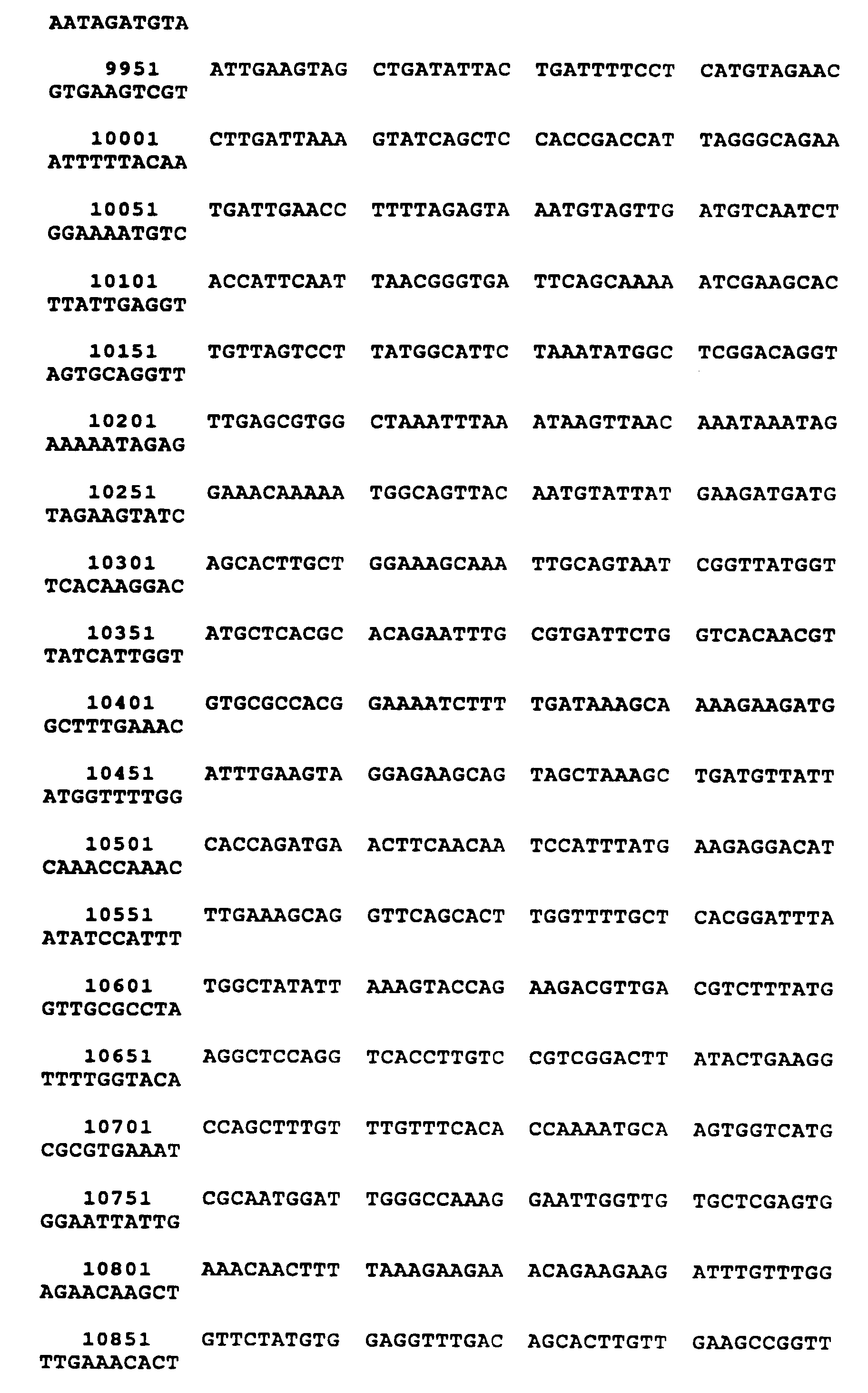
- the invention relates to any nucleic acid comprising all or part of the DNA sequence bounded by the nucleotides located at positions 8018 and 10211 of Figure 2, and coding for one or both subunits of a protein capable of converting pyruvate to ⁇ -acetolactate; and for any other novel polynucleotide, peptide or protein disclosed herein.
- ⁇ -Acetolactate synthase of L. lactis subsp. lactis is a protein consisting of two subunits; the first subunit is a polypeptide of 575 amino acids encoded by the fragment bounded by the nucleotides located at positions 8018 and 9742 of Figure 2, and corresponding to the ilvB gene; the second subunit is a polypeptide of 474 amino acids encoded by the fragment bounded by the nucleotides located at positions 9738 and 10211 of Figure 2, and corresponding to the ilvN gene. Consequently, the ⁇ -acetolactate synthase activity of L. lactis subsp. lactis is possible only if both of these genes are expressed.
- the subject of the invention is, more especially, the fragments of the above nucleic acid coding for one or both subunits of a protein capable of possessing the enzymatic properties of ⁇ -acetolactate synthase of L. lactis subsp. lactis. More specifically, the invention relates to nucleic acids comprising one or other or both of the following segments:
- the invention also relates to the above nucleic acids in which the sequences are modified, provided the polypeptides encoded by these nucleic acids retain their enzymatic properties of the ⁇ -acetolactate synthase type.
- the invention further relates to DNA sequences coding for ⁇ -acetolactate synthase of the pathway of synthesis of the branched amino acids of bacteria of the genus Lactococcus, such as L. plantarum, L. rafinolactis and L. lactis, for instance L. lactis subsp. cremoris; which DNA sequences display a strong homology with the nucleic acid sequence of ilvBN.
- these DNA sequences are identified, and where appropriate selected, by genetic hybridization with one or more nucleic acid probes originating from the above nucleic acid sequences, under moderately stringent conditions.
- a method for the identification of such a DNA sequence comprises the following steps:
- the invention also relates to polypeptide sequences comprising all or part of the polypeptide sequences encoded, on the one hand by the DNA sequence bounded by the nucleotides located at positions 8018 and 9742 of Figure 2, and on the other hand by the DNA sequence bounded by the nucleotides located at positions 9738 and 10211 of Figure 2; these two polypeptides constituting the subunits of a protein possessing the enzymatic properties of ⁇ -acetolactate synthase of L. lactis subsp. lactis.
- the subject of the invention is also any polypeptide sequence originating from each of the above polypeptide sequences, provided the protein formed from these polypeptides possesses enzymatic properties of the type possessed by ⁇ -acetolactate synthase.
- polypeptides may be modified provided they retain the enzymatic properties defined above.
- polypeptides lying within the scope of the invention can differ from those defined above by the addition and/or deletion of one or more amino acids and/or modification of one or more amino acids.
- a person skilled in the art has at his disposal means enabling him to identify those polypeptides of shorter sequences which lie within the field of the invention.
- a general means enabling him to undertake this identification consists in treating each of the above polypeptides with a protease that cleaves the polypeptides at a specific site, and then separating the fragments obtained and testing them for their enzymatic activity with respect to pyruvate.
- Another means enabling regions of the polypeptides which are essential to the ⁇ -acetolactate synthase activity to be identified consists in cleaving the nucleic acids corresponding to the ilvB and ilvN genes, for example using one or more restriction enzymes, before introducing them into the cell host or the expression vector used for the production of a protein displaying ⁇ -acetolactate synthase activity.
- the truncated nucleic acid may thus be tested for its capacity to express effectively a product possessing ⁇ -acetolactate synthase activity or, on the contrary, no longer possessing it.
- the subject of the invention is also any recombinant nucleic acid comprising at least one nucleotide sequence of the abovementioned type coding for ⁇ -acetolactate synthase, combined with at least one promoter and/or one transcription terminator recognized by the polymerases of the host into which the said recombinant nucleic acid is introduced.
- the introduction of the recombinant nucleic acid may be carried out using vectors of the plasmid type capable of replicating in the host microorganism and of permitting the expression therein of the sequence coding for the enzyme, or alternatively the recombinant nucleic acid may be introduced directly into the genome by genetic engineering techniques known to a person skilled in the art.
- the host microorganisms into which the recombinant nucleic acid is capable of being introduced are preferably prokaryotic cells such as Lactococcus lactis , Leuconostoc lactis , Lactobacillus lactis , Lactobacillus plantarum, but may also be eukaryotes such as yeasts.
- the invention relates to all microorganisms capable of being used as leaven in an agri-foodstuffs process, in which microorganisms the recombinant nucleic acid of the invention is introduced for the purpose of obtaining an overproduction of diacetyl in an agri-foodstuffs product such as dairy product derivatives, fermented wheys, soft white cheeses, and the like.
- the introduction of the recombinant nucleic acid of the invention into L. lactis bacteria is combined with an inhibition of the enzyme responsible in these bacteria for the conversion of acetolactate to acetoin ( ⁇ -acetolactate decarboxylase) and/or of the enzyme involved in the conversion of pyruvate to lactate (lactate dehydrogenase), in order to increase the acetolactate pool leading to diacetyl.
- the inhibition of these enzymes may be achieved by all chemical or biological means that enable the metabolic flux towards diacetyl production to be increased; a first biological means consists in deleting all or part of the wild-type genes coding for these enzymes; a second biological means consists in replacing the wild-type genes coding for these enzymes by mutated genes incapable of expressing the enzymes in question.
- the recombinant nucleic acid of the invention may also be introduced into other microorganisms, such as Bacillus, for the production of diacetyl for non-agrifoodstuffs purposes, for example in cosmetology and as an antibacterial.
- the bacterial strains, plasmids and phages used for gene cloning are listed in Table I below.
- L. lactis subsp. lactis strain IL1403 was cultured at 37°C on M17 medium (25) in which lactose was replaced by glucose.
- Escherichia coli was cultured on Luria-Bertani (LB) medium or in M9 minimum medium (26) at 37°C.
- Bacillus subtilis was cultured on a medium at 37°C, on LB medium or in Spizizen-salt minimum medium supplemented with the appropriate amino acids. If necessary, erythromycin (5 ⁇ g/ml for L. lactis subsp. lactis or 0.3 ⁇ g/ml for B. subtilis), ampicillin (50 ⁇ g/ml for E. coli) or tetracycline (10 ⁇ g/ml for E. coli) is added to the medium.
- the plasmids and the chromosomal DNA were prepared according to known techniques of the prior art (26, 27, 28, 29). Transformation of E. coli cells was carried out either by a standard CaCl 2 procedure (36) or by electroporation (30). Induction of competence and transformation of B. subtilis cells were carried out as described by Anagnotopoulos and Spizizen (31), with a few modifications (32). Southern blotting and DNA hybridizations were carried out as described by Maniatis et al. (26). Nucleic acid probes were prepared using [ ⁇ - 32 P]-dCTP and a nick translation kit in accordance with the supplier's recommendation. The other molecular techniques were carried out as described by Maniatis et al. (26).
- the E. coli clones used for sequencing were obtained by subcloning DNA fragments into plasmids of the pBluescript family and using exonuclease III and mung bean nuclease from the company Stratagene in order to generate a series of clones containing overlapping DNA fragments.
- the nucleic acid sequences were determined on both strands.
- B. subtilis strains mutated in the ilvA gene were prepared by transforming competent MT119 cells with pHV438 (34) to Cm R . Integration of this plasmid in the chromosome by double crossing-over replaces the ilvA gene by the Cm R gene (24).
- a representative ilvA leuB6 r - /m - Cm R clone is designated IL2685.
- An ilvD4 leuB6 double mutant of B. subtilis was constructed by transformation, using GSY276 DNA to transform competent 1012 cells to cells which were prototrophic for methionine. The transformed cells were then tested for their requirements for isoleucine and leucine and for the absence of restriction by titration of the rho phage.
- An ilvD4 leuB6 r - /m + clone was designated IL3151.
- Total DNA of L. lactis subsp. lactis NCDO2118 was partially digested with the endonuclease Sau3A1. 20 ⁇ g of the DNA segments of size larger than 10 kb were ligated with 10 ⁇ g of DNA of plasmid vector pIL253 cleaved with BamHI, at a final concentration of 500 ⁇ g/ml.
- the ligated mixture was used to transform competent cells of the mutant B. subtilis strain leuB6 ilV4, IL3151 to isoleucine-independent cells.
- Four transformants were also Em R , and contained 18-, 14.2-, 13.5- or 9.5-kb plasmids designated pIL384, pIL371, pIL374 and pIL373, respectively.
- L. lactis subsp. lactis DNA cleaved with XbaI was cloned into pIL253 using the mutant B. subtilis ilvA strain IL2685 as recipient.
- the transformants were selected on a minimum medium enriched with leucine and tryptophan but lacking isoleucine.
- Figure 1 shows the structure of the DNA region carrying the genes for the enzymes involved in the pathway of synthesis of the branched amino acids in L. lactis.
- the open bars represent the segments used for the complementation experiments in B. subtilis and E. coli. These segments are carried by the plasmids indicated in the figure, which were constructed as described in Table I above.
- the results of the complementation experiments with the mutants listed in Table I are represented by (+) and (-), referring to growth or the absence of growth on the culture medium, lacking the corresponding amino acids.
- the E. coli nomenclature has been used; the leuB and leuC genes of E. coli correspond to the leuC and leuB genes, respectively, of B. subtilis, and the three isoenzymes of acetolactate synthase and of acetohydroxide synthase encoded by ilvBN, ilvIH and ilvGN in E. coli correspond to a single enzyme encoded by ilvBN in B. subtilis.
- the leuA, leuB, leuC, ilvD and ilvA genes complement the corresponding mutations in B. subtilis; the leuA, leuB, leuC, leuD and ilvC genes complement the corresponding mutations in E. coli.
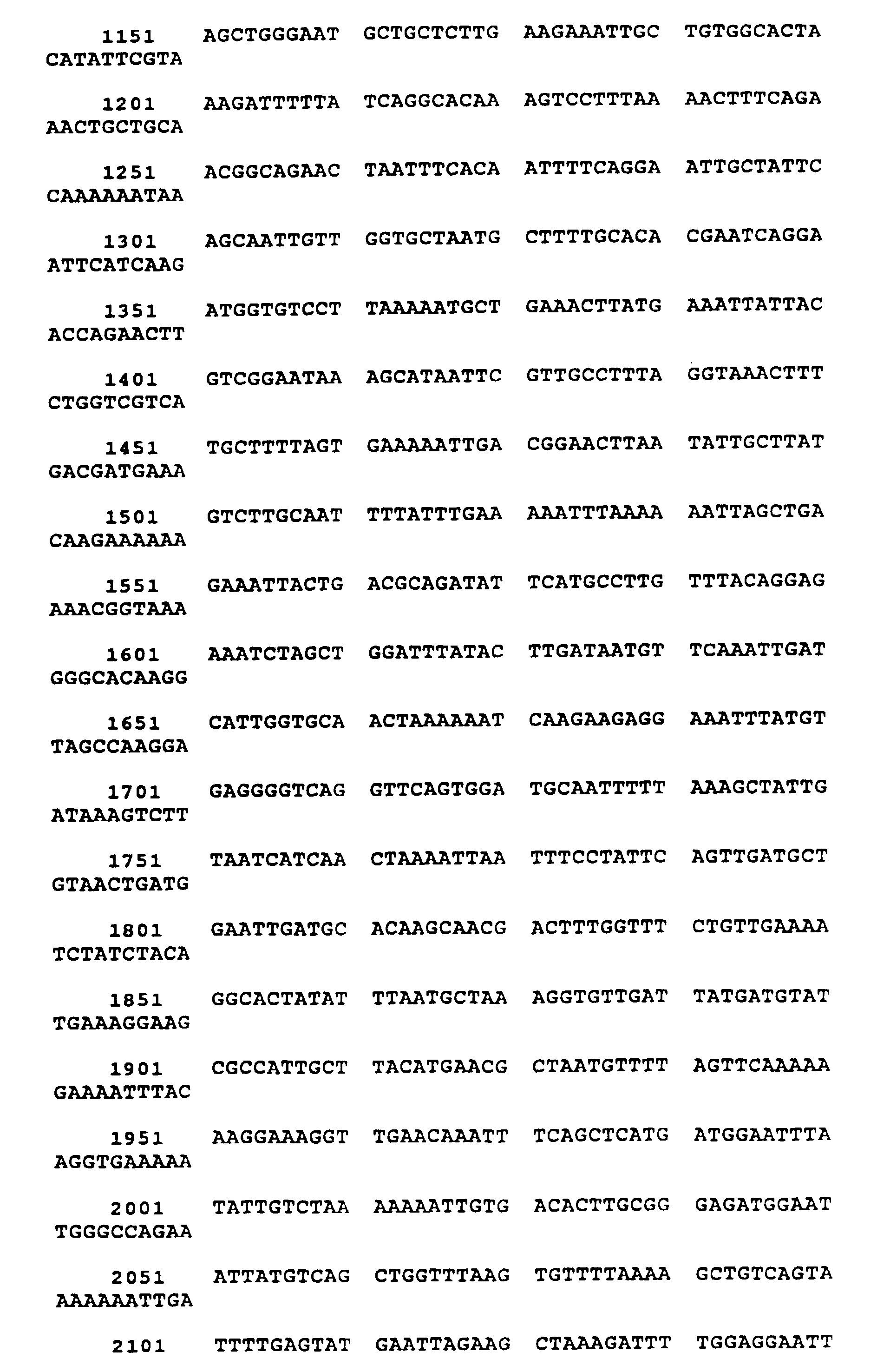
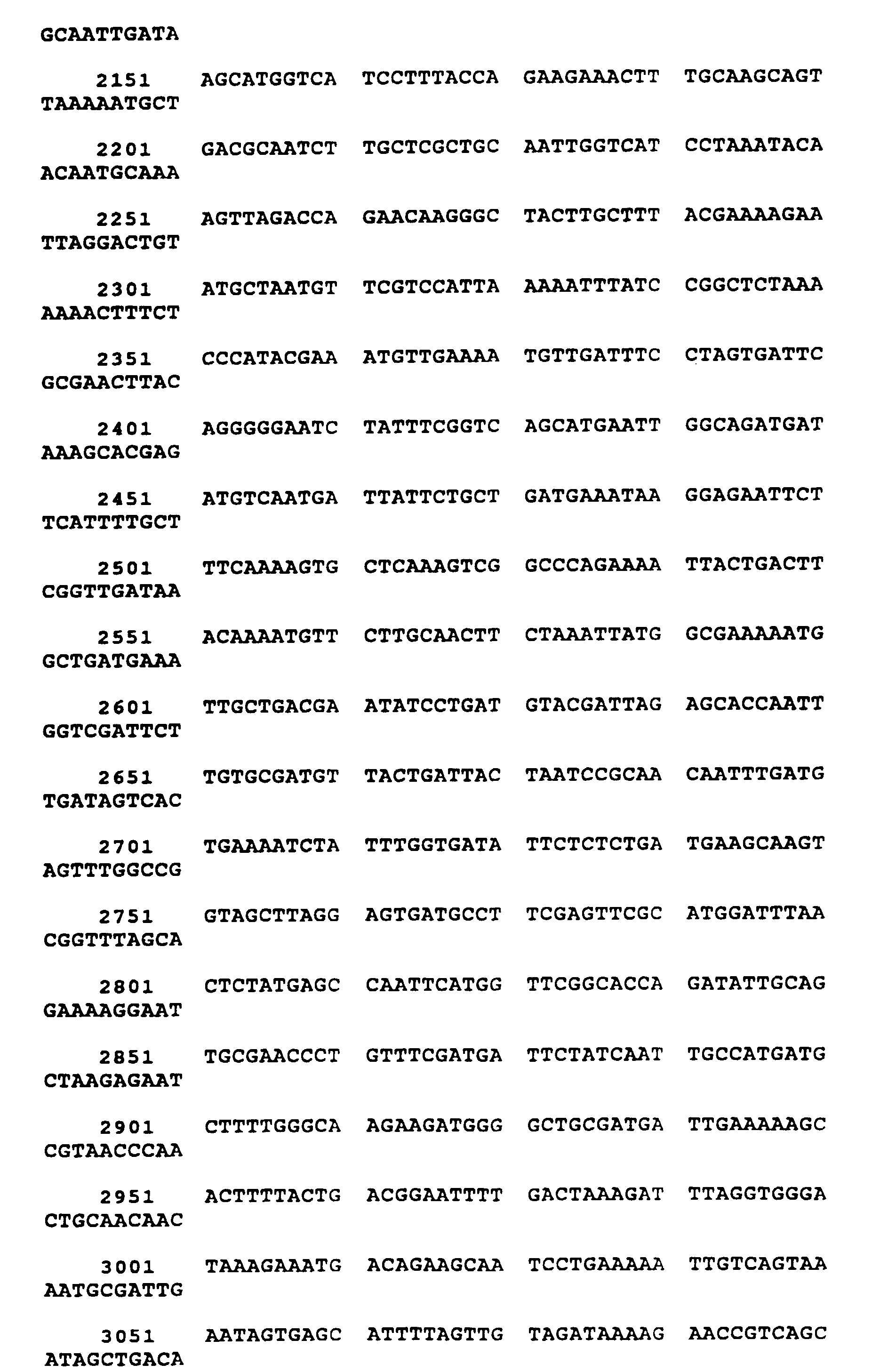
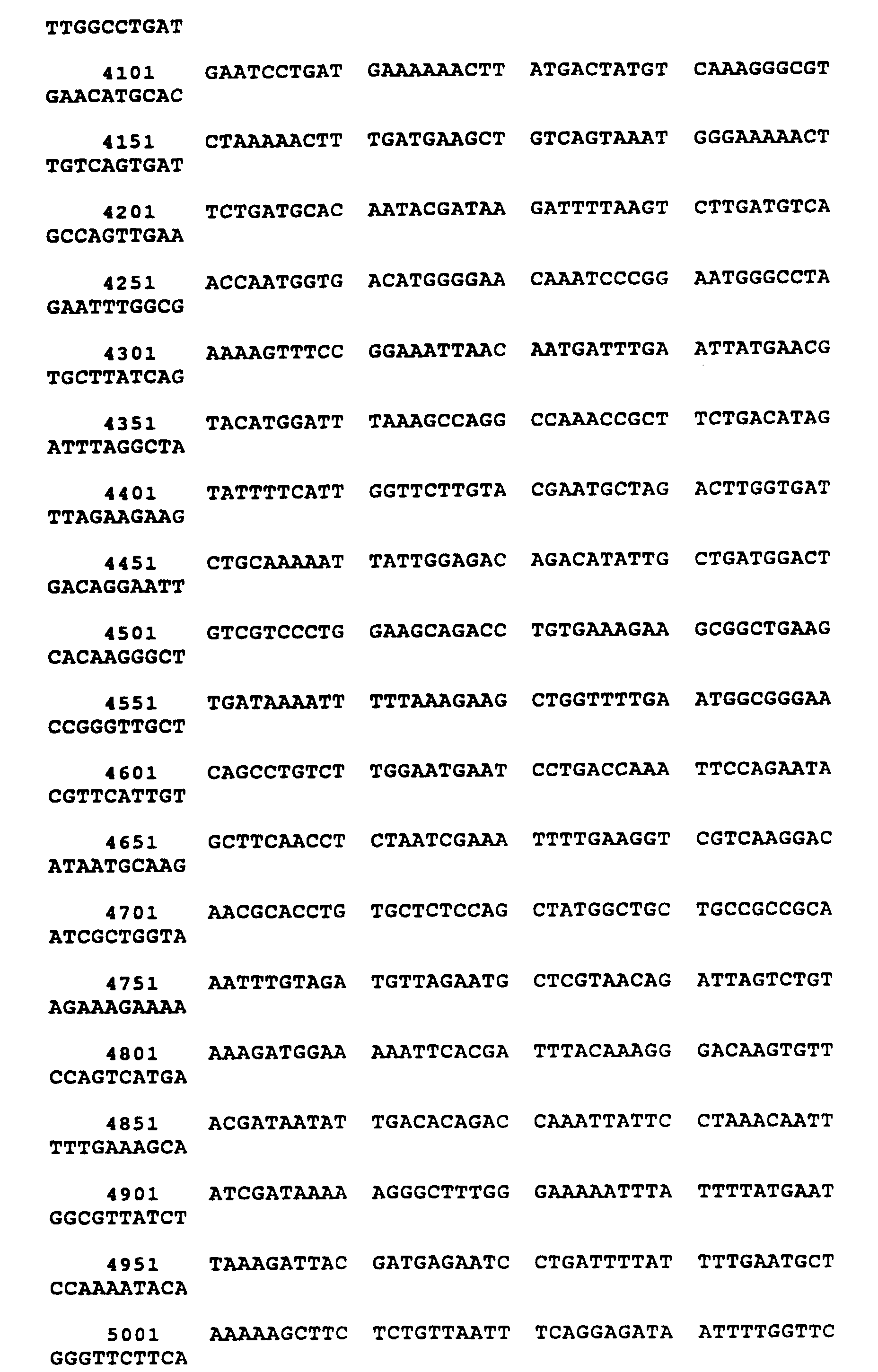
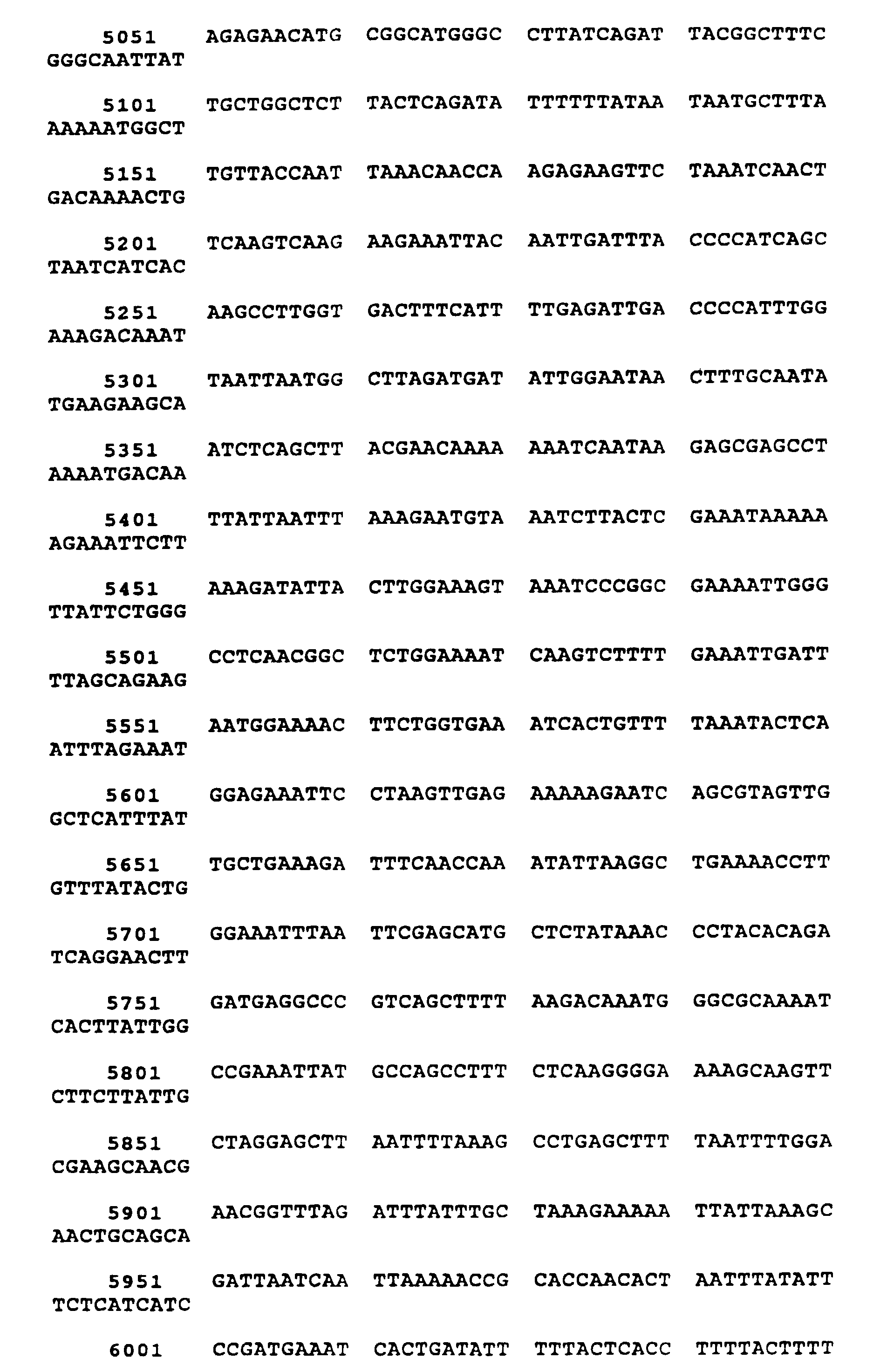
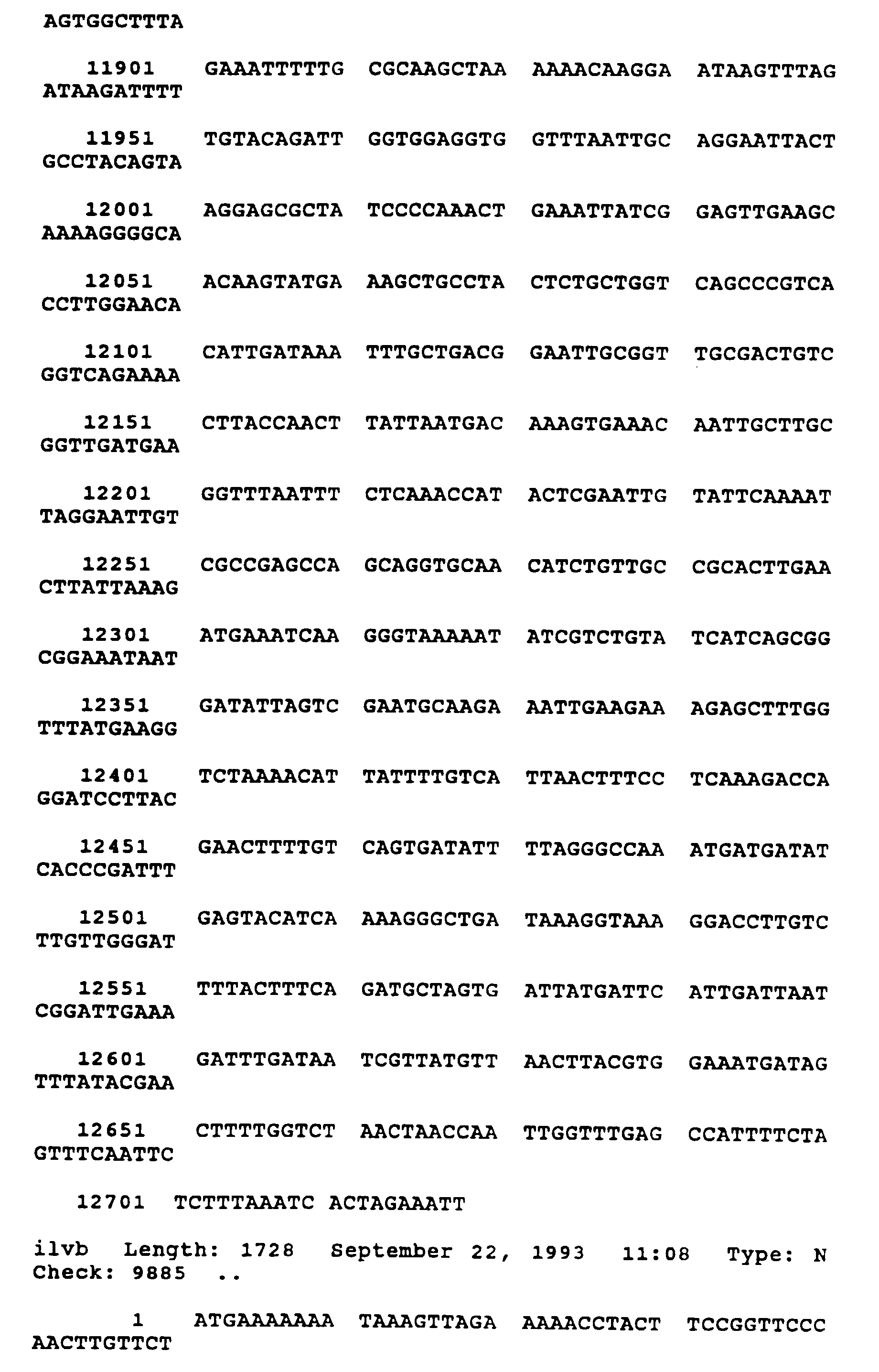
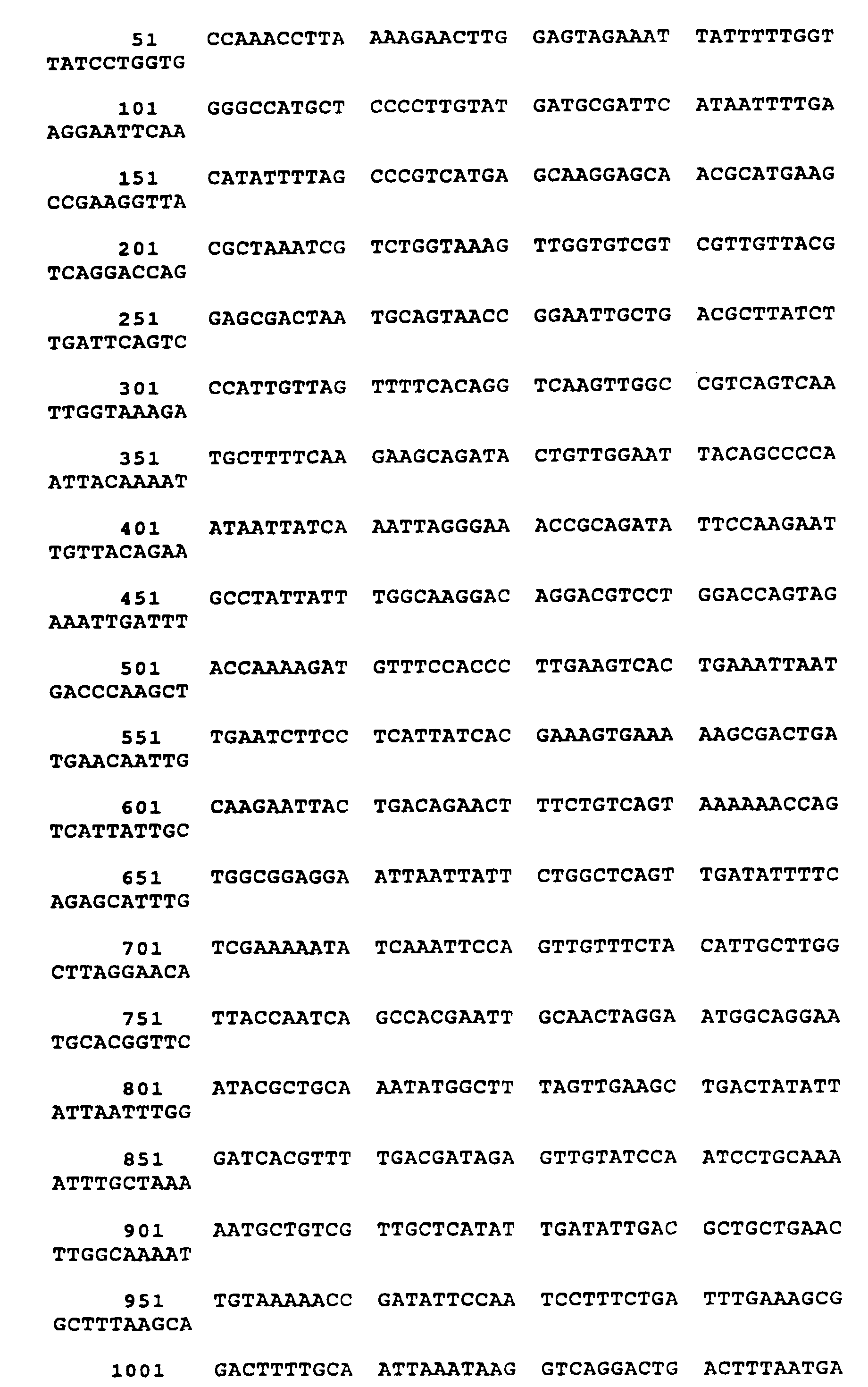
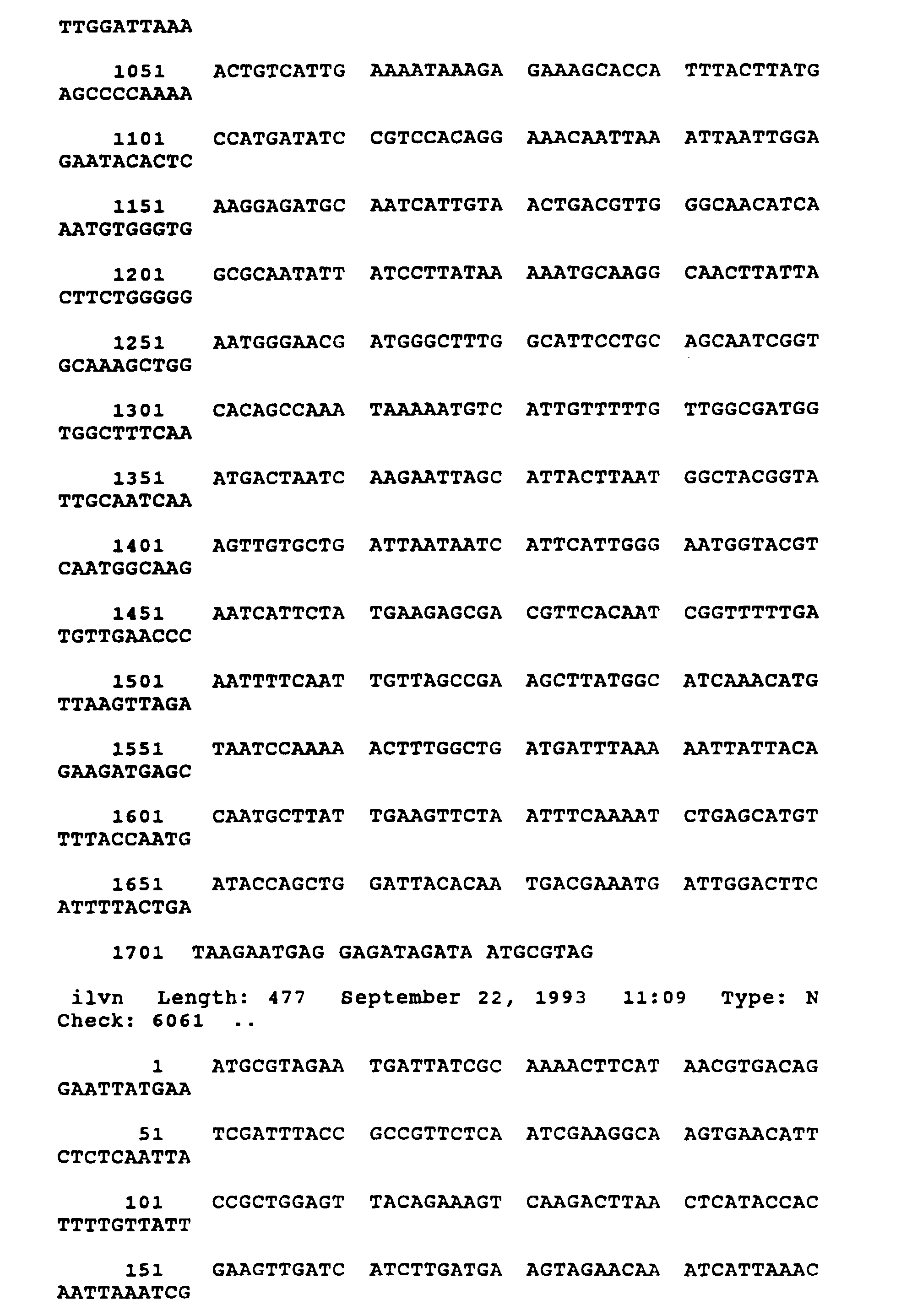
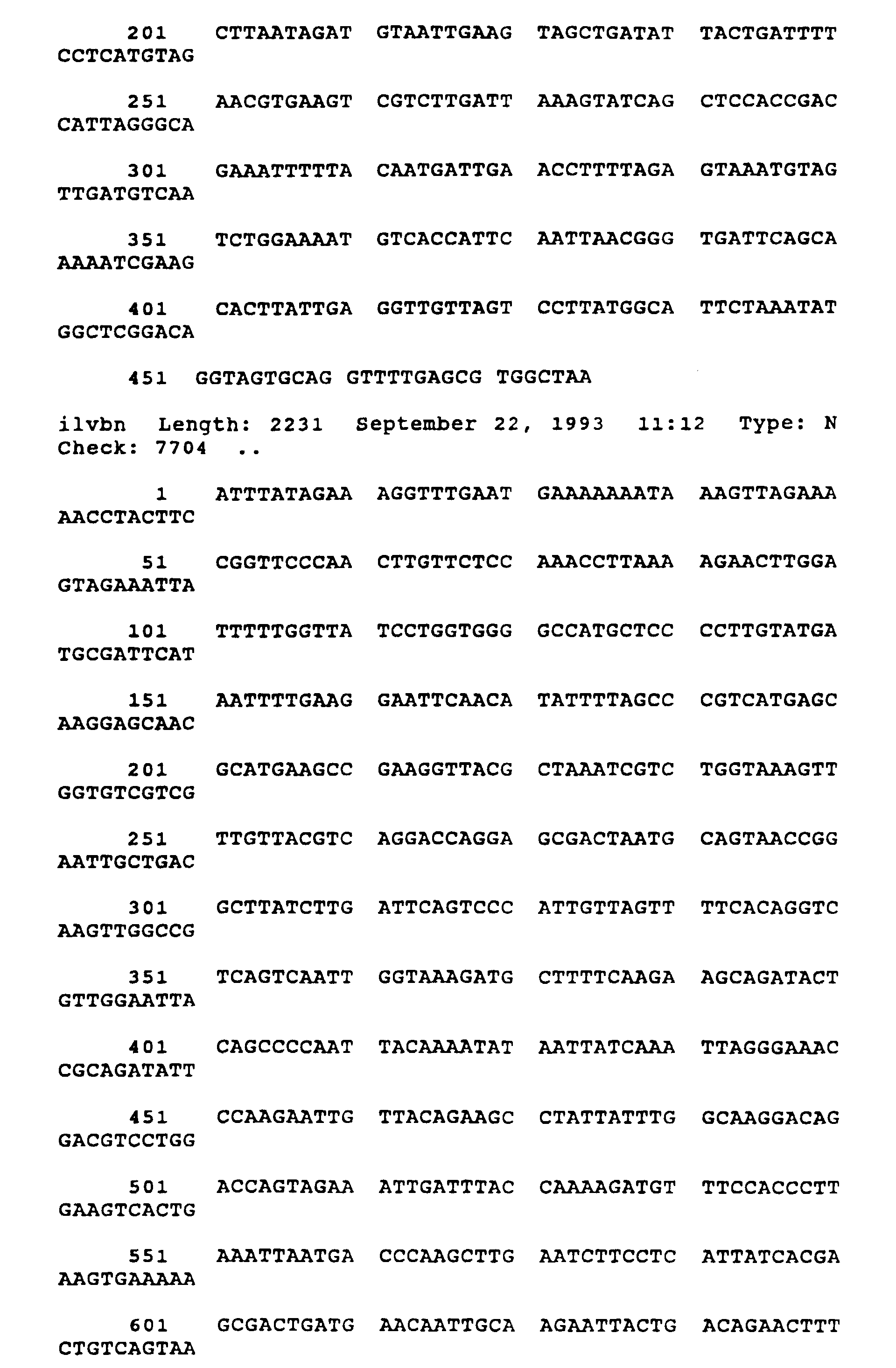
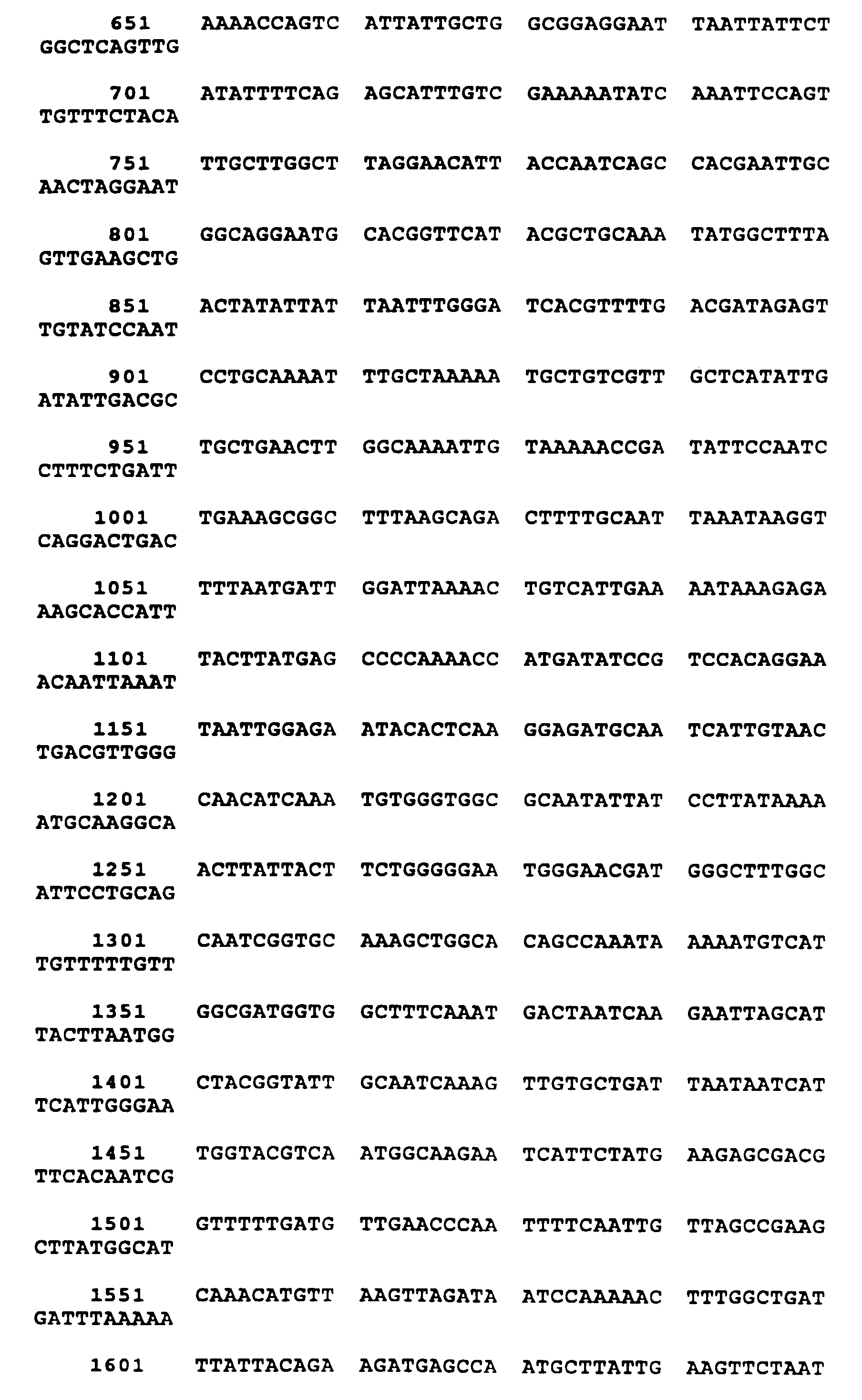
- the nucleotide sequence of a region of 12,720 bp was determined. This sequence is shown in Figure 2.
- a computer analysis according to the method of Griskov et al. (35) discloses ten open reading frames (ORF) of size larger than 200 bp. Each ORF is preceded by a ribosome binding site, complementary to the 3' end of rRNA 163 of L. lactis subsp. lactis (36). All the ORFs begin with the codon ATG, except for the second which begins with the codon TTG; furthermore, four 72-bp repeat units are present between the second and the third ORF.
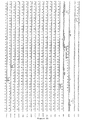
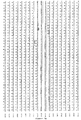
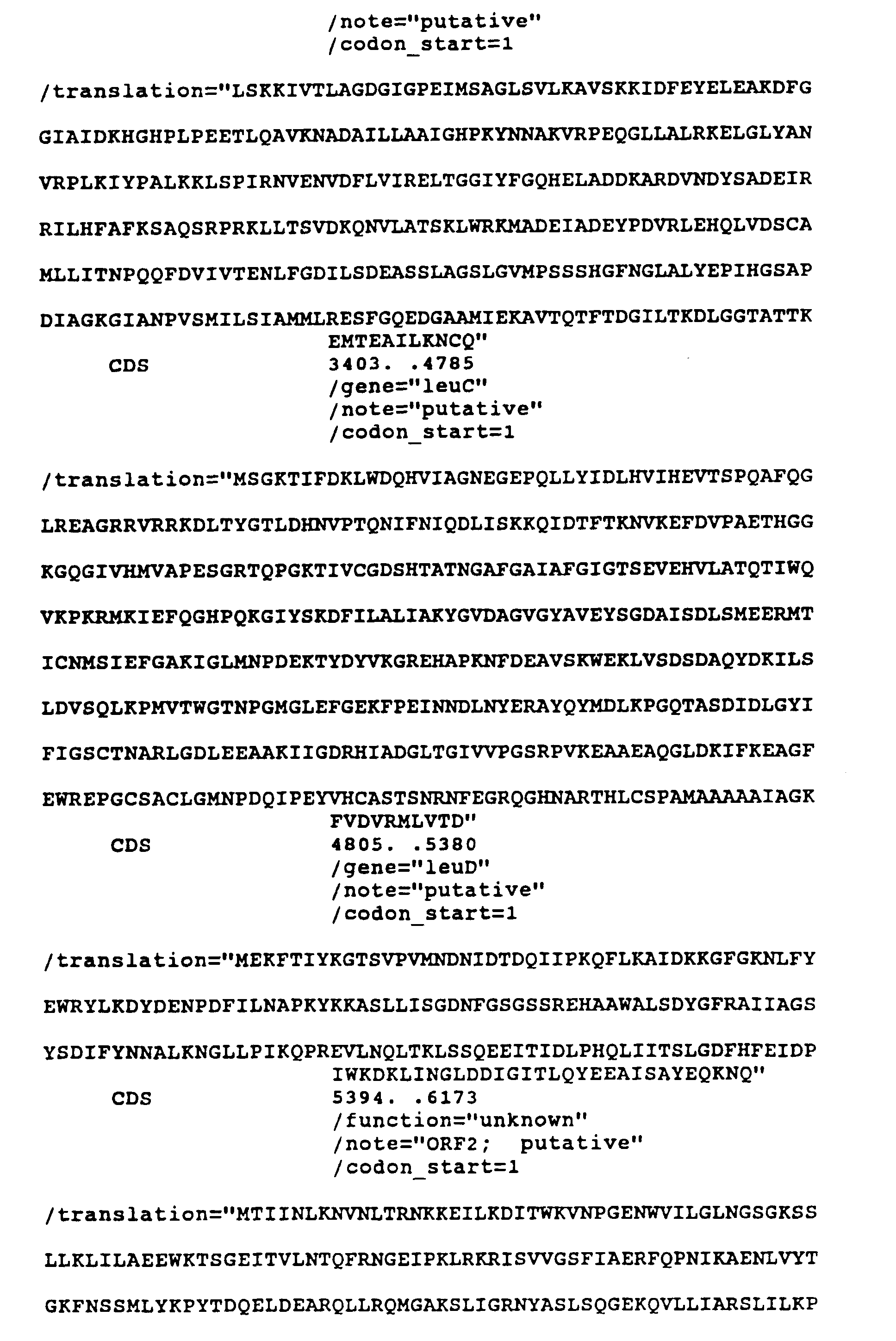
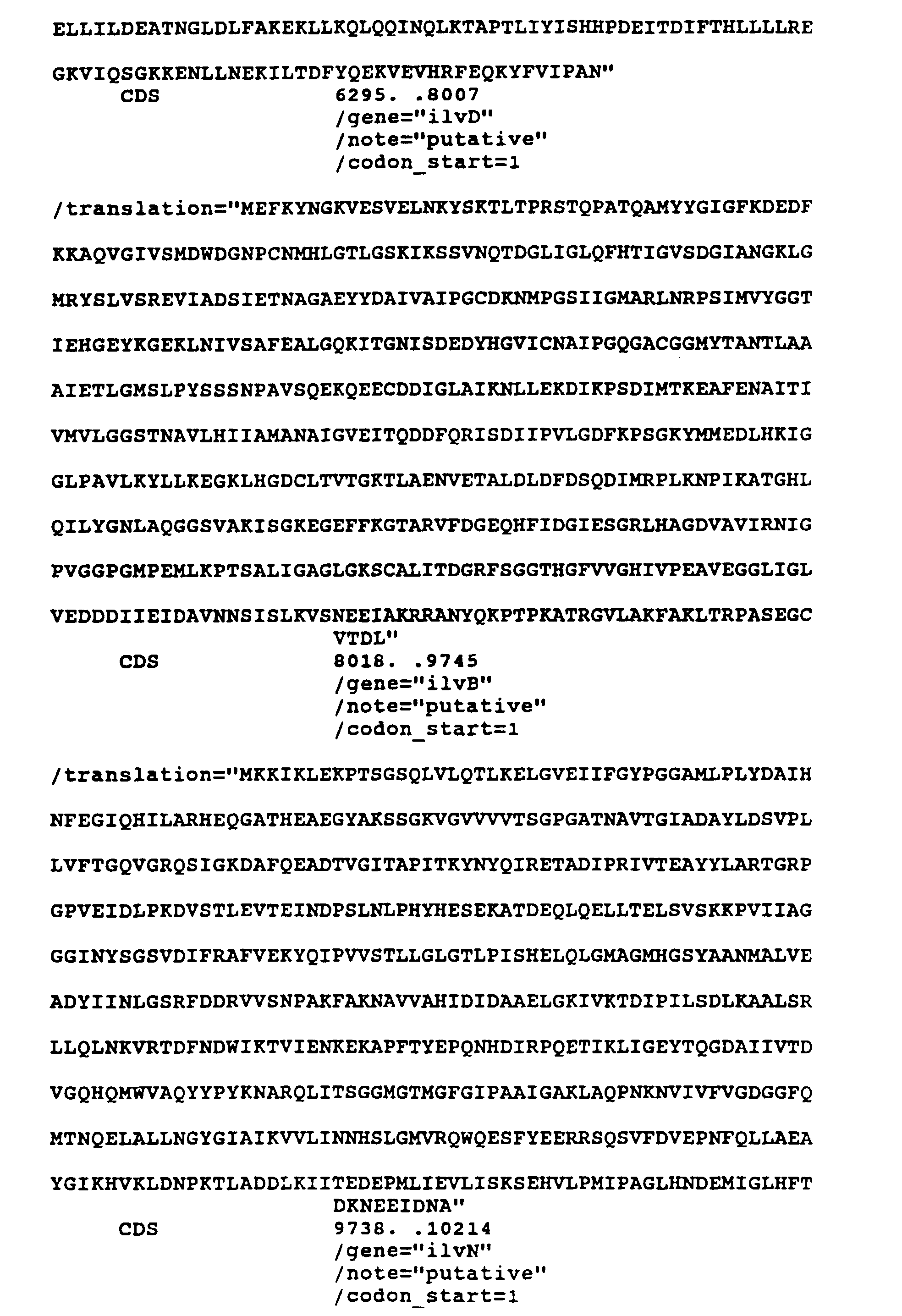
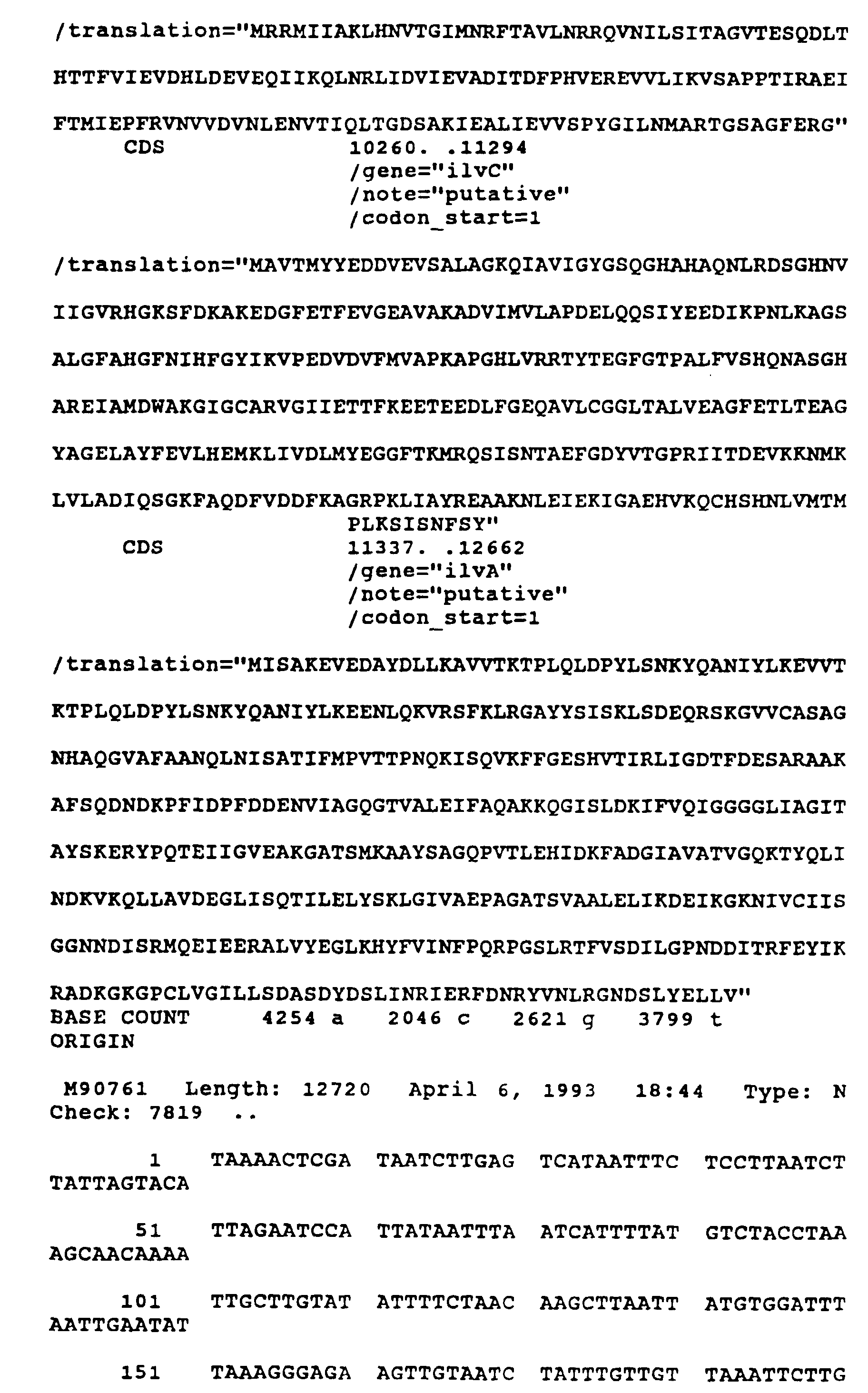
- Figure 2 shows the nucleotide sequence, and the polypeptide sequence deduced from this nucleotide sequence, of the DNA region coding for the genes involved in the pathway of synthesis of the branched amino acids of L. lactis strain NCDO2118; the numbers at the right indicate the position of the oligonucleotides; the names of the genes are indicated at the beginning of each amino acid sequence; the transcription stop codons and also the ribosome binding sites are indicated respectively by (*) and RBS; the consensus sequences "-10" and "-35” of the promoters are underlined; inverted repeat units, which can constitute “preamptors” and “terminators", are numbered (1, 2) and (5, 6), respectively, and those capable of forming "antiterminators” are numbered (3 and 5), (see Figure 4 below); the arrow (----->) indicates the 72-bp direct repeat unit, and the bold characters indicate the 6-bp inverted repeat units which it contains.
- ilvB gene homologous to ilvB, ilvI and ilvG of E. coli
- ilvN gene homologous to ilvH of E. coli
- ORF2 codes for a protein not displaying any homology with the enzymes of the pathway of synthesis of the branched amino acids, but carries two regions that are conserved in a superfamily of ATP-binding proteins (53).
- Figure 3 shows the alignment of 6 ATP-binding proteins with the ORF2 sequence of L. lactis. Needleman's software was used to obtain these results (54).
- Figure 3 shows the alignment of 6 ATP-binding proteins with the ORF2 sequence of L. lactis. Needleman's software was used to obtain these results (54).
- Figure 3 shows the alignment of 6 ATP-binding proteins with the ORF2 sequence of L. lactis. Needleman's software was used to obtain these results (54).
- the transcript carries a 51-bp message, beginning with an ATG codon and ending with a TAG codon, which determines a leader peptide of 16 amino acids, four of which are a succession of leucine and isoleucine (as shown in Figure 4B).
- the ribosome sited at the Leu and Ile codons prevents formation of the termination signal and leads to transcription of the leu genes downstream. Independent transcription "terminators" were not found between the two assemblies of genes or downstream of the ilvA gene.
- the genes involved in the pathway of synthesis of the branched amino acids in L. lactis subsp. lactis are organized in a large assembly divided into two units grouping together the leu and ilv genes. The two units are necessary for the synthesis of leucine, whereas only the second is required for the synthesis of isoleucine and valine.
- a transaminase, involved in the last step of the pathway of synthesis of the branched amino acids (product of the ilvE gene in E. coli), is not encoded by the assembly. This implies that this reaction is implemented by a non-specific transaminase, or alternatively that the corresponding gene in L. lactis subsp. lactis occurs elsewhere on the chromosome.
- leu and ilv genes are both preceded by a promoter; however, they are not separated by an independent transcription "terminator", suggesting that they form a single operon. This operon extends beyond the last biosynthesis gene, ilvA.
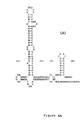
- Figure 4 shows the secondary structures of the leader transcript capable of participating as a mediator in transcription attenuation:
- nucleotides in bold characters indicate the sequence coding for the leader peptide
- nucleotides in bold italics indicate the ribosome binding sites of the leader peptide and the leuA gene. Stalling of the ribosome at the successive Leu and Ile residues could mask unit (1) and favour this topology.
- the isoleucine codon is also present in the leader peptide of L. lactis, following very closely the Leu codons, which is not the case in E. coli, and may hence affect the response of the operon to an arrest of the pathway of synthesis of the branched amino acids. Other studies are necessary to determine whether the model proposed for regulation in E. coli may be applied directly to L. lactis.
- ORF2 inasmuch as it corresponds to a product belonging to the superfamily of ATP-binding proteins, is not a biosynthesis gene in the pathway of synthesis of the branched amino acids.
- the proteins of this superfamily are encountered both in prokaryotes and in eukaryotes, and share a similar base organization (66, 67) .
- prokaryotes most of the members of this superfamily are components of the transport systems involving periplasmic binding proteins. These genes are generally cotranscribed with other genes (67), and have never been found in the biosynthesis operon.
- Other studies are necessary to establish the function of ORF2, but the latter is doubtless involved in the transport of the chain of synthesis of the branched amino acids, or in regulation of the genes of this pathway.
- Isoleucine, leucine and valine represent 20% of the amino acids of L. lactis (68), whereas tryptophan and histidine, two other amino acids whose pathways of biosynthesis in L. lactis have been studied, represent less than 2%. This suggests that a fine regulation of the expression of the genes of the pathway of synthesis of the branched amino acids is necessary.
- the nucleic acid consisting of the DNA sequence bounded by the nucleotides located at positions 7977 and 10246 of Figure 2, and coding for the IlvB and IlvN polypeptides, is amplified by the Taq polymerase chain reaction from the DNA of Figure 2, and using two oligonucleotides located upstream and downstream of the nucleic acid sequence coding for IlvBN.
- the product of the reaction is cloned into an expression vector, such as pIL252, pIL253, pWV01, containing a promoter such as the promoter of the lactose operon or of the tryptophan operon, and where appropriate a terminator.
- an expression vector such as pIL252, pIL253, pWV01, containing a promoter such as the promoter of the lactose operon or of the tryptophan operon, and where appropriate a terminator.
- the plasmid obtained is introduced by transformation into a strain of L. lactis, such as IL1403 or MG1363, which expresses IlvBN at a high level. This results in diversion of a part of the pyruvate pool obtained after glycolysis towards ⁇ -acetolactate, a precursor of diacetyl.
Landscapes
- Chemical & Material Sciences (AREA)
- Life Sciences & Earth Sciences (AREA)
- Health & Medical Sciences (AREA)
- Engineering & Computer Science (AREA)
- Genetics & Genomics (AREA)
- Organic Chemistry (AREA)
- Wood Science & Technology (AREA)
- Zoology (AREA)
- Bioinformatics & Cheminformatics (AREA)
- Biotechnology (AREA)
- General Engineering & Computer Science (AREA)
- Microbiology (AREA)
- Biomedical Technology (AREA)
- General Health & Medical Sciences (AREA)
- Biochemistry (AREA)
- Molecular Biology (AREA)
- Chemical Kinetics & Catalysis (AREA)
- Medicinal Chemistry (AREA)
- General Chemical & Material Sciences (AREA)
- Physics & Mathematics (AREA)
- Biophysics (AREA)
- Plant Pathology (AREA)
- Micro-Organisms Or Cultivation Processes Thereof (AREA)
- Enzymes And Modification Thereof (AREA)
- Preparation Of Compounds By Using Micro-Organisms (AREA)
- Saccharide Compounds (AREA)
Abstract
Description
- Table I shows the bacterial strains, plasmids and phages used for cloning the L. lactis subsp. lactis genes involved in the pathway of synthesis of the branched amino acids;
- Table II shows a comparison of proteins involved in the pathway of synthesis of the branched amino acids between L. lactis subsp. lactis and different microorganisms;
- Figure 1 shows the structure of the region of
L. lactis subsp. lactis DNA carrying the genes involved in
the pathway of synthesis of the branched amino acids;
Figure 2 shows the nucleotide sequence, together with the polypeptide sequence deduced from this nucleotide sequence, of the region of L. lactis subsp. lactis strain NCDO2118 DNA carrying the genes involved in the pathway of synthesis of the branched amino acids; - Figure 3 shows the alignment of 6 ATP-binding proteins with ORF2 of L. lactis;
- Figure 4 shows the secondary structures of the major transcript serving as a transcription attenuator.
- the leuA gene of 1539 nucleotides, located between nucleotides 450 and 1988 and coding for a polypeptide of 513 amino acids;
- the leuB gene of 1041 nucleotides, located between nucleotides 2003 and 3037 and coding for a polypeptide of 347 amino acids;
- the leuC gene of 1380 nucleotides, located between nucleotides 3403 and 4782 and coding for a polypeptide of 460 amino acids;
- the leuD gene of 573 nucleotides, located between nucleotides 4805 and 5377 and coding for a polypeptide of 191 amino acids;
- the orf2 gene of 606 nucleotides, located between nucleotides 5394 and 6170 and coding for a polypeptide of 202 amino acids;
- the ilvD gene of 1710 nucleotides, located between nucleotides 6295 and 8004 and coding for a polypeptide of 570 amino acids;
- the ilvB gene of 1725 nucleotides, located between nucleotides 8018 and 9742 and coding for a polypeptide of 575 amino acids;
- the ilvN gene of 474 nucleotides, located between nucleotides 9738 and 10211 and coding for a polypeptide of 158 amino acids;
- the ilvC gene of 1032 nucleotides, located between nucleotides 10260 and 11291 and coding for a polypeptide of 344 amino acids;
- the ilvA gene of 1323 nucleotides, located between nucleotides 11337 and 12659 and coding for a polypeptide of 441 amino acids.
- the first segment corresponding to the ilvB gene, bounded by the nucleotides located at positions 8018 and 9742 of Figure 2, and coding for the polypeptide of 1725 amino acids corresponding to one of the two subunits of α-acetolactate synthase of L. lactis subsp. lactis;
- the second segment corresponding to the ilvN gene, bounded by the nucleotides located at positions 9738 and 10211 of Figure 2, and coding for the polypeptide of 474 amino acids corresponding to the other subunit of α-acetolactate synthase of L. lactis subsp. lactis.
- extraction of the DNA from the bacterium;
- digestion of this DNA with one or more restriction enzymes such as EcoRI;
- transfer of the DNA fragments obtained onto a nitrocellulose membrane;
- hybridization with the complete ilvBN sequence in a hybridization solution whose composition is: 6 × SSC, approximately 10% formamide, 5 × Denhardt, 100 ml of phosphate buffer pH 7.


- (a) indicates that the percentage was calculated using a software (52) from the percentage identity divided by the size of the smallest protein;
- (b) indicates sequences not available;
- (c) indicates the comparison with IlvB nucleic acid;
- (d) indicates the comparison with IlvN nucleic acid;
- (e) indicates the comparison with IlvI nucleic acid;
- (f) indicates the comparison with IlvH nucleic acid;
- (g) indicates the comparison with IlvC nucleic acid;
- (h) indicates the comparison with IlvM nucleic acid;
- (i) N-terminal end of Leu1;
- (j) C-terminal end of Leu1.
- the binding domains (53) are represented by NB1 and NB2;
- a short sequence shared by all the members of the ATP-dependent family is indicated by the symbols (#);
- the symbols (λ) indicate amino acids common to all the proteins;
- the symbols (.) indicate conserved substitutions;
- the amino acids shown in bold characters are present in at least five proteins;
- the figures at the left indicate the position of the amino acids, and the figures in brackets indicate the size of the proteins;
- the functions of the different proteins are shown
in the following manner:
- (1), nodulation in Rhizobium leguminosarum (55);
- (2), maltose transport in E. coli (56); (56);
- (3), glutamine transport in E. coli (57);
- (4), glycine, betaine and proline transport in E. coli (58);
- (5), haemolysin secretion in E. coli (59);
- (6), cyclolysine secretion in Bordetella pertussis (60).
- at A, the termination topology is shown; units (1) and (2) are paired, and units (5) and (6) form a transcription terminator;
- at B, the antitermination topology is shown; units (3) and (4) are paired, and mask units (5) and (6).








Claims (11)
- Nucleic acid, characterized in that it comprises all or part or a variant of the DNA sequence bounded by the nucleotides located at positions 8018 and 10211 of Figure 2, and in that it codes for one or both subunits of a protein capable of converting pyruvate to α-acetolactate.
- Nucleic acid according to Claim 1, characterized in that it comprises all or part or a variant of the DNA sequence bounded by the nucleotides located at positions 8018 and 9742, and in that it codes for a subunit of a protein capable of converting pyruvate to α-acetolactate.
- Nucleic acid according to Claim 1, characterized in that it comprises all or part or a variant of the DNA sequence bounded by the nucleotides located at positions 9738 and 10211 of Figure 2, and in that it codes for a subunit of a protein capable of converting pyruvate to α-acetolactate.
- Nucleic acid according to Claim 1, characterized in that it comprises the DNA sequence bounded by the nucleotides located at positions 8018 and 9742 and the DNA sequence bounded by the nucleotides located at positions 9738 and 10211, and in that it codes for both subunits of a protein capable of converting pyruvate to α-acetolactate.
- Nucleic acid, characterized in that it comprises at least one nucleotide sequence according to one of Claims 1 to 4, combined with at least one promoter under the control of which transcription of the said sequence is capable of being implemented and, where appropriate, at least one DNA sequence coding for one or more transcription termination signals.
- Recombinant vector capable of transforming a host cell, the said vector containing at least one nucleic acid according to one of Claims 1 to 5, under the control of regulatory elements permitting expression of this nucleic acid in the host cell.
- Method for the transformation of a microorganism, in particular of the type capable of being used as leaven, characterized in that at least one nucleic acid according to Claim 5 is introduced directly into the DNA of the said microorganism.
- Method for the transformation of a microorganism, in particular of the type capable of being used as leaven, characterized in that at least one recombinant vector according to Claim 6 is introduced into the said microorganism.
- Microorganism, in particular of the type capable of being used as leaven, characterized in that it is transformed with at least one nucleic acid according to one of Claims 1 to 5.
- Microorganism according to Claim 9, characterized in that its genes coding for lactate dehydrogenase and/or α-acetolactate decarboxylase are inactivated.
- Protein possessing α-acetolactate synthase activity, characterized in that it consists of a first polypeptide comprising all or part of the polypeptide sequence of Figure 2 encoded by the nucleic acid according to Claim 2, and a second polypeptide comprising all or part of the polypeptide sequence of Figure 2 encoded by the nucleic acid according to Claim 3.
Applications Claiming Priority (3)
| Application Number | Priority Date | Filing Date | Title |
|---|---|---|---|
| FR9211470 | 1992-09-25 | ||
| FR9211470A FR2696190B1 (en) | 1992-09-25 | 1992-09-25 | Nucleic acid coding for an alpha-acetolactate synthase and its applications. |
| PCT/GB1993/002012 WO1994008020A1 (en) | 1992-09-25 | 1993-09-27 | Nucleic acid coding for an alpha-acetolactate synthase from lactococcus and its applications |
Publications (2)
| Publication Number | Publication Date |
|---|---|
| EP0667907A1 EP0667907A1 (en) | 1995-08-23 |
| EP0667907B1 true EP0667907B1 (en) | 1998-01-07 |
Family
ID=9433906
Family Applications (1)
| Application Number | Title | Priority Date | Filing Date |
|---|---|---|---|
| EP93921008A Expired - Lifetime EP0667907B1 (en) | 1992-09-25 | 1993-09-27 | Nucleic acid coding for an alpha-acetolactate synthase from lactococcus and its applications |
Country Status (7)
| Country | Link |
|---|---|
| US (1) | US5643779A (en) |
| EP (1) | EP0667907B1 (en) |
| AT (1) | ATE161887T1 (en) |
| DE (1) | DE69316234D1 (en) |
| DK (1) | DK0667907T3 (en) |
| FR (1) | FR2696190B1 (en) |
| WO (1) | WO1994008020A1 (en) |
Families Citing this family (26)
| Publication number | Priority date | Publication date | Assignee | Title |
|---|---|---|---|---|
| US6455678B1 (en) * | 1996-04-26 | 2002-09-24 | Amcell Corporation | Human hematopoietic stem and progenitor cell antigen |
| PT985043E (en) † | 1997-05-30 | 2007-07-13 | Chr Hansen As | Lactic acid bacterial starter cultures and compositions thereof |
| US6451581B1 (en) | 1997-10-28 | 2002-09-17 | E.I. Du Pont De Nemours And Company | Plant branched-chain amino acid biosynthetic enzymes |
| US6348643B1 (en) | 1998-10-29 | 2002-02-19 | American Cyanamid Company | DNA sequences encoding the arabidopsis acetohydroxy-acid synthase small subunit and methods of use |
| WO2003066849A2 (en) * | 2002-02-04 | 2003-08-14 | Affinium Pharmaceuticals, Inc. | Novel purified polypeptides from staphylococcus aureus |
| EP1495127A4 (en) * | 2002-02-20 | 2007-03-21 | Univ Georgia Res Found | MICROBIAL PREPARATION OF PYRUVATE AND OTHER METABOLITES |
| US8278076B2 (en) * | 2002-02-20 | 2012-10-02 | University Of Georgia Research Foundation, Inc. | Microbial production of pyruvate and pyruvate derivatives |
| ES2379553T3 (en) * | 2003-08-29 | 2012-04-27 | Instituto Nacional De Tecnologia Agropecuaria | Rice plants that have increased tolerance to imidazolinone herbicides |
| CN101031646B (en) * | 2004-07-30 | 2013-09-25 | 巴斯夫农业化学产品公司 | Herbicide-resistant sunflower plants, plynucleotides encoding herbicide-resistant acetohydroxy acid synthase large subunit proteins, and methods of use |
| MX2007010552A (en) * | 2005-03-02 | 2009-02-19 | Inst Nac De Tecnologia Agropec | Herbicide-resistant rice plants, polynucleotides encoding herbicide-resistant acetohydroxyacid synthase large subunit proteins, and methods of use. |
| JP5265356B2 (en) * | 2005-07-01 | 2013-08-14 | ビーエーエスエフ ソシエタス・ヨーロピア | Herbicide tolerant sunflower plant, herbicide tolerant acetohydroxy acid synthase large subunit protein polynucleotide and method of use |
| US8956850B2 (en) | 2008-06-05 | 2015-02-17 | Butamax Advanced Biofuels Llc | Enhanced pyruvate to acetolactate conversion in yeast |
| US8945899B2 (en) | 2007-12-20 | 2015-02-03 | Butamax Advanced Biofuels Llc | Ketol-acid reductoisomerase using NADH |
| UA108733C2 (en) | 2006-12-12 | 2015-06-10 | Sunflower herbicide tolerant to herbicide | |
| US10017827B2 (en) | 2007-04-04 | 2018-07-10 | Nidera S.A. | Herbicide-resistant sunflower plants with multiple herbicide resistant alleles of AHASL1 and methods of use |
| WO2008130995A2 (en) | 2007-04-18 | 2008-10-30 | E. I. Du Pont De Nemours And Company | Fermentive production of isobutanol using highly active ketol-acid reductoisomerase enzymes |
| US20100081154A1 (en) * | 2008-09-29 | 2010-04-01 | Butamax(Tm) Advanced Biofuels Llc | IDENTIFICATION AND USE OF BACTERIAL [2Fe-2S] DIHYDROXY-ACID DEHYDRATASES |
| BRPI0913681A2 (en) * | 2008-09-29 | 2019-09-24 | Butamax Advanced Biofuels Llc | "Recombinant lactic acid bacterial cell and isobutanol production method" |
| US8232089B2 (en) | 2009-08-12 | 2012-07-31 | Gevo, Inc. | Cytosolic isobutanol pathway localization for the production of isobutanol |
| JP5805094B2 (en) * | 2009-09-29 | 2015-11-04 | ビュータマックス・アドバンスド・バイオフューエルズ・エルエルシー | Fermentative production of isobutanol using highly effective ketolate reductoisomerase enzyme |
| KR20130027063A (en) | 2010-02-17 | 2013-03-14 | 부타맥스 어드밴스드 바이오퓨얼스 엘엘씨 | Improving activity of fe-s cluster requiring proteins |
| US9790521B2 (en) | 2011-03-24 | 2017-10-17 | Butamax Advanced Biofuels Llc | Host cells and methods for production of isobutanol |
| CA2873109A1 (en) | 2012-05-11 | 2013-11-28 | Butamax Advanced Biofuels Llc | Ketol-acid reductoisomerase enzymes and methods of use |
| BR112015006691A2 (en) | 2012-09-26 | 2017-12-12 | Butamax Advanced Biofuels Llc | recombinant host cell, composition, polypeptide, polynucleotides and recombinant vector |
| WO2014106107A2 (en) | 2012-12-28 | 2014-07-03 | Butamax (Tm) Advanced Biofuels Llc | Dhad variants for butanol production |
| WO2014151190A1 (en) | 2013-03-15 | 2014-09-25 | Butamax Advanced Biofuels Llc | Dhad variants and methods of screening |
Family Cites Families (2)
| Publication number | Priority date | Publication date | Assignee | Title |
|---|---|---|---|---|
| DE3942947A1 (en) * | 1989-12-23 | 1991-06-27 | Forschungszentrum Juelich Gmbh | METHOD FOR PRODUCING L-ISOLEUCIN AND DAFUER-SUITABLE MICRO-ORGANISMS AND RECOMBINANT DNA |
| ATE171214T1 (en) * | 1991-02-22 | 1998-10-15 | Unilever Nv | METHOD FOR PRODUCING ALPHA-ACETOLACTIC ACID |
-
1992
- 1992-09-25 FR FR9211470A patent/FR2696190B1/en not_active Expired - Fee Related
-
1993
- 1993-09-27 DK DK93921008T patent/DK0667907T3/en active
- 1993-09-27 US US08/403,866 patent/US5643779A/en not_active Expired - Fee Related
- 1993-09-27 WO PCT/GB1993/002012 patent/WO1994008020A1/en not_active Ceased
- 1993-09-27 EP EP93921008A patent/EP0667907B1/en not_active Expired - Lifetime
- 1993-09-27 AT AT93921008T patent/ATE161887T1/en active
- 1993-09-27 DE DE69316234T patent/DE69316234D1/en not_active Expired - Lifetime
Also Published As
| Publication number | Publication date |
|---|---|
| US5643779A (en) | 1997-07-01 |
| WO1994008020A1 (en) | 1994-04-14 |
| DE69316234D1 (en) | 1998-02-12 |
| FR2696190B1 (en) | 1994-12-09 |
| ATE161887T1 (en) | 1998-01-15 |
| DK0667907T3 (en) | 1998-09-07 |
| FR2696190A1 (en) | 1994-04-01 |
| EP0667907A1 (en) | 1995-08-23 |
Similar Documents
| Publication | Publication Date | Title |
|---|---|---|
| US5643779A (en) | Nucleic acid coding for an α-acetolactate synthase from lactococcus and its applications | |
| Godon et al. | Branched-chain amino acid biosynthesis genes in Lactococcus lactis subsp. lactis | |
| JP4469005B2 (en) | Artificial promoter library for selected organisms and promoters derived from the library | |
| Godon et al. | Gene inactivation in Lactococcus lactis: branched-chain amino acid biosynthesis | |
| US4965197A (en) | Coryneform expression and secretion system | |
| Avarez-Morales et al. | Activation of the Bradyrhizobium japonicum nifH and nifDK operons is dependent on promoter-upstream DNA sequences | |
| CA2302434A1 (en) | Yeast strains for the production of lactic acid | |
| Bardowski et al. | Tryptophan biosynthesis genes in Lactococcus lactis subsp. lactis | |
| US5426047A (en) | Plasmid pBUL1 derived from a lactobacillus and derivatives thereof | |
| US5914248A (en) | Method for controlling the gene expression in lactic acid bacteria | |
| Vesanto et al. | Characterization and expression of the Lactobacillus helveticus pepC gene encoding a general aminopeptidase | |
| JPH1084978A (en) | Improved riboflavin production | |
| EP0925364A1 (en) | A lactic acid bacterial regulatable expression system | |
| EP0355036B1 (en) | Process for selecting and maintaining recombinant DNA in lactic acid bacteria | |
| DK1761557T4 (en) | New gene from Bacillus licheniformis, AS FORMING OR DEPLETE polyaminoacids AND BASES END END IMPROVED BIOTEKNOLOGIKSE PRODUCTION METHODS | |
| JPH10234375A (en) | Multi cloning vector | |
| WO1994000581A1 (en) | Lactobacillus expression system using surface protein gene sequences | |
| AU779939B2 (en) | Compartmentalization of recombinant polypeptides in host cells | |
| Morel et al. | Autoregulation of the biosynthesis of the CcpA-like protein, PepR1, in Lactobacillus delbrueckii subsp bulgaricus | |
| CA2061689C (en) | Process for the preparation of alpha-acetolactic acid | |
| WO1988009821A1 (en) | Coryneform expression and secretion system | |
| Gosalbes et al. | Use of lac regulatory elements for gene expression in Lactobacillus casei | |
| JP4551870B2 (en) | Genes involved in the growth promoting function of acetic acid bacteria and use thereof | |
| Han et al. | Molecular cloning of the leuB genes from Mycobacterium bovis BCG and Mycobacterium tuberculosis | |
| BOVIS | Vol. 41, No, 4, April 1997 BIOCHEMISTRY and MOLECULAR BIOLOGY INTERNATIONAL Poges 657-663 |
Legal Events
| Date | Code | Title | Description |
|---|---|---|---|
| PUAI | Public reference made under article 153(3) epc to a published international application that has entered the european phase |
Free format text: ORIGINAL CODE: 0009012 |
|
| 17P | Request for examination filed |
Effective date: 19950310 |
|
| AK | Designated contracting states |
Kind code of ref document: A1 Designated state(s): AT BE CH DE DK ES FR GB GR IE IT LI LU MC NL PT SE |
|
| 17Q | First examination report despatched |
Effective date: 19960411 |
|
| GRAG | Despatch of communication of intention to grant |
Free format text: ORIGINAL CODE: EPIDOS AGRA |
|
| GRAG | Despatch of communication of intention to grant |
Free format text: ORIGINAL CODE: EPIDOS AGRA |
|
| GRAH | Despatch of communication of intention to grant a patent |
Free format text: ORIGINAL CODE: EPIDOS IGRA |
|
| RAP1 | Party data changed (applicant data changed or rights of an application transferred) |
Owner name: BIOTECHNOLOGY AND BIOLOGICAL SCIENCES RESEARCH COU |
|
| GRAH | Despatch of communication of intention to grant a patent |
Free format text: ORIGINAL CODE: EPIDOS IGRA |
|
| GRAA | (expected) grant |
Free format text: ORIGINAL CODE: 0009210 |
|
| AK | Designated contracting states |
Kind code of ref document: B1 Designated state(s): AT BE CH DE DK ES FR GB GR IE IT LI LU MC NL PT SE |
|
| PG25 | Lapsed in a contracting state [announced via postgrant information from national office to epo] |
Ref country code: NL Free format text: LAPSE BECAUSE OF FAILURE TO SUBMIT A TRANSLATION OF THE DESCRIPTION OR TO PAY THE FEE WITHIN THE PRESCRIBED TIME-LIMIT Effective date: 19980107 Ref country code: LI Free format text: LAPSE BECAUSE OF FAILURE TO SUBMIT A TRANSLATION OF THE DESCRIPTION OR TO PAY THE FEE WITHIN THE PRESCRIBED TIME-LIMIT Effective date: 19980107 Ref country code: IT Free format text: LAPSE BECAUSE OF FAILURE TO SUBMIT A TRANSLATION OF THE DESCRIPTION OR TO PAY THE FEE WITHIN THE PRESCRIBED TIME-LIMIT;WARNING: LAPSES OF ITALIAN PATENTS WITH EFFECTIVE DATE BEFORE 2007 MAY HAVE OCCURRED AT ANY TIME BEFORE 2007. THE CORRECT EFFECTIVE DATE MAY BE DIFFERENT FROM THE ONE RECORDED. Effective date: 19980107 Ref country code: GR Free format text: LAPSE BECAUSE OF FAILURE TO SUBMIT A TRANSLATION OF THE DESCRIPTION OR TO PAY THE FEE WITHIN THE PRESCRIBED TIME-LIMIT Effective date: 19980107 Ref country code: FR Free format text: LAPSE BECAUSE OF FAILURE TO SUBMIT A TRANSLATION OF THE DESCRIPTION OR TO PAY THE FEE WITHIN THE PRESCRIBED TIME-LIMIT Effective date: 19980107 Ref country code: ES Free format text: THE PATENT HAS BEEN ANNULLED BY A DECISION OF A NATIONAL AUTHORITY Effective date: 19980107 Ref country code: CH Free format text: LAPSE BECAUSE OF FAILURE TO SUBMIT A TRANSLATION OF THE DESCRIPTION OR TO PAY THE FEE WITHIN THE PRESCRIBED TIME-LIMIT Effective date: 19980107 Ref country code: BE Free format text: LAPSE BECAUSE OF FAILURE TO SUBMIT A TRANSLATION OF THE DESCRIPTION OR TO PAY THE FEE WITHIN THE PRESCRIBED TIME-LIMIT Effective date: 19980107 Ref country code: AT Free format text: LAPSE BECAUSE OF FAILURE TO SUBMIT A TRANSLATION OF THE DESCRIPTION OR TO PAY THE FEE WITHIN THE PRESCRIBED TIME-LIMIT Effective date: 19980107 |
|
| REF | Corresponds to: |
Ref document number: 161887 Country of ref document: AT Date of ref document: 19980115 Kind code of ref document: T |
|
| REG | Reference to a national code |
Ref country code: CH Ref legal event code: EP |
|
| REF | Corresponds to: |
Ref document number: 69316234 Country of ref document: DE Date of ref document: 19980212 |
|
| PG25 | Lapsed in a contracting state [announced via postgrant information from national office to epo] |
Ref country code: SE Free format text: LAPSE BECAUSE OF FAILURE TO SUBMIT A TRANSLATION OF THE DESCRIPTION OR TO PAY THE FEE WITHIN THE PRESCRIBED TIME-LIMIT Effective date: 19980407 |
|
| PG25 | Lapsed in a contracting state [announced via postgrant information from national office to epo] |
Ref country code: PT Free format text: LAPSE BECAUSE OF FAILURE TO SUBMIT A TRANSLATION OF THE DESCRIPTION OR TO PAY THE FEE WITHIN THE PRESCRIBED TIME-LIMIT Effective date: 19980408 Ref country code: DE Free format text: LAPSE BECAUSE OF FAILURE TO SUBMIT A TRANSLATION OF THE DESCRIPTION OR TO PAY THE FEE WITHIN THE PRESCRIBED TIME-LIMIT Effective date: 19980408 |
|
| NLV1 | Nl: lapsed or annulled due to failure to fulfill the requirements of art. 29p and 29m of the patents act | ||
| REG | Reference to a national code |
Ref country code: IE Ref legal event code: FG4D Free format text: 78237 |
|
| EN | Fr: translation not filed | ||
| REG | Reference to a national code |
Ref country code: CH Ref legal event code: PL |
|
| REG | Reference to a national code |
Ref country code: DK Ref legal event code: T3 |
|
| REG | Reference to a national code |
Ref country code: IE Ref legal event code: FD4D Ref document number: 78237 Country of ref document: IE |
|
| PGFP | Annual fee paid to national office [announced via postgrant information from national office to epo] |
Ref country code: DK Payment date: 19980928 Year of fee payment: 6 |
|
| PGFP | Annual fee paid to national office [announced via postgrant information from national office to epo] |
Ref country code: MC Payment date: 19980930 Year of fee payment: 6 Ref country code: LU Payment date: 19980930 Year of fee payment: 6 |
|
| PGFP | Annual fee paid to national office [announced via postgrant information from national office to epo] |
Ref country code: GB Payment date: 19981001 Year of fee payment: 6 |
|
| PLBE | No opposition filed within time limit |
Free format text: ORIGINAL CODE: 0009261 |
|
| STAA | Information on the status of an ep patent application or granted ep patent |
Free format text: STATUS: NO OPPOSITION FILED WITHIN TIME LIMIT |
|
| 26N | No opposition filed | ||
| PG25 | Lapsed in a contracting state [announced via postgrant information from national office to epo] |
Ref country code: LU Free format text: LAPSE BECAUSE OF NON-PAYMENT OF DUE FEES Effective date: 19990927 Ref country code: GB Free format text: LAPSE BECAUSE OF NON-PAYMENT OF DUE FEES Effective date: 19990927 Ref country code: DK Free format text: LAPSE BECAUSE OF NON-PAYMENT OF DUE FEES Effective date: 19990927 |
|
| PGFP | Annual fee paid to national office [announced via postgrant information from national office to epo] |
Ref country code: IE Payment date: 19991031 Year of fee payment: 7 |
|
| PG25 | Lapsed in a contracting state [announced via postgrant information from national office to epo] |
Ref country code: MC Free format text: LAPSE BECAUSE OF NON-PAYMENT OF DUE FEES Effective date: 20000331 |
|
| GBPC | Gb: european patent ceased through non-payment of renewal fee |
Effective date: 19990927 |
|
| PG25 | Lapsed in a contracting state [announced via postgrant information from national office to epo] |
Ref country code: IE Free format text: LAPSE BECAUSE OF NON-PAYMENT OF DUE FEES Effective date: 20000828 |
|
| REG | Reference to a national code |
Ref country code: IE Ref legal event code: MM4A |
|
| REG | Reference to a national code |
Ref country code: DK Ref legal event code: EBP |