EP0667872B1 - Mutant interleukin 6 with improved biological activity over wild interleukin 6 - Google Patents
Mutant interleukin 6 with improved biological activity over wild interleukin 6 Download PDFInfo
- Publication number
- EP0667872B1 EP0667872B1 EP94900984A EP94900984A EP0667872B1 EP 0667872 B1 EP0667872 B1 EP 0667872B1 EP 94900984 A EP94900984 A EP 94900984A EP 94900984 A EP94900984 A EP 94900984A EP 0667872 B1 EP0667872 B1 EP 0667872B1
- Authority
- EP
- European Patent Office
- Prior art keywords
- interleukin
- mutant
- biological activity
- amino acid
- polypeptide
- Prior art date
- Legal status (The legal status is an assumption and is not a legal conclusion. Google has not performed a legal analysis and makes no representation as to the accuracy of the status listed.)
- Expired - Lifetime
Links
Classifications
-
- C—CHEMISTRY; METALLURGY
- C07—ORGANIC CHEMISTRY
- C07K—PEPTIDES
- C07K14/00—Peptides having more than 20 amino acids; Gastrins; Somatostatins; Melanotropins; Derivatives thereof
- C07K14/435—Peptides having more than 20 amino acids; Gastrins; Somatostatins; Melanotropins; Derivatives thereof from animals; from humans
- C07K14/52—Cytokines; Lymphokines; Interferons
- C07K14/54—Interleukins [IL]
- C07K14/5412—IL-6
-
- A—HUMAN NECESSITIES
- A61—MEDICAL OR VETERINARY SCIENCE; HYGIENE
- A61K—PREPARATIONS FOR MEDICAL, DENTAL OR TOILETRY PURPOSES
- A61K38/00—Medicinal preparations containing peptides
-
- Y—GENERAL TAGGING OF NEW TECHNOLOGICAL DEVELOPMENTS; GENERAL TAGGING OF CROSS-SECTIONAL TECHNOLOGIES SPANNING OVER SEVERAL SECTIONS OF THE IPC; TECHNICAL SUBJECTS COVERED BY FORMER USPC CROSS-REFERENCE ART COLLECTIONS [XRACs] AND DIGESTS
- Y10—TECHNICAL SUBJECTS COVERED BY FORMER USPC
- Y10S—TECHNICAL SUBJECTS COVERED BY FORMER USPC CROSS-REFERENCE ART COLLECTIONS [XRACs] AND DIGESTS
- Y10S930/00—Peptide or protein sequence
- Y10S930/01—Peptide or protein sequence
- Y10S930/14—Lymphokine; related peptides
-
- Y—GENERAL TAGGING OF NEW TECHNOLOGICAL DEVELOPMENTS; GENERAL TAGGING OF CROSS-SECTIONAL TECHNOLOGIES SPANNING OVER SEVERAL SECTIONS OF THE IPC; TECHNICAL SUBJECTS COVERED BY FORMER USPC CROSS-REFERENCE ART COLLECTIONS [XRACs] AND DIGESTS
- Y10—TECHNICAL SUBJECTS COVERED BY FORMER USPC
- Y10S—TECHNICAL SUBJECTS COVERED BY FORMER USPC CROSS-REFERENCE ART COLLECTIONS [XRACs] AND DIGESTS
- Y10S930/00—Peptide or protein sequence
- Y10S930/01—Peptide or protein sequence
- Y10S930/14—Lymphokine; related peptides
- Y10S930/141—Interleukin
-
- Y—GENERAL TAGGING OF NEW TECHNOLOGICAL DEVELOPMENTS; GENERAL TAGGING OF CROSS-SECTIONAL TECHNOLOGIES SPANNING OVER SEVERAL SECTIONS OF THE IPC; TECHNICAL SUBJECTS COVERED BY FORMER USPC CROSS-REFERENCE ART COLLECTIONS [XRACs] AND DIGESTS
- Y10—TECHNICAL SUBJECTS COVERED BY FORMER USPC
- Y10S—TECHNICAL SUBJECTS COVERED BY FORMER USPC CROSS-REFERENCE ART COLLECTIONS [XRACs] AND DIGESTS
- Y10S930/00—Peptide or protein sequence
- Y10S930/01—Peptide or protein sequence
- Y10S930/14—Lymphokine; related peptides
- Y10S930/142—Interferon
Definitions
- the present invention relates to mutant interleukin 6 having a biological activity on human cells that is significantly superior to that shown by wild interleukin 6.
- interleukin 6 (hereinafter also indicated as IL-6) is a 184 amino acid polypeptide postulated to belong to the class of helical cytokines.
- IL-6 is a multi-functional cytokine produced by a
- cell types act as a differentiation and growth factor on cells of various types, for example cells of the immune system, hepatocytes, kidney cells, hematopoietic stem cells, keratinocytes and neurons (Akira, S., Hirano, T. Taga, T. and Kishimoto, T. (1990) FASEB J. 4, 2861-2867; Hirano, T. (1991) International J. of Cell Cloning 9, 166-186; Hirano, T., Akira, S., Taga, T. and Kishimoto, T. (1990) Immunol.
- the three-dimensional model of human interleukin 6 is based on the similarity of its hydrophobicity pattern with that of other cytokines and on the x-ray determination of the structure of proteins such as, for example, the growth hormone, interleukin 2, interleukin 4, interferon-beta and the Granulocyte Macrophage Colony Stimulating Factor.
- the resulting model that is to say a bundle of four alpha-helices (A, B, C and D) with up-up-down-down topology connected by means of three loops, suggests that the nine carboxy-terminal amino acids could be folded into an alpha-helix or a non-helicoidal conformation interacting with residues in the A-B loop could be adopted. Experiments carried out during the present invention favour this second, non-helicoidal conformation. In this region others have already underlined the importance from a point of view of biological activity of the arginine in position 182 and methionine in position 184.
- mutant interleukin 6, subject of the present invention with the amino acid arginine in position 176, in place of the amino acid serine as is the case in wild interleukin 6, shows a biological activity significantly higher than that of wild interleukin 6.
- mutant interleukin 6 makes it possible to use therapeutic doses between 2 and 4 times lower than those required when using wild interleukin 6 in the treatment of a number of serious diseases.
- interleukin 6 has important and promising applications in the treatment of breast cancer, leukemia, infectious diseases and diseases connected with disorders connected with bone marrow stem cells.
- Subject of the present invention is therefore mutant interleukin 6, characterized in that it has, in position 176, the amino acid arginine instead of the amino acid serine as in wild interleukin 6, and in that it shows biological activity on human cells superior to that of wild interleukin 6.
- the biological activity of mutant interleukin 6 according to the present invention can be between three and five times higher than that of wild type interleukin 6.
- the present invention also relates to a non-glycosilated polypeptide comprising the amino acid sequence of mutant interleukin 6 by substitution Ser 176 Arg.
- the invention also relates to recombinant vectors comprising a DNA sequence coding for said polypeptide, and to transformed microorganisms containing it.
- the invention also relates to a process for preparation of said non-glycosilated polypeptide by culture of said transformed microorganisms and subsequent recovery of the polypeptide.
- Such compounds can be administered I.V.
- mutant interleukin 6 is to be related to the increase affinity for the human interleukin 6 receptor, in the C-terminal region, due to the substitution, as residue 176, of serine with arginine.
- the sole figure enclosed represents the genetic map of the plasmid pBKS IL-6 Ser176Arg containing the nucleotidic sequence coding for mutant interleukin 6 according to the invention, non-glycosilated.
- This plasmid has been deposited in E.coli K12 with The National collection of Industrial and Marine Bacteria Ltd. on 02/11/1992 under access number NCIMB 40526.
- Ser176Arg substitution interleukin 6 was generated using the PCR strategy (as illustrated in Fontaine, V., Savino, R., Arcone, R., Brakenhoff, J.P.J., Content, J. and Ciliberto, G. (1992) Eur. J. Biochem; see in particular figure 1) and the oligonucleotide represented in SEQ ID NO: 2 which corresponds, from nucleotide 11 to the end, to positions 506 to 555 (antisense strand) of IL-6 DNA (assuming +1 the first nucleotide of the first codon of the sequence coding for the mature polypeptide).
- nucleotidic sequence coding for the mature polypeptide and the amino acid sequence of the mature polypeptide are shown in the attached sequence listing as SEQ ID NO: 1
- mutant cDNAs were subcloned into E. coli expression vector pT7.7 (Studier, F. W. and Moffatt, B.A. (1986) J. Mol. Biol. 189, 113-130); this was accomplished by excising the chosen cDNAs with SpeI and XhoI and ligating them in pT7.7 cut with XbaI (compatible with SpeI) and SalI (compatible with XhoI).
- the mutant protein was expressed in two different ways, which will be indicated with a) and b) in the following.
- the biological activity of the mutant of interest was determined first of all on cells of human origin.
- the activity of hIL-6 on human cells was assayed for its ability to enhance transcription from acute phase gene promoters in cells of hepatic origin (Morrone, G., Ciliberto, G., Oliviero, S., Arcone, R., Dente, L., Content, J. and Cortese, R. (1988) J. Biol. Chem. 263, 12554-12558).
- the mutant has therefore been tested as regards its ability to induce CAT (chloramphenicol-acetyltransferase) activity from a fusion of C-reactive protein promotor (CRP) and CAT transfected into the human hepatoma cell line Hep3B (Arcone, R., Gualandi, G. and Ciliberto, G. (1988) Nucleic Acids Res., 16, 3195-3207; Fiorillo, M. T., Cabibbo, A., Iacopetti, P., Fattori, E., Ciliberto, G. (1992) Eur. J. Immunol. 22, 2609-2615).
- CRP C-reactive protein promotor
- human Hep3B cells were transfected with 45-50 ⁇ g of the plasmid -219 CRP-CAT containing the IL-6 responsive element of the CRP promoter gene.
- Transfection was performed in 20 ml of Dulbecco's Modified Eagle Medium (DMEM, Gibco) supplemented with serum 10% fetal calf and 2 mM L-glutamine using the calcium phosphate precipitation technique (Graham, I.F.L. and Van der Eb, A.J. (1973) Virology 52, 456-467).
- DMEM Dulbecco's Modified Eagle Medium
- the assay was carried out in duplicate (in triplicate in case of wild type hIL-6) with serial dilutions of two to four independent preparations of mutant.
- the activity of the mutant expressed as a percent of wild type hIL-6, was calculated as the ratio between the amount of wild type hIL-6 and the amount of the mutant under examination necessary to give half maximal stimulation.
- the biological activity of mutant interleukin 6 according to the present invention shows, as reported in the following table 1, a value of 370 ⁇ 90%, which is thus a value equal to three to four times that of the wild type protein.
- Comparison of receptor binding and biological activity Mutation Biological activity (% of wt hIL-6) hIL-6R binding (% of wt hIL-6) S176R 370 ⁇ 90 % 320 ⁇ 87 % Affinity for the soluble hIL-6 receptor of mutant hIL-6 produced in E.coli compared to the observed biological activity.
- Mutant interleukin 6 has also been tested using the classical HGF (Hybridoma Growth Factor) assay for its ability to stimulate growth of the hIL-6 dependent murine hybridoma cell line 7TD1 (Van Snick, J., Cayphas, S., Vink, A., Uyttenhove, C., Coulie, P.G. and Simpson, R.J. (1986) Proc. Natl. Acad. Sci. USA, 83, 9679-9683).
- the assay was performed taking into account the indications of Fiorillo, M. T., Cabibbo, A., Iacopetti, P., Fattori, E. and Ciliberto, G. (1992) Eur. J. Immunol. 22, 2609-2615. In this case also a significant increase in biological activity has been seen in the mutant interleukin 6 with respect to the wild type.
Landscapes
- Chemical & Material Sciences (AREA)
- Health & Medical Sciences (AREA)
- Life Sciences & Earth Sciences (AREA)
- Organic Chemistry (AREA)
- General Health & Medical Sciences (AREA)
- Molecular Biology (AREA)
- Biochemistry (AREA)
- Biophysics (AREA)
- Zoology (AREA)
- Genetics & Genomics (AREA)
- Medicinal Chemistry (AREA)
- Gastroenterology & Hepatology (AREA)
- Proteomics, Peptides & Aminoacids (AREA)
- Toxicology (AREA)
- Preparation Of Compounds By Using Micro-Organisms (AREA)
- Micro-Organisms Or Cultivation Processes Thereof (AREA)
- Peptides Or Proteins (AREA)
- Medicines That Contain Protein Lipid Enzymes And Other Medicines (AREA)
- Saccharide Compounds (AREA)
Abstract
Description
- The present invention relates to mutant interleukin 6 having a biological activity on human cells that is significantly superior to that shown by wild interleukin 6.
- As is known, interleukin 6 (hereinafter also indicated as IL-6) is a 184 amino acid polypeptide postulated to belong to the class of helical cytokines. IL-6 is a multi-functional cytokine produced by a
- variety of cell types. It acts as a differentiation and growth factor on cells of various types, for example cells of the immune system, hepatocytes, kidney cells, hematopoietic stem cells, keratinocytes and neurons (Akira, S., Hirano, T. Taga, T. and Kishimoto, T. (1990) FASEB J. 4, 2861-2867; Hirano, T. (1991) International J. of Cell Cloning 9, 166-186; Hirano, T., Akira, S., Taga, T. and Kishimoto, T. (1990) Immunol. Today 11, 443-449; Van Snick, J., Cayphas, S., Vink, A., Uyttenhove C., Coulie, P.G. and Simpson, R.J. (1986) Proc. Natl. Acad. Sci. USA, 83, 9679-9683).
- The three-dimensional model of human interleukin 6 (hIL-6) is based on the similarity of its hydrophobicity pattern with that of other cytokines and on the x-ray determination of the structure of proteins such as, for example, the growth hormone, interleukin 2, interleukin 4, interferon-beta and the Granulocyte Macrophage Colony Stimulating Factor. The resulting model, that is to say a bundle of four alpha-helices (A, B, C and D) with up-up-down-down topology connected by means of three loops, suggests that the nine carboxy-terminal amino acids could be folded into an alpha-helix or a non-helicoidal conformation interacting with residues in the A-B loop could be adopted. Experiments carried out during the present invention favour this second, non-helicoidal conformation. In this region others have already underlined the importance from a point of view of biological activity of the arginine in position 182 and methionine in position 184.
- It has now been unexpectedly found that the mutant interleukin 6, subject of the present invention, with the amino acid arginine in position 176, in place of the amino acid serine as is the case in wild interleukin 6, shows a biological activity significantly higher than that of wild interleukin 6.
- This is an extremely important result because of its effects in the field of medicine. The improved biological activity of mutant interleukin 6 according to the present invention makes it possible to use therapeutic doses between 2 and 4 times lower than those required when using wild interleukin 6 in the treatment of a number of serious diseases. In fact, interleukin 6 has important and promising applications in the treatment of breast cancer, leukemia, infectious diseases and diseases connected with disorders connected with bone marrow stem cells.
- Subject of the present invention is therefore mutant interleukin 6, characterized in that it has, in position 176, the amino acid arginine instead of the amino acid serine as in wild interleukin 6, and in that it shows biological activity on human cells superior to that of wild interleukin 6. In particular, the biological activity of mutant interleukin 6 according to the present invention can be between three and five times higher than that of wild type interleukin 6.
- The present invention also relates to a non-glycosilated polypeptide comprising the amino acid sequence of mutant interleukin 6 by substitution Ser 176 Arg.
- The invention also relates to recombinant vectors comprising a DNA sequence coding for said polypeptide, and to transformed microorganisms containing it.
- The invention also relates to a process for preparation of said non-glycosilated polypeptide by culture of said transformed microorganisms and subsequent recovery of the polypeptide.
- Finally, the invention also relates to Pharmaceutical compositions - for treatment of breast cancer, leukemia, infectious diseases connected with disorders of the bone marrow stem cells, and thrombocytopenia - containing, as active principle, mutant interleukin 6 with the amino acid arginine in position 176. Such compounds can be administered I.V.
- The increased biological activity of mutant interleukin 6 according to the present invention is to be related to the increase affinity for the human interleukin 6 receptor, in the C-terminal region, due to the substitution, as residue 176, of serine with arginine.
- The sole figure enclosed represents the genetic map of the plasmid pBKS IL-6 Ser176Arg containing the nucleotidic sequence coding for mutant interleukin 6 according to the invention, non-glycosilated. This plasmid has been deposited in E.coli K12 with The National collection of Industrial and Marine Bacteria Ltd. on 02/11/1992 under access number NCIMB 40526.
- Up to this point a general description has been given of the present invention. With the aid of the following examples, a more detailed description will now be given of embodiments thereof, to give a clearer understanding of its objects, characteristics, advantages and methods of application.
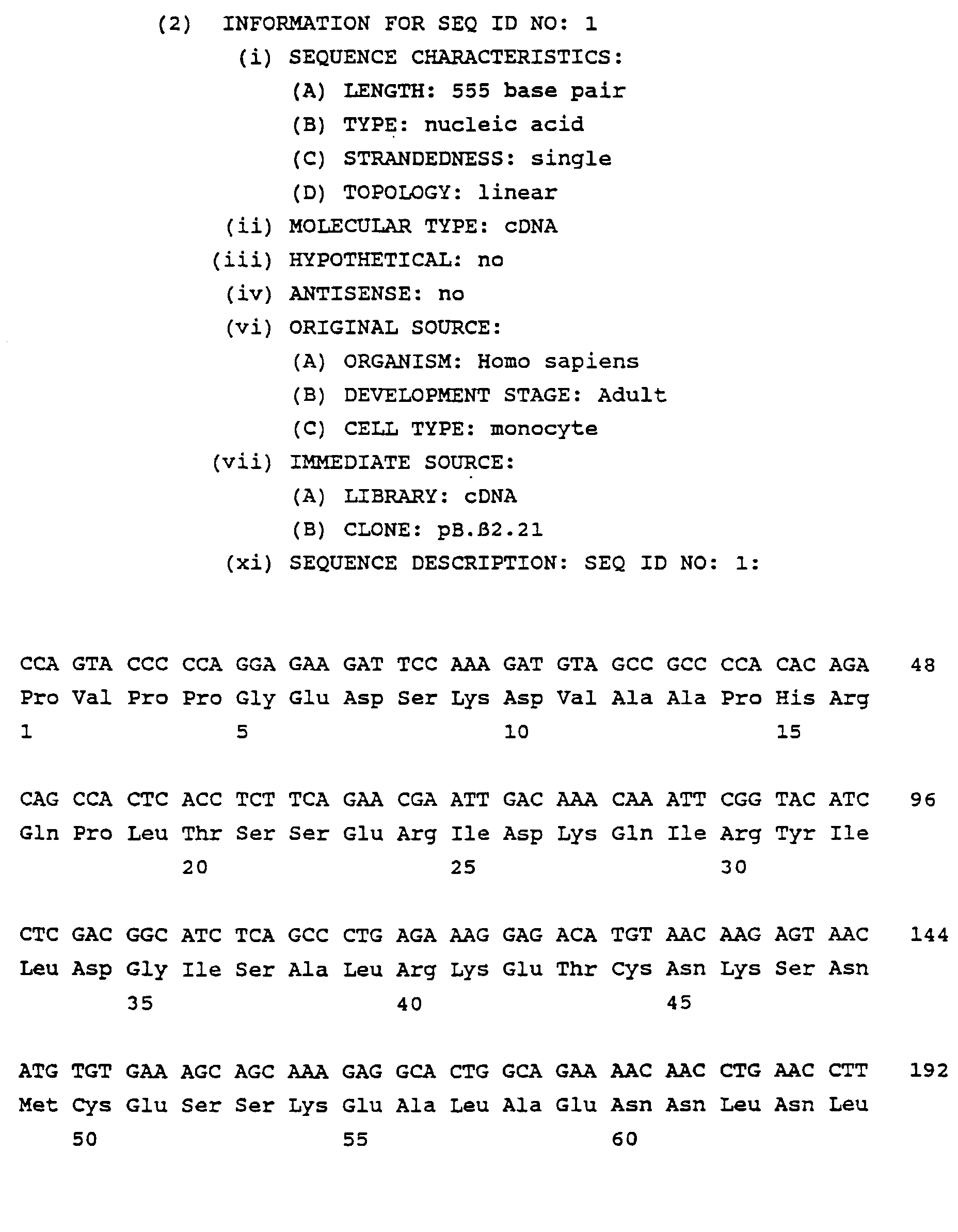
- Ser176Arg substitution interleukin 6 was generated using the PCR strategy (as illustrated in Fontaine, V., Savino, R., Arcone, R., Brakenhoff, J.P.J., Content, J. and Ciliberto, G. (1992) Eur. J. Biochem; see in particular figure 1) and the oligonucleotide represented in SEQ ID NO: 2 which corresponds, from nucleotide 11 to the end, to positions 506 to 555 (antisense strand) of IL-6 DNA (assuming +1 the first nucleotide of the first codon of the sequence coding for the mature polypeptide).
- The nucleotidic sequence coding for the mature polypeptide and the amino acid sequence of the mature polypeptide are shown in the attached sequence listing as SEQ ID NO: 1
- Purification of the amplified fragments, ligation in the pBKS IL-6 vector, screening and characterization of the mutant plasmids were carried out as described in the above mentioned work by Fontaine et al.
- Some of the mutant cDNAs were subcloned into E. coli expression vector pT7.7 (Studier, F. W. and Moffatt, B.A. (1986) J. Mol. Biol. 189, 113-130); this was accomplished by excising the chosen cDNAs with SpeI and XhoI and ligating them in pT7.7 cut with XbaI (compatible with SpeI) and SalI (compatible with XhoI).
- The mutant protein was expressed in two different ways, which will be indicated with a) and b) in the following.
- a) In vitro transcription and translation. All mutant plasmids and pBKS IL-6 were linearized using Asp 718. Approximately one µg of DNA template was transcribed using the mCAP RNA capping kit (Stratagene, La Jolla, Ca) according to the instructions furnished by the manufacturer. The transcribed RNAs were translated with rabbit reticolocytis lysate (Promega) for 90 minutes at 30°C in presence of 35S-methionine (Amersham); 3 µl of the translation cocktail were analyzed by electrophoresis in 15% SDS-PAGE (as described in Fiorillo, M. T., Cabibbo, A., Iacopetti, P., Fattori E. and Ciliberto, G. (1992) Eur. J. 22, 2609-2615). After exposure, the bands corresponding to wild type and mutant hIL-6 were excised from the polyacrylamide gel and their radioactivity was determined. The values were normalized taking into account the number of methionines present.
- b) Production in E.coli. Wild type and mutant hIL-6 were expressed in E. coli and purified exactly as described in Arcone, R., Pucci, P., Zappatosta, F., Fontaine, V., Malorni, A., Marino, G. and Ciliberto, G. (1991) Eur. J. Biochem 198, 541-547; and in Fiorillo, M. T., Cabibbo, A., Iacopetti, P., Fattori, E. and Ciliberto, G. (1992) Eur. J. Immunol. 22, 2609-2615. The purity of the proteins was checked by electrophoresis in 15% SDS-PAGE and staining with Comassie Brilliant blue R-250. Their amount was quantified by Bio-Rad protein assay (Bio-Rad).
-
- The biological activity of the mutant of interest was determined first of all on cells of human origin. The activity of hIL-6 on human cells was assayed for its ability to enhance transcription from acute phase gene promoters in cells of hepatic origin (Morrone, G., Ciliberto, G., Oliviero, S., Arcone, R., Dente, L., Content, J. and Cortese, R. (1988) J. Biol. Chem. 263, 12554-12558). The mutant has therefore been tested as regards its ability to induce CAT (chloramphenicol-acetyltransferase) activity from a fusion of C-reactive protein promotor (CRP) and CAT transfected into the human hepatoma cell line Hep3B (Arcone, R., Gualandi, G. and Ciliberto, G. (1988) Nucleic Acids Res., 16, 3195-3207; Fiorillo, M. T., Cabibbo, A., Iacopetti, P., Fattori, E., Ciliberto, G. (1992) Eur. J. Immunol. 22, 2609-2615). The results obtained using this system are of particular importance, as they depend on the efficiency of the interaction of cytokine with the homologous receptor system.
- In particular, human Hep3B cells were transfected with 45-50 µg of the plasmid -219 CRP-CAT containing the IL-6 responsive element of the CRP promoter gene. Transfection was performed in 20 ml of Dulbecco's Modified Eagle Medium (DMEM, Gibco) supplemented with serum 10% fetal calf and 2 mM L-glutamine using the calcium phosphate precipitation technique (Graham, I.F.L. and Van der Eb, A.J. (1973) Virology 52, 456-467). After 16-18 hours, precipitates were removed, cells were trypsinized, pooled, counted and plated in equal number (105 to 3x10⁵) in 5 cm diameter petri dishes; 7-9 hours after plating, cells were induced for 36-40 hours with increasing amounts of mutant or wild-type hIL-6. Cell extracts and CAT assays were performed as described by Gorman, C. (1985) in "DNA cloning; a practical approach" (Glover, M.D., ed.) pages 143-190, IRL Press, Oxford.
- The assay was carried out in duplicate (in triplicate in case of wild type hIL-6) with serial dilutions of two to four independent preparations of mutant. The activity of the mutant, expressed as a percent of wild type hIL-6, was calculated as the ratio between the amount of wild type hIL-6 and the amount of the mutant under examination necessary to give half maximal stimulation.
- Giving the biological activity of wild type interleukin 6 to be 100% in this assay, the biological activity of mutant interleukin 6 according to the present invention, with Ser176Arg (S176R) substitution, shows, as reported in the following table 1, a value of 370 ± 90%, which is thus a value equal to three to four times that of the wild type protein.
Comparison of receptor binding and biological activity Mutation Biological activity (% of wt hIL-6) hIL-6R binding (% of wt hIL-6) S176R 370 ± 90 % 320 ± 87 % Affinity for the soluble hIL-6 receptor of mutant hIL-6 produced in E.coli compared to the observed biological activity. 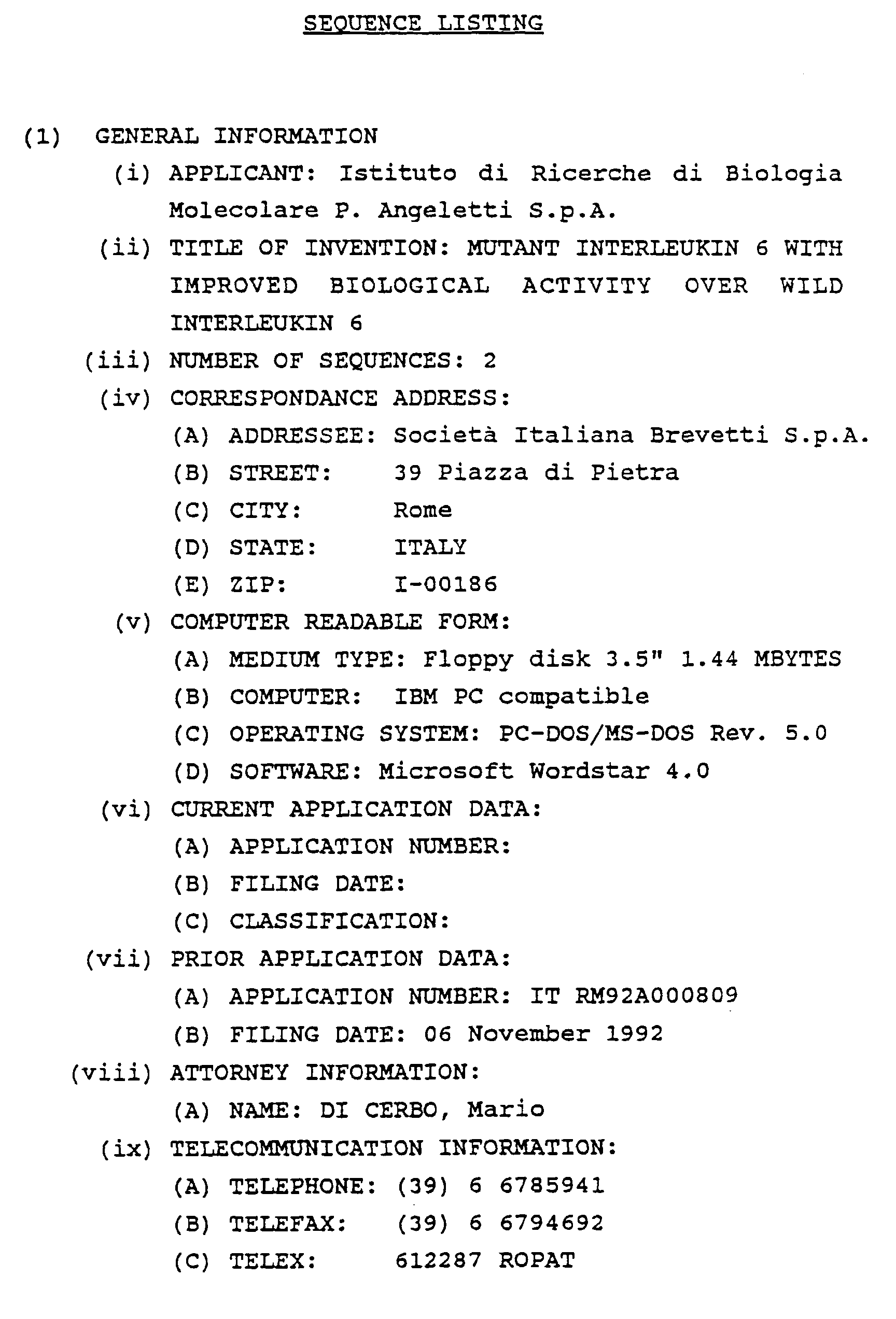


Claims (9)
- Mutant interleukin 6, characterized in that it has, in position 176, the amino acid arginine, in place of the amino acid serine as in wild interleukin 6, and in that it shows biological activity on human cells superior to that of wild type interleukin 6.
- Mutant interleukin 6 according to claim 1, which exhibits a biological activity on human cells between three and five times higher than that of wild type interleukin 6.
- Non-glycosilated polypeptide comprising the amino acid sequence of mutant interleukin 6 according to claims 1 and 2.
- Recombinant vector comprising a DNA sequence coding for the polypeptide according to claim 3.
- Recombinant vector according to claim 4, characterized in that it consists of plasmid pBKS IL-6 Ser176Arg deposited in E. coli K12 with The National Collection of Industrial and Marine Bacteria Ltd. on 02/11/1992 under access number NCIMB 40526.
- Transformed microorganism, characterized in that it contains the recombinant vector according to claim 4 or 5.
- Transformed microorganism according to claim 6, characterized in that it is E.coli, in particular E.coli K12.
- Pharmaceutical compositions, suitable for the treatment of breast cancer, leukemia, infectious diseases and diseases connected with disorders of the bone marrow stem cells and thrombocytopenia, characterized by the fact of containing, as active principle, mutant interleukin 6 according to claims 1 to 3, and characterized by the fact of being administered I.V.
- Process for the preparation of the non-glycosilated polypeptide, comprising the amino acid sequence of mutant interleukin 6, according to claim 3 by culture of the transformed microorganisms according to claims 6 and 7 and subsequent recovery of the polypeptide.
Applications Claiming Priority (3)
| Application Number | Priority Date | Filing Date | Title |
|---|---|---|---|
| ITRM920809A IT1263022B (en) | 1992-11-06 | 1992-11-06 | INTERLEUCHINA-6 MUTANT WITH IMPROVED BIOLOGICAL ACTIVITY COMPARED TO WILD INTERLEUCHINA-6. |
| ITRM920809 | 1992-11-06 | ||
| PCT/IT1993/000114 WO1994011402A1 (en) | 1992-11-06 | 1993-11-02 | Mutant interleukin 6 with improved biological activity over wild interleukin 6 |
Publications (2)
| Publication Number | Publication Date |
|---|---|
| EP0667872A1 EP0667872A1 (en) | 1995-08-23 |
| EP0667872B1 true EP0667872B1 (en) | 2000-04-19 |
Family
ID=11401276
Family Applications (1)
| Application Number | Title | Priority Date | Filing Date |
|---|---|---|---|
| EP94900984A Expired - Lifetime EP0667872B1 (en) | 1992-11-06 | 1993-11-02 | Mutant interleukin 6 with improved biological activity over wild interleukin 6 |
Country Status (12)
| Country | Link |
|---|---|
| US (1) | US5681723A (en) |
| EP (1) | EP0667872B1 (en) |
| JP (1) | JP2515491B2 (en) |
| AT (1) | ATE191923T1 (en) |
| CA (1) | CA2129824C (en) |
| DE (1) | DE69328437T2 (en) |
| DK (1) | DK0667872T3 (en) |
| ES (1) | ES2145819T3 (en) |
| GR (1) | GR3033685T3 (en) |
| IT (1) | IT1263022B (en) |
| PT (1) | PT667872E (en) |
| WO (1) | WO1994011402A1 (en) |
Cited By (2)
| Publication number | Priority date | Publication date | Assignee | Title |
|---|---|---|---|---|
| WO2013147153A1 (en) | 2012-03-29 | 2013-10-03 | 株式会社未来創薬研究所 | Anti-lamp5 antibody and utilization thereof |
| EP3124040A1 (en) | 2004-04-29 | 2017-02-01 | Merck Serono SA | Il-6 for therapy or prevention of chemotherapy-induced neuropathy |
Families Citing this family (6)
| Publication number | Priority date | Publication date | Assignee | Title |
|---|---|---|---|---|
| IT1274782B (en) * | 1994-12-14 | 1997-07-24 | Angeletti P Ist Richerche Bio | METHOD FOR SELECTING SUPERAGONISTS, ANTAGONISTS AND SUPERANTAGONISTS OF HORMONES OF WHICH RECEPTOR COMPLEX IS PART OF GP 130 |
| IT1277926B1 (en) * | 1995-09-01 | 1997-11-12 | Angeletti P Ist Richerche Bio | USE OF NATURAL CYTOKINE MUTEINS AS IMMUNOGENS FOR THE PREPARATION OF PHARMACEUTICAL COMPOSITIONS TO TREAT OR PREVENT |
| AU6961796A (en) * | 1995-09-12 | 1997-04-01 | Chiron Corporation | Improved interleukin-6 receptor antagonist |
| WO2001016166A2 (en) * | 1999-08-27 | 2001-03-08 | The United States Of America, Represented By The Secretary, Department Of Health And Human Services | Polypeptides, comprising il-6 ligand-binding receptor domains, and related nucleic acids, antibodies, compositions, and methods of use |
| CN113698467A (en) * | 2020-05-19 | 2021-11-26 | 甘李药业股份有限公司 | IL-6 variants and uses thereof |
| WO2022256688A1 (en) | 2021-06-04 | 2022-12-08 | Sonnet BioTherapeutics, Inc. | Methods of treating age-related frailty with interleukin-6 |
Family Cites Families (2)
| Publication number | Priority date | Publication date | Assignee | Title |
|---|---|---|---|---|
| HUT52962A (en) * | 1988-03-04 | 1990-09-28 | Sandoz Ag | Process for production of medical compositions eliminating bone-absorption and promoting forming of bones |
| US5210075A (en) * | 1990-02-16 | 1993-05-11 | Tanabe Seiyaku Co., Ltd. | Interleukin 6 antagonist peptides |
-
1992
- 1992-11-06 IT ITRM920809A patent/IT1263022B/en active IP Right Grant
-
1993
- 1993-11-02 PT PT94900984T patent/PT667872E/en unknown
- 1993-11-02 EP EP94900984A patent/EP0667872B1/en not_active Expired - Lifetime
- 1993-11-02 DK DK94900984T patent/DK0667872T3/en active
- 1993-11-02 AT AT94900984T patent/ATE191923T1/en not_active IP Right Cessation
- 1993-11-02 JP JP6511903A patent/JP2515491B2/en not_active Expired - Fee Related
- 1993-11-02 CA CA002129824A patent/CA2129824C/en not_active Expired - Fee Related
- 1993-11-02 ES ES94900984T patent/ES2145819T3/en not_active Expired - Lifetime
- 1993-11-02 DE DE69328437T patent/DE69328437T2/en not_active Expired - Fee Related
- 1993-11-02 WO PCT/IT1993/000114 patent/WO1994011402A1/en not_active Ceased
-
1995
- 1995-05-05 US US08/437,680 patent/US5681723A/en not_active Expired - Fee Related
-
2000
- 2000-06-14 GR GR20000401372T patent/GR3033685T3/en not_active IP Right Cessation
Cited By (2)
| Publication number | Priority date | Publication date | Assignee | Title |
|---|---|---|---|---|
| EP3124040A1 (en) | 2004-04-29 | 2017-02-01 | Merck Serono SA | Il-6 for therapy or prevention of chemotherapy-induced neuropathy |
| WO2013147153A1 (en) | 2012-03-29 | 2013-10-03 | 株式会社未来創薬研究所 | Anti-lamp5 antibody and utilization thereof |
Also Published As
| Publication number | Publication date |
|---|---|
| WO1994011402A1 (en) | 1994-05-26 |
| JP2515491B2 (en) | 1996-07-10 |
| JPH07501947A (en) | 1995-03-02 |
| EP0667872A1 (en) | 1995-08-23 |
| ES2145819T3 (en) | 2000-07-16 |
| PT667872E (en) | 2000-08-31 |
| US5681723A (en) | 1997-10-28 |
| IT1263022B (en) | 1996-07-23 |
| CA2129824C (en) | 1997-03-04 |
| DK0667872T3 (en) | 2000-09-18 |
| DE69328437T2 (en) | 2000-11-02 |
| GR3033685T3 (en) | 2000-10-31 |
| ITRM920809A0 (en) | 1992-11-06 |
| CA2129824A1 (en) | 1994-05-26 |
| ATE191923T1 (en) | 2000-05-15 |
| ITRM920809A1 (en) | 1994-05-06 |
| DE69328437D1 (en) | 2000-05-25 |
Similar Documents
| Publication | Publication Date | Title |
|---|---|---|
| CA2056997C (en) | A human cytokine, interleukin-9 | |
| Campbell et al. | Isolation, structure and expression of cDNA and genomic clones for murine eosinophil differentiation factor: Comparison with other eosinophilopoietic lymphokines and identity with interleukin‐5 | |
| PT772624E (en) | INTERLEUCIN-15 | |
| EP0282185A1 (en) | Human interleukin-3 and muteins thereof | |
| AU8917491A (en) | Multidomain hematopoiesis stimulators | |
| EP0750668A1 (en) | NOVEL MUTEINS OF IFN-$g(b) | |
| Orlofsky et al. | Selective induction of the beta chemokine C10 by IL-4 in mouse macrophages. | |
| Maliszewski et al. | Bovine GM-CSF: molecular cloning and biological activity of the recombinant protein | |
| WO1987002060A1 (en) | Human granulocyte-macrophage colony stimulating factor-like polypeptides and processes for producing them in high yields in microbial cells | |
| IL77080A (en) | Polypeptides exhibiting human granulocyte macrophage and eosinophil cellular growth factor activity, vectors and transformed cells for their production and pharmaceutical compositions comprising them | |
| AU606453B2 (en) | Recombinant eukaryotic cells production interleukin-2, process and vectors for their preparation and process for the preparation of interleukin-2 | |
| US6171824B1 (en) | Hybrid cytokines | |
| US5681723A (en) | Mutant interleukin 6 with improved biological activity over wild interleukin 6 | |
| CA2209298C (en) | Mpl ligand analogs | |
| AU680909B2 (en) | Interleukin-15 | |
| US5696250A (en) | DNA encoding megakaryocyte growth and development factor analogs | |
| KR20010023905A (en) | Mpl ligand analogs | |
| US6280975B1 (en) | IL-6 mutein and DNA encoding thereto | |
| KR0139095B1 (en) | New cytokine | |
| AU626530B2 (en) | Human granulocyte-macrophage colony stimulating factor and muteins thereof |
Legal Events
| Date | Code | Title | Description |
|---|---|---|---|
| PUAI | Public reference made under article 153(3) epc to a published international application that has entered the european phase |
Free format text: ORIGINAL CODE: 0009012 |
|
| 17P | Request for examination filed |
Effective date: 19941117 |
|
| AK | Designated contracting states |
Kind code of ref document: A1 Designated state(s): AT BE CH DE DK ES FR GB GR IE IT LI LU MC NL PT SE |
|
| 17Q | First examination report despatched |
Effective date: 19980713 |
|
| GRAG | Despatch of communication of intention to grant |
Free format text: ORIGINAL CODE: EPIDOS AGRA |
|
| GRAG | Despatch of communication of intention to grant |
Free format text: ORIGINAL CODE: EPIDOS AGRA |
|
| GRAH | Despatch of communication of intention to grant a patent |
Free format text: ORIGINAL CODE: EPIDOS IGRA |
|
| RIC1 | Information provided on ipc code assigned before grant |
Free format text: 6C 07K 14/54 A, 6A 61K 38/20 B, 6C 12N 15/24 B |
|
| GRAH | Despatch of communication of intention to grant a patent |
Free format text: ORIGINAL CODE: EPIDOS IGRA |
|
| GRAA | (expected) grant |
Free format text: ORIGINAL CODE: 0009210 |
|
| AK | Designated contracting states |
Kind code of ref document: B1 Designated state(s): AT BE CH DE DK ES FR GB GR IE IT LI LU MC NL PT SE |
|
| REF | Corresponds to: |
Ref document number: 191923 Country of ref document: AT Date of ref document: 20000515 Kind code of ref document: T |
|
| REG | Reference to a national code |
Ref country code: CH Ref legal event code: EP |
|
| REF | Corresponds to: |
Ref document number: 69328437 Country of ref document: DE Date of ref document: 20000525 |
|
| REG | Reference to a national code |
Ref country code: IE Ref legal event code: FG4D |
|
| ITF | It: translation for a ep patent filed | ||
| REG | Reference to a national code |
Ref country code: CH Ref legal event code: NV Representative=s name: PATENTANWAELTE SCHAAD, BALASS, MENZL & PARTNER AG |
|
| REG | Reference to a national code |
Ref country code: ES Ref legal event code: FG2A Ref document number: 2145819 Country of ref document: ES Kind code of ref document: T3 |
|
| ET | Fr: translation filed | ||
| REG | Reference to a national code |
Ref country code: PT Ref legal event code: SC4A Free format text: AVAILABILITY OF NATIONAL TRANSLATION Effective date: 20000601 |
|
| REG | Reference to a national code |
Ref country code: DK Ref legal event code: T3 |
|
| PLBE | No opposition filed within time limit |
Free format text: ORIGINAL CODE: 0009261 |
|
| STAA | Information on the status of an ep patent application or granted ep patent |
Free format text: STATUS: NO OPPOSITION FILED WITHIN TIME LIMIT |
|
| 26N | No opposition filed | ||
| REG | Reference to a national code |
Ref country code: GB Ref legal event code: IF02 |
|
| PGFP | Annual fee paid to national office [announced via postgrant information from national office to epo] |
Ref country code: PT Payment date: 20061027 Year of fee payment: 14 |
|
| PGFP | Annual fee paid to national office [announced via postgrant information from national office to epo] |
Ref country code: NL Payment date: 20061110 Year of fee payment: 14 |
|
| PGFP | Annual fee paid to national office [announced via postgrant information from national office to epo] |
Ref country code: MC Payment date: 20061113 Year of fee payment: 14 Ref country code: AT Payment date: 20061113 Year of fee payment: 14 |
|
| PGFP | Annual fee paid to national office [announced via postgrant information from national office to epo] |
Ref country code: SE Payment date: 20061114 Year of fee payment: 14 Ref country code: LU Payment date: 20061114 Year of fee payment: 14 Ref country code: GR Payment date: 20061114 Year of fee payment: 14 Ref country code: DK Payment date: 20061114 Year of fee payment: 14 Ref country code: CH Payment date: 20061114 Year of fee payment: 14 |
|
| PGFP | Annual fee paid to national office [announced via postgrant information from national office to epo] |
Ref country code: IE Payment date: 20061123 Year of fee payment: 14 |
|
| PGFP | Annual fee paid to national office [announced via postgrant information from national office to epo] |
Ref country code: FR Payment date: 20061124 Year of fee payment: 14 Ref country code: DE Payment date: 20061124 Year of fee payment: 14 |
|
| PGFP | Annual fee paid to national office [announced via postgrant information from national office to epo] |
Ref country code: GB Payment date: 20061127 Year of fee payment: 14 |
|
| PGFP | Annual fee paid to national office [announced via postgrant information from national office to epo] |
Ref country code: ES Payment date: 20061129 Year of fee payment: 14 |
|
| PGFP | Annual fee paid to national office [announced via postgrant information from national office to epo] |
Ref country code: IT Payment date: 20061130 Year of fee payment: 14 |
|
| PGFP | Annual fee paid to national office [announced via postgrant information from national office to epo] |
Ref country code: BE Payment date: 20061214 Year of fee payment: 14 |
|
| REG | Reference to a national code |
Ref country code: PT Ref legal event code: MM4A Free format text: LAPSE DUE TO NON-PAYMENT OF FEES Effective date: 20080502 |
|
| BERE | Be: lapsed |
Owner name: ISTITUTO DI RICERCHE DI BIOLOGIA MOLECOLARE P. *AN Effective date: 20071130 |
|
| PG25 | Lapsed in a contracting state [announced via postgrant information from national office to epo] |
Ref country code: MC Free format text: LAPSE BECAUSE OF NON-PAYMENT OF DUE FEES Effective date: 20071130 |
|
| REG | Reference to a national code |
Ref country code: DK Ref legal event code: EBP |
|
| EUG | Se: european patent has lapsed | ||
| GBPC | Gb: european patent ceased through non-payment of renewal fee |
Effective date: 20071102 |
|
| PG25 | Lapsed in a contracting state [announced via postgrant information from national office to epo] |
Ref country code: LI Free format text: LAPSE BECAUSE OF NON-PAYMENT OF DUE FEES Effective date: 20071130 Ref country code: CH Free format text: LAPSE BECAUSE OF NON-PAYMENT OF DUE FEES Effective date: 20071130 |
|
| REG | Reference to a national code |
Ref country code: CH Ref legal event code: PL |
|
| NLV4 | Nl: lapsed or anulled due to non-payment of the annual fee |
Effective date: 20080601 |
|
| REG | Reference to a national code |
Ref country code: IE Ref legal event code: MM4A |
|
| PG25 | Lapsed in a contracting state [announced via postgrant information from national office to epo] |
Ref country code: AT Free format text: LAPSE BECAUSE OF NON-PAYMENT OF DUE FEES Effective date: 20071102 |
|
| PG25 | Lapsed in a contracting state [announced via postgrant information from national office to epo] |
Ref country code: BE Free format text: LAPSE BECAUSE OF NON-PAYMENT OF DUE FEES Effective date: 20071130 Ref country code: PT Free format text: LAPSE BECAUSE OF NON-PAYMENT OF DUE FEES Effective date: 20080502 |
|
| PG25 | Lapsed in a contracting state [announced via postgrant information from national office to epo] |
Ref country code: SE Free format text: LAPSE BECAUSE OF NON-PAYMENT OF DUE FEES Effective date: 20071103 Ref country code: NL Free format text: LAPSE BECAUSE OF NON-PAYMENT OF DUE FEES Effective date: 20080601 Ref country code: IE Free format text: LAPSE BECAUSE OF NON-PAYMENT OF DUE FEES Effective date: 20071102 Ref country code: DK Free format text: LAPSE BECAUSE OF NON-PAYMENT OF DUE FEES Effective date: 20071130 Ref country code: DE Free format text: LAPSE BECAUSE OF NON-PAYMENT OF DUE FEES Effective date: 20080603 |
|
| REG | Reference to a national code |
Ref country code: FR Ref legal event code: ST Effective date: 20080930 |
|
| PG25 | Lapsed in a contracting state [announced via postgrant information from national office to epo] |
Ref country code: GB Free format text: LAPSE BECAUSE OF NON-PAYMENT OF DUE FEES Effective date: 20071102 |
|
| REG | Reference to a national code |
Ref country code: ES Ref legal event code: FD2A Effective date: 20071103 |
|
| PG25 | Lapsed in a contracting state [announced via postgrant information from national office to epo] |
Ref country code: FR Free format text: LAPSE BECAUSE OF NON-PAYMENT OF DUE FEES Effective date: 20071130 Ref country code: ES Free format text: LAPSE BECAUSE OF NON-PAYMENT OF DUE FEES Effective date: 20071103 |
|
| PG25 | Lapsed in a contracting state [announced via postgrant information from national office to epo] |
Ref country code: GR Free format text: LAPSE BECAUSE OF NON-PAYMENT OF DUE FEES Effective date: 20080605 |
|
| PG25 | Lapsed in a contracting state [announced via postgrant information from national office to epo] |
Ref country code: LU Free format text: LAPSE BECAUSE OF NON-PAYMENT OF DUE FEES Effective date: 20071102 Ref country code: IT Free format text: LAPSE BECAUSE OF NON-PAYMENT OF DUE FEES Effective date: 20071102 |