EP0658803B1 - A class of compounds which increases and stabilizes photographic speed - Google Patents
A class of compounds which increases and stabilizes photographic speed Download PDFInfo
- Publication number
- EP0658803B1 EP0658803B1 EP94119840A EP94119840A EP0658803B1 EP 0658803 B1 EP0658803 B1 EP 0658803B1 EP 94119840 A EP94119840 A EP 94119840A EP 94119840 A EP94119840 A EP 94119840A EP 0658803 B1 EP0658803 B1 EP 0658803B1
- Authority
- EP
- European Patent Office
- Prior art keywords
- emulsion
- silver
- control
- compound
- speed
- Prior art date
- Legal status (The legal status is an assumption and is not a legal conclusion. Google has not performed a legal analysis and makes no representation as to the accuracy of the status listed.)
- Expired - Lifetime
Links
- 150000001875 compounds Chemical class 0.000 title claims description 47
- 239000000839 emulsion Substances 0.000 claims description 69
- 229910052709 silver Inorganic materials 0.000 claims description 59
- 239000004332 silver Substances 0.000 claims description 59
- 206010070834 Sensitisation Diseases 0.000 claims description 39
- 230000008313 sensitization Effects 0.000 claims description 39
- 238000000034 method Methods 0.000 claims description 35
- -1 silver halide Chemical class 0.000 claims description 32
- BQCADISMDOOEFD-UHFFFAOYSA-N Silver Chemical compound [Ag] BQCADISMDOOEFD-UHFFFAOYSA-N 0.000 claims description 29
- 125000003118 aryl group Chemical group 0.000 claims description 18
- 125000000217 alkyl group Chemical group 0.000 claims description 14
- 230000001235 sensitizing effect Effects 0.000 claims description 11
- 239000000126 substance Substances 0.000 claims description 11
- 229910052760 oxygen Inorganic materials 0.000 claims description 8
- 229910052711 selenium Inorganic materials 0.000 claims description 8
- 239000011669 selenium Substances 0.000 claims description 8
- 229910052717 sulfur Inorganic materials 0.000 claims description 7
- 229910052739 hydrogen Inorganic materials 0.000 claims description 5
- 239000001257 hydrogen Substances 0.000 claims description 5
- 125000004435 hydrogen atom Chemical class [H]* 0.000 claims description 5
- ZUNKMNLKJXRCDM-UHFFFAOYSA-N silver bromoiodide Chemical compound [Ag].IBr ZUNKMNLKJXRCDM-UHFFFAOYSA-N 0.000 claims description 5
- OKTJSMMVPCPJKN-UHFFFAOYSA-N Carbon Chemical compound [C] OKTJSMMVPCPJKN-UHFFFAOYSA-N 0.000 claims description 4
- BUGBHKTXTAQXES-UHFFFAOYSA-N Selenium Chemical compound [Se] BUGBHKTXTAQXES-UHFFFAOYSA-N 0.000 claims description 4
- 125000002723 alicyclic group Chemical group 0.000 claims description 4
- 125000004429 atom Chemical group 0.000 claims description 4
- QVGXLLKOCUKJST-UHFFFAOYSA-N atomic oxygen Chemical compound [O] QVGXLLKOCUKJST-UHFFFAOYSA-N 0.000 claims description 4
- 229910052799 carbon Inorganic materials 0.000 claims description 4
- 125000004122 cyclic group Chemical group 0.000 claims description 4
- 238000010438 heat treatment Methods 0.000 claims description 4
- 125000004433 nitrogen atom Chemical group N* 0.000 claims description 4
- 239000001301 oxygen Substances 0.000 claims description 4
- 125000000547 substituted alkyl group Chemical group 0.000 claims description 4
- 125000003107 substituted aryl group Chemical group 0.000 claims description 4
- 239000000463 material Substances 0.000 description 23
- 239000000654 additive Substances 0.000 description 17
- 230000000996 additive effect Effects 0.000 description 17
- 239000010410 layer Substances 0.000 description 17
- 230000000052 comparative effect Effects 0.000 description 14
- 230000008569 process Effects 0.000 description 14
- WEVYAHXRMPXWCK-UHFFFAOYSA-N Acetonitrile Chemical compound CC#N WEVYAHXRMPXWCK-UHFFFAOYSA-N 0.000 description 13
- 239000011248 coating agent Substances 0.000 description 11
- 238000000576 coating method Methods 0.000 description 11
- 239000000975 dye Substances 0.000 description 10
- 238000005562 fading Methods 0.000 description 9
- 229940100890 silver compound Drugs 0.000 description 9
- 150000003379 silver compounds Chemical class 0.000 description 9
- ZMANZCXQSJIPKH-UHFFFAOYSA-N Triethylamine Chemical compound CCN(CC)CC ZMANZCXQSJIPKH-UHFFFAOYSA-N 0.000 description 7
- 239000003153 chemical reaction reagent Substances 0.000 description 7
- 239000000047 product Substances 0.000 description 7
- 238000012545 processing Methods 0.000 description 6
- 230000003595 spectral effect Effects 0.000 description 6
- 108010010803 Gelatin Proteins 0.000 description 5
- 230000000694 effects Effects 0.000 description 5
- 229920000159 gelatin Polymers 0.000 description 5
- 239000008273 gelatin Substances 0.000 description 5
- 235000019322 gelatine Nutrition 0.000 description 5
- 235000011852 gelatine desserts Nutrition 0.000 description 5
- XMBWDFGMSWQBCA-UHFFFAOYSA-N hydrogen iodide Chemical compound I XMBWDFGMSWQBCA-UHFFFAOYSA-N 0.000 description 5
- 239000000155 melt Substances 0.000 description 5
- 230000008901 benefit Effects 0.000 description 4
- 238000003384 imaging method Methods 0.000 description 4
- 239000003381 stabilizer Substances 0.000 description 4
- RTZKZFJDLAIYFH-UHFFFAOYSA-N Diethyl ether Chemical compound CCOCC RTZKZFJDLAIYFH-UHFFFAOYSA-N 0.000 description 3
- 238000000434 field desorption mass spectrometry Methods 0.000 description 3
- PCHJSUWPFVWCPO-UHFFFAOYSA-N gold Chemical compound [Au] PCHJSUWPFVWCPO-UHFFFAOYSA-N 0.000 description 3
- 229910052737 gold Inorganic materials 0.000 description 3
- 239000010931 gold Substances 0.000 description 3
- 238000005259 measurement Methods 0.000 description 3
- 239000000203 mixture Substances 0.000 description 3
- 230000000087 stabilizing effect Effects 0.000 description 3
- NLSMNTONIKQCCK-UHFFFAOYSA-N 2-[[carboxymethyl(methyl)carbamothioyl]-methylamino]acetic acid Chemical compound OC(=O)CN(C)C(=S)N(C)CC(O)=O NLSMNTONIKQCCK-UHFFFAOYSA-N 0.000 description 2
- JKFYKCYQEWQPTM-UHFFFAOYSA-N 2-azaniumyl-2-(4-fluorophenyl)acetate Chemical group OC(=O)C(N)C1=CC=C(F)C=C1 JKFYKCYQEWQPTM-UHFFFAOYSA-N 0.000 description 2
- BBVQDWDBTWSGHQ-UHFFFAOYSA-N 2-chloro-1,3-benzoxazole Chemical compound C1=CC=C2OC(Cl)=NC2=C1 BBVQDWDBTWSGHQ-UHFFFAOYSA-N 0.000 description 2
- AVJUFHRBOJNDFG-UHFFFAOYSA-N 2-chloro-5-methyl-1,3-benzoxazole Chemical compound CC1=CC=C2OC(Cl)=NC2=C1 AVJUFHRBOJNDFG-UHFFFAOYSA-N 0.000 description 2
- INVVMIXYILXINW-UHFFFAOYSA-N 5-methyl-1h-[1,2,4]triazolo[1,5-a]pyrimidin-7-one Chemical compound CC1=CC(=O)N2NC=NC2=N1 INVVMIXYILXINW-UHFFFAOYSA-N 0.000 description 2
- CPELXLSAUQHCOX-UHFFFAOYSA-M Bromide Chemical compound [Br-] CPELXLSAUQHCOX-UHFFFAOYSA-M 0.000 description 2
- WSNMPAVSZJSIMT-UHFFFAOYSA-N COc1c(C)c2COC(=O)c2c(O)c1CC(O)C1(C)CCC(=O)O1 Chemical compound COc1c(C)c2COC(=O)c2c(O)c1CC(O)C1(C)CCC(=O)O1 WSNMPAVSZJSIMT-UHFFFAOYSA-N 0.000 description 2
- 229910021612 Silver iodide Inorganic materials 0.000 description 2
- NINIDFKCEFEMDL-UHFFFAOYSA-N Sulfur Chemical compound [S] NINIDFKCEFEMDL-UHFFFAOYSA-N 0.000 description 2
- 230000032683 aging Effects 0.000 description 2
- IOJUPLGTWVMSFF-UHFFFAOYSA-N benzothiazole Chemical compound C1=CC=C2SC=NC2=C1 IOJUPLGTWVMSFF-UHFFFAOYSA-N 0.000 description 2
- ZKZCJRRBCNFVHY-UHFFFAOYSA-N but-2-ynylazanium;4-methylbenzenesulfonate Chemical compound CC#CC[NH3+].CC1=CC=C(S([O-])(=O)=O)C=C1 ZKZCJRRBCNFVHY-UHFFFAOYSA-N 0.000 description 2
- 239000003795 chemical substances by application Substances 0.000 description 2
- 229940125890 compound Ia Drugs 0.000 description 2
- 239000012043 crude product Substances 0.000 description 2
- 230000006872 improvement Effects 0.000 description 2
- 125000002496 methyl group Chemical group [H]C([H])([H])* 0.000 description 2
- AJDUTMFFZHIJEM-UHFFFAOYSA-N n-(9,10-dioxoanthracen-1-yl)-4-[4-[[4-[4-[(9,10-dioxoanthracen-1-yl)carbamoyl]phenyl]phenyl]diazenyl]phenyl]benzamide Chemical compound O=C1C2=CC=CC=C2C(=O)C2=C1C=CC=C2NC(=O)C(C=C1)=CC=C1C(C=C1)=CC=C1N=NC(C=C1)=CC=C1C(C=C1)=CC=C1C(=O)NC1=CC=CC2=C1C(=O)C1=CC=CC=C1C2=O AJDUTMFFZHIJEM-UHFFFAOYSA-N 0.000 description 2
- 125000001997 phenyl group Chemical group [H]C1=C([H])C([H])=C(*)C([H])=C1[H] 0.000 description 2
- XHXFXVLFKHQFAL-UHFFFAOYSA-N phosphoryl trichloride Chemical compound ClP(Cl)(Cl)=O XHXFXVLFKHQFAL-UHFFFAOYSA-N 0.000 description 2
- 230000005855 radiation Effects 0.000 description 2
- 230000009467 reduction Effects 0.000 description 2
- 238000011160 research Methods 0.000 description 2
- 230000035945 sensitivity Effects 0.000 description 2
- ADZWSOLPGZMUMY-UHFFFAOYSA-M silver bromide Chemical group [Ag]Br ADZWSOLPGZMUMY-UHFFFAOYSA-M 0.000 description 2
- 229940045105 silver iodide Drugs 0.000 description 2
- VGTPCRGMBIAPIM-UHFFFAOYSA-M sodium thiocyanate Chemical compound [Na+].[S-]C#N VGTPCRGMBIAPIM-UHFFFAOYSA-M 0.000 description 2
- 239000000243 solution Substances 0.000 description 2
- 230000006641 stabilisation Effects 0.000 description 2
- 238000011105 stabilization Methods 0.000 description 2
- 125000001424 substituent group Chemical group 0.000 description 2
- 239000011593 sulfur Substances 0.000 description 2
- 239000001043 yellow dye Substances 0.000 description 2
- AIGNCQCMONAWOL-UHFFFAOYSA-N 1,3-benzoselenazole Chemical compound C1=CC=C2[se]C=NC2=C1 AIGNCQCMONAWOL-UHFFFAOYSA-N 0.000 description 1
- JPBLHOJFMBOCAF-UHFFFAOYSA-N 1,3-benzoxazol-2-amine Chemical class C1=CC=C2OC(N)=NC2=C1 JPBLHOJFMBOCAF-UHFFFAOYSA-N 0.000 description 1
- BCMCBBGGLRIHSE-UHFFFAOYSA-N 1,3-benzoxazole Chemical compound C1=CC=C2OC=NC2=C1 BCMCBBGGLRIHSE-UHFFFAOYSA-N 0.000 description 1
- PGXOMORTLJMALN-UHFFFAOYSA-N 1,4,5-trimethyl-1,2,4-triazol-4-ium-3-thiolate Chemical compound CC=1N(C)C([S-])=N[N+]=1C PGXOMORTLJMALN-UHFFFAOYSA-N 0.000 description 1
- HTSGKJQDMSTCGS-UHFFFAOYSA-N 1,4-bis(4-chlorophenyl)-2-(4-methylphenyl)sulfonylbutane-1,4-dione Chemical compound C1=CC(C)=CC=C1S(=O)(=O)C(C(=O)C=1C=CC(Cl)=CC=1)CC(=O)C1=CC=C(Cl)C=C1 HTSGKJQDMSTCGS-UHFFFAOYSA-N 0.000 description 1
- BSQLQMLFTHJVKS-UHFFFAOYSA-N 2-chloro-1,3-benzothiazole Chemical compound C1=CC=C2SC(Cl)=NC2=C1 BSQLQMLFTHJVKS-UHFFFAOYSA-N 0.000 description 1
- NOXMJZCFMAEDRF-UHFFFAOYSA-N 3-phenylprop-2-ynylazanium;chloride Chemical compound Cl.NCC#CC1=CC=CC=C1 NOXMJZCFMAEDRF-UHFFFAOYSA-N 0.000 description 1
- WNZPREQNKMMHIC-UHFFFAOYSA-N 3-prop-2-enyl-1,3-benzothiazol-3-ium Chemical compound C1=CC=C2[N+](CC=C)=CSC2=C1 WNZPREQNKMMHIC-UHFFFAOYSA-N 0.000 description 1
- 125000004172 4-methoxyphenyl group Chemical group [H]C1=C([H])C(OC([H])([H])[H])=C([H])C([H])=C1* 0.000 description 1
- YPXQSGWOGQPLQO-UHFFFAOYSA-N 5-nitro-1,3-dihydrobenzimidazole-2-thione Chemical compound [O-][N+](=O)C1=CC=C2N=C(S)NC2=C1 YPXQSGWOGQPLQO-UHFFFAOYSA-N 0.000 description 1
- IUWBPTDPBVIOOI-UHFFFAOYSA-N Cc1nc2ncnn2c(O)c1Br Chemical compound Cc1nc2ncnn2c(O)c1Br IUWBPTDPBVIOOI-UHFFFAOYSA-N 0.000 description 1
- 229940126062 Compound A Drugs 0.000 description 1
- NLDMNSXOCDLTTB-UHFFFAOYSA-N Heterophylliin A Natural products O1C2COC(=O)C3=CC(O)=C(O)C(O)=C3C3=C(O)C(O)=C(O)C=C3C(=O)OC2C(OC(=O)C=2C=C(O)C(O)=C(O)C=2)C(O)C1OC(=O)C1=CC(O)=C(O)C(O)=C1 NLDMNSXOCDLTTB-UHFFFAOYSA-N 0.000 description 1
- 229910019213 POCl3 Inorganic materials 0.000 description 1
- 238000005299 abrasion Methods 0.000 description 1
- 238000010521 absorption reaction Methods 0.000 description 1
- 230000002378 acidificating effect Effects 0.000 description 1
- 150000001260 acyclic compounds Chemical class 0.000 description 1
- 239000012670 alkaline solution Substances 0.000 description 1
- 230000002238 attenuated effect Effects 0.000 description 1
- KXNQKOAQSGJCQU-UHFFFAOYSA-N benzo[e][1,3]benzothiazole Chemical class C1=CC=C2C(N=CS3)=C3C=CC2=C1 KXNQKOAQSGJCQU-UHFFFAOYSA-N 0.000 description 1
- 229920002301 cellulose acetate Polymers 0.000 description 1
- 239000003638 chemical reducing agent Substances 0.000 description 1
- 239000000470 constituent Substances 0.000 description 1
- 239000013078 crystal Chemical group 0.000 description 1
- 230000001934 delay Effects 0.000 description 1
- 238000011161 development Methods 0.000 description 1
- 230000018109 developmental process Effects 0.000 description 1
- 125000001495 ethyl group Chemical group [H]C([H])([H])C([H])([H])* 0.000 description 1
- 108010025899 gelatin film Proteins 0.000 description 1
- 239000011521 glass Substances 0.000 description 1
- 229910052736 halogen Inorganic materials 0.000 description 1
- 150000002367 halogens Chemical class 0.000 description 1
- 125000000623 heterocyclic group Chemical group 0.000 description 1
- 238000011534 incubation Methods 0.000 description 1
- 230000003993 interaction Effects 0.000 description 1
- 230000007246 mechanism Effects 0.000 description 1
- 125000000956 methoxy group Chemical group [H]C([H])([H])O* 0.000 description 1
- 238000012986 modification Methods 0.000 description 1
- 230000004048 modification Effects 0.000 description 1
- 239000003607 modifier Substances 0.000 description 1
- 125000003854 p-chlorophenyl group Chemical group [H]C1=C([H])C(*)=C([H])C([H])=C1Cl 0.000 description 1
- 125000001037 p-tolyl group Chemical group [H]C1=C([H])C(=C([H])C([H])=C1*)C([H])([H])[H] 0.000 description 1
- UHZYTMXLRWXGPK-UHFFFAOYSA-N phosphorus pentachloride Chemical compound ClP(Cl)(Cl)(Cl)Cl UHZYTMXLRWXGPK-UHFFFAOYSA-N 0.000 description 1
- 239000004014 plasticizer Substances 0.000 description 1
- 229920000728 polyester Polymers 0.000 description 1
- 239000004848 polyfunctional curative Substances 0.000 description 1
- 229920000642 polymer Polymers 0.000 description 1
- 238000001556 precipitation Methods 0.000 description 1
- 230000002265 prevention Effects 0.000 description 1
- 125000001436 propyl group Chemical group [H]C([*])([H])C([H])([H])C([H])([H])[H] 0.000 description 1
- 239000002516 radical scavenger Substances 0.000 description 1
- 238000007142 ring opening reaction Methods 0.000 description 1
- 238000007560 sedimentation technique Methods 0.000 description 1
- 239000002356 single layer Substances 0.000 description 1
- 239000002904 solvent Substances 0.000 description 1
- 125000006850 spacer group Chemical group 0.000 description 1
- 125000004434 sulfur atom Chemical group 0.000 description 1
- 150000003464 sulfur compounds Chemical class 0.000 description 1
Classifications
-
- G—PHYSICS
- G03—PHOTOGRAPHY; CINEMATOGRAPHY; ANALOGOUS TECHNIQUES USING WAVES OTHER THAN OPTICAL WAVES; ELECTROGRAPHY; HOLOGRAPHY
- G03C—PHOTOSENSITIVE MATERIALS FOR PHOTOGRAPHIC PURPOSES; PHOTOGRAPHIC PROCESSES, e.g. CINE, X-RAY, COLOUR, STEREO-PHOTOGRAPHIC PROCESSES; AUXILIARY PROCESSES IN PHOTOGRAPHY
- G03C1/00—Photosensitive materials
- G03C1/005—Silver halide emulsions; Preparation thereof; Physical treatment thereof; Incorporation of additives therein
- G03C1/06—Silver halide emulsions; Preparation thereof; Physical treatment thereof; Incorporation of additives therein with non-macromolecular additives
- G03C1/34—Fog-inhibitors; Stabilisers; Agents inhibiting latent image regression
-
- G—PHYSICS
- G03—PHOTOGRAPHY; CINEMATOGRAPHY; ANALOGOUS TECHNIQUES USING WAVES OTHER THAN OPTICAL WAVES; ELECTROGRAPHY; HOLOGRAPHY
- G03C—PHOTOSENSITIVE MATERIALS FOR PHOTOGRAPHIC PURPOSES; PHOTOGRAPHIC PROCESSES, e.g. CINE, X-RAY, COLOUR, STEREO-PHOTOGRAPHIC PROCESSES; AUXILIARY PROCESSES IN PHOTOGRAPHY
- G03C1/00—Photosensitive materials
- G03C1/005—Silver halide emulsions; Preparation thereof; Physical treatment thereof; Incorporation of additives therein
- G03C1/06—Silver halide emulsions; Preparation thereof; Physical treatment thereof; Incorporation of additives therein with non-macromolecular additives
- G03C1/08—Sensitivity-increasing substances
- G03C1/10—Organic substances
Definitions
- This invention relates to a method of sensitizing a silver halide emulsion, said emulsion showing an increased photographic speed and reduced latent image fading, and to photographic elements containing the emulsions.
- a visible image is formed in silver halide photographic materials by exposure of the material to actinic radiation to form a record of the exposure which is invisible to the unaided eye, followed by processing of the material to yield a visible image.
- the invisible record of exposure is referred to as a latent image. It is generally agreed that the latent image comprises minute specks of metallic silver formed in or on individual silver halide grains by interaction between silver ions and photoelectrons generated by absorption of actinic radiation by the silver halide grains.
- Processing of most common silver halide photographic materials includes a development step in which the material is contacted with an aqueous alkaline solution of a developing agent.
- the developing agent is a reducing agent which will selectively reduce to metallic silver those silver halide grains containing a latent image.
- latent image is not permanent and that, with the passage of time, silver halide grains which would be developable immediately after exposure become nondevelopable. This phenomenon is termed latent image fading and manifests itself as a loss in image density in the developed image and a consequent loss in speed in the silver halide photographic material.
- latent image fading can present a significant problem, and compounds are added to photographic materials to prevent or reduce it. These compounds are referred to as latent image stabilizing compounds or latent image stabilizers, and the prevention or reduction of latent image fading is referred to as latent image stabilization.
- latent image stabilizers known in the art are N-2-propenylbenzothiazolium and naphthothiazolium salts described in Arai et al U.S. Patent No. 3,954,478.
- N-2-propenyl substituent containing acyclic compounds useful as latent image stabilizers are disclosed in Herz U.S. Serial No. 236,360 filed February 20, 1981, SILVER HALIDE EMULSIONS CONTAINING LATENT IMAGE STABILIZING COMPOUNDS, now U.S. Patent No. 4,374,196.
- Latent image stabilizers containing a 2-propynylthio substituent are disclosed by von Konig et al U.S. Patent No. 3,910,791.
- U.S. Patent No. 4,451,557 - Lok et al and U.S. Patent No. 4,378,426 - Lok et al disclose photographic silver halide emulsions that have been treated to increase speed and reduce latent image fading. These patents disclose a large group of aminobenzoxazoles that have been found to reduce image fading with some speed increase.
- An object of the invention is to overcome disadvantages of prior materials.
- a further object is to provide emulsions having improved latent image keeping and increased speed.
- a further object is to provide emulsions that have stable speed during aging.
- the invention has numerous advantages in emulsion sensitization.
- the invention allows a stable speed to be maintained for the emulsion with improved latent image keeping.
- the material of the invention allows an increase in speed when the invention material is added to the emulsion. The speed increase remains stable through aging.
- the invention allows the increase in speed and improvement in latent image keeping with only a small amount of the substituent utilized in the emulsion. Prior materials require a greater amount of the constituent, thereby increasing cost and product bulk.
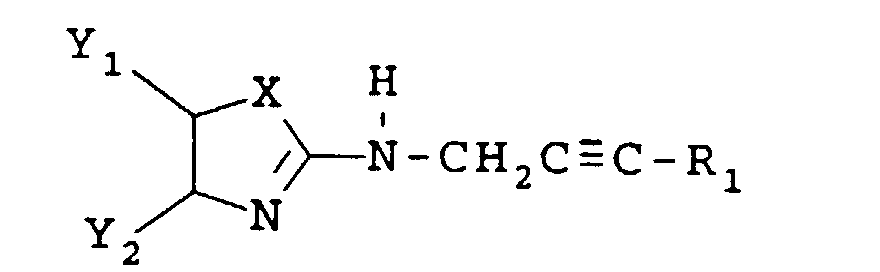
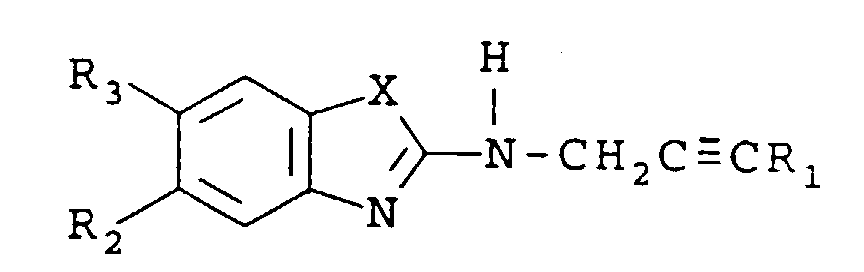
- an alkynylamino substituent is attached to a benzoxazole, benzothiazole, benzoselenazole, or heterocyclic nucleus.
- the compounds II of the present invention and comparative compounds I can be represented by the following formula: wherein
- R 1 as ethyl, propyl, p-methoxyphenyl, p-tolyl, or p-chlorophenyl with R 2 or R 3 as halogen, methoxy, alkyl, or aryl.
- the compound II of the present invention typically contains an R 1 that is an alkyl or aryl. It is found to be preferred that the R 1 be either a methyl or a phenyl ring for the best increase in speed and latent image keeping.
- the compounds are added to the silver halide emulsion at a point subsequent to precipitation and prior to the heat treatment of the chemical sensitization process. They may be added prior to or subsequent to the addition of the chemical and/or spectral sensitizing materials. Any of the conventional chemical sensitizers such as gold and sulfur compounds may be utilized. Further, any spectral sensitizers such as the various dyes provide increased spectral sensitivity range to the silver halide grains.
- the invention material and process for applying it to silver halide grains may be utilized with any silver halide grain.
- Typical of such grains are silver bromide, silver iodide, silver bromoiodide, and various crystal structures as tabular, cubic, and octahedral.
- the process and material of the invention find the preferred use in small tabular grains of between about 0.4 and 8 microns diameter and of a silver bromoiodide composition.
- the invention may be utilized with any silver halide photographic element. Typical of such materials are x-ray films, color photographic paper, black-and-white photographic paper, and reversal films. It finds preferred use in color negative film where the increase in speed with latent image keeping properties are especially important.
- the amount of the compound according to the invention utilized in treating the silver halide grains is between .005 mmole per mole of silver and 0.1 mmole per mole of silver.
- the preferred tabular grains for utilization in the invention have an aspect ratio of greater than 8 to 1.
- the preferred grains have a thickness of less than 0.1 ⁇ m and preferably between about 0.03 and about .08 microns in thickness.
- the preferred grains also have a diameter of between about 0.2 and about 10 ⁇ m with a most preferred diameter of between about 0.4 and about 5 ⁇ m.
- Diameter measurements described herein refer to median values for the equivalent circular diameter, i.e., the diameter of a circle having an area equal to the projected area of the grain. Diameter measurements were done using standard sedimentation techniques in a disc centrifuge. Thickness measurements were done according to the method described in U.S. Patent 5,250,403.
- the photographic elements formed by the invention may utilize conventional peptizing materials and be formed on conventional base materials such as polyester and paper. Further, other various conventional plasticizers, antifoggants, brighteners, bacterialcides, hardeners and coating aids may be utilized. Such conventional materials are found in Research Disclosure , Item 308119 of December, 1989.
- a preferred color photographic element comprises a support bearing at least one blue-sensitive silver halide emulsion layer having associated therewith a yellow dye-forming coupler, at least one green-sensitive silver halide emulsion layer having associated therewith a magenta dye-forming coupler and at least one red-sensitive silver halide emulsion layer having associated therewith a cyan dye-forming coupler, at least one of the silver halide emulsions layers containing a latent image stabilizing compound of this invention.
- the invention compound is contained in a yellow dye-forming blue-sensitive silver emulsion.
- the elements of the present invention can contain additional layers conventional in photographic elements, such as overcoat layers, spacer layers, filter layers, antihalation layers, scavenger layers, and the like.
- the support can be any suitable support used with photographic elements. Typical supports include polymeric films, paper (including polymer-coated paper), glass, and the like. Details regarding supports and other layers of the photographic elements suitable for this invention are contained in Research Disclosure , December 1978, Item 17643.
- Compound Ia is identical to Compound A in U.S. Patent 4,451,557 herein incorporated by reference and was prepared according to the procedure described in that patent.
- Compound Ib was prepared in the same manner as Ia except 5-methyl-2-chlorobenzoxazole was substitued for 2-chlorobenzoxazole in the synthetic procedure.
- Compound Ic is identical to Compound B in U.S. Patent 4,378,426 herein incorporated by reference and was prepared according to the procedure described in that patent.
- Compound IIa is identical to Compound J in U.S. Patent 4,451,557 herein incorporated by reference and was prepared according to the procedure described in that patent.
- a simple single layer was coated on a pad of gelatin with a gelatin overcoat to protect the coating from abrasion.
- the active layer contained an image forming coupler and an image modifying coupler both producing a yellow dye together with an emulsion which had been chemically and spectrally sensitized.
- a fog suppressant such as 4-hydroxy-6-methyl-1,3,3a,7-tetraazaindene (TAI) or 4-hydroxy-5-bromo-6-methyl-1,3,3a,7-tetraazaindene (Br-TAI) was found to be very useful for controlling the fog and pressure sensitivity of the coated emulsions.
- the structure was as follows:
- a tabular grain emulsion was prepared according to the procedure described by Antoniades et al for emulsion TE-4 in U.S. Patent 5,250,403 with slight modifications.
- the emulsion was sensitized by treatment with sodium thiocyanate and the yellow sensitizing dye, D-1, followed by sulfur sensitization with 1,3-dicarboxymethyl-1,3-dimethyl-2-thiourea (DCT) as described by Burgmaier in U.S. Patent 4,810,626 and gold sensitization with aurous bis(1,4,5-trimethyl-1,2,4-triazolium-3-thiolate (AuTT) as described by Deaton in U.S. Patent 5,049,485.
- the emulsion consisted of silver bromoiodide grains containing 3% iodide with the dimensions of 1.44 ⁇ m equivalent circular diameter and 0.050 ⁇ m thickness.
- the emulsion was treated with 200 mg/mole silver of sodium thiocyanate for 20 min at 40°C.
- Sensitizing dye, D-1 was then added at 2.4 mmole/mole silver followed by the speed additive if used.
- DCT at 16 mg/silver mole was added followed immediately by 12 mg/mole silver of AuTT and 37 mg/mole silver of finish modifier, 3-(methylsulfonylcarbamoylethyl)-benzothiazolium tetrafluoroborate, which is an antifoggant requiring a ring opening mechanism in order to activate its acidic sulfur atom.
- the mixture was then heated to 55°C and held for 15 min before being cooled back to 40°C.
- Table 1 contains the exposing, processing and sensitometric results for this series.
- Example 1 is identical to Control A except that 0.03 mmole/mole silver of Compound IIa was added during the sensitization process.
- Example 2 is identical to Control A except that 0.03 mmole/mole silver of Compound IIb was added during the sensitization process.
- Example 3 is identical to Control A except that 0.03 mmole/mole silver of Compound IIc was added during the sensitization process.
- Example 4 is identical to Control A except that 0.03 mmole/mole silver of Compound Ia was added to the emulsion and the melt was heated at 65°C for 15 min. prior to chemical sensitization to solubilize Ia.
- Example 5 is identical to Control A except that 0.03 mmole/mole silver of Compound Ib was added during the sensitization process.
- Example 6 is identical to Control A except that 0.03 mmole/mole silver of Compound Ic was added during the sensitization process.
- Control B is identical to Control A except that the size of the emulsion is 1.85 ⁇ m x 0.065 ⁇ m and 1.18 g/m 2 imaging coupler C-2 and 0.032 g/m 2 image modifying coupler C-4 were utitlized.
- the finishing conditions were the same as in Control A except reagent concentrations were adjusted to compensate for differences in the surface area of the two emulsions. No speed additive is present.
- Example 7 is identical to Control B except that 0.20 mmole/mole silver of Compound IIa was added after the sensitization process at the time of coating as a melt addendum.
- Example 8 is identical to Control B except that 0.02 mmole/mole silver of Compound IIa was added during the sensitization process.
- Control C is identical to Control A except that the size of the emulsion is 1.18 ⁇ m x 0.053 ⁇ m and 1.18 g/m 2 imaging coupler C-2 and 0.032 g/m 2 image modifying coupler C-4 were utitlized.
- the finishing conditions were the same as in Control A except reagent concentrations were adjusted to compensate for differences in the surface area of the two emulsions. No speed additive is present.
- Example 9 is identical to Control C except that 0.10 mmole/mole silver of Compound IIa was added after the sensitization process and at the time of coating as a melt addendum.
- Example 10 is identical to Control C except that 0.02 mmole/mole silver of Compound IIa was added during the sensitization.
- Control D is identical to Control A except that the size of the emulsion is 1.04 x 0.046 ⁇ m.
- the finishing conditions were the same as in Control A except reagent concentrations were adjusted to compensate for differences in the surface area of the two emulsions. No speed additive is present.
- Example 11 is identical to Control D except that 0.03 mmole/mole silver Compound IIa is added during the sensitization.
- Control E is identical to Control A except that the size of the emulsion is 3.02 x 0.057 ⁇ m.
- the finishing conditions were the same as in Control A except reagent concentrations were adjusted to compensate for differences in the surface area of the two emulsions. No speed additive is present.
- Example 12 is identical to Control E except that 0.02 mmole/mole silver Compound IIa is added during the sensitization.
- Example 13 is identical to Control E except that 0.03 mmole/mole silver of Compound IId was added during the sensitization process.
- Control F is identical to Control A except that the size of the emulsion is 4.98 x 0.066 ⁇ m.
- the finishing conditions were the same as in Control A except reagent concentrations were adjusted to compensate for differences in the surface area of the two emulsions. No speed additive is present.
- Example 14 is identical to Control F except that 0.02 mmole/mole silver Compound IIa is added during the sensitization.
- Control G is identical to Control A except the emulsion belongs to the class described as run/dump and was prepared according to the procedure described by Wightman and Johnson in U.S. Patent 5,061,616.
- iodide is added uniformly at the rate of 1.5% of the total silver halide.
- silver iodide is dumped into the making kettle in the amount of 5% of the total silver halide present.
- An outer shell of silver bromide was then applied to complete the make.
- the emulsion size is 1.03 x 0.09 ⁇ m.
- the sensitizing conditions were the same as in Control A except reagent concentrations were adjusted to compensate for differences in the surface area of the two emulsions. No speed additive is present.
- Example 15 is identical to Control G except that 0.02 mmole/mole silver Compound IIa is added during the sensitization.
- Control H is identical to Control A except that the emulsion consists of cubic grains containing silver combined with 97% bromide and 3% iodide and with an edge length of 0.54 ⁇ m.
- the finishing conditions were the same as in Control A except reagent concentrations were adjusted to compensate for differences in the surface area of the two emulsions. No speed additive is present.
- Example 16 is identical to Control H except that 0.02 mmole/mole silver Compound IIa is added during the sensitization.
- Control I is identical to Control A except that the emulsion consists of octahedral grains containing silver combined with 95% bromide and 5% iodide and with an ECD of 0.37 ⁇ m. These grains contain banded iodide and were prepared according to U.S. Application Serial No. 759,325, Photographic Silver Bromoiodide Emulsions, Elements and Processes, Chang et al., filed September 13, 1991. No speed additive is present.
- Example 17 is identical to Control I except that 0.02 mmole/mole silver Compound IIa is added during the sensitization.
- Control K is identical to Control E except that the emulsion was chemically sensitized without dye. No speed additive is present.
- Example 18 is identical to Control K except that 0.03 mmole/mole silver Compound IIa is added during the sensitization.
- Control L is identical to Control K except that the emulsion was spectrally sensitized with dye D-1. No speed additive is present.
- Example 19 is identical to Control L except that 0.03 mmole/mole silver Compound IIa is added during the sensitization.
- Control M is identical to Control K except that the emulsion was spectrally sensitized with dye D-2. No speed additive is present.
- Example 20 is identical to Control M except that 0.02 mmole/mole silver Compound IIa is added during the sensitization. Effect of Compounds Represented by I and II on Photographic Performance when Added in the Sensitization Step Coating Additive Amount mmol/mole Ag Fresh Fog Relative Speed Control A None - - .07 100
- Example 4 Ia 0.03 .61 158
- Example 5 0.03 .55 174
- Example 6 Ic 0.03 .20 170 Exposure at 1/50s, 5500°C with Wratten 2B filter. Processing in standard C41 color process for 3.25 min. (See British Journal of Photography, Vol. 36, #6, pp. 196-198 (1988)). Relative speed is measured at 0.15 above Dmin.
- the addenda IIa not only greatly increases the fresh speed, but also stabilizes the speed to incubation.
- the controls in Table 2 both show large gains in RSK speed and large losses in LIK speed that are greatly attenuated by the addition of IIa.
- Fresh speed is measured at 0.15 above Dmin.
- RSK speed is measured in the same manner as fresh speed except the coating is first held at 48.9°C (120°F)/50% relative humidity for 1 week, exposed and then processed immediately.
- LIK speed is measured in the same manner as fresh speed except the coating is first exposed and then held at 48.9°C (120°F)/50% relative humidity for 1 week before being processed.
- a distinct advantage of the present invention is the very stable speed observed with latent image keeping.
- previous work demonstrated the reduction of latent image speed loss (U.S. Patents 4,378,426 and 4,451,557) with emulsions that were not spectrally sensitized, when the method was applied to blue sensitized (yellow dye forming) emulsions, substantial speed increases were observed with latent image keeping.
- the present invention has the advantage of yielding much more stable speeds following latent image keeping (LIK). of yielding much more stable speeds following latent image keeping (LIK).
Landscapes
- Physics & Mathematics (AREA)
- Chemical & Material Sciences (AREA)
- Spectroscopy & Molecular Physics (AREA)
- Chemical Kinetics & Catalysis (AREA)
- Engineering & Computer Science (AREA)
- Materials Engineering (AREA)
- General Physics & Mathematics (AREA)
- Silver Salt Photography Or Processing Solution Therefor (AREA)
- Non-Silver Salt Photosensitive Materials And Non-Silver Salt Photography (AREA)
Description

- Layer 3 -
- Overcoat
2.15 g/m2 gelatin - Layer 2 -
- Yellow Dye Forming Layer
2.15 g/m2 gelatin + 1.37 g/m2 imaging coupler, C-1, + 0.032 g/m2 image modifying coupler, C-3, + 0.54 g/m2 AgBrI emulsion treated with a yellow sensitizing dye and chemically sensitized with sulfur and gold + 0.008 g/m2 of a fog suppressant. - Layer 1 -
- Gelatin Pad
4.89 g/m2 gelatin - Film Support -
- Cellulose Acetate


| Effect of Compounds Represented by I and II on Photographic Performance when Added in the Sensitization Step | ||||
| Coating | Additive | Amount mmol/mole Ag | Fresh Fog | Relative Speed |
| Control A | None | - - | .07 | 100 |
| Example 1 | IIa | 0.03 | .10 | 166 |
| Example 2 | IIb | 0.03 | .11 | 178 |
| Example 3 | IIc | 0.03 | .08 | 132 |
| Example 4 | Ia | 0.03 | .61 | 158 |
| Example 5 | Ib | 0.03 | .55 | 174 |
| Example 6 | Ic | 0.03 | .20 | 170 |
| Effect of II on Photographic Speed Observed Fresh and after Latent Image Keeping | |||||||
| Coating | Additive | Point of Addition | Amount mmol/mole Ag | Fresh Fog | Relative Speed | ||
| Fresh | RSK | LIK | |||||
| Control B | None | - - | - - | .07 | 100 | 145 | 79 |
| Example 7 | IIa | melt | .200 | .10 | 186 | 182 | 166 |
| Example 8 | IIa | sensitize | .020 | .16 | 195 | 186 | 204 |
| Control C | None | - - | - - | .07 | 100 | 145 | 44 |
| Example 9 | IIa | melt | .100 | .07 | 204 | 191 | 178 |
| Example 10 | IIa | sensitize | .020 | .16 | 219 | 182 | 209 |
| Effect of II on the Photographic Performance of Emulsions of Different Morphology | |||||||
| Relative Speed | |||||||
| Coating | Morphology | Grain Dimension | Additive | Amount mmole/mole Ag | Fresh Fog | Fresh | LIK |
| Control D | tabular | 1.04 x .046 | - - | - - | 0.06 | 100 | 49 |
| Example 11 | tabular | 1.04 x .046 | IIa | .03 | 0.06 | 214 | 186 |
| Control E | tabular | 3.02 x .057 | - - | - - | 0.09 | 100 | 81 |
| Example 12 | tabular | 3.02 x .057 | IIa | .02 | 0.10 | 166 | 155 |
| Example 13 | tabular | 3.02 x .057 | IId | .03 | 0.11 | 141 | 115 |
| Control F | tabular | 4.98 x .066 | - - | - - | 0.09 | 100 | 100 |
| Example 14 | tabular | 4.98 x .066 | IIa | .02 | 0.11 | 174 | 191 |
| Control G | tabular | 1.03 x .090 | - - | - - | 0.07 | 100 | 63 |
| Example 15 | tabular | 1.03 x .090 | IIa | .02 | 0.12 | 159 | 129 |
| Control H | cubic | 0.54 | - - | - - | 0.05 | 100 | 79 |
| Example 16 | cubic | 0.54 | IIa | .02 | 0.05 | 151 | 148 |
| Control I | octahedral | 0.37 | - - | - - | 0.07 | 100 | 83 |
| Example 17 | octahedral | 0.37 | IIa | .02 | 0.08 | 145 | 138 |
| Effect of II on Photographic Performance in the Presence and Absence of Sensitizing Dye | |||||
| Coating | Additive | Amount mmole/mole Ag | Dye | Fresh Fog | Fresh Relative Speed |
| Control K | - - | - - | None | 0.08 | 100 |
| Example 18 | IIa | 0.03 | None | 0.16 | 191 |
| Control L | - - | - - | 1 | 0.07 | 100 |
| Example 19 | IIa | 0.03 | 1 | 0.13 | 251 |
| Control M | - - | - - | 2 | 0.08 | 100 |
| Example 20 | IIa | 0.02 | 2 | 0.09 | 200 |
Claims (9)
- A method of sensitizing a silver halide emulsion comprising adding to said emulsion in an amount between .005 and 0.1 mmol/mole of silver of the compound
 X = O, S, Se;R1 = alkyl or substituted alkyl or aryl or substituted aryl;Y1 and Y2 individually represent hydrogen, alkyl groups or an aromatic nucleus or together represent the atoms necessary to complete a cyclic structure containing carbon, oxygen, selenium, or nitrogen atoms necessary to complete a fused aromatic nucleus or an alicyclic structure, wherein said compound is added to the said emulsion during chemical sensitization and prior to the heat treatment during chemical sensitization.
 - The method of Claim 1 wherein said emulsion comprises tabular silver halide grain of an aspect ratio of greater than 8 to 1.
- The method of Claim 1 wherein said emulsion comprises grains having a thickness less than 0.1 micrometer.
- The method of Claim 3 wherein said grains are between 0.03 and 0.08 micrometer in thickness.
- The method of Claim 1 wherein said emulsion comprises grains having a diameter of between 0.4 and 5 micrometer.
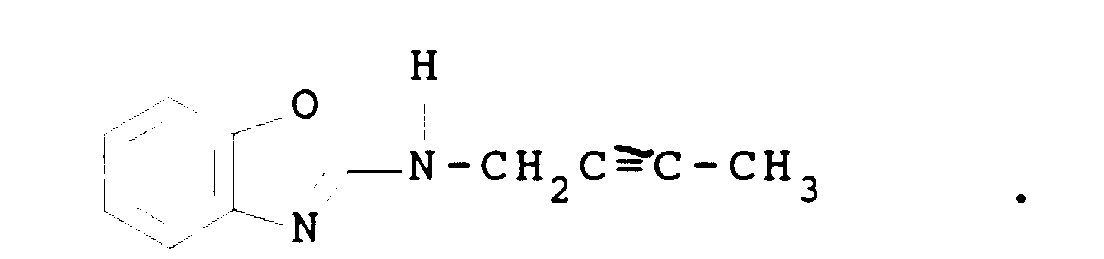
- The method of Claim 1 wherein said compound is
- A photographic element comprising at least one silver halide emulsion wherein the grains of said emulsion have on their surface between .005 mmol/mole of silver and 0.1 mmol/mole of silver of the compound
 X = O, S, Se;R1 = alkyl or substituted alkyl or aryl or substituted aryl;Y1 and Y2 individually represent hydrogen, alkyl groups or an aromatic nucleus or together represent the atoms necessary to complete a cyclic structure containing carbon, oxygen, selenium, or nitrogen atoms necessary to complete a fused aromatic nucleus or an alicyclic structure, wherein said compound is added to the said emulsion during chemical sensitization and prior to the heat treatment during chemical sensitization; with the proviso that said grains have a thickness of less than 0.1 micrometer.
 - The element of Claim 7 wherein the emulsion is a silver bromoiodide emulsion.
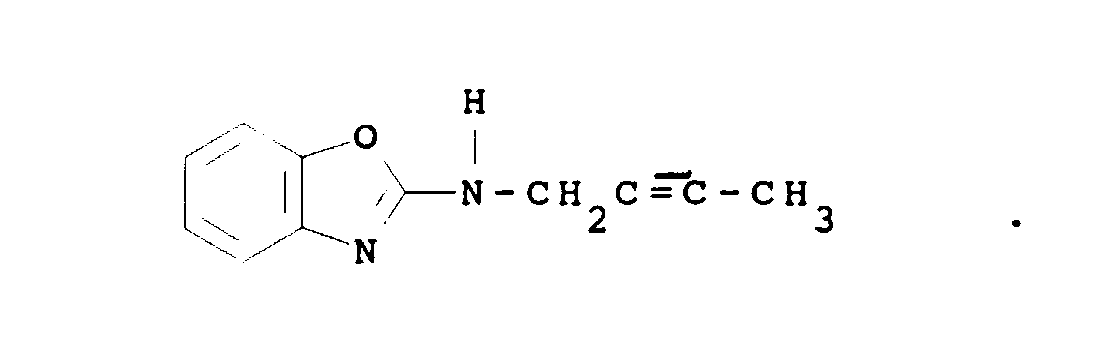
- The element of Claim 8 wherein said compound is
Applications Claiming Priority (2)
| Application Number | Priority Date | Filing Date | Title |
|---|---|---|---|
| US08/169,478 US5500333A (en) | 1993-12-16 | 1993-12-16 | Class of compounds which increases and stabilizes photographic speed |
| US169478 | 1993-12-16 |
Publications (2)
| Publication Number | Publication Date |
|---|---|
| EP0658803A1 EP0658803A1 (en) | 1995-06-21 |
| EP0658803B1 true EP0658803B1 (en) | 1998-09-02 |
Family
ID=22615871
Family Applications (1)
| Application Number | Title | Priority Date | Filing Date |
|---|---|---|---|
| EP94119840A Expired - Lifetime EP0658803B1 (en) | 1993-12-16 | 1994-12-15 | A class of compounds which increases and stabilizes photographic speed |
Country Status (3)
| Country | Link |
|---|---|
| US (1) | US5500333A (en) |
| EP (1) | EP0658803B1 (en) |
| DE (1) | DE69412983T2 (en) |
Families Citing this family (4)
| Publication number | Priority date | Publication date | Assignee | Title |
|---|---|---|---|---|
| JPH112876A (en) * | 1997-04-14 | 1999-01-06 | Fuji Photo Film Co Ltd | Reduction sensitization method for silver halide photographic emulsion and silver halide photographic sensitive material using this emulsion |
| GB2328755A (en) * | 1997-08-25 | 1999-03-03 | Eastman Kodak Co | Image stability using alkynylamines, reductones and iodide emulsions |
| US5952166A (en) * | 1998-01-26 | 1999-09-14 | Eastman Kodak Company | Enhanced sensitivity from thiolone dioxides in cubic silver chloride emulsions with sharp corners |
| US6514682B1 (en) | 2001-06-20 | 2003-02-04 | Eastman Kodak Company | Speed addendum for photographic emulsions |
Citations (1)
| Publication number | Priority date | Publication date | Assignee | Title |
|---|---|---|---|---|
| US5250403A (en) * | 1991-04-03 | 1993-10-05 | Eastman Kodak Company | Photographic elements including highly uniform silver bromoiodide tabular grain emulsions |
Family Cites Families (13)
| Publication number | Priority date | Publication date | Assignee | Title |
|---|---|---|---|---|
| US3971664A (en) * | 1970-10-27 | 1976-07-27 | Fuji Photo Film Co., Ltd. | Fine grain silver halide emulsions with polyheteronuclear sensitizing dyes |
| JPS5434533B2 (en) * | 1974-04-17 | 1979-10-27 | ||
| US4097284A (en) * | 1974-11-26 | 1978-06-27 | Fuji Photo Film Co., Ltd. | Method for supersensitizing silver halide photographic emulsions |
| US4434226A (en) * | 1981-11-12 | 1984-02-28 | Eastman Kodak Company | High aspect ratio silver bromoiodide emulsions and processes for their preparation |
| US4378426A (en) * | 1981-11-12 | 1983-03-29 | Eastman Kodak Company | Photographic speed increasing and latent image stabilizing compounds, silver halide emulsions, and photographic elements |
| JPS58107533A (en) * | 1981-12-21 | 1983-06-27 | Konishiroku Photo Ind Co Ltd | Silver halide color photosensitive material |
| JPS5955426A (en) * | 1982-09-24 | 1984-03-30 | Fuji Photo Film Co Ltd | Silver halide photosensitive material |
| JPS6017738A (en) * | 1983-07-12 | 1985-01-29 | Fuji Photo Film Co Ltd | Silver halide photosensitive material |
| JPS60128432A (en) * | 1983-12-15 | 1985-07-09 | Fuji Photo Film Co Ltd | Photosensitive silver halide material |
| JPH0743503B2 (en) * | 1985-06-18 | 1995-05-15 | 富士写真フイルム株式会社 | Silver halide color-photographic material |
| JPS61296349A (en) * | 1985-06-25 | 1986-12-27 | Fuji Photo Film Co Ltd | Silver halide photographic sensitive material |
| DE3605712A1 (en) * | 1986-02-22 | 1987-08-27 | Agfa Gevaert Ag | PHOTOGRAPHIC RECORDING MATERIAL AND METHOD FOR PRODUCING PHOTOGRAPHIC IMAGES |
| US5292635A (en) * | 1990-12-27 | 1994-03-08 | Eastman Kodak Company | Thiosulfonate-sulfinate stabilizers for photosensitive emulsions |
-
1993
- 1993-12-16 US US08/169,478 patent/US5500333A/en not_active Expired - Fee Related
-
1994
- 1994-12-15 DE DE69412983T patent/DE69412983T2/en not_active Expired - Fee Related
- 1994-12-15 EP EP94119840A patent/EP0658803B1/en not_active Expired - Lifetime
Patent Citations (1)
| Publication number | Priority date | Publication date | Assignee | Title |
|---|---|---|---|---|
| US5250403A (en) * | 1991-04-03 | 1993-10-05 | Eastman Kodak Company | Photographic elements including highly uniform silver bromoiodide tabular grain emulsions |
Also Published As
| Publication number | Publication date |
|---|---|
| DE69412983D1 (en) | 1998-10-08 |
| US5500333A (en) | 1996-03-19 |
| DE69412983T2 (en) | 1999-01-14 |
| EP0658803A1 (en) | 1995-06-21 |
Similar Documents
| Publication | Publication Date | Title |
|---|---|---|
| EP0082649B1 (en) | Light-sensitive silver halide color photographic material | |
| EP0317950B1 (en) | Photographic elements containing a bleach accelerator precursor | |
| US5500333A (en) | Class of compounds which increases and stabilizes photographic speed | |
| EP0599383B1 (en) | Silver halide photographic elements containing furan or pyrrole substituted dye compounds | |
| JPH0635147A (en) | Color photographic material | |
| US4423140A (en) | Silver halide emulsions containing aromatic latent image stabilizing compounds | |
| US5413905A (en) | Photographic sensitivity increasing alkynylamine compounds and photographic elements | |
| US4780400A (en) | Silver halide emulsion containing a 2-unsubstituted N-alkenyl-thiazolium salt as latent image stabilizer and photographic elements including said emulsion | |
| US5389510A (en) | Photographic elements containing alkynylamine dopants | |
| US4849327A (en) | Silver halide light-sensitive material comprising benzo-bis-thiazole quaternary salts as antifogging agents | |
| US5968724A (en) | Silver halide photographic elements with reduced fog | |
| JPH0562322B2 (en) | ||
| JPH02216147A (en) | Silver halide color photographic sensitive material | |
| US5198331A (en) | Silver halide emulsion chemically ripened in the presence of a gold-containing complex | |
| US5902721A (en) | Reduced development time color negative process and process compatible color negative elements | |
| JPS61118752A (en) | Treatment of silver halide color photographic sensitive material | |
| US6214529B1 (en) | Method of suppressing fog in silver halide emulsions | |
| US5677119A (en) | Silver halide photographic elements containing dithiolone 1 oxide compounds | |
| US6350567B1 (en) | Precipitation of high chloride content silver halide emulsions | |
| JPH01196052A (en) | Dye image forming method | |
| EP0585787A2 (en) | Silver halide photographic material containing selenium compound | |
| USRE32195E (en) | Silver halide emulsions containing aromatic latent image stabilizing compounds | |
| JPH0895189A (en) | Silver halide material of color photograph | |
| US5733717A (en) | Silver halide photographic elements containing aryliodonium compounds | |
| JPH05265156A (en) | Photographic recording material |
Legal Events
| Date | Code | Title | Description |
|---|---|---|---|
| PUAI | Public reference made under article 153(3) epc to a published international application that has entered the european phase |
Free format text: ORIGINAL CODE: 0009012 |
|
| AK | Designated contracting states |
Kind code of ref document: A1 Designated state(s): DE FR GB |
|
| 17P | Request for examination filed |
Effective date: 19951201 |
|
| 17Q | First examination report despatched |
Effective date: 19960723 |
|
| GRAG | Despatch of communication of intention to grant |
Free format text: ORIGINAL CODE: EPIDOS AGRA |
|
| GRAG | Despatch of communication of intention to grant |
Free format text: ORIGINAL CODE: EPIDOS AGRA |
|
| GRAH | Despatch of communication of intention to grant a patent |
Free format text: ORIGINAL CODE: EPIDOS IGRA |
|
| RBV | Designated contracting states (corrected) |
Designated state(s): DE FR GB |
|
| GRAH | Despatch of communication of intention to grant a patent |
Free format text: ORIGINAL CODE: EPIDOS IGRA |
|
| GRAA | (expected) grant |
Free format text: ORIGINAL CODE: 0009210 |
|
| AK | Designated contracting states |
Kind code of ref document: B1 Designated state(s): DE FR GB |
|
| REF | Corresponds to: |
Ref document number: 69412983 Country of ref document: DE Date of ref document: 19981008 |
|
| ET | Fr: translation filed | ||
| PLBE | No opposition filed within time limit |
Free format text: ORIGINAL CODE: 0009261 |
|
| STAA | Information on the status of an ep patent application or granted ep patent |
Free format text: STATUS: NO OPPOSITION FILED WITHIN TIME LIMIT |
|
| 26N | No opposition filed | ||
| PGFP | Annual fee paid to national office [announced via postgrant information from national office to epo] |
Ref country code: GB Payment date: 20011102 Year of fee payment: 8 |
|
| PGFP | Annual fee paid to national office [announced via postgrant information from national office to epo] |
Ref country code: FR Payment date: 20011203 Year of fee payment: 8 |
|
| PGFP | Annual fee paid to national office [announced via postgrant information from national office to epo] |
Ref country code: DE Payment date: 20011228 Year of fee payment: 8 |
|
| REG | Reference to a national code |
Ref country code: GB Ref legal event code: IF02 |
|
| PG25 | Lapsed in a contracting state [announced via postgrant information from national office to epo] |
Ref country code: GB Free format text: LAPSE BECAUSE OF NON-PAYMENT OF DUE FEES Effective date: 20021215 |
|
| PG25 | Lapsed in a contracting state [announced via postgrant information from national office to epo] |
Ref country code: DE Free format text: LAPSE BECAUSE OF NON-PAYMENT OF DUE FEES Effective date: 20030701 |
|
| GBPC | Gb: european patent ceased through non-payment of renewal fee |
Effective date: 20021215 |
|
| PG25 | Lapsed in a contracting state [announced via postgrant information from national office to epo] |
Ref country code: FR Free format text: LAPSE BECAUSE OF NON-PAYMENT OF DUE FEES Effective date: 20030901 |
|
| REG | Reference to a national code |
Ref country code: FR Ref legal event code: ST |