EP0655239B1 - Liposomes encapsulating doxorubicine - Google Patents
Liposomes encapsulating doxorubicine Download PDFInfo
- Publication number
- EP0655239B1 EP0655239B1 EP94500197A EP94500197A EP0655239B1 EP 0655239 B1 EP0655239 B1 EP 0655239B1 EP 94500197 A EP94500197 A EP 94500197A EP 94500197 A EP94500197 A EP 94500197A EP 0655239 B1 EP0655239 B1 EP 0655239B1
- Authority
- EP
- European Patent Office
- Prior art keywords
- liposomes
- fact
- liposomes encapsulating
- encapsulating doxorubicin
- dxr
- Prior art date
- Legal status (The legal status is an assumption and is not a legal conclusion. Google has not performed a legal analysis and makes no representation as to the accuracy of the status listed.)
- Expired - Lifetime
Links
- AOJJSUZBOXZQNB-TZSSRYMLSA-N Doxorubicin Chemical compound O([C@H]1C[C@@](O)(CC=2C(O)=C3C(=O)C=4C=CC=C(C=4C(=O)C3=C(O)C=21)OC)C(=O)CO)[C@H]1C[C@H](N)[C@H](O)[C@H](C)O1 AOJJSUZBOXZQNB-TZSSRYMLSA-N 0.000 title claims abstract description 150
- 239000002502 liposome Substances 0.000 title claims abstract description 89
- 229960004679 doxorubicin Drugs 0.000 claims abstract description 74
- 150000001875 compounds Chemical class 0.000 claims abstract description 50
- 229940079593 drug Drugs 0.000 claims abstract description 37
- 239000003814 drug Substances 0.000 claims abstract description 37
- 230000001988 toxicity Effects 0.000 claims abstract description 16
- 231100000419 toxicity Toxicity 0.000 claims abstract description 16
- 230000001012 protector Effects 0.000 claims abstract description 6
- 238000005502 peroxidation Methods 0.000 claims description 26
- 239000000203 mixture Substances 0.000 claims description 23
- HVYWMOMLDIMFJA-DPAQBDIFSA-N cholesterol Chemical compound C1C=C2C[C@@H](O)CC[C@]2(C)[C@@H]2[C@@H]1[C@@H]1CC[C@H]([C@H](C)CCCC(C)C)[C@@]1(C)CC2 HVYWMOMLDIMFJA-DPAQBDIFSA-N 0.000 claims description 18
- 150000002632 lipids Chemical class 0.000 claims description 18
- 150000003904 phospholipids Chemical class 0.000 claims description 17
- 201000011510 cancer Diseases 0.000 claims description 14
- 239000003112 inhibitor Substances 0.000 claims description 12
- 235000012000 cholesterol Nutrition 0.000 claims description 9
- 238000004519 manufacturing process Methods 0.000 claims description 8
- 230000007935 neutral effect Effects 0.000 claims description 5
- 230000001681 protective effect Effects 0.000 claims description 2
- 241000124008 Mammalia Species 0.000 claims 1
- 238000001990 intravenous administration Methods 0.000 abstract description 2
- 238000011534 incubation Methods 0.000 description 23
- 230000002401 inhibitory effect Effects 0.000 description 21
- VZWXIQHBIQLMPN-UHFFFAOYSA-N chromane Chemical compound C1=CC=C2CCCOC2=C1 VZWXIQHBIQLMPN-UHFFFAOYSA-N 0.000 description 20
- ATBOMIWRCZXYSZ-XZBBILGWSA-N [1-[2,3-dihydroxypropoxy(hydroxy)phosphoryl]oxy-3-hexadecanoyloxypropan-2-yl] (9e,12e)-octadeca-9,12-dienoate Chemical compound CCCCCCCCCCCCCCCC(=O)OCC(COP(O)(=O)OCC(O)CO)OC(=O)CCCCCCC\C=C\C\C=C\CCCCC ATBOMIWRCZXYSZ-XZBBILGWSA-N 0.000 description 18
- AWUCVROLDVIAJX-UHFFFAOYSA-N alpha-glycerophosphate Natural products OCC(O)COP(O)(O)=O AWUCVROLDVIAJX-UHFFFAOYSA-N 0.000 description 18
- 238000000034 method Methods 0.000 description 18
- GVJHHUAWPYXKBD-IEOSBIPESA-N α-tocopherol Chemical compound OC1=C(C)C(C)=C2O[C@@](CCC[C@H](C)CCC[C@H](C)CCCC(C)C)(C)CCC2=C1C GVJHHUAWPYXKBD-IEOSBIPESA-N 0.000 description 18
- 206010028980 Neoplasm Diseases 0.000 description 17
- 238000002360 preparation method Methods 0.000 description 16
- XJLXINKUBYWONI-DQQFMEOOSA-N [[(2r,3r,4r,5r)-5-(6-aminopurin-9-yl)-3-hydroxy-4-phosphonooxyoxolan-2-yl]methoxy-hydroxyphosphoryl] [(2s,3r,4s,5s)-5-(3-carbamoylpyridin-1-ium-1-yl)-3,4-dihydroxyoxolan-2-yl]methyl phosphate Chemical compound NC(=O)C1=CC=C[N+]([C@@H]2[C@H]([C@@H](O)[C@H](COP([O-])(=O)OP(O)(=O)OC[C@@H]3[C@H]([C@@H](OP(O)(O)=O)[C@@H](O3)N3C4=NC=NC(N)=C4N=C3)O)O2)O)=C1 XJLXINKUBYWONI-DQQFMEOOSA-N 0.000 description 13
- 238000005538 encapsulation Methods 0.000 description 13
- 229930027945 nicotinamide-adenine dinucleotide Natural products 0.000 description 13
- WTJKGGKOPKCXLL-RRHRGVEJSA-N phosphatidylcholine Chemical compound CCCCCCCCCCCCCCCC(=O)OC[C@H](COP([O-])(=O)OCC[N+](C)(C)C)OC(=O)CCCCCCCC=CCCCCCCCC WTJKGGKOPKCXLL-RRHRGVEJSA-N 0.000 description 13
- 230000000694 effects Effects 0.000 description 12
- 239000000725 suspension Substances 0.000 description 11
- 241000700159 Rattus Species 0.000 description 10
- 230000009467 reduction Effects 0.000 description 10
- 230000004083 survival effect Effects 0.000 description 10
- IAZDPXIOMUYVGZ-UHFFFAOYSA-N Dimethylsulphoxide Chemical compound CS(C)=O IAZDPXIOMUYVGZ-UHFFFAOYSA-N 0.000 description 9
- 229940087168 alpha tocopherol Drugs 0.000 description 9
- 239000003963 antioxidant agent Substances 0.000 description 9
- 239000011668 ascorbic acid Substances 0.000 description 9
- 229960000984 tocofersolan Drugs 0.000 description 9
- 239000002076 α-tocopherol Substances 0.000 description 9
- 235000004835 α-tocopherol Nutrition 0.000 description 9
- NLZUEZXRPGMBCV-UHFFFAOYSA-N Butylhydroxytoluene Chemical compound CC1=CC(C(C)(C)C)=C(O)C(C(C)(C)C)=C1 NLZUEZXRPGMBCV-UHFFFAOYSA-N 0.000 description 8
- 235000006708 antioxidants Nutrition 0.000 description 8
- 229940072107 ascorbate Drugs 0.000 description 8
- 238000002474 experimental method Methods 0.000 description 8
- 230000005764 inhibitory process Effects 0.000 description 8
- GVJHHUAWPYXKBD-UHFFFAOYSA-N (±)-α-Tocopherol Chemical compound OC1=C(C)C(C)=C2OC(CCCC(C)CCCC(C)CCCC(C)C)(C)CCC2=C1C GVJHHUAWPYXKBD-UHFFFAOYSA-N 0.000 description 6
- 238000007912 intraperitoneal administration Methods 0.000 description 6
- 150000003254 radicals Chemical class 0.000 description 6
- 239000000243 solution Substances 0.000 description 6
- 238000012360 testing method Methods 0.000 description 6
- LRHPLDYGYMQRHN-UHFFFAOYSA-N N-Butanol Chemical compound CCCCO LRHPLDYGYMQRHN-UHFFFAOYSA-N 0.000 description 5
- 230000003859 lipid peroxidation Effects 0.000 description 5
- 210000001853 liver microsome Anatomy 0.000 description 5
- KILNVBDSWZSGLL-KXQOOQHDSA-N 1,2-dihexadecanoyl-sn-glycero-3-phosphocholine Chemical compound CCCCCCCCCCCCCCCC(=O)OC[C@H](COP([O-])(=O)OCC[N+](C)(C)C)OC(=O)CCCCCCCCCCCCCCC KILNVBDSWZSGLL-KXQOOQHDSA-N 0.000 description 4
- RVBUGGBMJDPOST-UHFFFAOYSA-N 2-thiobarbituric acid Chemical compound O=C1CC(=O)NC(=S)N1 RVBUGGBMJDPOST-UHFFFAOYSA-N 0.000 description 4
- FVOOPOSZDXPIMS-UHFFFAOYSA-N 3,4-dihydro-2h-chromen-2-ol Chemical compound C1=CC=C2OC(O)CCC2=C1 FVOOPOSZDXPIMS-UHFFFAOYSA-N 0.000 description 4
- FAPWRFPIFSIZLT-UHFFFAOYSA-M Sodium chloride Chemical compound [Na+].[Cl-] FAPWRFPIFSIZLT-UHFFFAOYSA-M 0.000 description 4
- 229930182558 Sterol Natural products 0.000 description 4
- 230000009471 action Effects 0.000 description 4
- 238000013019 agitation Methods 0.000 description 4
- 229940045799 anthracyclines and related substance Drugs 0.000 description 4
- 230000003078 antioxidant effect Effects 0.000 description 4
- 125000004356 hydroxy functional group Chemical group O* 0.000 description 4
- 238000011081 inoculation Methods 0.000 description 4
- 239000002207 metabolite Substances 0.000 description 4
- 239000003960 organic solvent Substances 0.000 description 4
- 230000003389 potentiating effect Effects 0.000 description 4
- 230000005855 radiation Effects 0.000 description 4
- 150000003839 salts Chemical group 0.000 description 4
- 238000000527 sonication Methods 0.000 description 4
- 235000003702 sterols Nutrition 0.000 description 4
- 150000003432 sterols Chemical class 0.000 description 4
- SAXKWTPDZMBKSQ-UHFFFAOYSA-N 2,2-dimethylchromene Chemical class C1=CC=C2C=CC(C)(C)OC2=C1 SAXKWTPDZMBKSQ-UHFFFAOYSA-N 0.000 description 3
- NHBKXEKEPDILRR-UHFFFAOYSA-N 2,3-bis(butanoylsulfanyl)propyl butanoate Chemical compound CCCC(=O)OCC(SC(=O)CCC)CSC(=O)CCC NHBKXEKEPDILRR-UHFFFAOYSA-N 0.000 description 3
- 239000000232 Lipid Bilayer Substances 0.000 description 3
- RTAQQCXQSZGOHL-UHFFFAOYSA-N Titanium Chemical compound [Ti] RTAQQCXQSZGOHL-UHFFFAOYSA-N 0.000 description 3
- 229930003427 Vitamin E Natural products 0.000 description 3
- 239000007864 aqueous solution Substances 0.000 description 3
- 230000015572 biosynthetic process Effects 0.000 description 3
- 239000000872 buffer Substances 0.000 description 3
- 238000006243 chemical reaction Methods 0.000 description 3
- 230000007423 decrease Effects 0.000 description 3
- BIABMEZBCHDPBV-UHFFFAOYSA-N dipalmitoyl phosphatidylglycerol Chemical compound CCCCCCCCCCCCCCCC(=O)OCC(COP(O)(=O)OCC(O)CO)OC(=O)CCCCCCCCCCCCCCC BIABMEZBCHDPBV-UHFFFAOYSA-N 0.000 description 3
- 230000008030 elimination Effects 0.000 description 3
- 238000003379 elimination reaction Methods 0.000 description 3
- WIGCFUFOHFEKBI-UHFFFAOYSA-N gamma-tocopherol Natural products CC(C)CCCC(C)CCCC(C)CCCC1CCC2C(C)C(O)C(C)C(C)C2O1 WIGCFUFOHFEKBI-UHFFFAOYSA-N 0.000 description 3
- 125000002887 hydroxy group Chemical group [H]O* 0.000 description 3
- 239000002609 medium Substances 0.000 description 3
- 230000004060 metabolic process Effects 0.000 description 3
- 230000003228 microsomal effect Effects 0.000 description 3
- 102000004169 proteins and genes Human genes 0.000 description 3
- 108090000623 proteins and genes Proteins 0.000 description 3
- 239000000523 sample Substances 0.000 description 3
- 239000000126 substance Substances 0.000 description 3
- 239000010936 titanium Substances 0.000 description 3
- 229910052719 titanium Inorganic materials 0.000 description 3
- 229940046009 vitamin E Drugs 0.000 description 3
- 235000019165 vitamin E Nutrition 0.000 description 3
- 239000011709 vitamin E Substances 0.000 description 3
- TZCPCKNHXULUIY-RGULYWFUSA-N 1,2-distearoyl-sn-glycero-3-phosphoserine Chemical compound CCCCCCCCCCCCCCCCCC(=O)OC[C@H](COP(O)(=O)OC[C@H](N)C(O)=O)OC(=O)CCCCCCCCCCCCCCCCC TZCPCKNHXULUIY-RGULYWFUSA-N 0.000 description 2
- AZQWKYJCGOJGHM-UHFFFAOYSA-N 1,4-benzoquinone Chemical compound O=C1C=CC(=O)C=C1 AZQWKYJCGOJGHM-UHFFFAOYSA-N 0.000 description 2
- IIZPXYDJLKNOIY-JXPKJXOSSA-N 1-palmitoyl-2-arachidonoyl-sn-glycero-3-phosphocholine Chemical compound CCCCCCCCCCCCCCCC(=O)OC[C@H](COP([O-])(=O)OCC[N+](C)(C)C)OC(=O)CCC\C=C/C\C=C/C\C=C/C\C=C/CCCCC IIZPXYDJLKNOIY-JXPKJXOSSA-N 0.000 description 2
- CIWBSHSKHKDKBQ-JLAZNSOCSA-N Ascorbic acid Chemical compound OC[C@H](O)[C@H]1OC(=O)C(O)=C1O CIWBSHSKHKDKBQ-JLAZNSOCSA-N 0.000 description 2
- 208000031229 Cardiomyopathies Diseases 0.000 description 2
- HEDRZPFGACZZDS-UHFFFAOYSA-N Chloroform Chemical compound ClC(Cl)Cl HEDRZPFGACZZDS-UHFFFAOYSA-N 0.000 description 2
- IELOKBJPULMYRW-NJQVLOCASA-N D-alpha-Tocopheryl Acid Succinate Chemical compound OC(=O)CCC(=O)OC1=C(C)C(C)=C2O[C@@](CCC[C@H](C)CCC[C@H](C)CCCC(C)C)(C)CCC2=C1C IELOKBJPULMYRW-NJQVLOCASA-N 0.000 description 2
- ZAKOWWREFLAJOT-CEFNRUSXSA-N D-alpha-tocopherylacetate Chemical compound CC(=O)OC1=C(C)C(C)=C2O[C@@](CCC[C@H](C)CCC[C@H](C)CCCC(C)C)(C)CCC2=C1C ZAKOWWREFLAJOT-CEFNRUSXSA-N 0.000 description 2
- LFQSCWFLJHTTHZ-UHFFFAOYSA-N Ethanol Chemical compound CCO LFQSCWFLJHTTHZ-UHFFFAOYSA-N 0.000 description 2
- ZWZWYGMENQVNFU-UHFFFAOYSA-N Glycerophosphorylserin Natural products OC(=O)C(N)COP(O)(=O)OCC(O)CO ZWZWYGMENQVNFU-UHFFFAOYSA-N 0.000 description 2
- XEEYBQQBJWHFJM-UHFFFAOYSA-N Iron Chemical compound [Fe] XEEYBQQBJWHFJM-UHFFFAOYSA-N 0.000 description 2
- PWKSKIMOESPYIA-BYPYZUCNSA-N L-N-acetyl-Cysteine Chemical compound CC(=O)N[C@@H](CS)C(O)=O PWKSKIMOESPYIA-BYPYZUCNSA-N 0.000 description 2
- WSMYVTOQOOLQHP-UHFFFAOYSA-N Malondialdehyde Chemical compound O=CCC=O WSMYVTOQOOLQHP-UHFFFAOYSA-N 0.000 description 2
- PVNIIMVLHYAWGP-UHFFFAOYSA-N Niacin Chemical compound OC(=O)C1=CC=CN=C1 PVNIIMVLHYAWGP-UHFFFAOYSA-N 0.000 description 2
- 229960004308 acetylcysteine Drugs 0.000 description 2
- 238000010171 animal model Methods 0.000 description 2
- 229940034982 antineoplastic agent Drugs 0.000 description 2
- 239000002246 antineoplastic agent Substances 0.000 description 2
- 239000003795 chemical substances by application Substances 0.000 description 2
- 150000008371 chromenes Chemical class 0.000 description 2
- 229940125898 compound 5 Drugs 0.000 description 2
- 239000012141 concentrate Substances 0.000 description 2
- ZAKOWWREFLAJOT-UHFFFAOYSA-N d-alpha-Tocopheryl acetate Natural products CC(=O)OC1=C(C)C(C)=C2OC(CCCC(C)CCCC(C)CCCC(C)C)(C)CCC2=C1C ZAKOWWREFLAJOT-UHFFFAOYSA-N 0.000 description 2
- 230000003247 decreasing effect Effects 0.000 description 2
- 238000011156 evaluation Methods 0.000 description 2
- 238000001125 extrusion Methods 0.000 description 2
- 238000001727 in vivo Methods 0.000 description 2
- 238000010348 incorporation Methods 0.000 description 2
- 238000002347 injection Methods 0.000 description 2
- 239000007924 injection Substances 0.000 description 2
- ODBLHEXUDAPZAU-UHFFFAOYSA-N isocitric acid Chemical compound OC(=O)C(O)C(C(O)=O)CC(O)=O ODBLHEXUDAPZAU-UHFFFAOYSA-N 0.000 description 2
- 239000000787 lecithin Substances 0.000 description 2
- 229940067606 lecithin Drugs 0.000 description 2
- 235000010445 lecithin Nutrition 0.000 description 2
- 230000003902 lesion Effects 0.000 description 2
- 208000032839 leukemia Diseases 0.000 description 2
- 229940118019 malondialdehyde Drugs 0.000 description 2
- 230000007246 mechanism Effects 0.000 description 2
- 239000012528 membrane Substances 0.000 description 2
- 230000002503 metabolic effect Effects 0.000 description 2
- 229960003512 nicotinic acid Drugs 0.000 description 2
- 235000001968 nicotinic acid Nutrition 0.000 description 2
- 239000011664 nicotinic acid Substances 0.000 description 2
- 239000002245 particle Substances 0.000 description 2
- 230000002085 persistent effect Effects 0.000 description 2
- 150000003905 phosphatidylinositols Chemical class 0.000 description 2
- 229920000515 polycarbonate Polymers 0.000 description 2
- 239000004417 polycarbonate Substances 0.000 description 2
- 230000000284 resting effect Effects 0.000 description 2
- 230000009291 secondary effect Effects 0.000 description 2
- 241000894007 species Species 0.000 description 2
- 230000002459 sustained effect Effects 0.000 description 2
- 229940042585 tocopherol acetate Drugs 0.000 description 2
- XHTYQFMRBQUCPX-UHFFFAOYSA-N 1,1,3,3-tetramethoxypropane Chemical compound COC(OC)CC(OC)OC XHTYQFMRBQUCPX-UHFFFAOYSA-N 0.000 description 1
- BIABMEZBCHDPBV-MPQUPPDSSA-N 1,2-palmitoyl-sn-glycero-3-phospho-(1'-sn-glycerol) Chemical compound CCCCCCCCCCCCCCCC(=O)OC[C@H](COP(O)(=O)OC[C@@H](O)CO)OC(=O)CCCCCCCCCCCCCCC BIABMEZBCHDPBV-MPQUPPDSSA-N 0.000 description 1
- 201000004384 Alopecia Diseases 0.000 description 1
- 0 CC1(C)Oc2cc(O)c(*N)cc2CC1 Chemical compound CC1(C)Oc2cc(O)c(*N)cc2CC1 0.000 description 1
- 102000055006 Calcitonin Human genes 0.000 description 1
- 108060001064 Calcitonin Proteins 0.000 description 1
- 206010015866 Extravasation Diseases 0.000 description 1
- 102100036342 Interleukin-1 receptor-associated kinase 1 Human genes 0.000 description 1
- 241001465754 Metazoa Species 0.000 description 1
- 206010028813 Nausea Diseases 0.000 description 1
- RCEAADKTGXTDOA-UHFFFAOYSA-N OS(O)(=O)=O.CCCCCCCCCCCC[Na] Chemical compound OS(O)(=O)=O.CCCCCCCCCCCC[Na] RCEAADKTGXTDOA-UHFFFAOYSA-N 0.000 description 1
- 229910019142 PO4 Inorganic materials 0.000 description 1
- 229920005654 Sephadex Polymers 0.000 description 1
- 239000012507 Sephadex™ Substances 0.000 description 1
- 206010047631 Vitamin E deficiency Diseases 0.000 description 1
- 206010047700 Vomiting Diseases 0.000 description 1
- 238000010521 absorption reaction Methods 0.000 description 1
- 230000001154 acute effect Effects 0.000 description 1
- 125000002015 acyclic group Chemical group 0.000 description 1
- 230000002776 aggregation Effects 0.000 description 1
- 238000004220 aggregation Methods 0.000 description 1
- 231100000360 alopecia Toxicity 0.000 description 1
- 230000004075 alteration Effects 0.000 description 1
- 125000005577 anthracene group Chemical group 0.000 description 1
- PYKYMHQGRFAEBM-UHFFFAOYSA-N anthraquinone Natural products CCC(=O)c1c(O)c2C(=O)C3C(C=CC=C3O)C(=O)c2cc1CC(=O)OC PYKYMHQGRFAEBM-UHFFFAOYSA-N 0.000 description 1
- 150000004056 anthraquinones Chemical class 0.000 description 1
- 230000000118 anti-neoplastic effect Effects 0.000 description 1
- 230000003064 anti-oxidating effect Effects 0.000 description 1
- 230000000259 anti-tumor effect Effects 0.000 description 1
- 239000012736 aqueous medium Substances 0.000 description 1
- 239000007900 aqueous suspension Substances 0.000 description 1
- 235000010323 ascorbic acid Nutrition 0.000 description 1
- 229960005070 ascorbic acid Drugs 0.000 description 1
- 239000012298 atmosphere Substances 0.000 description 1
- 239000012867 bioactive agent Substances 0.000 description 1
- 230000003115 biocidal effect Effects 0.000 description 1
- BBBFJLBPOGFECG-VJVYQDLKSA-N calcitonin Chemical compound N([C@H](C(=O)N[C@@H](CC(C)C)C(=O)NCC(=O)N[C@@H](CCCCN)C(=O)N[C@@H](CC(C)C)C(=O)N[C@@H](CO)C(=O)N[C@@H](CCC(N)=O)C(=O)N[C@@H](CCC(O)=O)C(=O)N[C@@H](CC(C)C)C(=O)N[C@@H](CC=1NC=NC=1)C(=O)N[C@@H](CCCCN)C(=O)N[C@@H](CC(C)C)C(=O)N[C@@H](CCC(N)=O)C(=O)N[C@@H]([C@@H](C)O)C(=O)N[C@@H](CC=1C=CC(O)=CC=1)C(=O)N1[C@@H](CCC1)C(=O)N[C@@H](CCCNC(N)=N)C(=O)N[C@@H]([C@@H](C)O)C(=O)N[C@@H](CC(N)=O)C(=O)N[C@@H]([C@@H](C)O)C(=O)NCC(=O)N[C@@H](CO)C(=O)NCC(=O)N[C@@H]([C@@H](C)O)C(=O)N1[C@@H](CCC1)C(N)=O)C(C)C)C(=O)[C@@H]1CSSC[C@H](N)C(=O)N[C@@H](CO)C(=O)N[C@@H](CC(N)=O)C(=O)N[C@@H](CC(C)C)C(=O)N[C@@H](CO)C(=O)N[C@@H]([C@@H](C)O)C(=O)N1 BBBFJLBPOGFECG-VJVYQDLKSA-N 0.000 description 1
- 229960004015 calcitonin Drugs 0.000 description 1
- 125000002091 cationic group Chemical group 0.000 description 1
- 238000005119 centrifugation Methods 0.000 description 1
- 230000008859 change Effects 0.000 description 1
- 239000002738 chelating agent Substances 0.000 description 1
- 238000007385 chemical modification Methods 0.000 description 1
- 150000001843 chromanes Chemical class 0.000 description 1
- 238000013375 chromatographic separation Methods 0.000 description 1
- QZHPTGXQGDFGEN-UHFFFAOYSA-N chromene Chemical compound C1=CC=C2C=C[CH]OC2=C1 QZHPTGXQGDFGEN-UHFFFAOYSA-N 0.000 description 1
- 230000001684 chronic effect Effects 0.000 description 1
- 230000000052 comparative effect Effects 0.000 description 1
- 229940125773 compound 10 Drugs 0.000 description 1
- 229940125782 compound 2 Drugs 0.000 description 1
- 229940099418 d- alpha-tocopherol succinate Drugs 0.000 description 1
- 230000000254 damaging effect Effects 0.000 description 1
- 230000001419 dependent effect Effects 0.000 description 1
- 238000001514 detection method Methods 0.000 description 1
- 238000007865 diluting Methods 0.000 description 1
- 208000037265 diseases, disorders, signs and symptoms Diseases 0.000 description 1
- 208000035475 disorder Diseases 0.000 description 1
- 239000006185 dispersion Substances 0.000 description 1
- 230000002500 effect on skin Effects 0.000 description 1
- 239000003480 eluent Substances 0.000 description 1
- 150000002148 esters Chemical class 0.000 description 1
- 238000001704 evaporation Methods 0.000 description 1
- 230000036251 extravasation Effects 0.000 description 1
- 238000009472 formulation Methods 0.000 description 1
- 238000004108 freeze drying Methods 0.000 description 1
- 208000018706 hematopoietic system disease Diseases 0.000 description 1
- 238000000265 homogenisation Methods 0.000 description 1
- 125000000687 hydroquinonyl group Chemical group C1(O)=C(C=C(O)C=C1)* 0.000 description 1
- 239000005457 ice water Substances 0.000 description 1
- 238000010255 intramuscular injection Methods 0.000 description 1
- 239000007927 intramuscular injection Substances 0.000 description 1
- 238000011835 investigation Methods 0.000 description 1
- 150000002500 ions Chemical class 0.000 description 1
- 229910052742 iron Inorganic materials 0.000 description 1
- BAUYGSIQEAFULO-UHFFFAOYSA-L iron(2+) sulfate (anhydrous) Chemical compound [Fe+2].[O-]S([O-])(=O)=O BAUYGSIQEAFULO-UHFFFAOYSA-L 0.000 description 1
- 229910000359 iron(II) sulfate Inorganic materials 0.000 description 1
- ZLVXBBHTMQJRSX-VMGNSXQWSA-N jdtic Chemical compound C1([C@]2(C)CCN(C[C@@H]2C)C[C@H](C(C)C)NC(=O)[C@@H]2NCC3=CC(O)=CC=C3C2)=CC=CC(O)=C1 ZLVXBBHTMQJRSX-VMGNSXQWSA-N 0.000 description 1
- 230000000670 limiting effect Effects 0.000 description 1
- 210000004185 liver Anatomy 0.000 description 1
- 208000020442 loss of weight Diseases 0.000 description 1
- 206010061289 metastatic neoplasm Diseases 0.000 description 1
- 238000002156 mixing Methods 0.000 description 1
- 230000004048 modification Effects 0.000 description 1
- 238000012986 modification Methods 0.000 description 1
- 210000004165 myocardium Anatomy 0.000 description 1
- 230000008693 nausea Effects 0.000 description 1
- 230000017074 necrotic cell death Effects 0.000 description 1
- 238000011275 oncology therapy Methods 0.000 description 1
- -1 organic acid derivative of alpha-tocopherol Chemical class 0.000 description 1
- 150000007524 organic acids Chemical class 0.000 description 1
- 230000003647 oxidation Effects 0.000 description 1
- 238000007254 oxidation reaction Methods 0.000 description 1
- 230000004783 oxidative metabolism Effects 0.000 description 1
- 230000035515 penetration Effects 0.000 description 1
- 230000035699 permeability Effects 0.000 description 1
- 150000002978 peroxides Chemical class 0.000 description 1
- 230000002688 persistence Effects 0.000 description 1
- ISWSIDIOOBJBQZ-UHFFFAOYSA-N phenol group Chemical group C1(=CC=CC=C1)O ISWSIDIOOBJBQZ-UHFFFAOYSA-N 0.000 description 1
- 235000021317 phosphate Nutrition 0.000 description 1
- 239000008363 phosphate buffer Substances 0.000 description 1
- 150000003013 phosphoric acid derivatives Chemical class 0.000 description 1
- IYDGMDWEHDFVQI-UHFFFAOYSA-N phosphoric acid;trioxotungsten Chemical compound O=[W](=O)=O.O=[W](=O)=O.O=[W](=O)=O.O=[W](=O)=O.O=[W](=O)=O.O=[W](=O)=O.O=[W](=O)=O.O=[W](=O)=O.O=[W](=O)=O.O=[W](=O)=O.O=[W](=O)=O.O=[W](=O)=O.OP(O)(O)=O IYDGMDWEHDFVQI-UHFFFAOYSA-N 0.000 description 1
- 239000011148 porous material Substances 0.000 description 1
- 230000002062 proliferating effect Effects 0.000 description 1
- 230000002035 prolonged effect Effects 0.000 description 1
- 239000003223 protective agent Substances 0.000 description 1
- 238000007348 radical reaction Methods 0.000 description 1
- 239000002516 radical scavenger Substances 0.000 description 1
- 230000002829 reductive effect Effects 0.000 description 1
- 238000002390 rotary evaporation Methods 0.000 description 1
- 239000011780 sodium chloride Substances 0.000 description 1
- 239000002904 solvent Substances 0.000 description 1
- 230000002269 spontaneous effect Effects 0.000 description 1
- 238000013222 sprague-dawley male rat Methods 0.000 description 1
- 230000006641 stabilisation Effects 0.000 description 1
- 238000011105 stabilization Methods 0.000 description 1
- 238000003860 storage Methods 0.000 description 1
- 238000010254 subcutaneous injection Methods 0.000 description 1
- 239000007929 subcutaneous injection Substances 0.000 description 1
- 150000003613 toluenes Chemical class 0.000 description 1
- YNJBWRMUSHSURL-UHFFFAOYSA-N trichloroacetic acid Chemical compound OC(=O)C(Cl)(Cl)Cl YNJBWRMUSHSURL-UHFFFAOYSA-N 0.000 description 1
- 230000008673 vomiting Effects 0.000 description 1
Images



Classifications
-
- A—HUMAN NECESSITIES
- A61—MEDICAL OR VETERINARY SCIENCE; HYGIENE
- A61K—PREPARATIONS FOR MEDICAL, DENTAL OR TOILETRY PURPOSES
- A61K31/00—Medicinal preparations containing organic active ingredients
- A61K31/70—Carbohydrates; Sugars; Derivatives thereof
-
- A—HUMAN NECESSITIES
- A61—MEDICAL OR VETERINARY SCIENCE; HYGIENE
- A61K—PREPARATIONS FOR MEDICAL, DENTAL OR TOILETRY PURPOSES
- A61K9/00—Medicinal preparations characterised by special physical form
- A61K9/10—Dispersions; Emulsions
- A61K9/127—Synthetic bilayered vehicles, e.g. liposomes or liposomes with cholesterol as the only non-phosphatidyl surfactant
-
- A—HUMAN NECESSITIES
- A61—MEDICAL OR VETERINARY SCIENCE; HYGIENE
- A61P—SPECIFIC THERAPEUTIC ACTIVITY OF CHEMICAL COMPOUNDS OR MEDICINAL PREPARATIONS
- A61P35/00—Antineoplastic agents
Definitions
- This invention is related to anti-neoplastic agents and in particular to the encapsulation of the same in liposomes which contain anti-free radical agents to reduce the toxicity of the drug.
- the antibiotic doxorubicin (DXR) and its derivatives, as well as other cationic anthracyclines currently are of great clinical interest in the treatment of cancer, including leukemias and solid tumors.
- liposomes as transport systems for bioactive agents.
- the drug is incorporated into the aqueous portion of the liposomes when its hydrophilic or is distributed between the aqueous portion and the lipidic bilayers of the liposome when the drug shows a greater lipophilic nature.
- the cardiomyopathy observed in treatment with doxorubicin is similar to the lesions seen in the cardiac muscles in experimental animals under conditions of alpha-tocopherol deficiency, Tomasz: Chem-Biol Interact. (1976) 13, 89.
- These results suggest that the lesions produced by the drug are caused by an increase in free-radical reactions in which lipids of membrane are seen to be involved Therefore, the incorporation of doxorubicin, herein after DXR, into the lipidic bilayers of the liposomes may facilitate the unleashing of free-radical type reactions.
- alpha-tocopherol in general the presence of alpha-tocopherol is claimed, its salts and/or esters, even though other compounds like N-acetylcysteine, niacin, isocitrate or BHT have also been claimed.
- One objective of the invention is to provide a composition of anthracyclines in liposomes which substantially reduce the effects of peroxidation both of the lipids and of the drug.
- a principal objective of this patent is to obtain a composition of doxorubicin, its salts and analogous compounds in liposomes, in order to reduce the toxicity of the drug, which is related to reactions of oxidation and free radicals.
- a final objective of the invention is to provide a method for treating human neoplasms, and particularly, primary or metastatic tumors in the liver, proliferative hematopoietic disorders and leukemias with DXR encapsulated in liposomes with a significant reduction of the normal secondary effects of the drug.
- the lipids which form liposomes are widely known. Generally phospholipids are included, with a net neutral and/or negative charge, and a sterol, such as cholesterol. The election of the lipids is made on the basis of the needs with respect to the final liposomal size, the drug to be encapsulated and the stability which is desired for the preparation. Usually, the greatest lipidic component of the liposomes is phosphatidylcholine (PC). The PCs differ among themselves in the length and degree of saturation of their acyclic chains and they can be isolated from natural or synthesized sources. The inclusion of a negatively charged phospholipid favors the stability of the liposomal solution, preventing the spontaneous aggregation of the liposomes.
- PC phosphatidylcholine
- the phospholipids with negative charge most utilized are the phosphatidylglycerol (PG), phosphatidylserine (PS) and phosphatidylinositol (PI), among others.
- PG phosphatidylglycerol
- PS phosphatidylserine
- PI phosphatidylinositol
- the proportion utilized of neutral phospholipid to phospholipid with negative charge goes from 10:2 to 10:10 respectively.
- Inclusion of cholesterol generally favors the stability of liposomes decreasing the permeability of the membrane to ions and small polar molecules, and likewise reduces the capacity of penetration of a series of proteins among the bilayers which could determine a greater disorder therein.
- the proportion of cholesterol utilized goes from 0 to 50% of the total lipids.
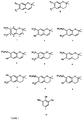
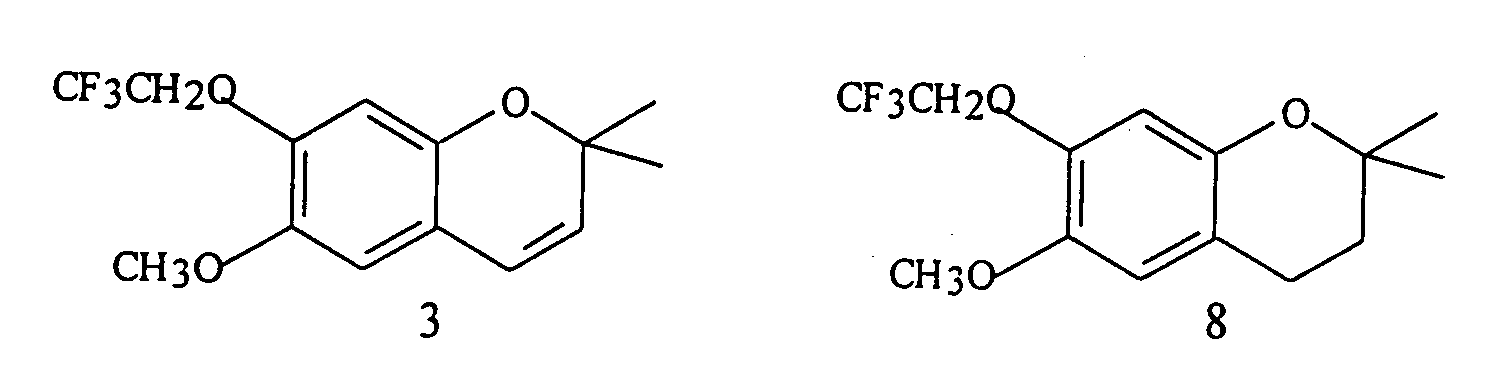
- the compounds described in this invention as inhibitors of the reactions of lipidic peroxidation are a series of 2,2-dimethylchromenes and chromans of general formulas A and B (Fig. 1), respectively, and which preferentially respond to the chemical formulas (1-9) presented in Figure 1. From among these, the fluorate compounds and especially the compounds 3, 4, 8 and 9 have not been described previously in the literature.
- a preferred method is the one which Bangham et al. presented: J. Mol. Biol. (1964) 8, 660-668, in which multilamenar liposomes (MLVs) are obtained of heterogeneous size.
- MLVs multilamenar liposomes
- the formative lipids are dissolved in a suitable organic solvent which later is eliminated by rotary evaporation under vacuum.
- the lipid film formed is subjected to hydratation with a suitable aqueous medium containing the drug, by means of manual or mechanical agitation.
- the heterogeneous suspension of MLVs is subject to any of the known techniques of reduction and homogenization of sizes. For example, two preferred procedures are the sonication with titanium probes or extrusion through filters of polycarbonate of the solution of MLVs in order to obtain VETs liposomes.
- TBARS test When the incubations were completed, the lipid peroxidation was evaluated by means of the production of substances which react with thiobarbituric acid (TBARS) as Fraga et al described.: Free Radical Biol. Med. (1988) 4, 155-161 (herein incorporated by reference). Briefly, 0.5 ml of dodecyl sodium sulphate at 3% was added to proportions of 0.5 ml of the microsomal incubations. After mixing them, 2 ml of HCl 0.1 N, 0.3 ml of phosphotungstic acid and 1 ml of 2-thiobarbituric acid were added. The mixture was kept 30 min.
- TBARS thiobarbituric acid
- Table I the results of the inhibition of the lipidic peroxidation shown by several 2.2-dimethylchromans and chromans, fluorated or not, in incubations of rat liver microsomes induced by NADPH or stimulated by Fe-ascorbate, are shown, expressed as values of IC 50 for the inhibition of the production of TBARS.
- the hydroxy derivative 4 exhibited the greatest inhibiting activity in the incubations with NADPH (Table 1). Therefore, its detection as a metabolite in the incubations with NADPH might justify the inhibiting activity shown by the 6.7-dialcoxychromene 3. With respect to the incubation with Fe-ascorbate, the compound 4 showed an inhibiting activity similar to that of the non-fluorated compound 2.
- the inhibiting effect produced by the chroman 8 was slightly higher during the second hour of incubation, which suggests the continued production of an active species, that is, the hydroxy derivative 9. Identification of this compound as a metabolite of compound 8 sustains this hypothesis.
- the significant drop in the inhibiting activity during the third hour may be due to a deceleration of the desalquilating metabolism which leads to the formation of species with antioxidant activity.
- the descent indicated is not significant when it is compared with the percentage of inhibition determined for the first hour of incubation (P>0.005). Therefore, this fluorated chroman shows itself as a potent inhibitor of the lipidic peroxidation with a sustained mode of action.
- a sample without containing anti-oxidants and not exposed to the radiation was prepared as a control.
- the UV-C radiation was utilized because it produces effects similar to those of UV-B but in a much shorter time. For example, one hour of UV-C irradiation would produce effects similar to seven hours of UV-B irradiation.
- TBARS Test The lipidic peroxidation was done determining spectrophotometrically the increase in the production of substances which react with the thiobarbituric acid (TBARS). Briefly, 0.2 ml of liposomal suspension, 3 ml of trichloroacetic acid at 20% and 1 ml of thiobarbituric acid at 1% were incubated at 100° C for 25 min. Afterwards it was centrifuged at 2000 rpm for 10 minutes and the absorption was determined at 532 nm.
- the irradiated liposomes exhibit a greater production of lipidic peroxides that the corresponding control not subjected to the UV-C radiation.
- the power of protection against lipidic peroxidation induced by the chroman 6 was compared with respect to the vitamin E-acetate and to the BHT, recognized lipophilic anti-oxidants. The results indicate that the chroman 6 and the BHT have a potential inhibiting of lipidic peroxidation similar and notably superior to that shown by Vitamin E-acetate at the concentration tested.
- a chloroform solution was prepared containing the selected lipids (table II) and 7.5 mg. of the chroman 6 in a round-bottomed flask. After proceeding to the elimination of the organic solvent by means of roto-evaporation, additionally the traces of solvent were eliminated by passage of N 2 or by lyophilization.
- the lipidic film thus obtained was hydrated, with 3 ml of NaCl solution at 0.9% containing DXR, by agitation in a vibromixer at intervals of 30 sec., followed by resting in a bath maintained at 60° C. for the same amount of time and an effective agitation up to 10 min.
- a liposomal dispersion was obtained containing preferably multilamelar vesicles (MLVs).
- the liposomal solution was sonicated by ultrasonic irradiation by means of a titanium probe until a change in the turbidity was observed.
- the protocol of sonication was carried out in relays of 2 min. of sonication and one minute resting under atmosphere of N 2 in an ice water bath. In order to eliminate the particles of titanium produced during the sonication, it was centrifuged for 20 min. at 3000 rpm.
- the liposomal suspension thus obtained contained small unilamelar liposomes (SUVs).
- the suspension of multilamelar liposomes obtained as described was submitted to extrusion through polycarbonate filters of 0.4 and 0.2 ⁇ m in diameter of pore subsequently, obtaining liposomes designated VET.
- the determination of the percentage of encapsulation of DXR was done by chromatographic separation of a portion of the liposomal suspension, by means of Sephadex G-50M utilizing NaCl 0.9% as eluent.
- VET liposomes of composition PL:PG:CHOL:DXR (50:50:50:15) and chroman 6 (7.5 mg) were prepared.
- VET liposomes of composition PL:PG:CHOL:DXR (50:50:50:15) and chroman 6 (7.5 mg) were prepared.
- VET liposomes of composition PL:PG:CHOL:DXR 50:50:50:15 were prepared without incorporating the anti-oxidant.
Landscapes
- Health & Medical Sciences (AREA)
- Life Sciences & Earth Sciences (AREA)
- Chemical & Material Sciences (AREA)
- General Health & Medical Sciences (AREA)
- Veterinary Medicine (AREA)
- Pharmacology & Pharmacy (AREA)
- Medicinal Chemistry (AREA)
- Animal Behavior & Ethology (AREA)
- Public Health (AREA)
- Epidemiology (AREA)
- Dispersion Chemistry (AREA)
- Molecular Biology (AREA)
- Chemical Kinetics & Catalysis (AREA)
- General Chemical & Material Sciences (AREA)
- Nuclear Medicine, Radiotherapy & Molecular Imaging (AREA)
- Organic Chemistry (AREA)
- Pharmaceuticals Containing Other Organic And Inorganic Compounds (AREA)
- Medicinal Preparation (AREA)
Abstract
Description
- This invention is related to anti-neoplastic agents and in particular to the encapsulation of the same in liposomes which contain anti-free radical agents to reduce the toxicity of the drug.
- The antibiotic doxorubicin (DXR) and its derivatives, as well as other cationic anthracyclines currently are of great clinical interest in the treatment of cancer, including leukemias and solid tumors.
- Furthermore great hopes have centered around the use of liposomes as transport systems for bioactive agents. In these systems the drug is incorporated into the aqueous portion of the liposomes when its hydrophilic or is distributed between the aqueous portion and the lipidic bilayers of the liposome when the drug shows a greater lipophilic nature. Once the drug is encapsulated, it can be administered to the patient to be treated.
- It has been established by various investigators that the use of liposomes for the administration of antineoplastics in many cases improves the traditional methods of administration, see for example: Gabizon et al.: Cancer Res. (1982) 42, 4734-4739 and Van Hossel et al.: Cancer Res. (1984) 44, 3698-3705.
- It has been observed by means of the utilization of various animal models that the encapsulation of doxorubicin in liposomes significantly reduces the secondary effects of toxicity, both chronic and acute. See, by way of example, Rahman et al.: Cancer Res. (1980) 40, 1532-1537, Forssen et al.: Proc. Natl. Acad. Sci. USA (1981) 78, 1873-1877, Olson et al.: Eur. J. Cancer Clin. Oncol. (1982) 18, 167--176, Rahman et al.: "Cancer Res. (1985) 45, 796-803 and Gabizon et al.: J. Natl. Cancer Inst. (1986) 77, 459-467. Additionally, other indicators of toxicity, such as alopecia, loss of weight, nausea, vomiting, and also the dermal necrosis produced by extravasation may be reduced in significant manner by the administration of doxorubicin in liposomes. Forssen et al.: Cancer Treat. Rep. (1983) 67, 481-484, see also the references cited previously in this paragraph.
- Also, it has been established in various tumor models that this significant reduction of the toxicity is not produced at the expense of a reduction of the anti-tumor efficacy. Besides the references previously noted, see Rahman et al.: Chemoter, Pharmacol. (1986) 16, 22-27, Gabizon et al.: Cancer Res. (1983) 43, 4730-4735 and Br. J. Cancer (1985) 51, 681-689, Maythew et al.: J. Natl. Cancer Inst. (1987) 78, 707-713, Forssen et al.: Cancer Res. (1983) 43, 546-550, and Storm et al.: Cancer Res. (1987) 47, 3366-3362.
- The cardiomyopathy observed in treatment with doxorubicin is similar to the lesions seen in the cardiac muscles in experimental animals under conditions of alpha-tocopherol deficiency, Tomasz: Chem-Biol Interact. (1976) 13, 89. These results suggest that the lesions produced by the drug are caused by an increase in free-radical reactions in which lipids of membrane are seen to be involved Therefore, the incorporation of doxorubicin, herein after DXR, into the lipidic bilayers of the liposomes may facilitate the unleashing of free-radical type reactions.
- It has been observed that the incorporation of alpha-tocopherol in liposomes which contain DXR reduces the toxicity in animals and produces less cardiomyopathy than when combinations of alpha-tocopherol/DXR or liposomes/DXR in separate form are administered. Olson et al.: Eur. J. Clin. Oncol. (1982) 12(2). 167. The reduction of toxicity achieved by means of the co-encapsulation of alpha-tocopherol and DXR in liposomes seems to result from a combination of the alteration in the biodistribution of the drug, due to the encapsulation of it in liposomes, and to a reduction of the damaging effect of the free radicals, due to the capture of these by the alpha-tocopherol.
- Different patents describe the inclusion of anti-free radical agents into liposomes:
-
WO 85/00968 describes a method for decreasing the toxicity of a drug substantially below that produced when the drug alone is entrapped in lipid bilayer vesicles, or that produced when the drug and a drug-protective compound are both administered in free form, the drug-protective compound being one which itself decreases the toxicity of the drug when administered with the drug in free form, said method comprising entrapping the drug and the compound, at a selected drug-to-compound ratio, in the same lipid bilayer vesicles, wherein the drug protective compound is selected from the group consisting of alpha-tocopherol, alpha-tocopherol succinate, N-acetylcysteine, niacin, isocitrate, and β-hydroxybutylated toluene. -
WO 85/04578 relates to methods and compositions for the preparation of lipid vesicles, the bilayers of which comprise a salt form of an organic acid derivative of a sterol such as the tris-salt form of a sterol hemisuccinate. The method does not require the use of organic solvents. The sterol hemisuccinate vesicles may be used to entrap compounds which are insoluble in aqueous solutions. - WO 87/02219 relates to methods and compositions for the preparation of alpha-tocopherol vesicles, the bilayers of which comprise a salt form of an organic acid derivative of alpha-tocopherol such as the tris-salt from alpha-tocopherol hemisuccinate. The method does not require the use of organic solvents. The alpha-tocopherol vesicles may be used to entrap compounds which are insoluble in aqueous solutions.
- WO 87/04592 refers to a method for selectively controlling the rate of a liposome-entrapped compound from an intramuscular or subcutaneous injection site. The method includes selecting the average size, amount, and lipid composition of liposomes injected into the site to produce a desired half life of release of the compound. A preferred composition used in practicing the invention includes an aquous suspension of liposomes containing the compound in entrapped form, and having average particle sizes less than about 0.3 microns, and larger empty liposomes present in an amount effective to increase the half life of release of the compound from the injection site to a desired half life between about 1-14 days. Also disclosed is a stable liposome/calcitonin composition.
-
WO 88/09168 relates to a doxorubicin/liposome composition which can be reconstituted from a lyophilized form to an injectable liposome suspension having selected liposome sizes in the size range between 0.1 and 0.5 microns showing little tendency to aggregate on storage, and between 85-95 % liposome-entrapped doxorubicin. The composition is prepared by reconstituting a lyophilized doxorubicin/liposome composition to a liposome concentrate, then diluting the concentrate for parenteral injection to treat tumors. - EP 274174 describes a drug/liposome composition that comprises an aqueous suspension of liposomes and, entrapped in the lipid bilayer region of the liposomes, an anthraquinone drug containing quinone and hydroquinone functionalities on adjacent anthracene rings. An iron-specific trihydroxamic chelating agent contained in the bulk aquous phase of the suspension and a lipophilic scavenger contained in the bilayer region of the liposome cooperate to reduce chemical modification of both drug and lipid components of the composition. The compositions can be used for administering doxorubicin intravenously to humans.
-
- In most of the patents cited in general the presence of alpha-tocopherol is claimed, its salts and/or esters, even though other compounds like N-acetylcysteine, niacin, isocitrate or BHT have also been claimed.
- Therefore, the search for compounds with improved activity as inhibitors of the lipid peroxidation is an active field of investigation. In this sense, a family of analogs of the Vitamin E with an excellent activity of elimination of free radicals has been described by Battoni et al.: Biochem. Biophys. Res. Commun. (1991) 174, 1103. In the same context in this patent the inhibiting activity of the lipidic peroxidation of compounds with structure of 2,2 dimethylchromenes and chromans is described, which are potentially applicable for stabilization of preparations in which anthracyclines in liposomes are incorporated, resulting in a notable reduction of the undesired effects of the drug.
- In view of the foregoing state of the art, it is a general objective of this invention to obtain a formulation for anthracyclines in liposomes, containing therein inhibitors of the lipidic peroxidation of general formula A or B (Figure 1).
- One objective of the invention is to provide a composition of anthracyclines in liposomes which substantially reduce the effects of peroxidation both of the lipids and of the drug.
- A principal objective of this patent is to obtain a composition of doxorubicin, its salts and analogous compounds in liposomes, in order to reduce the toxicity of the drug, which is related to reactions of oxidation and free radicals.
- A final objective of the invention is to provide a method for treating human neoplasms, and particularly, primary or metastatic tumors in the liver, proliferative hematopoietic disorders and leukemias with DXR encapsulated in liposomes with a significant reduction of the normal secondary effects of the drug.
- The invention includes the formation of liposomes characterized by:
- a) A lipidic concentration between 10 and 100 mg/ml, and preferably around 50 mg/ml.
- b) The components lipids are phospholipids, both of natural and synthetic origin; and cholesterol.
- c) The proportion of cholesterol, with respect to the total quantity of lipids, is between 0 and 50%, preferably between 35 and 50%.
- d) The phospholipids present are phosphatidylcholine, which does not show net charge and another phospholipid charged negatively, for preference the phosphatidylglycerol.
- e) The relationship of the neutral phospholipid to the negatively charged one falls between 10:2 and 10:10 and for preference between 10:7 and 10:10, respectively.
- f) The relationship of the protective agent of general formula A or B (Fig. 1) to lipids falls between 0.01 and 15%.
- g) The liposomes are formed in an aqueous solution, buffered or not, physiologically isotonic. For example NaCl 0.9%.
-
- The characteristics or the liposomal suspension encapsulating doxorubicin, thus obtained, are those listed below:
- a) They incorporate the characteristics cited.
- b) The percentage of encapsulated drug is between 70 and 90% of the initial quantity.
- c) It is stable, reproducible and possible to industrialize with respect to its size and the quantity of doxorubicin encapsulated.
- d) The liposomal suspension, under these conditions, is usable in cancer therapy.
-
-
- Figure 1 illustrates the formulas of the chromenes (1-4), chromans (5-9) and compound of reference, BHT, (10) studied as inhibitors of the lipidic peroxidation.
- Figure 2 is a graph of the effect of incubation time on the inhibition of lipid
peroxidation in rat liver microsomes incubated with NADPH shown by the
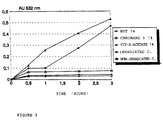
chromanes - Figure 3 is a graph of the increase of the lipidic peroxidation in liposomes of soy phosphatidyl choline as a function of the time of irradiation with UV-C and the presence of lipophilic anti-oxidants.
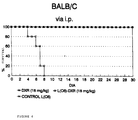
- Figure 4 represents curves of survival in healthy BALB/C rats for the i.p. administration of L(C6), L(C6)-DXR and F-DXR.
- Figure 5 represents survival curves in healthy BALBC rats for the i.v. administration of L(C6), L(C6)-DXR and F-DXR.
- Figure 6 represents survival curves in healthy B6D2F1 rats for the i.p. administration of L(C6), L(C6)-DXR and L-DXR.
-
- In the specification and drawings, the abbreviations have the following meanings:
- DXR
- Doxorubicin
- PC
- Phosphatidylcholine
- PL
- Hydrogenated Phospholipids of egg
- DPPC
- Dipalmitoylphosphatidylcholine
- PG
- Phosphatidylglycerol
- DPPG
- Dipalmitoylphosphatidylglycerol
- CHOL
- Cholesterol
- F-DXR
- Free DXR
- L-DXR
- DXR encapsulated in liposomes
- L(C6)-DXR
- DXR encapsulated in liposomes which contain
chroman 6 - L(C6)
- Liposomes which contain chroman 6 (they do not contain DXR),
- Preparation of liposomes containing doxorubicin (DXR).
- The lipids which form liposomes are widely known. Generally phospholipids are included, with a net neutral and/or negative charge, and a sterol, such as cholesterol. The election of the lipids is made on the basis of the needs with respect to the final liposomal size, the drug to be encapsulated and the stability which is desired for the preparation. Usually, the greatest lipidic component of the liposomes is phosphatidylcholine (PC). The PCs differ among themselves in the length and degree of saturation of their acyclic chains and they can be isolated from natural or synthesized sources. The inclusion of a negatively charged phospholipid favors the stability of the liposomal solution, preventing the spontaneous aggregation of the liposomes. The phospholipids with negative charge most utilized are the phosphatidylglycerol (PG), phosphatidylserine (PS) and phosphatidylinositol (PI), among others. The proportion utilized of neutral phospholipid to phospholipid with negative charge goes from 10:2 to 10:10 respectively. Inclusion of cholesterol generally favors the stability of liposomes decreasing the permeability of the membrane to ions and small polar molecules, and likewise reduces the capacity of penetration of a series of proteins among the bilayers which could determine a greater disorder therein. Typically the proportion of cholesterol utilized goes from 0 to 50% of the total lipids.
- The compounds described in this invention as inhibitors of the reactions of lipidic peroxidation are a series of 2,2-dimethylchromenes and chromans of general formulas A and B (Fig. 1), respectively, and which preferentially respond to the chemical formulas (1-9) presented in Figure 1. From among these, the fluorate compounds and especially the
compounds - In view of the results obtained in EXAMPLE 1 of this invention, the potent inhibiting effect of the lipidic peroxidation which the cited compounds show remains sufficiently demonstrated. Additionally, an appropriate combination between the protection against the oxidative metabolism by means of the introduction of substitute fluorates in selected positions and the existence of a free hydroxyl group in C6 (already present or potentially generated by means of metabolic desalquilation) conduces to inhibitors of the lipidic peroxidation, compounds 6 and 9, presenting more persistent intrinsic activity, or to an anti-oxidant efficiency more metabolic-
dependent compounds - Utilization of this type of compounds in liposomes in order to reduce the toxicity of the DXR remains clearly demonstrated in EXAMPLES 4 and 5. The inclusion of
chroman 6 in liposomes which contain DXR determines a significant reduction of the toxicity of the DXR encapsulated with respect to liposomes which do not containchroman 6, Figure 6. - A preferred method is the one which Bangham et al. presented: J. Mol. Biol. (1964) 8, 660-668, in which multilamenar liposomes (MLVs) are obtained of heterogeneous size. In this method the formative lipids are dissolved in a suitable organic solvent which later is eliminated by rotary evaporation under vacuum. The lipid film formed is subjected to hydratation with a suitable aqueous medium containing the drug, by means of manual or mechanical agitation. The heterogeneous suspension of MLVs is subject to any of the known techniques of reduction and homogenization of sizes. For example, two preferred procedures are the sonication with titanium probes or extrusion through filters of polycarbonate of the solution of MLVs in order to obtain VETs liposomes.
- By way of illustration but not limiting the scope of the invention, practical examples are described below.
- Incubations. Suspension of Sprague-Dawley male rat liver microsomes in Krebs-Ringer (KRP) phosphates buffer, were prepared in accordance with the method of Fraga et al.: Free Radical Biol. Med. (1988) 4, 155-161. For the experiences of lipidic peroxidation induced enzymatically, microsomal protein (2 mg) in 1 ml of KRP buffer was incubated for one hour at 37°C. in the presence of 0.1 mM NADPH and 2 µl of DMSO containing the compound to be evaluated at the appropriate concentration. In the experiments where the incubations were prolonged up to three hours, every hour 0.1 ml of
NADPH 2 mM was added to the incubation medium. For the experiments of lipid peroxidation induced chemically, 2 mg. of microsomal protein in 1 ml of KRP buffer were incubated for 30 min. at 37°C. in the presence of FeSO4 50 µM, ascorbic acid 0.5 mM and 2 µl of DMSO containing the compound to be evaluated at the appropriate concentration. In all cases, the incubations were arrested by addition of 0.2 ml of BHT at 4%. - TBARS test. When the incubations were completed, the lipid peroxidation was evaluated by means of the production of substances which react with thiobarbituric acid (TBARS) as Fraga et al described.: Free Radical Biol. Med. (1988) 4, 155-161 (herein incorporated by reference). Briefly, 0.5 ml of dodecyl sodium sulphate at 3% was added to proportions of 0.5 ml of the microsomal incubations. After mixing them, 2 ml of HCl 0.1 N, 0.3 ml of phosphotungstic acid and 1 ml of 2-thiobarbituric acid were added. The mixture was kept 30 min. at 100° C, an the TBARS were extracted with 3 ml of 1-butanol. After centrifugation, the fluorescence of the butanol phase was determined exciting at 515 nm and reading at 555 nm. The values obtained were expressed as nanomoles of TBARS (malondialdehyde equivalents). The standards of malondialdehyde were prepared from 1,1,3,3-tetramethoxypropane. The experiments were performed in triplicate. The values of IC50 were determined by representation of the percentage of inhibition vs. log [I], using at least five different concentrations. The values of the percentages of inhibition were referred to the determination carried out in presence of DMSO (2 µl).
- In Table I the results of the inhibition of the lipidic peroxidation shown by several 2.2-dimethylchromans and chromans, fluorated or not, in incubations of rat liver microsomes induced by NADPH or stimulated by Fe-ascorbate, are shown, expressed as values of IC50 for the inhibition of the production of TBARS.
- The values for BHT,
compound 10, were also determined for comparative effects.IC50 TBARS production (µM) compound NADPH Fe- ascorbate 1 11.4 (35%) 2 1.4 3.8 3 55.4 ND 4 3.7 6.0 5 15.0 (17%) 6 0.3 1.9 7 3.4 19.0 8 6.0 (5%) 9 3.9 5.3 10 0.8 2.7 - The hypothesis that the inhibition of the lipidic peroxidation in rat liver microsomes in the incubations with NADPH caused by a family of 2,2 dimethylchromenes and chromans is due to a mechanism of elimination of free radicals analogous to the one which operates in the mode of action of Vitamin E is based on the results which are shown in this invention. Thus, with respect to the non-fluorate derivatives only those with a free hydroxyl group (i.e. 2, 6 and 7) showed a potent inhibiting effect when the lipidic peroxidation was induced by Fe-ascorbate (Table 1). These effects where six times smaller than those obtained in the tests depending on NADPH. A similar relation was obtained with BHT (10), compound tested by way of comparison, indicating that the discrepancies observed were due to intrinsic differences between the two methods. Furthermore, the absence of desalquilating metabolism in the incubations with Fe-ascorbate prevented the formation of phenolic species, in consequence, the 6.7-alcoxy derivatives (
compounds 1 and 5) were inactive under said conditions. - As happened with the incubations with NADPH, the
hydroxychroman 6 was the one which showed the greatest inhibiting power in the tests with Fe-ascorbate (IC50 = 1.9 µM) and its activity was also superior to that of the BHT (IC50 = 2.7 µM). Additionally, the fact that the inhibition caused by thecompound 6 was of an order of magnitude greater than that of the compound 7 (which happened in the tests with NADPH), indicated the importance of a free hydroxyl group in the C6 position for a strong anti-oxidizing effect. These results are in conformity with the hypothesis of a mechanism of an action similar to that of Vitamin E. - With respect to the fluorated chromenes, the
hydroxy derivative 4 exhibited the greatest inhibiting activity in the incubations with NADPH (Table 1). Therefore, its detection as a metabolite in the incubations with NADPH might justify the inhibiting activity shown by the 6.7-dialcoxychromene 3. With respect to the incubation with Fe-ascorbate, thecompound 4 showed an inhibiting activity similar to that of thenon-fluorated compound 2. - With regard to the fluorated chromans, it was observed that the inhibiting activity shown by the chroman 8 (IC50 = 6.0 µM) was nine times greater than that corresponding to chromene 3 (IC50 = 55.4 µM). Additionally, the comparison of the inhibiting activities of the
compound 8 and of its non-fluoratedanalogous compound 5 indicates that the presence of the substitute fluorate in the C7 position improves the inhibiting effect of the lipidic peroxidation. What is more, it is worth briefly describing that thechroman 8 does not present inhibiting activity per se (See incubation with Fe-ascorbate, Table 1). Studies conducted demonstrated the presence of the chroman 9 as a metabolite of the former one. Since the hydroxy derivative 9 showed, in the incubations with NADPH, the highest inhibiting activity of the chroman fluorates tested (IC50 = 3.9 µM), the idea of this as responsible for the potent inhibiting activity shown by the 6,7dialcoxychroman 8 is reaffirmed. - Additionally, in the incubations in the presence of Fe-ascorbate it was confirmed that the hydroxy derivative fluorate 9 was an inhibitor of the lipidic peroxidation per se (IC50 = 5.3 µM). However, the inhibiting activity of this compound was slightly inferior to that shown by
hydroxychroman 6. - From the foregoing results it may be deduced that the 2,2-dimethylchromans, fluorated or not, showed more elevated inhibiting activities of the lipidic peroxidation than their corresponding 2,2-dimethylchromens. Therefore, four of these chromans (i.e. compounds 5, 6, 8 and 9) were chosen in order to study the persistence of the inhibiting activity. These inhibitors were incubated independently over three hours in the presence of NADPH employing concentrations near to their respective values of IC50 and the results obtained are shown in Fig. 2. In the case of the non-fluorated compounds, while the inhibiting effect shown by the
chroman 5 remains constant, the activity of thehydroxychroman 6 significantly decreases after the second and third hour of incubation. This drop may be the result of the deactivating metabolism suffered by said compound in the incubation medium. Furthermore, the fact that the activity of thedialcoxychroman 5 remained essentially unaltered throughout all of the experiment suggests the constant production of active species like antioxidants from said compound, that is to say, themetabolite 6. Consequently, thecompound 5 may be utilized as an inhibitor of lipidic peroxidation with a potentially sustained mode of action. - With regard to the fluorate derivatives, the inhibiting effect produced by the
chroman 8 was slightly higher during the second hour of incubation, which suggests the continued production of an active species, that is, the hydroxy derivative 9. Identification of this compound as a metabolite ofcompound 8 sustains this hypothesis. The significant drop in the inhibiting activity during the third hour may be due to a deceleration of the desalquilating metabolism which leads to the formation of species with antioxidant activity. It is interesting to note that the descent indicated is not significant when it is compared with the percentage of inhibition determined for the first hour of incubation (P>0.005). Therefore, this fluorated chroman shows itself as a potent inhibitor of the lipidic peroxidation with a sustained mode of action. - Additionally, as has been observed with
hydroxychroman 6, the inhibiting activity of the compound 9 decreases during the second and the third hour of incubation. However, this drop was less pronounced than that obtained for thecompound 6, which could indicate that the active species is more persistent in the incubation medium. - Following, with minor modifications, the model proposed by Pelle et al.: Annals of the New York Academy of Sciences (1989) 570, 491-494, 27 mg of lecithin of soy were weighed and 1.5 ml of phosphate buffer pH 7.4 (PBS) were added. The compounds studied as protectors from the lipidic peroxidation were added dissolved in ethanol in the quantity necessary to reach a 1% molar solution with respect to the lecithin present. In all cases multilamelar liposomes were obtained by mechanical agitation during one minute.
- Once obtained, the liposomes both those incorporating anti-oxidants and those which do not incorporate them, were exposed to UV-C radiation (254 nm). A sample without containing anti-oxidants and not exposed to the radiation was prepared as a control. The UV-C radiation was utilized because it produces effects similar to those of UV-B but in a much shorter time. For example, one hour of UV-C irradiation would produce effects similar to seven hours of UV-B irradiation.
- During the UV exposure portions were taken at different times in order to determine the amount of lipidic peroxidation.
- TBARS Test. The lipidic peroxidation was done determining spectrophotometrically the increase in the production of substances which react with the thiobarbituric acid (TBARS). Briefly, 0.2 ml of liposomal suspension, 3 ml of trichloroacetic acid at 20% and 1 ml of thiobarbituric acid at 1% were incubated at 100° C for 25 min. Afterwards it was centrifuged at 2000 rpm for 10 minutes and the absorption was determined at 532 nm.
- As is shown in Fig. 3, the irradiated liposomes exhibit a greater production of lipidic peroxides that the corresponding control not subjected to the UV-C radiation. Utilizing this model the power of protection against lipidic peroxidation induced by the
chroman 6 was compared with respect to the vitamin E-acetate and to the BHT, recognized lipophilic anti-oxidants. The results indicate that thechroman 6 and the BHT have a potential inhibiting of lipidic peroxidation similar and notably superior to that shown by Vitamin E-acetate at the concentration tested. - A chloroform solution was prepared containing the selected lipids (table II) and 7.5 mg. of the
chroman 6 in a round-bottomed flask. After proceeding to the elimination of the organic solvent by means of roto-evaporation, additionally the traces of solvent were eliminated by passage of N2 or by lyophilization. The lipidic film thus obtained was hydrated, with 3 ml of NaCl solution at 0.9% containing DXR, by agitation in a vibromixer at intervals of 30 sec., followed by resting in a bath maintained at 60° C. for the same amount of time and an effective agitation up to 10 min. Thus a liposomal dispersion was obtained containing preferably multilamelar vesicles (MLVs). The liposomal solution was sonicated by ultrasonic irradiation by means of a titanium probe until a change in the turbidity was observed. The protocol of sonication was carried out in relays of 2 min. of sonication and one minute resting under atmosphere of N2 in an ice water bath. In order to eliminate the particles of titanium produced during the sonication, it was centrifuged for 20 min. at 3000 rpm. The liposomal suspension thus obtained contained small unilamelar liposomes (SUVs). - Alternatively, the suspension of multilamelar liposomes obtained as described was submitted to extrusion through polycarbonate filters of 0.4 and 0.2 µm in diameter of pore subsequently, obtaining liposomes designated VET.
- The determination of the percentage of encapsulation of DXR was done by chromatographic separation of a portion of the liposomal suspension, by means of Sephadex G-50M utilizing NaCl 0.9% as eluent.
- In Table II the results of encapsulation for the different methods and compositions employed are shown. By means of the observation of these, it may be noted that the inclusion of a phospholipid with negative charge is necessary in order to obtain high percentages of encapsulation. Thus, in MLV or neutral SUV liposomes, with or without presence of cholesterol, the encapsulation of DXR arrived at a maximum at 15% of the initial quantity of the drug. In contrast, when phosphatidylglycerol was included in the lipidic composition the values of encapsulation were greater than 80% in all the tests conducted where the phosphatidylglycerol:DXR ratio was maintained equal to 5:1.5. When the proportion of DXR was increased in that ratio at 5:3 it resulted in a reduction of the encapsulated drug, confirming the necessity that in the preparation of liposomes a minimum quantity of phospholipid with a negative charge exists with respect to the DXR to be encapsulated.
- Furthermore, it was observed that both phospholipids of natural origin, whether hydrogenated or not, and synthetics gave similar encapsulation results with the methods employed.
TYPE COMPOSITION RATIO (mg) % ENCAPSULATION MLV PC:DXR 150:15 10 MLV PC:CHOL:DXR 100:50:15 14 MLV PC:PG:CHOL:DXR 50:50:50:15 80 SUV PC:CHOL:DXR 100:50:15 15 SUV PL:PG:CHOL:DXR 50:50:50:15 88 SUV PC:PG:CHOL:DXR 50:50:50:15 90 SUV PC:PG:CHOL:DXR 50:50:50:30 55 SUV DPPC:DPPG:CHOL:DXR 50:50:50:15 85 VET PL:PG:CHOL:DXR 50:50:50:15 87 VET PC:PG:CHOL:DXR 50:50:50:15 89 VET DPPC:DPPG:CHOL:DXR 50:50:50:15 87 - The experiments were conducted in the presence of 7.5 mg. of the
chroman 6. - Proceeding in a manner analogous to that described in EXAMPLE 2 to obtain VET liposomes utilizing a ratio by weight of PL:PG:CHOL:DXR of 50:50:50:15 and varying the anti-oxidant agent employed. The results obtained show (Table III) that no appreciable differences exist in the percentages of encapsulation when different inhibitors of the lipidic peroxidation were utilized.
TYPE COMPOUND % ENCAPSULATION VET 1 89 VET 2 85 VET 3 87 VET 4 84 VET 5 86 VET 6 87 VET 7 88 VET 8 90 VET 9 83 Composition: PL:PG:CHOL:DXR (50:50:50:15) - As in Example 1, VET liposomes of composition PL:PG:CHOL:DXR (50:50:50:15) and chroman 6 (7.5 mg) were prepared.
- Inoculation by intraperitoneal route. Healthy BALB/C rats were treated intraperitoneally with said preparation, and the survival curves compared (Fig. 4) with the administration of free drug at the same dose, 18 mg/kg. In the experiment there was incorporated as a control a preparation of liposomes without drug, of identical characteristics and at the same lipidic concentration which would correspond to the liposomes with DXR.
- Inoculation intravenously. Healthy BALB/C rats were treated intravenously with the preparation of L-DXR described and the survival curves compared (Fig. 5) with the administration of free drug at the same dose, 16 mg/kg. In the experiment there was incorporated as a control a preparation of liposomes without drug, of identical characteristics and at the same lipidic concentration which would correspond to the liposomes with DXR.
- The results obtained from the survival curves, both in the i.p. inoculation and in the i.v., indicated absence of toxicity of the liposomes per se, that is, of those which did not contain the drug. Likewise, no mortality was produced when the DXR was administered in liposomes. In contrast, when the same doses of DXR were inoculated i.p. or i.v. in the form of free drug, a 100 % mortality was observed during the second week subsequent to the administration.
- As in Example 1, VET liposomes of composition PL:PG:CHOL:DXR (50:50:50:15) and chroman 6 (7.5 mg) were prepared.
- Analogously, VET liposomes of composition PL:PG:CHOL:DXR (50:50:50:15) were prepared without incorporating the anti-oxidant.
- Inoculation by intraperitoneal route. Healthy B6D2F1 rats were treated intraperitoneally with the preparation of L-DXR containing the
chroman 6 and the survival curves compared (Fig. 6) with the administration of encapsulated drug, in the absence of the anti-oxidant, at the same dose of 24 mg/kg. In the experiment there was incorporated as a control a preparation of liposomes, without drug but with thechroman 6, of identical characteristics and at the same lipidic concentration which would correspond to the liposomes with DXR. - The results obtained from the survival curves indicated absence of toxicity of the liposomes per se, that is, of those which did not contain the drug. Likewise, a clear reduction of the toxicity of the DXR was observed in the liposomal preparation which contained the
chroman 6, passing from a 20% survival in the absence thereof to a survival of 60% in its presence.
Claims (13)
- Liposomes encapsulating doxorubicin, characterized by the fact that they contain, incorporated in them, a protective compound of general formula A or B:in order to reduce the toxicity of the drug when it is administered intravenously, and in which formulas: R1 and R2, equal or different, independently represent HO-, CH3O- or CF3CH2O-.

- Liposomes encapsulating doxorubicin according to claim 1, characterized by the fact that the protector compound responds to the formula 1 or 5:

- Liposomes encapsulating doxorubicin according to claim 1, characterized by the fact that the compound responds to the formula 2 or 6:

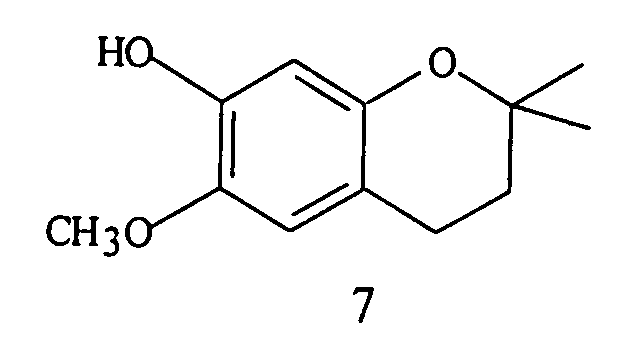
- Liposomes encapsulating doxorubicin according to claim 1, characterized by the fact that the protector compound responds to the formula 7:
- Liposomes encapsulating doxorubicin according to claim 1, characterized by the fact that the protector compound responds to the formula 3 or 8:
- Liposomes encapsulating doxorubicin according to claim 1, characterized by the fact that the protector compound responds to the formula 4 or 9:

- Liposomes encapsulating doxorubicin according to claim 1 to 6, characterized by the fact that the ratio of total lipids forming the liposomes to drug falls between 20:1 and 2:1, and preferably 10:1.
- Liposomes encapsulating doxorubicin according to claim 1 to 7, characterized by the fact that the lipid components of the liposomes are phospholipids, both of natural and synthetic origin, and cholesterol.
- Liposomes encapsulating doxorubicin according to claim 1 to 8, characterized by the fact that the phospholipids present are for preference phosphatidilcoline, which does not show a net charge, and another phospholipid charged negatively, for preference phosphatidilglycerol.
- Liposomes encapsulating doxorubicin according to claims 1 to 9, characterized by the fact that the ratio of the neutral phospholipid and the negatively charged one is between 10:7 and 1O:10, respectively.
- Liposomes encapsulating doxorubicin according to claims 1 to 10, characterized by the fact that the proportion of cholesterol, with respect to the amount of total lipids, is between 0 and 50 %, preferably between 35% and 50%.
- Liposomes encapsulating doxorubicin according to claims 1 to 11, characterized by the fact that the inhibitor compound of the lipidic peroxidation is present in a proportion, with respect to the amount of total lipids, which represents between 0,01 and 15%, for preference between 0,1 and 10%.
- Use of the liposomes encapsulating doxorubicin according to claims 1 to 12 in the manufacture of a composition for the treatment of malignant tumours in humans or other mammals.
Applications Claiming Priority (2)
| Application Number | Priority Date | Filing Date | Title |
|---|---|---|---|
| ES09302481A ES2072223B1 (en) | 1993-11-25 | 1993-11-25 | LIPOSOMES ENCAPSULATING DOXORUBICIN. |
| ES9302481 | 1993-11-25 |
Publications (2)
| Publication Number | Publication Date |
|---|---|
| EP0655239A1 EP0655239A1 (en) | 1995-05-31 |
| EP0655239B1 true EP0655239B1 (en) | 1999-08-11 |
Family
ID=8283745
Family Applications (1)
| Application Number | Title | Priority Date | Filing Date |
|---|---|---|---|
| EP94500197A Expired - Lifetime EP0655239B1 (en) | 1993-11-25 | 1994-11-25 | Liposomes encapsulating doxorubicine |
Country Status (8)
| Country | Link |
|---|---|
| US (1) | US5605703A (en) |
| EP (1) | EP0655239B1 (en) |
| JP (1) | JP4256930B2 (en) |
| AT (1) | ATE183081T1 (en) |
| DE (1) | DE69420012T2 (en) |
| DK (1) | DK0655239T3 (en) |
| ES (1) | ES2072223B1 (en) |
| WO (1) | WO1995014459A1 (en) |
Families Citing this family (21)
| Publication number | Priority date | Publication date | Assignee | Title |
|---|---|---|---|---|
| ES2154560B1 (en) * | 1998-09-16 | 2001-12-01 | Lipotec Sa | COMPOSITION BASED ON CHROMAN DERIVATIVES AND ITS USE TO CHEMICALLY REDUCE OXIDATIVE OR INDUCED REACTIONS BY FREE RADICALS. |
| IT1315253B1 (en) * | 1999-10-22 | 2003-02-03 | Novuspharma Spa | LIPOSOMIAL PREPARATION OF 6,9-BIS- (2-AMINOXYL) AMINO | BENZOG | ISOCHINOLIN-5,10-DIONE DIMALEATO |
| FR2808189B1 (en) * | 2000-04-28 | 2004-03-05 | Oreal | LIPOCHROMAN-6 AS NO-SYNTHASE INHIBITOR AND USES |
| ES2186484B1 (en) | 2000-10-10 | 2004-07-01 | Lipotec, S.A. | LIPOSOMES ENCAPSULATING ANTI-CANCER DRUGS AND USE OF THEM IN THE TREATMENT OF EVIL TUMORS. |
| US7029695B2 (en) * | 2001-07-10 | 2006-04-18 | Telik, Inc. | Therapeutic compositions containing glutathione analogs |
| US20030236301A1 (en) * | 2001-12-19 | 2003-12-25 | Bob Sanders | Liposomal delivery of vitamin E based compounds |
| AU2002361812B2 (en) * | 2001-12-19 | 2007-11-08 | Research Development Foundation | Liposomal delivery of vitamin E based compounds |
| US20050058698A1 (en) * | 2002-01-21 | 2005-03-17 | Nolan Yvonne Mairead | Pharmaceutically acceptable phosphate-glycerol carrying bodies and uses relating to Parkinson's Disease |
| CA2368656A1 (en) * | 2002-01-21 | 2003-07-21 | Vasogen Ireland Limited | Receptor-ligand pairing for anti-inflammatory response |
| DE10259014A1 (en) | 2002-12-16 | 2004-06-24 | Henkel Kgaa | Antioxidant combinations with 6,7-disubstituted 2,2-dialkylchromanes or chromenes |
| US20050009772A1 (en) * | 2003-05-06 | 2005-01-13 | The Regents Of The University Of California | Methods and compositions for the treatment of glaucoma and other retinal diseases |
| JP2008507282A (en) | 2004-07-20 | 2008-03-13 | アイソジェニス・インコーポレイテッド | Specific inhibition of diseases related to autoimmunity and self-antigen |
| US7470672B2 (en) | 2006-07-31 | 2008-12-30 | Savvipharm Inc. | Compositions and methods of reducing tissue levels of drugs when given as orotate derivatives |
| US7750018B2 (en) * | 2006-12-06 | 2010-07-06 | Tactical Therapeutics, Inc | Use of carboxiamidotriazole (CAI) orotate in macular degeneration |
| DE102006062501A1 (en) | 2006-12-28 | 2008-07-03 | Henkel Kgaa | Cosmetic and dermatological oil-in-water emulsions with self-preserving properties |
| ES2310142B1 (en) * | 2007-06-15 | 2009-12-04 | Lipotec S.A | PIGMENTATION REGULATING COMPOUNDS. |
| US8524783B2 (en) | 2009-04-30 | 2013-09-03 | Intezyne Technologies, Incorporated | Polymer micelles containing anthracylines for the treatment of cancer |
| US8524784B2 (en) | 2009-04-30 | 2013-09-03 | Intezyne Technologies, Incorporated | Polymer micelles containing anthracylines for the treatment of cancer |
| DE102009026414A1 (en) | 2009-05-22 | 2010-11-25 | Henkel Ag & Co. Kgaa | Skin treatment for pore refining |
| WO2011135905A1 (en) * | 2010-04-28 | 2011-11-03 | 国立大学法人北海道大学 | Lipid membrane structure |
| CN103083239B (en) | 2012-12-26 | 2015-11-25 | 中国人民解放军第四军医大学 | A kind of bufalin liposome and its preparation method and application |
Family Cites Families (7)
| Publication number | Priority date | Publication date | Assignee | Title |
|---|---|---|---|---|
| EP0153955A1 (en) * | 1983-09-06 | 1985-09-11 | Health Research, Inc. | Liposome delivery method for decreasing the toxicity of an antitumor drug |
| US4797285A (en) * | 1985-12-06 | 1989-01-10 | Yissum Research And Development Company Of The Hebrew University Of Jerusalem | Lipsome/anthraquinone drug composition and method |
| EP0256119A4 (en) * | 1986-02-10 | 1988-08-23 | Liposome Technology Inc | Controlled-release liposome delivery system. |
| US4927571A (en) * | 1987-05-18 | 1990-05-22 | Liposome Technology, Inc. | Preparation of injectable doxorubicin/liposome suspension |
| DE4000397A1 (en) * | 1990-01-09 | 1991-07-11 | Hoechst Ag | LIPIDSELECTIVE ANTIOXIDANTS AND THEIR PREPARATION AND USE |
| CA2088975A1 (en) * | 1990-08-08 | 1992-02-09 | Anthony H. Huang | Stable doxorubicin/liposome composition |
| CA2055990A1 (en) * | 1990-11-22 | 1992-05-23 | David G. Schena | Phospholipid-vitamin derivatives and methods for preparation thereof |
-
1993
- 1993-11-25 ES ES09302481A patent/ES2072223B1/en not_active Expired - Fee Related
-
1994
- 1994-11-23 US US08/346,236 patent/US5605703A/en not_active Expired - Lifetime
- 1994-11-25 JP JP51485695A patent/JP4256930B2/en not_active Expired - Fee Related
- 1994-11-25 WO PCT/ES1994/000127 patent/WO1995014459A1/en not_active Ceased
- 1994-11-25 AT AT94500197T patent/ATE183081T1/en active
- 1994-11-25 EP EP94500197A patent/EP0655239B1/en not_active Expired - Lifetime
- 1994-11-25 DK DK94500197T patent/DK0655239T3/en active
- 1994-11-25 DE DE69420012T patent/DE69420012T2/en not_active Expired - Lifetime
Also Published As
| Publication number | Publication date |
|---|---|
| US5605703A (en) | 1997-02-25 |
| EP0655239A1 (en) | 1995-05-31 |
| JPH08506124A (en) | 1996-07-02 |
| DK0655239T3 (en) | 2000-03-20 |
| DE69420012T2 (en) | 2000-03-23 |
| ES2072223B1 (en) | 1996-03-16 |
| ES2072223A1 (en) | 1995-07-01 |
| ATE183081T1 (en) | 1999-08-15 |
| WO1995014459A1 (en) | 1995-06-01 |
| DE69420012D1 (en) | 1999-09-16 |
| JP4256930B2 (en) | 2009-04-22 |
Similar Documents
| Publication | Publication Date | Title |
|---|---|---|
| US5605703A (en) | Liposomes encapsulating doxorubicin | |
| EP1299084B1 (en) | Liposomal antineoplastic drugs and uses thereof | |
| US4877561A (en) | Method of producing liposome | |
| EP0280492B1 (en) | Liposome composition and its production | |
| US4769250A (en) | Antracycline antineoplastic agents encapsulated in phospholipid vesicle particles and methods for using same for tumor therapy | |
| DE3782492T2 (en) | LIPOSOME ANTHRACHINONE MEDICINE COMPOSITION AND PRODUCTION. | |
| US4927571A (en) | Preparation of injectable doxorubicin/liposome suspension | |
| US4952405A (en) | Method of treating M. avium infection | |
| WO1985000968A1 (en) | Liposome delivery method for decreasing the toxicity of an antitumor drug | |
| CZ234195A3 (en) | Parenterally applicable stable therapeutic preparations | |
| CN100396287C (en) | Formulations containing phosphate derivatives of electron transfer agents | |
| US7485320B2 (en) | Liposome for incorporating large amounts of hydrophobic substances | |
| AU5429800A (en) | Method of regulating leakage of drug encapsulated in liposomes | |
| US5741514A (en) | Method for reducing serum lipoprotein(a) concentration | |
| EP0525188B1 (en) | Liposome composition | |
| US6261597B1 (en) | Method for treating periodontal disease | |
| US20020058060A1 (en) | Liposome for incorporating large amounts of hydrophobic substances | |
| US7452550B2 (en) | Liposomal antineoplastic drugs and uses thereof | |
| Crommelin et al. | Stability of liposomes on storage | |
| EP1465590A2 (en) | Micelle compositions containing pegylated phospholipids and a photosensitizer | |
| EP1360958B1 (en) | Liposomic formulation of clobetasol propionate | |
| RU2110990C1 (en) | Liposomal vesicle with cytochrome c | |
| US20020040053A1 (en) | Antioxidant containing vitamin E metabolite | |
| WO2001070220A1 (en) | A method of administering liposomal encapsulated taxane | |
| HK1136197B (en) | Liposome containing cardiolipin for improvement of mitochondrial function |
Legal Events
| Date | Code | Title | Description |
|---|---|---|---|
| PUAI | Public reference made under article 153(3) epc to a published international application that has entered the european phase |
Free format text: ORIGINAL CODE: 0009012 |
|
| AK | Designated contracting states |
Kind code of ref document: A1 Designated state(s): AT BE CH DE DK FR GB IT LI NL PT SE |
|
| 17P | Request for examination filed |
Effective date: 19951004 |
|
| 17Q | First examination report despatched |
Effective date: 19971105 |
|
| GRAG | Despatch of communication of intention to grant |
Free format text: ORIGINAL CODE: EPIDOS AGRA |
|
| GRAG | Despatch of communication of intention to grant |
Free format text: ORIGINAL CODE: EPIDOS AGRA |
|
| GRAG | Despatch of communication of intention to grant |
Free format text: ORIGINAL CODE: EPIDOS AGRA |
|
| GRAH | Despatch of communication of intention to grant a patent |
Free format text: ORIGINAL CODE: EPIDOS IGRA |
|
| GRAH | Despatch of communication of intention to grant a patent |
Free format text: ORIGINAL CODE: EPIDOS IGRA |
|
| GRAA | (expected) grant |
Free format text: ORIGINAL CODE: 0009210 |
|
| AK | Designated contracting states |
Kind code of ref document: B1 Designated state(s): AT BE CH DE DK FR GB IT LI NL PT SE |
|
| REF | Corresponds to: |
Ref document number: 183081 Country of ref document: AT Date of ref document: 19990815 Kind code of ref document: T |
|
| REG | Reference to a national code |
Ref country code: CH Ref legal event code: EP |
|
| REF | Corresponds to: |
Ref document number: 69420012 Country of ref document: DE Date of ref document: 19990916 |
|
| REG | Reference to a national code |
Ref country code: CH Ref legal event code: NV Representative=s name: HEPP, WENGER & RYFFEL AG |
|
| ITF | It: translation for a ep patent filed | ||
| ET | Fr: translation filed | ||
| REG | Reference to a national code |
Ref country code: PT Ref legal event code: SC4A Free format text: AVAILABILITY OF NATIONAL TRANSLATION Effective date: 19991110 |
|
| REG | Reference to a national code |
Ref country code: DK Ref legal event code: T3 |
|
| PLBE | No opposition filed within time limit |
Free format text: ORIGINAL CODE: 0009261 |
|
| STAA | Information on the status of an ep patent application or granted ep patent |
Free format text: STATUS: NO OPPOSITION FILED WITHIN TIME LIMIT |
|
| 26N | No opposition filed | ||
| REG | Reference to a national code |
Ref country code: GB Ref legal event code: IF02 |
|
| PGFP | Annual fee paid to national office [announced via postgrant information from national office to epo] |
Ref country code: AT Payment date: 20101130 Year of fee payment: 17 |
|
| PGFP | Annual fee paid to national office [announced via postgrant information from national office to epo] |
Ref country code: DE Payment date: 20101123 Year of fee payment: 17 |
|
| PGFP | Annual fee paid to national office [announced via postgrant information from national office to epo] |
Ref country code: GB Payment date: 20101123 Year of fee payment: 17 Ref country code: IT Payment date: 20101124 Year of fee payment: 17 |
|
| PGFP | Annual fee paid to national office [announced via postgrant information from national office to epo] |
Ref country code: SE Payment date: 20111125 Year of fee payment: 18 Ref country code: PT Payment date: 20111103 Year of fee payment: 18 Ref country code: CH Payment date: 20111123 Year of fee payment: 18 Ref country code: NL Payment date: 20111129 Year of fee payment: 18 Ref country code: FR Payment date: 20111128 Year of fee payment: 18 Ref country code: DK Payment date: 20111123 Year of fee payment: 18 |
|
| PGFP | Annual fee paid to national office [announced via postgrant information from national office to epo] |
Ref country code: BE Payment date: 20111124 Year of fee payment: 18 |
|
| BECA | Be: change of holder's address |
Owner name: POLIGONO INDUSTRIAL ELS VINYETS-ELS FOGARS,CTRA. C Effective date: 20120723 Owner name: *S.A. *GP-PHARM Effective date: 20120723 |
|
| REG | Reference to a national code |
Ref country code: CH Ref legal event code: PUE Owner name: GP PHARM S.A. Free format text: LIPOTEC, S.A.#SANTA EULALIA NO. 236#E-08902 L'HOSPITALET DE LLOBREGAT (BARCELONA) (ES) -TRANSFER TO- GP PHARM S.A.#POLIGONO INDUSTRIAL ELS VINYETS-ELS FOGARS CTRA, COMARCAL 244, KM 22#08777 SANT QUINTI MEDIONA BARCELONA (ES) |
|
| REG | Reference to a national code |
Ref country code: NL Ref legal event code: SD Effective date: 20120726 |
|
| REG | Reference to a national code |
Ref country code: PT Ref legal event code: PC4A Owner name: GP PHARM S.A., ES Effective date: 20120802 |
|
| REG | Reference to a national code |
Ref country code: GB Ref legal event code: 732E Free format text: REGISTERED BETWEEN 20120816 AND 20120822 |
|
| REG | Reference to a national code |
Ref country code: FR Ref legal event code: TP Owner name: GP-PHARM, S.A., ES Effective date: 20120824 |
|
| REG | Reference to a national code |
Ref country code: AT Ref legal event code: PC Ref document number: 183081 Country of ref document: AT Kind code of ref document: T Owner name: GP-PHARM, S.A., ES Effective date: 20120920 |
|
| BERE | Be: lapsed |
Owner name: S.A. *GP-PHARM Effective date: 20121130 |
|
| REG | Reference to a national code |
Ref country code: PT Ref legal event code: MM4A Free format text: LAPSE DUE TO NON-PAYMENT OF FEES Effective date: 20130527 |
|
| REG | Reference to a national code |
Ref country code: NL Ref legal event code: V1 Effective date: 20130601 |
|
| REG | Reference to a national code |
Ref country code: CH Ref legal event code: PL |
|
| REG | Reference to a national code |
Ref country code: DK Ref legal event code: EBP |
|
| REG | Reference to a national code |
Ref country code: AT Ref legal event code: MM01 Ref document number: 183081 Country of ref document: AT Kind code of ref document: T Effective date: 20121125 |
|
| GBPC | Gb: european patent ceased through non-payment of renewal fee |
Effective date: 20121125 |
|
| PG25 | Lapsed in a contracting state [announced via postgrant information from national office to epo] |
Ref country code: LI Free format text: LAPSE BECAUSE OF NON-PAYMENT OF DUE FEES Effective date: 20121130 Ref country code: SE Free format text: LAPSE BECAUSE OF NON-PAYMENT OF DUE FEES Effective date: 20121126 Ref country code: AT Free format text: LAPSE BECAUSE OF NON-PAYMENT OF DUE FEES Effective date: 20121125 Ref country code: CH Free format text: LAPSE BECAUSE OF NON-PAYMENT OF DUE FEES Effective date: 20121130 |
|
| REG | Reference to a national code |
Ref country code: FR Ref legal event code: ST Effective date: 20130731 |
|
| PG25 | Lapsed in a contracting state [announced via postgrant information from national office to epo] |
Ref country code: PT Free format text: LAPSE BECAUSE OF NON-PAYMENT OF DUE FEES Effective date: 20130527 Ref country code: IT Free format text: LAPSE BECAUSE OF NON-PAYMENT OF DUE FEES Effective date: 20121125 Ref country code: NL Free format text: LAPSE BECAUSE OF NON-PAYMENT OF DUE FEES Effective date: 20130601 Ref country code: BE Free format text: LAPSE BECAUSE OF NON-PAYMENT OF DUE FEES Effective date: 20121130 |
|
| REG | Reference to a national code |
Ref country code: DE Ref legal event code: R119 Ref document number: 69420012 Country of ref document: DE Effective date: 20130601 |
|
| PG25 | Lapsed in a contracting state [announced via postgrant information from national office to epo] |
Ref country code: DK Free format text: LAPSE BECAUSE OF NON-PAYMENT OF DUE FEES Effective date: 20121130 Ref country code: DE Free format text: LAPSE BECAUSE OF NON-PAYMENT OF DUE FEES Effective date: 20130601 |
|
| PG25 | Lapsed in a contracting state [announced via postgrant information from national office to epo] |
Ref country code: GB Free format text: LAPSE BECAUSE OF NON-PAYMENT OF DUE FEES Effective date: 20121125 Ref country code: FR Free format text: LAPSE BECAUSE OF NON-PAYMENT OF DUE FEES Effective date: 20121130 |