EP0655060B1 - Pharmaceutically active diketopiperazines - Google Patents
Pharmaceutically active diketopiperazines Download PDFInfo
- Publication number
- EP0655060B1 EP0655060B1 EP93918032A EP93918032A EP0655060B1 EP 0655060 B1 EP0655060 B1 EP 0655060B1 EP 93918032 A EP93918032 A EP 93918032A EP 93918032 A EP93918032 A EP 93918032A EP 0655060 B1 EP0655060 B1 EP 0655060B1
- Authority
- EP
- European Patent Office
- Prior art keywords
- piperazinedione
- benzylidene
- compound
- methoxybenzylidene
- nhco
- Prior art date
- Legal status (The legal status is an assumption and is not a legal conclusion. Google has not performed a legal analysis and makes no representation as to the accuracy of the status listed.)
- Expired - Lifetime
Links
- 0 CC(C(CC(*)=O)=Cc1c(*)c(*)c(*)c(*)c1*)=O Chemical compound CC(C(CC(*)=O)=Cc1c(*)c(*)c(*)c(*)c1*)=O 0.000 description 1
Classifications
-
- C—CHEMISTRY; METALLURGY
- C07—ORGANIC CHEMISTRY
- C07D—HETEROCYCLIC COMPOUNDS
- C07D241/00—Heterocyclic compounds containing 1,4-diazine or hydrogenated 1,4-diazine rings
- C07D241/02—Heterocyclic compounds containing 1,4-diazine or hydrogenated 1,4-diazine rings not condensed with other rings
- C07D241/06—Heterocyclic compounds containing 1,4-diazine or hydrogenated 1,4-diazine rings not condensed with other rings having one or two double bonds between ring members or between ring members and non-ring members
- C07D241/08—Heterocyclic compounds containing 1,4-diazine or hydrogenated 1,4-diazine rings not condensed with other rings having one or two double bonds between ring members or between ring members and non-ring members with oxygen atoms directly attached to ring carbon atoms
-
- C—CHEMISTRY; METALLURGY
- C07—ORGANIC CHEMISTRY
- C07D—HETEROCYCLIC COMPOUNDS
- C07D241/00—Heterocyclic compounds containing 1,4-diazine or hydrogenated 1,4-diazine rings
- C07D241/02—Heterocyclic compounds containing 1,4-diazine or hydrogenated 1,4-diazine rings not condensed with other rings
-
- A—HUMAN NECESSITIES
- A61—MEDICAL OR VETERINARY SCIENCE; HYGIENE
- A61K—PREPARATIONS FOR MEDICAL, DENTAL OR TOILETRY PURPOSES
- A61K31/00—Medicinal preparations containing organic active ingredients
- A61K31/33—Heterocyclic compounds
- A61K31/395—Heterocyclic compounds having nitrogen as a ring hetero atom, e.g. guanethidine or rifamycins
- A61K31/495—Heterocyclic compounds having nitrogen as a ring hetero atom, e.g. guanethidine or rifamycins having six-membered rings with two or more nitrogen atoms as the only ring heteroatoms, e.g. piperazine or tetrazines
-
- A—HUMAN NECESSITIES
- A61—MEDICAL OR VETERINARY SCIENCE; HYGIENE
- A61P—SPECIFIC THERAPEUTIC ACTIVITY OF CHEMICAL COMPOUNDS OR MEDICINAL PREPARATIONS
- A61P35/00—Antineoplastic agents
-
- A—HUMAN NECESSITIES
- A61—MEDICAL OR VETERINARY SCIENCE; HYGIENE
- A61P—SPECIFIC THERAPEUTIC ACTIVITY OF CHEMICAL COMPOUNDS OR MEDICINAL PREPARATIONS
- A61P7/00—Drugs for disorders of the blood or the extracellular fluid
- A61P7/02—Antithrombotic agents; Anticoagulants; Platelet aggregation inhibitors
Definitions
- the present invention relates to compounds useful as inhibitors of plasminogen activator inhibitor (PAI), to their preparation and to pharmaceutical and veterinary compositions containing them.
- PAI plasminogen activator inhibitor
- Plasminogen activators are serine proteases which control the activation of the zymogen, plasminogen, to the active enzyme plasmin. Plasmin is important in a number of physiological and pathological processes including fibrinolysis, tissue remodelling, tumour growth and metastasis.
- the glycoprotein plasminogen activator inhibitor (PAI) is an endogenous fast-acting inhibitor of PA activity. PAI is a member of the serpin family and is synthesised by a variety of cells including endothelial cells. An imbalance between PAs and PAI contributes to a number of pathological conditions including haemostasis, inflammation, tumour growth and metastasis.
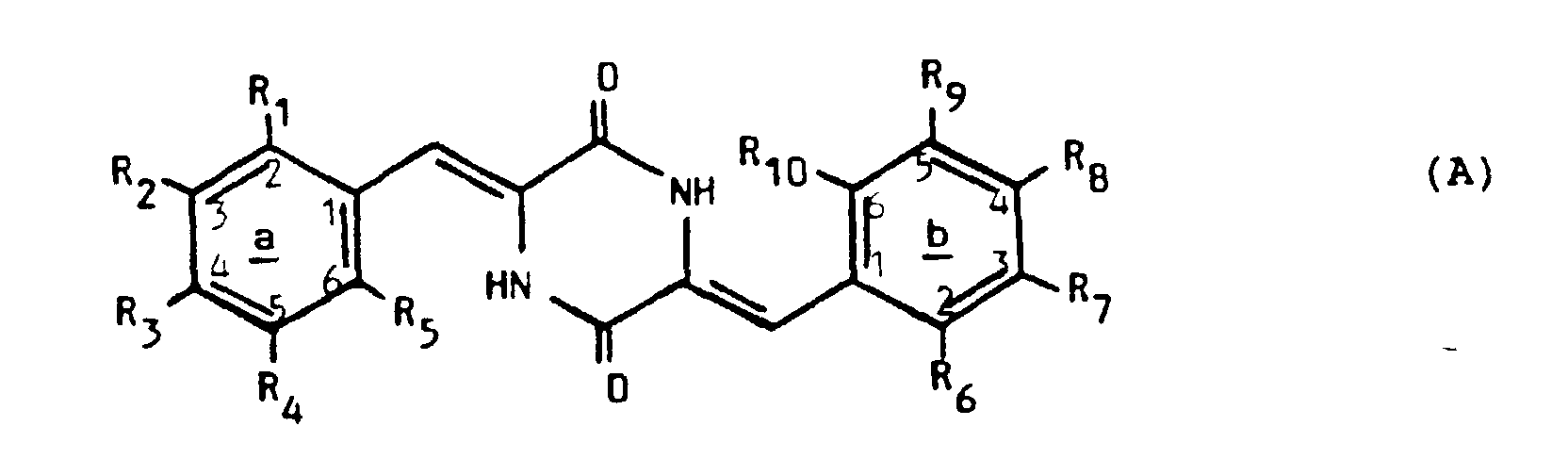
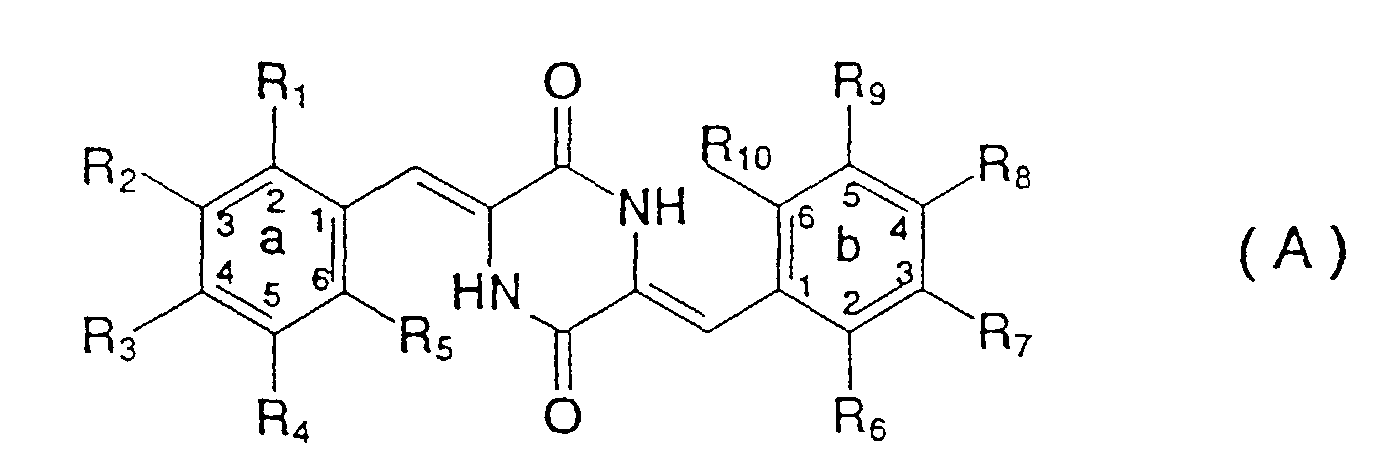
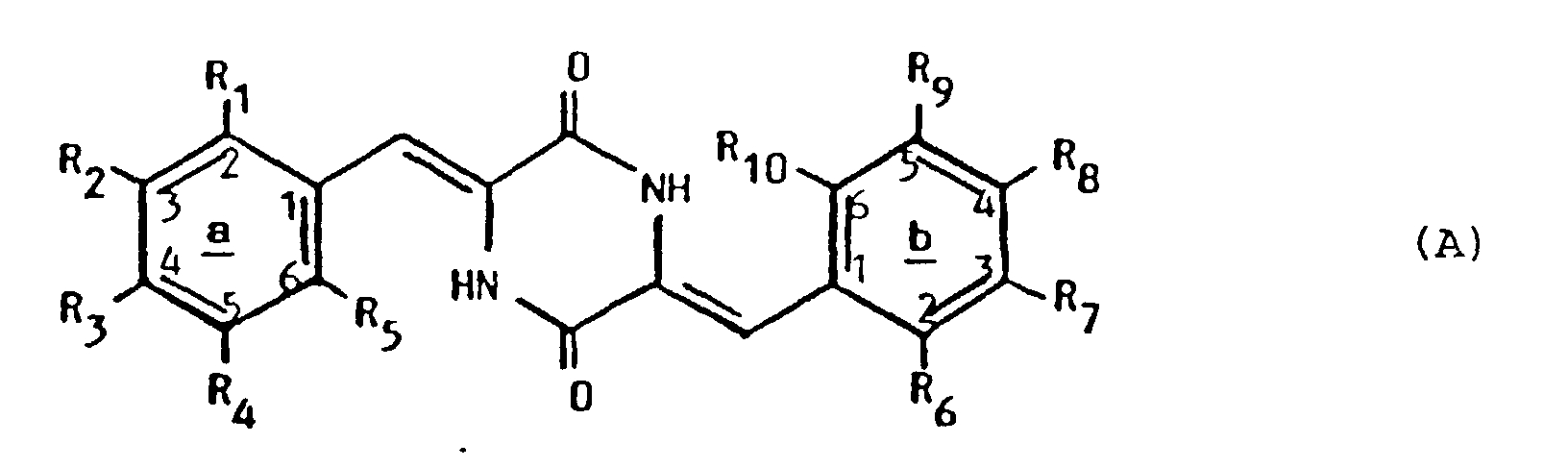
- each of R 1 to R 10 which may be the same or different, is independently selected from hydrogen, C 1 -C 6 alkyl unsubstituted or substituted by one or more halogen atoms, C 1 -C 6 alkoxy, C 1 -C 6 alkylthio, halogen, hydroxy, nitro, optionally substituted phenyl, cyano, -CH 2 OH, -CH 2 COOH, -CO 2 R 11 , -NHCOR 11 , -NHSO 2 R 13 , -SO 2 R 13 , -CON(R 1 'R 12 ), -SOR 13 , -SO 2 N(R 11 R 12 ), -N(R 11 R 12 ), -O(CH 2 ) n N(R 11 R 12 ), -O(CH 2 ) n CO 2 R 11 , -OCOR 11 , -CH 2
- the numerals 1 to 10 denote ring positions on the phenyl groups in formula A.
- the letters a and b refer to the two phenyl rings themselves.
- a benzene ring that ring is either unsubstituted or it may be substituted by any of the options specified above for R 1 to R 10 .
- the benzene ring forms, together with ring a or b respectively, an optionally substituted naphthalene ring structure.
- the benzene ring may be substituted at any of the ortho, meta and para positions by one or more substituents, for example one, two or three substituents, which may be the same or different, independently selected from the groups specified above for R 1 to R 10 other than hydrogen.
- a C 1 -C 6 alkyl group is typically a C 1 -C 4 alkyl group, for example a methyl, ethyl, propyl, i-propyl, n-butyl, sec-butyl or tert-butyl group.
- a halogen is, for example, fluorine, chlorine, bromine or iodine.
- a C 1 -C 6 alkyl group substituted by halogen may be substituted by 1, 2 or 3 halogen atoms. It may be a perhaloalkyl group, for example trifluoromethyl.
- a C 1 -C 6 alkoxy group is typically a C 1 -C 4 alkoxy group, for example a methoxy, ethoxy, propoxy, i-propoxy, n-butoxy, sec-butoxy or tert-butoxy group.
- a C 1 -C 6 alkylthio group is typically a C 1 -C 4 alkylthio group, for example methylthio, ethylthio, propylthio, i-propylthio, n-butylthio, sec-butylthio or tert-butylthio.
- one of rings a and b is unsubstituted or is mono-substituted whilst the other ring is unsubstituted or is substituted at one or more of positions 2 to 6.
- the ring which is mono-substituted may carry the substituent at any one of positions 2 to 6, for instance position 3 or 4, especially position 4.
- one of R 6 to R 10 is other than hydrogen, preferably R 7 or R 8 , especially R 8 .
- one of R 1 to R 5 is other than hydrogen, preferably R 2 or R 3 , especially R 3 .
- the substituent R 1 to R 5 , or R 6 to R 10 respectively is preferably selected from a halogen, for instance fluorine; an alkoxy group, for instance OMe; and an acetamido group -NHAC in which Ac denotes acetyl.
- a halogen for instance fluorine
- an alkoxy group for instance OMe
- an acetamido group -NHAC in which Ac denotes acetyl.
- the other ring may bear any desired substitution pattern.
- the other ring may be unsubstituted or may be mono-, di- or tri-substituted at any of positions 2 to 6.
- the said other ring may, for instance, be mono-substituted at any of positions 2 to 6. It may also be 2,3-, 2,4-, 2,5-, 2,6-, 3,4- or 3,5- disubstituted, or 2,3,4-, 2,3,5-, 2,3,6- or 3,4,5-trisubstituted.
- four of R 1 to R 5 are hydrogen and one is other than hydrogen.
- three of R 1 to R 5 are hydrogen and two are other than hydrogen.
- R 1 and R 2 , or R 1 and R 3 , or R 1 and R 4 , or R 1 and R 5 , or R 2 and R 3 , or R 2 and R 4 are other than hydrogen whilst, in each case, the other three of R 1 to R 5 are hydrogen.
- R 1 to R 5 are hydrogen and three are other than hydrogen.
- R 1 , R 2 and R 3 , or R 1 , R 2 and R 4 , or R 1 , R 2 and R 5 , or R 2 , R 3 and R 4 are other than hydrogen whilst, in each case, the other two of R 1 to R 5 are hydrogen.
- R 6 to R 10 When the said ring is b and is mono-substituted, four of R 6 to R 10 are hydrogen and one is other than hydrogen. When the said other ring is b and is di-substituted, three of R 6 to R 10 are hydrogen and two are other than hydrogen. For example R 6 and R 7 , or R 6 and R 8 , or R 6 and R 9 , or R 6 and R 10 , or R 7 and R 8 , or R 7 and R 9 , are other than hydrogen whilst, in each case, the other three of R 6 to R 10 are hydrogen. When the said other ring is b and is trisubstituted, two of R 6 to R 10 are hydrogen and three are other than hydrogen.
- R 6 , R 7 and R 8 , or R 6 , R 7 and R 9 , or R 6 , R 7 and R 10 , or R 7 , R 8 and R 9 are other than hydrogen whilst, in each case, the other two of R 6 to R 10 are hydrogen.
- any two adjacent substituents in the said other ring may, together with the carbon atoms to which they are attached, complete a second benzene ring which is optionally substituted, thus forming an optionally substituted naphthyl group with the said other ring.
- a R 1 and R 2 , or R 2 and R 3 may form together with carbon atoms 2 and 3, or 3 and 4 respectively, an optionally substituted benzene ring which, in turn, forms with ring a a naphthyl group which is unsubstituted or substituted by one or more groups specified above for R 1 to R 10 .
- R 6 and R 7 , or R 7 and R 8 may form, together with carbon atoms 2 and 3 or 3 and 4 respectively, an optionally substituted benzene ring which, in turn, forms with ring b a naphthyl group which is unsubstituted or substituted by one or more groups specified above for R 1 to R 10 .
- the naphthyl group in either case is unsubstituted or is monosubstituted at position 1,2,3 or 4 of the naphthalene ring structure, especially position 4.
- R 1 and R 2 together with ring a , or R 6 and R 7 with ring b form a 4-dimethylamino-1-naphthyl group.
- each of R 6 to R 10 is hydrogen.
- one of R 6 to R 10 is selected from alkoxy, NHCOR 11 and halogen and the other four of R 6 to R 10 are H.
- Alkoxy may be, for instance, OMe or OBu n .
- NHCOR 11 is typically NHAc.
- Halogen is typically F or Cl.
- R 8 is alkoxy, especially OMe or OBu n ; NHCOR 11 , especially -NHAc; or halogen, especially F or Cl; and each of R 6 , R 7 , R 9 and R 10 is H.
- R 1 to R 5 are all hydrogen, or one or two of R 1 to R 5 are other than hydrogen whilst the others are hydrogen.
- one of R 1 , R 2 and R 3 is other than hydrogen.
- R 1 and R 3 , or R 2 and R 3 are other than hydrogen.
- Preferred values for the one or two of R 1 to R 5 which is or are other than hydrogen include alkoxy such as OMe or OBu n , halogen such as Cl or F, hydroxy, -N(R 11 R 12 ), -CO 2 R 11 , -CH 2 SCOR 13 , -CH 2 SR 11 , -NHCOR 11 , -O(CH 2 ) n N(R 11 R 12 ), -O(CH 2 ) n CO 2 R 11 , -CH 2 NHCO(CH 2 ) n CO 2 R 11 , -NHCOCH 2 OR 11 , -NHCO(CH 2 ) n OCOR 11 , -CH 2 NHCOOR 13 and CF 3 . It is also preferred for R 1 and R 2 , R 2 and R 3 , R 3 and R 4 or R 4 and R 5 to form, together with the carbon atoms to which they are attached, a benzene ring.
- R 6 , R 7 , R 9 and R 10 are each H, R 8 is selected from H, OMe and -NHAc and each of R 1 to R 5 is as specified above.
- R 1 to R 5 are preferably each independently selected from H, halogen, hydroxy, C 1 -C 6 alkoxy, nitro, -CH 2 SCOR 11 , -CH 2 SR 11 , -CO 2 R 11 , -OCOR 13 , CF 3 , -O(CH 2 ) n N(R 11 R 12 ),-O(CH 2 ) n CO 2 R 11 , -CH 2 NHCO(CH 2 ) n CO 2 R 11 , -NHCO(CH 2 ) n OR 11 , -N(R 11 R 12 ),-NHCO(CH 2 ) n OCOR 11 , -NHCO (CH 2 ) n CO 2 R 11 and -CH 2 NHCO 2 R 13 or R 1 and R
- R 1 and R 2 are independently H, nitro or halogen
- R 3 is H, hydroxy, -O(CH 2 ) n N(R 11 R 12 ),-OCOR 11 , -O(CH 2 ) n CO 2 R 11 , -CH 2 NHCO(CH 2 ) n CO 2 R 11 , C 1 -C 6 alkoxy, -NHCO (CH 2 )nOR 11 , -NHCO(CH 2 ) n OCOR 11 , -N(R 11 R 12 ), -CH 2 NHCO 2 R 13 , -CH 2 SR 11 or -NHCOR 11 ;
- R 4 is H, halogen, C 1 -C 6 alkoxy, -CH 2 SCOR 11 , -CH 2 SR 11 or -CO 2 R 11 ; and
- R 5 is H, nitro or halogen; or R 2 and R 3 , R 3 and R 4 or R 4 and R 5 form, together with the carbon atoms to
- R 8 is NHAc
- each of R 6 , R 7 , R 9 and R 10 is H
- R 1 is H or halogen such as Cl or F
- R 2 is H
- R 3 is halogen such as F or Cl, C 1 -C 6 alkoxy such as OMe, -N(R 11 R 12 ) such as NMe 2 or -NHCOOR 13 such as -NHCOOBu t
- R 4 is H and R 5 is halogen such as F, Cl, Br, or is CF 3 .
- R 8 is OMe, each of R 6 , R 7 , R 9 and R 10 is H;
- R 1 is H, nitro or halogen such as Cl;
- R 2 is H;
- R 3 is H, hydroxy, -OCOR 11 such as OAc, -NHCO(CH 2 ) n OCOR 11 such as -NHCOCH 2 OAC or -NHCOCH 2 OR 11 such as -NHCOCH 2 OH;
- R 4 is H and R 5 is H or halogen such as F or Cl; or
- R 2 and R 3 form a benzene ring together with the carbon atoms to which they are attached.
- each of R 1 , R 6 , R 7 , R 8 , R 9 and R 10 is H;
- R 2 is H and
- R 3 is -CH 2 SR 11 such as -CH 2 SMe, -CH 2 SCOR 11 such as -CH 2 SAc, -NHCO(CH 2 ) n CO 2 R 11 such as -NHCO(CH 2 ) 3 CO 2 Me, -O(CH 2 ) n CO 2 R 11 such as -O(CH 2 ) 4 CO 2 H, -O(CH 2 )N(R 11 R 12 ) such as -O(CH 2 ) 3 -NMe 2 , or -N(R 11 R 12 ) such as -NMe 2 or R 2 is -CH 2 SCOR 13 such as -CH 2 SAc or -CH 2 SR 11 such as -CH 2 SH and R 3 is H; and R 4 and R 5 are both H or both form, together with the carbon atoms to which they are attached, a benzen
- the compound of formula A is the following compound 3:
- Certain diketopiperazines have been disclosed as having utility as bioactive agents. Yokoi et al in J.Antibiotics vol XLI No. 4, pp 494-501 (1988) describe structure-cytotoxicity relationship studies on a series of diketopiperazines related to neihumicin, a compound obtained from the micro-organism Micromonospora neihuensis.
- rings a and b which are the same, are unsubstituted or substituted by chloro, methyl or methoxy groups.
- General formula A embraces diketopiperazines which are novel. Accordingly, the present invention provides a diketopiperazine of formula (A) as defined above, or a pharmaceutically acceptable salt or ester thereof; with the exception of compounds wherein:
- the present invention further provides a diketopiperazine of formula (A) as defined above wherein ring a bears a different substitution pattern from ring b, or a pharmaceutically acceptable salt or ester thereof; with the exception of compounds wherein one of rings a and b is unsubstituted and the other is substituted exclusively by 4-nitro, 4-methoxy or 2-hydroxy.
- the present invention further provides a compound for use as an inhibitor of plasminogen activator inhibitor, which compound is a diketopiperazine of formula (A) as defined above, or a pharmaceutically acceptable salt or ester thereof; with the exception of compounds wherein
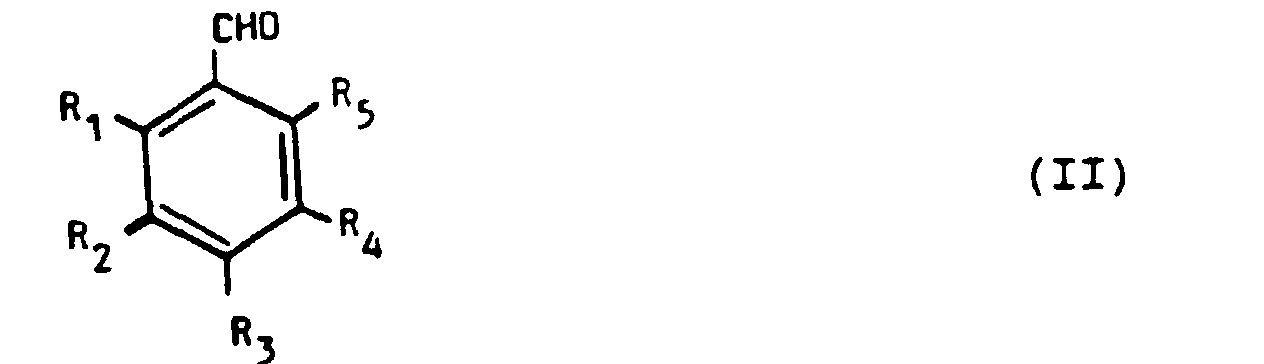
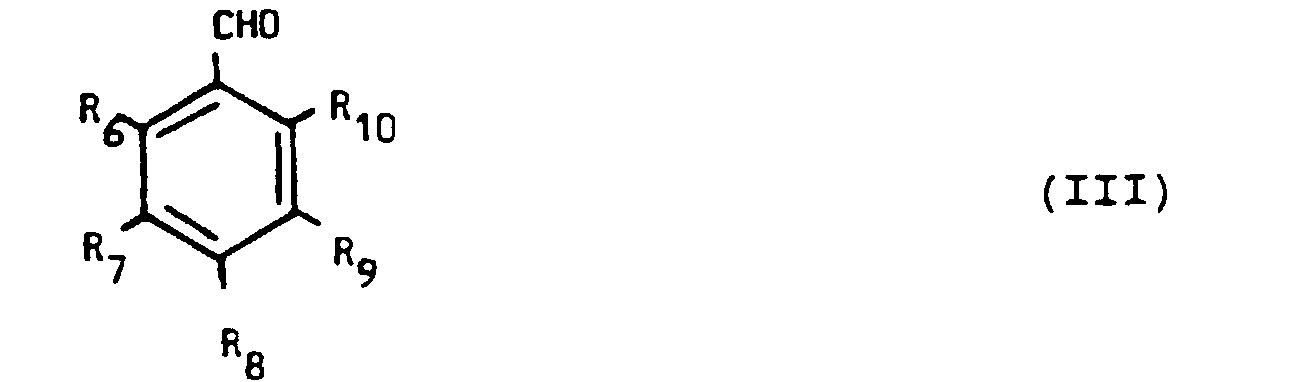
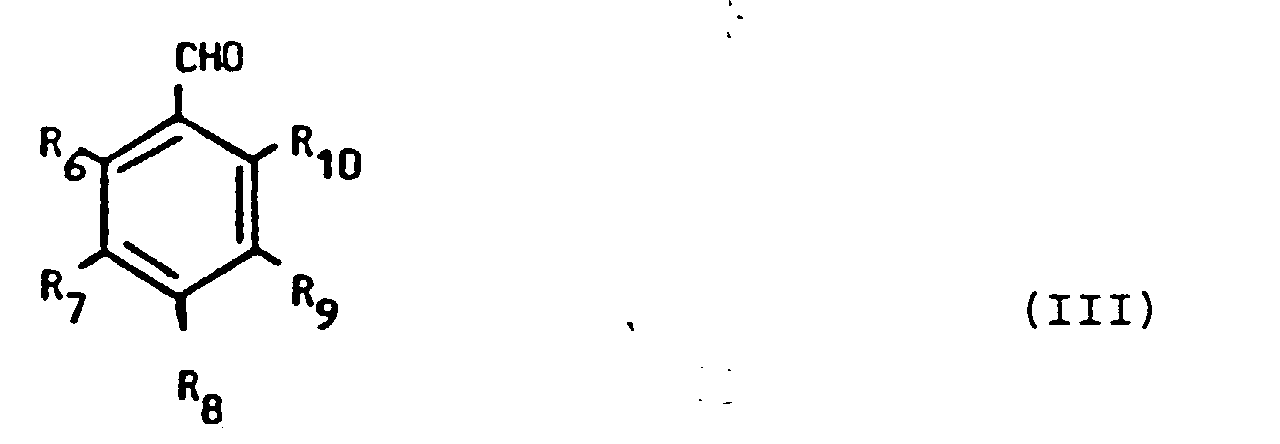
- Compounds of formula A may be prepared by a process which comprises either (i) condensing compound of formula (I) wherein R 6 to R 10 are as defined above and are optionally protected, with a compound of formula (II): wherein R 1 to R 5 are defined above and are optionally protected, in the presence of a base in an organic solvent; or (ii) condensing a compound of formula (I'): wherein R 1 to R 5 are as defined above and are optionally protected, with a compound of formula (III): wherein R 6 to R 10 are as defined above and are optionally protected, in the presence of a base in an organic solvent; and, in either case (i) or (ii), if required, removing optionally present protecting groups and/or, if desired, converting one compound of formula A into another compound of formula A, and/or, if desired, converting a compound of formula A into a pharmaceutically acceptable salt or ester thereof, and/or, if desired, converting a salt or este
- a compound of formula A produced directly by the condensation reaction between (I) and (II) or (I') and (III) may be modified, if desired, by converting one or more of groups R 1 to R 10 into different groups R 1 to R 10 .
- These optional conversions may be carried out by methods known in themselves.
- a compound of formula A in which one or more of R 1 to R 10 is an ester group may be converted to a compound of formula A wherein the corresponding substituent is a free -COOH group, by acid or alkaline hydrolysis at a suitable temperature, for example from ambient temperature to 100°C.
- a compound of formula A in which one or more of R 1 to R 10 is a -CO 2 H group may be converted into a compound of formula A wherein the corresponding substituent is esterified by esterification, for example by treating the carboxylic acid with a suitable C 1 -C 6 alkyl alcohol in the presence of 1,3-dicyclohexylcarbodiimide in an inert solvent.
- a compound of formula A in which one or more of R 1 to R 10 is a free -CO 2 H group may be converted into a compound of formula A in which the corresponding substituent is a group -CON(R 11 R 12 ), wherein R 11 and R 12 are as defined above, for example by treatment with ammonia or an amine in the presence of l,3-dicyclohexylcarbodiimide in an inert solvent.
- a compound of formula A in which one or more of R 1 to R 10 is a free -CO 2 H group may be converted into a compound of formula A wherein the corresponding substituent is a -CH 2 OH group by reduction, for example using borane in a suitable solvent such as tetrahydrofuran.
- a compound of formula A in which one or more of R 1 to R 10 is a nitro group may be converted into a compound of formula A in which the corresponding substituent is an amino group by reduction under standard conditions, for example by catalytic hydrogenation.
- Protecting groups for R 1 to R 10 in any of the compounds of formulae (I), (I'), (II) and (III) are optionally introduced prior to step (i) or step (ii) when any of groups R 1 to R 10 are groups which are sensitive to the condensation reaction conditions or incompatible with the condensation reaction, for example a -COOH, -CH 2 OH or amino group.
- the protecting groups are then removed at the end of the process. Any conventional protecting group suitable for the group R 1 to R 10 in question may be employed, and may be introduced and subsequently removed by well-known standard methods.
- the condensation reaction between compounds (I) and (II) or (I') and (III) is suitably performed in the presence of a base which is potassium t-butoxide, sodium hydride, potassium carbonate, sodium carbonate, caesium carbonate, sodium acetate, potassium fluoride on alumina, or triethylamine in a solvent such as dimethylformamide, or in the presence of potassium t-butoxide in t-butanol or a mixture of t-butanol and dimethylformamide.
- the reaction is typically performed at a temperature from 0°C to the reflux temperature of the solvent.
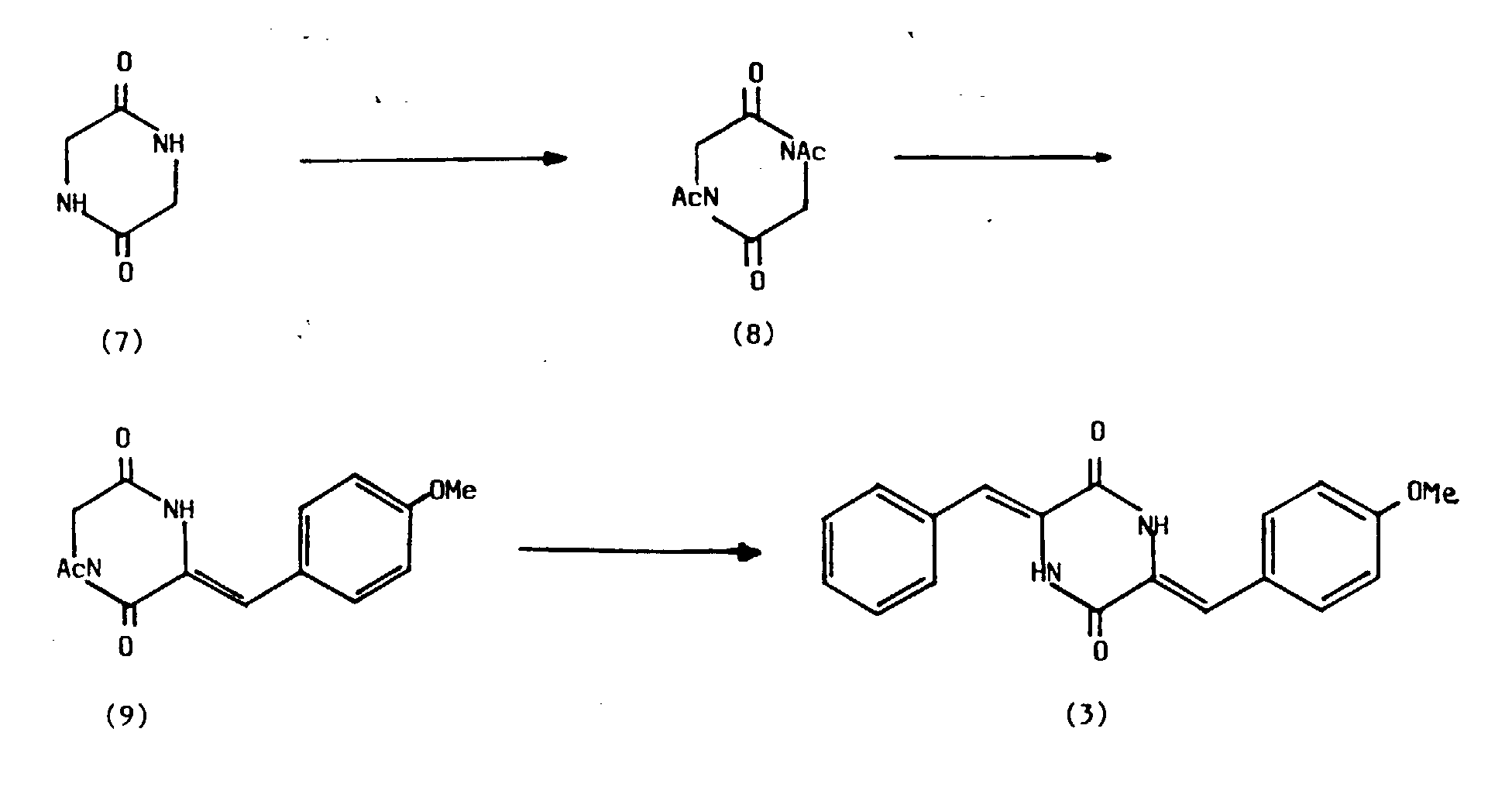
- the compounds of formula (I) may be prepared by a process comprising reacting 1,4-diacetyl-2,5-piperazinedione with a compound of formula (III) as defined above, in the presence of a base in an organic solvent.
- the compounds of formula (I') may be prepared by a process which comprises reacting 1,4-diacetyl-2,5-piperazinedione with a compound of formula (II) as defined above, in the presence of a base in an organic solvent.
- the resulting compound of formula (I) or (I') can be separated from other reaction products by chromatography.
- reaction of 1,4-diacetyl-2,5-piperazinedione with the compound of formula (III) or (II) is suitably performed under the same conditions as described above for the condensation between compounds (I) and (II), or (I') and (III).
- the substituted benzaldehydes of formulae (II) and (III) are known compounds or can be prepared from readily available starting materials by conventional methods.
- the l,4-diacetyl-2,5-piperazinedione used as a starting material in the preparation of compounds of formula (I) may be prepared by treating 2,5-piperazinedione (glycine anhydride) with an acetylating agent.
- the acetylation may be performed using any conventional acetylating agent, for example acetic anhydride under reflux or, alternatively, acetic anhydride at a temperature below reflux in the presence of 4-dimethylaminopyridine.
- Compounds of formula (I) may also be prepared by the microwave irradiation of a mixture comprising 1,4-diacetyl-2,5-piperazinedione, a compound of formula (III) and potassium fluoride on alumina (as base) in the absence of solvent.
- Compounds of formula (I) may alternatively be prepared directly from 2,5-piperazinedione (glycine anhydride) by a process which comprises treating the 2,5-piperazinedione with a mixture comprising a compound of formula (III), sodium acetate and acetic anhydride at an elevated temperature, for example under reflux.
- Compounds of formula A may also be prepared by a process comprising the microwave irradiation of (i) a mixture comprising a compound of formula (I) as defined above, a compound of formula (II) and potassium fluoride on alumina, or (ii) a mixture comprising a compound of formula (I') a compound of formula (III) and potassium fluoride on alumina, or (iii) a mixture comprising 1,4-diacetyl-2,5-piperazinedione, a compound of formula (II), a compound of formula (III) and potassium fluoride on alumina.
- the irradiation is performed in the absence of a solvent.
- Compounds of formula (A) may also be obtained directly by a process which comprises condensing together l,4-diacetyl-2,5-piperazinedione, a compound of formula (II) and a compound of formula (III) in the presence of a base in an organic solvent.
- Suitable bases, solvents and reaction conditions are as described above for the condensation reaction between, for example, compounds (I) and (II).
- An alternative direct process for the preparation of compounds of formula (A) comprises condensing together 2,5-piperazinedione, a compound of formula (II) and a compound of formula (III) in the presence of sodium acetate and acetic anhydride at elevated temperature, for example under reflux.
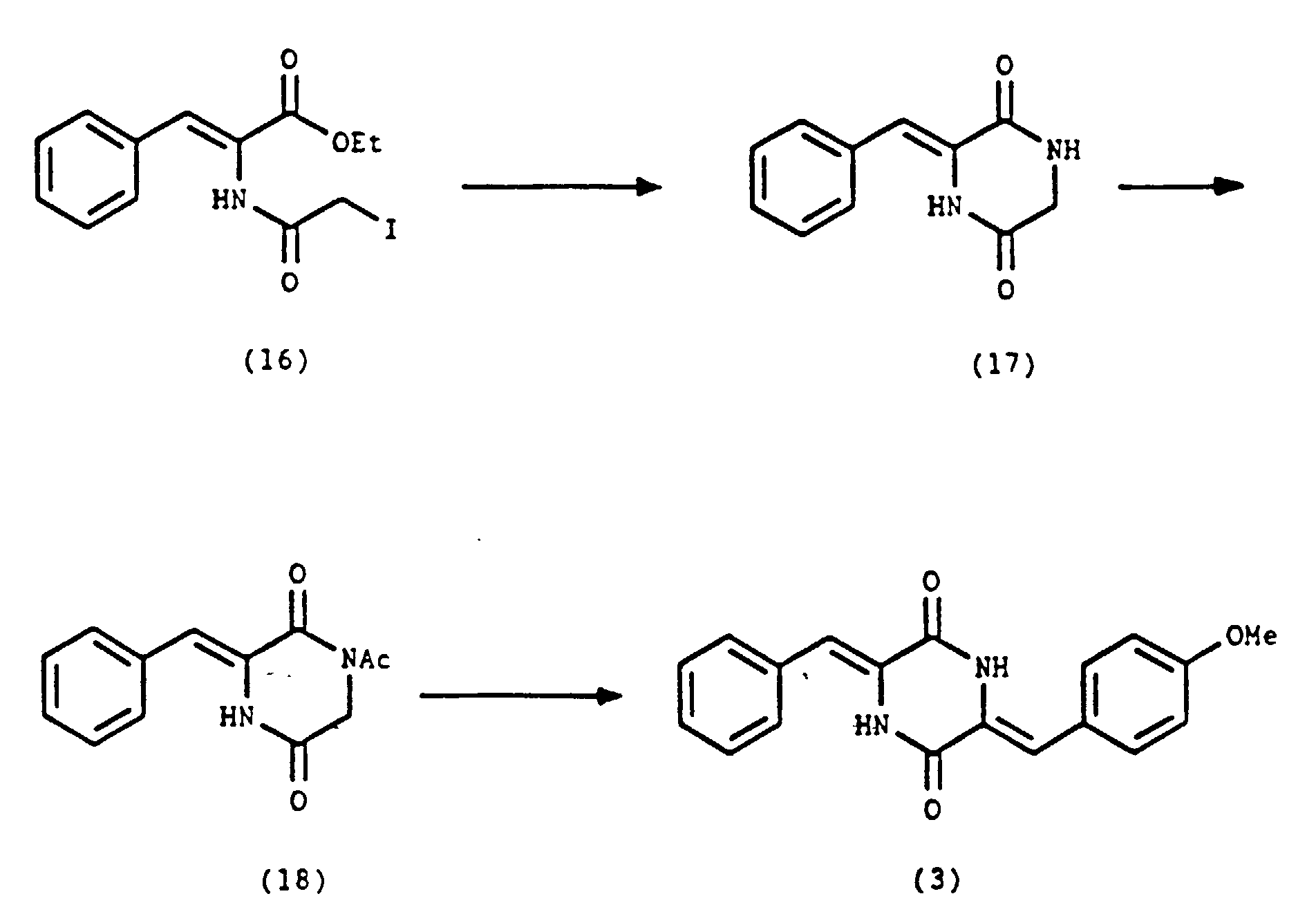
- An alternative process for the preparation of compounds of formula (I) comprises treating a compound of formula (V): wherein R 6 to R 10 are as defined above, X is a halogen and R' is a C 1 -C 6 alkyl group, with ammonia followed by acetic anhydride.
- Compounds of formula (I') may be prepared by an analogous process which comprises treating a compound of formula (V'): wherein R 1 to R 5 , X and R 1 are as defined above, with ammonia followed by acetic anhydride.
- X in formula (V) or (V') is typically iodine.
- R 1 is, for example, a C 1 -C 4 alkyl group such as a methyl, ethyl, propyl, i-propyl, butyl, sec-butyl or tert-butyl group.
- Suitable salts include salts with pharmaceutically acceptable, inorganic or organic, bases.
- inorganic bases include ammonia and carbonates, hydroxides and hydrogen carbonates of group I and group II metals such as sodium, potassium, magnesium and calcium.
- organic bases include aliphatic and aromatic amines such as methylamine, triethylamine, benzylamine, dibenzylamine or ⁇ - or ⁇ -phenylethylamine, and heterocyclic bases such as piperidine, 1-methylpiperidine and morpholine.
- esters include branched or unbranched, saturated or unsaturated C 1 -C 6 alkyl esters, for example methyl, ethyl and vinyl esters.
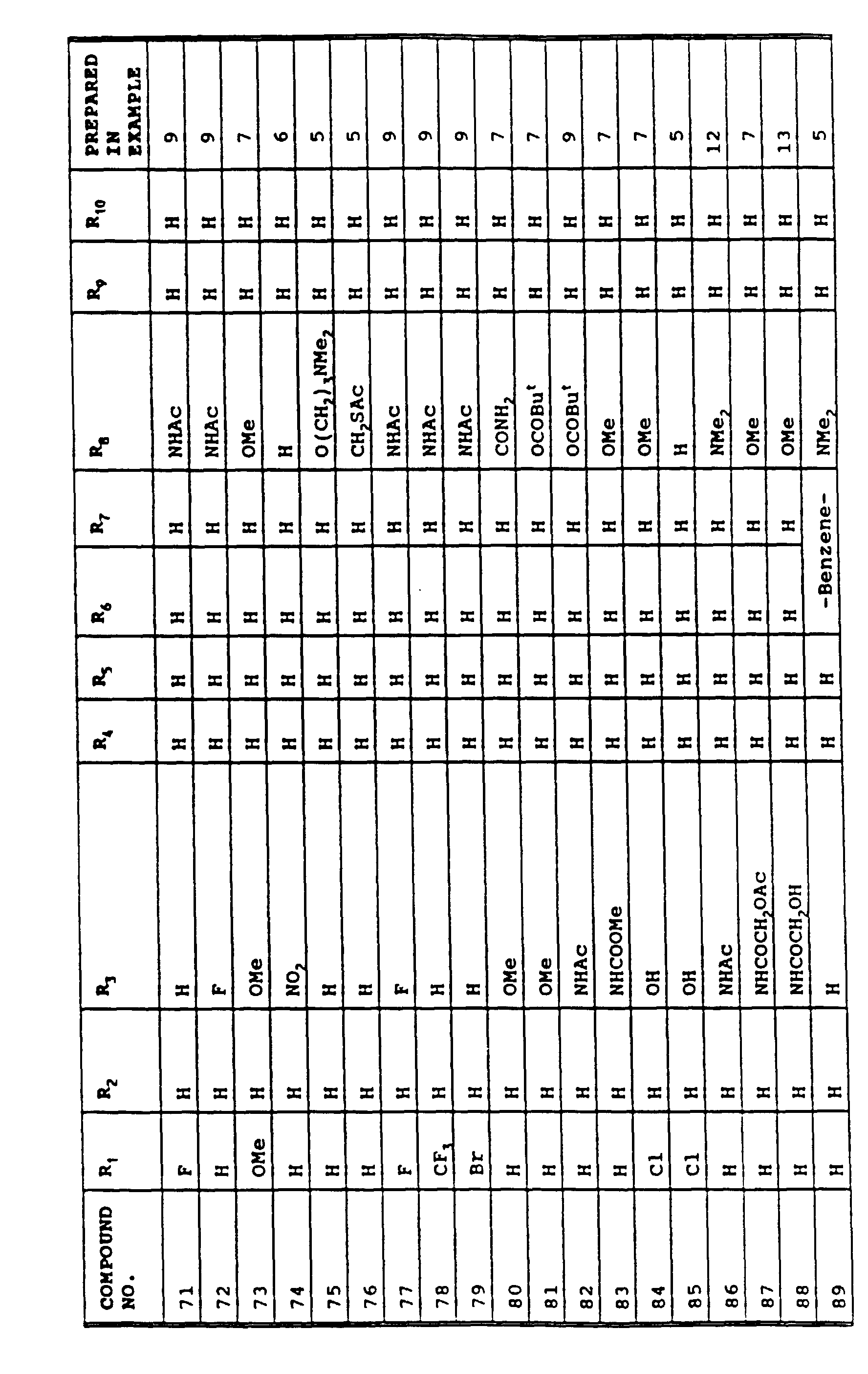
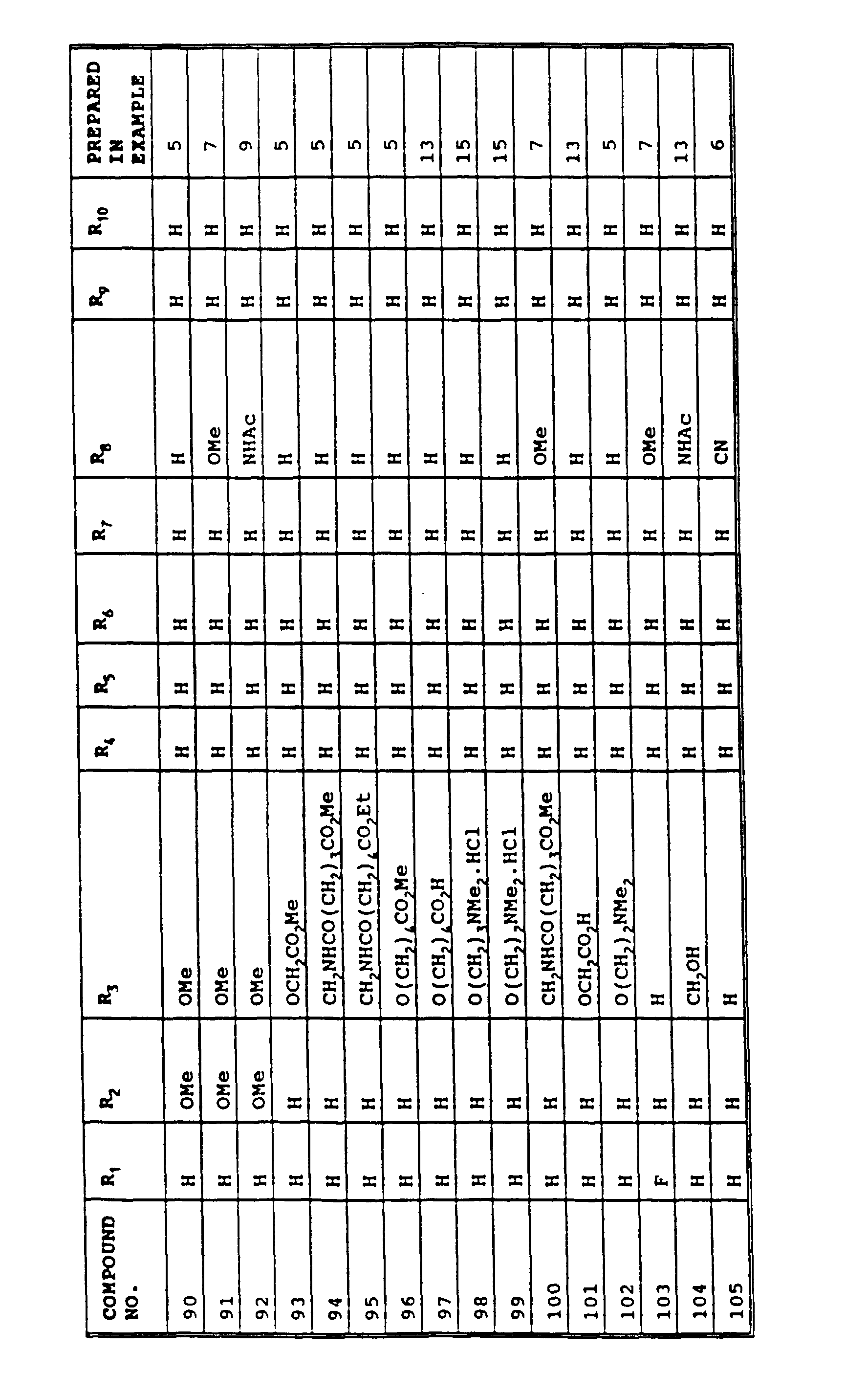
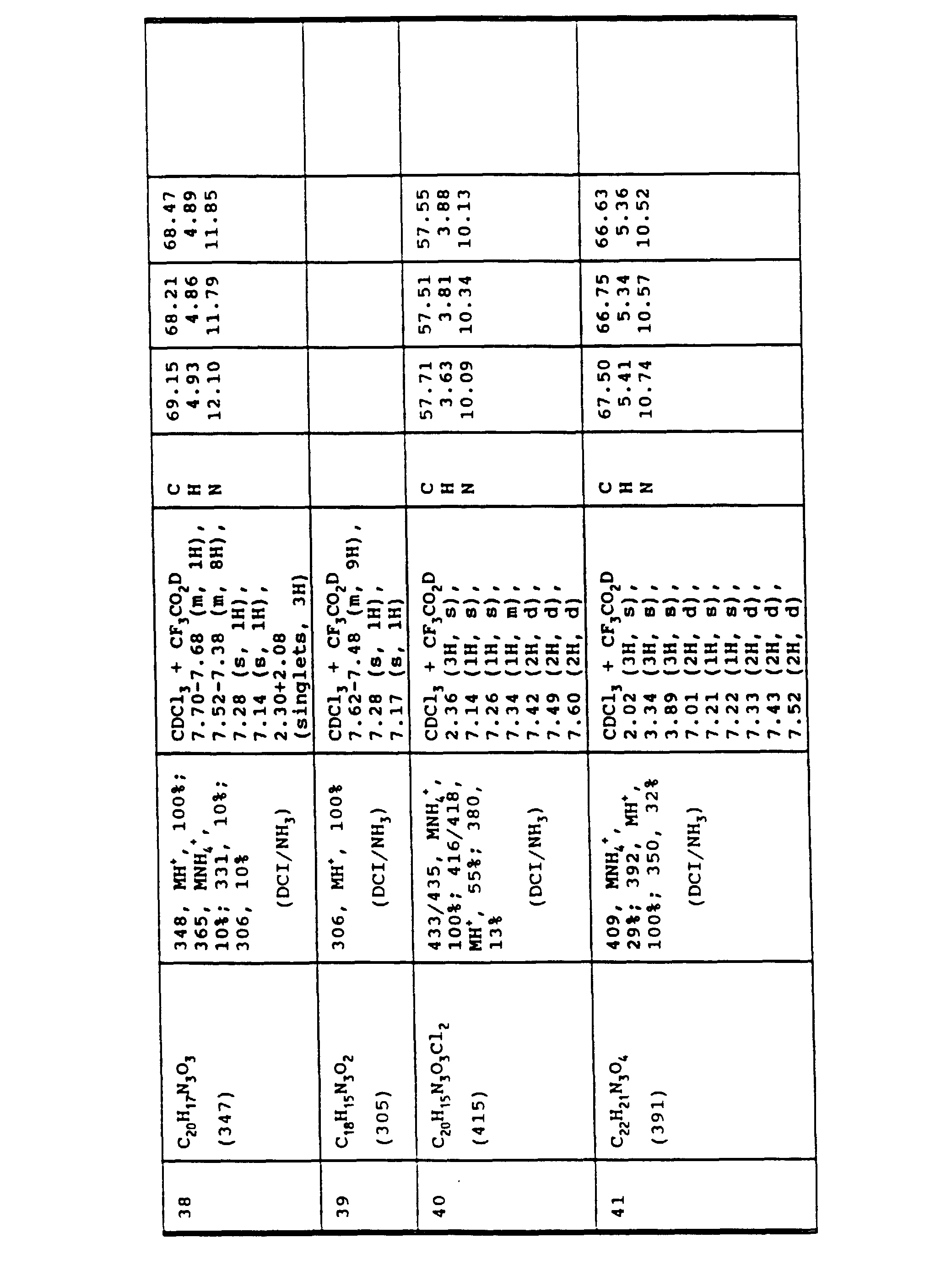
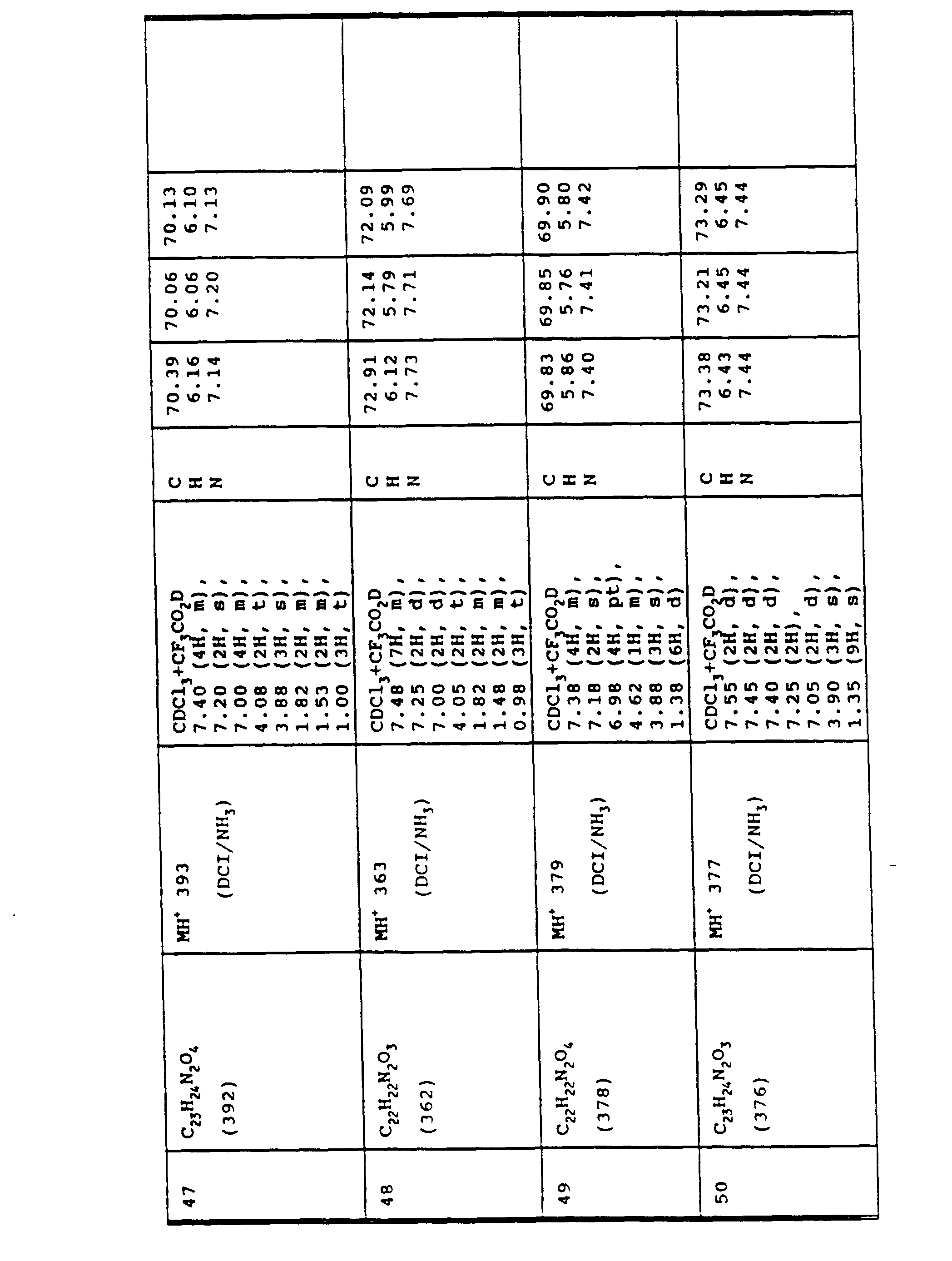
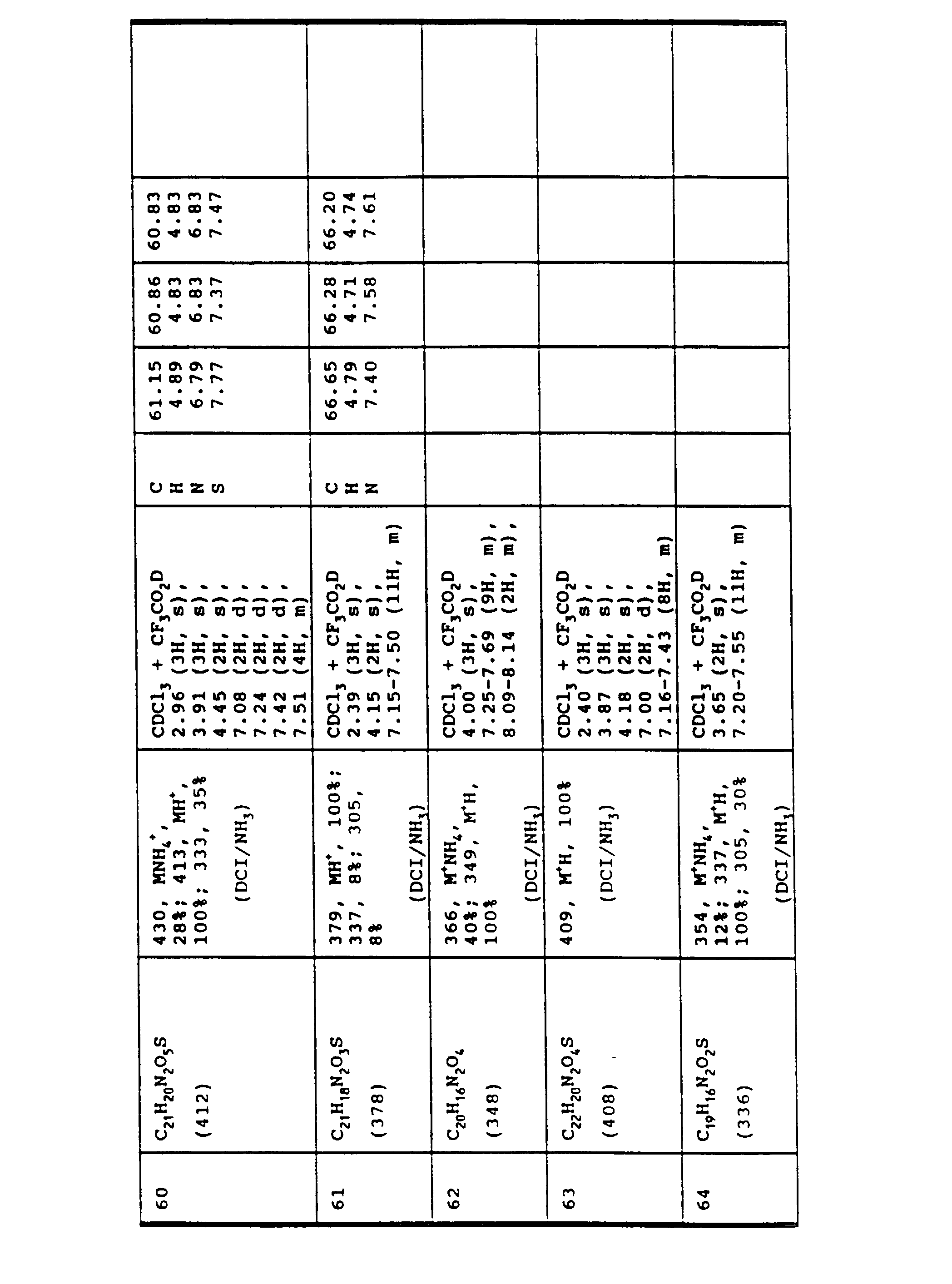
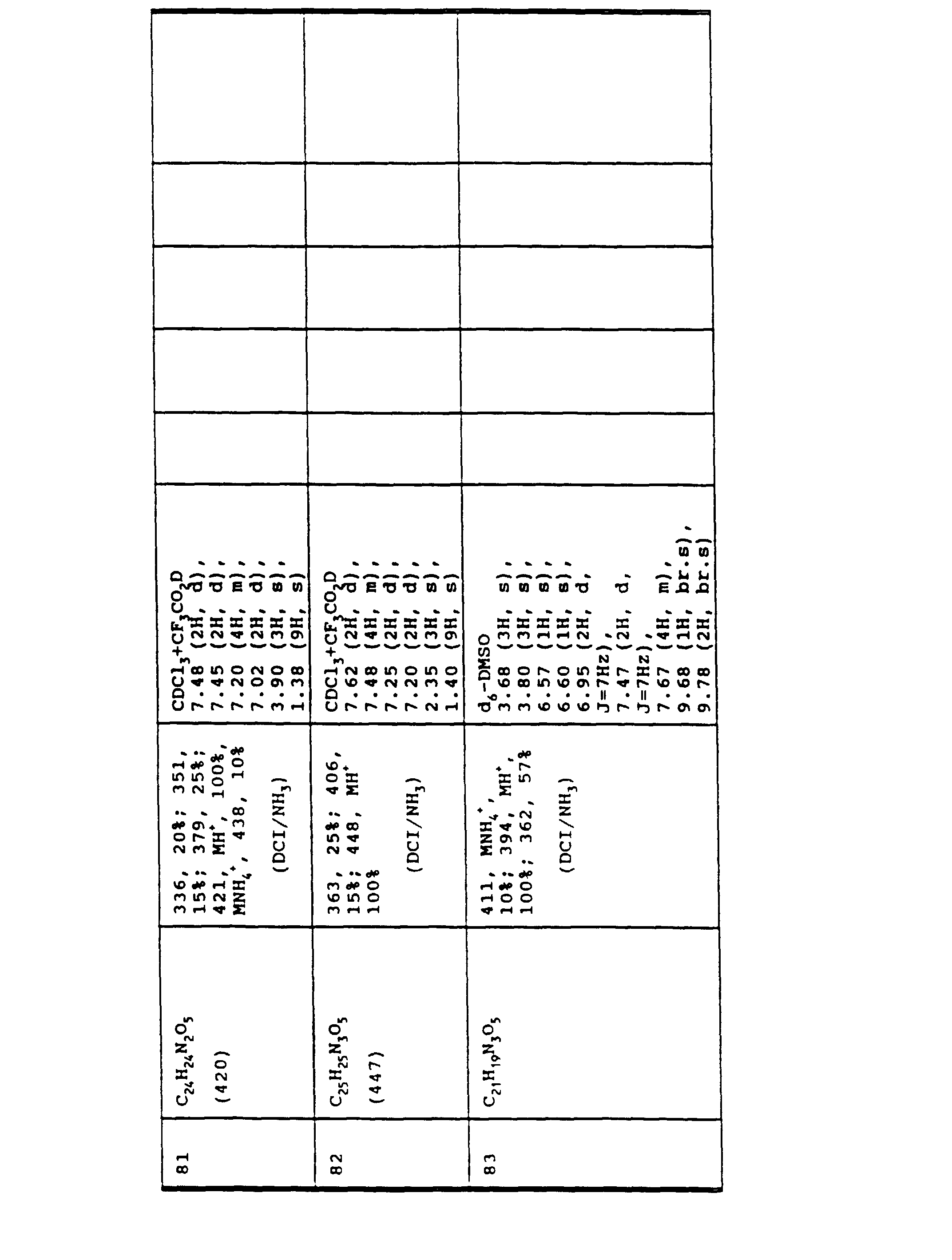
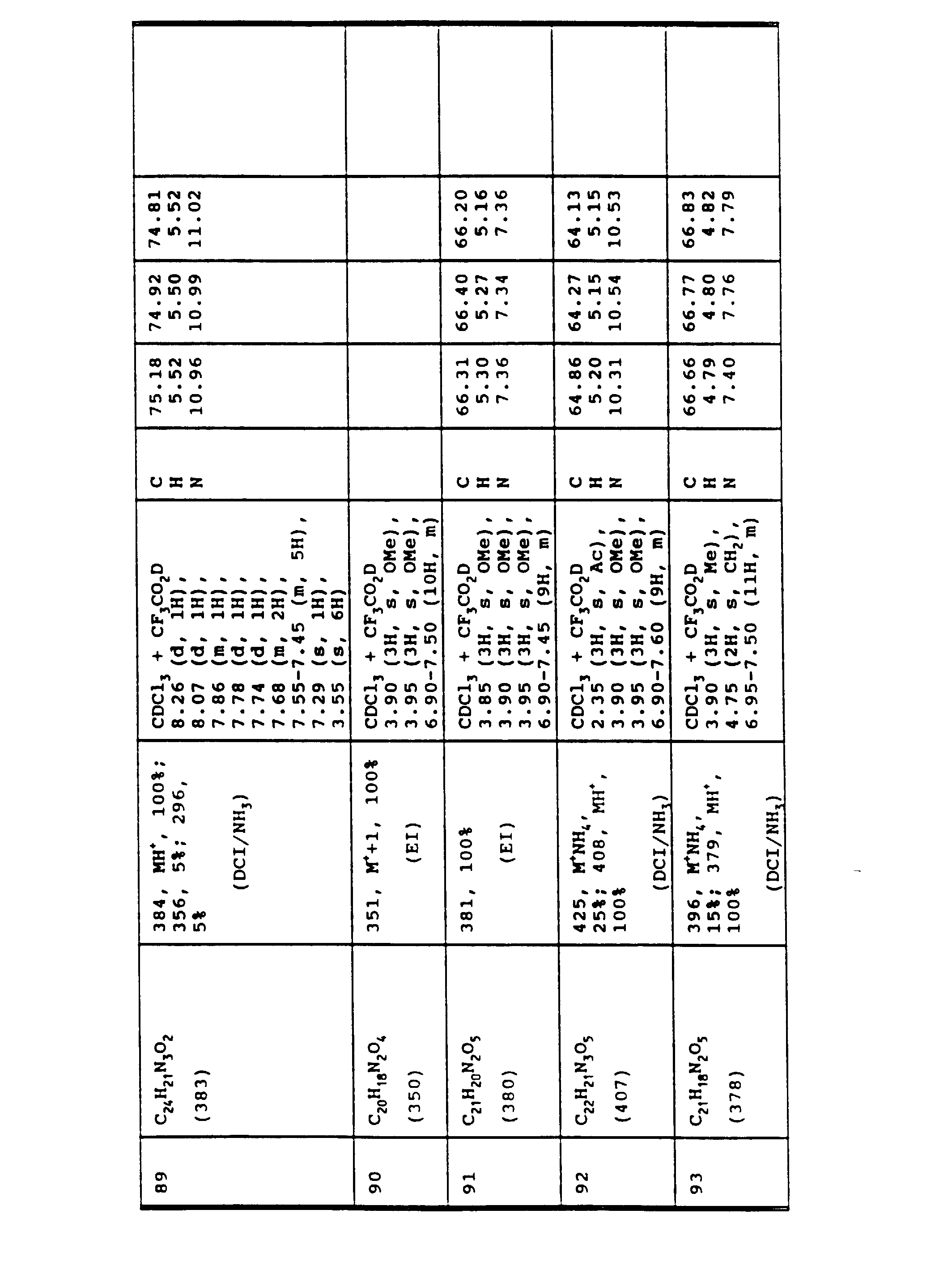
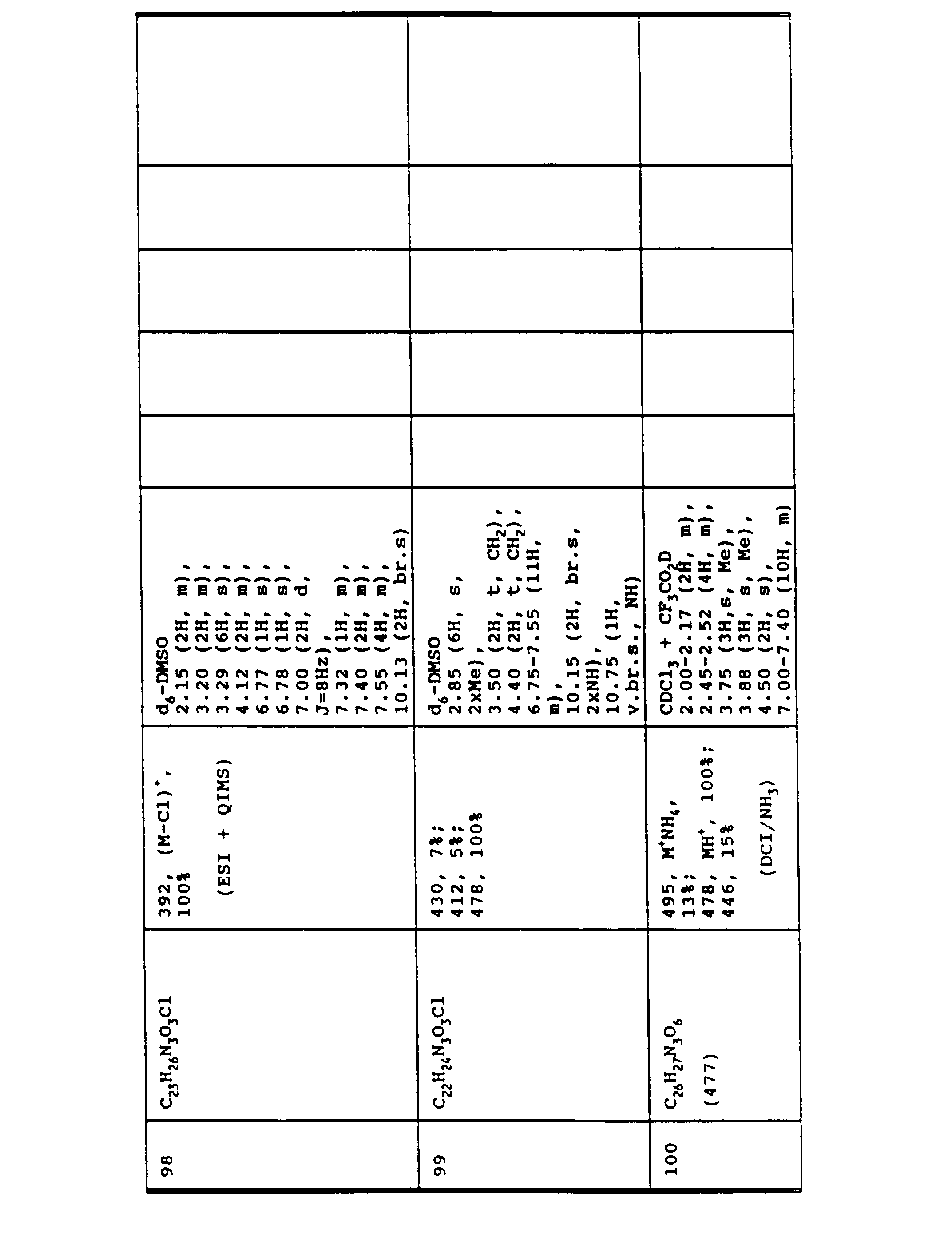
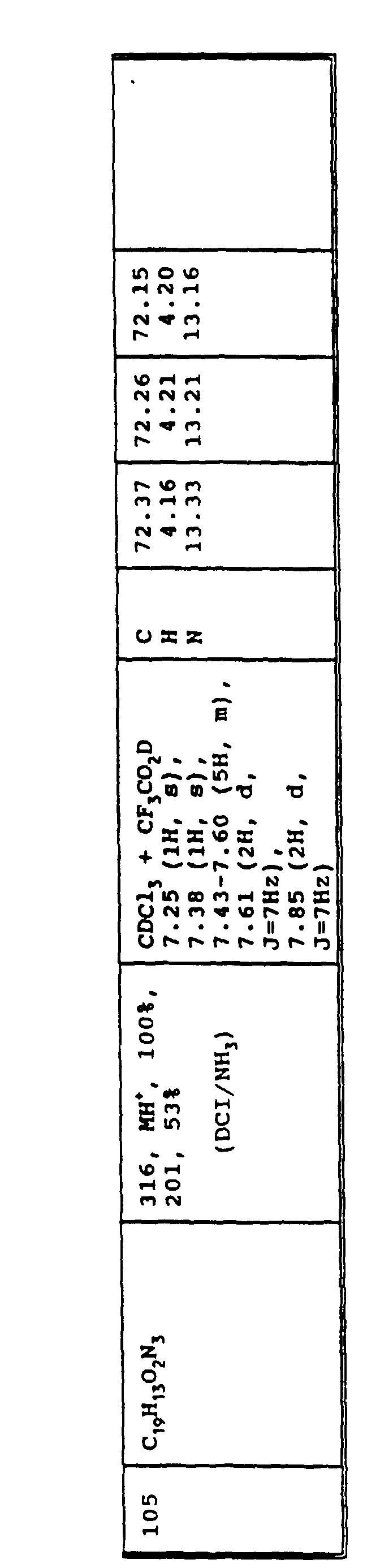
- Preferred compounds of formula A are depicted by means of their subsitution patterns in Table 1 which follows. The compound numbering is adhered to in the rest of the specification. Characterising data for the compounds are set out in Table 2 in Example 16.
- the diketopiperazines of formula (A), both novel and known and their pharmaceutically acceptable salts and esters (referred to hereinafter as the "present compounds”) have utility as inhibitors of PAI. Elevated levels of PAI-1, by reducing the net endogenous fibrinolytic capacity, can contribute to the pathogenesis of various thrombotic disorders including myocardial infarction, deep vein thrombosis and disseminated intravascular coagulation. The present compounds therefore can act as inhibitors of the tPA/PAI-1 interaction.
- the present compounds can be used in the treatment of haemostatic disorders.
- a human or animal, e.g. a mammal can therefore be treated by a method comprising administration of a therapeutically effective amount of a diketopiperazine of formula (A) or a pharmaceutically or veterinarily acceptable salt thereof.
- Tissue plasminogen activator is used as a fibrinolytic agent in the treatment of thrombotic disorders.
- the efficacy of the tPA in this role may be enhanced if it is administered together with a PAI inhibitor.
- a human or animal e.g. a mammal, can therefore be treated by a method comprising the combined administration of a therapeutically effective amount of tPA and a therapeutically effective amount of any one of the present compounds.
- the present invention also provides products containing a diketopiperazine of formula (A) or a pharmaceutically acceptable salt or ester thereof and tPA as a combined preparation for simultaneous, separate or sequential use in the treatment of thrombotic disorders, for example where there is inappropriate PAI activity.
- the present compound is formulated for oral or parenteral (intravenous, intramuscular or subcutaneous) administration and the tPA is formulated for intravenous administration.
- one of the present compounds may be administered to a patient together with tPA to enhance the efficacy of the tPA treatment.
- MI acute myocardial infarction
- tPA tPA-associated tPA
- early re-occlusion following treatment of a patient with tPA may be prevented by the post-MI administration of one of the present compounds.
- the compounds of formula (A) have been tested in a PAI functional assay.
- a compound is incubated with PAI-1 prior to addition to the tPA assay system.
- Inhibition of PAI-1 results in the production of plasmin from plasminogen.
- plasmin cleaves the chromogenic substrate S2251 (Kabi Vitrum) producing pNA (p-nitroaniline) which is detected spectrophotometrically at 405 nm (K.Nilsson et al, Fibrinolysis (1987) 1 , 163-168).
- S2251 Korean Vitrum
- pNA p-nitroaniline
- the present compounds can be administered in a variety of dosage forms, for example orally such as in the form of tablets, capsules, sugar- or film-coated tablets, liquid solutions or suspensions or parenterally, for example intramuscularly, intravenously or subcutaneously.
- the present compounds may therefore be given by injection or infusion.
- the dosage depends on a variety of factors including the age, weight and condition of the patient and the route of administration. Typically, however, the dosage adopted for each route of administration when a compound of the invention is administered alone to adult humans is 0.001 to 10 mg/kg, most commonly in the range of 0.01 to 5 mg/kg, body weight. Such a dosage may be given, for example, from 1 to 5 times daily by bolus infusion, infusion over several hours and/or repeated administration.
- the dosage adopted for each route of administration is typically from 0.001 to 10 mg, more typically 0.01 to 5 mg per kg body weight for a compound of the invention and from 5 to 500mg administered intravenously for the tPA.
- a suitable dosage regimen for the tPA is 100 mg given intravenously over 3 hours as follows: 10% of the total dose as an i.v. bolus over 1-2 minutes, 50% of the total dose as an infusion over 1 hour, 40% of the total dose as an infusion over the subsequent 2 hours.
- the present invention further provides a pharmaceutical or veterinary composition
- a pharmaceutical or veterinary composition comprising a pharmaceutically or veterinary acceptable carrier or diluent and, as an active principle, a compound which is a diketopiperazine of formula (A) as defined above or a pharmaceutically acceptable salt or ester thereof; with the exception of compounds wherein:
- the solid oral forms may contain, together with the active compound, diluents such as lactose, dextrose, saccharose, cellulose, corn starch or potato starch; lubricants such as silica, talc, stearic acid, magnesium or calcium stearate and/or polyethylene glycols; binding agents such as starches, arabic gums, gelatin, methylcellulose, carboxymethylcellulose, or polyvinyl pyrrolidone; disintegrating agents such as starch, alginic acid, alginates or sodium starch glycolate; effervescing mixtures; dyestuffs, sweeteners; wetting agents such as lecithin, polysorbates, lauryl sulphates.
- diluents such as lactose, dextrose, saccharose, cellulose, corn starch or potato starch
- lubricants such as silica, talc, stearic acid, magnesium or calcium stearate and/or polyethylene glycols
- Liquid dispersions for oral administration may be syrups, emulsions and suspensions.
- the syrups may contain as carrier, for example, saccharose or saccharose with glycerol and/or mannitol and/or sorbitol.
- a syrup for diabetic patients can contain as carriers only products, for example sorbitol, which do not metabolise to glucose or which only metabolise a very small amount to glucose.
- the suspensions and the emulsions may contain as carrier, for example, a natural gum, agar, sodium alginate, pectin, methylcellulose, carboxymethylcellulose or polyvinyl alcohol.
- Suspensions or solutions for intramuscular injections may contain, together with the active compound, a pharmaceutically acceptable carrier such as sterile water, olive oil, ethyl oleate, glycols such as propylene glycol, and, if desired, a suitable amount of lidocaine hydrochloride. Some of the present compounds are insoluble in water. A compound may be encapsulated within liposomes.
- Tablets each weighing 0.15 g and containing 25 mg of a compound of the invention can be manufactured as follows: Composition for 10,000 tablets
- the compound of the invention, lactose and half of the corn starch are mixed. The mixture is then forced through a sieve 0.5 mm mesh size. Corn starch (10 g) is suspended in warm water (90 ml). The resulting paste is used to granulate the powder. The granulate is dried and broken up into small fragments on a sieve of 1.4 mm mesh size. The remaining quantity of starch, talc and magnesium stearate is added, carefully mixed and processed into tablets.
- 1,4-Diacetyl-2,5-piperazine-2,5-dione (8) was prepared by the published procedure (S.M. Marcuccio and J.A. Elix, Aust. J. Chem., 1984, 37, 1791).
- 1,4-Diacetyl-2,5-piperazinedione (25.0g, 126 mmol), which is compound (8) mentioned in Reference Example 1, was heated at 120-130°C in DMF (200 ml) with triethylamine (17.6 ml, 126 mmol) and benzaldehyde (13.0 ml, 126 mmol). After 4 h the mixture was cooled to room temperature and poured into EtOAc (1000 ml), and washed three times with brine. Any solid formed at this stage was filtered off. The filtrate was dried (MgSO 4 ) and the solvent removed in vacuo.
- 1,4-Diacetyl-2,5-piperazinedione (10.0g, 50 mmol), prepared by the published procedure mentioned in Reference Example 1, was stirred in DMF (40 ml) with 4-acetamidobenzaldehyde (8.24 g, 50 mmol) and triethylamine (7 ml, 50 mmol) and heated to 120°C. After 21 ⁇ 2 h the mixture was cooled to room temperature, diluted with EtOAc (100 ml) and stirred overnight. The solid formed was collected, washed with EtOAc and dried to give 8.46 g (56%) of a yellow solid.
- Compound 98 the hydrochloride salt of compound 102, was prepared by treatment of a solution of compound 102 in THF with 2 molar hydrochloric acid followed by sonication until a clear sdlution was obtained. The solvent was then removed in vacuo and the residual solution was freeze-dried to give compound 98.
- Compound 99 was prepared by bubbling HCl gas through a solution of the corresponding free base in THF, followed by evaporation to dryness.
Landscapes
- Chemical & Material Sciences (AREA)
- Organic Chemistry (AREA)
- Health & Medical Sciences (AREA)
- Veterinary Medicine (AREA)
- Public Health (AREA)
- General Health & Medical Sciences (AREA)
- Animal Behavior & Ethology (AREA)
- Medicinal Chemistry (AREA)
- Pharmacology & Pharmacy (AREA)
- Life Sciences & Earth Sciences (AREA)
- Chemical Kinetics & Catalysis (AREA)
- General Chemical & Material Sciences (AREA)
- Nuclear Medicine, Radiotherapy & Molecular Imaging (AREA)
- Hematology (AREA)
- Diabetes (AREA)
- Bioinformatics & Cheminformatics (AREA)
- Engineering & Computer Science (AREA)
- Epidemiology (AREA)
- Pharmaceuticals Containing Other Organic And Inorganic Compounds (AREA)
- Acyclic And Carbocyclic Compounds In Medicinal Compositions (AREA)
- Plural Heterocyclic Compounds (AREA)
- Organic Low-Molecular-Weight Compounds And Preparation Thereof (AREA)
- Medicines That Contain Protein Lipid Enzymes And Other Medicines (AREA)
- Measuring Or Testing Involving Enzymes Or Micro-Organisms (AREA)
Abstract
Description

Tetrahedron vol. 30 pp 667-673 (1974) describes such compounds wherein one or both of rings a and b is substituted by 4-nitro. Aust. J.Chem 1984, 37, 1791-4 discloses compounds of formula (I) wherein rings a and b are the same and are unsubstituted or substituted by 2 chloro or 4-acetoxy.




| INHIBITION OF PAI-1 IN THE FIRST S225 CHROMOGENIC SUBSTRATE ASSAY | |||||
| Compound No. | Concentration in µm | ||||
| 100 | 50 | 25 | 12.5 | 6.25 | |
| 21 | 79 | 35 | 2 | 0 | 0 |
| 22 | 61 | 2 | 1 | 0 | 0 |
| 25 | 52 | 25 | 1 | 0 | 0 |
| 27 | 70 | 35 | 8 | 9 | |
| 28 | 71 | 74 | 45 | 1 | 0 |
| 29 | 80 | 76 | 34 | 1 | 0 |
| 30 | 66 | 23 | 5 | 2 | |
| 31 | 58 | 12 | 2 | 1 | 0 |
| 32 | 87 | 36 | 3 | 1 | 0 |
| 33 | 56 | 3 | 1 | 1 | 0 |
| 35 | 52 | 28 | 2 | ||
| 36 | 71 | 6 | 1 | ||
| 37 | 69 | 19 | 2 | ||
| 38 | 64 | 3 | 1 | 1 | 1 |
| 39 | 67 | 20 | 1 | 1 | 0 |
| 40 | 61 | 61 | 23 | 4 | 1 |
| 41 | 51 | 45 | 32 | 8 | 3 |
| 43 | 59 | 45 | 3 | 1 | 1 |
| 44 | 51 | 2 | 1 | 1 | 1 |
| 45 | 53 | 13 | 1 | 1 | |
| 46 | 39 | 42 | 38 | 14 | |
| 47 | 75 | 58 | 14 | 14 | |
| 48 | 73 | 57 | 26 | 3 | |
| 49 | 60 | 47 | 8 | 1 | |
| 50 | 62 | 37 | 22 | 2 | |
| 51 | 79 | 61 | 38 | 5 | |
| 52 | 68 | 45 | 15 | 2 | |
| 53 | 56 | 32 | 9 | 2 | |
| 54 | 50 | 0 | 1 | 0 | |
| 55 | 65 | 43 | 11 | 1 | |
| 56 | 82 | 60 | 15 | 2 | |
| 57 | 82 | 72 | 38 | 2 | |
| 58 | 60 | 31 | 1 | 1 | |
| 59 | 71 | 76 | 60 | 19 | |
| 60 | 62 | 52 | 25 | 1 | |
| 61 | 83 | 88 | 69 | 26 | |
| 62 | 83 | 33 | 13 | 36 | |
| 63 | 69 | 70 | 44 | 36 | |
| 66 | 85 | 70 | 46 | 2 | |
| 67 | 53 | 60 | 46 | 2 | |
| 68 | 63 | 89 | 67 | 37 | |
| 69 | 68 | 40 | 14 | 3 | |
| 70 | 94 | 78 | 21 | 4 | |
| 73 | 50 | 3 | 1 | 2 | |
| 75 | 59 | 52 | 33 | 6 | 2 |
| 76 | 66 | 75 | 50 | 5 | 2 |
| 77 | 33 | 66 | 80 | 61 | 1 |
| 78 | 30 | 57 | 36 | 4 | 2 |
| 79 | 42 | 55 | 27 | 2 | 1 |
| 80 | 53 | 9 | 1 | 0 | |
| 81 | 64 | 1 | 1 | 0 | |
| 82 | 80 | 3 | 1 | 1 | |
| 83 | 56 | 1 | 1 | 1 | |
| 84 | 52 | 38 | 10 | 2 | 1 |
| 85 | 35 | 49 | 43 | 27 | 13 |
| 86 | 23 | 37 | 48 | 41 | 31 |
| 87 | 78 | 81 | 70 | 28 | 0 |
| 88 | 41 | 49 | 60 | 40 | 0 |
| 89 | 63 | 55 | 66 | 40 | 7 |
| 90 | 75 | 58 | 33 | 6 | 0 |
| 91 | 50 | 72 | 3 | 0 | 0 |
| 92 | 86 | 44 | 38 | 12 | 17 |
| 93 | 71 | 68 | 39 | 7 | 2 |
| 94 | 31 | 62 | 83 | 76 | 43 |
| 95 | 69 | 71 | 45 | 16 | 10 |
| 96 | 77 | 75 | 47 | 29 | 5 |
| 97 | 0 | 24 | 73 | 0 | 0 |
| 98 | 72 | 71 | 74 | 67 | 4 |
| Compound No. | Concentration in µm | ||||
| 60 | 30 | 15 | 7.5 | 3.75 | |
| 23 | 65 | 17 | 0 | 0 | |
| 24 | 56 | 29 | 0 | 0 | 0 |
| 36 | 57 | 71 | 73 | 42 | |
| 34 | 72 | 77 | 76 | 24 | |
| 42 | 58 | 57 | 59 | 4 | 1 |
| 64 | 100 | 87 | 63 | 17 | |
| 71 | 52 | 64 | 51 | 1 | 1 |
| 72 | 76 | 75 | 18 | 1 | 1 |
| Compound No. | Concentration in µm | ||||
| 40 | 20 | 10 | 5 | 2.5 | |
| 99 | 68 | 48 | 17 | 0 | 0 |
| Compound No. | Concentration in µm | ||||
| 100 | 50 | 25 | 12 | 6 | |
| 3 | 86 | 74 | 53 | 40 | 14 |
Composition for 10,000 tablets
C19H16N2O3
1H nmr (400 MHz d6-DMSO):
- δ:
- 3.80 (3H, s, o-Me); 6.77 (1H, s, CH=C);
6.78 (1H, s, CH=C); 6.98 (2H, d, J=8Hz, 2xC-H on Ar-OMe); 7.30-7.56 (7H, m, Ph and 2xC-H on Ar-OMe);
10.15 (2H, br.s, N-H).
- δ:
- 58.68; 117.66; 118.03; 118.77; 128.11; 128.92;
129.95; 131.53; 132.11; 132.69; 134.44; 136.59;
161.39; 161.62; 162.71.
m/z (% relative intensity) : 321 (100) MH+.
ir : KBr (diffuse reflectance):
v max (cm-1) : 1620, 1700, 3100, 3220.
| Elemental analysis: | |||
| Calculated for C19H16N2O3: | C 71.24, | H 5.03, | N 8.74. |
| Found: | C 70.92, | H 5.02, | N 8.80. |
| C 70.89, | H 5.06, | N 8.79% |
1H NMR (CDCl3 400 MHz) δ=2.69 (3H, s) 4.54 (2H, s) 7.20 (1H, s) 7.40 (3H, m), 7.48 (2H, m), 7.93 (1H, br.s)
MS(DCI,NH3): 262 (MNH4 +, 20%), 245 (MH+, 53%), 220 (52%), 204 (100%), 203 (100%)
| Microanalysis | C | H | N |
| Calc | 63.93 | 4.95 | 11.47 |
| Found | 64.11 | 5.02 | 11.41 |
| 64.05 | 4.90 | 11.44 |

| Compound | Yield (%) |
| 23 | 16 |
| 24 | 43 |
| 32 | 41 |
| 65 | 27 |
| 74 | 77 |
| 105 | 50 |
| Microanalysis | C | H | N |
| Calc | 59.80 | 5.02 | 13.95 |
| Found | 60.08 | 5.09 | 13.89 |
| 60.11 | 5.07 | 13.86 |











Claims (14)
- A compound which is a diketopiperazine of formula (A):wherein each of R1 to R10, which may be the same or different, is independently selected from hydrogen, C1-C6 alkyl unsubstituted or substituted by one or more halogen atoms, C1-C6 alkoxy, C1-C6 alkylthio, halogen hydroxy, nitro, phenyl, cyano, -CH2OH, -CH2COOH, -CO2R11 -NHCOR11, NHSO2R13, -SO2R13, -CON(R11R12), -SOR13, -SO2N(R11R12), -N(R11R12), -O(CH2)nN(R11R12), -O(CH2)nCO2R11, -OCOR11, -CH2OCOR11, CH2NHCOR11, -CH2NHCOOR13, -CH2SR11, -CH2SCOR11, -CH2S(O)mR13 wherein m is 1 or 2, -CH2NHCO(CH2)nCO2R11, -N(R11)COR12, - NHCOCF3, -NHCO(CH2)nCO2R11, -NHCO(CH2)nOCOR11 and - NHCO(CH2)nOCOR11 and -NHCO(CH2)nOR11 wherein n is 0 or is an integer of from 1 to 6, each of R11 and R12 is independently H or C1-C6 alkyl and R13 is C1-C6 alkyl; or any of R1 and R2, R3 and R3, R3 and R4 and R4 and R5, or R6 and R7, R7 and R8, R8 and R9 and R9 and R10, form together with the carbon atoms to which they are attached a benzene ring; or a pharmaceutically acceptable salt or ester thereof; with the exception of compounds wherein:
 (i) each of rings a and b, which are the same, is unsubstituted or substituted exclusively by 2-chloro, 3-chloro, 4-methyl, 4-acetoxy, 2-carboxy, 4-nitro, 4-amino, 2-bromo, 2-nitro, 4-chloro, 4-methoxy, 4-fluoro, 2-fluoro, 2-acetoxy, 3-acetoxy, 3-nitro, 4-iodo, 4-cyano or 4-dimethylamino;(ii) each of rings a and b, which are the same, is substituted exclusively by 2,5-dimethyl, 2,5-diacetoxy, 3,4-dimethoxy, 3,4,5-trimethoxy, 2,4,5-trimethoxy, 2,4,5-trimethoxy-3-methyl or 3-carboxy-4-hydroxy;(iii) one of rings a and b is unsubstituted and the other is substituted exclusively by 4-nitro, 4-methoxy or 2-hydroxy; and(iv) one of rings a and b is exclusively substituted by 2-carboxy and the other is exclusively substituted by 3-carboxy.
 - A compound which is a diketopiperazine of formula (A):wherein ring a bears a different substitution pattern from ring b and each of R1 to R10, which may be the same or different, is independently selected from hydrogen, C1-C6 alkyl unsubstituted or substituted by one or more halogen atoms, C1-C6 alkoxy, C1-C6 alkylthio, halogen, hydroxy, nitro, optionally substituted phenyl, cyano, -CH2OH, - CH2COOH, -CO2R11, -NHCOR11, -NHSO2R13, -SO2R13, -CON(R11R12), - SOR13, SO2N(R11R12),-N(R11R12),-O(CH2)nN(R11R12), - O(CH2)nCO2R11, -OCOR11,-CH2OCOR11,-CH2NHCOR11,-CH2NHCOOR13, - CH2SR11, -CH2SCOR11, -CH2S(O)mR13 wherein m is 1 or 2, - CH2NHCO (CH2)nCO2R11, -N(R11)COR12, NHCOCF3 , -NHCO(CH2)nCO2R11, NHCO(CH2)nOCOR11 and -NHCO(CH2)nOR11 wherein n is 0 or an integer of from 1 to 6, each of R11 and R12 is independently H or C1-C6 alkyl and R13 is C1-C6 alkyl; or any of R1 and R2, R2 and R3, R3 and R4 and R4 and R5, or R6 and R7 , R7 and R8, R8 and R9 and R9 and R10, form together with the carbon atoms to which they are attached a benzene ring which is optionally substituted; or a pharmaceutically acceptable salt or ester thereof; with the exception of compounds wherein one of rings a and b is unsubstituted and the other is substituted exclusively by 4-nitro, 4-methoxy or 2-hydroxy.

- A compound according to claim 1 or 2 wherein one of R6 to R10 is selected from halogen, alkoxy and - NHCOR11 and the other four of R6 to R10 are H.
- A compound according to any one of the preceding claims wherein R8 is selected from halogen, alkoxy, and -NHCOR11 and R6, R7, R9 and R10 are H.
- A compound according to any one of the preceding claims wherein R1 and R2 are independently H, nitro or halogen; R3 is H, hydroxy, -O(CH2)nN(R11R12), - OCOR11, -O(CH2)nCO2R11,- CH2NHCO(CH2)nCO2R11,C1-C6 alkoxy, - NHCO(CH2)nOR11, -NHCO(CH2)OCOR11, -N(R11R12), -CH2NHCO2R13, - CH2SR11 or NHCOR11; R4 is H, halogen, C1-C6 alkoxy, -CH2SCOR11, CH2SR11 or -CO2R11 and R5 is H, nitro or halogen.
- A compound according to any one of claims 1 to 4 wherein R2 and R3, R3 and R4, or R4 and R5 form, together with the carbon atoms to which they are attached, an optionally substituted benzene ring.
- A compound according to any one of claims 1 to 4 wherein R8 is -NHAc wherein Ac is acetyl, R1 is H or halogen; R2 is H, R3 is halogen, C1-C6 alkoxy, -N(R11R12) or - NHCOOR3; R4 is H,; R5 is halogen or CF3; and R6, R7, R9 and R10 are H.
- A compound according to any one of claims 1 to 4 wherein R8 is OME, R1 is H, nitro or halogen; R2 is H; R3 is H, hydroxy, -OCOR11, NHCO(CH2)nOCOR11 or -NHCOCH2OR11; or R2 and R3 form, together with the carbon atoms to which they are attached, a benzene ring; R4 is H; R5 is H or halogen; and R6, R7, R9 and R10 are H.
- A compound according to any one of claims 1 to 4 wherein R1, R6, R7, R8, R9 and R10 are H; R2 is H and R3 is -CH2SR11, -CH2SCOR11, -NHCO(CH2)nCO2R11, -O(CH2)nCO2R11, -O(CH2)nN(R11R12), or -N(R11R12) or R2 is -CH2SCOR13 or -CH2SR11 and R3 is H; and R4 and R5 are both H or form, together with the carbon atoms to which they are attached, a benzene ring.
- A compound according to claim 1 or 2 selected fromand the pharmaceutically acceptable salts thereof.(3Z,6Z)-6-Benzylidene-3-(2,6-dichlorobenzylidene)-2,5-piperazinedione(3Z,6Z)-3-(4-Acetoxybenzylidene)-6-benzylidene-2,5-piperazinedione(3Z,6Z)-6-Benzylidene-3-(2-nitrobenzylidene)-2,5-piperazinedione(3Z,6Z)-6-Benzylidene-3-(4-ethoxybenzylidehe)-2,5-piperazinedione(3Z,6Z)-6-Benzylidene-3-(4-cyanobenzylidene)-2,5-piperazinedione(3Z,6Z)-3-(4-Aminobenzylidene)-6-benzylidene-2,5-piperazinedione.(3Z,6Z)-3-(3-Acetoxybenzylidene)-6-benzylidene-2,5-piperazinedione(3Z,6Z)-3-(2-Acetoxybenzylidene)-6-benzylidene-2,5-piperazinedione(3Z,6Z)-6-Benzylidene-3-(3-hydroxybenzylidene)-2,5-piperazinedione(3Z,6Z)-3-(4-Acetamidobenzylidene)-6-benzylidene-2,5-piperazinedione(3Z,6Z)-3-(2-Acetamidobenzylidene)-6-benzylidene-2,5-piperazinedione(3Z,6Z)-3-(2-Aminobenzylidene)-6-benzylidene-2,5-piperazinedione(3Z,6Z)-3-(4-Acetoxymethylbenzylidene)-6-benzylidene-2,5-piperazinedione(3Z,6Z)-3-(4-Acetamidomethylbenzylidene)-6-benzylidene-2,5-piperazinedione(3Z,6Z)-6-Benzylidene-3-(3-nitrobenzylidene)-2,5-piperazinedione(3Z,6Z)-6-Benzylidene-3-(4-butoxybenzylidene)-2,5-piperazinedione(3Z,6Z)-6-Benzylidene-3-(4-tert-butylbenzylidene)-2,5-piperazinedione(3Z,6Z)-6-Benzylidene-3-(4-isopropoxybenzylidene)-2,5-piperazinedione(3Z,6Z)-6-Benzylidene-3-(2,4-difluorobenzylidene)-2,5-piperazinedione(3Z,6Z)-6-Benzylidene-3-(2-bromobenzylidene)-2,5-piperazinedione(3Z,6Z)-6-Benzylidene-3-(4-methylthiomethylbenzylidene)-2,5-piperazinedione(3Z,6Z)-6-Benzylidene-3-(3-thioacetoxymethylbenzylidene)-2,5-piperazinedione3-((3Z,6Z)-6-Benzylidene-2,5-dioxopiperazin-3-ylidene)methylbenzoic acid, methyl ester-(3Z,6Z)-6-Benzylidene-3-(3-mercaptomethylbenzylidene)-2,5-piperazinedione(3Z,6Z)-6-Benzylidene-3-(4-tert-butoxycarbonylaminobenzylidene)-2,5-piperazinedione(3Z,6Z)-6-Benzylidene-3-(4-(3-N,N-dimethylaminopropoxy) benzylidene)-2,5-piperazinedione(3Z,6Z)-6-Benzylidene-3-(4-thioacetoxymethylbenzylidene)-2,5-piperazinedione(3Z,6Z)-6-Benzylidene-3-(2-chloro-4-hydroxybenzylidene)-2,5-piperazinedione(3Z,6Z)-6-Benzylidene-3-(3,4-dimethoxybenzylidene)-2,5-piperazinedione4-[(3Z,6Z)-6-Benzylidene-2,5-dioxopiperazin-3-ylidene]methylphenoxyacetic acid, methyl ester4-(4-[(3Z,6Z)-6-Benzylidene-2,5-dioxopiperazin-3-ylidene]methylbenzylcarbamoyl) butanoic acid, methyl ester4-(4-((3Z,6Z)-6-Benzylidene-2,5-dioxopiperazin-3-ylidene)methylbenzylcarbamoyl)pentanoic acid, methyl ester5-[4-((3Z,6Z)-6-Benzylidene-2,5-dioxopiperazin-3-ylidene)methylphenoxy]pentanoic acid, methyl ester5-[4-((3Z,6Z)-6-Benzylidene-2,5-dioxopiperazin-3-ylidene)methylphenoxy]pentanoic acid(3Z,6Z)-6-Benzylidene-3-(4-(2-N,N-dimethylaminoethoxy)benzylidene)-2,5-piperazinedione, hydrochloride(3Z,6Z)-6-Benzylidene-3-(4-(2-N,N-dimethylaminoethoxy)benzylidene)-2,5-piperazinedione4-[(3Z,6Z)-6-Benzylidene-2,5-dioxopiperazin-3-ylidene]methylphenoxyacetic acid(3Z,6Z)-3-(4-Acetamidobenzylidene)-6-(4-methoxybenzylidene)-2,5-piperazinedione(3Z,6Z)-6-(4-Methoxybenzylidene)-3-(2-nitrobenzylidene)-2,5-piperazinedione(3Z,6Z)-3-(2,6-Dichlorobenzylidene)-6-(4-methoxybenzylidene)-2,5-piperazinedione(3Z,6Z)-3-(4-Hydroxybenzylidene)-6-(4-methoxybenzylidene)-2,5-piperazinedione(3Z,6Z)-3-(4-Acetoxybenzylidene)-6-(4-methoxybenzylidene)-2,5-piperazinedione(3Z,6Z)-3-(4-Methoxybenzylidene)-6-(4-N-methylacetamidobenzylidene)-2,5-piperazinedione(3Z,6Z)-3-(4-Methoxybenzylidene)-6-(4-methylsulfonylbenzylidene)-2,5-piperazinedione(3Z,6Z)-3-(4-Butoxybenzylidene)-6-(4-methoxybenzylidene)-2,5-piperazinedione(3Z,6Z)-3-(4-isopropoxybenzylidene)-6-(4-methoxybenzylidene)-2,5-piperazinedione(3Z,6Z)-3-(4-methoxybenzylidene)-6-(4-tert-butylbenzylidene)-2,5-piperazinedione(3Z,6Z)-3-(2-Bromobenzylidene)-6-(4-methoxybenzylidene)-2,5-piperazinedione(3Z,6Z)-(4-Methoxybenzylidene)-6-(4-tert-butoxycarbonylaminomethylbenzylidene)-2,5-piperazinedione(3Z,6Z)-3-(4-Methoxybenzylidene)-6-(4-methylthiomethylbenzylidene)-2,5-piperazinedione(3Z,6Z)-3-(4-Methoxybenzylidene)-6-(4-methylsulfonylmethylbenzylidene)-2,5-piperazinedione(3Z,6Z)-3-(4-Methoxybenzylidene)-6-(3-thioacetoxymethylbenzylidene)-2,5-piperazinedione(3Z,6Z)-3-(4-Aminomethylbenzylidene)-6-(4-methoxybenzylidene)-2,5-piperazinedione(3Z,6Z)-3-(2,4-Difluorobenzylidene)-6-(4-methoxybenzylidene)-2,5-piperazinedione(3Z,6Z)-3-(4-Methoxybenzylidene)-6-(2-trifluoromethylbenzylidene)-2,5-piperazinedione(3Z,6Z)-3-(2,4-Dimethoxybenzylidene)-6-(4-methoxybenzylidene)-2,5-piperazinedione4-[(3Z,6Z)-6-(4-Methoxybenzylidene)-2,5-dioxopiperazin-3-ylidene] methylbenzamide(3Z,6Z)-3-(4-Methoxybenzylidene)-6-(4-trimethylacetoxybenzylidene)-2,5-piperazinedione(3Z,6Z)-3-(4-Methoxybenzylidene)-6-(4-methoxycarbonylaminobenzylidene)-2,5-piperazinedione(3Z,6Z)-3-(2-Chloro-4-hydroxybenzylidene)-6-(4-methoxybenzylidene)-2,5-piperazinedione(3Z,6Z)-3-(4-Acetoxyacetylaminobenzylidene)-6-(4-methoxybenzylidene)-2,5-piperazinedione(3Z,6Z)-3-(3,4-Dimethoxybenzylidene)-6-(4-methoxybenzylidene)-2,5-piperazinedione4-((3Z,6Z)-6-(4-Methoxybenzylidene)-2,5-dioxopiperazin-3-ylidene)-4-methylbenzylcarbamoyl)butanoic acid, methyl ester(3Z,6Z)-3-(4-Methoxybenzylidene)-6-(2-naphthylmethylene)-2,5-piperazinedione(3Z,6Z)-3-(4-Hydroxyacetylaminobenzylidene)-6-(4-methoxybenzylidene)-2,5-piperazinedione(3Z,6Z)-3-(4-Acetamidobenzylidene)-6-benzylidene-2,5-piperazinedione(3Z,6Z)-3,6-Di-(3-Nitrobenzylidene)-2,5-piperazinedione(3Z,6Z)-3-(4-Acetamidobenzylidene)-6-(2,6-dichlorobenzylidene)-2,5-piperazinedione(3Z,6Z)-3-(4-Acetamidobenzylidene)-6-(4-chlorobenzylidene)-2,5-piperazinedione(3Z,6Z)-3-(4-Acetamidobenzylidene)-6-(4-acetoxymethylbenzylidene)-2,5-piperazinedione(3Z,6Z)-3-(4-Acetamidobenzylidene)-6-(2-fluorobenzylidene)-2,5-piperazinedione(3Z,6Z)-3-(4-Acetamidobenzylidene)-6-(4-fluorobenzylidene)-2,5-piperazinedione(3Z,6Z)-6-(Benzylidene)-3-(2,4-difluorobenzylidene)-2,5-piperazinedione(3Z,6Z)-6-(4-Acetamidobenzylidene)-3-(2-trifluoromethylbenzylidene)-2,5-piperazinedione(3Z,6Z)-6-(4-Acetamidobenzylidene)-3-(2-bromobenzylidene)-2,5-piperazinedione(3Z,6Z)-3-(4-Acetamidobenzylidene)-6-(4-trimethylacetoxybenzylidene)-2,5-piperazinedione(3Z,6Z)-3-(4-Acetamidobenzylidene)-6-(4-dimethylaminobenzylidene)-2,5-piperazinedione;(3Z,6Z)-3-(4-Acetamidobenzylidene)-6-(4-tert-butoxycarbonylaminomethylbenzylidene)-2,5-piperazinedione;
- A pharmaceutical or veterinary composition comprising a pharmaceutically or veterinary acceptable carrier or diluent and, as an active principle, a compound which is a diketopiperazine of formula (A):wherein each of R1 to R10, which may be the same or different, is independently selected from hydrogen, C1-C6 alkyl unsubstituted or substituted by one or more halogen atoms, C1-C6 alkoxy, C1-C6 alkylthio, halogen, hydroxy, nitro, optionally substituted phenyl, -cyano, -CH2OH, -CH2COOH, -CO2R11, -NHCOR11, -NHSO2R13, -SO2R13, -CON(R11R12), -SOR13,-SO2N(R11R12),-N(R11R12),-O(CH2)nN(R11R12), -O(CH2)nCO2R11,-OCOR11,-CH2OCOR11,-CH2NHCOR11,-CH2NHCOOR13, -CH2SR11, -CH2SCOR11, -CH2S(O)mR13 wherein m is 1 or 2, -CH2NHCO(CH2)nCO2R11, -N(R11)COR12,-NHCOCF3, -NHCO(CH2)nCO2R11, -NHCO(CH2)nOCOR11 and -NHCO(CH2)nOR11 wherein n is 0 or is an integer of from 1 to 6, each of R11 and R12 is independently H or C1-C6 alkyl and R13 is C1-C6 alkyl; or any of R1 and R2, R2 and R3, R3 and R4 and R4 and R5, or R6 and R7, R7 and R8, R8 and R9 and R9 and R10, form together with the carbon atoms to which they are attached a benzene ring which is optionally substituted; or a pharmaceutically acceptable salt or ester thereof; with the exception of compounds wherein:
 (i) each of rings a and b, which are the same, is unsubstitued or substituted exclusively by 2-chloro, 3-chloro, 4-methyl or 4-dimethylamino; and(ii) each of rings a and b, which are the same, is substituted exclusively by 2,5-dimethyl, 2,4,5-trimethoxy or 3,4,5-trimethoxy.
 - A process for preparing a compound of formula (A) as defined in claim 1 or 2, the process comprising:(a) condensing a compound of formula (I):wherein R6 to R10 are as defined in claim 1 and are optionally protected, with a compound of formula (II):
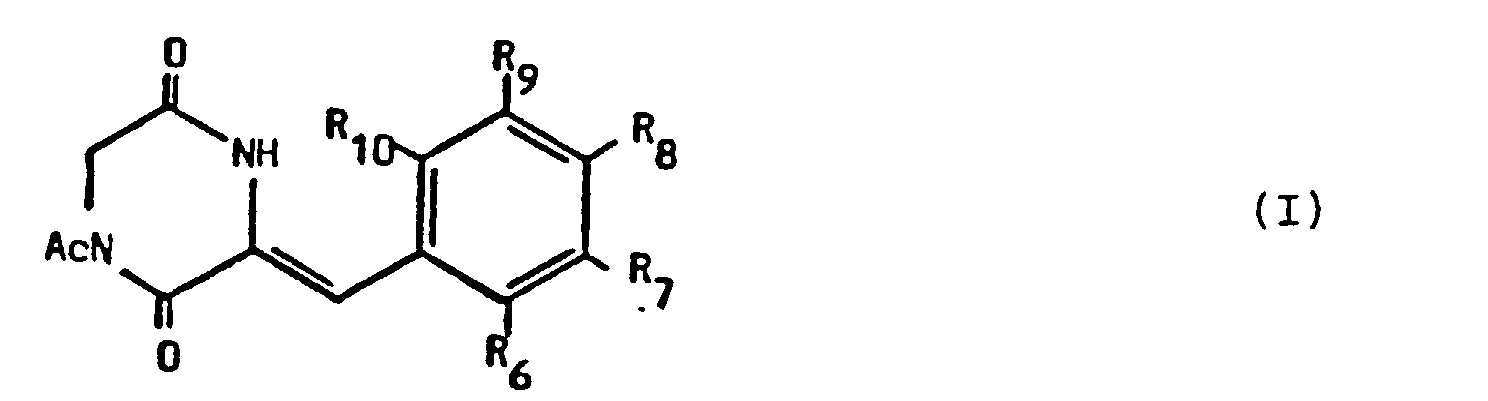 wherein R1 to R5 are as defined in claim 1 and are optionally protected, in the presence of a base in an organic solvent; or
 (b) condensing a compound of formula (I') :wherein R1 to R5 are as defined in claim 1 and are optionally protected with a compound of formula (III):
 wherein R6 to R10 are as defined in claim 1 and are optionally protected, in the presence of a base in an organic solvent; and
 (c) if required, removing optionally present protecting groups, and/or, if desired, converting one compound of formula A into another compound of formula A, and/or, if desired, converting a compound of formula A into a pharmaceutically acceptable salt or ester thereof, and/or, if desired, converting a salt or ester into a free compound, and/or, if desired, separating a mixture of isomers into the single isomers.
 - A compound for use as an inhibitor of plasminogen activator inhibitor, which compound is a diketopiperazine of formula (A):wherein each of R1 to R10, which may be the same or different, is independently selected from hydrogen, C1-C6 alkyl unsubstituted or substituted by one or more halogen atoms, C1-C6 alkoxy, C1-C6 alkylthio, halogen, hydroxy, nitro, optionally substituted phenyl, cyano, -CH2OH, -CH2COOH, -CO2R11, -NHCOR11, -NHSO2R13, -SO2R13, -CON(R11R12), -SOR13, -SO2N(R11R12), -N(R11R12), -O(CH2)nN(R11R12), -O(CH2)nCO2R11, -OCOR11, -CH2OCOR11, -CH2NHCOR11, -CH2NHCOOR13, -CH2SR11, -CH2SCOR11, -CH2S(O)mR13 wherein m is 1 or 2, -CH2NHCO(CH2)nCO2R11, -N(R11)COR12,-NHCOCF3, -NHCO(CH2)nCOR11, -NHCO(CH2)nOCOR11 and -NHCO(CH2)nOR11 wherein n is O or an integer of from 1 to 6, each of R11 and R12 is independently H or C1-C6 alkyl and R13 is C1-C6 alkyl; or any of R1 and R2, R2 and R3, R3 and R4 and R4 and R5, or R6 and R7, R7 and R8, R8 and R9 and R9 and R10, form together with the carbon atoms to which they are attached a benzene ring which is optionally substituted; or-a pharmaceutically acceptable salt or ester thereof; with the exception of compounds wherein:
 (i) each of rings a and b, which are the same, is unsubstituted or substituted exclusively by 2-chloro, 3-chloro, 4-methyl or 4-dimethylamino; and(ii) each of rings a and b, which are the same, is substituted exclusively by 2,5-dimethyl, 2,4,5-trimethoxy or 3,4,5-trimethoxy.
 - Use of a diketopiperazine of formula (A):wherein each of R1 to R10, which may be the same or different, is independently selected from hydrogen, C1-C6 alkyl unsubstituted or substituted by one or more halogen atoms, C1-C6 alkoxy, C1-C6 alkylthio, halogen, hydroxy, nitro, optionally substituted phenyl, cyano, -CH2OH, -CH2COOH, -CO2R11, -NHCOR11, -NHSO2R13, -SO2R13, -CON(R11R12), -SOR13,-SO2N(R11R12), -N(R11R12), -O(CH2)nN(R11R12), -O(CH2)nCO2R11,-COCR11, -CH2OCOR11, -CH2NHCOR11, -CH2NHCOOR13, -CH2SR11, -CH2SCOR11, -CH2S(O)mR13 wherein m is 1 or 2, -CH2NHCO(CH2)nCO2R11,-N(R11)COR12, -NHCOCF3, -NHCO(CH2)nCO2R11, -NHCO(CH2)nOCOR11 and -NHCO(CH2)nOR11 wherein n is O or an integer of from 1 to 6, each of R11 and R12 is independently H or C1-C6 alkyl and R13 is C1-C6 alkyl; or any of R1 and R2, R2 and R3, R3 and R4 and R4 and R5, or R6 and R7, R7 and R8, R8 and R9 and R9 and R10, form together with the carbon atoms to which they are attached a benzene ring which is optionally substituted; or a pharmaceutically acceptable salt or ester thereof; in the manufacture of a medicament for use as an inhibitor of plasminogen activator inhibitor.
Applications Claiming Priority (3)
| Application Number | Priority Date | Filing Date | Title |
|---|---|---|---|
| GB9217331 | 1992-08-14 | ||
| GB929217331A GB9217331D0 (en) | 1992-08-14 | 1992-08-14 | Pharmaceutical compounds |
| PCT/GB1993/001734 WO1994004512A1 (en) | 1992-08-14 | 1993-08-16 | Pharmaceutically active diketopiperazines |
Publications (2)
| Publication Number | Publication Date |
|---|---|
| EP0655060A1 EP0655060A1 (en) | 1995-05-31 |
| EP0655060B1 true EP0655060B1 (en) | 1998-01-14 |
Family
ID=10720385
Family Applications (2)
| Application Number | Title | Priority Date | Filing Date |
|---|---|---|---|
| EP93918032A Expired - Lifetime EP0655060B1 (en) | 1992-08-14 | 1993-08-16 | Pharmaceutically active diketopiperazines |
| EP93918033A Ceased EP0672036A1 (en) | 1992-08-14 | 1993-08-16 | Pharmaceutically active diketopiperazines |
Family Applications After (1)
| Application Number | Title | Priority Date | Filing Date |
|---|---|---|---|
| EP93918033A Ceased EP0672036A1 (en) | 1992-08-14 | 1993-08-16 | Pharmaceutically active diketopiperazines |
Country Status (24)
| Country | Link |
|---|---|
| US (1) | US5700804A (en) |
| EP (2) | EP0655060B1 (en) |
| JP (2) | JPH08504175A (en) |
| KR (2) | KR950702967A (en) |
| AT (1) | ATE162186T1 (en) |
| AU (2) | AU678172B2 (en) |
| BG (2) | BG99495A (en) |
| BR (2) | BR9306905A (en) |
| CA (2) | CA2141939A1 (en) |
| CZ (2) | CZ38195A3 (en) |
| DE (1) | DE69316370T2 (en) |
| DK (1) | DK0655060T3 (en) |
| ES (1) | ES2111169T3 (en) |
| FI (2) | FI950616L (en) |
| GB (2) | GB9217331D0 (en) |
| GR (1) | GR3026272T3 (en) |
| HU (2) | HUT71593A (en) |
| IL (2) | IL106695A0 (en) |
| PL (2) | PL307438A1 (en) |
| RU (2) | RU95108387A (en) |
| SK (2) | SK19595A3 (en) |
| TW (1) | TW334427B (en) |
| WO (2) | WO1994004512A1 (en) |
| ZA (2) | ZA935969B (en) |
Cited By (14)
| Publication number | Priority date | Publication date | Assignee | Title |
|---|---|---|---|---|
| WO2006105051A3 (en) * | 2005-03-29 | 2007-02-22 | Nereus Pharmaceuticals Inc | Synthesis of diketopiperazines |
| US7732403B2 (en) | 2003-05-15 | 2010-06-08 | Dmi Biosciences, Inc. | Treatment of T-cell mediated diseases |
| US7919497B2 (en) | 2002-08-02 | 2011-04-05 | Nereus Pharmaceuticals, Inc. | Analogs of dehydrophenylahistins and their therapeutic use |
| US7935704B2 (en) | 2003-08-01 | 2011-05-03 | Nereus Pharmaceuticals, Inc. | Dehydrophenylahistins and analogs thereof and the synthesis of dehydrophenylahistins and analogs thereof |
| US7956058B2 (en) | 2002-08-02 | 2011-06-07 | Nereus Pharmaceuticals, Inc. | Dehydrophenylahistins and analogs thereof and the synthesis of dehydrophenylahistins and analogs thereof |
| US8129527B2 (en) | 2006-11-03 | 2012-03-06 | Nereus Pharmacuticals, Inc. | Analogs of dehydrophenylahistins and their therapeutic use |
| US8217047B2 (en) | 2008-05-27 | 2012-07-10 | Dmi Acquisition Corp. | Therapeutic methods and compounds |
| US8268830B2 (en) | 2000-08-04 | 2012-09-18 | Dmi Biosciences, Inc. | Method of using diketopiperazines and composition containing them |
| US8507496B2 (en) | 2010-09-07 | 2013-08-13 | Dmi Acquisition Corp. | Treatment of diseases |
| US8980834B2 (en) | 2011-10-10 | 2015-03-17 | Ampio Pharmaceuticals, Inc. | Treatment of degenerative joint disease |
| US10076518B2 (en) | 2015-03-06 | 2018-09-18 | Beyondspring Pharmaceuticals, Inc. | Method of treating a brain tumor |
| US10155748B2 (en) | 2015-07-13 | 2018-12-18 | Beyondspring Pharmaceuticals, Inc. | Plinabulin compositions |
| US10238650B2 (en) | 2015-03-06 | 2019-03-26 | Beyondspring Pharmaceuticals, Inc. | Method of treating cancer associated with a RAS mutation |
| US11400086B2 (en) | 2017-02-01 | 2022-08-02 | Beyondspring Pharmaceuticals, Inc. | Method of reducing chemotherapy-induced neutropenia |
Families Citing this family (42)
| Publication number | Priority date | Publication date | Assignee | Title |
|---|---|---|---|---|
| GB9217331D0 (en) * | 1992-08-14 | 1992-09-30 | Xenova Ltd | Pharmaceutical compounds |
| DK85193D0 (en) | 1993-07-16 | 1993-07-16 | Cancerforskningsfondet Af 1989 | SUPPRESSION OF INHIBITORS |
| GB9402809D0 (en) * | 1994-02-14 | 1994-04-06 | Xenova Ltd | Pharmaceutical compounds |
| GB9402805D0 (en) * | 1994-02-14 | 1994-04-06 | Xenova Ltd | Pharmaceutical compounds |
| IL112627A0 (en) * | 1994-02-14 | 1995-05-26 | Xenova Ltd | Diketopiperazines, their preparation and pharmaceutical or veterinary compositions containing them |
| GB9402807D0 (en) * | 1994-02-14 | 1994-04-06 | Xenova Ltd | Pharmaceutical compounds |
| GB9410387D0 (en) * | 1994-05-24 | 1994-07-13 | Xenova Ltd | Pharmaceutical compounds |
| GB2310854B (en) * | 1994-12-23 | 1998-09-09 | Xenova Ltd | Piperazine-2,5-dione derivatives as modulators of multi-drug resistance |
| GB9426224D0 (en) * | 1994-12-23 | 1995-02-22 | Xenova Ltd | Pharmaceutical compounds |
| GB9426090D0 (en) * | 1994-12-23 | 1995-02-22 | Xenova Ltd | Pharmaceutical compounds |
| GB2311781B (en) * | 1994-12-23 | 1998-09-16 | Xenova Ltd | Piperazine 2,5 dione derivatives as modulators of multi-drug resistance |
| GB9426071D0 (en) * | 1994-12-23 | 1995-02-22 | Xenova Ltd | Pharmaceutical compounds |
| US5891877A (en) * | 1995-02-14 | 1999-04-06 | Xenova Limited | Pharmaceutical compounds |
| EP1242379A1 (en) * | 1999-12-03 | 2002-09-25 | Emory University | Curcumin analogues for treating cancer |
| JP5101781B2 (en) * | 2000-05-09 | 2012-12-19 | アンギオアールエックス コーポレイション | Piperazinedione compounds |
| US7288545B2 (en) | 2000-05-09 | 2007-10-30 | Angiorx Corporation | Piperazinedione compounds |
| DE60131177T2 (en) | 2000-09-06 | 2008-08-07 | AP Pharma, Inc., Redwood | DEVELOPABLE POLYACETAL POLYMERS |
| US6693099B2 (en) | 2000-10-17 | 2004-02-17 | The Procter & Gamble Company | Substituted piperazine compounds optionally containing a quinolyl moiety for treating multidrug resistance |
| US6376514B1 (en) | 2000-10-17 | 2002-04-23 | The Procter & Gamble Co. | Substituted six-membered heterocyclic compounds useful for treating multidrug resistance and compositions and methods thereof |
| WO2002062797A2 (en) * | 2000-12-29 | 2002-08-15 | Celltech R & D, Inc. | Pharmaceutical uses and synthesis of diketopiperazines |
| GB2372740A (en) * | 2001-01-17 | 2002-09-04 | Xenova Ltd | Diketopiperazines |
| EP1572078A4 (en) * | 2002-03-08 | 2006-08-09 | Univ Emory | NEW CONSTRUCTS OF VIIa FACTORS OF CURCUMINOIDS AS SUPPRESSORS OF TUMOR GROWTH AND ANGIOGENESIS |
| DE10238144A1 (en) * | 2002-08-15 | 2004-02-26 | Basf Ag | Use of aryl-substituted 3,6-dialkylidene-2,5-piperazinedione derivatives as photostable UV filters in cosmetic or pharmaceutical compositions for protecting human skin or hair against solar radiation |
| ATE520981T1 (en) | 2002-10-02 | 2011-09-15 | Dmi Biosciences Inc | DIAGNOSIS AND MONITORING OF DISEASES |
| GB0314738D0 (en) | 2003-06-24 | 2003-07-30 | Glaxo Group Ltd | Novel compounds |
| WO2007098504A1 (en) * | 2006-02-24 | 2007-08-30 | Emory University | Prodrugs of curcumin analogs |
| JP6018586B2 (en) * | 2011-02-10 | 2016-11-02 | マンカインド・コーポレイシヨン | Formation of N-protected bis-3,6- (4-aminoalkyl) -2,5, diketopiperazine |
| EA027343B1 (en) | 2011-10-10 | 2017-07-31 | Ампио Фармасьютикалз, Инк. | Implantable medical devices with increased immune tolerance, and methods for making and implanting |
| CA2846394A1 (en) | 2011-10-28 | 2013-05-02 | Ampio Pharmaceuticals, Inc. | Treatment of rhinitis |
| BR112015020469A2 (en) | 2013-03-15 | 2020-01-28 | Ampio Pharmaceuticals Inc | USES OF DA-DKP, COMPOSITION AND METHOD FOR THE SUPPLY OF STEM CELLS TO UMINDIVIDUAL |
| CN103396372B (en) * | 2013-08-09 | 2015-05-20 | 中国科学院南海海洋研究所 | 2,5-diketopiperazine derivative, as well as preparation method and application thereof in preparing control agent for resisting marine fouling organisms |
| CN105272968B (en) * | 2014-06-10 | 2018-03-13 | 首都医科大学 | The diketone of (3S, 6R) 3,6 disubstituted piperazine 2,5, it is prepared and application |
| AU2015305611B2 (en) | 2014-08-18 | 2020-04-23 | Ampio Pharmaceuticals, Inc. | Treatment of joint conditions |
| CN104610170B (en) * | 2015-01-14 | 2017-02-01 | 中国科学院南海海洋研究所 | 2, 5-diketopiperazine derivative as well as preparation method and application thereof |
| US11389512B2 (en) | 2015-06-22 | 2022-07-19 | Ampio Pharmaceuticals, Inc. | Use of low molecular weight fractions of human serum albumin in treating diseases |
| JP2019511565A (en) | 2016-02-08 | 2019-04-25 | ビヨンドスプリング ファーマシューティカルズ,インコーポレイテッド | Composition comprising tucarezole or an analogue thereof |
| AU2017278245B2 (en) | 2016-06-06 | 2022-09-15 | Beyondspring Pharmaceuticals, Inc. | Composition and method for reducing neutropenia |
| EP3565812B1 (en) | 2017-01-06 | 2023-12-27 | Beyondspring Pharmaceuticals, Inc. | Tubulin binding compounds and therapeutic use thereof |
| CN110054619A (en) * | 2018-01-18 | 2019-07-26 | 西北农林科技大学 | Novel diketopiperazine histone deacetylases inhibitor |
| EP3743074A4 (en) | 2018-01-24 | 2021-12-15 | Beyondspring Pharmaceuticals Inc. | COMPOSITION AND METHOD OF REDUCING THROMBOCYTOPENIA VIA PLINABULIN ADMINISTRATION |
| WO2021195265A1 (en) | 2020-03-24 | 2021-09-30 | Ampio Pharmaceuticals, Inc. | Methods for treating diseases associated with respiratory viruses |
| WO2022216908A1 (en) | 2021-04-09 | 2022-10-13 | Beyondspring Pharmaceuticals, Inc. | Therapeutic compositions and methods for treating tumors |
Family Cites Families (4)
| Publication number | Priority date | Publication date | Assignee | Title |
|---|---|---|---|---|
| DE621862C (en) * | 1932-07-01 | 1935-11-14 | Guenther Schiemann Dr | Process for the preparation of condensation products of nucleus fluorinated aryl aldehydes |
| BE584914A (en) * | 1958-11-24 | |||
| JPS5747357A (en) * | 1980-09-04 | 1982-03-18 | Ricoh Co Ltd | Novel disazo compound and its preparation |
| GB9217331D0 (en) * | 1992-08-14 | 1992-09-30 | Xenova Ltd | Pharmaceutical compounds |
-
1992
- 1992-08-14 GB GB929217331A patent/GB9217331D0/en active Pending
-
1993
- 1993-08-15 IL IL106695A patent/IL106695A0/en unknown
- 1993-08-15 IL IL106696A patent/IL106696A0/en unknown
- 1993-08-16 CZ CZ95381A patent/CZ38195A3/en unknown
- 1993-08-16 ZA ZA935969A patent/ZA935969B/en unknown
- 1993-08-16 EP EP93918032A patent/EP0655060B1/en not_active Expired - Lifetime
- 1993-08-16 CZ CZ95383A patent/CZ38395A3/en unknown
- 1993-08-16 DE DE69316370T patent/DE69316370T2/en not_active Expired - Fee Related
- 1993-08-16 HU HU9500437A patent/HUT71593A/en unknown
- 1993-08-16 RU RU95108387/04A patent/RU95108387A/en unknown
- 1993-08-16 BR BR9306905A patent/BR9306905A/en not_active Application Discontinuation
- 1993-08-16 FI FI950616A patent/FI950616L/en not_active Application Discontinuation
- 1993-08-16 ES ES93918032T patent/ES2111169T3/en not_active Expired - Lifetime
- 1993-08-16 US US08/381,932 patent/US5700804A/en not_active Expired - Fee Related
- 1993-08-16 KR KR1019950700555A patent/KR950702967A/en not_active Withdrawn
- 1993-08-16 PL PL93307438A patent/PL307438A1/en unknown
- 1993-08-16 EP EP93918033A patent/EP0672036A1/en not_active Ceased
- 1993-08-16 WO PCT/GB1993/001734 patent/WO1994004512A1/en not_active Ceased
- 1993-08-16 PL PL93307437A patent/PL307437A1/en unknown
- 1993-08-16 SK SK195-95A patent/SK19595A3/en unknown
- 1993-08-16 HU HU9500436A patent/HUT71592A/en unknown
- 1993-08-16 JP JP6506028A patent/JPH08504175A/en active Pending
- 1993-08-16 ZA ZA935968A patent/ZA935968B/en unknown
- 1993-08-16 KR KR1019950700556A patent/KR950702968A/en not_active Withdrawn
- 1993-08-16 CA CA002141939A patent/CA2141939A1/en not_active Abandoned
- 1993-08-16 GB GB9502859A patent/GB2284420B/en not_active Expired - Fee Related
- 1993-08-16 AT AT93918032T patent/ATE162186T1/en active
- 1993-08-16 AU AU47265/93A patent/AU678172B2/en not_active Ceased
- 1993-08-16 DK DK93918032.9T patent/DK0655060T3/en active
- 1993-08-16 RU RU95108759/04A patent/RU95108759A/en unknown
- 1993-08-16 CA CA002141938A patent/CA2141938A1/en not_active Abandoned
- 1993-08-16 JP JP6506029A patent/JPH08504176A/en active Pending
- 1993-08-16 AU AU47264/93A patent/AU693420B2/en not_active Ceased
- 1993-08-16 WO PCT/GB1993/001735 patent/WO1994004513A1/en not_active Ceased
- 1993-08-16 BR BR9306904A patent/BR9306904A/en not_active Application Discontinuation
- 1993-08-16 SK SK194-95A patent/SK19495A3/en unknown
- 1993-10-29 TW TW082109040A patent/TW334427B/en active
-
1995
- 1995-02-13 FI FI950617A patent/FI950617A7/en not_active Application Discontinuation
- 1995-03-13 BG BG99495A patent/BG99495A/en unknown
- 1995-03-13 BG BG99496A patent/BG99496A/en unknown
-
1998
- 1998-03-03 GR GR980400450T patent/GR3026272T3/en unknown
Cited By (35)
| Publication number | Priority date | Publication date | Assignee | Title |
|---|---|---|---|---|
| US8268830B2 (en) | 2000-08-04 | 2012-09-18 | Dmi Biosciences, Inc. | Method of using diketopiperazines and composition containing them |
| US8916568B2 (en) | 2000-08-04 | 2014-12-23 | Ampio Pharmaceuticals, Inc. | Method of using diketopiperazines and composition containing them |
| US8841307B2 (en) | 2000-08-04 | 2014-09-23 | Ampio Pharmaceuticals, Inc. | Method of using diketopiperazines and composition containing them |
| US9561226B2 (en) | 2000-08-04 | 2017-02-07 | Ampio Pharmaceuticals, Inc. | Method of using diketopiperazines and composition containing them |
| US8455517B2 (en) | 2000-08-04 | 2013-06-04 | Dmi Acquisition Corp. | Method of using diketopiperazines and composition containing them |
| US8440696B2 (en) | 2000-08-04 | 2013-05-14 | Dmi Acquisition Corp. | Method of using diketopiperazines and composition containing them |
| US7956058B2 (en) | 2002-08-02 | 2011-06-07 | Nereus Pharmaceuticals, Inc. | Dehydrophenylahistins and analogs thereof and the synthesis of dehydrophenylahistins and analogs thereof |
| US8618292B2 (en) | 2002-08-02 | 2013-12-31 | Beyondspring Pharmaceuticals, Inc. | Analogs of dehydrophenylahistins and their therapeutic use |
| US8247552B2 (en) | 2002-08-02 | 2012-08-21 | Nereus Pharmaceuticals, Inc. | Analogs of dehydrophenylahistins and their therapeutic use |
| US7919497B2 (en) | 2002-08-02 | 2011-04-05 | Nereus Pharmaceuticals, Inc. | Analogs of dehydrophenylahistins and their therapeutic use |
| US7732403B2 (en) | 2003-05-15 | 2010-06-08 | Dmi Biosciences, Inc. | Treatment of T-cell mediated diseases |
| US8969308B2 (en) | 2003-05-15 | 2015-03-03 | Ampio Pharmaceuticals, Inc. | Treatment of T-cell mediated diseases |
| US8324167B2 (en) | 2003-05-15 | 2012-12-04 | Dmi Biosciences, Inc. | Treatment of T-cell mediated diseases |
| US8962568B2 (en) | 2003-05-15 | 2015-02-24 | Ampio Pharmaceuticals, Inc. | Treatment of T-cell mediated diseases |
| US8183209B2 (en) | 2003-05-15 | 2012-05-22 | Dmi Biosciences, Inc. | Treatment of T-cell mediated diseases |
| US8513196B2 (en) | 2003-05-15 | 2013-08-20 | Dmi Acquisition Corp. | Treatment of T-cell mediated diseases |
| US8551953B2 (en) | 2003-05-15 | 2013-10-08 | Dmi Acquisition Corp. | Treatment of T-cell mediated diseases |
| US7935704B2 (en) | 2003-08-01 | 2011-05-03 | Nereus Pharmaceuticals, Inc. | Dehydrophenylahistins and analogs thereof and the synthesis of dehydrophenylahistins and analogs thereof |
| US7732605B2 (en) | 2005-03-29 | 2010-06-08 | Nereus Pharmaceuticals, Inc. | Synthesis of diketopiperazines |
| WO2006105051A3 (en) * | 2005-03-29 | 2007-02-22 | Nereus Pharmaceuticals Inc | Synthesis of diketopiperazines |
| US8129527B2 (en) | 2006-11-03 | 2012-03-06 | Nereus Pharmacuticals, Inc. | Analogs of dehydrophenylahistins and their therapeutic use |
| US8217047B2 (en) | 2008-05-27 | 2012-07-10 | Dmi Acquisition Corp. | Therapeutic methods and compounds |
| US8871772B2 (en) | 2008-05-27 | 2014-10-28 | Ampio Pharmaceuticals, Inc. | Therapeutic methods and compounds |
| US9522893B2 (en) | 2008-05-27 | 2016-12-20 | Ampio Pharmaceuticals, Inc. | Therapeutic methods and compounds |
| US9034878B2 (en) | 2010-09-07 | 2015-05-19 | Ampio Pharmaceuticals, Inc. | Treatment of diseases |
| US8507496B2 (en) | 2010-09-07 | 2013-08-13 | Dmi Acquisition Corp. | Treatment of diseases |
| US8980834B2 (en) | 2011-10-10 | 2015-03-17 | Ampio Pharmaceuticals, Inc. | Treatment of degenerative joint disease |
| US9060968B2 (en) | 2011-10-10 | 2015-06-23 | Ampio Pharmaceuticals, Inc. | Treatment of degenerative joint disease |
| US10076518B2 (en) | 2015-03-06 | 2018-09-18 | Beyondspring Pharmaceuticals, Inc. | Method of treating a brain tumor |
| US10238650B2 (en) | 2015-03-06 | 2019-03-26 | Beyondspring Pharmaceuticals, Inc. | Method of treating cancer associated with a RAS mutation |
| US10357491B2 (en) | 2015-03-06 | 2019-07-23 | Beyondspring Pharmaceuticals, Inc. | Method of treating a brain tumor |
| US10668063B2 (en) | 2015-03-06 | 2020-06-02 | Beyondspring Pharmaceuticals, Inc. | Method of treating cancer associated with a RAS mutation |
| US10155748B2 (en) | 2015-07-13 | 2018-12-18 | Beyondspring Pharmaceuticals, Inc. | Plinabulin compositions |
| US10550104B2 (en) | 2015-07-13 | 2020-02-04 | Beyondspring Pharmaceuticals, Inc. | Plinabulin compositions |
| US11400086B2 (en) | 2017-02-01 | 2022-08-02 | Beyondspring Pharmaceuticals, Inc. | Method of reducing chemotherapy-induced neutropenia |
Also Published As
Similar Documents
| Publication | Publication Date | Title |
|---|---|---|
| US5700804A (en) | Pharmaceutical compounds | |
| US5902812A (en) | Pharmaceutical piperazine compounds | |
| US5891877A (en) | Pharmaceutical compounds | |
| AU693159B2 (en) | Pharmaceutical piperazine compounds | |
| US5852018A (en) | Pharmaceutical piperazine compounds | |
| US5750530A (en) | Pharmaceutical diketopiperazine compounds | |
| CA2493660A1 (en) | Process for preparing quinolin antibiotic intermediates | |
| EP1332131A2 (en) | Acid derivatives useful as serine protease inhibitors | |
| CN1316419A (en) | Arenesulfonyl amino-iso hydroximic acid derivative | |
| CN100379722C (en) | new compound | |
| JPH10511384A (en) | Piperazine 2,5-dione derivatives as modulators of multidrug resistance | |
| JPH06509076A (en) | 2-[3-(4-amidino-phenyl)]-propionic acid derivatives, their preparation and use | |
| GB2372740A (en) | Diketopiperazines | |
| JPH08502752A (en) | Novel substituted azetidinones as anti-inflammatory and anti-modifying agents | |
| CN101421242B (en) | Dicarboxamide derivatives | |
| WO1996020179A1 (en) | Piperazine-2,5-dione derivatives as modulators of multi-drug resistance | |
| ZA200100238B (en) | Bispiperidines as antithrombotic agents. | |
| CN114409603A (en) | Pyrimidone thioether compound and application thereof |
Legal Events
| Date | Code | Title | Description |
|---|---|---|---|
| PUAI | Public reference made under article 153(3) epc to a published international application that has entered the european phase |
Free format text: ORIGINAL CODE: 0009012 |
|
| 17P | Request for examination filed |
Effective date: 19950222 |
|
| AK | Designated contracting states |
Kind code of ref document: A1 Designated state(s): AT BE CH DE DK ES FR GB GR IE IT LI LU MC NL PT SE |
|
| 17Q | First examination report despatched |
Effective date: 19951018 |
|
| GRAG | Despatch of communication of intention to grant |
Free format text: ORIGINAL CODE: EPIDOS AGRA |
|
| GRAH | Despatch of communication of intention to grant a patent |
Free format text: ORIGINAL CODE: EPIDOS IGRA |
|
| GRAH | Despatch of communication of intention to grant a patent |
Free format text: ORIGINAL CODE: EPIDOS IGRA |
|
| GRAH | Despatch of communication of intention to grant a patent |
Free format text: ORIGINAL CODE: EPIDOS IGRA |
|
| GRAA | (expected) grant |
Free format text: ORIGINAL CODE: 0009210 |
|
| AK | Designated contracting states |
Kind code of ref document: B1 Designated state(s): AT BE CH DE DK ES FR GB GR IE IT LI LU MC NL PT SE |
|
| REF | Corresponds to: |
Ref document number: 162186 Country of ref document: AT Date of ref document: 19980115 Kind code of ref document: T |
|
| REG | Reference to a national code |
Ref country code: CH Ref legal event code: NV Representative=s name: PATENTANWAELTE SCHAAD, BALASS, MENZL & PARTNER AG Ref country code: CH Ref legal event code: EP |
|
| ITF | It: translation for a ep patent filed | ||
| REG | Reference to a national code |
Ref country code: DK Ref legal event code: T3 |
|
| REF | Corresponds to: |
Ref document number: 69316370 Country of ref document: DE Date of ref document: 19980219 |
|
| ET | Fr: translation filed | ||
| REG | Reference to a national code |
Ref country code: ES Ref legal event code: FG2A Ref document number: 2111169 Country of ref document: ES Kind code of ref document: T3 |
|
| REG | Reference to a national code |
Ref country code: IE Ref legal event code: FG4D Free format text: 78370 |
|
| REG | Reference to a national code |
Ref country code: PT Ref legal event code: SC4A Free format text: AVAILABILITY OF NATIONAL TRANSLATION Effective date: 19980320 |
|
| PGFP | Annual fee paid to national office [announced via postgrant information from national office to epo] |
Ref country code: SE Payment date: 19980806 Year of fee payment: 6 |
|
| PGFP | Annual fee paid to national office [announced via postgrant information from national office to epo] |
Ref country code: DK Payment date: 19980813 Year of fee payment: 6 Ref country code: AT Payment date: 19980813 Year of fee payment: 6 |
|
| PGFP | Annual fee paid to national office [announced via postgrant information from national office to epo] |
Ref country code: ES Payment date: 19980814 Year of fee payment: 6 Ref country code: PT Payment date: 19980814 Year of fee payment: 6 Ref country code: FR Payment date: 19980814 Year of fee payment: 6 |
|
| PG25 | Lapsed in a contracting state [announced via postgrant information from national office to epo] |
Ref country code: GB Free format text: LAPSE BECAUSE OF NON-PAYMENT OF DUE FEES Effective date: 19980816 |
|
| PGFP | Annual fee paid to national office [announced via postgrant information from national office to epo] |
Ref country code: LU Payment date: 19980819 Year of fee payment: 6 |
|
| PGFP | Annual fee paid to national office [announced via postgrant information from national office to epo] |
Ref country code: IE Payment date: 19980820 Year of fee payment: 6 |
|
| PGFP | Annual fee paid to national office [announced via postgrant information from national office to epo] |
Ref country code: DE Payment date: 19980821 Year of fee payment: 6 |
|
| PGFP | Annual fee paid to national office [announced via postgrant information from national office to epo] |
Ref country code: MC Payment date: 19980824 Year of fee payment: 6 Ref country code: CH Payment date: 19980824 Year of fee payment: 6 |
|
| PGFP | Annual fee paid to national office [announced via postgrant information from national office to epo] |
Ref country code: NL Payment date: 19980827 Year of fee payment: 6 |
|
| PGFP | Annual fee paid to national office [announced via postgrant information from national office to epo] |
Ref country code: GR Payment date: 19980831 Year of fee payment: 6 |
|
| PGFP | Annual fee paid to national office [announced via postgrant information from national office to epo] |
Ref country code: BE Payment date: 19981016 Year of fee payment: 6 |
|
| PLBE | No opposition filed within time limit |
Free format text: ORIGINAL CODE: 0009261 |
|
| STAA | Information on the status of an ep patent application or granted ep patent |
Free format text: STATUS: NO OPPOSITION FILED WITHIN TIME LIMIT |
|
| 26N | No opposition filed | ||
| GBPC | Gb: european patent ceased through non-payment of renewal fee |
Effective date: 19980816 |
|
| PG25 | Lapsed in a contracting state [announced via postgrant information from national office to epo] |
Ref country code: LU Free format text: LAPSE BECAUSE OF NON-PAYMENT OF DUE FEES Effective date: 19990816 Ref country code: IE Free format text: LAPSE BECAUSE OF NON-PAYMENT OF DUE FEES Effective date: 19990816 Ref country code: AT Free format text: LAPSE BECAUSE OF NON-PAYMENT OF DUE FEES Effective date: 19990816 |
|
| PG25 | Lapsed in a contracting state [announced via postgrant information from national office to epo] |
Ref country code: ES Free format text: LAPSE BECAUSE OF NON-PAYMENT OF DUE FEES Effective date: 19990817 |
|
| PG25 | Lapsed in a contracting state [announced via postgrant information from national office to epo] |
Ref country code: SE Free format text: THE PATENT HAS BEEN ANNULLED BY A DECISION OF A NATIONAL AUTHORITY Effective date: 19990830 |
|
| PG25 | Lapsed in a contracting state [announced via postgrant information from national office to epo] |
Ref country code: LI Free format text: LAPSE BECAUSE OF NON-PAYMENT OF DUE FEES Effective date: 19990831 Ref country code: GR Free format text: LAPSE BECAUSE OF NON-PAYMENT OF DUE FEES Effective date: 19990831 Ref country code: DK Free format text: LAPSE BECAUSE OF NON-PAYMENT OF DUE FEES Effective date: 19990831 Ref country code: CH Free format text: LAPSE BECAUSE OF NON-PAYMENT OF DUE FEES Effective date: 19990831 Ref country code: BE Free format text: LAPSE BECAUSE OF NON-PAYMENT OF DUE FEES Effective date: 19990831 |
|
| BERE | Be: lapsed |
Owner name: XENOVA LTD Effective date: 19990831 |
|
| PG25 | Lapsed in a contracting state [announced via postgrant information from national office to epo] |
Ref country code: PT Free format text: LAPSE BECAUSE OF NON-PAYMENT OF DUE FEES Effective date: 20000229 Ref country code: MC Free format text: LAPSE BECAUSE OF NON-PAYMENT OF DUE FEES Effective date: 20000229 |
|
| PG25 | Lapsed in a contracting state [announced via postgrant information from national office to epo] |
Ref country code: NL Free format text: LAPSE BECAUSE OF NON-PAYMENT OF DUE FEES Effective date: 20000301 |
|
| REG | Reference to a national code |
Ref country code: CH Ref legal event code: PL |
|
| PG25 | Lapsed in a contracting state [announced via postgrant information from national office to epo] |
Ref country code: FR Free format text: LAPSE BECAUSE OF NON-PAYMENT OF DUE FEES Effective date: 20000428 |
|
| REG | Reference to a national code |
Ref country code: DK Ref legal event code: EBP |
|
| EUG | Se: european patent has lapsed |
Ref document number: 93918032.9 |
|
| NLV4 | Nl: lapsed or anulled due to non-payment of the annual fee |
Effective date: 20000301 |
|
| PG25 | Lapsed in a contracting state [announced via postgrant information from national office to epo] |
Ref country code: DE Free format text: LAPSE BECAUSE OF NON-PAYMENT OF DUE FEES Effective date: 20000601 |
|
| REG | Reference to a national code |
Ref country code: PT Ref legal event code: MM4A Free format text: LAPSE DUE TO NON-PAYMENT OF FEES Effective date: 20000229 |
|
| REG | Reference to a national code |
Ref country code: FR Ref legal event code: ST |
|
| REG | Reference to a national code |
Ref country code: IE Ref legal event code: MM4A |
|
| REG | Reference to a national code |
Ref country code: ES Ref legal event code: FD2A Effective date: 20000911 |
|
| PG25 | Lapsed in a contracting state [announced via postgrant information from national office to epo] |
Ref country code: IT Free format text: LAPSE BECAUSE OF NON-PAYMENT OF DUE FEES;WARNING: LAPSES OF ITALIAN PATENTS WITH EFFECTIVE DATE BEFORE 2007 MAY HAVE OCCURRED AT ANY TIME BEFORE 2007. THE CORRECT EFFECTIVE DATE MAY BE DIFFERENT FROM THE ONE RECORDED. Effective date: 20050816 |