EP0653058B1 - Electrochemical metal analysis - Google Patents
Electrochemical metal analysis Download PDFInfo
- Publication number
- EP0653058B1 EP0653058B1 EP94917072A EP94917072A EP0653058B1 EP 0653058 B1 EP0653058 B1 EP 0653058B1 EP 94917072 A EP94917072 A EP 94917072A EP 94917072 A EP94917072 A EP 94917072A EP 0653058 B1 EP0653058 B1 EP 0653058B1
- Authority
- EP
- European Patent Office
- Prior art keywords
- electrode
- layer
- mercury
- salt
- denaturant
- Prior art date
- Legal status (The legal status is an assumption and is not a legal conclusion. Google has not performed a legal analysis and makes no representation as to the accuracy of the status listed.)
- Expired - Lifetime
Links
- 238000004458 analytical method Methods 0.000 title claims abstract description 30
- 229910052751 metal Inorganic materials 0.000 title claims description 20
- 239000002184 metal Substances 0.000 title claims description 20
- QSHDDOUJBYECFT-UHFFFAOYSA-N mercury Chemical compound [Hg] QSHDDOUJBYECFT-UHFFFAOYSA-N 0.000 claims abstract description 24
- 229910052753 mercury Inorganic materials 0.000 claims abstract description 21
- 150000003839 salts Chemical class 0.000 claims abstract description 16
- 239000004354 Hydroxyethyl cellulose Substances 0.000 claims abstract description 11
- 229920000663 Hydroxyethyl cellulose Polymers 0.000 claims abstract description 11
- 235000019447 hydroxyethyl cellulose Nutrition 0.000 claims abstract description 11
- 229940100892 mercury compound Drugs 0.000 claims abstract description 7
- 150000002731 mercury compounds Chemical class 0.000 claims abstract description 7
- 150000001875 compounds Chemical class 0.000 claims abstract description 4
- 229940008718 metallic mercury Drugs 0.000 claims abstract description 3
- 239000010410 layer Substances 0.000 claims description 54
- 239000003398 denaturant Substances 0.000 claims description 21
- 239000000463 material Substances 0.000 claims description 18
- 238000000034 method Methods 0.000 claims description 13
- OKTJSMMVPCPJKN-UHFFFAOYSA-N Carbon Chemical compound [C] OKTJSMMVPCPJKN-UHFFFAOYSA-N 0.000 claims description 10
- 229910052799 carbon Inorganic materials 0.000 claims description 10
- 239000012491 analyte Substances 0.000 claims description 7
- 239000013047 polymeric layer Substances 0.000 claims description 7
- 239000011236 particulate material Substances 0.000 claims description 6
- 229920000570 polyether Polymers 0.000 claims description 5
- GWEVSGVZZGPLCZ-UHFFFAOYSA-N Titan oxide Chemical compound O=[Ti]=O GWEVSGVZZGPLCZ-UHFFFAOYSA-N 0.000 claims description 4
- 239000002253 acid Substances 0.000 claims description 4
- 238000000840 electrochemical analysis Methods 0.000 claims description 4
- 239000007787 solid Substances 0.000 claims description 4
- 239000004094 surface-active agent Substances 0.000 claims description 3
- 239000001856 Ethyl cellulose Substances 0.000 claims description 2
- ZZSNKZQZMQGXPY-UHFFFAOYSA-N Ethyl cellulose Chemical compound CCOCC1OC(OC)C(OCC)C(OCC)C1OC1C(O)C(O)C(OC)C(CO)O1 ZZSNKZQZMQGXPY-UHFFFAOYSA-N 0.000 claims description 2
- 239000000020 Nitrocellulose Substances 0.000 claims description 2
- 239000004372 Polyvinyl alcohol Substances 0.000 claims description 2
- FJWGYAHXMCUOOM-QHOUIDNNSA-N [(2s,3r,4s,5r,6r)-2-[(2r,3r,4s,5r,6s)-4,5-dinitrooxy-2-(nitrooxymethyl)-6-[(2r,3r,4s,5r,6s)-4,5,6-trinitrooxy-2-(nitrooxymethyl)oxan-3-yl]oxyoxan-3-yl]oxy-3,5-dinitrooxy-6-(nitrooxymethyl)oxan-4-yl] nitrate Chemical compound O([C@@H]1O[C@@H]([C@H]([C@H](O[N+]([O-])=O)[C@H]1O[N+]([O-])=O)O[C@H]1[C@@H]([C@@H](O[N+]([O-])=O)[C@H](O[N+]([O-])=O)[C@@H](CO[N+]([O-])=O)O1)O[N+]([O-])=O)CO[N+](=O)[O-])[C@@H]1[C@@H](CO[N+]([O-])=O)O[C@@H](O[N+]([O-])=O)[C@H](O[N+]([O-])=O)[C@H]1O[N+]([O-])=O FJWGYAHXMCUOOM-QHOUIDNNSA-N 0.000 claims description 2
- 125000003118 aryl group Chemical group 0.000 claims description 2
- 229920002301 cellulose acetate Polymers 0.000 claims description 2
- 229920001249 ethyl cellulose Polymers 0.000 claims description 2
- 235000019325 ethyl cellulose Nutrition 0.000 claims description 2
- 229910000286 fullers earth Inorganic materials 0.000 claims description 2
- 239000004816 latex Substances 0.000 claims description 2
- 229920000126 latex Polymers 0.000 claims description 2
- 229920001220 nitrocellulos Polymers 0.000 claims description 2
- 229920000515 polycarbonate Polymers 0.000 claims description 2
- 239000004417 polycarbonate Substances 0.000 claims description 2
- 229920002635 polyurethane Polymers 0.000 claims description 2
- 239000004814 polyurethane Substances 0.000 claims description 2
- 239000011118 polyvinyl acetate Substances 0.000 claims description 2
- 229920002689 polyvinyl acetate Polymers 0.000 claims description 2
- 229920002451 polyvinyl alcohol Polymers 0.000 claims description 2
- 239000004800 polyvinyl chloride Substances 0.000 claims description 2
- 229920000915 polyvinyl chloride Polymers 0.000 claims description 2
- 229920000036 polyvinylpyrrolidone Polymers 0.000 claims description 2
- 239000001267 polyvinylpyrrolidone Substances 0.000 claims description 2
- 235000013855 polyvinylpyrrolidone Nutrition 0.000 claims description 2
- 230000009467 reduction Effects 0.000 claims description 2
- 239000000454 talc Substances 0.000 claims description 2
- 229910052623 talc Inorganic materials 0.000 claims description 2
- 239000004408 titanium dioxide Substances 0.000 claims description 2
- TWNQGVIAIRXVLR-UHFFFAOYSA-N oxo(oxoalumanyloxy)alumane Chemical compound O=[Al]O[Al]=O TWNQGVIAIRXVLR-UHFFFAOYSA-N 0.000 claims 1
- 239000002245 particle Substances 0.000 claims 1
- 229920000642 polymer Polymers 0.000 abstract description 18
- 229910001385 heavy metal Inorganic materials 0.000 abstract description 2
- 239000000523 sample Substances 0.000 description 27
- 238000012360 testing method Methods 0.000 description 18
- 150000002739 metals Chemical class 0.000 description 12
- RYGMFSIKBFXOCR-UHFFFAOYSA-N Copper Chemical compound [Cu] RYGMFSIKBFXOCR-UHFFFAOYSA-N 0.000 description 11
- 238000003556 assay Methods 0.000 description 11
- 229910052802 copper Inorganic materials 0.000 description 11
- 239000010949 copper Substances 0.000 description 11
- 239000008280 blood Substances 0.000 description 10
- 210000004369 blood Anatomy 0.000 description 10
- WCUXLLCKKVVCTQ-UHFFFAOYSA-M Potassium chloride Chemical compound [Cl-].[K+] WCUXLLCKKVVCTQ-UHFFFAOYSA-M 0.000 description 8
- 229910021607 Silver chloride Inorganic materials 0.000 description 8
- QTBSBXVTEAMEQO-UHFFFAOYSA-N acetic acid Substances CC(O)=O QTBSBXVTEAMEQO-UHFFFAOYSA-N 0.000 description 8
- 150000002730 mercury Chemical class 0.000 description 8
- 239000003973 paint Substances 0.000 description 8
- 229910052709 silver Inorganic materials 0.000 description 8
- 239000004332 silver Substances 0.000 description 8
- HKZLPVFGJNLROG-UHFFFAOYSA-M silver monochloride Chemical compound [Cl-].[Ag+] HKZLPVFGJNLROG-UHFFFAOYSA-M 0.000 description 8
- XLYOFNOQVPJJNP-UHFFFAOYSA-N water Substances O XLYOFNOQVPJJNP-UHFFFAOYSA-N 0.000 description 7
- 229910052793 cadmium Inorganic materials 0.000 description 6
- BDOSMKKIYDKNTQ-UHFFFAOYSA-N cadmium atom Chemical compound [Cd] BDOSMKKIYDKNTQ-UHFFFAOYSA-N 0.000 description 6
- 238000011088 calibration curve Methods 0.000 description 6
- 239000000428 dust Substances 0.000 description 6
- 238000007639 printing Methods 0.000 description 6
- 239000003651 drinking water Substances 0.000 description 5
- 235000020188 drinking water Nutrition 0.000 description 5
- 230000008569 process Effects 0.000 description 5
- 239000003795 chemical substances by application Substances 0.000 description 4
- 238000002848 electrochemical method Methods 0.000 description 4
- 229920003023 plastic Polymers 0.000 description 4
- 239000004033 plastic Substances 0.000 description 4
- 239000001103 potassium chloride Substances 0.000 description 4
- 235000011164 potassium chloride Nutrition 0.000 description 4
- 239000000243 solution Substances 0.000 description 4
- PNEYBMLMFCGWSK-UHFFFAOYSA-N Alumina Chemical compound [O-2].[O-2].[O-2].[Al+3].[Al+3] PNEYBMLMFCGWSK-UHFFFAOYSA-N 0.000 description 3
- 238000001479 atomic absorption spectroscopy Methods 0.000 description 3
- 230000008901 benefit Effects 0.000 description 3
- 239000012472 biological sample Substances 0.000 description 3
- 229920002678 cellulose Polymers 0.000 description 3
- 235000010980 cellulose Nutrition 0.000 description 3
- 230000003196 chaotropic effect Effects 0.000 description 3
- 239000003153 chemical reaction reagent Substances 0.000 description 3
- 230000003750 conditioning effect Effects 0.000 description 3
- 230000008021 deposition Effects 0.000 description 3
- 230000001627 detrimental effect Effects 0.000 description 3
- 238000009792 diffusion process Methods 0.000 description 3
- 230000003993 interaction Effects 0.000 description 3
- 238000005259 measurement Methods 0.000 description 3
- 230000004044 response Effects 0.000 description 3
- 229910000497 Amalgam Inorganic materials 0.000 description 2
- LZZYPRNAOMGNLH-UHFFFAOYSA-M Cetrimonium bromide Chemical compound [Br-].CCCCCCCCCCCCCCCC[N+](C)(C)C LZZYPRNAOMGNLH-UHFFFAOYSA-M 0.000 description 2
- 102000004882 Lipase Human genes 0.000 description 2
- 239000004367 Lipase Substances 0.000 description 2
- 108090001060 Lipase Proteins 0.000 description 2
- GRYLNZFGIOXLOG-UHFFFAOYSA-N Nitric acid Chemical compound O[N+]([O-])=O GRYLNZFGIOXLOG-UHFFFAOYSA-N 0.000 description 2
- 239000004721 Polyphenylene oxide Substances 0.000 description 2
- 150000007513 acids Chemical class 0.000 description 2
- 239000003570 air Substances 0.000 description 2
- JXLHNMVSKXFWAO-UHFFFAOYSA-N azane;7-fluoro-2,1,3-benzoxadiazole-4-sulfonic acid Chemical compound N.OS(=O)(=O)C1=CC=C(F)C2=NON=C12 JXLHNMVSKXFWAO-UHFFFAOYSA-N 0.000 description 2
- 239000001913 cellulose Substances 0.000 description 2
- 230000001143 conditioned effect Effects 0.000 description 2
- 239000003599 detergent Substances 0.000 description 2
- 238000010790 dilution Methods 0.000 description 2
- 239000012895 dilution Substances 0.000 description 2
- 238000007641 inkjet printing Methods 0.000 description 2
- 238000010030 laminating Methods 0.000 description 2
- DNHVXYDGZKWYNU-UHFFFAOYSA-N lead;hydrate Chemical compound O.[Pb] DNHVXYDGZKWYNU-UHFFFAOYSA-N 0.000 description 2
- 235000019421 lipase Nutrition 0.000 description 2
- 238000004519 manufacturing process Methods 0.000 description 2
- LWJROJCJINYWOX-UHFFFAOYSA-L mercury dichloride Chemical compound Cl[Hg]Cl LWJROJCJINYWOX-UHFFFAOYSA-L 0.000 description 2
- 238000002156 mixing Methods 0.000 description 2
- 229910017604 nitric acid Inorganic materials 0.000 description 2
- 238000007650 screen-printing Methods 0.000 description 2
- 230000035945 sensitivity Effects 0.000 description 2
- 239000010865 sewage Substances 0.000 description 2
- 238000003860 storage Methods 0.000 description 2
- 239000000758 substrate Substances 0.000 description 2
- 125000001174 sulfone group Chemical group 0.000 description 2
- 238000002604 ultrasonography Methods 0.000 description 2
- 229920003169 water-soluble polymer Polymers 0.000 description 2
- OYPRJOBELJOOCE-UHFFFAOYSA-N Calcium Chemical compound [Ca] OYPRJOBELJOOCE-UHFFFAOYSA-N 0.000 description 1
- VYZAMTAEIAYCRO-UHFFFAOYSA-N Chromium Chemical compound [Cr] VYZAMTAEIAYCRO-UHFFFAOYSA-N 0.000 description 1
- KCXVZYZYPLLWCC-UHFFFAOYSA-N EDTA Chemical compound OC(=O)CN(CC(O)=O)CCN(CC(O)=O)CC(O)=O KCXVZYZYPLLWCC-UHFFFAOYSA-N 0.000 description 1
- 229920000896 Ethulose Polymers 0.000 description 1
- 239000001859 Ethyl hydroxyethyl cellulose Substances 0.000 description 1
- GYHNNYVSQQEPJS-UHFFFAOYSA-N Gallium Chemical compound [Ga] GYHNNYVSQQEPJS-UHFFFAOYSA-N 0.000 description 1
- VEXZGXHMUGYJMC-UHFFFAOYSA-N Hydrochloric acid Chemical compound Cl VEXZGXHMUGYJMC-UHFFFAOYSA-N 0.000 description 1
- DGAQECJNVWCQMB-PUAWFVPOSA-M Ilexoside XXIX Chemical compound C[C@@H]1CC[C@@]2(CC[C@@]3(C(=CC[C@H]4[C@]3(CC[C@@H]5[C@@]4(CC[C@@H](C5(C)C)OS(=O)(=O)[O-])C)C)[C@@H]2[C@]1(C)O)C)C(=O)O[C@H]6[C@@H]([C@H]([C@@H]([C@H](O6)CO)O)O)O.[Na+] DGAQECJNVWCQMB-PUAWFVPOSA-M 0.000 description 1
- 108091005804 Peptidases Proteins 0.000 description 1
- 102100037486 Reverse transcriptase/ribonuclease H Human genes 0.000 description 1
- DBMJMQXJHONAFJ-UHFFFAOYSA-M Sodium laurylsulphate Chemical compound [Na+].CCCCCCCCCCCCOS([O-])(=O)=O DBMJMQXJHONAFJ-UHFFFAOYSA-M 0.000 description 1
- 239000004141 Sodium laurylsulphate Substances 0.000 description 1
- ATJFFYVFTNAWJD-UHFFFAOYSA-N Tin Chemical compound [Sn] ATJFFYVFTNAWJD-UHFFFAOYSA-N 0.000 description 1
- HCHKCACWOHOZIP-UHFFFAOYSA-N Zinc Chemical compound [Zn] HCHKCACWOHOZIP-UHFFFAOYSA-N 0.000 description 1
- 238000010521 absorption reaction Methods 0.000 description 1
- 238000005903 acid hydrolysis reaction Methods 0.000 description 1
- 229910052768 actinide Inorganic materials 0.000 description 1
- 150000001255 actinides Chemical class 0.000 description 1
- BFNBIHQBYMNNAN-UHFFFAOYSA-N ammonium sulfate Chemical compound N.N.OS(O)(=O)=O BFNBIHQBYMNNAN-UHFFFAOYSA-N 0.000 description 1
- 229910052921 ammonium sulfate Inorganic materials 0.000 description 1
- 239000001166 ammonium sulphate Substances 0.000 description 1
- 235000011130 ammonium sulphate Nutrition 0.000 description 1
- 230000015572 biosynthetic process Effects 0.000 description 1
- 238000004159 blood analysis Methods 0.000 description 1
- 238000010241 blood sampling Methods 0.000 description 1
- 239000008364 bulk solution Substances 0.000 description 1
- 239000004067 bulking agent Substances 0.000 description 1
- 239000011575 calcium Substances 0.000 description 1
- 229910052791 calcium Inorganic materials 0.000 description 1
- 125000002091 cationic group Chemical group 0.000 description 1
- 239000000919 ceramic Substances 0.000 description 1
- DVBJBNKEBPCGSY-UHFFFAOYSA-M cetylpyridinium bromide Chemical compound [Br-].CCCCCCCCCCCCCCCC[N+]1=CC=CC=C1 DVBJBNKEBPCGSY-UHFFFAOYSA-M 0.000 description 1
- 229910052804 chromium Inorganic materials 0.000 description 1
- 239000011651 chromium Substances 0.000 description 1
- 238000003776 cleavage reaction Methods 0.000 description 1
- 238000000576 coating method Methods 0.000 description 1
- 239000000470 constituent Substances 0.000 description 1
- 238000011109 contamination Methods 0.000 description 1
- 239000007799 cork Substances 0.000 description 1
- 238000001514 detection method Methods 0.000 description 1
- 238000003943 differential pulse anodic stripping voltammetry Methods 0.000 description 1
- 230000029087 digestion Effects 0.000 description 1
- 238000004090 dissolution Methods 0.000 description 1
- 239000012153 distilled water Substances 0.000 description 1
- 238000009826 distribution Methods 0.000 description 1
- 239000010840 domestic wastewater Substances 0.000 description 1
- 230000005518 electrochemistry Effects 0.000 description 1
- 239000003792 electrolyte Substances 0.000 description 1
- 230000002708 enhancing effect Effects 0.000 description 1
- 235000019326 ethyl hydroxyethyl cellulose Nutrition 0.000 description 1
- 238000001704 evaporation Methods 0.000 description 1
- 230000008020 evaporation Effects 0.000 description 1
- 238000000605 extraction Methods 0.000 description 1
- 239000012634 fragment Substances 0.000 description 1
- 239000000446 fuel Substances 0.000 description 1
- 229910052733 gallium Inorganic materials 0.000 description 1
- 238000002523 gelfiltration Methods 0.000 description 1
- 239000011521 glass Substances 0.000 description 1
- 239000003673 groundwater Substances 0.000 description 1
- 229910052739 hydrogen Inorganic materials 0.000 description 1
- 239000001257 hydrogen Substances 0.000 description 1
- 230000002209 hydrophobic effect Effects 0.000 description 1
- 239000012535 impurity Substances 0.000 description 1
- 238000011534 incubation Methods 0.000 description 1
- 239000010842 industrial wastewater Substances 0.000 description 1
- 238000009413 insulation Methods 0.000 description 1
- 229910052747 lanthanoid Inorganic materials 0.000 description 1
- 150000002602 lanthanoids Chemical class 0.000 description 1
- 229920002521 macromolecule Polymers 0.000 description 1
- 239000012528 membrane Substances 0.000 description 1
- 229910044991 metal oxide Inorganic materials 0.000 description 1
- 150000004706 metal oxides Chemical class 0.000 description 1
- 239000000203 mixture Substances 0.000 description 1
- DIOQZVSQGTUSAI-UHFFFAOYSA-N n-butylhexane Natural products CCCCCCCCCC DIOQZVSQGTUSAI-UHFFFAOYSA-N 0.000 description 1
- 230000035699 permeability Effects 0.000 description 1
- 239000003348 petrochemical agent Substances 0.000 description 1
- 239000000825 pharmaceutical preparation Substances 0.000 description 1
- 229940127557 pharmaceutical product Drugs 0.000 description 1
- 239000000049 pigment Substances 0.000 description 1
- 210000002381 plasma Anatomy 0.000 description 1
- 238000007747 plating Methods 0.000 description 1
- 229920001643 poly(ether ketone) Polymers 0.000 description 1
- 229920006267 polyester film Polymers 0.000 description 1
- 229920005597 polymer membrane Polymers 0.000 description 1
- 230000003389 potentiating effect Effects 0.000 description 1
- 238000002360 preparation method Methods 0.000 description 1
- -1 process samples Substances 0.000 description 1
- 230000007017 scission Effects 0.000 description 1
- 238000000926 separation method Methods 0.000 description 1
- 239000003352 sequestering agent Substances 0.000 description 1
- 210000002966 serum Anatomy 0.000 description 1
- 229910052708 sodium Inorganic materials 0.000 description 1
- 239000011734 sodium Substances 0.000 description 1
- 235000019333 sodium laurylsulphate Nutrition 0.000 description 1
- 239000002689 soil Substances 0.000 description 1
- 239000012086 standard solution Substances 0.000 description 1
- 239000000126 substance Substances 0.000 description 1
- 239000002352 surface water Substances 0.000 description 1
- 239000008399 tap water Substances 0.000 description 1
- 235000020679 tap water Nutrition 0.000 description 1
- 210000001519 tissue Anatomy 0.000 description 1
- 230000002110 toxicologic effect Effects 0.000 description 1
- 231100000027 toxicology Toxicity 0.000 description 1
- 230000007704 transition Effects 0.000 description 1
- 239000002699 waste material Substances 0.000 description 1
- 238000004457 water analysis Methods 0.000 description 1
- 229910052725 zinc Inorganic materials 0.000 description 1
- 239000011701 zinc Substances 0.000 description 1
Images






Classifications
-
- G—PHYSICS
- G01—MEASURING; TESTING
- G01N—INVESTIGATING OR ANALYSING MATERIALS BY DETERMINING THEIR CHEMICAL OR PHYSICAL PROPERTIES
- G01N27/00—Investigating or analysing materials by the use of electric, electrochemical, or magnetic means
- G01N27/26—Investigating or analysing materials by the use of electric, electrochemical, or magnetic means by investigating electrochemical variables; by using electrolysis or electrophoresis
- G01N27/28—Electrolytic cell components
- G01N27/30—Electrodes, e.g. test electrodes; Half-cells
- G01N27/308—Electrodes, e.g. test electrodes; Half-cells at least partially made of carbon
-
- G—PHYSICS
- G01—MEASURING; TESTING
- G01N—INVESTIGATING OR ANALYSING MATERIALS BY DETERMINING THEIR CHEMICAL OR PHYSICAL PROPERTIES
- G01N27/00—Investigating or analysing materials by the use of electric, electrochemical, or magnetic means
- G01N27/26—Investigating or analysing materials by the use of electric, electrochemical, or magnetic means by investigating electrochemical variables; by using electrolysis or electrophoresis
- G01N27/28—Electrolytic cell components
- G01N27/30—Electrodes, e.g. test electrodes; Half-cells
- G01N27/34—Dropping-mercury electrodes
Definitions
- This invention relates to a method of electrochemical analysis of metals and also to apparatus for use in performance of the method.
- the invention relates particularly to analysis of trace metals which may occur in biological and chemical samples.
- samples may include human and animal blood, plasma, serum and tissue samples, industrial and domestic waste water, process samples, sewage, food, drinking water, soil, surface and ground water, paint, dust, petrochemicals and air.
- the invention is particularly applicable to analysis of heavy metals, including transition lanthanide and actinide elements. Group 3 and 4 metals, including tin and lead may also be assayed.
- Electrochemical methods of metal analysis include anodic and cathodic, amperometric and potentiometric stripping analysis.
- a common problem associated with these techniques when used for analysis of trace metals in biological samples is that the metals bind strongly to components of the sample making direct measurement impossible. It has been necessary to digest the biological sample in order to release the metal or to use other similar metals to saturate binding sites. Acid hydrolysis together with addition of chromium, mercury and or calcium has been used to release lead from blood samples allowing measurement by anodic stripping analysis.
- a further problem which has been encountered in electrochemical methods for analysis of trace metals and biological samples is that the components of the sample, whether or not digested, may have a detrimental effect on the electrochemical processes which occur at the surface of the electrode. This can be overcome by high dilution of the specimen but such dilution has a detrimental effect on assay sensitivity.
- Traditional thin layer mercury electrode based analyses are subject to variation of the analyte solution volume and are reliant on highly controlled diffusion characteristics
- an electrochemical metal analysis apparatus including a laminated electrode having a layer of mercury compound or salt supported thereon, further including a layer of permeable polymeric material in which the mercury or the mercury compound or salt is dispersed, wherein the layer of permeable polymeric material includes an electrochemically inert insoluble particulate material.
- the laminated electrode is preferably formed by printing.
- the electrode may comprise a printed carbon electrode for example a screen printed or ink jet printed electrode where the carbon layer is overlayed upon one or more electrically conductive tracks.
- a printed carbon electrode for example a screen printed or ink jet printed electrode where the carbon layer is overlayed upon one or more electrically conductive tracks.
- Other forms of printing or laminating techniques may be employed.
- the conductive tracks, carbon layer and mercury layer may be each conveniently applied to a substrate by successive printing or laminating steps.
- the mercury layer may comprise an amalgam.
- Amalgams with metals such as gallium reduce the interaction between analytes such as zinc and copper on the electrode.
- Polymers which may be used in the permeable layers include: hydroxyethyl cellulose, ethyl hydroxyethyl cellulose, ethyl cellulose, cellulose nitrate, cellulose acetate, polyvinyl acetate, polyvinyl alcohol, polyvinyl pyrrolidone, polyvinyl chloride, polyurethane, polycarbonate, aryl polyethers, for example polyether sulphone or polyether ketone including functionalised polyethers such as sulphonated polyether sulphone. Ionic or cationic exchange membrane materials may be used.
- a preferred polymer is hydroxyethyl cellulose and other modified cellulose derivatives. These materials allow easy formation of layers having good permeability properties. In addition there is an unexpected property that use of hydroxyethyl cellulose or other modified celluloses selectively extends the linear response of an electrode to copper while leaving the response to other metals unchanged. Hydroxyethyl cellulose also unexpectedly separates the peaks for lead and copper thereby enhancing the resolution which may be obtained. This allows simultaneous analysis using a single electrode of high concentrations of copper and low concentrations of lead or other metals. Calibration to high levels of copper can be performed accurately. The sensitivity to various metals for example lead is increased by use of the modified cellulose polymers.
- Another advantage of use of the preferred polymer layer is that it allows electrochemistry to occur without interference from deposition of denatured biomolecules or reactive species which may foul the electrode. More potent and effective specimen digestion reagents may be employed. Such reagents which would otherwise inhibit electrochemical analysis may be employed.
- the mercury solution can be applied to the layer by application of a solution to the surface of the electrode, for example by printing.
- the electrode can be dipped into a solution of the mercury salt or compound.
- preformed polymer membranes containing a mercury salt can be applied to an electrode.
- an ink comprising the hydroxyethyl cellulose or similar water soluble polymer may incorporate the mercury salt together with an electrochemically inert insoluble particulate material.
- This ink may be screen printed or otherwise applied to a carbon electrode.
- preferred inert particulate materials are aluminium oxide, titanium dioxide and other inert metal oxides.
- Alternative materials which may be employed include talc, Fullers earth, latex and other materials which are used as coatings, pigments or bulking agents for pharmaceutical products.
- Preferred particulate materials are water insoluble, hydrophilic and have a size distribution between 0.1 ⁇ m and 100 ⁇ m. Such materials are preferably inert during the electrochemical analysis.
- an ink may comprise hydroxyethyl cellulose or other water soluble polymer, a mercuric salt and an ionic salt for example potassium chloride.
- a method of electrochemical metal analysis includes the step of treatment of an analyte sample with a denaturant or chaotropic agent followed by analysis using apparatus in accordance with the first aspect of this invention.
- the denaturant or chaotropic agent serves to destroy inter- and intramolecular hydrogen bonds, hydrophilic and hydrophobic interactions and other dipolar attractions between the metal and other constituents of the analyte.
- Preferred denaturants are electrochemically inactive. Macromolecules may be unfolded to release strongly bound metals although covalent bonds should not be destroyed. Cleavage of biomolecules is not preferred as the resultant fragments may interfere with the subsequent assay. Thermal or microwave denaturant processes may also be used.
- Preferred denaturants include surfactants, acids, ammonium sulphate and other salts of strong bases. Many other denaturants are known to those skilled in the art. Detergents for example sodium lauryl sulphate may also be employed.
- Solid surfactants or acids may be incorporated into the apparatus, for example hexadecyltrimethylammonium bromide (CTAB) and hexadecylpyridinium bromide may be employed.
- Solid denaturants may be incorporated into the permeable polymeric layer. Alternatively the denaturants may be incorporated into a further layer adjacent the polymeric layer. For example the denaturant may overlie the polymeric layer so that the specimen passes through it before contacting the electrode layer.
- An electrode in accordance with this invention may incorporate a further polymeric layer overlaying or underlying the mercury containing layer. Such an additional layer may serve to reduce interaction between components of the analyte with the electrochemical processes occurring at the electrode surface.
- the denaturant may be dispersed in this further polymeric layer.
- the further polymer layer may be applied by printing or may be laid manually over the mercury containing layer. Such a layer further serves to reduce escape of mercury from the electrode surface.
- Agents which have a detrimental effect on the electrochemical processes occurring during assay may be removed from the sample before assay by gel filtration, passage through one or more printed separation layers, or by use of sequestering agents.
- Lipase and protease enzymes may also be used prior to treatment with denaturants or chaotropic agents. Lipases may be particularly useful in analysis of sewage waste or foodstuffs which contain large quantities of fatty materials.
- the apparatus may further include a receptacle for an analyte specimen.
- the receptacle may comprise a tube or other container in which the electrode is disposed and arranged so that the specimen contacts the electrode.
- an evacuated container and needle may be employed.
- Such containers are well established for use in blood sampling techniques. Examples are the Vacutainer (Trade Mark) or capillary fill devices.
- the receptacle may incorporate a quantity of the denaturant. For example a portion of dried denaturant may be provided in the container for dissolution when the analyte is added.
- the present invention has the advantage that the electrodes facilitate manufacture of an easily used system.
- a system may include a microprocessor controlled portable instrument for field testing applications.
- a reagentless test system incorporating calibration-free electrodes with sample conditioning tablets may be provided.
- Such a system can be used by unskilled personnel while providing a degree of accuracy and precision equivalent to that of atomic absorption spectroscopy.
- the electrodes were prepared as follows:
- Polyester film (635 ⁇ m thickness) was overprinted with successive layers by screen printing and ink jet printing. A first layer of screen printed silver/silver chloride was applied. This consisted of three parallel electrically conductive tracks. One end of these tracks served as the external electrical contacts, the other extended to the test target area.
- a second layer of an electrically conductive carbon ink was screen printed as two pads, one over the ends of each of two silver/silver chloride tracks in the region of the test target area.
- a third layer of electrically insulating ink was screen printed over the whole of the electrode and contained two windows.
- One of the windows exposed a length (approximately 1 cm) of the three silver/silver chloride tracks at the external contact end of the electrode.
- the other window exposed a circular test target area of about 1 cm in diameter. All three of the electrically conductive tracks extended into the test target window.
- the reference electrode track comprised of the exposed silver/silver chloride track and the working and counter electrodes comprised the silver/silver chloride tracks covered in carbon ink so that no silver/silver chloride ink from the latter two tracks was exposed in the test target.
- the fourth layer was a mercuric salt layer which was applied by printing onto the carbon ink layer of the central track (working electrode) within the test target window.
- Two methods were used to print this layer: 1) screen printing of water-based ink containing HgCl 2 (12mg/ml) and hydroxyethyl cellulose (4% w/v); and 2) ink jet printing of a water-based ink containing HgCl 2 (12mg/ml), hydroxyethyl cellulose (0.5% w/v) and KCl (50 mM).
- Figures 1 and 2 illustrate electrodes in accordance with this invention.
- Figure 1 is a plan view of the electrode.
- An impermeable plastic substrate 1 carries an insulation layer 2 upon which conductive silver and silver chloride layers 3 are deposited.
- Conductive carbon layers 4 overlie two of the silver/silver chloride layers 3 and a permeable polymer layer 5 is deposited over the central carbon layer.
- the permeable polymer layer 5 contains a mercury salt as previously described.
- a permeable polymer overlayer 6 may be provided as shown in some of the embodiments of Figure 2.
- a connector portion 7 may be plugged into a connector (not shown) connected to detection and signal generating apparatus.
- Figure 2a is a cross-section on A-A of Figure 1 for an embodiment wherein the mercury salt containing polymer layer overlies the working electrode area and no polymer overlayer is provided.
- Figure 2b shows an alternative arrangement wherein the mercury containing layer covers the working electrode but the permeable overlayer 6 covers the whole electrode.
- Figure 2c shows a further alternative arrangement wherein the mercury containing layer covers the whole electrode test area and no polymer overlayer is employed.
- Figure 2d shows an alternative arrangement to that in Figure 2c wherein a polymer overlayer covers the mercury containing polymer.
- Figure 2e shows a further embodiment wherein the mercury containing polymer layer and the polymer overlayer both cover the working electrode only.
- the electrochemical method used in all of the example analyses presented was differential pulse anodic stripping voltammetry.
- the deposition voltage used was -0.8 V and the deposition times were 5 minutes for the blood analysis and 165 seconds for the water analysis.
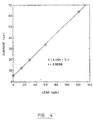
- a 5 ml sample of drinking water spiked with varying levels of lead and copper was conditioned by the addition of a pH 4.0 buffer tablet. An electrode was connected to the analyser instrument, dipped into the sample and the analysis was started. The total assay time was three minutes.
- a weighed quantity of standard dust sample was placed in a 50 ml plastic tube with a conical base. 15 ml of 25% concentrated nitric acid was added to the dust sample and it was incubated for 30 minutes in an ultrasound waterbath of 50 w power output to extract the lead. The extraction sample was diluted to a final volume of 50 ml using pure water. A 5 ml aliquot of the dust extract was placed in a 5 ml tube to which a conditioning tablet containing electrolyte and colour dye was added and dissolved. An electrode was connected to the analyser instrument, dipped into the sample and the analysis was started. The total assay time was forty five seconds. The results are shown in Figure 9.
- Electrodes with and without mercury reagent layer were held in the close vicinity of car exhaust emissions for approximately 5 seconds.
- the electrodes were connected to the analyser instrument and dipped into a 5 ml sample of pure water in which was dissolved a pH 4.0 buffer tablet and the analysis was started.
- the difference between cars running on leaded and unleaded fuel was clearly discernible as shown in Figure 13.
- Donor blood samples (10 ml) were spiked with varying amounts (between 10 ⁇ l and 100 ⁇ l) of lead standard solution (50 ppm), inverted repeatedly to ensure complete mixing and allowed to equilibrate for 30 minutes.
- a solid sample of 1-decanesodium sulphonate (20 mg) ws dissolved into each blood sample with thorough mixing.
- a 200 ⁇ l aliquot was added to the target area of the electrode and the test was started. The results were shown in Figure 14.
Landscapes
- Chemical & Material Sciences (AREA)
- Life Sciences & Earth Sciences (AREA)
- Health & Medical Sciences (AREA)
- Biochemistry (AREA)
- General Physics & Mathematics (AREA)
- Electrochemistry (AREA)
- Physics & Mathematics (AREA)
- Analytical Chemistry (AREA)
- Molecular Biology (AREA)
- General Health & Medical Sciences (AREA)
- Chemical Kinetics & Catalysis (AREA)
- Immunology (AREA)
- Pathology (AREA)
- Investigating Or Analysing Biological Materials (AREA)
- Analysing Materials By The Use Of Radiation (AREA)
- Sampling And Sample Adjustment (AREA)
- Lubricants (AREA)
- Investigating Or Analyzing Non-Biological Materials By The Use Of Chemical Means (AREA)
- Electrodes For Compound Or Non-Metal Manufacture (AREA)
Abstract
Description
Claims (12)
- An electrochemical metal analysis apparatus including a laminated electrode having a layer of mercury or mercury compound or salt supported thereon, wherein said layer is of permeable polymeric material in which the mercury or the mercury compound or salt is dispersed, wherein said layer of permeable polymeric material includes an electrochemically inert insoluble particle material.
- Apparatus as claimed in claim 1, wherein said electrode is a printed electrode.
- Apparatus as claimed in claim 1 or 2, wherein the electrode is a printed carbon electrode.
- Apparatus as claimed in any preceding claim, wherein said electrode is a printed electrode, wherein said layer of permeable polymeric material includes a mercury compound or salt dispersed in said material so that the electrode comprising a layer of metallic mercury is formed by electrochemical reduction of said compound or salt during use.
- Apparatus as claimed in any preceding claims, wherein the polymeric material is selected from: hydroxyethyl cellulose, ethyl cellulose, cellulose acetate, polyvinyl chloride, polyvinyl acetate, polyvinyl alcohol, polyvinyl pyrrolidone, polyurethane, polycarbonate, cellulose nitrate and aryl polyethers.
- Apparatus as claimed in claim 5, wherein the polymeric material is hydroxyethyl cellulose.
- The apparatus as claimed in any preceding claim, wherein the particulate material is selected from the group comprising: aluminum oxide, titanium dioxide, talc, Fullers earth and latex materials.
- The apparatus as claimed in any preceding claim, wherein the electrode further includes a denaturant dispersed in a polymeric layer.
- The apparatus as claimed in claim 8, wherein the denaturant is an acid, surfactant or salt of a strong base.
- The apparatus as claimed in claim 8 or 9, wherein the denaturant is dispersed in a polymeric layer adjacent to the mercury containing layer.
- The apparatus as claimed in any of claims 8 to 10, wherein the denaturant is a solid.
- A method of electrochemical metal analysis comprising the steps of:treating an analyte sample with a denaturant; andanalyzing the sample by electrochemical analysis using the apparatus of any preceding claim.
Applications Claiming Priority (3)
| Application Number | Priority Date | Filing Date | Title |
|---|---|---|---|
| GB939311035A GB9311035D0 (en) | 1993-05-28 | 1993-05-28 | Electrochemical metal analysis |
| GB9311035 | 1993-05-28 | ||
| PCT/GB1994/001167 WO1994028401A1 (en) | 1993-05-28 | 1994-05-27 | Electrochemical metal analysis |
Publications (2)
| Publication Number | Publication Date |
|---|---|
| EP0653058A1 EP0653058A1 (en) | 1995-05-17 |
| EP0653058B1 true EP0653058B1 (en) | 2000-01-26 |
Family
ID=10736275
Family Applications (1)
| Application Number | Title | Priority Date | Filing Date |
|---|---|---|---|
| EP94917072A Expired - Lifetime EP0653058B1 (en) | 1993-05-28 | 1994-05-27 | Electrochemical metal analysis |
Country Status (13)
| Country | Link |
|---|---|
| US (1) | US5672257A (en) |
| EP (1) | EP0653058B1 (en) |
| JP (1) | JPH08503303A (en) |
| AT (1) | ATE189308T1 (en) |
| AU (2) | AU683265B2 (en) |
| CA (1) | CA2141313C (en) |
| DE (1) | DE69422781T2 (en) |
| GB (1) | GB9311035D0 (en) |
| IL (1) | IL109812A (en) |
| NZ (1) | NZ266828A (en) |
| TW (1) | TW300281B (en) |
| WO (2) | WO1994028405A1 (en) |
| ZA (1) | ZA943723B (en) |
Families Citing this family (16)
| Publication number | Priority date | Publication date | Assignee | Title |
|---|---|---|---|---|
| GB8927377D0 (en) * | 1989-12-04 | 1990-01-31 | Univ Edinburgh | Improvements in and relating to amperometric assays |
| GB9604153D0 (en) * | 1996-02-27 | 1996-05-01 | Ea Tech Ltd | Carbon screen printed electrodes and uses thereof |
| RU2124720C1 (en) * | 1997-02-18 | 1999-01-10 | Уральский государственный экономический университет | Process of manufacture of modified electrode for inverse volt-ampere method determining traces of heavy and toxic metals |
| GB9705922D0 (en) * | 1997-03-21 | 1997-05-07 | Metrohm Ag | Methods of fabricating chemical sensors |
| JPH11126899A (en) * | 1997-10-22 | 1999-05-11 | Mitsubishi Electric Corp | Semiconductor device and manufacturing method thereof |
| RU2166752C1 (en) * | 1999-09-07 | 2001-05-10 | Общество с ограниченной ответственностью научно-производственное внедренческое предприятие "ИВА" | Electrochemical transducer |
| NO316341B1 (en) * | 2000-04-14 | 2004-01-12 | Iyvind Mikkelsen | Electrode for voltammetric analysis |
| NO316342B1 (en) * | 2000-09-15 | 2004-01-12 | Oeyvind Mikkelsen | Electrode for voltammetric analysis |
| TW546792B (en) * | 2001-12-14 | 2003-08-11 | Advanced Semiconductor Eng | Manufacturing method of multi-chip stack and its package |
| DE10243569A1 (en) * | 2002-09-19 | 2004-04-01 | Infineon Technologies Ag | Circuit arrangement and method for producing a circuit arrangement |
| KR100955710B1 (en) * | 2007-11-15 | 2010-05-03 | 한국바이오시스템(주) | On-line heavy metal analysis device using electrochemical analysis |
| US8431011B2 (en) * | 2008-01-31 | 2013-04-30 | Abbott Diabetes Care Inc. | Method for automatically and rapidly distinguishing between control and sample solutions in a biosensor strip |
| FR2978865B1 (en) | 2011-08-04 | 2013-09-27 | Easy Life Science | WORKING ELECTRODE PRINTED ON A SUBSTRATE |
| WO2017160721A1 (en) * | 2016-03-14 | 2017-09-21 | The Trustees Of The University Of Pennsylvania | Ph sensing technique based on graphene electrodes |
| CA3101061A1 (en) | 2018-06-20 | 2019-12-26 | Digital Alloys Incorporated | Multi-diameter wire feeder |
| IT201900009060A1 (en) * | 2019-06-14 | 2020-12-14 | Igea Pharma Nv | Device and method for the rapid dosage of copper ion and other heavy metals on micro-volumes of capillary human blood and other biological fluids |
Family Cites Families (20)
| Publication number | Priority date | Publication date | Assignee | Title |
|---|---|---|---|---|
| DE143533C (en) * | ||||
| DE233195C (en) * | 1909-08-11 | 1911-04-01 | ||
| DE2025324A1 (en) * | 1970-05-23 | 1971-12-02 | Varta Gmbh | Mercury/mercury oxide electrode - for measuring ph - and potentials |
| US3859193A (en) * | 1973-11-20 | 1975-01-07 | Hercules Inc | Apparatus for coulometric stripping analysis |
| DE2451659A1 (en) * | 1973-11-20 | 1975-05-28 | Hercules Inc | Mercury electrode for anodic and cathodic voltametry - using a substrate of pyrolytic graphite |
| US3914509A (en) * | 1973-11-20 | 1975-10-21 | Hercules Inc | Chemical modification of the surface of pyrolytic graphite |
| US4374041A (en) * | 1974-03-01 | 1983-02-15 | Environmental Sciences Associates, Inc. | Testing reagent |
| US3904487A (en) * | 1974-10-29 | 1975-09-09 | Us Navy | Anodic stripping volammetry and apparatus therefor |
| US4009078A (en) * | 1975-01-24 | 1977-02-22 | The United States Of America As Represented By The Administrator Of The National Aeronautics And Space Administration | Detecting the presence of microorganisms |
| US4330289A (en) * | 1977-01-26 | 1982-05-18 | Christensson O W | Apparatus for manufacturing a lined container |
| GB2066965B (en) * | 1980-01-09 | 1984-02-01 | Nat Res Dev | Reference electrode |
| IN164233B (en) * | 1984-12-14 | 1989-02-04 | Oronzio De Nora Impianti | |
| US4938860A (en) * | 1985-06-28 | 1990-07-03 | Miles Inc. | Electrode for electrochemical sensors |
| ATE78341T1 (en) * | 1985-11-13 | 1992-08-15 | Esa Inc | ELECTROCHEMICAL TESTING SYSTEM. |
| JPS638840A (en) * | 1986-06-27 | 1988-01-14 | Matsushita Electric Ind Co Ltd | Logic simulator |
| DE3817907A1 (en) * | 1988-05-26 | 1989-11-30 | Boehringer Mannheim Gmbh | METHOD AND REAGENT FOR DETERMINING IRON |
| US5219760A (en) * | 1988-05-26 | 1993-06-15 | Boehringer Mannheim Gmbh | Process for the determination of iron |
| GB8927377D0 (en) * | 1989-12-04 | 1990-01-31 | Univ Edinburgh | Improvements in and relating to amperometric assays |
| US5131999A (en) * | 1990-01-16 | 1992-07-21 | The National University Of Singapore | Voltammetric detector for flow analysis |
| US5292423A (en) * | 1991-04-09 | 1994-03-08 | New Mexico State University Technology Transfer Corp. | Method and apparatus for trace metal testing |
-
1993
- 1993-05-28 GB GB939311035A patent/GB9311035D0/en active Pending
-
1994
- 1994-05-27 AU AU68511/94A patent/AU683265B2/en not_active Ceased
- 1994-05-27 US US08/403,763 patent/US5672257A/en not_active Expired - Lifetime
- 1994-05-27 ZA ZA943723A patent/ZA943723B/en unknown
- 1994-05-27 IL IL10981294A patent/IL109812A/en not_active IP Right Cessation
- 1994-05-27 EP EP94917072A patent/EP0653058B1/en not_active Expired - Lifetime
- 1994-05-27 NZ NZ266828A patent/NZ266828A/en unknown
- 1994-05-27 AT AT94917072T patent/ATE189308T1/en not_active IP Right Cessation
- 1994-05-27 WO PCT/GB1994/001168 patent/WO1994028405A1/en not_active Ceased
- 1994-05-27 DE DE69422781T patent/DE69422781T2/en not_active Expired - Fee Related
- 1994-05-27 JP JP7500411A patent/JPH08503303A/en active Pending
- 1994-05-27 WO PCT/GB1994/001167 patent/WO1994028401A1/en not_active Ceased
- 1994-05-27 AU AU68512/94A patent/AU6851294A/en not_active Abandoned
- 1994-05-27 CA CA002141313A patent/CA2141313C/en not_active Expired - Fee Related
- 1994-07-02 TW TW083104871A patent/TW300281B/zh active
Also Published As
| Publication number | Publication date |
|---|---|
| GB9311035D0 (en) | 1993-07-14 |
| CA2141313C (en) | 2000-01-18 |
| WO1994028401A1 (en) | 1994-12-08 |
| IL109812A (en) | 1996-11-14 |
| EP0653058A1 (en) | 1995-05-17 |
| JPH08503303A (en) | 1996-04-09 |
| NZ266828A (en) | 1996-05-28 |
| US5672257A (en) | 1997-09-30 |
| IL109812A0 (en) | 1994-08-26 |
| ZA943723B (en) | 1995-01-24 |
| TW300281B (en) | 1997-03-11 |
| ATE189308T1 (en) | 2000-02-15 |
| DE69422781T2 (en) | 2000-06-29 |
| AU6851294A (en) | 1994-12-20 |
| WO1994028405A1 (en) | 1994-12-08 |
| DE69422781D1 (en) | 2000-03-02 |
| AU6851194A (en) | 1994-12-20 |
| AU683265B2 (en) | 1997-11-06 |
Similar Documents
| Publication | Publication Date | Title |
|---|---|---|
| US5672257A (en) | Electrochemical metal analysis | |
| DE69427353T2 (en) | POTENTIOMETRIC BIOSENSOR AND METHOD FOR USE THEREOF | |
| EP1036320B1 (en) | Improved electrochemical biosensor test strip | |
| EP0475045B1 (en) | Method and device for the assay of ions | |
| EP0653068B1 (en) | Biosensor for hematocrit determination | |
| AU605111B2 (en) | Enzyme-electrode sensor | |
| EP1479778A1 (en) | Electrochemical sensor with sample pretreatment | |
| US6762062B2 (en) | Method of determining cholesterol and sensor applicable to the same | |
| Zen et al. | Square-wave voltammetric determination of uric acid by catalytic oxidation at a perfluorosulfonated ionomer/ruthenium oxide pyrochlore chemically modified electrode | |
| CN1441903A (en) | Hemoglobin sensor | |
| EP0510725A3 (en) | Electrochemical cell | |
| Kim et al. | Disposable creatinine sensor based on thick-film hydrogen peroxide electrode system | |
| WO2002093152A1 (en) | Method for the determination of glycated hemoglobin | |
| Siontorou et al. | Evaluation of a glassy carbon electrode modified by a bilayer lipid membrane with incorporated DNA | |
| Beinrohr et al. | Simultaneous Calibrationless Determination of Zinc, Cadmium, Lead, and Copper by Flow‐Through Stripping Chronopotentiometry | |
| Fujiwara et al. | Generation of chemiluminescence upon reaction of iodine with luminol in reversed micelles and its analytical applicability | |
| Jagner et al. | Coulometric stripping potentiometry | |
| AU643465B2 (en) | Method and apparatus for electrochemical immunoassay | |
| Sun et al. | Electrocatalytic reduction of hemoglobin at a chemically modified electrode containing riboflavin | |
| JP2590803B2 (en) | Biosensor | |
| Tanaka et al. | Electrochemical detection of biotin using an interaction between avidin and biotin labeled with ferrocene at a perfluorosulfonated ionomer modified electrode | |
| WO1997016712A9 (en) | ELECTROCHEMICAL PROCESS FOR QUANTITATIVE DETERMINATION OF BINDING PROTEINS | |
| Rodríguez et al. | Voltammetric assay of methadone in urine | |
| JPH0315699B2 (en) | ||
| DE19950785C2 (en) | Method for performing an electrochemical enzyme immunoassay |
Legal Events
| Date | Code | Title | Description |
|---|---|---|---|
| PUAI | Public reference made under article 153(3) epc to a published international application that has entered the european phase |
Free format text: ORIGINAL CODE: 0009012 |
|
| 17P | Request for examination filed |
Effective date: 19950126 |
|
| AK | Designated contracting states |
Kind code of ref document: A1 Designated state(s): AT BE CH DE DK ES FR GB GR IE IT LI LU MC NL PT SE |
|
| 17Q | First examination report despatched |
Effective date: 19970114 |
|
| GRAG | Despatch of communication of intention to grant |
Free format text: ORIGINAL CODE: EPIDOS AGRA |
|
| RAP1 | Party data changed (applicant data changed or rights of an application transferred) |
Owner name: PALINTEST LIMITED |
|
| GRAG | Despatch of communication of intention to grant |
Free format text: ORIGINAL CODE: EPIDOS AGRA |
|
| GRAG | Despatch of communication of intention to grant |
Free format text: ORIGINAL CODE: EPIDOS AGRA |
|
| GRAG | Despatch of communication of intention to grant |
Free format text: ORIGINAL CODE: EPIDOS AGRA |
|
| GRAH | Despatch of communication of intention to grant a patent |
Free format text: ORIGINAL CODE: EPIDOS IGRA |
|
| GRAH | Despatch of communication of intention to grant a patent |
Free format text: ORIGINAL CODE: EPIDOS IGRA |
|
| GRAA | (expected) grant |
Free format text: ORIGINAL CODE: 0009210 |
|
| AK | Designated contracting states |
Kind code of ref document: B1 Designated state(s): AT BE CH DE DK ES FR GB GR IE IT LI LU MC NL PT SE |
|
| PG25 | Lapsed in a contracting state [announced via postgrant information from national office to epo] |
Ref country code: SE Free format text: THE PATENT HAS BEEN ANNULLED BY A DECISION OF A NATIONAL AUTHORITY Effective date: 20000126 Ref country code: NL Free format text: LAPSE BECAUSE OF FAILURE TO SUBMIT A TRANSLATION OF THE DESCRIPTION OR TO PAY THE FEE WITHIN THE PRESCRIBED TIME-LIMIT Effective date: 20000126 Ref country code: IT Free format text: LAPSE BECAUSE OF FAILURE TO SUBMIT A TRANSLATION OF THE DESCRIPTION OR TO PAY THE FEE WITHIN THE PRE;WARNING: LAPSES OF ITALIAN PATENTS WITH EFFECTIVE DATE BEFORE 2007 MAY HAVE OCCURRED AT ANY TIME BEFORE 2007. THE CORRECT EFFECTIVE DATE MAY BE DIFFERENT FROM THE ONE RECORDED.SCRIBED TIME-LIMIT Effective date: 20000126 Ref country code: GR Free format text: LAPSE BECAUSE OF NON-PAYMENT OF DUE FEES Effective date: 20000126 Ref country code: ES Free format text: THE PATENT HAS BEEN ANNULLED BY A DECISION OF A NATIONAL AUTHORITY Effective date: 20000126 Ref country code: BE Free format text: LAPSE BECAUSE OF FAILURE TO SUBMIT A TRANSLATION OF THE DESCRIPTION OR TO PAY THE FEE WITHIN THE PRESCRIBED TIME-LIMIT Effective date: 20000126 Ref country code: AT Free format text: LAPSE BECAUSE OF FAILURE TO SUBMIT A TRANSLATION OF THE DESCRIPTION OR TO PAY THE FEE WITHIN THE PRESCRIBED TIME-LIMIT Effective date: 20000126 |
|
| REF | Corresponds to: |
Ref document number: 189308 Country of ref document: AT Date of ref document: 20000215 Kind code of ref document: T |
|
| REG | Reference to a national code |
Ref country code: CH Ref legal event code: NV Representative=s name: RIEDERER HASLER & PARTNER PATENTANWAELTE AG Ref country code: CH Ref legal event code: EP |
|
| REF | Corresponds to: |
Ref document number: 69422781 Country of ref document: DE Date of ref document: 20000302 |
|
| REG | Reference to a national code |
Ref country code: IE Ref legal event code: FG4D |
|
| PG25 | Lapsed in a contracting state [announced via postgrant information from national office to epo] |
Ref country code: PT Free format text: LAPSE BECAUSE OF FAILURE TO SUBMIT A TRANSLATION OF THE DESCRIPTION OR TO PAY THE FEE WITHIN THE PRESCRIBED TIME-LIMIT Effective date: 20000426 Ref country code: DK Free format text: LAPSE BECAUSE OF FAILURE TO SUBMIT A TRANSLATION OF THE DESCRIPTION OR TO PAY THE FEE WITHIN THE PRESCRIBED TIME-LIMIT Effective date: 20000426 |
|
| ET | Fr: translation filed | ||
| PG25 | Lapsed in a contracting state [announced via postgrant information from national office to epo] |
Ref country code: LU Free format text: LAPSE BECAUSE OF NON-PAYMENT OF DUE FEES Effective date: 20000527 |
|
| PG25 | Lapsed in a contracting state [announced via postgrant information from national office to epo] |
Ref country code: IE Free format text: LAPSE BECAUSE OF NON-PAYMENT OF DUE FEES Effective date: 20000529 |
|
| NLV1 | Nl: lapsed or annulled due to failure to fulfill the requirements of art. 29p and 29m of the patents act | ||
| PLBE | No opposition filed within time limit |
Free format text: ORIGINAL CODE: 0009261 |
|
| STAA | Information on the status of an ep patent application or granted ep patent |
Free format text: STATUS: NO OPPOSITION FILED WITHIN TIME LIMIT |
|
| PG25 | Lapsed in a contracting state [announced via postgrant information from national office to epo] |
Ref country code: MC Free format text: LAPSE BECAUSE OF NON-PAYMENT OF DUE FEES Effective date: 20001130 |
|
| 26N | No opposition filed | ||
| REG | Reference to a national code |
Ref country code: IE Ref legal event code: MM4A |
|
| REG | Reference to a national code |
Ref country code: GB Ref legal event code: IF02 |
|
| PGFP | Annual fee paid to national office [announced via postgrant information from national office to epo] |
Ref country code: GB Payment date: 20090331 Year of fee payment: 16 |
|
| PGFP | Annual fee paid to national office [announced via postgrant information from national office to epo] |
Ref country code: FR Payment date: 20090513 Year of fee payment: 16 Ref country code: DE Payment date: 20090525 Year of fee payment: 16 |
|
| REG | Reference to a national code |
Ref country code: CH Ref legal event code: PCAR Free format text: RIEDERER HASLER & PARTNER PATENTANWAELTE AG;ELESTASTRASSE 8;7310 BAD RAGAZ (CH) |
|
| PGFP | Annual fee paid to national office [announced via postgrant information from national office to epo] |
Ref country code: CH Payment date: 20090518 Year of fee payment: 16 |
|
| REG | Reference to a national code |
Ref country code: CH Ref legal event code: PL |
|
| GBPC | Gb: european patent ceased through non-payment of renewal fee |
Effective date: 20100527 |
|
| REG | Reference to a national code |
Ref country code: FR Ref legal event code: ST Effective date: 20110131 |
|
| PG25 | Lapsed in a contracting state [announced via postgrant information from national office to epo] |
Ref country code: LI Free format text: LAPSE BECAUSE OF NON-PAYMENT OF DUE FEES Effective date: 20100531 Ref country code: CH Free format text: LAPSE BECAUSE OF NON-PAYMENT OF DUE FEES Effective date: 20100531 |
|
| PG25 | Lapsed in a contracting state [announced via postgrant information from national office to epo] |
Ref country code: DE Free format text: LAPSE BECAUSE OF NON-PAYMENT OF DUE FEES Effective date: 20101201 |
|
| PG25 | Lapsed in a contracting state [announced via postgrant information from national office to epo] |
Ref country code: FR Free format text: LAPSE BECAUSE OF NON-PAYMENT OF DUE FEES Effective date: 20100531 |
|
| PG25 | Lapsed in a contracting state [announced via postgrant information from national office to epo] |
Ref country code: GB Free format text: LAPSE BECAUSE OF NON-PAYMENT OF DUE FEES Effective date: 20100527 |