EP0650473B1 - Radioimaging and radiochemotherapy phenolic thioether amines and acyl derivatives thereof for use in diagnosing and treating pigmentation disorders - Google Patents
Radioimaging and radiochemotherapy phenolic thioether amines and acyl derivatives thereof for use in diagnosing and treating pigmentation disorders Download PDFInfo
- Publication number
- EP0650473B1 EP0650473B1 EP93915605A EP93915605A EP0650473B1 EP 0650473 B1 EP0650473 B1 EP 0650473B1 EP 93915605 A EP93915605 A EP 93915605A EP 93915605 A EP93915605 A EP 93915605A EP 0650473 B1 EP0650473 B1 EP 0650473B1
- Authority
- EP
- European Patent Office
- Prior art keywords
- compound
- melanoma
- radioimaging
- formula
- cap
- Prior art date
- Legal status (The legal status is an assumption and is not a legal conclusion. Google has not performed a legal analysis and makes no representation as to the accuracy of the status listed.)
- Expired - Lifetime
Links
- 0 CC(CCC1)(CC2)CC1C2O* Chemical compound CC(CCC1)(CC2)CC1C2O* 0.000 description 1
Images

Classifications
-
- C—CHEMISTRY; METALLURGY
- C07—ORGANIC CHEMISTRY
- C07C—ACYCLIC OR CARBOCYCLIC COMPOUNDS
- C07C323/00—Thiols, sulfides, hydropolysulfides or polysulfides substituted by halogen, oxygen or nitrogen atoms, or by sulfur atoms not being part of thio groups
- C07C323/23—Thiols, sulfides, hydropolysulfides or polysulfides substituted by halogen, oxygen or nitrogen atoms, or by sulfur atoms not being part of thio groups containing thio groups and nitrogen atoms, not being part of nitro or nitroso groups, bound to the same carbon skeleton
- C07C323/24—Thiols, sulfides, hydropolysulfides or polysulfides substituted by halogen, oxygen or nitrogen atoms, or by sulfur atoms not being part of thio groups containing thio groups and nitrogen atoms, not being part of nitro or nitroso groups, bound to the same carbon skeleton having the sulfur atoms of the thio groups bound to acyclic carbon atoms of the carbon skeleton
- C07C323/25—Thiols, sulfides, hydropolysulfides or polysulfides substituted by halogen, oxygen or nitrogen atoms, or by sulfur atoms not being part of thio groups containing thio groups and nitrogen atoms, not being part of nitro or nitroso groups, bound to the same carbon skeleton having the sulfur atoms of the thio groups bound to acyclic carbon atoms of the carbon skeleton the carbon skeleton being acyclic and saturated
-
- A—HUMAN NECESSITIES
- A61—MEDICAL OR VETERINARY SCIENCE; HYGIENE
- A61K—PREPARATIONS FOR MEDICAL, DENTAL OR TOILETRY PURPOSES
- A61K51/00—Preparations containing radioactive substances for use in therapy or testing in vivo
- A61K51/02—Preparations containing radioactive substances for use in therapy or testing in vivo characterised by the carrier, i.e. characterised by the agent or material covalently linked or complexing the radioactive nucleus
- A61K51/04—Organic compounds
- A61K51/0404—Lipids, e.g. triglycerides; Polycationic carriers
- A61K51/0406—Amines, polyamines, e.g. spermine, spermidine, amino acids, (bis)guanidines
-
- C—CHEMISTRY; METALLURGY
- C07—ORGANIC CHEMISTRY
- C07C—ACYCLIC OR CARBOCYCLIC COMPOUNDS
- C07C323/00—Thiols, sulfides, hydropolysulfides or polysulfides substituted by halogen, oxygen or nitrogen atoms, or by sulfur atoms not being part of thio groups
- C07C323/23—Thiols, sulfides, hydropolysulfides or polysulfides substituted by halogen, oxygen or nitrogen atoms, or by sulfur atoms not being part of thio groups containing thio groups and nitrogen atoms, not being part of nitro or nitroso groups, bound to the same carbon skeleton
- C07C323/39—Thiols, sulfides, hydropolysulfides or polysulfides substituted by halogen, oxygen or nitrogen atoms, or by sulfur atoms not being part of thio groups containing thio groups and nitrogen atoms, not being part of nitro or nitroso groups, bound to the same carbon skeleton at least one of the nitrogen atoms being part of any of the groups, X being a hetero atom, Y being any atom
- C07C323/40—Y being a hydrogen or a carbon atom
- C07C323/41—Y being a hydrogen or an acyclic carbon atom
Definitions
- This invention relates to compounds which are particularly useful in radioimaging and radio-chemotherapy as it particularly relates to the treatment and location of malignant melanomas and other pigmenting disorders.
- Novel acyl derivatives of phenolic thioether amines and their use in compositions for blocking melanin synthesis in human or animal melanocyte cells is also described. More particularly, the compositions involving the novel derivatives are useful in treating pigmentation problems due to a variety of skin disorders, including skin cancer in the form of melanoma.
- Phenylthioalkylamines is a broad class of compounds having a variety of uses which include therapeutics.
- US-A-4,134,996 and US-A-4,183,927 disclose certain phenylthioalkylamine compounds which are useful as platelet aggregation inhibitors.
- Other phenylthioalkylamine compounds described in WO-A-9116302 are useful as depigmenting agents in treating a variety of pigmentary diseases. Such diseases are often characterized in the elevated levels of the enzyme tyrosinase in melanocytes; i.e., human and animal cells which synthesize the pigment melanin.
- pigmentary diseases such as melasma, melanoma, and moles. In particular, moles are susceptible to becoming melanoma after exposure to sunlight which precipitates increased synthesis of tyrosinase.
- depigmenting compositions are based on the use of hydroquinone.
- the hydroquinone preparations are very unstable and cause skin irritation.
- Hydroquinone compositions can also cause permanent whitening of the skin if used for a prolonged period and at a high concentration.
- treatment of melanoma this is presently attended to by surgical procedures, since any type of known non-surgical treatment of melanoma is unsatisfactory.
- 4-S-CP and 4-S-CAP were also investigated for their selective cytotoxicity on follicular melanocytes. This was reported by Ito et al, "Selective Cytotoxicity of 4-S-Cysteaminylphenol on Follicular Melanocyte of the Black Mouse: Rational Basis for its Application to Melanoma Chemotherapy", Cancer Research, June 15, 1987 47:3278-3284. It was reported that 4-S-CAP demonstrated cytotoxicity in the depigmentation of black hair follicles, whereas it had no effect on the albino follicles. Hence 4-S-CAP is actively engaged in the melanin synthesis of the melanocytes.
- Homologs of 4-S-CAP have been investigated for antimelanoma and depigmenting properties. As reported in Alena et al, Melanocytotoxicity and Antimelanoma Effects of Phenolic Amine Compounds in Mice In Vivo, Cancer Research 50:3743-3747, June 15, 1990, such homologs demonstrate depigmentation properties and N-acetyl-4-S-CAP demonstrates potent antimelanoma properties. The benefits and uses of these homologs and related compounds for use as depigmenting agents and antimelanoma agents are described in WO-A-9116302. Although the compounds disclosed in that application are effective depigmenting agents as well as antimelanoma agents, there are stability and toxicity problems associated with some of the compounds. In particular the very effective N-acetyl-4-S-CAP compound tends to be unstable and can cause topical irritations on administration.
- melanin synthesis is a biological property unique to the pigment cell, melanocyte and its neoplastic counterpart, malignant melanoma.
- phenolic and catecholic melanin precursors have been synthesized and their melanocytotoxicity and antimelanoma effects have been examined (Ito, Y. et al, 1987; Miura, S. et al, 1987; Alena, F. et al, 1990; Jimbow, K. et al, 1992).
- N-Ac-4-S-CAP S-substituted phenolic amines, N-acetyl-4-S-cysteaminylphenol
- N-Ac-4-S-CAP was found to be a superior substrate of melanin synthesizing enzyme, tyrosinase (Pankovich, J. et al, 1990; Miura, T. et al, 1990), and to possess the most effective melanocytotoxic activity and antimelanoma effect (Miura, T. et al, 1990; Alena, F. et al, 1990; Wong, M. et al, 1991).
- 4-S-CAP was, however, as noted, above, found to have some general cytotoxicity (Alena, F.
- N-Ac-4-S-CAP has shown an absence of such cytotoxicity (Alena, F. et al, 1990), indicating that N-Ac-4-S-CAP may be a compound suitable for the development of melanoma chemotherapy.
- esterified compounds which exhibit excellent stability and very low general toxicity, but have selective toxicity for melanocytes.
- a compound for use in radioimaging and radiochemotherapy in the diagnosis and/or treatment of melanoma and other pigmentary disorders said compound being selected from compounds represented by the formula (I): wherein
- a process for radioimaging melanoma colonies in vivo in a subject comprising administering to the subject's circulatory system one or more radioimaging compounds of formula (I) and detecting the presence of emitted radiation from an accumulation of said selected radioimaging compound as said administered compound binds solely to any melanoma tissue present in said subject.
- the preferred compounds of formula (I) are when X is 1 and R 4 is alkanoyl.
- the invention provides compounds of the formula (II): wherein
- the preferred compounds of formula (II) are when x is 1 and R 4 is alkanoyl.
- a pharmaceutical composition comprises a compound of formula (II) and a pharmacologically or biologically acceptable carrier.
- this composition is particularly useful as a depigmenting composition in sunscreening lotions.
- the composition is also useful as an antimelanoma agent and useful for the treatment of melasma and generally useful for blocking melanin synthesis in human or animal melanocyte cells.
- the radiolabelled compounds of formula (I) are capable of binding to melanoma tissue such that when the tissue is subjected to radioimaging the existence of such melanoma colonies or cells appears in the image. Further, by virtue of the binding of these compounds to melanoma sites, the radioactive material may be used in radiochemotherapy treatment of the melanoma cells to either kill such cells or effect their remission.
- the preferred compounds of this invention exhibit considerably less toxicity than known forms of phenolic amine compounds such as the aforementioned 4-S-CP and 4-S-CAP.
- 4-S-CAP when 4-S-CAP is used in radioimaging or radiochemotherapy, the compound collects in the eye as well as in the melanoma tissue.
- the compounds of formula (I) do not have such drawbacks and are therefore particularly suited to this new use.
- the compounds of the formula (I) When the compounds of the formula (I) are used in radiochemotherapy they may be combined with suitable pharmaceutical excipients and carriers wherein the radioactive selected compounds are present in a biologically effective amount in the carriers. Suitable biologically, compatible carriers may be solutions when injected by either the IP or SC route.
- Suitable biologically, compatible carriers for injection include physiologically normal saline and other types of readily injectable solutions which are well understood by those skilled in the art and readily available.
- the preferred injectable carrier is a neutral buffer having a pH of 7 to 7.4 and does not in any way effect the activity of the radiolabelled compounds.
- the concentration of the radiolabelled compound in the injectable solution is normally in the range of 200 to 1200 mg per kg of body weight where the preferred dosage is in the range of 300 mg to 500 mg per kg of body weight.
- further information is provided as to the amount of compounds injected for purposes of radioimaging.
- radiolabelled compounds of this invention bind specifically to melanoma tissues and the radiolabelled compound or radiolabelled derivatives thereof remain in the melanoma tissue for a sufficient period of time for either therapeutic treatment or for subsequent radioimaging.
- the radiolabelling of the compound occurs normally in the phenyl ring in accordance with the following reaction schemes.
- radiolabelling agents such as carbon 14, U-14-C, iodine (such as 123 I, 125 I and 131 I), technetium (such as 99m Tc), fluorine (such as 18 F), indium (such as 111 In) and 35 S for example.
- the method of introduction of the radiolabelling agent to the compound will depend on the choice of radiolabelling agent, as one skilled in the art would appreciate.
- the radiolabelling agent will be associated with the structure of the compound through one of the several ways: (1) through a covalent bond with the compound structure; (2) through ionic association with the compound structure; or (3) as part of the structure of the compound.
- Novel acylated compounds of this invention are represented by the compounds of formula (II). It has been found that those compounds and the analogous compounds of formula (II) in which R 2 is C 1 -C 8 alkyl (hereinafter included in references to compounds of formula II) are particularly useful in the treatment of various pigmentation disorders and, when formulated into suitable pharmaceutical compositions, exhibit excellent stability and very low general toxicity, but selective toxicity with respect to melanocytes. Hence, in accordance with another aspect of this invention, the pharmaceutical compositions are very useful in the treatment of pigmentary diseases such as treatments involving one or more of the following:
- preferred alkyl and alkanoyl groups are C 1 to C 6 .
- the most preferred alkyl and alkanoyl groups are C 1 to C 4 .
- Preferred compounds of formula (I) include N-acetyl-4-S-cysteaminylphenol, N,N-dimethyl-4-S-cysteaminyl-phenol, 4-S-homo-cysteaminylphenol, ⁇ -methyl-4-S-cysteaminylphenol, N- ⁇ 2- ⁇ (4'-acetoxyphenyl)-thio)ethyl)-acetamide, N- ⁇ 1-methyl ⁇ 2- ⁇ (4'-acetoxyphenyl)thio ⁇ ethyl ⁇ -acetamide, N,N-dimethyl (2- ⁇ (4'-acetoxyphenyl)-thio ⁇ ethylamine or N-propionyl-4-S-cysteaminylphenol.
- Preferred specific compounds of the invention of Formula (II) are: Compound R 1 R 2 R 3 R 4 1. N-(1-Methyl- ⁇ 2- ⁇ (4'-acetoxyphenyl)thio ⁇ -ethyl ⁇ acetamide CH 3 H COCH 3 COCH 3 2. N,N,-Dimethyl ⁇ 2- ⁇ (4-acetoxyphenyl)thio ⁇ -ethylamine H CH 3 CH 3 COCH 3 3. N- ⁇ 2- ⁇ (4'-acetoxyphenyl)thio ⁇ ethyl ⁇ -acetamide H H COCH 3 COCH 3 4. N- ⁇ 2- ⁇ (4-acetoxyphenyl)-thio ⁇ ethyl ⁇ propionamide H H COC 2 H 5 COCH 3
- the compounds of formula (II) may be manufactured by a variety of synthesis techniques. Generally, they may be prepared by acylation of the corresponding cysteaminylphenol compounds.
- the cysteaminylphenol compounds may also be prepared in accordance with the technique disclosed by Miura et al, "Synthesis of Cysteinylphenol, Cysteaminylphenol, and Related Compounds, and in vivo Evaluation of Antimelanoma Effect", Arch. Dermatol. Res. (1987) 279 :219-225. This entails the reaction of a phenol with a cysteamine to yield 4-S-cysteaminylphenol or 2-S-cysteaminylphenol. 4-S-cysteaminylphenol may then be isolated from the reaction product by Silica gel column chromatography or crystallization with changing pH of solution. It is understood that the various derivatives of this invention may be made by various radical substitutions to the sulphur chain, or substituting a thiol with the desired chain.
- the intermediate cysteaminylphenol compounds may be acylated by reaction with the appropriate alkanoyl; for example, acetyl chloride may be reacted with N- ⁇ 2-((4-hydroxyphenyl)thio)ethyl ⁇ acetamide, to give the preferred compound of the invention N- ⁇ 2-((4'-acetoxyphenyl)-thio)-ethyl ⁇ acetamide (NAP-TEA).
- compositions of this invention having active agents of formula (II) provide a mechanism for treating a variety of pigmentary diseases, such as melasma and other hyperpigmentation diseases and melanoma and other skin cancers and for preventing melasma and skin cancers which are normally induced by exposure to UV radiation.
- This activity of the composition is achieved by the selected active compound of the composition becoming toxic in the melanocytes in the presence of tyrosinase without being a substrate for plasma MAO.
- the compositions upon administration, according to this invention have significant melanoma cytotoxicity and antimelanoma effects.
- compositions of this invention have also demonstrated selective toxicity to other neural crest tumors, such as pheochromocytoma and neuroblastoma cells.
- a biologically effective amount of the active compound means that a sufficient amount of the compound in the composition is provided such that upon administration to the human or animal by, for example, i.p., s.c. or topical route provides sufficient active agent on each application to give the desired result in treating various pigmentary diseases, including melanoma, melasma, or acting as UV blocker and/or depigmenting agent in sunscreen lotions.
- the biologically effective amount of the active compound is at a level that it is not toxic to the human or animal during the term of treatment.
- a suitable biologically compatible carrier includes a solvent for the compound when the compound is injected by either i.p. or s.c. route.
- Suitable biologically compatible carriers for injection include physiologically normal saline and other types of readily injectable solutions which are well understood by those skilled in the art.
- the preferred injectable carrier is a neutral buffer having a pH of 7.0 to 7.4.
- the carrier may be any type of suitable excipient or carrier in the form of, for example, cosmetic compositions, pharmaceutical adjuvants, and sunscreen lotions.
- Suitable carriers for topical application include conventional skin treatment compositions, such as cosmetic compositions and pharmaceutical preparations.
- ingredients for topical application are oils such as liquid paraffin, vaseline, methylpolysiloxane, castor oil, squalane, and coconut oil; anti-oxidants such as butylated hydroxyanisole, butylhydroxytoluene, ethyl gallate, and tocopherol; surfactants such as sodium laureate, laurylpyridinium chloride, polyoxyethylene sorbitan monooleate, glyceryl monoarachate, sodium N-stearyl-N,N-dimethyl glycine, oleyl hydrolysed animal protein, and polyoxypropylene glyceryl ether phosphate; humectants such as glycerol, sodium 2-pyrrolidone-5-carboxylate, and sodium lactate; thickeners such as tragacanth gum, quince seed gum, zanthan gum, carboxyvinyl polymer
- powders such as aluminum powder, talc, kaolin, zinc oxide, titanium dioxide, mica, calcium, carbonate, and treated powders; plasticizers such as acetyl tributyl citrate, and dibutylphthalate; pharmaceutically active agents such as retinol, palmitate; ⁇ -orizanol, pyridoxine dipalmitate, ascrobyl dipalmitate, ergocalciferol, di- ⁇ -tocopherol acetate, biotin, ethinylestradiol estrone, hydrocortisone, calcium pantothenate, ammonium glycyrrhizinate, allantoid, quaiasulene, and hinokitiol; and perfumes such as musk, civet, amber, jasmine absolute, and rose oil.
- plasticizers such as acetyl tributyl citrate, and dibutylphthalate
- pharmaceutically active agents such as retin
- the skin treatment compositions can be prepared in any conventional form, for example, solubilized forms such as cosmetic lotions, and emulsified forms such as liquid creams, creams, ointments and dispersions.
- compositions of this invention are particularly useful for depigmenting skin where the composition is applied topically or injected by s.c. or i.p. route to the afflicted area to achieve desired degree of depigmentation of the skin.
- compositions of the invention are also especially useful for treating melanoma.
- the composition is administered either topically or by injection through i.p. or s.c. route.
- the composition is used in treating melanoma to either clear it up or place it in remission.
- a method of the invention is in the formulating of the composition useful for treating melanoma.
- the compounds of formula (II) may be used in sunscreening lotions as depigmenting agents. It has been found that the active agents of formula (II):
- the compounds upon administration of the acylated derivatives of formula (II), the compounds are deacylated to become potent melanocytotoxic and depigmenting agents. Such in vivo conversion of the compounds is extremely beneficial from the standpoint of product stability and reduced general toxicity.
- the compounds of formula (II) Once the compounds of formula (II) are deacylated upon administration, they become excellent tyrosinase substrates.
- NAP-TEA once incorporated into the body, is deacylated to become N-acetyl-4-S-CAP which is, as already demonstrated in WO-A-9116302, a strong tyrosinase substrate that is present only in pigment cells.
- This enzyme activity becomes highly expressed in malignant melanoma and melasma cells where the specificity of N-acetyl-4-S-CAP is important in avoiding general toxicity to the patient.
- the therapeutic approach in the use of these compounds for pigmentary diseases such as melasma and skin cancer, such as malignant melanoma have become very important as well as preventive medicine for photoaging and skin cancer developed after exposure to sunlight.
- Melanoma represents 2% of all cancer by instance and is generally increasing in the population at a rate exceeded only by lung cancer.
- the composition of this invention may have various concentrations of active agent in the biologically compatible carrier.
- concentration of the active agent in the injectable solution usually is in the range of 200 to 1200 mg/kg of body weight with a preferred dosage in the range of 300 mg to 500 mg/kg of body weight.
- concentration of the active agent in the cosmetic cream or the like usually is in the range of 4% to 10% by weight in a cream base with a preferred composition in the range of 4% to 6% by weight in a cream base.
- compositions may be administered in combination with L-dopa and/or antidecarboxylase. Such combinations may have selected use in the treatment of various melanomas.
- the following Examples demonstrate various aspects of the invention in providing the diagnosis and treatment of pigmentation diseases, depigmenting properties and antimelanoma properties.
- the various compounds of formula (I) may be radiolabelled in accordance with a preferred procedure outlined in the following Examples. The procedures have been described in particular reference to the compound N-acetyl-4-S-CAP; however, it is understood that the procedure may be similarly applied to the other compounds of formula (I).
- the Examples also demonstrate effectiveness in blocking melanin synthesis for only one of the compounds of formula (II). However, it is understood that the compounds of formula (II) all exhibit in a predictable way similar properties.
- the cartridge was washed with aqueous methanol (10% v/v ; 0.6 mL for removal of excess cystamine and ( 14 C) labelled 4-S-CAP and 2-S-CAP were eluted with aqueous methanol (20% v/v ; 3.0 mL).
- the eluent was concentrated under vacuum.
- the major compounds were separated on preparative TLC using the mobile phase I.
- the products were extracted from TLC with MeOH in CHCl 3 (20% v/v).
- the two isomers were acetylated with acetic anhydride in dry pyridine at 25°C for 24 hours. The solvent was removed under vacuum.
- HPLC analyses were carried out with a Waters system consisting of a Model 600E system controller, Model U6K injector and Model 441 detector at 254 nm, using ⁇ Bonapak C 18 reverse phase compression (10 ⁇ ) column (Waters Millipore Canada Ltd., Mississauga, Ontario) and MeOH : 0.1% acetic acid in H 2 O (1 : 1 v/v) as eluent with a flow rate of 1 mL/min.
- N-acetyl-4-S-cysteaminyl U- 14 C
- phenol (( 14 C) N-Ac-4-S-CAP)
- N-acetyl-2-S-cysteaminyl U- 14 C
- RLC Radiochemical purity after TLC was determined by collect eluent fractions (0.5 mL) from an HPLC analysis and counting by a liquid scintillation spectrometer.
- N-propionyl-4-S-cysteaminylphenol dry pyridine, and acetic anhydride is then stirred at 25° for 24 hours.
- the reaction mixture is evaporated under vacuum and the residue is purified with a low pressure normal phase silica gel column chromatography (mobile phase : 8% MeOH in CHCl 3 ).
- NAP-TEP N- ⁇ 2- ⁇ (4-acetoxyphenyl)thio ⁇ -ethyl ⁇ -propionamide
- N-acetyl-4-S-CAP Five different tissues were examined for covalent binding of radioactively labelled N-acetyl-4-S-CAP intermediate(s).
- the maximum binding of N-acetyl-4-S-CAP was detected in the s.c. melanoma tumor and melanoma colony-bearing lung tissues.
- the normal organs e.g., the lung without melanoma colonies, kidney and liver, which are actively involved in drug metabolism of N-acetyl-4-S-CAP, did not reveal a significant accumulation of radioactive material.
- Table 1 The results of such study are set out in the following Table 1.
- radiolabelled compounds of this invention and in particular, radiolabelled N-acetyl-4-S-CAP and radiolabelled NAP-TEA are particularly useful as radioimaging agents without causing toxic side effects in the host. Also, in appropriate dosages the compounds may be used effect radio-chemotherapy at specific melanoma sites within the host.
- NAP-TEA was introduced to mouse plasma to determine by in vitro experimentation the extent to which NAP-TEA is deacetylated to form N-Acetyl-4-S-CAP.
- the procedure was as follows. Into 100 ⁇ l of mouse plasma, 10 ⁇ g of NAP-TEA was introduced. The mixture was shook for one-half of a minute and then passed through a Sep-Pak C 18 cartridge in either 7 ml of 5% methanol/water to form eluent 1 or in 4 ml of 50% methanol/water to form eluent 2. Both eluents 1 and eluents 2 were collected.
- Aqueous methanol was removed from eluent 2 to provide a residue which was subjected to HPLC under the following conditions.
- the HPLC had a column of ⁇ Bonapak C 18 under reverse phase radical compression.
- the residue was mixed with methanol:water at 50:50 with a flow rate through the radiograph at 1 ml/min.
- the detector was a Water Associates Model 441 with detection by ultraviolet at 250 nm. All that was detected in eluent 2 as passed through the chromatograph was N-Acetyl-4-S-CAP which indicates that NAP-TEA was readily deacylated by the mouse plasma to give the desired active agent.
- a C57BL/6J Black Mouse was injected at 300 mg/kg body weight by i.p. administration of NAP-TEA. 100 ⁇ l of plasma was extracted from the mouse after 5 minutes of injection and after 20 minutes of injection. The plasma samples were treated in accordance with the procedure of Example 2. The plasma samples were passed through a Sep-Pak C 18 cartridge in either 5% methanol:water to produce eluent 1 or 50% methanol/water to produce eluent 2. Eluent 2 had the aqueous methanol removed therefrom to provide a residue. The residue was redissolved in methanol/0.1% acetic acid and water in a ratio of 50:50 and subjected to HPLC for both the 5 minute and 20 minute plasma samples.
- NAP-TEA did not evidence of NAP-TEA but their was evidence of N-Acetyl-4-S-CAP.
- concentration of N-Acetyl-4-S-CAP in the 5 minute extracted sample being considerably greater than in the 20 minute extracted sample to indicate that in vivo NAP-TEA is deacylated to N-Acetyl-4-S-CAP which in turn is then taken up by the mouse melanocytes.
- MTT solution (Sigma catalog No. M2128) was dissolved in PBS at 1 mg/ml and filtered to sterilize the solution. The solution was stored in the dark at 4°C until used. The growing cells were harvested, counted and inoculated into 96 well microtiter plates (1-2 x 10 3 cells/well). After 24 h, drugs were applied to culture wells, and the cultures were incubated for 5 days at 37°C. At this time, 50 ⁇ l of MTT solution was added to microculture wells. After 4 h incubation at 37°C, supernatant was removed from each well. 150 ⁇ l of DMSO was added to solubilized the MTT-formazan product. After mixing gently, absorbance at 540 nm was measured with ELISA plate spectrophotometer.
- NAP-TEA showed lower in vitro Cytotoxicity than that of N-Acetyl-4-S-CAP on 3 cell lines.
- Compound NAP-TEA N-Acetyl-4-S-CAP IC 50 HeLa 77 ⁇ g/ml 75 ⁇ g/ml SK-MEL-23 31 ⁇ g/ml 25 ⁇ g/ml UT amelanotic melanoma 14 ⁇ g/ml 12 ⁇ g/ml
- NAP-TEA was not a substrate of mushroom tyrosinase, due to the blocking effect of acetoxy group on the 4-position of the benzene ring because its concentration remained constant in the reaction mixture.
- concentration of N-Acetyl-4-S-CAP in the reaction mixture dropped off rapidly over 25 minutes to almost zero amount after 50 minutes in the reaction mixture.
- mice After completion of the i.p. injections of NAP-TEA, mice were depigmented with the new replacement hair being almost pure white.
- mice Six newborn (3 day old) C57BL/6J black mice were injected i.p. with a single dose of 0.1 mL of NAP-TEA solution (300 mg/kg body weight).
- mice were depigmented in all hair follicles with the growing hair being light grey after a single i.p. injection of NAP-TEA.
- NAP-TEA Solutions of 15% NAP-TEA in DMSO(w/v) and of 15% NAP-TEA in 60% EtOH(w/v) were prepared for topical application to a Yucatan pig.
- NAP-TEA was applied to the back skin of the pig twice a day for 8 weeks.
- punch biopsy was performed from the application area and from normal skin.
- Specimens obtained were kept in 2N NaBr solution for 3 hours followed by separation of the epidermis from dermis.
- Specimens of epidermis were incubated for 3 hours in phosphate buffer (pH 7.4) containing L-Dopa.
- the specimens were fixed in 10% neutral formalin solution and then washed twice in PBS. Finally, the specimens were mounted in glycerol gel. The numbers of Dopa-positive melanocytes in 9 adjacent 1 mm 2 fields from each sample were counted.
Landscapes
- Chemical & Material Sciences (AREA)
- Organic Chemistry (AREA)
- Health & Medical Sciences (AREA)
- Life Sciences & Earth Sciences (AREA)
- Physics & Mathematics (AREA)
- Public Health (AREA)
- Molecular Biology (AREA)
- Medicinal Chemistry (AREA)
- Optics & Photonics (AREA)
- Pharmacology & Pharmacy (AREA)
- Epidemiology (AREA)
- Animal Behavior & Ethology (AREA)
- General Health & Medical Sciences (AREA)
- Proteomics, Peptides & Aminoacids (AREA)
- Veterinary Medicine (AREA)
- Biophysics (AREA)
- Acyclic And Carbocyclic Compounds In Medicinal Compositions (AREA)
- Medicines Containing Antibodies Or Antigens For Use As Internal Diagnostic Agents (AREA)
- Organic Low-Molecular-Weight Compounds And Preparation Thereof (AREA)
- Pharmaceuticals Containing Other Organic And Inorganic Compounds (AREA)
- Medicines That Contain Protein Lipid Enzymes And Other Medicines (AREA)
- Cosmetics (AREA)
Abstract
Description
- This invention relates to compounds which are particularly useful in radioimaging and radio-chemotherapy as it particularly relates to the treatment and location of malignant melanomas and other pigmenting disorders. Novel acyl derivatives of phenolic thioether amines and their use in compositions for blocking melanin synthesis in human or animal melanocyte cells is also described. More particularly, the compositions involving the novel derivatives are useful in treating pigmentation problems due to a variety of skin disorders, including skin cancer in the form of melanoma.
- Phenylthioalkylamines is a broad class of compounds having a variety of uses which include therapeutics. US-A-4,134,996 and US-A-4,183,927 disclose certain phenylthioalkylamine compounds which are useful as platelet aggregation inhibitors. Other phenylthioalkylamine compounds described in WO-A-9116302 are useful as depigmenting agents in treating a variety of pigmentary diseases. Such diseases are often characterized in the elevated levels of the enzyme tyrosinase in melanocytes; i.e., human and animal cells which synthesize the pigment melanin. There are a variety of pigmentary diseases, such as melasma, melanoma, and moles. In particular, moles are susceptible to becoming melanoma after exposure to sunlight which precipitates increased synthesis of tyrosinase.
- Usually commercial forms of depigmenting compositions are based on the use of hydroquinone. However, the hydroquinone preparations are very unstable and cause skin irritation. Hydroquinone compositions can also cause permanent whitening of the skin if used for a prolonged period and at a high concentration. As to treatment of melanoma, this is presently attended to by surgical procedures, since any type of known non-surgical treatment of melanoma is unsatisfactory.
- Research work has been conducted in the field of phenolic and diphenolic compounds to serve as a basis for chemotherapeutic treatment of melanoma and skin depigmentation. In particular, 4-S-cysteinylphenol (4-S-CP) and 4-S-cysteaminylphenol (4-S-CAP) have been synthesized and evaluated for cytotoxicity to normal epidermal melanocytes to determine their effectiveness as depigmenting agents and antimelanoma agents. Miura et al, "Synthesis of Cysteinylphenol, Cysteaminylphenol, and Related Compounds, and In Vivo Evaluation of Antimelanoma Effect", Arch. Dermatol Res. (1987) 279:219-225, disclose the effect of 4-S-CAP and 4-S-CP in depigmentation of black hair follicles as manifested by loss of functioning melanocytes. It was established that 4-S-CAP was a potent agent in prolonging the lifespan of melanoma-bearing mice and hence exhibited inhibition of melanoma growth. 4-S-CP and the methyl ester of 4-S-CP also exhibited some inhibition of melanoma growth, although not as active as 4-S-CAP.
- The same compounds, 4-S-CP and 4-S-CAP, were also investigated for properties of depigmentation of black guinea pig skin by topical application. The results of this work is reported by Ito et al, "Depigmentation of Black Guinea Pig Skin by Topical Application of Cysteaminylphenol, Cysteinylphenol, and Related Compounds", The Journal of Investigative Dermatology, Vol. 88 No. 1, January 1987. Although 4-S-CAP demonstrated depigmenting properties, inflammatory changes of the skin of the guinea pigs was prominent. 4-S-CAP was capable, however, of:
- 1. decreasing the number of functioning melanocytes;
- 2. decreasing the amount of epidermal melanin pigments; and
- 3. degenerating and destroying melanocytes.
- 4-S-CP and 4-S-CAP were also investigated for their selective cytotoxicity on follicular melanocytes. This was reported by Ito et al, "Selective Cytotoxicity of 4-S-Cysteaminylphenol on Follicular Melanocyte of the Black Mouse: Rational Basis for its Application to Melanoma Chemotherapy", Cancer Research, June 15, 1987 47:3278-3284. It was reported that 4-S-CAP demonstrated cytotoxicity in the depigmentation of black hair follicles, whereas it had no effect on the albino follicles. Hence 4-S-CAP is actively engaged in the melanin synthesis of the melanocytes.
- 4-S-CAP, however, has several limitations from the standpoint of practical clinical use. These limitations include:
- a. hypotensive effect; and
- b. high toxicity due to 4-S-CAP being a substrate for monoamineoxidase (MAO) which in the plasma converts 4-S-CAP into an aldehyde form which produces a non-specific cytotoxicity.
- Homologs of 4-S-CAP have been investigated for antimelanoma and depigmenting properties. As reported in Alena et al, Melanocytotoxicity and Antimelanoma Effects of Phenolic Amine Compounds in Mice In Vivo, Cancer Research 50:3743-3747, June 15, 1990, such homologs demonstrate depigmentation properties and N-acetyl-4-S-CAP demonstrates potent antimelanoma properties. The benefits and uses of these homologs and related compounds for use as depigmenting agents and antimelanoma agents are described in WO-A-9116302. Although the compounds disclosed in that application are effective depigmenting agents as well as antimelanoma agents, there are stability and toxicity problems associated with some of the compounds. In particular the very effective N-acetyl-4-S-CAP compound tends to be unstable and can cause topical irritations on administration.
- As noted, melanin synthesis is a biological property unique to the pigment cell, melanocyte and its neoplastic counterpart, malignant melanoma. In order to develop a targeted chemotherapy of malignant melanoma, phenolic and catecholic melanin precursors have been synthesized and their melanocytotoxicity and antimelanoma effects have been examined (Ito, Y. et al, 1987; Miura, S. et al, 1987; Alena, F. et al, 1990; Jimbow, K. et al, 1992). Among these, S-substituted phenolic amines, N-acetyl-4-S-cysteaminylphenol (N-Ac-4-S-CAP) was found to be a superior substrate of melanin synthesizing enzyme, tyrosinase (Pankovich, J. et al, 1990; Miura, T. et al, 1990), and to possess the most effective melanocytotoxic activity and antimelanoma effect (Miura, T. et al, 1990; Alena, F. et al, 1990; Wong, M. et al, 1991). 4-S-CAP was, however, as noted, above, found to have some general cytotoxicity (Alena, F. et al, 1990), because it is metabolically transformed a cytotoxic aldehyde metabolite by plasm monoamine oxidase (Pankovich, J. et al; Inoue, S. et al, 1990). On the other hand, N-Ac-4-S-CAP has shown an absence of such cytotoxicity (Alena, F. et al, 1990), indicating that N-Ac-4-S-CAP may be a compound suitable for the development of melanoma chemotherapy.
- In the treatment of various pigmentary disorders, it would also be beneficial to determine the specificity of the compounds used in the treatment and in particular, compounds such as N-Ac-4-S-CAP. In this regard, we have also discovered that certain anti-melanoma and depigmenting agents can be labelled with radioactive molecules to achieve not only radioimaging but as well, radio-chemotherapy particularly in the treatment of malignant melanoma.
- In accordance with this invention, we have also discovered esterified compounds which exhibit excellent stability and very low general toxicity, but have selective toxicity for melanocytes.
- In accordance with one aspect of the invention, there is provided a compound for use in radioimaging and radiochemotherapy in the diagnosis and/or treatment of melanoma and other pigmentary disorders, said compound being selected from compounds represented by the formula (I):

- R1 is H or C1-C8 alkyl;
- R2 is H or C1-C8 alkyl;
- R3 is H, C1-C8 alkyl or C1-C8 alkanoyl;
- R4 is H or C1-C8 alkanoyl;
- Ra is a radioactive material useful in radioimaging and/or radiochemotherapy where the dotted line (---) indicates:
- 1) Ra is covalently bound to the structure of formula (I);
- 2) Ra is ionically associated with the structure of formula (I); or
- 3) Ra is radioactive carbon which is part of the structure of formula (I);
- x is 1 to 5,
- In accordance with a further aspect of the invention, there is provided a process for radioimaging melanoma colonies in vivo in a subject comprising administering to the subject's circulatory system one or more radioimaging compounds of formula (I) and detecting the presence of emitted radiation from an accumulation of said selected radioimaging compound as said administered compound binds solely to any melanoma tissue present in said subject.
- The preferred compounds of formula (I) are when X is 1 and R4 is alkanoyl.
- In accordance with another aspect, the invention provides compounds of the formula (II):

- R1 is H or C1 - C8 alkyl;
- R2 is H;
- R3 is H, C1 - C8 alkyl or C1 - C8 alkanoyl;
- R4 is C1 - C8 alkanoyl; and
- x is 1 to 5;
- The preferred compounds of formula (II) are when x is 1 and R4 is alkanoyl.
- In accordance with a further aspect of the invention, a pharmaceutical composition comprises a compound of formula (II) and a pharmacologically or biologically acceptable carrier.
- According to a preferred aspect of the invention, this composition is particularly useful as a depigmenting composition in sunscreening lotions. The composition is also useful as an antimelanoma agent and useful for the treatment of melasma and generally useful for blocking melanin synthesis in human or animal melanocyte cells.
- The following is a description with reference to the accompanying drawings of presently preferred embodiments of the invention. In the drawings:
- Figure 1 is a whole body autoradiogram of the sectional mouse of Figure lA; and
- Figure 1A is a sectioned mouse.
- The radiolabelled compounds of formula (I) are capable of binding to melanoma tissue such that when the tissue is subjected to radioimaging the existence of such melanoma colonies or cells appears in the image. Further, by virtue of the binding of these compounds to melanoma sites, the radioactive material may be used in radiochemotherapy treatment of the melanoma cells to either kill such cells or effect their remission.
- The preferred compounds of this invention exhibit considerably less toxicity than known forms of phenolic amine compounds such as the aforementioned 4-S-CP and 4-S-CAP. In particular, when 4-S-CAP is used in radioimaging or radiochemotherapy, the compound collects in the eye as well as in the melanoma tissue. However, the compounds of formula (I) do not have such drawbacks and are therefore particularly suited to this new use. When the compounds of the formula (I) are used in radiochemotherapy they may be combined with suitable pharmaceutical excipients and carriers wherein the radioactive selected compounds are present in a biologically effective amount in the carriers. Suitable biologically, compatible carriers may be solutions when injected by either the IP or SC route. Suitable biologically, compatible carriers for injection include physiologically normal saline and other types of readily injectable solutions which are well understood by those skilled in the art and readily available. The preferred injectable carrier is a neutral buffer having a pH of 7 to 7.4 and does not in any way effect the activity of the radiolabelled compounds. For purposes of injection, the concentration of the radiolabelled compound in the injectable solution is normally in the range of 200 to 1200 mg per kg of body weight where the preferred dosage is in the range of 300 mg to 500 mg per kg of body weight. In the following examples, further information is provided as to the amount of compounds injected for purposes of radioimaging.
- Although one skilled in the art appreciates that there are a variety of techniques for making the compounds of formula (I) before they are radiolabelled the proposed method for manufacturing the compounds is via the Weirmeister reaction as described in WO-A-9116302.
- As will be demonstrated in the following examples, radiolabelled compounds of this invention bind specifically to melanoma tissues and the radiolabelled compound or radiolabelled derivatives thereof remain in the melanoma tissue for a sufficient period of time for either therapeutic treatment or for subsequent radioimaging. The radiolabelling of the compound occurs normally in the phenyl ring in accordance with the following reaction schemes.


R=R1=Acetyl : MAP-TEA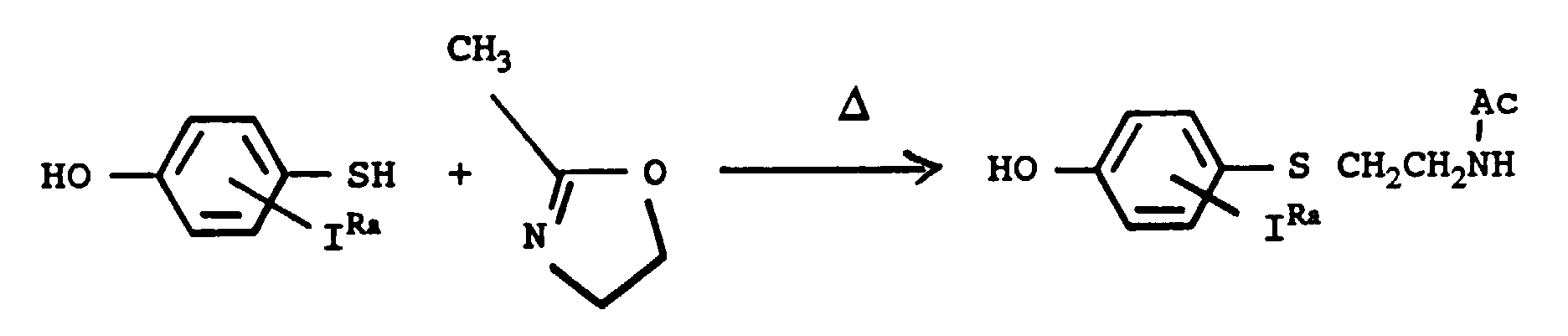
- Exemplary iodine labelling is as follows:
- N-acetyl-3-iodo-4-S-cysteaminyl-phenol;
- N-acetyl-2-S-cysteaminyl-3-iodo-phenol;
- N-acetyl-2-S-cysteaminyl-5-iodo-phenol;
- N-{2-{(2'-iodo-4'-acetoxy-phenyl)thio}ethyl}-acetamide;
- N-{2-{(2'-acetoxy-5'-iodo-phenyl)thio}ethyl}-acetamide; and
- N-{2-{(2'-acetoxy-3'-iodo-phenyl)thio}ethyl}-acetamide.
- Various radiolabelling agents may be used such as carbon 14, U-14-C, iodine (such as 123I, 125I and 131I), technetium (such as 99mTc), fluorine (such as 18F), indium (such as 111In) and 35S for example. The method of introduction of the radiolabelling agent to the compound will depend on the choice of radiolabelling agent, as one skilled in the art would appreciate. The radiolabelling agent will be associated with the structure of the compound through one of the several ways: (1) through a covalent bond with the compound structure; (2) through ionic association with the compound structure; or (3) as part of the structure of the compound.
- Novel acylated compounds of this invention are represented by the compounds of formula (II). It has been found that those compounds and the analogous compounds of formula (II) in which R2 is C1-C8 alkyl (hereinafter included in references to compounds of formula II) are particularly useful in the treatment of various pigmentation disorders and, when formulated into suitable pharmaceutical compositions, exhibit excellent stability and very low general toxicity, but selective toxicity with respect to melanocytes. Hence, in accordance with another aspect of this invention, the pharmaceutical compositions are very useful in the treatment of pigmentary diseases such as treatments involving one or more of the following:
- blocking melanin synthesis in human or animal melanocyte cells,
- inhibiting the metabolic pathway involving tyrosinase in human or animal melanocyte cells, and
- treatment of melanoma, treatment of hyperpigmentation and treatment of cutaneous hyperpigmentation.
- In formulae (I) and (II), preferred alkyl and alkanoyl groups are C1 to C6. The most preferred alkyl and alkanoyl groups are C1 to C4.
- Preferred compounds of formula (I) include N-acetyl-4-S-cysteaminylphenol, N,N-dimethyl-4-S-cysteaminyl-phenol, 4-S-homo-cysteaminylphenol, α-methyl-4-S-cysteaminylphenol, N-{2-{(4'-acetoxyphenyl)-thio)ethyl)-acetamide, N-{1-methyl {2-{(4'-acetoxyphenyl)thio}ethyl}-acetamide, N,N-dimethyl (2-{(4'-acetoxyphenyl)-thio}ethylamine or N-propionyl-4-S-cysteaminylphenol.
- Preferred specific compounds of the invention of Formula (II) are:
Compound R1 R2 R3 R4 1. N-(1-Methyl-{2-{(4'-acetoxyphenyl)thio}-ethyl}acetamide CH3 H COCH3 COCH3 2. N,N,-Dimethyl {2-{(4-acetoxyphenyl)thio}-ethylamine H CH3 CH3 COCH3 3. N-{2-{(4'-acetoxyphenyl)thio}ethyl}-acetamide H H COCH3 COCH3 4. N-{2-{(4-acetoxyphenyl)-thio}ethyl}propionamide H H COC2H5 COCH3 - The compounds of formula (II) may be manufactured by a variety of synthesis techniques. Generally, they may be prepared by acylation of the corresponding cysteaminylphenol compounds.
- The cysteaminylphenol compounds may also be prepared in accordance with the technique disclosed by Miura et al, "Synthesis of Cysteinylphenol, Cysteaminylphenol, and Related Compounds, and in vivo Evaluation of Antimelanoma Effect", Arch. Dermatol. Res. (1987) 279:219-225. This entails the reaction of a phenol with a cysteamine to yield 4-S-cysteaminylphenol or 2-S-cysteaminylphenol. 4-S-cysteaminylphenol may then be isolated from the reaction product by Silica gel column chromatography or crystallization with changing pH of solution. It is understood that the various derivatives of this invention may be made by various radical substitutions to the sulphur chain, or substituting a thiol with the desired chain.
- Details of processes for making some of the preferred compounds of the invention are set out in the accompanying Examples.
- The intermediate cysteaminylphenol compounds may be acylated by reaction with the appropriate alkanoyl; for example, acetyl chloride may be reacted with N-{2-((4-hydroxyphenyl)thio)ethyl}acetamide, to give the preferred compound of the invention N-{2-((4'-acetoxyphenyl)-thio)-ethyl}acetamide (NAP-TEA).
- The compositions of this invention having active agents of formula (II) provide a mechanism for treating a variety of pigmentary diseases, such as melasma and other hyperpigmentation diseases and melanoma and other skin cancers and for preventing melasma and skin cancers which are normally induced by exposure to UV radiation. This activity of the composition is achieved by the selected active compound of the composition becoming toxic in the melanocytes in the presence of tyrosinase without being a substrate for plasma MAO. The compositions upon administration, according to this invention, have significant melanoma cytotoxicity and antimelanoma effects. This is recognized in the significant depigmentation of hair on black experimental animals, as well as significantly inhibiting the experimental growth of lung metastases of B16 F10 melanoma cells. The compositions of this invention have also demonstrated selective toxicity to other neural crest tumors, such as pheochromocytoma and neuroblastoma cells.
- Experimental tests on animals indicate per single dose toxicity levels in the range of 1,400 mg/kg of body weight for the preferred compound of formula (II), NAP-TEA.
- In the pharmaceutical compositions of the invention, the term "a biologically effective amount of the active compound" means that a sufficient amount of the compound in the composition is provided such that upon administration to the human or animal by, for example, i.p., s.c. or topical route provides sufficient active agent on each application to give the desired result in treating various pigmentary diseases, including melanoma, melasma, or acting as UV blocker and/or depigmenting agent in sunscreen lotions. However, the biologically effective amount of the active compound is at a level that it is not toxic to the human or animal during the term of treatment.
- The term "a suitable biologically compatible carrier" includes a solvent for the compound when the compound is injected by either i.p. or s.c. route. Suitable biologically compatible carriers for injection include physiologically normal saline and other types of readily injectable solutions which are well understood by those skilled in the art. The preferred injectable carrier is a neutral buffer having a pH of 7.0 to 7.4. When the compound is topically applied, the carrier may be any type of suitable excipient or carrier in the form of, for example, cosmetic compositions, pharmaceutical adjuvants, and sunscreen lotions.
- Suitable carriers for topical application include conventional skin treatment compositions, such as cosmetic compositions and pharmaceutical preparations. Examples of such ingredients for topical application are oils such as liquid paraffin, vaseline, methylpolysiloxane, castor oil, squalane, and coconut oil; anti-oxidants such as butylated hydroxyanisole, butylhydroxytoluene, ethyl gallate, and tocopherol; surfactants such as sodium laureate, laurylpyridinium chloride, polyoxyethylene sorbitan monooleate, glyceryl monoarachate, sodium N-stearyl-N,N-dimethyl glycine, oleyl hydrolysed animal protein, and polyoxypropylene glyceryl ether phosphate; humectants such as glycerol, sodium 2-pyrrolidone-5-carboxylate, and sodium lactate; thickeners such as tragacanth gum, quince seed gum, zanthan gum, carboxyvinyl polymer and bentonite; preservatives such as benzoic acid, allyl p-hydroxybenzoates, dehydroacetic acid and trichlorocarbonilide; coloring agents and pigments such as Acid Red Rhodamine B, Violamin R, Orange SS, Naphthol, Yellow-S, Tartrazine, Alizarin, Cyanine Green F, Brilliant Blue CFC, Acid Violet, Carthamine, β-carotene, Red, Blue & Yellow Oxide of Iron, titanium dioxide, Yellow Iron Oxide, Cobalt Blue, Ultramarine Blue, Rose & Violet, triiron tetroxide, and carbon black; waxes such as Bees wax, Japan wax, Carnauba wax, Candelilla wax, and lanolin; film-forming agents such as nitrocellulose and polyvinyl alcohol; solvents or dispersing media such a water and alcohols (e.g. ethanol); powders such as aluminum powder, talc, kaolin, zinc oxide, titanium dioxide, mica, calcium, carbonate, and treated powders; plasticizers such as acetyl tributyl citrate, and dibutylphthalate; pharmaceutically active agents such as retinol, palmitate; γ-orizanol, pyridoxine dipalmitate, ascrobyl dipalmitate, ergocalciferol, di-α-tocopherol acetate, biotin, ethinylestradiol estrone, hydrocortisone, calcium pantothenate, ammonium glycyrrhizinate, allantoid, quaiasulene, and hinokitiol; and perfumes such as musk, civet, amber, jasmine absolute, and rose oil.
- The skin treatment compositions, according to this invention, can be prepared in any conventional form, for example, solubilized forms such as cosmetic lotions, and emulsified forms such as liquid creams, creams, ointments and dispersions.
- The pharmaceutical compositions of this invention are particularly useful for depigmenting skin where the composition is applied topically or injected by s.c. or i.p. route to the afflicted area to achieve desired degree of depigmentation of the skin.
- The compositions of the invention are also especially useful for treating melanoma. The composition is administered either topically or by injection through i.p. or s.c. route. The composition is used in treating melanoma to either clear it up or place it in remission. Furthermore, a method of the invention is in the formulating of the composition useful for treating melanoma.
- The compounds of formula (II) may be used in sunscreening lotions as depigmenting agents. It has been found that the active agents of formula (II):
- 1. prevent UV radiation activating melanin synthesis in melanocytes;
- 2. prevent moles from becoming melanoma after exposure to sunlight; and
- 3. are substrates for the enzyme tyrosinase where it is thought that enzymatic conversion of the substrates produce components which act as depigmenting agents and possibly as UV blockers in the sunscreen lotion.
- Quite surprisingly, we have found that, upon administration of the acylated derivatives of formula (II), the compounds are deacylated to become potent melanocytotoxic and depigmenting agents. Such in vivo conversion of the compounds is extremely beneficial from the standpoint of product stability and reduced general toxicity. Once the compounds of formula (II) are deacylated upon administration, they become excellent tyrosinase substrates. According to a preferred embodiment of the invention, NAP-TEA, once incorporated into the body, is deacylated to become N-acetyl-4-S-CAP which is, as already demonstrated in WO-A-9116302, a strong tyrosinase substrate that is present only in pigment cells. This enzyme activity becomes highly expressed in malignant melanoma and melasma cells where the specificity of N-acetyl-4-S-CAP is important in avoiding general toxicity to the patient. The therapeutic approach in the use of these compounds for pigmentary diseases such as melasma and skin cancer, such as malignant melanoma, have become very important as well as preventive medicine for photoaging and skin cancer developed after exposure to sunlight. Melanoma represents 2% of all cancer by instance and is generally increasing in the population at a rate exceeded only by lung cancer.
- For purposes of treatment, it is understood that depending upon the route of administration the composition of this invention may have various concentrations of active agent in the biologically compatible carrier. For purposes of injection, the concentration of the active agent in the injectable solution usually is in the range of 200 to 1200 mg/kg of body weight with a preferred dosage in the range of 300 mg to 500 mg/kg of body weight. For purposes of topical application, the concentration of the active agent in the cosmetic cream or the like usually is in the range of 4% to 10% by weight in a cream base with a preferred composition in the range of 4% to 6% by weight in a cream base.
- It is appreciated that various complementary agents may be included with the active agents of this invention. For example, the composition may be administered in combination with L-dopa and/or antidecarboxylase. Such combinations may have selected use in the treatment of various melanomas.
- The following Examples demonstrate various aspects of the invention in providing the diagnosis and treatment of pigmentation diseases, depigmenting properties and antimelanoma properties. The various compounds of formula (I) may be radiolabelled in accordance with a preferred procedure outlined in the following Examples. The procedures have been described in particular reference to the compound N-acetyl-4-S-CAP; however, it is understood that the procedure may be similarly applied to the other compounds of formula (I). Furthermore, the Examples also demonstrate effectiveness in blocking melanin synthesis for only one of the compounds of formula (II). However, it is understood that the compounds of formula (II) all exhibit in a predictable way similar properties.
- (U-14C)phenol (9.26 MBq, 333.3 MBq/mmol) in toluene (0.25 mL) was added to aqueous HBr (47% w/v ; 0.5 mL solution containing unlabelled phenol (1.7 mg; 0.018 mmol) and cystamine•2HCl (45 mg; 0.2 mmol). The mixture was heated for 30 min at 130°C in a screw-capped reaction vial. After cooling, the solvent was removed under vacuum and the residue was dissolved in aqueous methanol (3% v/v). The solution was applied to a Sep-Pak C18 cartridge. The cartridge was washed with aqueous methanol (10% v/v ; 0.6 mL for removal of excess cystamine and (14C) labelled 4-S-CAP and 2-S-CAP were eluted with aqueous methanol (20% v/v ; 3.0 mL). The eluent was concentrated under vacuum. The major compounds were separated on preparative TLC using the mobile phase I. The products were extracted from TLC with MeOH in CHCl3 (20% v/v). The two isomers were acetylated with acetic anhydride in dry pyridine at 25°C for 24 hours. The solvent was removed under vacuum. The residue was dissolved in NH3 (2.0 M) and stirred at 25°C for 30 min for O-deacetylation. After reaction, the methanol solvent was removed under vacuum and the residue was purified on preparative TLC using mobile phase II. (14C)N-Ac-4-S-CAP (9.5µCi, 351.9 kBq) and (14C)N-Ac-2-S-CAP(5.7 µCi, 211.1 kBq) in 3.8% and 2.3% radiochemical yield respectively. The radiochemical purity of the two isomers was more than 99%.
- This Example demonstrates that one is able to synthesize (14C)N-Ac-4-S-CAP with conventional acetylation and O-deacylation after electrophilic substitution on phenol of the NH2CH2CH2S+ cation in HBr solution, as per the following reaction scheme.


- In the above reaction process, (14C)-acetyl-2-S-cysteaminylphenol ((14C)-Ac-2-S-CAP was also obtained as a minor isomer. The synthesis of (14C)4-S-CAP using the above reaction was as described previously (Somayaji et al, 1989). It was difficult to remove cystamine by methanol precipitation or to separate the 2 and 4 isomers of CAP by TLC system. However, it was possible to remove cystamine and accomplish preliminary purification using a Sep-pak C18 cartridge. The chromatographic separation of the two isomers was accomplished with mobile phase I. This basic mobile phase allowed a complete separation of the two isomeric CAP compounds of the reaction mixture (4-S-CAP : Rf = 0.66; 2-S-CAP : Rf = 0.53).
- Unlabelled crystalline phenol ( 2 mg) reacted smoothly with cystamine in HBr solution in a small scale reaction. An overall yield was approximately 76% as a mixture of the two isomers, the ratio of 4-S-CAP to 2-S-CAP being 2.5. Acetylation of the O-position and the N-position on isomers was carried out with acetic anhydride in dry pyridine. O-Deacetylation for the synthesis of N-Ac-4-S-CAP was performed with NH3 in methanol (2.o M) under mild conditions without N-deacetylation. A mixture of 4-S-CAP (a major product) and 2-S-CAP (a minor product) containing the 14C-radiolabel were obtained by using a two phase reaction system (toluene : HBr) under reflux, and with the addition of unlabelled phenol this gave low yield of products. If a source of (U14C) phenol were available as a solid material or as a more concentrated solution, the yield and the specific activity can be greatly increased. (14C)N-Ac-4-S-CAP synthesized from (14C)4-S-CAP gave a high radiochemical yield (68%). Although the specific activity of (14C)14-Ac-4-S-CAP and (14C)14-Ac-2-S-CAP was low (450 kBq/µmol), the products would be sufficient to carry out experimental studies. The use of solid (U14C)phenol with a high specific activity for the synthesis of (14C)4-S-CAP and (14C)2-S-CAP would increase both the specific activity and the yield of the final products.
- All chemicals used were of reagent grade quality. (U-14C)Phenol in toluene was purchased from Sigma Chemical Company (Saint Louis, Missouri, USA). Preliminary purification was performed on Sep-Pak C18 Cartridges (Waters Chromatography Division, Millipore Corporation, Milford, USA). Whatman PLK5F preparative silica gel 150A plates were used for separation of 4-S-cysteaminyl (U-14C)phenol, (14C) 4-S-CAP and 2-cysteaminyl (U-14C) phenol ((14C)2-S-CAP) using mobile phase I (CHCl3 MeOH : NH4OH = 24 :12 :1. 1 v/v/v) and using mobile phase II (CHCl3 : MeOH = 85 15 v/v) for the purification of the N-acetyl derivatives of the two isomers. 14C- Radioactivity determination of products was performed in Aquasal®-2 (Biotechnology Systems NEN® Research Product, Boston, MA, USA) with a Beckman LS 3801 liquid scintillation spectrometer. HPLC analyses were carried out with a Waters system consisting of a Model 600E system controller, Model U6K injector and Model 441 detector at 254 nm, using µBonapak C18 reverse phase compression (10µ) column (Waters Millipore Canada Ltd., Mississauga, Ontario) and MeOH : 0.1% acetic acid in H2O (1 : 1 v/v) as eluent with a flow rate of 1 mL/min. The final products, N-acetyl-4-S-cysteaminyl (U-14C) phenol ((14C) N-Ac-4-S-CAP) and N-acetyl-2-S-cysteaminyl (U-14C)phenol ((14C) N-Ac-2-S-CAP) were confirmed by comparing their retention times to those of authentic unlabelled compounds on HPLC. Radiochemical purity after TLC was determined by collect eluent fractions (0.5 mL) from an HPLC analysis and counting by a liquid scintillation spectrometer.
- To solution of N-{2-((4-Hydroxyphenyl)thio)ethyl} acetamide (200 mg, 0.95 mmol) in dry pyridine was added slowly acetyl chloride at -15°C with stirring. The resulting solution was stirred at 25°C for 1.5 hour. The residue obtained after removal of solvent was chromatographed on a low pressure silica gel column (CANAG, D-O, fine grain ; Mobile phase : 5% MeOH/CHCL3). The fractions containing product were collected and then the white powder obtained after removal of solvent was recrystallized to gain the white crystals from H2O-MeOH. (Chemical yield : 217 mg, 0.85 mmol 90.3% ) mp= 87-88°
- 1 H NMR (Acetone-d6); δ 7.52 (bro, s, 1H, NH), 7.41 (d, fine structure, 2H, J=8.5 Hz, aromatic C(2)-H, C(6)-H), 7.04 (d, fine structure 2H, J=8.5 Hz, aromatic C(3)-H, C(5)-H), 3.33 (m, 2H, J(CH2-CH2)=6 Hz, J(CH2-NH)=7.5 Hz, CH2CH 2NH), 3.05 (dd, 2H, J(CH2-CH2)=8 Hz, SCH 2), 2.22(s, 3H, CH 3COO), 1.83 (s, 3H, CH 3CONH).
- 13 C NMR (Acetone-d6) ppm; 169.95 (1C, CH3 CONH) 169.29 (1C, CH3 COO), 150.12 (1C, aromatic, C(4)), 133.61 (1C, aromatic, C(1)), 130.76 (2C, aromatic, CH) 122.98 (2C, aromatic, CH), 39.35 (1C, CH2NH), 33.48 (1C, SCH2), 22.52 (1C, CH3CONH), 20.61 (1C, CH3COO).
- Exact mass calc. for C11H15NO3S : 253.07725; found (HRMS), 253.0773; intensity = 18.18%.
- A mixture of 2-ethyl-2-oxazoline (786 mg, 7.94 mmol) and 4-hydroxythiophenol (1 g, 7.94 mmol) was heated at 125° for 2 h under Ar gas. After cooling of the reaction mixture, the mixture was evaporated under vacuum. The residue was purified with a low pressure normal phase silica gel column chromatography (mobile phase: 10% MeOF in CHCl3). N-propionyl-4-S-cysteaminylphenol (N-Pro-4-S-CAP) was obtained as a white powder on evaporation of the solvent (Chemical yield: 53.4%, 953 mg).
- A mixture of N-propionyl-4-S-cysteaminylphenol, dry pyridine, and acetic anhydride is then stirred at 25° for 24 hours. The reaction mixture is evaporated under vacuum and the residue is purified with a low pressure normal phase silica gel column chromatography (mobile phase : 8% MeOH in CHCl3). N-{2-{(4-acetoxyphenyl)thio}-ethyl}-propionamide (NAP-TEP) is obtained as a white powder upon evaporation of the solvent.
- In vivo covalent binding of (14C)-N-acetyl-4-S-CAP was investigated in mice. Female C57BL/6J mice received a single intraperitoneal injection of 2.0 mmol/kg (14C)-N-acetyl-4-S-CAP compound. The animals were killed 48 hours later. The tissues were removed and the covalent binding was determined as follows.
- Five different tissues were examined for covalent binding of radioactively labelled N-acetyl-4-S-CAP intermediate(s). The maximum binding of N-acetyl-4-S-CAP was detected in the s.c. melanoma tumor and melanoma colony-bearing lung tissues. In contrast, the normal organs, e.g., the lung without melanoma colonies, kidney and liver, which are actively involved in drug metabolism of N-acetyl-4-S-CAP, did not reveal a significant accumulation of radioactive material. The results of such study are set out in the following Table 1.
TABLE 1 In Vivo Covalent Binding of (14C)-NACAP to Lung with and without B16F10 Melanoma Colonies, B16F10 Melanoma s.c. Tumor Tissue, Liver and Kidney Tissue a Covalent Binding b (nmol covalently bound/mg of protein Lungs with B16F10 melanoma colonies 0.330 + 0.118 Lungs without B16F10 melanoma colonies 0.010 + 0.001 B16F10 melanoma s.c. tumor 0.521 + 0.076 Liver 0.013 + 0.003 Kidney 0.008 + 0.001 aFemale C57BL/6J mice received a single intraperitoneal injection of 2.0 mmol/kg (14C)-NACAP. The animals were killed 48 hr later, the tissues were removed, and the covalent binding was determined as described under above. bThe data are presented as the means +S.D. (n=3). - In vivo biodistribution by whole-body autoradiography was determined in use of the compounds of this invention and in particular, (14C)N-acetyl-4-S-CAP at 48 hours after i.p. injection of (14C)N-acetyl-4-S-CAP in the mouse, radioactive material was cleared from the body and was not detectable in any normal organs except the lumen of the large intestine. This is shown in the attached Figure 1. A whole-body autoradiogram of the mouse with both an s.c. B16F10 melanoma tumor and a B16F10 lung melanoma colonies after single i.p. injection of (14C)N-acetyl-4-S-CAP (5.0 µCi). 48 hours after injection the animal was killed, frozen and prepared for sectioning. The 20-µm sections were freeze-dried and exposed to x-ray film for whole-body autoradiography. A) A whole-body section without exposure to x-ray film. E, eye; B, brain; Lu, lung with B16F10 melanoma colonies; H, heart; Li, liver; Me, s.c. melanoma tumor; I, intestines. B) after exposure to x-ray film. Positive signal of accumulated radioactivity is clearly detectable in the melanoma colony-bearing lung and s.c. melanoma tissues, as well in the lumen of the distal partes of intestine. Bar, 1 cm.
- This result as shown in Figure 1 demonstrates the significant detoxication of N-acetyl-4-S-CAP in the liver followed by the excretion of N-acetyl-4-S-CAP metabolites into the bile. The s.c. melanoma tumor and the lung with melanoma colonies were the only organs displaying a significant accumulation of the radioactivity.
- The radiolabelled compounds of this invention and in particular, radiolabelled N-acetyl-4-S-CAP and radiolabelled NAP-TEA are particularly useful as radioimaging agents without causing toxic side effects in the host. Also, in appropriate dosages the compounds may be used effect radio-chemotherapy at specific melanoma sites within the host.
- NAP-TEA was introduced to mouse plasma to determine by in vitro experimentation the extent to which NAP-TEA is deacetylated to form N-Acetyl-4-S-CAP. The procedure was as follows. Into 100 µl of mouse plasma, 10 µg of NAP-TEA was introduced. The mixture was shook for one-half of a minute and then passed through a Sep-Pak C18 cartridge in either 7 ml of 5% methanol/water to form eluent 1 or in 4 ml of 50% methanol/water to form eluent 2. Both eluents 1 and eluents 2 were collected. Aqueous methanol was removed from eluent 2 to provide a residue which was subjected to HPLC under the following conditions. The HPLC had a column of µ Bonapak C18 under reverse phase radical compression. The residue was mixed with methanol:water at 50:50 with a flow rate through the radiograph at 1 ml/min. The detector was a Water Associates Model 441 with detection by ultraviolet at 250 nm. All that was detected in eluent 2 as passed through the chromatograph was N-Acetyl-4-S-CAP which indicates that NAP-TEA was readily deacylated by the mouse plasma to give the desired active agent.
- A C57BL/6J Black Mouse was injected at 300 mg/kg body weight by i.p. administration of NAP-TEA. 100 µl of plasma was extracted from the mouse after 5 minutes of injection and after 20 minutes of injection. The plasma samples were treated in accordance with the procedure of Example 2. The plasma samples were passed through a Sep-Pak C18 cartridge in either 5% methanol:water to produce eluent 1 or 50% methanol/water to produce eluent 2. Eluent 2 had the aqueous methanol removed therefrom to provide a residue. The residue was redissolved in methanol/0.1% acetic acid and water in a ratio of 50:50 and subjected to HPLC for both the 5 minute and 20 minute plasma samples. Their was no evidence of NAP-TEA but their was evidence of N-Acetyl-4-S-CAP. The concentration of N-Acetyl-4-S-CAP in the 5 minute extracted sample being considerably greater than in the 20 minute extracted sample to indicate that in vivo NAP-TEA is deacylated to N-Acetyl-4-S-CAP which in turn is then taken up by the mouse melanocytes.
- MTT solution (Sigma catalog No. M2128) was dissolved in PBS at 1 mg/ml and filtered to sterilize the solution. The solution was stored in the dark at 4°C until used. The growing cells were harvested, counted and inoculated into 96 well microtiter plates (1-2 x 10³ cells/well). After 24 h, drugs were applied to culture wells, and the cultures were incubated for 5 days at 37°C. At this time, 50 µl of MTT solution was added to microculture wells. After 4 h incubation at 37°C, supernatant was removed from each well. 150 µl of DMSO was added to solubilized the MTT-formazan product. After mixing gently, absorbance at 540 nm was measured with ELISA plate spectrophotometer.
- NAP-TEA showed lower in vitro Cytotoxicity than that of N-Acetyl-4-S-CAP on 3 cell lines.
In vitro cytotoxicity(IC50) of NAP-TEA and N-Acetyl-4-S-CAP with MTT assay Cell line Compound NAP-TEA N-Acetyl-4-S-CAP IC50 HeLa 77µg/ml 75µg/ml SK-MEL-23 31µg/ml 25µg/ml UT amelanotic melanoma 14µg/ml 12µg/ml - A reaction mixture consisting of NAP-TEA (500µmol) and of mushroom tyrosinase (11 units) in 1.0 ml of 0.05 M sodium phosphate buffer (pH 6.8) was incubated at 37°C in a water bath. The reaction was stopped periodically by cooling with ice. Aliquots removed at set time intervals were rapidly cooled to 0°C in an ice bath and the remaining NAP-TEA was measured using HPLC.
HPLC instrument and conditions
Water 600 E liquid chromatograph system - Conditions:
- µBondapak C18, Radial-Pak Cartridge (Waters)
Mobile phase; 70% MeOH/H2O, 1 ml/min
Detector; Waters Model 441 UV absorbance detector
Detection; Wavelength 254 nm - NAP-TEA was not a substrate of mushroom tyrosinase, due to the blocking effect of acetoxy group on the 4-position of the benzene ring because its concentration remained constant in the reaction mixture. However, the concentration of N-Acetyl-4-S-CAP in the reaction mixture dropped off rapidly over 25 minutes to almost zero amount after 50 minutes in the reaction mixture.
- Hairs were plucked manually from the back of 6-8 week old C57BL/6J black mice (4 mice). Starting on day 2, daily for 14 days NAP-TEA was injected i.p. The dose was 300 mg/kg body weight.
- After completion of the i.p. injections of NAP-TEA, mice were depigmented with the new replacement hair being almost pure white.
- Six newborn (3 day old) C57BL/6J black mice were injected i.p. with a single dose of 0.1 mL of NAP-TEA solution (300 mg/kg body weight).
- The newborn mice were depigmented in all hair follicles with the growing hair being light grey after a single i.p. injection of NAP-TEA.
- Solutions of 15% NAP-TEA in DMSO(w/v) and of 15% NAP-TEA in 60% EtOH(w/v) were prepared for topical application to a Yucatan pig. NAP-TEA was applied to the back skin of the pig twice a day for 8 weeks. After 8 weeks, punch biopsy was performed from the application area and from normal skin. Specimens obtained were kept in 2N NaBr solution for 3 hours followed by separation of the epidermis from dermis. Specimens of epidermis were incubated for 3 hours in phosphate buffer (pH 7.4) containing L-Dopa. The specimens were fixed in 10% neutral formalin solution and then washed twice in PBS. Finally, the specimens were mounted in glycerol gel. The numbers of Dopa-positive melanocytes in 9 adjacent 1 mm2 fields from each sample were counted.
- The fields from skin samples treated with NAP-TEA revealed a significant reduction in the number of functioning melanocytes;
Number of functioning melanocytes (Average of 9 fields) Normal epidermis 166 ± 74/mm2 NAP-TEA in DMSO 32 ± 14/mm2 NAP-TEA in 60% EtOH 74 ± 25/mm2 DMSO only 114 ± 56/mm2 EtOH only 117 ± 38/mm2 - From the above specific examples, it is apparent that one of the preferred compounds, according to this invention, is converted in vivo to N-Acetyl-4-S-CAP which functions, as already discussed in WO-A-9116302 as an excellent therapeutic agent in the treatment of pigmentary diseases. It is therefore understood that the acylated forms of the compounds of this invention are altered in vivo to yield compounds which already have been established as excellent therapeutic agents in the field of treating pigmentary disorders.
- Throughout the specification we have referenced several Journal articles which relate to standard procedures and techniques. Those articles are listed as follows.
- 1. Alena F., Jimbow K. and Ito S. (1990) Melanocytotoxicity and Antimelanoma effects of Phenolic Amine Compounds in Mice in vivo. Cancer Res. 50, 3743.
- 2. Ito Y. and Jimbow K. (1987) Selective Cytotoxicity of 4-S-cysteaminylphenol on Follicular Melanocytes of the Black Mouse-Rational Basis for its Application to Melanoma Chemotherapy. Cancer Res. 47, 3278.
- 3. Inoue S., Ito S., Wakamatsu K., Jimbow K. and Fujita K. (1990) Mechanism of Growth Inhibition of Melanoma Cells by 4-S-cysteaminylphenol and its Analogues. Biochem. Pharmacol. 39, 1077.
- 4. Jimbow K., Iwashina T., Alena F., Yamada K., Pankovich J. and Umemura T. (1992) Exploitation of Pigment Biosynthesis Pathway as a Selective Chemotherapeutic Approach for Malignant Melanoma. J. Invest. Dermatol. (in press).
- 5. Miura S., Ueda T., Jimbow K., Ito S. and Fujita K. (1987) Synthesis of Cysteinylphenol, Cysteaminylphenol and Related Compounds, and in vivo Evaluation of Antimelanoma Effect. Arch. Dermatol. Res. 279, 219.
- 6. Miura T., Jimbow K. and Ito S. (1990) The in vivo Antimelanoma Effect of 4-S-cysteaminylphenol and its N-acetyl derivative. Int. J. Cancer 46, 931.
- 7. Pankovich, J. Jimbow K. and Ito S. (1990) 4-S-cysteaminylphenol and its Analogues as Substrates for Tyrosinase and Monoamine Oxidase. Pigment Cells Res. 3, 146.
- 8. Somayaji V.V., Wiebe, L.I. and Jimbow K. (1989) Experimental Antimelanoma Agents: The Synthesis of 4-S-cysteaminylphenol (U-14C)phenol. Nuc. Compact 20, 158.
- 9. Wong M. and Jimbow K. (1991) Selective Cytotoxicity of N-acetyl-4-S-cysteaminylphenol on Follicular Melanocytes of Black Mice. Br. J. Dermatol 124, 56.
- Although preferred embodiments of the invention are described herein in detail, it will be understood by those skilled in the art that variations may be made thereto without departing from the scope of the appended claims.
Claims (19)
- A compound for use in radioimaging and radiochemotherapy in the diagnosis and/or treatment of melanoma and other pigmentary disorders, said compound being selected from the group of compounds represented by the formula:
 R1 is H or C1-C8 alkyl;R2 is H or C1-C8 alkyl;R3 is H, C1-C8 alkyl or C1-C8 alkanoyl;R4 is H or C1-C8 alkanoyl;Ra is a radioactive material useful in radioimaging and/or radiochemotherapy where the dotted line (---) indicates:1) Ra is covalently bound to the structure of formula (I);2) Ra is ionically associated with the structure of formula (I); or3) Ra is radioactive carbon which is part of the structure of formula (I);andx is 1 to 5,with the provisos that when x is 1, one of R1, R2 or R3 is other than H, and that the sulphur containing group and the Ra group are in the 2, 4 or 6 positions of the phenyl ring.
 - A compound of the formula (II):
 R1 is H or C1 - C8 alkyl;R2 is H;R3 is H, C1 - C8 alkyl or C1 - C8 alkanoyl;R4 is C1 - C8 alkanoyl; andx is 1 to 5; andwith the proviso that at least one of R1 and R3 is other than H, and that the sulphur containing group is in the 2, 4 or 6 position of the phenyl ring.
 - A process for radioimaging melanoma colonies in vivo in a subject comprising i) administering to the subject's circulatory system one or more radioimaging compounds as defined in Claim 1 and detecting the presence of emitted radiation from an accumulation of said selected radioimaging compound as said administered compound binds solely to any melanoma tissue present in said subject.
- A compound as claimed in Claim 1 or Claim 2, wherein said sulphur containing group is in the 4 position.
- A compound as claimed in Claim 4, wherein said Ra group is in the 2 or 6 position.
- A compound as claimed in Claim 1, wherein the organic moiety of formula (I) is selected from N-acetyl-4-S-cysteaminylphenol, N,N-dimethyl-4-S-cysteaminylphenol, 4-S-homo-cysteaminylphenol, α-methyl-4-S-cysteaminylphenol, N-{2-{(4'-acetoxyphenyl)thio}ethyl}-acetamide, N-{1-methyl {2-{(4-acetoxyphenyl)thio}ethyl}-acetamide, N,N-dimethyl {2-{(4'-acetoxyphenyl)thio}ethylamine and N-propionyl-4-S-cysteaminylphenol.
- A compound as claimed in Claim 6, wherein said moiety is N-acetyl-4-S-cysteaminylphenol.
- A compound as claimed in Claim 6, wherein said moiety is N-{2-{(4-acetoxyphenyl)thio}ethyl}-acetamide.
- A compound as claimed in any one of Claims 1 and 4 to 8, wherein said radioactive material Ra is selected from carbon 14, U-14-C, iodine (such as 123I, 125I and 131I), technetium (such as 99mTc), fluorine (such as 18F), indium (such as 111In) and 35S.
- A process as claimed in Claim 3, wherein said radioimaging compound is as defined in any one of Claims 4 to 9.
- A compound as claimed in Claim 2, wherein said sulphur group is in the 4 position.
- N-{2-{(4'-acetoxyphenyl)thio}ethyl}-acetamide.
- A compound as claimed in Claim 2, selected from N-(1-methyl{2-{(4'-acetoxyphenyl)thio}ethyl}-acetamide and N-{2-{(4-acetoxyphenyl)thio}ethyl}propionamide.
- A pharmaceutical composition comprising a compound as defined in Claim 2 and a pharmaceutically acceptable carrier.
- A pharmaceutical composition as claimed in Claim 14, wherein said carrier is a topical vehicle.
- A pharmaceutical composition as claimed in Claim 15, wherein said carrier is a sunscreening composition.
- A pharmaceutical composition as claimed in any one of Claims 14 to 16, wherein said compound is as defined in any one of Claims 11 to 13.
- The use of a compound of the formula (II) :
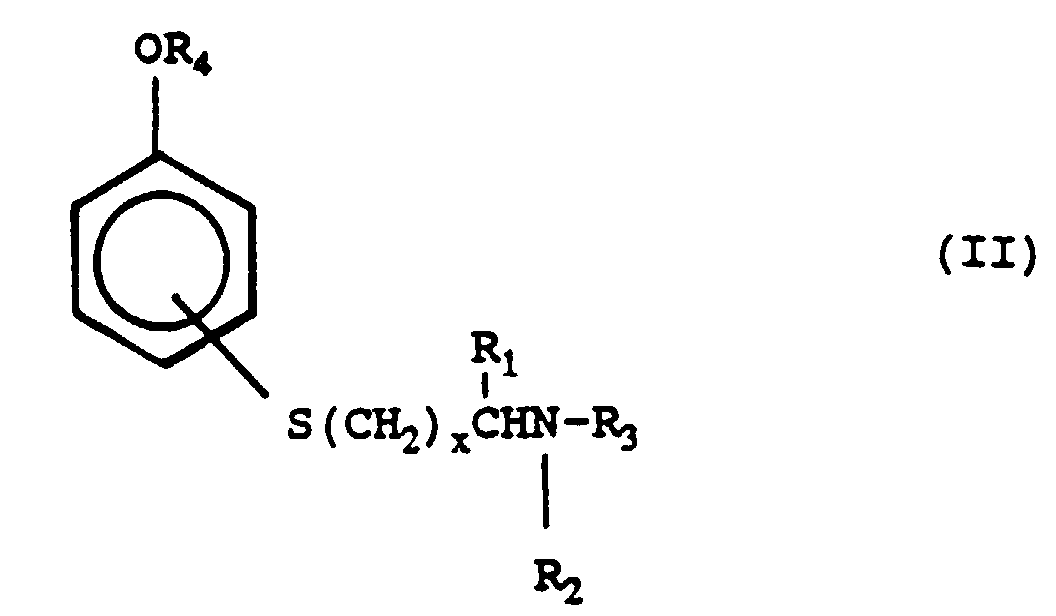 R1 is H or C1 - C8 alkyl;R2 is H or C1 - C8 alkyl;R3 is H, C1 - C8 alkyl or C1 - C8 alkanoyl;R4 is C1 - C8 alkanoyl; andx is 1 to 5; andwith the proviso that when x is 1 one of R1, R2 or R3 is other than H, and that the sulphur containing group is in the 2, 4 or 6 position of the phenyl ring,
for the manufacture of a medicament for (a) blocking melanin synthesis in human and animal melanocyte cells; (b) inhibiting the metabolic pathway involving tyrosinase in human and animal melanocyte cells; (c) treating melanoma; (d) for treating hyperpigmentation; or (e) for treating cutaneous hyperpigmentation. - A use as claimed in Claim 18, wherein said compound is as defined in any one of Claims 2 and 11 to 13.
Applications Claiming Priority (5)
| Application Number | Priority Date | Filing Date | Title |
|---|---|---|---|
| GB929215066A GB9215066D0 (en) | 1992-07-15 | 1992-07-15 | Radio imaging and radio-therapy compounds |
| GB9215066 | 1992-07-15 | ||
| CA 2082252 CA2082252A1 (en) | 1992-07-15 | 1992-11-05 | Diacyl derivatives of phenolic thioether amines useful in treating pigmentation disorders |
| CA2082252 | 1992-11-05 | ||
| PCT/CA1993/000292 WO1994002456A1 (en) | 1992-07-15 | 1993-07-14 | Radioimaging and radiochemotherapy phenolic thioether amines and acyl derivatives thereof for use in diagnosing and treating pigmentation disorders |
Publications (2)
| Publication Number | Publication Date |
|---|---|
| EP0650473A1 EP0650473A1 (en) | 1995-05-03 |
| EP0650473B1 true EP0650473B1 (en) | 1997-05-28 |
Family
ID=25675647
Family Applications (1)
| Application Number | Title | Priority Date | Filing Date |
|---|---|---|---|
| EP93915605A Expired - Lifetime EP0650473B1 (en) | 1992-07-15 | 1993-07-14 | Radioimaging and radiochemotherapy phenolic thioether amines and acyl derivatives thereof for use in diagnosing and treating pigmentation disorders |
Country Status (11)
| Country | Link |
|---|---|
| US (2) | US5925332A (en) |
| EP (1) | EP0650473B1 (en) |
| JP (1) | JPH07508996A (en) |
| AT (1) | ATE153656T1 (en) |
| AU (1) | AU672021B2 (en) |
| DE (1) | DE69311114T2 (en) |
| DK (1) | DK0650473T3 (en) |
| ES (1) | ES2102041T3 (en) |
| GR (1) | GR3023992T3 (en) |
| IL (1) | IL106347A (en) |
| WO (1) | WO1994002456A1 (en) |
Families Citing this family (8)
| Publication number | Priority date | Publication date | Assignee | Title |
|---|---|---|---|---|
| US6552060B1 (en) | 1997-08-11 | 2003-04-22 | Prolx Pharmaceuticals, Inc. | Asymmetric disulfides and methods of using same |
| US20030176512A1 (en) * | 1998-08-11 | 2003-09-18 | Kirkpatrick D. Lynn | Asymmetric disulfides and methods of using same |
| US5981076A (en) * | 1996-12-09 | 1999-11-09 | 3M Innovative Properties Company | UV protected syndiotactic polystyrene overlay films |
| JP2003206237A (en) * | 1999-10-08 | 2003-07-22 | Shiseido Co Ltd | Skin immune function modulator |
| US20020044914A1 (en) * | 2000-02-29 | 2002-04-18 | Dooley Thomas P. | Inhibitors of melanocyte tyrosinase as topical skin lighteners |
| EP1402816A1 (en) * | 2002-09-27 | 2004-03-31 | Communauté Européenne de l'Energie Atomique (EURATOM) | Method for rendering fingerprints visible |
| US20050214441A1 (en) * | 2002-09-27 | 2005-09-29 | Ian Ray | Method for rendering fingerprints visible |
| EP1909778B1 (en) * | 2005-07-28 | 2017-12-13 | Academisch Ziekenhuis bij de Universiteit van Amsterdam | Monophenol, benzenediol, or sulfhydryl compounds for use in the treatment of melanomas |
Family Cites Families (5)
| Publication number | Priority date | Publication date | Assignee | Title |
|---|---|---|---|---|
| US5283342A (en) * | 1992-06-09 | 1994-02-01 | Neorx Corporation | Biotinylated small molecules |
| US4183927A (en) * | 1976-08-16 | 1980-01-15 | The Dow Chemical Company | Substituted phenylthioalkylamines and compositions thereof |
| US4155907A (en) * | 1976-08-16 | 1979-05-22 | The Dow Chemical Company | Method for inhibiting ADP-induced platelet aggregation using phenylthioalkylamines |
| CA2015197C (en) * | 1990-04-23 | 1999-08-24 | The Governors Of The University Of Alberta | Phenolic amine depigmenting and antimelanoma agents |
| US5395611A (en) * | 1990-04-24 | 1995-03-07 | The Governors Of The University Of Alberta | Phenolic amine depigmenting and antimelanoma agents |
-
1993
- 1993-07-14 AT AT93915605T patent/ATE153656T1/en not_active IP Right Cessation
- 1993-07-14 IL IL10634793A patent/IL106347A/en not_active IP Right Cessation
- 1993-07-14 DK DK93915605.5T patent/DK0650473T3/en active
- 1993-07-14 JP JP6504045A patent/JPH07508996A/en active Pending
- 1993-07-14 AU AU45554/93A patent/AU672021B2/en not_active Ceased
- 1993-07-14 EP EP93915605A patent/EP0650473B1/en not_active Expired - Lifetime
- 1993-07-14 DE DE69311114T patent/DE69311114T2/en not_active Expired - Fee Related
- 1993-07-14 ES ES93915605T patent/ES2102041T3/en not_active Expired - Lifetime
- 1993-07-14 US US08/367,194 patent/US5925332A/en not_active Expired - Fee Related
- 1993-07-14 WO PCT/CA1993/000292 patent/WO1994002456A1/en not_active Ceased
-
1996
- 1996-08-27 US US08/708,125 patent/US5756068A/en not_active Expired - Fee Related
-
1997
- 1997-07-02 GR GR970401649T patent/GR3023992T3/en unknown
Also Published As
| Publication number | Publication date |
|---|---|
| IL106347A0 (en) | 1993-11-15 |
| US5925332A (en) | 1999-07-20 |
| HK1000731A1 (en) | 1998-04-24 |
| JPH07508996A (en) | 1995-10-05 |
| AU672021B2 (en) | 1996-09-19 |
| EP0650473A1 (en) | 1995-05-03 |
| AU4555493A (en) | 1994-02-14 |
| ES2102041T3 (en) | 1997-07-16 |
| DE69311114T2 (en) | 1997-09-18 |
| DK0650473T3 (en) | 1997-08-25 |
| GR3023992T3 (en) | 1997-10-31 |
| ATE153656T1 (en) | 1997-06-15 |
| US5756068A (en) | 1998-05-26 |
| WO1994002456A1 (en) | 1994-02-03 |
| IL106347A (en) | 1999-07-14 |
| DE69311114D1 (en) | 1997-07-03 |
Similar Documents
| Publication | Publication Date | Title |
|---|---|---|
| EP2186792B1 (en) | 2-(a-hydroxypentyl) benzoate and its preparation and use | |
| CA1142092A (en) | Method of preventing carcinogenesis | |
| IE860931L (en) | Phenylnaphthalene derivatives | |
| KR20020072296A (en) | A group of anti-cancer compounds with specific structure and their production method | |
| IE59768B1 (en) | Novel chromophores, sunscreen compositions and methods for preventing sunburn | |
| US5756068A (en) | Methods of radioimaging and radiochemotherapy using phenolic thioeter amines and acyl derivatives thereof | |
| US5973204A (en) | Colchicine and thiocolchicine derivatives with antiinflammatory and muscle relaxant activities | |
| NL7905893A (en) | PROCESS FOR THE PREPARATION OF RETINOIDS AND THE USE THEREOF FOR THE PREVENTION OF CARCINOGENESE. | |
| BR9814053B1 (en) | lipophilic diesters of chelating agents. | |
| US5929112A (en) | Derivatives of N,N'-di (carboxyalkyl) alkylene di-or triamine | |
| AU651823B2 (en) | Phenolic amine depigmenting and antimelanoma agents | |
| JPH10147558A (en) | Benzyl substituted derivatives of polyalkylene polyamines and their use in cosmetic and pharmacological compositions | |
| US5395611A (en) | Phenolic amine depigmenting and antimelanoma agents | |
| HK1000731B (en) | Radioimaging and radiochemotherapy phenolic thioether amines and acyl derivatives thereof for use in diagnosing and treating pigmentation disorders | |
| CA2140293A1 (en) | Radioimaging and radiochemotherapy phenolic thioether amines and acyl derivatives thereof for use in diagnosing and treating pigmentation disorders | |
| US5871755A (en) | Dehydroalanine derivatives for protecting the skin, the mucous membranes and/or the hair from oxidative stress, cosmetic or dermatological compositions containing them | |
| CA2082252A1 (en) | Diacyl derivatives of phenolic thioether amines useful in treating pigmentation disorders | |
| US5705533A (en) | 10-thio-substituted 1,8-dihydroxy-9 (10H) -anthracenone pharmaceuticals | |
| JPH0987127A (en) | Whitening agent and external preparation for skin containing the same | |
| HK1000730B (en) | Phenolic amine depigmenting and antimelanoma agents | |
| JPH06227958A (en) | External skin preparation | |
| AU2008200718B2 (en) | Mevalonic acid derivatives | |
| JPH06256181A (en) | Cell-differentiating and inducing substance |
Legal Events
| Date | Code | Title | Description |
|---|---|---|---|
| PUAI | Public reference made under article 153(3) epc to a published international application that has entered the european phase |
Free format text: ORIGINAL CODE: 0009012 |
|
| 17P | Request for examination filed |
Effective date: 19950128 |
|
| AK | Designated contracting states |
Kind code of ref document: A1 Designated state(s): AT BE CH DE DK ES FR GB GR IE IT LI LU MC NL PT SE |
|
| GRAG | Despatch of communication of intention to grant |
Free format text: ORIGINAL CODE: EPIDOS AGRA |
|
| 17Q | First examination report despatched |
Effective date: 19960605 |
|
| GRAH | Despatch of communication of intention to grant a patent |
Free format text: ORIGINAL CODE: EPIDOS IGRA |
|
| GRAH | Despatch of communication of intention to grant a patent |
Free format text: ORIGINAL CODE: EPIDOS IGRA |
|
| GRAA | (expected) grant |
Free format text: ORIGINAL CODE: 0009210 |
|
| AK | Designated contracting states |
Kind code of ref document: B1 Designated state(s): AT BE CH DE DK ES FR GB GR IE IT LI LU MC NL PT SE |
|
| PG25 | Lapsed in a contracting state [announced via postgrant information from national office to epo] |
Ref country code: BE Effective date: 19970528 |
|
| REF | Corresponds to: |
Ref document number: 153656 Country of ref document: AT Date of ref document: 19970615 Kind code of ref document: T |
|
| REG | Reference to a national code |
Ref country code: CH Ref legal event code: EP |
|
| REG | Reference to a national code |
Ref country code: CH Ref legal event code: NV Representative=s name: R. A. EGLI & CO. PATENTANWAELTE |
|
| REF | Corresponds to: |
Ref document number: 69311114 Country of ref document: DE Date of ref document: 19970703 |
|
| PG25 | Lapsed in a contracting state [announced via postgrant information from national office to epo] |
Ref country code: LU Free format text: LAPSE BECAUSE OF NON-PAYMENT OF DUE FEES Effective date: 19970714 |
|
| REG | Reference to a national code |
Ref country code: ES Ref legal event code: FG2A Ref document number: 2102041 Country of ref document: ES Kind code of ref document: T3 |
|
| ET | Fr: translation filed | ||
| REG | Reference to a national code |
Ref country code: DK Ref legal event code: T3 |
|
| REG | Reference to a national code |
Ref country code: PT Ref legal event code: SC4A Free format text: AVAILABILITY OF NATIONAL TRANSLATION Effective date: 19970609 Ref country code: GR Ref legal event code: FG4A Free format text: 3023992 |
|
| PG25 | Lapsed in a contracting state [announced via postgrant information from national office to epo] |
Ref country code: MC Free format text: LAPSE BECAUSE OF NON-PAYMENT OF DUE FEES Effective date: 19980131 |
|
| PLBE | No opposition filed within time limit |
Free format text: ORIGINAL CODE: 0009261 |
|
| STAA | Information on the status of an ep patent application or granted ep patent |
Free format text: STATUS: NO OPPOSITION FILED WITHIN TIME LIMIT |
|
| 26N | No opposition filed | ||
| PGFP | Annual fee paid to national office [announced via postgrant information from national office to epo] |
Ref country code: GB Payment date: 19990524 Year of fee payment: 7 |
|
| PGFP | Annual fee paid to national office [announced via postgrant information from national office to epo] |
Ref country code: PT Payment date: 19990622 Year of fee payment: 7 |
|
| PGFP | Annual fee paid to national office [announced via postgrant information from national office to epo] |
Ref country code: GR Payment date: 19990623 Year of fee payment: 7 Ref country code: SE Payment date: 19990623 Year of fee payment: 7 |
|
| PGFP | Annual fee paid to national office [announced via postgrant information from national office to epo] |
Ref country code: AT Payment date: 19990624 Year of fee payment: 7 |
|
| PGFP | Annual fee paid to national office [announced via postgrant information from national office to epo] |
Ref country code: IE Payment date: 19990628 Year of fee payment: 7 |
|
| PGFP | Annual fee paid to national office [announced via postgrant information from national office to epo] |
Ref country code: ES Payment date: 19990719 Year of fee payment: 7 |
|
| PGFP | Annual fee paid to national office [announced via postgrant information from national office to epo] |
Ref country code: FR Payment date: 19990728 Year of fee payment: 7 |
|
| PGFP | Annual fee paid to national office [announced via postgrant information from national office to epo] |
Ref country code: NL Payment date: 19990730 Year of fee payment: 7 Ref country code: DK Payment date: 19990730 Year of fee payment: 7 |
|
| PGFP | Annual fee paid to national office [announced via postgrant information from national office to epo] |
Ref country code: DE Payment date: 19990830 Year of fee payment: 7 |
|
| PGFP | Annual fee paid to national office [announced via postgrant information from national office to epo] |
Ref country code: CH Payment date: 19991029 Year of fee payment: 7 |
|
| PG25 | Lapsed in a contracting state [announced via postgrant information from national office to epo] |
Ref country code: IE Free format text: LAPSE BECAUSE OF NON-PAYMENT OF DUE FEES Effective date: 20000714 Ref country code: GB Free format text: LAPSE BECAUSE OF NON-PAYMENT OF DUE FEES Effective date: 20000714 Ref country code: DK Free format text: LAPSE BECAUSE OF NON-PAYMENT OF DUE FEES Effective date: 20000714 Ref country code: AT Free format text: LAPSE BECAUSE OF NON-PAYMENT OF DUE FEES Effective date: 20000714 |
|
| PG25 | Lapsed in a contracting state [announced via postgrant information from national office to epo] |
Ref country code: SE Free format text: LAPSE BECAUSE OF NON-PAYMENT OF DUE FEES Effective date: 20000715 Ref country code: ES Free format text: LAPSE BECAUSE OF NON-PAYMENT OF DUE FEES Effective date: 20000715 |
|
| PG25 | Lapsed in a contracting state [announced via postgrant information from national office to epo] |
Ref country code: LI Free format text: LAPSE BECAUSE OF NON-PAYMENT OF DUE FEES Effective date: 20000731 Ref country code: GR Free format text: LAPSE BECAUSE OF NON-PAYMENT OF DUE FEES Effective date: 20000731 Ref country code: CH Free format text: LAPSE BECAUSE OF NON-PAYMENT OF DUE FEES Effective date: 20000731 |
|
| PG25 | Lapsed in a contracting state [announced via postgrant information from national office to epo] |
Ref country code: PT Free format text: LAPSE BECAUSE OF NON-PAYMENT OF DUE FEES Effective date: 20010131 |
|
| PG25 | Lapsed in a contracting state [announced via postgrant information from national office to epo] |
Ref country code: NL Free format text: LAPSE BECAUSE OF NON-PAYMENT OF DUE FEES Effective date: 20010201 |
|
| GBPC | Gb: european patent ceased through non-payment of renewal fee |
Effective date: 20000714 |
|
| REG | Reference to a national code |
Ref country code: CH Ref legal event code: PL |
|
| EUG | Se: european patent has lapsed |
Ref document number: 93915605.5 |
|
| REG | Reference to a national code |
Ref country code: DK Ref legal event code: EBP |
|
| PG25 | Lapsed in a contracting state [announced via postgrant information from national office to epo] |
Ref country code: FR Free format text: LAPSE BECAUSE OF NON-PAYMENT OF DUE FEES Effective date: 20010330 |
|
| NLV4 | Nl: lapsed or anulled due to non-payment of the annual fee |
Effective date: 20010201 |
|
| REG | Reference to a national code |
Ref country code: FR Ref legal event code: ST |
|
| PG25 | Lapsed in a contracting state [announced via postgrant information from national office to epo] |
Ref country code: DE Free format text: LAPSE BECAUSE OF NON-PAYMENT OF DUE FEES Effective date: 20010501 |
|
| REG | Reference to a national code |
Ref country code: IE Ref legal event code: MM4A |
|
| REG | Reference to a national code |
Ref country code: PT Ref legal event code: MM4A Free format text: LAPSE DUE TO NON-PAYMENT OF FEES Effective date: 20010131 |
|
| REG | Reference to a national code |
Ref country code: ES Ref legal event code: FD2A Effective date: 20020603 |
|
| PG25 | Lapsed in a contracting state [announced via postgrant information from national office to epo] |
Ref country code: IT Free format text: LAPSE BECAUSE OF NON-PAYMENT OF DUE FEES;WARNING: LAPSES OF ITALIAN PATENTS WITH EFFECTIVE DATE BEFORE 2007 MAY HAVE OCCURRED AT ANY TIME BEFORE 2007. THE CORRECT EFFECTIVE DATE MAY BE DIFFERENT FROM THE ONE RECORDED. Effective date: 20050714 |