EP0649857B1 - Peptide having inflammation affinity and radioactive diagnostic containing the same - Google Patents
Peptide having inflammation affinity and radioactive diagnostic containing the same Download PDFInfo
- Publication number
- EP0649857B1 EP0649857B1 EP94116583A EP94116583A EP0649857B1 EP 0649857 B1 EP0649857 B1 EP 0649857B1 EP 94116583 A EP94116583 A EP 94116583A EP 94116583 A EP94116583 A EP 94116583A EP 0649857 B1 EP0649857 B1 EP 0649857B1
- Authority
- EP
- European Patent Office
- Prior art keywords
- peptide
- affinity
- inflammation
- amino acid
- peptide derivative
- Prior art date
- Legal status (The legal status is an assumption and is not a legal conclusion. Google has not performed a legal analysis and makes no representation as to the accuracy of the status listed.)
- Expired - Lifetime
Links
Images





Classifications
-
- A—HUMAN NECESSITIES
- A61—MEDICAL OR VETERINARY SCIENCE; HYGIENE
- A61K—PREPARATIONS FOR MEDICAL, DENTAL OR TOILETRY PURPOSES
- A61K51/00—Preparations containing radioactive substances for use in therapy or testing in vivo
- A61K51/02—Preparations containing radioactive substances for use in therapy or testing in vivo characterised by the carrier, i.e. characterised by the agent or material covalently linked or complexing the radioactive nucleus
- A61K51/04—Organic compounds
- A61K51/08—Peptides, e.g. proteins, carriers being peptides, polyamino acids, proteins
- A61K51/10—Antibodies or immunoglobulins; Fragments thereof, the carrier being an antibody, an immunoglobulin or a fragment thereof, e.g. a camelised human single domain antibody or the Fc fragment of an antibody
- A61K51/1093—Antibodies or immunoglobulins; Fragments thereof, the carrier being an antibody, an immunoglobulin or a fragment thereof, e.g. a camelised human single domain antibody or the Fc fragment of an antibody conjugates with carriers being antibodies
-
- A—HUMAN NECESSITIES
- A61—MEDICAL OR VETERINARY SCIENCE; HYGIENE
- A61K—PREPARATIONS FOR MEDICAL, DENTAL OR TOILETRY PURPOSES
- A61K51/00—Preparations containing radioactive substances for use in therapy or testing in vivo
- A61K51/02—Preparations containing radioactive substances for use in therapy or testing in vivo characterised by the carrier, i.e. characterised by the agent or material covalently linked or complexing the radioactive nucleus
- A61K51/04—Organic compounds
- A61K51/08—Peptides, e.g. proteins, carriers being peptides, polyamino acids, proteins
- A61K51/088—Peptides, e.g. proteins, carriers being peptides, polyamino acids, proteins conjugates with carriers being peptides, polyamino acids or proteins
-
- C—CHEMISTRY; METALLURGY
- C07—ORGANIC CHEMISTRY
- C07K—PEPTIDES
- C07K16/00—Immunoglobulins [IG], e.g. monoclonal or polyclonal antibodies
Definitions
- the present invention relates to a peptide having affinity with inflammatory cells and its derivatives or chemically modified substances.
- the present invention also relates to a radioactive diagnostic useful for diagnosing inflammation sites in living body of mammals including human, which comprises the above peptide and a radioactive metal label for the peptide.
- inflammation covers so-called inflammatory responses wholly, including those caused by infectious diseases or on the periphery of tumors. Inflammation is induced by physical or chemical reactions due to heat, radiant energy, chemical substances, mechanical trauma or the like, and is also noted on infectious diseases caused by invasion into living bodies of foreign substances such as virus and bacteria, or on the periphery of tumors resulting from, for example, mutation of DNA.
- Inflammation is a series of reactions initiated by reaction of tissue cells subjected to inflammatory stimuli and by subsequent reactions in microcirculation system, particularly with protein permeation through blood vessels, followed by exudation and infiltration of leukocytes and granuloma formation to healing; it may be regarded as a biological defense reaction of the host for preventing foreign substance from invading into the living body or for normalizing inflammation sites.
- radioactive diagnostic agents for imaging inflammations in living body including those caused by infectious diseases or on the periphery of tumors include gallium-67 citrate (Takashi Onishi, Nuclear Medicine (Kaku Igaku), Vol. 26, pp 1371-9, 1989), radioactive metal labeled polyclonal antibodies (JP-A-63502280 of Rabin. R. H et al, and Frans. H. M et al, Seminars in Nuclear Medicine, Vol 13, No. 2, April, pp 148 - 164, 1993), and radiolabeled leukocytes (Kazuo Ito, Nuclear Medicine (Kaku Igaku), Vol. 24, pp 341 - 51, 1987).
- Gallium-67 citrate contains gallium-67 which has a long half-life of 3.26 days, and the radioactive metal labeled polyclonal antibodies per se are also long in half-life in blood; thus both agents make the radioactive metal stay in the body for a long period of time giving unnecessary exposure to the patient. Furthermore, imaging takes 20 hours or longer with both agents. Thus, it has been impossible to get diagnostic information quickly for patients in immediate need of treatment.
- Radiolabeled leukocyte diagnostic has been used in clinical practice as highly advanced medical care.
- this diagnostic requires a complicated procedure with advanced skill in which the surgeon has to prepare it by collecting blood from the patient, separating and refining leukocytes therefrom, labeling them with a radioactive metal such as indium-111 and again refining them prior to administration.
- This diagnostic is not prevalent because it requires a sterile room and other special equipment for preparation and thus is only usable in limited facilities
- the diagnostic may be hazardous to the surgeon for infection if the patient is infected by viral hepatitis, HIV or the like.
- a radioactive diagnostic or therapeutic agent which comprises a metallic element-labeled high molecular compound, which comprises one unit of (1) a polyamine compound having at least three amino groups in the side chains per molecule, at least two units of (2) a chelate-forming compound having a carboxyl group, at least one unit of (3) a physiologically active substance and (4) at least two radioactive metallic elements, each unit of the chelate-forming compound (2) and the physiologically active substance (3) being combined to any of the amino groups in the side chains of the polyamine compound (1) and each of the radioactive metallic element (4) being chelate-bonded to the chelate-forming compound (2).
- peptides at least a part of which comprises a specific amino acid sequence have been found to be useful and have led to accomplishment of the present invention.
- One aspect of the present invention is directed to peptides having affinity for inflammation sites, which consist of at least one amino acid sequence selected from the group consisting of where A, C, E, G, I, K, L, N, P, Q, R, S, T, V, and Y represent amino acid residues expressed by standard one-letter symbols. These specific amino acid sequences hereinafter referred to as "basic amino acid sequences”.
- Another aspect of the present invention is directed to derivatives of the above-mentioned peptides, the peptides and the derivatives labeled with radioactive metals, and radioactive diagnostics containing the peptides and/or the derivatives.
- Amino acid residues are expressed hereinafter by standard one- or three-letter symbols.
- the peptides according to the present invention may be prepared by Fmoc method, a solid phase synthetic method, using a peptide synthesizer manufactured by Applied Biosystem.
- the target peptide may be obtained by simultaneous deprotection and separation from resinous carrier, of the completed peptide bonded to the solid layer, followed by purification with high-performance liquid chromatography (hereinafter referred to as "HPLC") utilizing a reverse phase column.
- HPLC high-performance liquid chromatography
- the peptide may be synthesized in liquid phase or may be collected from animals or the like.
- the derivatives of peptide having affinity for inflammation sites are those that are denatured or chemically modified so as to increase capability of accumulating at inflammatory cells, as explained hereunder.
- Examples of such derivatives include those in which peptides containing basic amino acid sequences are combined in parallel by use of Fmoc-K (Fmoc), those in which several peptides containing basic amino acid sequences are combined in tandem, those in which peptides containing basic amino acid sequences are combined with a bifunctional cross linking agent, those in which peptides containing basic amino acid sequences are combined with a bifunctional cross linking agent and further be combined with a carrier such as polylysine or chitosan, those in which peptides are chemically modified by, for example, acetylation or amidation at N-terminal and/or C-terminal, and those in which peptides are substituted with amino acids of D-configuration in part or as a whole.
- Fmoc Fmoc-K
- the above-mentioned bifunctional cross linking agent is useful for increasing peptide efficacy by combining a plurality of peptides having affinity for inflammation sites according to the present invention to increase peptide concentration or by combining with carriers to increase the amount of peptides to be held by the carrier.
- the said bifunctional cross linking agent is one capable of selectively bonding to amino acid residues, including sulfosuccinimidyl 4-(N-maleimidemethyl)cyclohexane-1-carboxylate (hereinafter abbreviated as "Sulfo-SMCC”), 3-maleimidebenzoic acid N-hydroxysuccinimide ester (hereinafter abbreviated as "MBS”), N-( ⁇ -maleimidecaproyloxy)succinimide (hereinafter abbreviated as "EMCS”), and succinimydyl 4-(p-maleimidephenyl)butyrate (hereinafter abbreviated as "SMPB”).
- Sulfo-SMCC sulfosuccinimidyl 4-(N-maleimidemethyl)cyclohexane-1-carboxylate
- MCS 3-maleimidebenzoic acid N-hydroxysuccinimide ester
- EMCS N-( ⁇ -maleimidecaproyloxy
- a diagnostic useful for imaging inflammation can be obtained by labeling the present peptide having affinity for inflammation sites or its derivatives with radioactive metal ion such as technetium-99m ( 99m Tc) and indium-111 ( 111 In).
- radioactive metal ion such as technetium-99m ( 99m Tc) and indium-111 ( 111 In).
- a bifunctional ligand is conveniently used for labeling with radioactive metal ion.
- ligand examples include diethylenetriamine pentaacetic acid (hereinafter abbreviated as "DTPA”), ethylenediaminetetraacetic acid (hereinafter abbreviated as “EDTA”), and 1,4,7,10-tetraazacyclododecane-1-aminoethylcarbamoylmethyl-4,7,10-tris[(R,S)-methylacetic acid] (hereinafter abbreviated as "DO3MA”).
- DTPA diethylenetriamine pentaacetic acid
- EDTA ethylenediaminetetraacetic acid
- DO3MA 1,4,7,10-tetraazacyclododecane-1-aminoethylcarbamoylmethyl-4,7,10-tris[(R,S)-methylacetic acid]
- labeling with a radioactive metal may be carried out by dissolving the present peptide or a derivative thereof in a physiological saline, an aqueous buffer solution or the like and allowing it to react with a radioactive metal.
- a peptide can be labeled by an ordinary process wherein a reduction agent having a proper redox potential such as stannous chloride is added to the peptide, followed by mixing with a sodium pertechnetate solution.
- a peptide can be labeled by mixing the peptide with a weak acidic aqueous solution containing indium-111 ions. If required, unreacted pertechnetate ions or indium-111 ions may be removed by HPLC or other means.
- the present diagnostic may be provided in a form of a kit so that it can be prepared as required.
- the kit may include a pharmaceutically acceptable stabilizer such as ascorbic acid or p-aminobenzoic acid, a pH adjusting agent such as an aqueous buffer solution, an excipient such as D-mannitol, and an agent useful for improving radiochemical purity such as tartaric acid, or malonic acid.
- Pharmaceutically acceptable peptide compounds comprising a peptide containing a radioactive metal in accordance with the present invention efficiently accumulate at inflammation sites just after generally-employed parenteral administration such as intraveous bolus injection, attain quick distribution of the radioactive substance, provide a target site/background ratio sufficient to complete imaging within one hour after administration, and stay at the target site for a suitable period of time for imaging and thereafter are quickly excreted into urine via kidney; all of these features are desirable for a diagnostic.
- the peptide has excellent characteristics for overcoming conventional problems while enabling a diagnosis to be made by use of a radioactive imaging apparatus that is generally available.
- the present radioactive diagnostic comprising the peptide having affinity for inflammation sites can be administered parenterally in accordance with a common practice such as intraveous bolus injection; the amount of administration is decided so as to obtain a radiation dose sufficient for imaging in consideration of various conditions such as weight and age of the patient as well as type of radioactive imaging apparatus.
- a radiation dose from 185 to 1110 MBq is usually preferable.
- the object of the example is to prove that the peptide according to the present invention is able to image inflammation sites without change in performance regardless of kinds of nuclide or labeling method.
- PICO ⁇ TAG-TM-Workstation manufactured by Waters was used for identifying the amino acid composition corresponding to the main peak. After it was confirmed that the composition was of the target peptide, the peak coinciding with the amino acid composition was freeze-dried to yield 59.6 mg of the lyophilized product.
- the analytical value (number per molecule) for the amino acid composition of the product peptide is shown below together with the theoretical value in parentheses: Glu: 1.0 (1), Ser: 1.3 (1), Gly:4.4 (4), Pro:2.0 (2), Val:1.1 (1), Leu:2.1 (2), Lys:1.2 (1).
- the amino acid sequence of the product peptide was determined by Protein Sequencer (a peptide automatic analyzer) Model 477A manufactured by Applied Biosystems.
- C-terminal analysis was made for confirming the C-terminal.
- the sequence from the N-terminal to S at the eleventh position coincided with the target sequence.
- the C-terminal analysis showed that the C-terminal was V.
- the peptide was confirmed to have an amino acid sequence of KGGPELLGGPSV.
- a peptide having LLGGPSVC amino acid sequence was synthesized in an amount of 25 mg according to the method described in EXAMPLE 1, and the peptide was analyzed for the amino acid composition.
- the analytical value (number per molecule) for the amino acid composition of the product peptide is shown below together with the theoretical value in parentheses: Ser:0.9 (1), Gly:2.0 (2), Val:1.0 (1), Leu:1.8 (2), Pro:1.0 (1), Cys:1.2 (1).
- the amino acid sequence of the resulting peptide was determined using the same Sequencer as EXAMPLE 1; the sequence from the N-terminal to the 26th residues coincided with the target sequence. Thus, the peptide was confirmed to have an amino acid sequence of C(Acm)GC(Acm)GGGKEYKAKVSNKALPAPIEKTISK.
- Peptide-1 obtained in EXAMPLE 1 in an amount of 5.0 ⁇ mol, was dissolved in 3.0 ml of a 0.1 M phosphate buffer solution (pH 8.0); 10 times volume of DTPA anhydride was added to the mixture with agitation at room temperature and allowed to react for 30 minutes. Three peaks were obtained from the mixture by HPLC separation using 230 nm detection wavelength. Indium-111 was labeled to each of the peak components for determining the target peak; the labeling ratio was determined by electrophoresis using acethylcellulose membrane.
- Radiochemical purity was 96.0 % for peak 1, 98.0 % for peak 2, and 38.0 % for peak 3.
- the high labeling ratio of 98.0 % for the peak 2 component led to the conclusion that this component was the target compound having the bifunctional ligand combined to the peptide.
- the peak 2 component was freeze-dried to yield 7.1 mg of the DTPA combined peptide.
- Chitosan-pentamer in an amount of 32.8 ⁇ mol, was dissolved in 3.0 ml of a 0.1 M bicarbonate buffer solution (pH 9.7); 5 times volume of DTPA anhydride was added to the mixture with agitation at room temperature and allowed to react for 1 hour.
- the mixture solution was refined by electrodialysis for 2.5 hours using the unit (Micro Acilyzer S1) of Asahi Chemical Industry Co., Ltd.
- the resultant sample was analyzed quantitatively by ninhydrine reaction of the unreacted primary amines. The analysis showed the presence of at least two unreacted primary amines, indicating from 1 to 3 DTPAs were introduced into the CHI-pentamer.
- DTPA-CHI-pentamer obtained in EXAMPLE 9 in an amount of 10 nmol, was dissolved in 8.0 ml of a 50 mM borate buffer solution (pH 7.6); 50 nmol of Sulfo-SMCC was added to the aqueous solution with agitation at 30 °C and the mixture was allowed to react for 1 hour. Purification was made by electrodialysis using the unit of Asahi Chemical Industry Co., Ltd. followed by dry-freezing. A 37.5 % portion of the product compound was aliquoted and dissolved into a 0.1 M tris-HCl buffer solution (pH 7.0).
- PAL Peptide Amide Linker
- HMP N-hydroxybenzotriazole
- the amino acid composition corresponding to the resultant main peak was identified. After it was confirmed that the composition was of the target peptide, the peak coinciding with the amino acid composition was freeze-dried to yield 32 mg of the lyophilized product of which purity was not less than 95 %.
- PAL Resin manufactured by MILLIPORE was used in place of the HMP Resin to synthesize C(Acm)GC(Acm)GGKTKPREQQYNSTYRVV of which C-terminal was amidated. Then, its N-terminal was acetylated by acetic anhydride using N-hydroxybenzotriazole (HOBt) as an activation agent.
- HOBt N-hydroxybenzotriazole
- the amino acid composition corresponding to the resultant main peak was identified. After it was confirmed that the composition was the target peptide, the peak coinciding with the amino acid composition was freeze-dried to yield 23 mg of the lyophilized product of which purity is not less than 95 %.
- the analytical value (number per molecule) for the amino acid composition of the product peptide is shown below together with the theoretical value in parentheses: Asp:1.1 (1), Glx:3.2 (3), Ser:0.9 (1), Gly:3.1 (3), Arg:2.2 (2), Thr:2.2 (2), Pro:1.1 (1), Tyr:1.3 (2), Val:1.6 (2), Cys: - (2), Lys:5,9 (6)
- Peptide-1-DTPA obtained in EXAMPLE 8 in an amount of 100 through 200 nmol was adjusted to pH 5.7 in a 0.1 M citrate buffer solution, and then 37 to 74 MBq of indium ( 111 In) chloride was added thereto. After agitation, the solution was left as such for 15 minutes. A part of the solution was taken and checked for the labeling percentage by electrophoresis. The radiochemical purity of the target compound was 98 %.
- Peptide-3-Sulfo-SMCC-CHI-DTPA obtained in EXAMPLE 10 was also labeled with In-111 in the same way as above, and the radiochemical purity of the target compound was 90 %.
- glucoheptanic acid was dissolved into a 0.1 M phosphate buffer solution (pH 8.0) to adjust the total volume to 450 ⁇ l. Atmosphere in the vial was replaced with argon; then 120 ⁇ mol of stannous chloride and 1.5 - 2.2 GBq of sodium pertechnetate were added. The mixture was gently agitated for 30 minutes. Thereby, glucoheptanate labeled with technetium-99m was yielded.
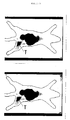
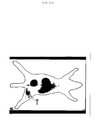
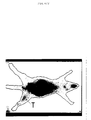
- the [T]/[B] ratio one hour after the administration, was 3.35 for Peptide-2, 4.98 for Peptide-6, 3.36 for Peptide-7, 4.27 for Peptide-4 and 4.41 for Peptide-5 whereby the focal site was evidently imaged.
- Table 2 shows time course of the [T]/[B] ratios (mean value ⁇ standard error) for three rats with respective peptides.
- [T]/[B] ratio of Tc-99m labeled peptide in inflammatory model rats Labeled Peptide Period of time after administration 30 mins 1 hr. 3 hrs. 6 hrs.
- the present invention provides a peptide and its chemically modified substances, radioactive metal labeled peptides derived therefrom, and radioactive diagnostics comprising such peptide, which are useful for imaging inflammation sites in living body of mammals including human and easy in preparation handling, and accumulate at inflammation sites immediately after the administration and stay there for a time suitable for imaging while being excellent in clearance via kidney into urine; thereby eliminating unnecessary exposure to patients, limitation of facilities for preparation, difficulty to get image information quickly, complicated handling and skill in preparation, and risk of infection to the operator.
- the imaging is possible in several ten minutes after administration.
Landscapes
- Health & Medical Sciences (AREA)
- Life Sciences & Earth Sciences (AREA)
- Chemical & Material Sciences (AREA)
- Proteomics, Peptides & Aminoacids (AREA)
- General Health & Medical Sciences (AREA)
- Medicinal Chemistry (AREA)
- Epidemiology (AREA)
- Immunology (AREA)
- Veterinary Medicine (AREA)
- Public Health (AREA)
- Animal Behavior & Ethology (AREA)
- Organic Chemistry (AREA)
- Physics & Mathematics (AREA)
- Optics & Photonics (AREA)
- Pharmacology & Pharmacy (AREA)
- Genetics & Genomics (AREA)
- Biochemistry (AREA)
- Molecular Biology (AREA)
- Biophysics (AREA)
- Medicines Containing Antibodies Or Antigens For Use As Internal Diagnostic Agents (AREA)
- Peptides Or Proteins (AREA)
- Medicines That Contain Protein Lipid Enzymes And Other Medicines (AREA)
- Investigating Or Analysing Biological Materials (AREA)
Abstract
Description



Glu: 1.0 (1), Ser: 1.3 (1), Gly:4.4 (4), Pro:2.0 (2), Val:1.1 (1), Leu:2.1 (2), Lys:1.2 (1).
Ser:1.0 (1), Gly:4.9 (5), Pro:1.0 (1), Val:1.0 (1), Cys:0.9 (2), Leu;2.0 (2).
Ser:0.9 (1), Gly:2.0 (2), Val:1.0 (1), Leu:1.8 (2), Pro:1.0 (1), Cys:1.2 (1).
Asn:1.1 (1), Glu:2.0 (2), Ser: 2.3 (2), Gly:4.4 (4), Thr:1.0 (1), Ala:3.2 (3), Pro:2.1 (2), Tyr:0.6 (1), Val:0.9 (1), Ile:2.8 (2), Leu:1.3 (1), Lys:5.7 (6), Cys: - (2).
Asp:1.1 (1), Glx:3.1 (3), Ser:1.0 (1), Gly:3.3 (3), Arg:2.1 (2), Thr:2.2 (2), Pro:1.1 (1), Tyr:1.2 (2), Val:1.7 (2), Cys: - (2), Lys:5.9 (6)
Glu:3.9 (4), Ser:4.1 (4), Gly:11.8 (11), Pro:7.9 (8), Val:2.9 (4), Leu:7.6 (8), Lys:2.1 (3), Cys: - (2)
Glu:3.1 (3), Ser:3.0 (3), Gly:9,7 (9), Pro:6.9 (2), Val:2.9 (3), Leu:6.0 (6), Ala:2.0 (1)
Asn:1.1 (1), Glu:2.1 (2), Ser:2.0 (2), Gly:3.8 (4), Thr:1.1 (1), Ala:3.1 (3), Pro:2.1 (2), Tyr:0.6 (1), Val:1.0 (1), Cys: - (2), Ile:2.2 (2), Leu:1.2 (1), Lys:5.9 (6)
Asp:1.1 (1), Glx:3.2 (3), Ser:0.9 (1), Gly:3.1 (3), Arg:2.2 (2), Thr:2.2 (2), Pro:1.1 (1), Tyr:1.3 (2), Val:1.6 (2), Cys: - (2), Lys:5,9 (6)
Peptide-2 labeled with technetium-99m was yielded. Peptide labeled had radiochemical purity not less than 90 %.
| [T]/[B] ratio of In-111 labeled peptides in inflammation model rats | |||
| Labeled Peptide | Period of time after administration | ||
| 1 hr. | 3 hrs. | 6 hrs. | |
| Peptide-1 | 2.63 ± 0.19 | 2.30 ± 0.13 | 1.71 ± 0.18 |
| Peptide-3 | 2.09 ± 0.18 | 2.46 ± 0.29 | 2.78 ± 0.15 |
| [T]/[B] ratio of Tc-99m labeled peptide in inflammatory model rats | ||||
| Labeled Peptide | Period of time after administration | |||
| 30 mins | 1 hr. | 3 hrs. | 6 hrs. | |
| Peptide-2 | - | 3.35 ± 0.33 | 2.78 ± 0.23 | 2.82 ± 0.17 |
| Peptide-4 | 2.47 ± 0.17 | 4.27 ± 0.26 | 3.10 ± 0.20 | - |
| Peptide-5 | 2.61 ± 0.08 | 4.41 ± 0.62 | 3.85 ± 0.63 | - |
| Peptide-6 | - | 4.98 ± 0.23 | 4.61 ± 0.49 | 3.20 ± 0.39 |
| Peptide-7 | - | 3.36 ± 0.31 | 2.18 ± 0.39 | 2.26 ± 0.20 |
| [T]/[B] ratio of Tc-99m labeled peptide in model rats with infectious disease | |||
| Labeled Peptide | Period of time after administration | ||
| 1 hr. | 3 hrs. | 6 hrs . | |
| Peptide-6 | 1.92 ± 0.10 | 1.58 ± 0.05 | 1.52 ± 0.17 |
Claims (10)
- A peptide having affinity for inflammation sites, which consists of at least one of the following amino acid sequences:wherein A, C, E, G, I, K, L, N, P, Q, R, S, T, V, and Y represent amino acid residues expressed by standard one-letter symbols.

- A peptide derivative having affinity for inflammation sites, which consists of the peptide of Claim 1 combined with a bifunctional cross linking agent.
- A peptide derivative having affinity for inflammation sites according to claim 1, which consists of the peptide of claim 1 combined with a bifunctional ligand, wherein the bifunctional ligand is one selected from the group consisting of diethylenetriamine pentaacetic acid, ethylenediaminetetraacetic acid, and 1,4,7,10-tetraazacyclododecane-1-aminoethylcarbamoylmethyl-4,7,10-tris[(R,S)-methylacetic acid].
- A peptide derivative having affinity for inflammation sites, which consists of the peptide of claim 2 combined with a carrier through the bifunctional cross linking agent.
- A peptide derivative having affinity for inflammation sites according to claim 4, in which a bifunctional ligand is combined with the carrier, which bifunctional ligand is one selected from the group consisting of diethylenetriamine pentaacetic acid, ethylenediaminetetraacetic acid, and 1,4,7,10-tetraazacyclododecane-1-aminoethylcarbamoylmethyl-4,7,10-tris[(R,S)-methylacetic acid].
- A peptide derivative having affinity for inflammation sites according to Claim 2, 4 or 5, wherein the bifunctional cross linking agent is one selected from the group consisting of sulfosuccinimidyl 4-(N-maleimidemethyl) cyclohexane-1-carboxylate, 3-maleimidebenzoic acid N-hydroxysuccinimide ester, N-(ε-maleimidecaproyloxy) succinimide, and succinimidyl 4-(p-maleimidephenyl) butyrate.
- A peptide derivative having affinity for inflammation sites according to claim 4 or 5, wherein the carrier is polylysine or chitosan.
- A peptide derivative labeled with a radioactive metal, which consists of the peptide derivative of Claim 3 or 5, with which a radioactive metal ion is coordinated.
- A peptide derivative labeled with a radioactive metal according to claim 8, wherein the radioactive metal ion is technetium-99m or indium-111.
- A radioactive diagnostic comprising the radioactive metal labeled peptide derivative of claim 8 or 9.
Applications Claiming Priority (2)
| Application Number | Priority Date | Filing Date | Title |
|---|---|---|---|
| JP287752/93 | 1993-10-22 | ||
| JP28775293 | 1993-10-22 |
Publications (2)
| Publication Number | Publication Date |
|---|---|
| EP0649857A1 EP0649857A1 (en) | 1995-04-26 |
| EP0649857B1 true EP0649857B1 (en) | 1999-01-20 |
Family
ID=17721307
Family Applications (1)
| Application Number | Title | Priority Date | Filing Date |
|---|---|---|---|
| EP94116583A Expired - Lifetime EP0649857B1 (en) | 1993-10-22 | 1994-10-20 | Peptide having inflammation affinity and radioactive diagnostic containing the same |
Country Status (9)
| Country | Link |
|---|---|
| US (1) | US5821330A (en) |
| EP (1) | EP0649857B1 (en) |
| KR (1) | KR100316376B1 (en) |
| AT (1) | ATE175976T1 (en) |
| AU (1) | AU675166B2 (en) |
| CA (1) | CA2134051A1 (en) |
| DE (1) | DE69416078T2 (en) |
| DK (1) | DK0649857T3 (en) |
| ES (1) | ES2126695T3 (en) |
Cited By (1)
| Publication number | Priority date | Publication date | Assignee | Title |
|---|---|---|---|---|
| US7109167B2 (en) | 2000-06-02 | 2006-09-19 | Bracco International B.V. | Compounds for targeting endothelial cells, compositions containing the same and methods for their use |
Families Citing this family (11)
| Publication number | Priority date | Publication date | Assignee | Title |
|---|---|---|---|---|
| EP0630265B1 (en) * | 1992-03-13 | 2003-04-16 | Diatide, Inc. | TECHNETIUM-99m LABELED PEPTIDES FOR IMAGING INFLAMMATION |
| US5989519A (en) * | 1992-03-13 | 1999-11-23 | Diatide, Inc. | Technetium-99m labeled peptides for imaging inflammation |
| CA2165228A1 (en) * | 1994-12-27 | 1996-06-28 | Yoshitoshi Itaya | Metal chelate forming peptides and use thereof |
| DE19514088A1 (en) * | 1995-04-13 | 1996-10-17 | Deutsches Krebsforsch | Conjugate for the treatment of inflammation, infection and / or skin diseases |
| EP1056773A2 (en) * | 1998-02-11 | 2000-12-06 | Resolution Pharmaceuticals Inc. | Angiogenesis targeting molecules |
| WO2001052900A2 (en) * | 2000-01-21 | 2001-07-26 | Mallinckrodt Inc. | Novel orthogonally protected amino acid chelators for biomedical applications |
| WO2001052898A1 (en) * | 2000-01-21 | 2001-07-26 | Mallinckrodt Inc. | Methods for incorporating metal chelators at carboxyl-terminal site of peptides |
| WO2001052899A1 (en) * | 2000-01-21 | 2001-07-26 | Mallinckrodt Inc. | Chelating agents and method for their use as tandem metal chelators and hydrophilic spacers for medical diagnosis and therapy |
| US8263739B2 (en) | 2000-06-02 | 2012-09-11 | Bracco Suisse Sa | Compounds for targeting endothelial cells, compositions containing the same and methods for their use |
| KR100882751B1 (en) * | 2002-05-08 | 2009-02-09 | 재단법인서울대학교산학협력재단 | Oligopeptides Specific to Chitosan |
| TW200505934A (en) * | 2003-03-26 | 2005-02-16 | Nihon Mediphysics Co Ltd | Compound having affinity with calcified tissue |
Family Cites Families (5)
| Publication number | Priority date | Publication date | Assignee | Title |
|---|---|---|---|---|
| JPS62153300A (en) * | 1985-12-26 | 1987-07-08 | Teijin Ltd | Fc region protein of human immunoglobulin g and production thereof |
| JP2515357B2 (en) * | 1986-01-16 | 1996-07-10 | ザ・ジェネラル・ホスピタル・コ−ポレ−ション | Method for diagnosing and treating inflammation |
| US4926869A (en) * | 1986-01-16 | 1990-05-22 | The General Hospital Corporation | Method for the diagnosis and treatment of inflammation |
| CA1266344A (en) * | 1986-02-14 | 1990-02-27 | Miki Kurami | High molecular compounds having amino groups, and their utilization |
| EP0584421A1 (en) * | 1992-08-21 | 1994-03-02 | Cécile Casterman | Immunoglobulins devoid of light chains |
-
1994
- 1994-10-20 AT AT94116583T patent/ATE175976T1/en active
- 1994-10-20 AU AU75979/94A patent/AU675166B2/en not_active Ceased
- 1994-10-20 DE DE69416078T patent/DE69416078T2/en not_active Expired - Fee Related
- 1994-10-20 ES ES94116583T patent/ES2126695T3/en not_active Expired - Lifetime
- 1994-10-20 DK DK94116583T patent/DK0649857T3/en active
- 1994-10-20 EP EP94116583A patent/EP0649857B1/en not_active Expired - Lifetime
- 1994-10-21 US US08/327,459 patent/US5821330A/en not_active Expired - Fee Related
- 1994-10-21 CA CA002134051A patent/CA2134051A1/en not_active Abandoned
- 1994-10-22 KR KR1019940027150A patent/KR100316376B1/en not_active Expired - Fee Related
Cited By (1)
| Publication number | Priority date | Publication date | Assignee | Title |
|---|---|---|---|---|
| US7109167B2 (en) | 2000-06-02 | 2006-09-19 | Bracco International B.V. | Compounds for targeting endothelial cells, compositions containing the same and methods for their use |
Also Published As
| Publication number | Publication date |
|---|---|
| ES2126695T3 (en) | 1999-04-01 |
| AU675166B2 (en) | 1997-01-23 |
| CA2134051A1 (en) | 1995-04-23 |
| DE69416078T2 (en) | 1999-05-27 |
| DE69416078D1 (en) | 1999-03-04 |
| EP0649857A1 (en) | 1995-04-26 |
| US5821330A (en) | 1998-10-13 |
| KR950011467A (en) | 1995-05-15 |
| ATE175976T1 (en) | 1999-02-15 |
| AU7597994A (en) | 1995-05-11 |
| DK0649857T3 (en) | 1999-09-13 |
| KR100316376B1 (en) | 2002-02-19 |
Similar Documents
| Publication | Publication Date | Title |
|---|---|---|
| AU656212B2 (en) | Asialoglycoprotein-conjugated medicinal agent | |
| US5837218A (en) | Non-receptor cell mediated imaging agents | |
| DE69309479T2 (en) | MARKED MONOCYTE CHEMOATTRACTANT PROTEIN MATERIAL AND MEDICAL APPLICATION | |
| RU2156774C2 (en) | Somastatinic peptides, radiopharmaceutical agent, method of treating tumors, and pharmaceutical composition | |
| US5277892A (en) | In vivo lymphocyte tagging | |
| US5821330A (en) | Peptide having inflammation affinity and radioactive diagnostic containing the same | |
| EP0733060B1 (en) | Metal chelators | |
| KR100385340B1 (en) | Metal Chelating Peptides and Their Uses | |
| US20210347890A1 (en) | Cd31shed as a molecular target for imaging of inflammation | |
| Sivolapenko et al. | Breast cancer imaging with radiolabelled peptide from complementarity-determining region of antitumour antibody | |
| JPH06508357A (en) | Labeled polypeptide, its production method and use | |
| JP4279781B2 (en) | Pharmaceutical composition comprising leukocyte-binding compound and labeled compound as active ingredient | |
| DE69507408T2 (en) | Peptides with affinity for tumors and radioactive diagnostic and therapeutic compositions containing them | |
| DE69518319T2 (en) | USE OF SURFACE-ACTIVE SUBSTANCES FOR THE STABILIZATION OF PEPTIDES AND PROTEINS FOR RADIOPHARMACEUTICAL USE | |
| JPH07206895A (en) | Inflammatory affinity peptide and radioactive diagnostic agent containing the peptide | |
| AU2003217467A1 (en) | Avidin dimers effective in increasing the concentration of radioactive biotin in pretargeted radioimmunotherapy | |
| JP3866317B2 (en) | Metal chelate-forming peptide, its use and production method | |
| US20110251486A1 (en) | Radiolabeled annexins | |
| JPH0853494A (en) | Tumor affinity peptide, radiodiagnostic agent and radiotherapeutic agent containing the peptide | |
| WO2012168196A1 (en) | Production and use of a peptide having an n-terminal 11c-marked acetyl |
Legal Events
| Date | Code | Title | Description |
|---|---|---|---|
| PUAI | Public reference made under article 153(3) epc to a published international application that has entered the european phase |
Free format text: ORIGINAL CODE: 0009012 |
|
| AK | Designated contracting states |
Kind code of ref document: A1 Designated state(s): AT BE CH DE DK ES FR GB IT LI LU NL SE |
|
| 17P | Request for examination filed |
Effective date: 19950612 |
|
| 17Q | First examination report despatched |
Effective date: 19970310 |
|
| GRAG | Despatch of communication of intention to grant |
Free format text: ORIGINAL CODE: EPIDOS AGRA |
|
| GRAG | Despatch of communication of intention to grant |
Free format text: ORIGINAL CODE: EPIDOS AGRA |
|
| GRAG | Despatch of communication of intention to grant |
Free format text: ORIGINAL CODE: EPIDOS AGRA |
|
| GRAH | Despatch of communication of intention to grant a patent |
Free format text: ORIGINAL CODE: EPIDOS IGRA |
|
| GRAH | Despatch of communication of intention to grant a patent |
Free format text: ORIGINAL CODE: EPIDOS IGRA |
|
| ITF | It: translation for a ep patent filed | ||
| GRAA | (expected) grant |
Free format text: ORIGINAL CODE: 0009210 |
|
| AK | Designated contracting states |
Kind code of ref document: B1 Designated state(s): AT BE CH DE DK ES FR GB IT LI LU NL SE |
|
| REF | Corresponds to: |
Ref document number: 175976 Country of ref document: AT Date of ref document: 19990215 Kind code of ref document: T |
|
| REG | Reference to a national code |
Ref country code: CH Ref legal event code: NV Representative=s name: BOVARD AG PATENTANWAELTE Ref country code: CH Ref legal event code: EP |
|
| REF | Corresponds to: |
Ref document number: 69416078 Country of ref document: DE Date of ref document: 19990304 |
|
| REG | Reference to a national code |
Ref country code: ES Ref legal event code: FG2A Ref document number: 2126695 Country of ref document: ES Kind code of ref document: T3 |
|
| ET | Fr: translation filed | ||
| PG25 | Lapsed in a contracting state [announced via postgrant information from national office to epo] |
Ref country code: DE Free format text: LAPSE BECAUSE OF FAILURE TO SUBMIT A TRANSLATION OF THE DESCRIPTION OR TO PAY THE FEE WITHIN THE PRESCRIBED TIME-LIMIT Effective date: 19990421 |
|
| REG | Reference to a national code |
Ref country code: DK Ref legal event code: T3 |
|
| PLBE | No opposition filed within time limit |
Free format text: ORIGINAL CODE: 0009261 |
|
| STAA | Information on the status of an ep patent application or granted ep patent |
Free format text: STATUS: NO OPPOSITION FILED WITHIN TIME LIMIT |
|
| 26N | No opposition filed | ||
| PGFP | Annual fee paid to national office [announced via postgrant information from national office to epo] |
Ref country code: AT Payment date: 20001011 Year of fee payment: 7 |
|
| PGFP | Annual fee paid to national office [announced via postgrant information from national office to epo] |
Ref country code: DK Payment date: 20001012 Year of fee payment: 7 |
|
| PGFP | Annual fee paid to national office [announced via postgrant information from national office to epo] |
Ref country code: LU Payment date: 20001020 Year of fee payment: 7 |
|
| PGFP | Annual fee paid to national office [announced via postgrant information from national office to epo] |
Ref country code: SE Payment date: 20011005 Year of fee payment: 8 |
|
| PGFP | Annual fee paid to national office [announced via postgrant information from national office to epo] |
Ref country code: FR Payment date: 20011010 Year of fee payment: 8 |
|
| PG25 | Lapsed in a contracting state [announced via postgrant information from national office to epo] |
Ref country code: LU Free format text: LAPSE BECAUSE OF NON-PAYMENT OF DUE FEES Effective date: 20011020 Ref country code: DK Free format text: LAPSE BECAUSE OF NON-PAYMENT OF DUE FEES Effective date: 20011020 Ref country code: AT Free format text: LAPSE BECAUSE OF NON-PAYMENT OF DUE FEES Effective date: 20011020 |
|
| PGFP | Annual fee paid to national office [announced via postgrant information from national office to epo] |
Ref country code: GB Payment date: 20011024 Year of fee payment: 8 |
|
| PGFP | Annual fee paid to national office [announced via postgrant information from national office to epo] |
Ref country code: ES Payment date: 20011025 Year of fee payment: 8 |
|
| PGFP | Annual fee paid to national office [announced via postgrant information from national office to epo] |
Ref country code: CH Payment date: 20011029 Year of fee payment: 8 |
|
| PGFP | Annual fee paid to national office [announced via postgrant information from national office to epo] |
Ref country code: NL Payment date: 20011031 Year of fee payment: 8 |
|
| PGFP | Annual fee paid to national office [announced via postgrant information from national office to epo] |
Ref country code: DE Payment date: 20011105 Year of fee payment: 8 |
|
| PGFP | Annual fee paid to national office [announced via postgrant information from national office to epo] |
Ref country code: BE Payment date: 20011214 Year of fee payment: 8 |
|
| REG | Reference to a national code |
Ref country code: GB Ref legal event code: IF02 |
|
| REG | Reference to a national code |
Ref country code: DK Ref legal event code: EBP |
|
| PG25 | Lapsed in a contracting state [announced via postgrant information from national office to epo] |
Ref country code: GB Free format text: LAPSE BECAUSE OF NON-PAYMENT OF DUE FEES Effective date: 20021020 |
|
| PG25 | Lapsed in a contracting state [announced via postgrant information from national office to epo] |
Ref country code: SE Free format text: LAPSE BECAUSE OF NON-PAYMENT OF DUE FEES Effective date: 20021021 Ref country code: ES Free format text: LAPSE BECAUSE OF NON-PAYMENT OF DUE FEES Effective date: 20021021 |
|
| PG25 | Lapsed in a contracting state [announced via postgrant information from national office to epo] |
Ref country code: LI Free format text: LAPSE BECAUSE OF NON-PAYMENT OF DUE FEES Effective date: 20021031 Ref country code: CH Free format text: LAPSE BECAUSE OF NON-PAYMENT OF DUE FEES Effective date: 20021031 Ref country code: BE Free format text: LAPSE BECAUSE OF NON-PAYMENT OF DUE FEES Effective date: 20021031 |
|
| BERE | Be: lapsed |
Owner name: *NIHON MEDI-PHYSICS CO. LTD Effective date: 20021031 |
|
| PG25 | Lapsed in a contracting state [announced via postgrant information from national office to epo] |
Ref country code: NL Free format text: LAPSE BECAUSE OF NON-PAYMENT OF DUE FEES Effective date: 20030501 |
|
| EUG | Se: european patent has lapsed | ||
| GBPC | Gb: european patent ceased through non-payment of renewal fee |
Effective date: 20021020 |
|
| REG | Reference to a national code |
Ref country code: CH Ref legal event code: PL |
|
| PG25 | Lapsed in a contracting state [announced via postgrant information from national office to epo] |
Ref country code: FR Free format text: LAPSE BECAUSE OF NON-PAYMENT OF DUE FEES Effective date: 20030630 |
|
| NLV4 | Nl: lapsed or anulled due to non-payment of the annual fee |
Effective date: 20030501 |
|
| REG | Reference to a national code |
Ref country code: FR Ref legal event code: ST |
|
| REG | Reference to a national code |
Ref country code: ES Ref legal event code: FD2A Effective date: 20031112 |
|
| PG25 | Lapsed in a contracting state [announced via postgrant information from national office to epo] |
Ref country code: IT Free format text: LAPSE BECAUSE OF NON-PAYMENT OF DUE FEES;WARNING: LAPSES OF ITALIAN PATENTS WITH EFFECTIVE DATE BEFORE 2007 MAY HAVE OCCURRED AT ANY TIME BEFORE 2007. THE CORRECT EFFECTIVE DATE MAY BE DIFFERENT FROM THE ONE RECORDED. Effective date: 20051020 |