EP0643775B1 - Quinone derivatives for enhancing cellular bioenergy - Google Patents
Quinone derivatives for enhancing cellular bioenergy Download PDFInfo
- Publication number
- EP0643775B1 EP0643775B1 EP93909698A EP93909698A EP0643775B1 EP 0643775 B1 EP0643775 B1 EP 0643775B1 EP 93909698 A EP93909698 A EP 93909698A EP 93909698 A EP93909698 A EP 93909698A EP 0643775 B1 EP0643775 B1 EP 0643775B1
- Authority
- EP
- European Patent Office
- Prior art keywords
- compound
- cells
- animal
- formula
- use according
- Prior art date
- Legal status (The legal status is an assumption and is not a legal conclusion. Google has not performed a legal analysis and makes no representation as to the accuracy of the status listed.)
- Expired - Lifetime
Links
- 230000001413 cellular effect Effects 0.000 title claims abstract description 32
- 230000002708 enhancing effect Effects 0.000 title claims abstract description 11
- 150000004059 quinone derivatives Chemical class 0.000 title 1
- 150000001875 compounds Chemical class 0.000 claims abstract description 141
- 241001465754 Metazoa Species 0.000 claims abstract description 37
- 239000000203 mixture Substances 0.000 claims abstract description 37
- 230000000694 effects Effects 0.000 claims abstract description 36
- 238000000034 method Methods 0.000 claims abstract description 23
- 230000002829 reductive effect Effects 0.000 claims abstract description 14
- 238000002560 therapeutic procedure Methods 0.000 claims abstract description 10
- 230000032683 aging Effects 0.000 claims abstract description 9
- 239000000126 substance Substances 0.000 claims abstract description 8
- 230000009885 systemic effect Effects 0.000 claims abstract description 7
- 208000019553 vascular disease Diseases 0.000 claims abstract description 5
- 210000004027 cell Anatomy 0.000 claims description 81
- DRTQHJPVMGBUCF-XVFCMESISA-N Uridine Chemical compound O[C@@H]1[C@H](O)[C@@H](CO)O[C@H]1N1C(=O)NC(=O)C=C1 DRTQHJPVMGBUCF-XVFCMESISA-N 0.000 claims description 26
- 125000004414 alkyl thio group Chemical group 0.000 claims description 16
- 230000012010 growth Effects 0.000 claims description 14
- DRTQHJPVMGBUCF-PSQAKQOGSA-N beta-L-uridine Natural products O[C@H]1[C@@H](O)[C@H](CO)O[C@@H]1N1C(=O)NC(=O)C=C1 DRTQHJPVMGBUCF-PSQAKQOGSA-N 0.000 claims description 13
- YAGKRVSRTSUGEY-UHFFFAOYSA-N ferricyanide Chemical compound [Fe+3].N#[C-].N#[C-].N#[C-].N#[C-].N#[C-].N#[C-] YAGKRVSRTSUGEY-UHFFFAOYSA-N 0.000 claims description 13
- DRTQHJPVMGBUCF-UHFFFAOYSA-N uracil arabinoside Natural products OC1C(O)C(CO)OC1N1C(=O)NC(=O)C=C1 DRTQHJPVMGBUCF-UHFFFAOYSA-N 0.000 claims description 13
- 229940045145 uridine Drugs 0.000 claims description 13
- 239000003963 antioxidant agent Substances 0.000 claims description 12
- 235000006708 antioxidants Nutrition 0.000 claims description 12
- 231100000433 cytotoxic Toxicity 0.000 claims description 12
- 230000001472 cytotoxic effect Effects 0.000 claims description 12
- 230000003078 antioxidant effect Effects 0.000 claims description 11
- 229940124522 antiretrovirals Drugs 0.000 claims description 11
- 239000003903 antiretrovirus agent Substances 0.000 claims description 11
- 210000004102 animal cell Anatomy 0.000 claims description 10
- 201000010099 disease Diseases 0.000 claims description 10
- 208000037265 diseases, disorders, signs and symptoms Diseases 0.000 claims description 10
- 239000002243 precursor Substances 0.000 claims description 10
- LCTONWCANYUPML-UHFFFAOYSA-M Pyruvate Chemical compound CC(=O)C([O-])=O LCTONWCANYUPML-UHFFFAOYSA-M 0.000 claims description 9
- 239000003814 drug Substances 0.000 claims description 9
- 125000000027 (C1-C10) alkoxy group Chemical group 0.000 claims description 8
- 125000000008 (C1-C10) alkyl group Chemical group 0.000 claims description 8
- 125000004191 (C1-C6) alkoxy group Chemical group 0.000 claims description 8
- 125000004169 (C1-C6) alkyl group Chemical group 0.000 claims description 8
- 125000000171 (C1-C6) haloalkyl group Chemical group 0.000 claims description 8
- CIWBSHSKHKDKBQ-JLAZNSOCSA-N Ascorbic acid Chemical compound OC[C@H](O)[C@H]1OC(=O)C(O)=C1O CIWBSHSKHKDKBQ-JLAZNSOCSA-N 0.000 claims description 8
- 125000005865 C2-C10alkynyl group Chemical group 0.000 claims description 8
- 125000000753 cycloalkyl group Chemical group 0.000 claims description 8
- 125000001188 haloalkyl group Chemical group 0.000 claims description 8
- 229910052736 halogen Inorganic materials 0.000 claims description 8
- 125000001997 phenyl group Chemical group [H]C1=C([H])C([H])=C(*)C([H])=C1[H] 0.000 claims description 8
- 125000002924 primary amino group Chemical group [H]N([H])* 0.000 claims description 8
- 125000004438 haloalkoxy group Chemical group 0.000 claims description 7
- 150000002367 halogens Chemical class 0.000 claims description 7
- -1 phenoxy, thiophenoxy Chemical group 0.000 claims description 7
- 230000002715 bioenergetic effect Effects 0.000 claims description 6
- 230000037396 body weight Effects 0.000 claims description 6
- 239000003085 diluting agent Substances 0.000 claims description 6
- 238000004519 manufacturing process Methods 0.000 claims description 6
- 230000010627 oxidative phosphorylation Effects 0.000 claims description 5
- GVJHHUAWPYXKBD-UHFFFAOYSA-N (±)-α-Tocopherol Chemical compound OC1=C(C)C(C)=C2OC(CCCC(C)CCCC(C)CCCC(C)C)(C)CCC2=C1C GVJHHUAWPYXKBD-UHFFFAOYSA-N 0.000 claims description 4
- 125000006374 C2-C10 alkenyl group Chemical group 0.000 claims description 4
- 230000000840 anti-viral effect Effects 0.000 claims description 4
- 210000005260 human cell Anatomy 0.000 claims description 4
- 238000009533 lab test Methods 0.000 claims description 4
- 244000144972 livestock Species 0.000 claims description 4
- 125000001424 substituent group Chemical group 0.000 claims description 4
- 239000003937 drug carrier Substances 0.000 claims description 3
- ZZZCUOFIHGPKAK-UHFFFAOYSA-N D-erythro-ascorbic acid Natural products OCC1OC(=O)C(O)=C1O ZZZCUOFIHGPKAK-UHFFFAOYSA-N 0.000 claims description 2
- 241000124008 Mammalia Species 0.000 claims description 2
- 229930003268 Vitamin C Natural products 0.000 claims description 2
- 229930003427 Vitamin E Natural products 0.000 claims description 2
- 230000002411 adverse Effects 0.000 claims description 2
- 206010012601 diabetes mellitus Diseases 0.000 claims description 2
- WIGCFUFOHFEKBI-UHFFFAOYSA-N gamma-tocopherol Natural products CC(C)CCCC(C)CCCC(C)CCCC1CCC2C(C)C(O)C(C)C(C)C2O1 WIGCFUFOHFEKBI-UHFFFAOYSA-N 0.000 claims description 2
- 238000011534 incubation Methods 0.000 claims description 2
- 208000018360 neuromuscular disease Diseases 0.000 claims description 2
- 235000019154 vitamin C Nutrition 0.000 claims description 2
- 239000011718 vitamin C Substances 0.000 claims description 2
- 235000019165 vitamin E Nutrition 0.000 claims description 2
- 229940046009 vitamin E Drugs 0.000 claims description 2
- 239000011709 vitamin E Substances 0.000 claims description 2
- 241000251539 Vertebrata <Metazoa> Species 0.000 claims 4
- 230000009603 aerobic growth Effects 0.000 claims 3
- 125000000951 phenoxy group Chemical group [H]C1=C([H])C([H])=C(O*)C([H])=C1[H] 0.000 claims 3
- 208000019622 heart disease Diseases 0.000 claims 1
- 230000002407 ATP formation Effects 0.000 abstract description 16
- 102000004316 Oxidoreductases Human genes 0.000 abstract description 16
- 108090000854 Oxidoreductases Proteins 0.000 abstract description 15
- 230000001225 therapeutic effect Effects 0.000 abstract description 6
- HBOMLICNUCNMMY-XLPZGREQSA-N zidovudine Chemical compound O=C1NC(=O)C(C)=CN1[C@@H]1O[C@H](CO)[C@@H](N=[N+]=[N-])C1 HBOMLICNUCNMMY-XLPZGREQSA-N 0.000 description 69
- 229960002555 zidovudine Drugs 0.000 description 68
- ADVCGXWUUOVPPB-XLPZGREQSA-N 1-[(2r,4s,5s)-4-amino-5-(hydroxymethyl)oxolan-2-yl]-5-methylpyrimidine-2,4-dione Chemical compound O=C1NC(=O)C(C)=CN1[C@@H]1O[C@H](CO)[C@@H](N)C1 ADVCGXWUUOVPPB-XLPZGREQSA-N 0.000 description 21
- 230000002438 mitochondrial effect Effects 0.000 description 19
- 238000009472 formulation Methods 0.000 description 17
- 238000011282 treatment Methods 0.000 description 15
- 210000003205 muscle Anatomy 0.000 description 12
- BAWFJGJZGIEFAR-NNYOXOHSSA-O NAD(+) Chemical compound NC(=O)C1=CC=C[N+]([C@H]2[C@@H]([C@H](O)[C@@H](COP(O)(=O)OP(O)(=O)OC[C@@H]3[C@H]([C@@H](O)[C@@H](O3)N3C4=NC=NC(N)=C4N=C3)O)O2)O)=C1 BAWFJGJZGIEFAR-NNYOXOHSSA-O 0.000 description 11
- 210000000170 cell membrane Anatomy 0.000 description 11
- 229930027945 nicotinamide-adenine dinucleotide Natural products 0.000 description 11
- 230000034659 glycolysis Effects 0.000 description 10
- BOPGDPNILDQYTO-NNYOXOHSSA-N nicotinamide-adenine dinucleotide Chemical compound C1=CCC(C(=O)N)=CN1[C@H]1[C@H](O)[C@H](O)[C@@H](COP(O)(=O)OP(O)(=O)OC[C@@H]2[C@H]([C@@H](O)[C@@H](O2)N2C3=NC=NC(N)=C3N=C2)O)O1 BOPGDPNILDQYTO-NNYOXOHSSA-N 0.000 description 10
- 210000002027 skeletal muscle Anatomy 0.000 description 9
- 208000031886 HIV Infections Diseases 0.000 description 8
- 208000037357 HIV infectious disease Diseases 0.000 description 8
- 108020005196 Mitochondrial DNA Proteins 0.000 description 8
- 241000700159 Rattus Species 0.000 description 8
- ACTIUHUUMQJHFO-UPTCCGCDSA-N coenzyme Q10 Chemical compound COC1=C(OC)C(=O)C(C\C=C(/C)CC\C=C(/C)CC\C=C(/C)CC\C=C(/C)CC\C=C(/C)CC\C=C(/C)CC\C=C(/C)CC\C=C(/C)CC\C=C(/C)CCC=C(C)C)=C(C)C1=O ACTIUHUUMQJHFO-UPTCCGCDSA-N 0.000 description 8
- 208000033519 human immunodeficiency virus infectious disease Diseases 0.000 description 8
- 230000001965 increasing effect Effects 0.000 description 8
- 238000002360 preparation method Methods 0.000 description 7
- 230000007423 decrease Effects 0.000 description 6
- 230000001771 impaired effect Effects 0.000 description 6
- 230000006705 mitochondrial oxidative phosphorylation Effects 0.000 description 6
- 238000007254 oxidation reaction Methods 0.000 description 6
- 239000003826 tablet Substances 0.000 description 6
- 210000001519 tissue Anatomy 0.000 description 6
- 230000000798 anti-retroviral effect Effects 0.000 description 5
- 230000002354 daily effect Effects 0.000 description 5
- 239000012535 impurity Substances 0.000 description 5
- 239000004615 ingredient Substances 0.000 description 5
- 239000007788 liquid Substances 0.000 description 5
- 210000003470 mitochondria Anatomy 0.000 description 5
- 230000005787 mitochondrial ATP synthesis coupled electron transport Effects 0.000 description 5
- 230000035772 mutation Effects 0.000 description 5
- 235000015097 nutrients Nutrition 0.000 description 5
- 239000002574 poison Substances 0.000 description 5
- 231100000614 poison Toxicity 0.000 description 5
- 108090000623 proteins and genes Proteins 0.000 description 5
- 231100000331 toxic Toxicity 0.000 description 5
- 230000002588 toxic effect Effects 0.000 description 5
- 229940005561 1,4-benzoquinone Drugs 0.000 description 4
- 241000725303 Human immunodeficiency virus Species 0.000 description 4
- 230000009471 action Effects 0.000 description 4
- 230000001086 cytosolic effect Effects 0.000 description 4
- 238000001727 in vivo Methods 0.000 description 4
- 239000002207 metabolite Substances 0.000 description 4
- 230000002107 myocardial effect Effects 0.000 description 4
- 230000000241 respiratory effect Effects 0.000 description 4
- 239000007787 solid Substances 0.000 description 4
- 230000000638 stimulation Effects 0.000 description 4
- 230000000699 topical effect Effects 0.000 description 4
- 0 CC(C(C(C)=*1C)=O)=C(C)C1=O Chemical compound CC(C(C(C)=*1C)=O)=C(C)C1=O 0.000 description 3
- ACTIUHUUMQJHFO-UHFFFAOYSA-N Coenzym Q10 Natural products COC1=C(OC)C(=O)C(CC=C(C)CCC=C(C)CCC=C(C)CCC=C(C)CCC=C(C)CCC=C(C)CCC=C(C)CCC=C(C)CCC=C(C)CCC=C(C)C)=C(C)C1=O ACTIUHUUMQJHFO-UHFFFAOYSA-N 0.000 description 3
- LFQSCWFLJHTTHZ-UHFFFAOYSA-N Ethanol Chemical compound CCO LFQSCWFLJHTTHZ-UHFFFAOYSA-N 0.000 description 3
- 208000021642 Muscular disease Diseases 0.000 description 3
- 201000009623 Myopathy Diseases 0.000 description 3
- 230000001668 ameliorated effect Effects 0.000 description 3
- 239000000969 carrier Substances 0.000 description 3
- 239000003795 chemical substances by application Substances 0.000 description 3
- 235000017471 coenzyme Q10 Nutrition 0.000 description 3
- 229940079593 drug Drugs 0.000 description 3
- 238000002474 experimental method Methods 0.000 description 3
- 230000006870 function Effects 0.000 description 3
- 239000008187 granular material Substances 0.000 description 3
- 238000002347 injection Methods 0.000 description 3
- 239000007924 injection Substances 0.000 description 3
- 230000003834 intracellular effect Effects 0.000 description 3
- 208000028867 ischemia Diseases 0.000 description 3
- 210000004962 mammalian cell Anatomy 0.000 description 3
- 230000007246 mechanism Effects 0.000 description 3
- 239000002609 medium Substances 0.000 description 3
- 230000002503 metabolic effect Effects 0.000 description 3
- 230000008811 mitochondrial respiratory chain Effects 0.000 description 3
- 210000004165 myocardium Anatomy 0.000 description 3
- 210000000056 organ Anatomy 0.000 description 3
- 239000000843 powder Substances 0.000 description 3
- 230000008569 process Effects 0.000 description 3
- 230000002035 prolonged effect Effects 0.000 description 3
- 230000009467 reduction Effects 0.000 description 3
- 238000006722 reduction reaction Methods 0.000 description 3
- 239000000243 solution Substances 0.000 description 3
- 241000220479 Acacia Species 0.000 description 2
- 241000282472 Canis lupus familiaris Species 0.000 description 2
- PEDCQBHIVMGVHV-UHFFFAOYSA-N Glycerine Chemical compound OCC(O)CO PEDCQBHIVMGVHV-UHFFFAOYSA-N 0.000 description 2
- DHMQDGOQFOQNFH-UHFFFAOYSA-N Glycine Chemical compound NCC(O)=O DHMQDGOQFOQNFH-UHFFFAOYSA-N 0.000 description 2
- 206010019280 Heart failures Diseases 0.000 description 2
- 208000032087 Hereditary Leber Optic Atrophy Diseases 0.000 description 2
- JVTAAEKCZFNVCJ-UHFFFAOYSA-M Lactate Chemical compound CC(O)C([O-])=O JVTAAEKCZFNVCJ-UHFFFAOYSA-M 0.000 description 2
- 235000010643 Leucaena leucocephala Nutrition 0.000 description 2
- 208000007466 Male Infertility Diseases 0.000 description 2
- MJVAVZPDRWSRRC-UHFFFAOYSA-N Menadione Chemical compound C1=CC=C2C(=O)C(C)=CC(=O)C2=C1 MJVAVZPDRWSRRC-UHFFFAOYSA-N 0.000 description 2
- 108010007843 NADH oxidase Proteins 0.000 description 2
- JUJWROOIHBZHMG-UHFFFAOYSA-N Pyridine Chemical compound C1=CC=NC=C1 JUJWROOIHBZHMG-UHFFFAOYSA-N 0.000 description 2
- 239000012980 RPMI-1640 medium Substances 0.000 description 2
- AUNGANRZJHBGPY-SCRDCRAPSA-N Riboflavin Chemical compound OC[C@@H](O)[C@@H](O)[C@@H](O)CN1C=2C=C(C)C(C)=CC=2N=C2C1=NC(=O)NC2=O AUNGANRZJHBGPY-SCRDCRAPSA-N 0.000 description 2
- 208000006011 Stroke Diseases 0.000 description 2
- CZMRCDWAGMRECN-UGDNZRGBSA-N Sucrose Chemical compound O[C@H]1[C@H](O)[C@@H](CO)O[C@@]1(CO)O[C@@H]1[C@H](O)[C@@H](O)[C@H](O)[C@@H](CO)O1 CZMRCDWAGMRECN-UGDNZRGBSA-N 0.000 description 2
- 229930006000 Sucrose Natural products 0.000 description 2
- 238000010171 animal model Methods 0.000 description 2
- 239000007864 aqueous solution Substances 0.000 description 2
- 235000010323 ascorbic acid Nutrition 0.000 description 2
- 239000011668 ascorbic acid Substances 0.000 description 2
- 229960005070 ascorbic acid Drugs 0.000 description 2
- 238000003556 assay Methods 0.000 description 2
- 239000011230 binding agent Substances 0.000 description 2
- 210000004369 blood Anatomy 0.000 description 2
- 239000008280 blood Substances 0.000 description 2
- 239000000872 buffer Substances 0.000 description 2
- 238000007675 cardiac surgery Methods 0.000 description 2
- 230000005889 cellular cytotoxicity Effects 0.000 description 2
- 230000009989 contractile response Effects 0.000 description 2
- 230000007812 deficiency Effects 0.000 description 2
- 230000002939 deleterious effect Effects 0.000 description 2
- 108010041746 diferric transferrin Proteins 0.000 description 2
- ZMMJGEGLRURXTF-UHFFFAOYSA-N ethidium bromide Chemical compound [Br-].C12=CC(N)=CC=C2C2=CC=C(N)C=C2[N+](CC)=C1C1=CC=CC=C1 ZMMJGEGLRURXTF-UHFFFAOYSA-N 0.000 description 2
- 229960005542 ethidium bromide Drugs 0.000 description 2
- 239000001963 growth medium Substances 0.000 description 2
- 210000005003 heart tissue Anatomy 0.000 description 2
- 230000002401 inhibitory effect Effects 0.000 description 2
- 230000003993 interaction Effects 0.000 description 2
- 238000007918 intramuscular administration Methods 0.000 description 2
- 238000011866 long-term treatment Methods 0.000 description 2
- 239000007937 lozenge Substances 0.000 description 2
- 238000012423 maintenance Methods 0.000 description 2
- 230000001404 mediated effect Effects 0.000 description 2
- 208000012268 mitochondrial disease Diseases 0.000 description 2
- 230000004899 motility Effects 0.000 description 2
- 238000000465 moulding Methods 0.000 description 2
- 239000002773 nucleotide Substances 0.000 description 2
- PXQPEWDEAKTCGB-UHFFFAOYSA-N orotic acid Chemical compound OC(=O)C1=CC(=O)NC(=O)N1 PXQPEWDEAKTCGB-UHFFFAOYSA-N 0.000 description 2
- 230000003647 oxidation Effects 0.000 description 2
- 229910052760 oxygen Inorganic materials 0.000 description 2
- 239000001301 oxygen Substances 0.000 description 2
- 102000004169 proteins and genes Human genes 0.000 description 2
- 238000007493 shaping process Methods 0.000 description 2
- 239000002904 solvent Substances 0.000 description 2
- 230000000392 somatic effect Effects 0.000 description 2
- 230000035882 stress Effects 0.000 description 2
- 238000007920 subcutaneous administration Methods 0.000 description 2
- 239000005720 sucrose Substances 0.000 description 2
- 150000003505 terpenes Chemical class 0.000 description 2
- 230000002792 vascular Effects 0.000 description 2
- 230000035899 viability Effects 0.000 description 2
- 230000003612 virological effect Effects 0.000 description 2
- XLYOFNOQVPJJNP-UHFFFAOYSA-N water Substances O XLYOFNOQVPJJNP-UHFFFAOYSA-N 0.000 description 2
- 230000003442 weekly effect Effects 0.000 description 2
- RGPUSZZTRKTMNA-UHFFFAOYSA-N 1-benzofuran-7-carbaldehyde Chemical compound O=CC1=CC=CC2=C1OC=C2 RGPUSZZTRKTMNA-UHFFFAOYSA-N 0.000 description 1
- WCPNEVGRQYNKIB-UHFFFAOYSA-N 2,3-dimethoxy-5-methyl-6-nonylcyclohexa-2,5-diene-1,4-dione Chemical compound CCCCCCCCCC1=C(C)C(=O)C(OC)=C(OC)C1=O WCPNEVGRQYNKIB-UHFFFAOYSA-N 0.000 description 1
- UGUCOEFABFEZPS-UHFFFAOYSA-N 2,3-dimethoxy-5-methyl-6-propylcyclohexa-2,5-diene-1,4-dione Chemical compound CCCC1=C(C)C(=O)C(OC)=C(OC)C1=O UGUCOEFABFEZPS-UHFFFAOYSA-N 0.000 description 1
- ZOCHBOVCJPRXOT-UHFFFAOYSA-N 2-hexyl-5,6-dimethoxy-3-methylcyclohexa-2,5-diene-1,4-dione Chemical compound CCCCCCC1=C(C)C(=O)C(OC)=C(OC)C1=O ZOCHBOVCJPRXOT-UHFFFAOYSA-N 0.000 description 1
- VMEGFMNVSYVVOM-UHFFFAOYSA-N 6-decylubiquinone Chemical compound CCCCCCCCCCC1=C(C)C(=O)C(OC)=C(OC)C1=O VMEGFMNVSYVVOM-UHFFFAOYSA-N 0.000 description 1
- 208000030507 AIDS Diseases 0.000 description 1
- 208000024827 Alzheimer disease Diseases 0.000 description 1
- 241000416162 Astragalus gummifer Species 0.000 description 1
- 241000283690 Bos taurus Species 0.000 description 1
- 108091003079 Bovine Serum Albumin Proteins 0.000 description 1
- 241000283707 Capra Species 0.000 description 1
- 206010007559 Cardiac failure congestive Diseases 0.000 description 1
- 208000031229 Cardiomyopathies Diseases 0.000 description 1
- 241000700199 Cavia porcellus Species 0.000 description 1
- 201000000915 Chronic Progressive External Ophthalmoplegia Diseases 0.000 description 1
- KRKNYBCHXYNGOX-UHFFFAOYSA-K Citrate Chemical compound [O-]C(=O)CC(O)(CC([O-])=O)C([O-])=O KRKNYBCHXYNGOX-UHFFFAOYSA-K 0.000 description 1
- 206010010904 Convulsion Diseases 0.000 description 1
- 102000004420 Creatine Kinase Human genes 0.000 description 1
- 108010042126 Creatine kinase Proteins 0.000 description 1
- AUNGANRZJHBGPY-UHFFFAOYSA-N D-Lyxoflavin Natural products OCC(O)C(O)C(O)CN1C=2C=C(C)C(C)=CC=2N=C2C1=NC(=O)NC2=O AUNGANRZJHBGPY-UHFFFAOYSA-N 0.000 description 1
- 230000033616 DNA repair Effects 0.000 description 1
- 102000015782 Electron Transport Complex III Human genes 0.000 description 1
- 108010024882 Electron Transport Complex III Proteins 0.000 description 1
- 241000283073 Equus caballus Species 0.000 description 1
- JOYRKODLDBILNP-UHFFFAOYSA-N Ethyl urethane Chemical compound CCOC(N)=O JOYRKODLDBILNP-UHFFFAOYSA-N 0.000 description 1
- 241000282326 Felis catus Species 0.000 description 1
- 108010010803 Gelatin Proteins 0.000 description 1
- 206010064571 Gene mutation Diseases 0.000 description 1
- WQZGKKKJIJFFOK-GASJEMHNSA-N Glucose Natural products OC[C@H]1OC(O)[C@H](O)[C@@H](O)[C@@H]1O WQZGKKKJIJFFOK-GASJEMHNSA-N 0.000 description 1
- 239000004471 Glycine Substances 0.000 description 1
- 101100518359 Homo sapiens RHO gene Proteins 0.000 description 1
- 206010021143 Hypoxia Diseases 0.000 description 1
- 238000012404 In vitro experiment Methods 0.000 description 1
- 206010048804 Kearns-Sayre syndrome Diseases 0.000 description 1
- 102000003855 L-lactate dehydrogenase Human genes 0.000 description 1
- 108700023483 L-lactate dehydrogenases Proteins 0.000 description 1
- 201000003533 Leber congenital amaurosis Diseases 0.000 description 1
- 201000000639 Leber hereditary optic neuropathy Diseases 0.000 description 1
- 208000010428 Muscle Weakness Diseases 0.000 description 1
- 206010028372 Muscular weakness Diseases 0.000 description 1
- 208000000112 Myalgia Diseases 0.000 description 1
- 102000006746 NADH Dehydrogenase Human genes 0.000 description 1
- 108010086428 NADH Dehydrogenase Proteins 0.000 description 1
- 241000283973 Oryctolagus cuniculus Species 0.000 description 1
- 208000018737 Parkinson disease Diseases 0.000 description 1
- 241001494479 Pecora Species 0.000 description 1
- 241000577979 Peromyscus spicilegus Species 0.000 description 1
- 206010038997 Retroviral infections Diseases 0.000 description 1
- 206010040943 Skin Ulcer Diseases 0.000 description 1
- 210000001744 T-lymphocyte Anatomy 0.000 description 1
- 229920001615 Tragacanth Polymers 0.000 description 1
- 239000007983 Tris buffer Substances 0.000 description 1
- GLNADSQYFUSGOU-GPTZEZBUSA-J Trypan blue Chemical compound [Na+].[Na+].[Na+].[Na+].C1=C(S([O-])(=O)=O)C=C2C=C(S([O-])(=O)=O)C(/N=N/C3=CC=C(C=C3C)C=3C=C(C(=CC=3)\N=N\C=3C(=CC4=CC(=CC(N)=C4C=3O)S([O-])(=O)=O)S([O-])(=O)=O)C)=C(O)C2=C1N GLNADSQYFUSGOU-GPTZEZBUSA-J 0.000 description 1
- 241000700605 Viruses Species 0.000 description 1
- 238000010521 absorption reaction Methods 0.000 description 1
- 239000004480 active ingredient Substances 0.000 description 1
- 239000000443 aerosol Substances 0.000 description 1
- 150000001298 alcohols Chemical class 0.000 description 1
- 210000003423 ankle Anatomy 0.000 description 1
- 230000000844 anti-bacterial effect Effects 0.000 description 1
- 230000000259 anti-tumor effect Effects 0.000 description 1
- 239000003443 antiviral agent Substances 0.000 description 1
- QVGXLLKOCUKJST-UHFFFAOYSA-N atomic oxygen Chemical compound [O] QVGXLLKOCUKJST-UHFFFAOYSA-N 0.000 description 1
- 230000001746 atrial effect Effects 0.000 description 1
- 230000008901 benefit Effects 0.000 description 1
- 230000015572 biosynthetic process Effects 0.000 description 1
- 230000036770 blood supply Effects 0.000 description 1
- 210000004556 brain Anatomy 0.000 description 1
- 239000002775 capsule Substances 0.000 description 1
- 230000000747 cardiac effect Effects 0.000 description 1
- 235000021466 carotenoid Nutrition 0.000 description 1
- 150000001747 carotenoids Chemical class 0.000 description 1
- 230000030833 cell death Effects 0.000 description 1
- 230000007541 cellular toxicity Effects 0.000 description 1
- 238000006243 chemical reaction Methods 0.000 description 1
- 239000003153 chemical reaction reagent Substances 0.000 description 1
- 229940110456 cocoa butter Drugs 0.000 description 1
- 235000019868 cocoa butter Nutrition 0.000 description 1
- 239000005515 coenzyme Substances 0.000 description 1
- 229940110767 coenzyme Q10 Drugs 0.000 description 1
- 239000007891 compressed tablet Substances 0.000 description 1
- 230000001010 compromised effect Effects 0.000 description 1
- 239000000356 contaminant Substances 0.000 description 1
- 230000008828 contractile function Effects 0.000 description 1
- 230000008602 contraction Effects 0.000 description 1
- 239000006071 cream Substances 0.000 description 1
- 238000012258 culturing Methods 0.000 description 1
- 230000003013 cytotoxicity Effects 0.000 description 1
- 231100000135 cytotoxicity Toxicity 0.000 description 1
- 230000002950 deficient Effects 0.000 description 1
- 230000001419 dependent effect Effects 0.000 description 1
- 230000000779 depleting effect Effects 0.000 description 1
- 238000011161 development Methods 0.000 description 1
- 230000018109 developmental process Effects 0.000 description 1
- 235000014113 dietary fatty acids Nutrition 0.000 description 1
- 235000021004 dietary regimen Nutrition 0.000 description 1
- 239000002270 dispersing agent Substances 0.000 description 1
- 238000002224 dissection Methods 0.000 description 1
- 230000004064 dysfunction Effects 0.000 description 1
- 230000003028 elevating effect Effects 0.000 description 1
- 239000003995 emulsifying agent Substances 0.000 description 1
- 210000002615 epidermis Anatomy 0.000 description 1
- 230000003203 everyday effect Effects 0.000 description 1
- 230000007717 exclusion Effects 0.000 description 1
- 229930195729 fatty acid Natural products 0.000 description 1
- 239000000194 fatty acid Substances 0.000 description 1
- 150000004665 fatty acids Chemical class 0.000 description 1
- 239000012894 fetal calf serum Substances 0.000 description 1
- 239000000835 fiber Substances 0.000 description 1
- 235000013305 food Nutrition 0.000 description 1
- 238000005755 formation reaction Methods 0.000 description 1
- 239000000499 gel Substances 0.000 description 1
- 239000008273 gelatin Substances 0.000 description 1
- 229920000159 gelatin Polymers 0.000 description 1
- 235000019322 gelatine Nutrition 0.000 description 1
- 235000011852 gelatine desserts Nutrition 0.000 description 1
- 239000008103 glucose Substances 0.000 description 1
- 235000011187 glycerol Nutrition 0.000 description 1
- 230000002414 glycolytic effect Effects 0.000 description 1
- 125000005843 halogen group Chemical group 0.000 description 1
- 210000002443 helper t lymphocyte Anatomy 0.000 description 1
- 230000007954 hypoxia Effects 0.000 description 1
- 230000028993 immune response Effects 0.000 description 1
- 239000003701 inert diluent Substances 0.000 description 1
- 208000015181 infectious disease Diseases 0.000 description 1
- 239000007972 injectable composition Substances 0.000 description 1
- 238000001990 intravenous administration Methods 0.000 description 1
- 208000037906 ischaemic injury Diseases 0.000 description 1
- 238000002955 isolation Methods 0.000 description 1
- 208000006443 lactic acidosis Diseases 0.000 description 1
- 230000000670 limiting effect Effects 0.000 description 1
- 230000007774 longterm Effects 0.000 description 1
- 239000006210 lotion Substances 0.000 description 1
- 239000000314 lubricant Substances 0.000 description 1
- 239000011159 matrix material Substances 0.000 description 1
- 230000004065 mitochondrial dysfunction Effects 0.000 description 1
- 230000006540 mitochondrial respiration Effects 0.000 description 1
- 230000022886 mitochondrial translation Effects 0.000 description 1
- 210000005036 nerve Anatomy 0.000 description 1
- 208000015122 neurodegenerative disease Diseases 0.000 description 1
- 239000002777 nucleoside Substances 0.000 description 1
- 150000003833 nucleoside derivatives Chemical class 0.000 description 1
- 125000003729 nucleotide group Chemical group 0.000 description 1
- 239000007764 o/w emulsion Substances 0.000 description 1
- 239000003921 oil Substances 0.000 description 1
- 239000002674 ointment Substances 0.000 description 1
- 108010007425 oligomycin sensitivity conferring protein Proteins 0.000 description 1
- 210000003463 organelle Anatomy 0.000 description 1
- 229960005010 orotic acid Drugs 0.000 description 1
- 239000007800 oxidant agent Substances 0.000 description 1
- 230000036284 oxygen consumption Effects 0.000 description 1
- 210000000496 pancreas Anatomy 0.000 description 1
- 210000003540 papillary muscle Anatomy 0.000 description 1
- 239000006072 paste Substances 0.000 description 1
- 235000010603 pastilles Nutrition 0.000 description 1
- 230000037361 pathway Effects 0.000 description 1
- 239000008194 pharmaceutical composition Substances 0.000 description 1
- 230000026731 phosphorylation Effects 0.000 description 1
- 238000006366 phosphorylation reaction Methods 0.000 description 1
- 229920001223 polyethylene glycol Polymers 0.000 description 1
- 230000007425 progressive decline Effects 0.000 description 1
- 230000001681 protective effect Effects 0.000 description 1
- UMJSCPRVCHMLSP-UHFFFAOYSA-N pyridine Natural products COC1=CC=CN=C1 UMJSCPRVCHMLSP-UHFFFAOYSA-N 0.000 description 1
- 150000003222 pyridines Chemical class 0.000 description 1
- 238000011084 recovery Methods 0.000 description 1
- 238000004064 recycling Methods 0.000 description 1
- NPCOQXAVBJJZBQ-UHFFFAOYSA-N reduced coenzyme Q9 Natural products COC1=C(O)C(C)=C(CC=C(C)CCC=C(C)CCC=C(C)CCC=C(C)CCC=C(C)CCC=C(C)CCC=C(C)CCC=C(C)CCC=C(C)C)C(O)=C1OC NPCOQXAVBJJZBQ-UHFFFAOYSA-N 0.000 description 1
- 238000009877 rendering Methods 0.000 description 1
- 230000010410 reperfusion Effects 0.000 description 1
- 230000003252 repetitive effect Effects 0.000 description 1
- 230000010076 replication Effects 0.000 description 1
- 238000011160 research Methods 0.000 description 1
- 230000035806 respiratory chain Effects 0.000 description 1
- 230000004202 respiratory function Effects 0.000 description 1
- 210000002345 respiratory system Anatomy 0.000 description 1
- 230000004044 response Effects 0.000 description 1
- 229960002477 riboflavin Drugs 0.000 description 1
- 235000019192 riboflavin Nutrition 0.000 description 1
- 239000002151 riboflavin Substances 0.000 description 1
- 210000002966 serum Anatomy 0.000 description 1
- 210000003491 skin Anatomy 0.000 description 1
- 231100000019 skin ulcer Toxicity 0.000 description 1
- 238000001179 sorption measurement Methods 0.000 description 1
- 125000006850 spacer group Chemical group 0.000 description 1
- 230000019100 sperm motility Effects 0.000 description 1
- 238000012453 sprague-dawley rat model Methods 0.000 description 1
- 239000007921 spray Substances 0.000 description 1
- 239000000829 suppository Substances 0.000 description 1
- 239000004094 surface-active agent Substances 0.000 description 1
- 238000001356 surgical procedure Methods 0.000 description 1
- 239000000725 suspension Substances 0.000 description 1
- 208000011580 syndromic disease Diseases 0.000 description 1
- 238000012360 testing method Methods 0.000 description 1
- 231100000167 toxic agent Toxicity 0.000 description 1
- 239000003440 toxic substance Substances 0.000 description 1
- 239000003053 toxin Substances 0.000 description 1
- 231100000765 toxin Toxicity 0.000 description 1
- 235000010487 tragacanth Nutrition 0.000 description 1
- 239000000196 tragacanth Substances 0.000 description 1
- 229940116362 tragacanth Drugs 0.000 description 1
- 230000004102 tricarboxylic acid cycle Effects 0.000 description 1
- LENZDBCJOHFCAS-UHFFFAOYSA-N tris Chemical compound OCC(N)(CO)CO LENZDBCJOHFCAS-UHFFFAOYSA-N 0.000 description 1
- 229960004747 ubidecarenone Drugs 0.000 description 1
- 229940040064 ubiquinol Drugs 0.000 description 1
- QNTNKSLOFHEFPK-UPTCCGCDSA-N ubiquinol-10 Chemical compound COC1=C(O)C(C)=C(C\C=C(/C)CC\C=C(/C)CC\C=C(/C)CC\C=C(/C)CC\C=C(/C)CC\C=C(/C)CC\C=C(/C)CC\C=C(/C)CC\C=C(/C)CCC=C(C)C)C(O)=C1OC QNTNKSLOFHEFPK-UPTCCGCDSA-N 0.000 description 1
- GXNFPEOUKFOTKY-LPHQIWJTSA-N ubiquinone-6 Chemical compound COC1=C(OC)C(=O)C(C\C=C(/C)CC\C=C(/C)CC\C=C(/C)CC\C=C(/C)CC\C=C(/C)CCC=C(C)C)=C(C)C1=O GXNFPEOUKFOTKY-LPHQIWJTSA-N 0.000 description 1
- 150000003669 ubiquinones Chemical class 0.000 description 1
- 241001430294 unidentified retrovirus Species 0.000 description 1
- 229940099259 vaseline Drugs 0.000 description 1
- 235000012711 vitamin K3 Nutrition 0.000 description 1
- 239000011652 vitamin K3 Substances 0.000 description 1
- 229940041603 vitamin k 3 Drugs 0.000 description 1
- 239000007762 w/o emulsion Substances 0.000 description 1
Images


Classifications
-
- G—PHYSICS
- G01—MEASURING; TESTING
- G01N—INVESTIGATING OR ANALYSING MATERIALS BY DETERMINING THEIR CHEMICAL OR PHYSICAL PROPERTIES
- G01N33/00—Investigating or analysing materials by specific methods not covered by groups G01N1/00 - G01N31/00
- G01N33/48—Biological material, e.g. blood, urine; Haemocytometers
- G01N33/50—Chemical analysis of biological material, e.g. blood, urine; Testing involving biospecific ligand binding methods; Immunological testing
- G01N33/5005—Chemical analysis of biological material, e.g. blood, urine; Testing involving biospecific ligand binding methods; Immunological testing involving human or animal cells
- G01N33/5008—Chemical analysis of biological material, e.g. blood, urine; Testing involving biospecific ligand binding methods; Immunological testing involving human or animal cells for testing or evaluating the effect of chemical or biological compounds, e.g. drugs, cosmetics
- G01N33/5082—Supracellular entities, e.g. tissue, organisms
- G01N33/5088—Supracellular entities, e.g. tissue, organisms of vertebrates
-
- A—HUMAN NECESSITIES
- A61—MEDICAL OR VETERINARY SCIENCE; HYGIENE
- A61K—PREPARATIONS FOR MEDICAL, DENTAL OR TOILETRY PURPOSES
- A61K31/00—Medicinal preparations containing organic active ingredients
- A61K31/12—Ketones
-
- A—HUMAN NECESSITIES
- A61—MEDICAL OR VETERINARY SCIENCE; HYGIENE
- A61K—PREPARATIONS FOR MEDICAL, DENTAL OR TOILETRY PURPOSES
- A61K31/00—Medicinal preparations containing organic active ingredients
- A61K31/33—Heterocyclic compounds
- A61K31/335—Heterocyclic compounds having oxygen as the only ring hetero atom, e.g. fungichromin
- A61K31/365—Lactones
- A61K31/375—Ascorbic acid, i.e. vitamin C; Salts thereof
-
- A—HUMAN NECESSITIES
- A61—MEDICAL OR VETERINARY SCIENCE; HYGIENE
- A61K—PREPARATIONS FOR MEDICAL, DENTAL OR TOILETRY PURPOSES
- A61K31/00—Medicinal preparations containing organic active ingredients
- A61K31/70—Carbohydrates; Sugars; Derivatives thereof
-
- A—HUMAN NECESSITIES
- A61—MEDICAL OR VETERINARY SCIENCE; HYGIENE
- A61P—SPECIFIC THERAPEUTIC ACTIVITY OF CHEMICAL COMPOUNDS OR MEDICINAL PREPARATIONS
- A61P31/00—Antiinfectives, i.e. antibiotics, antiseptics, chemotherapeutics
- A61P31/12—Antivirals
-
- A—HUMAN NECESSITIES
- A61—MEDICAL OR VETERINARY SCIENCE; HYGIENE
- A61P—SPECIFIC THERAPEUTIC ACTIVITY OF CHEMICAL COMPOUNDS OR MEDICINAL PREPARATIONS
- A61P43/00—Drugs for specific purposes, not provided for in groups A61P1/00-A61P41/00
-
- C—CHEMISTRY; METALLURGY
- C07—ORGANIC CHEMISTRY
- C07C—ACYCLIC OR CARBOCYCLIC COMPOUNDS
- C07C50/00—Quinones
- C07C50/02—Quinones with monocyclic quinoid structure
-
- C—CHEMISTRY; METALLURGY
- C07—ORGANIC CHEMISTRY
- C07C—ACYCLIC OR CARBOCYCLIC COMPOUNDS
- C07C50/00—Quinones
- C07C50/02—Quinones with monocyclic quinoid structure
- C07C50/06—Quinones with monocyclic quinoid structure with unsaturation outside the quinoid structure
-
- C—CHEMISTRY; METALLURGY
- C07—ORGANIC CHEMISTRY
- C07C—ACYCLIC OR CARBOCYCLIC COMPOUNDS
- C07C50/00—Quinones
- C07C50/26—Quinones containing groups having oxygen atoms singly bound to carbon atoms
- C07C50/28—Quinones containing groups having oxygen atoms singly bound to carbon atoms with monocyclic quinoid structure
-
- G—PHYSICS
- G01—MEASURING; TESTING
- G01N—INVESTIGATING OR ANALYSING MATERIALS BY DETERMINING THEIR CHEMICAL OR PHYSICAL PROPERTIES
- G01N33/00—Investigating or analysing materials by specific methods not covered by groups G01N1/00 - G01N31/00
- G01N33/48—Biological material, e.g. blood, urine; Haemocytometers
- G01N33/50—Chemical analysis of biological material, e.g. blood, urine; Testing involving biospecific ligand binding methods; Immunological testing
- G01N33/5005—Chemical analysis of biological material, e.g. blood, urine; Testing involving biospecific ligand binding methods; Immunological testing involving human or animal cells
- G01N33/5008—Chemical analysis of biological material, e.g. blood, urine; Testing involving biospecific ligand binding methods; Immunological testing involving human or animal cells for testing or evaluating the effect of chemical or biological compounds, e.g. drugs, cosmetics
- G01N33/5014—Chemical analysis of biological material, e.g. blood, urine; Testing involving biospecific ligand binding methods; Immunological testing involving human or animal cells for testing or evaluating the effect of chemical or biological compounds, e.g. drugs, cosmetics for testing toxicity
Definitions
- the present invention relates generally to the use of redox compounds in therapeutic compositions.
- the therapeutic compositions are useful in enhancing cellular ATP production thereby ameliorating the effects of reduced bioenergy capacity such as occurring during aging, systemic or vascular disease or in conjunction with chemical therapy.
- Bioenergy biological energy
- the bioenergy threshold is different for various cell types and tissues of the body. For example, brain, skeletal muscle and cardiac muscle have a high oxygen demand and are highly dependent on mitochondrial oxidative phosphorylation. Other tissues with lower bioenergetic demand contain comparatively few mitochondria and rely to a greater extent on glycolysis as a source of ATP.
- ATP synthesis via glycolytic processes involves the oxidation of glucose to pyruvate, coupled to the reduction of NAD + to NADH.
- NAD + the supply of NAD + must continually be regenerated through a redox sink.
- re-oxidation of NADH can be achieved by the conversion of pyruvate to lactate by lactate dehydrogenase.
- muscle lactate may be regarded as a redox sink for that tissue.
- ATP production by oxidative phosphorylation in functionally respiring mitochondria is integrated with the re-oxidation of NADH via the activity of the electron transport system.
- mitochondrial poisons which directly or indirectly disrupt mitochondrial respiratory chain function; certain degenerative diseases which are caused by mutations in mitochondrial DNA (mtDNA); and aging which may result in a high rate of somatic gene mutation in the mtDNA.
- mtDNA mitochondrial DNA
- the mitochondrial genome is subjected to a high mutation rate mainly because of its close proximity to the major source of cellular free radicals (the mitochondrial electron transport chain) and because the mitochondrial organelle lacks an efficient DNA repair system.
- the mitochondrial genome (16,569 bp) essentially encodes only genes concerned with energy production.
- complex V contains the structural genes for seven proteins of complex I of the respiratory chain, a single sub-unit protein of complex III, three sub-units of complex IV and two sub-units of ATP synthase (complex V); the rest of the mitochondrial DNA codes for the organellar rRNA's and tRNA's specific to mitochondrial protein synthesis. Given the paucity of spacer regions between mammalian and human mitochondrial genes, a mutation of the mtDNA will be almost certain to involve a functionally important region of the genome with implications of a possible effect on cellular bioenergy processes.
- AZT is relatively effective in treating HIV infection, it cannot be regarded as an innocuous compound. AZT, metabolic products thereof, or impurities therein, cause a number of side effects which limit long term treatment with the drug. AZT exhibits cellular cytotoxicity which is particularly manifest in muscle, causing a myopathy.
- the AZT induced myopathy is characterised by myalgia, muscle weakness and elevation of serum creatine kinase (Lamperth et al, Lab. Inv. 65 (6) 742-730, 1991 ). HIV may also produce a muscle myopathy similar to that induced by AZT.
- the cellular cytotoxicity of AZT may in part be due to its ability to act as a mitochondrial poison and adversary affecting mitochondrial chain function.
- P.A.J., 13 , No. 247 (C-639), US-A-4491594 and EP-A-146742 describe the use of ubidecarenone with an anti-oxidant to increase ATP production in patients suffering from congestive heart failure, seizures or skin ulcers.
- WO-A-9203052 describes the use of a composition containing ascorbic acid and AZT in treating HIV-infection.
- WO-A-9217173 describes the use of riboflavin in combination with AZT to ameliorate the side effects of AZT treatment.
- EP-A-243849 describes ubiquinones and flavoquinones.
- Adv. Hum. Genet., 19 , 1990, 308-313 describes the use of redox compounds such as coenzyme Q10 in treatment of mitochondrially diseased patients in order to re-establish tissue energization.
- One aspect of the present invention contemplates the use of a redox compound of formula (I) below in the manufacture of a medicament for enhancing cellular bioenergy in an animal, in which method said compound and uridine (including functional derivatives and/or precursors thereof such as orotic acid) and, optionally, an anti-oxidant are administered to said animal.
- the invention also includes pharmaceutical compositions comprising a redox compound of formula (I) and uridine or a functional derivative or precursor thereof, and one or more pharmaceutically acceptable carriers and or diluents.
- the amount of redox compound should be capable of increasing or otherwise elevating the activity and/or operation of one or more cellular oxidoreductase systems (e.g. mitochondrial electron transport systems) in the animal cell.
- a single redox compound may be administered or multiple compounds may be given either simultaneously or sequentially.
- the animal is preferably a mammal such as a human, livestock animal (e.g. horse, cow, sheep or goat), laboratory test animal (e.g. mouse, rat, rabbit or guinea pig), companion animal (e.g. cat or dog) or a captive or free wild animal. Most preferably, the animal is a human.
- the aspect of the present invention is particularly directed to ameliorating the effects of reduced bioenergy capacity such as associated with aging, systemic or vascular disease or chemical therapy.
- Another aspect of the present invention is directed to the use, in the manufacture of a medicament for ameliorating cytotoxic or otherwise adverse effects of anti-viral therapy in an animal using an anti-retroviral agent, of a redox compound of formula I (below).
- an anti-oxidant and/or uridine is/are also administered.
- the "animal” is generally as defined above and is most particularly a human.
- the amount of the redox compound is that required to prevent, reduce or otherwise ameliorate the cytotoxic side effects of the anti-viral therapy.
- the effective amount of redox compound is that amount required to increase or otherwise elevate the activity and/or operation of a cellular oxidoreductase system in the animal cell.
- Anti-retroviral agents include a range of molecules and chemical compounds capable of inhibiting viral adsorption, replication and/or other stages in the retrovirus life cycle.
- the anti-viral agent is AZT or 3'-amino-3'-deoxythymidine (AMT).
- AMT 3'-amino-3'-deoxythymidine
- the cytotoxic effects may be by AZT or AMT directly or by metabolites thereof or contaminants therein.
- Sequential or simultaneous administration of the redox compound and the anti-retroviral agent may be used. Sequential administration occurs when, in either order, both compounds are not co-administered in the same composition.
- the redox compound may be administered orally and the anti-retroviral compound may be administered intravenously.
- both compounds are administered by the same route but at different times with an appropriate interval ranging from seconds, minutes, hours, days or weeks. Sequential administration extends to the single administration of, for example, the redox compound and the multiple administration of the anti-retroviral compound.
- the anti-oxidants scavenge free oxygen radicals and include, but are not limited to, Vitamin E, carotenoids, Vitamin C and compounds with isoprenoid side chains such as coenzyme Q 10 and coenzyme Q 6 .
- An isoprenoid side chain may be represented as where n is 1 to 40, preferably 1 to 20 and more preferably 1 to 10. In Q 10 , n is 10 and in Q 6 , n is 6.
- redox compound refers to one or more compounds capable of undergoing reduction and oxidation reactions and capable of recycling between a reduced and oxidised state.
- Suitable redox compounds in accordance with the present invention are compounds of Formula (I): wherein R 1 , R 2 , R 3 and R 4 may be the same or different and each is H, C 1 -C 10 alkyl, C 1 -C 10 alkoxy, C 2 -C 10 alkenyl, C 2 -C 10 alkynyl, C 3 -C 10 cycloalkyl, C 1 -C 10 alkylthio, C 1 -C 10 haloalkyl, phenyl, phenoxy, thiophenoxy, either not substituted or substituted with a substituent selected from the group consisting of halogen, C 1 -C 6 alkyl, C 1 -C 6 alkoxy, alkylthio, amino, C 1 -C 6 haloalkyl and C 1 -C 5 haloalkoxy.
- R 1 , R 2 , R 3 and R 4 may be the same or different and each is H, C 1 -C 10 alky
- the redox compound is a compound of Formula (III): wherein R 1 is where n is 1 or 2; n 1 is 1 or 2; n 2 is 0 or 1; n 3 is 2 or 3; n 4 is 1-40; and n 5 is 2 or 3.
- the redox compound is a compound of Formula (IV): where R 1 is and n 1 -n 5 are each as defined for Formula (III) above.
- n 4 in compounds of Formulae (I)-(IV) is 0 to 20, more preferably 0 to 10 and even more preferably 6 to 10. In a most preferred aspect, n 4 is 10.
- a convenient assay for assessing activity of redox compounds in enhancing cellular ATP production involves incubating candidate compounds with mammalian cells which cannot synthesise ATP via mitochondrial oxidative phosphorylation (for example, so-called " ⁇ ° cells” which are produced by culturing cells in the presence of ethidium bromide, King, M.P. and Attardi, G. Science 246 : 500-503, 1989).
- mammalian cells which cannot synthesise ATP via mitochondrial oxidative phosphorylation
- Such cells can grow without mitochondrial respiratory function only when incubated with compounds which enhance cellular ATP production via non-mitochondrial respiratory systems (such as glycolysis).
- cells can be used with permanently or temporarily impaired mitochondrial electron transport/oxidative phosphorylation activity.
- An example of a temporarily impaired cell includes cells treated with AZT.
- a method for assaying for redox compounds capable of enhancing cellular ATP production comprising incubating animal cells (e.g. mammalian cells) which exhibit a reduced capacity to synthesise ATP via oxidative phosphorylation with compounds to be tested for a time and under conditions sufficient for said cells to grow relative to a control, which control comprises cells which may remain dormant or die and then selecting compounds which promote growth of said cells.
- animal cells e.g. mammalian cells
- control comprises cells which may remain dormant or die and then selecting compounds which promote growth of said cells.
- an antioxidant and/or uridine including functional derivatives and/or precursors thereof may be added to the test system.
- a redox compound required to achieve the desired effects of enhancing cellular ATP and/or ameliorating the effects of and-retroviral agents will depend upon a number of factors, and in particular, the specific application, the nature of the particular redox compound used, the mode of administration and the condition of the patient. In general, however, and without limitation to the present invention, a daily or weekly dose in the range of 100 pg to 5000 mg or more per patient per day is contemplated. A more preferred dose is 10 mg to 300 mg per patient per day.
- the specific dosage of redox compounds administered will depend upon the condition being treated, the state of the subject and the route of administration as described above, but would typically be from 10 ⁇ g to 50 mg per kilogram of body weight per day and more preferably from about 100 ⁇ g to 15 mg per kilogram of body weight per day and even more preferably 1 mg to 10 mg per kilogram of body weight per day.
- Administration protocols and effective amounts may vary expecially if administered simultaneously or sequentially wth an anti-retroviral compound. For example, multiple doses may be given every day or two days or on a weekly or monthly basis.
- the redox compound is admixed with AZT
- 100 ⁇ g - 2000 mg AZT may be required per patient per day, two days, week or month.
- a similar amount of AZT is used during sequential administration with the redox compound.
- uridine is also administered, an amount in the range of 100 ⁇ g to 2000 mg or more per patient per day is generally given.
- the redox compound with or without anti-retroviral compound is typically admixed with, inter alia , one or more acceptable carriers and/or diluents.
- the carrier must, of course, be acceptable in the sense of being compatible with any other ingredients in the formulation and must not be deleterious to the patient.
- the carrier may be a solid or a liquid, or both, and is preferably formulated with a compound as a unit-dose formulation, for example, a tablet, which may contain from 0.5% to 95% by weight of the active compound.
- One or more active compounds may be incorporated in the formulations of the present invention, which may be prepared by any of the well known techniques of pharmacy consisting essentially of admixing the components, optionally including one or more accessory ingredients.
- compositions of the invention include those suitable for oral, rectal, topical, buccal (e.g., sub-lingual), parental (e.g. subcutaneous, intramuscular, intradermal or intravenous) and transdermal administration, although the most suitable route in any given case will depend on the nature of the severity of the condition being treated and on the nature of the particular active compound which is being used.
- Formulations suitable for oral administration may be presented in discrete units, such as capsules, cachets, lozenges, or tablets, each containing a predetermined amount of the active compound; as a powder or granules; as a solution or a suspension in an aqueous or non-aqueous liquid; or as an oil-in-water or water-in-oil emulsion.
- Such formations may be prepared by any suitable method of pharmacy which includes the step of bringing into association the active compound and a suitable carrier (which may contain one or more accessory ingredients as noted above).
- the formulations of the invention are prepared by uniformly and intimately admixing the active compound with a liquid or finely divided solid carrier and/or diluent, or both, and the, if necessary, shaping the resulting mixture.
- a tablet may be prepared by compressing or moulding a powder or granules containing the active compound, optionally with one or more accessory ingredients.
- Compressed tablets may be prepared by compressing, in a suitable machine, the compound in a free-flowing form, such as a powder or granules optionally mixed with a binder, lubricant, inert diluent, and/or surface active/dispersing agent(s).
- Moulded tablets may be made by moulding, in a suitable machine, the powdered compound moistened with an inert liquid binder.
- the tablets may also be incorporated into or be part of animal food such as various grains and the like.
- Formulations suitable for buccal (sub-lingual) administration include lozenges comprising the active compound in a flavoured base, usually sucrose and acacia or tragacanth; and pastilles comprising the compound in an inert base such as gelatin and glycerin or sucrose and acacia.
- compositions of the present invention suitable for parental administration conveniently comprise sterile aqueous preparations of the active compounds, which preparations are preferably isotonic with the blood of the intended recipient.
- the preparations are preferably administered intravenously, although administration may also be effected by means of subcutaneous, intramuscular, or interdermal injection.
- Such preparations may conveniently be prepared by admixing the compound with water or a glycine buffer and rendering the resulting solution sterile and isotonic with the bood.
- Injectable formulations according to the invention generally contain from 0.1 to 5% w/v active compound.
- Formulations suitable for rectal administration are preferably presented as unit dose suppositories. These may be prepared by admixing the active compound with one or more conventional solid carriers, for example, cocoa butter, and then shaping the resulting mixture.
- Formulations suitable for topical application to the skin preferably take the form of an ointment, cream, lotion, paste, gel, spray, aerosol, or oil.
- Carriers which may be used include vaseline, linoline, polyethylene glycols, alcohols, and combinations of two or more thereof.
- the active compound is generally present at a concentration of from 0.1 to 15% w/w, for example, from 0.5 to 2% w/w.
- Formulations suitable for transdermal administration may be presented in discrete patches to remain in intimate contact with the epidermis of the recipient for a prolonged period of time.
- patches suitably contain the active compound as an optionally buffered aqueous solution of, for example, 0.1 to 0.2M concentration with respect to the said active compound.
- Formulations suitable for transdermal administration may also be delivered by iontophoresis (see, for example, Pharmaceutical Research 3 (6), 318, 1986) and typically take the form of an optionally buffered aqueous solution of the active compound.
- Suitable formulations comprising citrate or bis/tris buffer (pH 6) or ethanol/water and contain from 0.1 to 0.2M active ingredient.
- compositions suitable for rectal, topical, buccal and transdermal administration may be prepared according to standard formulation procedures as are well known in the art and described for example in Remmington's Pharmaceutical Sciences (14th Edition, Hoover, T.E. et al , Eds. Mack Publishing Co., Easton, Pennsylvania, 1970).
- the cellular impermeable redox compound ferricyananide may be used to sustain the growth and viability of ⁇ ° cells.
- the growth restorative action of ferricyanide is believed to be mediated by an NADH linked plasma membrane oxidoreductase that may encompass a plasma membrane NADH oxidase activity. Continuous restoration of appropriate intracellular NAD + levels is thus achieved by ferricyanide acting externally; this allows glycolysis to provide ATP for the growth of mitochondrially respiratory incompetent ⁇ ° cells.
- Other redox compounds, whether permeable or impermeable to cells, may be utilised to enhance cellular ATP production by the plasma membrane oxidase system as well as other cellular oxidoreductase systems.
- Cellular oxidoreductase systems include the plasma membrane oxidase system as well as other cellular oxidoreductase systems.
- the present invention is particularly directed to the amelioration of the effects of bioenergetic disease caused through, for example, aging, vascular or systemic disease or following chemical therapy.
- Diseases associated with distruption of mitochondrial respiratory chain function include diseases resulting from mutations of mtDNA - such as Lebers disease, hereditary optic neuropathy and somatic mtDNA mutations which may result in encephalomyopathy lactic acidosis, stroke-like episodes, chronic progressive external ophthalmoplegia, Kearns-Sayre syndrome, Pearson's marrow/pancreas syndrome and various cardiomyopathies).
- Other conditions treatable by the methods and compositions of the present invention include Parkinson's Disease and other neuromuscular diseases and Alzheimer's Disease.
- Vascular and systemic diseases also include cardiac conditions such as heart failure, strokes and diabetes type II.
- the redox compounds of the present invention may ameliorate the putative mitochondrial toxic effects of some anti-retroviral agents, such as AZT.
- the anti-retroviral agent is AZT.
- An anti-oxidant and/or uridine may also be required.
- the redox compound and, for example, AZT are typically admixed with an acceptable carrier and/or diluent.
- the carrier and/or diliuent must be acceptable in the sense of being compatible with the other ingredients in the formulation and must not be deleterious to the patient.
- the carrier may be a solid or liquid, or both, and is preferably formulated with the compound as a unit-dose formulation for example a tablet which may contain from 0.5% to 95% by weight of the active compound.
- AZT In ameliorating the cytotoxic effects of AZT, there can be administered to a subject in need of such treatment a therapeutically effective amount of AZT and a redox compound.
- AZT and the redox compound are administered to a patient for the treatment of HIV infection.
- AZT and a redox compound may be administered to a subject either (a) simultaneously in time (optionally by formulating the two components together in a common carrier) or (b) at different times during the course of a common treatment schedule. In the latter case, the two compounds are administered sufficiently close in time to achieve the intended therapeutic effects.
- AZT and a redox compound are administered in the form of a single composition
- formulations suitable for oral, rectal, topical, buccal, parenteral and transdermal administration may be prepared as previously described.
- AZT may be administered in a manner and amount as is conventionally practised.
- an effective amount of AZT comprises a daily dose of from 250 to 7000 mg or more, more preferably 500 to 1000 mg per day.
- An effective amount of a redox compound may comprise from 100 ⁇ g to 1000 mg or more per day, preferably 1 mg to 500 mg per day.
- the amount of AZT or a redox compound administered to a patient is not limiting on this invention, but rather the method of this invention involves administering to a patient suffering, for example, from HIV infection, an amount of AZT which is therapeutically effective as part of an overall treatment schedule in the control of HIV infection, and an amount of a redox compound which is effective to ameliorate the cytotoxic effects of AZT, metabolites thereof (such as AMT) or impurities therein.
- the methods of the present invention also involve long term daily administration (such as from 1 to 12 months or more) of an effective amount of AZT and a therapeutically effective amount of a redox compound.
- AZT is a mitochondrial poison that affects the oxidation/phosphorylation system and the activity of complex I, III and IV of the mitochondrial respiratory chain by inhibiting the gamma-DNA polymerase of the mitochondrial matrix thereby effectively depleting mitochondria of gene products of the mitochondrial genome.
- AZT (and impurities and metabolites thereof) effects the capacity of cells to produce ATP which results in cellular dysfunction and also cell death.
- redox compounds may ameliorate the cytotoxic effects of AZT by one or more of (a) increasing the activity of plasma membrane and other cellular oxidase systems to produce NAD + (from NADH). NAD + may then drive glycolysis within cells to produce ATP; (b) redox compounds such as coenzyme Q 10 may assist in electron transport and oxidative phosphorylation within mitochondria to facilitate ATP production.
- mitochondrial poisons such as AZT, nucleoside drugs, anti-tumour compounds, anti-bacterial and anti-viral compounds and the like
- a redox compound as herein described.
- the redox compound may be administered in conjunction with the mitochondrial toxin in the situation where the mitochondrial poisons possesses therapeutic benefits.
- One or more redox compounds of parts (I) can be used with uridine (and functional derivatives or precursors thereof) and optionally an anti-oxidant in the treatment of male infertility.
- male infertility results from low or reduced motility of sperm.
- Such a low or reduced motility may result from a decline in bioenergy capacity. Accordingly, by treating a male patient, the effects of the bioenergy deficiency can be ameliorated thereby permitting an increase in sperm motility.
- ⁇ ° cells were obtained by long term treatment with ethidium bromide according to the methods of Desjardins et al. Mol. Cell. Biol., 5, 1163-1169, 1985 and King and Attardi Science, 246, 500-503 1989.
- ⁇ ° cells incubated in the presence of nutrient media were non-viable, showing no measurable increase in cell number over 7 days in culture.
- ⁇ ° cells incubated with the redox compounds 100 ⁇ M ferricyanide and Q 10 - Q 3c all showed significant growths of viable cells over the 7 day incubation period as a result of enhancement of cellular ATP levels by the aforementioned redox compounds.
- Mammalian cells are impermeable to ferricyanide (Crane et al., B.B.A., 811 , 233-264, 1985 ) and, hence, the growth restorative action of ferricyanide in ⁇ ° cells is likely to be mediated by an NADH-linked plasma membrane oxidoreductase which utilises this compound as an efficient external electron acceptor to generate cellular NAD + levels. Continuous restoration of appropriate intracellular NAD + levels is thus achieved by ferricyanide acting externally of the cell, this allowing glycolysis to provide ATP for the growth of mitochondrially respiratory incompetent ⁇ ° cells.
- Q 10 may be to act as an electron acceptor for the plasma membrane-associated NADH dehydrogenase or oxidase.
- Q 10 and Q 3c act as redox sinks to generate cytoplasmic NAD + (as does ferricyanide) because it cannot in this situation act as a by-pass reagent to restore impaired oxidative phosphorylation.
- Mitochondrially impaired cell models as exemplified by the ⁇ ° cells are a powerful tool for investigating cells which are bioenergy deficient.
- the restoration/increase of ATP production in these cells shows cellular ATP production may be increased in-vivo in animals.
- redox compounds may be used in the treatment of cells which are unable to meet their biological energy demand, and thus may be used in the treatment of ageing, in ameliorating the effects of mitochondrial toxic agents which disrupt mitochondrial oxidative phosphorylation, and in disease states associated with inoperative or malfunctioning mitochondrial oxidative phosphorylation.
- AZT and AMT were added to the growth media at various concentrations and the viable cells determined by trypan blue exclusion assay.
- Figure 2 shows the effect of AZT on the growth of Namalwa cells. Control cells divided in an exponential manner as expected on culture in nutrient media. AZT at concentrations of 10 ⁇ g/ml, 100 ⁇ g/ml and 500 ⁇ g/ml reduced the number of viable cells. At a concentration of 10 ⁇ g/ml cell number increased but began to plateau after 5 days in culture. At a concentration of 100 ⁇ g/ml AZT the number of cells in culture remained relatively constant. At 500 ⁇ g/ml AZT, there were no viable remaining cells after 5 days of culture and thus AZT showed marked cytotoxicity.
- Figure 3 shows the effect of incubating human Namnalwa cells with AMT, a metabolite of AZT and also a possible impurity in AZT preparation. It is evident from Figure 3, that AMT is highly toxic to cells in concentrations of 10 ⁇ g/ml and 100 ⁇ g/ml. Hence, by comparison with the data presented in Figure 2, AMT is at least in order of magnitude more toxic than AZT.
- Figure 4 shows the amelioration of the toxic effect of AZT in human Namalwa cells.
- AZT was clearly cytotoxic.
- the toxic effect of AZT was ameliorated with a significant proportion of cells being scored as viable, this result being almost equivalent to control cells incubated in the absence of AZT.
- Compounds useful in accordance with the present invention can be treated in the following animal model.
- Sprague-Dawley rats are used at approximately 26 months of age. Experiments are conducted using soleus muscle under in vivo conditions. This muscle is chosen because it contains 85-90% type I fibres and 10-15% type IIA fibres. Type I fibres are slow-twitch, with a high mitochondrial density and are normally highly resistant to fatigue, type IIA fibres are fast-twitch with a relatively high mitochondrial density and are also fatigue resistant.
- Another useful skeletal muscle is medial gastrocnemius. medial gastrocnemius, like soleus, is an ankle extensor but is of very different fibre type composition. It contains mainly type IIA and IIB (fast-twitch and fatigable) fibres and a small proportion of type I fibres. Soleus, therefore, provides an example of a very fatigue resistant skeletal muscle, whereas medial gastrocnemius is more typical of the majority of muscles in the body.
- Both soleus and medial gastrocnemius is investigated in vivo in the anaesthetised rat (4 ml/kg body weight urethane in a 25% w/v solution, freshly prepared i.p.).
- the muscle is stimulated via its nerve with the blood supply intact at a temperature of 35 °C. Recording conditions are isometric with the muscle set at optimum length.
- the basic isometric contractile characteristics are determined and the muscle them stimulated at 40Hz for 33 ms every second (i.e. duty cycle one third of a second stimulated, two thirds rest) for periods up to 8,000 seconds.
- the contractile responses and the muscle electromyographic (EMG) signal are recorded on tape and selected records are captured on line with a computer based data logging system.
- EMG muscle electromyographic
- Q 10 is administered at a dose level of 2 mg/kg/day in the presence of solvent/emulsifier HCO-60 solvent, which corresponds to the oral dosage level received by human mitochondrial disease patients.
- the i.p. route of administration is used in preference to the oral route to ensure that a high absorption of the compound is achieved.
- redox compounds with or without and-oxidants and/or uridine (or its derivative or precursor), included in the organ bath, can be assessed on myocardial strips subjected to these stresses.
Landscapes
- Health & Medical Sciences (AREA)
- Chemical & Material Sciences (AREA)
- Life Sciences & Earth Sciences (AREA)
- Organic Chemistry (AREA)
- Engineering & Computer Science (AREA)
- Biomedical Technology (AREA)
- Medicinal Chemistry (AREA)
- Immunology (AREA)
- General Health & Medical Sciences (AREA)
- Molecular Biology (AREA)
- Hematology (AREA)
- Pharmacology & Pharmacy (AREA)
- Public Health (AREA)
- Animal Behavior & Ethology (AREA)
- Veterinary Medicine (AREA)
- Urology & Nephrology (AREA)
- Toxicology (AREA)
- Epidemiology (AREA)
- Cell Biology (AREA)
- Bioinformatics & Cheminformatics (AREA)
- Analytical Chemistry (AREA)
- Microbiology (AREA)
- Biotechnology (AREA)
- Food Science & Technology (AREA)
- Physics & Mathematics (AREA)
- Tropical Medicine & Parasitology (AREA)
- Biochemistry (AREA)
- General Physics & Mathematics (AREA)
- Pathology (AREA)
- Nuclear Medicine, Radiotherapy & Molecular Imaging (AREA)
- General Chemical & Material Sciences (AREA)
- Chemical Kinetics & Catalysis (AREA)
- Virology (AREA)
- Communicable Diseases (AREA)
- Oncology (AREA)
- Pharmaceuticals Containing Other Organic And Inorganic Compounds (AREA)
- Acyclic And Carbocyclic Compounds In Medicinal Compositions (AREA)
- Medicines That Contain Protein Lipid Enzymes And Other Medicines (AREA)
- Measuring Or Testing Involving Enzymes Or Micro-Organisms (AREA)
- Organic Low-Molecular-Weight Compounds And Preparation Thereof (AREA)
Abstract
Description
- The present invention relates generally to the use of redox compounds in therapeutic compositions. The therapeutic compositions are useful in enhancing cellular ATP production thereby ameliorating the effects of reduced bioenergy capacity such as occurring during aging, systemic or vascular disease or in conjunction with chemical therapy.
- Cells unable to meet their biological energy (bioenergy) demand from intracellular produced ATP become non-functional and generally die. The bioenergy threshold is different for various cell types and tissues of the body. For example, brain, skeletal muscle and cardiac muscle have a high oxygen demand and are highly dependent on mitochondrial oxidative phosphorylation. Other tissues with lower bioenergetic demand contain comparatively few mitochondria and rely to a greater extent on glycolysis as a source of ATP.
- The two basic mechanisms responsible for cellular ATP production are cytosolic glycolysis and mitochondrial respiration. ATP synthesis via glycolytic processes involves the oxidation of glucose to pyruvate, coupled to the reduction of NAD + to NADH. In order for this pathway to be maintained, the supply of NAD + must continually be regenerated through a redox sink. For example, in muscle tissue the re-oxidation of NADH can be achieved by the conversion of pyruvate to lactate by lactate dehydrogenase. In this case muscle lactate may be regarded as a redox sink for that tissue. ATP production by oxidative phosphorylation in functionally respiring mitochondria is integrated with the re-oxidation of NADH via the activity of the electron transport system. In this case a supply of reduced pyridine nucleotides is needed. In addition to NADH generated by glycolysis, further amounts of "reducing power" (both pyridine and flavin nucleotides) are generated by the activities of the TCA cycle as well as β-oxidation of fatty acids in mitochondria. Another significant cell system involved in the maintenance of cellular NAD+ /NADH redox balance is the plasma membrane oxidoreductase enzyme system (Crane et al, J. Bioenergy Biomember 23, 773-803, 1991). In cases where the mitochondrial electron transport chain is impaired (such as in mitochondrial disease and the ageing process), a decline in ATP production and under certain conditions concomitant build up of NADH is proposed to ensue. The metabolic consequence of such mitochondrial dysfunction would be an increasing reliance by the cell on cytosolic glycolysis to generate the ATP required for cellular maintenance and growth, acting in concert with the plasma membrane NADH oxidoreductase system. A key feature of cellular bioenergetics is, therefore, the balance that must be maintained between the oxidised and reduced forms of these nucleotide co-enzymes (exemplified by the NAD+ /NADH ratio), by the interaction of the glycolytic pathway, mitochondrial respiratory and plasma membrane oxidoreductase enzyme system.
- Cells may become unable to meet their bioenergy threshold as a result of mitochondrial poisons which directly or indirectly disrupt mitochondrial respiratory chain function; certain degenerative diseases which are caused by mutations in mitochondrial DNA (mtDNA); and aging which may result in a high rate of somatic gene mutation in the mtDNA. The mitochondrial genome is subjected to a high mutation rate mainly because of its close proximity to the major source of cellular free radicals (the mitochondrial electron transport chain) and because the mitochondrial organelle lacks an efficient DNA repair system. The mitochondrial genome (16,569 bp) essentially encodes only genes concerned with energy production. It contains the structural genes for seven proteins of complex I of the respiratory chain, a single sub-unit protein of complex III, three sub-units of complex IV and two sub-units of ATP synthase (complex V); the rest of the mitochondrial DNA codes for the organellar rRNA's and tRNA's specific to mitochondrial protein synthesis. Given the paucity of spacer regions between mammalian and human mitochondrial genes, a mutation of the mtDNA will be almost certain to involve a functionally important region of the genome with implications of a possible effect on cellular bioenergy processes.
- In work leading up to the present invention, the inventors discovered that a variety of redox compounds can replace pyruvate in order to achieve the end point requirements of generating cytosolic NAD +. This work establishes a key role for the interaction between the plasma membrane oxidoreductase and glycolysis in enabling the viability and growth of mitochondrially compromised cells which will exhibit reduced bioenergy capacity. This condition is known as "bioenergetic disease" and is associated inter alia with aging, systemic and vascular disease and in some chemical therapy. With regards to the latter, chemical therapy is commonly used, for example, in treating viral and in particular retroviral infection such as infection by human immunodeficiency virus (HIV). HIV infection progresses through various stages of increasing severity after an initial latency period. The virus causes immune deficiency by destroying a sub-set of human T-lymphocytes (helper T-cells) which are involved in establishing an immune response. Zidovudine (AZT) is the drug of choice in the treatment of HIV infection.
- While AZT is relatively effective in treating HIV infection, it cannot be regarded as an innocuous compound. AZT, metabolic products thereof, or impurities therein, cause a number of side effects which limit long term treatment with the drug. AZT exhibits cellular cytotoxicity which is particularly manifest in muscle, causing a myopathy. The AZT induced myopathy is characterised by myalgia, muscle weakness and elevation of serum creatine kinase (Lamperth et al, Lab. Inv. 65 (6) 742-730, 1991). HIV may also produce a muscle myopathy similar to that induced by AZT. The cellular cytotoxicity of AZT may in part be due to its ability to act as a mitochondrial poison and adversary affecting mitochondrial chain function.
- There is a need, therefore, for a method of ameliorating the loss of cellular capacity to generate ATP whatever the causative mechanism thereby ameliorating the effects of reduced bioenergy capacity. The present invention is particularly useful, therefore, in ameliorating the effects of bioenergetic disease.
- The Lancet, 1, 1989, 642-5 describes the possible use of redox compounds in general and specifically of menadione, ubiquinol and ascorbic acid in a dietary regimen aimed at increasing the chemical energy available to tissues suffering from a low rate of ATP synthesis.
- P.A.J., 13, No. 247 (C-639), US-A-4491594 and EP-A-146742 describe the use of ubidecarenone with an anti-oxidant to increase ATP production in patients suffering from congestive heart failure, seizures or skin ulcers. WO-A-9203052 describes the use of a composition containing ascorbic acid and AZT in treating HIV-infection. WO-A-9217173 describes the use of riboflavin in combination with AZT to ameliorate the side effects of AZT treatment. EP-A-243849 describes ubiquinones and flavoquinones. Adv. Hum. Genet., 19, 1990, 308-313 describes the use of redox compounds such as coenzyme Q10 in treatment of mitochondrially diseased patients in order to re-establish tissue energization.
- One aspect of the present invention contemplates the use of a redox compound of formula (I) below in the manufacture of a medicament for enhancing cellular bioenergy in an animal, in which method said compound and uridine (including functional derivatives and/or precursors thereof such as orotic acid) and, optionally, an anti-oxidant are administered to said animal. The invention also includes pharmaceutical compositions comprising a redox compound of formula (I) and uridine or a functional derivative or precursor thereof, and one or more pharmaceutically acceptable carriers and or diluents.
- The amount of redox compound should be capable of increasing or otherwise elevating the activity and/or operation of one or more cellular oxidoreductase systems (e.g. mitochondrial electron transport systems) in the animal cell. A single redox compound may be administered or multiple compounds may be given either simultaneously or sequentially. The animal is preferably a mammal such as a human, livestock animal (e.g. horse, cow, sheep or goat), laboratory test animal (e.g. mouse, rat, rabbit or guinea pig), companion animal (e.g. cat or dog) or a captive or free wild animal. Most preferably, the animal is a human.
- The aspect of the present invention is particularly directed to ameliorating the effects of reduced bioenergy capacity such as associated with aging, systemic or vascular disease or chemical therapy.
- Another aspect of the present invention is directed to the use, in the manufacture of a medicament for ameliorating cytotoxic or otherwise adverse effects of anti-viral therapy in an animal using an anti-retroviral agent, of a redox compound of formula I (below). Optionally, an anti-oxidant and/or uridine (including functional derivatives and/or precursors thereof) is/are also administered.
- The "animal" is generally as defined above and is most particularly a human. The amount of the redox compound is that required to prevent, reduce or otherwise ameliorate the cytotoxic side effects of the anti-viral therapy. Preferably, the effective amount of redox compound is that amount required to increase or otherwise elevate the activity and/or operation of a cellular oxidoreductase system in the animal cell.
- Anti-retroviral agents include a range of molecules and chemical compounds capable of inhibiting viral adsorption, replication and/or other stages in the retrovirus life cycle. In a preferred embodiment, the anti-viral agent is AZT or 3'-amino-3'-deoxythymidine (AMT). The cytotoxic effects may be by AZT or AMT directly or by metabolites thereof or contaminants therein.
- Sequential or simultaneous administration of the redox compound and the anti-retroviral agent may be used. Sequential administration occurs when, in either order, both compounds are not co-administered in the same composition. For example, the redox compound may be administered orally and the anti-retroviral compound may be administered intravenously. Alternatively, both compounds are administered by the same route but at different times with an appropriate interval ranging from seconds, minutes, hours, days or weeks. Sequential administration extends to the single administration of, for example, the redox compound and the multiple administration of the anti-retroviral compound.
- The anti-oxidants scavenge free oxygen radicals and include, but are not limited to, Vitamin E, carotenoids, Vitamin C and compounds with isoprenoid side chains such as coenzyme Q10 and coenzyme Q6. An isoprenoid side chain may be represented aswhere n is 1 to 40, preferably 1 to 20 and more preferably 1 to 10. In Q10, n is 10 and in Q6, n is 6.
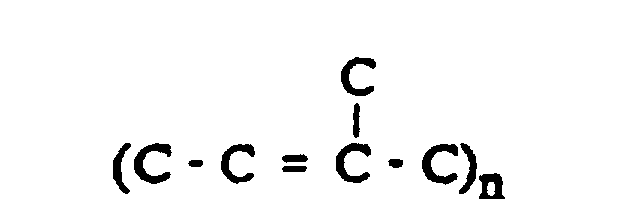
- The term "redox compound" as used herein refers to one or more compounds capable of undergoing reduction and oxidation reactions and capable of recycling between a reduced and oxidised state.
- Suitable redox compounds in accordance with the present invention are compounds of Formula (I):wherein R1, R2, R3 and R4 may be the same or different and each is H, C1-C10 alkyl, C1-C10 alkoxy, C2-C10 alkenyl, C2-C10 alkynyl, C3-C10 cycloalkyl, C1-C10 alkylthio, C1-C10 haloalkyl, phenyl, phenoxy, thiophenoxy, either not substituted or substituted with a substituent selected from the group consisting of halogen, C1-C6 alkyl, C1-C6 alkoxy, alkylthio, amino, C1-C6 haloalkyl and C1-C5 haloalkoxy.
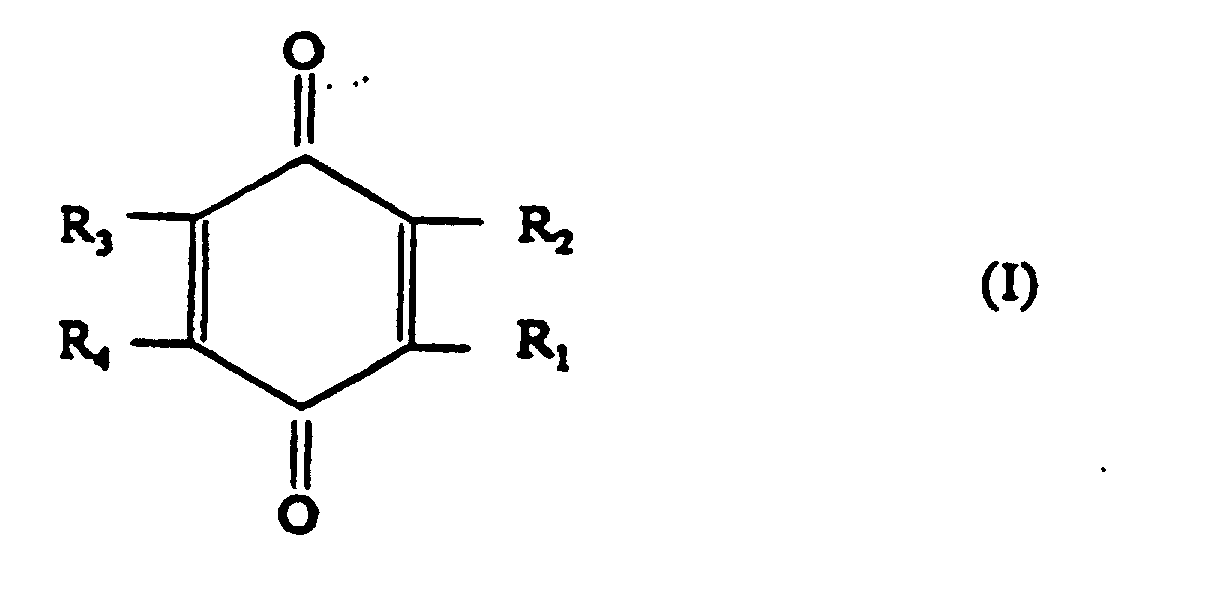
- Preferably,
- R1 is
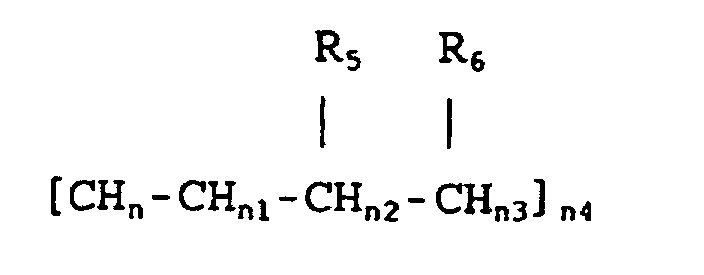 wherein each of n and n1 is 1 or 2; n2 is 1, n3 is 1 or 2; and n4 is 1-40
 -
- Even more preferably, the redox compound is a compound of Formula (III):wherein R1 is
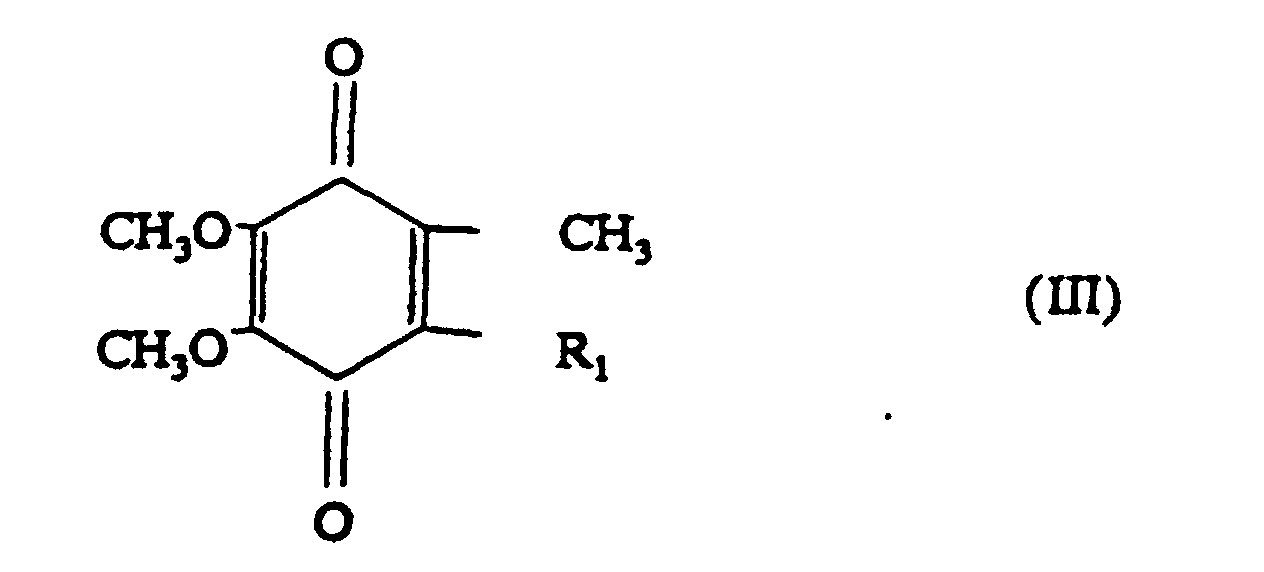 where n is 1 or 2; n1 is 1 or 2; n2 is 0 or 1; n3 is 2 or 3; n4 is 1-40; and n5 is 2 or 3.
- Alternatively, the redox compound is a compound of Formula (IV):where R1 is
 and n1-n5 are each as defined for Formula (III) above.
- In a preferred embodiment, n4 in compounds of Formulae (I)-(IV) is 0 to 20, more preferably 0 to 10 and even more preferably 6 to 10. In a most preferred aspect, n4 is 10.
- A convenient assay for assessing activity of redox compounds in enhancing cellular ATP production involves incubating candidate compounds with mammalian cells which cannot synthesise ATP via mitochondrial oxidative phosphorylation (for example, so-called "ρ° cells" which are produced by culturing cells in the presence of ethidium bromide, King, M.P. and Attardi, G. Science 246: 500-503, 1989). Such cells can grow without mitochondrial respiratory function only when incubated with compounds which enhance cellular ATP production via non-mitochondrial respiratory systems (such as glycolysis). Alternatively, cells can be used with permanently or temporarily impaired mitochondrial electron transport/oxidative phosphorylation activity. An example of a temporarily impaired cell includes cells treated with AZT. All such cells, with totally or partially impaired mitochondrial electron transport/oxidative phosphorylation systems are referred to herein as having a reduced capacity for generating ATP. According to this aspect of the present invention there is provided a method for assaying for redox compounds capable of enhancing cellular ATP production, said method comprising incubating animal cells (e.g. mammalian cells) which exhibit a reduced capacity to synthesise ATP via oxidative phosphorylation with compounds to be tested for a time and under conditions sufficient for said cells to grow relative to a control, which control comprises cells which may remain dormant or die and then selecting compounds which promote growth of said cells. The animal and redox compound are as hereinbefore described. Additionally, an antioxidant and/or uridine (including functional derivatives and/or precursors thereof) may be added to the test system.
- The amount of a redox compound required to achieve the desired effects of enhancing cellular ATP and/or ameliorating the effects of and-retroviral agents will depend upon a number of factors, and in particular, the specific application, the nature of the particular redox compound used, the mode of administration and the condition of the patient. In general, however, and without limitation to the present invention, a daily or weekly dose in the range of 100 pg to 5000 mg or more per patient per day is contemplated. A more preferred dose is 10 mg to 300 mg per patient per day.
- The specific dosage of redox compounds administered will depend upon the condition being treated, the state of the subject and the route of administration as described above, but would typically be from 10 µg to 50 mg per kilogram of body weight per day and more preferably from about 100 µg to 15 mg per kilogram of body weight per day and even more preferably 1 mg to 10 mg per kilogram of body weight per day. Administration protocols and effective amounts may vary expecially if administered simultaneously or sequentially wth an anti-retroviral compound. For example, multiple doses may be given every day or two days or on a weekly or monthly basis. Where the redox compound is admixed with AZT, 100 µg - 2000 mg AZT may be required per patient per day, two days, week or month. A similar amount of AZT is used during sequential administration with the redox compound. Where uridine is also administered, an amount in the range of 100 µg to 2000 mg or more per patient per day is generally given.
- In the manufacture of a medicament for the administration of redox compounds with or without one or more anti-retroviral compounds (e.g. AZT) in accordance with this invention, hereinafter referred to as a formulation, the redox compound with or without anti-retroviral compound is typically admixed with, inter alia, one or more acceptable carriers and/or diluents. The carrier must, of course, be acceptable in the sense of being compatible with any other ingredients in the formulation and must not be deleterious to the patient. The carrier may be a solid or a liquid, or both, and is preferably formulated with a compound as a unit-dose formulation, for example, a tablet, which may contain from 0.5% to 95% by weight of the active compound. One or more active compounds may be incorporated in the formulations of the present invention, which may be prepared by any of the well known techniques of pharmacy consisting essentially of admixing the components, optionally including one or more accessory ingredients.
- The formulations of the invention include those suitable for oral, rectal, topical, buccal (e.g., sub-lingual), parental (e.g. subcutaneous, intramuscular, intradermal or intravenous) and transdermal administration, although the most suitable route in any given case will depend on the nature of the severity of the condition being treated and on the nature of the particular active compound which is being used.
- Formulations suitable for oral administration may be presented in discrete units, such as capsules, cachets, lozenges, or tablets, each containing a predetermined amount of the active compound; as a powder or granules; as a solution or a suspension in an aqueous or non-aqueous liquid; or as an oil-in-water or water-in-oil emulsion. Such formations may be prepared by any suitable method of pharmacy which includes the step of bringing into association the active compound and a suitable carrier (which may contain one or more accessory ingredients as noted above). In general, the formulations of the invention are prepared by uniformly and intimately admixing the active compound with a liquid or finely divided solid carrier and/or diluent, or both, and the, if necessary, shaping the resulting mixture. For example, a tablet may be prepared by compressing or moulding a powder or granules containing the active compound, optionally with one or more accessory ingredients.
- Compressed tablets may be prepared by compressing, in a suitable machine, the compound in a free-flowing form, such as a powder or granules optionally mixed with a binder, lubricant, inert diluent, and/or surface active/dispersing agent(s). Moulded tablets may be made by moulding, in a suitable machine, the powdered compound moistened with an inert liquid binder. The tablets may also be incorporated into or be part of animal food such as various grains and the like.
- Formulations suitable for buccal (sub-lingual) administration include lozenges comprising the active compound in a flavoured base, usually sucrose and acacia or tragacanth; and pastilles comprising the compound in an inert base such as gelatin and glycerin or sucrose and acacia.
- Compositions of the present invention suitable for parental administration conveniently comprise sterile aqueous preparations of the active compounds, which preparations are preferably isotonic with the blood of the intended recipient. The preparations are preferably administered intravenously, although administration may also be effected by means of subcutaneous, intramuscular, or interdermal injection.
- Such preparations may conveniently be prepared by admixing the compound with water or a glycine buffer and rendering the resulting solution sterile and isotonic with the bood. Injectable formulations according to the invention generally contain from 0.1 to 5% w/v active compound.
- Formulations suitable for rectal administration are preferably presented as unit dose suppositories. These may be prepared by admixing the active compound with one or more conventional solid carriers, for example, cocoa butter, and then shaping the resulting mixture.
- Formulations suitable for topical application to the skin preferably take the form of an ointment, cream, lotion, paste, gel, spray, aerosol, or oil. Carriers which may be used include vaseline, linoline, polyethylene glycols, alcohols, and combinations of two or more thereof. The active compound is generally present at a concentration of from 0.1 to 15% w/w, for example, from 0.5 to 2% w/w.
- Formulations suitable for transdermal administration may be presented in discrete patches to remain in intimate contact with the epidermis of the recipient for a prolonged period of time. Such patches suitably contain the active compound as an optionally buffered aqueous solution of, for example, 0.1 to 0.2M concentration with respect to the said active compound.
- Formulations suitable for transdermal administration may also be delivered by iontophoresis (see, for example, Pharmaceutical Research 3 (6), 318, 1986) and typically take the form of an optionally buffered aqueous solution of the active compound. Suitable formulations comprising citrate or bis/tris buffer (pH 6) or ethanol/water and contain from 0.1 to 0.2M active ingredient.
- Compositions suitable for rectal, topical, buccal and transdermal administration may be prepared according to standard formulation procedures as are well known in the art and described for example in Remmington's Pharmaceutical Sciences (14th Edition, Hoover, T.E. et al, Eds. Mack Publishing Co., Easton, Pennsylvania, 1970).
- The present inventors have shown that the cellular impermeable redox compound ferricyananide may be used to sustain the growth and viability of ρ° cells. The growth restorative action of ferricyanide is believed to be mediated by an NADH linked plasma membrane oxidoreductase that may encompass a plasma membrane NADH oxidase activity. Continuous restoration of appropriate intracellular NAD+ levels is thus achieved by ferricyanide acting externally; this allows glycolysis to provide ATP for the growth of mitochondrially respiratory incompetent ρ° cells. Other redox compounds, whether permeable or impermeable to cells, may be utilised to enhance cellular ATP production by the plasma membrane oxidase system as well as other cellular oxidoreductase systems.
- Cellular oxidoreductase systems, the activity of which may be increased in the presence of redox compounds, include the plasma membrane oxidase system as well as other cellular oxidoreductase systems.
- The present invention is particularly directed to the amelioration of the effects of bioenergetic disease caused through, for example, aging, vascular or systemic disease or following chemical therapy.
- Diseases associated with distruption of mitochondrial respiratory chain function include diseases resulting from mutations of mtDNA - such as Lebers disease, hereditary optic neuropathy and somatic mtDNA mutations which may result in encephalomyopathy lactic acidosis, stroke-like episodes, chronic progressive external ophthalmoplegia, Kearns-Sayre syndrome, Pearson's marrow/pancreas syndrome and various cardiomyopathies). Other conditions treatable by the methods and compositions of the present invention include Parkinson's Disease and other neuromuscular diseases and Alzheimer's Disease. Vascular and systemic diseases also include cardiac conditions such as heart failure, strokes and diabetes type II. The redox compounds of the present invention may ameliorate the putative mitochondrial toxic effects of some anti-retroviral agents, such as AZT.
- In medicaments for the treatment of HIV infection comprising an anti-retroviral agent and a redox compound optionally in association with a pharmaceutically acceptable carrier and/or diluent, preferably, the anti-retroviral agent is AZT. An anti-oxidant and/or uridine may also be required.
- The redox compound and, for example, AZT are typically admixed with an acceptable carrier and/or diluent. The carrier and/or diliuent must be acceptable in the sense of being compatible with the other ingredients in the formulation and must not be deleterious to the patient. The carrier may be a solid or liquid, or both, and is preferably formulated with the compound as a unit-dose formulation for example a tablet which may contain from 0.5% to 95% by weight of the active compound.
- In ameliorating the cytotoxic effects of AZT, there can be administered to a subject in need of such treatment a therapeutically effective amount of AZT and a redox compound. Preferably, AZT and the redox compound are administered to a patient for the treatment of HIV infection.
- AZT and a redox compound may be administered to a subject either (a) simultaneously in time (optionally by formulating the two components together in a common carrier) or (b) at different times during the course of a common treatment schedule. In the latter case, the two compounds are administered sufficiently close in time to achieve the intended therapeutic effects.
- Where AZT and a redox compound are administered in the form of a single composition, formulations suitable for oral, rectal, topical, buccal, parenteral and transdermal administration may be prepared as previously described.
- AZT may be administered in a manner and amount as is conventionally practised. Preferably, an effective amount of AZT comprises a daily dose of from 250 to 7000 mg or more, more preferably 500 to 1000 mg per day. An effective amount of a redox compound may comprise from 100 µg to 1000 mg or more per day, preferably 1 mg to 500 mg per day. It is to be understood that the amount of AZT or a redox compound administered to a patient is not limiting on this invention, but rather the method of this invention involves administering to a patient suffering, for example, from HIV infection, an amount of AZT which is therapeutically effective as part of an overall treatment schedule in the control of HIV infection, and an amount of a redox compound which is effective to ameliorate the cytotoxic effects of AZT, metabolites thereof (such as AMT) or impurities therein.
- As conventional treatments with AZT involve daily doses of AZT over a prolonged time period, the methods of the present invention also involve long term daily administration (such as from 1 to 12 months or more) of an effective amount of AZT and a therapeutically effective amount of a redox compound.
- AZT is a mitochondrial poison that affects the oxidation/phosphorylation system and the activity of complex I, III and IV of the mitochondrial respiratory chain by inhibiting the gamma-DNA polymerase of the mitochondrial matrix thereby effectively depleting mitochondria of gene products of the mitochondrial genome. AZT (and impurities and metabolites thereof) effects the capacity of cells to produce ATP which results in cellular dysfunction and also cell death.
- The precise mechanism(s) by which redox compounds ameliorate the cytotoxic effects of AZT (or impurities or metabolites thereof) is uncertain. Without being limited to any particular theory or mode of action, the subject inventors believe that redox compounds may ameliorate the cytotoxic effects of AZT by one or more of (a) increasing the activity of plasma membrane and other cellular oxidase systems to produce NAD+ (from NADH). NAD+ may then drive glycolysis within cells to produce ATP; (b) redox compounds such as coenzyme Q10 may assist in electron transport and oxidative phosphorylation within mitochondria to facilitate ATP production.
- In ameliorating the effects of mitochondrial poisons (such as AZT, nucleoside drugs, anti-tumour compounds, anti-bacterial and anti-viral compounds and the like) there can be administered to a patient a therapeutically effective amount of a redox compound as herein described. The redox compound may be administered in conjunction with the mitochondrial toxin in the situation where the mitochondrial poisons possesses therapeutic benefits.
- This aspect of the present invention is described hereinafter with reference to in vitro experiments where the effect of AZT on the growth of human cells in culture is investigated. This model provides a direct insight into the cellular toxicity of AZT which would be repeated in-vivo at the level of tissues and organs, which are, of course, comprised of individual cells.
- One or more redox compounds of parts (I) can be used with uridine (and functional derivatives or precursors thereof) and optionally an anti-oxidant in the treatment of male infertility. Frequently, male infertility results from low or reduced motility of sperm. Such a low or reduced motility may result from a decline in bioenergy capacity. Accordingly, by treating a male patient, the effects of the bioenergy deficiency can be ameliorated thereby permitting an increase in sperm motility.
- The present invention is further described with reference to the following nonlimiting Figures and Examples.
- In the Figures:
- FIGURE 1 is a graphical representation showing the rescue of human ρ° cells using redox compounds. Total viable cell number (x105) is plotted against days in culture. (a) ρ° cells were incubated with nutrient medium (•) and nutrient medium in the presence of pyruvate (▴), ferricyanide (▪) and diferrictransferrin (○), (b) ρ° cells were incubated with nutrient medium (•), Q10 (▴), Q10c (▾), Q6c (▪), Q4c (□) and Q3c (°) and Q6 (°).
- FIGURE 2 is a graphical representation showing the effect of AZT on the growth of human Namalwa cells. Cell number per ml (x105) is plotted against days in culture. Cells were incubated in the absence of AZT (• control) and in the presence of 10 µg/ml AZT (▴), 100 µg/ml AZT (▪) and 500 µg/ml AZT (▾).
- FIGURE 3 is a graphical representation showing the effect of AMT on the growth of human Namalwa cells. Cell number per ml (x105) is plotted against days in culture. Cells were incubated in the absence of AMT (• control) and in the presence of 1 µg/ml AMT (▴), 10 µg/ml AMT (▪) and 100 µg/ml AMT (▾).
- FIGURE 4 is a graphical representation showing Q10 redox-rescue of human Namalwa cells grown in the presence of AZT. Cell number per ml (x105) is plotted against days of culture. Cells were incubated in the absence of AZT (• control), in 100 µg/ml AZT and 10 µg/ml Q10 (□), and 100 µg/ml AZT (▪).
- FIGURE 5 is a graphical representation showing Q10 redox-rescue of human Namalwa cells grown in the presence of AMT. Cell number per ml (x105) is plotted against days of culture. Cells were incubated in the absence of AMT (• control), in 100 µg/ml AMT and 10 µg/ml Q10 (□), and 10 µg/ml AMT (▪).
- FIGURE 6 is a graphical representation of mean fatigue profiles of soleus muscle from young adult (solid line, n=3), aged (dashed line, n=10) and aged Q10 treated (dotted line, n=7) rats.
-
- Human Namalwa cells were cultured in RPMI-1640 supplemented with 10% v/v fetal calf serum and supplemented with uridine (50 µg/ml). Pyruvate, ferricyanide diferrictransferrin, coenzymes Q10, Q10c, Q6, Q6c, Q4c and Q3c (hereinafter referred to as "Q10", "Q10c", "Q6", "Q6c", "Q4c" and "Q3c", respectively) were added to a final concentration of 1 mM, 100 µM, 10 µg/ml, 12 µM, 10 µM, 10 µM, 5 µM, 10 µM and 10 µM, respectively. Ferrocyanide may also be used which is converted to ferricyanide.
- ρ° cells were obtained by long term treatment with ethidium bromide according to the methods of Desjardins et al. Mol. Cell. Biol., 5, 1163-1169, 1985 and King and Attardi Science, 246, 500-503 1989.
- As shown in Figure 1, ρ° cells incubated in the presence of nutrient media were non-viable, showing no measurable increase in cell number over 7 days in culture. In distinct contrast, ρ° cells incubated with the
redox compounds 100 µM ferricyanide and Q10 - Q3c, all showed significant growths of viable cells over the 7 day incubation period as a result of enhancement of cellular ATP levels by the aforementioned redox compounds. - Mammalian cells are impermeable to ferricyanide (Crane et al., B.B.A., 811, 233-264, 1985) and, hence, the growth restorative action of ferricyanide in ρ° cells is likely to be mediated by an NADH-linked plasma membrane oxidoreductase which utilises this compound as an efficient external electron acceptor to generate cellular NAD+ levels. Continuous restoration of appropriate intracellular NAD + levels is thus achieved by ferricyanide acting externally of the cell, this allowing glycolysis to provide ATP for the growth of mitochondrially respiratory incompetent ρ° cells.
- The ability of Q10 to allow ρ° cells to grow under aerobic conditions indicates that one mode of action of Q10 may be to act as an electron acceptor for the plasma membrane-associated NADH dehydrogenase or oxidase. As respiratory electron transport is non-functional in ρ° cells, Q10 and Q3c act as redox sinks to generate cytoplasmic NAD+ (as does ferricyanide) because it cannot in this situation act as a by-pass reagent to restore impaired oxidative phosphorylation.
- Mitochondrially impaired cell models as exemplified by the ρ° cells are a powerful tool for investigating cells which are bioenergy deficient. The restoration/increase of ATP production in these cells shows cellular ATP production may be increased in-vivo in animals. Thus, redox compounds may be used in the treatment of cells which are unable to meet their biological energy demand, and thus may be used in the treatment of ageing, in ameliorating the effects of mitochondrial toxic agents which disrupt mitochondrial oxidative phosphorylation, and in disease states associated with inoperative or malfunctioning mitochondrial oxidative phosphorylation.
- Human Namalwa cells were cultured in RPMI-1640 growth medium as described in Example 1.
- AZT and AMT were added to the growth media at various concentrations and the viable cells determined by trypan blue exclusion assay.
- Figure 2 shows the effect of AZT on the growth of Namalwa cells. Control cells divided in an exponential manner as expected on culture in nutrient media. AZT at concentrations of 10 µg/ml, 100 µg/ml and 500 µg/ml reduced the number of viable cells. At a concentration of 10 µg/ml cell number increased but began to plateau after 5 days in culture. At a concentration of 100 µg/ml AZT the number of cells in culture remained relatively constant. At 500 µg/ml AZT, there were no viable remaining cells after 5 days of culture and thus AZT showed marked cytotoxicity.
- Figure 3 shows the effect of incubating human Namnalwa cells with AMT, a metabolite of AZT and also a possible impurity in AZT preparation. It is evident from Figure 3, that AMT is highly toxic to cells in concentrations of 10 µg/ml and 100 µg/ml. Hence, by comparison with the data presented in Figure 2, AMT is at least in order of magnitude more toxic than AZT.
- Figure 4 shows the amelioration of the toxic effect of AZT in human Namalwa cells. At a concentration of 100 µg/ml AZT, AZT was clearly cytotoxic. However, where the cells were incubated with 10 µg/ml Q10 in combination with 100 µg/ml AZT, the toxic effect of AZT was ameliorated with a significant proportion of cells being scored as viable, this result being almost equivalent to control cells incubated in the absence of AZT.
- Similar results to Figure 4 are shown in Figure 5 where the redox compound Q10 ameliorates the cytotoxic effect of AMT on Namalwa cells. AMT at 10 µg/ml is highly cytotoxic to cells. However, in the presence of 10 µg/ml Q10 the cytotoxic effects of 10 µg/ml of AMT are reversed or ameliorated such that Namalwa cells divide and remain viable in culture in a manner similar to control cells incubated in the absence of AMT.
- Examples of redox compounds within the scope of Formulae (I)-(IV) and useful in accordance with the present invention are shown in Examples 3-14 hereinafter.
-

-

-

-
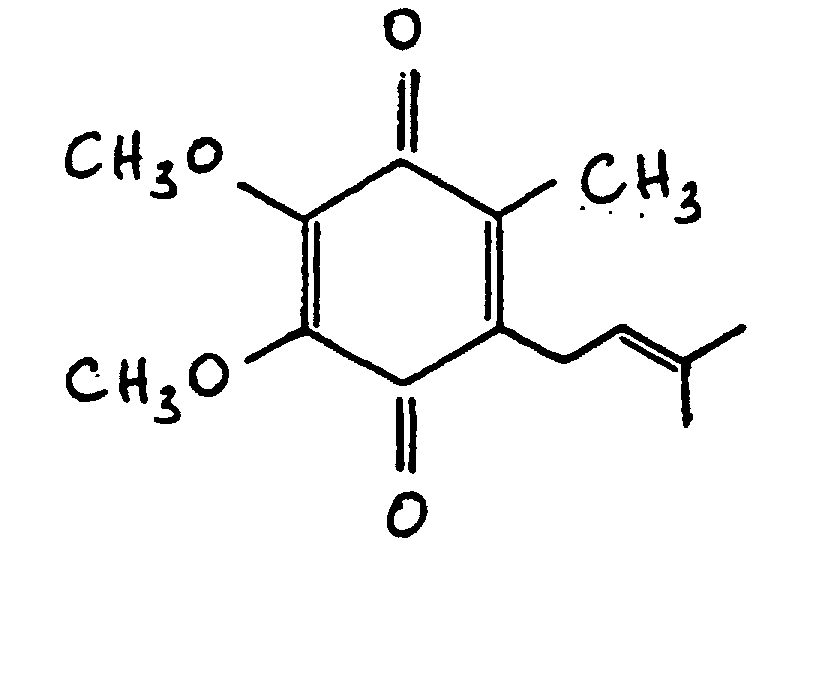
-

-

-

-

-

-

- Compounds useful in accordance with the present invention can be treated in the following animal model.
- Sprague-Dawley rats are used at approximately 26 months of age. Experiments are conducted using soleus muscle under in vivo conditions. This muscle is chosen because it contains 85-90% type I fibres and 10-15% type IIA fibres. Type I fibres are slow-twitch, with a high mitochondrial density and are normally highly resistant to fatigue, type IIA fibres are fast-twitch with a relatively high mitochondrial density and are also fatigue resistant. Another useful skeletal muscle is medial gastrocnemius. medial gastrocnemius, like soleus, is an ankle extensor but is of very different fibre type composition. It contains mainly type IIA and IIB (fast-twitch and fatigable) fibres and a small proportion of type I fibres. Soleus, therefore, provides an example of a very fatigue resistant skeletal muscle, whereas medial gastrocnemius is more typical of the majority of muscles in the body.
- Both soleus and medial gastrocnemius is investigated in vivo in the anaesthetised rat (4 ml/kg body weight urethane in a 25% w/v solution, freshly prepared i.p.). The muscle is stimulated via its nerve with the blood supply intact at a temperature of 35 °C. Recording conditions are isometric with the muscle set at optimum length. The basic isometric contractile characteristics are determined and the muscle them stimulated at 40Hz for 33 ms every second (i.e. duty cycle one third of a second stimulated, two thirds rest) for periods up to 8,000 seconds. The contractile responses and the muscle electromyographic (EMG) signal are recorded on tape and selected records are captured on line with a computer based data logging system.
- To determine the diminution in endurance and functional capacity with age in the animal model a comparison is made betwen muscles from young adult animals six months old and aged animals (about 26 months).
- Preliminary results (Figure 6) indicate that following prolonged repetitve stimulation (40 Hz, 330 ms every second) for periods in excess of two hours, force developed by young adult rat soleus muscle declined rapidly to approximately 70% of its initial force. This level of force is then maintained for the duration of stimulation. However, in the aged animal the initial decline in force is much greater (approximately 40% of initial force) and thereafter continued to decline. Results obtained from 24 to 26 month-old rats treated with coenzyme Q10 by daily i.p. injections for a period of 4 weeks show that co-enzyme Q10 though unable to prevent the initial decline in force was able to successfully prevent the progressive decline in force (Figure 6). In this experiment, Q10 is administered at a dose level of 2 mg/kg/day in the presence of solvent/emulsifier HCO-60 solvent, which corresponds to the oral dosage level received by human mitochondrial disease patients. The i.p. route of administration is used in preference to the oral route to ensure that a high absorption of the compound is achieved.
- In a preliminary experiment, the inventors have shown that administering AZT by i.p. injection at a dose level of 10 mg/kg/day (corresponding to the oral dosage level given to HIV positive and AIDS patients) for a period of 4 weeks almost completely abolished the contractile response of the soleus muscle to repetitive stimulation. Although the animals appeared normal and were able to feed and groom themselves. To further investigate the effect of AZT treatment on the decline in skeletal muscle performance, rats are treated concomitantly with co-enzyme Q10 (2 mg/kg/day) and AZT (10 mg/kg/day). The response of skeletal muscle is investigated at 1, 2 and 4 weeks, respectively. A further group of rats receives Q10 alone for 4 weeks prior respectively. Animals also receive AZT and HCO-60 (Q10 carrier) for periods of 1, 2 and 4 weeks, respectively and serve as the control group for the first two groups.
- It is contemplated that treatment of patients with redox compounds either before or during the induced ischaemia of cardiac surgery improves the tolerance of the senescent myocardium to ischaemia and to reperfusion. Induced arrest (cardioplegia) during cardiac surgery causes a reduction in oxygen consumption, metabolic efficiency and enegy supply during the post-cardioplegic recovery period.
- To determine whether treatment with redox compounds, either before or during induced ischaemia might improve the tolerance of the senscent myocardium to ischaemic injury. It may be carried out in rat hears perfused with Kreb's buffer on the isolated working heart apparatus. If protective effect of a particular agent is identified, this agent is then tested further in young and old greyhound dogs perfused with blood on the heart-lung machine as used during open heart surgery.
- Human cardiac tissue may also be studied. A recent development permits the preparation of thin myocardial strips from human and artrial wall, atrial trabeculae and from papillary muscles, that can be used for assessment of myocardial contractile function. A key to the successful application of such small scale muscle preparations (Mulieri et al Circul. Res. 65, 1441-1444, 1989) is the use of 2,3-butanedione monoxime (BDM), which functionally and structurally protects the cardiac tissues during dissection, permitting the isolation of functional human myocardial strips of less than 1 mm2 in cross section. These strips can be mounted in an organ bath, then connected to a force transducer and stimulated electrially to induce contraction. These strips can then, under controlled conditions, be subjected to various stresses including hypoxia and high work loads induced by rapid electrical stimulation. The efficacy of redox compounds, with or without and-oxidants and/or uridine (or its derivative or precursor), included in the organ bath, can be assessed on myocardial strips subjected to these stresses.
where R5 and R6 may be the same or different and each is H, C1-C10 alkyl, C1-C10 alkoxy, C2-C10 alkynyl C3-C10 cycloalkyl, C1-C10 alkylthio, C1-C10 haloalkyl, phenyl, phenoxy, thiophenoxy, either not substituted or substituted from the list consisting of halogen, C1-C6 alkyl, C1-C6 alkoxy, alkylthio, amino, C1-C6 haloalkyl and C1-C5 haloalkoxy.
Claims (29)
- Use of a compound of formula (I), (III) or (IV) in the manufacture of a medicament for enhancing cellular bioenergy in an animal, in which method said compound and uridine or a functional derivative or precursor thereof are administered to said animal, said compound of formula (I) having the structure:wherein R1, R2, R3 and R4 may be the same or different and each is H, C1-C10 alkyl, C1-C10 alkoxy, C2-C10 alkenyl, C2-C10 alkynyl, C3-C10 cycloalkyl, C1-C10 alkylthio, C1-C10 haloalkyl, phenyl, phenoxy, or thiophenoxy, each of which may be either not substituted or substituted with a substituent from the group consisting of halogen, C1-C6 alkyl, C1-C6 alkoxy, alkylthio, amino, C1-C6 haloalkyl and C1-C5 haloalkoxy; or R1 is
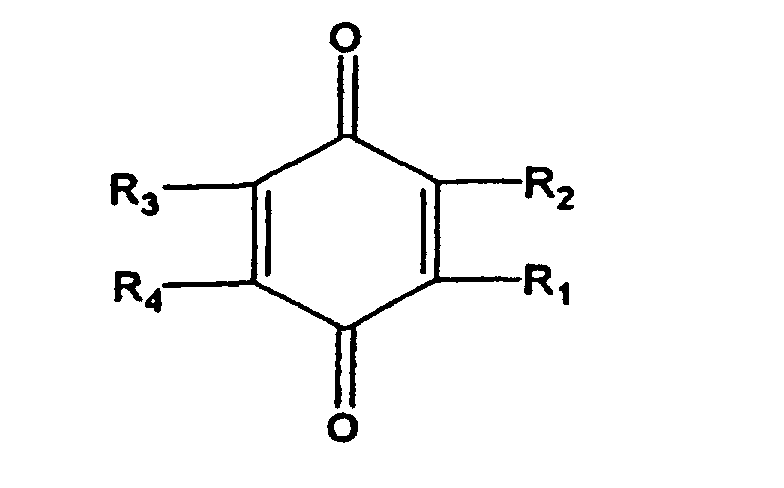 wherein n and n1 are independently either 1 or 2; n2 is 1; n3 is either 1 or 2 and n4 is 1-40 and
wherein R5 and R6 may be the same or different and each is H, C1-C10 alkyl, C1-C10 alkoxy, C2-C10 alkynyl, C3-C10 cycloalkyl, C1-C10 alkylthio, C1-C10 haloalkyl, phenyl, phenoxy, thiophenoxy, each of which may be either not substituted or substituted from the list consisting of halogen, C1-C6 alkyl, C1-C6 alkoxy, alkylthio, amino, C1-C6 haloalkyl and C1-C5 haloalkoxy;
said compound of formula (III) having the structure:wherein R1 is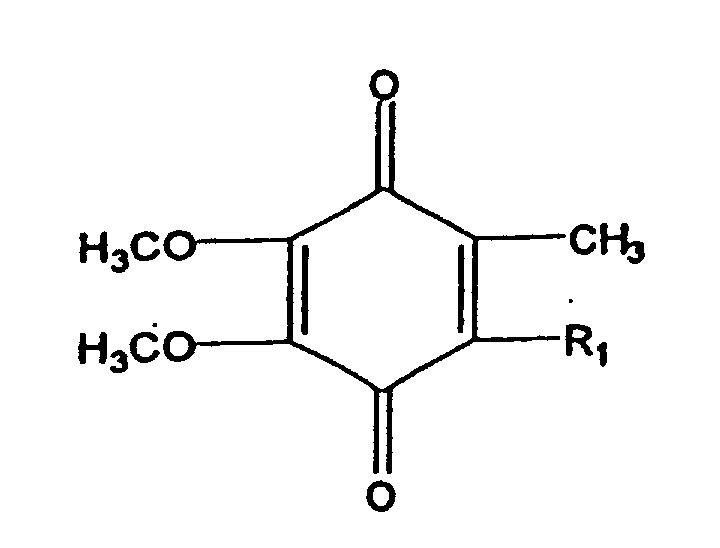 where n is 1 or 2; n1 is 1 or 2; n2 is 0 or 1; n3 is 2 or 3; n4 is 1-40; n5 is 2 or 3;
and said compound of formula (IV) having the structure:where R1 is where n is 1 or 2; n1 is 1 or 2; n2 is 0 or 1; n3 is 2 or 3; n4 is 1-40; n5 is 2 or 3;
wherein said compound is capable of replacing ferricyanide in the enablement of propagative aerobic growth of cultured ρ° cells of vertebrate origin in the absence of pyruvate. - Use according to claim 1 wherein the animal is a mammal selected from the group consisting of a human, livestock animal, laboratory test animal, companion animal and captive or free wild animal.
- Use according to claim 1 wherein the animal is a human.
- Use according to claim 1 wherein the said compound is a compound of formula (III) having the structure:wherein R1 is
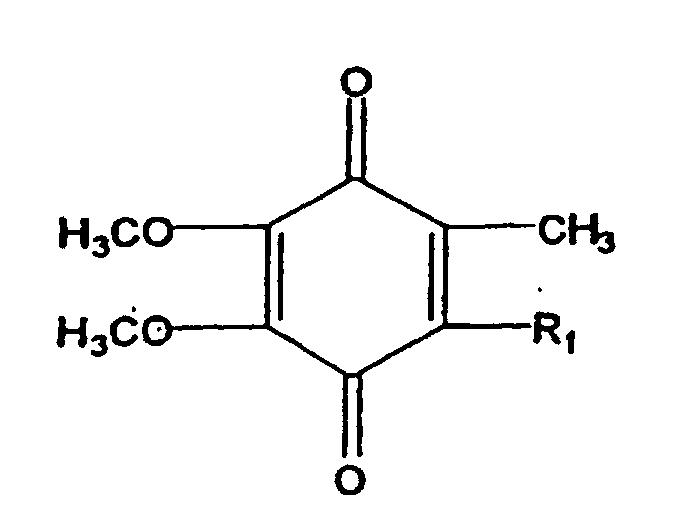 where n is 1 or 2; n1 is 1 or 2; n2 is 0 or 1; n3 is 2 or 3; n4 is 1-40; n5 is 2 or 3.
- Use according to claim 1 wherein the said compound is a compound of formula (IV) having the structure:where R1 is
 where n is 1 or 2; n1 is 1 or 2; n2 is 0 or 1; n3 is 2 or 3; n4 is 1-40; n5 is 2 or 3.
- Use according to claim 1 wherein the effective amount of said compound is from 10 µg to 50 mg per kilogram body weight.
- Use according to claim 6 wherein the effective +amount of said compound is from 100 µg to 15 mg per kilogram body weight.
- Use according to claim 1 further comprising the use of an anti-oxidant.
- Use according to claim 1 for ameliorating the effects of reduced bioenergetic capacity in diseases associated with aging, systemic or vascular disease or chemical therapy.
- Use according to claim 9 wherein the disease is heart disease, a neuromuscular disease or diabetes.
- A method for assaying for the compounds of formula (I), (III) or (IV) of claim 1 capable of enhancing cellular bioenergy, said method comprising aerobically incubating, in the absence of pyruvate, cultured ρ° cells of vertebrate origin which exhibit no capacity to synthesise ATP via oxidative phosphorylation with uridine or a functional derivative or precursor thereof and compounds to be tested for a time and under conditions sufficient for said cells to grow relative to a control, which control comprises cells which may remain dormant or die, and then selecting compounds which promote growth of said cells.
- A method according to claim 11 wherein the animal cells are selected from the list consisting of human cells, livestock animal cells, laboratory test animal cells, companion animal cells and captured or free animal cells.
- A method according to claim 11 wherein the animal cells are human cells.
- A method according to claim 13 wherein the human cells are human Namalwa cells.
- A method according to claim 11 further comprising the incubation of said animal cells with an anti-oxidant.
- Use of a compound of formula (I), (III) or (IV) in the manufacture of a medicament for ameliorating the cytotoxic or other adverse effects of anti-viral therapy in an animal using an anti-retroviral agent, by simultaneous or sequential administration with said anti-retroviral agent, said compound of formula (I) having the structure:wherein R1, R2, R3 and R4 may be the same or different and each is H, C1-C10 alkyl, C1-10 alkoxy, C2-C10 alkenyl, C2-C10 alkynyl, C3-C10 cycloalkyl, C1-C10 alkylthio, C1-C10 haloalkyl, phenyl, phenoxy, or thiophenoxy, each of which may be either not substituted or substituted with a substituent from the group consisting of halogen, C1-C6 alkyl, C1-C6 alkoxy, alkylthio, amino, C1-C6 haloalkyl and C1-C5 haloalkoxy; or

R1 iswherein n and n1 are independently either 1 or 2; n2 is 1; n3 is either 1 or 2 and n4 is 1-40 and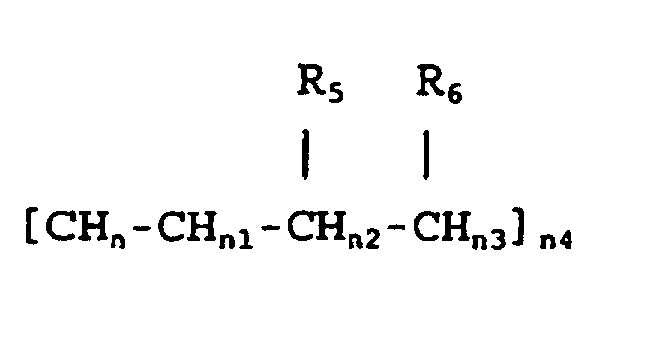
wherein R5 and R6 may be the same or different and each is H, C1-C10 alkyl, C1-C10 alkoxy, C2-C10 alkynyl, C3-C10 cycloalkyl, C1-C10 alkylthio, C1-C10 haloalkyl, phenyl, phenoxy, thiophenoxy, each of which may be either not substituted or substituted from the list consisting of halogen, C1-C6 alkyl, C1-C6 alkoxy, alkylthio, amino, C1-C6 haloalkyl and C1-C5 haloalkoxy;
said compound of formula (III) having the structure:wherein R1 is where n is 1 or 2; n1 is 1 or 2; n2 is 0 or 1; n3 is 2 or 3; n4 is 1-40; n5 is 2 or 3;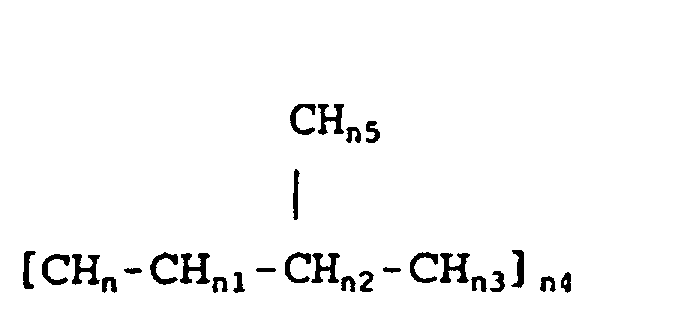
and said compound of formula (IV) having the structure:where R1 is where n is 1 or 2; n1 is 1 or 2; n2 is 0 or 1; n3 is 2 or 3; n4 is 1-40; n5 is 2 or 3;
wherein said compound is capable of replacing ferricyanide in the enablement of propagative aerobic growth of cultured ρ° cells of vertebrate origin in the absence of pyruvate. - Use according to claim 16 wherein the anti-retroviral agent is AZT.
- Use according to claim 16 wherein the animal is selected from the list consisting of a human, a livestock animal, a laboratory test animal, a companion animal and a captive or free wild animal.
- Use according to claim 18 wherein the animal is a human.
- Use according to claim 16 further comprising the sequential or simultaneous administration of an anti-oxidant and/or uridine or a functional derivative or precursor thereof.
- Use according to claim 16 wherein the compound is a compound of formula (III) having the structure:wherein R1 is
 where n is 1 or 2; n1 is 1 or 2; n2 is 0 or 1; n3 is 2 or 3; n4 is 1-40; and n5 is 2 or 3.
- Use according to claim 16 wherein the compound is a compound of formula (IV) having the structure:where R1 is
 where n is 1 or 2; n1 is 1 or 2; n2 is 0 or 1; n3 is 2 or 3; n4 is 1-40; and n5 is 2 or 3.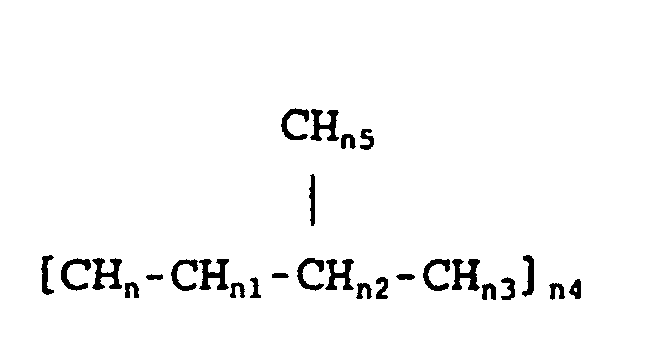
- A composition for enhancing cellular bioenergy in an animal comprising uridine or a functional derivative or precursor thereof and a compound of formula (I), (III) or (IV), said compound of formula (I) having the structure:wherein R1, R2, R3 and R4 may be the same or different and each is H, C1-C10 alkyl, C1-C10 alkoxy, C2-C10 alkenyl, C2-C10 alkynyl, C3-C10 cycloalkyl, C1-C10 alkylthio, C1-C10 haloalkyl, phenyl, phenoxy, or thiophenoxy, each of which may be either not substituted or substituted with a substituent from the group consisting of halogen, C1-C6 alkyl, C1-C6 alkoxy, alkylthio, amino, C1-C6 haloalkyl and C1-C5 haloalkoxy; or
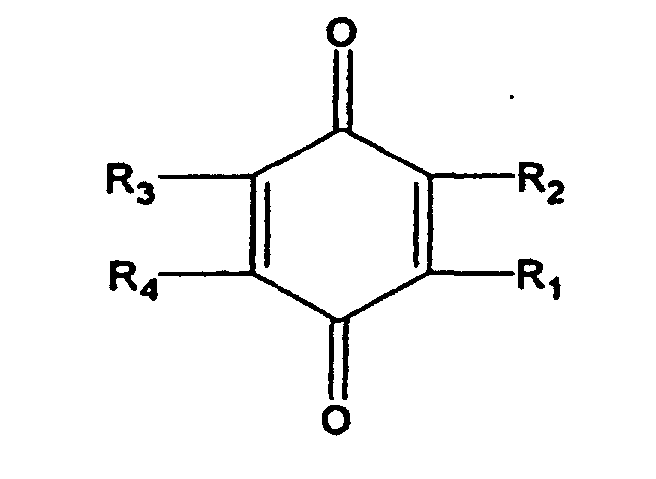 wherein n and n1 are independently either 1 or 2; n2 is 1; n3 is either 1 or 2; and n4 is 1-40, and
wherein R5 and R6 may be the same or different and each is H, C1-C10 alkyl, C1-C10 alkoxy, C2-C10 alkynyl, C3-C10 cycloalkyl, C1-C10 alkylthio, C1-C10 haloalkyl, phenyl, phenoxy, thiophenoxy, each of which may be either not substituted or substituted from the list consisting of halogen, C1-C6 alkyl, C1-C6 alkoxy, alkylthio, amino, C1-C6 haloalkyl;
said compound of formula (III) having the structure:wherein R1 is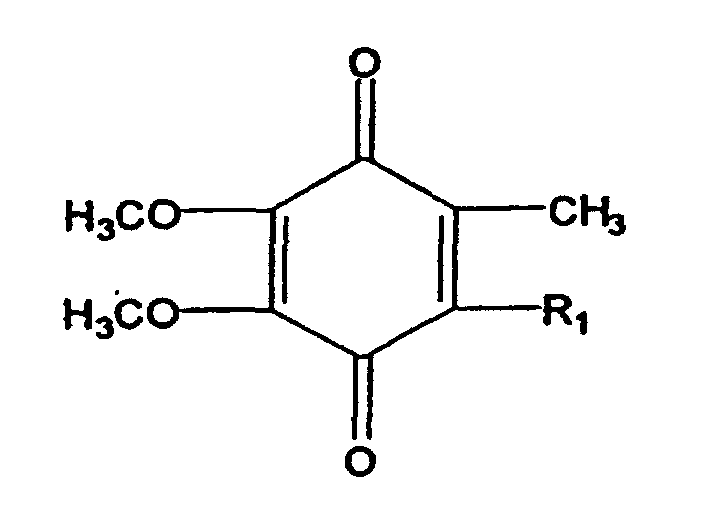 where n is 1 or 2; n1 is 1 or 2; n2 is 0 or 1; n3 is 2 or 3; n4 is 1-40; n5 is 2 or 3;
and said compound of formula (IV) having the structure:where R1 is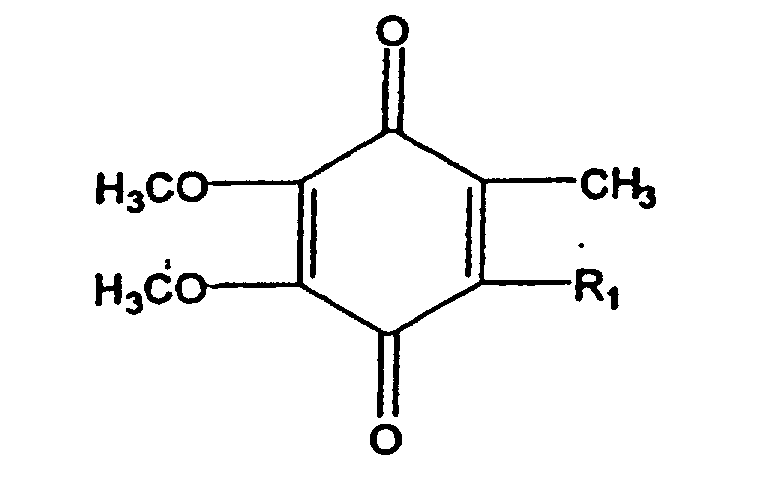 where n is 1 or 2; n1 is 1 or 2; n2 is 0 or 1; n3 is 2 or 3; n4 is 1-40; n5 is 2 or 3;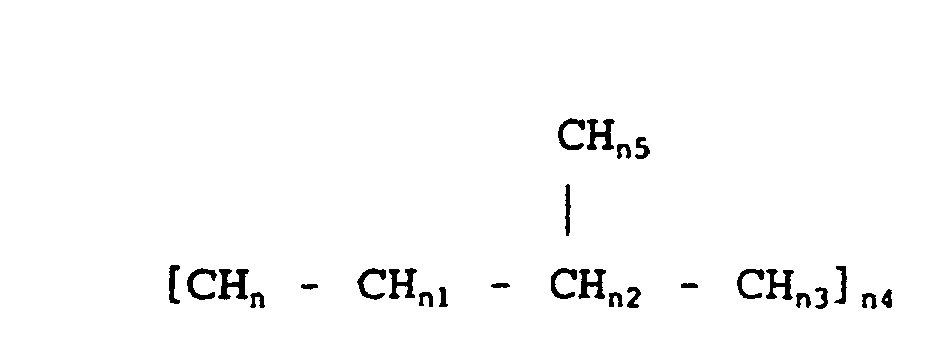
wherein said compound is capable of replacing ferricyanide in the enablement of propagative aerobic growth of cultured ρ° cells of vertebrate origin in the absence of pyruvate;
and one or more pharmaceutically acceptable carriers and/or diluents. - A composition according to claim 23 comprising an anti-retroviral agent.
- A composition according to claim 24 wherein the anti-retroviral agent is AZT.
- A composition according to claim 23 wherein the compound is a compound of formula (III) having the structure:wherein R1 is
 where n is 1 or 2; n1 is 1 or 2; n2 is 0 or 1; n3 is 2 or 3; n4 is 1-40; and n5 is 2 or 3.
- A composition according to claim 23 wherein the compound is a compound of formula (IV) having the structure:where R1 is
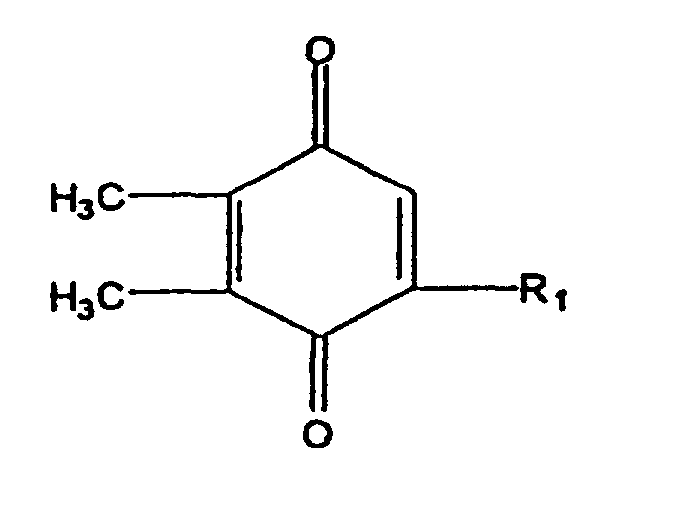 where n is 1 or 2; n1 is 1 or 2; n2 is 0 or 1; n3 is 2 or 3; n4 is 1-40; and n5 is 2 or 3.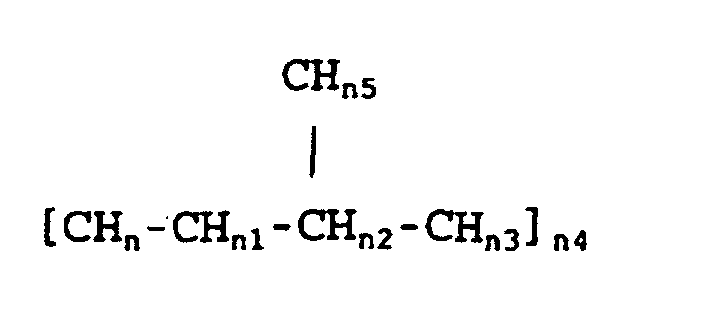
- A composition according to claim 23 further comprising an anti-oxidant.
- A composition according to claim 28 wherein the anti-oxidant is Vitamin C or Vitamin E.
Applications Claiming Priority (7)
| Application Number | Priority Date | Filing Date | Title |
|---|---|---|---|
| AUPL2642/92 | 1992-05-28 | ||
| AUPL264292 | 1992-05-28 | ||
| AUPL264192 | 1992-05-28 | ||
| AUPL264292 | 1992-05-28 | ||
| AUPL2641/92 | 1992-05-28 | ||
| AUPL264192 | 1992-05-28 | ||
| PCT/AU1993/000251 WO1993024650A1 (en) | 1992-05-28 | 1993-05-28 | Therapeutic compositions |
Publications (3)
| Publication Number | Publication Date |
|---|---|
| EP0643775A1 EP0643775A1 (en) | 1995-03-22 |
| EP0643775A4 EP0643775A4 (en) | 1995-12-27 |
| EP0643775B1 true EP0643775B1 (en) | 2004-07-21 |
Family
ID=25644259
Family Applications (1)
| Application Number | Title | Priority Date | Filing Date |
|---|---|---|---|
| EP93909698A Expired - Lifetime EP0643775B1 (en) | 1992-05-28 | 1993-05-28 | Quinone derivatives for enhancing cellular bioenergy |
Country Status (10)
| Country | Link |
|---|---|
| US (1) | US5981601A (en) |
| EP (1) | EP0643775B1 (en) |
| JP (1) | JP3859699B2 (en) |
| AT (1) | ATE271614T1 (en) |
| AU (1) | AU666372B2 (en) |
| DE (1) | DE69333575T2 (en) |
| DK (1) | DK0643775T3 (en) |
| ES (1) | ES2224098T3 (en) |
| PT (1) | PT643775E (en) |
| WO (1) | WO1993024650A1 (en) |
Families Citing this family (25)
| Publication number | Priority date | Publication date | Assignee | Title |
|---|---|---|---|---|
| GB9626177D0 (en) * | 1996-12-17 | 1997-02-05 | Univ Aberdeen | Channel mediating substrates |
| EP1538206B1 (en) * | 1997-09-16 | 2010-03-24 | Centocor, Inc. | Method for the complete chemical synthesis and assembly of genes and genomes |
| US6670127B2 (en) | 1997-09-16 | 2003-12-30 | Egea Biosciences, Inc. | Method for assembly of a polynucleotide encoding a target polypeptide |
| US7915233B1 (en) | 1998-08-31 | 2011-03-29 | Wellstat Therapeutics Corporation | Compositions and methods for treatment of mitochondrial diseases |
| US6472378B2 (en) * | 1998-08-31 | 2002-10-29 | Pro-Neuron, Inc. | Compositions and methods for treatment of mitochondrial diseases |
| US7807654B2 (en) * | 1998-08-31 | 2010-10-05 | Wellstat Therapeutics Corporation | Compositions and methods for treatment of mitochondrial diseases |
| US20050019268A1 (en) * | 1999-02-11 | 2005-01-27 | Mse Pharmazeutika Gmbh | Spray containing ubiquinone Qn |
| US20040224920A1 (en) * | 1999-02-23 | 2004-11-11 | The Regents Of The University Of California | Methods of treatment of mitochondrial disorders |
| NZ513926A (en) | 1999-02-23 | 2001-09-28 | Univ California | Methods of treatment of mitochondrial disorders |
| AUPR177300A0 (en) * | 2000-11-29 | 2000-12-21 | Centre For Molecular Biology And Medicine | Therapeutic methods |
| DK1385950T3 (en) * | 2001-01-19 | 2008-11-03 | Centocor Inc | Computer controlled assembly of a polynucleotide encoding a target polypeptide |
| US7629329B2 (en) * | 2001-06-04 | 2009-12-08 | Tsi Health Sciences, Inc. | Method for increasing muscle mass and strength through administration of adenosine triphosphate |
| EP1407782A4 (en) * | 2001-06-28 | 2004-10-20 | Takeda Chemical Industries Ltd | DRUGS FOR THE PREVENTION / TREATMENT OF FUNCTIONAL ORGAN DISORDERS AND ORGAN DYSFUNCTION |
| TW200304372A (en) * | 2002-03-20 | 2003-10-01 | Kanegafuchi Chemical Ind | Compositions for diabetes |
| WO2003083689A1 (en) * | 2002-03-25 | 2003-10-09 | Myriagon Corporation | Information management system |
| KR20050103906A (en) * | 2003-01-20 | 2005-11-01 | 오리거 인터내셔널 에스.에이. | Use of a composition comprising vitamin k1 oxide or a derivative thereof for the treatment and/or the prevention of mammal dermatological lesions |
| CA2610152C (en) | 2005-06-01 | 2018-04-10 | Edison Pharmaceuticals, Inc. | Redox-active therapeutics for treatment of mitochondrial diseases and other conditions and modulation of energy biomarkers |
| ES2823728T3 (en) * | 2005-09-15 | 2021-05-10 | Ptc Therapeutics Inc | Tail variants of therapeutic agents with redox activity for the treatment of mitochondrial diseases and other conditions and the modulation of energy biomarkers |
| EA019675B1 (en) | 2006-02-22 | 2014-05-30 | Эдисон Фармасьютикалз, Инк. | REDOX-ACTIVE THERAPEUTIC MEANS FOR THE TREATMENT OF MITOCHONDRIAL DISEASES AND MODULATION OF BIOMARKER COENZYM Q |
| WO2009111543A2 (en) * | 2008-03-05 | 2009-09-11 | Edison Pharmaceuticals, Inc. | Treatment of hearing and balance impairments with redox-active therapeutics |
| BRPI0918139B1 (en) | 2008-09-10 | 2024-04-30 | Ptc Therapeutics, Inc | COMPOSITION, MEDICAL OR FUNCTIONAL FOOD, FOOD OR DIETARY SUPPLEMENT FOR TREATMENT OF PERVASIVE DEVELOPMENTAL DISORDERS WITH REDOX-ACTIVE THERAPEUTICS |
| KR100977638B1 (en) * | 2009-06-29 | 2010-08-24 | 서울대학교산학협력단 | The method of producing bioenergy from predators of aquatic algae and plants taking up global warming gases |
| KR101636946B1 (en) * | 2013-07-29 | 2016-07-06 | 한국생명공학연구원 | Pharmaceutical composition for preventing or treating muscle weakness diseases comprising Orotic Acid |
| CN113024369A (en) | 2015-12-17 | 2021-06-25 | Ptc医疗公司 | Compounds for the treatment of oxidative stress disorders |
| WO2018218287A1 (en) * | 2017-05-29 | 2018-12-06 | Woodlinda Pty Ltd | Treatment and/or prevention of neuropathic symptoms associated with diabetes mellitus type ii |
Family Cites Families (12)
| Publication number | Priority date | Publication date | Assignee | Title |
|---|---|---|---|---|
| US3705239A (en) * | 1970-10-16 | 1972-12-05 | Roy B Gregory | Pain removing compositions and methods |
| JPS5697223A (en) * | 1979-12-30 | 1981-08-05 | Takeda Chem Ind Ltd | Tissue metabolism activator |
| CH655005A5 (en) * | 1983-02-16 | 1986-03-27 | Sigma Tau Ind Farmaceuti | PHARMACEUTICAL COMPOSITION WITH METABOLIC AND ENERGY ACTION USABLE IN CARDIAC AND VASCULAR THERAPY. |
| JPS59163316A (en) * | 1983-03-08 | 1984-09-14 | Eisai Co Ltd | Anticonvulsant |
| JPS60100517A (en) * | 1983-11-08 | 1985-06-04 | Eisai Co Ltd | Radiation remedy for ulcer and method |
| IL78611A0 (en) * | 1986-04-23 | 1986-08-31 | Yeda Res & Dev | Production of polyprenoid and ubiquinone-type compounds |
| US5227405A (en) * | 1987-03-31 | 1993-07-13 | Duke University | Superoxide dismutase mimic |
| WO1992003052A1 (en) * | 1990-08-23 | 1992-03-05 | Jariwalla Raxit J | Method for suppression of hiv replication by ascorbate for chronic and acute hiv infection |
| FR2674753B1 (en) * | 1991-04-02 | 1995-03-10 | Jean Berque | NEW THERAPEUTIC INDICATIONS, PARTICULARLY FOR THE TREATMENT OF AIDS, OF AN ALREADY EXISTING MEDICINAL PRODUCT FROM A DENIMOUS MOLECULE OF CONTRAINDICATIONS AND ADVERSE REACTIONS. |
| US5281628A (en) * | 1991-10-04 | 1994-01-25 | American Cyanamid Company | 9-amino-7-(substituted)-6-demethyl-6-deoxytetracyclines |
| US5460819A (en) * | 1991-12-13 | 1995-10-24 | Children's Medical Center Corporation | Method for treating PQQ-responsive heavy metal toxicity |
| JPH1165522A (en) * | 1997-08-25 | 1999-03-09 | Mitsubishi Electric Corp | Driving method of plasma display panel |
-
1993
- 1993-05-28 DE DE69333575T patent/DE69333575T2/en not_active Expired - Lifetime
- 1993-05-28 ES ES93909698T patent/ES2224098T3/en not_active Expired - Lifetime
- 1993-05-28 PT PT93909698T patent/PT643775E/en unknown
- 1993-05-28 AU AU40545/93A patent/AU666372B2/en not_active Ceased
- 1993-05-28 AT AT93909698T patent/ATE271614T1/en not_active IP Right Cessation
- 1993-05-28 EP EP93909698A patent/EP0643775B1/en not_active Expired - Lifetime
- 1993-05-28 US US08/343,559 patent/US5981601A/en not_active Expired - Lifetime
- 1993-05-28 WO PCT/AU1993/000251 patent/WO1993024650A1/en not_active Ceased
- 1993-05-28 JP JP50002894A patent/JP3859699B2/en not_active Expired - Lifetime
- 1993-05-28 DK DK93909698T patent/DK0643775T3/en active
Also Published As
| Publication number | Publication date |
|---|---|
| US5981601A (en) | 1999-11-09 |
| JPH08500091A (en) | 1996-01-09 |
| EP0643775A1 (en) | 1995-03-22 |
| DE69333575D1 (en) | 2004-08-26 |
| DE69333575T2 (en) | 2005-08-25 |
| JP3859699B2 (en) | 2006-12-20 |
| AU4054593A (en) | 1993-12-30 |
| DK0643775T3 (en) | 2004-09-06 |
| WO1993024650A1 (en) | 1993-12-09 |
| ES2224098T3 (en) | 2005-03-01 |
| ATE271614T1 (en) | 2004-08-15 |
| EP0643775A4 (en) | 1995-12-27 |
| PT643775E (en) | 2004-10-29 |
| AU666372B2 (en) | 1996-02-08 |
Similar Documents
| Publication | Publication Date | Title |
|---|---|---|
| US5981601A (en) | Method for enhancing cellular bioenergy | |
| JP6865193B2 (en) | Methods to extend lifespan and delay the onset of age-related diseases | |
| US6174925B1 (en) | Use of sibutramine analogues to prevent the development of diabetes | |
| Barry et al. | A new series of phenazines (rimino-compounds) with high antituberculosis activity | |
| AU676470B2 (en) | Method of inhibiting carcinogenesis by treatment with dehydroepiandrosterone and analogs thereof | |
| US20240415894A1 (en) | Mitochondrial augmentation therapy with stem cells enriched with functional mitochondria | |
| CN104998264A (en) | Method and composition for treating mammalian diseases and injuries caused by the over-expression of peroxynitrite | |
| US20210260137A1 (en) | Mitochondrial augmentation therapy for primary mitochondrial diseases | |
| KR100363069B1 (en) | Pharmaceutical compositions containing hydroxamic acid derivatives | |
| Esposti et al. | Inhibition of mitochondrial complex I may account for IDDM induced by intoxication with the rodenticide Vacor | |
| MC1791A1 (en) | ANTIVIRAL ASSOCIATION | |
| US20240285555A1 (en) | Compositions for the treatment of copper deficiency and methods of use | |
| MC1575A1 (en) | NEW GUANINE DERIVATIVES | |
| Wachstein et al. | Protein depletion enhances pancreatic damage caused by ethionine | |
| ERNSTER et al. | Mitochondrial respiratory control: biochemical, physiological, and pathological aspects | |
| CN102600203A (en) | Medicine composition for preventing or curing degenerative disease caused by oxidative stress | |
| WO2018156917A1 (en) | Anti-aging compounds | |
| Hammar et al. | The activity of β-hydroxyacyl-CoA dehydrogenase in the pancreatic islets of hyperglycaemic mice | |
| Scholler et al. | Therapy of hereditary mouse muscular dystrophy with coenzyme Q7 | |
| Freen et al. | Uric acid metabolism and the mechanism of iron release from hepatic ferritin | |
| EP4487698A1 (en) | A micronutrient composition to prevent and reverse protein glycation during oxidative stress in human | |
| CN118985926A (en) | Nutritional composition with function of improving mitochondria and application thereof | |
| AU2023302582A1 (en) | Use of ebselen or one of the derivatives thereof to treat mitochondrial pathologies or dysfunctions | |
| Ročić et al. | Effect of creatine on glycation of albumin in vitro | |
| JP2004339157A (en) | Therapeutic medicine for diabetes mellitus |
Legal Events
| Date | Code | Title | Description |
|---|---|---|---|
| PUAI | Public reference made under article 153(3) epc to a published international application that has entered the european phase |
Free format text: ORIGINAL CODE: 0009012 |
|
| 17P | Request for examination filed |
Effective date: 19941219 |
|
| AK | Designated contracting states |
Kind code of ref document: A1 Designated state(s): AT BE CH DE DK ES FR GB GR IE IT LI LU MC NL PT SE |
|
| A4 | Supplementary search report drawn up and despatched |
Effective date: 19951113 |
|
| AK | Designated contracting states |
Kind code of ref document: A4 Designated state(s): AT BE CH DE DK ES FR GB GR IE IT LI LU MC NL PT SE |
|
| 17Q | First examination report despatched |
Effective date: 19970805 |
|
| RAP1 | Party data changed (applicant data changed or rights of an application transferred) |
Owner name: CENTRE FOR MOLECULAR BIOLOGY AND MEDICINE, |
|
| GRAP | Despatch of communication of intention to grant a patent |
Free format text: ORIGINAL CODE: EPIDOSNIGR1 |
|
| RIC1 | Information provided on ipc code assigned before grant |
Ipc: 7A 61P 43/00 B Ipc: 7A 61K 31/122 B Ipc: 7C 12Q 1/26 B Ipc: 7C 12Q 1/02 A |
|
| RTI1 | Title (correction) |
Free format text: QUINONE DERIVATIVES FOR ENHANCING CELLULAR BIOENERGY |
|
| RIC1 | Information provided on ipc code assigned before grant |
Ipc: 7A 61P 43/00 B Ipc: 7A 61K 31/122 B Ipc: 7C 12Q 1/26 B Ipc: 7C 12Q 1/02 A |
|
| RTI1 | Title (correction) |
Free format text: QUINONE DERIVATIVES FOR ENHANCING CELLULAR BIOENERGY |
|
| GRAS | Grant fee paid |
Free format text: ORIGINAL CODE: EPIDOSNIGR3 |
|
| GRAA | (expected) grant |
Free format text: ORIGINAL CODE: 0009210 |
|
| AK | Designated contracting states |
Kind code of ref document: B1 Designated state(s): AT BE CH DE DK ES FR GB GR IE IT LI LU MC NL PT SE |
|
| REG | Reference to a national code |
Ref country code: GB Ref legal event code: FG4D |
|
| REG | Reference to a national code |
Ref country code: CH Ref legal event code: EP |
|
| REG | Reference to a national code |
Ref country code: IE Ref legal event code: FG4D |
|
| REF | Corresponds to: |
Ref document number: 69333575 Country of ref document: DE Date of ref document: 20040826 Kind code of ref document: P |
|
| REG | Reference to a national code |
Ref country code: DK Ref legal event code: T3 |
|
| REG | Reference to a national code |
Ref country code: GR Ref legal event code: EP Ref document number: 20040403036 Country of ref document: GR |
|
| REG | Reference to a national code |
Ref country code: PT Ref legal event code: SC4A Free format text: AVAILABILITY OF NATIONAL TRANSLATION Effective date: 20040908 Ref country code: CH Ref legal event code: NV Representative=s name: MICHELI & CIE INGENIEURS-CONSEILS |
|
| REG | Reference to a national code |
Ref country code: SE Ref legal event code: TRGR |
|
| REG | Reference to a national code |
Ref country code: ES Ref legal event code: FG2A Ref document number: 2224098 Country of ref document: ES Kind code of ref document: T3 |
|
| ET | Fr: translation filed | ||
| PLBE | No opposition filed within time limit |
Free format text: ORIGINAL CODE: 0009261 |
|
| STAA | Information on the status of an ep patent application or granted ep patent |
Free format text: STATUS: NO OPPOSITION FILED WITHIN TIME LIMIT |
|
| PG25 | Lapsed in a contracting state [announced via postgrant information from national office to epo] |
Ref country code: LU Free format text: LAPSE BECAUSE OF NON-PAYMENT OF DUE FEES Effective date: 20050528 |
|
| PG25 | Lapsed in a contracting state [announced via postgrant information from national office to epo] |
Ref country code: MC Free format text: LAPSE BECAUSE OF NON-PAYMENT OF DUE FEES Effective date: 20050531 |
|
| 26N | No opposition filed |
Effective date: 20050422 |
|
| PGFP | Annual fee paid to national office [announced via postgrant information from national office to epo] |
Ref country code: DK Payment date: 20080515 Year of fee payment: 16 |
|
| PGFP | Annual fee paid to national office [announced via postgrant information from national office to epo] |
Ref country code: AT Payment date: 20080514 Year of fee payment: 16 |
|
| PGFP | Annual fee paid to national office [announced via postgrant information from national office to epo] |
Ref country code: PT Payment date: 20080509 Year of fee payment: 16 |
|
| PGFP | Annual fee paid to national office [announced via postgrant information from national office to epo] |
Ref country code: SE Payment date: 20080509 Year of fee payment: 16 Ref country code: NL Payment date: 20080501 Year of fee payment: 16 Ref country code: IE Payment date: 20080515 Year of fee payment: 16 |
|
| PGFP | Annual fee paid to national office [announced via postgrant information from national office to epo] |
Ref country code: BE Payment date: 20081128 Year of fee payment: 16 |
|
| PGFP | Annual fee paid to national office [announced via postgrant information from national office to epo] |
Ref country code: GR Payment date: 20080410 Year of fee payment: 16 |
|
| BERE | Be: lapsed |
Owner name: *CENTRE FOR MOLECULAR BIOLOGY AND MEDICINE Effective date: 20090531 |
|
| REG | Reference to a national code |
Ref country code: PT Ref legal event code: MM4A Free format text: LAPSE DUE TO NON-PAYMENT OF FEES Effective date: 20091130 |
|
| REG | Reference to a national code |
Ref country code: DK Ref legal event code: EBP |
|
| PG25 | Lapsed in a contracting state [announced via postgrant information from national office to epo] |
Ref country code: AT Free format text: LAPSE BECAUSE OF NON-PAYMENT OF DUE FEES Effective date: 20090528 |
|
| NLV4 | Nl: lapsed or anulled due to non-payment of the annual fee |
Effective date: 20091201 |
|
| PG25 | Lapsed in a contracting state [announced via postgrant information from national office to epo] |
Ref country code: NL Free format text: LAPSE BECAUSE OF NON-PAYMENT OF DUE FEES Effective date: 20091201 |
|
| REG | Reference to a national code |
Ref country code: IE Ref legal event code: MM4A |
|
| PG25 | Lapsed in a contracting state [announced via postgrant information from national office to epo] |
Ref country code: PT Free format text: LAPSE BECAUSE OF NON-PAYMENT OF DUE FEES Effective date: 20091130 |
|
| PG25 | Lapsed in a contracting state [announced via postgrant information from national office to epo] |
Ref country code: IE Free format text: LAPSE BECAUSE OF NON-PAYMENT OF DUE FEES Effective date: 20090528 Ref country code: DK Free format text: LAPSE BECAUSE OF NON-PAYMENT OF DUE FEES Effective date: 20090531 |
|
| PG25 | Lapsed in a contracting state [announced via postgrant information from national office to epo] |
Ref country code: GR Free format text: LAPSE BECAUSE OF NON-PAYMENT OF DUE FEES Effective date: 20091202 Ref country code: BE Free format text: LAPSE BECAUSE OF NON-PAYMENT OF DUE FEES Effective date: 20090531 |
|
| PG25 | Lapsed in a contracting state [announced via postgrant information from national office to epo] |
Ref country code: SE Free format text: LAPSE BECAUSE OF NON-PAYMENT OF DUE FEES Effective date: 20090529 |
|
| PGFP | Annual fee paid to national office [announced via postgrant information from national office to epo] |
Ref country code: ES Payment date: 20110617 Year of fee payment: 19 Ref country code: FR Payment date: 20110523 Year of fee payment: 19 Ref country code: CH Payment date: 20110512 Year of fee payment: 19 |
|
| PGFP | Annual fee paid to national office [announced via postgrant information from national office to epo] |
Ref country code: GB Payment date: 20110525 Year of fee payment: 19 |
|
| PGFP | Annual fee paid to national office [announced via postgrant information from national office to epo] |
Ref country code: DE Payment date: 20110525 Year of fee payment: 19 Ref country code: IT Payment date: 20110513 Year of fee payment: 19 |
|
| REG | Reference to a national code |
Ref country code: CH Ref legal event code: PL |
|
| GBPC | Gb: european patent ceased through non-payment of renewal fee |
Effective date: 20120528 |
|
| PG25 | Lapsed in a contracting state [announced via postgrant information from national office to epo] |
Ref country code: CH Free format text: LAPSE BECAUSE OF NON-PAYMENT OF DUE FEES Effective date: 20120531 Ref country code: LI Free format text: LAPSE BECAUSE OF NON-PAYMENT OF DUE FEES Effective date: 20120531 |
|
| PG25 | Lapsed in a contracting state [announced via postgrant information from national office to epo] |
Ref country code: IT Free format text: LAPSE BECAUSE OF NON-PAYMENT OF DUE FEES Effective date: 20120528 |
|
| REG | Reference to a national code |
Ref country code: FR Ref legal event code: ST Effective date: 20130131 |
|
| REG | Reference to a national code |
Ref country code: DE Ref legal event code: R119 Ref document number: 69333575 Country of ref document: DE Effective date: 20121201 |
|
| PG25 | Lapsed in a contracting state [announced via postgrant information from national office to epo] |
Ref country code: GB Free format text: LAPSE BECAUSE OF NON-PAYMENT OF DUE FEES Effective date: 20120528 Ref country code: FR Free format text: LAPSE BECAUSE OF NON-PAYMENT OF DUE FEES Effective date: 20120531 |
|
| PG25 | Lapsed in a contracting state [announced via postgrant information from national office to epo] |
Ref country code: DE Free format text: LAPSE BECAUSE OF NON-PAYMENT OF DUE FEES Effective date: 20121201 |
|
| REG | Reference to a national code |
Ref country code: ES Ref legal event code: FD2A Effective date: 20130820 |
|
| PG25 | Lapsed in a contracting state [announced via postgrant information from national office to epo] |
Ref country code: ES Free format text: LAPSE BECAUSE OF NON-PAYMENT OF DUE FEES Effective date: 20120529 |