EP0643699B1 - 6-(2-hydroxyethylaminoalkyl)-5,11-dioxo-5,6-dihydro-11h- indeno[1,2-c]isoquinolines and their use as antineoplastic agents - Google Patents
6-(2-hydroxyethylaminoalkyl)-5,11-dioxo-5,6-dihydro-11h- indeno[1,2-c]isoquinolines and their use as antineoplastic agents Download PDFInfo
- Publication number
- EP0643699B1 EP0643699B1 EP92920015A EP92920015A EP0643699B1 EP 0643699 B1 EP0643699 B1 EP 0643699B1 EP 92920015 A EP92920015 A EP 92920015A EP 92920015 A EP92920015 A EP 92920015A EP 0643699 B1 EP0643699 B1 EP 0643699B1
- Authority
- EP
- European Patent Office
- Prior art keywords
- indeno
- dihydro
- dioxo
- hydroxyethyl
- aminoalkyl
- Prior art date
- Legal status (The legal status is an assumption and is not a legal conclusion. Google has not performed a legal analysis and makes no representation as to the accuracy of the status listed.)
- Expired - Lifetime
Links
- 239000002246 antineoplastic agent Substances 0.000 title claims description 4
- 229940034982 antineoplastic agent Drugs 0.000 title 1
- 206010028980 Neoplasm Diseases 0.000 claims abstract description 35
- ZMXDDKWLCZADIW-UHFFFAOYSA-N N,N-Dimethylformamide Chemical compound CN(C)C=O ZMXDDKWLCZADIW-UHFFFAOYSA-N 0.000 claims abstract description 33
- 125000004103 aminoalkyl group Chemical group 0.000 claims abstract description 20
- 239000003814 drug Substances 0.000 claims abstract description 14
- 229940079593 drug Drugs 0.000 claims abstract description 14
- NMNDQBZTIMGTSF-UHFFFAOYSA-N 11h-indeno[1,2-h]isoquinoline Chemical compound C1=CN=CC2=C3CC4=CC=CC=C4C3=CC=C21 NMNDQBZTIMGTSF-UHFFFAOYSA-N 0.000 claims abstract description 13
- 239000000203 mixture Substances 0.000 claims abstract description 13
- 150000003839 salts Chemical class 0.000 claims abstract description 13
- 125000004432 carbon atom Chemical group C* 0.000 claims abstract description 12
- 238000000034 method Methods 0.000 claims abstract description 10
- 238000002360 preparation method Methods 0.000 claims abstract description 10
- HZAXFHJVJLSVMW-UHFFFAOYSA-N 2-Aminoethan-1-ol Chemical compound NCCO HZAXFHJVJLSVMW-UHFFFAOYSA-N 0.000 claims abstract description 8
- 150000002537 isoquinolines Chemical class 0.000 claims abstract description 8
- 229910052757 nitrogen Inorganic materials 0.000 claims abstract description 8
- 125000004433 nitrogen atom Chemical group N* 0.000 claims abstract description 8
- BWHMMNNQKKPAPP-UHFFFAOYSA-L potassium carbonate Chemical compound [K+].[K+].[O-]C([O-])=O BWHMMNNQKKPAPP-UHFFFAOYSA-L 0.000 claims abstract description 8
- 230000008569 process Effects 0.000 claims abstract description 7
- 150000007522 mineralic acids Chemical class 0.000 claims abstract description 5
- 150000007524 organic acids Chemical class 0.000 claims abstract description 5
- 235000005985 organic acids Nutrition 0.000 claims abstract description 5
- 229910000027 potassium carbonate Inorganic materials 0.000 claims abstract description 4
- 241000124008 Mammalia Species 0.000 claims abstract description 3
- AWJUIBRHMBBTKR-UHFFFAOYSA-N iso-quinoline Natural products C1=NC=CC2=CC=CC=C21 AWJUIBRHMBBTKR-UHFFFAOYSA-N 0.000 claims abstract 4
- 239000002904 solvent Substances 0.000 claims abstract 3
- 239000000010 aprotic solvent Substances 0.000 claims abstract 2
- 230000003211 malignant effect Effects 0.000 claims abstract 2
- 230000009826 neoplastic cell growth Effects 0.000 claims abstract 2
- 230000000118 anti-neoplastic effect Effects 0.000 claims description 7
- 125000000217 alkyl group Chemical group 0.000 claims description 4
- 239000003937 drug carrier Substances 0.000 claims description 4
- 229940041181 antineoplastic drug Drugs 0.000 claims description 3
- 239000003085 diluting agent Substances 0.000 claims 3
- 239000000546 pharmaceutical excipient Substances 0.000 claims 3
- 150000001875 compounds Chemical class 0.000 abstract description 26
- 150000004985 diamines Chemical class 0.000 abstract 1
- 241001465754 Metazoa Species 0.000 description 33
- 239000000126 substance Substances 0.000 description 33
- LFQSCWFLJHTTHZ-UHFFFAOYSA-N Ethanol Chemical compound CCO LFQSCWFLJHTTHZ-UHFFFAOYSA-N 0.000 description 18
- 241000699670 Mus sp. Species 0.000 description 17
- 230000004083 survival effect Effects 0.000 description 16
- 238000002474 experimental method Methods 0.000 description 13
- 206010003445 Ascites Diseases 0.000 description 12
- 230000000259 anti-tumor effect Effects 0.000 description 11
- 230000000694 effects Effects 0.000 description 10
- LRHPCRBOMKRVOA-UHFFFAOYSA-N 6-[2-(2-hydroxyethylamino)ethyl]indeno[1,2-c]isoquinoline-5,11-dione Chemical compound C12=CC=CC=C2C(=O)N(CCNCCO)C2=C1C(=O)C1=CC=CC=C12 LRHPCRBOMKRVOA-UHFFFAOYSA-N 0.000 description 9
- DRTQHJPVMGBUCF-XVFCMESISA-N Uridine Chemical compound O[C@@H]1[C@H](O)[C@@H](CO)O[C@H]1N1C(=O)NC(=O)C=C1 DRTQHJPVMGBUCF-XVFCMESISA-N 0.000 description 8
- 239000000725 suspension Substances 0.000 description 8
- 210000004881 tumor cell Anatomy 0.000 description 8
- 238000012360 testing method Methods 0.000 description 7
- XLYOFNOQVPJJNP-UHFFFAOYSA-N water Substances O XLYOFNOQVPJJNP-UHFFFAOYSA-N 0.000 description 7
- 238000000692 Student's t-test Methods 0.000 description 6
- 238000002054 transplantation Methods 0.000 description 6
- 206010039491 Sarcoma Diseases 0.000 description 5
- 150000001413 amino acids Chemical class 0.000 description 5
- 238000010171 animal model Methods 0.000 description 5
- KKZJGLLVHKMTCM-UHFFFAOYSA-N mitoxantrone Chemical compound O=C1C2=C(O)C=CC(O)=C2C(=O)C2=C1C(NCCNCCO)=CC=C2NCCNCCO KKZJGLLVHKMTCM-UHFFFAOYSA-N 0.000 description 5
- CVBPOLXDFLTAGK-UHFFFAOYSA-N 11h-indeno[1,2-c]isoquinoline Chemical class C1=CC=CC2=C3CC4=CC=CC=C4C3=NC=C21 CVBPOLXDFLTAGK-UHFFFAOYSA-N 0.000 description 4
- QGZKDVFQNNGYKY-UHFFFAOYSA-N Ammonia Chemical compound N QGZKDVFQNNGYKY-UHFFFAOYSA-N 0.000 description 4
- RTZKZFJDLAIYFH-UHFFFAOYSA-N Diethyl ether Chemical compound CCOCC RTZKZFJDLAIYFH-UHFFFAOYSA-N 0.000 description 4
- 208000003468 Ehrlich Tumor Carcinoma Diseases 0.000 description 4
- VEXZGXHMUGYJMC-UHFFFAOYSA-N Hydrochloric acid Chemical compound Cl VEXZGXHMUGYJMC-UHFFFAOYSA-N 0.000 description 4
- KKMPSGJPCCJYRV-UHFFFAOYSA-N Nitidine Chemical compound C1=C2C3=[N+](C)C=C4C=C(OC)C(OC)=CC4=C3C=CC2=CC2=C1OCO2 KKMPSGJPCCJYRV-UHFFFAOYSA-N 0.000 description 4
- 241000700159 Rattus Species 0.000 description 4
- DRTQHJPVMGBUCF-PSQAKQOGSA-N beta-L-uridine Natural products O[C@H]1[C@@H](O)[C@H](CO)O[C@@H]1N1C(=O)NC(=O)C=C1 DRTQHJPVMGBUCF-PSQAKQOGSA-N 0.000 description 4
- 210000004027 cell Anatomy 0.000 description 4
- 231100000135 cytotoxicity Toxicity 0.000 description 4
- 230000003013 cytotoxicity Effects 0.000 description 4
- 238000000338 in vitro Methods 0.000 description 4
- 238000010348 incorporation Methods 0.000 description 4
- 208000032839 leukemia Diseases 0.000 description 4
- DRTQHJPVMGBUCF-UHFFFAOYSA-N uracil arabinoside Natural products OC1C(O)C(CO)OC1N1C(=O)NC(=O)C=C1 DRTQHJPVMGBUCF-UHFFFAOYSA-N 0.000 description 4
- 229940045145 uridine Drugs 0.000 description 4
- IQFYYKKMVGJFEH-LJTCTKOTSA-N 1-[(2r,4s,5r)-4-hydroxy-5-(hydroxymethyl)oxolan-2-yl]-5-methyl-6-tritiopyrimidine-2,4-dione Chemical compound [3H]C1=C(C)C(=O)NC(=O)N1[C@@H]1O[C@H](CO)[C@@H](O)C1 IQFYYKKMVGJFEH-LJTCTKOTSA-N 0.000 description 3
- BYCJOFWNTUNYGZ-UHFFFAOYSA-N 6-[3-(2-hydroxyethylamino)propyl]indeno[1,2-c]isoquinoline-5,11-dione Chemical compound C12=CC=CC=C2C(=O)N(CCCNCCO)C2=C1C(=O)C1=CC=CC=C12 BYCJOFWNTUNYGZ-UHFFFAOYSA-N 0.000 description 3
- 208000015914 Non-Hodgkin lymphomas Diseases 0.000 description 3
- IQFYYKKMVGJFEH-XLPZGREQSA-N Thymidine Chemical compound O=C1NC(=O)C(C)=CN1[C@@H]1O[C@H](CO)[C@@H](O)C1 IQFYYKKMVGJFEH-XLPZGREQSA-N 0.000 description 3
- 125000003636 chemical group Chemical group 0.000 description 3
- 238000009833 condensation Methods 0.000 description 3
- 230000005494 condensation Effects 0.000 description 3
- 239000012530 fluid Substances 0.000 description 3
- 244000144993 groups of animals Species 0.000 description 3
- 238000001727 in vivo Methods 0.000 description 3
- 231100000636 lethal dose Toxicity 0.000 description 3
- 238000002844 melting Methods 0.000 description 3
- 230000008018 melting Effects 0.000 description 3
- 239000002243 precursor Substances 0.000 description 3
- 239000007787 solid Substances 0.000 description 3
- 230000001225 therapeutic effect Effects 0.000 description 3
- 230000004614 tumor growth Effects 0.000 description 3
- 238000005303 weighing Methods 0.000 description 3
- DJIGJODCFOVCIP-UHFFFAOYSA-N 6-(2-hydroxyethylamino)indeno[1,2-c]isoquinoline-5,11-dione Chemical compound C12=CC=CC=C2C(=O)N(NCCO)C2=C1C(=O)C1=CC=CC=C12 DJIGJODCFOVCIP-UHFFFAOYSA-N 0.000 description 2
- 206010002091 Anaesthesia Diseases 0.000 description 2
- AOJJSUZBOXZQNB-TZSSRYMLSA-N Doxorubicin Chemical compound O([C@H]1C[C@@](O)(CC=2C(O)=C3C(=O)C=4C=CC=C(C=4C(=O)C3=C(O)C=21)OC)C(=O)CO)[C@H]1C[C@H](N)[C@H](O)[C@H](C)O1 AOJJSUZBOXZQNB-TZSSRYMLSA-N 0.000 description 2
- 206010034133 Pathogen resistance Diseases 0.000 description 2
- 239000002253 acid Substances 0.000 description 2
- 150000007513 acids Chemical class 0.000 description 2
- 229910021529 ammonia Inorganic materials 0.000 description 2
- 238000001949 anaesthesia Methods 0.000 description 2
- 230000037005 anaesthesia Effects 0.000 description 2
- 210000003567 ascitic fluid Anatomy 0.000 description 2
- 201000008274 breast adenocarcinoma Diseases 0.000 description 2
- 201000011510 cancer Diseases 0.000 description 2
- 239000000824 cytostatic agent Substances 0.000 description 2
- 206010012818 diffuse large B-cell lymphoma Diseases 0.000 description 2
- 239000012153 distilled water Substances 0.000 description 2
- 230000005764 inhibitory process Effects 0.000 description 2
- 238000001990 intravenous administration Methods 0.000 description 2
- 231100000053 low toxicity Toxicity 0.000 description 2
- 231100000252 nontoxic Toxicity 0.000 description 2
- 230000003000 nontoxic effect Effects 0.000 description 2
- 238000007911 parenteral administration Methods 0.000 description 2
- -1 polyethylene Polymers 0.000 description 2
- 102000004169 proteins and genes Human genes 0.000 description 2
- 230000002285 radioactive effect Effects 0.000 description 2
- 201000006845 reticulosarcoma Diseases 0.000 description 2
- 208000029922 reticulum cell sarcoma Diseases 0.000 description 2
- 238000009097 single-agent therapy Methods 0.000 description 2
- 238000003756 stirring Methods 0.000 description 2
- YNJBWRMUSHSURL-UHFFFAOYSA-N trichloroacetic acid Chemical compound OC(=O)C(Cl)(Cl)Cl YNJBWRMUSHSURL-UHFFFAOYSA-N 0.000 description 2
- 238000010792 warming Methods 0.000 description 2
- GHKSKVKCKMGRDU-UHFFFAOYSA-N 2-(3-aminopropylamino)ethanol Chemical compound NCCCNCCO GHKSKVKCKMGRDU-UHFFFAOYSA-N 0.000 description 1
- VVEPUJCLNRDIEQ-UHFFFAOYSA-N 3,8,9-trimethoxy-5-methylbenzo[c]phenanthridin-5-ium-2-ol;chloride Chemical compound [Cl-].C1=C(OC)C(OC)=CC2=C[N+](C)=C3C(C=C(C(=C4)O)OC)=C4C=CC3=C21 VVEPUJCLNRDIEQ-UHFFFAOYSA-N 0.000 description 1
- RESNWEMOYNPNCB-UHFFFAOYSA-N 6-(2-chloroethyl)indeno[1,2-c]isoquinoline-5,11-dione Chemical compound C12=CC=CC=C2C(=O)N(CCCl)C2=C1C(=O)C1=CC=CC=C12 RESNWEMOYNPNCB-UHFFFAOYSA-N 0.000 description 1
- COSQBEPHEWHGJR-UHFFFAOYSA-N 6-[2-(2-hydroxyethylamino)ethyl]indeno[1,2-c]isoquinoline-5,11-dione;hydrochloride Chemical compound Cl.C12=CC=CC=C2C(=O)N(CCNCCO)C2=C1C(=O)C1=CC=CC=C12 COSQBEPHEWHGJR-UHFFFAOYSA-N 0.000 description 1
- DGSVRLKKYZDLNB-UHFFFAOYSA-N 6h-indeno[1,2-c]isoquinoline-5,11-dione Chemical compound N1C(=O)C2=CC=CC=C2C2=C1C1=CC=CC=C1C2=O DGSVRLKKYZDLNB-UHFFFAOYSA-N 0.000 description 1
- 229930024421 Adenine Natural products 0.000 description 1
- GFFGJBXGBJISGV-UHFFFAOYSA-N Adenine Chemical compound NC1=NC=NC2=C1N=CN2 GFFGJBXGBJISGV-UHFFFAOYSA-N 0.000 description 1
- DWRXFEITVBNRMK-UHFFFAOYSA-N Beta-D-1-Arabinofuranosylthymine Natural products O=C1NC(=O)C(C)=CN1C1C(O)C(O)C(CO)O1 DWRXFEITVBNRMK-UHFFFAOYSA-N 0.000 description 1
- CENQCYJOLUPRST-UHFFFAOYSA-N C12=CC=CC=C2C(O)=[N+]([O-])C2=C1CC1=CC=CC=C12 Chemical compound C12=CC=CC=C2C(O)=[N+]([O-])C2=C1CC1=CC=CC=C12 CENQCYJOLUPRST-UHFFFAOYSA-N 0.000 description 1
- 0 CC(c1c(C)cccc1)=C(*O)C(C=CCC1)=C1O Chemical compound CC(c1c(C)cccc1)=C(*O)C(C=CCC1)=C1O 0.000 description 1
- RMMFMSRFVIDMSE-UHFFFAOYSA-N CCN(C(C(C=CCC1)=C1C1=O)=C1c1ccccc11)C1=O Chemical compound CCN(C(C(C=CCC1)=C1C1=O)=C1c1ccccc11)C1=O RMMFMSRFVIDMSE-UHFFFAOYSA-N 0.000 description 1
- AVXURJPOCDRRFD-UHFFFAOYSA-N Hydroxylamine Chemical compound ON AVXURJPOCDRRFD-UHFFFAOYSA-N 0.000 description 1
- XQFRJNBWHJMXHO-RRKCRQDMSA-N IDUR Chemical compound C1[C@H](O)[C@@H](CO)O[C@H]1N1C(=O)NC(=O)C(I)=C1 XQFRJNBWHJMXHO-RRKCRQDMSA-N 0.000 description 1
- ROHFNLRQFUQHCH-YFKPBYRVSA-N L-leucine Chemical compound CC(C)C[C@H](N)C(O)=O ROHFNLRQFUQHCH-YFKPBYRVSA-N 0.000 description 1
- KZSNJWFQEVHDMF-BYPYZUCNSA-N L-valine Chemical compound CC(C)[C@H](N)C(O)=O KZSNJWFQEVHDMF-BYPYZUCNSA-N 0.000 description 1
- ROHFNLRQFUQHCH-UHFFFAOYSA-N Leucine Natural products CC(C)CC(N)C(O)=O ROHFNLRQFUQHCH-UHFFFAOYSA-N 0.000 description 1
- 208000007093 Leukemia L1210 Diseases 0.000 description 1
- 208000008342 Leukemia P388 Diseases 0.000 description 1
- 206010025323 Lymphomas Diseases 0.000 description 1
- OKIBNKKYNPBDRS-UHFFFAOYSA-N Mefluidide Chemical compound CC(=O)NC1=CC(NS(=O)(=O)C(F)(F)F)=C(C)C=C1C OKIBNKKYNPBDRS-UHFFFAOYSA-N 0.000 description 1
- 108091005461 Nucleic proteins Proteins 0.000 description 1
- 239000004698 Polyethylene Substances 0.000 description 1
- 239000004743 Polypropylene Substances 0.000 description 1
- 241000700157 Rattus norvegicus Species 0.000 description 1
- 241000283984 Rodentia Species 0.000 description 1
- 208000001792 Sarcoma 37 Diseases 0.000 description 1
- FAPWRFPIFSIZLT-UHFFFAOYSA-M Sodium chloride Chemical compound [Na+].[Cl-] FAPWRFPIFSIZLT-UHFFFAOYSA-M 0.000 description 1
- KZSNJWFQEVHDMF-UHFFFAOYSA-N Valine Natural products CC(C)C(N)C(O)=O KZSNJWFQEVHDMF-UHFFFAOYSA-N 0.000 description 1
- DRTQHJPVMGBUCF-JTSYBBFTSA-N [14C@@H]1([C@H](O)[C@H](O)[C@@H](CO)O1)N1C(=O)NC(=O)C=C1 Chemical compound [14C@@H]1([C@H](O)[C@H](O)[C@@H](CO)O1)N1C(=O)NC(=O)C=C1 DRTQHJPVMGBUCF-JTSYBBFTSA-N 0.000 description 1
- 239000004480 active ingredient Substances 0.000 description 1
- 229960000643 adenine Drugs 0.000 description 1
- 208000009956 adenocarcinoma Diseases 0.000 description 1
- 150000001298 alcohols Chemical class 0.000 description 1
- 229930013930 alkaloid Natural products 0.000 description 1
- 150000003797 alkaloid derivatives Chemical class 0.000 description 1
- LHIJANUOQQMGNT-UHFFFAOYSA-N aminoethylethanolamine Chemical compound NCCNCCO LHIJANUOQQMGNT-UHFFFAOYSA-N 0.000 description 1
- 239000003242 anti bacterial agent Substances 0.000 description 1
- 229940088710 antibiotic agent Drugs 0.000 description 1
- 125000004429 atom Chemical group 0.000 description 1
- 230000008901 benefit Effects 0.000 description 1
- IQFYYKKMVGJFEH-UHFFFAOYSA-N beta-L-thymidine Natural products O=C1NC(=O)C(C)=CN1C1OC(CO)C(O)C1 IQFYYKKMVGJFEH-UHFFFAOYSA-N 0.000 description 1
- 230000004071 biological effect Effects 0.000 description 1
- 230000015572 biosynthetic process Effects 0.000 description 1
- 238000004364 calculation method Methods 0.000 description 1
- 230000015556 catabolic process Effects 0.000 description 1
- 239000006285 cell suspension Substances 0.000 description 1
- 238000006243 chemical reaction Methods 0.000 description 1
- XPOJSWHIKCNLEQ-UHFFFAOYSA-N cryptopine Chemical compound C1CN(C)CC2=C(OCO3)C3=CC=C2CC(=O)C2=C1C=C(OC)C(OC)=C2 XPOJSWHIKCNLEQ-UHFFFAOYSA-N 0.000 description 1
- RHJBGPMDJNBXPF-UHFFFAOYSA-N cryptopine Natural products COc1cc2CCN(C)c3cc4OCOc4cc3CCC(=O)c2cc1OC RHJBGPMDJNBXPF-UHFFFAOYSA-N 0.000 description 1
- 238000002425 crystallisation Methods 0.000 description 1
- 230000008025 crystallization Effects 0.000 description 1
- 230000001085 cytostatic effect Effects 0.000 description 1
- 238000006731 degradation reaction Methods 0.000 description 1
- 230000001419 dependent effect Effects 0.000 description 1
- 201000010099 disease Diseases 0.000 description 1
- 208000037265 diseases, disorders, signs and symptoms Diseases 0.000 description 1
- 231100000673 dose–response relationship Toxicity 0.000 description 1
- 229960004679 doxorubicin Drugs 0.000 description 1
- 238000001035 drying Methods 0.000 description 1
- 238000011156 evaluation Methods 0.000 description 1
- 230000012010 growth Effects 0.000 description 1
- 238000010438 heat treatment Methods 0.000 description 1
- 239000003112 inhibitor Substances 0.000 description 1
- 239000000138 intercalating agent Substances 0.000 description 1
- 238000011835 investigation Methods 0.000 description 1
- 231100000518 lethal Toxicity 0.000 description 1
- 230000001665 lethal effect Effects 0.000 description 1
- 230000004807 localization Effects 0.000 description 1
- 230000007774 longterm Effects 0.000 description 1
- 208000025036 lymphosarcoma Diseases 0.000 description 1
- 238000004519 manufacturing process Methods 0.000 description 1
- 239000000155 melt Substances 0.000 description 1
- 238000012986 modification Methods 0.000 description 1
- 230000004048 modification Effects 0.000 description 1
- 230000000877 morphologic effect Effects 0.000 description 1
- 150000007523 nucleic acids Chemical class 0.000 description 1
- 102000039446 nucleic acids Human genes 0.000 description 1
- 108020004707 nucleic acids Proteins 0.000 description 1
- 239000002777 nucleoside Substances 0.000 description 1
- 125000003835 nucleoside group Chemical group 0.000 description 1
- 229920000573 polyethylene Polymers 0.000 description 1
- 229920001155 polypropylene Polymers 0.000 description 1
- 230000003389 potentiating effect Effects 0.000 description 1
- 230000002035 prolonged effect Effects 0.000 description 1
- 108090000623 proteins and genes Proteins 0.000 description 1
- 238000000746 purification Methods 0.000 description 1
- 230000035945 sensitivity Effects 0.000 description 1
- 238000004904 shortening Methods 0.000 description 1
- 239000011780 sodium chloride Substances 0.000 description 1
- 208000024891 symptom Diseases 0.000 description 1
- 229940104230 thymidine Drugs 0.000 description 1
- 231100000331 toxic Toxicity 0.000 description 1
- 231100000816 toxic dose Toxicity 0.000 description 1
- 230000002588 toxic effect Effects 0.000 description 1
- 239000004474 valine Substances 0.000 description 1
Images

Classifications
-
- C—CHEMISTRY; METALLURGY
- C07—ORGANIC CHEMISTRY
- C07D—HETEROCYCLIC COMPOUNDS
- C07D221/00—Heterocyclic compounds containing six-membered rings having one nitrogen atom as the only ring hetero atom, not provided for by groups C07D211/00 - C07D219/00
- C07D221/02—Heterocyclic compounds containing six-membered rings having one nitrogen atom as the only ring hetero atom, not provided for by groups C07D211/00 - C07D219/00 condensed with carbocyclic rings or ring systems
- C07D221/04—Ortho- or peri-condensed ring systems
- C07D221/18—Ring systems of four or more rings
-
- A—HUMAN NECESSITIES
- A61—MEDICAL OR VETERINARY SCIENCE; HYGIENE
- A61P—SPECIFIC THERAPEUTIC ACTIVITY OF CHEMICAL COMPOUNDS OR MEDICINAL PREPARATIONS
- A61P35/00—Antineoplastic agents
Definitions
- the invention relates to 6-[X-(2-hydroxyethyl)aminoalkyl]-5,11-dioxo-5,6-dihydro-11H-indeno[1,2-c]isoquinolines of the general formula I in which X stands for the number of carbon atoms from 0 to 5 in the aminoalkyl group situated on the nitrogen atom in position 6 of the indenoisoquinoline fundamental structure, their salts with inorganic and organic acids, and to a process of the preparation thereof.
- the subject compounds of general formula I e.g. bases of compounds of general formula I
- their salts with pharmaceutically and pharmacologically acceptable acids, respectively have usable antineoplastic activity and can be used in monotherapy and/or in combination with other antineoplastic drugs in the treatment of suitable biological subjects, especially of mammalian origin.
- indenoisoquinoline compounds did not exhibit any useful biological activity with the exception of indenoisoquinoline analogues of fagaronine and nitidine which showed a weak antineoplastic action.
- compounds of the present invention 6-[X-(2-hydroxyethyl)aminoalkyl]-5,11-dioxo-5,6-dihydro-11H-indeno[1,2-c]isoquinolines of the general formula I in which X stands for a number of carbon atoms from 0 to 5 in the aminoalkyl group situated on the nitrogen atom at position 6 of the indenoisoquinoline fundamental structure (eg bases of compounds of general formula I) and their salts with pharmaceutically and pharmacologically acceptable acids, respectively, represent a new previously undescribed class of compounds which surprisingly showed remarkable antineoplastic activities " in vitro " and " in vivo " which have not been described yet.
- the main advantage of the new compounds is a great efficacy even after oral administration, low toxicity and in comparison with intercalating agents (antibiotics) synthetic attainability.
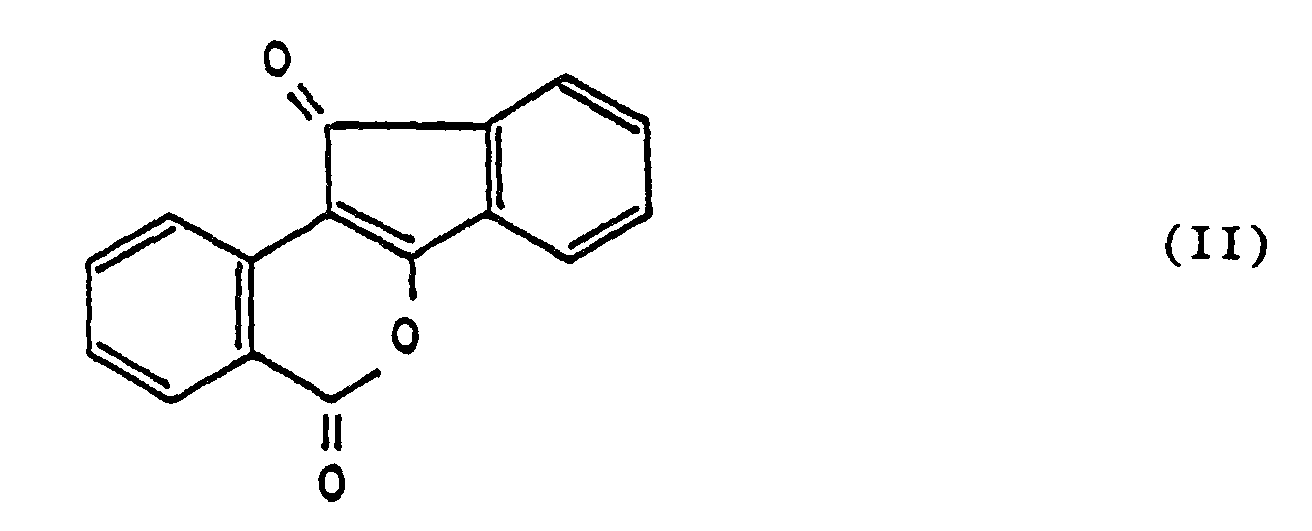
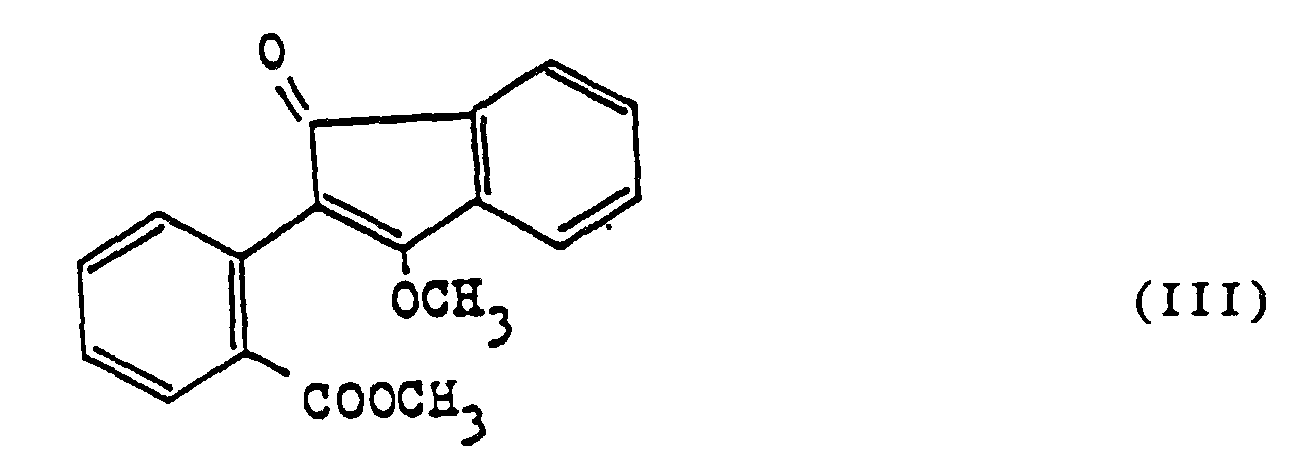
- Indeno[1,2-c]isoquinolines of the general formula I are preferably obtained by the condensation from indeno[1,2-c]isocoumarine (II) and/or 1-methoxy-2-(2-methoxycarbonylphenyl)-1-inden-3-one (III), respectively, with N-(hydroxyethyl)alkylendiamine, with a number of carbon atoms in alkyl chain from 0 to 5, in hot dimethylformamide.
- the antineoplastic activity of the compounds of the invention has been investigated testing the compounds of the chemical group "in vivo" against experimental rodent tumors such as the solid form of Ehrlich tumour (STE, originally mammary adenocarcinoma), tumor HK (also transplantable originally mammary adenocarcinoma), Krebs' ascites tumour (Kr2), S37 ascites sarcoma, Nemeth-Keller lymphoma (NK), all maintained in mice H, Gardner lymphosarcoma (LsG, maintained in mice C3H), P388 and/or L1210 leukemia (maintained in DBA2 mice), B16 metastasizing melanocarcinoma (maintained in C57B1/6 mice) and Yoshida ascites reticulosarcoma (Y, maintained in Wistar rats) in experiments according to Jelinek, V.
- experimental rodent tumors such as the solid form of Ehrlich tumour (STE, originally mammary adenocarcinoma), tumor HK
- tumour growth means the inhibition of characteristic disease symptoms in biological subjects bearing tumours which are especially tumour growth, shortening of the survival period of biological subject and increasing the number or the growth of tumour cells.
- Tumour growth may be observed clinically or in experiments in vivo, that is, with experimental animals, or in vitro, for example, in tissue cultures prepared from tumours.
- the assessment of tumour growth may be effected by measuring the weight of the tumour mass, or, more effectively, by measuring the radioactivity after incorporation therein of certain substances of natural origin such as amino acids (for example, valine, leucine, natural amino-acid mixture), nucleic bases (e.g.
- the compounds of the invention are useful in increasing survival time of the suitable biological subjects, especially mice and rats bearing tumors S37, HK, STE, LsG and Y, and/or leukemias P388 and L1210, especially after oral administration; because the lethal nature of the test system employed, the antitumor effect of the compounds is illustrated by a side-by-side comparison of the survival time of treated animals (those which survived for a longer time) with the untreated control groups of animals. In the typical experiments (cf examples) ten animals were in the experimental groups and the treated groups of animals survived for a longer time than the untreated controls.
- the compounds described herein can be administered to suitable biological subjects, particularly mammals, for their therapeutic antitumor effects by conventional modes of administration alone, but preferably as active ingredients with any conventional suitable non-toxic pharmaceutical carrier, dissolved or suspended, for example, in water, saline, polyethylene or polypropylene alcohols.
- the administration is preferably by the oral route.
- the dosage administered will be dependent upon the type of tumor for which treatment is desired, the type of biological subject involved, weight, body surface, localisation of the tumor, its morphological type or the frequency of treatment; biological test revealed that the tolerable oral dose was up to 400 mg/kg (1200 mg/m 2 ).
- ED 95 was 225 mg/kg p.o. (675 mg/m 2 ) of the base of typical compound in L1210 bearing mice DBA2. Intravenous doses represent about half of those in oral administration, as well as repeated doses in oral administration prolonged for five days. The compounds have low toxicity, the LD 50 value in mice is about 700 mg/kg p.o.
- mice H Eighty female mice H weighing approximately 20 g were divided into four groups: one control group and three experimental groups of 20 animal each.
- a lethal dose of the Sa37 sarcoma ascitic fluid was implanted intraperitoneally to all the animals.
- the animals of test groups were treated using the compound suspended in water.
- the suspension contained the substance in such a concentration that dose 0.6, 0.4 and/or 0.2ml of the suspension p.o. was equal to dose 240, 160 and/or 80 mg/kg p.o., respectively.
- the drug was administered to the experimental animals once, a day after tumour transplantation.
- tumour weight was assessed in all animals from the weight difference before and after laparotomia and ascites removing.
- ascites fluid the volume of tumour cell fraction was determined. The remaining animals were left to monitor the time of death and survival time was followed.
- significantly lower mean values of the tumour weight as well as mean values of tumour cell fraction in ascites fluid were observed in the treated animals in comparison with the untreated control group (Student's t-test, p ⁇ 0.001). It was also observed that the treated animals survived longer than untreated control animals.
- mice H Sixty female mice H weighing approximately 20 g were divided into three groups: one control group and two experimental groups of 20 animal each. A lethal dose of the 40 Ehrlich tumour homogenate was implanted subcutaneously to all the animals. The animals of test groups were treated using the compounds suspended in water. The suspension contained the substance in such a concentration that dose 0.4 and/or 0.2 ml of the suspension p.o. was equal to dose 400 and/or 200 mg/kg p.o., respectively. The drug was administered to the experimental animals once, the fifth day after tumour transplantation. On the fourteenth day after the tumour transplantation, half of the animals in each group were killed by ether anaesthesia, tumours were removed and weighed. The remaining animals were left to monitor the time of death and survival time was followed.
- Seventy infantile Vistar female rats weighing 63.0-64.8 g were divided into seven groups: one control group and six experimental groups of 10 animal each.
- a lethal dose of the Yoshida reticulosarcoma ascitic fluid was implanted intraperitoneally to all the animals.
- the animals of test groups were treated using the compound suspended in water.
- the suspension contained the substance in such a concentration that dose 0.6, 0.4 and/or 0.2 ml of the suspension was equal to dose 200, 100 and/or 50 mg/kg p.o., or 40, 20 and/or 10 mg/kg s.c., respectively.
- Doses of the drug were administered to the experimental animals once a day, for five consecutive days, starting on the first day after tumour transplantation. In all animals survival was followed.
- the degree of influence on the incorporation of [ 3 H]thymidine and [ 14 C]uridine into the fraction of Yoshida ascites cells insoluble in trichloroacetic acid serves as the measure of cytotoxicity.
- the IC50 value is the concentration of a cytostatic that reduces the 3 H and 14 C incorporation down to 50 % of the non-influenced control cells.
Landscapes
- Chemical & Material Sciences (AREA)
- Organic Chemistry (AREA)
- Health & Medical Sciences (AREA)
- Chemical Kinetics & Catalysis (AREA)
- General Chemical & Material Sciences (AREA)
- Medicinal Chemistry (AREA)
- Nuclear Medicine, Radiotherapy & Molecular Imaging (AREA)
- Pharmacology & Pharmacy (AREA)
- Life Sciences & Earth Sciences (AREA)
- Animal Behavior & Ethology (AREA)
- General Health & Medical Sciences (AREA)
- Public Health (AREA)
- Veterinary Medicine (AREA)
- Pharmaceuticals Containing Other Organic And Inorganic Compounds (AREA)
- Other In-Based Heterocyclic Compounds (AREA)
Abstract
Description
- The invention relates to 6-[X-(2-hydroxyethyl)aminoalkyl]-5,11-dioxo-5,6-dihydro-11H-indeno[1,2-c]isoquinolines of the general formula I

- The subject compounds of general formula I (e.g. bases of compounds of general formula I) and their salts with pharmaceutically and pharmacologically acceptable acids, respectively, have usable antineoplastic activity and can be used in monotherapy and/or in combination with other antineoplastic drugs in the treatment of suitable biological subjects, especially of mammalian origin.
- The pertinent literature reports certain indeno[1,2-c]isoquinoline derivatives as products of degradation of alkaloid cryptopine [Perkin V. H: J. Chem. Soc. 109, 815 (1916); ibid. 115, 713 (1919); Dyke S. F., Brown D. V.: Tetrahedron 24, 1455 (1968)]. 11-H-indeno[1,2-c]isoquinoline and/or 5-hydroxy-11H-indeno[1,2-c]isoquinoline-N-oxide were prepared by reacting 11H-indeno[1,2-c]isocoumarine with ethanolic ammonia and/or hydroxylamine, respectively [Chatterjea J. N., Mukherjee H.: J. Indian Chem. Soc. 37, 379 (1960)].
- 5,11-dioxo-5,6-dihydro-11H-indeno[1,2-c]isoquinoline formed by reacting of 11-oxo-11H-indeno[1,2-c]isocoumarine with ethanolic ammonia under high pressure was described [Vawzonek S., Stowell J. K., Karll R. E.: J. Org. Chem. 31, 1004 (1966)].
- Indenoisoquinoline analogues of highly toxic nitidine and fagaronine have been also prepared [Cushman M., Mohan P., Smith E. C. R.: J. Med. Chem. 27, 544 (1984); Cushman M., Mohan P.: J. Med. Chem. 28,1031 (1985)].
- The named indenoisoquinoline compounds did not exhibit any useful biological activity with the exception of indenoisoquinoline analogues of fagaronine and nitidine which showed a weak antineoplastic action.
- According to our knowledge, compounds of the present invention, 6-[X-(2-hydroxyethyl)aminoalkyl]-5,11-dioxo-5,6-dihydro-11H-indeno[1,2-c]isoquinolines of the general formula I in which X stands for a number of carbon atoms from 0 to 5 in the aminoalkyl group situated on the nitrogen atom at position 6 of the indenoisoquinoline fundamental structure (eg bases of compounds of general formula I) and their salts with pharmaceutically and pharmacologically acceptable acids, respectively, represent a new previously undescribed class of compounds which surprisingly showed remarkable antineoplastic activities "in vitro" and "in vivo" which have not been described yet. The main advantage of the new compounds is a great efficacy even after oral administration, low toxicity and in comparison with intercalating agents (antibiotics) synthetic attainability.
- As a result of extensive investigation, it has been found, that novel 6-[X-(2-hydroxyethyl)aminoalkyl]-5,11-di-oxo-5,6-dihydro-11H-indeno[1,2-c]isoquinolines of the general formula I in which X stands for the number of carbon atoms from 0 to 5 in the aminoalkyl group situated on the nitrogen atom in position 6 of the indenoisoquinoline fundamental structure and their salts with inorganic and organic acids and have usable antineoplastic activity and can be used in monotherapy and/or in combination with other antineoplastic drugs in the treatment of suitable biological subjects, especially of mammalian origin.
- There are three procedures usable to prepare indeno-[1,2-c]isoquinolines of the general formula I and all of them have a conventional character.
- As starting substances were used:
- 1. Easily attainable 11-oxo-11H-indeno[1,2-c]isocoumarine (II) [cf. Pailer M., Vorther H., Meller A.: Mh. Chem. 92, 1037 (1961)],
- 2. 1-methoxy-2-(2-methoxycarbonylphenyl-1-inden-3-one (III) [Pailer M., et al.: 1.c.] and
- 3. 6-(X-chloroalkyl)-5,11-dioxo-5,6-dihydro-11H-indeno[1,2-c]isoquinolines (IV).
- Indeno[1,2-c]isoquinolines of the general formula I (X=0 to 5) are preferably obtained by the condensation from indeno[1,2-c]isocoumarine (II) and/or 1-methoxy-2-(2-methoxycarbonylphenyl)-1-inden-3-one (III), respectively, with N-(hydroxyethyl)alkylendiamine, with a number of carbon atoms in alkyl chain from 0 to 5, in hot dimethylformamide. The next common process of preparation of the compounds of type I is a condensation with 6-(X-chloroalkyl)-5,11-dioxo-5,6-dihydro-11H-indeno[1,2-c]isoquinolines of type IV with ethanolamine in dimethylformamide in the presence of anhydrous potassium carbonate.

- The antineoplastic activity of the compounds of the invention has been investigated testing the compounds of the chemical group "in vivo" against experimental rodent tumors such as the solid form of Ehrlich tumour (STE, originally mammary adenocarcinoma), tumor HK (also transplantable originally mammary adenocarcinoma), Krebs' ascites tumour (Kr2), S37 ascites sarcoma, Nemeth-Keller lymphoma (NK), all maintained in mice H, Gardner lymphosarcoma (LsG, maintained in mice C3H), P388 and/or L1210 leukemia (maintained in DBA2 mice), B16 metastasizing melanocarcinoma (maintained in C57B1/6 mice) and Yoshida ascites reticulosarcoma (Y, maintained in Wistar rats) in experiments according to Jelinek, V. [
Neoplasma 12, 469 (1965); ibid 7, 146 (1960)] and in "in vitro" experiments using radioactive precursors of nucleic acids and proteins according to Miko, M. et al. [Cancer Res 39, 4242 (1979); Neoplasma 26, 449 (1979); ibid 16, 161 (1969)] with minor modifications [Mattern, J.: Studies on the Drug Sensitivity of Short Term Cultured Tumour Cell Suspensions. In "Human Tumours in Short Term Culture" (Dendy, P.P. ed.), p.301, Academic Press 1976]. The Cox's proportional-hazards model was used for survival evaluation and optimal dose calculation according to Carter, V.H. et al. [cf Cancer Res. 42, 2963 (1982)]. - The therapeutic effect for the purposes of the invention means the inhibition of characteristic disease symptoms in biological subjects bearing tumours which are especially tumour growth, shortening of the survival period of biological subject and increasing the number or the growth of tumour cells. Tumour growth may be observed clinically or in experiments in vivo, that is, with experimental animals, or in vitro, for example, in tissue cultures prepared from tumours. The assessment of tumour growth may be effected by measuring the weight of the tumour mass, or, more effectively, by measuring the radioactivity after incorporation therein of certain substances of natural origin such as amino acids (for example, valine, leucine, natural amino-acid mixture), nucleic bases (e.g. adenine), nucleosides (thymidine, uridine), their analogs (5-iododeoxyuridine) etc., labelled with radioactive atoms such as 14C or 3H. Such a useful therapeutical effect of the compounds of the present invention has been proven in experiments with ascites form of sarcoma 37 (S37), adenocarcinoma HK and/or solid form of Ehrlich tumour after oral and parenteral administration of the compounds of the chemical group. By comparison with untreated control animals, significantly lower mean tumour weights have been observed in treated groups of animals (cf examples). Additionally, the compounds of the invention are useful in increasing survival time of the suitable biological subjects, especially mice and rats bearing tumors S37, HK, STE, LsG and Y, and/or leukemias P388 and L1210, especially after oral administration; because the lethal nature of the test system employed, the antitumor effect of the compounds is illustrated by a side-by-side comparison of the survival time of treated animals (those which survived for a longer time) with the untreated control groups of animals. In the typical experiments (cf examples) ten animals were in the experimental groups and the treated groups of animals survived for a longer time than the untreated controls. After intravenous administration of 6-[2-(2-hydroxyethyl)ami noethyl]-5,11-dioxo-5,6-dihydro-11H-indeno[1,2-c]isoquinoline hydrochloride, a typical compound of the chemical group, the highly significant increase of survival of mice DBA2 with leukemia P388 has been proven. The compounds and their salts revealed direct cytotoxicity against tumor cells of Yoshida, Ehrlich and Gardner tumors and leukemia L1210 and its resistant variant developed after treatment with mitoxantron. The compounds of the present invention are also potent inhibitors of DNA, RNA and protein biosyntheses of the tumor cells. This conclusion clearly followed from the examples. Inhibition of any of the vital biosynthesis mentioned above is attainable as a result of antitumor activity of cytostatic drugs. The compounds described herein can be administered to suitable biological subjects, particularly mammals, for their therapeutic antitumor effects by conventional modes of administration alone, but preferably as active ingredients with any conventional suitable non-toxic pharmaceutical carrier, dissolved or suspended, for example, in water, saline, polyethylene or polypropylene alcohols. The administration is preferably by the oral route. The dosage administered will be dependent upon the type of tumor for which treatment is desired, the type of biological subject involved, weight, body surface, localisation of the tumor, its morphological type or the frequency of treatment; biological test revealed that the tolerable oral dose was up to 400 mg/kg (1200 mg/m2). ED 95 was 225 mg/kg p.o. (675 mg/m2) of the base of typical compound in L1210 bearing mice DBA2. Intravenous doses represent about half of those in oral administration, as well as repeated doses in oral administration prolonged for five days. The compounds have low toxicity, the LD 50 value in mice is about 700 mg/kg p.o.
- It is evident that therapeutically useful effects can be expected to occur upon the administration of such doses that are completely non-toxic to the respective mammalian organism. The conclusion follows from biological tests that single oral dose of 675 mg/m2 is expected to be tolerable and effective in man.
- Fig. 1 shows dose-response curves for the typical compound of the formula I wherein X = 2 (see Example 8) in Yoshida ascites tumour bearing rats.
- The process for preparing the subject compounds of formula I as well as selected results of their biological studies are illustrated by the following examples. Melting points were determined on Kofler block and are not corrected, yields are indicated in stoichiometric % of theory.
- A suspension of 5 g 11-oxo-11H-indeno-[1,2-c]isocoumarine (II, m.p. 258° C) in 60 ml of dimethylformamide is treated by addition of 3 g of N-(2-hydroxyethyl)ethylendiamine all at once and the mixture is stirred warming to 110° C. After an hour heating the clear red solution is cooled to laboratory temperature and the precipitated product is separated by suction after twelve hours of standing, washed with 60 ml of ethanol and dried at a temperature of 60° C to yield 6.0 g (89 %) of the product melting at 184° C. The purification of the title indenoisoquinoline (I; X=2) is carried out by crystallization from a mixture of dimethylformamide and ethanol. The compound produces small orange needles melting at 184° C.
- At the same conditions (see example 1) the condensation of 5.9 g of 1-methoxy-2-(2-methoxycarbonylphenyl)-1-inden-3-one (III, m.p. 116-118° C) with 2-(3-aminopropylamino)ethanol in 60 ml of dimethylformamide is carried out at 110° C.
- After the reaction has come to an end, 70 ml of distilled water was added to hot solution in parts. The mixture was cooled to the temperature of 3 - 5° C, the precipitated red-orange crystallic substance was separated by suction after twenty hours of standing, washed with water (100 ml) and after drying at a temperature of 60° C (m.p. 151-153° C, yield 5.35 g, e.g. 80 %) recrystallized from ethanol. The product melts at 155° C.
- A mixture of 1 g of 6-(2-chloroethyl)-5,11-dioxo-5,6-dihydro-11H-indeno[1,2-c]isoquinoline (IV, X=2, m.p. 214-215° C), 1 g of dry 2-aminoethanol and 1 g of anhydrous potassium carbonate in 30 ml of anhydrous dimethylformamide is treated by warming to 100-110° C and kept at this temperature for two hours. The hot mixture is filtered and the product collected on filter washed with 10 ml of ethanol. After twelve hours of standing in refrigerator (5° C) the eliminated crystallic substance is separated by suction, washed with ethanol and dried at temperature of 60° C. The yield 0.7 g (65 % of theory), m. p. of the product is 184° C. It is possible to purify the substance as in Example 1.
- To 120 ml of distilled water warmed to the temperature of 75-80° C 6 g of the base of the substance I (X=2) is added and after brief stirring the mixture is treated by 30 ml of concentrated hydrochloric acid. After 5 minutes of stirring 300 ml of ethanol warmed of the temperature of 50-60° C are added. The suspension is refluxed for 10 minutes and after dissolving filtered promptly and left to crystallize at the temperature of 20° C for 20 hours. The yield is 6.1 g (91 % of theory).
- An illustration of the antitumour activity of 6-[2-(2-hydroxyethyl)aminoethyl]-5,11-dioxo-5,6-dihydro-11H-indeno[1,2-c]-isoquinoline (the substance I, X=2) in mice after oral administration of the drug.
- Eighty female mice H weighing approximately 20 g were divided into four groups: one control group and three experimental groups of 20 animal each. A lethal dose of the Sa37 sarcoma ascitic fluid was implanted intraperitoneally to all the animals. The animals of test groups were treated using the compound suspended in water. The suspension contained the substance in such a concentration that dose 0.6, 0.4 and/or 0.2ml of the suspension p.o. was equal to dose 240, 160 and/or 80 mg/kg p.o., respectively. The drug was administered to the experimental animals once, a day after tumour transplantation. On the tenth day after the tumour transplantation, half of the animals in each group were killed by ether anaesthesia, ascites were emptied after laparotomia and the tumour weight was assessed in all animals from the weight difference before and after laparotomia and ascites removing. In ascites fluid the volume of tumour cell fraction was determined. The remaining animals were left to monitor the time of death and survival time was followed. Statistically, significantly lower mean values of the tumour weight as well as mean values of tumour cell fraction in ascites fluid (e.g. total ascitocrit) were observed in the treated animals in comparison with the untreated control group (Student's t-test, p<0.001). It was also observed that the treated animals survived longer than untreated control animals. The mean survival time values of treated groups were significantly (Student's t-test, p<0.01) higher in comparison with that one of the untreated control group of animals. The results of the experiment are summarized in the following table: Antitumour activity of 6-[2-(2-hydroxyethyl)aminoethyl]5,11-dioxo-5,6-dihydro-11H-indeno[1,2-c]isoquinoline (the substance I, X=2) in S37 sarcoma bearing mice.
Substance Dose (mg/kg) p.o. Tumour weight (T/C, %) Survival time (T/C, %) Total ascitocrit (T/C, %) I (X=2) 240 42c) 119b) 47c) 160 59c) 111 65c) 80 61c) 107 64c) b) p=0,01 c) p=0,001 - An illustration of the antitumour activity of 6-[2-(2-hydroxyethyl)aminoethyl]-5,11-dioxo-5,6-dihydro-11H-indeno[1,2-c]-isoquinoline (the substance I, X=2) and 6-[3-(2-hydroxyethyl)aminopropyl]-5,11-dioxo-5,6-dihydro-11H-indeno[1,2-c]isoquinoline (the substance I, X=3) in mice after oral administration of the drug.
- In an analogous experiment carried out on the animals with implanted Sa37 sarcoma the substance I (X=2) was administered in seven daily doses, and the substance I (X=3) in four days. The results of the experiment are summarized in the following table:
Antitumour activity of 6-[2-(2-hydroxyethyl)aminoethyl]5,11-dioxo-5,6-dihydro-11H-indeno[1,2-c]isoquinoline (the substance I, X=2) and 6-[3-(2-hydroxyethyl)aminopropyl]5,11-dioxo-5,6-dihydro-11H-indeno[1,2-c]isoquinoline (the substance I, X=3) in S37 bearing mice.Substance Dose (mg/kg) p.o. Tumour weight (T/C, %) Survival time (T/C, %) Total ascitocrit (T/C, %) I (X=2) 30 32b) 86 40b) 20 64b) 129a) 73a) 10 66b) 129 73b) I (X=3) 30 35b) tox 43b) 20 56c) 99 62c) 10 70b) 119 80a) a) p<0,05 b) p<0,01 c) p<0,001
tox - toxic dose - An illustration of the antitumour activity of 6-[2-(2-hydroxyethyl)aminoethyl]-5,11-dioxo-5,6-dihydro-11H-indeno[1,2-c]-isoquinoline (the substance I, X=2) in mice after oral administration of the drug.
- Sixty female mice H weighing approximately 20 g were divided into three groups: one control group and two experimental groups of 20 animal each. A lethal dose of the 40 Ehrlich tumour homogenate was implanted subcutaneously to all the animals. The animals of test groups were treated using the compounds suspended in water. The suspension contained the substance in such a concentration that dose 0.4 and/or 0.2 ml of the suspension p.o. was equal to dose 400 and/or 200 mg/kg p.o., respectively. The drug was administered to the experimental animals once, the fifth day after tumour transplantation. On the fourteenth day after the tumour transplantation, half of the animals in each group were killed by ether anaesthesia, tumours were removed and weighed. The remaining animals were left to monitor the time of death and survival time was followed. Statistically, significantly lower mean values of the tumour weight were observed in the treated animals in comparison with the untreated control group (Student's t-test, p<0.01). It was also observed that the treated animals survived longer than untreated control animals. The mean survival time values of treated groups were significantly (Student's t-test, p<0.05) higher in comparison with that one of untreated control group of animals. The results of the experiment are summarized in the following table:
Substance Dose (mg/kg) p.o. Tumour weight (T/C, %) Survival time (T/C, %) I (X=2) 400 31b) 152a) 200 79a) 111 a) p=0,05) b) p=0,01 - An illustration of the antitumour activity of 6-[2-(2-hydroxyethyl)aminoethyl]-5,11-dioxo-5,6-dihydro-11H-indeno[1,2-c]-isoquinoline (the substance I, X=2) in rats after oral and parenteral administration of the drug.
- Seventy infantile Vistar female rats weighing 63.0-64.8 g were divided into seven groups: one control group and six experimental groups of 10 animal each. A lethal dose of the Yoshida reticulosarcoma ascitic fluid was implanted intraperitoneally to all the animals. The animals of test groups were treated using the compound suspended in water. The suspension contained the substance in such a concentration that dose 0.6, 0.4 and/or 0.2 ml of the suspension was equal to dose 200, 100 and/or 50 mg/kg p.o., or 40, 20 and/or 10 mg/kg s.c., respectively. Doses of the drug were administered to the experimental animals once a day, for five consecutive days, starting on the first day after tumour transplantation. In all animals survival was followed. It was observed that the treated animals survived longer than untreated control animals. The mean survival time values of treated groups were significantly (Student's t-test, p<0.01) higher in comparison with that one of untreated control group of animals. The results of the experiment are summarized in the following table and shown in the graph on the Fig. 1.
Substance Administration Dose (mg/kg) Period of f)survival (% of control) I (X=2) p.o. 200 219b,d) 100 230b,e) 50 132 s.c. 40 86 20 139a) 10 203 b) a) p=0,05, b) p=0,01 d) 3 LTS (Long term survivors) e) 1 LTS f) T/C, % - An illustration of the antitumour activity of 6-[(2-hydroxyethyl)amino]-5,11-dioxo-5,6-dihydro-11H-indeno[1,2-c]isoquinoline (the substance I, X=0) in mice.
- In an experiment carried out on the animals with implanted Sa37 sarcoma the substance I (X=0) was administered in eight daily doses (analogously as in example 6). Statistically, significantly lower mean value of the tumour weight as well as mean value of tumour cell fraction in ascites fluid (e.g. total ascitocrit) were observed in the treated animals after doses of 50 mg/kg p.o. (60 and 68 %, respectively) and/or 20 mg/kg s.c. (68 and 71 %, respectively) in comparison with the untreated control group (Student's t-test, p<0.01).
- An illustration of the antitumour activity of 6-[(2-hydroxyethyl)amino]-5,11-dioxo-5,6-dihydro-11H-indeno[1,2-c]isoquinoline (the substance I, X=0) in mice after oral administration of the drug.
- In experiment with Ehrlich tumour (solid form, see example 7) the drug administered to the experimental animals once at the single dose of 100 mg/kg p.o. significantly lowered the mean tumour weight (72 % in the treated animals in comparison with the untreated control group). The drug administered eight times, starting on the first day after tumour transplantation, lowered mean tumour weight by 13 %, significantly (p<0.05), at the doses of 50 mg/kg p.o. x 8. Mean survival time was higher (115 %, p<0.05), in comparison with the untreated control group, after administration of eight daily doses of 25 mg/kg p.o.
- Cytotoxicity of a salt of the substance I (X=2) in comparison with clinically useful drugs.
- The degree of influence on the incorporation of [3H]thymidine and [14C]uridine into the fraction of Yoshida ascites cells insoluble in trichloroacetic acid serves as the measure of cytotoxicity. The IC50 value is the concentration of a cytostatic that reduces the 3H and 14C incorporation down to 50 % of the non-influenced control cells. The experimental results are summarized in the following table.
- Effect of the hydrochloride of the substance I (X=2) on Yoshida ascites tumor cells.
Substance MW Precursor IC 50 ( µmol.1-1) I (X=2) Hydrochloride 370.9 [6-3H]Thymidine 5 [Uracil-U-14C]uridine 7 DOXORUBICIN 548.0 [6-3H]Thymidine 16 [Uracil-U-14C]uridine 8 MITOXANTRON 517.4 [6-3H]Thymidine 25 [Uracil-U-14C]uridine 23 - Cytotoxicity of the substance I (X=2) in vitro against L1210 leukemia cells and its variant L1210/MX developed for resistance to mitoxantron.
- In analogous experiments to those already described the degree of influence on the incorporation of [14C]amino-acid mixture into the L1210 leukemia cells and/or those of L1210/HX, a fraction insoluble in trichloroacetic acid serves as the measure of cross-resistance between the substance I (X=2) and mitoxantron. The experimental results are summarized in the following table.
Substance Tumor Precursor IC 50 (µmol.1-1) I (X=2) Base L1210 [U-14C]Amino-acid mixture 78 I (X=2) Base L1210/MX [U-14C]Amino-acid mixture 119 - From the results it is evident that the cross-resistance is partial only. The substances of the patent application may be clinically useful in cases of tumour resistance against mitoxantron.
Claims (8)
- 6-[X-(2-hydroxyethyl)aminoalkyl]-5,11-dioxo-5,6-dihydro-11H-indeno[1,2-c]isoquinolines of the general formula I

- A process for the preparation of 6-[X-(2-hydroxyethyl)aminoalkyl]-5,11-dioxo-5,6-dihydro-11H-indeno[1,2-c]i-soquinolines of the general formula I according to claim 1 in which comprises reacting the 11-oxo-11H-indeno[1,2-c]isocoumarine of the general formula II
- A process for the preparation of 6-[X-(2-hydroxyethyl)aminoalkyl]-5,11-dioxo-5,6-dihydro-11H-indeno[1,2-c]-isoquinolines of the general formula I according to claim 1 in which comprises reacting the 1-methoxy-2-(2-methoxycarbonylphenyl)-1-inden-3-on of the formula III
- A process for the preparation of 6-[X-(2-hydroxyethyl)aminoalkyl]-5,11-dioxo-5,6-dihydro-11H-indeno[1,2-c]i-soquinolines of the general formula I according to claim 1 in which comprises reacting the 6-(X-chloroalkyl)-5,11-dioxo-5,6-dihydro-11H-indeno[1,2-c]isoquinolin of the general formula IV

- Antineoplastic compositions according to claim 1 containing a therapeutically effective amount of 6-[X-(2-hydroxyethyl)aminoalkyl]-5,11-dioxo-5,6-dihydro-11H-indeno[l,2-c]isoquinoline of the general formula I wherein X stands for a number of carbon atoms from 0 to 5 in the aminoalkyl group situated on the nitrogen atom in position 6 of the indenoisoquinoline fundamental structure, their salts with inorganic and organic acids and a pharmacologically and pharmaceutically acceptable carrier, excipient or diluent.
- The use of 6-[X-(2-hydroxyethyl)aminoalkyl]-5,11-dioxo-5,6-dihydro-11H-indeno[1,2-c]isoquinolines of the general formula I and their salts according to claim 1 for the preparation of drugs for treatment of malignant neoplasias in mammals.
- A method for the preparation of antineoplastic compositions according to claim 5 which comprises processing a therapeutically effective amount of 6-[X-(2-hydroxyethyl)aminoalkyl]-5,11-dioxo-5,6-dihydro-11H-indeno[1,2-c]isoquinoline of the general formula I wherein X stands for a number of carbon atoms from 0 to 5 in the aminoalkyl group situated on the nitrogen atom at position 6 of the indenoisoquinoline fundamental structure or their salts with a pharmacologically and pharmaceutically acceptable carrier, excipient or diluent.
- A method for the preparation of antineoplastic drugs according to claim 6 which comprises processing a therapeutically effective amount of 6-[X-(2-hydroxyethyl)aminoalkyl]-5,11-dioxo-5,6-dihydro-11H-indeno[1,2-c]isoquinoline of the general formula I wherein X stands for a number of carbon atoms from 0 to 5 in the aminoalkyl group situated on the nitrogen atom at position 6 of the indenoisoquinoline fundamental structure or their salts with a pharmacologically and pharmaceutically acceptable carrier, excipient or diluent.
Applications Claiming Priority (3)
| Application Number | Priority Date | Filing Date | Title |
|---|---|---|---|
| CS2669/91 | 1991-08-29 | ||
| CS912669A CZ281473B6 (en) | 1991-08-29 | 1991-08-29 | 2-HYDROXYETHYLAMINO SUBSTITUTED DERIVATIVES OF 5,11-DIOXO-5,6-DIHYDRO-11H-INDENO£1,2-c|ISOQUINOLINE, PROCESS PROCESS OF THEIR PREPARATION, AND PHARMACEUTICAL COMPOSITION CONTAINING THEREOF |
| PCT/CS1992/000026 WO1993005023A1 (en) | 1991-08-29 | 1992-08-27 | 6((2-hydroxyethyl)amino alkyl)-5,11-dioxo-5,6-dihydro-11-h-indeno(1,2-c)isoquinoline and their use as antineoplastic agents |
Publications (2)
| Publication Number | Publication Date |
|---|---|
| EP0643699A1 EP0643699A1 (en) | 1995-03-22 |
| EP0643699B1 true EP0643699B1 (en) | 1996-10-23 |
Family
ID=5364459
Family Applications (1)
| Application Number | Title | Priority Date | Filing Date |
|---|---|---|---|
| EP92920015A Expired - Lifetime EP0643699B1 (en) | 1991-08-29 | 1992-08-27 | 6-(2-hydroxyethylaminoalkyl)-5,11-dioxo-5,6-dihydro-11h- indeno[1,2-c]isoquinolines and their use as antineoplastic agents |
Country Status (15)
| Country | Link |
|---|---|
| EP (1) | EP0643699B1 (en) |
| JP (1) | JPH07500581A (en) |
| AT (1) | ATE144499T1 (en) |
| AU (1) | AU663729B2 (en) |
| CA (1) | CA2116680A1 (en) |
| CZ (1) | CZ281473B6 (en) |
| DE (1) | DE69214842T2 (en) |
| DK (1) | DK0643699T3 (en) |
| FI (1) | FI107256B (en) |
| HU (1) | HU217551B (en) |
| NO (1) | NO180194C (en) |
| PL (1) | PL169572B1 (en) |
| RU (1) | RU2120939C1 (en) |
| SK (1) | SK278794B6 (en) |
| WO (1) | WO1993005023A1 (en) |
Families Citing this family (11)
| Publication number | Priority date | Publication date | Assignee | Title |
|---|---|---|---|---|
| JP3141148B2 (en) * | 1995-08-08 | 2001-03-05 | 大鵬薬品工業株式会社 | Condensed indane derivatives and salts thereof |
| DE69940523D1 (en) * | 1998-10-14 | 2009-04-16 | Purdue Research Foundation | NEW INDENOISOQUINOLINE AS ANTINEOPLASTIC AGENT |
| US20030096833A1 (en) | 2001-08-31 | 2003-05-22 | Jagtap Prakash G. | Substituted ideno[1,2-c]isoquinoline derivatives and methods of use thereof |
| US6956035B2 (en) | 2001-08-31 | 2005-10-18 | Inotek Pharmaceuticals Corporation | Isoquinoline derivatives and methods of use thereof |
| KR20050118169A (en) | 2003-02-28 | 2005-12-15 | 이노텍 파마슈티컬스 코포레이션 | Tetracyclic benzamide derivatives and methods of use thereof |
| CA2557547A1 (en) | 2004-02-26 | 2005-09-09 | Inotek Pharmaceuticals Corporation | Isoquinoline derivatives and methods of use thereof |
| JP2008531562A (en) | 2005-02-25 | 2008-08-14 | イノテック ファーマシューティカルズ コーポレイション | Tetracyclic amino compounds and tetracyclic carboxamide compounds and methods of use thereof |
| RU2008110955A (en) | 2005-08-24 | 2009-09-27 | Инотек Фармасьютикалз Корпорейшн (Us) | INDENOISOCHINOLINONE ANALOGUES AND WAYS OF THEIR APPLICATION |
| KR20090115879A (en) | 2007-02-28 | 2009-11-09 | 이노텍 파마슈티컬스 코포레이션 | Indenoisoquinolinone analogs and methods of using them |
| CN102250000A (en) * | 2010-05-17 | 2011-11-23 | 中国人民解放军第二军医大学 | Indenoquinolinone compounds, and preparation method and application thereof |
| TWI642658B (en) * | 2017-11-01 | 2018-12-01 | 國立臺灣師範大學 | Method for preparing indenoisoquinoline derivatives |
-
1991
- 1991-08-29 SK SK2669-91A patent/SK278794B6/en unknown
- 1991-08-29 CZ CS912669A patent/CZ281473B6/en not_active IP Right Cessation
-
1992
- 1992-08-27 WO PCT/CS1992/000026 patent/WO1993005023A1/en not_active Ceased
- 1992-08-27 RU RU94043792A patent/RU2120939C1/en active
- 1992-08-27 PL PL92302568A patent/PL169572B1/en unknown
- 1992-08-27 HU HU9400563A patent/HU217551B/en not_active IP Right Cessation
- 1992-08-27 AU AU25835/92A patent/AU663729B2/en not_active Ceased
- 1992-08-27 DE DE69214842T patent/DE69214842T2/en not_active Expired - Fee Related
- 1992-08-27 DK DK92920015.2T patent/DK0643699T3/en active
- 1992-08-27 CA CA002116680A patent/CA2116680A1/en not_active Abandoned
- 1992-08-27 JP JP5504800A patent/JPH07500581A/en active Pending
- 1992-08-27 EP EP92920015A patent/EP0643699B1/en not_active Expired - Lifetime
- 1992-08-27 AT AT92920015T patent/ATE144499T1/en active
-
1994
- 1994-02-17 NO NO940542A patent/NO180194C/en not_active IP Right Cessation
- 1994-02-25 FI FI940895A patent/FI107256B/en active
Non-Patent Citations (1)
| Title |
|---|
| CHEMICAL ABSTRACTS, vol. 96, no. 23, 7 June 1982, Columbus, Ohio, US; abstract no. 199485x, S. WAWZONEK 'Synthesis of 6-substituted-6H -indeno(1,2-c)isoquinoline-5,11-diones' page 653-654; & ORG. PREP. PROCEED. INT. vol. 14, no. 3, pages 163-168 * |
Also Published As
| Publication number | Publication date |
|---|---|
| SK266991A3 (en) | 1998-03-04 |
| AU2583592A (en) | 1993-04-05 |
| HU9400563D0 (en) | 1994-05-30 |
| CZ266991A3 (en) | 1993-03-17 |
| HUT70396A (en) | 1995-10-30 |
| DK0643699T3 (en) | 1997-04-28 |
| HU217551B (en) | 2000-02-28 |
| CA2116680A1 (en) | 1993-03-18 |
| CZ281473B6 (en) | 1996-10-16 |
| WO1993005023A1 (en) | 1993-03-18 |
| FI940895A0 (en) | 1994-02-25 |
| NO940542L (en) | 1994-02-17 |
| NO180194B (en) | 1996-11-25 |
| AU663729B2 (en) | 1995-10-19 |
| FI940895A7 (en) | 1994-02-25 |
| PL169572B1 (en) | 1996-08-30 |
| ATE144499T1 (en) | 1996-11-15 |
| NO940542D0 (en) | 1994-02-17 |
| NO180194C (en) | 1997-03-05 |
| DE69214842T2 (en) | 1997-02-27 |
| FI107256B (en) | 2001-06-29 |
| SK278794B6 (en) | 1998-03-04 |
| RU2120939C1 (en) | 1998-10-27 |
| JPH07500581A (en) | 1995-01-19 |
| DE69214842D1 (en) | 1996-11-28 |
| EP0643699A1 (en) | 1995-03-22 |
Similar Documents
| Publication | Publication Date | Title |
|---|---|---|
| US5597831A (en) | 6-[X-(2-hydroxyethyl) aminoalkyl]-5,11-dioxo-5,6-dihydro-11-H-indeno[1,2-c]isoquinolines and their use as antineoplastic agents | |
| EP0321122B1 (en) | Water soluble camptothecin analogs | |
| EP0418099A2 (en) | 10, 11-Methylenedioxy-20 (RS) camptothecin and 10, 11-methylenedioxy-20 (S) - camptothecin analog | |
| NZ245203A (en) | 5h-indolo[2,3-a]pyrrolo[3,4-c]carbazole-5,7(6h)-dione derivatives substituted in position-13 by a pentose or hexose group; corresponding indolo-furano(anhydride)intermediates | |
| CA1117945A (en) | Dipyrido ¬4,3-b| ¬3,4-f| indoles, process for obtaining them, therapeutical use and pharmaceutical compositions | |
| AU663729B2 (en) | 6((2-hydroxyethyl)aminoalkyl)-5,11-dioxo-5,6-dihydro-11-H- indeno-(1,2-C)isoquinoline and their use as antineoplastic agents | |
| EP0305093B1 (en) | Imidazo(1,2-b)pyridazine derivatives | |
| EP0332190A2 (en) | Condensed quinoline system compound, condensed acridine system compound, process for preparing the same, and carcinostatic composition containing the same | |
| EP0290558B1 (en) | Antifolate agents | |
| US6187787B1 (en) | Bis(9-aminoacridine) DNA intercalating agents having antitumor activity | |
| Fleysher et al. | Some short-chain N6-substituted adenosine analogs with antitumor properties | |
| EP3369740B1 (en) | New cytidine derivative dimers and applications thereof | |
| US4720497A (en) | 6-purinyl N-/2-chloroethyl/carbamate and thiocarbamate and process for the preparation thereof | |
| EP0788507A1 (en) | L-pyranosyl nucleosides | |
| EP0087951B1 (en) | Phenanthroline derivatives | |
| US7144891B2 (en) | Benzo[b ]pyrano[3,2- h ]acridin-7-one cinnamate compounds | |
| US6627650B2 (en) | Indenoindolone compounds | |
| US6656948B2 (en) | Cytotoxic compounds: derivatives of the pyrido[2,3,4-kl]acridine ring system | |
| US20100256177A1 (en) | Flavopereirine derivatives for cancer therapy | |
| EP0299413A1 (en) | New tetramethyl-cis-diaza-bicyclo[4.2.0]octane-3,5-dione derivatives having a differentiation-inducing activity | |
| IE914072A1 (en) | New pyridobenzindole derivatives, their preparation and¹compositions containing them | |
| HK1011863A1 (en) | New ellipticine compounds, a process for their preparation and pharmaceutical compositions containing them | |
| HK1011863B (en) | New ellipticine compounds, a process for their preparation and pharmaceutical compositions containing them | |
| EP0409382A1 (en) | Glutamic acid derivatives |
Legal Events
| Date | Code | Title | Description |
|---|---|---|---|
| PUAI | Public reference made under article 153(3) epc to a published international application that has entered the european phase |
Free format text: ORIGINAL CODE: 0009012 |
|
| 17P | Request for examination filed |
Effective date: 19940222 |
|
| AK | Designated contracting states |
Kind code of ref document: A1 Designated state(s): AT BE CH DE DK ES FR GB IT LI NL SE |
|
| GRAG | Despatch of communication of intention to grant |
Free format text: ORIGINAL CODE: EPIDOS AGRA |
|
| 17Q | First examination report despatched |
Effective date: 19960117 |
|
| GRAH | Despatch of communication of intention to grant a patent |
Free format text: ORIGINAL CODE: EPIDOS IGRA |
|
| RAP1 | Party data changed (applicant data changed or rights of an application transferred) |
Owner name: VUFB, A.S. |
|
| GRAH | Despatch of communication of intention to grant a patent |
Free format text: ORIGINAL CODE: EPIDOS IGRA |
|
| GRAA | (expected) grant |
Free format text: ORIGINAL CODE: 0009210 |
|
| AK | Designated contracting states |
Kind code of ref document: B1 Designated state(s): AT BE CH DE DK ES FR GB IT LI NL SE |
|
| PG25 | Lapsed in a contracting state [announced via postgrant information from national office to epo] |
Ref country code: NL Free format text: LAPSE BECAUSE OF FAILURE TO SUBMIT A TRANSLATION OF THE DESCRIPTION OR TO PAY THE FEE WITHIN THE PRESCRIBED TIME-LIMIT Effective date: 19961023 Ref country code: LI Effective date: 19961023 Ref country code: ES Free format text: THE PATENT HAS BEEN ANNULLED BY A DECISION OF A NATIONAL AUTHORITY Effective date: 19961023 Ref country code: CH Effective date: 19961023 Ref country code: BE Effective date: 19961023 Ref country code: AT Effective date: 19961023 |
|
| REF | Corresponds to: |
Ref document number: 144499 Country of ref document: AT Date of ref document: 19961115 Kind code of ref document: T |
|
| ITF | It: translation for a ep patent filed | ||
| REF | Corresponds to: |
Ref document number: 69214842 Country of ref document: DE Date of ref document: 19961128 |
|
| ET | Fr: translation filed | ||
| NLV1 | Nl: lapsed or annulled due to failure to fulfill the requirements of art. 29p and 29m of the patents act | ||
| REG | Reference to a national code |
Ref country code: DK Ref legal event code: T3 |
|
| REG | Reference to a national code |
Ref country code: CH Ref legal event code: PL |
|
| PLBE | No opposition filed within time limit |
Free format text: ORIGINAL CODE: 0009261 |
|
| STAA | Information on the status of an ep patent application or granted ep patent |
Free format text: STATUS: NO OPPOSITION FILED WITHIN TIME LIMIT |
|
| 26N | No opposition filed | ||
| PGFP | Annual fee paid to national office [announced via postgrant information from national office to epo] |
Ref country code: GB Payment date: 20010802 Year of fee payment: 10 |
|
| PGFP | Annual fee paid to national office [announced via postgrant information from national office to epo] |
Ref country code: FR Payment date: 20010808 Year of fee payment: 10 |
|
| PGFP | Annual fee paid to national office [announced via postgrant information from national office to epo] |
Ref country code: SE Payment date: 20010814 Year of fee payment: 10 |
|
| PGFP | Annual fee paid to national office [announced via postgrant information from national office to epo] |
Ref country code: DK Payment date: 20010816 Year of fee payment: 10 |
|
| PGFP | Annual fee paid to national office [announced via postgrant information from national office to epo] |
Ref country code: DE Payment date: 20010824 Year of fee payment: 10 |
|
| REG | Reference to a national code |
Ref country code: GB Ref legal event code: IF02 |
|
| PG25 | Lapsed in a contracting state [announced via postgrant information from national office to epo] |
Ref country code: GB Free format text: LAPSE BECAUSE OF NON-PAYMENT OF DUE FEES Effective date: 20020827 |
|
| PG25 | Lapsed in a contracting state [announced via postgrant information from national office to epo] |
Ref country code: SE Free format text: LAPSE BECAUSE OF NON-PAYMENT OF DUE FEES Effective date: 20020828 |
|
| PG25 | Lapsed in a contracting state [announced via postgrant information from national office to epo] |
Ref country code: DK Free format text: LAPSE BECAUSE OF NON-PAYMENT OF DUE FEES Effective date: 20020930 |
|
| PG25 | Lapsed in a contracting state [announced via postgrant information from national office to epo] |
Ref country code: DE Free format text: LAPSE BECAUSE OF NON-PAYMENT OF DUE FEES Effective date: 20030301 |
|
| REG | Reference to a national code |
Ref country code: DK Ref legal event code: EBP |
|
| EUG | Se: european patent has lapsed | ||
| GBPC | Gb: european patent ceased through non-payment of renewal fee |
Effective date: 20020827 |
|
| PG25 | Lapsed in a contracting state [announced via postgrant information from national office to epo] |
Ref country code: FR Free format text: LAPSE BECAUSE OF NON-PAYMENT OF DUE FEES Effective date: 20030430 |
|
| REG | Reference to a national code |
Ref country code: FR Ref legal event code: ST |
|
| PG25 | Lapsed in a contracting state [announced via postgrant information from national office to epo] |
Ref country code: IT Free format text: LAPSE BECAUSE OF NON-PAYMENT OF DUE FEES;WARNING: LAPSES OF ITALIAN PATENTS WITH EFFECTIVE DATE BEFORE 2007 MAY HAVE OCCURRED AT ANY TIME BEFORE 2007. THE CORRECT EFFECTIVE DATE MAY BE DIFFERENT FROM THE ONE RECORDED. Effective date: 20050827 |