EP0642341B1 - Use of inhibitors of 3-hydroxy-3-methylglutaryl coenzyme a reductase as a modality in cancer therapy - Google Patents
Use of inhibitors of 3-hydroxy-3-methylglutaryl coenzyme a reductase as a modality in cancer therapy Download PDFInfo
- Publication number
- EP0642341B1 EP0642341B1 EP93911242A EP93911242A EP0642341B1 EP 0642341 B1 EP0642341 B1 EP 0642341B1 EP 93911242 A EP93911242 A EP 93911242A EP 93911242 A EP93911242 A EP 93911242A EP 0642341 B1 EP0642341 B1 EP 0642341B1
- Authority
- EP
- European Patent Office
- Prior art keywords
- day
- lovastatin
- compound
- composition
- dose
- Prior art date
- Legal status (The legal status is an assumption and is not a legal conclusion. Google has not performed a legal analysis and makes no representation as to the accuracy of the status listed.)
- Expired - Lifetime
Links
- 239000003112 inhibitor Substances 0.000 title claims abstract description 16
- 102100029077 3-hydroxy-3-methylglutaryl-coenzyme A reductase Human genes 0.000 title abstract description 4
- 101710158485 3-hydroxy-3-methylglutaryl-coenzyme A reductase Proteins 0.000 title abstract description 4
- 238000011275 oncology therapy Methods 0.000 title description 3
- PCZOHLXUXFIOCF-BXMDZJJMSA-N lovastatin Chemical compound C([C@H]1[C@@H](C)C=CC2=C[C@H](C)C[C@@H]([C@H]12)OC(=O)[C@@H](C)CC)C[C@@H]1C[C@@H](O)CC(=O)O1 PCZOHLXUXFIOCF-BXMDZJJMSA-N 0.000 claims abstract description 51
- PCZOHLXUXFIOCF-UHFFFAOYSA-N Monacolin X Natural products C12C(OC(=O)C(C)CC)CC(C)C=C2C=CC(C)C1CCC1CC(O)CC(=O)O1 PCZOHLXUXFIOCF-UHFFFAOYSA-N 0.000 claims abstract description 50
- QLJODMDSTUBWDW-UHFFFAOYSA-N lovastatin hydroxy acid Natural products C1=CC(C)C(CCC(O)CC(O)CC(O)=O)C2C(OC(=O)C(C)CC)CC(C)C=C21 QLJODMDSTUBWDW-UHFFFAOYSA-N 0.000 claims abstract description 50
- 229960004844 lovastatin Drugs 0.000 claims abstract description 49
- 206010028980 Neoplasm Diseases 0.000 claims abstract description 24
- 201000005825 prostate adenocarcinoma Diseases 0.000 claims abstract description 5
- 150000001875 compounds Chemical class 0.000 claims description 23
- 108010072866 Prostate-Specific Antigen Proteins 0.000 claims description 21
- 206010060862 Prostate cancer Diseases 0.000 claims description 17
- 238000011282 treatment Methods 0.000 claims description 17
- 201000011510 cancer Diseases 0.000 claims description 16
- 239000003814 drug Substances 0.000 claims description 16
- 239000000203 mixture Substances 0.000 claims description 14
- -1 2-methylbutyryloxy group Chemical group 0.000 claims description 11
- 208000009956 adenocarcinoma Diseases 0.000 claims description 11
- 125000004435 hydrogen atom Chemical group [H]* 0.000 claims description 11
- RYMZZMVNJRMUDD-UHFFFAOYSA-N SJ000286063 Natural products C12C(OC(=O)C(C)(C)CC)CC(C)C=C2C=CC(C)C1CCC1CC(O)CC(=O)O1 RYMZZMVNJRMUDD-UHFFFAOYSA-N 0.000 claims description 10
- RYMZZMVNJRMUDD-HGQWONQESA-N simvastatin Chemical compound C([C@H]1[C@@H](C)C=CC2=C[C@H](C)C[C@@H]([C@H]12)OC(=O)C(C)(C)CC)C[C@@H]1C[C@@H](O)CC(=O)O1 RYMZZMVNJRMUDD-HGQWONQESA-N 0.000 claims description 10
- 229960002855 simvastatin Drugs 0.000 claims description 10
- 208000000236 Prostatic Neoplasms Diseases 0.000 claims description 9
- 125000002496 methyl group Chemical group [H]C([H])([H])* 0.000 claims description 8
- 210000002784 stomach Anatomy 0.000 claims description 7
- 208000006168 Ewing Sarcoma Diseases 0.000 claims description 5
- 125000001495 ethyl group Chemical group [H]C([H])([H])C([H])([H])* 0.000 claims description 5
- 239000005556 hormone Substances 0.000 claims description 5
- 229940088597 hormone Drugs 0.000 claims description 5
- 125000002887 hydroxy group Chemical group [H]O* 0.000 claims description 5
- 238000004519 manufacturing process Methods 0.000 claims description 5
- 239000002246 antineoplastic agent Substances 0.000 claims description 4
- 210000001072 colon Anatomy 0.000 claims description 4
- 229940127089 cytotoxic agent Drugs 0.000 claims description 4
- 210000004072 lung Anatomy 0.000 claims description 4
- 210000002307 prostate Anatomy 0.000 claims description 4
- 238000011277 treatment modality Methods 0.000 claims description 3
- 201000002660 colon sarcoma Diseases 0.000 claims description 2
- 102000007066 Prostate-Specific Antigen Human genes 0.000 claims 5
- 239000008280 blood Substances 0.000 claims 1
- 210000004369 blood Anatomy 0.000 claims 1
- 230000002596 correlated effect Effects 0.000 claims 1
- 230000003467 diminishing effect Effects 0.000 claims 1
- 231100000419 toxicity Toxicity 0.000 abstract description 11
- 230000001988 toxicity Effects 0.000 abstract description 11
- 238000000034 method Methods 0.000 abstract description 5
- 210000004027 cell Anatomy 0.000 description 25
- 102100038358 Prostate-specific antigen Human genes 0.000 description 17
- 229940079593 drug Drugs 0.000 description 11
- HVYWMOMLDIMFJA-DPAQBDIFSA-N cholesterol Chemical compound C1C=C2C[C@@H](O)CC[C@]2(C)[C@@H]2[C@@H]1[C@@H]1CC[C@H]([C@H](C)CCCC(C)C)[C@@]1(C)CC2 HVYWMOMLDIMFJA-DPAQBDIFSA-N 0.000 description 10
- 230000012010 growth Effects 0.000 description 9
- AJLFOPYRIVGYMJ-INTXDZFKSA-N mevastatin Chemical compound C([C@H]1[C@@H](C)C=CC2=CCC[C@@H]([C@H]12)OC(=O)[C@@H](C)CC)C[C@@H]1C[C@@H](O)CC(=O)O1 AJLFOPYRIVGYMJ-INTXDZFKSA-N 0.000 description 9
- 239000003826 tablet Substances 0.000 description 9
- AJLFOPYRIVGYMJ-UHFFFAOYSA-N SJ000287055 Natural products C12C(OC(=O)C(C)CC)CCC=C2C=CC(C)C1CCC1CC(O)CC(=O)O1 AJLFOPYRIVGYMJ-UHFFFAOYSA-N 0.000 description 7
- BOZILQFLQYBIIY-UHFFFAOYSA-N mevastatin hydroxy acid Natural products C1=CC(C)C(CCC(O)CC(O)CC(O)=O)C2C(OC(=O)C(C)CC)CCC=C21 BOZILQFLQYBIIY-UHFFFAOYSA-N 0.000 description 7
- 238000002560 therapeutic procedure Methods 0.000 description 7
- VGMFHMLQOYWYHN-UHFFFAOYSA-N Compactin Natural products OCC1OC(OC2C(O)C(O)C(CO)OC2Oc3cc(O)c4C(=O)C(=COc4c3)c5ccc(O)c(O)c5)C(O)C(O)C1O VGMFHMLQOYWYHN-UHFFFAOYSA-N 0.000 description 6
- 201000001514 prostate carcinoma Diseases 0.000 description 6
- 101500014077 Bombina orientalis C-terminal extension peptide Proteins 0.000 description 5
- 102000004420 Creatine Kinase Human genes 0.000 description 5
- 108010042126 Creatine kinase Proteins 0.000 description 5
- 241000282412 Homo Species 0.000 description 5
- 241000699666 Mus <mouse, genus> Species 0.000 description 5
- GOHCTCOGYKAJLZ-UHFFFAOYSA-N ctep Chemical compound CC=1N(C=2C=CC(OC(F)(F)F)=CC=2)C(C)=NC=1C#CC1=CC=NC(Cl)=C1 GOHCTCOGYKAJLZ-UHFFFAOYSA-N 0.000 description 5
- 239000002552 dosage form Substances 0.000 description 5
- 230000000694 effects Effects 0.000 description 5
- 241000700159 Rattus Species 0.000 description 4
- 230000002440 hepatic effect Effects 0.000 description 4
- 238000000338 in vitro Methods 0.000 description 4
- HQKMJHAJHXVSDF-UHFFFAOYSA-L magnesium stearate Chemical compound [Mg+2].CCCCCCCCCCCCCCCCCC([O-])=O.CCCCCCCCCCCCCCCCCC([O-])=O HQKMJHAJHXVSDF-UHFFFAOYSA-L 0.000 description 4
- 239000000126 substance Substances 0.000 description 4
- 238000006257 total synthesis reaction Methods 0.000 description 4
- 239000000439 tumor marker Substances 0.000 description 4
- 241000282472 Canis lupus familiaris Species 0.000 description 3
- 241000282693 Cercopithecidae Species 0.000 description 3
- 208000035150 Hypercholesterolemia Diseases 0.000 description 3
- 241001465754 Metazoa Species 0.000 description 3
- 241000283973 Oryctolagus cuniculus Species 0.000 description 3
- 208000005718 Stomach Neoplasms Diseases 0.000 description 3
- 239000003529 anticholesteremic agent Substances 0.000 description 3
- 230000036765 blood level Effects 0.000 description 3
- 230000037396 body weight Effects 0.000 description 3
- 239000002775 capsule Substances 0.000 description 3
- 238000006243 chemical reaction Methods 0.000 description 3
- 235000012000 cholesterol Nutrition 0.000 description 3
- 230000007423 decrease Effects 0.000 description 3
- 230000003292 diminished effect Effects 0.000 description 3
- 239000003937 drug carrier Substances 0.000 description 3
- 206010017758 gastric cancer Diseases 0.000 description 3
- 239000003550 marker Substances 0.000 description 3
- 239000008024 pharmaceutical diluent Substances 0.000 description 3
- 230000004044 response Effects 0.000 description 3
- 201000011549 stomach cancer Diseases 0.000 description 3
- 239000000725 suspension Substances 0.000 description 3
- 230000001225 therapeutic effect Effects 0.000 description 3
- 241000220479 Acacia Species 0.000 description 2
- 206010006187 Breast cancer Diseases 0.000 description 2
- 208000026310 Breast neoplasm Diseases 0.000 description 2
- 0 CC[C@@](C)(C(CC1)N=C)C2(COC([C@](CN)F)=O)C1C**C2 Chemical compound CC[C@@](C)(C(CC1)N=C)C2(COC([C@](CN)F)=O)C1C**C2 0.000 description 2
- 208000002177 Cataract Diseases 0.000 description 2
- LFQSCWFLJHTTHZ-UHFFFAOYSA-N Ethanol Chemical compound CCO LFQSCWFLJHTTHZ-UHFFFAOYSA-N 0.000 description 2
- GUBGYTABKSRVRQ-QKKXKWKRSA-N Lactose Natural products OC[C@H]1O[C@@H](O[C@H]2[C@H](O)[C@@H](O)C(O)O[C@@H]2CO)[C@H](O)[C@@H](O)[C@H]1O GUBGYTABKSRVRQ-QKKXKWKRSA-N 0.000 description 2
- 235000010643 Leucaena leucocephala Nutrition 0.000 description 2
- 208000000112 Myalgia Diseases 0.000 description 2
- 241000228143 Penicillium Species 0.000 description 2
- 206010039020 Rhabdomyolysis Diseases 0.000 description 2
- 206010039491 Sarcoma Diseases 0.000 description 2
- 229920002472 Starch Polymers 0.000 description 2
- 102000003929 Transaminases Human genes 0.000 description 2
- 108090000340 Transaminases Proteins 0.000 description 2
- 239000002253 acid Substances 0.000 description 2
- 230000001093 anti-cancer Effects 0.000 description 2
- 239000008135 aqueous vehicle Substances 0.000 description 2
- 125000003118 aryl group Chemical group 0.000 description 2
- 230000015572 biosynthetic process Effects 0.000 description 2
- 239000001045 blue dye Substances 0.000 description 2
- OSGAYBCDTDRGGQ-UHFFFAOYSA-L calcium sulfate Chemical compound [Ca+2].[O-]S([O-])(=O)=O OSGAYBCDTDRGGQ-UHFFFAOYSA-L 0.000 description 2
- 230000001472 cytotoxic effect Effects 0.000 description 2
- 238000011161 development Methods 0.000 description 2
- 238000001647 drug administration Methods 0.000 description 2
- 239000000796 flavoring agent Substances 0.000 description 2
- 239000012530 fluid Substances 0.000 description 2
- 235000013355 food flavoring agent Nutrition 0.000 description 2
- 238000009472 formulation Methods 0.000 description 2
- 239000007903 gelatin capsule Substances 0.000 description 2
- 239000008187 granular material Substances 0.000 description 2
- 230000005764 inhibitory process Effects 0.000 description 2
- 239000008101 lactose Substances 0.000 description 2
- 210000004185 liver Anatomy 0.000 description 2
- 235000019359 magnesium stearate Nutrition 0.000 description 2
- 229920000609 methyl cellulose Polymers 0.000 description 2
- 239000001923 methylcellulose Substances 0.000 description 2
- 235000010981 methylcellulose Nutrition 0.000 description 2
- 208000013465 muscle pain Diseases 0.000 description 2
- 239000003921 oil Substances 0.000 description 2
- 239000006187 pill Substances 0.000 description 2
- 239000000843 powder Substances 0.000 description 2
- 239000008107 starch Substances 0.000 description 2
- 235000019698 starch Nutrition 0.000 description 2
- 208000024891 symptom Diseases 0.000 description 2
- 239000006188 syrup Substances 0.000 description 2
- 235000020357 syrup Nutrition 0.000 description 2
- 238000012360 testing method Methods 0.000 description 2
- 210000004881 tumor cell Anatomy 0.000 description 2
- 201000004384 Alopecia Diseases 0.000 description 1
- GUBGYTABKSRVRQ-XLOQQCSPSA-N Alpha-Lactose Chemical compound O[C@@H]1[C@@H](O)[C@@H](O)[C@@H](CO)O[C@H]1O[C@@H]1[C@@H](CO)O[C@H](O)[C@H](O)[C@H]1O GUBGYTABKSRVRQ-XLOQQCSPSA-N 0.000 description 1
- 206010002198 Anaphylactic reaction Diseases 0.000 description 1
- 208000028185 Angioedema Diseases 0.000 description 1
- 208000006820 Arthralgia Diseases 0.000 description 1
- 241000416162 Astragalus gummifer Species 0.000 description 1
- 206010005003 Bladder cancer Diseases 0.000 description 1
- 201000009030 Carcinoma Diseases 0.000 description 1
- 208000017897 Carcinoma of esophagus Diseases 0.000 description 1
- 206010009944 Colon cancer Diseases 0.000 description 1
- 235000019739 Dicalciumphosphate Nutrition 0.000 description 1
- 206010014476 Elevated cholesterol Diseases 0.000 description 1
- 102000004190 Enzymes Human genes 0.000 description 1
- 108090000790 Enzymes Proteins 0.000 description 1
- 208000000461 Esophageal Neoplasms Diseases 0.000 description 1
- 208000010201 Exanthema Diseases 0.000 description 1
- 208000022072 Gallbladder Neoplasms Diseases 0.000 description 1
- 206010059446 Gallbladder necrosis Diseases 0.000 description 1
- 208000032843 Hemorrhage Diseases 0.000 description 1
- 206010019837 Hepatocellular injury Diseases 0.000 description 1
- 208000031226 Hyperlipidaemia Diseases 0.000 description 1
- 206010020880 Hypertrophy Diseases 0.000 description 1
- 206010067125 Liver injury Diseases 0.000 description 1
- 206010050551 Lupus-like syndrome Diseases 0.000 description 1
- 206010027476 Metastases Diseases 0.000 description 1
- 241001529936 Murinae Species 0.000 description 1
- 241000699670 Mus sp. Species 0.000 description 1
- 208000021642 Muscular disease Diseases 0.000 description 1
- 206010053156 Musculoskeletal discomfort Diseases 0.000 description 1
- 201000009623 Myopathy Diseases 0.000 description 1
- 206010061309 Neoplasm progression Diseases 0.000 description 1
- 206010029260 Neuroblastoma Diseases 0.000 description 1
- 241000228153 Penicillium citrinum Species 0.000 description 1
- 239000004264 Petrolatum Substances 0.000 description 1
- 239000004820 Pressure-sensitive adhesive Substances 0.000 description 1
- 208000001647 Renal Insufficiency Diseases 0.000 description 1
- 206010043298 Testicular atrophy Diseases 0.000 description 1
- 229920001615 Tragacanth Polymers 0.000 description 1
- 208000024780 Urticaria Diseases 0.000 description 1
- 230000004913 activation Effects 0.000 description 1
- 239000011149 active material Substances 0.000 description 1
- 239000013543 active substance Substances 0.000 description 1
- 231100000360 alopecia Toxicity 0.000 description 1
- SNAAJJQQZSMGQD-UHFFFAOYSA-N aluminum magnesium Chemical compound [Mg].[Al] SNAAJJQQZSMGQD-UHFFFAOYSA-N 0.000 description 1
- 230000036783 anaphylactic response Effects 0.000 description 1
- 208000003455 anaphylaxis Diseases 0.000 description 1
- 238000010171 animal model Methods 0.000 description 1
- 230000000843 anti-fungal effect Effects 0.000 description 1
- 229940127226 anticholesterol agent Drugs 0.000 description 1
- 229940121375 antifungal agent Drugs 0.000 description 1
- 229940041181 antineoplastic drug Drugs 0.000 description 1
- 201000010788 atrophy of testis Diseases 0.000 description 1
- 230000010234 biliary secretion Effects 0.000 description 1
- 201000001531 bladder carcinoma Diseases 0.000 description 1
- 208000034158 bleeding Diseases 0.000 description 1
- 230000000740 bleeding effect Effects 0.000 description 1
- 238000009534 blood test Methods 0.000 description 1
- 210000000481 breast Anatomy 0.000 description 1
- 239000001506 calcium phosphate Substances 0.000 description 1
- 230000018486 cell cycle phase Effects 0.000 description 1
- 230000030833 cell death Effects 0.000 description 1
- 230000010261 cell growth Effects 0.000 description 1
- 230000001413 cellular effect Effects 0.000 description 1
- 239000001913 cellulose Substances 0.000 description 1
- 229920002678 cellulose Polymers 0.000 description 1
- 238000002512 chemotherapy Methods 0.000 description 1
- 231100000026 common toxicity Toxicity 0.000 description 1
- 239000013078 crystal Substances 0.000 description 1
- 239000002254 cytotoxic agent Substances 0.000 description 1
- 231100000599 cytotoxic agent Toxicity 0.000 description 1
- 230000003247 decreasing effect Effects 0.000 description 1
- 230000001419 dependent effect Effects 0.000 description 1
- NEFBYIFKOOEVPA-UHFFFAOYSA-K dicalcium phosphate Chemical compound [Ca+2].[Ca+2].[O-]P([O-])([O-])=O NEFBYIFKOOEVPA-UHFFFAOYSA-K 0.000 description 1
- 229940038472 dicalcium phosphate Drugs 0.000 description 1
- 229910000390 dicalcium phosphate Inorganic materials 0.000 description 1
- 201000010099 disease Diseases 0.000 description 1
- 208000037265 diseases, disorders, signs and symptoms Diseases 0.000 description 1
- 231100000371 dose-limiting toxicity Toxicity 0.000 description 1
- 239000000839 emulsion Substances 0.000 description 1
- 238000005538 encapsulation Methods 0.000 description 1
- 201000005884 exanthem Diseases 0.000 description 1
- 239000003889 eye drop Substances 0.000 description 1
- 229940012356 eye drops Drugs 0.000 description 1
- 235000013305 food Nutrition 0.000 description 1
- 235000003599 food sweetener Nutrition 0.000 description 1
- 208000007475 hemolytic anemia Diseases 0.000 description 1
- 231100000753 hepatic injury Toxicity 0.000 description 1
- 230000010224 hepatic metabolism Effects 0.000 description 1
- 231100000437 hepatocellular injury Toxicity 0.000 description 1
- 231100000171 higher toxicity Toxicity 0.000 description 1
- 210000005260 human cell Anatomy 0.000 description 1
- 230000000260 hypercholesteremic effect Effects 0.000 description 1
- 238000001727 in vivo Methods 0.000 description 1
- 239000004615 ingredient Substances 0.000 description 1
- 210000000936 intestine Anatomy 0.000 description 1
- 201000006370 kidney failure Diseases 0.000 description 1
- 150000002596 lactones Chemical class 0.000 description 1
- 230000003902 lesion Effects 0.000 description 1
- 201000002364 leukopenia Diseases 0.000 description 1
- 239000007788 liquid Substances 0.000 description 1
- 201000005249 lung adenocarcinoma Diseases 0.000 description 1
- 208000020816 lung neoplasm Diseases 0.000 description 1
- 230000036210 malignancy Effects 0.000 description 1
- 210000004962 mammalian cell Anatomy 0.000 description 1
- 239000000463 material Substances 0.000 description 1
- 238000013160 medical therapy Methods 0.000 description 1
- 239000002207 metabolite Substances 0.000 description 1
- 230000009401 metastasis Effects 0.000 description 1
- 230000001394 metastastic effect Effects 0.000 description 1
- 206010061289 metastatic neoplasm Diseases 0.000 description 1
- 208000010658 metastatic prostate carcinoma Diseases 0.000 description 1
- 229950009116 mevastatin Drugs 0.000 description 1
- 238000002156 mixing Methods 0.000 description 1
- 229930185711 monocolin Natural products 0.000 description 1
- AJDUTMFFZHIJEM-UHFFFAOYSA-N n-(9,10-dioxoanthracen-1-yl)-4-[4-[[4-[4-[(9,10-dioxoanthracen-1-yl)carbamoyl]phenyl]phenyl]diazenyl]phenyl]benzamide Chemical compound O=C1C2=CC=CC=C2C(=O)C2=C1C=CC=C2NC(=O)C(C=C1)=CC=C1C(C=C1)=CC=C1N=NC(C=C1)=CC=C1C(C=C1)=CC=C1C(=O)NC1=CC=CC2=C1C(=O)C1=CC=CC=C1C2=O AJDUTMFFZHIJEM-UHFFFAOYSA-N 0.000 description 1
- 230000006213 negative regulation of lymphocyte proliferation Effects 0.000 description 1
- 235000019198 oils Nutrition 0.000 description 1
- 229940066842 petrolatum Drugs 0.000 description 1
- 235000019271 petrolatum Nutrition 0.000 description 1
- 230000004526 pharmaceutical effect Effects 0.000 description 1
- 239000000546 pharmaceutical excipient Substances 0.000 description 1
- 230000003285 pharmacodynamic effect Effects 0.000 description 1
- 231100001271 preclinical toxicology Toxicity 0.000 description 1
- 239000003755 preservative agent Substances 0.000 description 1
- 230000002265 prevention Effects 0.000 description 1
- 230000002035 prolonged effect Effects 0.000 description 1
- 230000002685 pulmonary effect Effects 0.000 description 1
- 230000005855 radiation Effects 0.000 description 1
- 206010037844 rash Diseases 0.000 description 1
- CVHZOJJKTDOEJC-UHFFFAOYSA-N saccharin Chemical compound C1=CC=C2C(=O)NS(=O)(=O)C2=C1 CVHZOJJKTDOEJC-UHFFFAOYSA-N 0.000 description 1
- 229940081974 saccharin Drugs 0.000 description 1
- 235000019204 saccharin Nutrition 0.000 description 1
- 239000000901 saccharin and its Na,K and Ca salt Substances 0.000 description 1
- 230000035945 sensitivity Effects 0.000 description 1
- 210000002966 serum Anatomy 0.000 description 1
- 231100000161 signs of toxicity Toxicity 0.000 description 1
- 231100000046 skin rash Toxicity 0.000 description 1
- 239000002002 slurry Substances 0.000 description 1
- 239000007787 solid Substances 0.000 description 1
- 239000008247 solid mixture Substances 0.000 description 1
- 239000000243 solution Substances 0.000 description 1
- 239000000375 suspending agent Substances 0.000 description 1
- 239000003765 sweetening agent Substances 0.000 description 1
- 238000003786 synthesis reaction Methods 0.000 description 1
- 239000000454 talc Substances 0.000 description 1
- 229910052623 talc Inorganic materials 0.000 description 1
- 235000012222 talc Nutrition 0.000 description 1
- 231100001044 testicular atrophy Toxicity 0.000 description 1
- 238000011285 therapeutic regimen Methods 0.000 description 1
- 230000004797 therapeutic response Effects 0.000 description 1
- 206010043554 thrombocytopenia Diseases 0.000 description 1
- 239000000196 tragacanth Substances 0.000 description 1
- 235000010487 tragacanth Nutrition 0.000 description 1
- 229940116362 tragacanth Drugs 0.000 description 1
- 230000004565 tumor cell growth Effects 0.000 description 1
- 230000005751 tumor progression Effects 0.000 description 1
- 208000010570 urinary bladder carcinoma Diseases 0.000 description 1
- 235000015112 vegetable and seed oil Nutrition 0.000 description 1
- 239000008158 vegetable oil Substances 0.000 description 1
- 239000003981 vehicle Substances 0.000 description 1
- 235000012431 wafers Nutrition 0.000 description 1
- 239000001043 yellow dye Substances 0.000 description 1
Images


Classifications
-
- A—HUMAN NECESSITIES
- A61—MEDICAL OR VETERINARY SCIENCE; HYGIENE
- A61K—PREPARATIONS FOR MEDICAL, DENTAL OR TOILETRY PURPOSES
- A61K31/00—Medicinal preparations containing organic active ingredients
- A61K31/33—Heterocyclic compounds
- A61K31/335—Heterocyclic compounds having oxygen as the only ring hetero atom, e.g. fungichromin
- A61K31/365—Lactones
- A61K31/366—Lactones having six-membered rings, e.g. delta-lactones
-
- A—HUMAN NECESSITIES
- A61—MEDICAL OR VETERINARY SCIENCE; HYGIENE
- A61K—PREPARATIONS FOR MEDICAL, DENTAL OR TOILETRY PURPOSES
- A61K31/00—Medicinal preparations containing organic active ingredients
- A61K31/33—Heterocyclic compounds
- A61K31/335—Heterocyclic compounds having oxygen as the only ring hetero atom, e.g. fungichromin
- A61K31/35—Heterocyclic compounds having oxygen as the only ring hetero atom, e.g. fungichromin having six-membered rings with one oxygen as the only ring hetero atom
-
- A—HUMAN NECESSITIES
- A61—MEDICAL OR VETERINARY SCIENCE; HYGIENE
- A61P—SPECIFIC THERAPEUTIC ACTIVITY OF CHEMICAL COMPOUNDS OR MEDICINAL PREPARATIONS
- A61P35/00—Antineoplastic agents
Definitions
- the invention relates generally to use of inhibitors of 3-hydroxy-3-methylglutaryl coenzyme A reductase in treating cancer. More specifically the invention relates to use of lovastatin and its homologues or analogues to treat human adenocarcinoma and selected sarcomas.
- Metastatic prostate cancer and stomach cancer are refractory to all available cytotoxic agents. There is no curative medical therapy for these common adult carcinomas.
- Lovastatin widely used for treatment of hypercholesterolemia, is generally believed to be useful for synchronizing tumor cell growth in one cell cycle phase. Although there exist scattered reports of the cytotoxic activity of lovastatin, it has not been pursued as an anticancer drug.
- Adenocarcinoma is a group in the histological classification of cancer. For instance, 95% of prostate carcinomas are adenocarcinomas. Cancers of the stomach, intestine and colon are almost always adenocarcinomas, as are gall bladder cancers. Breast cancer is also an adenocarcinoma in perhaps 90% of the cases. Cancer of the esophagus is adenocarcinoma in about 10%-15% of cases and adenocarcinoma of the lung represents about 30% of pulmonary cancers.
- the marker would be obtainable by either noninvasive or minimally invasive means such as a blood test.
- the marker may be useful in diagnosing a type of cancer as well as in evaluating the prescribed therapy.
- PSA prostate specific antigen
- HMG Co-A 3-hydroxy-3-methylglutaryl coenzyme A reductase
- ML-236B physiologic active substances
- Compactin ML-236B
- ML-236B Compactin
- Penicillium brevicompatum Penicillium citrinum
- See '140 to Endo et al See also Brown et al , Crystal and Molecular Structure of Compactin, a New Antifungal Metabolite From Penicillium Brevicompatum, Journal Chemical Society Perkins Trans. I 1165-1170 (1976).
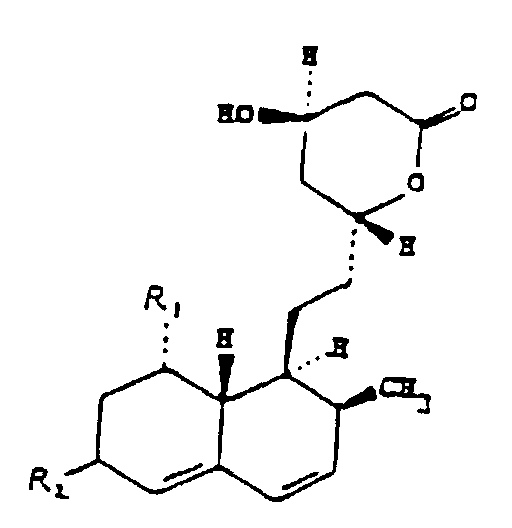
- R 1 is a hydrogen atom, a hydroxy group, a 2-methylbutyryloxy group (-OCOCH(CH 3 )CH 2 )CH 2 CH 3 ) or a 2,2-dimethylbutyryloxy group (-OCOC(CH 3 )2CH 2 CH 3 ) and R 2 is a hydrogen atom or a methyl group.
- R 1 is a 2-methylbutryrloxy group and R 2 is a methyl group.
- R 1 is a methyl group and R 2 is a hydrogen atom.
- Simvastatin has a 2,2- dimethylbutyryloxy group in the R 1 position and a methyl group in the R 2 position.
- a number of therapeutic measures such as surgical excision, chemotherapy and radiation, are available in cancer therapy. Frequently, a combination regimen using more than one of the abovementioned modalities is employed. Additionally, an array of chemotherapeutic agents may be used in treating any one cancer patient. If a tumor marker is available, then knowledge of its abundance may help the clinician tailor the therapeutic regimen. For example, if a patient suffering from prostatic carcinoma receives a drug which lowers his PSA, then the clinician may conclude that the tumor is regressing. Thus, he will alter the patient's therapy accordingly.
- R 1 is selected from a hydrogen atom, a hydroxy group, a 2-methylbutyryloxy group (-OCOCH(CH 3 )CH 2 CH 3 ) or a 2,2-dimethylbutyryloxy group (-OCOC(CH 3 )2CH 2 CH 3 ) and R 2 is a hydrogen atom or a methyl group for the manufacture of a medicament for the treatment of adenocarcinomas of the prostate, stomach, lung or colon or Ewing's sarcoma in a human patient by oral administration.
- composition comprising a compound of formula I wherein R 1 is selected from a hydrogen atom, a hydroxy group, a 2-methylbutyryloxy group (-OCOCH(CH 3 )CH 2 CH 3 ) or a 2,2-dimethylbutyryloxy group (-OCOC(CH 3 )2CH 2 CH 3 ) and R 2 is a hydrogen atom or a methyl group, for the manufacture of a medicament in conjunction with another treatment modality for reducing a prostate specific antigen level in a patient having prostatic adenocarcinoma.
- An effective amount of the compound is that amount which provides either subjective relief of symptoms or decrease in the tumor burden or decrease in an identifiable tumor marker.
- Administration of the compound is by any medically or pharmaceutically accepted route. Typically, the oral route is preferred.
- the dosing range is preferably from about 2.0 to about 52.0 mg/kg/day based on the patient's body weight. More specifically, the range is from about 6.0 to about 36.0 mg/kg/day.
- Examples of compounds useful in the present invention are lovastatin and simvastatin as well as their homologues. Also included are compounds classified as HMG Co-A inhibitors, as well as their homologues or analogues. Generally, these HMG Co-A inhibitors are known to lower serum cholesterol in humans. However, the present invention is not so limited. That is, an inhibitor of HMG Co-A or one of its homologues may work in the method of the present invention without necessarily lowering serum cholesterol. The invention focuses not on the compound's ability to lower cholesterol, but rather on the compound's ability to treat selected cancers, such as adenocarcinomas of the prostate, stomach, lung, breast and colon and certain sarcomas such as Ewing's sarcoma.
- selected cancers such as adenocarcinomas of the prostate, stomach, lung, breast and colon and certain sarcomas such as Ewing's sarcoma.
- Lovastatin induces cell death of certain susceptible human tumor types in vitro in a dose achievable in vivo .
- Clinical data presented here demonstrate anti-cancer activity of short course, high dose lovastatin as measured by decline in the level of the tumor marker PSA in patients with prostate cancer.
- Lovastatin rapidly acts on the human prostatic carcinoma cell lines, PC-3, PC-3-M, DU-145 and LNCaP, and the LD 50s were all below 10 ⁇ g/ml for exposures of 4 days.
- PC-3-M there was complete loss of clonogenicity after exposure to 4 ⁇ g/ml for 4 days.
- clonogenicity or immortality, refers to the ability of an isolated cell to produce progeny in vitro .
- rapid tumor cell kill may be seen at blood levels which animal models and studies in human cancer patients suggest are tolerable in humans.
- lovastatin acts to arrest growth, not to kill cells, at drug levels as high as 100 times that currently used in patients.
- the currently approved hypercholesterolemic drug lovastatin is self-administered orally four times a day for seven days every 28 days. Initial doses start at about 2 to 4 mg/kg/day. The clinical indication, dosage and schedule differ from the current use of this drug and other drugs in this class.
- the conventional clinical dosage for hypercholesterolemia ranges from 20-80 mg per day.
- lovastatin dose is not modified according to body weight or surface area.
- the dose is adjusted based on body size, and 2mg/kg/day (0.5 mg/kg QID, where "QID" means "four times a day") is a preferred starting dose.
- other schedules such as TID (three times a day) or BID (twice a day) could be employed.
- oral administration is preferred.
- An effective quantity of HMG Co-A inhibitor or related compound is employed in treatment.
- the dosage of the specific compound for treatment depends on many factors that are well known to those skilled in the art. They include for example, the route of administration and the potency of the particular compound.
- a preferred dosage for humans of about 70 kgs is from about 35 mg to about 910 mg in a single dose taken four times a day. Generally the dose is from about 2 to about 52 mg per kg per day.
- a preferred dosing schedule is an oral dose usually four times a day for a limited period, typically about 7 days.
- the schedule is preferably repeated at a suitable interval, usually at about 28-days with the first day of the first cycle counted as day one.
- Oral administration ensures high hepatic drug levels.
- the liver is a major site of lovastatin activation from the lactone to the more active acid form. Most of the drug is cleared by hepatic metabolism and biliary secretion.
- the liver is the major site of cholesterol synthesis and thus the site at which lovastatin accomplishes most of its effect upon circulating cholesterol levels. Lovastatin can cause hepatocellular injury, but this is usually very limited in severity.
- hepatic transaminase levels At the dose range given for hyperlipidemia (maximum of 80 mg/day), approximately 1.5% of patients will experience a three-fold rise in hepatic transaminase levels. In all cases, hepatic transaminase levels returned to normal within several weeks of discontinuation of lovastatin therapy.
- Lovastatin has been on the market for several years and more than one million patients have been treated with it. During that time, a number of reactions have been reported in one or a few patients that were not seen in preclinical testing or in the extensive clinical trials that preceded marketing approval. These have been so uncommon that the relationship of these reactions to lovastatin is at present unclear.
- these rare events may occur with greater consistency. They include: alopecia, depression, bleeding, skin rash, anaphylaxis, arthralgia, Lupus-like syndrome, angioedema, urticaria, hemolytic anemia, leucopenia, and thrombocytopenia.
- lovastatin causes renal failure at peak blood levels of 8-10 ⁇ g/ml.
- lovastatin causes gallbladder necrosis.
- dogs, but not mouse, rat, rabbit or monkey lovastatin can cause testicular atrophy.
- lovastatin causes lesions in the nonglandular stomach which is a non-acid producing portion of an animal's stomach, presumably used to store food. Since humans do not have an equivalent of the nonglandular stomach, the relevance of this observation is not known.
- Lovastatin is approved for marketing in the U.S. and is currently one of the top ten drugs prescribed in the clinical setting. It is available as both 20 and 40 mg tablets for oral administration. As excipients, each tablet contains cellulose, lactose, magnesium stearate and starch. The 20 mg tablets contain FD & C blue dye number 2. The 40 mg tablet is green and contains both FD&C blue dye number 2 and yellow dye number 10. Tablets should be stored between 2 and 30 ° C, protected from light, and kept in a well-closed container. Simvastatin, recently been approved in the United States to treat elevated cholesterol, is represented by formula II
- compositions of the present invention are presented for administration to humans and animals in unit dosage forms, such as tablets, capsules, pills, powders, granules, eye drops, oral solutions or suspensions and water-in-oil emulsions containing suitable quantities or formulations of HMG Co-A inhibitors.
- HMG Co-A inhibitors are mixed into formulations with conventional ingredients such as talc, magnesium stearate, dicalcium phosphate, magnesium aluminum silicate, calcium sulfate, starch, lactose, acacia, methylcellulose, and functionally similar materials as pharmaceutical diluents or carriers.
- Capsules are prepared by mixing the inhibitor or related compound with an inert pharmaceutical diluent and filling the mixture into hard gelatin capsule of appropriate size.
- Soft gelatin capsules are prepared by machine encapsulation of a slurry of the inhibitor or related compound with an acceptable vegetable oil, light liquid petrolatum or other inert oil.
- Fluid unit dosage forms for oral administration such syrups, elixirs and suspensions can be prepared.
- the water-soluble forms can be dissolved in an aqueous vehicle together with sugar, aromatic flavoring agents and preservatives to form a syrup.
- An elixir is prepared by using a hydroalcoholic (ethanol) vehicle with suitable sweeteners such as sugar and saccharin, together with an aromatic flavoring agent.
- Suspensions can be prepared with an aqueous vehicle with the aid of a suspending agent such as acacia, tragacanth, methylcellulose and the like.
- unit dosage form refers to physically discrete units suitable as unitary dosages for human subjects and animals, each unit containing a predetermined quantity of active material calculated to produce the desired pharmaceutical effect in association with the required pharmaceutical diluent, carrier or vehicle.
- suitable unit dosage forms are tablets, capsules, pills, powder packets, wafers, granules, teaspoonfuls, tablespoonfuls, droppersful, ampoules, and vials.
- lovastatin 0.001 to 100 micromoles per liter ( ⁇ M) were administered to four such cell lines and compared against control cell lines. Of the experimental cell lines, three were hormone-independent (PC-3, PC-3-M, and DU 145) and one was hormone-sensitive (LNCaP). All four prostate cancer cell lines responded to lovastatin at doses from 1 to 100 ⁇ M compared to controls. The response of the treated cancer cells did not correlate with hormone sensitivity of the cancer cells. See Fig. 1.
- Various human cell lines were cultivated using techniques well known to those of ordinary skill in the art. These cell lines were derived from cells of prostate carcinoma (PC-3/PC-3-M/DU 145), stomach cancer (AZ 521), pulmonary adenocarcinoma (A 549) and colon carcinoma (SW 620-AD). Concentrations of lovastatin varying from 0.01 to 100 ⁇ M were applied to each of the six cell lines and the response was compared to the controls as a percentage of growth. See Fig. 2. The data show good response to lovastatin dosages of 1 to 100 ⁇ M. Thus, various adenocarcinomas are sensitive to lovastatin treatment.
- a human prostate carcinoma cell line (PC-3-M) was treated with doses of lovastatin varying from 0.5 to 100 ⁇ M and compared against controls as a percentage of growth.
- the data indicate some loss of clonogenicity when the lovastatin dose was from 0.1 to 1 ⁇ M and an extreme loss of clonogenicity at 10 ⁇ M with absence of clonogenicity at dosages of 40 to 100 ⁇ M.
- the exposure of the cell lines to lovastatin occurred over a four day period.
- simvastatin a lovastatin analogue which is also a product of Merck & Co.
- concentration of simvastatin varied from 0.5 to 100 ⁇ M.
- the growth of the cancer cell lines was compared to control cell lines as a percentage. The data indicate that at concentrations of 1 to 100 ⁇ M of simvastatin, the cancer cell growth diminished substantially with both cell lines showing essentially zero growth after treatment with 100 ⁇ M of simvastatin. See Fig. 4.
- a patient having prostatic adenocarcinoma was treated with 2mg/kg/day of lovastatin administered orally daily for 7 days.
- the patient's plasma PSA levels were determined.
- Pretreatment PSAs show an exponential increase.
- the patient's blood level of PSA was approximately 700 nanograms per milliliter (ng/ml).
- the PSA had diminished to 600 ng/ml where it remained when tested on day 17 after treatment. See Fig. 5.
- a heavy bar shows the time interval of drug administration.
- a patient having prostatic adenocarcinoma was treated for two cycles at 2mg/kg/day for 7 days with the second cycle occurring 28 days later.
- the patient's plasma PSA levels were determined.
- the pretreatment PSA levels show an exponential increase from approximately 120 pretreatment until the treatment day.
- the patient's PSA level was approximately 100 ng/ml.
- the patient's PSA level diminished to about 55 to 60 ng/ml. See Fig. 6.
- the starting dose is 2mg/kg/day (0.5 mg/kg QID).
- the dose is escalated to 25.8 mg/kg/day.
- Each escalation is fixed at 2 mg/kg/day until a dose of 3 mg/kg QID is reached, after which the dose increases by 20% increments.
- Dose escalation is monitored primarily with a series of pharmacodynamic parameters as well as toxicity signs and symptoms. Because this is a phase 1 trial, it is open to patients with any malignancy.
- the lovastatin is administered QID for seven consecutive days. During the first week of the first cycle, patients are carefully monitored as outpatients. Therapy is repeated after a three week (21 day rest). Such 28 day cycles may be repeated until tumor progression has been documented or CTEP grade III or greater toxicity prevents further treatment.
- CTEP stands for Cancer Therapy Evaluation Program which those in the art recognize as a program under the National Cancer Institute that controls clinical trials.
- Doses are based upon actual body weight. Dose per Kg/QID (Total Dose per Day) % increase in dose Level 1 0.5 mg/Kg QID (2.0 mg/Kg/Day) - Level 2 1.0 mg/Kg QID (4.0 mg/Kg/Day) 100 Level 3 1.5 mg/Kg QID (6.0 mg/Kg/Day) 50 Level 4 2.0 mg/Kg QID (8.0 mg/Kg/Day) 33 Level 5 2.5 mg/Kg QID (10.0 mg/Kg/Day) 25 Level 6 3.0 mg/Kg QID (12.0 mg/Kg/Day) 20 Level 7 3.6 mg/Kg QID (14.4 mg/Kg/Day) 20 Level 8 4.3 mg/Kg QID (17.2 mg/Kg/Day) 20 Level 9 5.15 mg/Kg QID (20.6 mg/Kg/Day) 20 Level 10 6.2 mg/Kg QID (24.8 mg/Kg/Day) 20
- lovastatin is available in 20 and 40 mg tablets, the dose is rounded off to the nearest multiple of 20 mg. If, at any dose level, one patient develops CTEP grade III toxicity, then additional patients are entered at that dose level until at least 6 patients have been treated. If grade III or higher toxicity develops in 3 of the 6 patients entered at any given dose level, then no further dose escalation is be made and the next lower lovastatin dose will be considered to be a maximally tolerated dose, and an additional three patients entered at this dose to confirm that it is safe. If a patient experiences a grade III toxicity but is responding to therapy, he may be retreated at the next lower dose level. A maximum of 60 patients are placed on this trial.
- CTEP common toxicity criteria do not exist for rhabdomolysis. Thus, it is necessary to set separate criteria for this toxicity. For this purpose, an elevation CPK to 10 times normal or muscle pain sufficient to make daily activities difficult are regarded as equivalent to a CTEP grade III toxicity.
Landscapes
- Health & Medical Sciences (AREA)
- Life Sciences & Earth Sciences (AREA)
- Public Health (AREA)
- Veterinary Medicine (AREA)
- Medicinal Chemistry (AREA)
- Pharmacology & Pharmacy (AREA)
- Chemical & Material Sciences (AREA)
- Animal Behavior & Ethology (AREA)
- General Health & Medical Sciences (AREA)
- Epidemiology (AREA)
- Chemical Kinetics & Catalysis (AREA)
- Organic Chemistry (AREA)
- Nuclear Medicine, Radiotherapy & Molecular Imaging (AREA)
- General Chemical & Material Sciences (AREA)
- Pharmaceuticals Containing Other Organic And Inorganic Compounds (AREA)
- Acyclic And Carbocyclic Compounds In Medicinal Compositions (AREA)
- Pyrane Compounds (AREA)
Abstract
Description
- The invention relates generally to use of inhibitors of 3-hydroxy-3-methylglutaryl coenzyme A reductase in treating cancer. More specifically the invention relates to use of lovastatin and its homologues or analogues to treat human adenocarcinoma and selected sarcomas.
- Metastatic prostate cancer and stomach cancer are refractory to all available cytotoxic agents. There is no curative medical therapy for these common adult carcinomas. Lovastatin, widely used for treatment of hypercholesterolemia, is generally believed to be useful for synchronizing tumor cell growth in one cell cycle phase. Although there exist scattered reports of the cytotoxic activity of lovastatin, it has not been pursued as an anticancer drug.
- Adenocarcinoma is a group in the histological classification of cancer. For instance, 95% of prostate carcinomas are adenocarcinomas. Cancers of the stomach, intestine and colon are almost always adenocarcinomas, as are gall bladder cancers. Breast cancer is also an adenocarcinoma in perhaps 90% of the cases. Cancer of the esophagus is adenocarcinoma in about 10%-15% of cases and adenocarcinoma of the lung represents about 30% of pulmonary cancers.
- One of the challenges in treating cancer is the ability to follow the course of the disease and the efficacy of therapy with some objective marker. Ideally, the marker would be obtainable by either noninvasive or minimally invasive means such as a blood test. The marker may be useful in diagnosing a type of cancer as well as in evaluating the prescribed therapy.
- An example of a tumor marker is prostate specific antigen (PSA). Serum PSA is clinically useful to monitor the therapeutic response of prostatic cancer patients. See Hudson et al., Clinical Use of Prostate Specific Antigen in Patients With Prostate Cancer, Journal of Urology 142:1011-1017 (October 1989).
- Inhibitors of 3-hydroxy-3-methylglutaryl coenzyme A reductase (HMG Co-A) are known. HMG Co-A catalyzes a crucial step in the biosynthesis of cholesterol. Inhibitors of this enzyme are well known as cholesterol lowering agents. See United States Patent 3,983,140 to Endo et al.
- Examples of these inhibitors include the group of physiologic active substances ML-236. Compactin (ML-236B) is a member of this group, and it has been isolated from cultures of Penicillium brevicompatum and Penicillium citrinum. See '140 to Endo et al. See also Brown et al, Crystal and Molecular Structure of Compactin, a New Antifungal Metabolite From Penicillium Brevicompatum, Journal Chemical Society Perkins Trans. I 1165-1170 (1976).
- The structures of compactin and some of its homologues are well characterized, and their total synthesis has been achieved by a number of groups. See for example Grieco et al, Total Synthesis of the Hypocholesterolemic Agent Compactin, Journal American Chemical Society 105:1403-1404 (1983), Wang et al, Total Synthesis of Compactin (ML-236B), Journal American Chemical Society 103:6538-6539 (1981), and Hsu et al, Total Synthesis of the Hypocholesterolemic Agent Compactin, Journal American Chemical Society 105:593-601 (1983).
- Maltese et al. (1985) J. Clin. Invest. 76:1748-1754 show inhibition of murine neuroblastoma growth by mevinolin. Sebati et al. (1991) Cancer Communications 3(5) 141-147 show inhibition of ras transformed human bladder carcinomas in mice. Kellof et al. (1992) Journal of Cellular Biochemistry 16H:1-8 indicates that lovastatin is being tested in rat prostate models. Kort et al. (1989) Clin Expi. Metastasis 7(5): 517-523 allege that tumor cells cultured with synvolin show decreased ability to form metastatic nodules in mouse lung. Akira (1981) Derwent Publication 81-78653D indicates that monocolin K and derivatives are useful in the prevention and treatment of hypertrophy.
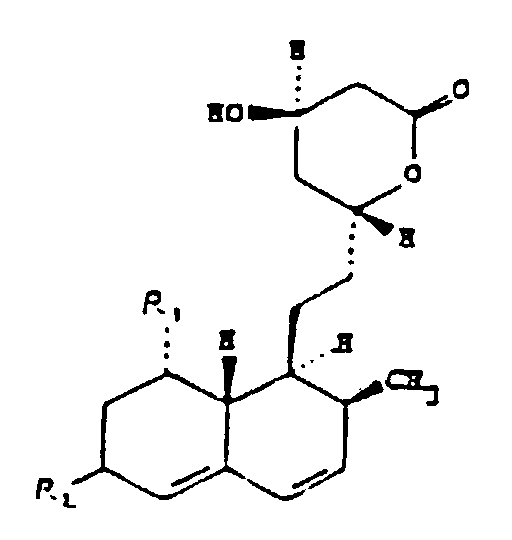
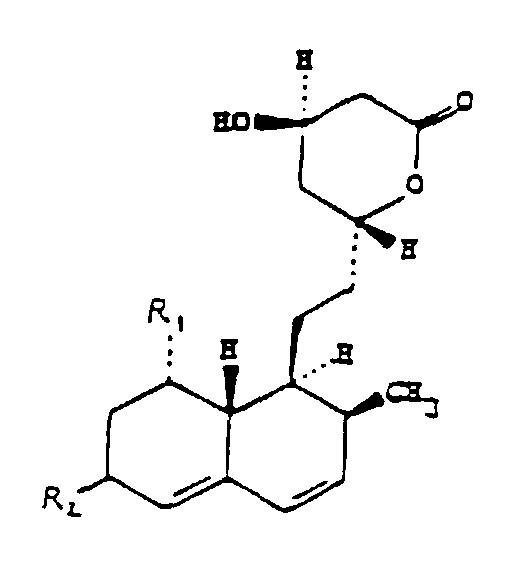
- The structural formula of some of the known inhibitors of HMG Co-A is represented by formula Iwherein R1 is a hydrogen atom, a hydroxy group, a 2-methylbutyryloxy group (-OCOCH(CH3)CH2)CH2CH3) or a 2,2-dimethylbutyryloxy group (-OCOC(CH3)2CH2CH3) and R2 is a hydrogen atom or a methyl group. In lovastatin, R1, is a 2-methylbutryrloxy group and R2 is a methyl group. In the compound mevastatin, R1 is a methyl group and R2 is a hydrogen atom. Simvastatin has a 2,2- dimethylbutyryloxy group in the R1 position and a methyl group in the R2 position.

- A number of therapeutic measures, such as surgical excision, chemotherapy and radiation, are available in cancer therapy. Frequently, a combination regimen using more than one of the abovementioned modalities is employed. Additionally, an array of chemotherapeutic agents may be used in treating any one cancer patient. If a tumor marker is available, then knowledge of its abundance may help the clinician tailor the therapeutic regimen. For example, if a patient suffering from prostatic carcinoma receives a drug which lowers his PSA, then the clinician may conclude that the tumor is regressing. Thus, he will alter the patient's therapy accordingly.
- According to the present invention there is provided the use of a compound of formula Iwherein R1 is selected from a hydrogen atom, a hydroxy group, a 2-methylbutyryloxy group (-OCOCH(CH3)CH2CH3) or a 2,2-dimethylbutyryloxy group (-OCOC(CH3)2CH2CH3) and R2 is a hydrogen atom or a methyl group for the manufacture of a medicament for the treatment of adenocarcinomas of the prostate, stomach, lung or colon or Ewing's sarcoma in a human patient by oral administration.
- Also in accordance with the present invention there is provided the use of a composition comprising a compound of formula Iwherein R1 is selected from a hydrogen atom, a hydroxy group, a 2-methylbutyryloxy group (-OCOCH(CH3)CH2CH3) or a 2,2-dimethylbutyryloxy group (-OCOC(CH3)2CH2CH3) and R2 is a hydrogen atom or a methyl group, for the manufacture of a medicament in conjunction with another treatment modality for reducing a prostate specific antigen level in a patient having prostatic adenocarcinoma.
- An effective amount of the compound is that amount which provides either subjective relief of symptoms or decrease in the tumor burden or decrease in an identifiable tumor marker. Administration of the compound is by any medically or pharmaceutically accepted route. Typically, the oral route is preferred. The dosing range is preferably from about 2.0 to about 52.0 mg/kg/day based on the patient's body weight. More specifically, the range is from about 6.0 to about 36.0 mg/kg/day.
- Examples of compounds useful in the present invention are lovastatin and simvastatin as well as their homologues. Also included are compounds classified as HMG Co-A inhibitors, as well as their homologues or analogues. Generally, these HMG Co-A inhibitors are known to lower serum cholesterol in humans. However, the present invention is not so limited. That is, an inhibitor of HMG Co-A or one of its homologues may work in the method of the present invention without necessarily lowering serum cholesterol. The invention focuses not on the compound's ability to lower cholesterol, but rather on the compound's ability to treat selected cancers, such as adenocarcinomas of the prostate, stomach, lung, breast and colon and certain sarcomas such as Ewing's sarcoma.
-
- FIG. 1 is a graph of concentration-dependence of lovastatin-induced growth arrest in human prostate cancer cell lines.
- FIG. 2 is a graph of concentration-dependence of lovastatin-induced growth arrest in six defined human solid tumors in cell lines.
- FIG. 3 is a graph of concentration-dependence of lovastatin-induced loss of clonogenicity in a human prostate carcinoma cell line.
- FIG. 4 is a graph of concentration-dependent growth arrest following treatment of two human prostate carcinoma cell lines with simvastatin.
- FIG. 5 is a graph of effect of lovastatin on plasma PSA level in a patient treated at 2mg/kg/day for 7 days.
- FIG. 6 is a graph of effect of lovastatin on plasma PSA level in a patient treated for 2 cycles at 2mg/kg/day/7 days.
-
- Lovastatin induces cell death of certain susceptible human tumor types in vitro in a dose achievable in vivo. Clinical data presented here demonstrate anti-cancer activity of short course, high dose lovastatin as measured by decline in the level of the tumor marker PSA in patients with prostate cancer.
- Data collected thus far indicate that patients with prostate cancer, both hormone-refractory and hormone-sensitive, and patients with gastric cancer are good candidates for the cytotoxic activity of lovastatin and related compounds. In addition, certain patients with breast cancer, Ewing's sarcoma, and other selected tumors respond to the anti-cancer activity of this class of drugs. In vitro testing is currently underway to facilitate selection of patients.
- Lovastatin rapidly acts on the human prostatic carcinoma cell lines, PC-3, PC-3-M, DU-145 and LNCaP, and the LD 50s were all below 10 µg/ml for exposures of 4 days. In the case of PC-3-M, there was complete loss of clonogenicity after exposure to 4 µg/ml for 4 days. The term "clonogenicity", or immortality, refers to the ability of an isolated cell to produce progeny in vitro. Thus, in the case of human prostate cancer, rapid tumor cell kill may be seen at blood levels which animal models and studies in human cancer patients suggest are tolerable in humans.
- In mammalian cells, lovastatin acts to arrest growth, not to kill cells, at drug levels as high as 100 times that currently used in patients. In the present invention, the currently approved hypercholesterolemic drug lovastatin is self-administered orally four times a day for seven days every 28 days. Initial doses start at about 2 to 4 mg/kg/day. The clinical indication, dosage and schedule differ from the current use of this drug and other drugs in this class.
- The conventional clinical dosage for hypercholesterolemia ranges from 20-80 mg per day. With conventional management, lovastatin dose is not modified according to body weight or surface area. However, to use the present invention, the dose is adjusted based on body size, and 2mg/kg/day (0.5 mg/kg QID, where "QID" means "four times a day") is a preferred starting dose. Alternatively, other schedules, such as TID (three times a day) or BID (twice a day) could be employed.
- In the original clinical development of this drug, there were no
phase 1 studies to determine dose-limiting toxicity in patients. With the doses in current clinical use, toxicities with potentially serious outcome are ordinarily limited to rhabdomyolysis and liver injury. The frequency of each of these toxicities is less than 1.5% at the currently recommended doses. In vitro studies have shown inhibition of lymphocyte proliferation at drug levels targeted by thephase 1 study described below. - To practice the invention, oral administration is preferred. An effective quantity of HMG Co-A inhibitor or related compound is employed in treatment. The dosage of the specific compound for treatment depends on many factors that are well known to those skilled in the art. They include for example, the route of administration and the potency of the particular compound. A preferred dosage for humans of about 70 kgs is from about 35 mg to about 910 mg in a single dose taken four times a day. Generally the dose is from about 2 to about 52 mg per kg per day.
- A preferred dosing schedule is an oral dose usually four times a day for a limited period, typically about 7 days. The schedule is preferably repeated at a suitable interval, usually at about 28-days with the first day of the first cycle counted as day one.
- Oral administration ensures high hepatic drug levels. In addition, the liver is a major site of lovastatin activation from the lactone to the more active acid form. Most of the drug is cleared by hepatic metabolism and biliary secretion. Also, the liver is the major site of cholesterol synthesis and thus the site at which lovastatin accomplishes most of its effect upon circulating cholesterol levels. Lovastatin can cause hepatocellular injury, but this is usually very limited in severity.
- At the dose range given for hyperlipidemia (maximum of 80 mg/day), approximately 1.5% of patients will experience a three-fold rise in hepatic transaminase levels. In all cases, hepatic transaminase levels returned to normal within several weeks of discontinuation of lovastatin therapy.
- Muscle pain associated with elevated creatine phosphokinase (CPK) levels have been reported. At a dose of 80 mg/Day, about 1.5% of patients will experience CPK elevations of ≥ 1,000 U/L (5 times normal). Clinically evident myopathy associated with prolonged elevation of CPK and muscle discomfort has been seen in less than 0.1% of cases.
- The development of lens opacities during the course of lovastatin therapy have been reported. However, these changes also occur spontaneously in this age group and at present blinded, randomized trials do not support an increased risk in patients on recommended doses of lovastatin. Nevertheless, this side effect may emerge as significant with dose escalation.
- Lovastatin has been on the market for several years and more than one million patients have been treated with it. During that time, a number of reactions have been reported in one or a few patients that were not seen in preclinical testing or in the extensive clinical trials that preceded marketing approval. These have been so uncommon that the relationship of these reactions to lovastatin is at present unclear.
- However, as the dose is escalated in practicing this invention, one or more of these rare events may occur with greater consistency. They include: alopecia, depression, bleeding, skin rash, anaphylaxis, arthralgia, Lupus-like syndrome, angioedema, urticaria, hemolytic anemia, leucopenia, and thrombocytopenia.
- In rabbits, but not mouse, rat, dog or monkey, lovastatin causes renal failure at peak blood levels of 8-10 µg/ml. In rabbits, but not mouse, dog or monkey, lovastatin causes gallbladder necrosis. In dogs, but not mouse, rat, rabbit or monkey, lovastatin can cause testicular atrophy. In rat and mouse, lovastatin causes lesions in the nonglandular stomach which is a non-acid producing portion of an animal's stomach, presumably used to store food. Since humans do not have an equivalent of the nonglandular stomach, the relevance of this observation is not known.
- Lovastatin is approved for marketing in the U.S. and is currently one of the top ten drugs prescribed in the clinical setting. It is available as both 20 and 40 mg tablets for oral administration. As excipients, each tablet contains cellulose, lactose, magnesium stearate and starch. The 20 mg tablets contain FD & C
blue dye number 2. The 40 mg tablet is green and contains both FD&Cblue dye number 2 andyellow dye number 10. Tablets should be stored between 2 and 30 ° C, protected from light, and kept in a well-closed container. Simvastatin, recently been approved in the United States to treat elevated cholesterol, is represented by formula II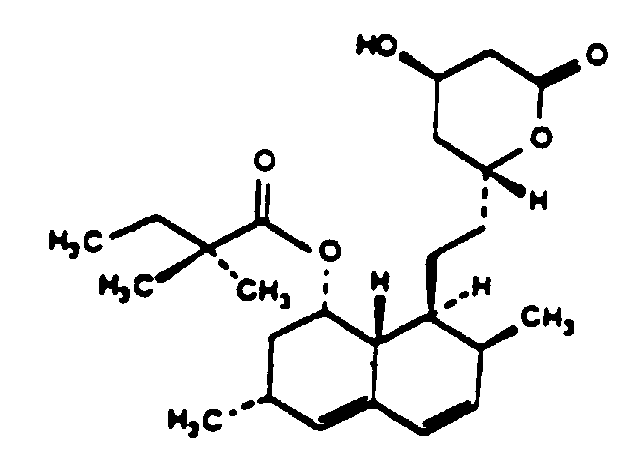
- Compositions of the present invention are presented for administration to humans and animals in unit dosage forms, such as tablets, capsules, pills, powders, granules, eye drops, oral solutions or suspensions and water-in-oil emulsions containing suitable quantities or formulations of HMG Co-A inhibitors.
- For oral administration, either solid or fluid unit dosage forms can be prepared. For preparing solid compositions such as tablets, HMG Co-A inhibitors are mixed into formulations with conventional ingredients such as talc, magnesium stearate, dicalcium phosphate, magnesium aluminum silicate, calcium sulfate, starch, lactose, acacia, methylcellulose, and functionally similar materials as pharmaceutical diluents or carriers.
- Capsules are prepared by mixing the inhibitor or related compound with an inert pharmaceutical diluent and filling the mixture into hard gelatin capsule of appropriate size. Soft gelatin capsules are prepared by machine encapsulation of a slurry of the inhibitor or related compound with an acceptable vegetable oil, light liquid petrolatum or other inert oil.
- Fluid unit dosage forms for oral administration such syrups, elixirs and suspensions can be prepared. The water-soluble forms can be dissolved in an aqueous vehicle together with sugar, aromatic flavoring agents and preservatives to form a syrup. An elixir is prepared by using a hydroalcoholic (ethanol) vehicle with suitable sweeteners such as sugar and saccharin, together with an aromatic flavoring agent. Suspensions can be prepared with an aqueous vehicle with the aid of a suspending agent such as acacia, tragacanth, methylcellulose and the like.
- The term "unit dosage form" refers to physically discrete units suitable as unitary dosages for human subjects and animals, each unit containing a predetermined quantity of active material calculated to produce the desired pharmaceutical effect in association with the required pharmaceutical diluent, carrier or vehicle. Some examples of suitable unit dosage forms are tablets, capsules, pills, powder packets, wafers, granules, teaspoonfuls, tablespoonfuls, droppersful, ampoules, and vials.
- The following examples are illustrative, and not limitations of the invention. Those skilled in the art will promptly recognize appropriate variations from the procedures as to dosing, scheduling, indications and toxicity.
- Cell lines of human prostate cancer cells were cultivated using methods well known to those of ordinary skill in the art. Varying doses of lovastatin from 0.001 to 100 micromoles per liter (µM) were administered to four such cell lines and compared against control cell lines. Of the experimental cell lines, three were hormone-independent (PC-3, PC-3-M, and DU 145) and one was hormone-sensitive (LNCaP). All four prostate cancer cell lines responded to lovastatin at doses from 1 to 100 µM compared to controls. The response of the treated cancer cells did not correlate with hormone sensitivity of the cancer cells. See Fig. 1.
- Various human cell lines were cultivated using techniques well known to those of ordinary skill in the art. These cell lines were derived from cells of prostate carcinoma (PC-3/PC-3-M/DU 145), stomach cancer (AZ 521), pulmonary adenocarcinoma (A 549) and colon carcinoma (SW 620-AD). Concentrations of lovastatin varying from 0.01 to 100 µM were applied to each of the six cell lines and the response was compared to the controls as a percentage of growth. See Fig. 2. The data show good response to lovastatin dosages of 1 to 100 µM. Thus, various adenocarcinomas are sensitive to lovastatin treatment.
- To demonstrate loss of clonogenicity in a cancer cell line, a human prostate carcinoma cell line (PC-3-M) was treated with doses of lovastatin varying from 0.5 to 100 µM and compared against controls as a percentage of growth. The data indicate some loss of clonogenicity when the lovastatin dose was from 0.1 to 1 µM and an extreme loss of clonogenicity at 10 µM with absence of clonogenicity at dosages of 40 to 100 µM. The exposure of the cell lines to lovastatin occurred over a four day period.
- Two human prostate carcinoma cell lines, PC-3 and
DU 145, were treated with simvastatin, a lovastatin analogue which is also a product of Merck & Co. The concentration of simvastatin varied from 0.5 to 100 µM. The growth of the cancer cell lines was compared to control cell lines as a percentage. The data indicate that at concentrations of 1 to 100 µM of simvastatin, the cancer cell growth diminished substantially with both cell lines showing essentially zero growth after treatment with 100 µM of simvastatin. See Fig. 4. - In a clinical trial, a patient having prostatic adenocarcinoma was treated with 2mg/kg/day of lovastatin administered orally daily for 7 days. The patient's plasma PSA levels were determined. Pretreatment PSAs show an exponential increase. At the time of drug administration, the patient's blood level of PSA was approximately 700 nanograms per milliliter (ng/ml). After 7 days of treatment, the PSA had diminished to 600 ng/ml where it remained when tested on day 17 after treatment. See Fig. 5. A heavy bar shows the time interval of drug administration.
- In a clinical trial, a patient having prostatic adenocarcinoma was treated for two cycles at 2mg/kg/day for 7 days with the second cycle occurring 28 days later. The patient's plasma PSA levels were determined. The pretreatment PSA levels show an exponential increase from approximately 120 pretreatment until the treatment day. On the first day of treatment, the patient's PSA level was approximately 100 ng/ml. After the first cycle or 7 days of treatment, the patient's PSA level diminished to about 55 to 60 ng/ml. See Fig. 6.
- A
Phase 1 Clinical Trial of short course, high dose lovastatin in the treatment of patients with cancer for whom there are no other therapeutic options of proven effectiveness is in progress. - The starting dose is 2mg/kg/day (0.5 mg/kg QID). The dose is escalated to 25.8 mg/kg/day. Each escalation is fixed at 2 mg/kg/day until a dose of 3 mg/kg QID is reached, after which the dose increases by 20% increments.
- Dose escalation is monitored primarily with a series of pharmacodynamic parameters as well as toxicity signs and symptoms. Because this is a
phase 1 trial, it is open to patients with any malignancy. - The lovastatin is administered QID for seven consecutive days. During the first week of the first cycle, patients are carefully monitored as outpatients. Therapy is repeated after a three week (21 day rest). Such 28 day cycles may be repeated until tumor progression has been documented or CTEP grade III or greater toxicity prevents further treatment. CTEP stands for Cancer Therapy Evaluation Program which those in the art recognize as a program under the National Cancer Institute that controls clinical trials.
- A minimum of three patients are treated at each dose level and followed for one month before moving to the next dose level. Doses are based upon actual body weight.
Dose per Kg/QID (Total Dose per Day) % increase in dose Level 1 0.5 mg/Kg QID (2.0 mg/Kg/Day) - Level 21.0 mg/Kg QID (4.0 mg/Kg/Day) 100 Level 31.5 mg/Kg QID (6.0 mg/Kg/Day) 50 Level 4 2.0 mg/Kg QID (8.0 mg/Kg/Day) 33 Level 5 2.5 mg/Kg QID (10.0 mg/Kg/Day) 25 Level 6 3.0 mg/Kg QID (12.0 mg/Kg/Day) 20 Level 7 3.6 mg/Kg QID (14.4 mg/Kg/Day) 20 Level 8 4.3 mg/Kg QID (17.2 mg/Kg/Day) 20 Level 9 5.15 mg/Kg QID (20.6 mg/Kg/Day) 20 Level 106.2 mg/Kg QID (24.8 mg/Kg/Day) 20 Level 11 14.9 mg/Kg QID (29.8 mg/Kg/Day) 20 Level 12 8.95 mg/Kg QID (35.8 mg/Kg/Day) 20 Level 13 10.75 mg/Kg QID (43.0 mg/Kg/Day) 20 Level 14 12.9 mg/Kg QID (51.8 mg/Kg/Day) 20 - Because lovastatin is available in 20 and 40 mg tablets, the dose is rounded off to the nearest multiple of 20 mg. If, at any dose level, one patient develops CTEP grade III toxicity, then additional patients are entered at that dose level until at least 6 patients have been treated. If grade III or higher toxicity develops in 3 of the 6 patients entered at any given dose level, then no further dose escalation is be made and the next lower lovastatin dose will be considered to be a maximally tolerated dose, and an additional three patients entered at this dose to confirm that it is safe. If a patient experiences a grade III toxicity but is responding to therapy, he may be retreated at the next lower dose level. A maximum of 60 patients are placed on this trial.
- CTEP common toxicity criteria do not exist for rhabdomolysis. Thus, it is necessary to set separate criteria for this toxicity. For this purpose, an elevation CPK to 10 times normal or muscle pain sufficient to make daily activities difficult are regarded as equivalent to a CTEP grade III toxicity.
- As the dose levels escalate, patients who entered lower dose levels may have their dose increased on their next cycle. The maximal dose allowed will be one dose level lower than the current dose level being investigated. Although a QID schedule is preferred, other schedules, such as TID or BID could be used.
Claims (16)
- The use of a compound of formula Iwherein R1 is selected from a hydrogen atom, a hydroxy group, a 2-methylbutyryloxy group (-OCOCH(CH3)CH2CH3) or a 2,2-dimethylbutyryloxy group (-OCOC(CH3)2CH2CH3) and R2 is a hydrogen atom or a methyl group for the manufacture of a medicament for the treatment of adenocarcinomas of the prostate, stomach, lung or colon or Ewing's sarcoma in a human patient by oral administration.

- The use of a compound as claimed in claim 1, wherein the compound is selected from lovastatin or simvastatin.
- The use of a compound as claimed in claim 1 or 2, wherein the cancer is a hormone-responsive prostate cancer.
- The use of a compound as claimed in any preceding claim, wherein the cancer is an Ewing's sarcoma.
- The use of a compound as claimed in any preceding claim, wherein the effective amount is from 2.0 to 52.0 mg/kg/day.
- The use of a compound as claimed in claim 5, wherein the effective amount is 6.0 to 36.0 mg/kg/day.
- The use of lovastatin for the manufacture of a medicament for diminishing an elevated prostate specific antigen level in a human.
- The use of a composition comprising a compound of formula Iwherein R1 is selected from a hydrogen atom, a hydroxy group, a 2-methylbutyryloxy group (-OCOCH(CH3)CH2CH3) or a 2,2-dimethylbutyryloxy group (-OCOC(CH3)2CH2CH3) and R2 is a hydrogen atom or a methyl group, for the manufacture of a medicament for administration in conjunction with another treatment modality for reducing a prostate specific antigen level in a patient having prostatic adenocarcinoma.
- The use of the composition as claimed in claim 8, wherein the inhibitor is selected from lovastatin or simvastatin.
- The use of the composition as claimed in claim 8 or 9, wherein the treatment further comprises detecting a level of prostate specific antigen of the patient.
- The use of the composition as claimed in claim 10, wherein the detected prostate specific antigen level is from the patient's blood.
- The use of the composition as claimed in claim 8, 9, 10 or 11, wherein the other treatment modality includes a dose of a chemotherapeutic agent.
- The use of the composition as claimed in claim 12, wherein the dose of the chemotherapeutic agent is correlated with a level of prostate specific antigen of the patient.
- The use of the composition as claimed in any one of claims 8 to 13, wherein the administration is oral.
- The use of the composition as claimed in any one of claims 10 to 16, wherein the effective amount is from 2.0 to 52.0 mg/kg/day.
- The use of the composition as claimed in claim 15, wherein the effective amount is 6.0 to 36 mg/kg/day.
Applications Claiming Priority (3)
| Application Number | Priority Date | Filing Date | Title |
|---|---|---|---|
| US88222392A | 1992-05-13 | 1992-05-13 | |
| US882223 | 1992-05-13 | ||
| PCT/US1993/004454 WO1993023034A1 (en) | 1992-05-13 | 1993-05-12 | Use of inhibitors of 3-hydroxy-3-methylglutaryl coenzyme a reductase as a modality in cancer therapy |
Publications (2)
| Publication Number | Publication Date |
|---|---|
| EP0642341A1 EP0642341A1 (en) | 1995-03-15 |
| EP0642341B1 true EP0642341B1 (en) | 2000-07-19 |
Family
ID=25380156
Family Applications (1)
| Application Number | Title | Priority Date | Filing Date |
|---|---|---|---|
| EP93911242A Expired - Lifetime EP0642341B1 (en) | 1992-05-13 | 1993-05-12 | Use of inhibitors of 3-hydroxy-3-methylglutaryl coenzyme a reductase as a modality in cancer therapy |
Country Status (12)
| Country | Link |
|---|---|
| US (1) | US6040334A (en) |
| EP (1) | EP0642341B1 (en) |
| JP (1) | JPH08503451A (en) |
| AT (1) | ATE194770T1 (en) |
| AU (1) | AU683839B2 (en) |
| CA (1) | CA2135312C (en) |
| DE (1) | DE69329062T2 (en) |
| DK (1) | DK0642341T3 (en) |
| ES (1) | ES2151508T3 (en) |
| GR (1) | GR3034641T3 (en) |
| PT (1) | PT642341E (en) |
| WO (1) | WO1993023034A1 (en) |
Families Citing this family (14)
| Publication number | Priority date | Publication date | Assignee | Title |
|---|---|---|---|---|
| US6376476B1 (en) | 1996-12-13 | 2002-04-23 | Zymogenetics Corporation | Isoprenoid pathway inhibitors for stimulating bone growth |
| JP4269015B2 (en) * | 1996-12-13 | 2009-05-27 | オステオスクリーン アイピー, エルエルシー | Compositions and methods for stimulating bone growth |
| EP1609469A3 (en) * | 1996-12-13 | 2009-07-29 | ZymoGenetics, Inc. | Compositions and methods for stimulating bone growth |
| IL131628A0 (en) * | 1997-03-04 | 2001-01-28 | Wisconsin Alumni Res Found | Method of suppressing tumor growth with combinations of isoprenoids and statins |
| US20030114503A1 (en) * | 1997-06-16 | 2003-06-19 | Pfizer Inc. | Farnesyl transferase inhibitors in combination with HMG CoA reductase inhibitors for the treatment of cancer |
| US6841362B1 (en) | 2000-02-29 | 2005-01-11 | The Trustees Of Columbia University In The City Of New York | Melanoma differentiation associated gene-7 promoter and uses thereof |
| US7229822B1 (en) | 2000-02-29 | 2007-06-12 | Univ Columbia | Melanoma differentation associated gene-5 and vectors and cells containing same |
| US6376537B1 (en) * | 2000-03-28 | 2002-04-23 | Assa Weinberg | Cancer treatment |
| DE10057648A1 (en) * | 2000-11-21 | 2002-06-06 | Univ Jw Goethe Frankfurt Main | Use of inhibitors of 3-hydroxyl-3-methylglutaryl-coenzyme A reductase |
| AU2002218436A1 (en) * | 2000-12-19 | 2002-07-01 | Pfizer Products Inc. | Crystal forms of 6-((4-chloro-phenyl) -hydroxy-(-3-methyl- 3h-imidaol-4-yl) -methyl) -4-(3-ethynyl-phenyl) -1-methyl-1h- quinolin-2-one, 2,3- dihydroxybutanedioate salts and method of production |
| US6740757B2 (en) | 2001-08-29 | 2004-05-25 | Pfizer Inc | Enantiomers of 6-[(4-chloro-phenyl)-hydroxy-(3-methyl-3h-imidazol-4-yl)-methyl]-4-[3-(3-hydroxy-3-methyl-but-1-ynyl)-phenyl]-1-methyl-1h-quinolin-2-one and salts thereof, useful in the treatment of cancer |
| US7041309B2 (en) * | 2002-06-13 | 2006-05-09 | Neuropro Technologies, Inc. | Spinal fusion using an HMG-CoA reductase inhibitor |
| WO2004024073A2 (en) * | 2002-09-11 | 2004-03-25 | The Board Of Trustees Of The University Of Arkansas | Use of statins in the prevention and treatment of radiation injury and other disorders associated with reduced endothelial thrombomodulin |
| ES2339524B1 (en) * | 2008-08-28 | 2011-03-22 | Proyecto De Biomedicina Cima, S.L. | NEW BIOMARCATOR AS A THERAPEUTIC DIANA IN CANCER DE PULMON. |
Family Cites Families (3)
| Publication number | Priority date | Publication date | Assignee | Title |
|---|---|---|---|---|
| JPS56115717A (en) * | 1980-02-19 | 1981-09-11 | Akira Endo | Preventive and remedy for prostatomegaly |
| US5595734A (en) * | 1988-04-06 | 1997-01-21 | Alfacell Corporation | Compositions comprising ONCONASE (tm) and lovastatin |
| US5130333A (en) * | 1990-10-19 | 1992-07-14 | E. R. Squibb & Sons, Inc. | Method for treating type II diabetes employing a cholesterol lowering drug |
-
1993
- 1993-05-12 PT PT93911242T patent/PT642341E/en unknown
- 1993-05-12 DE DE69329062T patent/DE69329062T2/en not_active Expired - Lifetime
- 1993-05-12 AU AU42443/93A patent/AU683839B2/en not_active Expired
- 1993-05-12 JP JP6500936A patent/JPH08503451A/en active Pending
- 1993-05-12 ES ES93911242T patent/ES2151508T3/en not_active Expired - Lifetime
- 1993-05-12 DK DK93911242T patent/DK0642341T3/en active
- 1993-05-12 WO PCT/US1993/004454 patent/WO1993023034A1/en not_active Ceased
- 1993-05-12 CA CA002135312A patent/CA2135312C/en not_active Expired - Lifetime
- 1993-05-12 AT AT93911242T patent/ATE194770T1/en active
- 1993-05-12 EP EP93911242A patent/EP0642341B1/en not_active Expired - Lifetime
-
1994
- 1994-10-20 US US08/330,865 patent/US6040334A/en not_active Expired - Lifetime
-
2000
- 2000-10-18 GR GR20000402330T patent/GR3034641T3/en unknown
Also Published As
| Publication number | Publication date |
|---|---|
| DE69329062D1 (en) | 2000-08-24 |
| WO1993023034A1 (en) | 1993-11-25 |
| DK0642341T3 (en) | 2000-12-18 |
| ATE194770T1 (en) | 2000-08-15 |
| US6040334A (en) | 2000-03-21 |
| DE69329062T2 (en) | 2001-03-29 |
| ES2151508T3 (en) | 2001-01-01 |
| EP0642341A1 (en) | 1995-03-15 |
| GR3034641T3 (en) | 2001-01-31 |
| CA2135312A1 (en) | 1993-11-25 |
| PT642341E (en) | 2001-01-31 |
| CA2135312C (en) | 2006-09-26 |
| AU4244393A (en) | 1993-12-13 |
| AU683839B2 (en) | 1997-11-27 |
| JPH08503451A (en) | 1996-04-16 |
Similar Documents
| Publication | Publication Date | Title |
|---|---|---|
| US6040334A (en) | Use of inhibitors of 3-hydroxy-3-methylglutaryl coenzyme a reductase as a modality in cancer therapy | |
| KR20010022477A (en) | Combination therapy comprising atorvastatin and an antihypertensive agent | |
| JP2007528886A (en) | Use of metformin and orlistat for the treatment or prevention of obesity | |
| JP2001514224A (en) | Combination therapy including amlodipine and statin compound | |
| JPH04225916A (en) | Therapeutic composition for lipid blood trouble | |
| JP2005532338A5 (en) | ||
| US6774131B1 (en) | Remedies for endothelin-induced diseases | |
| KR20020086749A (en) | New combination of betablocker and a cholesterol-lowering agent | |
| AU2018332646B2 (en) | Compositions and methods for preventing and treating heterotopic ossification and pathologic calcification | |
| Farmer et al. | Currently available hypolipidaemic drugs and future therapeutic developments | |
| KR20100014614A (en) | Combination therapy, composition and methods for the treatment of cardiovascular disorders | |
| AU2001281134B2 (en) | Methods of treating cancer and the pain associated therewith using endothelin antagonists | |
| JP2006508995A (en) | Use of a PPARα agonist and metformin to lower serum triglyceride levels | |
| RU2271802C2 (en) | Using beta-blocking agent-containing pharmaceutical preparation | |
| JPH1081633A (en) | Medicinal composition | |
| WO2005027832A2 (en) | Edta containing compositions and uses thereof |
Legal Events
| Date | Code | Title | Description |
|---|---|---|---|
| PUAI | Public reference made under article 153(3) epc to a published international application that has entered the european phase |
Free format text: ORIGINAL CODE: 0009012 |
|
| 17P | Request for examination filed |
Effective date: 19941212 |
|
| AK | Designated contracting states |
Kind code of ref document: A1 Designated state(s): AT BE CH DE DK ES FR GB GR IE IT LI LU MC NL PT SE |
|
| 17Q | First examination report despatched |
Effective date: 19951205 |
|
| GRAG | Despatch of communication of intention to grant |
Free format text: ORIGINAL CODE: EPIDOS AGRA |
|
| GRAG | Despatch of communication of intention to grant |
Free format text: ORIGINAL CODE: EPIDOS AGRA |
|
| GRAH | Despatch of communication of intention to grant a patent |
Free format text: ORIGINAL CODE: EPIDOS IGRA |
|
| GRAH | Despatch of communication of intention to grant a patent |
Free format text: ORIGINAL CODE: EPIDOS IGRA |
|
| GRAA | (expected) grant |
Free format text: ORIGINAL CODE: 0009210 |
|
| AK | Designated contracting states |
Kind code of ref document: B1 Designated state(s): AT BE CH DE DK ES FR GB GR IE IT LI LU MC NL PT SE |
|
| REF | Corresponds to: |
Ref document number: 194770 Country of ref document: AT Date of ref document: 20000815 Kind code of ref document: T |
|
| REG | Reference to a national code |
Ref country code: CH Ref legal event code: EP |
|
| REG | Reference to a national code |
Ref country code: IE Ref legal event code: FG4D |
|
| REF | Corresponds to: |
Ref document number: 69329062 Country of ref document: DE Date of ref document: 20000824 |
|
| ITF | It: translation for a ep patent filed | ||
| ET | Fr: translation filed | ||
| REG | Reference to a national code |
Ref country code: DK Ref legal event code: T3 |
|
| REG | Reference to a national code |
Ref country code: CH Ref legal event code: NV Representative=s name: AMMANN PATENTANWAELTE AG BERN |
|
| REG | Reference to a national code |
Ref country code: ES Ref legal event code: FG2A Ref document number: 2151508 Country of ref document: ES Kind code of ref document: T3 |
|
| REG | Reference to a national code |
Ref country code: PT Ref legal event code: SC4A Free format text: AVAILABILITY OF NATIONAL TRANSLATION Effective date: 20001019 |
|
| PLBE | No opposition filed within time limit |
Free format text: ORIGINAL CODE: 0009261 |
|
| STAA | Information on the status of an ep patent application or granted ep patent |
Free format text: STATUS: NO OPPOSITION FILED WITHIN TIME LIMIT |
|
| 26N | No opposition filed | ||
| REG | Reference to a national code |
Ref country code: GB Ref legal event code: IF02 |
|
| PGFP | Annual fee paid to national office [announced via postgrant information from national office to epo] |
Ref country code: LU Payment date: 20110607 Year of fee payment: 19 |
|
| PGFP | Annual fee paid to national office [announced via postgrant information from national office to epo] |
Ref country code: MC Payment date: 20120418 Year of fee payment: 20 Ref country code: DE Payment date: 20120529 Year of fee payment: 20 Ref country code: CH Payment date: 20120525 Year of fee payment: 20 Ref country code: NL Payment date: 20120530 Year of fee payment: 20 Ref country code: IE Payment date: 20120525 Year of fee payment: 20 Ref country code: DK Payment date: 20120525 Year of fee payment: 20 |
|
| PGFP | Annual fee paid to national office [announced via postgrant information from national office to epo] |
Ref country code: GR Payment date: 20120530 Year of fee payment: 20 Ref country code: GB Payment date: 20120525 Year of fee payment: 20 Ref country code: SE Payment date: 20120529 Year of fee payment: 20 Ref country code: BE Payment date: 20120529 Year of fee payment: 20 Ref country code: FR Payment date: 20120607 Year of fee payment: 20 |
|
| PGFP | Annual fee paid to national office [announced via postgrant information from national office to epo] |
Ref country code: IT Payment date: 20120524 Year of fee payment: 20 |
|
| PGFP | Annual fee paid to national office [announced via postgrant information from national office to epo] |
Ref country code: ES Payment date: 20120528 Year of fee payment: 20 |
|
| PGFP | Annual fee paid to national office [announced via postgrant information from national office to epo] |
Ref country code: PT Payment date: 20120424 Year of fee payment: 20 |
|
| PGFP | Annual fee paid to national office [announced via postgrant information from national office to epo] |
Ref country code: AT Payment date: 20120419 Year of fee payment: 20 |
|
| REG | Reference to a national code |
Ref country code: DE Ref legal event code: R071 Ref document number: 69329062 Country of ref document: DE |
|
| REG | Reference to a national code |
Ref country code: DK Ref legal event code: EUP |
|
| REG | Reference to a national code |
Ref country code: DE Ref legal event code: R071 Ref document number: 69329062 Country of ref document: DE |
|
| REG | Reference to a national code |
Ref country code: CH Ref legal event code: PL |
|
| REG | Reference to a national code |
Ref country code: PT Ref legal event code: MM4A Free format text: MAXIMUM VALIDITY LIMIT REACHED Effective date: 20130512 |
|
| REG | Reference to a national code |
Ref country code: NL Ref legal event code: V4 Effective date: 20130512 |
|
| BE20 | Be: patent expired |
Owner name: THE *UNITED STATES OF AMERICA AS REPRESENTED BY TH Effective date: 20130512 |
|
| REG | Reference to a national code |
Ref country code: GB Ref legal event code: PE20 Expiry date: 20130511 |
|
| REG | Reference to a national code |
Ref country code: AT Ref legal event code: MK07 Ref document number: 194770 Country of ref document: AT Kind code of ref document: T Effective date: 20130512 |
|
| REG | Reference to a national code |
Ref country code: ES Ref legal event code: FD2A Effective date: 20130725 |
|
| PG25 | Lapsed in a contracting state [announced via postgrant information from national office to epo] |
Ref country code: DE Free format text: LAPSE BECAUSE OF EXPIRATION OF PROTECTION Effective date: 20130514 Ref country code: GB Free format text: LAPSE BECAUSE OF EXPIRATION OF PROTECTION Effective date: 20130511 |
|
| PG25 | Lapsed in a contracting state [announced via postgrant information from national office to epo] |
Ref country code: PT Free format text: LAPSE BECAUSE OF EXPIRATION OF PROTECTION Effective date: 20130521 |
|
| REG | Reference to a national code |
Ref country code: GR Ref legal event code: MA Ref document number: 20000402330 Country of ref document: GR Effective date: 20130513 |
|
| PG25 | Lapsed in a contracting state [announced via postgrant information from national office to epo] |
Ref country code: ES Free format text: LAPSE BECAUSE OF EXPIRATION OF PROTECTION Effective date: 20130513 |
|
| REG | Reference to a national code |
Ref country code: IE Ref legal event code: MK9A |
|
| PG25 | Lapsed in a contracting state [announced via postgrant information from national office to epo] |
Ref country code: IE Free format text: LAPSE BECAUSE OF EXPIRATION OF PROTECTION Effective date: 20130512 |