EP0637586B1 - 2-(Piperidin-4-yl, pyridin-4-yl and tetrahydropyridin-4-yl)-benzofuran-7-carbamate derivatives, their preparation and their use as acetylcholinesterase inhibitors - Google Patents
2-(Piperidin-4-yl, pyridin-4-yl and tetrahydropyridin-4-yl)-benzofuran-7-carbamate derivatives, their preparation and their use as acetylcholinesterase inhibitors Download PDFInfo
- Publication number
- EP0637586B1 EP0637586B1 EP94111962A EP94111962A EP0637586B1 EP 0637586 B1 EP0637586 B1 EP 0637586B1 EP 94111962 A EP94111962 A EP 94111962A EP 94111962 A EP94111962 A EP 94111962A EP 0637586 B1 EP0637586 B1 EP 0637586B1
- Authority
- EP
- European Patent Office
- Prior art keywords
- compound
- methyl
- loweralkyl
- formula
- hydrogen
- Prior art date
- Legal status (The legal status is an assumption and is not a legal conclusion. Google has not performed a legal analysis and makes no representation as to the accuracy of the status listed.)
- Expired - Lifetime
Links
- -1 tetrahydropyridin-4-yl Chemical group 0.000 title claims abstract description 31
- 239000000544 cholinesterase inhibitor Substances 0.000 title claims abstract description 6
- 125000000339 4-pyridyl group Chemical group N1=C([H])C([H])=C([*])C([H])=C1[H] 0.000 title abstract description 4
- 238000002360 preparation method Methods 0.000 title description 8
- 239000000203 mixture Substances 0.000 claims abstract description 47
- 229910052739 hydrogen Inorganic materials 0.000 claims abstract description 39
- 239000001257 hydrogen Substances 0.000 claims abstract description 13
- 150000003839 salts Chemical class 0.000 claims abstract description 11
- 239000002253 acid Substances 0.000 claims abstract description 6
- 125000004435 hydrogen atom Chemical group [H]* 0.000 claims abstract description 4
- 230000003287 optical effect Effects 0.000 claims abstract description 4
- 150000001875 compounds Chemical class 0.000 claims description 75
- 125000004169 (C1-C6) alkyl group Chemical group 0.000 claims description 11
- GTCAXTIRRLKXRU-UHFFFAOYSA-N carbamic acid methyl ester Natural products COC(N)=O GTCAXTIRRLKXRU-UHFFFAOYSA-N 0.000 claims description 10
- 230000000694 effects Effects 0.000 claims description 9
- 239000008194 pharmaceutical composition Substances 0.000 claims description 4
- 229940100578 Acetylcholinesterase inhibitor Drugs 0.000 claims 1
- 239000003937 drug carrier Substances 0.000 claims 1
- 208000024827 Alzheimer disease Diseases 0.000 abstract description 4
- UFHFLCQGNIYNRP-UHFFFAOYSA-N Hydrogen Chemical compound [H][H] UFHFLCQGNIYNRP-UHFFFAOYSA-N 0.000 abstract description 2
- 229910052736 halogen Inorganic materials 0.000 abstract description 2
- 150000002367 halogens Chemical class 0.000 abstract description 2
- 150000002431 hydrogen Chemical class 0.000 abstract 7
- 125000002252 acyl group Chemical group 0.000 abstract 2
- WXVRAHOQLYAQCR-UHFFFAOYSA-N 1-benzofuran-7-ol Chemical compound OC1=CC=CC2=C1OC=C2 WXVRAHOQLYAQCR-UHFFFAOYSA-N 0.000 abstract 1
- 206010039966 Senile dementia Diseases 0.000 abstract 1
- 125000003118 aryl group Chemical group 0.000 abstract 1
- 150000004657 carbamic acid derivatives Chemical class 0.000 abstract 1
- 125000004093 cyano group Chemical group *C#N 0.000 abstract 1
- XEKOWRVHYACXOJ-UHFFFAOYSA-N Ethyl acetate Chemical compound CCOC(C)=O XEKOWRVHYACXOJ-UHFFFAOYSA-N 0.000 description 55
- OKKJLVBELUTLKV-UHFFFAOYSA-N Methanol Chemical compound OC OKKJLVBELUTLKV-UHFFFAOYSA-N 0.000 description 51
- YMWUJEATGCHHMB-UHFFFAOYSA-N Dichloromethane Chemical compound ClCCl YMWUJEATGCHHMB-UHFFFAOYSA-N 0.000 description 36
- ZMXDDKWLCZADIW-UHFFFAOYSA-N N,N-Dimethylformamide Chemical compound CN(C)C=O ZMXDDKWLCZADIW-UHFFFAOYSA-N 0.000 description 27
- 229910052799 carbon Inorganic materials 0.000 description 27
- XLYOFNOQVPJJNP-UHFFFAOYSA-N water Chemical compound O XLYOFNOQVPJJNP-UHFFFAOYSA-N 0.000 description 25
- 239000000243 solution Substances 0.000 description 21
- 229910001868 water Inorganic materials 0.000 description 19
- IMNFDUFMRHMDMM-UHFFFAOYSA-N N-Heptane Chemical compound CCCCCCC IMNFDUFMRHMDMM-UHFFFAOYSA-N 0.000 description 18
- 229910052757 nitrogen Inorganic materials 0.000 description 18
- CPELXLSAUQHCOX-UHFFFAOYSA-N Hydrogen bromide Chemical compound Br CPELXLSAUQHCOX-UHFFFAOYSA-N 0.000 description 16
- WYURNTSHIVDZCO-UHFFFAOYSA-N Tetrahydrofuran Chemical compound C1CCOC1 WYURNTSHIVDZCO-UHFFFAOYSA-N 0.000 description 16
- 238000004458 analytical method Methods 0.000 description 14
- 239000002904 solvent Substances 0.000 description 14
- GQHTUMJGOHRCHB-UHFFFAOYSA-N 2,3,4,6,7,8,9,10-octahydropyrimido[1,2-a]azepine Chemical compound C1CCCCN2CCCN=C21 GQHTUMJGOHRCHB-UHFFFAOYSA-N 0.000 description 12
- CSCPPACGZOOCGX-UHFFFAOYSA-N Acetone Chemical compound CC(C)=O CSCPPACGZOOCGX-UHFFFAOYSA-N 0.000 description 12
- WEVYAHXRMPXWCK-UHFFFAOYSA-N Acetonitrile Chemical compound CC#N WEVYAHXRMPXWCK-UHFFFAOYSA-N 0.000 description 12
- 102100033639 Acetylcholinesterase Human genes 0.000 description 12
- 108010022752 Acetylcholinesterase Proteins 0.000 description 12
- VYPSYNLAJGMNEJ-UHFFFAOYSA-N Silicium dioxide Chemical compound O=[Si]=O VYPSYNLAJGMNEJ-UHFFFAOYSA-N 0.000 description 12
- NLKNQRATVPKPDG-UHFFFAOYSA-M potassium iodide Chemical compound [K+].[I-] NLKNQRATVPKPDG-UHFFFAOYSA-M 0.000 description 12
- 229940022698 acetylcholinesterase Drugs 0.000 description 11
- 239000000741 silica gel Substances 0.000 description 11
- 229910002027 silica gel Inorganic materials 0.000 description 11
- 238000006243 chemical reaction Methods 0.000 description 10
- 239000007832 Na2SO4 Substances 0.000 description 9
- PMZURENOXWZQFD-UHFFFAOYSA-L Sodium Sulfate Chemical compound [Na+].[Na+].[O-]S([O-])(=O)=O PMZURENOXWZQFD-UHFFFAOYSA-L 0.000 description 9
- HEMHJVSKTPXQMS-UHFFFAOYSA-M Sodium hydroxide Chemical compound [OH-].[Na+] HEMHJVSKTPXQMS-UHFFFAOYSA-M 0.000 description 9
- 239000012267 brine Substances 0.000 description 9
- 239000008363 phosphate buffer Substances 0.000 description 9
- 239000000047 product Substances 0.000 description 9
- 229910052938 sodium sulfate Inorganic materials 0.000 description 9
- HPALAKNZSZLMCH-UHFFFAOYSA-M sodium;chloride;hydrate Chemical compound O.[Na+].[Cl-] HPALAKNZSZLMCH-UHFFFAOYSA-M 0.000 description 9
- 239000003826 tablet Substances 0.000 description 9
- IJGRMHOSHXDMSA-UHFFFAOYSA-N Atomic nitrogen Chemical compound N#N IJGRMHOSHXDMSA-UHFFFAOYSA-N 0.000 description 8
- RTZKZFJDLAIYFH-UHFFFAOYSA-N Diethyl ether Chemical compound CCOCC RTZKZFJDLAIYFH-UHFFFAOYSA-N 0.000 description 8
- PEDCQBHIVMGVHV-UHFFFAOYSA-N Glycerine Chemical compound OCC(O)CO PEDCQBHIVMGVHV-UHFFFAOYSA-N 0.000 description 8
- 229910000042 hydrogen bromide Inorganic materials 0.000 description 8
- BWHMMNNQKKPAPP-UHFFFAOYSA-L potassium carbonate Chemical compound [K+].[K+].[O-]C([O-])=O BWHMMNNQKKPAPP-UHFFFAOYSA-L 0.000 description 8
- 239000000758 substrate Substances 0.000 description 8
- ZWEHNKRNPOVVGH-UHFFFAOYSA-N 2-Butanone Chemical compound CCC(C)=O ZWEHNKRNPOVVGH-UHFFFAOYSA-N 0.000 description 7
- KIUMMUBSPKGMOY-UHFFFAOYSA-N 3,3'-Dithiobis(6-nitrobenzoic acid) Chemical compound C1=C([N+]([O-])=O)C(C(=O)O)=CC(SSC=2C=C(C(=CC=2)[N+]([O-])=O)C(O)=O)=C1 KIUMMUBSPKGMOY-UHFFFAOYSA-N 0.000 description 7
- VHUUQVKOLVNVRT-UHFFFAOYSA-N Ammonium hydroxide Chemical compound [NH4+].[OH-] VHUUQVKOLVNVRT-UHFFFAOYSA-N 0.000 description 7
- LFQSCWFLJHTTHZ-UHFFFAOYSA-N Ethanol Chemical compound CCO LFQSCWFLJHTTHZ-UHFFFAOYSA-N 0.000 description 7
- 229940079593 drug Drugs 0.000 description 7
- 239000003814 drug Substances 0.000 description 7
- 238000000034 method Methods 0.000 description 7
- 125000002496 methyl group Chemical group [H]C([H])([H])* 0.000 description 7
- 239000012074 organic phase Substances 0.000 description 7
- KXDAEFPNCMNJSK-UHFFFAOYSA-N Benzamide Chemical compound NC(=O)C1=CC=CC=C1 KXDAEFPNCMNJSK-UHFFFAOYSA-N 0.000 description 6
- CDBYLPFSWZWCQE-UHFFFAOYSA-L Sodium Carbonate Chemical compound [Na+].[Na+].[O-]C([O-])=O CDBYLPFSWZWCQE-UHFFFAOYSA-L 0.000 description 6
- 210000004556 brain Anatomy 0.000 description 6
- 239000003921 oil Substances 0.000 description 6
- 239000000725 suspension Substances 0.000 description 6
- 239000003054 catalyst Substances 0.000 description 5
- 239000003153 chemical reaction reagent Substances 0.000 description 5
- 239000012043 crude product Substances 0.000 description 5
- 238000003818 flash chromatography Methods 0.000 description 5
- 239000008213 purified water Substances 0.000 description 5
- 108010010803 Gelatin Proteins 0.000 description 4
- 238000003556 assay Methods 0.000 description 4
- 239000000872 buffer Substances 0.000 description 4
- 239000002775 capsule Substances 0.000 description 4
- 230000003197 catalytic effect Effects 0.000 description 4
- 238000001816 cooling Methods 0.000 description 4
- 239000000796 flavoring agent Substances 0.000 description 4
- 239000008273 gelatin Substances 0.000 description 4
- 229920000159 gelatin Polymers 0.000 description 4
- 235000019322 gelatine Nutrition 0.000 description 4
- 235000011852 gelatine desserts Nutrition 0.000 description 4
- 235000011187 glycerol Nutrition 0.000 description 4
- 239000004615 ingredient Substances 0.000 description 4
- BASFCYQUMIYNBI-UHFFFAOYSA-N platinum Chemical compound [Pt] BASFCYQUMIYNBI-UHFFFAOYSA-N 0.000 description 4
- 229910000027 potassium carbonate Inorganic materials 0.000 description 4
- NQRYJNQNLNOLGT-UHFFFAOYSA-N tetrahydropyridine hydrochloride Natural products C1CCNCC1 NQRYJNQNLNOLGT-UHFFFAOYSA-N 0.000 description 4
- FMCAFXHLMUOIGG-IWFBPKFRSA-N (2s)-2-[[(2s)-2-[[(2s)-2-[[(2r)-2-formamido-3-sulfanylpropanoyl]amino]-3-methylbutanoyl]amino]-3-(4-hydroxy-2,5-dimethylphenyl)propanoyl]amino]-4-methylsulfanylbutanoic acid Chemical compound O=CN[C@@H](CS)C(=O)N[C@@H](C(C)C)C(=O)N[C@H](C(=O)N[C@@H](CCSC)C(O)=O)CC1=CC(C)=C(O)C=C1C FMCAFXHLMUOIGG-IWFBPKFRSA-N 0.000 description 3
- SVDDJQGVOFZBNX-UHFFFAOYSA-N 2-chloroethyl carbonochloridate Chemical compound ClCCOC(Cl)=O SVDDJQGVOFZBNX-UHFFFAOYSA-N 0.000 description 3
- ZFTHJKYRUKTBKN-UHFFFAOYSA-N 2-pyridin-4-yl-1-benzofuran-7-ol Chemical compound O1C=2C(O)=CC=CC=2C=C1C1=CC=NC=C1 ZFTHJKYRUKTBKN-UHFFFAOYSA-N 0.000 description 3
- BPIMQJPCOSFZSM-UHFFFAOYSA-N 4-(7-methoxy-1-benzofuran-2-yl)-1-methylpiperidine Chemical compound O1C=2C(OC)=CC=CC=2C=C1C1CCN(C)CC1 BPIMQJPCOSFZSM-UHFFFAOYSA-N 0.000 description 3
- DMPKDUSKVBEPOJ-UHFFFAOYSA-N 4-(7-methoxy-1-benzofuran-2-yl)pyridine Chemical compound O1C=2C(OC)=CC=CC=2C=C1C1=CC=NC=C1 DMPKDUSKVBEPOJ-UHFFFAOYSA-N 0.000 description 3
- ZDHKVKPZQKYREU-UHFFFAOYSA-N 4-(chloromethyl)pyridine;hydron;chloride Chemical compound Cl.ClCC1=CC=NC=C1 ZDHKVKPZQKYREU-UHFFFAOYSA-N 0.000 description 3
- WVDDGKGOMKODPV-UHFFFAOYSA-N Benzyl alcohol Chemical compound OCC1=CC=CC=C1 WVDDGKGOMKODPV-UHFFFAOYSA-N 0.000 description 3
- 102000003914 Cholinesterases Human genes 0.000 description 3
- 108090000322 Cholinesterases Proteins 0.000 description 3
- 229920002261 Corn starch Polymers 0.000 description 3
- 102000004190 Enzymes Human genes 0.000 description 3
- 108090000790 Enzymes Proteins 0.000 description 3
- GUBGYTABKSRVRQ-QKKXKWKRSA-N Lactose Natural products OC[C@H]1O[C@@H](O[C@H]2[C@H](O)[C@@H](O)C(O)O[C@@H]2CO)[C@H](O)[C@@H](O)[C@H]1O GUBGYTABKSRVRQ-QKKXKWKRSA-N 0.000 description 3
- LRHPLDYGYMQRHN-UHFFFAOYSA-N N-Butanol Chemical compound CCCCO LRHPLDYGYMQRHN-UHFFFAOYSA-N 0.000 description 3
- DNIAPMSPPWPWGF-UHFFFAOYSA-N Propylene glycol Chemical compound CC(O)CO DNIAPMSPPWPWGF-UHFFFAOYSA-N 0.000 description 3
- FAPWRFPIFSIZLT-UHFFFAOYSA-M Sodium chloride Chemical compound [Na+].[Cl-] FAPWRFPIFSIZLT-UHFFFAOYSA-M 0.000 description 3
- YXFVVABEGXRONW-UHFFFAOYSA-N Toluene Chemical compound CC1=CC=CC=C1 YXFVVABEGXRONW-UHFFFAOYSA-N 0.000 description 3
- ZMANZCXQSJIPKH-UHFFFAOYSA-N Triethylamine Chemical compound CCN(CC)CC ZMANZCXQSJIPKH-UHFFFAOYSA-N 0.000 description 3
- 239000004480 active ingredient Substances 0.000 description 3
- 230000015572 biosynthetic process Effects 0.000 description 3
- 239000003795 chemical substances by application Substances 0.000 description 3
- 239000008120 corn starch Substances 0.000 description 3
- 229940088598 enzyme Drugs 0.000 description 3
- 239000000284 extract Substances 0.000 description 3
- 239000000706 filtrate Substances 0.000 description 3
- 235000019634 flavors Nutrition 0.000 description 3
- 238000005469 granulation Methods 0.000 description 3
- 230000003179 granulation Effects 0.000 description 3
- 239000003112 inhibitor Substances 0.000 description 3
- 230000030214 innervation Effects 0.000 description 3
- INQOMBQAUSQDDS-UHFFFAOYSA-N iodomethane Chemical compound IC INQOMBQAUSQDDS-UHFFFAOYSA-N 0.000 description 3
- 239000012948 isocyanate Substances 0.000 description 3
- 150000002513 isocyanates Chemical class 0.000 description 3
- 239000008101 lactose Substances 0.000 description 3
- 239000012280 lithium aluminium hydride Substances 0.000 description 3
- 239000000463 material Substances 0.000 description 3
- DWLVWMUCHSLGSU-UHFFFAOYSA-M n,n-dimethylcarbamate Chemical compound CN(C)C([O-])=O DWLVWMUCHSLGSU-UHFFFAOYSA-M 0.000 description 3
- JJVNINGBHGBWJH-UHFFFAOYSA-N ortho-vanillin Chemical compound COC1=CC=CC(C=O)=C1O JJVNINGBHGBWJH-UHFFFAOYSA-N 0.000 description 3
- 239000011541 reaction mixture Substances 0.000 description 3
- 239000012279 sodium borohydride Substances 0.000 description 3
- 229910000033 sodium borohydride Inorganic materials 0.000 description 3
- 229910000029 sodium carbonate Inorganic materials 0.000 description 3
- 239000007787 solid Substances 0.000 description 3
- 238000003756 stirring Methods 0.000 description 3
- 239000000829 suppository Substances 0.000 description 3
- 0 *Oc1cccc2c1[o]c(-c1ccncc1)c2 Chemical compound *Oc1cccc2c1[o]c(-c1ccncc1)c2 0.000 description 2
- SCYULBFZEHDVBN-UHFFFAOYSA-N 1,1-Dichloroethane Chemical compound CC(Cl)Cl SCYULBFZEHDVBN-UHFFFAOYSA-N 0.000 description 2
- MPNFMCAOBNNFJF-UHFFFAOYSA-N 2,3-diphenyl-1-benzofuran Chemical group C1=CC=CC=C1C1=C(C=2C=CC=CC=2)C2=CC=CC=C2O1 MPNFMCAOBNNFJF-UHFFFAOYSA-N 0.000 description 2
- SNOHZBKOJWHUGH-UHFFFAOYSA-N 2-(1-methylpiperidin-4-yl)-1-benzofuran-7-ol Chemical compound C1CN(C)CCC1C1=CC2=CC=CC(O)=C2O1 SNOHZBKOJWHUGH-UHFFFAOYSA-N 0.000 description 2
- KWXWOSIBKUHWLK-UHFFFAOYSA-N 4-(7-methoxy-1-benzofuran-2-yl)-1-methyl-3,6-dihydro-2h-pyridine Chemical compound O1C=2C(OC)=CC=CC=2C=C1C1=CCN(C)CC1 KWXWOSIBKUHWLK-UHFFFAOYSA-N 0.000 description 2
- FCSKOFQQCWLGMV-UHFFFAOYSA-N 5-{5-[2-chloro-4-(4,5-dihydro-1,3-oxazol-2-yl)phenoxy]pentyl}-3-methylisoxazole Chemical compound O1N=C(C)C=C1CCCCCOC1=CC=C(C=2OCCN=2)C=C1Cl FCSKOFQQCWLGMV-UHFFFAOYSA-N 0.000 description 2
- CIWBSHSKHKDKBQ-JLAZNSOCSA-N Ascorbic acid Chemical compound OC[C@H](O)[C@H]1OC(=O)C(O)=C1O CIWBSHSKHKDKBQ-JLAZNSOCSA-N 0.000 description 2
- FKLJPTJMIBLJAV-UHFFFAOYSA-N Compound IV Chemical compound O1N=C(C)C=C1CCCCCCCOC1=CC=C(C=2OCCN=2)C=C1 FKLJPTJMIBLJAV-UHFFFAOYSA-N 0.000 description 2
- XDTMQSROBMDMFD-UHFFFAOYSA-N Cyclohexane Chemical compound C1CCCCC1 XDTMQSROBMDMFD-UHFFFAOYSA-N 0.000 description 2
- VZCYOOQTPOCHFL-OWOJBTEDSA-N Fumaric acid Chemical compound OC(=O)\C=C\C(O)=O VZCYOOQTPOCHFL-OWOJBTEDSA-N 0.000 description 2
- 229910010084 LiAlH4 Inorganic materials 0.000 description 2
- KDLHZDBZIXYQEI-UHFFFAOYSA-N Palladium Chemical compound [Pd] KDLHZDBZIXYQEI-UHFFFAOYSA-N 0.000 description 2
- 241000700159 Rattus Species 0.000 description 2
- 235000021355 Stearic acid Nutrition 0.000 description 2
- 229930006000 Sucrose Natural products 0.000 description 2
- CZMRCDWAGMRECN-UGDNZRGBSA-N Sucrose Chemical compound O[C@H]1[C@H](O)[C@@H](CO)O[C@@]1(CO)O[C@@H]1[C@H](O)[C@@H](O)[C@H](O)[C@@H](CO)O1 CZMRCDWAGMRECN-UGDNZRGBSA-N 0.000 description 2
- OIPILFWXSMYKGL-UHFFFAOYSA-N acetylcholine Chemical compound CC(=O)OCC[N+](C)(C)C OIPILFWXSMYKGL-UHFFFAOYSA-N 0.000 description 2
- 229960004373 acetylcholine Drugs 0.000 description 2
- YKIOKAURTKXMSB-UHFFFAOYSA-N adams's catalyst Chemical compound O=[Pt]=O YKIOKAURTKXMSB-UHFFFAOYSA-N 0.000 description 2
- 230000001430 anti-depressive effect Effects 0.000 description 2
- 239000000935 antidepressant agent Substances 0.000 description 2
- 229940005513 antidepressants Drugs 0.000 description 2
- 230000037396 body weight Effects 0.000 description 2
- 125000004432 carbon atom Chemical group C* 0.000 description 2
- 239000003638 chemical reducing agent Substances 0.000 description 2
- 230000001713 cholinergic effect Effects 0.000 description 2
- 238000002425 crystallisation Methods 0.000 description 2
- 230000008025 crystallization Effects 0.000 description 2
- 239000000839 emulsion Substances 0.000 description 2
- NLFBCYMMUAKCPC-KQQUZDAGSA-N ethyl (e)-3-[3-amino-2-cyano-1-[(e)-3-ethoxy-3-oxoprop-1-enyl]sulfanyl-3-oxoprop-1-enyl]sulfanylprop-2-enoate Chemical compound CCOC(=O)\C=C\SC(=C(C#N)C(N)=O)S\C=C\C(=O)OCC NLFBCYMMUAKCPC-KQQUZDAGSA-N 0.000 description 2
- 125000001495 ethyl group Chemical group [H]C([H])([H])C([H])([H])* 0.000 description 2
- 239000012065 filter cake Substances 0.000 description 2
- 235000003599 food sweetener Nutrition 0.000 description 2
- 235000011087 fumaric acid Nutrition 0.000 description 2
- 238000000338 in vitro Methods 0.000 description 2
- 230000002401 inhibitory effect Effects 0.000 description 2
- 230000005764 inhibitory process Effects 0.000 description 2
- 239000010410 layer Substances 0.000 description 2
- WGOPGODQLGJZGL-UHFFFAOYSA-N lithium;butane Chemical compound [Li+].CC[CH-]C WGOPGODQLGJZGL-UHFFFAOYSA-N 0.000 description 2
- HQKMJHAJHXVSDF-UHFFFAOYSA-L magnesium stearate Chemical compound [Mg+2].CCCCCCCCCCCCCCCCCC([O-])=O.CCCCCCCCCCCCCCCCCC([O-])=O HQKMJHAJHXVSDF-UHFFFAOYSA-L 0.000 description 2
- 150000002688 maleic acid derivatives Chemical class 0.000 description 2
- HAMGRBXTJNITHG-UHFFFAOYSA-N methyl isocyanate Chemical compound CN=C=O HAMGRBXTJNITHG-UHFFFAOYSA-N 0.000 description 2
- OSWPMRLSEDHDFF-UHFFFAOYSA-N methyl salicylate Chemical compound COC(=O)C1=CC=CC=C1O OSWPMRLSEDHDFF-UHFFFAOYSA-N 0.000 description 2
- 210000001577 neostriatum Anatomy 0.000 description 2
- 229910000510 noble metal Inorganic materials 0.000 description 2
- QIQXTHQIDYTFRH-UHFFFAOYSA-N octadecanoic acid Chemical compound CCCCCCCCCCCCCCCCCC(O)=O QIQXTHQIDYTFRH-UHFFFAOYSA-N 0.000 description 2
- OQCDKBAXFALNLD-UHFFFAOYSA-N octadecanoic acid Natural products CCCCCCCC(C)CCCCCCCCC(O)=O OQCDKBAXFALNLD-UHFFFAOYSA-N 0.000 description 2
- 239000000546 pharmaceutical excipient Substances 0.000 description 2
- 239000006187 pill Substances 0.000 description 2
- 125000003386 piperidinyl group Chemical group 0.000 description 2
- 229910052697 platinum Inorganic materials 0.000 description 2
- 239000001267 polyvinylpyrrolidone Substances 0.000 description 2
- 229920000036 polyvinylpyrrolidone Polymers 0.000 description 2
- 235000013855 polyvinylpyrrolidone Nutrition 0.000 description 2
- 239000002244 precipitate Substances 0.000 description 2
- 238000010992 reflux Methods 0.000 description 2
- 239000008117 stearic acid Substances 0.000 description 2
- 239000008174 sterile solution Substances 0.000 description 2
- 239000000126 substance Substances 0.000 description 2
- 239000005720 sucrose Substances 0.000 description 2
- 239000003765 sweetening agent Substances 0.000 description 2
- 239000006188 syrup Substances 0.000 description 2
- 235000020357 syrup Nutrition 0.000 description 2
- 239000000454 talc Substances 0.000 description 2
- 229910052623 talc Inorganic materials 0.000 description 2
- NHGXDBSUJJNIRV-UHFFFAOYSA-M tetrabutylammonium chloride Chemical compound [Cl-].CCCC[N+](CCCC)(CCCC)CCCC NHGXDBSUJJNIRV-UHFFFAOYSA-M 0.000 description 2
- YLQBMQCUIZJEEH-UHFFFAOYSA-N tetrahydrofuran Natural products C=1C=COC=1 YLQBMQCUIZJEEH-UHFFFAOYSA-N 0.000 description 2
- 230000001225 therapeutic effect Effects 0.000 description 2
- FYSNRJHAOHDILO-UHFFFAOYSA-N thionyl chloride Chemical compound ClS(Cl)=O FYSNRJHAOHDILO-UHFFFAOYSA-N 0.000 description 2
- VZCYOOQTPOCHFL-UHFFFAOYSA-N trans-butenedioic acid Natural products OC(=O)C=CC(O)=O VZCYOOQTPOCHFL-UHFFFAOYSA-N 0.000 description 2
- FMCAFXHLMUOIGG-JTJHWIPRSA-N (2s)-2-[[(2r)-2-[[(2s)-2-[[(2r)-2-formamido-3-sulfanylpropanoyl]amino]-3-methylbutanoyl]amino]-3-(4-hydroxy-2,5-dimethylphenyl)propanoyl]amino]-4-methylsulfanylbutanoic acid Chemical compound O=CN[C@@H](CS)C(=O)N[C@@H](C(C)C)C(=O)N[C@@H](C(=O)N[C@@H](CCSC)C(O)=O)CC1=CC(C)=C(O)C=C1C FMCAFXHLMUOIGG-JTJHWIPRSA-N 0.000 description 1
- RETWVEVXBZHHFM-KSBRXOFISA-N (z)-but-2-enedioate;7-methoxy-2-(1-methylpiperidin-1-ium-4-yl)-1-benzofuran-4-carbonitrile Chemical compound [O-]C(=O)\C=C/C([O-])=O.O1C=2C(OC)=CC=C(C#N)C=2C=C1C1CC[NH+](C)CC1.O1C=2C(OC)=CC=C(C#N)C=2C=C1C1CC[NH+](C)CC1 RETWVEVXBZHHFM-KSBRXOFISA-N 0.000 description 1
- HTSGKJQDMSTCGS-UHFFFAOYSA-N 1,4-bis(4-chlorophenyl)-2-(4-methylphenyl)sulfonylbutane-1,4-dione Chemical compound C1=CC(C)=CC=C1S(=O)(=O)C(C(=O)C=1C=CC(Cl)=CC=1)CC(=O)C1=CC=C(Cl)C=C1 HTSGKJQDMSTCGS-UHFFFAOYSA-N 0.000 description 1
- JPMRGPPMXHGKRO-UHFFFAOYSA-N 2-(chloromethyl)pyridine hydrochloride Chemical compound Cl.ClCC1=CC=CC=N1 JPMRGPPMXHGKRO-UHFFFAOYSA-N 0.000 description 1
- LGTULKCVKOMQDR-UHFFFAOYSA-N 4-(1-benzofuran-2-yl)pyridine Chemical class O1C2=CC=CC=C2C=C1C1=CC=NC=C1 LGTULKCVKOMQDR-UHFFFAOYSA-N 0.000 description 1
- IQRSRLNXPUISJS-UHFFFAOYSA-M 4-(7-methoxy-1-benzofuran-2-yl)-1-methylpyridin-1-ium;iodide Chemical compound [I-].O1C=2C(OC)=CC=CC=2C=C1C1=CC=[N+](C)C=C1 IQRSRLNXPUISJS-UHFFFAOYSA-M 0.000 description 1
- HIXBBOHDYSOQPR-UHFFFAOYSA-N 7-methoxy-2-(1-methylpiperidin-4-yl)-1-benzofuran-4-carbonitrile Chemical compound O1C=2C(OC)=CC=C(C#N)C=2C=C1C1CCN(C)CC1 HIXBBOHDYSOQPR-UHFFFAOYSA-N 0.000 description 1
- ZCYVEMRRCGMTRW-UHFFFAOYSA-N 7553-56-2 Chemical compound [I] ZCYVEMRRCGMTRW-UHFFFAOYSA-N 0.000 description 1
- 229940124596 AChE inhibitor Drugs 0.000 description 1
- 241000416162 Astragalus gummifer Species 0.000 description 1
- WKBOTKDWSSQWDR-UHFFFAOYSA-N Bromine atom Chemical compound [Br] WKBOTKDWSSQWDR-UHFFFAOYSA-N 0.000 description 1
- KXDHJXZQYSOELW-UHFFFAOYSA-M Carbamate Chemical class NC([O-])=O KXDHJXZQYSOELW-UHFFFAOYSA-M 0.000 description 1
- CKDWPUIZGOQOOM-UHFFFAOYSA-N Carbamyl chloride Chemical compound NC(Cl)=O CKDWPUIZGOQOOM-UHFFFAOYSA-N 0.000 description 1
- OKTJSMMVPCPJKN-UHFFFAOYSA-N Carbon Chemical compound [C] OKTJSMMVPCPJKN-UHFFFAOYSA-N 0.000 description 1
- 208000024172 Cardiovascular disease Diseases 0.000 description 1
- VEXZGXHMUGYJMC-UHFFFAOYSA-M Chloride anion Chemical compound [Cl-] VEXZGXHMUGYJMC-UHFFFAOYSA-M 0.000 description 1
- ZAMOUSCENKQFHK-UHFFFAOYSA-N Chlorine atom Chemical compound [Cl] ZAMOUSCENKQFHK-UHFFFAOYSA-N 0.000 description 1
- XJUZRXYOEPSWMB-UHFFFAOYSA-N Chloromethyl methyl ether Chemical compound COCCl XJUZRXYOEPSWMB-UHFFFAOYSA-N 0.000 description 1
- 206010048650 Cholinesterase inhibition Diseases 0.000 description 1
- 229910021591 Copper(I) chloride Inorganic materials 0.000 description 1
- 208000020401 Depressive disease Diseases 0.000 description 1
- KCXVZYZYPLLWCC-UHFFFAOYSA-N EDTA Chemical compound OC(=O)CN(CC(O)=O)CCN(CC(O)=O)CC(O)=O KCXVZYZYPLLWCC-UHFFFAOYSA-N 0.000 description 1
- PXGOKWXKJXAPGV-UHFFFAOYSA-N Fluorine Chemical compound FF PXGOKWXKJXAPGV-UHFFFAOYSA-N 0.000 description 1
- 208000010412 Glaucoma Diseases 0.000 description 1
- WQZGKKKJIJFFOK-GASJEMHNSA-N Glucose Natural products OC[C@H]1OC(O)[C@H](O)[C@@H](O)[C@@H]1O WQZGKKKJIJFFOK-GASJEMHNSA-N 0.000 description 1
- VEXZGXHMUGYJMC-UHFFFAOYSA-N Hydrochloric acid Chemical compound Cl VEXZGXHMUGYJMC-UHFFFAOYSA-N 0.000 description 1
- 206010021333 Ileus paralytic Diseases 0.000 description 1
- 201000005081 Intestinal Pseudo-Obstruction Diseases 0.000 description 1
- 244000246386 Mentha pulegium Species 0.000 description 1
- 235000016257 Mentha pulegium Nutrition 0.000 description 1
- 235000004357 Mentha x piperita Nutrition 0.000 description 1
- 229920000168 Microcrystalline cellulose Polymers 0.000 description 1
- 229910019142 PO4 Inorganic materials 0.000 description 1
- PIJVFDBKTWXHHD-UHFFFAOYSA-N Physostigmine Natural products C12=CC(OC(=O)NC)=CC=C2N(C)C2C1(C)CCN2C PIJVFDBKTWXHHD-UHFFFAOYSA-N 0.000 description 1
- NQRYJNQNLNOLGT-UHFFFAOYSA-O Piperidinium(1+) Chemical compound C1CC[NH2+]CC1 NQRYJNQNLNOLGT-UHFFFAOYSA-O 0.000 description 1
- 229910019020 PtO2 Inorganic materials 0.000 description 1
- 241000700157 Rattus norvegicus Species 0.000 description 1
- 229920001800 Shellac Polymers 0.000 description 1
- DWAQJAXMDSEUJJ-UHFFFAOYSA-M Sodium bisulfite Chemical compound [Na+].OS([O-])=O DWAQJAXMDSEUJJ-UHFFFAOYSA-M 0.000 description 1
- 229920002472 Starch Polymers 0.000 description 1
- QAOWNCQODCNURD-UHFFFAOYSA-N Sulfuric acid Chemical compound OS(O)(=O)=O QAOWNCQODCNURD-UHFFFAOYSA-N 0.000 description 1
- 229920001615 Tragacanth Polymers 0.000 description 1
- KBVWLDGYTWCALY-UHFFFAOYSA-N [7-methoxy-2-(1-methylpiperidin-4-yl)-1-benzofuran-4-yl]methanamine;dihydrobromide Chemical compound Br.Br.O1C=2C(OC)=CC=C(CN)C=2C=C1C1CCN(C)CC1 KBVWLDGYTWCALY-UHFFFAOYSA-N 0.000 description 1
- 238000002835 absorbance Methods 0.000 description 1
- 150000001242 acetic acid derivatives Chemical class 0.000 description 1
- 150000001243 acetic acids Chemical class 0.000 description 1
- 239000000783 alginic acid Substances 0.000 description 1
- 235000010443 alginic acid Nutrition 0.000 description 1
- 229920000615 alginic acid Polymers 0.000 description 1
- 229960001126 alginic acid Drugs 0.000 description 1
- 150000004781 alginic acids Chemical class 0.000 description 1
- 125000000217 alkyl group Chemical group 0.000 description 1
- PNEYBMLMFCGWSK-UHFFFAOYSA-N aluminium oxide Inorganic materials [O-2].[O-2].[O-2].[Al+3].[Al+3] PNEYBMLMFCGWSK-UHFFFAOYSA-N 0.000 description 1
- 239000003708 ampul Substances 0.000 description 1
- 239000003242 anti bacterial agent Substances 0.000 description 1
- 239000003963 antioxidant agent Substances 0.000 description 1
- 235000006708 antioxidants Nutrition 0.000 description 1
- 239000008346 aqueous phase Substances 0.000 description 1
- 235000010323 ascorbic acid Nutrition 0.000 description 1
- 229960005070 ascorbic acid Drugs 0.000 description 1
- 239000011668 ascorbic acid Substances 0.000 description 1
- 208000006673 asthma Diseases 0.000 description 1
- 230000009286 beneficial effect Effects 0.000 description 1
- 230000008901 benefit Effects 0.000 description 1
- 235000019445 benzyl alcohol Nutrition 0.000 description 1
- WQZGKKKJIJFFOK-VFUOTHLCSA-N beta-D-glucose Chemical compound OC[C@H]1O[C@@H](O)[C@H](O)[C@@H](O)[C@@H]1O WQZGKKKJIJFFOK-VFUOTHLCSA-N 0.000 description 1
- 239000011230 binding agent Substances 0.000 description 1
- GDTBXPJZTBHREO-UHFFFAOYSA-N bromine Substances BrBr GDTBXPJZTBHREO-UHFFFAOYSA-N 0.000 description 1
- 229910052794 bromium Inorganic materials 0.000 description 1
- 150000001732 carboxylic acid derivatives Chemical class 0.000 description 1
- 230000008859 change Effects 0.000 description 1
- 239000002738 chelating agent Substances 0.000 description 1
- 235000015218 chewing gum Nutrition 0.000 description 1
- 239000000460 chlorine Substances 0.000 description 1
- 229910052801 chlorine Inorganic materials 0.000 description 1
- 229940061627 chloromethyl methyl ether Drugs 0.000 description 1
- WRJWRGBVPUUDLA-UHFFFAOYSA-N chlorosulfonyl isocyanate Chemical compound ClS(=O)(=O)N=C=O WRJWRGBVPUUDLA-UHFFFAOYSA-N 0.000 description 1
- 230000006949 cholinergic function Effects 0.000 description 1
- 229940048961 cholinesterase Drugs 0.000 description 1
- 230000000718 cholinopositive effect Effects 0.000 description 1
- 238000011210 chromatographic step Methods 0.000 description 1
- 150000001860 citric acid derivatives Chemical class 0.000 description 1
- KRKNYBCHXYNGOX-UHFFFAOYSA-N citric acid group Chemical group C(CC(O)(C(=O)O)CC(=O)O)(=O)O KRKNYBCHXYNGOX-UHFFFAOYSA-N 0.000 description 1
- 238000000576 coating method Methods 0.000 description 1
- 229940075614 colloidal silicon dioxide Drugs 0.000 description 1
- 239000000084 colloidal system Substances 0.000 description 1
- 238000004040 coloring Methods 0.000 description 1
- OXBLHERUFWYNTN-UHFFFAOYSA-M copper(I) chloride Chemical compound [Cu]Cl OXBLHERUFWYNTN-UHFFFAOYSA-M 0.000 description 1
- 230000002596 correlated effect Effects 0.000 description 1
- 229910052593 corundum Inorganic materials 0.000 description 1
- 150000001907 coumarones Chemical class 0.000 description 1
- 230000003247 decreasing effect Effects 0.000 description 1
- 239000008121 dextrose Substances 0.000 description 1
- 239000002027 dichloromethane extract Substances 0.000 description 1
- 125000004925 dihydropyridyl group Chemical group N1(CC=CC=C1)* 0.000 description 1
- 239000003085 diluting agent Substances 0.000 description 1
- 125000000118 dimethyl group Chemical group [H]C([H])([H])* 0.000 description 1
- BNIILDVGGAEEIG-UHFFFAOYSA-L disodium hydrogen phosphate Chemical compound [Na+].[Na+].OP([O-])([O-])=O BNIILDVGGAEEIG-UHFFFAOYSA-L 0.000 description 1
- 229910000397 disodium phosphate Inorganic materials 0.000 description 1
- 239000000975 dye Substances 0.000 description 1
- 239000012636 effector Substances 0.000 description 1
- 239000002702 enteric coating Substances 0.000 description 1
- 238000009505 enteric coating Methods 0.000 description 1
- 230000007071 enzymatic hydrolysis Effects 0.000 description 1
- 238000006047 enzymatic hydrolysis reaction Methods 0.000 description 1
- 210000003743 erythrocyte Anatomy 0.000 description 1
- HASJWDPFBRPJNC-UHFFFAOYSA-N ethyl 4-[(4-ethoxycarbonylanilino)methylamino]benzoate Chemical compound C1=CC(C(=O)OCC)=CC=C1NCNC1=CC=C(C(=O)OCC)C=C1 HASJWDPFBRPJNC-UHFFFAOYSA-N 0.000 description 1
- 125000000816 ethylene group Chemical group [H]C([H])([*:1])C([H])([H])[*:2] 0.000 description 1
- 239000010685 fatty oil Substances 0.000 description 1
- 239000011737 fluorine Substances 0.000 description 1
- 229910052731 fluorine Inorganic materials 0.000 description 1
- 235000013355 food flavoring agent Nutrition 0.000 description 1
- 239000001530 fumaric acid Substances 0.000 description 1
- 150000002238 fumaric acids Chemical class 0.000 description 1
- 239000007903 gelatin capsule Substances 0.000 description 1
- 210000004907 gland Anatomy 0.000 description 1
- 239000011521 glass Substances 0.000 description 1
- 229940093915 gynecological organic acid Drugs 0.000 description 1
- 150000004820 halides Chemical class 0.000 description 1
- 125000004051 hexyl group Chemical group [H]C([H])([H])C([H])([H])C([H])([H])C([H])([H])C([H])([H])C([H])([H])* 0.000 description 1
- 238000004128 high performance liquid chromatography Methods 0.000 description 1
- 235000001050 hortel pimenta Nutrition 0.000 description 1
- XDYHDLLKHFVVSE-UHFFFAOYSA-N hydrate;dihydrobromide Chemical compound O.Br.Br XDYHDLLKHFVVSE-UHFFFAOYSA-N 0.000 description 1
- 230000007062 hydrolysis Effects 0.000 description 1
- 238000006460 hydrolysis reaction Methods 0.000 description 1
- 239000012535 impurity Substances 0.000 description 1
- 230000002779 inactivation Effects 0.000 description 1
- 239000003701 inert diluent Substances 0.000 description 1
- 239000011261 inert gas Substances 0.000 description 1
- 238000001990 intravenous administration Methods 0.000 description 1
- 239000011630 iodine Substances 0.000 description 1
- 229910052740 iodine Inorganic materials 0.000 description 1
- 125000000959 isobutyl group Chemical group [H]C([H])([H])C([H])(C([H])([H])[H])C([H])([H])* 0.000 description 1
- 125000001449 isopropyl group Chemical group [H]C([H])([H])C([H])(*)C([H])([H])[H] 0.000 description 1
- 150000002617 leukotrienes Chemical class 0.000 description 1
- 239000007788 liquid Substances 0.000 description 1
- 239000000314 lubricant Substances 0.000 description 1
- 235000019359 magnesium stearate Nutrition 0.000 description 1
- VZCYOOQTPOCHFL-UPHRSURJSA-N maleic acid Chemical compound OC(=O)\C=C/C(O)=O VZCYOOQTPOCHFL-UPHRSURJSA-N 0.000 description 1
- 150000002689 maleic acids Chemical class 0.000 description 1
- 230000007074 memory dysfunction Effects 0.000 description 1
- 201000003102 mental depression Diseases 0.000 description 1
- 229910052751 metal Inorganic materials 0.000 description 1
- 239000002184 metal Substances 0.000 description 1
- AGJSNMGHAVDLRQ-IWFBPKFRSA-N methyl (2s)-2-[[(2s)-2-[[(2s)-2-[[(2r)-2-amino-3-sulfanylpropanoyl]amino]-3-methylbutanoyl]amino]-3-(4-hydroxy-2,3-dimethylphenyl)propanoyl]amino]-4-methylsulfanylbutanoate Chemical compound SC[C@H](N)C(=O)N[C@@H](C(C)C)C(=O)N[C@H](C(=O)N[C@@H](CCSC)C(=O)OC)CC1=CC=C(O)C(C)=C1C AGJSNMGHAVDLRQ-IWFBPKFRSA-N 0.000 description 1
- STZCRXQWRGQSJD-GEEYTBSJSA-M methyl orange Chemical compound [Na+].C1=CC(N(C)C)=CC=C1\N=N\C1=CC=C(S([O-])(=O)=O)C=C1 STZCRXQWRGQSJD-GEEYTBSJSA-M 0.000 description 1
- 229940012189 methyl orange Drugs 0.000 description 1
- 235000010270 methyl p-hydroxybenzoate Nutrition 0.000 description 1
- 229960001047 methyl salicylate Drugs 0.000 description 1
- 229940016286 microcrystalline cellulose Drugs 0.000 description 1
- 235000019813 microcrystalline cellulose Nutrition 0.000 description 1
- 239000008108 microcrystalline cellulose Substances 0.000 description 1
- 150000007522 mineralic acids Chemical class 0.000 description 1
- 238000002156 mixing Methods 0.000 description 1
- 230000004048 modification Effects 0.000 description 1
- 238000012986 modification Methods 0.000 description 1
- 206010028417 myasthenia gravis Diseases 0.000 description 1
- MEADIYLUVHACCV-UHFFFAOYSA-N n,n-diethyl-2-formyl-4-methoxy-3-(pyridin-4-ylmethoxy)benzamide Chemical compound CCN(CC)C(=O)C1=CC=C(OC)C(OCC=2C=CN=CC=2)=C1C=O MEADIYLUVHACCV-UHFFFAOYSA-N 0.000 description 1
- KFRDFDXMHBCTSV-UHFFFAOYSA-N n,n-diethyl-4-methoxy-3-(pyridin-4-ylmethoxy)benzamide Chemical compound CCN(CC)C(=O)C1=CC=C(OC)C(OCC=2C=CN=CC=2)=C1 KFRDFDXMHBCTSV-UHFFFAOYSA-N 0.000 description 1
- JYROWXYFZNGWLO-UHFFFAOYSA-N n,n-diethyl-7-methoxy-2-(1-methyl-3,6-dihydro-2h-pyridin-4-yl)-3h-1-benzofuran-2-carboxamide Chemical compound C1C2=CC=CC(OC)=C2OC1(C(=O)N(CC)CC)C1=CCN(C)CC1 JYROWXYFZNGWLO-UHFFFAOYSA-N 0.000 description 1
- XPDNPADLIDNTST-UHFFFAOYSA-N n,n-diethyl-7-methoxy-2-(1-methylpiperidin-4-yl)-3h-1-benzofuran-2-carboxamide Chemical compound C1C2=CC=CC(OC)=C2OC1(C(=O)N(CC)CC)C1CCN(C)CC1 XPDNPADLIDNTST-UHFFFAOYSA-N 0.000 description 1
- 125000004108 n-butyl group Chemical group [H]C([H])([H])C([H])([H])C([H])([H])C([H])([H])* 0.000 description 1
- HNHVTXYLRVGMHD-UHFFFAOYSA-N n-butyl isocyanate Chemical compound CCCCN=C=O HNHVTXYLRVGMHD-UHFFFAOYSA-N 0.000 description 1
- 125000004123 n-propyl group Chemical group [H]C([H])([H])C([H])([H])C([H])([H])* 0.000 description 1
- 210000005036 nerve Anatomy 0.000 description 1
- 210000002569 neuron Anatomy 0.000 description 1
- 239000012299 nitrogen atmosphere Substances 0.000 description 1
- 231100000252 nontoxic Toxicity 0.000 description 1
- 230000003000 nontoxic effect Effects 0.000 description 1
- 239000000346 nonvolatile oil Substances 0.000 description 1
- 210000000056 organ Anatomy 0.000 description 1
- 150000007524 organic acids Chemical class 0.000 description 1
- 235000005985 organic acids Nutrition 0.000 description 1
- 239000012044 organic layer Substances 0.000 description 1
- 235000006408 oxalic acid Nutrition 0.000 description 1
- 150000002913 oxalic acids Chemical class 0.000 description 1
- 229910052763 palladium Inorganic materials 0.000 description 1
- 201000007620 paralytic ileus Diseases 0.000 description 1
- 125000001147 pentyl group Chemical group C(CCCC)* 0.000 description 1
- VLTRZXGMWDSKGL-UHFFFAOYSA-N perchloric acid Chemical class OCl(=O)(=O)=O VLTRZXGMWDSKGL-UHFFFAOYSA-N 0.000 description 1
- 235000021317 phosphate Nutrition 0.000 description 1
- 150000003013 phosphoric acid derivatives Chemical class 0.000 description 1
- 229960001697 physostigmine Drugs 0.000 description 1
- PIJVFDBKTWXHHD-HIFRSBDPSA-N physostigmine Chemical compound C12=CC(OC(=O)NC)=CC=C2N(C)[C@@H]2[C@@]1(C)CCN2C PIJVFDBKTWXHHD-HIFRSBDPSA-N 0.000 description 1
- 150000003053 piperidines Chemical class 0.000 description 1
- 239000004033 plastic Substances 0.000 description 1
- 229920003023 plastic Polymers 0.000 description 1
- 229920001223 polyethylene glycol Polymers 0.000 description 1
- 238000002953 preparative HPLC Methods 0.000 description 1
- 239000003755 preservative agent Substances 0.000 description 1
- 230000008569 process Effects 0.000 description 1
- 102000004169 proteins and genes Human genes 0.000 description 1
- 108090000623 proteins and genes Proteins 0.000 description 1
- 230000000506 psychotropic effect Effects 0.000 description 1
- 229910052703 rhodium Inorganic materials 0.000 description 1
- 239000010948 rhodium Substances 0.000 description 1
- MHOVAHRLVXNVSD-UHFFFAOYSA-N rhodium atom Chemical compound [Rh] MHOVAHRLVXNVSD-UHFFFAOYSA-N 0.000 description 1
- CVHZOJJKTDOEJC-UHFFFAOYSA-N saccharin Chemical compound C1=CC=C2C(=O)NS(=O)(=O)C2=C1 CVHZOJJKTDOEJC-UHFFFAOYSA-N 0.000 description 1
- 229940081974 saccharin Drugs 0.000 description 1
- 235000019204 saccharin Nutrition 0.000 description 1
- 239000000901 saccharin and its Na,K and Ca salt Substances 0.000 description 1
- 125000002914 sec-butyl group Chemical group [H]C([H])([H])C([H])([H])C([H])(*)C([H])([H])[H] 0.000 description 1
- 150000003335 secondary amines Chemical class 0.000 description 1
- 210000002966 serum Anatomy 0.000 description 1
- 239000004208 shellac Substances 0.000 description 1
- ZLGIYFNHBLSMPS-ATJNOEHPSA-N shellac Chemical compound OCCCCCC(O)C(O)CCCCCCCC(O)=O.C1C23[C@H](C(O)=O)CCC2[C@](C)(CO)[C@@H]1C(C(O)=O)=C[C@@H]3O ZLGIYFNHBLSMPS-ATJNOEHPSA-N 0.000 description 1
- 229940113147 shellac Drugs 0.000 description 1
- 235000013874 shellac Nutrition 0.000 description 1
- 210000002027 skeletal muscle Anatomy 0.000 description 1
- 210000002460 smooth muscle Anatomy 0.000 description 1
- 239000011780 sodium chloride Substances 0.000 description 1
- 235000010267 sodium hydrogen sulphite Nutrition 0.000 description 1
- 239000008107 starch Substances 0.000 description 1
- 235000019698 starch Nutrition 0.000 description 1
- 239000011550 stock solution Substances 0.000 description 1
- 125000001424 substituent group Chemical group 0.000 description 1
- 150000003444 succinic acids Chemical class 0.000 description 1
- HXJUTPCZVOIRIF-UHFFFAOYSA-N sulfolane Chemical compound O=S1(=O)CCCC1 HXJUTPCZVOIRIF-UHFFFAOYSA-N 0.000 description 1
- 238000003786 synthesis reaction Methods 0.000 description 1
- 235000012222 talc Nutrition 0.000 description 1
- 125000000999 tert-butyl group Chemical group [H]C([H])([H])C(*)(C([H])([H])[H])C([H])([H])[H] 0.000 description 1
- 125000004853 tetrahydropyridinyl group Chemical group N1(CCCC=C1)* 0.000 description 1
- 210000001519 tissue Anatomy 0.000 description 1
- 229940124549 vasodilator Drugs 0.000 description 1
- 239000003071 vasodilator agent Substances 0.000 description 1
- 239000003981 vehicle Substances 0.000 description 1
- 235000012431 wafers Nutrition 0.000 description 1
- 239000008215 water for injection Substances 0.000 description 1
- 229910001845 yogo sapphire Inorganic materials 0.000 description 1
Classifications
-
- C—CHEMISTRY; METALLURGY
- C07—ORGANIC CHEMISTRY
- C07D—HETEROCYCLIC COMPOUNDS
- C07D405/00—Heterocyclic compounds containing both one or more hetero rings having oxygen atoms as the only ring hetero atoms, and one or more rings having nitrogen as the only ring hetero atom
- C07D405/02—Heterocyclic compounds containing both one or more hetero rings having oxygen atoms as the only ring hetero atoms, and one or more rings having nitrogen as the only ring hetero atom containing two hetero rings
- C07D405/04—Heterocyclic compounds containing both one or more hetero rings having oxygen atoms as the only ring hetero atoms, and one or more rings having nitrogen as the only ring hetero atom containing two hetero rings directly linked by a ring-member-to-ring-member bond
-
- A—HUMAN NECESSITIES
- A61—MEDICAL OR VETERINARY SCIENCE; HYGIENE
- A61P—SPECIFIC THERAPEUTIC ACTIVITY OF CHEMICAL COMPOUNDS OR MEDICINAL PREPARATIONS
- A61P21/00—Drugs for disorders of the muscular or neuromuscular system
-
- A—HUMAN NECESSITIES
- A61—MEDICAL OR VETERINARY SCIENCE; HYGIENE
- A61P—SPECIFIC THERAPEUTIC ACTIVITY OF CHEMICAL COMPOUNDS OR MEDICINAL PREPARATIONS
- A61P25/00—Drugs for disorders of the nervous system
- A61P25/02—Drugs for disorders of the nervous system for peripheral neuropathies
-
- A—HUMAN NECESSITIES
- A61—MEDICAL OR VETERINARY SCIENCE; HYGIENE
- A61P—SPECIFIC THERAPEUTIC ACTIVITY OF CHEMICAL COMPOUNDS OR MEDICINAL PREPARATIONS
- A61P25/00—Drugs for disorders of the nervous system
- A61P25/28—Drugs for disorders of the nervous system for treating neurodegenerative disorders of the central nervous system, e.g. nootropic agents, cognition enhancers, drugs for treating Alzheimer's disease or other forms of dementia
-
- A—HUMAN NECESSITIES
- A61—MEDICAL OR VETERINARY SCIENCE; HYGIENE
- A61P—SPECIFIC THERAPEUTIC ACTIVITY OF CHEMICAL COMPOUNDS OR MEDICINAL PREPARATIONS
- A61P43/00—Drugs for specific purposes, not provided for in groups A61P1/00-A61P41/00
-
- C—CHEMISTRY; METALLURGY
- C07—ORGANIC CHEMISTRY
- C07D—HETEROCYCLIC COMPOUNDS
- C07D307/00—Heterocyclic compounds containing five-membered rings having one oxygen atom as the only ring hetero atom
- C07D307/77—Heterocyclic compounds containing five-membered rings having one oxygen atom as the only ring hetero atom ortho- or peri-condensed with carbocyclic rings or ring systems
- C07D307/78—Benzo [b] furans; Hydrogenated benzo [b] furans
- C07D307/86—Benzo [b] furans; Hydrogenated benzo [b] furans with an oxygen atom directly attached in position 7
Definitions
- the present invention relates to 2-(piperidin-4-yl, pyridin-4-yl and tetrahydropyridin-4-yl)benzofuran-7-yl carbamate derivatives
- EP-A-165 810 and EP-A-338 782 describe 2-(pyridin-4-yl)benzofuran derivatives as inhibitors of leukotriene biosynthesis for use in the treatment of conditions such as asthma and cardiovascular disorders.
- US-A-4-210 655 describes 2-(piperidin-4-yl, pyridin-4-yl and tetrahydropyridin-4-yl)benzofuran derivatives for use in the treatment of mental depression.
- EP-A-542 671 describes 4-(7-halo-5-alkoxy-benzofuran-2-yl)piperidines having antidepressant activity and processes for their preparation.
- EP-A-398 413 describes 3-(7-benzo[b]furanyl)-3,4-dehydropiperidine and related derivatives having psychotropic activity.
- EP-A-217 530 describes a class of compounds including benzofurans bearing a dihydropyridine moiety which are stated to have vasodilator activity.
- EP 6524 describes benzofurans bearing a piperidine or tetrahydropyridine moiety in the 4, 5, 6 or 7-position which have antidepressant activity.
- the present invention particularly relates to compounds of the general formula I wherein
- this invention also relates to pharmaceutical compositions containing compounds of the above formula and to their use as acetylcholinesterase inhibitors.
- loweralkyl or "C 1 -C 6 -alkyl” shall mean a straight or branched alkyl group having from 1 to 6 carbon atoms, e.g., methyl, ethyl, n-propyl, isopropyl, n-butyl, isobutyl, sec-butyl, t-butyl and straight and branched chain pentyl and hexyl.
- halogen shall mean fluorine, chlorine, bromine or iodine.
- the compounds of this invention can be prepared according to either of the following synthetic routes.
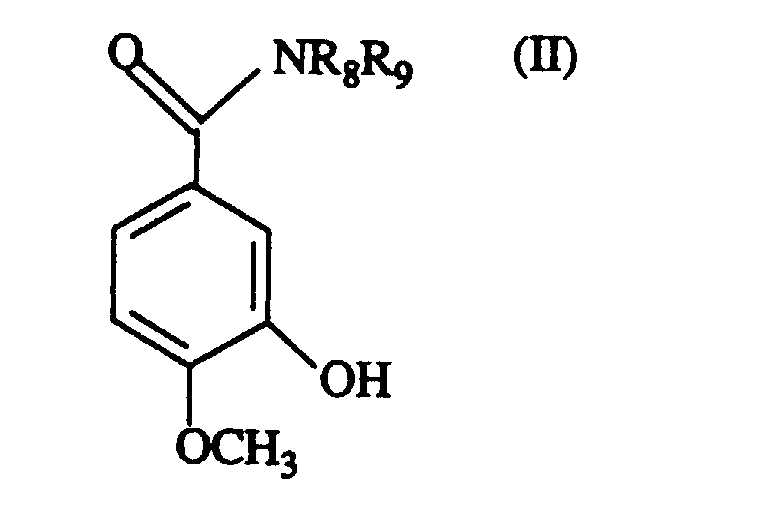
- a carboxylic acid of the formula is reacted with thionyl chloride, in a suitable solvent such as toluene, and subsequently reacted with a secondary amine of the formula HNR 8 R 9 , where R 8 and R 9 , are loweralkyl, to yield compound (II) of the formula
- Compound II is reacted in chloromethyl methyl ether with 50% NaOH in dichloromethane with tetrabutylammonium chloride to afford compound III of the formula
- Compound III in THF is subsequently reacted with sec-butyllithium in a suitable solvent such as cyclohexane, and dimethylformamide is added later to afford compound IV of the formula where R 8 and R 9 are ethyl.
- This reaction is typically conducted at a temperature of -70 to -40°C for 1 to 4 hours.
- Compound IV is hydrolyzed by standard means to afford compound IVa of the formula
- Compound IVa is reacted with 4-picolylchloride hydrochloride, potassium carbonate and a catalyst such as potassium iodide to yield Compound V of the formula
- This reaction is typically conducted in a suitable solvent such as dimethylformamide.
- the reaction mixture is stirred at about 60-100°C for 1-3 hours and then heated to about 130-170°C for 10-30 minutes.
- Compound VI is subsequently reacted with methyl iodide in methylethyl ketone or other suitable solvent at a temperature of about 40 to 60°C to yield Compound VIa of the formula where R 10 is methyl.
- Compound VIa is then treated with a reducing agent such as sodium borohydride or another metallic borohydride in a loweralkanolic solvent such as methanol to give Compound VIb of the formula where R 10 is methyl.
- This reaction typically takes place at a temperature of about -10 to 100°C for 0.5 to 24 hours.
- Compound VIb is subsequently hydrogenated in the presence of a noble metal catalyst and an acid such as hydrogen bromide to prepare compound VII of the formula where R 10 is methyl.
- a noble metal catalyst include palladium, platinum or rhodium. Platinum, in this case, is preferred; in the form of the metal supported on an inert surface such as carbon or as the oxide or salt.
- Compound VII is then treated with a reducing agent such as lithium aluminum hydride to yield compound Vm of the formula where R 10 is methyl.
- a reducing agent such as lithium aluminum hydride
- This reaction typically takes place in a suitable solvent such as tetrahydrofuran at a temperature of about 40 to 60°C for 2 to 4 hours.
- Compound IX is subsequently mixed with a catalytic amount of a catalyst such as CuCI or 1,8-diazabicyclo[5.4.0]undec-7-ene (DBU) in a suitable solvent such as dimethylformamide to which is added an isocyanate of the formula R 11 NCO, where R 11 is loweralkyl, or a carbamoyl chloride of the formula ClCONR 6 R 7 to afford compound X of the formula where R 1 is CONHR 11 or CONR 6 R 7 .
- a catalyst such as CuCI or 1,8-diazabicyclo[5.4.0]undec-7-ene (DBU)
- a suitable solvent such as dimethylformamide
- This reaction typically takes place under a nitrogen atmosphere at ambient temperature for
- the compounds of this invention can be prepared according to the following synthetic route.
- a solution of o-vanillin of the formula and picolylchloride hydrochloride is reacted with potassium carbonate and potassium iodide in a suitable solvent such as dimethylformamide to afford compound XI of the formula
- Compound XI is subsequently cyclized by reaction with H 2 SO 4 to afford Compound XII of the formula
- this reaction takes place in a suitable solvent such as DMF at a temperature of about 120 to 170°C for 6 to 10 hours.
- Compound XII, where R 1 is loweralkyl can be reacted with a strong acid such as hydrogen bromide at reflux to prepare compound XIIa.
- Compound XIVa can also be reacted with a bicyclic amidine catalyst, such as DBU, with the subsequent addition of an isocyanate of the formula R 11 NCO to afford compound XIVb.
- a bicyclic amidine catalyst such as DBU
- an isocyanate of the formula R 11 NCO to afford compound XIVb.
- This reaction is typically conducted in a suitable solvent such as acetonitrile under nitrogen at ambient temperature for 2 to 5 hours.
- the compounds of the present invention are useful as acetylcholinesterase inhibitors and as such may be useful for the treatment of various memory dysfunctions characterized by a decreased cholinergic function such as Alzheimer's disease.
- This utility is manifested by the ability of these compounds to inhibit the enzyme acetylcholinesterase and thereby increase acetylcholine levels in the brain.
- Cholinesterases are found throughout the body, both in the brain and in serum. However, only brain acetylcholinesterase (AChE) distribution is correlated with central cholinergic innervation. This same innervation is suggested to be weakened in Alzheimer patients.
- Acetylcholinesterase which is sometimes called true or specific cholinesterase, is found in nerve cells, skeletal muscle, smooth muscle, various glands and red blood cells.
- AChE may be distinguished from other cholinesterases by substrate and inhibitor specificities and by regional distribution. Its distribution in the brain correlates with cholinergic innervation and subfractionation shows the highest level in nerve terminals.
- AChE Alzheimer's dementia
- Enzyme activity is measured with the Beckman DU-50 spectrophotometer. This method can be used for IC 50 determinations and for measuring kinetic constants.
- Reagents are added to the blank and sample cuvettes as follows:
- Blank values are determined for each run to control non-enzymatic hydrolysis of substrate and these values are automatically subtracted by the kindata program available on kinetics soft-pac module. This program also calculates the rate of absorbance change for each cuvette.
- Substrate concentration is 10 mM diluted 1:2 in assay yielding final concentration of 5 mM.
- DTNB concentration is 0.5 mM yielding 0.25 mM final concentration IC 50 values are calculated from log-probit analysis. Results of this assay for some of the compounds of this invention and a reference compound are presented below in Table 1.
- acetylcholinesterase inhibitors are administered to a subject who may benefit from the administration of acetylcholinesterase inhibitors at an effective oral, parenteral or intravenous dose of from about 1 to 100 mg/kg of body weight per day.
- a particularly preferred effective amount is about 10 mg/kg of body weight per day. It is to be understood, however, that for any particular subject, specific dosage regimen should be adjusted according to the individual need and the professional judgment of the person administering or supervising the administration of the compound. It is to be further understood that the dosages set forth herein are exemplary only.
- Effective quantities of the compounds of the present invention may be administered to a subject by any one of various methods, for example, orally as in capsules or tablets, parenterally in the form of sterile solutions or suspensions, and in some cases intravenously in the form of sterile solutions.
- the compounds of the present invention while effective themselves, may be formulated and administered in the form of their pharmaceutically acceptable addition salts for purposes of stability, convenience of crystallization or increased solubility.
- Preferred pharmaceutically acceptable addition salts include salts of inorganic acids such as hydrochloric, hydrobromic, sulfuric, nitric, phosphoric and perchloric acids; as well as organic acids such as tartaric, citric, acetic, succinic, maleic, fumaric, and oxalic acids.
- inorganic acids such as hydrochloric, hydrobromic, sulfuric, nitric, phosphoric and perchloric acids
- organic acids such as tartaric, citric, acetic, succinic, maleic, fumaric, and oxalic acids.
- the active compounds of the present invention may be administered orally, for example, with an inert diluent or with an edible carrier. They may be enclosed in gelatin capsules or compressed into tablets.
- the compounds may be incorporated with excipients and used in the form of tablets, troches, capsules, elixirs, suspensions, syrups, wafers or chewing gums. These preparations should contain at least 0.5% of active compound, but may be varied depending upon the particular form and may conveniently be between 4% to about 75% of the weight of the unit. The amount of compound present in such composition is such that a suitable dosage will be obtained.
- Preferred compositions and preparations according to the present invention are prepared so that an oral dosage unit form contains between 1.0-300 mgs of active compound.
- the tablets, pills, capsules or troches may also contain the following ingredients: a binder such as microcrystalline cellulose, gum tragacanth or gelatin; an excipient such as starch or lactose, a disintegrating agent such as alginic acid, PrimogelTM or corn starch; a lubricant such as magnesium stearate or Sterotex®; a glidant such as colloidal silicon dioxide; and a sweetening agent such as sucrose or saccharin or a flavoring agent such as peppermint, methyl salicylate, or orange flavoring may be added.
- a binder such as microcrystalline cellulose, gum tragacanth or gelatin
- an excipient such as starch or lactose, a disintegrating agent such as alginic acid, PrimogelTM or corn starch
- a lubricant such as magnesium stearate or Sterotex®
- a glidant such as colloidal silicon dioxide
- a sweetening agent such as sucrose or sac
- dosage unit forms may contain other various materials which modify the physical form of the dosage unit, for example, as coatings.
- tablets or pills may be coated with sugar, shellac, or other enteric coating agents.
- a syrup may contain, in addition to the active compounds, sucrose as a sweetening agent and certain preservatives, dyes and colorings and flavors. Materials used in preparing these various compositions should be pharmaceutically pure and non-toxic in the amounts used.
- the active compounds of the invention may be incorporated into a solution or suspension. These preparations should contain at least 0.1% of the aforesaid compound, but may be varied between 0.5 and about 30% of the weight thereof. The amount of active compound in such compositions is such that a suitable dosage will be obtained. Preferred compositions and preparations according to the present invention are prepared so that a parenteral dosage unit contains between 0.5 to 100 mgs of active compound.
- the solutions or suspensions may also include the following components; a sterile diluent such as water for injection, saline solution, fixed oils, polyethylene glycols, glycerine, propylene glycol or other synthetic solvents; antibacterial agents such as benzyl alcohol or methyl parabens; antioxidants such as ascorbic acid or sodium bisulfite; chelating agents such as ethylenediaminetetraacetic acid; buffers such as acetates, citrates or phosphates and agents for the adjustment of tonicity such as sodium chloride or dextrose.
- a sterile diluent such as water for injection, saline solution, fixed oils, polyethylene glycols, glycerine, propylene glycol or other synthetic solvents
- antibacterial agents such as benzyl alcohol or methyl parabens
- antioxidants such as ascorbic acid or sodium bisulfite
- chelating agents such as ethylenediaminetetraacetic acid
- SUPPOSITORY Ingredients In each suppository Active ingredient 300 mg Glycerin 3000 mg Purified water 200 mg The glycerin is heated in a suitable container to about 120°C. The drug is dissolved, with gentle stirring, in the heated glycerin after which the purified water is added, mixed and the hot mixture immediately poured into a suitable mold.
- EMULSION Ingredients Amount Gelatin Type A 4 g Active Ingredient 360 mg Flavor as desired Alcohol 30 ml Oil 250 ml Purified water, to make 500 ml Add the gelatin and the drug to about 300 ml of purified water, allow to stand for a few minutes, heat until the gelatin is dissolved, then raise the temperature to about 98°C, and maintain this temperature for about 20 min. Cool to 50°C, add the flavor, the alcohol, and sufficient purified water to make 500 ml. Add the oil, agitate the mixture thoroughly, and pass it through a homogenizer or a colloid mill until the oil is completely and uniformly dispersed.
- Examples of the compounds of this invention include:
- the quaternary salt (6.0 g) was dissolved in methanol (100 ml) and a solution of NaBH 4 (5.0 g) in H 2 O (20 ml) was added dropwise over 30 minutes. The mixture was stirred at ambient temperature for 16 hours, concentrated and the residual aqueous layer was extracted with dichloromethane (hereinafter "DCM"). The DCM extracts were combined, washed with brine and concentrated to give N,N-diethyl-7-methoxy-2-(1-methyl-1,2,3-6-tetrahydro-4-pyridinyl)benzofuranamide.
- DCM dichloromethane
Landscapes
- Organic Chemistry (AREA)
- Chemical & Material Sciences (AREA)
- Health & Medical Sciences (AREA)
- Bioinformatics & Cheminformatics (AREA)
- Engineering & Computer Science (AREA)
- General Health & Medical Sciences (AREA)
- Veterinary Medicine (AREA)
- Nuclear Medicine, Radiotherapy & Molecular Imaging (AREA)
- General Chemical & Material Sciences (AREA)
- Pharmacology & Pharmacy (AREA)
- Life Sciences & Earth Sciences (AREA)
- Animal Behavior & Ethology (AREA)
- Chemical Kinetics & Catalysis (AREA)
- Public Health (AREA)
- Medicinal Chemistry (AREA)
- Neurology (AREA)
- Biomedical Technology (AREA)
- Neurosurgery (AREA)
- Hospice & Palliative Care (AREA)
- Psychiatry (AREA)
- Orthopedic Medicine & Surgery (AREA)
- Physical Education & Sports Medicine (AREA)
- Plural Heterocyclic Compounds (AREA)
- Pharmaceuticals Containing Other Organic And Inorganic Compounds (AREA)
- Hydrogenated Pyridines (AREA)
Abstract
Description
- The present invention relates to 2-(piperidin-4-yl, pyridin-4-yl and tetrahydropyridin-4-yl)benzofuran-7-yl carbamate derivatives
- EP-A-165 810 and EP-A-338 782 describe 2-(pyridin-4-yl)benzofuran derivatives as inhibitors of leukotriene biosynthesis for use in the treatment of conditions such as asthma and cardiovascular disorders.
- US-A-4-210 655 describes 2-(piperidin-4-yl, pyridin-4-yl and tetrahydropyridin-4-yl)benzofuran derivatives for use in the treatment of mental depression.
- EP-A-542 671 describes 4-(7-halo-5-alkoxy-benzofuran-2-yl)piperidines having antidepressant activity and processes for their preparation.
- EP-A-398 413 describes 3-(7-benzo[b]furanyl)-3,4-dehydropiperidine and related derivatives having psychotropic activity.
- EP-A-217 530 describes a class of compounds including benzofurans bearing a dihydropyridine moiety which are stated to have vasodilator activity.
- EP 6524 describes benzofurans bearing a piperidine or tetrahydropyridine moiety in the 4, 5, 6 or 7-position which have antidepressant activity.
- The present invention particularly relates to compounds of the general formula Iwherein

- R1 is CONHR11 or CONR6R7
- R3 is
 where
where
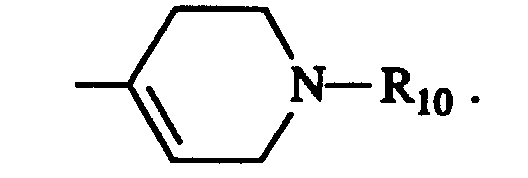
- R10 is hydrogen or C1-C6-alkyl.
- R6 is C1-C6-alkyl,
- R7 is C1-C6-alkyl, and
- R11 is C1-C6-alkyl
-
- Additionally, this invention also relates to pharmaceutical compositions containing compounds of the above formula and to their use as acetylcholinesterase inhibitors.
- Unless otherwise stated or indicated, the following definitions shall apply throughout the specification and appended claims.
- The term "lower" or "C1-C6" shall mean the group it is describing contains from 1 to 6 carbon atoms.
- The term "loweralkyl" or "C1-C6-alkyl" shall mean a straight or branched alkyl group having from 1 to 6 carbon atoms, e.g., methyl, ethyl, n-propyl, isopropyl, n-butyl, isobutyl, sec-butyl, t-butyl and straight and branched chain pentyl and hexyl.
- The term halogen shall mean fluorine, chlorine, bromine or iodine.
- Throughout the specification and appended claims, a given chemical formula or name shall encompass all stereo and optical isomers where such isomers exist.
- Additionally, a given chemical formula or name shall encompass the pharmaceutically acceptable addition salts thereof.
- In a preferred embodiment of this invention are compounds of the formula I wherein R10 is C1-C6-alkyl.
- The following compounds are particularly preferred:
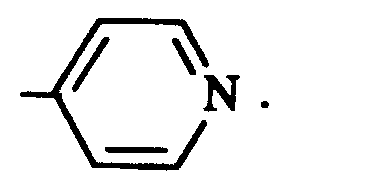
- a. A compound of formula I as defined above wherein R3 is
- b. A compound of formula I as defined above wherein R3 is

- c. A compound of formula I as defined above wherein R3 is
- d. A compound as defined under a) wherein R1 is CONHR11.
- e. The compound as defined under d) which is 2-(4-pyridinyl)benzofuran-7-yl methyl carbamate.
- f. The compound as defined under d) which is 2-(4-pyridinyl)benzofuran-7-yl butyl carbamate.
- g. A compound as defined under b) wherein R1 is CONHR11.
- h. The compound as defined under g) which is 2-(1-methyl-4-piperidinyl)-benzofuran-7-yl methyl carbamate.
- i. A compound as defined under b) wherein R1 is CONR6R7.
- j. The compound as defined under i) which is 2-(4-piperidinyl)-benzofuran-7-yl dimethyl carbamate.
-
- The compounds of this invention are prepared in the following manner. The substituents R1, R3, R6, R7, R10 and R11 are as defined above unless indicated otherwise.
- The compounds of this invention can be prepared according to either of the following synthetic routes.
- A carboxylic acid of the formulais reacted with thionyl chloride, in a suitable solvent such as toluene, and subsequently reacted with a secondary amine of the formula HNR8R9, where R8 and R9, are loweralkyl, to yield compound (II) of the formula
 Compound II is reacted in chloromethyl methyl ether with 50% NaOH in dichloromethane with tetrabutylammonium chloride to afford compound III of the formula
 Compound III in THF is subsequently reacted with sec-butyllithium in a suitable solvent such as cyclohexane, and dimethylformamide is added later to afford compound IV of the formula
 where R8 and R9 are ethyl. This reaction is typically conducted at a temperature of -70 to -40°C for 1 to 4 hours.
- Compound IV is hydrolyzed by standard means to afford compound IVa of the formulaCompound IVa is reacted with 4-picolylchloride hydrochloride, potassium carbonate and a catalyst such as potassium iodide to yield Compound V of the formula
 This reaction is typically conducted in a suitable solvent such as dimethylformamide. The reaction mixture is stirred at about 60-100°C for 1-3 hours and then heated to about 130-170°C for 10-30 minutes.
- Compound VI of the formulawas concomitantly formed in the synthesis of Compound V, and the two compounds were chromatographically separated.
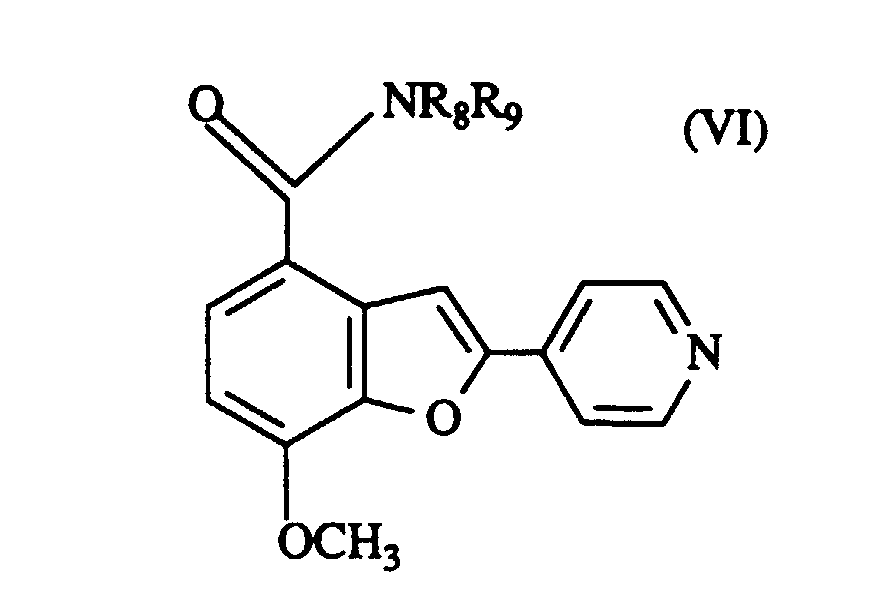
- Compound VI is subsequently reacted with methyl iodide in methylethyl ketone or other suitable solvent at a temperature of about 40 to 60°C to yield Compound VIa of the formulawhere R10 is methyl. Compound VIa is then treated with a reducing agent such as sodium borohydride or another metallic borohydride in a loweralkanolic solvent such as methanol to give Compound VIb of the formula
 where R10 is methyl. This reaction typically takes place at a temperature of about -10 to 100°C for 0.5 to 24 hours.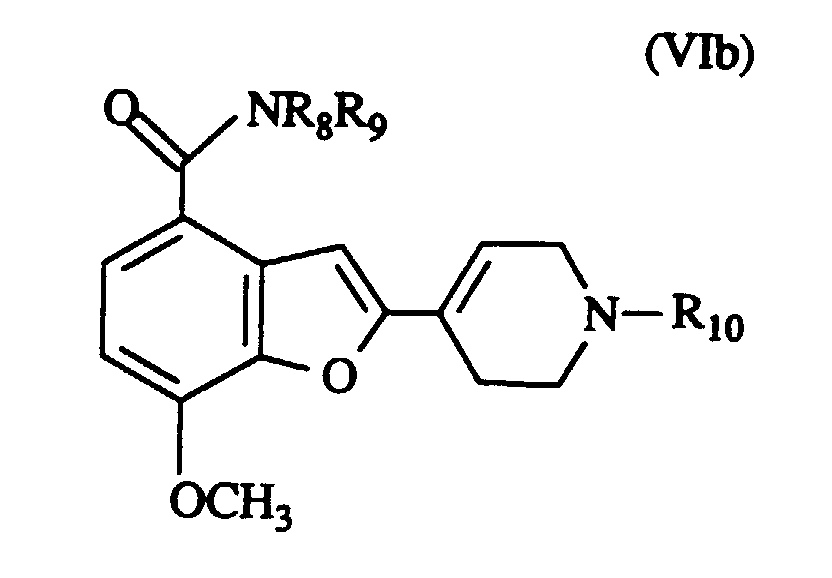
- Compound VIb is subsequently hydrogenated in the presence of a noble metal catalyst and an acid such as hydrogen bromide to prepare compound VII of the formulawhere R10 is methyl. Preferred noble metal catalysts include palladium, platinum or rhodium. Platinum, in this case, is preferred; in the form of the metal supported on an inert surface such as carbon or as the oxide or salt.

- Compound VII is then treated with a reducing agent such as lithium aluminum hydride to yield compound Vm of the formulawhere R10 is methyl. This reaction typically takes place in a suitable solvent such as tetrahydrofuran at a temperature of about 40 to 60°C for 2 to 4 hours.

- Compound VIII is treated with a strong acid, such as 48% HBr, to yield compound IX of the formulawhere R10 is methyl.

- Compound IX is subsequently mixed with a catalytic amount of a catalyst such as CuCI or 1,8-diazabicyclo[5.4.0]undec-7-ene (DBU) in a suitable solvent such as dimethylformamide to which is added an isocyanate of the formula R11NCO, where R11 is loweralkyl, or a carbamoyl chloride of the formula ClCONR6R7 to afford compound X of the formulawhere R1 is CONHR11 or CONR6R7. This reaction typically takes place under a nitrogen atmosphere at ambient temperature for 12 to 20 hours.

- Alternatively, the compounds of this invention can be prepared according to the following synthetic route.
- A solution of o-vanillin of the formulaand picolylchloride hydrochloride is reacted with potassium carbonate and potassium iodide in a suitable solvent such as dimethylformamide to afford compound XI of the formula
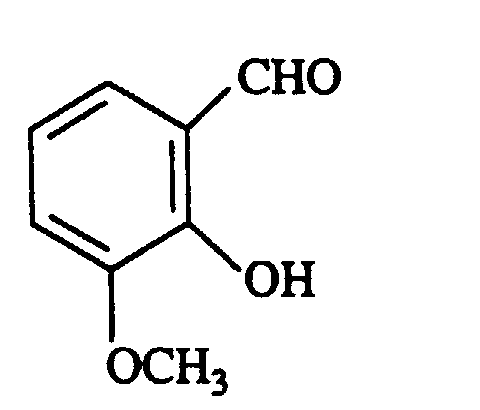 Compound XI is subsequently cyclized by reaction with H2SO4 to afford Compound XII of the formula
 Typically, this reaction takes place in a suitable solvent such as DMF at a temperature of about 120 to 170°C for 6 to 10 hours. Compound XII, where R1 is loweralkyl, can be reacted with a strong acid such as hydrogen bromide at reflux to prepare compound XIIa.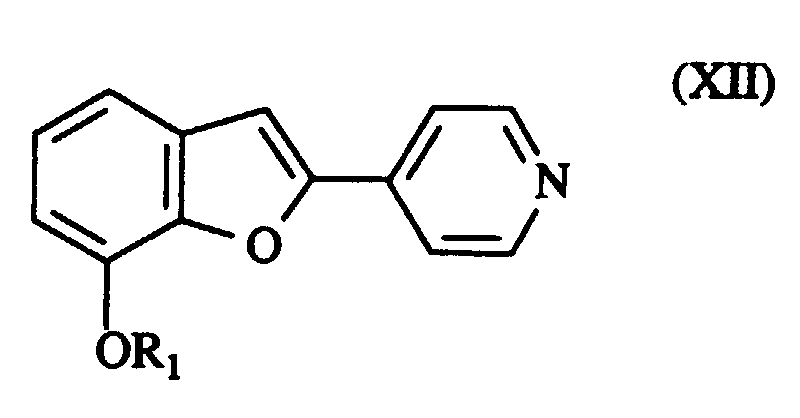
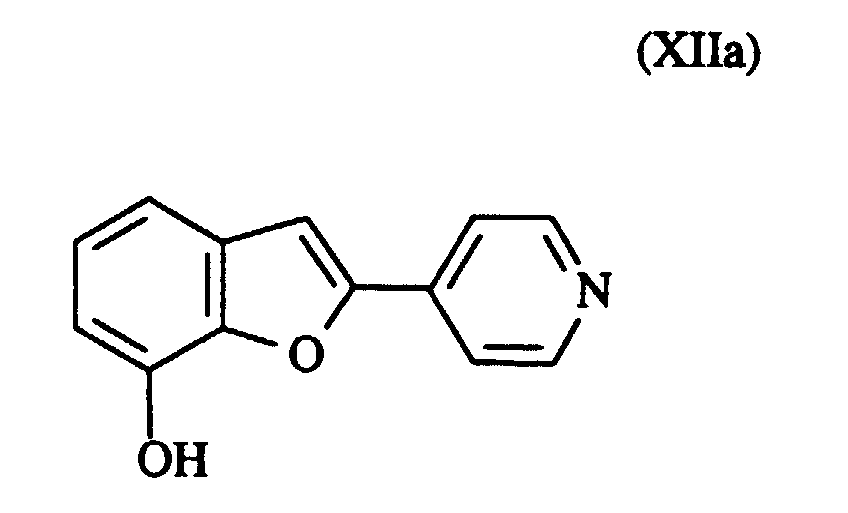
- Compound XIIa is subsequently reacted with an isocyanate of the formula R11NCO, where R11 is as defined in the previous synthetic route, to afford compound XIII of the formulaThis reaction typically takes place in the presence of a catalytic amount of a metallic halide, such as CuCI or DBU, and ethyl acetate at ambient temperature under nitrogen or other inert gas.

- Compound XII, where R1 is loweralkyl, is reacted as shown in the previous synthetic route to afford the piperidinyl compounds of the formula

- Compound XIV is reacted as previously shown to prepare compounds XIVa and XIVb where R1 is hydrogen and CONHR11, respectively.


- Alternatively, Compound XIVa can also be reacted with a bicyclic amidine catalyst, such as DBU, with the subsequent addition of an isocyanate of the formula R11NCO to afford compound XIVb. This reaction is typically conducted in a suitable solvent such as acetonitrile under nitrogen at ambient temperature for 2 to 5 hours.
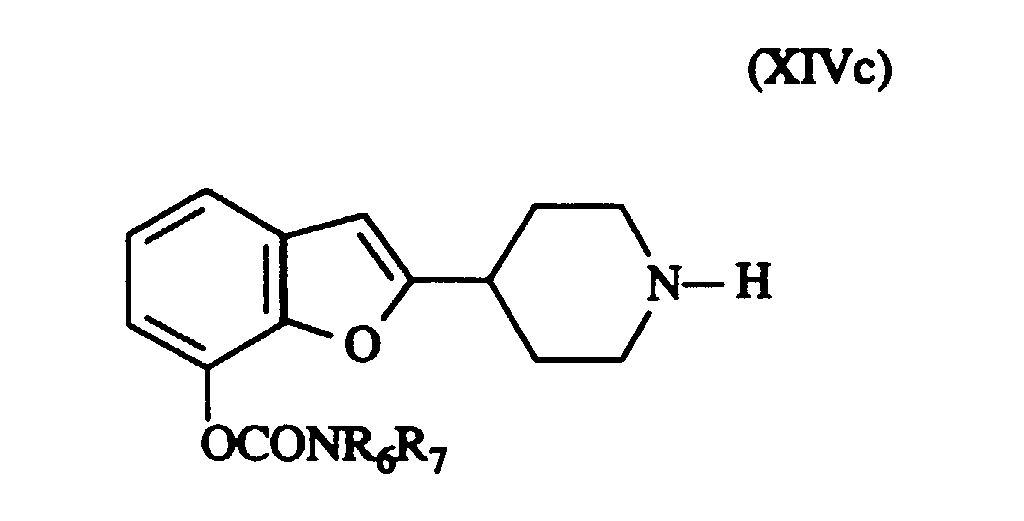
- Compound XIVb, where R10 is methyl, is reacted with chloroethyl chloroformate in a suitable solvent such as dichloroethane and refluxed for 1 to 12 hours. The mixture is concentrated, then diluted with an alkanolic solvent, such as methanol, and refluxed from 1 to 4 hours to yield compound XIVc of the formula
- The compounds of the present invention are useful as acetylcholinesterase inhibitors and as such may be useful for the treatment of various memory dysfunctions characterized by a decreased cholinergic function such as Alzheimer's disease.
- This utility is manifested by the ability of these compounds to inhibit the enzyme acetylcholinesterase and thereby increase acetylcholine levels in the brain.
- Cholinesterases are found throughout the body, both in the brain and in serum. However, only brain acetylcholinesterase (AChE) distribution is correlated with central cholinergic innervation. This same innervation is suggested to be weakened in Alzheimer patients. We have determined in vitro inhibition of acetylcholinesterase activity in rat striatum according to the method described below.
- Acetylcholinesterase (AChE), which is sometimes called true or specific cholinesterase, is found in nerve cells, skeletal muscle, smooth muscle, various glands and red blood cells. AChE may be distinguished from other cholinesterases by substrate and inhibitor specificities and by regional distribution. Its distribution in the brain correlates with cholinergic innervation and subfractionation shows the highest level in nerve terminals.
- It is generally accepted that the physiological role of AChE is the rapid hydrolysis and inactivation of acetylcholine. Inhibitors of AChE show marked cholinomimetic effects in cholinergically-innervated effector organs and have been used therapeutically in the treatment of glaucoma, myasthenia gravis and paralytic ileus. However, recent studies have suggested that AChE inhibitors may also be beneficial in the treatment of Alzheimer's dementia.
- The method described below was used in this invention for assaying acetylcholinesterase activity. This is a modification of the method of Ellman et al., Biochem. Pharmacol. 7, 88 (1961).
-
- 1. 0.05 M Phosphate buffer, pH 7.2
- (a) 6.85 g NaH2PO•H2O/100 ml distilled H2O
- (b) 13.40 g Na2HPO4•7H2O/100 ml distilled H2O
- (c) add (a) to (b) until pH reaches 7.2
- (d) Dilute 1:10
- 2. Substrate in buffer
- (a) 198 mg acetylthiocholine chloride (10 mM)
- (b) bring to 100 ml with 0.05 M phosphate buffer, pH 7.2 (reagent 1)
- 3. DTNB in buffer
- (a) 19.8 mg 5,5-dithiobisnitrobenzoic acid (DTNB) (0.5 mM)
- (b) bring to 100 ml with 0.05M phosphate buffer, pH 7.2 (reagent 1)
- 4. A 2mM stock solution of the test drug is made up in a suitable solvent and brought to volume with 0.5 mM DTNB (reagent 3). Drugs are serially diluted (1:10) such that the final concentration (in cuvette) is 10-4M and screened for activity. If active, IC50 values are determined from the inhibitory activity of subsequent concentrations.
-
- Male Wistar rats are decapitated, brains rapidly removed, corpora striata dissected free, weighed and homogenized in 19 volumes (approximately 7 mg protein/ml) of 0.05 M phosphate buffer, pH 7.2, using a Potter-Elvehjem homogenizer. A 25 microliter aliquot of the homogenate is added to 1 ml of vehicle or various concentrations of the test drug and preincubated for 10 minutes at 37°C.
- Enzyme activity is measured with the Beckman DU-50 spectrophotometer. This method can be used for IC50 determinations and for measuring kinetic constants.
-
- Kinetics Soft-Pac Module #598273 (10)
- Program #6 Kindata:
- Source - Vis
- Wavelength- 412 nm
- Sipper - none
- Cuvettes - 2 ml cuvettes using auto 6-sampler
- Blank - 1 for each substrate concentration
- Interval time - 15 seconds (15 or 30 seconds for kinetics)
- Total time - 5 minutes (5 or 10 minutes for kinetics)
- Plot - yes
- Span - autoscale
- Slope - increasing
- Results - yes (gives slope)
- Factor -1
-
- Reagents are added to the blank and sample cuvettes as follows:
- Blank:
- 0.8 ml Phosphate Buffer/DTNB
0.8 ml Buffer/Substrate - Control:
- 0.8 ml Phosphate Buffer/DTNB/Enzyme
0.8 ml Phosphate Buffer/Substrate - Drug:
- 0.8 ml Phosphate Buffer/DTNB/Drug/Enzyme
0.8 ml Phosphate Buffer/Substrate - Blank values are determined for each run to control non-enzymatic hydrolysis of substrate and these values are automatically subtracted by the kindata program available on kinetics soft-pac module. This program also calculates the rate of absorbance change for each cuvette.
- Substrate concentration is 10 mM diluted 1:2 in assay yielding final concentration of 5 mM. DTNB concentration is 0.5 mM yielding 0.25 mM final concentrationIC50 values are calculated from log-probit analysis. Results of this assay for some of the compounds of this invention and a reference compound are presented below in Table 1.

Compound Inhibitory Concentration (µM) Brain AChE 2-(1-methyl-4-piperidinyl)benzofuran-7-yl methyl carbamate 1.8 2-(4-pyridinyl)benzofuran-7-yl methyl carbamate 1.2 2-(1-methyl-4-piperidinyl)benzofuran-7-yl diethyl carbamate 1.9 Physostigmine (reference) 0.006 - These compounds are administered to a subject who may benefit from the administration of acetylcholinesterase inhibitors at an effective oral, parenteral or intravenous dose of from about 1 to 100 mg/kg of body weight per day. A particularly preferred effective amount is about 10 mg/kg of body weight per day. It is to be understood, however, that for any particular subject, specific dosage regimen should be adjusted according to the individual need and the professional judgment of the person administering or supervising the administration of the compound. It is to be further understood that the dosages set forth herein are exemplary only.
- Effective quantities of the compounds of the present invention may be administered to a subject by any one of various methods, for example, orally as in capsules or tablets, parenterally in the form of sterile solutions or suspensions, and in some cases intravenously in the form of sterile solutions. The compounds of the present invention, while effective themselves, may be formulated and administered in the form of their pharmaceutically acceptable addition salts for purposes of stability, convenience of crystallization or increased solubility.
- Preferred pharmaceutically acceptable addition salts include salts of inorganic acids such as hydrochloric, hydrobromic, sulfuric, nitric, phosphoric and perchloric acids; as well as organic acids such as tartaric, citric, acetic, succinic, maleic, fumaric, and oxalic acids.
- The active compounds of the present invention may be administered orally, for example, with an inert diluent or with an edible carrier. They may be enclosed in gelatin capsules or compressed into tablets. For the purpose of oral therapeutic administration, the compounds may be incorporated with excipients and used in the form of tablets, troches, capsules, elixirs, suspensions, syrups, wafers or chewing gums. These preparations should contain at least 0.5% of active compound, but may be varied depending upon the particular form and may conveniently be between 4% to about 75% of the weight of the unit. The amount of compound present in such composition is such that a suitable dosage will be obtained. Preferred compositions and preparations according to the present invention are prepared so that an oral dosage unit form contains between 1.0-300 mgs of active compound.
- The tablets, pills, capsules or troches may also contain the following ingredients: a binder such as microcrystalline cellulose, gum tragacanth or gelatin; an excipient such as starch or lactose, a disintegrating agent such as alginic acid, Primogel™ or corn starch; a lubricant such as magnesium stearate or Sterotex®; a glidant such as colloidal silicon dioxide; and a sweetening agent such as sucrose or saccharin or a flavoring agent such as peppermint, methyl salicylate, or orange flavoring may be added. When the dosage unit form is a capsule, it may contain, in addition to materials of the above type, a liquid carrier such as fatty oil. Other dosage unit forms may contain other various materials which modify the physical form of the dosage unit, for example, as coatings. Thus tablets or pills may be coated with sugar, shellac, or other enteric coating agents. A syrup may contain, in addition to the active compounds, sucrose as a sweetening agent and certain preservatives, dyes and colorings and flavors. Materials used in preparing these various compositions should be pharmaceutically pure and non-toxic in the amounts used.
- For the purpose of parenteral therapeutic administration, the active compounds of the invention may be incorporated into a solution or suspension. These preparations should contain at least 0.1% of the aforesaid compound, but may be varied between 0.5 and about 30% of the weight thereof. The amount of active compound in such compositions is such that a suitable dosage will be obtained. Preferred compositions and preparations according to the present invention are prepared so that a parenteral dosage unit contains between 0.5 to 100 mgs of active compound.
- The solutions or suspensions may also include the following components; a sterile diluent such as water for injection, saline solution, fixed oils, polyethylene glycols, glycerine, propylene glycol or other synthetic solvents; antibacterial agents such as benzyl alcohol or methyl parabens; antioxidants such as ascorbic acid or sodium bisulfite; chelating agents such as ethylenediaminetetraacetic acid; buffers such as acetates, citrates or phosphates and agents for the adjustment of tonicity such as sodium chloride or dextrose. The parenteral preparation can be enclosed in ampules, disposable syringes or multiple dose vials made of glass or plastic.
- Examples of possible pharmaceutical formulations such as tablets, suppositories and emulsions are described below:
-
TABLET: Ingredients In each tablet Active ingredient 300 mg Polyvinylpyrrolidone 22.5 mg Lactose 61.75 mg Alcohol 3A - 200 proof 4.5 mg Stearic acid 9 mg Talc 13.5 mg Corn starch 43.25 mg SUPPOSITORY: Ingredients In each suppository Active ingredient 300 mg Glycerin 3000 mg Purified water 200 mg EMULSION: Ingredients Amount Gelatin Type A 4 g Active Ingredient 360 mg Flavor as desired Alcohol 30 ml Oil 250 ml Purified water, to make 500 ml - Examples of the compounds of this invention include:
- 2-(1-methyl-4-piperidinyl)-benzofuran-7-yl methyl carbamate;
- 2-(4-pyridinyl)benzofuran-7-yl methyl carbamate;
- 2-(4-pyridinyl)benzofuran-7-yl butyl carbamate;
- 2-(4-piperidinyl)benzofuran-7-yl dimethyl carbamate.
-
- The following examples are for illustrative purposes Examples 1 to 6, 9 and 11 are provided for Reference purposes only. All temperatures are given in degrees centrigrade (°C) unless indicated otherwise.
- To a solution of N,N-diethyl-4-methoxy-3-(methoxymethyleneoxy)benzamide (82.0 g) in tetrahydrofuran (hereafter "THF") (800 ml) at -55°C was added a 1.3 M solution of sec-butyl lithium in cyclohexane (307 ml) dropwise during 1 hour. After stirring the mixture for an additional hour at -55°C, dimethylformamide (hereafter "DMF"), (36.5 g) was added dropwise. The mixture was allowed to warm to ambient temperature and stirred for 2 hours, poured into ice cold 5% HCl, and extracted twice with ethyl acetate. The combined organic phases were washed with water and brine, dried (Na2SO4) and concentrated in vacuo to give 97g of crude product. Preparative high performance liquid chromatography (silica gel, eluting with 1:2 heptane:ethyl acetate) afforded 58 g of the pure product which was crystallized from heptane/acetone, m.p. 75-77°C.
Analysis Calculated for C15H21NO5 61.00%C 7.17%H 4.74%N Found 60.97%C 7.12%H 4.84%N - A suspension of N,N-diethyl-4-methoxy-3-(4-pyridinylmethoxy)benzamide (19.0g), 4-picolylchloride hydrochloride (15.0 g), K2CO3 (60.0 g) and potassium iodide (5.0 g) in DMF (500 mol) was stirred at 80°C for 2 hours and then heated to 150°C for 15 minutes. After cooling to room temperature, the mixture was poured into 3 1 of water, and extracted twice with ethyl acetate. The combined organic phases were washed with 5% Na2CO3, dried (Na2SO4) and concentrated in vacuo. High performance liquid chromatography (silica gel, eluting with 1:1 heptane:ethyl acetate) afforded 6.5 g of the product which was crystallized from heptane/acetone, m.p. 117-118°C.
Analysis: Calculated for C19H22N2O4 66.65%C 6.48%H 8.18%N Found 66.56%C 6.64%H 8.12%N - The named compound was produced during the reaction leading to the formation of the N,N,-diethyl-4-methoxy-2-formyl-3-(4-pyridinylmethoxy)benzamide and was isolated in pure form in the chromatography step. Crystallization from heptane/acetone afforded 2.8 g of the named compound, m.p. 115-117°C.
Analysis: Calculated for C19H20N2O3 70.35%C 6.21%H 8.64%N Found 69.97%C 6.30%H 8.48%N - A mixture of 4-(N,N-diethyl)-7-methoxy-2-(4-pyridinyl)benzofuranamide (4.3 g), methyl iodide (2.55 g) and 2-butanone (30 ml) was stirred at 50°C for 15 hours. The mixture was cooled to 0°C, filtered and the resulting solid was washed with cold 2-butanone and heptane to give 4-[2-(4-diethylamido-7-methoxy-2-benzofuranyl)]-1-methyl pyridinium iodide. The quaternary salt (6.0 g) was dissolved in methanol (100 ml) and a solution of NaBH4 (5.0 g) in H2O (20 ml) was added dropwise over 30 minutes. The mixture was stirred at ambient temperature for 16 hours, concentrated and the residual aqueous layer was extracted with dichloromethane (hereinafter "DCM"). The DCM extracts were combined, washed with brine and concentrated to give N,N-diethyl-7-methoxy-2-(1-methyl-1,2,3-6-tetrahydro-4-pyridinyl)benzofuranamide.
- To a solution of N,N-diethyl-7-methoxy-2-(1-methyl-1,2,3,6-tetrahydro-4-pyridinyl)benzofuranamide (4.4 g) in methanol (120 ml) and 48% HBr (2.1 g) was added PtO2 (160 mg) and the mixture was hydrogenated in a Parr Shaker for 6 hours at room temperature. The mixture was filtered and the methanol was evaporated in vacuo. The residual solution was treated with 2N NH4OH and extracted twice with DCM. The combined organic phases were washed with brine, dried (Na2SO4) and concentrated in vacuo. Flash chromatography (silica gel, eluting with 5% MeOH/DCM containing 0.1% NH4OH) afforded 2.1 g of product which was converted to the maleic acid salt in ethereal solution, m.p. 123-125°C.
Analysis: Calculated for C24H32N2O7 62.59%C 7.00%H 6.08%N Found 61.76%C 6.94%H 5.79%N - To a solution of 1-methyl-4-(7-methoxy-2-benzofuranyl)piperidine (2.45 g) in anhydrous DCM under nitrogen was added chlorosulfonylisocyanate (2.2 g) dropwise via syringe at room temperature. The mixture was stirred at ambient temperature for 3 hours, then DMF (0.5 ml) was added, and the mixture was stirred for 15 hours. The reaction mixture was poured into water, and extracted twice with DCM. The combined organic phases were washed with brine, dried (Na2SO4) and concentrated in vacuo. Flash chromatography (silica gel eluting with 5% MeOH/DCM containing 0.01% NH4OH) afforded 1.55 g of product which was converted to the maleic acid salt in ethereal solution, m.p. 175-177°C.
Analysis: Calculated for C20H22N2O6 62.17%C 5.74%H 7.25%N Found 61.87%C 5.75%H 7.03%N - To 1-methyl-4-(4-cyano-7-methoxy-2-benzofuranyl)piperidine (2.7 g) in anhydrous THF under nitrogen was added LiAlH4 (30 ml of a 1 M solution in THF) dropwise at room temperature. The mixture was stirred at ambient temperature for 4 hours, and then water (2.0 ml) was added slowly under ice cooling. The precipitate was filtered and washed with ethyl acetate. The combined filtrates were dried (Na2SO4) and concentrated in vacuo to give 2.3 g of the crude product. Flash chromatography (silica gel, eluting with 20% MeOH/DCM + 0.1% NH4OH) afforded the product, which was converted to the dihydrobromide salt in ethereal solution, m.p. 195°C (dec.).
Analysis: Calculated for C16H24Br2NO2 44.06%C 5.55%H 6.42%N Found 43.74%C 5.66%H 6.17%N - To N,N-diethyl-7-methoxy-2-(1-methyl-4-piperidinyl)benzofuranamide (2.1 g) in anhydrous THF (20 ml) at room temperature was added a 1 M LiAlH4 solution in THF (6 ml) dropwise via syringe. The mixture was then heated to 50°C for 3 hours and after cooling, water (0.5 ml) was carefully added. The mixture was filtered and the filter cake washed twice with ethyl acetate. The combined filtrates were dried (Na2SO4) and concentrated in vacuo to leave 1.7 g of an oil. To a solution of the oil in DCM was added an HBr solution in diethyl ether at room temperature. The resulting precipitate was filtered, washed with diethyl ether and crystallized from DCM, m.p. 226-229°C (dec.).
Analysis: Calculated for C20H30N2O2•2HBr•H2O 47.07%C 6.72%H 5.49%N Found 46.78%C 6.67%H 5.33%N - A mixture of 1-methyl-4-(7-methoxy-2-benzofuranyl)piperidine (5.6 g) and 48% HBr (40 ml) was stirred at 120°C for 30 minutes. After cooling to room temperature, the mixture was neutralized with 10% sodium hydroxide solution and extracted with 1:1 ethyl acetate/1-butanol. The organic extract was washed with brine, concentrated and the resulting oil was chromatographed (silica gel, eluting with 20% MeOH/DCM and 0.5% NH4OH) to afford 1.9 g of 1-methyl-4-(7-hydroxy-2-benzofuranyl)piperidine.
- To a mixture of 1-methyl-4-(7-hydroxy-2-benzofuranyl)piperidine (1.8 g) and a catalytic amount of CuCl in DMF (30 ml) was added methylisocyanate (0.7 ml) at room temperature under N2. The mixture was then stirred for 16 hours at ambient temperature. Water and brine were added and the mixture was extracted with ethyl acetate. The organic phase was washed with brine, dried (Na2SO4) and concentraled in vacuo. Flash chromatography (silica gel, eluting with 10% MeOH/DCM + 0.2% NH4OH) afforded the product, which was crystallized from ethyl acetate, m.p. 144-146°C.
Analysis: Calculated for C16H20N2O3 66.65%C 6.99%H 9.72%N Found 66.53%C 7.04%H 9.69%N - A mixutre of 4-(7-methoxy-2-benzofuranyl)pyridine (5.0 g) and 48% HBr (50 ml) was stirred at 120°C for 1 hour. The mixture was cooled to room temperature, neutralized with 10% NaOH and 5% Na2CO3 and extracted with ethyl acetate. The organic extract was washed with brine and concentrated to give 4-(7-hydroxy-2-benzofuranyl)pyridine.
- To a mixture of 4-(7-hydroxy-2-benzofuranyl)pyridine (2.0 g) and a catalytic amount of CuCI in DCM (10 ml) and ethyl acetate (20 ml) was added methylisocyanate (1.0 ml) at room temperature under N2. The mixture was stirred at ambient temperature for 16 hours, diluted with methanol, filtered through Al2O3 and concentrated in vacuo to give 2.0 g of the crude product which was crystallized from ethyl acetate, m.p. 158-160°C.
Analysis: Calculated for C15H12N2O3 67.16%C 4.51%H 10.44%N Found 67.20%C 4.22%H 10.29%N - To a solution of o-vanillin (6.0 g) and 4-picolylchloride hydrochloride (6.6 g) in DMF (70 ml) was added potassium carbonate (20.0 g) and potassium iodide (2.0 g). The mixture was stirred vigorously for 8 hours at 150°C. The mixture was filtered hot and the filter cake was washed with ethyl acetate. The organic phases were combined and concentrated in vacuo to a volume of about 10 ml, poured into water and extracted twice with ethyl acetate. The combined organic layers were washed with water, dried (Na2SO4) and concentrated in vacuo. Flash chromatography (silica gel, eluting with 1:2 heptane:ethyl acetate) afforded 2.5 g of the product, which was crystallized from heptane/ethyl acetate, m.p. 140-141°C.
Analysis: Calculated for C14H11NO2 74.65%C 4.92%H 6.22%N Found 74.67%C 4.73%H 6.09%N - To a mixture of 4-(7-hydroxy-2-benzofuranyl)pyridine (1.1 g) and 1,8-diazabicyclo[5.4.0]undec-7-ene (150.0 mg) in acetonitrile (20 ml) was added n-butylisocyanate (0.5 g) at room temperature under N2. The mixture was then stirred at ambient temperature for 3 hours. The crude product which precipitated out of the reaction mixture was filtered and crystallized from ethyl acetate, then chromatographed silica gel, 2:1 heptane/acetone) to remove residual impurities. Concentration of the appropriate fractions afforded the product, m.p. 140°C.
Analysis: Calculated for C18H18N2O3 69.66%C 5.85%H 9.03%N Found 69.27%C 5.42%H 8.96%N - A mixture of 4-(7-methoxy-2-benzofuranyl)pyridine (66 g), methyl iodide (56.7 g) and 2-butanone (800 ml) was stirred at 50°C for 4 hours, cooled to room temperature, filtered and the resulting solid was washed with 2-butanone to provide 1-methyl-4-(7-methoxy-2-benzofuranyl)pyridinium iodide, m.p. 225-227°(dec.). The quaternary salt (90 g) was dissolved in methanol (1l) and a solution of NaBH4 (40 g) in H2O (250 ml) was added dropwise. The mixture was stirred at ambient temperature for 3 hours, concentrated and the residual aqueous layer was extracted with DCM. The extracts were combined, washed with brine and concentrated to give 1 -methyl-4-(7-methoxy-2-benzofuranyl)-1,2,3,6-tetrahydropyridine.
- A mixture of 1-methyl-4-(7-methoxy-2-benzofuranyl)-1,2,3,6-tetrahydropyridine (58.0 g), methanol (1.5 l), water (200 ml), 48% HBr (42.0 g), and platinum dioxide were shaken under hydrogen at room temperature for 6 hours. The mixture was filtered; the filtrate was concentrated in vacuo to the aqueous phase, neutralized with 5% Na2CO3 and extracted with CH2Cl2. The organic phase was washed with water, dried (Na2SO4) and concentrated in vacuo to give 59 g of the crude product, which was crystallized from methanol/water, m.p. 74-75°C.
Analysis: Calculated for C15H17NO2 73.44%C 7.81%H 5.71%N Found 73.47%C 7.83%H 5.65%N - To a mixture of 1-methyl-4-(7-hydroxy-2-benzofuranyl)piperdine (3.8 g), triethylamine (1.2 g), DBU (0.3 g) in acetonitrile (20 ml) was added a solution of dimethyl cabamoyl chloride (1.4 g) in acetonitrile (10 ml). The mixture was stirred at ambient temperature overnight, concentrated and chromatographed (silica gel eluting with 10% MeOH/DCM) to afford 1.2 g of 2-(1-methyl-piperdin-7-yl)benzofuran-7-yl dimethyl carbamate after recrystalization from ethanol.
- To a suspension of 2-(1-methyl-piperdin-7-yl)benzofuran-7-yl dimethyl carbamate (1.0 g) in dichloroethane (10 ml) was added chloroethyl chloroformate (0.47 g) and the mixture was refluxed for 3 hours. After stirring at room temperature overnight, an additional 0.95 gram of 2-chloroethyl chloroformate was added and the mixture refluxed for 6 hours. The mixture was concentrated, 10 ml of methanol was added and the mixture was heated to reflux for 2 hours. After concentration, the residue was chromatographed (silica gel, 10% MeOH/CH2CH2 containing 0.5% NH4OH) and the fractions were evaporated. The product was dissolved in ethyl acetate and a solution of fumaric acid in ether was added; the resulting solid was collected and dried, m.p. 195-196°C.
Analysis: Calculated for C18H22N2O5 62.42%C 6.40%H 8.09%N Found 62.25%C 6.38%H 7.98%N
Claims (8)
- A compound of the formula Iwherein
 whereR1 is CONHR11 or CONR6R7R3 is
 or a pharmaceutically acceptable acid addition salt thereof, or, where applicable, optical or geometric isomers or racemic mixtures thereof.R10 is hydrogen or C1-C6-alkylR6 is C1-C6-alkyl,R7 is C1-C6-alkyl andR11 is C1-C6-alkyl
 - A compound of the formula I as claimed in claim 1 wherein R10 is C1-C6alkyl.
- A compound of the formula I as claimed in claim 1 which is: 2-(1-methyl-4-piperidinyl)-benzofuran-7-yl methyl carbamate.
- A compound of the formula I as claimed in claim 1 which is: 2-(4-pyridinyl)benzofuran-7-yl methyl carbamate
- A compound of the formula I as claimed in claim 1 which is: 2-(1-methyl-4-piperidinyl)-benzofuran-7-yl diethyl carbamate.
- A pharmaceutical composition which comprises an effective amount of a compound as claimed in any one of claims 1 to 5 and a pharmaceutically acceptable carrier therefor.
- The use of a compound as claimed in any one of claims 1 to 5 as a pharmaceutical.
- The use of a compound as claimed in any one of claims 1 to 5 for the production of a pharmaceutical having an activity as acetyl cholinesterase inhibitor
Applications Claiming Priority (2)
| Application Number | Priority Date | Filing Date | Title |
|---|---|---|---|
| US10268193A | 1993-08-05 | 1993-08-05 | |
| US102681 | 1998-06-23 |
Publications (2)
| Publication Number | Publication Date |
|---|---|
| EP0637586A1 EP0637586A1 (en) | 1995-02-08 |
| EP0637586B1 true EP0637586B1 (en) | 1999-06-02 |
Family
ID=22291102
Family Applications (1)
| Application Number | Title | Priority Date | Filing Date |
|---|---|---|---|
| EP94111962A Expired - Lifetime EP0637586B1 (en) | 1993-08-05 | 1994-08-01 | 2-(Piperidin-4-yl, pyridin-4-yl and tetrahydropyridin-4-yl)-benzofuran-7-carbamate derivatives, their preparation and their use as acetylcholinesterase inhibitors |
Country Status (9)
| Country | Link |
|---|---|
| US (1) | US5708007A (en) |
| EP (1) | EP0637586B1 (en) |
| JP (1) | JP2714536B2 (en) |
| AT (1) | ATE180780T1 (en) |
| CA (1) | CA2129462A1 (en) |
| DE (1) | DE69418789T2 (en) |
| DK (1) | DK0637586T3 (en) |
| ES (1) | ES2132284T3 (en) |
| GR (1) | GR3030798T3 (en) |
Families Citing this family (24)
| Publication number | Priority date | Publication date | Assignee | Title |
|---|---|---|---|---|
| TR199802386T2 (en) * | 1996-05-20 | 1999-02-22 | Darwin Discovery Limited | Benzofuran carboxamides and their therapeutic use. |
| TW555759B (en) | 1998-06-08 | 2003-10-01 | Darwin Discovery Ltd | Heterocyclic compounds and their therapeutic use |
| EP1604653A1 (en) | 1998-09-30 | 2005-12-14 | Takeda Pharmaceutical Company Limited | Acetylcholinesterase inhibitors for improving excretory potency of urinary bladder |
| KR100579813B1 (en) * | 2001-10-16 | 2006-05-12 | 주식회사 에스티씨나라 | Piperidine Derivatives, Process for Preparation Thereof, and Pharmaceutical Composition for Alzheimer's Disease Containing the Same |
| US20070088601A1 (en) * | 2005-04-09 | 2007-04-19 | Hirevue | On-line interview processing |
| WO2013102145A1 (en) | 2011-12-28 | 2013-07-04 | Global Blood Therapeutics, Inc. | Substituted heteroaryl aldehyde compounds and methods for their use in increasing tissue oxygenation |
| DK3738434T3 (en) * | 2011-12-28 | 2023-12-04 | Global Blood Therapeutics Inc | Intermediates for obtaining substituted benzaldehyde compounds and methods for using them in increasing tissue oxygenation |
| US10100043B2 (en) | 2013-03-15 | 2018-10-16 | Global Blood Therapeutics, Inc. | Substituted aldehyde compounds and methods for their use in increasing tissue oxygenation |
| US9458139B2 (en) | 2013-03-15 | 2016-10-04 | Global Blood Therapeutics, Inc. | Compounds and uses thereof for the modulation of hemoglobin |
| US20140274961A1 (en) | 2013-03-15 | 2014-09-18 | Global Blood Therapeutics, Inc. | Compounds and uses thereof for the modulation of hemoglobin |
| US9802900B2 (en) | 2013-03-15 | 2017-10-31 | Global Blood Therapeutics, Inc. | Bicyclic heteroaryl compounds and uses thereof for the modulation of hemoglobin |
| US8952171B2 (en) | 2013-03-15 | 2015-02-10 | Global Blood Therapeutics, Inc. | Compounds and uses thereof for the modulation of hemoglobin |
| KR102280614B1 (en) | 2013-03-15 | 2021-07-21 | 글로벌 블러드 테라퓨틱스, 인크. | Compounds and uses thereof for the modulation of hemoglobin |
| AU2014237330A1 (en) | 2013-03-15 | 2015-09-17 | Global Blood Therapeutics, Inc. | Compounds and uses thereof for the modulation of hemoglobin |
| US10266551B2 (en) | 2013-03-15 | 2019-04-23 | Global Blood Therapeutics, Inc. | Compounds and uses thereof for the modulation of hemoglobin |
| US9422279B2 (en) | 2013-03-15 | 2016-08-23 | Global Blood Therapeutics, Inc. | Compounds and uses thereof for the modulation of hemoglobin |
| BR112015021982B1 (en) | 2013-03-15 | 2022-12-13 | Global Blood Therapeutics, Inc | COMPOUNDS AND THEIR USES FOR HEMOGLOBIN MODULATION |
| EA201992707A1 (en) | 2013-11-18 | 2020-06-30 | Глобал Блад Терапьютикс, Инк. | COMPOUNDS AND THEIR APPLICATIONS FOR HEMOGLOBIN MODULATION |
| SI3102208T2 (en) | 2014-02-07 | 2024-10-30 | Global Blood Therapeutics, Inc. | Crystalline polymorph of the free base of 2-hydroxy-6-((2-(1-isopropyl-1h-pyrazol-5-yl)pyridin-3-yl)methoxy)benzaldehyde |
| MA41841A (en) | 2015-03-30 | 2018-02-06 | Global Blood Therapeutics Inc | ALDEHYDE COMPOUNDS FOR THE TREATMENT OF PULMONARY FIBROSIS, HYPOXIA, AND AUTOIMMUNE AND CONNECTIVE TISSUE DISEASES |
| US11020382B2 (en) | 2015-12-04 | 2021-06-01 | Global Blood Therapeutics, Inc. | Dosing regimens for 2-hydroxy-6-((2-(1-isopropyl-1h-pyrazol-5-yl)pyridin-3-yl)methoxy)benzaldehyde |
| AR108435A1 (en) | 2016-05-12 | 2018-08-22 | Global Blood Therapeutics Inc | PROCESS TO SYNTHETIZE 2-HYDROXI-6 - ((2- (1-ISOPROPIL-1H-PIRAZOL-5-IL) -PIRIDIN-3-IL) METOXI) BENZALDEHYDE |
| TWI778983B (en) | 2016-10-12 | 2022-10-01 | 美商全球血液治療公司 | Tablets comprising 2-hydroxy-6-((2-(1-isopropyl-1h-pyrazol-5-yl)pyridin-3-yl)methoxy)benzaldehyde |
| EP3860975B1 (en) | 2018-10-01 | 2023-10-18 | Global Blood Therapeutics, Inc. | Modulators of hemoglobin for the treatment of sickle cell disease |
Family Cites Families (12)
| Publication number | Priority date | Publication date | Assignee | Title |
|---|---|---|---|---|
| US4600719A (en) * | 1973-03-02 | 1986-07-15 | Ciba Geigy Corporation | Tetrahydropyridine and piperidine derivatives |
| CH592656A5 (en) * | 1973-03-02 | 1977-10-31 | Ciba Geigy Ag | |
| CH609054A5 (en) * | 1975-11-26 | 1979-02-15 | Ciba Geigy Ag | Process for the preparation of a novel piperidine derivative |
| EP0006524A1 (en) * | 1978-06-22 | 1980-01-09 | Ciba-Geigy Ag | Tetrahydropyridine and tetrahydropiperidine derivatives, their acid addition salts, processes for their preparation and pharmaceutical compositions containing them |
| CA1281325C (en) * | 1984-06-20 | 1991-03-12 | Patrice C. Belanger | Benzofuran derivatives |
| US4863958A (en) * | 1984-06-20 | 1989-09-05 | Merck Frosst Canada, Inc. | Benzofuran derivatives useful as inhibitors of mammalian leukotriene biosynthesis |
| US4659717A (en) * | 1985-08-21 | 1987-04-21 | Eli Lilly And Company | Dihydropyridines useful in the treatment of angina and stroke |
| IL83275A (en) * | 1986-09-08 | 1994-02-27 | Novo Nordisk As | Substituted 1, 2, 4- oxadiazolyl piperidine compounds, their preparation and pharmaceutical compositions containing them |
| FI95572C (en) * | 1987-06-22 | 1996-02-26 | Eisai Co Ltd | Process for the preparation of a medicament useful as a piperidine derivative or its pharmaceutical salt |
| EP0398413A1 (en) * | 1989-05-16 | 1990-11-22 | Duphar International Research B.V | "3,4-dehydropiperidine derivatives having psychotropic activity |
| JP2807577B2 (en) * | 1990-06-15 | 1998-10-08 | エーザイ株式会社 | Cyclic amide derivative |
| RU2095339C1 (en) * | 1991-10-17 | 1997-11-10 | Циба-Гейги АГ | Hydroquinone derivatives as free or salt, methods of their synthesis, piperidine derivatives and methods of their synthesis |
-
1994
- 1994-08-01 DE DE69418789T patent/DE69418789T2/en not_active Expired - Fee Related
- 1994-08-01 EP EP94111962A patent/EP0637586B1/en not_active Expired - Lifetime
- 1994-08-01 ES ES94111962T patent/ES2132284T3/en not_active Expired - Lifetime
- 1994-08-01 AT AT94111962T patent/ATE180780T1/en not_active IP Right Cessation
- 1994-08-01 DK DK94111962T patent/DK0637586T3/en active
- 1994-08-04 JP JP6183733A patent/JP2714536B2/en not_active Expired - Fee Related
- 1994-08-04 CA CA002129462A patent/CA2129462A1/en not_active Abandoned
-
1996
- 1996-08-27 US US08/703,843 patent/US5708007A/en not_active Expired - Fee Related
-
1999
- 1999-07-20 GR GR990401886T patent/GR3030798T3/en unknown
Also Published As
| Publication number | Publication date |
|---|---|
| EP0637586A1 (en) | 1995-02-08 |
| GR3030798T3 (en) | 1999-11-30 |
| US5708007A (en) | 1998-01-13 |
| ATE180780T1 (en) | 1999-06-15 |
| DE69418789T2 (en) | 1999-12-02 |
| JPH07109275A (en) | 1995-04-25 |
| DE69418789D1 (en) | 1999-07-08 |
| DK0637586T3 (en) | 1999-12-06 |
| CA2129462A1 (en) | 1995-02-06 |
| ES2132284T3 (en) | 1999-08-16 |
| JP2714536B2 (en) | 1998-02-16 |
Similar Documents
| Publication | Publication Date | Title |
|---|---|---|
| US5708007A (en) | 2-(piperidin-4-yl, pyridin-4-yl and tetrahydropyridin-4-yl) benzofuran-7-ol and carbamate derivatives for treating memory dysfunction | |
| DE69433148T2 (en) | Tricyclic condensed heterocyclic compounds for the treatment of senile dementia | |
| EP0535645B1 (en) | Carbamate derivatives of 4-amino-3-isoxazolidinones and 3-amino-1-hydroxypyrrolidin-2-ones, a process for their preparation and their use as medicaments | |
| EP0477903B1 (en) | Substituted-4-amino-3-pyridinols, a process for their preparation and their use as medicaments | |
| JP2961013B2 (en) | [(Arylalkylpiperidin-4-yl) methyl] -2a, 3,4,5-tetrahydro-1 (2H) -acenaphthylene-1-ones and related compounds | |
| US5100891A (en) | Substituted 1,2,3,4-tetrahydrocyclopent[b]indoles, 1,2,3,3a,4,8a-hexahydrocyclopent[B]indoles and related compounds | |
| EP0468401B1 (en) | 1-(Substituted pyridinylamino)-1H-indol-5-yl substituted carbamates, a process for their preparation and their use as medicaments | |
| US5264442A (en) | Carbamoyl-1-(pyridinylalkyl)-1H-indoles, indolines and related analogs | |
| US5298626A (en) | Select cyclopent[b]indoles | |
| EP0471296B1 (en) | 1-(Pyridinylalkyl)-1H-indoles, indolines and related analogs | |
| US5192789A (en) | Substituted 1,2,3,4-tetrahydrocyclopent[b]indoles, 1,2,3,3a,4,8a-hexahydrocyclopent[b]indoles and related compounds | |
| US5214058A (en) | 1-(pyridinylalkyl)-1H-indoles, indolines and related analogs | |
| EP0440145A1 (en) | Hexahydropyrrolo[2,3-b]indole carbamates,-ureas,-amides and related compounds, a process for their preparation and their use as medicaments | |
| EP0471298B1 (en) | Carbamoyl-1-(pyridinylalkyl)-1H-indoles, indolines and related analogs |
Legal Events
| Date | Code | Title | Description |
|---|---|---|---|
| PUAI | Public reference made under article 153(3) epc to a published international application that has entered the european phase |
Free format text: ORIGINAL CODE: 0009012 |
|
| AK | Designated contracting states |
Kind code of ref document: A1 Designated state(s): AT BE CH DE DK ES FR GB GR IE IT LI LU MC NL PT SE |
|
| 17P | Request for examination filed |
Effective date: 19950808 |
|
| 17Q | First examination report despatched |
Effective date: 19960111 |
|
| RAP1 | Party data changed (applicant data changed or rights of an application transferred) |
Owner name: HOECHST MARION ROUSSEL, INC. |
|
| GRAG | Despatch of communication of intention to grant |
Free format text: ORIGINAL CODE: EPIDOS AGRA |
|
| GRAG | Despatch of communication of intention to grant |
Free format text: ORIGINAL CODE: EPIDOS AGRA |
|
| GRAH | Despatch of communication of intention to grant a patent |
Free format text: ORIGINAL CODE: EPIDOS IGRA |
|
| GRAH | Despatch of communication of intention to grant a patent |
Free format text: ORIGINAL CODE: EPIDOS IGRA |
|
| GRAA | (expected) grant |
Free format text: ORIGINAL CODE: 0009210 |
|
| AK | Designated contracting states |
Kind code of ref document: B1 Designated state(s): AT BE CH DE DK ES FR GB GR IE IT LI LU MC NL PT SE |
|
| REF | Corresponds to: |
Ref document number: 180780 Country of ref document: AT Date of ref document: 19990615 Kind code of ref document: T |
|
| REG | Reference to a national code |
Ref country code: CH Ref legal event code: EP |
|
| REF | Corresponds to: |
Ref document number: 69418789 Country of ref document: DE Date of ref document: 19990708 |
|
| REG | Reference to a national code |
Ref country code: IE Ref legal event code: FG4D |
|
| ITF | It: translation for a ep patent filed | ||
| REG | Reference to a national code |
Ref country code: ES Ref legal event code: FG2A Ref document number: 2132284 Country of ref document: ES Kind code of ref document: T3 |
|
| REG | Reference to a national code |
Ref country code: PT Ref legal event code: SC4A Free format text: AVAILABILITY OF NATIONAL TRANSLATION Effective date: 19990616 |
|
| ET | Fr: translation filed | ||
| REG | Reference to a national code |
Ref country code: DK Ref legal event code: T3 |
|
| PLBE | No opposition filed within time limit |
Free format text: ORIGINAL CODE: 0009261 |
|
| STAA | Information on the status of an ep patent application or granted ep patent |
Free format text: STATUS: NO OPPOSITION FILED WITHIN TIME LIMIT |
|
| 26N | No opposition filed | ||
| REG | Reference to a national code |
Ref country code: GB Ref legal event code: IF02 |
|
| PGFP | Annual fee paid to national office [announced via postgrant information from national office to epo] |
Ref country code: GB Payment date: 20030820 Year of fee payment: 10 Ref country code: FR Payment date: 20030820 Year of fee payment: 10 |
|
| PGFP | Annual fee paid to national office [announced via postgrant information from national office to epo] |
Ref country code: SE Payment date: 20030821 Year of fee payment: 10 Ref country code: AT Payment date: 20030821 Year of fee payment: 10 Ref country code: IE Payment date: 20030821 Year of fee payment: 10 |
|
| PGFP | Annual fee paid to national office [announced via postgrant information from national office to epo] |
Ref country code: DK Payment date: 20030822 Year of fee payment: 10 |
|
| PGFP | Annual fee paid to national office [announced via postgrant information from national office to epo] |
Ref country code: NL Payment date: 20030825 Year of fee payment: 10 Ref country code: MC Payment date: 20030825 Year of fee payment: 10 Ref country code: CH Payment date: 20030825 Year of fee payment: 10 |
|
| PGFP | Annual fee paid to national office [announced via postgrant information from national office to epo] |
Ref country code: PT Payment date: 20030829 Year of fee payment: 10 Ref country code: GR Payment date: 20030829 Year of fee payment: 10 |
|
| PGFP | Annual fee paid to national office [announced via postgrant information from national office to epo] |
Ref country code: LU Payment date: 20030902 Year of fee payment: 10 |
|
| PGFP | Annual fee paid to national office [announced via postgrant information from national office to epo] |
Ref country code: ES Payment date: 20030908 Year of fee payment: 10 |
|
| PGFP | Annual fee paid to national office [announced via postgrant information from national office to epo] |
Ref country code: BE Payment date: 20030911 Year of fee payment: 10 |
|
| PGFP | Annual fee paid to national office [announced via postgrant information from national office to epo] |
Ref country code: DE Payment date: 20030930 Year of fee payment: 10 |
|
| PG25 | Lapsed in a contracting state [announced via postgrant information from national office to epo] |
Ref country code: LU Free format text: LAPSE BECAUSE OF NON-PAYMENT OF DUE FEES Effective date: 20040801 Ref country code: GB Free format text: LAPSE BECAUSE OF NON-PAYMENT OF DUE FEES Effective date: 20040801 Ref country code: AT Free format text: LAPSE BECAUSE OF NON-PAYMENT OF DUE FEES Effective date: 20040801 |
|
| PG25 | Lapsed in a contracting state [announced via postgrant information from national office to epo] |
Ref country code: SE Free format text: LAPSE BECAUSE OF NON-PAYMENT OF DUE FEES Effective date: 20040802 Ref country code: IE Free format text: LAPSE BECAUSE OF NON-PAYMENT OF DUE FEES Effective date: 20040802 Ref country code: ES Free format text: LAPSE BECAUSE OF NON-PAYMENT OF DUE FEES Effective date: 20040802 |
|
| PG25 | Lapsed in a contracting state [announced via postgrant information from national office to epo] |
Ref country code: MC Free format text: LAPSE BECAUSE OF NON-PAYMENT OF DUE FEES Effective date: 20040831 Ref country code: LI Free format text: LAPSE BECAUSE OF NON-PAYMENT OF DUE FEES Effective date: 20040831 Ref country code: DK Free format text: LAPSE BECAUSE OF NON-PAYMENT OF DUE FEES Effective date: 20040831 Ref country code: CH Free format text: LAPSE BECAUSE OF NON-PAYMENT OF DUE FEES Effective date: 20040831 Ref country code: BE Free format text: LAPSE BECAUSE OF NON-PAYMENT OF DUE FEES Effective date: 20040831 |
|
| PG25 | Lapsed in a contracting state [announced via postgrant information from national office to epo] |
Ref country code: PT Free format text: LAPSE BECAUSE OF NON-PAYMENT OF DUE FEES Effective date: 20050201 |
|
| BERE | Be: lapsed |
Owner name: *HOECHST MARION ROUSSEL INC. Effective date: 20040831 |
|
| PG25 | Lapsed in a contracting state [announced via postgrant information from national office to epo] |
Ref country code: NL Free format text: LAPSE BECAUSE OF NON-PAYMENT OF DUE FEES Effective date: 20050301 Ref country code: DE Free format text: LAPSE BECAUSE OF NON-PAYMENT OF DUE FEES Effective date: 20050301 |
|
| PG25 | Lapsed in a contracting state [announced via postgrant information from national office to epo] |
Ref country code: GR Free format text: LAPSE BECAUSE OF NON-PAYMENT OF DUE FEES Effective date: 20050303 |
|
| GBPC | Gb: european patent ceased through non-payment of renewal fee |
Effective date: 20040801 |
|
| EUG | Se: european patent has lapsed | ||
| REG | Reference to a national code |
Ref country code: CH Ref legal event code: PL |
|
| PG25 | Lapsed in a contracting state [announced via postgrant information from national office to epo] |
Ref country code: FR Free format text: LAPSE BECAUSE OF NON-PAYMENT OF DUE FEES Effective date: 20050429 |
|
| REG | Reference to a national code |
Ref country code: PT Ref legal event code: MM4A Free format text: LAPSE DUE TO NON-PAYMENT OF FEES Effective date: 20050201 |
|
| NLV4 | Nl: lapsed or anulled due to non-payment of the annual fee |
Effective date: 20050301 |
|
| REG | Reference to a national code |
Ref country code: IE Ref legal event code: MM4A |
|
| REG | Reference to a national code |
Ref country code: FR Ref legal event code: ST |
|
| REG | Reference to a national code |
Ref country code: DK Ref legal event code: EBP |
|
| PG25 | Lapsed in a contracting state [announced via postgrant information from national office to epo] |
Ref country code: IT Free format text: LAPSE BECAUSE OF NON-PAYMENT OF DUE FEES;WARNING: LAPSES OF ITALIAN PATENTS WITH EFFECTIVE DATE BEFORE 2007 MAY HAVE OCCURRED AT ANY TIME BEFORE 2007. THE CORRECT EFFECTIVE DATE MAY BE DIFFERENT FROM THE ONE RECORDED. Effective date: 20050801 |
|
| REG | Reference to a national code |
Ref country code: ES Ref legal event code: FD2A Effective date: 20040802 |
|
| BERE | Be: lapsed |
Owner name: *HOECHST MARION ROUSSEL INC. Effective date: 20040831 |