EP0636611B1 - Optically active 1,4-dihydropyridine derivatives and process for preparing the same - Google Patents
Optically active 1,4-dihydropyridine derivatives and process for preparing the same Download PDFInfo
- Publication number
- EP0636611B1 EP0636611B1 EP94301525A EP94301525A EP0636611B1 EP 0636611 B1 EP0636611 B1 EP 0636611B1 EP 94301525 A EP94301525 A EP 94301525A EP 94301525 A EP94301525 A EP 94301525A EP 0636611 B1 EP0636611 B1 EP 0636611B1
- Authority
- EP
- European Patent Office
- Prior art keywords
- group
- general formula
- dihydro
- optically active
- pyridine
- Prior art date
- Legal status (The legal status is an assumption and is not a legal conclusion. Google has not performed a legal analysis and makes no representation as to the accuracy of the status listed.)
- Expired - Lifetime
Links
Classifications
-
- C—CHEMISTRY; METALLURGY
- C07—ORGANIC CHEMISTRY
- C07D—HETEROCYCLIC COMPOUNDS
- C07D405/00—Heterocyclic compounds containing both one or more hetero rings having oxygen atoms as the only ring hetero atoms, and one or more rings having nitrogen as the only ring hetero atom
- C07D405/02—Heterocyclic compounds containing both one or more hetero rings having oxygen atoms as the only ring hetero atoms, and one or more rings having nitrogen as the only ring hetero atom containing two hetero rings
- C07D405/12—Heterocyclic compounds containing both one or more hetero rings having oxygen atoms as the only ring hetero atoms, and one or more rings having nitrogen as the only ring hetero atom containing two hetero rings linked by a chain containing hetero atoms as chain links
-
- A—HUMAN NECESSITIES
- A61—MEDICAL OR VETERINARY SCIENCE; HYGIENE
- A61P—SPECIFIC THERAPEUTIC ACTIVITY OF CHEMICAL COMPOUNDS OR MEDICINAL PREPARATIONS
- A61P43/00—Drugs for specific purposes, not provided for in groups A61P1/00-A61P41/00
-
- A—HUMAN NECESSITIES
- A61—MEDICAL OR VETERINARY SCIENCE; HYGIENE
- A61P—SPECIFIC THERAPEUTIC ACTIVITY OF CHEMICAL COMPOUNDS OR MEDICINAL PREPARATIONS
- A61P9/00—Drugs for disorders of the cardiovascular system
- A61P9/08—Vasodilators for multiple indications
-
- A—HUMAN NECESSITIES
- A61—MEDICAL OR VETERINARY SCIENCE; HYGIENE
- A61P—SPECIFIC THERAPEUTIC ACTIVITY OF CHEMICAL COMPOUNDS OR MEDICINAL PREPARATIONS
- A61P9/00—Drugs for disorders of the cardiovascular system
- A61P9/12—Antihypertensives
-
- C—CHEMISTRY; METALLURGY
- C07—ORGANIC CHEMISTRY
- C07D—HETEROCYCLIC COMPOUNDS
- C07D211/00—Heterocyclic compounds containing hydrogenated pyridine rings, not condensed with other rings
- C07D211/04—Heterocyclic compounds containing hydrogenated pyridine rings, not condensed with other rings with only hydrogen or carbon atoms directly attached to the ring nitrogen atom
- C07D211/80—Heterocyclic compounds containing hydrogenated pyridine rings, not condensed with other rings with only hydrogen or carbon atoms directly attached to the ring nitrogen atom having two double bonds between ring members or between ring members and non-ring members
- C07D211/84—Heterocyclic compounds containing hydrogenated pyridine rings, not condensed with other rings with only hydrogen or carbon atoms directly attached to the ring nitrogen atom having two double bonds between ring members or between ring members and non-ring members with hetero atoms or with carbon atoms having three bonds to hetero atoms, with at the most one bond to halogen directly attached to ring carbon atoms
- C07D211/90—Carbon atoms having three bonds to hetero atoms with at the most one bond to halogen
-
- Y—GENERAL TAGGING OF NEW TECHNOLOGICAL DEVELOPMENTS; GENERAL TAGGING OF CROSS-SECTIONAL TECHNOLOGIES SPANNING OVER SEVERAL SECTIONS OF THE IPC; TECHNICAL SUBJECTS COVERED BY FORMER USPC CROSS-REFERENCE ART COLLECTIONS [XRACs] AND DIGESTS
- Y02—TECHNOLOGIES OR APPLICATIONS FOR MITIGATION OR ADAPTATION AGAINST CLIMATE CHANGE
- Y02P—CLIMATE CHANGE MITIGATION TECHNOLOGIES IN THE PRODUCTION OR PROCESSING OF GOODS
- Y02P20/00—Technologies relating to chemical industry
- Y02P20/50—Improvements relating to the production of bulk chemicals
- Y02P20/55—Design of synthesis routes, e.g. reducing the use of auxiliary or protecting groups
Definitions
- the present invention relates to intermediate products for preparing optically active 1,4-dihydropyridine derivatives which are useful as medicines for circulatory organs such as hypotensors and vasodilators.
- Some compounds among optically active 1,4-dihydropyridine derivatives have been known to have a calcium-competing activity, a vasodilating activity and a vasodepressing activity, and such activities are known to be lasting (Arzneim.-Forsch./Drug Res. 38(11), 1666(1988), J. Med. Chem. 29, 2504(1986), Japanese Patent Publication No. 30111/1982, European Patent No.
- 1,4-dihydropyridine compounds having different carboxylic acid ester moieties at the 3- and 5-positions of the dihydropyridine ring naturally have asymmetric carbon atoms at the 4-position thereof, and hence there are two kinds of optical isomers which are different in pharmacological activity, in vivo behavior, safety, etc. (K. Tamazawa et al., J. Med. Chem. Vol. 29, 2504 (1986), Angew. Chem. Int. Ed., 30 , 1559 (1991)).
- EP-A-0011706 relates to the production of 1,4-dihydropyridine-carboxylic acid compounds which involves hydrolysis under alkaline conditions of an ester group which contains an electron-attracting group and to novel compounds.
- the present invention provides optically active (4S) stereoisomers of 1,4-dihydropyridine derivatives represented by general formula (I) wherein R 1 is a hydrogen atom, a C1-C6 alkyl group, a cyanoethyl group, a C1-C6 alkanoylaminoethyl group, or a C1-C6 dialkylaminoethyl group; and R 2 is a 2-tetra-hydropyranyl group.
- R 1 is a hydrogen atom, a C1-C6 alkyl group, a cyanoethyl group, a C1-C6 alkanoylaminoethyl group, or a C1-C6 dialkylaminoethyl group
- R 2 is a 2-tetra-hydropyranyl group.
- R 1 is a hydrogen atom, a C1-C6 alkyl group, a cyanoethyl group, a C1-C6 alkanoylaminoethyl group, or a C1-C6 dialkylaminoethyl group.
- the lower alkyl group (R 4 ) in general formula (II) and the lower alkyl moiety in the lower dialkylaminoethyl group represented by R 1 in general formula (I) may be straight or branched chain or cyclic and have 1 to 6 carbon atoms, examples of which include a methyl group, an ethyl group, a propyl group, an isopropyl group, a butyl group, a t-butyl group, a cyclohexyl group, etc.
- the lower alkanoyl moiety (R 3 ) in the lower alkanoylaminoethyl group in general formulae (IV) and (III), and represented by R 1 in general formula (I) may be straight or branched chain and has 1 to 6 carbon atoms, examples of which include a formyl group, an acetyl group, a propionyl group, an isopropionyl group, a butyryl group, an isobutyryl group, a valeryl group, an isovaleryl group, etc.
- the lower dialkylamino moiety (R 3 ) in the lower dialkylaminoethyl group in general formulae (IV) and (III), and represented by R 1 in general formula (I) includes, for example, a dimethylamino group, a diethylamino group, a dipropylamino group, a diisopropylamino group, a methylethylamino group, a methylpropylamino group, etc.
- R 2 is a 2-tetrahydropyranyl group.
- optically active (4R)-1,4-dihydropyridine-3,5-dicarboxylic monoesters represented by general formula (III) can be prepared by asymmetrically hydrolyzing the symmetric diester forms represented by general formula (IV) in a phosphate buffer solution containing, for example, a commercially available alkaline protease (produced by Seikagaku Kogyo Co., Ltd., derived from Streptomyces glyceus) and dimethylsulfoxide as a substrate dissolution aid at 27°C.
- a commercially available alkaline protease produced by Seikagaku Kogyo Co., Ltd., derived from Streptomyces glyceus
- dimethylsulfoxide as a substrate dissolution aid at 27°C.
- the optically active 1,4-dihydropyridine derivatives represented by general formula (Ia) can be prepared by protecting the respective carboxylic acid moieties of the compounds represented by general formula (III) above obtained by the aforementioned process with a 2-tetra-hydropyranyl group or an alkyloxymethyl group.
- the introduction of protective groups can be performed by a conventional method.
- optically active 1,4-dihydro-pyridine derivatives can be synthesized by reacting the compounds represented by general formula (III) with
- the lower alkyl group represented by R 5 in general formula (V) is a straight or branched chain alkyl group having 1 to 6 carbon.
- the lower alkyl group may be substituted with an aryl group. Specific examples thereof include a methyl group, an ethyl group, a propyl group, an isopropyl group, a benzyl group, etc.
- the halogen atom represented by X includes a chlorine atom, a bromine atom, an iodine atom, etc.
- the dicarboxylic acid diester compounds represented by general formula (Ic) can be prepared by solvolysis of the compounds represented by general formula (Ia) above under basic conditions.
- the compounds of general formula (Ic) can be prepared by reacting the compounds of general formula (Ia), dissolved in an inert solvent, for example, acetonitrile, tetrahydrofuran, N,N-dimethylformamide, dioxane, etc., or without solvents, in the presence of an inorganic base, for example, sodium hydrogen carbonate, potassium hydrogen carbonate, sodium carbonate, potassium carbonate, etc., and/or an organic base, for example, triethylamine, pyridine, lutidine, N-methylmorpholine, etc., with an alcohol represented by general formula (VI) R 4 -OH wherein R 4 is a lower alkyl group, at a temperature of 0 to 100°C, preferably 20 to 60°C, or dissolving the compounds of general formula (Ia) in the aforementioned inert solvent or the alcohol of general formula (VI) above, and reacting the solution with an alkoxide represented by general formula (VII) R 4 -OM where
- dicarboxylic acid diester compounds represented by general formula (Ic) can also be prepared by esterifying the dicarboxylic acid monoester compounds represented by general formula (Ib) under basic conditions.
- the dicarboxylic acid diester compounds of general formula (Ic) can be prepared by reacting the dicarboxylic acid monoester compounds represented by general formula (Ib) with the alcohol of general formula (VI) above in the presence of a suitable condensing agent; reacting the compounds of general formula (Ib) with a diazo compound such as diazomethane; or reacting acid halide derivatives of the dicarboxylic acid monoester compounds of general formula (Ib) with the alcohol of general formula (VI); or reacting the compound of general formula (Ib) with a desired lower alkyl halide represented by general formula (VIII) R 4 -X wherein R 4 and X have the same meanings as defined above, in the presence of an inorganic base, for example, sodium hydrogen carbonate, potassium hydrogen carbonate, sodium carbonate, potassium carbonate, etc., and/or an organic base, for example, triethylamine, pyridine, lutidine, N-methylmorpholine, etc., at a suitable con
- 1,4-dihydropyridine derivatives represented by general formula (II) which are useful as intermediate compounds for preparing medicines, can be prepared either by hydrolyzing the protective groups of the diester compounds represented by general formula (Ic) under acidic conditions, or by solvolysis of the optically active monoester compounds represented by general formula (III) under basic conditions.
- the diester compounds represented by general formula (Ic), dissolved in an inert solvent, for example, acetonitrile, tetrahydrofuran, N,N-dimethyl-formamide, dioxane, etc., or without solvents, can be reacted with water in the presence of an inorganic acid, for example, hydrogen chloride, hydrogen bromide, sulfuric acid, etc., and/or an organic acid, for example, toluenesulfonic acid, methanesulfonic acid, camphorsulfonic acid, trifluoroacetic acid, etc., at a temperature of 0 to 100°C, preferably 20 to 60°C.
- an inorganic acid for example, hydrogen chloride, hydrogen bromide, sulfuric acid, etc.
- an organic acid for example, toluenesulfonic acid, methanesulfonic acid, camphorsulfonic acid, trifluoroacetic acid, etc.
- the compounds represented by general formula (III), dissolved in an inert solvent, for example, acetonitrile tetrahydrofuran, N,N-dimethylformamide, dioxane, etc., or without solvents, can be reacted with the alcohol represented by general formula (VI) in the presence of an inorganic base, for example, sodium hydrogen carbonate, potassium hydrogen carbonate, sodium carbonate, potassium carbonate, etc., and/or an inorganic base, for example, triethylamine, pyridine, lutidine, N-methyl-morpholine, etc., at a temperature of 0 to 100°C, preferably 20 to 60°C.
- an inorganic base for example, sodium hydrogen carbonate, potassium hydrogen carbonate, sodium carbonate, potassium carbonate, etc.
- an inorganic base for example, triethylamine, pyridine, lutidine, N-methyl-morpholine, etc.
- the compounds represented by general formula (Ia), dissolved in the aforementioned inert solvent or the alcohol of general formula (VI), can be reacted with the alkoxide of general formula (VII) at a temperature of 0 to 100°C, preferably 20 to 60°C.
- intermediate compounds for preparing optically active 1,4-dihydropyridine derivatives useful as medicines for circulatory organs such as vasodepressors, vasodilators, etc.
- the dicarboxylic acid monoesters represented by general formula (II) which are useful intermediate compounds, can be prepared starting from the symmetric diester compounds represented by general formula (IV) via the compounds represented by general formula (I).
- Desired diesters which are useful as medicines can be prepared with ease by a known esterification method starting from the optically active 1,4-dihydropyridine derivatives represented by general formula (II) prepared according to the process of the present invention.
- THP is a 2-tetrahydropyranyl group.
- the reaction mixture was adjusted to pH 3.0 by addition of 1N hydrochloric acid, followed by addition of 20 ml of ethyl acetate for extraction.
- the resulting organic layer was washed with saturated saline, and then dried over anhydrous sodium sulfate. After being concentrated under reduced pressure, the concentrate was adsorbed on a preparative TLC (thin layer column chromatography) plate, developed with toluene:acetone (2:1). The fractions showing UV absorption at an Rf value of 0.31 were concentrated to dryness to obtain 5.1 mg of the objective compound.
- optical purity of this substance was determined by converting the compound obtained as described above into its methyl ester with diazomethane and comparing the methyl ester with a standard preparation using HPLC [column; chiral AGP, 4x100mm, mobile phase; 3% isopropanol/0.01M phosphate buffer solution (pH 6.0), flow rate; 0.8ml/min.).
- the standard preparation was synthesized as follows. That is, 5 mg of(S)-(+)-1,4-dihydro-2,6-dimethyl-5-methoxy carbonyl-4-(3-nitrophenyl)-3-pyridinecarboxylic acid prepared by the method of Shibanuma et al., Chem. Pharm. Bull. 28(9), 2809-2812 (1980) was dissolved in 0.5 ml of tetrahydrofuran, to which was added 6 ⁇ l of isobutyl chloroformate. The mixture was stirred for 10 minutes. To the mixture were added 10 ⁇ l of ethylene cyanohydrin and 6 ⁇ l of triethylamine, and the stirring was continued for additional 2 hours.
- Retention time in HPLC was 14.9 minutes for (R) form, and 13.9 minutes for (S) form.
- the reaction mixture was diluted with 5 ml of ethyl acetate, washed with saturated aqueous sodium hydrogen carbonate solution and with water, and dried over anhydrous Glauber's salt (sodium sulfate), followed by distilling off the solvent under reduced pressure.
- the residue was purified using preparative TLC to obtain 18 mg of the objective compound.
- the reaction mixture was diluted with 5 ml of ethyl acetate, washed with saturated aqueous sodium hydrogen carbonate solution and with water, and dried over anhydrous Glauber's salt (sodium sulfate), followed by distilling off the solvent under reduced pressure.
- the residue was purified using preparative TLC to obtain 8 mg of the objective compound.
Landscapes
- Chemical & Material Sciences (AREA)
- Organic Chemistry (AREA)
- Health & Medical Sciences (AREA)
- Public Health (AREA)
- Life Sciences & Earth Sciences (AREA)
- Veterinary Medicine (AREA)
- Engineering & Computer Science (AREA)
- Chemical Kinetics & Catalysis (AREA)
- General Chemical & Material Sciences (AREA)
- Medicinal Chemistry (AREA)
- Nuclear Medicine, Radiotherapy & Molecular Imaging (AREA)
- Pharmacology & Pharmacy (AREA)
- Bioinformatics & Cheminformatics (AREA)
- Animal Behavior & Ethology (AREA)
- General Health & Medical Sciences (AREA)
- Heart & Thoracic Surgery (AREA)
- Cardiology (AREA)
- Pharmaceuticals Containing Other Organic And Inorganic Compounds (AREA)
- Hydrogenated Pyridines (AREA)
- Plural Heterocyclic Compounds (AREA)
- Organic Low-Molecular-Weight Compounds And Preparation Thereof (AREA)
Description
- The present invention relates to intermediate products for preparing optically active 1,4-dihydropyridine derivatives which are useful as medicines for circulatory organs such as hypotensors and vasodilators.
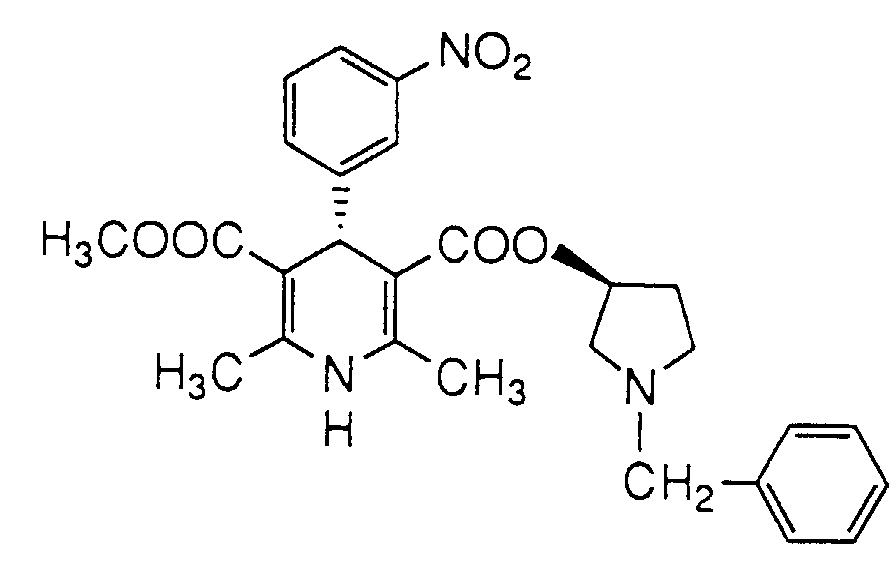
- Some compounds among optically active 1,4-dihydropyridine derivatives have been known to have a calcium-competing activity, a vasodilating activity and a vasodepressing activity, and such activities are known to be lasting (Arzneim.-Forsch./Drug Res. 38(11), 1666(1988), J. Med. Chem. 29, 2504(1986), Japanese Patent Publication No. 30111/1982, European Patent No. 0424901), examples of such compounds including(4S)2,6-dimethyl-4-(3-nitrophenyl)-1,4-dihydropyridine-3,5-dicarboxylic acid (3S)-3-(1-benzyl-3-pyrrolidinyl)-ester methyl ester having the following formula:(YM-09730) (J. Med. Chem., 29, 2504 (1986)), and (4S)-2,6-dimethyl-4-(3-nitrophenyl)-1,4-dihydropyridine-3,5-dicarboxylic acid·3 (2-(4-(4-benzhydryl-1-piperazinyl)phenyl)ethyl)ester·5-methyl ester having the following formula:
 (Chem. Pharm. Bull., 39, 108 (1991)) and their salts.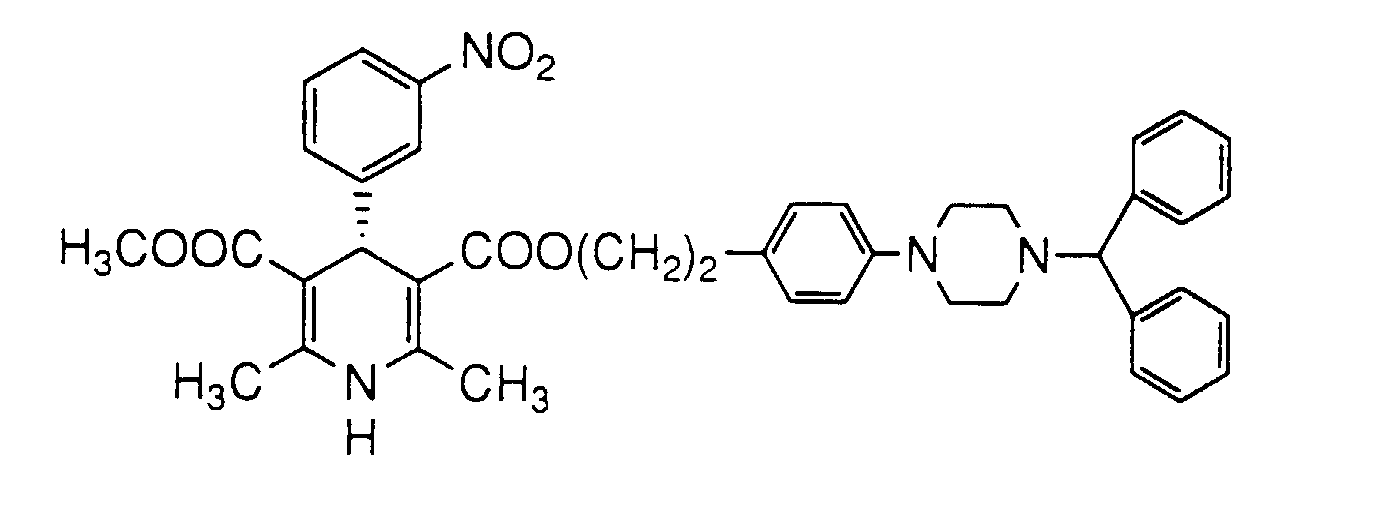
- Reportedly, 1,4-dihydropyridine compounds having different carboxylic acid ester moieties at the 3- and 5-positions of the dihydropyridine ring naturally have asymmetric carbon atoms at the 4-position thereof, and hence there are two kinds of optical isomers which are different in pharmacological activity, in vivo behavior, safety, etc. (K. Tamazawa et al., J. Med. Chem. Vol. 29, 2504 (1986), Angew. Chem. Int. Ed., 30, 1559 (1991)).
- From the viewpoint that only one of the isomers that is pharmacologically preferred is to be used as a medicine, investigation has been made to develop a process for preparing optically active 1,4-dihydropyridine compounds.
- As a general process for preparing the aforementioned optically active 1,4-dihydropyridine compounds which are useful as medicine, there has been known a process in which a preferable ester radical is introduced into a (4R)-1,4-dihydropyridine-3,5-dicarboxylic acid monoester represented by general formula (II)wherein R4 is a lower alkyl group.
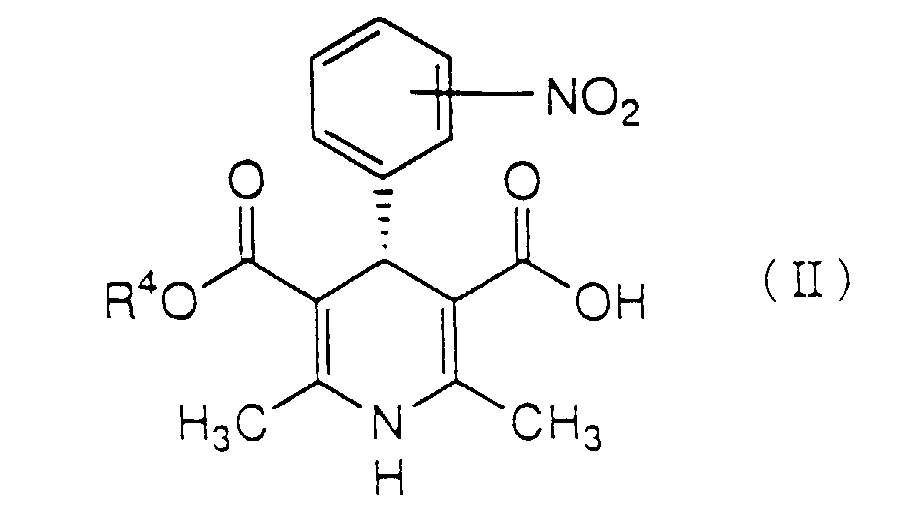
- As processes for preparing optically active intermediates represented by general formula (II) above, there have been known a chemical method (Shibanuma et al., Chem. Pharm. Bull., Vol. 28, 2809 (1980)), enzymatic processes by Achiwa et al.(Tetrahedron Letters, 32, 5805 (1991) and EP474129) and by Charles J. Sih et al. (Tetrahedron Letters, 32, 3465 (1991)).
- In the aforementioned chemical process, not only the nitrogen atom on the 1,4-dihydropyridine ring must be protected with a protective group, but also racemic resolution is needed since hydrolysis of ester is not asymmetric hydrolysis. The enzymatic processes required many reaction steps since special compounds such as dipivaloyloxymethyl ester form or diacetoxymethyl ester form are used as substrates.
- EP-A-0011706 relates to the production of 1,4-dihydropyridine-carboxylic acid compounds which involves hydrolysis under alkaline conditions of an ester group which contains an electron-attracting group and to novel compounds.
- Under the circumstances, it has been desired to develop a more efficient process for preparing (4R)-1,4-dihydropyridine-3,5-dicarboxylic acid monoesters which are important intermediate compounds for the preparation of optically active 1,4-dihydropyridine derivatives.
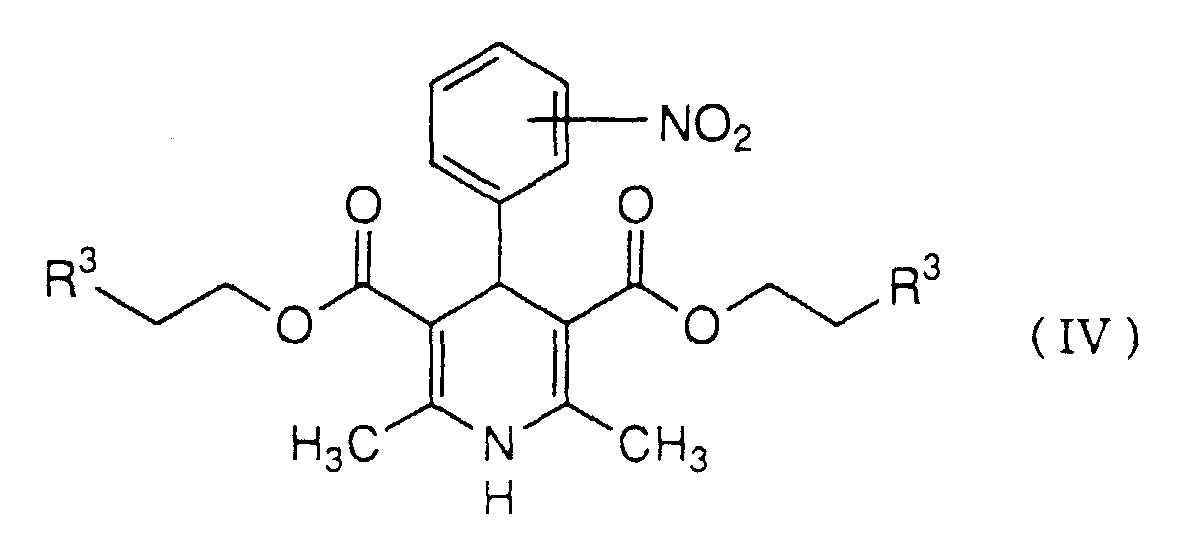
- With view to solving the above problem, intensive investigation has been made on various enzymes that could asymmetrically hydrolyze symmetric diesters having the following general formula (IV)wherein R3 is a cyano group, a lower dialkylamino group, or a lower alkanoylamino group, and as a result it has now been found that certain kinds of microorganism and proteases asymmetrically hydrolyze the aforementioned symmetric diester forms to give rise to optically active 1,4-dihydropyridine-3,5-dicarboxylic acid monoesters represented by general formula (III)
 wherein R3 has the same meaning as defined above).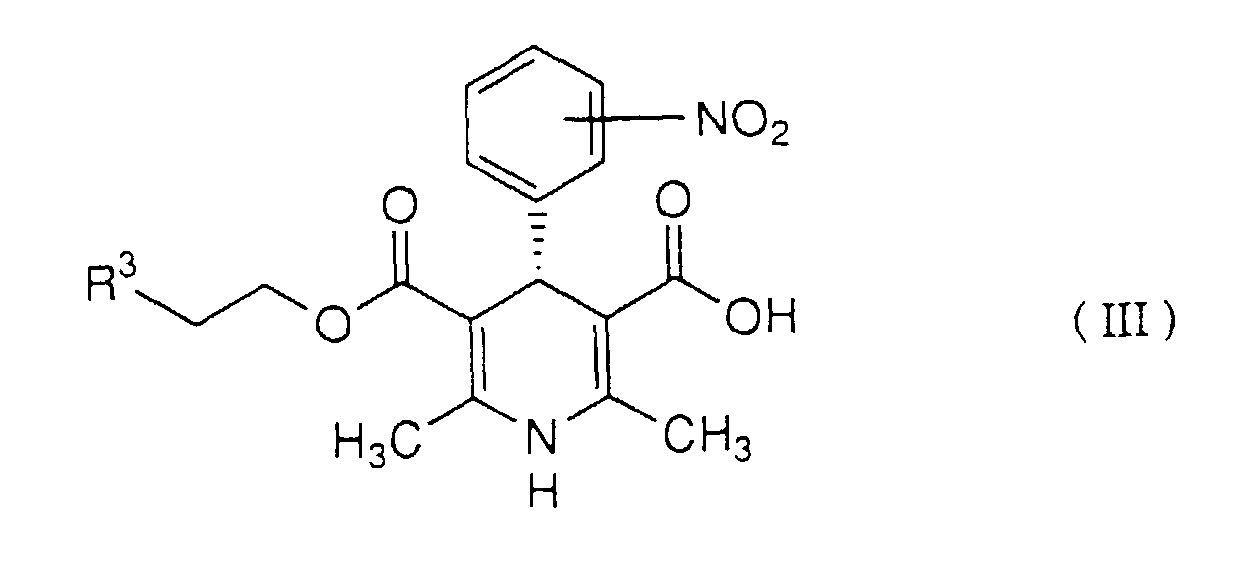
- Further, investigation has been made to find effective protective groups for protecting the carboxyl group of the optically active compounds, with the result that those compounds having carboxyl groups protected as esters with cyclic or straight chain hemiacetal serve as useful intermediate compounds. The present invention has been completed based on this discovery.
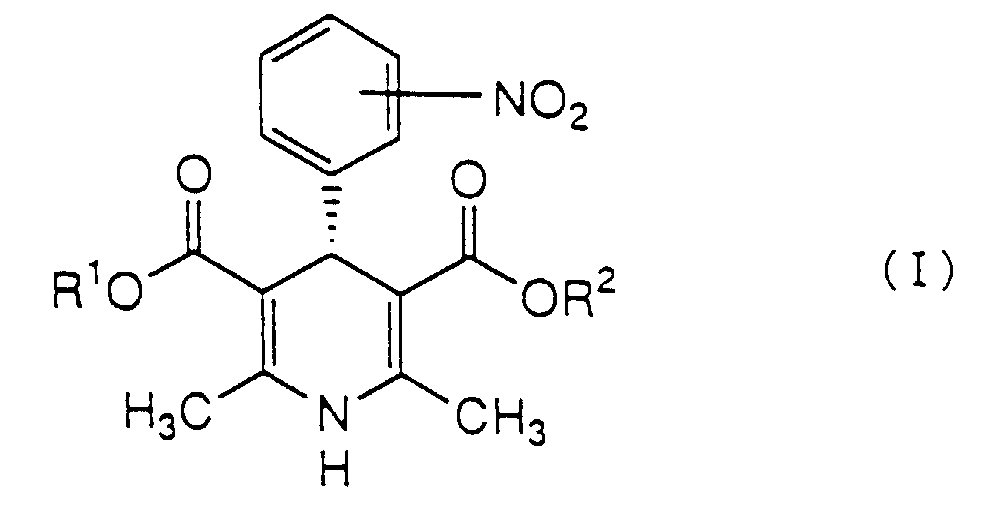
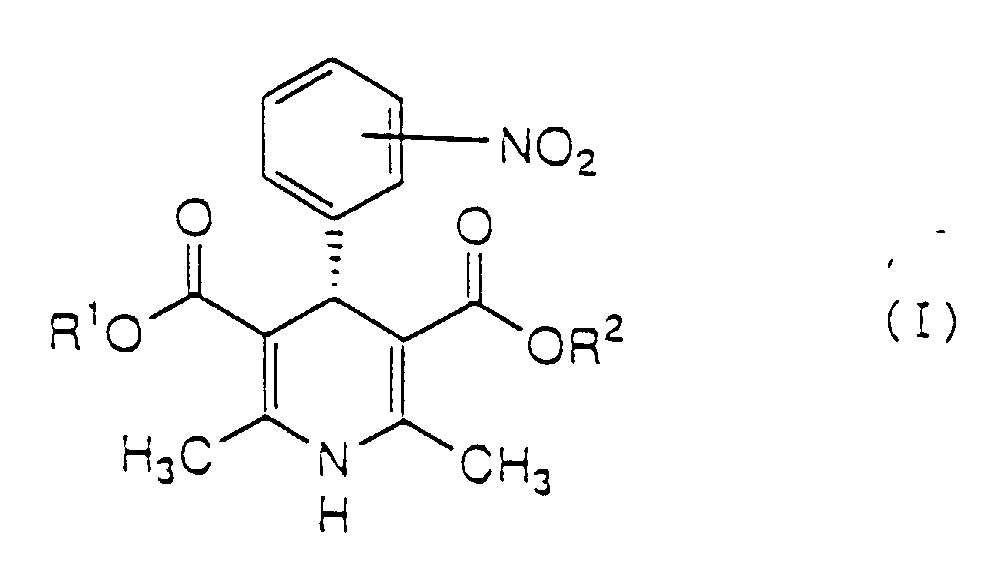
- Therefore, the present invention provides optically active (4S) stereoisomers of 1,4-dihydropyridine derivatives represented by general formula (I)wherein R1 is a hydrogen atom, a C1-C6 alkyl group, a cyanoethyl group, a C1-C6 alkanoylaminoethyl group, or a C1-C6 dialkylaminoethyl group; and R2 is a 2-tetra-hydropyranyl group.
- Hereinafter, the present invention will be described in more detail.
- In general formula (I) (general formulas (Ia), (Ib) and (Ic)), R1 is a hydrogen atom, a C1-C6 alkyl group, a cyanoethyl group, a C1-C6 alkanoylaminoethyl group, or a C1-C6 dialkylaminoethyl group.
- The lower alkyl group (R4) in general formula (II) and the lower alkyl moiety in the lower dialkylaminoethyl group represented by R1 in general formula (I) may be straight or branched chain or cyclic and have 1 to 6 carbon atoms, examples of which include a methyl group, an ethyl group, a propyl group, an isopropyl group, a butyl group, a t-butyl group, a cyclohexyl group, etc.
- The lower alkanoyl moiety (R3) in the lower alkanoylaminoethyl group in general formulae (IV) and (III), and represented by R1 in general formula (I) may be straight or branched chain and has 1 to 6 carbon atoms, examples of which include a formyl group, an acetyl group, a propionyl group, an isopropionyl group, a butyryl group, an isobutyryl group, a valeryl group, an isovaleryl group, etc.
- The lower dialkylamino moiety (R3) in the lower dialkylaminoethyl group in general formulae (IV) and (III), and represented by R1 in general formula (I) includes, for example, a dimethylamino group, a diethylamino group, a dipropylamino group, a diisopropylamino group, a methylethylamino group, a methylpropylamino group, etc.
- In general formula I (general formulas (Ia), (Ib) and (Ic)), R2 is a 2-tetrahydropyranyl group.
- The optically active (4R)-1,4-dihydropyridine-3,5-dicarboxylic monoesters represented by general formula (III) can be prepared by asymmetrically hydrolyzing the symmetric diester forms represented by general formula (IV) in a phosphate buffer solution containing, for example, a commercially available alkaline protease (produced by Seikagaku Kogyo Co., Ltd., derived from Streptomyces glyceus) and dimethylsulfoxide as a substrate dissolution aid at 27°C.
- By way of background information of the compounds represented by general formula (I) above, the optically active 1,4-dihydropyridine derivatives represented by general formula (Ia) can be prepared by protecting the respective carboxylic acid moieties of the compounds represented by general formula (III) above obtained by the aforementioned process with a 2-tetra-hydropyranyl group or an alkyloxymethyl group. The introduction of protective groups can be performed by a conventional method.
- More particularly, the optically active 1,4-dihydro-pyridine derivatives can be synthesized by reacting the compounds represented by general formula (III) with
- a) 3,4-dihydro-2H-pyrane in the presence of an inorganic acid, for example, hydrogen chloride, hydrogen bromide, sulfuric acid, etc., or an organic acid, for example, toluenesulfonic acid, methanesulfonic acid, camphorsulfonic acid, trifluoroacetic acid, etc., or
- b) with a compound represented by general formula (V)
-
- Here, the lower alkyl group represented by R5 in general formula (V) is a straight or branched chain alkyl group having 1 to 6 carbon. The lower alkyl group may be substituted with an aryl group. Specific examples thereof include a methyl group, an ethyl group, a propyl group, an isopropyl group, a benzyl group, etc. The halogen atom represented by X includes a chlorine atom, a bromine atom, an iodine atom, etc.
- By way of further background of the compounds of the present invention represented by general formula (I), the dicarboxylic acid diester compounds represented by general formula (Ic) can be prepared by solvolysis of the compounds represented by general formula (Ia) above under basic conditions.
- More specifically, the compounds of general formula (Ic) can be prepared by reacting the compounds of general formula (Ia), dissolved in an inert solvent, for example, acetonitrile, tetrahydrofuran, N,N-dimethylformamide, dioxane, etc., or without solvents, in the presence of an inorganic base, for example, sodium hydrogen carbonate, potassium hydrogen carbonate, sodium carbonate, potassium carbonate, etc., and/or an organic base, for example, triethylamine, pyridine, lutidine, N-methylmorpholine, etc., with an alcohol represented by general formula (VI)
- Also by way of background the dicarboxylic acid diester compounds represented by general formula (Ic) can also be prepared by esterifying the dicarboxylic acid monoester compounds represented by general formula (Ib) under basic conditions.
- More specifically, the dicarboxylic acid diester compounds of general formula (Ic) can be prepared by reacting the dicarboxylic acid monoester compounds represented by general formula (Ib) with the alcohol of general formula (VI) above in the presence of a suitable condensing agent; reacting the compounds of general formula (Ib) with a diazo compound such as diazomethane; or reacting acid halide derivatives of the dicarboxylic acid monoester compounds of general formula (Ib) with the alcohol of general formula (VI); or reacting the compound of general formula (Ib) with a desired lower alkyl halide represented by general formula (VIII)
- For the purposes of background information the 1,4-dihydropyridine derivatives represented by general formula (II), which are useful as intermediate compounds for preparing medicines, can be prepared either by hydrolyzing the protective groups of the diester compounds represented by general formula (Ic) under acidic conditions, or by solvolysis of the optically active monoester compounds represented by general formula (III) under basic conditions.
- More specifically, the diester compounds represented by general formula (Ic), dissolved in an inert solvent, for example, acetonitrile, tetrahydrofuran, N,N-dimethyl-formamide, dioxane, etc., or without solvents, can be reacted with water in the presence of an inorganic acid, for example, hydrogen chloride, hydrogen bromide, sulfuric acid, etc., and/or an organic acid, for example, toluenesulfonic acid, methanesulfonic acid, camphorsulfonic acid, trifluoroacetic acid, etc., at a temperature of 0 to 100°C, preferably 20 to 60°C.
- The compounds represented by general formula (III), dissolved in an inert solvent, for example, acetonitrile tetrahydrofuran, N,N-dimethylformamide, dioxane, etc., or without solvents, can be reacted with the alcohol represented by general formula (VI) in the presence of an inorganic base, for example, sodium hydrogen carbonate, potassium hydrogen carbonate, sodium carbonate, potassium carbonate, etc., and/or an inorganic base, for example, triethylamine, pyridine, lutidine, N-methyl-morpholine, etc., at a temperature of 0 to 100°C, preferably 20 to 60°C.
- Alternatively, the compounds represented by general formula (Ia), dissolved in the aforementioned inert solvent or the alcohol of general formula (VI), can be reacted with the alkoxide of general formula (VII) at a temperature of 0 to 100°C, preferably 20 to 60°C.
- According to the present invention, intermediate compounds for preparing optically active 1,4-dihydropyridine derivatives useful as medicines for circulatory organs such as vasodepressors, vasodilators, etc. can be prepared selectively. That is, the dicarboxylic acid monoesters represented by general formula (II), which are useful intermediate compounds, can be prepared starting from the symmetric diester compounds represented by general formula (IV) via the compounds represented by general formula (I).
- Desired diesters which are useful as medicines can be prepared with ease by a known esterification method starting from the optically active 1,4-dihydropyridine derivatives represented by general formula (II) prepared according to the process of the present invention.
- Hereinafter, the present invention will be described in more detail by examples and reference examples. However, the present invention should not construed as being limited thereto. In the chemical formulae which follow, "THP" is a 2-tetrahydropyranyl group.
-
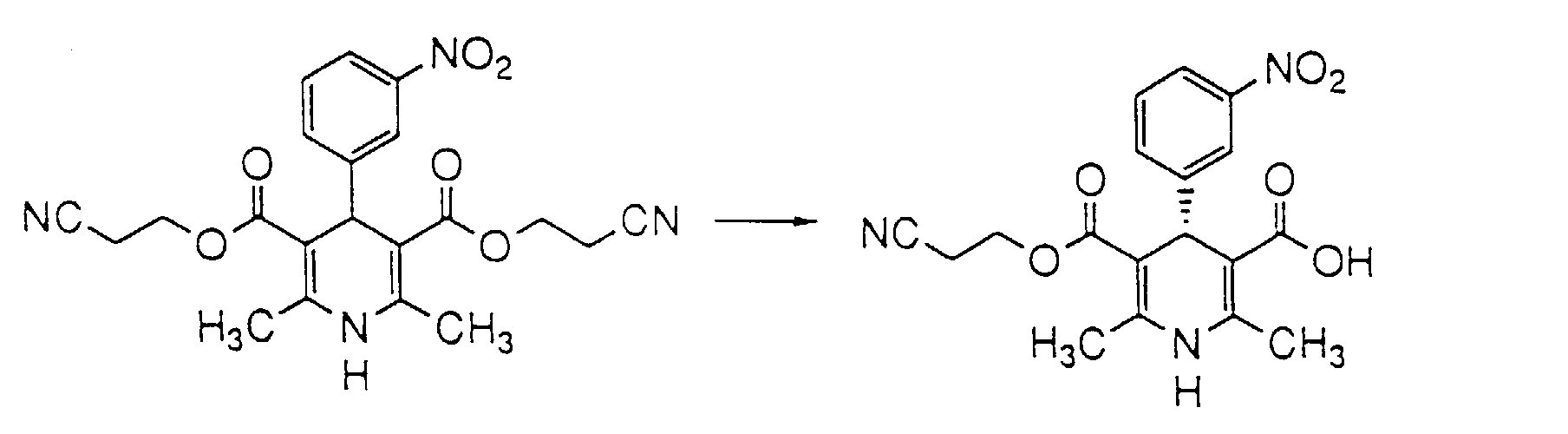
- In 20 ml of 0.025M phosphate buffer solution (pH 7.5) having dissolved therein 20 mg of an alkaline protease (EC3.4.2114, prepared by Seikagaku Kogyo Co., Ltd.; derived from Streptomyces griseus) was added 2 ml of a solution of dimethylsulfoxide having dissolved therein 20 mg of bis(2-cyanoethyl)1,4-dihydro-2,6-dimethyl-4-(3-nitrophenyl)-pyridine-3,5-dicarboxylate, and the resulting mixture was stirred at 27°C for 2 days. The reaction mixture was adjusted to pH 3.0 by addition of 1N hydrochloric acid, followed by addition of 20 ml of ethyl acetate for extraction. The resulting organic layer was washed with saturated saline, and then dried over anhydrous sodium sulfate. After being concentrated under reduced pressure, the concentrate was adsorbed on a preparative TLC (thin layer column chromatography) plate, developed with toluene:acetone (2:1). The fractions showing UV absorption at an Rf value of 0.31 were concentrated to dryness to obtain 5.1 mg of the objective compound.
NMR (Acetone-d6) δ: 2.37 (3H,s), 2.40(3H,s),2.8-2.9(2H,m), 4.2-4.4 (2H, m), 5.18 (1H,s), 7.51(1H,t,J=8.0Hz), 7.79(1H,d,J=8.0Hz), 8.00(1H,d,J=8.0Hz), 8.17(1H,s), 8.23(1H,br). - The optical purity of this substance was determined by converting the compound obtained as described above into its methyl ester with diazomethane and comparing the methyl ester with a standard preparation using HPLC [column; chiral AGP, 4x100mm, mobile phase; 3% isopropanol/0.01M phosphate buffer solution (pH 6.0), flow rate; 0.8ml/min.).
- The standard preparation was synthesized as follows. That is, 5 mg of(S)-(+)-1,4-dihydro-2,6-dimethyl-5-methoxy carbonyl-4-(3-nitrophenyl)-3-pyridinecarboxylic acid prepared by the method of Shibanuma et al., Chem. Pharm. Bull. 28(9), 2809-2812 (1980) was dissolved in 0.5 ml of tetrahydrofuran, to which was added 6 µl of isobutyl chloroformate. The mixture was stirred for 10 minutes. To the mixture were added 10 µl of ethylene cyanohydrin and 6 µl of triethylamine, and the stirring was continued for additional 2 hours. The reaction mixture was poured in 5 ml of ethyl acetate, and then washed with water. The resulting organic layer was dried over anhydrous sodium sulfate, and concentrated under reduced pressure. The concentrate was adsorbed on a preparative silica gel TLC plate, purified with toluene:acetone (2:1) to synthesize 2-cyanoethyl(R)-1,4-dihydro-2,6-dimethyl-5-methoxy carbonyl-4-(3-nitrophenyl)-3-pyridinecarboxylate. (RS) form was also prepared similarly to the above. Thus, standard preparations were obtained.
- Retention time in HPLC was 14.9 minutes for (R) form, and 13.9 minutes for (S) form.
- The HPLC analyses indicated that the optical purity of the compound obtained was 100%, stereochemistry of the 4-position was (R). Silica gel TLC of the methyl ester form developed with toluene:acetone (1:1) indicated Rf value of 0.69, and its NMR spectrum was as follows.
1H-NMR (CDCl3) δ: 2.38(3H,s), 2.40(3H,s), 2.65(2H,dt,J=2.0Hz,J=6.0Hz), 3.65(3H,s), 4.2-4.4(2H,m), 5.10(1H,s), 5.77(1H,br),7.40(1H,t,J=8.0Hz), 7.67(1H,td,J=1.0Hz,J=2.0Hz,J=8.0Hz), 8.02(1H,td,J=1.0Hz,J=2.0Hz,J=8.0Hz), 8.10(1H,t,J=2.0Hz). -

- To a solution of 19 mg of (4R)-5-(2-cyanoethoxycarbonyl)-1,4-dihydro-2,6-dimethyl-4-(3-nitrophenyl)pyridine-3-carboxylic acid in 0.5 ml of tetrahydrofuran were added 5 mg of p-toluenesulfonic acid, and then 0.138 ml of 3,4-dihydro-2H-pyran. The mixture was stirred at room temperature for 5 hours. The reaction mixture was diluted with 5 ml of ethyl acetate, washed with water, and dried over anhydrous Glauber's salt (sodium sulfate), followed by distilling off the solvent under reduced pressure. The residue was purified using preparative TLC to obtain 16.4 mg of the objective compound.
1H-NMR (CDCl3) δ: 8.17&8.14 (1H,t,J=2.2Hz), 8.03&8.01(1H,dd,J=2.2Hz,J=1.1Hz), 7.41&7.40(1H,t,J=7.7Hz), 6.00(1H,brs), 5.92&5.91(1H,m), 5.17&5.16(1H,s), 4.26-4.33(2H,m), 3.89-3.95&3.69-3.72(1H,m), 3.46-3.49&3.23-3.29(1H,m), 2.65&2.71(2H,m), 2.45&2.42(3H,s), 2.39&2.37(3H,s), 1.59-1.80(6H,m).
[α]27D: +7.93 (c0.82, methanol);
MS:FAB(pos.)456(M+1). -
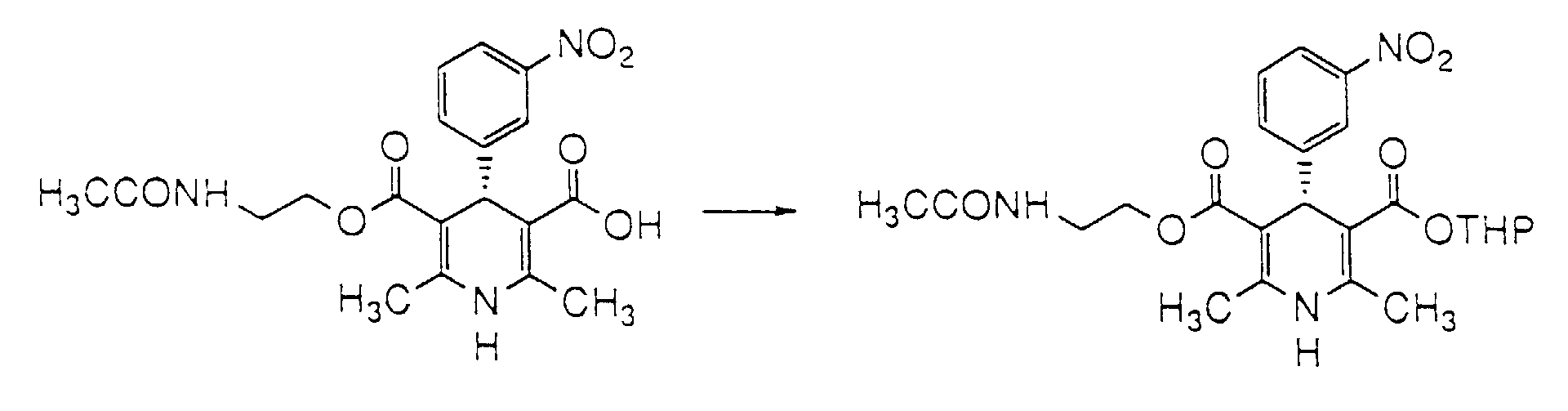
- To a solution of 36 mg of (4S)-5-(2-acetamidoethoxycarbonyl)-1,4-dihydro-2,6-dimethyl-4-(3-nitrophenyl)pyridine-3-carboxylic acid in 0.5 ml of tetrahydrofuran were added 7.7 mg of p-toluenesulfonic acid, and then 0.24 ml of 3,4-dihydro-2H-pyran. The mixture was stirred at room temperature for 6 hours. The reaction mixture was diluted with 5 ml of ethyl acetate, washed with saturated aqueous sodium hydrogen carbonate solution and with water, and dried over anhydrous Glauber's salt (sodium sulfate), followed by distilling off the solvent under reduced pressure. The residue was purified using preparative TLC to obtain 18 mg of the objective compound.
1H-NMR (CD3OD) δ: 8.17&8.14(1H,t,J=2.2Hz), 8.03&8.01(1H,dd,J=2.2Hz,J=1.1Hz), 7.71&7.66(1H,dt,J=7.7Hz,J=1.1Hz), 6.20(1H,br) 6.00&5.90(1H,m), 5.78&5.74(1H,br), 4.11-4.23(2H,m), 3.87-3.92&3.68-3.77(1H,m), 3.44-3.52(2H,m), 3.44-3.52&3.30-3.37(1H,m), 2.43&2.42(3H,s), 2.37&2.36(3H,s), 1.92&1.90(3H,s), 1.60-1.80(6H,m). -
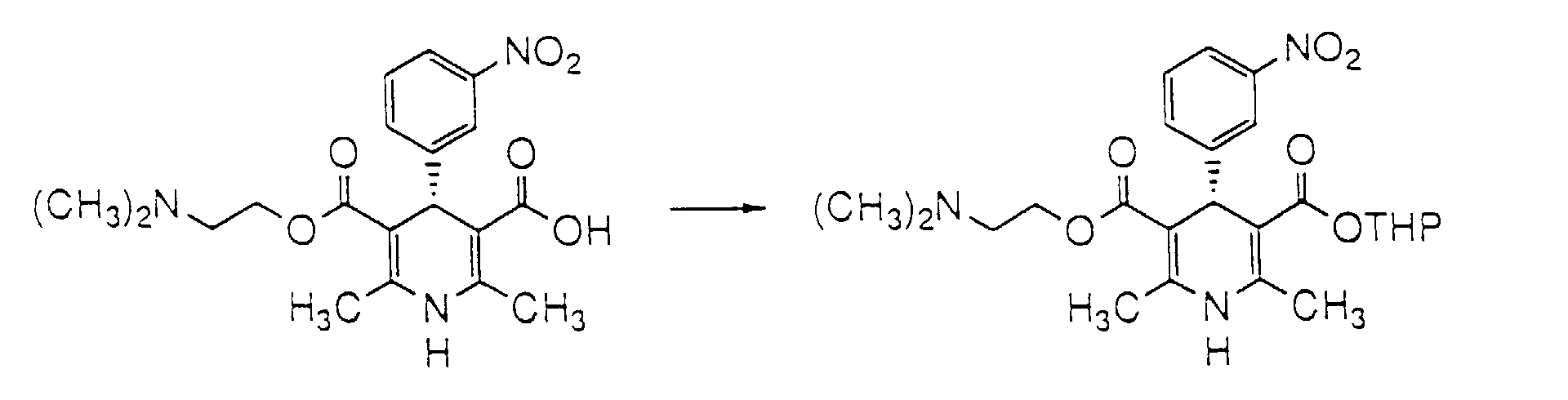
- To a solution of 25 mg of (4S)-5-(2-dimethylaminoethoxycarbonyl)-1,4-dihydro-2,6-dimethyl-4-(3-nitrophenyl)-pyridine-3-carboxylic acid in 1 ml of tetrahydrofuran were added 5.6 mg of p-toluenesulfonic acid, and then 0.06 ml of 3,4-dihydro-2H-pyrane. The mixture was stirred at room temperature for 6 hours. The reaction mixture was diluted with 5 ml of ethyl acetate, washed with saturated aqueous sodium hydrogen carbonate solution and with water, and dried over anhydrous Glauber's salt (sodium sulfate), followed by distilling off the solvent under reduced pressure. The residue was purified using preparative TLC to obtain 8 mg of the objective compound.
1H-NMR (CDCl3) δ: 8.20&8.15(1H,t,J=2.2Hz), 8.01&7.99(1H,dd,J=2.2Hz,J=1.1Hz), 7.75&7.69(1H,dt,J=7.7Hz,J=1.1Hz), 7.39&7.38(1H,t,J=7.7Hz), 6.00&5.91(1H,s), 5.84&5.82(1H,s), 4.11-4.19(2H,m), 3.88-3.93&3.69-3.74(1H,m), 3.44-3.47&3.19-3.26(1H,m), 2.53-2.60(2H,m) 2.44&2.42(3H,s), 2.36&2.35(3H,s), 2.27(3H,s), 2.25(3H,s), 1.44-1.79(6H,m). -
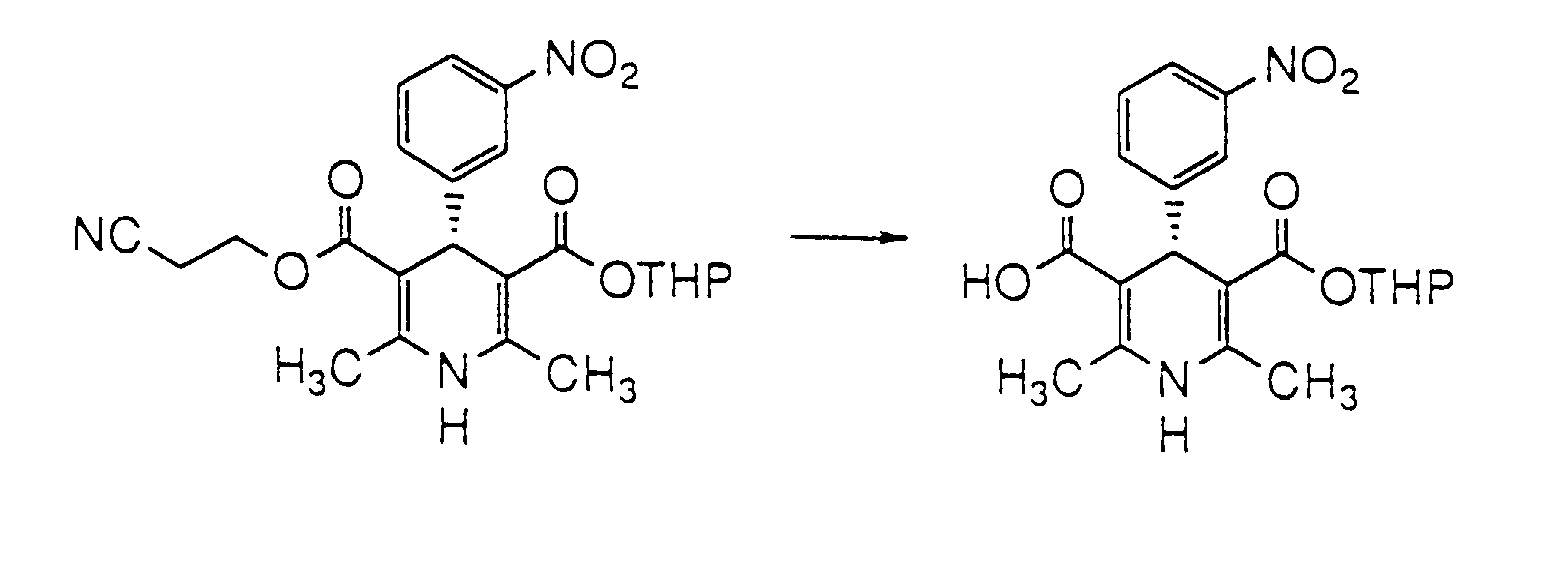
- To a solution of 16.4 mg of 2-tetrahydropyranyl (4S)-5-(2-cyanoethoxy-carbonyl)-1,4-dihydro-2,6-dimethyl-4-(3-nitrophenyl)pyridine-3-carboxylate in 1 ml of acetone was added 0.4 ml of 1N aqueous sodium hydroxide solution. The mixture was stirred at room temperature for 1 hour. The reaction mixture was diluted with 5 ml of ethyl acetate, and water was added thereto. The aqueous layer was adjusted to pH 4 with 0.1N hydrochloric acid. After being washed with water, the reaction mixture was dried over anhydrous Glauber's salt (sodium hydroxide), followed by distilling off the solvent under reduced pressure to obtain 14.5 mg of the objective compound.
1H-NMR (CDCl3) δ: 8.17&8.13(1H,t,J=2.2Hz), 8.02&7.99(1H,dd,J=2.2Hz,J=1.1Hz), 7.72&7.67(1H,d,J=7.7Hz), 7.39&7.38(1H,t,J=7.7Hz), 6.00&5.90(1H,br), 5.97&5.96(1H,br), 5.15&5.14(1H,s), 3.88-3.90&3.64-3.71(1H,m), 3.43-3.46&3.15-3.21(1H,m), 2.45&2.42(3H,m), 2.38&2.37(3H,s), 1.58-1.79(6H,m).
[α]27D: +54.0° (c0.73, methanol);
MS:FAB(neg.)401(M-1). -
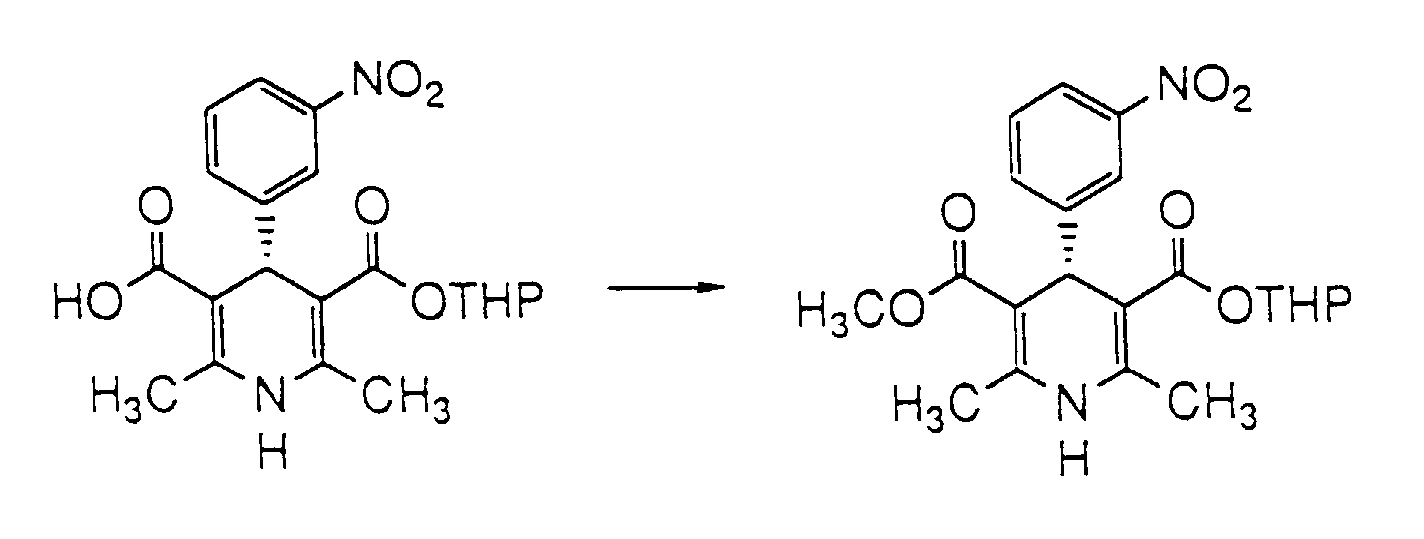
- To a solution of 14.5 mg of (4S)-5-(2-tetrahydropyranyloxy)carbonyl-1,4-dihydro-2,6-dimethyl-4-(3-nitrophenyl)pyridine-3-carboxylic acid in 0.5 ml of methanol was added diazomethane at 0°C, and stirred as it was for 30 minutes. The solvent was distilled off under reduced pressure to obtain 13.8 mg of the objective compound.
1H-NMR (CDCl3) δ: 8.16&8.13(1H,t,J=2.2Hz), 8.02&7.99(1H,dd,J=2.2Hz,J=1.1Hz), 7.70&7.65(1H,d,J=7.7Hz), 6.00&5.89(1H,br), 5.90(1H,br), 5.16&5.15(1H,s), 3.88-3.92&3.69-3.75(1H,m), 3.68&3.67(3H, s), 3.38-3.52&3.18-3.24 (1H, s) , 2.44&2.41(3H, s), 2.36&2.34(3H,s), 1.58-1.80(6H,m);
[α]27D: +34.93° (c0.69, methanol);
MS:FAB(pos.)417(M+1). -
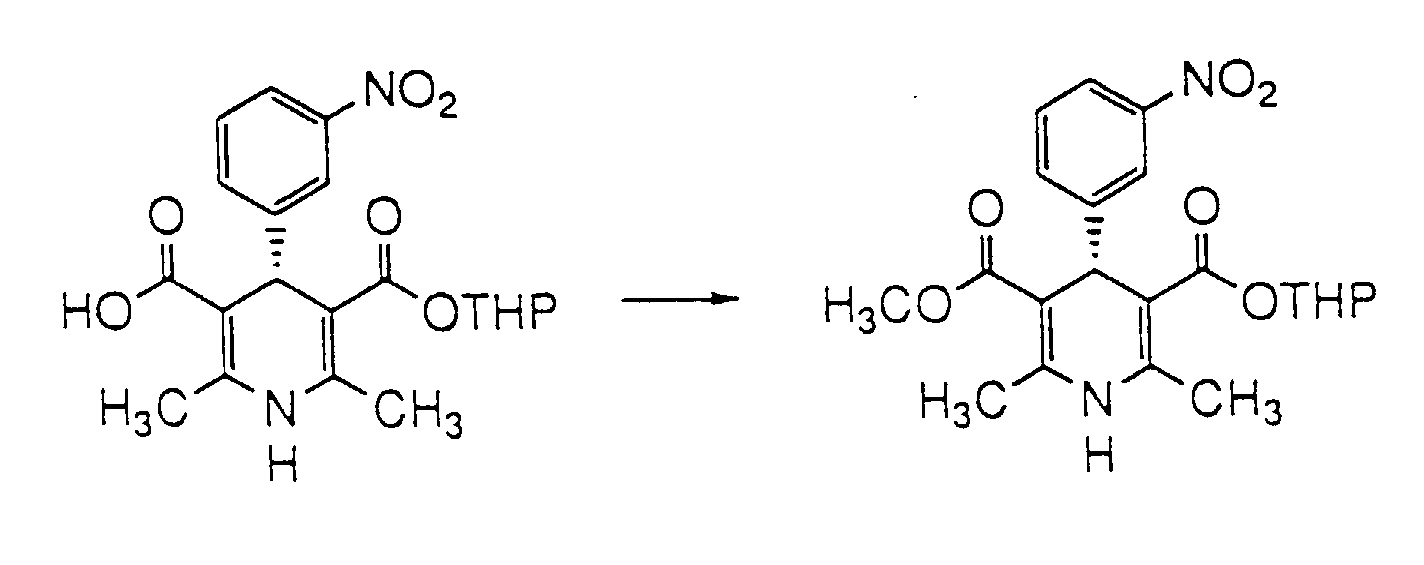
- To a solution of 14 mg of (4S)-5-(2-tetrahydropyranyloxy)carbonyl-1,4-dihydro-2,6-dimethyl-4-(3-nitrophenyl)pyridine-3-carboxylic acid in 0.3 ml of N,N-dimethylformamide were added 7.2 mg of potassium carbonate and 0.007 ml of methyl iodide, and the resulting mixture was stirred at room temperature for 1.5 hours. The reaction mixture was diluted with 5 ml of ethyl acetate, washed with water, and dried over anhydrous Glauber's salt (sodium sulfate), followed by distilling off the solvent under reduced pressure to obtain 13.8 mg of the objective compound. This had the same physical and chemical properties as the compound obtained in Example 7.
-
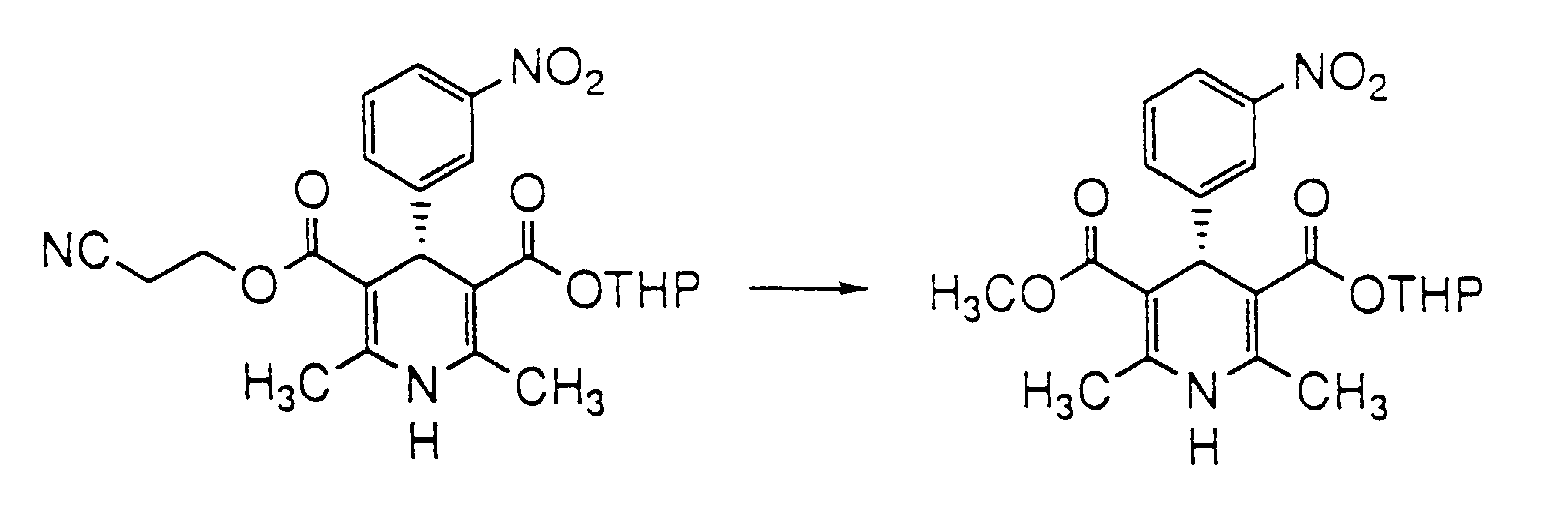
- To a solution of 10 mg of 2-tetrahydropyranyl(4S) -5-(2-cyanoethoxycarbonyl)-1,4-dihydro-2,6-dimethyl-4-(3-nitrophenyl)pyridine-3-carboxylate in 0.5 ml of methanol was added 3.5 mg of sodium methoxide. The mixture was stirred at room temperature for 9 hours. The reaction mixture was diluted with 5 ml of ethyl acetate, washed with water, and dried over anhydrous Glauber's salt (sodium sulfate), followed by distilling off the solvent under reduced pressure. The residue was purified by preparative TLC to obtain 2 mg of the objective compound. This had the same physical and chemical properties as the compound obtained in Example 7.
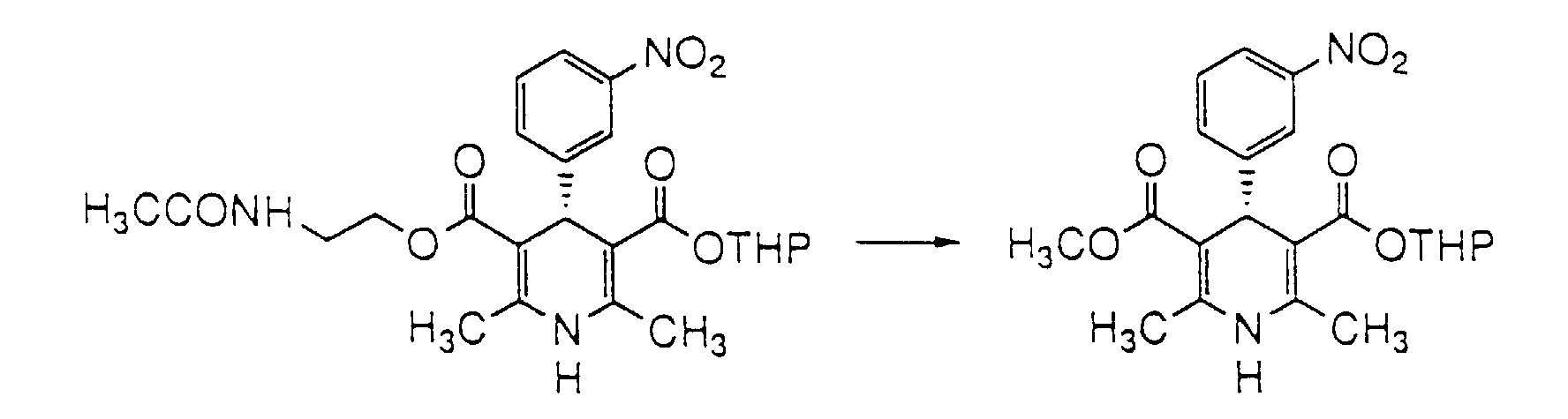
- 2-Tetrahydropyranyl(4S)-5-(2-acetamidoethoxy-carbonyl) -1,4-dihydro-2,6-dimethyl-4-(3-nitrophenyl)-pyridine-3-carboxylate (5 mg) was dissolved in 0.2 ml of a methanol solution containing 1M sodium methoxide, and the mixture was stirred for 5 hours on an oil bath at 40°C. The reaction mixture was neutralized with acetic acid, and then concentrated under reduced pressure. The residue thus obtained was purified by preparative TLC to obtain 3.5 mg of the objective compound. This had the same physical and chemical properties as the compound obtained in Example 7.
-
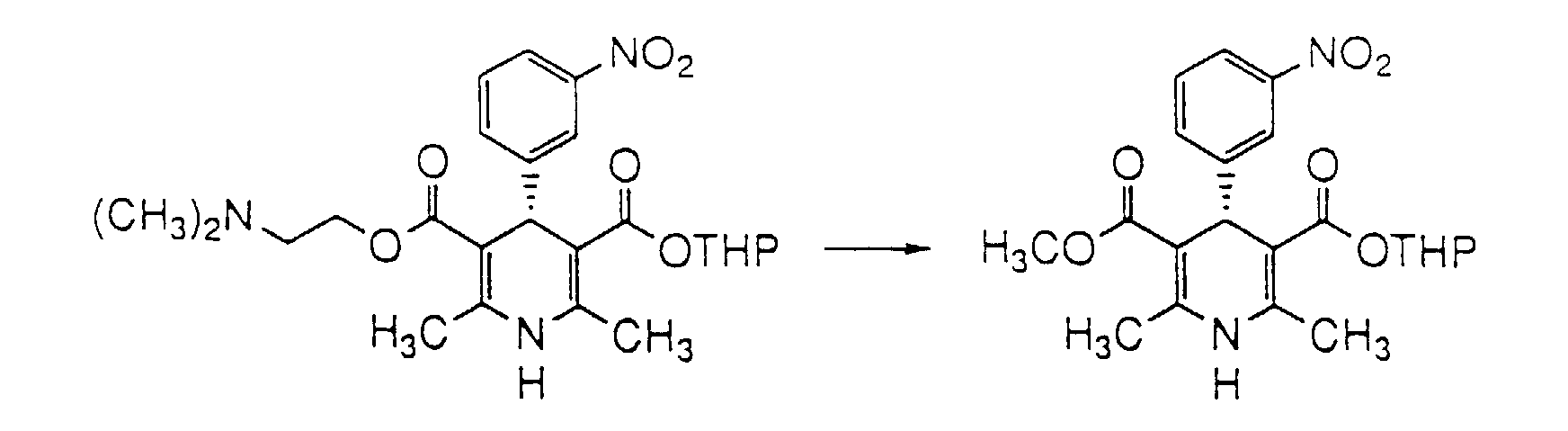
- 2-Tetrahydropyranyl(4S)-5-(2-dimethylaminoethoxycarbonyl)-1,4-dihydro-2,6-dimethyl-4-(3-nitrophenyl)pyridine-3-carboxylate (5 mg) was dissolved in 0.2 ml of a methanol solution containing 1M sodium methoxide, and the mixture was stirred for 5 hours on an oil bath at 40°C. The reaction mixture was neutralized with acetic acid, and then concentrated under reduced pressure. The residue thus obtained was purified by preparative TLC to obtain 3.5 mg of the objective compound. This had the same physical and chemical properties as the compound obtained in Example 7.
-
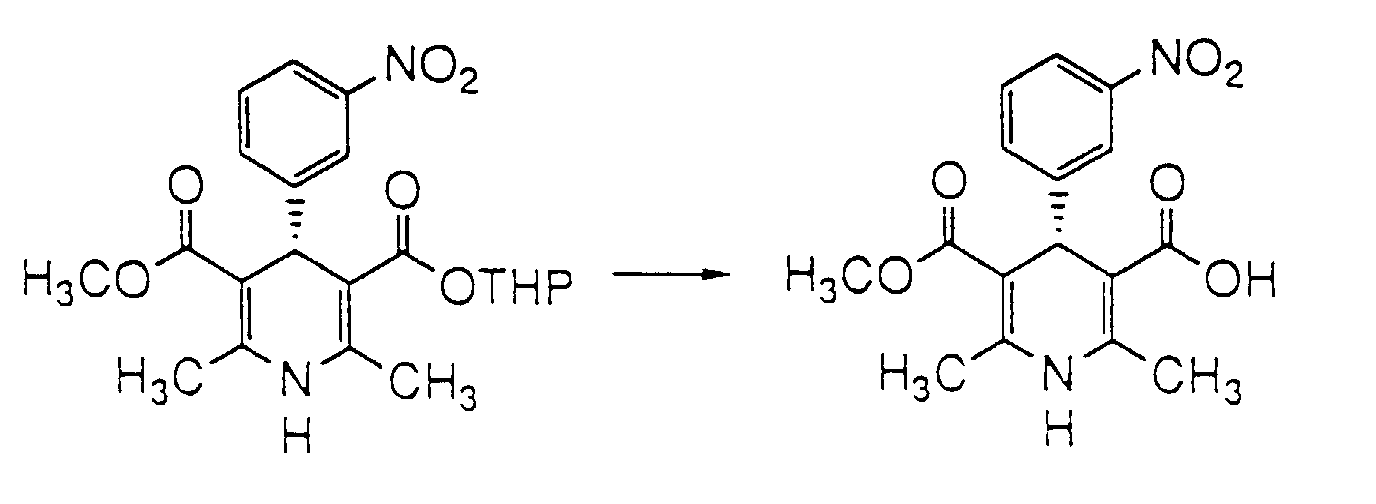
- To a solution of 13.8 mg of 2-tetrahydropyranyl(4S) -1,4-dihydro-2,6-dimethyl-5-methoxycarbonyl-4-(3-nitrophenyl)pyridine-3-carboxylate in 0.5 ml of ethanol and 0.1 ml of water was added 6 mg of p-toluenesulfonic acid. The mixture was stirred at room temperature for 2 hours. The reaction mixture was diluted with 5 ml of ethyl acetate, washed with water, and dried over anhydrous Glauber's salt (sodium sulfate), followed by distilling off the solvent under reduced pressure. The residue was purified by preparative TLC to obtain 6.0 mg of the objective compound.
1H-NMR (CD3OD) δ: 8.09(1H,t,J=2.2Hz), 7.99(1H,ddd,J=8.1Hz,J=2.2Hz,J=1.1Hz), 7.64(1H,d,J=1.1Hz), 7.44(1H,t,J=8.1Hz), 5.09(1H,s), 3.62(3H,s), 2.34(3H,s), 2.33(3H,s) ;
[a]27D: -32.0° (c0.30, methanol);
[a]27D: -22.3° (c0.30, acetone);
MS:FAB(neg.)331(M-1). -
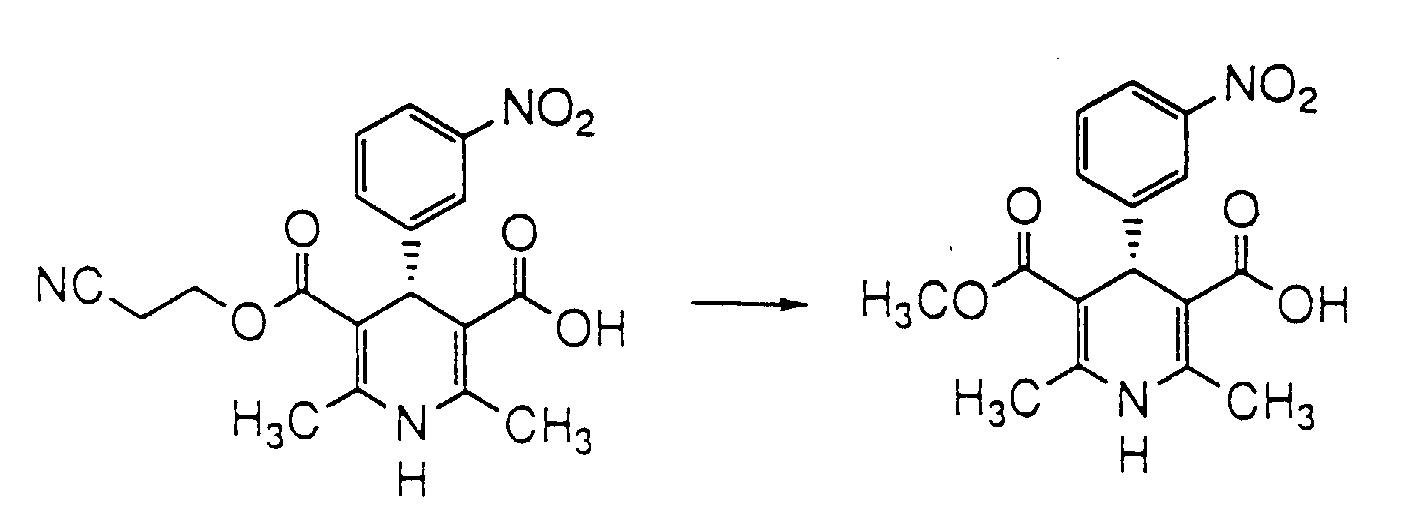
- (4R)-1,4-dihydro-3-(2-cyanoethoxycarbonyl)-2,6-dimethyl-4-(3-nitrophenyl)pyridine-3-carboxylic acid (10.0 mg) was dissolved in 1 ml of a methanol solution containing 1M sodium methoxide, and the mixture was stirred for 4 hours on an oil bath at 50°C. Under cooling the reaction mixture, 1N hydrochloric acid was added thereto to render pH 2, and 5 ml of deionized water and 5 ml of ethyl acetate were added to the mixture, followed by separation. The resulting organic layer was washed with water, and dried over anhydrous Glauber's salt (sodium sulfate), followed by distilling off the solvent under reduced pressure. The residue was thus obtained was purified by preparative TLC to obtain 4.0 mg of the objective compound. This had the same physical and chemical properties as the compound obtained in reference Example 2.
-

- (4R)-5-(2-acetamidoethoxycarbonyl)-1,4-dihydro-2,6-dimethyl-4-(3-nitrophenyl)pyridine-3-carboxylic acid (10.0 mg) was dissolved in 1 ml of a methanol solution containing 1M sodium methoxide, and the mixture was stirred for 5 hours on an oil bath at 40°C. Under cooling the reaction mixture, 1N hydrochloric acid was added thereto to render pH 2, and 5 ml of deionized water and 5 ml of ethyl acetate were added to the mixture, followed by separation. The resulting organic layer was washed with water, and dried over anhydrous Glauber's salt (sodium sulfate), followed by distilling off the solvent under reduced pressure. The residue was thus obtained was purified by preparative TLC to obtain 8.0 mg of the objective compound. This had the same physical and chemical properties as the compound obtained in Reference Example 2.
Claims (4)
- Optically active (4S) stereoisomers of 1,4-dihydropyridine derivatives represented by general formula (I)wherein R1 is a hydrogen atom, a C1-C6 alkyl group, a cyanoethyl group, a C1-C6 alkanoylaminoethyl group, or a C1-C6 dialkylaminoethly group; and R2 is a 2-tetrahydropyranyl group.
- The optically active (4S) stereoisomers of 1,4-dihydropyridine derivatives according to claim 1 wherein R1 is a cyanoethyl group, a C1-C6 dialkylaminoethyl group, or a C1-C6 alkanoylaminoethyl group.
- The optically active (4S) stereoisomers of 1,4-dihydropyridine derivatives according to claim 1 wherein R1 is a hydrogen atom.
- The optically active (4S) stereoisomers of 1,4-dihydropyridine derivatives according to claim 1 wherein R1 is a C1-C6 alkyl group.
Applications Claiming Priority (3)
| Application Number | Priority Date | Filing Date | Title |
|---|---|---|---|
| JP09226593A JP3286645B2 (en) | 1993-03-26 | 1993-03-26 | Optically active 1,4-dihydropyridine derivative and method for producing the same |
| JP9226593 | 1993-03-26 | ||
| JP92265/93 | 1993-03-26 |
Publications (3)
| Publication Number | Publication Date |
|---|---|
| EP0636611A2 EP0636611A2 (en) | 1995-02-01 |
| EP0636611A3 EP0636611A3 (en) | 1995-03-01 |
| EP0636611B1 true EP0636611B1 (en) | 1999-07-28 |
Family
ID=14049575
Family Applications (1)
| Application Number | Title | Priority Date | Filing Date |
|---|---|---|---|
| EP94301525A Expired - Lifetime EP0636611B1 (en) | 1993-03-26 | 1994-03-03 | Optically active 1,4-dihydropyridine derivatives and process for preparing the same |
Country Status (4)
| Country | Link |
|---|---|
| US (1) | US5395941A (en) |
| EP (1) | EP0636611B1 (en) |
| JP (1) | JP3286645B2 (en) |
| DE (1) | DE69419674T2 (en) |
Families Citing this family (6)
| Publication number | Priority date | Publication date | Assignee | Title |
|---|---|---|---|---|
| EP0657429B1 (en) * | 1992-08-31 | 2001-04-11 | Mercian Corporation | Process for production of optically active 1,4-dihydropyridine compounds |
| CH692199A8 (en) | 1997-10-09 | 2002-06-14 | Cermol S.A. | PYRIDIC COMPOUNDS AND PHARMACEUTICAL COMPOSITIONS |
| EP1123923A4 (en) * | 1998-10-23 | 2002-11-27 | Ajinomoto Kk | Dihydropyridine derivatives and drug compositions containing the same |
| EP2102161B1 (en) * | 2006-12-13 | 2012-05-02 | Pfizer Products Inc. | Processes for the preparation of 3-(4-(2,4-difluorobenzyloxy)-3-bromo-6-methyl- 2-oxopyridin-1(2H)-yl)-N,4-dimethylbenzamide |
| USD651476S1 (en) | 2011-02-05 | 2012-01-03 | Progressive International Corporation | Collapsible produce keeper |
| CN103242221B (en) * | 2012-02-08 | 2016-04-13 | 上海医药工业研究院 | The preparation method of dihydropyridine compounds |
Citations (1)
| Publication number | Priority date | Publication date | Assignee | Title |
|---|---|---|---|---|
| EP0011706A1 (en) * | 1978-10-31 | 1980-06-11 | Bayer Ag | Process for the preparation of derivatives of 1,4-dihydropyridine-3-carboxylic acid, derivatives of 1,4-dihydropyridine-3-carboxylic acid and the use of these derivatives for the preparation of 1,4-dihydropyridine-3,5-dicarboxylates |
Family Cites Families (6)
| Publication number | Priority date | Publication date | Assignee | Title |
|---|---|---|---|---|
| JPS5730111A (en) * | 1980-07-28 | 1982-02-18 | Fujitsu Ltd | Agc system |
| DK8602336A (en) * | 1985-05-21 | 1986-11-22 | ||
| JPS62178570A (en) * | 1986-02-03 | 1987-08-05 | Asahi Chem Ind Co Ltd | Production of 1,4-dihydropyridine derivative |
| KR940003492B1 (en) * | 1988-10-27 | 1994-04-23 | 주식회사 유한양행 | 1,4-dihydropyridine derivative and preparation method thereof |
| JPH03141257A (en) * | 1989-10-26 | 1991-06-17 | Green Cross Corp:The | Dihydropyridine derivative |
| JPH0641075A (en) * | 1990-09-01 | 1994-02-15 | Kazuo Achinami | New 1,4-dihydropyridine compound and its production |
-
1993
- 1993-03-26 JP JP09226593A patent/JP3286645B2/en not_active Expired - Fee Related
-
1994
- 1994-03-03 EP EP94301525A patent/EP0636611B1/en not_active Expired - Lifetime
- 1994-03-03 DE DE69419674T patent/DE69419674T2/en not_active Expired - Fee Related
- 1994-03-22 US US08/216,216 patent/US5395941A/en not_active Expired - Fee Related
Patent Citations (1)
| Publication number | Priority date | Publication date | Assignee | Title |
|---|---|---|---|---|
| EP0011706A1 (en) * | 1978-10-31 | 1980-06-11 | Bayer Ag | Process for the preparation of derivatives of 1,4-dihydropyridine-3-carboxylic acid, derivatives of 1,4-dihydropyridine-3-carboxylic acid and the use of these derivatives for the preparation of 1,4-dihydropyridine-3,5-dicarboxylates |
Also Published As
| Publication number | Publication date |
|---|---|
| EP0636611A2 (en) | 1995-02-01 |
| DE69419674D1 (en) | 1999-09-02 |
| DE69419674T2 (en) | 2000-04-06 |
| EP0636611A3 (en) | 1995-03-01 |
| US5395941A (en) | 1995-03-07 |
| JP3286645B2 (en) | 2002-05-27 |
| JPH06279409A (en) | 1994-10-04 |
Similar Documents
| Publication | Publication Date | Title |
|---|---|---|
| EP0063365B1 (en) | 1,4-dihydropyridine derivative and pharmaceutical composition containing same | |
| US4985557A (en) | Optically active pyridobenzoxazine derivatives and intermediates thereof | |
| EP0595345B1 (en) | Process for producing alanylglutamine | |
| US4559351A (en) | Dihydropyridine derivatives of 1,4:3,6-dianhydrohexitols | |
| PL200165B1 (en) | Process for the preparation of naproxene nitroxyalkylesters | |
| US5395941A (en) | Optically active 1,4-hydropyridine compounds | |
| SU1419516A3 (en) | Method of producing 5-methyl 3 beta-(n-benzyl-n-methylamino)-ethyl ether 2,6-dimethyl-4-(3 prime-nitrophenyl)-1,4-dihydropyridine-3,5-dicarboxylic acid or hydrochloride thereof | |
| US5488118A (en) | Process for producing optically active erythro-3-amino-1,2-epoxy compound | |
| EP0254239B1 (en) | Optically pure 1,3-dioxenones, methods for preparing same and use thereof | |
| CA1273932A (en) | Process for production of dihydropyridine compound or salts thereof | |
| KR100214729B1 (en) | Process for preparing malonic acid monoester | |
| EP0445987A2 (en) | Novel process for producing 2,6-dimethyl-4-(m-nitrophenyl)-1,4-dihydropyridine-3,5-dicarboxylate-3-methyl ester-5-beta-(N-benzyl-N-methylamino)ethyl ester | |
| IT8522695A1 (en) | PROCESS FOR THE ENZYMATIC SEPARATION OF THE OPTICAL ISOMERS OF 2-AMINOBUTANOL. | |
| US5079382A (en) | Process for the production of 3,4-epoxybutyrate and intermediate therefor | |
| CA2164276C (en) | New highly selective process for the preparation of enantiomerically pure phenylsubstituted 1,4-dihydropyridine-3,5-dicarboxylic acid derivatives | |
| EP0081817B1 (en) | Optically-active diamide derivatives | |
| KR0148125B1 (en) | Processes for the preparation of 1,4-dihydropyridine | |
| WO2010027113A2 (en) | Process for preparing (s)-(-)-felodipine | |
| KR100487992B1 (en) | Sulfur derivatives of 2'-Fluoro-5-methyl-β-L-arabinopuranosyluridine | |
| KR0127750B1 (en) | Process for preparing pyrroli donone derivatie | |
| JPH04279566A (en) | 1,4-dihydropyridine derivative | |
| KR910005232B1 (en) | Method for preparing 1,4-dihydropyridine carboxylic acid | |
| JPH07196612A (en) | 1,4-Dihydropyridine derivative and method for producing 1,4-dihydropyridinecarboxylic acid derivative using the same | |
| JPH0770066A (en) | Optically active dihydropyridine compound and its synthesis | |
| WO2005066181A1 (en) | Process for the preparation of 1,3-dioxolo [4,5-c] piperidin-7-ols and related compounds |
Legal Events
| Date | Code | Title | Description |
|---|---|---|---|
| PUAI | Public reference made under article 153(3) epc to a published international application that has entered the european phase |
Free format text: ORIGINAL CODE: 0009012 |
|
| PUAL | Search report despatched |
Free format text: ORIGINAL CODE: 0009013 |
|
| AK | Designated contracting states |
Kind code of ref document: A2 Designated state(s): DE FR GB IT |
|
| AK | Designated contracting states |
Kind code of ref document: A3 Designated state(s): DE FR GB IT |
|
| RHK1 | Main classification (correction) |
Ipc: C07D211/90 |
|
| 17P | Request for examination filed |
Effective date: 19950622 |
|
| 17Q | First examination report despatched |
Effective date: 19971218 |
|
| GRAG | Despatch of communication of intention to grant |
Free format text: ORIGINAL CODE: EPIDOS AGRA |
|
| GRAG | Despatch of communication of intention to grant |
Free format text: ORIGINAL CODE: EPIDOS AGRA |
|
| GRAH | Despatch of communication of intention to grant a patent |
Free format text: ORIGINAL CODE: EPIDOS IGRA |
|
| GRAH | Despatch of communication of intention to grant a patent |
Free format text: ORIGINAL CODE: EPIDOS IGRA |
|
| GRAA | (expected) grant |
Free format text: ORIGINAL CODE: 0009210 |
|
| AK | Designated contracting states |
Kind code of ref document: B1 Designated state(s): DE FR GB IT |
|
| REF | Corresponds to: |
Ref document number: 69419674 Country of ref document: DE Date of ref document: 19990902 |
|
| ET | Fr: translation filed | ||
| ITF | It: translation for a ep patent filed | ||
| PLBE | No opposition filed within time limit |
Free format text: ORIGINAL CODE: 0009261 |
|
| STAA | Information on the status of an ep patent application or granted ep patent |
Free format text: STATUS: NO OPPOSITION FILED WITHIN TIME LIMIT |
|
| 26N | No opposition filed | ||
| PGFP | Annual fee paid to national office [announced via postgrant information from national office to epo] |
Ref country code: GB Payment date: 20010228 Year of fee payment: 8 Ref country code: DE Payment date: 20010228 Year of fee payment: 8 |
|
| PGFP | Annual fee paid to national office [announced via postgrant information from national office to epo] |
Ref country code: FR Payment date: 20010313 Year of fee payment: 8 |
|
| REG | Reference to a national code |
Ref country code: GB Ref legal event code: IF02 |
|
| PG25 | Lapsed in a contracting state [announced via postgrant information from national office to epo] |
Ref country code: GB Free format text: LAPSE BECAUSE OF NON-PAYMENT OF DUE FEES Effective date: 20020303 |
|
| PG25 | Lapsed in a contracting state [announced via postgrant information from national office to epo] |
Ref country code: DE Free format text: LAPSE BECAUSE OF NON-PAYMENT OF DUE FEES Effective date: 20021001 |
|
| GBPC | Gb: european patent ceased through non-payment of renewal fee |
Effective date: 20020303 |
|
| PG25 | Lapsed in a contracting state [announced via postgrant information from national office to epo] |
Ref country code: FR Free format text: LAPSE BECAUSE OF NON-PAYMENT OF DUE FEES Effective date: 20021129 |
|
| REG | Reference to a national code |
Ref country code: FR Ref legal event code: ST |
|
| PG25 | Lapsed in a contracting state [announced via postgrant information from national office to epo] |
Ref country code: IT Free format text: LAPSE BECAUSE OF NON-PAYMENT OF DUE FEES;WARNING: LAPSES OF ITALIAN PATENTS WITH EFFECTIVE DATE BEFORE 2007 MAY HAVE OCCURRED AT ANY TIME BEFORE 2007. THE CORRECT EFFECTIVE DATE MAY BE DIFFERENT FROM THE ONE RECORDED. Effective date: 20050303 |