EP0635488B1 - Novel process for preparing azetidinone compound and novel starting compound therefor - Google Patents
Novel process for preparing azetidinone compound and novel starting compound therefor Download PDFInfo
- Publication number
- EP0635488B1 EP0635488B1 EP94109711A EP94109711A EP0635488B1 EP 0635488 B1 EP0635488 B1 EP 0635488B1 EP 94109711 A EP94109711 A EP 94109711A EP 94109711 A EP94109711 A EP 94109711A EP 0635488 B1 EP0635488 B1 EP 0635488B1
- Authority
- EP
- European Patent Office
- Prior art keywords
- group
- phenyl
- alkyl group
- compound
- formula
- Prior art date
- Legal status (The legal status is an assumption and is not a legal conclusion. Google has not performed a legal analysis and makes no representation as to the accuracy of the status listed.)
- Expired - Lifetime
Links
- 0 C*(C1*)C(C)(*)C(*)(*)*1I Chemical compound C*(C1*)C(C)(*)C(*)(*)*1I 0.000 description 4
Classifications
-
- C—CHEMISTRY; METALLURGY
- C07—ORGANIC CHEMISTRY
- C07D—HETEROCYCLIC COMPOUNDS
- C07D205/00—Heterocyclic compounds containing four-membered rings with one nitrogen atom as the only ring hetero atom
- C07D205/02—Heterocyclic compounds containing four-membered rings with one nitrogen atom as the only ring hetero atom not condensed with other rings
- C07D205/06—Heterocyclic compounds containing four-membered rings with one nitrogen atom as the only ring hetero atom not condensed with other rings having one double bond between ring members or between a ring member and a non-ring member
- C07D205/08—Heterocyclic compounds containing four-membered rings with one nitrogen atom as the only ring hetero atom not condensed with other rings having one double bond between ring members or between a ring member and a non-ring member with one oxygen atom directly attached in position 2, e.g. beta-lactams
- C07D205/085—Heterocyclic compounds containing four-membered rings with one nitrogen atom as the only ring hetero atom not condensed with other rings having one double bond between ring members or between a ring member and a non-ring member with one oxygen atom directly attached in position 2, e.g. beta-lactams with a nitrogen atom directly attached in position 3
-
- C—CHEMISTRY; METALLURGY
- C07—ORGANIC CHEMISTRY
- C07D—HETEROCYCLIC COMPOUNDS
- C07D205/00—Heterocyclic compounds containing four-membered rings with one nitrogen atom as the only ring hetero atom
- C07D205/02—Heterocyclic compounds containing four-membered rings with one nitrogen atom as the only ring hetero atom not condensed with other rings
- C07D205/06—Heterocyclic compounds containing four-membered rings with one nitrogen atom as the only ring hetero atom not condensed with other rings having one double bond between ring members or between a ring member and a non-ring member
- C07D205/08—Heterocyclic compounds containing four-membered rings with one nitrogen atom as the only ring hetero atom not condensed with other rings having one double bond between ring members or between a ring member and a non-ring member with one oxygen atom directly attached in position 2, e.g. beta-lactams
-
- C—CHEMISTRY; METALLURGY
- C07—ORGANIC CHEMISTRY
- C07D—HETEROCYCLIC COMPOUNDS
- C07D217/00—Heterocyclic compounds containing isoquinoline or hydrogenated isoquinoline ring systems
- C07D217/22—Heterocyclic compounds containing isoquinoline or hydrogenated isoquinoline ring systems with hetero atoms or with carbon atoms having three bonds to hetero atoms with at the most one bond to halogen, e.g. ester or nitrile radicals, directly attached to carbon atoms of the nitrogen-containing ring
- C07D217/24—Oxygen atoms
-
- C—CHEMISTRY; METALLURGY
- C07—ORGANIC CHEMISTRY
- C07D—HETEROCYCLIC COMPOUNDS
- C07D239/00—Heterocyclic compounds containing 1,3-diazine or hydrogenated 1,3-diazine rings
- C07D239/70—Heterocyclic compounds containing 1,3-diazine or hydrogenated 1,3-diazine rings condensed with carbocyclic rings or ring systems
- C07D239/72—Quinazolines; Hydrogenated quinazolines
- C07D239/86—Quinazolines; Hydrogenated quinazolines with hetero atoms directly attached in position 4
- C07D239/88—Oxygen atoms
- C07D239/90—Oxygen atoms with acyclic radicals attached in position 2 or 3
-
- C—CHEMISTRY; METALLURGY
- C07—ORGANIC CHEMISTRY
- C07D—HETEROCYCLIC COMPOUNDS
- C07D265/00—Heterocyclic compounds containing six-membered rings having one nitrogen atom and one oxygen atom as the only ring hetero atoms
- C07D265/04—1,3-Oxazines; Hydrogenated 1,3-oxazines
- C07D265/12—1,3-Oxazines; Hydrogenated 1,3-oxazines condensed with carbocyclic rings or ring systems
- C07D265/14—1,3-Oxazines; Hydrogenated 1,3-oxazines condensed with carbocyclic rings or ring systems condensed with one six-membered ring
-
- C—CHEMISTRY; METALLURGY
- C07—ORGANIC CHEMISTRY
- C07D—HETEROCYCLIC COMPOUNDS
- C07D265/00—Heterocyclic compounds containing six-membered rings having one nitrogen atom and one oxygen atom as the only ring hetero atoms
- C07D265/04—1,3-Oxazines; Hydrogenated 1,3-oxazines
- C07D265/12—1,3-Oxazines; Hydrogenated 1,3-oxazines condensed with carbocyclic rings or ring systems
- C07D265/14—1,3-Oxazines; Hydrogenated 1,3-oxazines condensed with carbocyclic rings or ring systems condensed with one six-membered ring
- C07D265/20—1,3-Oxazines; Hydrogenated 1,3-oxazines condensed with carbocyclic rings or ring systems condensed with one six-membered ring with hetero atoms directly attached in position 4
- C07D265/22—Oxygen atoms
-
- C—CHEMISTRY; METALLURGY
- C07—ORGANIC CHEMISTRY
- C07D—HETEROCYCLIC COMPOUNDS
- C07D279/00—Heterocyclic compounds containing six-membered rings having one nitrogen atom and one sulfur atom as the only ring hetero atoms
- C07D279/10—1,4-Thiazines; Hydrogenated 1,4-thiazines
- C07D279/14—1,4-Thiazines; Hydrogenated 1,4-thiazines condensed with carbocyclic rings or ring systems
-
- C—CHEMISTRY; METALLURGY
- C07—ORGANIC CHEMISTRY
- C07D—HETEROCYCLIC COMPOUNDS
- C07D477/00—Heterocyclic compounds containing 1-azabicyclo [3.2.0] heptane ring systems, i.e. compounds containing a ring system of the formula:, e.g. carbapenicillins, thienamycins; Such ring systems being further condensed, e.g. 2,3-condensed with an oxygen-, nitrogen- or sulphur-containing hetero ring
- C07D477/02—Preparation
-
- C—CHEMISTRY; METALLURGY
- C07—ORGANIC CHEMISTRY
- C07D—HETEROCYCLIC COMPOUNDS
- C07D477/00—Heterocyclic compounds containing 1-azabicyclo [3.2.0] heptane ring systems, i.e. compounds containing a ring system of the formula:, e.g. carbapenicillins, thienamycins; Such ring systems being further condensed, e.g. 2,3-condensed with an oxygen-, nitrogen- or sulphur-containing hetero ring
- C07D477/02—Preparation
- C07D477/04—Preparation by forming the ring or condensed ring systems
-
- C—CHEMISTRY; METALLURGY
- C07—ORGANIC CHEMISTRY
- C07F—ACYCLIC, CARBOCYCLIC OR HETEROCYCLIC COMPOUNDS CONTAINING ELEMENTS OTHER THAN CARBON, HYDROGEN, HALOGEN, OXYGEN, NITROGEN, SULFUR, SELENIUM OR TELLURIUM
- C07F7/00—Compounds containing elements of Groups 4 or 14 of the Periodic Table
- C07F7/02—Silicon compounds
- C07F7/08—Compounds having one or more C—Si linkages
- C07F7/18—Compounds having one or more C—Si linkages as well as one or more C—O—Si linkages
- C07F7/1804—Compounds having Si-O-C linkages
-
- C—CHEMISTRY; METALLURGY
- C07—ORGANIC CHEMISTRY
- C07F—ACYCLIC, CARBOCYCLIC OR HETEROCYCLIC COMPOUNDS CONTAINING ELEMENTS OTHER THAN CARBON, HYDROGEN, HALOGEN, OXYGEN, NITROGEN, SULFUR, SELENIUM OR TELLURIUM
- C07F7/00—Compounds containing elements of Groups 4 or 14 of the Periodic Table
- C07F7/02—Silicon compounds
- C07F7/08—Compounds having one or more C—Si linkages
- C07F7/18—Compounds having one or more C—Si linkages as well as one or more C—O—Si linkages
- C07F7/1804—Compounds having Si-O-C linkages
- C07F7/1872—Preparation; Treatments not provided for in C07F7/20
- C07F7/1892—Preparation; Treatments not provided for in C07F7/20 by reactions not provided for in C07F7/1876 - C07F7/1888
Definitions
- the present invention relates to a novel process for preparing an azetidinone compound which is useful as a synthetic intermediate for a 1 ⁇ -methylcarbapenem derivative having an antibacterial activity, and a novel starting compound therefor.
- 1 ⁇ -Methylcarbapenem derivatives have been of great interests for their excellent antibacterial activities against a wide range of microorganisms including Gram positive and Gram negative bacteria, especially against Cephem-resistant bacteria, and their excellent stabilities in the human bodies.
- Said 1 ⁇ -methylcarbapenem derivatives have been synthesized by various processes up to now.
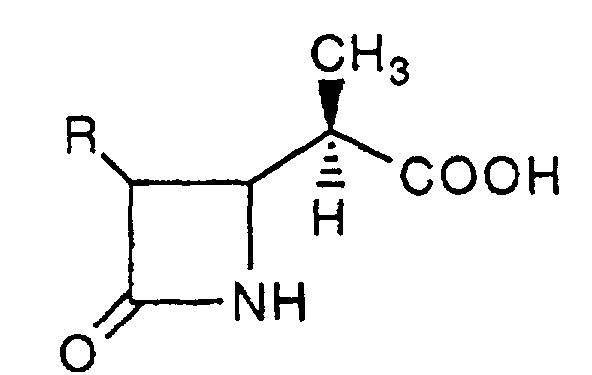
- the azetidinone compound having a ⁇ -methyl group at the 1'-position of the 4-side chain of the formula: wherein R is a protected or unprotected hydroxy-substituted lower alkyl group is especially important synthetic intermediate, which is prepared by removing 1'-hydrogen atom of the acetic acid moiety at the 4-position with a strong base, followed by introducing a methyl group to the product [cf. Heterocycles, 21 , 29 (1984)].
- Fuentes et al. suggest a process of reacting 4-acetoxyazetidinone compound with a specific propionimide in the presence of a complex reagent of a specific base and a Lewis acid (e.g. tin triflate-ethylpiperidine-zinc bromide, diethylboran triflate-diisopropylethylamine-zinc bromide, etc.) (cf. L.M. Fuentes et al., J. Am. Chem. Soc., 108 , 4675 (1986)).
- the similar process to Fuentes's is also reported by Nagao et al. (cf. Y. NAGAO et al., J. Am. Chem. Soc., 108, 4673 (1986)).
- An object of the present invention is to provide a novel process for stereoselectively preparing azetidinone compound having the 1'-substituent with ⁇ -configuration which is useful as a synthetic intermediate for 1 ⁇ -methylcarbapenem derivative having an antibacterial activity.
- Another object of the present invention is to provide a novel synthetic intermediate therefor.
- the present inventors have intensively studied a novel process for preparing a synthetic intermediate with desired 1'- ⁇ -configuration for carbapenem antibacterial agents without the defects of the conventional processes, and finally have found that the desired 1'- ⁇ -azetidinone compound is obtained by reacting an azetidinone compound having a leaving group with an alkanamide in the presence of a specific base without using a Lewis acid which is essential in the conventional processes.
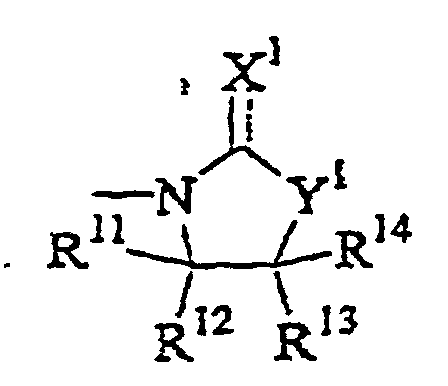
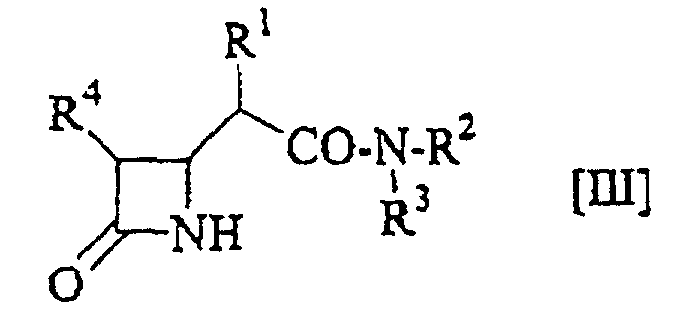
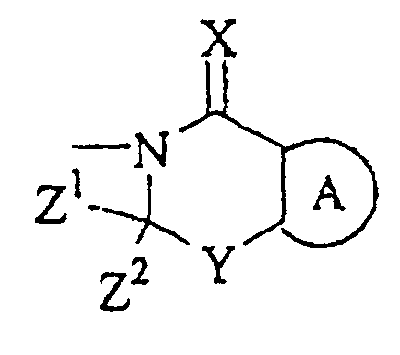
- the present invention provides a novel process for preparing an azetidinone compound of the formula [III]: wherein R 1 is a C 1-6 alkyl group, R 2 and R 3 combine together with the adjacent nitrogen atom to form a heterocyclic group which is a member selected from the group consisting of a group of the formula: wherein X 1 is an oxygen atom or a sulfur atom, Y 1 is an oxygen atom, a sulfur atom, a methylene group or an imino group substituted by a C 1-20 alkyl group or a phenyl group, and R 11 , R 12 , R 13 and R 14 are the same or different and each a hydrogen atom, a C 1-5 alkyl group, a cyano group, a (C 1-20 alkyl)oxycarbonyl group, a phenyl-(C 1-20 )alkyl group, or a phenyl group, or R 11 and R 12 combine together to form a C 2-6 alkylene
- the present invention also provides a novel compound of the formula [I-A]: wherein R 1 is a C 1-6 alkyl group; Ring B is a benzene ring which may have a substituent selected from the group consisting of a halogen, a C 1-6 alkyl group, a C 1-6 alkoxy group and a phenyl group; X is an oxygen atom or a sulfur atom; Y is an oxygen atom, a sulfur atom, a protected or unprotected imino group, or a methylene group; and Z 1 and Z 2 are the same or different and each a C 1-20 alkyl group, a C 3-8 cycloalkyl group, a phenyl group, or a phenyl-(C 1-20 )alkyl group, or both combine at the end thereof to form an alkytene group having 4 to 7 carbon atoms.
- the group represented by R 4 is a protected or unprotected 1-hydroxyethyl group, and the protecting group for said hydroxy group may be any ones which can easily be removed by a conventional method, for example, a lower alkoxycarbonyl group, a halogeno-lower alkoxycarbonyl group, a substituted or unsubstituted phenyl-lower alkyl group (e.g. benzyl group which may optionally be substituted by nitro group or a lower alkoxy group), a tri-lower alkylsilyl group, a substituted or unsubstituted phenyl-lower alkoxycarbonyl group (e.g. benzyloxycarbonyl group which may optionally be substituted by nitro group or a lower alkoxy group), and the like.
- a lower alkoxycarbonyl group e.g. benzyl group which may optionally be substituted by nitro group or a lower alkoxy group
- the group represented by R 4 is a protected or unprotected 1-hydroxyethyl group, and the protecting group for said hydroxy group may be any ones which can easity be removed by a conventional method, for example, a lower alkoxycarbonyl group, a halogeno-lower alkoxycarbonyl group, a substituted or unsubstituted phenyl-lower alkyl group (e.g benzyl group which may optionally be substituted by nitro group or a lower alkoxy group), a tri-lower alkylsilyl group, a substituted or unsubstituted phenyl-lower alkoxycarbonyl group (e.g. benzyloxycarbonyl group which may optionally be substituted by nitro group or a lower alkoxy group), and the like.
- a lower alkoxycarbonyl group e.g benzyl group which may optionally be substituted by nitro group or a lower alkoxy group
- the alkyl group for Z 1 and Z 2 includes alkyl groups having 1 to 20 carbon atoms, preferably ones having 1 to 15 carbon atoms.
- the cycloalkyl group includes, for example, ones having 4 to 7 carbon atoms, and the aryl group includes, for example, a substituted or unsubstituted phenyl group.
- the aralkyl group includes, for example, a lower alkyl group substituted by a substituted or unsubstituted phenyl group.
- the substituents for alkyl group, cycloalkyl group, and the substituents on the phenyl group in the aryl group or in the aralkyl group are preferably a lower alkoxy group, a halogen atom, a protected or unprotected amino group.
- the protecting group for amino group, or the protecting group for imino group represented by Y includes any group which is conventionally used as a protecting group in the field of Peptide Chemistry, and the examples of the protecting group are preferably a lower alkyl group, an acyl group (e.g. a lower alkanoyl group, a lower alkoxycarbonyl group, a substituted or unsubstituted phenylcarbonyl group, a substituted or unsubstituted phenyl-lower alkoxycarbonyl group).
- an acyl group e.g. a lower alkanoyl group, a lower alkoxycarbonyl group, a substituted or unsubstituted phenylcarbonyl group, a substituted or unsubstituted phenyl-lower alkoxycarbonyl group.
- the compound of the formula [I-A] is a novel compound.
- the compound [I-A] of the present invention is structurally quite different from the above-mentioned known compound in that the amido moiety (hereinafter referred to as "supporting group") of the compound [I-A] of the present invention is the benzene ring-condensed 6-membered heterocyclic group, while the known supporting group is the 5-membered heterocyclic groups such as thiozolidine or oxazolidine.
- Ring B is unsubstituted benzene ring
- X and Y are both oxygen atom
- Z 1 and Z 2 are a C 1-20 alkyl group; or both combine at the end thereof to form a unsubstituted alkylene group having 4 to 7 carbon atoms are more preferable.
- the base used in the reaction of the alkanamide compound [I] and the compound [II] to give the compound [III] includes any conventional organic and inorganic bases, but strong bases are more preferable.
- the preferable strong base is a base having enough basicity to make an enolate by removing hydrogen atom at ⁇ -position of the alkanamide compound [I] and the more preferable base is a base having basicity of pKb ⁇ -10.
- Examples of a base include an alkali metal salt or alkaline earth metal salt of amines (e.g.
- alkali metal bis(tri-lower alkylsilyl)amide or an alkali metal salt or alkaline earth metal salt of alcohols, more particularly lithium bis(trimethylsilyl)amide, sodium bis(trimethylsilyl)amide, potassium bis(trimethylsilyl)amide, lithium diisopropylamide, sodium amide, sodium methoxide, sodium ethoxide, potassium t-butoxide, and the like.
- the reaction of the alkanamide compound [I] and the compound [II] is preferably carried out in an appropriate inert solvent such as ethers (e.g. tetrahydrofuran, diethyl ether, dioxane, dimethoxyethane, diisopropyl ether, etc.), aromatic hydrogen carbons (e.g. toluene, xylene, etc.), and the like, and more preferably carried out in tetrahydrofuran.
- ethers e.g. tetrahydrofuran, diethyl ether, dioxane, dimethoxyethane, diisopropyl ether, etc.
- aromatic hydrogen carbons e.g. toluene, xylene, etc.
- the leaving group represented by L 1 in the compound [II] may be any conventional leaving group which can easily be removed during the reaction with the alkanamide compound [I], for example, an acyloxy group, a lower alkylsulfonyloxy group, an arylsulfonyloxy group, a lower alkylsulfonyl group, an arylsulfonyl group, an arylthio group, a halogen atom, and the like, and an acyloxy group is more preferable.
- the alkanamide compound [I] may be used in an amount of 1 to 1.5 moles, preferably 1.1 to 1.3 moles, per one mole of the compound [II].
- the base may be used in an amount of 1 to 2 moles, preferable 1.2 to 1.5 moles, per one mole of the compound [II].
- the reaction is usually carried out at a temperature of -80°C to 10°C, preferably at -60°C to -30°C.
- the alkanamide compound [I] including the novel starting compound [I-A] is prepared by reacting a compound of the formula [IV]: wherein R 2 and R 3 are the same as defined above, with a compound of the formula [V]: R 1 CH 2 COOH wherein R 1 is the same as defined above, or a reactive derivative thereof.
- the reaction of the compound [IV] and the compound [V] is carried out in an appropriate solvent in the presence of a dehydrating agent.
- the dehydrating agent is preferably carbonyldiimidazole, dicyclohexylcarbodiimide, N-hydroxysuccinimide, 1-hydroxybenzotriazole, and the like, and the solvent is preferably ether, methylene chloride, tetrahydrofuran, acetonitrile, and the like.
- the reaction is carried out at a temperature of -30°C to 70°C, preferably at 0°C to 30°C.
- the reaction of the compound [IV] and a reactive derivative of the compound [V] is carried out in an appropriate solvent in the presence or absence of an acid acceptor.
- the reactive derivative is preferably an acid halide or an acid anhydride of the compound [V].
- the acid acceptor includes, for example, an alkali metal hydride, an alkali metal, or an organic base such as a lower alkyl lithium compound, an aryl lithium compound, pyridine, a di-lower alkyl-aniline, a tri-lower alkylamine, etc.
- the solvent is preferably tetrahydrofuran, diethyl ether, benzene, toluene, dichloromethane, chloroform, and the like.
- the reaction is carried out at a temperature of -80°C to 50°C, preferably at a temperature of -20°C to 30°C.
- the compound [IV] can be prepared by a conventional method.
- the benzene compound of the formula[IV-2]: wherein Y 2 is oxygen atom, sulfur atom or an imino group which may have substituent(s), and Ring B, X, Z 1 and Z 2 are the same as defined above is prepared by the method disclosed in Journal of the American Chemical Society, 72, 721 (1950). That is, the compound [IV-2] is prepared by condensing a compound of the formula [XIII]: wherein Ring B, X and Y 2 are the same as defined above, with a compound of the formula [XIV]: wherein Z 1 and Z 2 are the same as defined above, in the presence of an acid (e.g. p-toluenesulfonic acid, sulfuric acid, hydrochloric acid, etc.).
- an acid e.g. p-toluenesulfonic acid, sulfuric acid, hydrochloric acid, etc.
- the compound [XIII] in which X is oxygen atom and Y 2 is sulfur atom may be prepared by halogenating a compound of the formula [XV]: wherein Ring B is the same as defined above, to give a compound of the formula [XVI]: wherein X 2 is a halogen atom, and Ring B is the same as defined above, subjecting the compound [XVI] to amidation to give a compound of the formula [XVII]: wherein Ring B is the same as defined above, and then reducing the compound [XVII].
- the compound [XIII] in which X is oxygen atom and Y 2 is an imino group which may have substituents(s) may be prepared by reacting a compound of the formula [XVIII]: wherein Y 3 is an imino group which may have substituent(s), and other symbols are the same as defined above, with ammonia.
- the compound [XIII] in which X is sulfur atom and Y 2 is sulfur atom or an imino group which may have substituent(s) may be prepared by subjecting the compound [XIII] in which X is oxygen atom and Y 2 is sulfur atom or an imino group which may have substituent(s) to thiocarbonylation.
- the benzene compound [IV-1] in which Y is methylene group may be prepared by reacting the compound of the formula: wherein L 3 is a halogen atom or hydroxy group, and Ring B is the same as defined above, with a compound of the formula: wherein Z 1 and Z 2 are the same as defined above, to give a compound of the formula: wherein the symbols are the same as defined above, reducing the compound to give a compound of the formula: wherein the symbols are the same as defined above, reacting the compound with a compound of the formula: wherein X is the same as defined above, and then subjecting the product to intramolecular cyclization.
- the aqueous layer is extracted with methylene chloride (50 ml), and the organic layers are combined, and washed successively with saturated sodium hydrogen carbonate solution and saturated saline solution, dried over anhydrous magnesium sulfate, and concentrated under reduced pressure.
- the azetidinone compound [III] which is useful as a synthetic intermediate for carbapenem derivatives, is prepared by reacting the alkanamide compound [I] with the compound [II] in the presence of a base without using a Lewis acid.
- the present invention can provide a synthetic intermediate useful for 1 ⁇ -methylcarbapenem derivative having an antibacterial activity.
- the compound [III-A] can be converted into the compound [XII] wherein R 1 and R 4 are the same as defined above and R 5 is a hydrogen atom or an ester residue and the compound [IX] wherein a group of formula -OA is an esterified hydroxy group, and R 1 , R 4 and R 5 are the same as defined above, without activating the 4-side chain of the compound [III-A] by chemical modification, and during the reaction from the compound [III-A] to the compound [XII] and the compound [IX], the group of the formula: wherein Ring B, X, Y, Z 1 and Z 2 are the same as defined above, can easily be removed and can be recovered as the compound [IV] after the reaction, and hence, the process for preparing the compound [IX] using the compound [III-A] is extremely excellent process from practical and economical points.
- novel alkanamide compound [I-A] can easily be prepared, and in particular, the compound [I-A] wherein both X and Y are oxygen atom and Ring B is unsubstituted benzene ring is industrailly excellent reagent because it can be prepared from a commercially available salicylamide by two steps.
Landscapes
- Chemical & Material Sciences (AREA)
- Organic Chemistry (AREA)
- Health & Medical Sciences (AREA)
- Life Sciences & Earth Sciences (AREA)
- Molecular Biology (AREA)
- Chemical Kinetics & Catalysis (AREA)
- Nitrogen Condensed Heterocyclic Rings (AREA)
- Pharmaceuticals Containing Other Organic And Inorganic Compounds (AREA)
- Plural Heterocyclic Compounds (AREA)
Description
- The present invention relates to a novel process for preparing an azetidinone compound which is useful as a synthetic intermediate for a 1β-methylcarbapenem derivative having an antibacterial activity, and a novel starting compound therefor.
- 1β-Methylcarbapenem derivatives have been of great interests for their excellent antibacterial activities against a wide range of microorganisms including Gram positive and Gram negative bacteria, especially against Cephem-resistant bacteria, and their excellent stabilities in the human bodies.
- Said 1 β-methylcarbapenem derivatives have been synthesized by various processes up to now. In these processes, the azetidinone compound having a β-methyl group at the 1'-position of the 4-side chain of the formula:wherein R is a protected or unprotected hydroxy-substituted lower alkyl group, is especially important synthetic intermediate, which is prepared by removing 1'-hydrogen atom of the acetic acid moiety at the 4-position with a strong base, followed by introducing a methyl group to the product [cf. Heterocycles, 21, 29 (1984)].
- However, it is difficult to stereoselectively obtain compounds having 1'-substituent with β-configuration of the 4-side chain by this process, and therefore, various processes for preparing stereoselectively the compound having 1'-substituent with β-configuration have been reported.
- For example, Fuentes et al. suggest a process of reacting 4-acetoxyazetidinone compound with a specific propionimide in the presence of a complex reagent of a specific base and a Lewis acid (e.g. tin triflate-ethylpiperidine-zinc bromide, diethylboran triflate-diisopropylethylamine-zinc bromide, etc.) (cf. L.M. Fuentes et al., J. Am. Chem. Soc., 108, 4675 (1986)). The similar process to Fuentes's is also reported by Nagao et al. (cf. Y. NAGAO et al., J. Am. Chem. Soc., 108, 4673 (1986)).
- Besides, there is also reported a process of reacting 4-acetoxy-azetidinone compound with propionic acid thiol ester or propionic acid ester in the presence of a complex reagent of a base and a Lewis acid (cf. C. U. Kim et al., Tetrahedron Lett., 28, 507 (1978), A. Martel et al., Can. J. Chem., 66, 1537 (1988), and M. Endo, Can. J. Chem., 65, 2140 (1987)).
- However, a complex reagent of a base and a Lewis acid is essential in these processes, and there are obtained as side-products undesirable compounds having the 1'-substituent with α-configuration, and hence, the yield and purity of the desired 1'-β-compound is insufficient.
- An object of the present invention is to provide a novel process for stereoselectively preparing azetidinone compound having the 1'-substituent with β-configuration which is useful as a synthetic intermediate for 1β-methylcarbapenem derivative having an antibacterial activity. Another object of the present invention is to provide a novel synthetic intermediate therefor.
- The present inventors have intensively studied a novel process for preparing a synthetic intermediate with desired 1'-β-configuration for carbapenem antibacterial agents without the defects of the conventional processes, and finally have found that the desired 1'-β-azetidinone compound is obtained by reacting an azetidinone compound having a leaving group with an alkanamide in the presence of a specific base without using a Lewis acid which is essential in the conventional processes.
- That is, the present invention provides a novel process for preparing an azetidinone compound of the formula [III]:wherein R1 is a C1-6 alkyl group, R2 and R3 combine together with the adjacent nitrogen atom to form a heterocyclic group which is a member selected from the group consisting of a group of the formula:
 wherein X1 is an oxygen atom or a sulfur atom, Y1 is an oxygen atom, a sulfur atom, a methylene group or an imino group substituted by a C1-20 alkyl group or a phenyl group, and R11, R12, R13 and R14 are the same or different and each a hydrogen atom, a C1-5 alkyl group, a cyano group, a (C1-20 alkyl)oxycarbonyl group, a phenyl-(C1-20)alkyl group, or a phenyl group, or R11 and R12 combine together to form a C2-6 alkylene chain, and simultaneously or independently, R13 and R14 combine together to form a C2-6 alkylene chain; a group of the formula:
 wherein X is an oxygen atom or a sulfur atom, Y is an oxygen atom, a sulfur atom, a protected or unprotected imino group, or a methylene group, Z1 and Z2 are the same or different and each a hydrogen atom, a C1-20 alkyl group, a C3-8 cycloalkyl group, a phenyl group, or a phenyl-(C1-20)alkyl group, or both combine at the end thereof to form an alkylene group having 4 to 7 carbon atoms, and Ring A is a benzene ring which may have a substituent selected from the group consisting of a halogen, a C1-6 alkyl group, a C1-6 alkoxy group and a phenyl group; and a group of the formula:
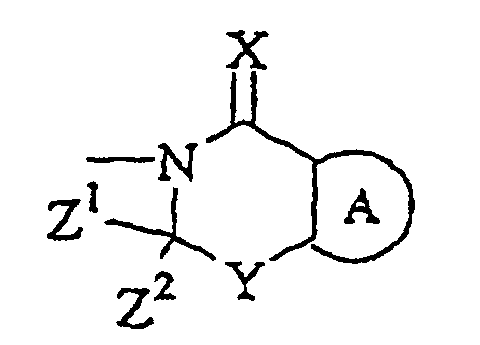 wherein X, Y and Ring A are the same as defined above;
and R4 is a protected or unprotected hydroxy-substituted C1-6 alkyl group, which comprises reacting an alkanamide of the formula [I]:wherein R1, R2 and R3 are the same as defined above, with a compound of the formula [II]: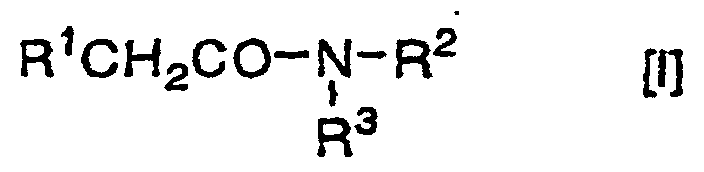 wherein L1 is a leaving group and R4 is the same as defined above, in the presence of a base without using a Lewis acid.
- The present invention also provides a novel compound of the formula [I-A]:wherein R1 is a C1-6 alkyl group; Ring B is a benzene ring which may have a substituent selected from the group consisting of a halogen, a C1-6 alkyl group, a C1-6 alkoxy group and a phenyl group; X is an oxygen atom or a sulfur atom; Y is an oxygen atom, a sulfur atom, a protected or unprotected imino group, or a methylene group; and Z1 and Z2 are the same or different and each a C1-20 alkyl group, a C3-8 cycloalkyl group, a phenyl group, or a phenyl-(C1-20)alkyl group, or both combine at the end thereof to form an alkytene group having 4 to 7 carbon atoms.

- The group represented by R4 is a protected or unprotected 1-hydroxyethyl group, and the protecting group for said hydroxy group may be any ones which can easily be removed by a conventional method, for example, a lower alkoxycarbonyl group, a halogeno-lower alkoxycarbonyl group, a substituted or unsubstituted phenyl-lower alkyl group (e.g. benzyl group which may optionally be substituted by nitro group or a lower alkoxy group), a tri-lower alkylsilyl group, a substituted or unsubstituted phenyl-lower alkoxycarbonyl group (e.g. benzyloxycarbonyl group which may optionally be substituted by nitro group or a lower alkoxy group), and the like.
- The group represented by R4 is a protected or unprotected 1-hydroxyethyl group, and the protecting group for said hydroxy group may be any ones which can easity be removed by a conventional method, for example, a lower alkoxycarbonyl group, a halogeno-lower alkoxycarbonyl group, a substituted or unsubstituted phenyl-lower alkyl group (e.g benzyl group which may optionally be substituted by nitro group or a lower alkoxy group), a tri-lower alkylsilyl group, a substituted or unsubstituted phenyl-lower alkoxycarbonyl group (e.g. benzyloxycarbonyl group which may optionally be substituted by nitro group or a lower alkoxy group), and the like.
- The alkyl group for Z1 and Z2 includes alkyl groups having 1 to 20 carbon atoms, preferably ones having 1 to 15 carbon atoms. The cycloalkyl group includes, for example, ones having 4 to 7 carbon atoms, and the aryl group includes, for example, a substituted or unsubstituted phenyl group. The aralkyl group includes, for example, a lower alkyl group substituted by a substituted or unsubstituted phenyl group. The substituents for alkyl group, cycloalkyl group, and the substituents on the phenyl group in the aryl group or in the aralkyl group are preferably a lower alkoxy group, a halogen atom, a protected or unprotected amino group.
- The protecting group for amino group, or the protecting group for imino group represented by Y includes any group which is conventionally used as a protecting group in the field of Peptide Chemistry, and the examples of the protecting group are preferably a lower alkyl group, an acyl group (e.g. a lower alkanoyl group, a lower alkoxycarbonyl group, a substituted or unsubstituted phenylcarbonyl group, a substituted or unsubstituted phenyl-lower alkoxycarbonyl group).
- Among the starting compounds [I], the compound of the formula [I-A] is a novel compound. The compound [I-A] of the present invention is structurally quite different from the above-mentioned known compound in that the amido moiety (hereinafter referred to as "supporting group") of the compound [I-A] of the present invention is the benzene ring-condensed 6-membered heterocyclic group, while the known supporting group is the 5-membered heterocyclic groups such as thiozolidine or oxazolidine.
- The compounds [I-A] wherein Ring B is unsubstituted benzene ring, X and Y are both oxygen atom, Z1 and Z2 are a C1-20 alkyl group; or both combine at the end thereof to form a unsubstituted alkylene group having 4 to 7 carbon atoms are more preferable.
- The base used in the reaction of the alkanamide compound [I] and the compound [II] to give the compound [III] includes any conventional organic and inorganic bases, but strong bases are more preferable. The preferable strong base is a base having enough basicity to make an enolate by removing hydrogen atom at α-position of the alkanamide compound [I] and the more preferable base is a base having basicity of pKb < -10. Examples of a base include an alkali metal salt or alkaline earth metal salt of amines (e.g. alkali metal bis(tri-lower alkylsilyl)amide), or an alkali metal salt or alkaline earth metal salt of alcohols, more particularly lithium bis(trimethylsilyl)amide, sodium bis(trimethylsilyl)amide, potassium bis(trimethylsilyl)amide, lithium diisopropylamide, sodium amide, sodium methoxide, sodium ethoxide, potassium t-butoxide, and the like.
- The reaction of the alkanamide compound [I] and the compound [II] is preferably carried out in an appropriate inert solvent such as ethers (e.g. tetrahydrofuran, diethyl ether, dioxane, dimethoxyethane, diisopropyl ether, etc.), aromatic hydrogen carbons (e.g. toluene, xylene, etc.), and the like, and more preferably carried out in tetrahydrofuran. The leaving group represented by L1 in the compound [II] may be any conventional leaving group which can easily be removed during the reaction with the alkanamide compound [I], for example, an acyloxy group, a lower alkylsulfonyloxy group, an arylsulfonyloxy group, a lower alkylsulfonyl group, an arylsulfonyl group, an arylthio group, a halogen atom, and the like, and an acyloxy group is more preferable.
- The alkanamide compound [I] may be used in an amount of 1 to 1.5 moles, preferably 1.1 to 1.3 moles, per one mole of the compound [II]. The base may be used in an amount of 1 to 2 moles, preferable 1.2 to 1.5 moles, per one mole of the compound [II]. The reaction is usually carried out at a temperature of -80°C to 10°C, preferably at -60°C to -30°C.
- The alkanamide compound [I] including the novel starting compound [I-A] is prepared by reacting a compound of the formula [IV]:wherein R2 and R3 are the same as defined above, with a compound of the formula [V]:

- In preparing the novel starting compound [I-A] by the above reaction, a benzene compound of the formula [IV-1]:wherein Ring B, X, Y, Z1 and Z2 are the same as defined above, is used as the compound [IV].
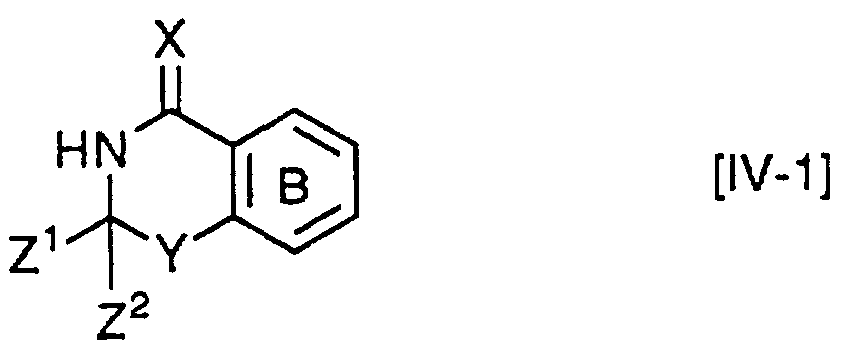
- The reaction of the compound [IV] and the compound [V] is carried out in an appropriate solvent in the presence of a dehydrating agent. The dehydrating agent is preferably carbonyldiimidazole, dicyclohexylcarbodiimide, N-hydroxysuccinimide, 1-hydroxybenzotriazole, and the like, and the solvent is preferably ether, methylene chloride, tetrahydrofuran, acetonitrile, and the like. The reaction is carried out at a temperature of -30°C to 70°C, preferably at 0°C to 30°C.
- The reaction of the compound [IV] and a reactive derivative of the compound [V] is carried out in an appropriate solvent in the presence or absence of an acid acceptor. The reactive derivative is preferably an acid halide or an acid anhydride of the compound [V]. The acid acceptor includes, for example, an alkali metal hydride, an alkali metal, or an organic base such as a lower alkyl lithium compound, an aryl lithium compound, pyridine, a di-lower alkyl-aniline, a tri-lower alkylamine, etc. The solvent is preferably tetrahydrofuran, diethyl ether, benzene, toluene, dichloromethane, chloroform, and the like. The reaction is carried out at a temperature of -80°C to 50°C, preferably at a temperature of -20°C to 30°C.
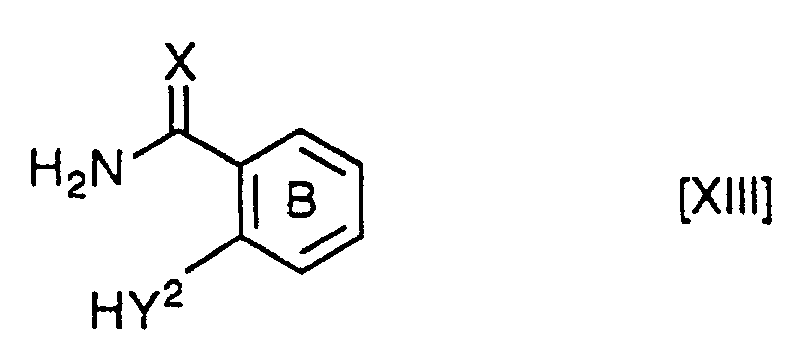
- Besides, the compound [IV] can be prepared by a conventional method. Among them, the benzene compound of the formula[IV-2]:wherein Y2 is oxygen atom, sulfur atom or an imino group which may have substituent(s), and Ring B, X, Z1 and Z2 are the same as defined above, is prepared by the method disclosed in Journal of the American Chemical Society, 72, 721 (1950). That is, the compound [IV-2] is prepared by condensing a compound of the formula [XIII]:
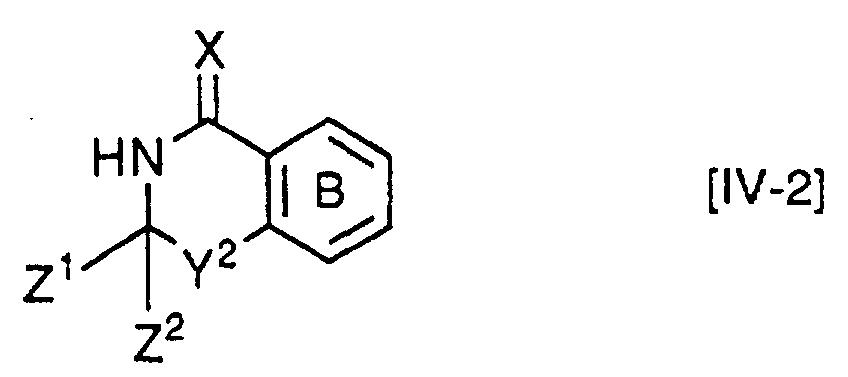 wherein Ring B, X and Y2 are the same as defined above, with a compound of the formula [XIV]:
 wherein Z1 and Z2 are the same as defined above, in the presence of an acid (e.g. p-toluenesulfonic acid, sulfuric acid, hydrochloric acid, etc.).
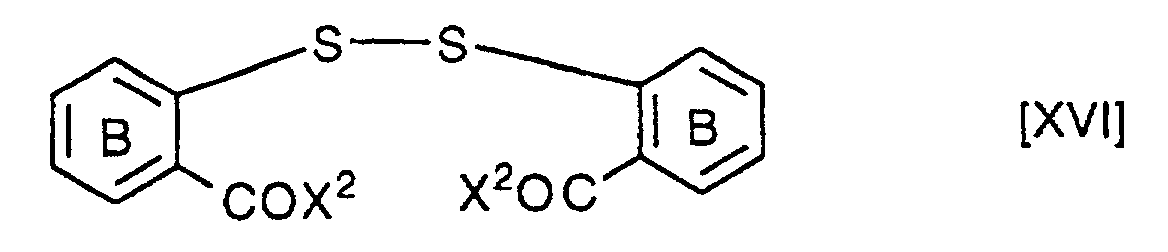
- Besides, the compound [XIII] in which X is oxygen atom and Y2 is sulfur atom may be prepared by halogenating a compound of the formula [XV]:wherein Ring B is the same as defined above, to give a compound of the formula [XVI]:
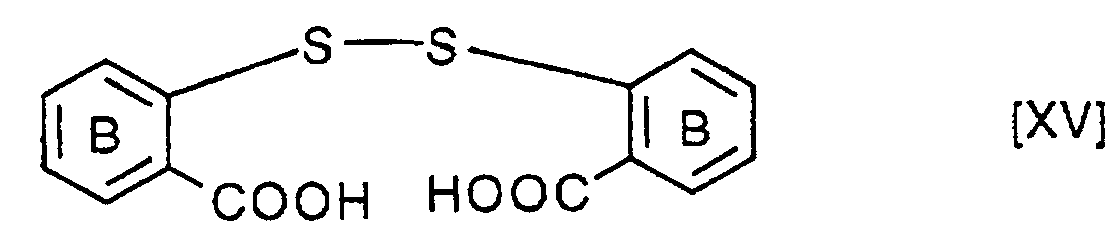 wherein X2 is a halogen atom, and Ring B is the same as defined above, subjecting the compound [XVI] to amidation to give a compound of the formula [XVII]:
 wherein Ring B is the same as defined above, and then reducing the compound [XVII].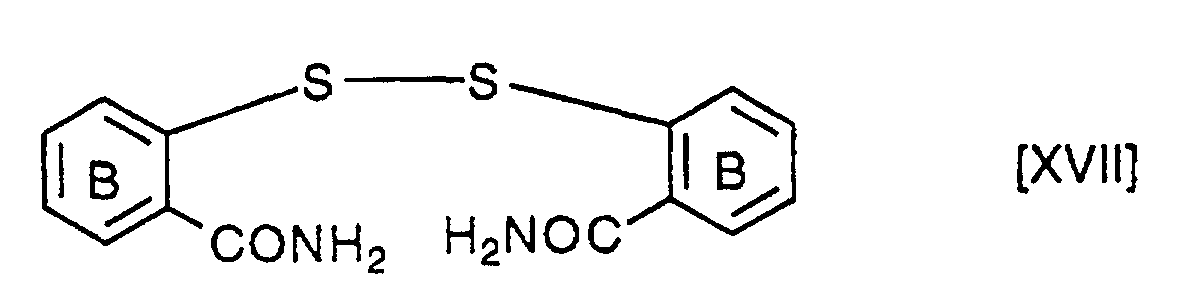
- Besides, the compound [XIII] in which X is oxygen atom and Y2 is an imino group which may have substituents(s) may be prepared by reacting a compound of the formula [XVIII]:wherein Y3 is an imino group which may have substituent(s), and other symbols are the same as defined above, with ammonia.

- Besides, the compound [XIII] in which X is sulfur atom and Y2 is sulfur atom or an imino group which may have substituent(s) may be prepared by subjecting the compound [XIII] in which X is oxygen atom and Y2 is sulfur atom or an imino group which may have substituent(s) to thiocarbonylation.
- Besides, the benzene compound [IV-1] in which Y is methylene group may be prepared by reacting the compound of the formula:wherein L3 is a halogen atom or hydroxy group, and Ring B is the same as defined above, with a compound of the formula:
 wherein Z1 and Z2 are the same as defined above, to give a compound of the formula:
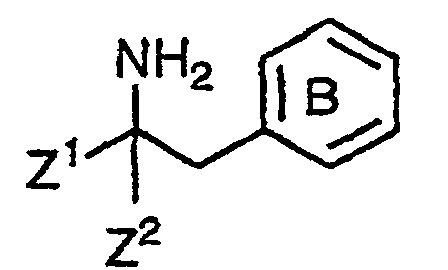
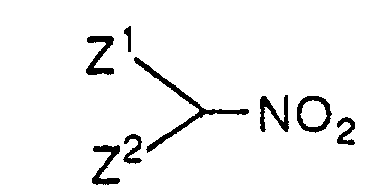 wherein the symbols are the same as defined above, reducing the compound to give a compound of the formula:
 wherein the symbols are the same as defined above, reacting the compound with a compound of the formula:
 wherein X is the same as defined above, and then subjecting the product to intramolecular cyclization.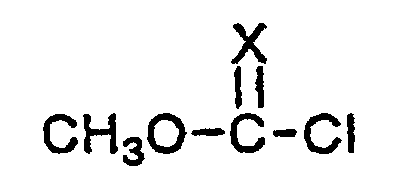
- The present invention is illustrated in more detail by the following Examples and Reference Example, but should not be construed to be limited thereto.
- To a solution of 2,2-di-n-butyl-2,3-dihydro-4H-1,3-benzoxadin-4-one (13.5 g, 51.7 mmole) in methylene chloride (30 ml) are added dropwise a solution of propionyl bromide (6.05 ml, 67.2 mmole) in methylene chloride (15 ml) and a solution of pyridine (5.02 ml, 62.0 mmole) in methylene chloride (15 ml) at -20°C under nitrogen atmosphere over a period of about 30 minutes. After the addition, the reaction mixture is warmed gradually, and stirred at room temperature overnight. To the reaction mixture is added water (50 ml), and the mixture is separated. The aqueous layer is extracted with methylene chloride (50 ml), and the organic layers are combined, and washed successively with saturated sodium hydrogen carbonate solution and saturated saline solution, dried over anhydrous magnesium sulfate, and concentrated under reduced pressure. The residue is purified by silica gel column chromatography (solvent; hexane/ethyl acetate = 19 : 1) to give 2,2-di-n-butyl-3-propionyl-2,3-dihydro-4H-1,3-benzoxadin-4-one (14.8 g).
Yield; 90 %
M.p. 52-54°C
NMR δ (CDCl3): 0.65 (6H, t, J=5.0 Hz), 1.03-1.62 (11H, m), 1.94-2.44 (4H, m), 2.91 (2H, q, J=7.2 Hz), 6.91 (1H, d, J=8.0 Hz), 7.07 (1H, dd, J=7.8, 7.8 Hz), 7.50 (1H, ddd, J=1.6, 8.0, 8.0 Hz), 7.94 (1H, dd, J=1.6, 8.0 Hz),
IR(KBr) cm-1 : 1718, 1682, 1610, 1469, 1174 - Using solutions of spiro[2,3-dihydro-4H-1,3-benzoxadine-2,1'-cyclohexan]-4-one (30.0 g, 138 mmole) in methylene chloride (60 ml), propionyl bromide (16.1 ml, 179 mmole) in methylene chloride (30 ml) and pyridine (13.4 ml, 166 mmole) in methylene chloride (30 ml), 3-propionyl-spiro[2,3-dihydro-4H-1,3-benzoxadine-2,1'-cyclohexan]-4-one (34.7 g) is obtained in the same manner as in Example 1.
Yield; 92 %
M.p. 58-60°C
NMR δ (CDCl3): 1.20 (3H, t, J=7.4 Hz), 1.16-1.43 (2H, m), 1.55-1.81 (4H, m), 1.98-2.40 (4H, m), 2.84 (2H, q, J=7.4 Hz), 6.98 (1H, d, J=8.2 Hz), 7.10 (1H, dd, J=7.6, 7.6 Hz), 7.52 (1H, ddd, J=1.6, 7.6, 7.6 Hz), 7.95 (1H, dd, J=1.6, 8.2 Hz)
IR (KBr) cm-1: 1724, 1687, 1611, 1467, 1320, 1159 - To a solution of 2,2-di-n-butyl-3-propionyl-2,3-dihydro-4H-1,3-benzoxadin-4-one (190 mg, 0.6 mmole) in tetrahydrofuran (3 ml) is added dropwise 1M solution (0.7 ml) of sodium bis(trimethylsilyl)amide in tetrahydrofuran at -60°C under nitrogen atmosphere, and the mixture is stirred at the same temperature for one hour. To the mixture is added dropwise (3R,4R)-4-acetoxy-3-[(1R)-1-t-butyldimethylsilyloxyethyl]-2-azetidinone (143 mg, 0.5 mmole) in tetrahydrofuran (1 ml) at -50°C, and the mixture is stirred for 10 minutes. To the reaction solution is added 0.1M phosphate buffer (pH 7.0, 10 ml), and the mixture is extracted with ethyl acetate (10 ml). The buffer layer is extracted with ethyl acetate (5 ml), and the organic layers are combined, washed with water, dried over anhydrous magnesium sulfate, and concentrated under reduced pressure. The residue is purified by silica gel column chromatography (solvent; hexane/ethyl acetate = 20:1 to 4:1) to give 3-{(2R)-2-[(3S,4R)-3-[(1R)-1-t-butyldimethylsilyloxyethyl]-2-oxoazetidin-4-yl]-propionyl}-2,2-di-n-butyl-2,3-dihydro-4H-1,3-benzoxadin-4-one (237 mg).
Yield; 87 %
M.p. 100-102°C
β: α = 100:0 (HPLC)
NMR δ (CDCl3): 0.07 (9H, s), 0.78-1.02 (12H, m), 1.10-1.58 (11H, m), 1.92-2.44 (4H, m), 3.13-3.20 (1H, m), 3.70-3.82 (1H, m), 4.07-4.24 (2H, m), 5.97 (1H, s), 6.92 (1H, d, J=8.1 Hz), 7.09 (1H, dd, J=7.4, 7.4 Hz), 7.53 (1H, ddd, J=1.6, 8.1, 8.1 Hz), 7.93 (1H, dd, J=1.6, 7.4 Hz) - 3-Propionyl-spiro[2,3-dihydro-4H-1,3-benzoxadine-2,1'-cyclohexan]-4-one (164 mg, 0.6 mmole) is reacted with (3R,4R)-4-acetoxy-3-[(1R)-1-t-butyldimethylsilyloxyethyl]-2-azetidinone (143 mg, 0.5 mmole) in the same manner as Example 3 to give 3-{(2R)-2-[(3S,4R)-3-[(1R)-1-t-butyldimethylsilyloxyethyl]-2-oxoazetidin-4-yl]propionyl}-spiro[2,3-dihydro-4H-1,3-benzoxadin-2,1'-cyclohexan]-4-one (205 mg).
Yield; 82 %
M.p. 149-151°C
β : α = 100:0 (HPLC)
NMR δ (CDCl3): 0.07 (9H, s), 0.85 (6H, s), 1.16-1.40 (5H, m), 1.50-2.40 (8H, m), 3.16-3.24 (1H, m), 3.48-3.63 (1H, m), 4.00-4.30 (2H, m), 5.95 (1H, s), 7.00 (1H, d, J=8.2 Hz), 7.11 (1H, dd, J=7.5, 7.5 Hz), 7.54 (1H, ddd, J=1.6, 7.5, 7.5 Hz), 7.93 (1H, dd, J=1.6, 8.2 Hz) - Using lithium bis(trimethylsilyl)amide instead of sodium bis(trimethylsilyl)amide 3-{(2R)-2-[(3S,4R)-3-[(1R)-1-t-butyldimethylsilyloxy-ethyl]-2-oxoazetidin-4-yl]propionyl}-2,2-di-n-butyl-2,3-dihydro-4H-1,3-benzoxadin-4-one is obtained in the same manner as in Example 3.
β: α = 100:0 (HPLC) - Using lithium bis(trimethylsilyl)amide, 3-{(2R)-2-[(35,4R)-3-[(1R)-1-t-butyldimethylsilyloxyethyl]-2-oxoazetidin-4-yl]propionyl}-spiro[2,3-dihydro-4H-1,3-benzoxadin-2,1'-cyclohexan]-4-one is obtained in the same manner as in Example 4.
β : α = 100:0 (HPLC) - The corresponding starting compounds and propionyl chloride are treated in the same manner as in Example 1 to give the compounds listed in Table 1.

- The corresponding starting compounds and propionyl bromide are treated in the same manner as in Example 1 to give the compounds listed in Tables 2 and 3.


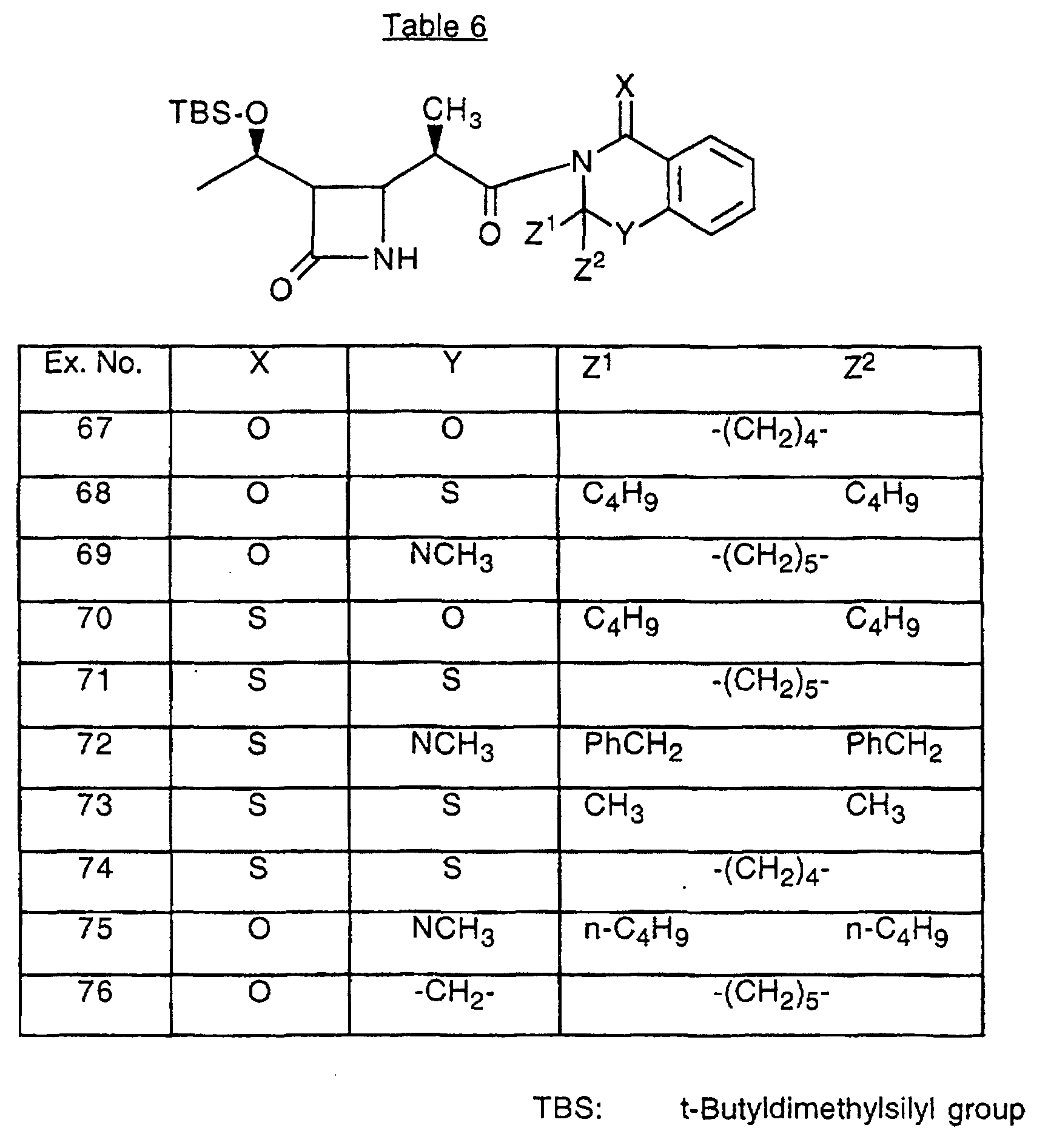
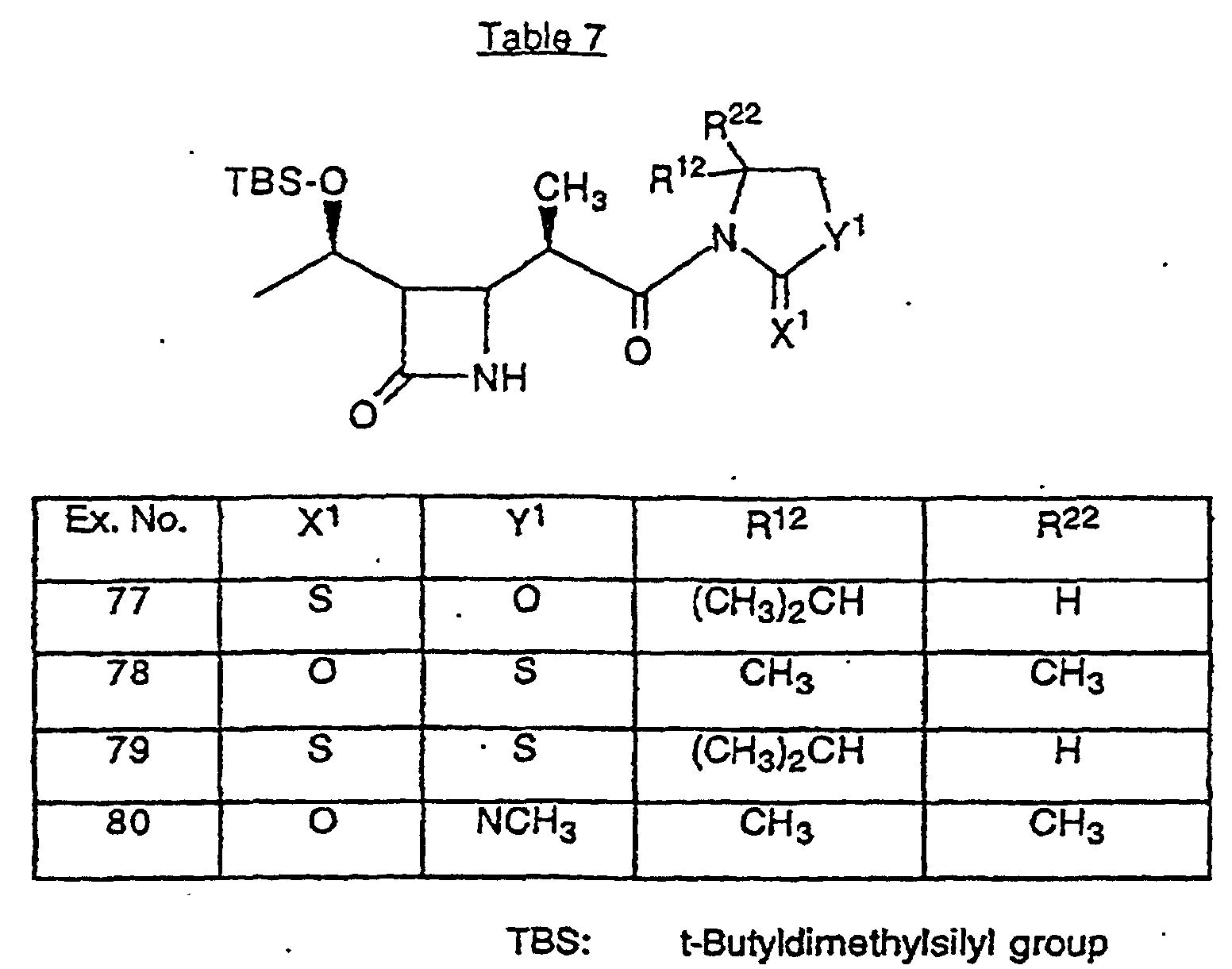
- The corresponding starting compounds and (3R,4R)-4-acetoxy-3-[(1R)-1-t-butyldimethylsilyloxyethyl]-2-azetidinone are treated in the same manner as in Example 3 to give the compounds listed in Tables 4 and 5.

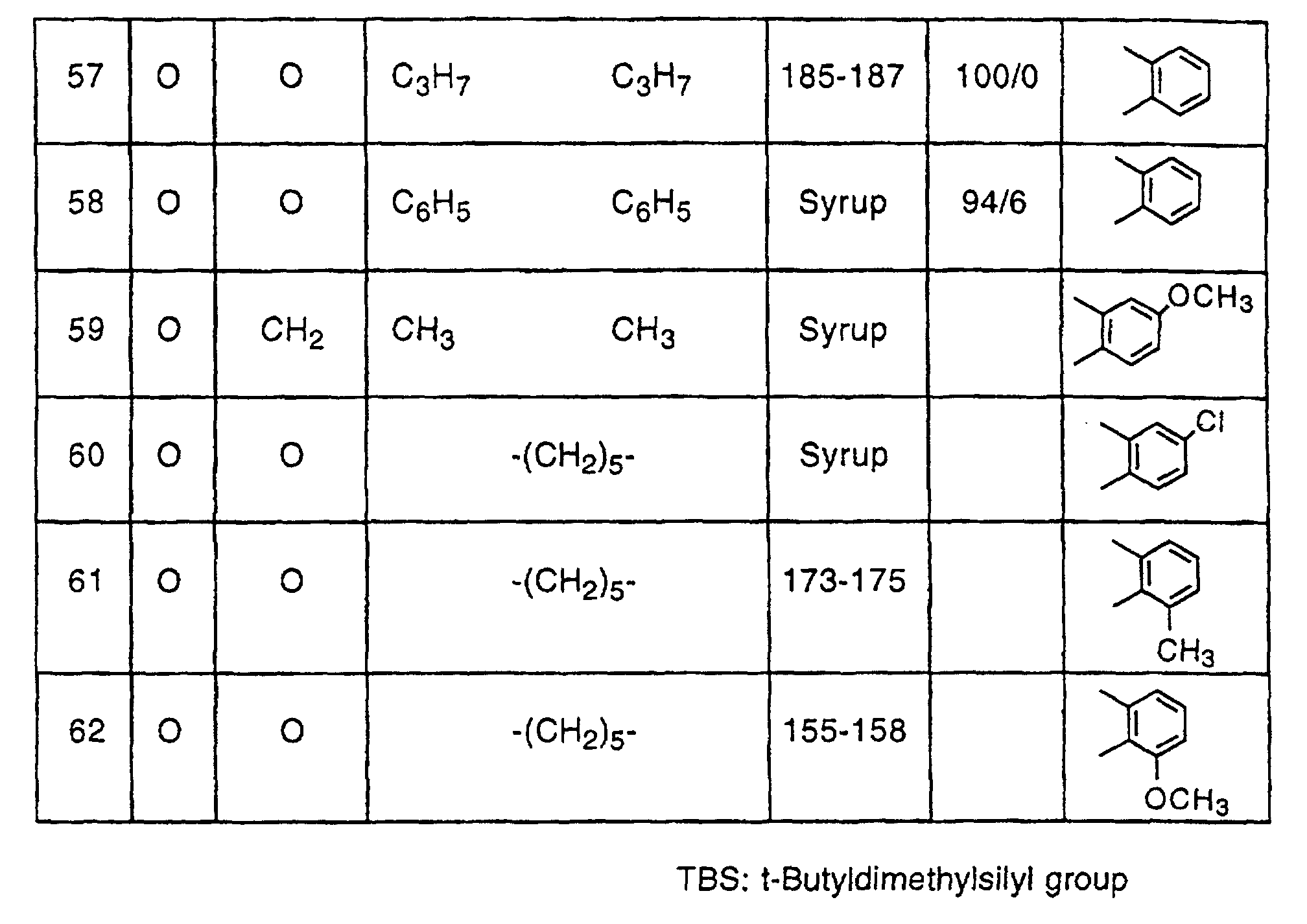

- The corresponding starting compounds and (3R,4R)-4-acetoxy-3-[(1R)-1-t-butyldimethylsilyloxyethyl]-2-azetidinone are treated in the same manner as in Example 3 to give the compounds listed in Tables 6 and 7.
- Using sodium methylate, 3-{(2R)-2-[(3S,4R)-3-[(1R)-1-t-butyldimethyl-silyloxyethyl]-2-oxoazetidin-4-yl]propionyl}-2,2-di-n-butyl-2,3-dihydro-4H-1,3-benzoxadin-4-one is obtained in the same manner as in Example 3.
- Dibutyl ketone (20 g), salicylamide (19.3 g) and p-toluenesulfonic acid hydrate (2.7 g) are added to toluene (300 ml), and the mixture is refluxed overnight during which the water is removed by Dean-Stark apparatus. After cooling, the reaction solution is washed, dried, and evaporated to remove the solvent. The residue is purified by silica gel column chromatography (solvent; hexane/ethyl acetate = 95:5) to give 2,2-dibutyl-4-oxo-2,3-dihydro-4H-1,3-benzoxadine (34 g) as yellow oil.
-
- (1) Thionyl chloride (12.5 ml) is added dropwise to a solution of 2,2'-dithiodibenzoic
acid (25.0 g) in a mixture of toluene (1.20 ml) and dimethylformamide
(0.5 ml) at room temperature. The mixture is warmed to a
temperature of 70 to 80°C and then stirred at the same temperature overnight.
After 20 hours, the crystals are collected by filtration to give 2,2'-dithiodibenzoyl
chloride (14.9 g) as colorless crystal.
M.p. 140-141°C - Aqueous ammonia (20 ml) is added to a suspension of 2,2'-dithiodibenzoyl
chloride (7.03 g) in dioxane (20 ml) at room temperature. The
mixture is warmed to a temperature of 80 to 90°C and stirred for five hours at
the same temperature. The mixture is cooled to room temperature to give 2,2'-dithiodibenzoylamide
(4.8 g) as colorless crystal.
M.p. 249-250°C - (3) 2N Hydrochloric acid (41 ml) is added dropwise to a suspension of
2,2'-dithiodibenzoylamide (4.14 g) and zinc powders (2.5 g) in dioxane (70 ml).
The mixture is warmed to a temperature of 60 to 70°C and stirred for four hours
at the same temperature. The reaction mixture is poured into water (50 ml),
and the mixture is extracted with ethyl acetate. The ethyl acetate layer is
washed, dried and evaporated under reduced pressure to remove the solvent.
A mixture of cyclohexanone (5.64 ml) and p-toluenesulfonic acid monohydrate
(1.03 g) is added to a solution of the above obtained residue in toluene, and
the mixture is refluxed for 40 minutes by making use of a dehydrator of Dean Stark. After cooling to room temperature, the reaction mixture is condensed under reduced pressure and methanol is added thereto. The precipitates are collected by filtration to give spiro[2,3-dihydro-4H-1,3-benzothiazine-2,1'-cyclohexan]-4-one (3.05 g) as colorless crystal. M.p. 193-195°C -
-
- (1) N-Methylisatic acid (10.0 g) is added gradually to water (140 ml) at
room temperature and thereto is added dropwise aqueous ammonia (9.6 g).
The mixture is warmed to 80°C during 45 minutes, and ethanol is added
thereto until the reaction mixture becomes colorless. Then, the reaction mixture
is cooled to room temperature and the precipitated crystals are collected by
filtration to give 2-carbamoyl-N-methylaniline (7.11 g) as colorless crystal.
M.p. 155-156°C - (2) A mixture of cyclohexanone (6.9 ml) and p-toluenesulfonic acid
monohydrate (633 mg) is added to a solution of the above obtained product
(5.00 g) in toluene, and the mixture is refluxed with dehydration by making use
of a dehydrator of Dean Stark for one hour. After cooling to room temperature,
the precipitated crystals are collected by filtration and washed with methanol to
give spiro[1-methyl-1,2,3,4-tetrahydroquinazoline-2,1'-cyclohexan]-4-one (6.32
g) as colorless crystal.
M.p. 183-185°C -
-
- (1) A solution of ethoxycarbonyl chloride (9.6 g) in ether (25 ml) is
added dropwise to a solution of 1-(2-amino-2-methylpropyl)-4-methoxybenzene
(30 g) in ether (300 ml) under ice-cooling. Then, a solution of
ethoxycarbonyl chloride (9.6 g) in ether (25 ml) and a solution of sodium
hydroxide (8 g) in water (50 ml) are added dropwise thereto. After addition, the
mixture is stirred for one hour, and water is added thereto. The ether layer is
removed therefrom and the aqueous layer is extracted with ether twice. A
mixture of the ether layer and the extract is dried and evaporated to remove the
solvent. The residue is purified by column chromatography to give 1-[2-(N-ethoxycarbonyl)amino-2-methylpropyl]-4-methoxybenzene
(29.1 g) as an oil.
NMR (CDCl3) δ 1.02 (6H, s), 1.32 (3H, t, J=7.5 Hz), 3.12 (2H, s), 3.72 (3H, s), 4.17 (2H, q, J=7.5 Hz), 6.70-7.10 (4H, m) - (2) The above product (10 g) is added to polyphosphoric acid (100 ml)
and the mixture is stirred at room temperature for 30 minutes. Then, the mixture
is gradually warmed to a temperature of 100°C and stirred at the same
temperature for two hours. After cooling to room temperature, water (300 ml) is
added thereto and the mixture is extracted with chloroform. The extract is dried
and evaporated to remove the solvent. The residue is purified by column
chromatography to give 1-oxo-3,3-dimethyl-7-methoxy-1,2,3,4-tetrahydroisoquinoline
(5.43 g) as an oil.
NMR (CDCl3) δ 1.02 (6H, s), 3.10 (2H, s), 3.72 (3H, s), 6.90 (1H, d, J=9 Hz), 7.45 (1H, dd, J=3 Hz, 9 Hz), 7.85 (1H, d, J=3 Hz) -
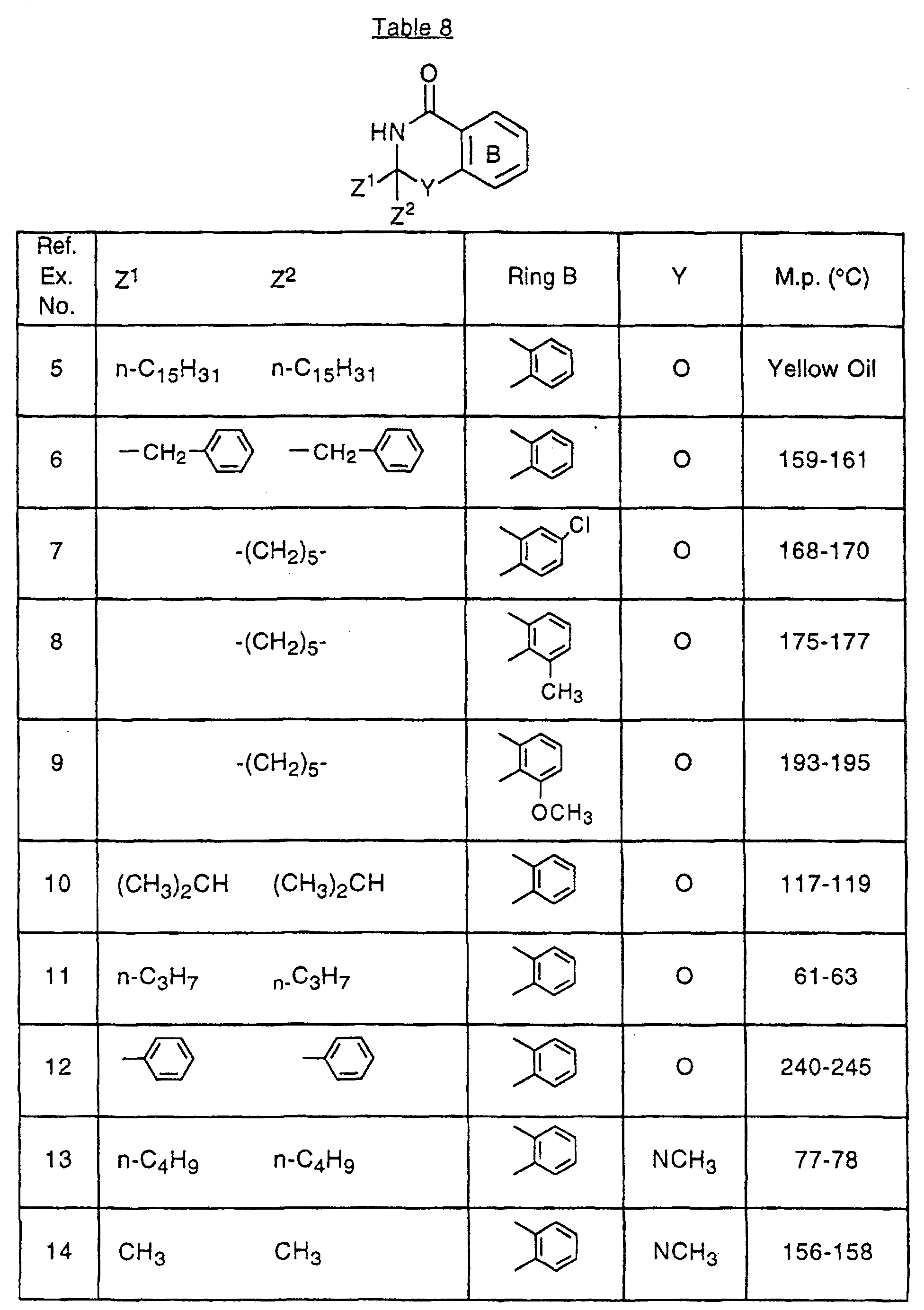
- The corresponding starting compounds [XII] and the corresponding starting compounds [XIV] are treated in the same manner as in Reference Example 1 to give the compounds listed in Table 8.
- According to the present invention, the azetidinone compound [III], which is useful as a synthetic intermediate for carbapenem derivatives, is prepared by reacting the alkanamide compound [I] with the compound [II] in the presence of a base without using a Lewis acid.
- Especially, when the compound [I] wherein the group of the formula -N(R2)(R3) is a group of the formula:wherein Ring B, X, Y, Z1 and Z2 are the same as defined, and R1 is a C1-6 alkyl group, especially methyl group, is used in the present process, there is stereoselectively obtained the compound of the formula [III-A]:
 wherein R15 is a C1-6 alkyl group and R4, Ring B, X, Y, Z1 and Z2 are the same as defined above, having R1 with β-configuration. Therefore, the present invention can provide a synthetic intermediate useful for 1β-methylcarbapenem derivative having an antibacterial activity.
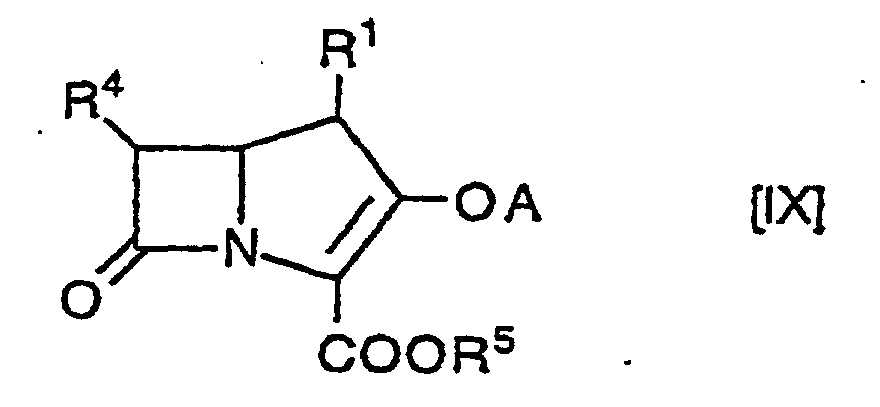
- Besides, the compound [III-A] can be converted into the compound [XII]wherein R1 and R4 are the same as defined above and R5 is a hydrogen atom or an ester residue and the compound [IX]
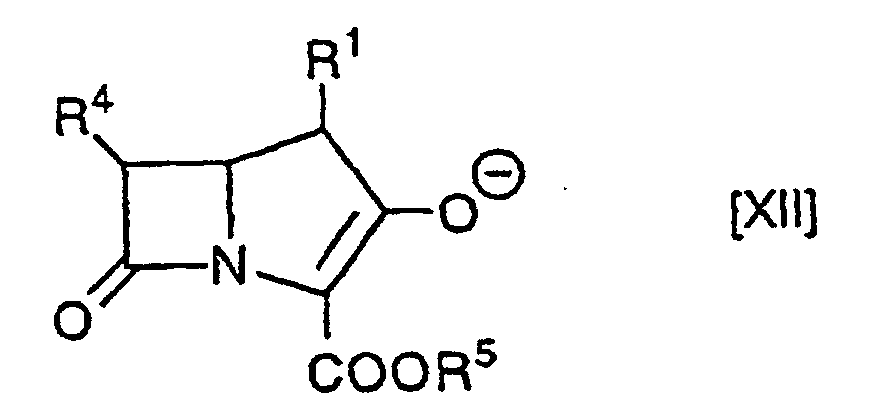 wherein a group of formula -OA is an esterified hydroxy group, and R1, R4 and R5 are the same as defined above, without activating the 4-side chain of the compound [III-A] by chemical modification, and during the reaction from the compound [III-A] to the compound [XII] and the compound [IX], the group of the formula:
 wherein Ring B, X, Y, Z1 and Z2 are the same as defined above, can easily be removed and can be recovered as the compound [IV] after the reaction, and hence, the process for preparing the compound [IX] using the compound [III-A] is extremely excellent process from practical and economical points.
- Moreover, the novel alkanamide compound [I-A] can easily be prepared, and in particular, the compound [I-A] wherein both X and Y are oxygen atom and Ring B is unsubstituted benzene ring is industrailly excellent reagent because it can be prepared from a commercially available salicylamide by two steps.
- Thus, according to the present process, the azetidinone compound [III], the azetidinonepropionic acid [VI]wherein R1 and R4 are the same as defined above, and the lβ-methylcarbapenem derivative (XI)
 wherein R41 is a protected or unprotected hydroxy-substituted lower alkyl group, R51 is hydrogen atom or an ester residue, and R1 is the same as defined above, R6 is an organic group or a salt thereof, can be industrially and advantageously prepared at low cost because it is not necessary to perform the optical resolution, to use the expensive Lewis acid, to treat the waste fluid especially, to use the alkylation method, which is difficult to be industrially carried out.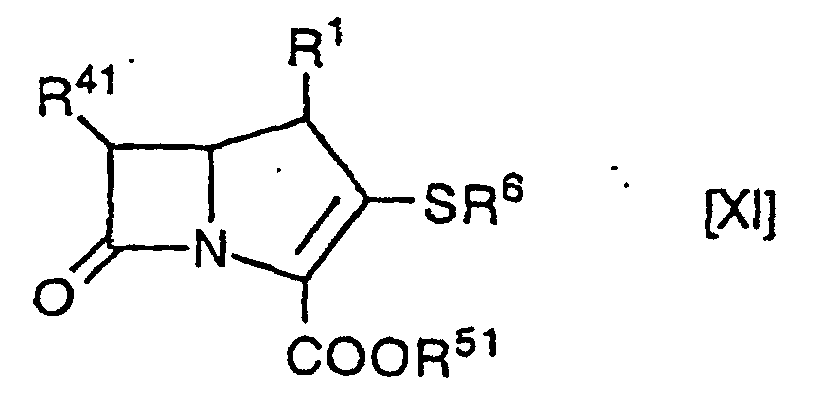
Claims (10)
- A process for preparing an azetidinone compound of the formula [III]:wherein R1 is a C1-6 alkyl group, R2 and R3 combine together with the adjacent nitrogen atom to form a heterocyclic group which is a member selected from the group consisting of a group of the formula:
 wherein X1 is an oxygen atom or a sulfur atom, Y1 is an oxygen atom, a sulfur atom, a methytene group or an imino group substituted by a C1-20 alkyl group or a phenyl group, and R11, R12, R13 and R14 are the same or different and each a hydrogen atom, a C1-5 alkyl group, a cyano group, a (C1-20 alkyl)oxycarbonyl group, a phenyl-(C1-20)alkyl group, or a phenyl group, or R11 and R12 combine together to form a C2-6 alkylene chain, and simultaneously or independently, R13 and R14 combine together to form a C2-6 alkylene chain; a group of the formula:
 wherein X is an oxygen atom or a sulfur atom, Y is an oxygen atom, a sulfur atom, a protected or unprotected imino group, or a methylene group, Z1 and Z2 are the same or different and each a hydrogen atom, a C1-20 alkyl group, a C3-8 cycloalkyl group, a phenyl group, or a phenyl-(C1-20)alkyl group, or both combine at the end thereof to form an alkylene group having 4 to 7 carbon atoms, and Ring A is a benzene ring which may have a substituent selected from the group consisting of a halogen, a C1-6 alkyl group, a C1-6 alkoxy group and a phenyl group; and a group of the formula:
 wherein X, Y and Ring A are the same as defined above;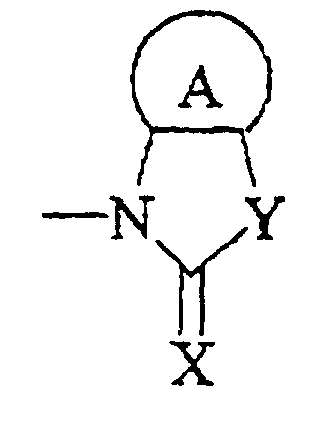
and R4 is a protected or unprotected hydroxy-substituted C1-6 alkyl group, which comprises reacting an alkanamide compound of the formula [I]:wherein R1, R2 and R3 are the same as defined above, with a compound of the formula [II]: wherein L1 is a leaving group and R4 is the same as defined above, in the presence of a base without using a Lewis acid.
- A compound of the formula [I-A]:wherein R1 is a C1-6 alkyl group; Ring B is a benzene ring which may have a substituent selected from the group consisting of a halogen, a C1-6 alkyl group, a C1-6 alkoxy group and a phenyl group; X is an oxygen atom or a sulfur atom; Y is an oxygen atom, a sulfur atom, a protected or unprotected imino group, or a methylene group; and Z1 and Z2 are the same or different and each a C1-20 alkyl group, a C3-8 cycloalkyl group, a phenyl group, or a phenyl-(C1-20)alkyl group, or both combine at the end thereof to form an alkylene group having 4 to 7 carbon atoms.
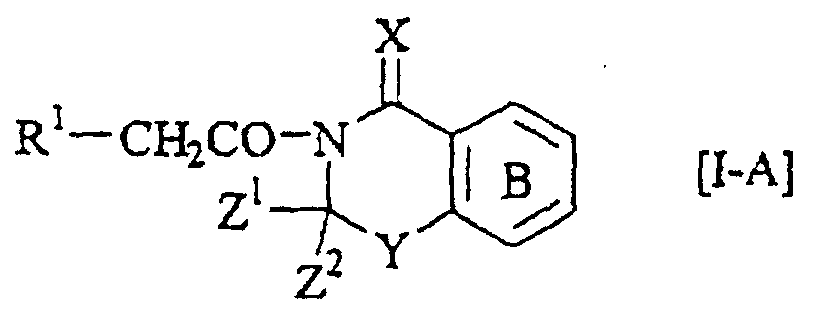
- A process according to claim 1, wherein said heterocyclic group is a member selected from the group consisting of a group of the formula:wherein X1 is an oxygen atom or a sulfur atom, Y1 is an oxygen atom, a sulfur atom, a methylene group or an imino group substituted by a C1-20 alkyl group or a phenyl group, and R11, R12, R13 and R14 are the same or different and each a hydrogen atom, a C1-5 alkyl group, a cyano group, a (C1-20 alkyl)oxycarbonyl group, a phenyl-(C1-20)alkyl group, or a phenyl group, or R11 and R12 combine together to form a C2-6 alkylene chain, and simultaneously or independently, R13 and R14 combine together to form a C2-6 alkylene chain; and a group of the formula:
 wherein X is an oxygen atom or a sulfur atom, Y is an oxygen atom, a sulfur atom, a protected or unprotected imino group, or a methylene group, Z1 and Z2 are the same or different and each a hydrogen atom, a C1-20 alkyl group, a C3-8 cycloalkyl group, a phenyl group, or a phenyl(C1-20)alkyl group, or both combine at the end thereof to form an alkylene group having 4 to 7 carbon atoms, and Ring A is a benzene ring which may have a substituent selected from the group consisting of a halogen, a C1-6 alkyl group, a C1-6 alkoxy group and a phenyl group.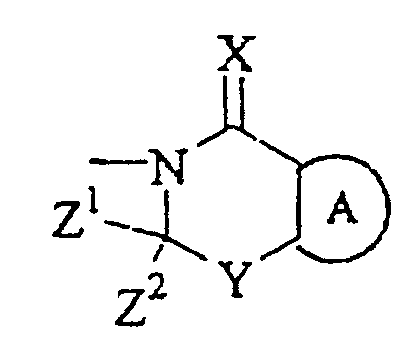
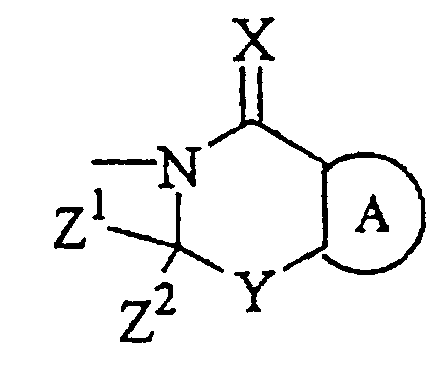
- A process according to claim 1, wherein said hetrocyclic group is a group of the formula:wherein X is an oxygen atom or a sulfur atom, Y is an oxygen atom, a sulfur atom, a protected or unprotected imino group, or a methylene group, Z1 and Z2 are the same or different and each a hydrogen atom, a C1-20 alkyl group, a C3-8 cycloalkyl group, a phenyl group, or a phenyl-(C1-20)alkyl group, or both combine at the end thereof to form an alkylene group having 4 to 7 carbon atoms, and Ring A is a benzene ring which may have a substituent selected from the group consisting of a halogen, a C1-6 alkyl group, a C1-6 alkoxy group and a phenyl group.
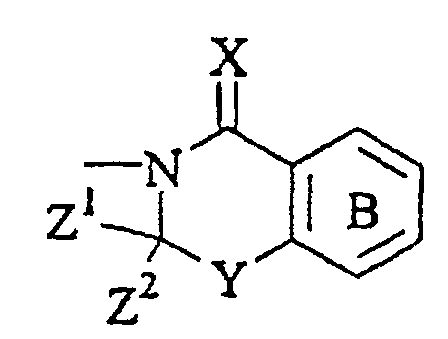
- A process according to claim 1, wherein said heterocyclic group is a group of the formula:wherein Ring B is a benzene ring which may have a substituent selected from the group consisting of a halogen, a C1-6 alkyl group, a C1-6 alkoxy group and a phenyl group, X is an oxygen atom or a sulfur atom, Y is an oxygen atom, a sulfur atom, a protected or unprotected imino group, or a methylene group, Z1 and Z2 are the same or different and each a C1-20 alkyl group, a C3-8 cycloalkyl group, a phenyl group, or a phenyl-(C1-20)alkyl group, or both combine at the end thereof to form an alkylene group having 4 to 7 carbon atoms.
- A process according to claim 1, wherein said heterocyclic group is a member selected from the group consisting of 2,2-dimethyl-4-oxo-2,3-diydro-4H-1,3-benzoxadin-3-yl; 2,2-diethyl-4-oxo-2,3-diydro-4H-1,3-benzoxadin-3-yl; 2,2-diisopropyl-4-oxo-2,3-diydro-4H-1,3-benzoxadin-3-yl; 2,2-di-n-butyl-4-oxo-2,3-diydro-4H-1,3-benzoxadin-3-yl; spiro[4-oxo-2,3-diydro-4H-1,3-benzoxadin-2,1'-cyclohexan]-3-yl; 2,2-dimethyl-4-thioxo-2,3-diydro-4H-1,3-benzoxadin-3-yl; spiro[4-thioxo-2,3-diydro-4H-1,3-benzoxadin-2,1'-cyclohexan]-3-yl; and spiro{4-oxo-2,3-diydro-4H-1,3-benzothiazin-2,1'-cyclohexan]-3-yl.
- The compound according to claim 2, wherein Y is an oxygen atom or a sulfur atom, Z1 and Z2 are the same or different and each a C1-20 alkyl group, a C4-7 cycloalkyl group, a phenyl group, or a phenyl-(C1-6)alkyl group, or both combine at the end thereof to form an alkylene group having 4 to 7 carbon atoms.
- The compound according to claim 2, wherein Ring B is an unsubstituted benzene ring, X is an oxygen atom, Y is an oxygen atom, and Z1 and Z2 are the same or different and each a C1-20 alkyl group, or both combine at the ends thereof to form an alkylene group having 4 to 7 carbon atoms.
- A process according to claim 1, 3, 4, 5 or 6, wherein the base has enough basicity to make an enolate by removing a hydrogen atom at the α-position of said alkanamide compound of the formula (I),
- A process according to claim 1, 3, 4, 5 or 6, wherein the base is lithium bis(trimethylsilyl)amide or sodium bis(trimethylsilyl)amide.
Applications Claiming Priority (3)
| Application Number | Priority Date | Filing Date | Title |
|---|---|---|---|
| JP15189993 | 1993-06-23 | ||
| JP151899/93 | 1993-06-23 | ||
| JP15189993 | 1993-06-23 |
Publications (3)
| Publication Number | Publication Date |
|---|---|
| EP0635488A2 EP0635488A2 (en) | 1995-01-25 |
| EP0635488A3 EP0635488A3 (en) | 1995-08-23 |
| EP0635488B1 true EP0635488B1 (en) | 2001-09-26 |
Family
ID=15528629
Family Applications (1)
| Application Number | Title | Priority Date | Filing Date |
|---|---|---|---|
| EP94109711A Expired - Lifetime EP0635488B1 (en) | 1993-06-23 | 1994-06-23 | Novel process for preparing azetidinone compound and novel starting compound therefor |
Country Status (3)
| Country | Link |
|---|---|
| US (2) | US5550229A (en) |
| EP (1) | EP0635488B1 (en) |
| DE (1) | DE69428403T2 (en) |
Families Citing this family (28)
| Publication number | Priority date | Publication date | Assignee | Title |
|---|---|---|---|---|
| US5731431A (en) * | 1991-12-26 | 1998-03-24 | Nippon Soda Co., Ltd. | Process for preparing 4-substituted azetidinone derivatives |
| US5631365A (en) | 1993-09-21 | 1997-05-20 | Schering Corporation | Hydroxy-substituted azetidinone compounds useful as hypocholesterolemic agents |
| JPH09143156A (en) * | 1995-11-17 | 1997-06-03 | Tanabe Seiyaku Co Ltd | Production of acetoxyazetidinone derivative and its synthetic intermediate |
| JP3450193B2 (en) | 1998-07-24 | 2003-09-22 | 高砂香料工業株式会社 | Method for producing 4-substituted azetidinone derivatives |
| AR023463A1 (en) | 1999-04-16 | 2002-09-04 | Schering Corp | USE OF AZETIDINONE COMPOUNDS |
| US6982251B2 (en) | 2000-12-20 | 2006-01-03 | Schering Corporation | Substituted 2-azetidinones useful as hypocholesterolemic agents |
| RS20100015A (en) | 2001-01-26 | 2010-12-31 | Schering Corporation | Combination of receptor activator activated by fenofibrate peroxisome-proliferator (ppar) with sterol absorption inhibitor ezetimibe for vascular indications |
| US7071181B2 (en) | 2001-01-26 | 2006-07-04 | Schering Corporation | Methods and therapeutic combinations for the treatment of diabetes using sterol absorption inhibitors |
| PT1355644E (en) | 2001-01-26 | 2006-11-30 | Schering Corp | The use of substituted azetidinone compounds for the treatment of sitosterolemia |
| US7053080B2 (en) | 2001-09-21 | 2006-05-30 | Schering Corporation | Methods and therapeutic combinations for the treatment of obesity using sterol absorption inhibitors |
| EP1429756B1 (en) | 2001-09-21 | 2006-11-22 | Schering Corporation | Treatment of xanthoma with azetidinone derivatives as sterol absorption inhibitors |
| JP2006508188A (en) | 2002-11-06 | 2006-03-09 | シェーリング コーポレイション | Cholesterol absorption inhibitors for the treatment of demyelination |
| CN1756755A (en) | 2003-03-07 | 2006-04-05 | 先灵公司 | Substituted azetidinone compounds, formulations and uses thereof for the treatment of hypercholesterolemia |
| US7459442B2 (en) | 2003-03-07 | 2008-12-02 | Schering Corporation | Substituted azetidinone compounds, processes for preparing the same, formulations and uses thereof |
| DE602004016123D1 (en) | 2003-03-07 | 2008-10-09 | Schering Corp | SUBSTITUTED AZETIDINONE DERIVATIVES, THEIR PHARMACEUTICAL FORMULATIONS AND THEIR USE FOR THE TREATMENT OF HYPERCHOLESTEROLMIA |
| CN1756756A (en) | 2003-03-07 | 2006-04-05 | 先灵公司 | Substituted azetidinone compounds, formulations and uses thereof for the treatment of hypercholesterolemia |
| US7667076B2 (en) * | 2005-09-14 | 2010-02-23 | Regents Of The University Of California | Amide forming chemical ligation |
| KR20110049823A (en) * | 2008-07-30 | 2011-05-12 | 랜박시 래보러터리스 리미티드 | Process for preparing carbapenem compound |
| PT2464645T (en) | 2009-07-27 | 2017-10-11 | Gilead Sciences Inc | HETEROCYCLIC COMPOUNDS FUSIONED AS ION CHANNEL MODULATORS |
| WO2011048583A1 (en) | 2009-10-23 | 2011-04-28 | Ranbaxy Laboratories Limited | Process for the preparation of carbapenem compounds |
| WO2012003392A1 (en) | 2010-07-02 | 2012-01-05 | Gilead Sciences, Inc. | Fused heterocyclic compounds as ion channel modulators |
| AU2012253653A1 (en) | 2011-05-10 | 2013-05-02 | Gilead Sciences, Inc. | Fused heterocyclic compounds as sodium channel modulators |
| TWI622583B (en) | 2011-07-01 | 2018-05-01 | 基利科學股份有限公司 | Fused heterocyclic compound as ion channel regulator |
| NO3175985T3 (en) | 2011-07-01 | 2018-04-28 | ||
| CN102367239B (en) * | 2011-07-20 | 2015-10-28 | 沈阳药科大学 | 2-aryl-2, 3-dihydro-4H-1, 3-benzothiazin-4-one derivatives and application thereof |
| CN102977134A (en) * | 2012-12-13 | 2013-03-20 | 凯莱英医药集团(天津)股份有限公司 | Preparation method of carbapenem intermediate beta-methyl-ADC-8 |
| US10695322B2 (en) | 2016-01-29 | 2020-06-30 | The Johns Hopkins University | Inhibitors of bacterial growth |
| CN111440102B (en) * | 2020-04-26 | 2022-02-15 | 大连凯飞化学股份有限公司 | Preparation method of dithiodibenzoamide compound |
Family Cites Families (35)
| Publication number | Priority date | Publication date | Assignee | Title |
|---|---|---|---|---|
| AU433549B2 (en) * | 1968-10-10 | 1973-03-09 | Chhom Gyogyszer Es Vegyeszeti Termeker Ciara N | New 4 quinazoline derivatives and process forthe preparation thereof |
| US4194047A (en) * | 1975-11-21 | 1980-03-18 | Merck & Co., Inc. | Substituted N-methylene derivatives of thienamycin |
| EP0010348A1 (en) * | 1978-09-12 | 1980-04-30 | Imperial Chemical Industries Plc | Heterocyclic trichloromethyl derivatives, process for their preparation and their use |
| US4640915A (en) * | 1982-03-29 | 1987-02-03 | Fujisawa Pharmaceutical Co., Ltd. | 1-azabicyclo[3.2.0]hept-2-ene-2-carboxylic acid derivatives |
| JPS6019764A (en) * | 1983-07-13 | 1985-01-31 | Sankyo Co Ltd | Production of azetidinone derivative |
| JPS60202886A (en) * | 1984-03-27 | 1985-10-14 | Sankyo Co Ltd | 1-substituted carbapenem-3-carboxylic acid derivative and its preparation |
| JPS615081A (en) * | 1984-06-18 | 1986-01-10 | Sankyo Co Ltd | Preparation of 1-substituted carbapenem-3-carboxylic acid derivative |
| DK270685A (en) * | 1984-06-29 | 1985-12-30 | Hoffmann La Roche | carbapenem derivatives |
| ATE107278T1 (en) * | 1985-03-29 | 1994-07-15 | Merck & Co Inc | ENANTIOSELECTIVE PROCESS FOR THE PREPARATION OF 1-BETA-METHYLCARBAPENEM ANTIBIOTIC INTERMEDIATE PRODUCTS. |
| JPS61275267A (en) * | 1985-03-29 | 1986-12-05 | メルク エンド カムパニ− インコ−ポレ−テツド | Enantioselective manufacture of 1-beta-methylcarbapenem antibiotic intermediate |
| CA1282415C (en) * | 1985-08-31 | 1991-04-02 | Yasuhiro Kuramoto | Azetidin-2-on derivatives and process for production thereof |
| JPS62158277A (en) * | 1986-01-07 | 1987-07-14 | Sumitomo Pharmaceut Co Ltd | Beta-lactame derivative |
| JPS62252785A (en) * | 1986-01-08 | 1987-11-04 | Sankyo Co Ltd | 4-substituted beta-lactam compound |
| JPS62169781A (en) * | 1986-01-21 | 1987-07-25 | Sankyo Co Ltd | Beta-lactam compound |
| JP2789190B2 (en) * | 1986-01-27 | 1998-08-20 | 住友製薬株式会社 | Novel β-lactam derivative and method for producing the same |
| GB8607921D0 (en) * | 1986-04-01 | 1986-05-08 | Fujisawa Pharmaceutical Co | 3,4-disubstituted-2-azetidinone derivatives |
| JPH0759581B2 (en) * | 1986-09-05 | 1995-06-28 | 日本レダリ−株式会社 | (1R) -1-methylcarbapenem-3-carboxylic acid derivative |
| JPS6363680A (en) * | 1986-09-05 | 1988-03-22 | Nippon Redarii Kk | (1r)-1-methylcarbapenem-3-carboxylic acid derivative |
| DE3632916A1 (en) * | 1986-09-27 | 1988-03-31 | Bayer Ag | Enantiomerically pure 2-azetidinones, processes for their preparation and their use |
| JPH0713058B2 (en) * | 1986-12-29 | 1995-02-15 | 日本レダリ−株式会社 | Process for producing 4-substituted azetidinone derivative |
| JPS63255284A (en) * | 1987-04-11 | 1988-10-21 | Nippon Redarii Kk | (1r,5s,6s)-2-((substituted pyridinium-2-yl)methyl)thio-6-((r)-1-hydroxyethyl)-1-methylcarbapenem-3-carboxylate |
| JPS63255282A (en) * | 1987-04-11 | 1988-10-21 | Nippon Redarii Kk | (1r,5s,6s)-2-((thiazolium-2-yl) or (imidazolium-2-yl) methyl)thio-6-((r)-1-hydroxyethyl)-1-methyl-car bapenem-3-carboxylate |
| JPS63255280A (en) * | 1987-04-11 | 1988-10-21 | Nippon Redarii Kk | (1r,5s,6s)-2-substituted-6-((r)-1-hydroxyethyl)-1-methyl-carb apenem-3-carboxylic acid derivative |
| JPS63255283A (en) * | 1987-04-11 | 1988-10-21 | Nippon Redarii Kk | (1r,5s,6s)-2-((3-substituted imidazolium-1-yl)alkyl)thio-6-((r)-1-hydroxyethyl)-1-methyl-carbapenem-3-carboxylate |
| JPS63255281A (en) * | 1987-04-11 | 1988-10-21 | Nippon Redarii Kk | (1r,5s,6s)-2-((pyrazinium-2-yl)methyl)thio-6-((r)-1-hydroxyet hyl)-1-methyl-carbapenem-3-carboxylate |
| JPS6425778A (en) * | 1987-04-11 | 1989-01-27 | Lederle Japan Ltd | (1r,5s,6s)-2-((1,2,3-thiadiazolium-4-yl)methyl)thio-6-((r)-1-hydroxyethyl)-1-methyl-carbapenem-3-carboxylate |
| JPS6425779A (en) * | 1987-04-11 | 1989-01-27 | Lederle Japan Ltd | (1r,5s,6s)-2-substituted-thio-6-((r)-1-hydroxyethyl)-1-methyl -carbapenem-3-carboxylic acid derivative |
| JPS63284176A (en) * | 1987-05-15 | 1988-11-21 | Nippon Redarii Kk | Highly stereoselective production of (1r,5r,6s)-6-((1r)-1-hydroxyethyl)-1-methylcarbapenem-3-carboxylic acid derivative |
| JPH02788A (en) * | 1988-01-07 | 1990-01-05 | Fujisawa Pharmaceut Co Ltd | 3,4-disubstituted-2-azetidinone derivative |
| DE68919508T2 (en) * | 1988-04-01 | 1995-07-20 | Sankyo Co | 2- (heterocyclylthio) carbapenem derivatives, their preparation and their use as antibiotics. |
| JPH02292269A (en) * | 1989-05-06 | 1990-12-03 | Lederle Japan Ltd | Active amide compound |
| CA2050255C (en) * | 1990-09-07 | 1997-02-04 | Tameo Iwasaki | 1-methylcarbapenem derivatives and process for preparation thereof |
| DE69231874T2 (en) * | 1991-12-26 | 2001-09-27 | Nippon Soda Co. Ltd., Tokio/Tokyo | METHOD FOR PRODUCING 4-SUBSTITUTED AZETIDINONE DERIVATIVES |
| JPH0665195A (en) * | 1992-08-24 | 1994-03-08 | Banyu Pharmaceut Co Ltd | Novel method for producing β-lactam derivative |
| US5442055A (en) * | 1992-11-13 | 1995-08-15 | Tanabe Seiyaku Co., Ltd. | Azetidinone compound and process for preparation thereof |
-
1994
- 1994-06-21 US US08/262,892 patent/US5550229A/en not_active Expired - Lifetime
- 1994-06-23 DE DE69428403T patent/DE69428403T2/en not_active Expired - Lifetime
- 1994-06-23 EP EP94109711A patent/EP0635488B1/en not_active Expired - Lifetime
-
1995
- 1995-06-05 US US08/462,676 patent/US5703234A/en not_active Expired - Lifetime
Also Published As
| Publication number | Publication date |
|---|---|
| US5703234A (en) | 1997-12-30 |
| DE69428403D1 (en) | 2001-10-31 |
| EP0635488A3 (en) | 1995-08-23 |
| US5550229A (en) | 1996-08-27 |
| DE69428403T2 (en) | 2002-06-20 |
| EP0635488A2 (en) | 1995-01-25 |
Similar Documents
| Publication | Publication Date | Title |
|---|---|---|
| US5703234A (en) | Heterocyclic alkanamide | |
| EP0362902B1 (en) | Process and intermediates for beta-lactam antibiotics | |
| US4269772A (en) | Synthesis of thienamycin via trans-3-carboxymethylene-4-carboxy-5-methyl-Δ2 -isoxazoline | |
| KR100231223B1 (en) | Azetidinone compounds and preparation methods thereof | |
| US5631363A (en) | Azetidinone compound and process for preparation thereof | |
| KR950013767B1 (en) | Chiral Azetidinone Compounds and Methods for Preparing the Same | |
| KR900006449B1 (en) | Process for the preparation of azetidinone derivatives | |
| US6011150A (en) | Azetidinone compound and process for preparation thereof | |
| IE842848L (en) | Producing penems | |
| JP3118143B2 (en) | Novel production method of azetidinone compounds and new raw material compounds | |
| US4440682A (en) | Stereospecific synthesis of isocephalosporins and 2-oxa isocephalosporins | |
| KR870000528B1 (en) | Process for preparing 3-azidocephalosporins | |
| HU195772B (en) | Process for producing n-(substituted methyl)-azetidin-2-one compounds | |
| US6218550B1 (en) | Intermediates useful for the manufacture of carbapenem and a stereoselective manufacturing method therefor | |
| US5359059A (en) | Process for preparing carbapenem derivatives | |
| US4694083A (en) | Certain carbamate ester derivatives forming salts with pyridinium or picolinium cations which are useful as intermediates | |
| US4734495A (en) | Process and intermediates for beta-lactam antibiotics | |
| JP3242677B2 (en) | Novel β-lactam compound and method for producing the same | |
| JPH04128286A (en) | Piperidylthiocarbapenem derivative | |
| US5629419A (en) | Process for preparing 4-mercaptopyrrolidine intermediate compounds and a process for their use in preparing carbapenem -2-em-3 carboxylic acids | |
| RU2175971C2 (en) | Method of preparing 2-halogenmethyl penems and 2-azitidinone derivatives as intermediate compounds | |
| FI111942B (en) | New azetidinone compound, process for its stereoselective preparation and its use as synthetic intermediate for the preparation of 1-beta-methyl-carbapenem derivatives | |
| SK27195A3 (en) | Penen derivatives, their preparation and pharmaceutical compositions containing them | |
| JPH03246274A (en) | Novel process for producing optically active 1,3-disubstituted azetidinone | |
| HK1007140B (en) | Process and intermediates for beta-lactam antibiotics |
Legal Events
| Date | Code | Title | Description |
|---|---|---|---|
| PUAI | Public reference made under article 153(3) epc to a published international application that has entered the european phase |
Free format text: ORIGINAL CODE: 0009012 |
|
| AK | Designated contracting states |
Kind code of ref document: A2 Designated state(s): DE FR GB IT |
|
| PUAL | Search report despatched |
Free format text: ORIGINAL CODE: 0009013 |
|
| AK | Designated contracting states |
Kind code of ref document: A3 Designated state(s): DE FR GB IT |
|
| 17P | Request for examination filed |
Effective date: 19951221 |
|
| 17Q | First examination report despatched |
Effective date: 19980603 |
|
| GRAG | Despatch of communication of intention to grant |
Free format text: ORIGINAL CODE: EPIDOS AGRA |
|
| GRAG | Despatch of communication of intention to grant |
Free format text: ORIGINAL CODE: EPIDOS AGRA |
|
| GRAH | Despatch of communication of intention to grant a patent |
Free format text: ORIGINAL CODE: EPIDOS IGRA |
|
| GRAH | Despatch of communication of intention to grant a patent |
Free format text: ORIGINAL CODE: EPIDOS IGRA |
|
| GRAH | Despatch of communication of intention to grant a patent |
Free format text: ORIGINAL CODE: EPIDOS IGRA |
|
| GRAA | (expected) grant |
Free format text: ORIGINAL CODE: 0009210 |
|
| AK | Designated contracting states |
Kind code of ref document: B1 Designated state(s): DE FR GB IT |
|
| REF | Corresponds to: |
Ref document number: 69428403 Country of ref document: DE Date of ref document: 20011031 |
|
| REG | Reference to a national code |
Ref country code: GB Ref legal event code: IF02 |
|
| ET | Fr: translation filed | ||
| PLBE | No opposition filed within time limit |
Free format text: ORIGINAL CODE: 0009261 |
|
| STAA | Information on the status of an ep patent application or granted ep patent |
Free format text: STATUS: NO OPPOSITION FILED WITHIN TIME LIMIT |
|
| 26N | No opposition filed | ||
| PGFP | Annual fee paid to national office [announced via postgrant information from national office to epo] |
Ref country code: GB Payment date: 20130624 Year of fee payment: 20 Ref country code: DE Payment date: 20130620 Year of fee payment: 20 |
|
| PGFP | Annual fee paid to national office [announced via postgrant information from national office to epo] |
Ref country code: IT Payment date: 20130617 Year of fee payment: 20 |
|
| PGFP | Annual fee paid to national office [announced via postgrant information from national office to epo] |
Ref country code: FR Payment date: 20130724 Year of fee payment: 20 |
|
| REG | Reference to a national code |
Ref country code: DE Ref legal event code: R071 Ref document number: 69428403 Country of ref document: DE |
|
| REG | Reference to a national code |
Ref country code: GB Ref legal event code: PE20 Expiry date: 20140622 |
|
| PG25 | Lapsed in a contracting state [announced via postgrant information from national office to epo] |
Ref country code: GB Free format text: LAPSE BECAUSE OF EXPIRATION OF PROTECTION Effective date: 20140622 |
|
| PG25 | Lapsed in a contracting state [announced via postgrant information from national office to epo] |
Ref country code: DE Free format text: LAPSE BECAUSE OF EXPIRATION OF PROTECTION Effective date: 20140624 |