EP0633247B1 - 2-Bromo- and 2-nitroxy derivatives of 3-bromo- and 3,3-dibromo-4-oxo-azetidines, processes for the preparation thereof and use thereof - Google Patents
2-Bromo- and 2-nitroxy derivatives of 3-bromo- and 3,3-dibromo-4-oxo-azetidines, processes for the preparation thereof and use thereof Download PDFInfo
- Publication number
- EP0633247B1 EP0633247B1 EP94110387A EP94110387A EP0633247B1 EP 0633247 B1 EP0633247 B1 EP 0633247B1 EP 94110387 A EP94110387 A EP 94110387A EP 94110387 A EP94110387 A EP 94110387A EP 0633247 B1 EP0633247 B1 EP 0633247B1
- Authority
- EP
- European Patent Office
- Prior art keywords
- bromine
- hydrogen
- compound according
- nitroxy
- bromo
- Prior art date
- Legal status (The legal status is an assumption and is not a legal conclusion. Google has not performed a legal analysis and makes no representation as to the accuracy of the status listed.)
- Expired - Lifetime
Links
Classifications
-
- A—HUMAN NECESSITIES
- A61—MEDICAL OR VETERINARY SCIENCE; HYGIENE
- A61K—PREPARATIONS FOR MEDICAL, DENTAL OR TOILETRY PURPOSES
- A61K31/00—Medicinal preparations containing organic active ingredients
- A61K31/33—Heterocyclic compounds
- A61K31/395—Heterocyclic compounds having nitrogen as a ring hetero atom, e.g. guanethidine or rifamycins
-
- A—HUMAN NECESSITIES
- A61—MEDICAL OR VETERINARY SCIENCE; HYGIENE
- A61P—SPECIFIC THERAPEUTIC ACTIVITY OF CHEMICAL COMPOUNDS OR MEDICINAL PREPARATIONS
- A61P31/00—Antiinfectives, i.e. antibiotics, antiseptics, chemotherapeutics
- A61P31/04—Antibacterial agents
-
- A—HUMAN NECESSITIES
- A61—MEDICAL OR VETERINARY SCIENCE; HYGIENE
- A61P—SPECIFIC THERAPEUTIC ACTIVITY OF CHEMICAL COMPOUNDS OR MEDICINAL PREPARATIONS
- A61P35/00—Antineoplastic agents
-
- C—CHEMISTRY; METALLURGY
- C07—ORGANIC CHEMISTRY
- C07D—HETEROCYCLIC COMPOUNDS
- C07D205/00—Heterocyclic compounds containing four-membered rings with one nitrogen atom as the only ring hetero atom
- C07D205/02—Heterocyclic compounds containing four-membered rings with one nitrogen atom as the only ring hetero atom not condensed with other rings
- C07D205/06—Heterocyclic compounds containing four-membered rings with one nitrogen atom as the only ring hetero atom not condensed with other rings having one double bond between ring members or between a ring member and a non-ring member
- C07D205/08—Heterocyclic compounds containing four-membered rings with one nitrogen atom as the only ring hetero atom not condensed with other rings having one double bond between ring members or between a ring member and a non-ring member with one oxygen atom directly attached in position 2, e.g. beta-lactams
-
- Y—GENERAL TAGGING OF NEW TECHNOLOGICAL DEVELOPMENTS; GENERAL TAGGING OF CROSS-SECTIONAL TECHNOLOGIES SPANNING OVER SEVERAL SECTIONS OF THE IPC; TECHNICAL SUBJECTS COVERED BY FORMER USPC CROSS-REFERENCE ART COLLECTIONS [XRACs] AND DIGESTS
- Y02—TECHNOLOGIES OR APPLICATIONS FOR MITIGATION OR ADAPTATION AGAINST CLIMATE CHANGE
- Y02P—CLIMATE CHANGE MITIGATION TECHNOLOGIES IN THE PRODUCTION OR PROCESSING OF GOODS
- Y02P20/00—Technologies relating to chemical industry
- Y02P20/50—Improvements relating to the production of bulk chemicals
- Y02P20/55—Design of synthesis routes, e.g. reducing the use of auxiliary or protecting groups
Definitions
- the invention relates to 2-bromo- and 2-nitroxy derivatives of 3-bromo- and 3,3-dibromo-4-oxo-azetidines, to processes for the preparation thereof and to the use thereof.
- Haloazetidinones are also prepared by reacting penicillin with halogenating agents such as molecular chlorine or N-halosuccinimide (US 4,159,984). Further, there is disclosed the rearrangement of oxoazetidine sulfinic acids obtained from penicillin sulfoxide, with halogenating agents into haloazetidinones (Spitzer W. A., Kukolja S., Goodson T., Lammert J. P., Steven R., Lilly Eli Co., EP 60 120, equivalent US 4,368,156; Spitzer W. A, Goodson T., Lammert S. R. and Kukolja S. J., Org. Chem. 46 , (1981) 3569). Narisada et al. disclosed the synthesis of chloroazetidinone from methylthioazelidinones obtained from penicillin (US 4,138,486).
- 3-bromo- and 3,3-dibromo-2-chloroazetidinones are also prepared by the reaction of pivaloyloxymethyl 6-bromo- or 6,6-dibromopenicillanate with chlorine or tertiary butyl hypochlorite (C. Somoza and O.A. Oreste, Tetrahedron 44 , (1988) 7007-12.).
- a subject matter of the present invention are 2-bromo- and 2-nitroxy derivatives of 3-bromo- and 3,3-dibromo-4-oxo-azetidines of the general formula I wherein
- a further subject matter of the present invention is a process for preparing 2-bromo- and 2-nitroxy derivatives of 3-bromo- and 3,3-dibromo-4-oxo-azetidines of the general formula I, wherein a derivative of penicillanic acid 1,1-dioxide of the general formula wherein
- the derivatives of 6,6-dibromopenicillanic acid are prepared from 6-amino-penicillanic acid according to known processes (R.A. Volkmann, R.D. Carrol, R.B. Drolet, M.L. Elliott and B.S. Moore, J.Org. Chem. 47 (1982) 3344-5; Wayne E. Barth, U.S. patent 4,234,579).
- a further object of the present invention is the use of these compounds as useful intermediates in preparing various beta lactam analogons such as 1-oxapenems (Masyuki Murakami, Tsutomu Auki, Munenuri Matasura and Wataru Nagata, J. Antibiot. 43 (1990) 1441-49; H.R. Pfaendler, T. Neumann and R. Bartsch, Synthesis (1992) 1179) or penems (V.M. Girijavallabhan, A.K. Ganguly, S.W. McCombie, P. Pinto, R. Rizvi, Tetrahedron Lett. 22 , (1981) 3485-88; C. M. D. Beels, M. S.
- a further object of the present invention is the use of these compounds as active ingredients in formulations having antibacterial and antitumour action.
- the compounds of the general formula I in concentrations of 10 -5 M inhibit the growth of tumour cells of human cervix uteri (HeLa) by as much as 70% whereas they do not exhibit any action on normal fibroblasts (WI38).
- 6,6-dibromopenicillanic acid sulfone benzyl ester (4.8 g; 0.01 mole) was dissolved in methylene chloride (50 ml) and 1.5-diaza-bicyclo[4.3.0]non-5-ene (2.08 g; 2 ml; 0.0167 mole) was added. The reaction mixture was stirred for half an hour at room temperature, then cooled to 0 to 5 °C, thionyl chloride (24.5 g; 15 ml; 0.205 mole) was added drop by drop, it was stirred for half an hour at this temperature and for another hour at room temperature.
- reaction mixture was evaporated to a dry residue, benzene (15 ml) was added and it was again evaporated to a dry residue.
- the obtained product was passed through a silica gel column with methylene chloride followed by the isolation of the substance (1.08 g; 21.8%).
- 6,6-dibromopenicillanic acid sulfone methyl ester (0.810 g; 0.002 mole) was dissolved in methylene chloride (10 ml) and 1.5-diaza-bicyclo[4.3.0]non-5-ene (0.4 g; 0.4 ml; 0.0033 mole) was added. The reaction mixture was stirred for half an hour at room temperature, then cooled to 0 to 5 °C thionyl chloride (4.9 g; 3 ml; 0.040 mole) was added drop by drop, it was stirred for half an hour at this temperature and for another hour at room temperature.
- reaction mixture was evaporated to a dry residue, benzene (15 ml) was added and it was again evaporated to a dry residue.
- the obtained product was passed through a silica gel column with methylene chloride followed by isolation of the substance (0.198 g; 23.6%).
- the obtained product was dissolved in methylene chloride (50 ml), triethylamine (1.5 g; 2.1 ml) was added to the solution and it was stirred at room temperature for 10 minutes. Water was added to the reaction mixture, the pH was adjusted to 5 to 6, the organic layer was washed with water, dried (Na 2 SO 4 ) and evaporated to dryness.
- the obtained product was passed through a silica gel column with methylene chloride as eluant, followed by isolating the product (1.98 g; 30%) by means of n-hexane.
Landscapes
- Health & Medical Sciences (AREA)
- Chemical & Material Sciences (AREA)
- Organic Chemistry (AREA)
- Life Sciences & Earth Sciences (AREA)
- Veterinary Medicine (AREA)
- Public Health (AREA)
- General Health & Medical Sciences (AREA)
- Animal Behavior & Ethology (AREA)
- Medicinal Chemistry (AREA)
- Pharmacology & Pharmacy (AREA)
- Nuclear Medicine, Radiotherapy & Molecular Imaging (AREA)
- General Chemical & Material Sciences (AREA)
- Chemical Kinetics & Catalysis (AREA)
- Epidemiology (AREA)
- Oncology (AREA)
- Communicable Diseases (AREA)
- Pharmaceuticals Containing Other Organic And Inorganic Compounds (AREA)
- Plural Heterocyclic Compounds (AREA)
- Cephalosporin Compounds (AREA)
Abstract
Description


- R1 and R2 are as defined above,
- R3 is
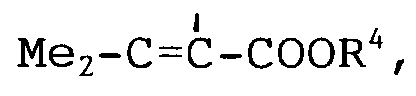
wherein R4 is methyl, benzyl or some other carboxy-protective group, and
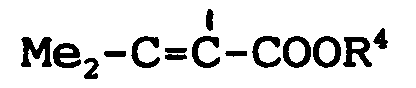
- X is bromine,
- R1, R2 and X are as defined above and
- R3 is
wherein R4 is hydrogen, and

- R1 and R2 are as defined above,
- R3 is
wherein R4 is benzyl and

- X is nitroxy.
- IR (KBr):
- 1795(vs), 1730(s), 1635(m), 1395(m), 1375(m), 1270(m), 1225(vs), 1125-1070(m), 815(m), 700(m) cm-1.
- 1H NMR (CDCl3) δ:
- 2.00 (3H, s, Me), 2.34 (3H, s, Me), 5.16 and 5.25 (each 1H d, J=12 Hz, CH2Ph), 6.30 (1H, s, C2-H), 7.36 (5H, s, Ar) ppm.
- 13C (CDCl3) APT:
- 22.352 and 23.875 (2 Me), 55.675 (C3-Br2), 67.441 (CH2Ph), 74.084 (C2-H), 117.031 (N-C=), 128.784 (Ph), 135.112 (C-Ph), 158.071 (COO), 159.948 (=C(Me)2), 162.283 (C=O).
| Analysis for C15H14Br3NO3: | calc: | C 36.32; | H 2.84; | N 2.82 % |
| found: | C 36.61; | H 2.75; | N 2.76 % |
- IR (film):
- 1805(vs), 1735(vs), 1640(m), 1440(m), 1385(vs), 1370(vs), 1270(s) 1230(vs), 1125-1070(bs), 815 (s) cm-1.
- 1H NMR (CDCl3)(300 MHz)δ:
- 2.01 (3H, s, Me), 2.33 (3H, s, Me), 3.01 (s, 3H, OCH3) 6.42 (s, 1H, C2-H) ppm.
- 13C (CDCl3) APT:
- 22.286 and 23.815 (2 Me), 52.270 (OCH3), 55.761 (C3-Br2), 74.020 (C2-H), 116.985 (N-C=), 159.275 (COO), 159.561 (=C(Me)2), 162.865 (C=O).
- IR (KBr) ν:
- 1795(vs), 1730(s), 1635(m), 1395(m), 1375(m), 1270(vs), 1220(s), 1125-1070(b,m), 820(m), 700(m) cm-1.
- 1HNMR (CDCl3)(300 MHz)δ:
- 2.00 and 2.35 (2s, 6H, 2Me), 5.16 and 5.25 (each 1H, d, J=12 Hz, CH2Ph), 6.06 (s, 1H, C2-H), 7.37 (s, 5H, Ar) ppm.
- 13C (CDCl3) APT:
- 22.281 and 23.808 (2 Me), 56.555 (C3-Br2), 67.433 (CH2-Ph), 81.305 (C2-H), 116.748 (N-C=), 128.941 (Ph), 135.130 (C-Ph), 158.509 (COO), 160.273 (=C(Me)2).
- IR (KBr):
- 1805(vs), 1730(vs), 1660(vs), 1390(m), 1375(m), 1285(vs), 1225(vs), 1140(s), 1080(m), 830(s), 760(m), 700(m) cm-1.
- 1H NMR (CDCl3)(300 MHz) δ:
- 1.99 (3H, s, Me), 2,32 (3H, s, Me), 5.16 and 5.27 (each 1H d, J=12 Hz, CH2Ph), 6.42 (1H, s, C2-H), 7.37 (5H, s, Ar) ppm.
- 13C (CDCl3) APT:
- 21.973 and 23.700 (2 Me), 52.935 (C3-Br2), 67.344 (CH2-Ph), 90.895 (C2-H), 116.654 (N-C=), 128.613 (Ph), 134.660 (C-Ph), 158.290 (COO), 159.634 (=C(Me)2), 161.669 (C=O).
- IR (KBr):
- 1800(vs), 1700(s), 1630(m), 1430(m), 1370(m), 1285(m), 1245(m) cm-1.
- 1H NMR (DMSO-d6) (90 MHz) δ:
- 1.89 (3H, s, Me), 2.25 (3H, s, Me) and 6.73 (1H, s, C2-H) ppm.
- IR (KBr):
- 1800(vs), 1700(s), 1630(m), 1430(m), 1370(m), 1285(m), 1245(m) cm-1.
- 1H NMR (CDCl3)(300 MHz) δ:
- 2.065 (3H, s, Me), 2.33 (3H, s, Me) and 6.27 (1H, s, C2-H) and 9.57 (1H, b, COOH) ppm.
Claims (31)
- 2-bromo- and 2-nitroxy derivatives of 3-bromo- and 3,3-dibromo-4-oxo-azetidines of the general formula Iwherein
 provided that at least one of R1 and R2 is bromine.R1 is hydrogen or bromine,R2 is hydrogen or bromine,R3 iswherein R4 is hydrogen, methyl, benzyl or some other carboxy-protective group, and
 X is bromine or nitroxy group (-ONO2),
 - Compound according to claim 1, characterized in that R1 is hydrogen, R2 is bromine, R3 isR4 is methyl, and X is bromine.
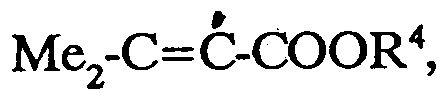
- Compound according to claim 1, characterized in that R1 is bromine, R2 is hydrogen, R3 isR4 is methyl, and X is bromine.

- Compound according to claim 1, characterized in that R1 is bromine, R2 is bromine, R3 isR4 is methyl, and X is bromine.

- Compound according to claim 1, characterized in that R1 is hydrogen, R2 is bromine, R3 isR4 is benzyl, and X is bromine.

- Compound according to claim 1, characterized in that R1 is bromine, R2 is hydrogen, R3 isR4 is benzyl, and X is bromine.

- Compound according to claim 1, characterized in that R1 is bromine, R2 is bromine, R3 isR4 is benzyl, and X is bromine.

- Compound according to claim 1, characterized in that R1 is hydrogen, R2 is bromine, R3 isR4 is hydrogen, and X is bromine.
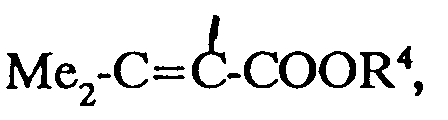
- Compound according to claim 1, characterized in that R1 is bromine, R2 is hydrogen, R3 isR4 is hydrogen, and X is bromine.

- Compound according to claim 1, characterized in that R1 is bromine, R2 is bromine, R3 isR4 is hydrogen, and X is bromine.

- Compound according to claim 1, characterized in that R1 is hydrogen, R2 is bromine, R3 isR4 is methyl, and X is nitroxy.
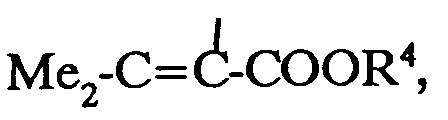
- Compound according to claim 1, characterized in that R1 is bromine, R2 is hydrogen, R3 isR4 is methyl, and X is nitroxy.

- Compound according to claim 1, characterized in that R1 is bromine, R2 is bromine, R3 isR4 is methyl, and X is nitroxy.

- Compound according to claim 1, characterized in that R1 is hydrogen, R2 is bromine, R3 isR4 is benzyl, and X is nitroxy.

- Compound according to claim 1, characterized in that R1 is bromine, R2 is hydrogen, R3 isR4 is benzyl, and X is nitroxy.
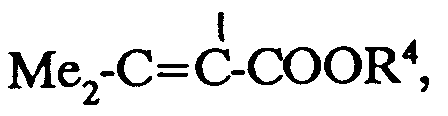
- Compound according to claim 1, characterized in that R1 is bromine, R2 is bromine, R3 isR4 is benzyl, and X is nitroxy.
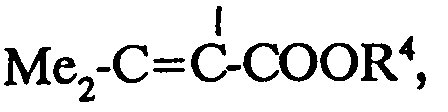
- Compound according to claim 1, characterized in that R1 is hydrogen, R2 is bromine, R3 isR4 is hydrogen, and X is nitroxy.

- Compound according to claim 1, characterized in that R1 is bromine, R2 is hydrogen, R3 isR4 is hydrogen, and X is nitroxy.

- Compound according to claim 1, characterized in that R1 is bromine, R2 is bromine, R3 isR4 is hydrogen, and X is nitroxy.

- 2-chloro derivatives of 3-bromo- and 3,3-dibromo-4-oxo-azetidines of the general formula Iwherein
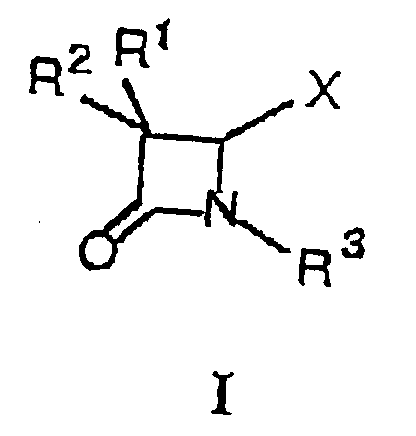 provided that at least one of R1 and R2 is bromine.R1 is hydrogen or bromine,R2 is hydrogen or bromine,R3 iswherein R4 is hydrogen or benzyl, and
 X is chlorine,
 - Compound according to claim 20, characterized in that R1 is hydrogen, R2 is bromine, R3 isR4 is benzyl, and X is chlorine.

- Compound according to claim 20, characterized in that R1 is bromine, R2 is hydrogen, R3 isR4 is benzyl, and X is chlorine.

- Compound according to claim 20, characterized in that R1 is bromine, R2 is bromine, R3 isR4 is benzyl, and X is chlorine.
- Compound according to claim 20, characterized in that R1 is hydrogen, R2 is bromine, R3 isR4 is hydrogen, and X is chlorine.

- Compound according to claim 20, characterized in that R1 is bromine, R2 is hydrogen, R3 isR4 is hydrogen, and X is chlorine.

- Compound according to claim 20, characterized in that R1 is bromine, R2 is bromine, R3 isR4 is hydrogen, and X is chlorine.

- Process for preparing 2-bromo- and 2-nitroxy derivatives of 3-bromo- and 3,3-dibromo-4-oxo-azetidines of the general formula I according to claim 1, characterized in that a derivative of penicillanic acid 1,1-dioxide of the general formulawherein
 is reacted with DBN, i.e. 1,5-diazabicyclo[3.4.0]non-5-ene, and then the obtained DBN salt of sulfinic acid or isolated sulfinic acid is treated with thionyl chloride and, after eliminating thionyl chloride by evaporation, the obtained residue is passed through a silica gel column with methylene chloride as eluant or the obtained residue is dissolved in tetrahydrofuran and treated with tetrabutyl ammonium bromide and after the treatment there is isolated a derivative of the general formula I whereinR1 is hydrogen or bromine,R2 is hydrogen or bromine,R4 is methyl or benzyl or some other protective group, provided that at least one of R1 and R2 is bromine,which is optionally converted by the reaction with aluminium trichloride into a derivative of general formula I, whereinR1 and R2 are as defined above,R3 iswherein R4 is methyl, benzyl or some other carboxy-protective group, and
 X is bromine,optionally the obtained 2-bromo derivative of the general formula I is subjected to the reaction with silver nitrate in isopropanol and after treatment there is isolated a derivative of the general formula I, whereinR1, R2 and X are as defined above andR3 iswherein R4 is hydrogen, and
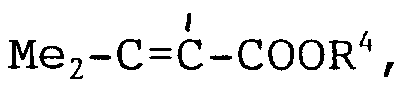 R1 and R2 are as defined above,R3 iswherein R4 is benzyl and
 X is nitroxy.
 - Use of the compounds according to claims 1 or 20 as intermediates in syntheses of beta lactam analogues, 1-oxapenems, 1-oxacephalosporins, monobactams or novel bicyclic systems.
- Use of the compounds according to claims 1 or 20 in formulations having antibacterial action.
- Use of the compounds according to claims 10 or 26 in formulations having antitumor action.
- Use of the compounds according to claims 10 or 26 for preparing formulations wherein active substances in concentrations of about 10-5 M for inhibiting the growth of tumor cells of human cervix uteri (HeLa) without exhibiting any action on normal fibroblasts (WI38) are included.
Priority Applications (1)
| Application Number | Priority Date | Filing Date | Title |
|---|---|---|---|
| SI9430165T SI0633247T1 (en) | 1993-07-09 | 1994-07-04 | 2-Bromo- and 2-nitroxy derivatives of 3-bromo- and 3,3-dibromo-4-oxo-azetidines, processes for the preparation thereof and use thereof |
Applications Claiming Priority (2)
| Application Number | Priority Date | Filing Date | Title |
|---|---|---|---|
| HR931047A HRP931047B1 (en) | 1993-07-09 | 1993-07-09 | 2-bromo- and 2-nitroxy derivatives of 3-bromo- and 3,3-dibromo-4-oxo-azetidines, processes for the preparation thereof and their use |
| HR104793 | 1993-07-09 |
Publications (2)
| Publication Number | Publication Date |
|---|---|
| EP0633247A1 EP0633247A1 (en) | 1995-01-11 |
| EP0633247B1 true EP0633247B1 (en) | 1998-05-27 |
Family
ID=10945991
Family Applications (1)
| Application Number | Title | Priority Date | Filing Date |
|---|---|---|---|
| EP94110387A Expired - Lifetime EP0633247B1 (en) | 1993-07-09 | 1994-07-04 | 2-Bromo- and 2-nitroxy derivatives of 3-bromo- and 3,3-dibromo-4-oxo-azetidines, processes for the preparation thereof and use thereof |
Country Status (16)
| Country | Link |
|---|---|
| US (4) | US5670638A (en) |
| EP (1) | EP0633247B1 (en) |
| JP (1) | JPH07149716A (en) |
| CN (1) | CN1100719A (en) |
| AT (1) | ATE166644T1 (en) |
| BG (1) | BG61645B1 (en) |
| CA (1) | CA2127677C (en) |
| CZ (1) | CZ286810B6 (en) |
| DE (1) | DE69410539T2 (en) |
| ES (1) | ES2118287T3 (en) |
| HR (1) | HRP931047B1 (en) |
| HU (1) | HUT68298A (en) |
| PL (1) | PL178949B1 (en) |
| RU (1) | RU2134685C1 (en) |
| SI (1) | SI0633247T1 (en) |
| SK (1) | SK79194A3 (en) |
Families Citing this family (1)
| Publication number | Priority date | Publication date | Assignee | Title |
|---|---|---|---|---|
| SK13897A3 (en) | 1996-02-06 | 1998-05-06 | Pliva Pharm & Chem Works | 3-bromo- and 3,3-dibromo-4-oxo-1-azetidines, method for preparation thereof and their use |
Family Cites Families (6)
| Publication number | Priority date | Publication date | Assignee | Title |
|---|---|---|---|---|
| JPS607635B2 (en) * | 1976-04-27 | 1985-02-26 | 塩野義製薬株式会社 | Oxazolidine compounds |
| DE3169939D1 (en) * | 1980-02-28 | 1985-05-23 | Schering Corp | 2-penem compounds, pharmaceutical compositions containing them and methods for their preparation |
| WO1982001705A1 (en) * | 1980-11-13 | 1982-05-27 | Takeda Chemical Industries Ltd | 4-substituted-2-oxoazetidine derivatives and process for their preparation |
| JPH03271297A (en) * | 1990-03-22 | 1991-12-03 | Sankyo Co Ltd | Platinum polynuclear complex |
| US5075439A (en) * | 1990-08-17 | 1991-12-24 | Pfizer Inc. | Processes for (3S,4R)-3-[1(R)-t-butyl-dimethylsilyloxy)-ethyl]-4-[1-oxo-3-thiolanylthio(thiocarbonyl)thio]azetidin-2-ones and intermediates therefor |
| US5250525A (en) * | 1991-02-12 | 1993-10-05 | Pliva Handels Gmbh | 4-oxo-azetidine-2-sulfonic acids and their salts, processes for the preparation thereof and their use |
-
1993
- 1993-07-09 HR HR931047A patent/HRP931047B1/en not_active IP Right Cessation
-
1994
- 1994-06-30 SK SK791-94A patent/SK79194A3/en unknown
- 1994-07-04 SI SI9430165T patent/SI0633247T1/en unknown
- 1994-07-04 DE DE69410539T patent/DE69410539T2/en not_active Expired - Fee Related
- 1994-07-04 AT AT94110387T patent/ATE166644T1/en not_active IP Right Cessation
- 1994-07-04 ES ES94110387T patent/ES2118287T3/en not_active Expired - Lifetime
- 1994-07-04 EP EP94110387A patent/EP0633247B1/en not_active Expired - Lifetime
- 1994-07-06 JP JP6154546A patent/JPH07149716A/en active Pending
- 1994-07-07 CZ CZ19941647A patent/CZ286810B6/en not_active IP Right Cessation
- 1994-07-08 HU HU9402053A patent/HUT68298A/en unknown
- 1994-07-08 CN CN94108240A patent/CN1100719A/en active Pending
- 1994-07-08 RU RU94026293A patent/RU2134685C1/en active
- 1994-07-08 PL PL94304191A patent/PL178949B1/en unknown
- 1994-07-08 BG BG98895A patent/BG61645B1/en unknown
- 1994-07-08 CA CA002127677A patent/CA2127677C/en not_active Expired - Fee Related
- 1994-07-08 US US08/272,206 patent/US5670638A/en not_active Expired - Fee Related
-
1995
- 1995-07-10 US US08/500,001 patent/US5637581A/en not_active Expired - Fee Related
-
1996
- 1996-03-27 US US08/624,919 patent/US5847119A/en not_active Expired - Fee Related
-
1997
- 1997-09-10 US US08/926,449 patent/US5892036A/en not_active Expired - Fee Related
Also Published As
| Publication number | Publication date |
|---|---|
| RU94026293A (en) | 1996-05-27 |
| SK79194A3 (en) | 1995-04-12 |
| CZ164794A3 (en) | 1995-07-12 |
| CZ286810B6 (en) | 2000-07-12 |
| EP0633247A1 (en) | 1995-01-11 |
| US5670638A (en) | 1997-09-23 |
| ES2118287T3 (en) | 1998-09-16 |
| US5847119A (en) | 1998-12-08 |
| SI0633247T1 (en) | 1998-10-31 |
| BG98895A (en) | 1995-05-31 |
| PL178949B1 (en) | 2000-07-31 |
| US5637581A (en) | 1997-06-10 |
| ATE166644T1 (en) | 1998-06-15 |
| US5892036A (en) | 1999-04-06 |
| HUT68298A (en) | 1995-06-28 |
| DE69410539T2 (en) | 1998-11-26 |
| JPH07149716A (en) | 1995-06-13 |
| DE69410539D1 (en) | 1998-07-02 |
| BG61645B1 (en) | 1998-02-27 |
| CA2127677C (en) | 2000-02-08 |
| HU9402053D0 (en) | 1994-09-28 |
| HRP931047A2 (en) | 1997-04-30 |
| PL304191A1 (en) | 1995-01-23 |
| RU2134685C1 (en) | 1999-08-20 |
| CN1100719A (en) | 1995-03-29 |
| HRP931047B1 (en) | 2000-02-29 |
| CA2127677A1 (en) | 1995-01-10 |
Similar Documents
| Publication | Publication Date | Title |
|---|---|---|
| EP0508234B1 (en) | Beta-lactames | |
| EP0000645B1 (en) | Isopenicillins, processes for their preparation, and compositions containing them | |
| DE2312041A1 (en) | PENICILLIN, THE METHOD OF MANUFACTURING THEIR PRODUCTS AND THE PHARMACEUTICAL PRODUCTS CONTAINING IT | |
| US5670638A (en) | 2-bromo- and 2-nitroxy derivatives of 3-bromo- and 3,3-dibromo-4-oxo-azetidines, and preparation | |
| US5250525A (en) | 4-oxo-azetidine-2-sulfonic acids and their salts, processes for the preparation thereof and their use | |
| US4103086A (en) | 8-Oxo-4-thia-1-azabicyclo (4.2.0)-oct-2-ene derivatives | |
| US5843939A (en) | Derivatives of 3-bromo- and 3,3-dibromo-4-oxo-1-azetidines, processes for the preparation thereof and their use | |
| NO150040B (en) | ANALOGY PROCEDURE FOR THE PREPARATION OF THERAPEUTIC ACTIVE 2-AZETIDINONES | |
| US5856475A (en) | 4-thia-1-azabicyclo/3.2.0/Heptane-3-Imino-2-isopropylidene-7-oxo-analogons of beta-lactams, processes for their preparation and the use thereof | |
| HU205611B (en) | Process for producing 1,1-dioxo-penicillanoyl-oxy-methyl-d-6-/alpha-/methylen-amino/-phenyl-acetyl-amino/-penicillanate, salts and pharmaceutical compositions contaiing them as active components | |
| JPH0544468B2 (en) | ||
| JP2689412B2 (en) | How to remove protecting groups | |
| DE2818025A1 (en) | METHOD FOR PRODUCING CEPHEM CONNECTIONS | |
| CH633290A5 (en) | Process for preparing derivatives of 7-oxo-1,3-diazabicyclo[3.2.0]heptane-2-carboxylic acid | |
| JP3522758B2 (en) | Method for producing 4- (formylthio) -azetidin-2-one derivative and penem derivative | |
| EP0930313A1 (en) | 1-isothiazolidinone derivatives of azetidine-2-one, process for the preperation thereof and the use thereof | |
| RO114127B1 (en) | Derivatives of 3-bromo and 3,3-dibromo-4 oxo-azetidine and process for preparing the same | |
| JPH08501543A (en) | Penem derivative, method for producing the same, and pharmaceutical composition containing the same | |
| EP0126090A1 (en) | Beta-lactam compounds, preparation and use | |
| HRP970713A2 (en) | 7-bromo- and 7,7 dibromo-cepham and cephem derivatives | |
| JPS58128389A (en) | Penicillin derivative, manufacture and medicinal composition | |
| HU188983B (en) | Process for producing formamidyl-beta-lactames | |
| HRP920487A2 (en) | 3-halo-alpha-(1-methylethylidene)-2-sulfonyl-4-oxo-1-azetidin acetic acid derivatives, processes for the preparation thereof and their use as precursorsfor the preparation of beta lactame antibiotics |
Legal Events
| Date | Code | Title | Description |
|---|---|---|---|
| PUAI | Public reference made under article 153(3) epc to a published international application that has entered the european phase |
Free format text: ORIGINAL CODE: 0009012 |
|
| AK | Designated contracting states |
Kind code of ref document: A1 Designated state(s): AT BE CH DE ES FR GB IT LI NL PT SE |
|
| RAX | Requested extension states of the european patent have changed |
Free format text: SI PAYMENT 940704 |
|
| K1C3 | Correction of patent application (complete document) published |
Effective date: 19950111 |
|
| 17P | Request for examination filed |
Effective date: 19950705 |
|
| 17Q | First examination report despatched |
Effective date: 19960206 |
|
| GRAG | Despatch of communication of intention to grant |
Free format text: ORIGINAL CODE: EPIDOS AGRA |
|
| GRAG | Despatch of communication of intention to grant |
Free format text: ORIGINAL CODE: EPIDOS AGRA |
|
| GRAH | Despatch of communication of intention to grant a patent |
Free format text: ORIGINAL CODE: EPIDOS IGRA |
|
| GRAH | Despatch of communication of intention to grant a patent |
Free format text: ORIGINAL CODE: EPIDOS IGRA |
|
| GRAA | (expected) grant |
Free format text: ORIGINAL CODE: 0009210 |
|
| AK | Designated contracting states |
Kind code of ref document: B1 Designated state(s): AT BE CH DE ES FR GB IT LI NL PT SE |
|
| AX | Request for extension of the european patent |
Free format text: SI PAYMENT 940704 |
|
| REF | Corresponds to: |
Ref document number: 166644 Country of ref document: AT Date of ref document: 19980615 Kind code of ref document: T |
|
| REG | Reference to a national code |
Ref country code: CH Ref legal event code: EP |
|
| REF | Corresponds to: |
Ref document number: 69410539 Country of ref document: DE Date of ref document: 19980702 |
|
| ITF | It: translation for a ep patent filed | ||
| REG | Reference to a national code |
Ref country code: CH Ref legal event code: NV Representative=s name: R. A. EGLI & CO. PATENTANWAELTE |
|
| REG | Reference to a national code |
Ref country code: ES Ref legal event code: FG2A Ref document number: 2118287 Country of ref document: ES Kind code of ref document: T3 |
|
| ET | Fr: translation filed | ||
| REG | Reference to a national code |
Ref country code: PT Ref legal event code: SC4A Free format text: AVAILABILITY OF NATIONAL TRANSLATION Effective date: 19980807 |
|
| PLBE | No opposition filed within time limit |
Free format text: ORIGINAL CODE: 0009261 |
|
| STAA | Information on the status of an ep patent application or granted ep patent |
Free format text: STATUS: NO OPPOSITION FILED WITHIN TIME LIMIT |
|
| 26N | No opposition filed | ||
| PGFP | Annual fee paid to national office [announced via postgrant information from national office to epo] |
Ref country code: AT Payment date: 19990727 Year of fee payment: 6 |
|
| PGFP | Annual fee paid to national office [announced via postgrant information from national office to epo] |
Ref country code: NL Payment date: 19990730 Year of fee payment: 6 |
|
| PGFP | Annual fee paid to national office [announced via postgrant information from national office to epo] |
Ref country code: DE Payment date: 19990928 Year of fee payment: 6 |
|
| PGFP | Annual fee paid to national office [announced via postgrant information from national office to epo] |
Ref country code: FR Payment date: 20000516 Year of fee payment: 7 |
|
| PGFP | Annual fee paid to national office [announced via postgrant information from national office to epo] |
Ref country code: SE Payment date: 20000525 Year of fee payment: 7 Ref country code: PT Payment date: 20000525 Year of fee payment: 7 |
|
| PGFP | Annual fee paid to national office [announced via postgrant information from national office to epo] |
Ref country code: BE Payment date: 20000628 Year of fee payment: 7 |
|
| PGFP | Annual fee paid to national office [announced via postgrant information from national office to epo] |
Ref country code: GB Payment date: 20000703 Year of fee payment: 7 |
|
| PG25 | Lapsed in a contracting state [announced via postgrant information from national office to epo] |
Ref country code: AT Free format text: LAPSE BECAUSE OF NON-PAYMENT OF DUE FEES Effective date: 20000704 |
|
| PGFP | Annual fee paid to national office [announced via postgrant information from national office to epo] |
Ref country code: ES Payment date: 20000720 Year of fee payment: 7 |
|
| PGFP | Annual fee paid to national office [announced via postgrant information from national office to epo] |
Ref country code: CH Payment date: 20000727 Year of fee payment: 7 |
|
| PG25 | Lapsed in a contracting state [announced via postgrant information from national office to epo] |
Ref country code: NL Free format text: LAPSE BECAUSE OF NON-PAYMENT OF DUE FEES Effective date: 20010201 |
|
| NLV4 | Nl: lapsed or anulled due to non-payment of the annual fee |
Effective date: 20010201 |
|
| PG25 | Lapsed in a contracting state [announced via postgrant information from national office to epo] |
Ref country code: DE Free format text: LAPSE BECAUSE OF NON-PAYMENT OF DUE FEES Effective date: 20010501 |
|
| PG25 | Lapsed in a contracting state [announced via postgrant information from national office to epo] |
Ref country code: GB Free format text: LAPSE BECAUSE OF NON-PAYMENT OF DUE FEES Effective date: 20010704 |
|
| PG25 | Lapsed in a contracting state [announced via postgrant information from national office to epo] |
Ref country code: SE Free format text: LAPSE BECAUSE OF NON-PAYMENT OF DUE FEES Effective date: 20010705 Ref country code: ES Free format text: LAPSE BECAUSE OF NON-PAYMENT OF DUE FEES Effective date: 20010705 |
|
| PG25 | Lapsed in a contracting state [announced via postgrant information from national office to epo] |
Ref country code: LI Free format text: LAPSE BECAUSE OF NON-PAYMENT OF DUE FEES Effective date: 20010731 Ref country code: CH Free format text: LAPSE BECAUSE OF NON-PAYMENT OF DUE FEES Effective date: 20010731 Ref country code: BE Free format text: LAPSE BECAUSE OF NON-PAYMENT OF DUE FEES Effective date: 20010731 |
|
| BERE | Be: lapsed |
Owner name: PLIVA FARMACEUTSKA KEMIJSKA PREHRAMBENA I KOZMETI Effective date: 20010731 |
|
| PG25 | Lapsed in a contracting state [announced via postgrant information from national office to epo] |
Ref country code: PT Free format text: LAPSE BECAUSE OF NON-PAYMENT OF DUE FEES Effective date: 20020131 |
|
| GBPC | Gb: european patent ceased through non-payment of renewal fee |
Effective date: 20010704 |
|
| EUG | Se: european patent has lapsed |
Ref document number: 94110387.1 |
|
| REG | Reference to a national code |
Ref country code: CH Ref legal event code: PL |
|
| PG25 | Lapsed in a contracting state [announced via postgrant information from national office to epo] |
Ref country code: FR Free format text: LAPSE BECAUSE OF NON-PAYMENT OF DUE FEES Effective date: 20020329 |
|
| REG | Reference to a national code |
Ref country code: FR Ref legal event code: ST |
|
| REG | Reference to a national code |
Ref country code: PT Ref legal event code: MM4A Free format text: LAPSE DUE TO NON-PAYMENT OF FEES Effective date: 20020131 |
|
| REG | Reference to a national code |
Ref country code: ES Ref legal event code: FD2A Effective date: 20020810 |
|
| PG25 | Lapsed in a contracting state [announced via postgrant information from national office to epo] |
Ref country code: IT Free format text: LAPSE BECAUSE OF NON-PAYMENT OF DUE FEES Effective date: 20050704 |