EP0629350A1 - Milk protein hydrolysates - Google Patents
Milk protein hydrolysates Download PDFInfo
- Publication number
- EP0629350A1 EP0629350A1 EP94810352A EP94810352A EP0629350A1 EP 0629350 A1 EP0629350 A1 EP 0629350A1 EP 94810352 A EP94810352 A EP 94810352A EP 94810352 A EP94810352 A EP 94810352A EP 0629350 A1 EP0629350 A1 EP 0629350A1
- Authority
- EP
- European Patent Office
- Prior art keywords
- whey protein
- use according
- casein
- hydrolysis
- hydrolysate
- Prior art date
- Legal status (The legal status is an assumption and is not a legal conclusion. Google has not performed a legal analysis and makes no representation as to the accuracy of the status listed.)
- Withdrawn
Links
- 239000003531 protein hydrolysate Substances 0.000 title claims abstract description 54
- 102000014171 Milk Proteins Human genes 0.000 title abstract description 20
- 108010011756 Milk Proteins Proteins 0.000 title abstract description 20
- 235000021239 milk protein Nutrition 0.000 title description 10
- 235000018102 proteins Nutrition 0.000 claims abstract description 35
- 102000004169 proteins and genes Human genes 0.000 claims abstract description 35
- 108090000623 proteins and genes Proteins 0.000 claims abstract description 35
- 230000002009 allergenic effect Effects 0.000 claims abstract description 24
- 235000020247 cow milk Nutrition 0.000 claims abstract description 19
- 238000011282 treatment Methods 0.000 claims abstract description 16
- 208000009793 Milk Hypersensitivity Diseases 0.000 claims abstract description 8
- 201000010859 Milk allergy Diseases 0.000 claims abstract description 8
- 206010067584 Type 1 diabetes mellitus Diseases 0.000 claims abstract description 6
- 238000011321 prophylaxis Methods 0.000 claims abstract description 4
- 201000010099 disease Diseases 0.000 claims abstract description 3
- 208000037265 diseases, disorders, signs and symptoms Diseases 0.000 claims abstract description 3
- 108010046377 Whey Proteins Proteins 0.000 claims description 63
- 235000021119 whey protein Nutrition 0.000 claims description 62
- 102000007544 Whey Proteins Human genes 0.000 claims description 57
- 230000007062 hydrolysis Effects 0.000 claims description 48
- 238000006460 hydrolysis reaction Methods 0.000 claims description 48
- 108010076119 Caseins Proteins 0.000 claims description 31
- 239000005018 casein Substances 0.000 claims description 31
- BECPQYXYKAMYBN-UHFFFAOYSA-N casein, tech. Chemical compound NCCCCC(C(O)=O)N=C(O)C(CC(O)=O)N=C(O)C(CCC(O)=N)N=C(O)C(CC(C)C)N=C(O)C(CCC(O)=O)N=C(O)C(CC(O)=O)N=C(O)C(CCC(O)=O)N=C(O)C(C(C)O)N=C(O)C(CCC(O)=N)N=C(O)C(CCC(O)=N)N=C(O)C(CCC(O)=N)N=C(O)C(CCC(O)=O)N=C(O)C(CCC(O)=O)N=C(O)C(COP(O)(O)=O)N=C(O)C(CCC(O)=N)N=C(O)C(N)CC1=CC=CC=C1 BECPQYXYKAMYBN-UHFFFAOYSA-N 0.000 claims description 31
- 235000021240 caseins Nutrition 0.000 claims description 31
- 229960002376 chymotrypsin Drugs 0.000 claims description 18
- 102100033174 Neutrophil elastase Human genes 0.000 claims description 15
- 108090000631 Trypsin Proteins 0.000 claims description 15
- 102000004142 Trypsin Human genes 0.000 claims description 15
- 108090000155 pancreatic elastase II Proteins 0.000 claims description 15
- 239000007858 starting material Substances 0.000 claims description 15
- 239000012588 trypsin Substances 0.000 claims description 15
- 108090000317 Chymotrypsin Proteins 0.000 claims description 14
- 102000057297 Pepsin A Human genes 0.000 claims description 12
- 108090000284 Pepsin A Proteins 0.000 claims description 12
- 229940111202 pepsin Drugs 0.000 claims description 12
- 102000035195 Peptidases Human genes 0.000 claims description 11
- 108091005804 Peptidases Proteins 0.000 claims description 11
- GUBGYTABKSRVRQ-QKKXKWKRSA-N Lactose Natural products OC[C@H]1O[C@@H](O[C@H]2[C@H](O)[C@@H](O)C(O)O[C@@H]2CO)[C@H](O)[C@@H](O)[C@H]1O GUBGYTABKSRVRQ-QKKXKWKRSA-N 0.000 claims description 10
- 108010067372 Pancreatic elastase Proteins 0.000 claims description 10
- 102000016387 Pancreatic elastase Human genes 0.000 claims description 10
- 108010079058 casein hydrolysate Proteins 0.000 claims description 10
- 239000008101 lactose Substances 0.000 claims description 10
- 235000005911 diet Nutrition 0.000 claims description 9
- 230000037213 diet Effects 0.000 claims description 9
- 229940108461 rennet Drugs 0.000 claims description 8
- 108010058314 rennet Proteins 0.000 claims description 8
- 235000007882 dietary composition Nutrition 0.000 claims description 7
- 230000000694 effects Effects 0.000 claims description 7
- 240000006439 Aspergillus oryzae Species 0.000 claims description 5
- 235000002247 Aspergillus oryzae Nutrition 0.000 claims description 4
- 235000019833 protease Nutrition 0.000 claims description 4
- 108090000288 Glycoproteins Proteins 0.000 claims description 3
- 102000003886 Glycoproteins Human genes 0.000 claims description 3
- 238000004519 manufacturing process Methods 0.000 claims description 3
- 230000006698 induction Effects 0.000 claims description 2
- 102000005593 Endopeptidases Human genes 0.000 claims 2
- 108010059378 Endopeptidases Proteins 0.000 claims 2
- 102000018389 Exopeptidases Human genes 0.000 claims 2
- 108010091443 Exopeptidases Proteins 0.000 claims 2
- 230000002538 fungal effect Effects 0.000 claims 2
- 239000000203 mixture Substances 0.000 description 44
- 102000011632 Caseins Human genes 0.000 description 21
- 150000001413 amino acids Chemical class 0.000 description 17
- 229940024606 amino acid Drugs 0.000 description 16
- 238000000034 method Methods 0.000 description 16
- 108010009736 Protein Hydrolysates Proteins 0.000 description 13
- XLYOFNOQVPJJNP-UHFFFAOYSA-N water Substances O XLYOFNOQVPJJNP-UHFFFAOYSA-N 0.000 description 13
- 102000004190 Enzymes Human genes 0.000 description 12
- 108090000790 Enzymes Proteins 0.000 description 12
- 229940088598 enzyme Drugs 0.000 description 12
- 238000000108 ultra-filtration Methods 0.000 description 11
- 239000012528 membrane Substances 0.000 description 10
- 108090000765 processed proteins & peptides Proteins 0.000 description 10
- 239000000243 solution Substances 0.000 description 10
- 230000000638 stimulation Effects 0.000 description 10
- KRKNYBCHXYNGOX-UHFFFAOYSA-N citric acid Chemical compound OC(=O)CC(O)(C(O)=O)CC(O)=O KRKNYBCHXYNGOX-UHFFFAOYSA-N 0.000 description 9
- 125000003277 amino group Chemical group 0.000 description 8
- IJGRMHOSHXDMSA-UHFFFAOYSA-N Atomic nitrogen Chemical compound N#N IJGRMHOSHXDMSA-UHFFFAOYSA-N 0.000 description 7
- KWYUFKZDYYNOTN-UHFFFAOYSA-M Potassium hydroxide Chemical compound [OH-].[K+] KWYUFKZDYYNOTN-UHFFFAOYSA-M 0.000 description 7
- 235000014633 carbohydrates Nutrition 0.000 description 7
- 150000001720 carbohydrates Chemical class 0.000 description 7
- 239000012466 permeate Substances 0.000 description 7
- 239000000047 product Substances 0.000 description 7
- 238000000825 ultraviolet detection Methods 0.000 description 7
- QGZKDVFQNNGYKY-UHFFFAOYSA-N Ammonia Chemical compound N QGZKDVFQNNGYKY-UHFFFAOYSA-N 0.000 description 6
- 238000011026 diafiltration Methods 0.000 description 6
- 102000004196 processed proteins & peptides Human genes 0.000 description 6
- OUYCCCASQSFEME-QMMMGPOBSA-N L-tyrosine Chemical compound OC(=O)[C@@H](N)CC1=CC=C(O)C=C1 OUYCCCASQSFEME-QMMMGPOBSA-N 0.000 description 5
- 239000000413 hydrolysate Substances 0.000 description 5
- 229930003231 vitamin Natural products 0.000 description 5
- 235000013343 vitamin Nutrition 0.000 description 5
- 239000011782 vitamin Substances 0.000 description 5
- 229940088594 vitamin Drugs 0.000 description 5
- 241000283690 Bos taurus Species 0.000 description 4
- 206010065042 Immune reconstitution inflammatory syndrome Diseases 0.000 description 4
- LEVWYRKDKASIDU-IMJSIDKUSA-N L-cystine Chemical compound [O-]C(=O)[C@@H]([NH3+])CSSC[C@H]([NH3+])C([O-])=O LEVWYRKDKASIDU-IMJSIDKUSA-N 0.000 description 4
- 108010060630 Lactoglobulins Proteins 0.000 description 4
- 102000008192 Lactoglobulins Human genes 0.000 description 4
- 239000000427 antigen Substances 0.000 description 4
- 108091007433 antigens Proteins 0.000 description 4
- 102000036639 antigens Human genes 0.000 description 4
- 239000011575 calcium Substances 0.000 description 4
- 229960003067 cystine Drugs 0.000 description 4
- 235000014113 dietary fatty acids Nutrition 0.000 description 4
- 239000000194 fatty acid Substances 0.000 description 4
- 229930195729 fatty acid Natural products 0.000 description 4
- 150000004665 fatty acids Chemical class 0.000 description 4
- 230000002496 gastric effect Effects 0.000 description 4
- 230000001939 inductive effect Effects 0.000 description 4
- 229910052500 inorganic mineral Inorganic materials 0.000 description 4
- JVTAAEKCZFNVCJ-UHFFFAOYSA-N lactic acid Chemical compound CC(O)C(O)=O JVTAAEKCZFNVCJ-UHFFFAOYSA-N 0.000 description 4
- 210000004698 lymphocyte Anatomy 0.000 description 4
- 235000010755 mineral Nutrition 0.000 description 4
- 238000006386 neutralization reaction Methods 0.000 description 4
- 230000035764 nutrition Effects 0.000 description 4
- 235000016709 nutrition Nutrition 0.000 description 4
- 238000002360 preparation method Methods 0.000 description 4
- 239000012465 retentate Substances 0.000 description 4
- 239000011734 sodium Substances 0.000 description 4
- 239000000758 substrate Substances 0.000 description 4
- 239000011573 trace mineral Substances 0.000 description 4
- 235000013619 trace mineral Nutrition 0.000 description 4
- OYPRJOBELJOOCE-UHFFFAOYSA-N Calcium Chemical compound [Ca] OYPRJOBELJOOCE-UHFFFAOYSA-N 0.000 description 3
- 235000002918 Fraxinus excelsior Nutrition 0.000 description 3
- 206010020751 Hypersensitivity Diseases 0.000 description 3
- 102000004407 Lactalbumin Human genes 0.000 description 3
- 108090000942 Lactalbumin Proteins 0.000 description 3
- 101710118538 Protease Proteins 0.000 description 3
- MTCFGRXMJLQNBG-UHFFFAOYSA-N Serine Natural products OCC(N)C(O)=O MTCFGRXMJLQNBG-UHFFFAOYSA-N 0.000 description 3
- 229910021529 ammonia Inorganic materials 0.000 description 3
- 239000002956 ash Substances 0.000 description 3
- 229910052791 calcium Inorganic materials 0.000 description 3
- 125000002091 cationic group Chemical group 0.000 description 3
- 210000004027 cell Anatomy 0.000 description 3
- 238000006243 chemical reaction Methods 0.000 description 3
- 238000001514 detection method Methods 0.000 description 3
- 238000004090 dissolution Methods 0.000 description 3
- 230000008030 elimination Effects 0.000 description 3
- 238000003379 elimination reaction Methods 0.000 description 3
- 230000002255 enzymatic effect Effects 0.000 description 3
- 238000010438 heat treatment Methods 0.000 description 3
- 238000010348 incorporation Methods 0.000 description 3
- 239000007788 liquid Substances 0.000 description 3
- 238000001471 micro-filtration Methods 0.000 description 3
- 239000011707 mineral Substances 0.000 description 3
- 229910052757 nitrogen Inorganic materials 0.000 description 3
- 239000000843 powder Substances 0.000 description 3
- 238000003756 stirring Methods 0.000 description 3
- 235000021241 α-lactalbumin Nutrition 0.000 description 3
- YBJHBAHKTGYVGT-ZKWXMUAHSA-N (+)-Biotin Chemical compound N1C(=O)N[C@@H]2[C@H](CCCCC(=O)O)SC[C@@H]21 YBJHBAHKTGYVGT-ZKWXMUAHSA-N 0.000 description 2
- GVJHHUAWPYXKBD-UHFFFAOYSA-N (±)-α-Tocopherol Chemical compound OC1=C(C)C(C)=C2OC(CCCC(C)CCCC(C)CCCC(C)C)(C)CCC2=C1C GVJHHUAWPYXKBD-UHFFFAOYSA-N 0.000 description 2
- CIWBSHSKHKDKBQ-JLAZNSOCSA-N Ascorbic acid Chemical compound OC[C@H](O)[C@H]1OC(=O)C(O)=C1O CIWBSHSKHKDKBQ-JLAZNSOCSA-N 0.000 description 2
- 210000002237 B-cell of pancreatic islet Anatomy 0.000 description 2
- VEXZGXHMUGYJMC-UHFFFAOYSA-M Chloride anion Chemical compound [Cl-] VEXZGXHMUGYJMC-UHFFFAOYSA-M 0.000 description 2
- 102000015781 Dietary Proteins Human genes 0.000 description 2
- 108010010256 Dietary Proteins Proteins 0.000 description 2
- 208000004262 Food Hypersensitivity Diseases 0.000 description 2
- 206010016946 Food allergy Diseases 0.000 description 2
- 208000034826 Genetic Predisposition to Disease Diseases 0.000 description 2
- VEXZGXHMUGYJMC-UHFFFAOYSA-N Hydrochloric acid Chemical compound Cl VEXZGXHMUGYJMC-UHFFFAOYSA-N 0.000 description 2
- DGAQECJNVWCQMB-PUAWFVPOSA-M Ilexoside XXIX Chemical compound C[C@@H]1CC[C@@]2(CC[C@@]3(C(=CC[C@H]4[C@]3(CC[C@@H]5[C@@]4(CC[C@@H](C5(C)C)OS(=O)(=O)[O-])C)C)[C@@H]2[C@]1(C)O)C)C(=O)O[C@H]6[C@@H]([C@H]([C@@H]([C@H](O6)CO)O)O)O.[Na+] DGAQECJNVWCQMB-PUAWFVPOSA-M 0.000 description 2
- XEEYBQQBJWHFJM-UHFFFAOYSA-N Iron Chemical compound [Fe] XEEYBQQBJWHFJM-UHFFFAOYSA-N 0.000 description 2
- 125000000415 L-cysteinyl group Chemical group O=C([*])[C@@](N([H])[H])([H])C([H])([H])S[H] 0.000 description 2
- 229920002774 Maltodextrin Polymers 0.000 description 2
- ZLMJMSJWJFRBEC-UHFFFAOYSA-N Potassium Chemical compound [K] ZLMJMSJWJFRBEC-UHFFFAOYSA-N 0.000 description 2
- AUNGANRZJHBGPY-SCRDCRAPSA-N Riboflavin Chemical compound OC[C@@H](O)[C@@H](O)[C@@H](O)CN1C=2C=C(C)C(C)=CC=2N=C2C1=NC(=O)NC2=O AUNGANRZJHBGPY-SCRDCRAPSA-N 0.000 description 2
- IQFYYKKMVGJFEH-XLPZGREQSA-N Thymidine Chemical compound O=C1NC(=O)C(C)=CN1[C@@H]1O[C@H](CO)[C@@H](O)C1 IQFYYKKMVGJFEH-XLPZGREQSA-N 0.000 description 2
- 208000026935 allergic disease Diseases 0.000 description 2
- 210000004369 blood Anatomy 0.000 description 2
- 239000008280 blood Substances 0.000 description 2
- 230000001413 cellular effect Effects 0.000 description 2
- 230000036755 cellular response Effects 0.000 description 2
- 238000003745 diagnosis Methods 0.000 description 2
- 235000021245 dietary protein Nutrition 0.000 description 2
- 238000009826 distribution Methods 0.000 description 2
- 238000001035 drying Methods 0.000 description 2
- 230000007717 exclusion Effects 0.000 description 2
- OVBPIULPVIDEAO-LBPRGKRZSA-N folic acid Chemical compound C=1N=C2NC(N)=NC(=O)C2=NC=1CNC1=CC=C(C(=O)N[C@@H](CCC(O)=O)C(O)=O)C=C1 OVBPIULPVIDEAO-LBPRGKRZSA-N 0.000 description 2
- 235000020932 food allergy Nutrition 0.000 description 2
- 238000009472 formulation Methods 0.000 description 2
- 230000036571 hydration Effects 0.000 description 2
- 238000006703 hydration reaction Methods 0.000 description 2
- 230000001900 immune effect Effects 0.000 description 2
- 230000006872 improvement Effects 0.000 description 2
- 239000004310 lactic acid Substances 0.000 description 2
- 235000014655 lactic acid Nutrition 0.000 description 2
- 235000013336 milk Nutrition 0.000 description 2
- 239000008267 milk Substances 0.000 description 2
- 210000004080 milk Anatomy 0.000 description 2
- 239000013642 negative control Substances 0.000 description 2
- 239000011591 potassium Substances 0.000 description 2
- 229910052700 potassium Inorganic materials 0.000 description 2
- 229910052708 sodium Inorganic materials 0.000 description 2
- 239000007921 spray Substances 0.000 description 2
- 208000024891 symptom Diseases 0.000 description 2
- XOAAWQZATWQOTB-UHFFFAOYSA-N taurine Chemical compound NCCS(O)(=O)=O XOAAWQZATWQOTB-UHFFFAOYSA-N 0.000 description 2
- 238000002560 therapeutic procedure Methods 0.000 description 2
- JZRWCGZRTZMZEH-UHFFFAOYSA-N thiamine Chemical compound CC1=C(CCO)SC=[N+]1CC1=CN=C(C)N=C1N JZRWCGZRTZMZEH-UHFFFAOYSA-N 0.000 description 2
- 150000003722 vitamin derivatives Chemical class 0.000 description 2
- 235000008939 whole milk Nutrition 0.000 description 2
- FPIPGXGPPPQFEQ-UHFFFAOYSA-N 13-cis retinol Natural products OCC=C(C)C=CC=C(C)C=CC1=C(C)CCCC1(C)C FPIPGXGPPPQFEQ-UHFFFAOYSA-N 0.000 description 1
- 206010002198 Anaphylactic reaction Diseases 0.000 description 1
- DWRXFEITVBNRMK-UHFFFAOYSA-N Beta-D-1-Arabinofuranosylthymine Natural products O=C1NC(=O)C(C)=CN1C1C(O)C(O)C(CO)O1 DWRXFEITVBNRMK-UHFFFAOYSA-N 0.000 description 1
- 108091003079 Bovine Serum Albumin Proteins 0.000 description 1
- VYZAMTAEIAYCRO-UHFFFAOYSA-N Chromium Chemical compound [Cr] VYZAMTAEIAYCRO-UHFFFAOYSA-N 0.000 description 1
- RYGMFSIKBFXOCR-UHFFFAOYSA-N Copper Chemical compound [Cu] RYGMFSIKBFXOCR-UHFFFAOYSA-N 0.000 description 1
- AUNGANRZJHBGPY-UHFFFAOYSA-N D-Lyxoflavin Natural products OCC(O)C(O)C(O)CN1C=2C=C(C)C(C)=CC=2N=C2C1=NC(=O)NC2=O AUNGANRZJHBGPY-UHFFFAOYSA-N 0.000 description 1
- ZZZCUOFIHGPKAK-UHFFFAOYSA-N D-erythro-ascorbic acid Natural products OCC1OC(=O)C(O)=C1O ZZZCUOFIHGPKAK-UHFFFAOYSA-N 0.000 description 1
- 206010012735 Diarrhoea Diseases 0.000 description 1
- 229920001917 Ficoll Polymers 0.000 description 1
- -1 I-carnitine Chemical compound 0.000 description 1
- 108060003951 Immunoglobulin Proteins 0.000 description 1
- 125000000570 L-alpha-aspartyl group Chemical group [H]OC(=O)C([H])([H])[C@]([H])(N([H])[H])C(*)=O 0.000 description 1
- 125000000899 L-alpha-glutamyl group Chemical group [H]N([H])[C@]([H])(C(=O)[*])C([H])([H])C([H])([H])C(O[H])=O 0.000 description 1
- 239000004158 L-cystine Substances 0.000 description 1
- 235000019393 L-cystine Nutrition 0.000 description 1
- FYYHWMGAXLPEAU-UHFFFAOYSA-N Magnesium Chemical compound [Mg] FYYHWMGAXLPEAU-UHFFFAOYSA-N 0.000 description 1
- ZOKXTWBITQBERF-UHFFFAOYSA-N Molybdenum Chemical compound [Mo] ZOKXTWBITQBERF-UHFFFAOYSA-N 0.000 description 1
- OVBPIULPVIDEAO-UHFFFAOYSA-N N-Pteroyl-L-glutaminsaeure Natural products C=1N=C2NC(N)=NC(=O)C2=NC=1CNC1=CC=C(C(=O)NC(CCC(O)=O)C(O)=O)C=C1 OVBPIULPVIDEAO-UHFFFAOYSA-N 0.000 description 1
- DFPAKSUCGFBDDF-UHFFFAOYSA-N Nicotinamide Chemical compound NC(=O)C1=CC=CN=C1 DFPAKSUCGFBDDF-UHFFFAOYSA-N 0.000 description 1
- 102000007079 Peptide Fragments Human genes 0.000 description 1
- 108010033276 Peptide Fragments Proteins 0.000 description 1
- 108010047620 Phytohemagglutinins Proteins 0.000 description 1
- 239000012980 RPMI-1640 medium Substances 0.000 description 1
- BUGBHKTXTAQXES-UHFFFAOYSA-N Selenium Chemical compound [Se] BUGBHKTXTAQXES-UHFFFAOYSA-N 0.000 description 1
- AYFVYJQAPQTCCC-UHFFFAOYSA-N Threonine Natural products CC(O)C(N)C(O)=O AYFVYJQAPQTCCC-UHFFFAOYSA-N 0.000 description 1
- 239000004473 Threonine Substances 0.000 description 1
- 208000024780 Urticaria Diseases 0.000 description 1
- FPIPGXGPPPQFEQ-BOOMUCAASA-N Vitamin A Natural products OC/C=C(/C)\C=C\C=C(\C)/C=C/C1=C(C)CCCC1(C)C FPIPGXGPPPQFEQ-BOOMUCAASA-N 0.000 description 1
- 229930003779 Vitamin B12 Natural products 0.000 description 1
- LXNHXLLTXMVWPM-UHFFFAOYSA-N Vitamin B6 Natural products CC1=NC=C(CO)C(CO)=C1O LXNHXLLTXMVWPM-UHFFFAOYSA-N 0.000 description 1
- 229930003268 Vitamin C Natural products 0.000 description 1
- QYSXJUFSXHHAJI-XFEUOLMDSA-N Vitamin D3 Natural products C1(/[C@@H]2CC[C@@H]([C@]2(CCC1)C)[C@H](C)CCCC(C)C)=C/C=C1\C[C@@H](O)CCC1=C QYSXJUFSXHHAJI-XFEUOLMDSA-N 0.000 description 1
- 229930003427 Vitamin E Natural products 0.000 description 1
- 206010047700 Vomiting Diseases 0.000 description 1
- 239000005862 Whey Substances 0.000 description 1
- HCHKCACWOHOZIP-UHFFFAOYSA-N Zinc Chemical compound [Zn] HCHKCACWOHOZIP-UHFFFAOYSA-N 0.000 description 1
- 239000002253 acid Substances 0.000 description 1
- 238000013019 agitation Methods 0.000 description 1
- 239000012670 alkaline solution Substances 0.000 description 1
- FPIPGXGPPPQFEQ-OVSJKPMPSA-N all-trans-retinol Chemical compound OC\C=C(/C)\C=C\C=C(/C)\C=C\C1=C(C)CCCC1(C)C FPIPGXGPPPQFEQ-OVSJKPMPSA-N 0.000 description 1
- 230000000172 allergic effect Effects 0.000 description 1
- 208000030961 allergic reaction Diseases 0.000 description 1
- 230000007815 allergy Effects 0.000 description 1
- BFNBIHQBYMNNAN-UHFFFAOYSA-N ammonium sulfate Chemical class N.N.OS(O)(=O)=O BFNBIHQBYMNNAN-UHFFFAOYSA-N 0.000 description 1
- 230000036783 anaphylactic response Effects 0.000 description 1
- 208000003455 anaphylaxis Diseases 0.000 description 1
- 239000007864 aqueous solution Substances 0.000 description 1
- 238000003556 assay Methods 0.000 description 1
- 208000010668 atopic eczema Diseases 0.000 description 1
- 210000000227 basophil cell of anterior lobe of hypophysis Anatomy 0.000 description 1
- IQFYYKKMVGJFEH-UHFFFAOYSA-N beta-L-thymidine Natural products O=C1NC(=O)C(C)=CN1C1OC(CO)C(O)C1 IQFYYKKMVGJFEH-UHFFFAOYSA-N 0.000 description 1
- 229960002685 biotin Drugs 0.000 description 1
- 235000020958 biotin Nutrition 0.000 description 1
- 239000011616 biotin Substances 0.000 description 1
- 230000037396 body weight Effects 0.000 description 1
- 239000012888 bovine serum Substances 0.000 description 1
- 229940098773 bovine serum albumin Drugs 0.000 description 1
- 239000007853 buffer solution Substances 0.000 description 1
- 229960004203 carnitine Drugs 0.000 description 1
- 230000004663 cell proliferation Effects 0.000 description 1
- 238000005119 centrifugation Methods 0.000 description 1
- 150000001805 chlorine compounds Chemical class 0.000 description 1
- 229960001231 choline Drugs 0.000 description 1
- OEYIOHPDSNJKLS-UHFFFAOYSA-N choline Chemical compound C[N+](C)(C)CCO OEYIOHPDSNJKLS-UHFFFAOYSA-N 0.000 description 1
- 238000004587 chromatography analysis Methods 0.000 description 1
- 229910052804 chromium Inorganic materials 0.000 description 1
- 239000011651 chromium Substances 0.000 description 1
- 230000015271 coagulation Effects 0.000 description 1
- 238000005345 coagulation Methods 0.000 description 1
- AGVAZMGAQJOSFJ-WZHZPDAFSA-M cobalt(2+);[(2r,3s,4r,5s)-5-(5,6-dimethylbenzimidazol-1-yl)-4-hydroxy-2-(hydroxymethyl)oxolan-3-yl] [(2r)-1-[3-[(1r,2r,3r,4z,7s,9z,12s,13s,14z,17s,18s,19r)-2,13,18-tris(2-amino-2-oxoethyl)-7,12,17-tris(3-amino-3-oxopropyl)-3,5,8,8,13,15,18,19-octamethyl-2 Chemical compound [Co+2].N#[C-].[N-]([C@@H]1[C@H](CC(N)=O)[C@@]2(C)CCC(=O)NC[C@@H](C)OP(O)(=O)O[C@H]3[C@H]([C@H](O[C@@H]3CO)N3C4=CC(C)=C(C)C=C4N=C3)O)\C2=C(C)/C([C@H](C\2(C)C)CCC(N)=O)=N/C/2=C\C([C@H]([C@@]/2(CC(N)=O)C)CCC(N)=O)=N\C\2=C(C)/C2=N[C@]1(C)[C@@](C)(CC(N)=O)[C@@H]2CCC(N)=O AGVAZMGAQJOSFJ-WZHZPDAFSA-M 0.000 description 1
- 239000012141 concentrate Substances 0.000 description 1
- 229910052802 copper Inorganic materials 0.000 description 1
- 239000010949 copper Substances 0.000 description 1
- 230000006378 damage Effects 0.000 description 1
- 230000003111 delayed effect Effects 0.000 description 1
- 238000005115 demineralization Methods 0.000 description 1
- 230000036425 denaturation Effects 0.000 description 1
- 238000004925 denaturation Methods 0.000 description 1
- 238000002405 diagnostic procedure Methods 0.000 description 1
- 150000002016 disaccharides Chemical class 0.000 description 1
- 239000012645 endogenous antigen Substances 0.000 description 1
- 230000007071 enzymatic hydrolysis Effects 0.000 description 1
- 238000006047 enzymatic hydrolysis reaction Methods 0.000 description 1
- 238000001704 evaporation Methods 0.000 description 1
- 230000008020 evaporation Effects 0.000 description 1
- 239000000835 fiber Substances 0.000 description 1
- 235000019152 folic acid Nutrition 0.000 description 1
- 239000011724 folic acid Substances 0.000 description 1
- 229960000304 folic acid Drugs 0.000 description 1
- WIGCFUFOHFEKBI-UHFFFAOYSA-N gamma-tocopherol Natural products CC(C)CCCC(C)CCCC(C)CCCC1CCC2C(C)C(O)C(C)C(C)C2O1 WIGCFUFOHFEKBI-UHFFFAOYSA-N 0.000 description 1
- 239000001963 growth medium Substances 0.000 description 1
- 235000020256 human milk Nutrition 0.000 description 1
- 210000004251 human milk Anatomy 0.000 description 1
- BHEPBYXIRTUNPN-UHFFFAOYSA-N hydridophosphorus(.) (triplet) Chemical compound [PH] BHEPBYXIRTUNPN-UHFFFAOYSA-N 0.000 description 1
- VVIUBCNYACGLLV-UHFFFAOYSA-N hypotaurine Chemical compound [NH3+]CCS([O-])=O VVIUBCNYACGLLV-UHFFFAOYSA-N 0.000 description 1
- 230000008004 immune attack Effects 0.000 description 1
- 210000000987 immune system Anatomy 0.000 description 1
- 102000018358 immunoglobulin Human genes 0.000 description 1
- 229940072221 immunoglobulins Drugs 0.000 description 1
- 238000011534 incubation Methods 0.000 description 1
- 229910052742 iron Inorganic materials 0.000 description 1
- 150000002632 lipids Chemical class 0.000 description 1
- 239000011777 magnesium Substances 0.000 description 1
- 229910052749 magnesium Inorganic materials 0.000 description 1
- WPBNNNQJVZRUHP-UHFFFAOYSA-L manganese(2+);methyl n-[[2-(methoxycarbonylcarbamothioylamino)phenyl]carbamothioyl]carbamate;n-[2-(sulfidocarbothioylamino)ethyl]carbamodithioate Chemical compound [Mn+2].[S-]C(=S)NCCNC([S-])=S.COC(=O)NC(=S)NC1=CC=CC=C1NC(=S)NC(=O)OC WPBNNNQJVZRUHP-UHFFFAOYSA-L 0.000 description 1
- 239000000463 material Substances 0.000 description 1
- 239000002366 mineral element Substances 0.000 description 1
- 229910052750 molybdenum Inorganic materials 0.000 description 1
- 239000011733 molybdenum Substances 0.000 description 1
- 150000002772 monosaccharides Chemical class 0.000 description 1
- 239000003921 oil Substances 0.000 description 1
- 238000010979 pH adjustment Methods 0.000 description 1
- 210000000496 pancreas Anatomy 0.000 description 1
- 238000009928 pasteurization Methods 0.000 description 1
- 150000003904 phospholipids Chemical class 0.000 description 1
- 230000001885 phytohemagglutinin Effects 0.000 description 1
- 239000013641 positive control Substances 0.000 description 1
- 238000001556 precipitation Methods 0.000 description 1
- 230000035755 proliferation Effects 0.000 description 1
- 239000012460 protein solution Substances 0.000 description 1
- RADKZDMFGJYCBB-UHFFFAOYSA-N pyridoxal hydrochloride Natural products CC1=NC=C(CO)C(C=O)=C1O RADKZDMFGJYCBB-UHFFFAOYSA-N 0.000 description 1
- ZUFQODAHGAHPFQ-UHFFFAOYSA-N pyridoxine hydrochloride Chemical compound Cl.CC1=NC=C(CO)C(CO)=C1O ZUFQODAHGAHPFQ-UHFFFAOYSA-N 0.000 description 1
- 230000009467 reduction Effects 0.000 description 1
- 235000019192 riboflavin Nutrition 0.000 description 1
- 239000002151 riboflavin Substances 0.000 description 1
- 229960002477 riboflavin Drugs 0.000 description 1
- 150000003839 salts Chemical class 0.000 description 1
- 239000011669 selenium Substances 0.000 description 1
- 229910052711 selenium Inorganic materials 0.000 description 1
- 210000002966 serum Anatomy 0.000 description 1
- 230000001954 sterilising effect Effects 0.000 description 1
- 238000004659 sterilization and disinfection Methods 0.000 description 1
- 239000000126 substance Substances 0.000 description 1
- 230000009469 supplementation Effects 0.000 description 1
- 239000000725 suspension Substances 0.000 description 1
- 229960003080 taurine Drugs 0.000 description 1
- 229960000814 tetanus toxoid Drugs 0.000 description 1
- 235000019157 thiamine Nutrition 0.000 description 1
- 239000011721 thiamine Substances 0.000 description 1
- 229940104230 thymidine Drugs 0.000 description 1
- UFTFJSFQGQCHQW-UHFFFAOYSA-N triformin Chemical compound O=COCC(OC=O)COC=O UFTFJSFQGQCHQW-UHFFFAOYSA-N 0.000 description 1
- OUYCCCASQSFEME-UHFFFAOYSA-N tyrosine Natural products OC(=O)C(N)CC1=CC=C(O)C=C1 OUYCCCASQSFEME-UHFFFAOYSA-N 0.000 description 1
- 235000019155 vitamin A Nutrition 0.000 description 1
- 239000011719 vitamin A Substances 0.000 description 1
- 235000019163 vitamin B12 Nutrition 0.000 description 1
- 239000011715 vitamin B12 Substances 0.000 description 1
- 235000019158 vitamin B6 Nutrition 0.000 description 1
- 239000011726 vitamin B6 Substances 0.000 description 1
- 235000019154 vitamin C Nutrition 0.000 description 1
- 239000011718 vitamin C Substances 0.000 description 1
- QYSXJUFSXHHAJI-YRZJJWOYSA-N vitamin D3 Chemical compound C1(/[C@@H]2CC[C@@H]([C@]2(CCC1)C)[C@H](C)CCCC(C)C)=C\C=C1\C[C@@H](O)CCC1=C QYSXJUFSXHHAJI-YRZJJWOYSA-N 0.000 description 1
- 235000005282 vitamin D3 Nutrition 0.000 description 1
- 239000011647 vitamin D3 Substances 0.000 description 1
- 235000019165 vitamin E Nutrition 0.000 description 1
- 239000011709 vitamin E Substances 0.000 description 1
- 229940046009 vitamin E Drugs 0.000 description 1
- 229940045997 vitamin a Drugs 0.000 description 1
- 229940011671 vitamin b6 Drugs 0.000 description 1
- 229940021056 vitamin d3 Drugs 0.000 description 1
- 230000008673 vomiting Effects 0.000 description 1
- 239000011701 zinc Substances 0.000 description 1
- 229910052725 zinc Inorganic materials 0.000 description 1
Images


Classifications
-
- C—CHEMISTRY; METALLURGY
- C12—BIOCHEMISTRY; BEER; SPIRITS; WINE; VINEGAR; MICROBIOLOGY; ENZYMOLOGY; MUTATION OR GENETIC ENGINEERING
- C12Y—ENZYMES
- C12Y304/00—Hydrolases acting on peptide bonds, i.e. peptidases (3.4)
- C12Y304/21—Serine endopeptidases (3.4.21)
- C12Y304/21001—Chymotrypsin (3.4.21.1)
-
- A—HUMAN NECESSITIES
- A23—FOODS OR FOODSTUFFS; TREATMENT THEREOF, NOT COVERED BY OTHER CLASSES
- A23J—PROTEIN COMPOSITIONS FOR FOODSTUFFS; WORKING-UP PROTEINS FOR FOODSTUFFS; PHOSPHATIDE COMPOSITIONS FOR FOODSTUFFS
- A23J3/00—Working-up of proteins for foodstuffs
- A23J3/30—Working-up of proteins for foodstuffs by hydrolysis
- A23J3/32—Working-up of proteins for foodstuffs by hydrolysis using chemical agents
- A23J3/34—Working-up of proteins for foodstuffs by hydrolysis using chemical agents using enzymes
- A23J3/341—Working-up of proteins for foodstuffs by hydrolysis using chemical agents using enzymes of animal proteins
- A23J3/343—Working-up of proteins for foodstuffs by hydrolysis using chemical agents using enzymes of animal proteins of dairy proteins
-
- A—HUMAN NECESSITIES
- A23—FOODS OR FOODSTUFFS; TREATMENT THEREOF, NOT COVERED BY OTHER CLASSES
- A23L—FOODS, FOODSTUFFS OR NON-ALCOHOLIC BEVERAGES, NOT OTHERWISE PROVIDED FOR; PREPARATION OR TREATMENT THEREOF
- A23L33/00—Modifying nutritive qualities of foods; Dietetic products; Preparation or treatment thereof
- A23L33/10—Modifying nutritive qualities of foods; Dietetic products; Preparation or treatment thereof using additives
- A23L33/17—Amino acids, peptides or proteins
- A23L33/18—Peptides; Protein hydrolysates
-
- A—HUMAN NECESSITIES
- A61—MEDICAL OR VETERINARY SCIENCE; HYGIENE
- A61P—SPECIFIC THERAPEUTIC ACTIVITY OF CHEMICAL COMPOUNDS OR MEDICINAL PREPARATIONS
- A61P37/00—Drugs for immunological or allergic disorders
- A61P37/08—Antiallergic agents
-
- C—CHEMISTRY; METALLURGY
- C12—BIOCHEMISTRY; BEER; SPIRITS; WINE; VINEGAR; MICROBIOLOGY; ENZYMOLOGY; MUTATION OR GENETIC ENGINEERING
- C12Y—ENZYMES
- C12Y304/00—Hydrolases acting on peptide bonds, i.e. peptidases (3.4)
- C12Y304/21—Serine endopeptidases (3.4.21)
- C12Y304/21004—Trypsin (3.4.21.4)
-
- C—CHEMISTRY; METALLURGY
- C12—BIOCHEMISTRY; BEER; SPIRITS; WINE; VINEGAR; MICROBIOLOGY; ENZYMOLOGY; MUTATION OR GENETIC ENGINEERING
- C12Y—ENZYMES
- C12Y304/00—Hydrolases acting on peptide bonds, i.e. peptidases (3.4)
- C12Y304/21—Serine endopeptidases (3.4.21)
- C12Y304/21011—Elastase (3.4.21.11)
-
- C—CHEMISTRY; METALLURGY
- C12—BIOCHEMISTRY; BEER; SPIRITS; WINE; VINEGAR; MICROBIOLOGY; ENZYMOLOGY; MUTATION OR GENETIC ENGINEERING
- C12Y—ENZYMES
- C12Y304/00—Hydrolases acting on peptide bonds, i.e. peptidases (3.4)
- C12Y304/21—Serine endopeptidases (3.4.21)
- C12Y304/21014—Microbial serine proteases (3.4.21.14)
-
- C—CHEMISTRY; METALLURGY
- C12—BIOCHEMISTRY; BEER; SPIRITS; WINE; VINEGAR; MICROBIOLOGY; ENZYMOLOGY; MUTATION OR GENETIC ENGINEERING
- C12Y—ENZYMES
- C12Y304/00—Hydrolases acting on peptide bonds, i.e. peptidases (3.4)
- C12Y304/23—Aspartic endopeptidases (3.4.23)
- C12Y304/23001—Pepsin A (3.4.23.1)
Definitions
- the invention relates to milk protein hydrolysates and their use to induce immunologic tolerance in infants suffering from cow's milk allergy.
- EPA 421 309 (Sandoz Nutrition Ltd.) discloses non-allergenic cow milk protein hydrolysates having a high degree of hydrolysis whilst having a low content of free amino acids.
- the non-allergenic milk protein hydrolysates disclosed in EPA 421 309 are indicated for use as protein supply replacement in infants having intolerance against dietary proteins such as cow's milk proteins.
- non-allergenic hydrolysates and hydrolysates substantially free of allergenic proteins are interchangeable. They refer to protein hydrolysates that can be administered to infants having intolerance against dietary proteins, more particularly cow's milk proteins, without inducing allergic reactions.
- Symptoms can be immediate (e.g. anaphylaxis and urticaria) which occur in half of the patients or less specific (e.g. vomiting or diarrhoea) which represent delayed clinical reactions in the other half of patients. Diagnostic procedure is well standardized with the criteria given by the European Society for Paediatric Gastroenterology and Nutrition Working Group (ESPGAN J. Pediatr. Gastroenterol. Nutr. 1992; 14: 108-12).
- Cow's milk allergy disappears spontaneously.
- Cow's milk tolerance tends to appear at 2 to 4 years of age, whereby it is been suggested for safety reasons to avoid administration of milk proteins to children suffering from cow's milk allergy before they are 6 to 7 years old.
- non-allergenic whey protein hydrolysates are capable of inducing cow's milk protein tolerance such that cow's milk allergy disappears substantially faster than normally would be expected for spontaneously (i.e. naturally) acquired tolerance.
- the invention accordingly provides a method of inducing cow's milk protein tolerance in children susceptible to cow's milk allergy by administering to a child in need of such treatment a whey protein hydrolysate substantially free of allergenic proteins.
- the whey protein hydrolysate free of allergenic proteins is conveniently administered in the form of a complete formula diet.
- Another embodiment of the invention is the use of whey protein hydrolysate substantially free of allergenic proteins for the manufacture of a dietary composition for the induction of cow's milk protein tolerance.
- non-allergenic whey protein hydrolysates suitable for use in the method of the invention are hydrolysates obtainable from whey proteins enzymatically hydrolysed by trypsin-chymotrypsin in the presence of a cationic serine endoprotease of the elastase 2 type, e.g. at a temperature of from 35°C to 50°C and a pH between 7.0 and 9.0
- the whey protein fraction employed as starting material will preferably be substantially free of macrolipids; i.a. to facilitate enzymatic hydrolysis.
- the whey proteins may have been pretreated, e.g. subjected to microfiltration/ultrafiltration, to remove most of large proteins having a molecular weight of more than 60'000 Daltons.
- Such pretreated whey protein mixture is hereinafter designated "selected whey protein”. It will still contain some bovine serum albumine (BSA) having a molecular weight of ca. 66.000 Da.
- BSA bovine serum albumine
- elastase 2 allows the elimination of allergenic epitopes and provides a product having a high effective degree of hydrolysis (19 % or more), a low content of free amino acids while having a high content of di- to decapeptides and in particular of tetra- to decapeptides.
- the whey protein is initially subjected to a gastric phase prehydrolysis, e.g. by heating a solution of (selected) whey protein in water to 43 ⁇ 4°C and treating said solution with pepsin at pH between 2.0 and 3.0.
- a gastric phase prehydrolysis e.g. by heating a solution of (selected) whey protein in water to 43 ⁇ 4°C and treating said solution with pepsin at pH between 2.0 and 3.0.
- Pepsin hydrolysis of BSA results for example in very little small peptides but facilitates by denaturation the subsequent elimination of peptide fragments of high molecular weight (30.000 to 40.000 Da) by treatment with other enzymes.
- Elastase 2 allows i.a. the reduction of peptides having an intermediate size (ca. 10.000 Da) and induces a shift of the peptide profile in favour of low molecular weight peptides.
- non-allergenic whey protein hydrolysates particularly suitable for use in the method of the invention are obtainable by physiological hydrolysis of selected whey protein.
- Said physiological hydrolysis involves a gastric phase, i.e. a pepsin prehydrolysis at pH between 2.0 and 3.0, followed by an enzymatic treatment of the prehydrolysate with a mixture of trypsin-chymotrypsin and a cationic serine endoprotease type elastase 2.
- Suitable conditions for such physiological hydrolysis are disclosed in EPA 421 309.
- the effective degree of hydrolysis of non-allergenic protein hydrolysates obtainable by physiological hydrolysis will conveniently be in the range of from 20 % to 32 %.
- the free amino acid content of whey protein hydrolysates suitable for use in the method of the invention is preferably below 15 %, more preferably in the range of from 1 to 13 % by weight.
- the effective degree of hydrolysis is determined according to the formula: g of N in free NH2 groups g of total N (NH, NH2) x 100
- a typical molecular weight distribution of non-allergenic whey protein hydrolysates obtainable by physiological hydrolysis suitable for use in the method of this invention is as follows (determined by UV detection at 215 nm); % by weight from more preferably e.g. MW > 5000 0.5 to 4.0 2.8 to 3.8 3.3 5000 > MW > 3000 2 to 10 5 to 10 5.2 3000 > MW > 1000 29 to 36 33.5 to 35.5 33.9 1000 > MW > 500 26 to 31 29 to 31 30.9 500 > MW > 300 14.6 to 29.6 15 to 21 20.6 300 > MW 5.9 to 12.9 5.7 to 7.7 6.1
- non-allergenic whey protein hydrolysates are preferably administered in admixture with non-allergenic casein hydrolysates in a weight ratio whey protein hydrolysate: casein protein hydrolysate of 50:50 to 70:30, preferably 60:40, such that its composition in g amino acid per 100 g hydrolysate is similar to that of mother's milk.
- Non-allergenic casein protein hydrolysates are obtainable by enzymatic treatment of casein with a mixture of trypsin-chymotrypsin and a cationic serine endoprotease type elastase 2.
- Casein hydrolysates are in general less problematic than whey protein hydrolysates from the allergenicity point of view. Thus it is in general not necessary to subject casein - in addition to the aforementioned enzymatic treatment - to a gastric phase hydrolysis.
- casein used as starting material for preparation of casein hydrolysates suitable for use in the method of the invention will be casein substantially free of glycoprotein fraction; the casein employed is conveniently rennet casein, i.e. as obtained by coagulation with pepsin, e.g. bovine pepsin.
- a typical molecular weight distribution of non-allergenic casein hydrolysates suitable for use in admixture with non-allergenic whey protein hydrolysates in the method of the invention is as follows (determined by UV detection at 215 nm): % by weight range e.g. MW > 5000 0 to 1 0 5000 > MW > 3000 0 to 1 0.1 3000 > MW > 1000 17 to 26 18.6 1000 > MW > 500 33 to 40 37.4 500 > MW > 300 26 to 31 29.2 300 > MW 11 to 16 14.7
- the effective degree of hydrolysis of particularly suitable casein hydrolysates lies in the range of from 20 to 30 %.
- the free amino acid content in the casein hydrolysates suitable for use in the invention is preferably below 15 % and more preferably in the range of from 8 to 13 %.
- the whey protein hydrolysates and casein protein hydrolysates may be treated with a proteolytic enzyme from the fungus Aspergillus oryzae or with a pancreatic proteinase extract for taste improvement.
- a proteolytic enzyme from the fungus Aspergillus oryzae or with a pancreatic proteinase extract for taste improvement.
- Such enzymes are commercially available. Typical examples thereof include COROLASE 7092 and COROLASE PP (Röhm).
- the treatment of milk proteins with a COROLASE 7092 type of proteolytic enzyme is conveniently at a pH of about 8 and employing ca. 1.0 to 1.5 % enzyme/protein substrate having an activity of about 2000 m UHb/mg enzyme (see Example 4 hereinafter) during ca. 11 ⁇ 4 to 13 ⁇ 4 hours.
- the proteolytic enzyme from Aspergillus oryzae is conveniently added to the protein mixture comprising an effective amount of pancreatic enzymes (trypsin-chymotrypsin and optionally elastase 2), preferably after 1 hr to 11 ⁇ 2 hr treatment with pancreatic enzymes at 41 to 47° C.
- pancreatic enzymes trypsin-chymotrypsin and optionally elastase 2
- the preparation of the starting materials, the hydrolysis conditions and working up of the hydrolysates including any pasteurization, ultrafiltration, concentration and drying steps may be carried out in a manner known per se, e.g. analogous to the methods disclosed in EPA 421 309 or as exemplified hereinafter.
- composition of the hydrolysates obtained by hydrolysis of milk proteins or milk protein fractions will depend on the hydrolysis conditions.
- the conditions will be selected such that the hydrolysate has an effective degree of hydrolysis and a free amino acid content within the ranges specified herein.
- non-allergenic whey protein hydrolysate more preferably a whey protein hydrolysate: casein hydrolysate mixture in a weight ratio in the range of from 5:1 to 1:1, most preferably 1.5:1.
- the whey protein hydrolysate fraction to be employed comprises conveniently less than 35 % by weight preferably from 20 to 33 % by weight of peptides containing 2 to 5 amino acids and/or from 35 to 60 % by weight of peptides having 4 to 10 amino acids when determined by UV detection at 215 nm. (It will be appreciated that the values will vary within said ranges to some extent due to natural variation of the composition of the starting material, but also depending on the detection method employed: the chromatographic analysis by UV 215 nm detection and by Refraction Index detection will give different results).
- Lymphocyte stimulation test was performed with sterile blood of a cow's milk allergic child in order to study cellular response to the offending proteins before, and after 3 months exclusion diet.
- the child developed during the treatment with DAMIRA® (Sandoz Nutrition Ltd.) a cellular tolerance showed by cellular stimulation only be higher concentration of the offending proteins.
- the mild protein hydrolysate used as test mixture is a commercially available product, designated DAMIRA® (Sandoz Nutriton Ltd.).
- DAMIRA® comprises a hydrolysate from 60 % whey protein and 40 % rennet casein.
- the whey protein hydrolysate has been obtained by physiological hydrolysis of whey protein, substantially free of macrolipids and lactose, i.e. involving a gastric phase (pepsin hydrolysis) and a pancreatic hydrolysis (with trypsin/chymotrypsin and elastase 2), essentially as disclosed in Example 1 hereinafter.
- the rennet casein hydrolysate has been obtained essentially as disclosed in Example 7 hereinafter.
- the DAMIRA® composition is given in Example 8.
- This test is performed on the lymphomonocyte fraction isolated from sterile heparinized blood after centrifugation on Ficoll (Pharmacia).
- the cells are suspended on a buffer solution (TC 199 Hanks), centrifugated and washed 3 times. They are then added to a solution of AB human serum (at a concentration of 20 %) with culture medium (RPMI 1640).
- 106 cells/ml are incubated in quaduplicates in 96 well plates with the antigens at the different concentrations.
- Six different logarithmic concentrations from 10 ⁇ 8 to 10 ⁇ 3 mg/ml of whole milk, casein, ⁇ -lactalbumin, ⁇ -lactoglobulin and a milk protein hydrolysate product are studied.
- the cell DNA is labelled with methyl-H3 thymidine; collected on a paper filter and mixed with a scintillation liquid. Radioactivity expressing the cell proliferation is measured on a Beta counter. The results are expressed either as total counts per minute (cpm) or as stimulation index (SI): cpm with antigen cpm in negative controls .
- An index > 3 is interpreted as positive. Negative controls without antigen; phytohemagglutinin and tetanus toxoid are used as positive controls.
- Figure 1 represents the cellular response to whole cow milk and the 3 major antigens at diagnosis (test 1) and after 3 months (test 2) treatment with DAMIRA®.
- Fig. 1a gives the Stimulation Index (SI) for whole milk concentrations
- Fig. 1b for ⁇ -lactalbumin concentrations
- Fig. 1c for ⁇ -lactoglobulin concentrations
- Fig. 1d for casein concentrations.
- Stimulation indexes are higher for whole cow milk at all the concentrations at the time of test 1 as compared to test 2. This tendency is also observed for alpha-lactalbumin and ⁇ -lactoglobulin. The index was positive until 10-5 mg/ml at test 1 and negative at all concentrations at test 2 for whole cow milk. It was negative at 10-4 mg/ml for ⁇ -lactoglobulin at both tests; positive at 10-4 at test 1 and negative for all concentrations at test 2 for ⁇ -lactoalbumin and for casein positive at 10-4 at test 2 and negative at the same concentration at test 1.
- Figure 2 compares whole cow milk (Fig. 2a) and DAMIRA® (Fib. 2b) at 3 months interval. Stimulation indexes were positive up to 10-5 mg/ml for milk at test 1 whereas stimulation indexes for DAMIRA® were negative at all the concentrations at test 1. At test 2, stimulation indexes were negative at all concentrations for both. In contrast, lymphocyte proliferation was less with whole cow milk than with DAMIRA® at all concentrations tested. These results suggest the apparition of an immunologic tolerance during the diet.
- the protein hydrolysates are also indicated for prophylaxis and therapy of infants and children having a genetic predisposition to type I diabetes mellitus:
- Bovine Serum Albumin triggers the immune system.
- Anti-BSA antibodies in particular IgG anti-BSA antibodies bind to the endogenous antigen p69 which is located on the surface of pancreatic ⁇ -cells and has a chemical structure similar to the portion of the BSA peptide triggering in allergic reaction.
- Such immune attack reduces the ⁇ -cell population leading to the development of type I diabetes millitus.
- the protein hydrolysates according to the invention are conveniently administered in nutritionally acceptable composition form.
- Such compositions may comprise carbohydrate and fatty acid sources, vitamins, minerals and trace elements.
- compositions are preferably in the form of a complete formula diet (in liquid or powder form), such that, when used as sole nutrition source essentially all daily caloric, nitrogen, fatty acid, vitamin, mineral and trace element requirements are met.
- the daily caloric amount to be supplied will in general lie in the range of from 100 to 180 Kcal per kg body weight.
- the contribution of the nitrogen source (i.e. the whey/casein hydrolysate of the invention), carbohydrate source and lipid source to the total daily amount may vary within wide ranges.
- the carbohydrate source provides for 45 to 68 %, the fatty acid sources for 25 to 50 % and the protein hydrolysate of the invention for 7 to 15 % of the total energy supply of the composition.
- An example of carbohydrates particularly suitable for use in the complete diet for infants includes a mixture on the basis of maltodextrines (10 to 25 %) and lactose (90 to 75 %), unless the infant requires a diet having a low lactose content, in which case the carbohydrate source will conveniently be quasi exempt of lactose ( ⁇ 1 % lactose).
- Suitable fatty acid sources include triglyceride oils and phospholipids.
- the carbohydrates employed for composition for adults are preferably primarily a mixture on the basis of maltodextrines having a low mono- and disaccharide content ( ⁇ 5 % by weight of the total carbohydrate content), a very low content of alimentary fibers and being quasi exempt of lactose.
- Such compositions will have a total lactose content of less than 1 % by weight of the protein hydrolysate present in the formulation.
- vitamins suitable for incorporation in the composition of the invention include vitamin A, vitamin D3, vitamin E, vitamin k1, vitamin C, folic acid, thiamin, riboflavin, vitamin B6, vitamin B12, niacinamid, biotin, I-carnitine, choline and panthotenic acid in physiologically acceptable form.
- vitamins suitable for incorporation in the composition of the invention include vitamin A, vitamin D3, vitamin E, vitamin k1, vitamin C, folic acid, thiamin, riboflavin, vitamin B6, vitamin B12, niacinamid, biotin, I-carnitine, choline and panthotenic acid in physiologically acceptable form.
- the incorporation of taurine and/or hypotaurine, of L-cystine, resp. supplementation of threonine may be useful.
- the amount of amino acids added to the composition of the invention, in free amino acid form or in small peptide form, will preferably be such that it does not substantially influence the composition of the non-allergenic hydrolysates employed in the method of the invention e.g. in terms of free amino acid content, effective degree of hydrolysis, content of peptides having 4 to 10 amino acids and the like.
- Examples of minerals and trace elements suitable for incorporation in the composition of the invention include sodium, potassium, calcium, phosphorous, magnesium, manganese, copper, zinc, iron, selenium, chromium and molybdenum in physiologically acceptable form.
- the hydration time is determined at 1 hour.
- the pH of the solution is then adjusted at 4.6 ⁇ 0.1 employing a prepared mixture of citric acid and lactic acid (Mixture A; see below, Ex. 2.1).
- the mixture is pasteurized, at pH 4.6 by flash heat treatment at 80° C during 1 minute.
- the temperature of the mixture is then increased to 43 ⁇ 2° C and the pH adjusted to pH 2.6 ⁇ 0.1 employing a 33 % hydrochloric acid solution.
- bovine pepsine (BOVIPEP; Lab. Presure Granday) / kg protein are then added and the reaction vessel shuttled during 1 hour while maintaining the temperature at 43°C.
- the pH is adjusted to pH 8 ⁇ 0.1 employing a preprepared alkaline mixture B (see below).
- the temperature is maintained at 43 ⁇ 2° C.
- the mixture is ultrafiltrated (on IRIS 3038 membranes - Rhône Poulenc; membrane surface 80 m2, temperature 50°C) till obtention of 2500 I of permeate.
- the diafiltration is started; 4800 I of permeate are eliminated while maintaining the volume of the retentate constant by addition, at the same debit 4800 I of demineralised water at 45 ⁇ 2° C.
- the chloride content of the retentate is demineralised. It should not exceed 1.7 g/l. If it does, the ultrafiltration must be pursued by elimination of a supplementary volume of permeate till the chloride concentration has reached the desired level.
- the retentate volume is adjusted to 12000 I employing demineralised water having a temperature of 45 ⁇ 2° C.
- PEM (Ex. 2.3 hereinafter) and elastase (Ex. 2.4 hereinafter) are added simultaneously in the form of prepared solutions: PEM at a rate of 3.5 g enzyme per kg of protein substrate and elastase at 1120 U2 and max. 3800 U1 per kg of protein substrate.
- the pH is maintained at pH 8 ⁇ 0.1 during 1 h 15 employing alkaline neutralization solution B prepared in advance.
- the hydrolysis is continued for a further 1 h 15 period without further pH adjustment.
- agitation of the mixture is continued and the temperature maintained at 45 ⁇ 2° C.
- the protein hydrolysate solution is then subjected to ultrafiltration at 50° C, employing IRIS 3038 membranes (Rhône Poulence) - membrane surfaces 80 m2.
- the ultrafiltration is followed by a diafiltration when the refraction index of the retentate attains a value of ca. 13 %.
- the diafiltration degree employed is 1.5.
- the permeate is then cooled and concentrated till it has a refraction index of 35-40 %.
- Residual proteins are removed by ultrafiltration on IRIS 3038 membranes (Rhône Poulenc), having a membrane surface of 80 m2, at 50° C.
- the concentrated permeate is sterilized (5 minutes at 130° C) and then spray dried (inlet temperature 180° C; outlet temperature 80° C).
- the thus obtained product has the following physiochemical characteristics: solubility 100 % pH 6 % dry extract 97.75 g/100 g Proteins (N x 6.5) 89.34 g/100 g Total nitrogen (TN) 13.74 g/100 g Ashes 7.76 g/100 g Ca 270 mg/100 g Na 580 mg/100 g K 2300 mg/100 g Cl 2860 mg/100 g N in free amino groups (AN) 2.66 g/100g Total N content (NH2 or NH) (TAN) 12.80 g/100 g. Apparent degree of hydrolysis (AN/TN) 19.35 % Effective degree of hydrolysis (AN/TAN) 20.75 %.
- MW repartition (determined by UV detection at 215 nm) MW > 5000 3.3 % 5000 > MW > 3000 5.2 % 3000 > MW > 1000 33.9 % 1000 > MW > 500 30.9 % 500 > MW > 300 20.6 % 300 > MW 6.1 %
- the aminogram (g/100 amino acids) of the thus obtained hydrolysate is as follows (average of 6 samples): Lys 10.72 ⁇ 0.47 Ala 5.24 ⁇ 0.29 His 2.02 ⁇ 0.14 Cys/Cystine 2.96 ⁇ 0.76 Arg 2.58 ⁇ 0.25 Val 4.23 ⁇ 0.23 Asp 12.06 ⁇ 0.66 Met 1.66 ⁇ 0.09 Thr 4.67 ⁇ 0.22 Ile 4.65 ⁇ 0.66 Ser 3.74 ⁇ 0.24 Leu 11.94 ⁇ 0.67 Glu 18.47 ⁇ 0.69 Tyr 3.04 ⁇ 0.10 Pro 4.68 ⁇ 0.55 Phe 3.63 ⁇ 0.29 Gly 1.72 ⁇ 0.33 Trp 2.24 ⁇ 0.29
- Peptide composition (average of 6 samples):
- the Proteolytic Enzyme Mixture employed is a concentrated mixture in powder form without salts, of porcine trypsin, bovine trypsin and bovine chymotrypsin, commercial designation P.E.M. 2500 S (NOVO Industrie Enzymes S.A. Paris), having a trypsine activity of at least 1800 USP-u/mg and a chymotrypsine activity of at least 350 USP-u/mg.
- the elastase employed is from porcine pancreas origin, commercialised under Code E 3 by Biozyme (GB), in the form of a suspension in 70 % saturated ammonium sulphate with an activity of not less than 120 U/mg protein.
- Biozyme The unit definition employed by Biozyme is as follows: the amount of enzyme causing the hydrolysis of 1 micromole of N-acetyl-tri-L-alanine methyl ester per minute at 25° C and pH 8.5 (Method of assay: Gertler and Hofmann (1970) Can. J. Biochem. 48 384).
- the MW repartition is as follows: (determined by UV detection at 215 nm) MW > 5000 3.4 5000 > MW > 3000 10.0 3000 > MW > 1000 34.9 1000 > MW > 500 28.9 500 > MW > 300 15.4 300 > MW 7.4
- COROLASE 7092 is a proteolytic enzyme preparation in liquid form from Aspergillus oryzae cultures having an activity of 2000 m UHb/mg, 1UHb being the enzyme quantity releasing with one minute at pH 7.5 and 37° C the equivalent of 1 micro mole tyrosine in TCE-soluble hydrolysate from haemoglobulin.
- the thus obtained product has the following physiochemical characteristics: Dry Extract 97.97 g/100 g Total nitrogen content (kjeldahl) 13.30 g/100 g Protein content (x 6.5) 85.01 g/100 g Ashes 7.99 g/100 g Calcium 0.33 g/100 g Sodium 0.67 g/100 g Potassium 3.05 g/100 g Chlorides 2.72 g/100 g pH 6.05 Solubility 100 %
- MW repartition is as follows: (determined by UV detection at 215 nm) MW > 5000 0.7 5000 > MW > 3000 2.0 3000 > MW > 1000 29.3 1000 > MW > 500 26.0 500 > MW > 300 29.3 300 > MW 12.7
- delactosed lactoserum protein powder is purified and pretreated to remove macrolipids and most of large proteins having a molecular weight of more than 60'000 Daltons employing microfiltration and ultrafiltration techniques on membranes having a dynamic cut-off over 50'000.
- the conditions are selected such that ca. 95 % of the immunoglobulins IgG are eliminated by microfiltration on membrane 0.22 micron, measured by immunotechnic and that the product comprises ca. 75 g proteins per litre and less than 2 g of lactose per litre.
- the concentrate is sterilized at 125° ⁇ 2° C for 1 minute and then spray dried (inlet temp. 180° C; outlet temp. 80° C).
- casein hydrolysate has the following characteristics: Solubility 100 % pH 7.26 Dry extract 97.66 g/100 g Proteins (N x 6.5) 94.12 g/100 g Total N content (TN) 14.45 g/100 g Ashes 4.27 g/100 g Calcium 370 mg/100 g Na 50 mg/100 g K 1240 mg/100 g Cl 90 mg/100 g.
Landscapes
- Chemical & Material Sciences (AREA)
- Life Sciences & Earth Sciences (AREA)
- Health & Medical Sciences (AREA)
- Organic Chemistry (AREA)
- Engineering & Computer Science (AREA)
- Biochemistry (AREA)
- Bioinformatics & Cheminformatics (AREA)
- General Health & Medical Sciences (AREA)
- Zoology (AREA)
- General Engineering & Computer Science (AREA)
- Genetics & Genomics (AREA)
- Wood Science & Technology (AREA)
- Food Science & Technology (AREA)
- Polymers & Plastics (AREA)
- General Chemical & Material Sciences (AREA)
- Nutrition Science (AREA)
- Chemical Kinetics & Catalysis (AREA)
- Nuclear Medicine, Radiotherapy & Molecular Imaging (AREA)
- Pharmacology & Pharmacy (AREA)
- Immunology (AREA)
- Molecular Biology (AREA)
- Mycology (AREA)
- Medicinal Chemistry (AREA)
- Proteomics, Peptides & Aminoacids (AREA)
- Pulmonology (AREA)
- Animal Behavior & Ethology (AREA)
- Public Health (AREA)
- Veterinary Medicine (AREA)
- Medicines That Contain Protein Lipid Enzymes And Other Medicines (AREA)
- Dairy Products (AREA)
- Preparation Of Compounds By Using Micro-Organisms (AREA)
- Medicines Containing Antibodies Or Antigens For Use As Internal Diagnostic Agents (AREA)
- Coloring Foods And Improving Nutritive Qualities (AREA)
Abstract
The use of cow's milk protein hydrolysate substantially free of allergenic proteins to induce cow's milk protein tolerance in children susceptible to cow's milk allergy and in the prophylaxis or treatment of type 1 diabetes mellitus in children susceptible to such disease.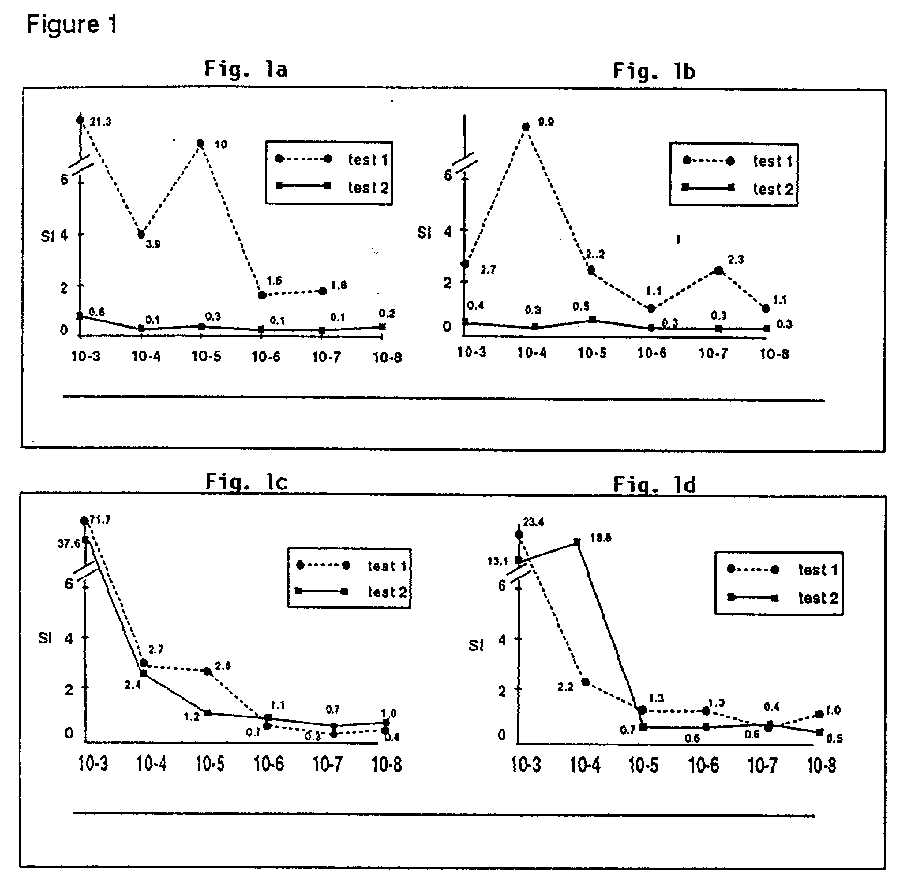
Description
- The invention relates to milk protein hydrolysates and their use to induce immunologic tolerance in infants suffering from cow's milk allergy.
- EPA 421 309 (Sandoz Nutrition Ltd.) discloses non-allergenic cow milk protein hydrolysates having a high degree of hydrolysis whilst having a low content of free amino acids. The non-allergenic milk protein hydrolysates disclosed in EPA 421 309 are indicated for use as protein supply replacement in infants having intolerance against dietary proteins such as cow's milk proteins.
- The terms non-allergenic hydrolysates and hydrolysates substantially free of allergenic proteins as used herein are interchangeable. They refer to protein hydrolysates that can be administered to infants having intolerance against dietary proteins, more particularly cow's milk proteins, without inducing allergic reactions.
- In allergic disease, the type of allergy is related with the age to the child as food allergy mostly occur in infants. Cow's milk allergy is a common food allergy in infants, the disease prevalence ranging from 2 to 7,5 % of all children. Various symptoms can occur. Symptoms can be immediate (e.g. anaphylaxis and urticaria) which occur in half of the patients or less specific (e.g. vomiting or diarrhoea) which represent delayed clinical reactions in the other half of patients. Diagnostic procedure is well standardized with the criteria given by the European Society for Paediatric Gastroenterology and Nutrition Working Group (ESPGAN J. Pediatr. Gastroenterol. Nutr. 1992; 14: 108-12). Complete exclusion of cow's milk proteins and diet with hydrolysed formulas represent the treatment of choice of this condition. Cow's milk allergy disappears spontaneously. Cow's milk tolerance tends to appear at 2 to 4 years of age, whereby it is been suggested for safety reasons to avoid administration of milk proteins to children suffering from cow's milk allergy before they are 6 to 7 years old.
- It has now surprisingly been found that non-allergenic whey protein hydrolysates are capable of inducing cow's milk protein tolerance such that cow's milk allergy disappears substantially faster than normally would be expected for spontaneously (i.e. naturally) acquired tolerance.
- The invention accordingly provides a method of inducing cow's milk protein tolerance in children susceptible to cow's milk allergy by administering to a child in need of such treatment a whey protein hydrolysate substantially free of allergenic proteins.
- The whey protein hydrolysate free of allergenic proteins is conveniently administered in the form of a complete formula diet.
- Another embodiment of the invention is the use of whey protein hydrolysate substantially free of allergenic proteins for the manufacture of a dietary composition for the induction of cow's milk protein tolerance.
- Examples of non-allergenic whey protein hydrolysates suitable for use in the method of the invention are hydrolysates obtainable from whey proteins enzymatically hydrolysed by trypsin-chymotrypsin in the presence of a cationic serine endoprotease of the
elastase 2 type, e.g. at a temperature of from 35°C to 50°C and a pH between 7.0 and 9.0 - The whey protein fraction employed as starting material will preferably be substantially free of macrolipids; i.a. to facilitate enzymatic hydrolysis.
- The whey proteins may have been pretreated, e.g. subjected to microfiltration/ultrafiltration, to remove most of large proteins having a molecular weight of more than 60'000 Daltons. Such pretreated whey protein mixture is hereinafter designated "selected whey protein". It will still contain some bovine serum albumine (BSA) having a molecular weight of ca. 66.000 Da.
- The use of
elastase 2 allows the elimination of allergenic epitopes and provides a product having a high effective degree of hydrolysis (19 % or more), a low content of free amino acids while having a high content of di- to decapeptides and in particular of tetra- to decapeptides. - Preferably the whey protein, more preferably the selected whey protein, is initially subjected to a gastric phase prehydrolysis, e.g. by heating a solution of (selected) whey protein in water to 43 ± 4°C and treating said solution with pepsin at pH between 2.0 and 3.0.
- Pepsin hydrolysis of BSA results for example in very little small peptides but facilitates by denaturation the subsequent elimination of peptide fragments of high molecular weight (30.000 to 40.000 Da) by treatment with other enzymes. Elastase 2 allows i.a. the reduction of peptides having an intermediate size (ca. 10.000 Da) and induces a shift of the peptide profile in favour of low molecular weight peptides.
- Accordingly, the non-allergenic whey protein hydrolysates particularly suitable for use in the method of the invention are obtainable by physiological hydrolysis of selected whey protein. Said physiological hydrolysis involves a gastric phase, i.e. a pepsin prehydrolysis at pH between 2.0 and 3.0, followed by an enzymatic treatment of the prehydrolysate with a mixture of trypsin-chymotrypsin and a cationic serine
endoprotease type elastase 2. Suitable conditions for such physiological hydrolysis are disclosed in EPA 421 309. - The effective degree of hydrolysis of non-allergenic protein hydrolysates obtainable by physiological hydrolysis will conveniently be in the range of from 20 % to 32 %. The free amino acid content of whey protein hydrolysates suitable for use in the method of the invention, is preferably below 15 %, more preferably in the range of from 1 to 13 % by weight.
- The effective degree of hydrolysis is determined according to the formula:

- A typical molecular weight distribution of non-allergenic whey protein hydrolysates obtainable by physiological hydrolysis suitable for use in the method of this invention, is as follows (determined by UV detection at 215 nm);
% by weight from more preferably e.g. MW > 5000 0.5 to 4.0 2.8 to 3.8 3.3 5000 > MW > 3000 2 to 10 5 to 10 5.2 3000 > MW > 1000 29 to 36 33.5 to 35.5 33.9 1000 > MW > 500 26 to 31 29 to 31 30.9 500 > MW > 300 14.6 to 29.6 15 to 21 20.6 300 > MW 5.9 to 12.9 5.7 to 7.7 6.1 - Such non-allergenic whey protein hydrolysates are preferably administered in admixture with non-allergenic casein hydrolysates in a weight ratio whey protein hydrolysate: casein protein hydrolysate of 50:50 to 70:30, preferably 60:40, such that its composition in g amino acid per 100 g hydrolysate is similar to that of mother's milk.
- Non-allergenic casein protein hydrolysates are obtainable by enzymatic treatment of casein with a mixture of trypsin-chymotrypsin and a cationic serine
endoprotease type elastase 2. Casein hydrolysates are in general less problematic than whey protein hydrolysates from the allergenicity point of view. Thus it is in general not necessary to subject casein - in addition to the aforementioned enzymatic treatment - to a gastric phase hydrolysis. - Typically , the casein used as starting material for preparation of casein hydrolysates suitable for use in the method of the invention, will be casein substantially free of glycoprotein fraction; the casein employed is conveniently rennet casein, i.e. as obtained by coagulation with pepsin, e.g. bovine pepsin.
- A typical molecular weight distribution of non-allergenic casein hydrolysates suitable for use in admixture with non-allergenic whey protein hydrolysates in the method of the invention is as follows (determined by UV detection at 215 nm):
% by weight range e.g. MW > 5000 0 to 1 0 5000 > MW > 3000 0 to 1 0.1 3000 > MW > 1000 17 to 26 18.6 1000 > MW > 500 33 to 40 37.4 500 > MW > 300 26 to 31 29.2 300 > MW 11 to 16 14.7 - The effective degree of hydrolysis of particularly suitable casein hydrolysates lies in the range of from 20 to 30 %.
- The free amino acid content in the casein hydrolysates suitable for use in the invention is preferably below 15 % and more preferably in the range of from 8 to 13 %.
- The whey protein hydrolysates and casein protein hydrolysates may be treated with a proteolytic enzyme from the fungus Aspergillus oryzae or with a pancreatic proteinase extract for taste improvement. Such enzymes are commercially available. Typical examples thereof include COROLASE 7092 and COROLASE PP (Röhm).
- The treatment of milk proteins with a COROLASE 7092 type of proteolytic enzyme is conveniently at a pH of about 8 and employing ca. 1.0 to 1.5 % enzyme/protein substrate having an activity of about 2000 m UHb/mg enzyme (see Example 4 hereinafter) during ca. 1¼ to 1¾ hours.
- The proteolytic enzyme from Aspergillus oryzae is conveniently added to the protein mixture comprising an effective amount of pancreatic enzymes (trypsin-chymotrypsin and optionally elastase 2), preferably after 1 hr to 1½ hr treatment with pancreatic enzymes at 41 to 47° C.
- Treatment with 1.0 to 1.5 % COROLASE PP type enzyme/protein substrate at a pH of about 8 during 1¼ to 1¾ hours at 41 to 47° C allows similar taste improvement.
- The preparation of the starting materials, the hydrolysis conditions and working up of the hydrolysates including any pasteurization, ultrafiltration, concentration and drying steps may be carried out in a manner known per se, e.g. analogous to the methods disclosed in EPA 421 309 or as exemplified hereinafter.
- It will be appreciated that the composition of the hydrolysates obtained by hydrolysis of milk proteins or milk protein fractions will depend on the hydrolysis conditions.
- Preferably the conditions will be selected such that the hydrolysate has an effective degree of hydrolysis and a free amino acid content within the ranges specified herein.
- In general it will be preferred to use a non-allergenic whey protein hydrolysate, more preferably a whey protein hydrolysate: casein hydrolysate mixture in a weight ratio in the range of from 5:1 to 1:1, most preferably 1.5:1.
- The whey protein hydrolysate fraction to be employed comprises conveniently less than 35 % by weight preferably from 20 to 33 % by weight of peptides containing 2 to 5 amino acids and/or from 35 to 60 % by weight of peptides having 4 to 10 amino acids when determined by UV detection at 215 nm. (It will be appreciated that the values will vary within said ranges to some extent due to natural variation of the composition of the starting material, but also depending on the detection method employed: the chromatographic analysis by UV 215 nm detection and by Refraction Index detection will give different results).
- The ability of milk protein hydrolysates to induce cow's milk protein tolerance is indicated by results obtained employing the Lymphocyte stimulation test (LST).
- Lymphocyte stimulation test (LST) was performed with sterile blood of a cow's milk allergic child in order to study cellular response to the offending proteins before, and after 3 months exclusion diet. The child developed during the treatment with DAMIRA® (Sandoz Nutrition Ltd.) a cellular tolerance showed by cellular stimulation only be higher concentration of the offending proteins.
- The mild protein hydrolysate used as test mixture is a commercially available product, designated DAMIRA® (Sandoz Nutriton Ltd.).
- DAMIRA® comprises a hydrolysate from 60 % whey protein and 40 % rennet casein. The whey protein hydrolysate has been obtained by physiological hydrolysis of whey protein, substantially free of macrolipids and lactose, i.e. involving a gastric phase (pepsin hydrolysis) and a pancreatic hydrolysis (with trypsin/chymotrypsin and elastase 2), essentially as disclosed in Example 1 hereinafter. The rennet casein hydrolysate has been obtained essentially as disclosed in Example 7 hereinafter.The DAMIRA® composition is given in Example 8.
- This test is performed on the lymphomonocyte fraction isolated from sterile heparinized blood after centrifugation on Ficoll (Pharmacia). The cells are suspended on a buffer solution (TC 199 Hanks), centrifugated and washed 3 times. They are then added to a solution of AB human serum (at a concentration of 20 %) with culture medium (RPMI 1640). 10⁶ cells/ml are incubated in quaduplicates in 96 well plates with the antigens at the different concentrations. Six different logarithmic concentrations (from 10⁻⁸ to 10⁻³ mg/ml of whole milk, casein, α-lactalbumin, β-lactoglobulin and a milk protein hydrolysate product are studied. After incubation for 7 days, the cell DNA is labelled with methyl-H3 thymidine; collected on a paper filter and mixed with a scintillation liquid. Radioactivity expressing the cell proliferation is measured on a Beta counter. The results are expressed either as total counts per minute (cpm) or as stimulation index (SI):

- An index > 3 is interpreted as positive. Negative controls without antigen; phytohemagglutinin and tetanus toxoid are used as positive controls.
- Figure 1 represents the cellular response to whole cow milk and the 3 major antigens at diagnosis (test 1) and after 3 months (test 2) treatment with DAMIRA®. Fig. 1a gives the Stimulation Index (SI) for whole milk concentrations, Fig. 1b for α-lactalbumin concentrations. Fig. 1c for β-lactoglobulin concentrations and Fig. 1d for casein concentrations.
- Stimulation indexes are higher for whole cow milk at all the concentrations at the time of
test 1 as compared to test 2.This tendency is also observed for alpha-lactalbumin and β-lactoglobulin. The index was positive until 10-5 mg/ml attest 1 and negative at all concentrations attest 2 for whole cow milk. It was negative at 10-4 mg/ml for β-lactoglobulin at both tests; positive at 10-4 attest 1 and negative for all concentrations attest 2 for α-lactoalbumin and for casein positive at 10-4 attest 2 and negative at the same concentration attest 1. - Figure 2 compares whole cow milk (Fig. 2a) and DAMIRA® (Fib. 2b) at 3 months interval. Stimulation indexes were positive up to 10-5 mg/ml for milk at
test 1 whereas stimulation indexes for DAMIRA® were negative at all the concentrations attest 1. Attest 2, stimulation indexes were negative at all concentrations for both. In contrast, lymphocyte proliferation was less with whole cow milk than with DAMIRA® at all concentrations tested. These results suggest the apparition of an immunologic tolerance during the diet. - The positive results with DAMIRA® are confirmed in further tests.
- In view of its tolerance inducing effect, the protein hydrolysates are also indicated for prophylaxis and therapy of infants and children having a genetic predisposition to type I diabetes mellitus:
- It has indeed been suggested that Bovine Serum Albumin (BSA) triggers the immune system. Anti-BSA antibodies, in particular IgG anti-BSA antibodies bind to the endogenous antigen p69 which is located on the surface of pancreatic β-cells and has a chemical structure similar to the portion of the BSA peptide triggering in allergic reaction. Such immune attack reduces the β-cell population leading to the development of type I diabetes millitus.
- Administration of the milk protein hydrolysate disclosed herein prevents destruction of pancreatic beta cells in susceptible persons. Timely diagnosis of genetic predisposition to type I diabetes mellitus will accordingly allow prophylaxis and therapy of type I diabetes mellitus in susceptible infants and children by treatment with protein hydrolysates. The treatment will conveniently be continued till the children acquired cow milk tolerance.
- For use in the methods of the invention, the protein hydrolysates according to the invention are conveniently administered in nutritionally acceptable composition form. Such compositions may comprise carbohydrate and fatty acid sources, vitamins, minerals and trace elements.
- Said compositions are preferably in the form of a complete formula diet (in liquid or powder form), such that, when used as sole nutrition source essentially all daily caloric, nitrogen, fatty acid, vitamin, mineral and trace element requirements are met.
- For infants, the daily caloric amount to be supplied will in general lie in the range of from 100 to 180 Kcal per kg body weight. The contribution of the nitrogen source (i.e. the whey/casein hydrolysate of the invention), carbohydrate source and lipid source to the total daily amount may vary within wide ranges. In typical compositions of the invention, the carbohydrate source provides for 45 to 68 %, the fatty acid sources for 25 to 50 % and the protein hydrolysate of the invention for 7 to 15 % of the total energy supply of the composition.
- An example of carbohydrates particularly suitable for use in the complete diet for infants includes a mixture on the basis of maltodextrines (10 to 25 %) and lactose (90 to 75 %), unless the infant requires a diet having a low lactose content, in which case the carbohydrate source will conveniently be quasi exempt of lactose (< 1 % lactose).
- Examples of suitable fatty acid sources include triglyceride oils and phospholipids.
- The carbohydrates employed for composition for adults are preferably primarily a mixture on the basis of maltodextrines having a low mono- and disaccharide content (< 5 % by weight of the total carbohydrate content), a very low content of alimentary fibers and being quasi exempt of lactose. Preferably such compositions will have a total lactose content of less than 1 % by weight of the protein hydrolysate present in the formulation.
- Examples of vitamins suitable for incorporation in the composition of the invention include vitamin A, vitamin D₃, vitamin E, vitamin k₁, vitamin C, folic acid, thiamin, riboflavin, vitamin B₆, vitamin B₁₂, niacinamid, biotin, I-carnitine, choline and panthotenic acid in physiologically acceptable form. Depending on the contemplated use, the incorporation of taurine and/or hypotaurine, of L-cystine, resp. supplementation of threonine, may be useful. The amount of amino acids added to the composition of the invention, in free amino acid form or in small peptide form, will preferably be such that it does not substantially influence the composition of the non-allergenic hydrolysates employed in the method of the invention e.g. in terms of free amino acid content, effective degree of hydrolysis, content of peptides having 4 to 10 amino acids and the like.
- Examples of minerals and trace elements suitable for incorporation in the composition of the invention include sodium, potassium, calcium, phosphorous, magnesium, manganese, copper, zinc, iron, selenium, chromium and molybdenum in physiologically acceptable form.
- It will be appreciated that the minimum daily requirements of vitamins, minerals and trace elements will depend on the person to be treated. In general, the daily minimum requirements are determined by governmental authorities; they may accordingly vary from country to country.
- In the following Examples, which illustrate the invention, % and parts are by weight unless stated otherwise and temperatures in centigrades.
- In a tank of 12'000 are introduced 7500 I demineralised water at a temperature of 25 ± 2°C.
- 900 kg of delipidated delactosed lactoserum are gradually dissolved therein. The mixture is rinsed with 600 I of demineralised water having a temperature of 25 ± 2° and the volume adjusted to 11 500 I.
- The hydration time is determined at 1 hour.
- The pH of the solution is then adjusted at 4.6 ± 0.1 employing a prepared mixture of citric acid and lactic acid (Mixture A; see below, Ex. 2.1).
- The mixture is pasteurized, at pH 4.6 by flash heat treatment at 80° C during 1 minute.
- The temperature of the mixture is then increased to 43 ± 2° C and the pH adjusted to pH 2.6 ± 0.1 employing a 33 % hydrochloric acid solution.
- 0.2 g bovine pepsine (BOVIPEP; Lab. Presure Granday) / kg protein are then added and the reaction vessel shuttled during 1 hour while maintaining the temperature at 43°C.
- The pH is adjusted to pH 8 ± 0.1 employing a preprepared alkaline mixture B (see below). The temperature is maintained at 43 ± 2° C.
- The mixture is ultrafiltrated (on IRIS 3038 membranes - Rhône Poulenc; membrane surface 80 m², temperature 50°C) till obtention of 2500 I of permeate. At this stage, the diafiltration is started; 4800 I of permeate are eliminated while maintaining the volume of the retentate constant by addition, at the same debit 4800 I of demineralised water at 45 ± 2° C.
- The chloride content of the retentate is demineralised. It should not exceed 1.7 g/l. If it does, the ultrafiltration must be pursued by elimination of a supplementary volume of permeate till the chloride concentration has reached the desired level.
- The retentate volume is adjusted to 12000 I employing demineralised water having a temperature of 45 ± 2° C.
- The temperature and pH is verified; if necessary the temperature is readjusted by heating to 45 ± 2° C and the pH re-adjusted to pH 8 by addition of alkaline mixture B (Ex. 2.2 below).
- PEM (Ex. 2.3 hereinafter) and elastase (Ex. 2.4 hereinafter) are added simultaneously in the form of prepared solutions: PEM at a rate of 3.5 g enzyme per kg of protein substrate and elastase at 1120 U₂ and max. 3800 U₁ per kg of protein substrate.
- The pH is maintained at pH 8 ± 0.1 during 1 h 15 employing alkaline neutralization solution B prepared in advance.
- The hydrolysis is continued for a further 1 h 15 period without further pH adjustment. During the total PEM/elastase hydrolysis period, agitation of the mixture is continued and the temperature maintained at 45 ± 2° C.
- The protein hydrolysate solution is then subjected to ultrafiltration at 50° C, employing IRIS 3038 membranes (Rhône Poulence) - membrane surfaces 80 m².
- The ultrafiltration is followed by a diafiltration when the refraction index of the retentate attains a value of ca. 13 %.
- The diafiltration degree employed is 1.5.
- The permeate is then cooled and concentrated till it has a refraction index of 35-40 %.
- Residual proteins are removed by ultrafiltration on IRIS 3038 membranes (Rhône Poulenc), having a membrane surface of 80 m², at 50° C.
- The concentrated permeate is sterilized (5 minutes at 130° C) and then spray dried (inlet temperature 180° C; outlet temperature 80° C).
- The thus obtained product has the following physiochemical characteristics:
solubility 100 % pH 6 % dry extract 97.75 g/100 g Proteins (N x 6.5) 89.34 g/100 g Total nitrogen (TN) 13.74 g/100 g Ashes 7.76 g/100 g Ca 270 mg/100 g Na 580 mg/100 g K 2300 mg/100 g Cl 2860 mg/100 g N in free amino groups (AN) 2.66 g/100g Total N content (NH₂ or NH) (TAN) 12.80 g/100 g. Apparent degree of hydrolysis (AN/TN) 19.35 % Effective degree of hydrolysis (AN/TAN) 20.75 %. MW repartition (determined by UV detection at 215 nm) MW > 5000 3.3 % 5000 > MW > 3000 5.2 % 3000 > MW > 1000 33.9 % 1000 > MW > 500 30.9 % 500 > MW > 300 20.6 % 300 > MW 6.1 % - The aminogram (g/100 amino acids) of the thus obtained hydrolysate is as follows (average of 6 samples):
Lys 10.72 ± 0.47 Ala 5.24 ± 0.29 His 2.02 ± 0.14 Cys/Cystine 2.96 ± 0.76 Arg 2.58 ± 0.25 Val 4.23 ± 0.23 Asp 12.06 ± 0.66 Met 1.66 ± 0.09 Thr 4.67 ± 0.22 Ile 4.65 ± 0.66 Ser 3.74 ± 0.24 Leu 11.94 ± 0.67 Glu 18.47 ± 0.69 Tyr 3.04 ± 0.10 Pro 4.68 ± 0.55 Phe 3.63 ± 0.29 Gly 1.72 ± 0.33 Trp 2.24 ± 0.29 - Free amino acid content (g/100 g product) - average of 3 samples:
Lys 0.72 ± 0.09 Gly 0.00 ± 0.00 His 0.01 ± 0.02 Ala 0.00 ± 0.00 Arg 0.15 ± 0.00 Cys/Cystine 0.00 ± 0.00 Asp 0.00 ± 0.00 Val 0.00 ± 0.00 Asn 0.00 ± 0.00 Met 0.01 ± 0.01 Thr 0.00 ± 0.00 Ile 0.05 ± 0.02 Ser 0.01 ± 0.01 Leu 0.26 ± 0.07 Glu 0.00 ± 0.00 Tyr 0.19 ± 0.11 Gln 0.00 ± 0.00 Phe 0.49 ± 0.17 Pro 0.00 ± 0.00 Trp 0.00 ± 0.00 TOTAL 1.89 ± 0.42 - Peptide composition (average of 6 samples):


- To 60 I demineralised water at 25 + 2° C are added 30 kg crystalline citric acid, while stirring.
- After complete dissolution of the citric acid, 30 I lactic acid (purity 80 %) are added. Then further demineralised water is added till a total volume of 130 I is obtained.
- To 100 I demineralised water at 25 ± 2° C are added 52.97 kg KOH while stirring, till complete dissolution. Then 211.75 I pure 21 % ammonia are added and the volume adjusted to 350 I by addition of demineralised water.
- The Proteolytic Enzyme Mixture employed is a concentrated mixture in powder form without salts, of porcine trypsin, bovine trypsin and bovine chymotrypsin, commercial designation P.E.M. 2500 S (NOVO Industrie Enzymes S.A. Paris), having a trypsine activity of at least 1800 USP-u/mg and a chymotrypsine activity of at least 350 USP-u/mg.
- It is employed as an aqueous solution, by dissolution of PEM 2500 S in demineralised water at 25 ± 2° C.
- The elastase employed is from porcine pancreas origin, commercialised under Code E 3 by Biozyme (GB), in the form of a suspension in 70 % saturated ammonium sulphate with an activity of not less than 120 U/mg protein.
- The unit definition employed by Biozyme is as follows: the amount of enzyme causing the hydrolysis of 1 micromole of N-acetyl-tri-L-alanine methyl ester per minute at 25° C and pH 8.5 (Method of assay: Gertler and Hofmann (1970) Can. J. Biochem. 48 384).
- One proceeds analogous to the procedure of Example 1, except that after the neutralization phase of 1h 15 (step 1.5) the hydrolysis is continued for another 1h 45 (instead of 1h 15 minutes).
- The MW repartition is as follows: (determined by UV detection at 215 nm)
MW > 5000 3.4 5000 > MW > 3000 10.0 3000 > MW > 1000 34.9 1000 > MW > 500 28.9 500 > MW > 300 15.4 300 > MW 7.4 - One proceeds analogous to the procedure of Example 1, except that after the neutralization phase of 1h 15 (step 1.5), 1 % COROLASE 7092 is added and the hydrolysis continued for 1h 15.
- COROLASE 7092 (Röhm) is a proteolytic enzyme preparation in liquid form from Aspergillus oryzae cultures having an activity of 2000 m UHb/mg, 1UHb being the enzyme quantity releasing with one minute at pH 7.5 and 37° C the equivalent of 1 micro mole tyrosine in TCE-soluble hydrolysate from haemoglobulin.
- The thus obtained product has the following physiochemical characteristics:
Dry Extract 97.97 g/100 g Total nitrogen content (kjeldahl) 13.30 g/100 g Protein content (x 6.5) 85.01 g/100 g Ashes 7.99 g/100 g Calcium 0.33 g/100 g Sodium 0.67 g/100 g Potassium 3.05 g/100 g Chlorides 2.72 g/100 g pH 6.05 Solubility 100 % - Its MW repartition is as follows: (determined by UV detection at 215 nm)
MW > 5000 0.7 5000 > MW > 3000 2.0 3000 > MW > 1000 29.3 1000 > MW > 500 26.0 500 > MW > 300 29.3 300 > MW 12.7 - One proceeds analogous to the procedure of Example 4, except that 1 % COROLASE PP, a pancreatic proteinase, is employed instead of COROLASE 7092.
- One proceeds analogous to the procedure of Examples 1 to 4, except that the whey protein employed as a starting material is as follows pretreated to remove large proteins.
- Commercially available delactosed lactoserum protein powder is purified and pretreated to remove macrolipids and most of large proteins having a molecular weight of more than 60'000 Daltons employing microfiltration and ultrafiltration techniques on membranes having a dynamic cut-off over 50'000.
- The conditions are selected such that ca. 95 % of the immunoglobulins IgG are eliminated by microfiltration on membrane 0.22 micron, measured by immunotechnic and that the product comprises ca. 75 g proteins per litre and less than 2 g of lactose per litre.
-
- a) 1000 kg of rennet casein (obtained from milk by enzymic precipitation with rennet, comprising at least 84 % by weight of proteins-relative to the total dry material and having a water content of 10 % or less) are added portionwise with stirring to a reaction vessel of 12 m³ comprising 7000 I of demineralised water, cooled at a temperature of 5° C. The mixture is rinsed with 700 I of demineralised water and the volume of the mixture adjusted to 8300 I. The hydration time is 1 hour.
- b) The pH of the solution of step a) is adjusted to pH 8 ± 0.1 employing the alkaline solution [B] of ammonia and potassium hydroxide (according to Example 2.2).
- c) The temperature is adjusted to 45° C ± 2° C.
- d) PEM (see Ex. 2.3) and elastase (see Ex. 2.4) are added simultaneously to the thus obtained mixture: PEM at a rate of 1.96 g/kg of proteins, elastase at a rate of 3420 U₁ per kg of protein.
The pH is maintained at 8 ± 0.1 for 1 h 15 by neutralization of the solution employing the ammonia/potassium hydroxide solution B (Example 2.2). - e) COROLASE 7092 (Rhöm) is then added at a rate of 15 g/kg proteins. The mixture is kept at 45° ± 2° C for 1hr 15.
- f) After the hydrolysis has been finalized (the total hydrolysis duration is 2h 30) the mixture is subjected to ultrafiltration employing IRIS 3038 membranes (Rhone-Poulenc) having a membrane surface of 80 m². The temperature is 50° C.
- g) The ultrafiltration is followed by a diafiltration when the refraction index attains a value of about 13 %.
The diafiltration degree employed is 1.5.
The temperature of the permeate must be cooled to below 5° C if it is stored for more than 2 hours. - h) The permeate is concentrated by evaporation till the refraction index value is 35 to 40 %.
- The concentrate is sterilized at 125° ± 2° C for 1 minute and then spray dried (inlet temp. 180° C; outlet temp. 80° C).
- The thus obtained casein hydrolysate has the following characteristics:
Solubility 100 % pH 7.26 Dry extract 97.66 g/100 g Proteins (N x 6.5) 94.12 g/100 g Total N content (TN) 14.45 g/100 g Ashes 4.27 g/100 g Calcium 370 mg/100 g Na 50 mg/100 g K 1240 mg/100 g Cl 90 mg/100 g. N in free amino groups (AN) 3.35 g/100 g Total N content (NH or NH₂) (TAN) 12.40 g/100 g Apparent degree of hydrolysis (AN/TN) 23.2 % Effective degree of hydrolysis (AN/TAN) 27.0 % Repartition of MW: (determination by UV detection at 215 nm) MW > 5000 0 % 5000 > MW > 3000 0.1 % 3000 > MW > 1000 18.6 % 1000 > MW > 500 37.4 % 500 > MW > 300 29.2 % 300 > MW 14.7 % - Free amino acid content 10.5 %.
Aminogram (in g/100 g Amino acids) Lys 7.9 Ala 2.7 His 3.0 Cys 0.5 Arg 3.8 Val 5.7 Asp 6.7 Met 2.7 Thr 3.3 Ile 3.8 Ser 3.9 Leu 9.8 Glu 20.7 Tyr 6.1 Pro 10.7 Phe 5.6 Gly 1.9 Trp 1.4 Osmolarity mosmol/l 50 g/l 119 100 g/l 236 - Residual allergenicity: none
-


- Its aminogram is as follows (in g/100 g amino acid)
Asp/Asn 9.43 Met 2.24 Thr 4.59 Ile 5.33 Ser 4.17 Leu 11.80 Glu/Gln 18.65 Tyr 2.95 Pro 7.84 Phe 4.47 Gly 1.68 Lys 9.78 Ala 4.31 His 2.51 Cystine 0.71 Arg 2.90 Val 5.48 Trp 1.16
Claims (28)
- The use of whey protein hydrolysate substantially free of allergenic proteins for the manufacture of a dietary composition for the induction of cow's milk tolerance in children susceptible to cow's milk allergy.
- The use according to Claim 1, wherein the whey protein hydrolysate is obtainable by hydrolysis of whey protein with trypsin/chymotrypsin in the presence of elastase 2.
- The use according to Claim 1, wherein the whey protein hydrolysate is obtainable by prehydrolysis with pepsin, followed by hydrolysis of the whey protein prehydrolysate with trypsin/chymotrypsin in the presence of elastase 2.
- The use according to Claim 1, wherein the whey protein hydrolysate is obtainable by prehydrolysis with pepsin, followed by hydrolysis of the whey protein prehydrolysate with trypsin/chymotrypsin in the presence of elastase 2 and - after an initial pancreatic hydrolysis phase - in the presence of the fungal proteolytic enzyme from Aspergillus oryzae having endo- and exopeptidase activity.
- The use according to Claim 1, wherein the whey protein hydrolysate is obtainable by prehydrolysis with pepsin, followed by hydrolysis of the whey protein prehydrolysate with trypsin/chymotrypsin in the presence of elastase and - after an initial hydrolysis phase - in the presence of pancreatic proteinase extract.
- The use according to Claims 2 to 5, wherein the whey protein employed as starting material is substantially free of macrolipids.
- The use according to Claims 2 to 6, wherein the whey protein employed as starting material is substantially free of lactose.
- The use according to Claims 2 to 7, wherein the whey protein employed as starting material is substantially free of proteins having a molecular weight of more than 60'000 Daltons.
- The use according to Claims 1 to 8, wherein the dietary composition comprises as an additional protein source casein hydrolysate substantially free of allergenic proteins.
- The use according to Claim 9, wherein the casein hydrolysate is obtainable by hydrolysis of casein with trypsin/chymotrypsin in the presence of elastase 2.
- The use according to Claims 9 or 10, wherein the casein employed as starting material is substantially free of glycoprotein.
- The use according to Claims 9 to 11, wherein the casein employed as starting material is rennet casein.
- The use according to Claims 9 to 12, wherein the whey protein and casein hydrolysates are in a weight ratio whey protein hydrolysate: casein hydrolysate of 5:1 to 1:1.
- The use according to Claims 1 to 13, wherein the dietary composition is in the form of a complete formula diet.
- The use of whey protein hydrolysate substantially free of allergenic proteins for the manufacture of a dietary composition for the prophylaxis or treatment of type 1 diabetes mellitus in children susceptible to such disease.
- The use according to Claim 15, wherein the whey protein hydrolysate is obtainable by hydrolysis of whey protein with trypsin/chymotrypsin in the presence of elastase 2.
- The use according to Claim 15, wherein the whey protein hydrolysate is obtainable by prehydrolysis with pepsin, followed by hydrolysis of the whey protein prehydrolysate with trypsin/chymotrypsin in the presence of elastase 2.
- The use according to Claim 15, wherein the whey protein hydrolysate is obtainable by prehydrolysis with pepsin, followed by hydrolysis of the whey protein prehydrolysate with trypsin/chymotrypsin in the presence of elastase 2 and - after an initial pancreatic hydrolysis phase - in the presence of the fungal proteolytic enzyme from Aspergillus oryzae having endo- and exopeptidase activity.
- The use according to Claim 15, wherein the whey protein hydrolysate is obtainable by prehydrolysis with pepsin, followed by hydrolysis of the whey protein prehydrolysate with trypsin/chymotrypsin in the presence of elastase and - after an initial hydrolysis phase - in the presence of pancreatic proteinase extract.
- The use according to Claims 16 to 19, wherein the whey protein employed as starting material is substantially free of macrolipids.
- The use according to Claims 16 to 20, wherein the whey protein employed as starting material is substantially free of lactose.
- The use according to Claims 16 to 21, wherein the whey protein employed as starting material is substantially free of proteins having a molecular weight of more than 60'000 Daltons.
- The use according to Claims 15 to 22, wherein the dietary composition comprises as an additional protein source casein hydrolysate substantially free of allergenic proteins.
- The use according to Claim 23, wherein the casein hydrolysate is obtainable by hydrolysis of casein with trypsin/chymotrypsin in the presence of elastase 2.
- The use according to Claims 23 or 24, wherein the casein employed as starting material is substantially free of glycoprotein.
- The use according to Claims 23 to 25, wherein the casein employed as starting material is rennet casein.
- The use according to Claims 23 to 26, wherein the whey protein and casein hydrolysates are in a weight ratio whey protein hydrolysate: casein hydrolysate of 5:1 to 1:1.
- The use according to Claims 15 to 27, wherein the dietary composition is in the form of a complete formula diet.
Applications Claiming Priority (2)
| Application Number | Priority Date | Filing Date | Title |
|---|---|---|---|
| GB939312369A GB9312369D0 (en) | 1993-06-16 | 1993-06-16 | Organic compounds |
| GB9312369 | 1993-06-16 |
Publications (1)
| Publication Number | Publication Date |
|---|---|
| EP0629350A1 true EP0629350A1 (en) | 1994-12-21 |
Family
ID=10737227
Family Applications (1)
| Application Number | Title | Priority Date | Filing Date |
|---|---|---|---|
| EP94810352A Withdrawn EP0629350A1 (en) | 1993-06-16 | 1994-06-14 | Milk protein hydrolysates |
Country Status (5)
| Country | Link |
|---|---|
| EP (1) | EP0629350A1 (en) |
| JP (1) | JPH07101873A (en) |
| AU (1) | AU6471494A (en) |
| CA (1) | CA2125793A1 (en) |
| GB (1) | GB9312369D0 (en) |
Cited By (35)
| Publication number | Priority date | Publication date | Assignee | Title |
|---|---|---|---|---|
| WO1996036880A1 (en) * | 1995-05-19 | 1996-11-21 | Universite Libre De Bruxelles | Method for detecting and/or quantifying ligands specific to a pathologie associated to an allergic or auto-immune reaction or to lung cancer |
| WO1997000078A1 (en) * | 1995-06-14 | 1997-01-03 | Valio Oy | Methods of preventing or treating allergies |
| EP0827697A1 (en) * | 1996-09-06 | 1998-03-11 | Societe Des Produits Nestle S.A. | Induction of tolerance to cow-milk |
| WO2000042863A1 (en) * | 1999-01-19 | 2000-07-27 | Societe Des Produits Nestle S.A. | A hypoallergenic composition containing tolerogenic peptides inducing oral tolerance |
| WO2001043563A1 (en) * | 1999-12-17 | 2001-06-21 | N.V. Nutricia | Use of modified foodstuff ingredients for preventing the development of a diabetes mellitus (iddm) with an existing epidemiologically established risk |
| WO2001037850A3 (en) * | 1999-11-22 | 2002-01-10 | Nestle Sa | Use of a milk protein hydrolysate in the treatment of diabetes |
| EP1236405A1 (en) * | 2001-03-01 | 2002-09-04 | Societe Des Produits Nestle S.A. | Hypoallergenic formulae inducing oral tolerance to soy proteins |
| US6451368B1 (en) | 1994-04-11 | 2002-09-17 | New Zealand Dairy Board | Method of selecting non-diabetogenic milk or milk products and milk or milk products so selected |
| WO2004056207A1 (en) * | 2002-12-20 | 2004-07-08 | Unilever N.V. | Blood glucose regulating composition |
| WO2006009437A3 (en) * | 2004-07-19 | 2006-04-06 | Nutricia Nv | Use of aspartate for regulating glucose levels in blood |
| WO2006082222A1 (en) * | 2005-02-03 | 2006-08-10 | Dsm Ip Assets B.V. | Compositions comprising epigallocatechin gallate and protein hydrolysate |
| WO2007004878A3 (en) * | 2005-07-01 | 2007-03-29 | Nutricia Nv | Infant nutrition with hydrolised proteins |
| WO2007027092A3 (en) * | 2005-09-02 | 2007-05-10 | Campina Nederland Holding Bv | Oral composition for moisturising skin |
| EP0967892B2 (en) † | 1996-04-18 | 2007-10-10 | Arla Foods amba | Additive for use in any energy supplementation, use of a protein hydrolysate to the preparation of energy supplementaton and an energy supplement containing such an additive |
| WO2007144397A1 (en) * | 2006-06-15 | 2007-12-21 | Nestec S.A. | Induction of tolerance to egg proteins |
| WO2008015275A1 (en) * | 2006-08-03 | 2008-02-07 | S.U.K. Beteiligungs Gmbh | Fractions of whey permeate and its use for the prevention and therapy of type 2 diabetes and the metabolic syndrome |
| US7618648B2 (en) | 2002-07-01 | 2009-11-17 | Unilever Bestfoods, North America Division Of Conopco, Inc. | Satiety inducing composition |
| WO2011151059A1 (en) | 2010-06-04 | 2011-12-08 | N.V. Nutricia | Non-digestible oligosaccharides for oral induction of tolerance against dietary proteins |
| EP2119445A4 (en) * | 2007-02-08 | 2012-02-01 | Megmilk Snow Brand Co Ltd | Prophylactic agent for autoimmune disease |
| WO2013083691A1 (en) | 2011-12-07 | 2013-06-13 | N.V. Nutricia | Beta-lactoglobulin peptides for treating cow's milk protein allergy |
| WO2014150566A1 (en) * | 2013-03-15 | 2014-09-25 | Mjn U.S. Holdings Llc | Reducing the risk of autoimmune disease |
| US8889633B2 (en) | 2013-03-15 | 2014-11-18 | Mead Johnson Nutrition Company | Nutritional compositions containing a peptide component with anti-inflammatory properties and uses thereof |
| WO2015090347A1 (en) | 2013-12-16 | 2015-06-25 | Nestec S.A. | Newly identified peptides for use in the induction of oral tolerance in young mammals |
| EP2608681B1 (en) | 2010-08-24 | 2015-09-16 | Abbott Laboratories | Nutritional products having improved organoleptic properties |
| US9138455B2 (en) | 2013-03-15 | 2015-09-22 | Mead Johnson Nutrition Company | Activating adiponectin by casein hydrolysate |
| US9345727B2 (en) | 2013-03-15 | 2016-05-24 | Mead Johnson Nutrition Company | Nutritional compositions containing a peptide component and uses thereof |
| US9345741B2 (en) | 2013-03-15 | 2016-05-24 | Mead Johnson Nutrition Company | Nutritional composition containing a peptide component with adiponectin simulating properties and uses thereof |
| US9352020B2 (en) | 2013-03-15 | 2016-05-31 | Mead Johnson Nutrition Company | Reducing proinflammatory response |
| EP3097791A1 (en) | 2010-06-04 | 2016-11-30 | N.V. Nutricia | Non-digestible oligosaccharides for oral induction of tolerance against dietary proteins |
| EP2575508B1 (en) | 2010-06-04 | 2019-01-09 | N.V. Nutricia | Non-digestible oligosaccharides for oral induction of tolerance against dietary proteins |
| WO2019212330A1 (en) | 2018-04-30 | 2019-11-07 | N.V. Nutricia | Formula with a specific beta-lactoglobulin peptide |
| WO2019212329A1 (en) | 2018-04-30 | 2019-11-07 | N.V. Nutricia | Formula with specific beta-lactoglobulin peptides |
| WO2021091369A1 (en) | 2019-11-07 | 2021-05-14 | N.V. Nutricia | Extensive whey protein hydrolysate with tolerogenic peptides |
| US11278603B2 (en) | 2016-03-28 | 2022-03-22 | Abbvie Inc. | Enzyme compositions with reduced viral and microbial contamination |
| US12405275B2 (en) | 2018-03-13 | 2025-09-02 | Amgen Inc. | Methods for the preparation of trypsin-resistant polypeptides for mass spectrometric analysis |
Families Citing this family (2)
| Publication number | Priority date | Publication date | Assignee | Title |
|---|---|---|---|---|
| JPH09194393A (en) | 1996-01-22 | 1997-07-29 | Meiji Milk Prod Co Ltd | Method for inducing immunological tolerance, immunological tolerance inducing food kit and immunological tolerance inducing agent kit |
| JP5380649B2 (en) * | 2007-03-16 | 2014-01-08 | 株式会社アップウェル | Milk component hydrolyzate |
Citations (6)
| Publication number | Priority date | Publication date | Assignee | Title |
|---|---|---|---|---|
| JPS4852967A (en) * | 1971-11-10 | 1973-07-25 | ||
| WO1987003785A1 (en) * | 1985-12-18 | 1987-07-02 | Otto Melchior Poulsen | A process for the preparation of a heat resistant non-bitter water-soluble peptide product, the product produced by the process, and nutrients, refreshments and dietetics comprising the product |
| EP0421309A2 (en) * | 1989-10-02 | 1991-04-10 | SANDOZ NUTRITION Ltd. | Protein hydrolysates |
| JPH04149139A (en) * | 1990-10-12 | 1992-05-22 | Nippon Steel Corp | Hypoglycemic agent |
| JPH04365444A (en) * | 1991-02-08 | 1992-12-17 | Morinaga Milk Ind Co Ltd | Antiallergic formulated milk |
| JPH055000A (en) * | 1991-06-27 | 1993-01-14 | Riyoushiyoku Kenkyukai | Low-aloergenic emzymolyzed peptide composition with orally tolerant inductivity |
-
1993
- 1993-06-16 GB GB939312369A patent/GB9312369D0/en active Pending
-
1994
- 1994-06-14 CA CA002125793A patent/CA2125793A1/en not_active Abandoned
- 1994-06-14 EP EP94810352A patent/EP0629350A1/en not_active Withdrawn
- 1994-06-15 JP JP6132891A patent/JPH07101873A/en active Pending
- 1994-06-15 AU AU64714/94A patent/AU6471494A/en not_active Abandoned
Patent Citations (6)
| Publication number | Priority date | Publication date | Assignee | Title |
|---|---|---|---|---|
| JPS4852967A (en) * | 1971-11-10 | 1973-07-25 | ||
| WO1987003785A1 (en) * | 1985-12-18 | 1987-07-02 | Otto Melchior Poulsen | A process for the preparation of a heat resistant non-bitter water-soluble peptide product, the product produced by the process, and nutrients, refreshments and dietetics comprising the product |
| EP0421309A2 (en) * | 1989-10-02 | 1991-04-10 | SANDOZ NUTRITION Ltd. | Protein hydrolysates |
| JPH04149139A (en) * | 1990-10-12 | 1992-05-22 | Nippon Steel Corp | Hypoglycemic agent |
| JPH04365444A (en) * | 1991-02-08 | 1992-12-17 | Morinaga Milk Ind Co Ltd | Antiallergic formulated milk |
| JPH055000A (en) * | 1991-06-27 | 1993-01-14 | Riyoushiyoku Kenkyukai | Low-aloergenic emzymolyzed peptide composition with orally tolerant inductivity |
Non-Patent Citations (7)
| Title |
|---|
| CHEMICAL ABSTRACTS, vol. 79, no. 19, 12 November 1973, Columbus, Ohio, US; abstract no. 114211, "REMOVAL OF BITTER TASTE FROM PEPTIDE SOLUTION OBTAINED FROM MILK CASEIN AND WHEY" * |
| DATABASE WPI Week 7625, Derwent World Patents Index; AN 73-66177 * |
| DATABASE WPI Week 9227, Derwent World Patents Index; AN 92-223434 * |
| DATABASE WPI Week 9305, Derwent World Patents Index; AN 93-040474 * |
| DATABASE WPI Week 9307, Derwent World Patents Index; AN 93-055215 * |
| J.M. MARTIN ET AL: "MILK PROTEINS IN THE ETIOLOGY OF INSULIN-DEPENDENT DIABETES MELLITUS (IDDM)", ANN. MED., vol. 23, no. 4, 1991, HELSINKI, pages 447 - 452, XP000675242 * |
| PATENT ABSTRACTS OF JAPAN vol. 017, no. 266 (C - 1062) 25 May 1993 (1993-05-25) * |
Cited By (77)
| Publication number | Priority date | Publication date | Assignee | Title |
|---|---|---|---|---|
| US7157616B2 (en) | 1994-04-11 | 2007-01-02 | Robert B Elliott | Method of selecting non-diabetogenic milk or milk products and milk or milk products so selected |
| US6451368B1 (en) | 1994-04-11 | 2002-09-17 | New Zealand Dairy Board | Method of selecting non-diabetogenic milk or milk products and milk or milk products so selected |
| EP0789842A4 (en) * | 1994-11-04 | 2004-08-04 | A2 Corp Ltd | Method of selecting non-diabetogenic milk or milk products and milk or milk products so selected |
| WO1996036880A1 (en) * | 1995-05-19 | 1996-11-21 | Universite Libre De Bruxelles | Method for detecting and/or quantifying ligands specific to a pathologie associated to an allergic or auto-immune reaction or to lung cancer |
| WO1997000078A1 (en) * | 1995-06-14 | 1997-01-03 | Valio Oy | Methods of preventing or treating allergies |
| US7172756B2 (en) | 1995-06-14 | 2007-02-06 | Valio Oy | Methods of promoting tolerogenic immune responses and compositions therefor |
| US6506380B1 (en) | 1995-06-14 | 2003-01-14 | Valio Oy | Methods of preventing or treating allergies |
| EP0967892B2 (en) † | 1996-04-18 | 2007-10-10 | Arla Foods amba | Additive for use in any energy supplementation, use of a protein hydrolysate to the preparation of energy supplementaton and an energy supplement containing such an additive |
| EP0827697A1 (en) * | 1996-09-06 | 1998-03-11 | Societe Des Produits Nestle S.A. | Induction of tolerance to cow-milk |
| AU781013B2 (en) * | 1999-01-19 | 2005-04-28 | Societe Des Produits Nestle S.A. | A hypoallergenic composition containing tolerogenic peptides inducing oral tolerance |
| US6737076B2 (en) | 1999-01-19 | 2004-05-18 | Nestec S.A. | Hypoallergenic composition containing tolerogenic peptides |
| WO2000042863A1 (en) * | 1999-01-19 | 2000-07-27 | Societe Des Produits Nestle S.A. | A hypoallergenic composition containing tolerogenic peptides inducing oral tolerance |
| US7585618B2 (en) | 1999-11-22 | 2009-09-08 | Nestec S.A. | Treatment of diabetes with milk protein hydrolysate |
| WO2001037850A3 (en) * | 1999-11-22 | 2002-01-10 | Nestle Sa | Use of a milk protein hydrolysate in the treatment of diabetes |
| WO2001043563A1 (en) * | 1999-12-17 | 2001-06-21 | N.V. Nutricia | Use of modified foodstuff ingredients for preventing the development of a diabetes mellitus (iddm) with an existing epidemiologically established risk |
| EP1236405A1 (en) * | 2001-03-01 | 2002-09-04 | Societe Des Produits Nestle S.A. | Hypoallergenic formulae inducing oral tolerance to soy proteins |
| US7618648B2 (en) | 2002-07-01 | 2009-11-17 | Unilever Bestfoods, North America Division Of Conopco, Inc. | Satiety inducing composition |
| WO2004056207A1 (en) * | 2002-12-20 | 2004-07-08 | Unilever N.V. | Blood glucose regulating composition |
| EP2705849A3 (en) * | 2004-07-19 | 2014-10-15 | N.V. Nutricia | A preparation for use of aspartate for regulating glucose levels in blood |
| US9889149B2 (en) | 2004-07-19 | 2018-02-13 | N.V. Nutricia | Preparation for use of aspartate for regulating glucose levels in blood |
| WO2006009437A3 (en) * | 2004-07-19 | 2006-04-06 | Nutricia Nv | Use of aspartate for regulating glucose levels in blood |
| CN103734746A (en) * | 2004-07-19 | 2014-04-23 | 纽崔西亚公司 | Use of aspartate for regulating glucose levels in blood |
| CN101022821B (en) * | 2004-07-19 | 2014-01-29 | 纽崔西亚公司 | Use of aspartic acid for regulating blood glucose levels |
| US8501676B2 (en) | 2004-07-19 | 2013-08-06 | N.V. Nutricia | Preparation for use of aspartate for regulating glucose levels in blood |
| WO2006082222A1 (en) * | 2005-02-03 | 2006-08-10 | Dsm Ip Assets B.V. | Compositions comprising epigallocatechin gallate and protein hydrolysate |
| US8129337B2 (en) | 2005-02-03 | 2012-03-06 | Dsm Ip Assets B.V. | Compositions comprising epigallocatechin gallate and protein hydrolysate |
| WO2007004878A3 (en) * | 2005-07-01 | 2007-03-29 | Nutricia Nv | Infant nutrition with hydrolised proteins |
| CN101212911B (en) * | 2005-07-01 | 2012-12-05 | 努特里希亚公司 | Infant Nutrition Containing Hydrolyzed Proteins |
| RU2423879C2 (en) * | 2005-07-01 | 2011-07-20 | Н.В. Нютрисиа | Infant food containing hydrolysed proteins |
| AU2006266546B2 (en) * | 2005-07-01 | 2012-01-12 | N.V. Nutricia | Infant nutrition with hydrolised proteins |
| CN102894371A (en) * | 2005-07-01 | 2013-01-30 | 努特里希亚公司 | Infant nutrition with hydrolised proteins |
| WO2007027092A3 (en) * | 2005-09-02 | 2007-05-10 | Campina Nederland Holding Bv | Oral composition for moisturising skin |
| WO2007144397A1 (en) * | 2006-06-15 | 2007-12-21 | Nestec S.A. | Induction of tolerance to egg proteins |
| RU2445992C2 (en) * | 2006-06-15 | 2012-03-27 | Нестек С.А. | Albumen tolerance induction |
| WO2008015275A1 (en) * | 2006-08-03 | 2008-02-07 | S.U.K. Beteiligungs Gmbh | Fractions of whey permeate and its use for the prevention and therapy of type 2 diabetes and the metabolic syndrome |
| EP2119445A4 (en) * | 2007-02-08 | 2012-02-01 | Megmilk Snow Brand Co Ltd | Prophylactic agent for autoimmune disease |
| WO2011150949A1 (en) | 2010-06-04 | 2011-12-08 | N.V. Nutricia | Non-digestible oligosaccharides for oral induction of tolerance against dietary proteins |
| US20160129024A1 (en) * | 2010-06-04 | 2016-05-12 | N.V. Nutricia | Non-digestible oligosaccharides for oral induction of tolerance against dietary proteins |
| CN105996055A (en) * | 2010-06-04 | 2016-10-12 | N.V.努特里奇亚 | Nondigestible oligosaccharides for oral induction of tolerance to dietary proteins |
| WO2011151060A1 (en) | 2010-06-04 | 2011-12-08 | N.V. Nutricia | Non-digestible oligosaccharides for oral induction of tolerance against dietary proteins |
| WO2011151059A1 (en) | 2010-06-04 | 2011-12-08 | N.V. Nutricia | Non-digestible oligosaccharides for oral induction of tolerance against dietary proteins |
| EP3508075A1 (en) * | 2010-06-04 | 2019-07-10 | N.V. Nutricia | Non-digestible oligosaccharides for oral induction of tolerance against dietary proteins |
| CN106036917A (en) * | 2010-06-04 | 2016-10-26 | N.V.努特里奇亚 | Nondigestible oligosaccharides for oral induction of tolerance to dietary proteins |
| CN102984958A (en) * | 2010-06-04 | 2013-03-20 | N.V.努特里奇亚 | Nondigestible oligosaccharides for oral induction of tolerance to dietary proteins |
| US9060996B2 (en) | 2010-06-04 | 2015-06-23 | N.V. Nutricia | Non-digestible oligosaccharides for oral induction of tolerance against dietary proteins |
| EP2575508B1 (en) | 2010-06-04 | 2019-01-09 | N.V. Nutricia | Non-digestible oligosaccharides for oral induction of tolerance against dietary proteins |
| CN102984959B (en) * | 2010-06-04 | 2015-08-05 | N.V.努特里奇亚 | Nondigestible oligosaccharides for inducing oral tolerance to dietary proteins |
| US9119838B2 (en) | 2010-06-04 | 2015-09-01 | N.V. Nutricia | Non-digestible oligosaccharides for oral induction of tolerance against dietary proteins |
| CN102984958B (en) * | 2010-06-04 | 2016-07-06 | N.V.努特里奇亚 | Nondigestible oligosaccharides for oral induction of tolerance to dietary proteins |
| EP3338565A1 (en) * | 2010-06-04 | 2018-06-27 | N.V. Nutricia | Non-digestible oligosaccharides for oral induction of tolerance against dietary proteins |
| CN102984959A (en) * | 2010-06-04 | 2013-03-20 | N.V.努特里奇亚 | Nondigestible oligosaccharides for inducing oral tolerance to dietary proteins |
| US9770460B2 (en) | 2010-06-04 | 2017-09-26 | N.V. Nutricia | Non-digestible oligosaccharides for oral induction of tolerance against dietary proteins |
| EP3097791A1 (en) | 2010-06-04 | 2016-11-30 | N.V. Nutricia | Non-digestible oligosaccharides for oral induction of tolerance against dietary proteins |
| EP2608681B1 (en) | 2010-08-24 | 2015-09-16 | Abbott Laboratories | Nutritional products having improved organoleptic properties |
| EP3135125A1 (en) | 2011-12-07 | 2017-03-01 | N.V. Nutricia | Beta-lactoglobulin peptides for treating cow's milk protein allergy |
| US9555103B2 (en) | 2011-12-07 | 2017-01-31 | N.V. Nutricia | Beta-lactoglobulin peptides for treating cow's milk protein allergy |
| WO2013083140A1 (en) | 2011-12-07 | 2013-06-13 | N.V. Nutricia | Beta-lactoglobulin peptides for treating cow's milk protein allergy |
| WO2013083691A1 (en) | 2011-12-07 | 2013-06-13 | N.V. Nutricia | Beta-lactoglobulin peptides for treating cow's milk protein allergy |
| US8889633B2 (en) | 2013-03-15 | 2014-11-18 | Mead Johnson Nutrition Company | Nutritional compositions containing a peptide component with anti-inflammatory properties and uses thereof |
| WO2014150566A1 (en) * | 2013-03-15 | 2014-09-25 | Mjn U.S. Holdings Llc | Reducing the risk of autoimmune disease |
| US9352020B2 (en) | 2013-03-15 | 2016-05-31 | Mead Johnson Nutrition Company | Reducing proinflammatory response |
| US9345741B2 (en) | 2013-03-15 | 2016-05-24 | Mead Johnson Nutrition Company | Nutritional composition containing a peptide component with adiponectin simulating properties and uses thereof |
| US9345727B2 (en) | 2013-03-15 | 2016-05-24 | Mead Johnson Nutrition Company | Nutritional compositions containing a peptide component and uses thereof |
| US9289461B2 (en) | 2013-03-15 | 2016-03-22 | Mead Johnson Nutrition Company | Reducing the risk of autoimmune disease |
| CN105073126A (en) * | 2013-03-15 | 2015-11-18 | Mjn美国控股有限责任公司 | Reducing the risk of autoimmune disease |
| US9138455B2 (en) | 2013-03-15 | 2015-09-22 | Mead Johnson Nutrition Company | Activating adiponectin by casein hydrolysate |
| WO2015090347A1 (en) | 2013-12-16 | 2015-06-25 | Nestec S.A. | Newly identified peptides for use in the induction of oral tolerance in young mammals |
| CN105828830A (en) * | 2013-12-16 | 2016-08-03 | 雀巢产品技术援助有限公司 | Newly identified peptides for inducing oral tolerance in young mammals |
| US10092633B2 (en) | 2013-12-16 | 2018-10-09 | Nestec S.A. | Newly identified peptides for use in the induction of oral tolerance in young mammals |
| US11278603B2 (en) | 2016-03-28 | 2022-03-22 | Abbvie Inc. | Enzyme compositions with reduced viral and microbial contamination |
| US12405275B2 (en) | 2018-03-13 | 2025-09-02 | Amgen Inc. | Methods for the preparation of trypsin-resistant polypeptides for mass spectrometric analysis |
| WO2019212330A1 (en) | 2018-04-30 | 2019-11-07 | N.V. Nutricia | Formula with a specific beta-lactoglobulin peptide |
| WO2019212332A1 (en) | 2018-04-30 | 2019-11-07 | N.V Nutricia | Formula with a specific beta-lactoglobulin peptide |
| WO2019212329A1 (en) | 2018-04-30 | 2019-11-07 | N.V. Nutricia | Formula with specific beta-lactoglobulin peptides |
| WO2019212331A1 (en) | 2018-04-30 | 2019-11-07 | N .V. Nutricia | Formula with specific beta-lactoglobulin peptides |
| WO2021091369A1 (en) | 2019-11-07 | 2021-05-14 | N.V. Nutricia | Extensive whey protein hydrolysate with tolerogenic peptides |
| EP4054343B1 (en) | 2019-11-07 | 2023-12-27 | N.V. Nutricia | Extensive whey protein hydrolysate with tolerogenic peptides |
Also Published As
| Publication number | Publication date |
|---|---|
| CA2125793A1 (en) | 1994-12-17 |
| AU6471494A (en) | 1994-12-22 |
| JPH07101873A (en) | 1995-04-18 |
| GB9312369D0 (en) | 1993-07-28 |
Similar Documents
| Publication | Publication Date | Title |
|---|---|---|
| JPH07101873A (en) | Organic compound | |
| EP0421309B1 (en) | Protein hydrolysates | |
| KR101277047B1 (en) | Low-lactose partially hydrolyzed infant formula | |
| EP1146794B1 (en) | A hypoallergenic composition containing tolerogenic peptides inducing oral tolerance | |
| US5356637A (en) | Method for preparing an enzymatic hydrolysate | |
| RU2225140C2 (en) | Nutritive enteral composition indicated for maintaining growth and development of immature gastrointestinal tracts in young mammalians | |
| AU600225B2 (en) | A method for treating a casein-based raw material containing phosphocaseinates of monovalent cations or derivatives thereof, resulting products and applications thereof | |
| KR20080012842A (en) | Protein partial hydrolyzate and preparation method of infant formula containing the same | |
| NZ231865A (en) | Biologically active whey protein concentrate composition and its | |
| WO1996011584A1 (en) | Peptide mixture and products thereof | |
| JPS63502004A (en) | Peptide products, their production methods and uses of peptide products | |
| AU2020367392A1 (en) | Extensively hydrolysed infant formula | |
| CN113365508A (en) | Protein composition with higher electrical protein | |
| JP3979543B2 (en) | Antiallergic agent and method for producing the same | |
| US5223284A (en) | Products and methods for treating colic | |
| JP2959747B2 (en) | Savory whey protein hydrolyzate and method for producing the same | |
| JP3529770B2 (en) | Agent for preventing or repairing small intestinal tract injury | |
| MXPA01007225A (en) | A hypoallergenic composition containing tolerogenic peptides inducing oral tolerance | |
| JPH0517368A (en) | Anti-allergic breast milk fortifying composition | |
| Cezard et al. | Antigenicity and nutritional value of selected milk proteins and their hydrolysate in growing rats | |
| Hussein | Enzymatic Modification of Buffalos and Cows Milk Proteins | |
| CZ22359U1 (en) | Milky hypoallergenic composition for adolescent and mature population |
Legal Events
| Date | Code | Title | Description |
|---|---|---|---|
| PUAI | Public reference made under article 153(3) epc to a published international application that has entered the european phase |
Free format text: ORIGINAL CODE: 0009012 |
|
| AK | Designated contracting states |
Kind code of ref document: A1 Designated state(s): AT BE CH DE DK ES FR GB GR IE IT LI LU NL PT SE |
|
| 17P | Request for examination filed |
Effective date: 19950318 |
|
| 17Q | First examination report despatched |
Effective date: 19970102 |
|
| STAA | Information on the status of an ep patent application or granted ep patent |
Free format text: STATUS: THE APPLICATION IS DEEMED TO BE WITHDRAWN |
|
| 18D | Application deemed to be withdrawn |
Effective date: 19970513 |