EP0627926B1 - PEPTIDYL DERIVATIVES AS INHIBITORS OF INTERLEUKIN-1$g(b) CONVERTING ENZYME - Google Patents
PEPTIDYL DERIVATIVES AS INHIBITORS OF INTERLEUKIN-1$g(b) CONVERTING ENZYME Download PDFInfo
- Publication number
- EP0627926B1 EP0627926B1 EP93905939A EP93905939A EP0627926B1 EP 0627926 B1 EP0627926 B1 EP 0627926B1 EP 93905939 A EP93905939 A EP 93905939A EP 93905939 A EP93905939 A EP 93905939A EP 0627926 B1 EP0627926 B1 EP 0627926B1
- Authority
- EP
- European Patent Office
- Prior art keywords
- alkyl
- phenyl
- amino
- hydroxy
- substituted
- Prior art date
- Legal status (The legal status is an assumption and is not a legal conclusion. Google has not performed a legal analysis and makes no representation as to the accuracy of the status listed.)
- Expired - Lifetime
Links
- 0 CCC[C@](CCC*C(C)CCC(C)(C)CC)C1C(C)(C2)CC2C1 Chemical compound CCC[C@](CCC*C(C)CCC(C)(C)CC)C1C(C)(C2)CC2C1 0.000 description 9
Classifications
-
- C—CHEMISTRY; METALLURGY
- C07—ORGANIC CHEMISTRY
- C07K—PEPTIDES
- C07K5/00—Peptides containing up to four amino acids in a fully defined sequence; Derivatives thereof
- C07K5/02—Peptides containing up to four amino acids in a fully defined sequence; Derivatives thereof containing at least one abnormal peptide link
- C07K5/0202—Peptides containing up to four amino acids in a fully defined sequence; Derivatives thereof containing at least one abnormal peptide link containing the structure -NH-X-X-C(=0)-, X being an optionally substituted carbon atom or a heteroatom, e.g. beta-amino acids
-
- A—HUMAN NECESSITIES
- A61—MEDICAL OR VETERINARY SCIENCE; HYGIENE
- A61K—PREPARATIONS FOR MEDICAL, DENTAL OR TOILETRY PURPOSES
- A61K38/00—Medicinal preparations containing peptides
Definitions
- This invention relates to substituted peptidyl derivatives useful in the treatment of inflammation in lung, central nervous system, kidney, joints, endocardium, pericardium, eyes, ears, skin, gastrointestinal tract and urogenital system. More particularly, this invention relates substituted peptidyl lactones and open forms thereof that are useful inhibitors of interleukin-1 ⁇ converting enzyme (ICE).
- Interleukin-1 ⁇ converting enzyme ICE has been identified as the enzyme responsible for converting precursor interleukin-1 ⁇ (IL-1 ⁇ ) to biologically active IL-1 ⁇ .
- IL-1 Mammalian interleukin-1
- IL-1 is an immunoregulatory protein secreted by cell types as part of the inflammatory response.
- the primary cell type responsible for IL-1 production is the peripheral blood monocyte.
- Other cell types have also been described as releasing or containing IL-1 or IL-1 like molecules. These include epithelial cells (Luger, et al., J. Immunol. 127: 1493-1498 (1981), Le et al., J. Immunol. 138: 2520-2526 (1987) and Lovett and Larsen, J. Clin. Invest. 82: 115-122 (1988), connective tissue cells (Ollivierre et al., Biochem. Biophys. Res. Comm.
- Biologically active IL-1 exists in two distinct forms, IL-1 ⁇ with an isoelectric point of about pI 5.2 and IL-1 ⁇ with an isoelectric point of about 7.0 with both forms having a molecular mass of about 17,500 (Bayne et al., J. Esp. Med. 163: 1267-1280 (1986) and Schmidt, J. Esp. Med. 160: 772 (1984).
- the polypeptides appear evolutionarily conserved, showing about 27-33% homology at the amino acid level (Clark et al., Nucleic Acids Res. 14: 7897-7914 (1986).
- Mammalian IL-1 ⁇ is synthesized as a cell associated precursor polypeptide with a molecular mass of about 31.4 kDa (Limjuco et al., Proc. Natl. Acad. Sci USA 83: 3972-3976 (1986).
- Precursor IL-1 ⁇ is unable to bind to IL-1 receptors and is biologically inactive (Mosley et al., J. Biol. Chem. 262: 2941-2944 (1987).
- Biological activity appears dependent upon some form of proteolytic processing which results in the conversion of the precursor 31.5 kDa form to the mature 17.5 kDa form.
- Evidence is growing that by inhibiting the conversion of precursor IL-1 ⁇ to mature IL-1 ⁇ , one can effectively inhibit the activity of interleukin-1.
- Mammalian cells capable of producing IL-1 ⁇ include, but are not limited to, karatinocytes, endothelial cells, mesangial cells, thymic epithelial cells, dermal fibroblasts, chondrocytes, astrocytes, glioma cells, mononuclear phagocytes, granulocytes, T and B lymphocytes and NK cells.
- interleukin-1 As discussed by J.J. Oppenheim, et al. Immunology Today, vol. 7(2):45-56 (1986), the activities of interleukin-1 are many. It has been observed that catabolin, a factor that promotes degradation of cartilage matrix, also exhibited the thymocyte comitogenic activities of IL-1 and stimulates chondrocytes to release collagenase neutral proteases and plasminogen activator.
- proteolysis inducing factor stimulates muscle cells to produce prostaglandins which in turn leads to proteolysis, the release of amino acids and, in the long run, muscle wasting, and appears to represent a fragment of IL-1 with fever-inducing, acute phase response and thymocyte co-mitogenic activities.
- IL-1 has multiple effects on cells involved in inflammation and wound healing.
- Subcutaneous injection of IL-1 leads to margination of neutrophils and maximal extravascular infiltration of the polymorphonuclear leukocytes (PMN).
- PMN polymorphonuclear leukocytes
- Endothelial cells are stimulated to proliferate by IL-1 to produce thromboxane, to become more adhesive and to release procoagulant activity.
- IL-1 also enhances collagen type IV production by epidermal cells, induces osteoblast proliferation and alkaline phosphatase production and stimulates osteoclasts to resorb bone.
- macrophages have been reported to be chemotactically attracted to IL-1 to produce prostaglandins in response to IL-1 and to exhibit a more prolonged and active tumoricidal state.
- IL-1 is also a potent bone resorptive agent capable upon infusion into mice of causing hypercaleemia and increas in bone resorptive surface as revealed by his to morphometry Sabatini, M. et al., PNAS 85: 5235-5239, 1988.
- WO-A-9115577 discloses interleukin-1 ⁇ protease enzymes able to cleave inactive precursor interleukin-1 ⁇ polypeptides into active mature IL-1 ⁇ polypeptides.
- the enzymes disclosed differ from those of the present application in that the C-terminal moiety linked to Asp contains an aromatic group.
- disease states in which the ICE inhibitors of Formula I may be useful as therapeutic agents include, but are not limited to, infectious diseases where active infection exists at any body site, such as meningitis and salpingitis; complications of infections including septic shock, disseminated intravascular coagulation, and/or adult respiratory distress syndrome; acute or chronic inflammation due to antigen, antibody, and/or complement deposition; inflammatory conditions including arthritis, cholangitis, colitis, encephalitis, endocarditis, glomerulonephritis, hepatitis, myocarditis, pancreatitis, pericarditis, reperfusion injury and vasculitis.
- infectious diseases where active infection exists at any body site, such as meningitis and salpingitis
- complications of infections including septic shock, disseminated intravascular coagulation, and/or adult respiratory distress syndrome; acute or chronic inflammation due to antigen, antibody, and/or complement deposition
- inflammatory conditions including arthritis, cholangitis, colitis, ence
- Immune-based diseases which may be responsive to ICE inhibitors of Formula I include but are not limited to conditions involving T-cells and/or macrophages such as acute and delayed hypersensitivity, graft rejection, and graft-versus-host-disease; auto-immune diseases including Type I diabetes mellitus and multiple sclerosis.
- ICE inhibitors of Formula I may also be useful in the treatment of bone and cartilage resorption as well as diseases resulting in excessive deposition of extracellular matrix. Such diseases include periodonate diseases interstitial pulmonary fibrosis, cirrhosis, systemic sclerosis, and keloid formation.
- ICE inhibitors of Formula I may also be useful in treatment of certain tumors which produce IL 1 as an autocrine growth factor and in preventing the cachexia associated with certain tumors.
- Novel peptidyl derivatives of formula I are found to be potent inhibitors of interleukin-1 ⁇ converting enzyme (ICE).
- ICE interleukin-1 ⁇ converting enzyme
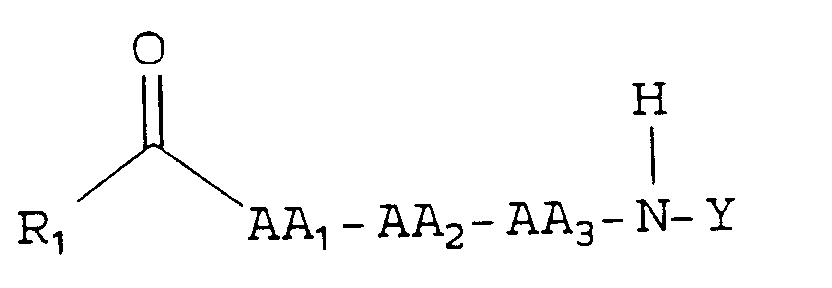
- the invention encompasses compounds of formula I. or a pharmaceutically acceptable salt thereof thereof:
- AA1, AA2 and AA3 are each independently selected from the group consisting of the L- and D- forms of the amino acids including glycine, alanine, valine, leucine, isoleucine, serine, threonine, aspartic acid, asparagine, glutamic acid, glutamine, lysine, hydroxy-lysine, histidine, arginine, phenylalanine, tyrosine, tryptophan, cysteine, methionine, ornithine, ⁇ -alanine, homoserine, homotyrosine, homophenylalanine and citrulline.
- compositions useful in methods of treatment of interleukin-1 and interleukin-1 ⁇ mediated or implicated disorders or diseases comprising administration of interleukin-1 ⁇ inhibitors of formula (I) as the active constituents.
- compositions useful in methods of treatment of diseases selected from septic shock, allograft rejection, inflammatory bowel disease and rheumatoid arthritis in a patient in need of such treatment comprising:
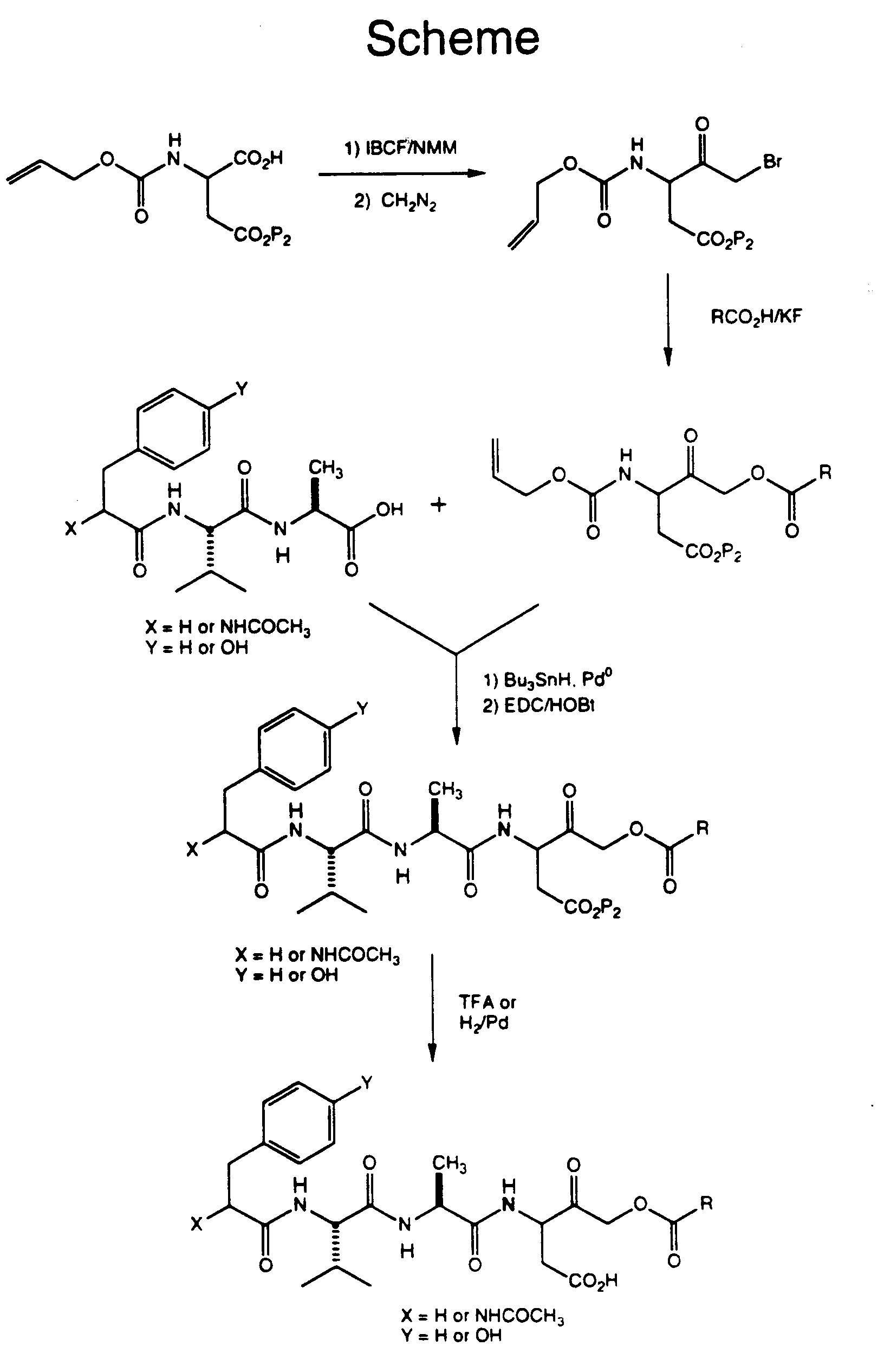
- the described compounds can be prepared as follows.
- An alloc protected aspartic acid ⁇ -ester can be converted to the corresponding diazomethylketone using isobutylchloroformate and N-methylmorpholine followed by excess diazomethane.
- the bromomethylketone can then be formed by treatment of the diazomethylketone with hydrobromic acid in ether.
- Bromomethylketones react with carboxylic acids in the presence of potassium fluoride in dimethylformamide to afford the corresponding presence of potassium fluoride in dimethylformamide to afford the corresponding acyloxymethylketone.
- the alloc group can then be removed, and the product coupled to a di, or tripeptide using first tributyl tin hydride and bistriphenylphosphine palladium dichloride, and then ethyl dimethylaminopropyl carbodimide and hydroxybenzotriazole.
- the carboxyllic acid protecting group is then removed to afford the desired products.
- these compounds have been shown to inhibit interleukin-1 ⁇ converting enzyme from cleaving precusor interleukin-1 ⁇ as to form active interleukin-1 ⁇ at a Ki of less than 1 uM.
- This invention also relates to a method of treatment for patients (including man and/or mammalian animals raised in the dairy, meat, or fur industries or as pets) suffering from disorders or diseases which can be attributed to IL-1/ICE as previously described, and more specifically, a method of treatment involving the administration of the IL-1/ICE inhibitors of formula (I) as the active constituents.
- disease states in which the ICE inhibitors of Formula I may be useful as therapeutic agents include, but are not limited to, infectious diseases where active infection exists at any body site, such as meningitis and salpingitis; complications of infections including septic shock, disseminated intravascular coagulation, and/or adult respiratory distress syndrome; acute or chronic inflammation due to antigen, antibody, and/or complement deposition; inflammatory conditions including arthritis, cholangitis, colitis, encephalitis, endocarditis, glomerulonephritis, hepatitis, myocarditis, pancreatitis, pericarditis, reperfusion injury and vasculitis.
- infectious diseases where active infection exists at any body site, such as meningitis and salpingitis
- complications of infections including septic shock, disseminated intravascular coagulation, and/or adult respiratory distress syndrome; acute or chronic inflammation due to antigen, antibody, and/or complement deposition
- inflammatory conditions including arthritis, cholangitis, colitis, ence
- Immune-based diseases which may be responsive to ICE inhibitors of Formula I include but are not limited to conditions involving T-cells and/or macrophages such as acute and delayed hypersensitivity, graft rejection, and graft-versus-host-disease; auto-immune diseases including Type I diabetes mellitus and multiple sclerosis.
- ICE inhibitors of Formula I may also be useful in the treatment of bone and cartilage resorption as well as diseases resulting in excessive deposition of extracellular matrix such as interstitial pulmonary fibrosis, cirrhosis, systemic sclerosis, and keloid formation.
- ICE inhibitors of Formula I may also be useful in treatment of certain tumors which produce IL 1 as an autocrine growth factor and in preventing the cachexia associated with certain tumors.
- the compounds of formula (I) may be administered orally, topically, parenterally, by inhalation spray or rectally in dosage unit formulations containing conventional non-toxic pharmaceutically acceptable carriers, adjuvants and vehicles.
- parenteral as used herein includes subcutaneous injections, intravenous, intramuscular, intracisternal injection or infusion techniques.
- the compounds of the invention are effective in the treatment of humans.
- compositions containing the active ingredient may be in a form suitable for oral use, for example, as tablets, troches, lozenges, aqueous or oily suspensions, dispersible powders or granules, emulsions, hard or soft capsules, or syrups or elixirs.
- Compositions intended for oral use may be prepared according to any method known to the art for the manufacture of pharmaceutical compositions and such compositions may contain one or more agents selected from the group consisting of sweetening agents, flavoring agents, coloring agents and preserving agents in order to provide pharmaceutically elegant and palatable preparations. Tablets contain the active ingredient in admixture with non-toxic pharmaceutically acceptable excipients which are suitable for the manufacture of tablets.
- excipients may be for example, inert diluents, such as calcium carbonate, sodium carbonate, lactose, calcium phosphate or sodium phosphate; granulating and disintegrating agents, for example, corn starch, or alginic acid; binding agents, for example starch, gelatin or acacia, and lubricating agents, for example magnesium stearate, stearic acid or talc.
- the tablets may be uncoated or they may be coated by known techniques to delay disintegration and absorption in the gastrointestinal tract and thereby provide a sustained action over a longer period.
- a time delay material such as glyceryl monostearate or glyceryl distearate may be employed. They may also be coated by the techniques described in the U.S. Patents 4,256,108; 4,166,452; and 4,265,874 to form osmotic therapeutic tablets for control release.
- Formulations for oral use may also be presented as hard gelatin capsules wherein the active ingredient is mixed with an inert solid diluent, for example, calcium carbonate, calcium phosphate or kaolin, or as soft gelatin capsules wherein the active ingredient is mixed with water or an oil medium, for example peanut oil, liquid paraffin, or olive oil.
- an inert solid diluent for example, calcium carbonate, calcium phosphate or kaolin
- water or an oil medium for example peanut oil, liquid paraffin, or olive oil.
- Aqueous suspensions contain the active materials in admixture with excipients suitable for the manufacture of aqueous suspensions.
- excipients are suspending agents, for example sodium carboxymethylcellulose, methylcellulose, hydroxypropylmethylcellulose sodium alginate, polyvinylpyrrolidone, gum tragacanth and gum acacia; dispersing or wetting agents may be a naturally-occurring phosphatide, for example lecithin, or condensation products of an alkylene oxide with fatty acids, for example polyoxyethylene stearate, or condensation products of ethylene oxide with long chain aliphatic alcohols, for example heptadecaethyl-eneoxycetanol, or condensation products of ethylene oxide with partial esters derived from fatty acids and a hexitol such as polyoxyethylene sorbitol monooleate, or condensation products of ethylene oxide with partial esters derived from fatty acids and hexitol anhydrides, for example polyethylene sorbit
- the aqueous suspensions may also contain one or more preservatives, for example ethyl, or n-propyl, p-hydroxybenzoate, one or more coloring agents, one or more flavoring agents, and one or more sweetening agents, such as sucrose or saccharin.
- preservatives for example ethyl, or n-propyl, p-hydroxybenzoate
- coloring agents for example ethyl, or n-propyl, p-hydroxybenzoate
- coloring agents for example ethyl, or n-propyl, p-hydroxybenzoate
- flavoring agents for example ethyl, or n-propyl, p-hydroxybenzoate
- sweetening agents such as sucrose or saccharin.
- Oily suspensions may be formulated by suspending the active ingredient in a vegetable oil, for example arachis oil, olive oil, sesame oil or coconut oil, or in a mineral oil such as liquid paraffin.
- the oily suspensions may contain a thickening agent, for example beeswax, hard paraffin or cetyl alcohol. Sweetening agents such as those set forth above, and flavoring agents may be added to provide a palatable oral preparation. These compositions may be preserved by the addition of an anti-oxidant such as ascorbic acid.
- Dispersible powders and granules suitable for preparation of an aqueous suspension by the addition of water provide the active ingredient in admixture with a dispersing or wetting agent, suspending agent and one or more preservatives.
- a dispersing or wetting agent e.g., glycerol, glycerol, glycerol, glycerol, glycerol, glycerol, glycerin, glycerin, glycerin, glycerin, glycerin, sorbitol, sorbitol, sorbitol, sorbitol, sorbitol, sorbitol, sorbitol, sorbitol, sorbitol, sorbitol, glycerol, glycerol, glycerol, glycerol, glycerol, glycerol, glycerol, glycerol, glycerol
- the pharmaceutical compositions of the invention may also be in the form of oil-in-water emulsions.
- the oily phase may be a vegetable oil, for example olive oil or arachis oil, or a mineral oil, for example liquid paraffin or mixtures of these.
- Suitable emulsifying agents may be naturally-occurring gums, for example gum acacia or gum tragacanth, naturally-occurring phosphatides, for example soy bean, lecithin, and esters or partial esters derived from fatty acids and hexitol anhydrides, for example sorbitan monooleate, and condensation products of the said partial esters with ethylene oxide, for example polyoxyethylene sorbitan monooleate.
- the emulsions may also contain sweetening and flavoring agents.
- Syrups and elixirs may be formulated with sweetening agents, for example glycerol, propylene glycol, sorbitol or sucrose. Such formulations may also contain a demulcent, a preservative and flavoring and coloring agents.
- the pharmaceutical compositions may be in the form of a sterile injectable aqueous or oleagenous suspension. This suspension may be formulated according to the known art using those suitable dispersing or wetting agents and suspending agents which have been mentioned above.
- the sterile injectable preparation may also be a sterile injectable solution or suspension in a non-toxic parenterally-acceptable diluent or solvent, for example as a solution in 1,3-butane diol.
- Suitable vehicles and solvents that may be employed are water, Ringer's solution and isotonic sodium chloride solution.
- sterile, fixed oils are conventionally employed as a solvent or suspending medium.
- any bland fixed oil may be employed including synthetic mono- or diglycerides.
- fatty acids such as oleic acid find use in the preparation of injectables.
- the compounds of formula (I) may also be administered in the form of suppositories for rectal administration of the drug.
- These compositions can be prepared by mixing the drug with a suitable non-irritating excipient which is solid at ordinary temperatures but liquid at the rectal temperature and will therefore melt in the rectum to release the drug.
- suitable non-irritating excipient which is solid at ordinary temperatures but liquid at the rectal temperature and will therefore melt in the rectum to release the drug.
- Such materials are cocoa butter and polyethylene glycols.
- creams, ointments, jellies, solutions or suspensions, etc., containing the compounds of Formula (I) are employed.
- topical application shall include mouth washes and gargles.
- Dosage levels of the order of from about 0.05 mg to about 140 mg per kilogram of body weight per day are useful in the treatment of the above-indicated conditions (about 2.5 mg to about 7 gms. per patient per day).
- inflammation may be effectively treated by the administration of from about 0.01 to 50 mg of the compound per kilogram of body weight per day (about 0.5 mg to about 3.5 gms per patient per day).
- the amount of active ingredient that may be combined with the carrier materials to produce a single dosage form will vary depending upon the host treated and the particular mode of administration.
- a formulation intended for the oral administration of humans may contain from 0.5 mg to 5 gm of active agent compounded with an appropriate and convenient amount of carrier material which may vary from about 5 to about 95 percent of the total composition.
- Dosage unit forms will generally contain between from about 1 mg to about 500 mg of an active ingredient.
- the specific dose level for any particular patient will depend upon a variety of factors including the activity of the specific compound employed, the age, body weight, general health, sex, diet, time of administration, route of administration, rate of excretion, drug combination and the severity of the particular disease undergoing therapy.
- N-Allyloxycarbonyl-3-amino-5-diazo-4-oxopentanoic acid ⁇ -t-butyl ester To a solution of Alloc-aspartic acid ⁇ -t-butyl ester (6.23 g, 22.8 mmol) and 4-methyl morpholine (2.63 mL, 23.94 mmol) in 50 mL of freshly distilled dichloromethane at -10°C was added freshly distilled isobutyl chloroformate (3.04 mL, 23.48 mmol). After 15 min, the solution was filtered and excess ethereal diazomethane was added. The mixture was stirred at 0°C for 1 h and concentrated.
- N-Allyloxycarbonyl-3-amino-5-bromo-4-oxopentanoic acid ⁇ -t-butyl ester To a solution of N-Allycarbonyl-3-amino-5-diazo-4-oxopentanoic acid ⁇ -t-butyl ester in ether was added approximately one equivalent of 30% HBr in acetic acid. After 30 min, the solution was diluted with ether and washed three times with water. The combined organic layers were dried over magnesium sulphate, filtered, and concentrated.
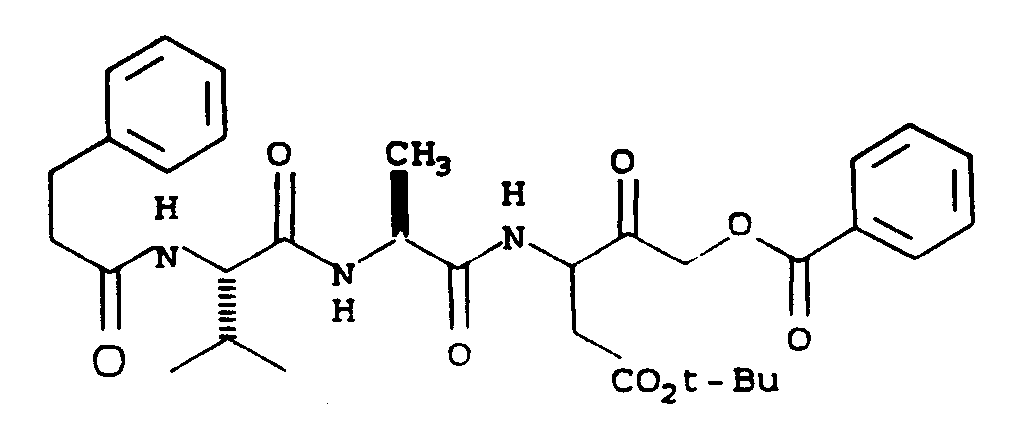
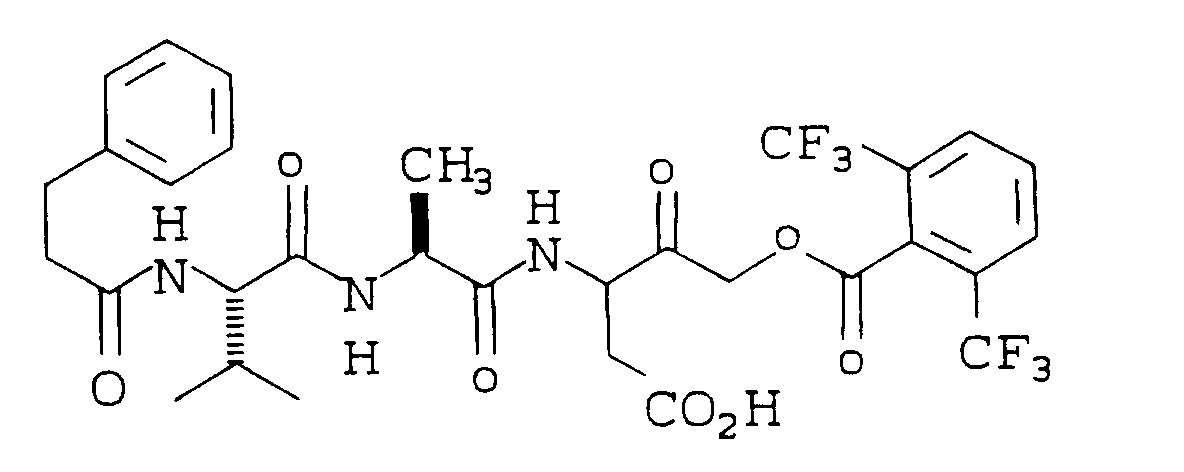
- N-(N-Phenylpropionyl-valinyl-alaninyl)-3-amino-5-benzoyloxy-4-oxopentanoic acid ⁇ -t-butyl ester To a solution of N-Allyoxycarbonyl-3-amino-5-benzoyloxy-4-oxopentanoic acid ⁇ -t-butyl ester (266 mg, 0.679 mmol) and Phenylpropionyl-valinyl-alanine (228 mg, 0.679 mmol) in 5 mL each of dichloromethane and DMF was added ⁇ 20 mg of Pd(PPh 3 ) 2 Cl 2 followed by dropwise addition of tributyltin hydride (274 ⁇ L, 1.02 mmol).
- N-(N-Phenylpropionyl-valinyl-alaninyl)-3-amino-5-benzoy loxy-4-oxopentanoic acid N-(N-Phenylpropionyl-valinyl-alanyl)-3-amino -5-benzoyloxy-4-oxopentanoic acid ⁇ -t-butyl ester was disolved in trifluoroacetic acid.
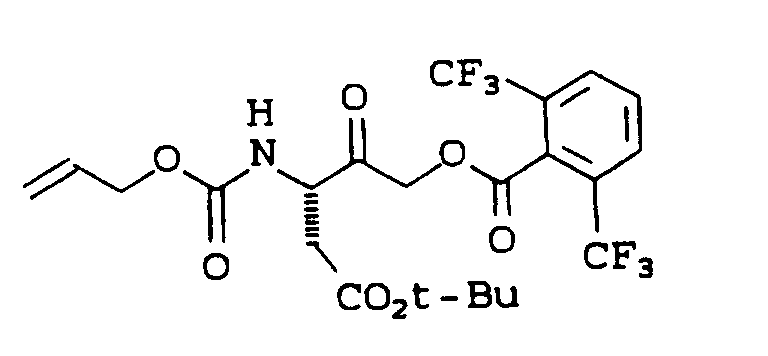
- N-Allyoxycarbonyl-3-amino-5-(2,6-bistrifluoromethylbenzoyloxy)-4-oxopentanoic acid ⁇ -t-butyl ester Potassium fluoride (79 mg, 1.35 mmol) and N-Allyloxycarbonyl-3-amino-5-bromo-4-oxopentanoic acid ⁇ -t-butyl ester (215 mg, 0.614 mmol) were stirred in 5 mL of DMF for 1 min. 2,6-Bistrifluoromethyl-benzoic acid (158 mg, 0.612 mmol) was added and the mixture stirred for 45 min at ambient temperature.
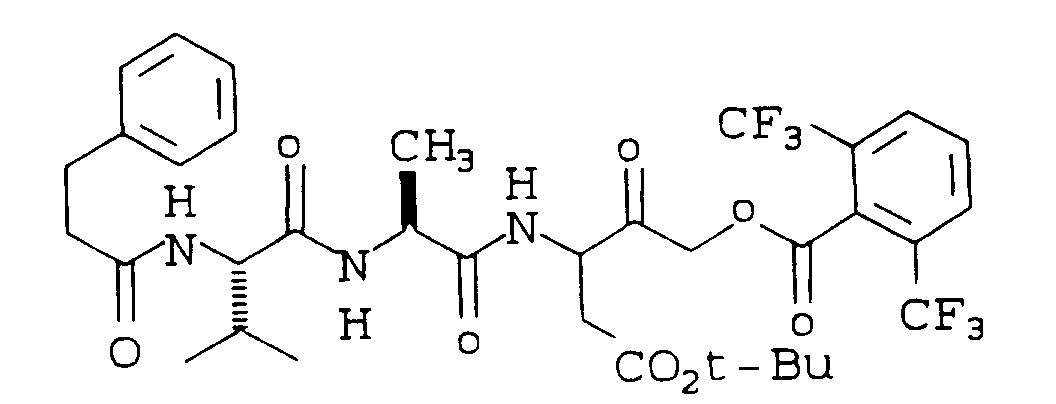
- N-(N-Phenylpropionyl-valinyl-alaninyl)-3-amino-5-(2,6-bistrifluoromethylbenzoyloxy)-4-oxopentanoic acid ⁇ -t-butyl ester To a solution of N-Allyoxycarbonyl-3-amino-5-(2,6-bistrifluoromethylbenzoyloxy)-4-oxopentanoic acid ⁇ -t-butyl ester (348 mg, 0.630 mmol) and Phenylpropionyl-valinyl-alanine (212 mg, 0.630 mmol) in 5 mL each of dichloromethane and DMF was added ⁇ 20 mg of Pd(PPh 3 ) 2 Cl 2 followed by dropwise addition of tributyltin hydride (254 ⁇ L, 0.95 mmol).
- N-(N-Phenylpropionyl-valinyl-alaninyl)-3-amino-5-(2,6-bistrifluoromethylbenzoyloxy)-4-oxopentanoic acid N-(N-Phenylpropionyl-valinyl-alaninyl)-3-amino-5-(2,6-bistrifluoromethylbenzoyloxy)-4-oxopentanoic acid ⁇ -t-butyl ester was disolved in trifluoroacetic acid.
- N-(N-Acetyl-Tyrosinyl-Valinyl-Alaninyl)-3-amino-4-oxo-5 -Pentafluorobenzoyloxy pentanoic acid benzyl ester To the N-alloc pentafluoro-benzyloxymethyl ketone (130 mg, 0.252 mmol) in CH 2 Cl 2 (3mL) was added PdCl 2 (Ph 3 P) 2 (cat.) followed by addition of (Bu)3SnH (.08mL). The mixture was stirred for 5 min. DMF (10mL), AcTyr Val Ala (98 mg), HOBT (80mg) and EDC 45.6 mg) respectively.
- N-(N-Acetyl-Tyrosinyl-Valinyl-Alaninyl)-3-amino-4-Oxo-5-Pentafluorobenzoyloxy pentanoic acid To the benzyl ester (25mg) in MeOH (3ml) was added 10% Pd/c (cat.) and the mixture was stirred under positive pressure of H 2 for 2h. The mixture was filtered through Celite and the solvent was concentrate to give the title compound (14 mg) which was crystalized from acetone/hexane.
Landscapes
- Chemical & Material Sciences (AREA)
- Organic Chemistry (AREA)
- General Health & Medical Sciences (AREA)
- Life Sciences & Earth Sciences (AREA)
- Biochemistry (AREA)
- Biophysics (AREA)
- Health & Medical Sciences (AREA)
- Genetics & Genomics (AREA)
- Medicinal Chemistry (AREA)
- Molecular Biology (AREA)
- Proteomics, Peptides & Aminoacids (AREA)
- Crystallography & Structural Chemistry (AREA)
- Medicines That Contain Protein Lipid Enzymes And Other Medicines (AREA)
- Peptides Or Proteins (AREA)
- Enzymes And Modification Thereof (AREA)
Abstract
Description







- wherein aryl is defined as immediately above, and wherein the aryl may be mono and di-substituted, the substituents being each independently C1-6alkyl, halo, hydroxy, C1-6alkyl amino, C1-6alkoxy, C1-6alkylthio, and C1-6alkylcarbonyl.




To a solution of N-alloc-β-benzyl aspartic acid (920 mg, 3.0 mmol) at 0°C was added NMM (3.6 ml) and IBCF (0.395 mL, 3.6 mmol). The resulting mixture was stirred at 0°C for 10 min followed by addition of CH2N2/ ether and the mixture was stirred for 10 min. 48% HBr(10mL) was added and the stirring was continued for 20 min. Ether (200mL) was added and the mixture was washed with water (6x10mL), Brine (10mL) and dried over Na2SO4. The solvent was concentrated and the residue was chromatographed over silica (1:3, Ether: Hexane) to provide the Bromomethyl ketone 890 mg.
1HNMR (CDCl3), δ 7.4-7.22 (5H, m), 5.9 (2H, m), 5.25 (2H, dx3), 4.75 (1H, m), 4.55 (2H, m), 4.15 (2H, s), 2.95 (2H, dx4).

To the bromomethyl ketone compound (200 mg, .52 mmol) in DMF (5 ml) was added KF (1.144 mmol, 66.56 mg). The resulting mixture was stirred for 3 min. followed by addition of pentafluorobenzoic acid and the mixture was stirred for 1h. Ether (100 ml) was added, the mixture was washed with aq. NaHCO3 and dried over Na2SO4 the solvent was concentrated and the residue was passed through a block of silica (1:1, ether:hexane) to provide the title compound (175 mg).
1HNMR (CDCl3), δ 7.35 (5H,m), 5.9 (1H,m) 5.8 (1H,m), 5.25 (2H, dx4), 5.22 (2H, ABq), 5.12 (2H, S) 4.69 (1H,m), 4.58 (1H, d), 3.12 (1H, d), 2.85 (1H,d).
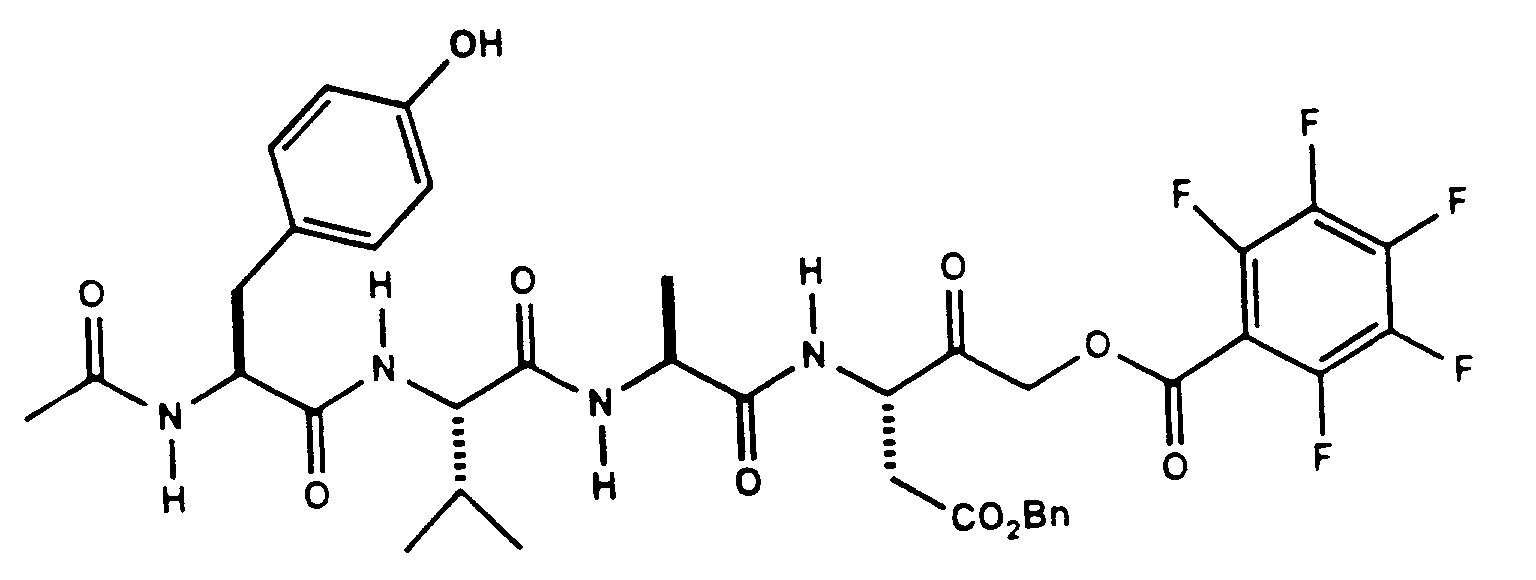
To the N-alloc pentafluoro-benzyloxymethyl ketone (130 mg, 0.252 mmol) in CH2Cl2 (3mL) was added PdCl2(Ph3P)2 (cat.) followed by addition of (Bu)3SnH (.08mL). The mixture was stirred for 5 min. DMF (10mL), AcTyr Val Ala (98 mg), HOBT (80mg) and EDC 45.6 mg) respectively. The resulting mixture was stirred at room temperature over night. EtOAc (100 ml) was added and the mixture washed with aq. NaHCO3 (10mL). The solvent was concentrated and the residue was chromatographed over silica (95:5/CH2Cl2: MeOH) to provide the title compound (65mg).
1HNMR (CD3OD) δ 7.3 (5H,m), 7.0 (2H, d), 6.67 (2H, m), 5.2 (1H, d), 5.15 (1H,s), 4.85 (2H, ABq), 4.55 (1H,m), 4.25 (1H, d), 4.15 (1H, d), 3.2-2.7 (5H, m), 2.05 (1H, m), 1.9 (3H, d), 1.35 (3H,d), 0.95 (6H, m).

To the benzyl ester (25mg) in MeOH (3ml) was added 10% Pd/c (cat.) and the mixture was stirred under positive pressure of H2 for 2h. The mixture was filtered through Celite and the solvent was concentrate to give the title compound (14 mg) which was crystalized from acetone/hexane.
1HNMR (CD3OD) δ 7.05 (1H, d), 6.7 (1H, d), 4.9 (2H, ABq), 4.55 (1H, m), 4.3 (1H, m), 4.15 (1H, m), 3.05-2.7 (4H, m), 2.05 (1H, m), 1.92 (3H, s), 1.34 (3H, m), 0.95 (6H, 5).
M/z M+K+ (754.4), M+Na+ (740.3, M+1 (718.2), 637.7, 645.6, 563.2, 546.2, 413.2, 376.4, 305.3, 279.2, 205.9, 177.8, 163.1 (base).
Claims (42)
- A compound of formula Ior a pharmaceutically acceptable salt thereof thereof:
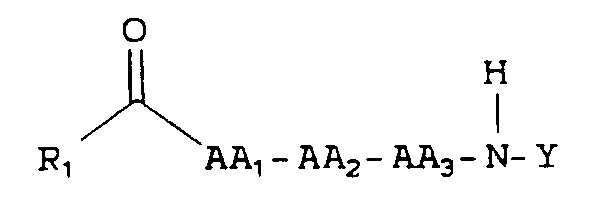 wherein Y is:
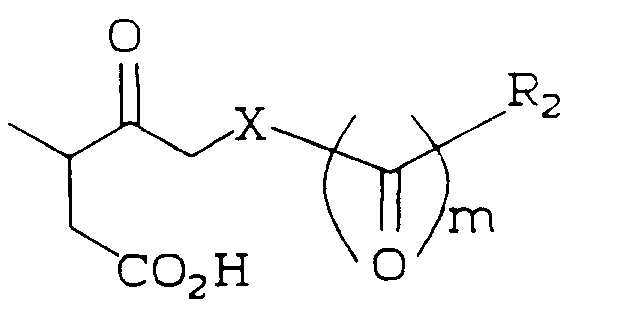 X is S or O;m is 0 or 1;R1 is(a) substituted C1-6 alkyl, wherein the substituent is selected from(1) hydrogen,(2) hydroxy,(3) halo,(4) C1-3 alkyloxy,(5) C1-3 alkylthio,(6) phenyl C1-3 alkyloxy, and(7) phenyl C1-3 alkylthio;(b) aryl C1-6 alkyl wherein the aryl group is selected from the group consisting of:(1) phenyl,(2) naphthyl,(3) pyridyl,(4) furyl,(5) thienyl,(6) thiazolyl,(7) isothiazolyl,(8) imidazolyl,(9) benzimidazolyl,(10) pyrazinyl,(11) pyrimidyl,(12) quinolyl,(13) isoquinolyl,(14) benzofuryl,(15) benzothienyl,(16) pyrazolyl,(17) indolyl,(18) purinyl,(19) isoxazolyl, and(20) oxazolyl,and mono and di-substituted aryl as defined above in items (1) to (20) wherein the substitutents are independently C1-6alkyl, halo, hydroxy, C1-6alkyl amino, C1-6alkoxy, C1-6alkylthio, and C1-6alkylcarbonyl;R2 is(a) tetra or penta substituted phenyl wherein the substitutents are individually selected from the group consisting of(1) C1-3alkoxy,(2) halo,(3) hydroxy,(4) cyano,(5) carboxy,(6) C1-3alkyl,(7) trifruoromethyl,(8) trimethylamino,(9) benzyloxy,(b) mono, di or tri substituted aryl wherein the aryl is selected from the group consisting of phenyl, 1-napthyl, 9-anthracyl and 2, 3, or 4 pyridyl, andthe substituents are individually selected from the group consisting of(1) phenyl,(2) halo,(3) C1-3alkyl,(4) perfluoro C1-3alkyl,(5) nitro,(6) cyano,(7) C1-3alkylcarbonyl,(8) phenylcarbonyl,(9) carboxy,(10) aminocarbonyl,(11) mono and di C1-3alkylaminocarbonyl,(12) formyl,(13) SO3H,(14) C1-3alkyl sulfonyl,(15) phenyl sulfonyl,(16) formamido,(17) C1-3alkylcarbonylamino,(18) phenylcarbonylamino,(19) C1-3alkoxycarbonyl,(20) C1-3alkylsulfonamido carbonyl,(21) phenylsulfonamido carbonyl,(22) C1-3alkyl carbonylamino sulfonyl,(23) phenylcarbonylamino sulfonyl,(24) C1-3alkyl amino,(25) mono di and tri C1-3alkyl amino,(26) amino,(27) hydroxy, and(28) C1-3alkyloxy;AA1 is selected from the group consisting of(a) a single bond, and(b) an amino acid of formula AI
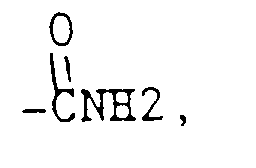
 wherein R7 selected from the group consisting of(a) hydrogen,(b) substituted C1-6 alkyl, wherein the substituent is selected from(1) hydrogen,(2) hydroxy,(3) halo,(4) -S-C1-4 alkyl,(5) -SH(6) C1-6 alkylcarbonyl,(7) carboxy,(8)
 (9) amino carbonyl amino,(10) C1-4 alkylamino, wherein the alkyl moeity is substituted with hydrogen or hydroxy, and the amino is substituted with hydrogen or CBZ,(11) guanidino,(12) C1-6 alkyloxy,(13) phenylC1-6 alkyloxy,(14) phenylC1-6 alkylthio, and(c) aryl C1-6 alkyl,wherein aryl is defined as immediately above, and wherein the aryl may be mono and di-substituted, the substituents being each independently C1-6alkyl, halo, hydroxy, C1-6alkyl amino, C1-6alkoxy, C1-6alkylthio, and C1-6alkylcarbonyl;AA2 is an amino acid of formula AII
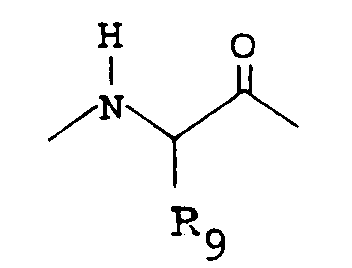
 AA3 is an amino acid of formula AIII
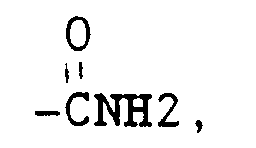
 wherein R8 and R9 are each independently selected from the group consisting of(a) hydrogen,(b) substituted C1-6 alkyl, wherein the substituent is selected from(c) aryl C1-6 alkyl,(1) hydrogen,(2) hydroxy,(3) halo,(4) -S-C1-4 alkyl,(5) -SH(6) C1-6 alkylcarbonyl,(7) carboxy,(8)
 (9) amino carbonyl amino,(10) C1-4 alkylamino, wherein the alkyl moeity is substituted with hydrogen or hydroxy, and the amino is substituted with hydrogen or CBZ,(11) guanidino, andwherein aryl is defined as immediately above, and wherein the aryl may be mono and di-substituted, the substituents being each independently C1-6alkyl, halo, hydroxy, C1-6alkyl amino, C1-6alkoxy, C1-6alkylthio, and C1-6alkylcarbonyl.
 - A compound according Claim 1 wherein AA1, AA2 and AA3, are each independently selected from the group consisting of the L- and D- forms of the amino acids glycine, alanine, valine, leucine, isoleucine, serine, threonine, aspartic acid, asparagine, glutamic acid, glutamine, lysine, hydroxy-lysine, histidine, arginine, phenylalanine, tyrosine, tryptophan, cysteine, methionine, ornithine, β-alanine, homoserine, homotyrosine, homophenylalanine and citrulline.
- A compound of Claim 1 wherein:R1 is(a) substituted C1-6 alkyl, wherein the substituent is selected from(1) hydrogen,(2) hydroxy,(3) chloro or fluoro,(4) C1-3alkyloxy, and(5) phenyl C1-3alkyloxy,(b) aryl C1-6 alkyl wherein the aryl group is selected from the group consisting of(1) phenyl,(2) naphthyl,(3) pyridyl,(4) furyl,(5) thienyl,(6) thiazolyl,(7) isothiazolyl,(8) benzofuryl,(9) benzothienyl,(10) indolyl,(11) isooxazolyl, and(12) oxazolyl,and mono and di-substituted C6-10aryl as defined above in items (1) to (12) wherein the substitutents are independently C1-4alkyl, halo, and hydroxy;AA1 is selected from the group consisting of(a) a single bond, and(b) an amino acid of formula AI
 wherein R7 is selected from the group consisting of(a) hydrogen,(b) substituted C1-6 alkyl, wherein the substituent is selected from(1) hydrogen,(2) hydroxy,(3) halo,(4) -S-C1-4 alkyl(5) -SH(6) C1-6 alkylcarbonyl,(7) carboxy,(8)
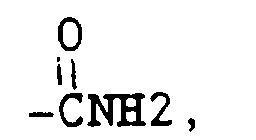 (9) C1-4 alkylamino, and C1-4 alkylamino wherein the alkyl moeity is substituted whith an hydroxy, and(10) guanidino,(11) C1-4 alkyloxy,(12) phenylC1-4 alkyloxy,(13) phenylC1-4 alkylthio, and(c) aryl C1-6 alkyl, wherein the aryl group is elected from the group consisting of(1) phenyl,(2) naphthyl,(3) pyridyl,(4) furyl,(5) thienyl,(6) thiazolyl,(7) isothiazolyl,(8) benzofuryl,(9) benzothienyl,(10) indolyl,(11) isooxazolyl, and(12) oxazolyl,and wherein the aryl may be mono and di-substituted, the substituents being each independently C1-6alkyl, halo, hydroxy, C1-6alkyl amino, C1-6alkoxy, C1-6alkylthio, and C1-6alkylcarbonyl;AA2 is an amino acid of formula AII
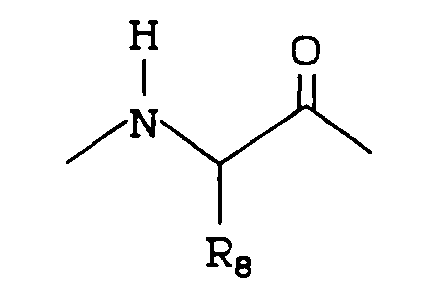 wherein R8 is selected from the group consisting of(a) hydrogen,(b) substituted C1-6 alkyl, wherein the substituent is selected from(1) hydrogen,(2) hydroxy,(3) halo,(4) -S-C1-4 alkyl,(5) -SH,(6) C1-6 alkylcarbonyl,(7) carboxy,(8)
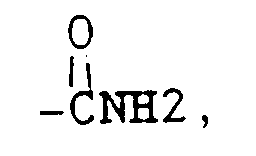 (9) C1-4 alkylamino, and C1-4 alkylamino wherein the alkyl moeity is substituted whith an hydroxy, and(10) guanidino, and(c) aryl C1-6 alkyl,wherein aryl is defined as immediately above, and wherein the aryl may be mono and di-substituted, the substituents being each independently C1-6alkyl, halo, hydroxy, C1-6alkyl amino, C1-6alkoxy, C1-6alkylthio, and C1-6alkylcarbonyl.
 - A compound according to Claim 3 whereinAA3 is an amino acid of formula AIII
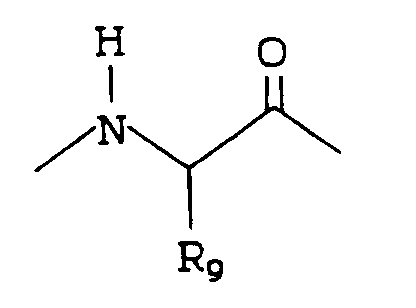 R9 is selected from the group consisting of(a) hydrogen,(b) substituted C1-6 alkyl, wherein the substituent is selected from(1) hydrogen,(2) hydroxy,(3) halo,(4) -S-C1-4 alkyl(5) -SH(6) C1-6 alkylcarbonyl,(7) carboxy,(8)
 (9) C1-4 alkylamino, and C1-4 alkylamino wherein the alkyl moeity is substituted whith an hydroxy, and(10) guanidino, and(c) aryl C1-6 alkyl,wherein aryl is defined as immediately above, and wherein the aryl may be mono and di-substituted, the substituents being each independently C1-6alkyl, halo, hydroxy, C1-6alkyl amino, C1-6alkoxy, C1-6alkylthio, and C1-6alkylcarbonyl.
 - A compound according to Claim 4 whereinAA1 is a single bond or an amino acid of formula AI
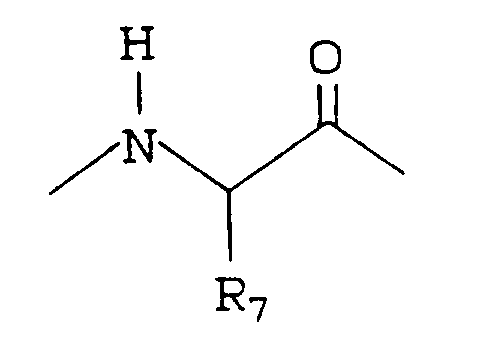 wherein R7 is selected from the group consisting of(a) substituted C1-6 alkyl, wherein the substituent is selected from(1) hydrogen,(2) C1-4 alkyloxy,(3) C1-4 alkylthio,(4) phenylC1-4 alkyloxy, and(5) phenylC1-4 alkylthio,(b) aryl C1-6 alkylwherein aryl is defined as(1) phenyl,(2) naphthyl,(3) pyridyl,(4) furyl,(5) thienyl,(6) thiazolyl,(7) isothiazolyl,(8) benzofuryl,(9) benzothienyl,(10) indolyl,(11) isooxazolyl, and(12) oxazolyl,and wherein the aryl may be mono and di-substituted, the substituents being each independently C1-6alkyl, halo, hydroxy, C1-6alkyl amino, C1-6alkoxy, C1-6alkylthio, and C1-6alkylcarbonyl.
 - A compound according to Claim 5 whereinR1 is C1-3alkyl or substituted aryl C1-6 alkyl wherein aryl is phenyl, naphthyl, thienyl, or benzothienyl and the substituent is hydrogen, hydroxy, halo or C1-4 alkyl;R8 and R9 are each individually(a) hydrogen,(b) C1-6alkyl,(c) mercapto C1-6alkyl,(d) hydroxy C1-6alkyl,(e) carboxy C1-6alkyl,(g) aminocarbonyl C1-6alkyl,(h) mono - or di-C1-6alkyl amino C1-6alkyl,(i) guanidino C1-6alkyl,(j) amino-C1-6alkyl or N-substituted amino-C1-6alkyl wherein the substituent is carbobenzoxy, or(k) aryl C1-6alkyl, wherein the aryl group is selected from phenyl and indolyl, and the aryl group is substituted with hydrogen, hydroxy, C1-3 alkyl.
- A compound according to Claim 6 wherein:X is S;m is 0;R2 is(a) tetra or penta substituted phenyl wherein the substitutents are individually selected from the group consisting of(1) C1-3alkoxy,(2) halo,(3) hydroxy,(4) cyano,(5) carboxy,(6) C1-3alkyl,(7) trimethylamino, and(8) benzyloxy,(b) mono, di or tri substituted aryl wherein the aryl is selected from the group consisting of phenyl and 2, 3, or 4 pyridyl, andthe substituents are individually selected from the group consisting of(1) phenyl,(2) halo,(3) C1-3alkyl,(4) perfluoro C1-3alkyl,(5) nitro,(6) cyano,(7) C1-3alkylcarbonyl,(8) phenylcarbonyl,(9) carboxy,(10) aminocarbonyl,(11) mono and di C1-3alkylaminocarbonyl,(12) formyl,(13) SO3H,(14) C1-3alkyl sulfonyl,(15) phenyl sulfonyl,(16) formamido,(17) C1-3alkylcarbonylamino,(18) phenylcarbonylamino,(19) C1-3alkoxycarbonyl,(20) C1-3alkylsulfonamido carbonyl,(21) phenylsulfonamido carbonyl,(22) C1-3alkyl carbonylamino sulfonyl,(23) phenylcarbonylamino sulfonyl,(24) C1-3alkyl amino,(25) mono di and tri C1-3alkyl amino,(26) amino,(27) hydroxy, and(28) C1-3alkyloxy.
- A compound according to Claim 7 wherein:X is S;m is 0; andR2 is mono, di or tri substituted 2, 3, or 4 pyridyl, andthe substituents are individually selected from the group consisting of(1) phenyl,(2) halo,(3) C1-3alkyl,(4) perfluoro C1-3alkyl,(5) nitro,(6) cyano,(7) C1-3alkylcarbonyl,(8) phenylcarbonyl,(9) carboxy,(10) aminocarbonyl,(11) C1-3alkylaminocarbonyl,(12) formyl,(13) SO3H,(14) C1-3alkyl sulfonyl,(15) phenyl sulfonyl, and(16) tri C1-3alkyl amino.
- A compound according to Claim 8 wherein:X is S;m is 0; andR2 is mono or di substituted 2-pyridyl, andthe substituents are individually selected from the group consisting of(1) phenyl,(2) halo,(3) C1-3alkyl,(4) trifluoro methyl,(5) nitro,(6) cyano,(7) C1-3alkylcarbonyl,(8) carboxy,(9) SO3H,(10) C1-3alkyl sulfonyl, and(11) tri C1-3alkyl amino,AA1 is a single bond or an amino acid of formula AI
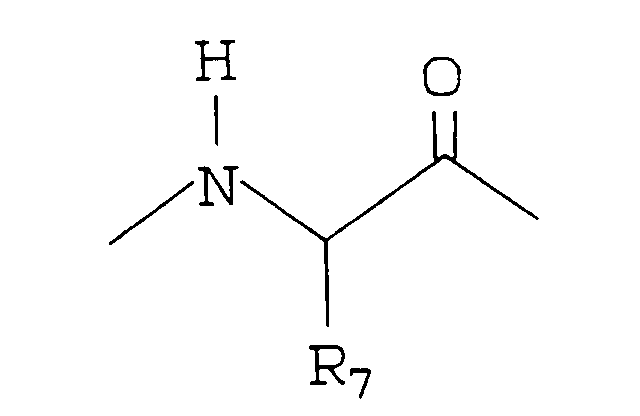 wherein R7 is(a) C1-6alkyl;(b) substituted phenyl C1-3alkyl, wherein the substituent is hydrogen, hydroxy, carboxy, or C1-4alkyl; or(c) indolyl methyl;R8 is C1-6alkyl; andR9 is(a) hydrogen,(b) C1-6alkyl,(c) amino C1-4alkyl,(d) N-carbobenzoxy-amino-(n-butyl),(e) carbamylmethyl,(f) indol-2-yl-methyl, or(g) substituted phenyl C1-6alkyl, whereinthe substituent is hydrogen, hydroxy, carboxy, or C1-4alkyl.
 - A compound according to Claim 9 whereinR9 is(a) hydrogen,(b) C1-6alkyl,(c) amino C1-4alkyl,(d) N-carbobenzoxy-amino-(n-butyl), or(e) substituted phenyl C1-3alkyl, whereinthe substituent is hydrogen or hydroxy.
- A compound according to Claim 10 whereinX is S;m is 0;R1 is methyl or phenyl C1-6 alkyl or hydroxy-phenyl C1-6 alkyl;R2 is 2-pyridyl;AA1 is a single bond or tyrosinyl, homotyrosinyl, phenylalaninyl, homophenylalaninyl or tryptophanyl; AA2 is
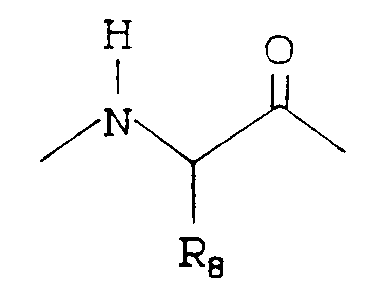 wherein R8 is C1-4 alkyl; andAA3 is alaninyl, lysinyl or ε-CBZ-lysinyl.
 - A compound according to Claim 11 whereinR1 is methyl or phenyl C1-6 alkyl or hydroxy-phenyl C1-6 alkyl;AA1 is a single bond;AA2 is
 wherein R8 is C1-4 alkyl; andAA3 is alaninyl, lysinyl or ε-CBZ-lysinyl.
 - A compound according to Claim 12wherein R1 is phenyl ethyl or hydroxy-phenyl ethyl.
- A compound according to Claim 11 whereinR1 is methyl;AA1 is tyrosinyl, homotyrosinyl, phenylalaninyl, homophenylalaninyl or tryptophanyl;AA2 is
 wherein R8 is C1-4 alkyl; andAA3 is alaninyl, lysinyl or ε-CBZ-lysinyl.
 - A compound according to Claim 14 whereinR1 is methyl;AA1 is tyrosinyl;AA2 is valinyl, leucinyl or isoleucinyl; andAA3 is alaninyl, lysinyl or ε-CBZ-lysinyl.
- A compound according to Claim 15 whereinR1 is methyl;AA1 is tyrosinyl;AA2 is valinyl;AA3 is alaninyl, lysinyl or ε-CBZ-lysinyl.
- A compound according to Claim 6 wherein:X is O;m is 0;R2 is(a) tetra or penta substituted phenyl wherein the substitutents are individually selected from the group consisting of(1) C1-3alkoxy,(2) halo,(3) hydroxy,(4) cyano,(5) carboxy,(6) C1-3alkyl,(7) trimethylamino, and(8) benzyloxy,(b) mono, di or tri substituted aryl wherein the aryl is selected from the group consisting of phenyl and 2, 3, or 4 pyridyl, andthe substituents are individually selected from the group consisting of(1) phenyl,(2) halo,(3) C1-3alkyl,(4) perfluoro C1-3alkyl,(5) nitro,(6) cyano,(7) C1-3alkylcarbonyl,(8) phenylcarbonyl,(9) carboxy,(10) aminocarbonyl,(11) mono and di C1-3alkylaminocarbonyl,(12) formyl,(13) SO3H,(14) C1-3alkyl sulfonyl,(15) phenyl sulfonyl,(16) formamido,(17) C1-3alkylcarbonylamino,(18) phenylcarbonylamino,(19) C1-3alkoxycarbonyl,(20) C1-3alkylsulfonamido carbonyl,(21) phenylsulfonamido carbonyl,(22) C1-3alkyl carbonylamino sulfonyl,(23) phenylcarbonylamino sulfonyl,(24) C1-3alkyl amino,(25) mono di and tri C1-3alkyl amino,(26) amino,(27) hydroxy, and(28) C1-3alkyloxy.
- A compound according to Claim 17 wherein:X is O;m is 0; andR2 is(a) tetra or penta substituted phenyl wherein the substitutents are individually selected from the group consisting of(1) methoxy,(2) halo,(3) hydroxy,(4) cyano,(5) C1-3alkyl, and(6) benzyloxy,(b) mono, di or tri substituted phenyl, wherein the substituents are individually selected from the group consisting of(1) phenyl,(2) halo,(3) C1-3alkyl,(4) trifluoro methyl,(5) nitro,(6) cyano,(7) C1-3alkylcarbonyl,(8) carboxy,(9) SO3H,(10) C1-3alkyl sulfonyl, and(11) tri C1-3alkyl amino.
- A compound According to Claim 18 wherein:X is O;m is 0; andR2 is(a) tetra or penta substituted phenyl wherein the substitutents are individually selected from the group consisting of(1) methyl(2) halo,(3) hydroxy, and(4) cyano,(b) mono, di or tri substituted phenyl, wherein the substituents are individually selected from the group consisting of(1) halo,(2) methyl,(3) nitro,(4) cyano,(5) acetyl,(6) methyl sulfonyl, and(7) trimethyl amino;AA1 is a single bond or an amino acid of formula AI
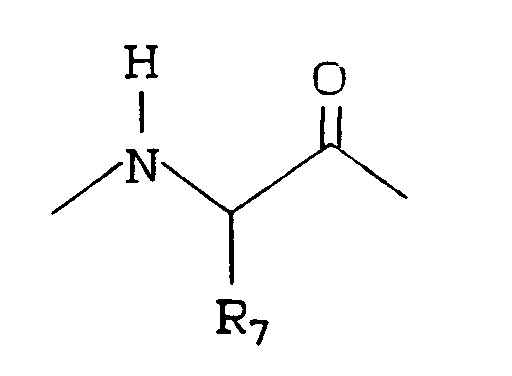 wherein R7 is(a) C1-6alkyl;(b) substituted phenyl C1-3alkyl, wherein the substituent is hydrogen, hydroxy, carboxy, or C1-4alkyl; or(c) indolyl methyl;R8 is C1-6alkyl; andR9 is(a) hydrogen,(b) C1-6alkyl,(c) amino C1-4alkyl,(d) N-carbobenzoxy-amino-(n-butyl),(e) carbamylmethyl,(f) indol-2-yl-methyl, or(g) substituted phenyl C1-6alkyl, whereinthe substituent is hydrogen, hydroxy, carboxy, or C1-4alkyl.
 - A compound according to Claim 19 whereinR9 is(a) hydrogen,(b) C1-6alkyl,(c) amino C1-4alkyl,(d) N-carbobenzoxy-amino-(n-butyl), or(e) substituted phenyl C1-3alkyl, whereinthe substituent is hydrogen or hydroxy.
- A compound according to Claim 20 wherein R7 is(a) C1-6alkyl;(b) substituted phenyl C1-3alkyl, wherein the substituent is hydrogen or hydroxy; or(c) indolyl methyl.
- A compound according to Claim 21 whereinX is O;m is 0;R1 is methyl or phenyl C1-6 alkyl or hydroxy-phenyl C1-6 alkyl;R2 is pentafluorophenyl;AA1 is a single bond or tyrosinyl, homotyrosinyl, phenylalaninyl, homophenylalaninyl or tryptophanyl;AA2 is
 wherein R8 is C1-4 alkyl; andAA3 is alaninyl, lysinyl or ε-CBZ-lysinyl.
 - A compound according to Claim 22 whereinR1 is methyl or phenyl C1-6 alkyl or hydroxy-phenyl C1-6 alkyl;AA1 is a single bond;AA2 is
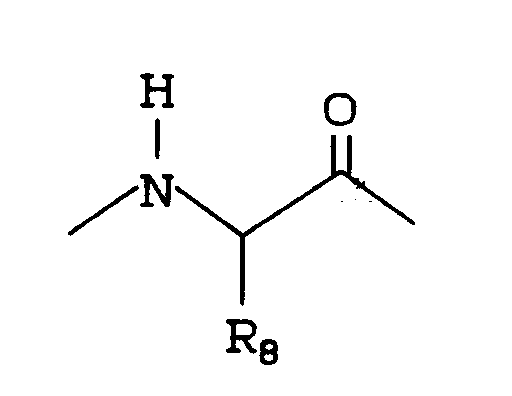 wherein R8 is C1-4 alkyl; andAA3 is alaninyl, lysinyl or ε-CBZ-lysinyl.
 - A compound according to Claim 23wherein R1 is phenyl ethyl or hydroxy-phenyl ethyl.
- A compound according to Claim 22 whereinR1 is methyl;AA1 is tyrosinyl, homotyrosinyl, phenylalaninyl, homophenylalaninyl or tryptophanyl;AA2 is
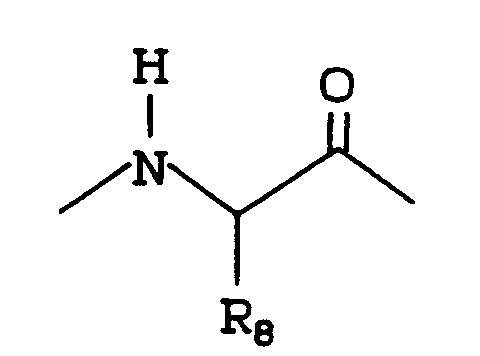 wherein R8 is C1-4 alkyl; andAA3 is alaninyl, lysinyl or ε-CBZ-lysinyl.
 - A compound according to Claim 25 whereinR1 is methyl;AA1 is tyrosinyl;AA2 is valinyl, leucinyl or isoleucinyl; andAA3 is alaninyl, lysinyl or ε-CBZ-lysinyl.
- A compound according to Claim 26 whereinR1 is methyl;AA1 is tyrosinyl;AA2 is valinyl;AA3 is alaninyl, lysinyl or ε-CBZ-lysinyl.
- A compound according to Claim 6 wherein:X is O;m is 1;R2 is(a) tetra or penta substituted phenyl wherein the substitutents are individually selected from the group consisting of(1) C1-3alkoxy,(2) halo,(3) hydroxy,(4) cyano,(5) carboxy,(6) C1-3alkyl,(7) trimethylamino, and(8) benzyloxy,(b) mono, di or tri substituted aryl wherein the aryl is selected from the group consisting of phenyl, 1-napthyl and 2, 3, or 4 pyridyl, andthe substituents are individually selected from the group consisting of(1) phenyl,(2) halo,(3) C1-3alkyl,(4) perfluoro C1-3alkyl,(5) nitro,(6) cyano,(7) C1-3alkylcarbonyl,(8) phenylcarbonyl,(9) carboxy,(10) aminocarbonyl,(11) mono and di C1-3alkylaminocarbonyl,(12) formyl,(13) SO3H,(14) C1-3alkyl sulfonyl,(15) phenyl sulfonyl,(16) formamido,(17) C1-3alkylcarbonylamino,(18) phenylcarbonylamino,(19) C1-3alkoxycarbonyl,(20) C1-3alkylsulfonamido carbonyl,(21) phenylsulfonamido carbonyl,(22) C1-3alkyl carbonylamino sulfonyl,(23) phenylcarbonylamino sulfonyl,(24) C1-3alkyl amino,(25) mono di and tri C1-3alkyl amino,(26) hydrogen,(27) hydroxy, and(28) C1-3alkyloxy.
- A compound according to Claim 28 wherein:X is O:m is 1;R2 is(a) tetra or penta substituted phenyl wherein the substitutents are individually selected from the group consisting of(1) halo,(2) C1-3alkyl, and(3) carboxy,(b) mono, di or tri substituted aryl wherein the aryl is selected from the group consisting of phenyl, 1-napthyl and 2, 3, or 4 pyridyl, whereinthe substituents are individually selected from the group consisting of(1) phenyl,(2) halo,(3) C1-3alkyl,(4) perfluoro C1-3alkyl,(5) nitro,(6) cyano,(7) C1-3alkylcarbonyl,(8) phenylcarbonyl,(9) carboxy,(10) aminocarbonyl,(11) C1-3alkylaminocarbonyl,(12) formyl,(13) SO3H,(14) C1-3alkyl sulfonyl,(15) phenyl sulfonyl,(16) formamido,(17) C1-3alkylcarbonylamino,(18) phenylcarbonylamino,(19) C1-3alkoxycarbonyl,(20) C1-3alkylsulfonamido carbonyl,(21) phenylsulfonamido carbonyl,(22) C1-3alkyl carbonylamino sulfonyl,(23) phenylcarbonylamino sulfonyl,(24) C1-3alkyl amino,(25) mono di and tri C1-3alkyl amino,(26) amino,(27) hydrogen,(28) hydroxy, and(29) C1-3alkyloxy.
- A compound according to Claim 29 wherein:X is O;m is 1;R2 is(a) tetra or penta substituted phenyl wherein the substitutents are individually selected from the group consisting of(1) halo,(2) C1-3alkyl, and(3) carboxy,(b) mono, di or tri substituted aryl wherein the aryl is selected from the group consisting of phenyl 1-napthyl and 2, 3, or 4 pyridyl, whereinthe substituents are individually selected from the group consisting of(1) phenyl,(2) halo,(3) C1-3alkyl,(4) trifluoro methyl,(5) nitro,(6) cyano,(7) C1-3alkylcarbonyl,(8) carboxy,(9) SO3H,(10) hydrogen,(11) C1-3alkyl sulfonyl, and(12) tri C1-3alkyl amino.
- A compound according to Claim 30 wherein:X is O;m is 1;R2 is(a) pentafluoro phenyl or 2,3,4,6-tetramethyl-4-carboxy phenyl, or(b) mono, di or tri substituted phenyl whereinthe substituents are individually selected from the group consisting of(1) phenyl,(2) halo,(3) C1-3alkyl,(4) trifluoro methyl,(5) nitro,(6) cyano,(7) C1-3alkylcarbonyl,(8) carboxy,(9) SO3H,(10) hydrogen,(11) C1-3alkyl sulfonyl, and(12) tri C1-3alkyl amino.
- A compound According to Claim 31 wherein:X is O;m is 1; andR2 is(a) pentafluoro phenyl or 2,3,4,6-tetramethyl-4-carboxy phenyl, or(b) mono, di or tri substituted phenyl whereinthe substituents are individually selected from the group consisting of(1) Cl or F,(2) methyl,(3) trifluoro methyl,(4) cyano,(5) acetyl,(6) hydrogen,(7) methyl sulfonyl, and(8) trimethyl amino,AA1 is a single bond or an amino acid of formula AI
 wherein R7 is(a) C1-6alkyl;(b) substituted phenyl C1-3alkyl, wherein the substituent is hydrogen, hydroxy, carboxy, or C1-4alkyl; or(c) indolyl methyl;R8 is C1-6alkyl; andR9 is(a) hydrogen,(b) C1-6alkyl,(c) amino C1-4alkyl,(d) N-carbobenzoxy-amino-(n-butyl),(e) carbamylmethyl,(f) indol-2-yl-methyl, or(g) substituted phenyl C1-6alkyl, whereinthe substituent is hydrogen, hydroxy, carboxy, or C1-4alkyl.
 - A compound according to Claim 32 whereinR2 is(a) pentafluoro phenyl or 2,3,4,6-tetramethyl-4-carboxy phenyl, or 2,6-dichlorophenyl, or(b) 2,6-dimethyl-4-substituted phenyl whereinthe substituent is selected from the group consisting of(1) methyl,(3) trifluoro methyl,(4) cyano,(5) acetyl,(6) hydrogen,(7) methyl sulfonyl, or(8) trimethyl amino,R9 is(a) hydrogen,(b) C1-6alkyl,(c) amino C1-4alkyl,(d) N-carbobenzoxy-amino-(n-butyl), or(e) substituted phenyl C1-3alkyl, whereinthe substituent is hydrogen or hydroxy.
- A compound according to Claim 31 whereinR2 is(a) pentafluoro phenyl or 2,3,4,6-tetramethyl - 4-carboxy phenyl, or 2,6-dichlorophenyl, or(b) 2,6-dimethyl-4-cyano phenyl or 2,6-dimethyl-4-trimethylamino phenyl, or(c) 2,4,6-trimethylphenyl or 2,6-dimethylphenyl or 2,6-bistrifluoromethylphenyl or 2,4,6-tris-trifluoromethylphenyl;R7 is(a) C1-6alkyl;(b) substituted phenyl C1-3alkyl, wherein the substituent is hydrogen or hydroxy; or(c) indolyl methyl.
- A compound according to Claim 34 whereinX is O;m is 1; andR1 is methyl or phenyl C1-6 alkyl or hydroxy-phenyl C1-6 alkyl;AA1 is a single bond or tyrosinyl, homotyrosinyl, phenylalaninyl, homophenylalaninyl or tryptophanyl;AA2 is
 wherein R8 is C1-4 alkyl; andAA3 is alaninyl, lysinyl or ε-CBZ-lysinyl.
 - A compound according to Claim 35 whereinR1 is methyl or phenyl C1-6 alkyl or hydroxy-phenyl C1-6 alkyl;AA1 is a single bond;AA2 is
 wherein R8 is C1-4 alkyl; andAA3 is alaninyl, lysinyl or ε-CBZ-lysinyl.
 - A compound according to Claim 36wherein R1 is phenyl ethyl or hydroxy-phenyl ethyl.
- A compound according to Claim 35 whereinR1 is methyl;AA1 is tyrosinyl, homotyrosinyl, phenylalaninyl, homophenylalaninyl or tryptophanyl;AA2 is
 wherein R8 is C1-4 alkyl; andAA3 is alaninyl, lysinyl or ε-CBZ-lysinyl.
 - A compound according to Claim 38 whereinR1 is methyl;AA1 is tyrosinyl;AA2 is valinyl, leucinyl or isoleucinyl; andAA3 is alaninyl, lysinyl or ε-CBZ-lysinyl.
- A compound according to Claim 39 whereinR1 is methyl;AA1 is tyrosinyl;AA2 is valinyl;AA3 is alaninyl, lysinyl or ε-CBZ-lysinyl.
- A compound selected from the group consisting of:(a)N-(N-phenylpropionyl-valinyl-alaninyl)-3-amino-4-oxo-5-(2,6-bistrifluoromethylbenzoyloxy) pentanoic acid;(b)N-(N-phenylpropionyl-valinyl-alaninyl)-3-amino-4-oxo-5-benzoyloxy pentanoic acid; and(c)N-(N-Acetyl-tyrosinyl-valinyl-alaninyl)-3-amino-4-oxo-5-(pentafluorobenzoyloxy) pentanoic acid.
- A pharmaceutical composition for treatment interleukin-1 mediated disorders or diseases in a patient in need of such treatment comprising administration of an interluekin-1β inhibitor according to Claim 1 as the active constituent.
Applications Claiming Priority (3)
| Application Number | Priority Date | Filing Date | Title |
|---|---|---|---|
| US83959092A | 1992-02-21 | 1992-02-21 | |
| US839590 | 1992-02-21 | ||
| PCT/US1993/001321 WO1993016710A1 (en) | 1992-02-21 | 1993-02-12 | PEPTIDYL DERIVATIVES AS INHIBITORS OF INTERLEUKIN-1β CONVERTING ENZYME |
Publications (3)
| Publication Number | Publication Date |
|---|---|
| EP0627926A1 EP0627926A1 (en) | 1994-12-14 |
| EP0627926A4 EP0627926A4 (en) | 1997-01-29 |
| EP0627926B1 true EP0627926B1 (en) | 1998-08-05 |
Family
ID=25280154
Family Applications (1)
| Application Number | Title | Priority Date | Filing Date |
|---|---|---|---|
| EP93905939A Expired - Lifetime EP0627926B1 (en) | 1992-02-21 | 1993-02-12 | PEPTIDYL DERIVATIVES AS INHIBITORS OF INTERLEUKIN-1$g(b) CONVERTING ENZYME |
Country Status (9)
| Country | Link |
|---|---|
| US (1) | US5430128A (en) |
| EP (1) | EP0627926B1 (en) |
| JP (1) | JP3386125B2 (en) |
| AT (1) | ATE169224T1 (en) |
| AU (1) | AU3666893A (en) |
| CA (1) | CA2129976C (en) |
| DE (1) | DE69320176T2 (en) |
| ES (1) | ES2118940T3 (en) |
| WO (1) | WO1993016710A1 (en) |
Families Citing this family (47)
| Publication number | Priority date | Publication date | Assignee | Title |
|---|---|---|---|---|
| US6204261B1 (en) | 1995-12-20 | 2001-03-20 | Vertex Pharmaceuticals Incorporated | Inhibitors of interleukin-1β Converting enzyme inhibitors |
| US5874424A (en) * | 1995-12-20 | 1999-02-23 | Vertex Pharmaceuticals Incorporated | Inhibitors of interleukin-1β converting enzyme |
| US6008217A (en) * | 1995-12-20 | 1999-12-28 | Vertex Pharmaceuticals Incorporated | Inhibitors of interleukin-1β converting enzyme |
| JPH08500482A (en) * | 1992-06-12 | 1996-01-23 | マサチューセッツ インスティテュート オブ テクノロジー | Inhibitors of Ced-3 and related proteins |
| EP0618223A3 (en) * | 1993-03-08 | 1996-06-12 | Sandoz Ltd | Peptides inhibit the release of interleukin 1-beta useful as anti-inflammatory agents. |
| CA2122227A1 (en) * | 1993-04-29 | 1994-10-30 | Roland E. Dolle | Peptide analogs as irreversible interleukin-1.beta. protease inhibitors |
| US5985838A (en) * | 1993-04-29 | 1999-11-16 | Vertex Pharmaceuticals, Inc. | Peptide analogs as irreversible interleukin-1β protease inhibitors |
| US5462939A (en) * | 1993-05-07 | 1995-10-31 | Sterling Winthrop Inc. | Peptidic ketones as interleukin-1β-converting enzyme inhibitors |
| JPH0789951A (en) * | 1993-06-03 | 1995-04-04 | Sterling Winthrop Inc | Interleukin-1β convertase inhibitor |
| IL112759A0 (en) | 1994-02-25 | 1995-05-26 | Khepri Pharmaceuticals Inc | Novel cysteine protease inhibitors |
| US5552400A (en) * | 1994-06-08 | 1996-09-03 | Sterling Winthrop Inc. | Fused-bicyclic lactams as interleukin-1β converting enzyme inhibitors |
| US5847135A (en) * | 1994-06-17 | 1998-12-08 | Vertex Pharmaceuticals, Incorporated | Inhibitors of interleukin-1β converting enzyme |
| US6420522B1 (en) * | 1995-06-05 | 2002-07-16 | Vertex Pharmaceuticals Incorporated | Inhibitors of interleukin-1β converting enzyme |
| US5756466A (en) * | 1994-06-17 | 1998-05-26 | Vertex Pharmaceuticals, Inc. | Inhibitors of interleukin-1β converting enzyme |
| US5716929A (en) * | 1994-06-17 | 1998-02-10 | Vertex Pharmaceuticals, Inc. | Inhibitors of interleukin-1β converting enzyme |
| US5565430A (en) * | 1994-08-02 | 1996-10-15 | Sterling Winthrop Inc. | Azaaspartic acid analogs as interleukin-1β converting enzyme inhibitors |
| GB2292149A (en) * | 1994-08-09 | 1996-02-14 | Ferring Res Ltd | Peptide inhibitors of pro-interleukin-1beta converting enzyme |
| US5776718A (en) * | 1995-03-24 | 1998-07-07 | Arris Pharmaceutical Corporation | Reversible protease inhibitors |
| EP0820464A2 (en) * | 1995-03-31 | 1998-01-28 | Takeda Chemical Industries, Ltd. | Cysteine protease inhibitor |
| US5798442A (en) * | 1995-04-21 | 1998-08-25 | Merck Frosst Canada, Inc. | Peptidyl derivatives as inhibitors of pro-apoptotic cysteine proteinases |
| WO1997014812A2 (en) * | 1995-10-16 | 1997-04-24 | Chiron Corporation | Method of screening for factors that modulate gene expression |
| US5843904A (en) * | 1995-12-20 | 1998-12-01 | Vertex Pharmaceuticals, Inc. | Inhibitors of interleukin-1βconverting enzyme |
| US6288037B1 (en) | 1996-01-29 | 2001-09-11 | Basf Aktiengesellschaft | Substrates and inhibitors for cysteine protease ICH-1 |
| GB9621985D0 (en) | 1996-10-22 | 1996-12-18 | Peptide Therapeutics Ltd | A solid-phase technology for the preparation of libraries of bi-directally functionalised drug-like molecules |
| US6054487A (en) * | 1997-03-18 | 2000-04-25 | Basf Aktiengesellschaft | Methods and compositions for modulating responsiveness to corticosteroids |
| US6184210B1 (en) | 1997-10-10 | 2001-02-06 | Cytovia, Inc. | Dipeptide apoptosis inhibitors and the use thereof |
| WO1999046248A1 (en) | 1998-03-09 | 1999-09-16 | Vertex Pharmaceuticals Incorporated | 1,2-diazepane derivatives as interleukin-1beta converting enzyme inhibitors |
| CN1297354A (en) * | 1998-03-16 | 2001-05-30 | 西托维亚公司 | Dipeptide caspase inhibitors and use thereof |
| CA2324226C (en) | 1998-03-19 | 2012-06-05 | Vertex Pharmaceuticals Incorporated | Inhibitors of caspases |
| WO1999067809A1 (en) | 1998-06-24 | 1999-12-29 | Merck & Co., Inc. | Compositions and methods for inhibiting bone resorption |
| ATE336480T1 (en) | 1999-03-16 | 2006-09-15 | Cytovia Inc | SUBSTITUTED 2-AMINOBENZAMIN CASPASE INHIBITORS AND THEIR USE |
| WO2000061542A1 (en) | 1999-04-09 | 2000-10-19 | Cytovia, Inc. | Caspase inhibitors and the use thereof |
| IL148426A0 (en) | 1999-08-27 | 2002-09-12 | Cytovia Inc | α-HYDROXY ACID DERIVATIVES AND PHARMACEUTICAL COMPOSITIONS CONTAINING THE SAME |
| US6566338B1 (en) | 1999-10-12 | 2003-05-20 | Cytovia, Inc. | Caspase inhibitors for the treatment and prevention of chemotherapy and radiation therapy induced cell death |
| AR026748A1 (en) | 1999-12-08 | 2003-02-26 | Vertex Pharma | A CASPASE INHIBITING COMPOUND, A PHARMACEUTICAL COMPOSITION THAT INCLUDES IT, A METHOD FOR THE SYNTHESIS OF THE SAME AND AN INTERMEDIATE COMPOUND PARADICHA SYNTHESIS |
| EP2241328A1 (en) | 2000-05-12 | 2010-10-20 | Immunex Corporation | Interleukin-1 inhibitors in the treatment of diseases |
| PE20011350A1 (en) | 2000-05-19 | 2002-01-15 | Vertex Pharma | PROPHARMAC OF AN INHIBITOR OF INTERLEUKIN-1ß CONVERTER ENZYME (ICE) |
| CA2421172A1 (en) | 2000-09-08 | 2002-03-14 | Merck Frosst Canada & Co. | Gamma-ketoacid dipeptides as inhibitors of caspase-3 |
| US7410956B2 (en) * | 2002-02-11 | 2008-08-12 | Vertex Pharmaceuticals Incorporated | Caspase inhibitor prodrugs |
| PE20050159A1 (en) | 2003-05-27 | 2005-04-19 | Vertex Pharma | DERIVATIVES OF 3- [2- (3-AMINO-2-OXO-2H-PYRIDIN-1-IL) -ACETILAMINO] -4-OXO-PENTANOICO AS CASPASE INHIBITORS |
| AU2005249503B2 (en) | 2003-11-10 | 2011-08-25 | Vertex Pharmaceuticals Incorporated | ICE inhibitors for the treatment of autoinflammatory diseases |
| AU2005216298B2 (en) | 2004-02-26 | 2010-09-02 | Baylor Research Institute | Compositions and methods for the systemic treatment of arthritis |
| GB0411056D0 (en) | 2004-05-18 | 2004-06-23 | Novartis Ag | Organic compounds |
| JP6006908B2 (en) | 2010-11-05 | 2016-10-12 | ブランダイス ユニバーシティBrandeis University | ICE inhibitory compounds and uses thereof |
| US9956260B1 (en) | 2011-07-22 | 2018-05-01 | The J. David Gladstone Institutes | Treatment of HIV-1 infection and AIDS |
| HRP20220479T1 (en) | 2016-06-01 | 2022-05-27 | Athira Pharma, Inc. | Compounds |
| WO2026082873A1 (en) | 2024-10-17 | 2026-04-23 | Institut National de la Santé et de la Recherche Médicale | Use of caspase-1 inhibitors for treating ineffective erythropoiesis in patients suffering from sickle cell disease |
Family Cites Families (4)
| Publication number | Priority date | Publication date | Assignee | Title |
|---|---|---|---|---|
| US5055451A (en) * | 1986-12-22 | 1991-10-08 | Syntex Inc. | Aryloxy and arylacyloxy methyl ketones as thiol protease inhibitors |
| AU7775991A (en) * | 1990-04-04 | 1991-10-30 | Immunex Corporation | Interleukin 1beta protease |
| GB9123326D0 (en) * | 1991-11-04 | 1991-12-18 | Sandoz Ltd | Improvements in or relating to organic compounds |
| EP0618223A3 (en) * | 1993-03-08 | 1996-06-12 | Sandoz Ltd | Peptides inhibit the release of interleukin 1-beta useful as anti-inflammatory agents. |
-
1993
- 1993-02-12 CA CA002129976A patent/CA2129976C/en not_active Expired - Fee Related
- 1993-02-12 WO PCT/US1993/001321 patent/WO1993016710A1/en not_active Ceased
- 1993-02-12 DE DE69320176T patent/DE69320176T2/en not_active Expired - Fee Related
- 1993-02-12 EP EP93905939A patent/EP0627926B1/en not_active Expired - Lifetime
- 1993-02-12 JP JP51491293A patent/JP3386125B2/en not_active Expired - Fee Related
- 1993-02-12 ES ES93905939T patent/ES2118940T3/en not_active Expired - Lifetime
- 1993-02-12 AU AU36668/93A patent/AU3666893A/en not_active Abandoned
- 1993-02-12 AT AT93905939T patent/ATE169224T1/en not_active IP Right Cessation
-
1994
- 1994-11-21 US US08/342,991 patent/US5430128A/en not_active Expired - Fee Related
Also Published As
| Publication number | Publication date |
|---|---|
| DE69320176D1 (en) | 1998-09-10 |
| US5430128A (en) | 1995-07-04 |
| DE69320176T2 (en) | 1999-04-08 |
| CA2129976A1 (en) | 1993-09-02 |
| EP0627926A4 (en) | 1997-01-29 |
| EP0627926A1 (en) | 1994-12-14 |
| CA2129976C (en) | 2002-09-17 |
| ATE169224T1 (en) | 1998-08-15 |
| JPH07504194A (en) | 1995-05-11 |
| JP3386125B2 (en) | 2003-03-17 |
| ES2118940T3 (en) | 1998-10-01 |
| AU3666893A (en) | 1993-09-13 |
| WO1993016710A1 (en) | 1993-09-02 |
Similar Documents
| Publication | Publication Date | Title |
|---|---|---|
| US5430128A (en) | Peptidyl derivatives as inhibitors of interleukin-1β converting enzyme | |
| US5866545A (en) | Substituted ketone derivatives as inhibitors of interleukin-1β converting enzyme | |
| US5434248A (en) | Peptidyl derivatives as inhibitors of interleukin-1β converting enzyme | |
| EP0547699A1 (en) | Peptidyl derivatives as inhibitors of interleukin-1B converting enzyme | |
| WO1993014777A1 (en) | PEPTIDYL DERIVATIVES AS INHIBITORS OF INTERLEUKIN-1β CONVERTING ENZYME | |
| JP4009320B2 (en) | Inhibitor of interleukin-1β converting enzyme | |
| EP1076563B1 (en) | Dipeptide caspase inhibitors and the use thereof | |
| RU2067585C1 (en) | Derivatives of 5-amino-4-hydroxyhexanoic acid and a method of their synthesis | |
| EP0942925B1 (en) | Inhibitors of interleukin-1 beta converting enzyme | |
| DE69531990T2 (en) | BICYCLIC LACTAMINE HIBITOR OF THE INTERLEUKIN-1-BETA-CONVERTING ENZYME | |
| US5670494A (en) | N-(pyrimidinyl)-aspartic acid analogs as interleukin-1β converting enzyme inhibitors | |
| DE69732712T2 (en) | INHIBITORS OF INTERLEUKIN 1-BETA CONVERTING ENZYME | |
| US6348570B1 (en) | Chromophore containing compounds and their use in determining interleukin-1β convertase activity | |
| CA2243275A1 (en) | Synthetic il-10 analogues | |
| NZ287406A (en) | Interleukin 10 agonist nonapeptide | |
| DE69833646T2 (en) | (3R) -3-AMINO-4-CARBOXYBUTYRALDEHYDE DERIVATIVES INHIBITING IL-1 / BETA RELEASE |
Legal Events
| Date | Code | Title | Description |
|---|---|---|---|
| PUAI | Public reference made under article 153(3) epc to a published international application that has entered the european phase |
Free format text: ORIGINAL CODE: 0009012 |
|
| 17P | Request for examination filed |
Effective date: 19940921 |
|
| AK | Designated contracting states |
Kind code of ref document: A1 Designated state(s): AT BE CH DE DK ES FR GB GR IE IT LI LU NL PT SE |
|
| A4 | Supplementary search report drawn up and despatched |
Effective date: 19961212 |
|
| AK | Designated contracting states |
Kind code of ref document: A4 Designated state(s): AT BE CH DE DK ES FR GB GR IE IT LI LU NL PT SE |
|
| 17Q | First examination report despatched |
Effective date: 19970428 |
|
| GRAG | Despatch of communication of intention to grant |
Free format text: ORIGINAL CODE: EPIDOS AGRA |
|
| GRAG | Despatch of communication of intention to grant |
Free format text: ORIGINAL CODE: EPIDOS AGRA |
|
| GRAH | Despatch of communication of intention to grant a patent |
Free format text: ORIGINAL CODE: EPIDOS IGRA |
|
| GRAH | Despatch of communication of intention to grant a patent |
Free format text: ORIGINAL CODE: EPIDOS IGRA |
|
| GRAA | (expected) grant |
Free format text: ORIGINAL CODE: 0009210 |
|
| AK | Designated contracting states |
Kind code of ref document: B1 Designated state(s): AT BE CH DE DK ES FR GB GR IE IT LI LU NL PT SE |
|
| PG25 | Lapsed in a contracting state [announced via postgrant information from national office to epo] |
Ref country code: NL Free format text: LAPSE BECAUSE OF FAILURE TO SUBMIT A TRANSLATION OF THE DESCRIPTION OR TO PAY THE FEE WITHIN THE PRESCRIBED TIME-LIMIT Effective date: 19980805 Ref country code: LI Free format text: LAPSE BECAUSE OF FAILURE TO SUBMIT A TRANSLATION OF THE DESCRIPTION OR TO PAY THE FEE WITHIN THE PRESCRIBED TIME-LIMIT Effective date: 19980805 Ref country code: GR Free format text: LAPSE BECAUSE OF NON-PAYMENT OF DUE FEES Effective date: 19980805 Ref country code: CH Free format text: LAPSE BECAUSE OF FAILURE TO SUBMIT A TRANSLATION OF THE DESCRIPTION OR TO PAY THE FEE WITHIN THE PRESCRIBED TIME-LIMIT Effective date: 19980805 Ref country code: BE Free format text: LAPSE BECAUSE OF FAILURE TO SUBMIT A TRANSLATION OF THE DESCRIPTION OR TO PAY THE FEE WITHIN THE PRESCRIBED TIME-LIMIT Effective date: 19980805 Ref country code: AT Free format text: LAPSE BECAUSE OF FAILURE TO SUBMIT A TRANSLATION OF THE DESCRIPTION OR TO PAY THE FEE WITHIN THE PRESCRIBED TIME-LIMIT Effective date: 19980805 |
|
| REF | Corresponds to: |
Ref document number: 169224 Country of ref document: AT Date of ref document: 19980815 Kind code of ref document: T |
|
| REG | Reference to a national code |
Ref country code: CH Ref legal event code: EP |
|
| ITF | It: translation for a ep patent filed | ||
| REF | Corresponds to: |
Ref document number: 69320176 Country of ref document: DE Date of ref document: 19980910 |
|
| REG | Reference to a national code |
Ref country code: ES Ref legal event code: FG2A Ref document number: 2118940 Country of ref document: ES Kind code of ref document: T3 |
|
| REG | Reference to a national code |
Ref country code: IE Ref legal event code: FG4D |
|
| PG25 | Lapsed in a contracting state [announced via postgrant information from national office to epo] |
Ref country code: SE Free format text: LAPSE BECAUSE OF FAILURE TO SUBMIT A TRANSLATION OF THE DESCRIPTION OR TO PAY THE FEE WITHIN THE PRESCRIBED TIME-LIMIT Effective date: 19981105 Ref country code: PT Free format text: LAPSE BECAUSE OF FAILURE TO SUBMIT A TRANSLATION OF THE DESCRIPTION OR TO PAY THE FEE WITHIN THE PRESCRIBED TIME-LIMIT Effective date: 19981105 Ref country code: DK Free format text: LAPSE BECAUSE OF FAILURE TO SUBMIT A TRANSLATION OF THE DESCRIPTION OR TO PAY THE FEE WITHIN THE PRESCRIBED TIME-LIMIT Effective date: 19981105 |
|
| ET | Fr: translation filed | ||
| NLV1 | Nl: lapsed or annulled due to failure to fulfill the requirements of art. 29p and 29m of the patents act | ||
| PG25 | Lapsed in a contracting state [announced via postgrant information from national office to epo] |
Ref country code: LU Free format text: LAPSE BECAUSE OF NON-PAYMENT OF DUE FEES Effective date: 19990212 Ref country code: IE Free format text: LAPSE BECAUSE OF NON-PAYMENT OF DUE FEES Effective date: 19990212 |
|
| REG | Reference to a national code |
Ref country code: CH Ref legal event code: PL |
|
| PLBE | No opposition filed within time limit |
Free format text: ORIGINAL CODE: 0009261 |
|
| STAA | Information on the status of an ep patent application or granted ep patent |
Free format text: STATUS: NO OPPOSITION FILED WITHIN TIME LIMIT |
|
| 26N | No opposition filed | ||
| REG | Reference to a national code |
Ref country code: IE Ref legal event code: MM4A |
|
| REG | Reference to a national code |
Ref country code: GB Ref legal event code: IF02 |
|
| PGFP | Annual fee paid to national office [announced via postgrant information from national office to epo] |
Ref country code: GB Payment date: 20030106 Year of fee payment: 11 |
|
| PGFP | Annual fee paid to national office [announced via postgrant information from national office to epo] |
Ref country code: FR Payment date: 20030204 Year of fee payment: 11 |
|
| PGFP | Annual fee paid to national office [announced via postgrant information from national office to epo] |
Ref country code: ES Payment date: 20030219 Year of fee payment: 11 |
|
| PGFP | Annual fee paid to national office [announced via postgrant information from national office to epo] |
Ref country code: DE Payment date: 20030228 Year of fee payment: 11 |
|
| PG25 | Lapsed in a contracting state [announced via postgrant information from national office to epo] |
Ref country code: GB Free format text: LAPSE BECAUSE OF NON-PAYMENT OF DUE FEES Effective date: 20040212 |
|
| PG25 | Lapsed in a contracting state [announced via postgrant information from national office to epo] |
Ref country code: ES Free format text: LAPSE BECAUSE OF NON-PAYMENT OF DUE FEES Effective date: 20040213 |
|
| PG25 | Lapsed in a contracting state [announced via postgrant information from national office to epo] |
Ref country code: DE Free format text: LAPSE BECAUSE OF NON-PAYMENT OF DUE FEES Effective date: 20040901 |
|
| GBPC | Gb: european patent ceased through non-payment of renewal fee |
Effective date: 20040212 |
|
| PG25 | Lapsed in a contracting state [announced via postgrant information from national office to epo] |
Ref country code: FR Free format text: LAPSE BECAUSE OF NON-PAYMENT OF DUE FEES Effective date: 20041029 |
|
| REG | Reference to a national code |
Ref country code: FR Ref legal event code: ST |
|
| PG25 | Lapsed in a contracting state [announced via postgrant information from national office to epo] |
Ref country code: IT Free format text: LAPSE BECAUSE OF NON-PAYMENT OF DUE FEES Effective date: 20050212 |
|
| REG | Reference to a national code |
Ref country code: ES Ref legal event code: FD2A Effective date: 20040213 |